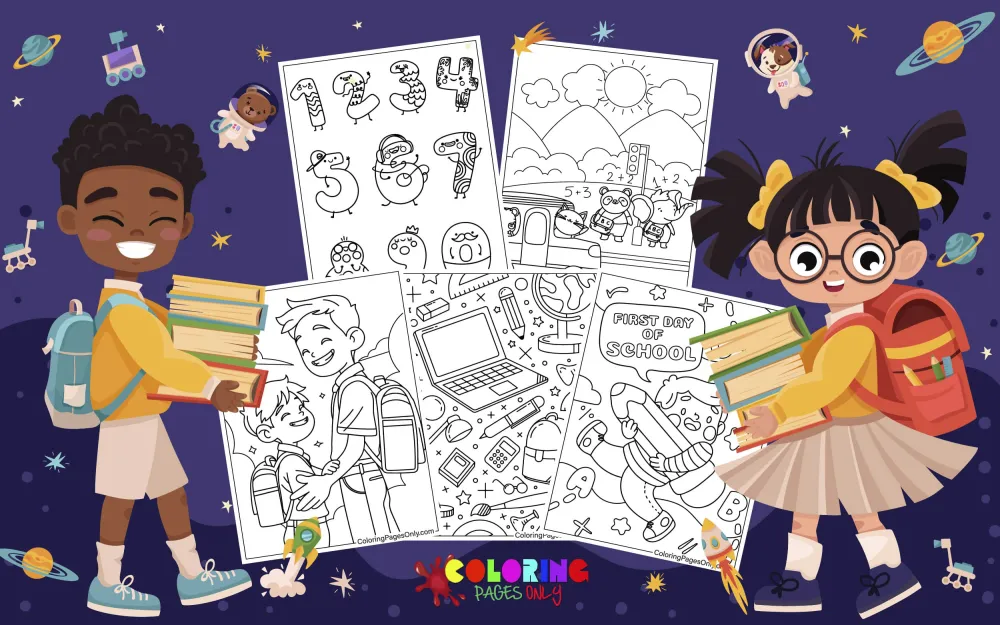
Educational Coloring Pages at ColoringPagesOnly.com is the most purposefully structured category on the site – over 2,090 pages across 43 sub-categories organized around the premise that coloring and learning are not separate activities but naturally overlapping ones. The collection covers the full arc of the school experience from first letters and numbers through high school graduation, alongside the specific academic subjects – mathematics, science, STEM – that have their own dedicated coloring page traditions, the social-emotional learning content that has become standard in contemporary classroom culture, and the activity-based formats (Color by Number, Connect the Dots, Crossword Puzzle, Hidden Objects) that use the coloring page medium as a vehicle for structured cognitive engagement. The audience for this category is primarily teachers and parents looking for classroom-ready or home-learning materials, but the collection is organized broadly enough to serve anyone at any stage of the educational journey.
Every page in this collection is completely free to download as a PDF and print, or to color online directly in your browser.

Early Literacy: Letters and the Alphabet
The earliest academic learning needs are the most consistently searched in the Educational collection, with multiple sub-categories covering the same foundational skill – learning the letters of the alphabet – from different pedagogical angles.
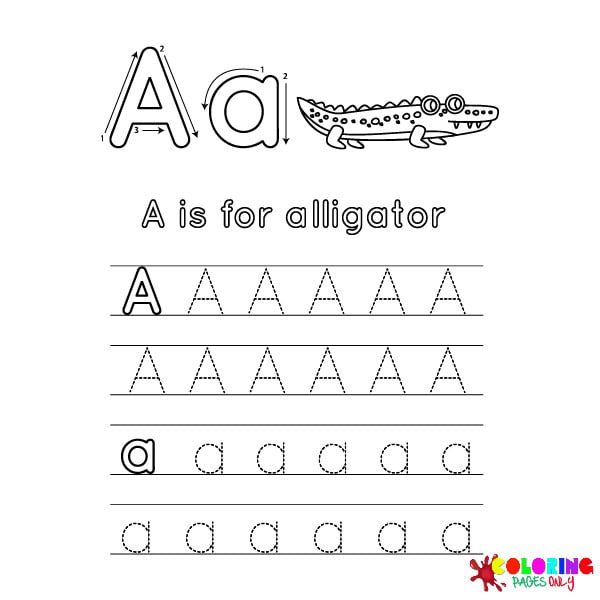
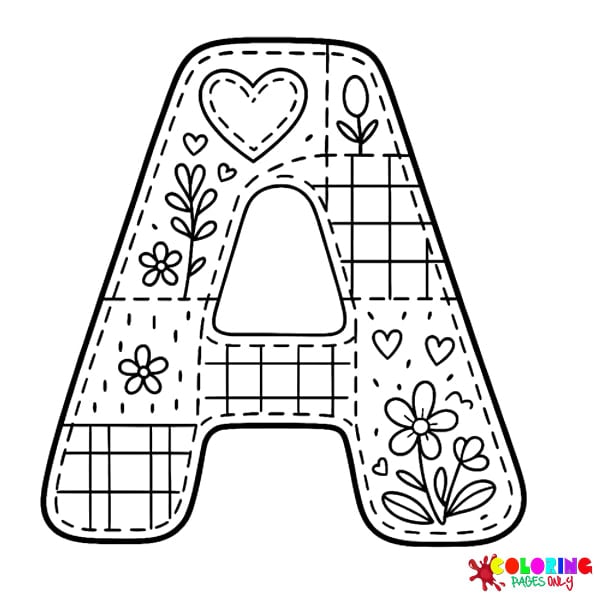
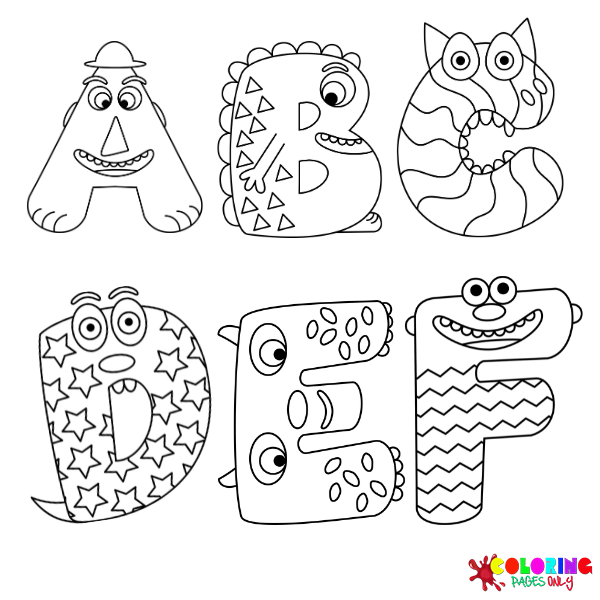
Alphabet is the broadest sub-category, covering the 26-letter alphabet in illustrated form – each letter typically shown large, with an accompanying image whose name begins with that letter. The Alphabet sub-category serves as the starting point for letter recognition at the most basic level. ABC Letter Tracing extends this into the specific motor skill of learning to write – tracing the shape of each letter trains the hand movement that underlies handwriting, and the combination of tracing with coloring reinforces both the visual memory of the letter’s shape and the muscle memory of producing it. Alphabet Patches covers the alphabet in a decorative patch-style illustration format – each letter rendered with the visual appeal of an embroidered badge, making it one of the more aesthetically distinctive alphabet sub-categories. Nursery Rhymes extends early literacy into the oral and musical tradition of children’s verse – pages based on the rhymes that develop phonemic awareness and language rhythm before formal reading begins.
Early Numeracy: Numbers and Counting
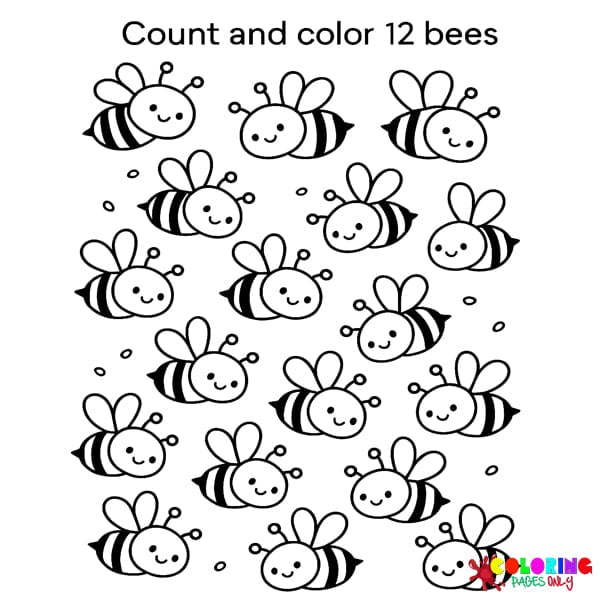
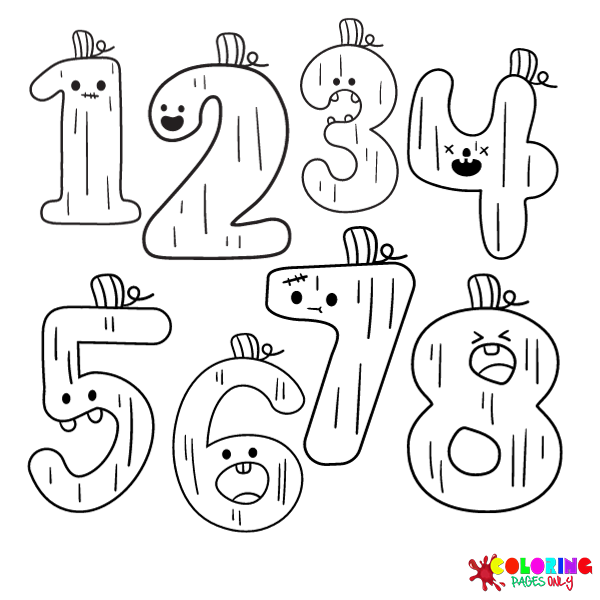
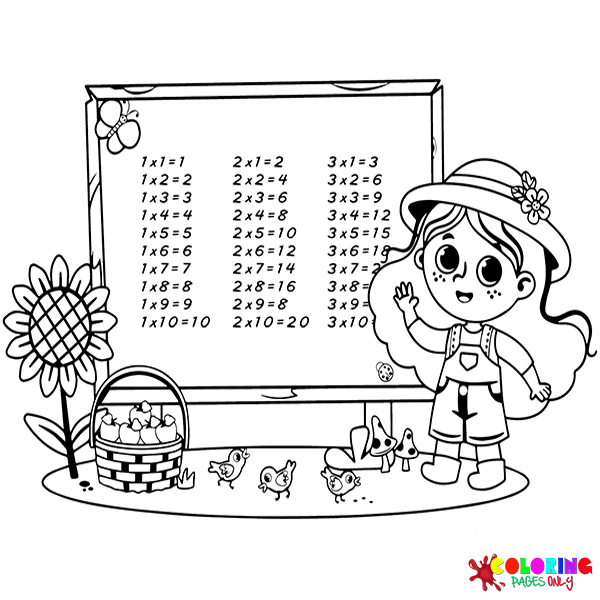
Numbers cover the digit symbols 0–9 and basic number concepts in illustrated coloring page form – numbers depicted large with associated quantities of objects. Fun Counting extends the numerical literacy work into counting-as-activity – pages that ask children to count objects as part of the coloring activity, linking the visual work of coloring to the cognitive work of enumeration. Multiplication Chart covers the times tables in visual matrix form – coloring the multiplication chart as an activity reinforces memorization through the physical engagement of filling in each cell.
Color by Number and Activity Formats
Several sub-categories use the coloring page medium as the vehicle for a structured activity rather than simply a blank subject to color.
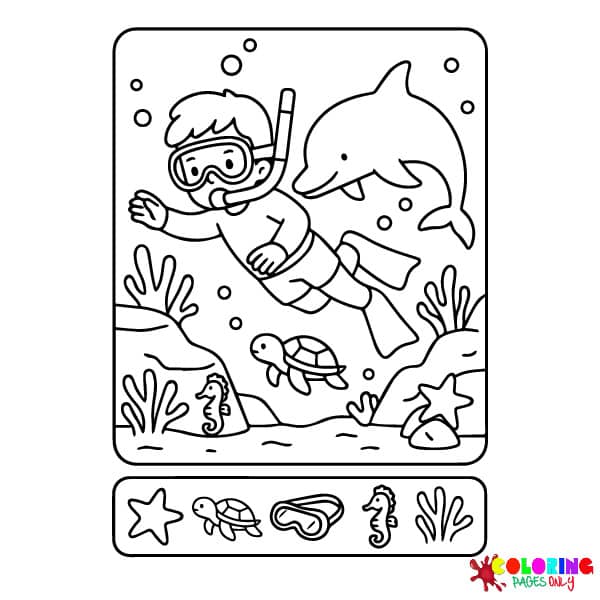
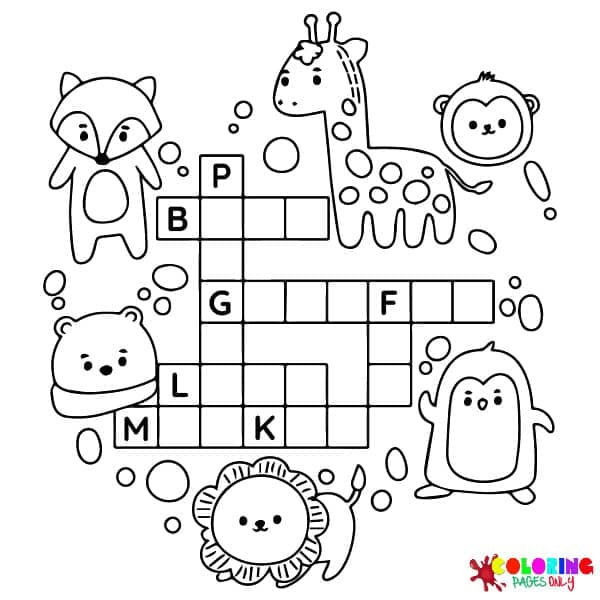
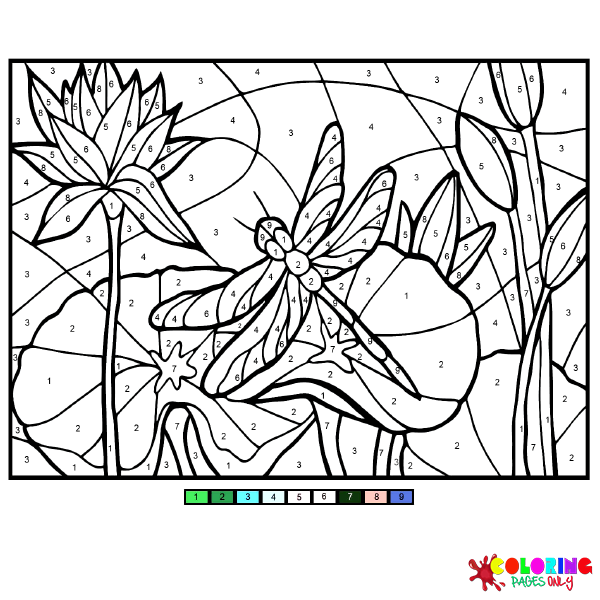
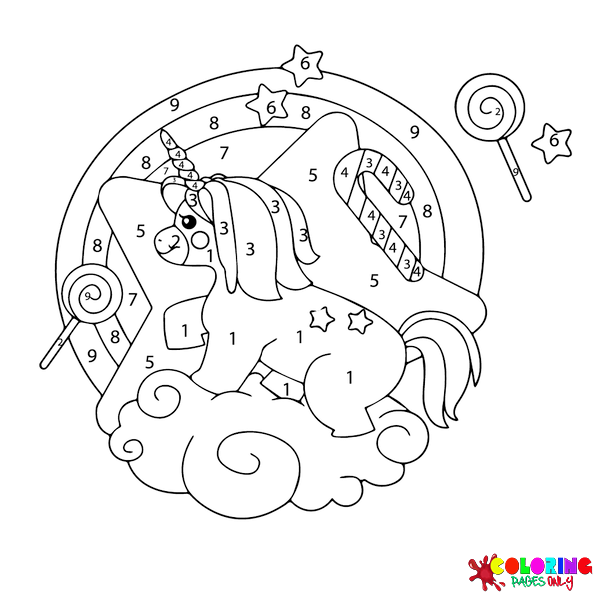
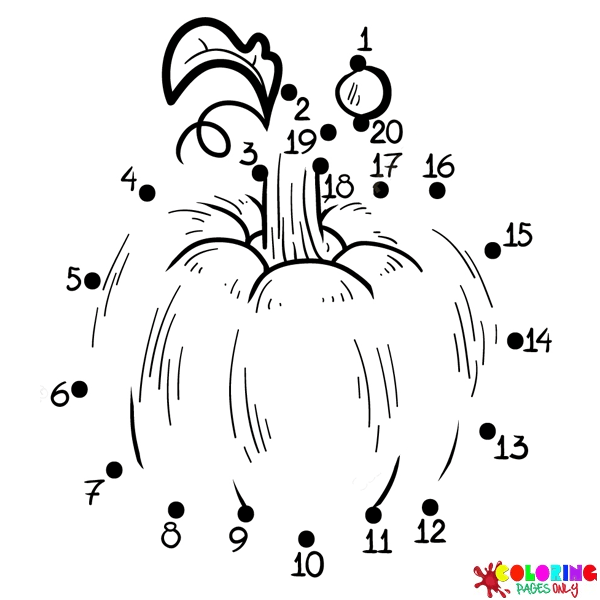
Color by Number is one of the most educationally versatile formats in the collection – each area of the illustration is labeled with a number corresponding to a specific color, and completing the page requires matching the number to the correct color. The format teaches number recognition, color recognition, and the ability to follow a coding system, while also producing a satisfying finished image that reveals itself progressively as the coloring proceeds. Unicorn Color by Number applies this format to the unicorn subject, which is the most searched theme in the Fantasy and Mythology category, combining the appeal of the fantasy subject with the structured engagement of the numbered format. Connect the Dots requires drawing a line between numbered points in sequence to reveal a hidden image – the reveal requires both counting and fine motor coordination. Crossword Puzzle applies the standard crossword format to a coloring page context – the grid is colored, the clues and answers teach vocabulary. Hidden Objects embeds specific items within complex illustrations for the viewer to locate – a combination of visual attention, patience, and scanning skill.
STEM and Academic Subjects
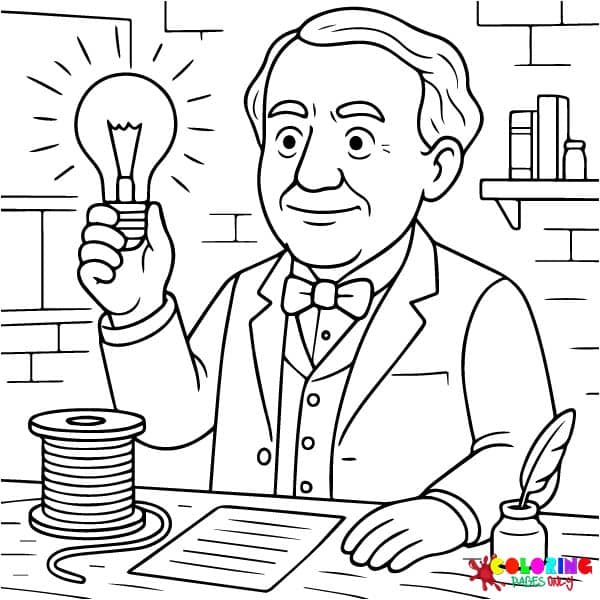
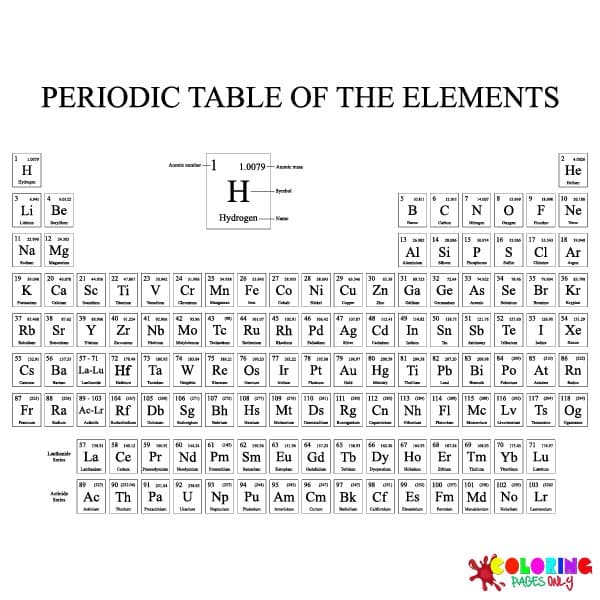
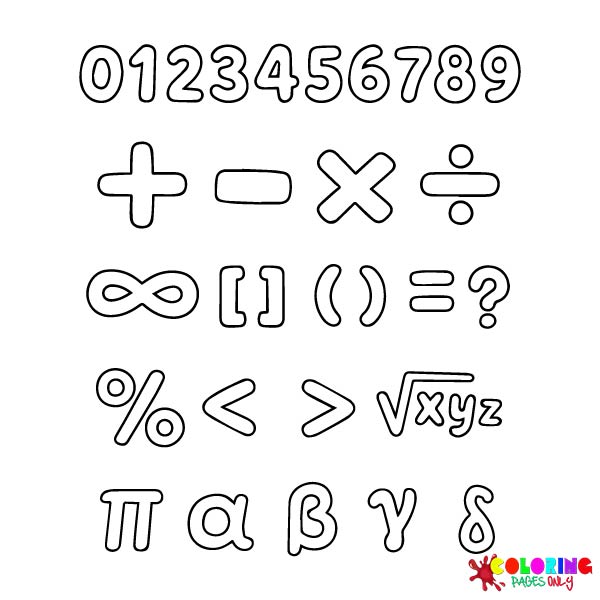
STEM Fun covers the science, technology, engineering, and mathematics subjects in an illustrated coloring context – laboratory equipment, scientific concepts, engineering processes, and mathematical diagrams rendered as coloring page compositions. Periodic Table covers the elemental chart of chemistry – the standard 118-element periodic table as a coloring and labeling activity, one of the most specifically academic sub-categories in the entire collection. Math Symbols & Concepts covers the symbolic vocabulary of mathematics – operators, geometric shapes, number lines, and the visual language of mathematical notation. Famous Inventions and Inventors covers the history of technology and science through its key figures and their creations – pages depicting Edison and the lightbulb, the Wright Brothers and the airplane, Darwin and evolution, and the broader roster of innovation that connects scientific history to the current world.
Social-Emotional Learning and Character
A significant cluster of sub-categories covers the social-emotional learning (SEL) domain that has become increasingly central to classroom practice – the skills of emotional regulation, positive relationships, self-advocacy, and community responsibility that education research shows are as important as academic content to long-term student outcomes.
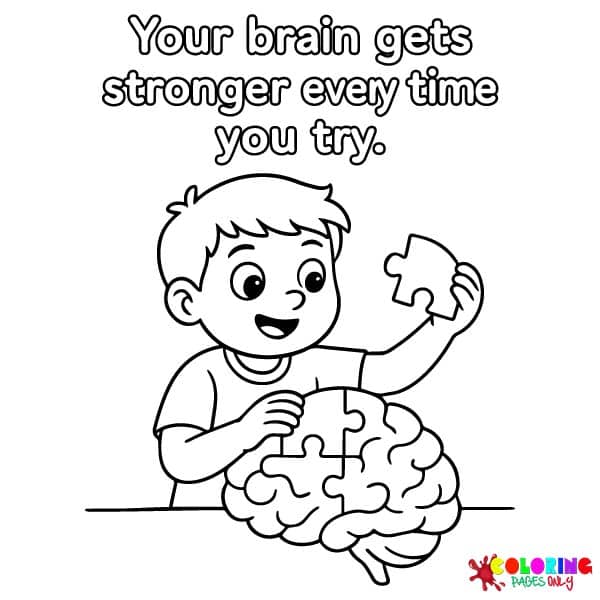
Growth Mindset covers the Carol Dweck-developed concept of growth mindset – the belief that intelligence and ability are developed through effort rather than fixed at birth – through illustrated affirmations, characters demonstrating persistence, and the visual vocabulary of effort, mistake-making, and improvement. School Kindness covers prosocial behavior, empathy, and the specific kindness practices that make school communities function well. Life Skills for Kids covers practical life competencies – personal organization, basic cooking, home safety, interpersonal communication – in an illustrated format suitable for young learners. Safety at School covers emergency procedures, respectful behavior, and the physical and emotional safety practices that define a safe learning environment. Safety Signs covers the standardized warning and information signs that children encounter in their environment – stop signs, hazard warnings, direction signs – as literacy about the visual language of public safety.
The School Year Calendar
Several sub-categories are organized around specific moments in the school year calendar, serving teachers and parents who want themed materials at particular times of year.
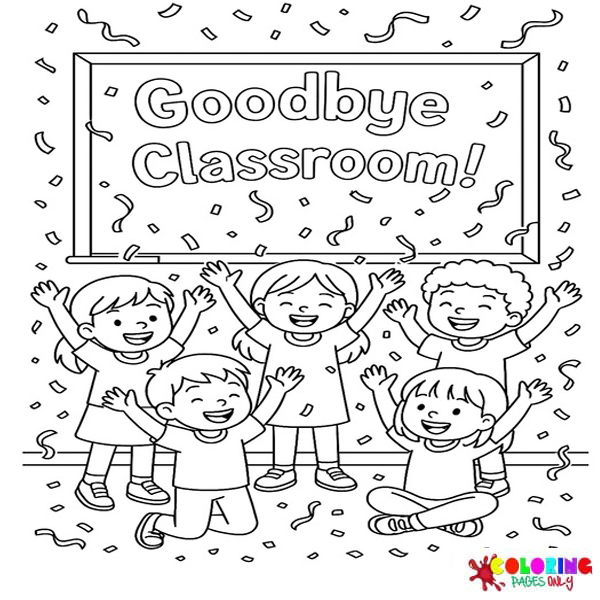
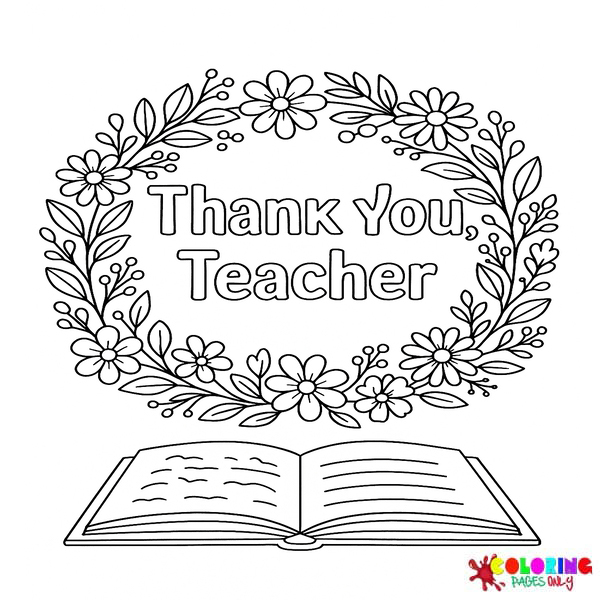
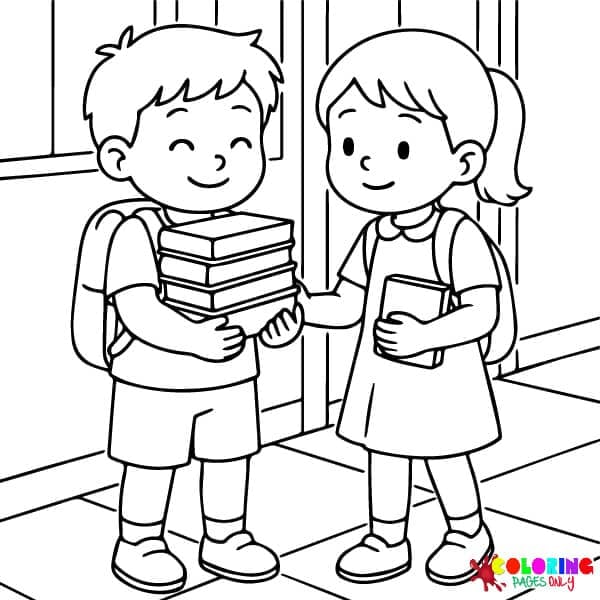
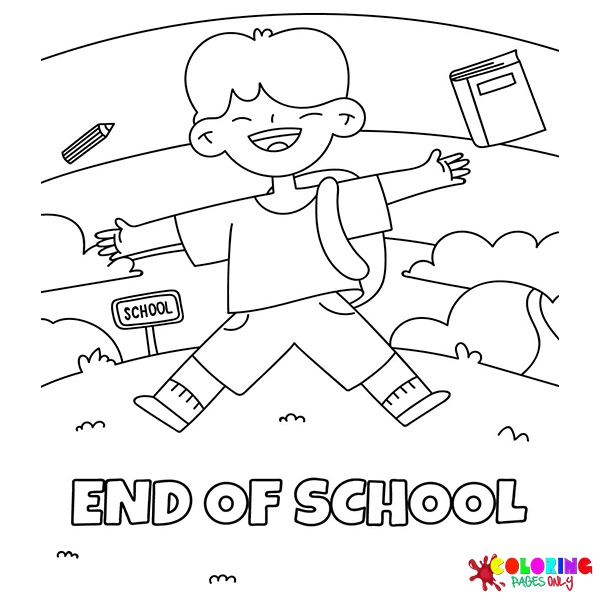
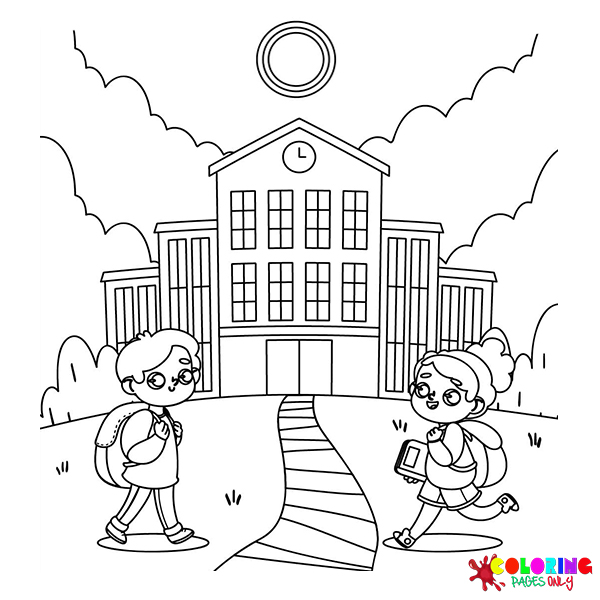
First Day of School covers the excitement and mild anxiety of the year’s opening – school supplies, new classrooms, first friendships, and the optimistic energy of a new academic beginning. Back to School covers the same seasonal moment from a slightly different angle – the preparation and transition from summer to academic year. School covers the general school environment across the full year – classrooms, playgrounds, teachers, students, and the daily rhythms of school life. Last Day of School and End of School together cover the final days of the academic year – the celebration, the nostalgia, and the anticipation of summer. Classroom Goodbye covers the specific emotional context of saying farewell to a class, a teacher, or a school – the coloring pages here serve the cards, gifts, and classroom activities that mark meaningful endings. Thank You, Teacher covers the appreciation gift and card tradition at year-end, with illustrated pages designed to be colored and given.
Grade Level and Stage Sub-categories
Four sub-categories are organized by the student’s grade level rather than by specific subject or theme.
Preschool covers the 3–5 age range with the simplest compositions in the Educational collection – large shapes, minimal detail, high color-area-to-line ratio, and subjects from the immediate sensory world of very young children. First Grade Readiness covers the specific skills assessed at the preschool-to-primary transition – letter recognition, number sense, basic spatial reasoning, and the foundational concepts that signal readiness for formal instruction. Elementary School covers the 5–11 age range with a broader range of subjects and slightly more compositional complexity. Middle School and High School extend the collection into the adolescent years – pages appropriate for older students who may be coloring as a mindfulness or relaxation activity rather than as a primary learning engagement.
Study, Organization, and Self-Expression
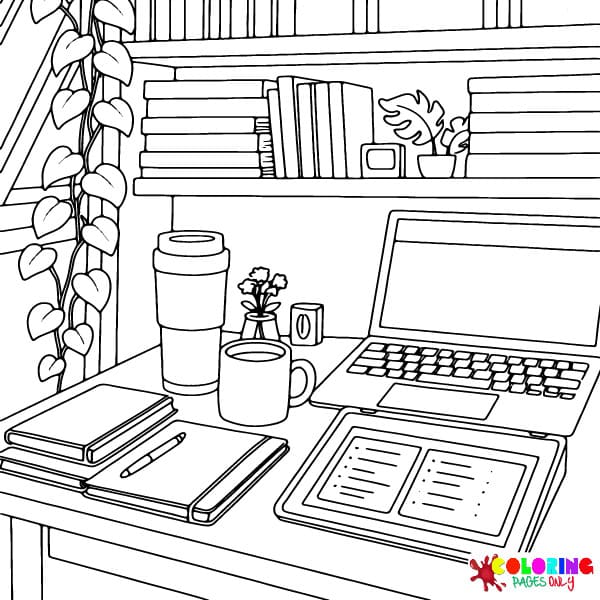
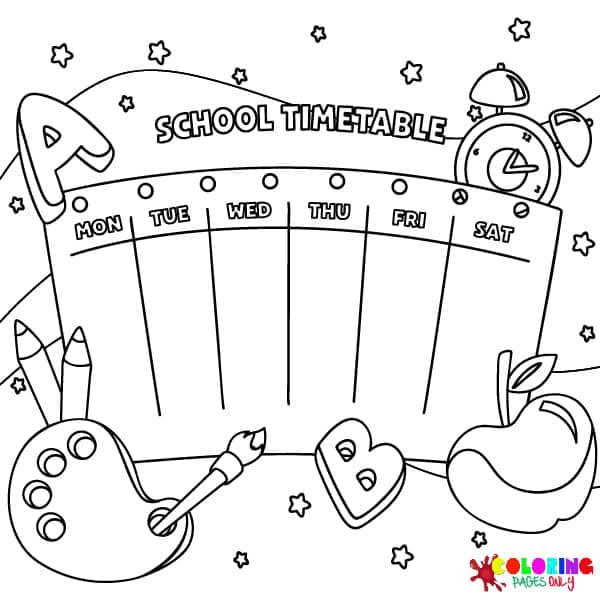
Dream Study Nook covers the aspirational learning environment – the ideal desk setup, the well-organized bookshelf, the reading chair – as a visualization and design activity. Weekly Schedules covers the organizational planning tool in a coloring and personalization format – the blank weekly calendar structure to be colored and customized as a planning aid. My Name Sparkle covers the personalized name illustration tradition – each child’s name rendered in decorative letterforms to be colored, a natural bridge between the Alphabet sub-category and the child’s own identity.
Coloring Tools and the Act of Coloring Itself
Two sub-categories reflect on the physical materials of the coloring activity rather than any educational content subject.
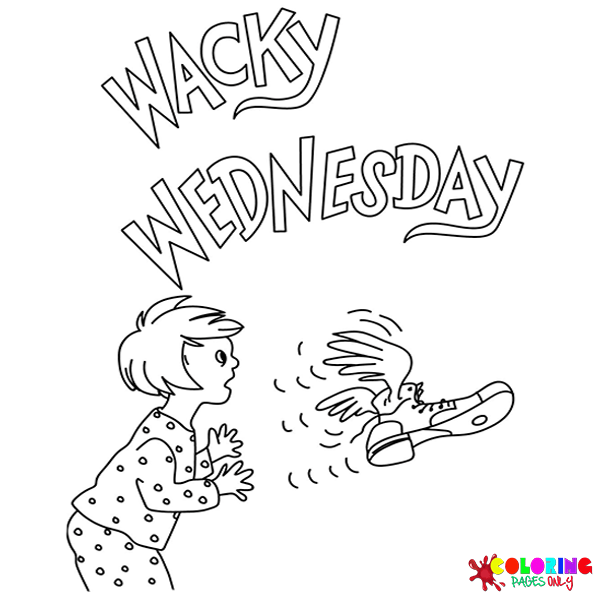
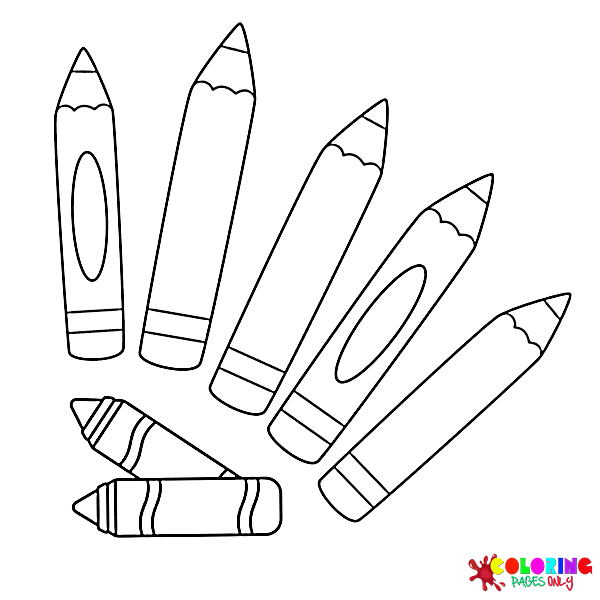
Crayon covers the coloring implement itself – illustrations of crayon shapes, crayon characters, and the visual identity of the colored wax stick that is the most universal first coloring tool in childhood. Crayola covers the specific brand – the Crayola corporation’s 64-color box, the iconic yellow-and-green packaging, and the brand’s visual identity as the dominant name in children’s art materials. Primary covers the three primary colors (red, yellow, blue) and their relationships – color mixing, color theory at the most foundational level. Wacky Wednesday covers the Dr. Seuss-adjacent fun-in-school tradition of Wednesday as a theme day for creative and unusual activities.
World Exploration
Mimi World Tour covers an illustrated world geography exploration series – characters visiting countries and landmarks around the world in a format that combines coloring with geographical and cultural awareness.