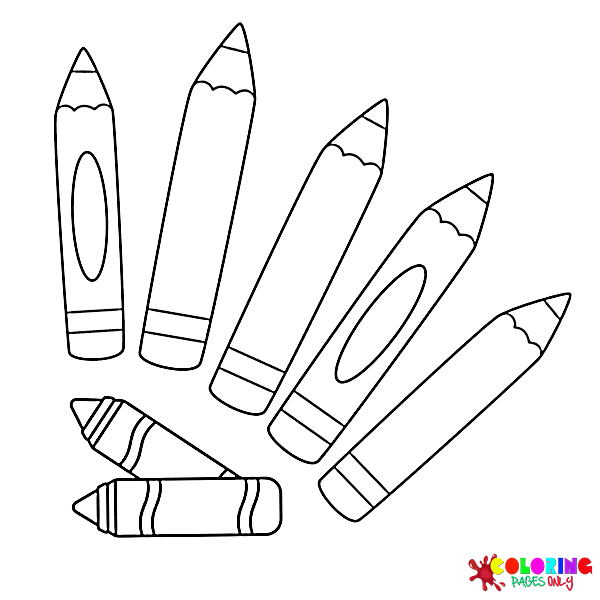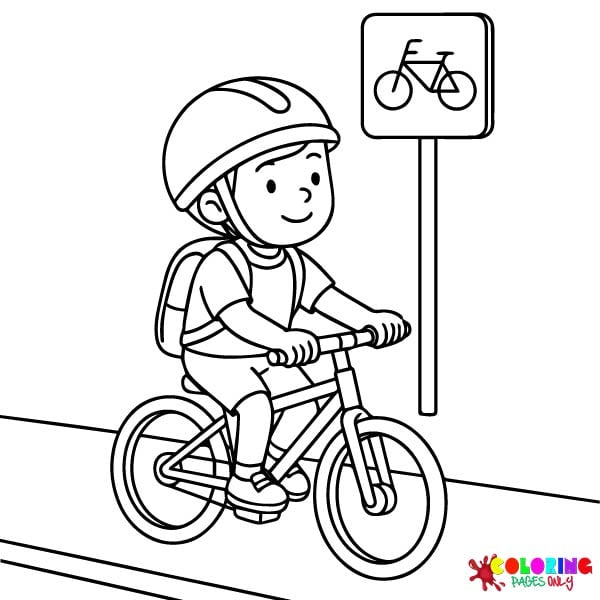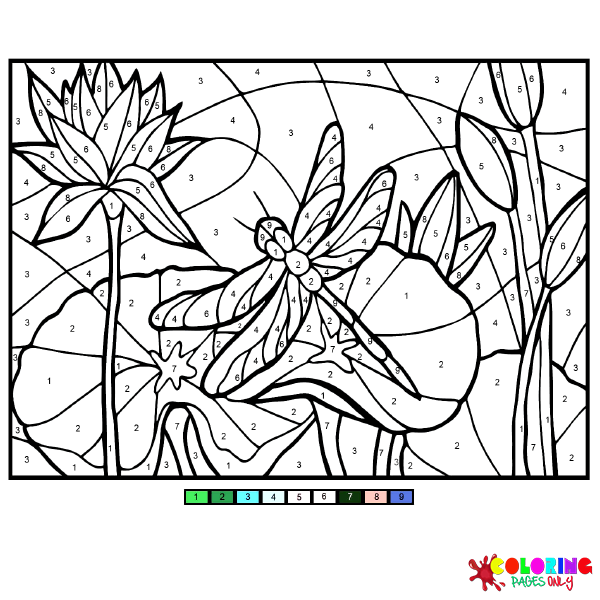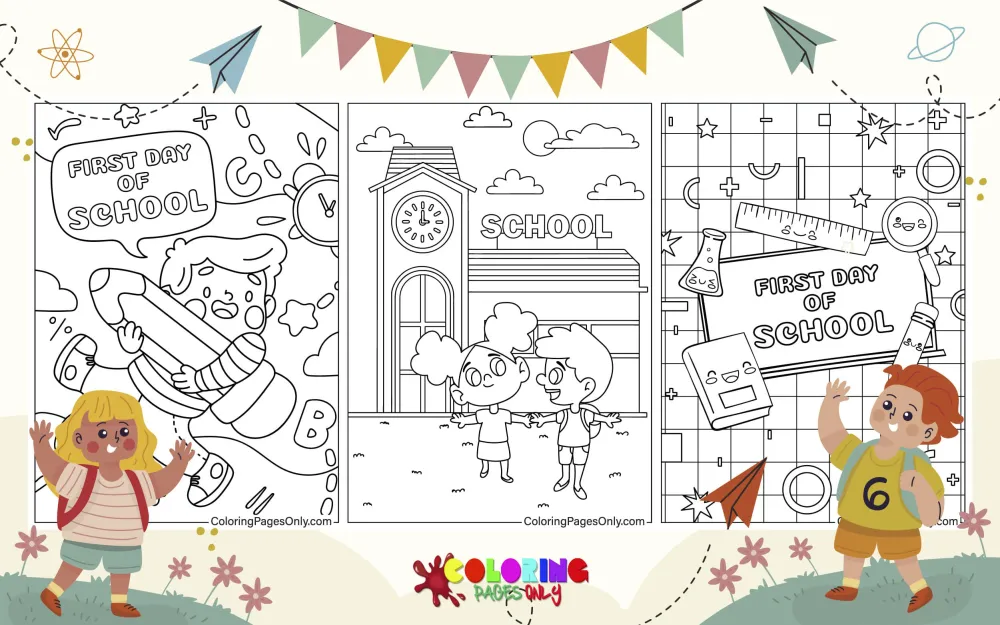
First Day of School Coloring Pages at ColoringPagesOnly.com brings together 37 free printable pages designed for the most emotionally significant morning in a young child’s year – scenes of children walking through school gates for the first time, kindergarteners with backpacks bigger than themselves, boys and girls meeting teachers and classmates, preschoolers heading off to class, moms waving goodbye at the door, and classrooms full of the promise of a new beginning. Download any page as a free PDF to print, or color online directly in your browser.
This collection sits within the Educational Coloring Pages hub and connects directly to related school-year collections, including Back to School Coloring Pages, School Kindness Coloring Pages, and Kindergarten Coloring Pages.

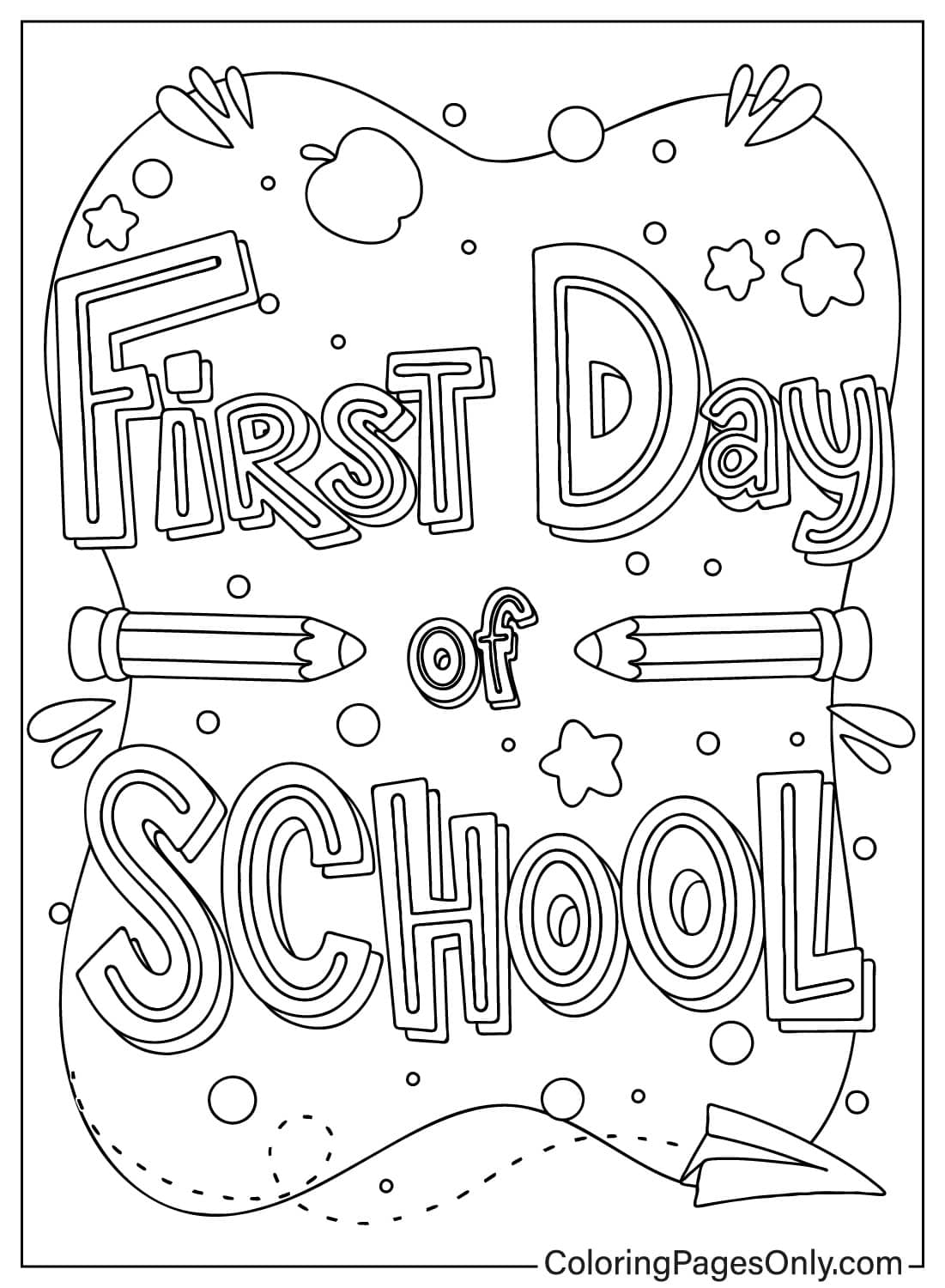
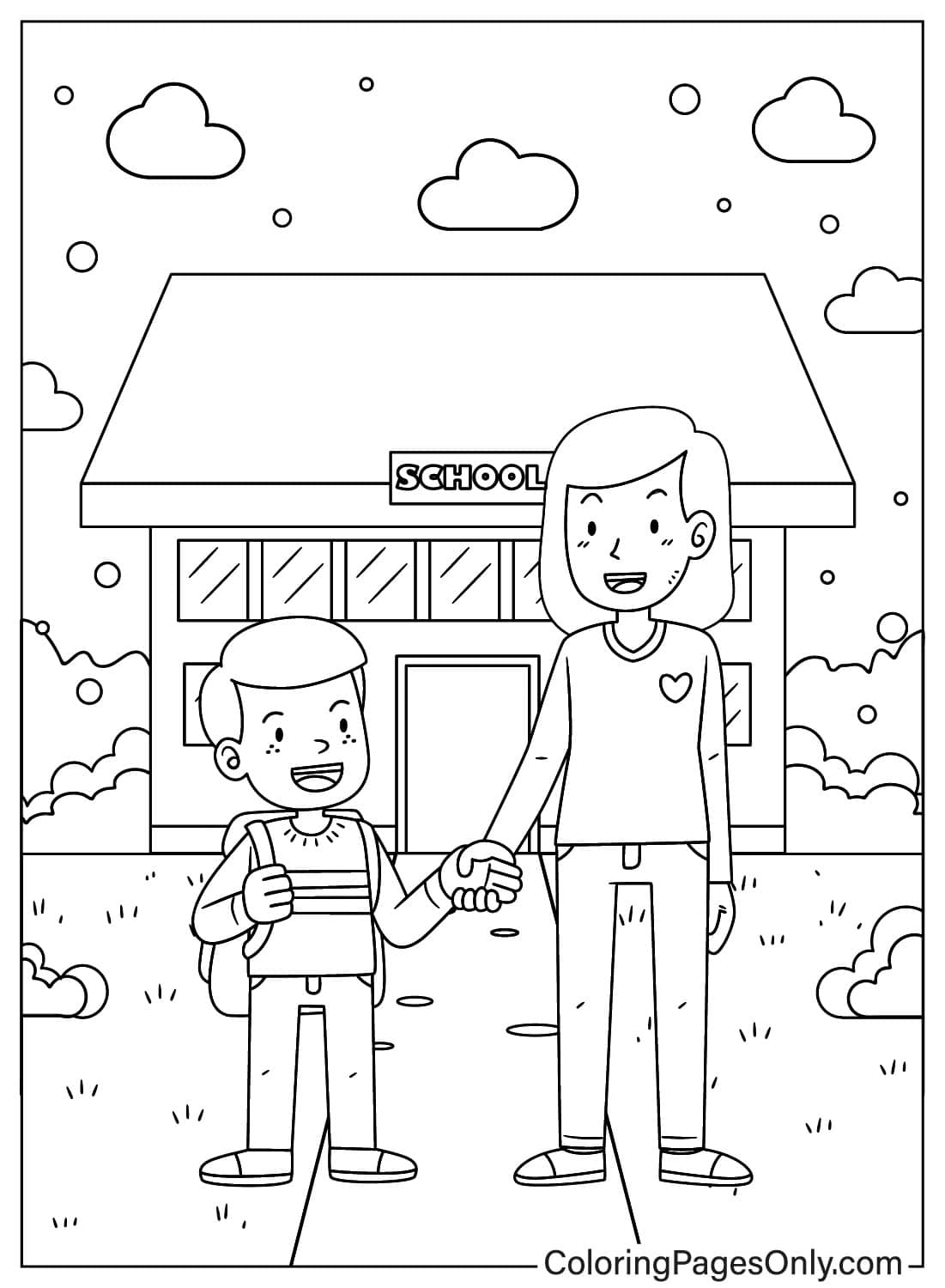
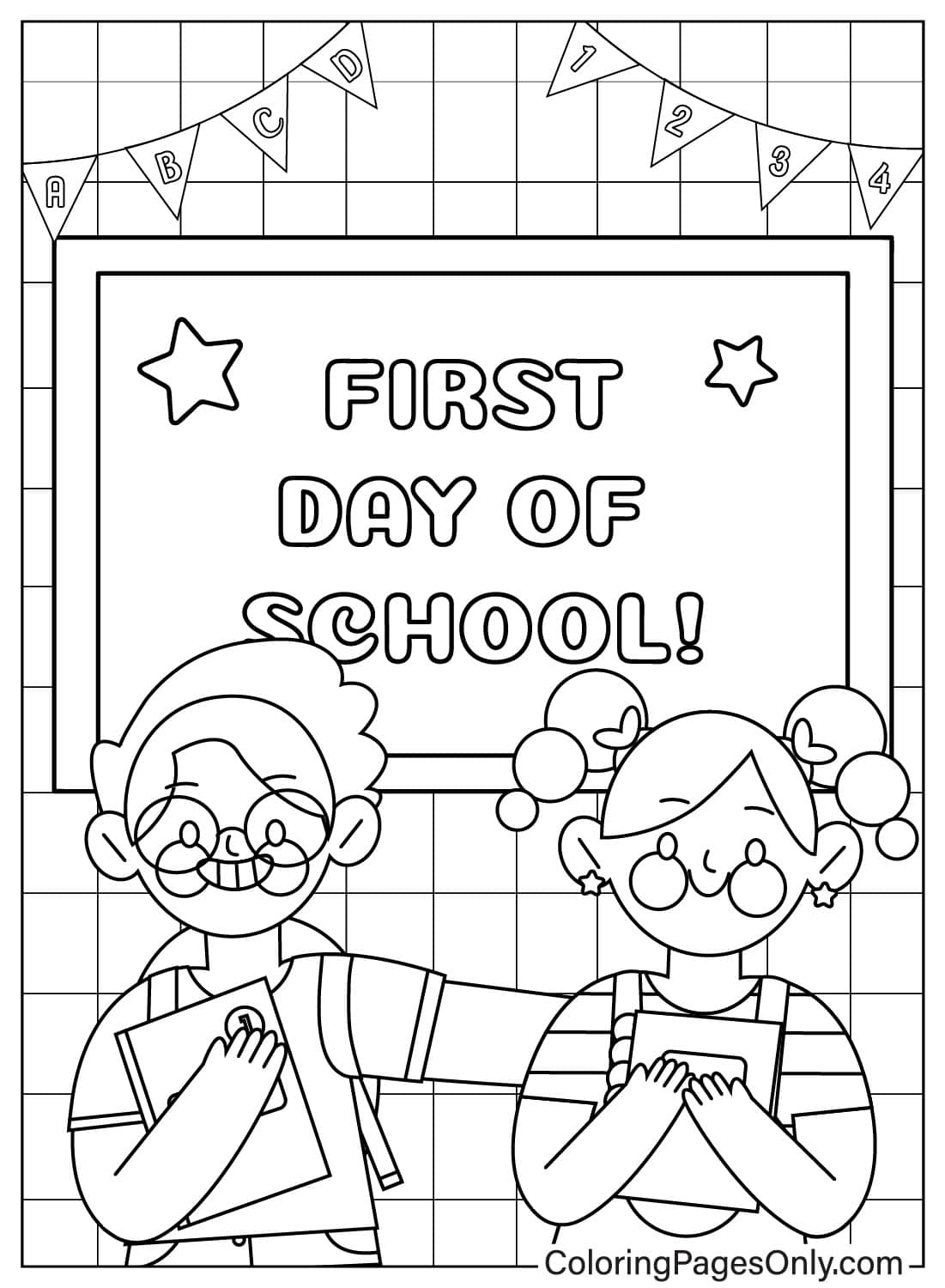
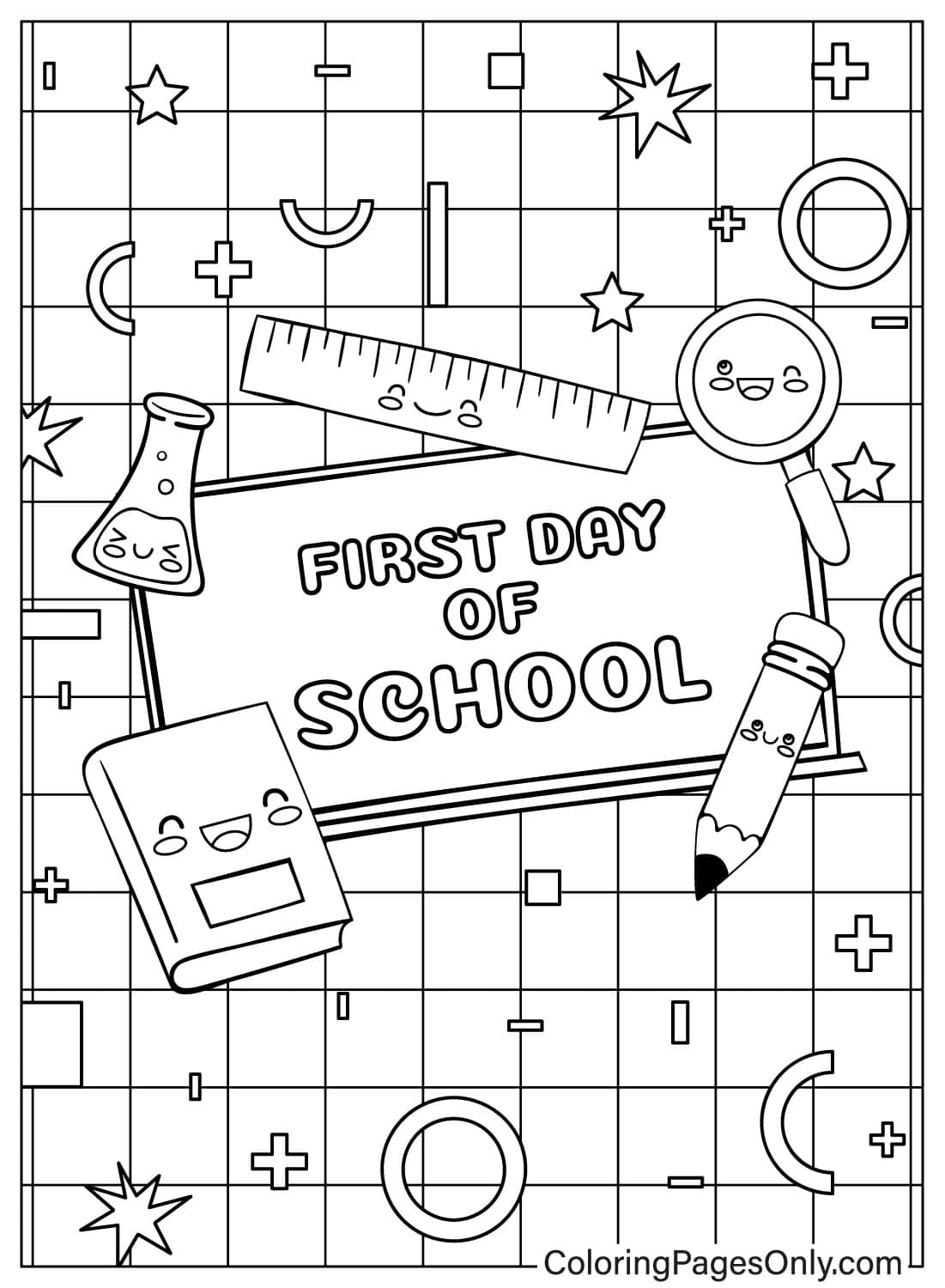

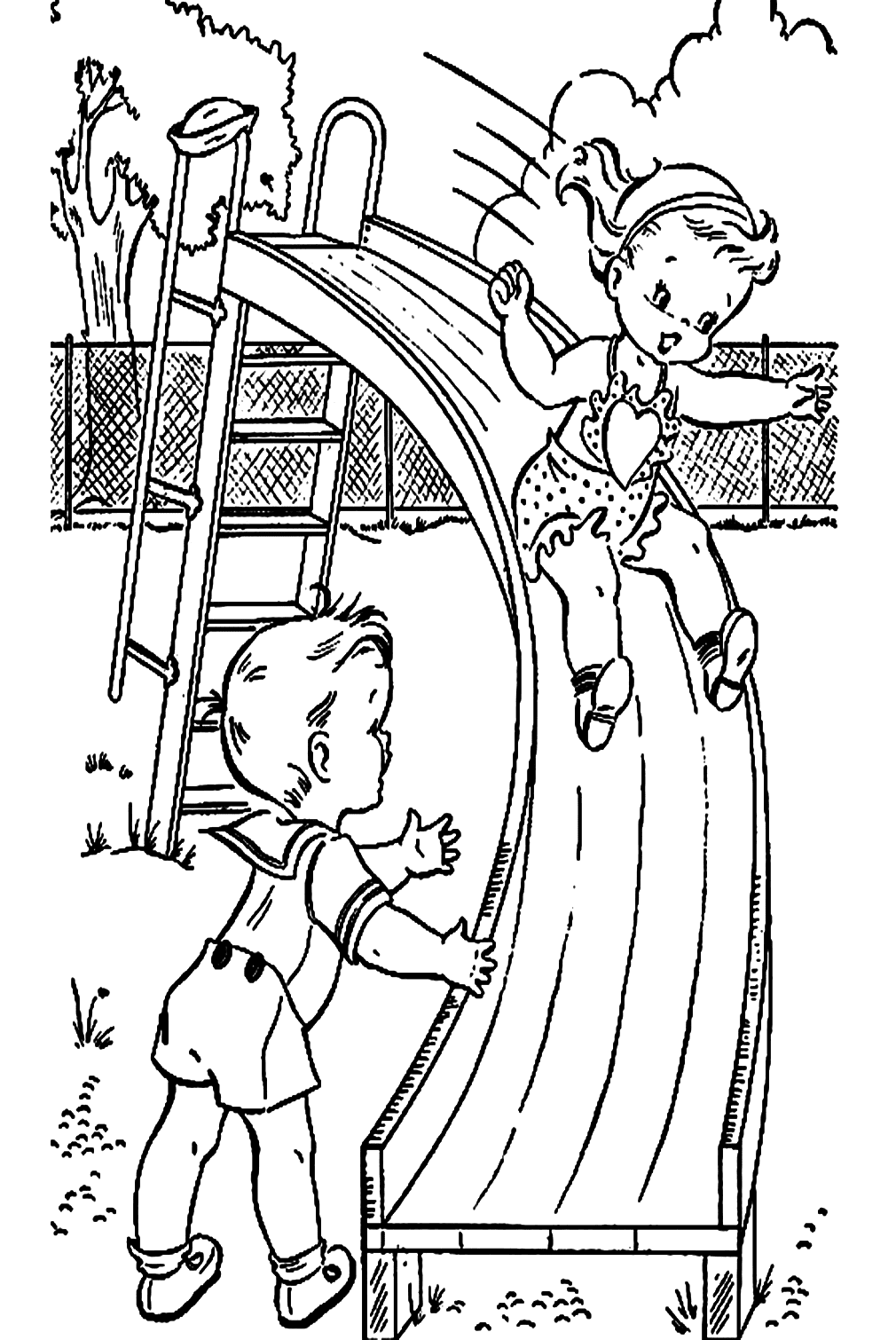
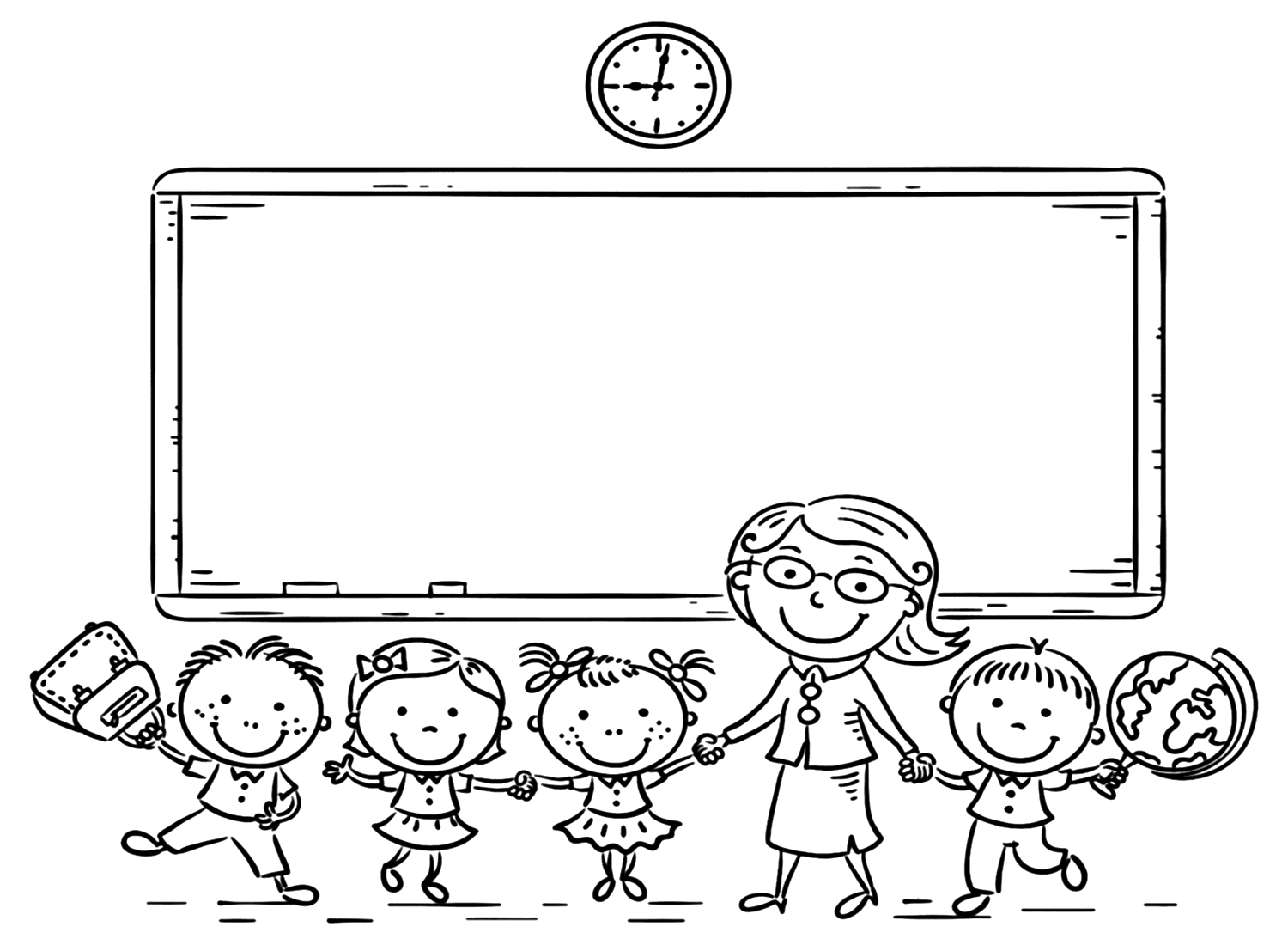
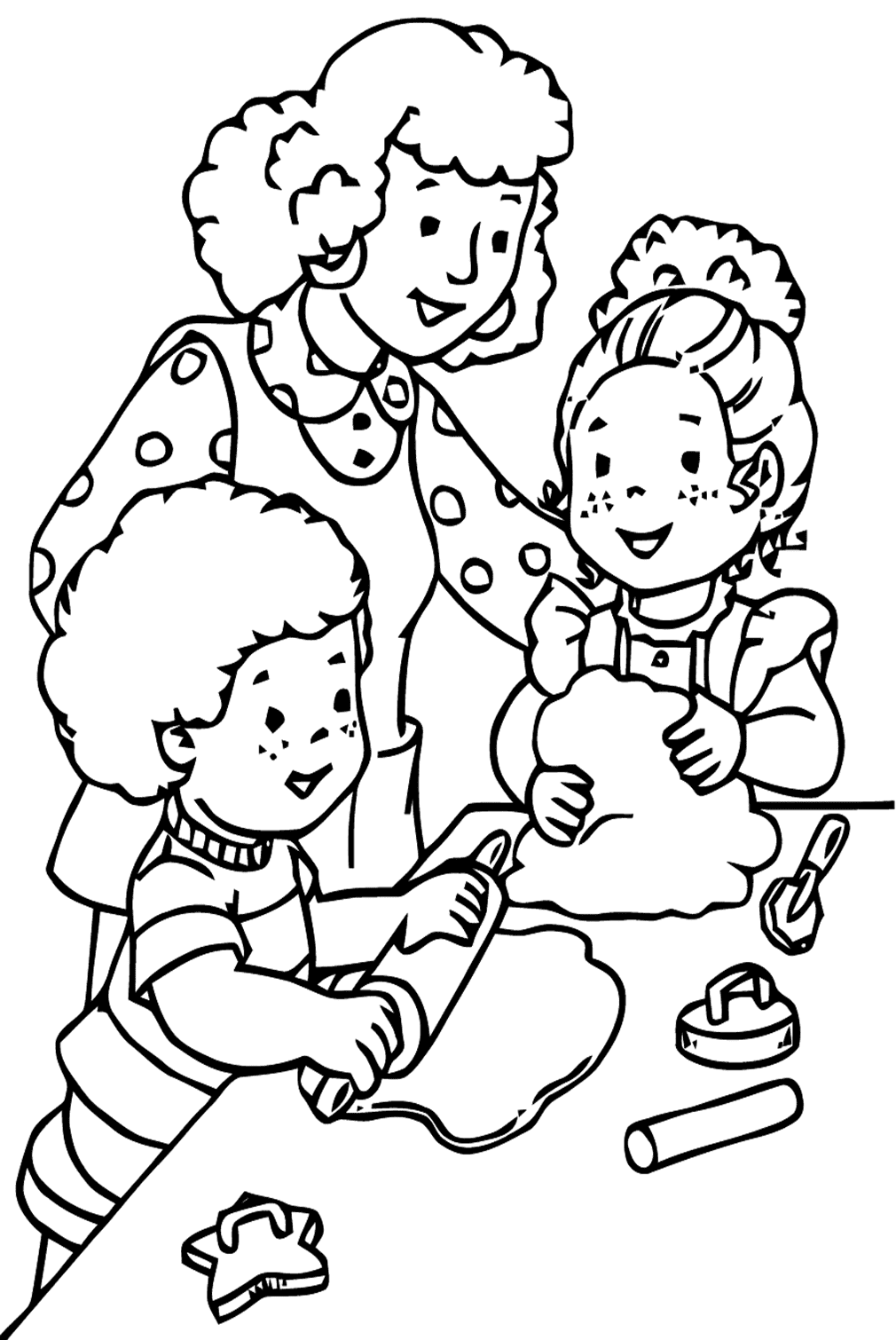
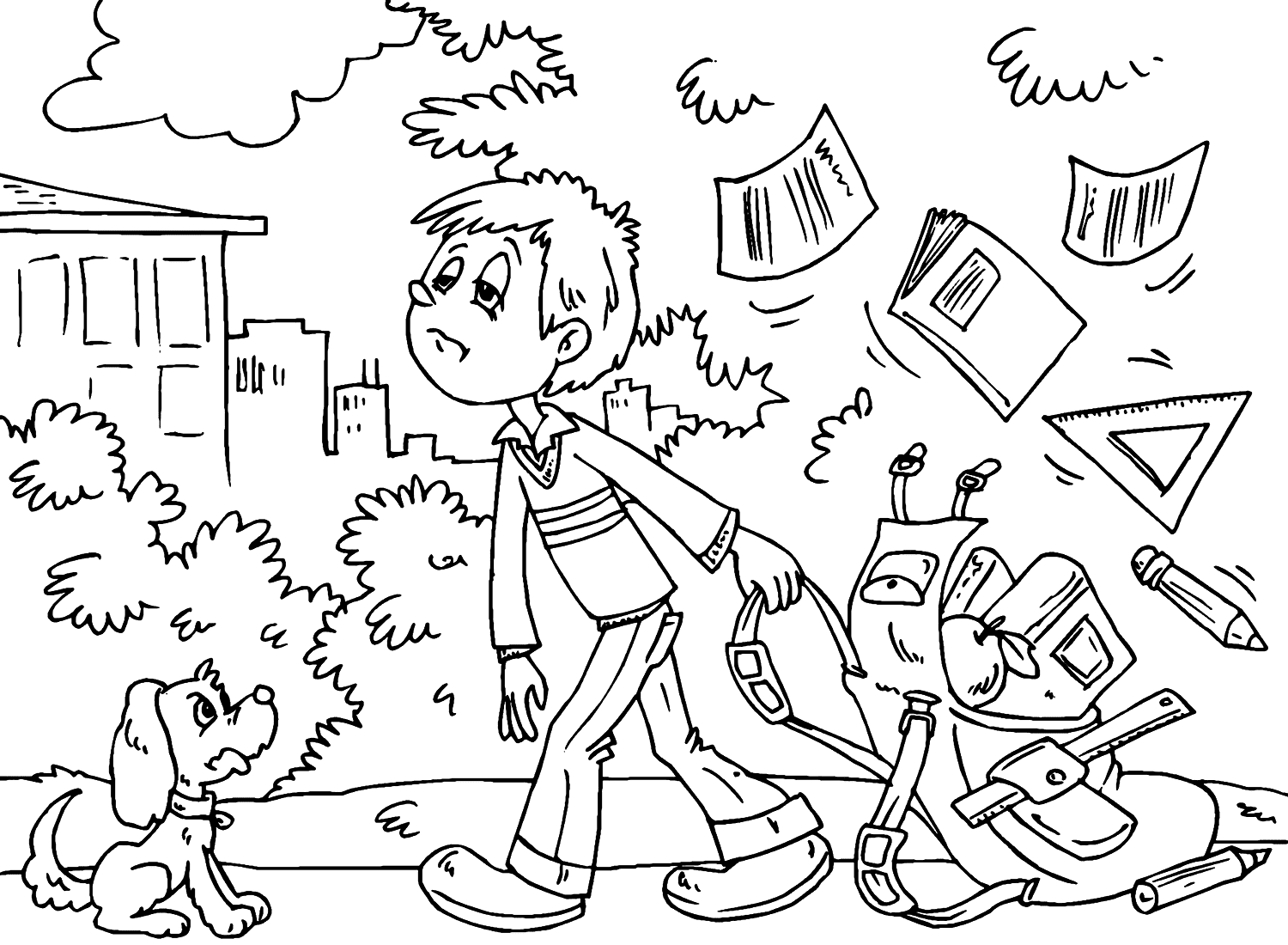
Why the First Day of School Is Unlike Any Other Day
For most children, the first day of school is not simply a new experience – it is the largest single transition they have faced in their lives up to that point. Everything about it is unfamiliar: the building, the classroom, the teacher, the other children, the schedule, the expectations, the sounds and smells of an institution entirely different from home. A child who has spent their entire life in the predictable safety of family routines is suddenly asked to trust a new place and new adults without the people they love most present.
Child development research describes this accurately: novelty triggers the brain’s threat-detection system. Dr. Barbara Bentley, pediatric psychologist at Stanford Children’s Health, explains that our brains associate “novel” with “dangerous” – a biological inheritance from an era when encountering something unknown genuinely required caution. For young children, whose threat-detection systems are still developing and whose life experience provides little reference point for what “school” actually involves, the first day triggers this response reliably. The result is what most parents and teachers recognize immediately: clinging, crying, stomachaches, or a very quiet child who holds everything tightly inside.
This is developmentally normal. According to the American Academy of Pediatrics, approximately 4% of children experience significant separation anxiety, and an even higher proportion show some degree of anxiety at school transitions – particularly at the shift from home to preschool, from preschool to kindergarten, and from elementary school to middle school. The anxiety is not a sign of a problem child or an anxious family; it is a sign that the child has formed secure attachments to their caregivers and is now being asked to navigate a genuinely new world without them.
What helps – consistently, across research studies and clinical practice – is preparation and familiarization. The more a child knows about what school looks like, what will happen there, what the classroom contains, what teachers are like, and what the routine involves, the less novel the environment feels on the actual first day – and the less threatening the brain’s automated response. This is where the pages in this collection become a genuinely useful tool, not merely an entertainment activity.
How Coloring These Pages Helps Before the First Day
The mechanism is specific, not vague. Coloring a picture of a child walking through school gates – backpack on, lunch box in hand, teacher smiling at the door – is not simply “fun preparation.” It is a repeated visual exposure to the scene that will unfold on the actual first day. Each time a child picks up a crayon and colors a school scene, they are building a mental library of familiar images: this is what a classroom looks like, this is how a teacher stands at the door, this is what children carrying backpacks look like, this is what a school building looks like.
When that child walks through an actual school gate for the first time, the scene is not entirely novel – they have seen it, colored it, and spent time with it. The brain’s “novelty = danger” response is less activated because the visual information is already partially familiar. Research on art therapy in early childhood settings has found that children who use drawing and coloring to explore new or anxiety-producing situations before encountering them show measurably lower anxiety responses when the situations actually occur. The coloring page serves as a visualization rehearsal.
Clinical psychologist Dr. Michele Goldman notes that the repetitive movement of coloring itself – the consistent, rhythmic back-and-forth strokes of a crayon across a page – has a soothing quality that reduces physiological anxiety responses: breathing slows, the amygdala (the brain’s fear center) becomes less activated, and the child achieves a state of focused calm. When this calming process is applied specifically to images related to the anxiety-producing situation, the result is a double benefit: the anxiety-reduction effect of coloring combined with the familiarization effect of the school images.
A 2015 study cited by the Depression and Bipolar Support Alliance found that coloring significantly decreased anxiety symptoms in children before a stressful event (specifically, a spelling test – an academic performance anxiety context not unlike first-day anxiety). A 2022 study on arts therapies in school settings found children reported better self-expression, greater feelings of safety, and more optimism about new situations after arts-based interventions. The art doesn’t need to be formally therapeutic to produce these benefits – simply coloring a school scene at the kitchen table the evening before the first day engages the same neural mechanisms.
The Collection’s Scenes – A Guide for Parents and Teachers
The 37 pages span several distinct visual types, each serving a slightly different purpose in first-day preparation.
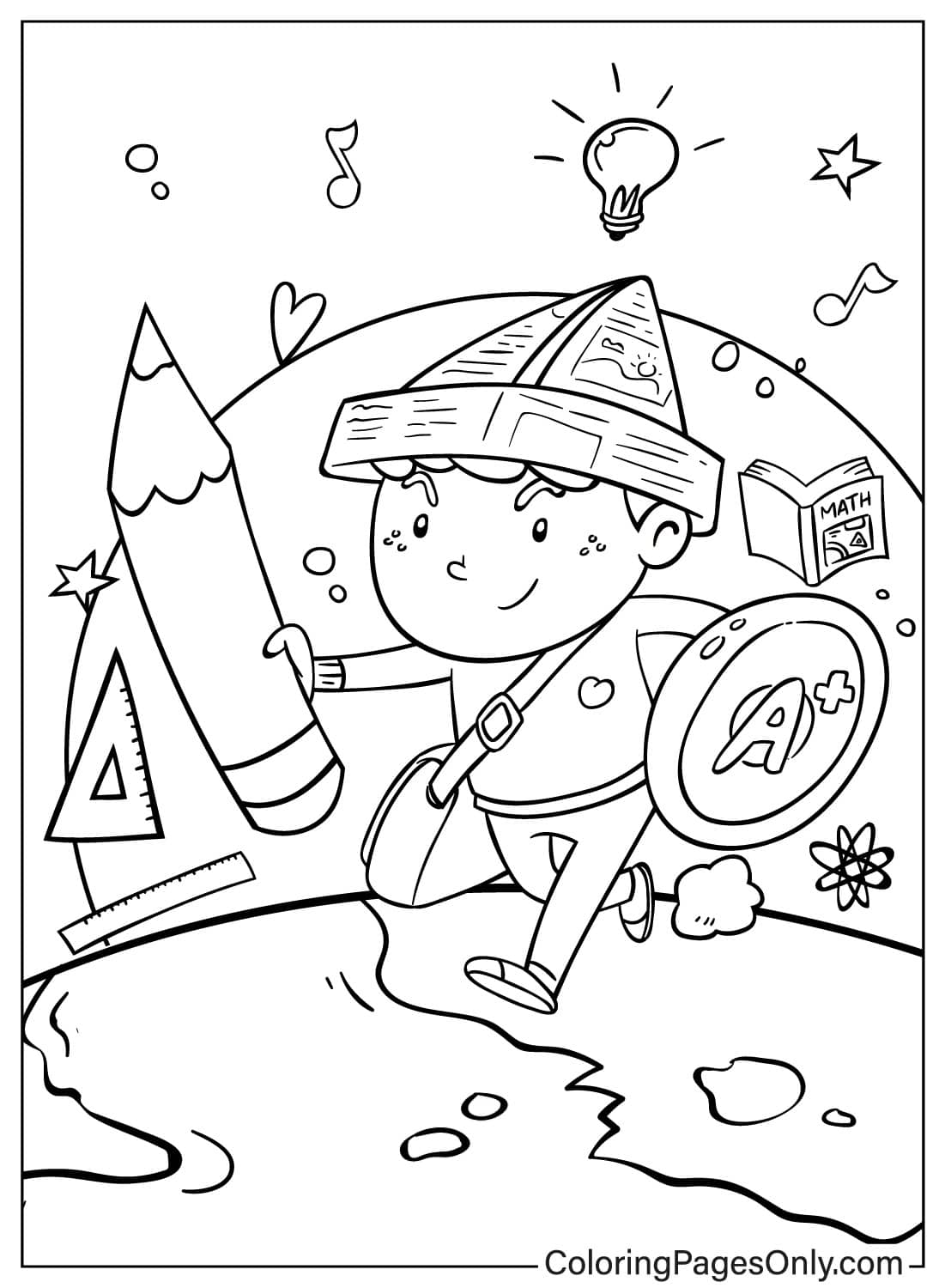
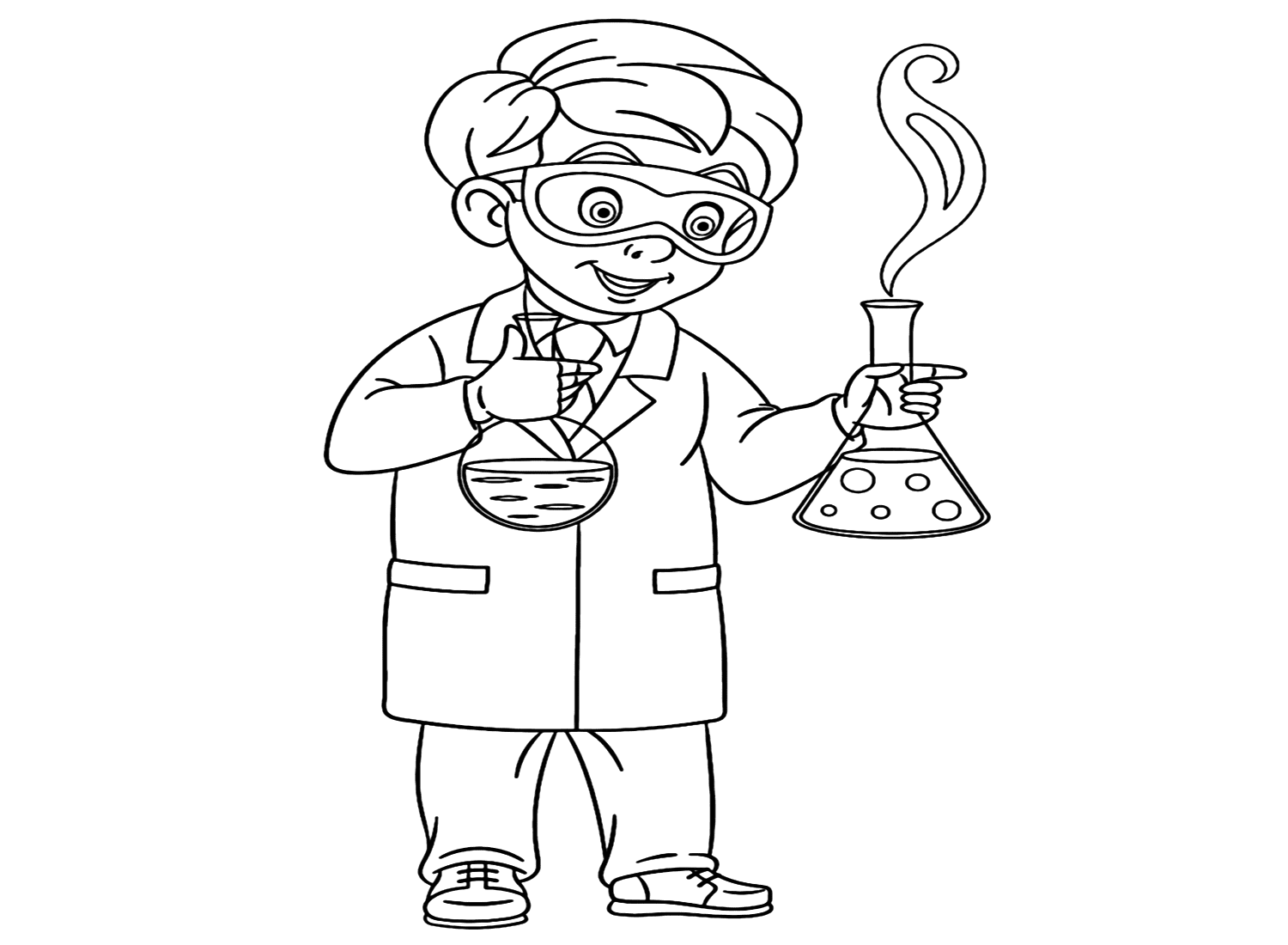
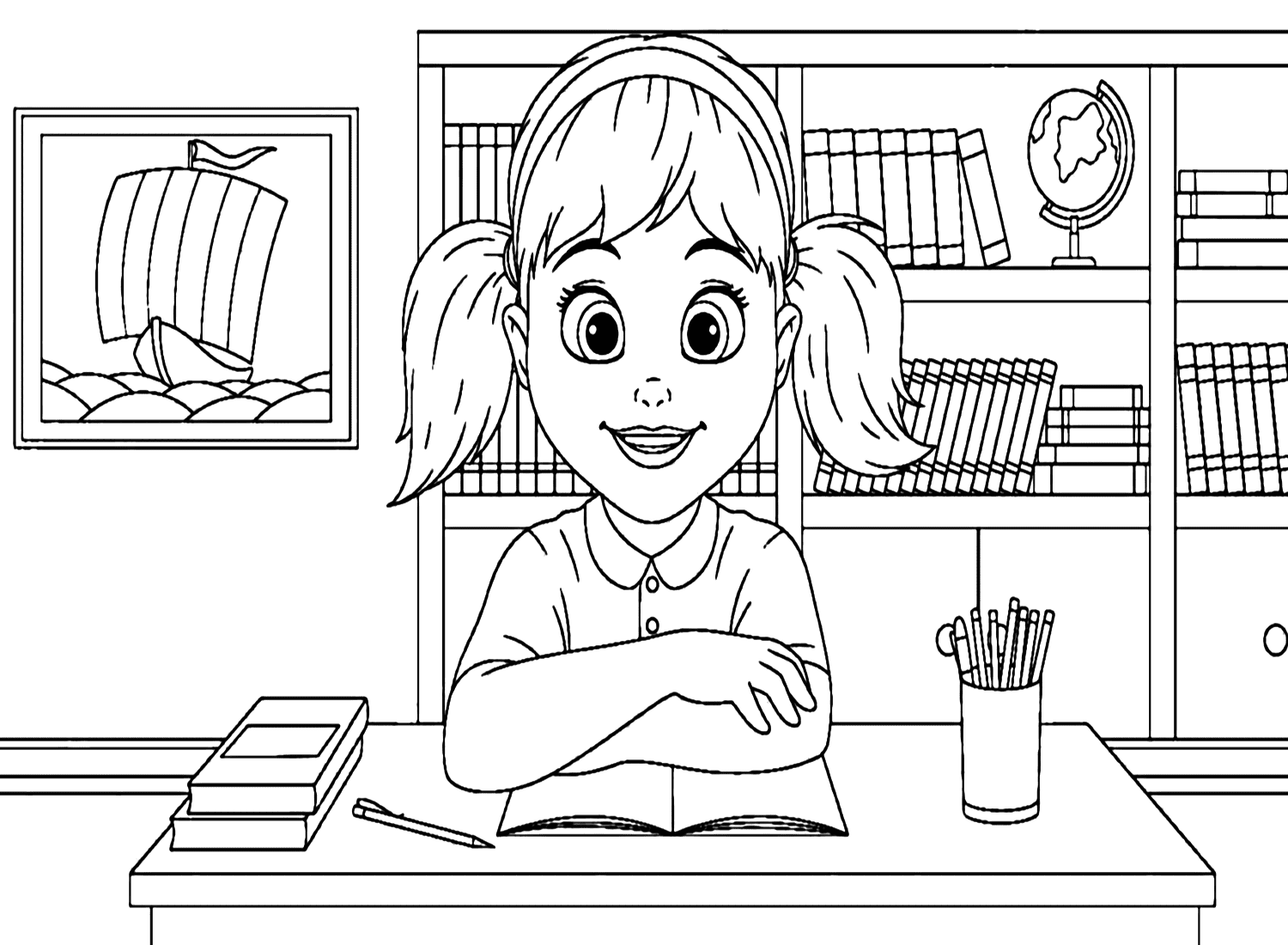
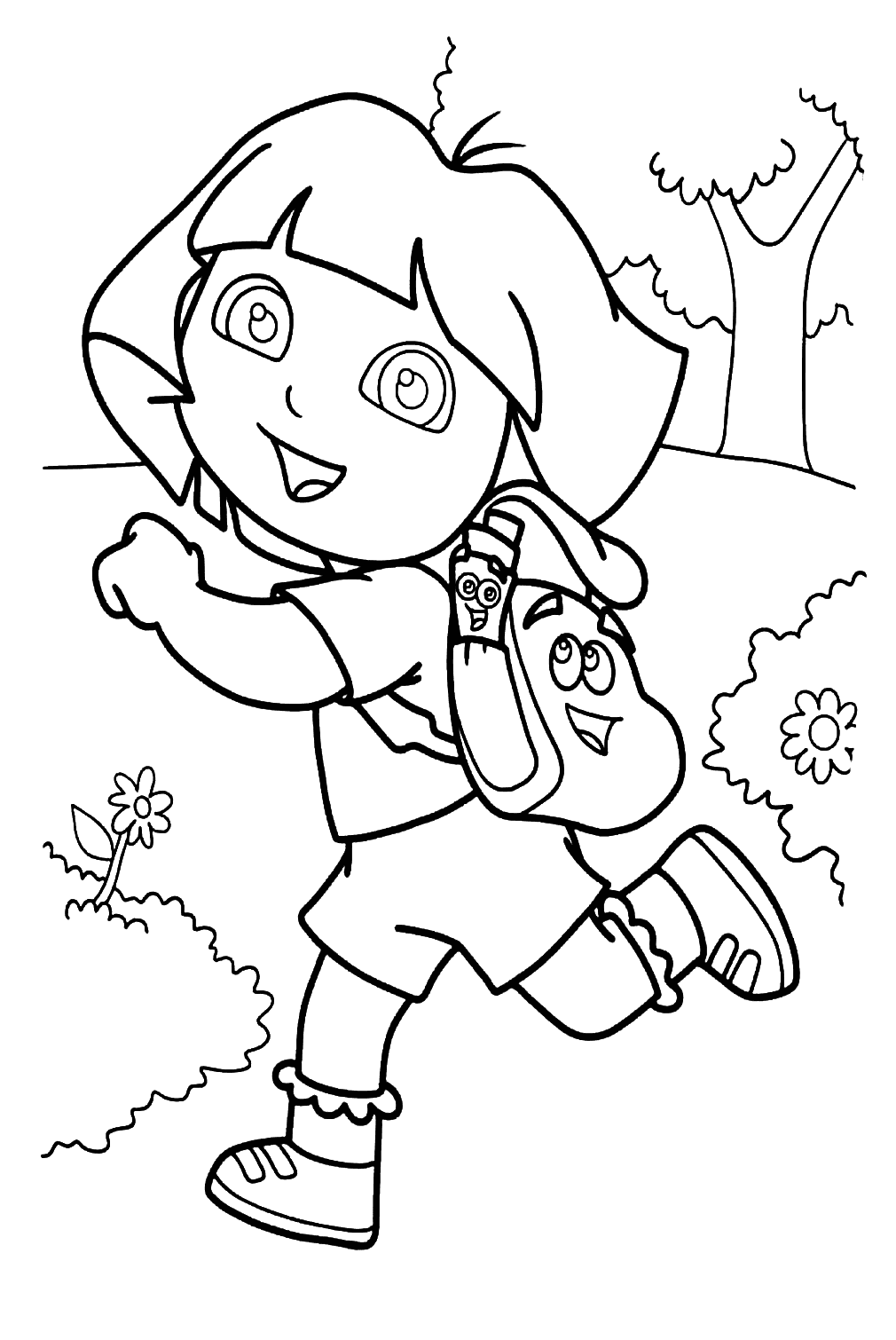
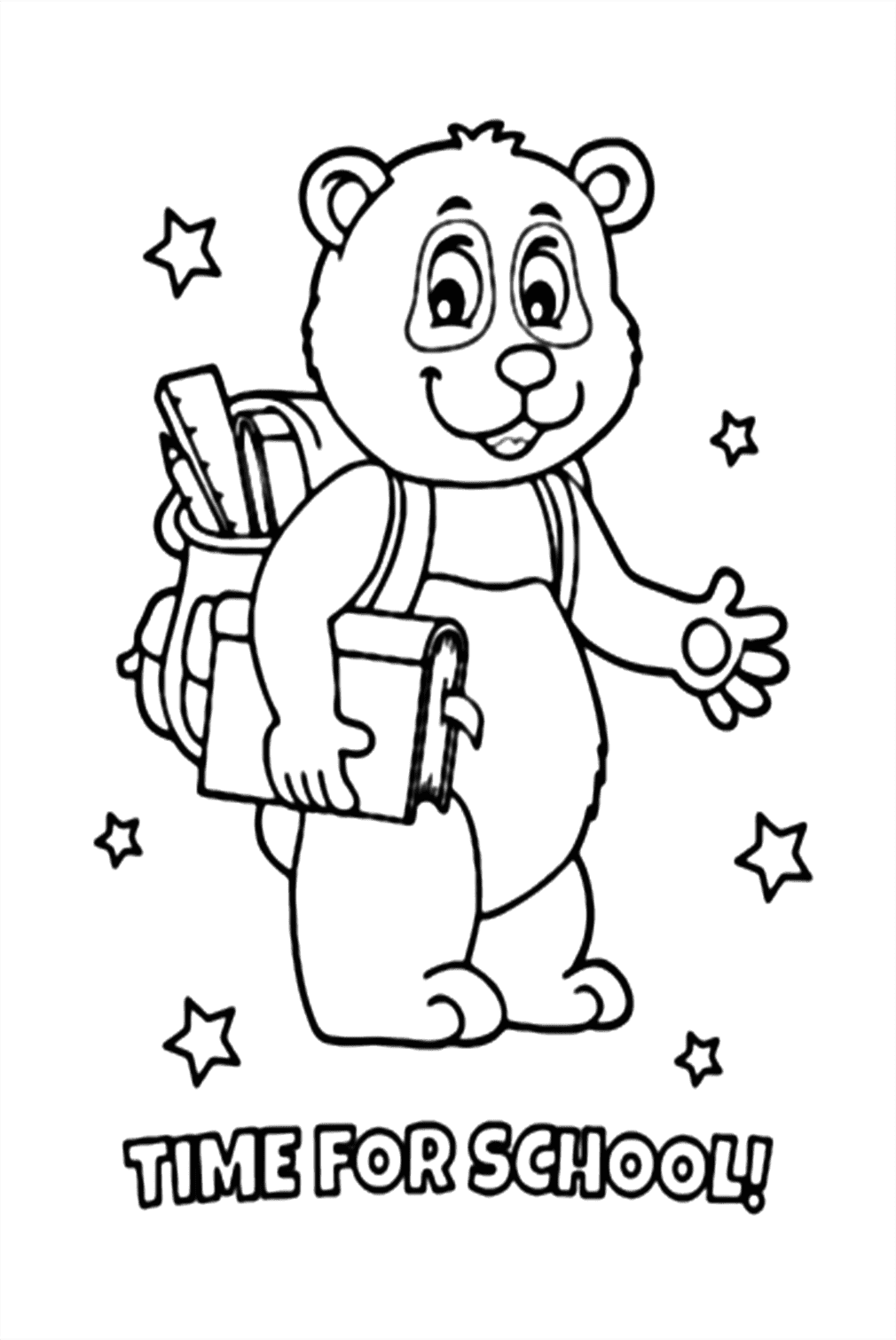
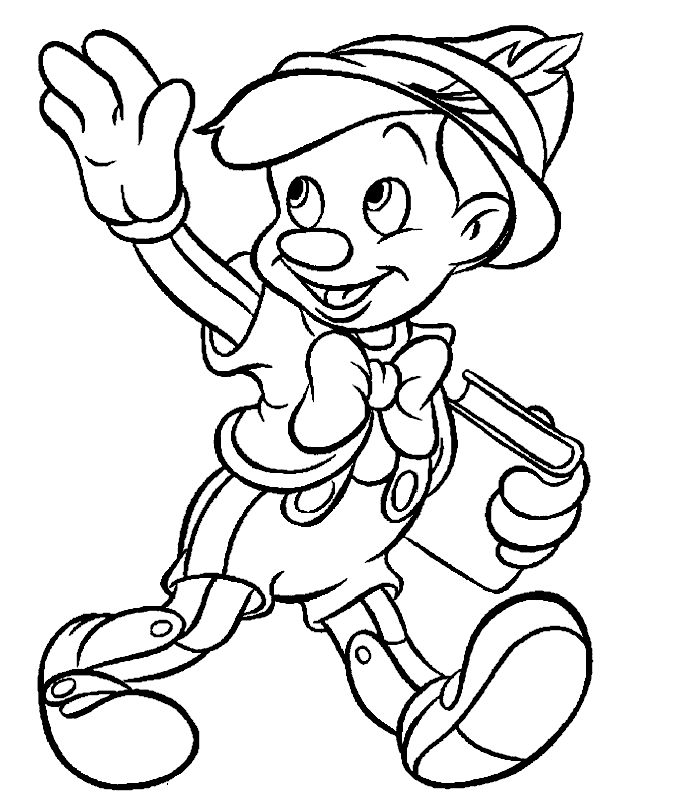
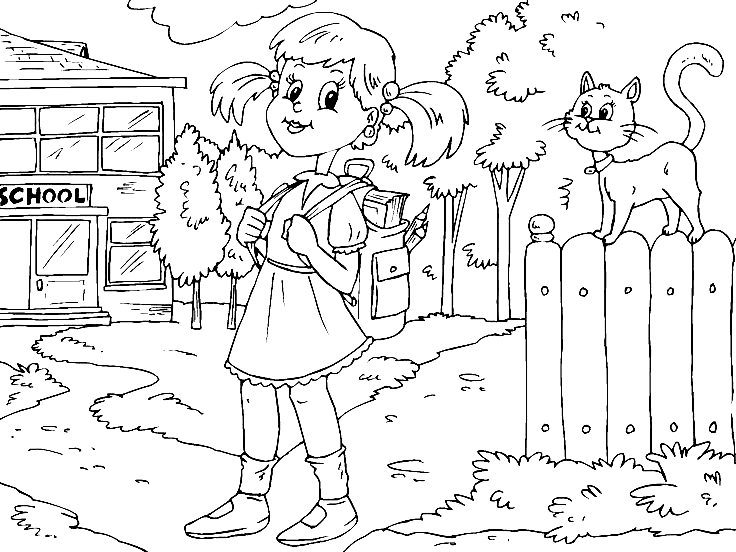
Child portrait pages – Boy on First Day Of School, Girl on First Day Of School, 1st Grade First Day Of School, Kindergarten First Day Of School, Preschool First Day Of School – focus on a single child character with backpack, supplies, and the visual markers of school readiness. These pages are the most directly useful for individualized preparation: a girl coloring “Girl on First Day of School” is essentially coloring a version of herself, walking herself through the scene emotionally. Parents can guide this: “That’s a girl going to school just like you. What do you think she’s feeling? What’s she excited about?” The page becomes a conversational entry point that is easier for a young child than an abstract discussion.
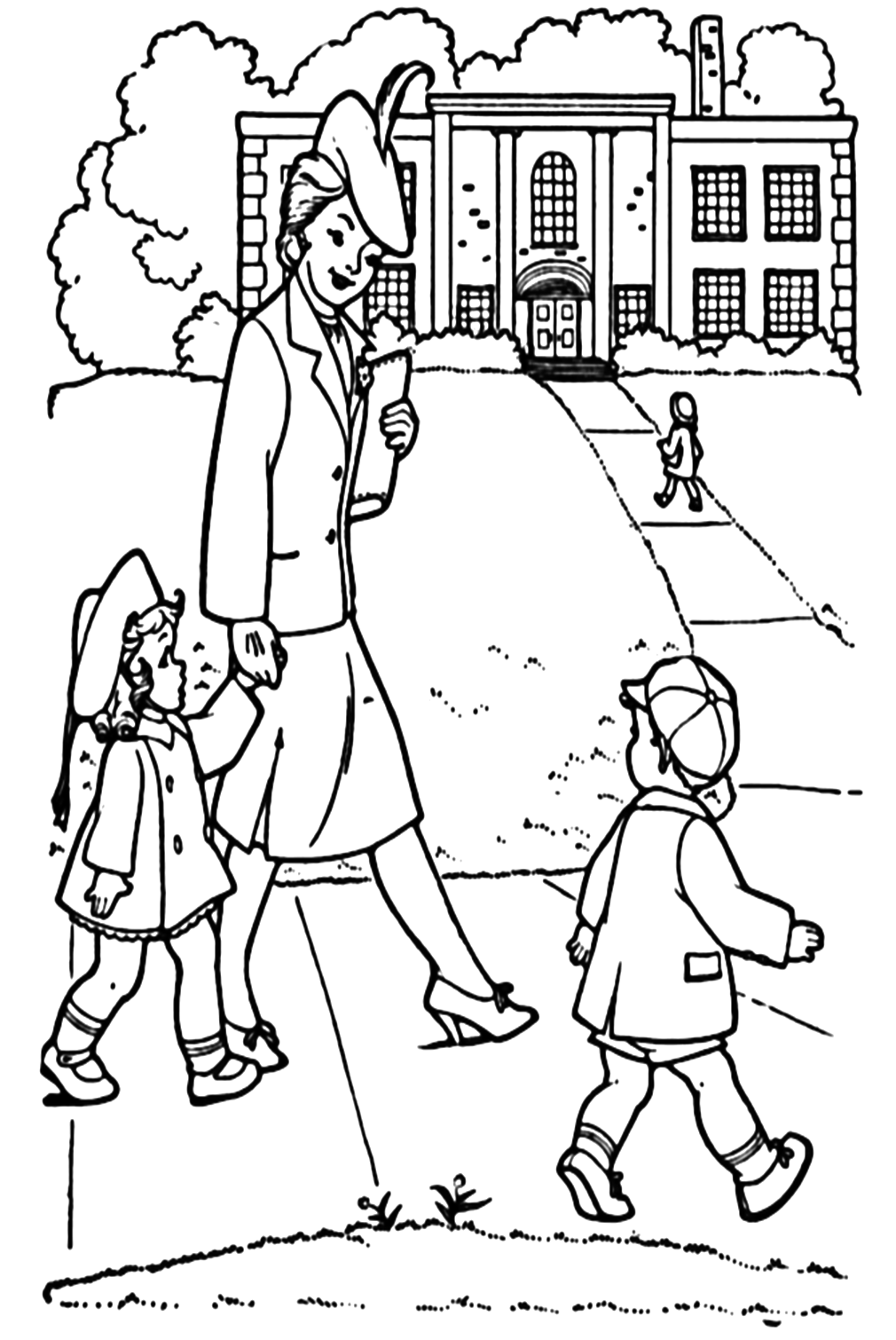
Family departure pages – Mom and Son on First Day Of School, Mother And Kids On First Day Of School – depict the goodbye moment: the scene that, for most children with separation anxiety, is the emotionally charged peak of the first day. Coloring these pages – showing a mother walking her child toward school, or saying goodbye at the gate – allows the child to experience the separation moment in a safe, controlled, creative context before it happens in real life. Research on exposure-based anxiety management consistently shows that controlled, calm exposure to the feared situation (even in a representational form) reduces the intensity of the fear response when the real situation occurs.
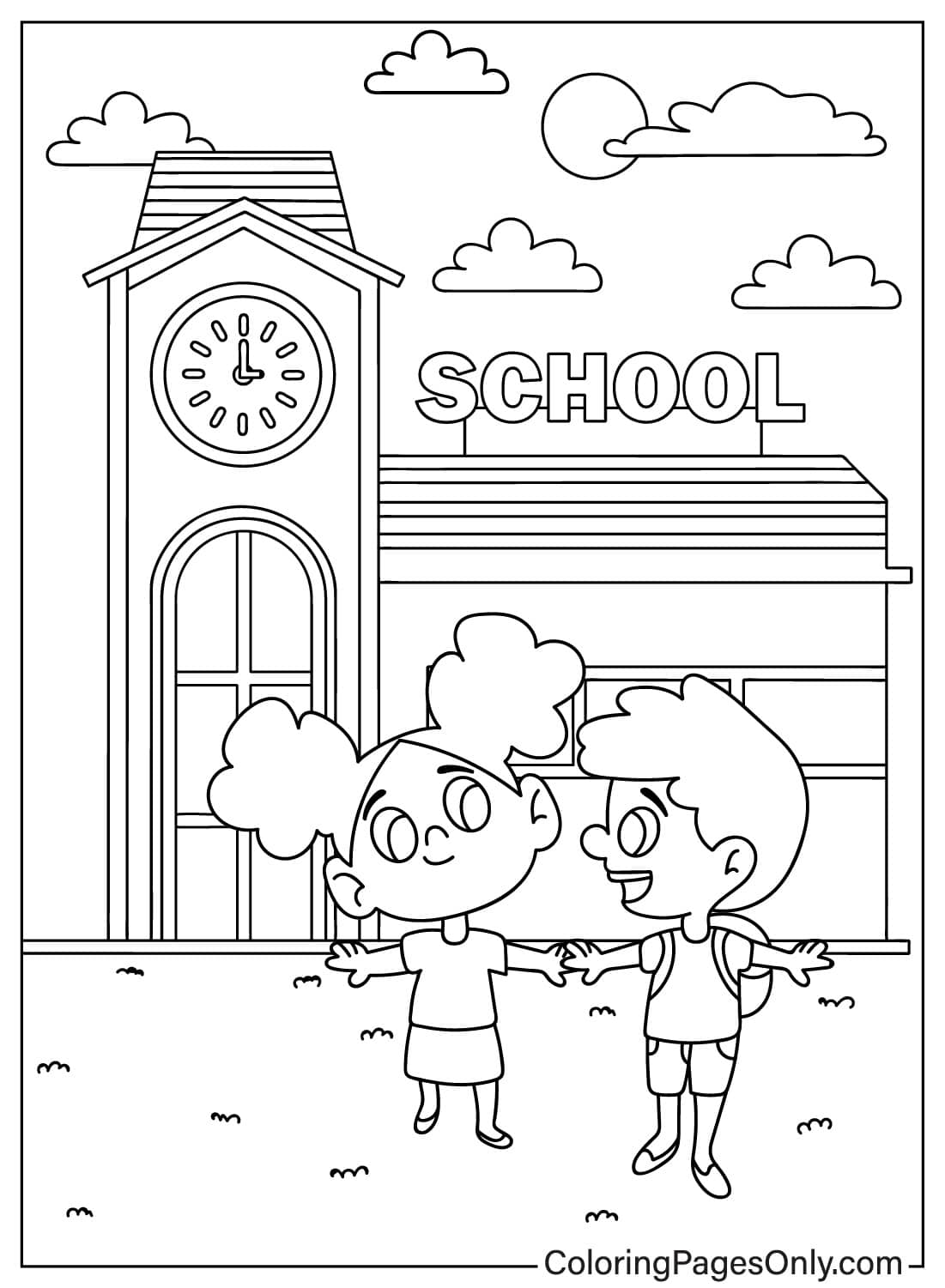
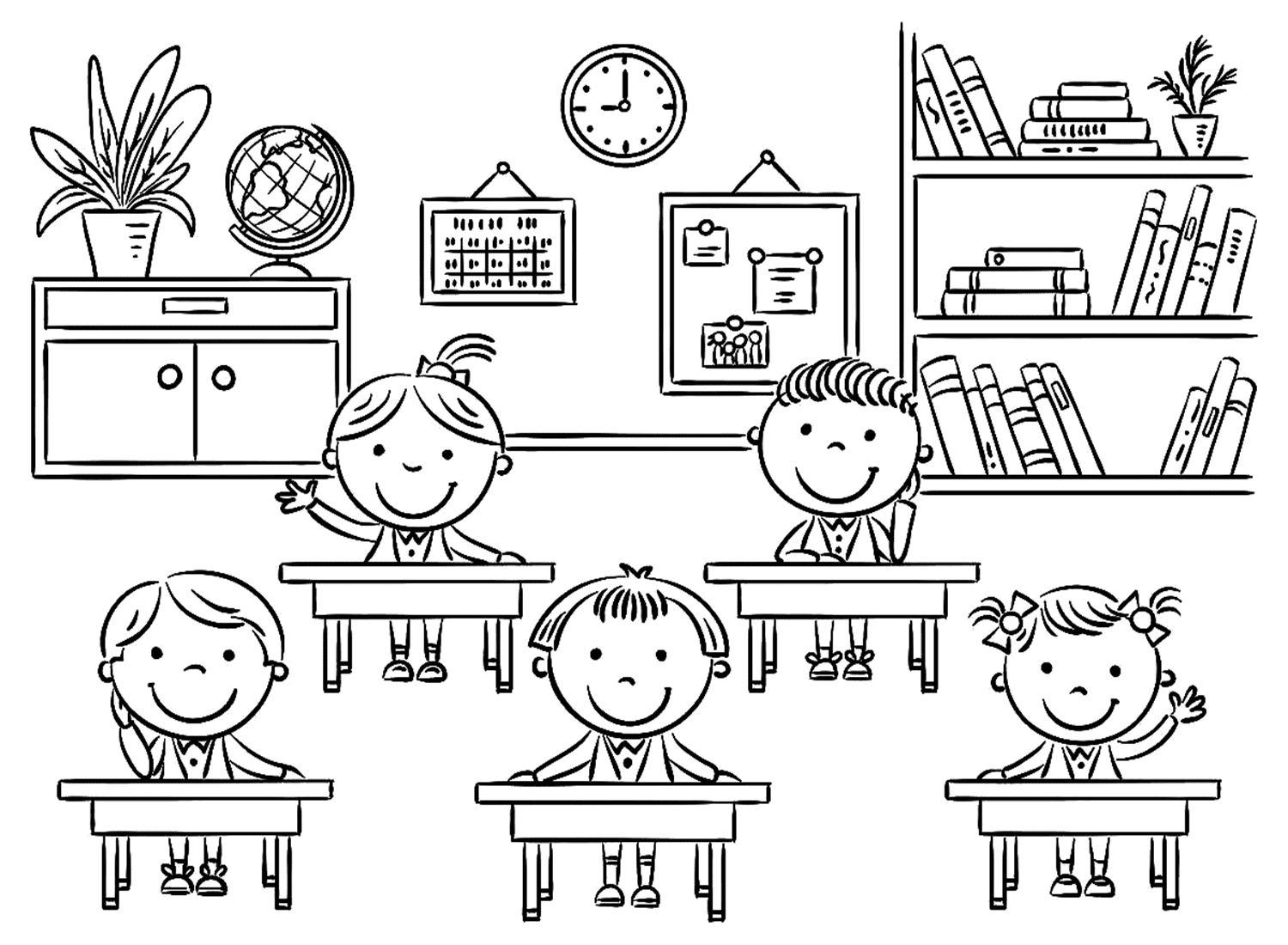
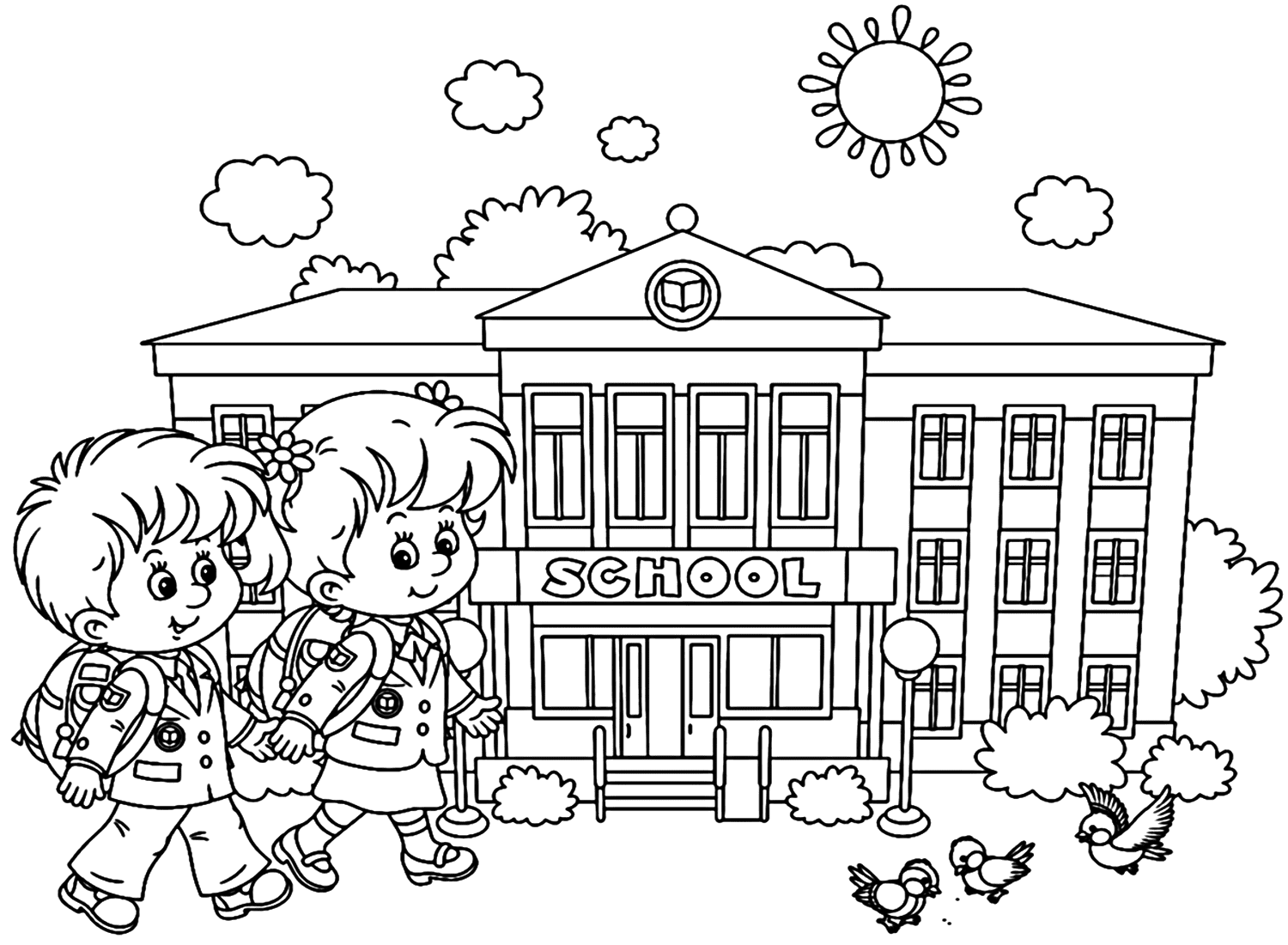
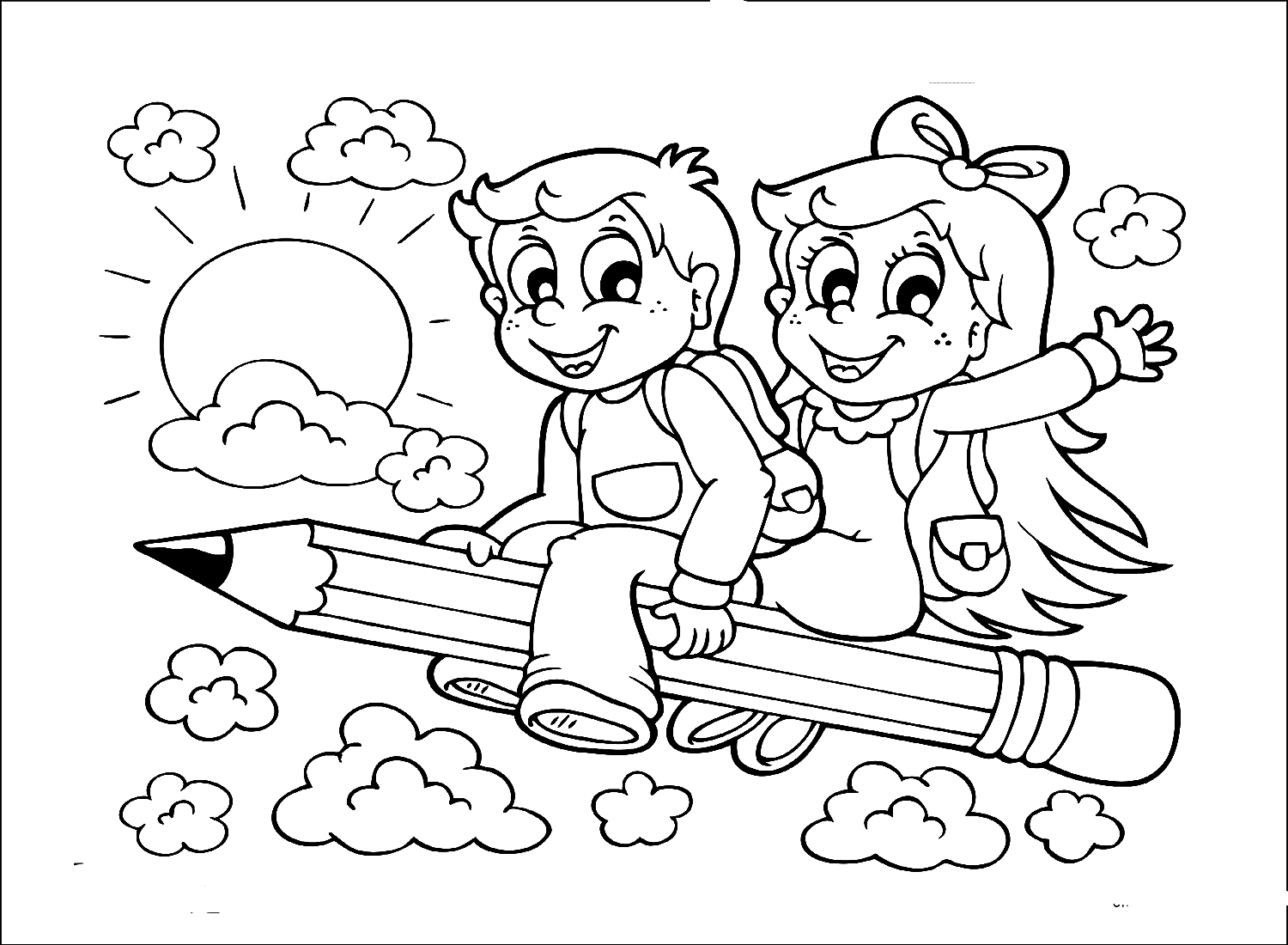
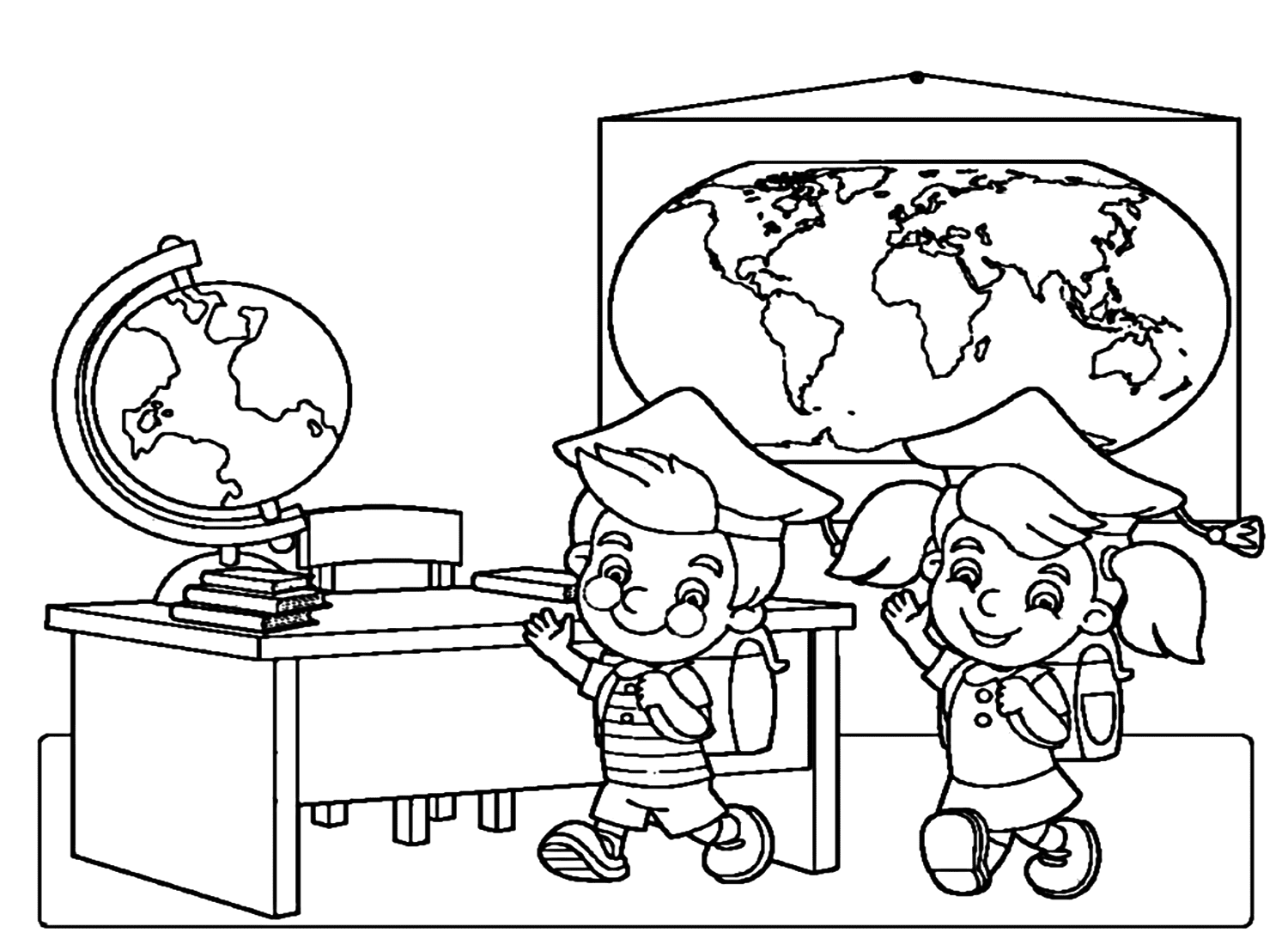
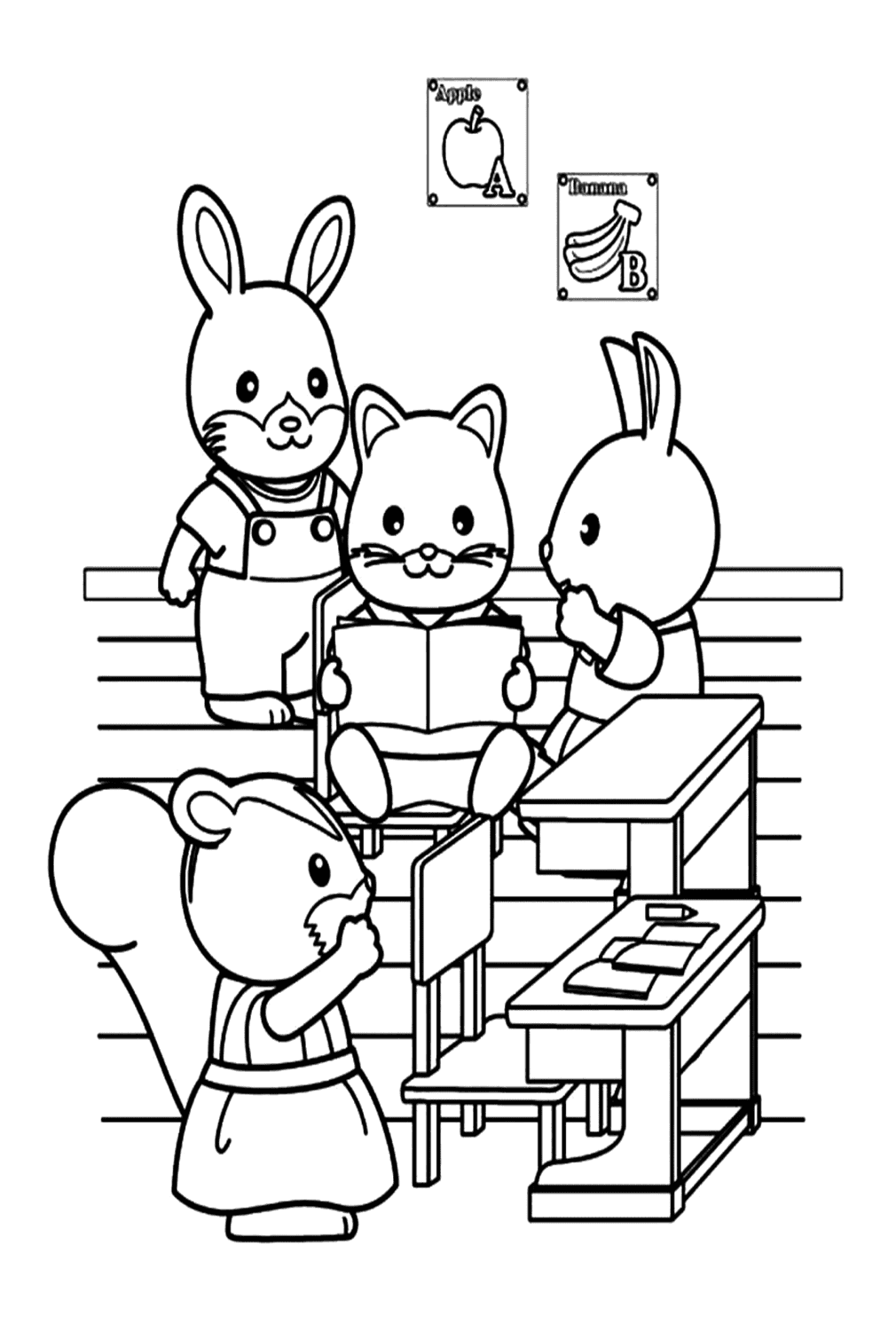
Group and classroom scenes – Children Go To School, Kid and School – show the collective experience: multiple children together, the social landscape of school. These pages answer one of children’s most common unspoken worries about school: Will there be other children? Will they be friendly? Will it feel lonely? A page showing happy children walking to school together communicates, visually and without words, that school is a place other children go enthusiastically – a social reassurance delivered through art.
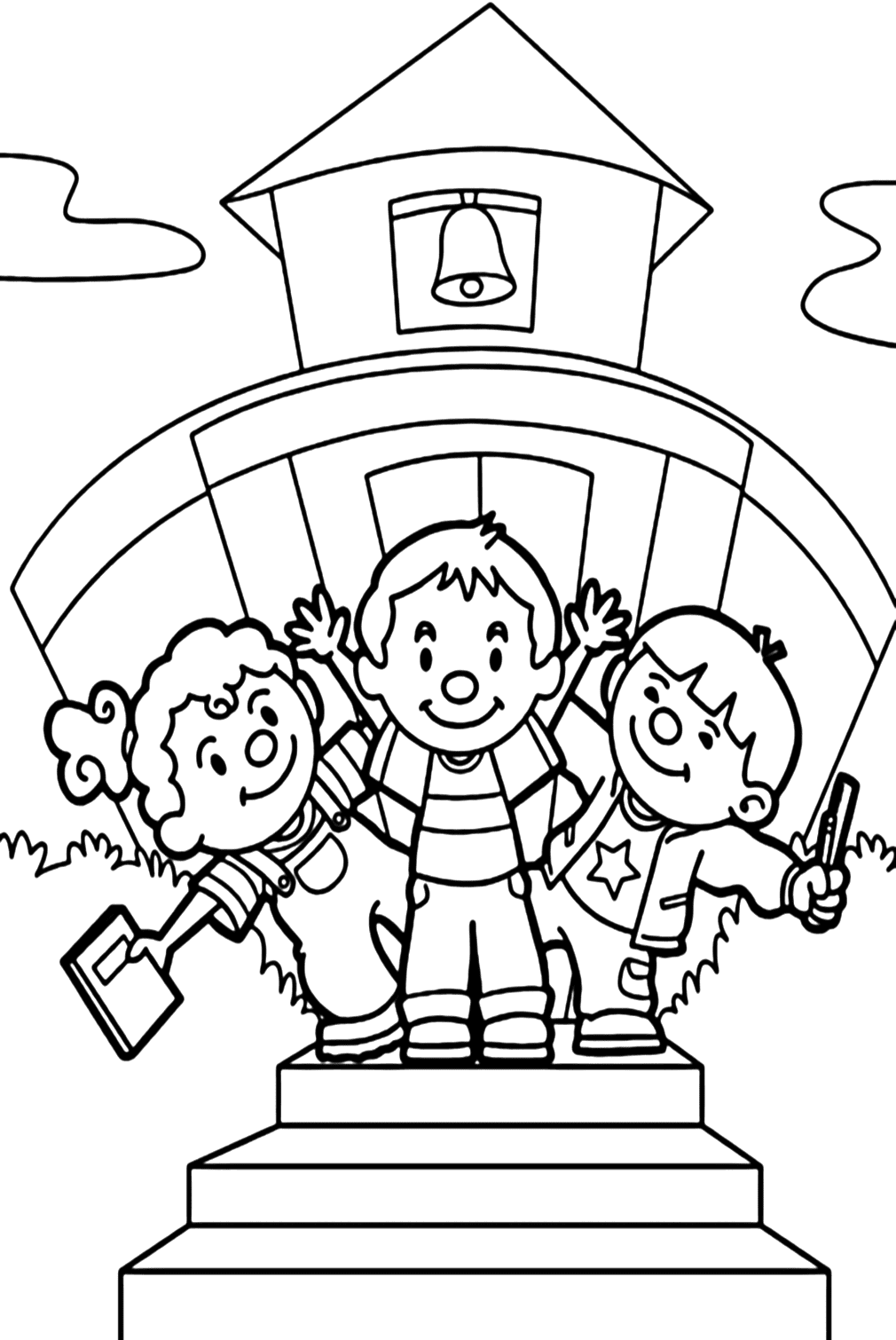
Welcome and entry scenes – Welcome to First Day of School – capture the threshold moment: the welcoming environment of a school on opening day. Teachers who use these pages in the classroom on the actual first day of school are making a particularly effective choice: the child who has colored a “Welcome to School” scene at home arrives to find a real version of the same welcoming environment, reinforcing the message that the mental image and the reality are consistent.
Playful and celebratory pages – scenes with humor, joy, and excitement – communicate the emotional register that school aspires to. The first day of school is not only an anxiety event; it is a milestone of genuine excitement and pride. Pages that show children smiling, celebrating, carrying bright supplies, and engaging with a friendly teacher give children permission to feel excited rather than only anxious – and for many children, especially those in later preschool and early kindergarten, the excitement genuinely does dominate if it is invited and named.
For Parents – Practical Tips for Using These Pages
Start coloring two weeks before the first day, not two days. The familiarization benefit of repeated visual exposure works best when there is time for repetition. Coloring one or two pages per evening in the two weeks leading up to the first day gives the child multiple opportunities to process and revisit school imagery at their own pace. A page colored two weeks before the first day can be put on the wall, where the child sees it every morning – a quiet daily reminder that school is a place they already know something about.
Let the child lead the conversation during coloring. Do not sit down with the page and say, “Let’s talk about how you feel about school.” This invites anxiety. Instead, color alongside the child and let the school imagery prompt whatever comes naturally: “What do you think that boy’s teacher is like?” “What color should her backpack be?” If the child volunteers something about their own feelings – “I don’t want to go” or “I’m nervous” – receive it calmly and without either dismissing it or amplifying it. “It makes sense to feel nervous about something new. Let’s color her pencil case red – what color should yours be?” The activity provides a natural bridge back to something manageable after an emotional disclosure.
Don’t linger at drop-off. Research from Stanford Children’s Health and multiple pediatric anxiety specialists is consistent on this point: the longer a parent stays at drop-off, the more clearly the child reads the message that the situation is dangerous. A warm, confident goodbye – “I love you, I’ll be here at 3 o’clock, have fun with your teacher” – followed by a prompt departure is far more reassuring than extended presence and consolation. The coloring work done in advance helps make this possible: the child arrives with some mental familiarity with the scene rather than encountering pure novelty at the moment of separation.
Use the pages on the actual first day morning as a brief calming ritual. Five minutes of coloring at the kitchen table on the morning of the first day – a calm, familiar activity in the familiar setting of home – provides a regulated, collected starting point before the departure. This brief coloring session is not about completing a page; it is about giving the child’s nervous system a few minutes of soothing, focused activity before the transition begins. The repetitive crayon movement slows breathing and reduces cortisol before the school day starts.
For Teachers – Using These Pages on Day One
The most powerful use of these pages is as the opening activity on the first day of school itself. When children arrive in a new classroom for the first time, they are navigating enormous amounts of new information simultaneously: new room, new people, new sounds, new smells, new expectations. Providing a coloring page immediately upon arrival gives each child a single, manageable, familiar task that grounds them: hold a crayon, color a picture. Every child already knows how to do this. Every child already knows what it feels like to do this. In a room full of unfamiliar things, the coloring activity is an anchor of the familiar.
Teachers who use first-day coloring pages as the opening activity consistently report two specific benefits: children settle faster and with less distress, and the coloring session provides a natural social context for early peer interaction. Children sitting at a table and coloring will make spontaneous observations to their neighbors – “I’m making her backpack blue,” “That dog is funny” – which are exactly the low-stakes social exchanges that start friendships in ways that structured introductions do not.
The pages also give teachers a low-pressure observation window. While children color, teachers can move around the room, kneel beside individual students, make brief warm connections without the pressure of direct eye contact that some anxious children find overwhelming, and begin learning each child’s name and basic communication style before the structured activities of the day begin.
Coloring Tips for First Day of School Pages
Give the child’s character their own colors. For pages showing a child figure, invite the child coloring the page to make choices that reflect themselves: “What color hair should she have?” “Should his backpack look like yours?” “What color is your favorite crayon – let’s make hers that color.” This personalization deepens the child’s identification with the character on the page and makes the visualization more powerful. A girl who has given the page’s child figure red hair and a purple backpack has, in a small but real sense, walked herself to school in the picture.
School buildings – warm yellows and brick reds. School buildings in illustration are most reassuring when rendered in warm, welcoming tones: warm golden-yellow for the exterior walls, deeper rust-red or terracotta for brick details, bright green for grass, vivid blue for a clear sky. Cool, grey, or institutional colors make the building feel less welcoming. The color choices the child makes for the school building communicate something about how they emotionally construct that environment – and warm choices actively warm the association.
Teachers – bright, non-threatening colors. Teacher figures in these pages should be colored in warm, approachable tones: bright clothing in primary colors, a warm smile rendered in a gentle pink, hair in a friendly natural color. The teacher’s visual characterization in the coloring page is an opportunity for the child to construct a mental image of a friendly adult – and the page should support this, not undermine it with dark or cold color choices.
Color backpacks and school supplies in vivid, exciting colors. The school supplies – pencil cases, lunchboxes, crayons, notebooks – are the child’s domain in the school experience. These are their objects, their tools, their connection to home in the new environment. Coloring backpacks in the most vivid, saturated, personally meaningful colors the child wants (even if it’s purple polka-dot) gives them creative ownership over the one element of the first day that genuinely belongs to them.
Group scenes benefit from a variety of skin tones. Pages showing multiple children together are most inclusive and most relationally useful when the children are colored with diverse skin tones – reflecting the actual range of children who attend schools and sit in classrooms together. Guiding a child to choose different skin tones for different figures in a group scene is also a natural, zero-pressure introduction to the idea that classrooms contain children who look different from each other – a fact that is easier to encounter through a coloring page than through abstract discussion.
5 Activities
The school story walk. Take one of the multi-character or outdoor school scene pages (Children Go To School, Welcome to First Day Of School, or Kids Arriving at School). Before coloring, create a simple story about what is happening on the page: “These children are all heading to school. What do you think they’re talking about? What do you think happens next, when they walk through the door?” Let the child dictate the story while you write it down. Then color the page together, and read the story back aloud when finished. This narrative exercise does two important things simultaneously: it gives the child creative control over the school scenario (which reduces helplessness anxiety – “I can imagine good things happening there”) and it activates the same brain systems that visualization-based anxiety preparation exercises use in clinical settings. A child who has narrated a happy school story and colored the scene has rehearsed a positive first-day narrative that competes with anxious predictions.
The “things I’m excited about” coloring session. Print the page most relevant to the child’s specific grade (Kindergarten First Day Of School, Preschool First Day Of School, or 1st Grade First Day Of School). While coloring, take turns naming one thing each person is looking forward to about the new school year: “I’m excited that you’ll make a new friend.” “I’m excited about my new markers.” “I’m excited to see what books are in the classroom.” Write these on small sticky notes and attach them to the finished colored page. This activity deliberately redirects cognitive attention toward positive anticipatory content rather than anxious anticipatory content – a technique that pediatric anxiety specialists describe as “positive priming.” The finished decorated page, with its excited predictions written on it, can be displayed in the child’s room where they see it each morning in the week before school starts.
The goodbye ritual practice. Use the Mom and Son on First Day of School or Mother and Kids on First Day of School page as a rehearsal tool for the drop-off goodbye. Color the page together. Then, while the page is visible, practice the drop-off goodbye routine three times: the child pretends to walk through the door, the parent says the goodbye they will say on the real first day, the child says what they will say back, and they practice the hug, high-five, or hand squeeze that will end the goodbye. Having a clear, rehearsed, consistent goodbye ritual is one of the most evidence-backed strategies for reducing first-day separation anxiety – children who know exactly what their goodbye will look like are significantly less distressed by it than children who encounter it without a script. Using the coloring page as a visual reference point during the rehearsal connects the practice to a physical artifact that the child can keep.
The classroom welcome bunting. Print 4–6 different pages from the collection and color each one with a focus on bright, celebratory colors – focusing on pages with welcome scenes, happy groups of children, or school images that feel joyful and vibrant. Cut around the images (not necessarily precisely – rough shapes are fine), punch a hole in each, and string them together on a ribbon to create a paper bunting. Display the bunting in the child’s room, or (with teacher permission) bring it to be displayed in the classroom on the first day. This activity gives the child creative ownership over the first-day environment – even in a small way. A child who helped make something that hangs in their classroom arrives on the first day to see something familiar that belongs to them. The bunting serves the same function as a comfort object, but one that is displayed rather than carried, and one that the child created rather than received.
The “same and different” observation game. After the first day of school, sit down with the school scene pages that the child colored before the first day and look at them together. Ask: “What was the same as the pictures? What was different? Did the classroom look anything like you imagined it? Did the teacher look friendly like the one in this picture? Was there anything that surprised you?” This post-first-day reflection activity closes the loop between the pre-school coloring preparation and the real experience, reinforcing the connection between the mental rehearsal and the actual event. It also gives the child a structured, low-pressure context to process the first day – talking through “same and different” is easier than talking through “how did you feel” for many young children, because it is concrete and observational rather than emotional and abstract. And it naturally surfaces both the things that went well and the things that were unexpected, which can then be discussed calmly over subsequent days.