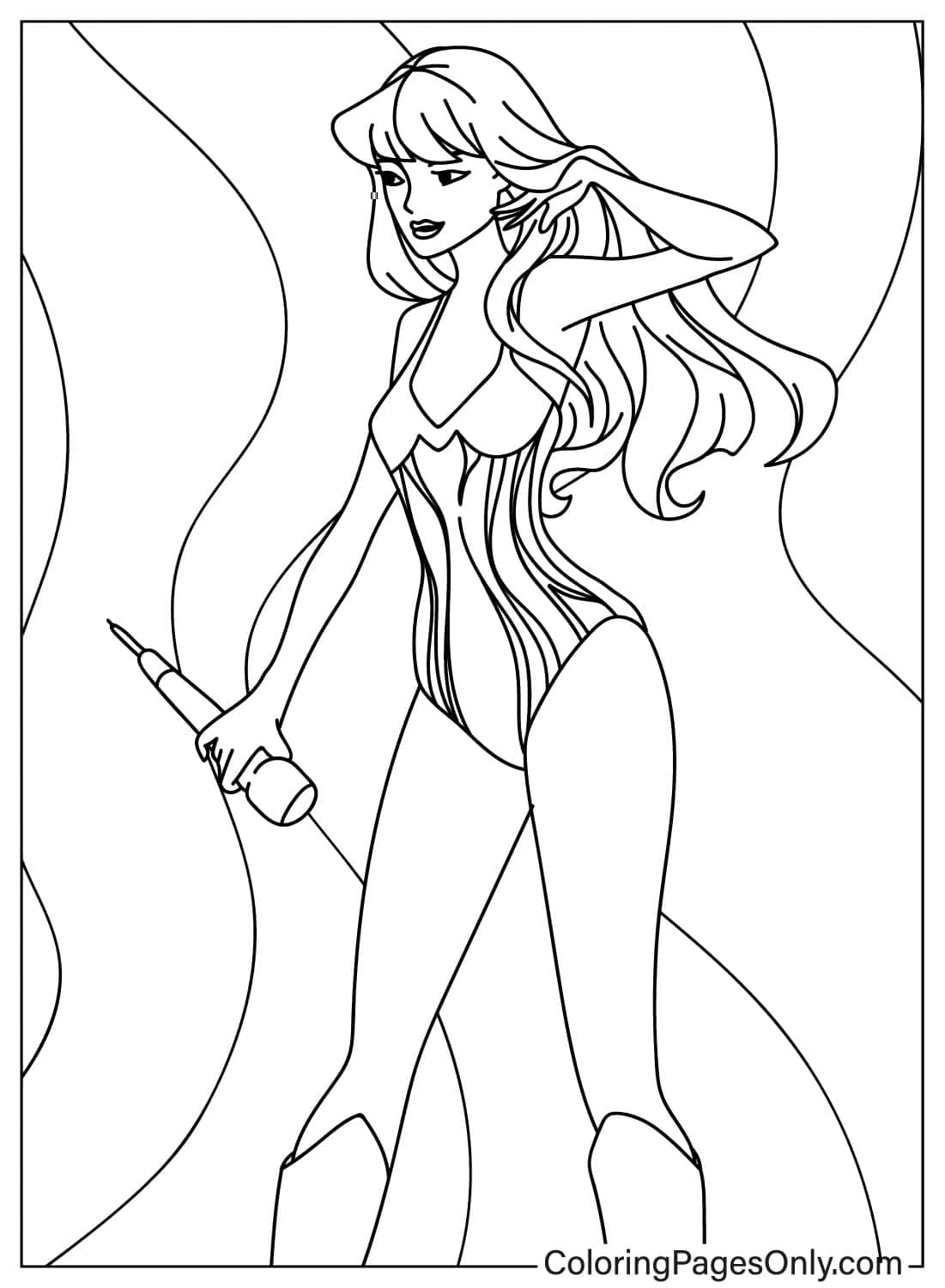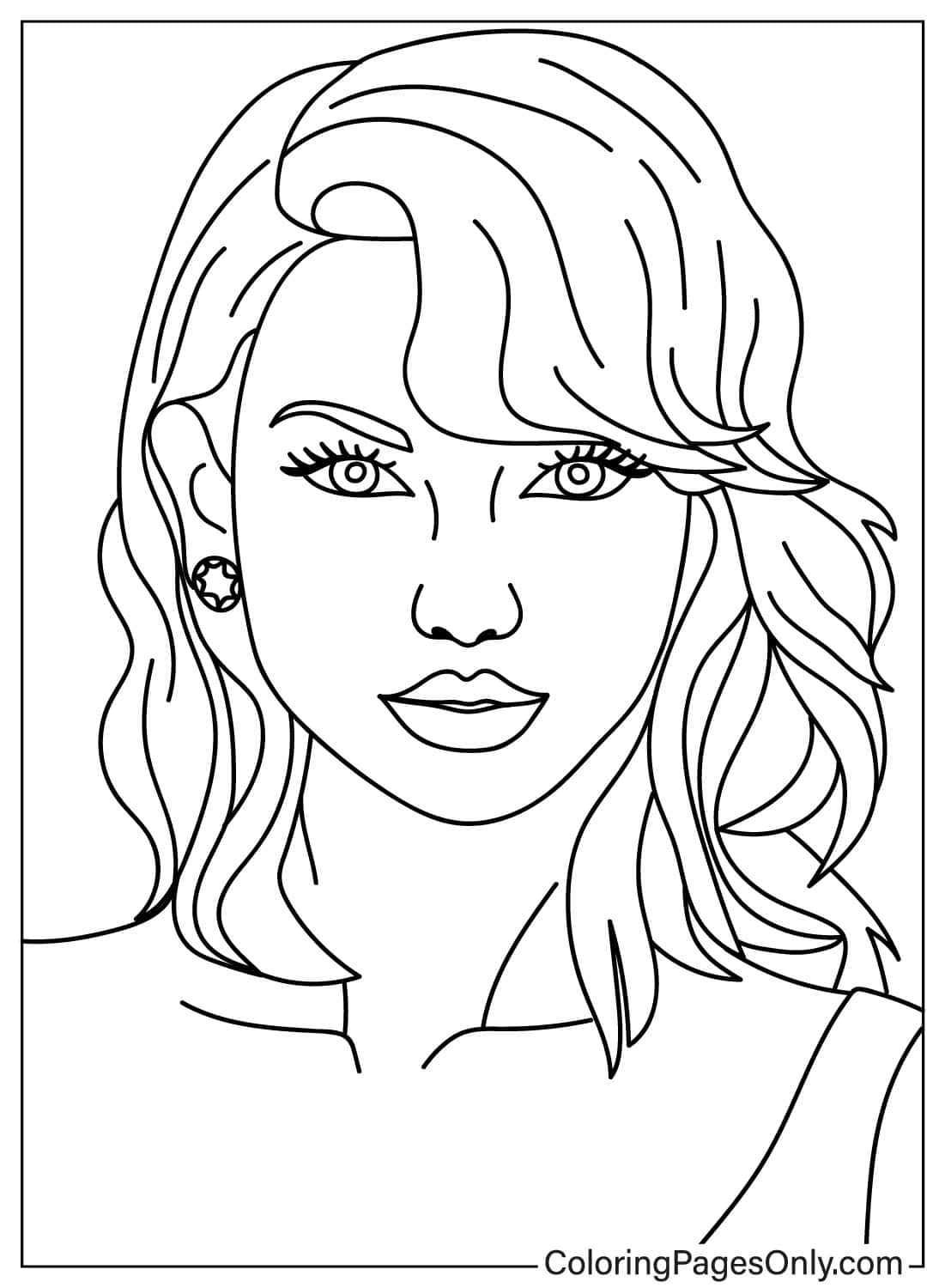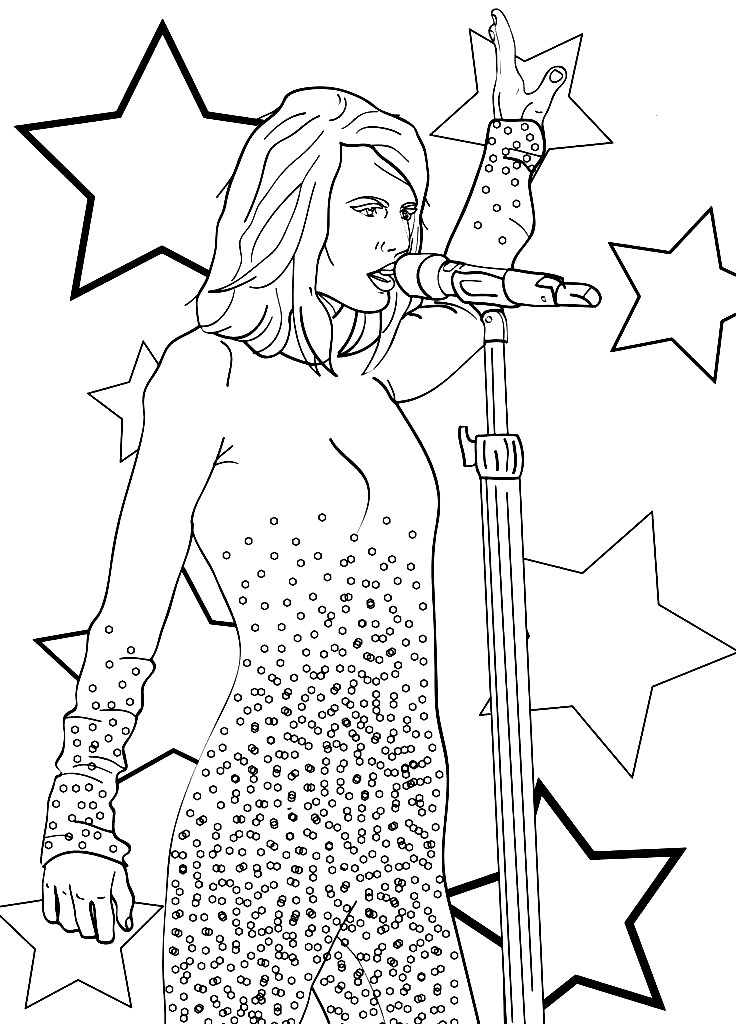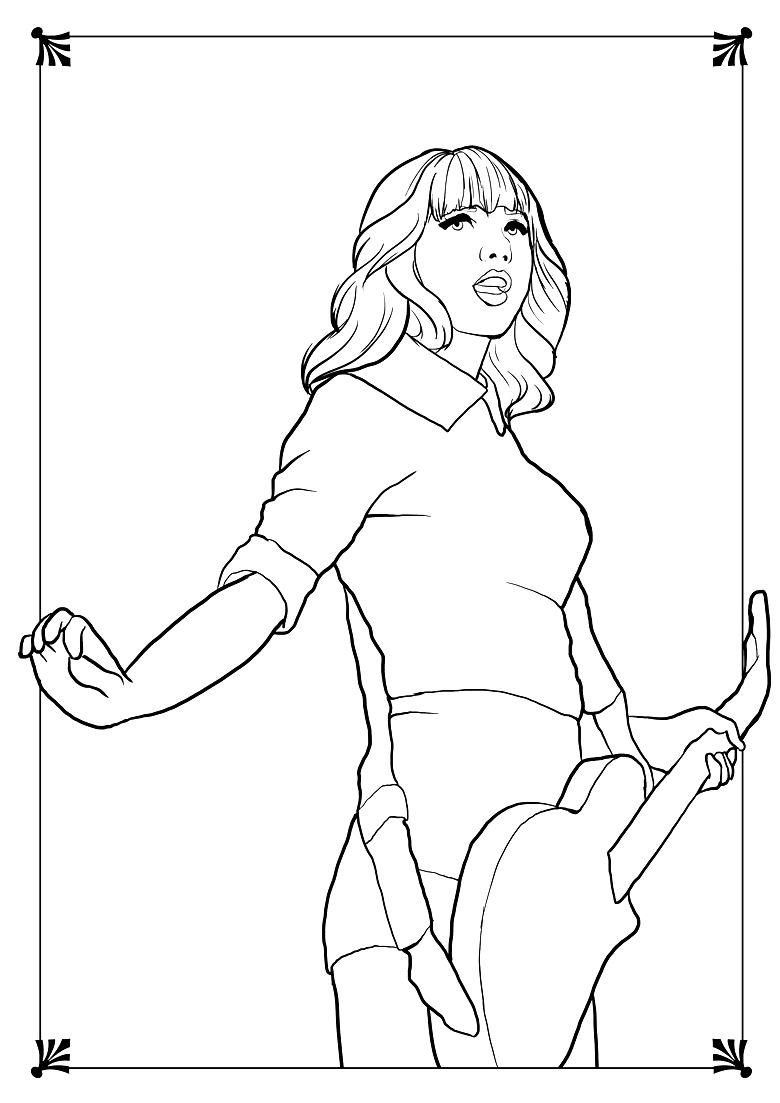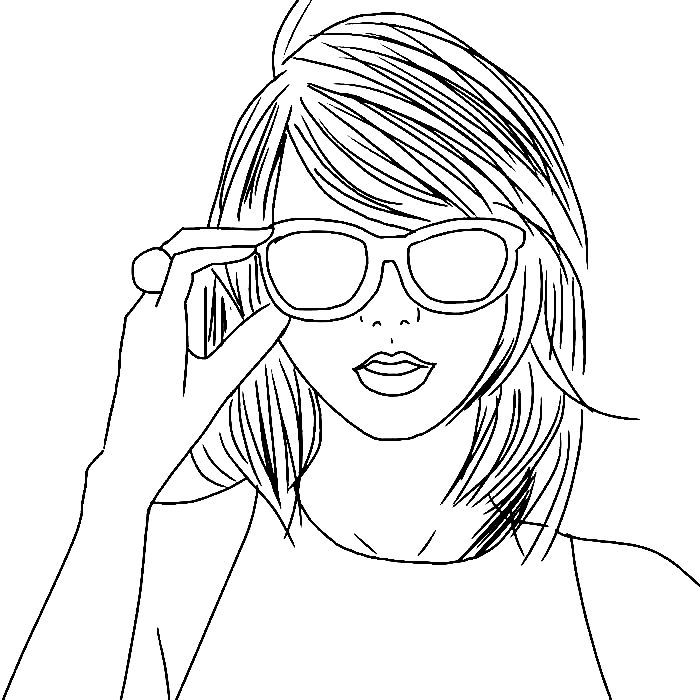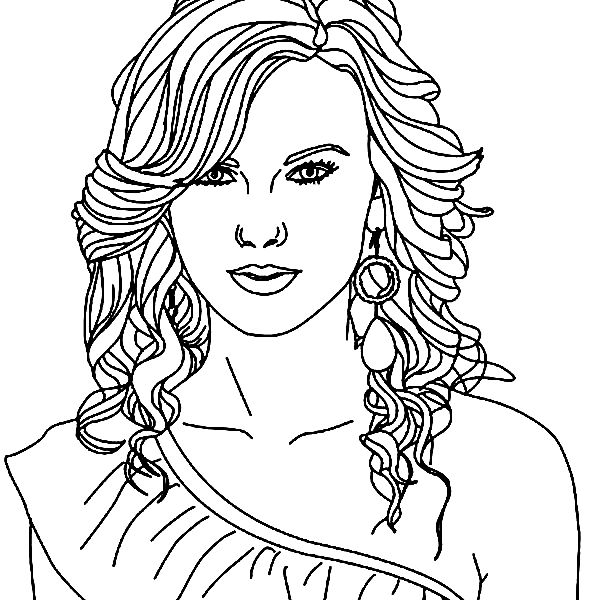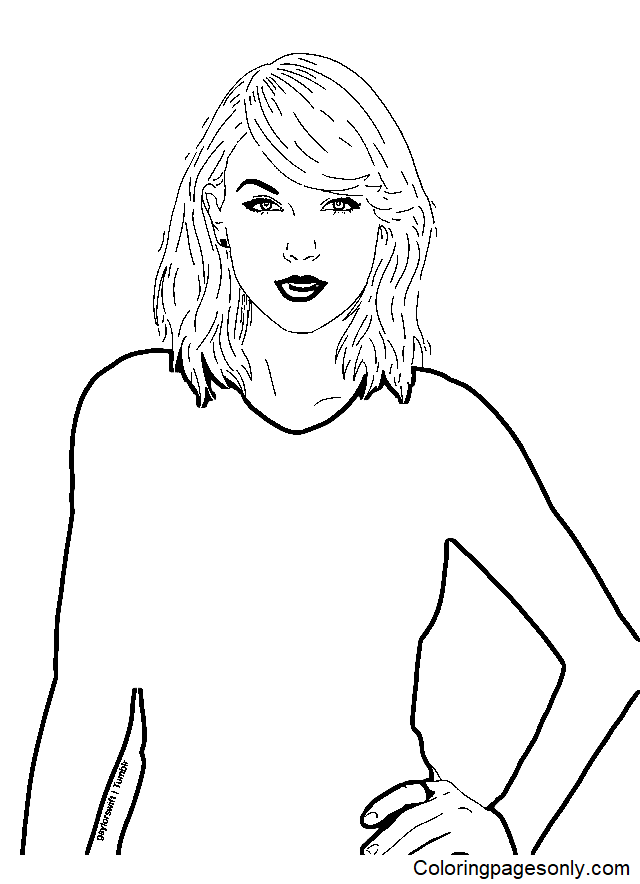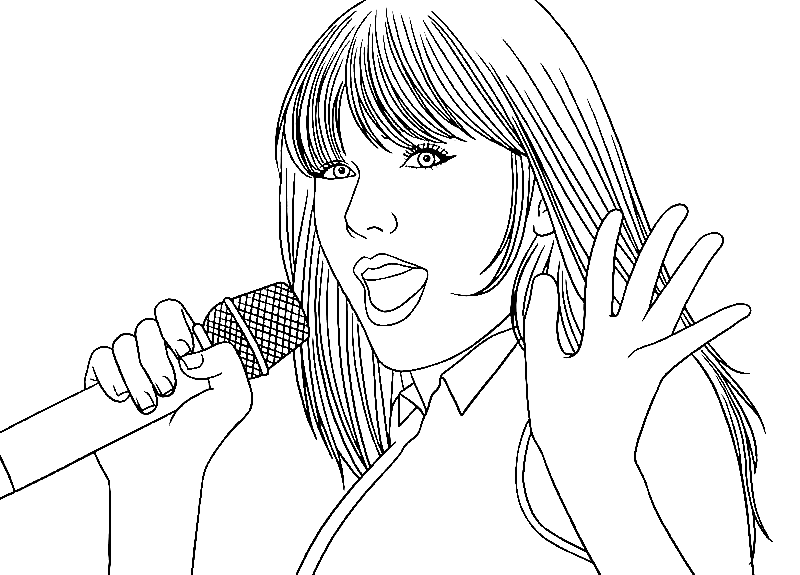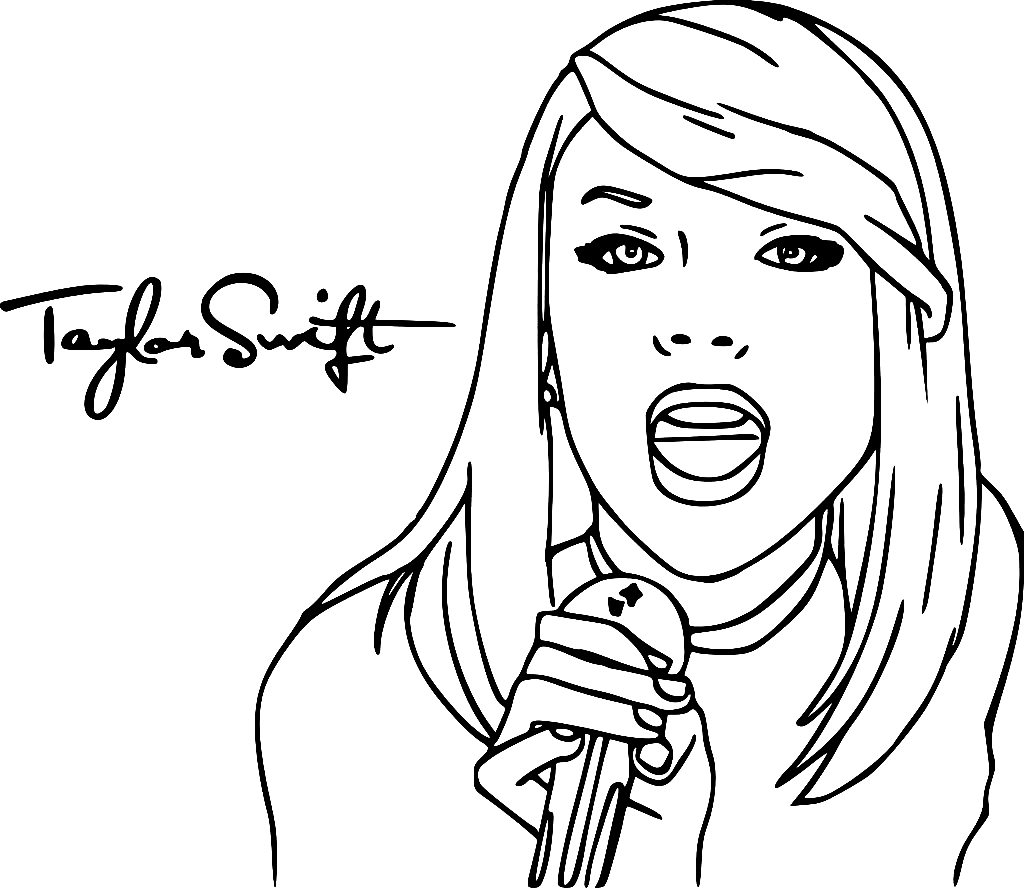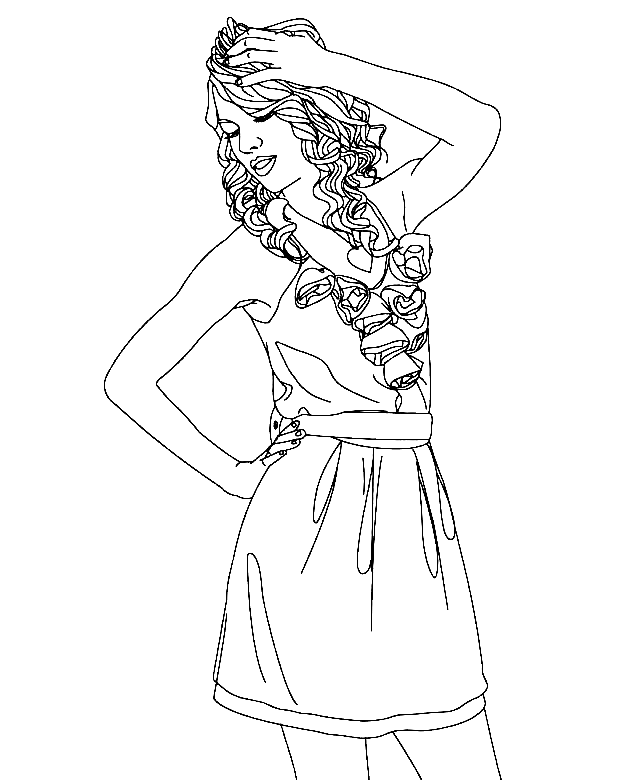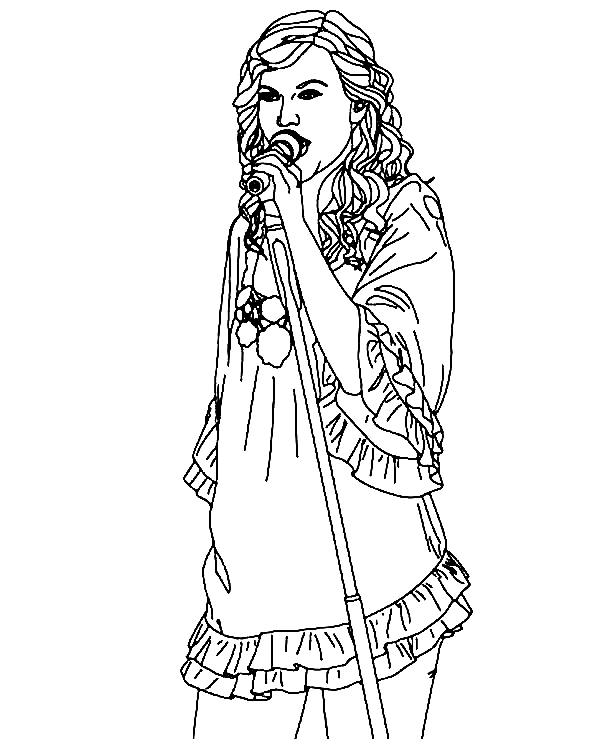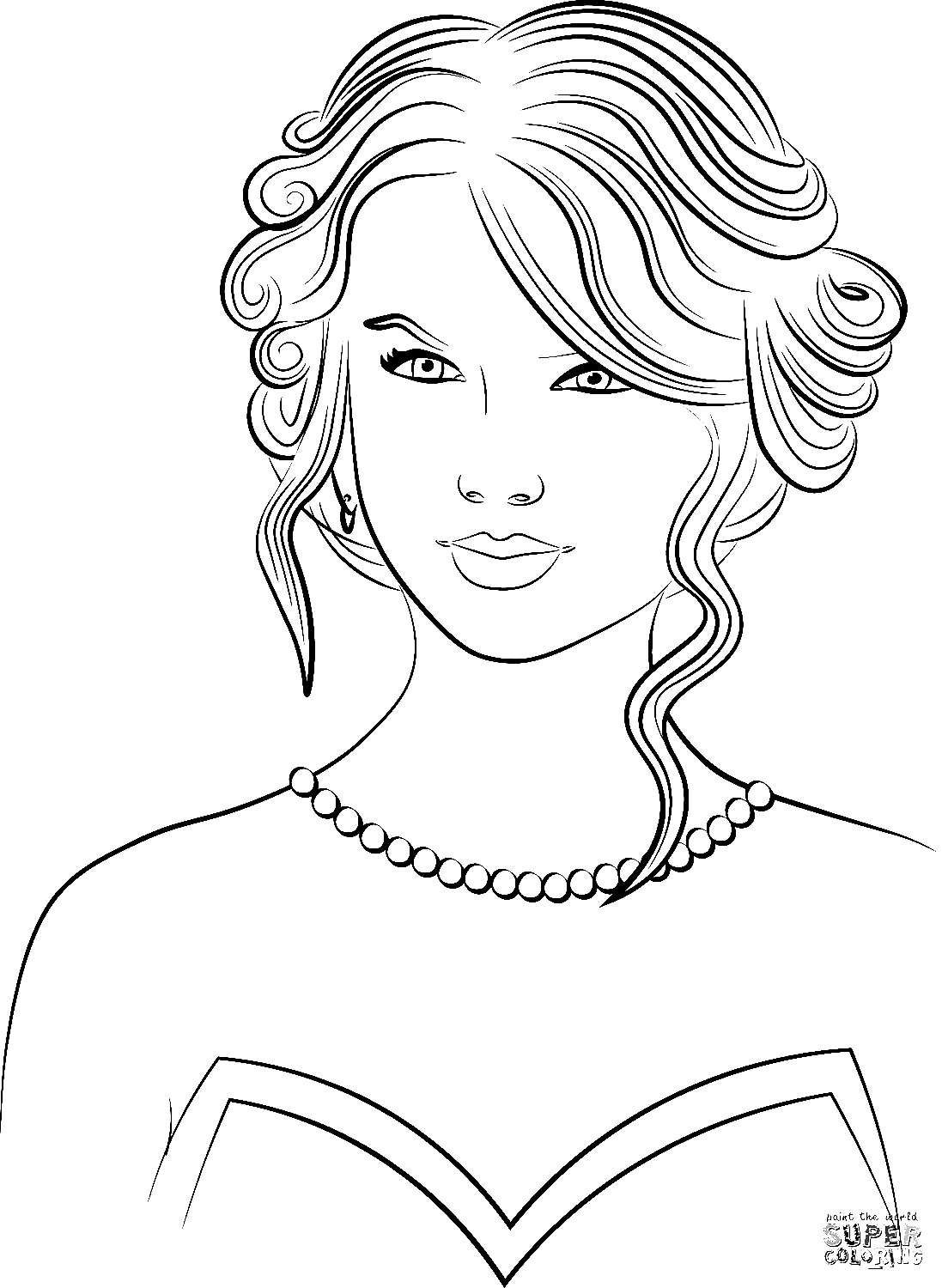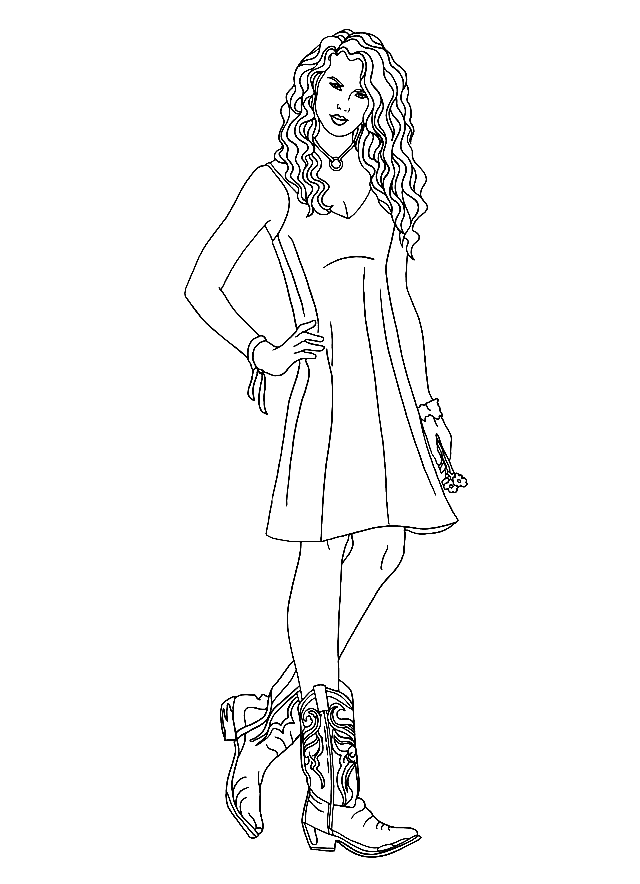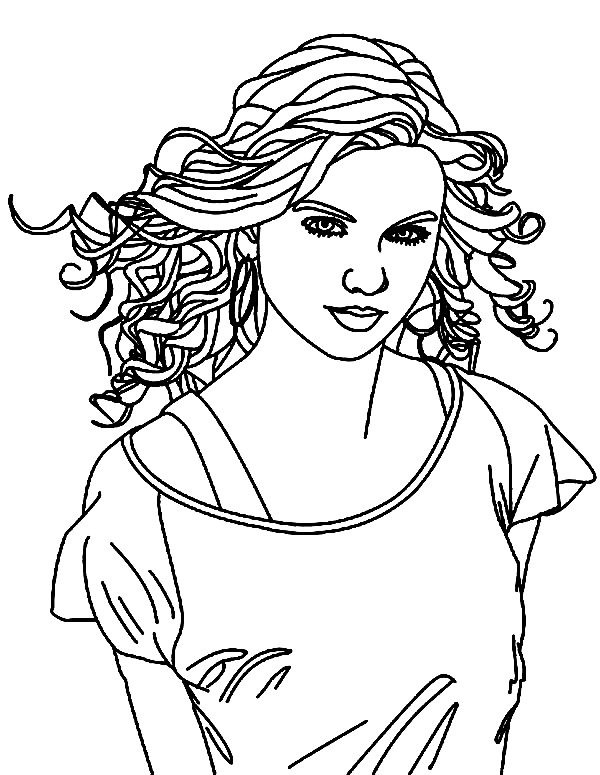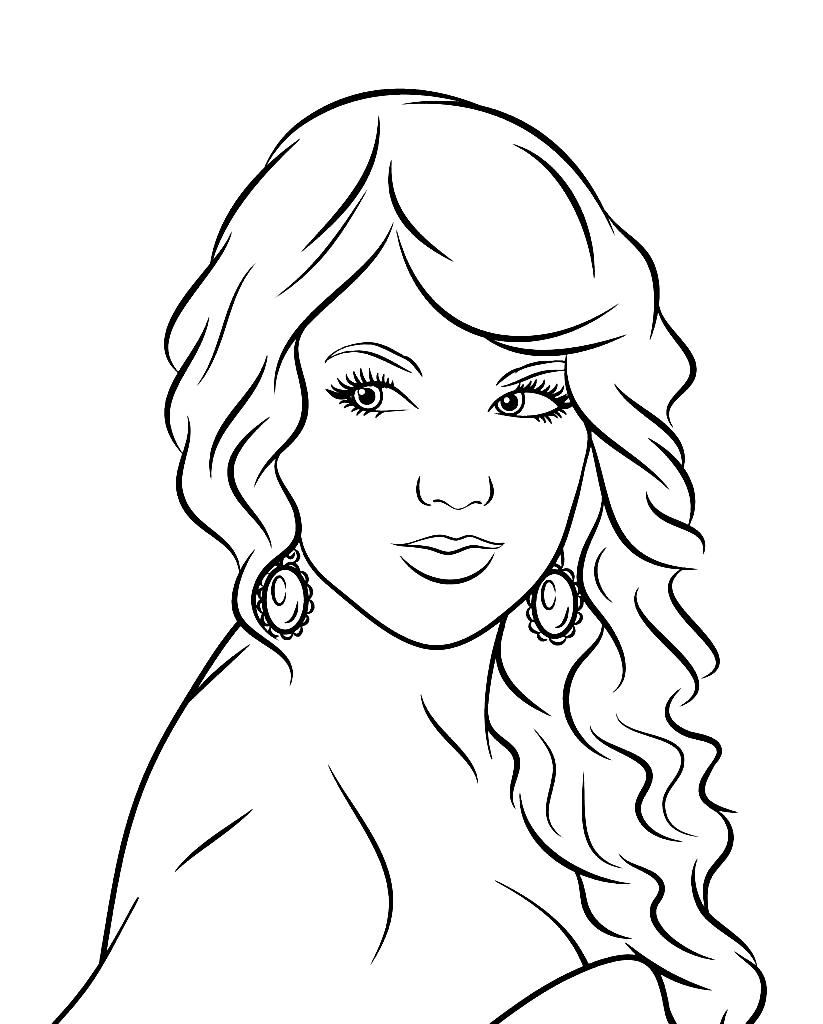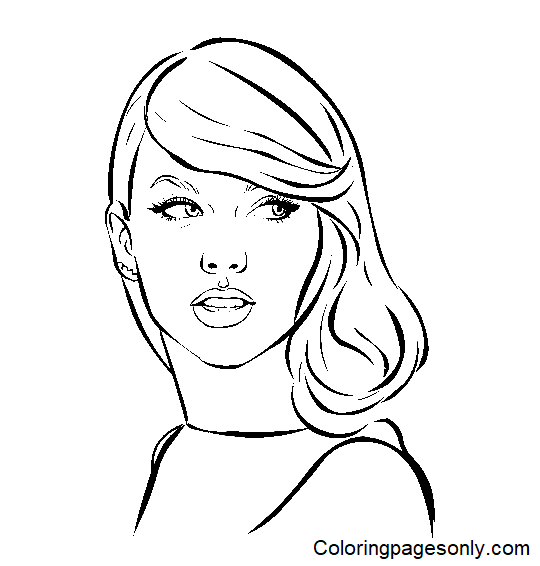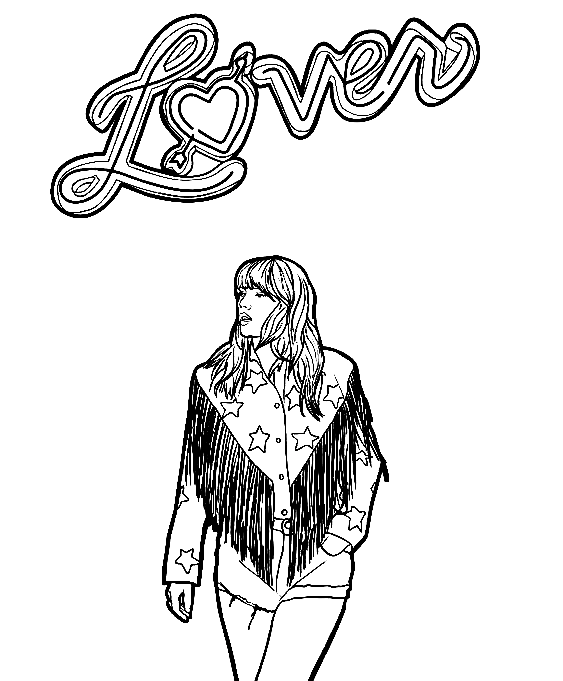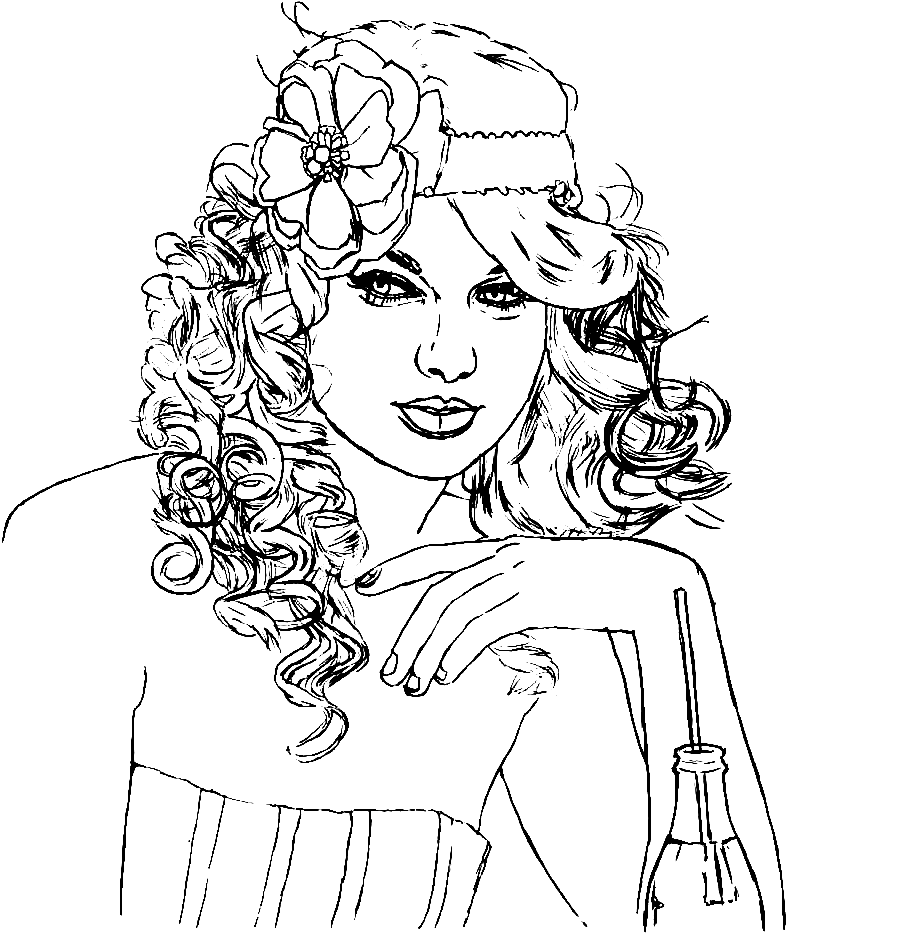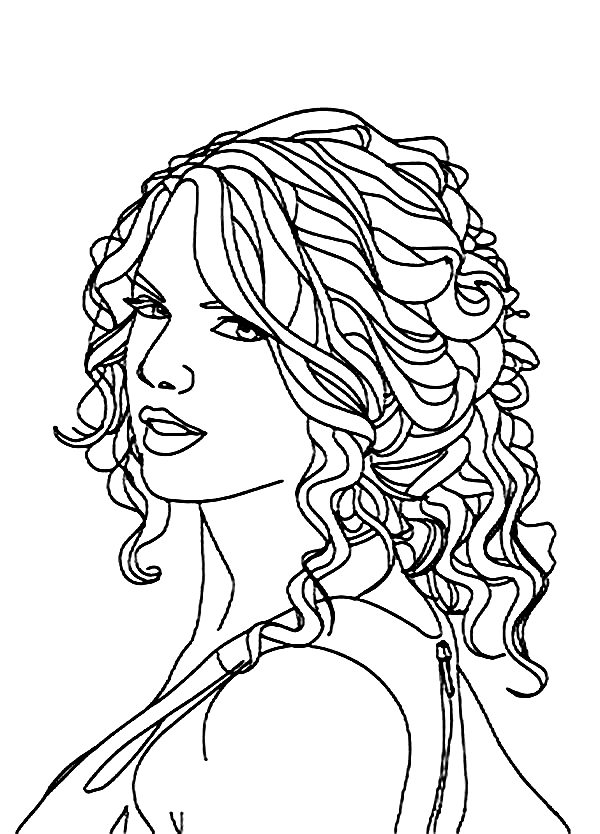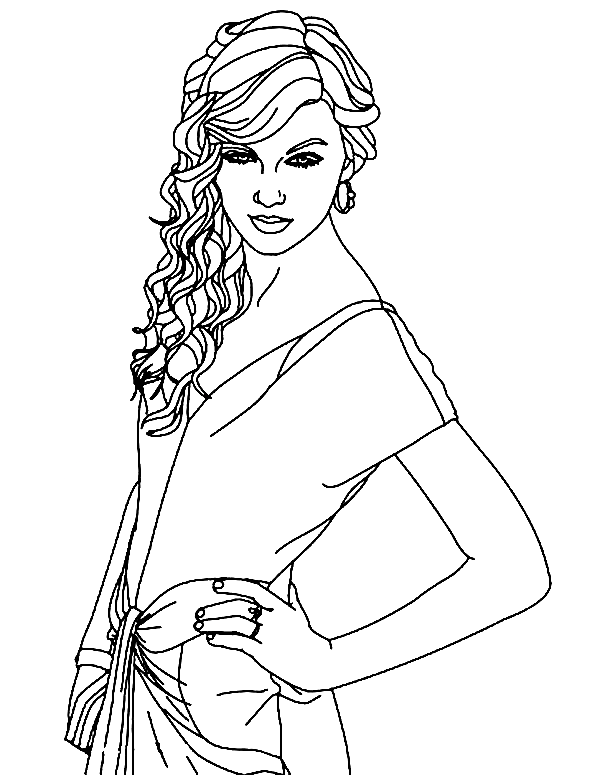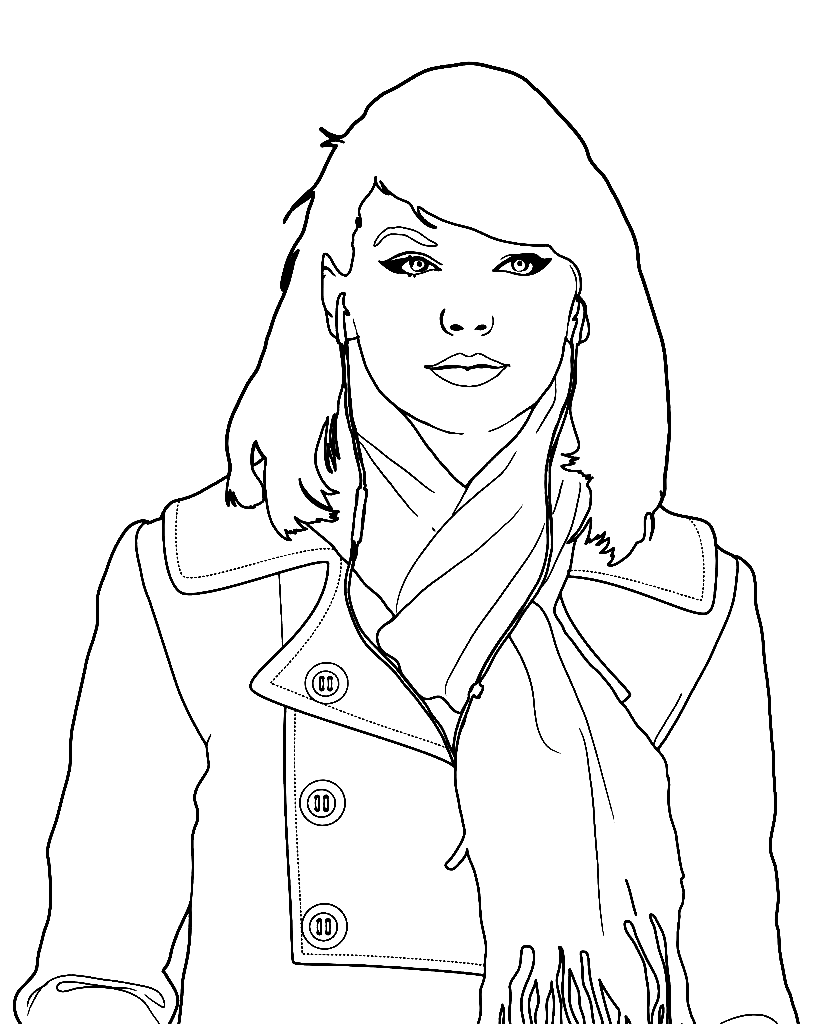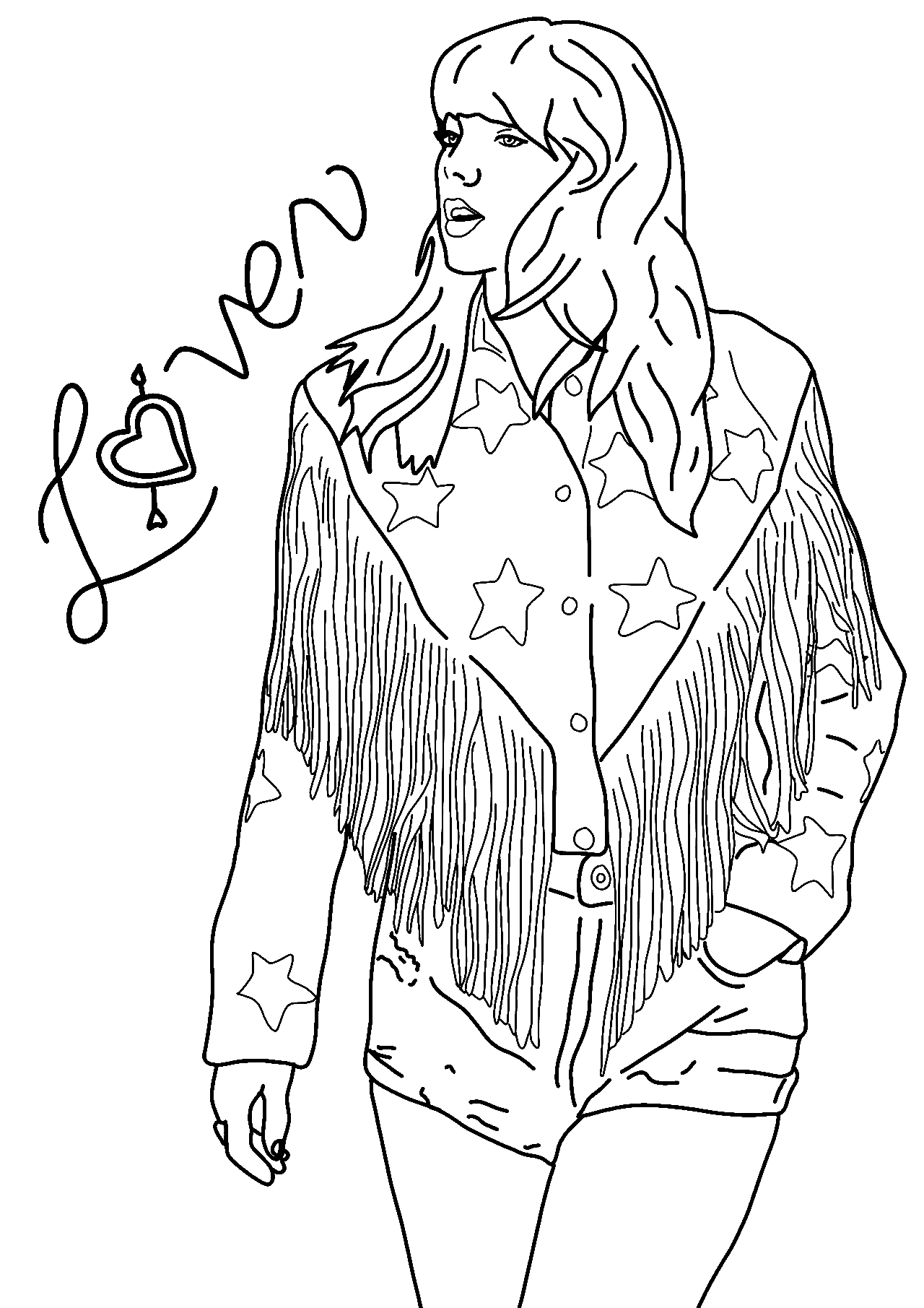
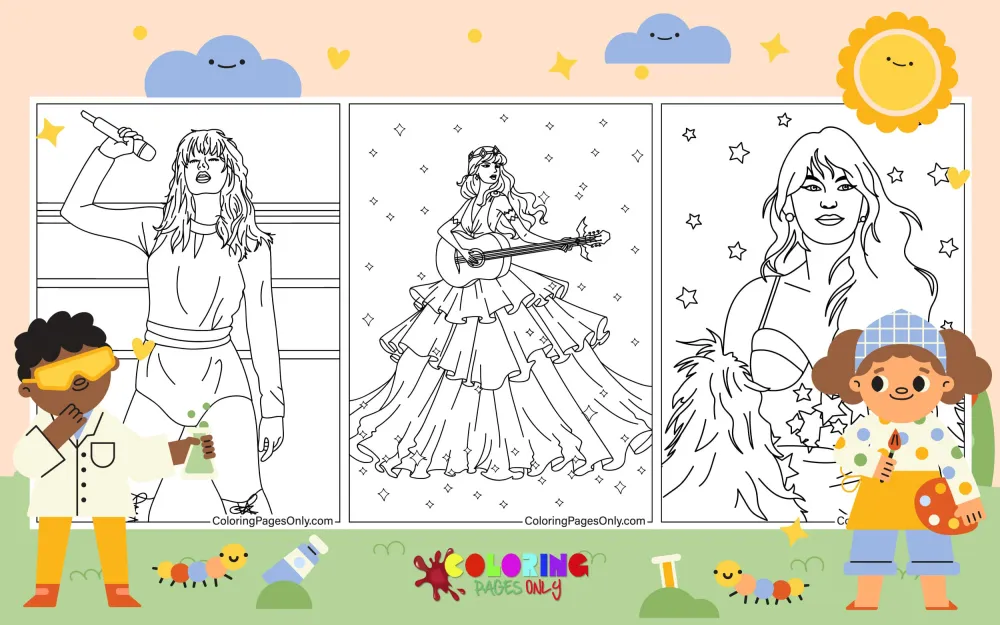
Taylor Swift Coloring Pages at ColoringPagesOnly.com brings together 44 free printable pages dedicated to one of the most celebrated musicians of the 21st century – covering the full creative range of Taylor Swift imagery across her career. The collection spans two primary clusters: a 2024 Eras Tour series depicting Swift in concert performance and elaborate stage attire, and a classic portrait and fashion series covering her across different hairstyles, outfits, and performance contexts. Specific tiles include The Eras Tour concert scenes, guitar portraits, fashion poses, the Fearless album aesthetic, a Chibi-style character illustration, and the full range of singing, dancing, and posing compositions. The full People collection is available through our People Coloring Pages hub.
Every page is completely free – download as PDF to print or color online in your browser. No sign-up, no cost.
About Taylor Swift
Taylor Alison Swift was born on December 13, 1989, in West Reading, Pennsylvania. She began performing in musical theater productions as a child and relocated with her family to Hendersonville, Tennessee, at age 14 to pursue a career in country music – a move that led to her signing with Big Machine Records and beginning work on her debut album.
Swift’s debut self-titled album was released in 2006, when she was 16 years old, making her one of the youngest artists to write or co-write every song on a debut album for a major label. The album established her as a genuine singer-songwriter within the country music market and set the pattern that would define her career: direct, autobiographical songwriting that connected with listeners through personal emotional specificity.
Over the following two decades, Swift released eleven studio albums spanning country music, country-pop, synth-pop, alternative folk, and indie rock – each representing a distinct creative phase or “era” in her evolving artistic identity. She won the Grammy Award for Album of the Year four times – for Fearless (2010), 1989 (2016), Folklore (2021), and Midnights (2024) – becoming the first artist in Grammy history to win the award four times. She has won 14 Grammy Awards in total across her career.
In 2023, TIME magazine named Swift Person of the Year – recognizing not only her commercial success but the breadth of cultural influence she had exerted through that year alone, spanning music, economics (the measurable economic impact of her touring on host cities), film, and global popular culture.
Swift’s fanbase – known as Swifties – is one of the most organized and passionate fan communities in contemporary music. A defining feature of Swiftie culture is the friendship bracelet tradition: at concerts during The Eras Tour, fans handmade beaded bracelets engraved with song titles, album names, and inside references, exchanging them with strangers in the audience to build community and connection – a grassroots ritual that became one of the tour’s most widely reported cultural phenomena.
Taylor Swift’s Discography – The Eras
The concept of Taylor Swift’s career as a series of distinct “eras” – each with its own musical genre, visual aesthetic, costume language, and emotional territory – is the organizing framework of The Eras Tour and the reason the coloring collection’s tiles span such a wide range of visual styles and contexts.
The Early Country Era (2006–2010)
Taylor Swift (2006) established her voice as a country artist – acoustic guitar, fiddle, storytelling lyrics about high school experiences and early heartbreak. The album’s visual aesthetic used warm natural tones, sundresses, boots, and curly, long blonde hair as its signature.
Fearless (2008) expanded her audience enormously and earned her the first of her four Album of the Year Grammys. The Fearless aesthetic is associated with gold, sparkle, and a fairy-tale quality – the golden era, in Swiftie fan terminology. The Taylor Swift Album Fearless, in this collection, references this specific aesthetic. Fearless (Taylor’s Version), released in 2021 as part of Swift’s project to re-record her original albums, uses the same golden aesthetic with the addition of the “TV” notation.
Speak Now (2010) was the first album Swift wrote entirely alone, without co-writers – a deliberate statement about her songwriting authorship.
The Pop Transition (2012–2017)
Red (2012) was a transitional album – part country, part pop – associated with the color red, darker emotional territory, and the ten-minute extended version of “All Too Well” that became one of the most discussed songs in her catalog when Red (Taylor’s Version) was released in 2021.
1989 (2014) was Swift’s first explicitly pop album – a complete departure from country, inspired by 1980s synth-pop production. It won Album of the Year at the 2016 Grammys. The 1989 aesthetic is associated with pastel blue, rose gold, cat motifs, and the specific visual quality of New York City. 1989 (Taylor’s Version) was released in 2023.
Reputation (2017) marked a dramatic aesthetic shift – dark, urban, serpent imagery, near-black color palette, and a deliberately guarded public persona. This era’s visual language is among the most distinct in her catalog.
The Modern Era (2019–2024)
Lover (2019) returned to vivid, maximalist color – butterflies, rainbows, pink and lavender, a deliberately joyful and romantic visual register that contrasted with the darkness of Reputation.
Folklore (2020) and Evermore (2020) – released as twin albums six months apart during the pandemic – represented a departure into indie folk and alternative music, with visual aesthetics built around cardigans, forests, plaid, and muted earth tones. Folklore won Album of the Year at the 2021 Grammys.
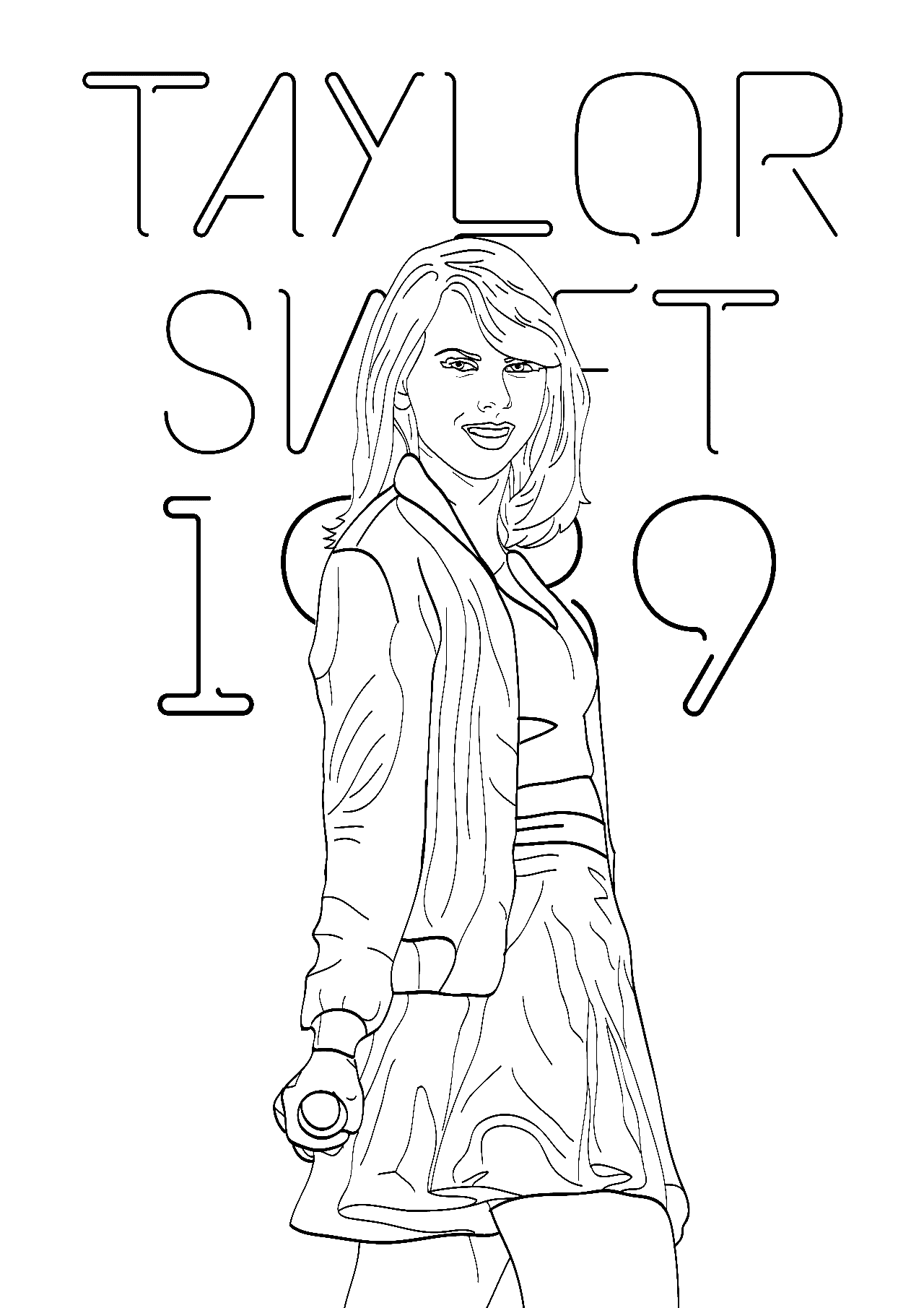
Midnights (2022) returned to synth-pop production with a nighttime aesthetic – deep midnight blue, lavender, silver, and a stargazing thematic framework. It won Album of the Year at the 2024 Grammys, giving Swift her record-setting fourth win.
The Tortured Poets Department (2024) is Swift’s most recent studio album – a double album with a bleached, austere visual identity built around white, pale grey, and typewriter imagery.
Taylor’s Version – The Re-recording Project
Beginning in 2021, Swift undertook a project to re-record her first six albums – released under the original label without her ownership – and release them as “Taylor’s Version” recordings she owns entirely. This project has produced Fearless (Taylor’s Version), Red (Taylor’s Version), Speak Now (Taylor’s Version), and 1989 (Taylor’s Version), with each release generating significant cultural attention. The project reflects Swift’s public advocacy for artists’ ownership of their own work.
The Eras Tour
The Eras Tour (March 2023 – December 2024) was a concert tour conceived as a retrospective celebration of Swift’s entire catalog – each section of the show representing a different era, with distinct costume changes, stage set designs, and song selections. It became the highest-grossing concert tour in history, the first to surpass $1 billion in revenue, and generated significant measurable economic impact in every city it visited. The Taylor Swift and The Eras Tour title is the collection’s most directly topical page, depicting Swift in concert performance during this historic run.
What’s in This Collection
The Eras Tour Tiles
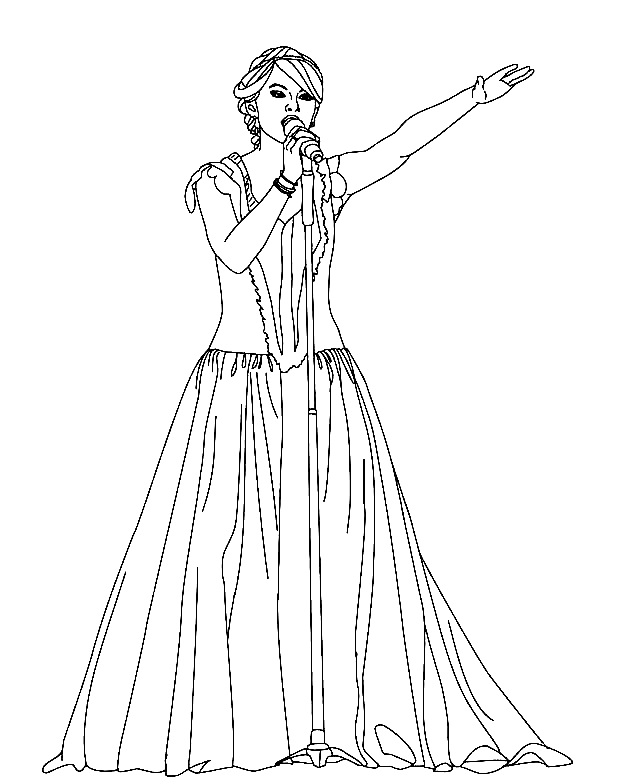
The collection’s newest and most visually elaborate cluster covers Swift in the context of The Eras Tour – tiles including Taylor Swift and The Eras Tour, Taylor Swift is singing, Taylor Swift Singing And Dancing To Color, Queen of Taylor Swift, and Taylor Swift In Beautiful Dress depict her in the elaborate performance aesthetic of the tour: sequined bodysuits, layered ballgowns, dramatic stage lighting, and the high-energy physicality of a production that ran for over three hours per show.
The Eras Tour’s costume design was one of its most discussed visual elements – each era’s segment used distinct, specifically designed outfits. Sequined bodysuits in vivid jewel tones for the pop eras, flowing dresses and cardigans for the Folklore/Evermore segment, golden glittering dresses for Fearless, purple and midnight blue for Midnights. The Queen of Taylor Swift tile captures a particularly dramatic, regal performance moment; Taylor Swift in a Beautiful Dress depicts one of the tour’s formal gown moments.
Performance and Stage Tiles
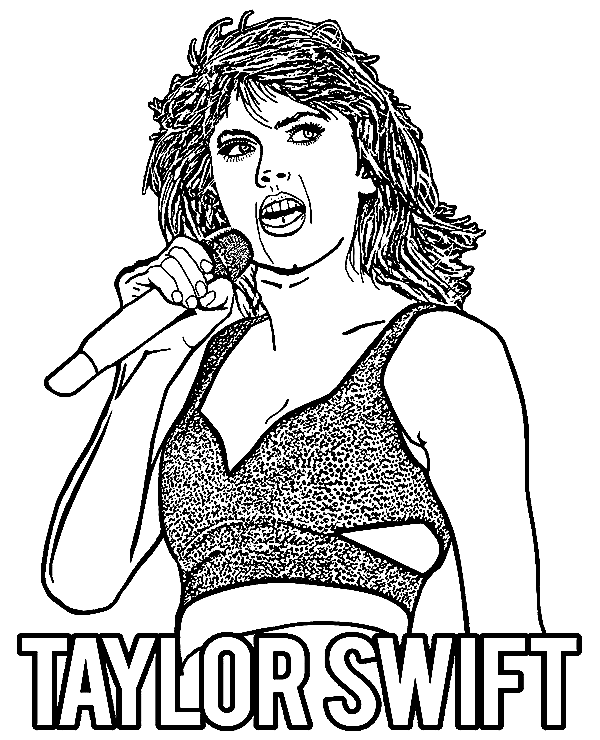
Taylor Swift on Stage, Taylor Swift Singing, Taylor Swift with Microphone, Singer Taylor Swift, Singer Taylor Swift Sheets, Free Singing Taylor Swift, and American Pop Singer Taylor Swift form the collection’s broader performance cluster – depicting Swift in live performance contexts across different compositions and perspectives.
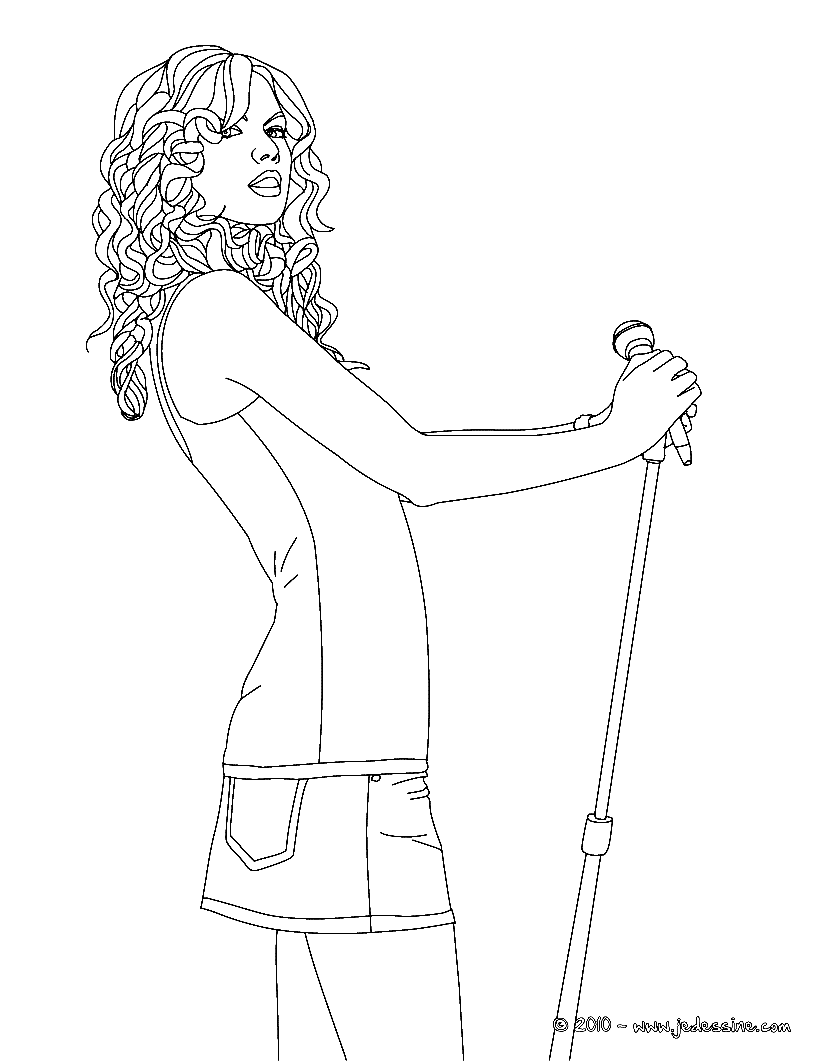
Concert performance tiles are among the most visually dynamic in any music-themed coloring collection – the combination of dramatic stage lighting (vivid colored spotlights in blue, pink, gold, and white), elaborate costumes, and the physical expressiveness of a live performer creates compositions with strong diagonal energy and high contrast between the lit performer and the darker surrounding stage environment.
Portrait and Fashion Tiles
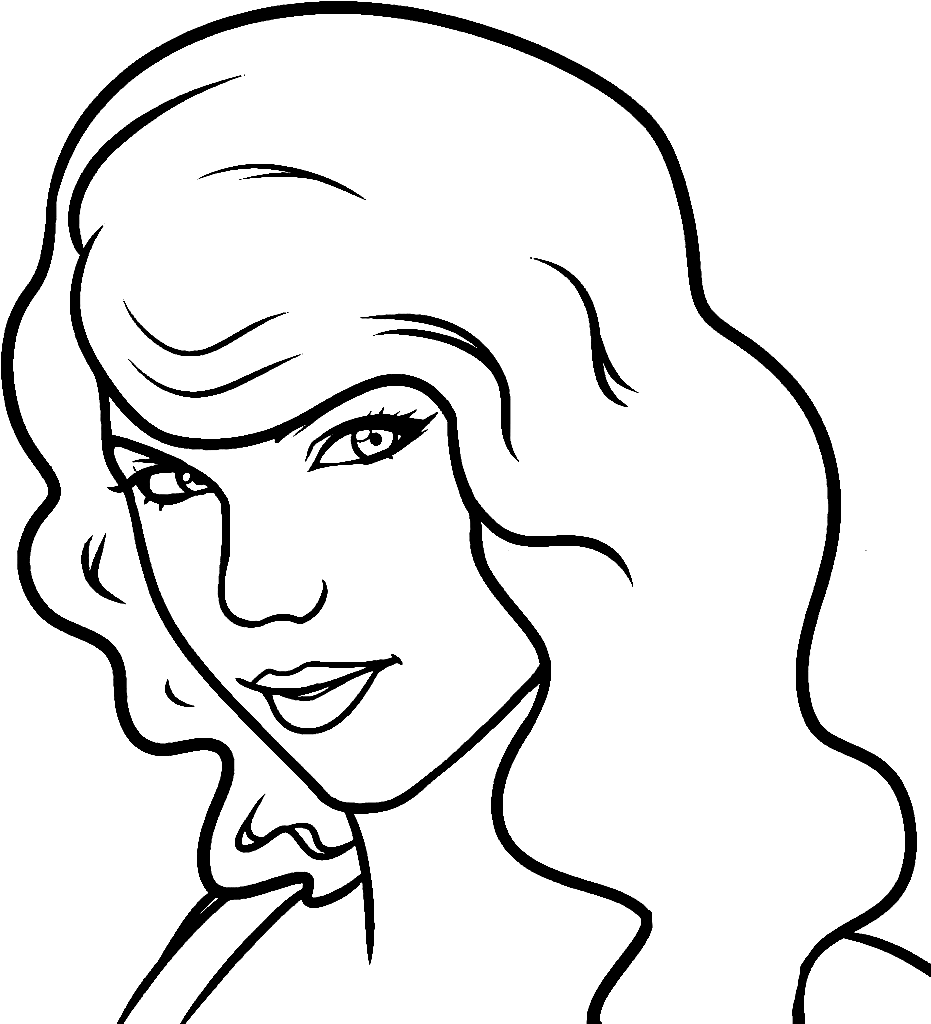
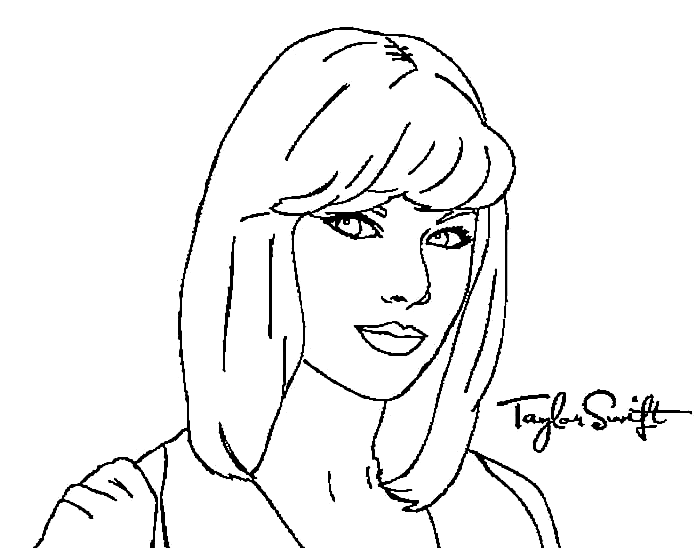
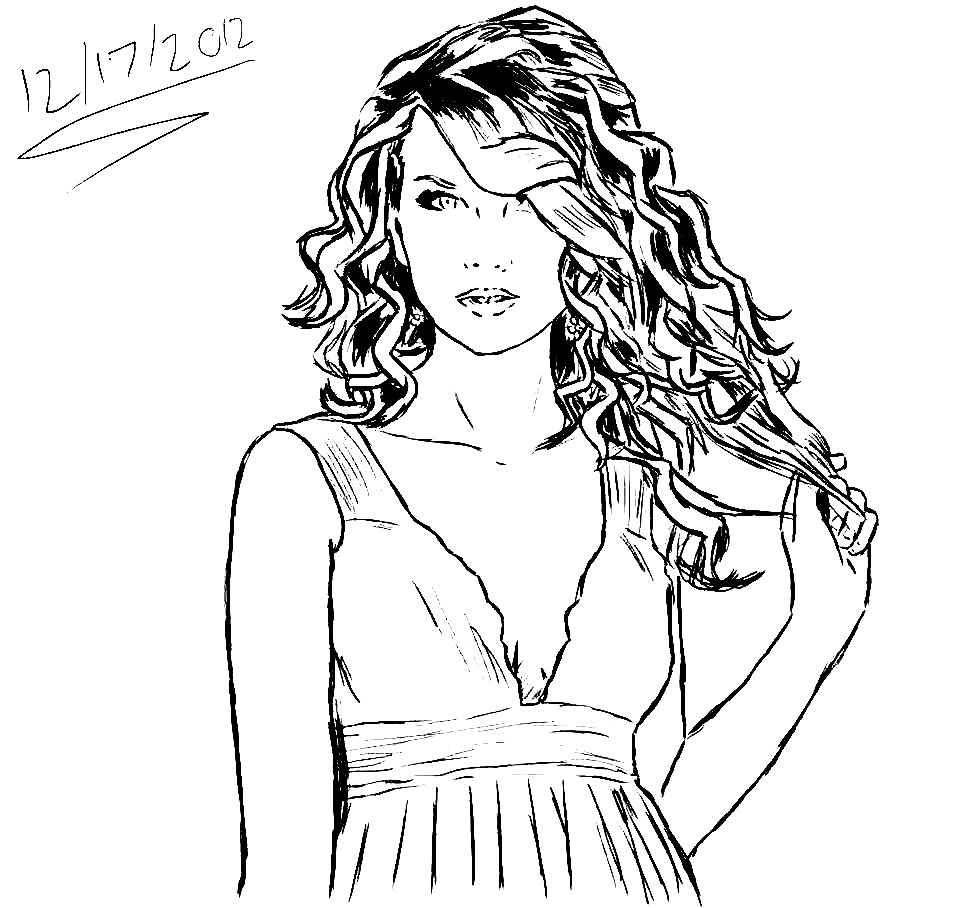
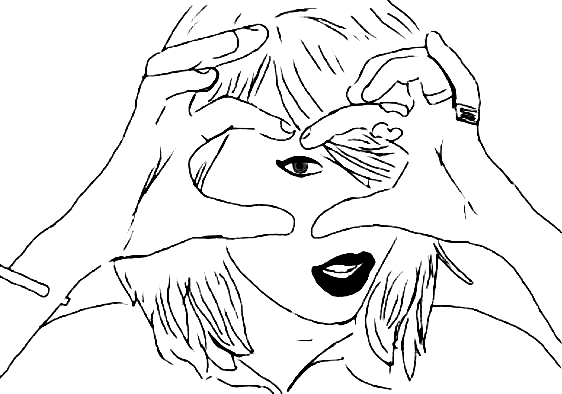
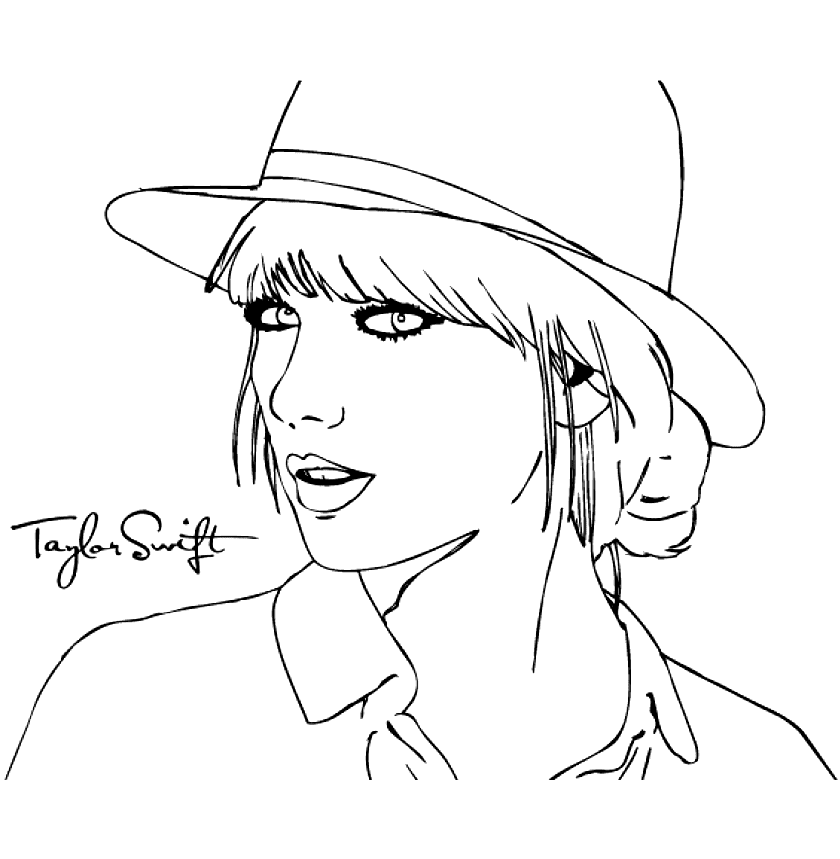
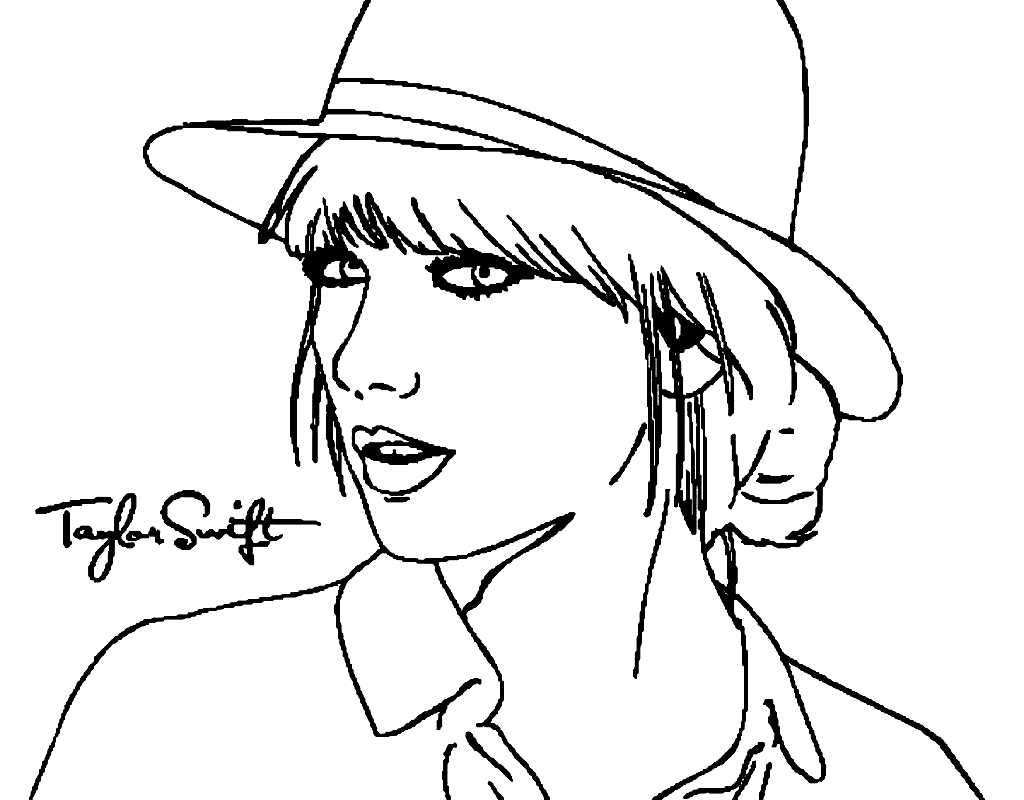
The collection’s largest single cluster – Taylor Swift with Glasses, Taylor Swift with Bangs, Taylor Swift Short Hair, Taylor Swift in a Hat, Taylor Swift in a Dress, Taylor Swift Posing, Taylor Swift and Guitar, Glamorous Taylor Swift, Beautiful Taylor Swift, Sweet Taylor Swift, Lovely Taylor Swift, Love Taylor Swift, Cute Taylor Swift, Pretty Taylor Swift, Amazing Taylor Swift, and the general portrait tiles – covers Swift in a wide range of non-performance portrait and fashion contexts.
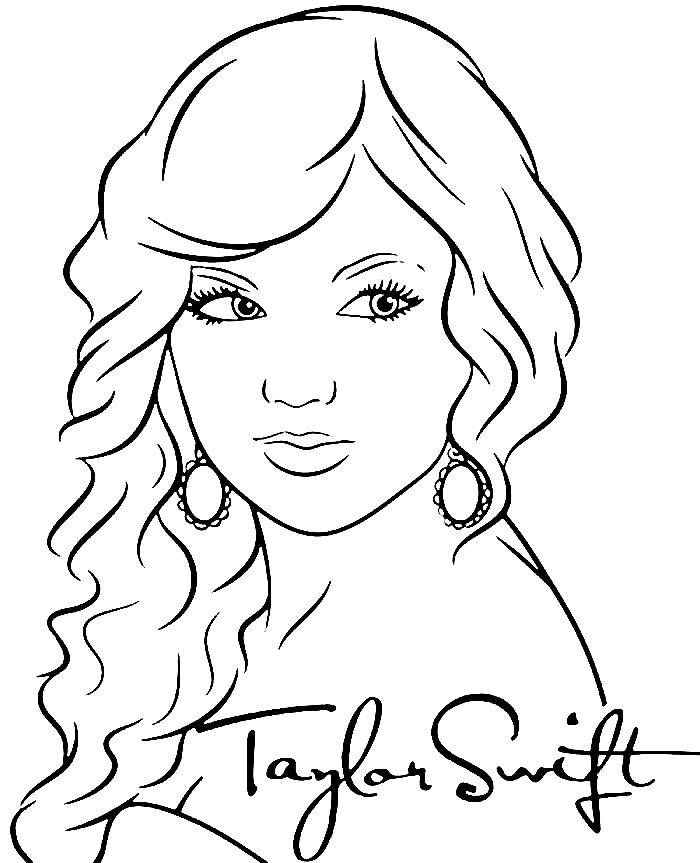
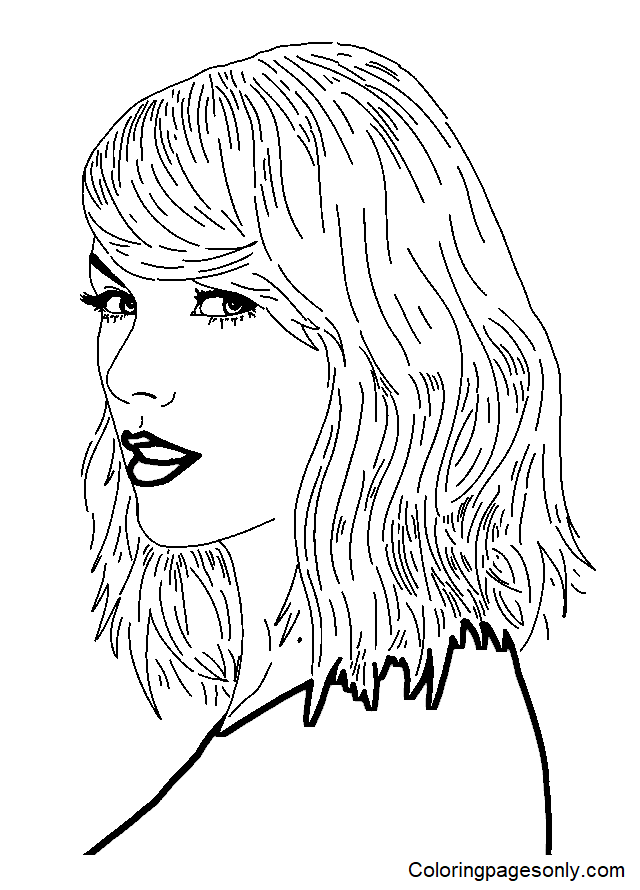
The hair across these tiles reflects the visual evolution across her career eras: long, curly golden-blonde in the early country era; straight blonde with side-swept or straight-cut bangs in the 1989 era; shorter, blunt bob in the Reputation era; longer, wavier styles in the Lover and later eras. The Taylor Swift with Bangs tile specifically captures the 1989-era look most associated with her peak pop-crossing-over period.
The Taylor Swift and Guitar tile depicts Swift with an acoustic guitar – the instrument most associated with her songwriting identity since her debut. Swift is well-known as an acoustic guitar player throughout her career, using it for songwriting even across albums where electric production dominates the final recordings.
Taylor Swift Album Fearless
The Taylor Swift Album Fearless title is the collection’s only album artwork-specific title, referencing the visual identity of Fearless (2008) and/or Fearless (Taylor’s Version) (2021). The Fearless aesthetic is the most immediately recognizable in Swift’s catalog for its warm gold tones – golden sparkle, warm sunlight quality, fairy-tale reference points, and the youthful exuberance of her earliest crossover success. This tile is among the most satisfying to color for fans who grew up with the album.
Chibi Taylor Swift
Chibi Taylor Swift applies the Japanese-inspired super-deformed character style to Swift’s recognizable visual identity – the chibi format uses oversized head-to-body ratios, very large eyes, simplified features, and compact proportions that create an immediately approachable, cute aesthetic quite different from the realistic portrait tiles.
This is the collection’s most appropriate tile for young children ages 4–7 who want to engage with the Taylor Swift theme but are not yet ready for the detailed complexity of the realistic portrait and performance tiles. The simplified chibi proportions create large, clearly defined color zones well-suited to beginners.
Coloring Guide: The Taylor Swift Palette
Taylor’s Signature Visual Elements
Three visual elements appear consistently across Taylor Swift’s imagery throughout her career, regardless of era – making them reliable anchors for any tile in the collection.
Red lips – Swift’s most consistent personal style signature, maintained across virtually every era’s aesthetic. The specific red is vivid, medium-bright, and clearly red rather than orange-red or dark berry-red. On any portrait tile, getting the lip color right is the single most recognizable color decision.
Blonde hair – Swift’s hair color has varied in warmth and tone across eras but has remained blonde throughout her career. The country and Fearless era used warm, golden, slightly curly blonde; the 1989 era introduced cooler, straighter, more platinum-adjacent blonde; later eras generally use medium warm blonde. In portrait tiles, the specific warmth or coolness of the blonde is the most important hair coloring decision.
Blue-green eyes – prominent and expressive in all portrait tile compositions, they provide the most vivid color in any close-up portrait page. Apply a clear medium blue or blue-green, leaving a small white highlight in the upper portion of each iris for a dimensional, luminous quality.
Era-Specific Color Palettes
For tiles that reference a specific era, matching the canonical palette creates the most era-accurate result:
Fearless era – warm gold is the dominant tone. Apply warm golden yellow for the overall atmosphere, sunshine yellow for highlight areas, and sparkle white dots for glitter effects. Hair at its warmest, most golden-curly.
1989 era – pastel blue, rose gold, and clean white. A slightly cooler blonde for the hair. The 1989 visual language is crisper and more graphic than the warm organic quality of Fearless.
Reputation era – near-black or very deep charcoal grey as the dominant tone, with silver and snake-scale texture details. Minimum warm color; maximum cool, dark, metallic tones.
Lover era – the fullest, most vivid color range in the collection. Butterfly pink, lavender, mint green, sky blue – use the widest range of vivid pastels simultaneously. Hair at its longest and most styled.
Folklore/Evermore era – muted earth tones. Warm cream, soft beige, forest green, plaid patterns, dark wood tones. Deliberately desaturated relative to the Lover era – the most naturalistic color palette.
Midnight’s era – deep midnight navy as the dominant dark tone, with lavender and silver as accent colors. Night sky quality – dark and cool with controlled shimmer.
Eras Tour performance tiles – the most dramatically lit coloring context. Stage lighting creates vivid spotlights in blue, pink, gold, and white against darker surrounding areas. The performer is the brightest element on the page; the surrounding stage uses deep darks to create the contrast that makes her luminous.
The Stage Lighting Effect
For the performance and Eras Tour tiles, the most visually effective approach treats stage lighting as a directional effect rather than uniform illumination. The areas where a spotlight hits – the top of the head, the shoulder, the front of the costume – receive the lightest, most vivid color treatment. Areas in shadow – the lower body, the sides of the figure – use darker, more saturated versions of the same colors. A small bright highlight on the hair where the spotlight catches it creates the characteristic sheen of concert photography lighting.
5 Creative Activities with Taylor Swift Coloring Pages
Creating Bookmarks
A colored Taylor Swift portrait tile becomes a personalized bookmark with minimal additional materials. Print a portrait tile on 120gsm cardstock, color carefully, then cut to bookmark dimensions – approximately 5cm × 18cm, centering Swift’s figure within the rectangle. Mount on matching cardstock for rigidity, punch a hole at the top, and thread ribbon or cord through.
The Taylor Swift with Guitar and Taylor Swift with Microphone tiles are particularly well-suited to the tall, narrow bookmark format – the vertical orientation of a standing figure with an instrument matches the bookmark’s proportions naturally. Different era palettes – golden Fearless, pastel Lover, dark Reputation – can produce a series of era-themed bookmarks for Swiftie fans who read alongside their music listening.

Creating Personal Calendars
Print twelve Taylor Swift coloring tiles – one for each month – and color each with a seasonal or era-appropriate palette: Fearless gold for autumn, Lover pastels for spring, Midnights deep blue for winter, 1989 clean, crisp tones for summer. Once colored, cut each to A4 or A5 size and bind or arrange in monthly order, adding a calendar grid below each image.
The result is a twelve-page personal calendar that combines original colored artwork with practical functionality. For Swiftie households, aligning specific eras with months where relevant albums were released – Midnights in October, Folklore in July – adds an additional layer of personal meaning to the calendar organization.

Designing Album Covers
The Taylor Swift Album Fearless title and the general portrait titles provide the starting material for designing original or reimagined album covers. After coloring a portrait tile in a specific era’s palette, cut to square format (standard album cover proportion), mount on cardstock, and add the album title in handwritten or sticker lettering.
For a more creative extension: design an original album cover for a fictional new Taylor Swift release – choose a palette, color a portrait tile in that palette, and add an invented album title. This activity connects coloring with music fandom, visual design thinking, and the kind of speculative creative engagement that defines active fan communities.

Creating Era Fashion Illustrations
Several tiles in the collection depict Taylor Swift in fashion and dress contexts – Taylor Swift in a Dress, Taylor Swift in a Hat, Glamorous Taylor Swift, Taylor Swift in a Beautiful Dress – that are particularly well-suited to fashion illustration treatment. After coloring the figure, extend the page by drawing additional costume accessories in the margins: shoes, jewelry, stage accessories, and background elements that suggest a specific venue or era setting.
Children who are interested in fashion design can use these tiles as templates for exploring how different color choices transform the same garment into distinct aesthetic statements – how the same dress in Fearless gold versus Reputation black conveys entirely different personalities, even with identical linework.

Creating a Music Map
The full collection of 44 tiles, colored and arranged together, can become a visual “music map” documenting Taylor Swift’s career eras. Arrange tiles by era – early country portraits together, performance tiles together, fashion tiles grouped – on a large backing board or poster. Add handwritten era labels, album names, and release years. Connect tiles with drawn or painted arrows suggesting the career’s chronological progression.
This project works particularly well as a group activity for Swiftie fans – each participant colors tiles representing different eras, combining their work into a collective fan tribute that maps the full visual history of the artist’s career. Display on a bedroom or music room wall as a permanent fan art installation.
FAQs
How many studio albums has Taylor Swift released? As of 2024, Taylor Swift has released eleven studio albums: Taylor Swift (2006), Fearless (2008), Speak Now (2010), Red (2012), 1989 (2014), Reputation (2017), Lover (2019), Folklore (2020), Evermore (2020), Midnights (2022), and The Tortured Poets Department (2024). She has additionally released four “Taylor’s Version” re-recordings of earlier albums.
What is The Eras Tour? The Eras Tour was Taylor Swift’s 2023–2024 concert tour – a career retrospective covering her eleven studio albums, with each section of the show dedicated to a specific “era.” It became the highest-grossing concert tour in history, the first to generate over $1 billion in revenue.
What are friendship bracelets at Taylor Swift concerts? The friendship bracelet tradition is a fan-created cultural practice that emerged during The Eras Tour: Swiftie fans handmade beaded bracelets featuring song titles, album names, and fan community references, then exchanged them with other fans at concerts as a symbol of community and shared enthusiasm. The tradition became one of the most widely covered aspects of the tour’s fan culture.
What is Taylor’s Version? Beginning in 2021, Taylor Swift began re-recording her first six studio albums – originally released under a record label she did not own – and releasing them as “Taylor’s Version” recordings she owns entirely. She has re-released Fearless, Red, Speak Now, and 1989 as Taylor’s Version, with each release generating significant fan engagement and chart performance alongside the originals.
How many Grammy Awards has Taylor Swift won? Taylor Swift has won 14 Grammy Awards, including four Grammys for Album of the Year – for Fearless, 1989, Folklore, and Midnights. The four Album of the Year wins are a record; no other artist has won that award more than once before Swift’s achievement.
What instruments does Taylor Swift play? Swift is primarily known as an acoustic guitarist – the instrument she learned to play as a child in Pennsylvania and used throughout her early career in country music. She has also played banjo and piano in various recordings and performances. Her guitar playing is closely associated with her songwriter identity, having co-written or solely written every song in her catalog.
What is the Fearless aesthetic for coloring? The Fearless era (2008 album) uses a warm golden palette – sunshine yellow, warm gold, sparkle details, and a fairy-tale quality associated with the album’s country-crossover romantic optimism. The Taylor Swift Album Fearless, in this collection, references this specific visual identity. Color with warm golds, honey tones, and bright white sparkle accents for the most era-accurate result.
What age group is this collection for? The collection spans all ages. The Chibi Taylor Swift tile is most appropriate for children ages 4–7. Portrait tiles with simple compositions suit ages 6 and up. The more detailed Eras Tour performance tiles and fashion composition tiles are most suitable for older children, teens, and adults who can manage finer detail work and are familiar with Taylor Swift’s career.
All 44 Taylor Swift Coloring Pages are free – download as PDF or color online. Share your finished pages on Facebook and Pinterest.