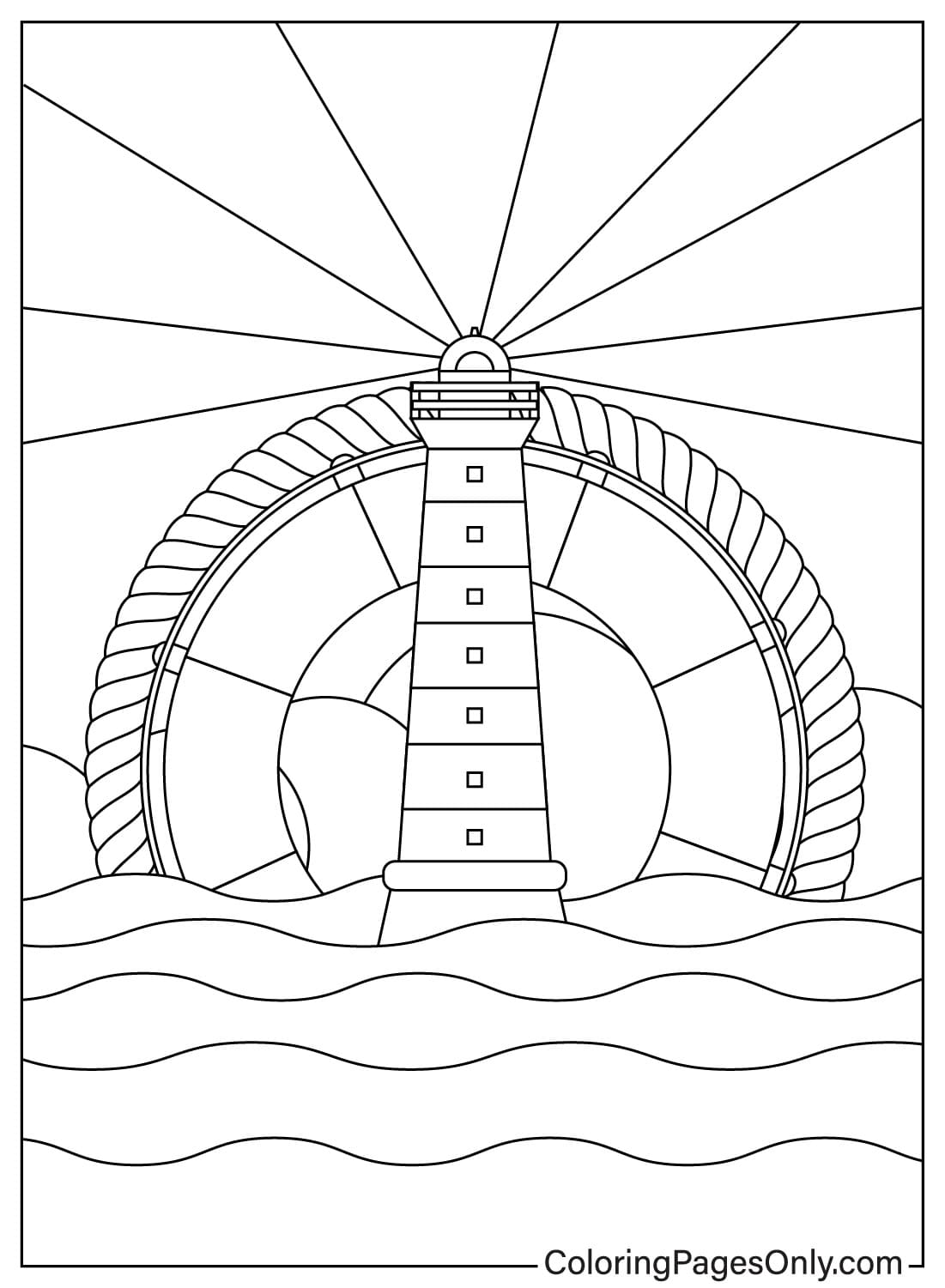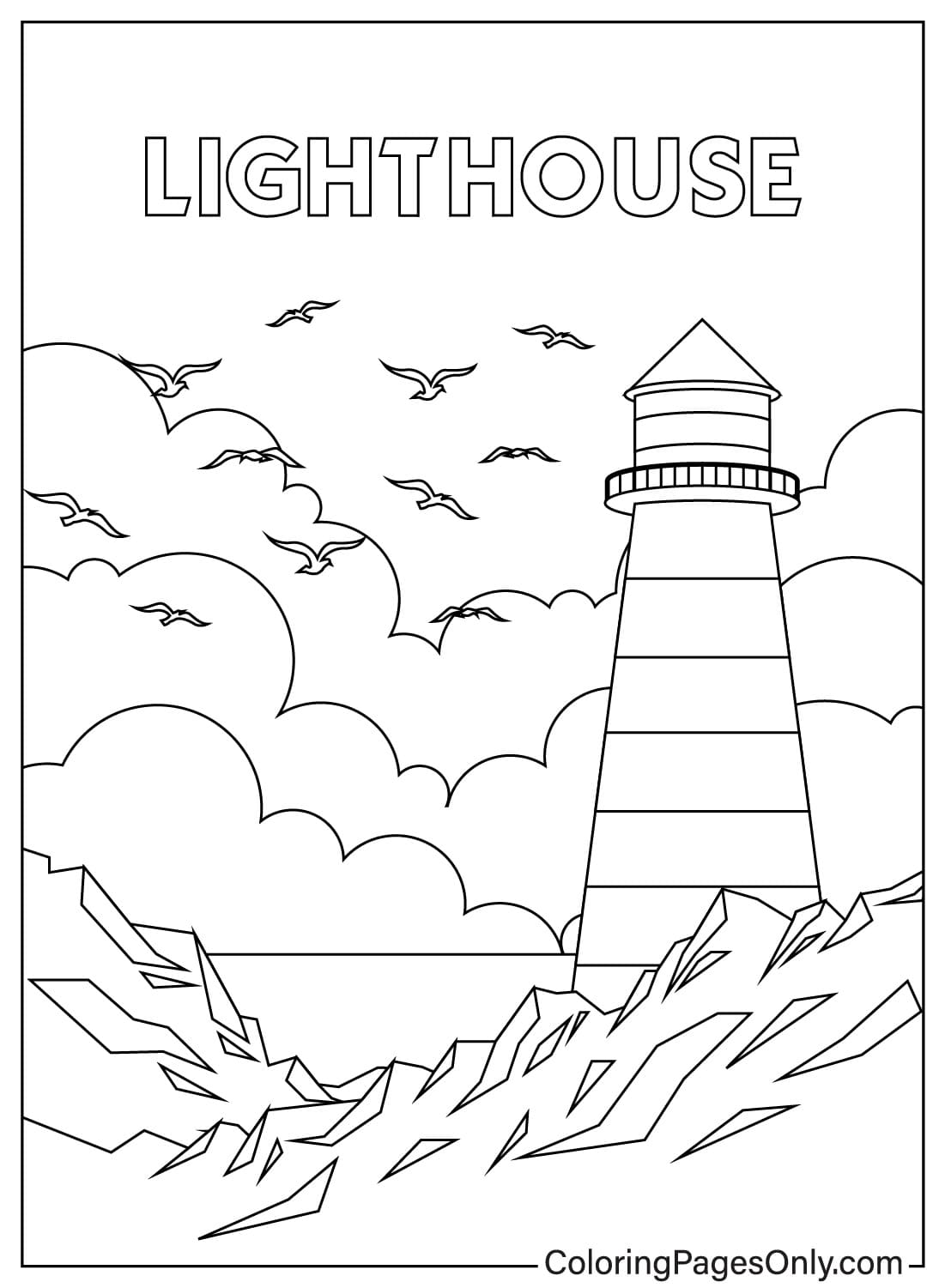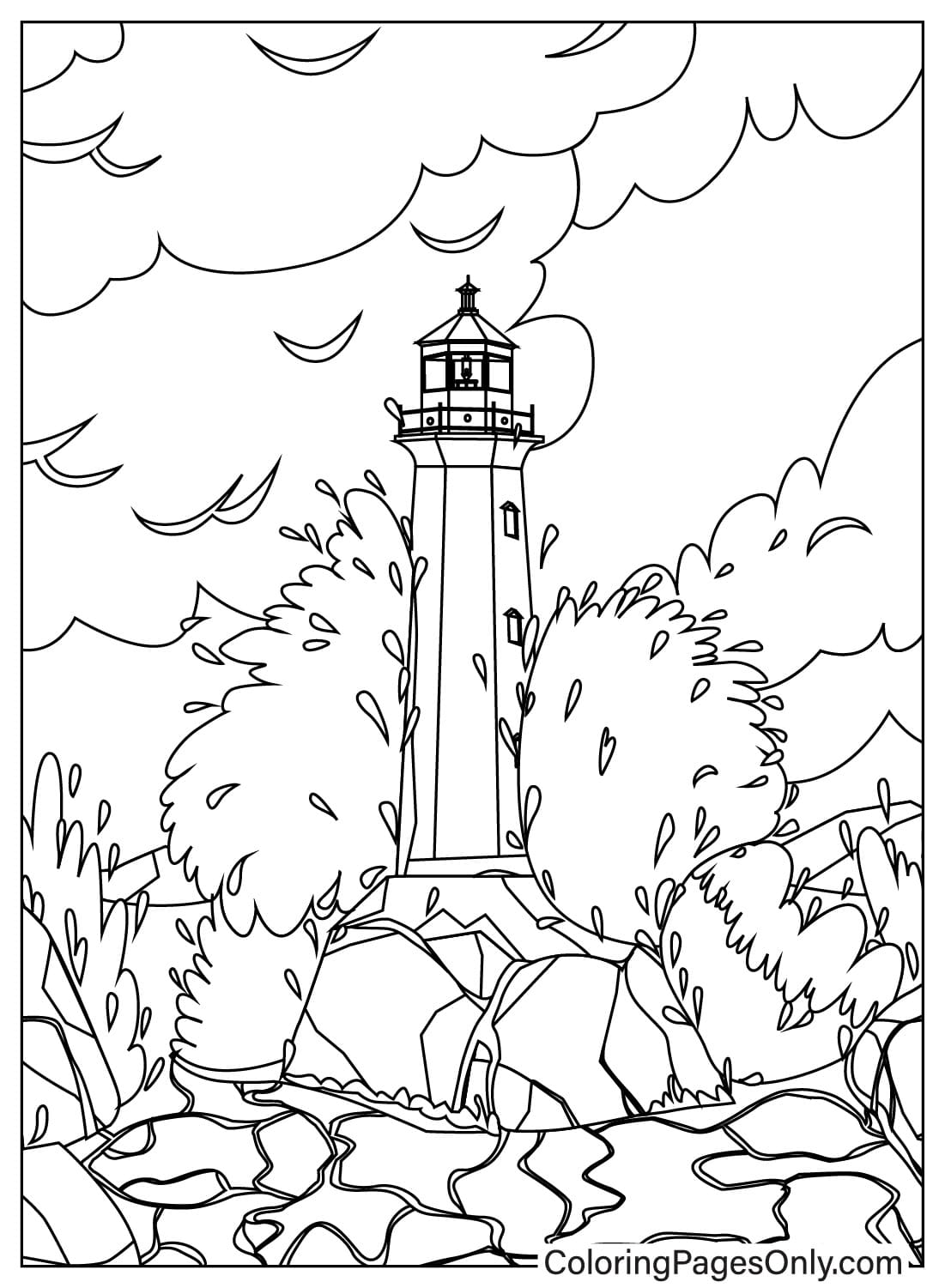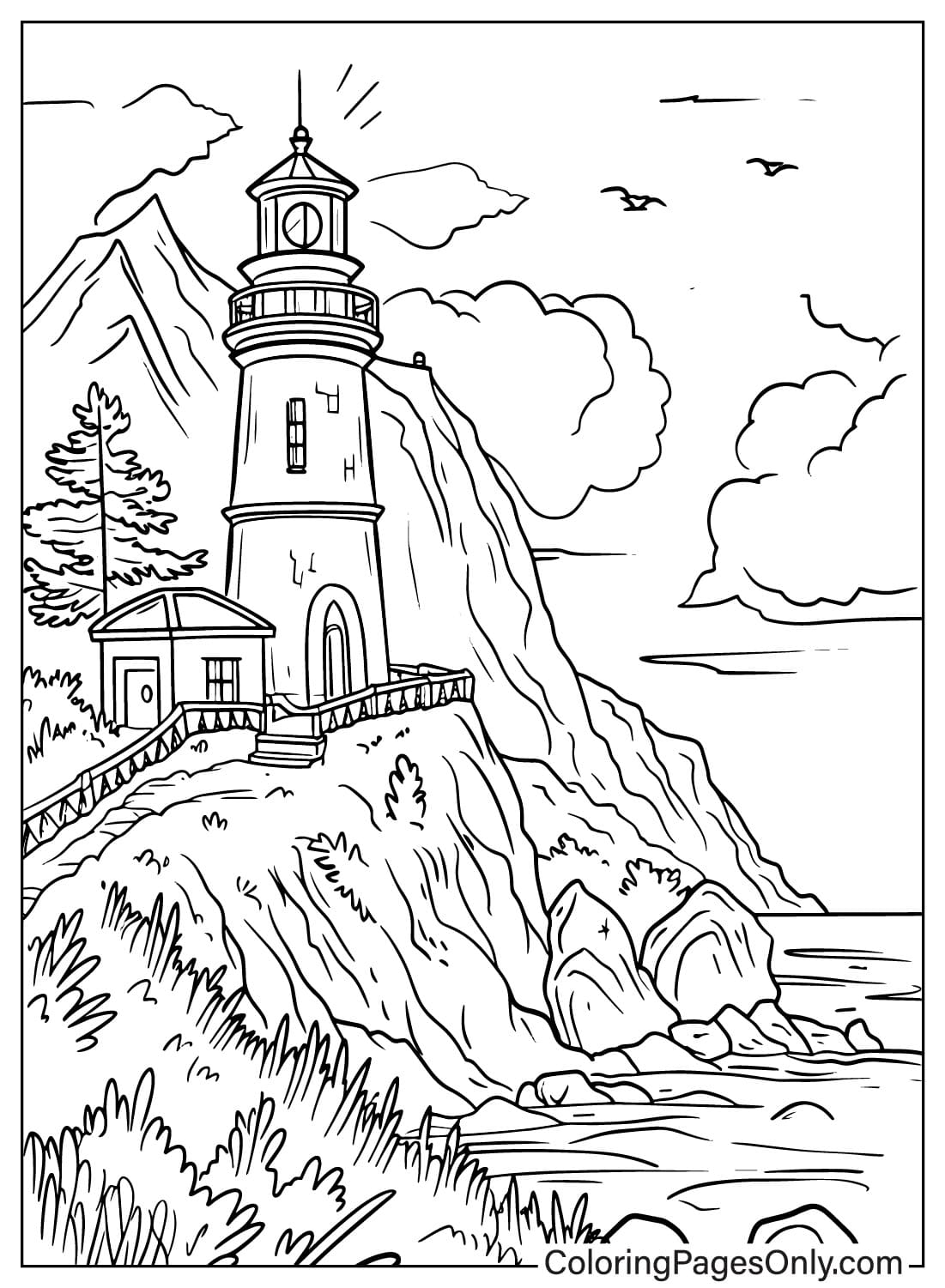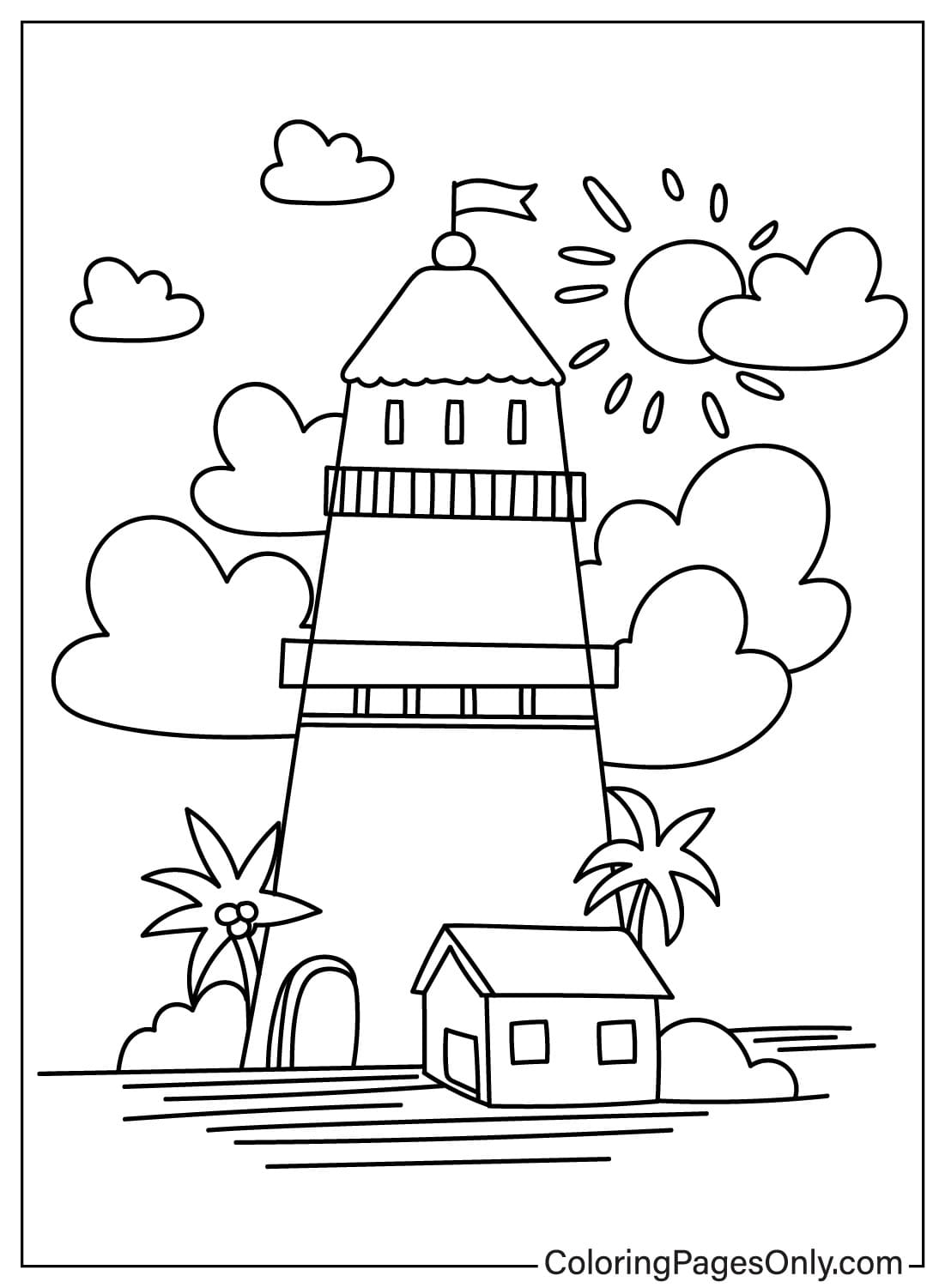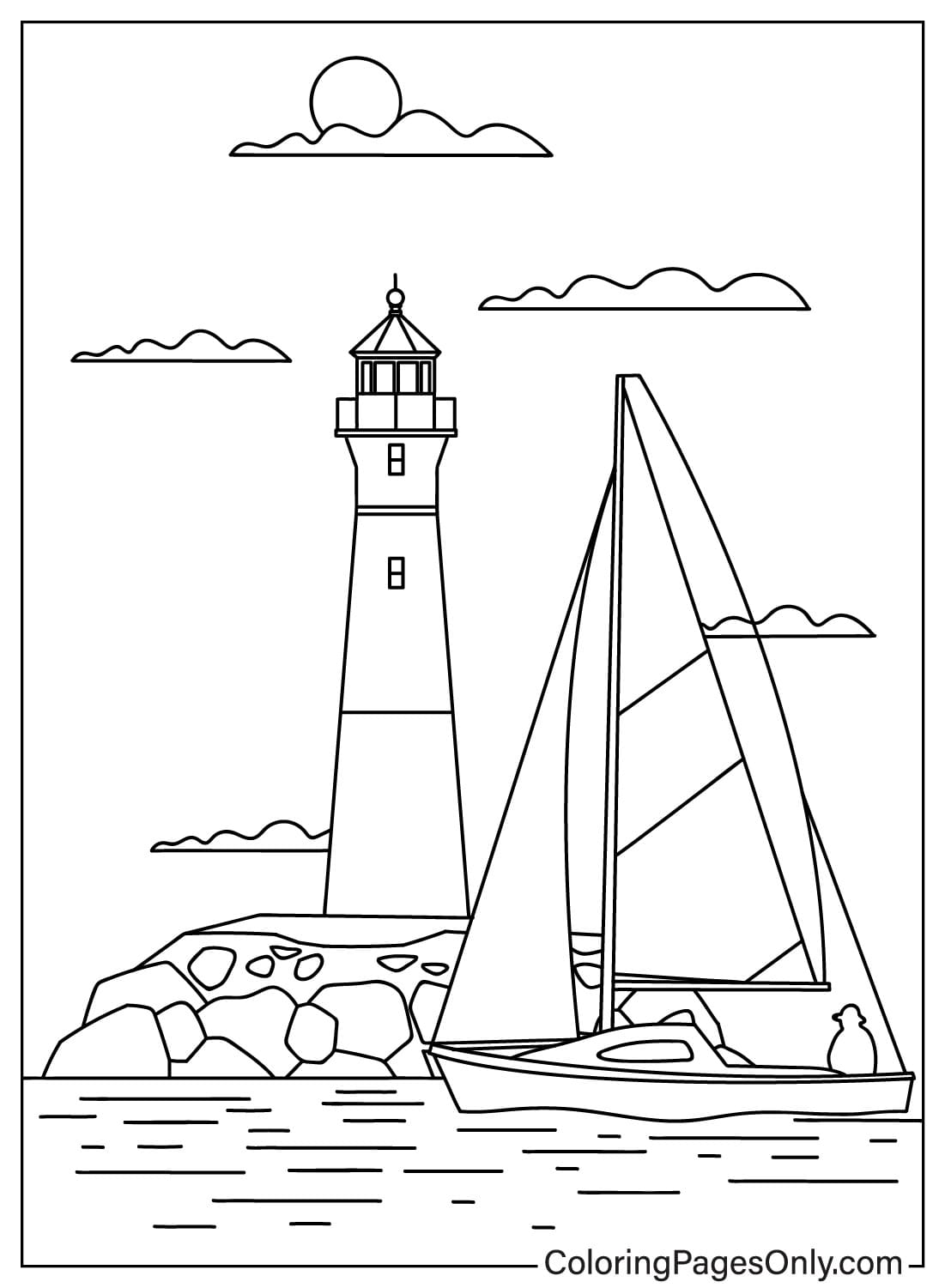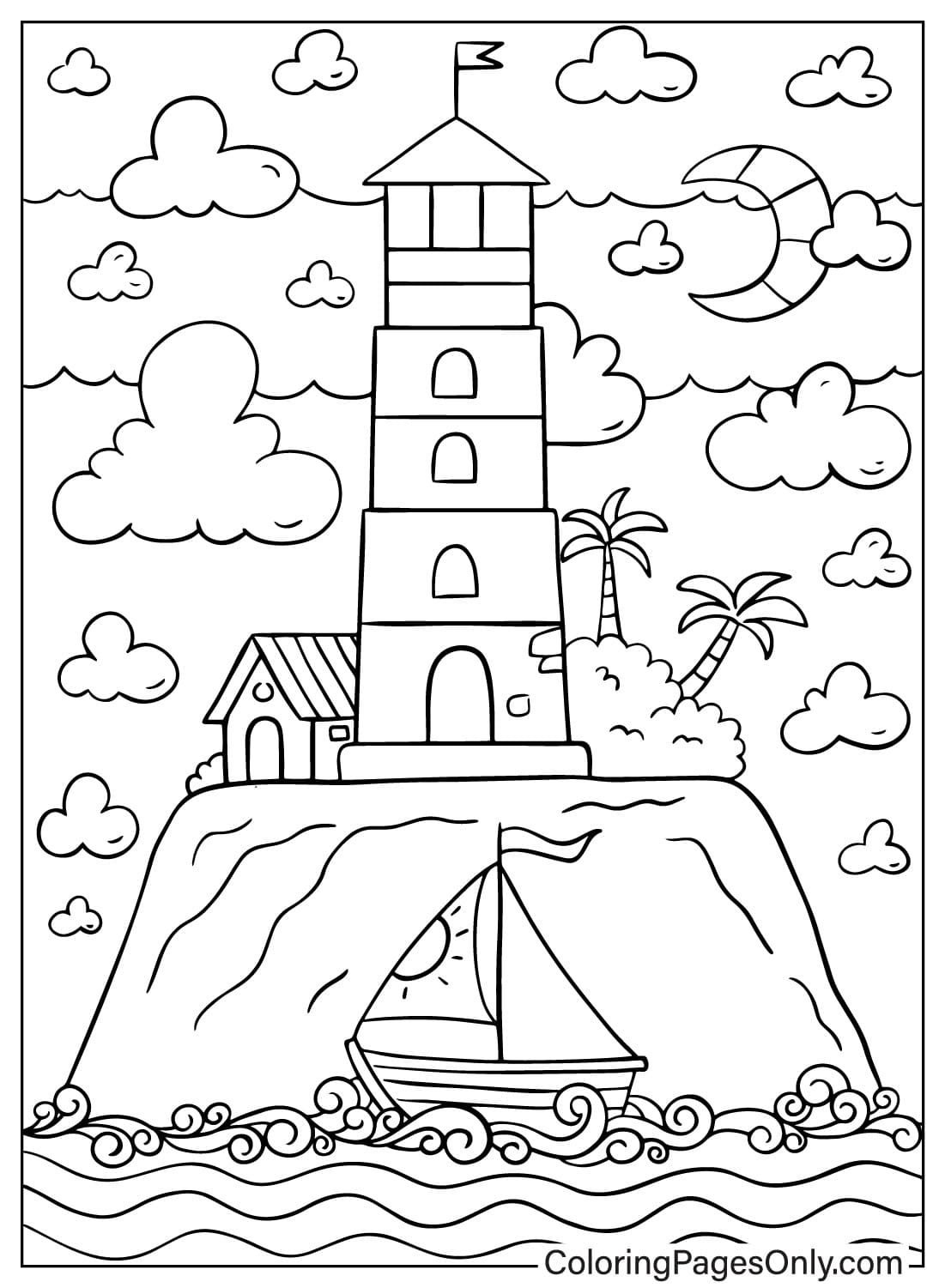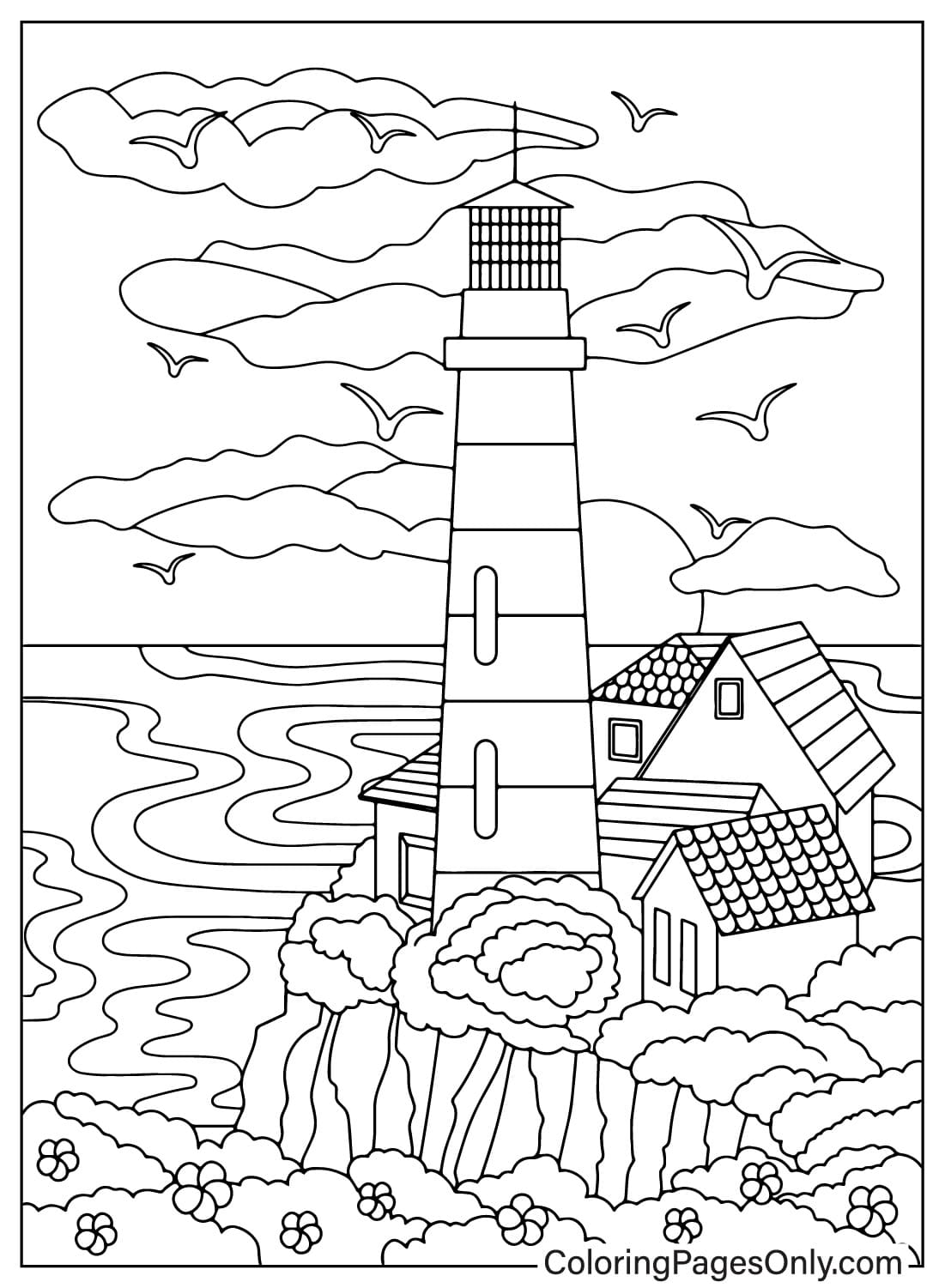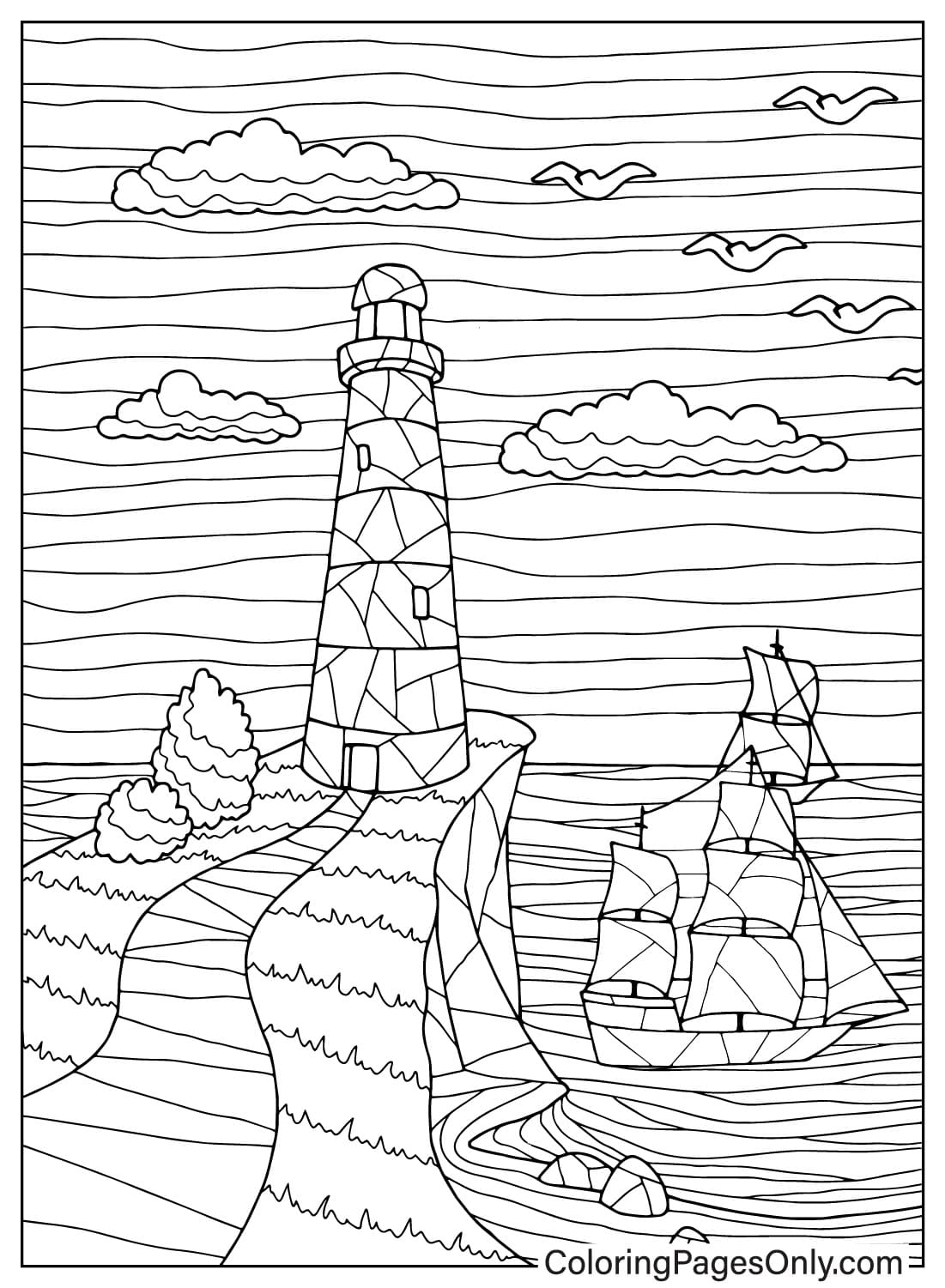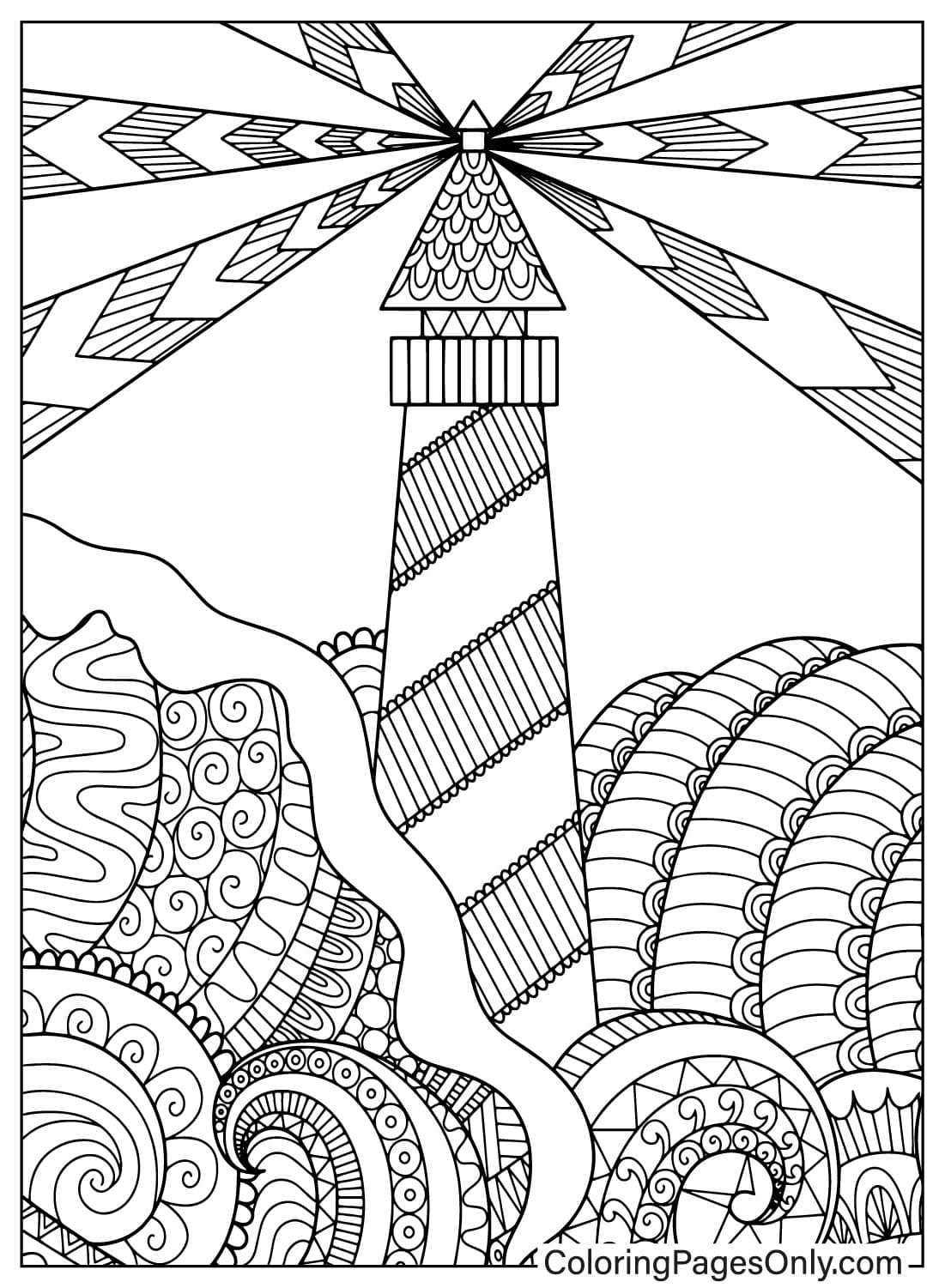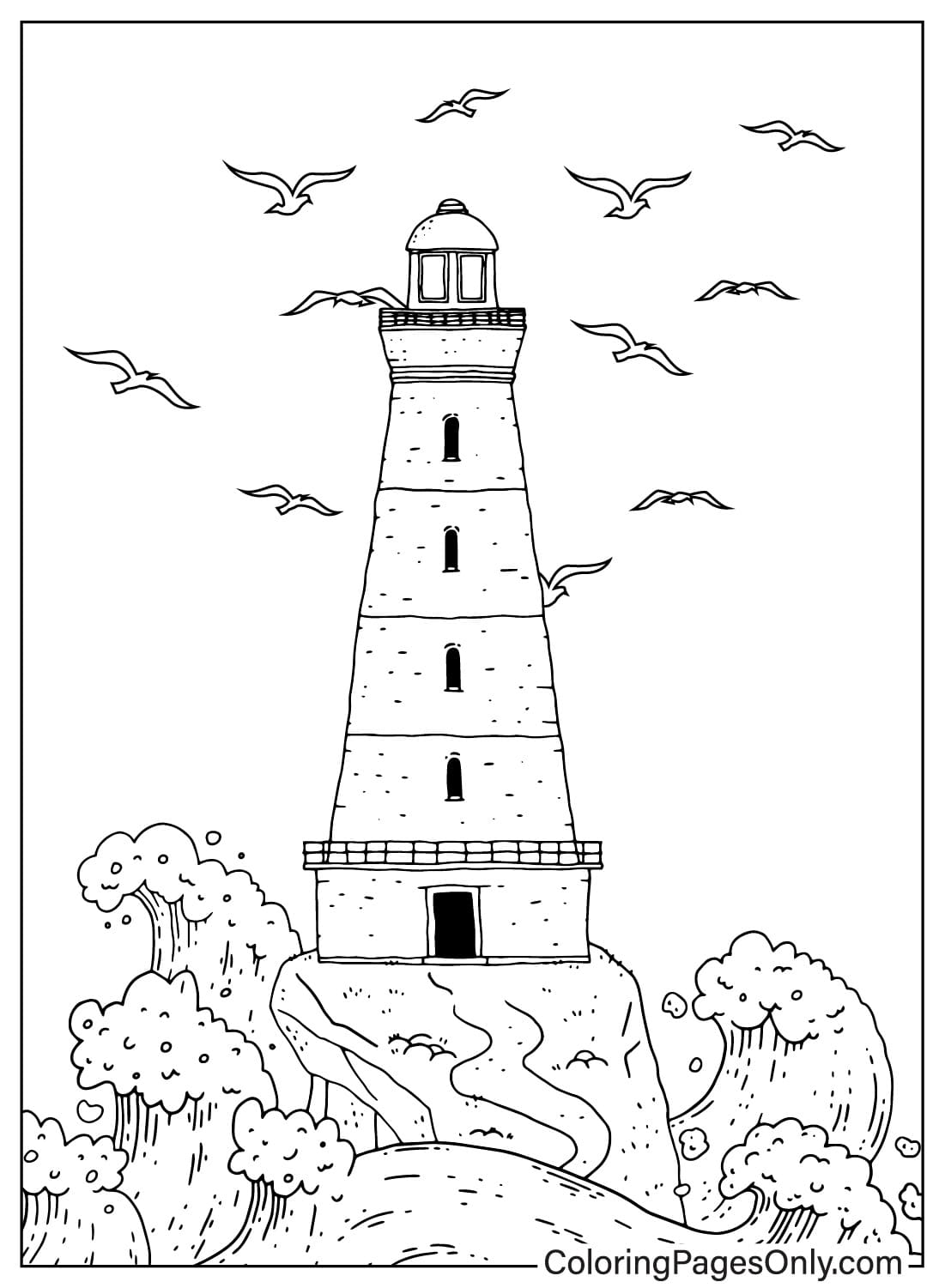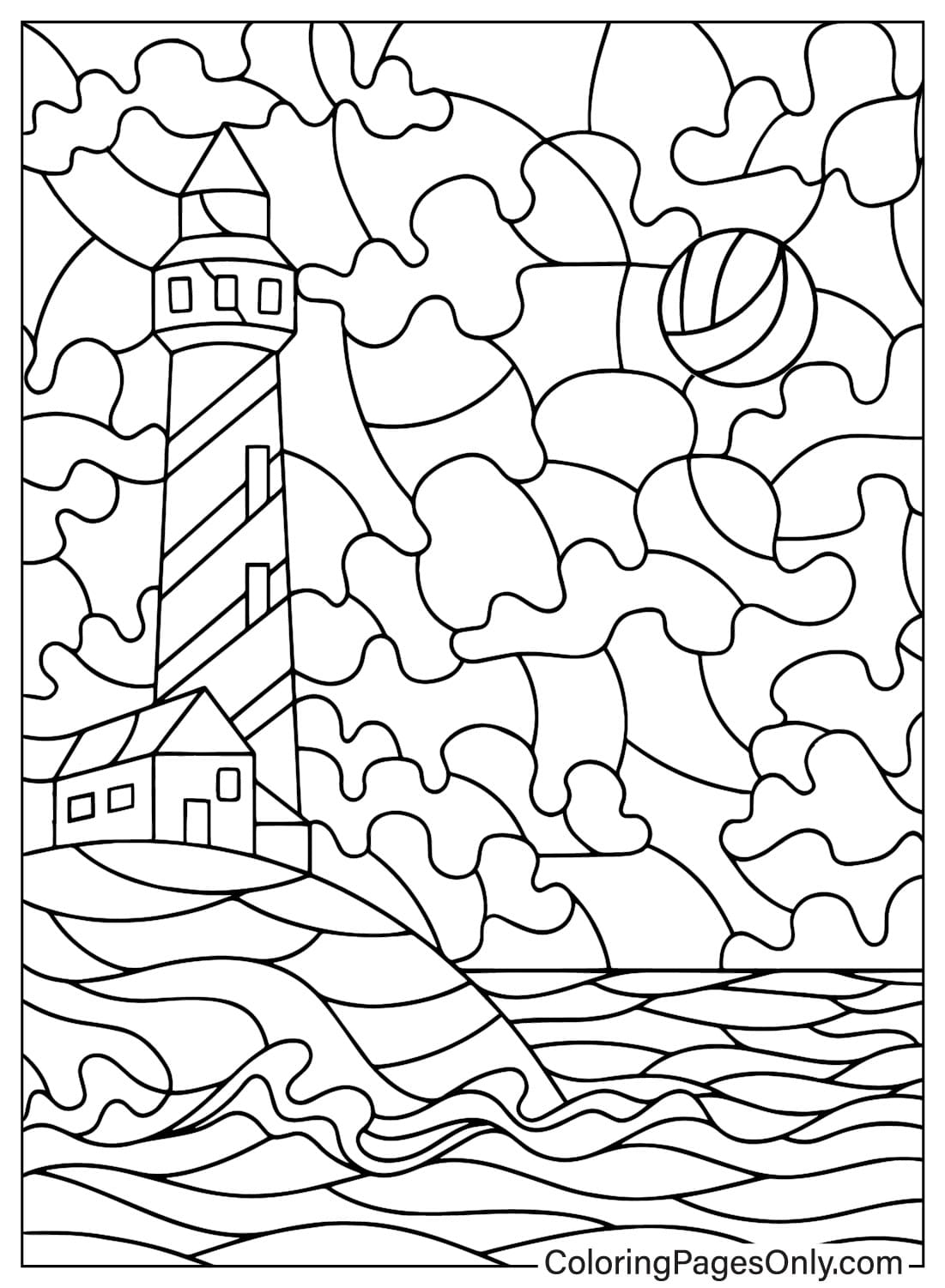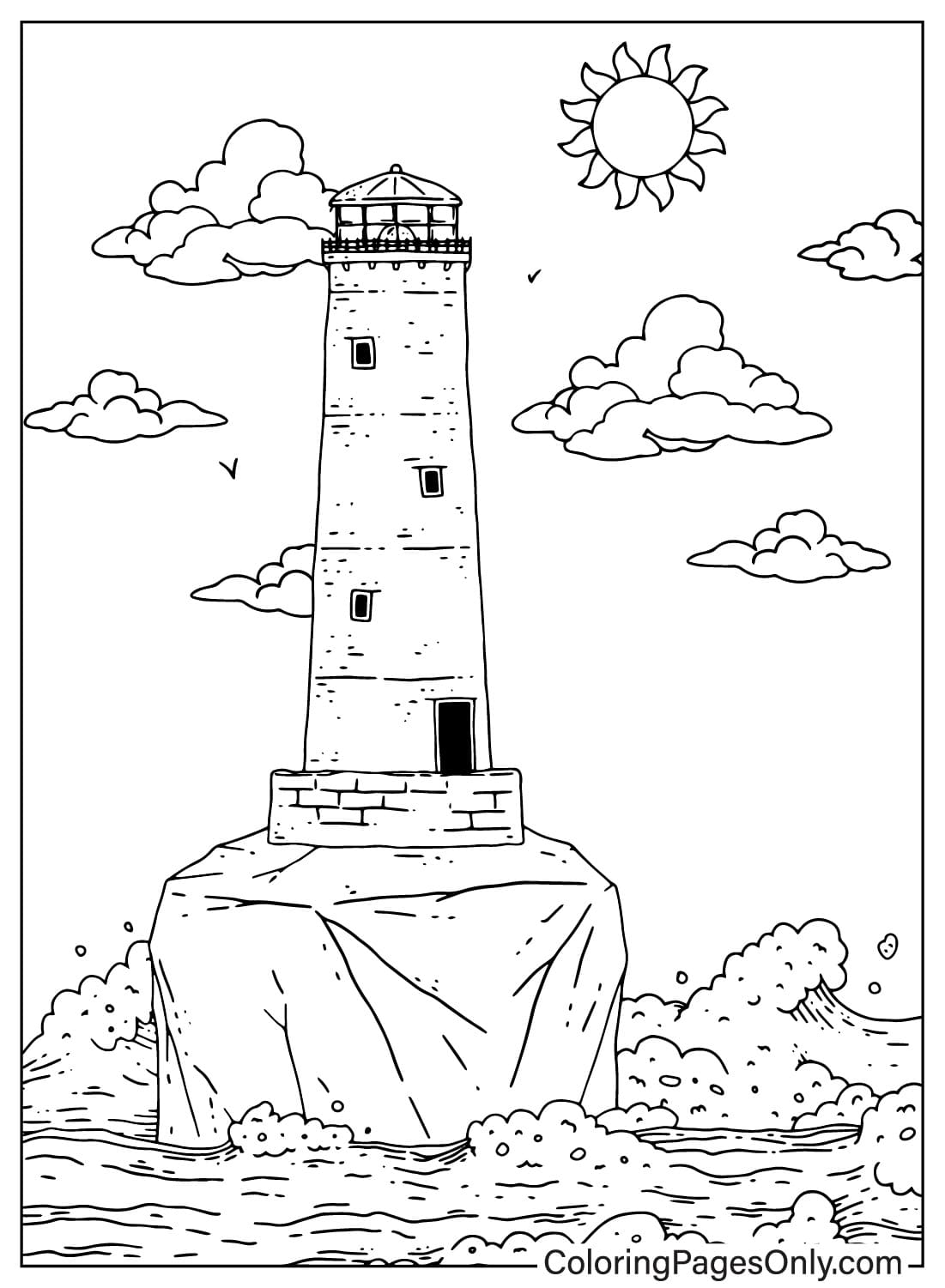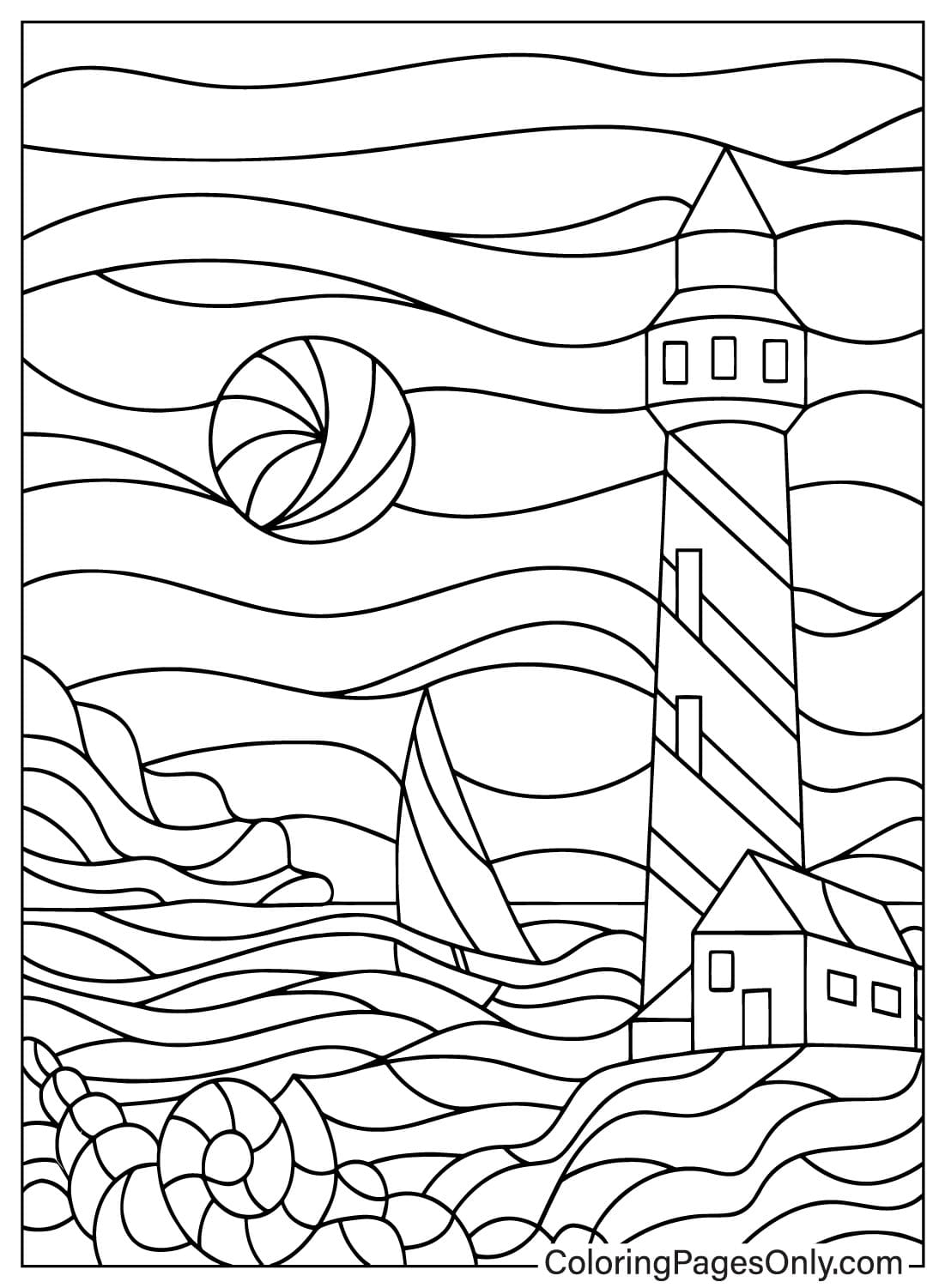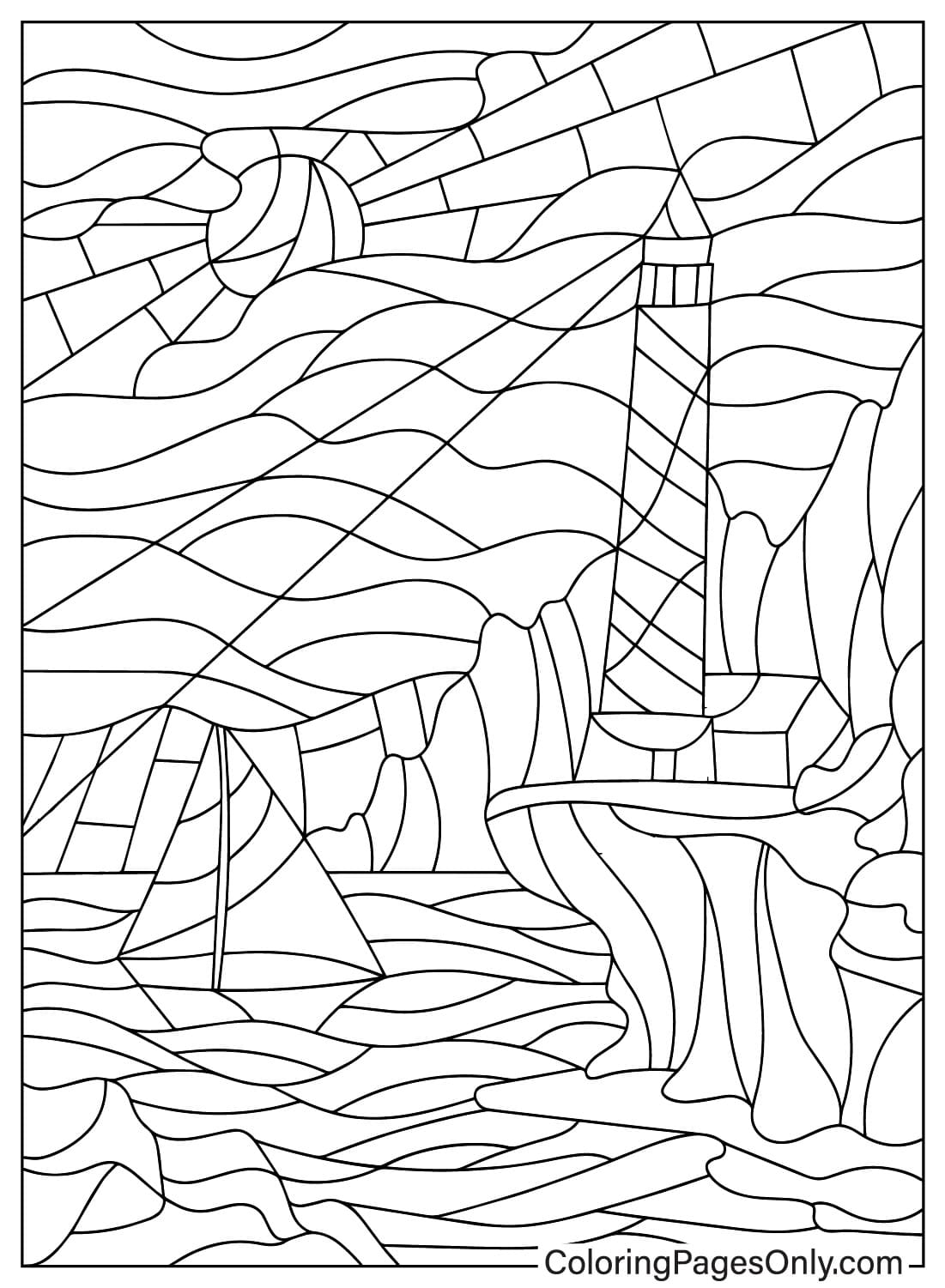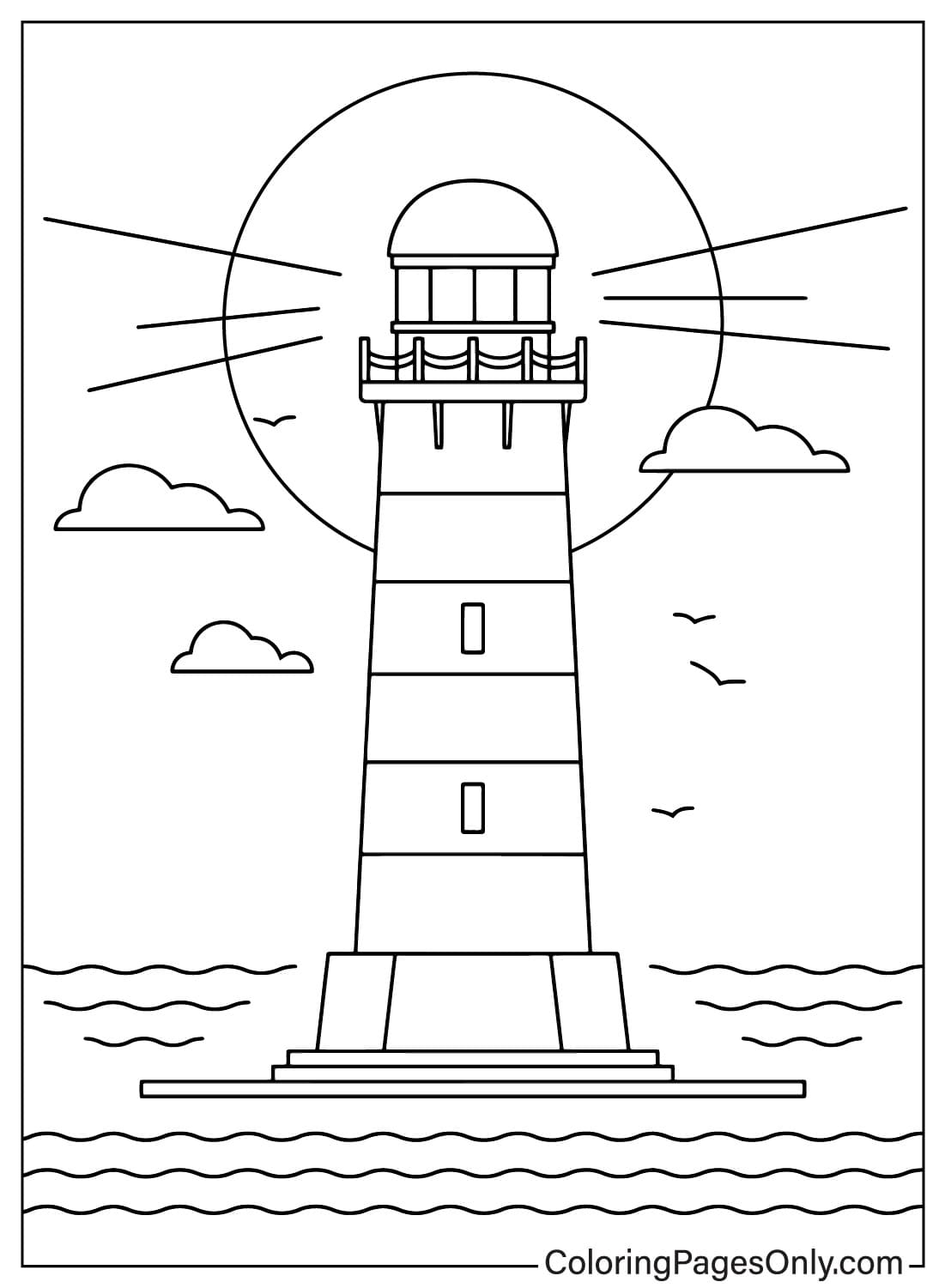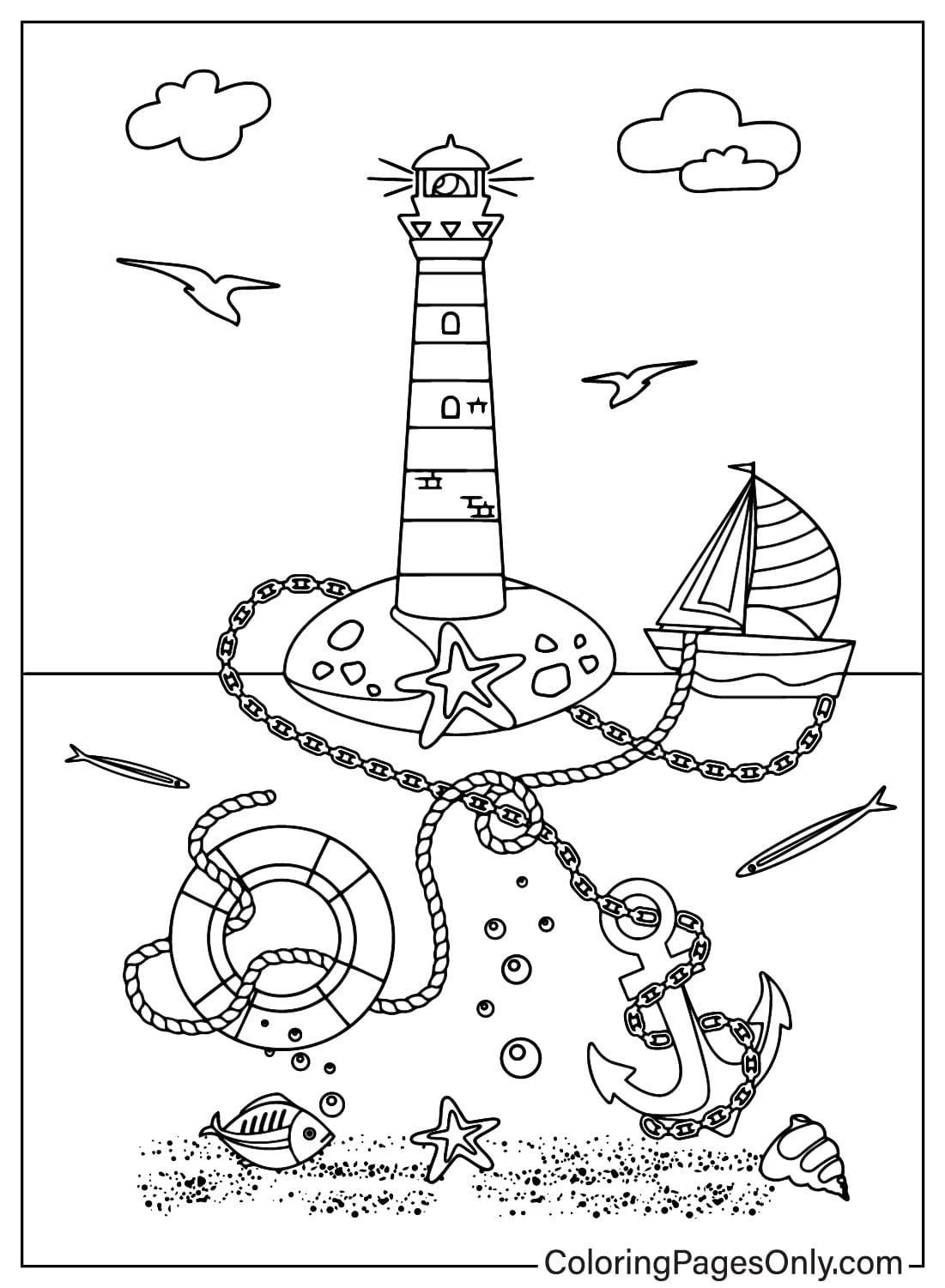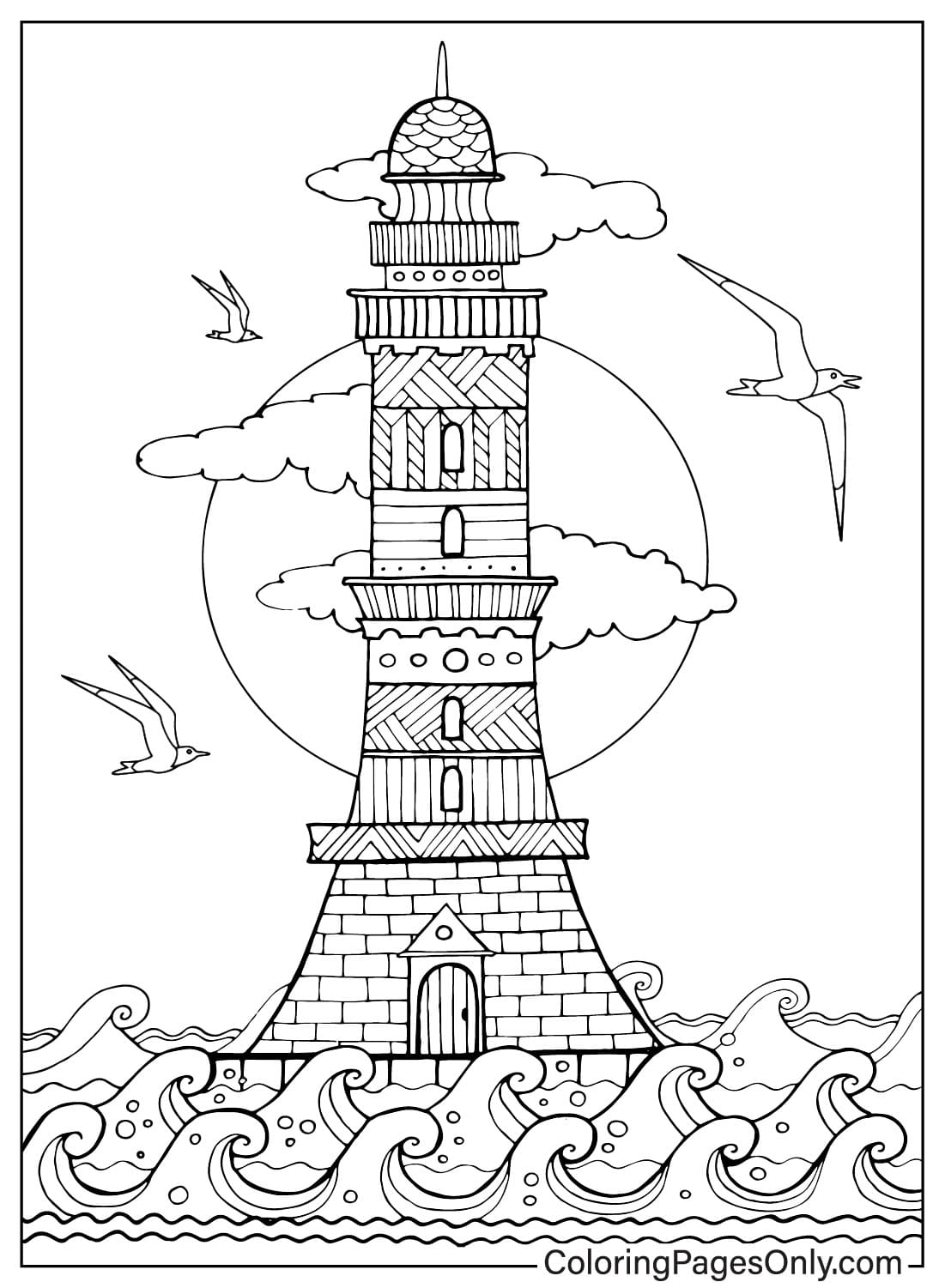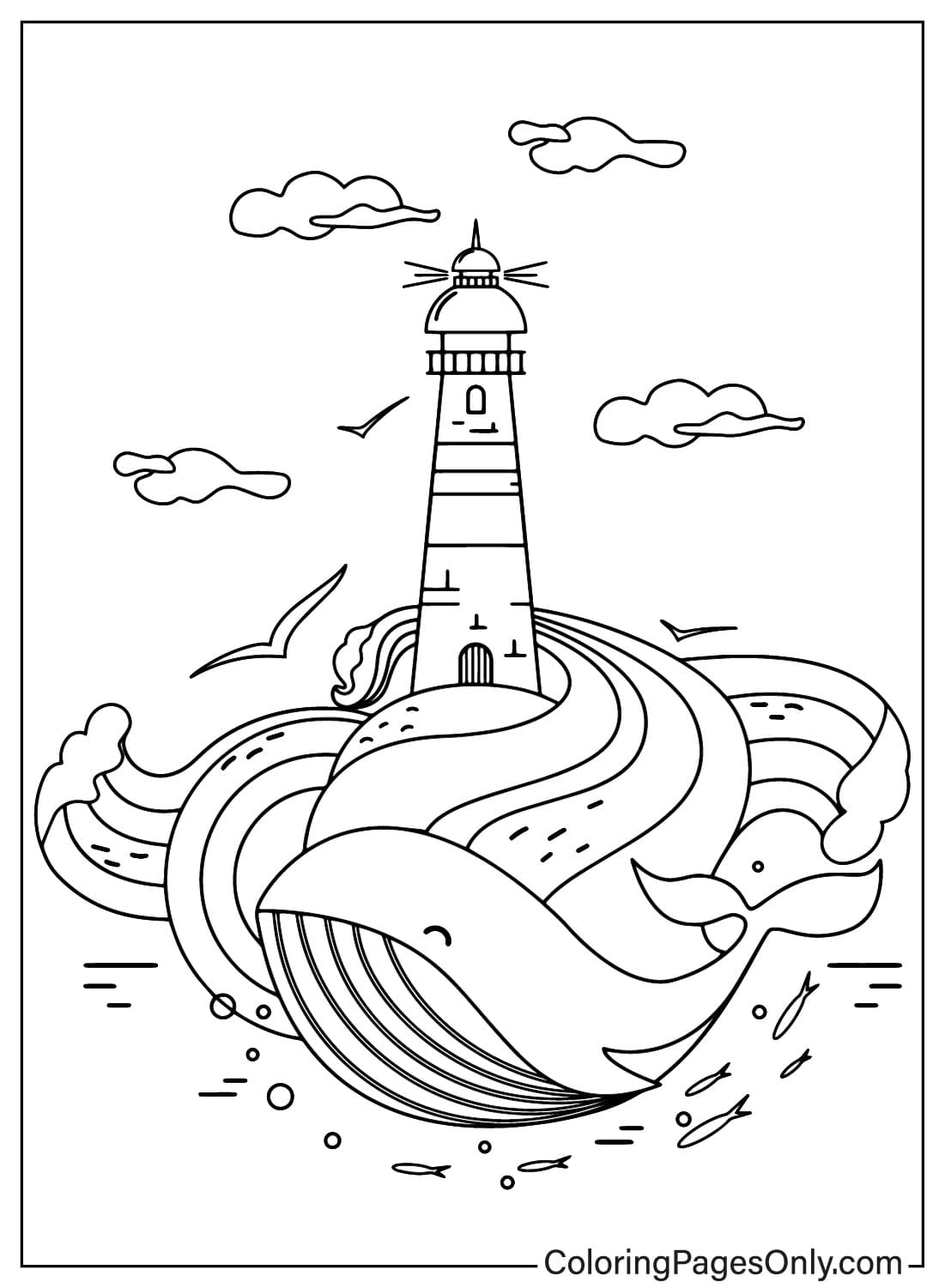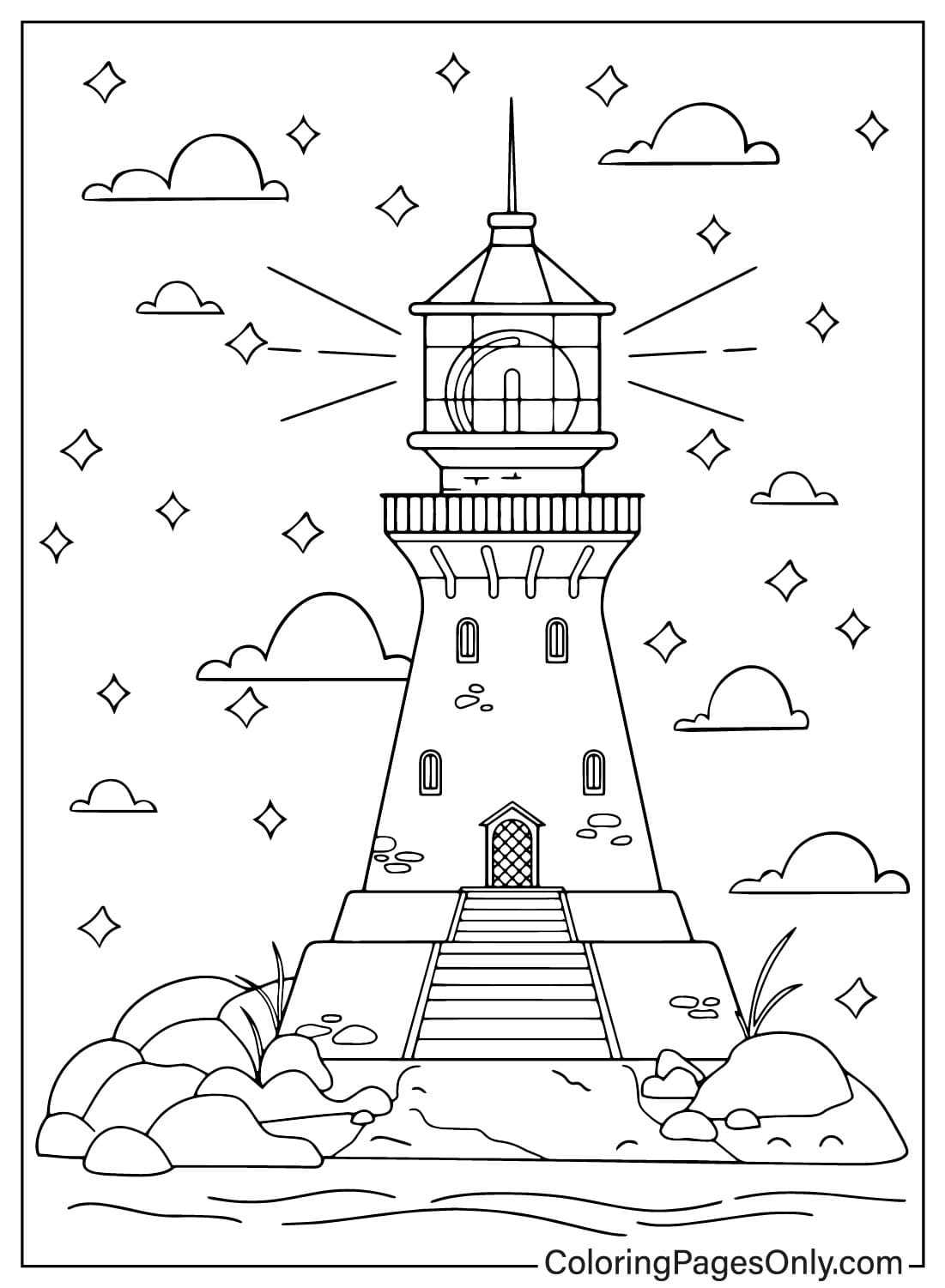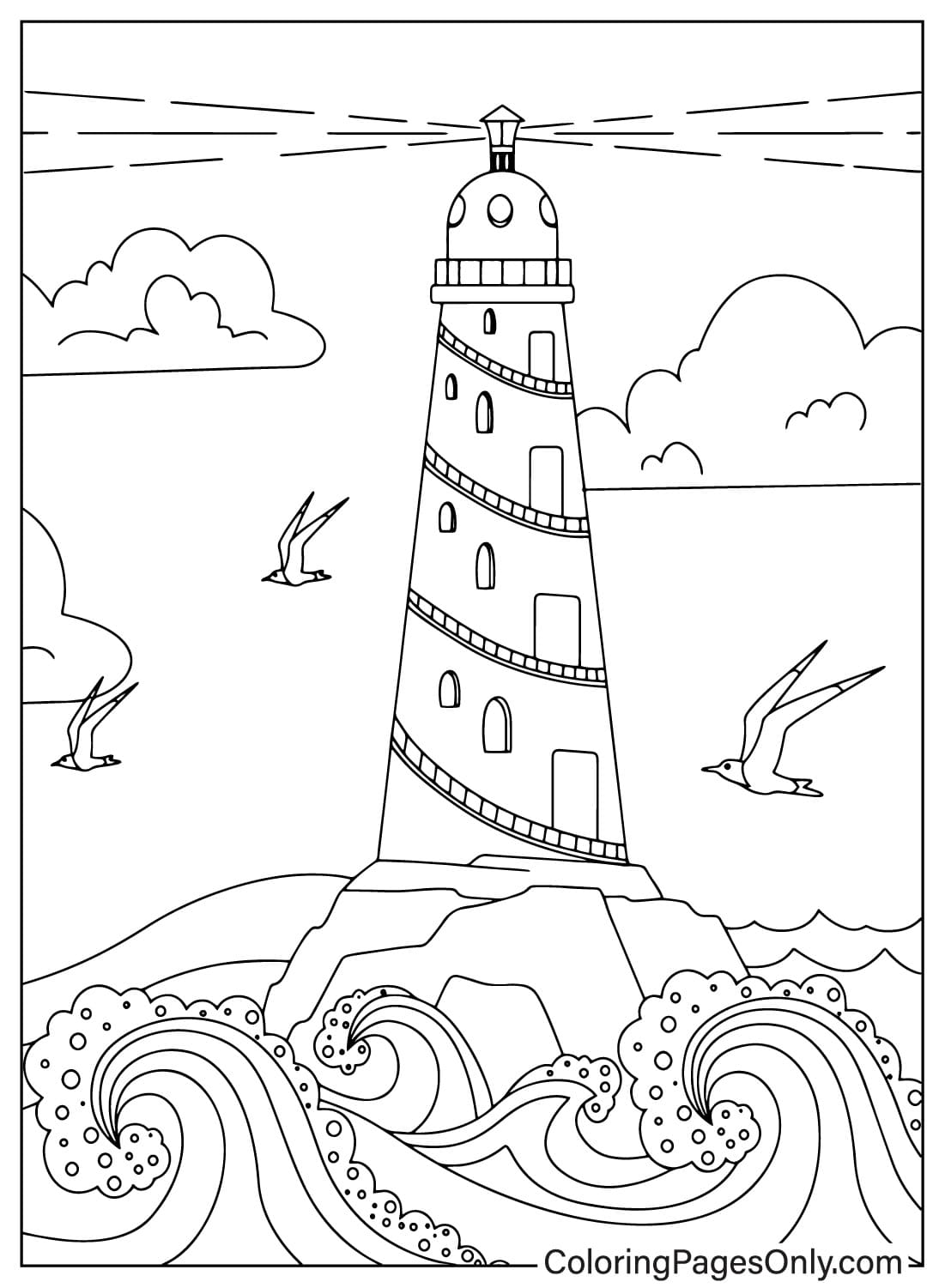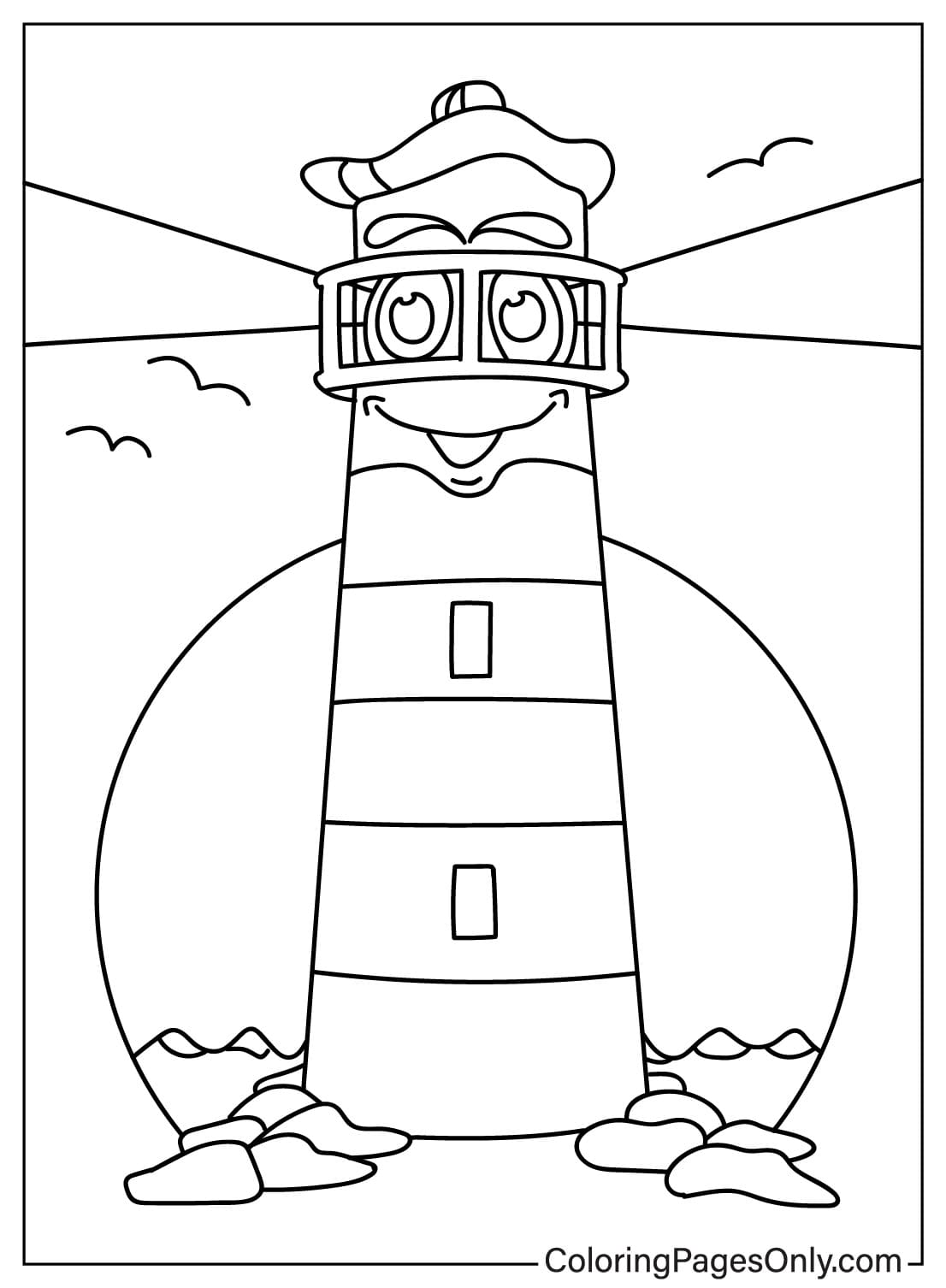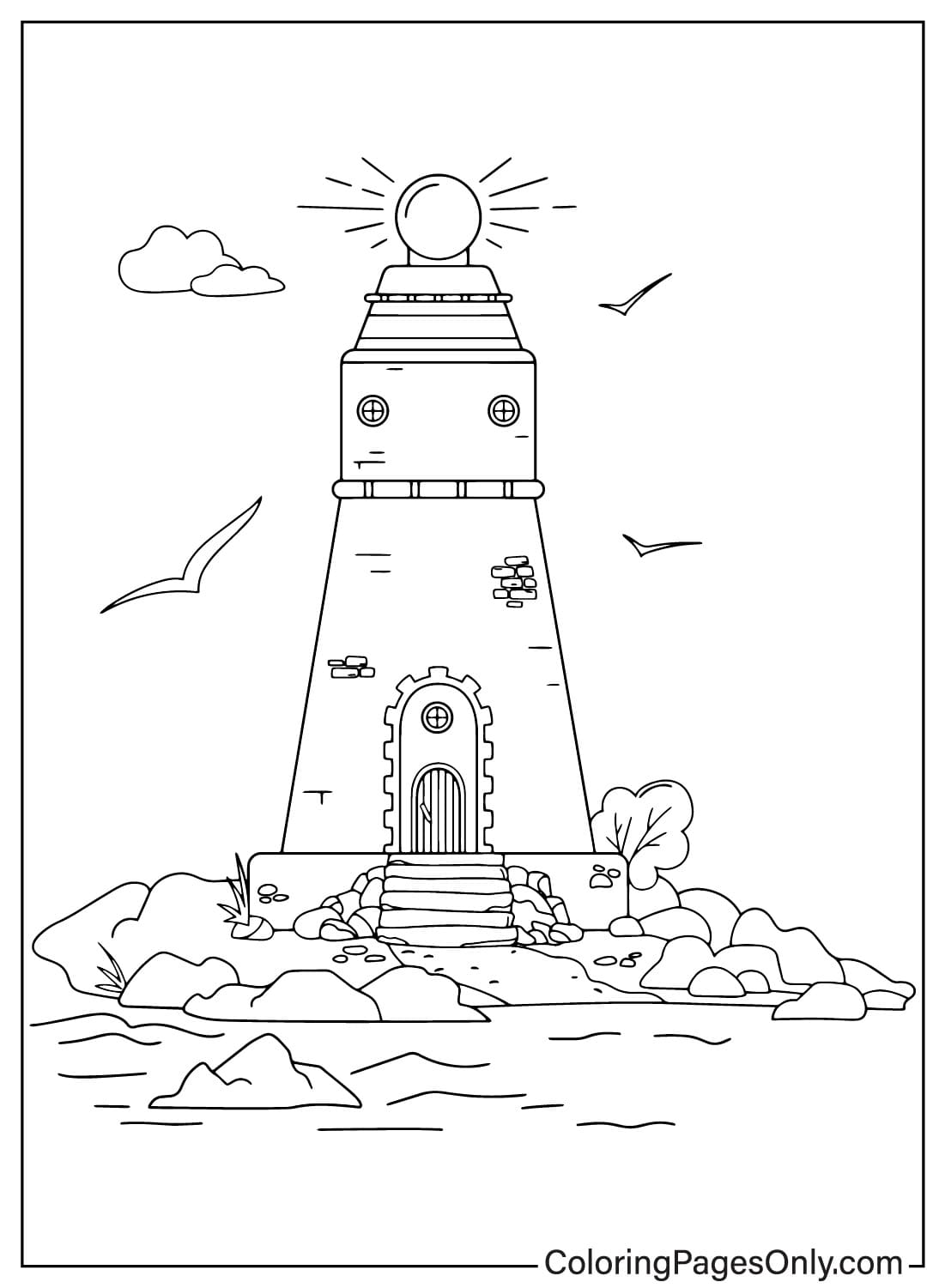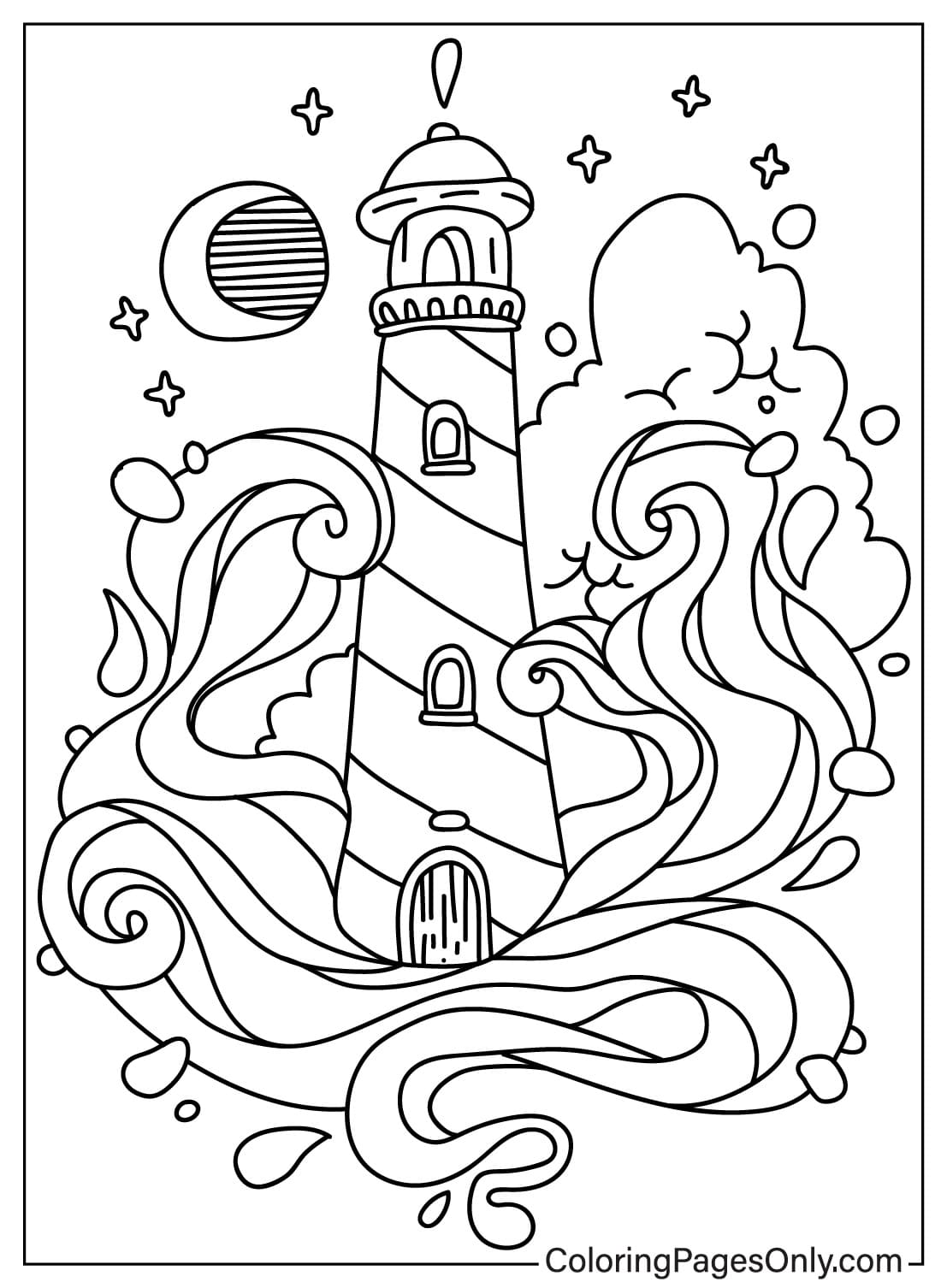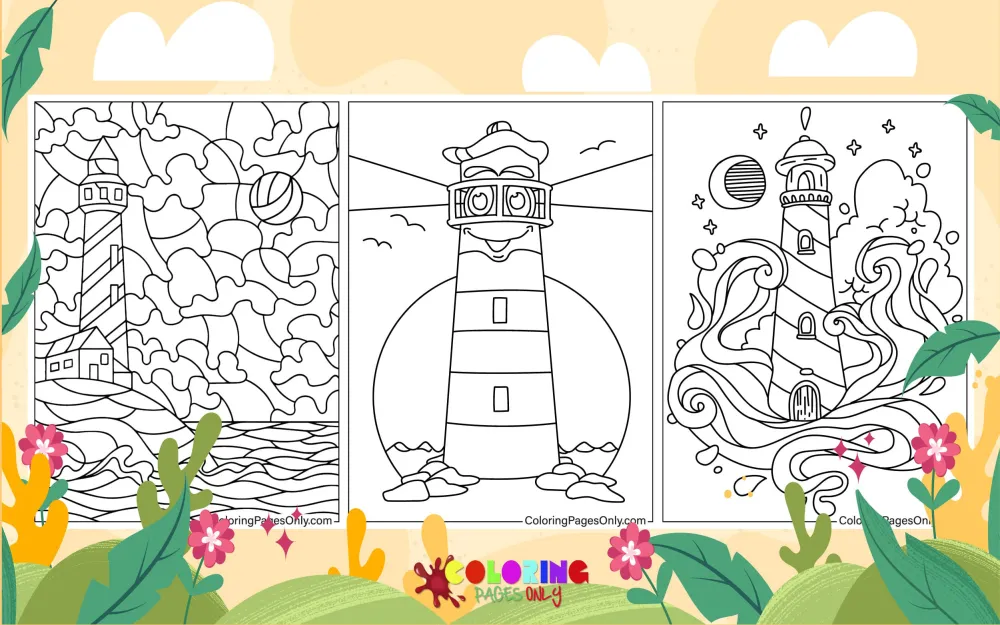
Lighthouse Coloring Pages at ColoringPagesOnly.com brings together 25 free printable pages dedicated to one of the most visually striking and emotionally resonant structures in the human-built world – the lighthouse. The collection spans the full range of lighthouse imagery: simple outline designs for preschool-age children, detailed ocean scene compositions with crashing waves and seagulls, atmospheric night pages showing the lighthouse beam under moon and stars, stained glass pattern treatments, a mandala design, a whale companion composition, and cliff-top settings with birds and trees. The full Nature collection is available through our Nature and Seasons Coloring Pages hub.

Every page is completely free – download as PDF to print or color online in your browser. No sign-up, no cost.

About Lighthouses

A lighthouse is a tower or structure equipped with a powerful light system designed to serve as a navigational aid for maritime pilots – warning ships away from dangerous coastlines, rocks, and shoals, and marking safe harbor entrances. The lighthouse’s beam, visible from many miles at sea in clear conditions, has guided sailors home and warned them away from danger for more than two thousand years.

The oldest known lighthouse in the world was the Lighthouse of Alexandria (also known as the Pharos of Alexandria), built on the island of Pharos in Egypt around 280 BCE during the reign of Ptolemy II. Standing between 100 and 130 meters tall – among the tallest man-made structures in the ancient world – it used a fire at its summit visible for approximately 50 kilometers. It was considered one of the Seven Wonders of the Ancient World and functioned for several centuries before being damaged by earthquakes in the medieval period.

Early lighthouse illumination technology evolved significantly over time. Ancient lighthouses used wood fires and later oil fires at their summits. By the 18th century, multi-wick oil lamps had been developed, and in 1822, French physicist Augustin-Jean Fresnel invented the Fresnel lens – a revolutionary optical design that uses concentric rings of prisms to dramatically amplify a lamp’s light output, extending the visible range of a lighthouse beam to 30 or more kilometers. The Fresnel lens remained the standard lighthouse illumination technology throughout the 19th and early 20th centuries, and many working lighthouses still use Fresnel lens systems today.

Modern lighthouses use electric lamps and automated systems – the era of the resident lighthouse keeper, who maintained the lamp through each night, ended gradually through the 20th century as automation replaced manual operation. In the United States, the last staffed lighthouse was the Boston Light on Little Brewster Island in Boston Harbor, which retained a keeper by special congressional legislation until 1998.

Lighthouse design varies significantly by location and era. North American lighthouses often use red-and-white horizontal or spiral stripe patterns for daytime identification – so that mariners could identify a specific lighthouse by its painted pattern (“daymark”) independent of its night light characteristic. British and European lighthouses tend toward simpler painted designs – white, black, and red in various combinations. The lighthouse’s light characteristic – its specific pattern of flashes and gaps – is unique to each lighthouse, allowing navigators to confirm which lighthouse they are observing by timing the flash pattern.

The lighthouse has become a powerful cultural symbol well beyond its practical maritime function – representing guidance, safety, hope, and the idea of light in darkness. This symbolic weight is why lighthouses appear so consistently in folk art, fine art, photography, decorative design, and the subject matter of coloring pages.
What’s in This Collection

Simple and Outline Tiles – For Younger Children

Three tiles are specifically designed for the youngest colorists: Lighthouse Outline Coloring Page For Kids provides the simplest linework in the collection – a clean, bold outline of a lighthouse with minimal internal detail, large color zones, and bold outlines that suit chunky crayons and preschool-age pencil control. Lighthouse Cartoon Coloring Page uses a stylized, slightly animated lighthouse form with exaggerated proportions – rounder, friendlier, and more character-like than the realistic tiles. Lighthouse Coloring Page for Preschoolers is the most minimal tile in the collection – a very simple, large-format lighthouse shape suited to the earliest coloring development stage.

These three tiles are the recommended starting point for children ages 3-6 who are developing color fill skills. The bold outlines prevent colors from accidentally crossing into adjacent zones, and the simplified forms make the lighthouse immediately recognizable without requiring fine motor precision.

Ocean Scene Compositions

The collection’s largest thematic cluster places the lighthouse in its most natural context – the sea. Lighthouse and Ocean Waves Coloring Sheet depicts the lighthouse against crashing ocean waves – the most dramatically maritime of the scene tiles, with wave energy and spray providing secondary texture alongside the tower. The Lighthouse and the Sea Coloring Page takes a broader view – lighthouse and ocean in a composed, scenic arrangement. Lighthouse and Seagulls at Sea Coloring Page and Lighthouse Surrounded by Seagulls Coloring Sheet add the seagull as a companion element – the most commonly depicted marine bird in lighthouse imagery, its wheeling, gliding forms providing dynamic movement around the lighthouse’s static vertical.

Detailed Lighthouse With Seagulls And Boat Coloring Page is the most compositionally complex ocean scene tile – adding a boat on the water to the lighthouse-and-seagulls combination, providing the strongest sense of narrative context. The boat is precisely the type of vessel the lighthouse exists to guide safely. This tile is the collection’s best choice for colorists who want the most complete maritime scene.

Night and Atmospheric Scenes

Lighthouse and Moon Coloring Sheet and Lighthouse On a Starry Night Coloring Sheet for Kids cover the lighthouse in its most romantically compelling setting – the nighttime coastal scene. The night lighthouse tile is particularly resonant because it depicts the lighthouse in the conditions when its function is most essential and most dramatic: the beam cutting through darkness, the moon reflecting on the water, the tower standing isolated against the night sky.

The Starry Night tile specifically depicts a star-filled sky – an opportunity to bring deep navy or near-black sky tones, white star punctuations, and the lighthouse beam as the composition’s most luminous element. The moon tile works similarly but uses the moon’s pale reflected light as a second light source, competing with and complementing the lighthouse beam.

Cliff and Landscape Settings

Lighthouse On A Cliff With Birds And Trees Coloring Page For Kids places the lighthouse in an elevated inland landscape setting – on a cliff top with trees and birds visible, the ocean presumably visible below the cliff edge. This setting captures the typical placement of many real working lighthouses, which are built on elevated coastal headlands to maximize the visible range of their beam. The cliff and tree elements provide more complex color work than simple ocean-only compositions.

Wildlife Companion Tile

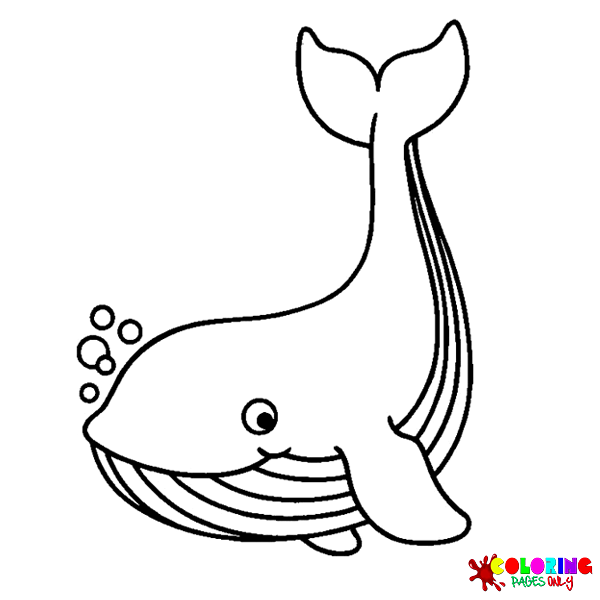
Lighthouse and Whale Coloring Page is the collection’s most unexpected and most charming tile – a lighthouse with a whale visible in the water nearby. The pairing of the world’s largest animals with humanity’s maritime navigation infrastructure creates a quietly magical composition. Whales in lighthouse imagery connect to the deep tradition of whale-watching from coastal lighthouses in New England and other maritime communities. The whale’s enormous scale relative to the lighthouse – or the lighthouse’s enormous scale relative to the whale, depending on the tile’s treatment – creates compositional interest that none of the sea-only tiles achieve.

Coloring the whale: Humpback whales – the most commonly depicted species in lighthouse imagery – use dark charcoal gray to near-black on the upper body and back, with white or pale cream on the underside of the flippers and the ventral (belly) pleats. The tail flukes are dark gray, often with white or light markings on the underside. Blue whales use a more uniform blue-gray, while sperm whales are a consistent dark gray-brown.

Stained Glass Tiles

Lighthouse Stained Glass With Sun Coloring Page and Easy Lighthouse Stained Glass Coloring Page For Kids take the lighthouse into the stained glass artistic tradition – the lighthouse form is divided into geometric sections, each to be colored as a distinct zone of vivid, saturated color, creating the impression of light passing through colored glass.

Stained glass coloring requires a different approach from standard naturalistic coloring: each section should use a single, fully saturated, vivid color – no gradients, no shading, no blending – applied solidly and evenly within the lead-line boundaries. The collective effect of many solid, vivid colors adjacent to each other creates the characteristic luminous quality of actual stained glass. Colors should be chosen for their contrast and vibrancy rather than for literal accuracy – a stained glass lighthouse can legitimately use purple, orange, vivid green, and deep blue in the same composition. The Easy version uses larger, simpler sections suited to children; the Sun version includes solar imagery as an additional design element.

Lighthouse Mandala

Lighthouse Mandala Coloring Page is the collection’s most meditative and adult-oriented tile – the lighthouse is rendered within a mandala framework, with the tower rising from a center point surrounded by concentric rings of geometric and organic pattern work. This tile is among the most time-intensive in the collection and best approached with fine-tip tools – fine-tip markers or well-sharpened colored pencils – and a patient, section-by-section approach. For guidance on the stress-relief benefits of detailed pattern coloring, see our coloring for stress relief and anxiety guide.

Coloring Guide: The Lighthouse Palette

The Lighthouse Tower

Traditional lighthouse towers use two primary finish treatments that determine the most common coloring approaches:

White tower – the most common real-world lighthouse finish, used for maximum daytime visibility against rocky coastal backgrounds. A white tower should be rendered as bright paper white with only the subtlest warm-gray shadow on the side facing away from the light source, and slightly warmer cream tones at the very base where the stone appears older and more weathered.

Striped tower – either horizontal bands (red-and-white alternating) or spiral stripes (black-and-white spiraling from base to top). The most famous striped lighthouse designs include Cape Hatteras (black-and-white spiral), Big Sable Point (black-and-white horizontal bands), and West Quoddy Head (red-and-white horizontal bands). Striped lighthouse tiles benefit from careful, even application of each stripe’s color before moving to the next, ensuring clean edges between the bands.

The lantern room – the glass-enclosed chamber at the top of the tower housing the light – typically uses either black ironwork (visible as a cage surrounding the glass) or dark red or dark green metalwork, with the glass area itself left pale blue-gray to suggest reflective glass.

The gallery (the railed platform surrounding the lantern room) typically matches the lantern room’s ironwork color – black or dark red-green.

The Lighthouse Beam

The lighthouse beam is the most challenging and most rewarding element in any night scene tile. The beam should suggest luminosity – light itself, rather than a colored object, which requires approaching it differently from the rest of the page.

The most effective approach: leave the core of the beam as paper white (uncolored), adding only the very faintest pale yellow wash at the edges where the beam diffuses into the surrounding darkness. The beam should be the brightest element on the page – brighter than the moon, brighter than the stars. Creating this effect requires that the surrounding darkness be made sufficiently dark: a deep navy or near-black blue for the night sky, a dark blue-gray for the night sea surface.

Ocean Water

Sea water in lighthouse compositions uses different palettes depending on the time of day and the weather conditions depicted:

Daytime calm sea: A medium, clear blue-green – neither as dark as deep ocean nor as bright as tropical shallow water. Small whitecap highlights on wave crests can be left as paper white or applied with a white gel pen.

Daytime stormy sea: Deep gray-green, heavily textured – applying multiple overlapping strokes in different values of gray-green creates the impression of turbulent, choppy water. Foam and spray use near-white.

Nighttime sea: The darkest water treatment – deep navy to near-black, with very subtle reflections of moonlight or lighthouse beam as pale blue-white lines across the surface.

The Coastal Environment

Rock formations in lighthouse tiles use warm gray tones – the specific warm gray of coastal granite or sandstone, with darker gray in shadow crevices and slightly lighter warm cream where weathered surfaces are exposed to full light. Avoid cool, purple-gray for rocks; coastal rock reads as warmer than that.

Vegetation on cliff tiles – coastal grasses, low shrubs – uses muted, windswept greens, more yellow-green and slightly desaturated than lush inland vegetation, reflecting the salt-stressed coastal plant life that actually grows in lighthouse environments.

6 Activities Using Lighthouse Coloring Pages

Decorate a Card

A colored lighthouse page becomes a nautical-themed card with relatively simple assembly. Print the lighthouse tile on 120gsm or heavier paper, color carefully – paying particular attention to the ocean waves and sky as secondary elements that frame the lighthouse and give the composition its context. Consider using watercolor for the sky and ocean areas to create a soft, diffused background quality that contrasts with the more defined coloring of the lighthouse tower itself.

Once complete, cut the colored page to card dimensions and mount it on folded cardstock to create the card structure. Write a personal message inside. Lighthouse imagery suits any occasion with a maritime or travel connection – bon voyage cards, birthday cards for sailors or beach lovers, or simply a thoughtful and unusual choice for anyone who appreciates the lighthouse as a symbol of guidance and safety.

lighthouse coloring pages craft 1

Make a 3D Paper Lighthouse

A standing 3D paper lighthouse can be made from any of the single-lighthouse portrait tiles – the Lighthouse Outline or Lighthouse Cartoon tiles work particularly well because their simpler forms cut more cleanly. Print two copies and color both identically. Cut out the lighthouse form from both copies. Score and fold a small cardboard rectangle as the base, then mount one cut-out on each side of the base (front and back), creating a double-sided standing figure.

For a more elaborate version, cut the lighthouse form from foam board rather than cardstock, allowing a true three-dimensional tower by assembling multiple cut sections at angles. Displayed on a bookshelf or windowsill, a carefully colored standing paper lighthouse makes a charming room decoration.

lighthouse coloring pages craft 2

Create Stickers

Small lighthouse stickers work as decorations for notebooks, water bottles, scrapbooks, and storage boxes. Print any of the simpler lighthouse tiles at reduced scale – approximately 25% of the original size, or 2-3 inches tall – producing 4-6 small images per sheet. Color each one, then back with double-sided tape or self-adhesive paper. Cut out the lighthouse shapes along their outlines.

The lighthouse’s simple, recognizable silhouette cuts particularly cleanly at small scale – the tower shape is immediately recognizable even at miniature size. Groups of different lighthouse tiles cut and assembled together create a maritime sticker collection.

lighthouse coloring pages craft 3

Make a Glow-in-the-Dark Picture

The Lighthouse on a Starry Night tile is the ideal candidate for this activity. Color the lighthouse tower and environment normally, but for the lighthouse beam, the moon, and the stars – use fluorescent or glow-in-the-dark markers rather than standard pigment-based tools. These markers charge under light exposure and emit a soft glow in the dark.

Apply the fluorescent color in the star positions, along the lighthouse beam path, and on the moon’s face. Expose the finished page to a bright light source for 60-90 seconds, then take it into a darkened room – the charged fluorescent areas will glow, making the lighthouse beam and night sky genuinely luminous. Frame and display near a lamp for easy recharging.

Design a Bookmark

A lighthouse bookmark is a practical and handsome gift for any reader. Print any tall, vertically-oriented lighthouse tile and color it carefully. Cut a rectangle approximately 5cm × 18cm from the colored page, centering the lighthouse composition within the rectangle. Mount on cardstock of the same dimensions for rigidity. Punch a hole at the top, thread ribbon or twine through, and tie a knot or small tassel.

The lighthouse’s vertical tower makes it one of the more naturally suited subjects for the tall, narrow bookmark format – the tower’s proportions fit the bookmark’s proportions more naturally than most horizontal landscape compositions.

Lighthouse coloring pages esty1

Image source: Etsy.

Decorate a Nightlight

A colored lighthouse page can become a functional nightlight with minimal materials: a small LED tea light or small battery-operated LED lamp, a clear glass jar, and a printed lighthouse page. Color the lighthouse page with vivid, saturated colors – the more intense the color, the more dramatic the light effect. Trim the page to fit around the circumference of the jar.

Tape or apply the colored page to the outside of the jar, with the image facing outward. Place the LED light inside the jar and close or cap it. When the LED is lit, and ambient lights are reduced, the light passes through the paper, and the colors become softly luminous – creating a warm, glow-through effect that makes the lighthouse image appear to be lit from within.

FAQs

What is the purpose of a lighthouse? A lighthouse is a tower equipped with a powerful light system serving as a maritime navigational aid – warning ships away from dangerous coastlines, rocks, and shallow waters, and marking safe harbor entrances. Each lighthouse has a unique light characteristic (a specific pattern of flashes and gaps) that allows navigators to identify it.

What is the oldest lighthouse in the world? The oldest known lighthouse was the Lighthouse of Alexandria (the Pharos of Alexandria), built around 280 BCE on the island of Pharos in Egypt during the reign of Ptolemy II. Standing 100-130 meters tall, it was considered one of the Seven Wonders of the Ancient World.

Why do some lighthouses have stripes? Lighthouses use distinctive painted patterns – called daymarks – so that mariners can identify a specific lighthouse by sight during daylight hours, independent of its nighttime light characteristic. Red-and-white horizontal bands, black-and-white spirals, and other bold patterns allow identification from a distance. The specific daymark of each lighthouse is unique to that structure.

What is a Fresnel lens? A Fresnel lens (named after French physicist Augustin-Jean Fresnel, who invented it in 1822) is an optical lens design using concentric rings of prisms to dramatically amplify a lighthouse lamp’s output without the weight and size of a conventional lens. It extended the visible range of lighthouse beams to 30+ kilometers and remained the standard lighthouse optical technology for over a century.

Are lighthouses still in use today? Yes – many lighthouses remain active navigational aids, though modern versions are automated rather than staffed by resident keepers. GPS and electronic navigation have reduced mariners’ dependence on lighthouses, but they remain useful backup systems and are maintained by coastal authorities worldwide.

What is a lighthouse keeper? A lighthouse keeper was the person responsible for maintaining the lighthouse – keeping the lamp lit and operational through each night, trimming wicks, refueling lamps, maintaining the optics, and recording ships passing. As lighthouse automation expanded through the 20th century, staffed lighthouses were progressively replaced by automated systems. The United States fully automated its last actively staffed lighthouse (Boston Light) in 1998.

What do lighthouses symbolize? Beyond their practical function, lighthouses have become powerful cultural symbols of guidance, hope, safety, and clarity in the face of darkness and danger. They appear consistently in folk art, fine art, tattoo design, and decorative objects as representations of these values.

All 25 Lighthouse Coloring Pages are free – download as PDF or color online. Share your finished pages on Facebook and Pinterest.

These related coloring collections will help you explore the wonderful world of colors. Let’s choose, be creative, and show us your great pictures!

Sophia Williams – Writer and Social Network

Hi everyone! I’m Sophia Williams, a social media specialist at Coloringpagesonly.com. My goal is to spread the love of color and creativity to everyone. Join me online as we share inspiration, connect through art, and fill the world with vibrant, joyful colors!