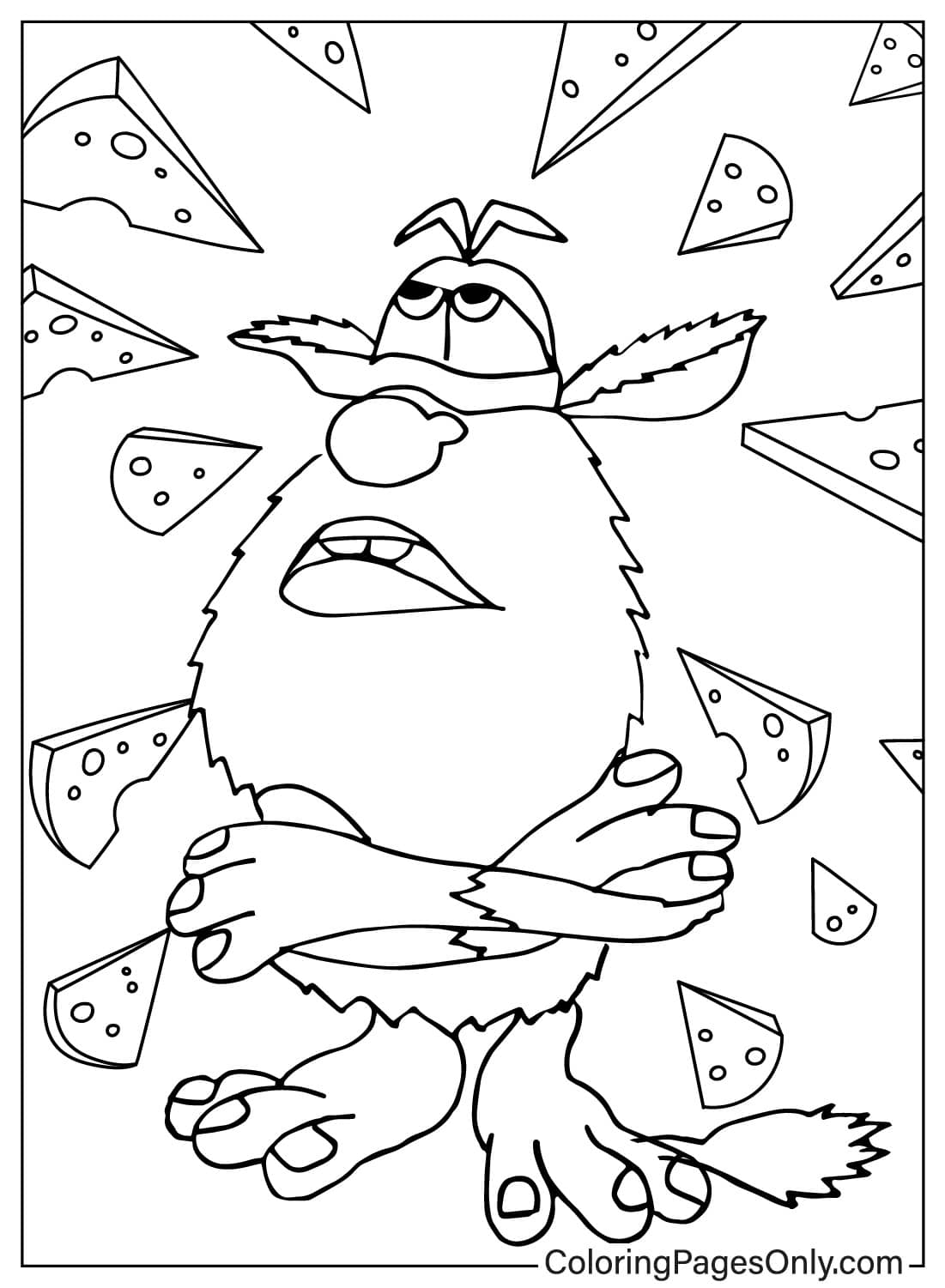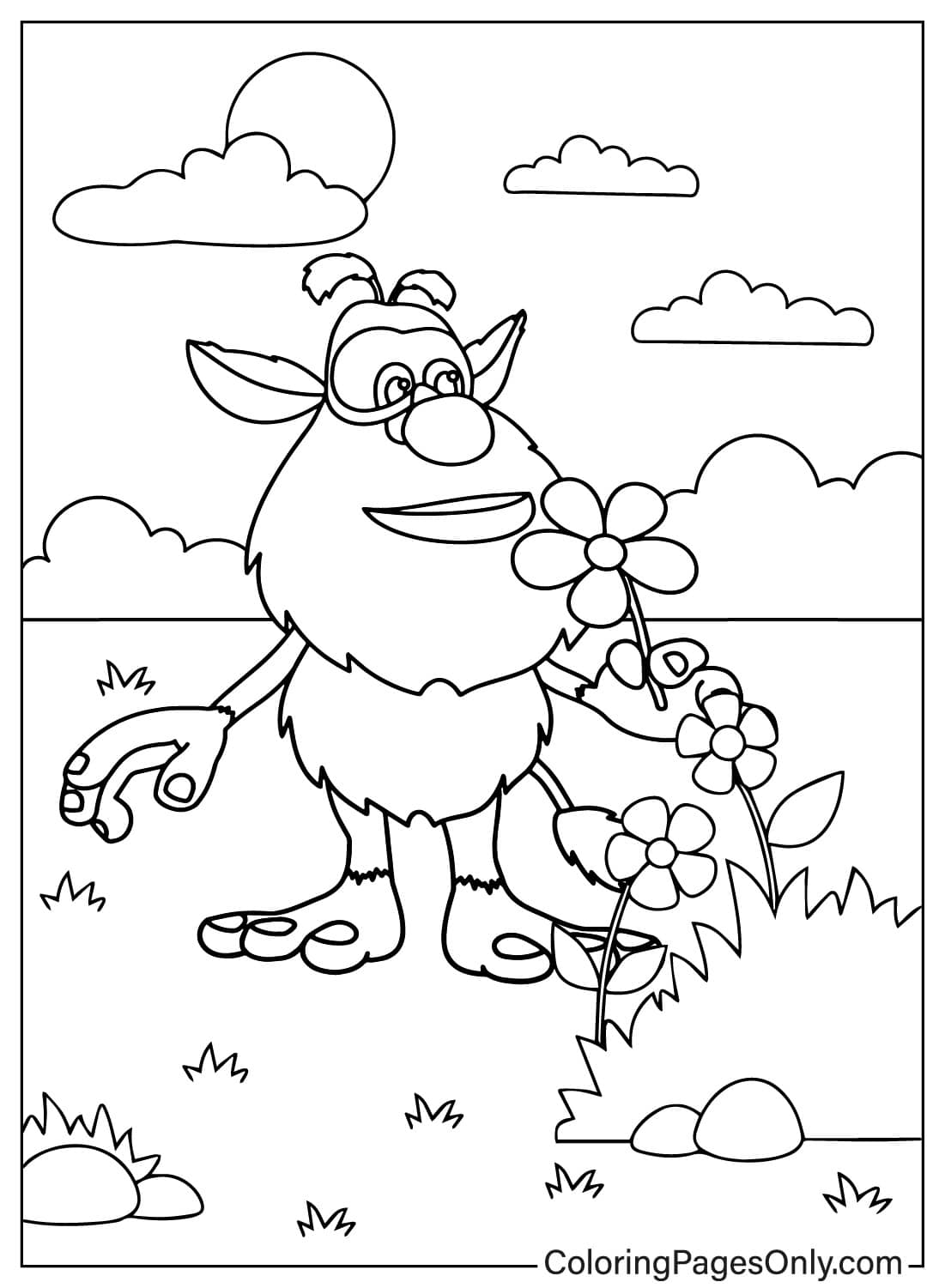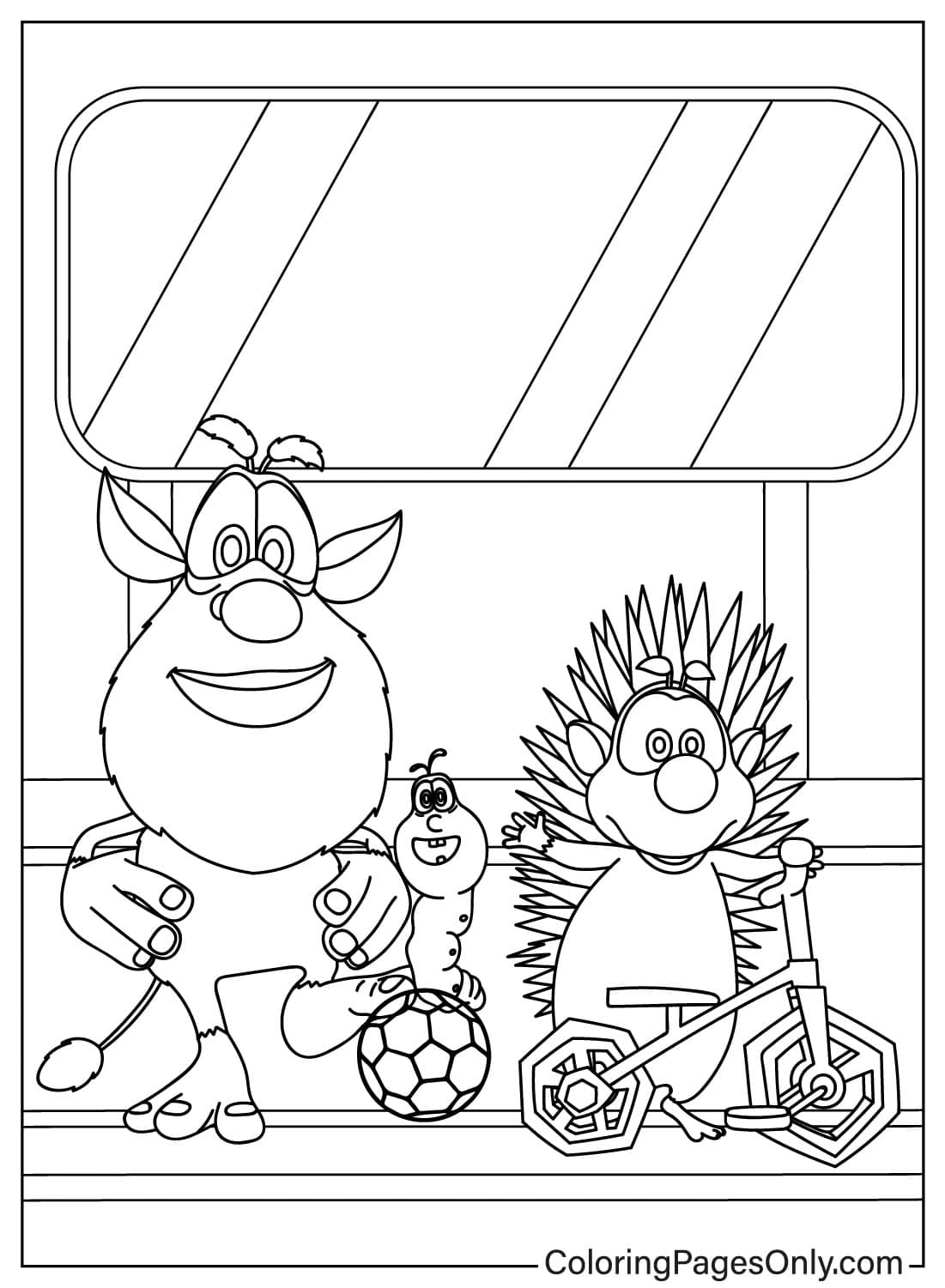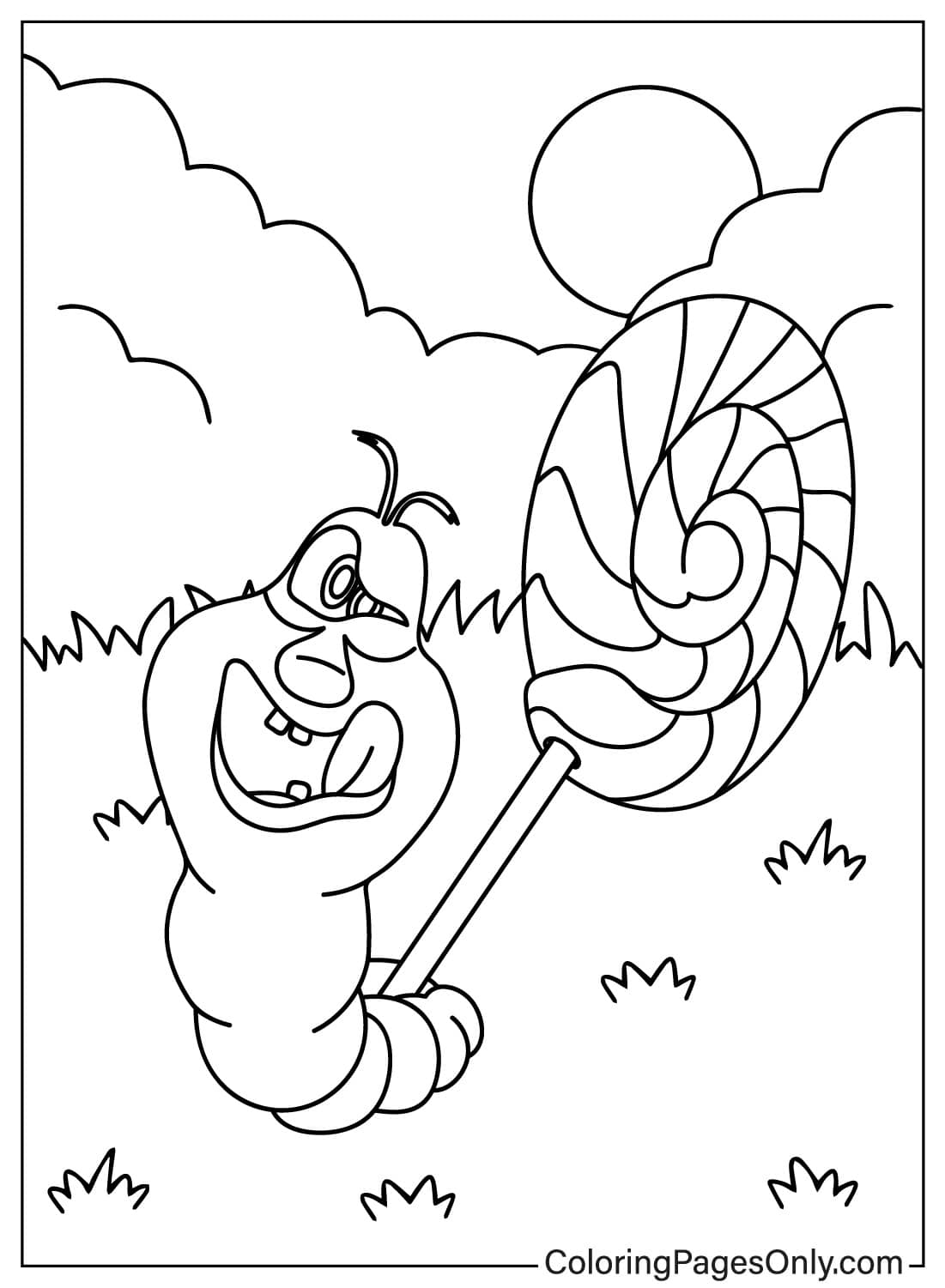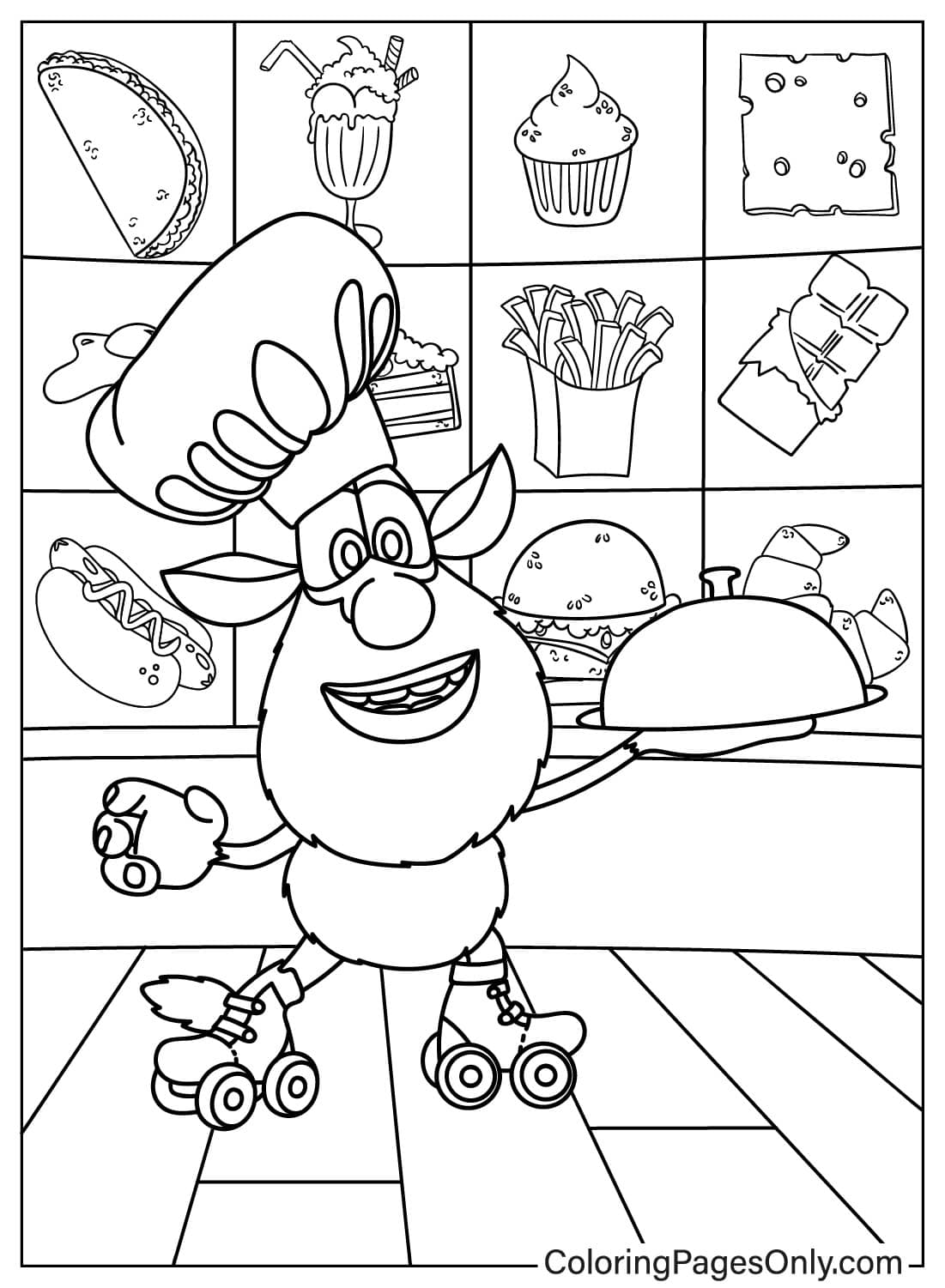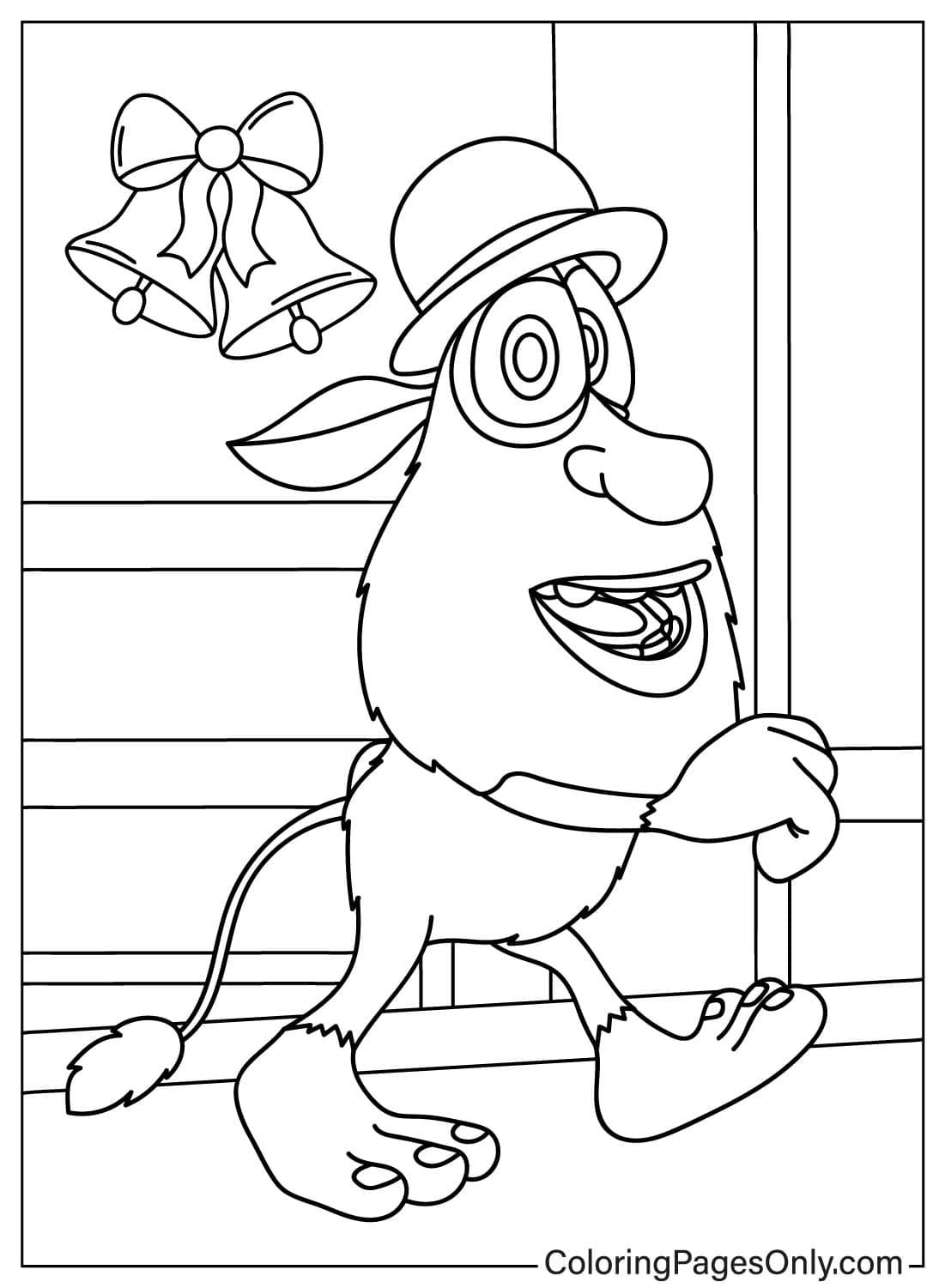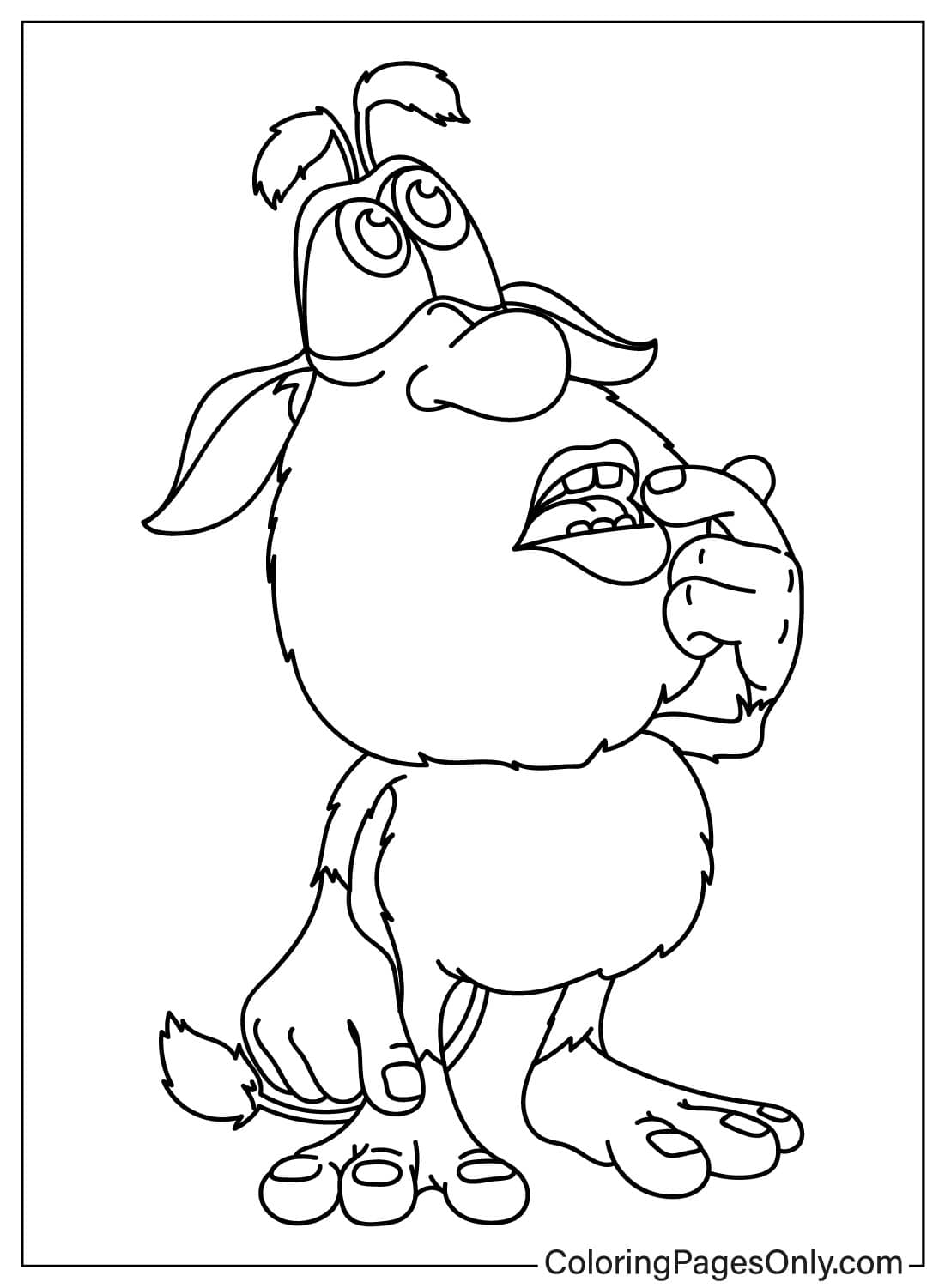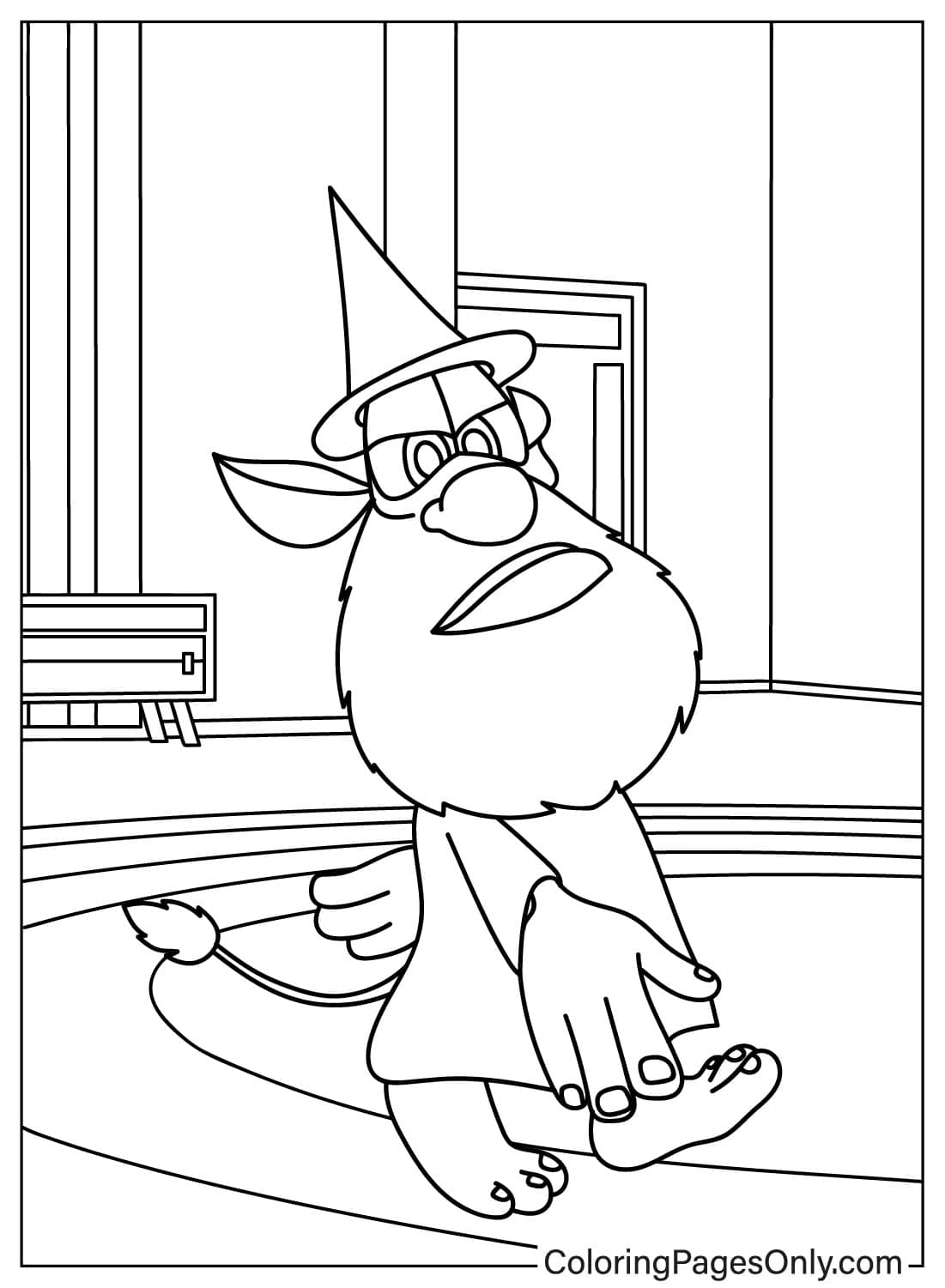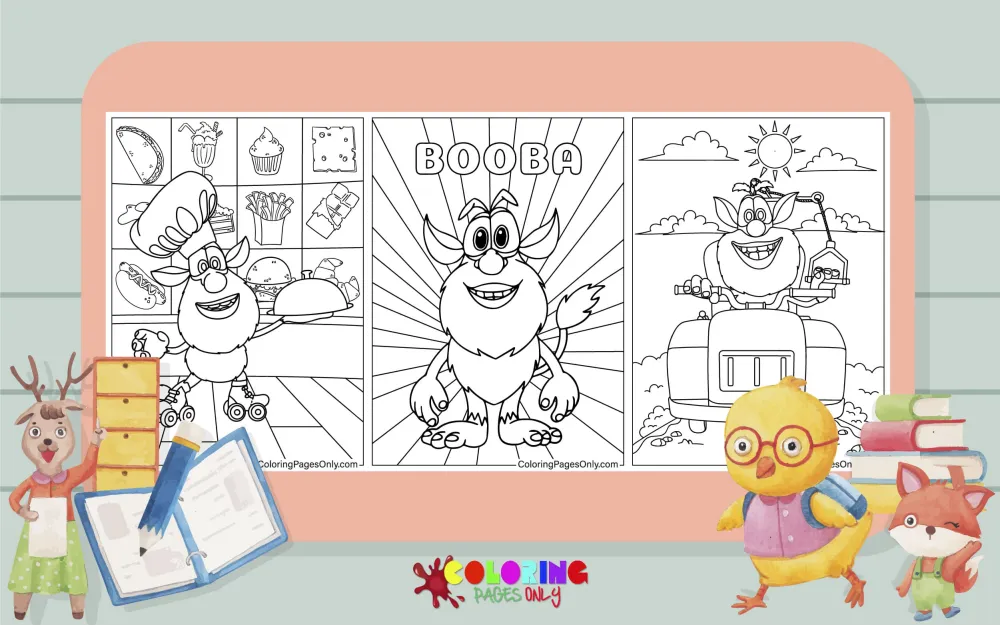
Free Booba coloring pages – 17 pages featuring the round, white, wide-eyed little creature exploring kitchens, parks, bathrooms, and everyday objects with wide-eyed wonder – simple, bold outlines perfect for toddlers and young children, free printable PDF and online coloring for fans of the wordless animated series.
Booba is a Russian animated series created by Lev Pokhis and produced by The Booba Studio, first released on YouTube in the mid-2010s and subsequently made available on Netflix. The show has accumulated billions of views across its international channels – a scale that places it among the most-watched children’s animated content on the platform – reached by an audience that spans dozens of languages and dozens of countries, from Russia and Eastern Europe through Southeast Asia and beyond.
The reason the series crosses language barriers so completely is that it contains none. Booba does not speak. The show has no dialogue at all – its humor, its storytelling, and its emotional communication happen entirely through Booba’s enormous expressive eyes, his body language, the sounds he makes, the music that accompanies each discovery, and the specific comedy of what happens when a small, curious, round creature encounters an ordinary household object and approaches it with the investigative seriousness of someone who has absolutely no idea what it is.
Each episode places Booba in a new environment – a kitchen, a bathroom, a park, a supermarket, a museum – and follows him as he discovers, misunderstands, experiments with, and is usually surprised by whatever he finds there. The show does not need words because the situations it creates are immediately legible: the comedy of confusion, curiosity, and consequence requires no translation.
These 17 free pages at ColoringPagesOnly.com bring Booba’s round, simple, expressive design to paper. All free, PDF or PNG, print or color online.
What’s Inside
Booba Portrait Pages
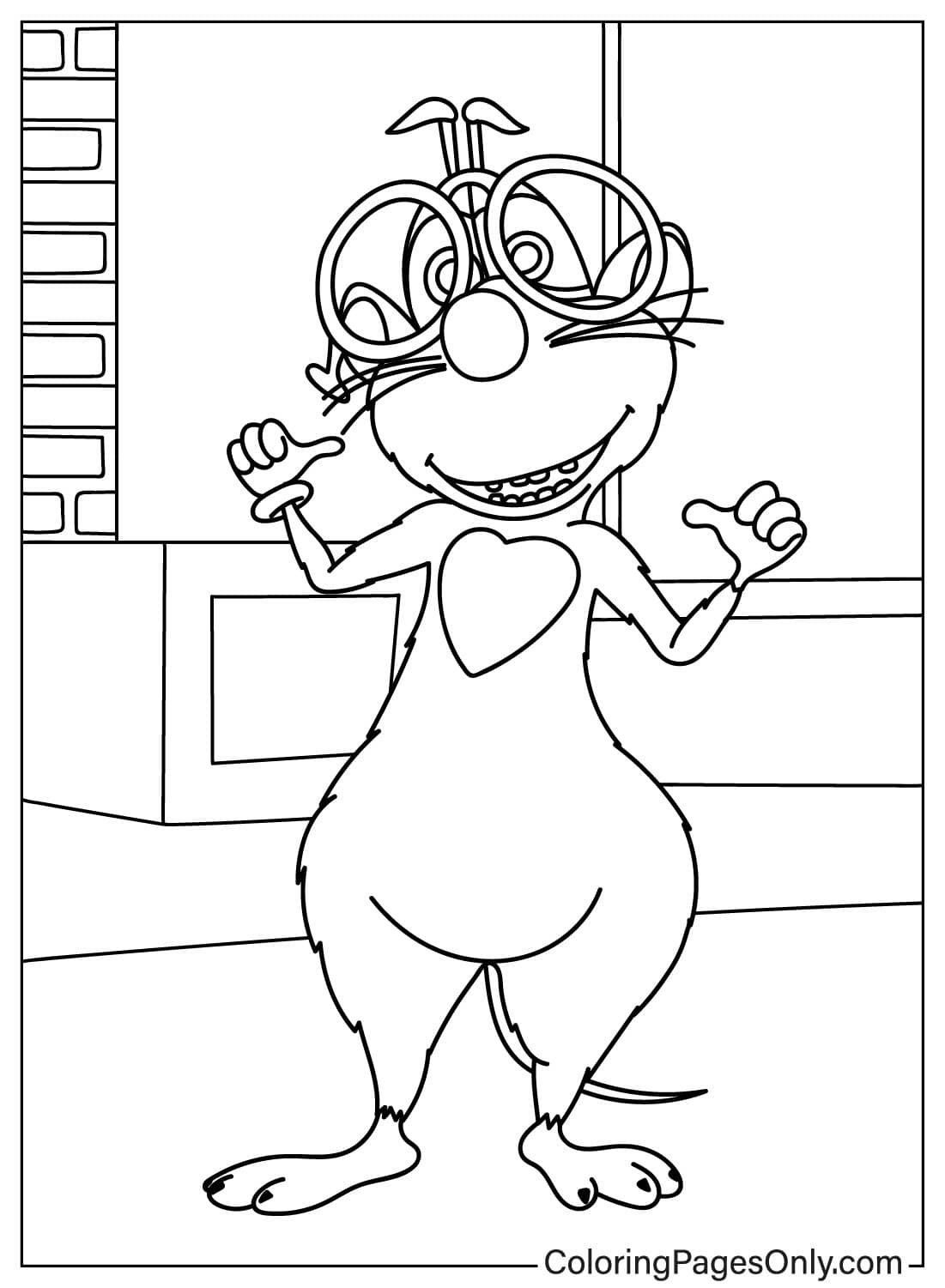
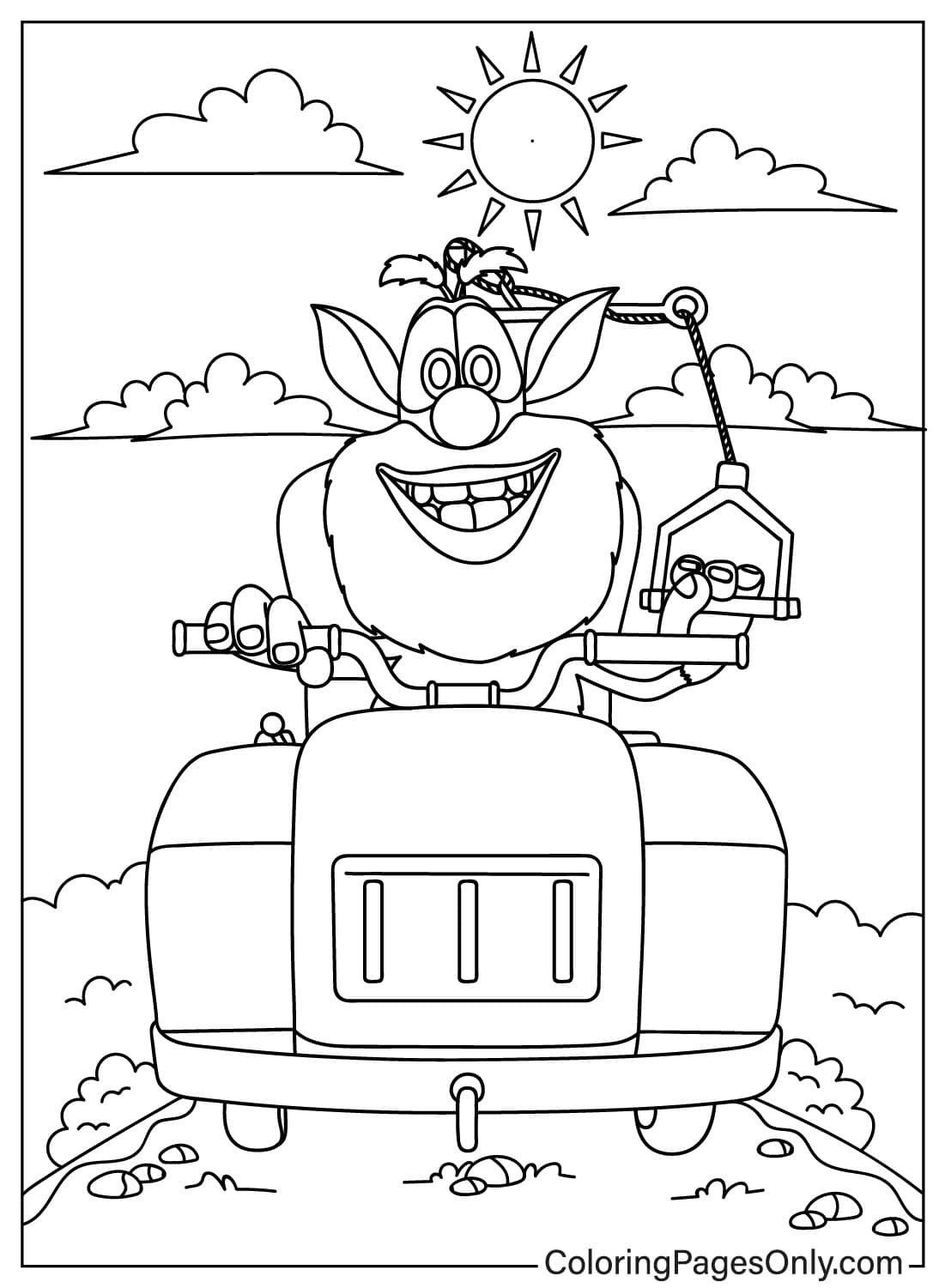
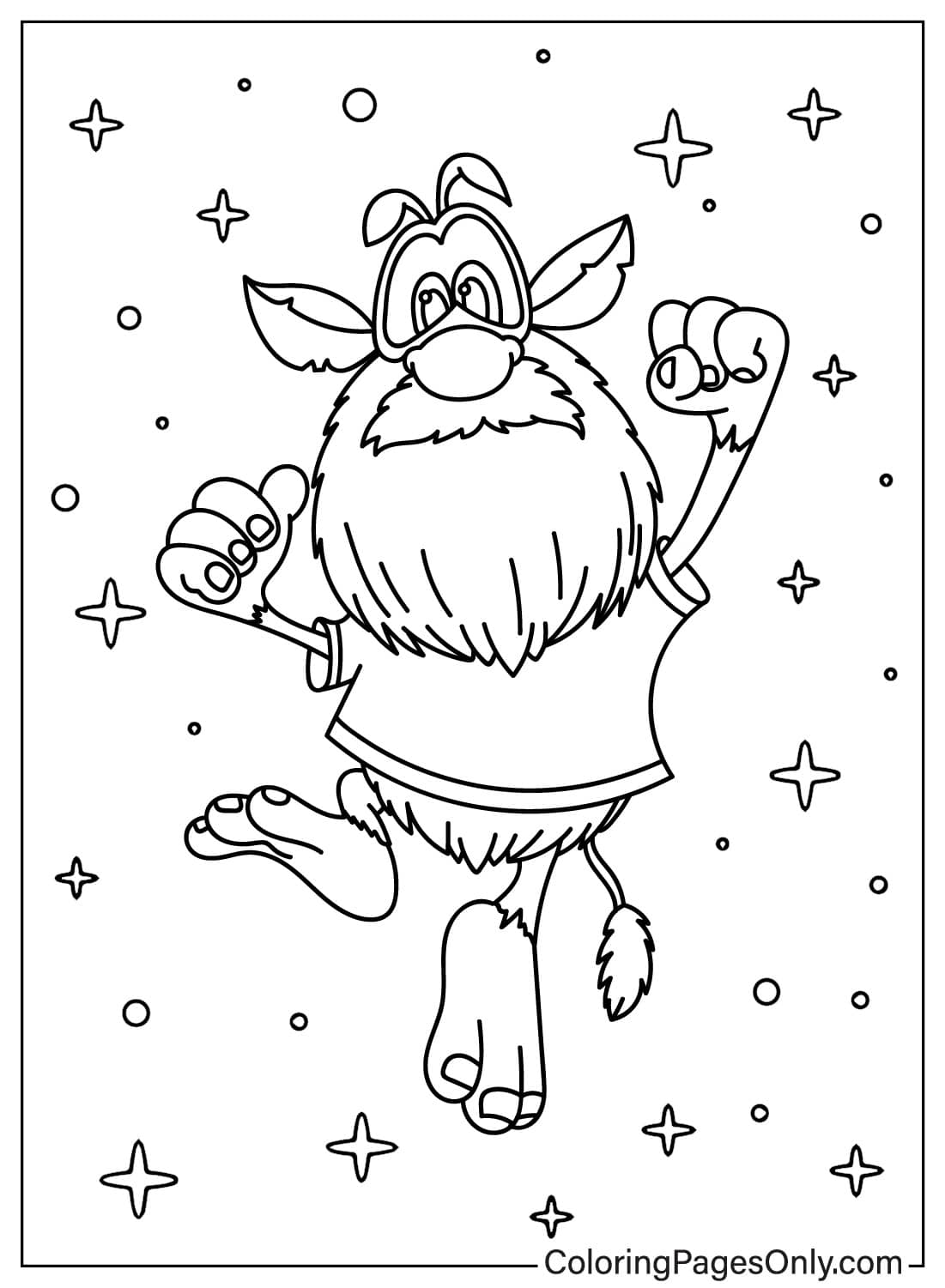
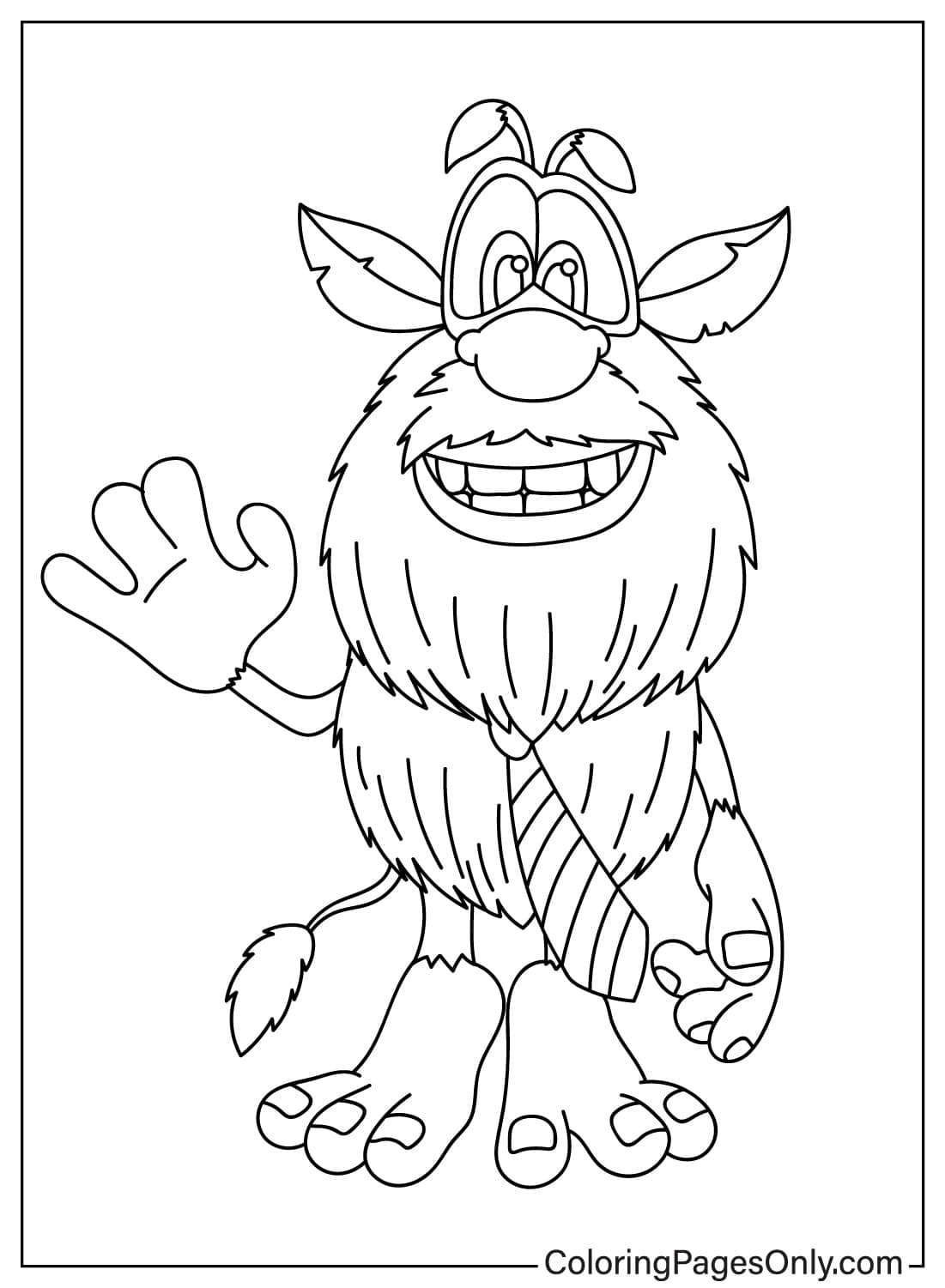
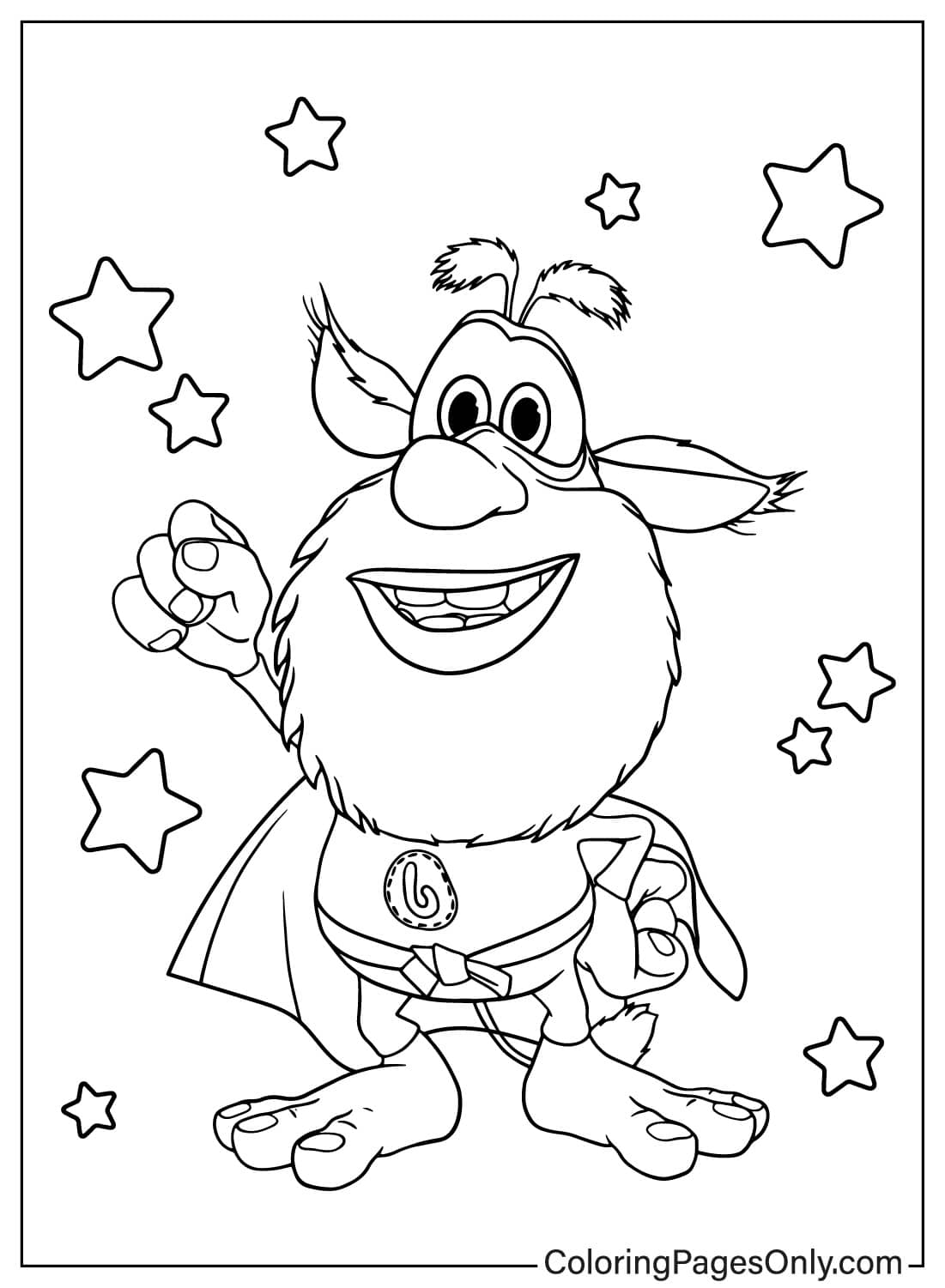
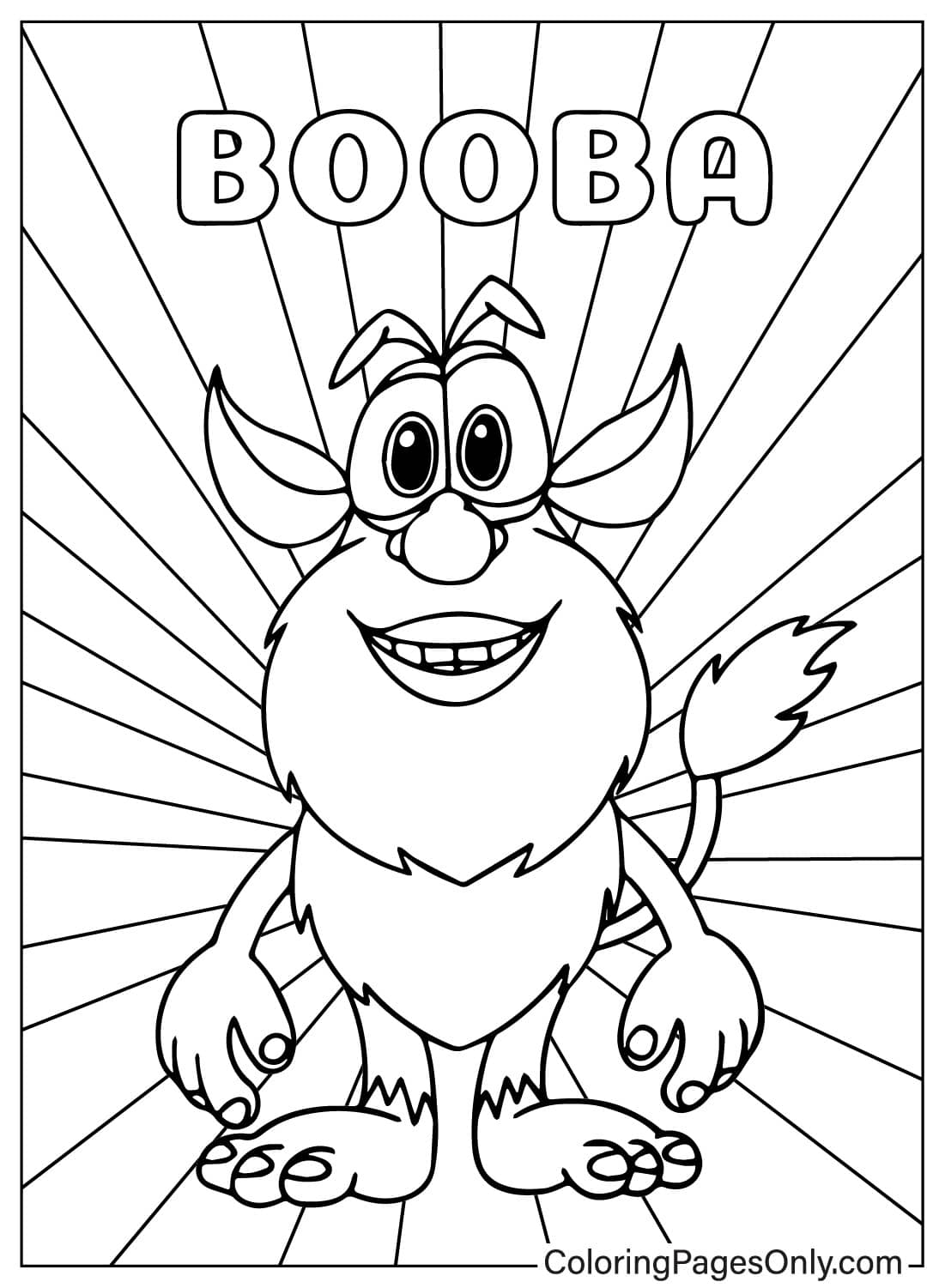
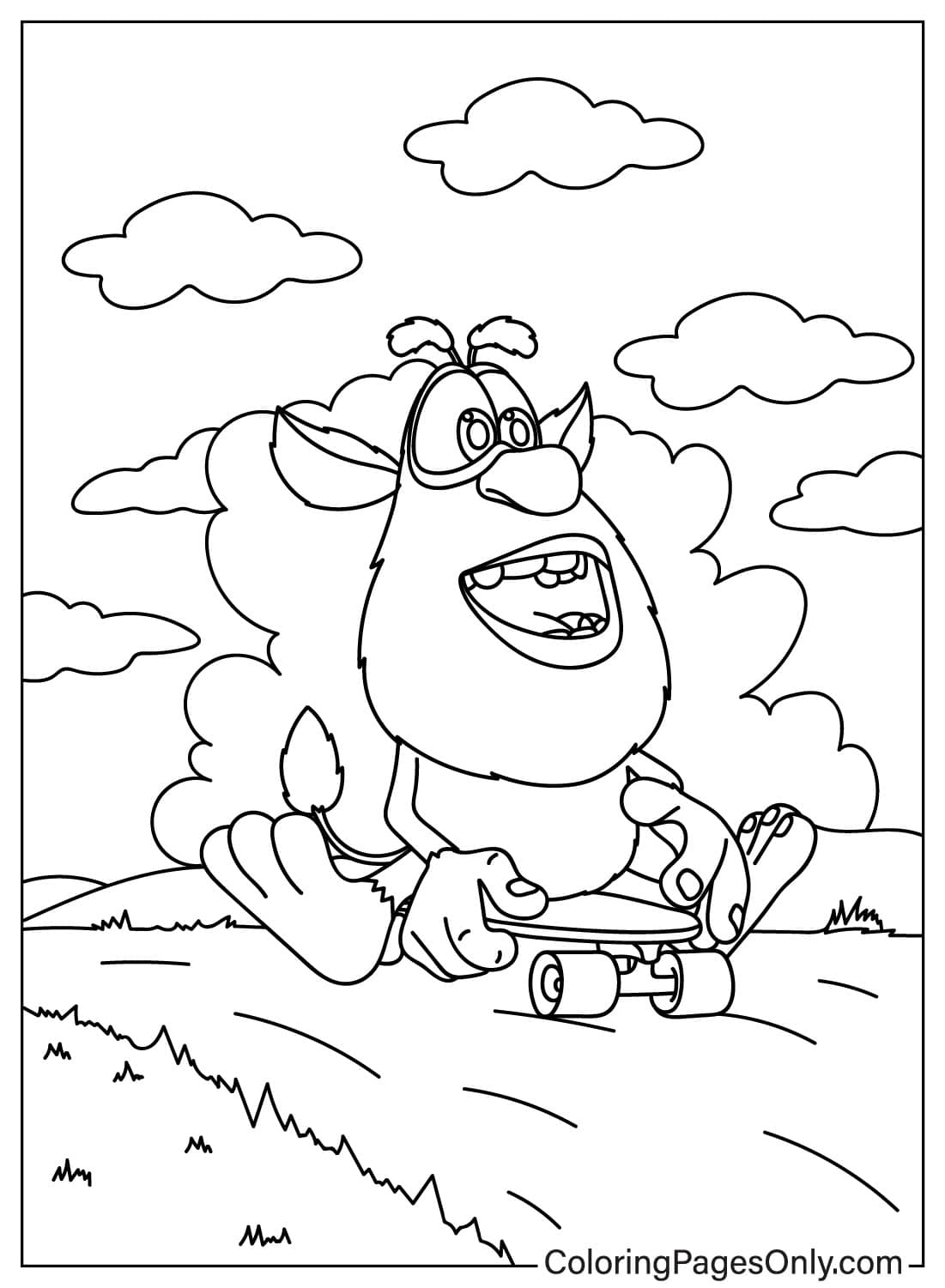
The collection’s most numerous section shows Booba in his characteristic poses – the standing wide-eyed look of curiosity that is his default state, the surprised backward lean when something unexpected happens, the forward-leaning investigative posture when he is examining something closely. These pages give his full figure: the round body, the short limbs, the large head, and the enormous eyes that do almost all of his emotional communication.
Booba’s design is among the simplest of any animated character with this level of global reach – he is, at his core, a round pale shape with two very large eyes and small ears. This simplicity is what makes him so appealing to the very youngest fans and what makes the coloring pages in this collection the most accessible in the site’s catalog. A child who can hold a crayon can color Booba. A child who cannot stay within lines can color Booba. The design is simple enough that no coloring choice reads as wrong.
Coloring Booba’s body: His fur is a very pale grey-white – the specific color of something that is white but has slight warm undertones, like cream or very pale grey. Pure white applied across his entire body reads as uncolored paper. Apply the lightest possible warm grey across the shadow areas – the undersides of his limbs, beneath his belly, the recesses behind his ears – just enough to give his round form dimension without losing the pale, soft quality of his fur.
Booba Exploration Pages
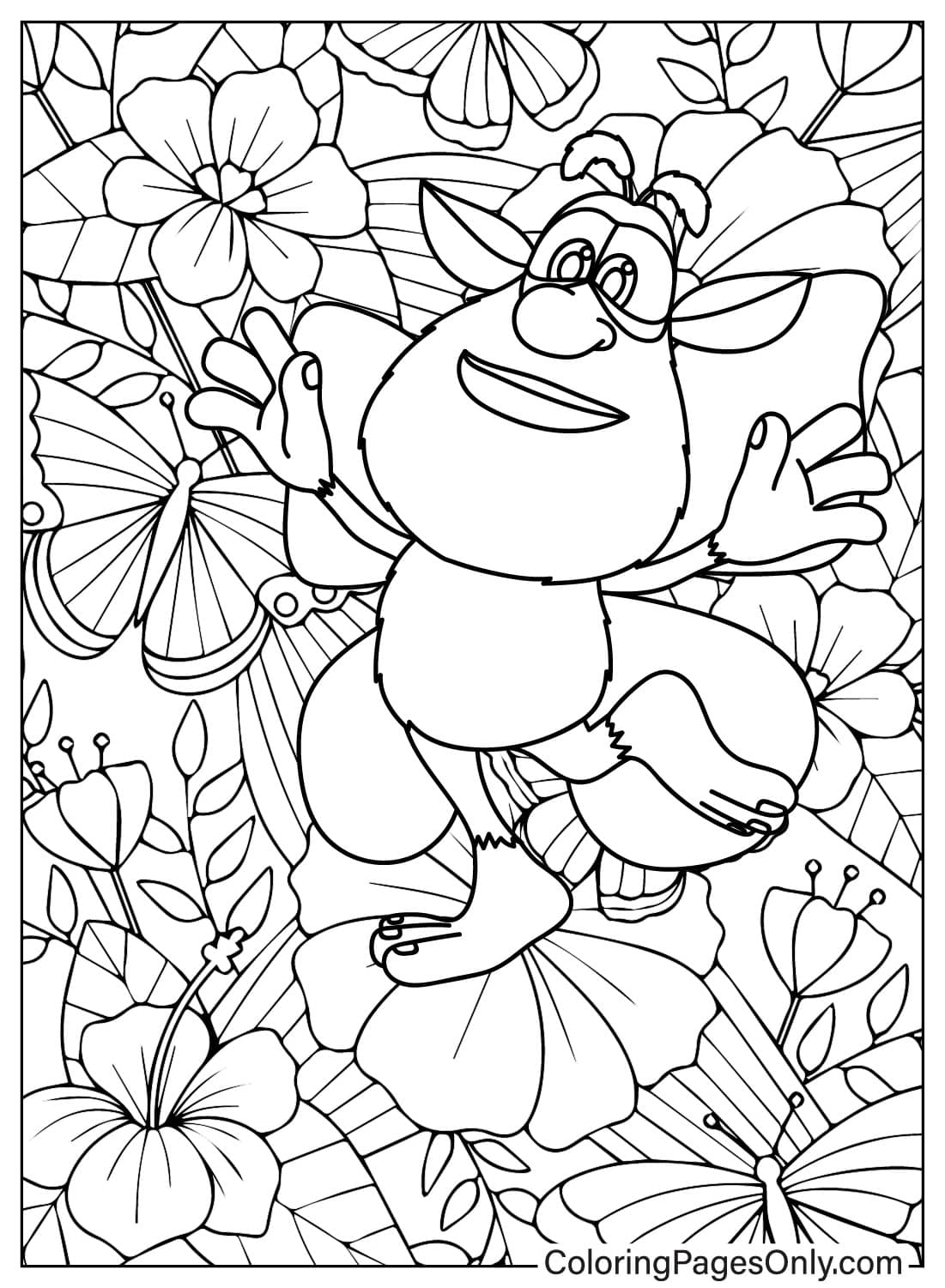
The pages that show Booba in the act of exploring – reaching toward something, touching an object, peering at an item with his characteristic combination of caution and irresistible curiosity – capture the essential quality of the series. The exploration pages show Booba and an object in the same composition: Booba’s expression responding to whatever he has found, his body positioned in relation to the thing that has captured his attention.
These pages are the collection’s most contextually rich – they give the colorist both a character and an environment to render, and the relationship between them (Booba’s expression and the object’s appearance) tells a micro-story in a single image.
Coloring exploration pages: The object Booba is exploring is typically rendered in vivid, saturated colors – everyday items rendered more colorful than realistic. This color richness serves the story: everything Booba encounters is rendered as fascinating and full of visual interest because it is, to him. Match this energy in your color choices for the objects – kitchen items in vivid reds and yellows, garden items in saturated greens and purples, food in its most vivid representative colors.
Booba Expression Pages
The series’s entire emotional range is delivered through Booba’s eyes – and those eyes are capable of enormous expressiveness despite their simple circular shape. The expression pages isolate specific emotional states: the wide-open eyes of maximum surprise, the half-squinted eyes of careful concentration, the bright, rounded eyes of pure delight, the drooping eyes of sleepiness.
These pages are the most intimate in the collection and the most focused on Booba’s face – the large head filling most of the page, the eyes as the primary coloring element. For younger fans, these pages are often the most personally meaningful – they represent the specific expressions children most associate with their favorite character.
Coloring Booba’s eyes: This is the most important coloring decision in any portrait page. Booba’s eyes are large, with dark circles – the iris filling most of the visible eye area, with a pupil at the center and a white highlight dot at the upper portion. The iris is a warm dark brown or near-black – not pure black but the very dark brown of richly colored eyes. The white highlight at the upper iris is essential: without it, the eyes read as flat discs. With it, they read as the living, expressive, curious eyes that are the character’s defining feature.
Booba with Goat
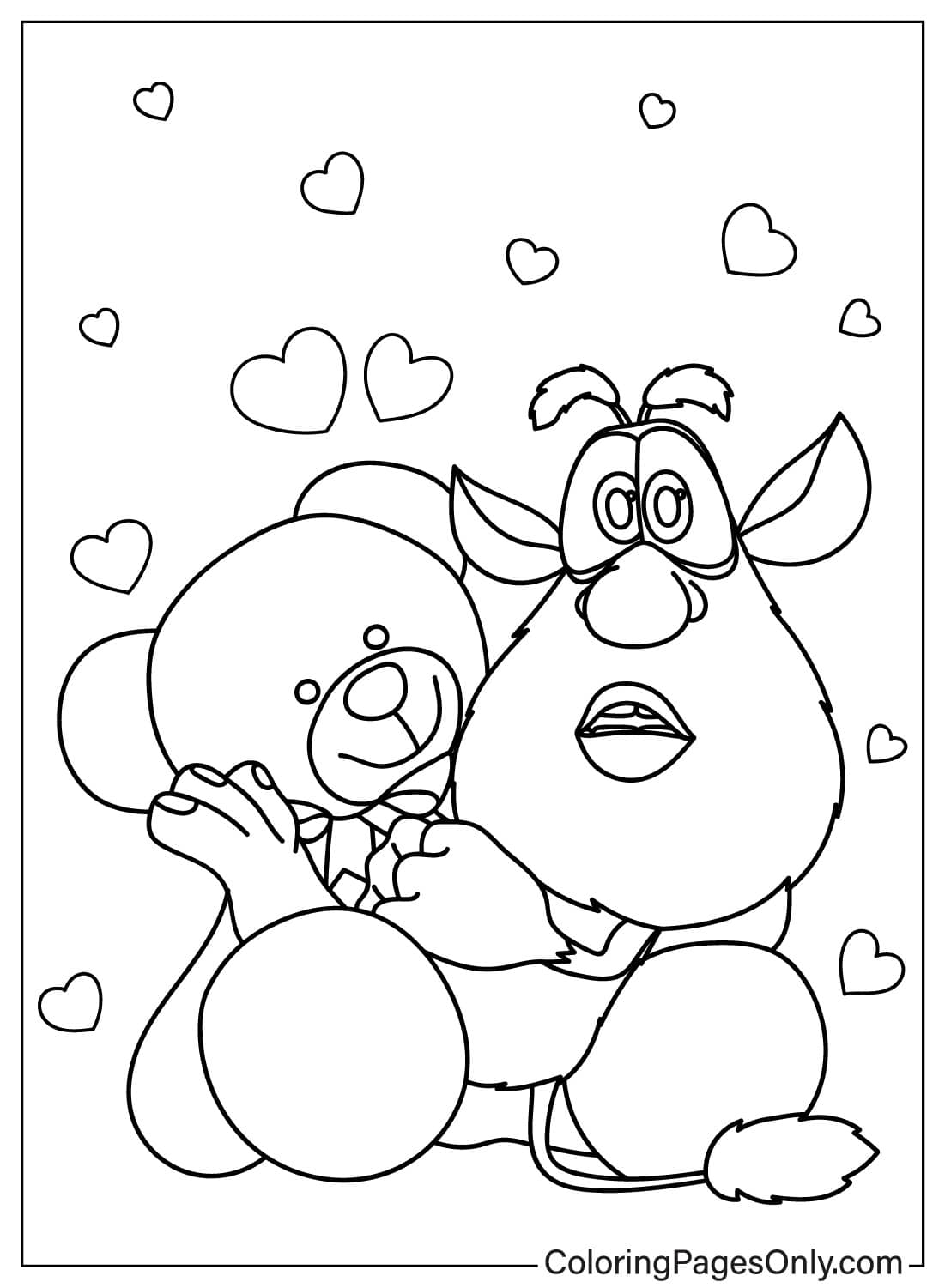
Booba’s primary companion character is Goat – a white goat who appears in various episodes as a friend, fellow explorer, and source of additional comedy when the two interact. The Goat pages give the collection its only two-character compositions – Booba and his companion exploring something together, reacting to something together, or simply present in the same scene.
Goat’s design echoes Booba’s in its simplicity: white, round, expressive eyes, simple outline. The coloring pages that feature both characters give the colorist the visual pleasure of two simple, pale, soft character designs in the same composition – a challenge in differentiating two similarly pale figures through subtle tone variation.
Coloring Goat: Like Booba, Goat is white with very subtle warm grey in the shadow areas. The key to distinguishing the two figures on the same page is the specific quality of each character’s form: Booba is rounder and more compact; Goat has the elongated, hoof-bearing body of an actual goat (simplified to cartoon proportions). Their skin/fur tones are similar but not identical – Goat can be rendered very slightly warmer (a touch of cream) against Booba’s slightly cooler pale grey.
Booba Food and Kitchen Pages
Food is one of Booba’s great preoccupations – he encounters it, misidentifies it, eats things he shouldn’t, and responds with expressions of delight or horror that are among the series’ most reliably funny moments. The kitchen and food pages show Booba in relation to food items – a cake, a fruit, a vegetable, and kitchen equipment – with the specific combination of curiosity and appetite that characterizes his food-related episodes.
These pages are some of the collection’s most colorfully rich – food items rendered in vivid, appealing colors against Booba’s pale form create maximum contrast. They are also among the most immediately readable for very young fans, who recognize the items from their own experience of meals and kitchens.
What These Pages Do
Booba is one of the most accessible coloring subjects for the very youngest children. His round, simple, high-contrast design – pale body, large dark eyes, clear outline – has minimal internal complexity. A toddler who is just beginning to use crayons will successfully color any Booba page in a way that looks recognizably like Booba. This is a design achievement: most cartoon characters reward the colorist for accuracy and punish inaccuracy with unrecognizability. Booba is recognizable across an enormous range of coloring approaches.
The wordless format makes Booba the ideal first animated character for multilingual families. Because the series contains no dialogue, children who watch it in any language watch exactly the same content as children anywhere else in the world. The coloring pages carry this same universality – there is no text to read, no cultural context to decode, just a round pale character with large eyes doing something recognizable and funny.
The series’s core activity – discovering how everyday objects work – is directly reflected in the coloring activity itself. Young children using crayons and discovering how color behaves on paper are engaged in the same exploratory process that Booba demonstrates in every episode. The connection is not metaphorical – the child coloring Booba is doing exactly what Booba does when he encounters a new object: exploring, experimenting, and discovering through direct contact.
Fine motor development. The American Academy of Pediatrics identifies fine motor development as a key milestone throughout early childhood. Booba pages are calibrated for the earliest stages of this development – the large outlines, the simple shapes, and the limited internal detail make them appropriate for children as young as two or three who are beginning to develop the hand control that coloring both requires and builds.
The 2005 Art Therapy Journal study applies. Structured coloring reduces anxiety through focused, sustained attention. For very young children, the calm produced by sitting with a coloring page of a beloved character is significant – it is one of the first experiences of productive, quiet, sustained creative focus that children have access to.
How to Color These Pages Well
Booba’s eyes are the whole page. Whatever else is on a Booba coloring page, the eyes carry the emotional content. Give them the most attention of anything on the page – apply the warm dark brown of the iris carefully, preserve the white highlight dot at the upper portion, and render the pupil in the darkest tone available. When the eyes are done well, the rest of the page reads correctly regardless of how the body is colored.
Work from light to dark on Booba’s body. His fur is pale, and pale coloring works best when built in layers from light to slightly less light. Start with the very faintest grey-warm on the shadow areas. Add slightly more pressure in the deepest shadows – beneath the belly, under the ears, behind the limbs. The final application should still be very light – you are building subtle form in a pale character, not creating dramatic shadow.
Let the food and objects be vivid. Whatever object or food item appears with Booba should be colored at full saturation – the richest red for a tomato, the most vivid yellow for a banana, the most saturated orange for a carrot. This contrast between Booba’s pale, soft form and the vivid environment he explores is how the series frames every situation visually, and it reads correctly in coloring pages as well.
The round body responds well to circular shadow placement. Booba is spherical – his body is as close to a perfect sphere as a cartoon body can be. When shading a spherical form, the darkest shadow falls at the very bottom of the sphere (the underside facing away from overhead light), and a reflected light highlight often appears at the lower edge (light bouncing upward from the surface below). This knowledge makes the body shading feel correct – the round form reads as three-dimensional rather than flat.
For very young colorists, no rules apply. The most important thing for a two-or three-year-old coloring a Booba page is the experience of using color on paper with a character they love looking at. The pages are designed with large, clear areas that welcome rather than punish the broad crayon strokes of developing motor skills. Any color in any area is a successful coloring choice at this age.
5 Creative Craft Ideas
Booba’s Discovery Journal
Print one Booba exploration page per day for a week – choosing pages that show Booba with different objects or in different environments. After coloring each page, sit with your child and discuss what Booba is discovering: “What is this? What does Booba think it does? What does it actually do?”
Collect the finished pages in a small handmade booklet – fold several sheets of paper and staple at the spine to make a journal. Mount one colored page per double-page spread. On the blank page opposite each Booba image, draw or write together what Booba was exploring that day. After a week, the finished booklet is a Booba Discovery Journal – your child’s own illustrated record of the character’s curiosity, expressed through coloring and conversation.

Big Eyes Study
Booba’s eyes are the character’s most expressive element. Print three copies of the same Booba portrait page. Color the first with his canonical warm dark brown eyes. Color the second with bright blue eyes. Color the third with deep green eyes.
Compare all three. Even with different eye colors, all three read as Booba – because the shape, size, and highlight placement are what make the eyes read as his, not the specific color. This is an accessible way to introduce children to the concept that character is carried by form as much as by color. For older children who ask, “What if Booba had different eyes?” – this is the activity that answers the question.

Booba Explores Your Kitchen
Print a simple Booba standing portrait page. Color Booba in his canonical pale grey-white. Cut him out carefully around his outline.
Photograph your own kitchen, living room, or garden – the spaces Booba would explore in his episodes. Print the photograph (or just look at it on a screen). Hold the Booba cutout in front of or near various household objects and “photograph” him in each position, or simply place him in different spots and imagine the episode.
This craft extends the coloring activity into a physical play activity, using the completed coloring page as a toy – a Booba paper doll placed in real household environments that mirror his television adventures.
Expressions Collection
If the collection includes multiple pages showing Booba with different expressions, print one of each. Color all pages in consistent canonical colors – the goal is that the only visible difference between finished pages should be the expression.
Arrange all completed pages on a backing sheet with emotion labels beneath each: “Surprised,” “Delighted,” “Curious,” “Sleepy,” “Confused,” and so on. The finished display is an emotion chart – the full range of Booba’s expressive face organized as a reference. For very young children, this chart has practical value: they can point to how they feel using a character they know and love.

Booba and Goat Friendship Card
If the collection includes a page featuring both Booba and Goat together, print and color it carefully – Booba in his pale grey-white, Goat in slightly warmer white. Mount the finished image on a folded piece of cardstock to create a greeting card.
Inside, write a simple friendship message appropriate to the card recipient – or for very young children, write a sentence about what the child most likes about their own best friend, as a parallel to Booba and Goat’s friendship. The card uses the coloring activity as a production method for a handmade object with personal value.

Frequently Asked Questions
What is Booba, and where did it come from? Booba is a wordless Russian animated series created by Lev Pokhis and produced by The Booba Studio. The series began releasing episodes on YouTube in the mid-2010s and has since accumulated billions of views across its international channels, making it one of the most-watched children’s animated series on the platform globally. The show is also available on Netflix. It follows a small, round, white creature named Booba as he discovers and explores everyday objects and environments with childlike curiosity. The series has no dialogue – all storytelling is done through Booba’s expressions, body language, sounds, and music.
Why does Booba not speak? The decision to create Booba without dialogue was deliberate and has been central to the show’s global success. Without dialogue, the series requires no translation – a child watching Booba in Vietnam experiences exactly the same content as a child watching it in Russia, Brazil, or the United States. The comedy and emotional communication of each episode depend entirely on Booba’s expressions and the visual situation rather than on language. This makes the show universally accessible and particularly appropriate for very young children who are still developing language skills and for multilingual families navigating multiple languages at home.
What age group is Booba designed for? Booba is designed primarily for toddlers and preschool-aged children – typically ages one through five, with the core audience between approximately two and four years old. The episodes are short (five to seven minutes), contain no dialogue, use simple and visually clear situations, and deliver humor that is immediately legible to very young viewers through physical comedy and expressive character animation. The coloring pages in this collection are designed with this same age group in mind – large, simple outlines with minimal internal detail that are appropriate for children who are still developing the motor control that more complex pages require.
What does Booba look like? Booba is a small, round, plump creature covered in pale grey-white fur, with a round body, short limbs, small, pointed ears, and an extremely large pair of dark, expressive eyes that dominate his face and do all of his emotional communication virtually. His design is among the simplest of any globally recognized animated character – he is essentially a round pale shape with two large eyes, which is both the reason his design is so accessible to the youngest viewers and the reason his coloring pages are among the most achievable for beginning colorists. He has no specific clothing; his fur is his appearance.
Who is Goat in the Booba series? Goat is Booba’s most consistently appearing companion character – a white goat who shares adventures with Booba in various episodes. Like Booba, Goat has no dialogue and communicates through sounds and expressions. Goat’s presence in episodes adds a two-character dynamic to situations that would otherwise follow Booba alone, and the relationship between the two is played primarily for gentle, physical comedy rather than dramatic character development. The series’ focus remains on Booba’s exploration of everyday environments, with Goat as a companion rather than a character with a separate storyline.
Where can I watch Booba? Booba is available on Netflix in multiple countries. The series also has official YouTube channels – multiple channels in different languages – where many episodes are available free to watch. The YouTube presence was central to the show’s initial viral growth and remains a significant part of how new viewers discover it. Because the series has no dialogue, the same episodes are effectively available across all language versions – watching the Russian channel, the English channel, or any other language channel provides the same viewing experience.
Browse the full collection at ColoringPagesOnly.com. All 17 pages free, no sign-up, PDF or PNG, print at home or color online.
Lev Pokhis built Booba without dialogue because he understood that curiosity is the same in every language. A round pale creature with enormous eyes, discovering that a button makes a noise or that water goes in unexpected directions or that food can be approached from entirely the wrong end – no translation needed for any of it.
The show has been watched billions of times by children who do not share a language, a country, or a culture, but do share the specific delight of watching a small creature approach the ordinary world as if it is endlessly full of things worth investigating.
The coloring pages are an invitation to approach Booba the same way Booba approaches everything – with curiosity, with patience, with the willingness to discover what happens when you try.
Pick up the lightest grey you have. Give him his eyes. See what he finds today.
Share your work on Facebook and Pinterest and tag #Coloringpagesonly. We especially want to see the Discovery Journal projects and the Expressions Collection charts.
Color the curiosity. Eyes wide. World full of things to find.