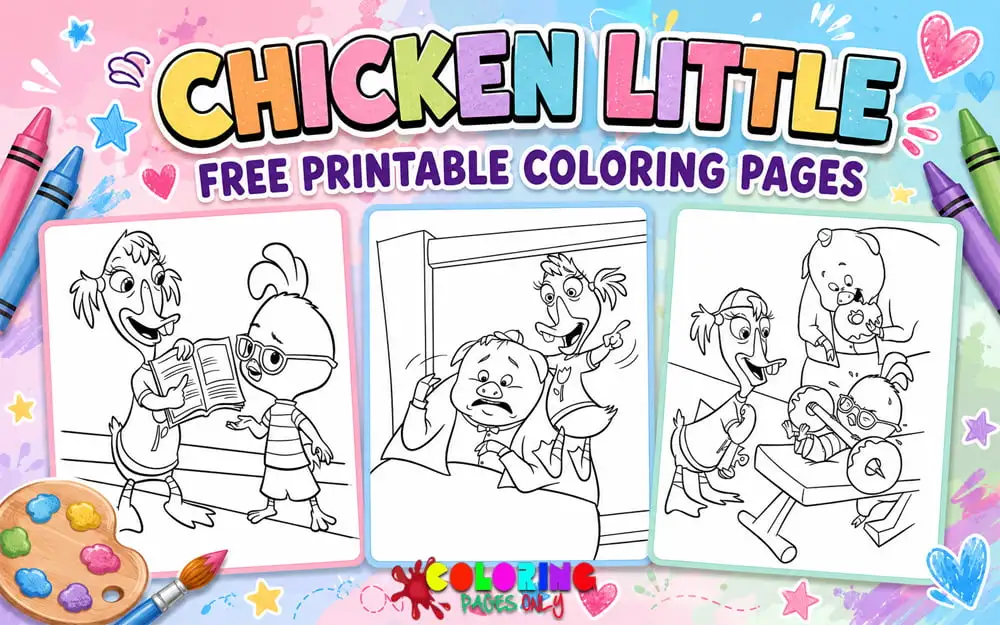
Free Chicken Little Coloring Pages: 48 printable PDF designs from Disney’s 2005 animated comedy, featuring the small but determined Chicken Little, his father Buck Cluck, his loyal friends Abby Mallard, Runt of the Litter, and the silent Fish Out of Water, the school bully Foxy Loxy, the movie hero Ace Cluck, and the alien family of Melvin, Tina, and little Kirby. Scenes include ringing the school bell, the big baseball game, a UFO, and the aliens’ invasion plan. PDF files cover printing, and digital coloring is an option, too.
Chicken Little was the first fully computer-animated feature made by Walt Disney Feature Animation, directed by Mark Dindal, who also directed The Emperor’s New Groove. Loosely inspired by the old folk tale in which a small bird believes the sky is falling, the film begins with Chicken Little being laughed at by his town of Oakey Oaks after a falling “piece of sky” turns out to be nothing anyone can find.
A year later, the sky really does start falling, as an alien spaceship arrives. With the help of his friends, Chicken Little must prove he is telling the truth and repair his relationship with his father. Zach Braff voices Chicken Little, and the film’s bright colors and exaggerated cartoon characters keep every page lively.




What’s Inside This Collection
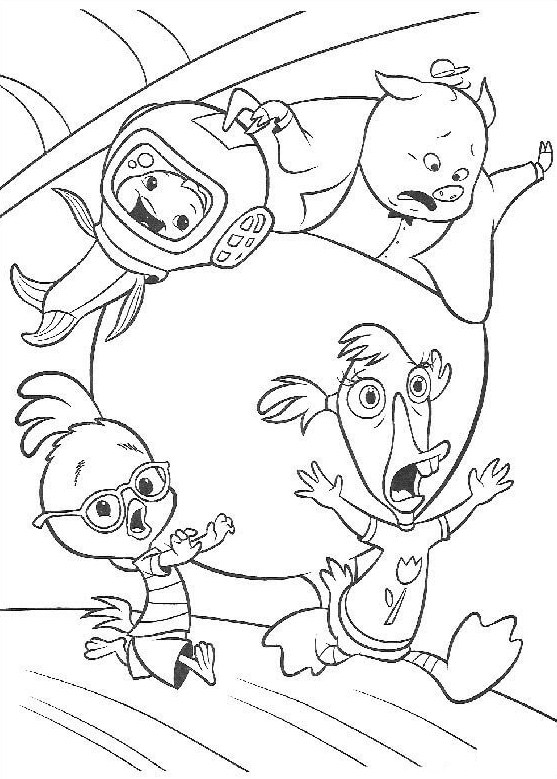
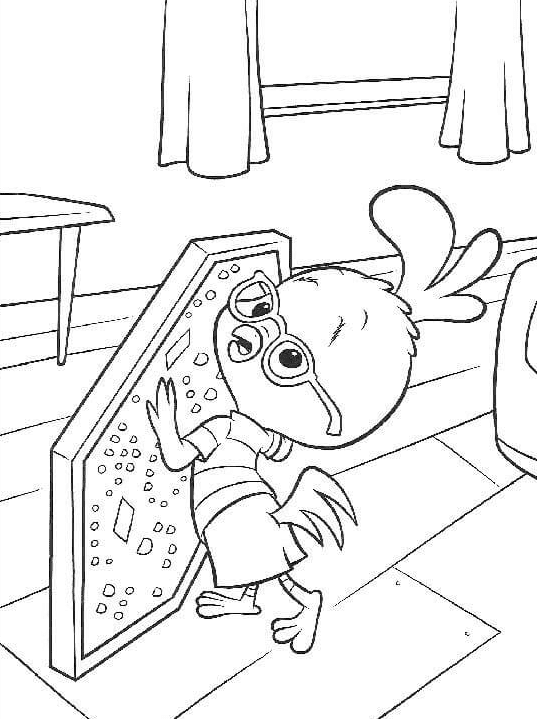
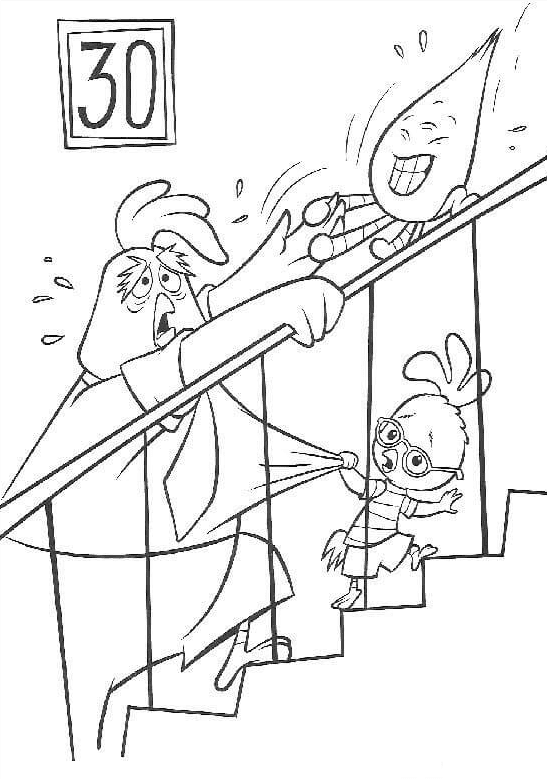
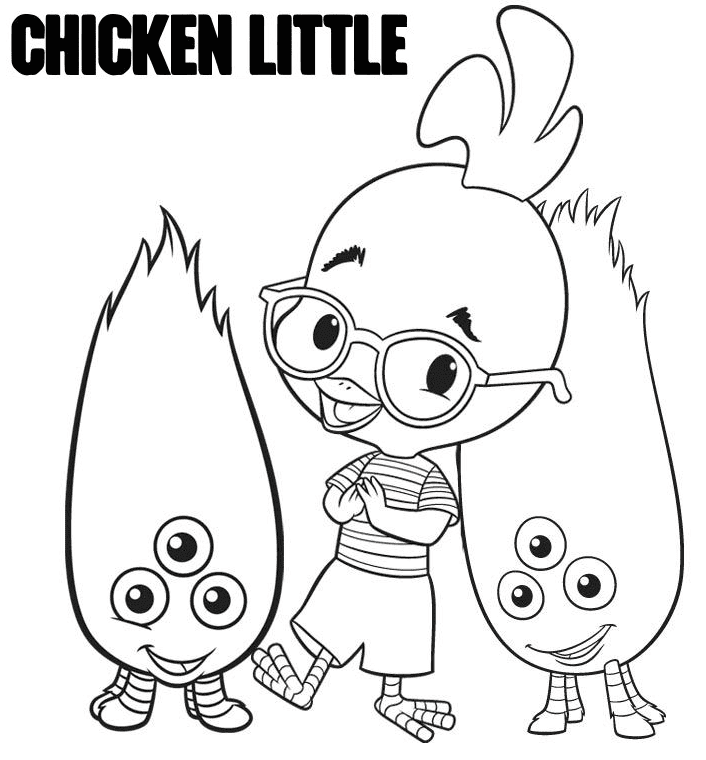
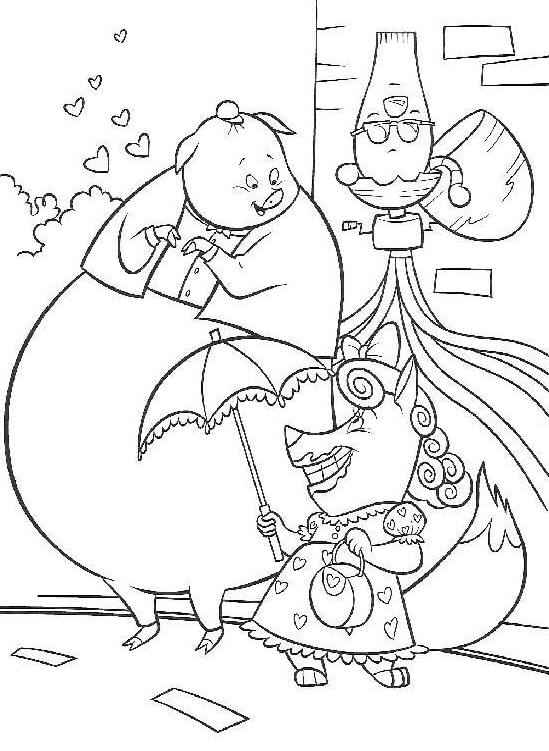
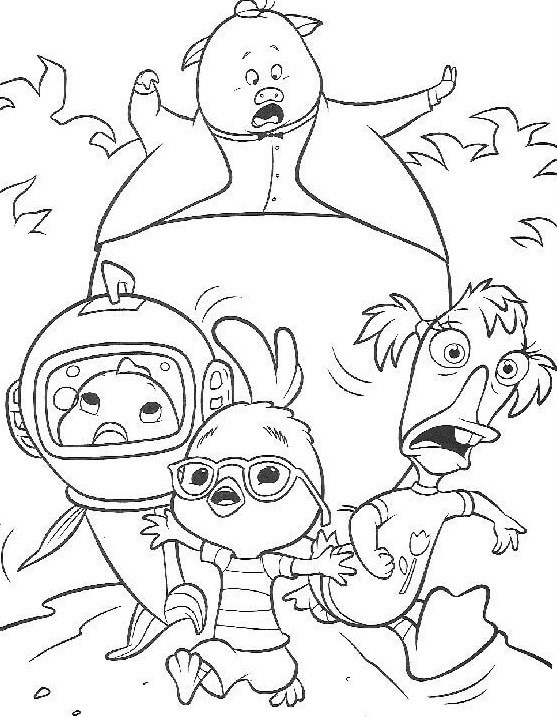
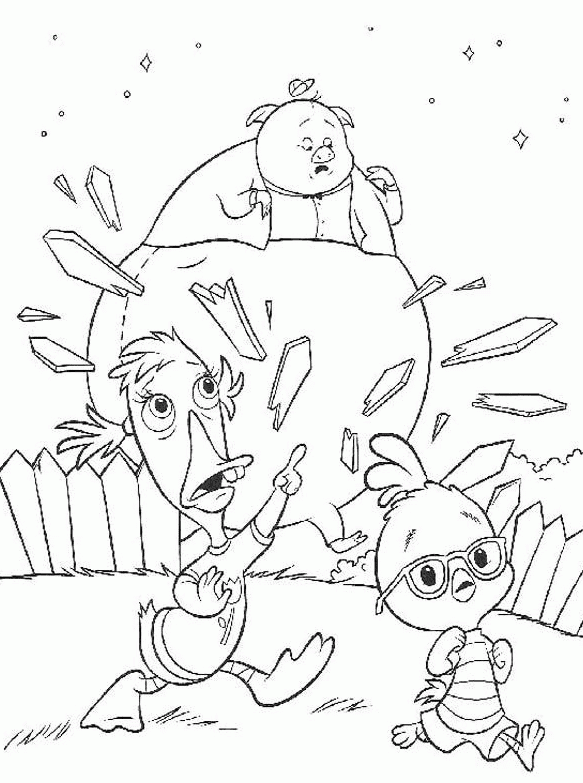
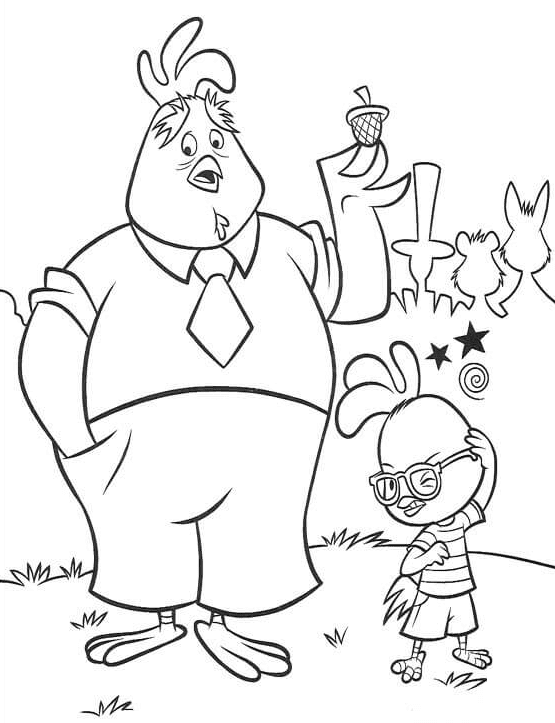
Chicken Little and his friends star in the majority of the 48 designs, while Buck, the aliens, and Foxy Loxy fill the rest.
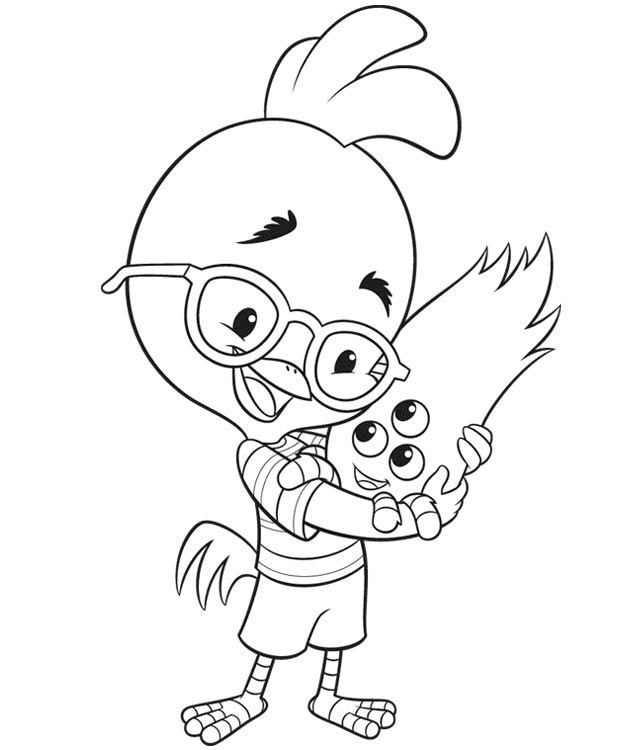
Chicken Little
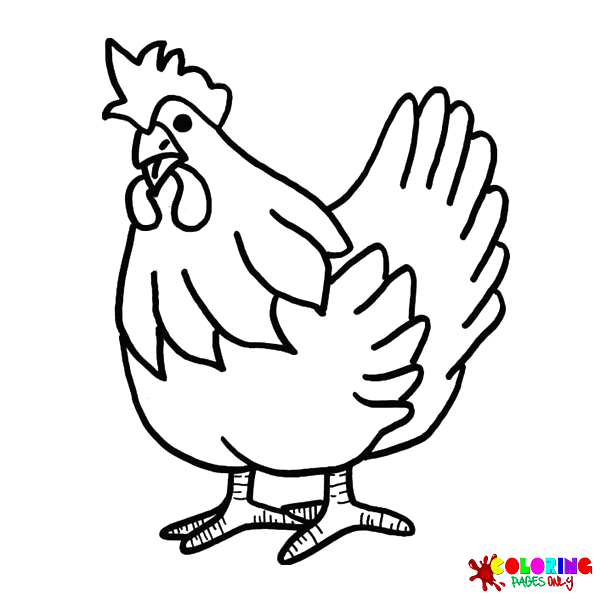
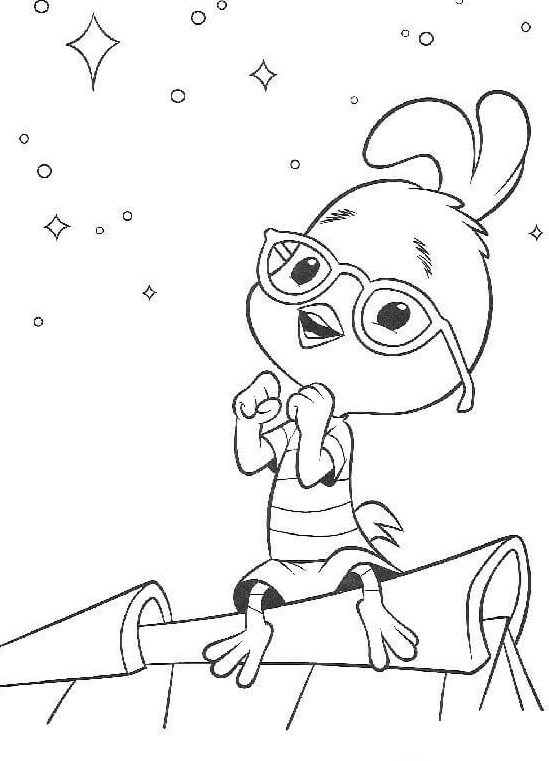
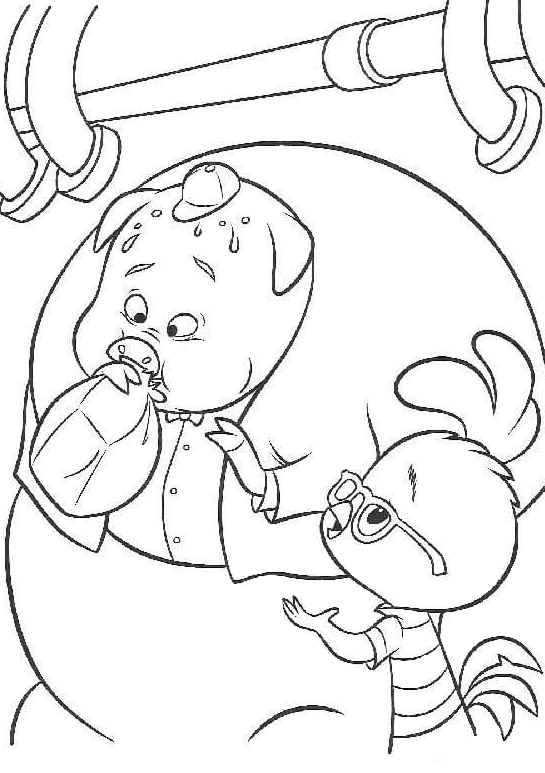
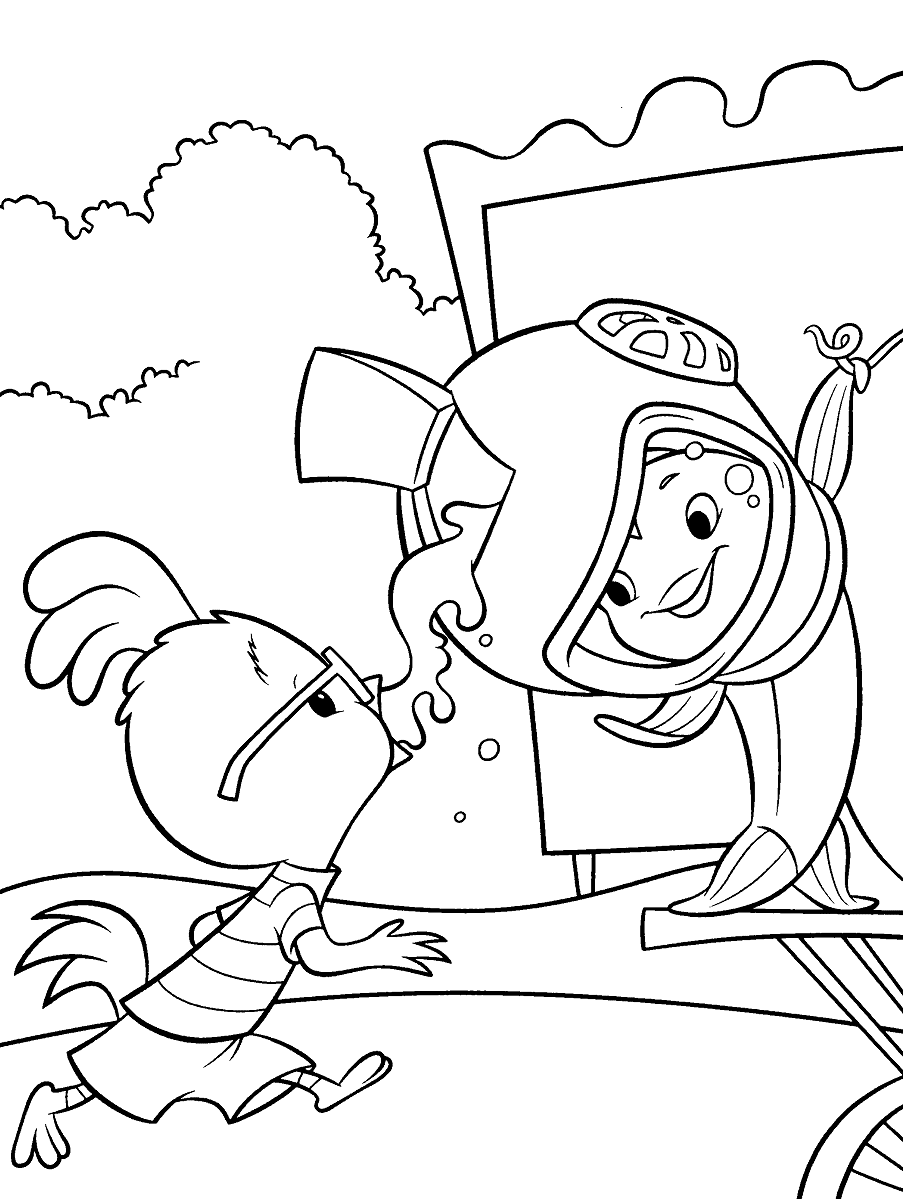
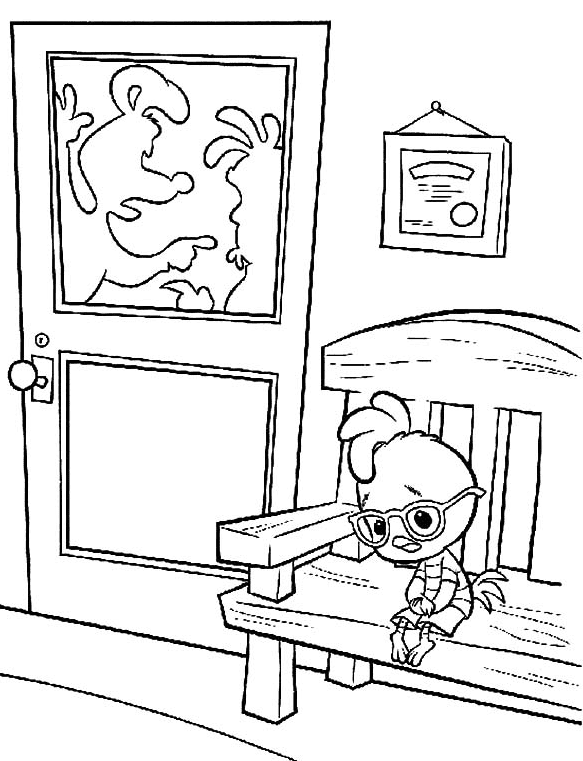
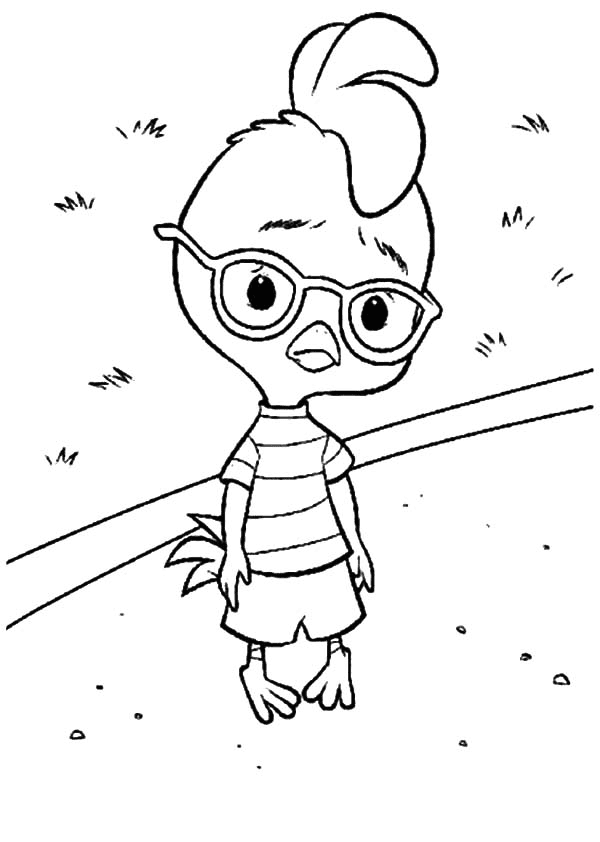
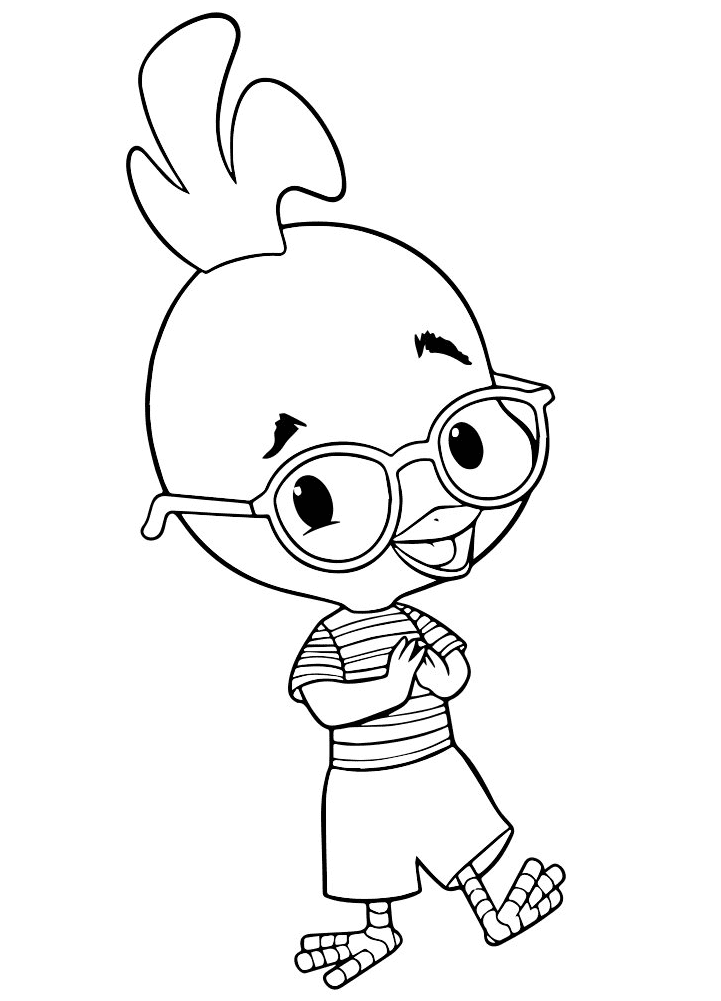
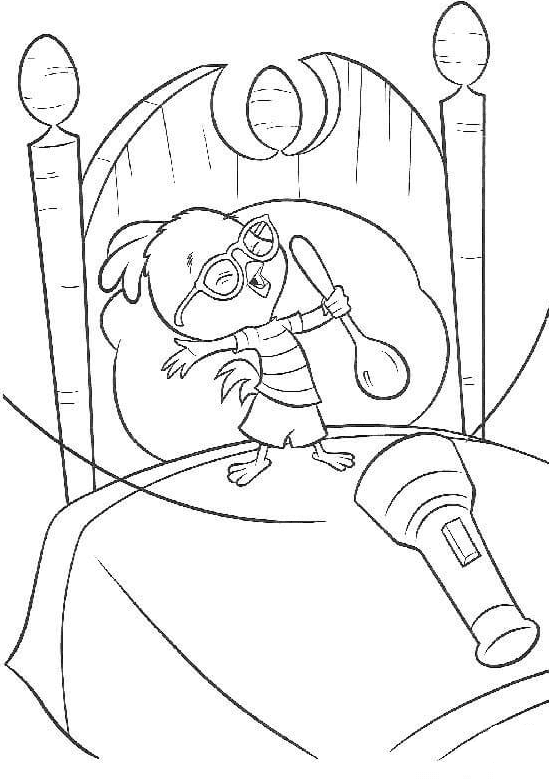
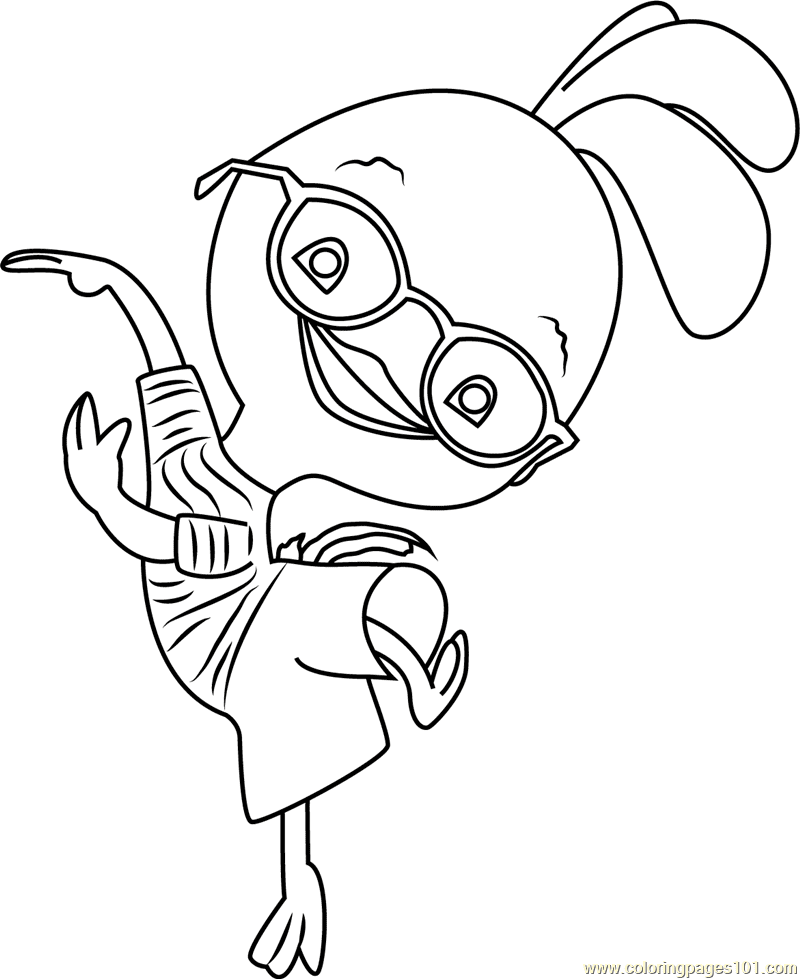
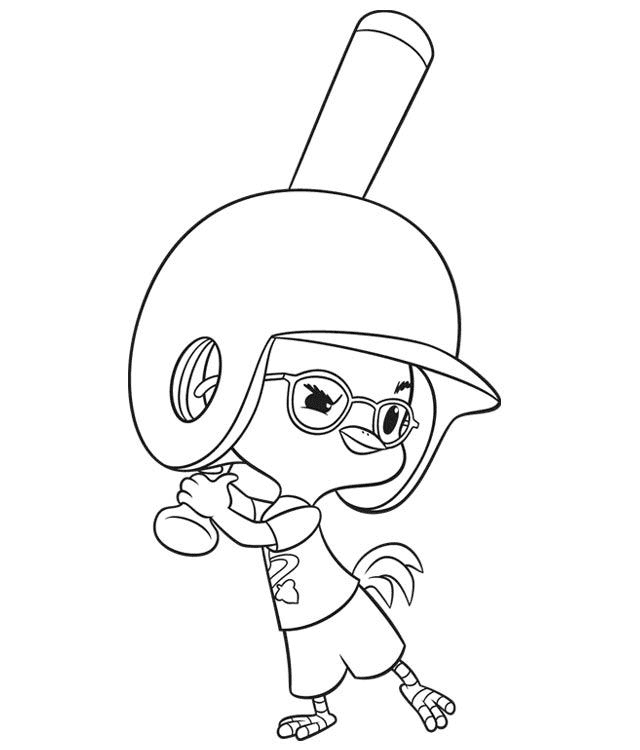
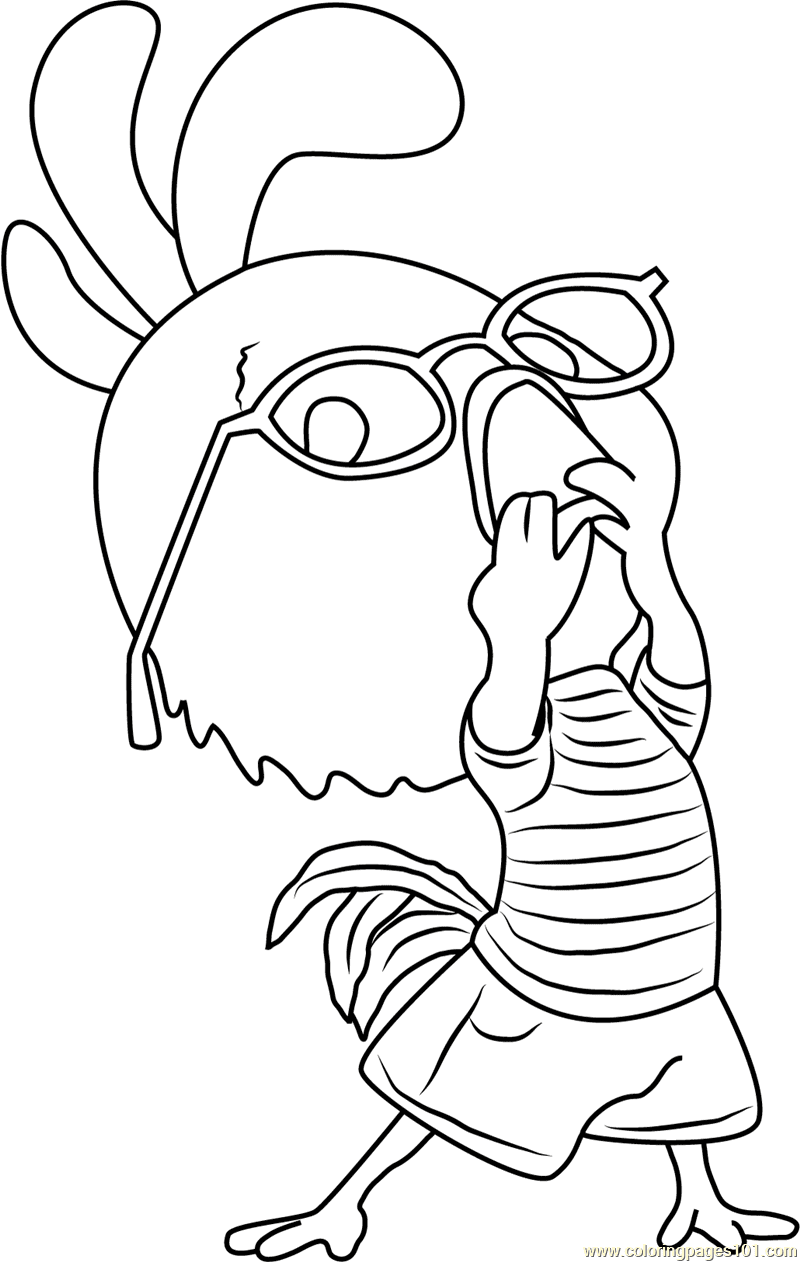
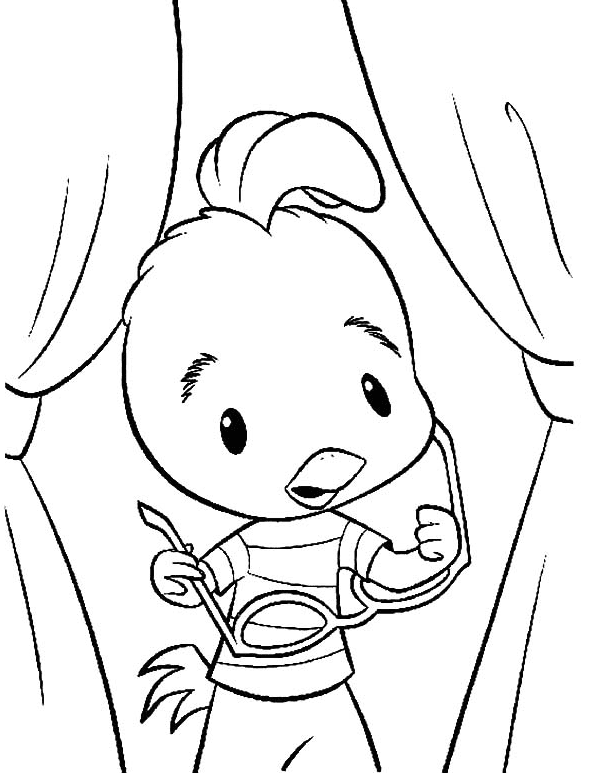
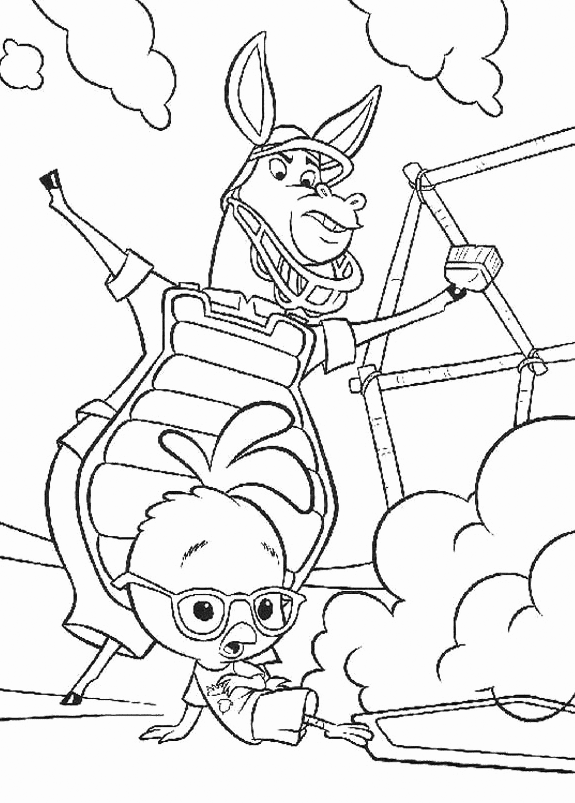
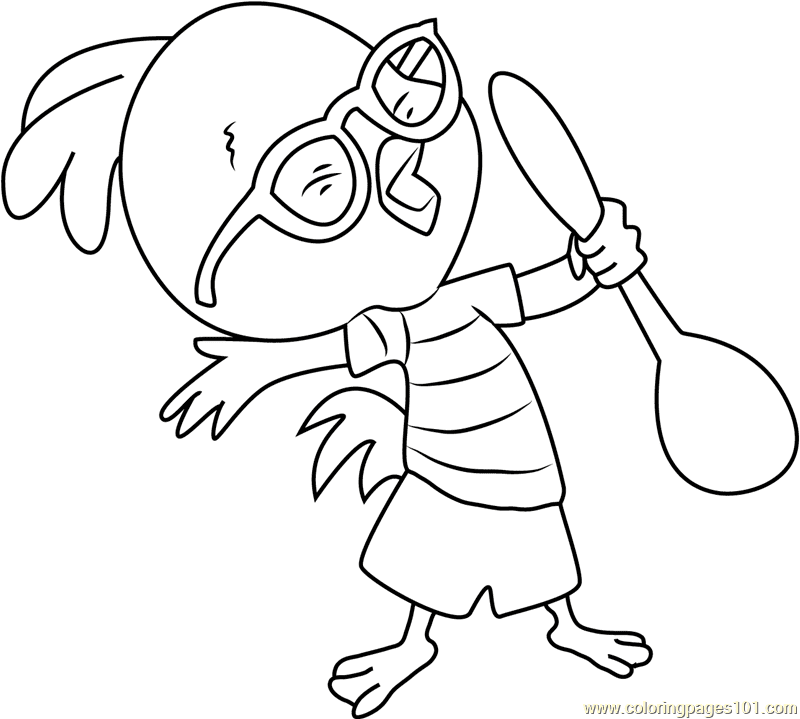
Chicken Little sits, smiles, looks sad, shows off his muscles, holds a spoon, and plays baseball. Color his feathers White with a Yellow beak and feet, and give him his signature round Green glasses and a bright Green shirt.
Buck Cluck and Ace Cluck
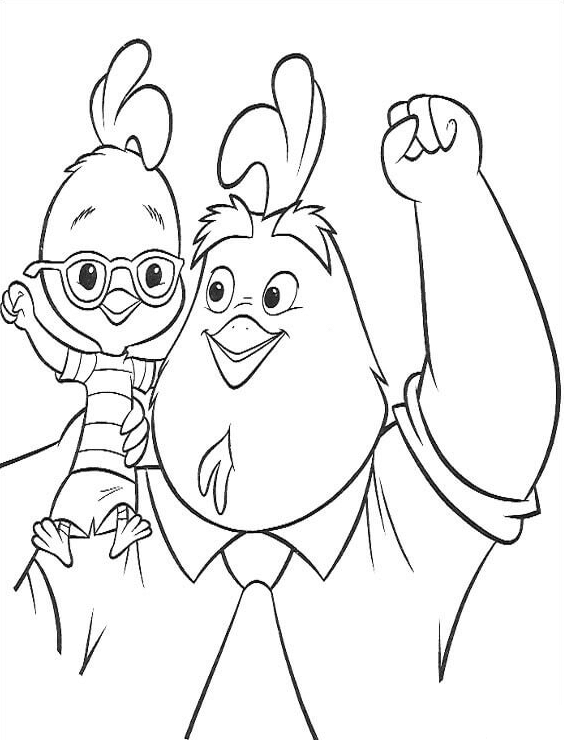
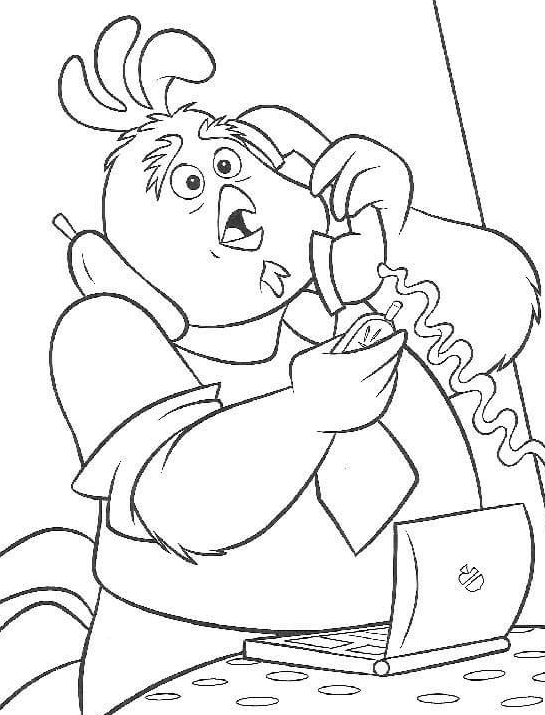
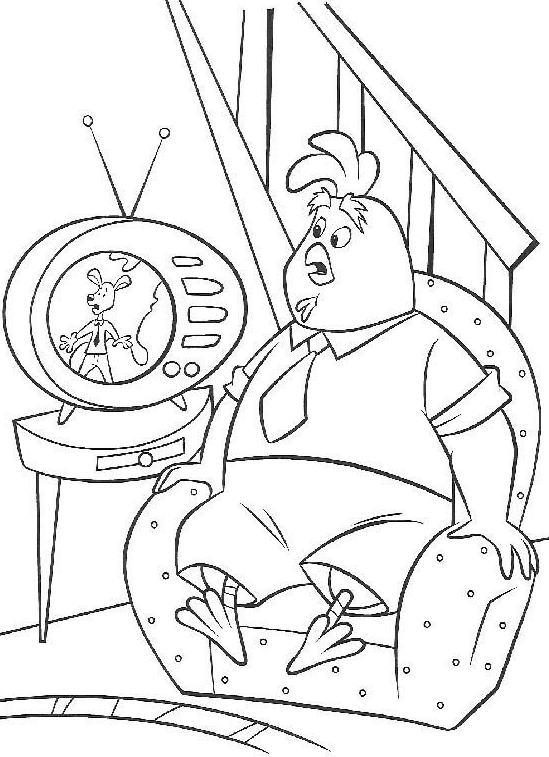
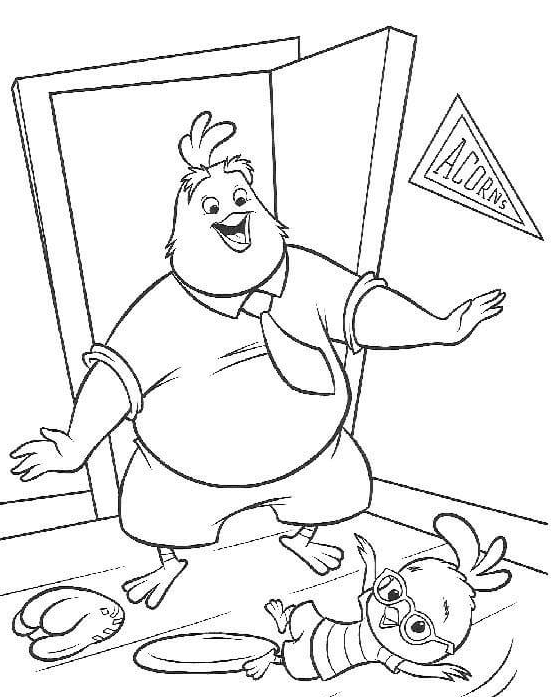
Buck Cluck answers the phone, watches TV, and talks with his son, while Ace Cluck, the heroic movie version of Chicken Little, sings and rings the bell. Give Buck large White wings and a cozy sweater in a warm color, and make Ace look heroic with bold Red and Gold accents.
Abby Mallard and Runt of the Litter
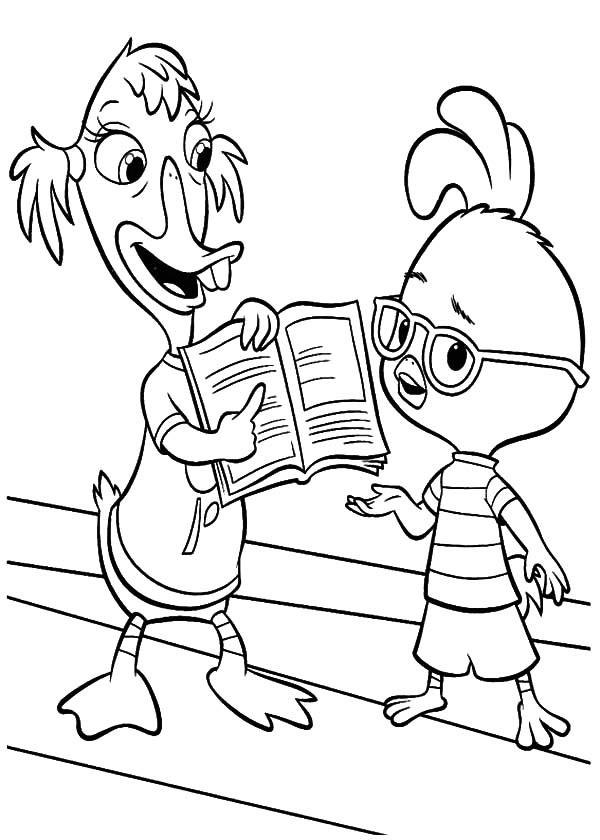
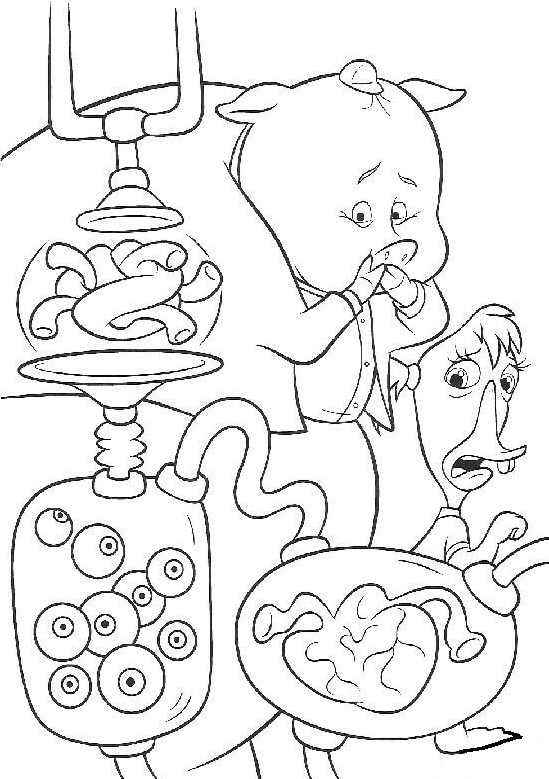
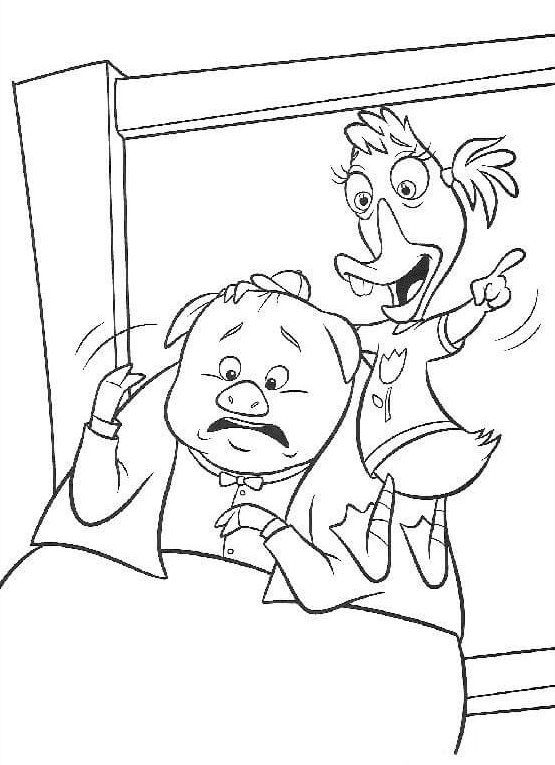
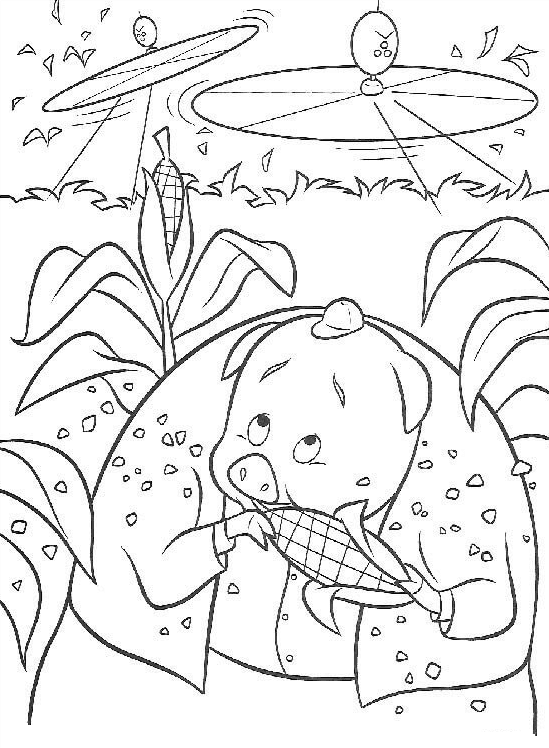
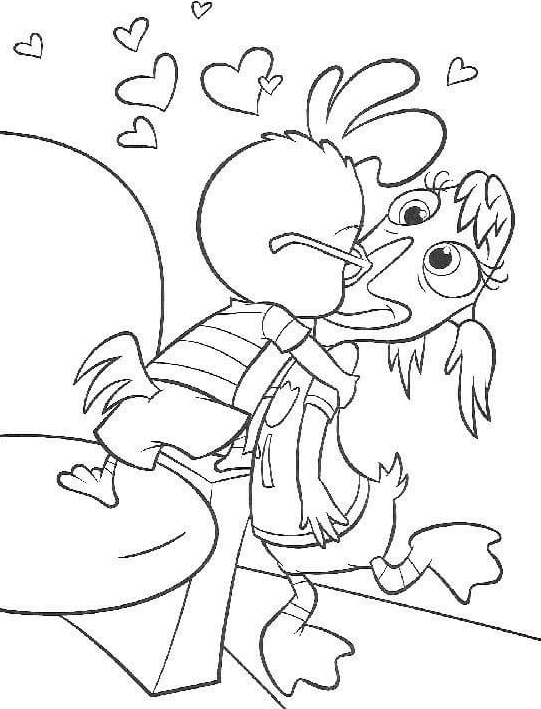
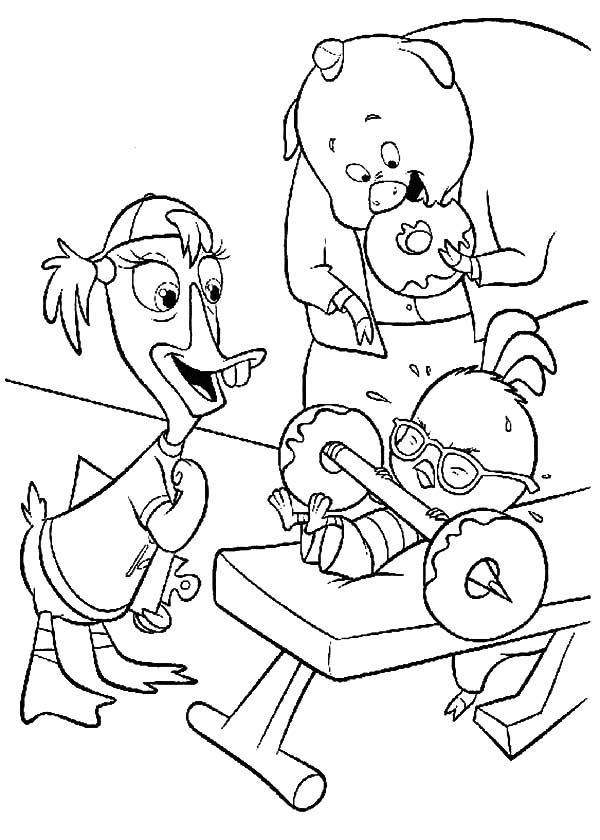
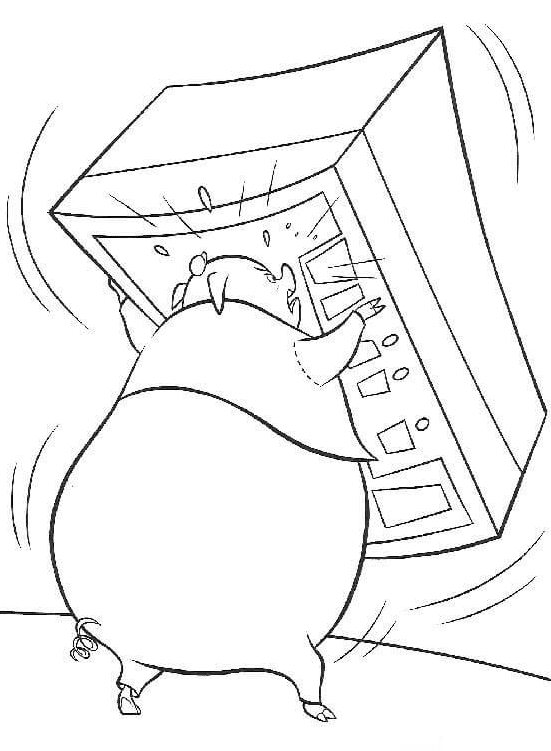
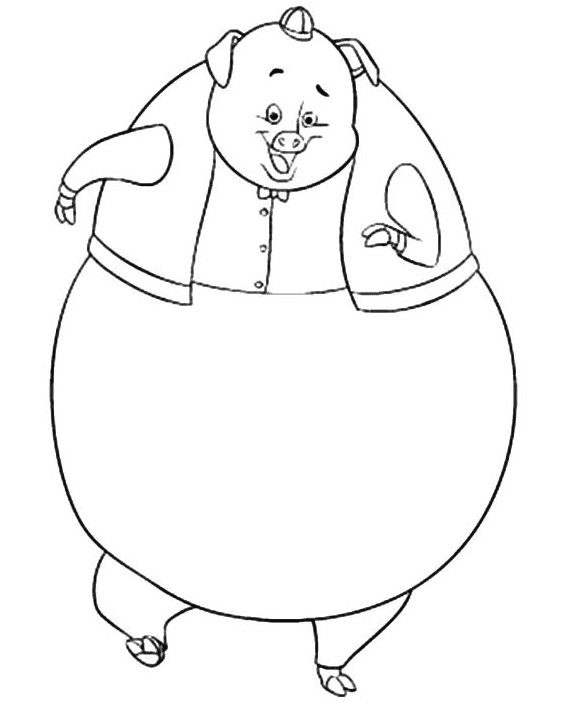
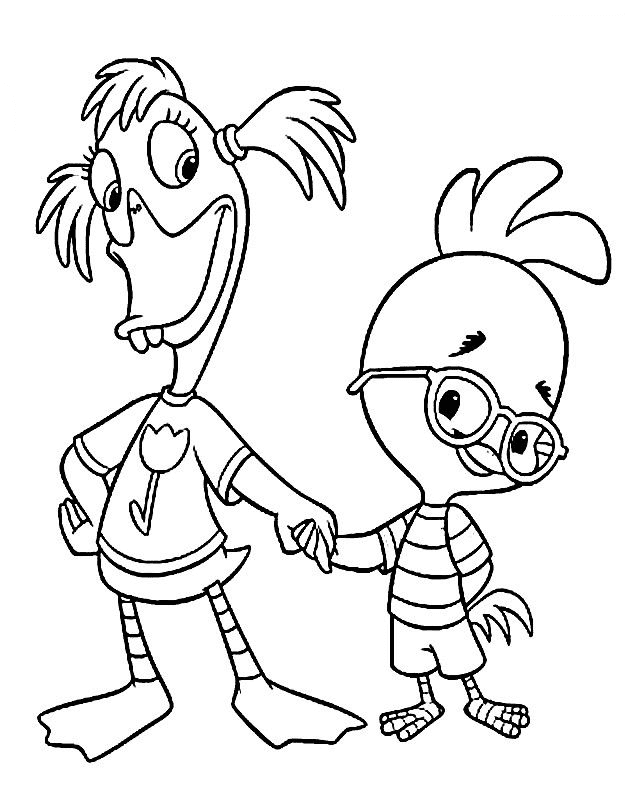
Abby, the duck with braces, appears with Chicken Little and in the lab with Runt, and Runt, the huge but timid pig, eats corn, lifts a box, and blows up a balloon. Try soft Gray feathers for Abby with a bright shirt of any color, and color Runt a soft Pink.
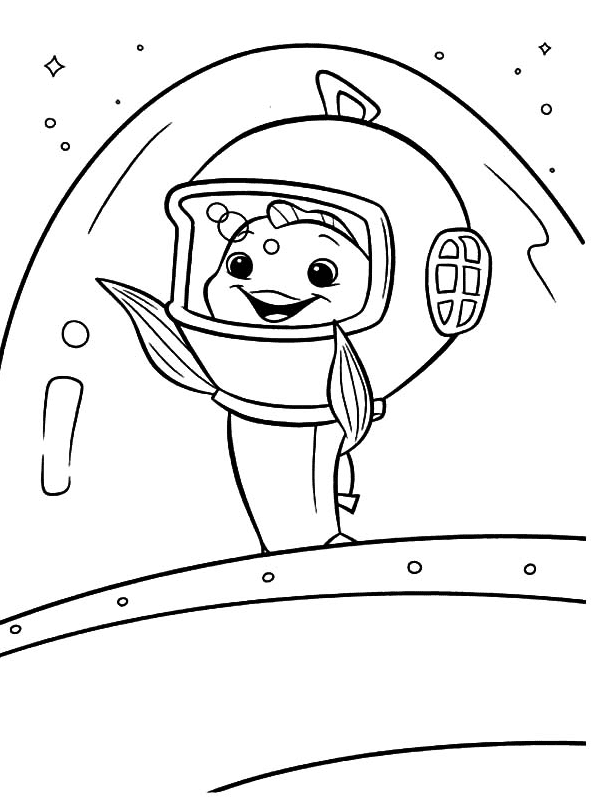
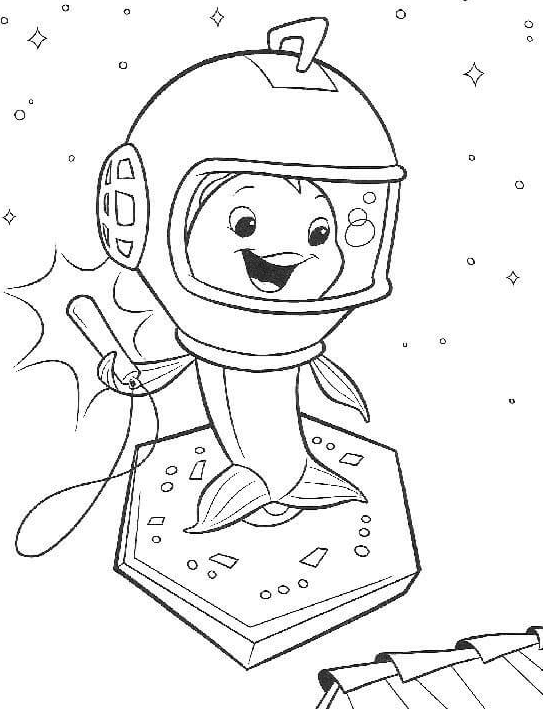
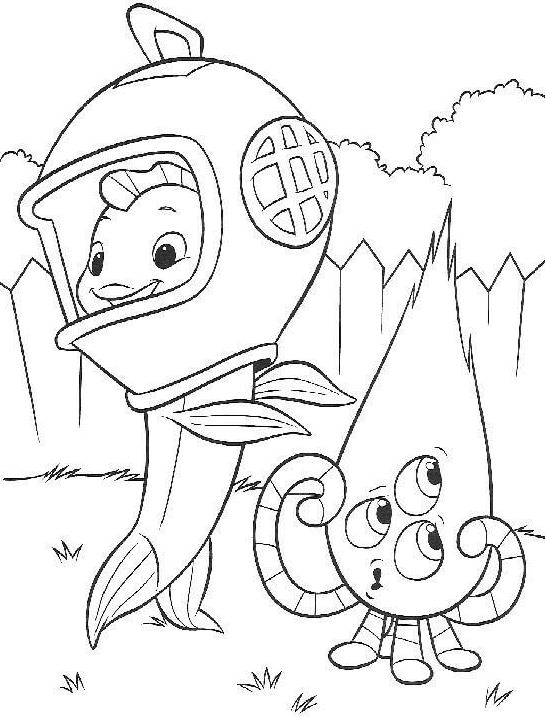
Fish Out of Water
Fish Out of Water appears alone, in space, and with the alien Melvin. Color the Fish Orange with a clear diving helmet full of Light Blue water.
Aliens, the UFO, and Foxy Loxy
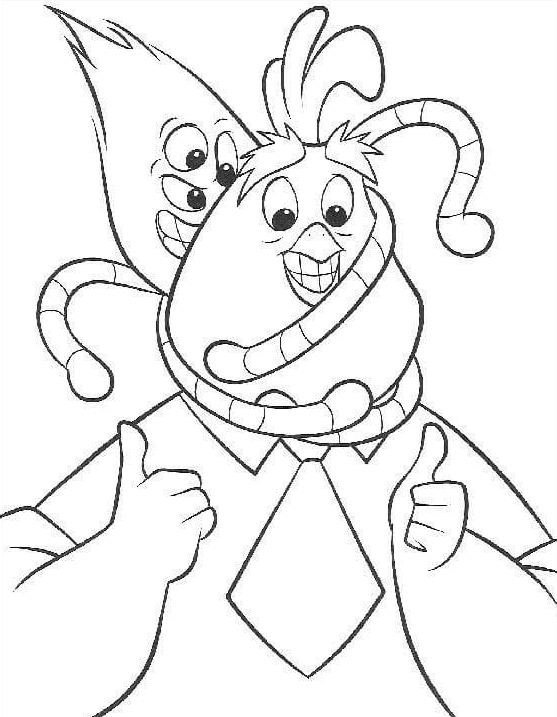
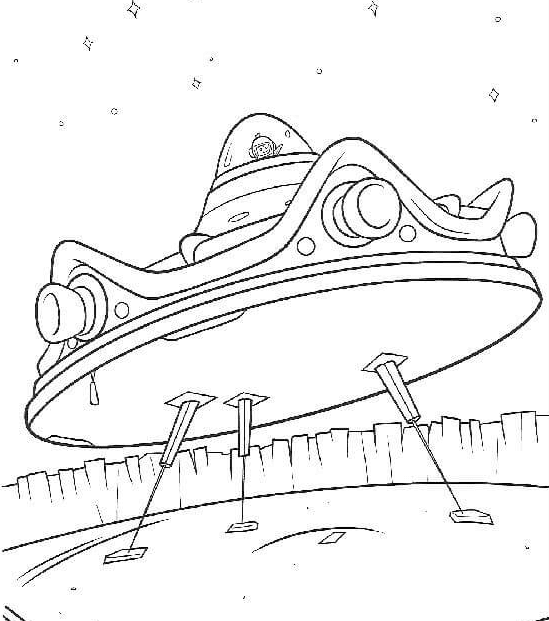
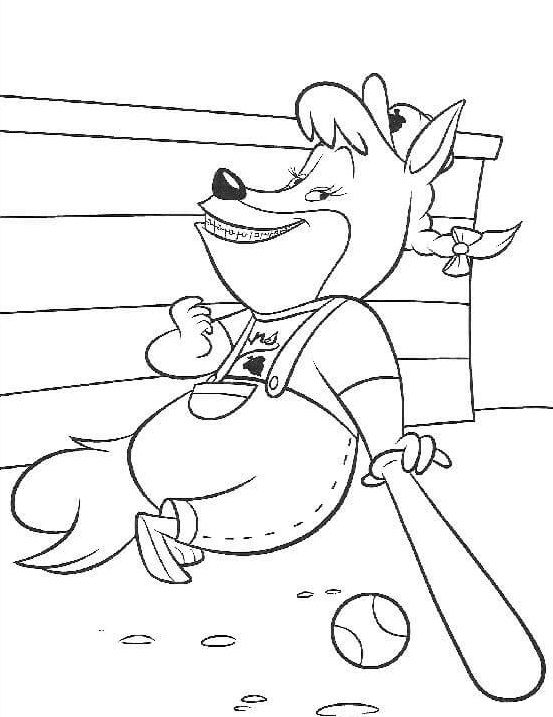
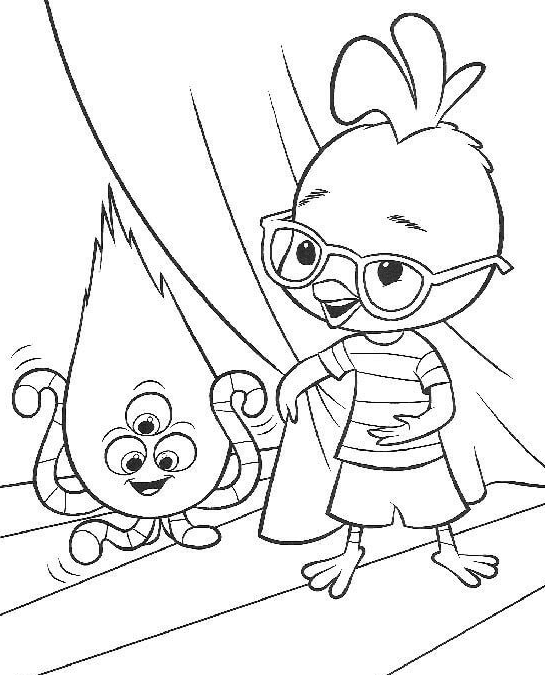
Kirby, his parents, Melvin and Tina, the UFO, the invasion plan, and Foxy Loxy playing baseball round out the set. Try fluffy Orange for Kirby and a rusty Orange coat for Foxy Loxy, adding bold colors to her outfit.
What Chicken Little Coloring Pages Do
Believing in yourself. Chicken Little keeps trying even when everyone laughs at him, and in the end, his courage saves the town. His story is an easy springboard for family talks about confidence and persistence. Kids can color their favorite page of Chicken Little, being brave, and share why it matters to them.
Fine motor practice with fun details. For children 2 to 7, coloring grows grip and steadiness, which American Academy of Pediatrics specialists describe as building blocks for handwriting. Chicken Little’s glasses, Abby’s braces, and the Fish’s helmet are small details that build precision, while Runt’s round body is easy for younger kids. The baseball and alien scenes offer bigger challenges.
Calm and silly coloring time. Structured coloring left participants calmer, according to a 2005 Art Therapy Journal paper on the subject. Funny faces, goofy aliens, and Runt’s dance moves keep the mood light. These pages make a cheerful, quiet activity after school.
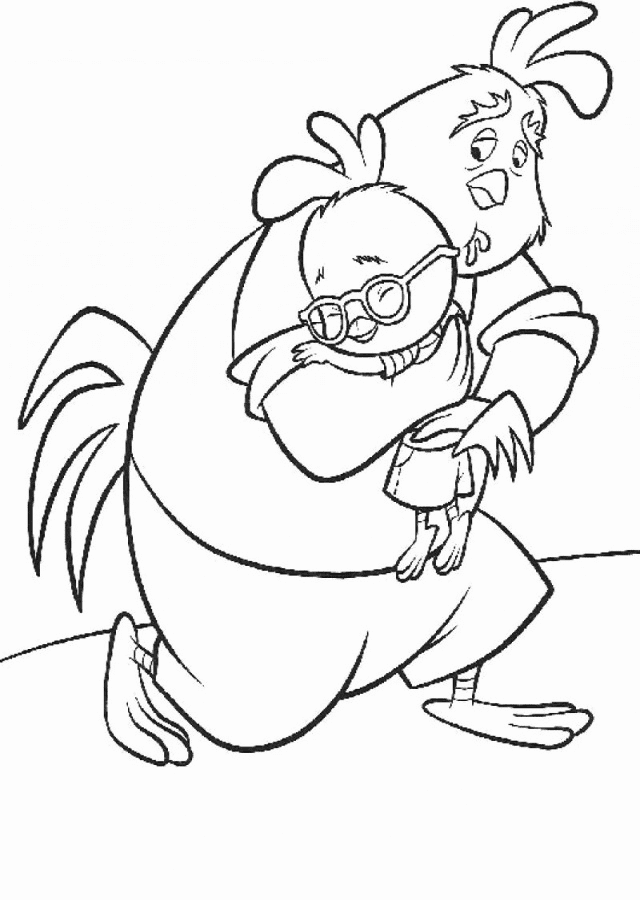
Talking about family and communication. Chicken Little and his father, Buck Cluck, struggle to understand each other until they finally listen. Their story makes it easy for families to talk about sharing feelings and supporting one another. Kids can color the father and son pages together with a parent.
How to Color Chicken Little Pages Well
- Green glasses: Color the round frames Green and leave the lenses white with a small light Blue shine.
- White feathers: Keep most feathers white and add light Gray shadows under the wings and head.
- Abby’s smile: Leave her braces white and outline them lightly in Gray so her big grin stands out.
- Runt’s pink skin: Use a soft Pink with slightly darker Salmon along his belly and cheeks.
- Fish helmet: Color the water Light Blue and leave curved white highlights on the glass.
- Baseball scenes: Fill the outfield with Green, the base paths with Brown, and the sky above the stadium with a bright Cerulean.
5 Creative Craft Ideas with Chicken Little Coloring Pages
1. Species Silhouette Lineup
Color one page each for Chicken Little, Runt, Abbey, and Fish Out of Water, then cut each character out roughly along its outline.
Arrange the four silhouettes in a row taped to a strip of paper, tallest to smallest, to create a simple lineup that shows how differently each species reads even without any background. Takes about twenty-five minutes.
2. Fish Out of Water Bowl Window
Color a Fish Out of Water page, then cut an oval window into a separate blank sheet sized to frame just the bowl area.
Tape the window sheet over the colored page so only the bowl and Fish show through the oval opening, turning the page into a simple porthole-style display. Takes about fifteen minutes.
3. Barnyard Family Photo Strip
Color Buck Cluck, Chicken Little, and Ace Cluck on three separate small pages, keeping all three in the same warm yellow-gold family.
Fold a long strip of paper into three equal panels, accordion-style, and glue one character into each panel to create a small standing family photo strip. Takes about twenty minutes.
4. Alien Invasion Pop-Up Scene
Color the alien invasion-planning page, then cut a simple triangular flap into a folded card and glue a small extra alien cutout behind the flap.
When the card opens, the flap lifts to reveal the hidden alien, adding a small surprise element to the invasion scene. Takes about twenty minutes.
5. Color-Match Memory Cards
Color two small copies each of four different characters, Chicken Little, Runt, Abbey, and an alien, on plain index cards cut to matching sizes.
Shuffle all eight cards face down and play a simple matching memory game, pairing each character with its identical twin by color and silhouette alone. Takes about twenty-five minutes to color, then it’s ready to play.
FAQ About Chicken Little Coloring Pages
Are these Chicken Little coloring pages free, and can I color them online?
Yes. Every page is free, with no sign-in or payment required. Download the PDF to print at home, or color directly on screen in the browser.
Does the set include Runt of the Litter as much as Chicken Little himself?
Yes, and possibly more. Runt appears across an unusually large number of pages in this set, including several solo scenes and group compositions with Abbey and other characters, making him one of the most heavily featured characters alongside Chicken Little.
What is Chicken Little?
Chicken Little is a 2005 animated film produced by Walt Disney Pictures. It follows a small chicken who struggles to be believed by his town after a panic over a falling sky, eventually proving himself during an actual alien encounter. The film is known for its comedic tone and its barnyard cast of mismatched animal species living in the same small town. You can read more about Chicken Little on Wikipedia.
Why don’t the animals in Chicken Little look like their real-world species?
The film prioritizes instant visual readability over naturalistic accuracy. Each character gets one exaggerated trait, Chicken Little’s oversized head, Runt’s rounded pink bulk, that makes them recognizable at a glance rather than realistic. This approach lets very different species, chicken, pig, duck, Fish, share scenes while each one stays visually distinct.
What colors should I use for Chicken Little?
Warm yellow-gold feathers, a bright red comb, and an exaggeratedly oversized head relative to his small body. Keep the proportion imbalance intentional rather than correcting it toward something more realistic, since that exaggeration is central to his design.
How do I color Fish Out of Water’s water bowl?
Color the Fish first in cool blue-green tones, then add the bowl around him as a pale blue-white tint rather than leaving it colorless. A few curved highlight lines suggest a reflective, transparent surface. Keep the bowl slightly less saturated than the Fish inside it so the eye reads it as a transparent container rather than part of the character himself.
Are these official Chicken Little coloring pages?
No. They are fan-made coloring sheets for personal use and are not affiliated with, licensed by, or endorsed by Walt Disney Pictures, Disney, or any rights holder of Chicken Little.
What colors should I use for Runt of the Litter?
A bright, warm pink was applied evenly across his rounded, bulky silhouette, without the texture or mottling a real pig’s skin would have. Since Runt appears on many pages throughout the set, keeping this pink consistent across every page helps maintain visual continuity for the character.
Start Coloring
The 48 Chicken Little designs cost nothing, whether printed at home or colored digitally, and no sign-in is needed. Finished heroes of Oakey Oaks deserve a crowd on Facebook or Pinterest, a single click away.