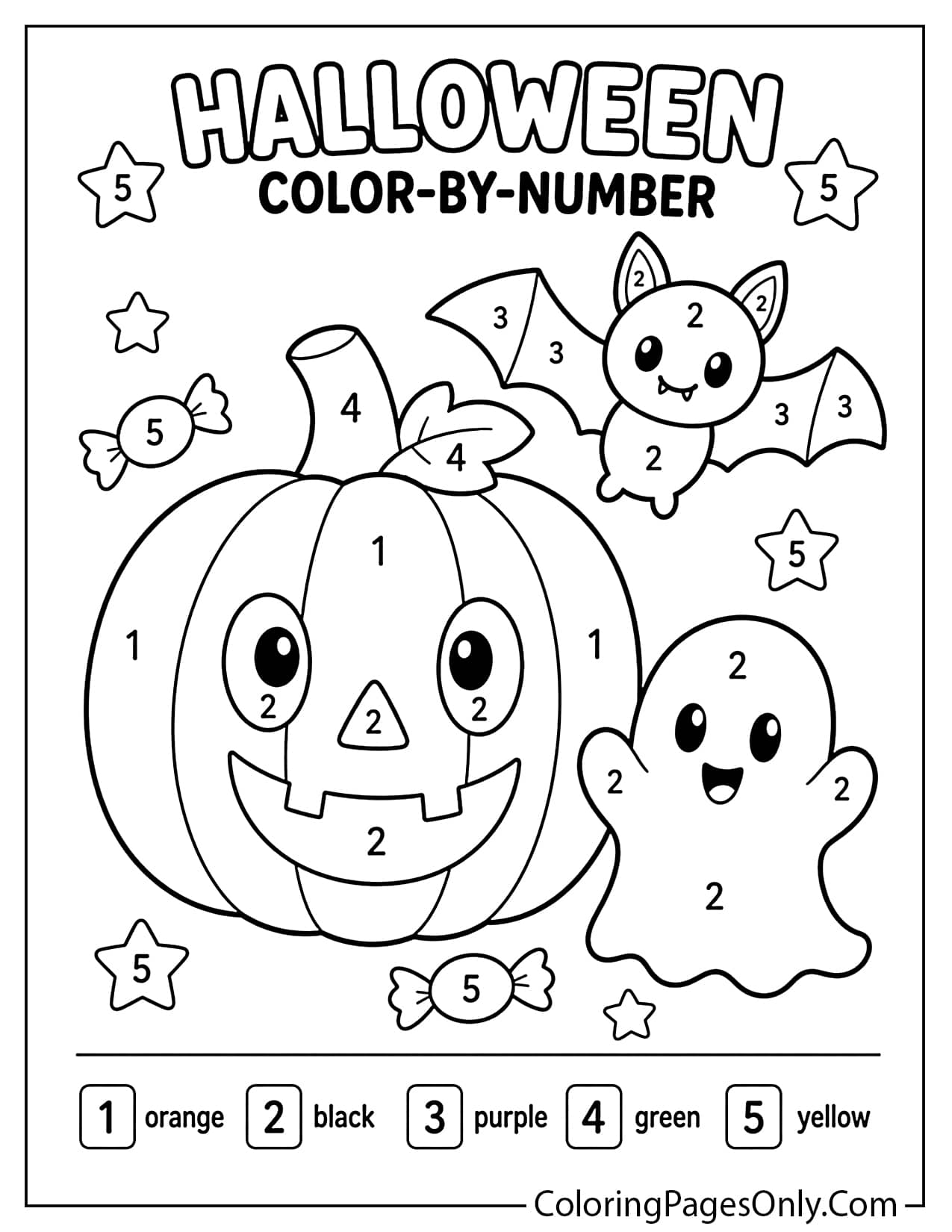
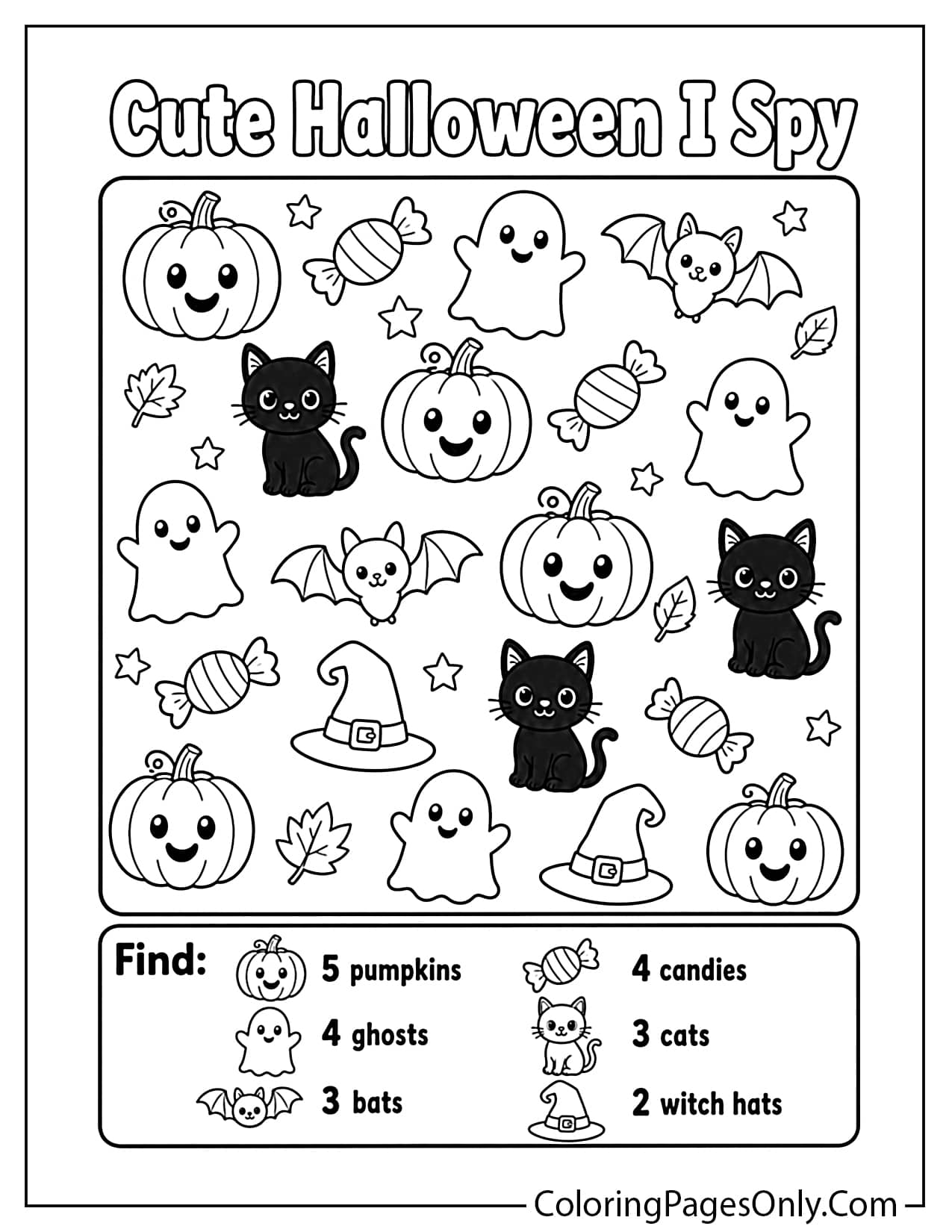
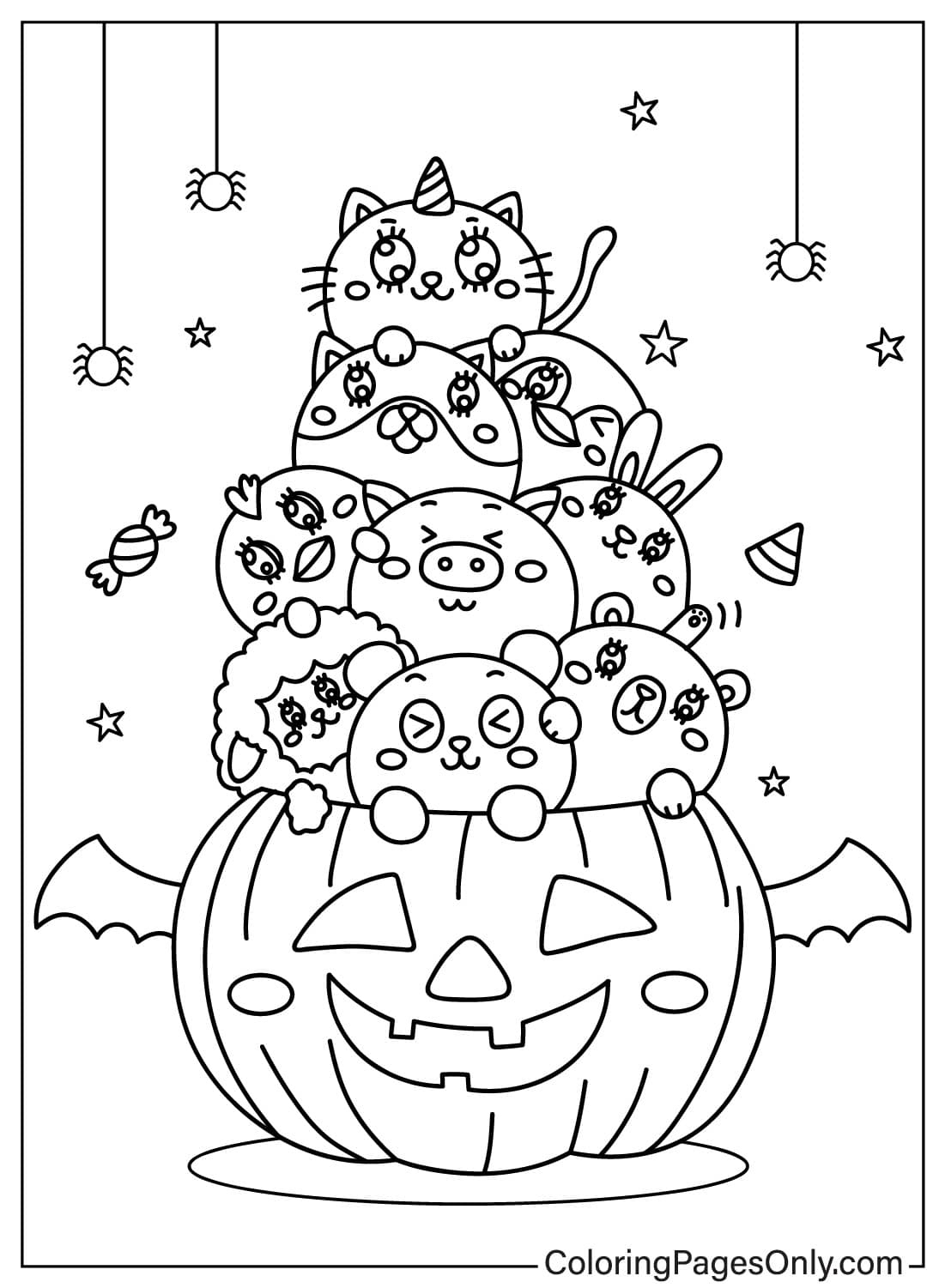
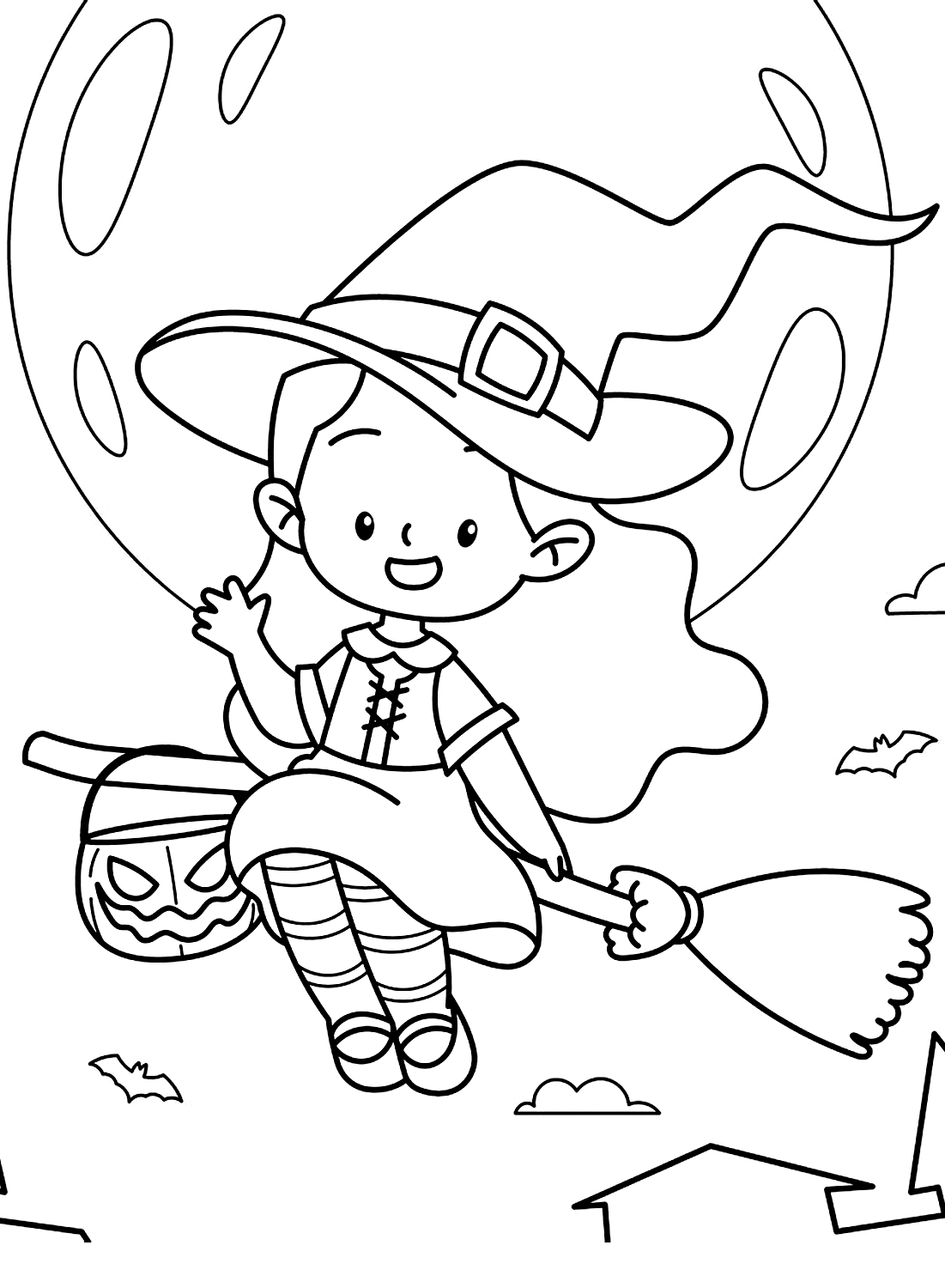
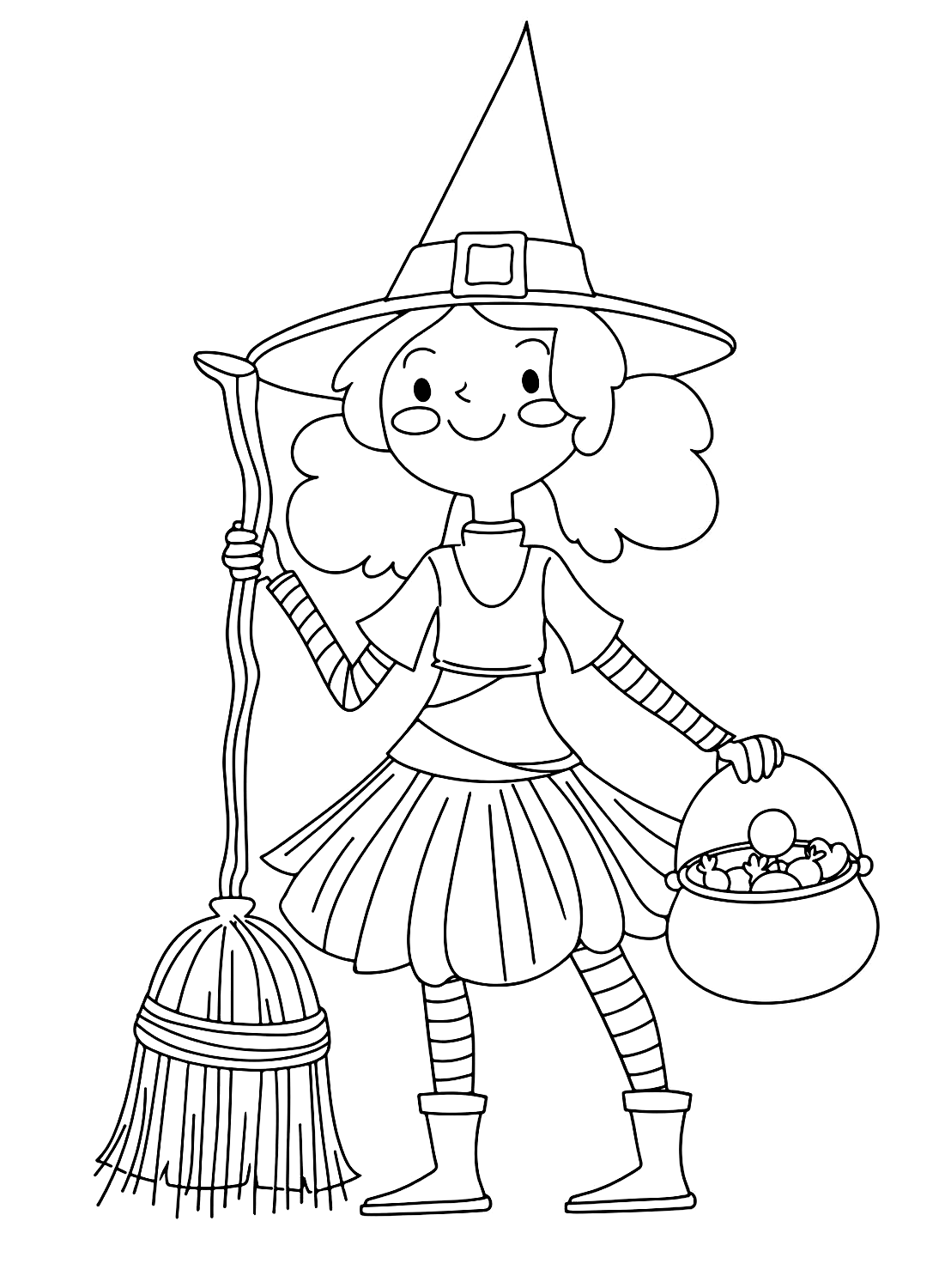
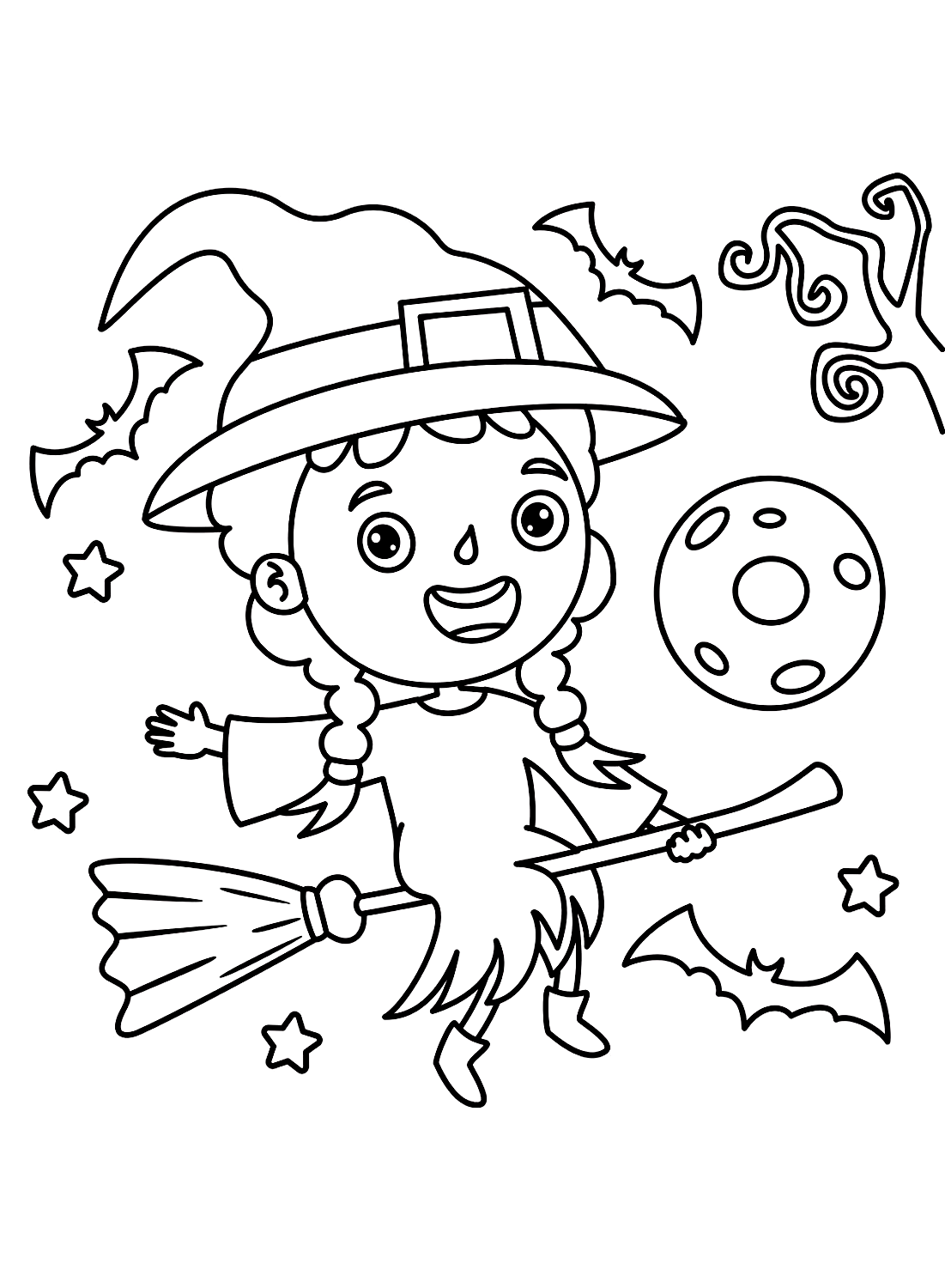
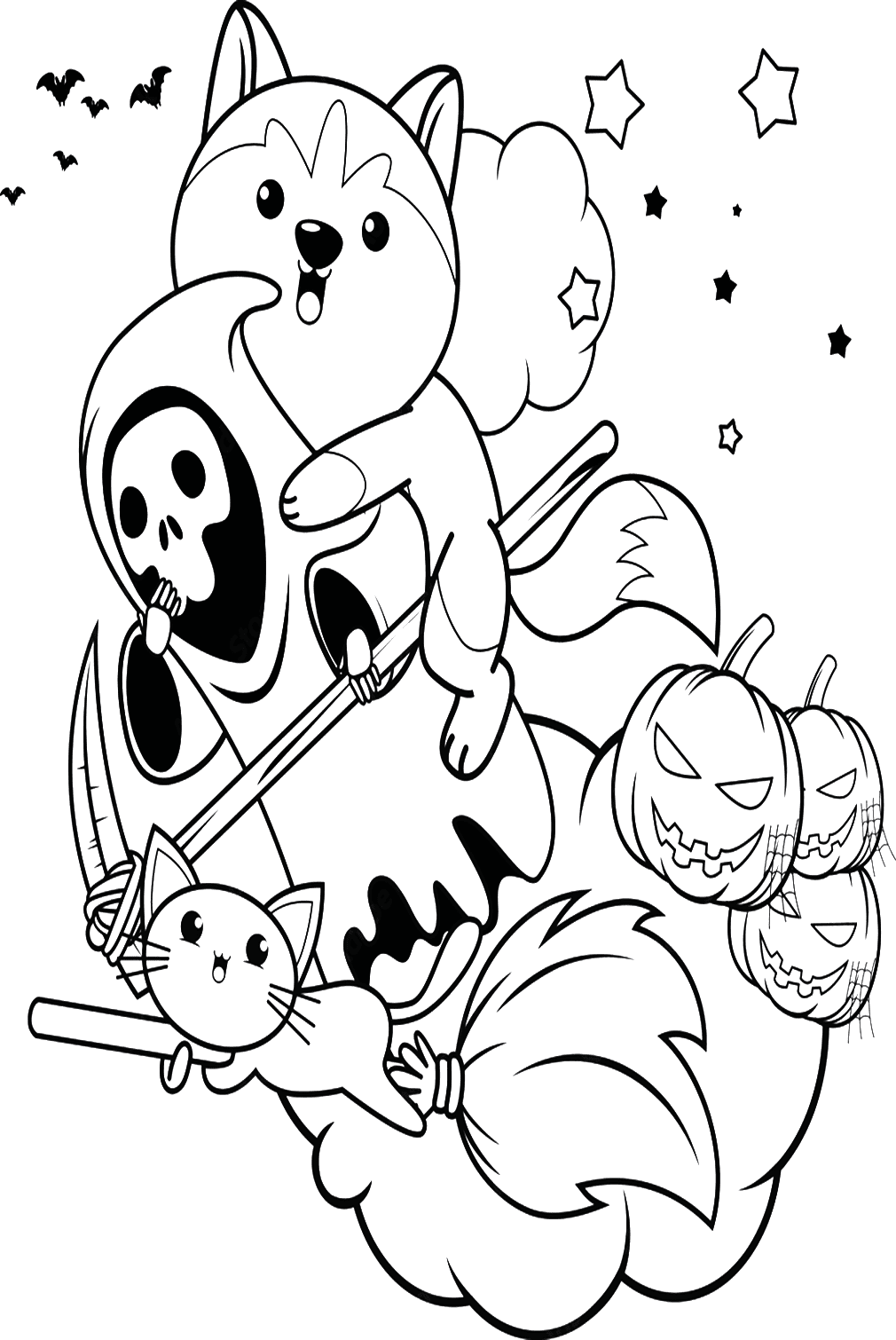
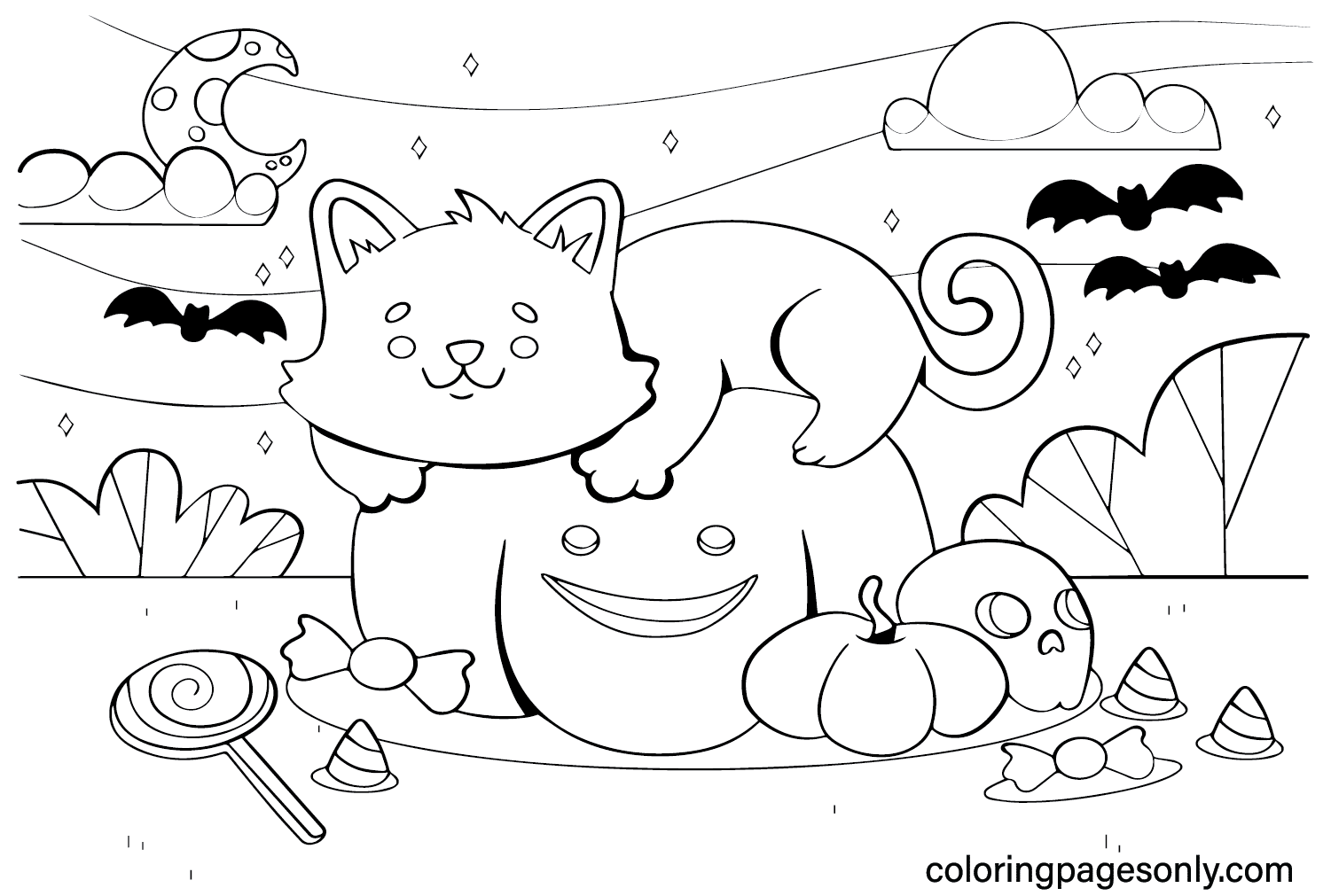
This collection features 60+ free printable cute Halloween coloring pages – available as PDF or online coloring – covering friendly ghosts, smiling pumpkins, witches, cats, bats, and Halloween scenes for kids. Halloween is observed on October 31 each year, tracing its roots to the ancient Celtic festival of Samhain – a harvest-end celebration marking the night when the boundary between the living and the dead was believed to thin. When the Roman Empire absorbed Celtic territories, some historians hold that elements of two Roman festivals merged with Samhain: Feralia, which commemorated the passing of the dead, and a festival honoring Pomona, goddess of fruit and trees. When the Catholic Church established November 1 as All Saints’ Day in the ninth century, October 31 became All Hallows’ Eve – contracted over centuries into Halloween.

The “cute” version of Halloween is its own distinct visual tradition. Where general Halloween imagery reaches for darkness, the cute style reaches for warmth: the ghost with round eyes and a friendly expression, the pumpkin with a gap-toothed grin rather than a menacing snarl, the witch who looks more like a child in a pointed hat than a figure from folklore. This collection of 60+ pages works entirely within that warmer register – Halloween symbols rendered approachable, the holiday’s iconography made available to the youngest colorists.

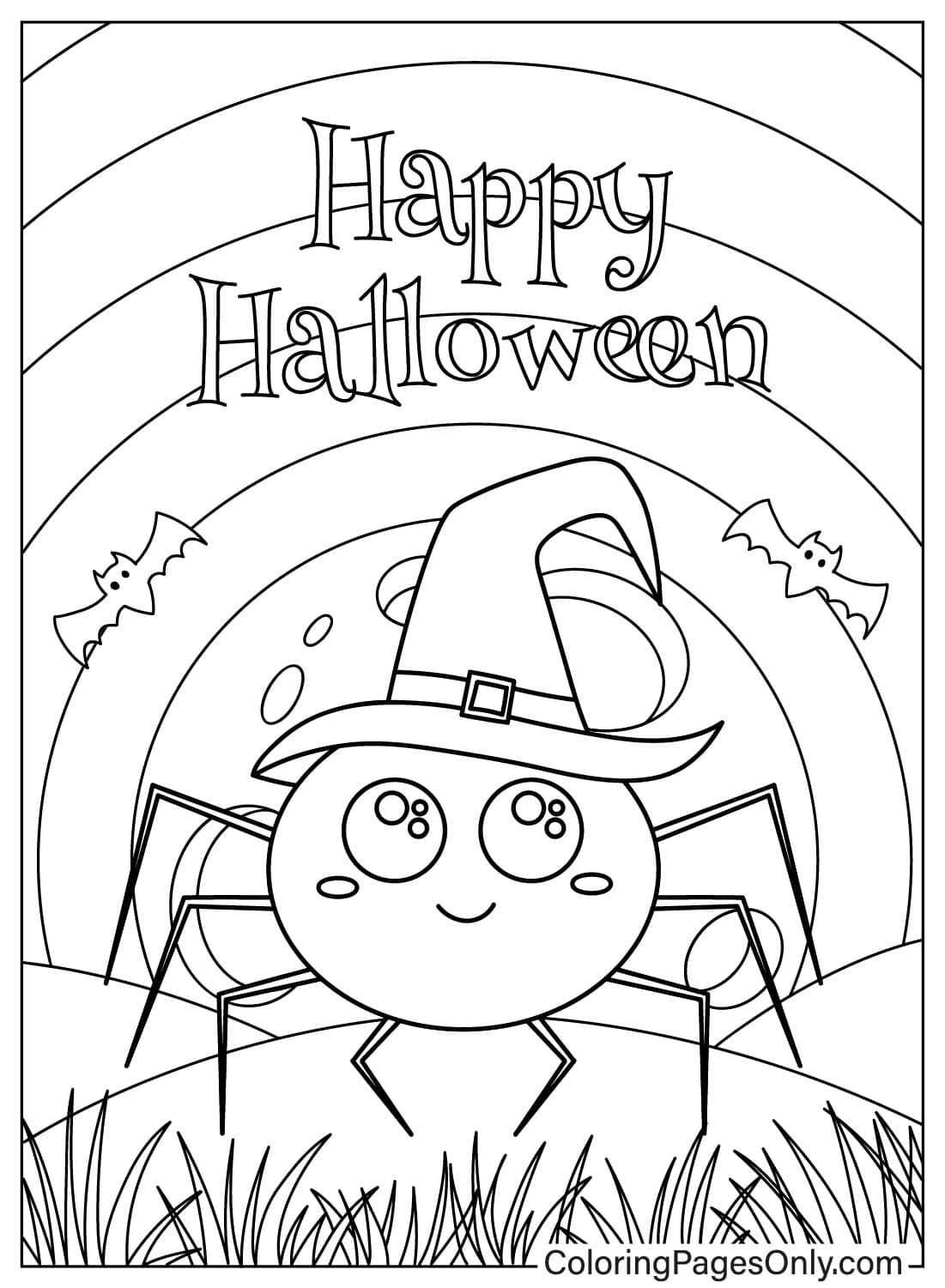
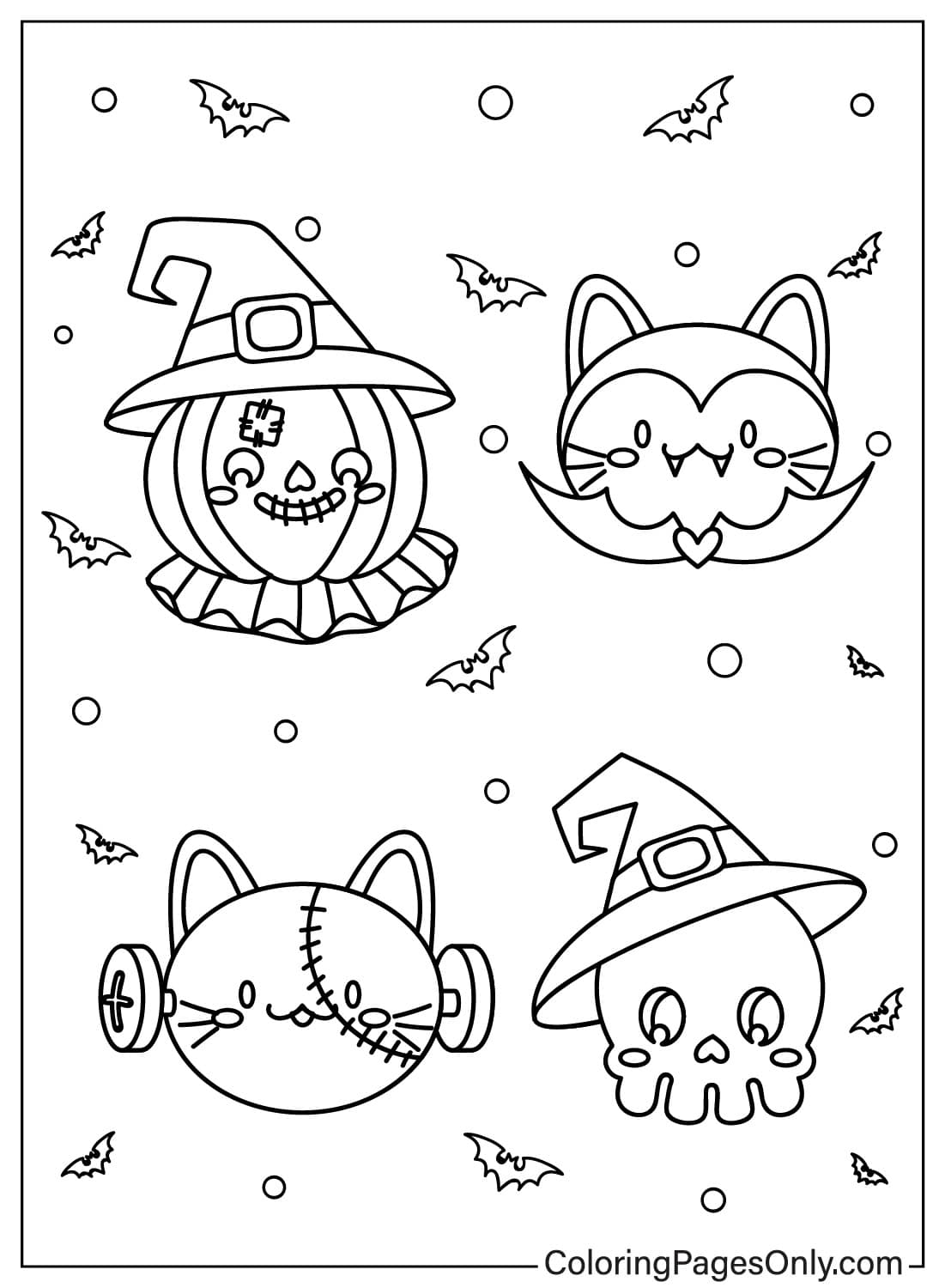
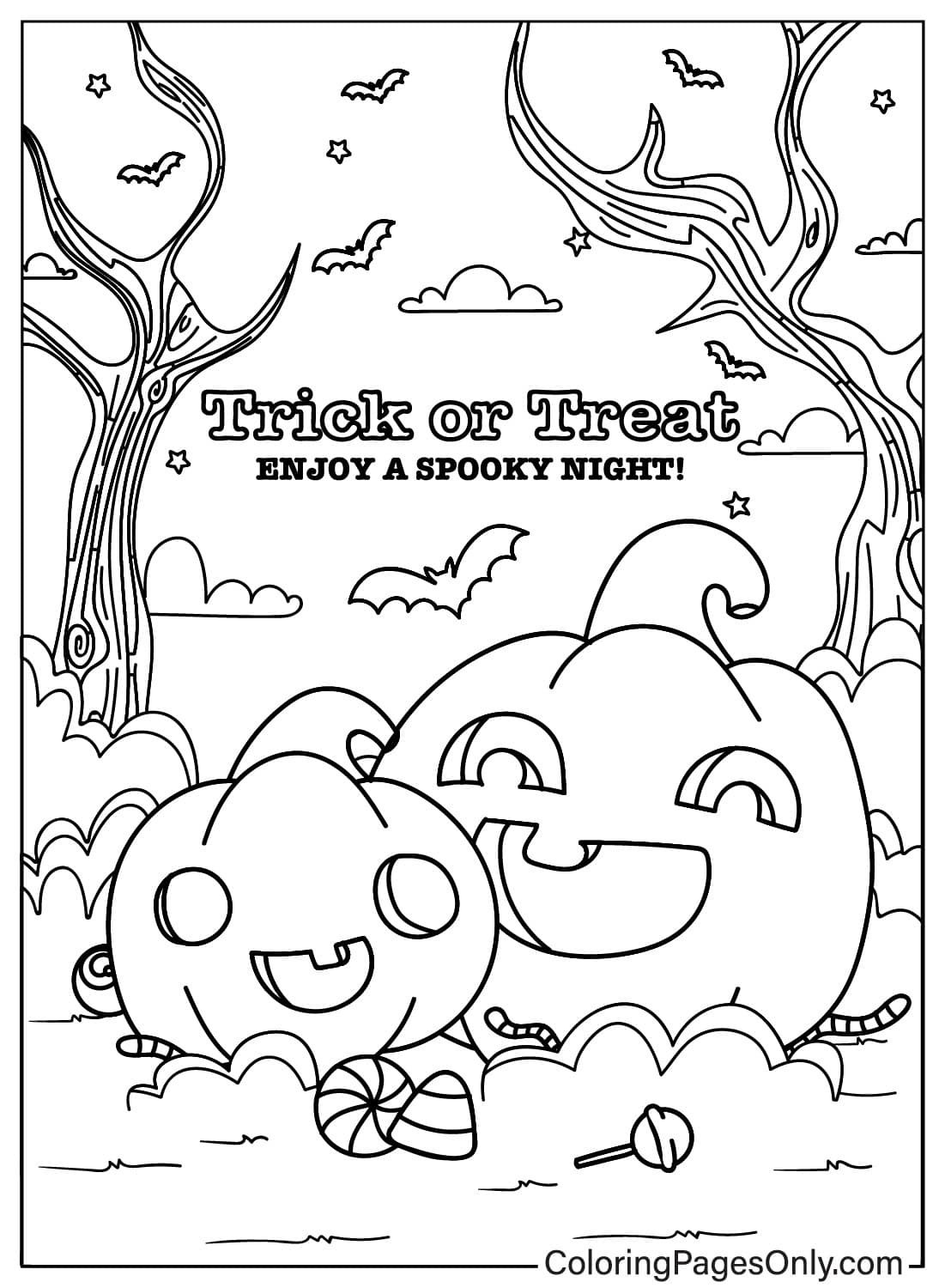
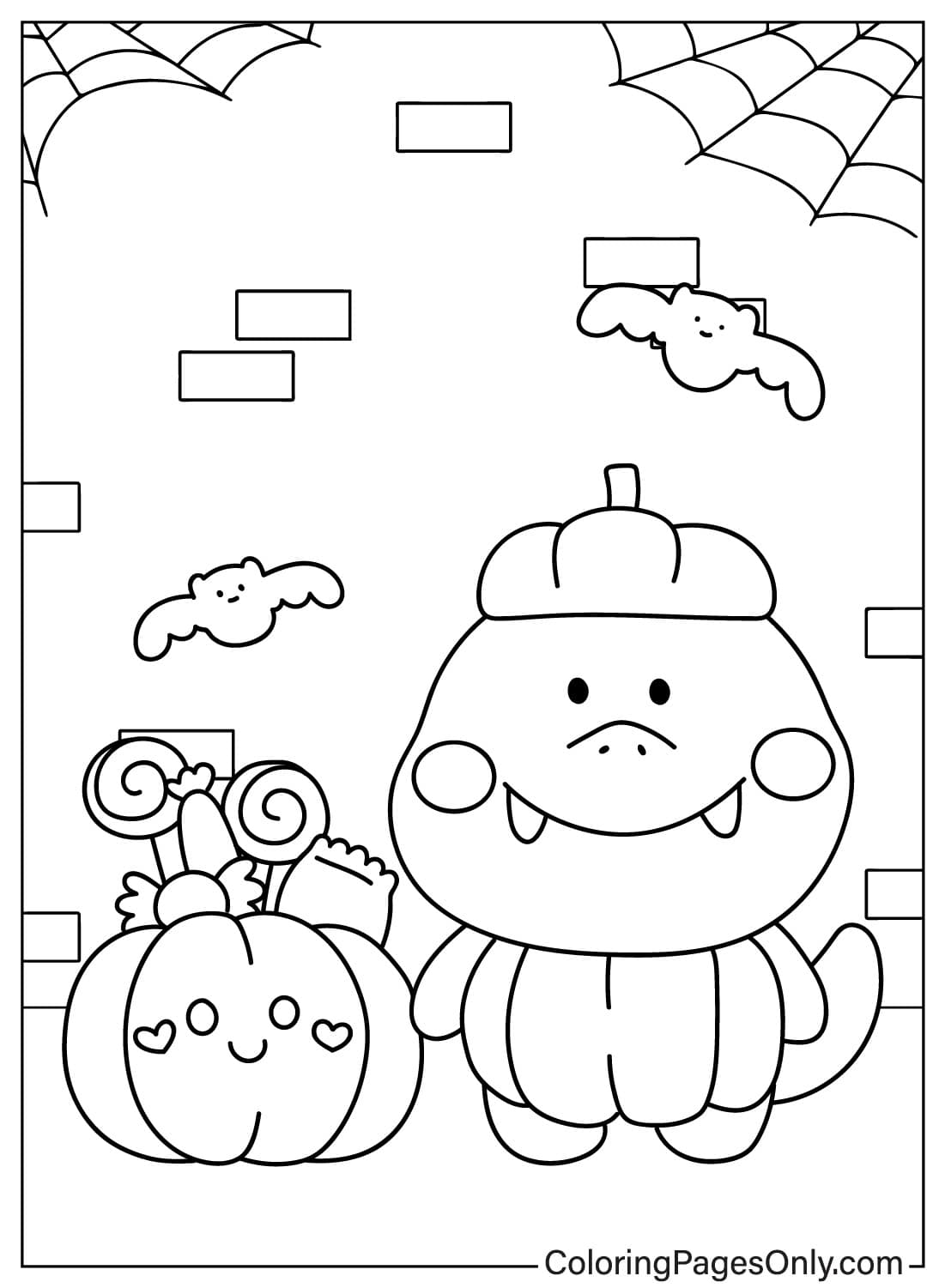
These 60+ free pages at ColoringPagesOnly.com cover cute ghosts, smiling pumpkins, friendly witches, Halloween cats, bats, spiders, crocodiles, skeleton characters, and Halloween scene pages with children trick-or-treating. All free, PDF or PNG, print or color online.

What’s Inside

Cute Halloween Scenes with Children

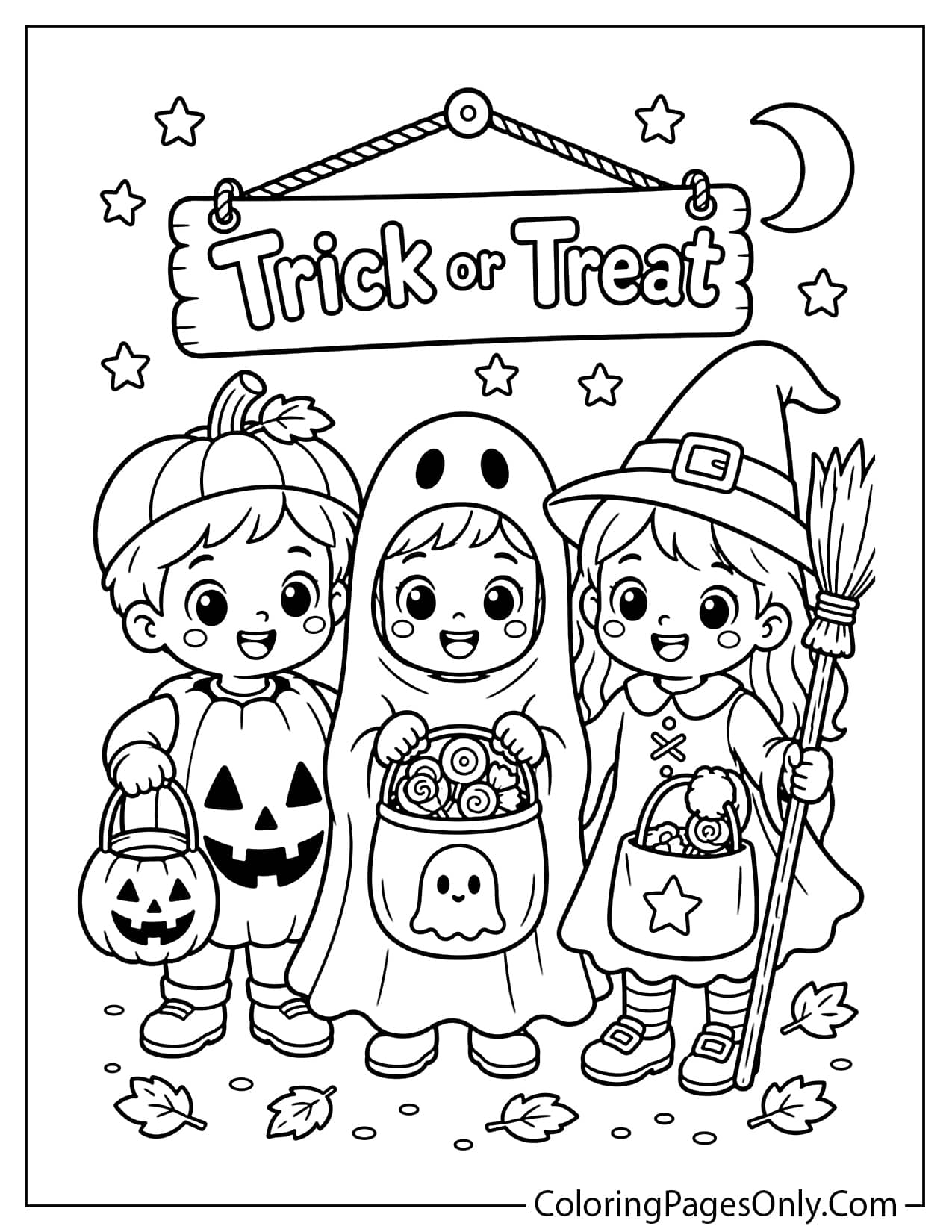
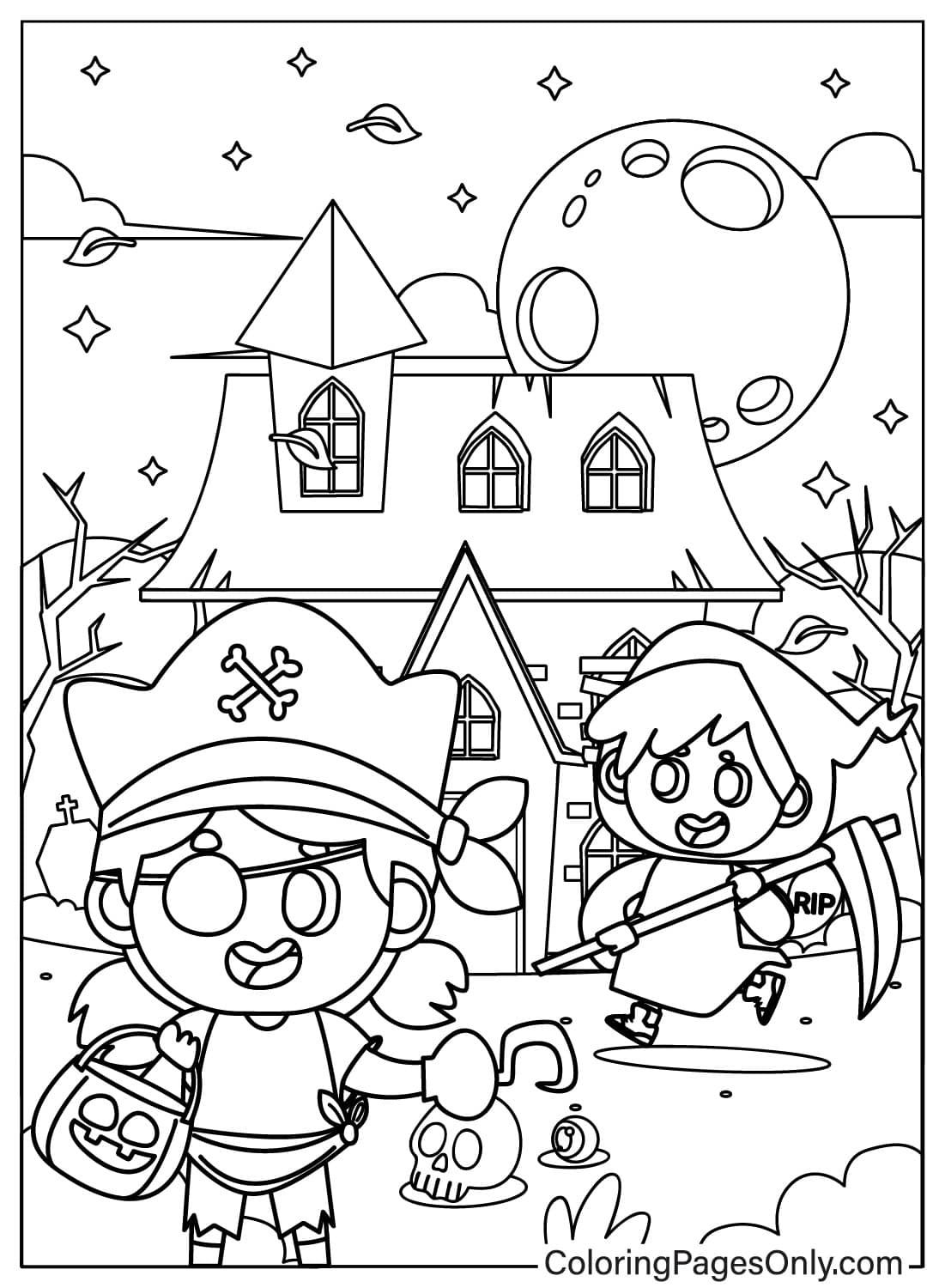
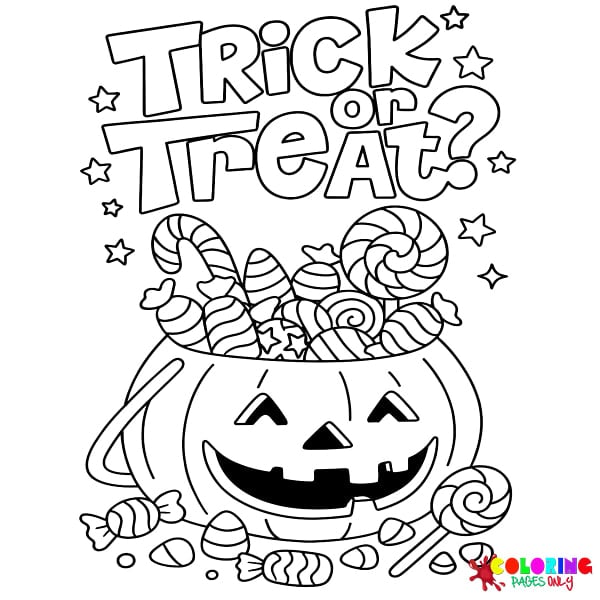
Pages showing children in Halloween costumes trick-or-treating, celebrating, and playing – the collection’s most immediately relatable designs for young colorists. “Kids in Wonderful Halloween” and “Happy Halloween with Trick or Treat” place human characters at the center of the holiday’s most beloved tradition. Trick-or-treating as a practice traces to the medieval European custom of “souling” – going door to door asking for food-based gifts in exchange for prayers – and the Scottish and Irish tradition of “guising,” in which people dressed in costume to ward off spirits on All Hallows’ Eve.

Coloring Halloween children: Children’s costumes in cute Halloween pages follow predictable color coding: witch costumes in black and purple, ghost costumes in white, pumpkin costumes in orange. Keeping each child in their correct costume palette makes group scene pages read clearly at a glance. Skin tones on cute Halloween characters are typically warm, light, and simple – a single warm peach tone applied evenly reads correctly in the cartoon style these pages use.

Cute Ghosts

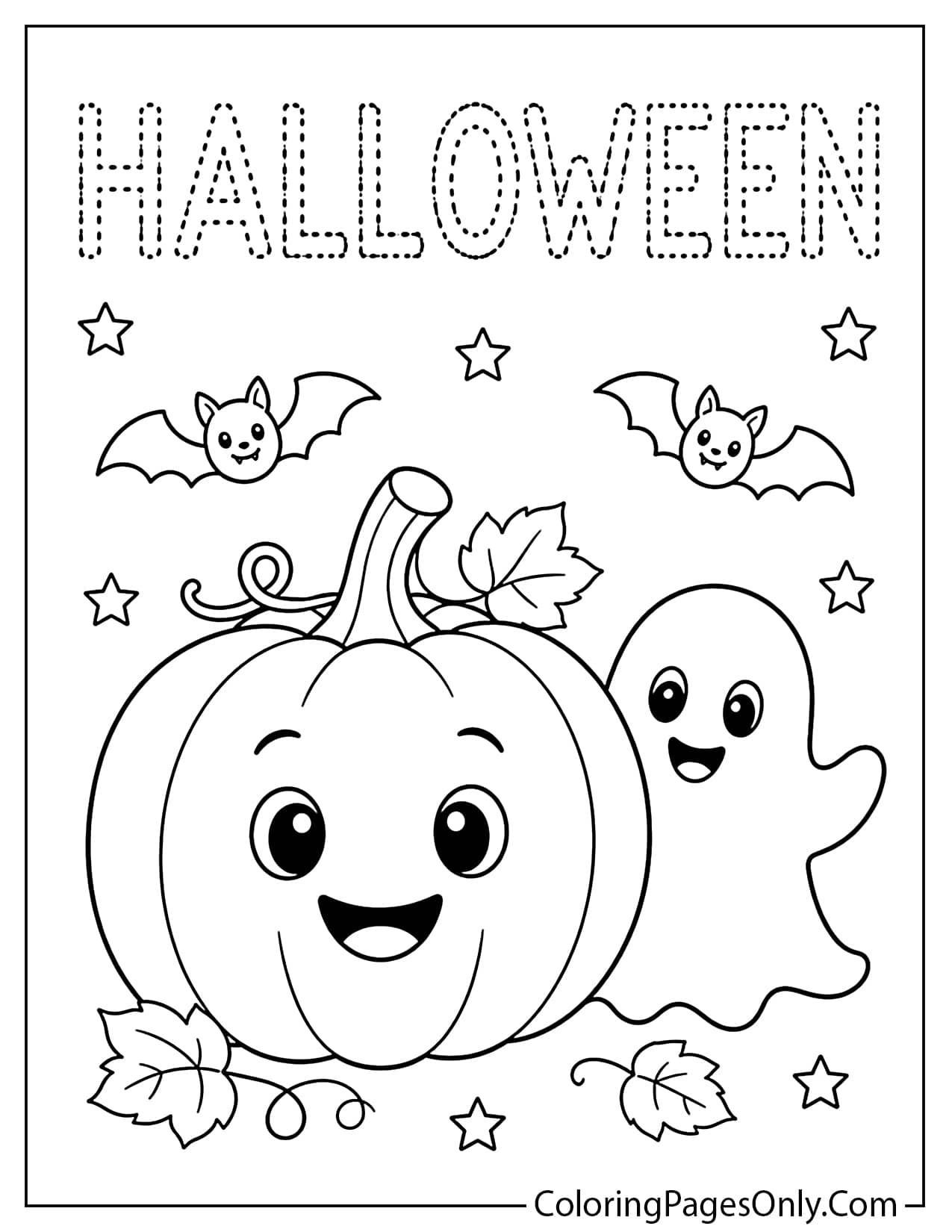
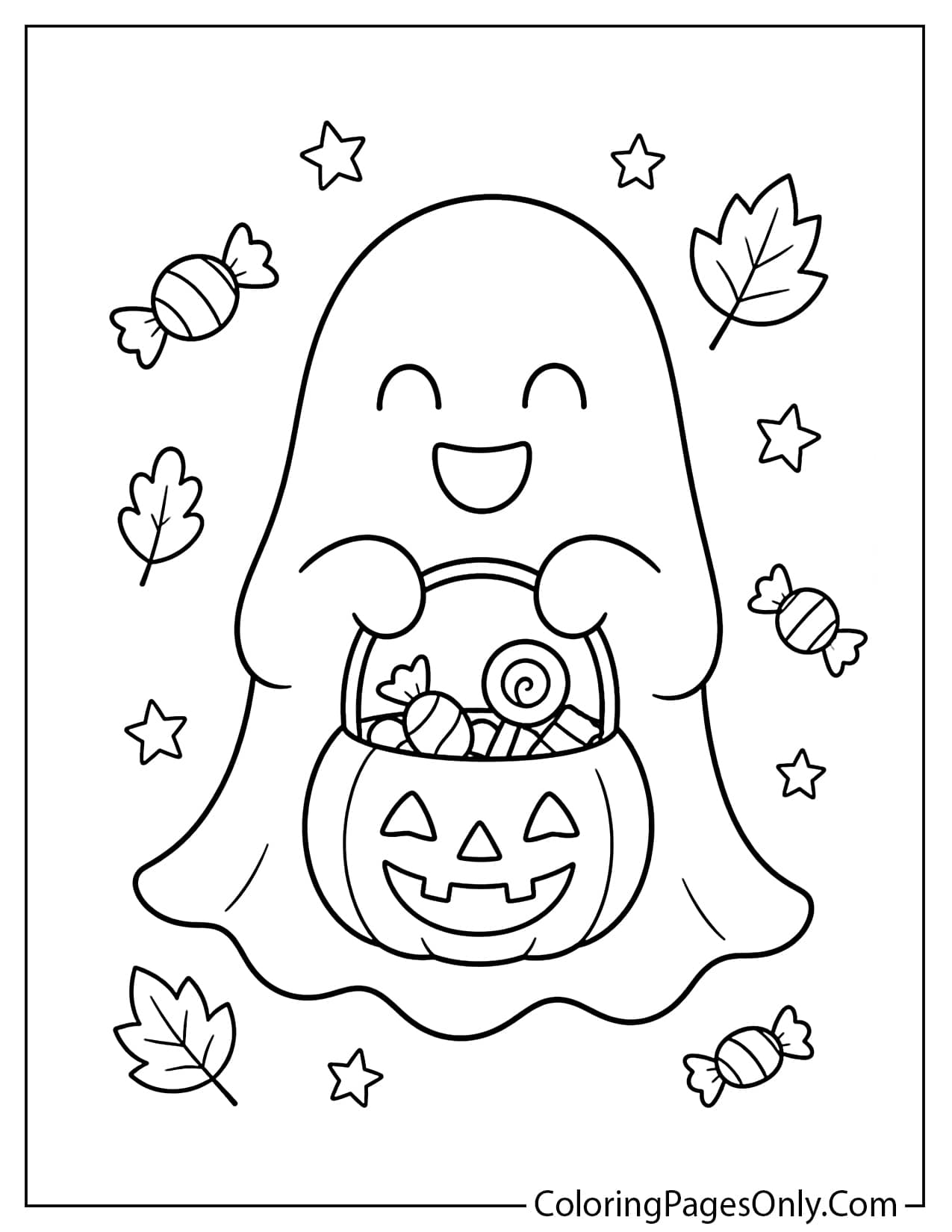
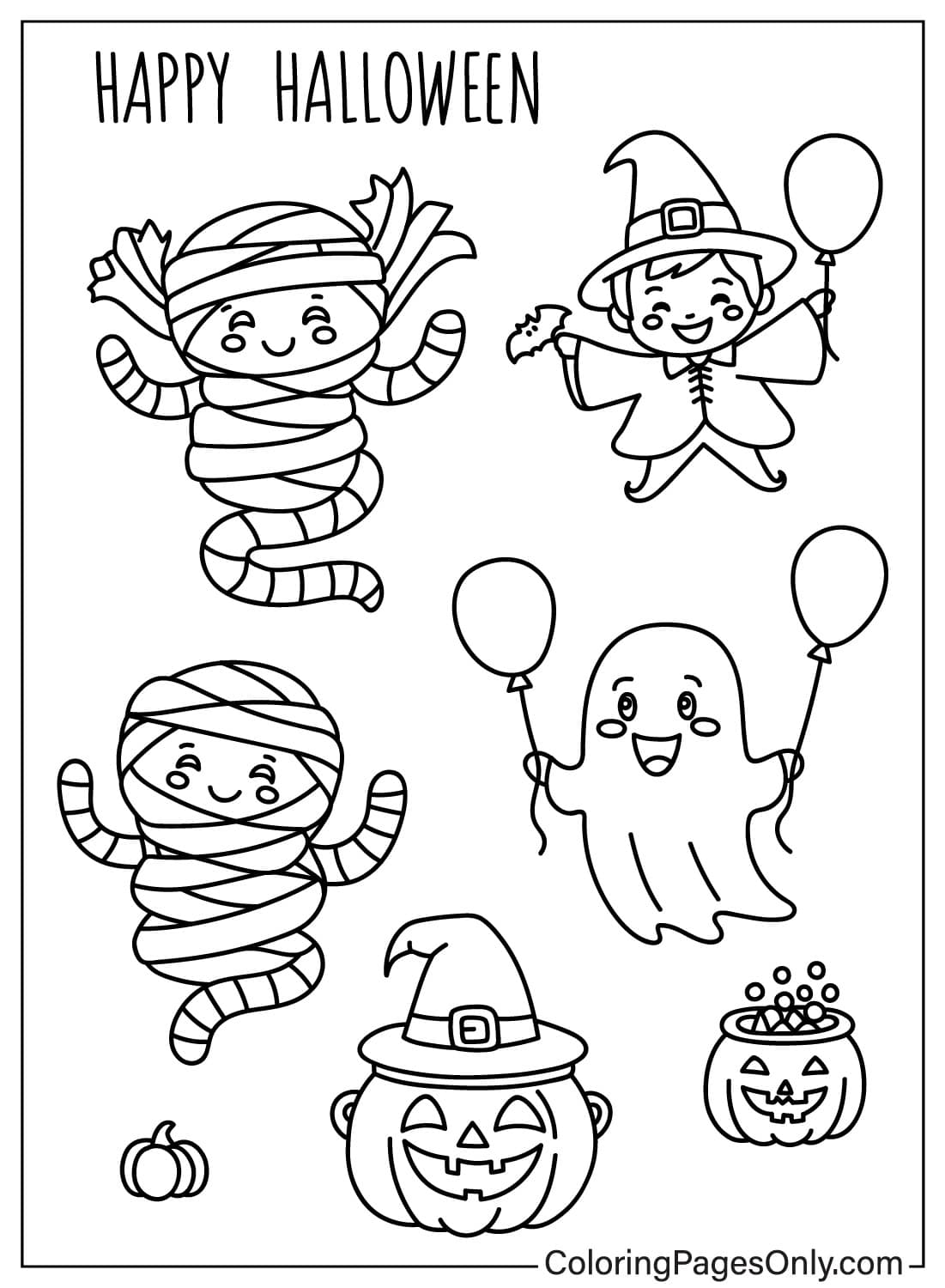
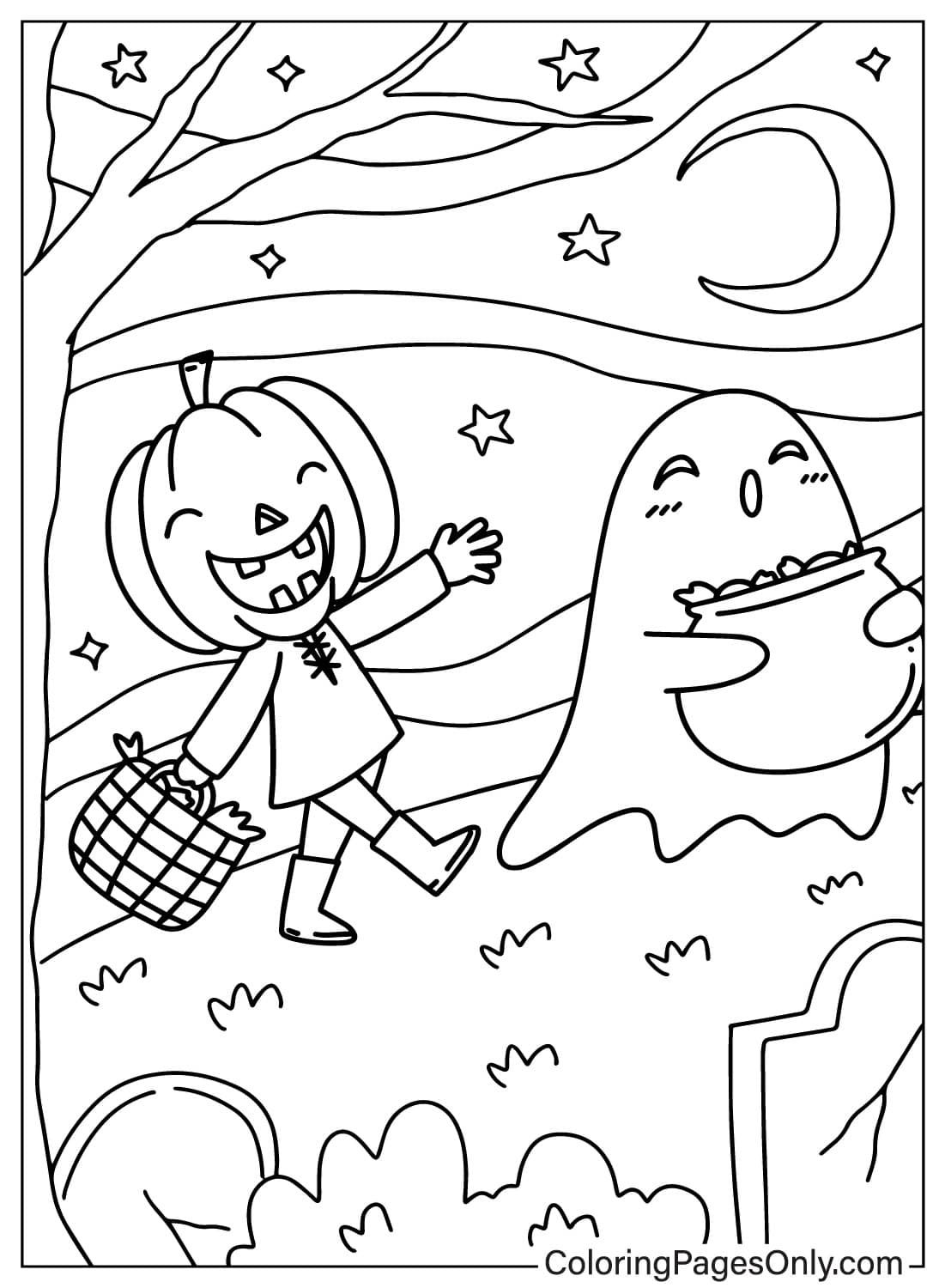
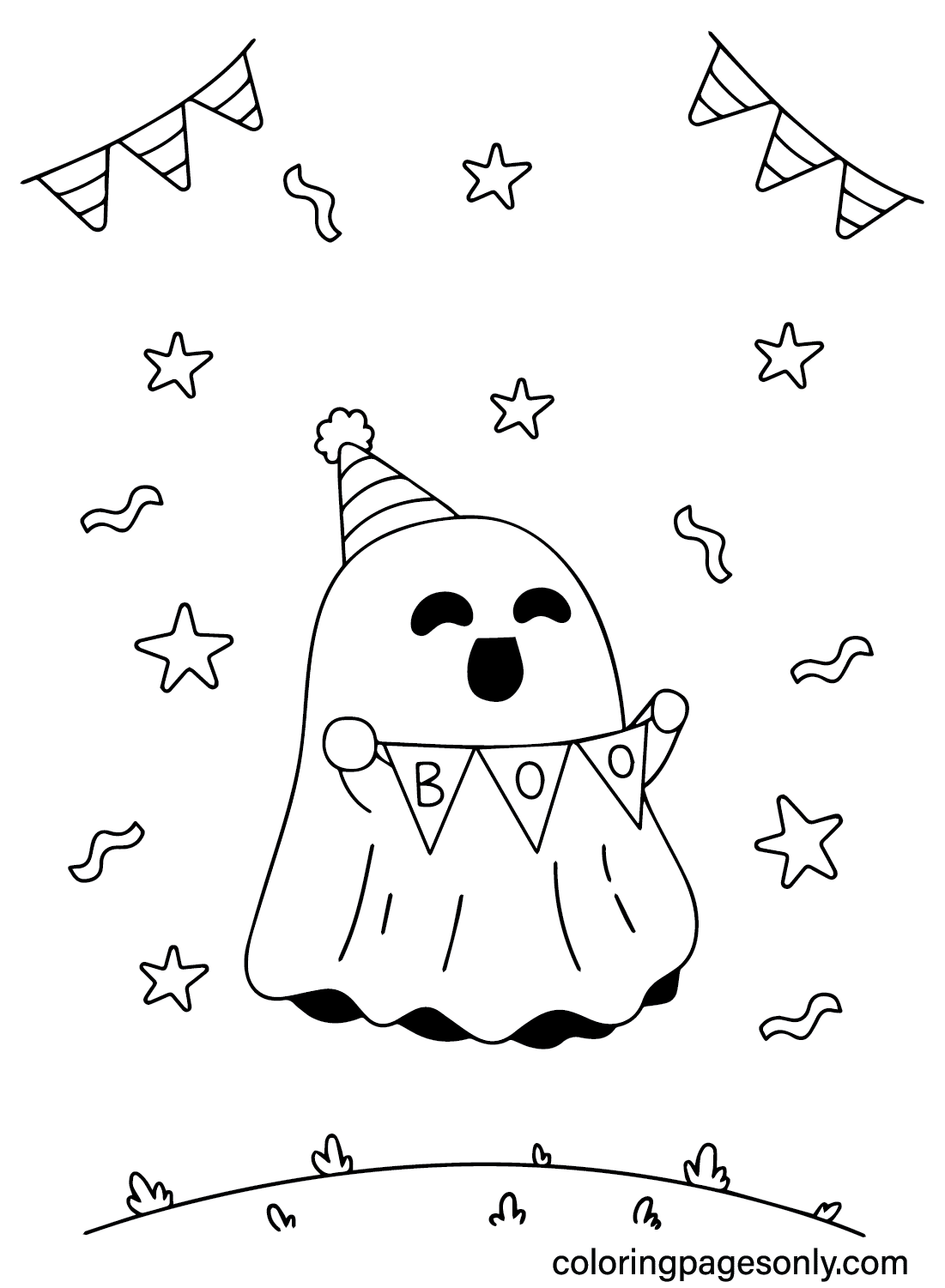
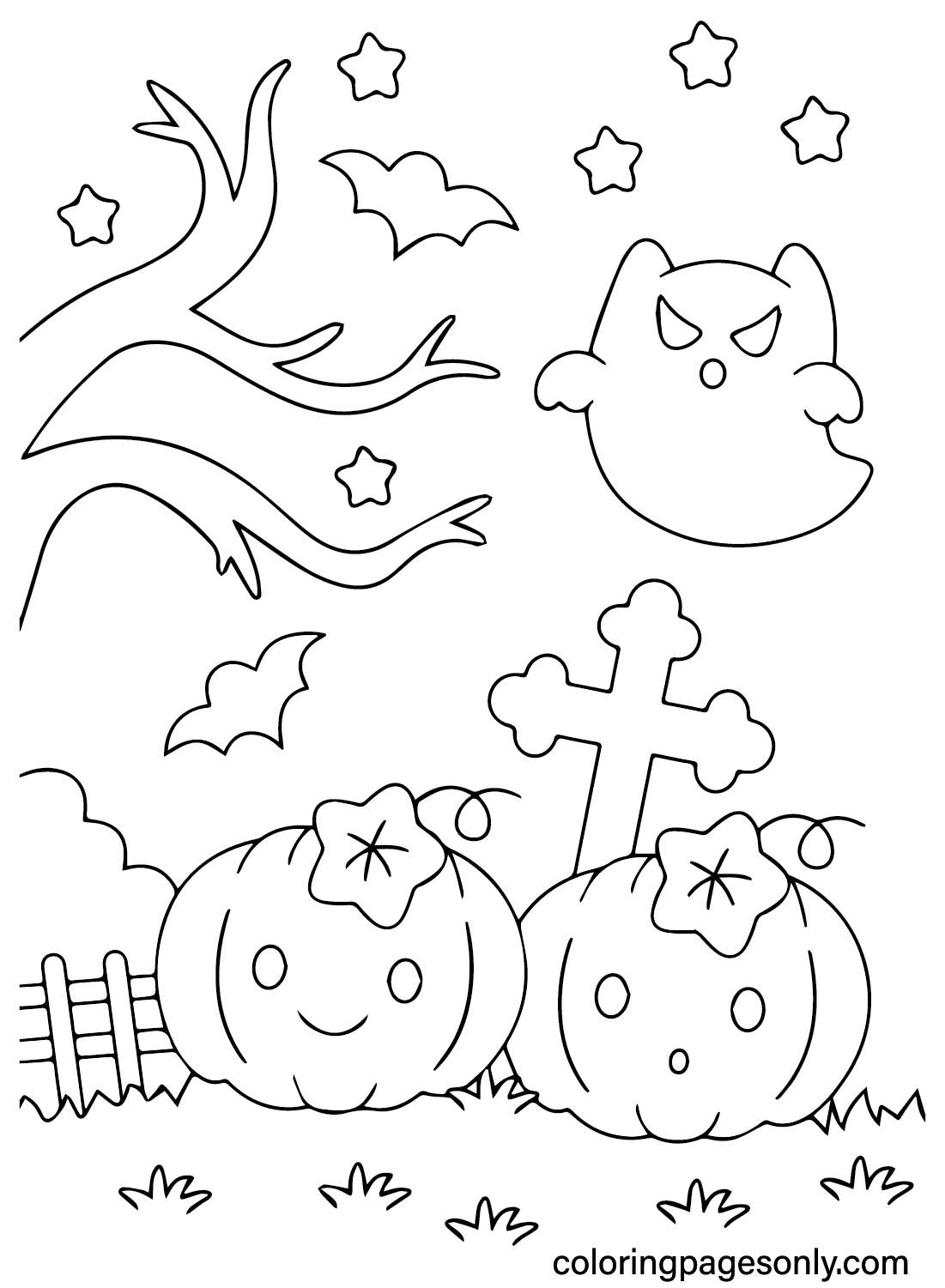
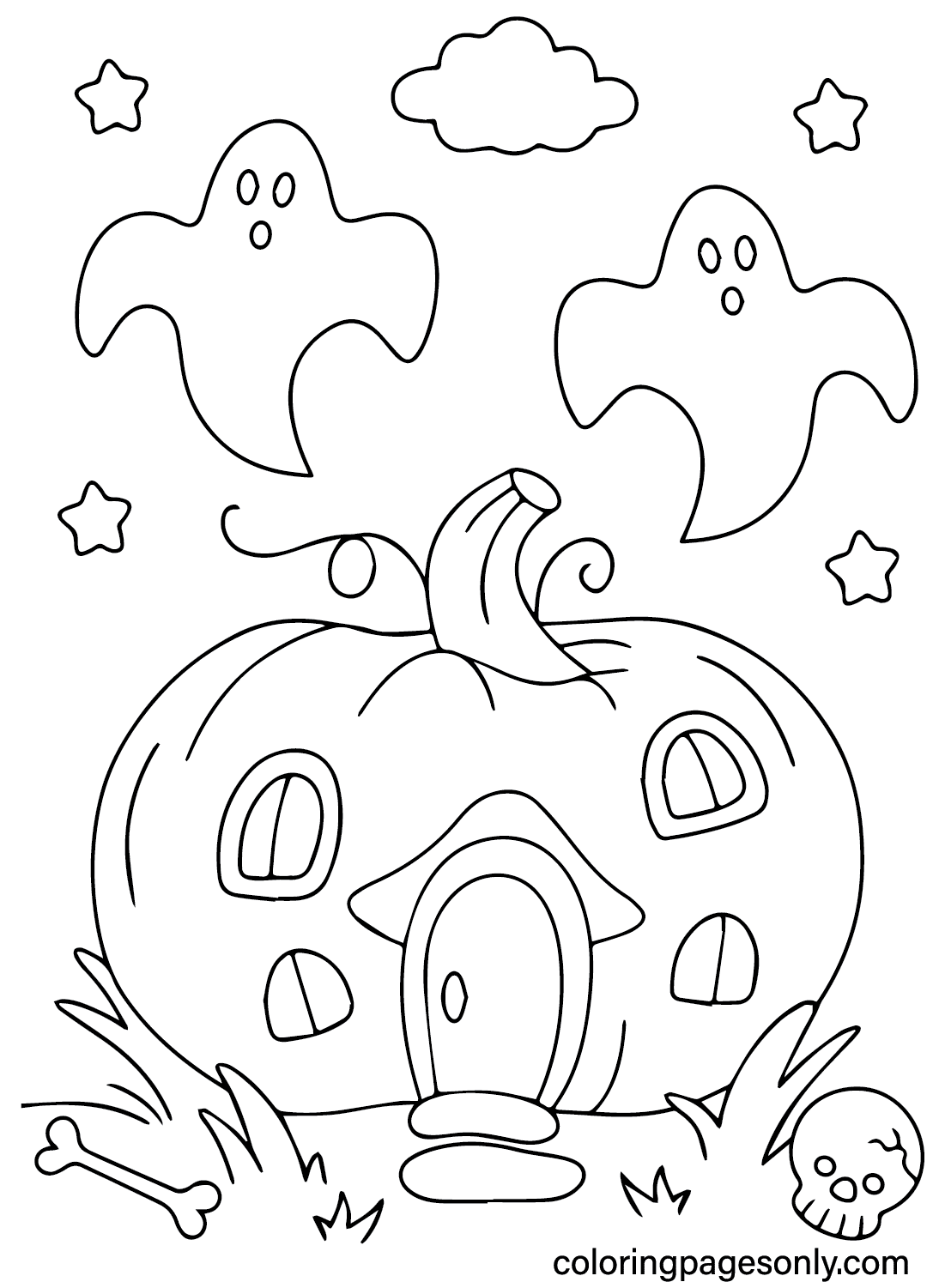
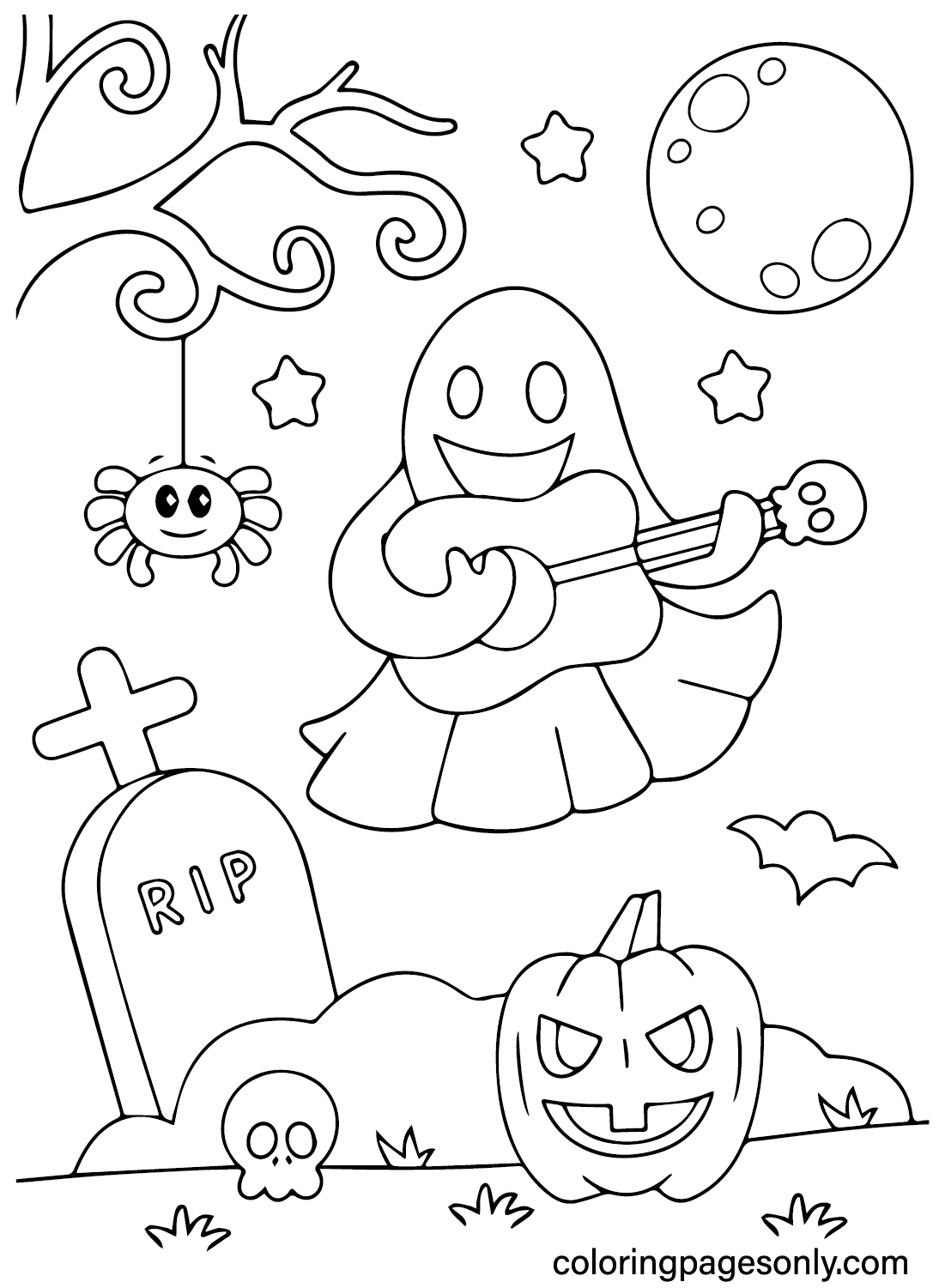
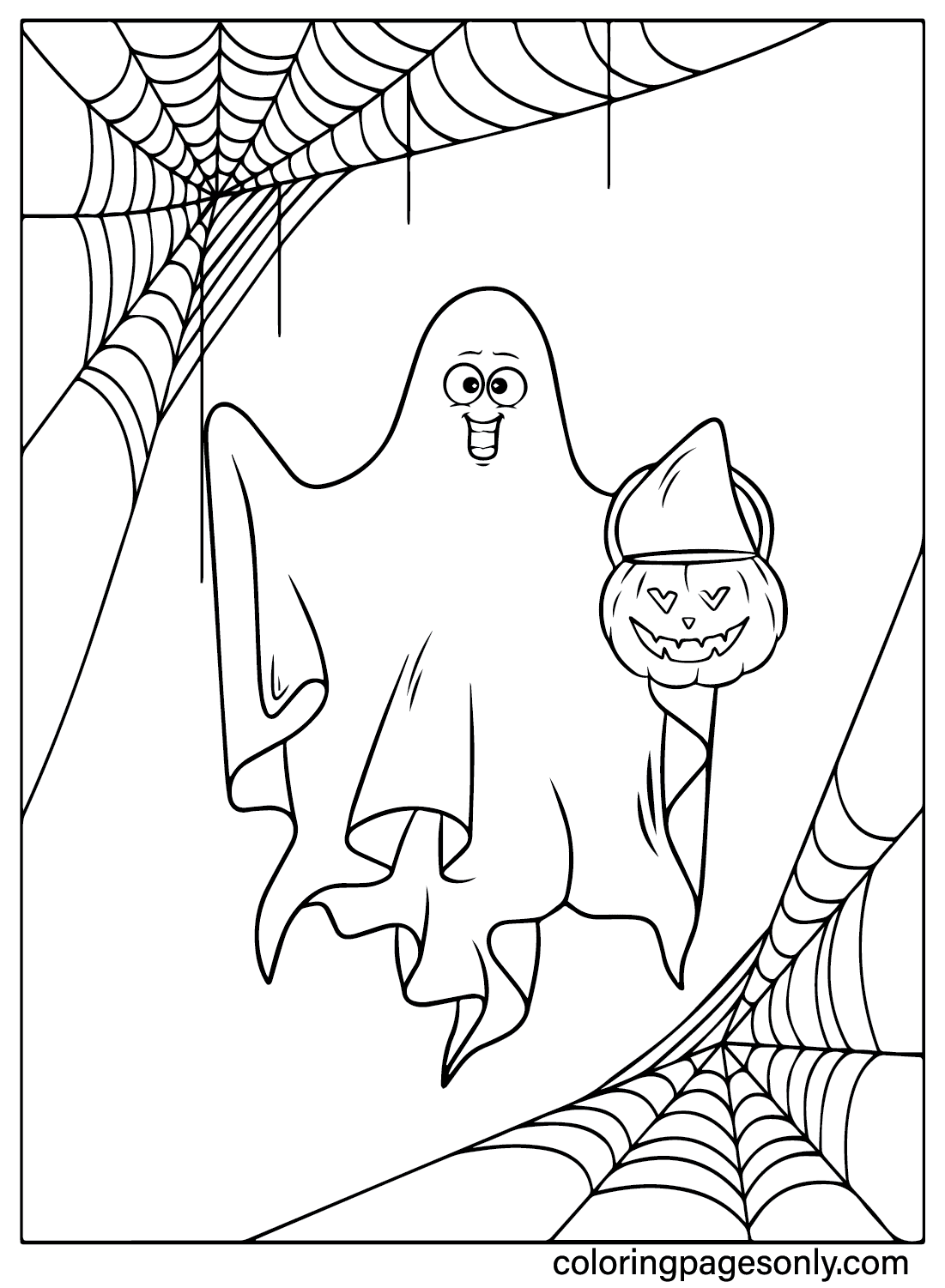
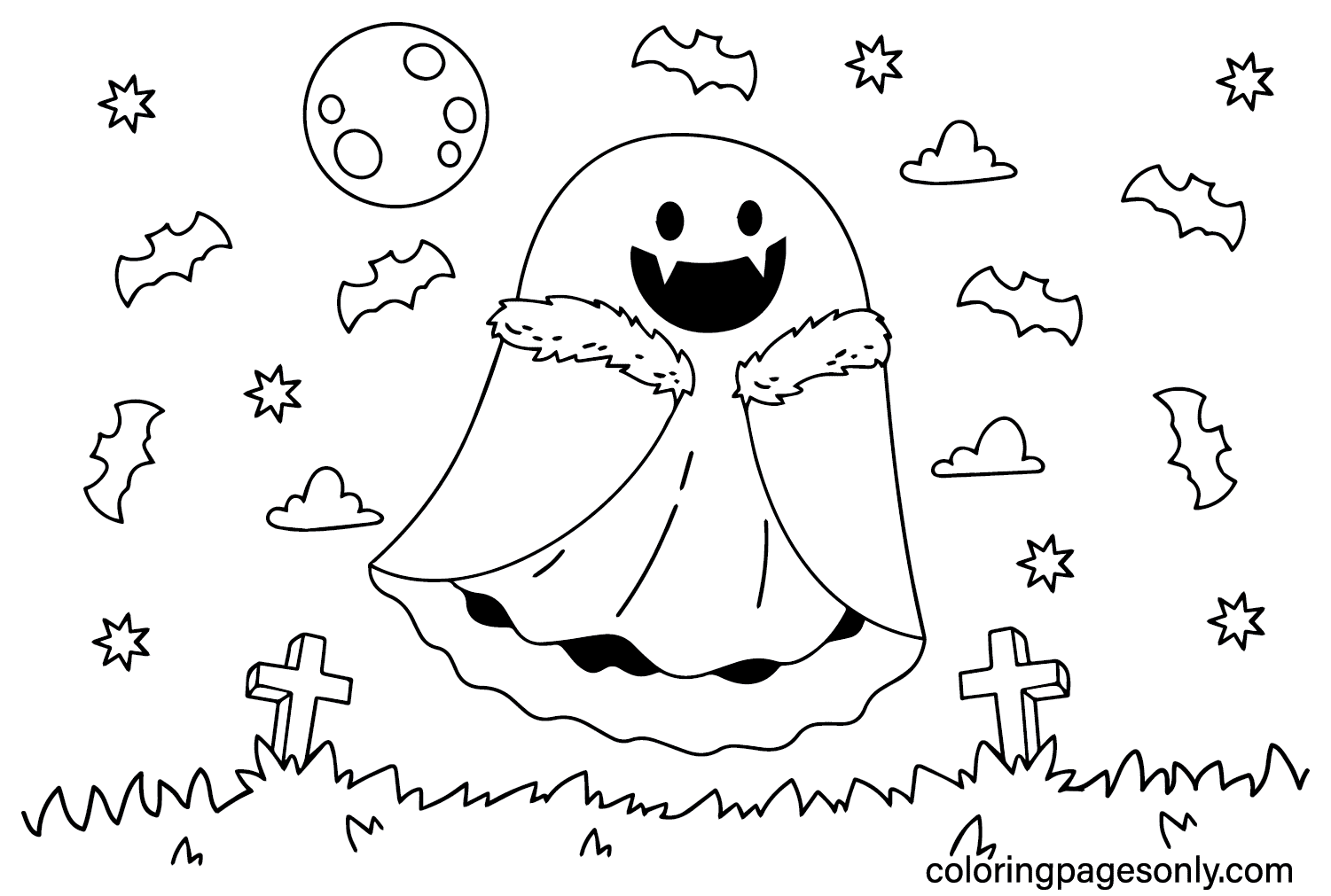
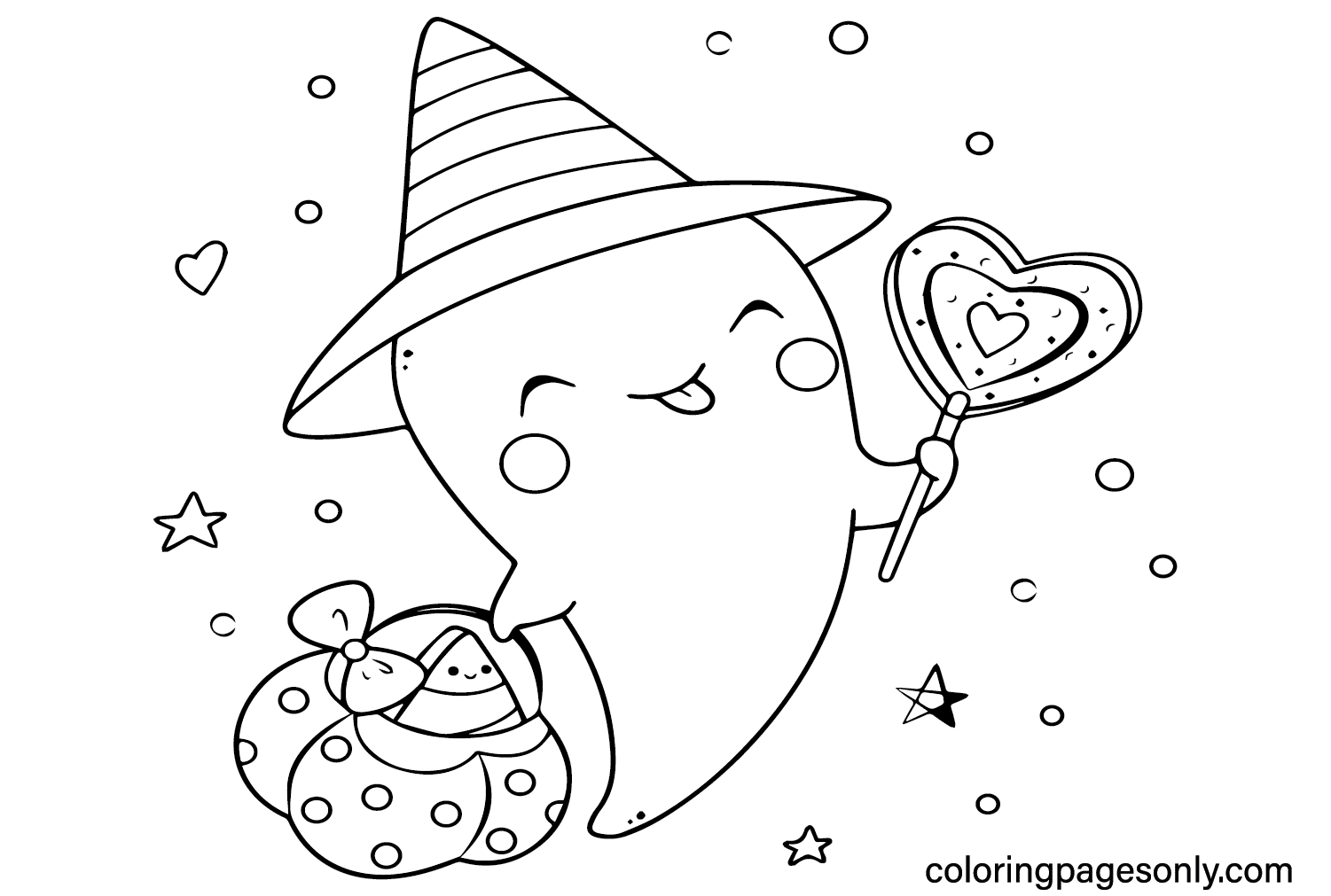
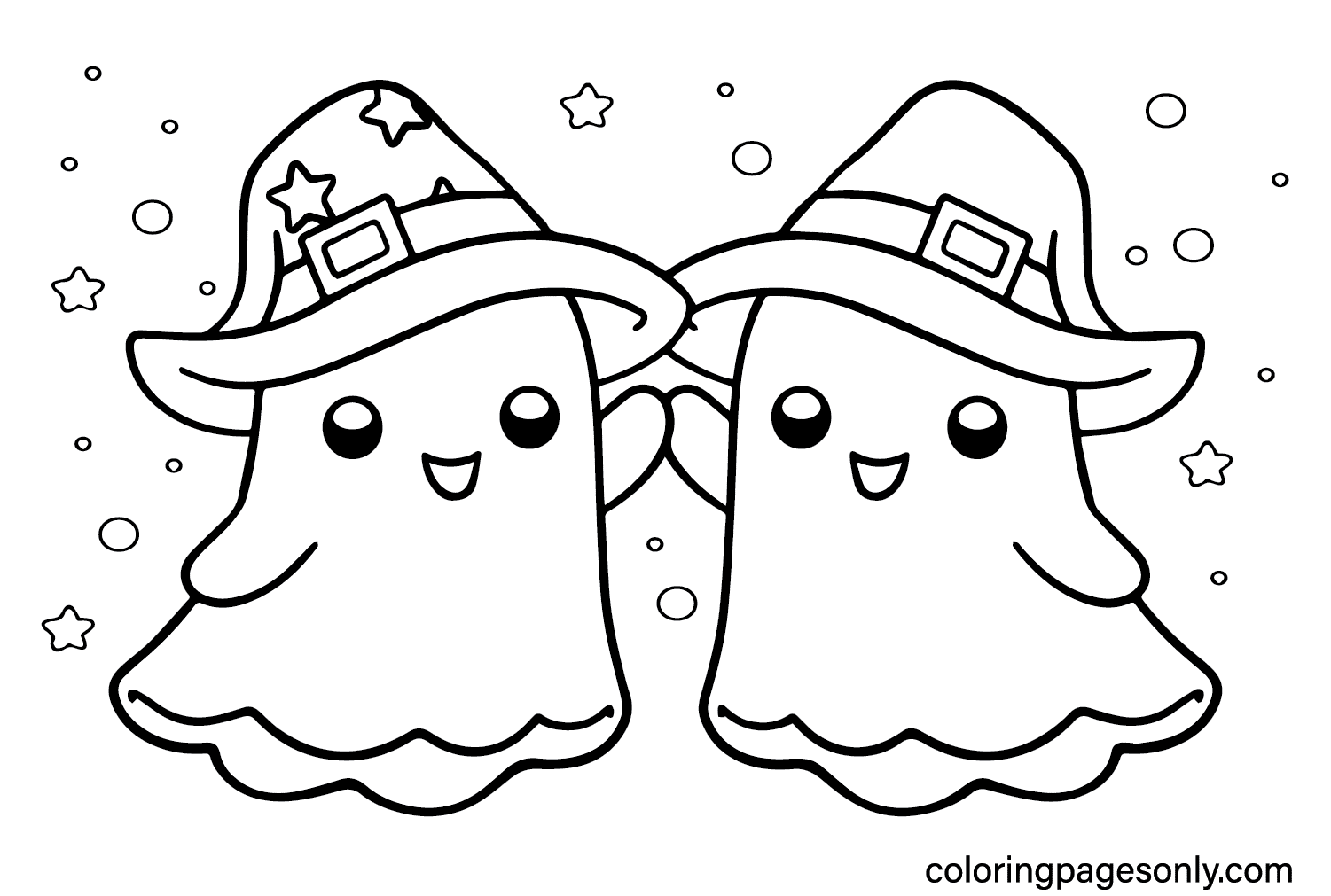
The ghost is Halloween’s most forgiving subject to color, predominantly white, with only two or three color decisions. The cute ghost pages in this collection show ghosts with round bodies, large expressive eyes, and friendly or surprised expressions. These are the collection’s most accessible pages for children ages 3 to 5.

Coloring cute ghosts: A ghost page is not the same as a blank page. Apply very light cool grey in the shadow areas – the underside of the ghost’s body, the area around the eyes, the inside of any open mouth. The contrast between the light grey shadow and the dominant white surface is what gives the ghost form. Eyes on cute ghosts are typically black with a small white highlight dot; leave that dot uncolored to keep the eyes lively. Cheek blush in a soft pink is the detail that most transforms a neutral ghost expression into a friendly one.

Halloween Cats

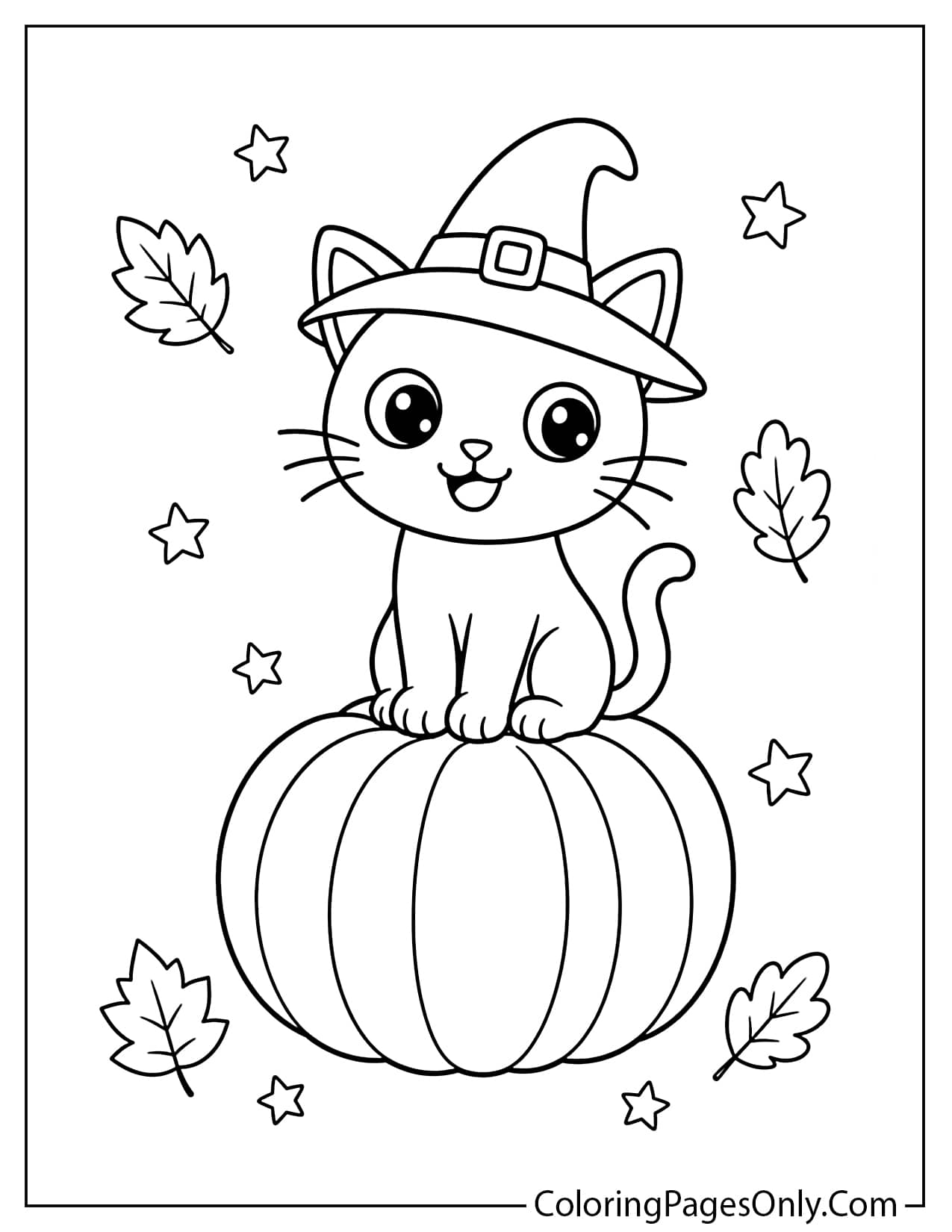
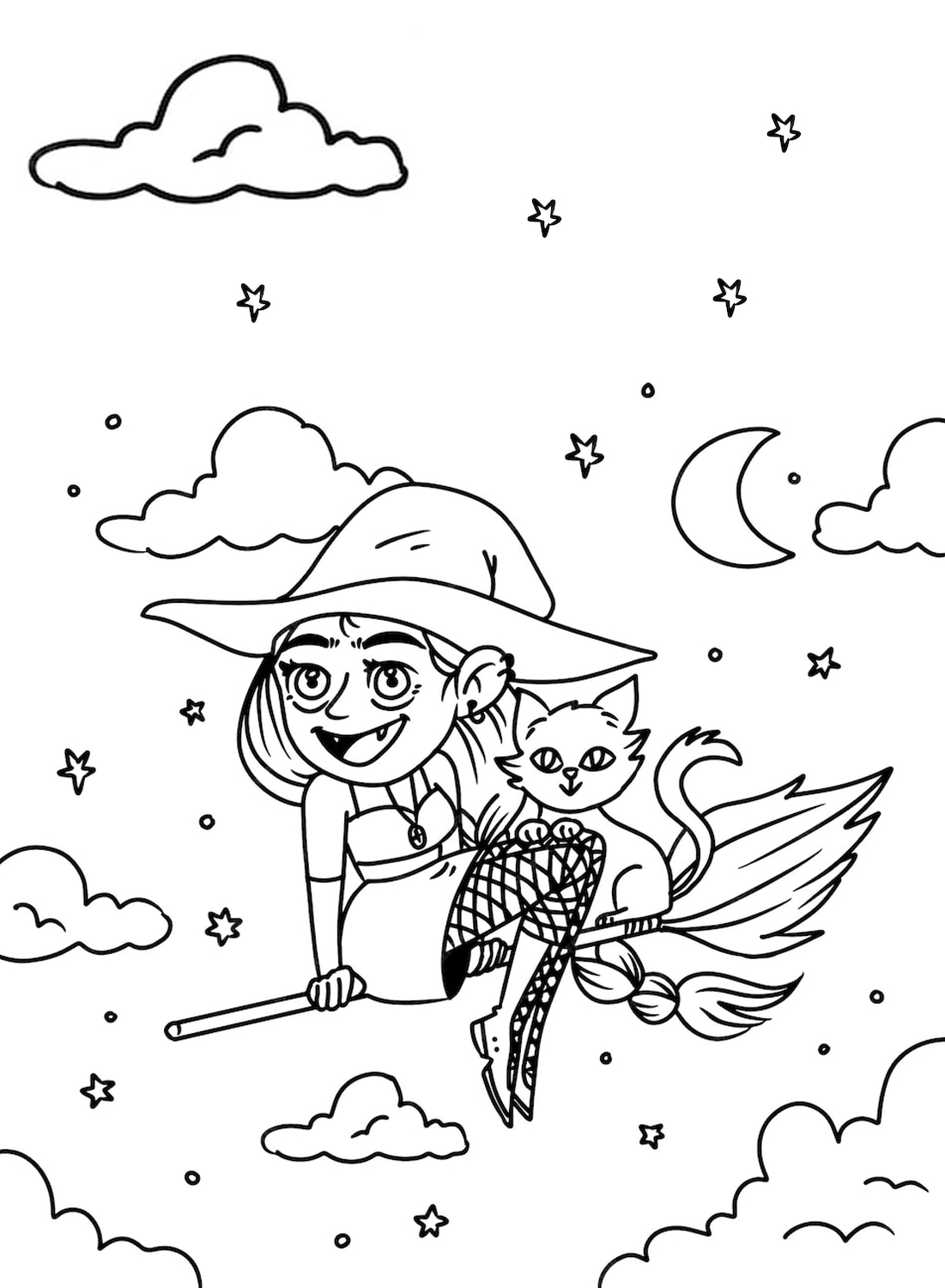
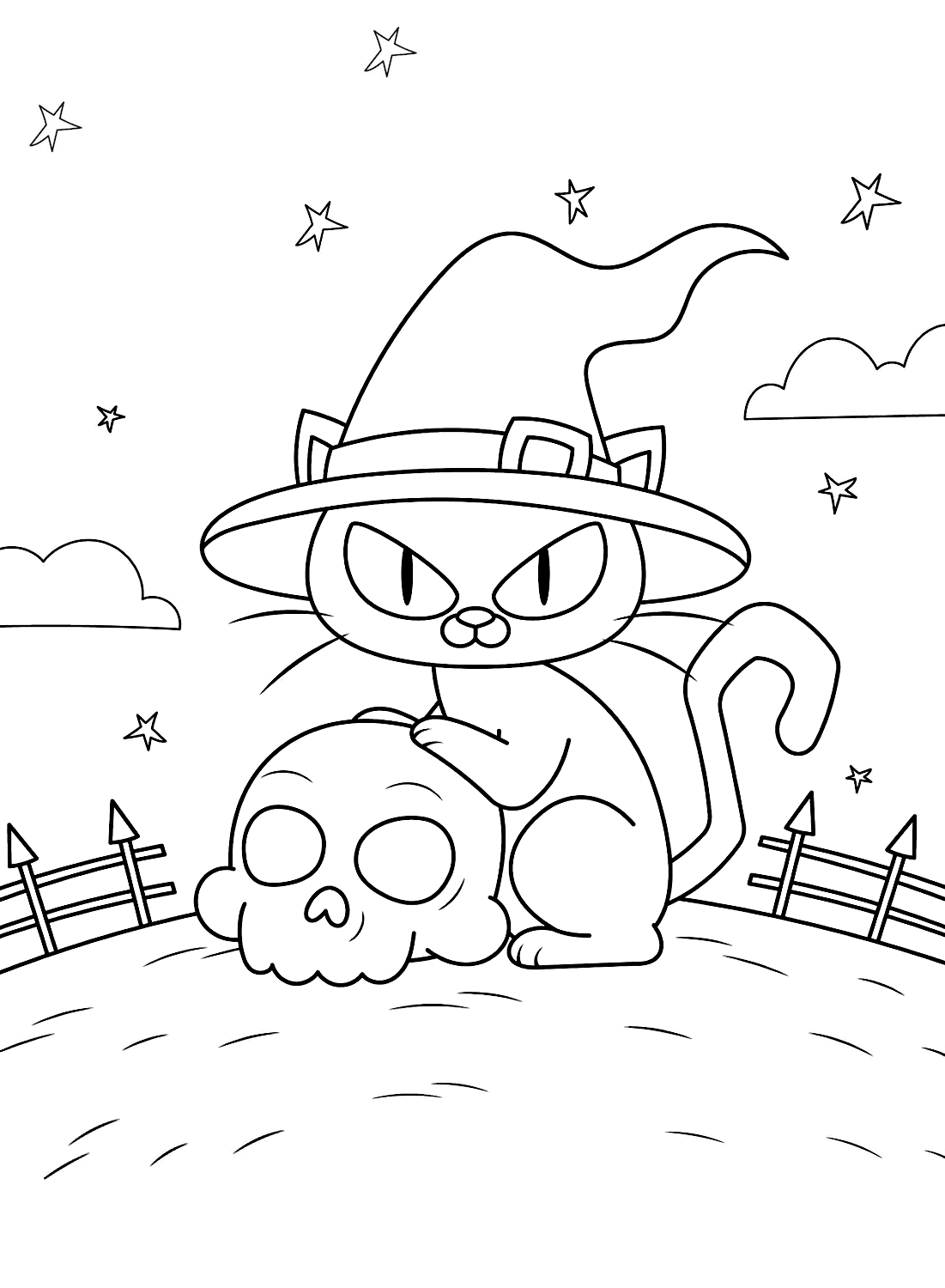
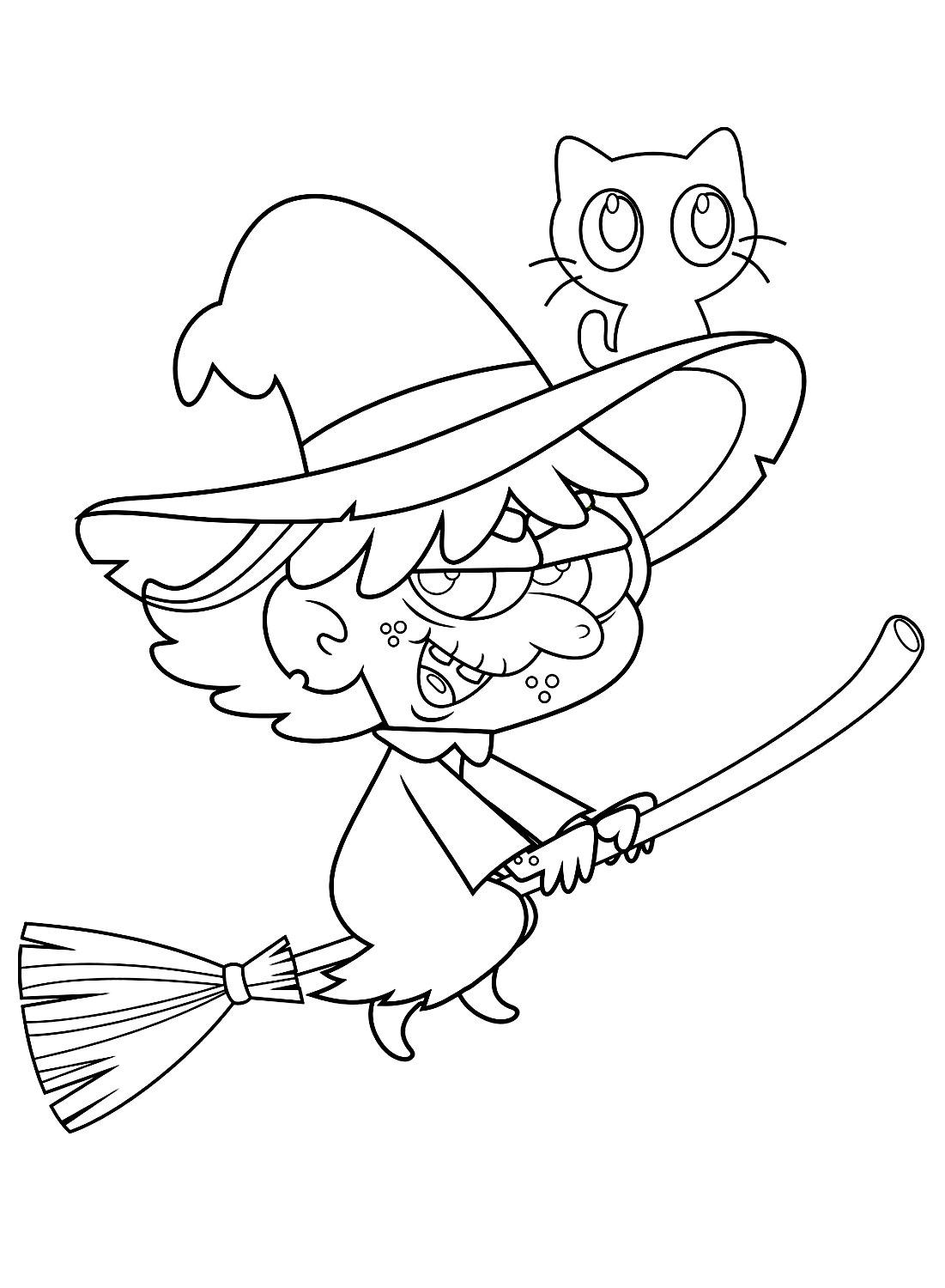
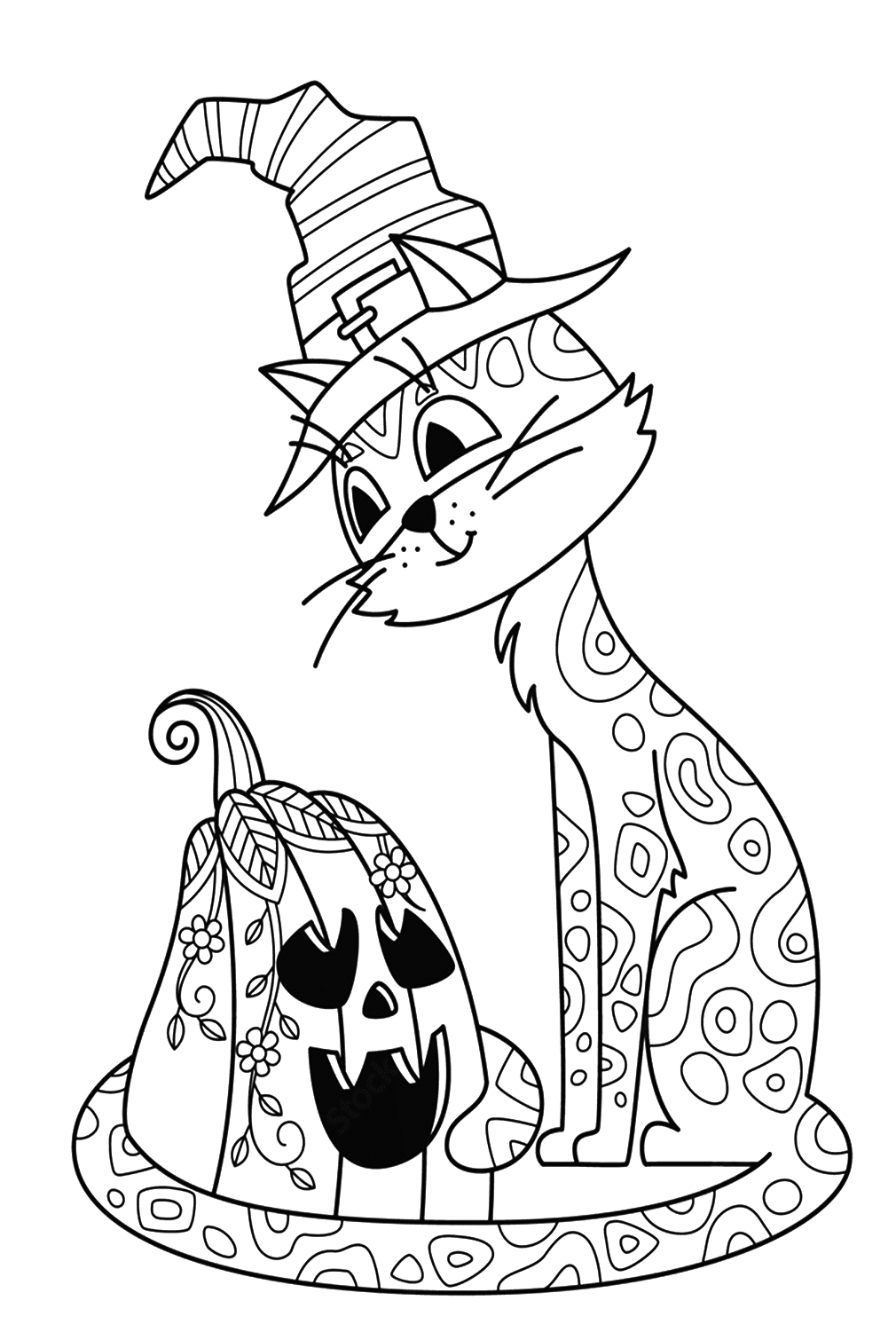
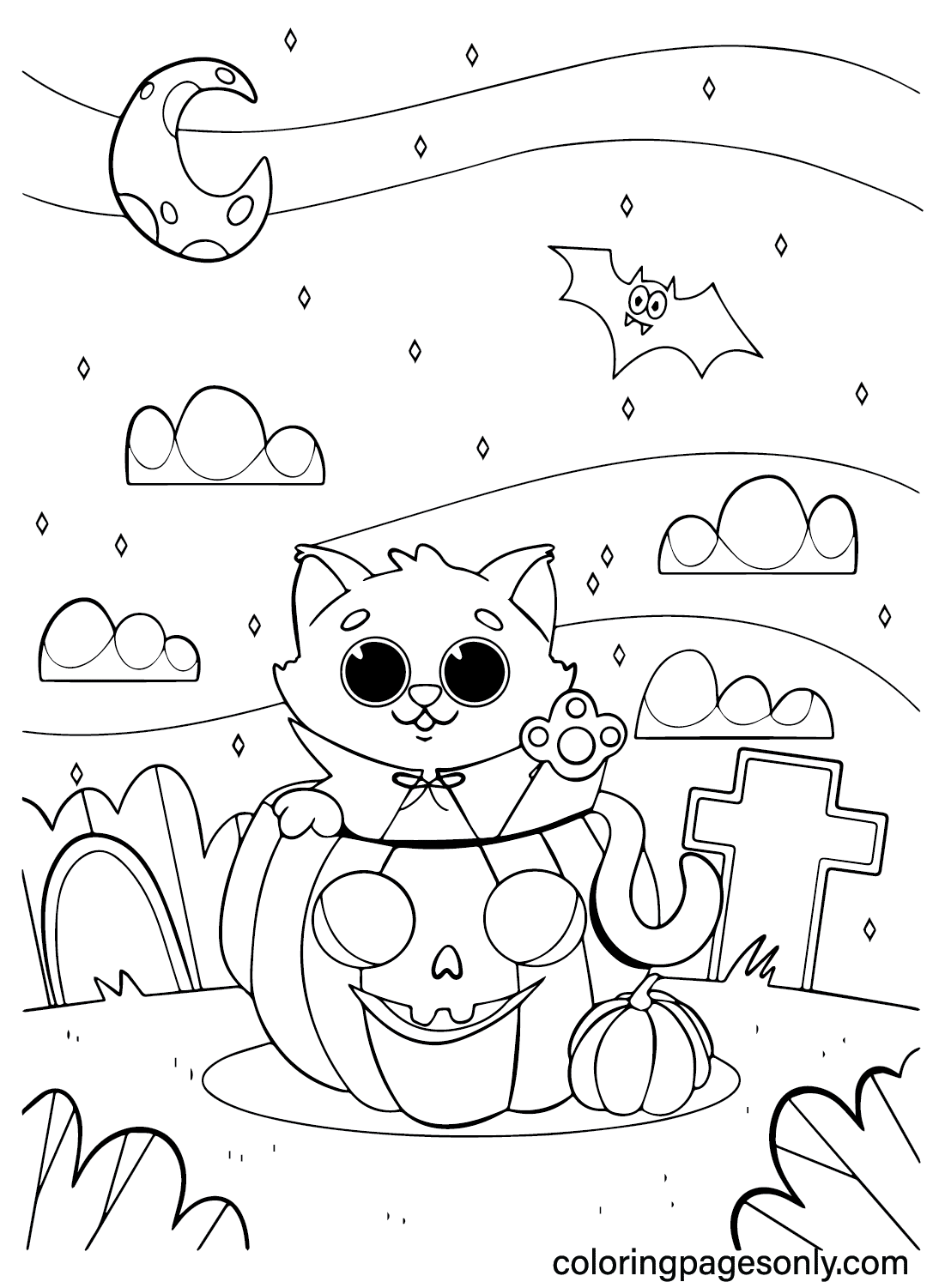
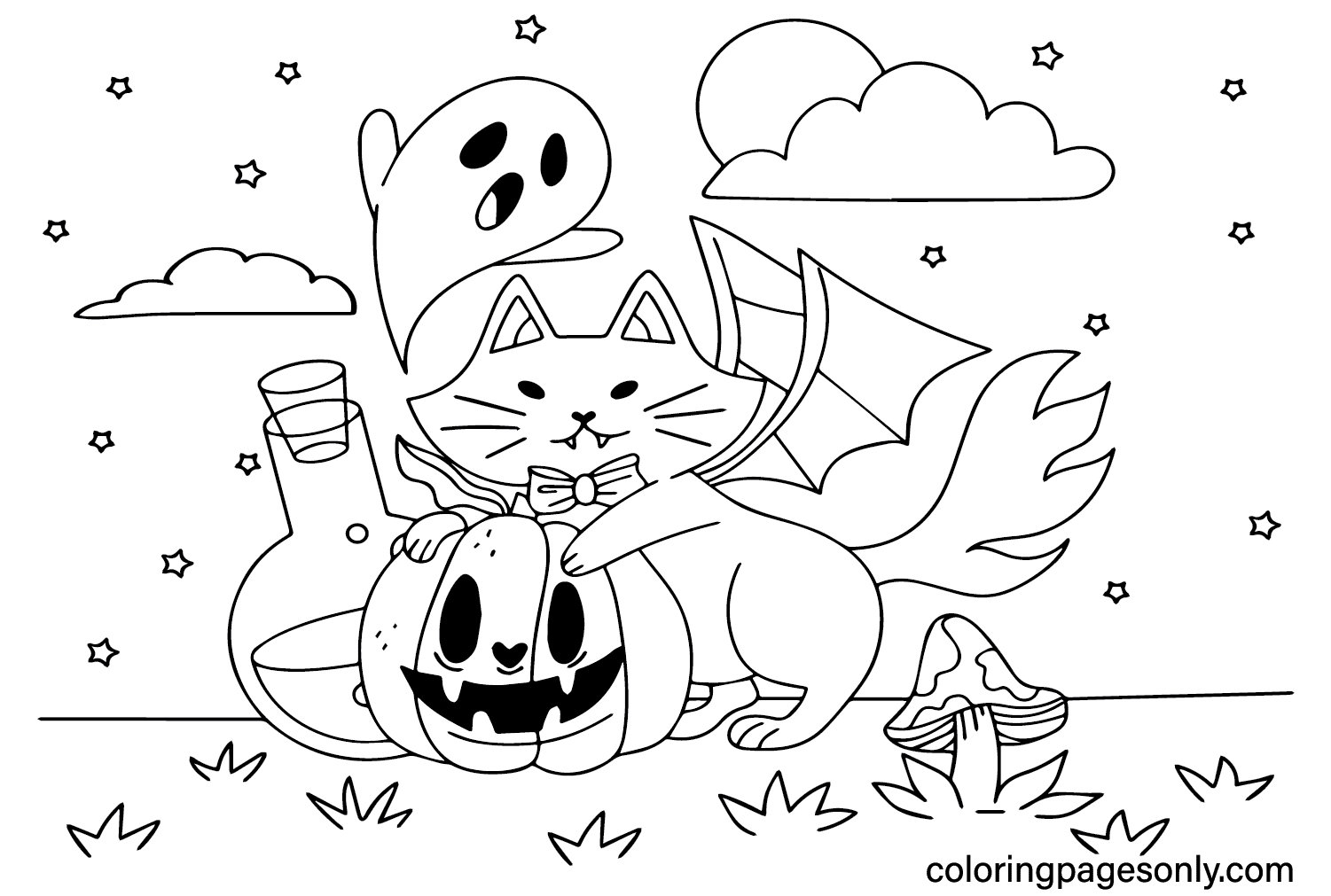
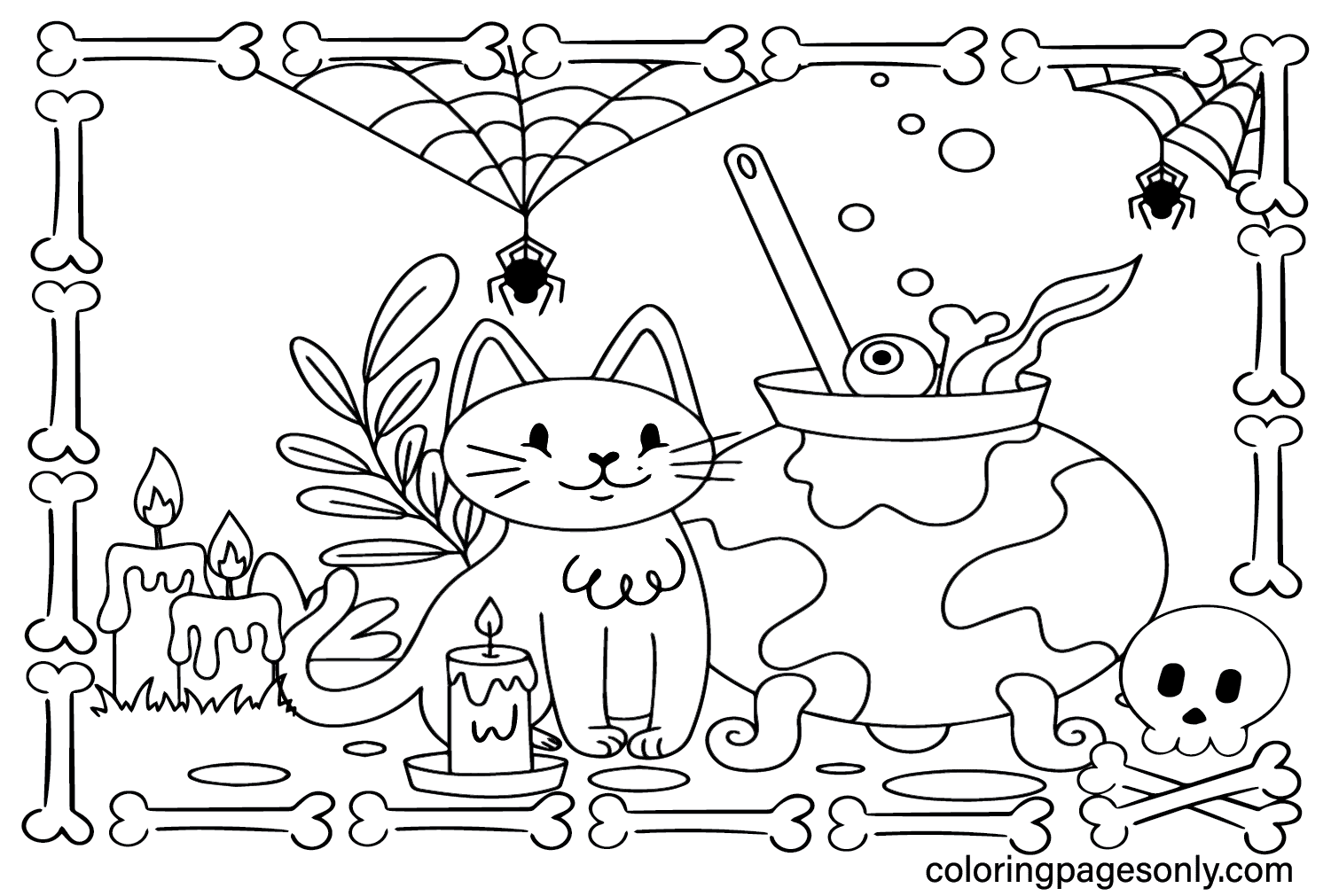
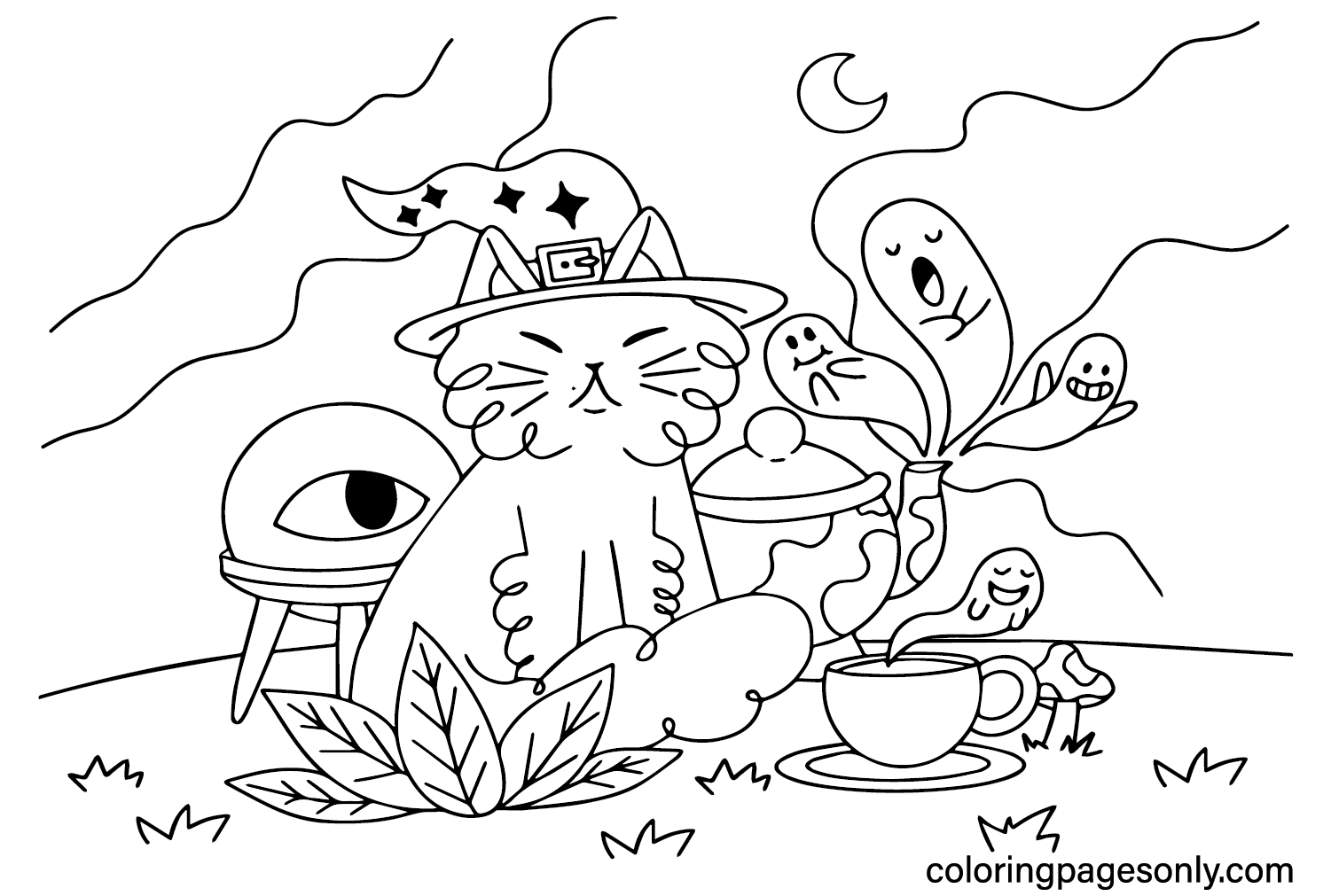
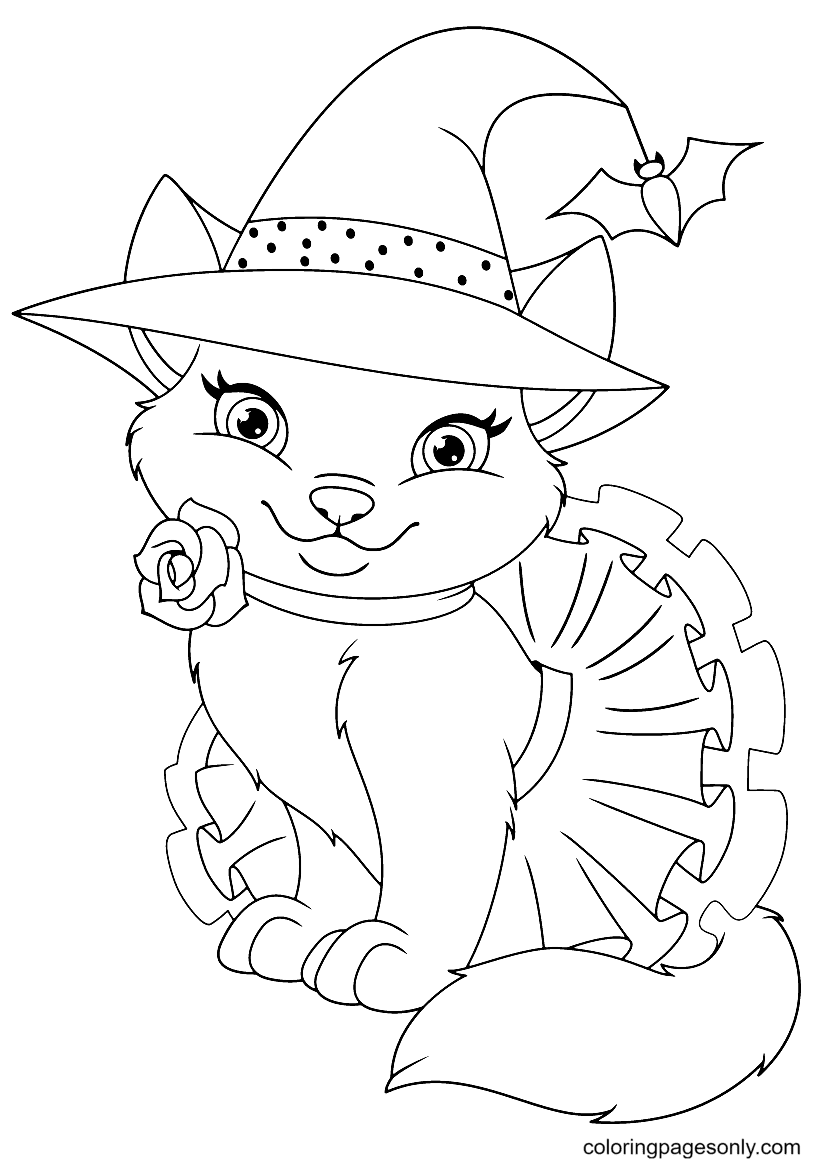
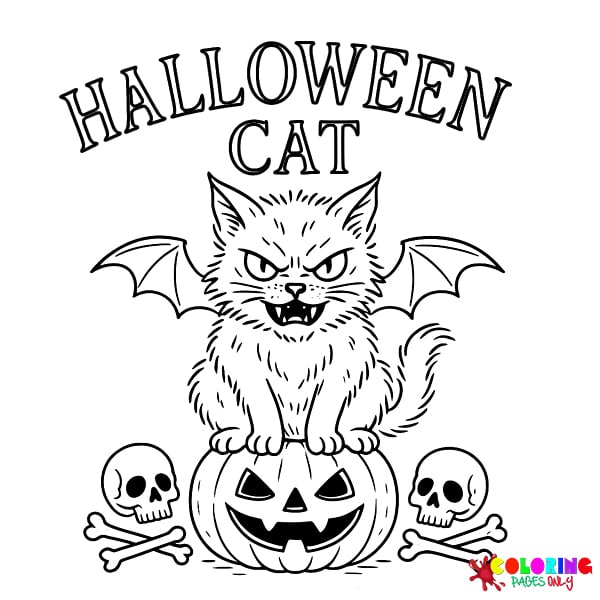
The black cat is one of Halloween’s oldest symbols, with documented association to the holiday in American popular culture since at least the 1890s. The collection’s cat pages – “Cute Halloween Cat,” “Cute Cat and Spiders,” “Halloween Cat coloring sheet,” “Happy cat and a witch coloring picture” – show cats in Halloween settings, sometimes alongside witches, sometimes alone.

Coloring Halloween cats: The classic Halloween cat is black, but black in a cute cartoon style works differently than black in a realistic illustration. Apply a first pass of very dark charcoal grey across the cat’s body. Add true black only along the outer edges and deepest shadow areas. The charcoal base keeps the cat from reading as a flat silhouette – the body retains visible form. Eyes should be a bright, warm amber or yellow-green, applied at full saturation; the contrast between black fur and vivid eye color is the page’s central visual relationship.

Cute Witches

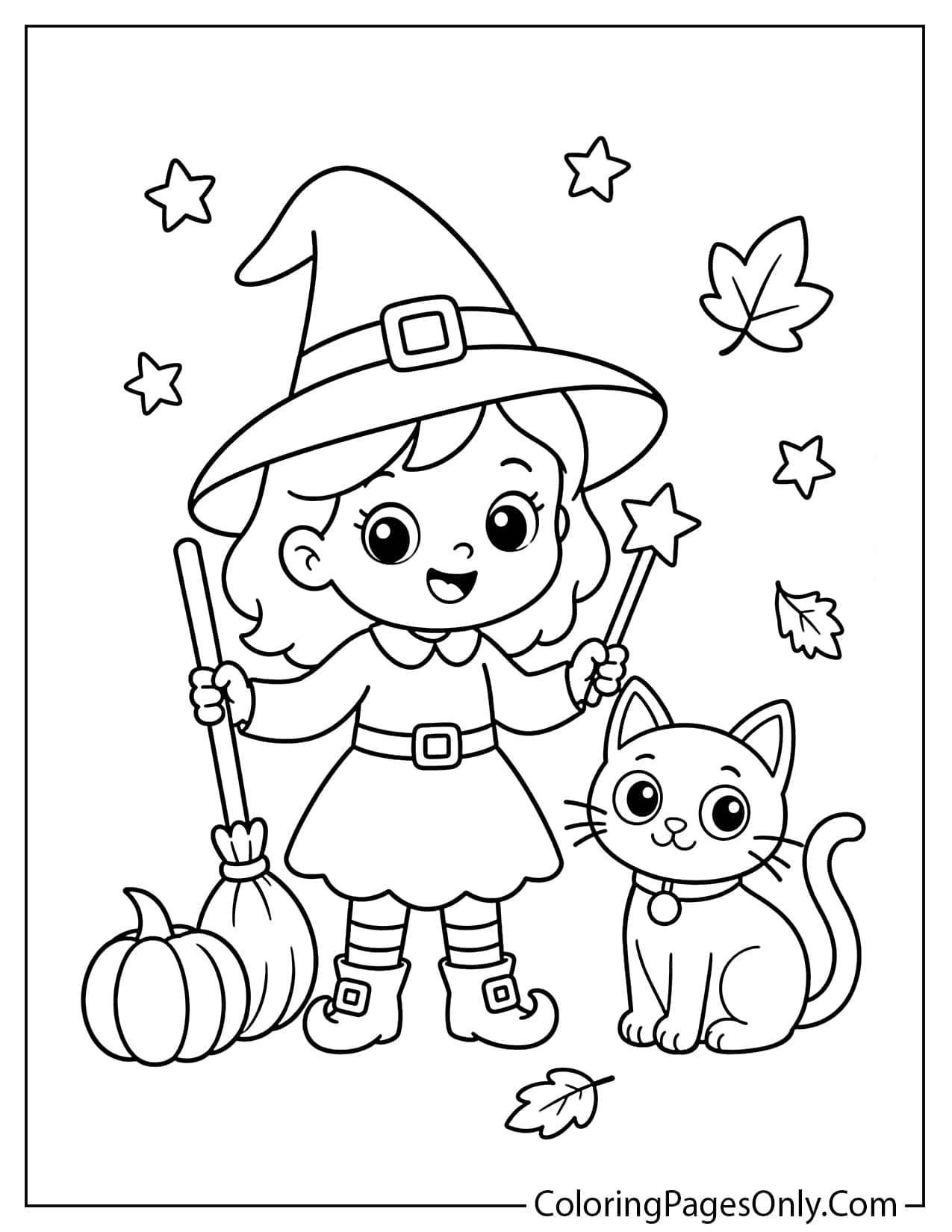
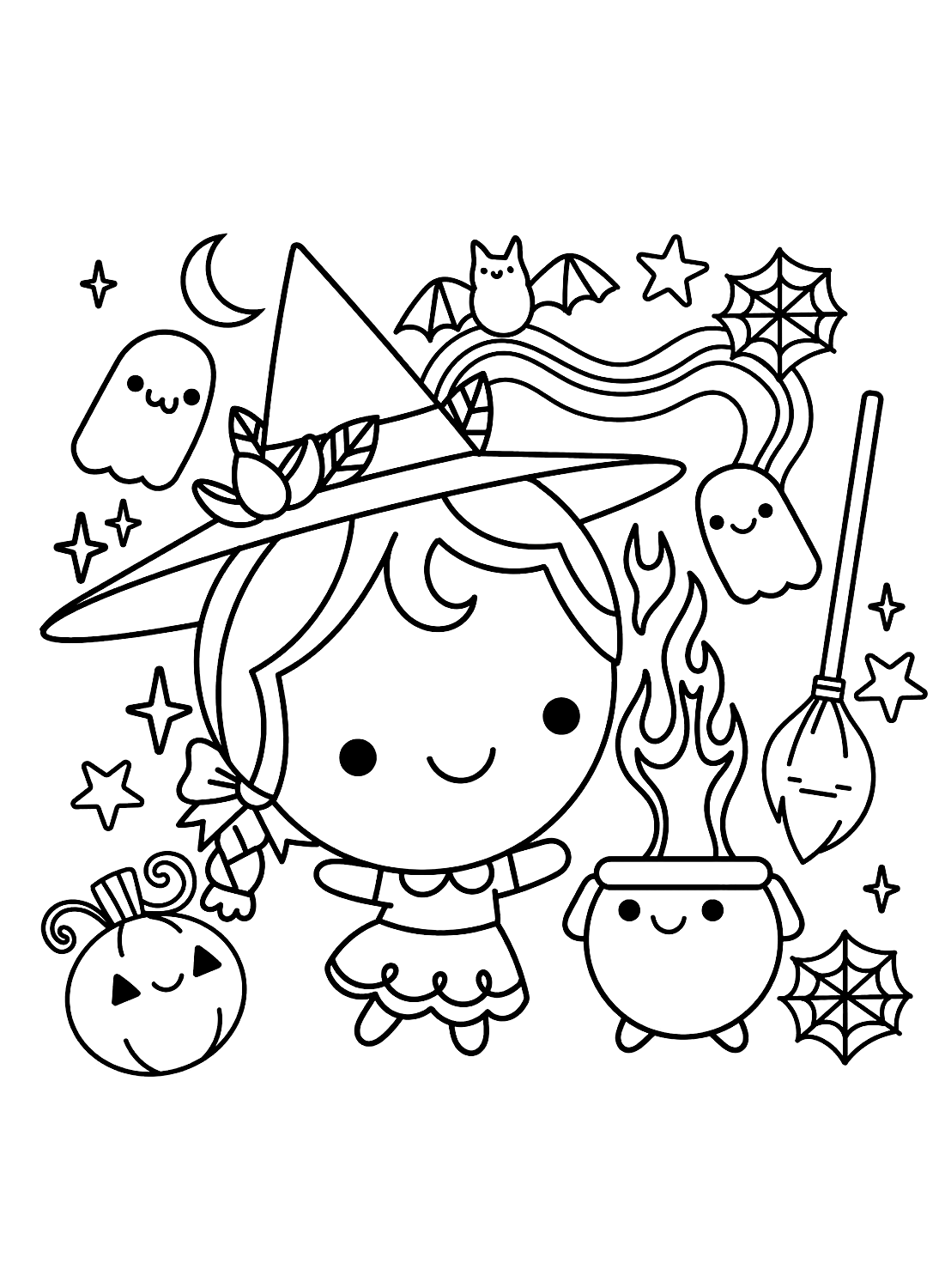
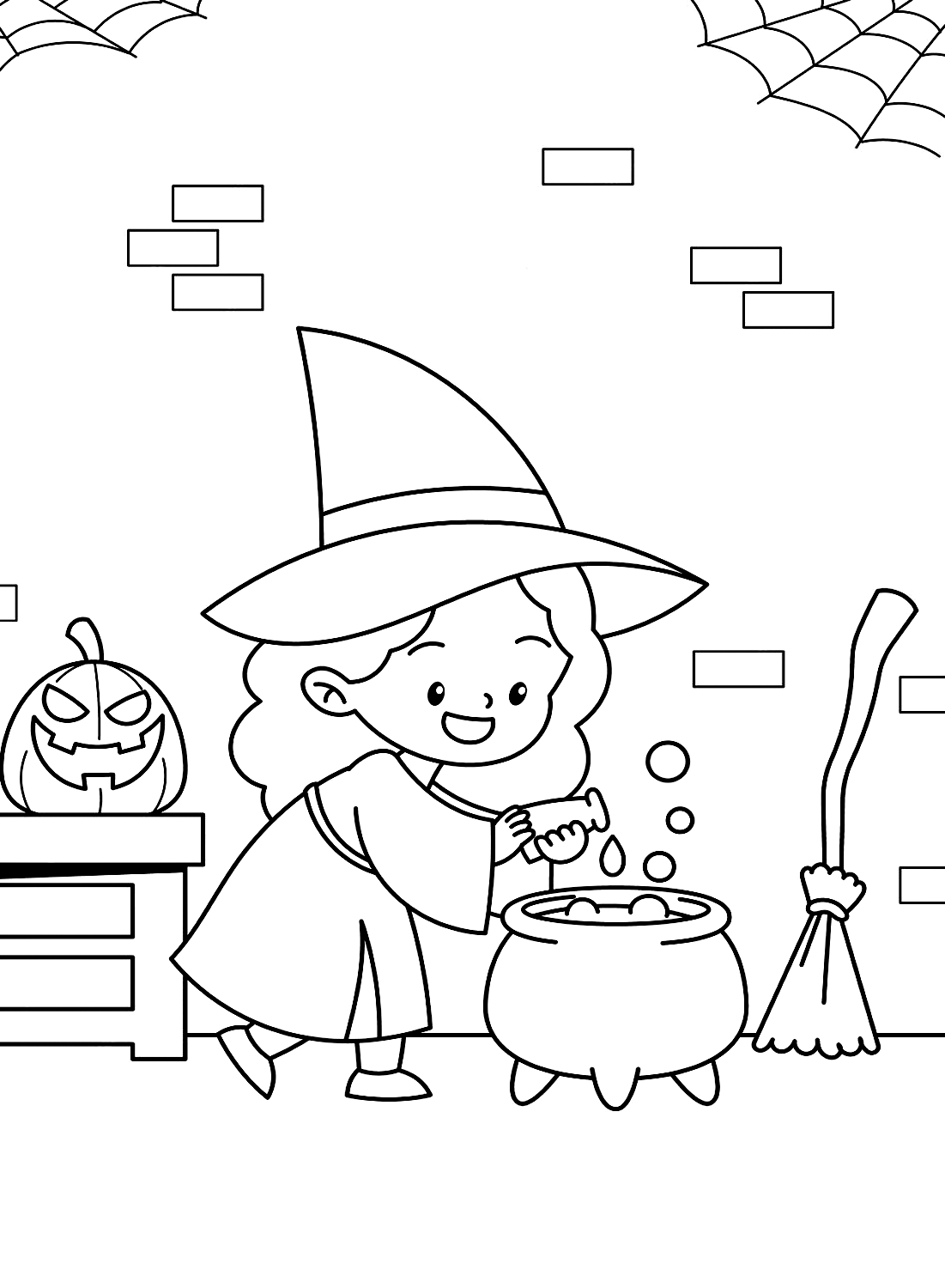
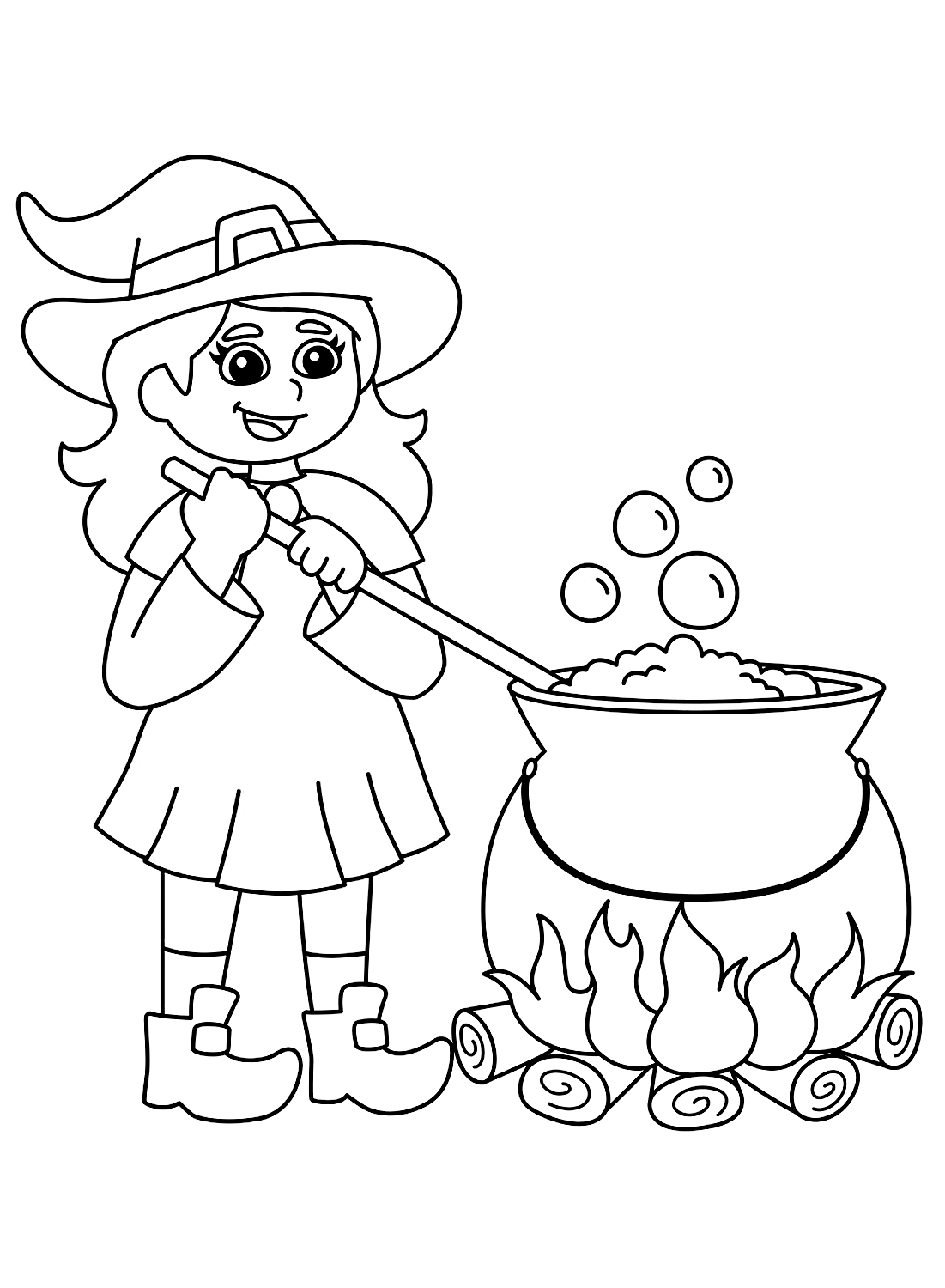
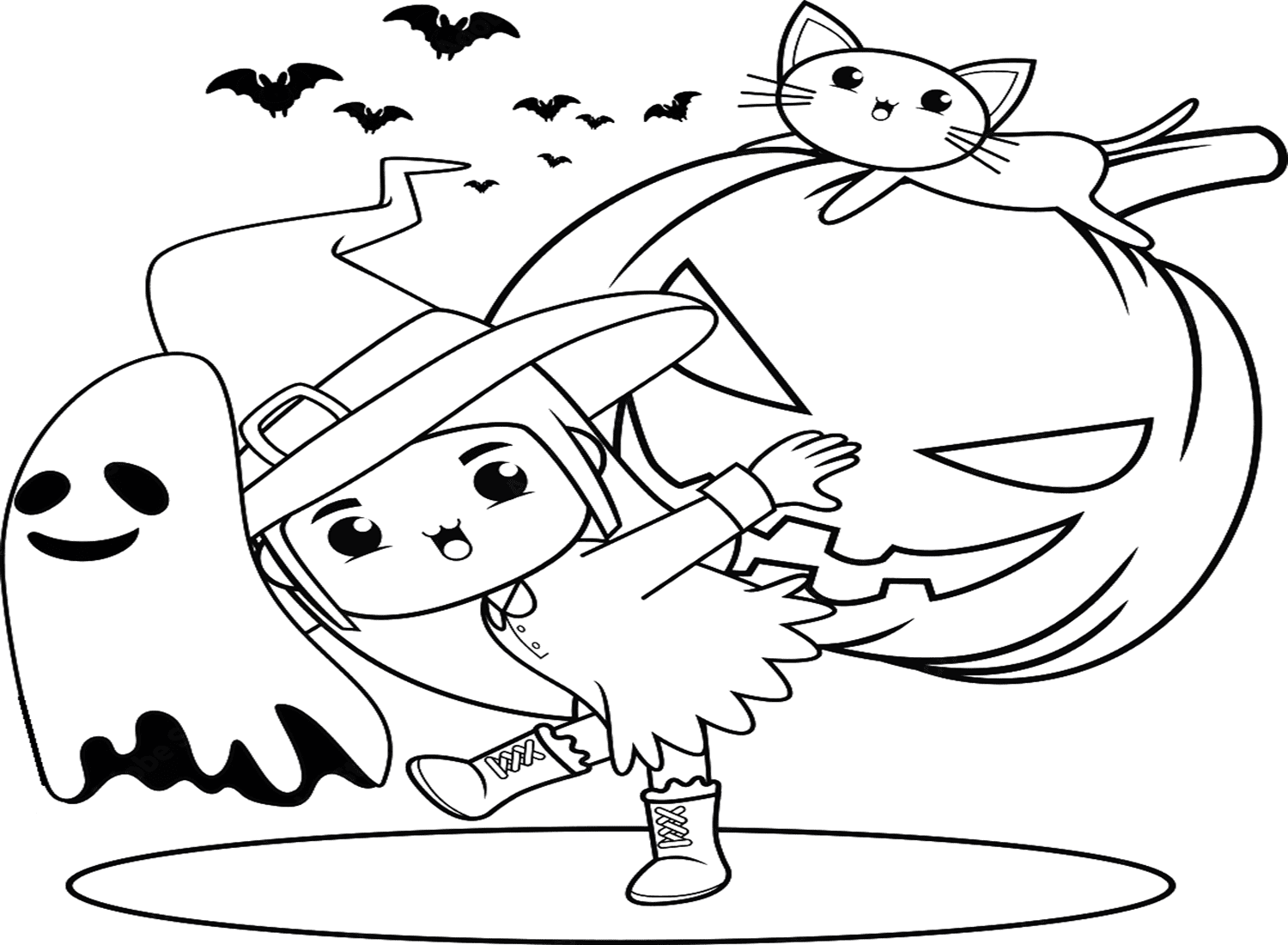
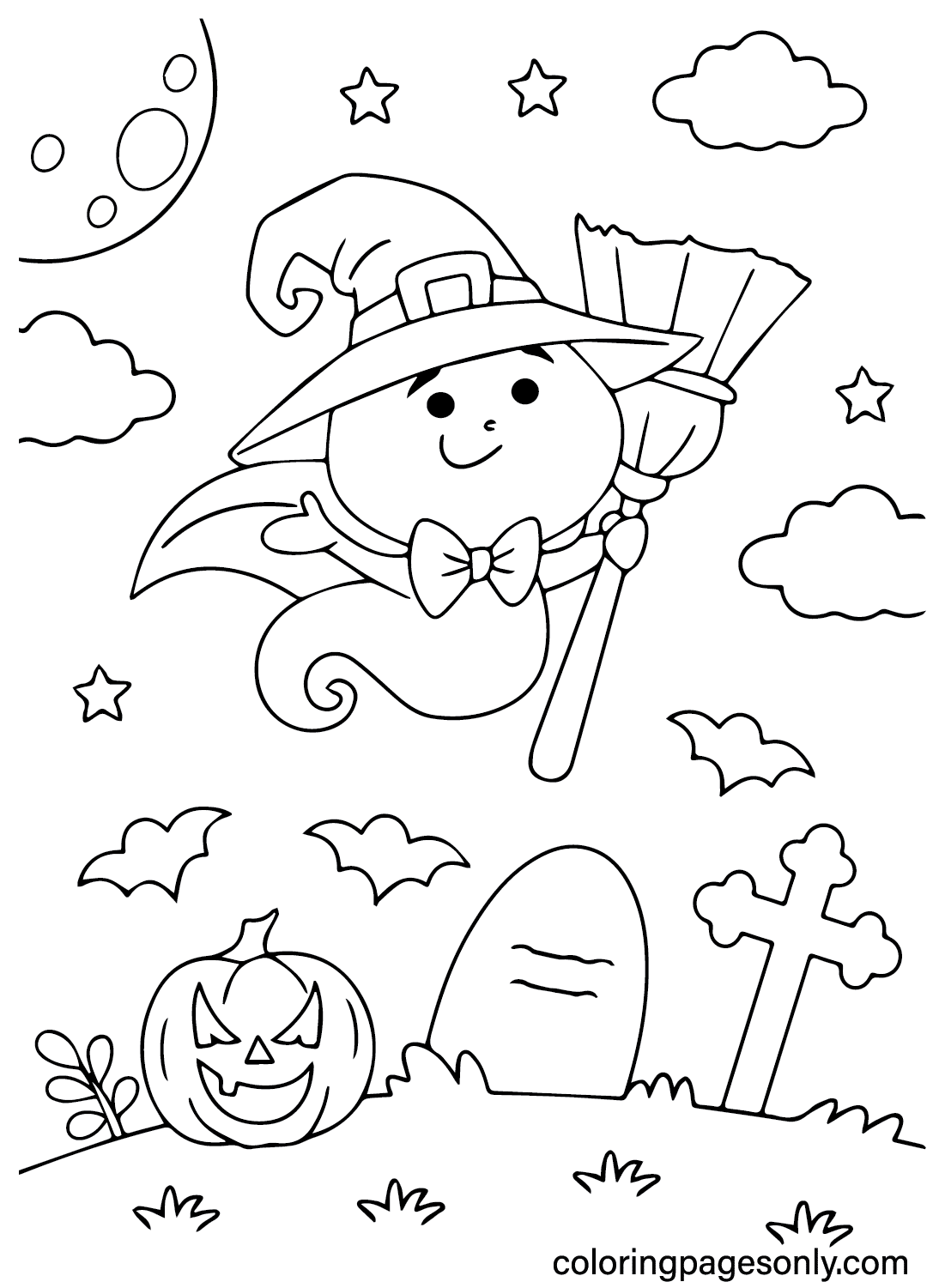
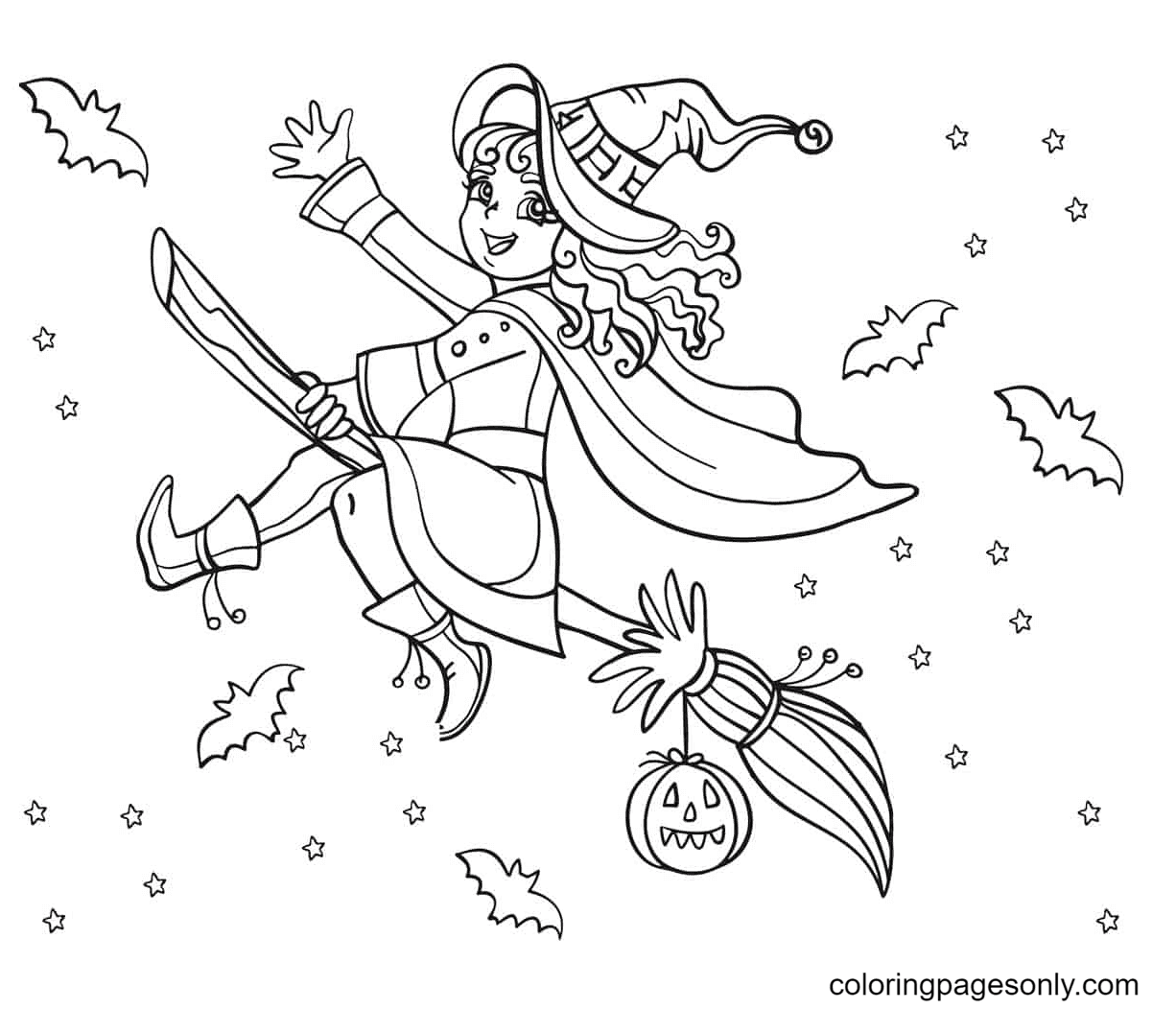
The witch is the collection’s largest single character group: flying witches, cooking witches, young witches, witches with cats. The witch as a Halloween figure derives partly from folklore and partly from the late-nineteenth-century American tradition of Halloween postcards, which established the iconography of the pointy hat, the broomstick, and the black cat that continues to define the character today.

Coloring cute witches: Cute witch palettes center on three colors: black for the hat and robe, purple for accents and secondary garments, and warm skin tone for the face and hands. The hat should be kept true black, rendered with the same charcoal-base/true-black-edge technique as the Halloween cat. The robe can be either black or deep purple – deep purple reads as more playful and less severe, appropriate to the cute style. Witch hair is typically black or warm auburn; auburn reads warmer and suits the cute aesthetic better than flat black hair on a black robe.

Pumpkins and Spiders

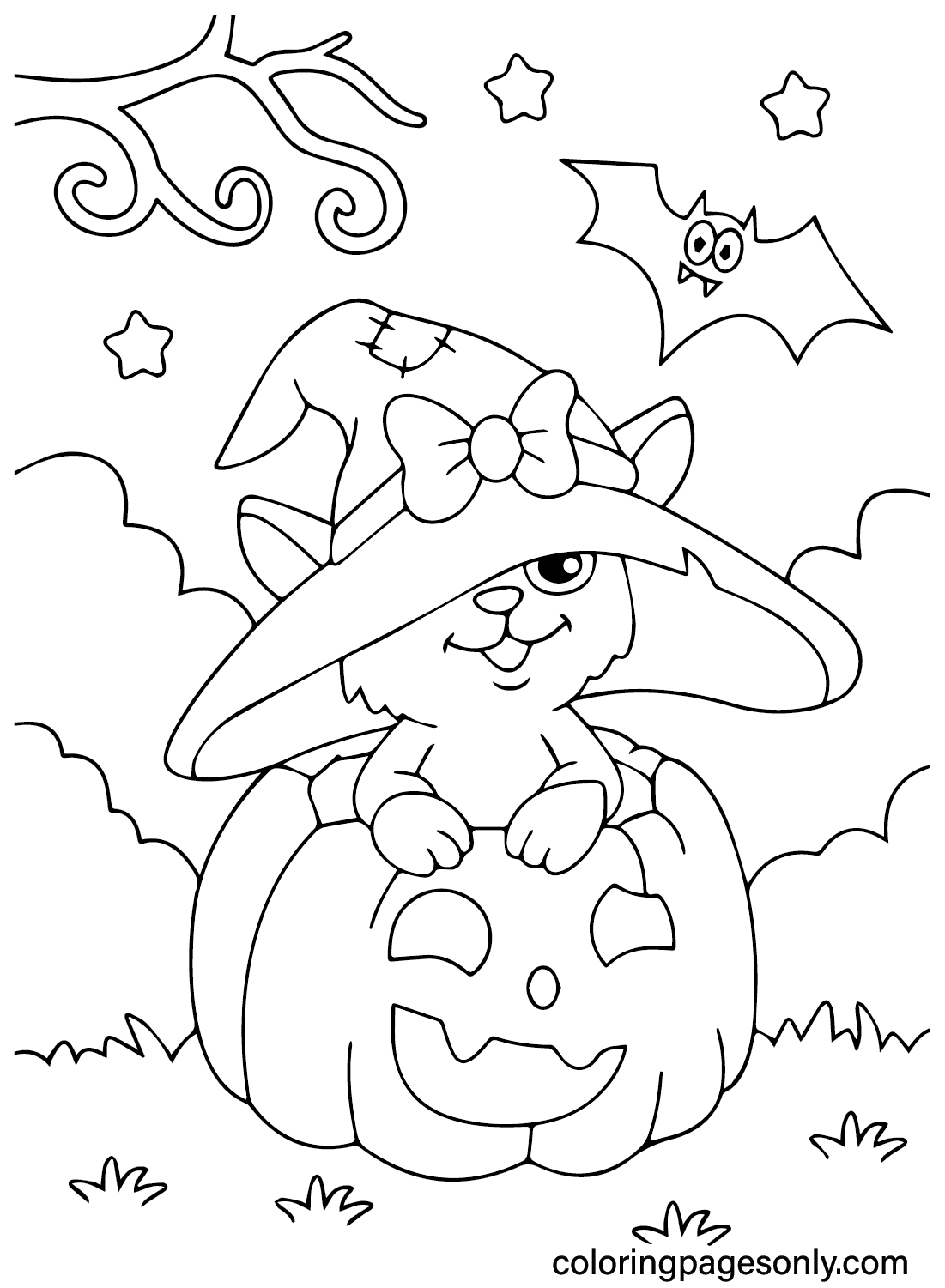
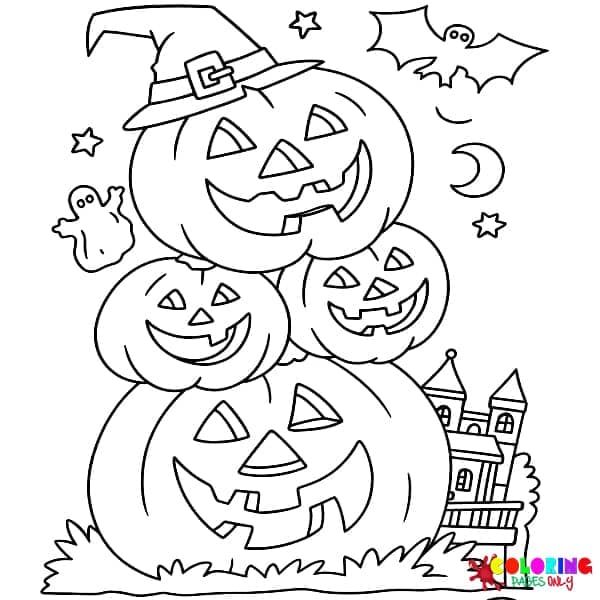
Smiling pumpkins, spiders on webs, and spider-and-pumpkin combination pages represent Halloween’s two most immediately recognizable symbols. The jack-o’-lantern as a Halloween tradition originates in Irish folklore about a figure called Stingy Jack, who tricked the devil and was condemned to wander with only a carved turnip lantern to light his way. Irish immigrants to America in the nineteenth century found pumpkins easier to carve than turnips, and the pumpkin jack-o’-lantern became standard by the 1860s.

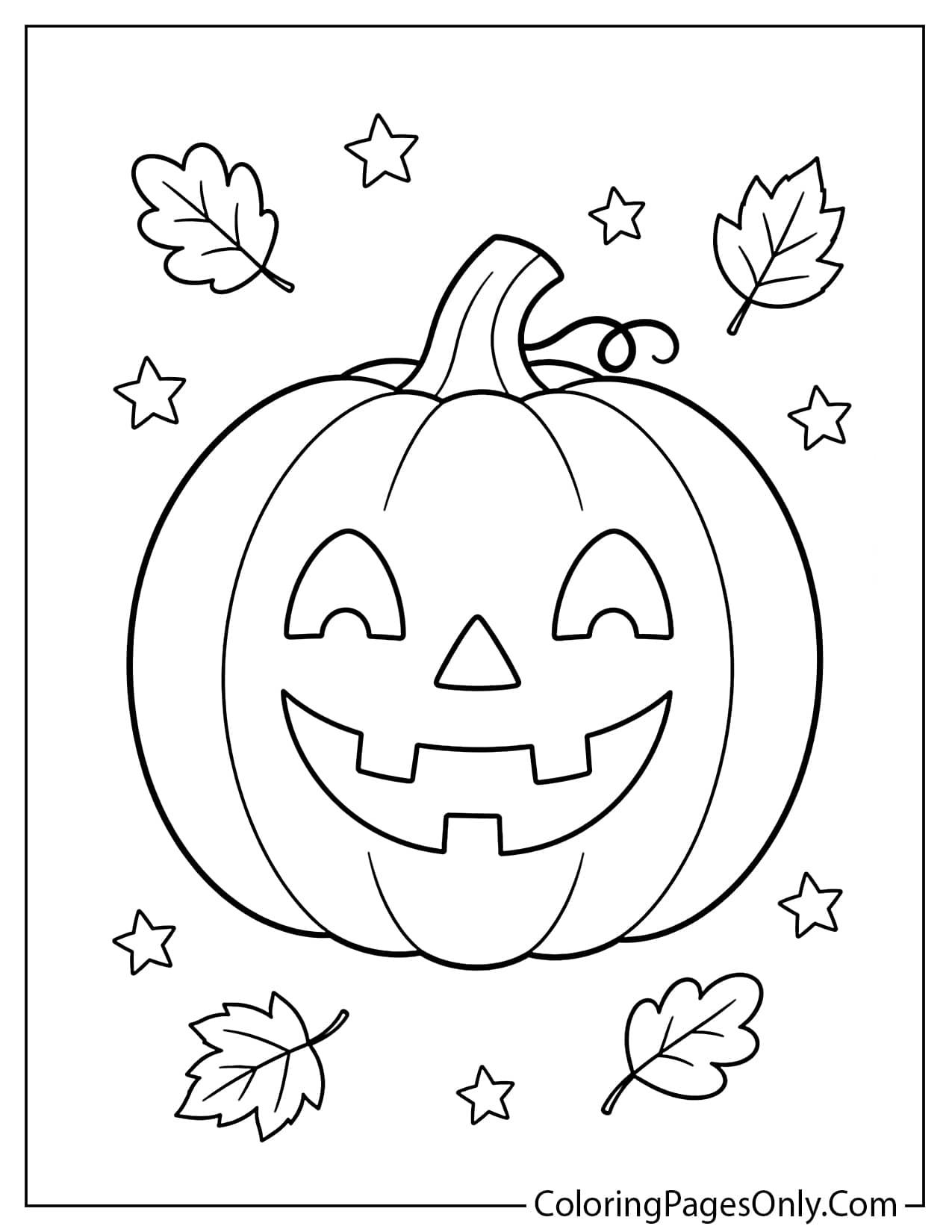
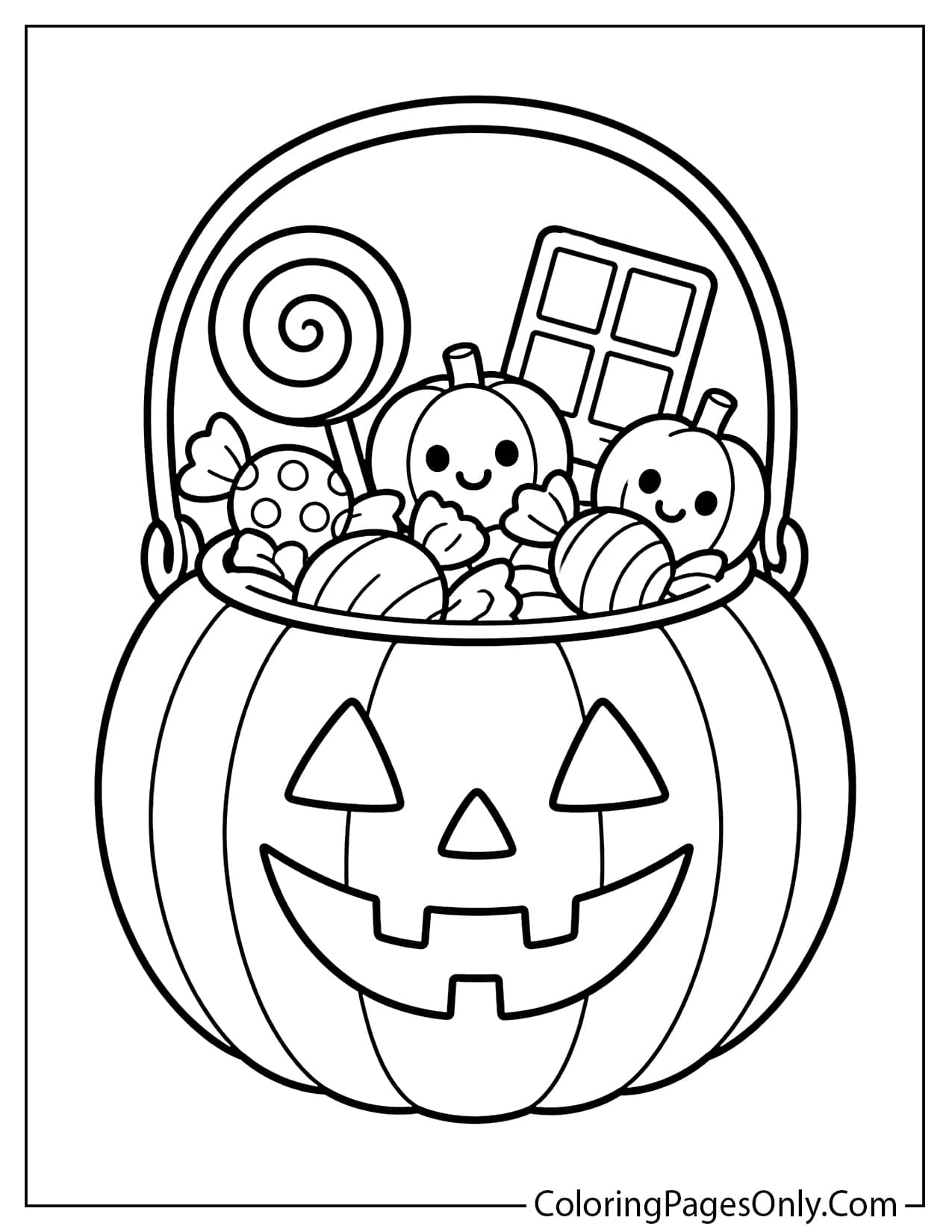
Coloring cute pumpkins: Jack-o’-lantern orange is a specific tone – warmer and more saturated than a safety orange, but not as red-orange as a fire truck. The standard crayon or marker orange is usually close to correct; add a slightly darker orange in the grooves between the pumpkin’s vertical sections for dimension. The carved face cutouts on lit jack-o’-lanterns glow from the inside – a warm golden-yellow applied inside the eye and mouth openings, visible against the orange surface, produces this effect. The pumpkin’s stem is a warm dark green or brown.

Halloween Animals – Bats, Crocodiles, and Others

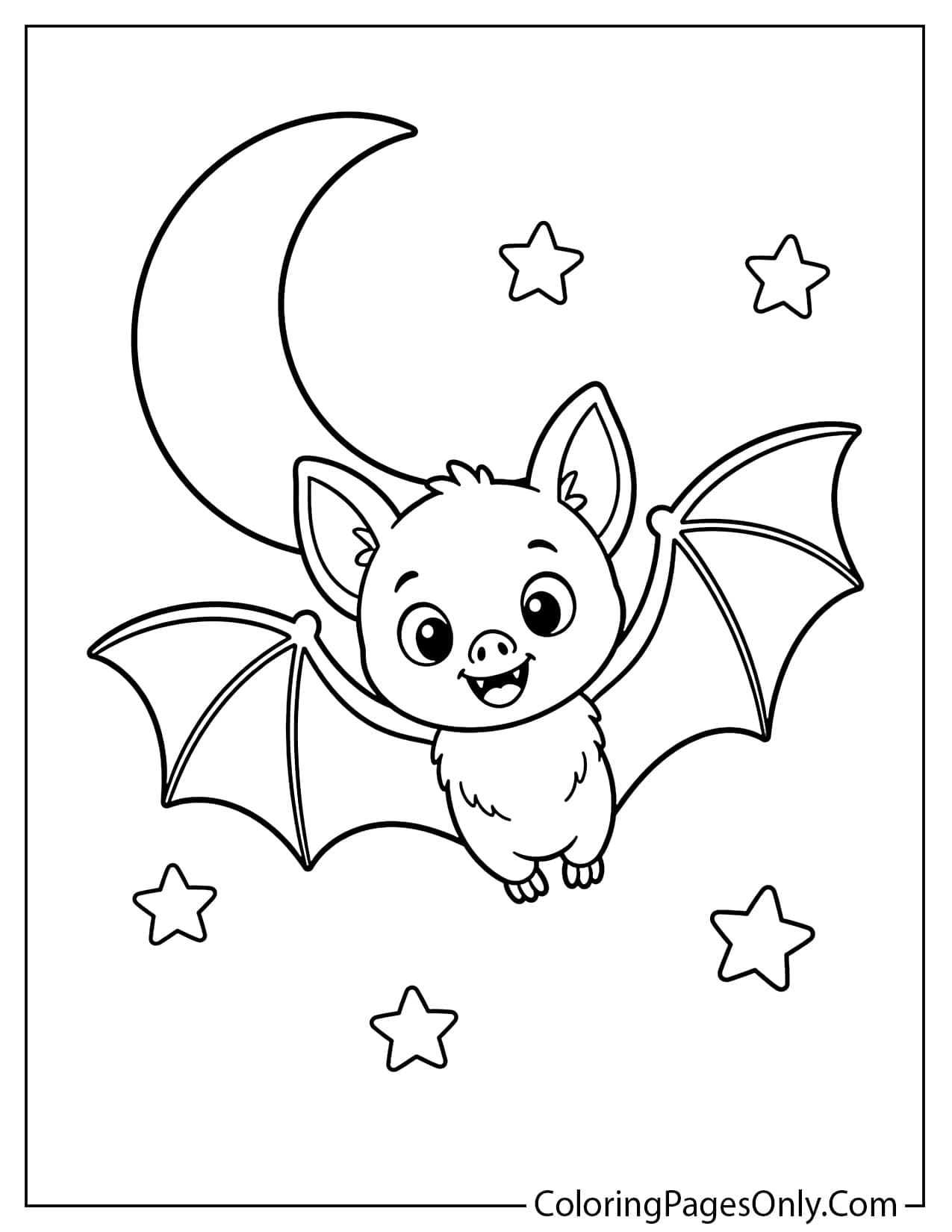
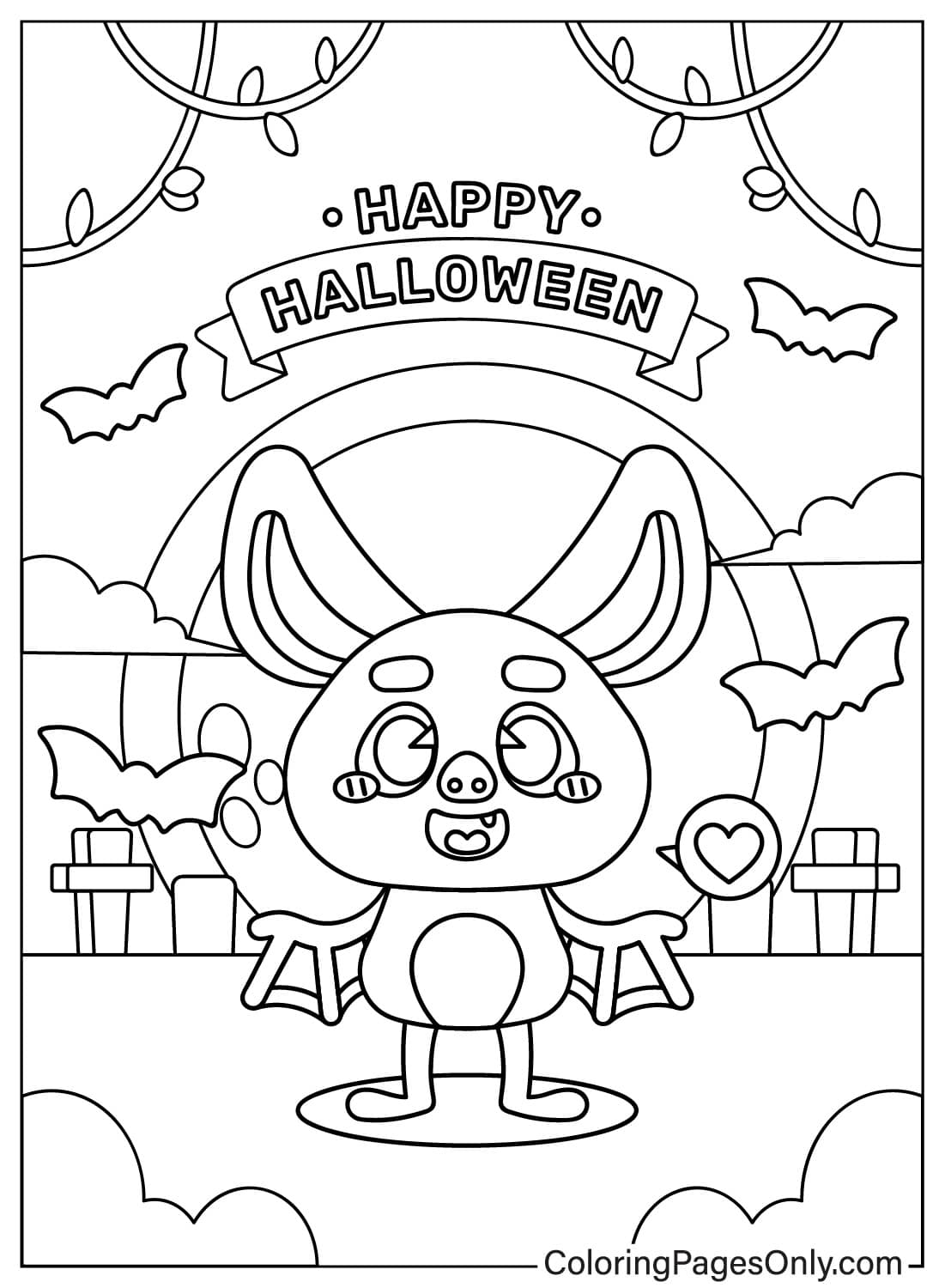
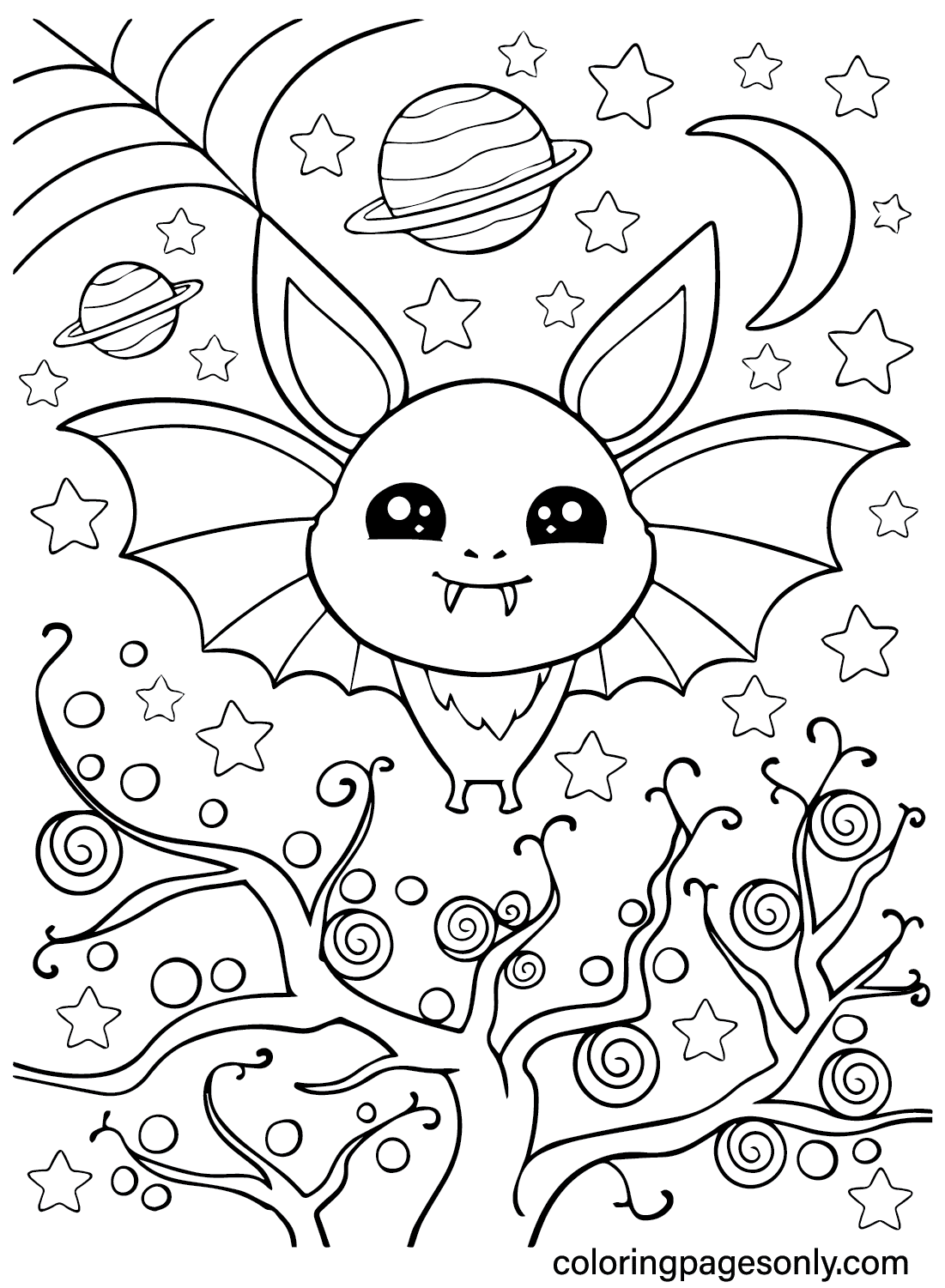
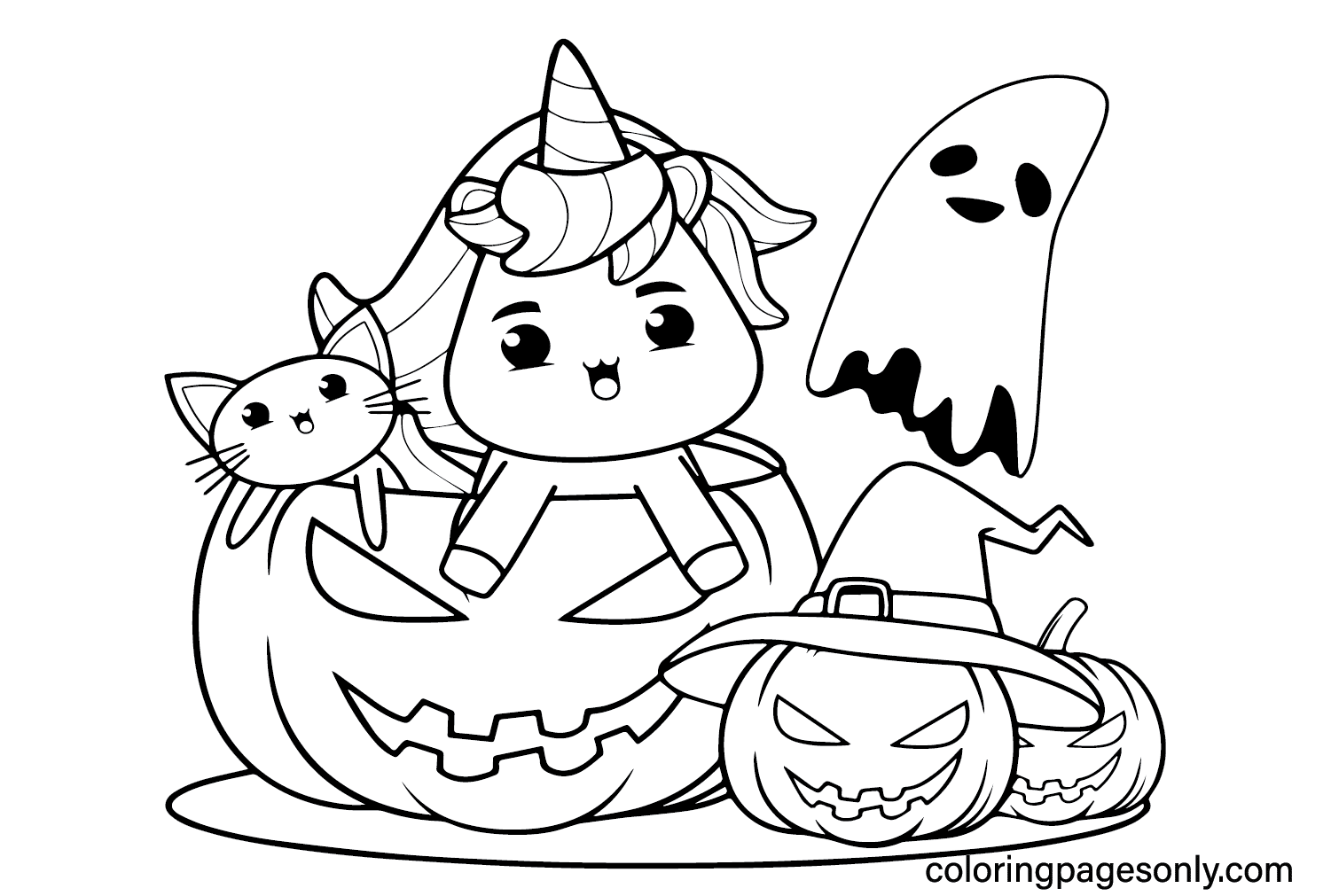
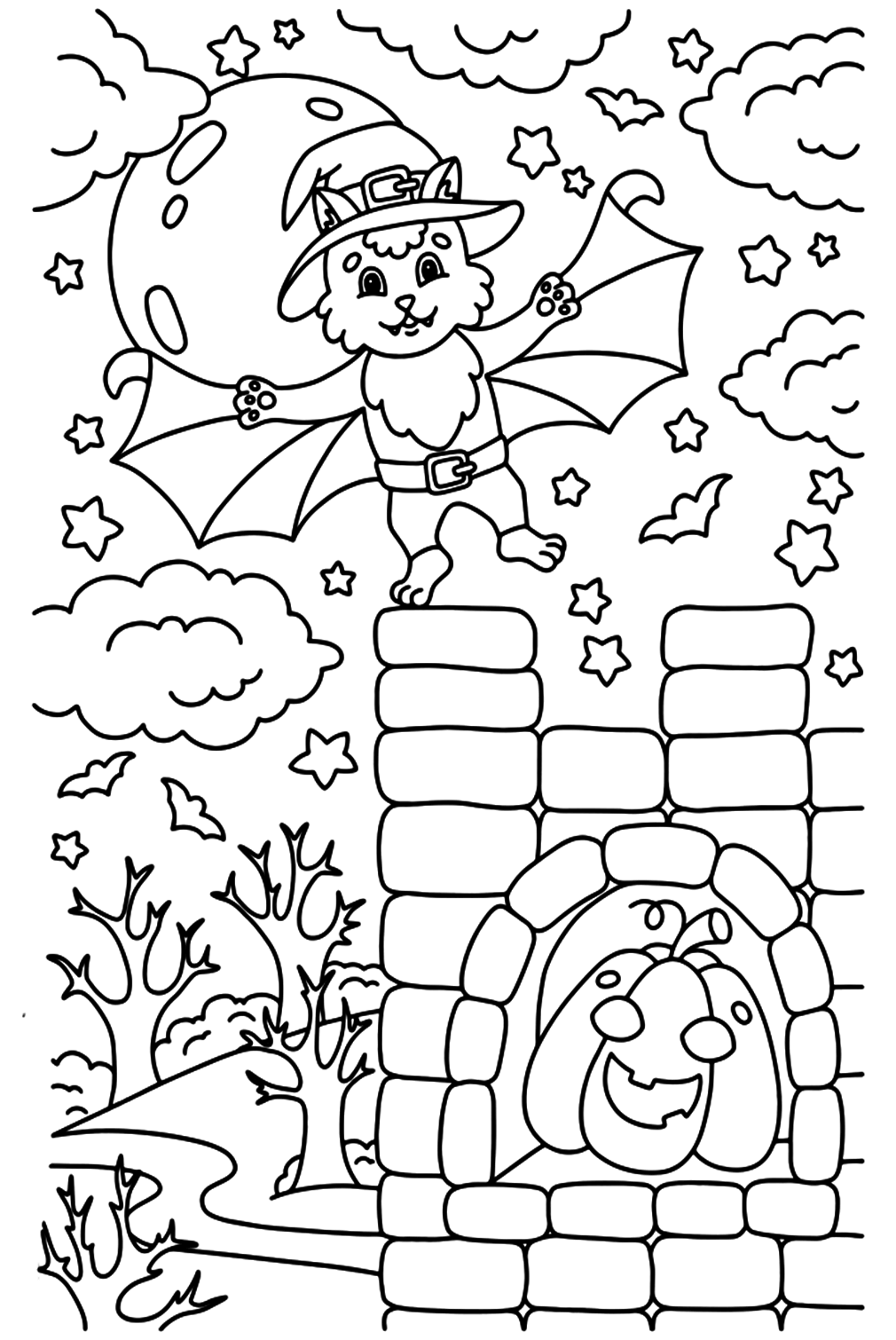
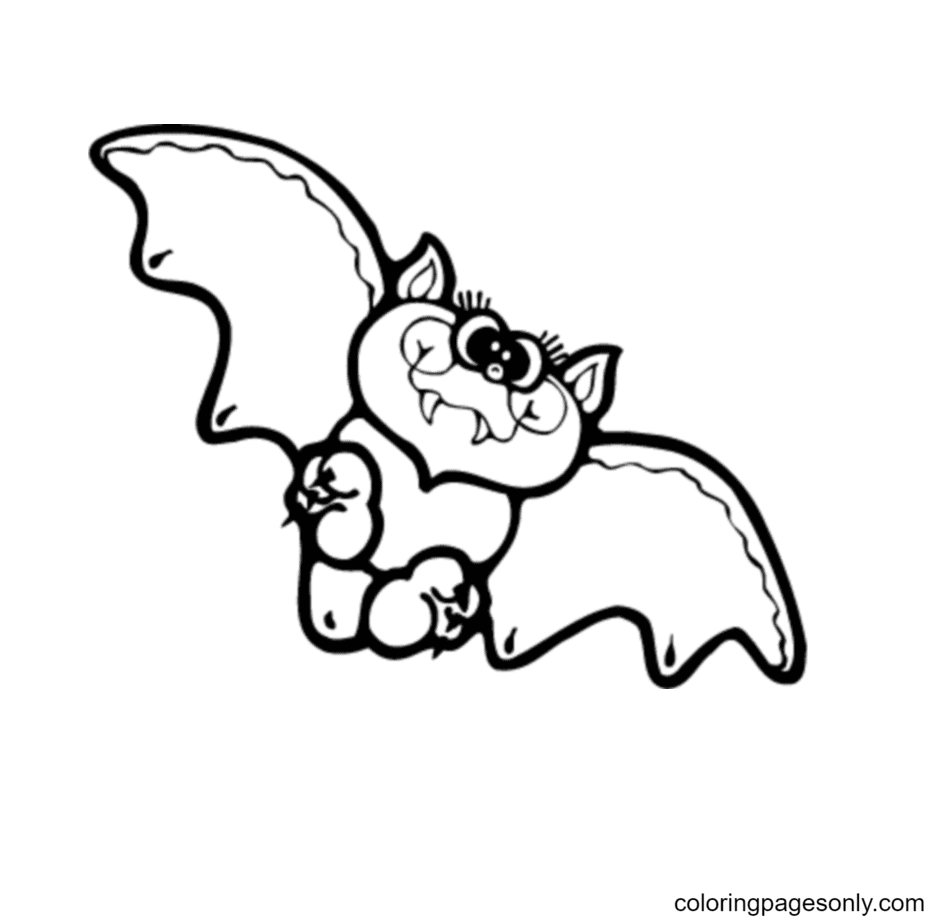
“Cute Halloween Bat,” “Cute Crocodile in Halloween,” “Cute Halloween Unicorn Coloring Page,” and character pages featuring bats and seasonal animals in Halloween costumes round out the collection. Bats have been associated with Halloween since at least the early modern period – one widely repeated explanation holds that bonfires lit on All Hallows’ Eve attracted insects, which attracted bats, making them visible and active on the specific night. The cute bat in this collection is rendered with large, round eyes, rounded wing shapes, and an expression that reads as curious rather than threatening. The unicorn in Halloween costume takes the cute style’s logic to its furthest point – an entirely fantastical creature dressed for a holiday built around the supernatural, rendered in pastel and orange.

Coloring cute bats: The cute bat’s body is dark grey or black, following the same charcoal-base technique used for the cat and witch hat. The wing membrane is slightly lighter than the body, rendered in a warm dark grey rather than true black. The small face features – eyes, nose, tiny open mouth – should be kept crisp and detailed even though they occupy a small area; the face is the element that determines whether the bat reads as cute or simply dark.

Licensed Characters in Halloween Costumes

Pages showing Pikachu and Minnie Mouse in Halloween costumes bring recognizable characters from their respective franchises into the holiday’s visual language. These pages serve fans of those characters who want Halloween-themed content featuring their favorites.

Coloring licensed character Halloween pages: Keep the base character in their canonical colors – Pikachu in warm yellow, Minnie in her standard palette – and apply the Halloween costume elements (witch hat, ghost costume, pumpkin bucket) in the standard Halloween palette. The costume should read as an addition to the familiar character, not a replacement; maintaining the character’s known color identity is what makes the page recognizable.

What These Pages Do

Cute Halloween occupies a distinct position between holiday celebration and age-appropriate design. The holiday’s full iconography – vampires, skulls, horror imagery – is calibrated for an older audience. The cute versions of those symbols perform the same cultural function for younger children: they introduce Halloween’s visual language at a scale and emotional register that is engaging rather than frightening. A child who colors a friendly ghost or a smiling pumpkin is participating in the same seasonal tradition as an older child who colors a haunted house, through imagery sized to their developmental stage.

Halloween’s symbols have documented histories that make them genuinely teachable content. The jack-o’-lantern traces from Irish turnip carving to American pumpkin carving in the nineteenth century. The witch’s pointed hat and broomstick were standardized through late-Victorian Halloween postcard illustration. The black cat’s association with the holiday is documented in American popular culture from the 1890s. Coloring these pages alongside their histories gives children a relationship to the symbols that goes beyond surface recognition.

The varied line densities across this collection directly serve fine motor development. The American Academy of Pediatrics identifies fine motor skill development – controlled grip, pressure variation, directional strokes within defined spaces – as a key milestone across early childhood. The ghost pages, with their large open zones and minimal interior line work, provide entry-level practice. The witch-and-cat combination pages, with costume details, hat brims, and companion animal features, provide more demanding targets. The collection’s range from simple to detailed means it grows with the child who uses it.

Structured coloring reduces anxiety, and the cute Halloween style adds a specific benefit. The 2005 Art Therapy Journal study on structured coloring found statistically significant anxiety reduction in participants working within defined forms compared to open-ended drawing. For some children, October’s approach brings anxiety alongside excitement – the Halloween imagery in mainstream culture can be overstimulating. Cute Halloween pages provide the holiday’s recognizable symbols in a format that is calming by design: bounded, friendly-featured, warm-palette rather than dark.

How to Color These Pages Well

Orange is Halloween’s most important color – and there is one right orange. Pumpkin orange sits between a true orange and a warm amber: more saturated and warmer than a traffic cone, less red than a brick. Standard crayon orange is usually close. For colored pencil users, a base layer of yellow-orange followed by a second pass of medium orange in the shadow areas produces a pumpkin surface that reads as rounded and dimensional rather than flat. Keep the groove lines between pumpkin sections as the darkest orange areas; the raised sections between them as the lightest.

Black in the cute style works differently than black in horror Halloween. In horror imagery, black is used for depth and menace – filling shadows, creating contrast with extremes. In the cute style, black is used as a flat, expressive element: the witch’s hat is black, the cat is black, but both read as cheerful rather than ominous because of the rounded shapes and the expressive faces they frame. Apply black with confident, even pressure. Do not shade or gradient within the black-filled areas. The cute style’s black is opaque and deliberate.

Purple is the cute witch’s signature secondary color. Where the witch’s hat and robe core are black, the accents – collar, sleeve edges, belt, bow details – are deep purple. The specific purple for cute witch pages sits between violet and grape: warm enough to read alongside the orange of pumpkins, cool enough to contrast with the black of the hat. Applied in the secondary garment areas, it prevents the witch from reading as entirely monotone and connects her visually to the holiday’s broader palette.

Ghost pages need more color than they appear to have. The instinct on a ghost page is to leave the body white. This produces a page that reads as unfinished – white paper surrounded by white paper, with no distinction between the ghost and the background. Apply very light cool grey in the shadow areas: the underside of the body, the recesses where limbs or expressions create depth. The grey needs to be genuinely light – 10 to 15 percent of a standard grey pencil’s full pressure. The result reads as white with form, not grey.

Bat eyes and pumpkin carving cutouts both require negative space. On bat pages, the eye highlights – small white dots inside the pupil – must be left as paper white to read as light catching the eye. On jack-o’-lantern pages, the carved cutouts (eyes, nose, mouth) are defined by what is not colored: the orange surface surrounds them, and the cutouts themselves may be left white to represent the interior light. Deciding in advance which areas to leave uncolored – and protecting those areas – produces a cleaner finished page than trying to color around them freehand.

Cute animal Halloween pages read best with warm skin tones on exposed faces. Pages showing cute crocodiles, bats, or other animals in Halloween costumes often leave the character’s face or paws visible beneath the costume. These natural flesh/skin areas should use a warm, slightly desaturated version of the animal’s canonical color – slightly lighter than the body, suggesting the face is catching more light. For the crocodile: warm yellow-green face, slightly lighter than the body’s deeper green. For the bat: the inner ear and muzzle in warm pink, contrasting with the dark grey body.

Five Creative Craft Ideas

Halloween Characters Window Display

Print six to eight pages from the collection – a mix of ghosts, pumpkins, witches, and bats. Color all pages with full, saturated palette choices: true orange for pumpkins, deep black-and-purple for witches, warm white-and-grey for ghosts, dark grey for bats.

Cut each character out along its outline, leaving a small white border. Arrange and tape all characters to a window facing outward, clustering them at different heights to suggest a Halloween scene. In daylight, the window reads as a festive display from outside. Children who colored the pages can see their own work displayed and visible from the street.

Best suited for ages 4 and up, with adult help for cutting; very young children can do the coloring while an adult handles scissors and tape.

Trick-or-Treat Bag Decoration

Print the “Cute Halloween and Trick or Treat Game” page and one or two character pages – the ghost, the pumpkin, or the witch. Color all pages with a bright, fully saturated palette: the key is vivid color, not subtle tone work.

Cut out the colored characters and attach them to a plain canvas trick-or-treat bag using fabric glue or iron-on transfer paper. The finished bag is a personalized Halloween accessory colored by the child carrying it – a direct connection between the coloring activity and the Halloween celebration itself.

For the simplest version, use a paper grocery bag: cut the handles shorter, reinforce the top with tape, and glue the colored characters to the sides. Suitable for ages 5 and up; younger children can do the coloring with the bag construction handled by an adult.

Cute Halloween Bunting

Print ten to twelve pages from the collection, selecting the smallest and simplest designs where possible – single-character pages work best. Color all pages. Cut each finished page into a triangle shape, keeping the colored character in the lower half of the triangle.

Punch a small hole at the top left and top right corners of each triangle. Thread a length of twine or ribbon through the holes of all triangles in sequence, spacing them evenly. Tie the ends of the twine to create a bunting that can be strung across a doorway, a fireplace, or a window.

The finished bunting uses twelve or more pages colored by the child, displayed as a continuous Halloween decoration across a surface. This is the craft idea that produces the most visible result per page colored. Best for ages 5 and up; younger children can color with an adult handling the cutting and assembly.

Ghost and Witch Story Cards

Print one ghost page and one witch page from the collection. Color both carefully – the ghost in white with grey shadows and pink cheeks, the witch in black and deep purple with warm skin tone.

Fold a piece of cardstock to create a small greeting-card-sized card. Paste the ghost on the front of one card and the witch on the front of another. On the inside of each card, write a two-sentence Halloween story beginning: “On Halloween night, the friendly ghost…” and “The little witch climbed on her broomstick and…”

Ask the child to complete the story in their own words (or dictate to an adult). The finished cards are a coloring-plus-writing activity that combines fine motor practice with creative literacy. Best for ages 5 to 8 as a writing activity; younger children can do the coloring with an adult providing the story.

Halloween Skeletons and Bats Mobile

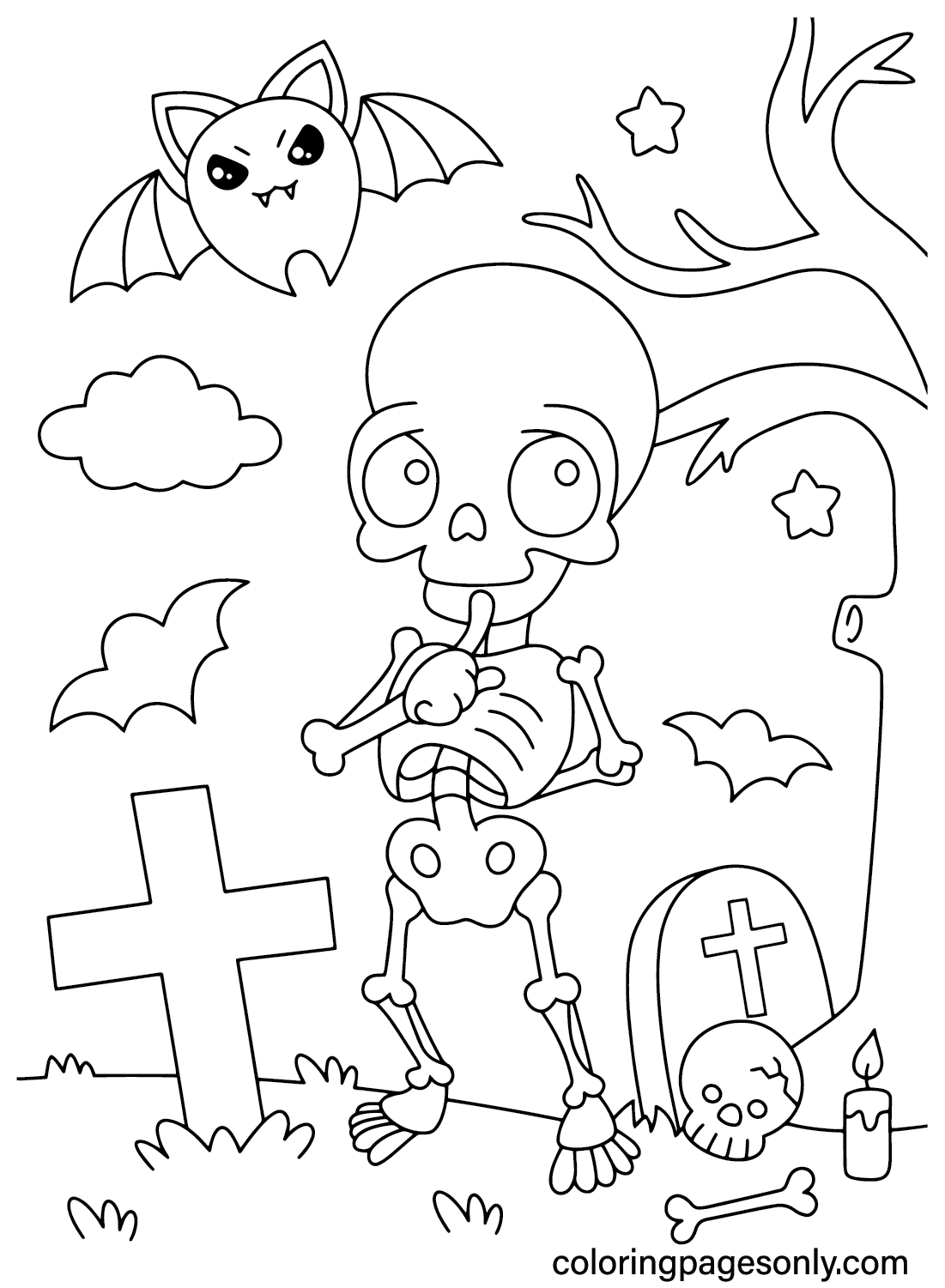
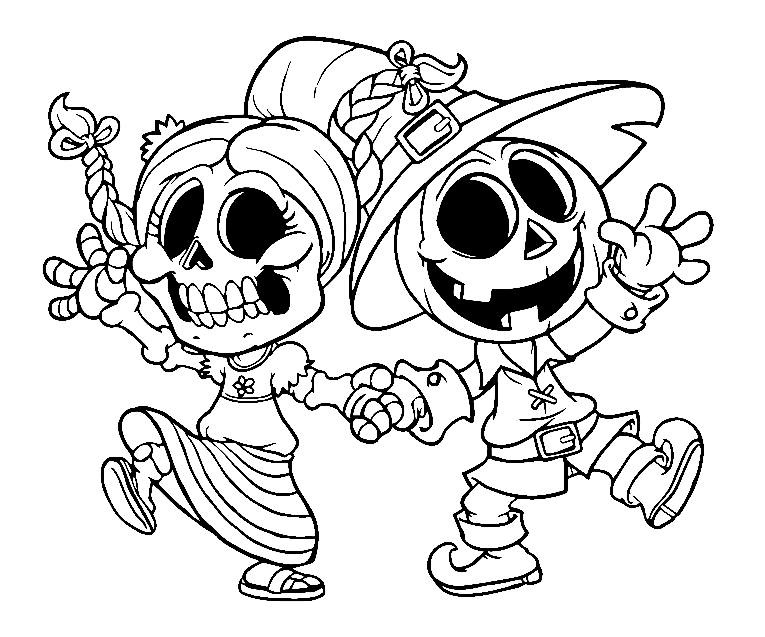
Print the “Cute Halloween Skeletons” page, the “Cute Halloween Bat” page, and one pumpkin page. Color all three. Cut out each character.

Cut a wooden dowel or a sturdy twig to approximately 30 cm. Tie three lengths of thread or thin ribbon from the dowel at different lengths – approximately 15 cm, 22 cm, and 30 cm. Attach the cutout skeleton to the shortest thread, the bat to the medium thread, and the pumpkin to the longest thread, using tape or a small staple on the back of each character.

Tie a final thread to the center of the dowel for hanging. The finished mobile suspends three Halloween characters at different heights, moving slightly in any air current. This craft combines the most distinct Halloween symbols in the collection – the skeleton representing mortality, the bat representing night, the pumpkin representing harvest – into a single decorative object that children made themselves. Suitable for ages 6 and up; younger children can color the pages with an adult handling assembly.

Frequently Asked Questions

What is Halloween, and when is it observed? Halloween is an annual holiday observed on October 31 in the United States, Canada, the United Kingdom, Ireland, and increasingly in many other countries. It evolved from the ancient Celtic harvest festival of Samhain, which marked the end of the lighter half of the year and the beginning of the darker half around November 1. The Catholic Church’s establishment of All Saints’ Day on November 1 in the ninth century made October 31 All Hallows’ Eve – contracted over generations into Halloween. The modern American Halloween tradition of costumes, jack-o’-lanterns, and trick-or-treating developed through the nineteenth and early twentieth centuries, drawing on Irish, Scottish, and English immigrant traditions.

What is the origin of trick-or-treating? Trick-or-treating as practiced in the United States draws from several historical traditions. The medieval European practice of “souling” involved the poor going door to door on All Souls’ Day (November 2) to receive food – typically soul cakes – in exchange for prayers for the household’s dead. In Scotland and Ireland, the practice of “guising” had people dressing in costumes and performing songs or tricks in exchange for food or coins on All Hallows’ Eve. These traditions arrived in North America with immigrant communities and developed into modern trick-or-treating, which became widespread in the United States during the 1920s and 1930s.

Where do jack-o’-lanterns come from? Jack-o’-lanterns trace to Irish folklore involving a figure known as Stingy Jack – a trickster who repeatedly deceived the devil and was ultimately barred from both heaven and hell, condemned to wander the earth carrying only a carved-out turnip with a burning coal inside to light his way. Irish and Scottish immigrants carried the tradition of carving frightening faces into root vegetables on All Hallows’ Eve to America, where they found pumpkins – a native American crop – far easier to carve than turnips. The pumpkin jack-o’-lantern became the standard American form by the mid-nineteenth century. The earliest known print reference to jack-o’-lanterns in connection with Halloween in North America dates to 1866.

What makes the cute Halloween style different from regular Halloween imagery? Cute Halloween uses Halloween’s traditional symbols – ghosts, witches, black cats, bats, pumpkins, spiders – but redesigns them with rounded shapes, large expressive eyes, friendly facial expressions, and warm color palettes rather than dark or ominous ones. The style draws on the broader tradition of kawaii-influenced children’s illustration while also continuing the long American tradition of Halloween imagery designed specifically for young children, seen in early twentieth-century greeting cards and school decorations. Where adult Halloween imagery uses Halloween symbols to create tension or fear, cute Halloween uses the same symbols to create warmth and playfulness – the holiday’s visual vocabulary, retuned for its youngest participants.

What do the colors orange and black represent in Halloween? Orange and black became Halloween’s signature color combination in American popular culture through nineteenth and early twentieth-century commercial illustration – holiday postcards, decorations, and greeting cards consistently paired the two colors until they became synonymous with the holiday. Orange represents the harvest season – autumn leaves, pumpkins, the warmth of firelight at the end of summer. Black represents the darkness of the season, the longer nights, and the symbolic associations with death and the supernatural that are central to Halloween’s history. In the cute Halloween style, orange remains the dominant warm accent color while black is used as a graphic outline and costume element rather than a ground or atmosphere color.

What is the origin of Halloween costumes? Halloween costuming traces to the Celtic practice of wearing disguises on Samhain to avoid being recognized by spirits who were believed to walk among the living on that night. Similar protective disguising traditions existed in medieval European All Hallows’ Eve customs. In America, costume-wearing at Halloween is documented from the late nineteenth century, and commercial Halloween costumes became widely available from the 1930s onward. The tradition of children wearing costumes and going door to door became widespread in the United States and Canada during the post-World War II period, cemented by its representation in popular culture and advertising from the 1950s through the 1980s.

What age group are these cute Halloween pages best suited for? The ghost pages and simple single-character pages – a smiling pumpkin, a friendly bat, a standalone witch hat – are accessible for children as young as 3, working with broad-tip markers or chunky crayons. The large zones and minimal interior line work on these pages match the hand control of preschool-age children. The witch-and-cat combination pages, the trick-or-treat scene pages, and the character pages with costume details and background elements suit ages 5 through 8, where more controlled mark-making is possible. Pages with multiple characters in complex compositions – the skeleton page, the Halloween scene pages – are most engaging for ages 7 and up. The collection has no pages requiring adult-level detail work; it is designed throughout for children.

Why is the black cat associated with Halloween? The black cat’s association with Halloween and witchcraft has medieval roots – cats in general, and black cats in particular, were associated in European folklore with witches and the supernatural. In some traditions, black cats were believed to be witches’ familiars or transformed witches themselves. The black cat became a standard Halloween icon in American popular culture through the same nineteenth-century commercial illustration tradition that standardized the witch, the jack-o’-lantern, and the ghost. Halloween postcard artists from the 1890s through the 1910s consistently paired black cats with witches and pumpkins until the combination became inseparable from the holiday’s visual identity.
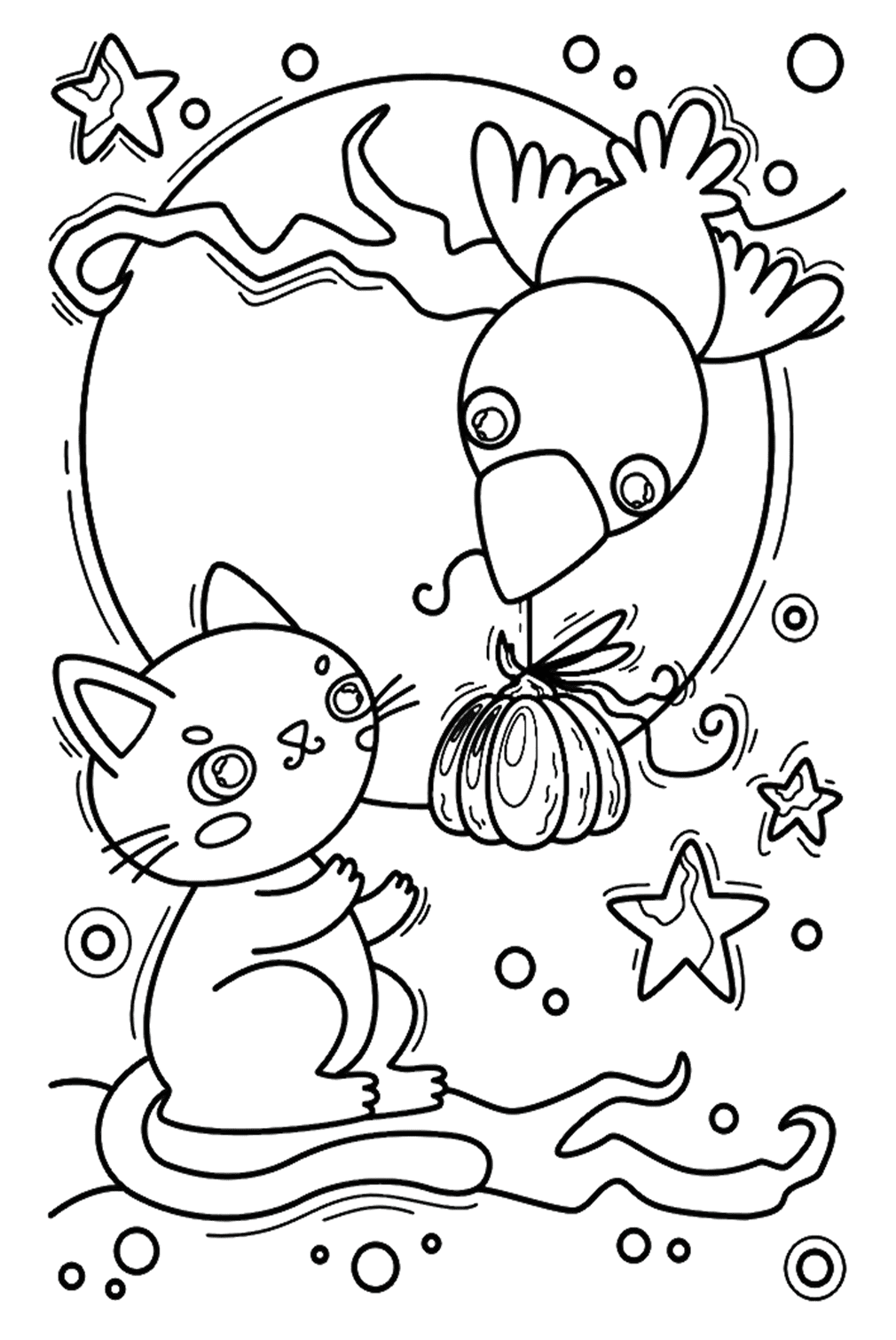
Browse and Color

The Celtic festival that became Halloween was essentially a practical acknowledgment that the year was dividing – the harvest was in, the livestock were moving to winter pasture, and the nights were getting longer. The belief that the boundary between worlds grew thin at this threshold was a way of making meaning out of a seasonal change that was real and observable.

The cute version of Halloween keeps the symbols and sets aside the darkness. The ghost is still a ghost; the witch is still a witch; the bat is still a bat. But they have round eyes and small blush marks on their cheeks, and they are clearly not threatening anything. Children understand the game – they know what a ghost is, and they know this one is friendly. The cute Halloween page is the holiday’s imagery at a specific calibration: recognizable enough to feel like Halloween, gentle enough to feel like play.

The smiling pumpkin has been on October 31 greeting cards since the 1890s. The friendly ghost has been in children’s illustrations since at least the mid-twentieth century. These images are not new. They are a tradition.

Browse the full collection at ColoringPagesOnly.com. All 60+ pages free, no sign-up, PDF or PNG, print at home or color online.

Share your finished pages on Facebook and Pinterest and tag #Coloringpagesonly. We especially want to see the Halloween Characters Window Displays and the completed Trick-or-Treat Bags.

Orange and black. A ghost that smiles. A witch with round eyes. October 31.

More from Our Halloween Collections

More from our Halloween collections:

Jennifer Thoa – Content Editor & Designer

Jennifer Thoa is Content Editor and Designer at ColoringPagesOnly.com. Degree in Journalism and Creative Writing, University of Kansas. She writes and edits long-form educational articles on anime, film, animals, world cultures, and automotive history - verified against named primary sources before publication.