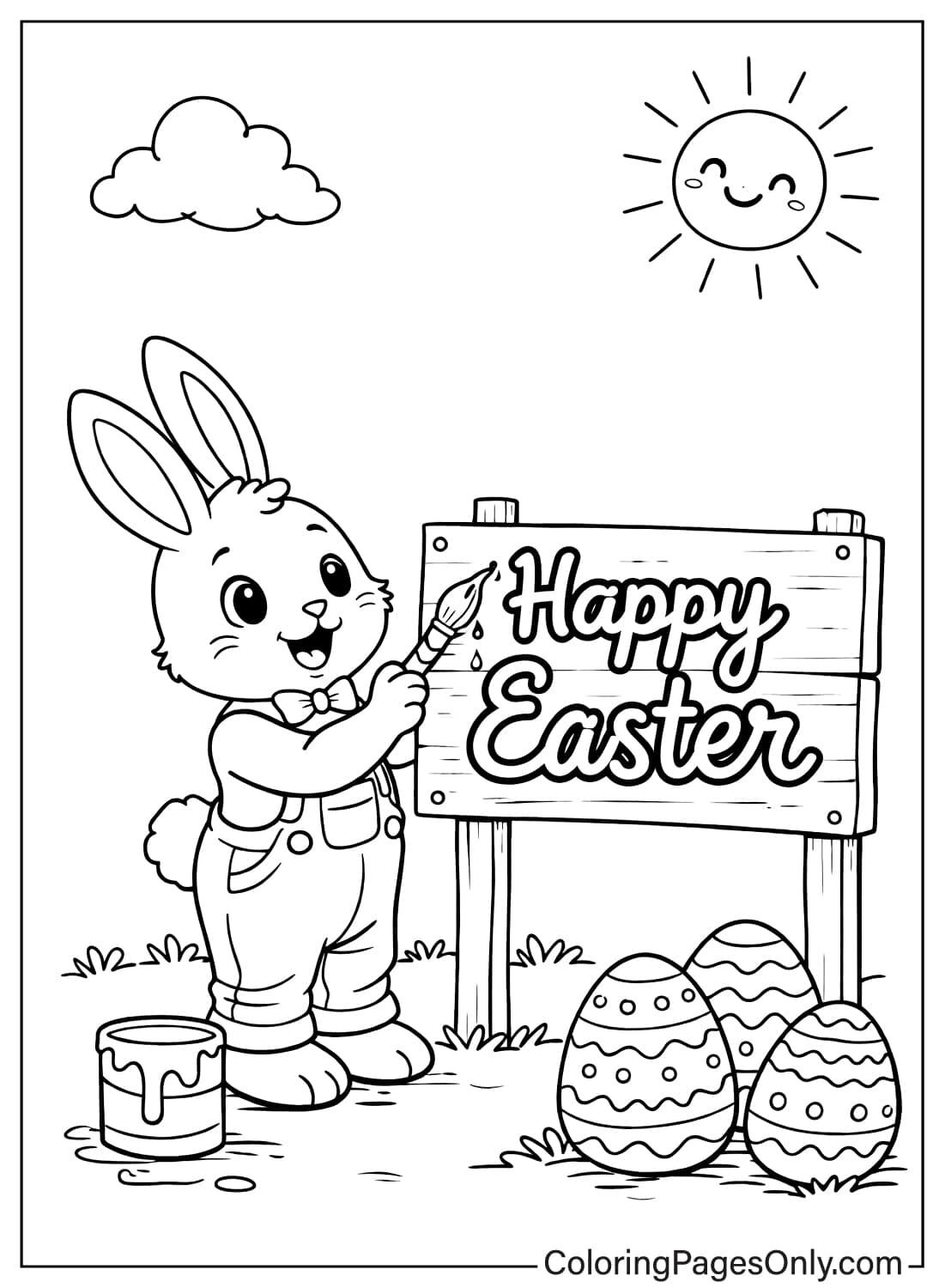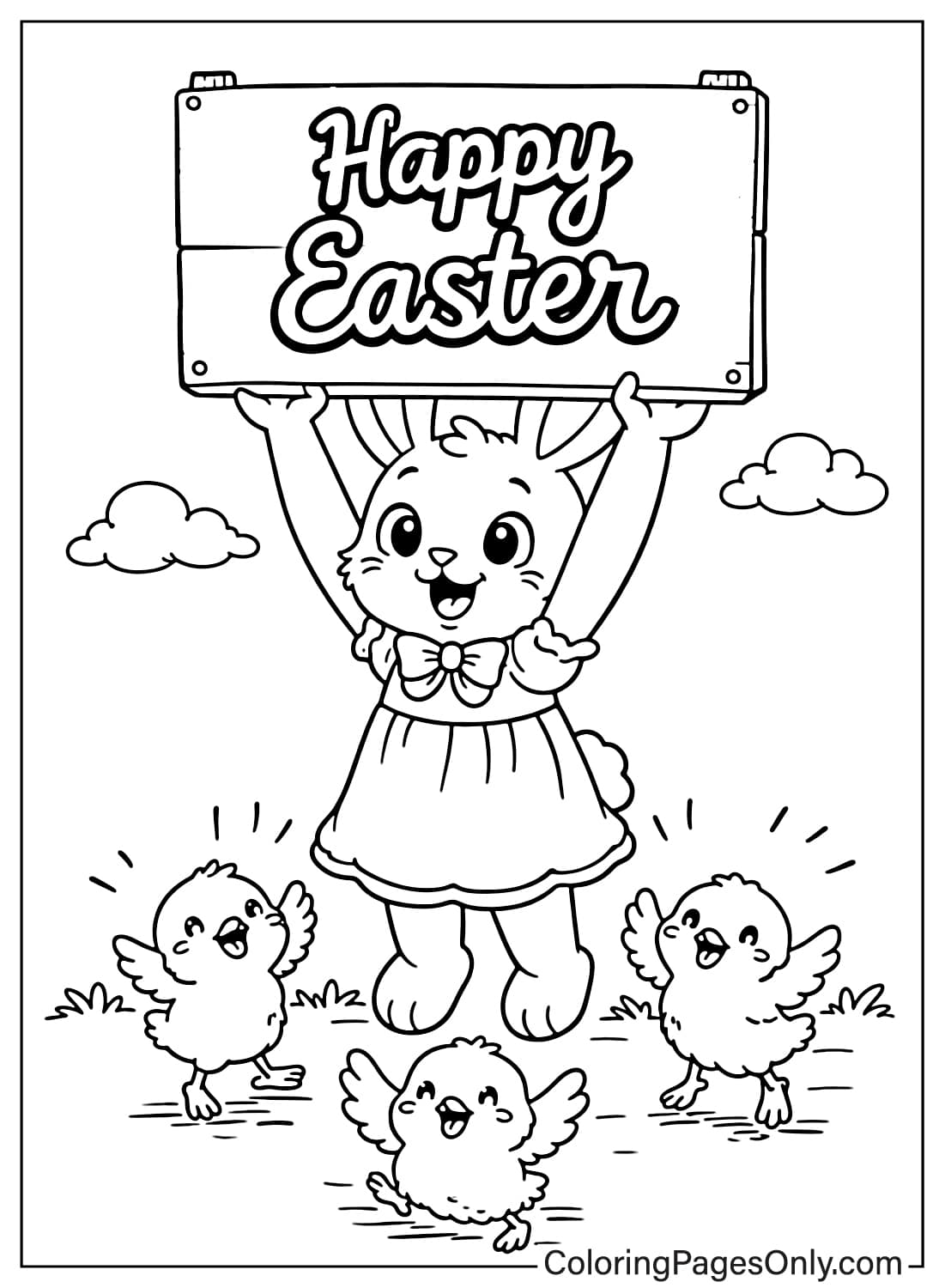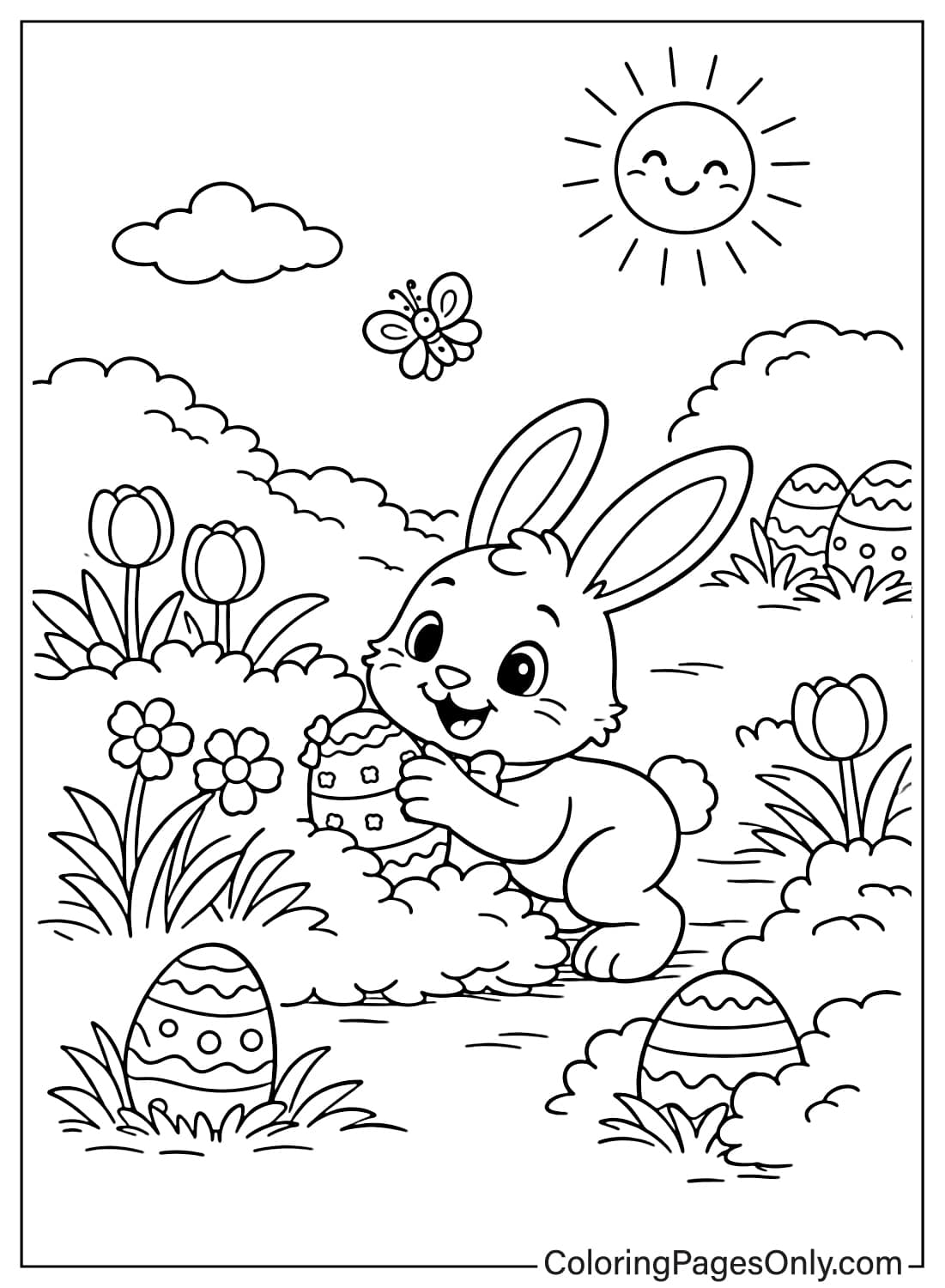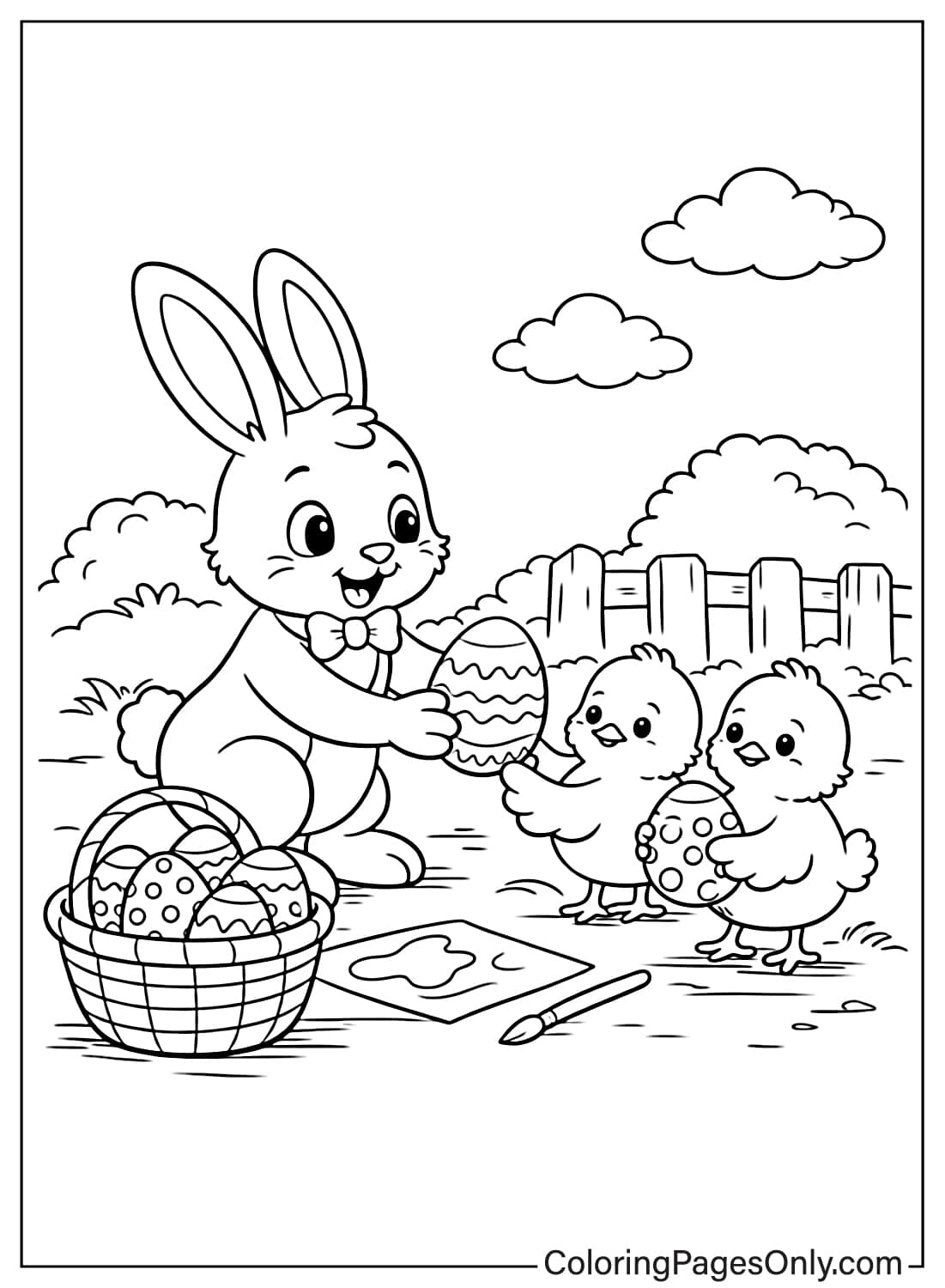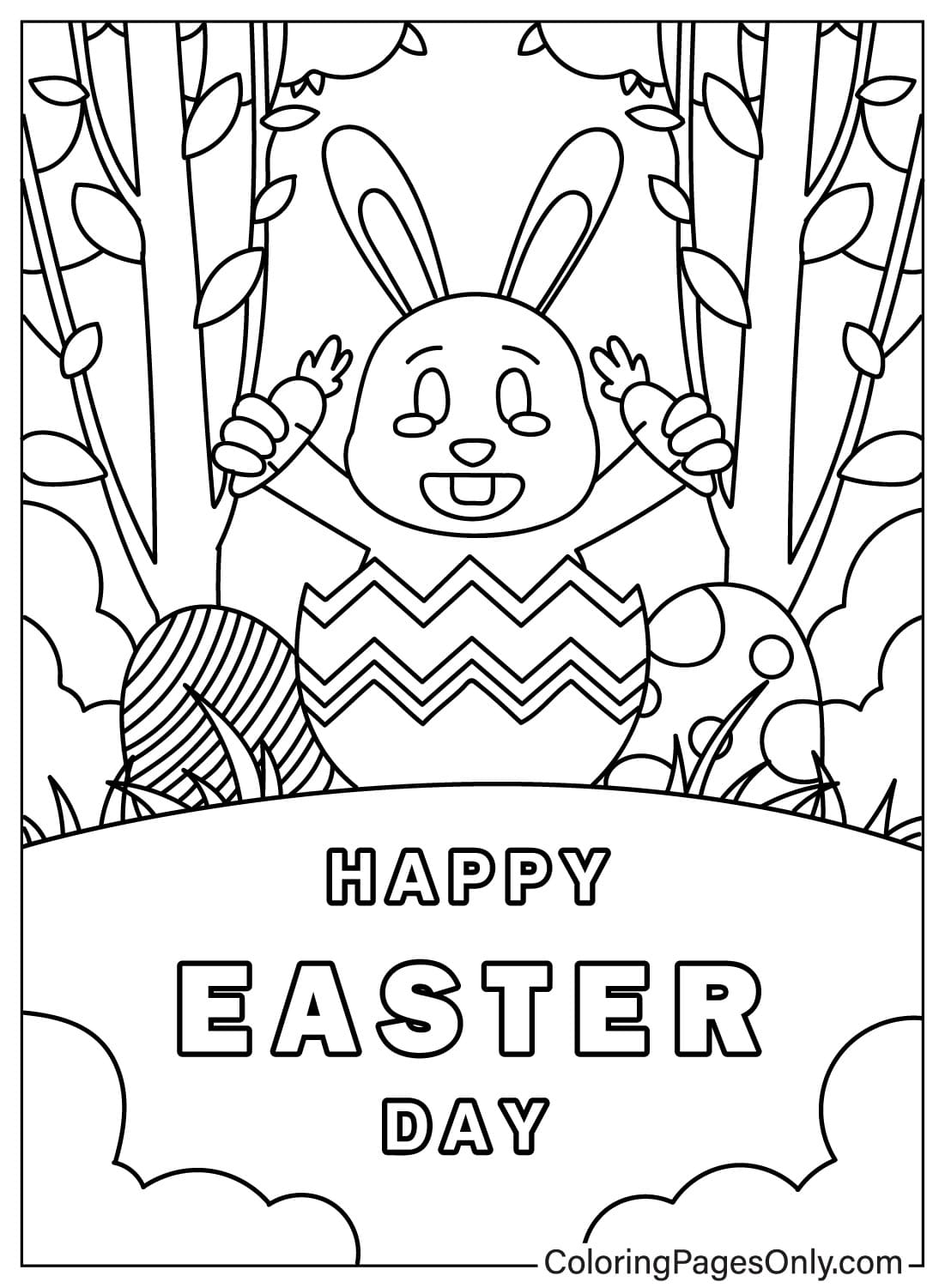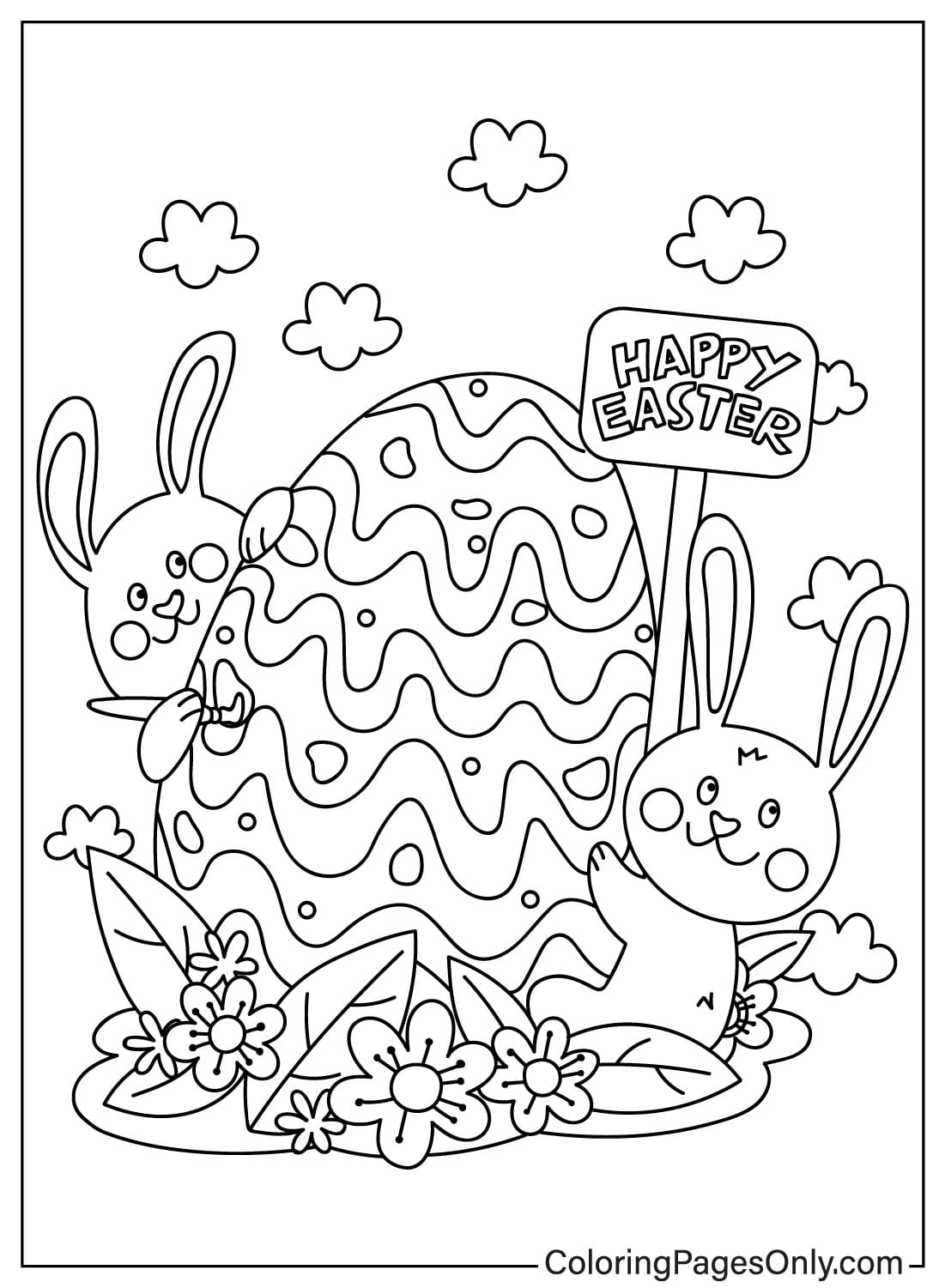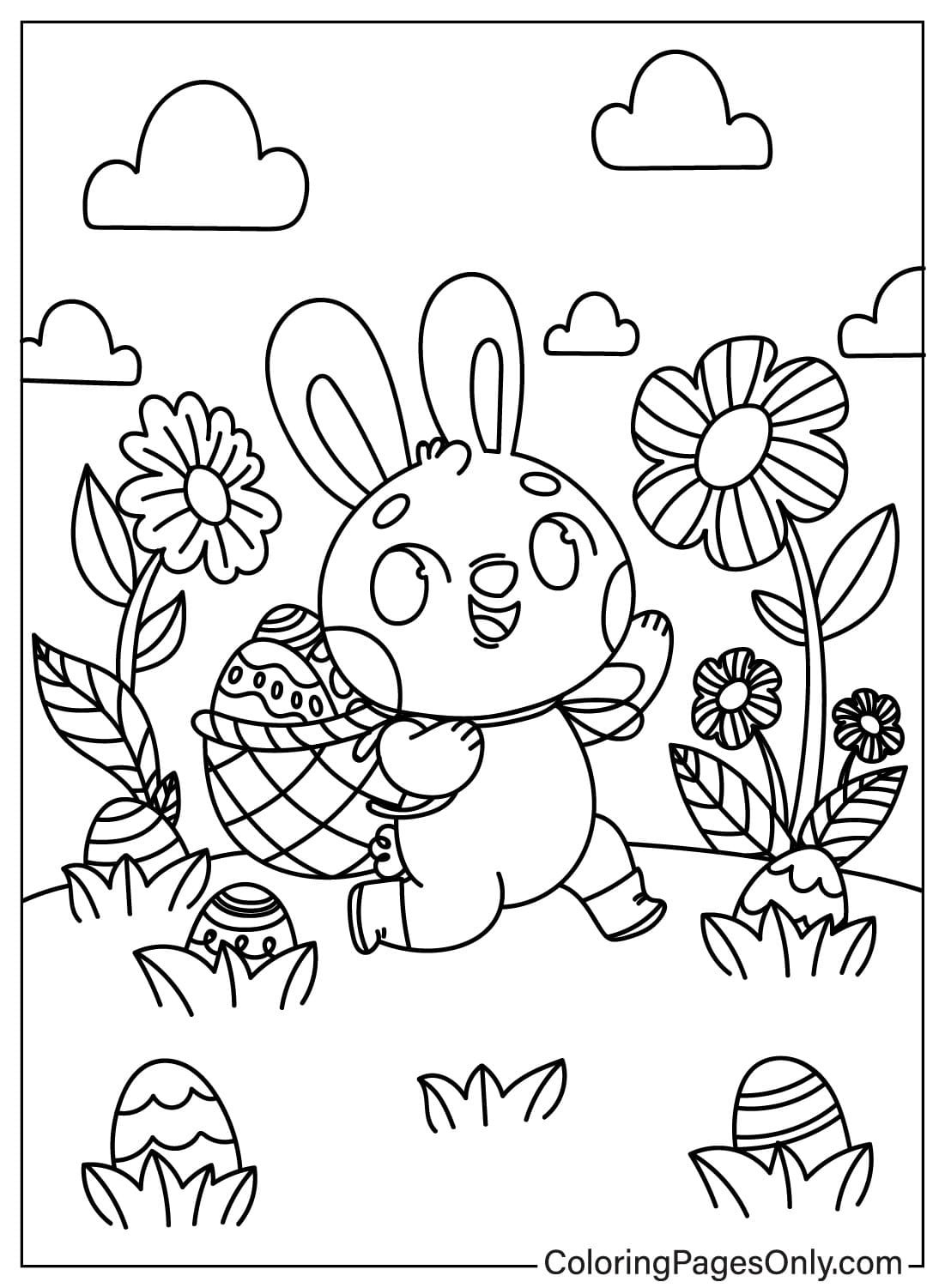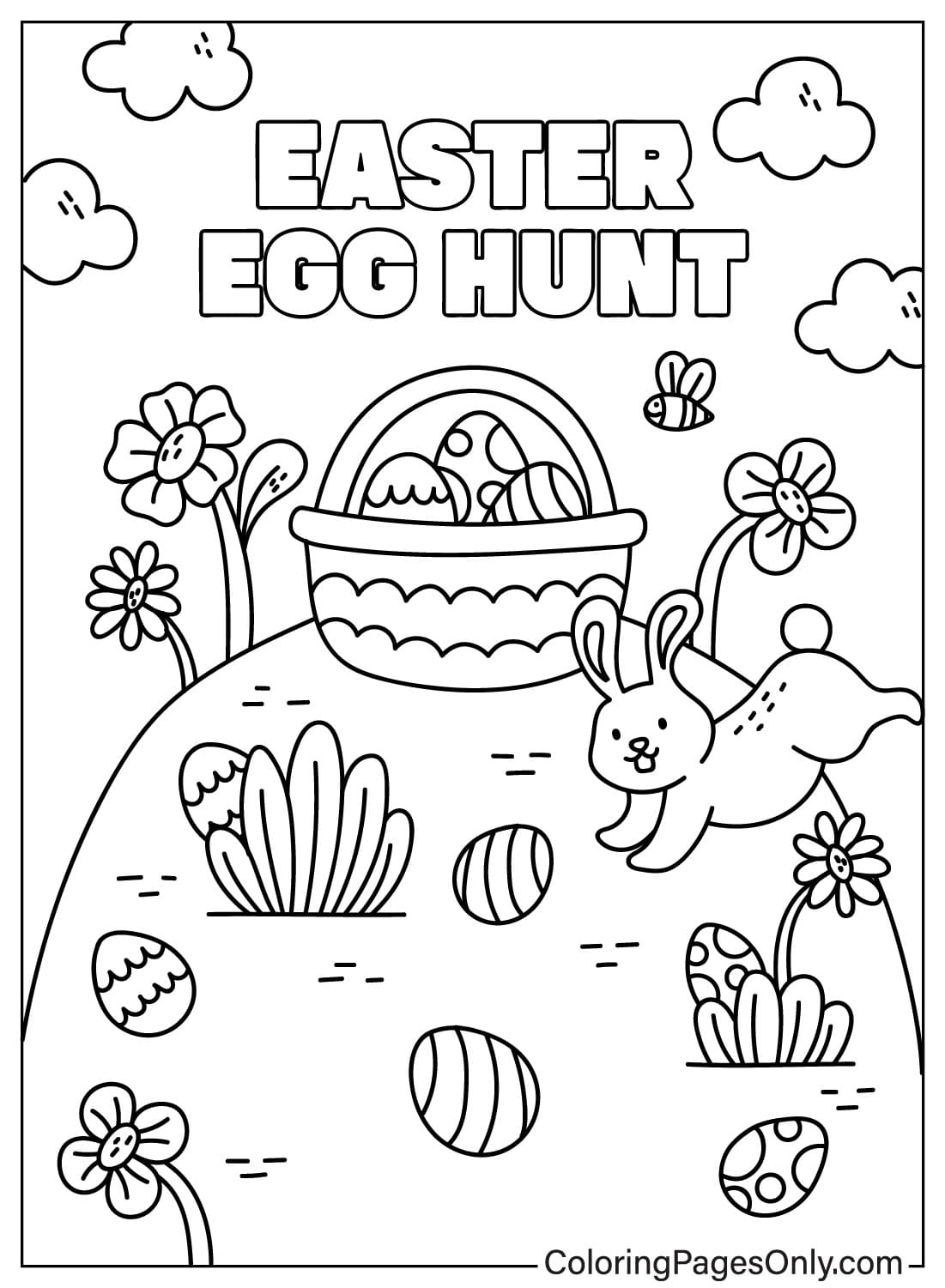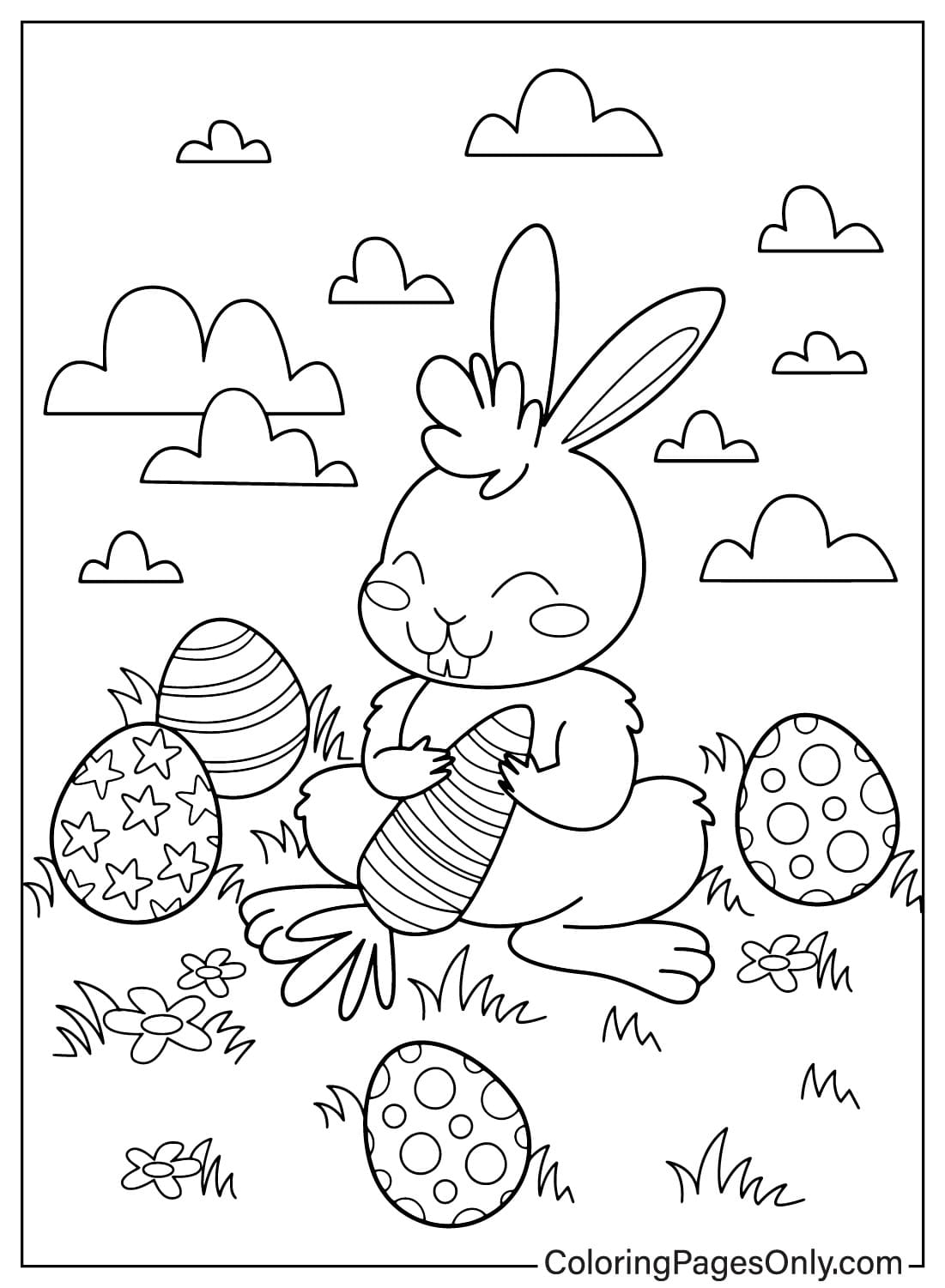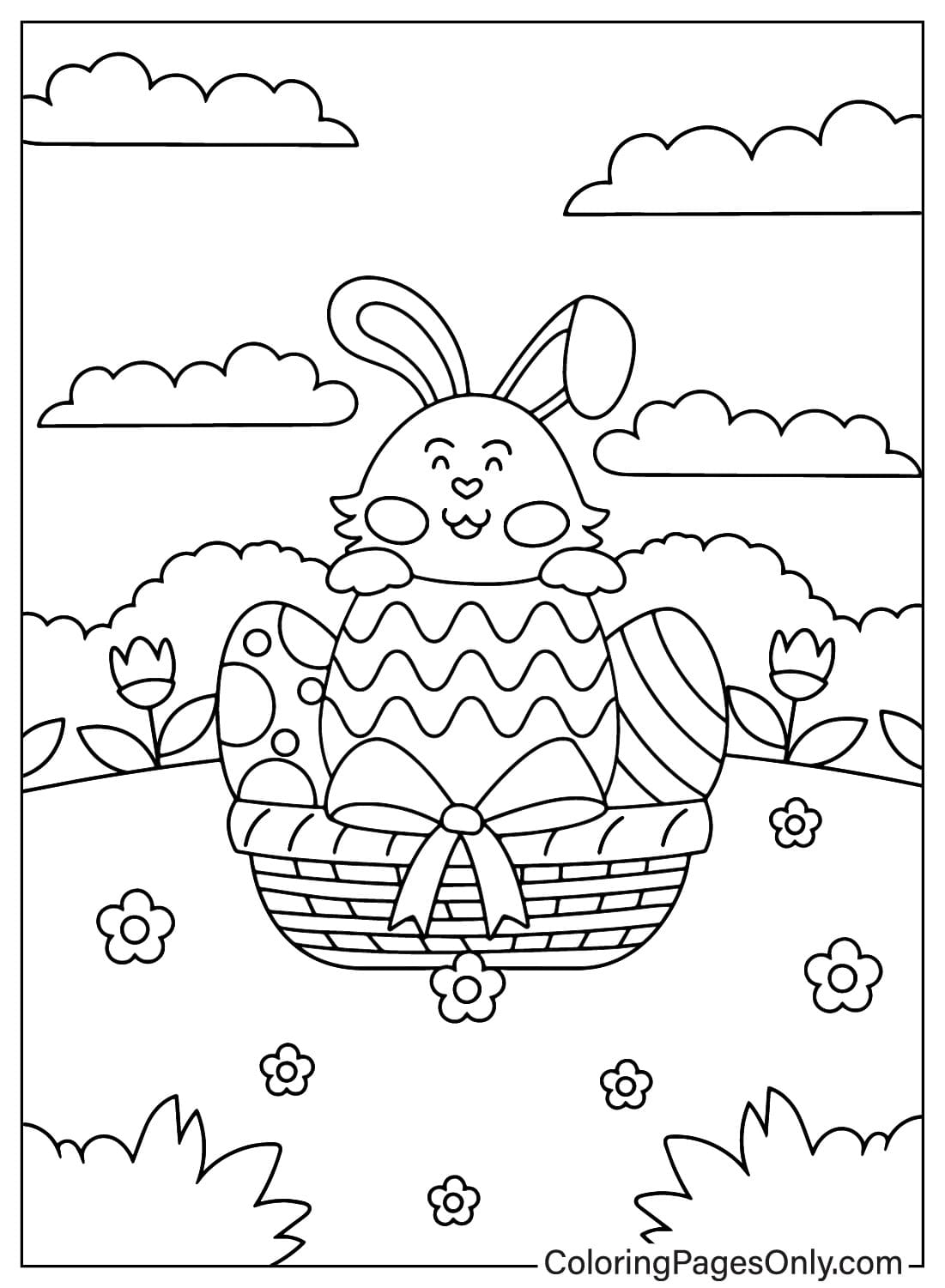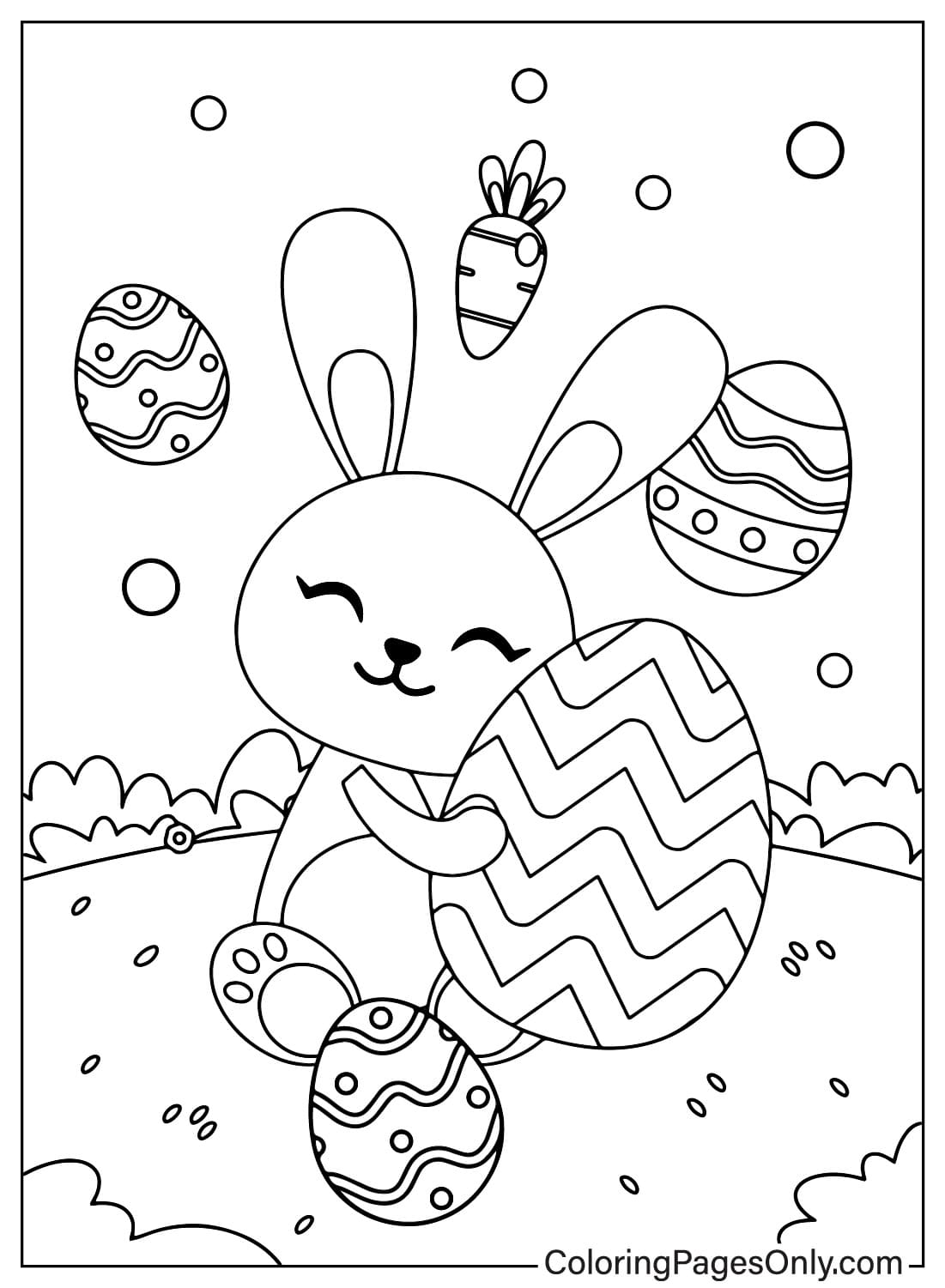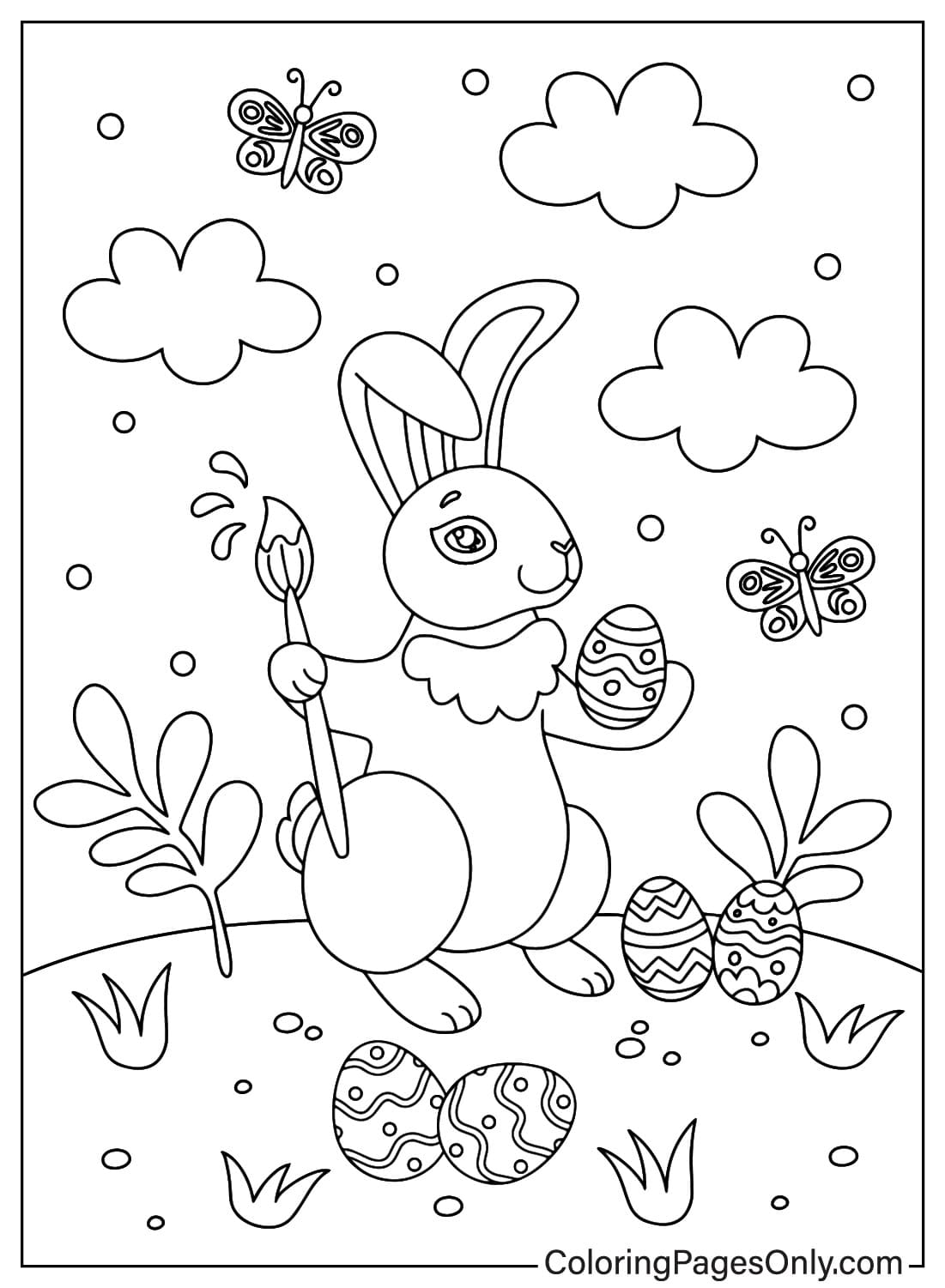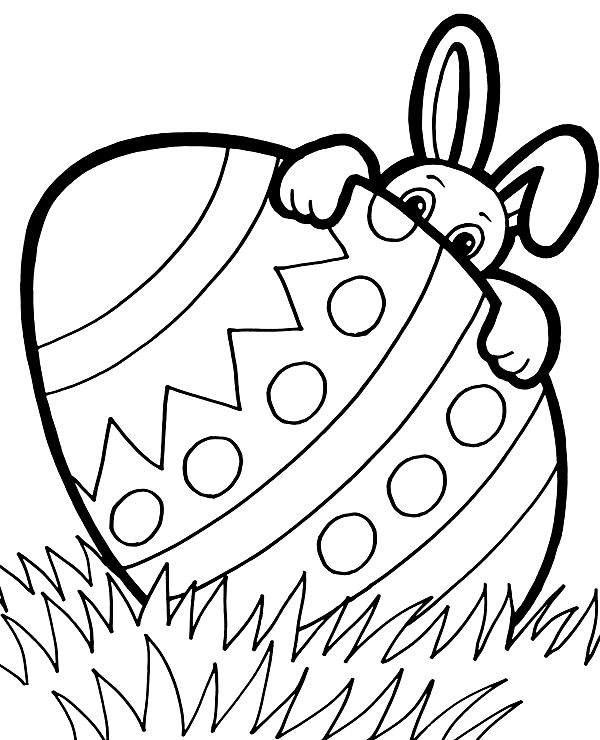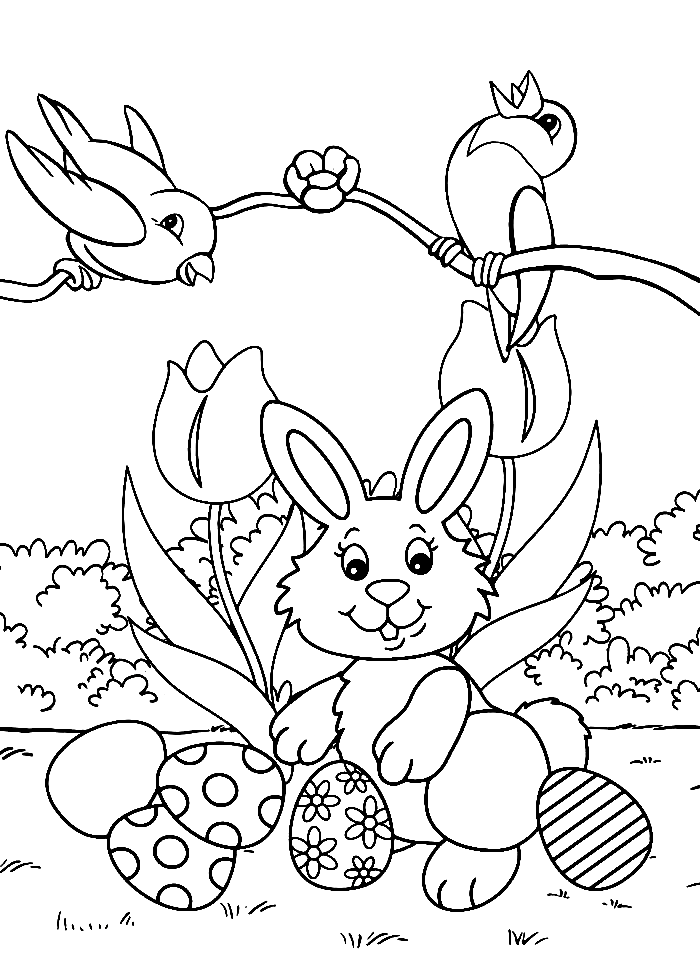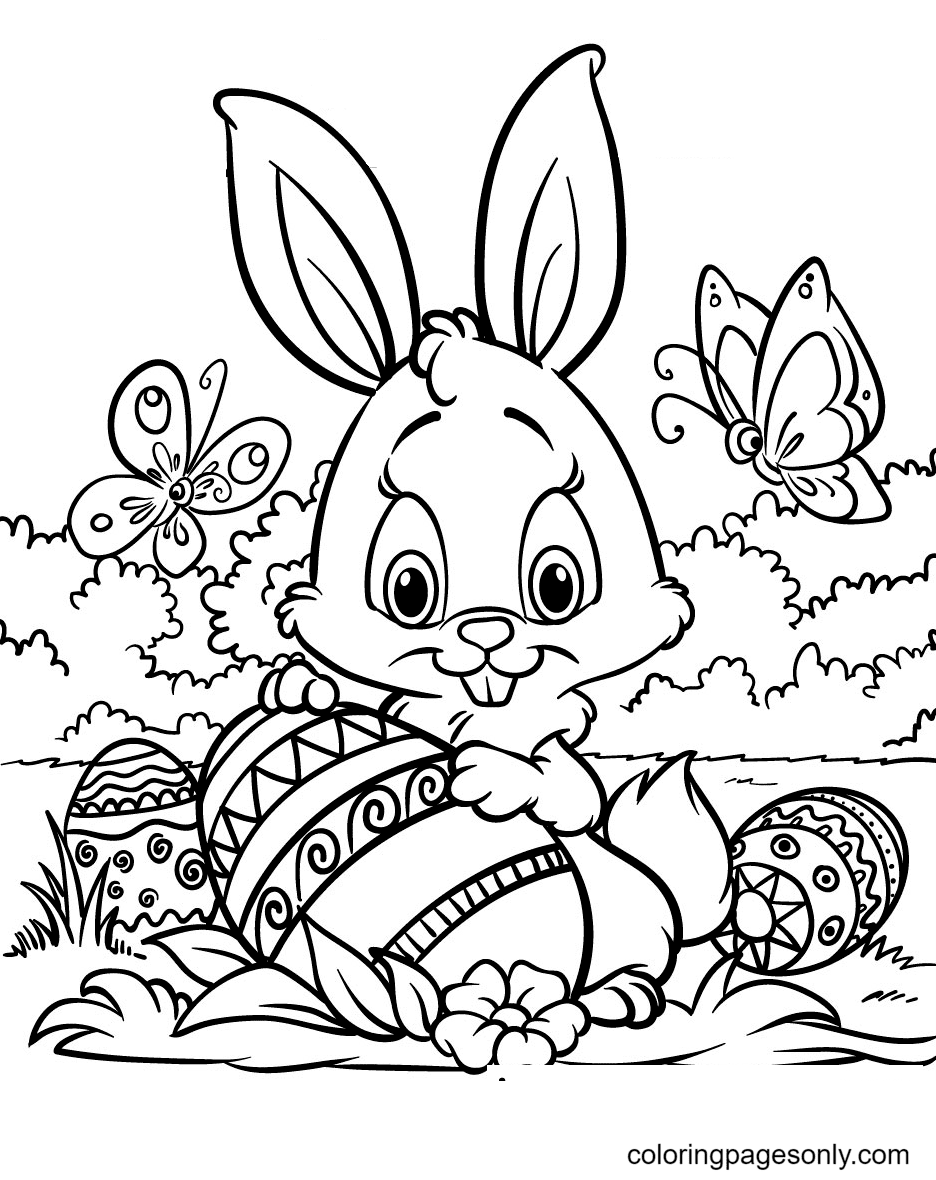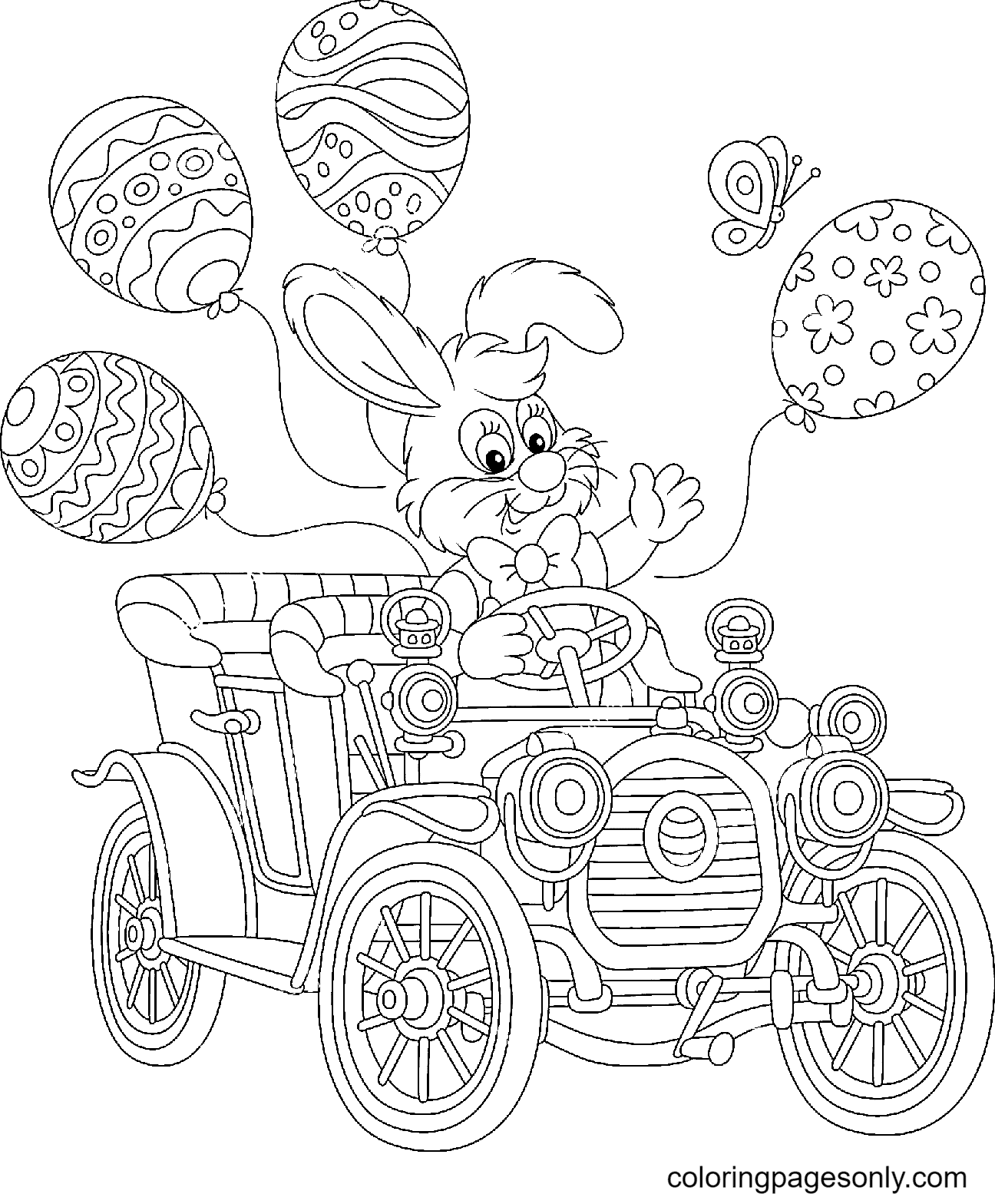
Free Easter Bunny coloring pages – 70+ pages featuring cute Easter bunnies, decorated eggs, baskets, baby chicks, butterflies, spring flowers, Happy Easter signs, egg houses, egg towers, bunny cards, easy printable pages, and many more festive Easter designs. Download your favorite pages as PDF, print them at home, or color online.

Easter is a spring holiday celebrated in many families with traditions connected to renewal, hope, decorated eggs, baskets, egg hunts, and cheerful seasonal activities. For children, one of the most familiar Easter symbols is the Easter Bunny, often shown with decorated eggs, baskets, baby chicks, flowers, and garden scenes. These simple images make the holiday easy for kids to understand: the bunny feels playful, the eggs invite bright patterns, and the spring details make every page feel fresh and joyful.

That is why Easter Bunny coloring pages work so well for kids, families, and classrooms. A bunny holding an egg, hiding eggs in a garden, sitting in a basket, or standing beside a baby chick gives children a clear holiday scene they can understand right away. The theme feels festive without being too difficult, and it works for both simple preschool pages and more detailed Easter art activities.

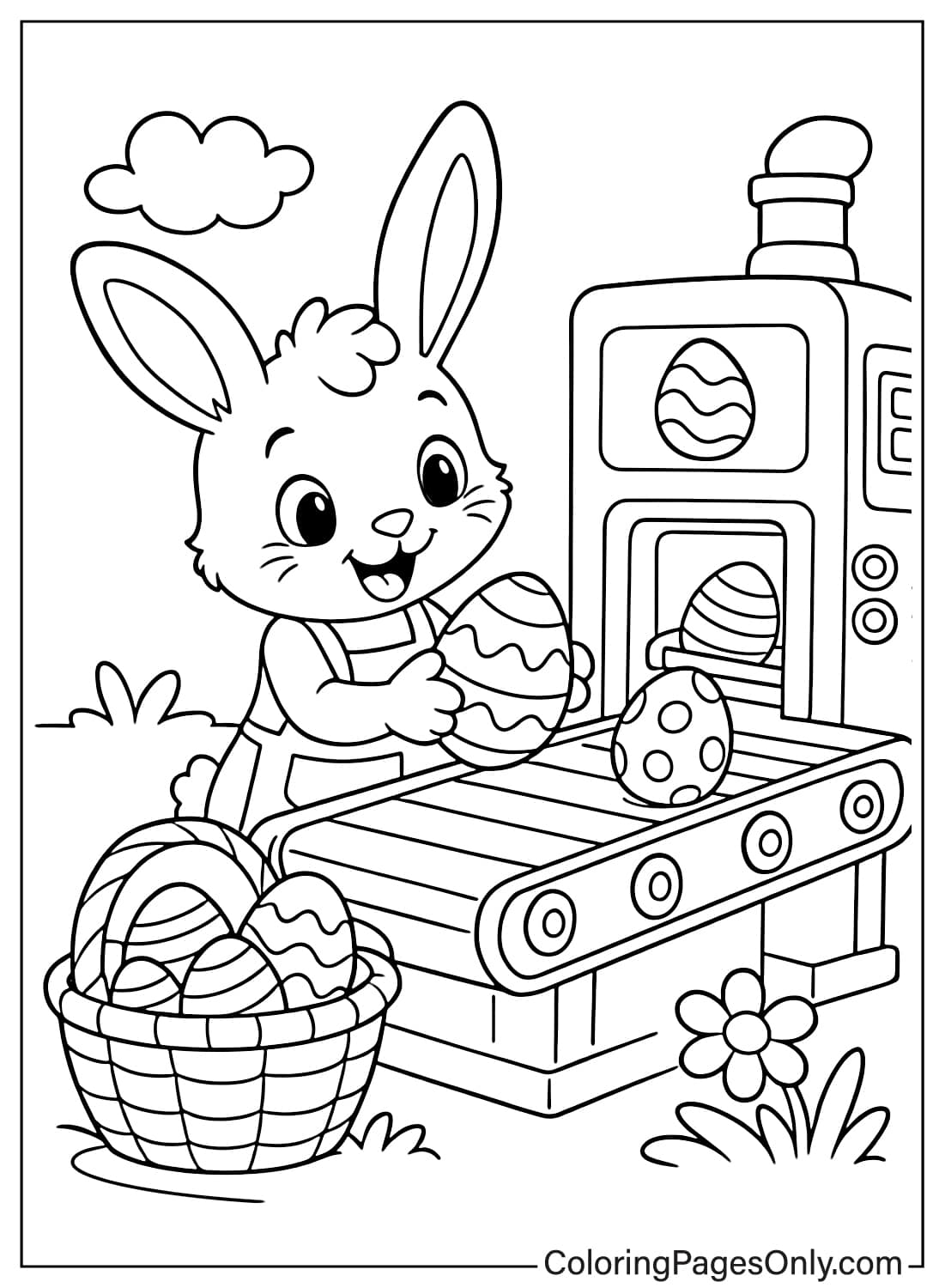
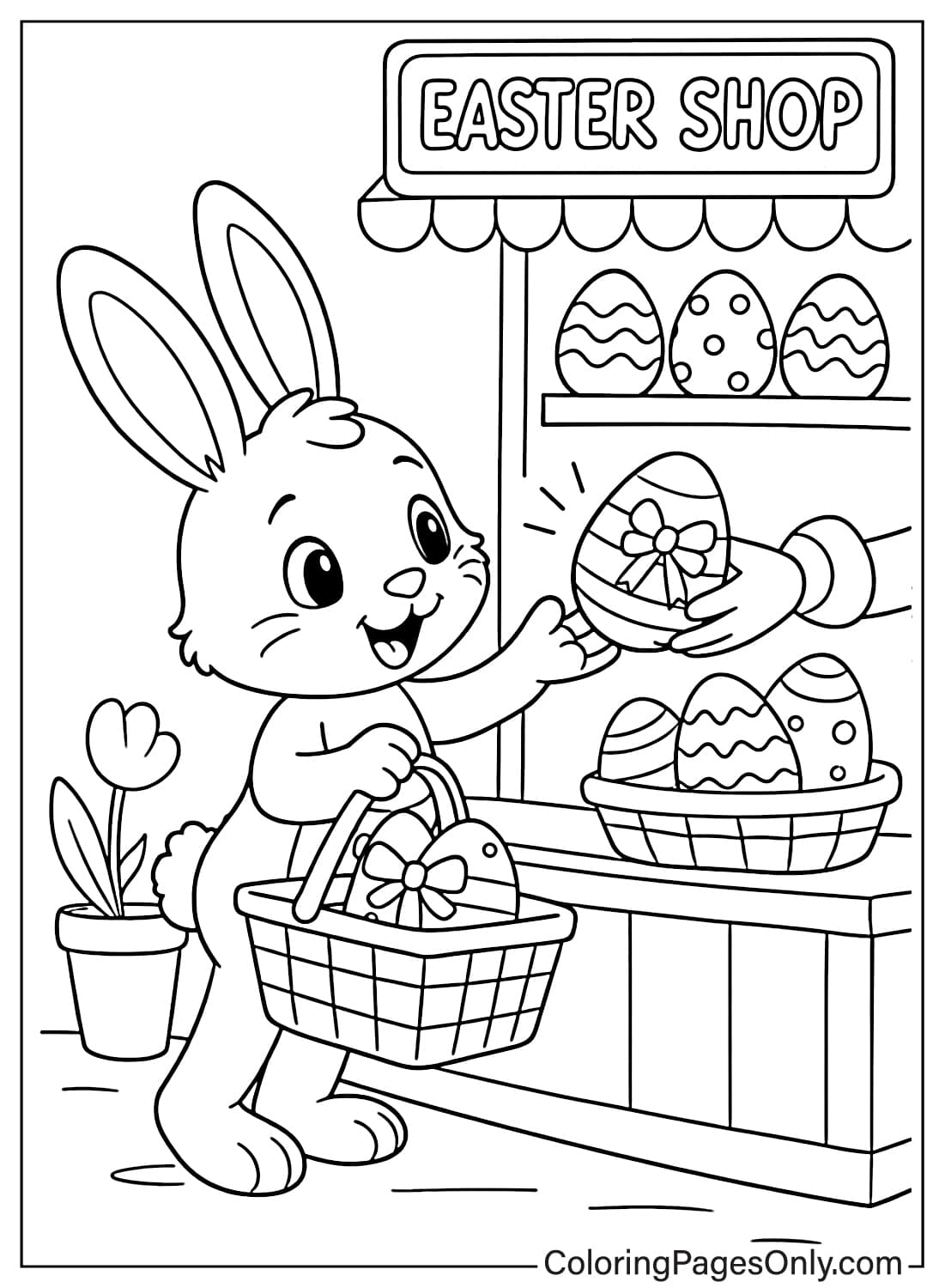
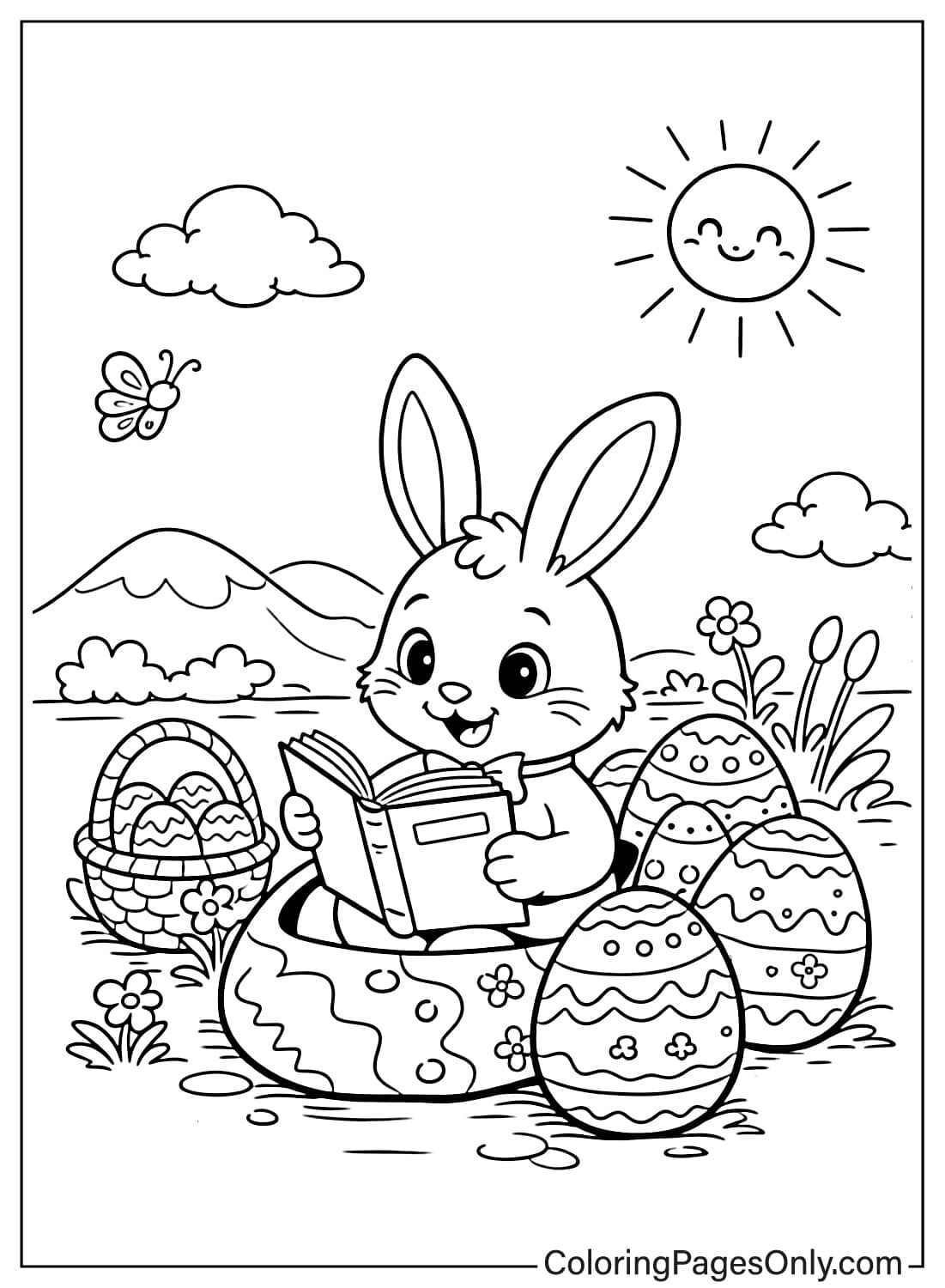
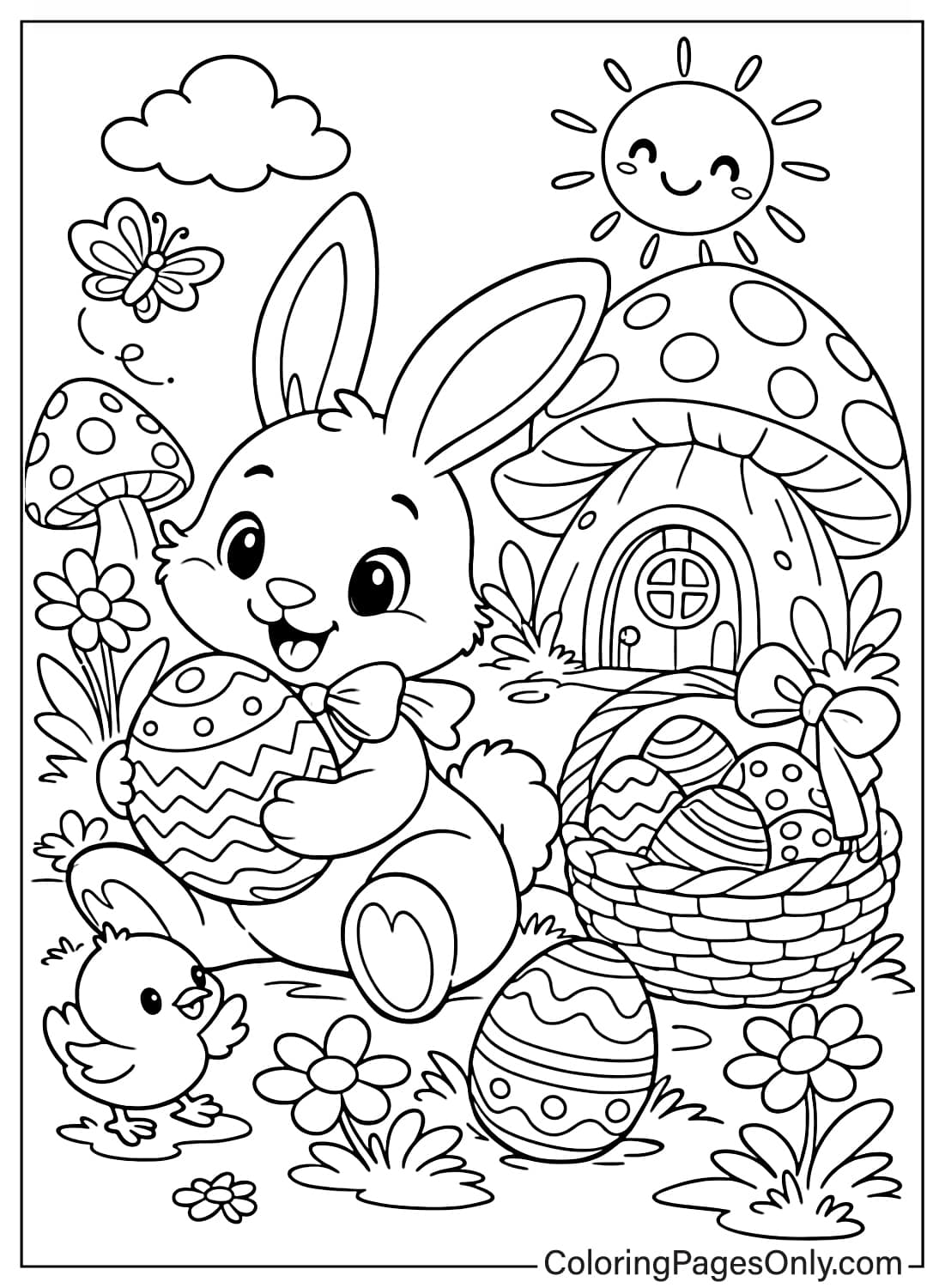
This collection includes many Easter Bunny moods and scenes. Some pages are very easy, with one large bunny, one egg, or a simple basket. Some pages show bunnies painting eggs, stacking eggs, pushing carts, reading, holding Happy Easter signs, sitting in baskets, resting on eggs, or playing with chicks and butterflies. Others feel more imaginative, with egg houses, mushroom houses, giant eggs, playful egg scenes, circus-style egg balancing, and spring garden designs.

A simple Easter Bunny page can be finished quickly by younger children. A detailed page with eggs, flowers, baskets, chicks, signs, or spring backgrounds can become a longer coloring project for older kids. Parents can print pages for Easter weekend, teachers can use them for spring classroom activities, and kids can color online anytime.

All 70+ pages are free at ColoringPagesOnly.com. Print your favorite Easter Bunny page at home or color it online.

What’s Inside

Cute Easter Bunny Coloring Pages

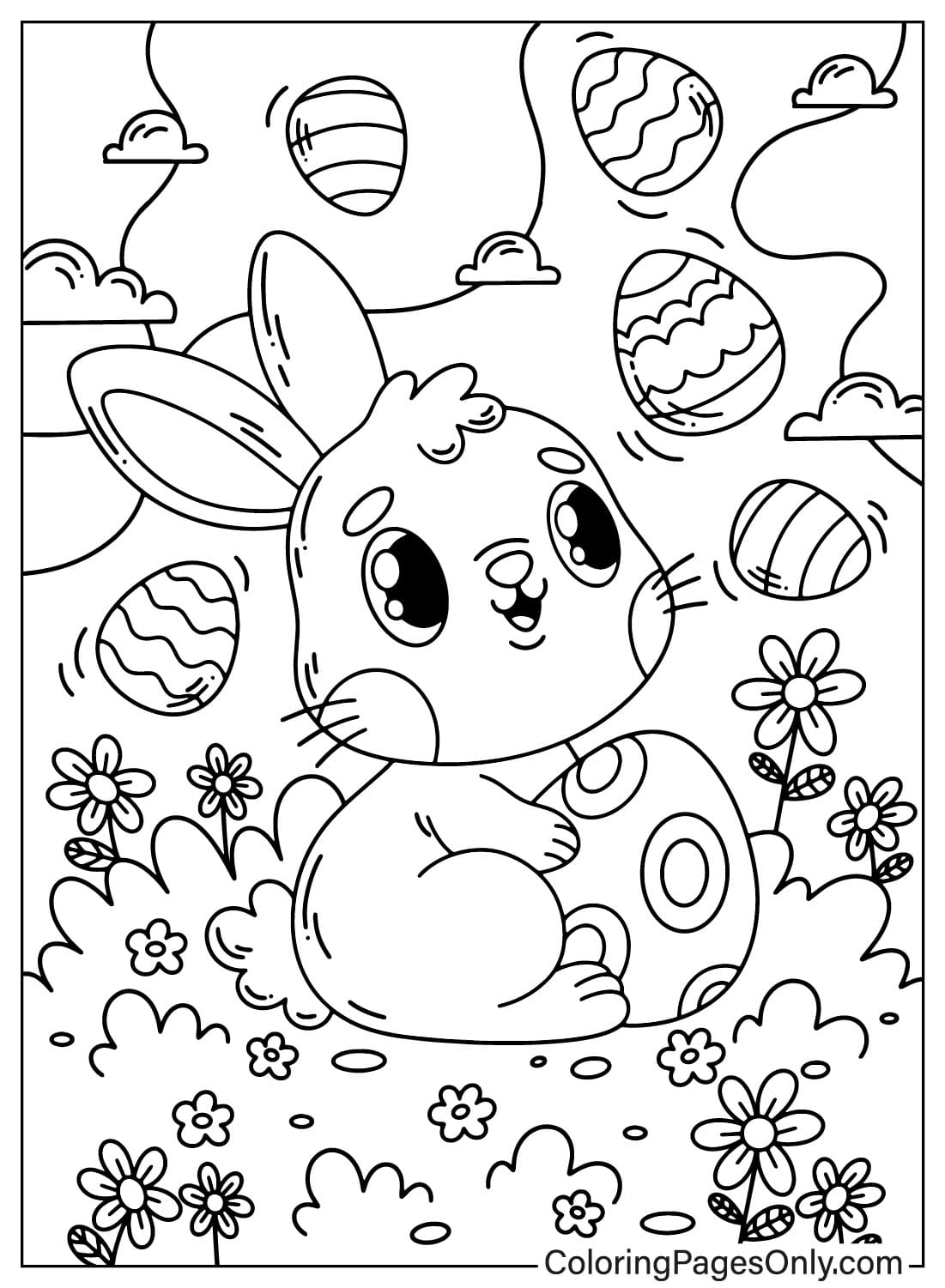
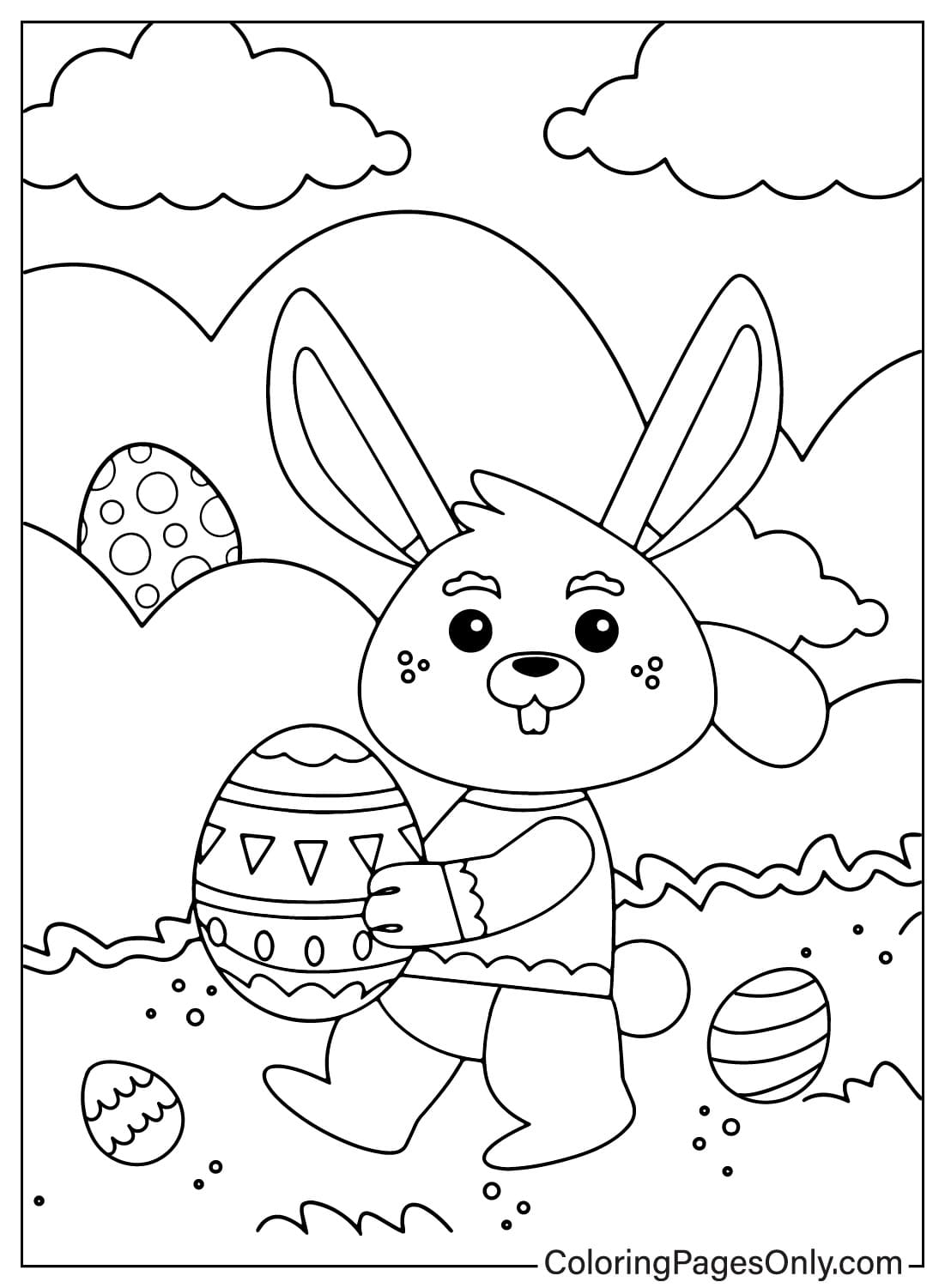
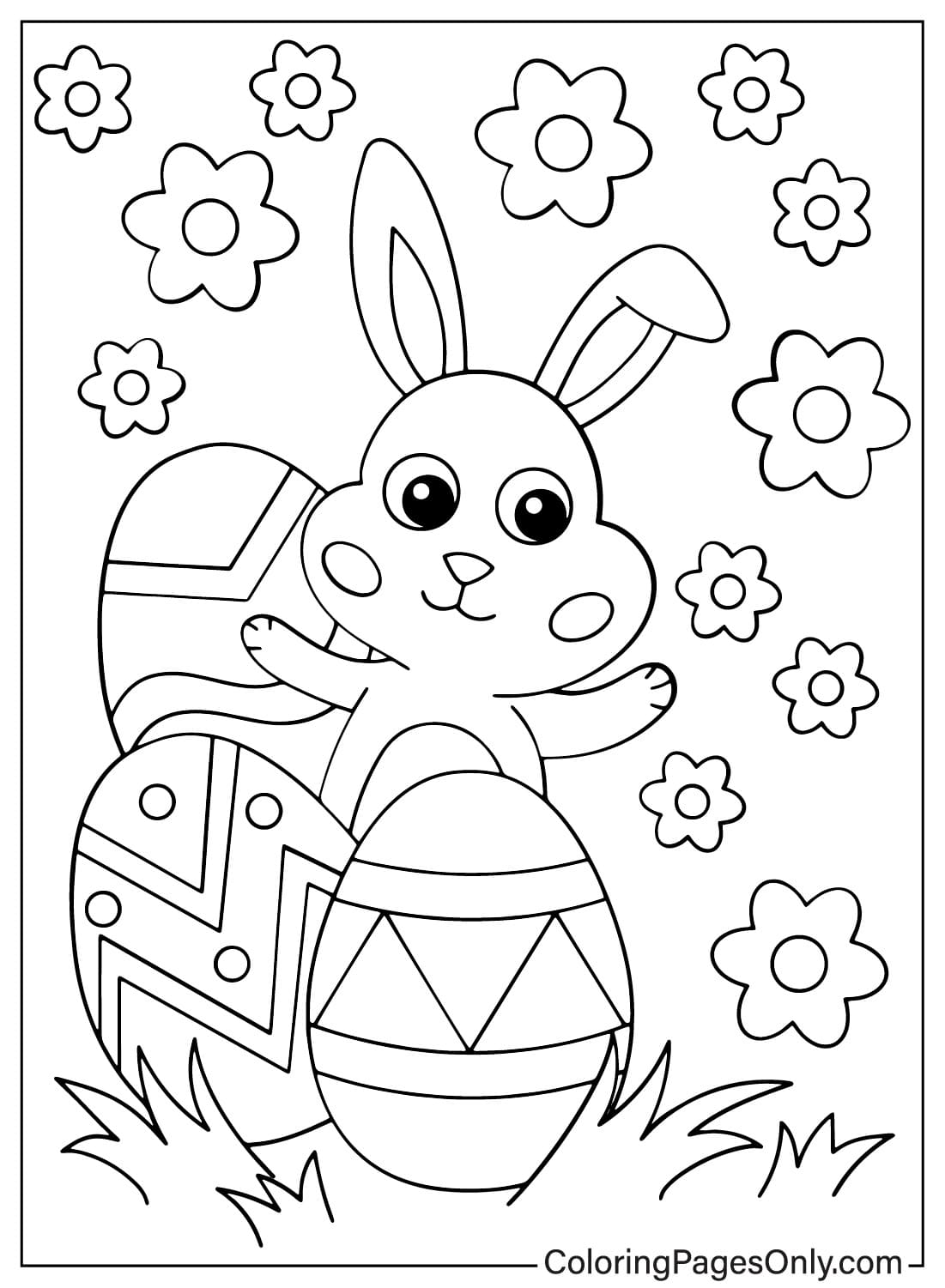
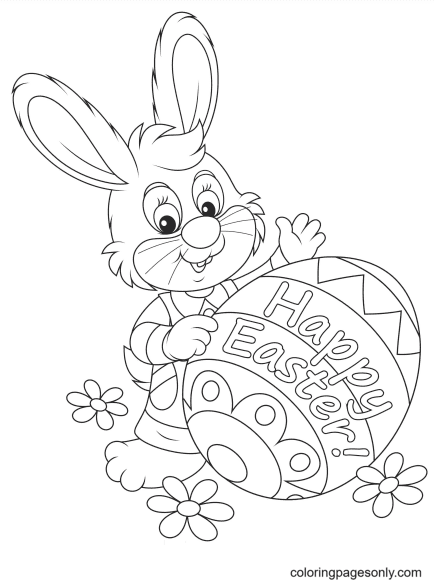
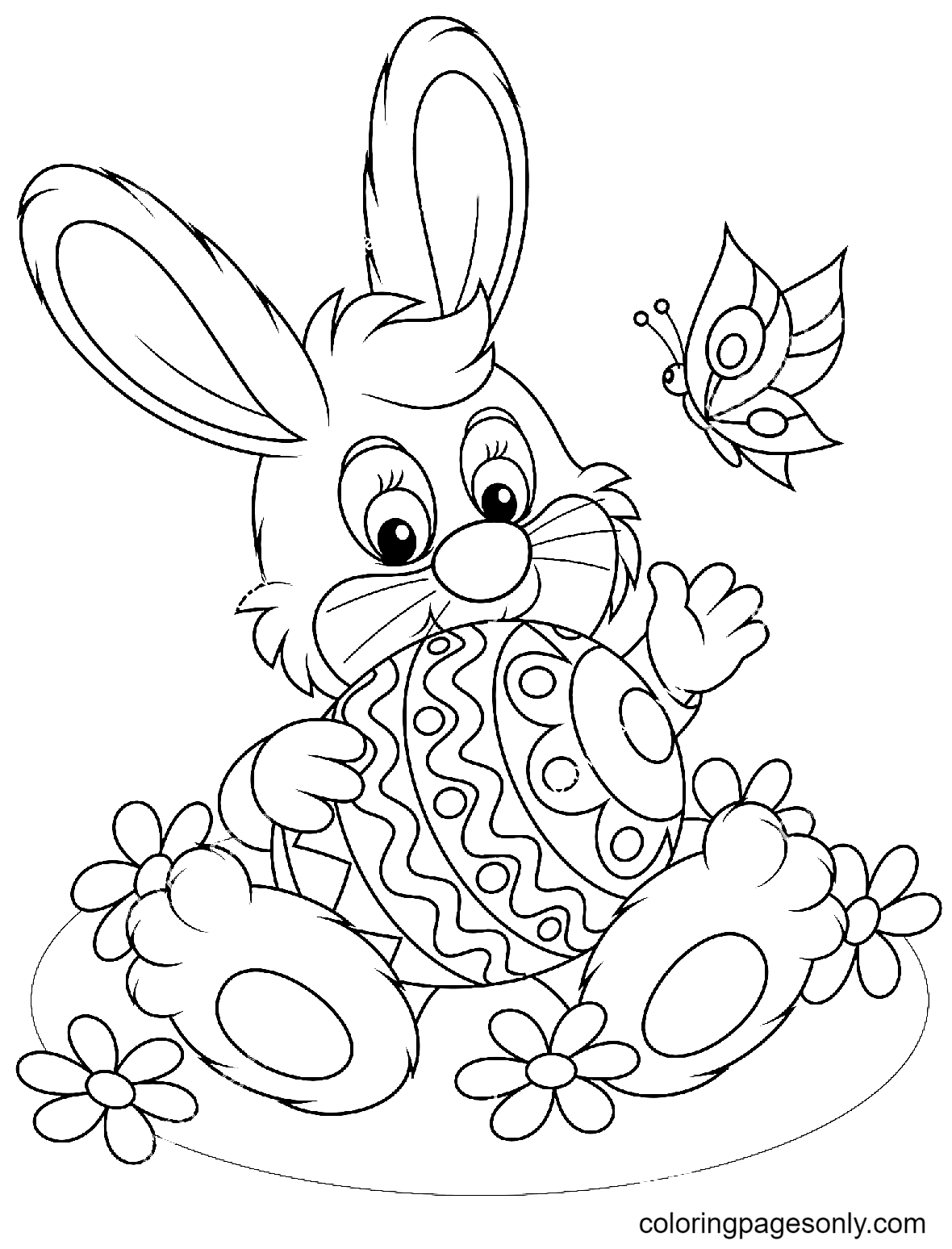
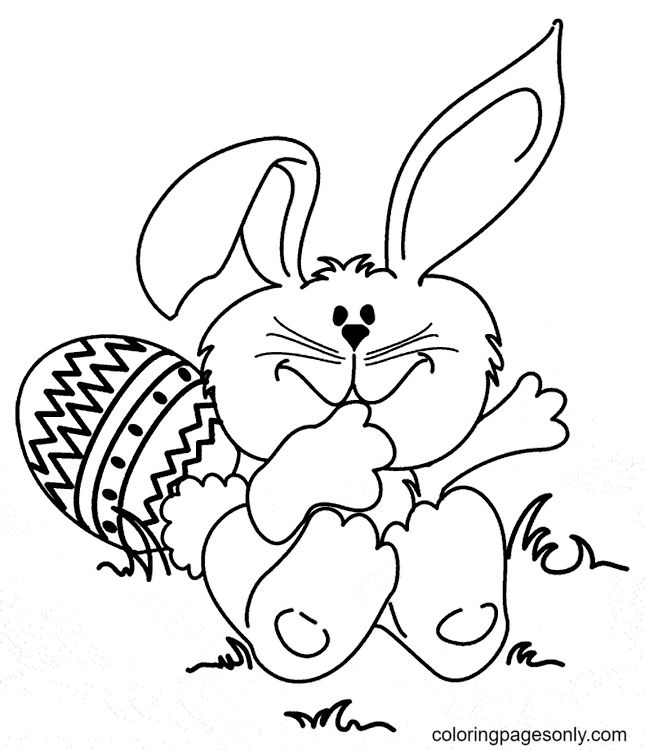
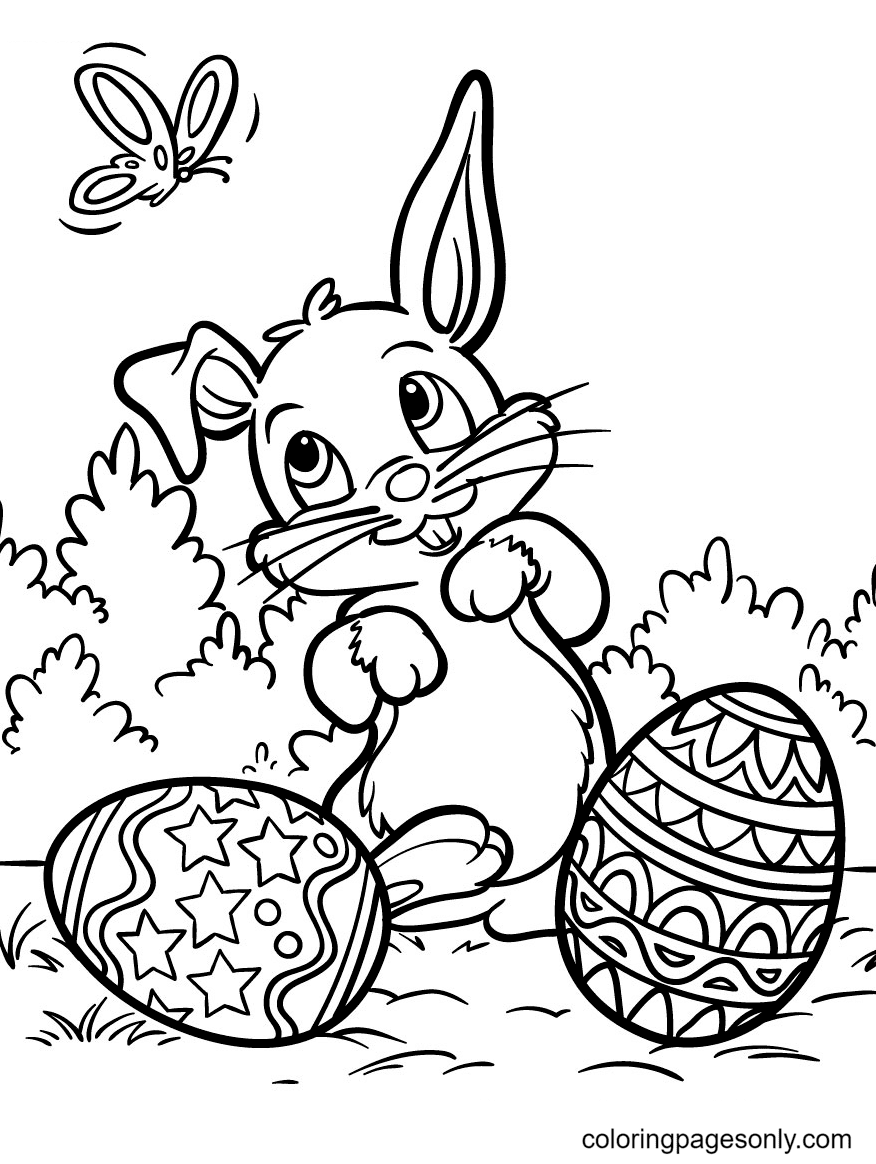
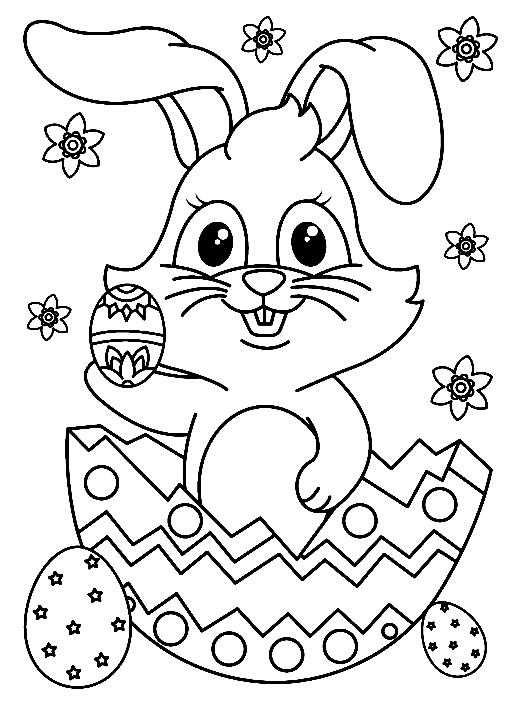
Cute Easter Bunny coloring pages focus on friendly bunny characters with soft shapes, long ears, round cheeks, small paws, and cheerful expressions. These pages may show a bunny smiling, waving, sitting, standing, holding an egg, or posing with simple Easter decorations.

The strength of a cute bunny page is approachability. Young children can recognize the character immediately, and the large body shape gives them enough space to color with confidence. The ears, face, paws, and tail add smaller details without making the page too hard.

These pages work especially well for preschool and early elementary children. A single bunny with a simple egg or basket can be finished quickly, while still feeling festive and complete.

For coloring, soft gray, white, cream, tan, light brown, or pale pink can work well for the bunny. The inner ears can use light pink or peach. A soft blue sky, green grass, or small spring flowers can make the page feel warm without taking attention away from the bunny.

Cute bunny pages are a good starting point before children move into egg hunts, baskets, garden scenes, or more detailed Easter designs.

Easter Bunny and Egg Coloring Pages

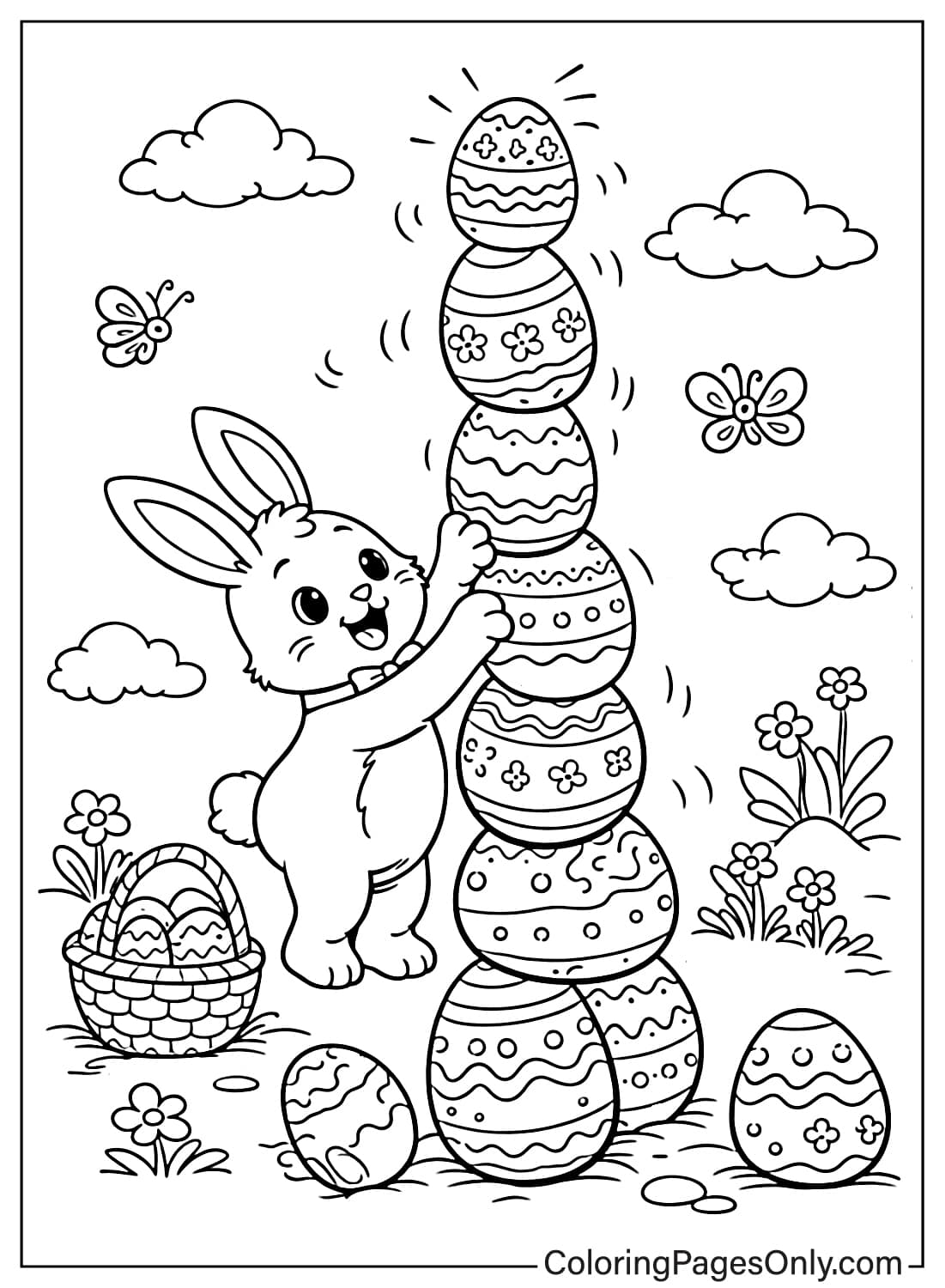
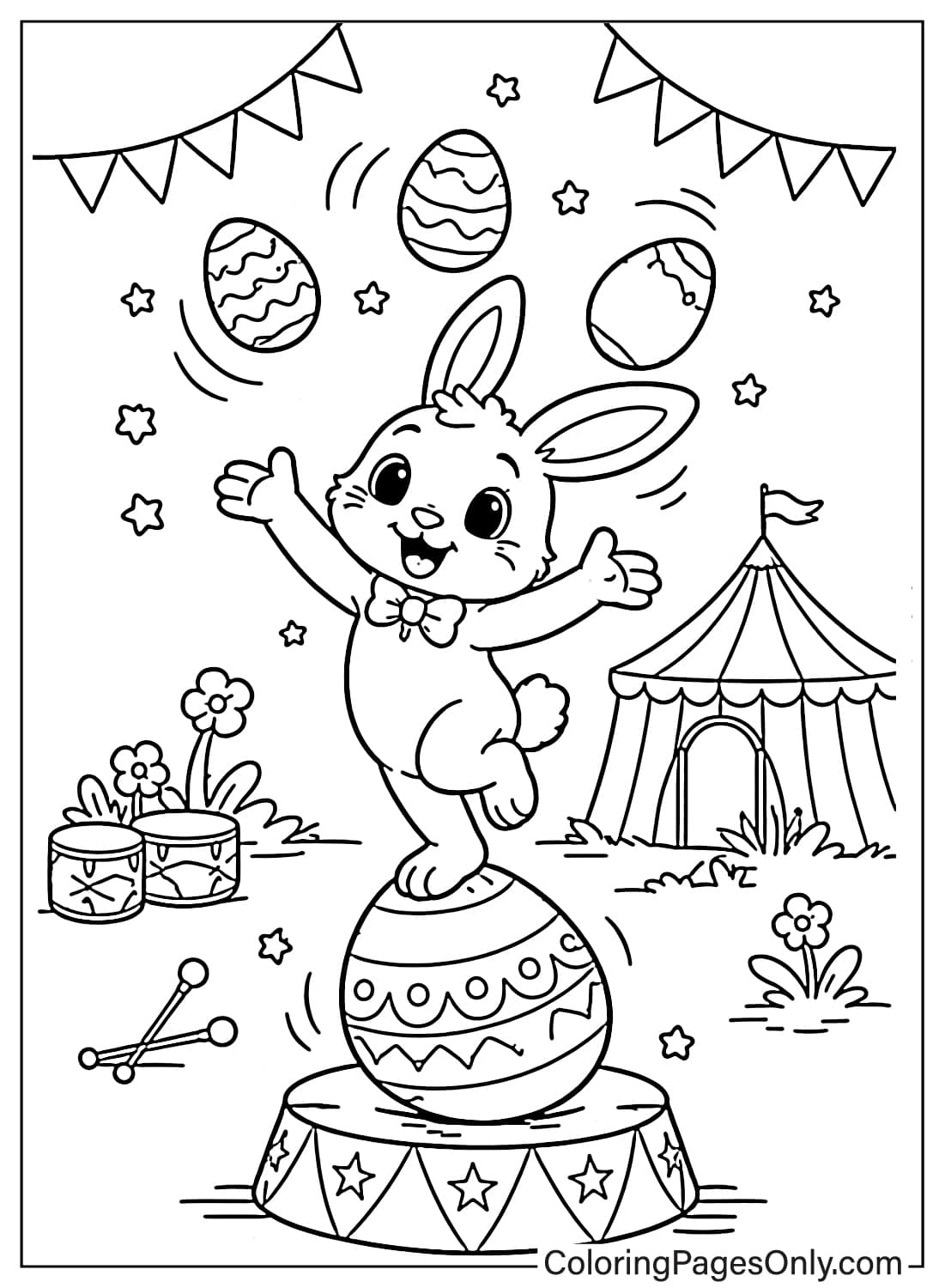
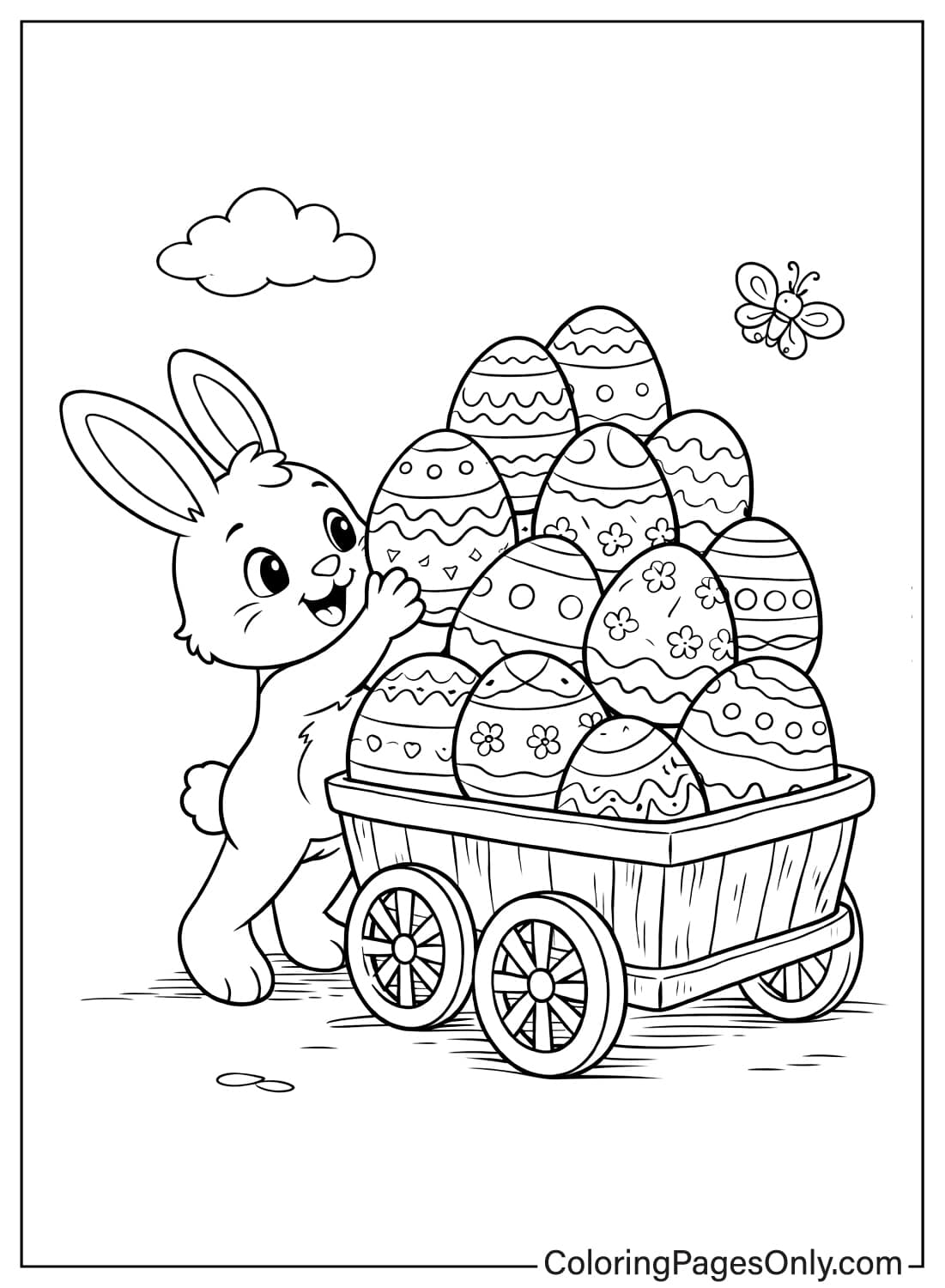
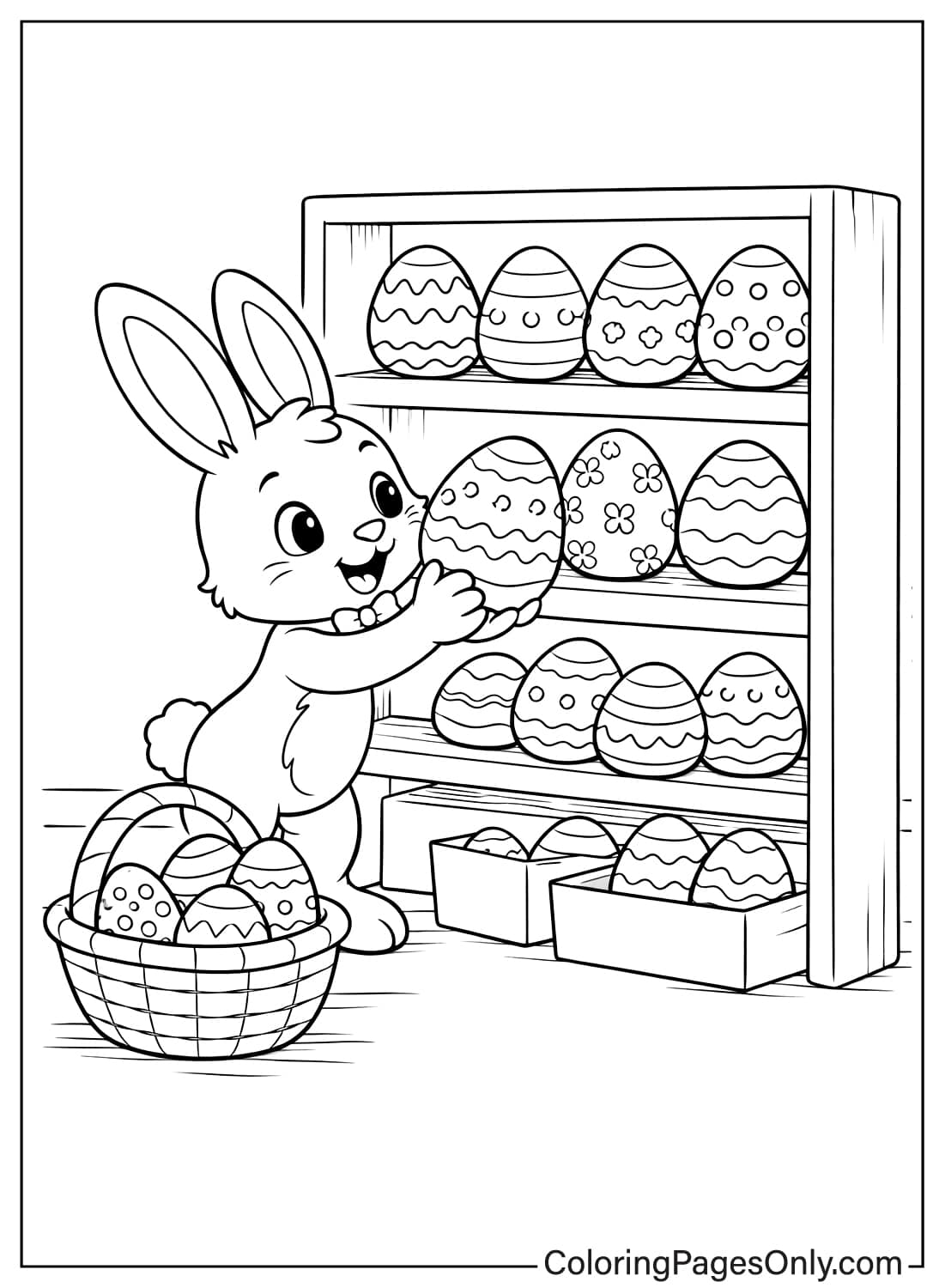
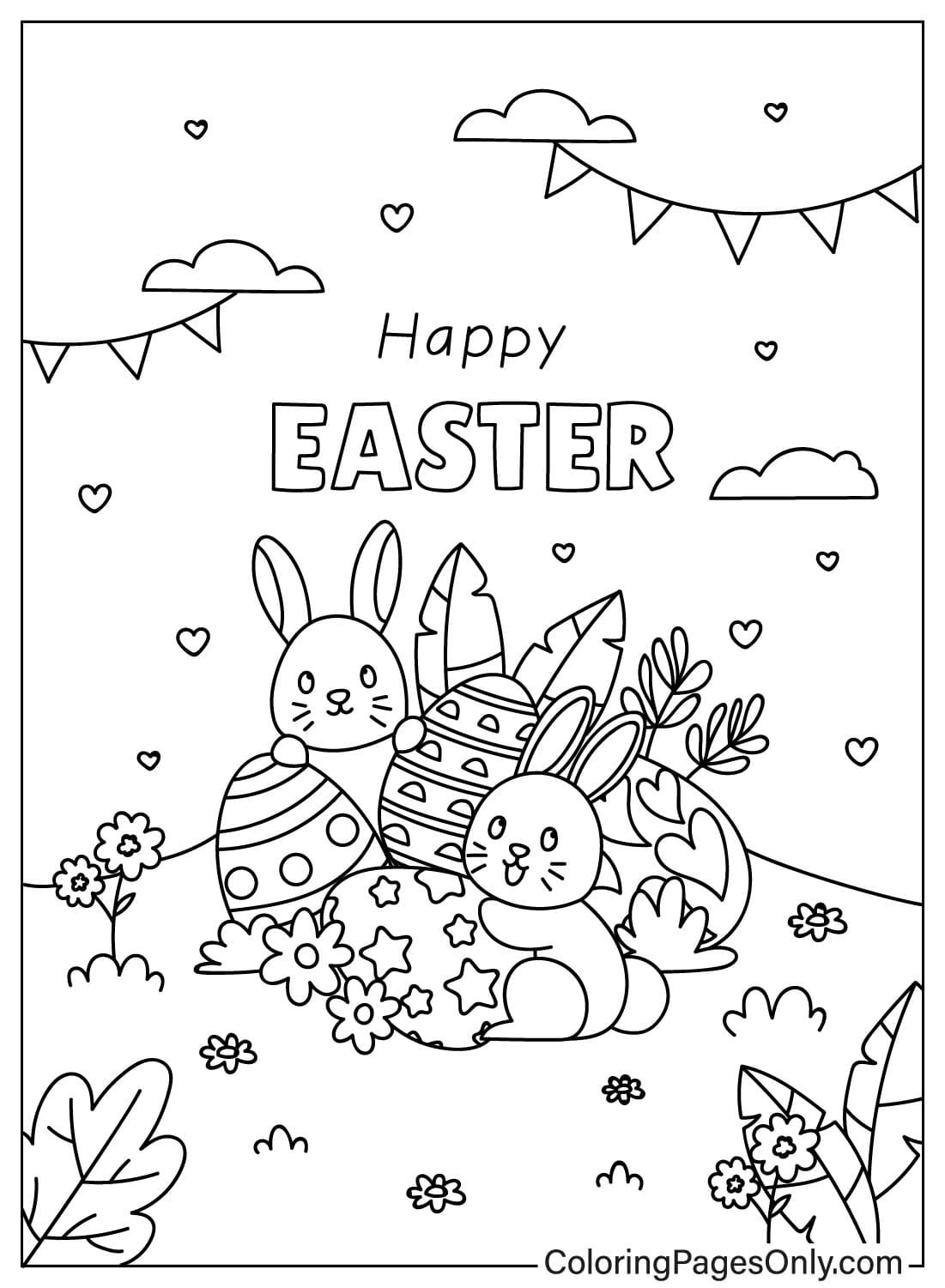
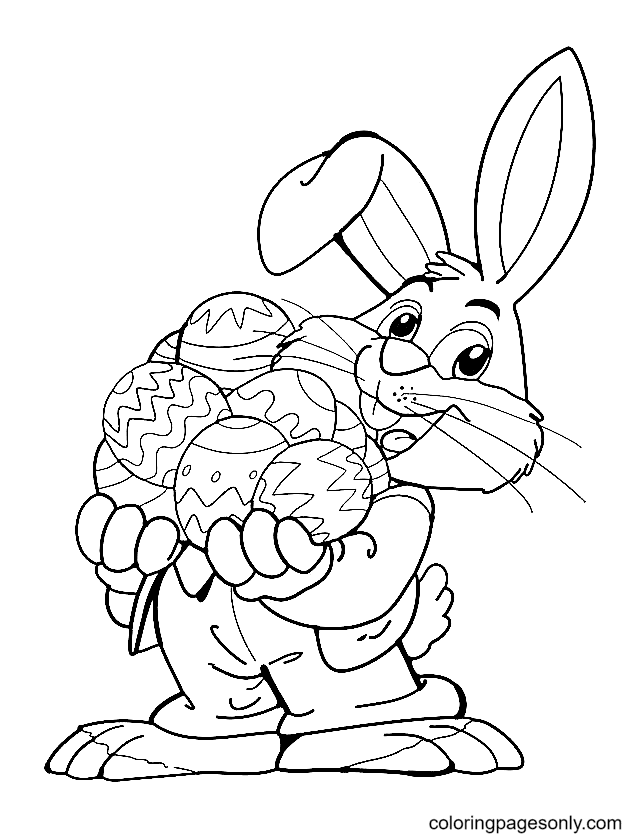
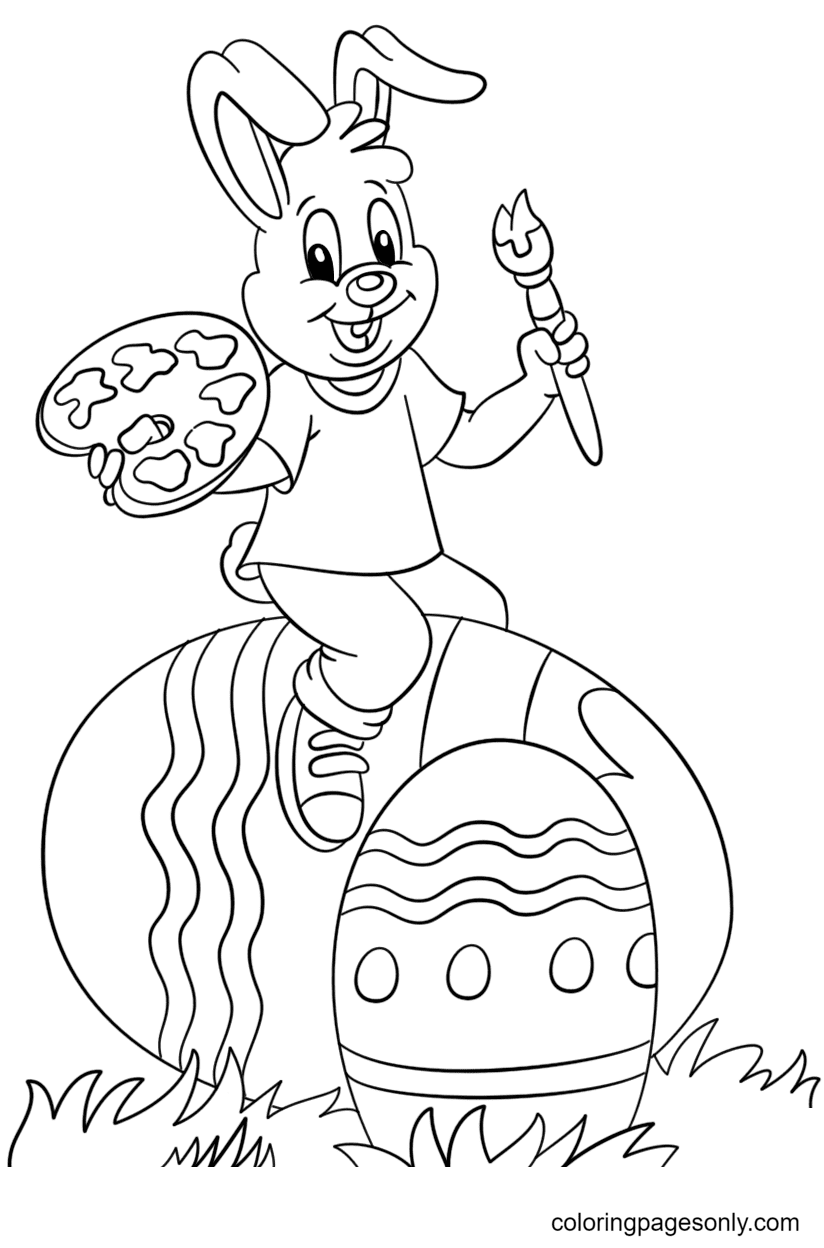
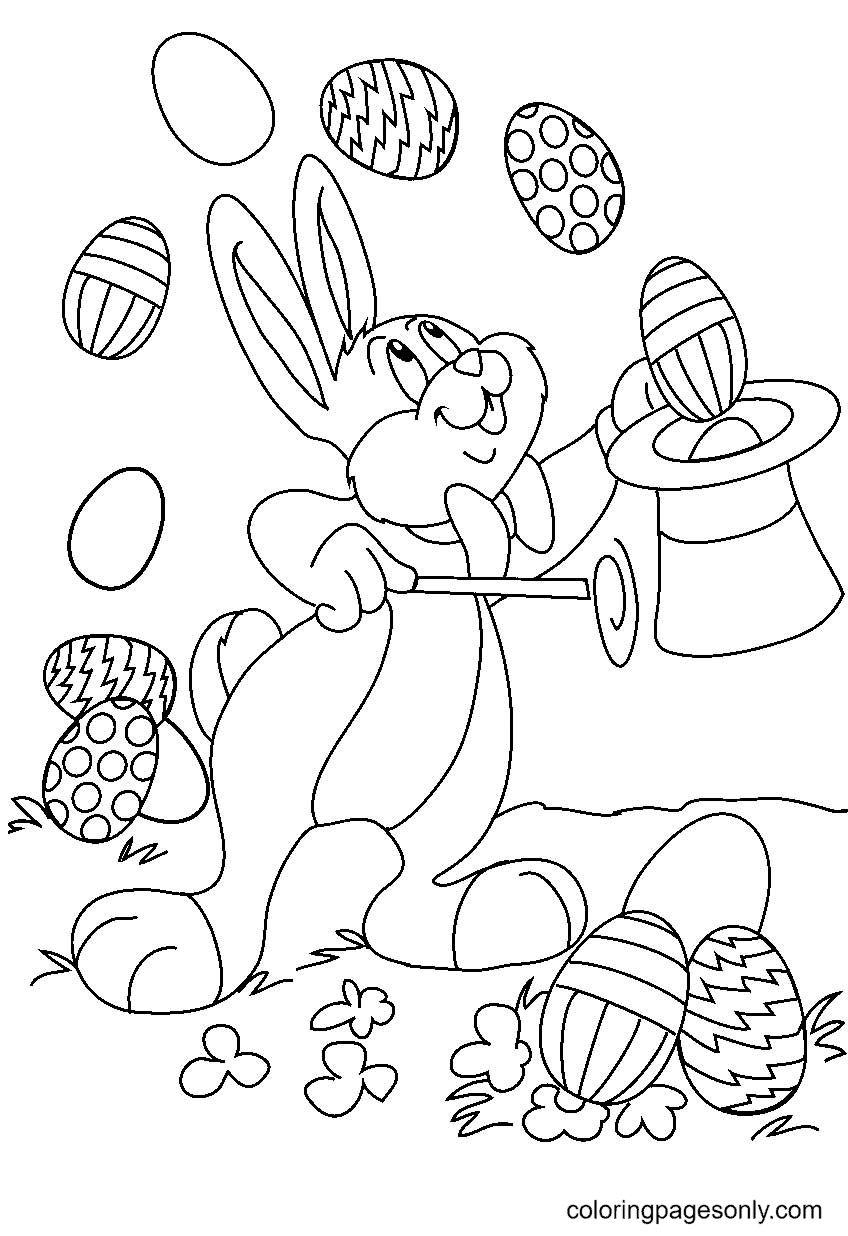
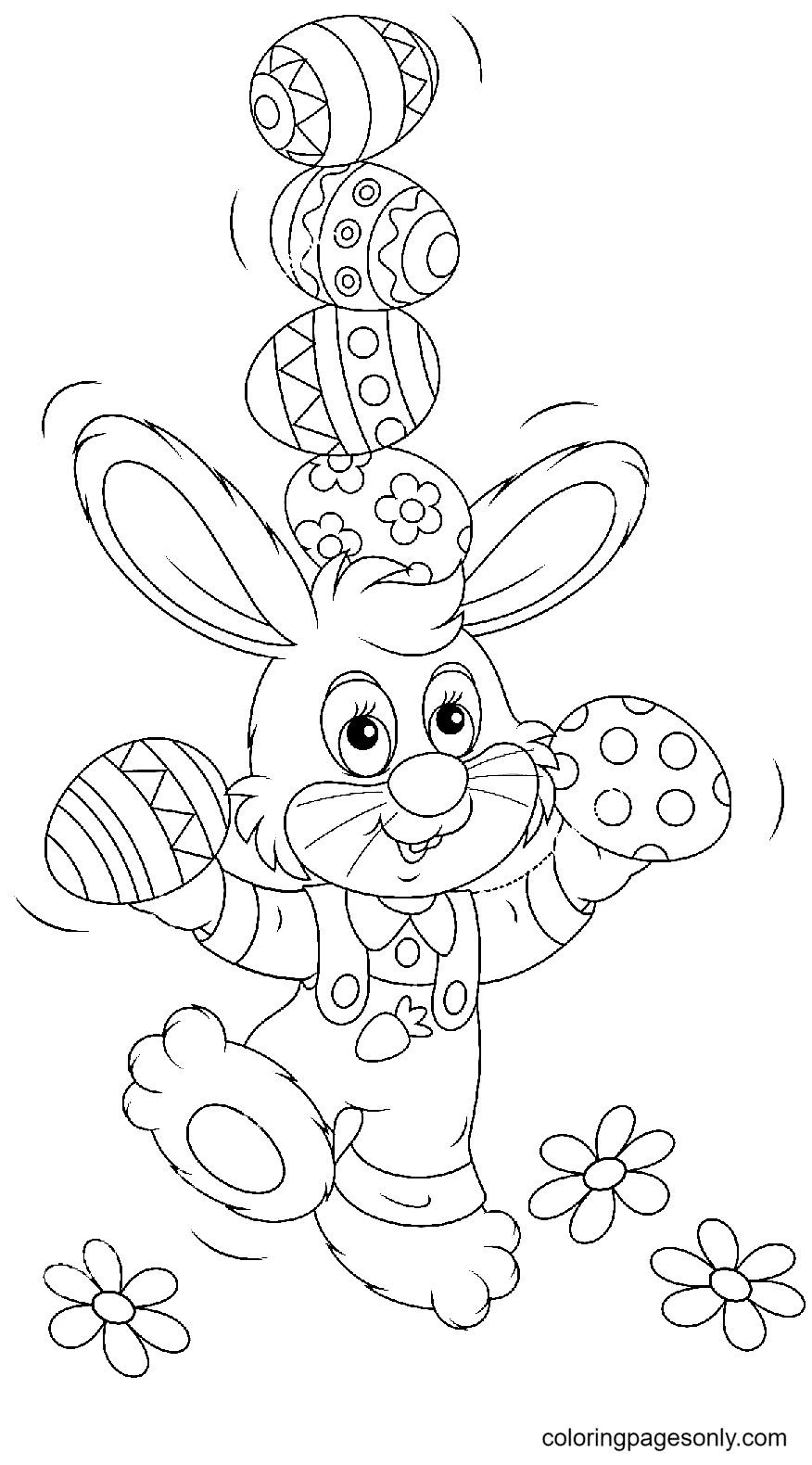
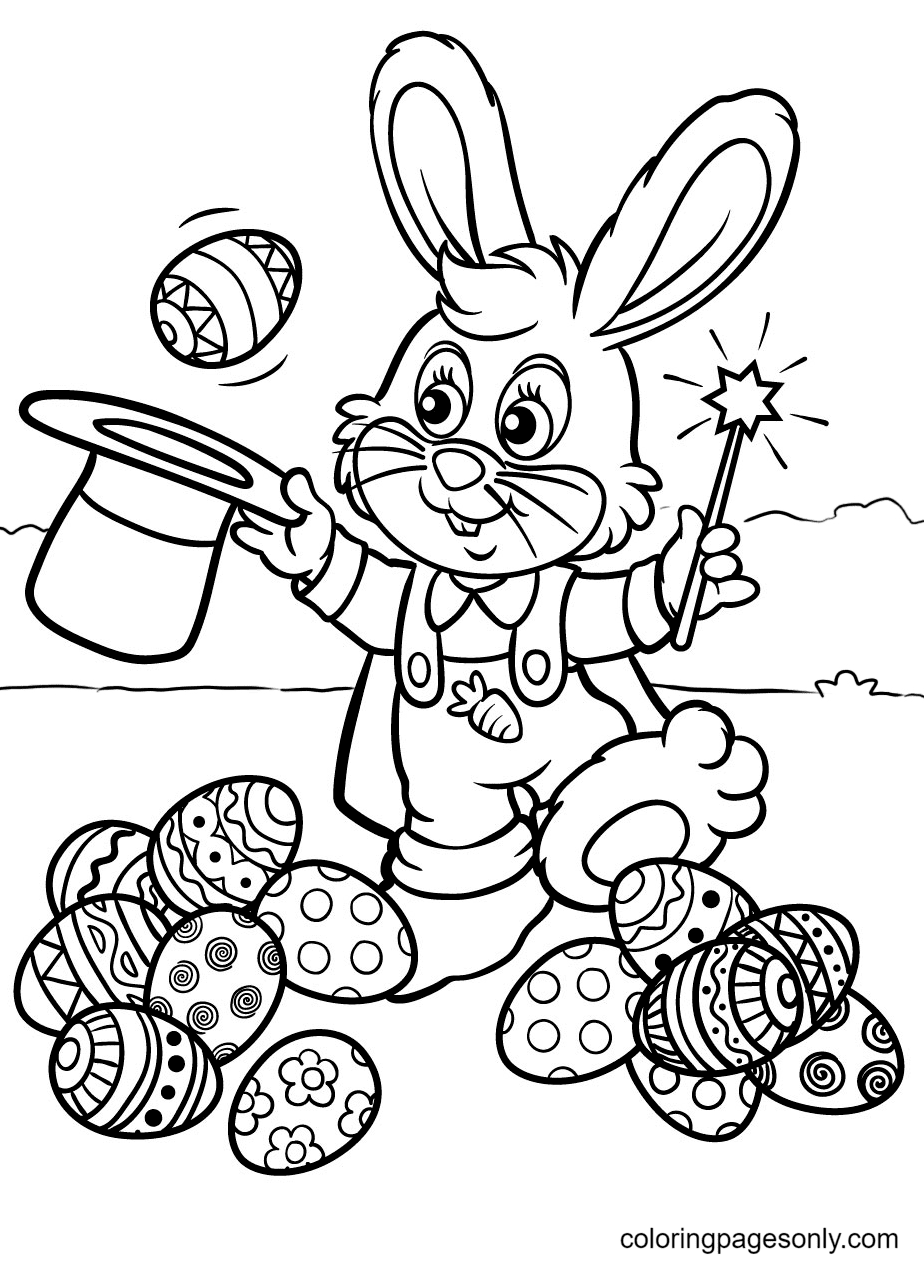
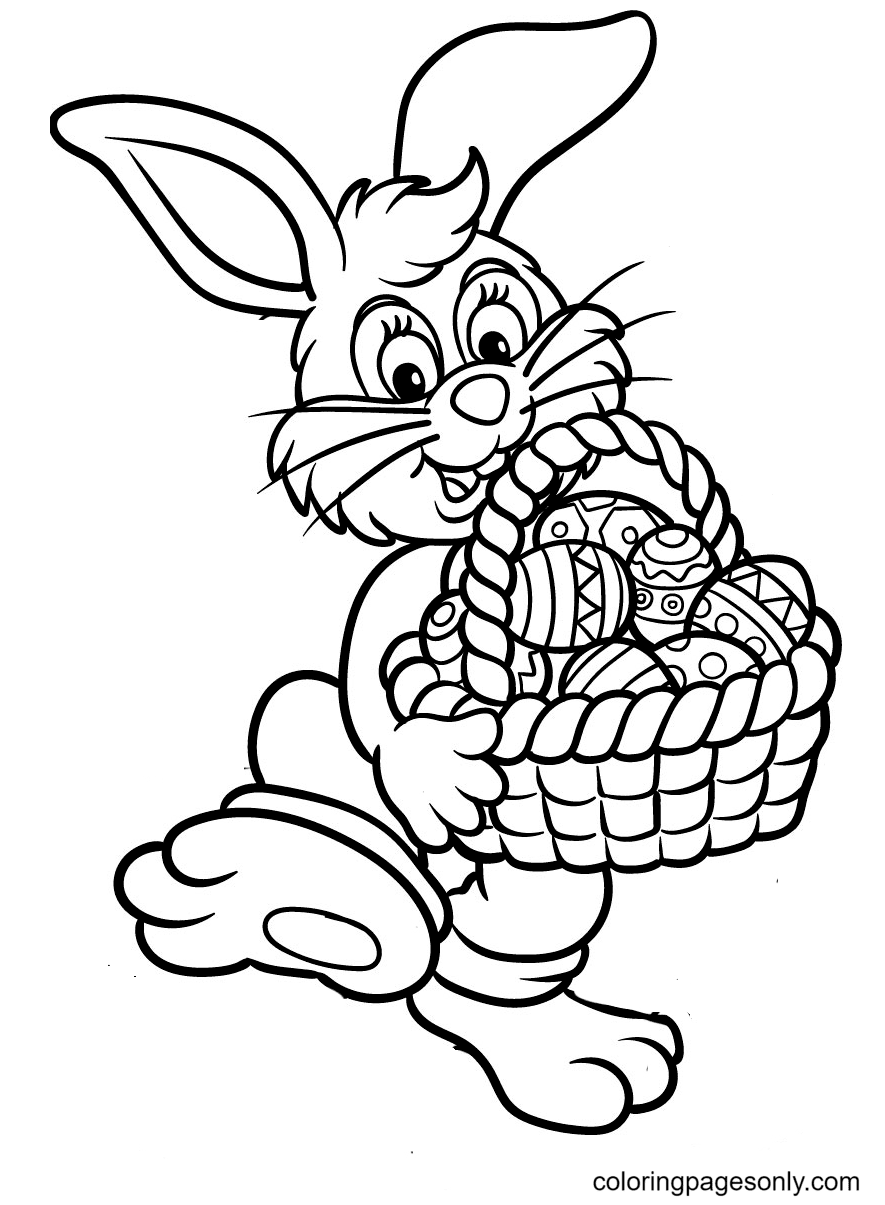
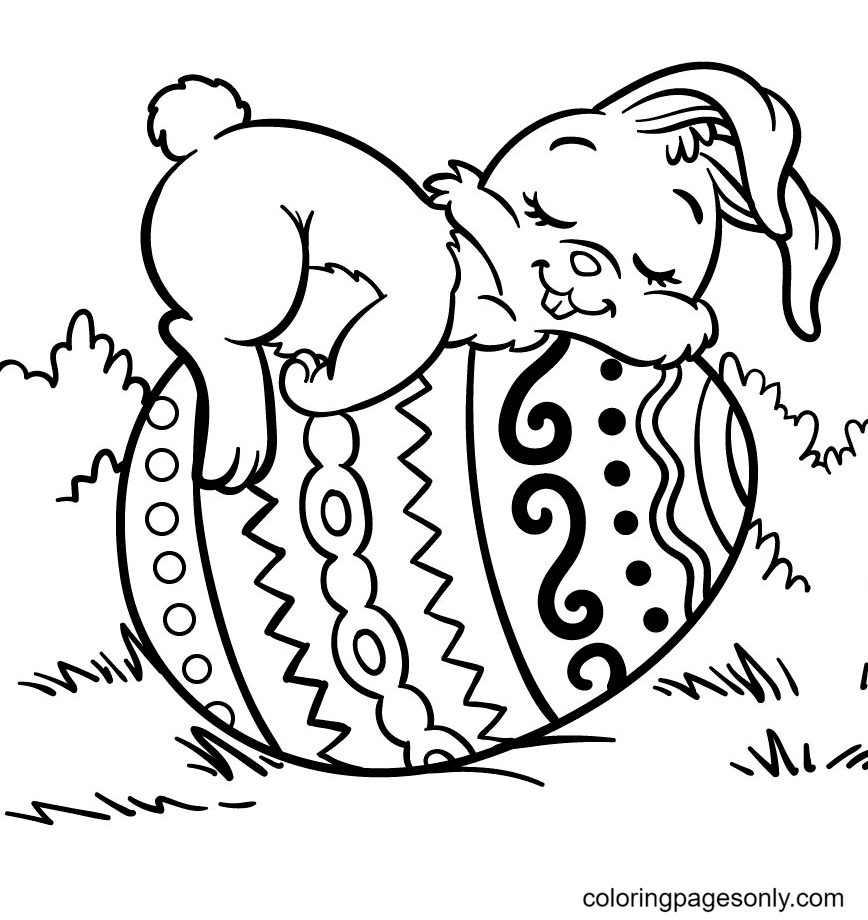
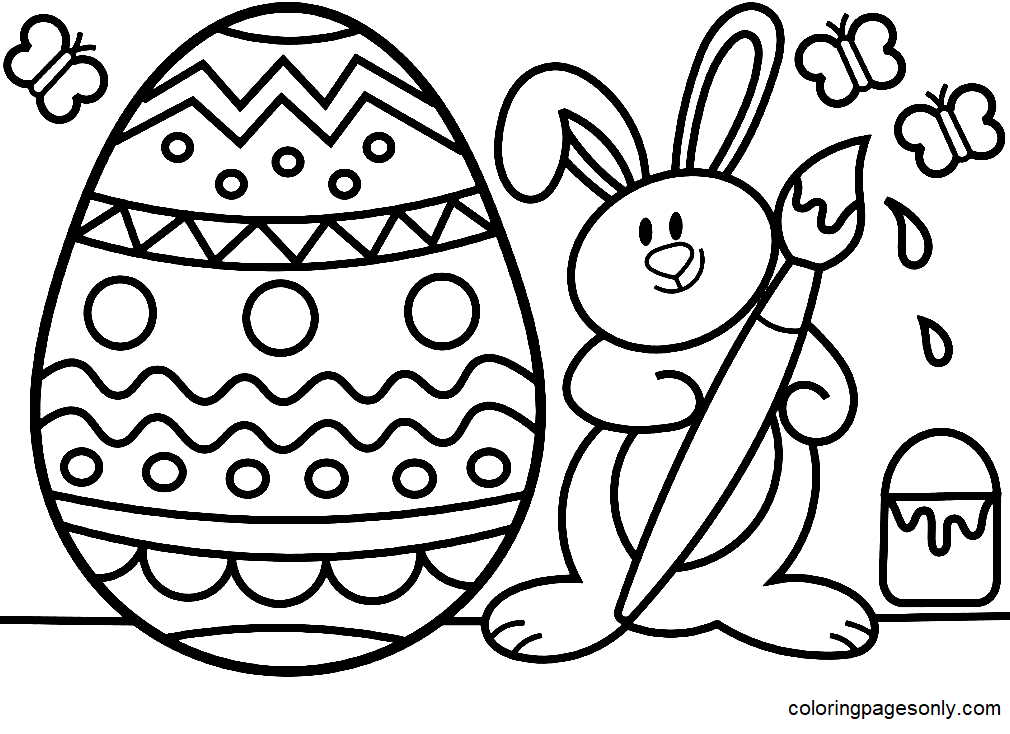
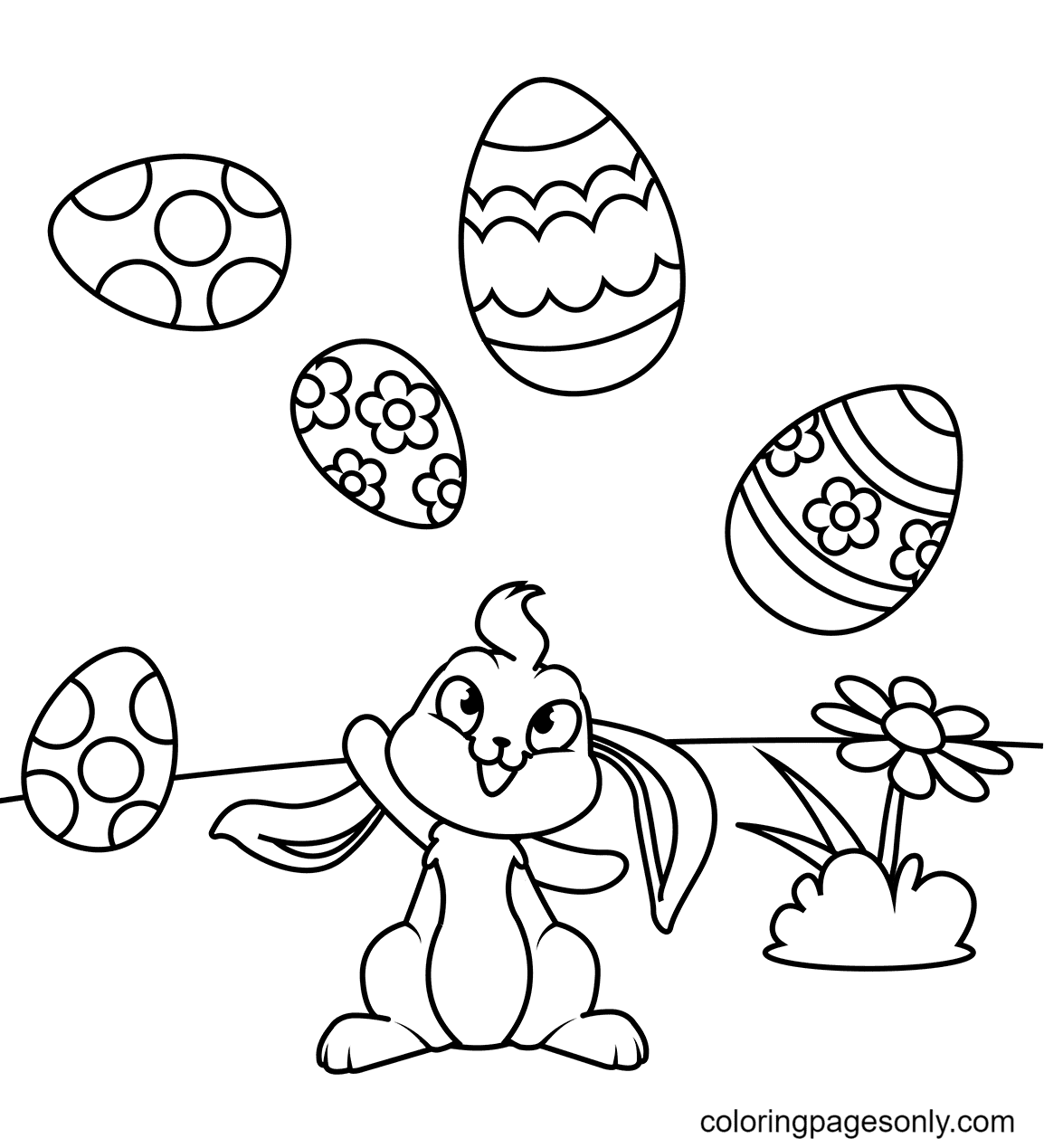
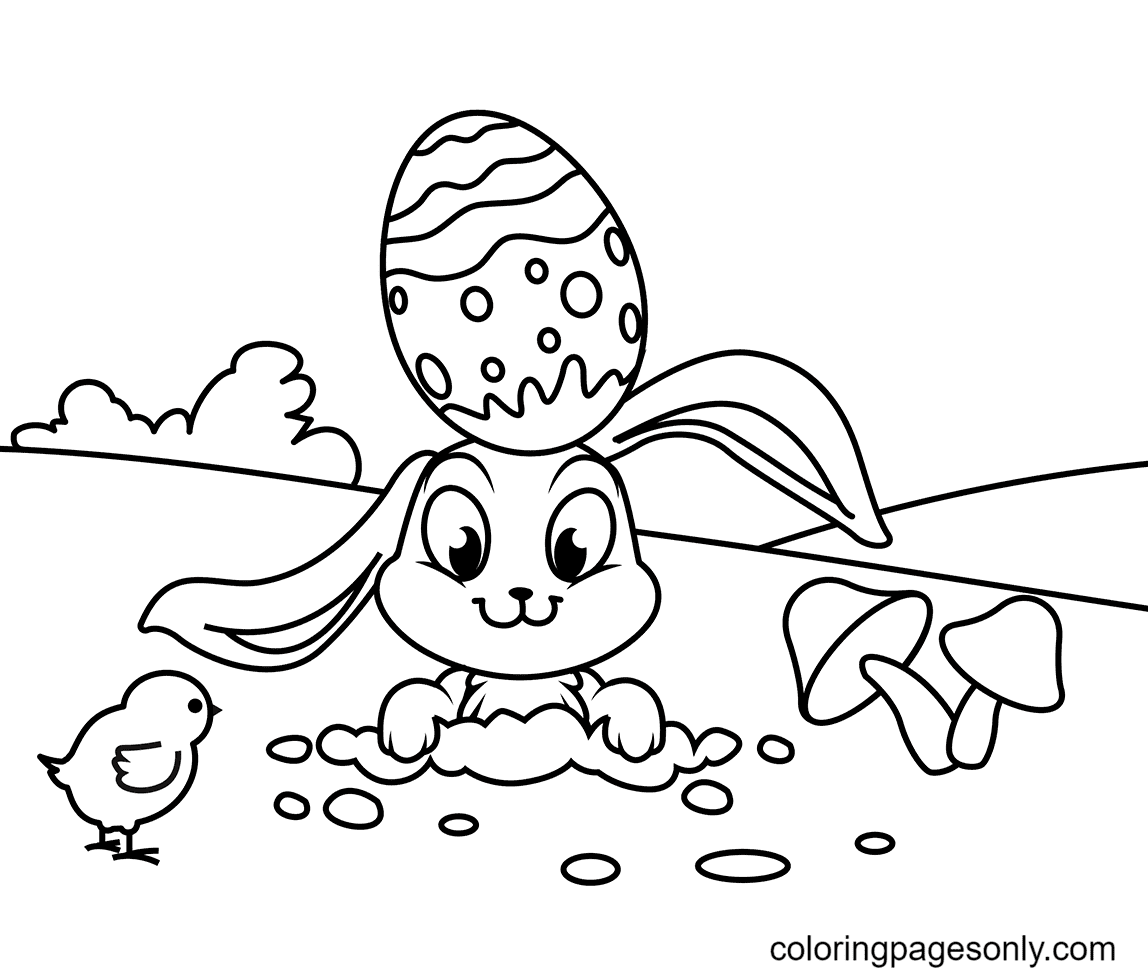
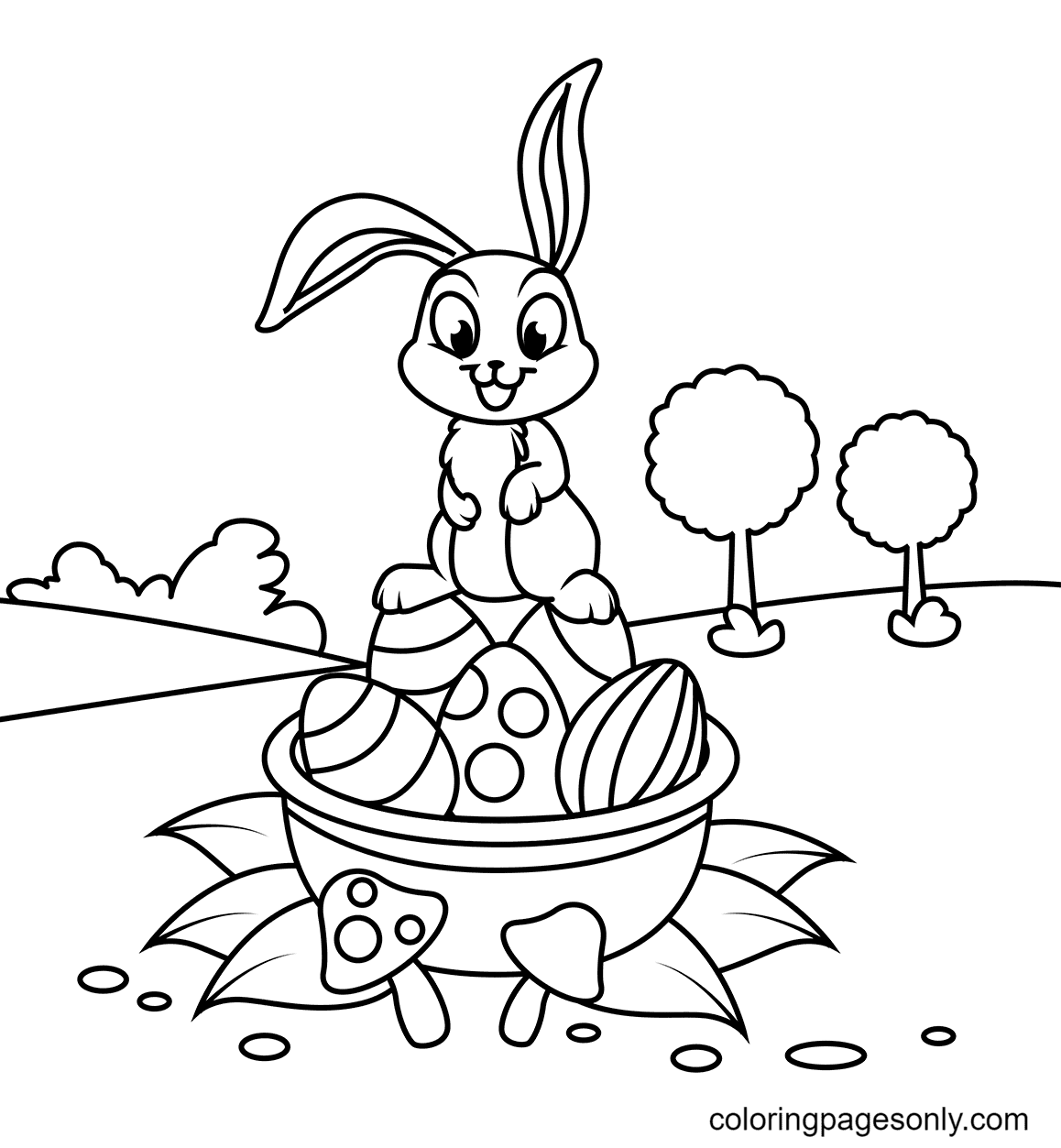
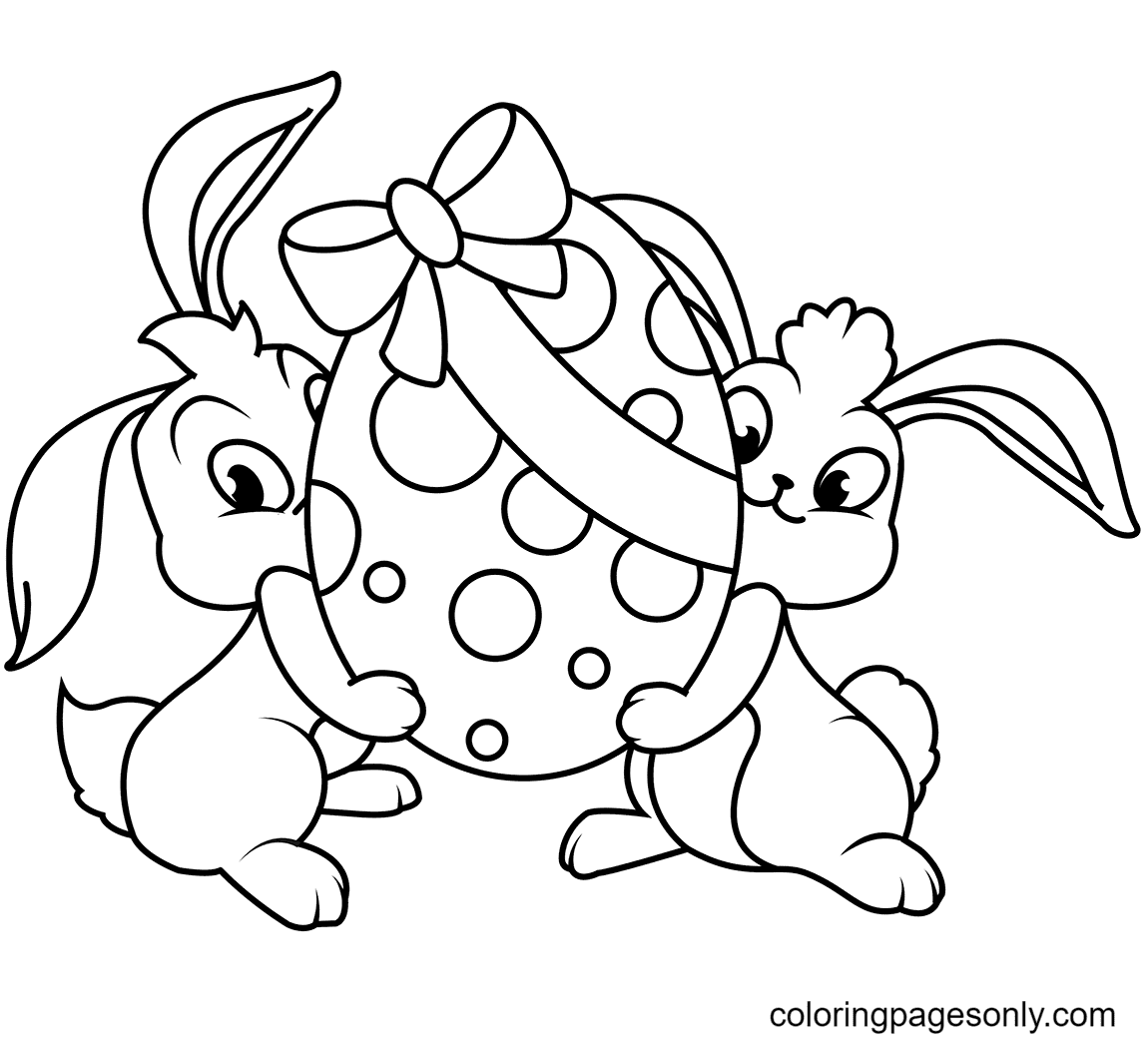
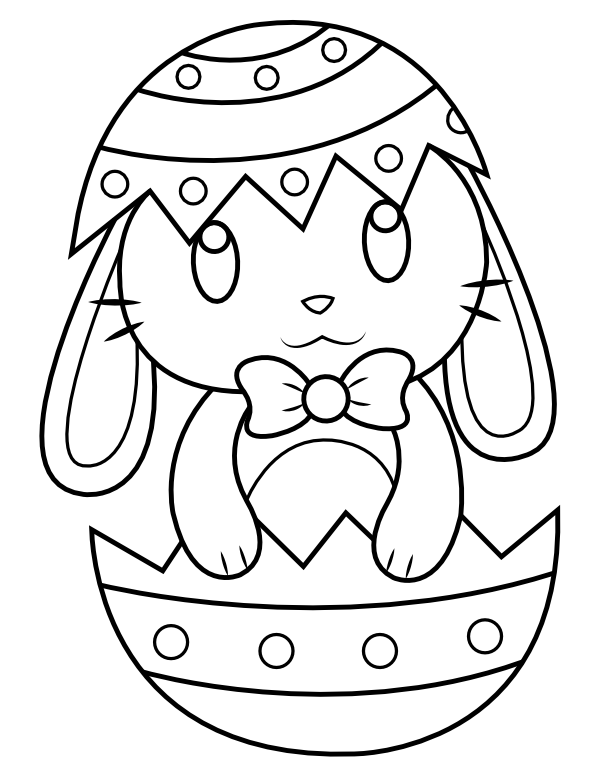
Easter Bunny and egg pages are the heart of this collection. These designs may show a bunny holding an egg, painting eggs, hiding eggs, stacking eggs, juggling eggs, sitting on an egg, popping out of an egg, or carrying a basket full of decorated eggs.

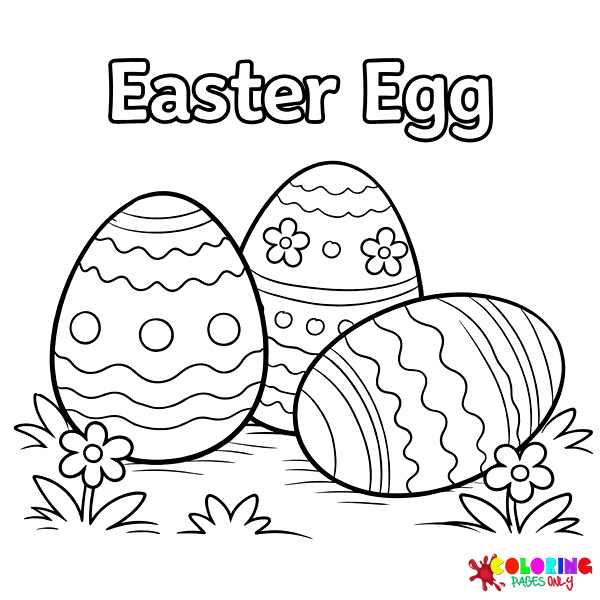
Egg pages are strong because they give children many color choices. Each egg can have a different pattern: stripes, dots, zigzags, flowers, stars, hearts, or simple color blocks. A page with several eggs lets children practice variety without needing a complicated scene.

The main skill here is balance. If every egg is colored with very bright colors, the page can feel crowded. A good approach is to choose two or three main Easter colors, such as pink, yellow, blue, green, or lavender, then repeat them in different patterns.

Bunny and egg pages also work well for classroom use. Children can color the bunny first, then decorate each egg with a different pattern. The finished pages can become Easter displays, cards, or cut-out decorations.

For younger children, choose pages with one bunny and one large egg. Older kids can enjoy pages with many eggs, detailed baskets, egg towers, or patterned backgrounds.

Easter Bunny Basket Coloring Pages

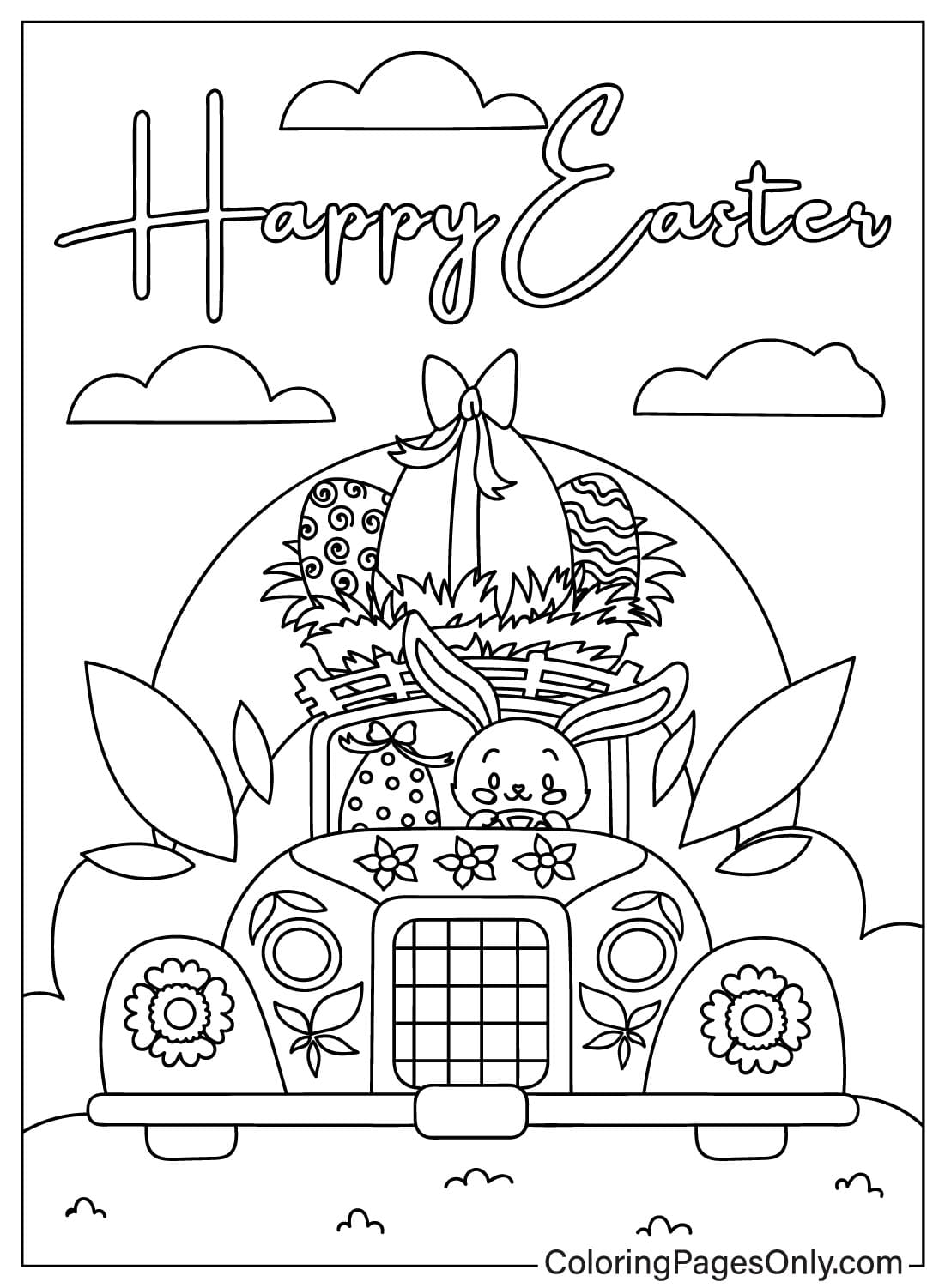
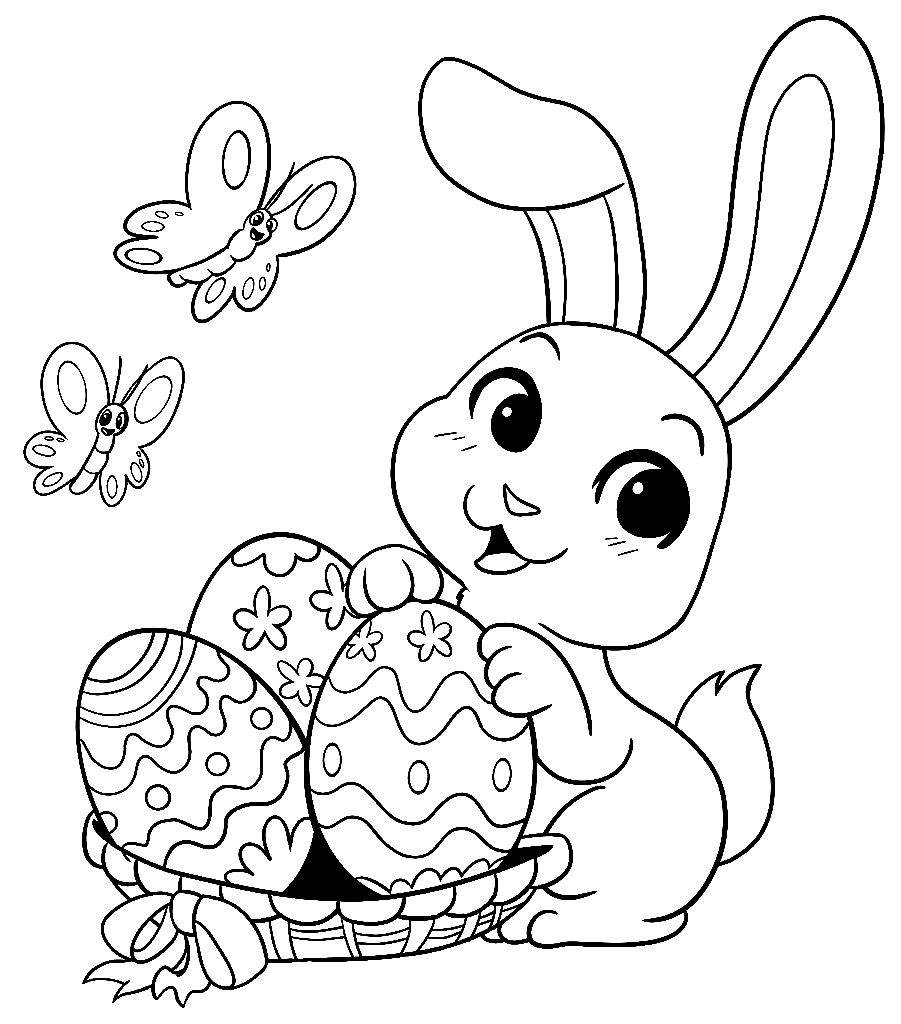
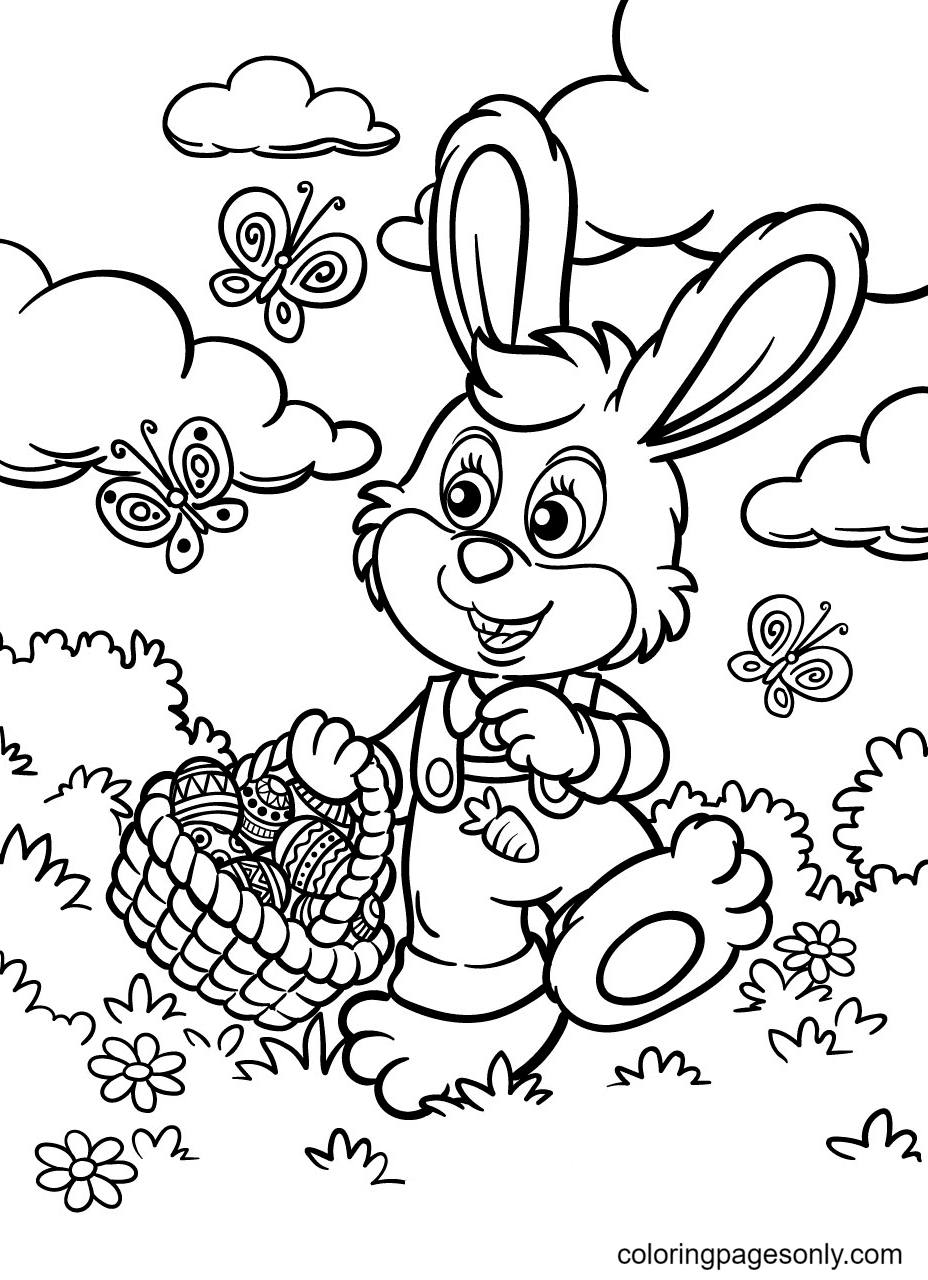
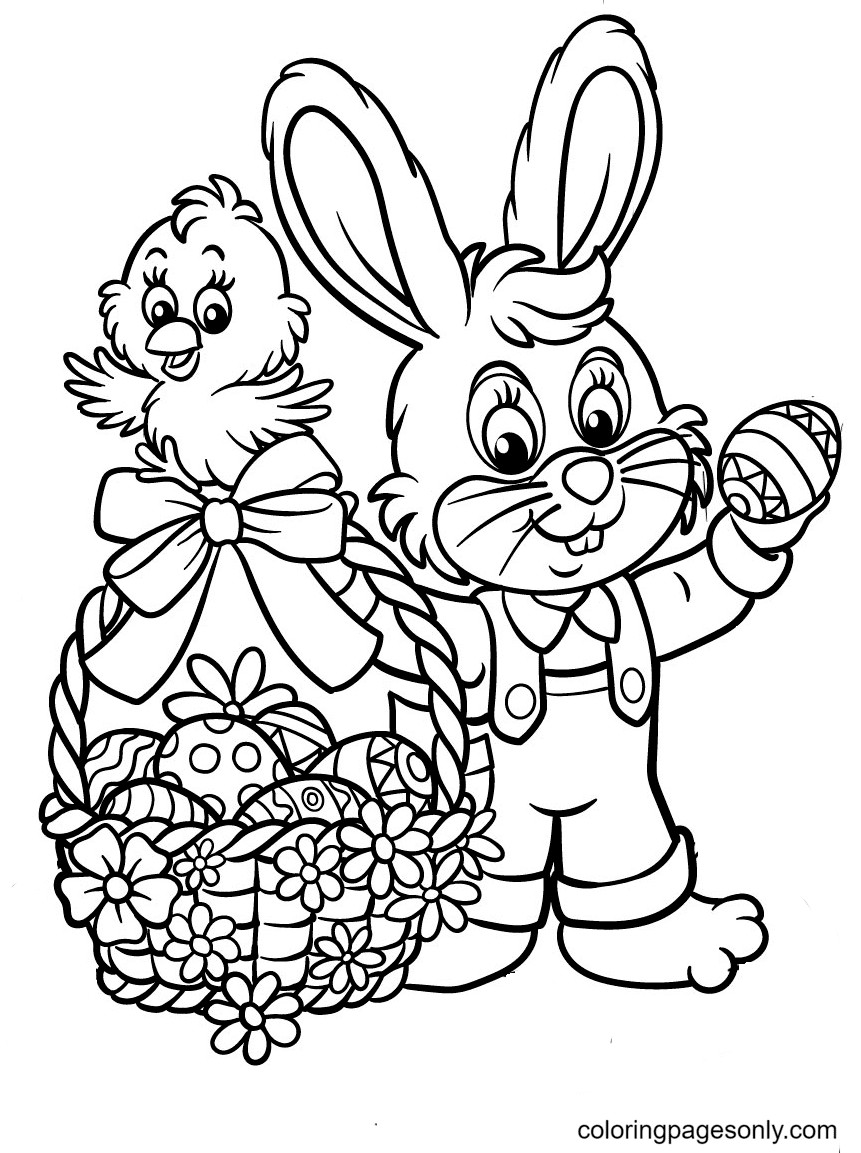
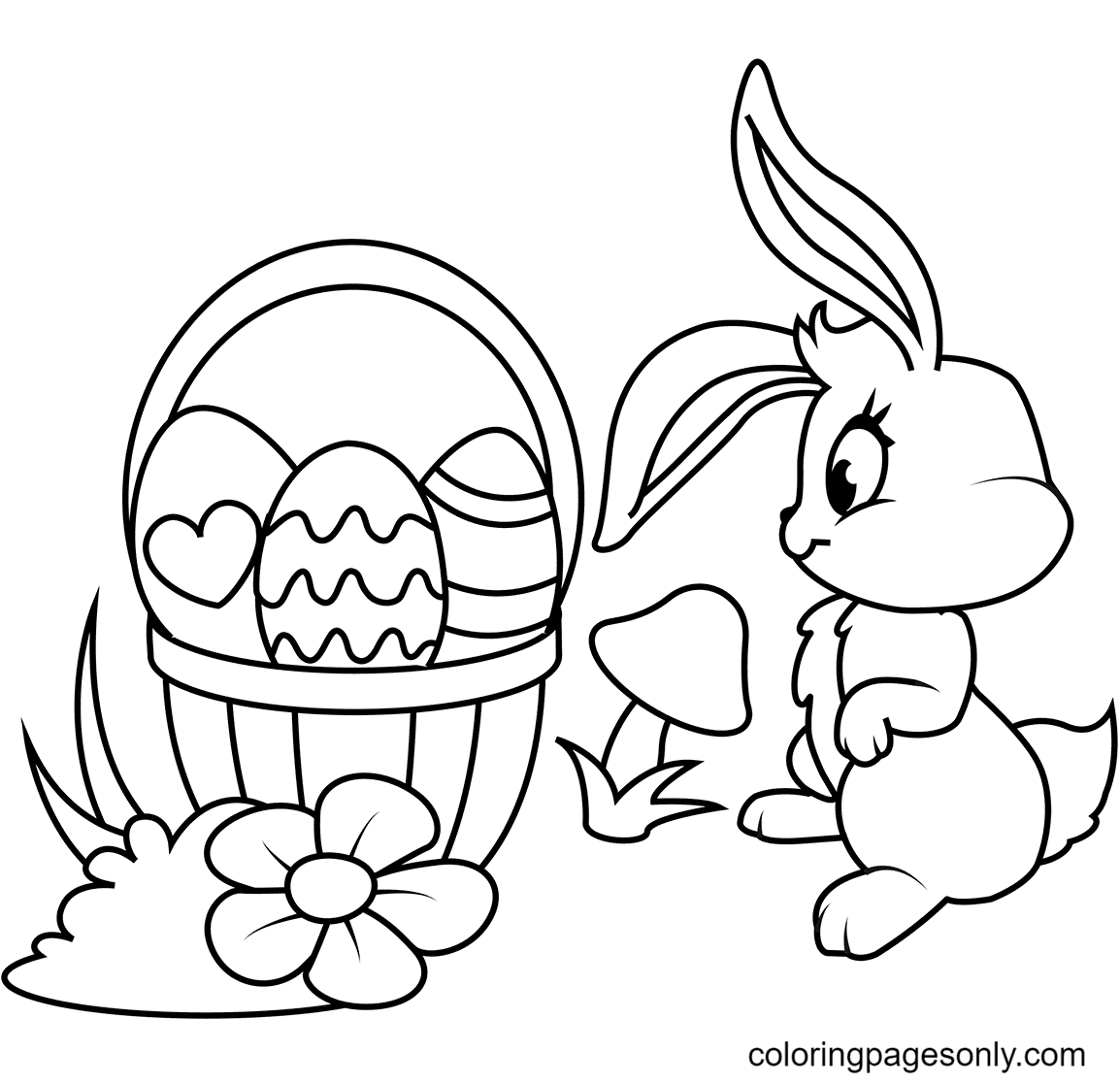
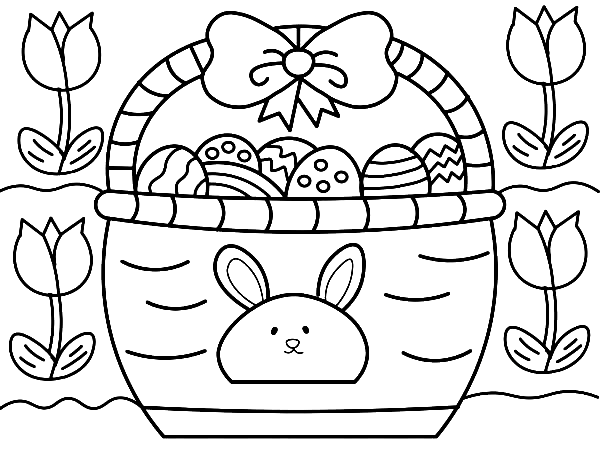
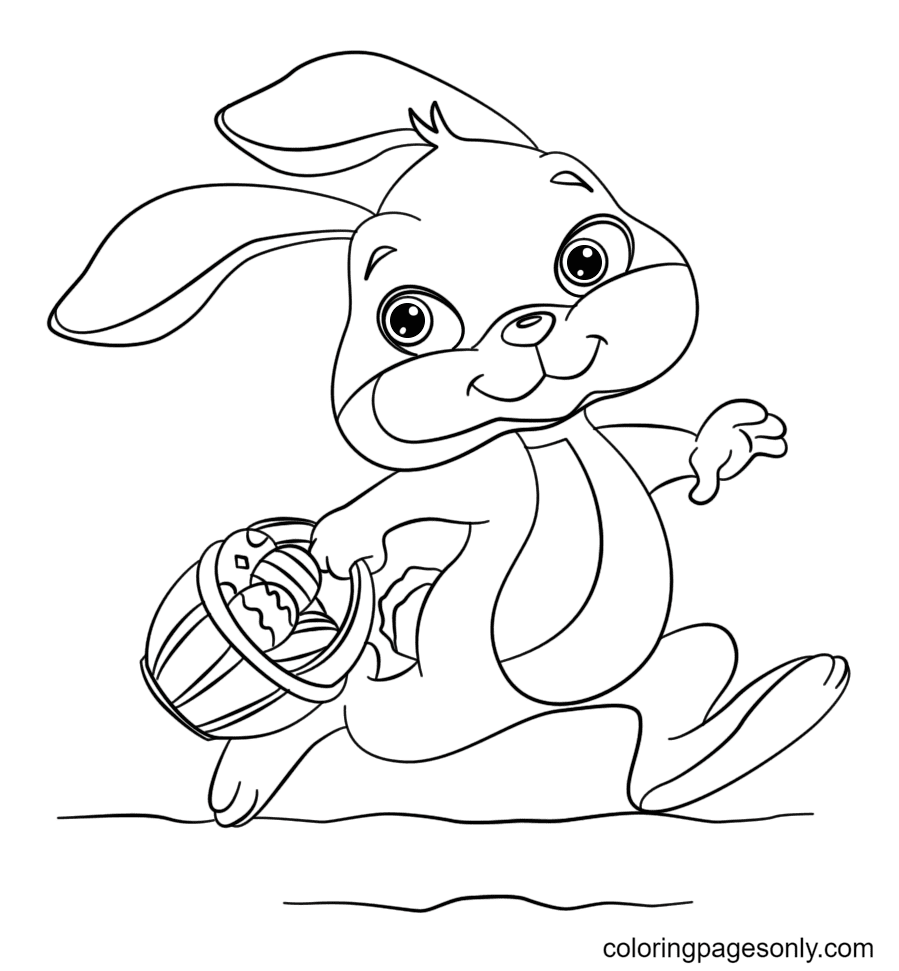
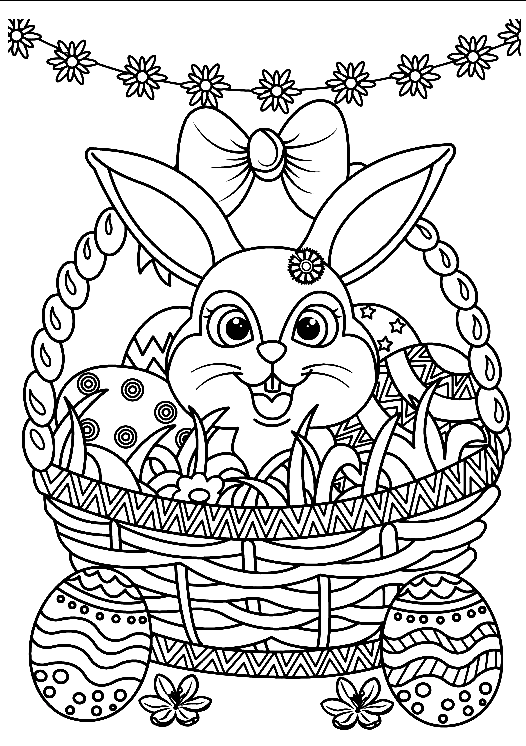
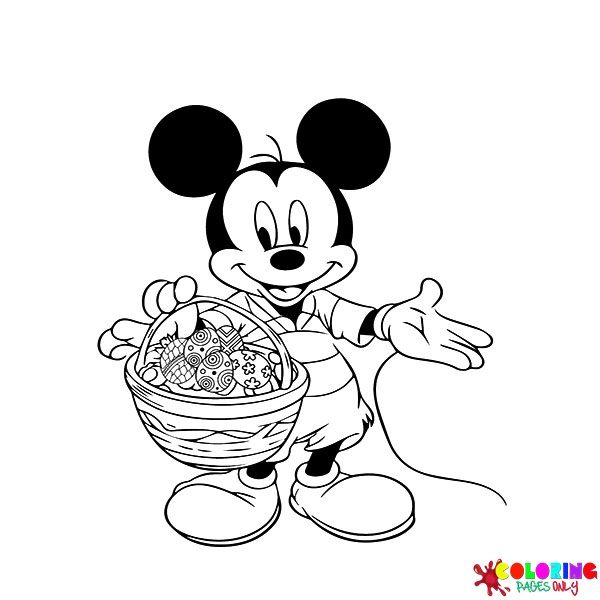
Basket pages show the Easter Bunny with baskets of eggs, gifts, flowers, or small spring details. These pages may include a bunny sitting in a basket, carrying a basket, running with a basket, or standing beside a basket filled with decorated eggs.

The basket creates a clear center for the page. Children can color the bunny, then the eggs, then the woven basket. This gives the activity a natural order and helps the page stay organized.

Basket coloring also teaches texture. A simple basket can use brown, tan, yellow-brown, or soft orange. Older children can add darker lines to show woven sections, while younger children can use one warm brown color for the whole basket.

Eggs inside the basket should stand out. Use pastel colors, bright spring colors, or repeating patterns. If the basket is brown, eggs in pink, blue, green, yellow, and purple will be easy to see.

These pages are useful for Easter cards, classroom projects, party activities, and take-home coloring pages because baskets are closely connected with Easter celebrations.

Easter Bunny with Chicks and Spring Animals

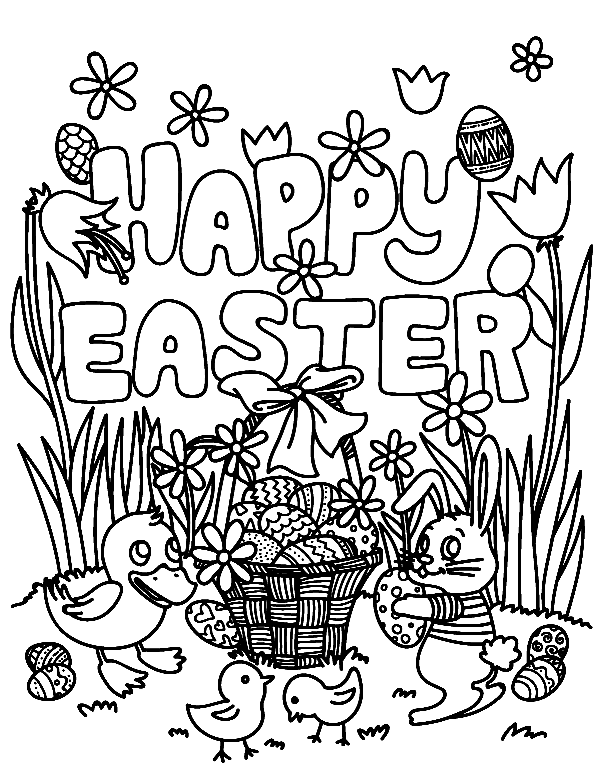
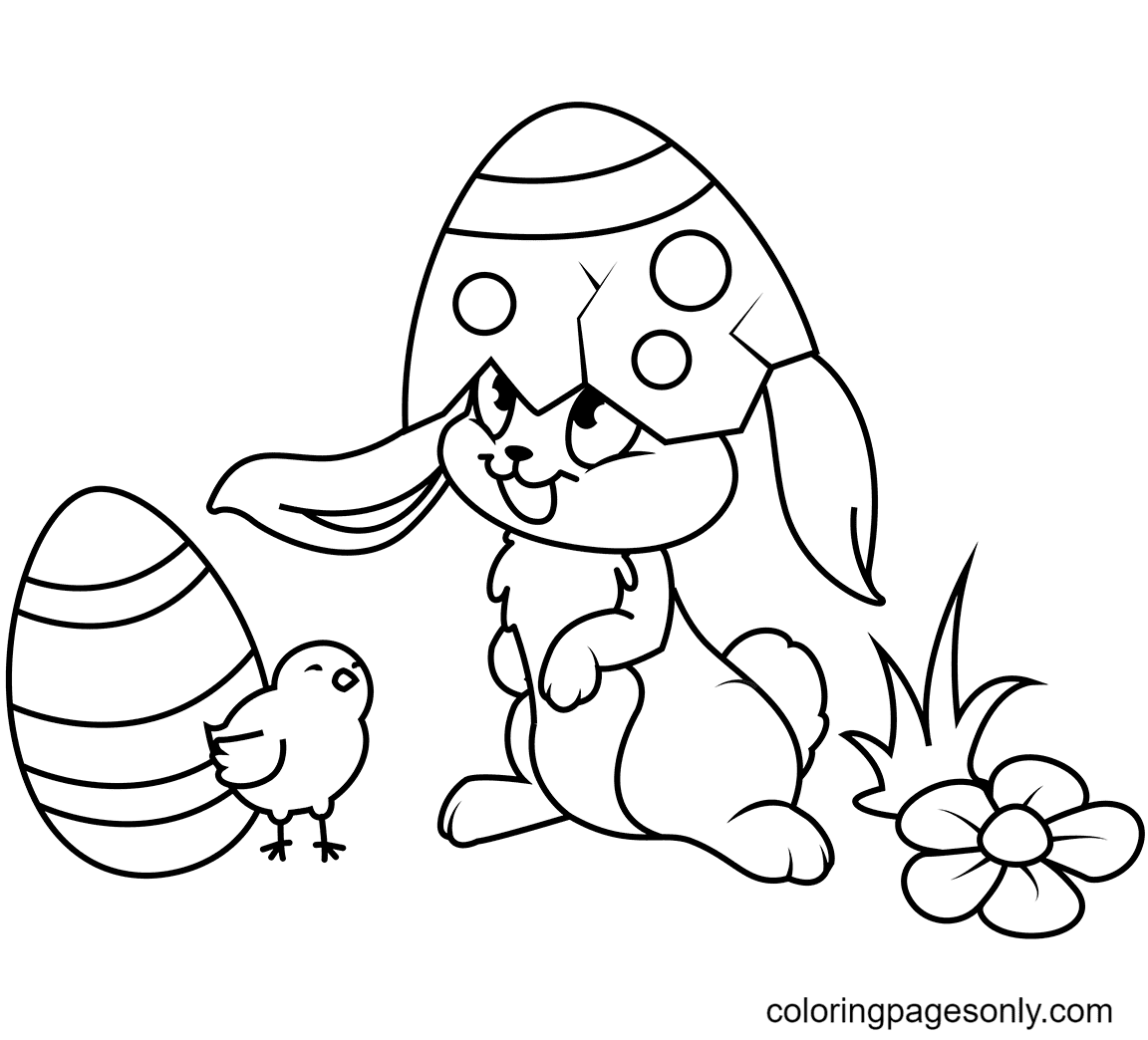
Some Easter Bunny pages include baby chicks, butterflies, ducks, or other gentle spring animals. These pages feel friendly and lively because children can color more than one character in the same scene.

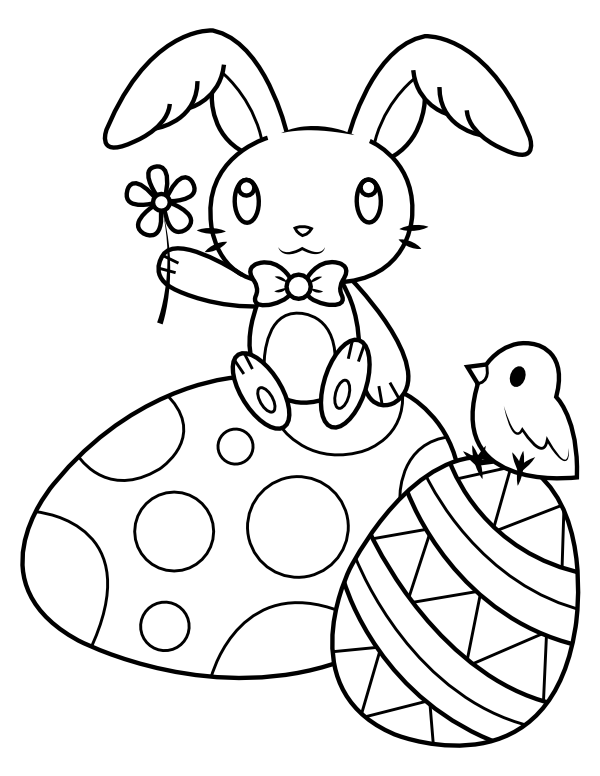
Baby chicks are especially common in Easter art because they connect with eggs, spring, and new life. A bunny with a chick can feel sweet and simple. A bunny with butterflies can feel light and cheerful. A bunny with several small animals can become a spring story scene.

The main skill in these pages is color separation. The bunny can stay white, gray, tan, or brown, while chicks can be yellow, butterflies can use bright wing colors, and flowers or grass can bring in spring greens.

Younger children may enjoy pages with one bunny and one chick because the scene is easy to understand. Older children can handle pages with more animals, flowers, eggs, and small background details.

These pages are also good for storytelling. Children can describe what the bunny and chick are doing, where they are going, or what surprise they found in the garden.

Happy Easter Sign and Card Coloring Pages

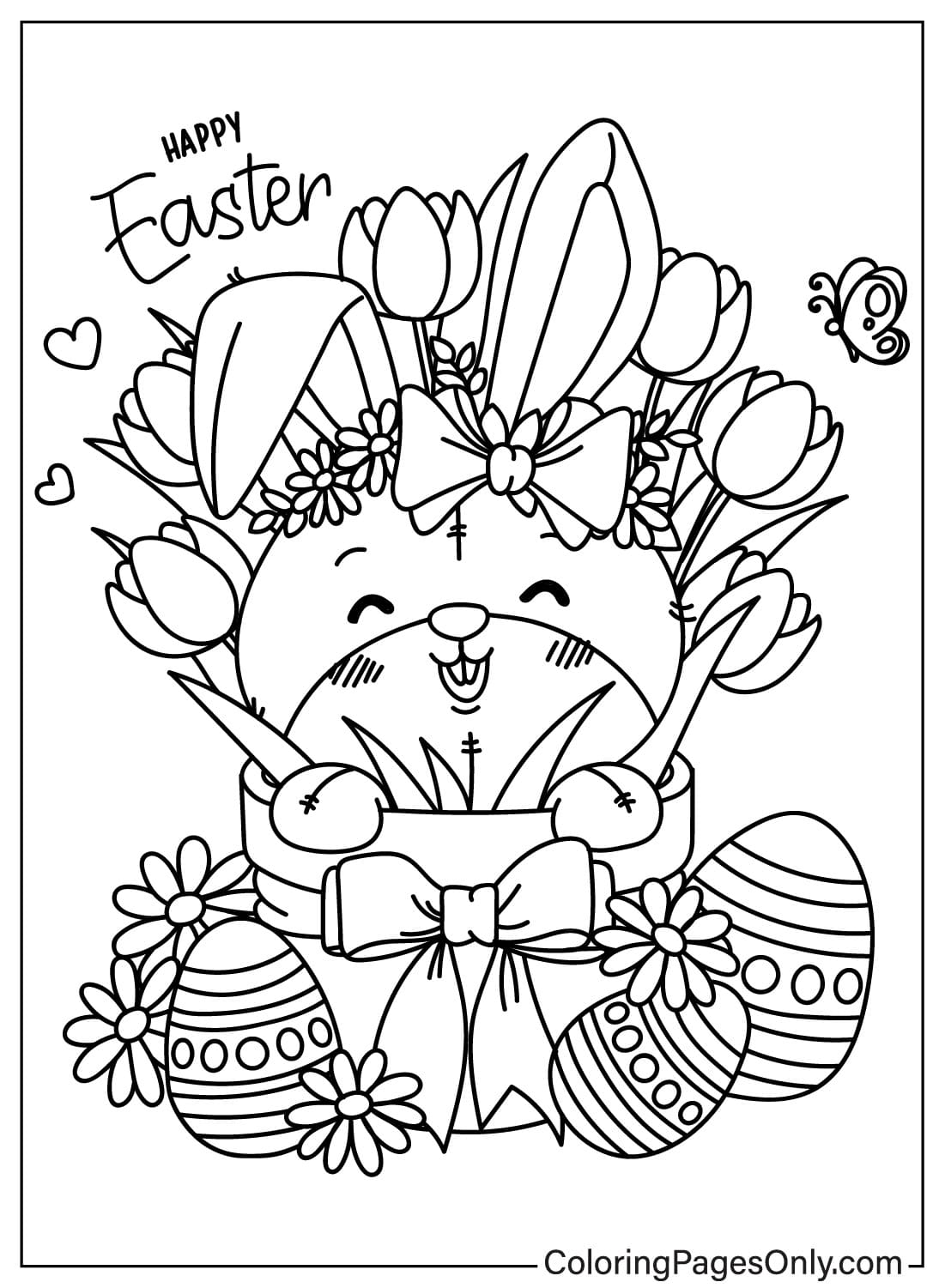
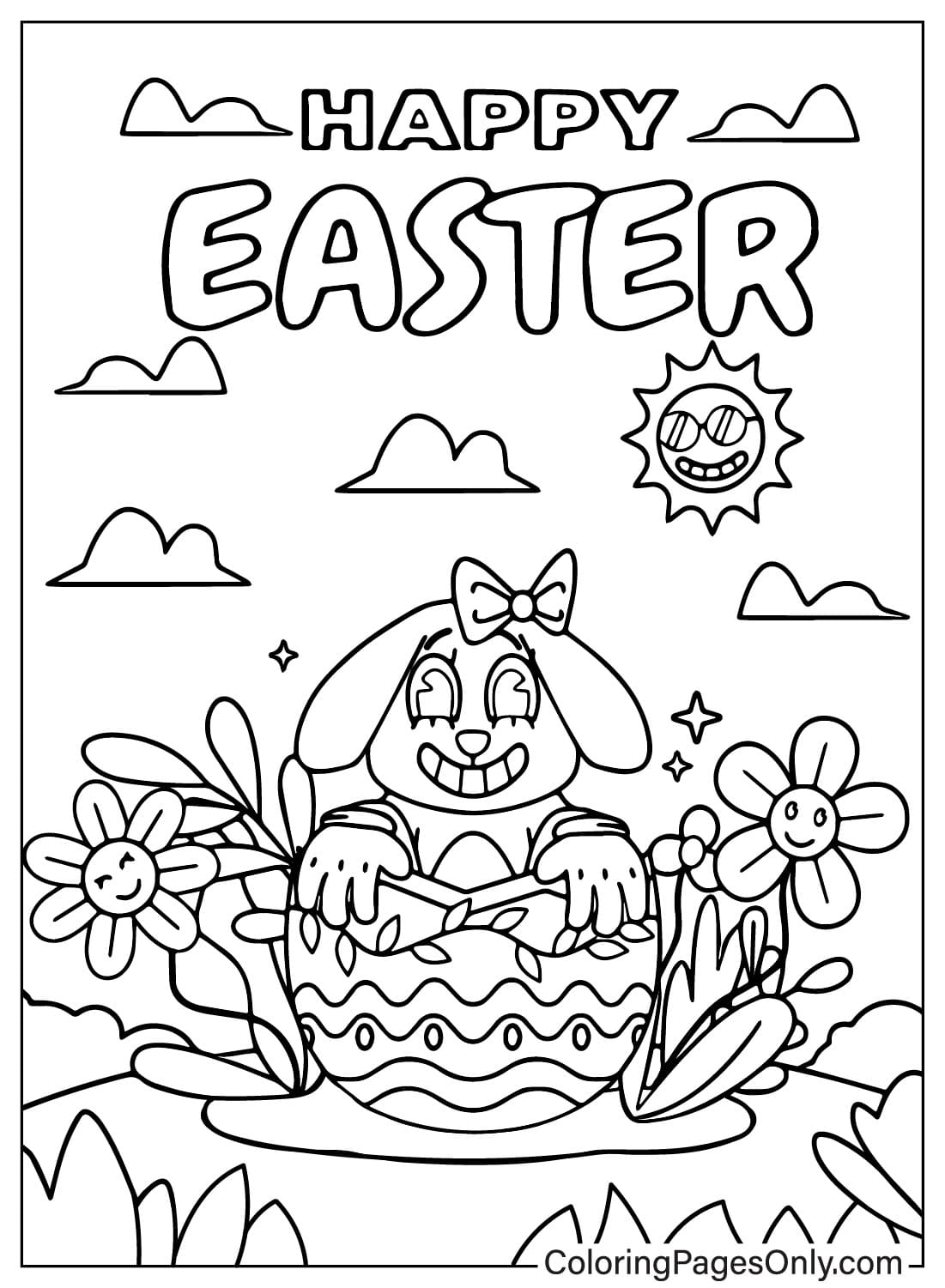
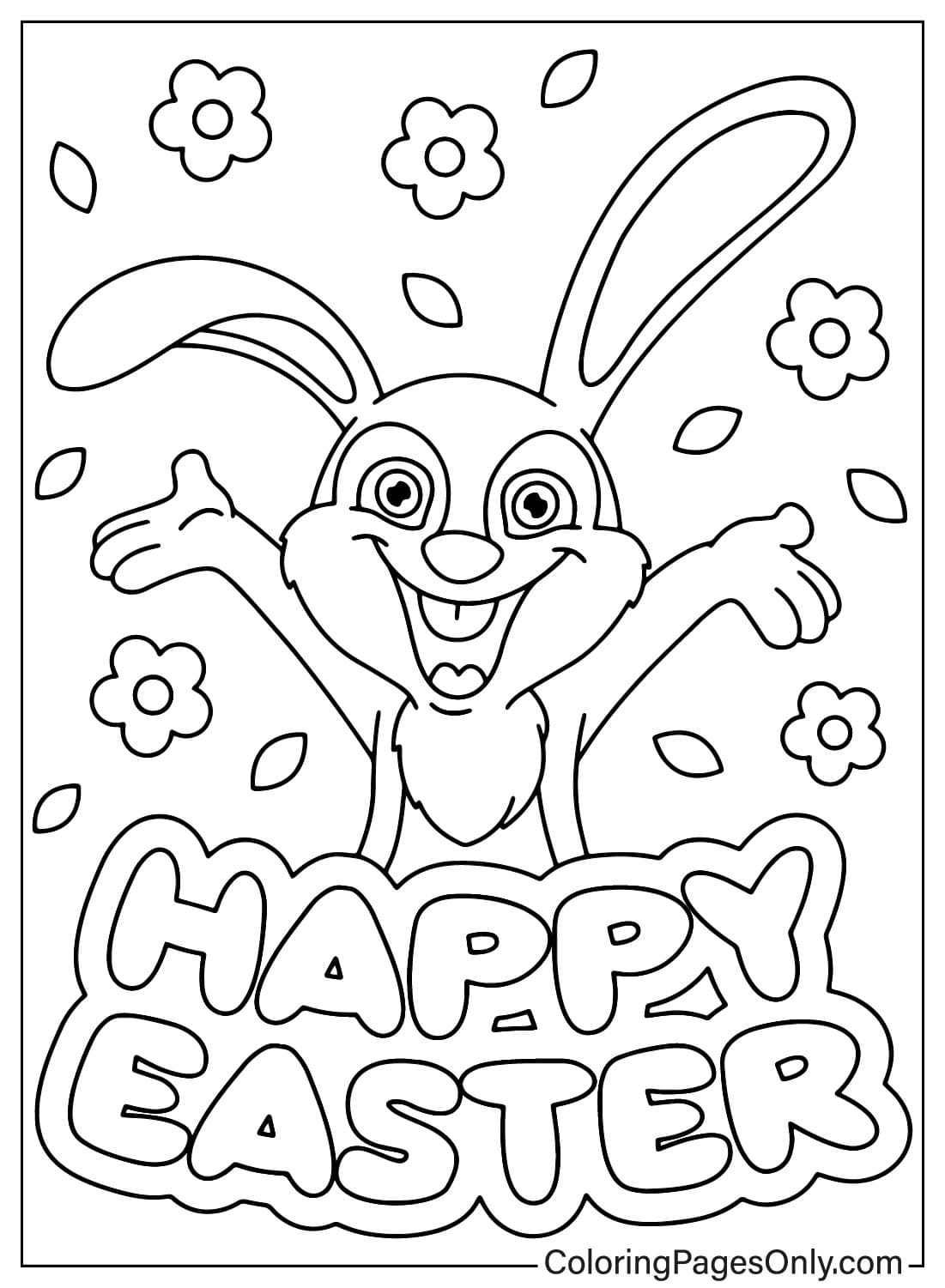
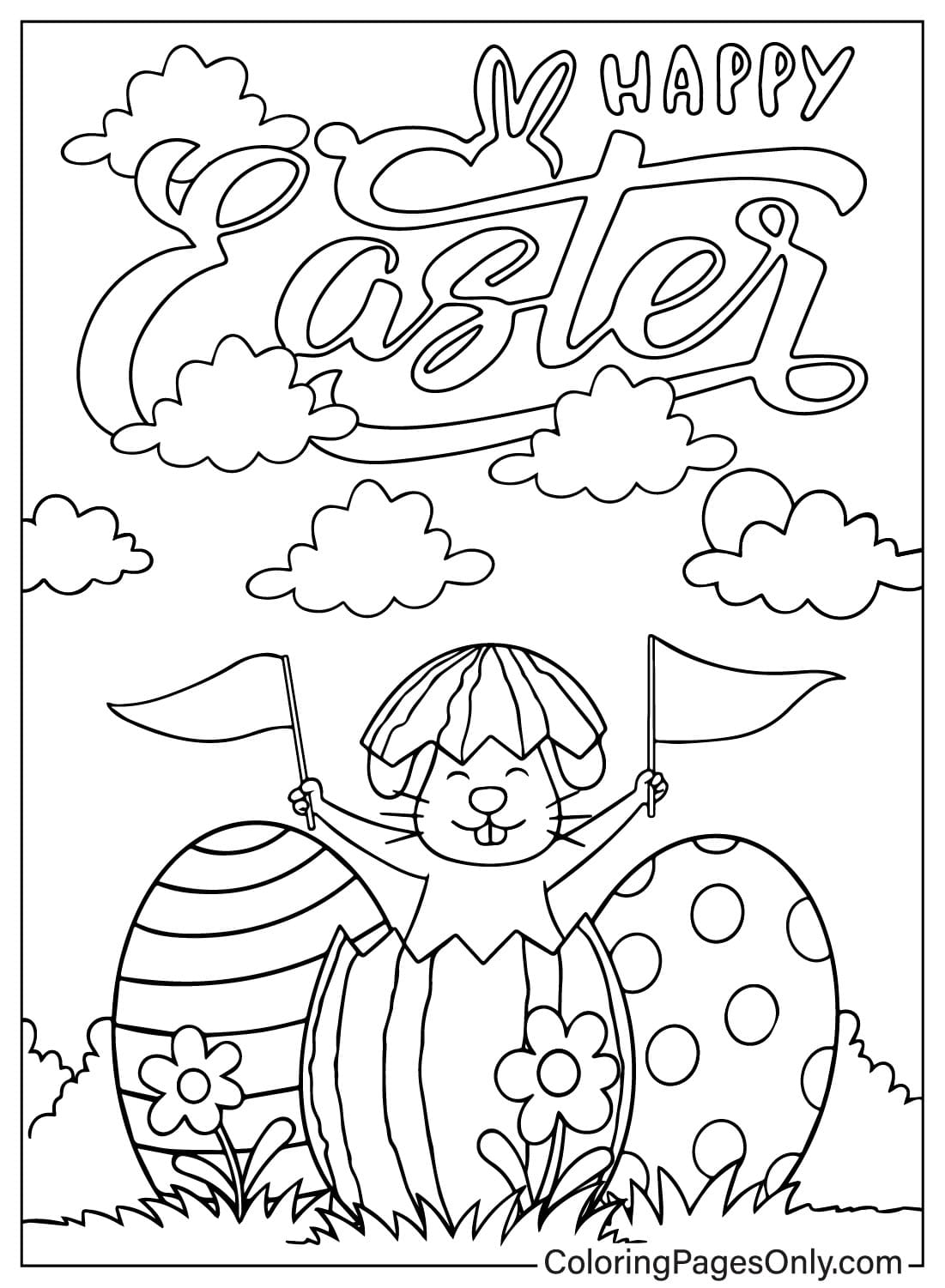
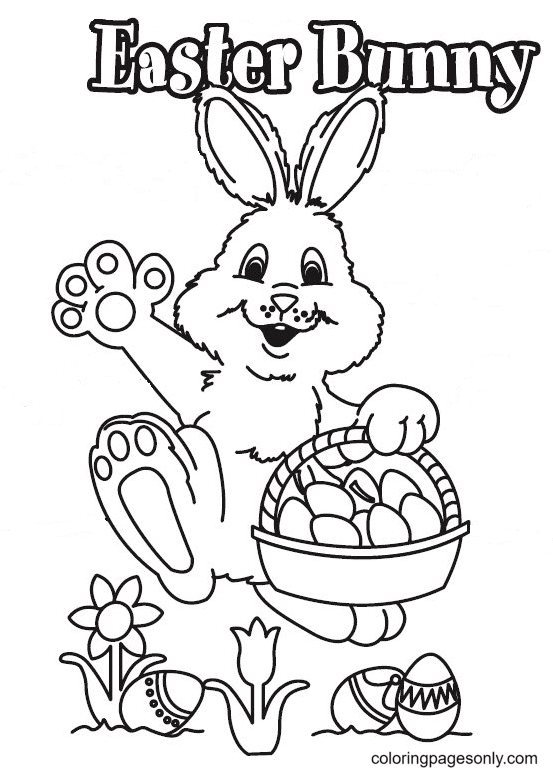
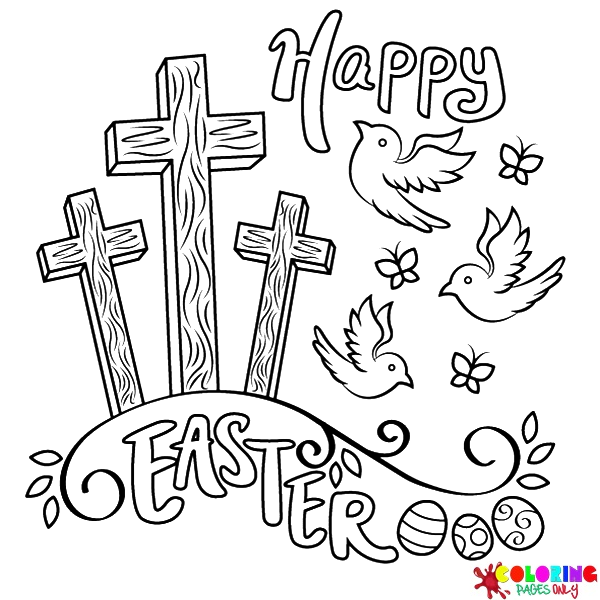
Some Easter Bunny pages include signs, banners, or card-style designs with messages such as “Happy Easter.” These pages are useful because the finished artwork can become a card, poster, bulletin board piece, or take-home Easter greeting.

Message pages help children practice careful coloring. The bunny, eggs, flowers, and decorations can be bright, but the words should stay readable. If the letters are large, children can color inside them with stripes, dots, or soft patterns.

A Happy Easter sign also gives the page a clear purpose. Instead of only coloring a scene, children are making something they can share with family, friends, teachers, or classmates.

For coloring, keep the message area clean. Use light backgrounds behind the words and stronger colors around the bunny, eggs, and borders. This makes the text easier to read after the page is finished.

These pages are especially helpful for classroom activities before Easter break, family craft time, or simple holiday card making.

Easter Bunny Garden and Spring Scene Pages

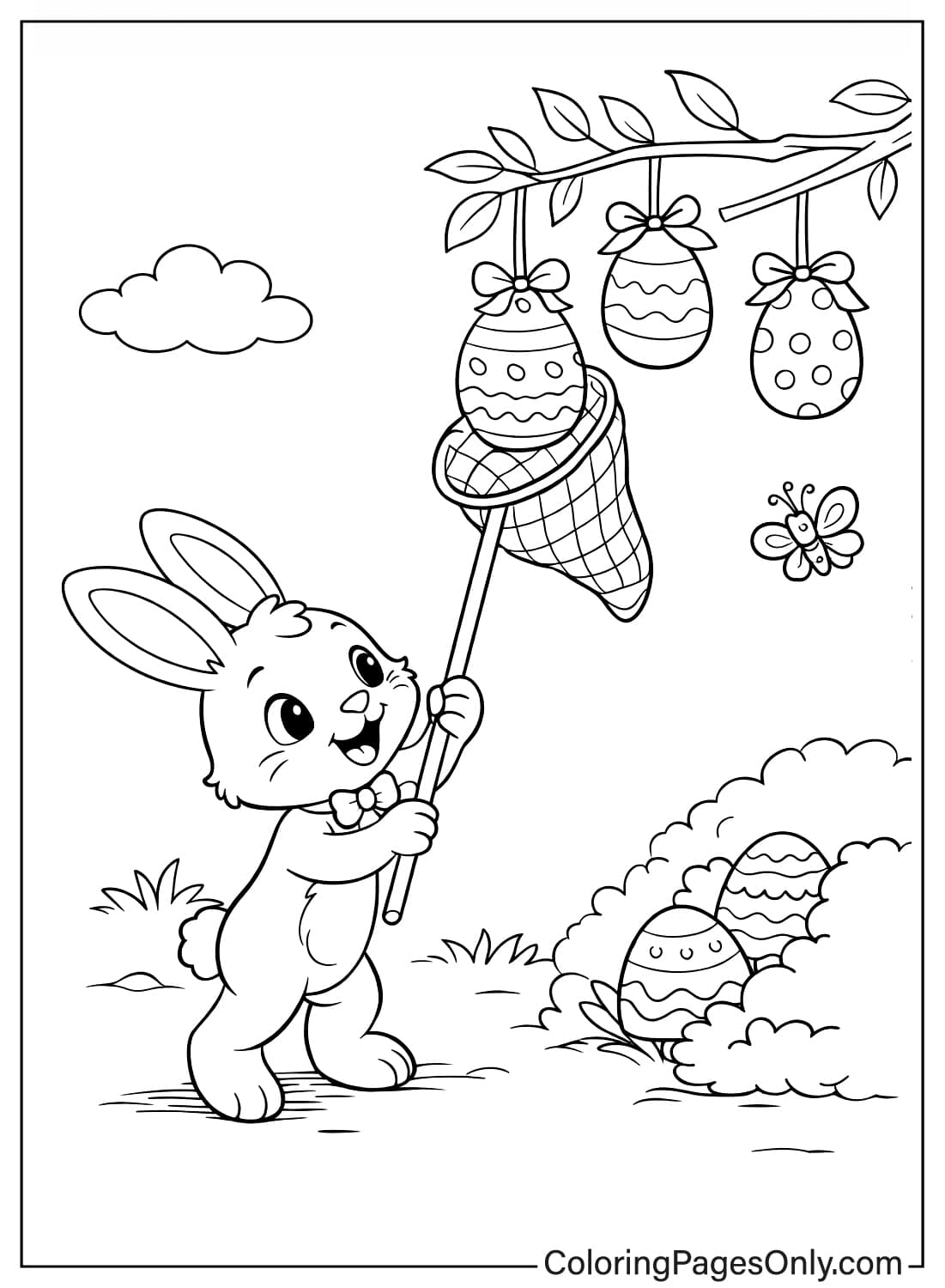
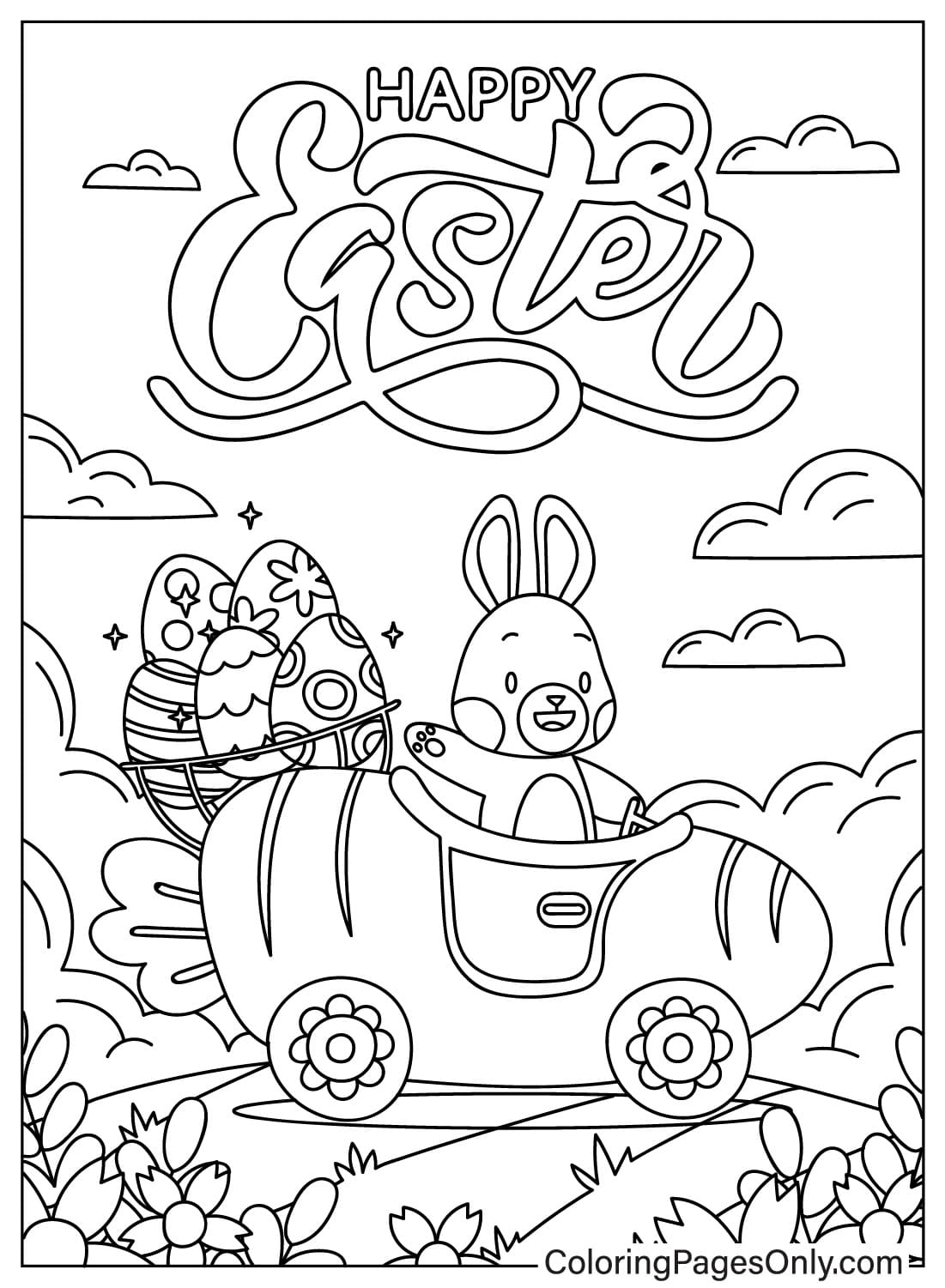
Garden and spring scene pages place the Easter Bunny in outdoor settings. These designs may include grass, flowers, trees, butterflies, paths, egg hunts, carts, egg hiding, mushroom houses, or peaceful spring backgrounds.

The background matters here because it gives the page a seasonal feeling. Green grass, colorful flowers, blue sky, soft clouds, and pastel eggs can make the scene feel fresh and cheerful.

Garden pages also give children more storytelling options. The bunny may be hiding eggs, decorating a garden, pushing a cart of eggs, reading under a tree, or finding eggs near flowers. Each page feels like a small Easter moment.

For younger children, choose pages with one bunny, a few eggs, and simple grass or flowers. Older children can enjoy more detailed garden scenes with many eggs, plants, houses, carts, or background patterns.

These pages work well for spring art centers, Easter bulletin boards, and calm coloring activities at home.

Imaginative Easter Bunny Coloring Pages

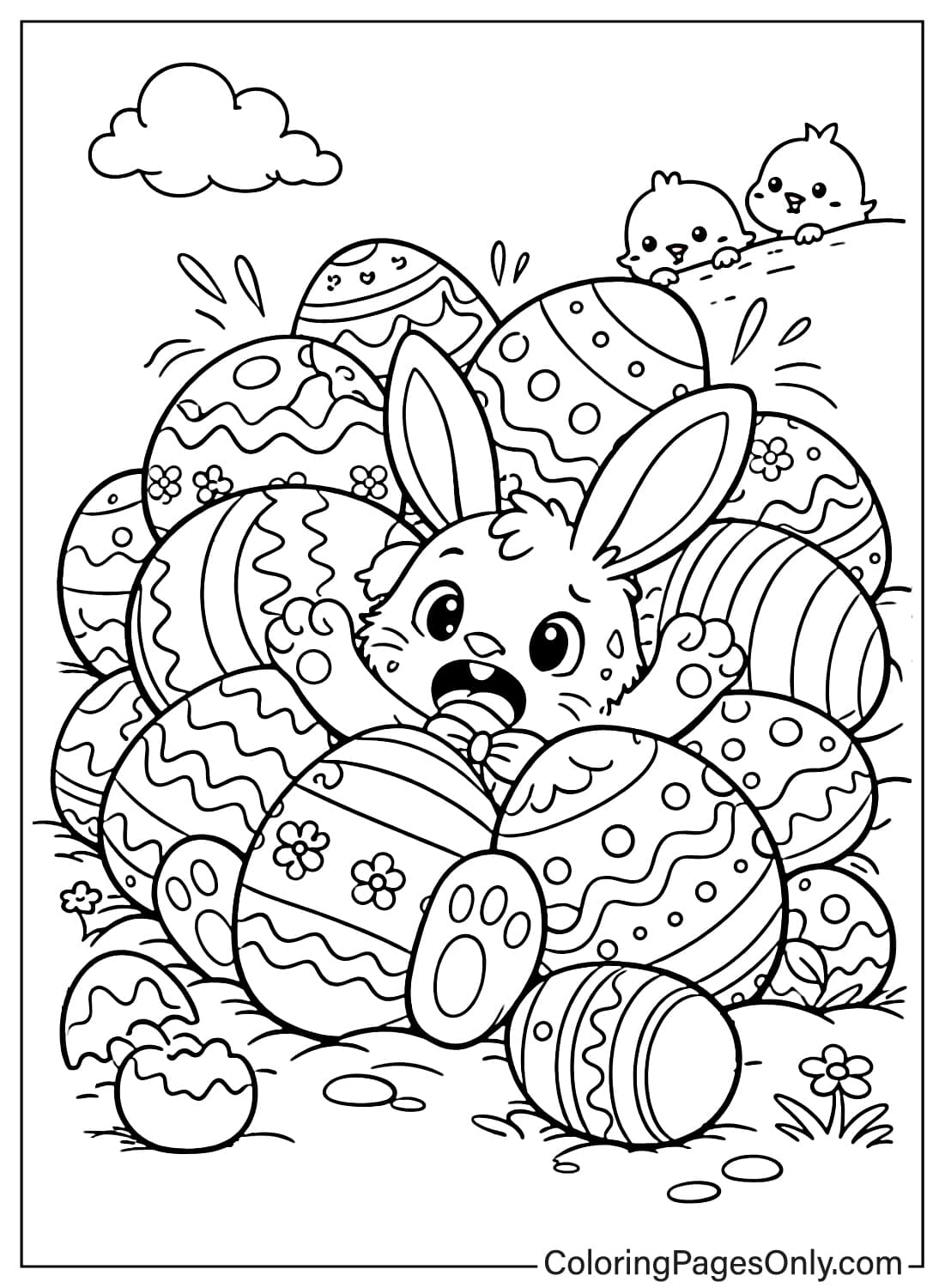
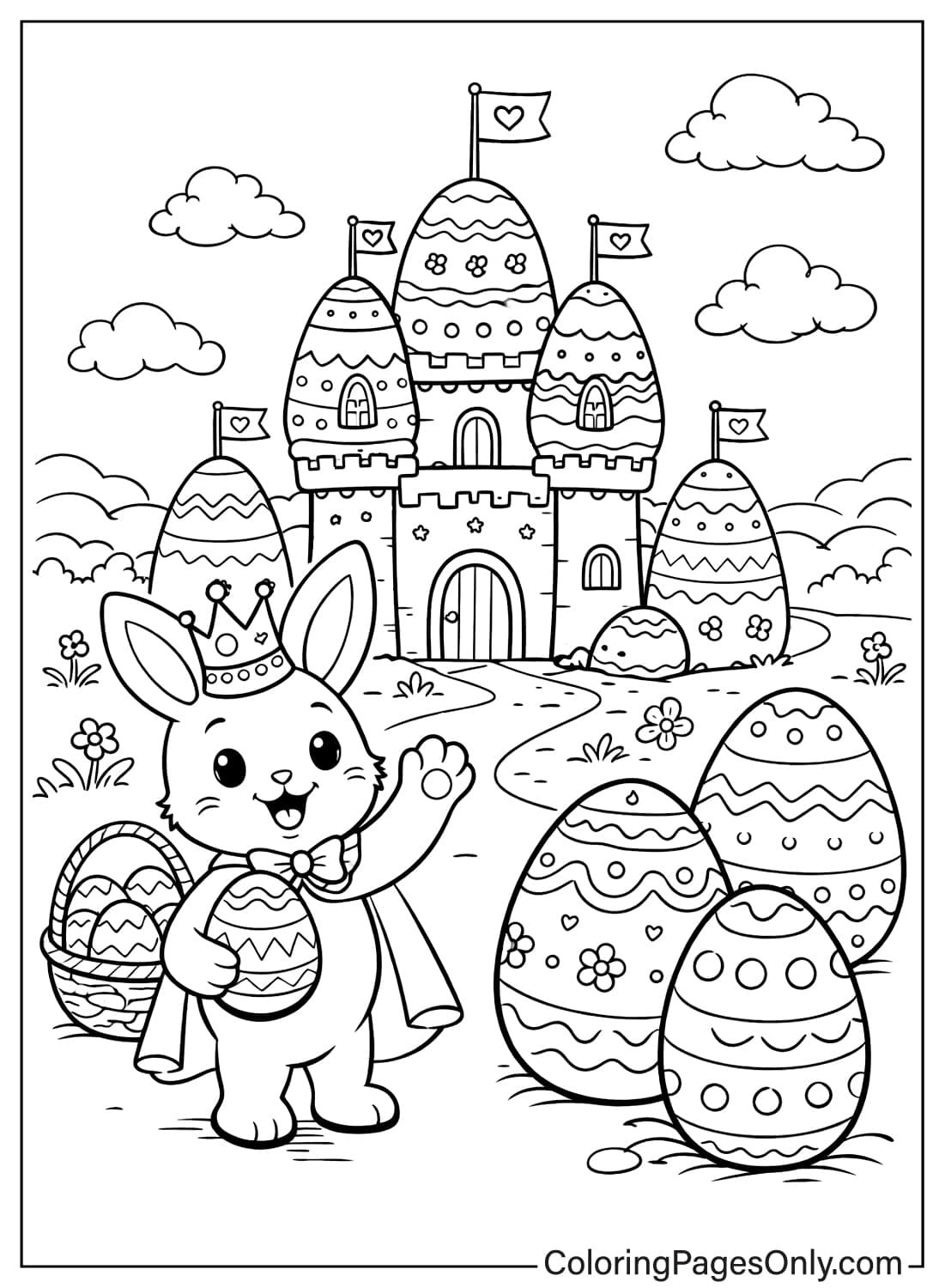
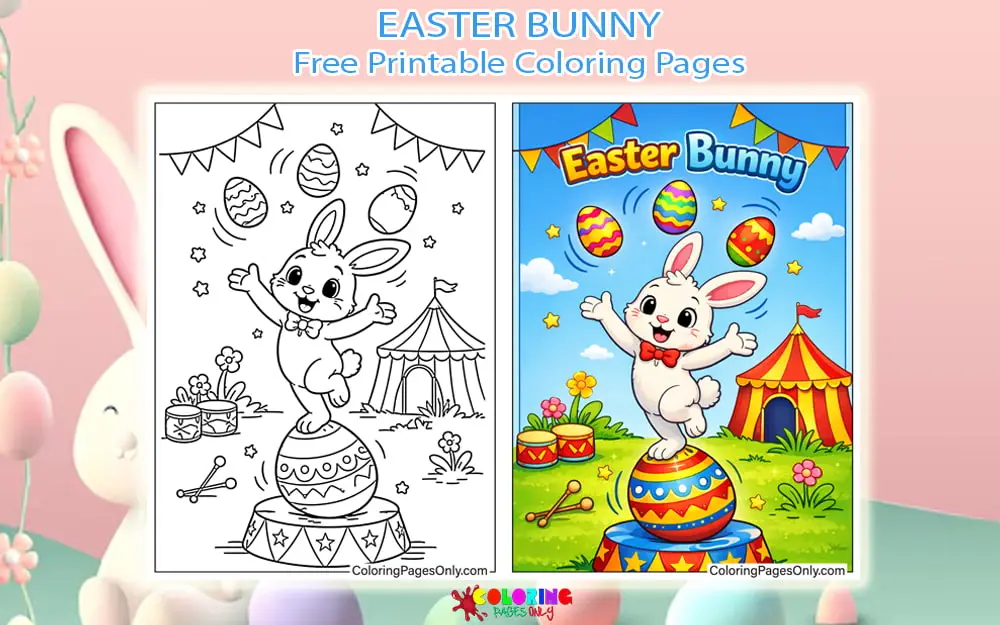
Some Easter Bunny pages are more playful and imaginative. These may include egg houses, mushroom houses, giant eggs, bunny magicians, circus-style egg balancing, playful egg scenes, or bunnies buried in piles of eggs.

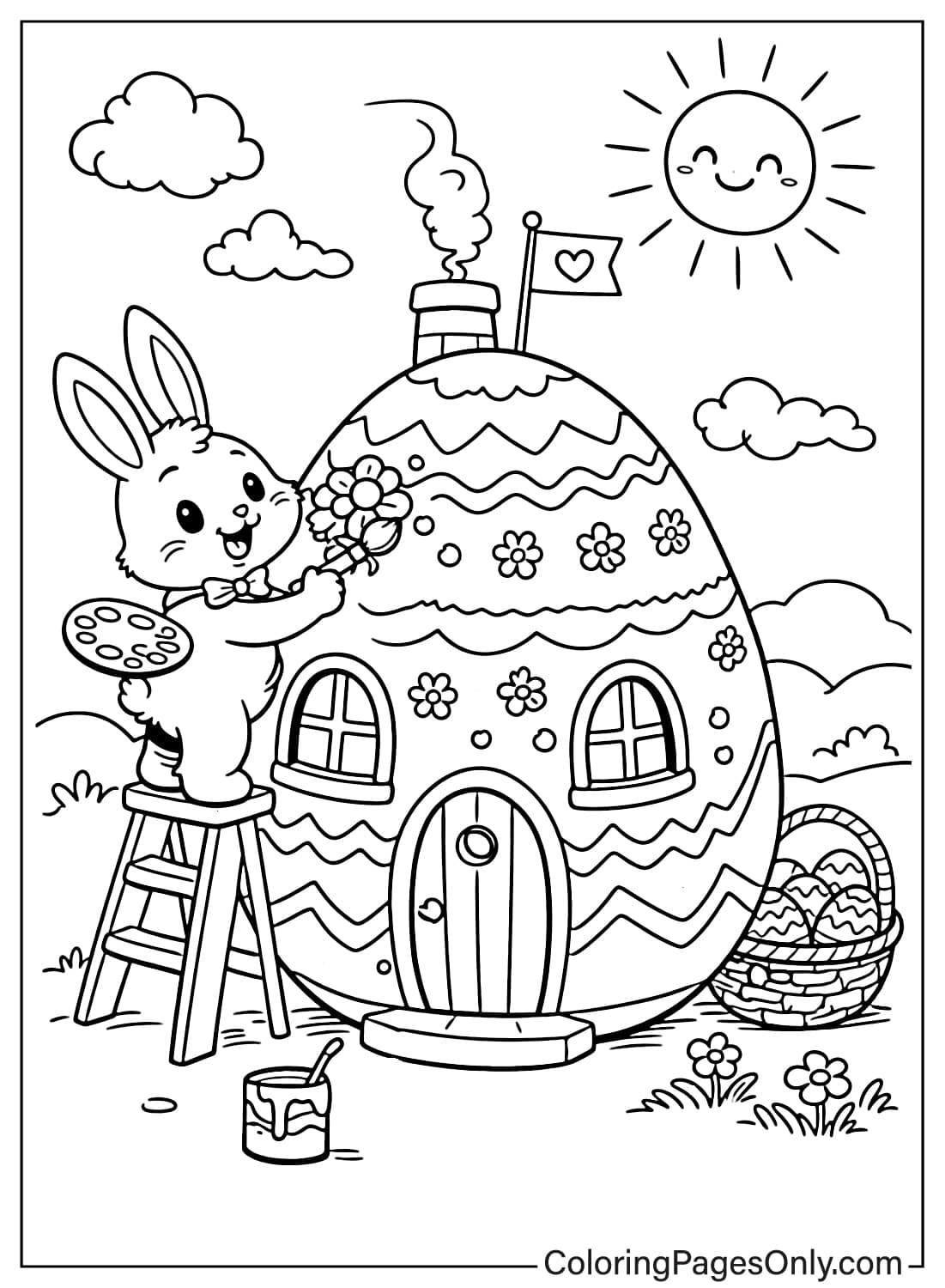
These pages are fun because they go beyond a standard bunny-and-basket picture. A bunny decorating a giant egg house feels like a tiny Easter world. A bunny balancing eggs feels funny and active. A bunny magician pulling an egg from a hat adds a playful surprise.

Imaginative pages often have more details, so they are usually better for older kids. They may include small windows, doors, patterns, props, decorations, or many eggs. Children can take more time choosing colors and adding patterns.

The key is to keep the bunny easy to see. Use brighter colors for the main bunny or main egg, then softer colors for the background. If everything is equally bright, the scene may feel too busy.

These pages are great for children who enjoy fantasy, humor, and creative Easter scenes.

Easy Easter Bunny Coloring Pages for Kids

Easy Easter Bunny pages have large shapes, bold outlines, and fewer small details. These pages may show one bunny, one egg, one basket, a simple chick, or a clean Happy Easter design.

The value of easy pages is confidence. Young children can finish the page without feeling overwhelmed. They can color the bunny’s body, ears, egg, basket, or grass in a clear order.

For preschool and kindergarten children, choose pages with one main subject. A large bunny sitting with an egg, a bunny in a basket, or a bunny holding a simple sign is usually easier than a busy egg hunt scene.

Easy pages are also practical for teachers. They can be printed quickly, used during quiet time, added to an Easter center, or sent home as a seasonal activity.

Even simple pages can become special when children add their names, extra flowers, stickers, or hand-drawn eggs around the main picture.

Detailed Easter Bunny Coloring Pages for Older Kids

Detailed Easter Bunny pages include more background, more eggs, more patterns, and smaller spaces to color. These may include egg towers, garden scenes, baskets full of eggs, bunny houses, decorated signs, giant eggs, or multiple animals.

Older kids often enjoy these pages because they give more room for patience and design. They can shade the bunny, create egg patterns, decorate baskets, color flowers carefully, or add soft shadows around the scene.

The best approach is to choose the main focus first. If the bunny is the focus, color it first. If the giant egg, sign, or basket is the focus, color that area first. Then use softer background colors so the scene does not become too crowded.

Detailed pages can become Easter posters, handmade cards, classroom displays, or relaxing spring coloring projects. They also work well for older elementary students, teens, and adults who enjoy seasonal coloring.

What These Pages Do

Easter Bunny coloring pages help children connect art with Easter, spring, and simple seasonal storytelling. A bunny can suggest playfulness. An egg can suggest new life and celebration. A basket can suggest gathering and sharing. A chick or butterfly can add a gentle spring feeling.

For younger children, these pages support early coloring skills. Large bunny shapes, eggs, baskets, and signs give them open spaces to color. Smaller details such as ears, paws, egg patterns, flowers, and lettering help build attention and control.
For older children, the value comes from design and scene-building. They can add egg patterns, shade baskets, color spring gardens, make “Happy Easter” messages readable, or create a full Easter scene with bunny, eggs, chicks, flowers, and background details.

The pages also encourage language and imagination. Children can talk about where the bunny is hiding eggs, what colors they chose for each egg, who might receive the Easter card, or what story is happening in the garden.

Parents can use these pages for Easter weekend, quiet time, spring crafts, family activities, or screen-free play. Teachers can use them for classroom centers, Easter parties, spring bulletin boards, writing prompts, and seasonal art projects.

How to Color These Pages Well

Easter Bunny pages usually look best with soft spring colors. Pastel pink, light blue, lavender, mint green, pale yellow, peach, and soft orange all work well for Easter scenes. Brighter colors can be used for eggs, signs, flowers, and small decorations.

For the bunny, choose white, cream, gray, tan, light brown, or soft pastel colors. The inside of the ears can be light pink or peach. A small pink nose and soft cheek color can make the bunny look friendly.

For Easter eggs, use different colors and patterns. Try stripes, dots, zigzags, flowers, stars, hearts, or simple color bands. If there are many eggs, repeat a few colors so the page still feels organized.

For baskets, use brown, tan, golden yellow, or soft orange. Older children can add darker lines to show the woven texture. The eggs inside the basket should be brighter than the basket so they stand out.

For chicks, use yellow, light orange, or soft gold. The beak and feet can be orange. Keep the chick colors bright but simple so they do not compete with the bunny.

For flowers and grass, use spring greens with pink, yellow, purple, red, or white flowers. A light blue sky or pale pastel background can make the page feel fresh without becoming too heavy.

For Happy Easter signs and cards, keep the words readable. Use lighter colors behind the letters and stronger colors around the border, bunny, eggs, or flowers. If the letters are large, children can add small patterns inside them.

For imaginative pages like egg houses, mushroom houses, or giant egg scenes, choose one main color theme first. A pastel house, colorful door, and bright egg decorations can make the design feel playful without turning chaotic.

For younger children, the easiest order is bunny first, egg or basket second, small details third, and background last. Older kids can add shading, patterns, highlights, grass texture, flower colors, and soft shadows after the main colors are finished.

5 Creative Craft Ideas

Easter Bunny Card

Choose an Easter Bunny page with a Happy Easter sign, a bunny holding an egg, or a bunny with flowers. After coloring, glue the finished design onto folded construction paper.

Children can write a short message inside, such as “Happy Easter,” “Have a bright spring day,” or “You are egg-stra special.”

This craft works well for family gifts, classroom take-home activities, or Easter morning surprises.

Easter Egg Pattern Poster

Choose a page with many Easter eggs, an egg tower, a basket of eggs, or a bunny painting eggs. After coloring, glue the page onto a larger sheet of paper.

Children can add extra eggs around the border, each with a different pattern: stripes, dots, hearts, flowers, stars, or zigzags.

This activity helps children practice pattern design while keeping the Easter Bunny theme.

Bunny Basket Display

Print a bunny with a basket page. After coloring, cut out the bunny and basket, then glue them onto a larger sheet with hand-drawn grass and flowers.

Children can cut small paper eggs and place them around the basket. Each egg can have a name, color, pattern, or kind word.

This craft works well for classroom bulletin boards or family Easter decorations.

Easter Bunny Story Scene

Choose a bunny page with chicks, eggs, a garden, a cart, or a house. After coloring, place the page on a larger sheet and add a story box below it.

Children can answer: Where is the bunny? What is the bunny doing? Who helped hide the eggs? What happens next?

This turns a coloring page into a simple writing and storytelling activity.

5. Spring Bunny Door Hanger

Choose a simple Easter Bunny page with one large bunny. Color the bunny, cut it out, and glue it onto a long strip of cardstock.

Add paper flowers, eggs, butterflies, or a “Happy Easter” message. Punch a hole at the top and hang it on a door, classroom board, or bedroom wall.
This craft is simple, festive, and easy for young children to personalize.
Frequently Asked Questions

Are Easter Bunny coloring pages good for young children?

Yes. Easter Bunny coloring pages are very good for young children when the designs have large outlines, simple bunny shapes, one basket, or one large egg. These pages are easy to understand and give children enough space to color confidently.

For preschool and kindergarten children, choose pages with one main bunny and only a few details. Busy egg hunts, giant egg scenes, or detailed garden pages may be better for older children.

What colors should I use for Easter Bunny coloring pages?

Soft spring colors work best for most Easter Bunny pages. Try pastel pink, light blue, lavender, mint green, pale yellow, peach, and soft orange for eggs, flowers, backgrounds, and decorations.

The bunny can be white, gray, tan, cream, light brown, or even a soft pastel color. The ears can use light pink, and the nose can be pink or peach.

Which Easter Bunny pages are easiest to print for classroom use?

Simple bunny pages, bunny-with-egg pages, basket pages, and Happy Easter sign pages are usually the easiest for classroom use. They have clear subjects, large spaces, and familiar Easter elements.

Teachers can use them for spring art centers, quiet work, Easter parties, bulletin boards, or take-home activities. Pages with clear outlines and limited background details are best for younger students.

Can kids turn Easter Bunny coloring pages into cards?

Yes. Easter Bunny pages can easily become Easter cards. After coloring, children can glue the finished page onto folded paper and write a short message inside.

Pages with signs, flowers, baskets, eggs, or a smiling bunny work especially well for cards. Children can also add names, stickers, borders, or hand-drawn eggs.

How can I make Easter eggs look more creative?

Use patterns instead of coloring every egg the same way. Stripes, dots, zigzags, flowers, stars, hearts, and rainbow bands all work well.

If the page has many eggs, repeat a few colors across different patterns. This keeps the page colorful but still organized.

Are detailed Easter Bunny pages good for older kids?

Yes. Detailed Easter Bunny pages are a good choice for older kids because they include more eggs, baskets, flowers, backgrounds, signs, and imaginative scenes.

Older children can add shading, egg patterns, basket texture, spring backgrounds, and small color details. These pages can become longer Easter art projects.

Can Easter Bunny coloring pages support spring activities?

Yes. Easter Bunny pages naturally connect with spring themes such as flowers, grass, chicks, butterflies, gardens, and new life. They can support art, writing, seasonal vocabulary, and classroom discussions about spring.

Children can color a bunny page and then write one sentence about the season, the weather, or what the bunny is doing.

What paper and coloring tools work best?

Regular printer paper works well for crayons and colored pencils. If children use markers, place a blank sheet underneath to protect the table and the next page. Thicker paper is better for cards, door hangers, posters, or bulletin board projects.

Crayons are good for younger children because they are easy to control. Colored pencils are useful for egg patterns, flowers, lettering, and small details. Markers create bright Easter colors but should be used slowly around letters and tiny decorations.

Can finished Easter Bunny pages become decorations?

Yes. Finished pages can become cards, banners, classroom displays, door hangers, posters, gift tags, or Easter basket decorations. Bunny and egg pages are especially easy to cut, glue, and personalize.

Children can also combine several finished pages into one large Easter wall display with bunnies, eggs, chicks, flowers, and spring backgrounds.

Can kids color the Easter Bunny in different colors?

Yes. Children can color the Easter Bunny in realistic colors or imaginative colors. A white, gray, tan, or brown bunny looks classic, while a pastel pink, blue, purple, or rainbow bunny can feel playful and creative.

If they want the bunny to stay easy to recognize, it helps to keep the long ears, round face, paws, and tail clear. The eggs, basket, flowers, and background can carry most of the extra color.

Choose an Easter Bunny page, print it at home, or color online anytime. When your bunny, egg, or Easter card is finished, share it on Facebook or Pinterest and tag #Coloringpagesonly.

More from Our Easter and Spring Collections

More from our Easter and spring collections:

Jennifer Thoa – Content Editor & Designer

Jennifer Thoa is Content Editor and Designer at ColoringPagesOnly.com. Degree in Journalism and Creative Writing, University of Kansas. She writes and edits long-form educational articles on anime, film, animals, world cultures, and automotive history - verified against named primary sources before publication.