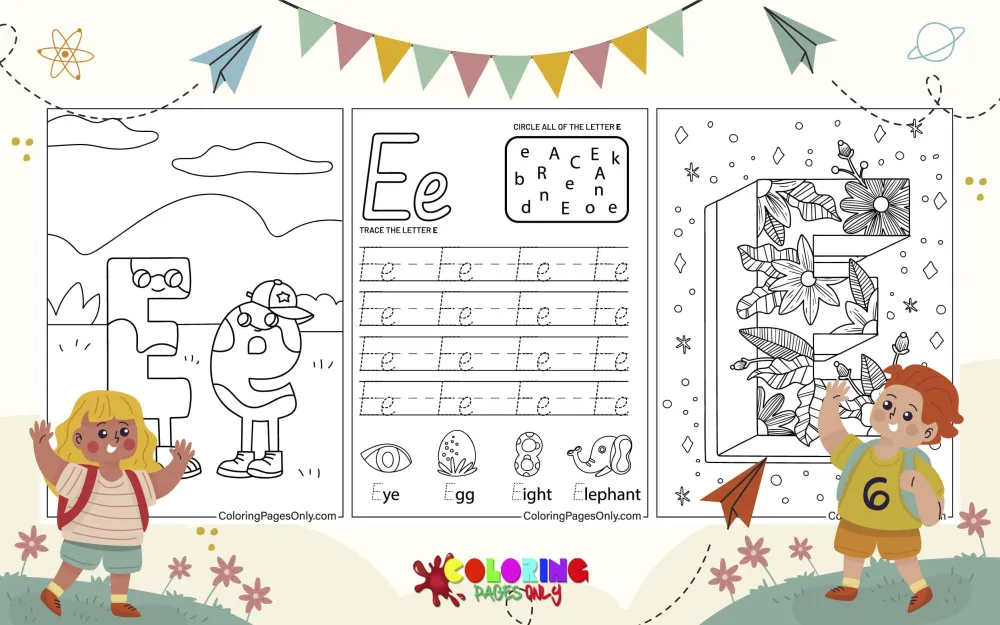
Free Letter E Coloring Pages: 21 printable PDF designs for the fifth letter of the alphabet, featuring five elephants, eggs, an elf, Earth, and an eggplant, and holiday letters for Easter and Christmas. Tracing and worksheet sheets support handwriting. All of them print free or color online.
No letter appears more often in written English than E, which fills about one slot in every eight. That popularity is why Samuel Morse gave it the shortest Morse code signal, a single dot. The shape traces back to a Phoenician letter called he and the Greek epsilon before the Romans settled on the form used today. E also does a lot of quiet work: a silent e at the end of a word usually makes the earlier vowel say its name, turning cap into cape and kit into kite. Kids hear a short e in egg and a long e in eagle.
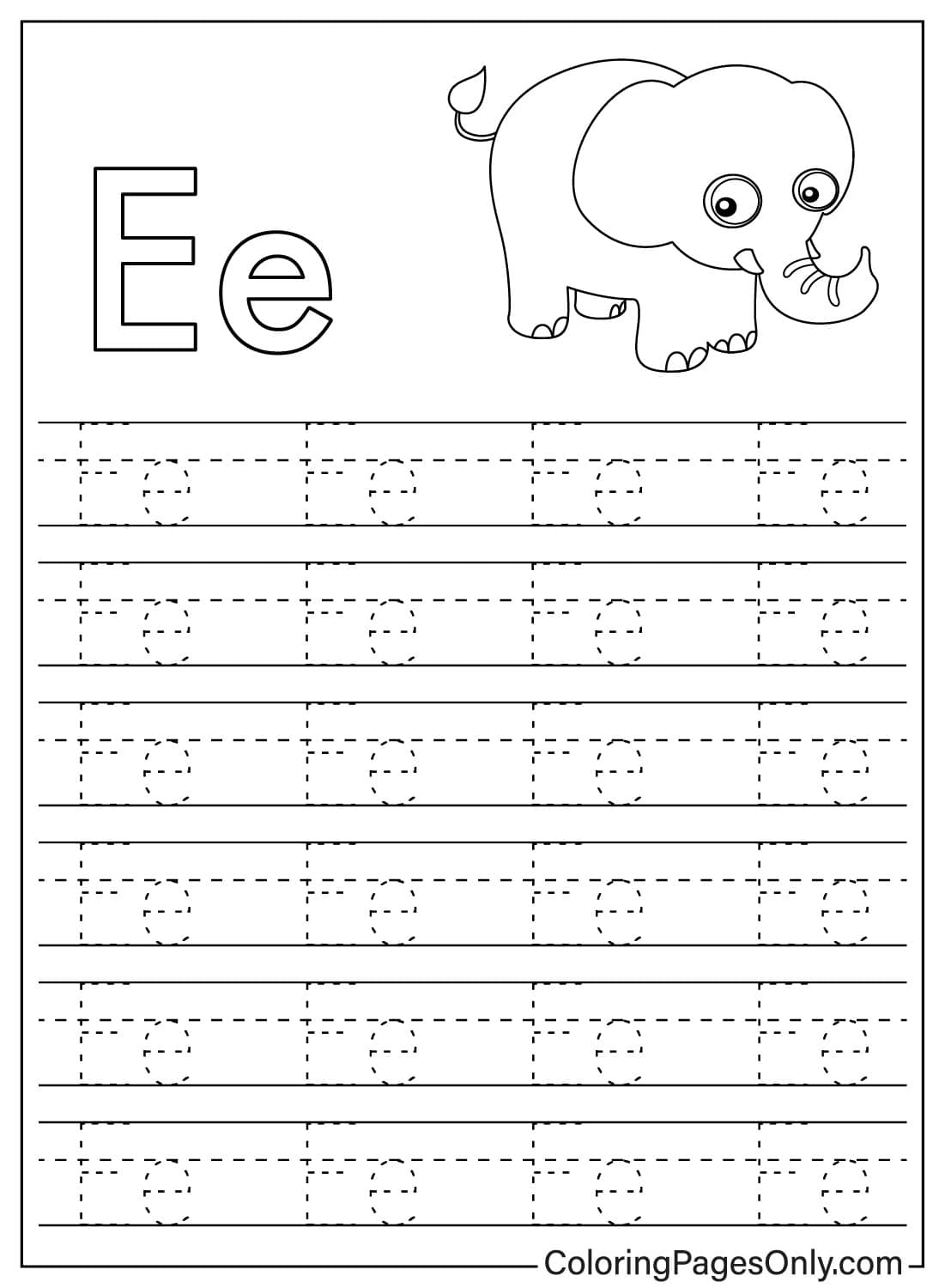
Straight lines make the capital E one of the easier letters for little hands to trace. Picture pages build vocabulary with one clear object each, while worksheets drill the capital and lowercase forms side by side.




What’s Inside This Collection
Picture words lead the 21 designs, joined by learning sheets, decorative letters, and a handful of playful cartoons.
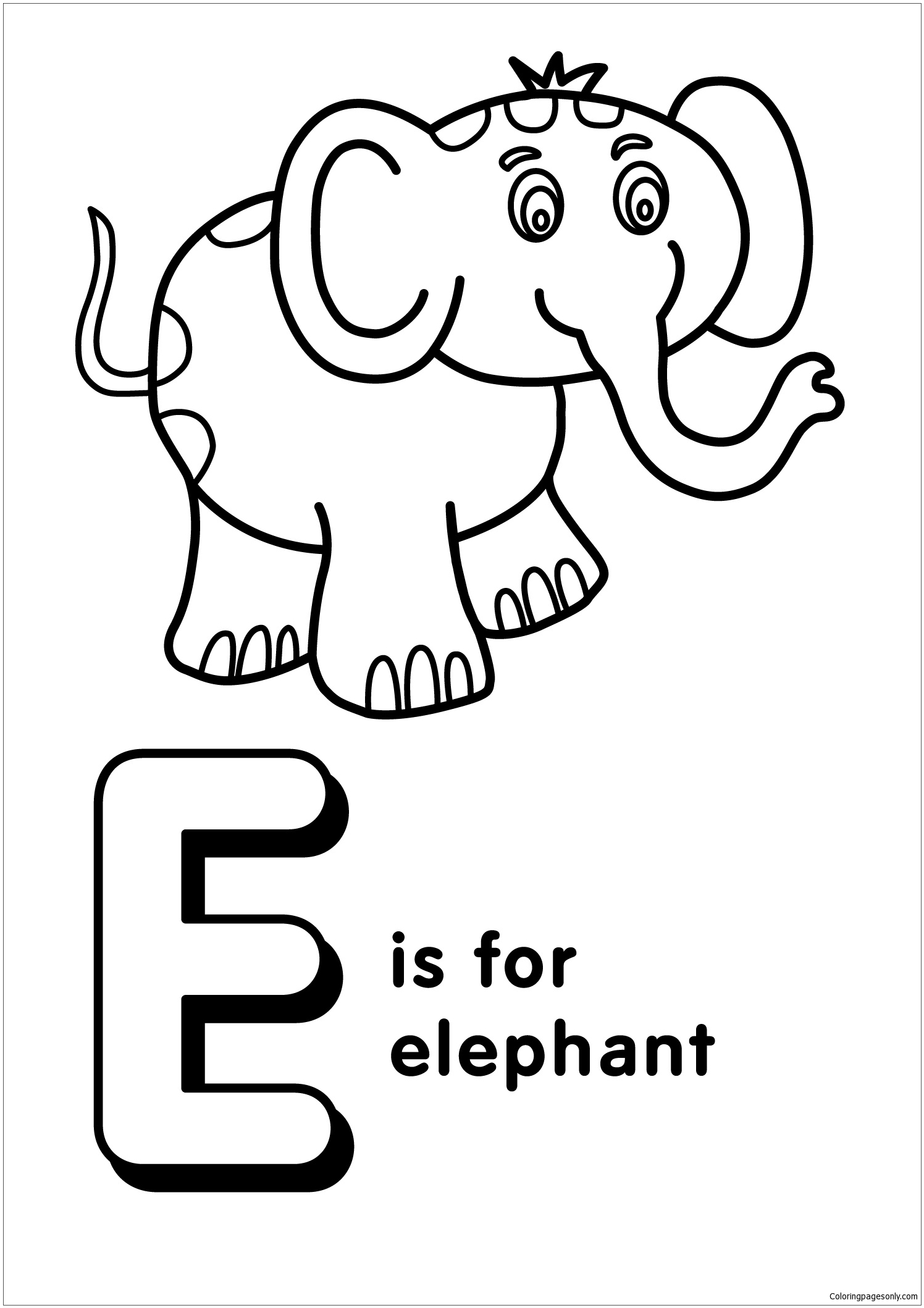
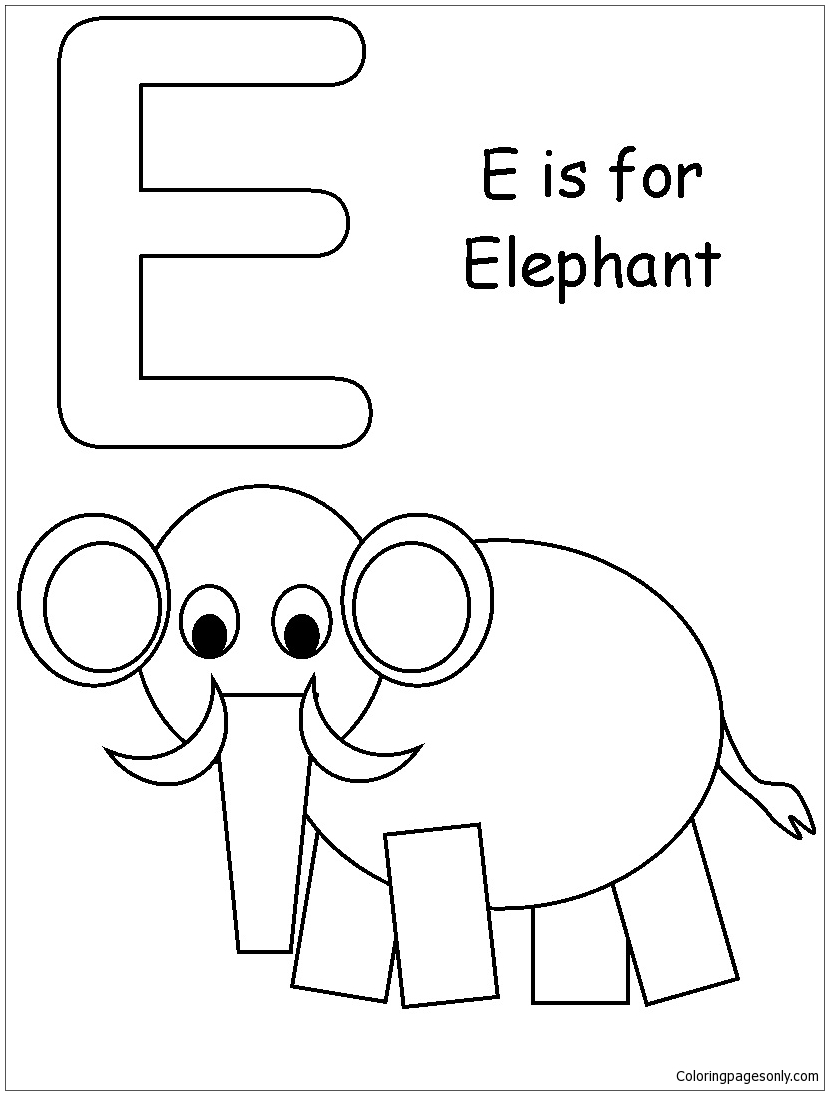
E Is for Elephant
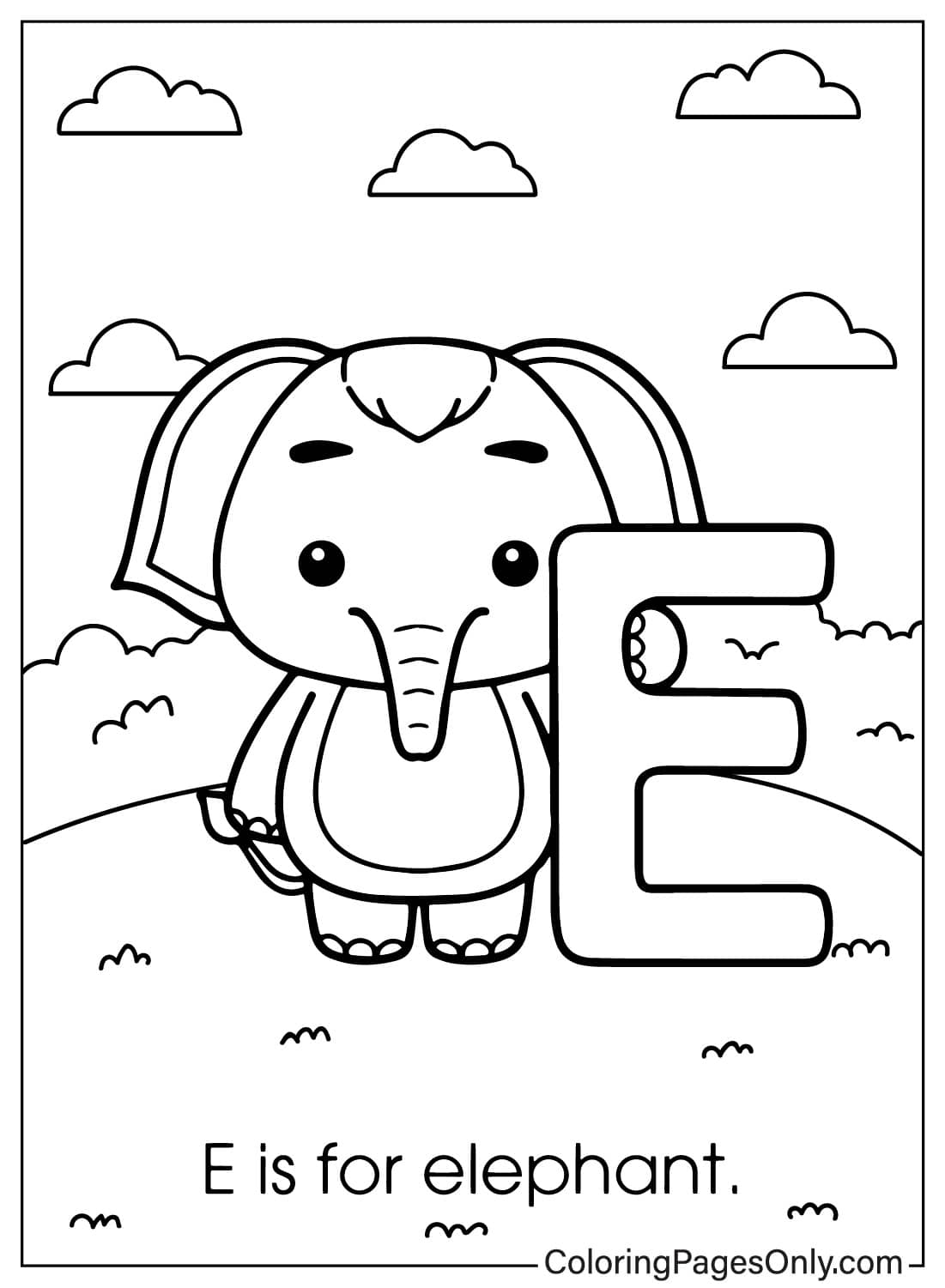
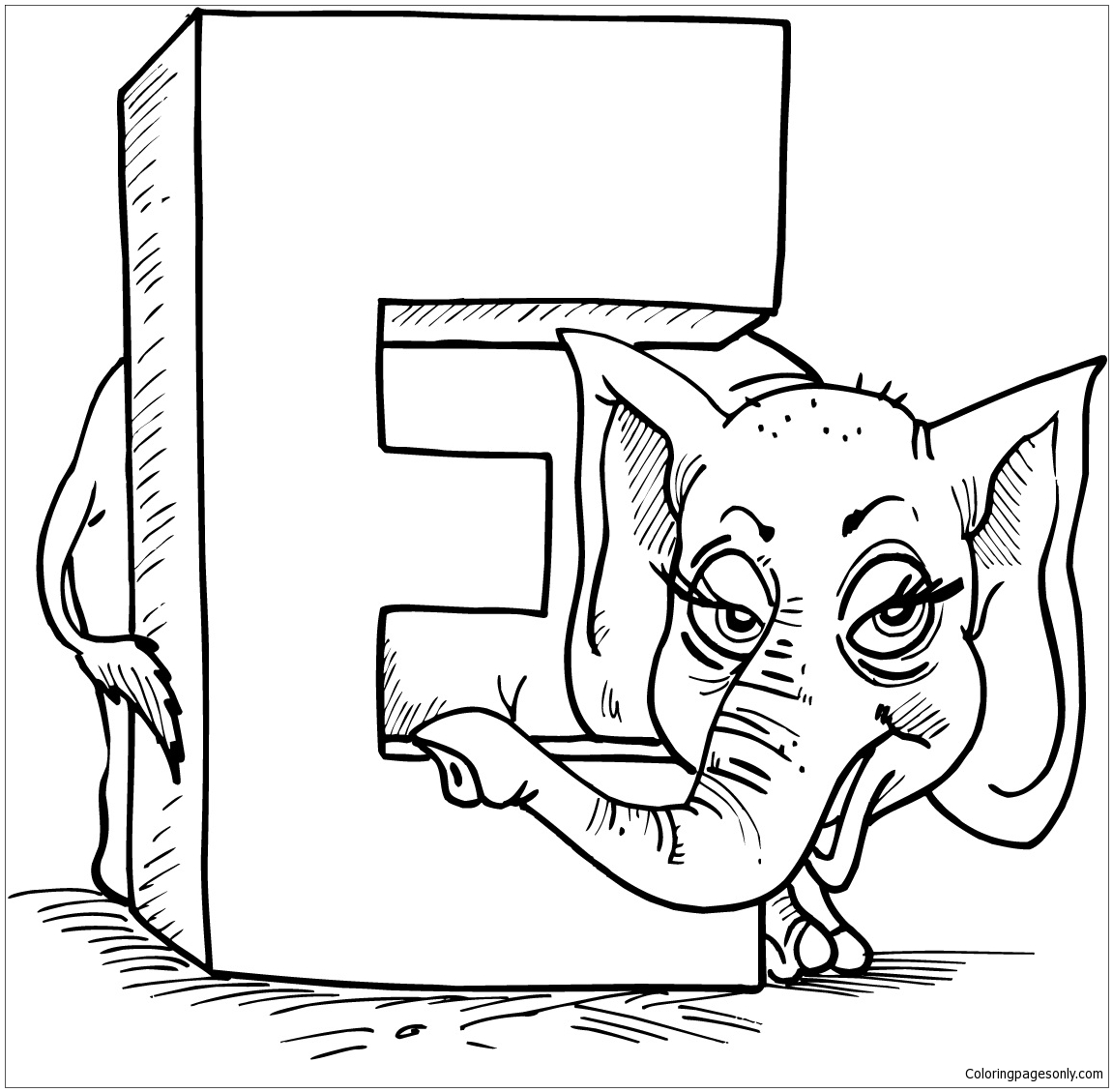
Five pages pair the letter with elephants, including one with an eye as a bonus E word. Shade each elephant a soft Slate Gray, tint the ear lining Blush, and try a bright Sky Blue letter for contrast.
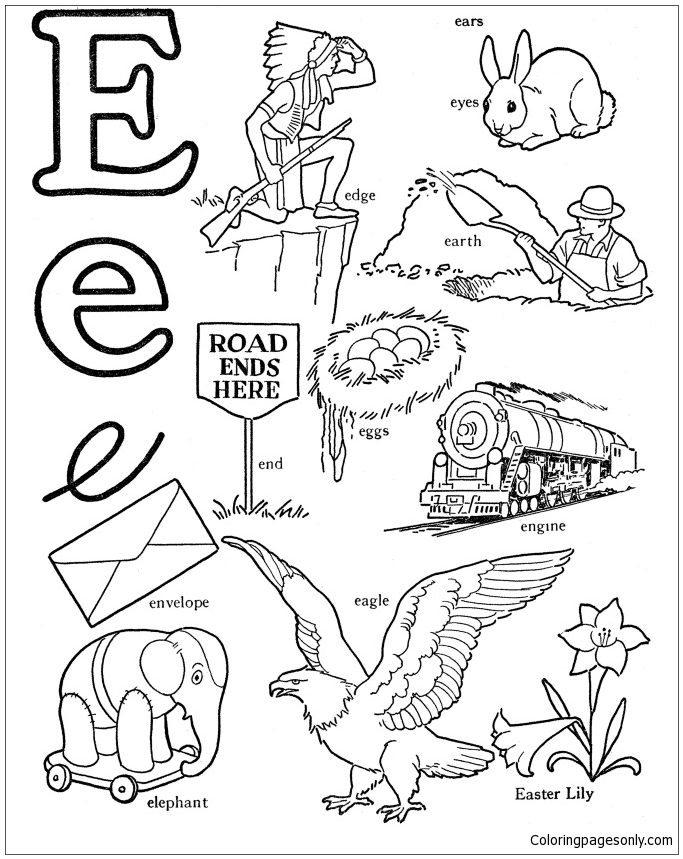
More E Words
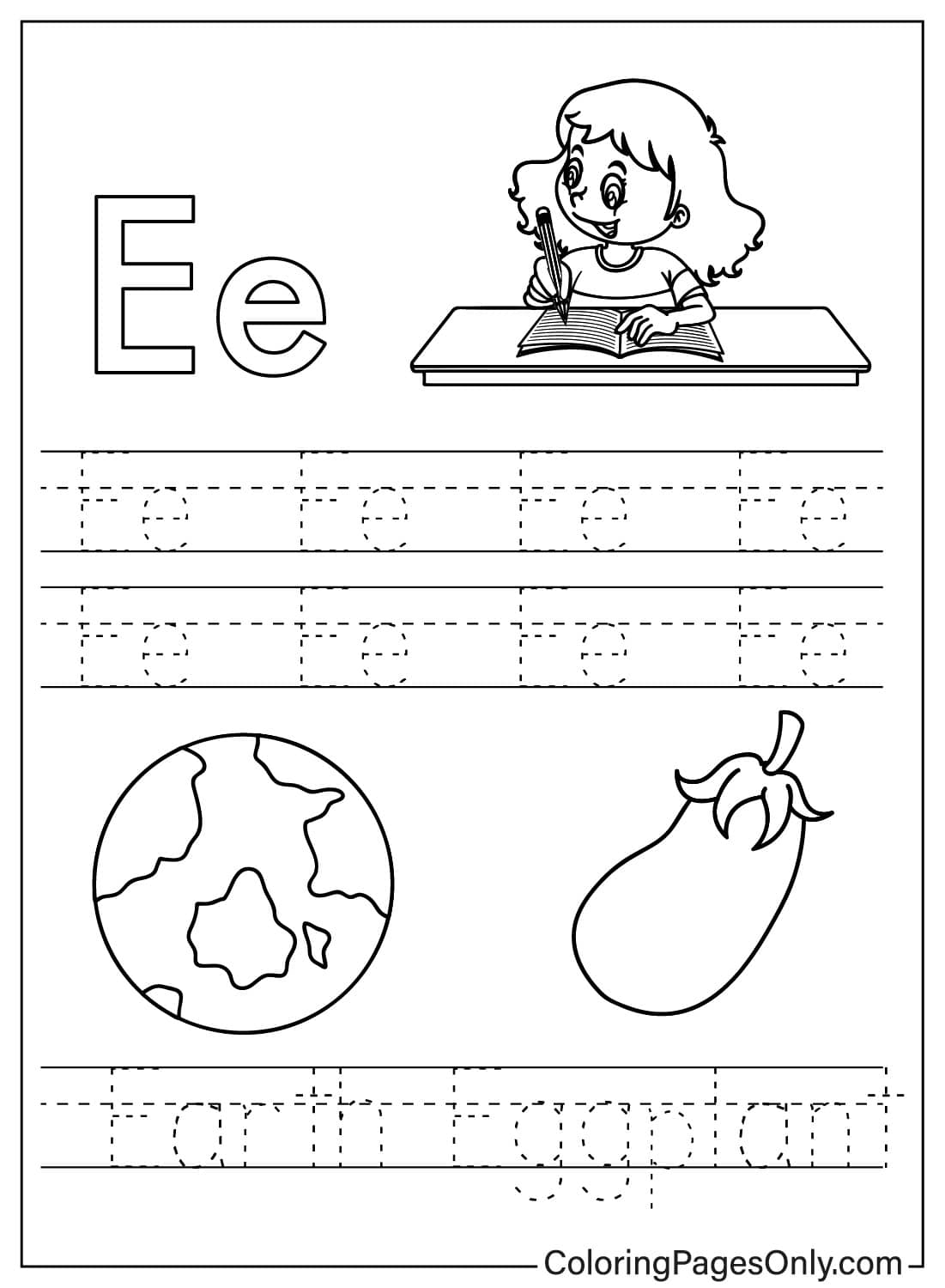
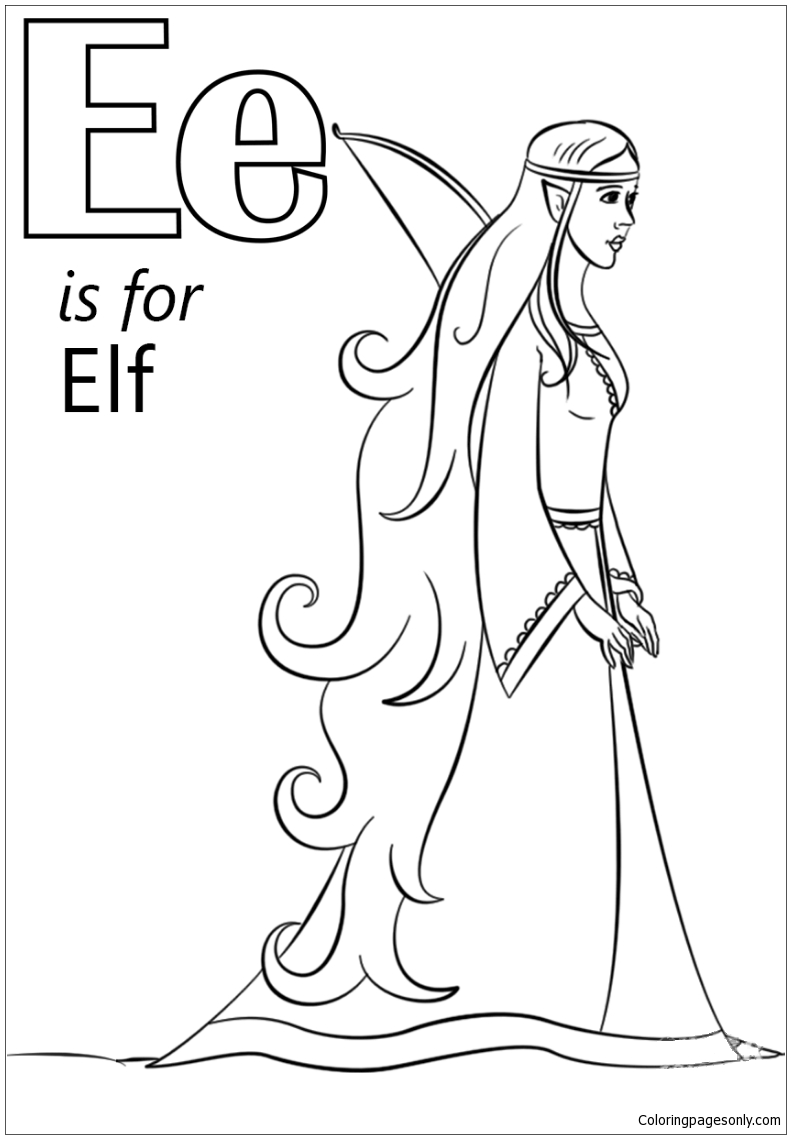
Five sheets show eggs, Earth with an eggplant, a holiday elf, and a page of words that start with E. Use Ocean Blue and Leaf Green for Earth, deep Aubergine Purple for the eggplant, and a Holly Green hat with Red trim for the elf.
Tracing and Worksheet Pages
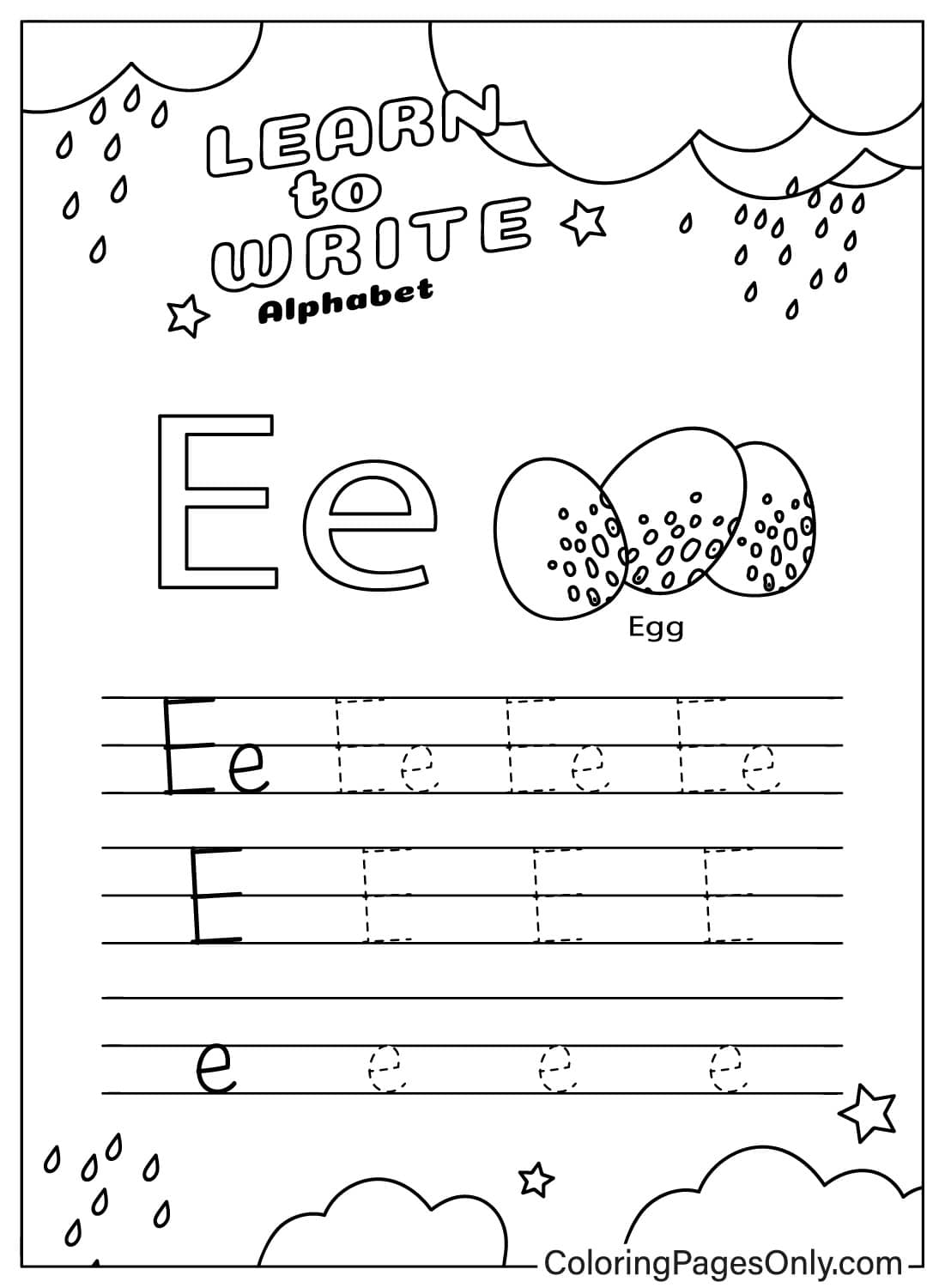
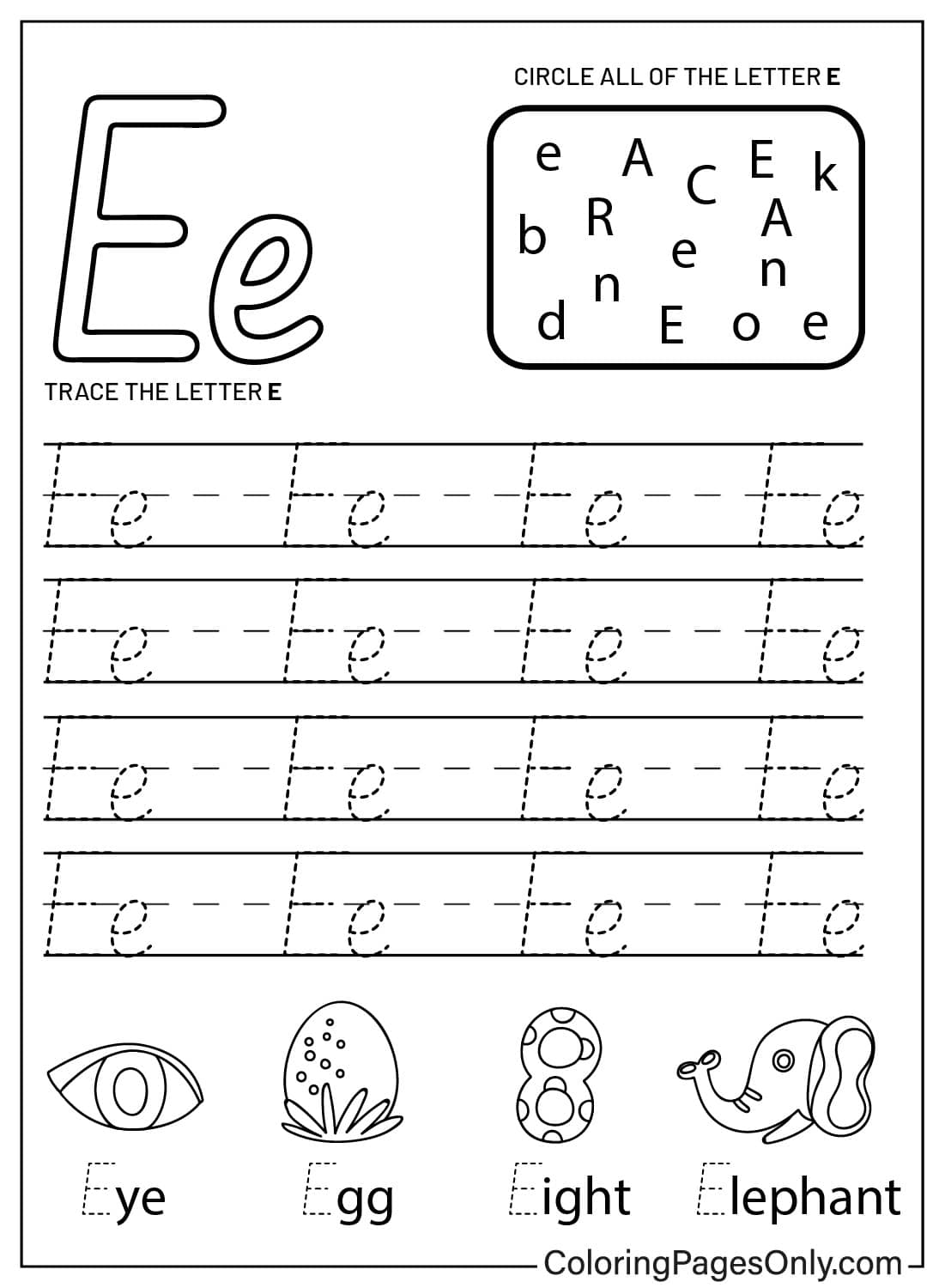
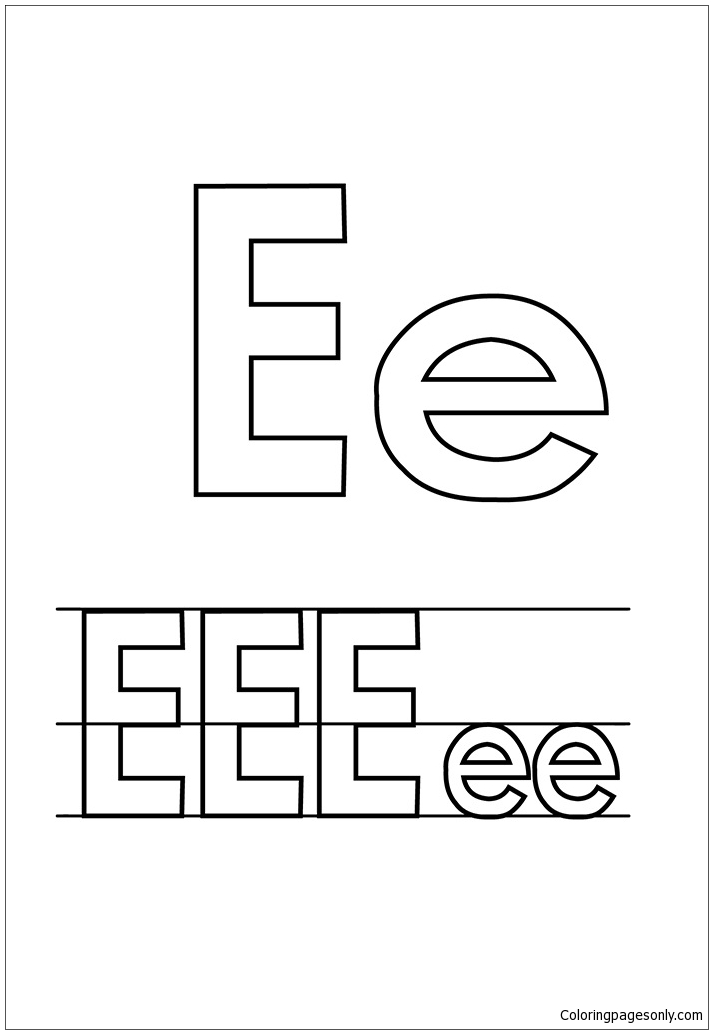
Three sheets focus on writing: a tracing page for E and e, a worksheet template, and a page showing capital and small letters side by side. Trace the dotted lines in pencil first, then color each finished letter.
Decorative and Holiday Letters
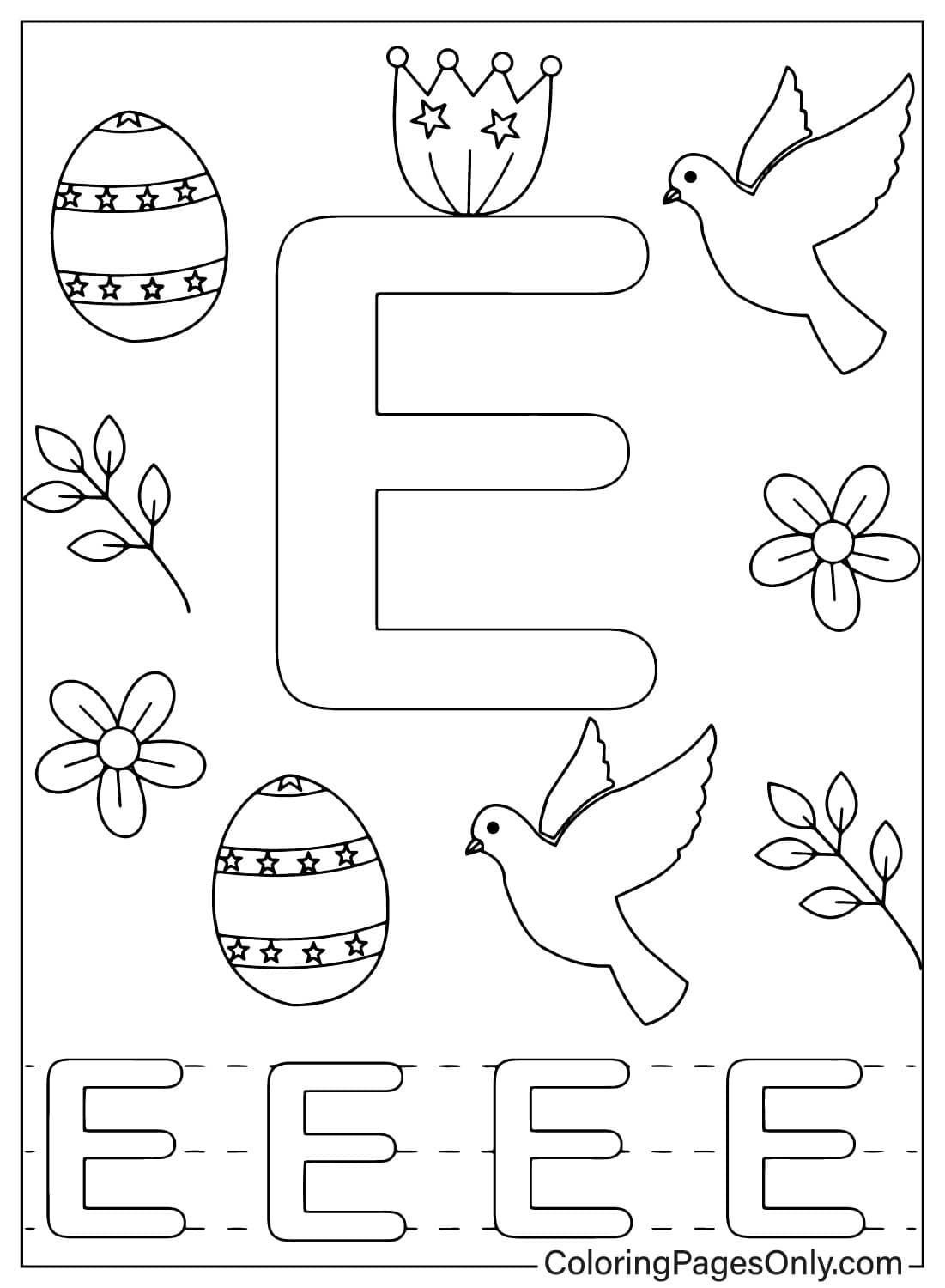
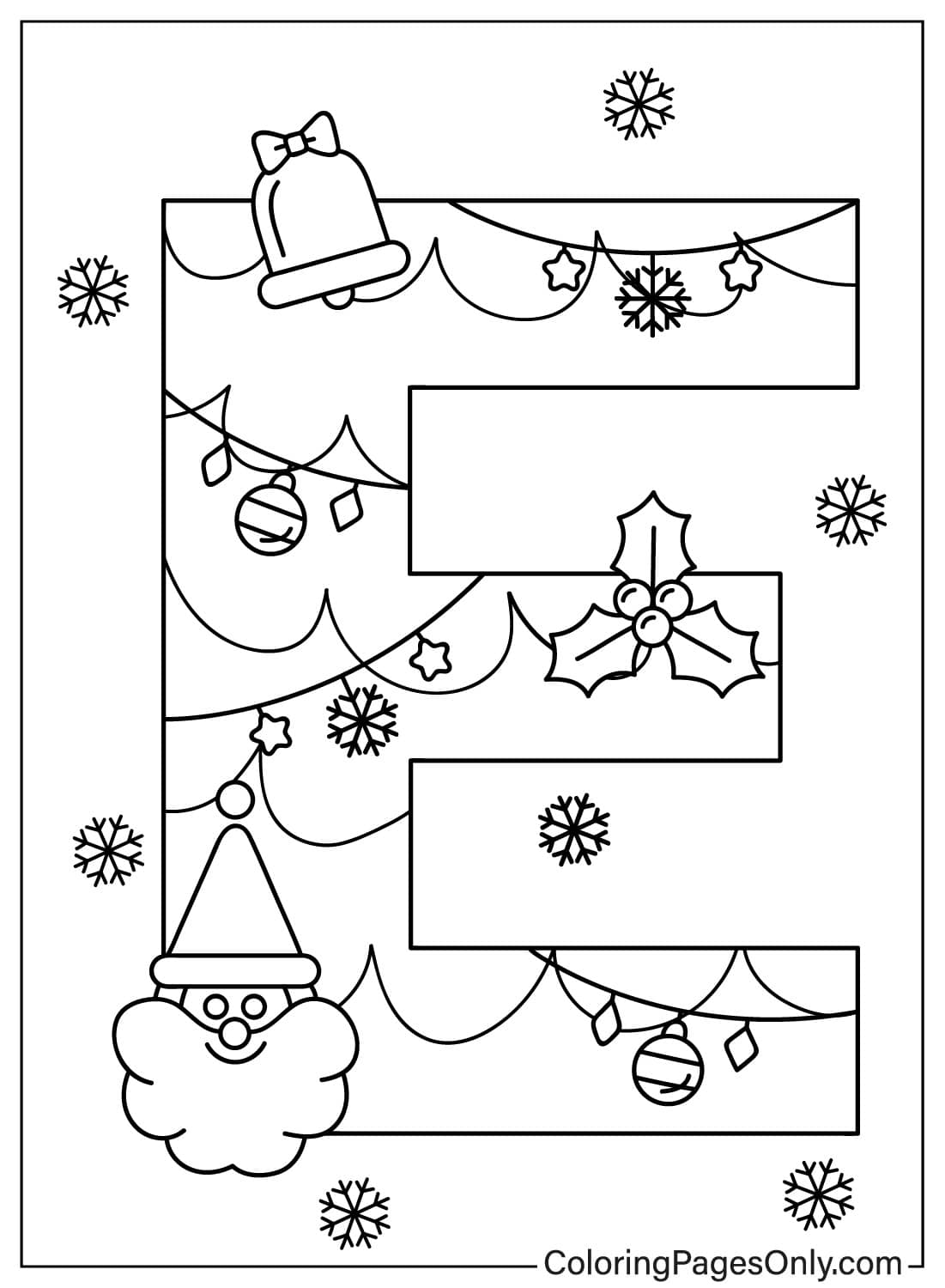
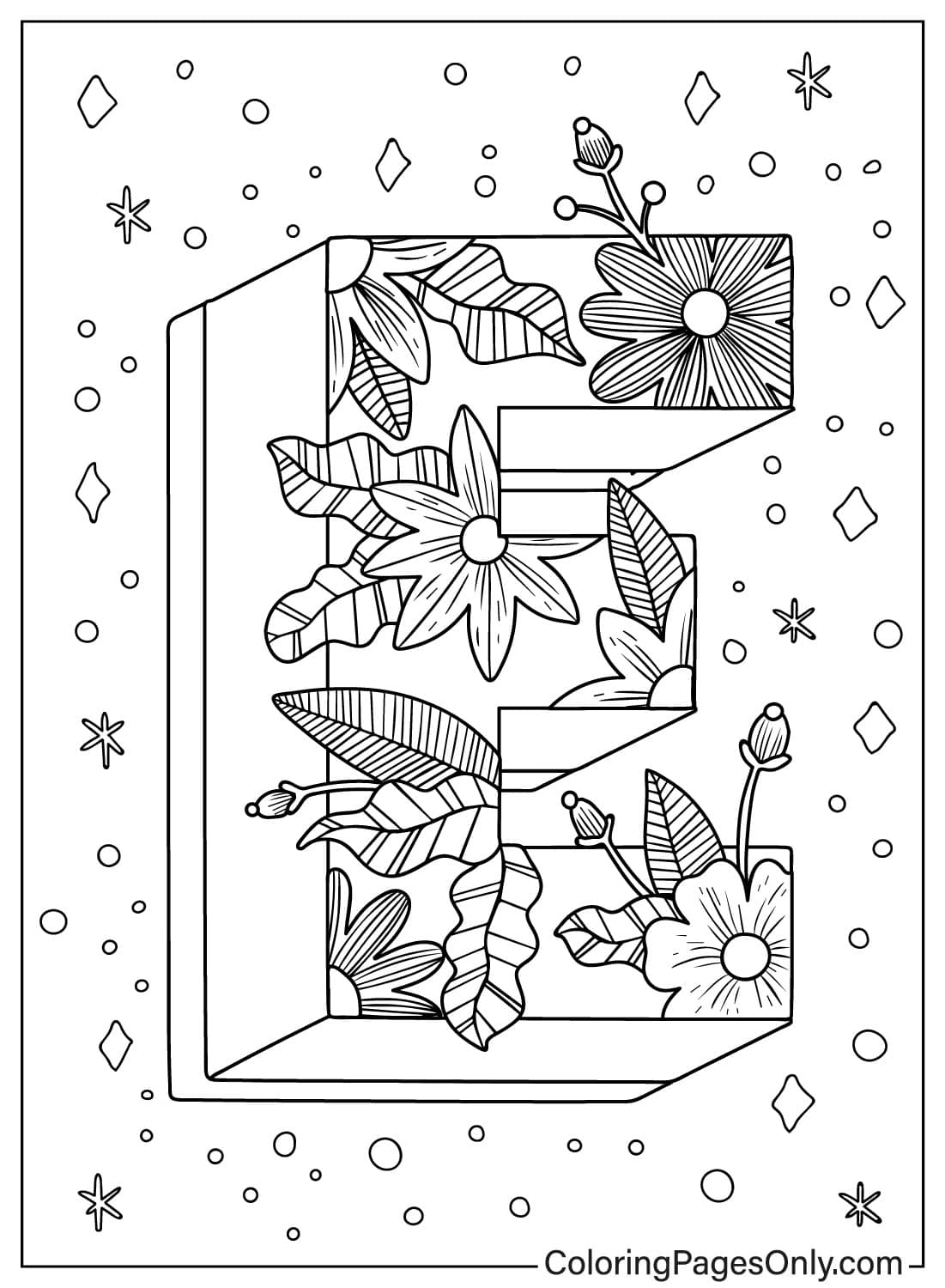
Four designs dress up the letter with flowers, Easter eggs, and insects, an artistic style, and a cute Merry Christmas font. Choose pastel Lilac, Butter Yellow, and Mint for Easter, and Cranberry Red with Pine Green for Christmas.
Cartoon and Playful Pages
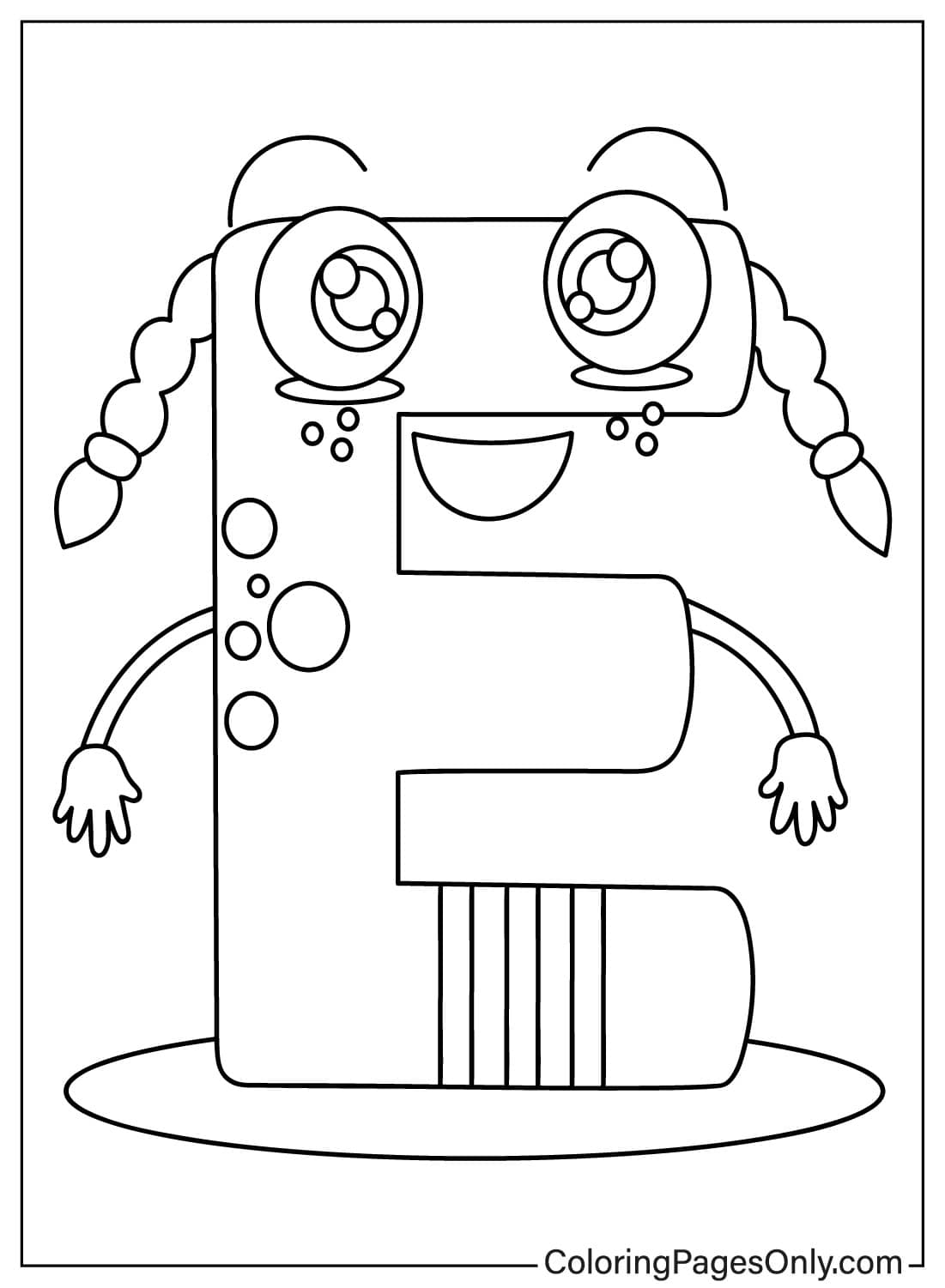
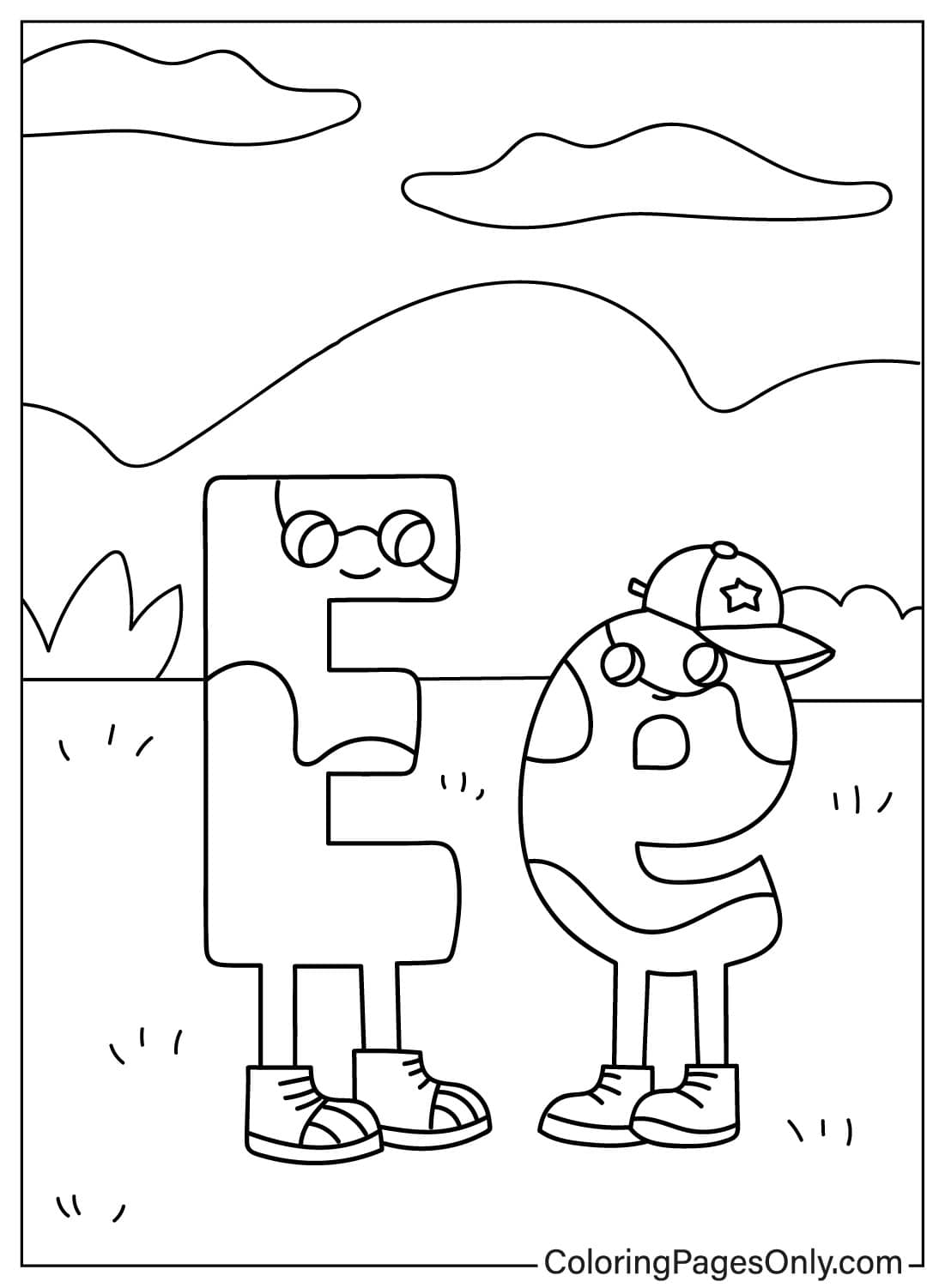
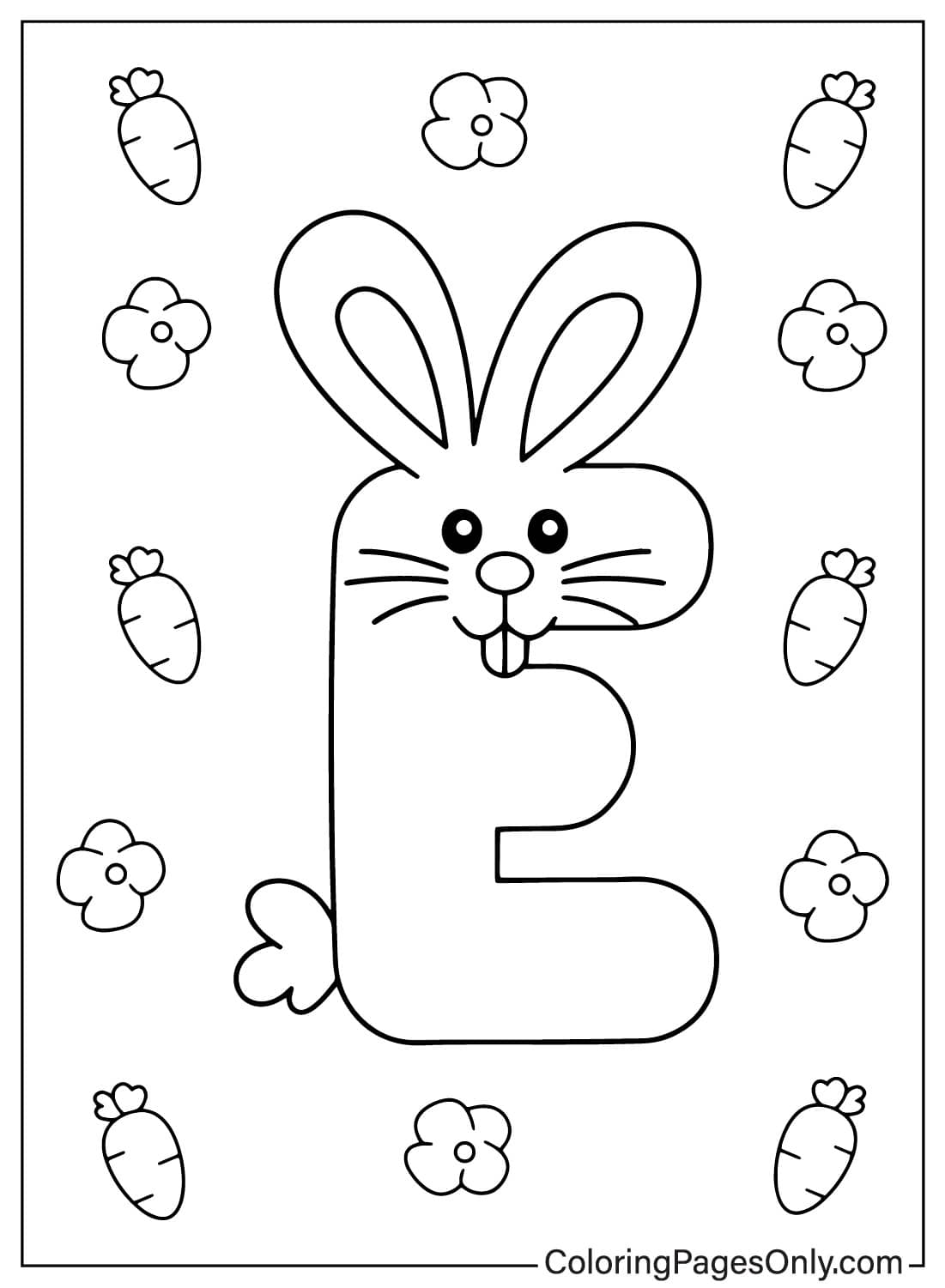
Four sheets show a fishing scene, a cartoon E, a rabbit holding the letter, and a kids’ page. Give the rabbit Cotton White fur with Pink ears, and add a Turquoise pond on the fishing page.
What Letter E Coloring Pages Do
Teaching short and long sounds. Elephant, egg, and elf use the short e, while words like eagle use the long e. Saying each word aloud while coloring helps children hear the difference.
Practicing straight lines. A capital E is built from one vertical stroke and three horizontal ones, ideal for early pencil practice. In its child development material, the American Academy of Pediatrics identifies the stretch from about 2 to 7 years old as the time when hand skills for drawing and writing grow fastest, and letter tracing supports that progress.
A calm start to learning. Filling a prepared shape reduced anxiety more than open doodling in the 2005 Art Therapy experiment run by Curry and Kasser. A short letter page can settle a class before a phonics lesson.
Building vocabulary. Eggplant, Earth, and elf are new words for many preschoolers. Kids can name each picture and think of one more E word to add to the page.
How to Color Letter E Pages Well
- Three arms: Color each horizontal bar of the E a different shade to count them as you go.
- Gray elephants: Layer light Gray first and add a darker Gray only in the folds of the trunk and ears.
- Egg patterns: Fill each egg with a different spring motif, like wavy bands or polka dots.
- Tracing order: Complete the dotted E in graphite first, then reach for crayons.
- Earth details: Keep oceans Blue and land Green, with a few White cloud swirls.
- Bold outlines: Run a dark felt tip around the completed E to make it crisp.
5 Creative Craft Ideas With Letter E Coloring Pages
1. Elephant Ear Headband
Color an elephant page, cut out the ears, and glue them to a gray paper headband. Kids can wear it while practicing E words.
2. Egg Carton Letter Sort
Color the egg pages, cut out small pictures of E words, and place one in each cup of an empty egg carton. Count how many E words fill the carton.
3. Earth Day Poster
Color the Earth page and glue it to a green poster board with handprints around it. Write one way to care for the planet under each hand.
4. E Word Wall Card
Color the words page, cut it into strips, and post them on a classroom word wall. Add new E words as students find them.
5. Holiday Elf Ornament
Color the elf sheet, snip a round shape around him, and glue it on cardstock. Punch a hole and hang it with ribbon during the holidays.
Frequently Asked Questions
What are Letter E coloring pages?
This set holds 21 no-cost sheets matching E with elephants, eggs, an elf, Earth, holiday designs, and tracing practice. Teachers and parents can download a PDF or use the site’s coloring tool.
Where does the letter E come from?
E grew from the Phoenician letter he, which became epsilon in Greek. The Etruscans and Romans then passed it into the Latin alphabet used for English.
What sounds does E make?
E has a short sound, as in egg, bed, and elf, and a long sound, as in eagle, me, and tree. It can also be silent at the end of words.
What animals start with E?
Elephant, eagle, eel, emu, and earthworm are common examples. The elephant appears on five pages in this set.
What foods start with E?
Egg and eggplant appear in these pages. Other examples include edamame, English muffins, and enchiladas.
Why is E the most common letter in English?
E appears in many short, everyday words like the, be, and we, and in many word endings such as -ed and -er. That is why it shows up more than any other letter in written English.
What age are the Letter E coloring pages for?
Two-year-olds can handle the single-picture pages, and preschoolers enjoy the word sheets, while tracing and worksheets fit kindergarten writers.
What is the silent E rule?
When a word ends in a consonant followed by e, the e is usually silent and makes the vowel before it say its name, as in hop becoming hope.
Start Coloring
Grab an elephant, an egg, or the tracing page, run off copies for circle time, or color digitally, no signup. Proud students can post their E art on Facebook or Pinterest.