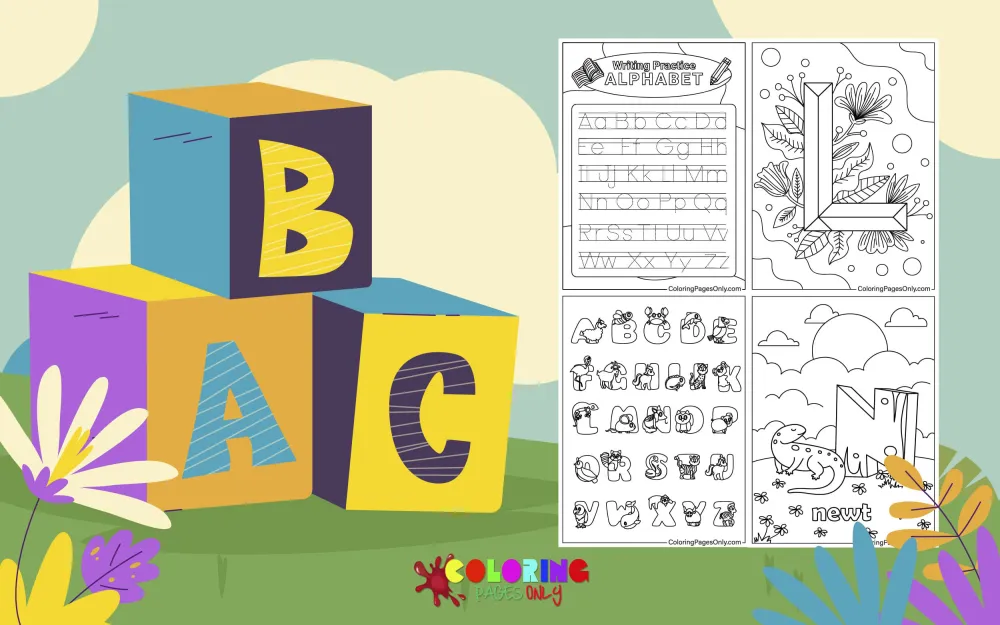
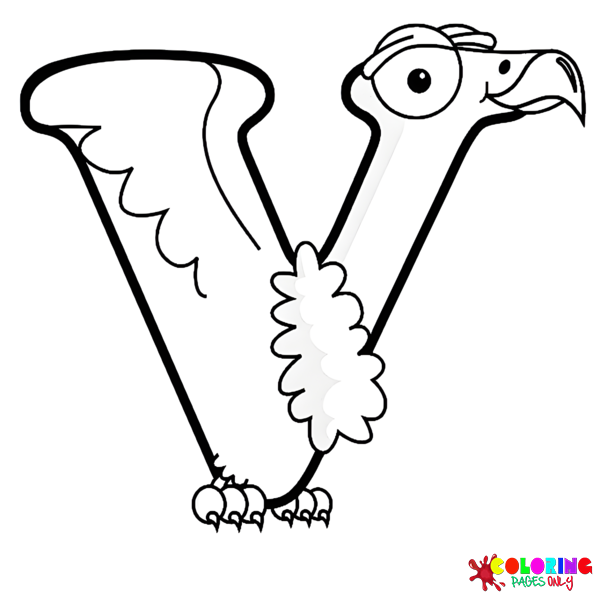
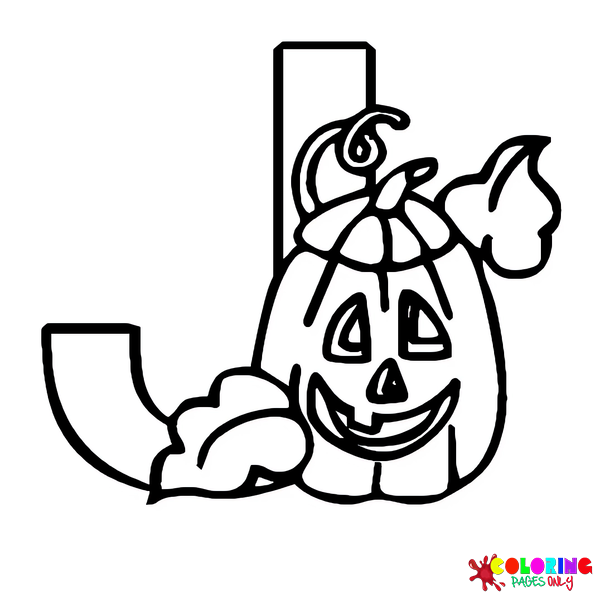
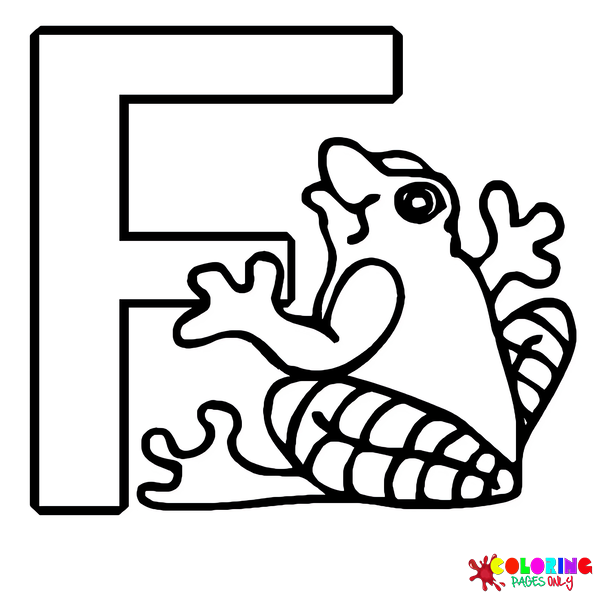
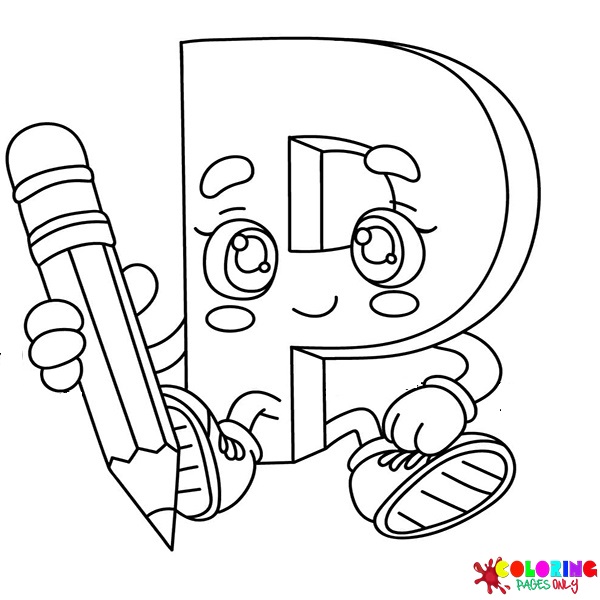
Alphabet Coloring Pages at ColoringPagesOnly.com brings together 620+ free pages covering every letter from A to Z – uppercase and lowercase letter designs, letter-with-illustration pages pairing each letter with a familiar animal or object, decorative and patterned letter styles, themed alphabet sets, and animal alphabet series. Each of the 26 letters has its own dedicated sub-collection; browse the full gallery below or jump directly to any individual letter. Download any page as a free PDF to print, or color online directly in your browser.

Alphabet pages are part of the broader Educational Coloring Pages collection – explore also Numbers Coloring Pages, Animals Coloring Pages, and Coloring Pages for Kids for more learning-focused collections.

Browse by Letter – The Complete A to Z

Letter A Letter B Letter C Letter D Letter E Letter F
Letter G Letter H Letter I Letter J Letter K Letter L
Letter M Letter N Letter O Letter P Letter Q Letter R
Letter S Letter T Letter U Letter V Letter W Letter X
Letter Y Letter Z

Why “Alphabet”? A Brief History of the 26 Letters

The word alphabet comes directly from the first two letters of the ancient Greek alphabet: alpha (α) and beta (β). This naming tradition – using the first letters to name the whole system – has persisted for over 2,500 years and gives us the English word we use today.

The 26-letter English alphabet didn’t arrive fully formed. Its journey spans several thousand years of human writing, moving through Egyptian hieroglyphs, Phoenician symbols, Greek adaptation, Roman refinement, and finally Old English adoption. The path looks roughly like this: ancient Egyptian scribes developed hieroglyphs around 3100 BC; Phoenician traders simplified these into about 22 consonant symbols around 1200 BC; the Greeks adapted the Phoenician system around 750 BC and crucially added vowels, producing the first true alphabet in the modern sense; the Romans adopted the Greek alphabet through the Etruscans and modified it for Latin; and Christian missionaries brought the Latin alphabet to Britain around the 7th century AD, where it gradually replaced the runic futhorc script the Anglo-Saxons had been using.

The original Latin alphabet had only 23 letters – no J, U, or W. These three were the final additions that brought the count to 26. J was distinguished from I in the 16th century (the two were originally the same letter). You were separated from V around the same period. And W – whose name “double-U” perfectly describes its origin – began as two U’s (which were then written as V’s) written side by side by medieval scribes of Charlemagne’s court. By the 16th century, the 26-letter alphabet was largely settled into the form used today.

The English alphabet is classified as a true alphabet – meaning it has letters for both consonants and vowels, unlike the Semitic abjads (such as Arabic and Hebrew) that traditionally represent only consonants. It is also a Latin-script alphabet, placing it in the same family as the alphabets of Spanish, French, Italian, German, Portuguese, and dozens of other languages that descended from Roman writing.

The 26 Letters – Vowels, Consonants, and the In-Between

Of the 26 letters, the collection divides into three functional groups:

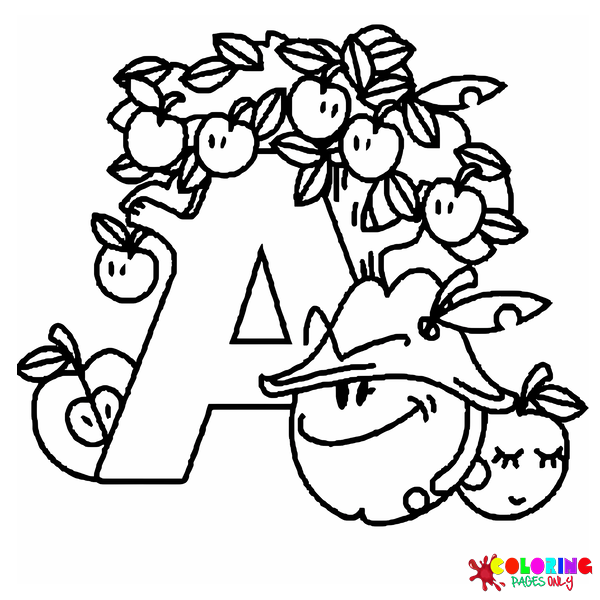
Vowels (5 letters): A, E, I, O, U. These letters represent open sounds produced with an unobstructed flow of breath. Every complete English word requires at least one vowel sound. The vowels are also the letters most frequently paired with multiple sounds: the letter A alone produces the sounds heard in apple, acorn, all, and about – different in each word. For coloring pages, the vowel letters appear in almost every illustration set, and A in particular is the most common first letter in the collection because “A is for Apple” remains the single most universally recognized letter-word pairing in English literacy learning.

Consonants (19 letters): B, C, D, F, G, H, J, K, L, M, N, P, Q, R, S, T, V, X, Z. These letters represent sounds made by partially or fully blocking the flow of breath using the lips, teeth, tongue, or throat. Consonants provide the structure of English words; vowels provide their sound and rhythm. For alphabet coloring pages, each consonant letter is typically paired with an animal or object whose name begins with that consonant’s most common sound.

Semi-vowels (2 letters): W and Y. These letters function as consonants at the beginning of words (wet, yes) but as vowels in certain positions (gym, rhythm, my). They occupy a unique middle position in the alphabet’s sound system and are often the most interesting letters for young learners precisely because they don’t follow simple rules.

English produces approximately 44 distinct sounds from these 26 letters, meaning the alphabet is not phonetically one-to-one. The combination sh makes a single sound; ch makes another; th appears in two different sounds (as in think and this). This richness is one reason that pairing letters with illustrations is so effective for early literacy: the visual image anchors the most common sound of each letter before children encounter its exceptions.

The Letter-by-Letter Illustration Guide

Each page in this collection pairs a letter with one or more illustrations whose name begins with that letter’s primary sound. This pairing – called phonics connection – is the core educational mechanism of alphabet coloring pages: children see the letter shape, color it, and simultaneously see and name the object, strengthening the letter-sound-object association through multiple sensory channels at once.

Here is the canonical A-to-Z word-association guide used across most English literacy programs, which informs the illustrations in this collection:

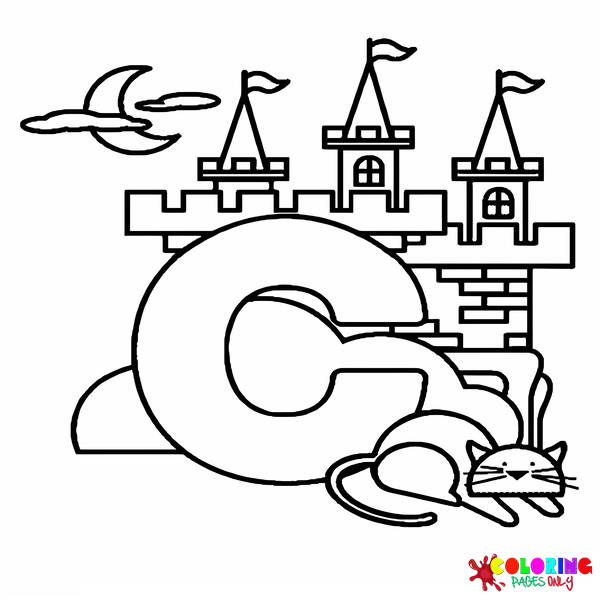
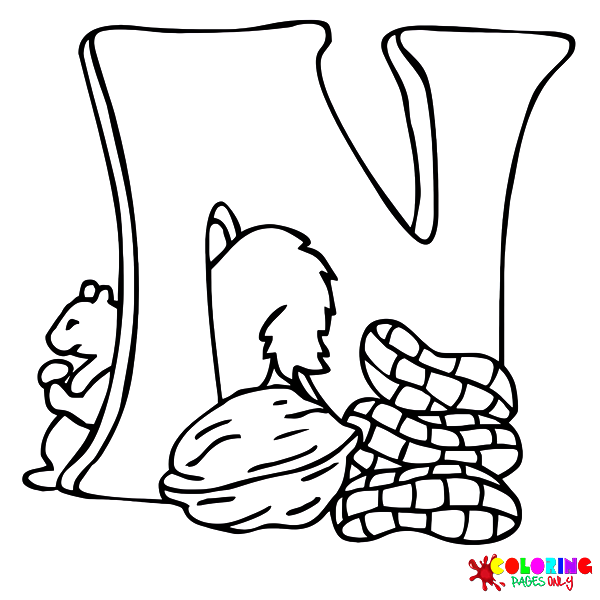
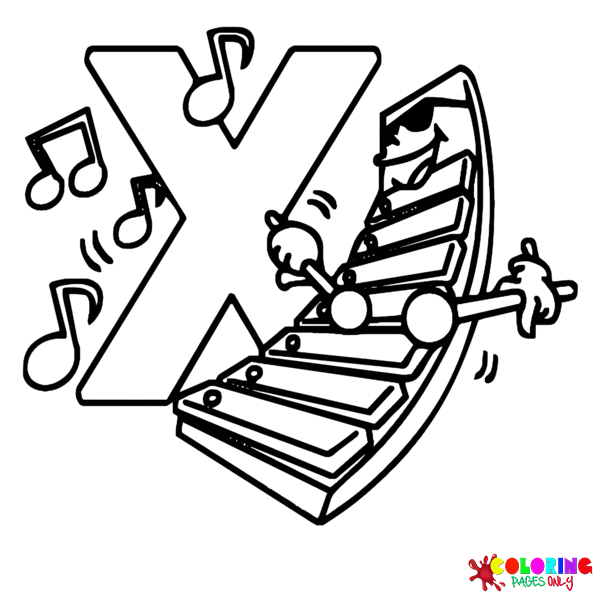
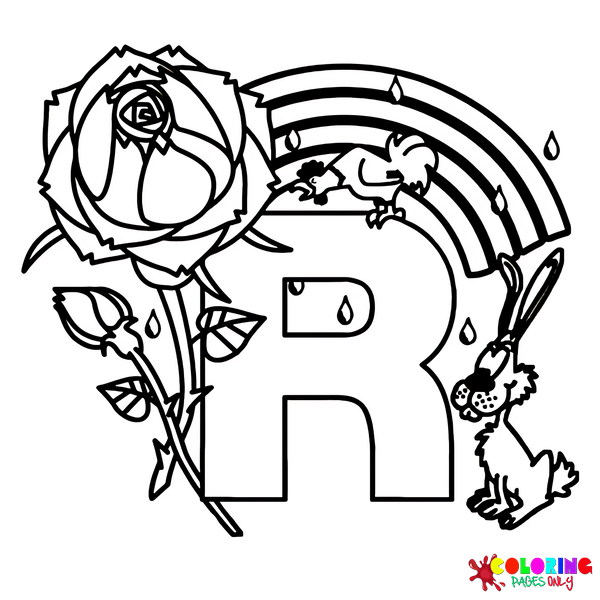
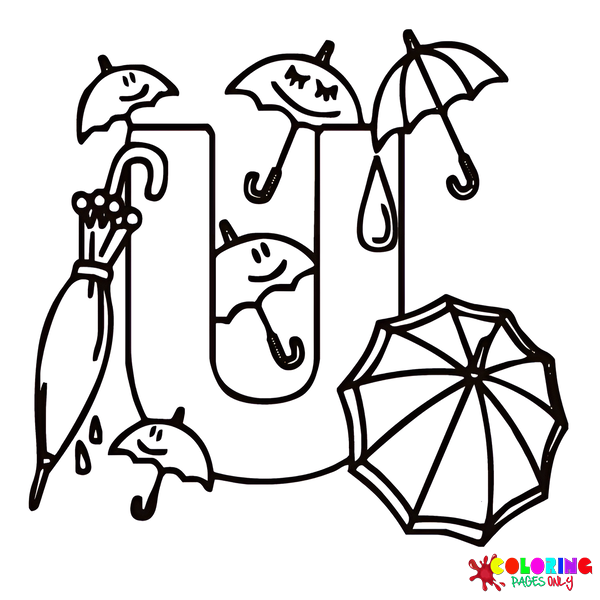
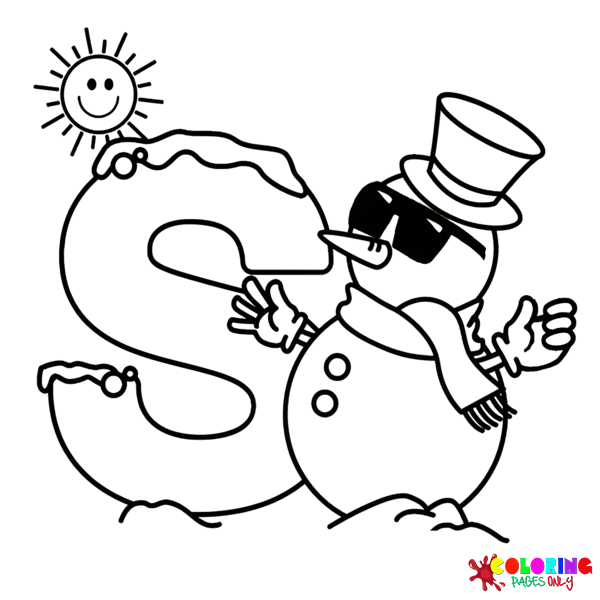
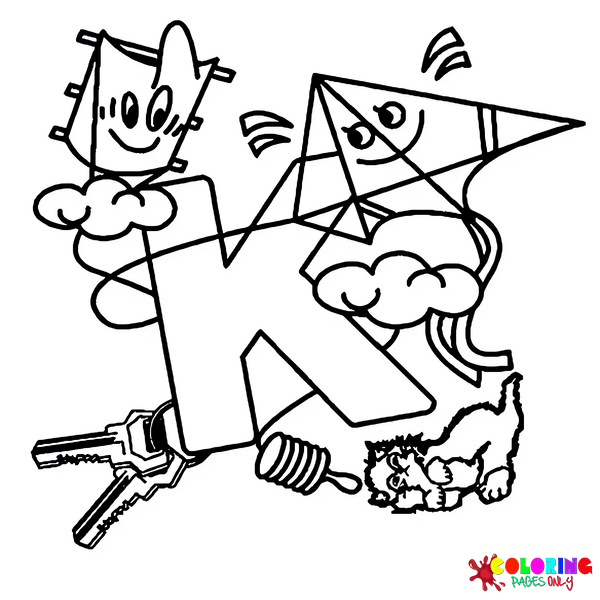
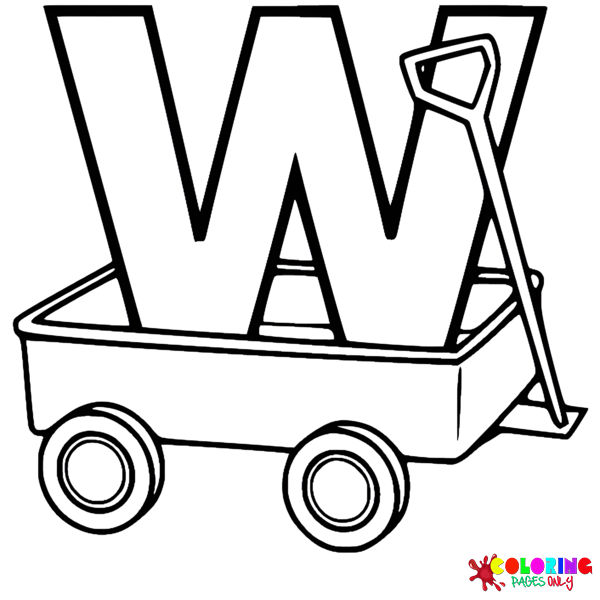
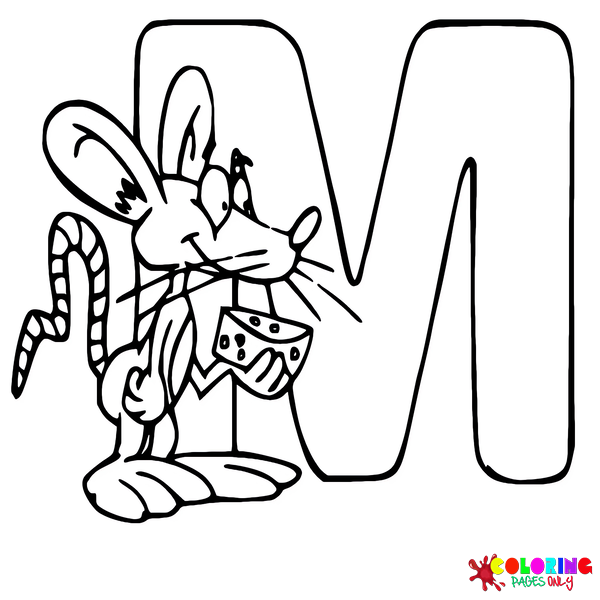
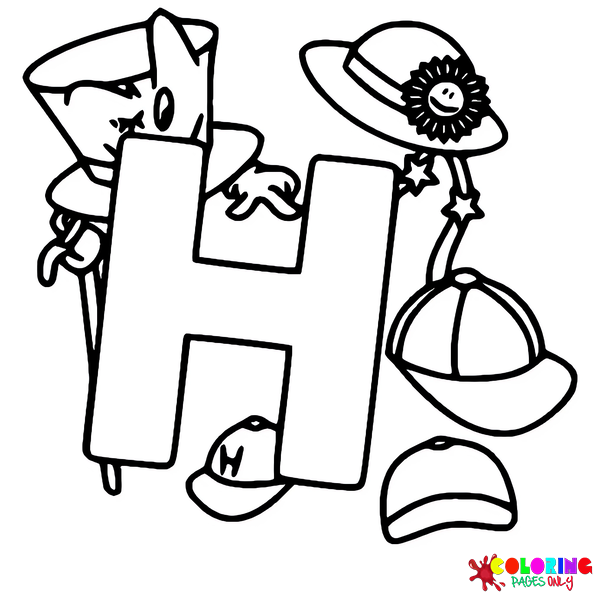
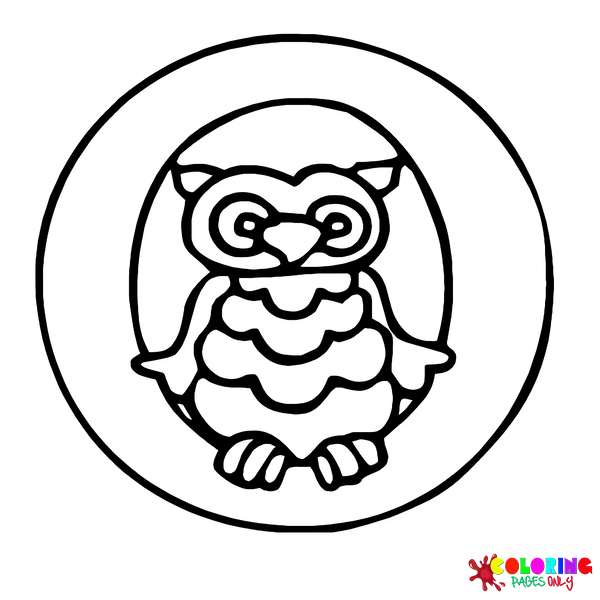
A – Apple, Alligator, Ant, Airplane. The short-A sound in apple is the first sound most children learn to associate with this letter. B – Bear, Butterfly, Ball, Banana. C – Cat, Car, Cookie, Cloud. C is one of the trickier consonants (it sounds like K before A, O, U, but like S before E, I, Y), so the cat and car associations ground children in the hard-C sound first. D – Dog, Drum, Duck, Dinosaur. E – Elephant, Egg. The letter E is the most frequently used letter in the English language – appearing in roughly 13% of all letters written in English. F – Fox, Fish, Flower, Frog. G – Giraffe, Grapes, Guitar. Like C, G has two sounds; gorilla and goat establish the hard-G sound. H – Hat, Horse, Heart, House. I – Igloo, Insect, Ice Cream. J – Jellyfish, Jar, Jungle. J is one of the least frequently used letters in English and one of the most recently added to the alphabet (16th century). K – Kangaroo, Kite, Key. K is almost always followed by its same sound partner, the C (as in lock, back), which is why K gets the kangaroo illustration – a word where K’s sound is unambiguous. L – Lion, Leaf, Ladybug, Lemon. M – Moon, Monkey, Mittens, Mouse. M’s letter shape itself traces back to an Egyptian hieroglyph representing water – the three peaks of a stylized wave. N – Nest, Net, Nose, Nurse. O – Owl, Octopus, Orange, Oak. P – Penguin, Pig, Pumpkin, Pizza. Q – Queen, Quilt, Quiver. Q is nearly always followed by U in English (a Latin rule that has held for over 2,000 years). It is the rarest letter in English text. R – Rabbit, Rainbow, Rocket, Ring. S – Sun, Snake, Star, Strawberry. T – Tiger, Train, Turtle, Tree. U – Umbrella, Unicorn. U is one of the three letters added after the original 23-letter Latin alphabet. V – Volcano, Violin, Van. V is widely considered the only letter in English that is never silent – wherever V appears, it is always pronounced. W – Whale, Wolf, Watermelon, Wagon. W began as two V’s (VV) in medieval manuscripts, which is why its name is “double-U” even though it looks like two V’s. X – Xylophone, X-ray. X is one of the rarest letters in English text and one of the most challenging to illustrate because very few common English words begin with the X sound. Y – Yak, Yo-yo, Yacht. Y is one of the two semi-vowels and functions differently depending on where it appears in a word. Z – Zebra, Zipper, Zoo. Z was one of the last letters added to the Latin alphabet and is placed last in our sequence today.

Types of Alphabet Coloring Pages in This Collection

The 620+ pages in this collection span several distinct visual approaches, each suited to different learning stages and coloring skill levels.

Letter-only portrait pages show the letter – uppercase, lowercase, or both – as the sole subject, without accompanying illustration. These are the purest coloring-focused pages: the entire surface is the letter itself, often large and bold enough to fill the page. These work best for children who already recognize the letter and want to practice coloring within its specific shape – the curved bowl of B, the diagonal strokes of K, the circular form of O. They are also ideal for decorative purposes: framing a child’s initial letter, creating personalized room decor, or producing a classroom display.

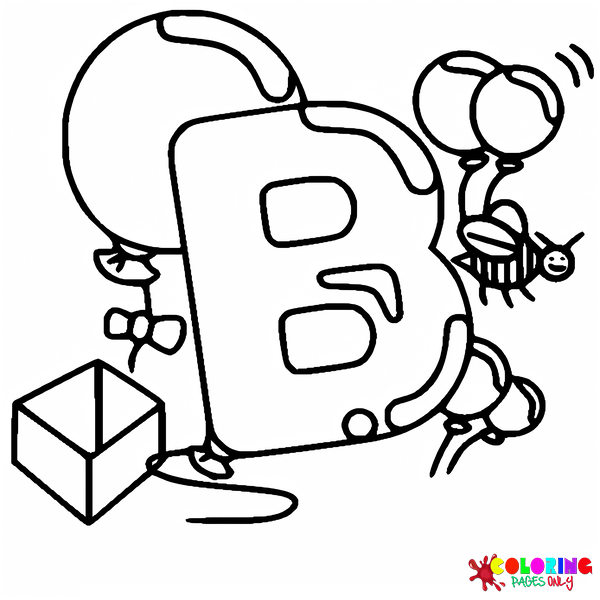
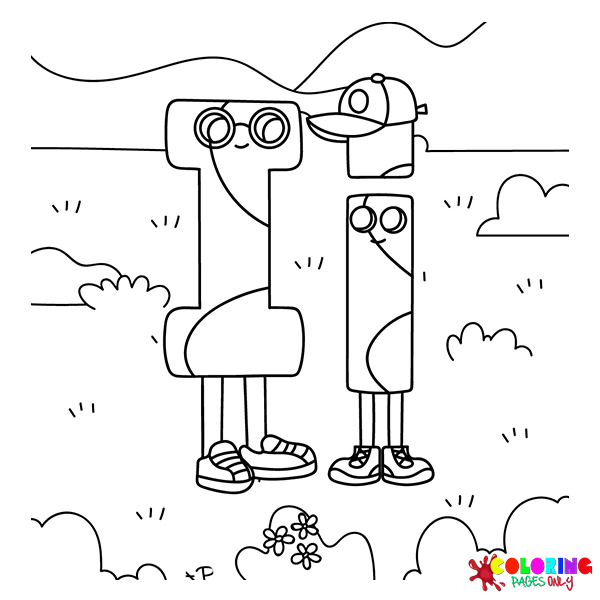
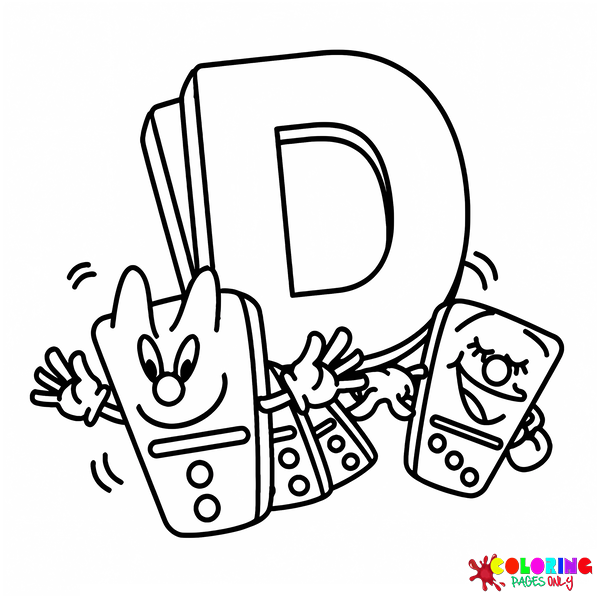
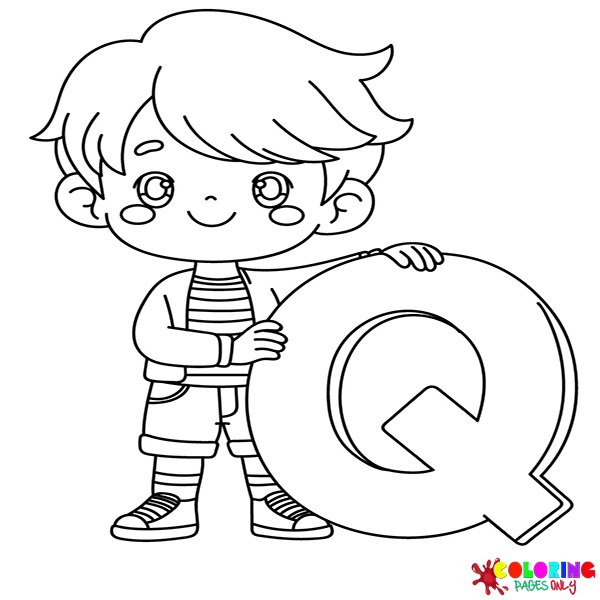
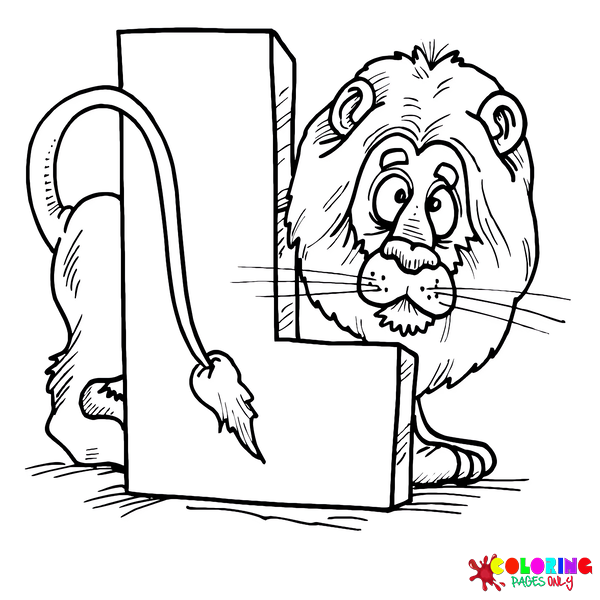
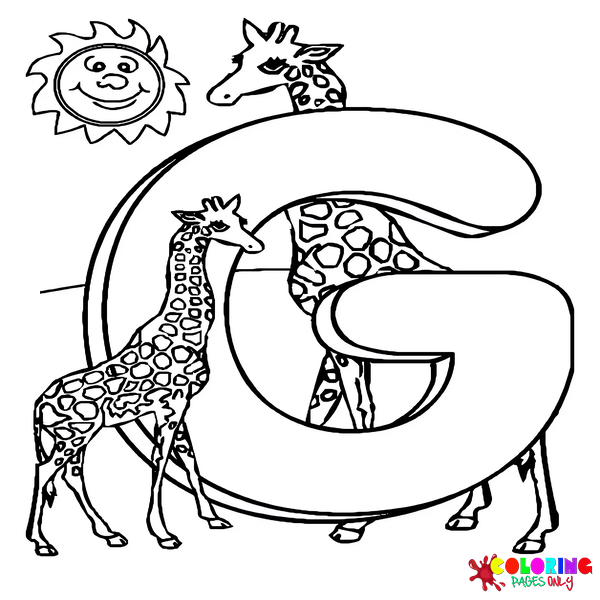
Letter-with-illustration pages combine the letter form with one or more objects whose names begin with that letter. These are the most educationally comprehensive pages: the child colors the letter shape and the accompanying image simultaneously, reinforcing the letter-sound connection at two points – the visual form of the letter and the spoken name of the object. These pages are the primary tool for phonics-based alphabet learning and are recommended for children in the early stages of letter recognition, typically ages 3–6.

Uppercase and lowercase paired pages show both forms of the same letter on a single page – the capital A and the small a, or the capital G and the small g. These are particularly valuable because many letter pairs look visually unrelated in their uppercase and lowercase forms (A/a, B/b, D/d, G/g, Q/q, R/r) – a recognition challenge that these paired pages directly address. Seeing and coloring both forms on the same page builds the connection between the two representations of a single letter.

Decorated and patterned letter pages treat the letter as a canvas – filling its interior with patterns, flowers, animals, geometric shapes, or seasonal motifs. These pages are more artistically complex and are recommended for children who already know their letters and want a coloring challenge, or for adults and older students who enjoy the meditative quality of detailed pattern coloring applied to letter forms.

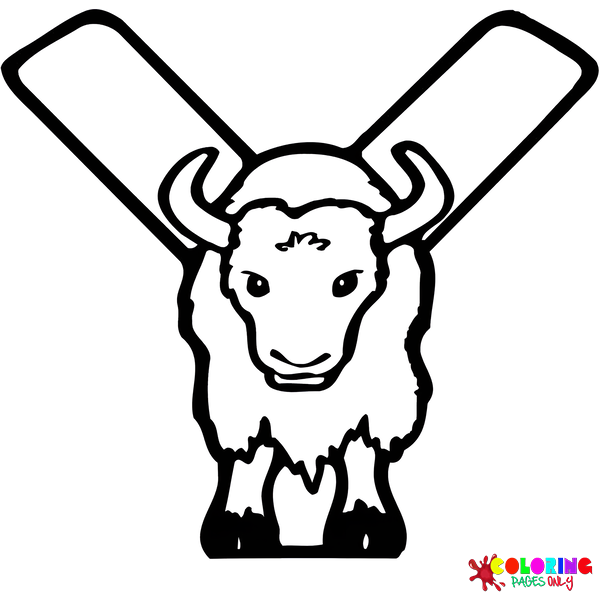
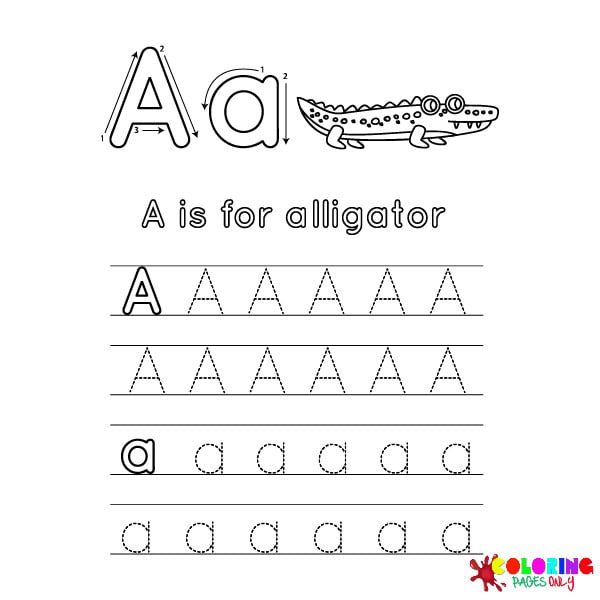
Animal alphabet pages – one of the most popular formats – feature an illustrated animal whose name begins with each letter, often drawn in a style where the animal is the dominant visual element and the letter itself is secondary. A is an alligator; B is a bear; C is a cat. These pages work particularly well for children who are animal enthusiasts, connecting their existing interest to alphabet learning.

Coloring Tips – Making the Most of Letter Pages

Match your tool to the letter’s size. Large, bold letter outlines – especially on the portrait-style pages – work best with crayons, wide markers, or broad colored pencils that can fill large areas efficiently. Small decorative letter pages with interior patterns require finer tools: thin markers, fine-point colored pencils, or gel pens. Using the wrong tool for the letter size is the most common source of frustration in alphabet coloring: a crayon applied to a tiny decorative letter produces muddy, imprecise results; a fine-tip marker applied to a large bold letter takes ten times as long and often produces uneven coverage.

Color the letter before the illustration. On letter-with-illustration pages, always establish the letter’s color first before moving to the accompanying object or animal. This prevents the most common composition problem – the letter blending into a similarly colored background. Choose the letter’s color, fill it completely, then select contrasting or complementary colors for everything around it. If the letter is blue, the surrounding illustration might use warm tones (orange, yellow, red) to create maximum contrast. If the letter is red, consider cool illustration tones (blue, green, purple). The letter should be the most visually dominant element on the page, because it is the educational subject.

Use one color family per letter shape section. Many uppercase letters have distinct visual sections – B has two bumps (bowls), E has three horizontal arms, and K has two diagonal strokes. Rather than applying a single flat color to the entire letter, consider coloring each distinct section in a different shade of the same color family: light blue for one bowl of B, medium blue for the other; pale green for one arm of E, medium green for the second, dark green for the third. This technique develops color mixing and shading awareness while giving the letter visual depth and making its component parts more memorable.

For the hardest-to-color letters: tips by shape. Round letters (O, C, G, Q) require smooth, curved crayon strokes following the curve – short, arcing marks rather than flat back-and-forth strokes, which produce streaks across the curve. Angular letters (A, K, M, N, V, W, X, Y, Z) benefit from coloring in the direction of each stroke – downward for vertical parts, diagonal for angled parts. The letter S and its lowercase s are among the most challenging for young children because the reversed curve requires switching direction mid-letter; encourage young colorists to follow the S shape with their tool rather than trying to fill it in sections.

Make lowercase letters as important as uppercase. Many coloring pages feature only uppercase letters, and many children develop stronger recognition of capitals than of lowercase letters, which is actually the form they encounter more frequently in books and reading materials. When a page shows both forms, give the lowercase letter equal visual weight: if the uppercase A is red, make the lowercase a the same red or a very close variation. The visual similarity reinforces the paired identity of the two forms.

Use the illustration’s colors to teach vocabulary alongside coloring. When a child colors the illustration on a letter page – the bear for B, the sun for S – this is an opportunity to use color as vocabulary reinforcement. The sun is yellow. The bear is brown. The frog is green. Naming the colors as you or the child applies them extends the learning beyond letter recognition into color vocabulary and object description – two additional pre-literacy skills that feed directly into reading comprehension.

5 Activities

The personal alphabet book. Print one page for every letter, A through Z – ideally using the letter-with-illustration version for each. Over 26 sessions (one per day, or however quickly the child moves through them), color each page. Stack the finished pages in alphabetical order, fold a piece of colored cardstock in half for the cover, and staple or bind them together. Write the child’s name on the cover: “[Name] ‘s Alphabet Book.” This activity has two distinct educational payoffs: first, the ongoing coloring practice builds fine motor skills and letter-sound associations one letter at a time; second, the finished book becomes a personal reference tool that the child made themselves – far more engaging than a purchased alphabet chart. Children who create their own learning materials consistently show stronger retention of the content because ownership builds motivation.

The letter-of-the-week display. Each week, select one letter from the collection. Print all available pages for that letter (the uppercase portrait, the lowercase portrait, the letter-with-illustration, and any themed variation). Color them all during the week, with one page per day. At the end of the week, display them together on a wall or dedicated learning board. Also: collect three physical objects from around the home whose names begin with that letter and display them beneath the colored pages. By the end of the school year, the display will contain a full A-Z gallery of the child’s own colored alphabet art. This activity connects letter learning to physical objects in the child’s real environment – a technique that research in early childhood literacy identifies as one of the most effective for letter-sound connection because it moves the learning from the abstract (a symbol on paper) to the concrete (a physical thing with a name).

Vowel versus consonant sorting game. Print one portrait page for each of the 26 letters. Color all 26 pages – any colors the child chooses. After all are completed, create two labeled areas on the floor or a large table: VOWELS and CONSONANTS. Invite the child to sort all 26 colored letter pages into the two groups. Start by placing A, E, I, O, and U in the vowels group together, and let the child identify all the remaining consonants. Then discuss W and Y: which group do they belong to? (Both, depending on their role in a word.) This activity teaches one of the most fundamental structural concepts of the English language – the vowel/consonant distinction – through a physical sorting game that uses the colored pages as game pieces. The activity works best once all 26 pages are completed, giving it the additional function of incentivizing completion of the full collection.

The alphabet treasure hunt. Select five letters the child is currently learning. Color the portrait pages for those five letters. Then, in a room of the house, a garden, or a classroom, set a timer for five minutes and challenge the child to find as many physical objects as possible whose names start with each letter. Place a colored page on the floor and stack found objects (or pictures of objects cut from magazines) on top of each letter. A finds: apple, avocado, arm (pointing to body part). B finds: book, ball, bottle. The activity directly connects the abstract letter symbol to real-world language – the core of phonics learning – and creates physical movement alongside cognitive engagement. It also reveals which letters are genuinely unfamiliar to the child (they will struggle to find objects for X, Q, and Z) and which are already deeply learned (every child can find five things starting with S within thirty seconds).

The illustrated alphabet dictionary. Print the uppercase portrait page for every letter. Color all 26 pages. Then, on each page’s blank back side (or on a separate sheet stapled to it), help the child draw or paste three pictures of objects whose names start with that letter – one well-known word, one they learned recently, and one they find unusual or funny. When complete, bind the pages into a book. This becomes a personal illustrated dictionary in which every letter entry is illustrated by the child. Unlike a standard alphabet book, this version grows from the child’s own vocabulary and visual choices – making every page personally relevant rather than standardized. Pages for common letters (S, T, M) will fill quickly; pages for rare letters (Q, X, Z) become interesting challenges that encourage children to explore unusual vocabulary they would not otherwise encounter.

Why Alphabet Coloring Works – The Learning Research

Alphabet coloring pages sit at the intersection of three foundational early literacy skills: letter recognition (identifying the shape of each letter), phonemic awareness (connecting letters to their sounds), and fine motor development (building the hand strength and coordination that writing requires).

When a child colors within the boundary of the letter O, they are tracing the letter’s shape with their hand – the same action required to write the letter, but in a lower-pressure, more exploratory way. The motor memory built through repeated coloring of a letter’s specific shape contributes to writing readiness. When they see and name the octopus on the O page while coloring, they are making a phonics connection: O makes the sound at the start of octopus. When they must choose a color for the letter and then a different color for the octopus, they are making visual planning decisions that build attention and focus.

This multi-channel engagement – visual, motor, and auditory (when the child speaks the letter name and object name aloud) – is why alphabet coloring pages are recommended by preschool and kindergarten educators across the country as a complement to direct letter instruction. They make letter learning something children choose to continue rather than something imposed on them, and that willingness to engage is itself one of the strongest predictors of early literacy success.

These related coloring collections will help you explore the wonderful world of colors. Let’s choose, be creative, and show us your great pictures!


Charlotte Taylor – Writer

I'm Charlotte Taylor, a former preschool teacher turned content creator at Coloringpagesonly.com. Fueled by my love for children and a deep passion for exploring the world through colors, I’m dedicated to inspiring creativity and spreading a vibrant, positive artistic spirit to all.