Angel Coloring Pages
 By:
Jennifer Thoa - Content Editor & Designer
Updated:
By:
Jennifer Thoa - Content Editor & Designer
Updated:
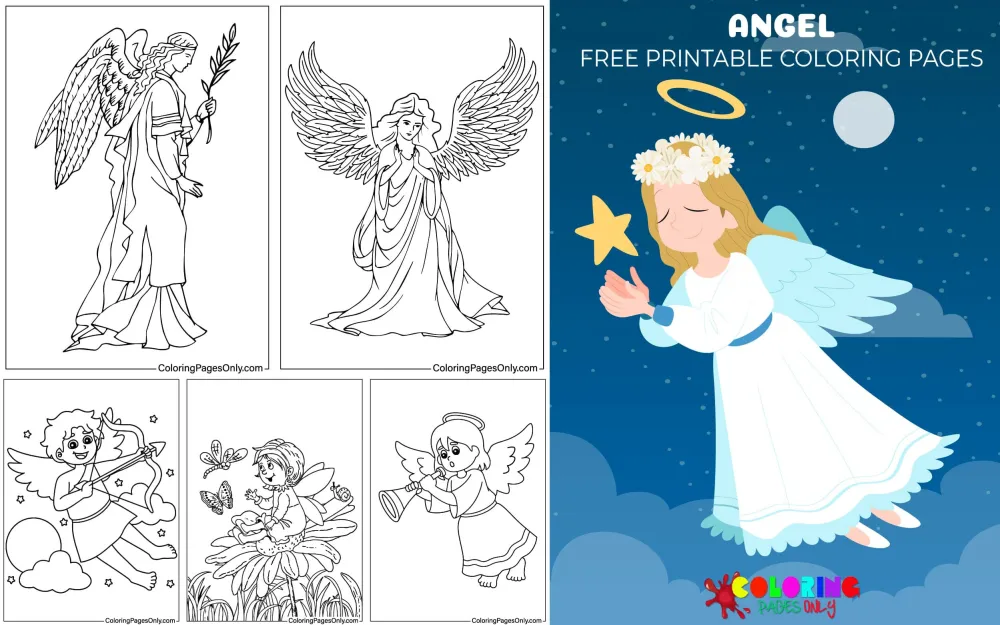
Free angel coloring pages: 60+ pages featuring winged angel portraits in flowing robes with halos, Christmas angels with trumpets and star designs, baby cherub and putto figures, warrior archangel scenes, guardian angel compositions with children, musical angels playing harps and lyres, decorative wing detail studies, mandala-style celestial patterns, memorial angel statues, and the full visual vocabulary of one of religious art’s oldest and most continuously developed subjects across more than fifteen centuries of documented artistic tradition. All free, printable PDFs and online coloring for everyone.
The word “angel” derives from the Greek angelos (ἄγγελος), meaning messenger, which is itself a translation of the Hebrew malakh (מַלְאָך), carrying the same meaning. Angels appear across the Abrahamic faiths, in Greek and Roman mythology, and in numerous other religious traditions worldwide, consistently occupying the role of intermediary beings between the divine and the human, carrying communications, offering protection, executing divine will, and marking moments of significance in human experience.
In Christian iconography, winged angels as a visual concept did not appear until the 4th century. The earliest known depiction of angels with wings dates to the early Byzantine period; the Annunciation mosaic in Rome’s Basilica of Santa Maria Maggiore, completed between 432 and 440 AD, is among the earliest confirmed examples. Before this point, angels in early Christian art were typically depicted as young men in white robes, following the appearances described in the New Testament’s resurrection narratives.
The visual tradition that this collection draws from spans more than 1,600 years of Western religious art and has produced some of the world’s most reproduced images, including Raphael’s two contemplative child figures at the base of the Sistine Madonna (1512), which have appeared on more printed objects than perhaps any other detail in Western art history.
These 60+ free pages at ColoringPagesOnly.com cover the full angel visual tradition. All free, PDF or PNG, print or color online.



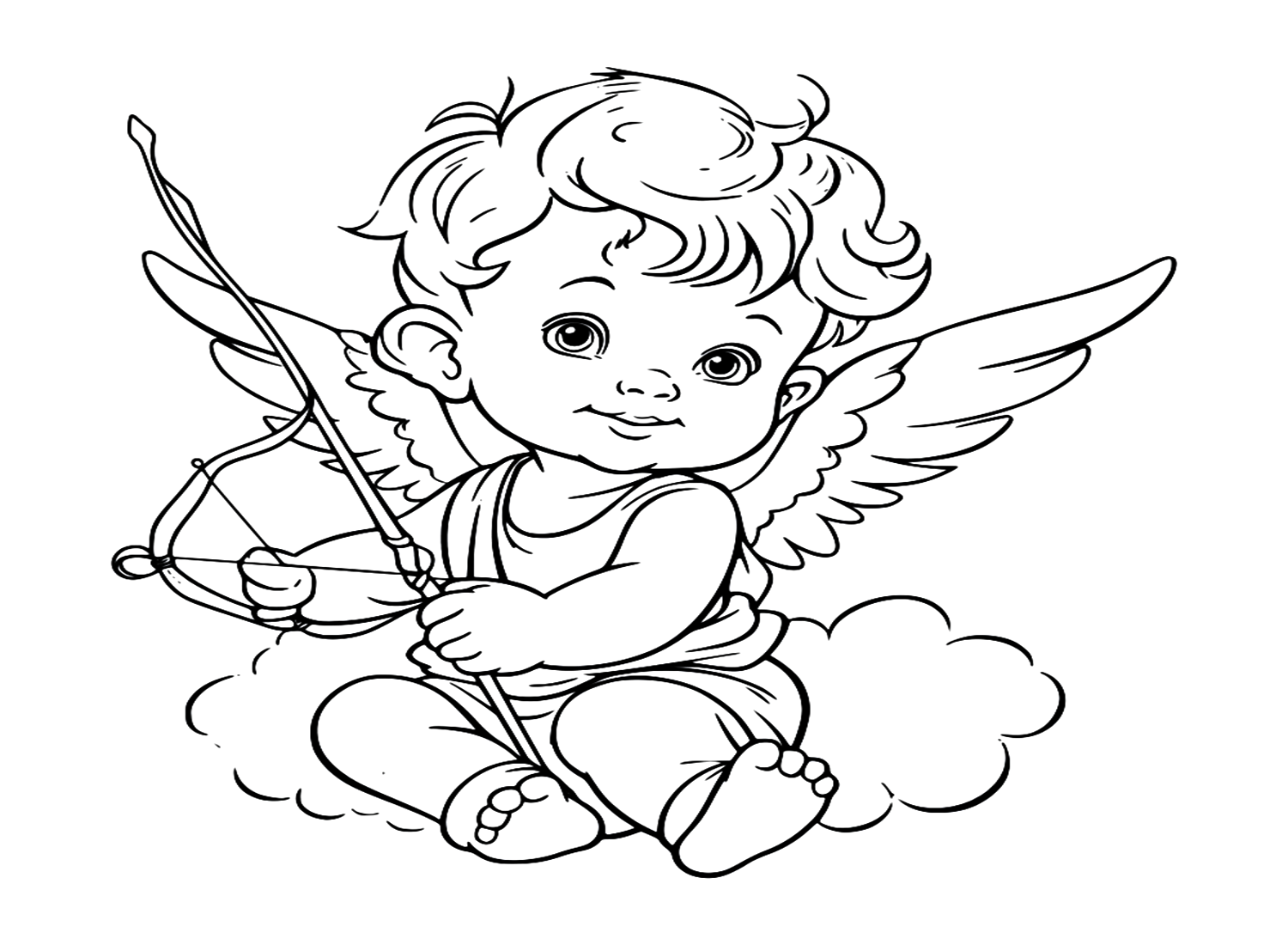





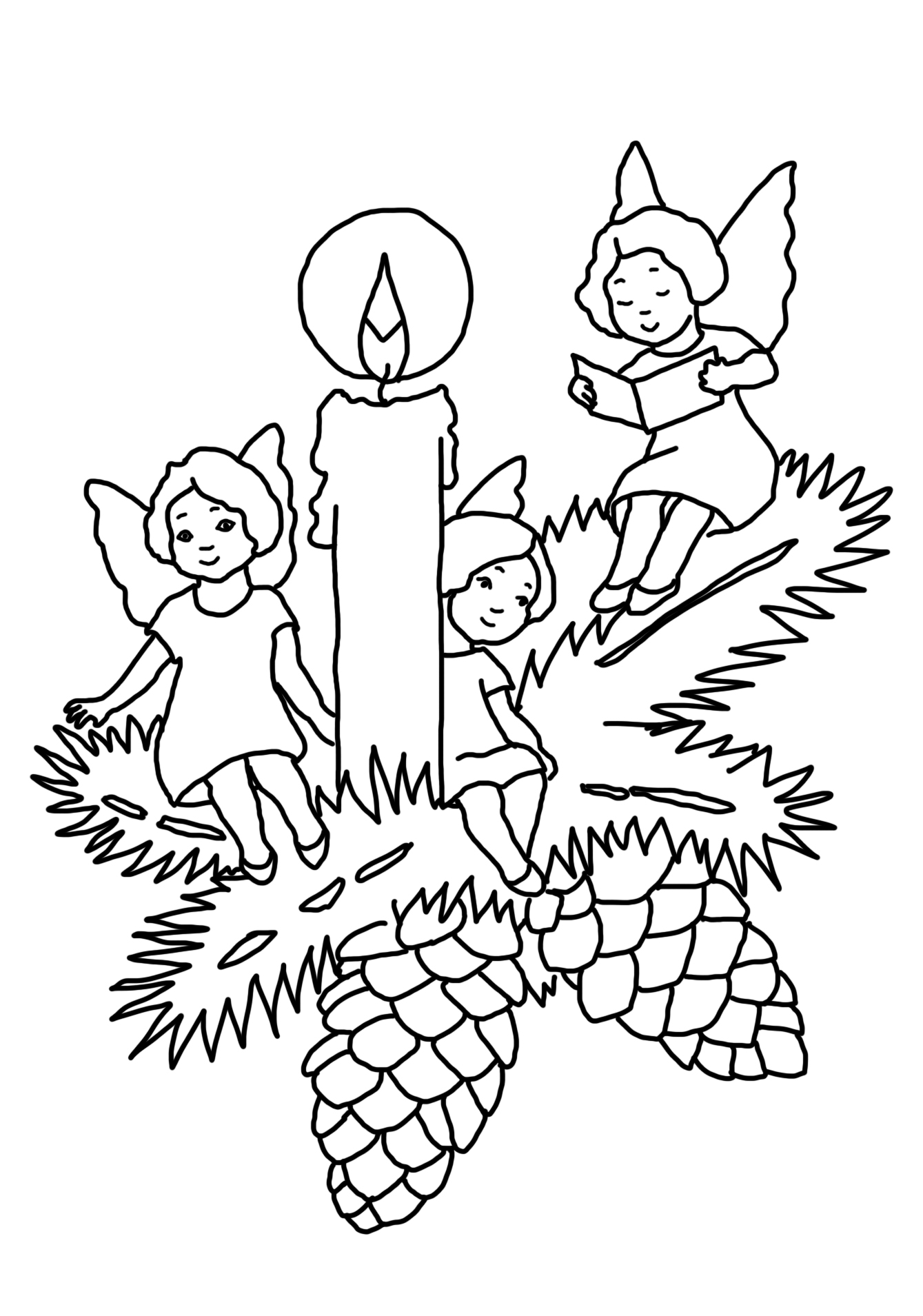
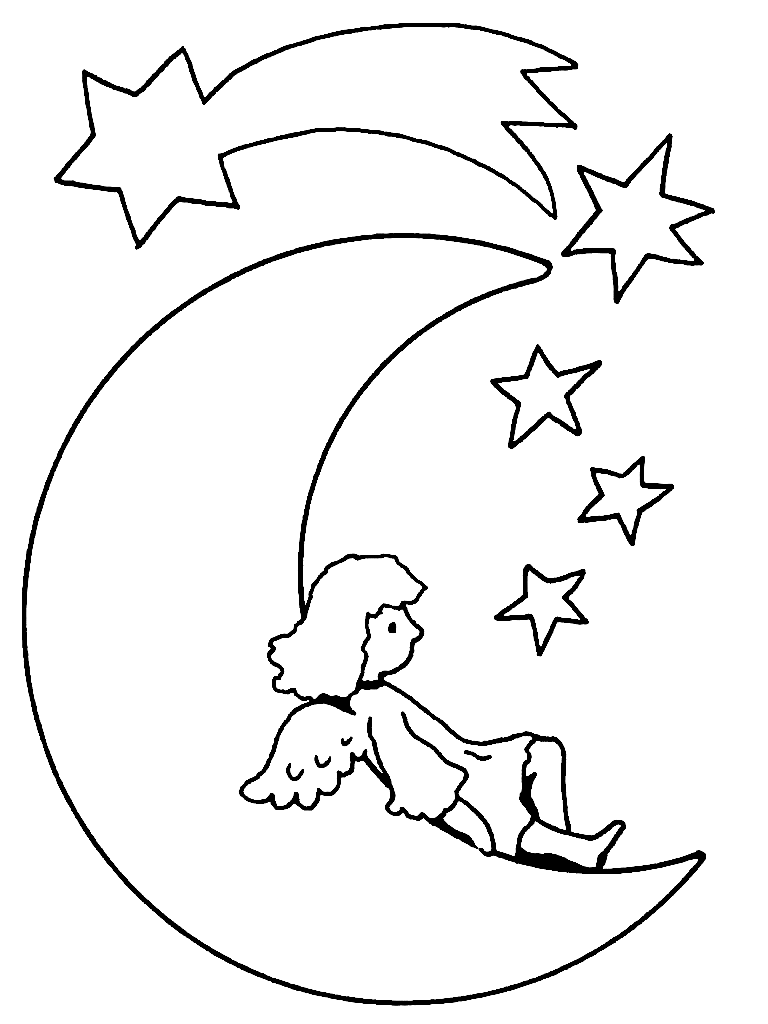


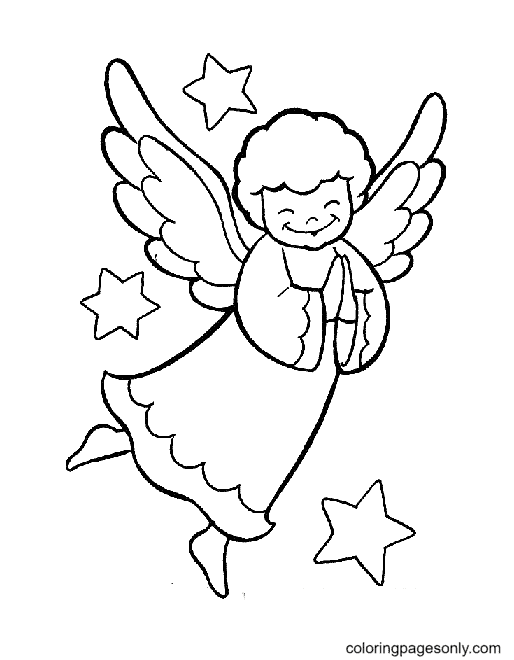
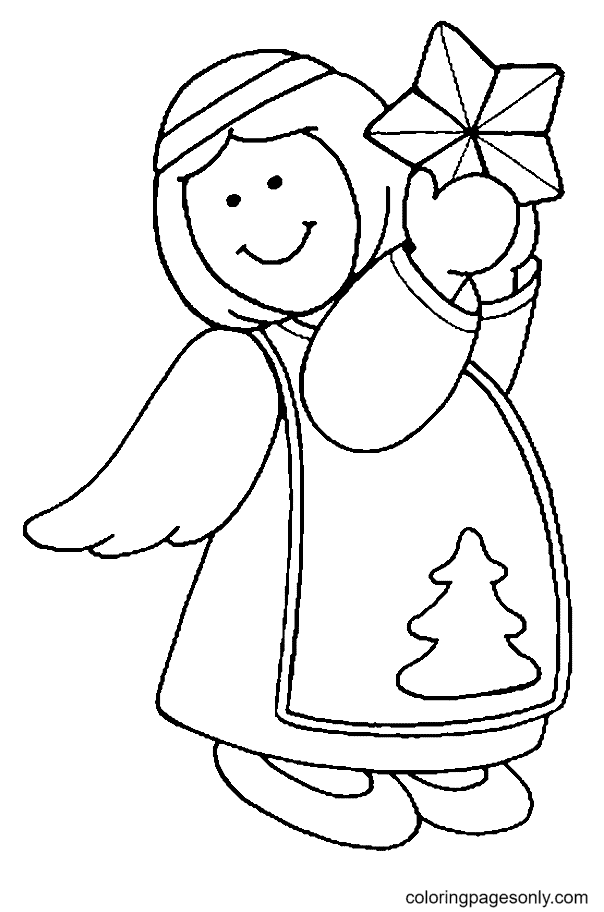
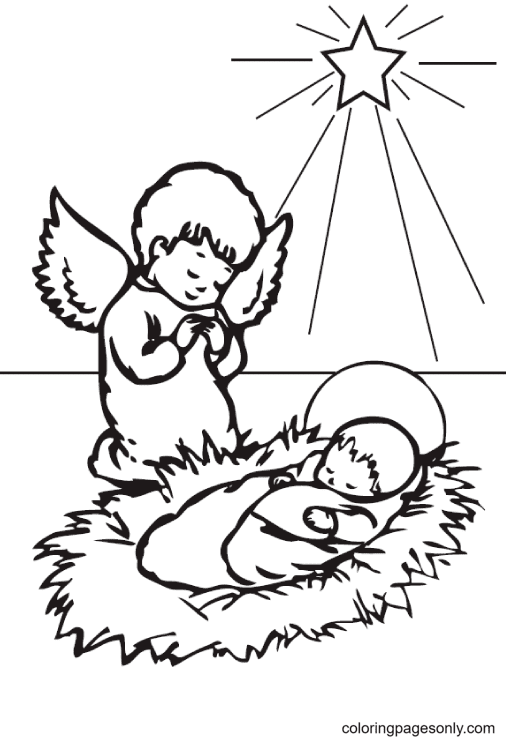
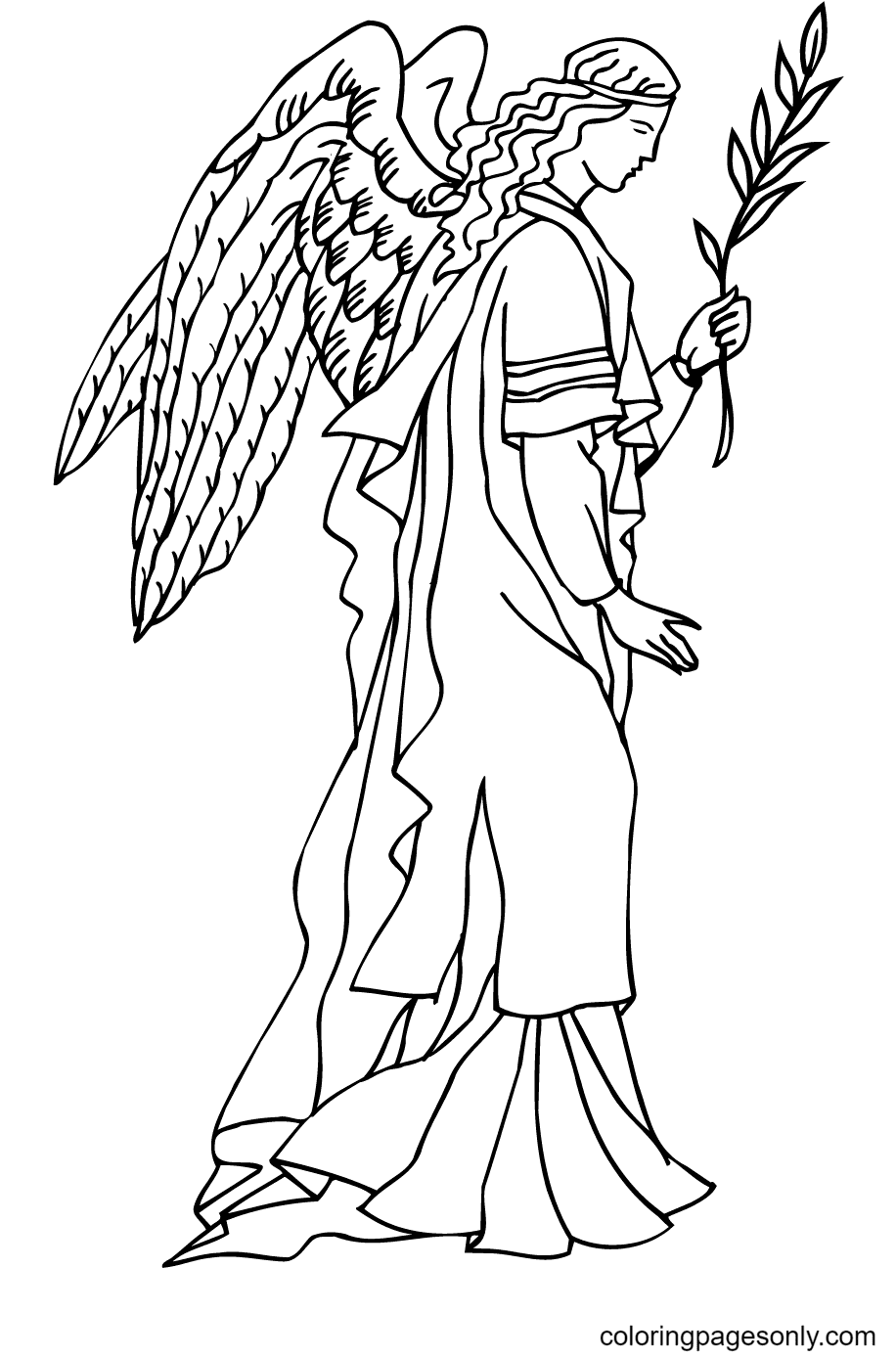
What’s Inside
Classic Angel Portrait Pages
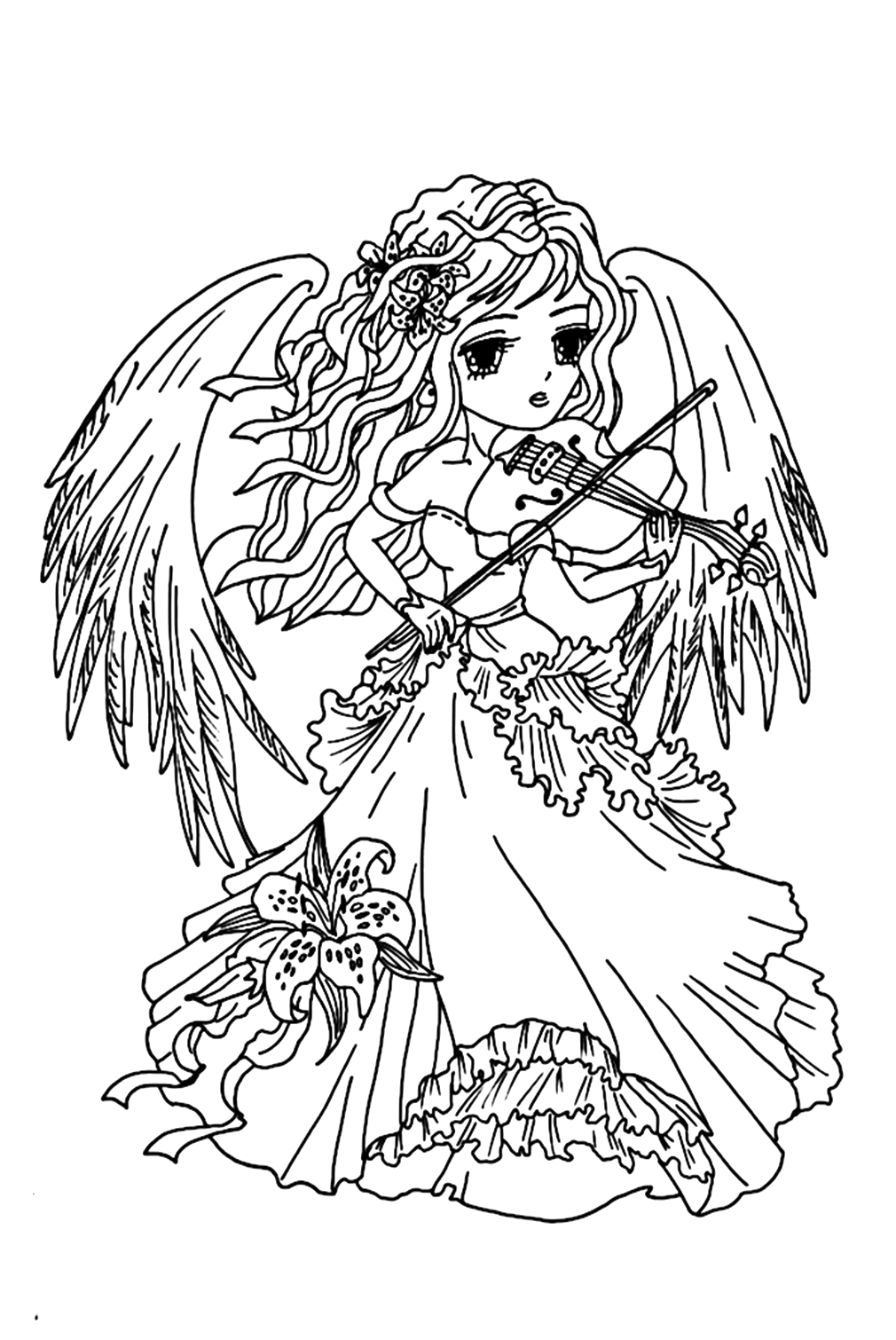
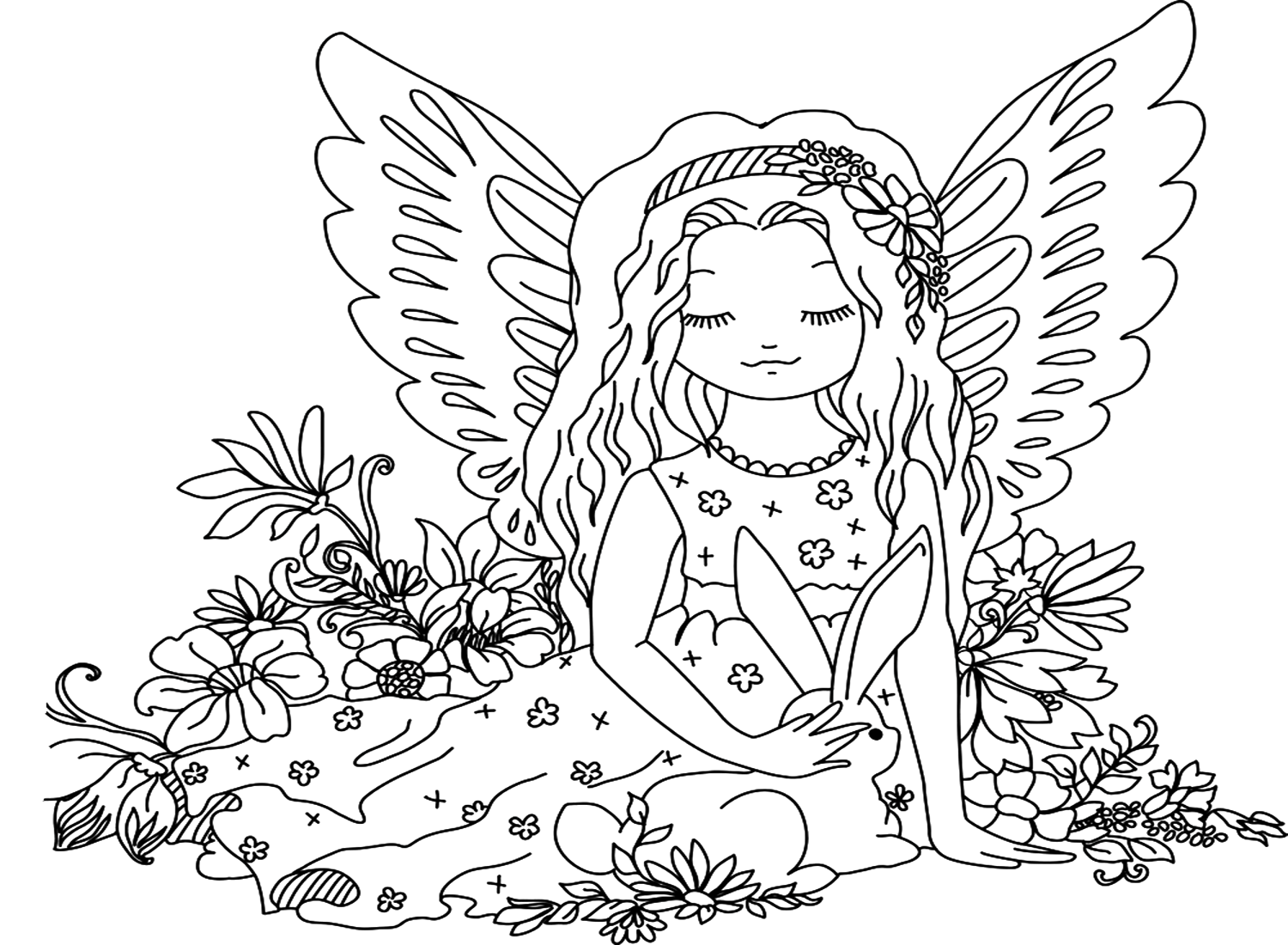
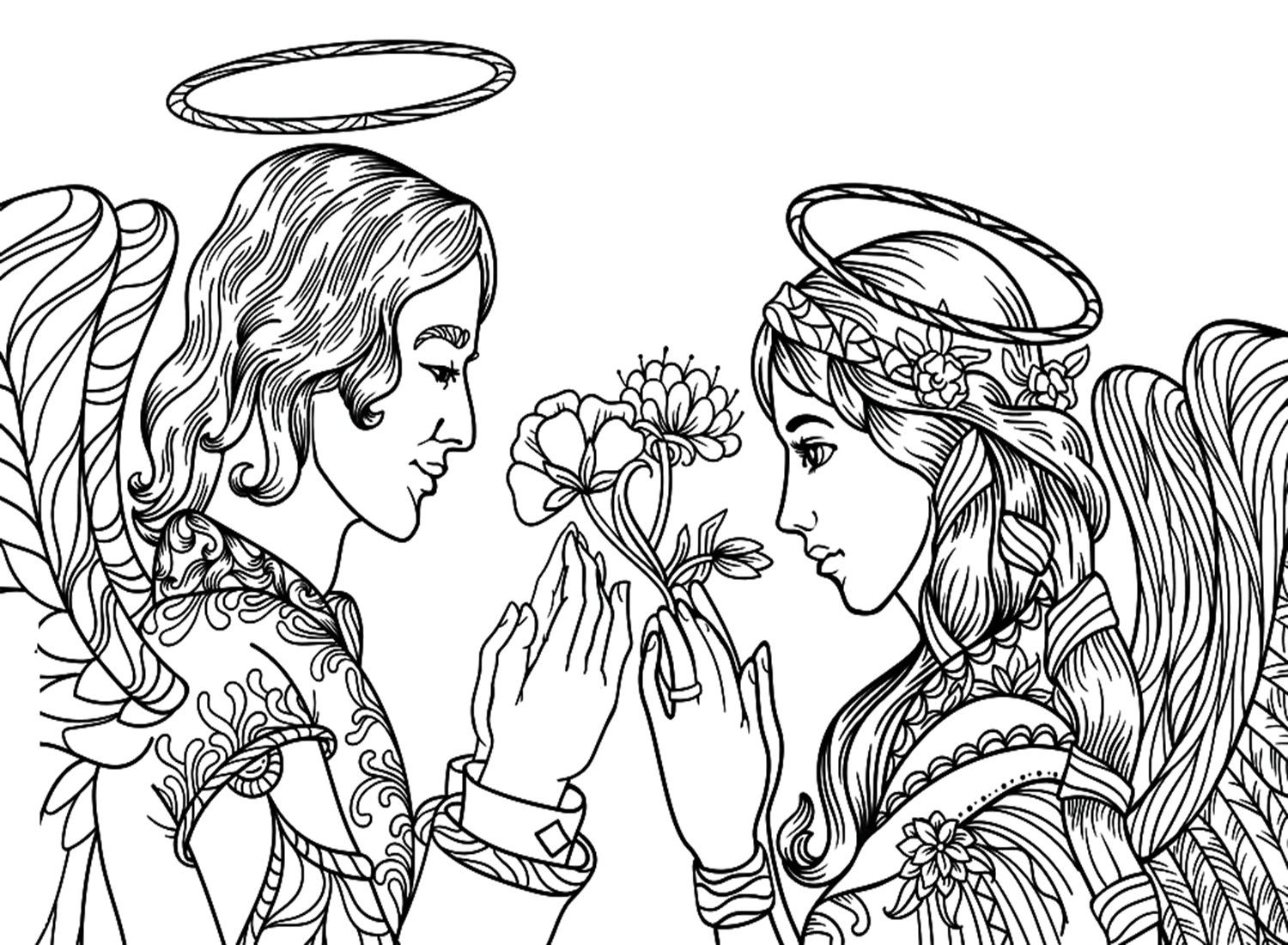
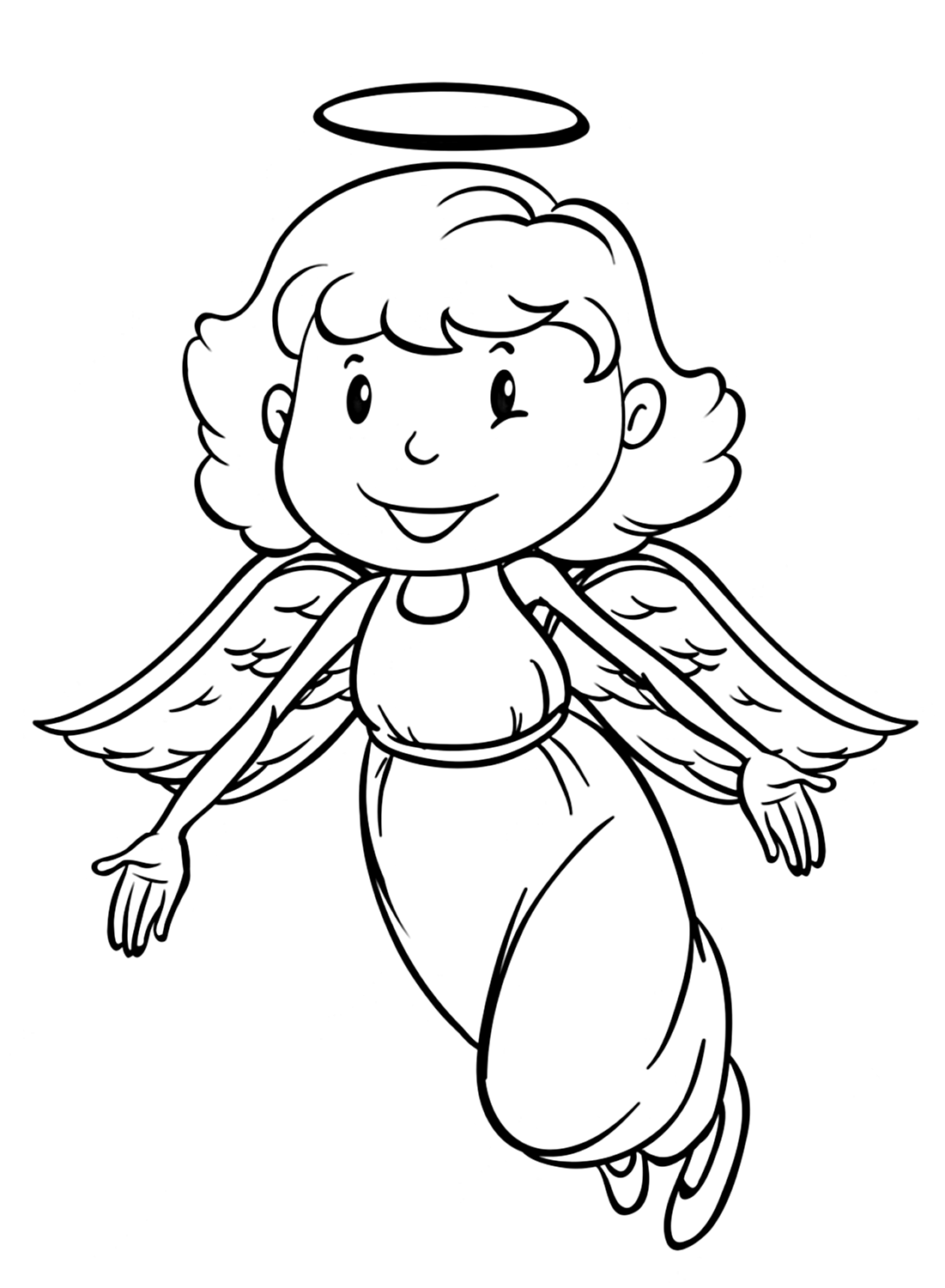
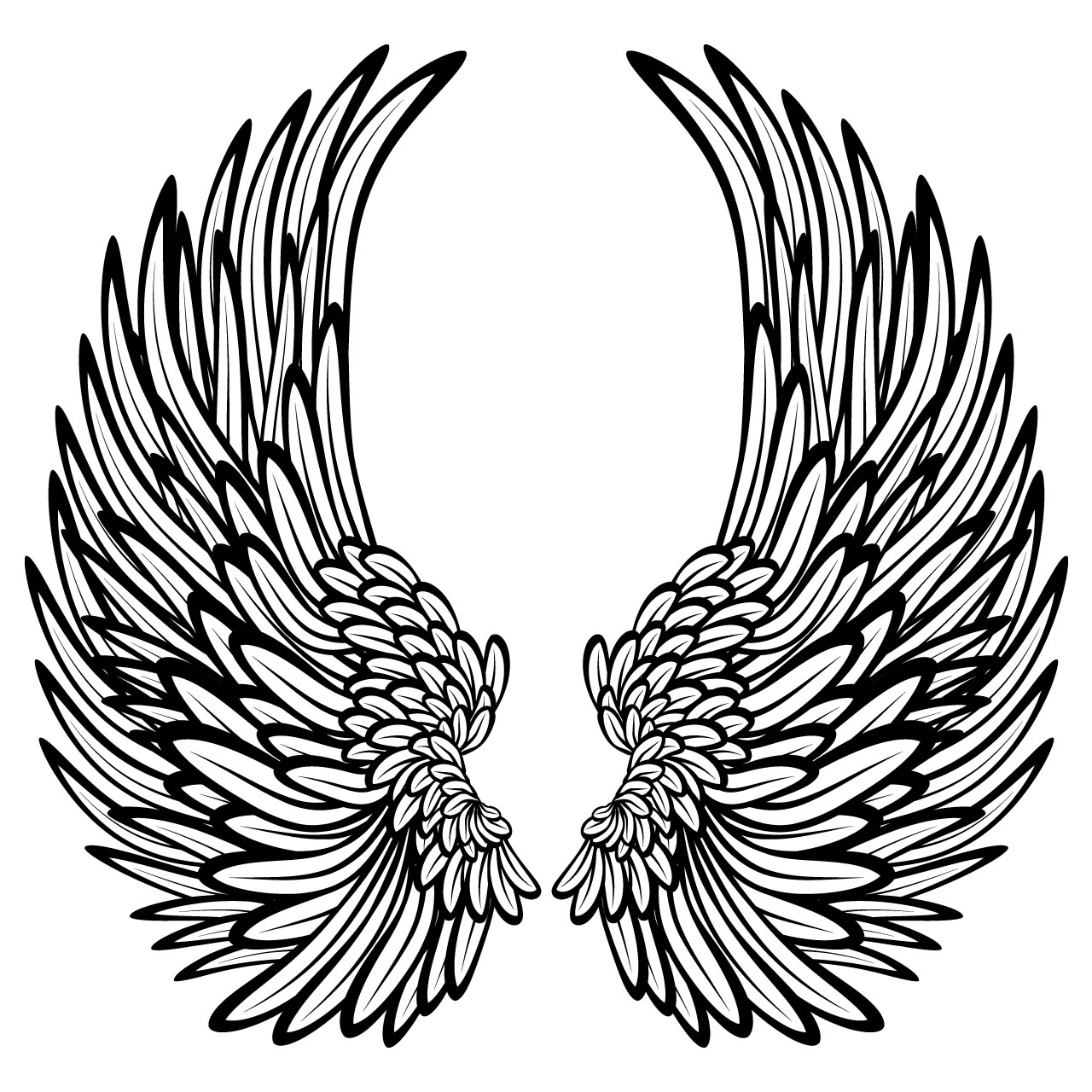
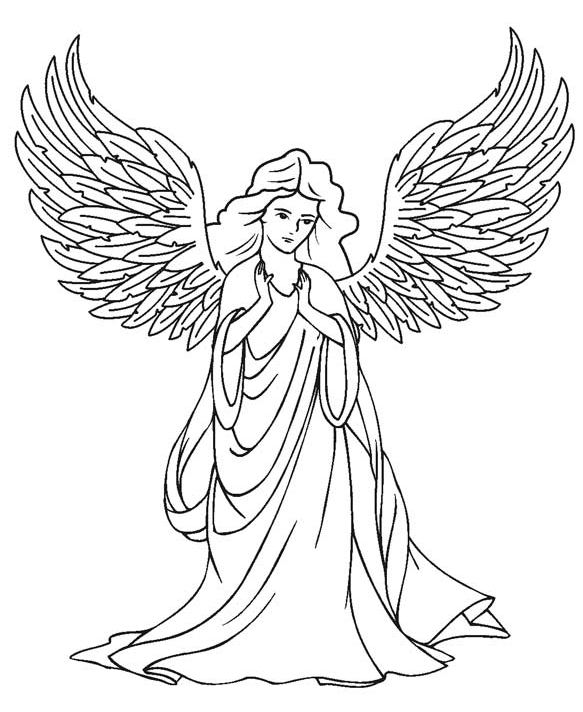
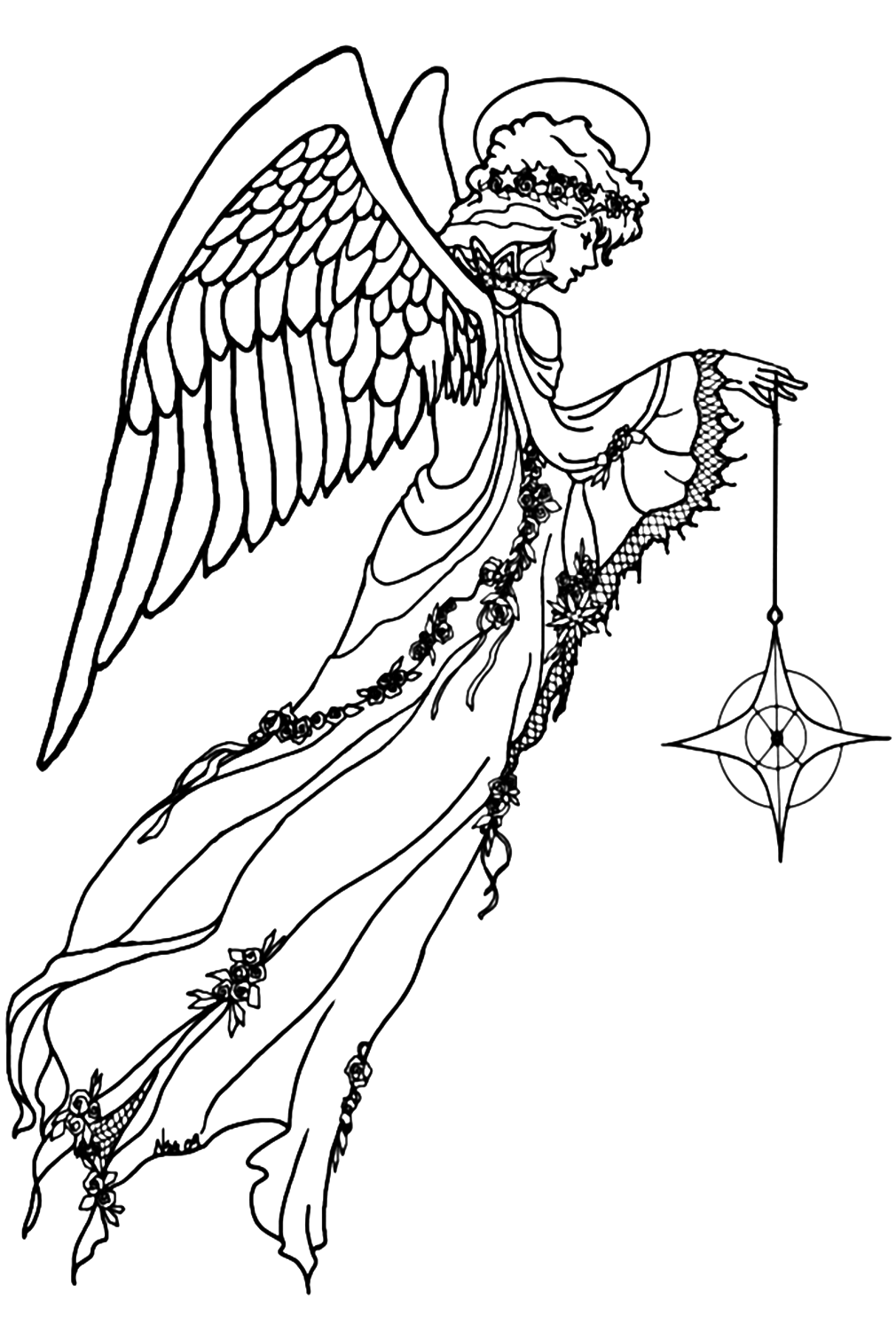
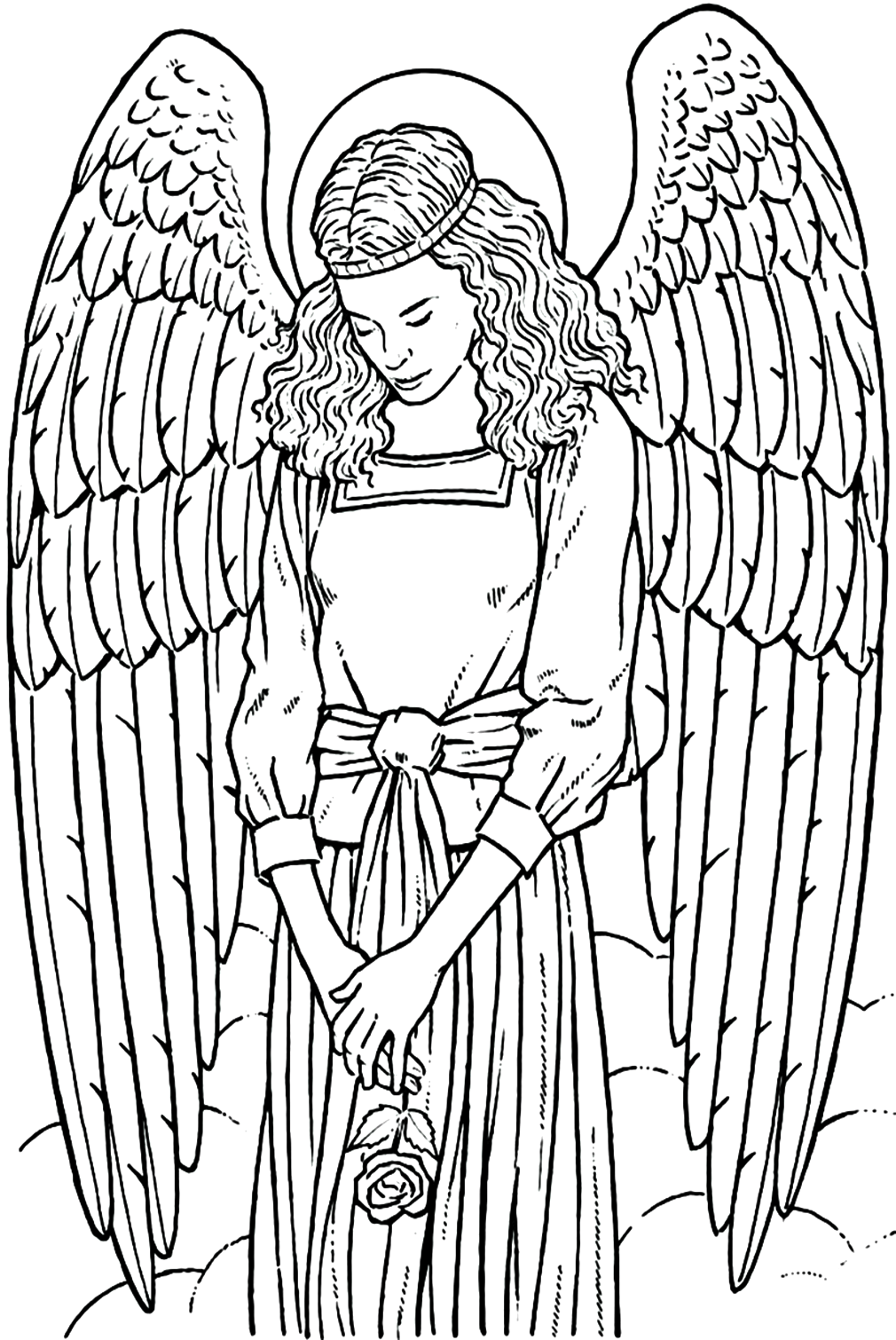
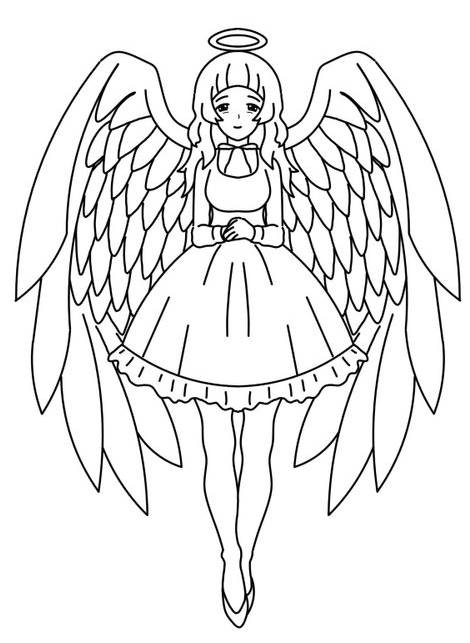
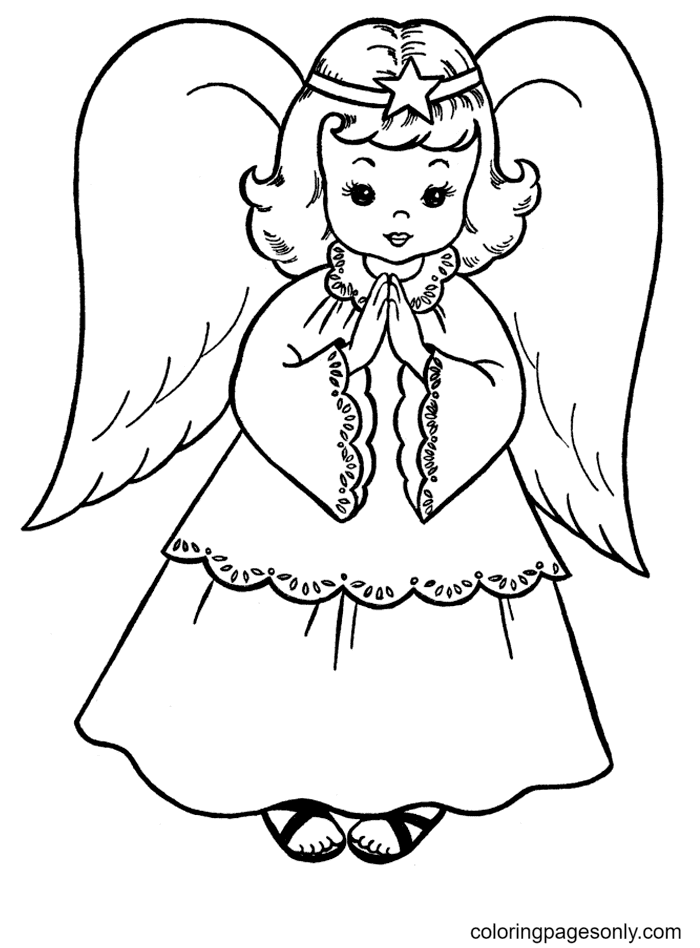
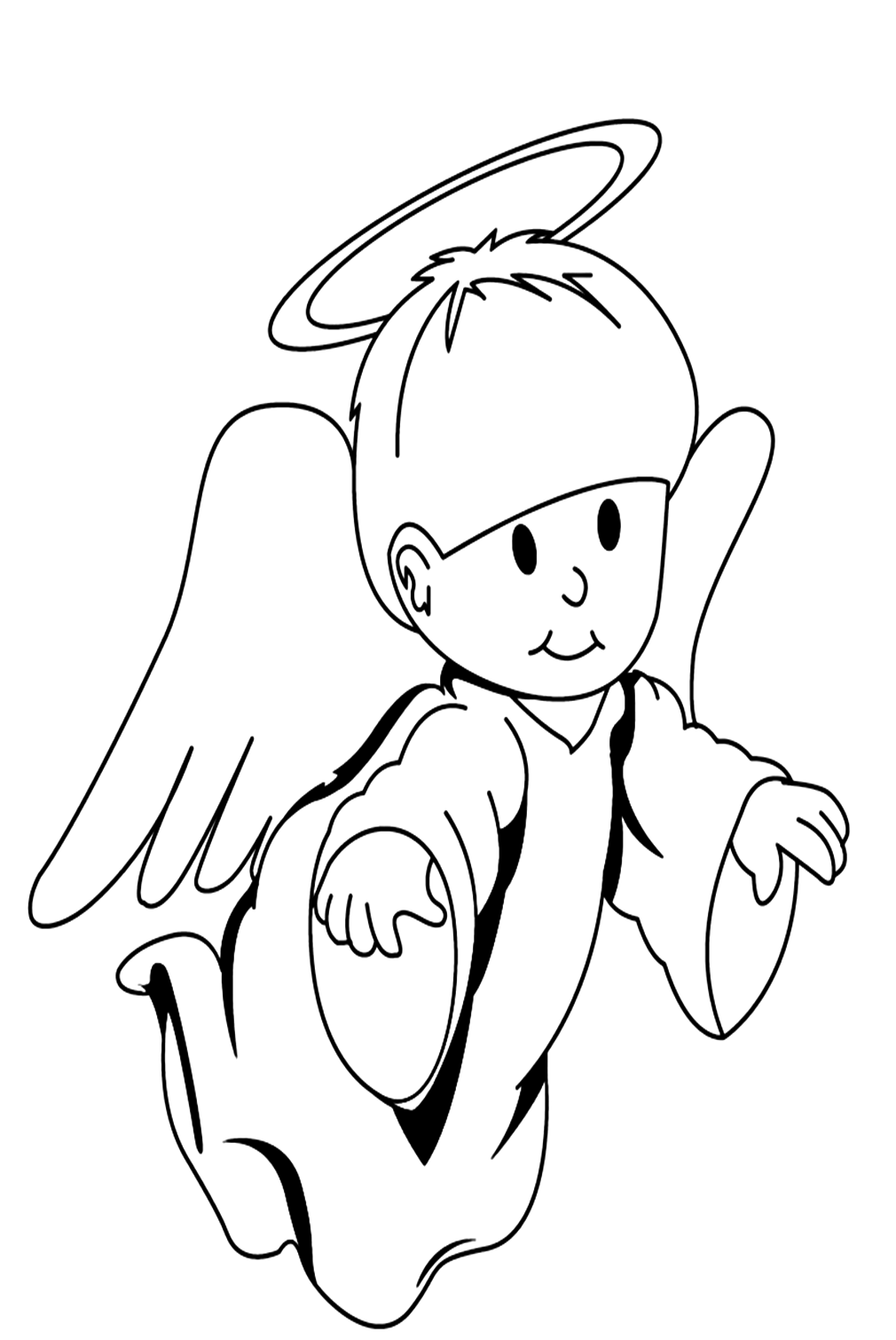
The classic angel portrait is the collection’s most broadly represented subject: a robed figure with large feathered wings, a circular halo at the head, hands positioned in prayer or gentle gesture, and an expression of serene composure. This design synthesizes elements from Byzantine art (the halo, derived from the Roman nimbus used in imperial portraiture), classical Greco-Roman art (the wings, borrowed from depictions of Nike/Victory and Mercury/Hermes), and Renaissance figure painting (the flowing robes, the idealized human proportions, the warm emotional register).
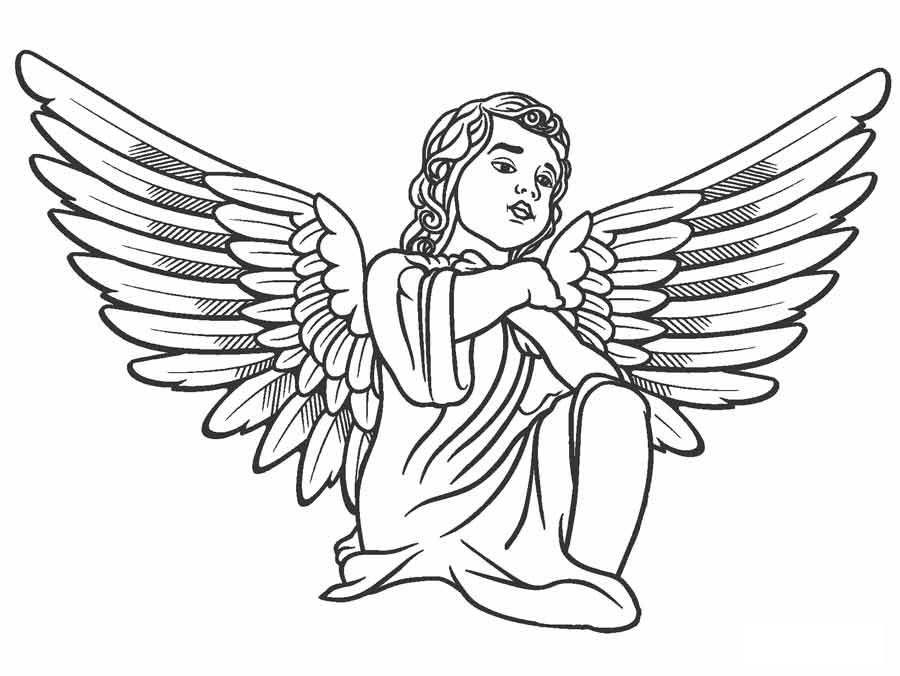
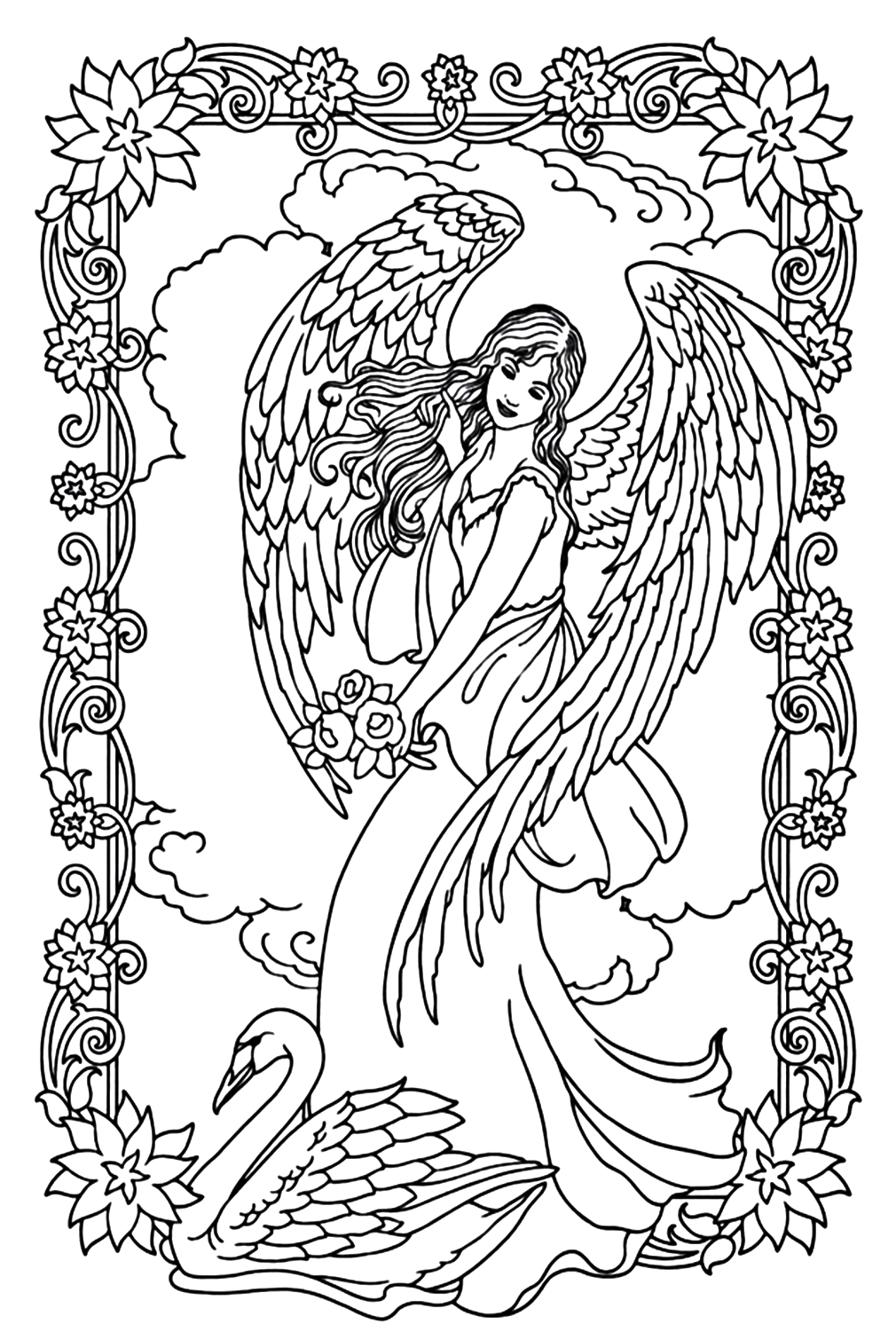
The wings are the most visually complex element of any angel portrait page. Feathered angel wings in the Western art tradition typically show three distinct zones: the primary flight feathers at the outer edge (long, pointed, structured), the secondary feathers in the middle section (shorter, overlapping in a scale-like pattern), and the covert feathers at the base closest to the body (shortest, softest, most densely packed). Each zone requires a different coloring approach to suggest the wing’s actual three-dimensional structure.
The halo, appearing as a circle of light around the head, has been depicted in gold leaf in medieval panel painting, as a thin gold ring in later Renaissance and Baroque art, and as a glowing, luminous disc in more contemporary devotional illustration. The specific depiction on any given page determines which approach is most appropriate.
Coloring classic angel portrait pages: The robe is typically white or very pale cream, not pure bright white, but the specific warm cream-white of draped fabric in soft light. Apply a very pale warm grey in the deepest fold areas (where the fabric is most shadowed) and leave the highest fabric surfaces closest to white. The wings use white or very pale grey as the base feather color, with slightly darker grey at the tips of the primary feathers and along the separation lines between feather rows. The halo is the warmest element: vivid warm gold, applied carefully around the full circular rim. The face is a warm light skin tone with the specific, serene, slightly idealized quality of devotional portraiture.
Christmas Angel Pages
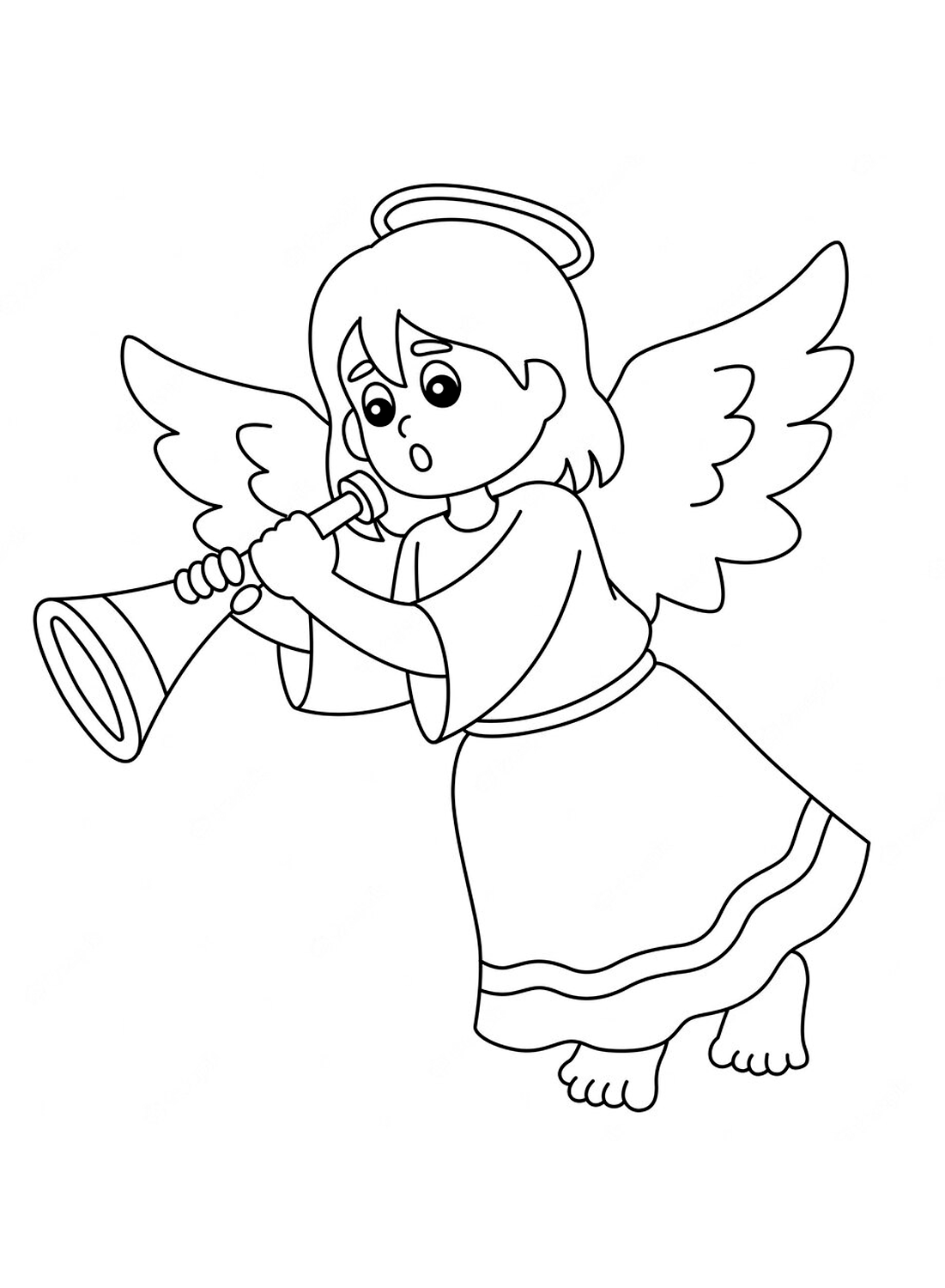
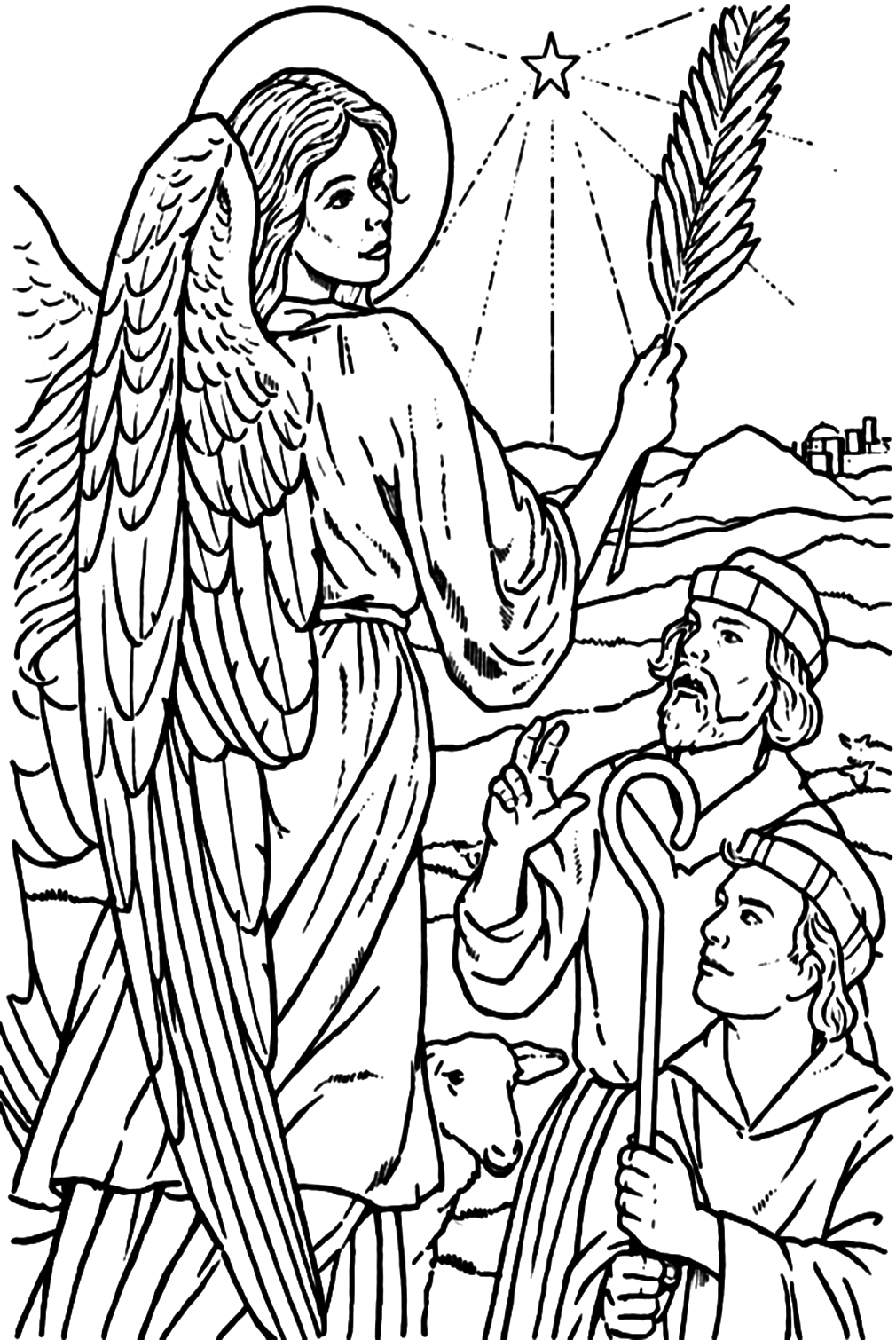
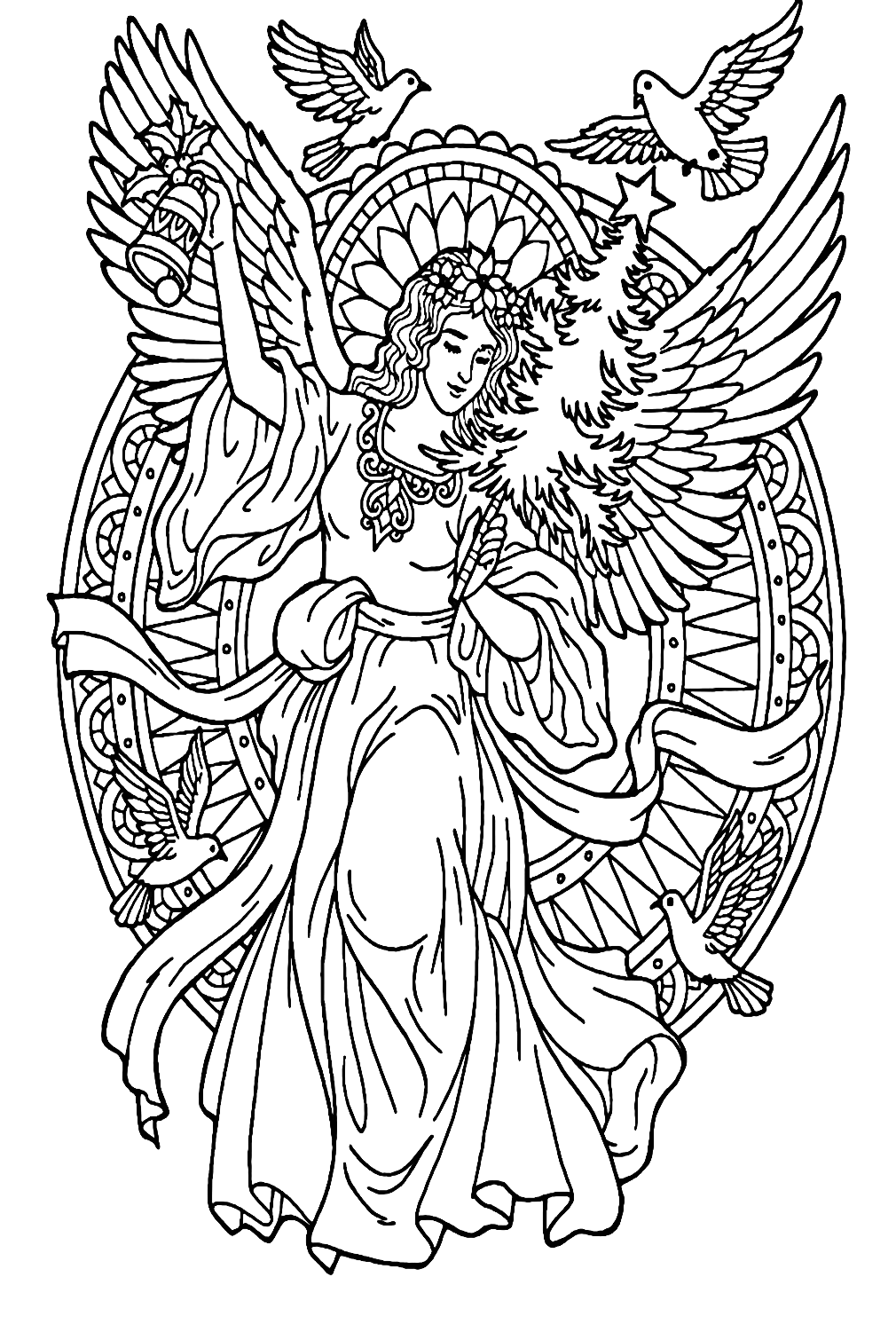
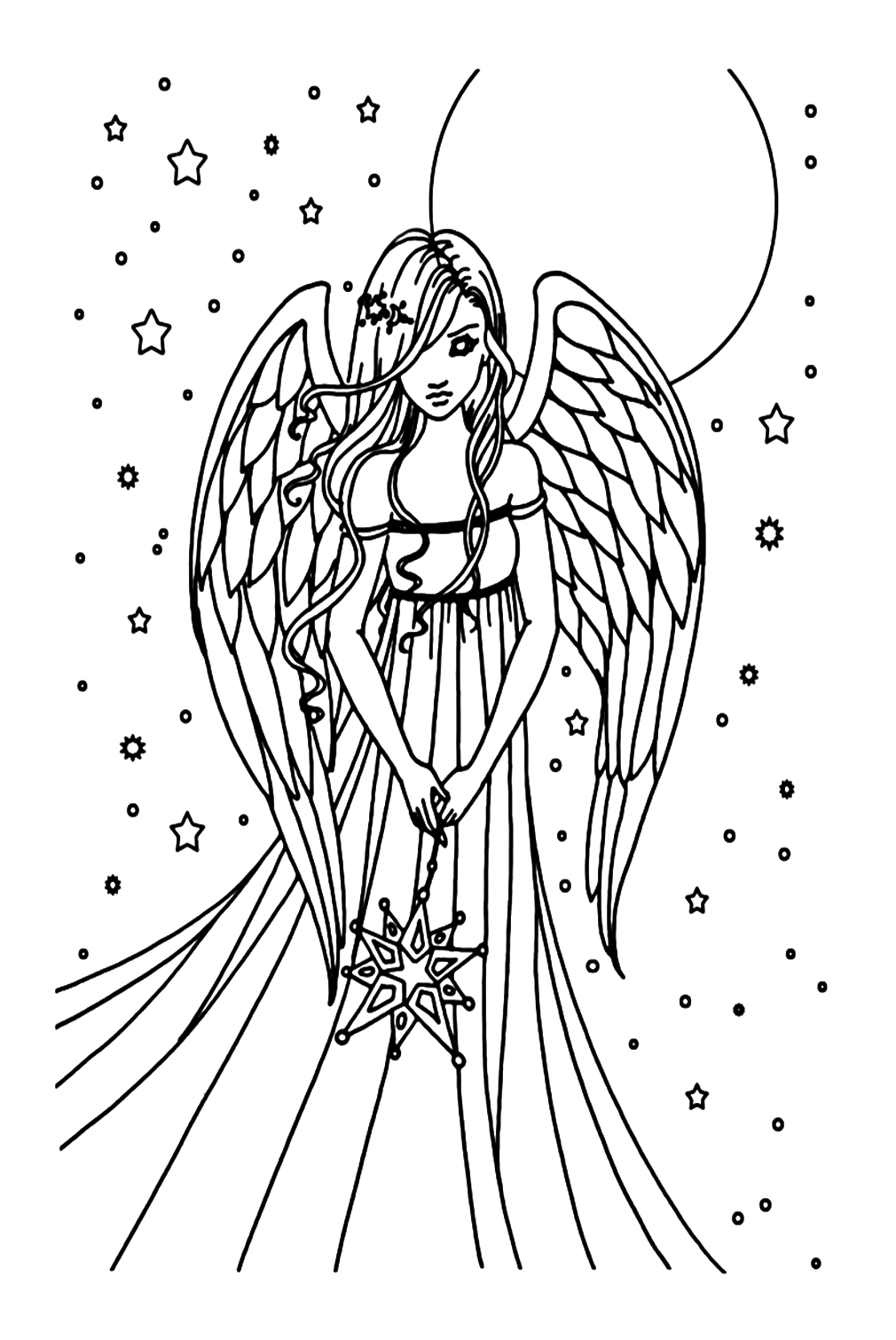
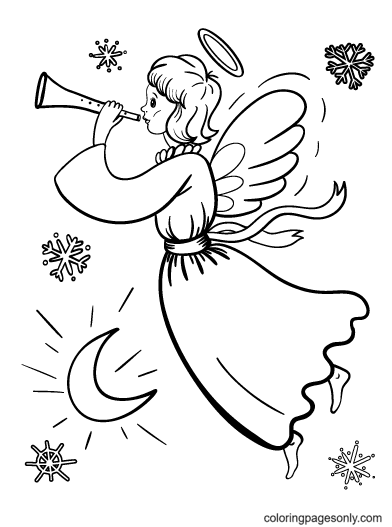
Christmas angels occupy a distinct visual register from the classic devotional portrait: they are associated with the specific narrative of the Nativity (Luke 2:8-14) in which an angel appeared to shepherds outside Bethlehem, and then “a great company of the heavenly host appeared with the angel, praising God and saying, ‘Glory to God in the highest heaven.'” This specific narrative moment gives the Christmas angel its most characteristic visual elements: the trumpet (announcing the news), the star (the star of Bethlehem), and the compositional energy of a proclamation rather than the quieter posture of a devotional figure.
Christmas angels also appear in the context of the tree-topper tradition, which places an angel at the crown of the decorated Christmas tree, a practice documented in German Christmas traditions from at least the 19th century and widely adopted internationally. Tree-topper angel pages have their own specific visual character: formal, symmetrical, arms outspread.
The Holiday update date of December 24, 2024, in this collection confirms the Christmas context of many pages.
Coloring Christmas angel pages: Gold is the dominant warm accent color for Christmas angel pages: the halo, the trumpet, star details, and decorative trim elements all use vivid warm gold. White robes apply as in classic portrait pages but may carry additional decorative elements (gold trim, small star patterns) appropriate to the celebratory register. Backgrounds on Christmas angel pages often reference the night sky of the Nativity narrative: deep midnight blue or blue-black, applied at full coverage, against which the white-robed figure reads with maximum contrast.
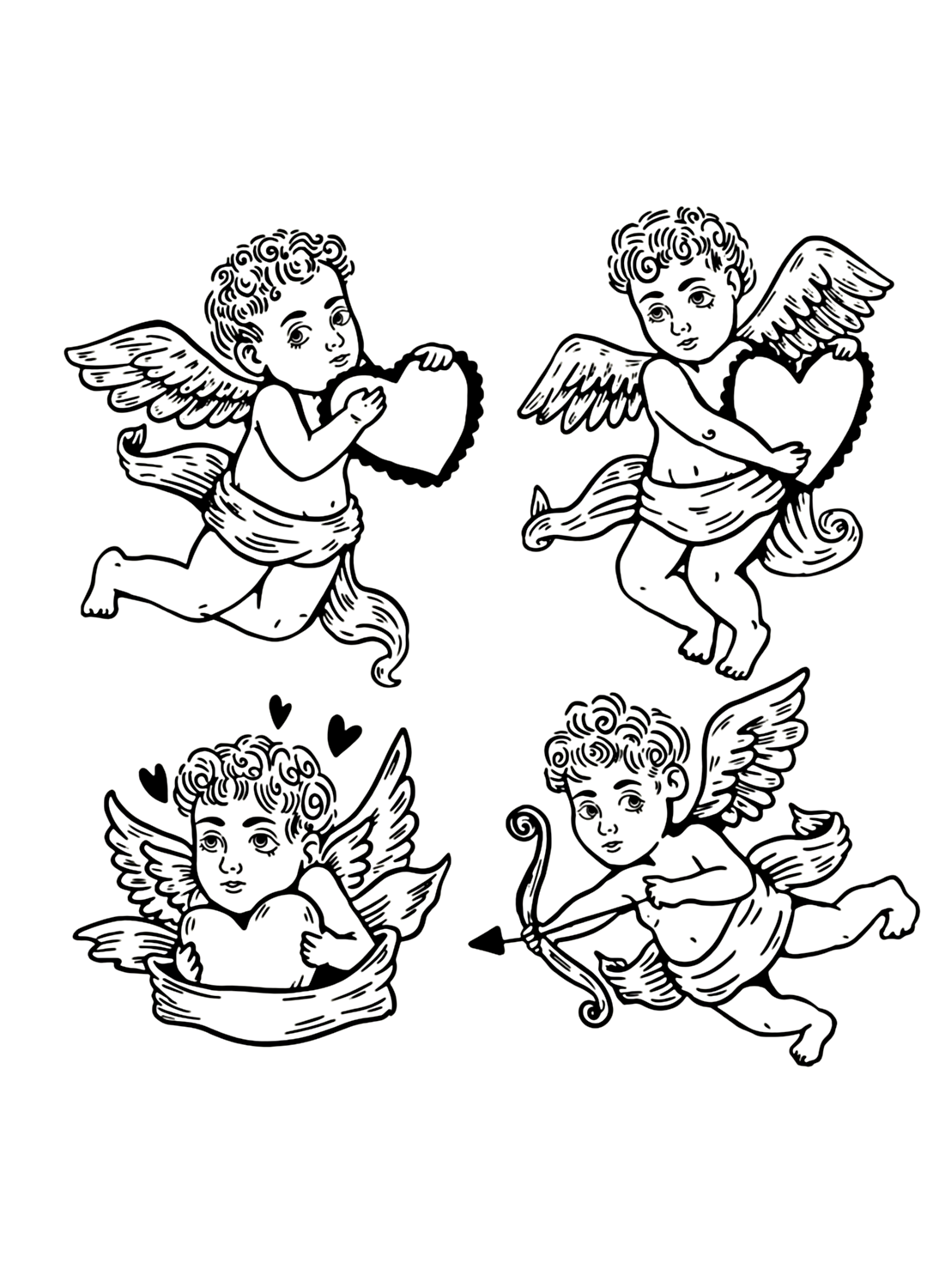
Baby Cherub and Putto Pages
The chubby winged baby figures commonly called “cherubs” in contemporary popular use are not theologically accurate cherubim. The actual cherubim of the Hebrew Bible are among the most terrifying beings described in scripture: in Ezekiel 1 and 10, they are four-faced creatures (with the faces of a human, a lion, an ox, and an eagle) with four wings, straight legs ending in calf-like feet, and full-body coverage of eyes.
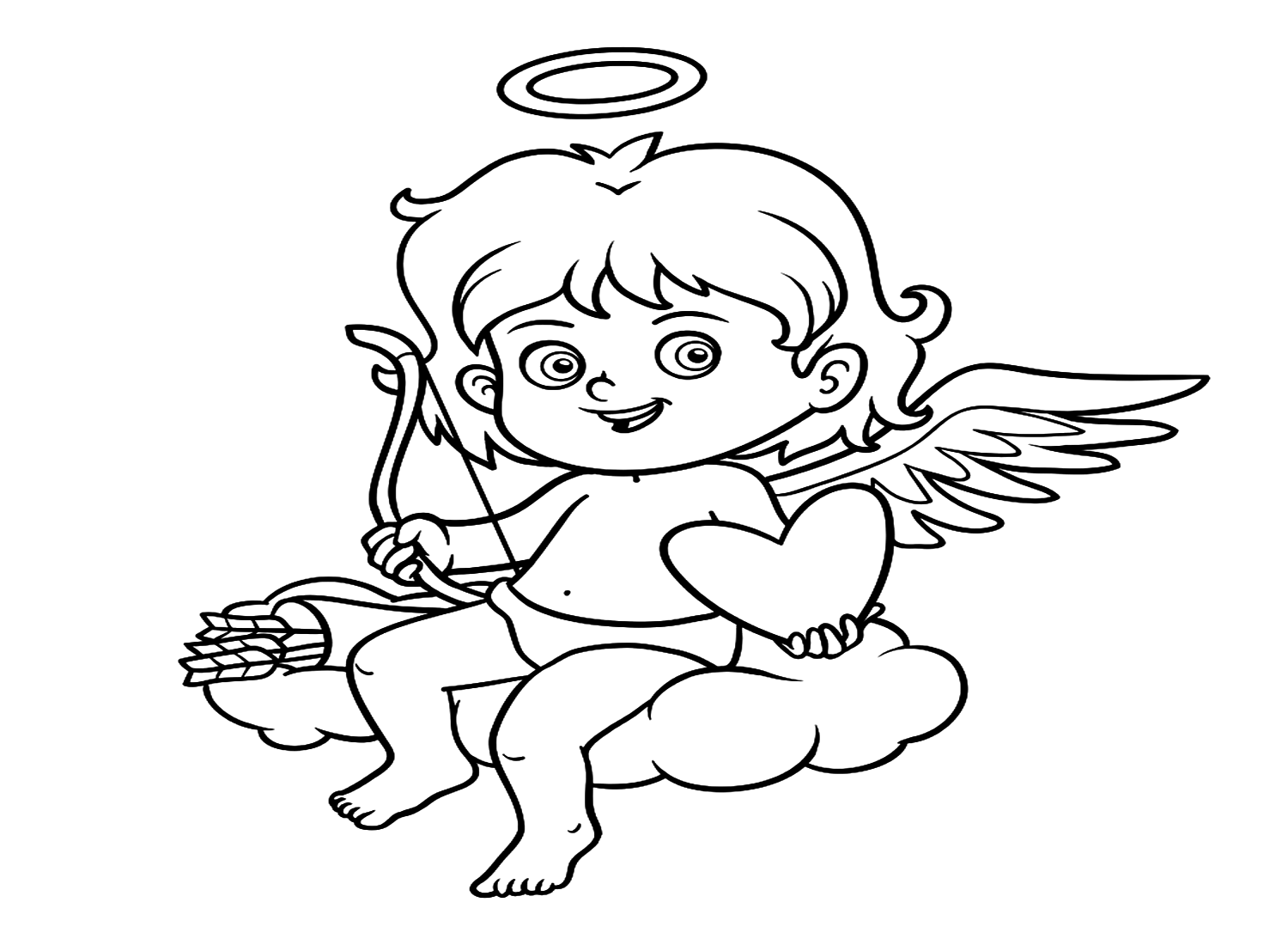
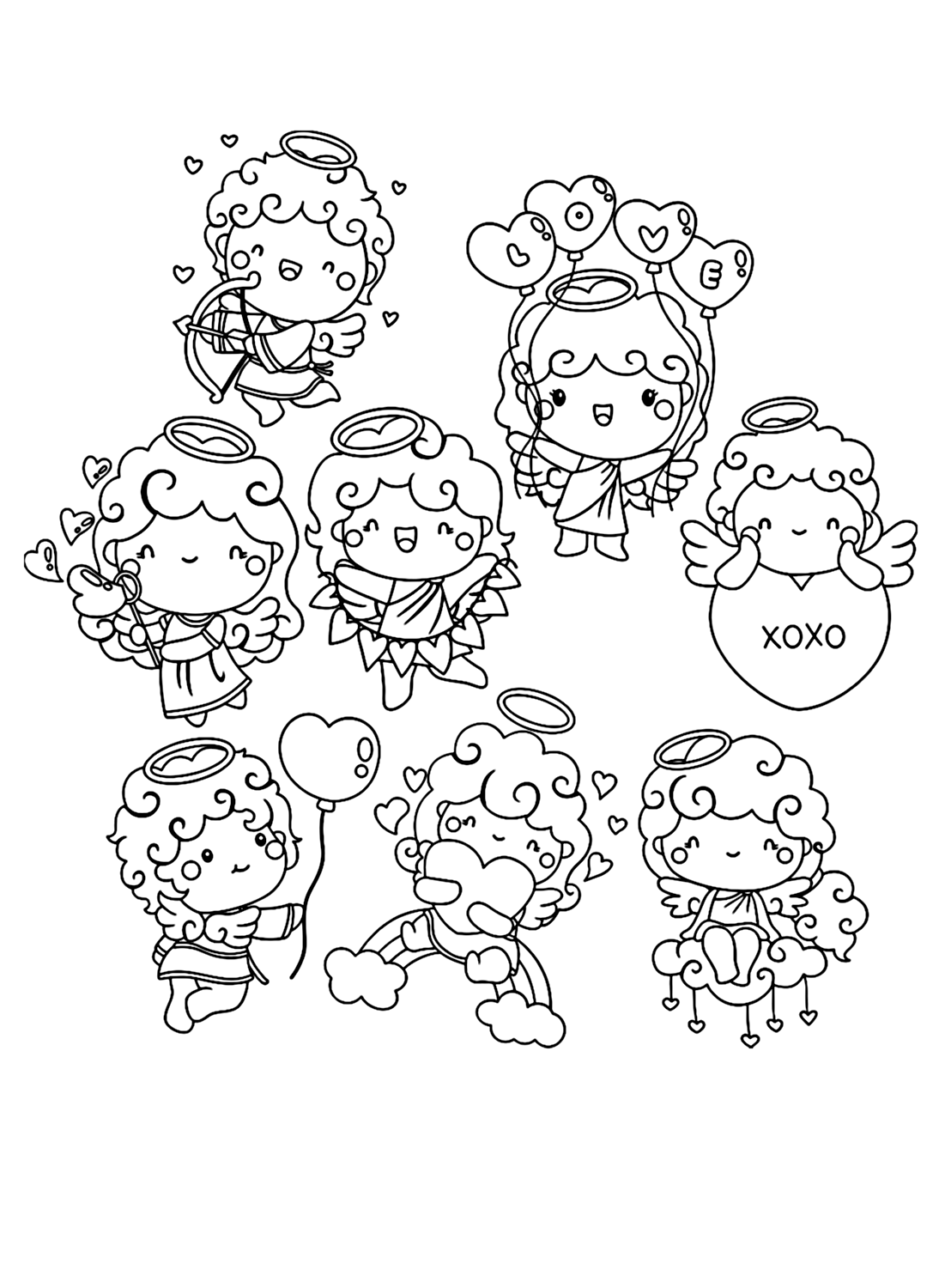
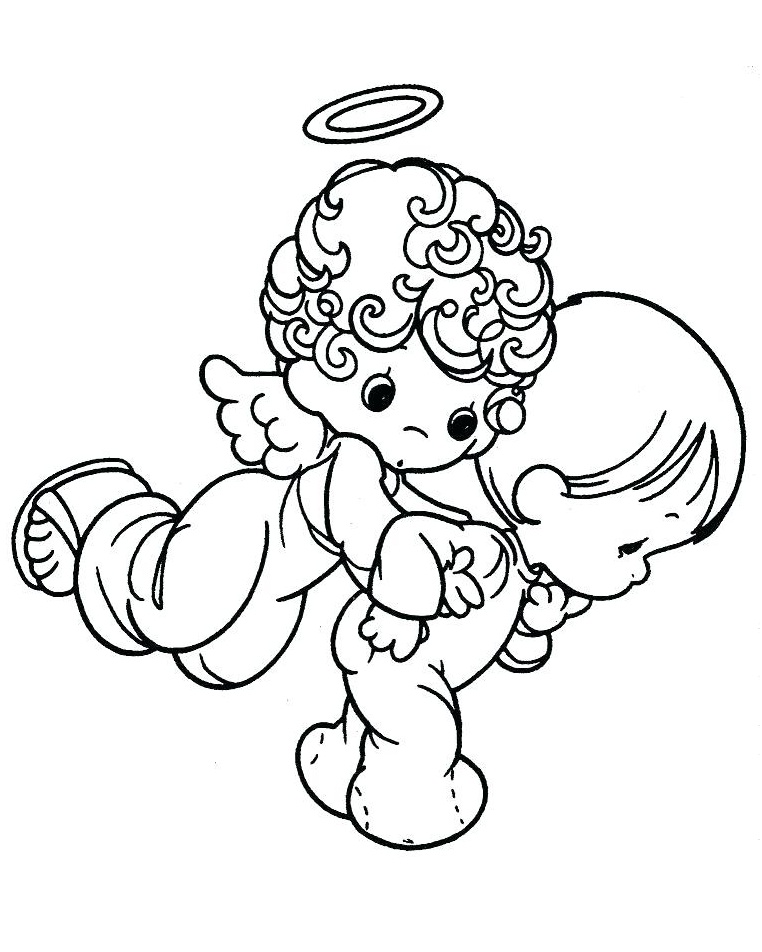
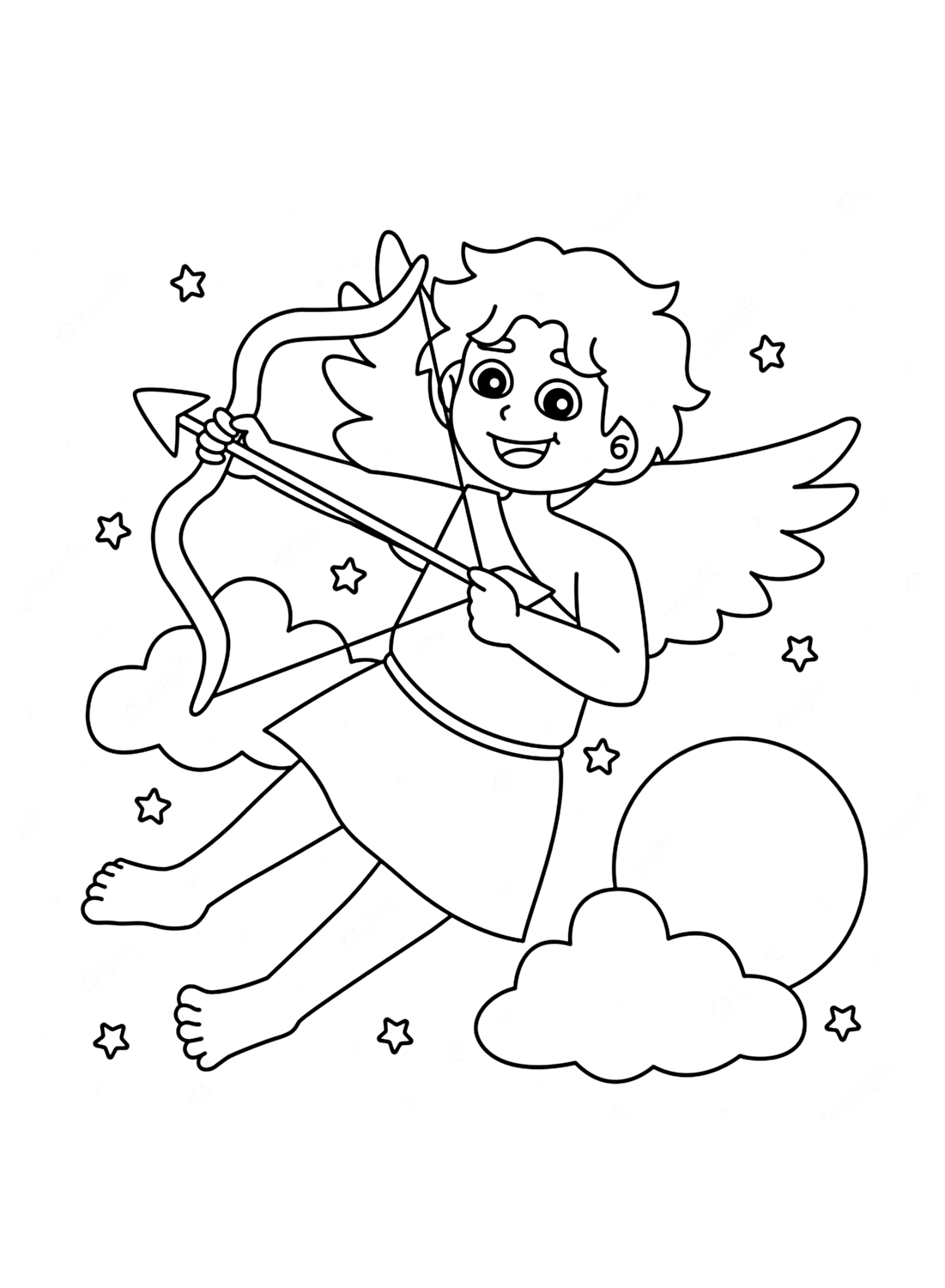
The chubby infant angel figures of Western art are properly called putti (singular: putto), derived from classical Greco-Roman depictions of Eros/Cupid and the Roman tradition of using infant figures as decorative elements in religious and secular contexts. During the Italian Renaissance, putti were incorporated into Christian religious art as decorative elements alongside theologically distinct beings.
The most famous putti in Western art history are the two contemplative infant figures at the base of Raphael Sanzio’s Sistine Madonna, completed in 1512 for the church of San Sisto in Piacenza. The work is now held at the Gemäldegalerie Alte Meister in Dresden, Germany. These two figures, shown resting their chins on their hands and gazing upward, have been reproduced more extensively than perhaps any other detail in Western art history, appearing on everything from notebooks to coffee mugs in quantities that far exceed the reproduction of any other classical artwork element.
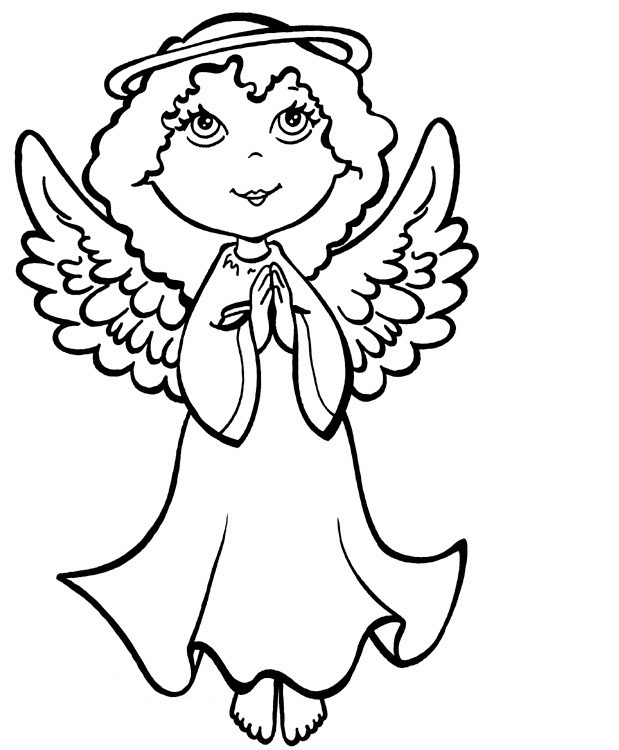
Coloring putto and cherub pages: The soft, rounded, baby-proportion form uses warm peachy-pink skin with the specific quality of soft infant skin: warm, slightly rosy at the cheeks, without the harder-edged shadow logic of adult figure pages. The small wings are proportionally large relative to the tiny body, typically white or pale pink-tinged white. The curly hair is soft golden-blonde in the most common art historical tradition, though contemporary versions may show any hair color.
Archangel Pages: Michael and Gabriel
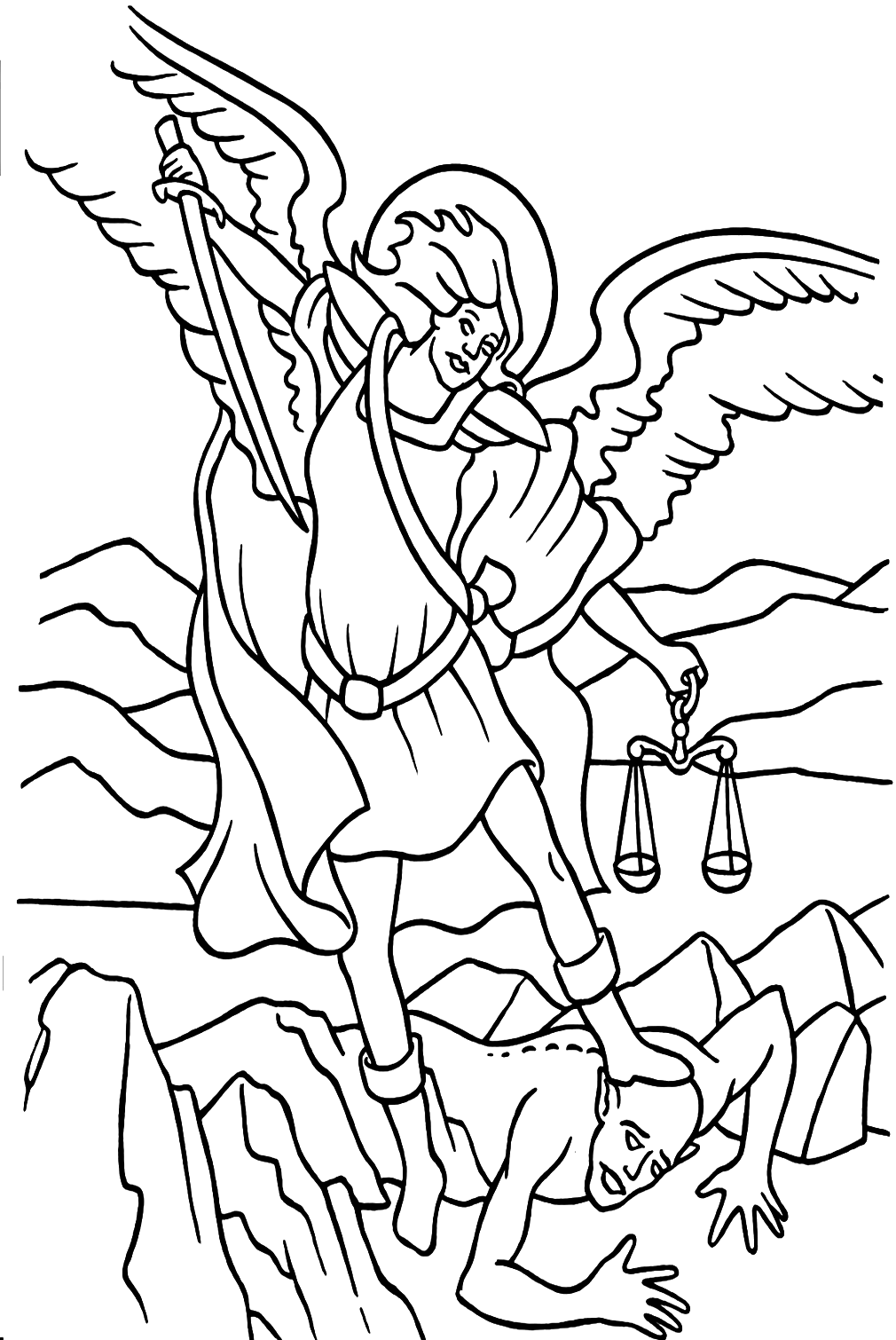
The three archangels named in texts accepted across multiple traditions are Michael, Gabriel, and Raphael. The Archangel Michael holds a specific visual tradition as a warrior angel: he is depicted in armor, often in the act of defeating a serpent or devil beneath his feet, carrying a sword or spear. This image is directly referenced in Revelation 12:7-9: “Then war broke out in heaven. Michael and his angels fought against the dragon, and the dragon and his angels fought back.”
The visual tradition of the warrior Archangel Michael is one of Western art’s most consistent images, depicted by artists including Guido Reni (Saint Michael, 1635, Santa Maria della Concezione, Rome), Raphael (Saint Michael, 1518, the Louver), and numerous others across Byzantine, medieval, and Renaissance traditions.
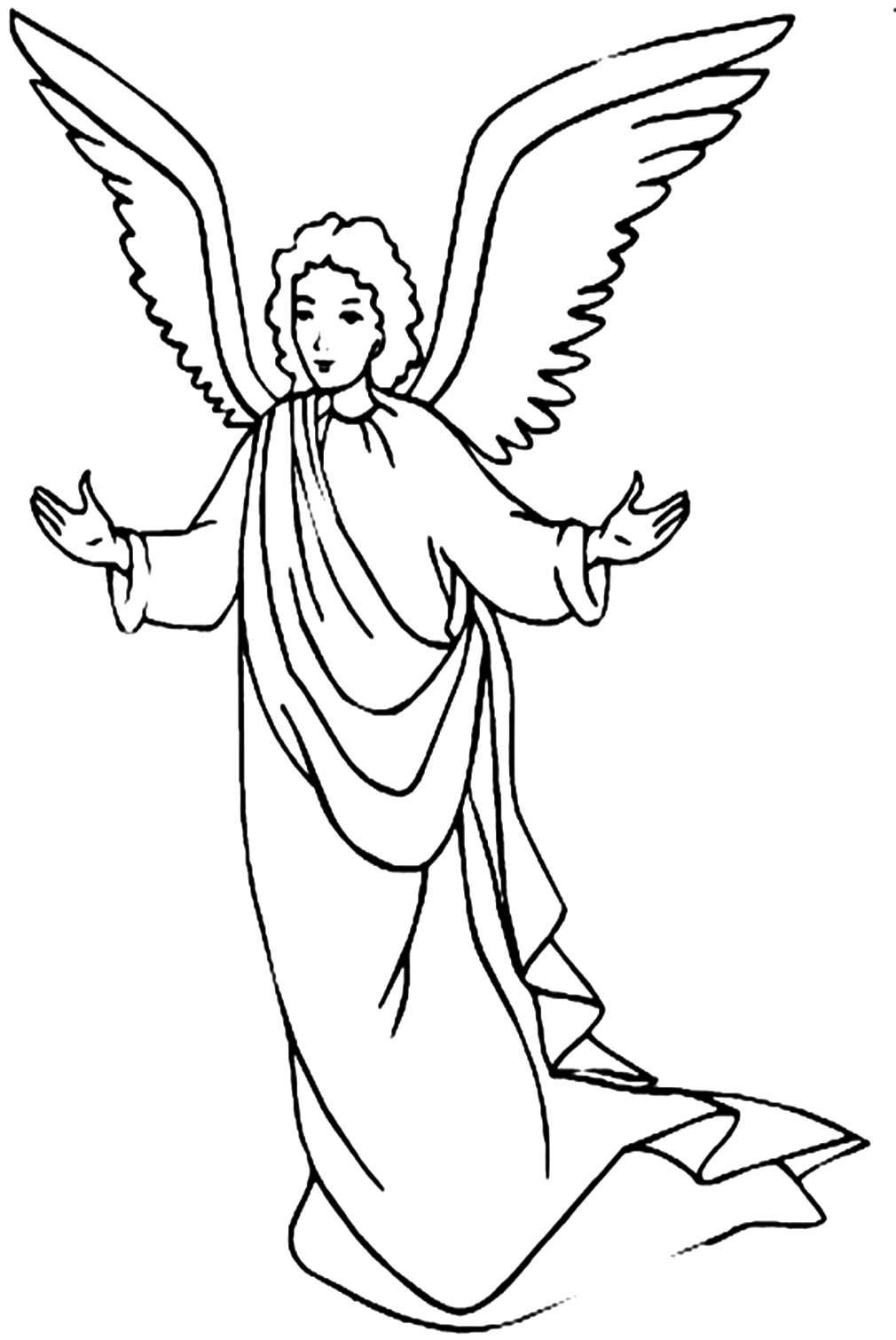
The Archangel Gabriel’s most depicted moment is the Annunciation: the moment in Luke 1:26-38 when Gabriel appeared to Mary and announced that she would bear Jesus. Gabriel pages typically show the figure in a posture of message-delivery or greeting, often with a lily (a Marian symbol introduced in 4th-century iconography) as an identifying attribute.
Coloring archangel Michael pages: Armor is the most technically demanding element: silver metallic for plate armor, with the same three-zone technique (light at the top-facing surface, mid-tone on the main face, dark at the recessed areas between armor elements). The wings in warrior angel pages are often more dramatically rendered than in devotional figures, with deeper shadow areas suggesting power rather than serenity. The sword or spear is a silver-metallic blade with a gold crossguard.
Guardian Angel Pages
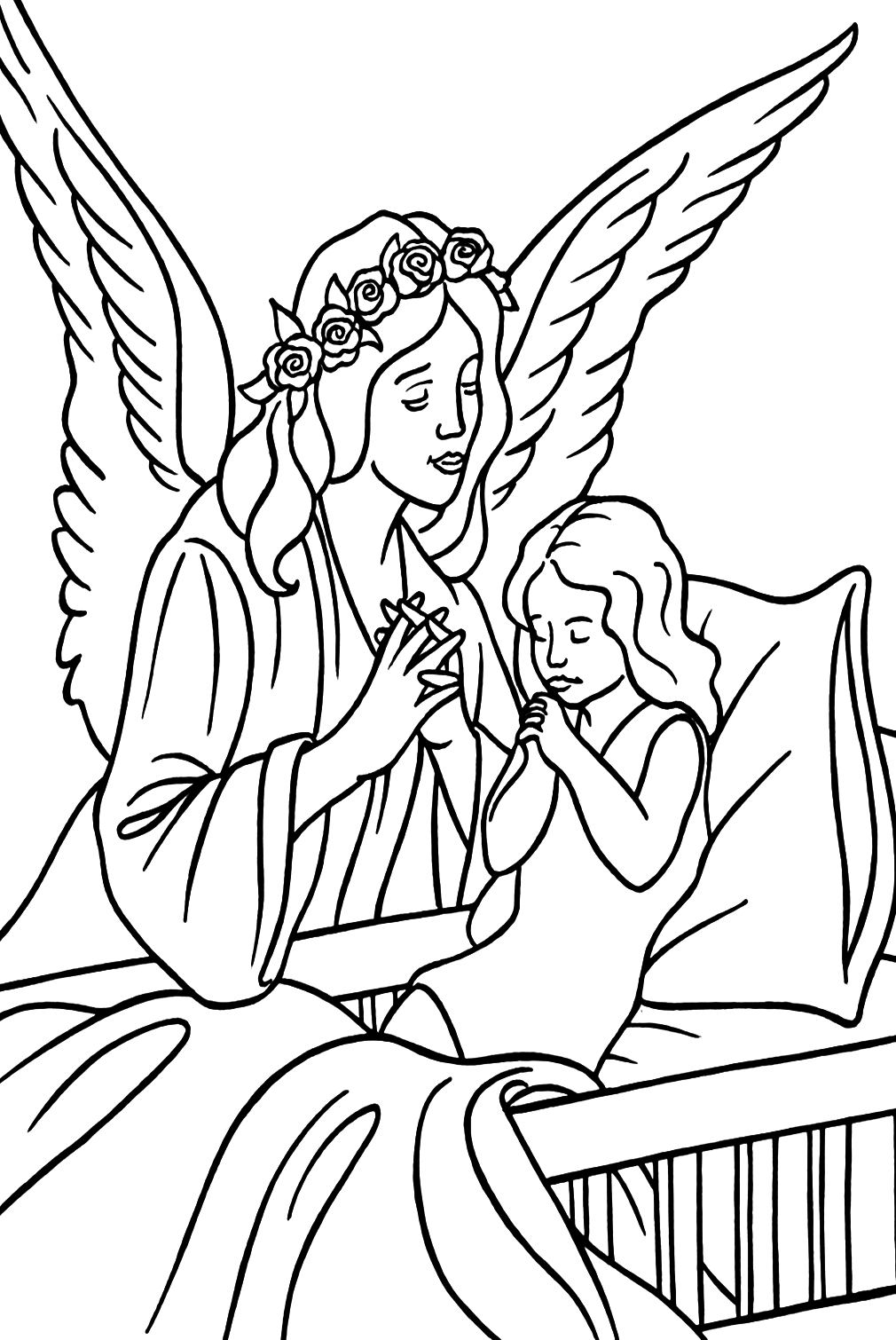
The guardian angel tradition, the belief that each person has a dedicated angelic protector, draws from Matthew 18:10 (“their angels in heaven always see the face of my Father in heaven”) and has generated one of the most widely produced categories of religious devotional art: the guardian angel shown watching over a child. The most familiar composition, showing a large-winged angel guiding one or two small children across a precarious bridge, was reproduced in millions of lithographs during the 19th and 20th centuries and became one of the most common images in the domestic religious art of Catholic households.
Guardian angel pages in the collection show various configurations of this protective relationship: the angel’s large wings forming a protective shelter over the figure beneath, the angel’s hand guiding a smaller figure, or the angel in a posture of watchful presence beside the protected figure.
Coloring guardian angel pages: The size relationship between the large protecting angel and the small protected figure is the page’s primary compositional statement. The angel should have the most luminous, most carefully rendered wing and robe coloring of any figure in the composition. The figure being protected should be warmer and more colorful in their clothing. At the same time, the angel remains primarily in white and gold, creating a visual distinction between the earthly and the divine.
Musical Angel Pages: Harp and Trumpet
The musical angel, playing a harp, lyre, trumpet, or other instrument, appears throughout both the Psalms (“Praise him with the sounding of the trumpet, praise him with the harp and lyre, praise him with timbrel and dancing,” Psalm 150:3-4) and the Book of Revelation, where seven angels with seven trumpets announce the apocalyptic events of the final chapters.
Harp-playing angel imagery is associated with the Psalms and with the vision of heaven as a place of continuous musical worship. Trumpet-playing angels carry the narrative weight of proclamation: the announcement of births (Luke 2), the call to judgment (Revelation), and the marking of cosmic events.
Coloring musical angel pages: The instrument is the page’s secondary focal point after the face. Harps are warm golden-yellow, with the individual strings rendered as very thin parallel lines in slightly darker gold. Trumpets are bright metallic brass or gold, applying the three-zone metallic technique along the instrument’s curves. The wings in musical angel pages often extend more dramatically than in static portrait pages, as the posture of playing gives the composition an inherent energy that the wing deployment should support.
What These Pages Do
The visual tradition of angel imagery in Western art spans more than 1,600 years of documented production, from the early Byzantine mosaics of the 4th and 5th centuries through the Italian Renaissance masterworks of the 15th and 16th centuries to contemporary digital illustration. Coloring angel pages connects the activity directly to this tradition: the wing design, the robe folds, the halo placement, and the figure’s posture all derive from conventions established and refined across that entire period. A child coloring a winged angel portrait today is working within a visual vocabulary that Fra Angelico, Raphael, and Leonardo da Vinci all worked within on commission from churches and patrons in 15th and 16th-century Italy.
The putto misidentification, where the chubby infant figures derived from Greco-Roman art are called “cherubim” when they are properly called putti and are entirely distinct from the Biblical cherubim of Ezekiel’s vision, is one of art history’s most documented cases of visual tradition overriding textual source. The actual cherubim described in Ezekiel 1 are among the most dramatically described creatures in any religious text. A coloring collection that explains this distinction gives its users knowledge that art historians and theologians find genuinely interesting.
The American Academy of Pediatrics identifies fine motor skill development as a key childhood milestone throughout early childhood. The feather-by-feather rendering of large wings, the robe fold shadow work, the halo’s circular rendering, the face’s gentle expression detail, and the intricate decorative elements of mandala-style angel pages all provide highly motivated fine motor practice across every developmental level the collection serves. The 2005 Art Therapy Journal study on structured coloring and anxiety reduction applies throughout, with angel imagery carrying a specific calming dimension beyond the general meditative quality of structured coloring.
Christmas angel pages carry the seasonal dimension that makes this collection particularly relevant in the weeks around Christmas: the Nativity narrative of Luke 2, the Gloria announcement to the shepherds, and the tree-topper tradition all give these pages an immediate contextual relevance in December that makes them among the most searched coloring subjects of the year.
How to Color These Pages Well
White robes are never pure white: they are the specific warm cream of fabric in soft light. The most common error on angel portrait pages is leaving the robe completely uncolored (pure paper white) or applying a bright, cold white that reads as painted rather than as fabric. Apply a very pale, very warm cream-grey across the full robe surface at the lightest possible pressure. Then identify the deepest fold areas (where the fabric bunches and creates the darkest shadow) and apply a slightly darker warm grey there. The robe should read as three-dimensional, draped fabric rather than as a flat white shape.
Feather wing rendering requires three distinct zones treated differently. The primary feathers at the wing’s outer edge are long and individually distinguishable; apply each at a slightly different tone alternating between the base white-grey and a slightly darker grey to make each feather read as a separate element. The secondary feathers in the middle zone overlap in a tile pattern; apply a consistent, slightly darker tone along the bottom edge of each feather (where the next feather overlaps below it) to create the scale-like layered effect. The covert feathers at the wing’s base closest to the body are the softest and most uniform; they apply at the lightest pressure, suggesting soft down rather than structured flight feathers.
Gold halos require the warmest, most vivid gold available. The halo is typically the page’s only vivid warm color accent against an otherwise pale composition of white and cream. Apply vivid warm gold at full pressure across the full halo ring, maintaining a clean circular shape. If the gold pencil available leans toward yellow rather than warm gold, add a small amount of orange-gold over it to warm the tone. The contrast between the pale cream robe, the warm skin, and the vivid gold halo is what gives the page its devotional quality.
Skin tone in angel figures should be warm and idealized, not pale. Angel figures in the Western art tradition are typically depicted with warm, well-lit skin rather than a pallid or cold complexion: the luminous quality of devotional figure painting in the Renaissance used warm skin tones to suggest the inner light of the sacred figure. Apply a warm peachy-medium skin tone, slightly warmer than average portraiture skin, and shadow with warm rose-tan rather than grey in the shadow areas.
The night sky background for the Christmas angel pages should be very dark and applied at full coverage. The contrast between the white-robed angel figure and the deep midnight-blue of the Bethlehem night sky is what gives the Christmas angel its visual power. Apply the deepest available midnight blue or blue-black at full pressure across the entire background area. Stars, if present, should be added after the background is complete: small points of vivid white or pale gold at irregular intervals across the dark background, applied with the finest available tool.
5 Creative Craft Ideas
The Celestial Hierarchy Display
Pseudo-Dionysius the Areopagite, likely a 5th or 6th century theologian, wrote “The Celestial Hierarchy,” which organized the angels of Christian tradition into three spheres of three choirs each: the Seraphim, Cherubim, and Thrones in the first sphere; the Dominions, Virtues, and Powers in the second; and the Principalities, Archangels, and Angels in the third sphere. This hierarchical structure became standard in medieval Christian theology.
Print three angel pages representing three different visual registers: the most elaborate, most formally rendered angel for the first sphere; a moderately detailed angel for the second sphere; and the simplest, most approachable figure for the third sphere. Color all three with increasing warmth and approachability from first to third.
Mount all three on a vertical backing sheet, first sphere at the top, third at the bottom, connected by a vertical line. Add the names of each sphere and choir in small lettering at each tier.
The Raphael’s Putti Study
The two contemplative infant figures at the base of Raphael’s Sistine Madonna (1512) are among the most reproduced images in Western art history. They have appeared on coffee mugs, notebooks, posters, phone cases, and decorative items in quantities that far exceed the reproduction of the Madonna figure above them.
Print a baby angel or putto page that most closely resembles the contemplative posture: chin resting on arms folded on a ledge, eyes gazing upward. Color carefully: warm peachy infant skin, soft golden curly hair, small white wings, the specific soft quality of Raphael’s rendering.
On the backing card, write: “Putti. Raphael Sanzio (1483-1520). Sistine Madonna, 1512. Created for the church of San Sisto in Piacenza, Italy. Now at the Gemäldegalerie Alte Meister, Dresden, Germany. These two figures at the bottom of the painting are among the most reproduced images in Western art history. They are putti, derived from Greco-Roman art. They are not, theologically speaking, cherubim.”
The Wing Anatomy Study
Print the most detailed, most clearly rendered wing page in the collection. Before applying any color, study the wing structure and identify the three zones: primary feathers (outer edge, long), secondary feathers (middle, overlapping), covert feathers (base, soft). Mark each zone with a light pencil label.
Color each zone using the different technique appropriate to it: primaries with individually distinguished slightly varying tones, secondaries with the overlapping darker-edge technique, and coverts at the lightest uniform pressure.
On the backing card, write a brief note: “Feathered wings in angel art: derived from the Roman figure of Victory (Nike) and adopted in Christian iconography by the 4th century. The earliest confirmed winged angel image: Annunciation mosaic, Basilica of Santa Maria Maggiore, Rome, completed 432-440 AD. Before the 4th century, angels in Christian art appeared as young men in white robes.”
The Annunciation Page
Luke 1:26-38 describes the moment when the Archangel Gabriel appeared to Mary in Nazareth and announced that she would conceive and bear Jesus. This moment, called the Annunciation, is among the most depicted single events in Western art history, painted by Fra Angelico, Leonardo da Vinci, Botticelli, Raphael, Jan van Eyck, and hundreds of other artists across six centuries.
Print the most formal, most composed angel portrait in the collection, particularly one showing the angel in a posture of address or greeting. Color it in the blue-and-gold palette associated with Marian imagery in Western art: gold halo, white robes, with blue as an accent for a robe outer layer or wing detail.
On the backing card: “The Annunciation. Luke 1:26-38. The Archangel Gabriel and Mary of Nazareth. Among the most depicted single moments in Western art history. Fra Angelico painted it approximately 30 times. Leonardo da Vinci, Raphael, Jan van Eyck, Botticelli, Filippo Lippi: all painted this moment. The lily Gabriel carries in many depictions: a Marian symbol introduced in the 4th century, not mentioned in Luke’s text.”
The Guardian Angel Bridge
The guardian angel protecting children across a bridge is one of the most produced compositions in 19th and 20th-century devotional art, reproduced in millions of lithographs and distributed through Catholic parishes, schools, and households across Europe and North America. The specific composition, with its two small children on a precarious bridge and the large-winged angel watching over them, appeared in countless home interiors for generations.
Print the most protective posture angel page in the collection: a large figure with wings extended over a smaller figure. Color the angel primarily in luminous white and gold, and the protected figure in warmer, more colorful tones.
On the backing card: “The guardian angel. Matthew 18:10: ‘Their angels in heaven always see the face of my Father in heaven.’ The Guardian Angel Bridge composition: one of the most produced images in 19th-20th-century devotional art. Millions of lithographic reproductions were distributed through Catholic parishes in Europe and North America from approximately the 1880s through the mid-20th century. The image appeared in an estimated one in three Catholic homes in some European countries at its peak distribution.”
Frequently Asked Questions
What is an angel in religious tradition? The word “angel” derives from the Greek angelos (ἄγγελος), meaning messenger, which translates the Hebrew malakh (מַלְאָך), carrying the same meaning. Angels appear in the Abrahamic religious traditions of Judaism, Christianity, and Islam as spiritual beings serving as messengers and agents between God and the human world. In Christianity, they appear throughout the Hebrew Bible and New Testament in roles including messenger (Gabriel announcing to Mary in Luke 1:26-38), warrior (Michael fighting the dragon in Revelation 12:7-9), protector (angels dispatched to guard), and worshipper (the Seraphim of Isaiah 6 singing “Holy, Holy, Holy”). In Islam, angels (Malaikah) are created from light and include the principal archangels Jibreel (Gabriel), Mikail (Michael), and Israfil.
When did winged angels first appear in art? Winged angels as a visual concept did not appear in early Christian art. For the first three centuries of Christianity, angels were depicted in art as young men in white robes, consistent with their New Testament appearances (Matthew 28:2-3, Mark 16:5). The inclusion of wings in Christian angel imagery appeared in the early Byzantine period, with the Annunciation mosaic of Rome’s Basilica of Santa Maria Maggiore, completed between 432 and 440 AD, among the earliest confirmed examples. Wings were adapted from classical Greco-Roman depictions of Nike (the goddess of victory) and Mercury/Hermes, both winged figures in the existing visual vocabulary of the period. The halo, similarly, was adapted from the Roman nimbus, a disc of light used in imperial portraiture.
What is the difference between angels, archangels, seraphim, and cherubim? These terms refer to distinct beings within the Christian angelic hierarchy as organized by Pseudo-Dionysius the Areopagite, likely a 5th-6th century theologian, in his text “The Celestial Hierarchy.” Seraphim are the highest order, described in Isaiah 6:2-3 as six-winged beings who stand before God singing “Holy, Holy, Holy.” Cherubim are the second order, described in Ezekiel 1 and 10 as four-faced creatures (human, lion, ox, eagle) with four wings and covered in eyes. Archangels are the eighth order, closest to the human world, and include the named figures Michael, Gabriel, and Raphael. Angels are the ninth and final order, the beings most commonly interacting with humans. The chubby infant figures popularly called “cherubs” are properly called putti and are derived from Greco-Roman art, not from Biblical cherubim.
Who are the named archangels and what are they associated with? Three archangels are named in texts recognized across multiple Christian traditions. Michael (from the Hebrew Mikha’el, meaning “Who is like God?”) appears in Daniel 10 and 12, Jude 9, and Revelation 12:7, where he leads the heavenly armies against the dragon. He is associated with protection, warfare, and justice, and is depicted in art as a warrior often shown defeating a serpent or fallen figure. Gabriel (from the Hebrew Gavri’el, meaning “God is my strength”) appears in Daniel 8-9 and Luke 1, delivering the Annunciation to Mary. He is associated with messages and annunciation. Raphael (from the Hebrew Rafa’el, meaning “God heals”) appears in the Book of Tobit and is associated with healing. A fourth figure, Uriel, appears in certain deuterocanonical and apocryphal texts and is recognized in some traditions.
What are putti, and why are they called cherubs? Putti (singular: putto) are small infant or child figures from classical Greco-Roman art, associated with Eros/Cupid and used decoratively in both secular and religious contexts. During the Italian Renaissance, artists incorporated putti into Christian religious imagery as decorative elements, particularly in architectural settings and around sacred figures. Over centuries, these figures became popularly identified with the term “cherub” or “cherubim” through common usage, despite being theologically distinct from the actual Biblical cherubim described in Ezekiel 1 and 10. The most famous putti in Western art are the two contemplative infant figures at the base of Raphael Sanzio’s Sistine Madonna, completed in 1512, now held at the Gemäldegalerie Alte Meister in Dresden, Germany. These two figures have been reproduced more extensively than perhaps any other detail in Western art history.
What is the Christmas angel tradition? The Christmas angel tradition draws primarily from Luke 2:8-14, in which an angel appeared to shepherds near Bethlehem to announce the birth of Jesus, followed by “a great company of the heavenly host” who appeared with the angel praising God. The angels in this narrative are associated with proclamation (the announcement), song (the Gloria: “Glory to God in the highest”), and the star of Bethlehem. The angel topper, placed at the crown of the decorated Christmas tree, draws from 19th-century German Christmas traditions and was widely adopted internationally. The trumpet-playing angel of Christmas imagery references both the Nativity announcement and the broader Biblical tradition of trumpets as instruments of divine proclamation.
What is a guardian angel? A guardian angel is an angelic being believed in some religious traditions to be specifically assigned to protect a person throughout their life. The concept draws from Matthew 18:10, where Jesus says of children, “their angels in heaven always see the face of my Father in heaven,” suggesting individual angelic representatives. The Catholic Church observes a Feast of the Guardian Angels on October 2. Protestant traditions vary in their theological position on individual guardian angels. The visual tradition of guardian angel imagery, particularly the composition showing a large-winged angel protecting one or two small children crossing a precarious bridge, was one of the most produced images in 19th and 20th-century Catholic devotional art, distributed in millions of lithographic reproductions through parishes and Catholic households.
What age group are these pages best suited for? Angel coloring pages serve a genuinely broad age range. The simplest outline pages with large, clearly defined areas (basic angel silhouettes, round halo circles, simple wings) are accessible from ages three and four, where the familiar, friendly figure and the large areas of white and gold provide immediately achievable coloring targets. The intermediate pages with robe fold detail, medium-complexity wing feather patterns, and instrument-playing compositions are most rewarding from ages five to ten, where developing fine motor control allows for the more careful color application these pages require. The most detailed pages, with complex multi-feather wing rendering, elaborate decorative robe elements, and mandala-style celestial patterns, are most engaging for older children from ten and up and for adults who appreciate the meditative quality of detailed coloring. Christmas angel pages are most relevant seasonally in December and most engaging for all ages during the Christmas season.
Browse the full collection at ColoringPagesOnly.com. All 60+ pages free, no sign-up, PDF or PNG, print or color online.
The Greek word for messenger is angelos. The Hebrew word is malakh. Both mean the same thing.
For the first three centuries of Christianity, angels were painted as young men in white robes. No wings. Consistent with how they appear in the New Testament. The wings came from Nike, the Roman goddess of victory, around the 4th century. The halo came from the Roman nimbus, used in imperial portraiture.
The chubby infant figures called “cherubs” are properly called putti. They come from Greco-Roman depictions of Eros and Cupid. The actual cherubim of Ezekiel’s vision have four faces, four wings, and are covered in eyes. Raphael painted two putti at the base of the Sistine Madonna in 1512, and they have been on coffee mugs ever since.
Pick up your warmest gold for the halo. Apply it at full pressure in a clean circle. Pick up your palest warm cream for the robe. Apply the fold shadows in slightly deeper warm grey. The wings come last: three zones, three techniques, one structure.
Share your work on Facebook and Pinterest and tag #Coloringpagesonly. The celestial hierarchy displays and the wing anatomy studies are particularly worth sharing.
Color the robe in warm cream. Apply the gold halo. The wings took 1,600 years to develop this visual language. Use all of it.