Christian and Bible Coloring Pages
 By:
Jennifer Thoa - Content Editor & Designer
Updated:
By:
Jennifer Thoa - Content Editor & Designer
Updated:
Christian and Bible coloring pages: 392 printable designs across 11 topics, spanning the central figures, sacred objects, holy days, and foundational stories of the Christian tradition. Each page can be downloaded as a PDF to print or colored online in the browser.
This collection is organized into four groups: central figures of the faith, sacred objects and holy spaces, the events of Holy Week, and stories from the Hebrew Bible and Old Testament.
Central Figures of the Faith
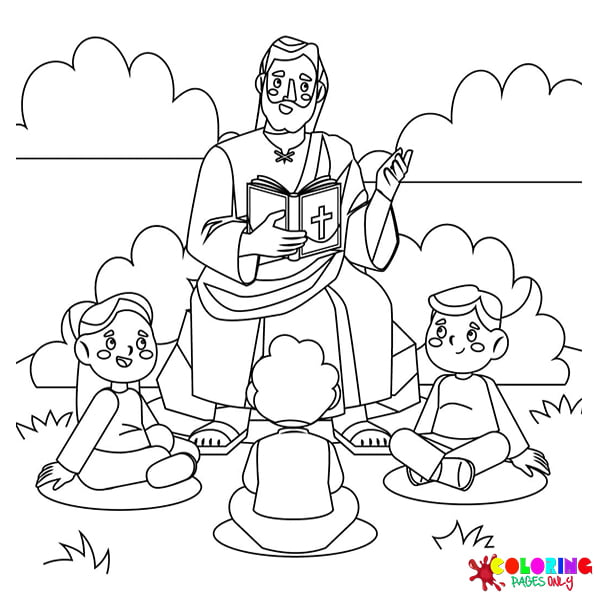
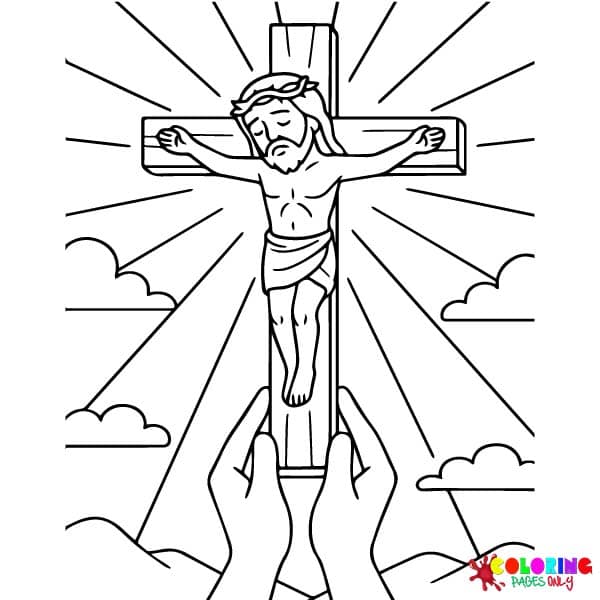
Jesus (45 designs) is the largest sub-category in the collection, spanning the Nativity and infancy scenes, the teaching and ministry period, the Passion sequence including the Last Supper and crucifixion, and the Resurrection. The visual conventions for depicting Jesus in Western Christian art are ancient and relatively consistent: a long robe in white or a combination of red and blue, in the medieval symbolic color system, where red represents humanity and sacrifice and blue represents divinity.
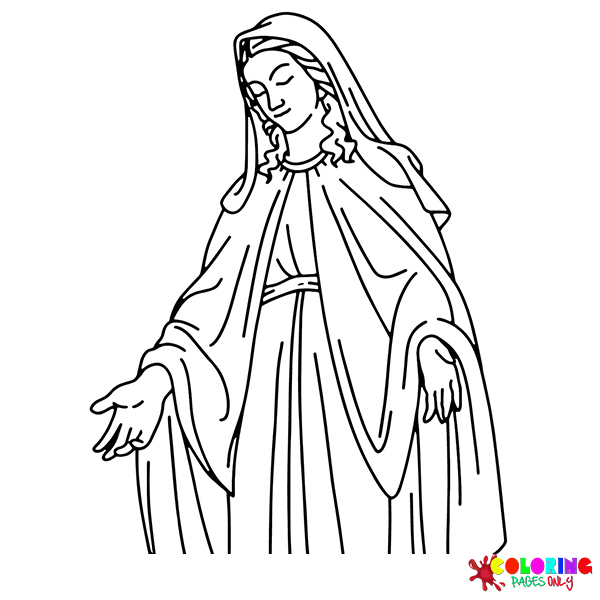
Saint Mary (22 designs) covers the mother of Jesus across her depicted forms in Christian art, including the Nativity scene, the Madonna and child, and the standing Marian figure in a blue mantle. That blue is historically significant: ultramarine, made from ground lapis lazuli, was the most expensive pigment available to medieval painters, and its use for Mary’s robe was a deliberate statement of her importance in the tradition.
Sacred Objects and Holy Spaces
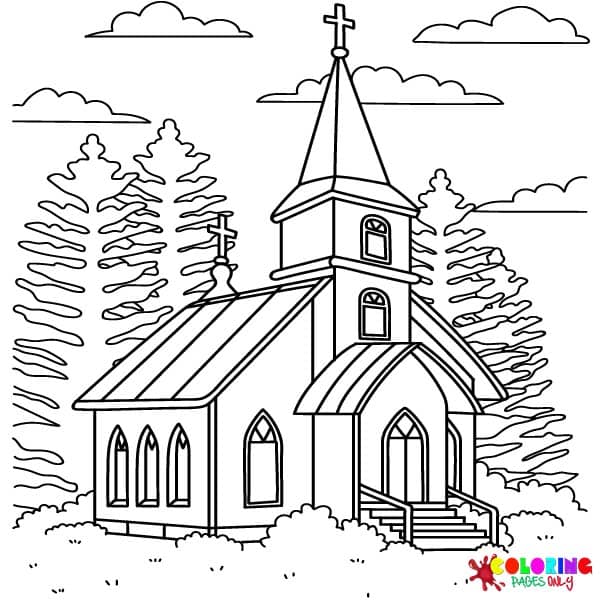
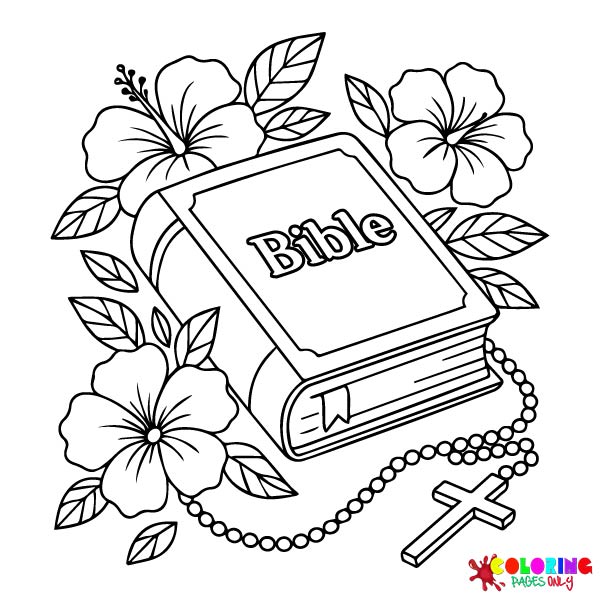
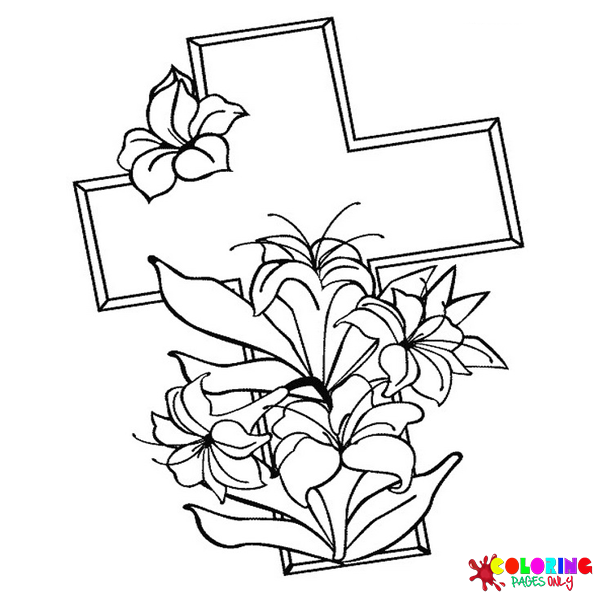
Cross (34 designs) covers Christianity’s foundational symbol in its many forms, from the simple Latin cross to ornate Celtic crosses with interlaced knotwork to the crucifix. Church (34 designs) covers the physical spaces of Christian worship, from a simple country chapel to a Gothic cathedral, including stained glass windows, which are traditionally rendered in saturated jewel tones held together by black lead lines. Bible Book (40 designs) covers the physical Bible itself as a visual subject, from a closed leather-bound cover to an open Bible with visible text.
Holy Week and the Liturgical Calendar
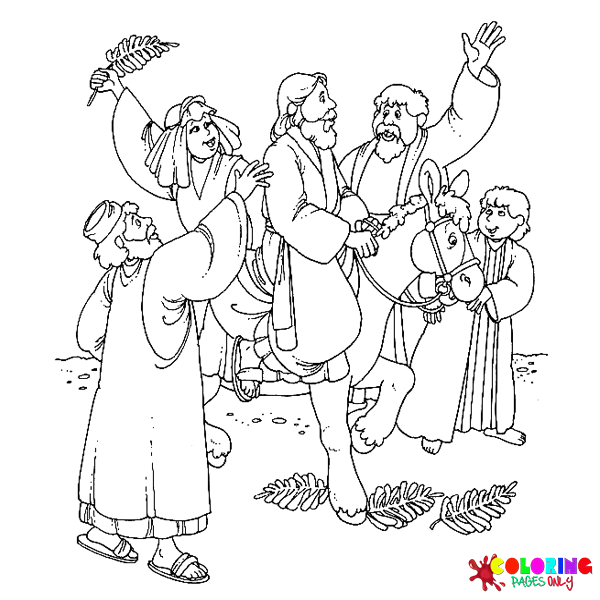
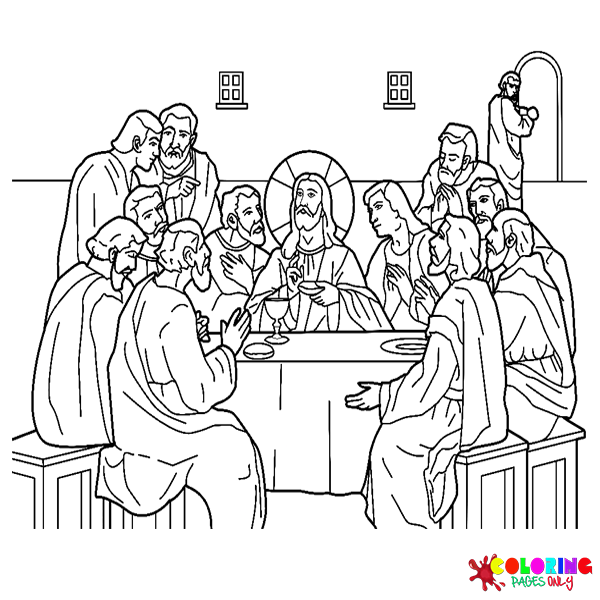
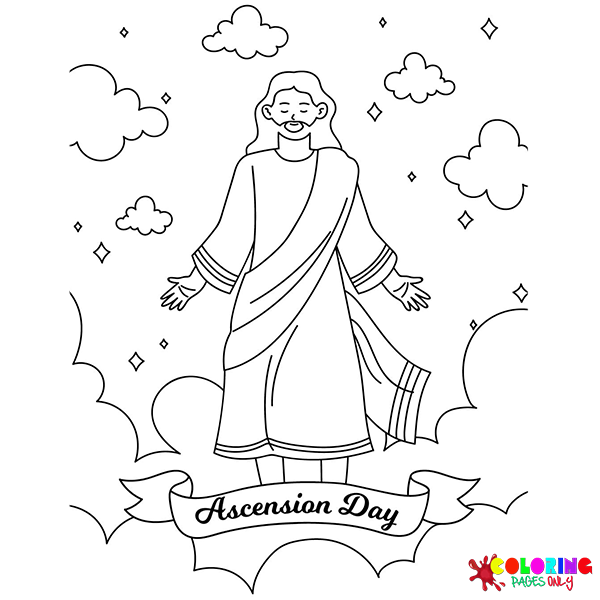
The largest cluster of holiday sub-categories covers the final week of Jesus’s life. Palm Sunday (48 designs) covers the Triumphal Entry into Jerusalem described in all four Gospels, including Jesus riding a donkey in fulfillment of the prophecy in Zechariah 9:9. Holy Thursday (28 designs) covers Maundy Thursday and the Last Supper, the scene of Leonardo da Vinci’s 1495-1498 fresco made into the most recognizable compositional convention in Western art. Good Friday (47 designs) covers the crucifixion, approached with appropriate gravity in the collection’s most visually serious pages. Ascension Day (26 designs) covers the event forty days after Easter, described in the Acts of the Apostles, when the risen Christ ascended into heaven.
The Hebrew Bible and the Old Testament
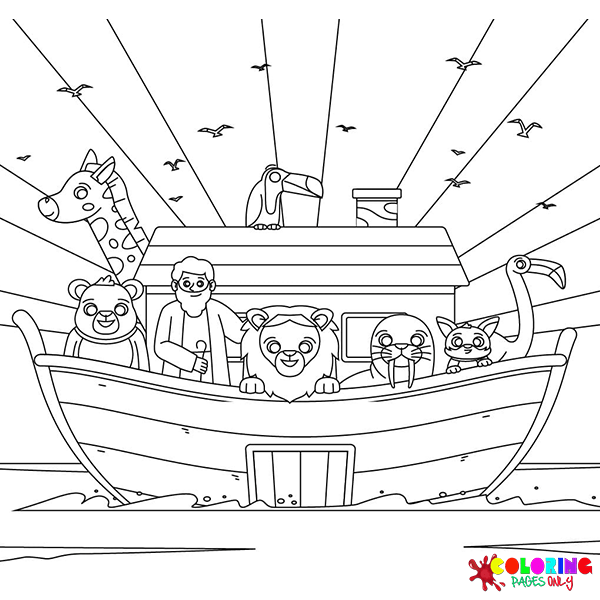
Noah’s Ark (17 designs) is the most consistently popular Old Testament story in this collection, drawn from Genesis 6-9: God instructing Noah to build a vessel to survive a great flood, taking pairs of every living creature aboard, and the rainbow that concludes the story as a covenant sign.
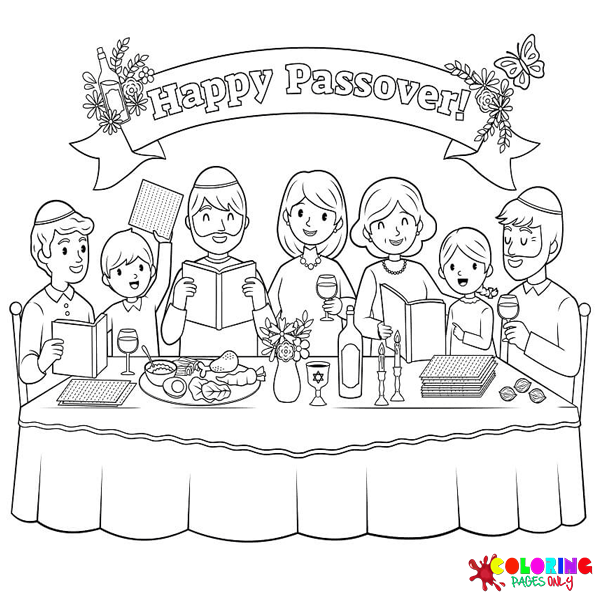
Passover (51 designs) covers the Jewish festival of Passover, included in this collection for its theological significance to both Judaism and Christianity. In Jewish tradition, Passover commemorates the liberation of the Israelites from slavery in Egypt as described in the book of Exodus. In Christian theology, Jesus’s crucifixion is understood to have occurred during the Passover period and is interpreted through the lens of the Passover sacrifice. These pages include the Seder plate and its symbolic foods, along with Exodus imagery such as Moses and the parting of the Red Sea.
What’s Not Yet in This Collection
This collection does not currently include a few topics common on other Christian coloring sites:
- Bible Verse pages, which pair a short scripture passage with an illustration, are a distinct format from the narrative and figure-based pages in this collection.
- Creation story pages, based on the opening chapters of Genesis.
- Fruits of the Spirit pages, based on Galatians 5:22-23, a common Sunday School teaching tool.
This site’s separate Easter and Christmas collections cover related seasonal content and are linked below.
What Christian and Bible Coloring Pages Do
Fine motor development. The American Academy of Pediatrics identifies fine motor skill development as a core benefit of structured coloring for children ages 2 through 7. Detailed compositions, such as stained glass windows or Celtic cross knotwork, give practice with small, controlled color areas.
A visual introduction to Bible stories. Coloring a Noah’s Ark or Palm Sunday page while discussing the story gives children a concrete, memorable way to engage with a narrative they may be learning in Sunday School or at home.
Anxiety reduction through focus. A 2005 study in the Art Therapy Journal documented measurable reductions in anxiety following structured coloring sessions. Many colorists describe religious coloring pages as a quiet, reflective activity in their own right, alongside that documented calming benefit.
A window into art history. Because the collection includes real artistic conventions, from medieval pigment symbolism to Gothic stained glass, coloring these pages connects a creative activity to centuries of real art tradition.
How to Color Christian and Bible Pages Well
- Jesus’s robes: use White or a combination of Red and Blue, reflecting the traditional medieval color symbolism of sacrifice and divinity.
- Mary’s mantle: Use a deep, rich Ultramarine Blue rather than a light or gray-blue, matching the historically significant pigment used in Marian art.
- Stained glass windows: use fully saturated jewel tones (Ruby Red, Cobalt Blue, Emerald Green, Golden Amber) with Black outlines for the lead came.
- Celtic cross knotwork: follow each strand’s over-under path with a consistent alternating color to keep the interlace pattern readable.
- Good Friday and Holy Week pages: lean into deep reds and purples, the traditional colors of penitence and royalty used across many Christian traditions during Lent and Holy Week.
5 Creative Craft Ideas With Christian and Bible Coloring Pages
1. Palm Sunday Palm Frond Craft
Color a Palm Sunday page, then cut simple palm-frond shapes from green paper to display alongside it for a Palm Sunday classroom or home display.
2. Noah’s Ark Diorama
Color a Noah’s Ark page, mount it inside a shoebox turned on its side, and add paper cutout animals in front for a simple diorama of the story.
3. Stained Glass Window Effect
Color a church or cross page in bold jewel tones, then tape it to a sunny window so the light shines through, echoing the effect of real stained glass.
4. Bible Bookmark
Color a small cross or Bible Book design, mount it on cardstock, and attach a ribbon at the top for a bookmark to use in a Bible or devotional book.
5. Holy Week Timeline Display
Color one page from each Holy Week day (Palm Sunday, Holy Thursday, Good Friday, and an Easter or Ascension page), and arrange them in order on a poster board for a simple Holy Week timeline.
Frequently Asked Questions
What are Christian and Bible coloring pages?
Christian and Bible coloring pages are printable designs covering central figures, sacred objects, holy days, and Bible stories from the Christian tradition. This collection includes 392 free designs across 11 topics, available as PDFs or online coloring.
Which topic has the most pages?
Jesus has the largest sub-category with 45 designs, followed by Passover with 51 and Palm Sunday with 48.
Why is Passover included in a Christian collection?
Passover is a Jewish festival, included here because of its theological connection to Christianity: the Last Supper is traditionally understood as a Passover meal, and Jesus’s crucifixion is interpreted through the lens of the Passover sacrifice in Christian theology.
What are the events of Holy Week covered in this collection?
Palm Sunday, Holy Thursday (the Last Supper), Good Friday (the crucifixion), and Ascension Day, covering the final week of Jesus’s life through his ascension forty days after Easter.
Why is Mary’s robe traditionally colored blue?
Ultramarine blue, made from imported lapis lazuli, was the most expensive pigment available to medieval painters, and using it for Mary’s robe was a deliberate statement of her importance in Christian art.
Does this collection include Bible verse coloring pages?
Not yet. This collection focuses on figures, objects, and narrative scenes rather than scripture-and-illustration pairings, which some other Christian coloring sites offer as a separate format.
Are these pages suitable for young children?
Yes, for many pages. Noah’s Ark and simpler figure pages suit young children well, while detailed stained glass, Celtic cross, and crucifixion-themed pages suit older children and adults.
Can these pages be used in a church or Sunday School setting?
Yes. The collection is organized by holy day and Bible story, which makes it straightforward to pull pages that match a specific Sunday School lesson or liturgical season.
Start Coloring
Choose a topic above to browse that collection, or open any page to download it as a free PDF or color it online in the browser. No account, email, or payment is required. Share finished pages on Facebook or Pinterest with the share buttons on each page.
More Christian and Bible Coloring Pages
Jump straight to a specific collection: