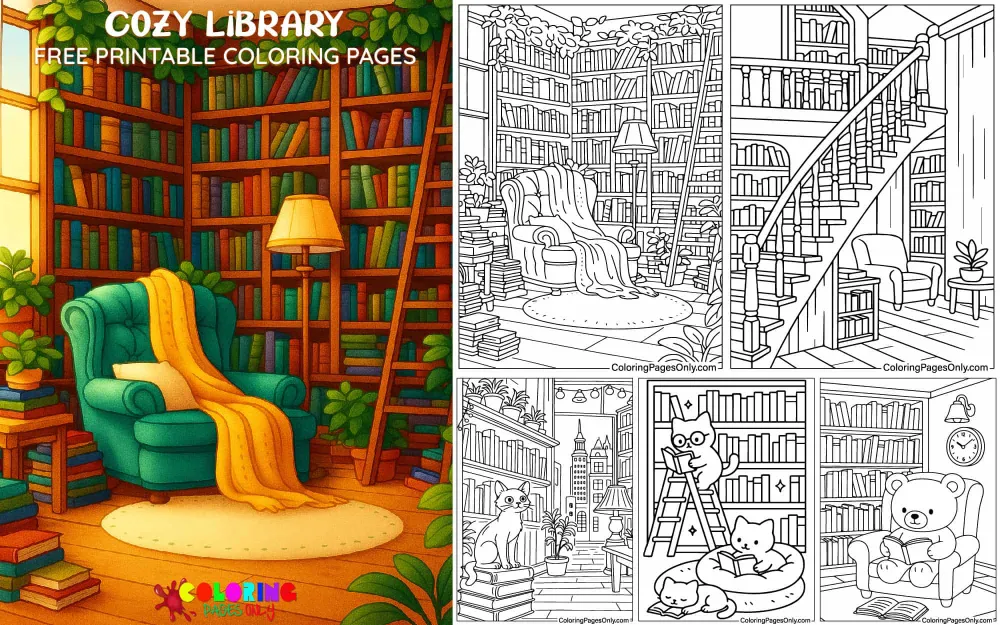
Free Cozy Library Coloring Pages: 37 printable PDF designs featuring grand library staircases, animal readers curled up with books, and quiet reading nooks tucked under stairs and inside tree trunks. Each page can be downloaded as a PDF to print or colored online in the browser, with no account required.
The mood running through these pages tracks closely with hygge, the Danish and Norwegian word for coziness that first appeared in Danish writing in the early 1800s. Hygge describes the specific comfort of candlelight, a soft blanket, and a good book, and that same feeling carries through the set: warm lamps, overstuffed armchairs, and shelves packed with well-loved spines.
The collection is grouped into five parts: grand library architecture, reading nooks and corners, animal readers, fantasy libraries, and everyday study scenes. With 37 pages covering that much range, the set works as a single long coloring session or one page colored at a time between chapters of an actual book.
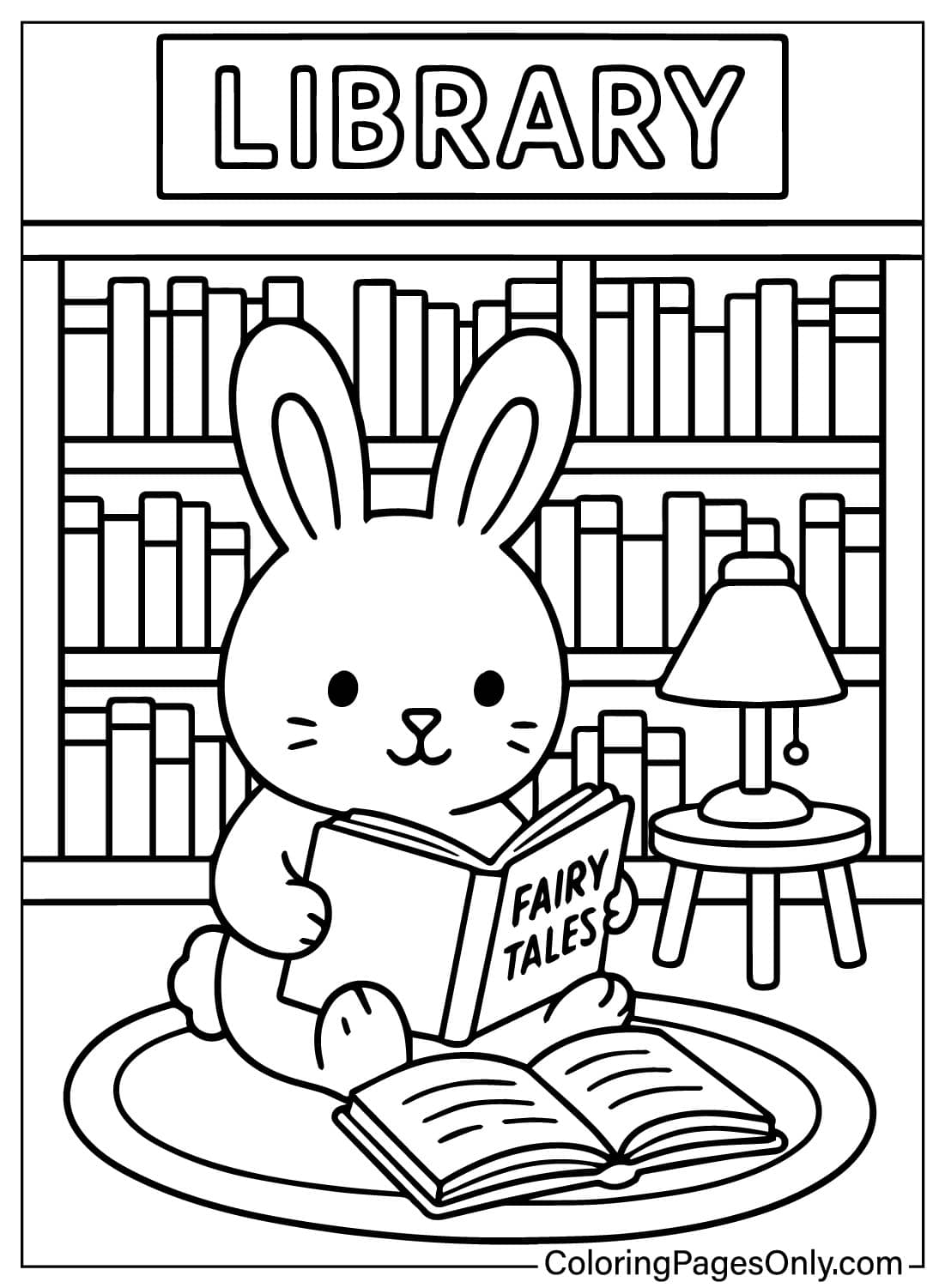
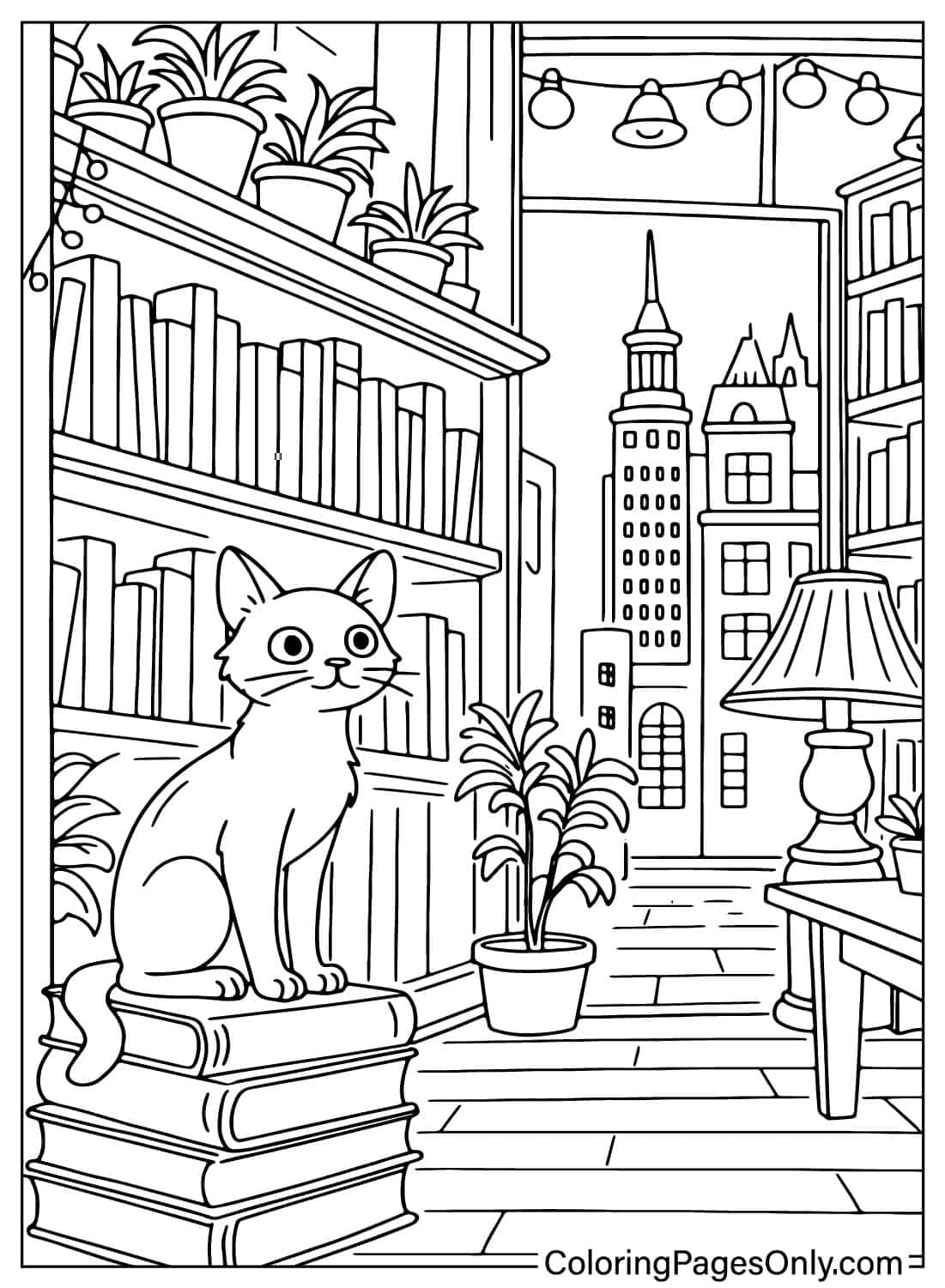
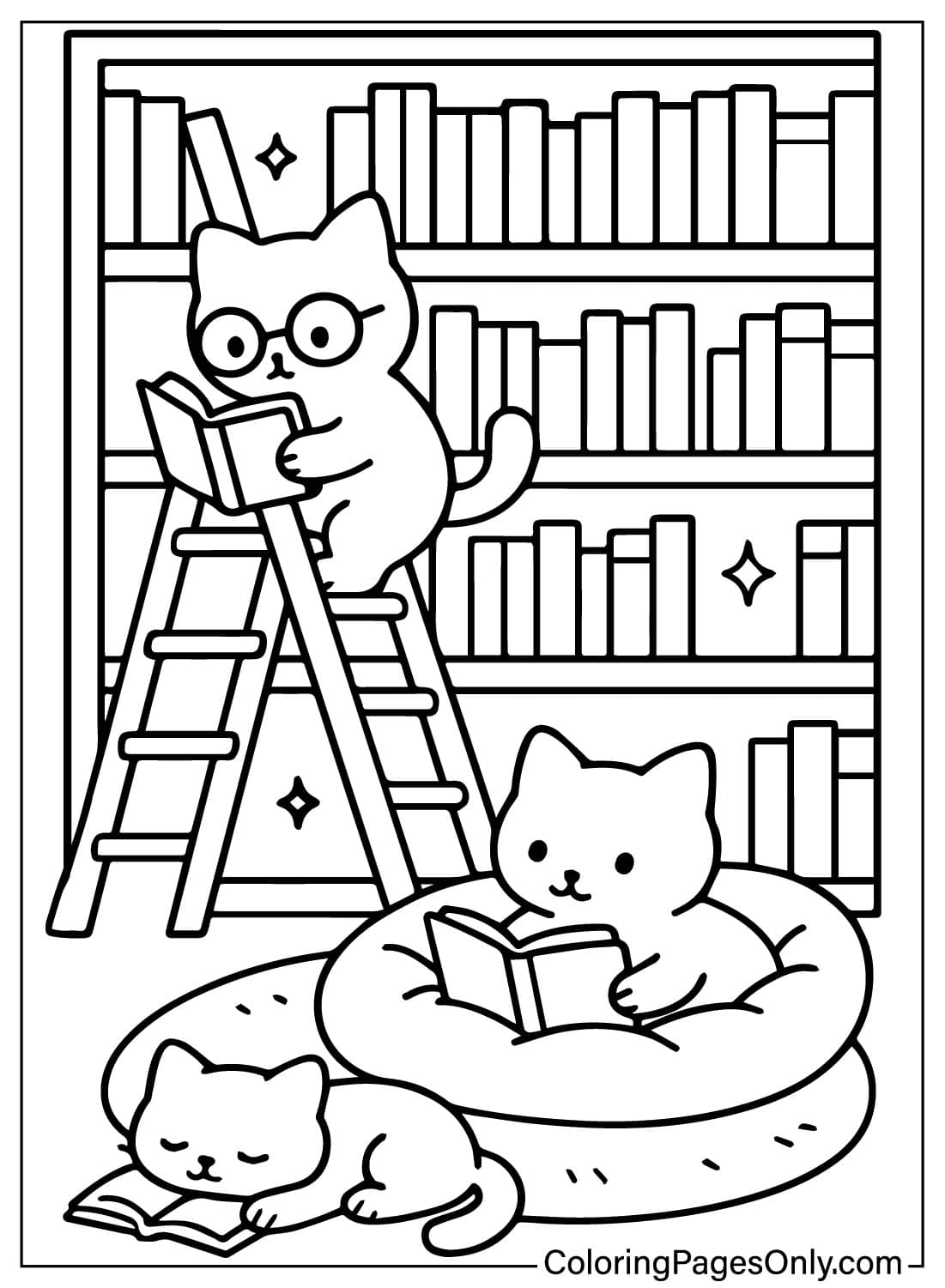
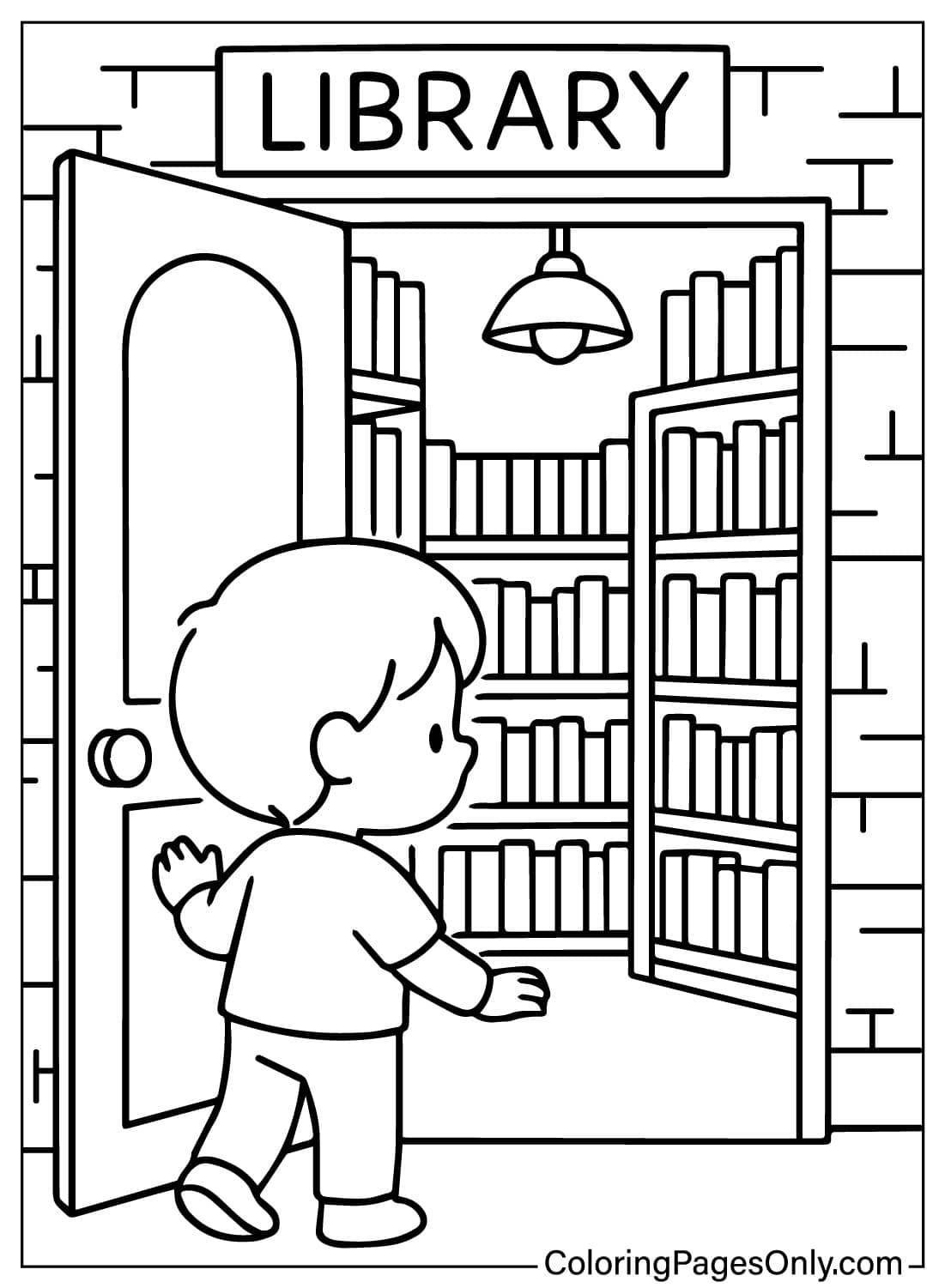
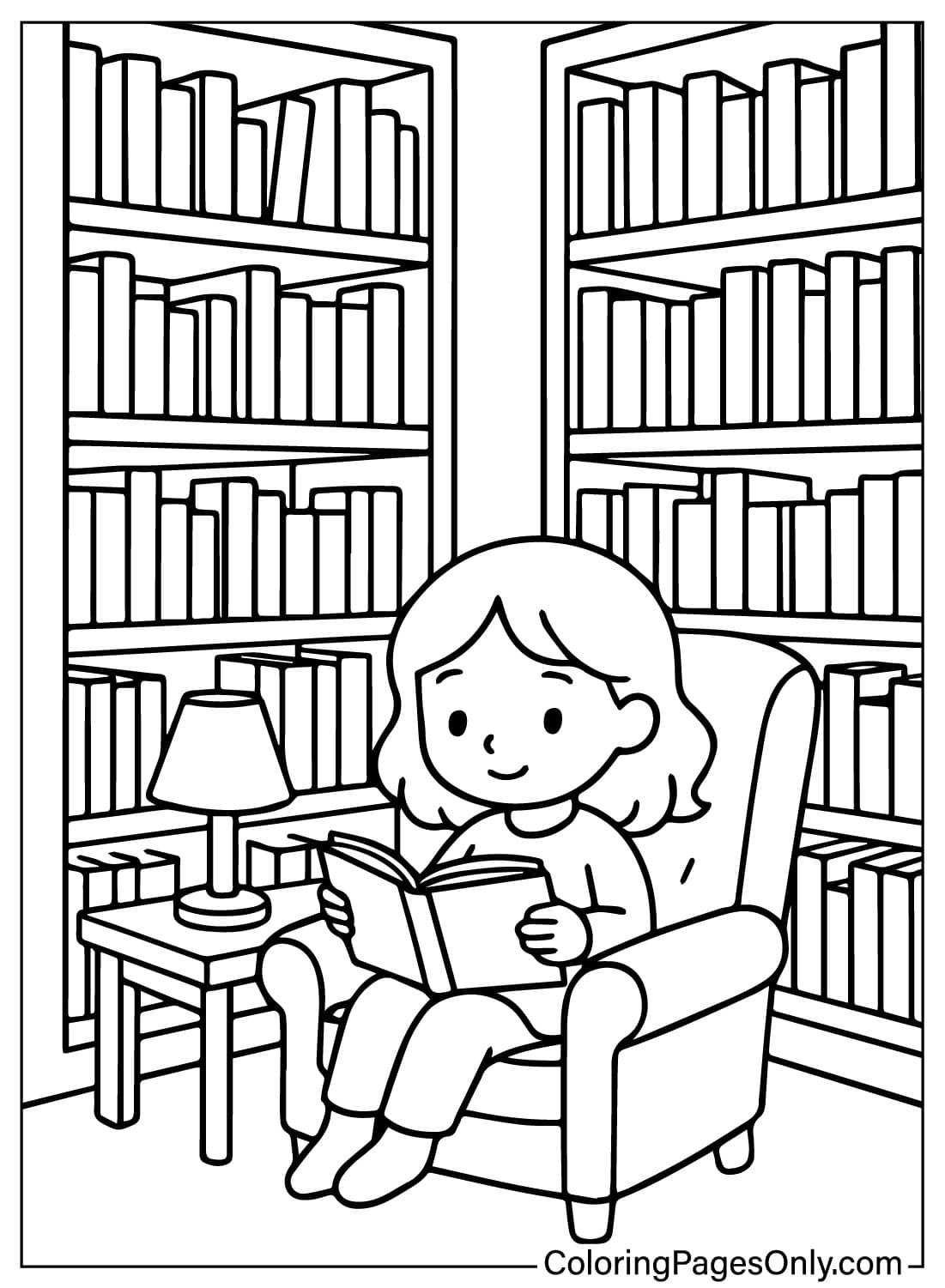
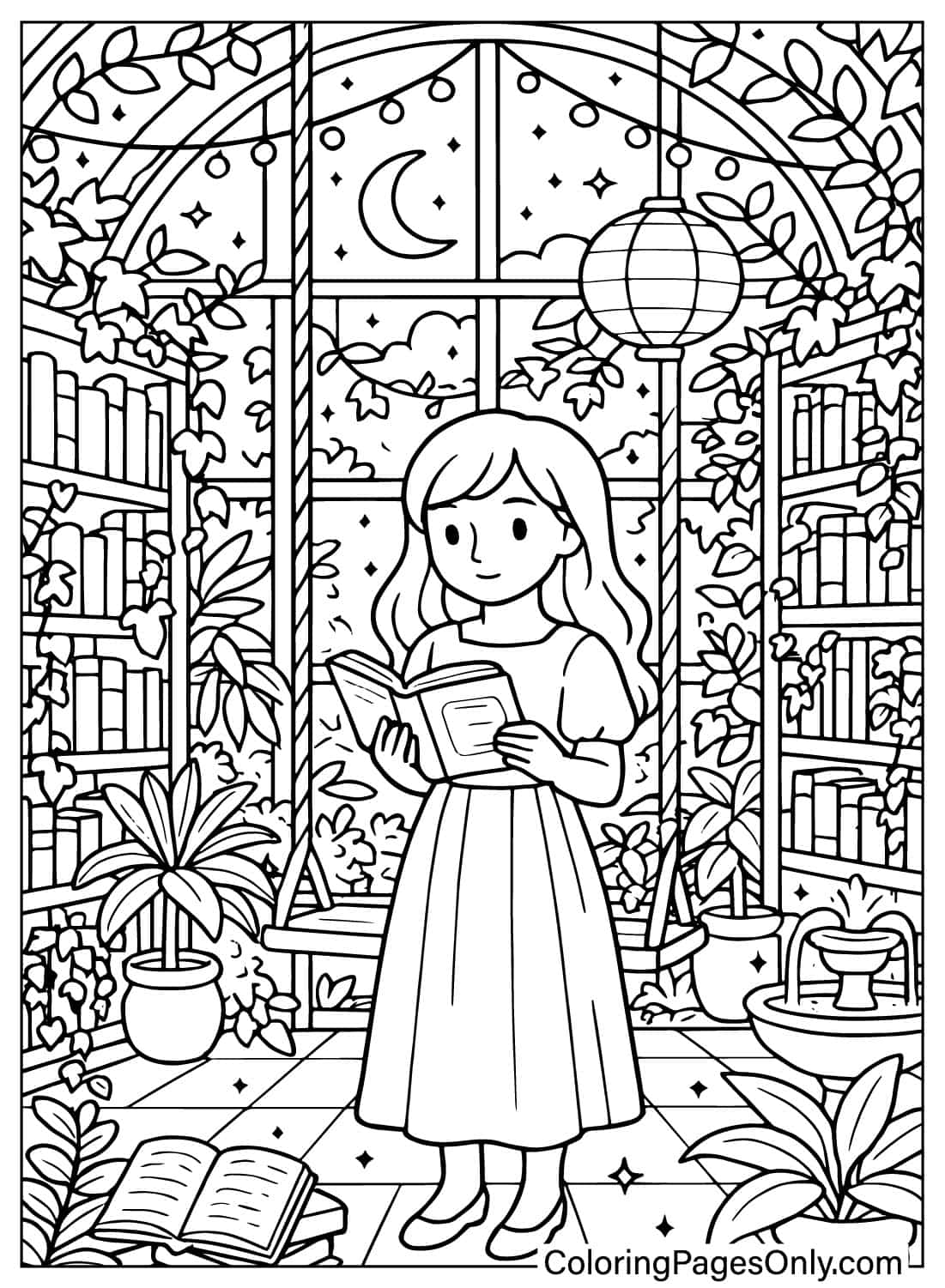
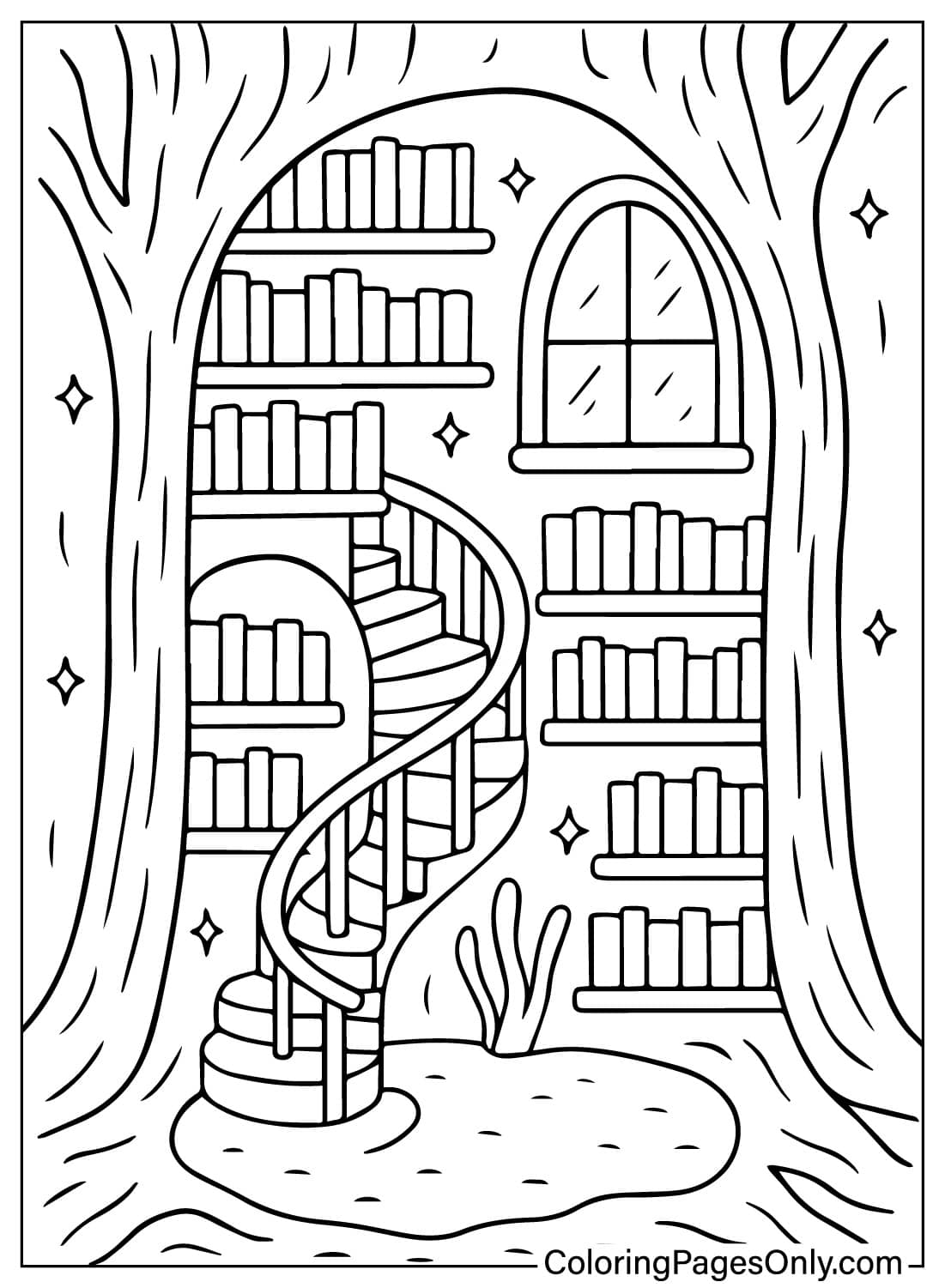
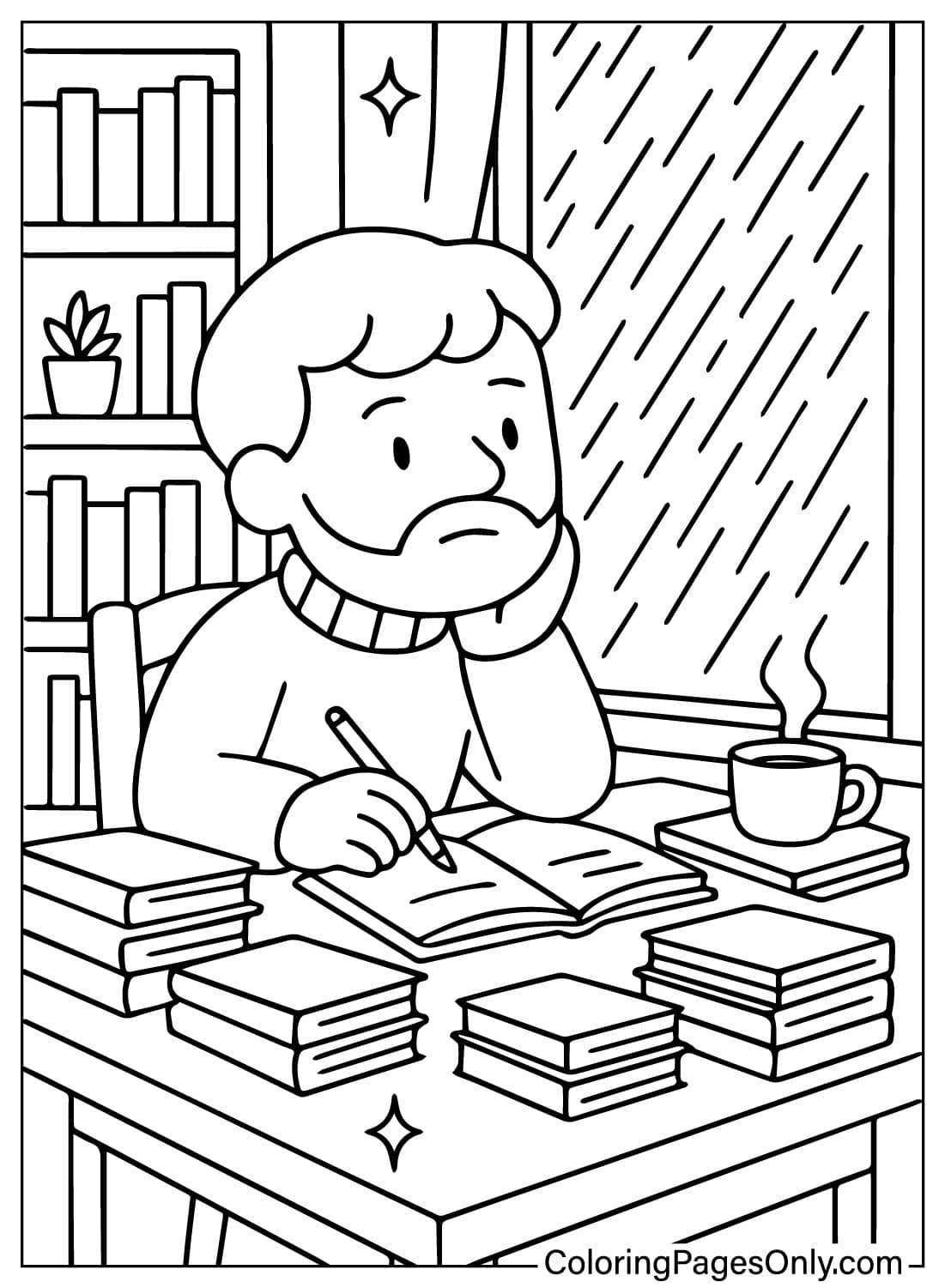
What’s Inside the Cozy Library Coloring Pages Collection
The 37 pages are split into five groups by setting and subject rather than by a single character, since no two pages repeat the same room or reader.
Grand and Architectural Libraries
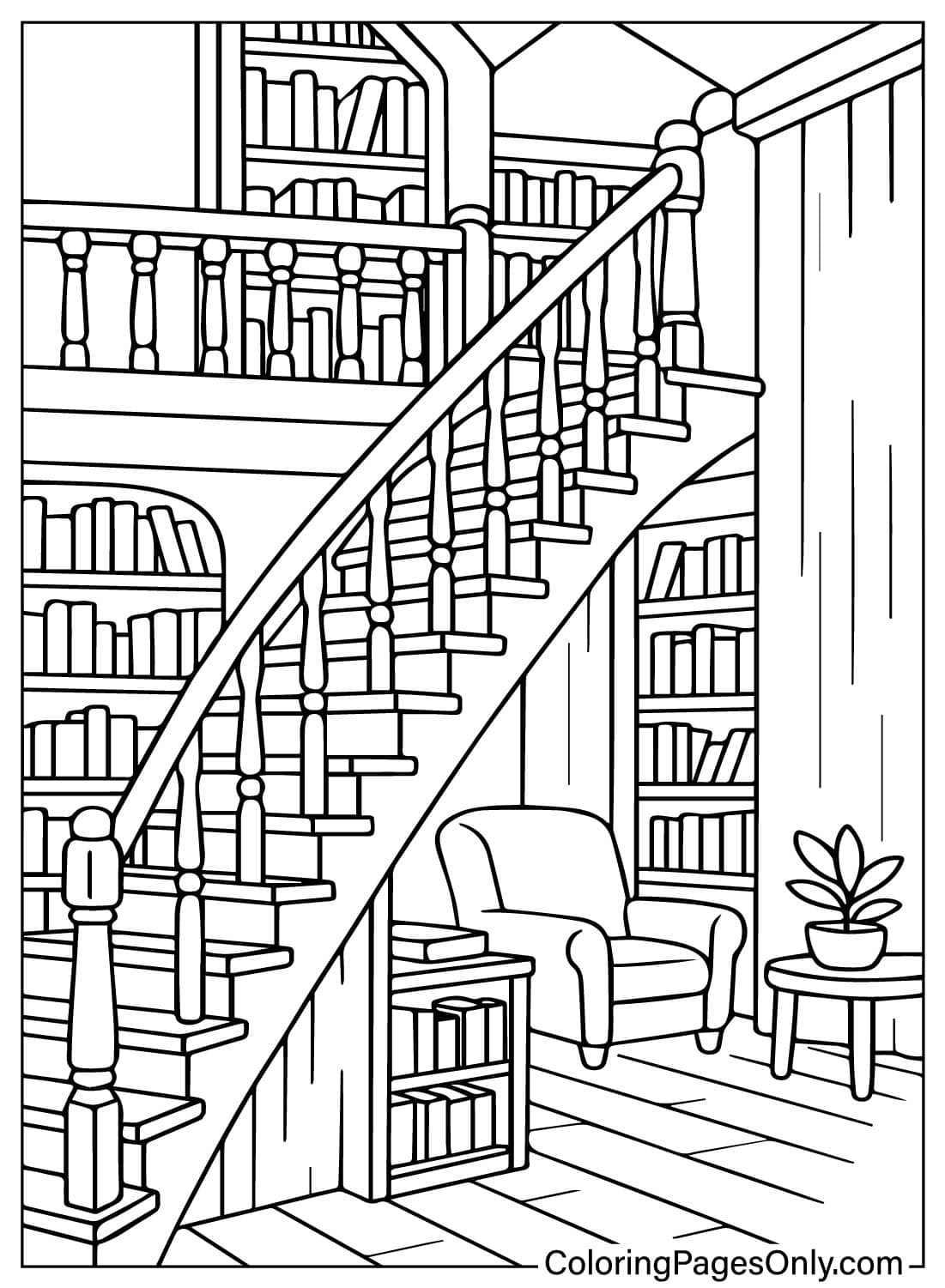
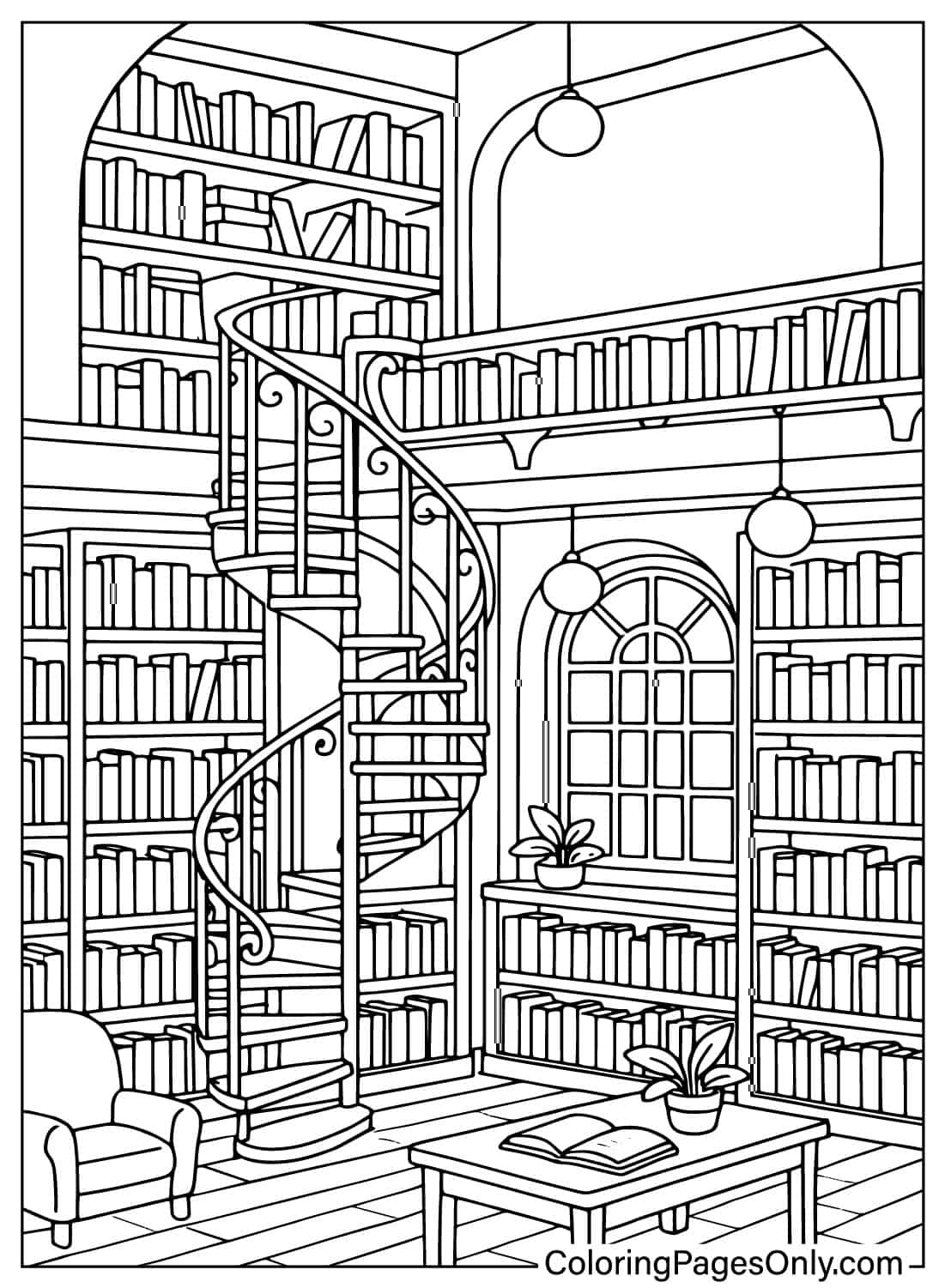
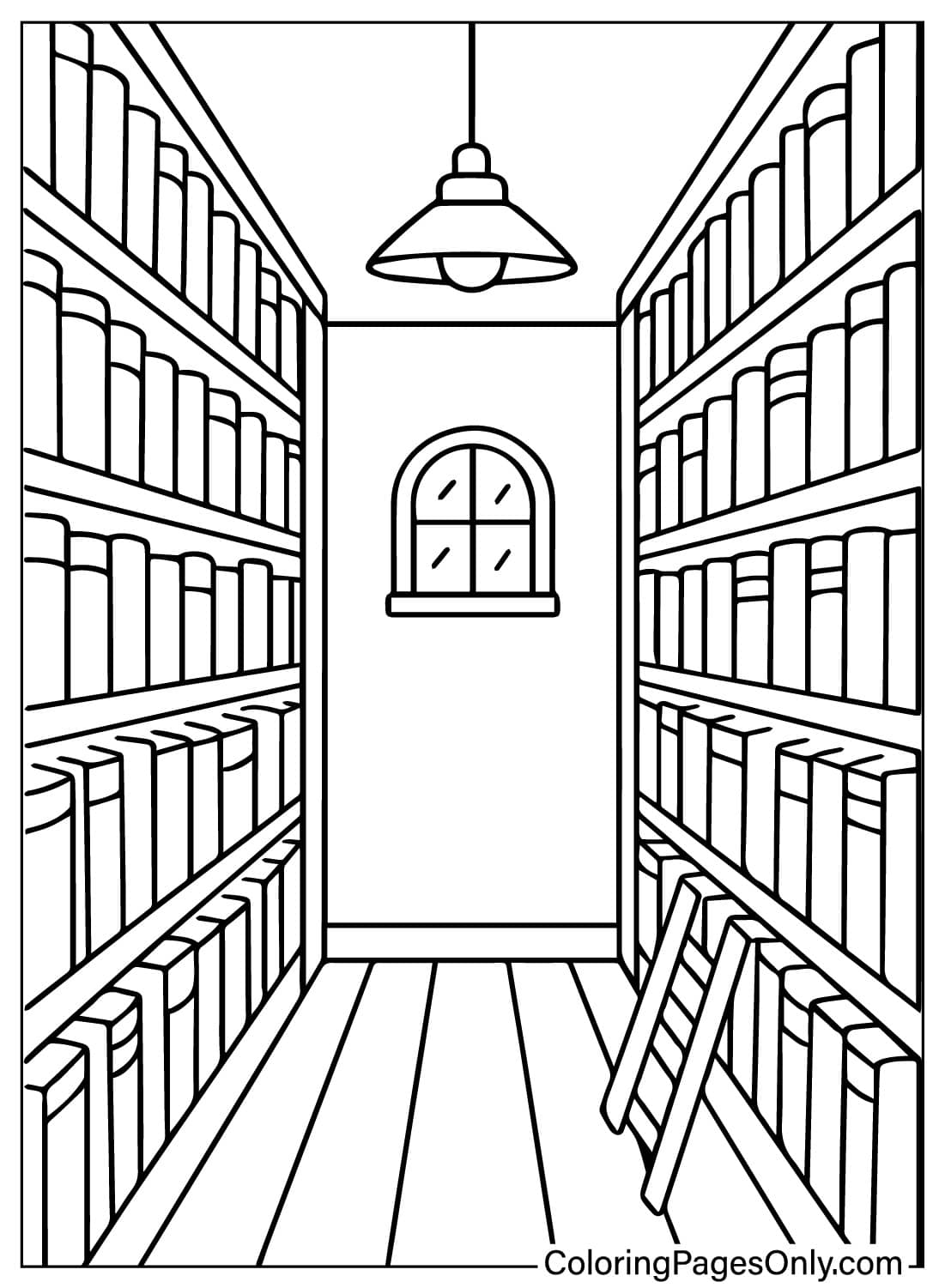
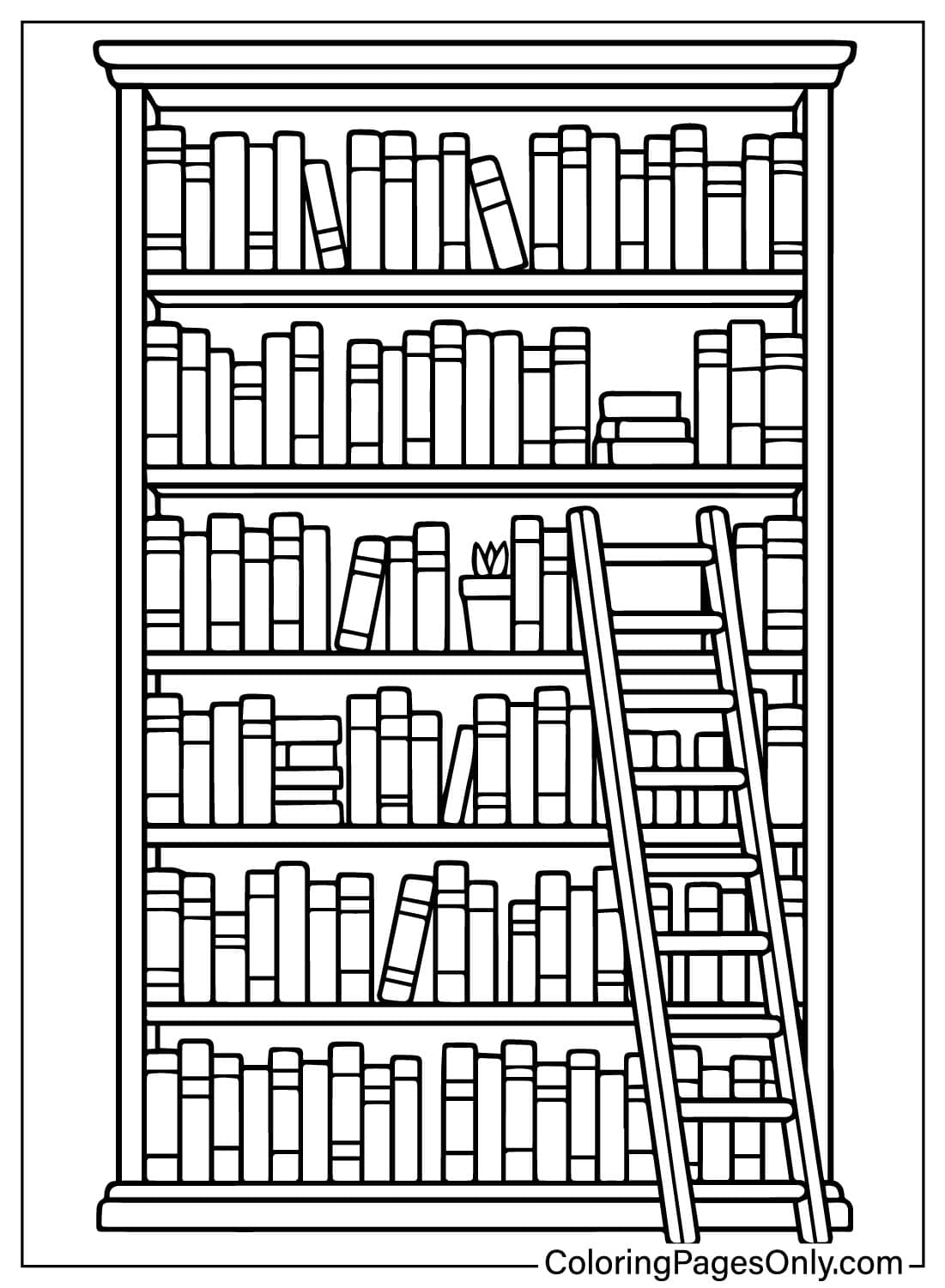
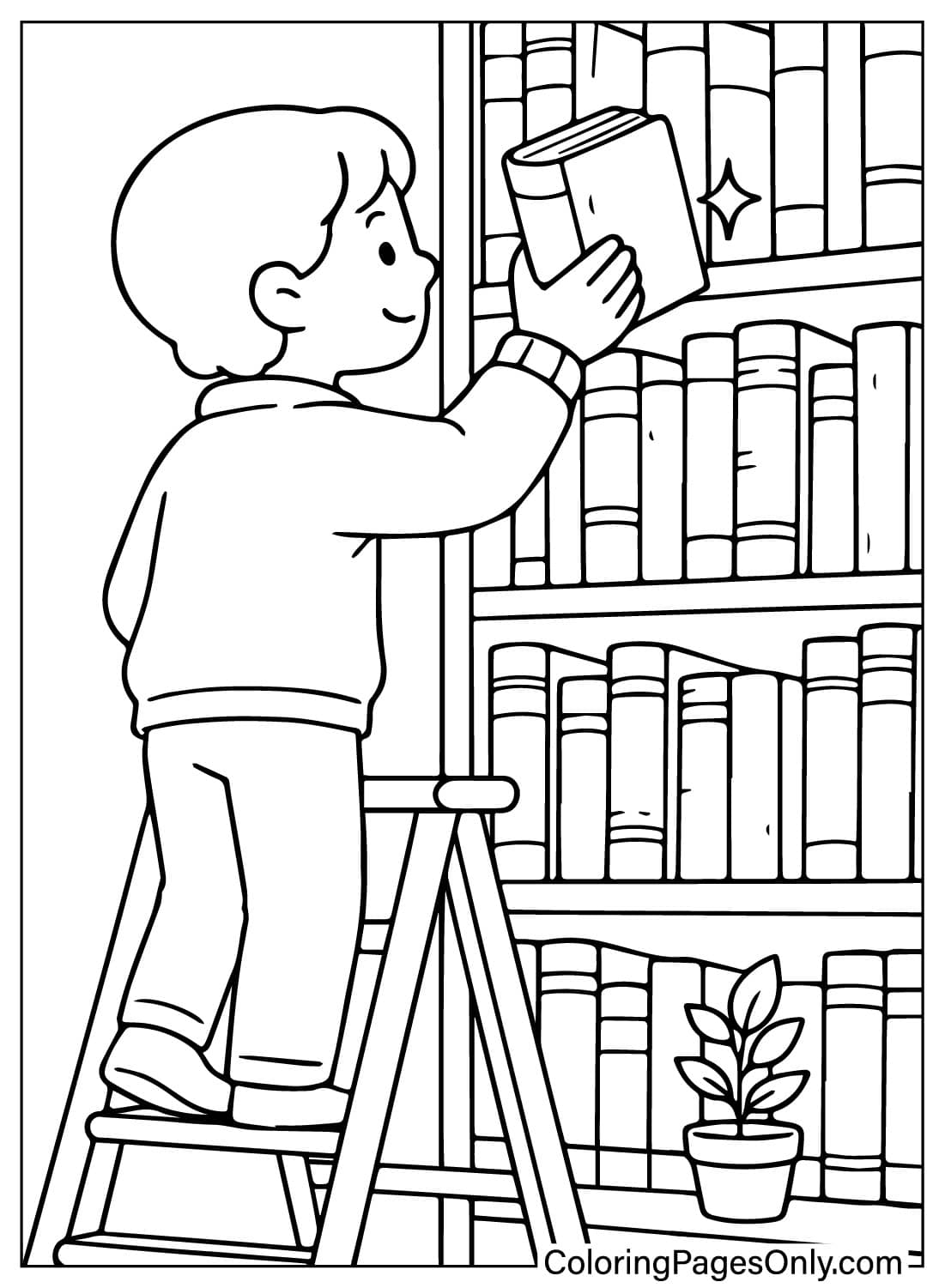
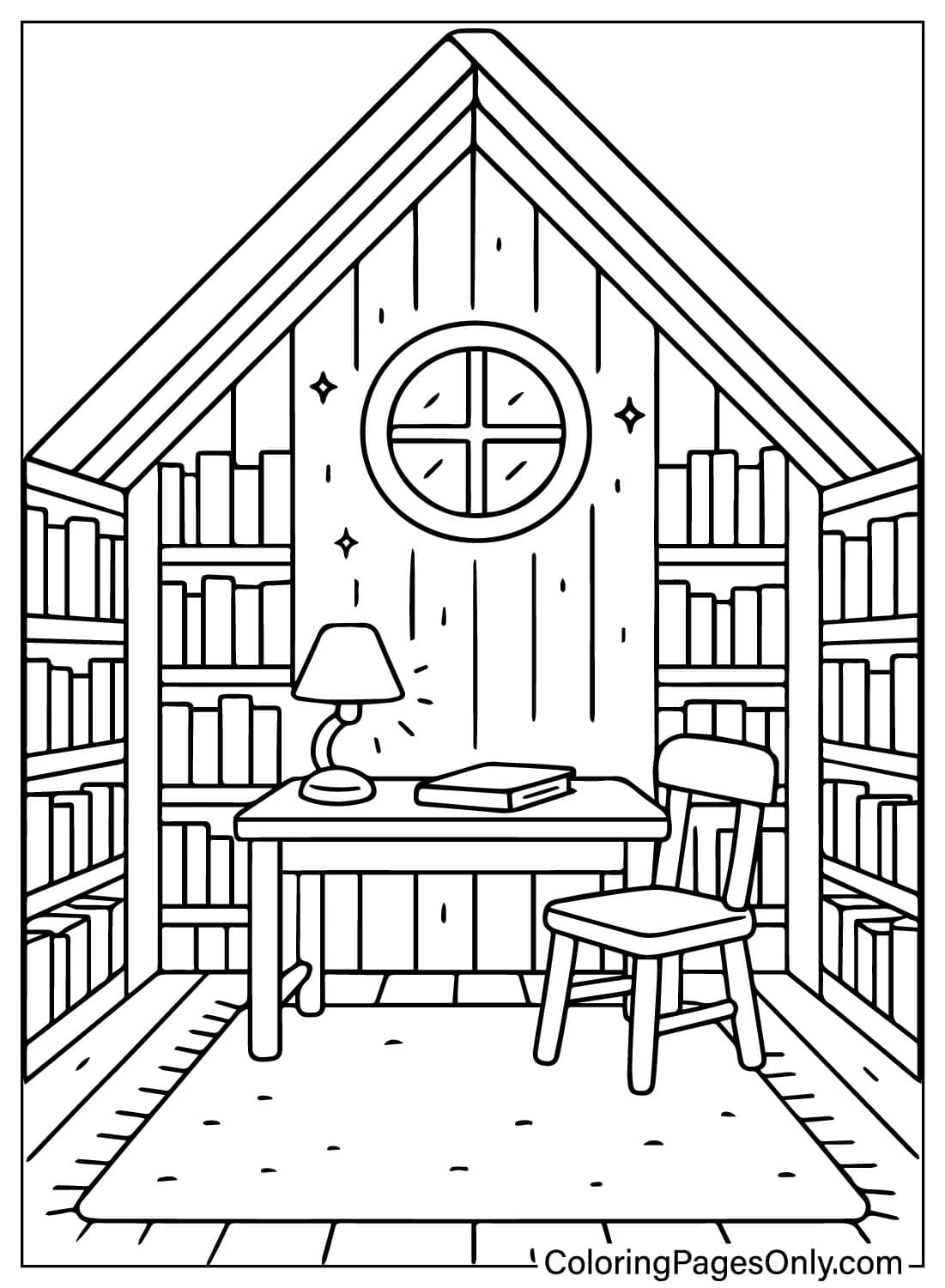
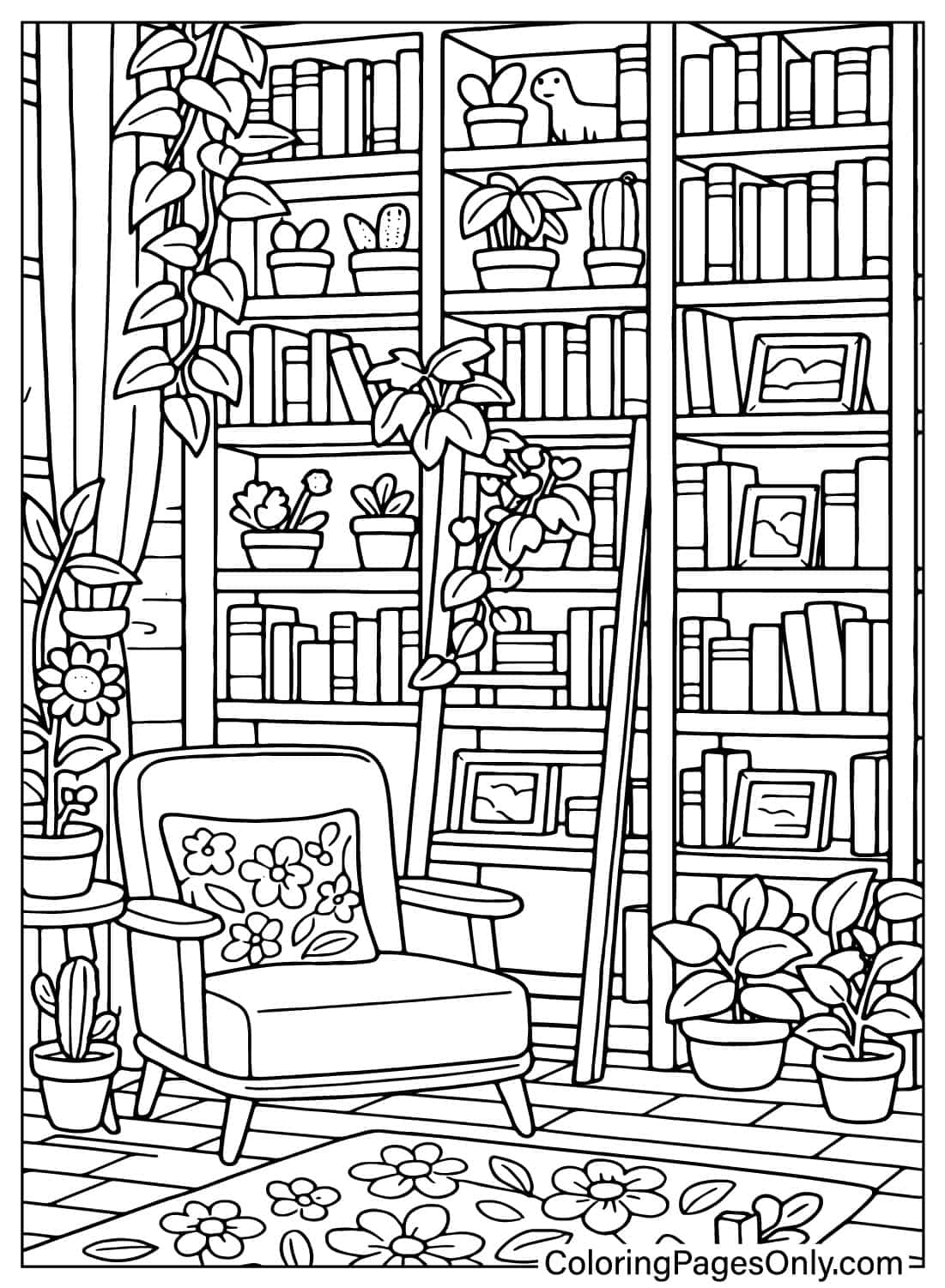
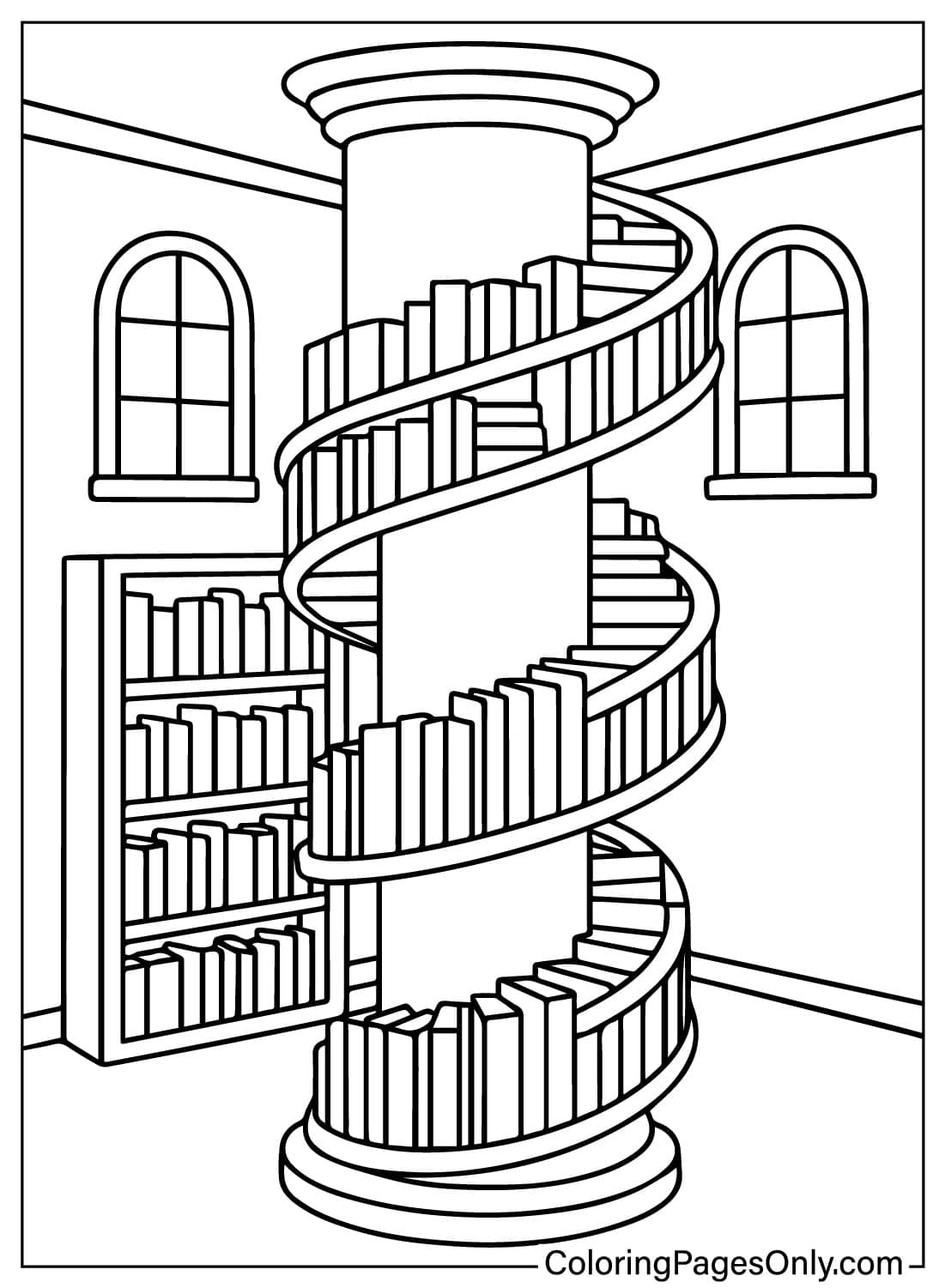
Five pages focus on library architecture at full scale: a curved staircase, a spiral staircase tower, a tall aisle of bookshelves reached by ladder, a spiral bookshelf tower, and an attic study nook under a round window. These call for warm wood tones like Raw Sienna and Burnt Sienna across the shelving, with Silver or Timberwolf for stone or metal staircase details.
Cozy Reading Nooks and Corners
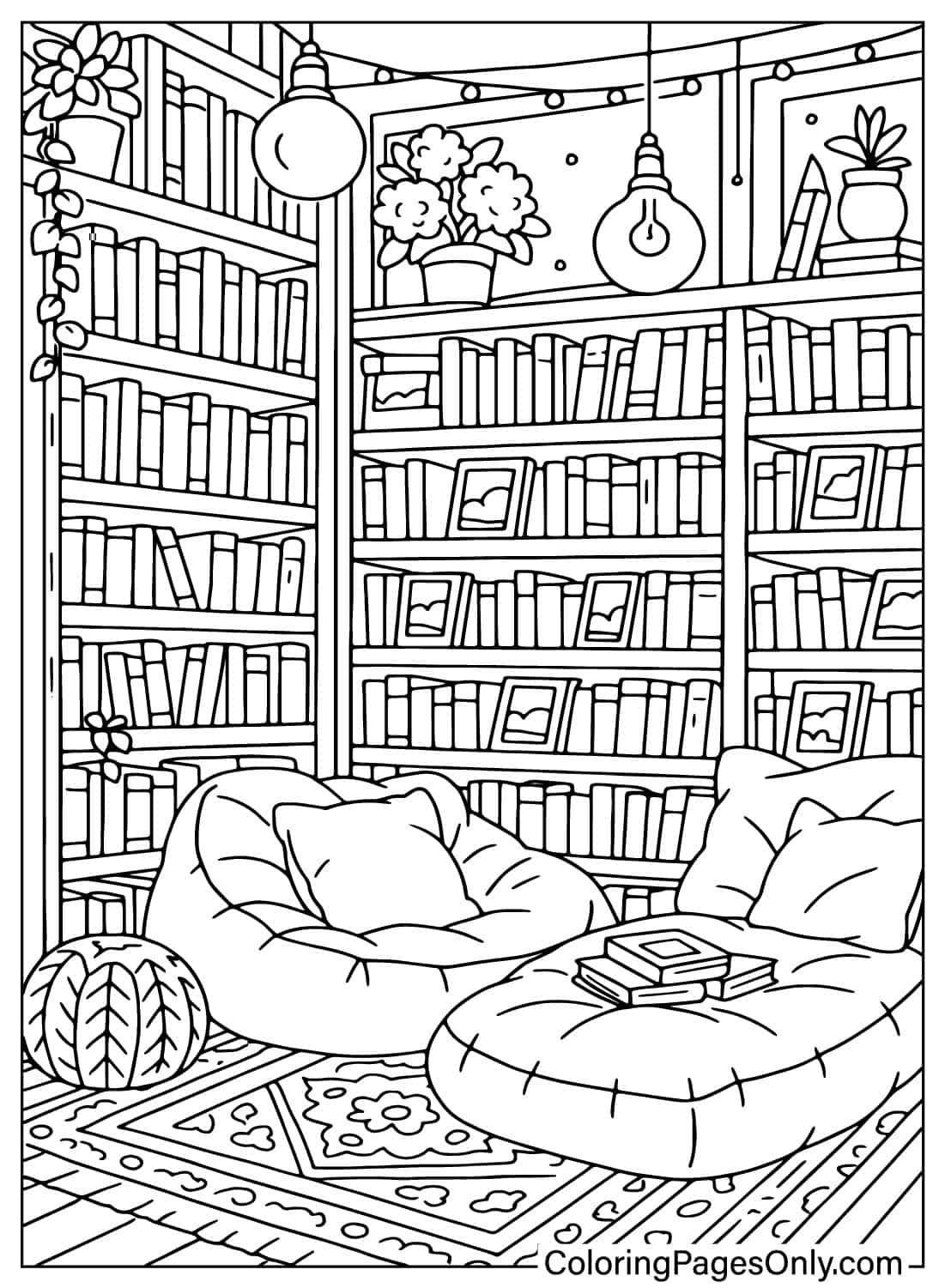
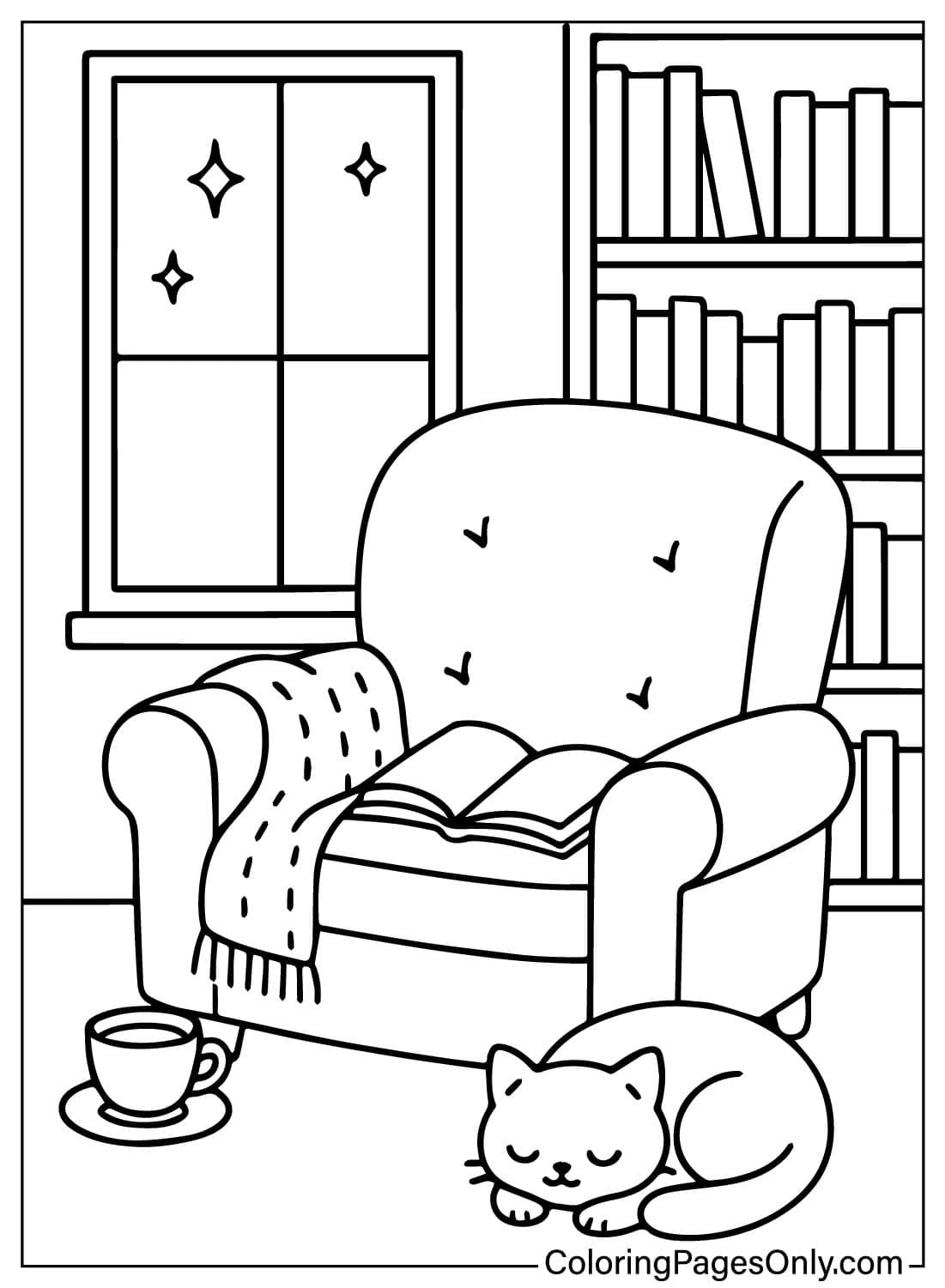
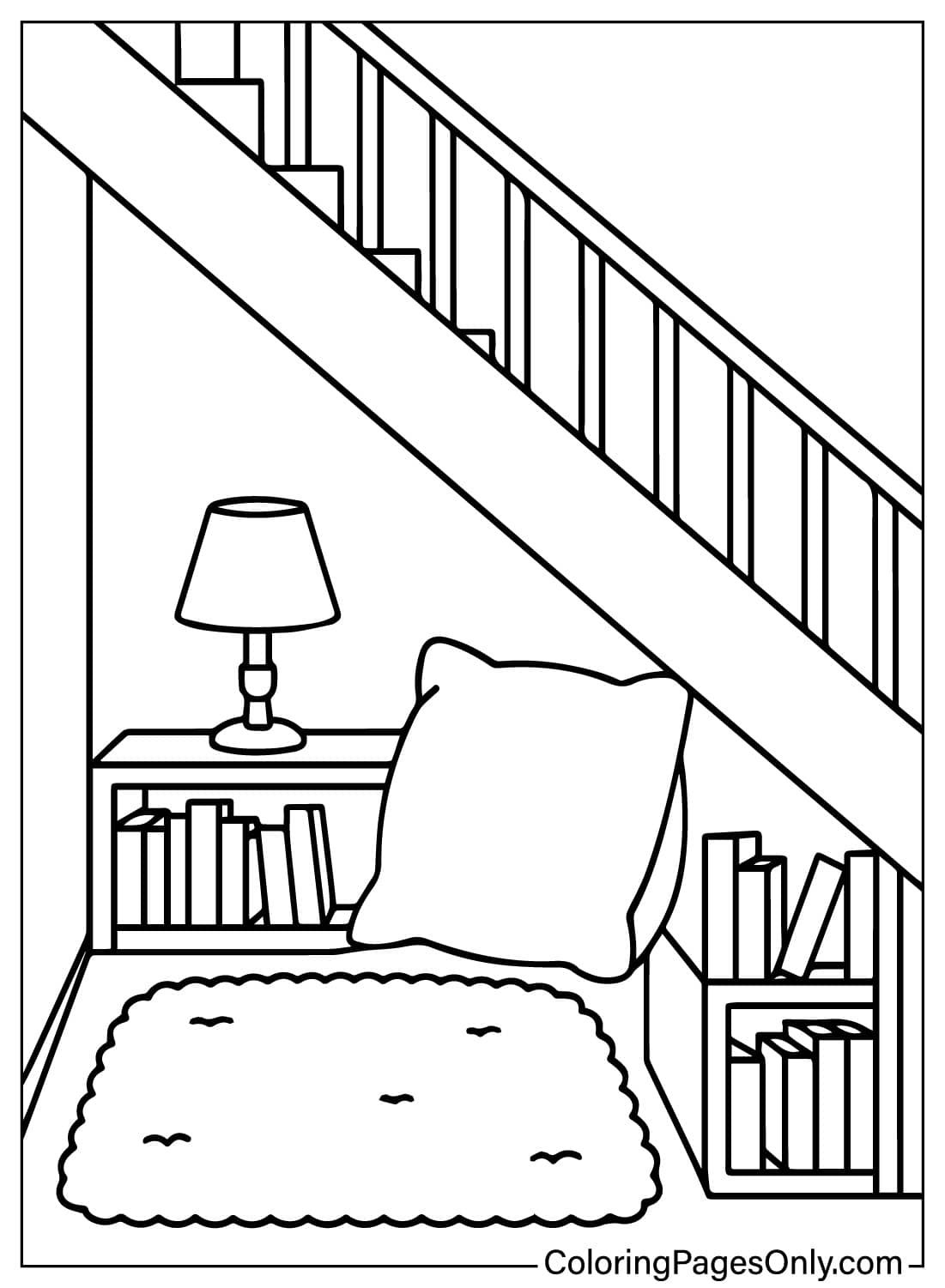
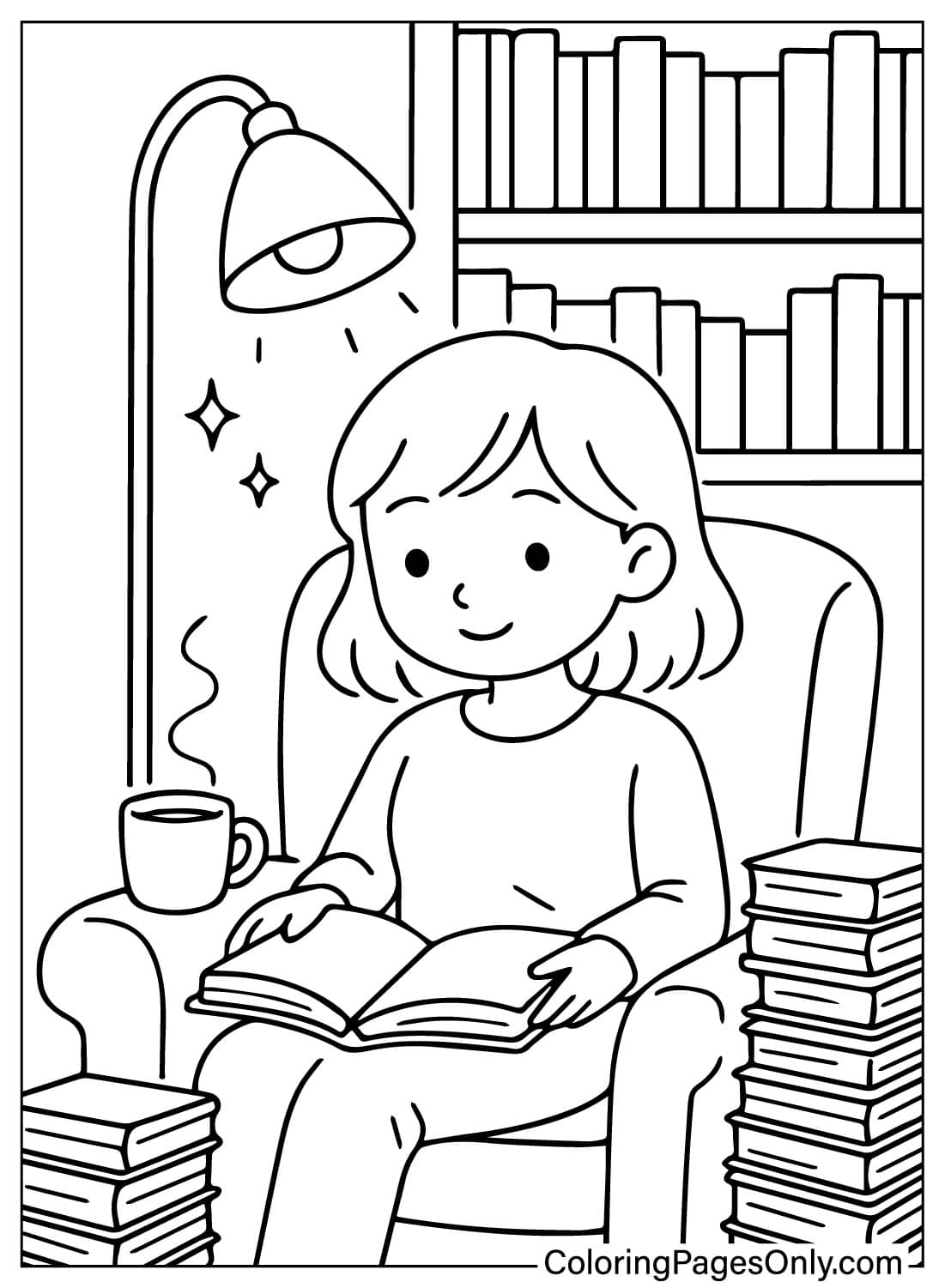
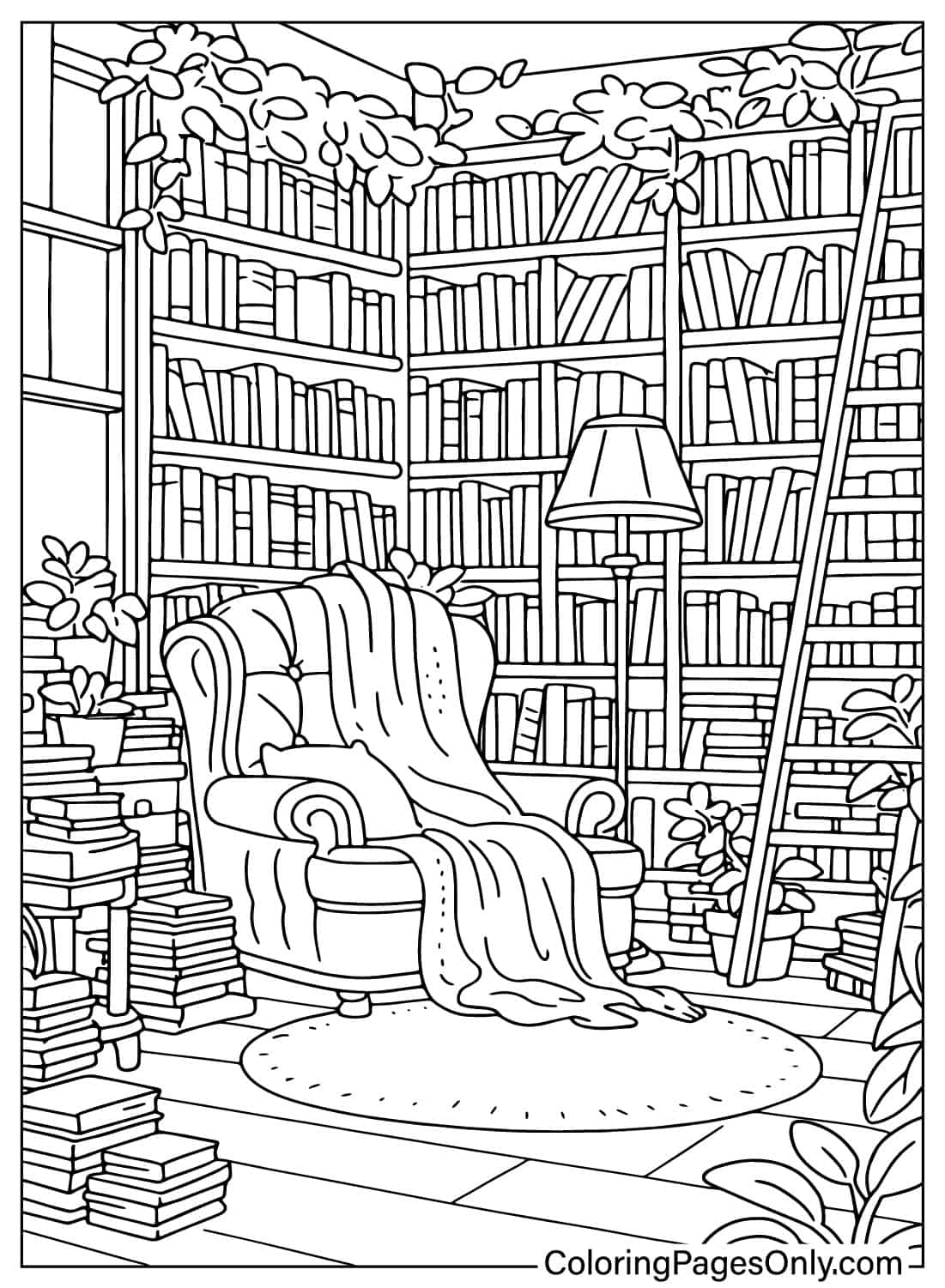
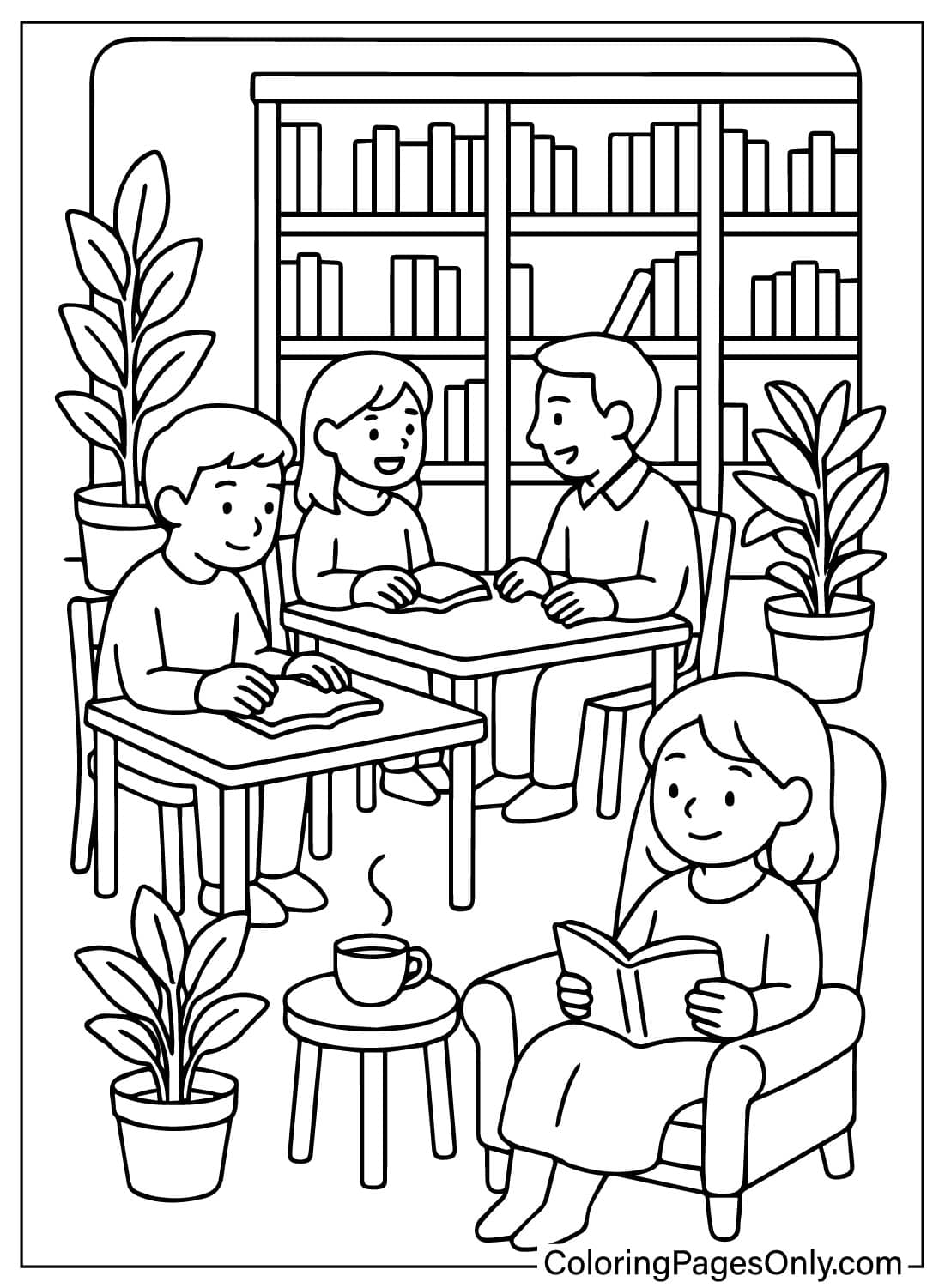
Eight pages narrow in on small, personal reading spots: a bean bag reading room, a reading nook under the stairs, an overstuffed armchair, a plant-filled corner, and a page showing several people reading together in one room. Soft textiles are the focus here, so blankets and cushions suit Mahogany, Brick Red, or Denim Blue rather than bright primary colors.
Animal Readers
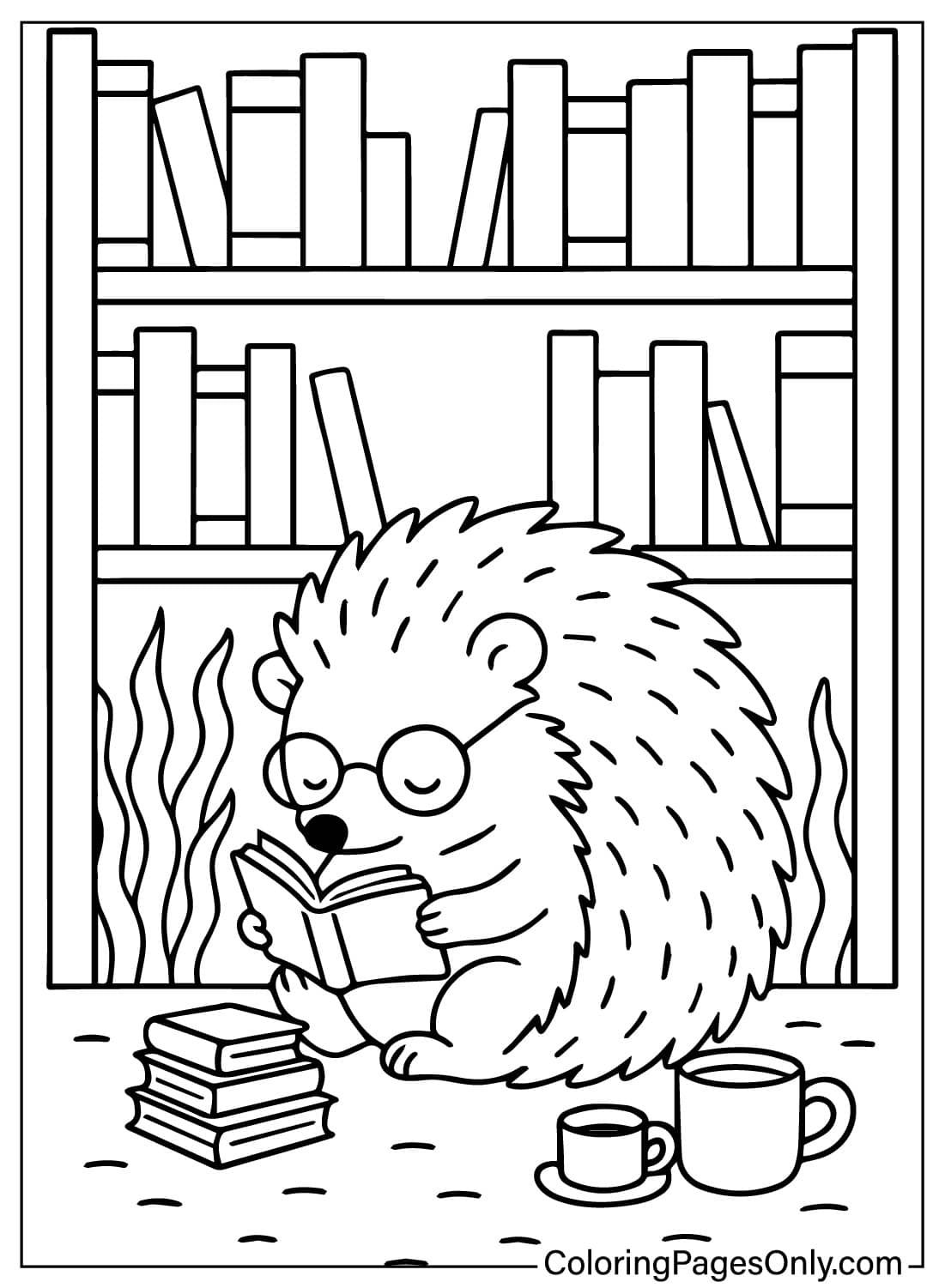
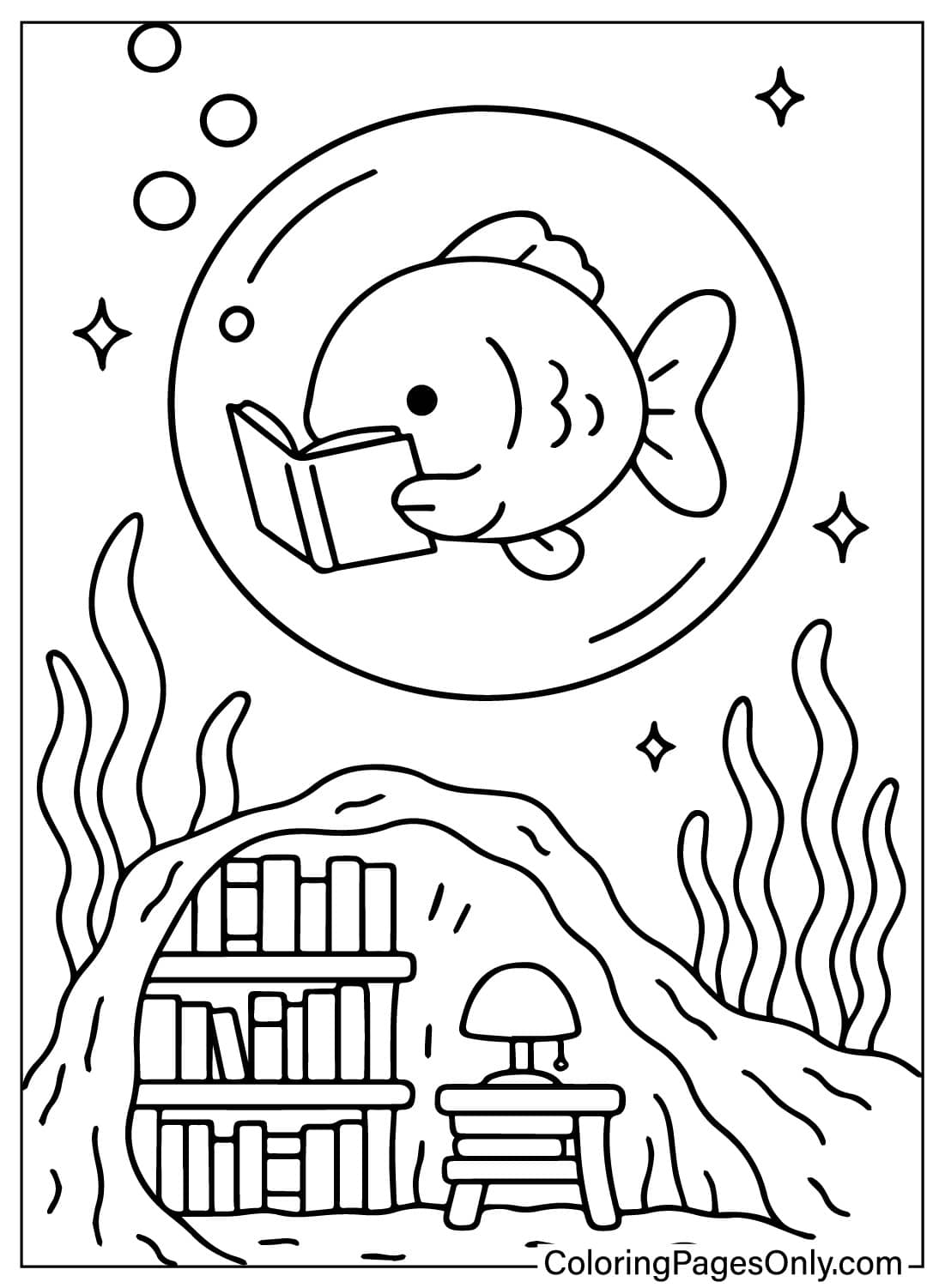
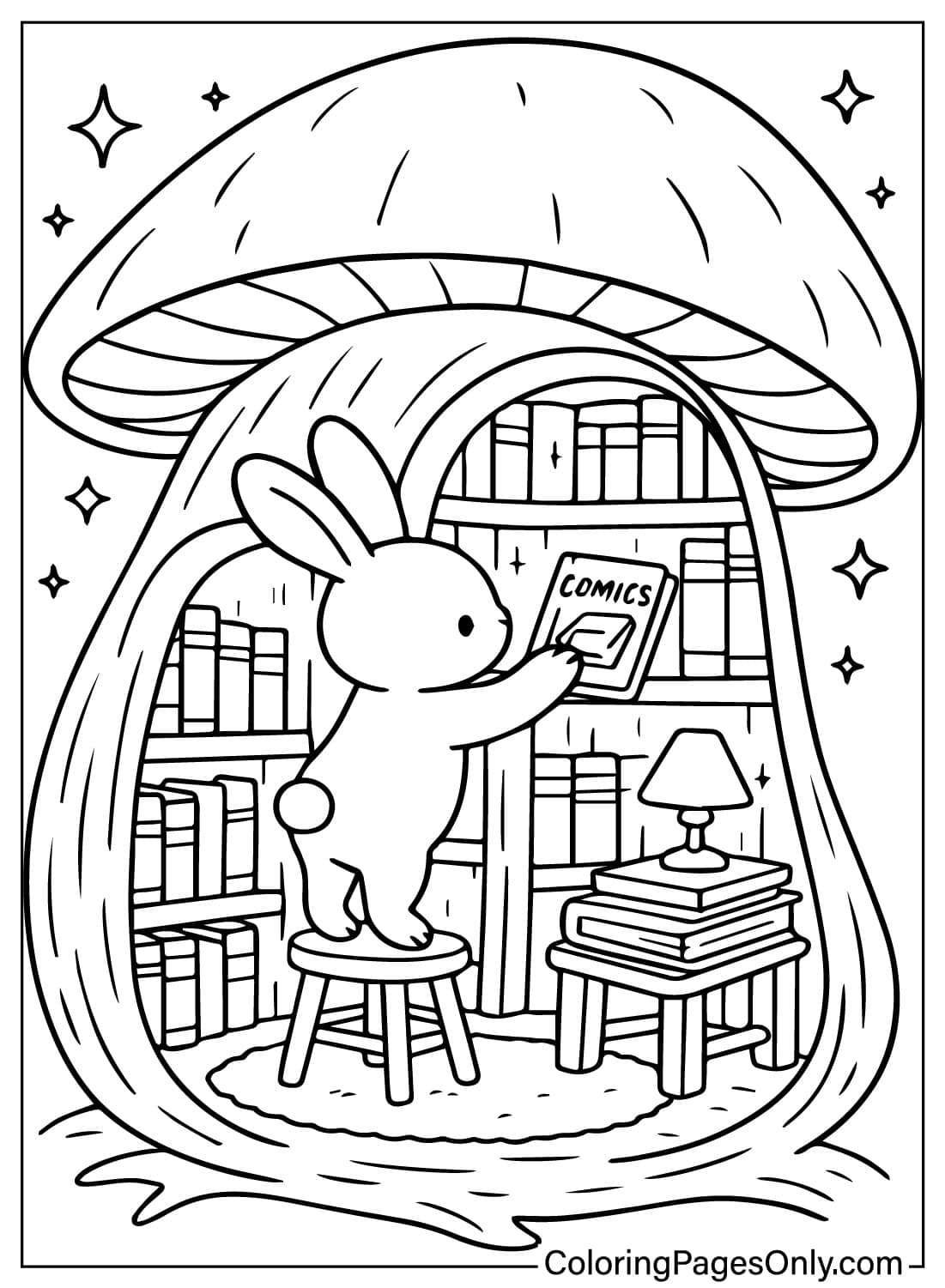
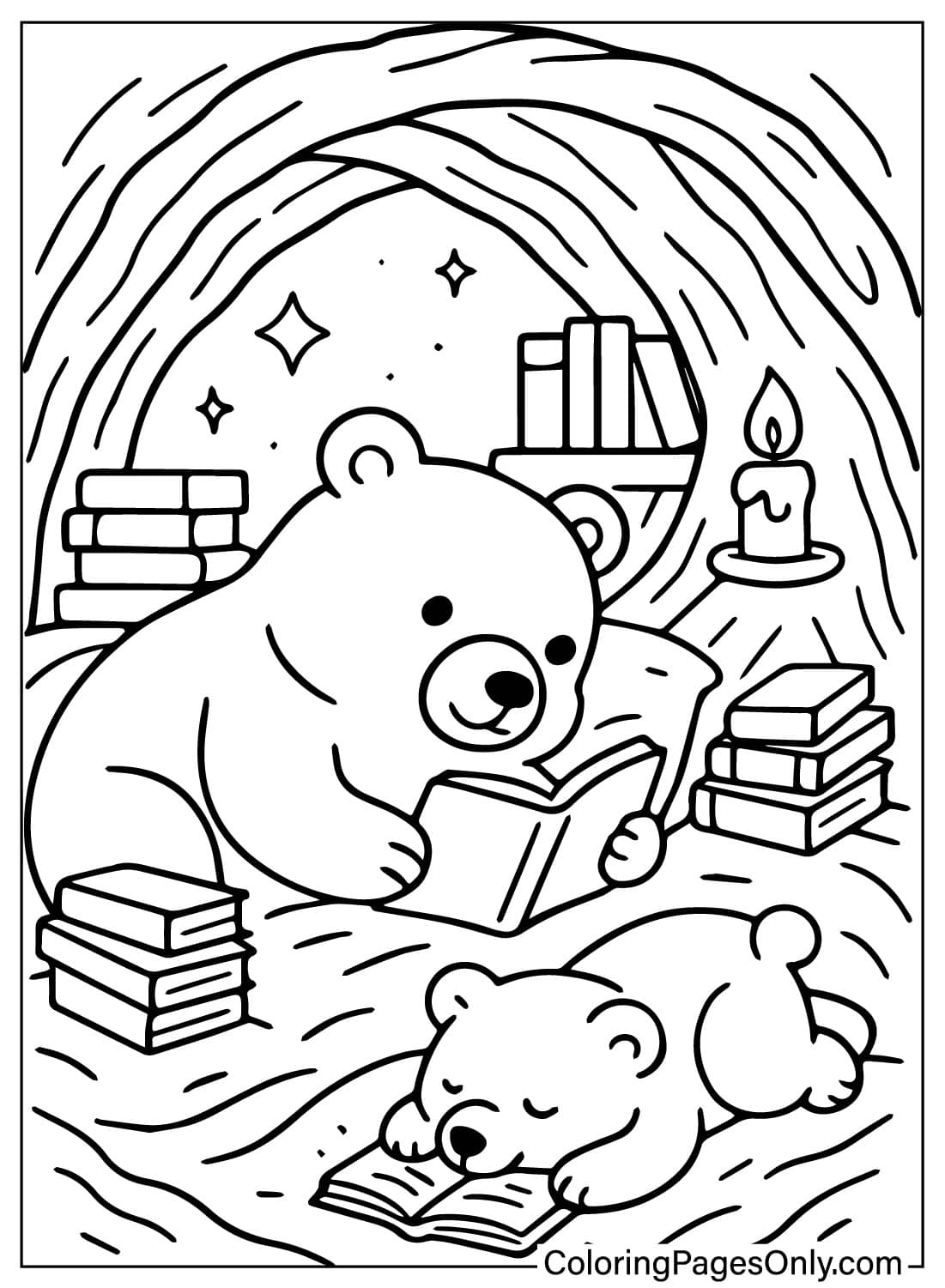
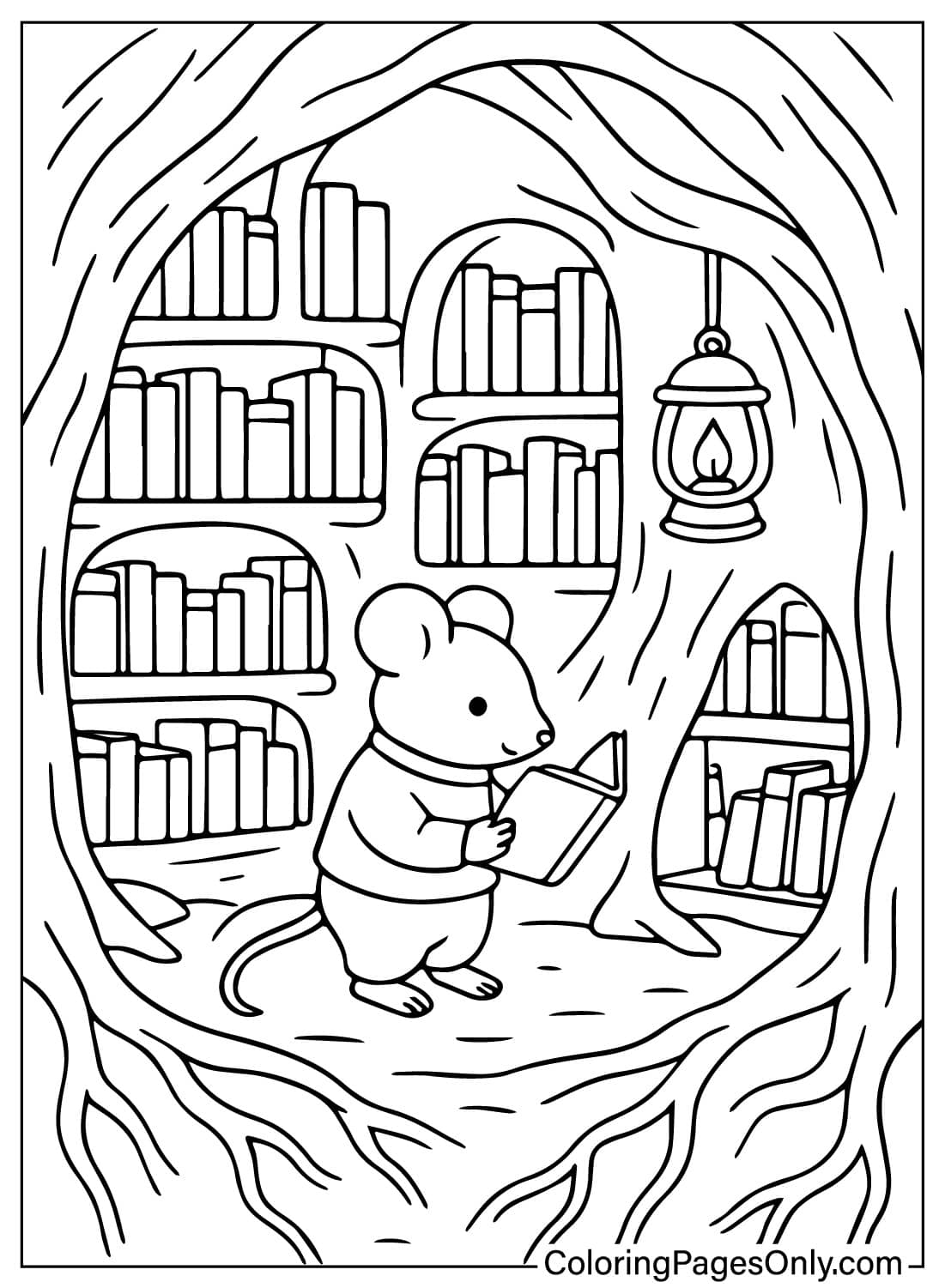
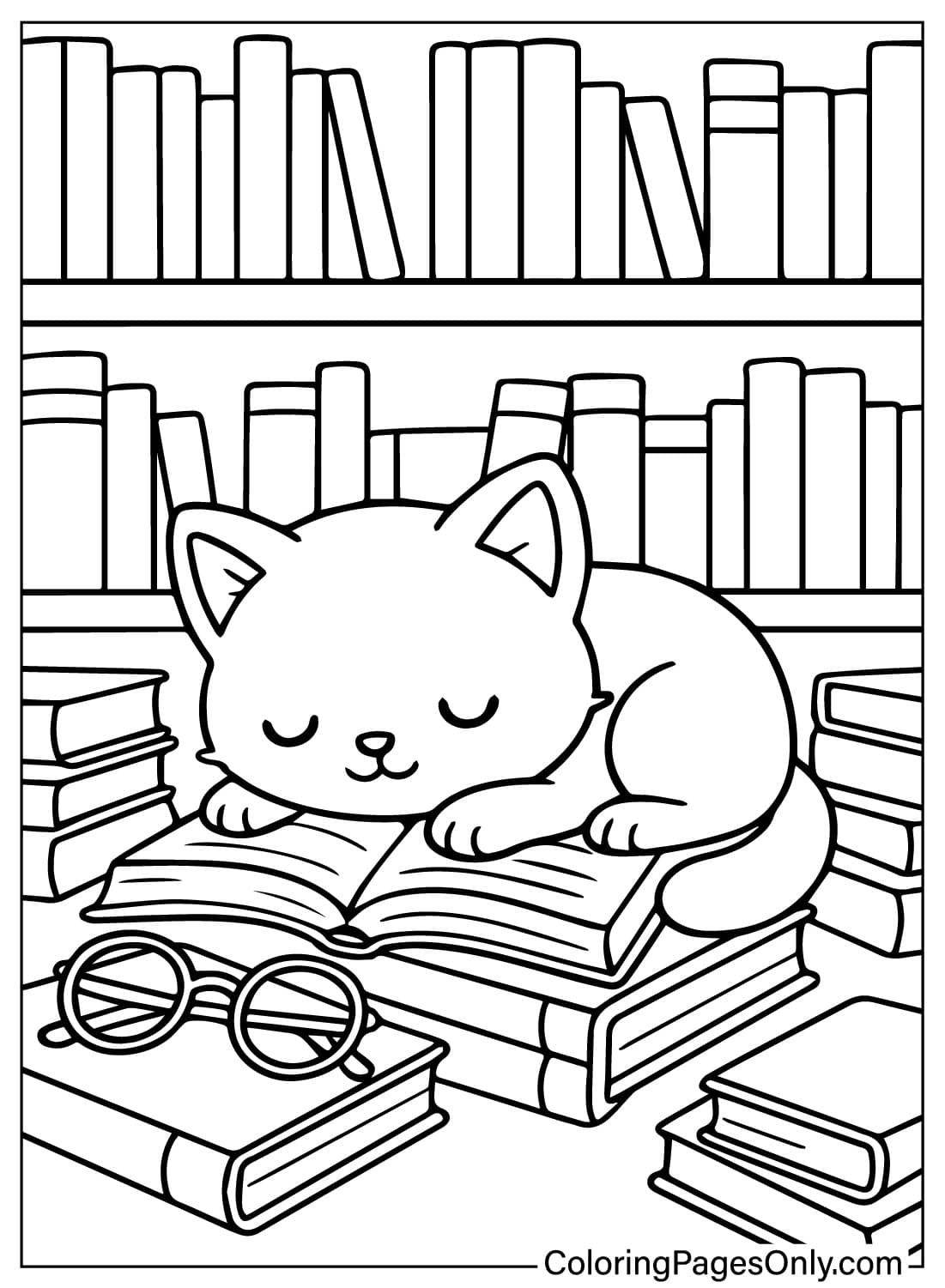
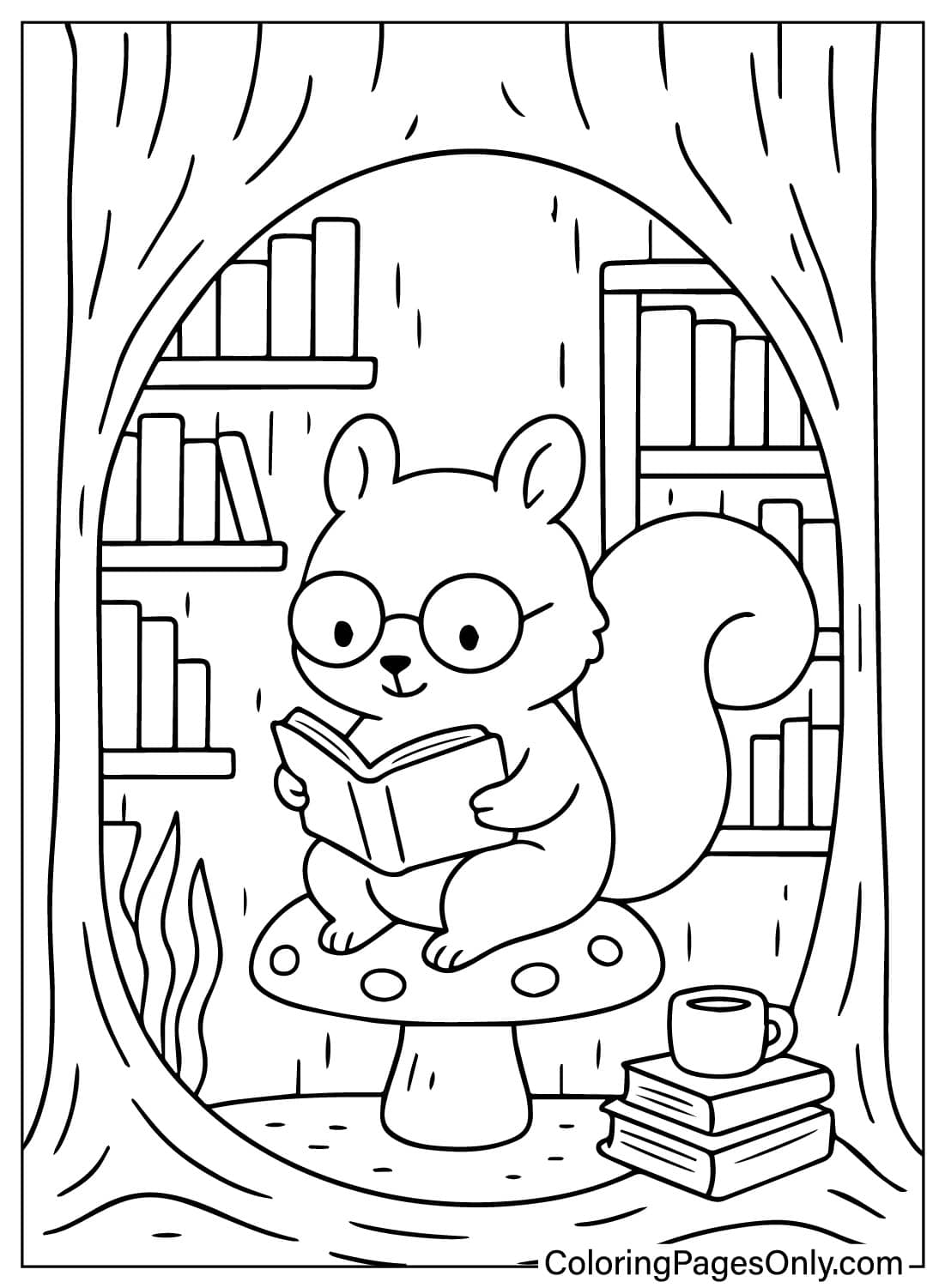
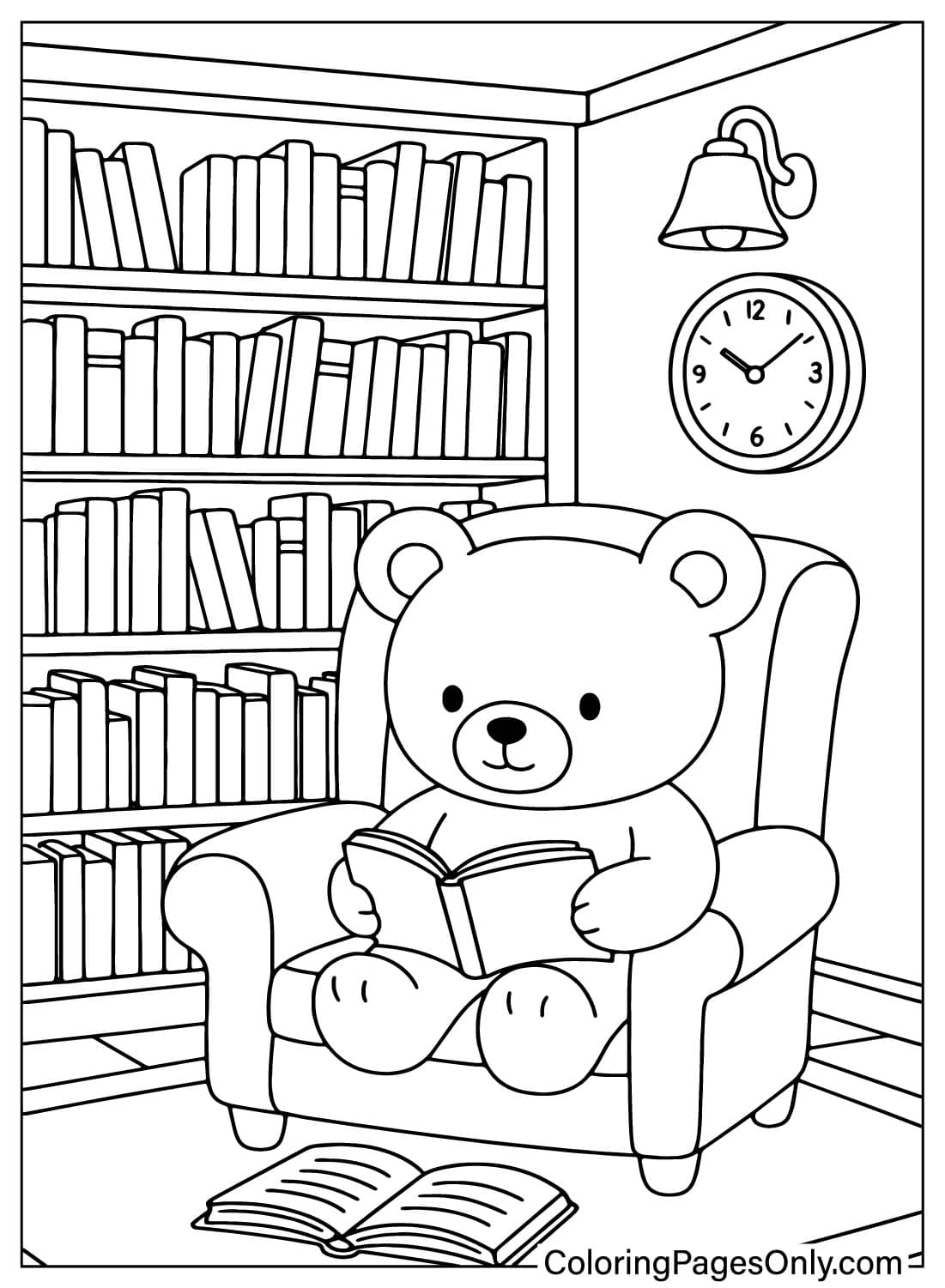
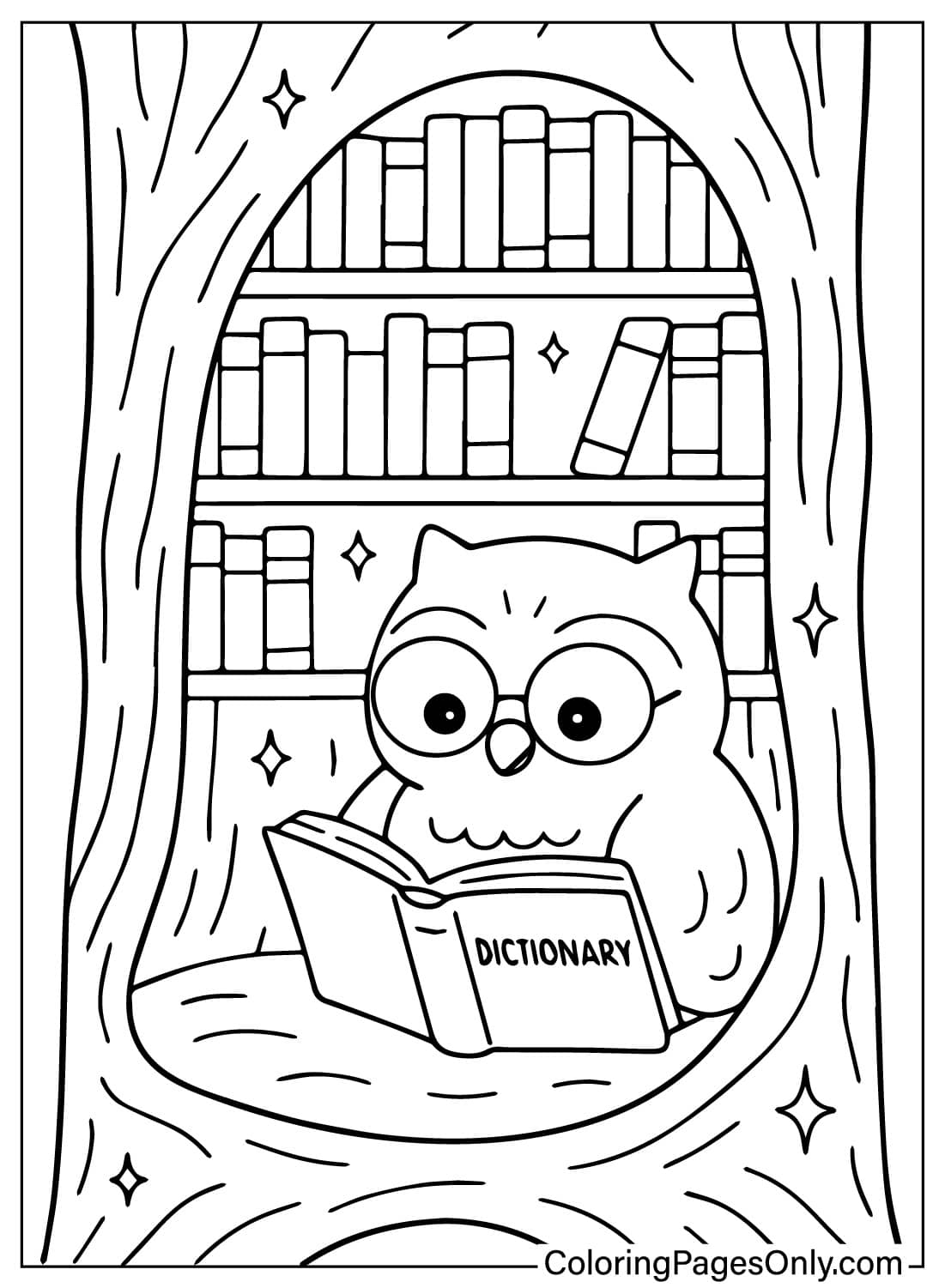
The largest group, with twelve pages, gives the books to animals instead of people: a hedgehog with a picture book, a fish reading underwater, two rabbits (one with fairy tales, one with comics in a mushroom library), library cats in three different scenes, a bear pair in a den, a mouse inside a tree trunk, a squirrel on a tree-library page, a teddy bear in an armchair, and an owl with a dictionary. Each animal keeps its natural coloring first (Raw Umber for the hedgehog, Black and White for library cats), with the surrounding books and furniture as the secondary palette.
Magical and Fantasy Libraries
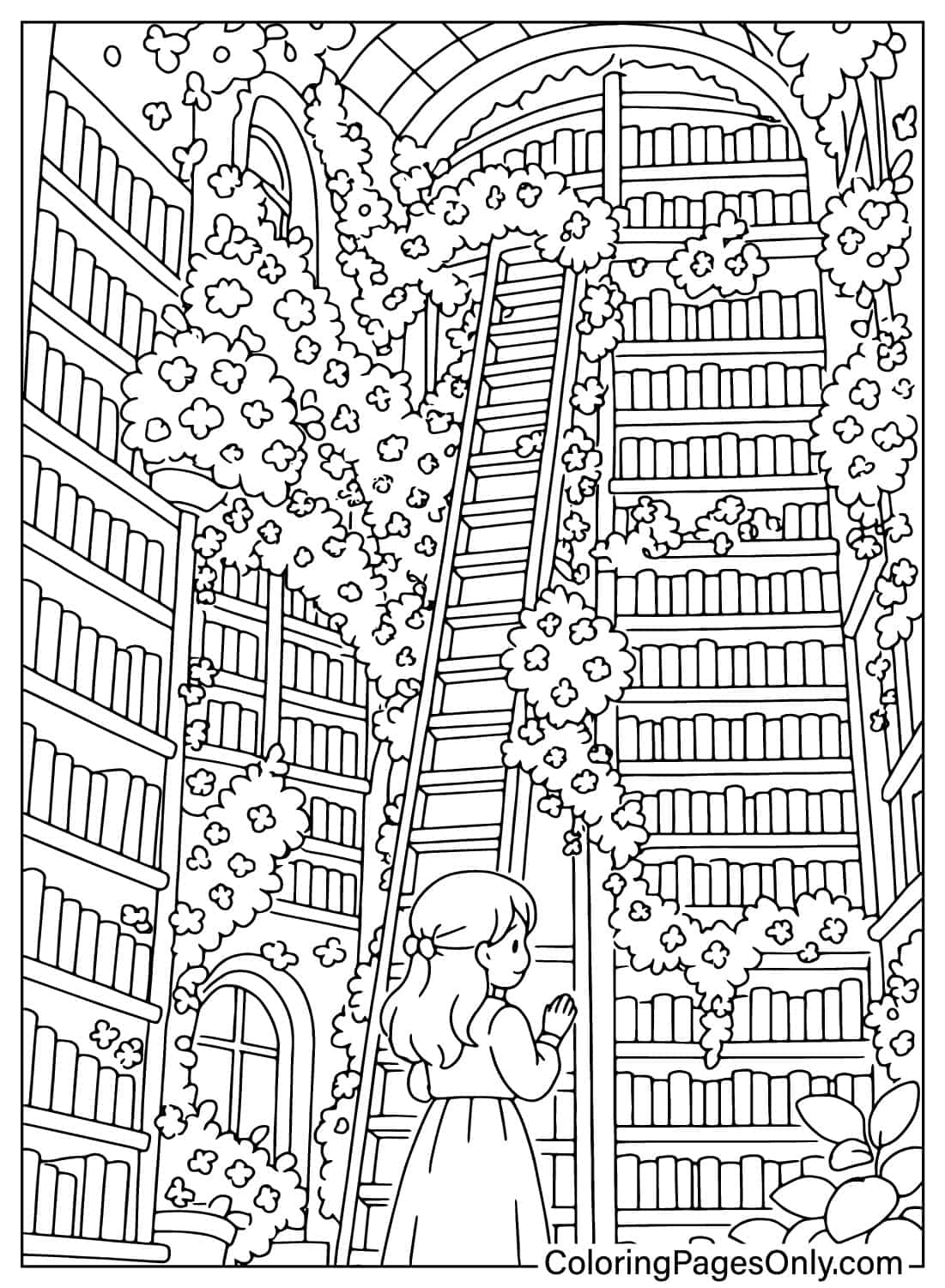
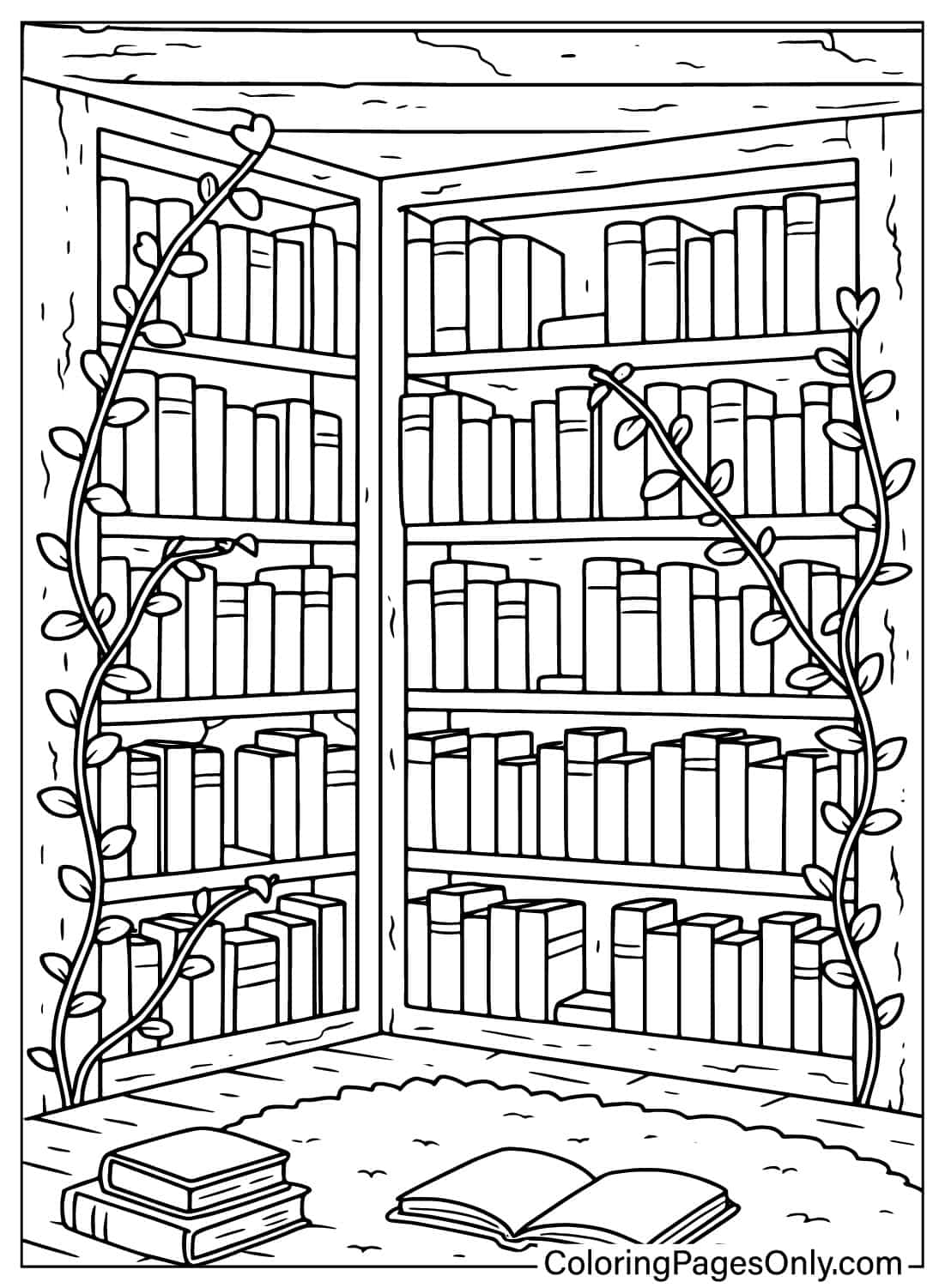
Four pages move into fantasy settings: a vine-covered enchanted library, a magical garden library, a treehouse library with a spiral staircase, and a corner bookshelf wrapped in vines. These pages support looser color choices, since Sea Green or Violet works as well on a fantasy bookshelf as any natural wood tone.
Everyday Study and Library Scenes
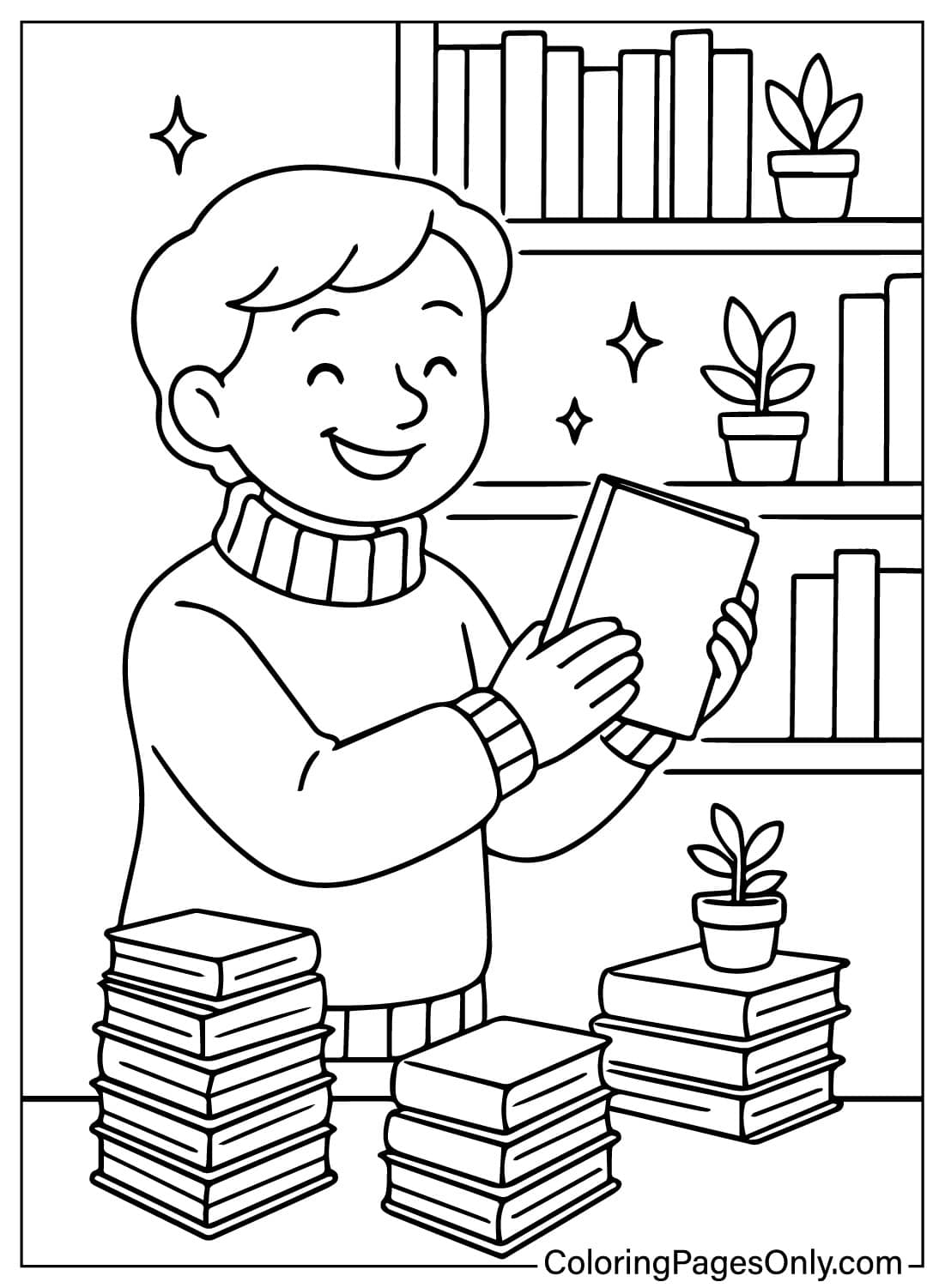
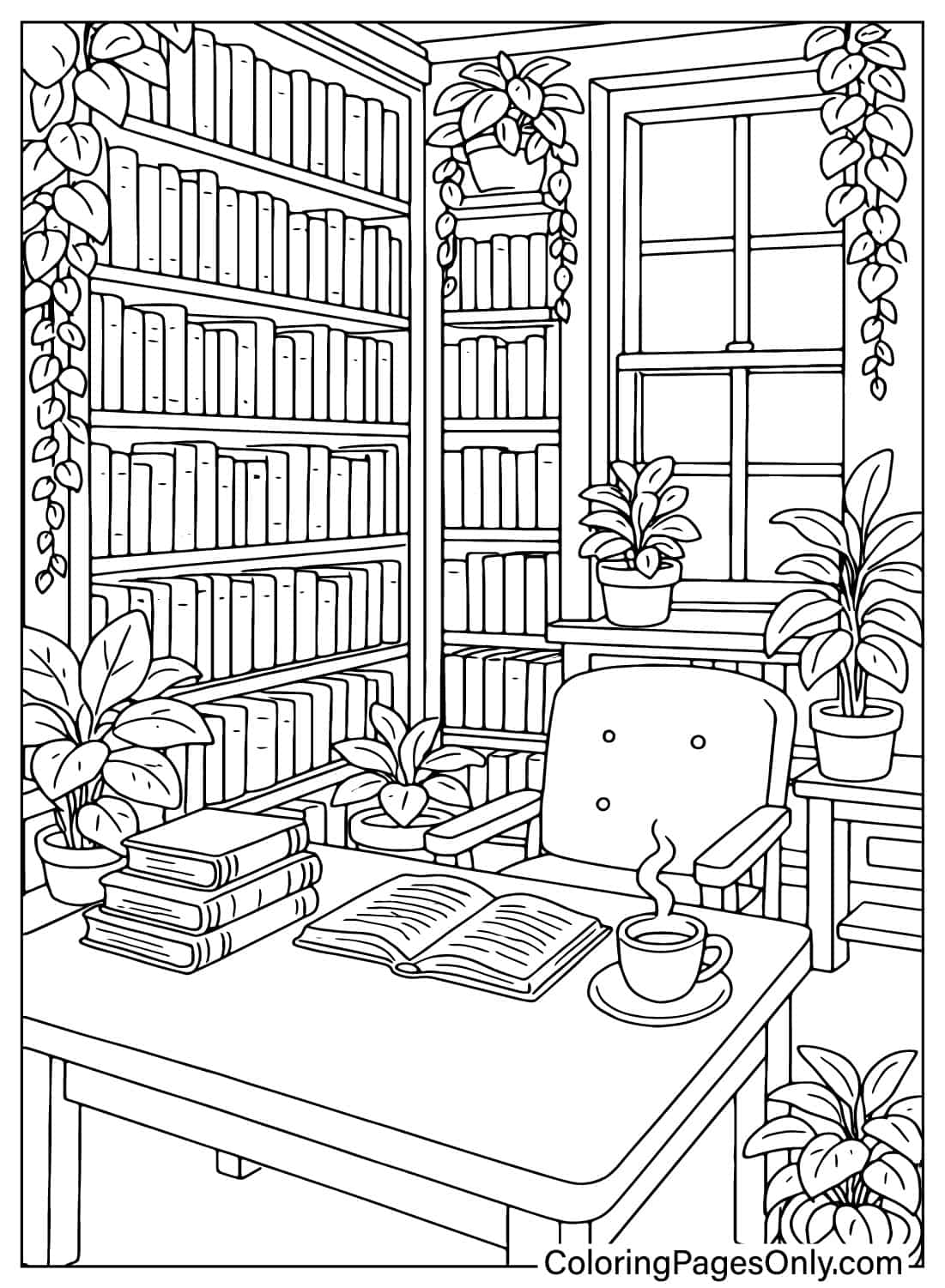
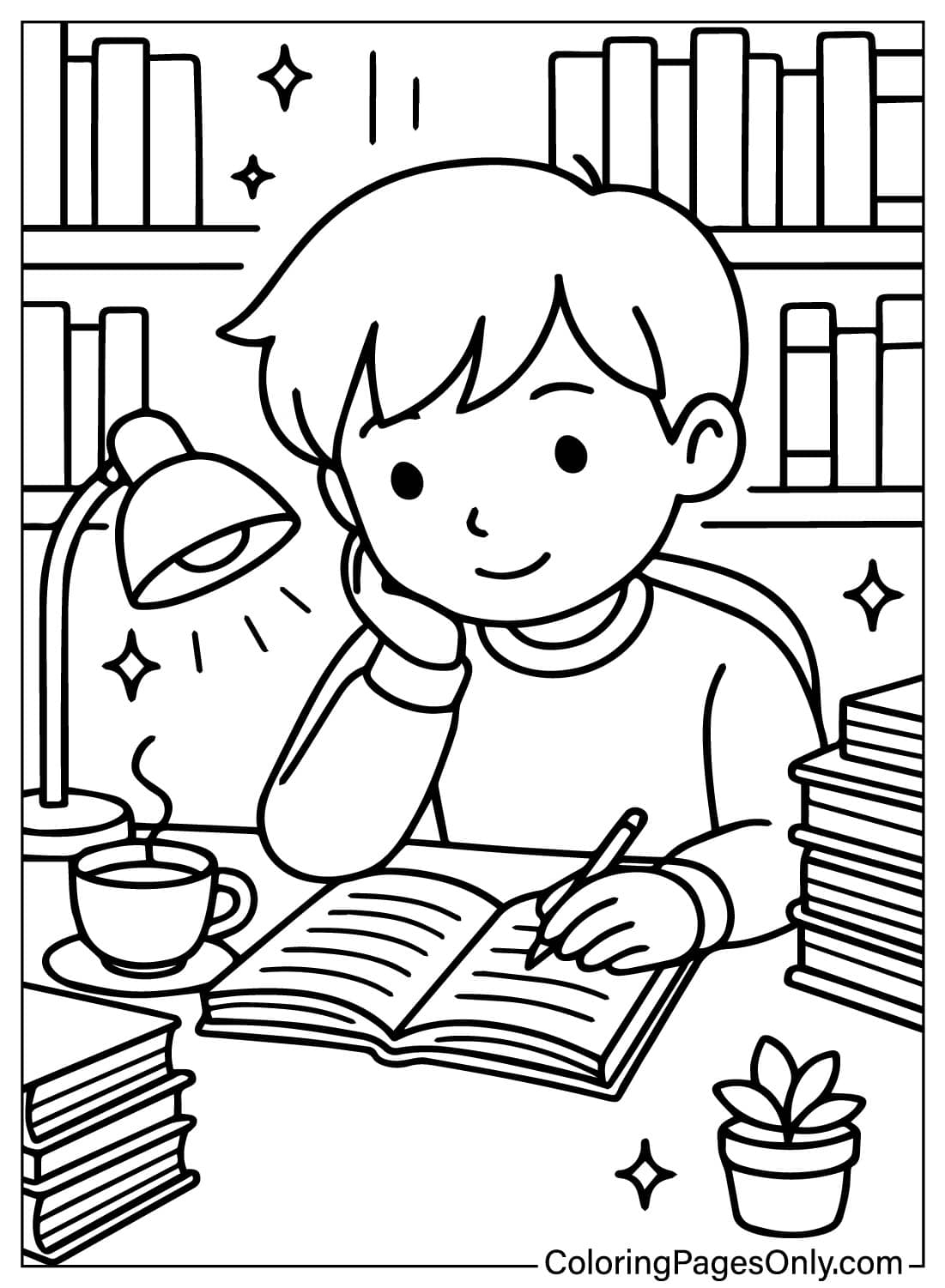
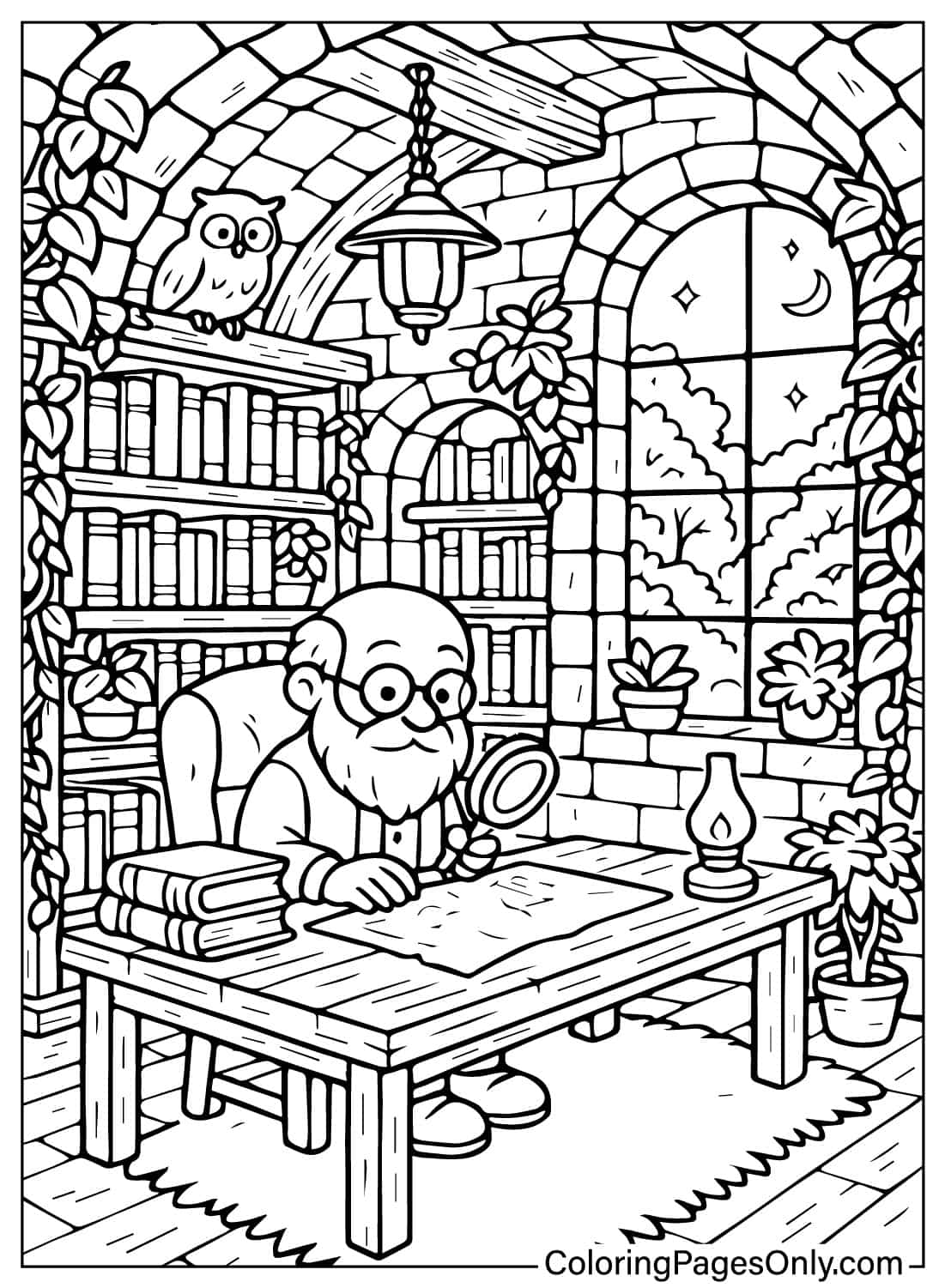
The remaining eight pages show ordinary library and study moments: a librarian at her desk, a child walking through the entrance, a child on a ladder reaching for a book, a home office library, a boy at a study desk, a man reading by a rainy window, and an older man reading a map in his study. These pages suit realistic, muted tones since the setting is a real-world room rather than a fantasy one.
What Cozy Library Coloring Pages Do
Fine motor development. The American Academy of Pediatrics identifies fine motor skill development as a core benefit of structured coloring for children ages 2 through 7. The architectural pages in this set, with narrow shelf lines and staircase railings, give that skill practice a specific, detailed target to work toward.
A calm entry point for reluctant readers. Pairing a coloring page with the idea of reading, rather than with a screen or a specific book, gives children who resist sitting still for a story a lower-pressure way to spend time near books. The animal-reader pages, in particular, turn “someone is reading” into an image a child can finish in one sitting.
Anxiety reduction through focus. A 2005 study in the Art Therapy Journal documented measurable reductions in anxiety following structured coloring sessions. The reading nook and cozy corner pages in this collection lean into the same slow, low-stimulation mood the study associated with anxiety reduction, since there is no timer, competition, or fast-moving scene to color against.
Practice with warm, layered color palettes. Because almost every page in this set uses wood tones, textiles, and soft lighting instead of bright cartoon colors, the collection gives older children and adults a low-stakes place to practice blending and layering warm neutrals, a skill that transfers to other realistic coloring subjects.
How to Color Cozy Library Coloring Pages Well
- Wood shelving: Layer Raw Sienna as a base coat, then add Burnt Sienna in the shadowed gaps between shelves for depth.
- Library cats: Keep the coat color consistent per cat (Black, Raw Umber, or Sepia are all common tabby and shorthair tones), and save White for paws, chest, and whisker highlights only.
- Reading lamps and candlelight: Use Yellow Orange at the light source and let it fade into Goldenrod at the edge of the glow, rather than coloring the whole lit area one flat yellow.
- Blankets and cushions: Pick one warm accent, such as Mahogany, Brick Red, or Denim Blue, and repeat it across two or three items on the same page so the room reads as coordinated rather than random.
- Fantasy vines and greenery: Vary Sea Green, Forest Green, and Yellow Green across a single vine so the leaves do not read as one flat green shape.
- Window views: On pages with an outdoor view through a window, use a distinctly cooler palette (Sky Blue, Periwinkle) outside the glass than the warm interior tones used for the room itself, so the two spaces stay visually separate.
5 Creative Craft Ideas With Cozy Library Coloring Pages
1. Reading Nook Shoebox Diorama.
Color one of the reading nook pages, trim it to fit inside a shoebox, and glue it to the back wall as a backdrop. Add a folded paper armchair or a small stack of real mini books cut from cardstock in front of it.
2. Animal Reader Bookmark Set.
Color two or three of the animal-reader pages, then cut each one down into a tall bookmark strip that keeps the animal’s face and book in frame. Laminate or cover with clear tape before using them in an actual book.
3. Library Greeting Card.
Color the Wise Owl Reading Dictionary page or one of the cat pages, fold a piece of cardstock in half, and glue the colored design to the front as a card for a book-loving friend or teacher.
4. Cozy Corner Display Wall.
Color four or five of the reading nook and armchair pages and arrange them together on a bedroom or reading-corner wall. Rotate which page sits in the center as new favorites get colored.
5. Matching Memory Game.
Print two copies each of three or four animal-reader pages, color the pairs to match, and cut them into cards. Use them for a simple face-down memory-matching game after coloring is done.
Frequently Asked Questions
What are cozy library coloring pages?
They are a free set of 37 printable PDF and online coloring designs built around library and reading themes: grand library architecture, small reading nooks, animals reading books, fantasy libraries, and everyday study scenes. Every page can be downloaded or colored directly in the browser.
What inspired the cozy library theme?
The set draws on hygge, the Danish and Norwegian concept of coziness first recorded in Danish writing in the early 1800s. Hygge centers on warmth, soft lighting, and comfort, which is the same atmosphere reflected in the lamps, blankets, and armchairs throughout this collection.
Are these pages based on a specific book, series, or real library?
No. These are original coloring designs inspired by the general aesthetic of cozy libraries and reading nooks rather than any single named library, book series, or franchise. No specific building, author, or publisher is depicted.
What animals appear in the collection?
Twelve pages feature animal readers, including a hedgehog, a fish, two rabbits, three cat scenes, two bears, a mouse, a squirrel, a teddy bear, and an owl. Each animal is shown in its own reading setting, from a tree trunk library to an underwater scene.
What color palette works best for these pages?
Warm neutrals carry most of the set: Raw Sienna and Burnt Sienna for wood shelving, Mahogany or Brick Red for textiles, and Yellow Orange or Goldenrod for lamps and candlelight. The four fantasy pages are the exception, where Sea Green and Violet also work well.
Are these coloring pages available in PDF and online formats?
Yes. Every design in the collection can be downloaded as a PDF for printing or colored directly in the browser using the online coloring tool, and both options are free with no account required.
Are cozy library coloring pages appropriate for young children?
Yes, with some pages suiting younger children more than others. The animal-reader and simpler nook pages work well from around age 4, while the architectural pages with fine staircase and shelf detail suit ages 7 and up for a better fit with their motor skills.
Can adults use these coloring pages for relaxation?
Yes. The muted, realistic color palette and detailed shelving and architecture across most of the set make it well-suited to slower, more deliberate coloring sessions that many adults use as a relaxation or mindfulness activity.
Start Coloring
Download any page by clicking the design. No account, email, or payment is required. Pages print directly from the browser at full resolution or open in the online coloring tool for screen use. Share finished pages on Facebook or Pinterest using the share buttons at the top of each design page.