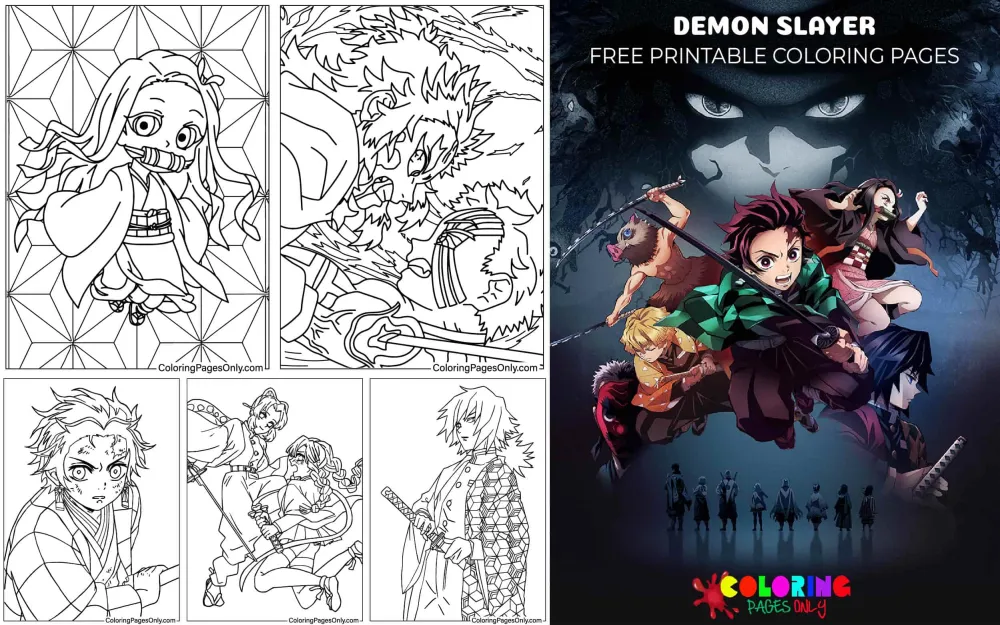
Demon Slayer: Kimetsu no Yaiba Coloring Pages at ColoringPagesOnly.com brings together 740 free pages organized by character – the complete collection spans every major protagonist and Hashira, every Upper Rank demon, key battle and emotional scenes, and dedicated sub-collections for characters including Tanjiro, Nezuko, Zenitsu, Inosuke, Rengoku, Giyu, Akaza, and more. Browse the full hub below or jump directly to a character collection. Download any page as a free PDF to print, or color online directly in your browser.
Find related anime at Anime Coloring Pages, Naruto Coloring Pages, and Attack on Titan Coloring Pages.
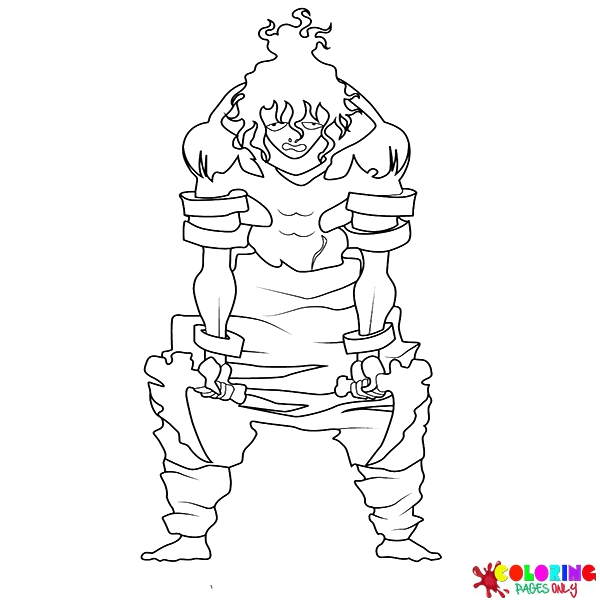
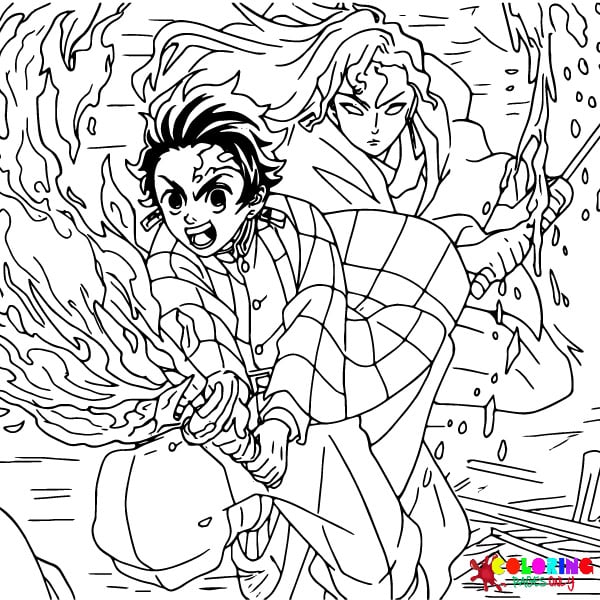
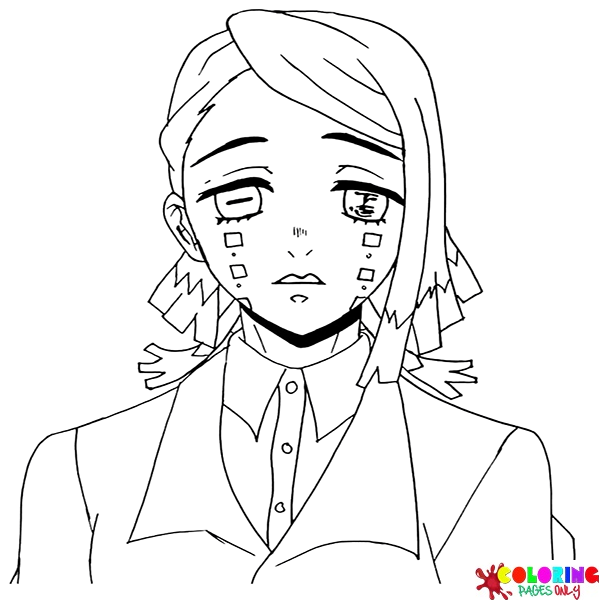
What is Demon Slayer: Kimetsu no Yaiba?
Demon Slayer: Kimetsu no Yaiba (鬼滅の刃 – literally “Blade of Demon Destruction”) is a Japanese manga series written and illustrated by Koyoharu Gotouge, serialized in Shueisha’s Weekly Shōnen Jump from February 15, 2016, to May 18, 2020. The series concluded in 205 chapters across 23 volumes – a complete story written with an ending in mind, distinguishing it from most ongoing shōnen properties. As of July 2025, the manga has exceeded 220 million copies in worldwide circulation, placing it among the ten best-selling manga series in history, alongside longer-running franchises such as One Piece and Dragon Ball.
Koyoharu Gotouge maintains anonymity beyond their pen name – their real identity, gender, and appearance have never been publicly confirmed, which is itself unusual for a franchise of this scale. What is known is that their debut one-shot “Kagarigari” earned an honorable mention in the 70th Jump Treasure Newcomer Manga Award in 2013, and that before Demon Slayer found its shape, their earlier pitch “Haeniwa no Zigzag” was rejected for serialization because it was deemed too dark and serious. Their editor, Tatsuhiko Katayama, asked them to introduce a brighter protagonist – a direction that produced Tanjiro Kamado, whose relentless kindness and warmth became the emotional core that distinguishes the series from other battle-focused shōnen. The original title was also changed: Kisatsu no Yaiba (containing the character for “kill”) was deemed too intense, leading to the coined word “kimetsu” – not a real Japanese word but one that implies destruction or perishing in a slightly lighter register. In 2021, Gotouge became the first manga artist named to TIME’s annual TIME100 Next list.
The series’ three acknowledged influences, per a 2016 interview with Gotouge themselves, are JoJo’s Bizarre Adventure, Naruto, and Bleach. Editor Katayama has also noted the influence of Rurouni Kenshin‘s protagonist Himura Kenshin on Tanjiro’s characterization.
The Setting – Taishō-Era Japan
Demon Slayer is set during Japan’s Taishō period (1912–1926) – a brief historical era between the end of the Meiji period and the beginning of the militarist Shōwa era. The Taishō period is characterized by the tension between Japan’s rapid Westernization and its deeply rooted traditional culture, which surfaces visually throughout the series. Characters wear traditional kimono and haori (Japanese short jackets) alongside elements of Meiji- and Taishō-era Western fashion. The setting allows Gotouge to draw on the visual richness of traditional Japanese textile patterns, sword culture, and mythology while placing the story at a recognizable historical moment.
The demon mythology in the series draws on actual Japanese folklore: the word oni (demon/ogre) has deep roots in Japanese religious and folk tradition. The series uses nichirin (日輪刀) blades – swords forged from special ore that can kill demons through decapitation – and wisteria, as the plant demons cannot approach, both details that connect to real Japanese cultural associations.
The Demon Slayer Corps operates in secret alongside ordinary Taishō-era society, which is why many characters maintain civilian identities. This double-life structure – Tanjiro is a charcoal seller’s son; the Hashira have civilian names and backstories – is one of the series’ foundational dramatic devices.
The Story
Demon Slayer follows Tanjiro Kamado, the eldest son of a charcoal-selling family living in the mountains. When Tanjiro returns home one day to find his family slaughtered by demons – with his younger sister Nezuko as the sole survivor, now partially transformed into a demon herself – he joins the Demon Slayer Corps, a secret organization of swordsmen who hunt and kill demons under the leadership of the Ubuyashiki family.
Two narrative missions run in parallel throughout the series: Tanjiro’s quest to find a cure for Nezuko and restore her humanity, and the Corps’s broader campaign to destroy Muzan Kibutsuji – the original demon, the source of all demonic power, and the demon who ordered the attack on Tanjiro’s family.
The central emotional tension is that Nezuko, despite her transformation, retains her memories and her protective instincts toward Tanjiro. Rather than attacking humans, she has learned to draw sustenance from sleep rather than blood – an anomaly that the demon research community within the series, particularly Tamayo and her assistant Yushiro, works to understand as part of developing a cure.
Themes: Gotouge consistently emphasized that Demon Slayer was less interested in power escalation than in empathy and emotional resilience. Even the Upper Rank demons – the most powerful and dangerous antagonists – are given extensive backstory chapters that reveal the circumstances that led to their demonization and the tragedy that underlies their monstrousness. Akaza’s chapter is one of the most emotionally complex in the series; the final volume’s epilogue, set in the present day, shows the modern-day descendants of the main cast living peaceful, ordinary lives.
Anime, Films, and the Infinity Castle Era – Complete Timeline
Season 1 – Tanjiro’s Awakening (April–September 2019)
The 26-episode first season, produced by studio Ufotable, adapted the manga through the Rehabilitation Training arc. Episode 19, “Hinokami,” became one of the most celebrated individual anime episodes of the decade, trending globally for the animation quality of Tanjiro’s Fire God Dance sequence. The season introduced the major Breathing Styles and the Hashira system, and ended with Tanjiro preparing for his first major Hashira-level mission.
Mugen Train (October 2020)
A theatrical film continuing directly from the anime, adapting the Mugen Train arc featuring Flame Hashira Kyojuro Rengoku. The film became the highest-grossing anime film in history, surpassing Spirited Away in Japan. It earned over $500 million worldwide despite Japan’s box office being depressed 45% that year due to the COVID-19 pandemic, and was the highest-grossing film globally in 2020 from any country. In 2020, Demon Slayer was also the best-selling manga in Japan with 82 million copies sold in that year alone – nearly ten times the second-ranked series.
Season 2 – Entertainment District (October 2021–February 2022)
An 18-episode season beginning with a Mugen Train arc recap and concluding with the Entertainment District arc, featuring Sound Hashira Tengen Uzui’s covert mission against the demon siblings Daki and Gyutaro.
Season 3 – Swordsmith Village (April–June 2023)
An 11-episode season following Tanjiro’s mission to the Swordsmith Village and his encounters with Mist Hashira Muichiro Tokito and Love Hashira Mitsuri Kanroji against Upper Rank demons Hantengu and Gyokko.
Season 4 – Hashira Training (May–June 2024)
An 8-episode season adapting the Hashira Training arc, in which all Demon Slayers undergo intensive preparation under each Hashira ahead of the final confrontation with Muzan.
Infinity Castle Movie Trilogy (July 2025–)
The final arc of the manga is being adapted as a trilogy of theatrical films rather than a television season – a format decision driven partly by the arc’s dramatic density and partly by the precedent set by Mugen Train. The first film, Demon Slayer: Kimetsu no Yaiba – The Movie: Infinity Castle, was released in Japan on July 18, 2025. It set the highest opening-day gross in Japanese cinema history at ¥1.64 billion ($11.1 million) with 1.15 million admissions. It grossed over $780 million worldwide, becoming the highest-grossing Japanese film of all time and the highest-grossing international film in the United States in history, surpassing Crouching Tiger, Hidden Dragon‘s 25-year record. Reviews praised Ufotable’s animation as the studio’s best work yet. Parts 2 and 3 of the trilogy are currently anticipated for 2027 and 2029, respectively, bringing the complete adaptation to a close.
The Complete Character Collections – Who’s In This Hub
Main Trio + Nezuko
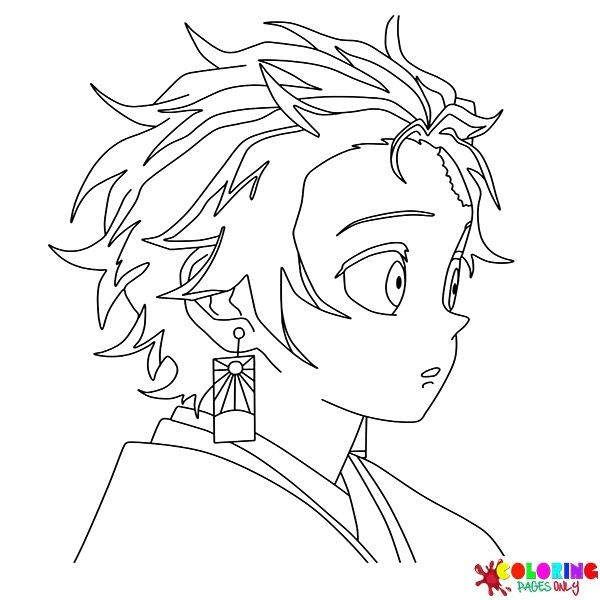
Tanjiro Kamado – The protagonist. Black hair with burgundy-red tips. Distinctive forehead scar (inherited from rescuing his brother from fire, later darkened into a Demon Slayer Mark). Hanafuda earrings depicting a rising sun over mountains, passed down through generations. Wears a black-and-dark-green checkered haori (the Ichimatsu pattern) over a white kimono. This checkered pattern, worn by his entire family, represents prosperity and unbroken lineage in Japanese textile tradition. His Nichirin sword changes from an original black blade to a vivid red when in Sun Breathing mode. Water Breathing (primary) → Hinokami Kagura / Sun Breathing (later).
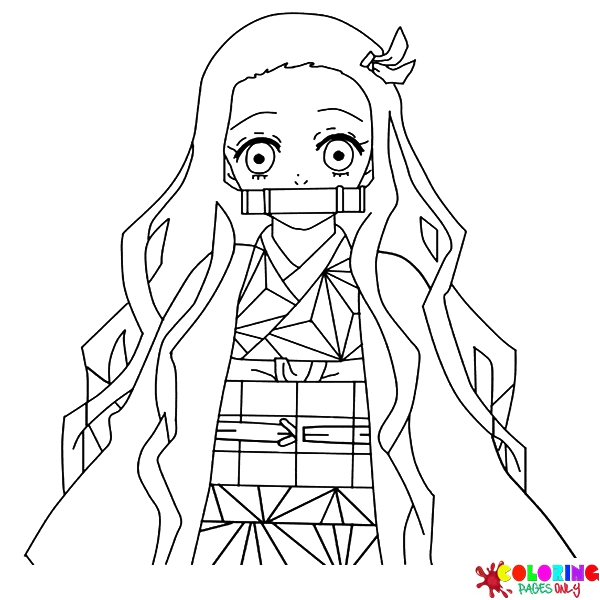
Nezuko Kamado – The most recognizable demon in the series and one of the most iconic characters in modern anime. Pink kimono with a geometric hemp leaf (Asanoha) pattern in darker rose. Black haori (faded). A bamboo mouthpiece – typically colored light green or natural bamboo tone – that serves both to prevent her from biting and to remind her of her human self. Pink hair with a pink hair tie. After demonization, her fingernails become darker, and her eyes (normally pink/burgundy) shift to brighter rose when her demon nature surfaces. In her awakened “Blood Demon Art” state, she grows to adult-sized, with longer hair and more intense coloration.
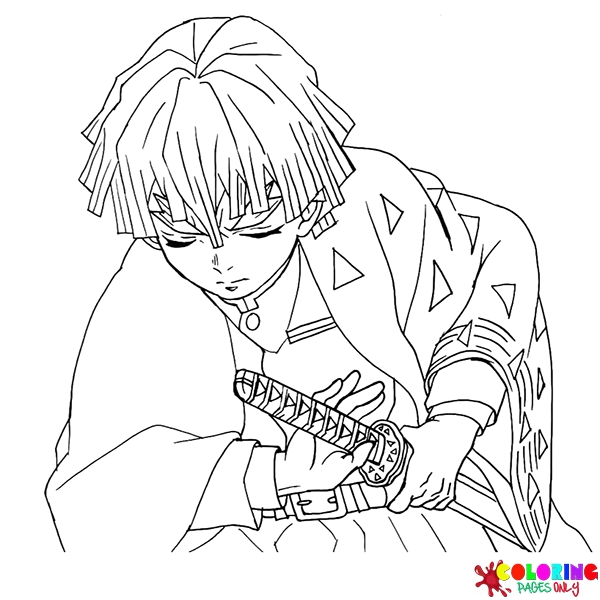
Zenitsu Agatsuma – Short, loud, frequently panicking – but in the moments when he acts unconsciously, one of the most technically perfect fighters in the series. Bright yellow hair (originally dark, bleached by a lightning strike during training). His haori is golden-yellow with an orange-and-yellow triangular pattern (the Uroko scale pattern, traditionally a protective charm). His Nichirin sword is yellow. Thunder Breathing – its visual effects when depicted in action are vivid yellow-electric bolts. He is the only non-Hashira to create an original Breathing Style form and defeat an Upper Rank demon solo.
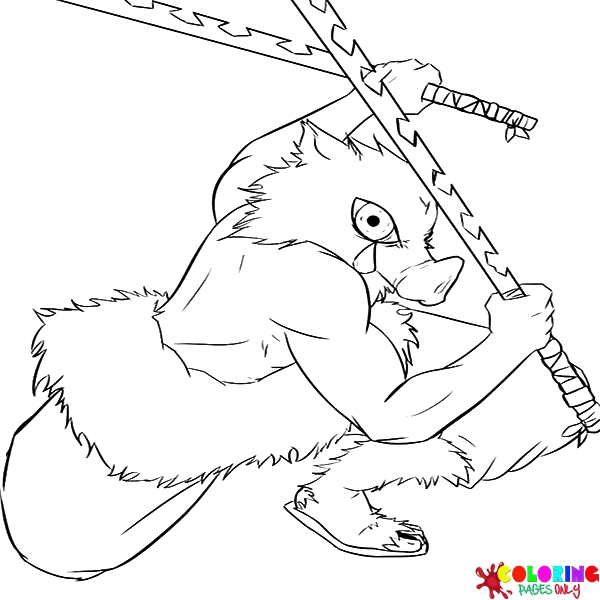
Inosuke Hashibira – Raised by boars in the mountains, Inosuke wears a hollowed-out boar’s head as a mask at nearly all times, with the characteristic snout, tusks, and dark eye markings of a wild boar rendered in grey, off-white, and brown. His body beneath is lean and unusually delicate-featured – a deliberate visual contrast with his wild personality. He wears dark indigo-blue pants with bear fur around the waist and wolf fur around the calves (chosen because bears and deer are considered mountain gods, reflecting his identity). He wields two serrated, self-chipped Nichirin blades in indigo-grey – he personally notched the blades to make them more jagged. Beast Breathing – a self-created style with no formal master.
The Hashira – Pillars of the Demon Slayer Corps
The Hashira (柱 – literally “Pillars”) are the nine highest-ranking members of the Demon Slayer Corps at any given time, each named for their Breathing Style. Each has a distinctive haori whose pattern carries meaning from Japanese textile tradition.
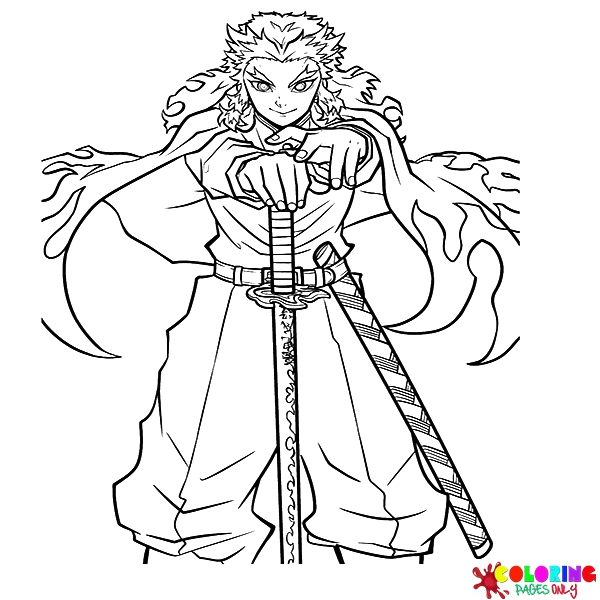
Kyojuro Rengoku – Flame Hashira. Spiky bicolor hair – red and yellow, the colors of fire. His haori bears the Kaen (flame) pattern in red, orange, and yellow on white – in Japanese tradition, the flame pattern represents vitality and protection from evil. His Nichirin sword has a flame engraving. His death at Akaza’s hands in Mugen Train is one of the most emotionally impactful events in the series and marked a turning point in how fans related to the franchise.
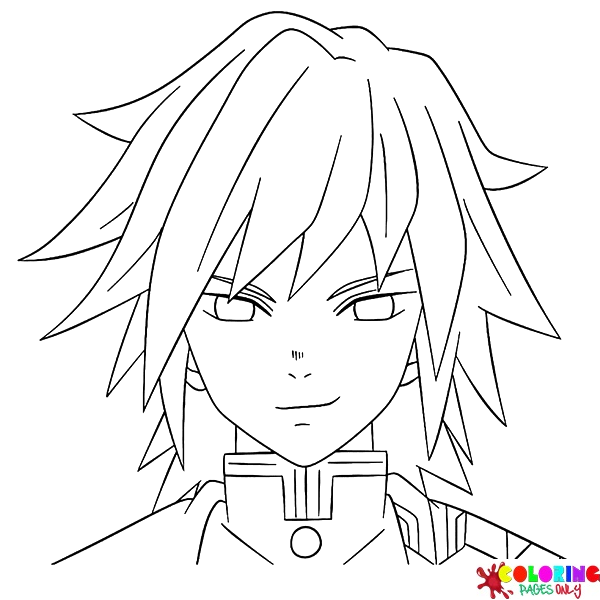
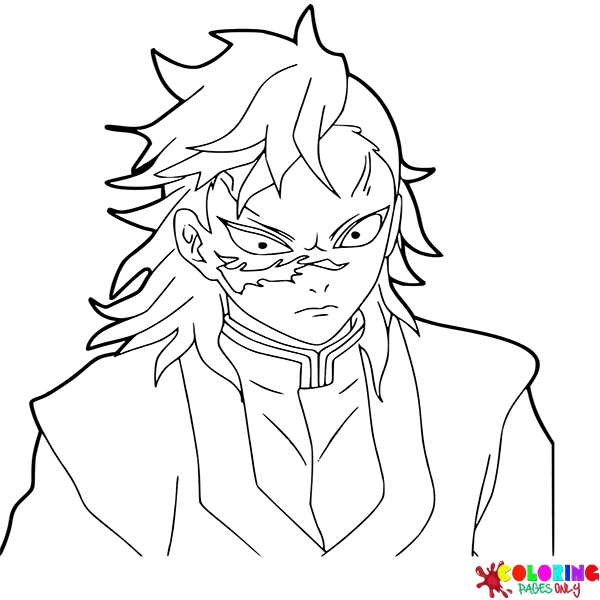
Giyu Tomioka – Water Hashira. Dark blue-black hair with fringed bangs, deep blue eyes. His haori is famously half-and-half: maroon-red solid on one side (from his deceased older sister), and a geometric-patterned section on the other (from his deceased friend Sabito). This split cloak is the most story-significant piece of clothing in the series – a permanent memorial garment. Blue Nichirin sword (the color most associated with Water Breathing’s visual effects of flowing water and waves).
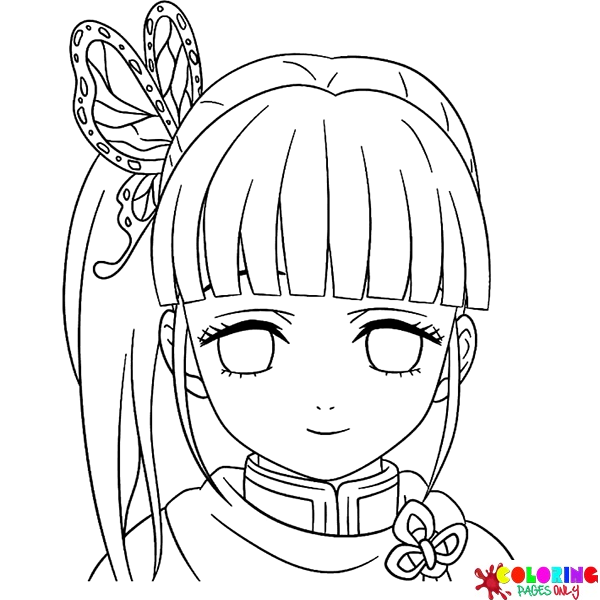
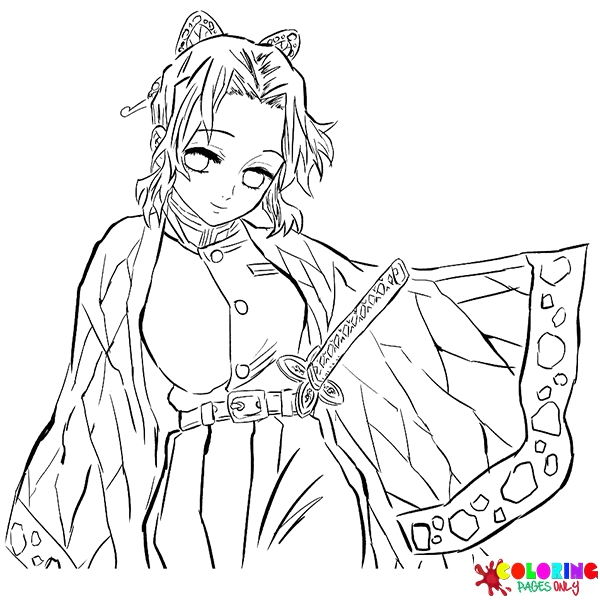
Shinobu Kochō – Insect Hashira. Long black hair with a gradient to a lighter color at the tips, tied with a butterfly ornament. Her haori is the most visually striking among the Hashira: it literally resembles butterfly wings, with the gradient color of a swallowtail butterfly – yellow at the shoulder fading to dark purple at the hem, with the actual pattern of butterfly markings. Her Nichirin sword is thin and specialized – she cannot behead demons due to her small frame, so her sword is designed to inject wisteria-based poison instead. Butterfly imagery in Japanese textile tradition represents revival, transformation, and social success.
Tengen Uzui – Sound Hashira. The most visually extravagant Hashira. White hair. Heavy white face paint with red and orange paint marks extending from beneath the eyes upward. Multiple large rings and ornaments throughout his hair and around his ears. He wields two enormous cleaver-like Nichirin swords connected by a chain, and can deploy them in Sound Breathing forms that analyze and predict attack patterns. He frequently announces himself as “flamboyant” in both Japanese and English translations, and his design fully delivers.
Mitsuri Kanroji – Love Hashira. Long hair with a unique color gradient: pink roots transitioning to green tips – distinctive and immediately recognizable. She wears a modified Demon Slayer uniform with a much shorter skirt than standard, and her haori uses a base of warm red-pink tones. Her Nichirin sword is whip-flexible, adapting to her exceptional muscle flexibility. Love Breathing.
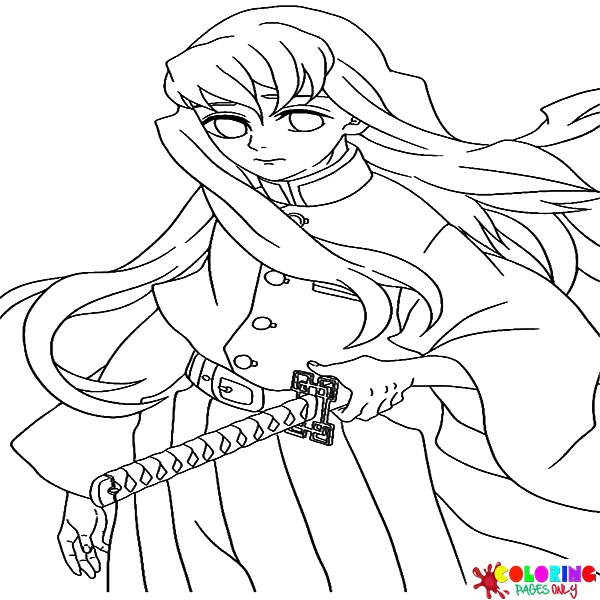
Muichiro Tokito – Mist Hashira. Very long, loose mint green-teal hair with turquoise-green eyes – the most ethereal and pale color palette of any Hashira. He appears detached and absent-minded due to amnesia following the loss of his twin brother, but is one of the most naturally gifted fighters in the Corps. His Nichirin sword is a pale green-blue. Mist Breathing.
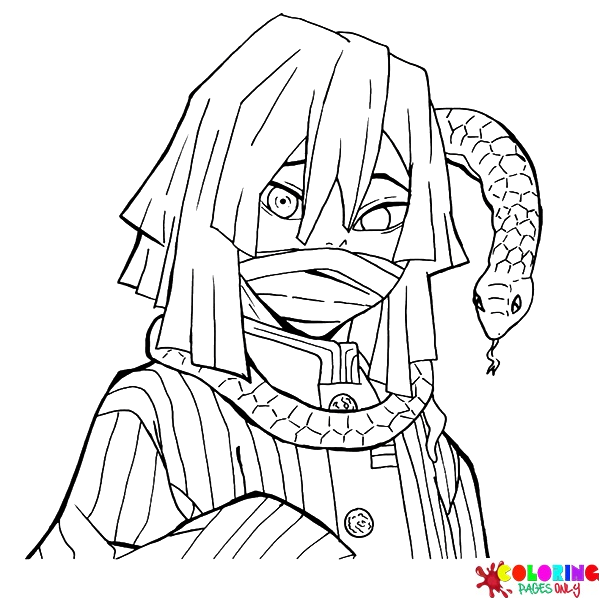
Iguro Obanai – Serpent Hashira. Black hair. Heterochromic eyes – one teal, one yellow – are a distinctive visual marker. White bandages cover the lower half of his face from a traumatic childhood injury. His haori has a striped pattern (matched by his white snake companion Kaburamaru, who is always coiled around his neck or shoulders). His Nichirin sword is unusual – curved into a wave pattern like a serpent’s motion. Serpent Breathing.
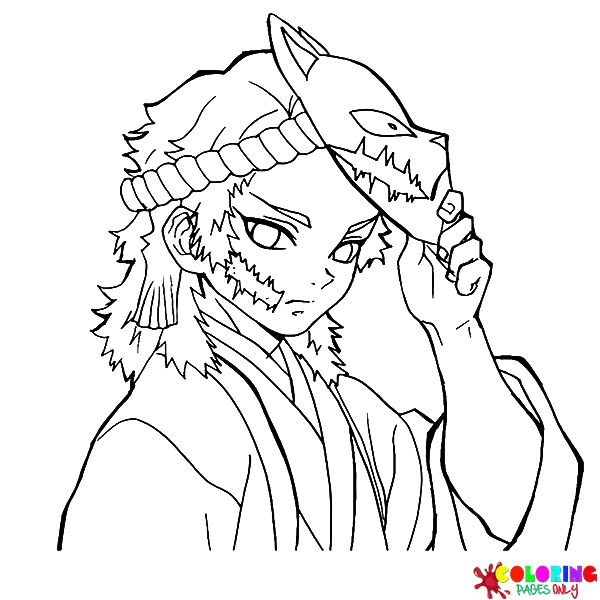
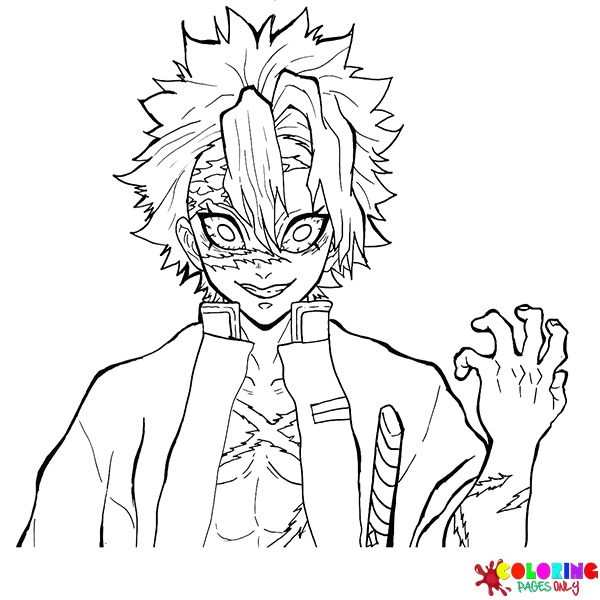
Sanemi Shinazugawa – Wind Hashira. White hair. Extensively scarred face and body – more visible trauma on his skin than any other character. His design communicates his brutal past immediately through the sheer density of scar tissue visible whenever he removes his uniform’s top. His haori is simpler and more austere than most. Wind Breathing.
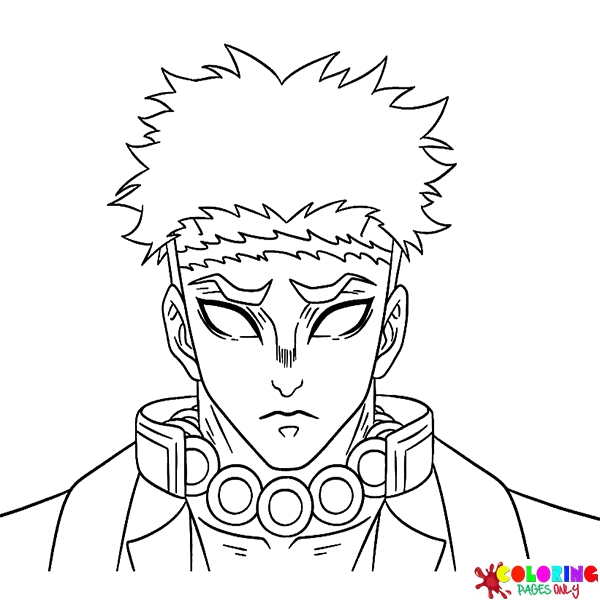
Gyomei Himejima – Stone Hashira. The physically largest Hashira – and by nearly all in-series assessments, the strongest. Blind (depicted with white, unseeing eyes). Bald. Rosary beads around his wrist that he uses both as prayer and as part of his unique weapon: a spiked flail and axe connected by a chain, rather than the standard Nichirin sword. Stone Breathing.
The Twelve Kizuki – The Demon Moon Hierarchy
Muzan Kibutsuji’s twelve most powerful demons are organized into the Twelve Kizuki (Twelve Demon Moons): Upper Ranks (1–6) and Lower Ranks (1–6), each with a number engraved in their eyes. The Upper Ranks are the primary antagonists across the series’ middle and final arcs.
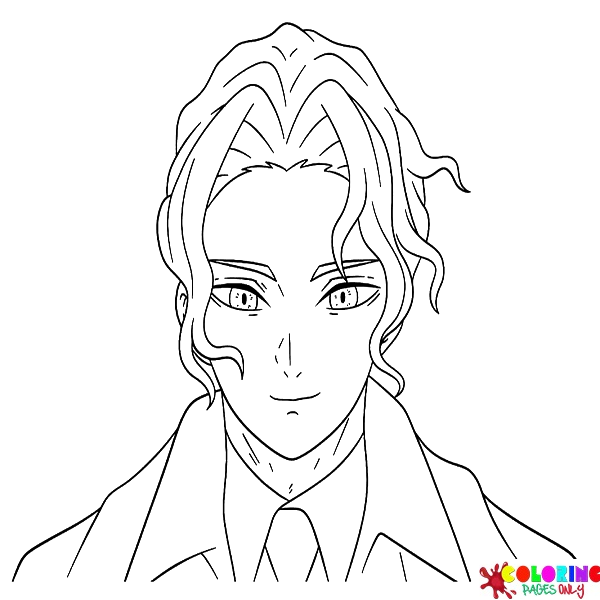
Muzan Kibutsuji – The demon king and original source of all demons. Appears in multiple human guises: as an elegant young man in a white suit and black wide-brimmed hat (his most recognizable appearance), as a woman with dark hair, as an elderly man. Extremely pale, with long dark hair when in his primary adult male form. His design deliberately invokes classic Western vampire/monster iconography translated through Japanese aesthetics.
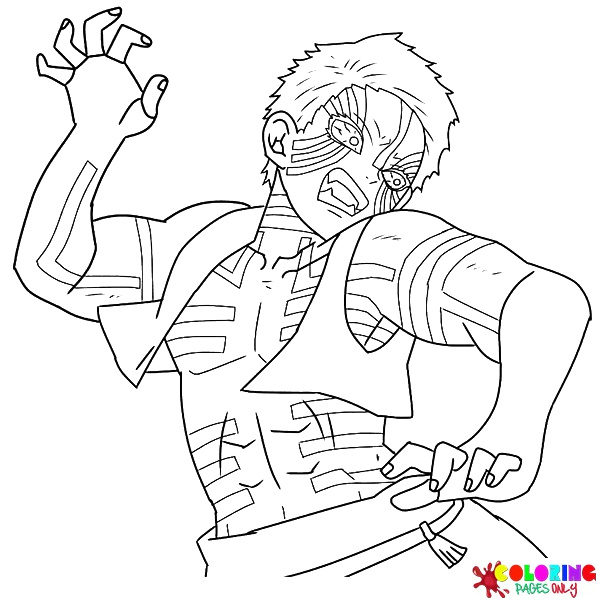
Akaza – Upper Rank 3. Pink tattoo-like markings on his face (red-pink horizontal bars across his nose and cheeks). Spiky pink hair. Bare upper body. One of the most extensively developed demon characters in the series, his backstory reveals the human life and loves he lost, making him a genuinely tragic figure. This is the most praised chapter in the Infinity Castle movie.
Doma – Upper Rank 2. Rainbow-irised eyes (each iris contains multiple colors simultaneously, a unique visual marker). Light lavender/blonde hair. Cold, pleasant demeanor masking complete emotional hollowness. Voiced by Mamoru Miyano in Japanese.
Kokushibo – Upper Rank 1. Yoriichi Tsugikuni’s twin brother. The most powerful demon below Muzan. Extra sets of eyes in various locations on his face. Long hair. An extraordinarily tragic figure whose entire existence was shaped by a centuries-old inferiority complex.
Understanding Breathing Styles – The Visual Vocabulary of Demon Slayer
Every Demon Slayer technique in the series is built on Breathing Styles – formalized techniques that use controlled breathing to enhance physical abilities to superhuman levels and generate visible elemental effects. All Breathing Styles derive from the original Sun Breathing, created by Yoriichi Tsugikuni, the most powerful Demon Slayer who ever lived. Subsequent styles are adaptations made by those who could not master Sun Breathing but developed derivatives suited to their own physiology.
For coloring purposes, each Breathing Style has a consistent visual palette in the anime:
Sun Breathing / Hinokami Kagura – Deep red-orange flames with golden highlights. Tanjiro’s most powerful technique. Color from warm deep orange at the origin to vivid yellow at the effect’s edge.
Water Breathing (Tanjiro primary, Giyu) – Flowing deep blue water, often depicted with wave and current patterns. Blue from deep navy at the densest areas to pale aqua at the spray.
Thunder Breathing (Zenitsu) – Vivid electric yellow-gold bolts. The single form Zenitsu has mastered, “Thunderclap and Flash,” is depicted as a golden lightning strike across the frame.
Flame Breathing (Rengoku) – Similar palette to Sun Breathing, but more specifically fire-orange-red with yellow at the tips. Rengoku’s attacks produce solid flame shapes rather than the gas-like quality of Sun Breathing.
Mist Breathing (Muichiro) – Soft grey-white mist with teal-green highlights at the edges.
Sound Breathing (Tengen) – Gold and orange shockwave patterns radiating outward, resembling sound wave diagrams.
Beast Breathing (Inosuke) – Grey-blue with jagged, unpredictable directional patterns, no smooth curves.
Insect Breathing (Shinobu) – Lavender and purple butterfly wing patterns, delicate and organic.
Love Breathing (Mitsuri) – Pink-peach sweeping curves, soft and fluid.
Serpent Breathing (Obanai) – Teal-green sinuous curves mimicking snake movement.
Stone Breathing (Gyomei) – Dark grey-brown with solid, angular impacts.
Blood Demon Arts (demons) – Varies by demon: Akaza’s destructive pink shockwaves, Doma’s pale blue ice fans, Kokushibo’s crescent blade projections.
The Haori Patterns – Japanese Textile Tradition in Character Design
One of Demon Slayer‘s most distinctive visual contributions to anime character design is how systematically Gotouge used traditional Japanese textile patterns in each character’s haori. These patterns are not decorative choices – each carries cultural meaning that connects to the character wearing it.
Tanjiro’s Ichimatsu (市松) pattern – The black-and-dark-green checkered grid. Named after kabuki actor Ichimatsu Sanogawa (1722–1762), this pattern was called “Ishidatami” (stone pavement) before his time. It represents prosperity and unbroken continuity – fitting for the eldest son of the Kamado family. Every member of the family wears this pattern somewhere on their clothing.
Zenitsu’s Uroko (鱗) pattern – The triangular scale pattern on his haori. Scales represent protection from harm – Japanese samurai wore Uroko-patterned armor for this reason. The pattern also implies regeneration (snakes shed their skin), which resonates with Zenitsu’s role as the survivor of his master’s school.
Shinobu’s Butterfly (胡蝶) pattern – Her entire haori is the wing of a swallowtail butterfly. In Japanese culture, the butterfly represents revival, transformation, and social success – the metamorphosis from caterpillar to butterfly. Her surname, Kochō (胡蝶), literally means butterfly, making the haori an extension of her name.
Rengoku’s Kaen (火焔) pattern – The flame-shaped pattern on a white ground. Traditionally, flames chase away evil spirits, making the Flame Hashira’s haori literally a protective garment. The continuously changing nature of flame also symbolizes vitality.
Giyu’s split haori – Not a traditional pattern but a biographical statement: two different haori panels worn as one garment, commemorating two people he lost. The most emotionally loaded piece of clothing in the series.
Coloring Tips – Demon Slayer’s Specific Challenges
The Ichimatsu pattern requires patience, not skill. Tanjiro’s checkered haori is the most frequently attempted pattern in the entire collection and the one most likely to drift if not approached systematically. Before applying any green or black, use a light pencil grid to mark the squares across the haori area. Work one color at a time across all squares of that color before switching. The squares should be consistent in size – irregular squares undermine the design’s graphic impact immediately. Colored pencil works better than a marker for this pattern because you can control the edges more precisely.
Nezuko’s pink is warm, not pastel-cool. The pink of Nezuko’s kimono in the anime is a warm, slightly peachy rose-pink rather than the cool lavender-pink of typical anime character designs. Think warm sunset pink rather than bubblegum. The hemp leaf pattern on the kimono can be rendered in a slightly deeper version of the same warm pink rather than a contrasting color – in the anime, it reads as a subtle tone-on-tone pattern rather than a bold contrast.
The bamboo mouthpiece is not brown. A common mistake is rendering Nezuko’s bamboo as wood-brown. Bamboo at the stage depicted in the series (cut, dried, worn) is more accurately a light natural beige-green or warm ivory – not pure white, not wood-brown. The mouthpiece is also tied in place with a light green fabric band matching the bamboo’s natural color.
Zenitsu’s haori pattern direction matters. The Uroko triangular pattern on Zenitsu’s haori points consistently in one direction – upward. When coloring this pattern, maintain a consistent direction. The triangles are rendered in a slightly deeper gold-orange against the lighter yellow ground of the haori. The white triangular accent marks within each triangle add the scale’s internal structure.
For Breathing Style attack pages – the visual effects of Breathing Styles are gradients, not flat fills. Water Breathing: deep navy at the origin point of the technique, bleeding into aqua and pale blue at the spray edges. Thunder Breathing: deep gold-orange at the strike origin, brilliant electric yellow at the bolt’s leading edge and tips. Flame Breathing: deep red-orange at the base of flames, vivid orange through the middle, yellow at the tips. For all these, apply the lightest color first (yellow for Thunder, pale blue for Water, yellow for Flame) and layer the darker tones over them progressively – this produces the luminous quality of the anime’s technique depictions.
Scarring and physical detail on Hashira pages – Several Hashira have significant physical markings that require careful attention. Tanjiro’s forehead scar is burgundy-maroon, not pink or red. Inosuke’s boar head has natural boar coloring: off-white with grey-brown at the snout tip and around the eyes. Sanemi’s scars are a desaturated version of his skin tone – not dramatically darker, but clearly visible as raised tissue. Tengen’s face paint is a white base with red-orange markings extending from the lower eye upward.
Muzan’s multiple forms – If the page shows Muzan in his primary “young man” appearance, his most distinctive palette is a white suit and white wide-brimmed hat, extremely pale skin, and long dark hair. This near-all-white palette with only the dark hair as contrast is deliberately eerie – pure white in Japanese aesthetics can carry associations of death and spirits, inverting the heroic color conventions of the demon slayers’ warm-toned haoris.
5 Activities
The Breathing Style color analysis. Print any combat action page featuring multiple characters using their techniques simultaneously. Before coloring, research each character’s Breathing Style’s canonical color palette from the anime. Then create a small color swatch strip beside each character on the page, indicating the exact palette you’ll use: the base technique color, the mid-tone, and the edge/tip highlight. Color the techniques in the correct palette while keeping each character’s costume in their canonical colors. The challenge is creating a visual distinction between different characters’ techniques while keeping the overall composition unified – the same challenge Ufotable’s animators face in every group battle scene.
The haori pattern study. Print any portrait page showing Tanjiro, Zenitsu, or Shinobu from the front, where the haori pattern is fully visible. Research the traditional Japanese textile pattern depicted on that character’s haori (Ichimatsu for Tanjiro, Uroko for Zenitsu, butterfly for Shinobu). Color the pattern accurately. Then, on blank paper, write one sentence explaining what that pattern traditionally means in Japanese culture, and one sentence explaining why Gotouge likely chose that pattern for that specific character. This activity builds both coloring skill (rendering complex patterns) and cultural knowledge of the Japanese textile tradition as it actually exists.
The demon before-and-after project. The most emotionally powerful storytelling device in Demon Slayer is the demon backstory chapter – pages where a demon’s human life is shown in full before their demonization. Print a page showing any Upper Rank demon (Akaza, Doma, or another from the sub-collections). Color the demon as they appear in their demonic form – with their Blood Demon Art effects, inhuman coloring, and power markings. Then, on blank paper, draw and color a simple scene imagining what that character looked like as a human, before demonization. The activity engages directly with the series’s core theme: that the demons were once human, and their monstrousness is the product of tragedy and circumstance. It also develops the skill of maintaining a character’s design across dramatically different emotional registers.
The Complete Watching Guide activity. Demon Slayer has a specific watch order that matters because the films and the anime series intersect: Season 1 → Mugen Train film (or S2 Mugen Train arc) → Season 2 Entertainment District → Season 3 Swordsmith Village → Season 4 Hashira Training → Infinity Castle film (2025). Print one character page for each major arc’s central character: Tanjiro (Season 1), Rengoku (Mugen Train), Uzui (Entertainment District), Muichiro (Swordsmith Village), Gyomei (Hashira Training), and any Hashira from Infinity Castle. Color them in sequence. Each character portrait serves as a visual chapter marker for the franchise’s progression – a reference set for the full series.
The family coloring memorial. The Kamado family – Tanjiro’s parents and five younger siblings – are depicted briefly in the series’ opening before the attack that destroys them. All of them, including Nezuko before her demonization, wore the Ichimatsu checkered pattern somewhere on their clothing. Print the most detailed family or portrait pages from the Tanjiro and Nezuko sub-collections. Color all family members wearing some version of the Ichimatsu pattern in a consistent palette – this is how Gotouge signified family membership throughout the series. The activity honors the family that drives Tanjiro’s entire journey, and demonstrates how Gotouge used visual design to establish and then maintain character identity across generations.
What Demon Slayer Coloring Pages Do
Fine motor development. The American Academy of Pediatrics identifies fine motor skill development as a core benefit of structured coloring for children ages 2 through 7, and the Ichimatsu and Uroko patterns in this collection give that practice detailed, real geometric grids to work through.
A hands-on introduction to Japanese textile symbolism. Because each Hashira’s haori pattern carries a documented cultural meaning (Rengoku’s flame pattern, Shinobu’s butterfly wing, Zenitsu’s protective scales), coloring these pages accurately is also a small, concrete lesson in Japanese textile tradition.
Anxiety reduction through focus. A 2005 study in the Art Therapy Journal documented measurable reductions in anxiety following structured coloring sessions, a benefit that applies as much to a detailed Hashira portrait as to any simpler page in the collection.
Practice with color-coded technique effects. Because every Breathing Style in the series has a consistent, describable color palette (Water Breathing’s navy-to-aqua gradient, Thunder Breathing’s electric yellow), coloring the combat pages is a practical exercise in gradient shading, not just flat-fill coloring.
Frequently Asked Questions
What are Demon Slayer coloring pages?
Demon Slayer coloring pages are printable designs based on Koyoharu Gotouge’s manga and anime Demon Slayer: Kimetsu no Yaiba. This collection includes 740 free designs across 22 character and story sub-collections, available as PDFs or online coloring.
Who created Demon Slayer?
Demon Slayer was created by Koyoharu Gotouge, who wrote and illustrated the manga for Weekly Shonen Jump from 2016 to 2020. Gotouge maintains anonymity beyond the pen name and was named to TIME’s TIME100 Next list in 2021.
Which sub-collection has the most pages?
Tanjiro Kamado has the largest sub-collection with 61 designs, followed by Kyojuro Rengoku with 48.
What are the Hashira?
The Hashira are the nine highest-ranking swordsmen of the Demon Slayer Corps, each named for their Breathing Style and identified by a haori pattern with its own meaning in Japanese textile tradition, such as Rengoku’s flame pattern or Shinobu’s butterfly wing.
What color is Nezuko’s kimono?
A warm, slightly peachy rose-pink, not a cool lavender-pink, with a darker rose hemp-leaf pattern rendered as a subtle tone-on-tone design rather than a bold contrast.
What is the Infinity Castle movie?
Infinity Castle is the first film in a planned trilogy adapting the manga’s final arc, released in Japan in July 2025. It became the highest-grossing Japanese film of all time and the highest-grossing international film in U.S. box office history.
Are Demon Slayer coloring pages suitable for young children?
Yes, particularly the simpler character portrait pages, while the more detailed Hashira haori patterns and Breathing Style combat scenes suit older children and adults.
What is a Nichirin sword?
A Nichirin sword is the special ore-forged blade used by Demon Slayer Corps members to kill demons through decapitation, with each swordsman’s blade taking on a distinct color tied to their Breathing Style.
Start Coloring
Choose a collection above to browse a character, or open any page to download it as a free PDF or color it online in the browser. No account, email, or payment is required. Share finished pages on Facebook or Pinterest with the share buttons on each page.
More Demon Slayer Coloring Pages
Jump straight to a specific collection: