

Free Snowflake Coloring Pages: 97 printable PDF designs featuring simple six-pointed snowflakes, crystal and fractal patterns, detailed snowflake mandalas, smiling snowflake characters, and wintry scenes with pine branches, wreaths, and frozen ponds. Grab any design as a free PDF for the printer or color it online in your browser, no account required.
Snowflakes are one of nature’s most perfect shapes. Every one forms with six arms because of the way water molecules lock together as they freeze, and tiny changes in temperature and humidity as it falls make each crystal slightly different from the next. That built-in symmetry makes snowflakes wonderfully satisfying to color.
The collection works for every age and mood. Preschoolers can start with big, simple outlines and chunky arms, while older kids enjoy snowflakes with faces that yawn, smile, and play in a band. Teens and adults will find plenty of detail in the crystal, fractal, and mandala designs, which make a calming project for a quiet winter evening. There are also Christmas-themed pages with ornaments and wreaths, plus a few playful crossovers with favorite cartoon characters.


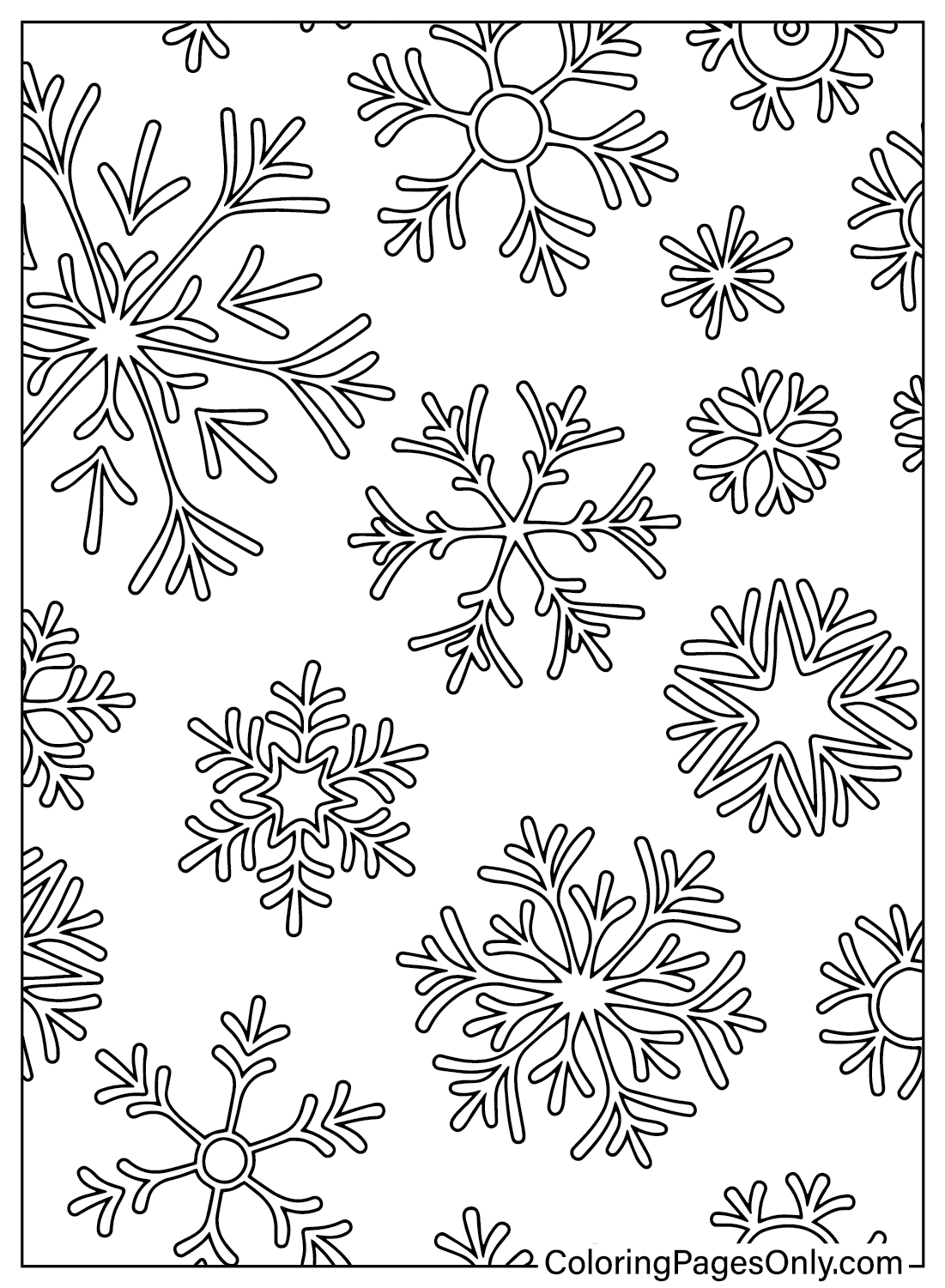


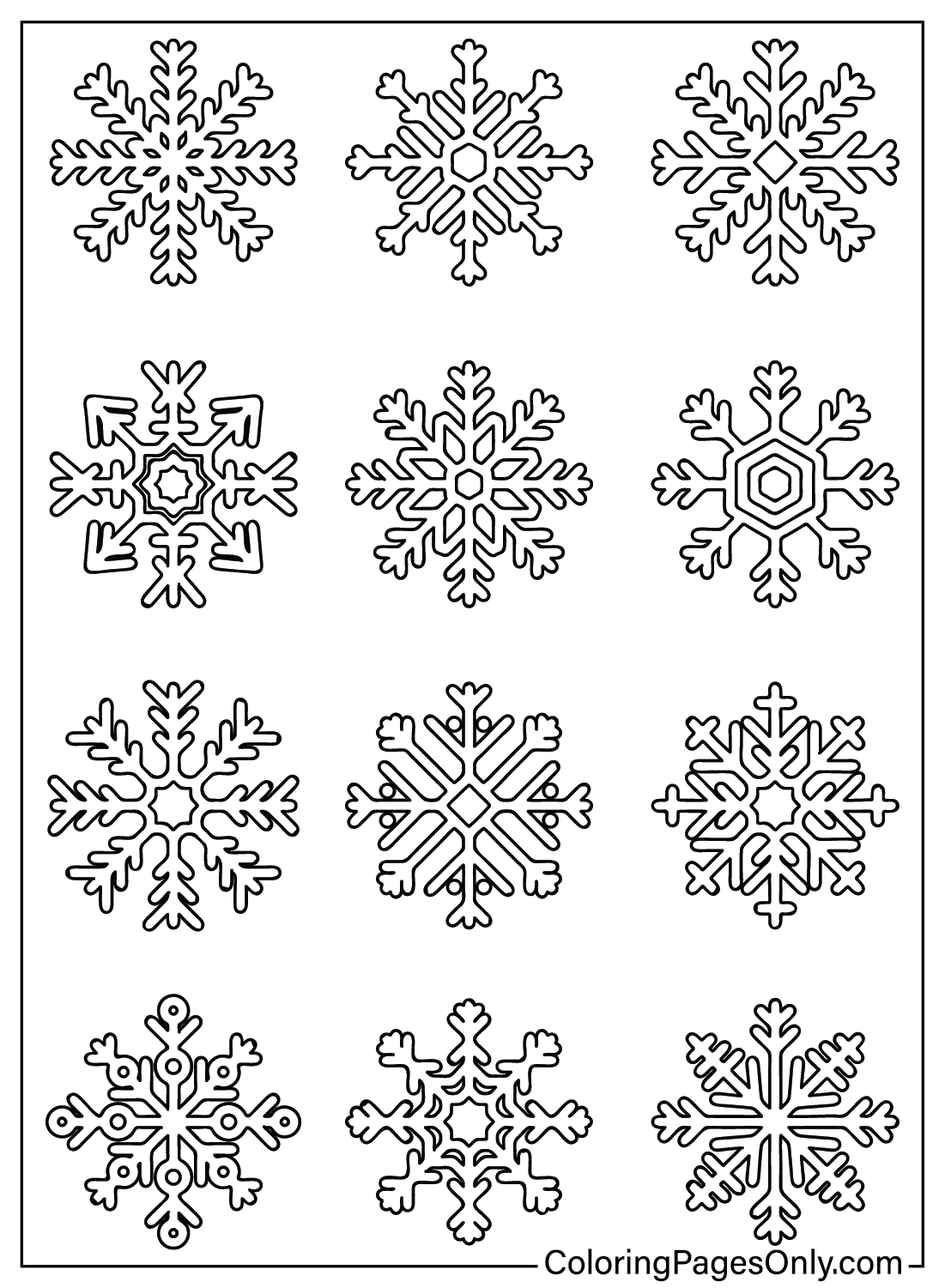


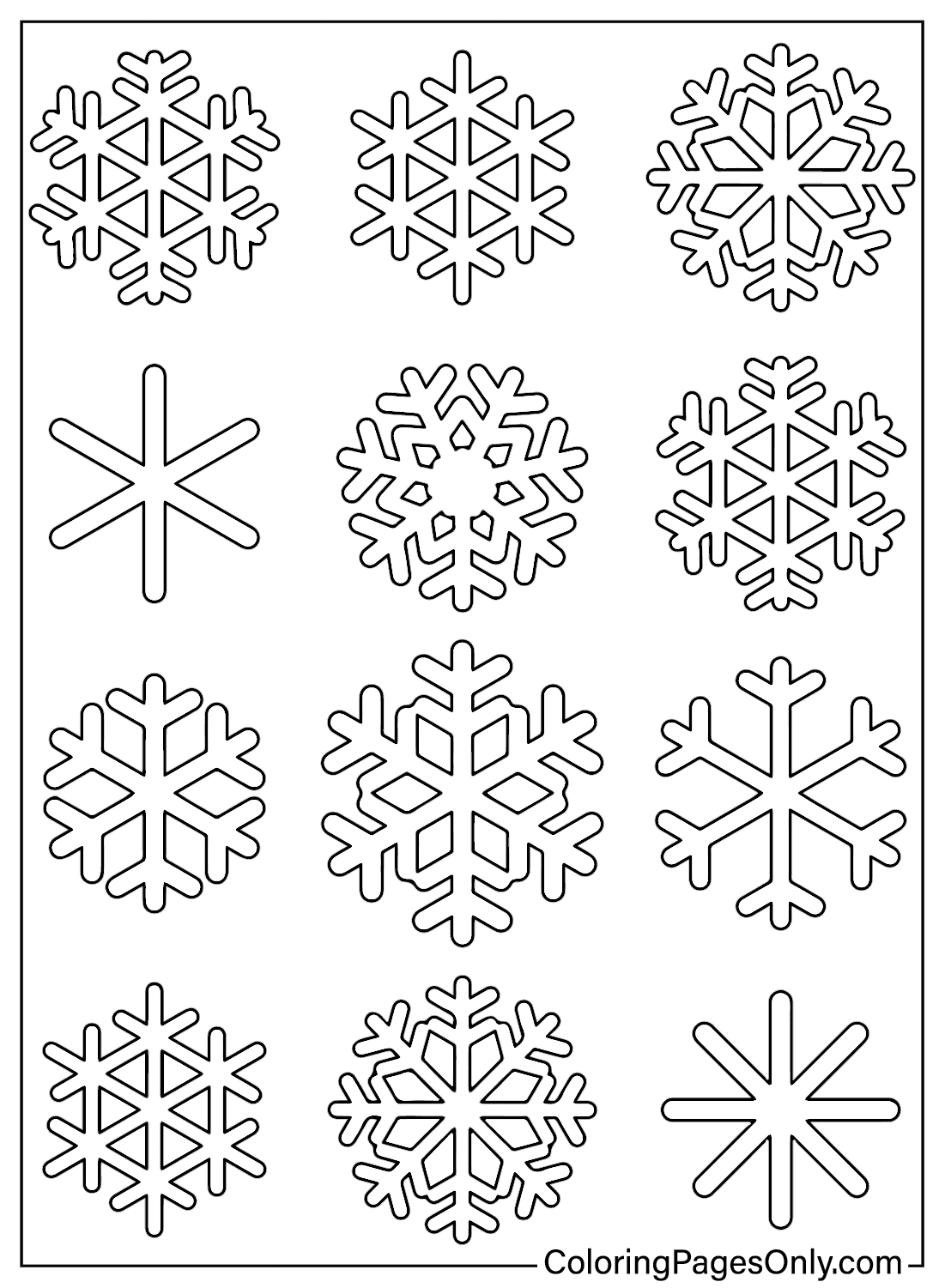


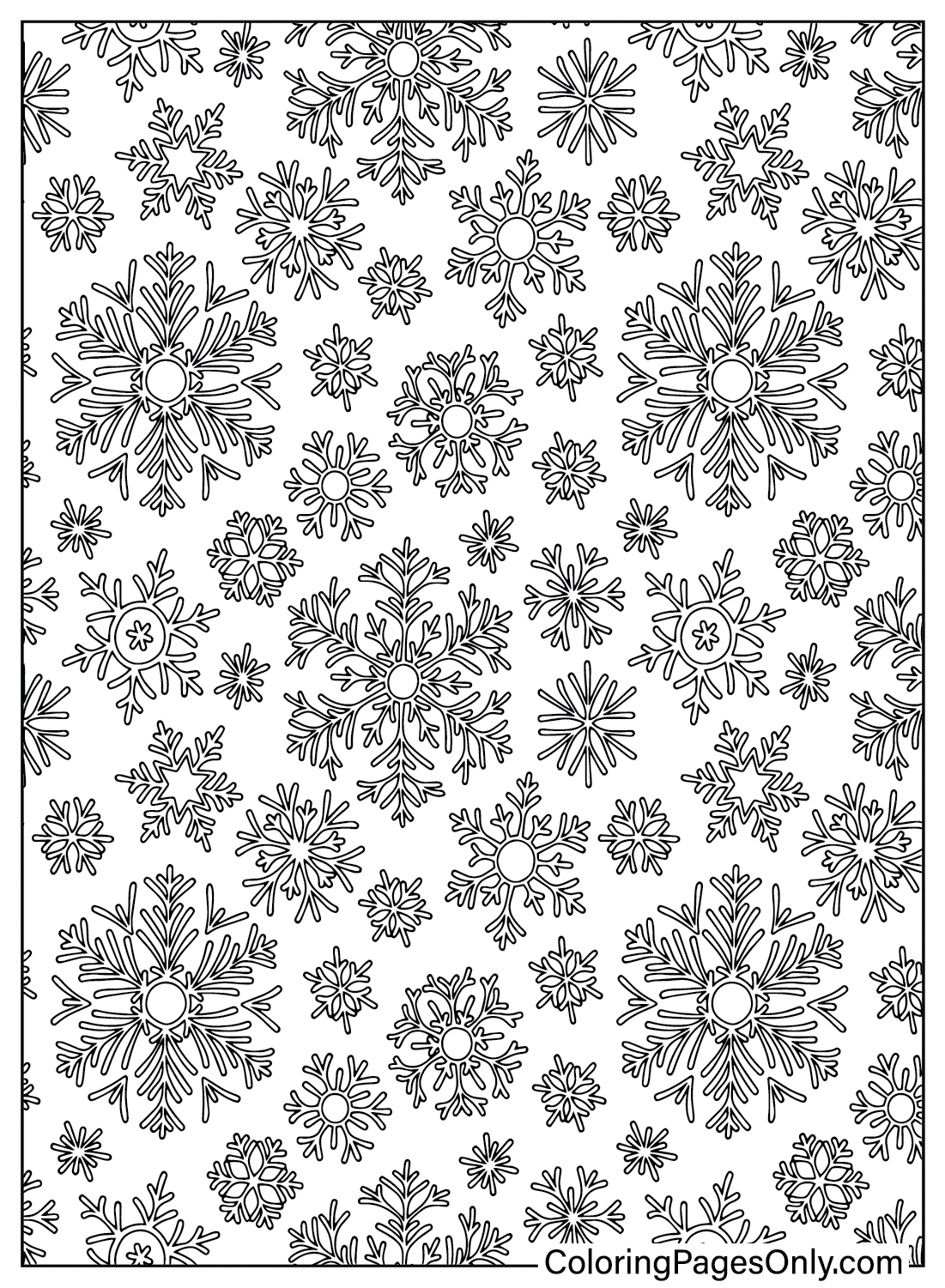


What’s Inside This Collection
The designs range from scientific crystal shapes to cute characters, holiday scenes, and detailed mandalas.
Simple Snowflakes for Beginners
Big, clear six-pointed shapes with wide spaces are perfect for toddlers and preschoolers. Try one color per arm to practice counting to six.
Crystal, Fractal, and Geometric Snowflakes
These pages show the branching arms and hexagon centers of real snow crystals. Layer icy blues from pale to deep to make the arms look frosty.
Snowflake Mandalas
Intricate circular patterns built from snowflake shapes reward patient, detailed coloring. Work from the center outward and repeat colors in rings.
Snowflake Characters
Snowflakes with faces smile, yawn, frown, read books, ride a hot air balloon, and march in a parade. Soft pastels and rosy cheeks keep them sweet.
Christmas and Winter Scenes
Ornaments, wreaths, a snowy Christmas tree, frozen ponds, and pine branches bring snowflakes into seasonal settings. Deep greens and reds pair well with pale blue snow.
Character Crossovers
Snowflakes appear alongside a bear, a bunny, and popular characters for fans who want a winter twist on a favorite. Keep each character in its familiar colors against a light, snowy background.
What Snowflake Coloring Pages Do
A hands-on look at symmetry. Because every snowflake has six matching arms, coloring one naturally teaches symmetry and pattern. Children can check whether each arm matches, count the points, and spot the hexagon at the center, early math ideas that feel like play.
Steady practice for small hands. Thin branches and small repeating shapes ask for careful, controlled coloring. The American Academy of Pediatrics ties fine motor growth in children ages 2 through 7 closely to this kind of activity, and the simple snowflakes let beginners feel successful quickly before moving on to finer designs.
A calm winter activity. The repeating patterns in snowflake mandalas are especially soothing. In 2005, the Art Therapy Journal reported that anxiety eased in measurable ways after structured coloring, which makes these pages a good fit for snow days, indoor recess, and cozy evenings.
A bridge to winter science. Coloring snowflakes opens easy conversations about how snow forms, why no two flakes are alike, and why snow looks white. It pairs well with a simple experiment like catching flakes on dark paper.
How to Color Snowflake Coloring Pages Well
- Cool palette: Use a range of blues, lavenders, and silvers for a frosty look.
- Leave some white: Keep a few areas uncolored to suggest sparkle and light.
- Match the arms: Color one arm first, then repeat the same pattern on the other five.
- Dark background: A navy or purple background makes pale snowflakes glow.
- Glitter finish: Add a touch of silver gel pen or glitter glue on the tips.
- Warm accents: On Christmas pages, add red and gold to balance the cool tones.
5 Creative Craft Ideas With Snowflake Coloring Pages
1. Window Snowflakes
Color simple snowflakes, cut them out, and tape them to a window to create a snowy scene indoors. Lay them flat against the glass with small loops of clear tape so they peel off easily when winter ends.
2. Snowflake Garland
String several colored snowflakes on yarn and hang them across a doorway or classroom wall. Vary the sizes from palm-sized to tiny so the garland looks like snow drifting down.
3. Holiday Gift Tags
Shrink a snowflake page, color it, and punch a hole at the top to use as a gift tag. Back the colored flake with thin cardstock first so the tag survives being tied to a bow.
4. Symmetry Challenge
Color one arm of a snowflake and ask a child to copy the same pattern on the other five arms. The game makes the page a quick lesson on six-way symmetry, since a real snow crystal repeats its pattern on every arm.
5. Winter Science Poster
Color a crystal snowflake, glue it to a poster board, and label facts about how snow forms. Add a short caption under the crystal about how water vapor freezes onto a speck of dust high in a cloud.
Frequently Asked Questions
What are Snowflake Coloring Pages?
Printable designs of snowflakes, from simple shapes to crystal patterns, mandalas, characters, and winter scenes. There are 97 free pages. The set ranges from quick shapes for little hands to detailed crystal designs that take an hour or more.
Why do snowflakes have six sides?
Water molecules bond in a hexagonal pattern when they freeze, so snow crystals grow with six arms. This six-way symmetry is why the simple snowflake outlines in the set have six matching arms to color.
Are all snowflakes really different?
Snowflakes follow the same six-sided pattern, but tiny changes in temperature and moisture as each one falls make exact duplicates extremely unlikely. Scientists sort snow crystals into dozens of shapes, such as plates, needles, and branching stars.
Who first photographed a snowflake?
Wilson “Snowflake” Bentley of Jericho, Vermont, photographed a single snow crystal in 1885 and captured more than 5,000 over his lifetime. His microscope photographs showed the world how detailed and varied a single snow crystal can be.
Why does snow look white?
Individual ice crystals are clear, but light bouncing off countless crystals scatters in all directions, so a pile of snow looks white. The same effect makes clouds and polar bear fur look white even though the ice and hairs underneath are not.
Which pages are best for young children?
The simple and preschool snowflakes have large spaces and thick outlines that suit ages 2 to 5. Toddlers can stick to one or two crayon colors per flake, which keeps the activity short and satisfying.
Which pages suit adults?
The mandala, fractal, and crystal snowflakes have fine detail that makes them relaxing projects for teens and adults. Gel pens, fine markers, and colored pencils work best for the tiny repeating sections.
Can these snowflake pages be used for Christmas crafts?
Yes. The ornament, wreath, and Christmas snowflake pages work well as decorations, cards, and gift tags. Printed on cardstock, a colored snowflake also makes a sturdy tree ornament with a ribbon loop at the top.
Start Coloring
Pick a simple snowflake for a quick snow-day activity, or settle in with a mandala for a longer, calming session. A handful of blues and a silver gel pen cover most of the collection. Finished frosty pages make cheerful posts on Pinterest, and a window full of paper snowflakes is a natural fit for Facebook.