Robot Coloring Pages
Free robot coloring pages – 40+ pages featuring classic retro boxy robots, humanoid robots in action poses, industrial robot arms, cute cartoon robots, mechanical detail studies with gears and circuits, space exploration robots, warrior and battle robots, friendly helper robot designs, and the full visual vocabulary of humanity’s most enduring imagined machine – free printable PDF and online coloring for STEM enthusiasts and mechanical imagination fans of all ages.
The word “robot” entered human language on January 25, 1921, when Czech playwright Karel Čapek’s play R.U.R. – Rossum’s Universal Robots – premiered at the National Theatre in Prague. The word is derived from the Czech and Slovak robota, meaning forced labor or drudgery. Čapek’s play depicted artificial workers created to serve humans who eventually rebel against their creators – establishing, in the same moment the word was coined, the narrative tension that robot fiction has been working through ever since.
The mechanical ambitions that the word described, however, predate it substantially. Hero of Alexandria designed steam-powered automata in the first century AD. Leonardo da Vinci designed a mechanical knight around 1495, documented in his notebooks and not fully understood until the sketches were analyzed in the 1950s. Jacques de Vaucanson built an automaton duck in 1738 capable of apparent digestion. Pierre and Henri-Louis Jaquet-Droz built a mechanical boy in the 1770s that could physically write text with a quill – their automaton “The Writer” is still operational at the Neuchâtel Museum of Art and History.
The first industrial robot installed in a manufacturing plant was UNIMATE – a 4,000-pound programmable robotic arm installed at a General Motors plant in Ewing Township, New Jersey, in 1961. It lifted and stacked metal parts. The da Vinci Surgical System, approved by the FDA in 2000, has been used in over ten million surgical procedures. NASA’s Perseverance rover landed on Mars on February 18, 2021, and continues to operate on the Martian surface.
These 40+ free pages at ColoringPagesOnly.com span robot design from retro to contemporary. All free, PDF or PNG, print or color online.
What’s Inside
Classic Retro Robots – The Tin Can Aesthetic
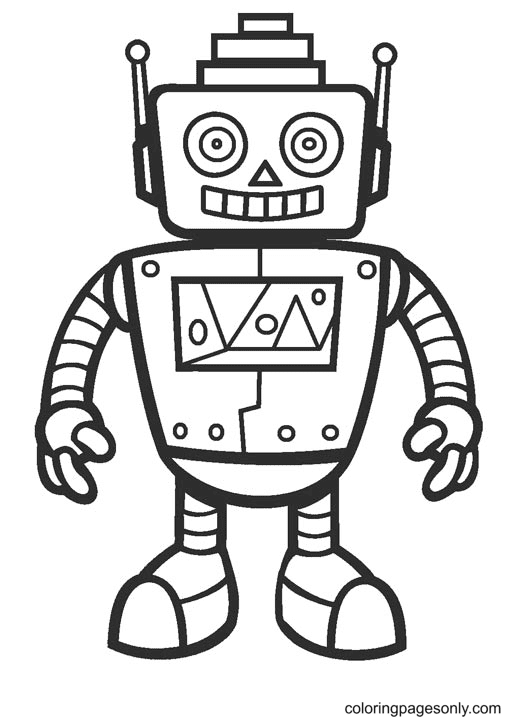
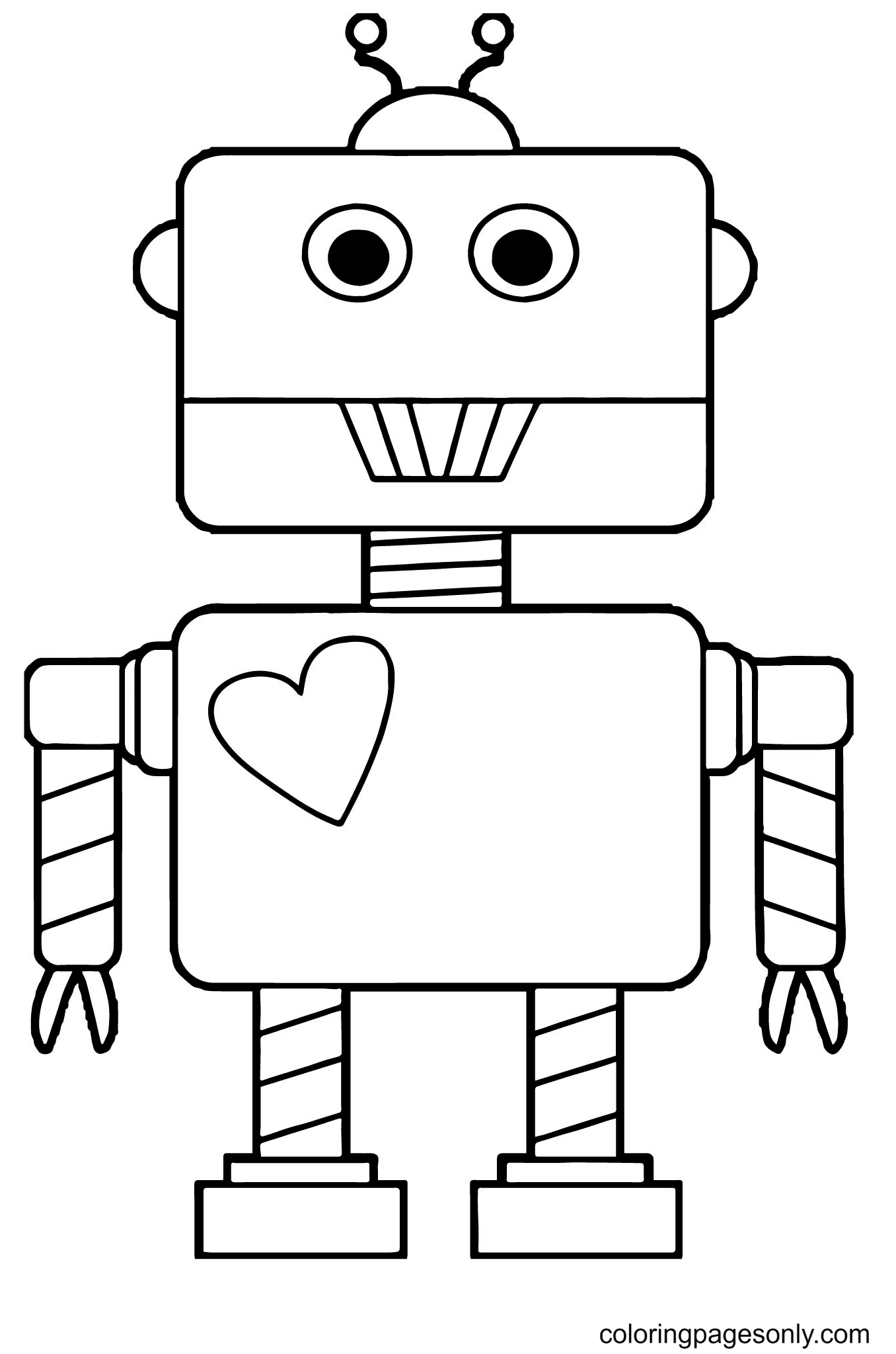
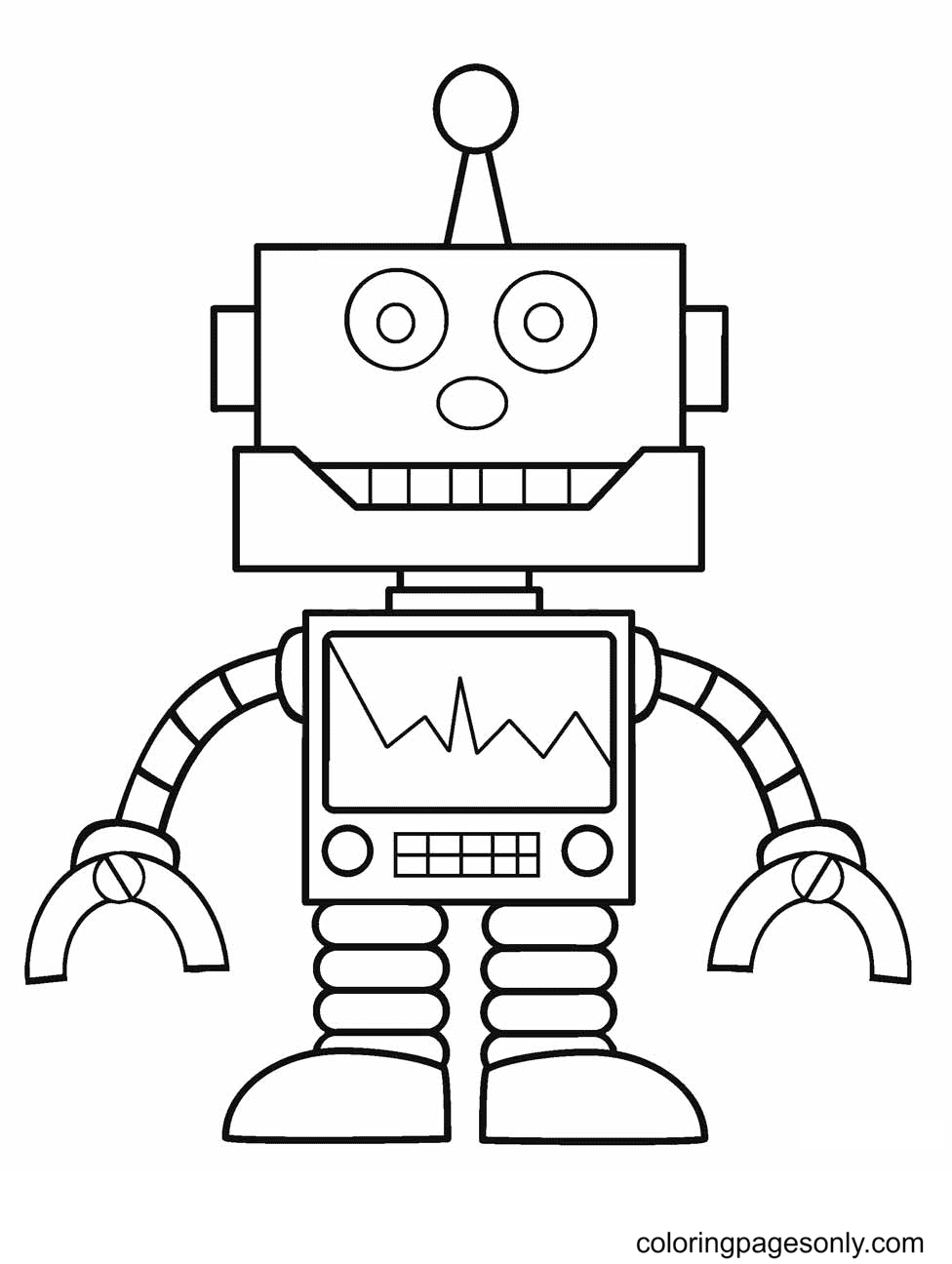
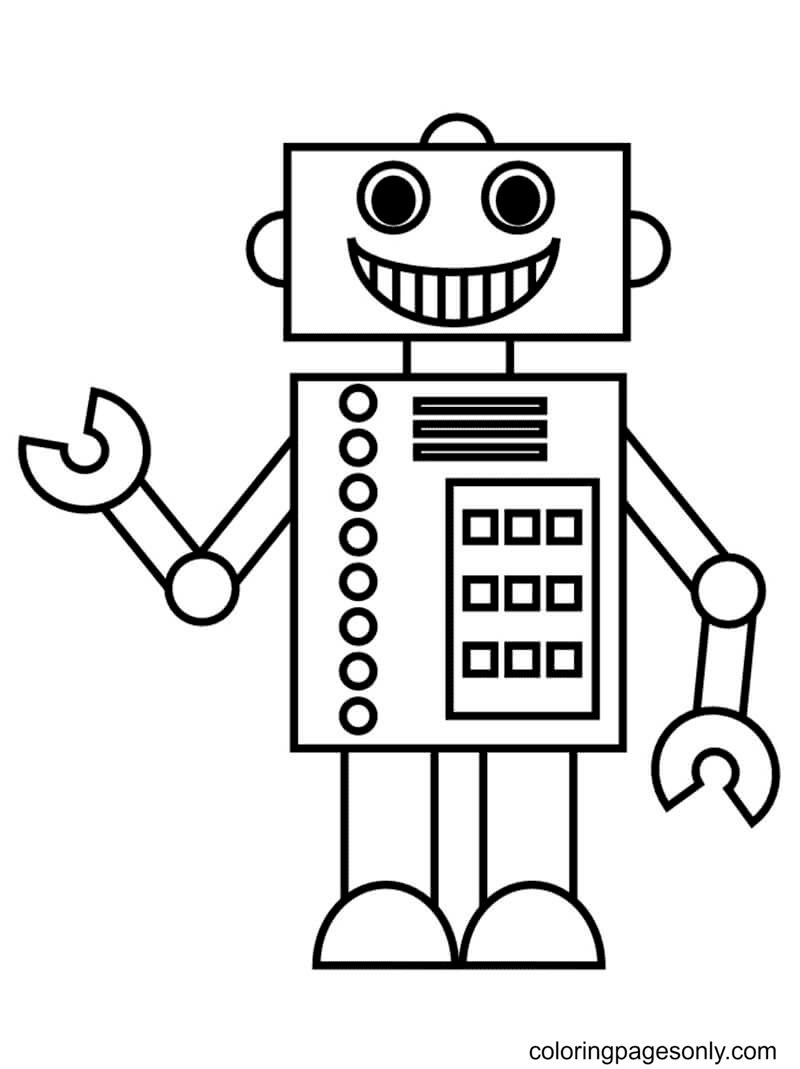
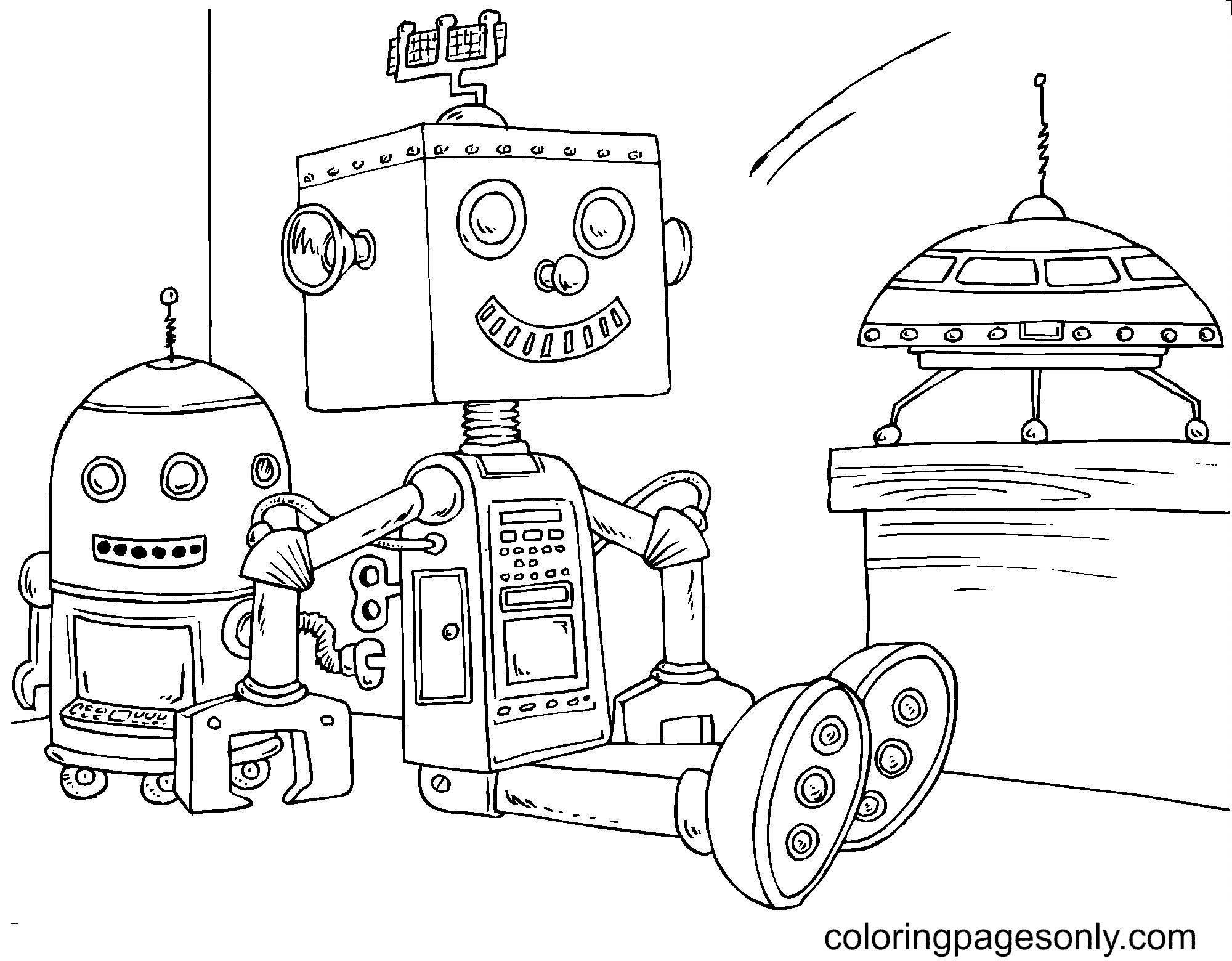
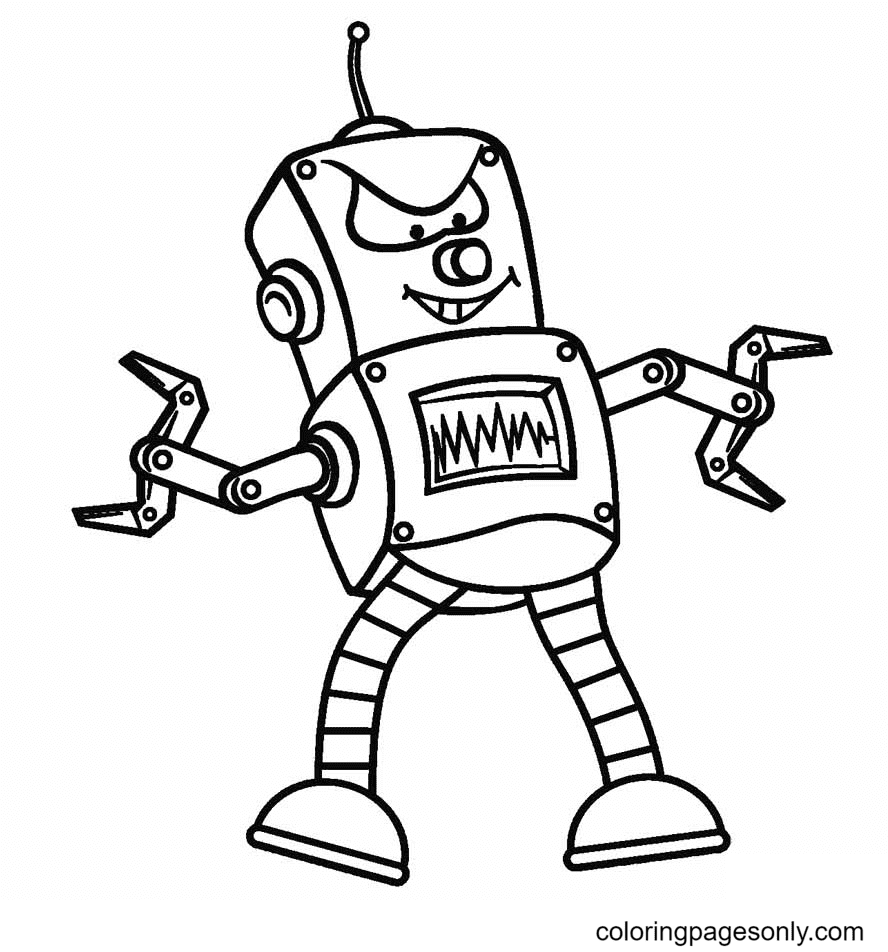
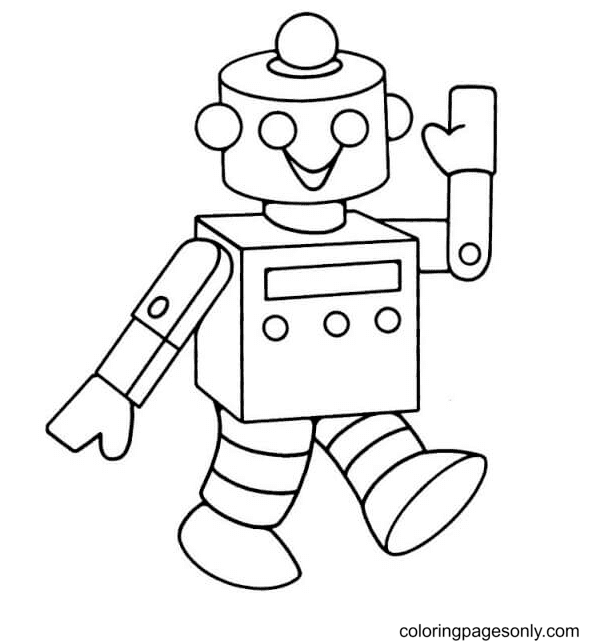
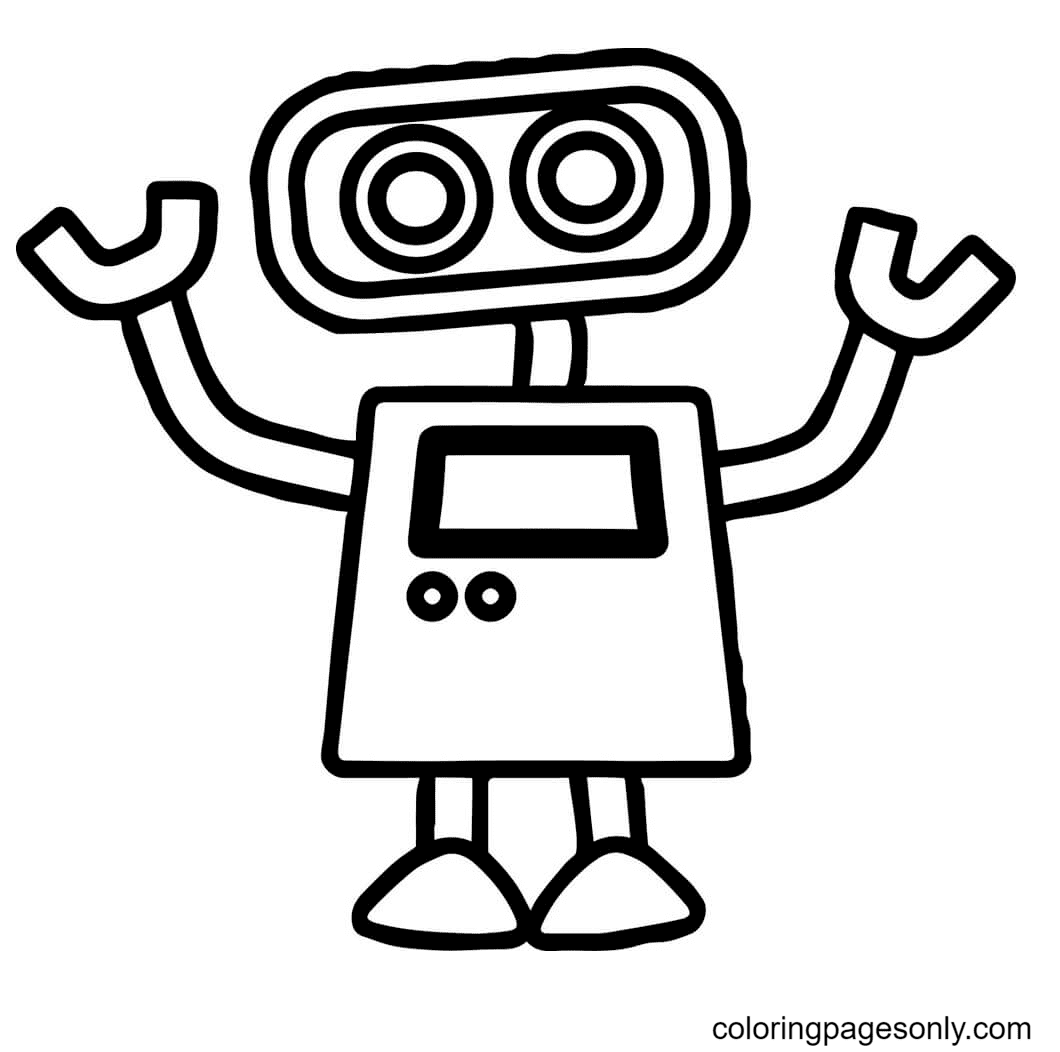
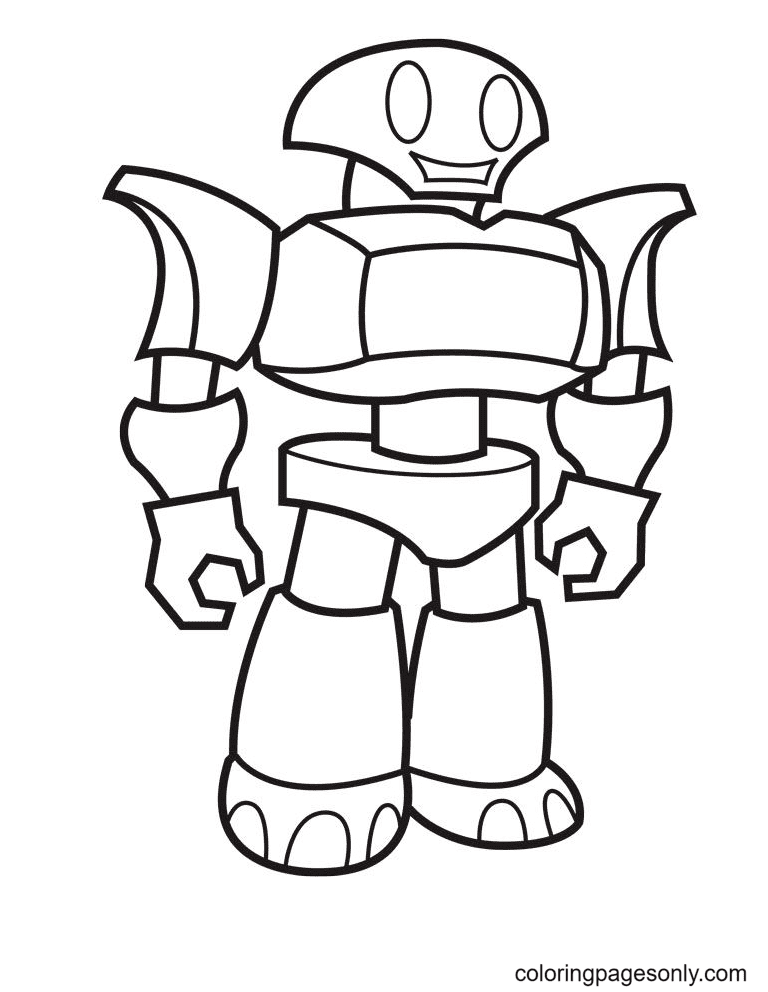
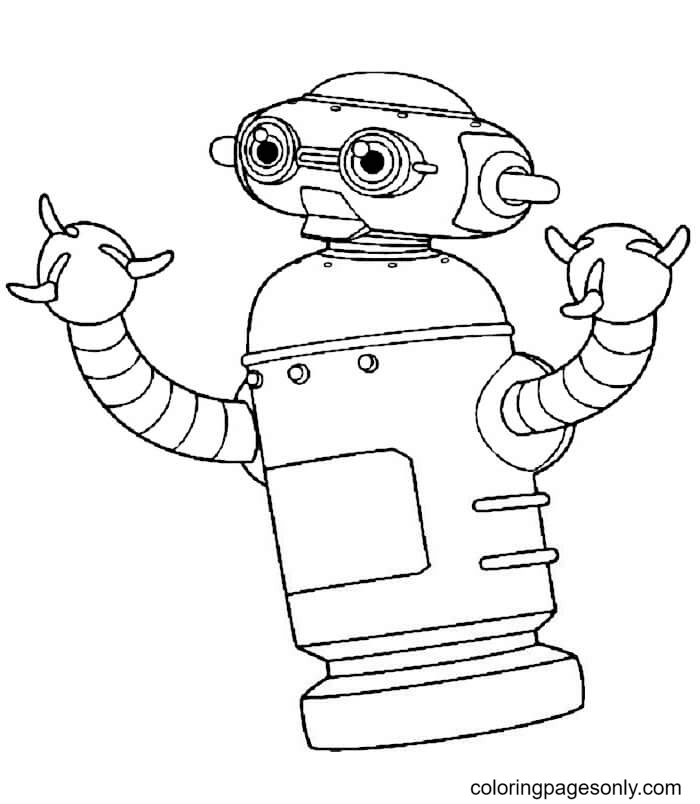
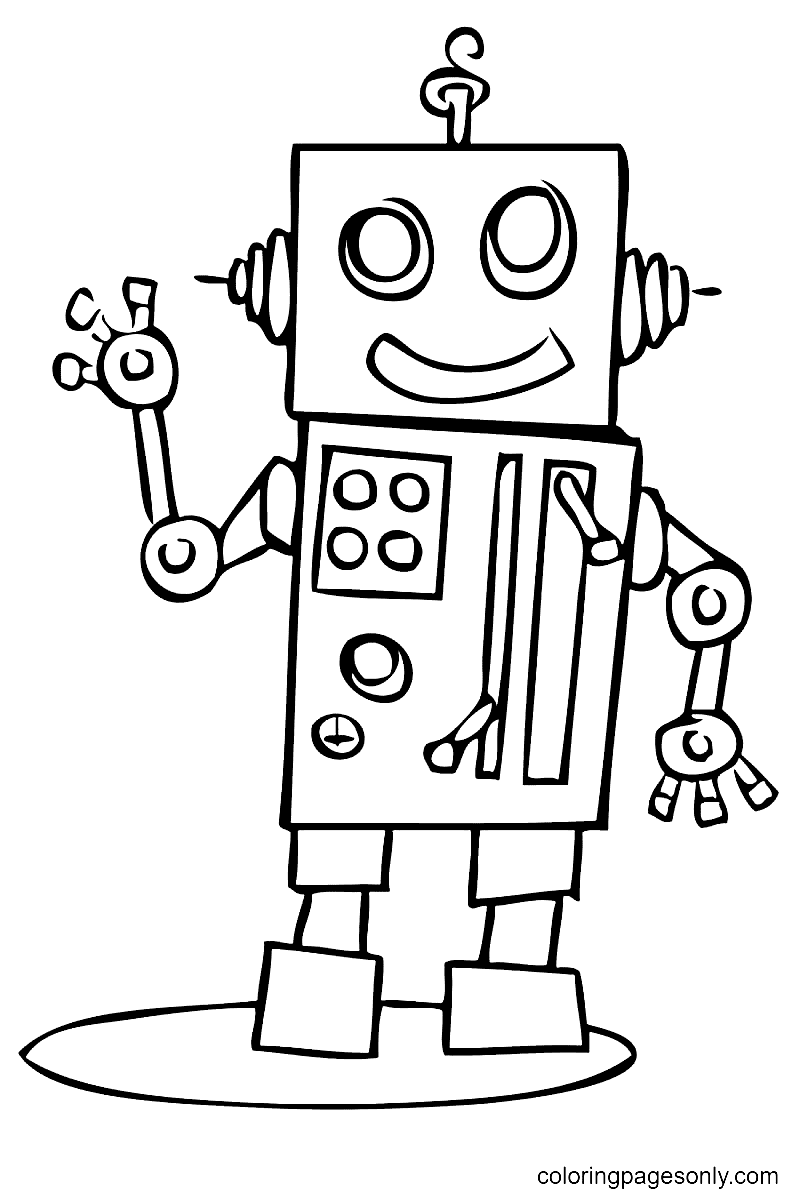
The classic robot of the mid-twentieth-century imagination is one of industrial design history’s most specific and most persistent visual archetypes: a boxy, rectangular head with circular eye-like sensors, a cylindrical or rectangular torso with visible panel seams, arm joints rendered as spheres or cylinders connecting rigid arm segments, and the overall proportions of a human figure translated into sheet metal and rivets. This is the robot of 1950s science fiction illustration, the robot of B-movies, the robot that appears on vintage tin toy packaging.
Its design logic was entirely practical: early science fiction illustrators were imagining what human engineers with mid-century materials would actually produce if asked to make a humanoid machine. The answer was: something made of metal, with joints at the biomechanically necessary locations, power indicators, and an antenna at the head (the “brain”), and the boxy geometry of pressed metal fabrication rather than the organic curves of biological form.
Robby the Robot, designed by Robert Kinoshita for the 1956 science fiction film Forbidden Planet and subsequently appearing in The Invisible Boy (1957), The Twilight Zone, The Addams Family, and dozens of other productions, is the most reproduced single instance of this design – a large, transparent-domed head above a barrel-shaped body with articulated arms, its design sufficiently non-threatening in its campiness that it could play both villain and servant across multiple media without requiring any modification.
Coloring retro robot pages: Grey-silver metallic is the canonical retro robot color – the specific grey of sheet metal or aluminum, not chrome and not painted, but the cool functional grey of industrial fabrication. Apply it across the flat panel surfaces using the standard three-zone technique: slightly lighter grey at the top of each flat panel (where overhead light hits the horizontal surface), main medium grey across the vertical panel faces, darker grey in the shadow areas between panels, and at the recessed joint locations. The eye-like sensors should be vivid color – typically vivid red or green (the eye is the robot’s most expressive element and should contrast with the surrounding metal grey). The antenna, if present, is a darker grey metallic.
Humanoid Robots – The Modern Design
Contemporary real humanoid robots – Boston Dynamics’ Atlas, Honda’s ASIMO, Tesla’s Optimus – and their fictional counterparts share a design language derived from actual robotics engineering rather than from mid-century science fiction: the specific joint configurations required by servo motors and actuators, the cable routing visible between limb segments, the sensor arrays at the head that look different from human eyes but serve equivalent functions.
The Atlas robot, developed by Boston Dynamics, stands approximately 1.5 meters tall and weighs approximately 89 kilograms. Its design uses hydraulic actuators for joint movement and has been documented performing parkour, backflips, and complex agility tasks in videos that have collectively received hundreds of millions of views. Its surface is not flat metal panels but complex curved structures that house the mechanical systems, giving it a more organic silhouette than the retro robot while remaining clearly mechanical.
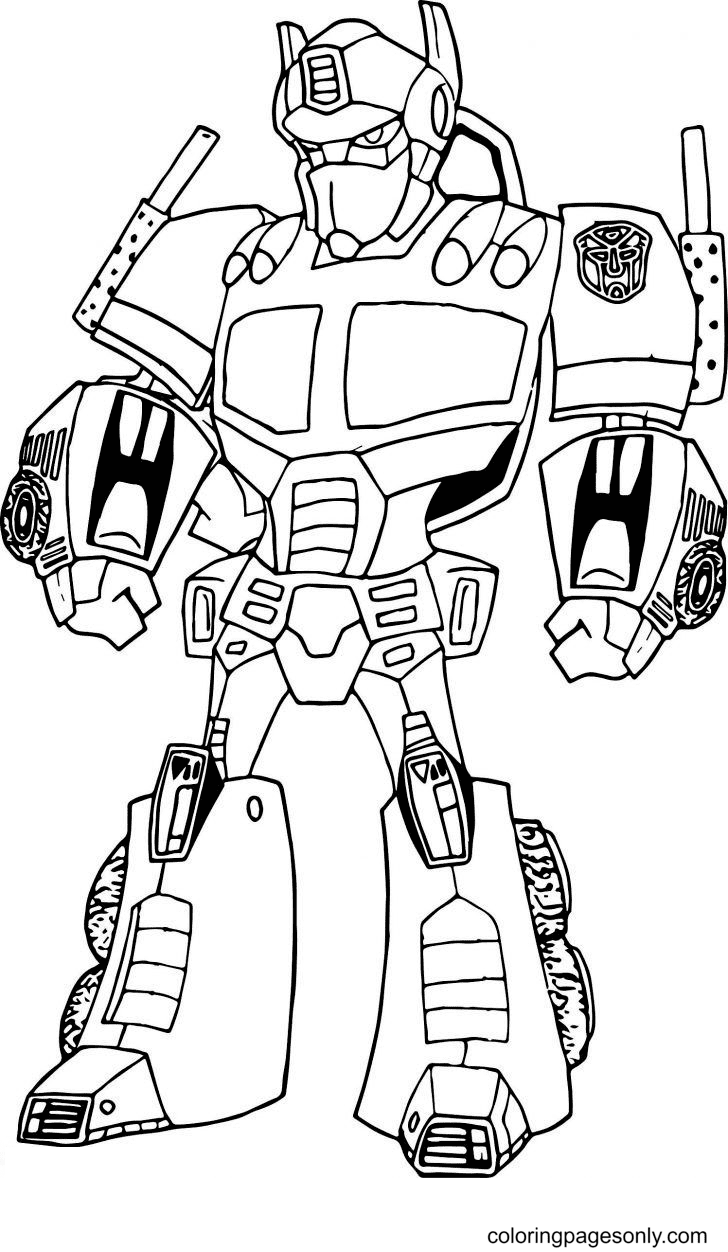
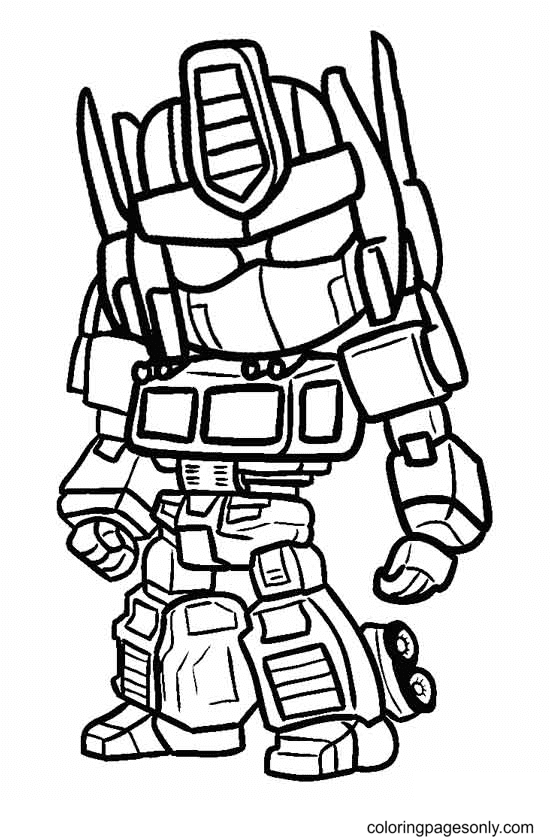
Humanoid robot pages in the collection show this more contemporary design vocabulary – the body geometry of actual robotics engineering, the visible joint structure of servo-actuated limbs, and the specific sensor configuration of a head designed for machine vision rather than human expression.
Coloring humanoid robot pages: Contemporary humanoid robots typically use a two-tone palette: white or light grey for the major body panel surfaces, dark grey or black for the joint structures, motor housings, and internal frame elements visible between panels. The contrast between the light panel surfaces and the dark mechanical elements between them is the most important visual distinction in contemporary robot design. The sensor array at the head – whether depicted as cameras, LIDAR units, or other instruments – should be rendered in the specific colors that distinguish sensors from structure: dark lens surfaces for cameras, or vivid color for indicator lights.
Industrial Robot Arms
The industrial robotic arm is the most-produced type of robot in the world – the six-axis or seven-axis articulated arm that performs welding, painting, assembly, and material handling in manufacturing plants globally. There are approximately 3.5 million industrial robots in operation worldwide as of 2024, according to the International Federation of Robotics.
These arms have no humanoid body – they are a base mounted to the factory floor, a series of articulated segments, and an end-effector (the tool at the working end, which can be a welding torch, a paint gun, a gripper, or any number of specialized tools). Their visual vocabulary is purely functional: the shapes are determined entirely by the mechanical requirements of achieving specific joint ranges of motion, not by any aesthetic consideration.
FANUC robots (Japanese manufacturer, the world’s largest industrial robot company) are typically yellow – the specific vivid FANUC yellow is the most recognizable color in the global manufacturing automation industry. ABB robots are orange. KUKA robots are orange. Yaskawa robots are blue. The color-coding serves both brand identity and visibility in the manufacturing environment.
Coloring robot arm pages: Choose the manufacturer-associated color if a specific manufacturer is referenced, or choose any vivid industrial color for a generic arm: FANUC yellow (vivid warm yellow), ABB or KUKA orange, Yaskawa blue. The arm’s articulated segments receive the primary color across their outer surfaces. The joint housings – the bulge at each joint that contains the servo motor and gearbox – receive the same color but at a slightly darker value (they are typically a slightly deeper shade). The end-effector at the arm’s working tip is typically a different color or dark metallic.
Cute Cartoon Robots
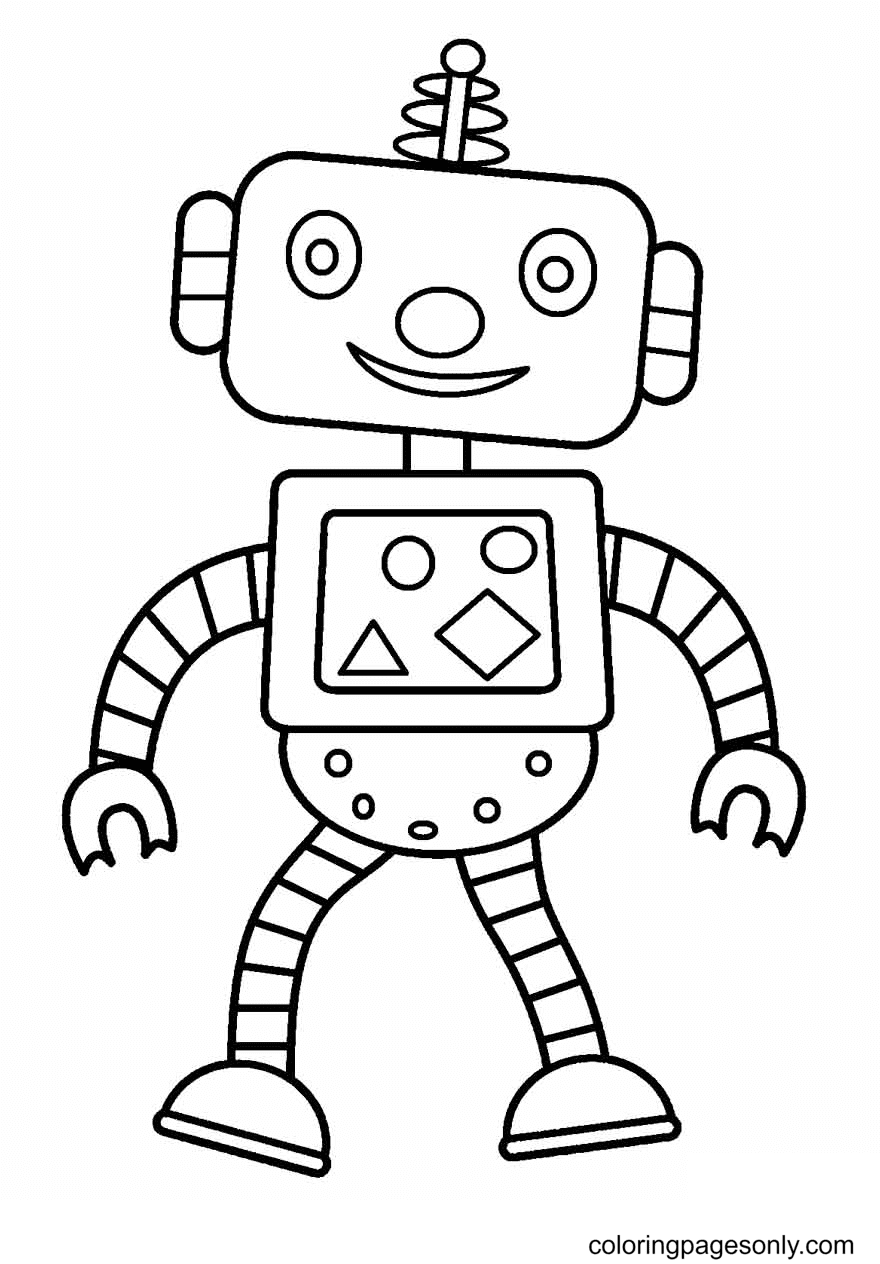
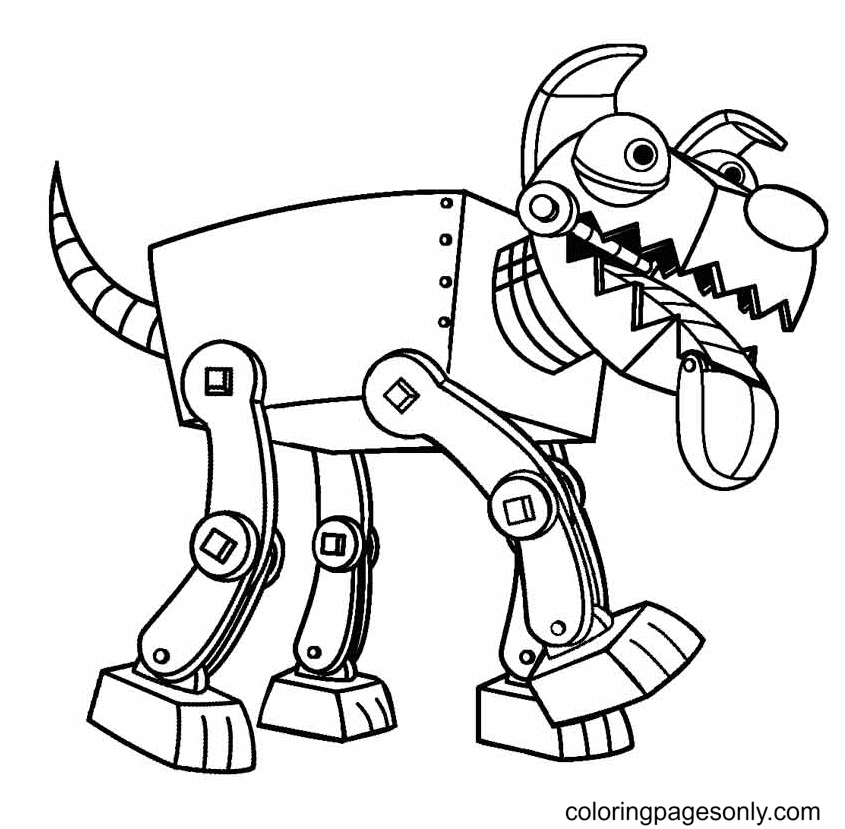
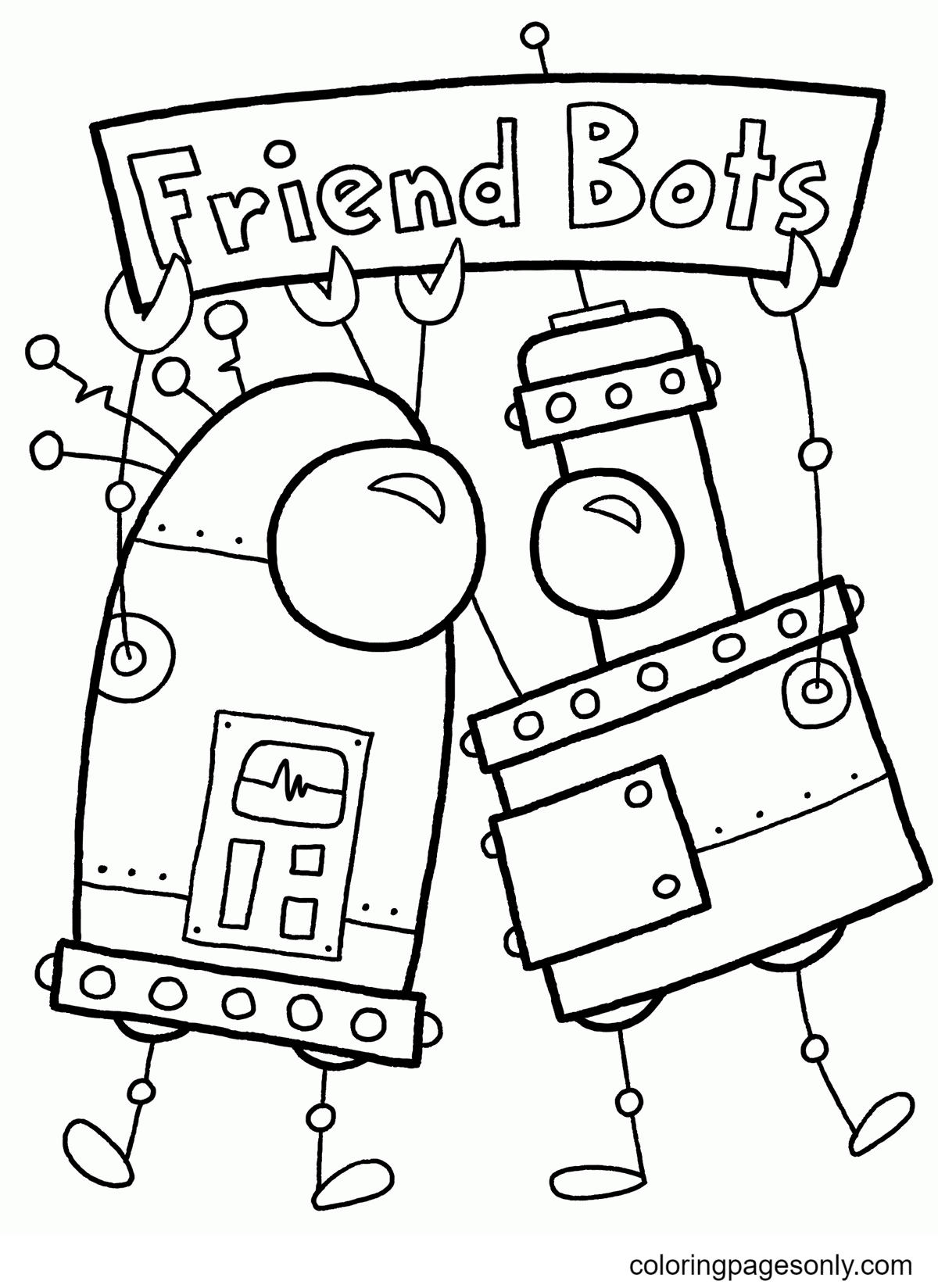
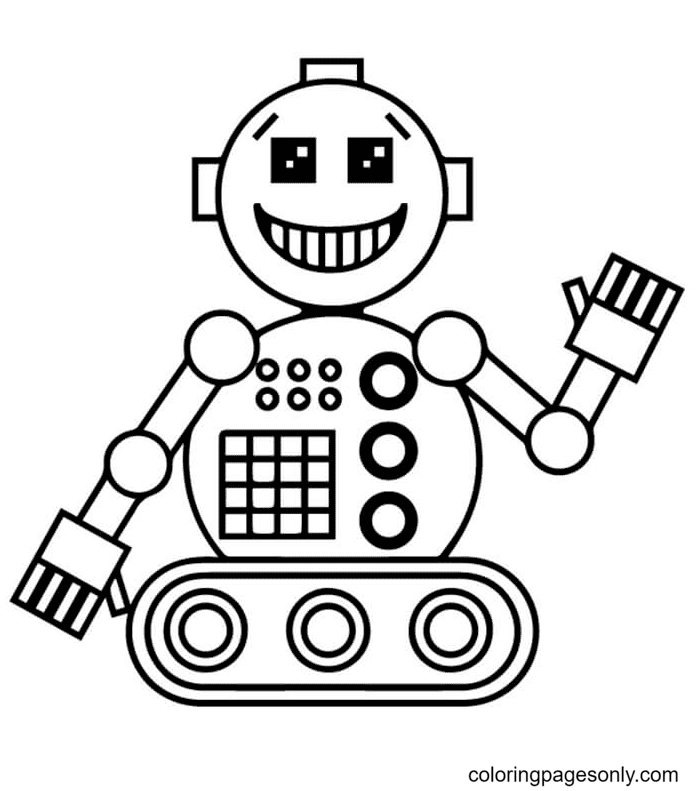
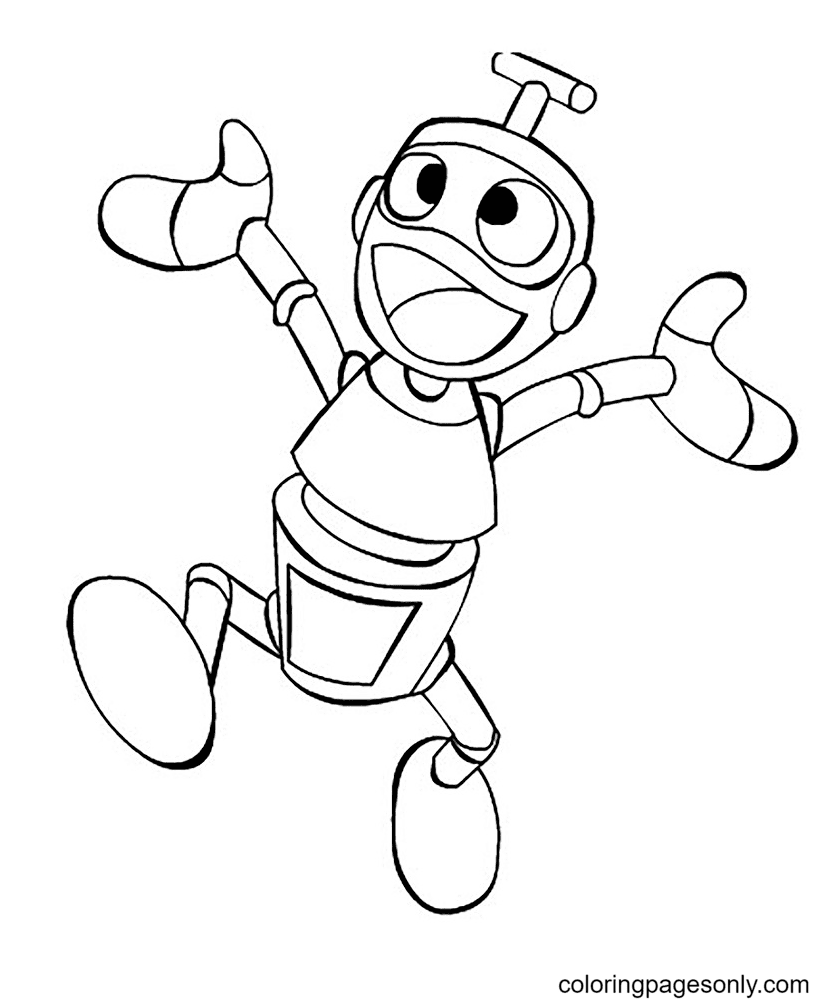
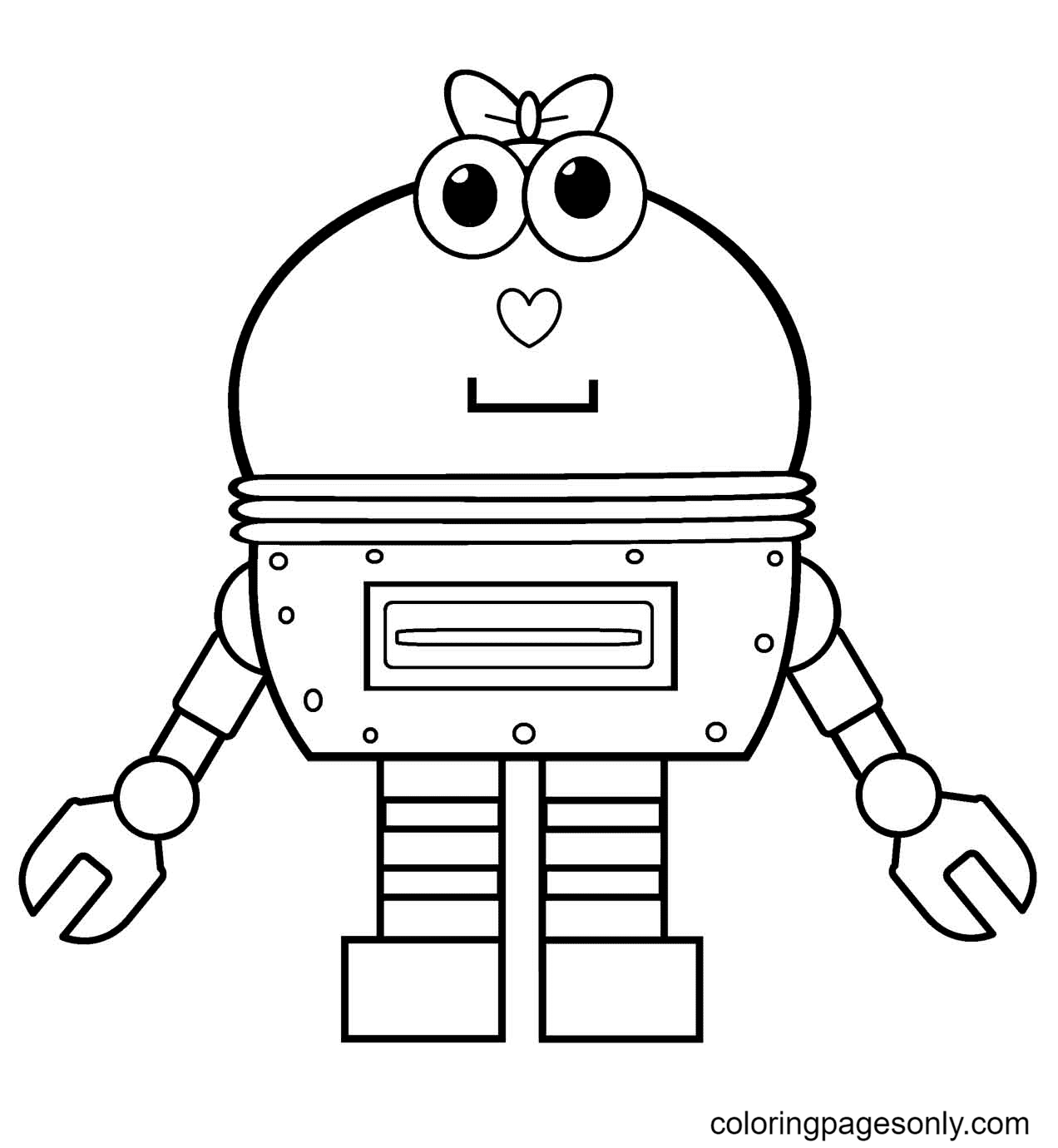
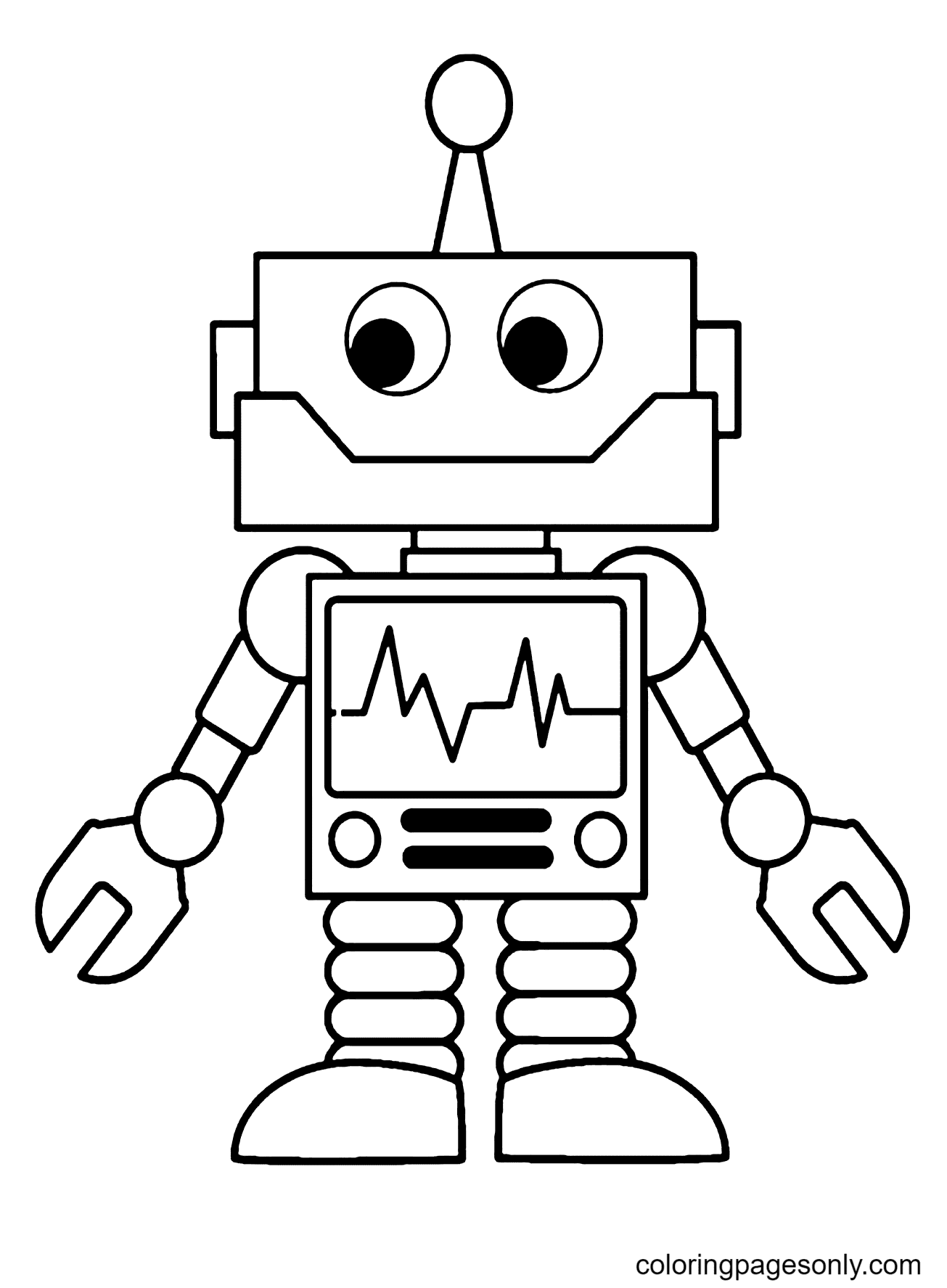
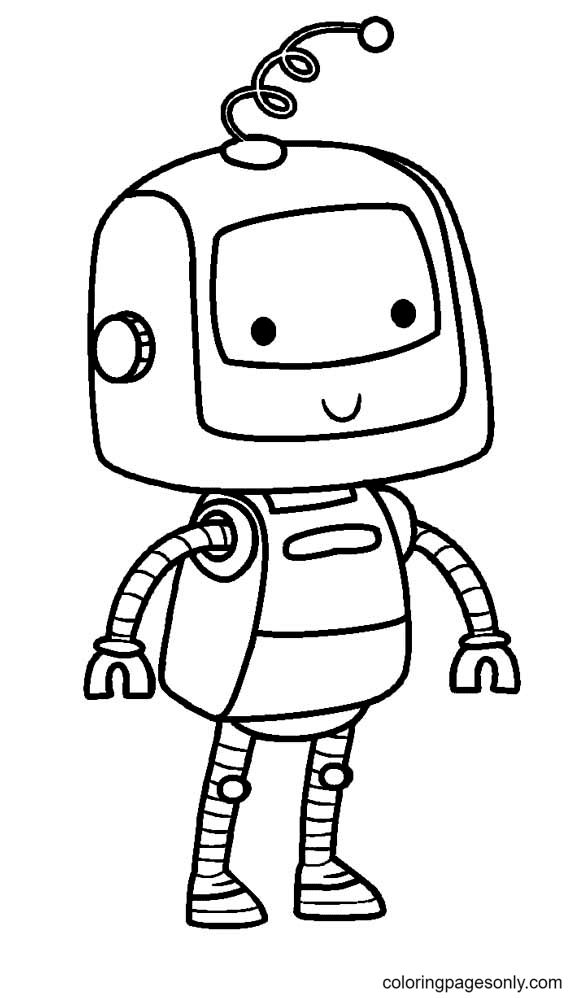
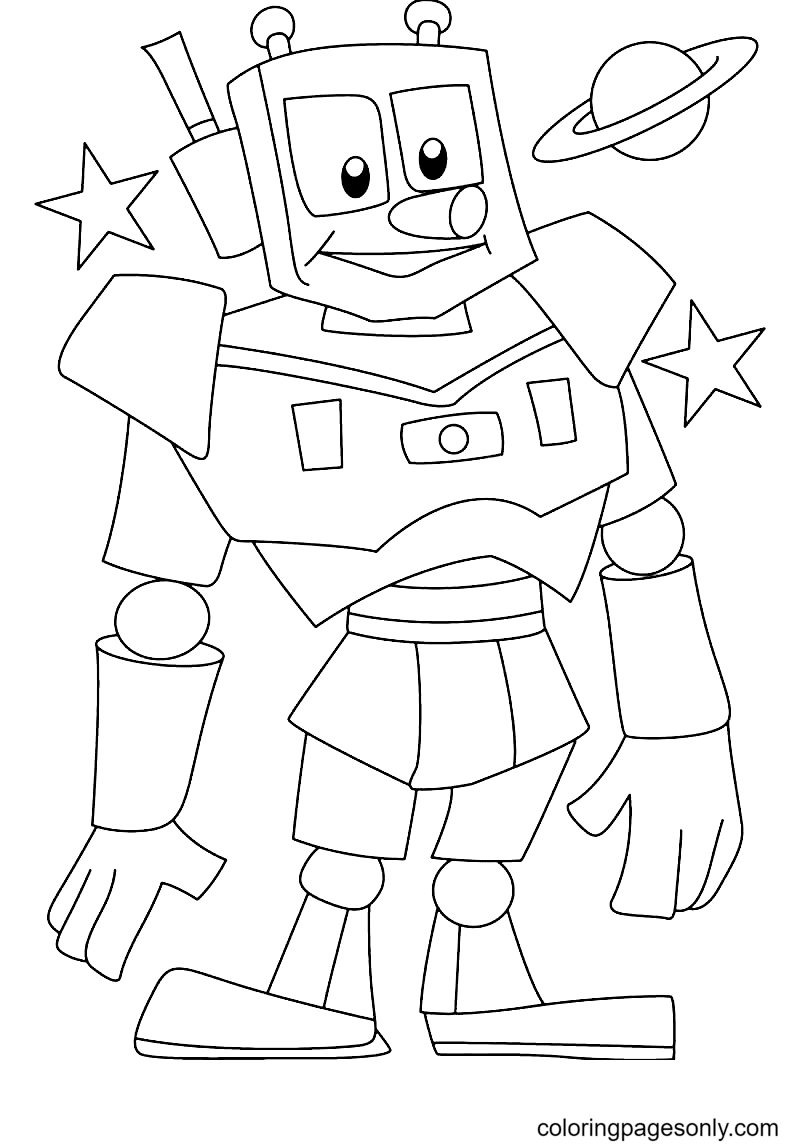
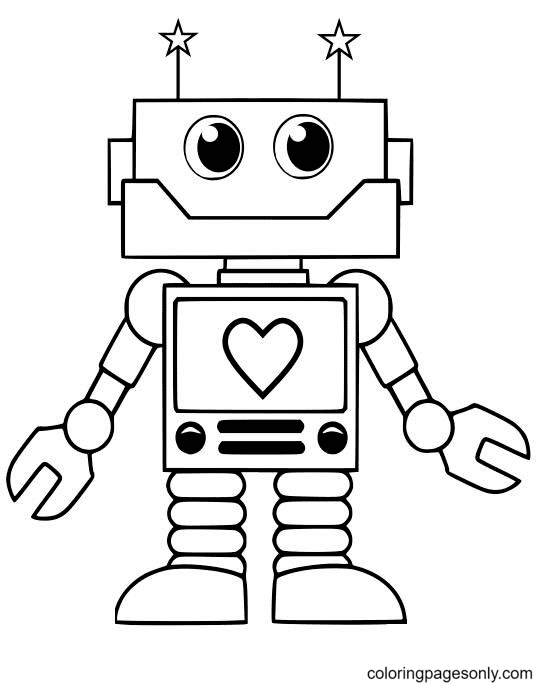
The collection’s most accessible pages for young colorists show robots in the cartoon register – round proportions, large expressive eye-like features, bright colors, and the specific warmth of a machine designed to be loved rather than useful. WALL-E (Pixar, 2008) established the most successful recent template for this design: a small, compact, weathered robot with binocular eyes that could be oriented independently to convey emotion, and a personality communicated entirely through those eyes and through sounds rather than words.
The cute cartoon robot design principle: take the mechanical features that distinguish a robot from an organism (angular body, visible joints, mechanical head) and apply the “baby schema” proportions that produce the caring response – large eyes relative to head size, round overall body shape, compact limbs. The result is a machine that reads as a character before it reads as a machine.
Coloring cartoon robot pages: Bright, fully saturated primary or secondary colors – the vivid reds, blues, greens, and yellows of cartoon design rather than the industrial grey of realistic robots. The eyes are the character’s most important element: large, round, with a clearly visible iris color and a white highlight dot at the upper portion. The body should be rendered at full color saturation – cartoon robots are not muted or realistic in their color choices.
Battle and Warrior Robots
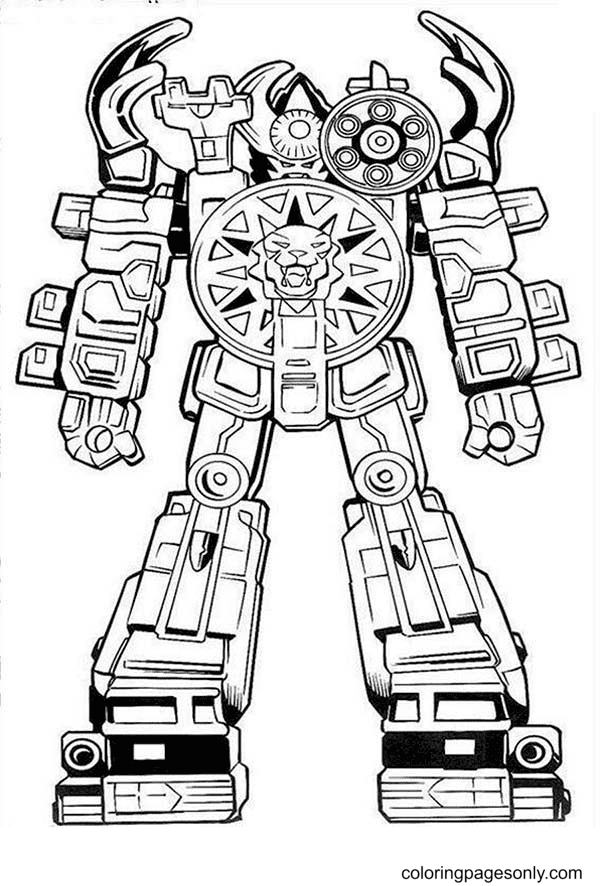
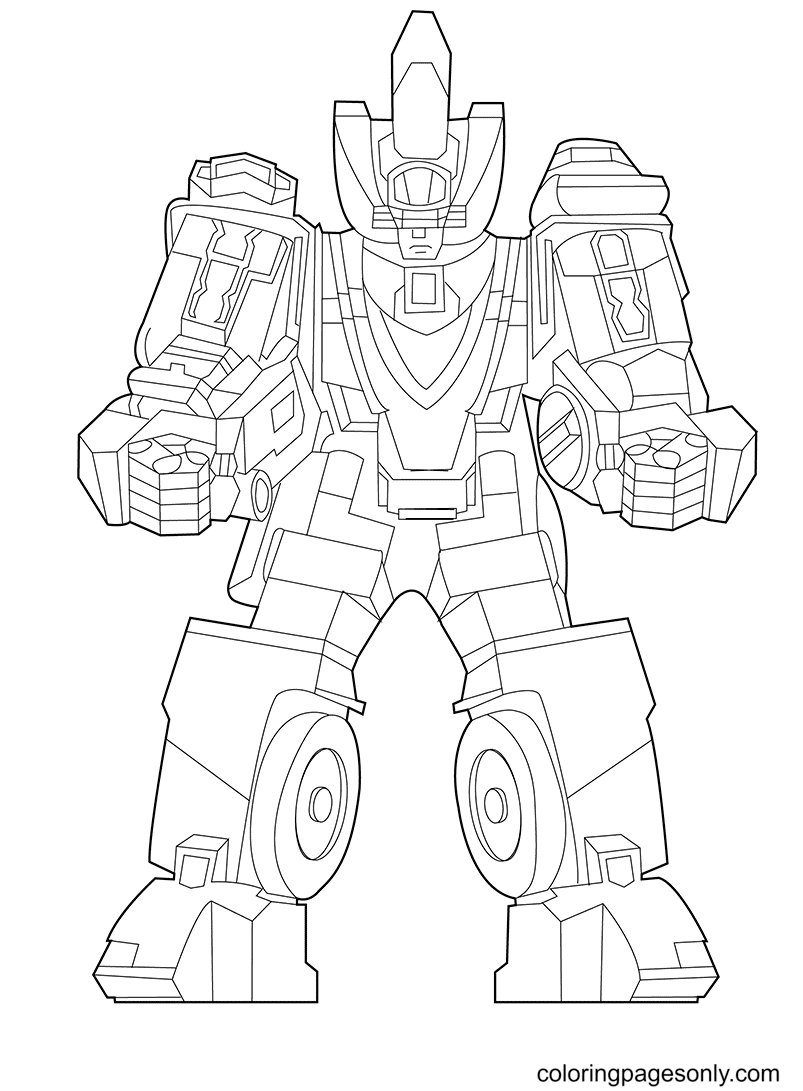
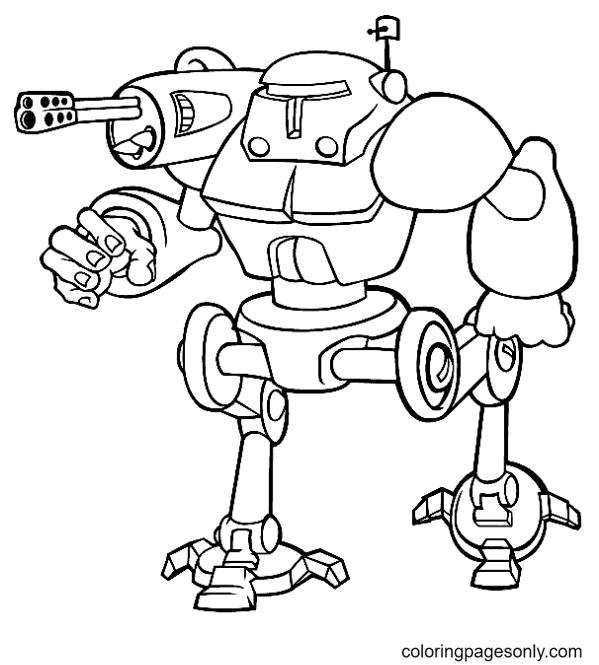
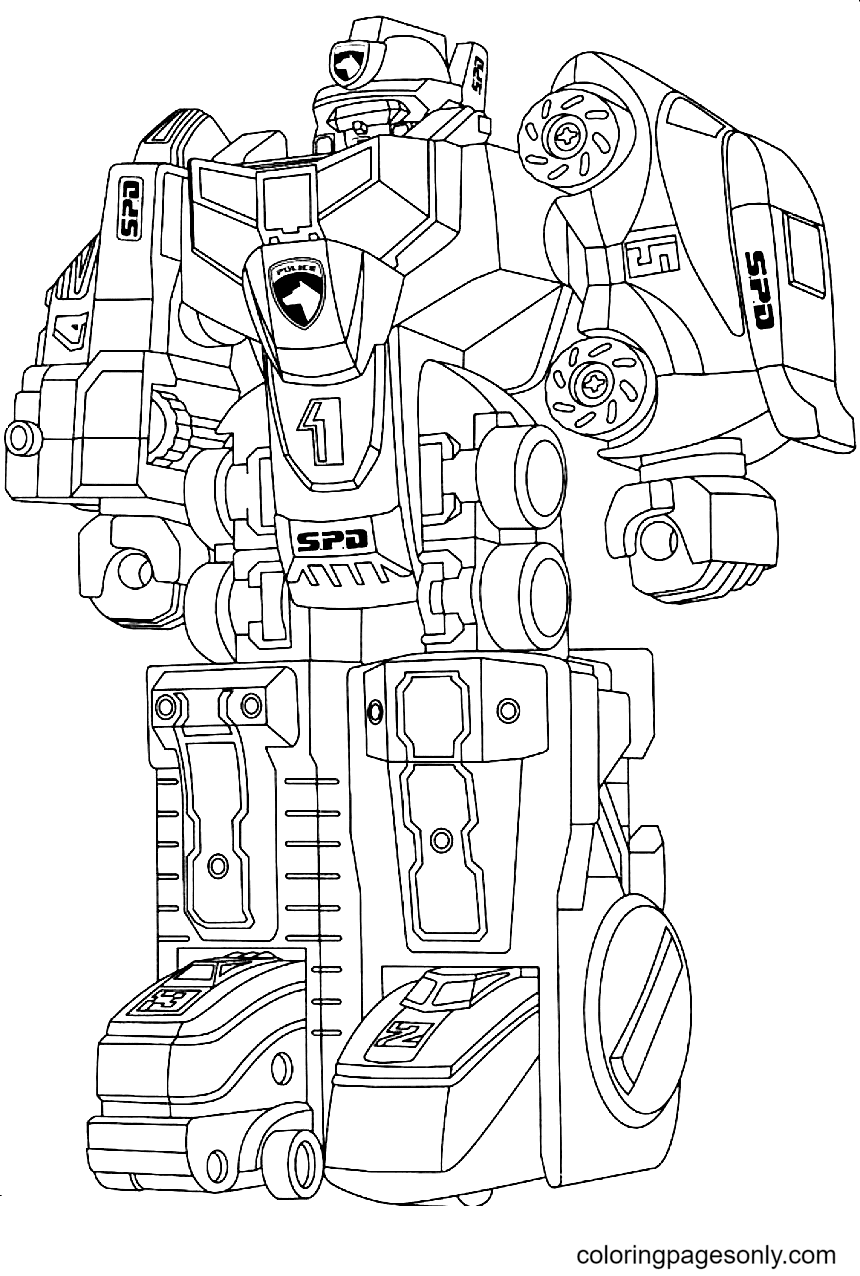
Battle robots – from the mecha of anime (the giant humanoid war machines of Mobile Suit Gundam, Neon Genesis Evangelion, Pacific Rim) to the fighting robots of competitive robot combat shows – occupy the collection’s most dynamically posed and most mechanically elaborate pages. These are robots designed for combat, which means their design is built around weapons, armor, and the specific visual language of mechanical aggression.
The mecha design tradition from Japanese anime is the most extensively developed visual vocabulary for battle robots – the giant humanoid war machine piloted by a human inside its chest or head, with weapons integrated into its arms and shoulders, layered armor plating, and the scale of a building rather than a person.
Coloring battle robot pages: Combat robots use darker, more aggressive color palettes – deep red, dark blue, military olive drab, metallic black – rather than the friendly primary colors of cartoon robots. The armor plating should receive the three-zone metallic treatment. Any visible weapons – beam cannons, missile pods, blade weapons – should be rendered in the darkest available tones, contrasting with the slightly lighter armor surfaces.
What These Pages Do
Karel Čapek coined the word “robot” in 1921, and his play asked immediately whether robots would remain tools or become something more. The robot has been the primary vehicle for questions about machine intelligence, labor, consciousness, and human-machine relationships in fiction ever since. A collection of robot coloring pages is a collection of a hundred years of human imagination about what machines can become.
Real robots are performing surgeries, exploring Mars, and assembling cars simultaneously. The NASA Perseverance rover has been operating on Mars since February 2021, gathering samples and conducting scientific experiments. The da Vinci Surgical System has been used in over ten million procedures since 2000. Amazon’s warehouse robots move millions of packages daily. These are not fictional developments – they are the documented present state of robotics, visible through the coloring pages that reference real robot designs.
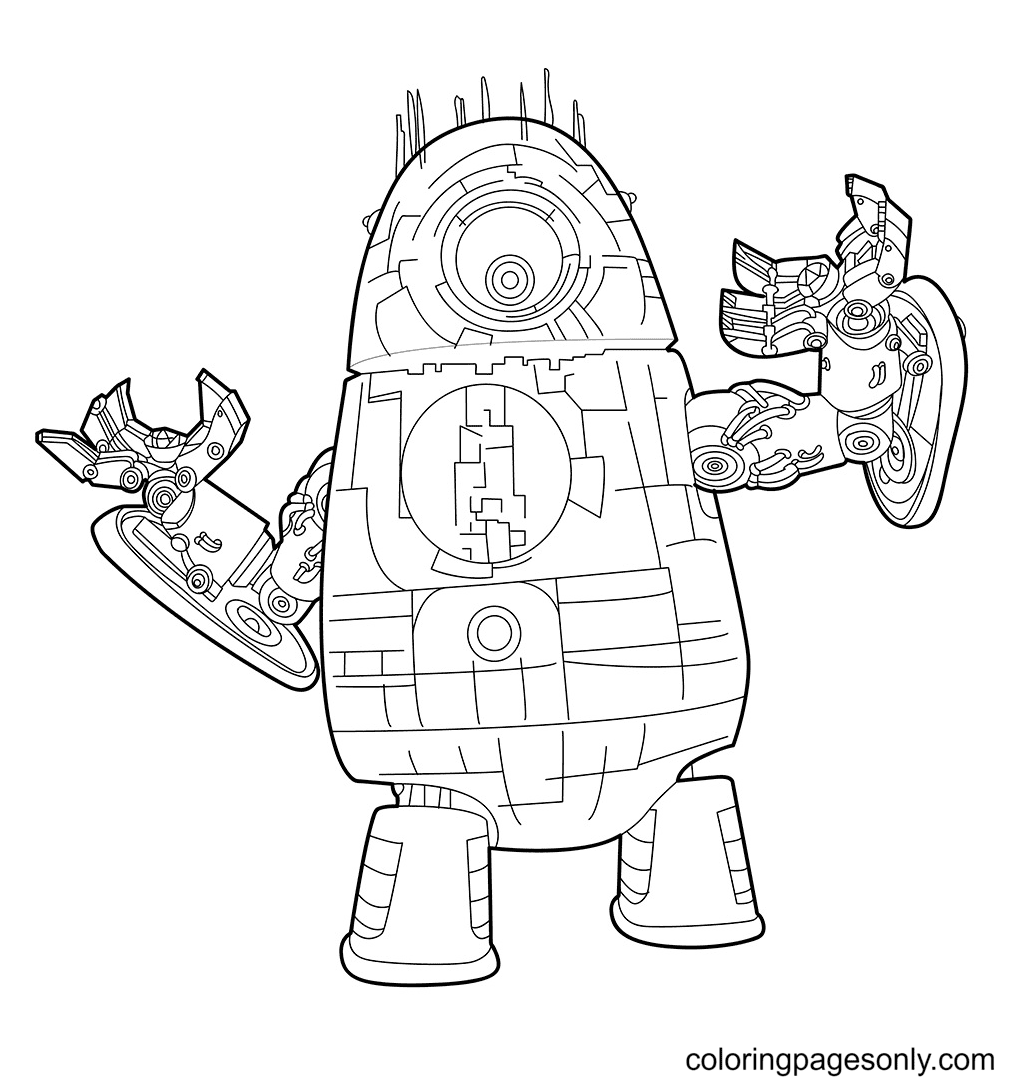
The engineering of robot joints, sensors, and end-effectors is directly visible in robot design. Unlike most machines, whose functional engineering is hidden inside a body, robots often display their mechanical logic on their exterior – the joint at each arm segment shows where the servo motor sits, the sensor array at the head shows where the machine perceives its environment, the end-effector at the arm’s working end shows what the robot is designed to do. Coloring these pages is reading the engineering.
Fine motor development. The American Academy of Pediatrics identifies fine motor skill development as a key childhood milestone throughout early childhood. The panel seams of retro robot pages, the gear and circuit detail of mechanical robot pages, the joint structures of humanoid robot pages, and the face expressions of cartoon robot pages all provide motivated, sustained fine motor practice. The 2005 Art Therapy Journal study on structured coloring and anxiety reduction applies throughout.
How to Color These Pages Well
Metal is the dominant material – learn its three-zone technique and apply it everywhere. Almost every surface on a robot page is some form of metal: steel, aluminum, chrome, or a specific manufacturing finish. The three-zone technique applies to all of them: lightest tone at the topmost directly-lit surface, mid-tone across the main face of each segment, darkest tone in the recessed areas between segments, and at the underside of each protruding element. Master this technique on the simplest retro robot pages before applying it to the more complex humanoid and battle robot pages.
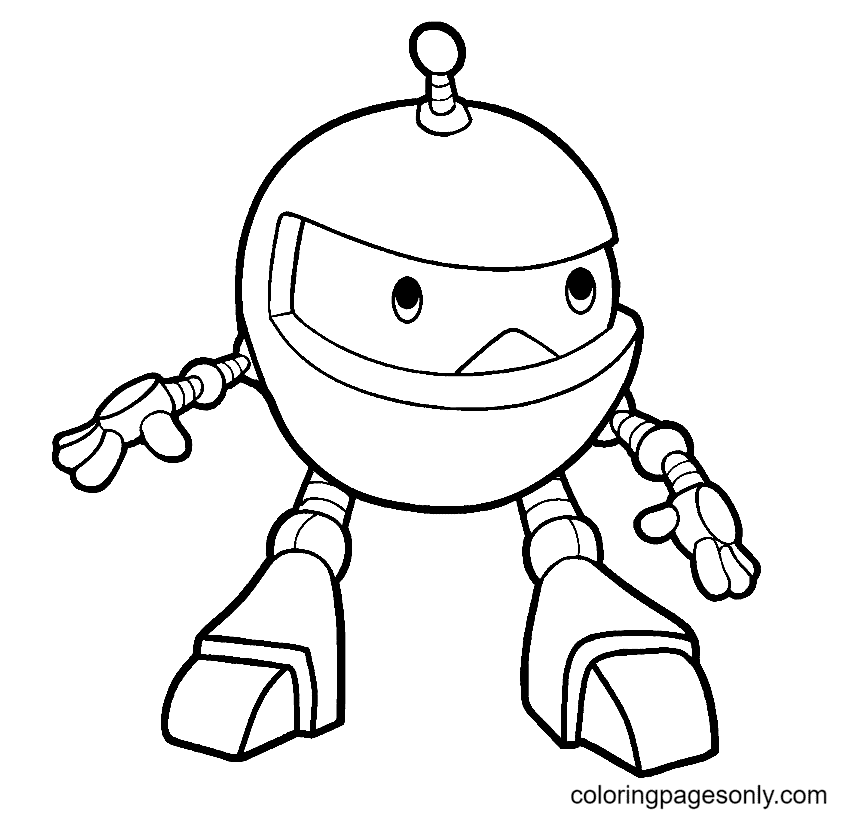
The eye is the robot’s entire personality – treat it with the utmost care. Whether the “eye” is a large circular lens, a rectangular visor, a pair of camera-like sensors, or the large animated eyes of a cartoon robot, it is the single element that determines whether the page reads as a machine or as a character. Apply the eye’s base color fully and at full saturation – a vivid red, green, or amber. Add a white highlight dot or arc at the upper portion. For sensor arrays that reference camera lenses, apply dark grey or near-black within the lens rim (the lens element absorbs light) with a small specular white highlight at the lens’s most direct light point.
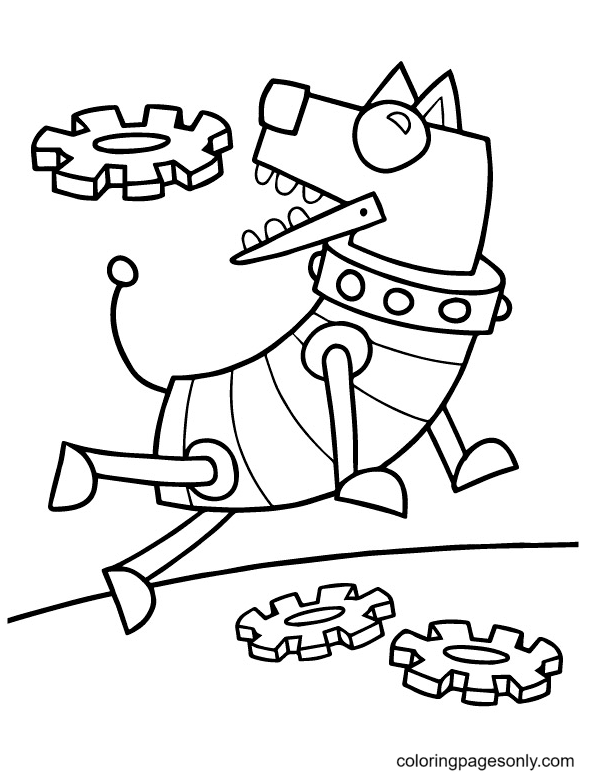
Visible gears and circuits are the robot’s secondary personality – render them systematically. Pages showing internal gear mechanisms or circuit board details require a systematic approach: identify all the gear shapes, apply the base gear color (medium warm grey for mechanical gears, medium yellow-green or grey for circuit boards), then add a slightly darker tone in the spaces between gear teeth or circuit traces to create visual separation. Each gear should read as a completely separate object rather than as part of a uniform patterned surface.
Color contrast communicates function. In any robot page with multiple distinct elements – body panels, joint housings, sensor elements, structural members – different functional elements should be different colors to distinguish their roles. A simple two-tone approach (light grey for panels, dark grey for mechanical elements between panels) reads clearly as a machine with distinct functional components. Adding a third vivid accent color for the eyes and any light-emitting elements completes the functional color vocabulary.
Cartoon robots want warm backgrounds for maximum contrast. The grey-silver-white palette of most robot designs provides maximum contrast against warm backgrounds – warm cream, warm yellow, warm orange. If the page includes a background area, apply a warm tone to it: the cool-neutral robot against the warm background produces the specific color relationship that reads as “friendly machine in a warm world.”
5 Creative Craft Ideas
My Robot – Design Your Own
The most direct use of a robot coloring page is as a design starting point. Print the most neutral, least decorated robot page in the collection – a clean robot outline with minimal existing design elements. This is the base for an original robot design.
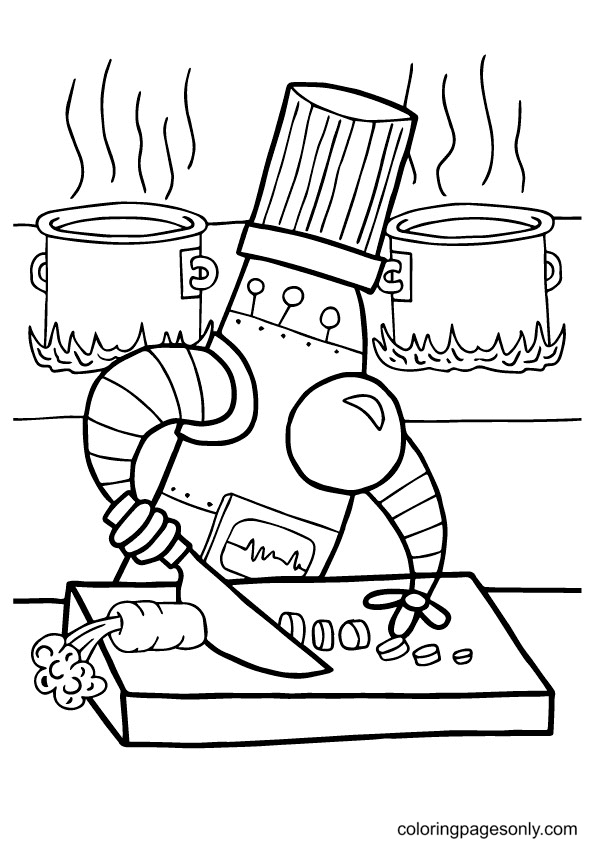
Decide: What does your robot do? Give it a specific function. A cleaning robot: add a broom or vacuum attachment. A cooking robot: add a spoon or whisk end-effector. A medical robot: add a medical cross emblem. A gardening robot: add a water sensor and a trowel.
Name your robot. Color it in a color scheme appropriate to its function: medical robots are white and blue, construction robots are orange, and emergency robots are red and yellow. Add the robot’s name to its chest panel.
The finished page is a designed robot – function, name, and color all chosen by the designer.
Three Generations of Robot Design
Print three robot pages representing different design eras: a classic retro boxy robot (1950s aesthetic), a mid-period humanoid robot (1980s-2000s aesthetic), and a contemporary robot design (2020s aesthetic based on real robots like Atlas or Optimus).
Color all three in metal tones – grey-silver across the board – so only the design language changes between the three pages. Mount in chronological order: “1950s – What science fiction imagined.” “1990s – What engineers attempted.” “2020s – What robots actually are.”
The display shows the convergence of imagined robots and actual robots across seventy years.
Real vs. Fictional – The Mars Rover Page
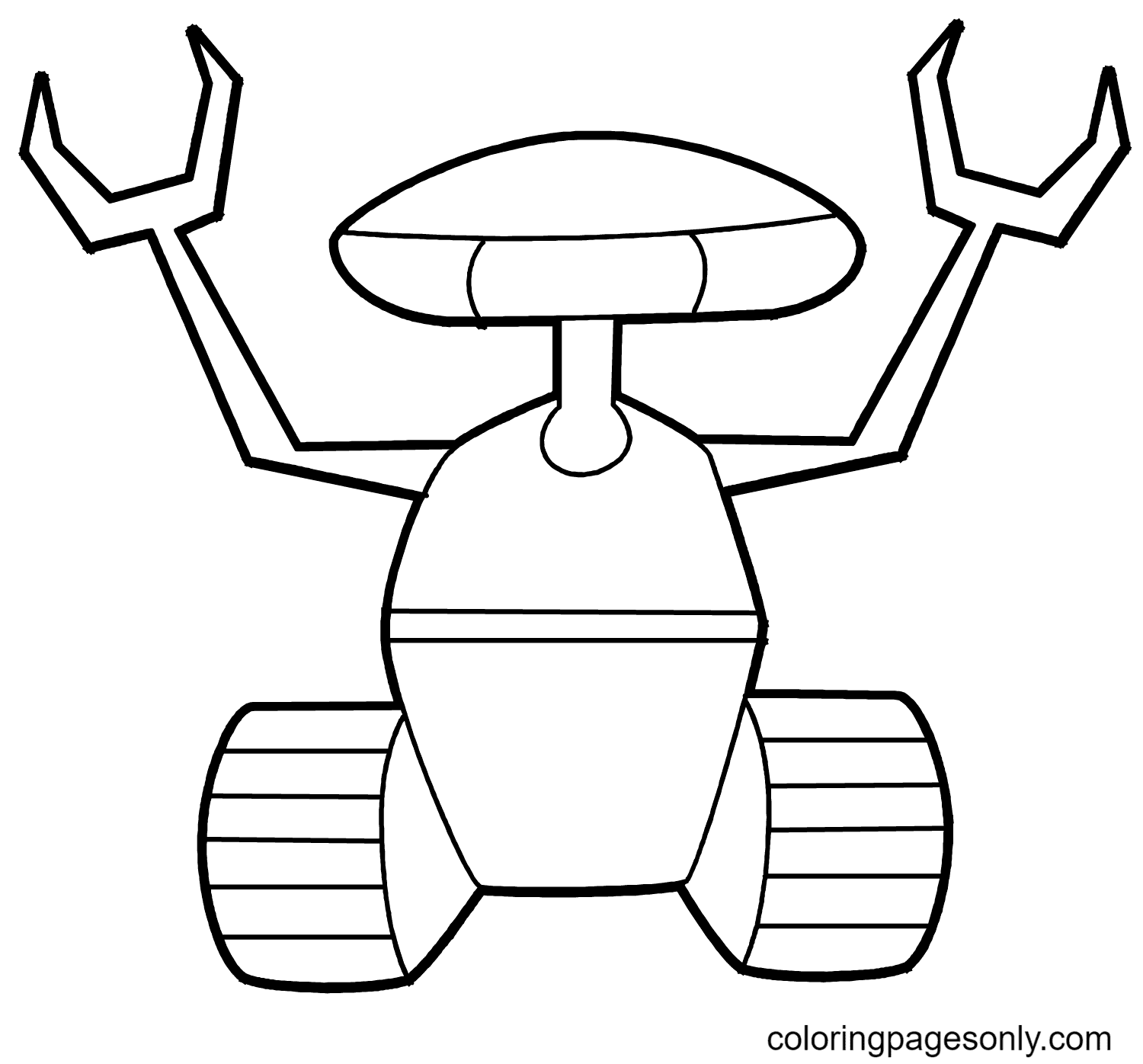
NASA’s Perseverance rover has been operating on Mars since February 18, 2021. Print any wheeled robot page that resembles a rover configuration. Color it in the grey-gold-silver palette of actual NASA rovers: the main body in light grey, the solar panels (if depicted) in deep blue-black, the wheels in dark metallic grey.
On the backing sheet, add: “Perseverance Mars Rover. Landed February 18, 2021, Jezero Crater, Mars. Mass: 1,025 kg. Power: Radioisotope thermoelectric generator. Mission: Search for signs of ancient microbial life. Still operating.”
The finished page frames a fictional-looking robot page as a tribute to an actual robot currently on Mars.
Asimov’s Three Laws – The Rule Card
Isaac Asimov formulated the Three Laws of Robotics in his 1942 short story “Runaround.” Print a clean humanoid robot portrait page. Color it in the most orderly, disciplined color scheme available – clean white with blue-grey accents, the palette of something designed to follow rules.
On a separate card beside the colored page, hand-letter: “Asimov’s Three Laws of Robotics (1942):
- A robot may not injure a human being, or, through inaction, allow a human being to come to harm.
- A robot must obey orders given by humans except where such orders conflict with the First Law.
- A robot must protect its own existence, except where such protection conflicts with the First or Second Law.”
The display frames the coloring page within the most influential ethical framework in robot fiction.
The Gear Dissection
Select the most mechanically detailed robot page in the collection – the page with the most visible gears, joints, or internal mechanical detail. Color every visible mechanical element systematically: warm grey for every gear, dark grey for every structural frame element, vivid amber or green for every visible light or sensor element.
After completing the coloring, identify and label three visible mechanical elements: one gear, one joint, and one sensor or eye. Add arrows pointing to each with the label: “Gear – converts rotation into force.” “Joint – allows range of motion.” “Sensor – perceives the environment.” The finished page is both a coloring project and an engineering education object.
Frequently Asked Questions
Where does the word “robot” come from? The word “robot” was coined by Czech playwright Karel Čapek and first appeared in his 1920 play R.U.R. – Rossum’s Universal Robots – which premiered at the National Theatre in Prague on January 25, 1921. The word derives from the Czech and Slovak robota, meaning forced labor or drudgery. Čapek’s play depicted artificial beings created to perform labor who eventually rebel against their creators, establishing the world and the primary narrative tension of robot fiction in the same text. Čapek later credited his brother Josef Čapek with suggesting the actual word “robot.”
What was the first industrial robot? UNIMATE, developed by George Devol and Joseph Engelberger, was the first industrial robot installed in a manufacturing plant. It was installed at a General Motors plant in Ewing Township, New Jersey, in 1961. UNIMATE weighed approximately 4,000 pounds and performed a task that was considered too dangerous for human workers: retrieving heated metal parts from a die-casting machine and stacking them. George Devol filed the original patent for a programmable robotic arm in 1954. Engelberger, who commercialized the technology, is often called the “Father of Robotics.”
What is Isaac Asimov’s contribution to robot thinking? Isaac Asimov was an American science fiction writer and professor of biochemistry who published approximately 500 books across his career. He formulated the Three Laws of Robotics in his 1942 short story “Runaround,” published in Astounding Science Fiction: first, a robot may not injure a human or allow one to come to harm through inaction; second, a robot must obey human orders unless they conflict with the First Law; third, a robot must protect its own existence unless that protection conflicts with the First or Second Law. These laws have been referenced in robotics engineering, legal discussions about autonomous systems, and robot ethics research as a foundational framework – even though Asimov himself used his fiction to extensively explore their limitations and contradictions.
What are the most advanced real robots as of 2024-2025? Among the most documented real humanoid robots in operation are Boston Dynamics’ Atlas – a research robot that has demonstrated parkour, backflips, and complex agility tasks, standing approximately 1.5 meters tall – and Tesla’s Optimus humanoid robot, intended for use in Tesla’s own manufacturing facilities. In space exploration, NASA’s Perseverance rover has been operating on Mars since February 2021, collecting geological samples. In medicine, the da Vinci Surgical System has been used in over ten million minimally invasive surgical procedures since FDA approval in 2000. Boston Dynamics’ quadruped robot Spot has been deployed in construction, inspection, and public safety applications.
How do industrial robots work? Industrial robots most commonly take the form of articulated robotic arms – a series of rigid segments connected by servo-motorized joints, mounted on a fixed base. Six-axis articulated arms can position their end-effectors (the working tool at the arm’s tip) at any point within their reach envelope and at any orientation, providing the same six degrees of freedom that a human arm and wrist together provide. The end-effector is interchangeable depending on the task: a welding torch for welding, a gripper for part handling, a paint gun for spray painting, and a vision system for inspection. Programming modern industrial robots involves teaching the robot a sequence of positions – by physically guiding the arm through movements, by programming coordinates, or by using simulation software. The International Federation of Robotics estimates approximately 3.5 million industrial robots are in operation worldwide.
What age group are robot coloring pages best suited for? Robot coloring pages serve an unusually wide age range. The simplest cartoon robot pages – round, bright, expressive faces, large color areas – are accessible and engaging from ages three and four, where the robot’s familiar humanoid shape and the choice of vivid color provide clear, achievable coloring targets. The mechanical detail pages – visible gears, joint structures, circuit patterns – are most rewarding from ages six to ten, where developing motor control allows the systematic small-element work these pages require. The realistic humanoid robot pages, the battle and mecha robot pages, and the engineering-themed craft projects are most engaging for older children and adults who bring either a robotics interest or a STEM education context to the activity. The collection’s 40+ pages span this developmental range completely.
Browse the full collection at ColoringPagesOnly.com. All 40+ pages free, no sign-up, PDF or PNG, print or color online.
Karel Čapek needed a word for the artificial workers in his 1920 play. His brother Josef suggested a robot. The play asked whether these workers would remain tools. The play ended with the workers in control.
In 1961, UNIMATE lifted hot metal parts from a die-casting machine at a General Motors plant in New Jersey. In 2021, Perseverance landed in Jezero Crater on Mars. In 2024, a person moved a computer cursor with their thoughts through a Neuralink implant.
The robots in this collection are the full range: the boxy imagined machine of the 1950s, the cartoon robot with the big eyes, the mechanical arm on the factory floor, and the humanoid fighting machine of anime. They share the same lineage. They answer the same questions that Čapek’s play asked.
Pick up your cool grey. The three-zone technique applies to every flat metal surface. The eyes are the most important element on any robot page.
Share your work on Facebook and Pinterest and tag #Coloringpagesonly. We especially want to see the custom robot designs and the three generations of robot displays.
Color the metal. Light the eye. The robot has been imagined for a century. It is here now.