
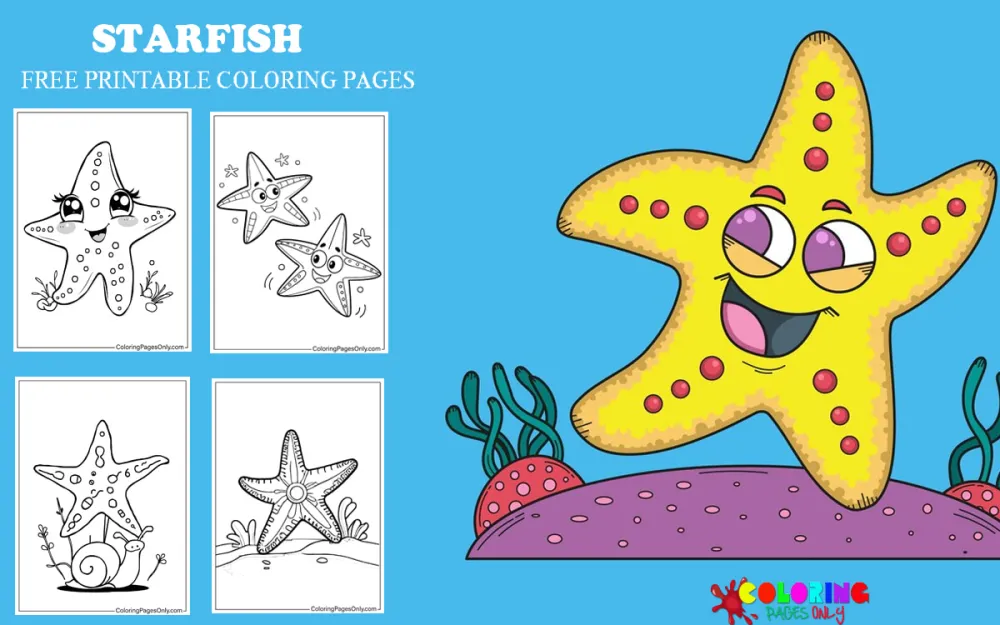
Free Starfish Coloring Pages: 40+ pages featuring simple sea star outlines, cute starfish, kawaii starfish, dancing starfish, starfish with crabs, octopuses, sea urchins, small fish, coral reefs, ocean waves, mermaids, beach scenes, dot-to-dot starfish pages, mandala starfish designs, printable sea star shapes, and decorative underwater patterns. All free, printable PDFs and online coloring pages are ready for home, classroom, ocean units, sea animal lessons, tidepool activities, beach crafts, summer projects, and relaxing creative time.
Starfish are more accurately called sea stars because they are not fish. They are marine invertebrates in a group called echinoderms, related to sea urchins, sand dollars, and sea cucumbers. Many sea stars have five arms arranged around a central disc, though some species have more. They move slowly using tiny tube feet on the underside of their arms, and some sea stars can regrow lost arms over time. That makes starfish coloring pages more than simple beach art: they can introduce children to symmetry, texture, animal movement, tidepool life, and ocean awareness.
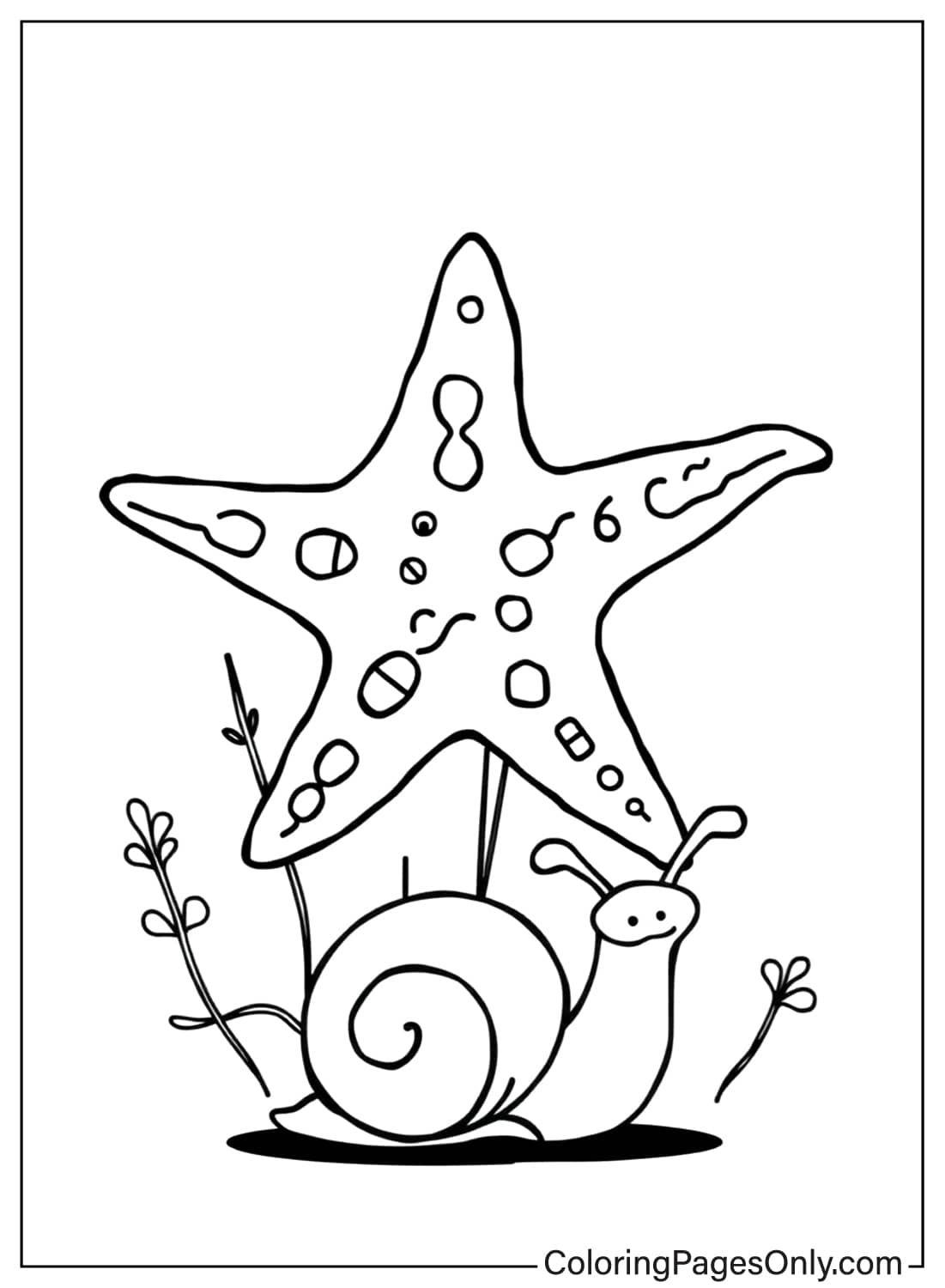
This collection gives younger colorists large sea star outlines, friendly cartoon faces, dot-to-dot pages, and simple beach shapes. At the same time, older children, teens, and adults can work on coral reef scenes, mandala patterns, textured arms, sea animal pages, mermaid scenes, tidepool layouts, and detailed underwater compositions. These 40+ free pages at ColoringPagesOnly.com cover starfish, sea stars, ocean animals, coral reefs, mermaids, beach scenes, simple outlines, mandala patterns, and imaginative sea star designs. All free, PDF or PNG, print or color online.
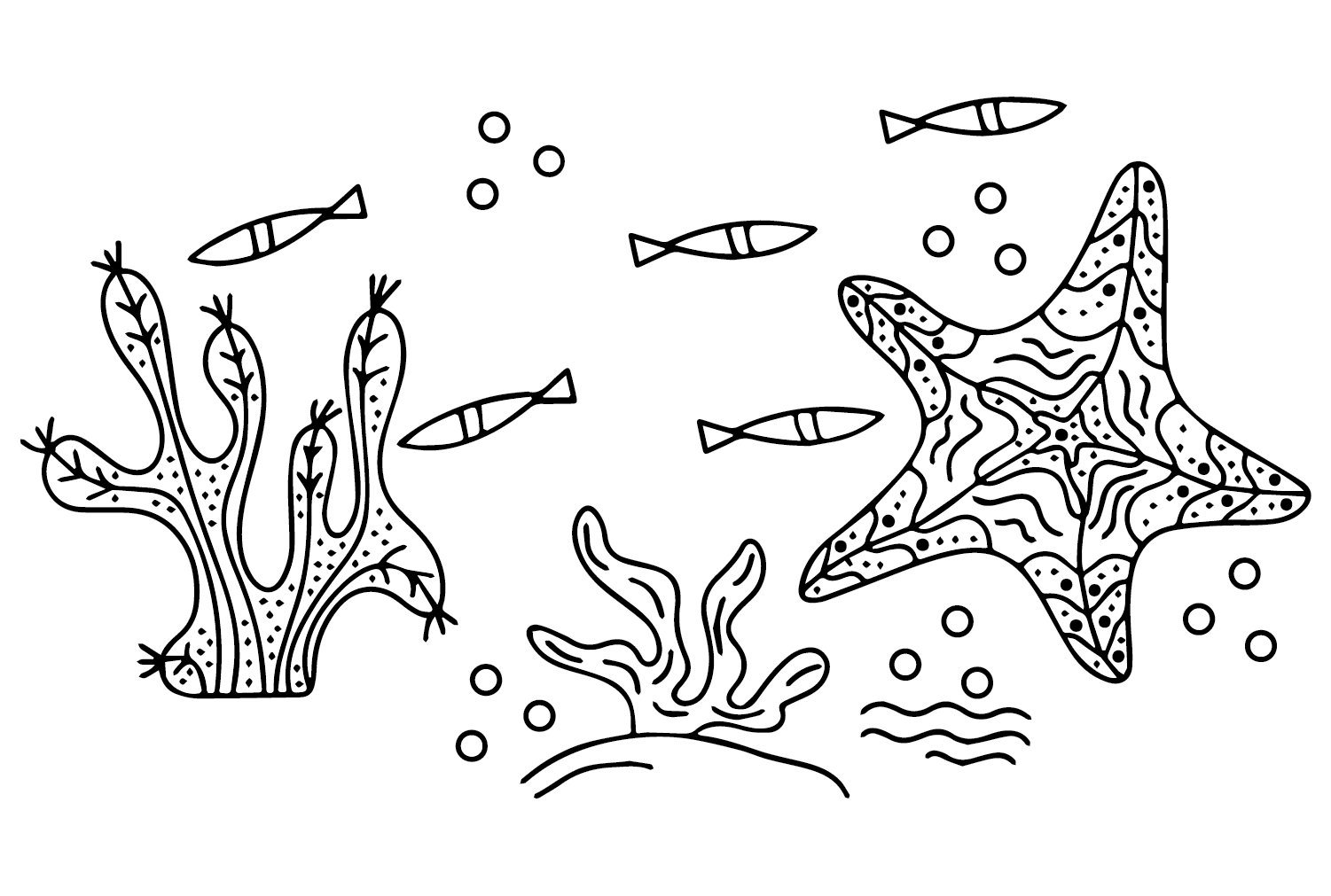
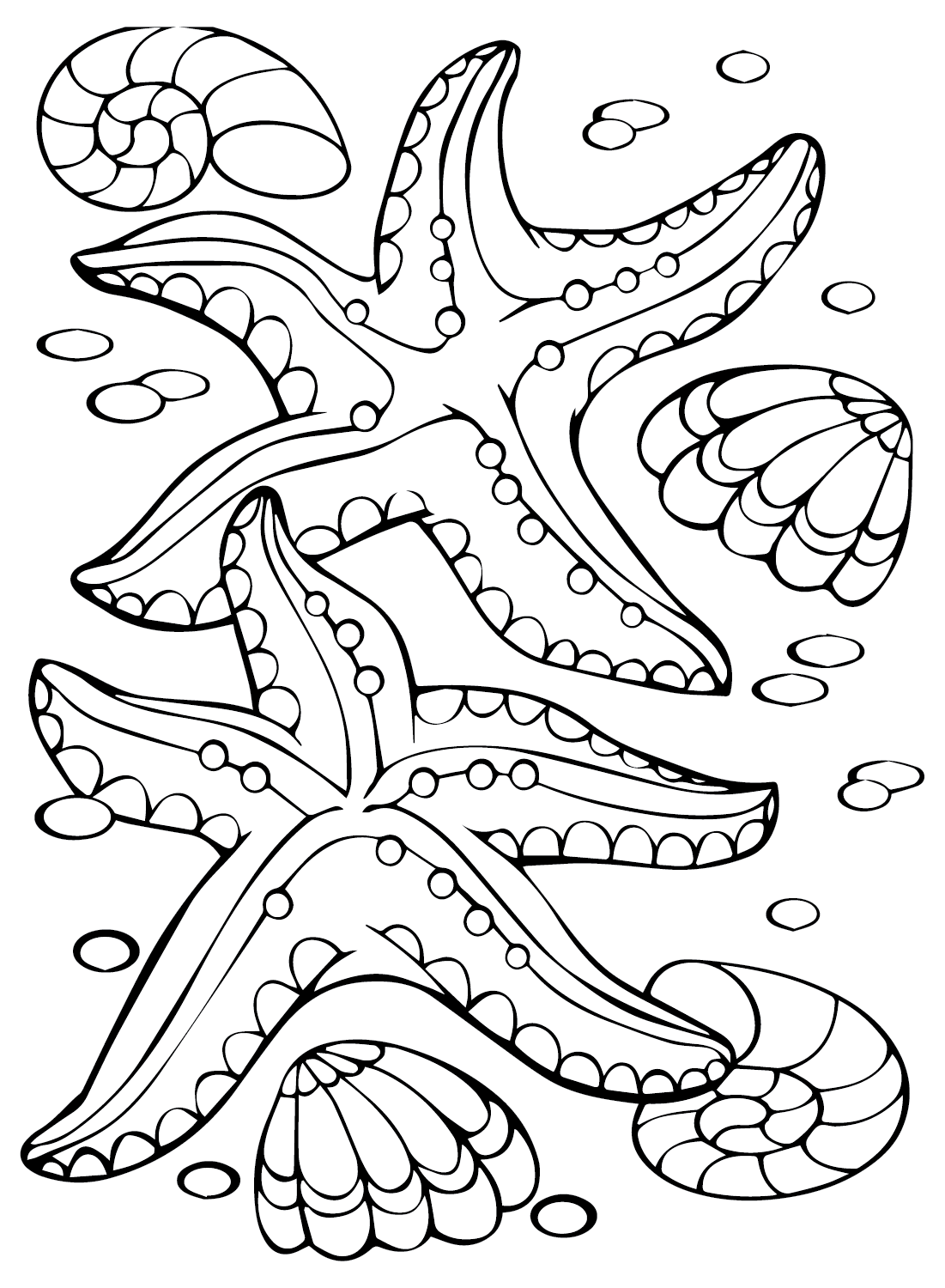
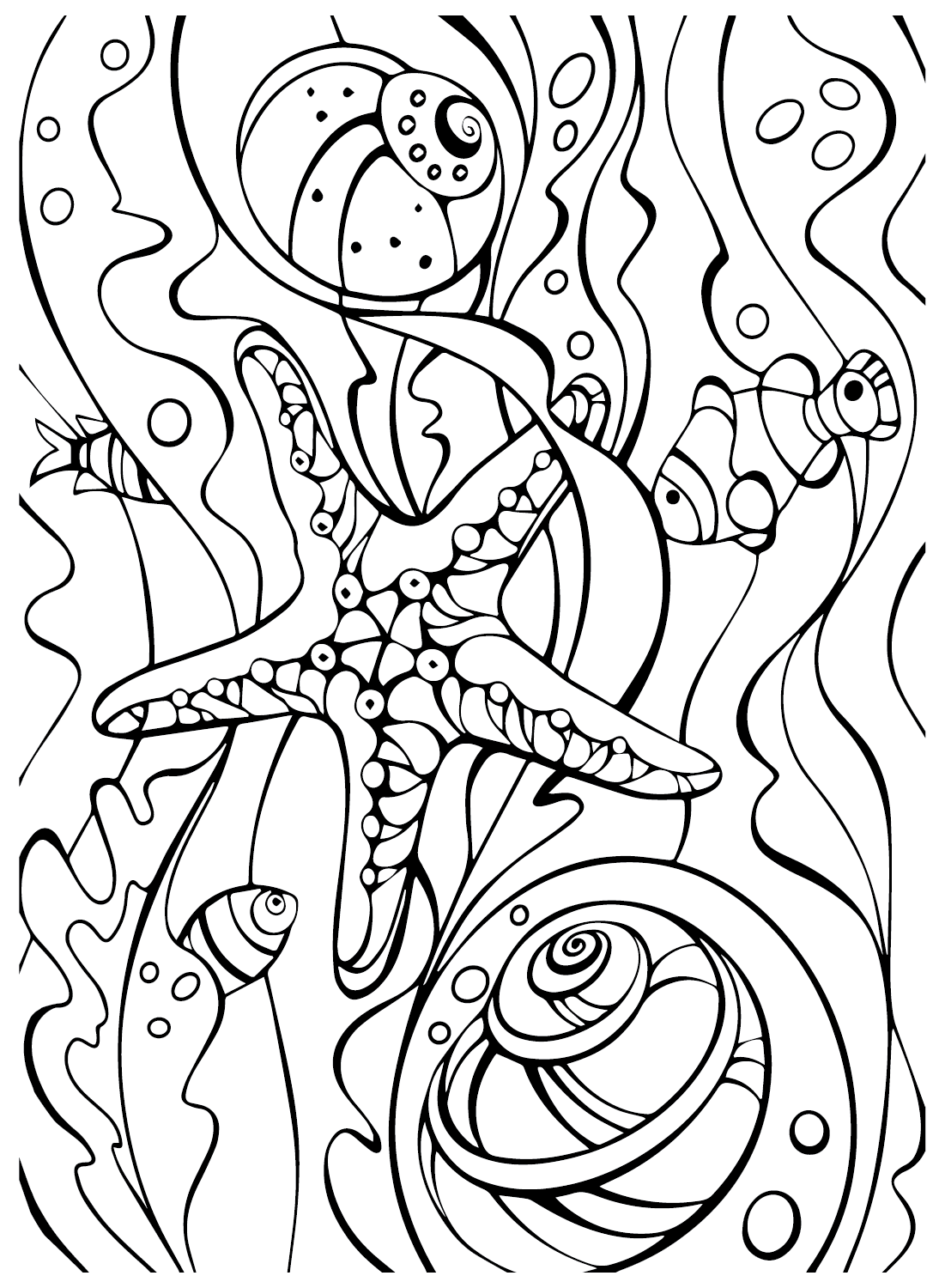
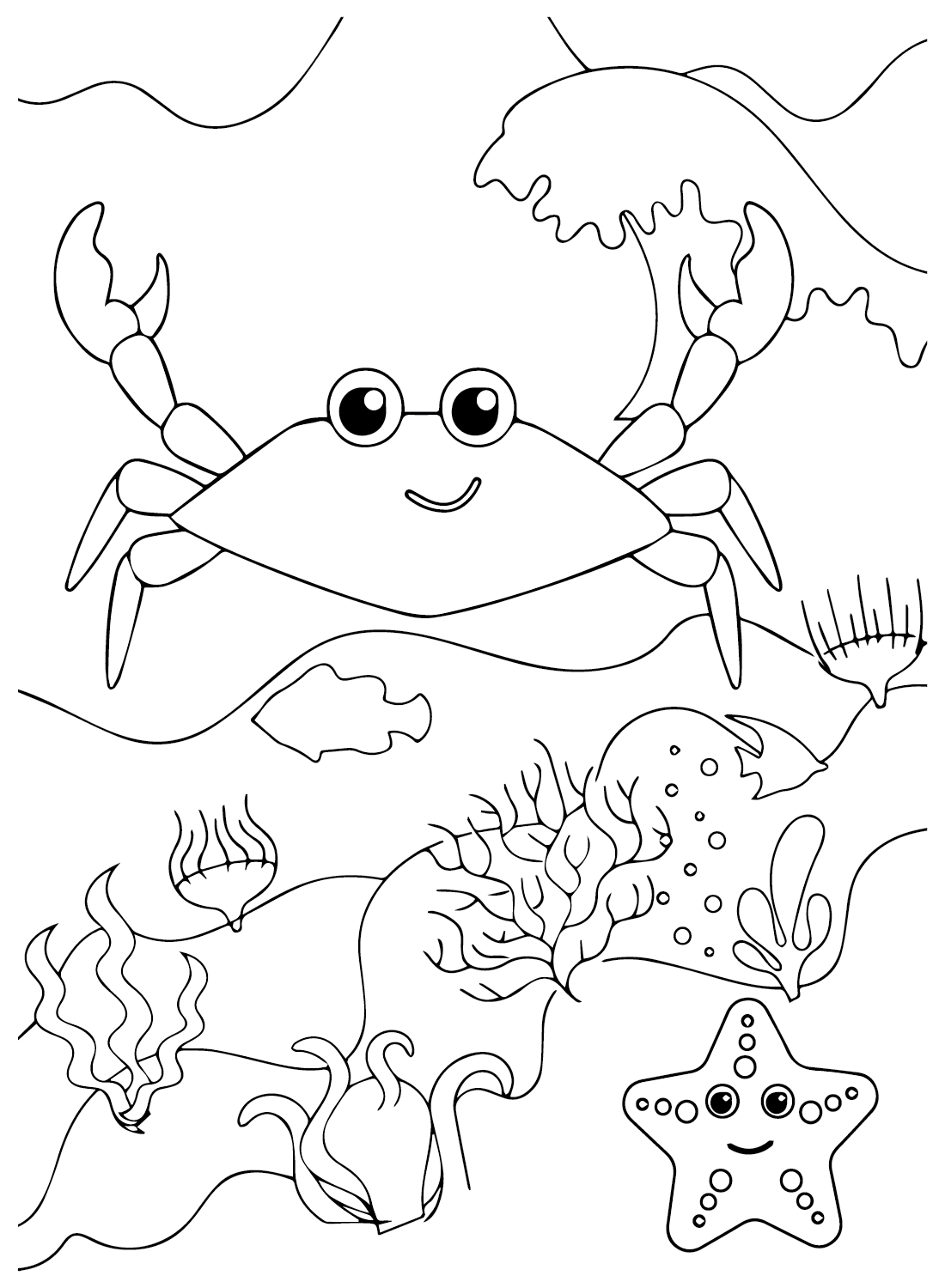

What’s Inside
Simple Starfish and Easy Sea Star Outlines
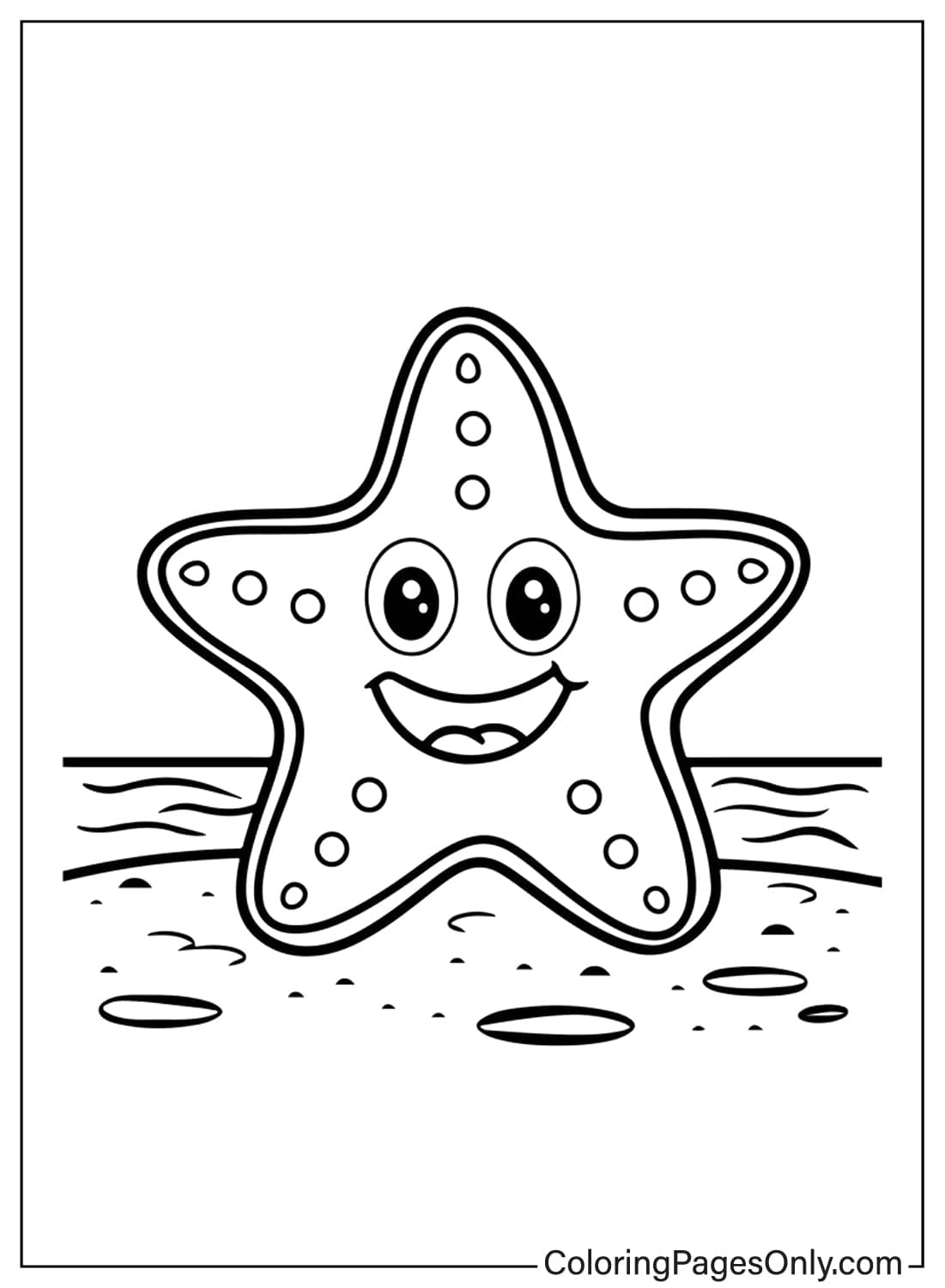
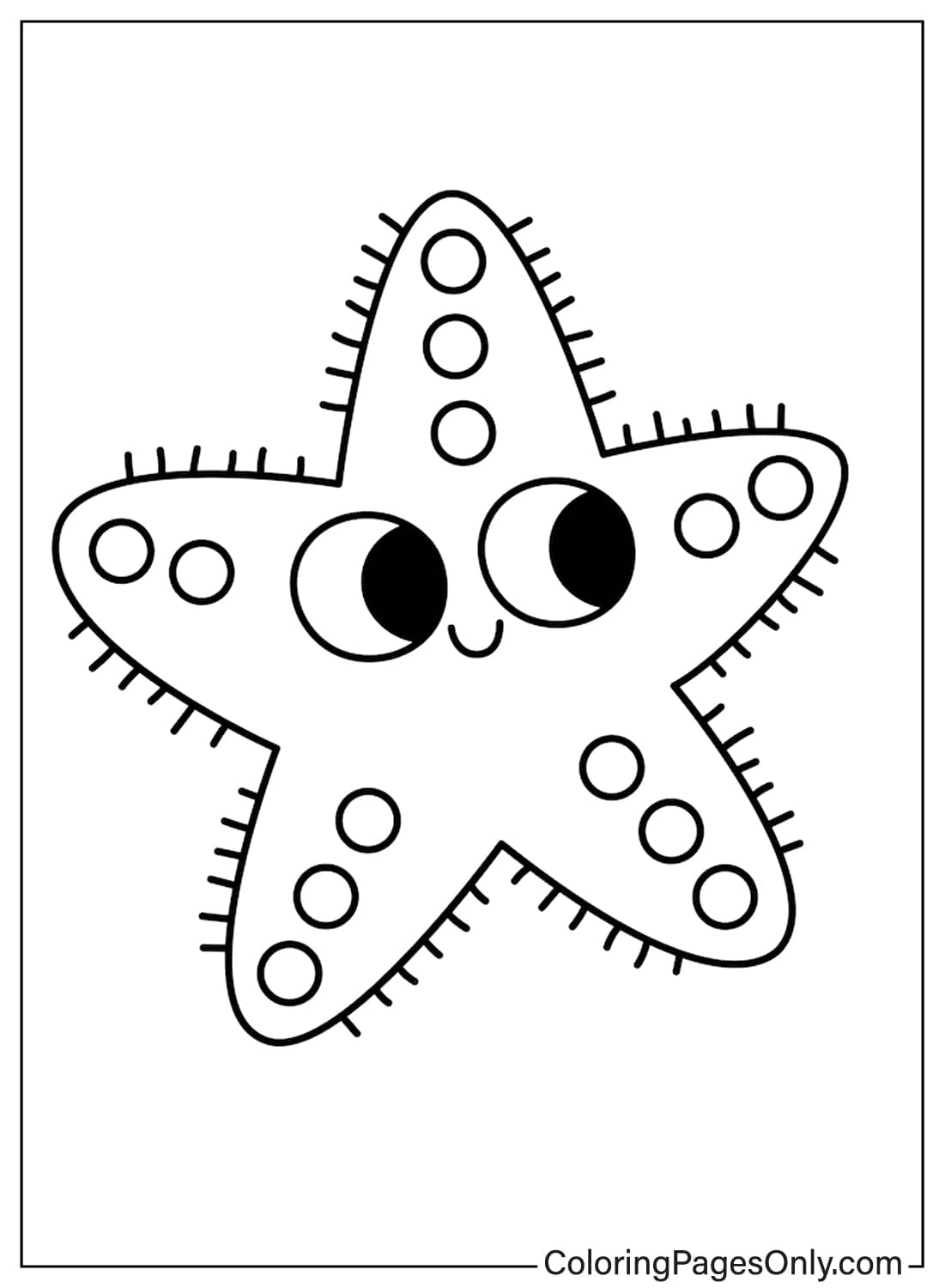
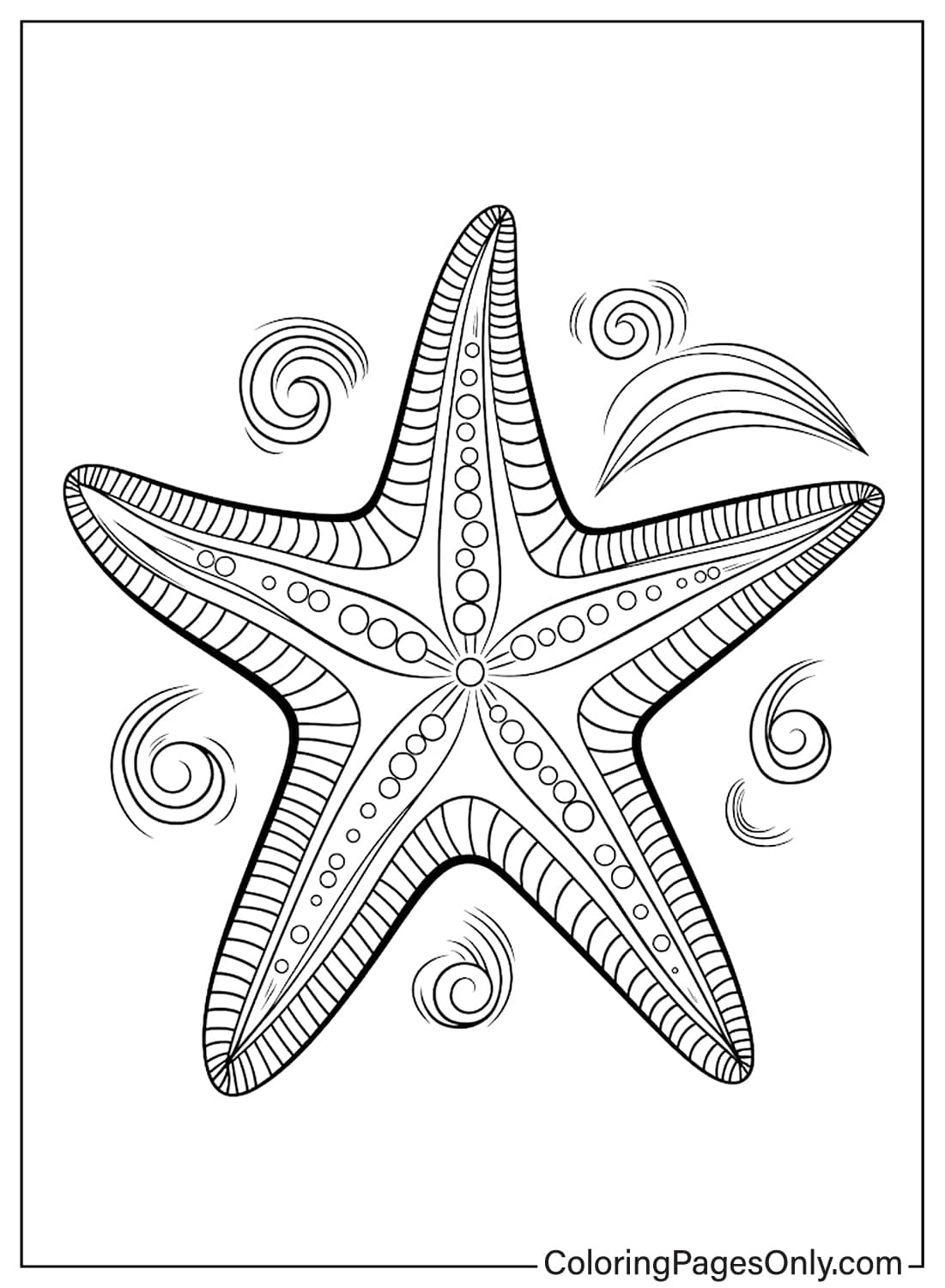
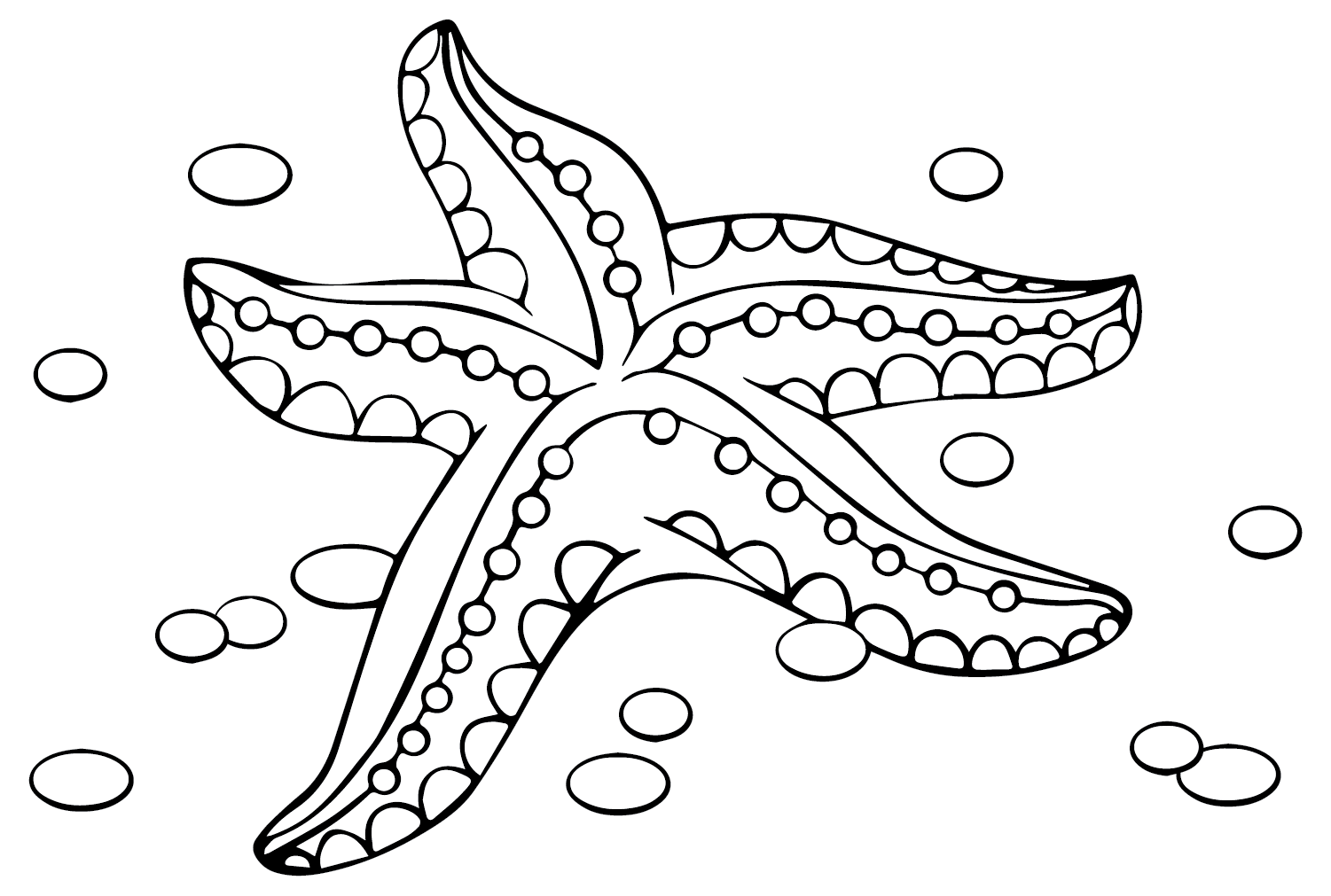
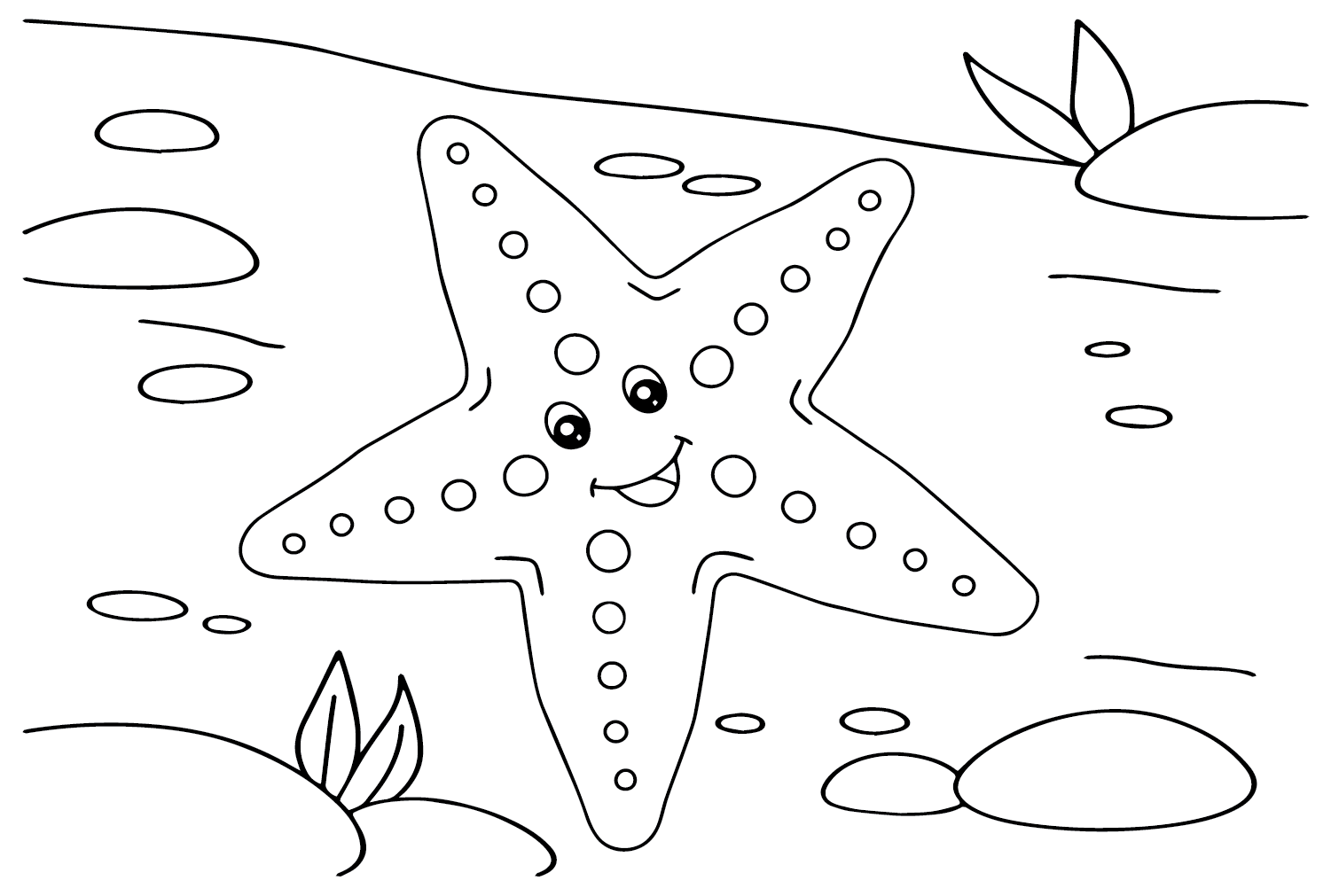
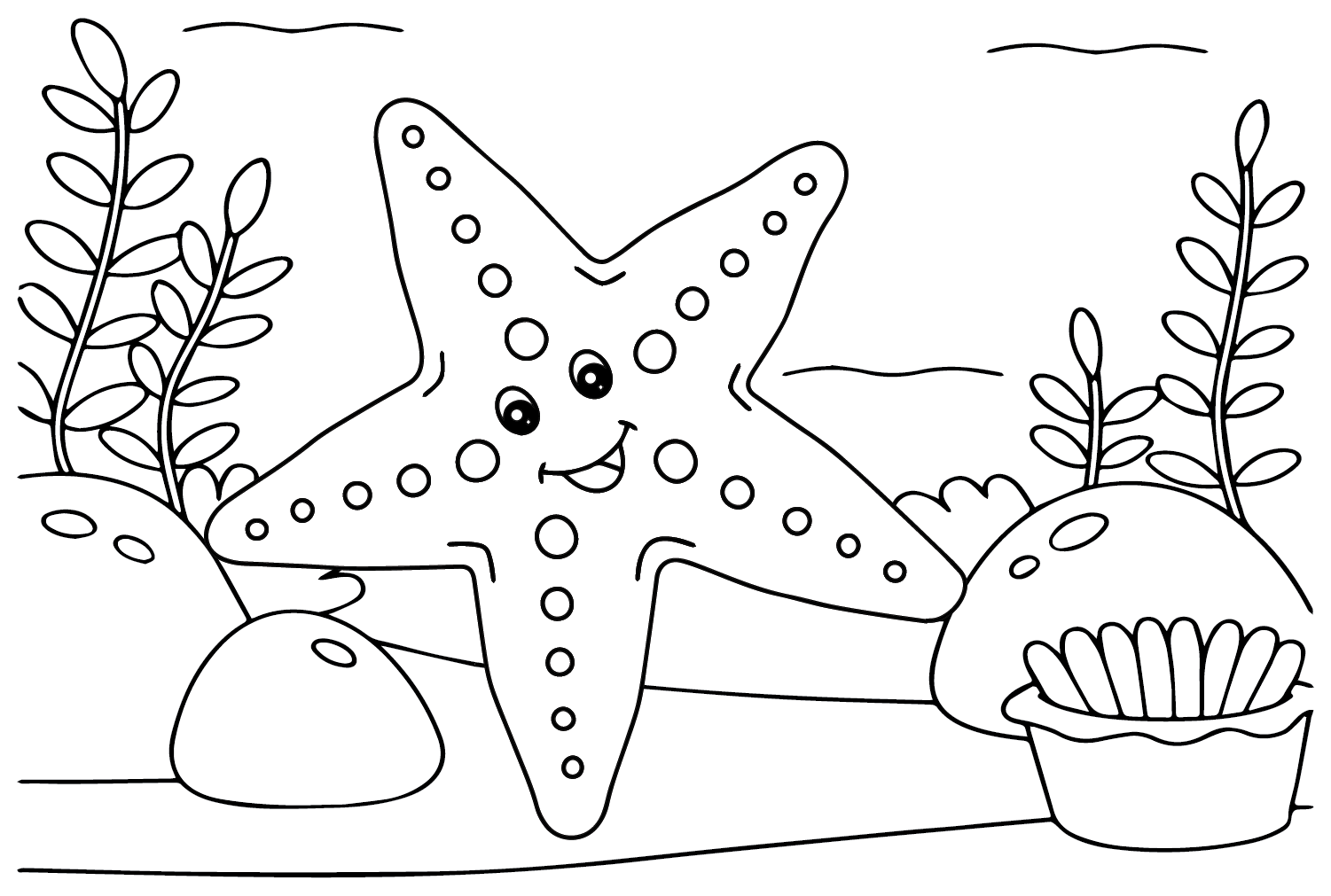
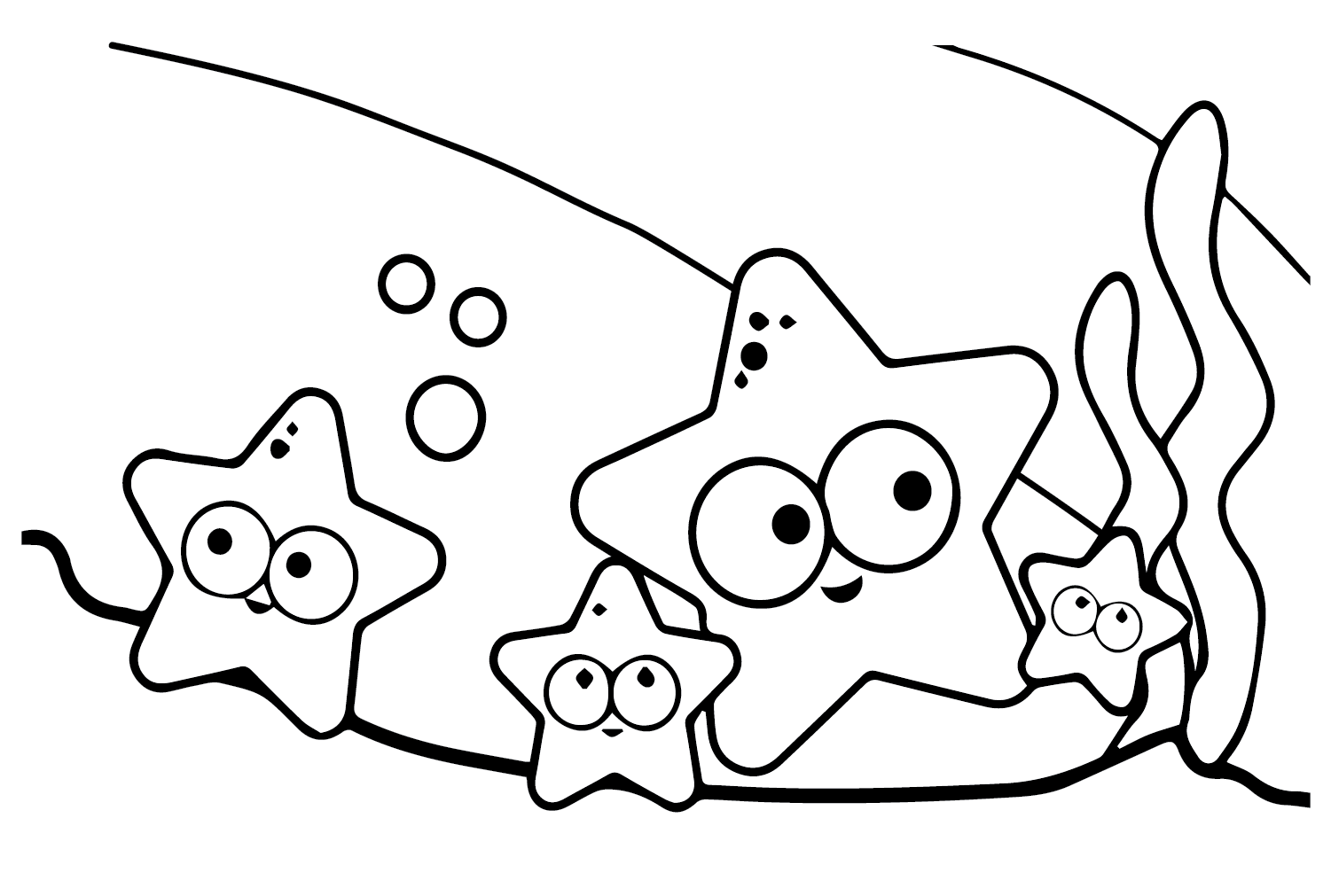
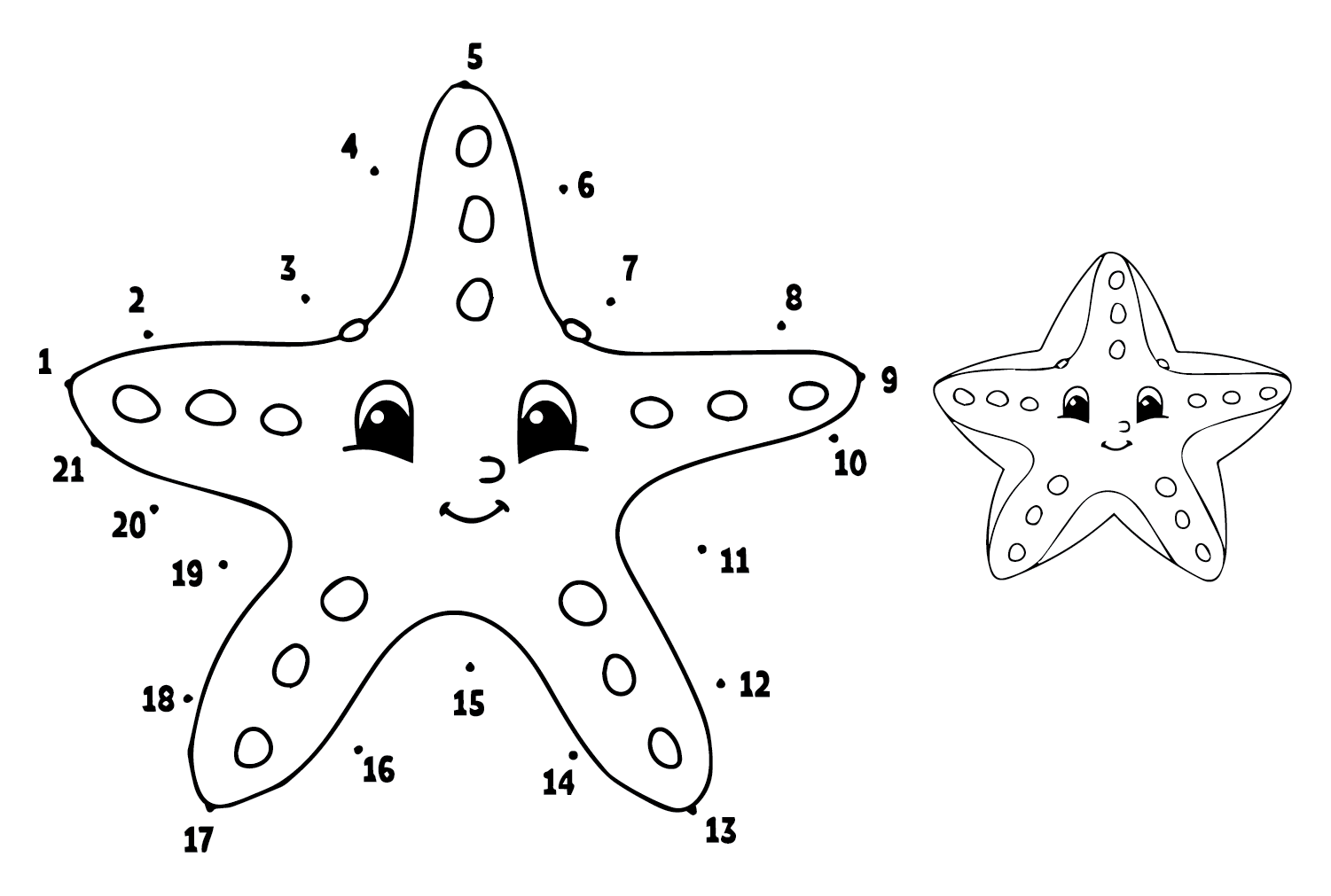
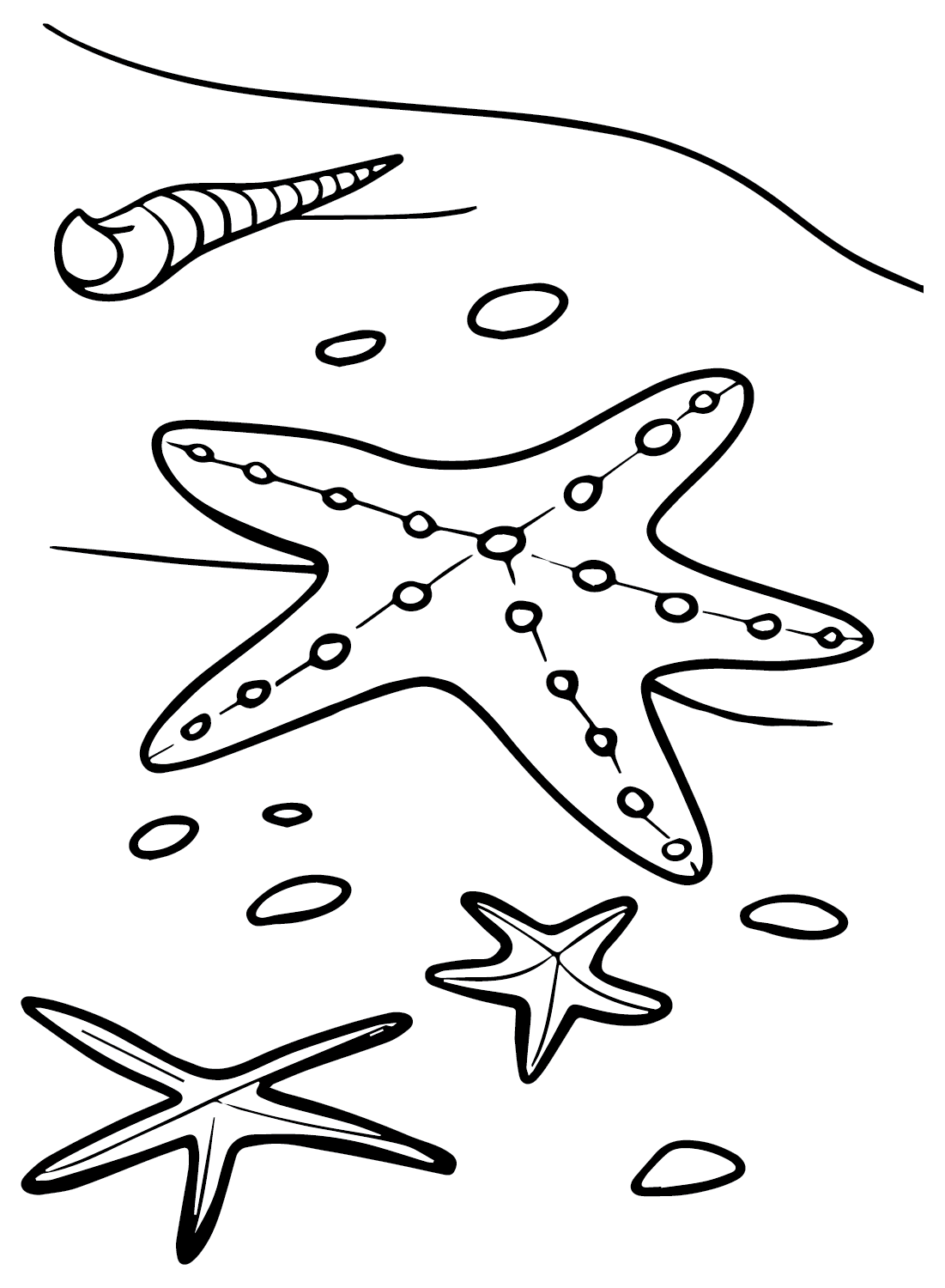
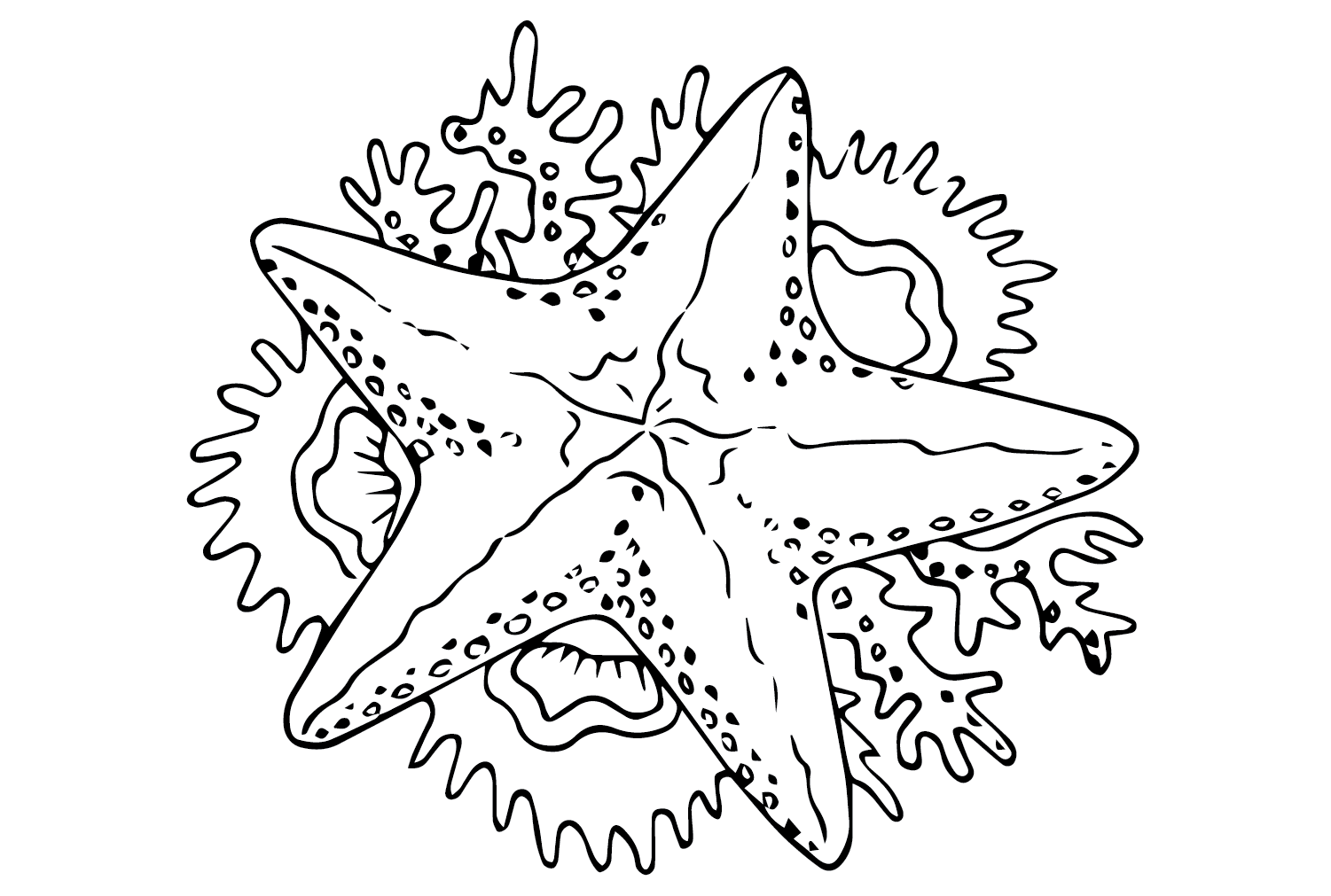
The easiest pages focus on clear sea star shapes with wide arms, open spaces, and simple outlines. These designs are useful for preschoolers and early elementary children because the star shape is familiar, but still connected to a real ocean animal. Children can notice the central disc, five-arm structure, rounded or pointed arm tips, and dotted surface texture. Simple starfish pages also work well for cutting, sorting, classroom displays, and beach-themed craft projects.
Coloring simple starfish pages: Use coral orange, sandy beige, warm yellow, shell pink, peach, muted purple, or soft red for the main body. Start in the central disc, then color outward along each arm so the pressure stays even. The common mistake is pressing too hard at the arm tips; use lighter pressure near the edges to keep the sea star soft and natural.
Cute, Kawaii, and Cartoon Starfish
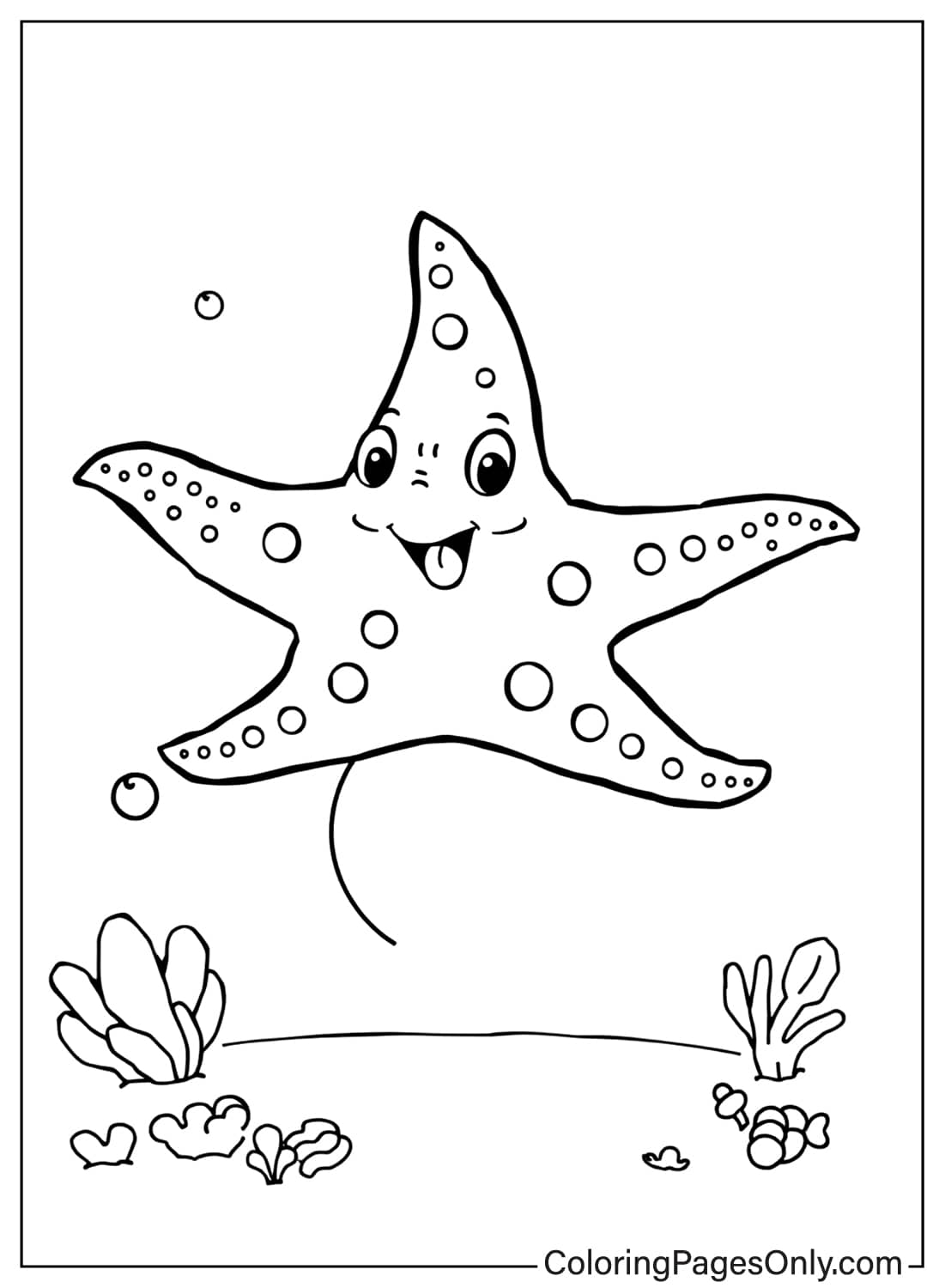
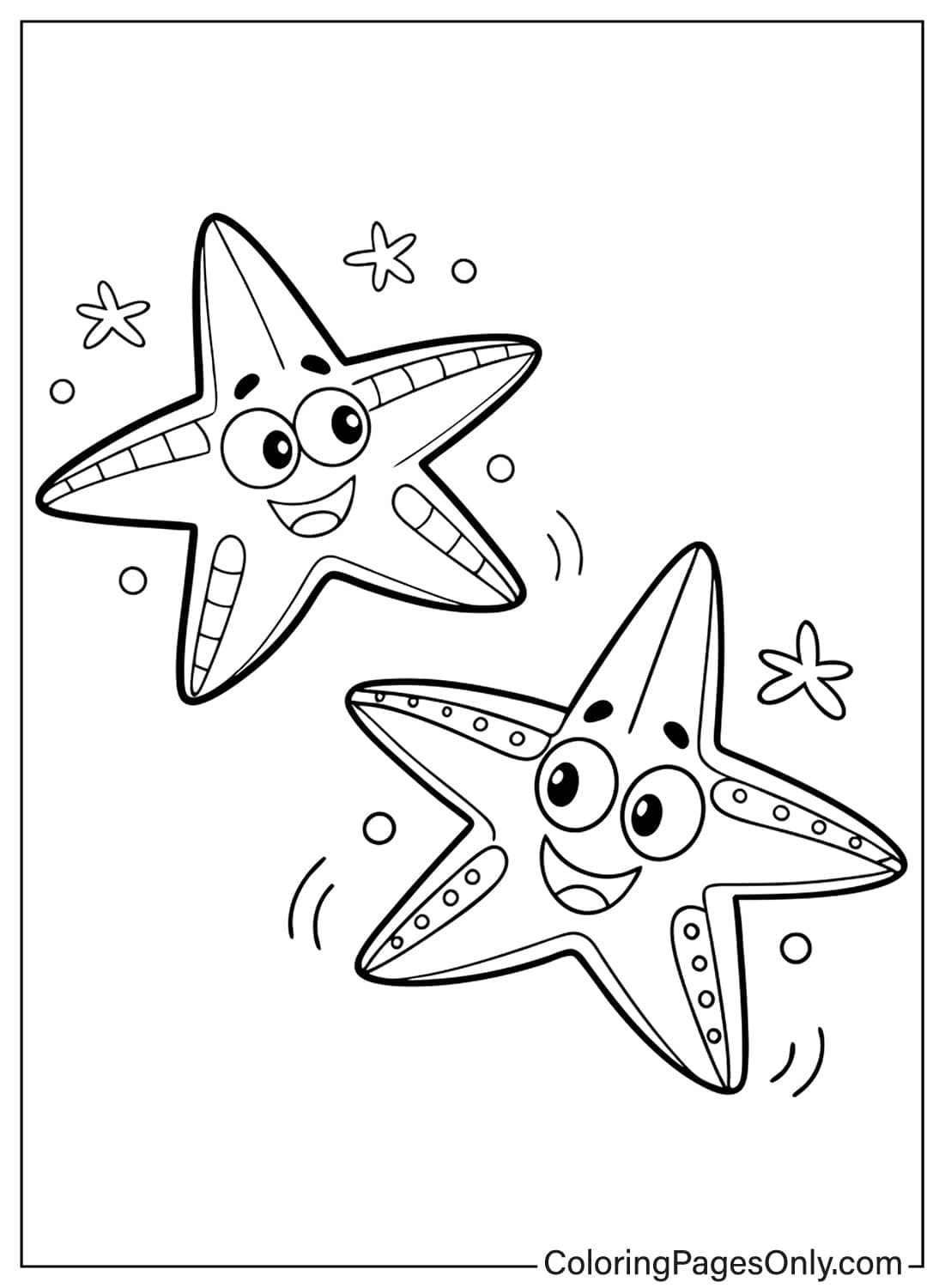
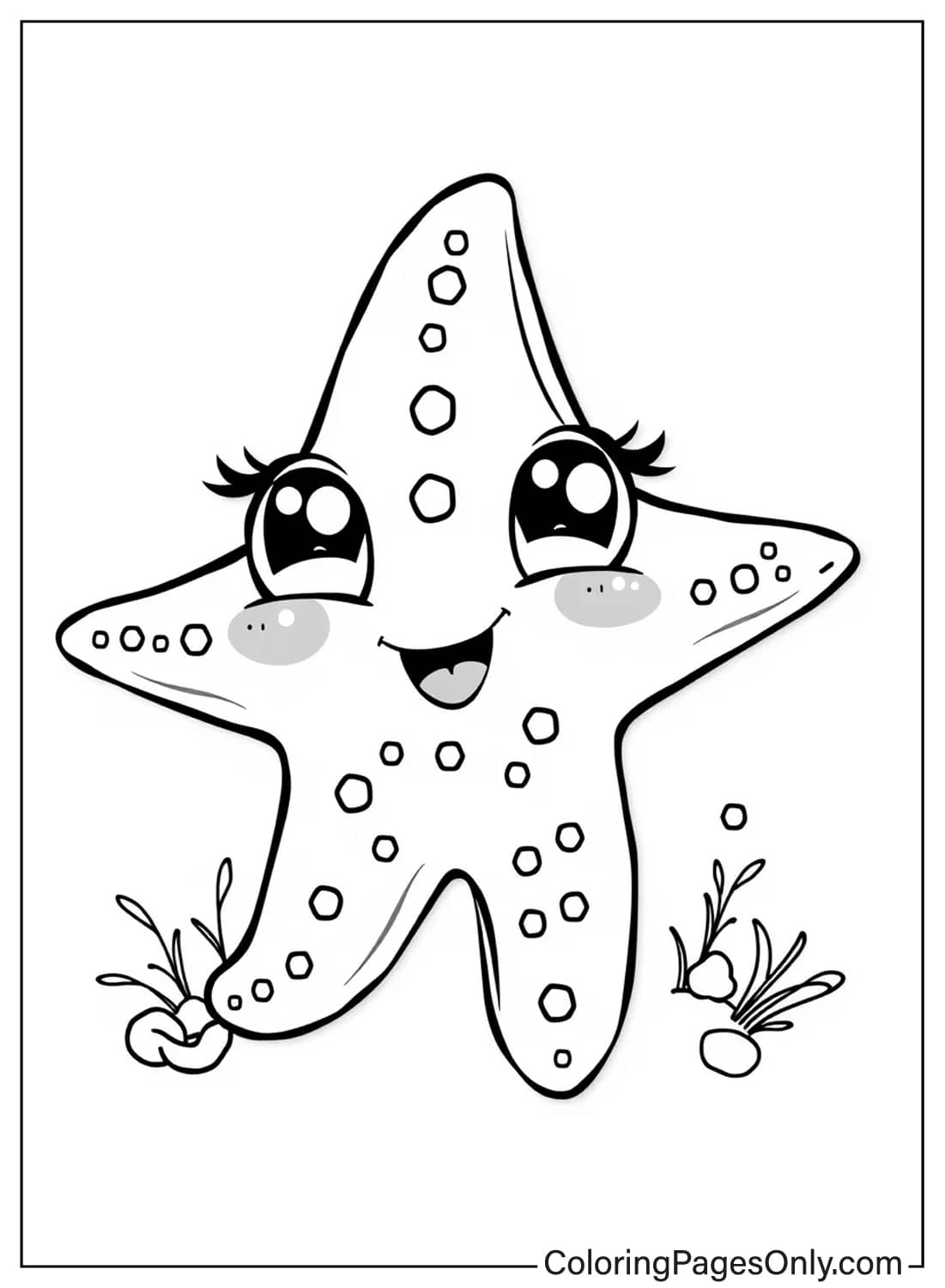
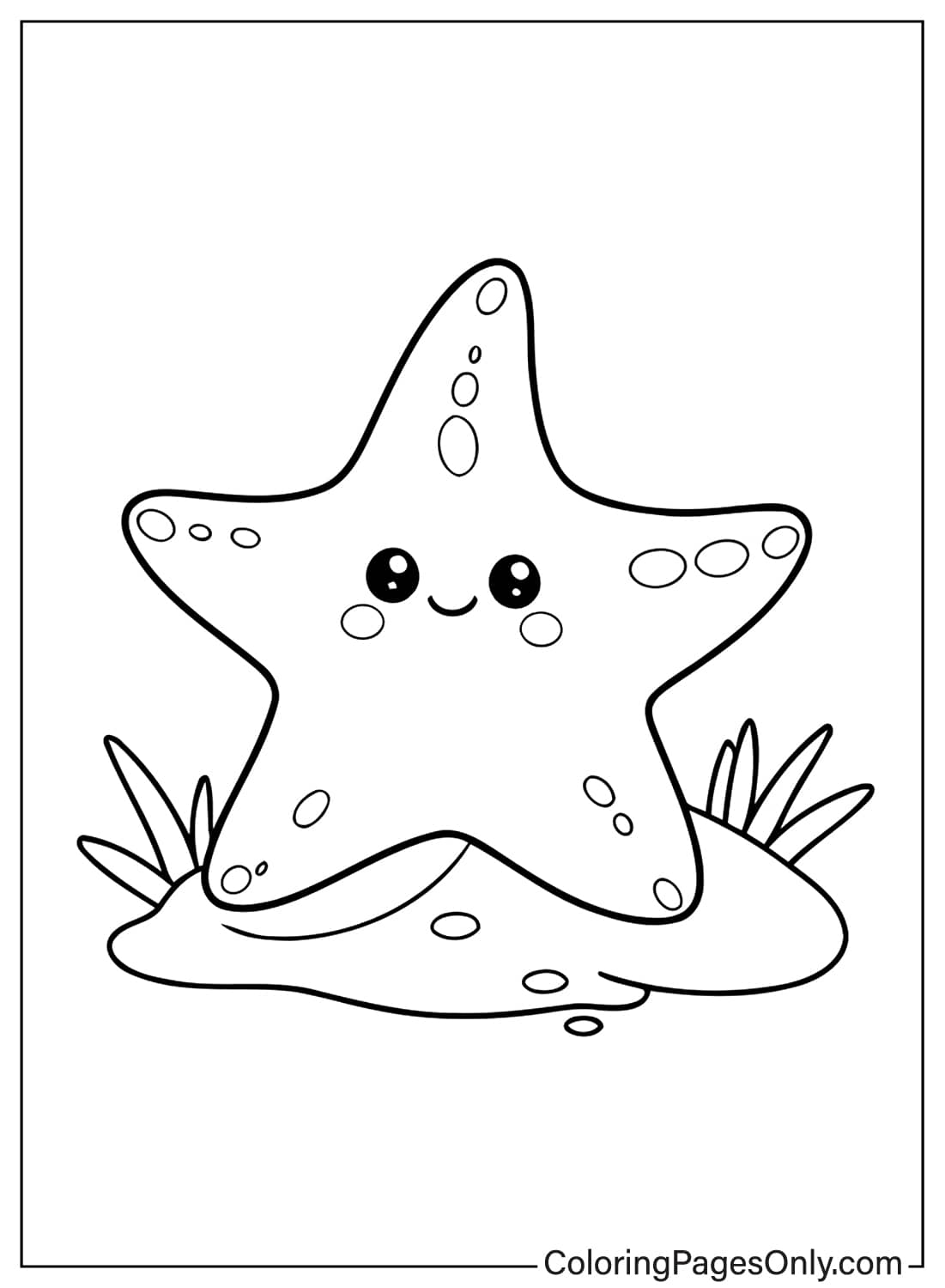
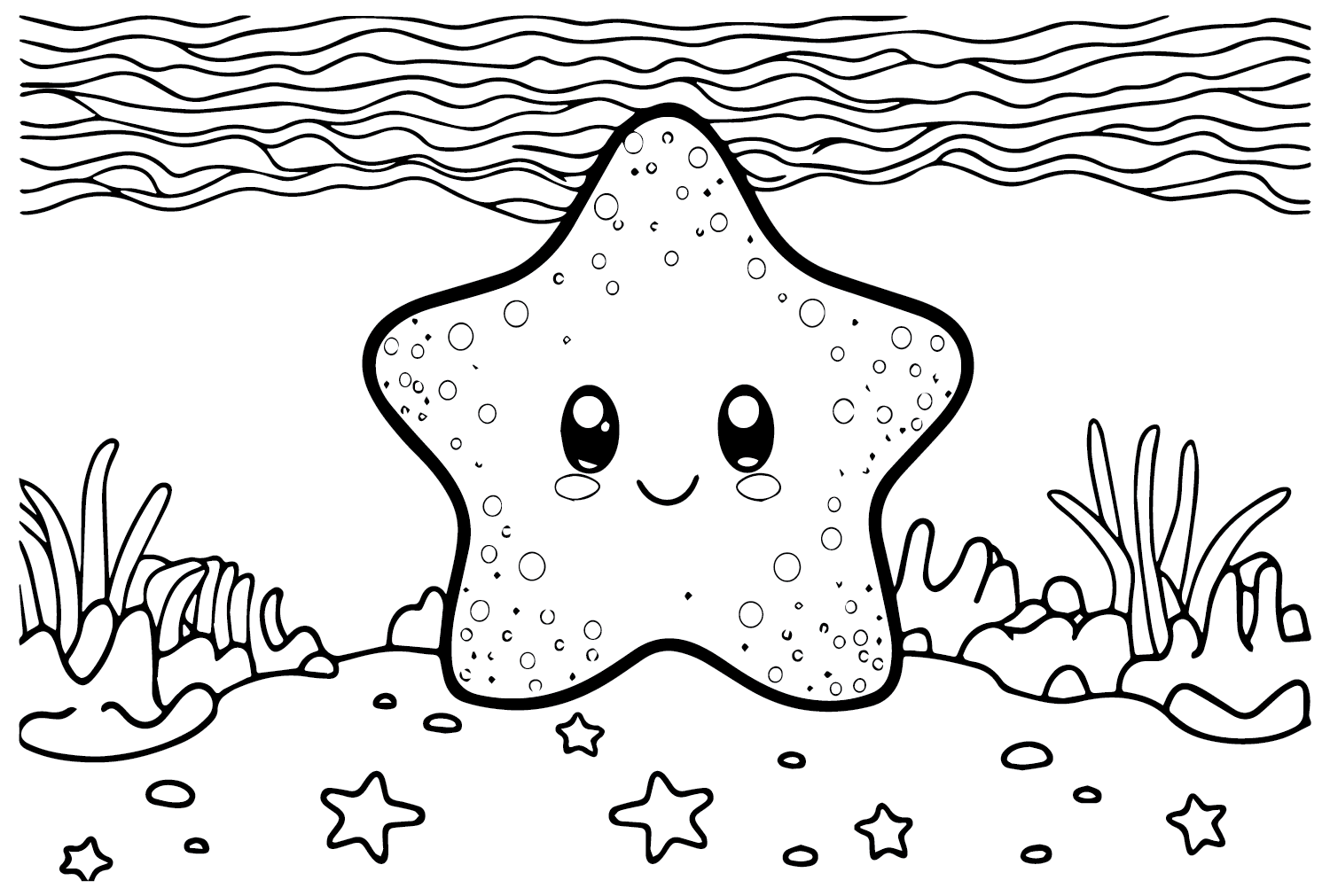
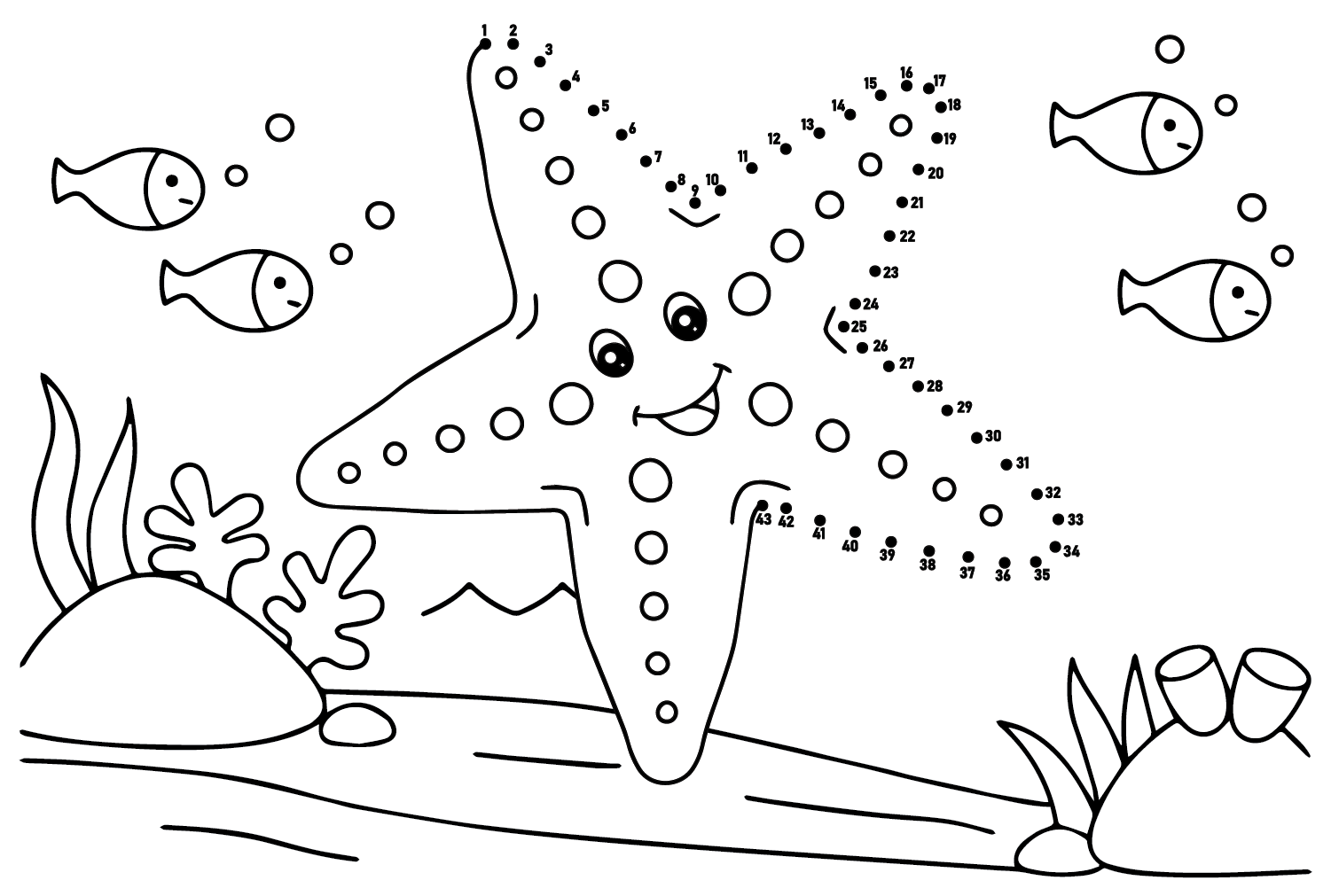
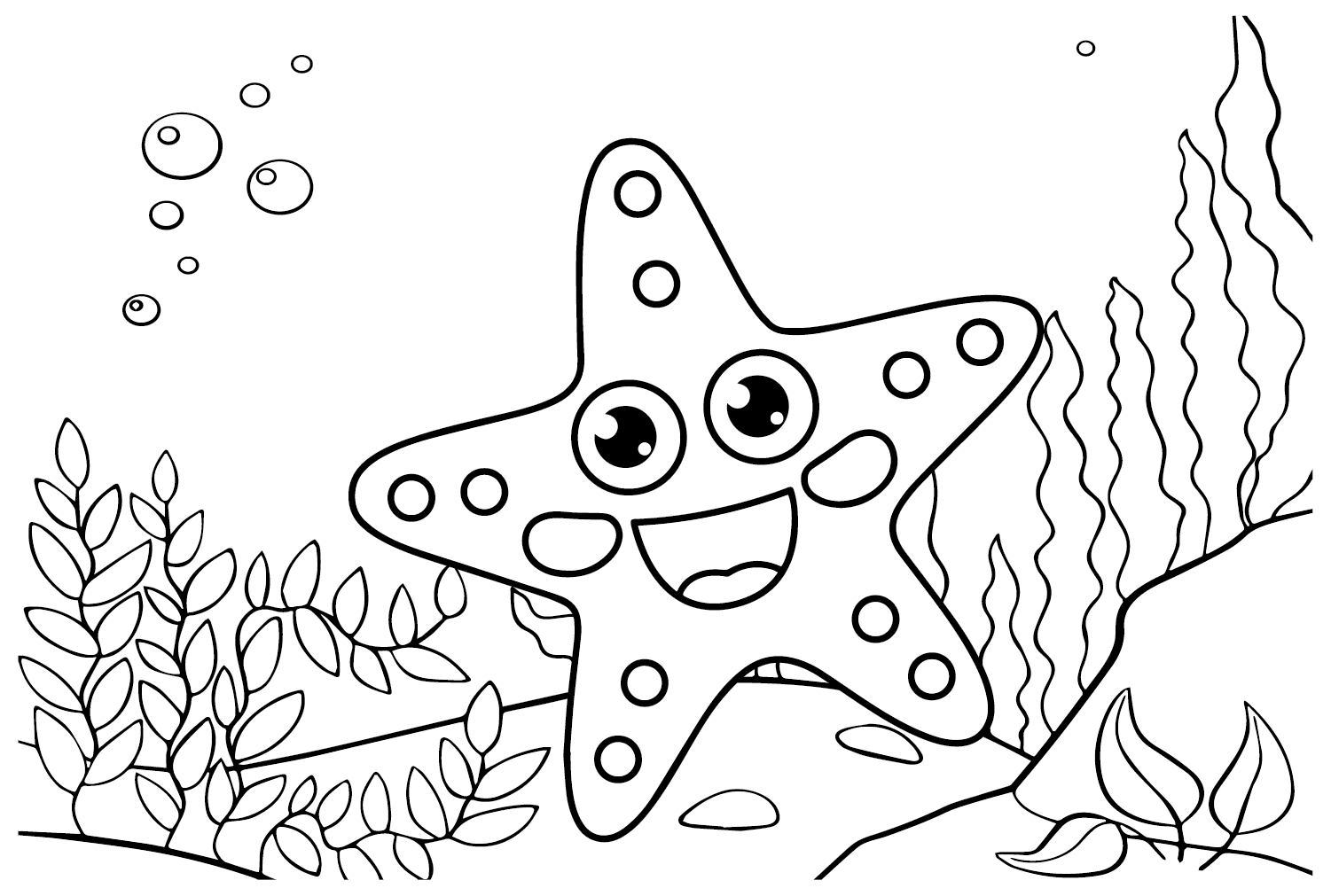
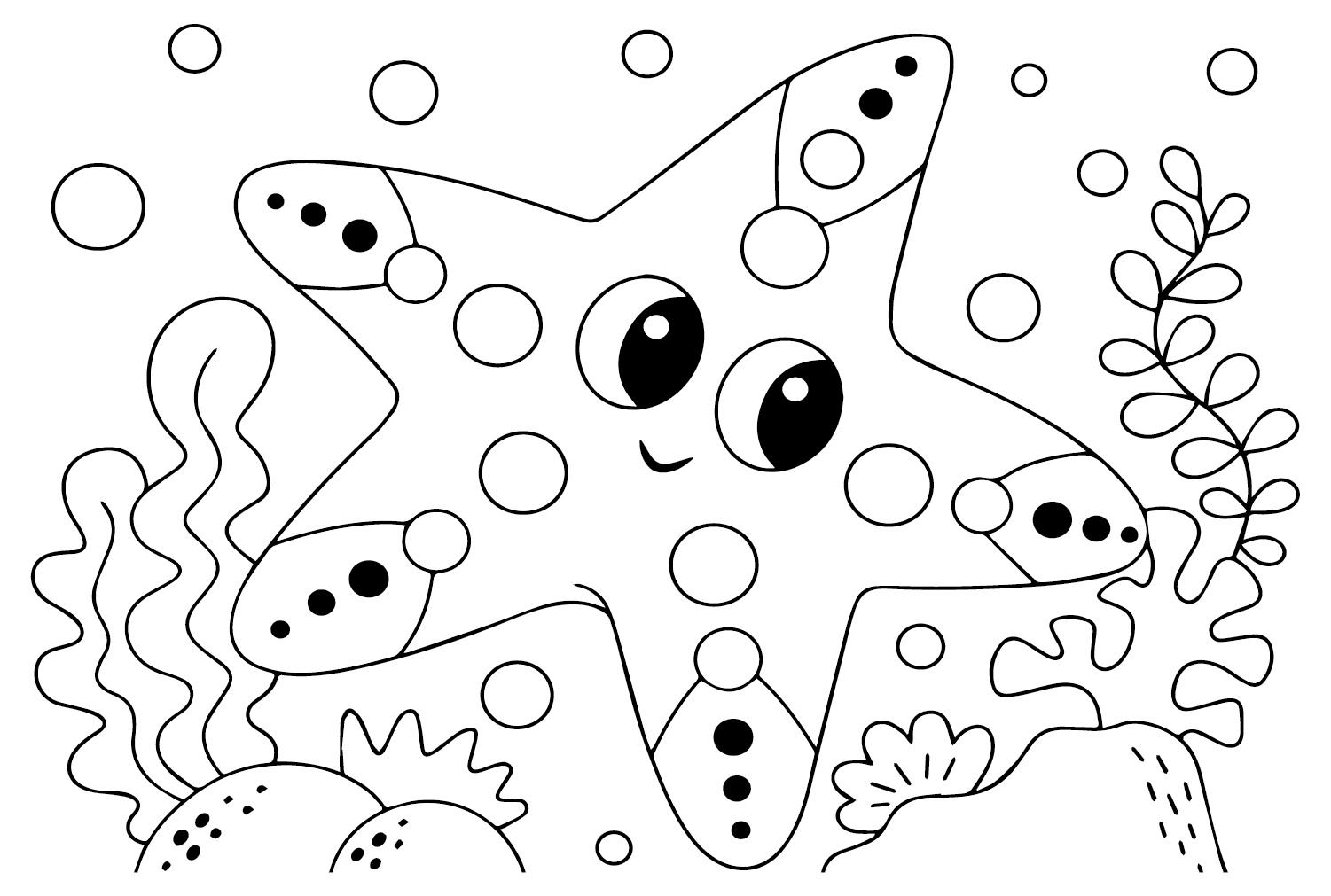
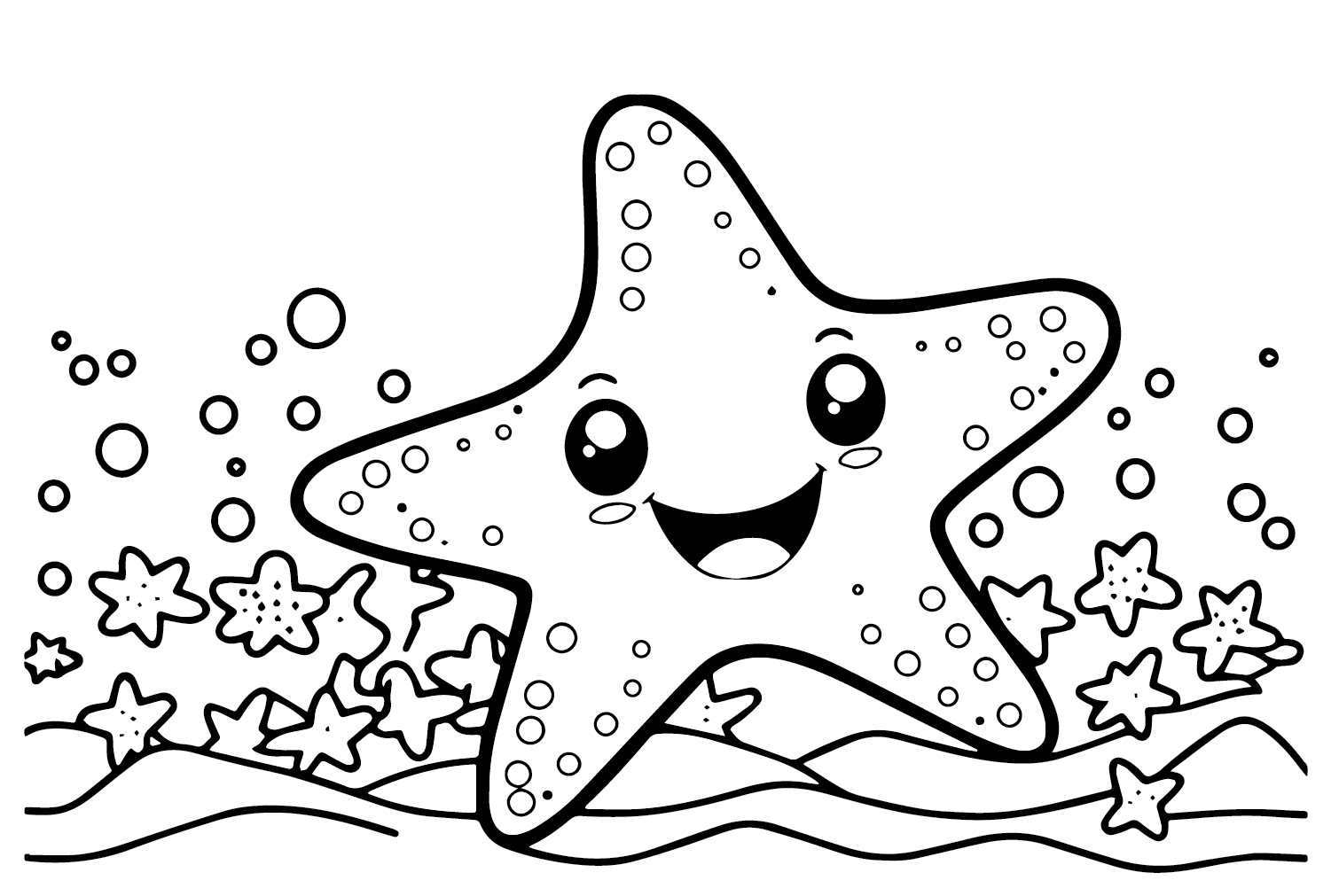
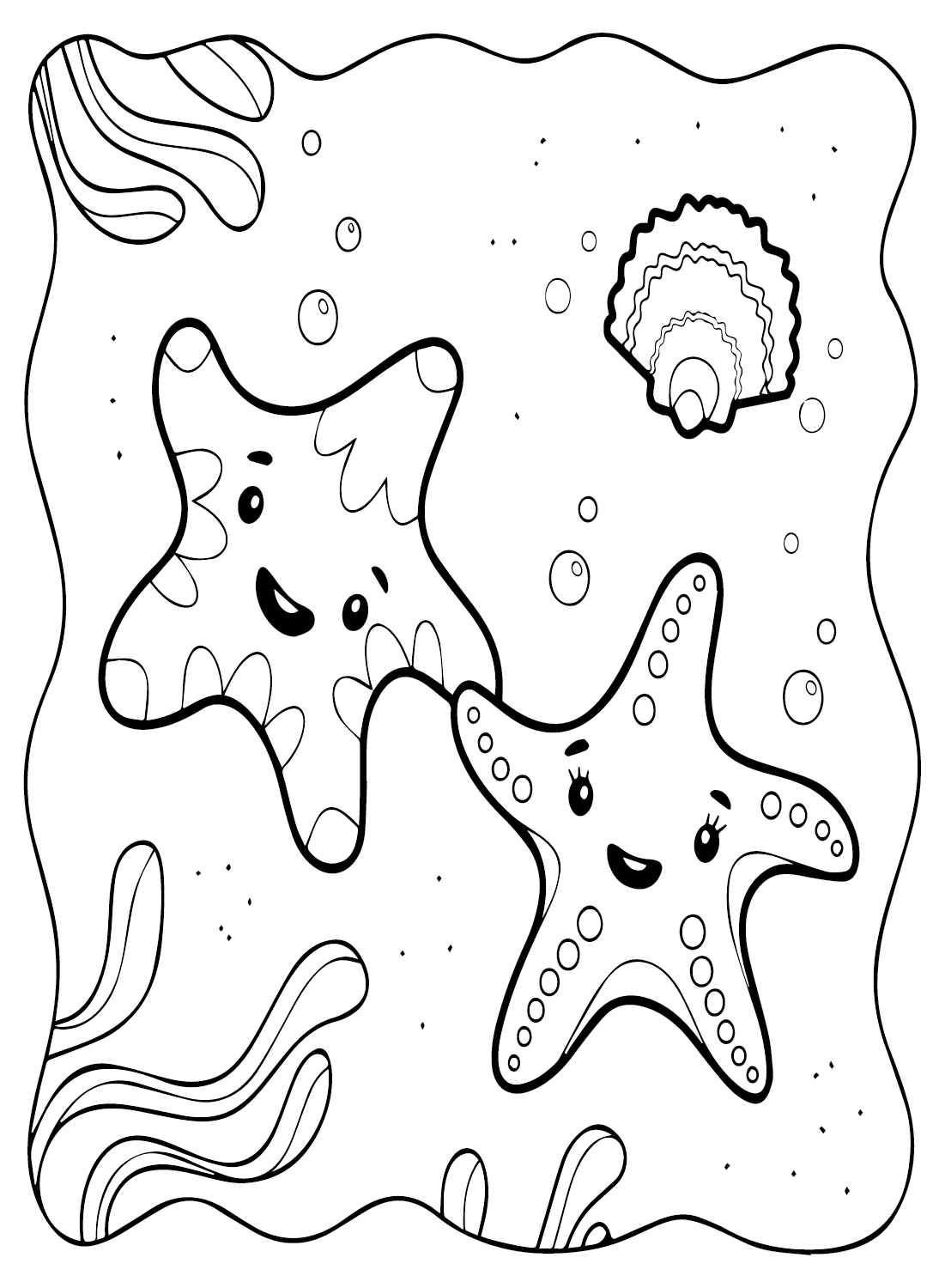
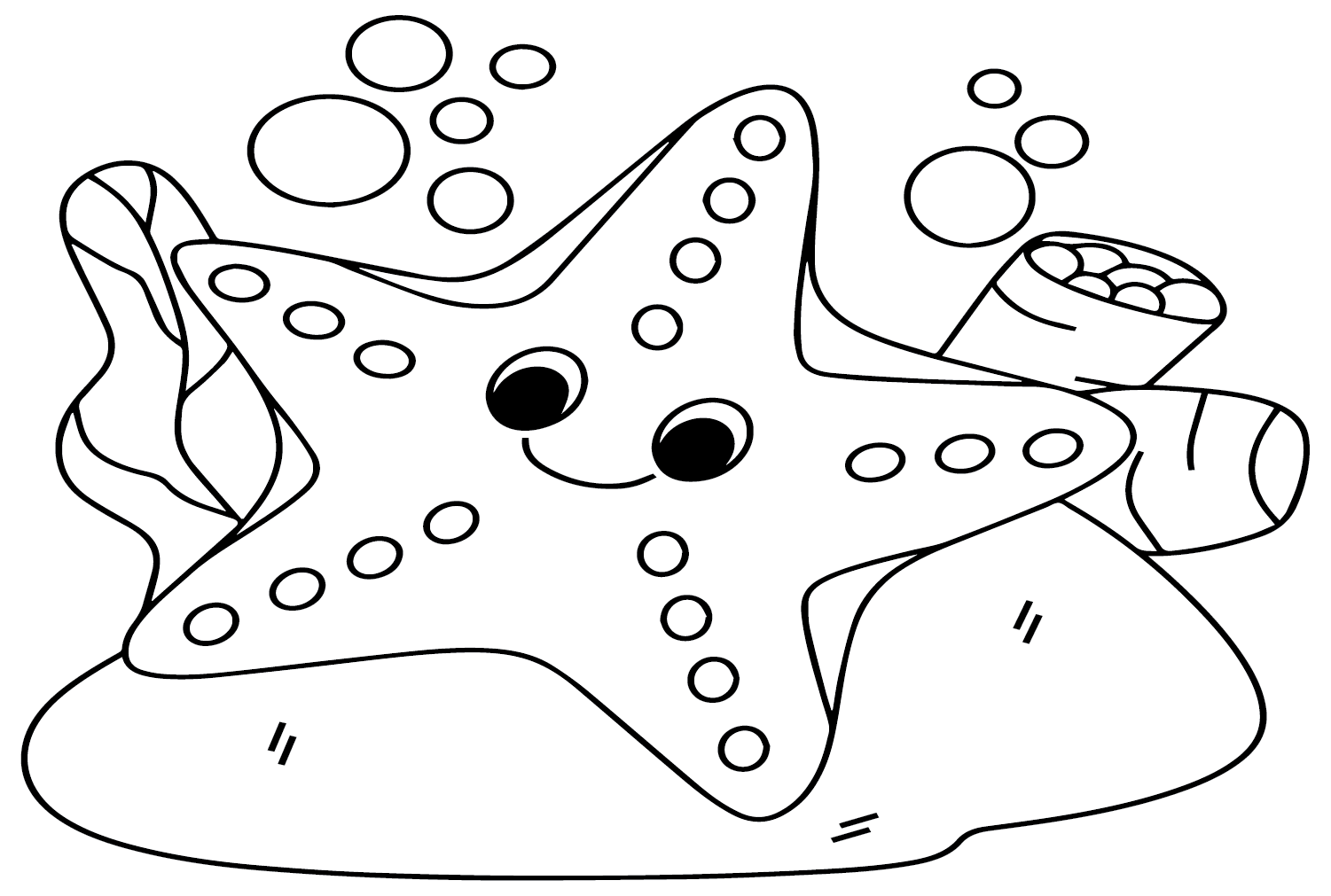
Cute starfish pages work best when the face stays simple: clean eyes, soft cheeks, a bright center, and a friendly expression. This group includes smiling starfish, dancing starfish, funny sea stars, kawaii designs, and playful cartoon characters. These pages are especially useful for younger children because the star shape is easy to understand, and the face gives the page personality.
Coloring cute starfish characters: Use coral pink, peach, orange, light yellow, pastel purple, or soft aqua for the body, then add blush pink cheeks and clean black eyes. Keep the face area light so the expression stays easy to see. The common mistake is using dark red or brown across the whole center; cartoon starfish look friendlier when the face stays bright.
Starfish with Crabs, Fish, Octopuses, and Sea Urchins
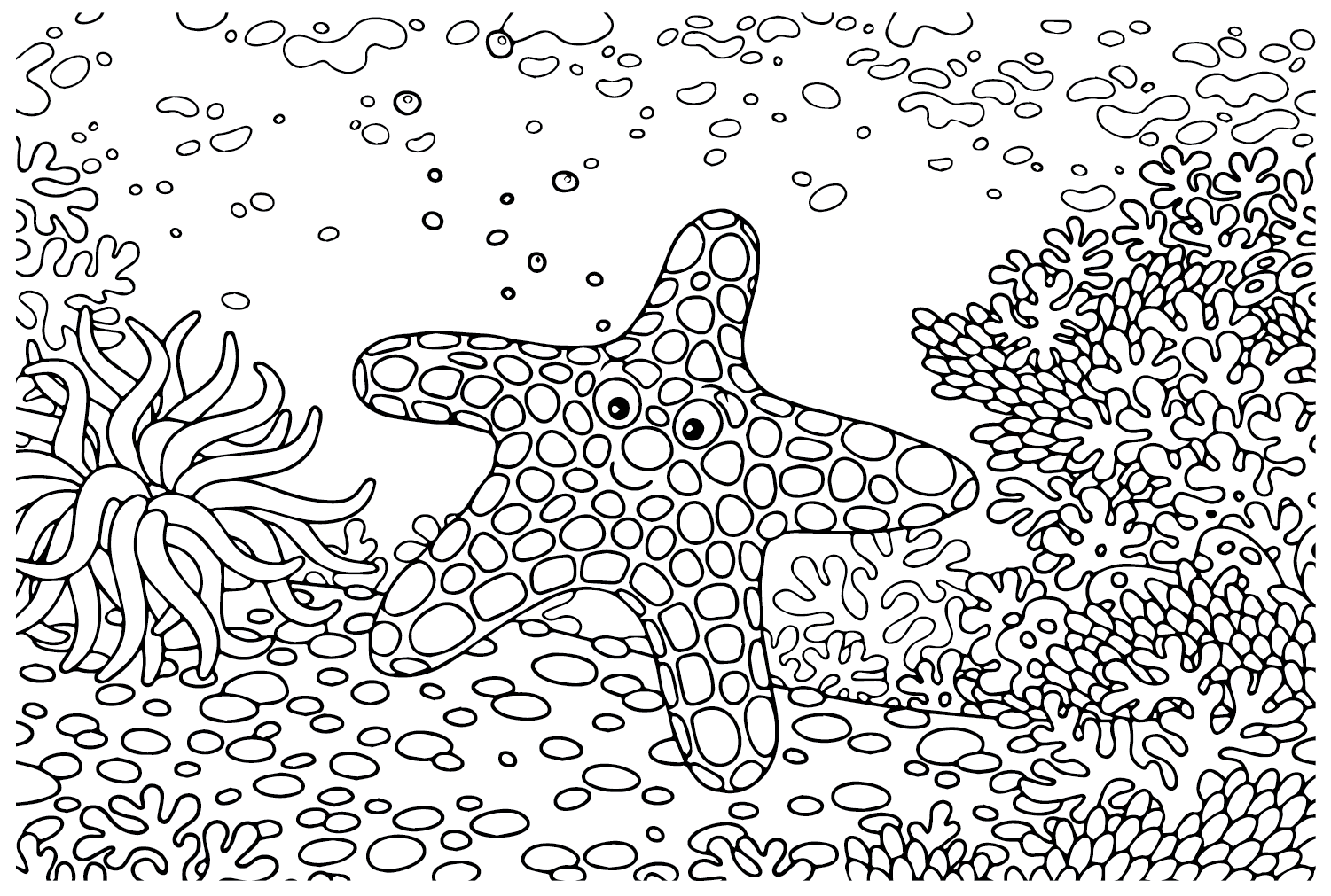
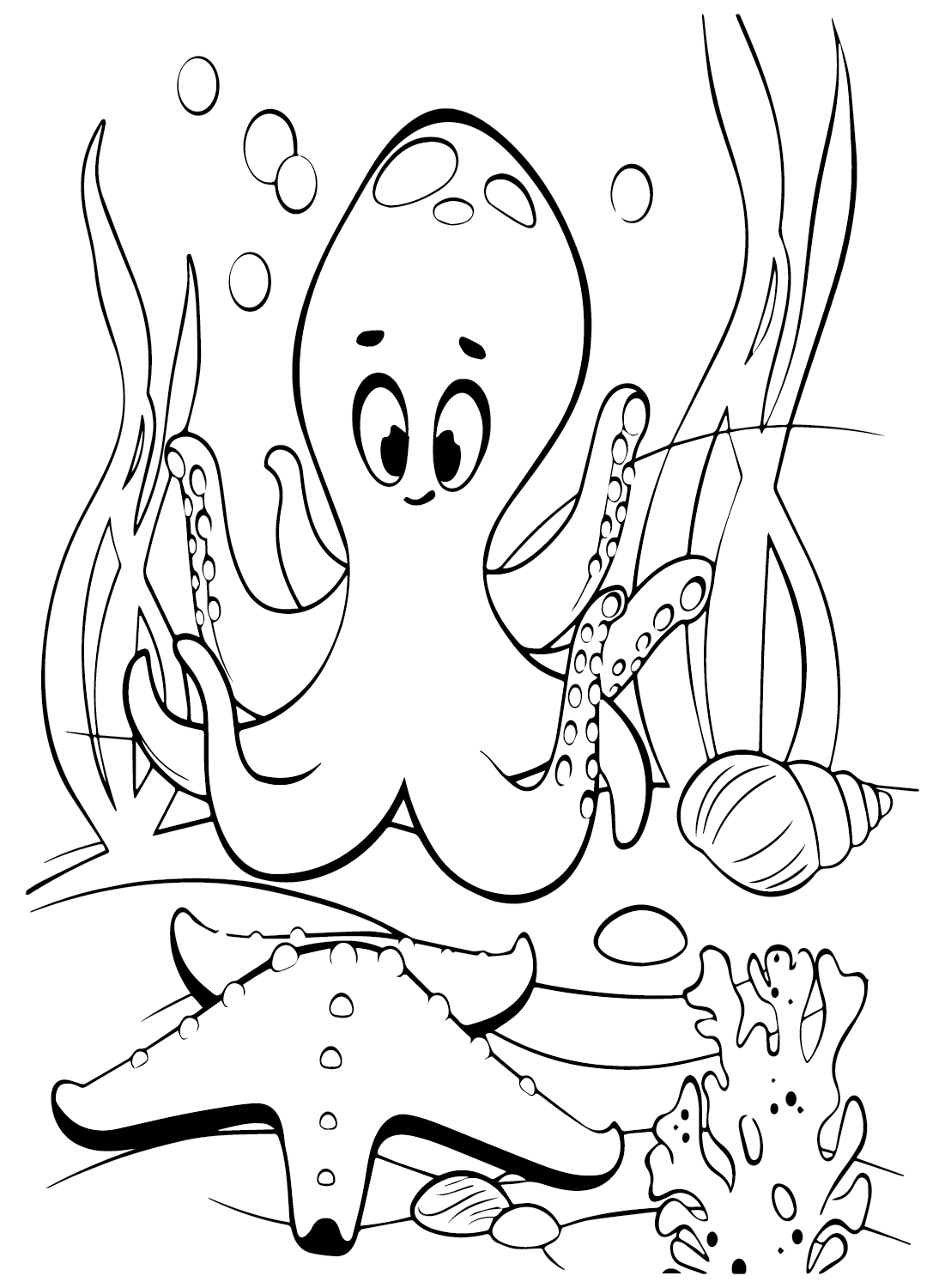
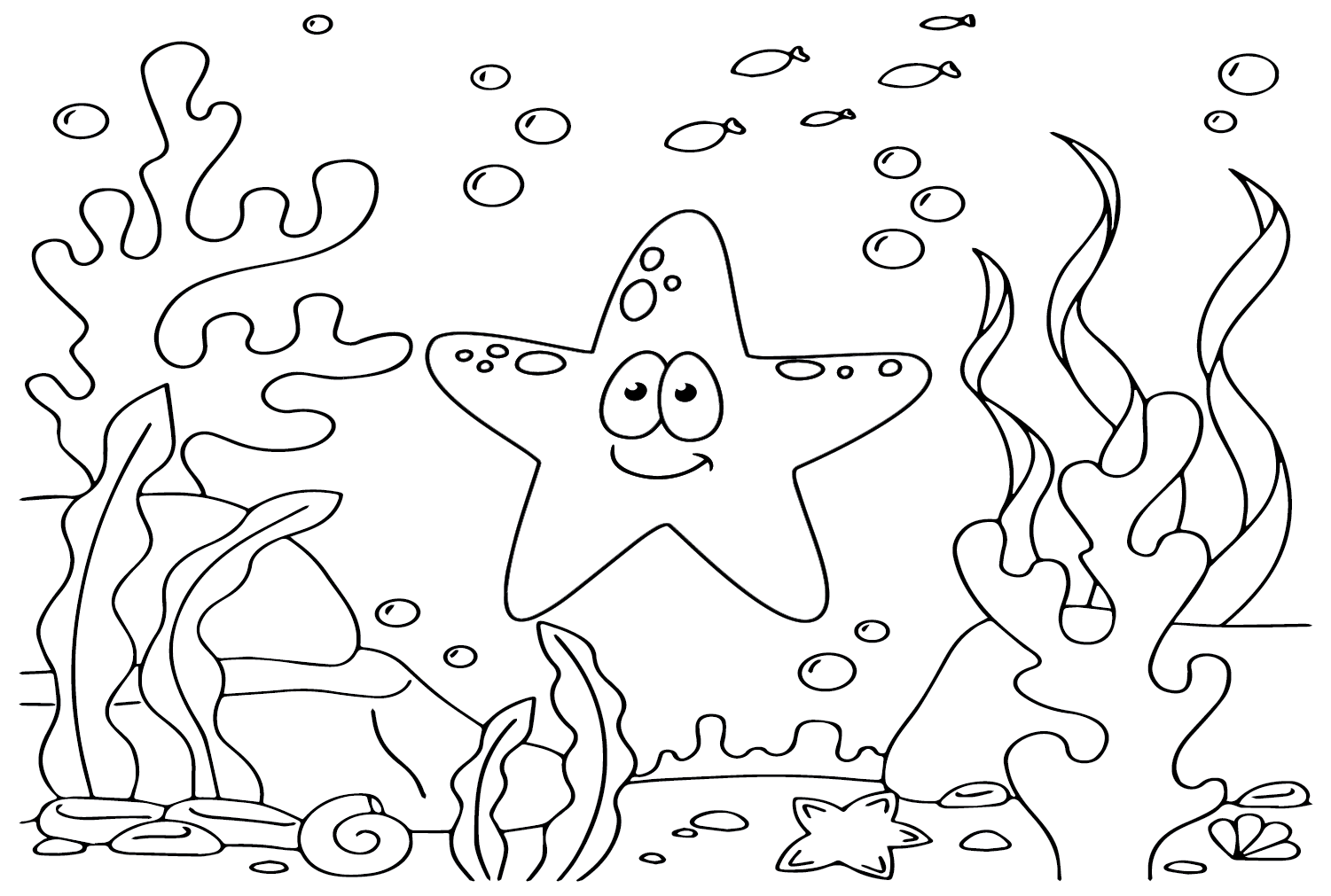
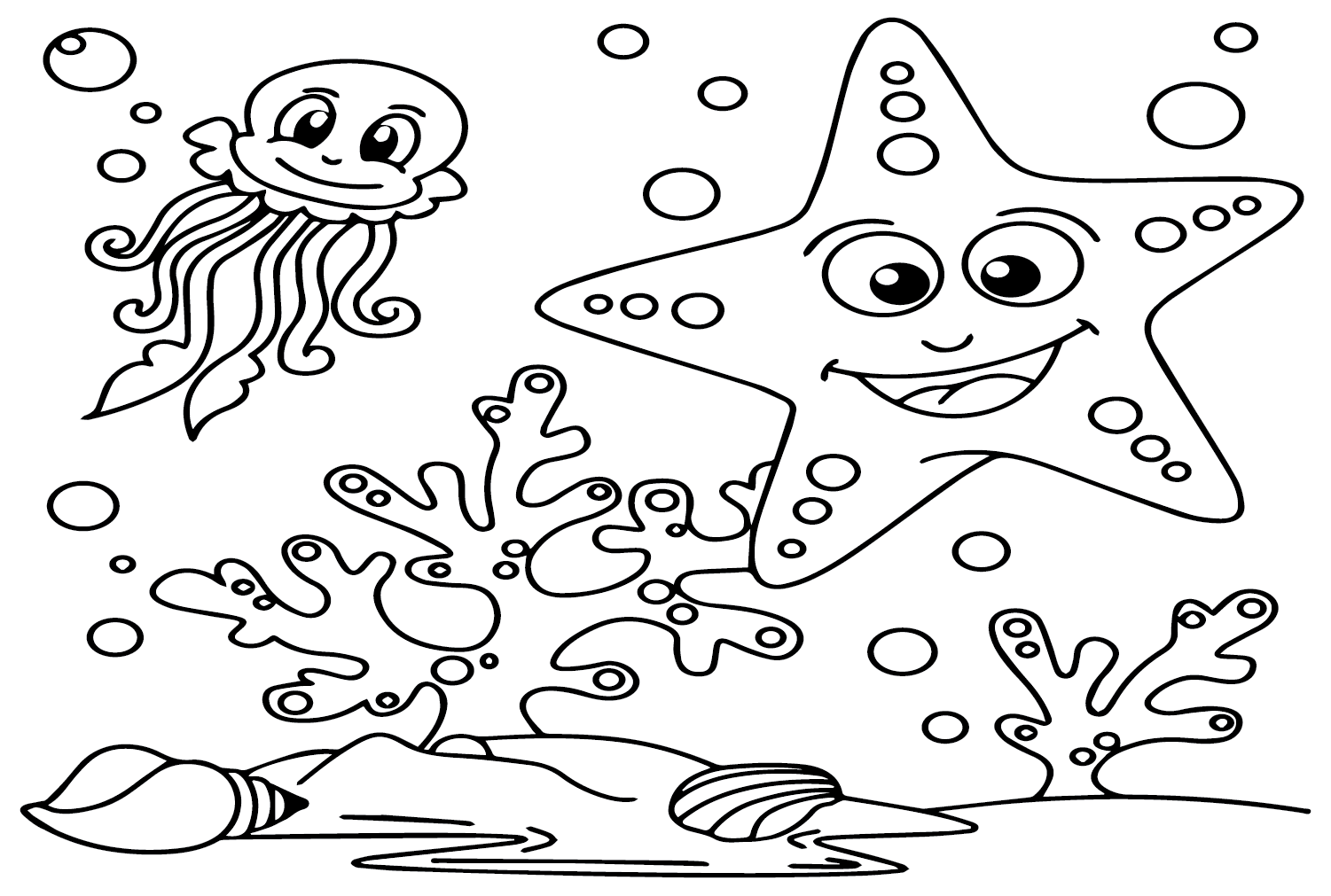
Ocean animal pages place starfish beside crabs, fish, octopuses, sea urchins, shells, bubbles, and underwater plants. These scenes help children see sea stars as part of a larger marine world instead of just a flat star shape. A tidepool-style page might include rocky bottoms, crab claws, sea urchin spikes, fish scales, sand patches, and bubble rows. That makes the page useful for vocabulary, observation, and simple classification.
Coloring starfish with ocean animals: Color the starfish first with coral orange, peach, soft red, or sandy pink, then use crab red, fish orange, octopus lavender, sea urchin purple, seaweed green, and ocean blue for nearby animals. Keep the water lighter than the main characters. The common mistake is making every animal equally bright; choose one main subject and let the others support the scene.
Coral Reefs, Ocean Waves, and Tidepool Scenes
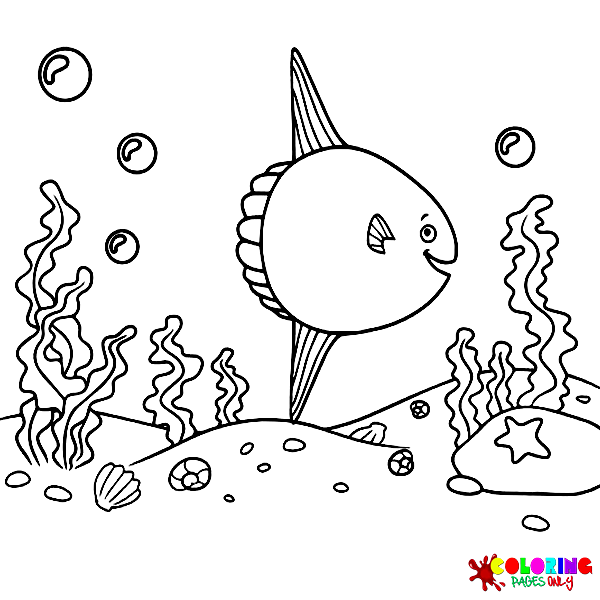
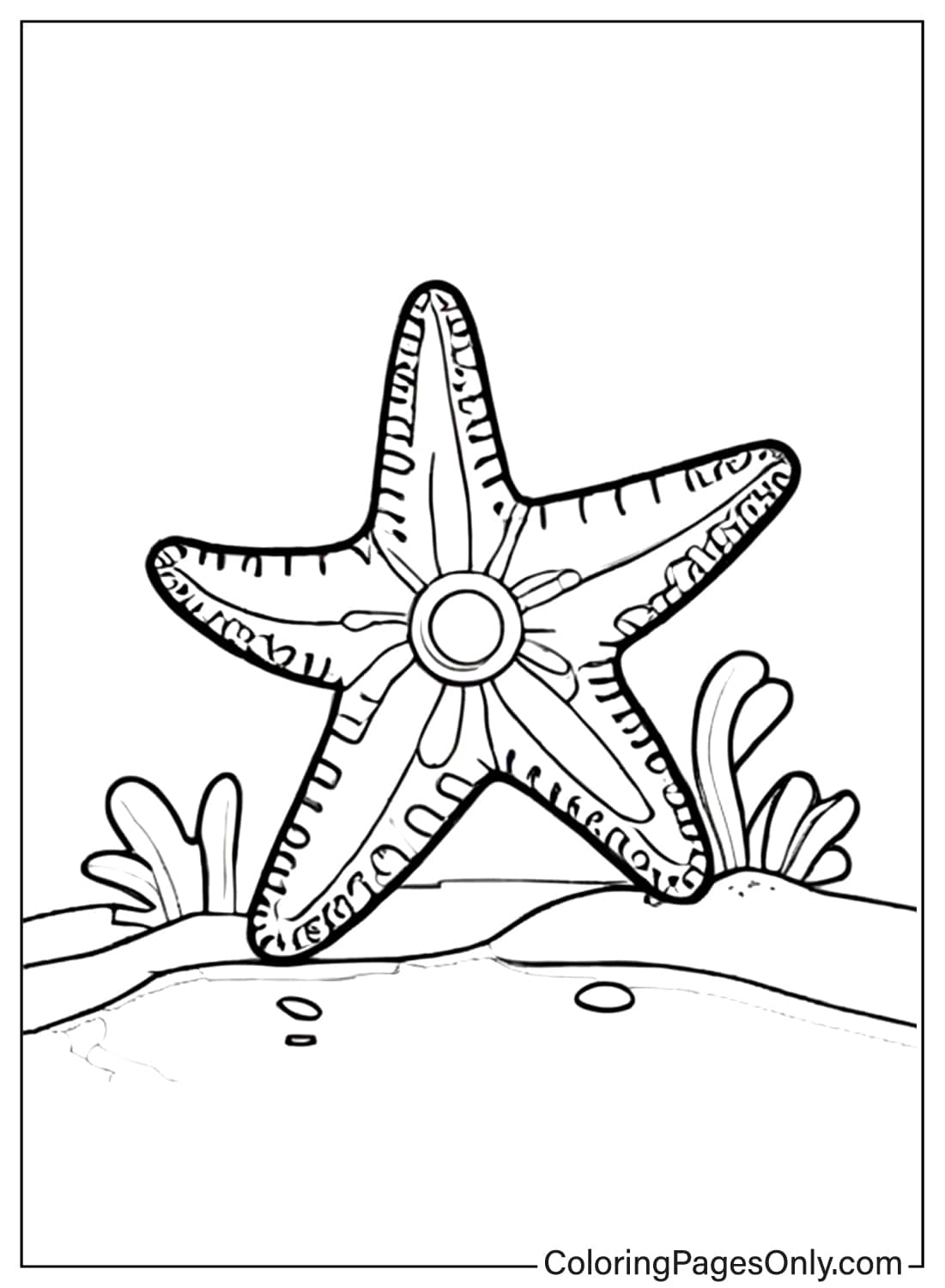
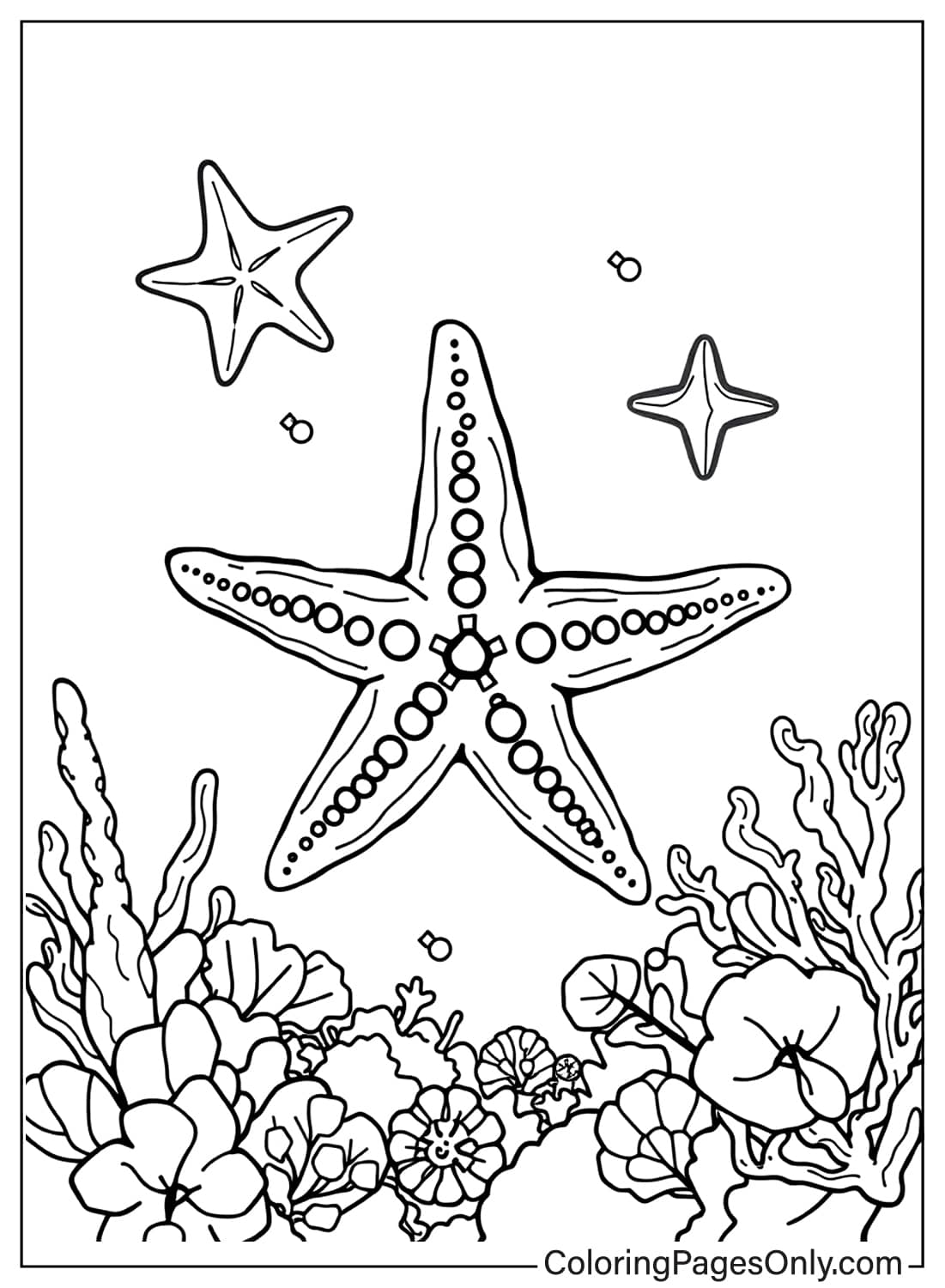
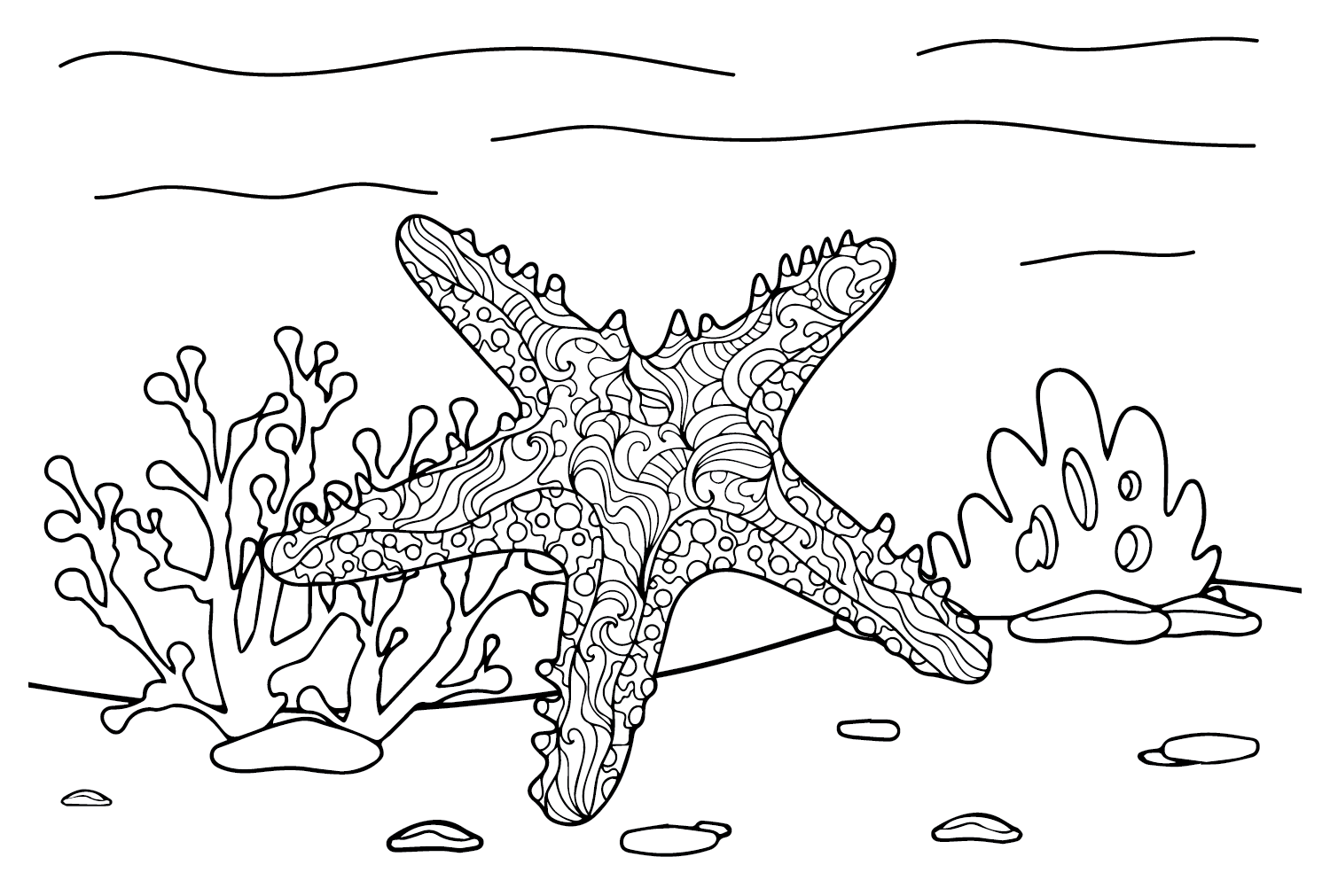
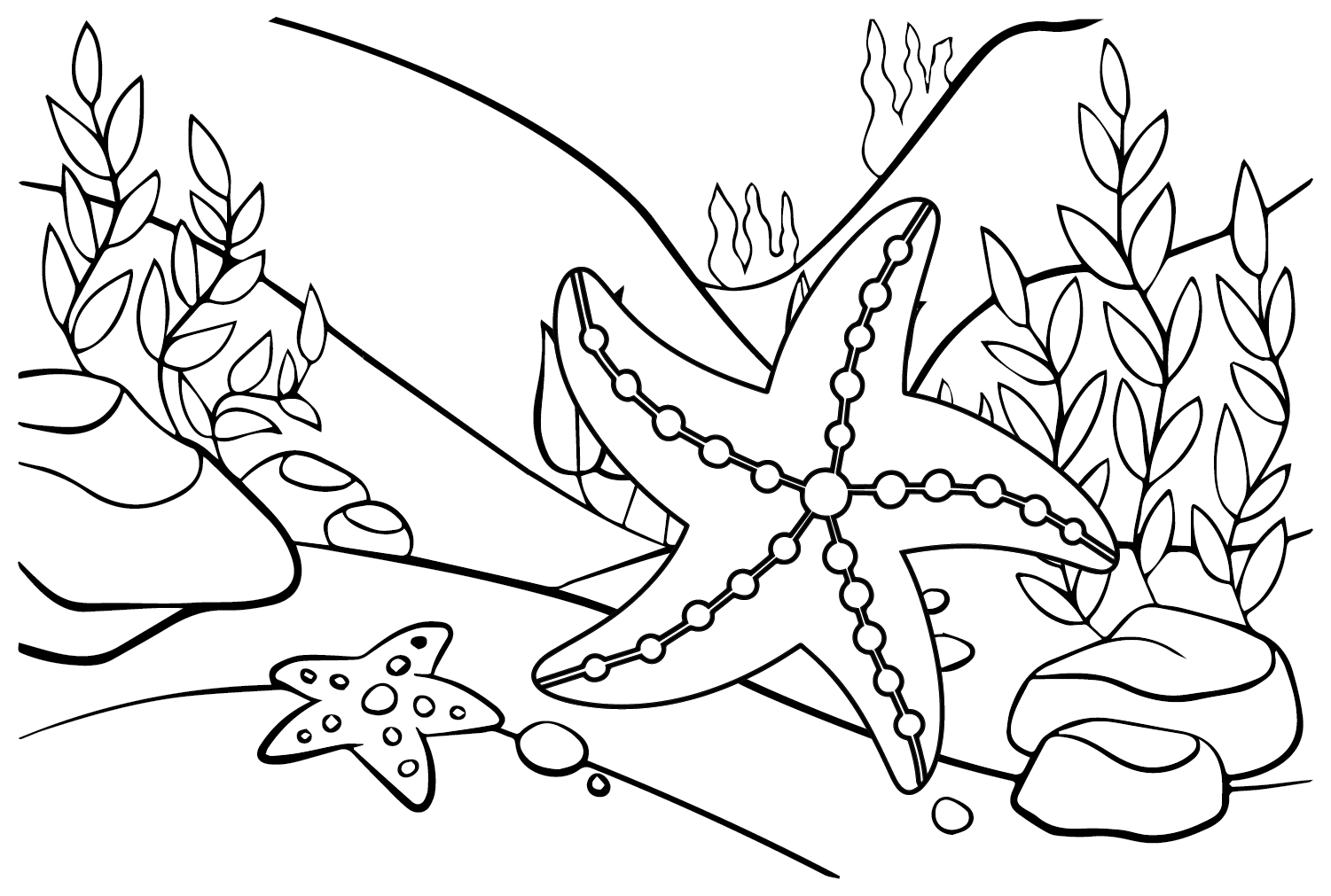
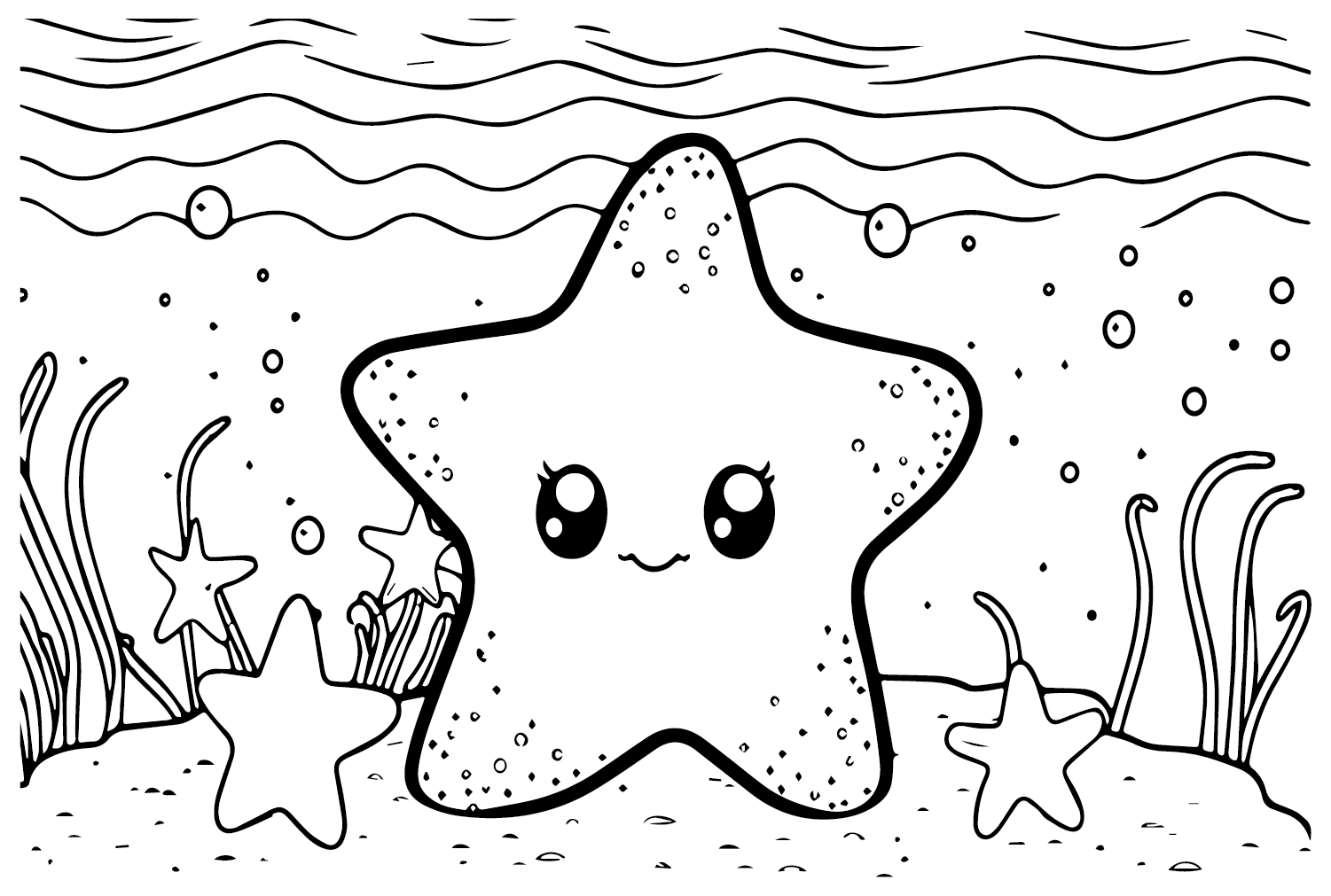
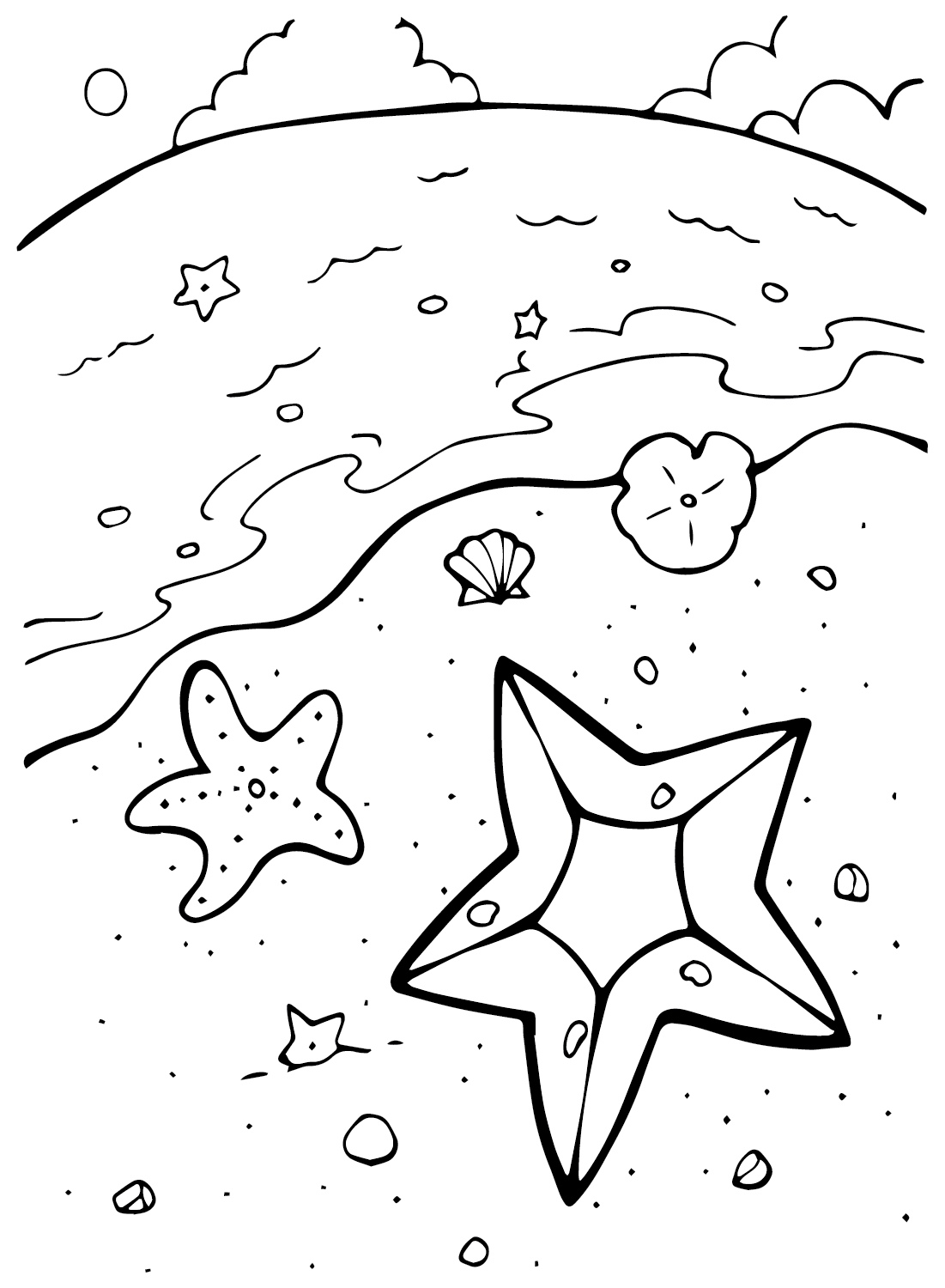
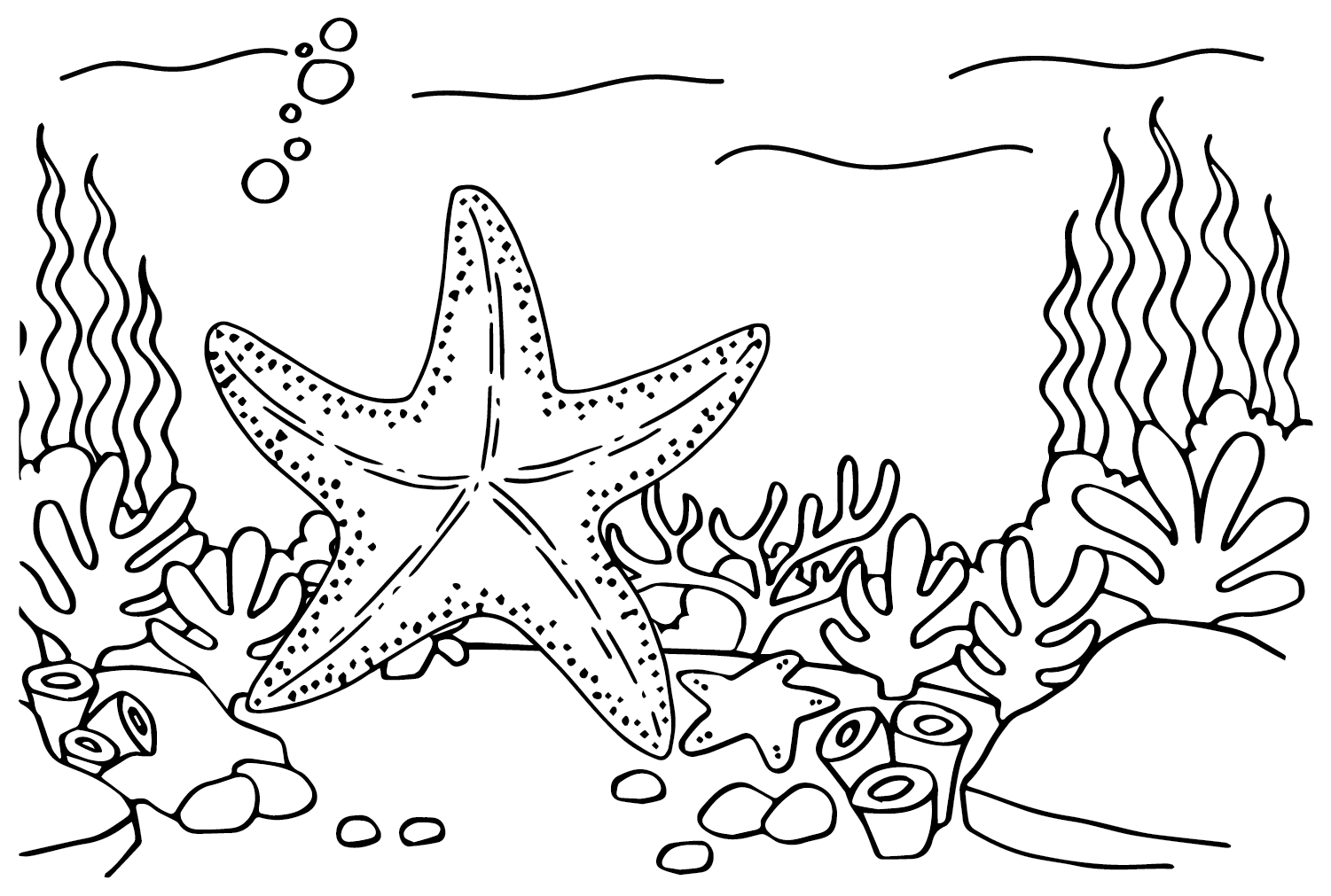
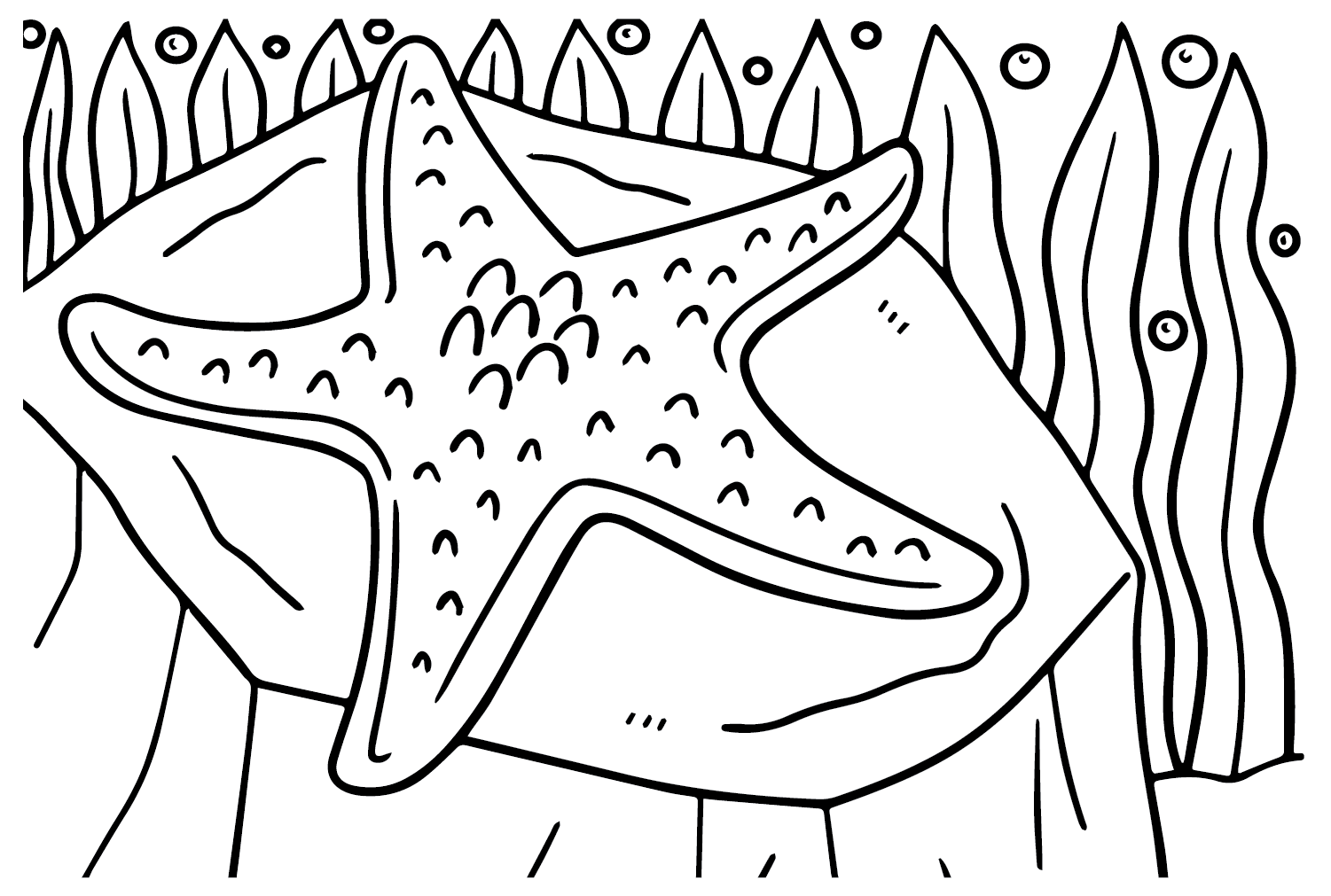
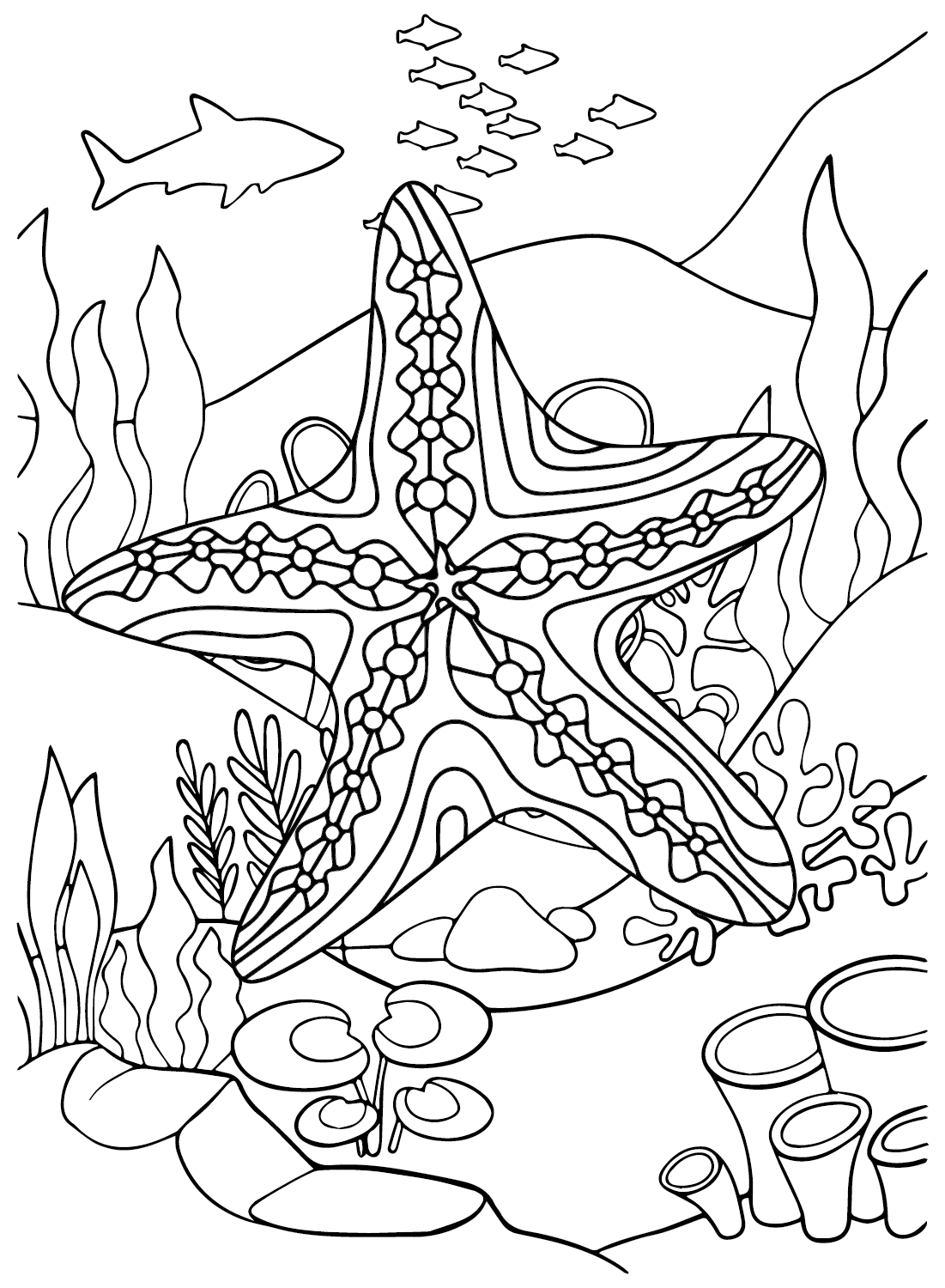
Reef and tidepool pages give older children more visual detail to manage. Starfish may appear on sand, near coral branches, beside seaweed, under waves, or on a rocky seafloor. These pages are stronger when colorists think in layers: warm sea star first, cool water second, then coral, sand, rocks, and bubbles as supporting details. They also work well for gentle ocean awareness because real sea stars are living animals in marine habitats, not simple beach decorations.
Coloring ocean starfish scenes: Use sand beige, ocean blue, turquoise, seafoam green, coral pink, shell cream, deep teal, and stone grey. Keep the starfish warmer than the water so it stands out clearly. The common mistake is coloring the sand and starfish too similarly; use brighter coral or peach for the sea star and lighter tan for the beach.
Mermaid, Mandala, and Decorative Starfish Pages
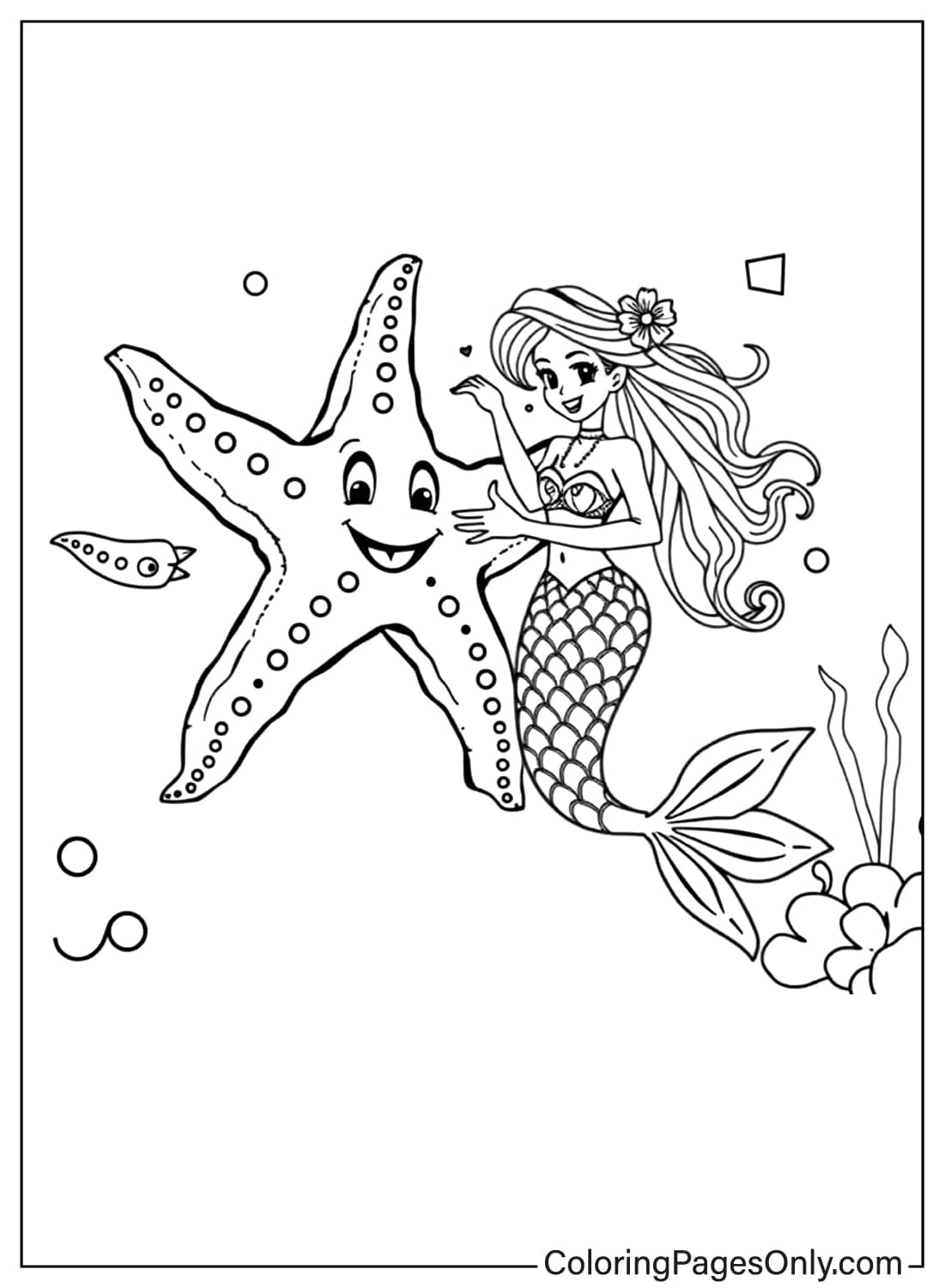
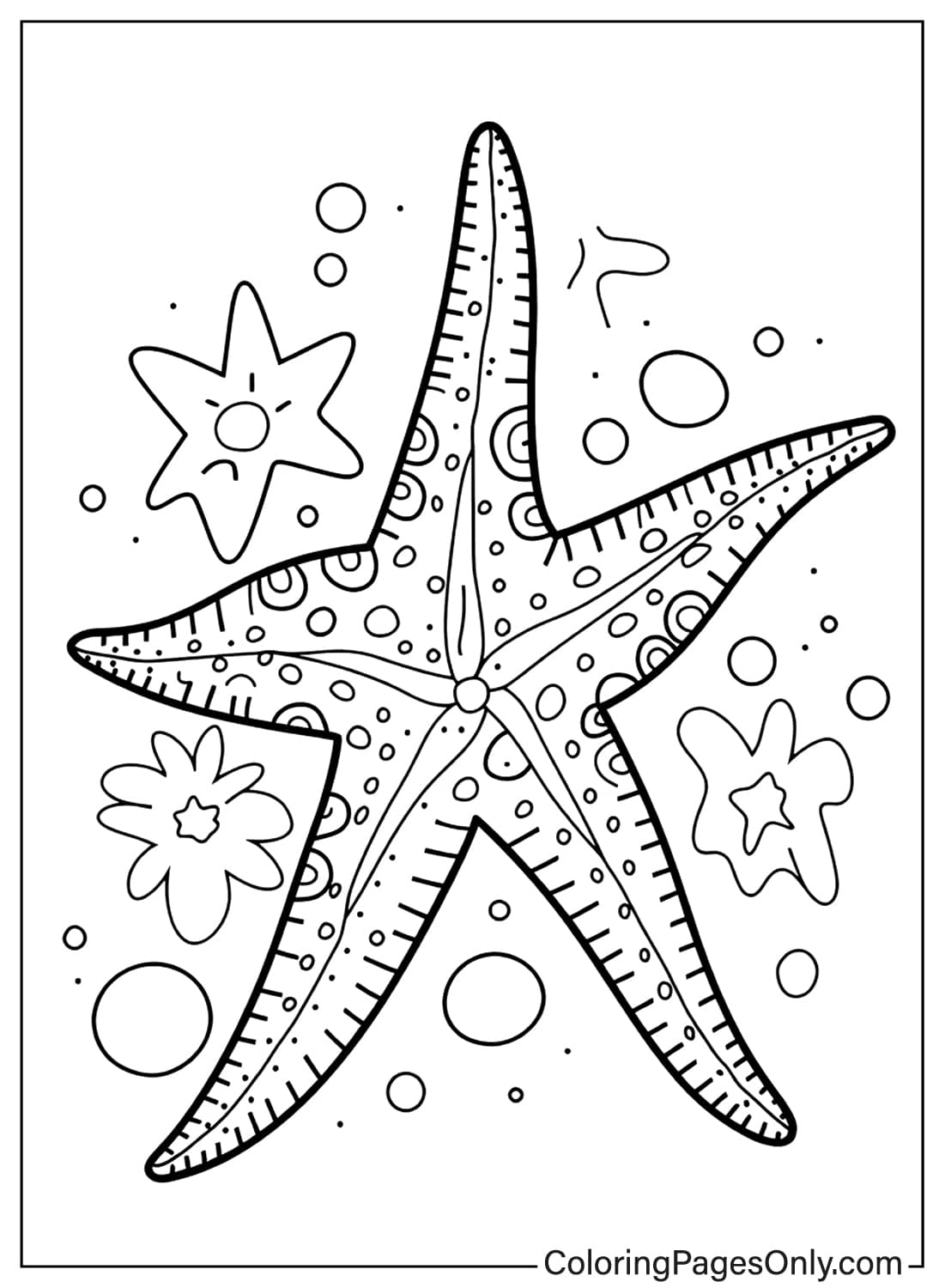
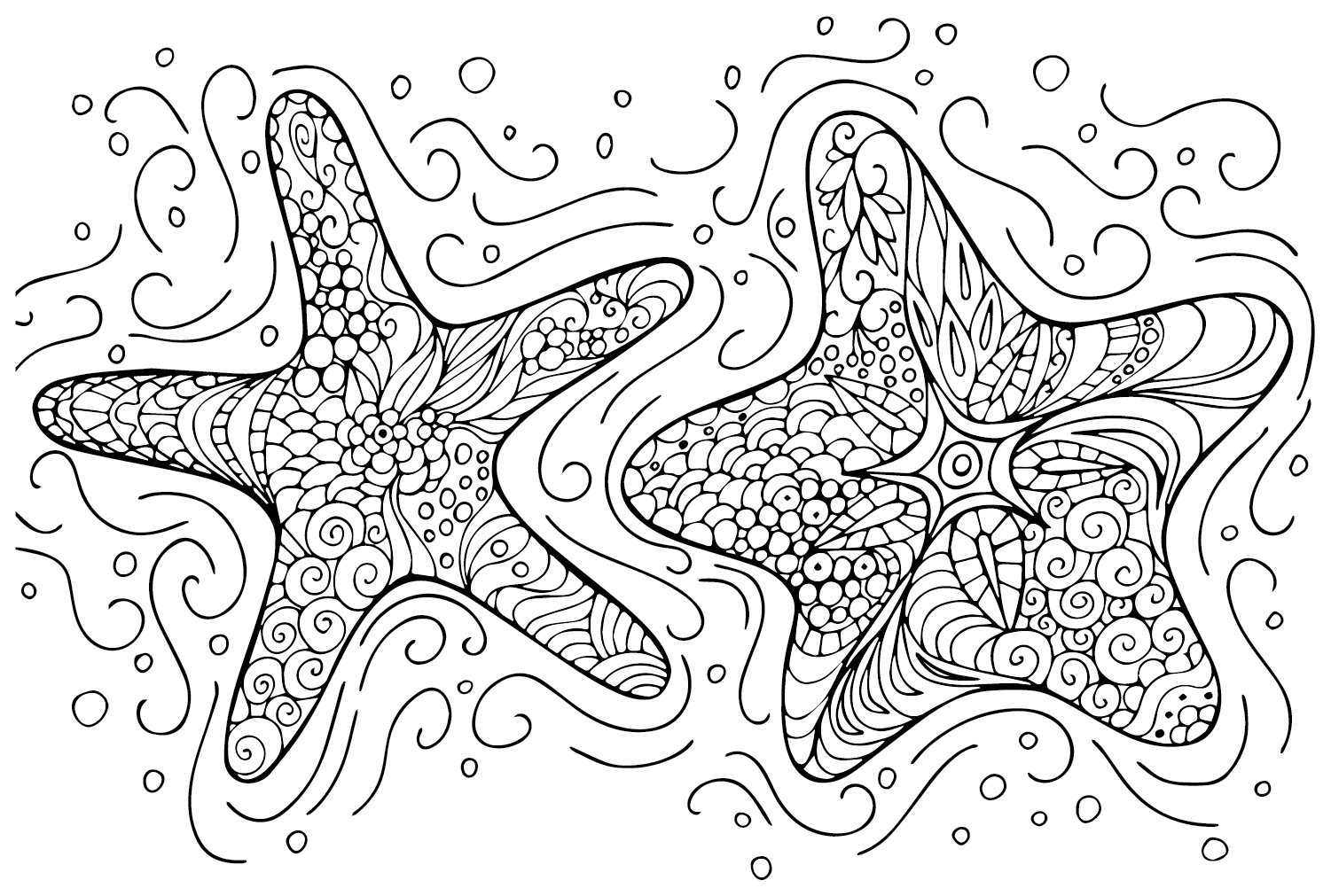
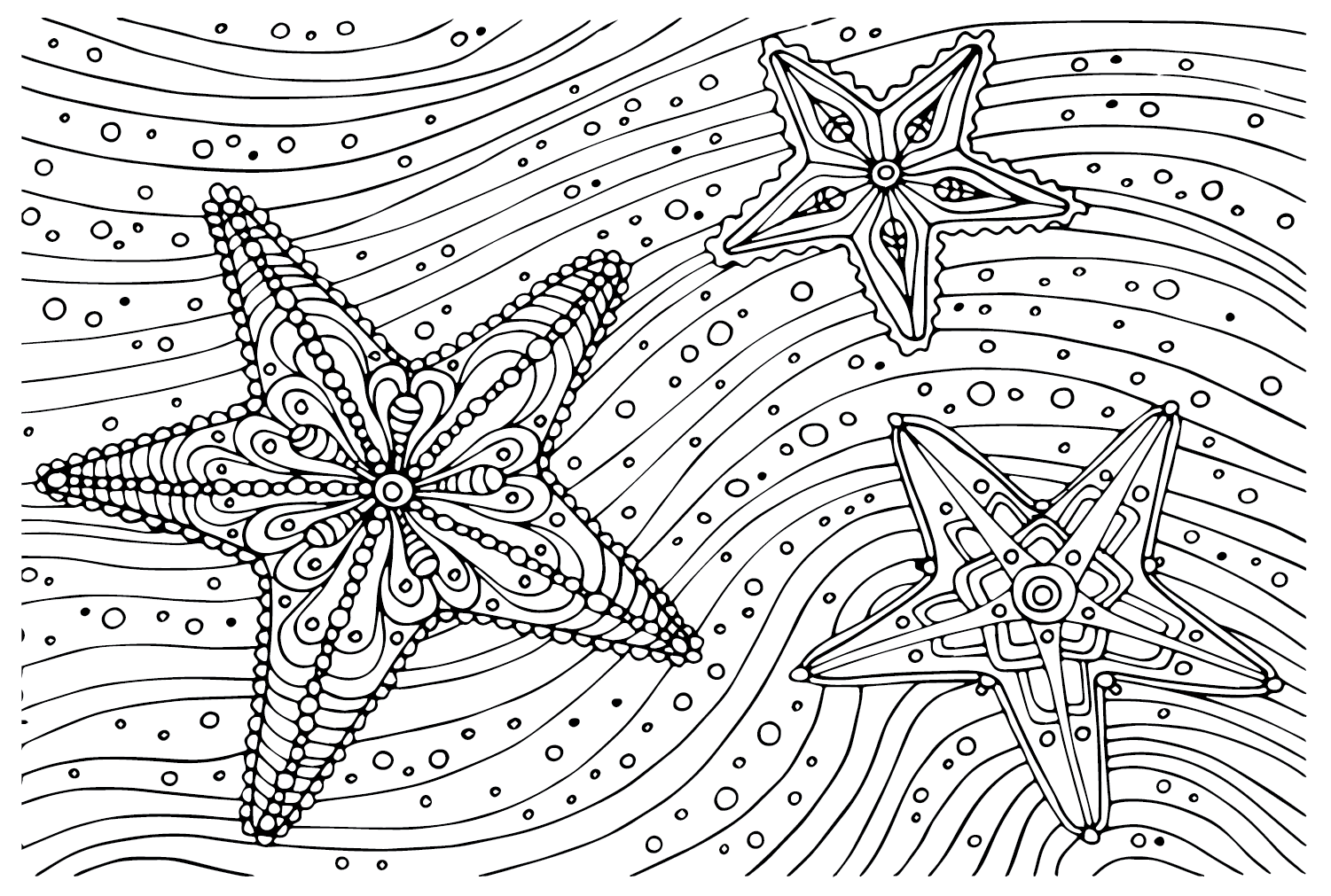
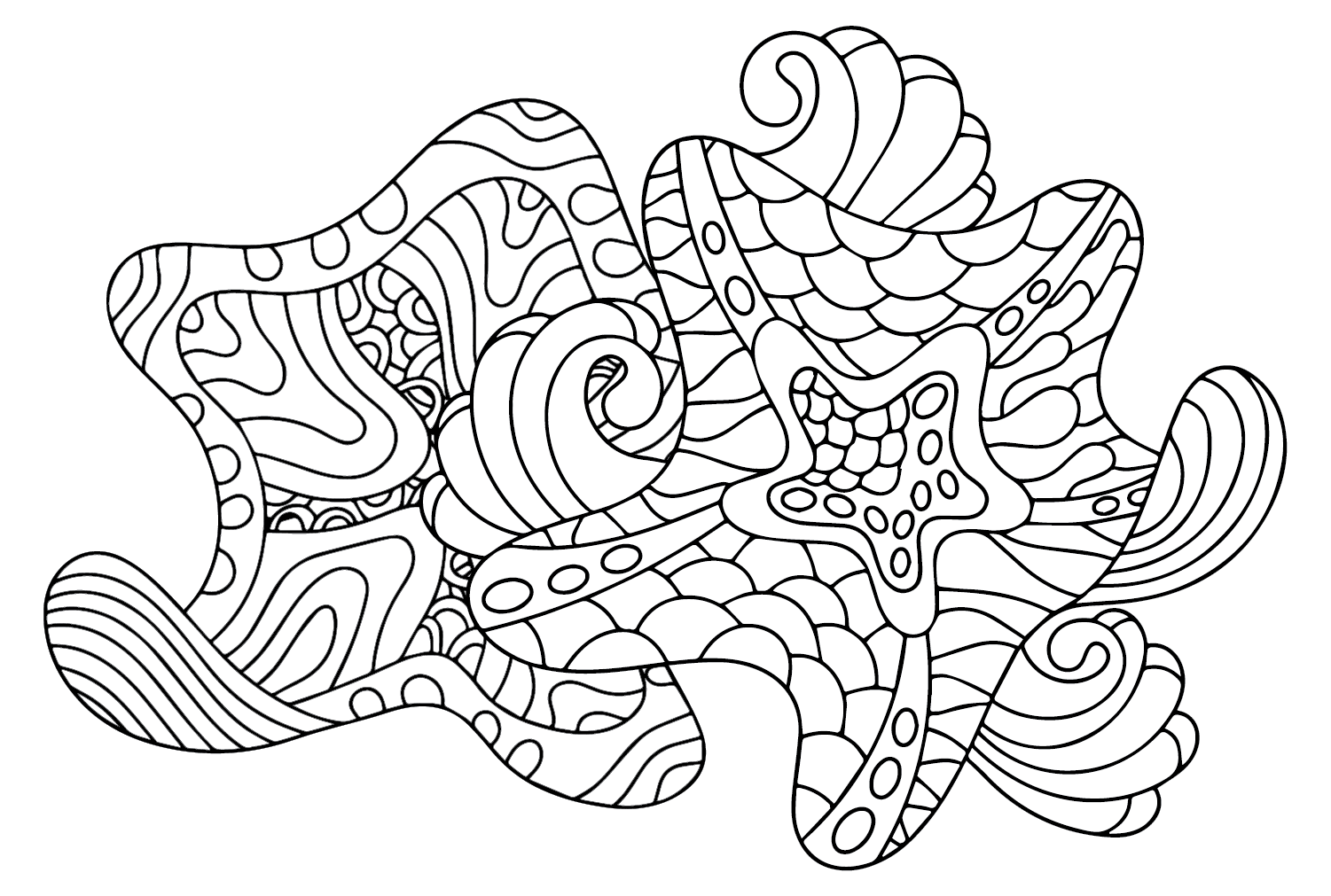
The most detailed pages include starfish with mermaids, mandala starfish, decorative patterns, dot-to-dot designs, and storybook ocean scenes. These pages are strong for older children, teens, and adults because they combine ocean imagery with radial symmetry. A mandala starfish can echo the real structure of a sea star: a central area with repeated arms, dots, stripes, circles, and pattern sections.
Coloring decorative starfish pages: Choose a limited palette before starting: coral pink, lavender, seafoam green, pearl cream, and soft blue work well together. For mandala pages, repeat matching colors across similar shapes on each arm. The common mistake is using too many unrelated colors; repeated designs look cleaner when the palette stays controlled.
What These Pages Do
Starfish coloring pages connect children to ocean life through a shape they can recognize quickly, while still leaving room for real science. The familiar star form makes the page approachable, but sea stars are living marine invertebrates, not beach ornaments. Children can learn that sea stars belong to the echinoderm group, have arms arranged around a central disc, and move with tiny tube feet on the underside of their bodies.
These pages also teach design through radial symmetry, repeated sections, texture, and pattern. A simple sea star helps children color from the center outward. A mandala starfish teaches repeated colors across matching arms. A tidepool scene teaches how to keep one main subject clear inside a busier setting. A textured sea star page helps children notice dots, bumps, small lines, and arm edges without overcoloring.
The American Academy of Pediatrics identifies fine motor skill development as a key milestone throughout early childhood. HealthyChildren.org, the parenting site from the American Academy of Pediatrics, lists coloring with crayons or chalk among quiet-time activities that can help improve a 3-year-old child’s hand abilities. Starfish pages support that development through arm outlines, dotted textures, small face details, coral branches, bubbles, wave lines, sea urchin spikes, and repeated patterns.
The 2005 Art Therapy Journal study on structured coloring and anxiety reduction applies well to starfish pages because many designs use repeated arms, dots, stripes, circles, and ocean patterns. A symmetrical sea star gives the colorist a clear center and repeated sections to complete. This kind of structured coloring can feel calm and focused while still allowing playful color choices.
Starfish pages also offer a simple way to talk about respectful beach and tidepool behavior. A child can enjoy coloring a sea star while learning that real sea stars should be observed and left in their habitat. That keeps the activity creative while supporting ocean awareness and respect for living marine animals.
How to Color These Pages Well
Color from the center outward. Start in the central disc, then move along each arm toward the tip. That helps keep the color even across all arms and makes the starfish feel balanced. The common mistake is coloring each arm with a different pressure level; center-out coloring keeps the sea star unified.
Use warm ocean colors for natural starfish. Coral orange, peach, soft red, sandy beige, warm yellow, shell pink, and muted purple all work well for sea star bodies. Add darker shading near the central disc, along one side of each arm, or under small texture dots. Avoid using only flat brown unless the page has a realistic tidepool style.
Add texture with dots, bumps, and short lines. Many starfish pages look better with small speckles or tiny marks along the arms. Use a slightly darker shade of the main body color instead of heavy black. The common mistake is covering the whole sea star with dark dots; soft texture looks more natural and keeps the page clean.
Keep ocean backgrounds lighter than the starfish. Use ocean blue, turquoise, seafoam green, or pale teal for water, but leave some white space around bubbles and wave highlights. If the background becomes too dark, the starfish may disappear. A warm sea star against cool water usually looks clear and bright.
Use controlled colors for the mandala starfish. Pick three main colors and two accent colors before starting. Repeat the same color choices across matching shapes on each arm. That keeps the mandala balanced and prevents the design from looking crowded.
Match the color mood to the scene. Beach pages work best with sand beige, shell cream, coral orange, and soft blue. Reef pages can use coral pink, seaweed green, fish orange, deep teal, and shell white. Mermaid or fantasy pages can use lavender, pearl pink, seafoam green, and silver accents. Choose the scene mood first, then color the sea star to match.
5 Creative Craft Ideas
Sea Star Radial Symmetry Wheel
Use simple starfish or mandala starfish pages to make a radial symmetry wheel. Materials include printed pages, crayons, scissors, glue, cardstock, and a brass fastener. Children color one sea star from the center outward, then repeat matching colors across each arm. After cutting it out, attach it to a circular background with waves, bubbles, or sand patterns. When the wheel turns, children can see how the arms repeat around the center. This project works well for ages 6–10 because it connects coloring with radial symmetry, pattern, and balance. The finished wheel can support an ocean unit or classroom art display.
Tidepool Echinoderm Sorting Poster
Use starfish pages with crabs, fish, octopuses, sea urchins, shells, and underwater plants to make a tidepool sorting poster. Materials include printed pages, poster board, crayons, scissors, glue, and small labels. Children color and cut out ocean animals, then arrange them into groups such as “Sea Stars,” “Sea Urchins,” “Crabs,” “Fish,” and “Octopuses.” Older children can add labels like “echinoderm,” “tube feet,” “arms,” “reef,” and “tidepool.” This craft works best for ages 7–12 because it combines art, classification, vocabulary, and marine-life learning.
Starfish Texture Rubbing Card
Turn a starfish coloring page into a texture-focused art card. Materials include printed starfish pages, crayons, colored pencils, textured paper, sandpaper, bubble wrap, cardboard, scissors, and glue. Children color the starfish first, then create a textured background by rubbing crayons over different surfaces. A sandy texture can go behind a beach starfish, while bubble wrap can create an underwater bubble effect. This craft works well for ages 5–9 because it teaches children that texture can be shown through both color and surface marks. The finished card can become a summer note or an ocean display piece.
Mermaid Starfish Crown
Use cute starfish, mermaid starfish, pearl, and shell-style pages to make a paper crown. Materials include printed pages, cardstock strips, crayons, scissors, glue, and optional paper jewels. Children color several starfish in coral pink, lavender, shell cream, and seafoam green, then attach them across the front of a cardstock band. A large starfish can sit in the center, with smaller shells or bubbles on the sides. This craft works well for ages 5–10 with adult help for cutting and fitting. It supports pretend play, color planning, and ocean storytelling.
Starfish Ocean Bookmark Set
Use printable starfish outlines, small sea stars, and decorative starfish pages to make a set of ocean bookmarks. Materials include printed pages, cardstock, colored pencils, scissors, glue, and clear tape or a laminating sheet. Children color several small starfish, cut them out, and arrange them along bookmark strips with wave lines, bubbles, or seaweed. Older children can create repeating patterns such as starfish, bubbles, and shells. This project supports fine motor control, pattern recognition, and careful cutting. The finished bookmarks work well for ocean books, summer reading, or classroom library corners.
Frequently Asked Questions
What is a starfish?
A starfish, often called a sea star, is a marine invertebrate that lives in ocean habitats such as reefs, tidepools, rocky shores, and sea floors. Sea stars usually have arms arranged around a central body, giving them their familiar star-like shape. They are not fish, even though the word “starfish” is commonly used. In coloring pages, starfish appear as simple outlines, cartoon characters, ocean animals, mandala designs, and beach scenes.
Are starfish really fish?
No. Starfish are not fish. Scientists often call them sea stars because they do not have fins, scales, or gills like fish. They belong to a group of animals called echinoderms, along with sea urchins, sand dollars, and sea cucumbers. That makes starfish coloring pages useful for gentle ocean science lessons.
What are tube feet?
Tube feet are tiny, flexible structures on the underside of a sea star’s arms. They help sea stars move slowly, grip surfaces, and interact with their environment. Children may not see every tube foot in a coloring page, but learning about them helps explain why sea stars move differently from fish. This fact also makes starfish pages useful for ocean vocabulary and science discussion.
Why are sea stars shaped like stars?
Many sea stars have radial symmetry, which means their arms are arranged around a central body. The most familiar sea stars have five arms, but some species can have more. This shape is useful for coloring because children can work from the center outward and repeat colors across matching arms. It also makes starfish pages good for pattern, symmetry, and mandala-style activities.
How do starfish move?
Sea stars move slowly, using tube feet on the underside of their arms. These tube feet work with a water-based internal system that helps them grip and move along rocks, sand, reefs, or tidepool surfaces. In coloring pages, movement can be shown with tiny marks under the arms, wave lines, sand trails, or a rocky background. That helps children connect the picture to real ocean behavior.
Can starfish regrow their arms?
Some sea stars can regrow lost arms over time, although the ability depends on the species and the injury. This regeneration is one reason sea stars are fascinating ocean animals. In coloring activities, teachers can use this fact to start a simple conversation about animal adaptations. It should be explained gently, without encouraging children to touch or disturb real sea stars.
Should children touch real starfish at the beach?
Children should observe real sea stars carefully and respectfully, especially in tidepools or rocky shore areas. A sea star is a living animal, not a toy or decoration. If families visit a beach or tidepool, it is better to follow local guidance, keep animals in their habitat, and avoid lifting or drying them out. Coloring pages are a safe way to enjoy sea stars while learning to respect ocean life.
What age group are these Starfish Coloring Pages best suited for?
The simplest starfish outlines, dot-to-dot pages, and large cartoon starfish can work from about age 3 or 4 with thick crayons and adult supervision. Pages with crabs, octopuses, coral reefs, mermaids, mandalas, and detailed ocean scenes are better for ages 6–10 because they include more small areas. Older children, teens, and adults may enjoy mandala starfish, decorative patterns, and tidepool scenes for careful coloring. The best page depends on the amount of detail and the child’s patience.
Starfish coloring pages bring the shape of the sea into a simple, friendly activity: a sea star on the sand, a smiling cartoon starfish, a reef full of ocean animals, or a mandala design built from repeated arms. Each page gives colorists a chance to explore ocean life through pattern, texture, symmetry, and color.
Browse the full collection at ColoringPagesOnly.com. All 40+ pages free, no sign-up, PDF or PNG, print at home or color online.
These pages fit many creative moments: an ocean science lesson, a beach-themed craft table, a summer reading activity, a tidepool unit, or a calm coloring break at home. They also give children a useful challenge because starfish look best when the arms stay balanced, the textures stay light, and the ocean background stays clear.
For the final pass, color from the center outward, add soft dotted texture, and leave small white spaces around bubbles or waves. A few light highlights can make the whole sea star scene feel brighter and more natural.
Share your work on Facebook and Pinterest and tag #Coloringpagesonly. We especially want to see your Sea Star Radial Symmetry Wheel and Tidepool Echinoderm Sorting Poster.
Five arms / soft waves/ocean patterns in color.