Phineas and Ferb Coloring Pages

Phineas and Ferb Coloring Pages at ColoringPagesOnly.com brings together 60+ free pages based on Dan Povenmire and Jeff “Swampy” Marsh’s Disney Channel animated series – Phineas and Ferb in solo and paired pages, Perry the Platypus in both pet and Agent P modes, the full cast of supporting characters including Candace, Isabella, Doofenshmirtz and Vanessa, and themed pages covering Christmas, Halloween, and the backyard invention adventures the show is built around. Download any page as a PDF to print, or color online in your browser. The full Disney collection is at Disney Coloring Pages.

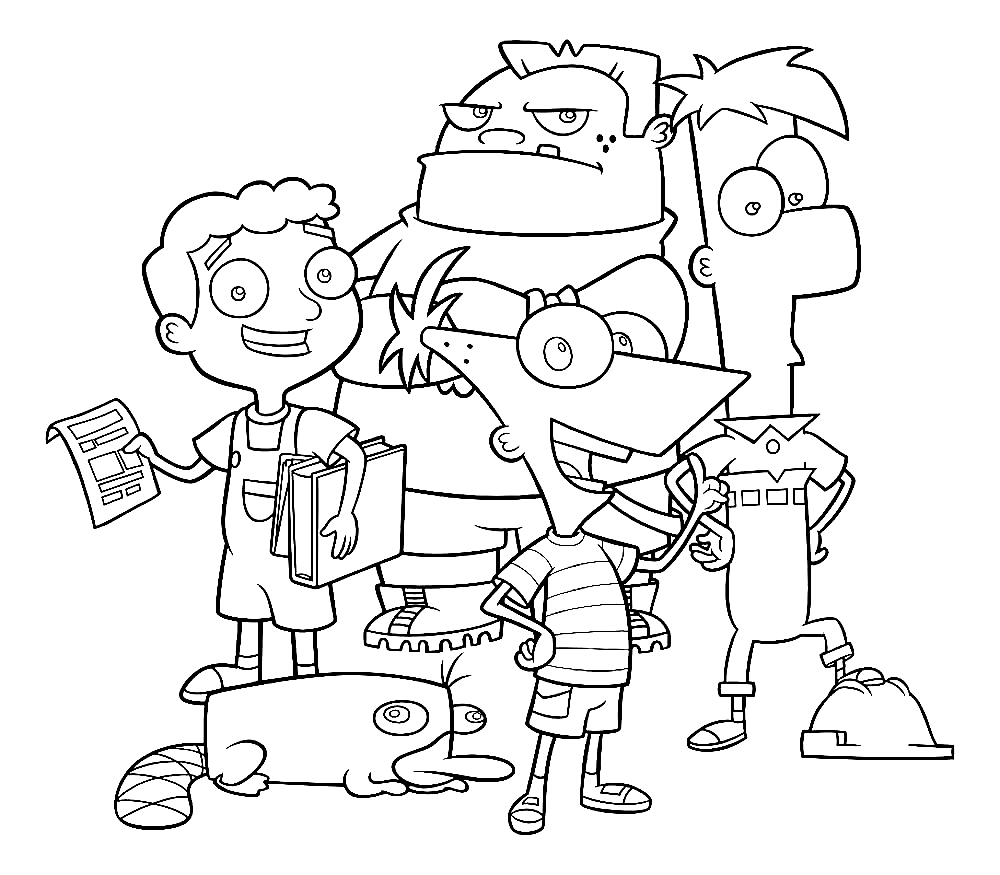
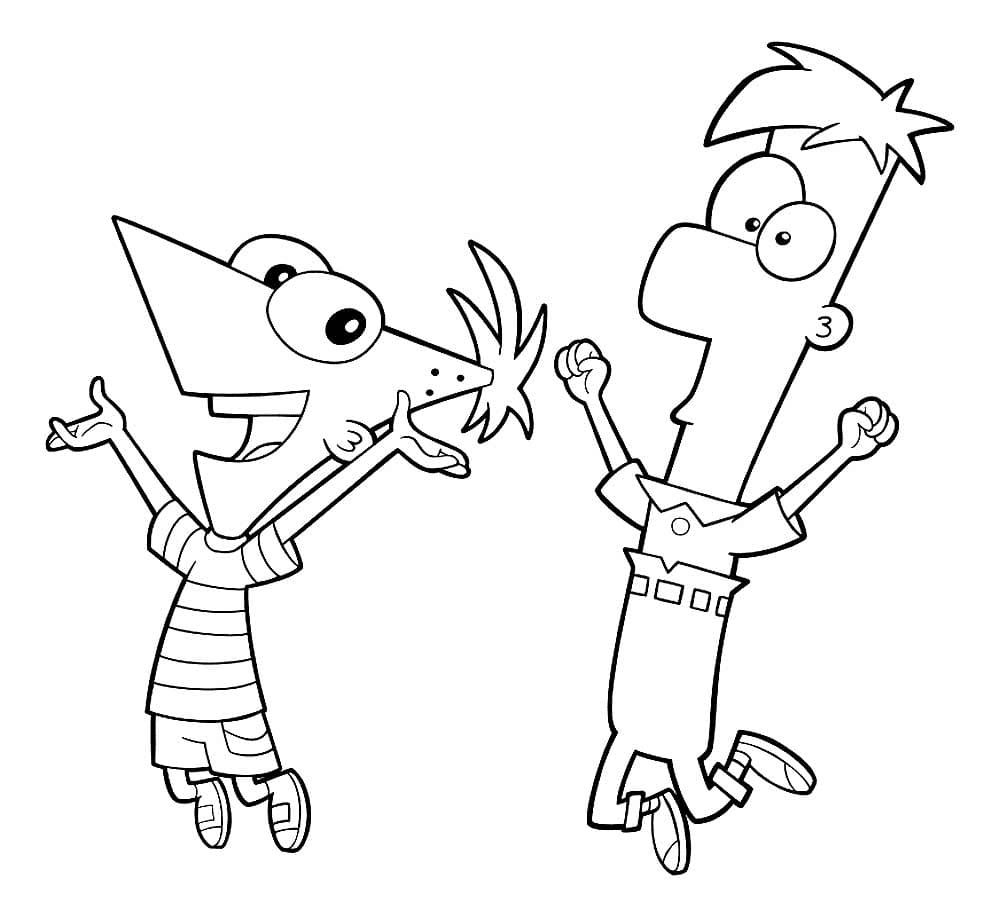
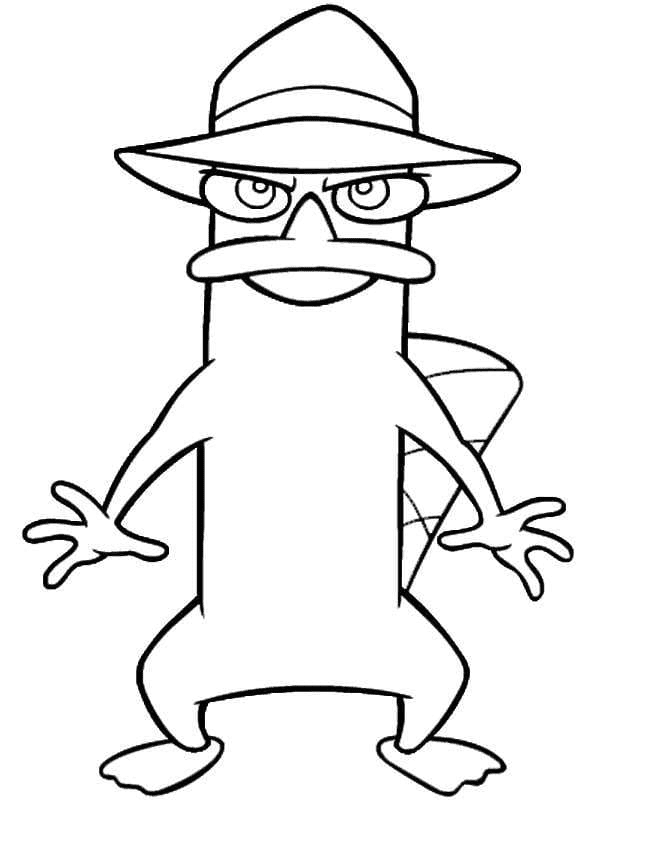
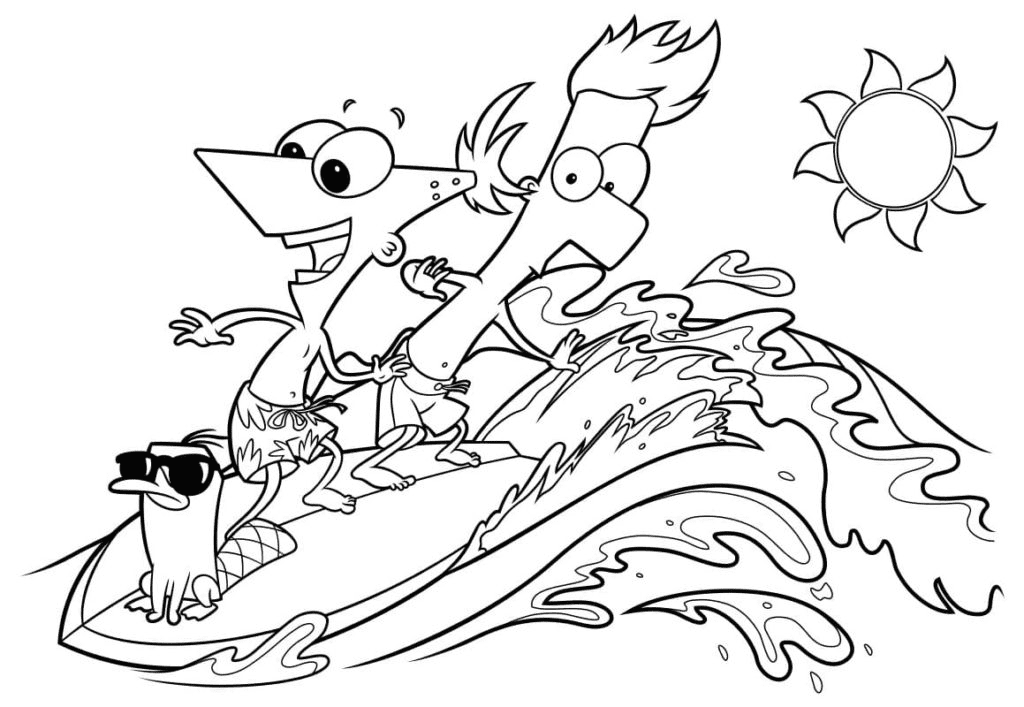
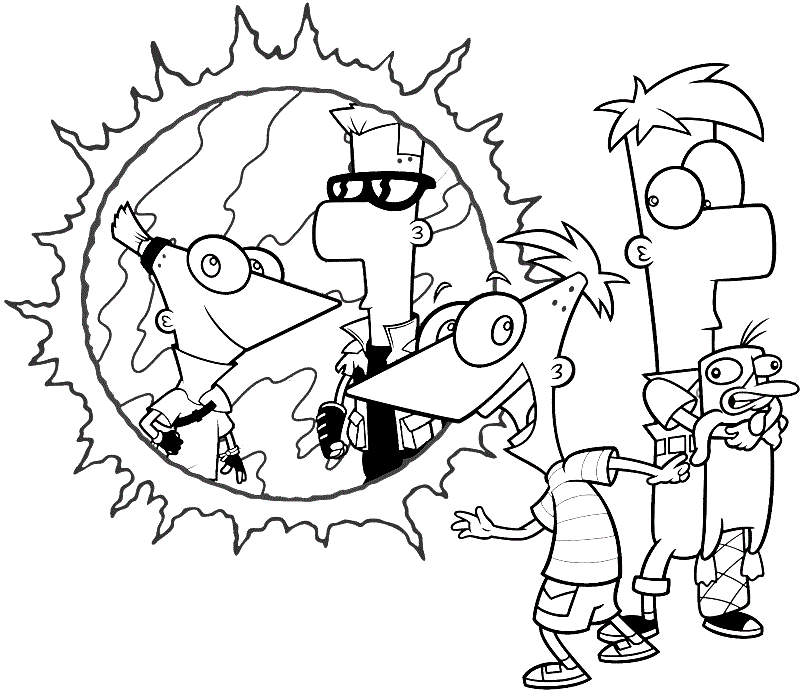
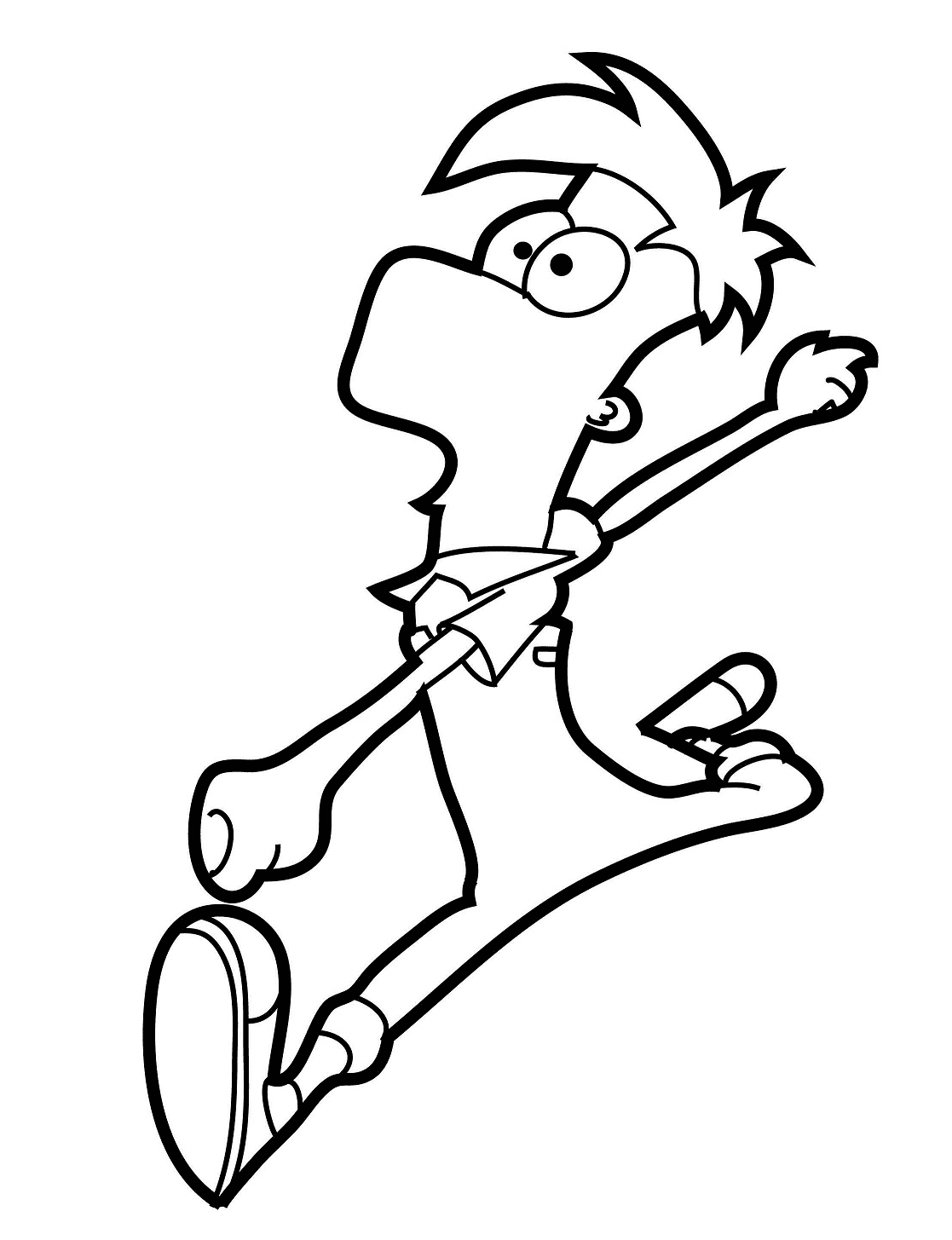
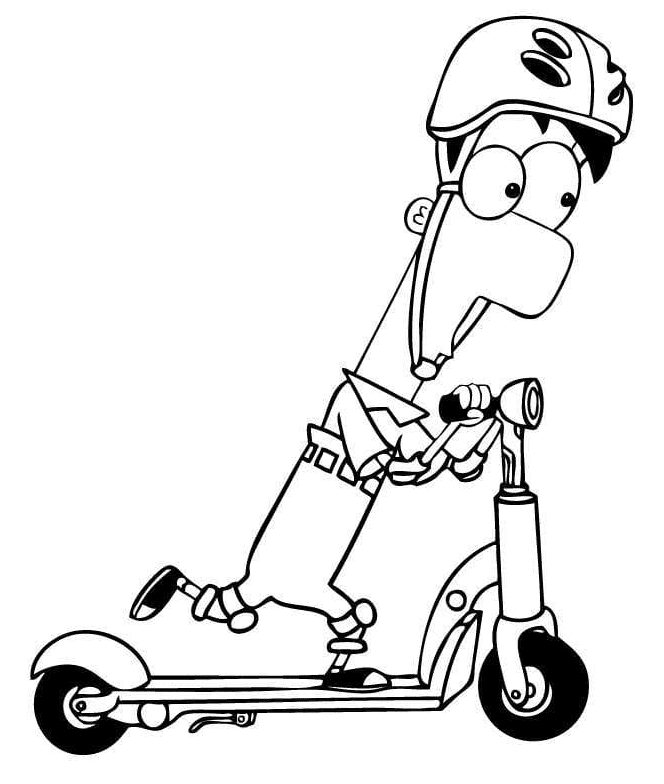
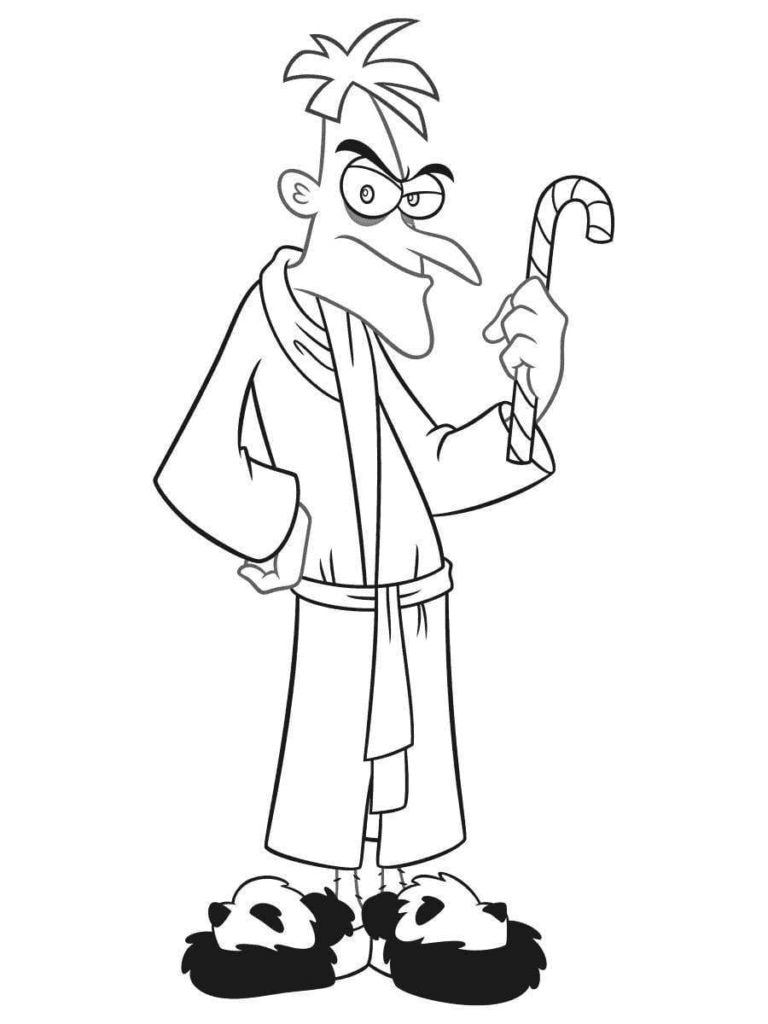

What is Phineas and Ferb?
Phineas and Ferb is an American animated television series created by Dan Povenmire and Jeff “Swampy” Marsh that aired on Disney Channel from 2007 to 2015, running for four seasons and 222 episodes plus multiple television specials and movies. It is one of the longest-running Disney Channel animated series and remains one of the network’s most acclaimed shows.
The premise is built around a precise and repeating structure. The setting is a single summer vacation – “104 days of summer vacation,” as the opening song announces – in the suburb of Danville. Every episode, stepbrothers Phineas Flynn and Ferb Fletcher build something extraordinary in their backyard: a roller coaster, a beach, a portal to Mars, a time machine, a skyscraper. Every episode, their older sister Candace Flynn tries to expose their projects to their mother, Linda, and fails because the invention disappears before their mother sees it. And in a parallel plot running simultaneously, their pet platypus Perry – secretly Agent P of the OWCA (Organization Without a Cool Acronym) – battles the bumbling villain Dr. Heinz Doofenshmirtz and his latest “inator.” The two plots converge at the end of each episode, typically in a way that explains why Candace’s bust attempt fails.
The show was praised throughout its run for its layered humor (working on multiple age levels simultaneously), its elaborate musical numbers (each episode typically includes at least one original song), and its sophisticated narrative structure. The central joke – that two children are building impossible engineering projects and nobody but their sister notices – never gets old because the specific inventions and the specific busting attempts are always different. A Disney+ revival film, Phineas and Ferb: Candace Against the Universe, was released in 2020.
Character Guide
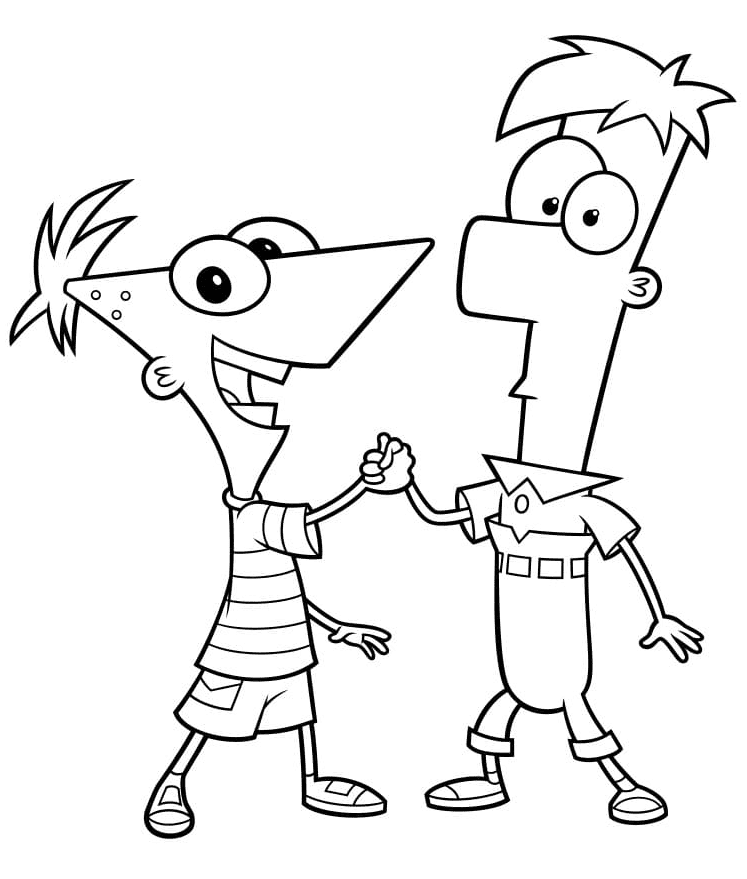
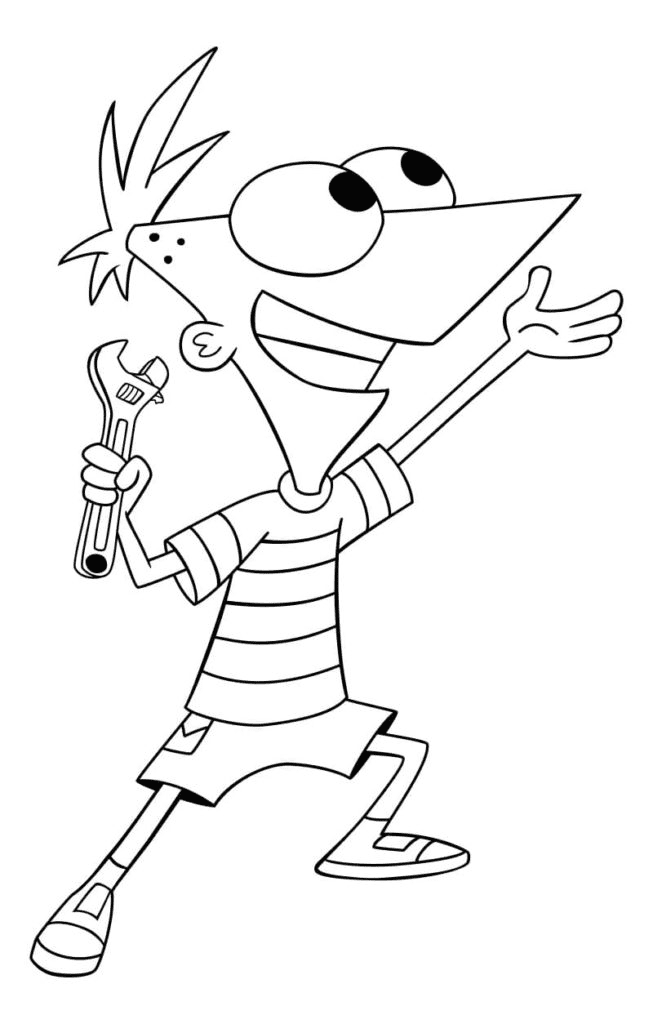
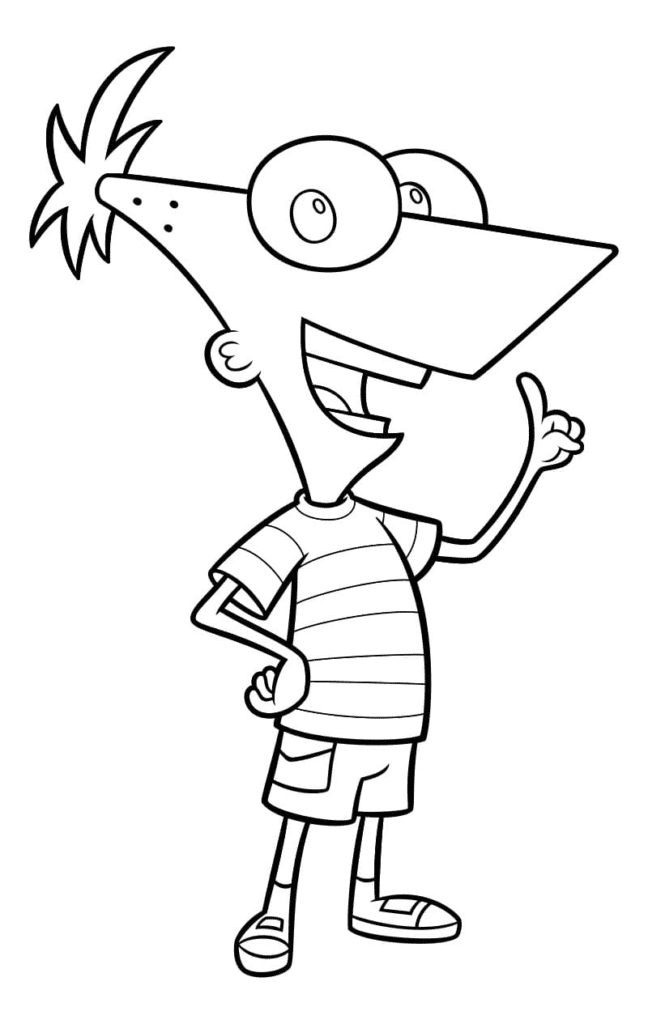
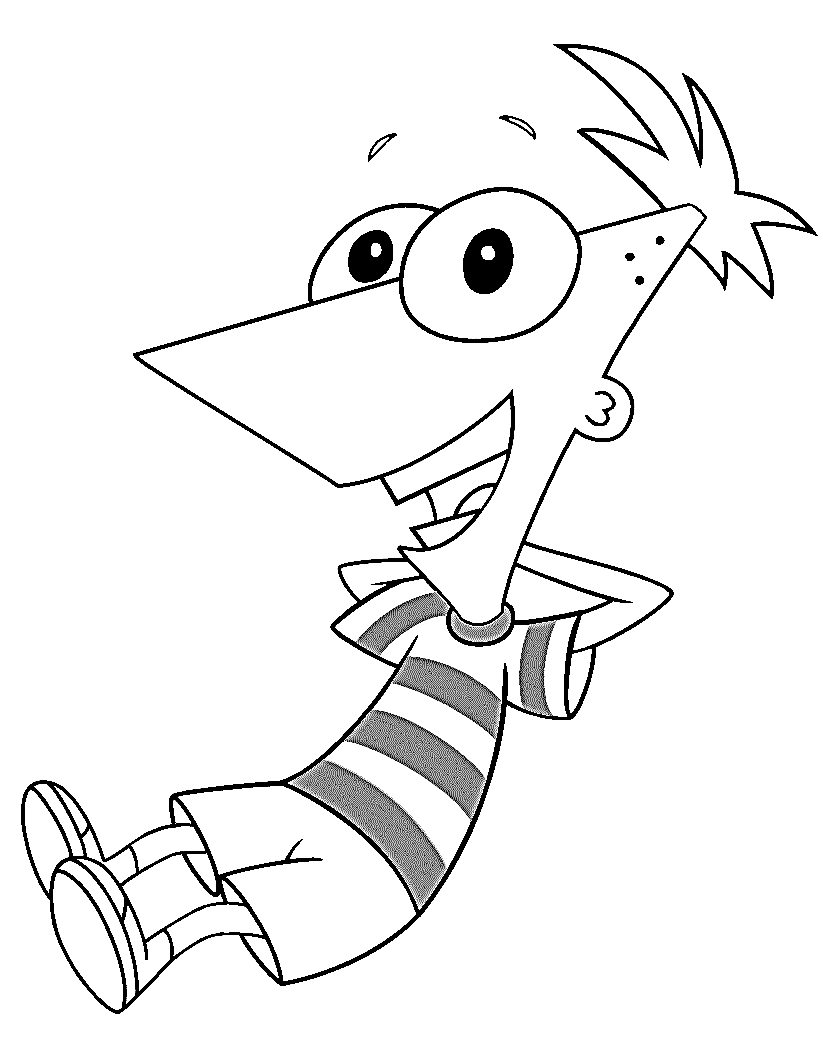
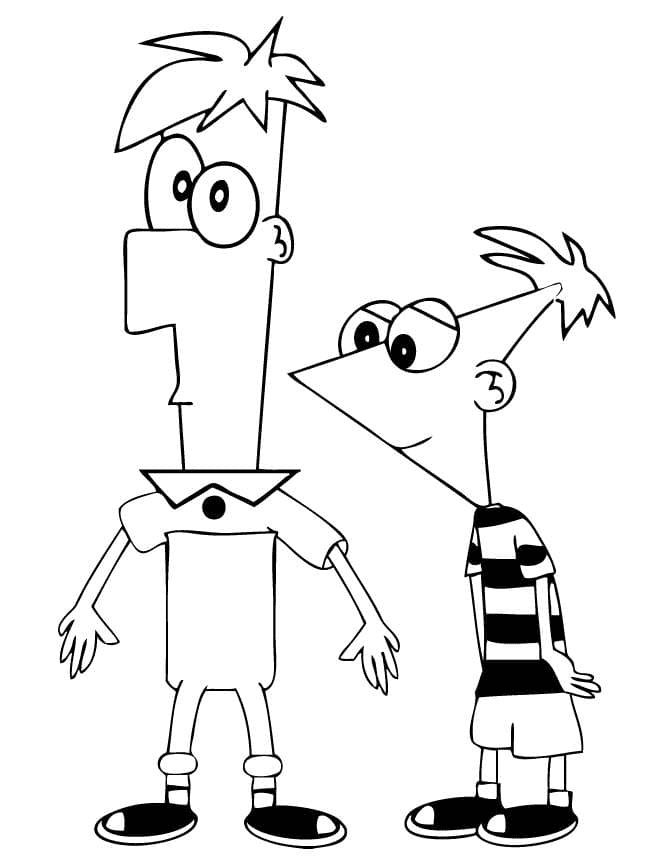
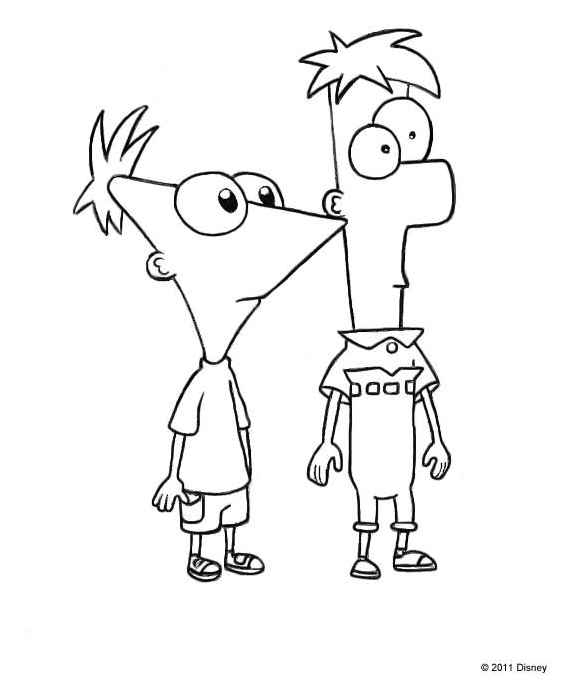
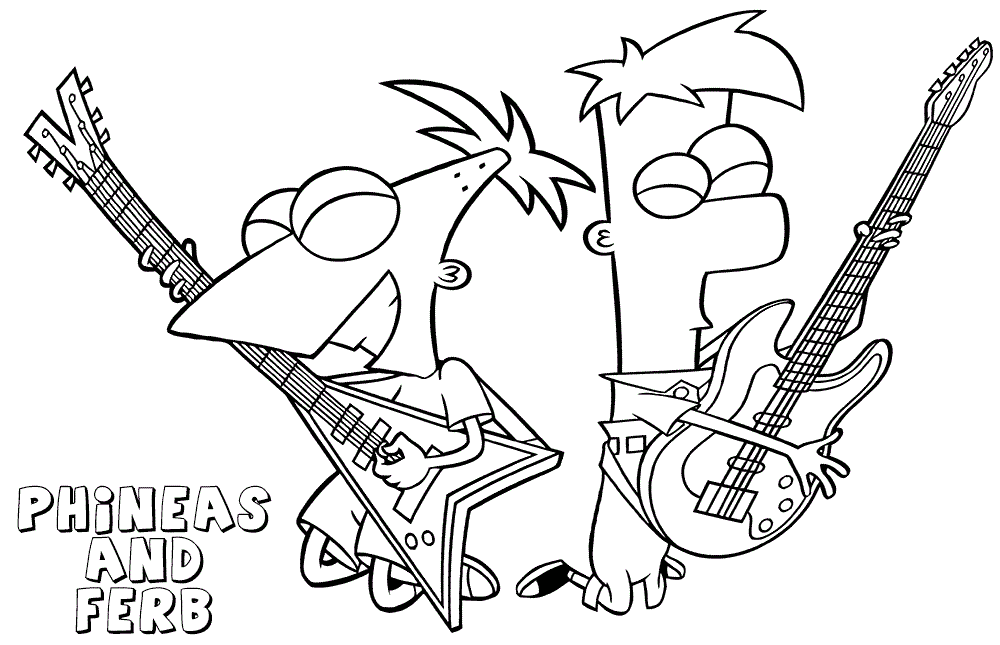
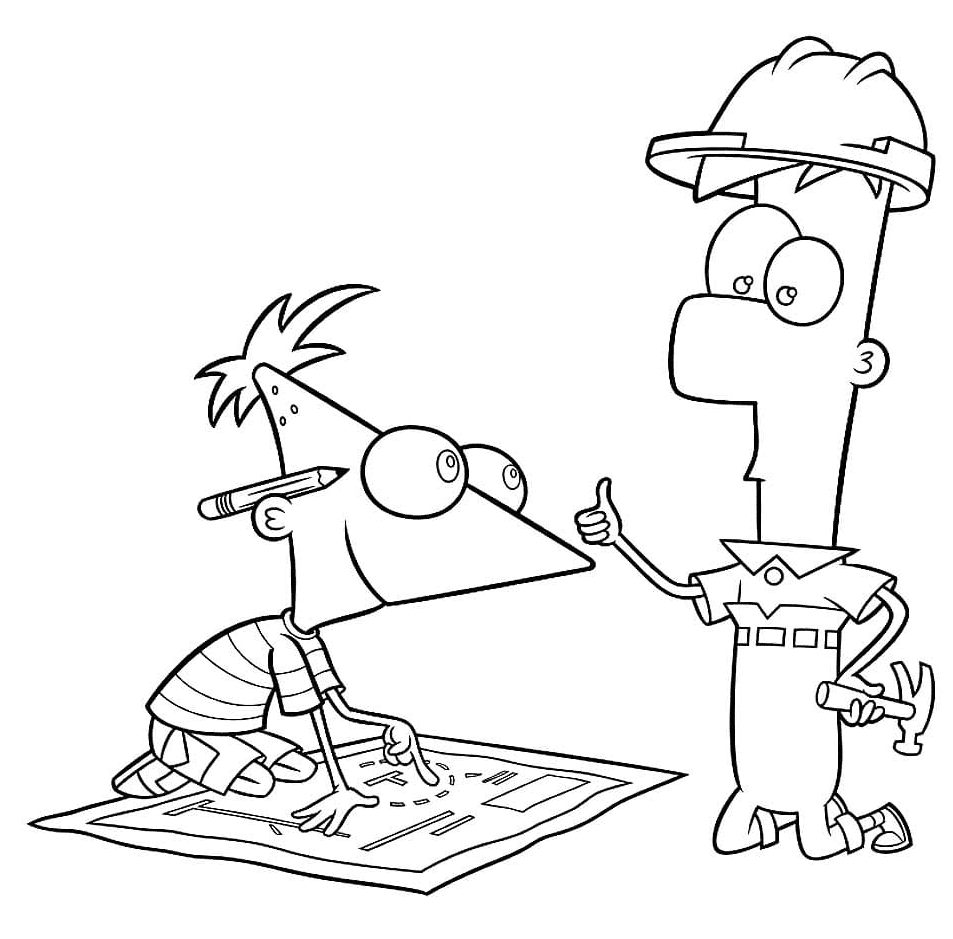
Phineas Flynn is the older of the two stepbrothers and the primary creative engine of the show – the one who proposes each day’s impossible project with unstoppable optimism. His most visually distinctive feature is his head shape: a perfect triangle pointing forward, with a rounded point at the nose and a flat back of skull. His hair is a warm red-orange, his eyes blue, and his standard outfit is a white T-shirt with red-orange horizontal stripes, blue jeans, and white sneakers with red trim. Phineas almost never shows frustration or doubt – his expression is almost always open, enthusiastic, and slightly upward-angled, as though he is always looking at something interesting above the horizon.
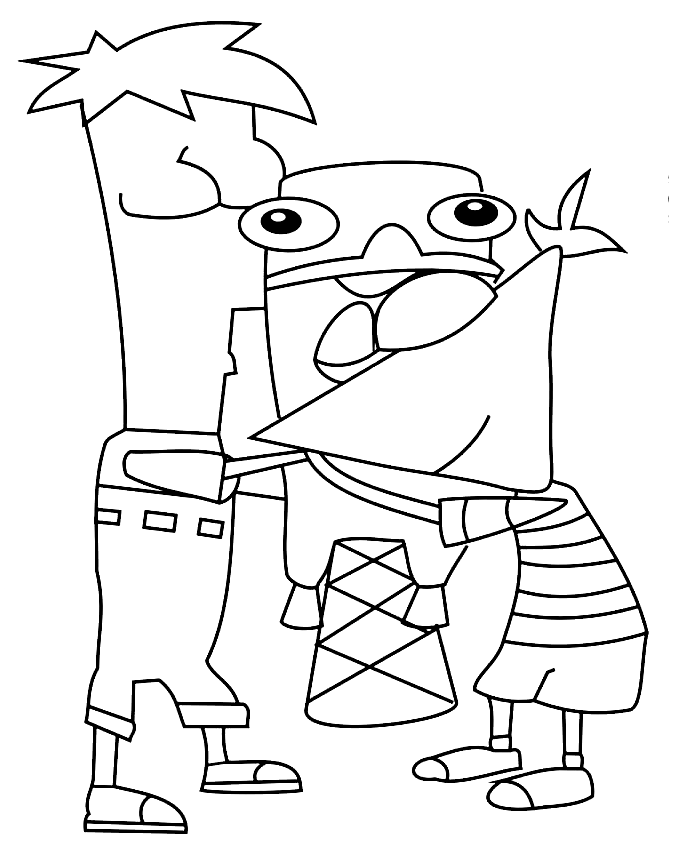
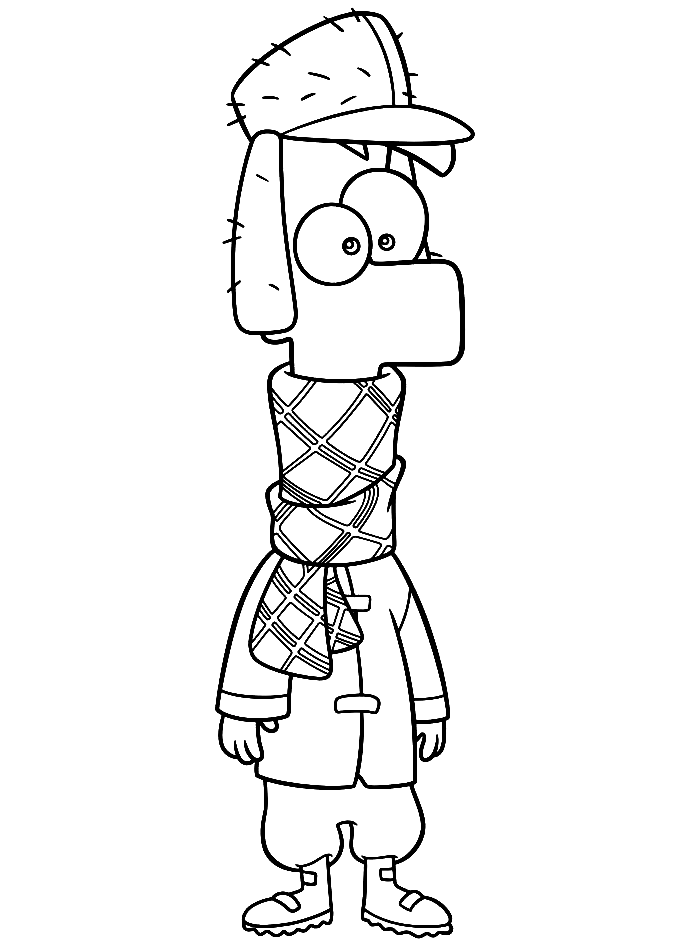
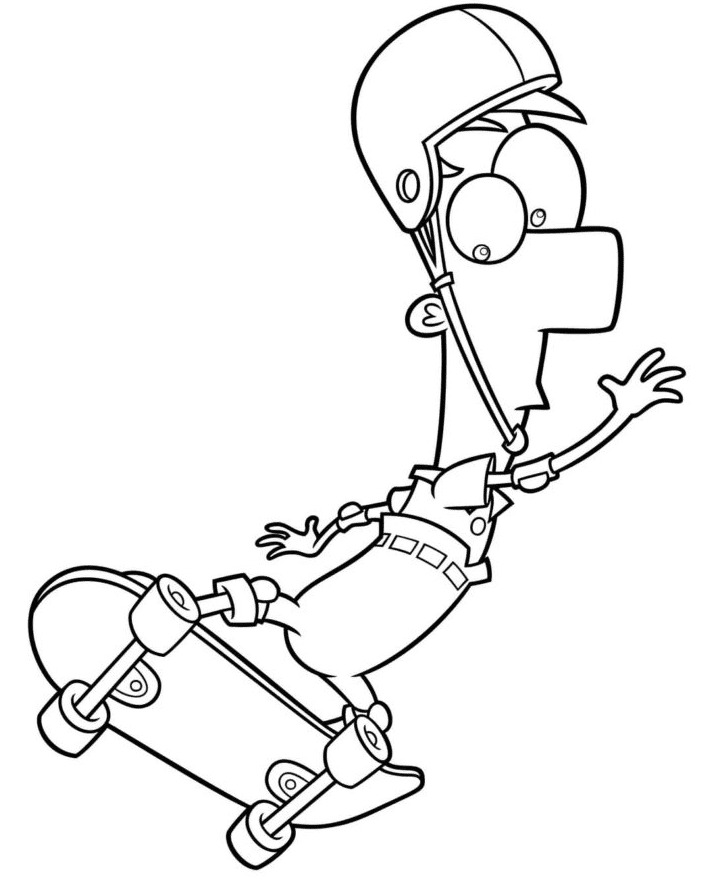
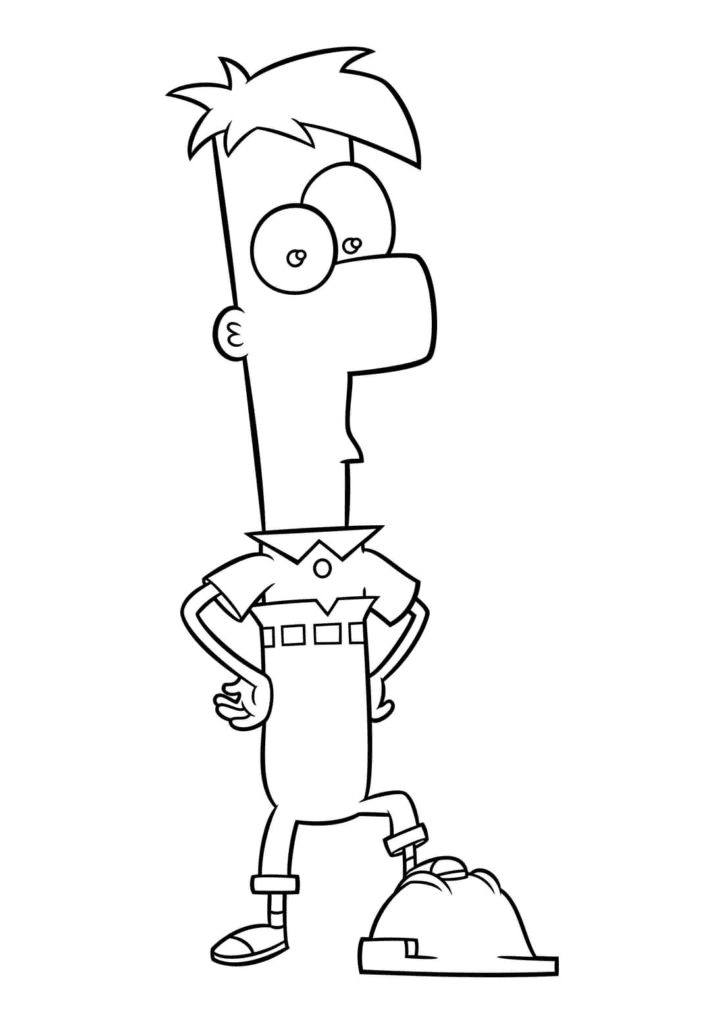
Ferb Fletcher is Phineas’s British stepbrother and the show’s master builder – the engineer who translates Phineas’s wild ideas into physical reality. Where Phineas is short and triangular, Ferb is tall and rectangular, with a flat-topped rectangular head and hair that is a distinctive lime green – one of the most immediately recognizable character colors in the entire Disney animated library. Ferb speaks rarely – one of his character traits as a running joke is that he goes entire episodes saying only one or two words – but when he does speak, the lines are typically deadpan and perfectly timed. His standard outfit is a white dress shirt under a purple vest, purple pants, and white shoes with purple soles.
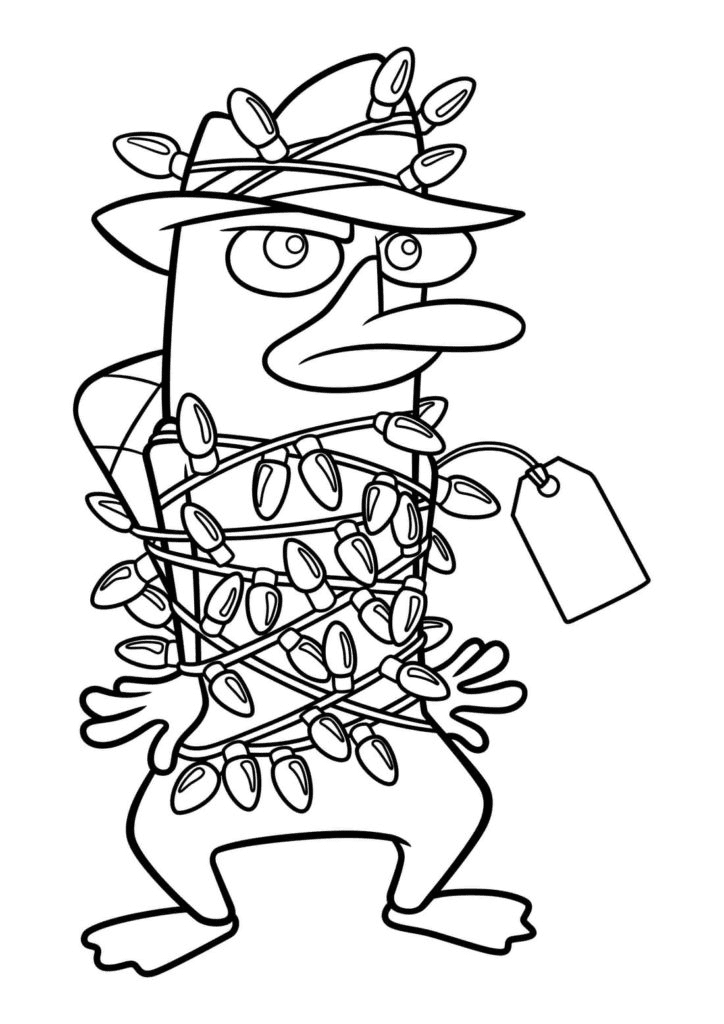
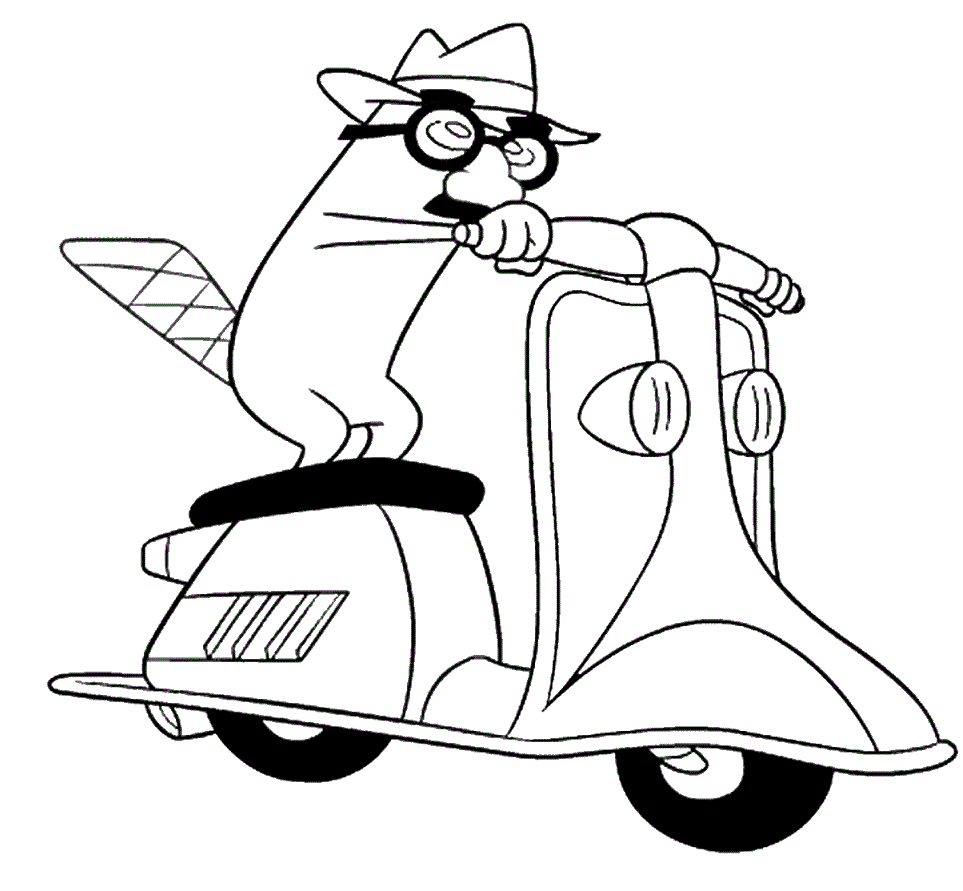
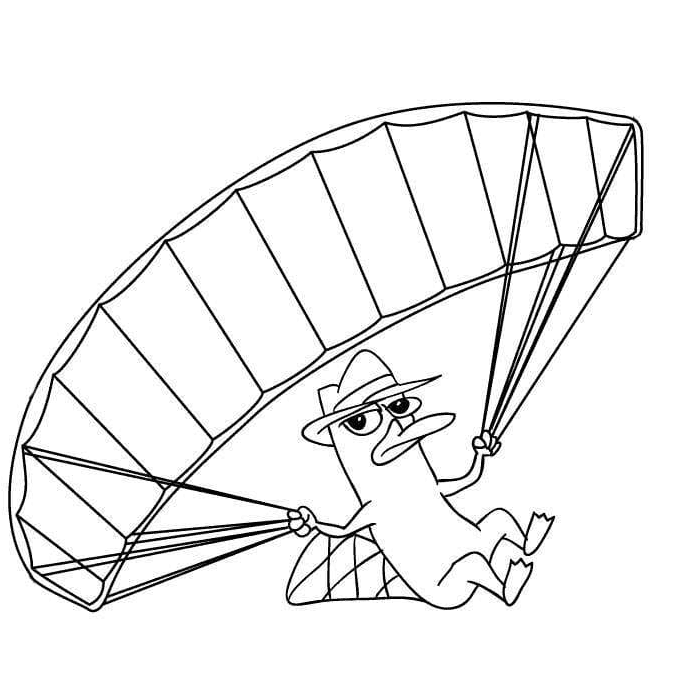
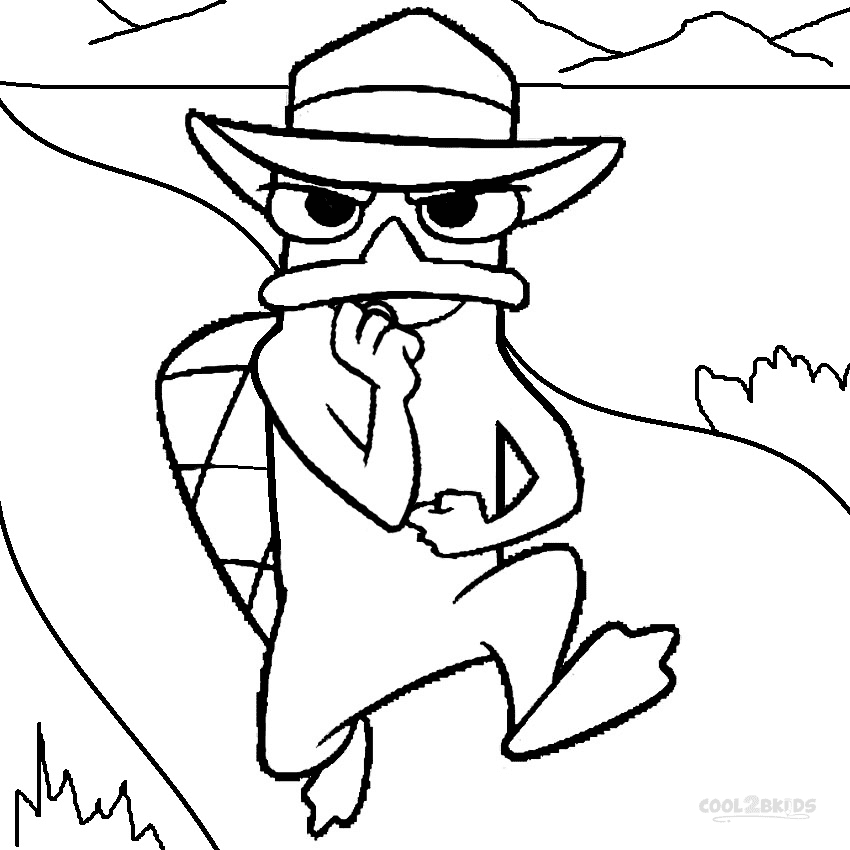
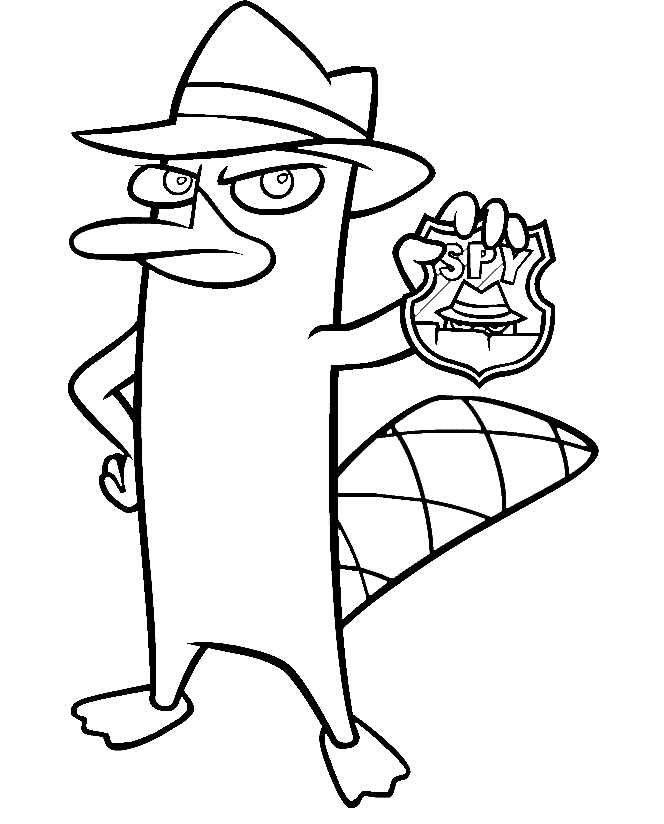
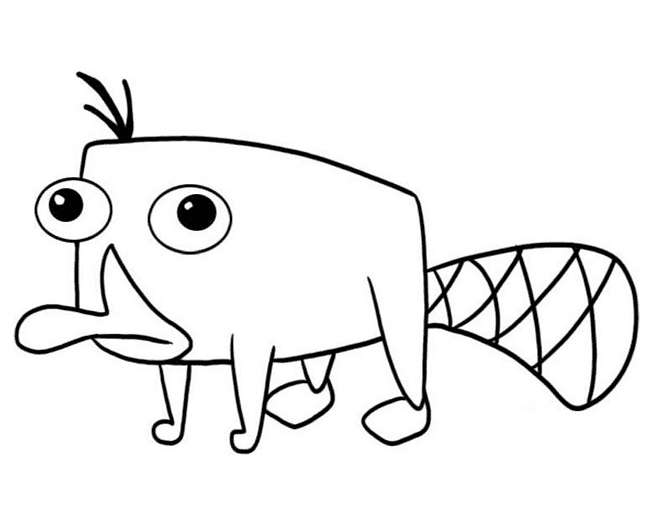
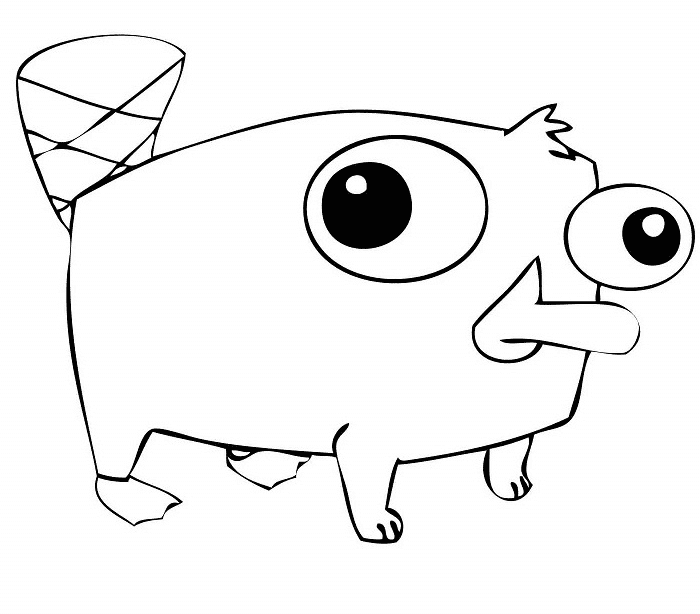
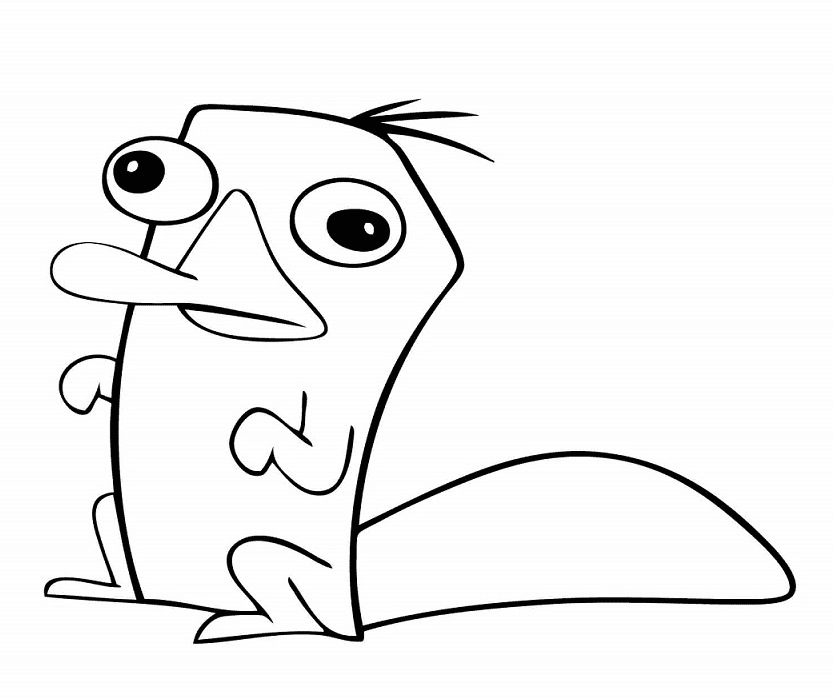
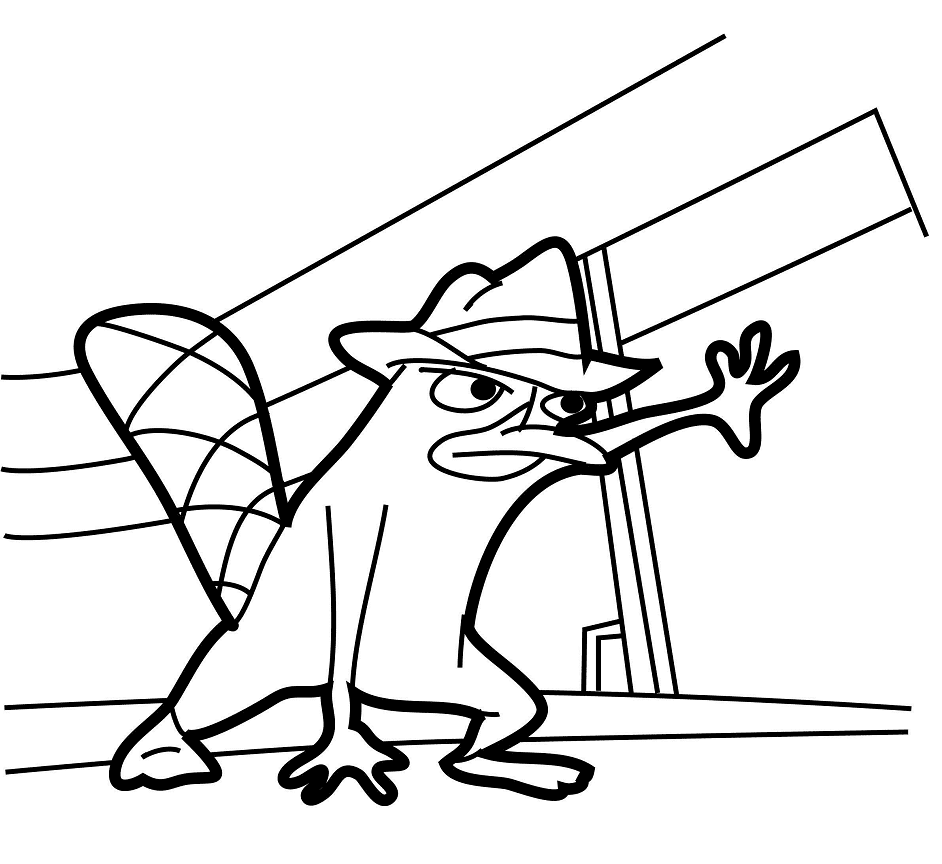
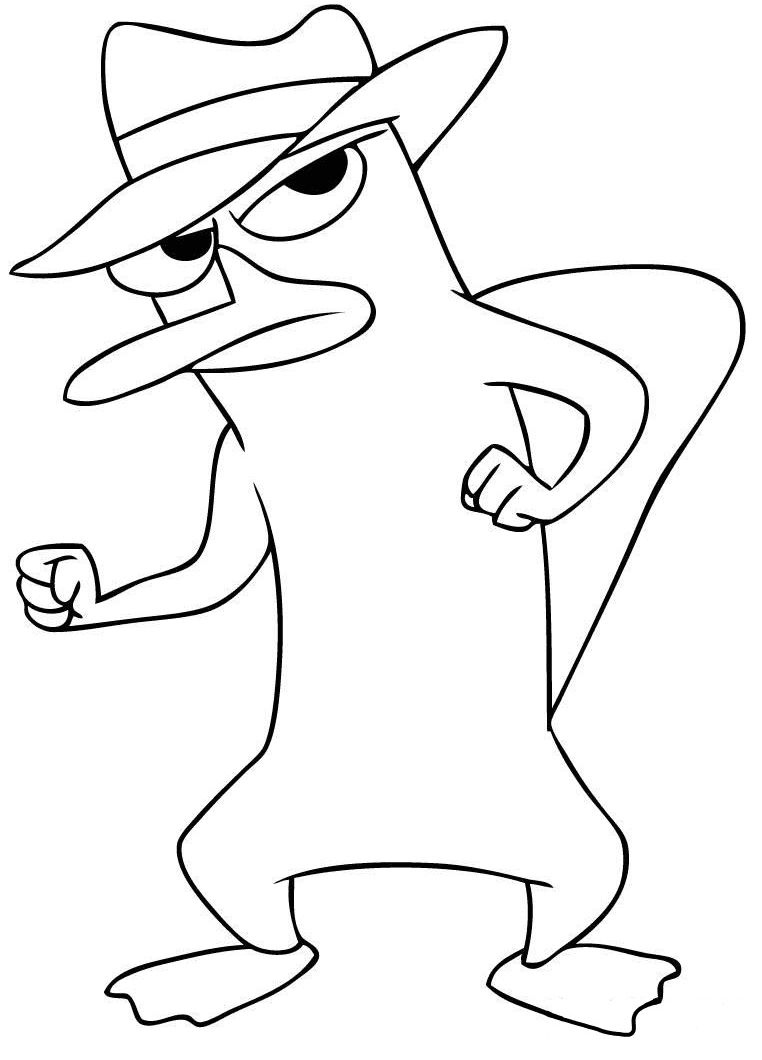
Perry the Platypus / Agent P is the Flynn-Fletcher family pet platypus and the show’s third protagonist, operating in two distinct modes that require two distinct palettes. In “pet mode,” Perry moves on all four limbs, has a blank, slightly stupid expression, and is colored in a warm teal-cyan – a blue-green that is specific and saturated, closer to the teal of a swimming pool than to either pure blue or pure green. In “Agent P mode,” Perry stands upright on two legs, wears a brown fedora hat, has an alert and competent expression, and his teal body color is suddenly readable as a uniform rather than just an animal’s coloring. The transition between these two modes – triggered by a beeping signal from his wrist communicator – is one of the show’s recurring visual jokes.
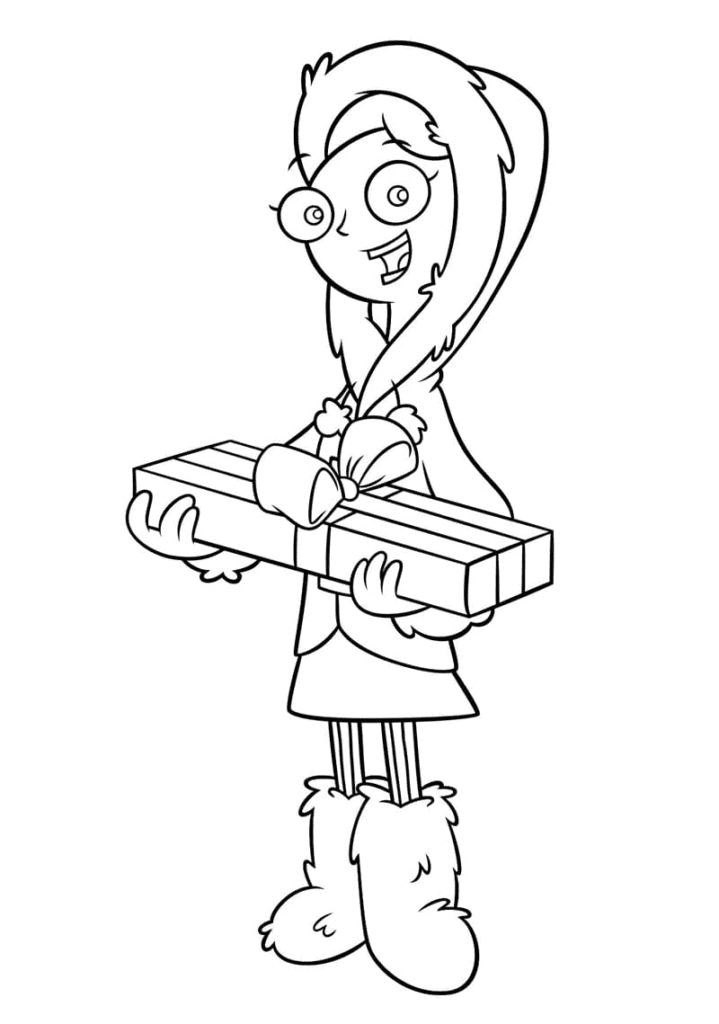
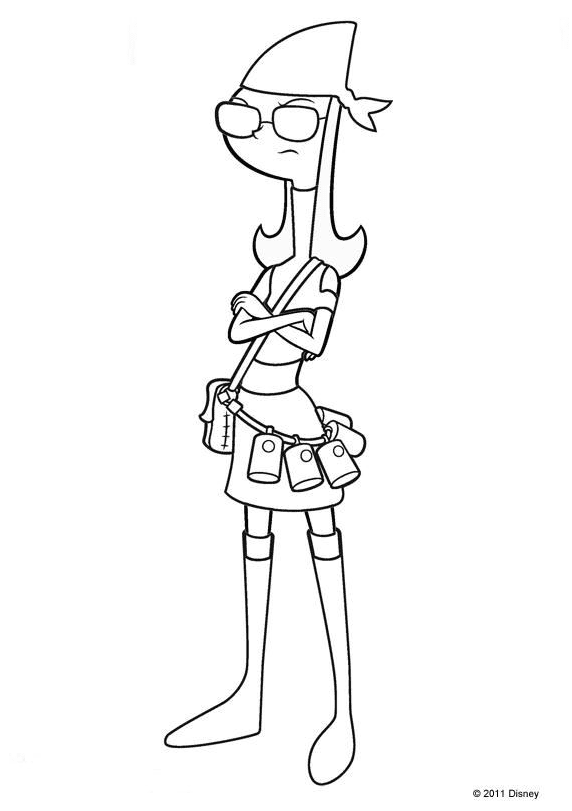
Candace Flynn is Phineas and Ferb’s teenage older sister and the show’s third major plot driver, whose entire characterization is organized around the failure to expose her brothers’ projects. She is a tall teenage girl with long straight red-orange hair (a similar warm red to Phineas’s but darker and more saturated), blue eyes, and a standard outfit of a red tank top, white skirt, and red shoes. Her expression covers a wide range from hopeful excitement (when she thinks today will be the day she finally busts her brothers) to frustrated despair (when the evidence vanishes at the last moment again).
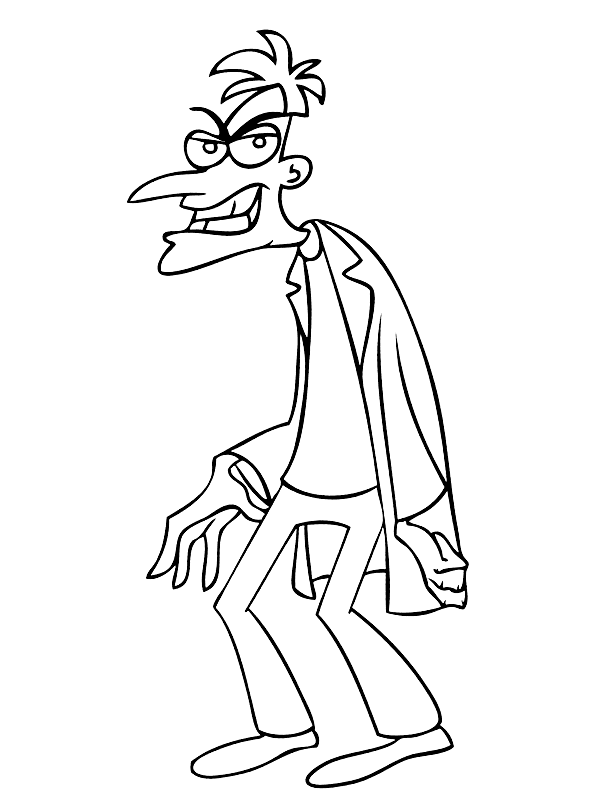
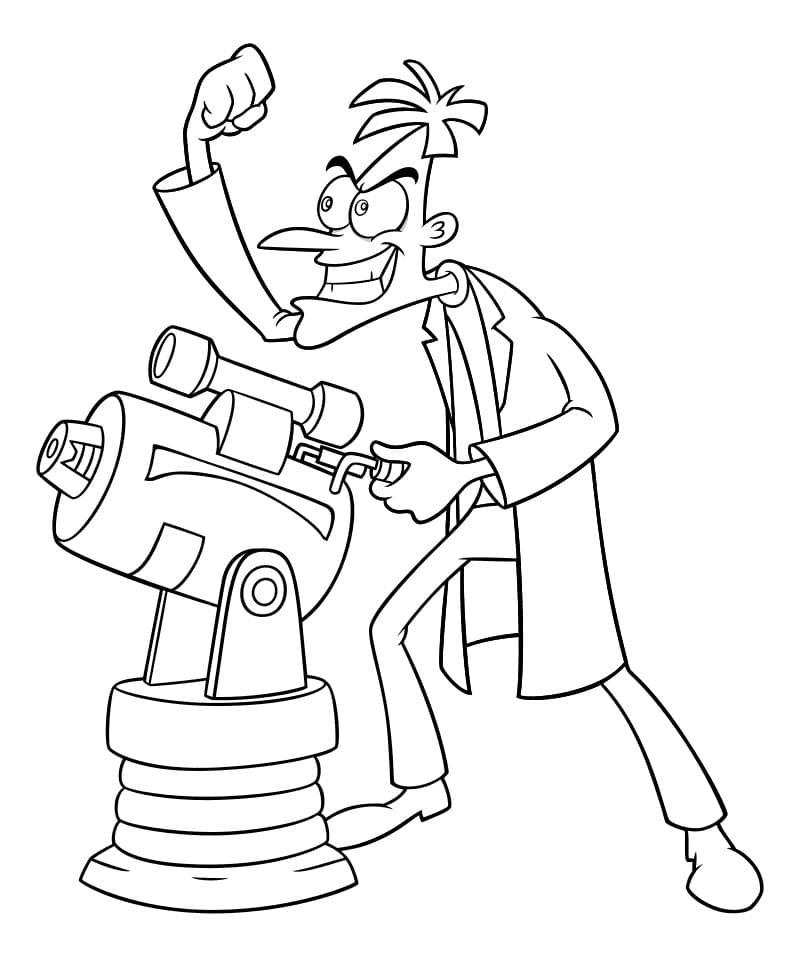
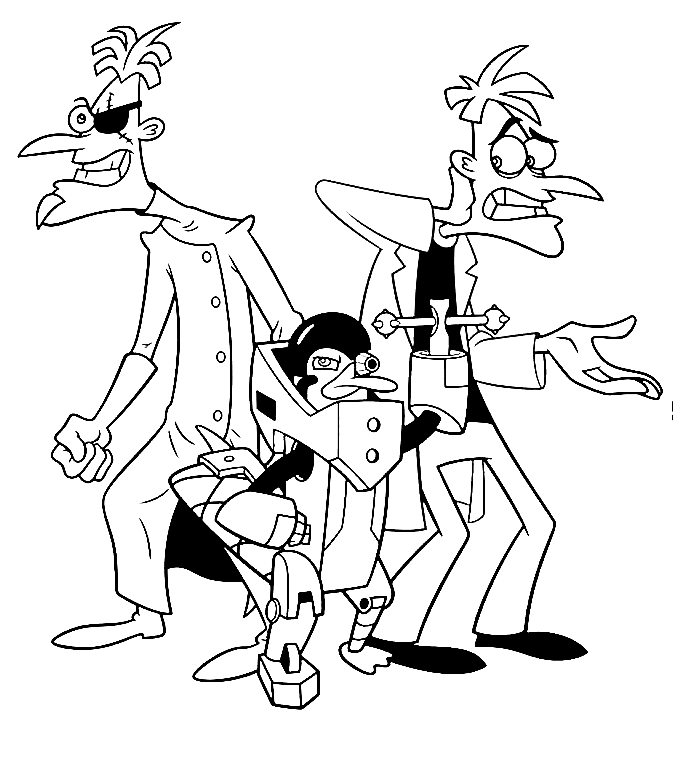
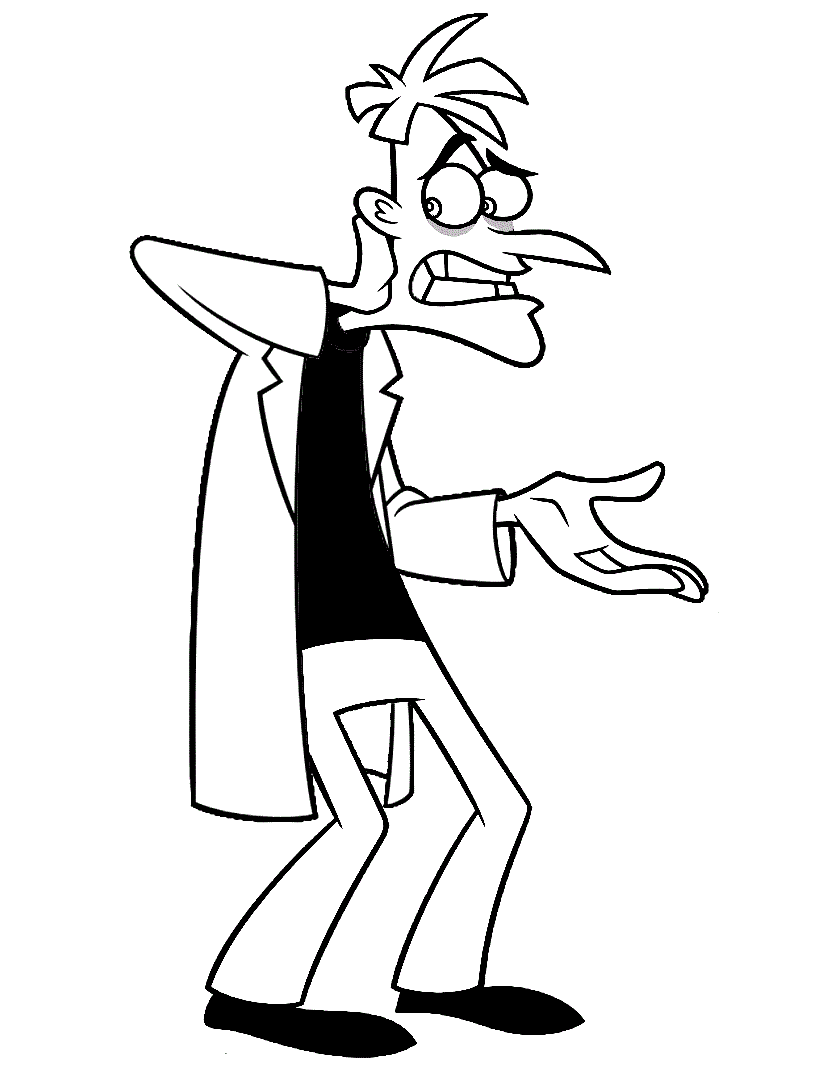
Dr. Heinz Doofenshmirtz is the show’s primary villain and one of its most beloved characters – a bumbling, emotionally damaged mad scientist whose evil plans are always defeated by Agent P and always explained by an elaborate, self-pitying backstory about his terrible childhood in the fictional Eastern European country of Drusselstein. He is tall and lanky with a prominent chin, dark hair swept into a widow’s peak, and typically wears a white lab coat over darker clothing. His building – “Doofenshmirtz Evil Incorporated” – is a skyscraper in Danville’s downtown with his name on it in evil font.
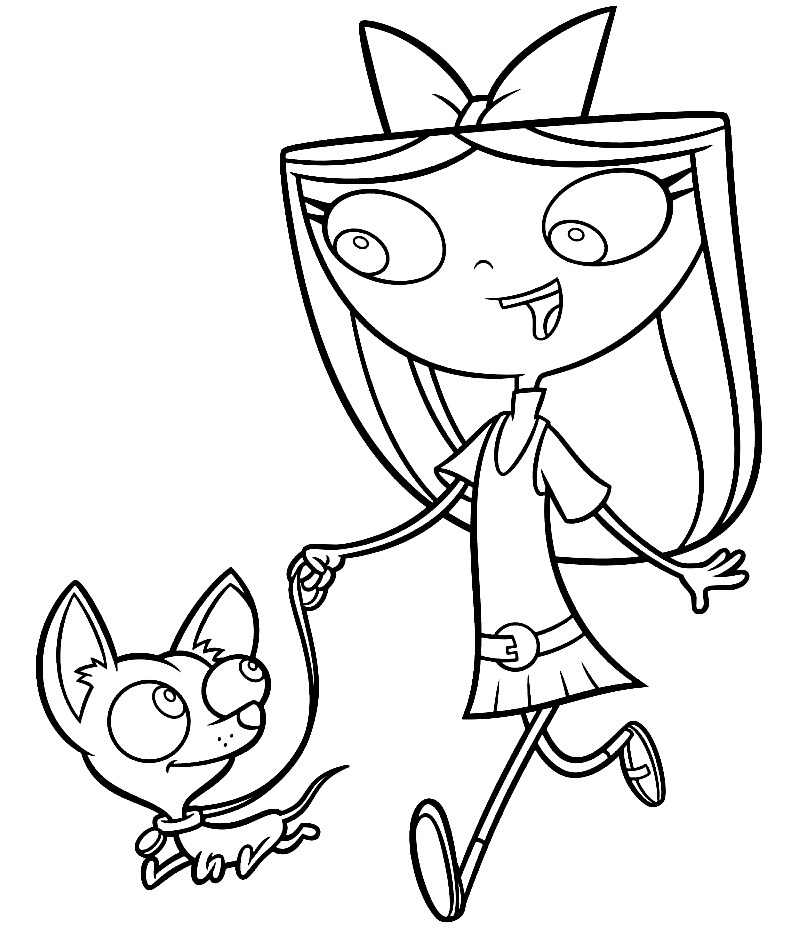
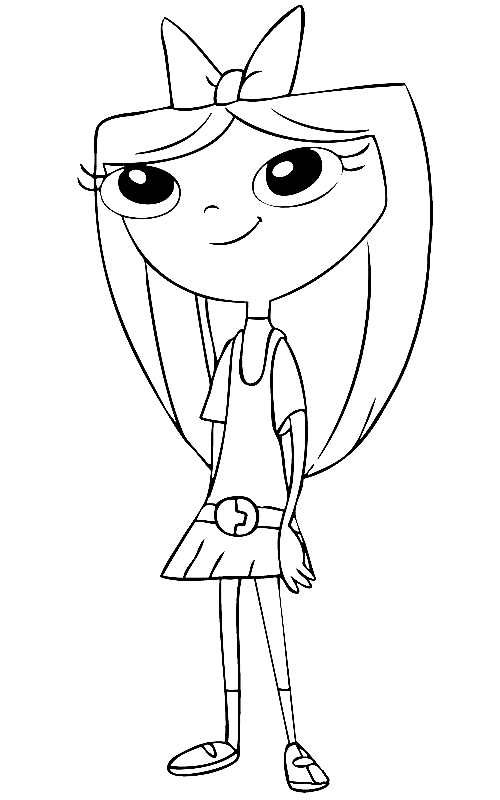
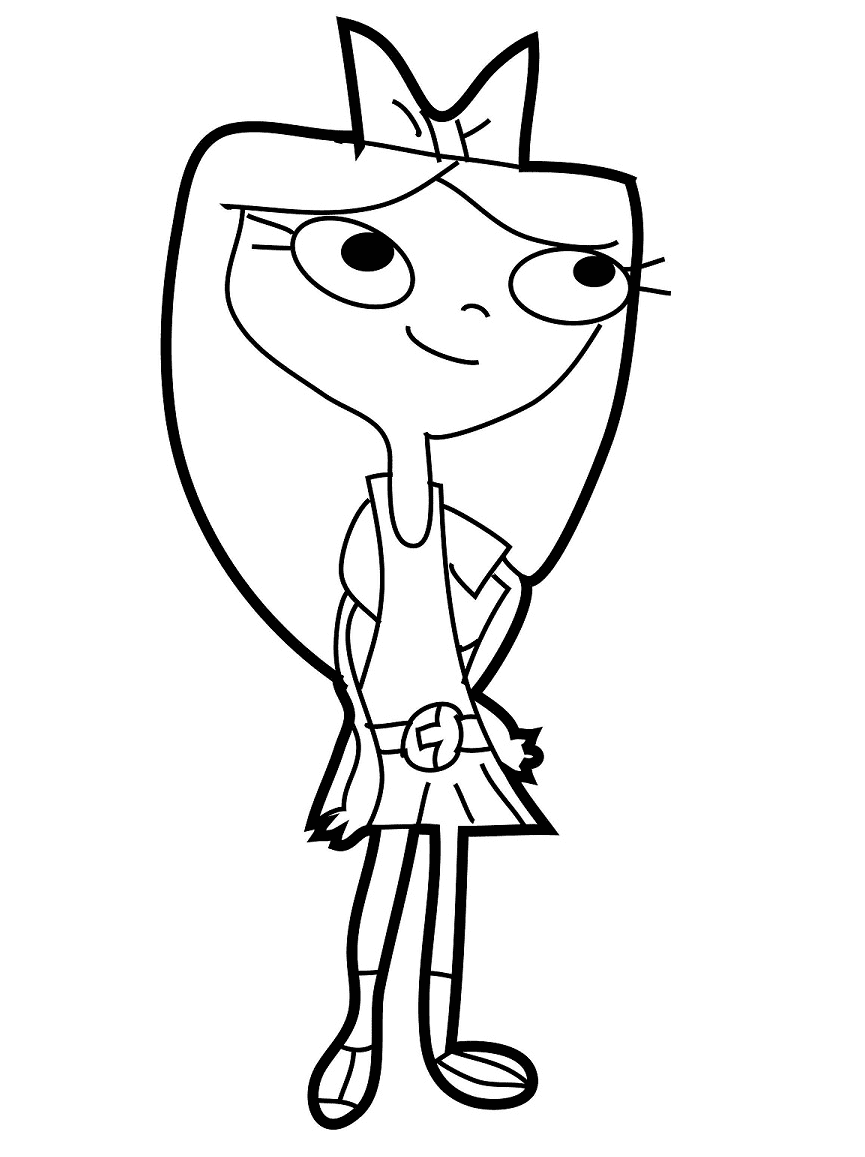
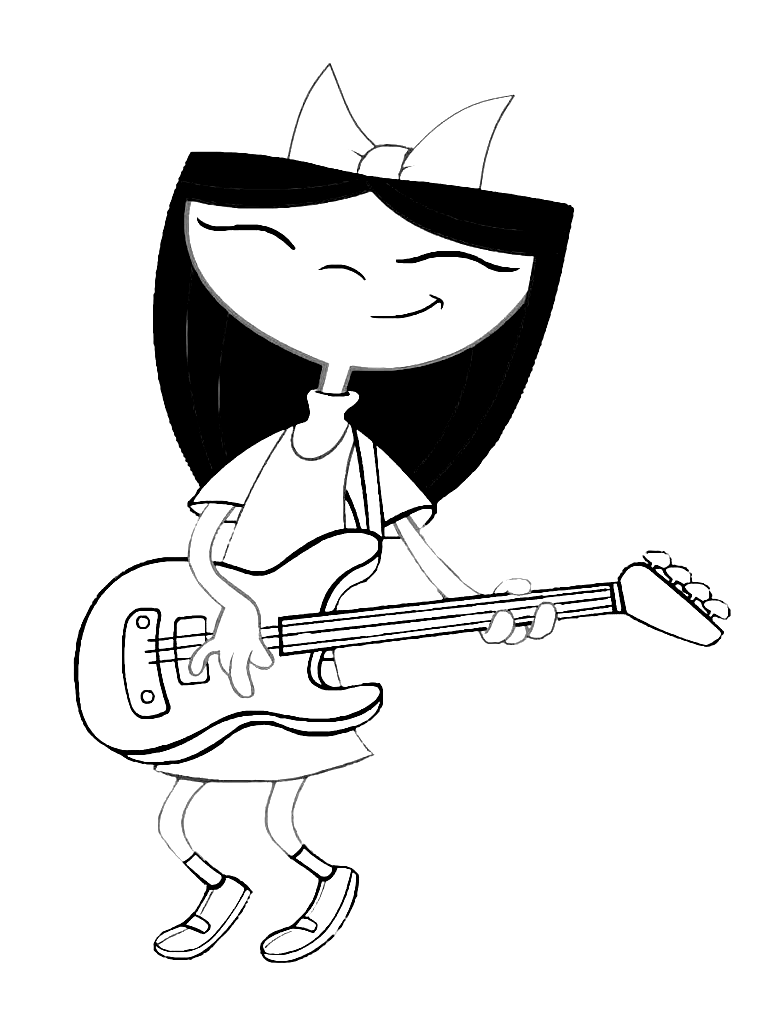
Isabella Garcia-Shapiro is Phineas’s neighbor, his eventual romantic interest (resolved in the finale), and the leader of the Fireside Girls troop. She is a small girl with long straight black hair and large brown eyes, and she wears a signature pink bow in her hair, a white short-sleeved top with a pink collar, a pink skirt, and pink shoes. Pink is the dominant color of her entire visual presentation. Her catchphrase – “Whatcha doin’?” – is one of the show’s most quoted lines.
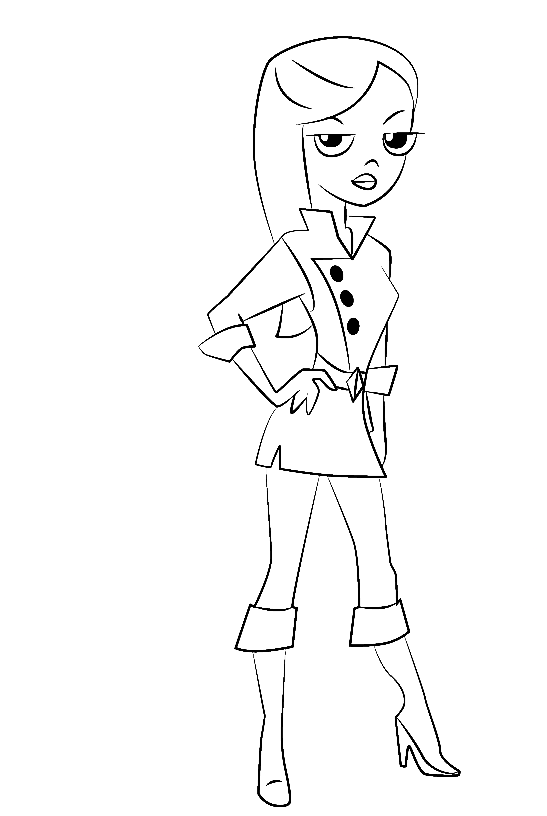
Vanessa Doofenshmirtz is Doofenshmirtz’s teenage daughter, who has a complicated relationship with her father’s villainy – she’s aware of it, embarrassed by it, and occasionally accidentally involved in it. Her visual aesthetic is gothic: black hair, typically wearing dark or all-black clothing, with a generally more cynical and eye-rolling expression than any other character in the show.
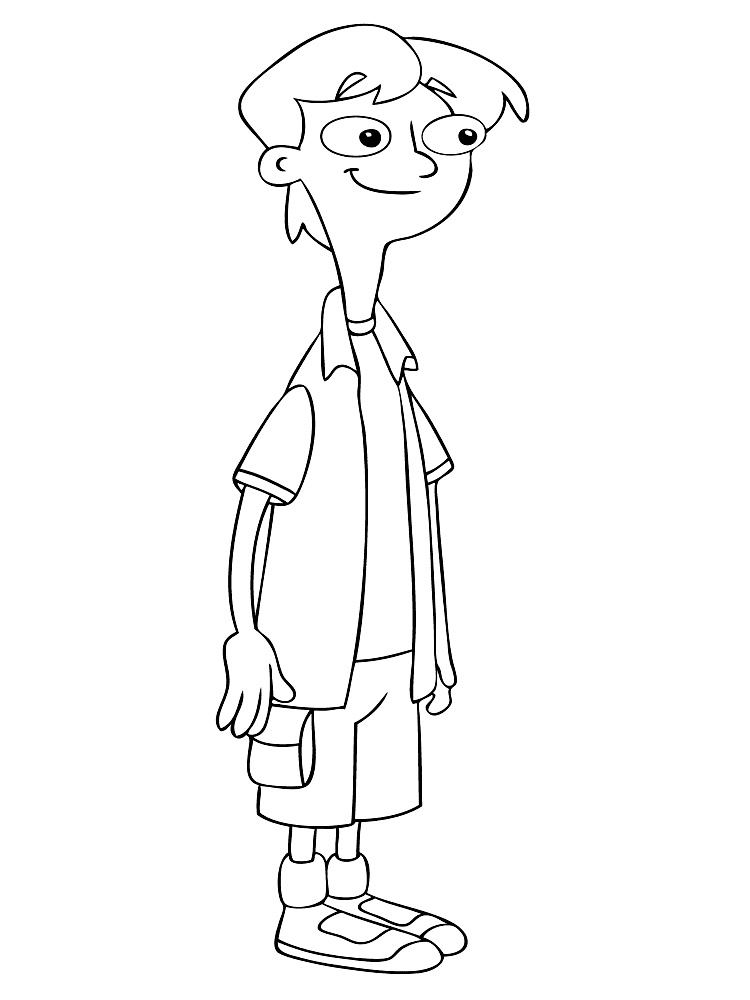
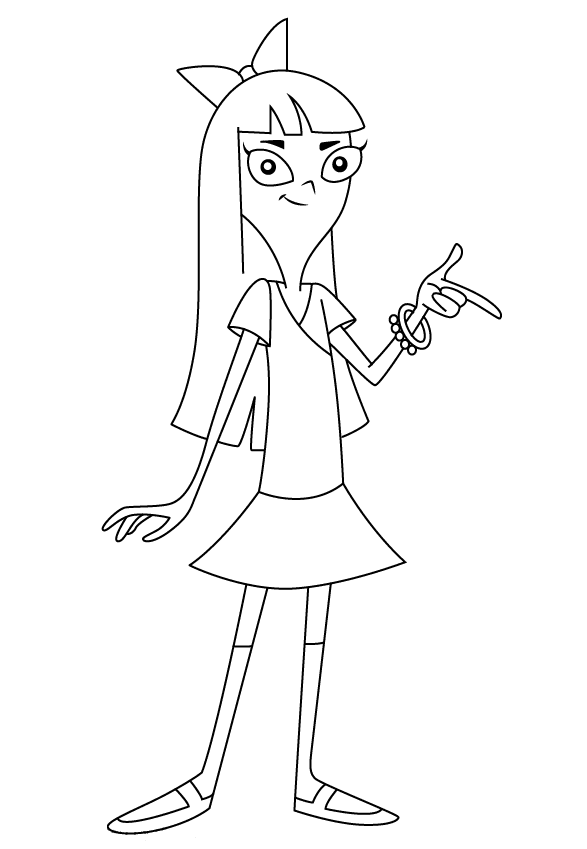
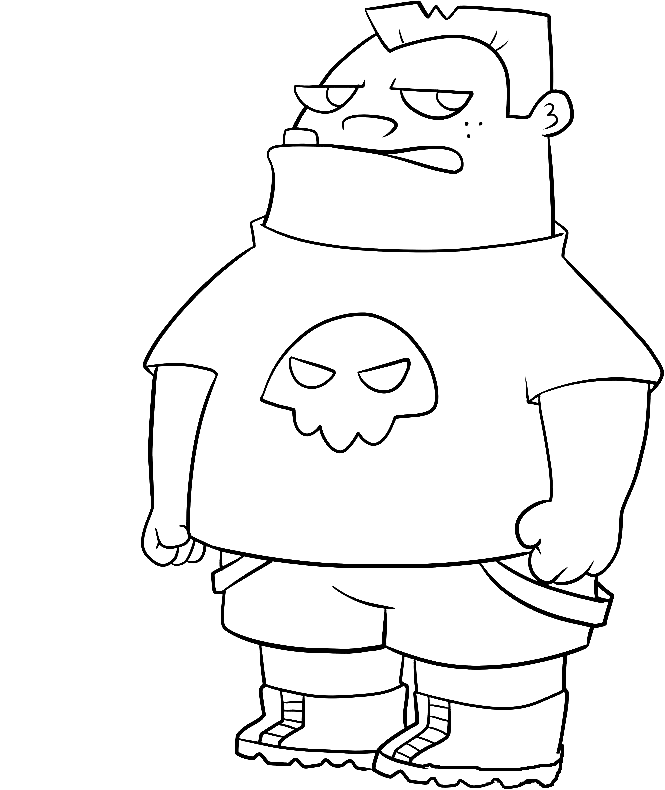
Buford Van Stomm is the neighborhood bully – a heavyset boy who wears a red cap and a red shirt, and who bullies particularly Baljeet (not present in this collection’s tiles) while also being a loyal, if rough, member of the group. Stacy Hirano is Candace’s Japanese-American best friend, typically seen in green and white clothing, who is more grounded and less obsessive about busting than Candace. Jeremy Johnson is Candace’s blonde, easygoing crush and eventual boyfriend, whose calm demeanor is a running contrast to Candace’s frantic energy.
Coloring Tips
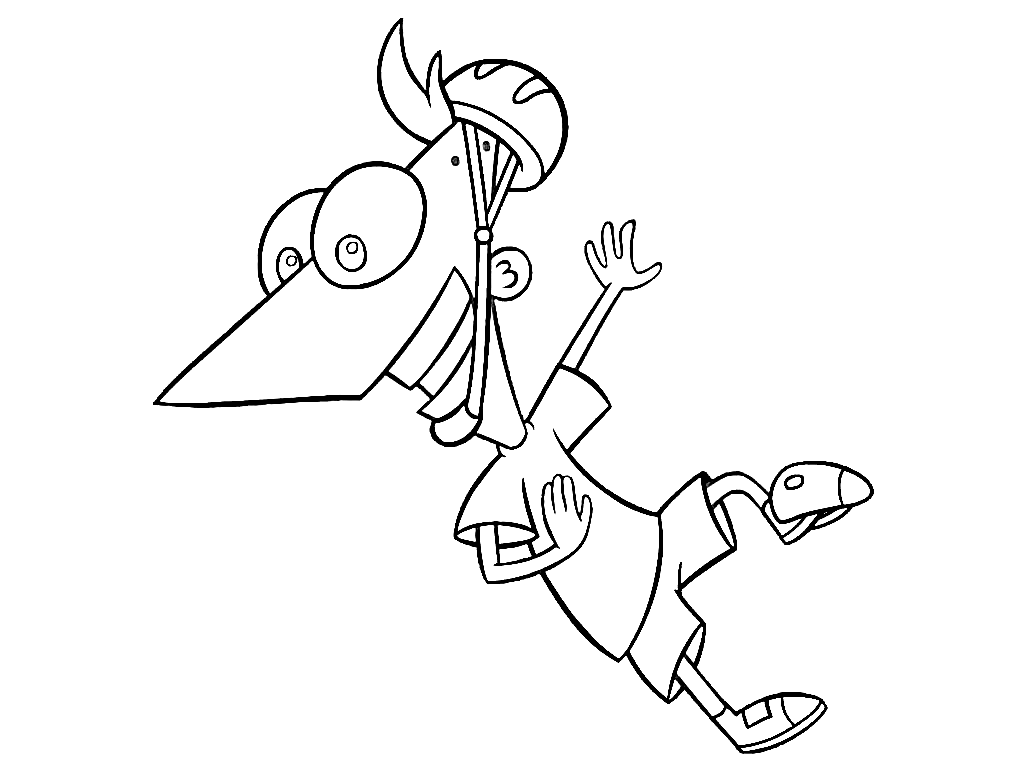
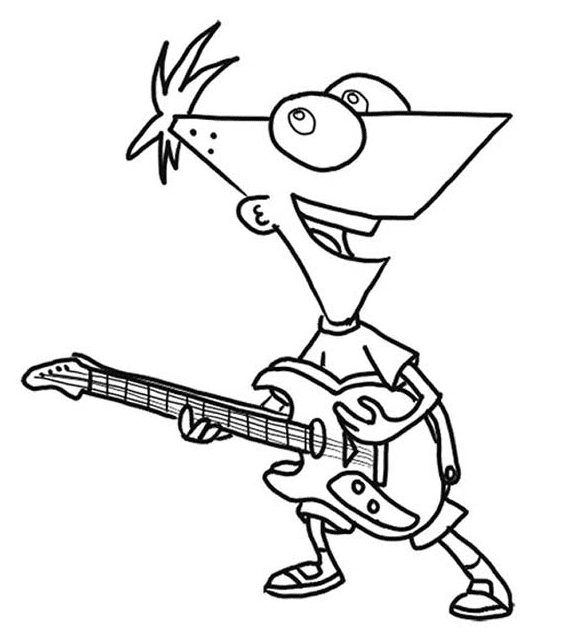
Phineas’s triangular head is the most visually challenging character design in the collection for colorists – the shape is unusual enough that how you handle the face area determines whether the finished page reads as the character or as an abstraction. The key is to keep the skin tone consistent from the forehead all the way to the point of the triangle: there is no jaw, no chin, just the continuous triangle surface that becomes the face. His red-orange hair sits at the very top and back of the triangle, and the face – eyes, nose, mouth – sits on the flat front of the triangular form. The stripe pattern on his shirt (white base with red-orange horizontal stripes) should use the same red-orange as his hair, creating color consistency between the two elements.
Ferb’s lime green hair is the most specific color in the collection and the one most worth getting right, because it is immediately what makes Ferb visually recognizable. It is not yellow-green (chartreuse) and not blue-green (teal) but a specific warm lime – the green of a Granny Smith apple, or the green channel in a bright RGB display. If you render it too yellow, it reads as chartreuse; too blue, and it approaches teal. His purple clothing should be a clear medium purple – not lavender (too light and pink) and not indigo (too dark and blue), but a true purple that balances red and blue equally.
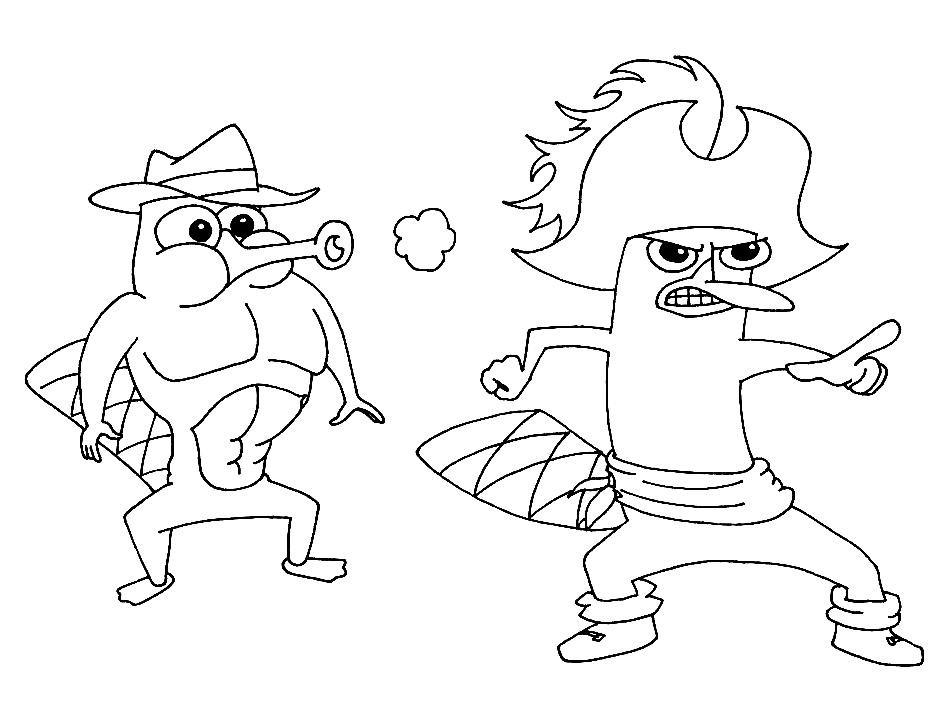
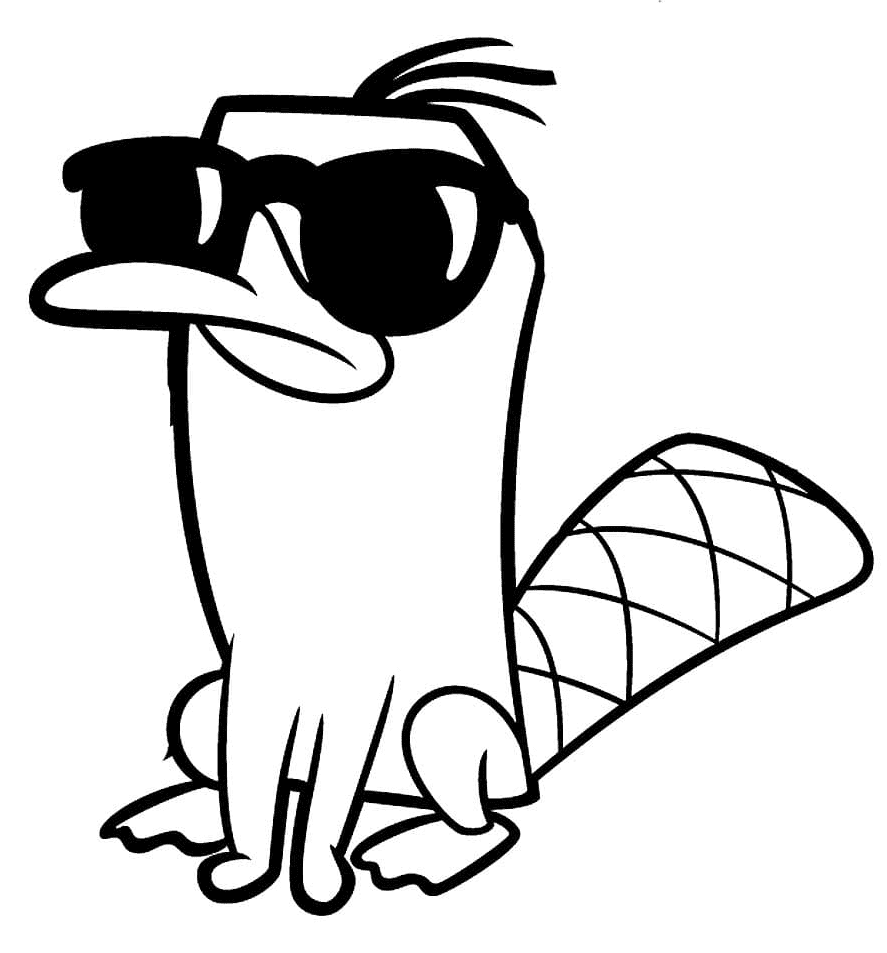
Perry’s teal is the other most specific canonical color in the collection, and the one that most commonly goes wrong. Teal is the color that sits exactly between cyan and green on the color wheel – blue-green in equal measure. Perry reads as teal on screen, not blue and not green. If you render him too blue, he looks like a bluebird; too green, and he reads as a reptile rather than a mammal. The specific teal of Perry is warm enough to feel alive and organic rather than cool and synthetic. For Agent P pages (Perry Holding Spy Badge, Cool Agent P, Strong Perry, and Pirate Perry), the addition of the brown fedora provides warm contrast to the cool teal body and is what makes the composition work as a spy character rather than just a platypus.
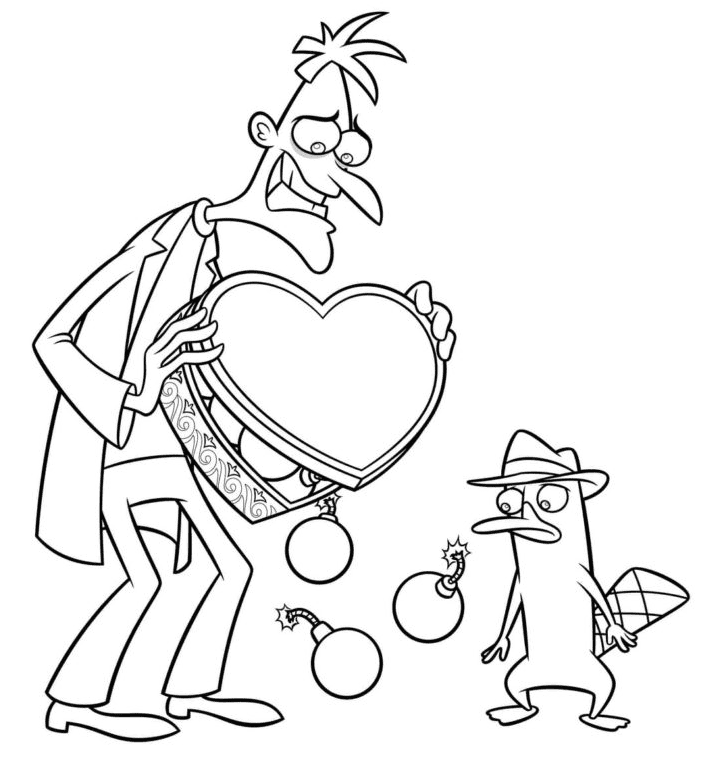
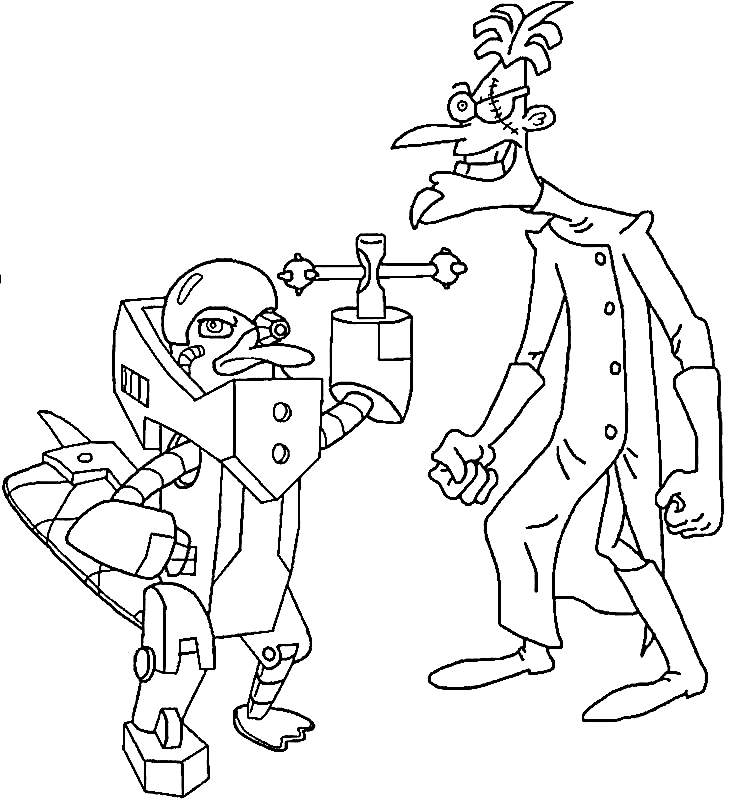
For Doofenshmirtz pages – Heinz Doofenshmirtz, Funny Dr. Heinz Doofenshmirtz, Dr Heinz Building a Robot, Heinz Doofenshmirtz and Perry – his white lab coat is the anchor of his color palette and should be kept clean white (or very near-white) rather than cream or grey, because the pristine lab coat against his slightly rumpled dark underlayer and his generally disheveled appearance is part of the visual joke. His skin tone is slightly different from Phineas and Candace’s – a bit more sallow and yellow-toned, which can be achieved by adding a very small amount of yellow to your skin base color.
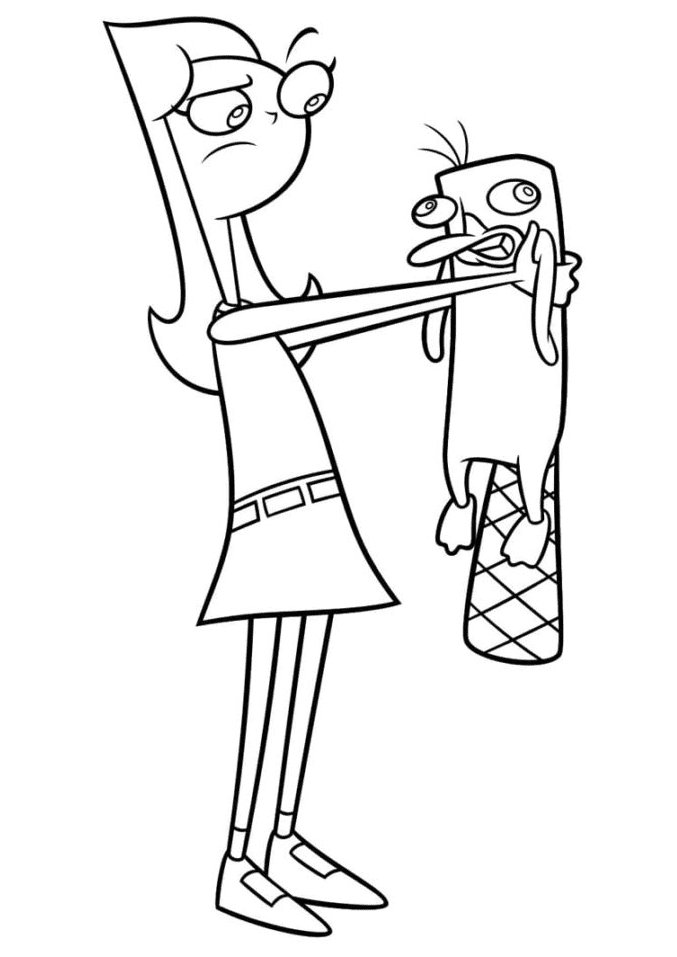
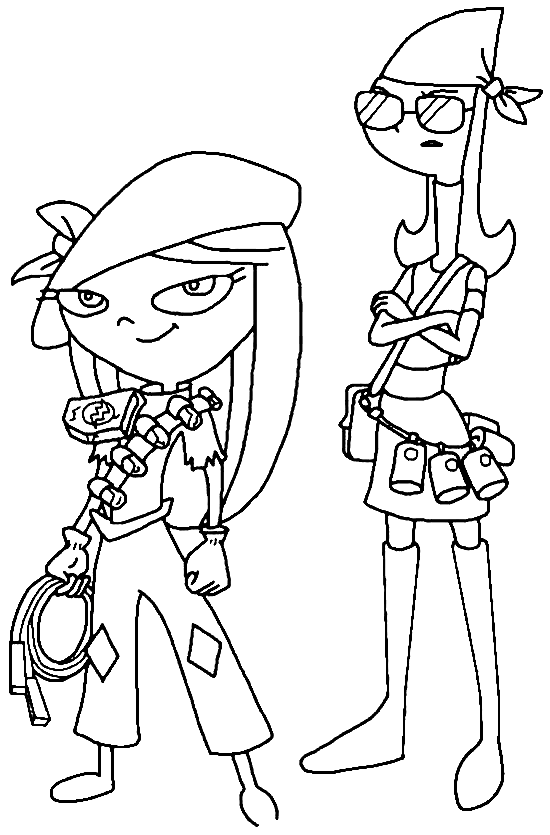
For Candace pages – Candace Flynn, Candace Flynn with Gifts, Candace and Perry, Candace and Isabella – her hair is the key decision. It is red-orange but darker and more saturated than Phineas’s hair, closer to a true auburn or copper than to the lighter orange-red of her brother. The distinction matters most in pages where Candace and Phineas appear together: if both are the same red, the sibling visual relationship reads correctly, but the individual characters lose distinctness. A slightly deeper, cooler red for Candace against a lighter, warmer red for Phineas solves this.
For Isabella pages – Isabella, Isabella with Dog, Cute Isabella Garcia-Shapiro, Isabella Playing Guitar – pink is the color of her entire visual identity and appears in four places simultaneously: hair bow, collar, skirt, and shoes. The specific pink should be a warm, clear medium pink – not hot pink (too saturated and aggressive) and not baby pink (too pale and soft), but the confident, cheerful pink of a classic rose. All four pink elements should match each other exactly, creating the unified all-pink aesthetic that defines her character’s visual personality.
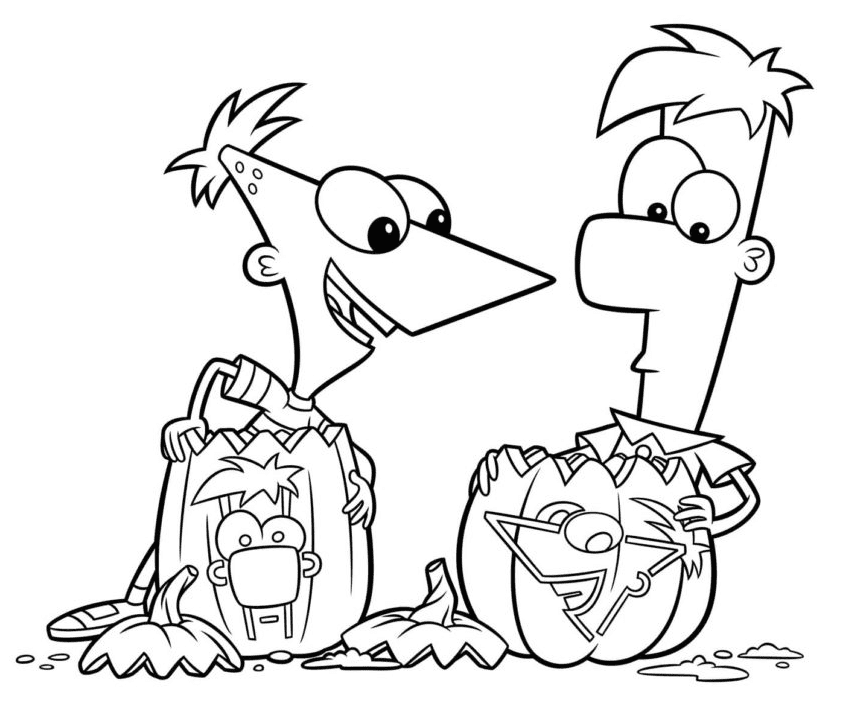
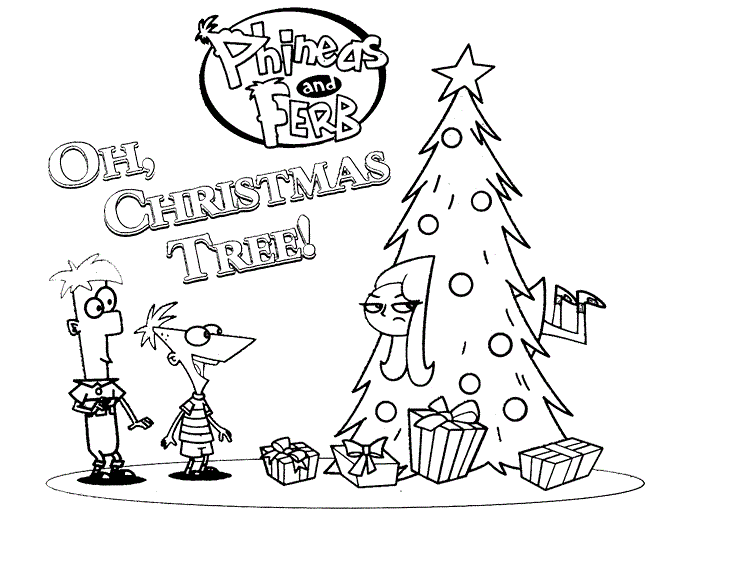
For the holiday pages – Phineas and Ferb Christmas and Phineas Ferb with Pumpkins on Halloween – the seasonal palette is the opportunity to stretch beyond the show’s typical warm-daylight color scheme. The Christmas page invites the introduction of red, green, and gold alongside the characters’ canonical colors, creating a richer palette than most standard pages. The Halloween page offers the orange-and-black of pumpkin season as contrast to Phineas’s red-orange shirt – and notably, Phineas’s shirt color already reads as Halloween-adjacent, which can be played up or toned down depending on how vivid you make the pumpkin orange.
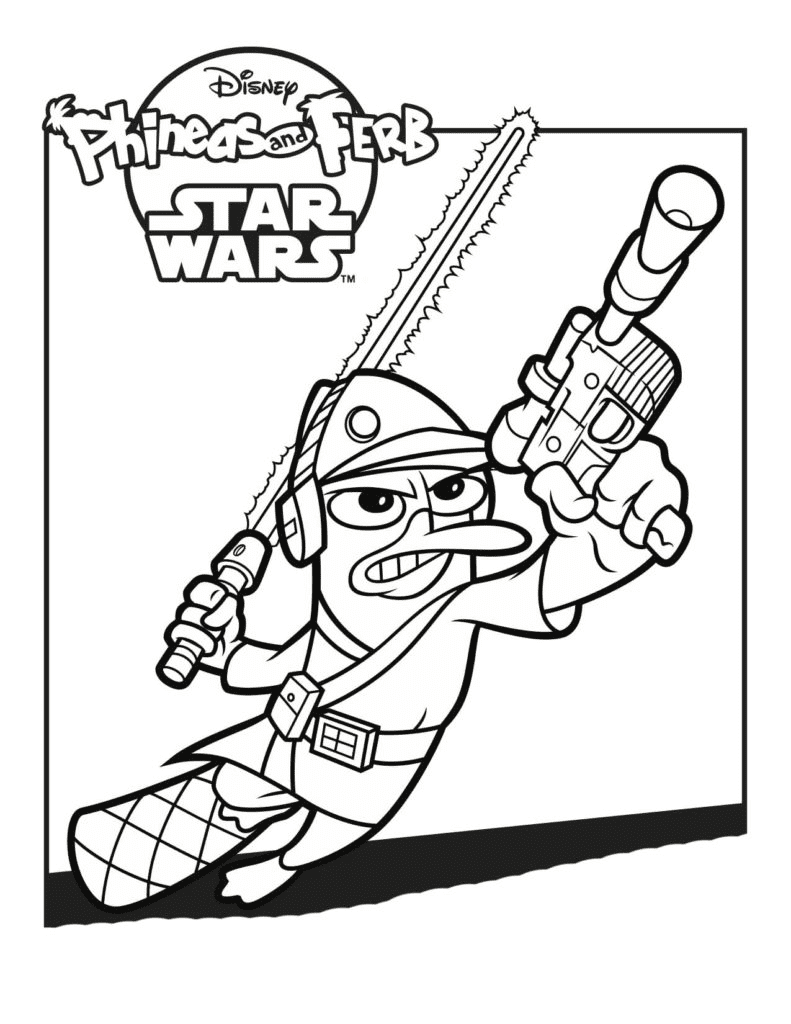
For the Star Wars Perry page – this is the show’s crossover with the Star Wars franchise (Phineas and Ferb made a Star Wars special in 2014), with Perry in a Jedi or Sith-inspired costume. The color palette follows Star Wars conventions: lightsaber colors (blue for Jedi, red for Sith), dark robes for the Force-sensitive, and the metallic grey of spacecraft and technology. Perry’s canonical teal body remains consistent regardless of costume.
5 Activities with Your Phineas and Ferb Pages
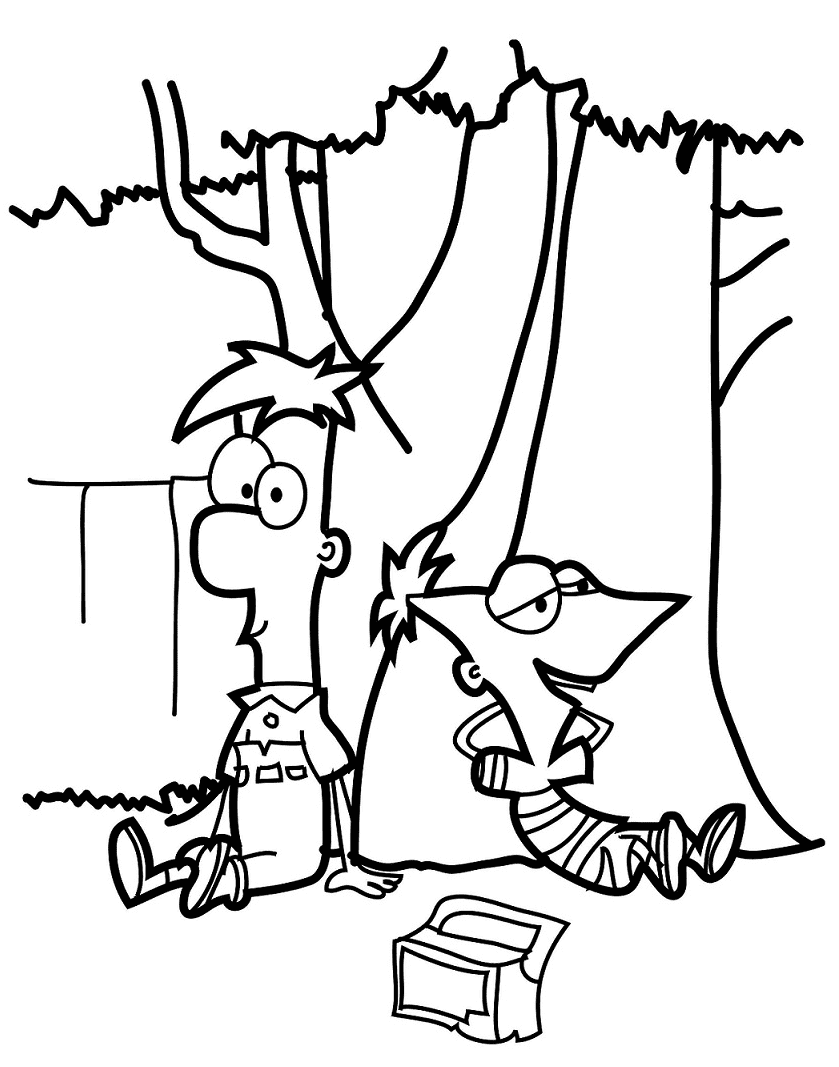
Color the complete stepbrother portrait pair. Print Phineas Flynn (solo) and Ferb with Phineas (or Ferb Running for a solo Ferb page). Color each in their canonical palettes – Phineas’s red-orange stripes and hair, Ferb’s lime green hair and purple outfit – making the skin tone identical across both pages (they are family, and the show renders them in the same skin value). Display the two pages side by side as a paired portrait set. The exercise trains color accuracy on two of the most technically specific character designs in the Disney animated library: Phineas’s particular shade of red-orange and Ferb’s lime green are both colors that require deliberate mixing rather than reaching for the obvious crayon.
Color Perry in both modes. Print Perry Platypus (pet mode page, all four legs, blank expression) and Agent P or Perry Holding Spy Badge (upright, fedora, capable expression). Color both using the exact same teal for Perry’s body – the same color applied to both pages, no variation. The only differences between the two finished pages should be the brown fedora (present in Agent P mode, absent in pet mode), the posture (four legs vs upright), and the expression (blank vs alert). Display them together with a caption: “Same platypus. Different day.” This exercise demonstrates how posture, accessory, and expression can completely transform the same color palette’s emotional reading.
Color the villain-hero face-off. Print Heinz Doofenshmirtz and Perry (the page showing them together), and also Heinz Doofenshmirtz solo and Agent P solo. Color all three pages. In the solo pages, make each character’s palette as distinct as possible – Perry’s cool teal vs Doofenshmirtz’s warm lab-coat white and sallow skin. In the face-off page, the two palettes will appear in the same composition, and the color contrast between them should be the most visually interesting relationship on the page. After finishing all three, arrange them as a triptych: villain alone, hero alone, confrontation. Write a one-sentence caption for the confrontation page describing what Doofenshmirtz’s latest “-inator” is supposed to do.
The full cast group photo exercise. Print five pages featuring different characters: Phineas with Ferb (or Phineas and Ferb), Isabella, Candace Flynn, Perry Platypus, and Heinz Doofenshmirtz. Color all five in their canonical palettes. When finished, arrange them in a row and notice the show’s color design: Phineas’s warm red-orange, Ferb’s lime green, Isabella’s pink, Candace’s red and white, Perry’s teal, Doofenshmirtz’s white and sallow. The show’s character palette covers a wide range of the color wheel without any two main characters sharing the same dominant hue – this is deliberate character color design, and the exercise makes it visible.
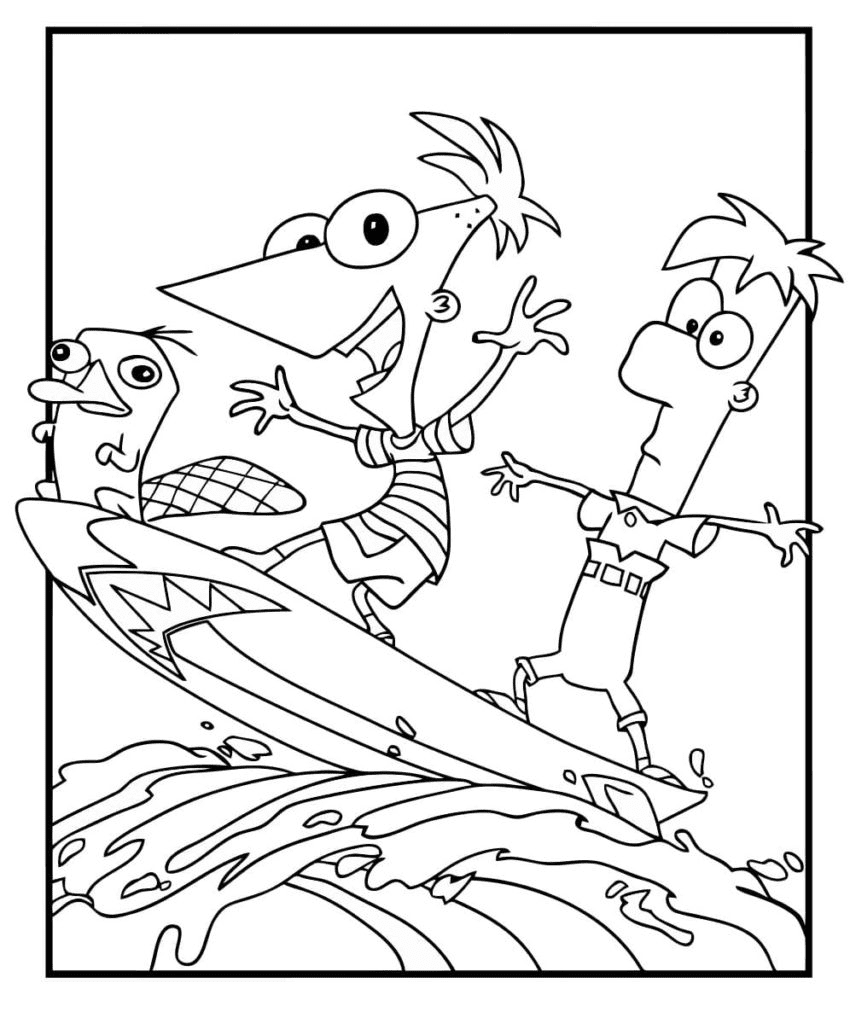
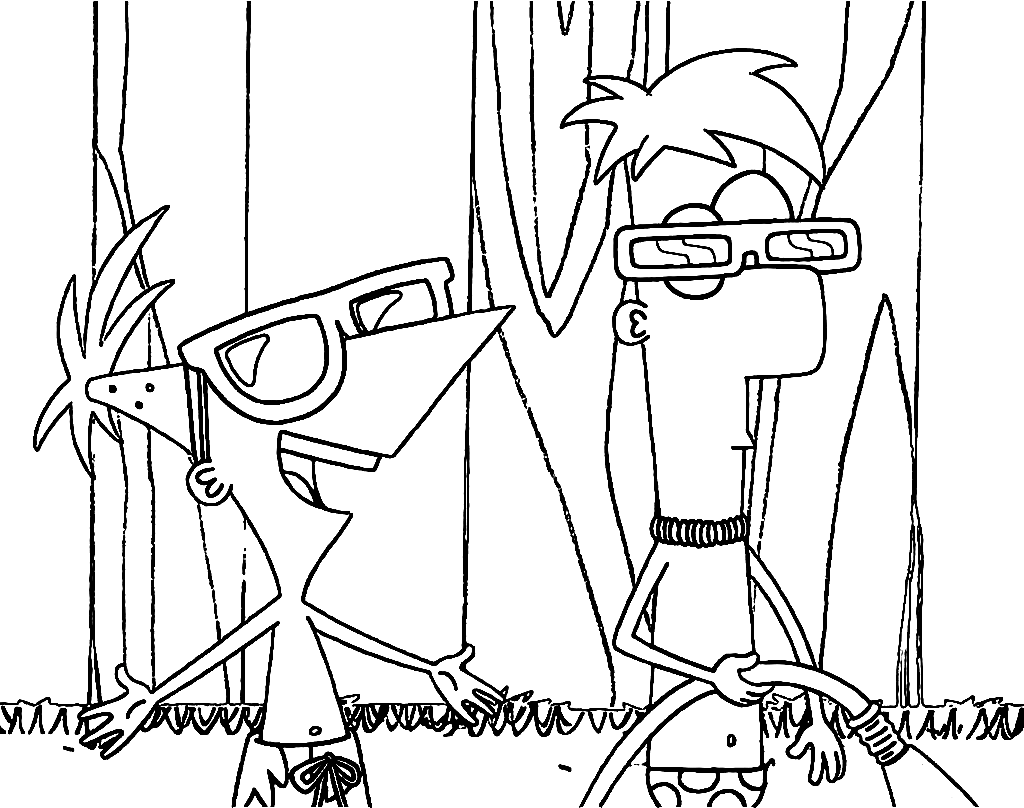
Color a complete summer day narrative. Print four pages that together tell a Phineas and Ferb summer day: Phineas with a Wrench (planning / building phase), Phineas, Ferb, Perry (the crew together), Candace Flynn with Gifts (or Candace and Perry – the busting attempt), and Perry, Phineas and Ferb Surfers or Phineas and Ferb Watering Flowers (the resolution or the adventure itself). Color all four in sequence, keeping all character colors consistent across all four pages. Add a one-sentence caption under each page describing that phase of the episode’s structure: “We know what we’re gonna do today,” “The project is underway,” “Mom, you have to see this!,” and “And once again, it’s gone.” The four finished pages function as a storyboard for a hypothetical Phineas and Ferb episode.
These related coloring collections will help you explore the wonderful world of colors. Let’s choose, be creative, and show us your great pictures!