Jurassic World Coloring Pages
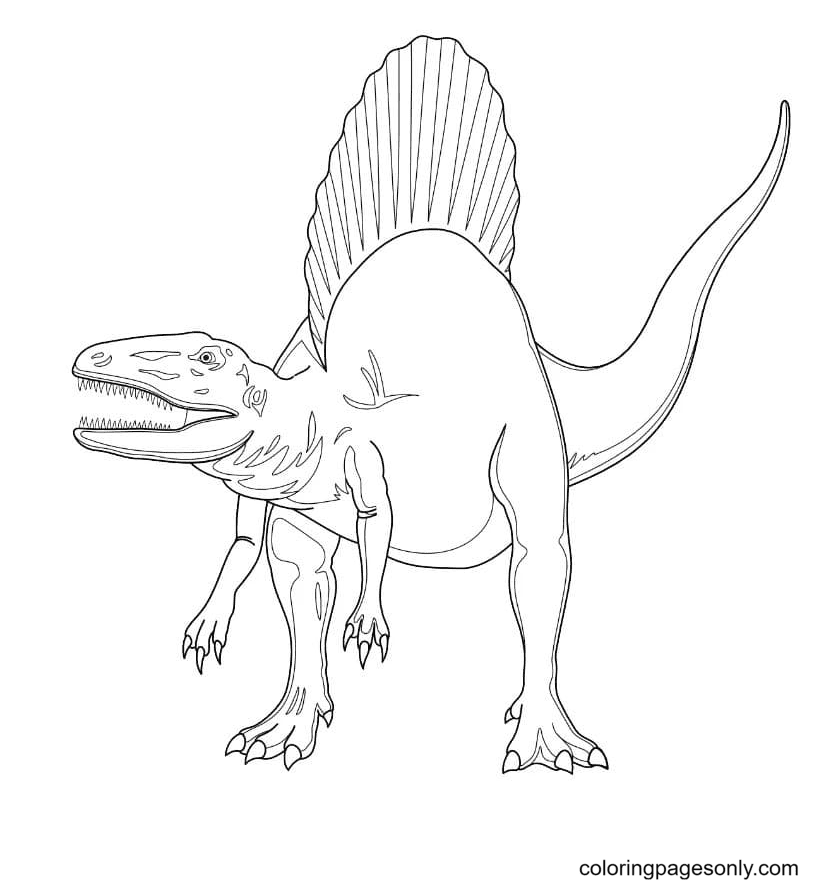
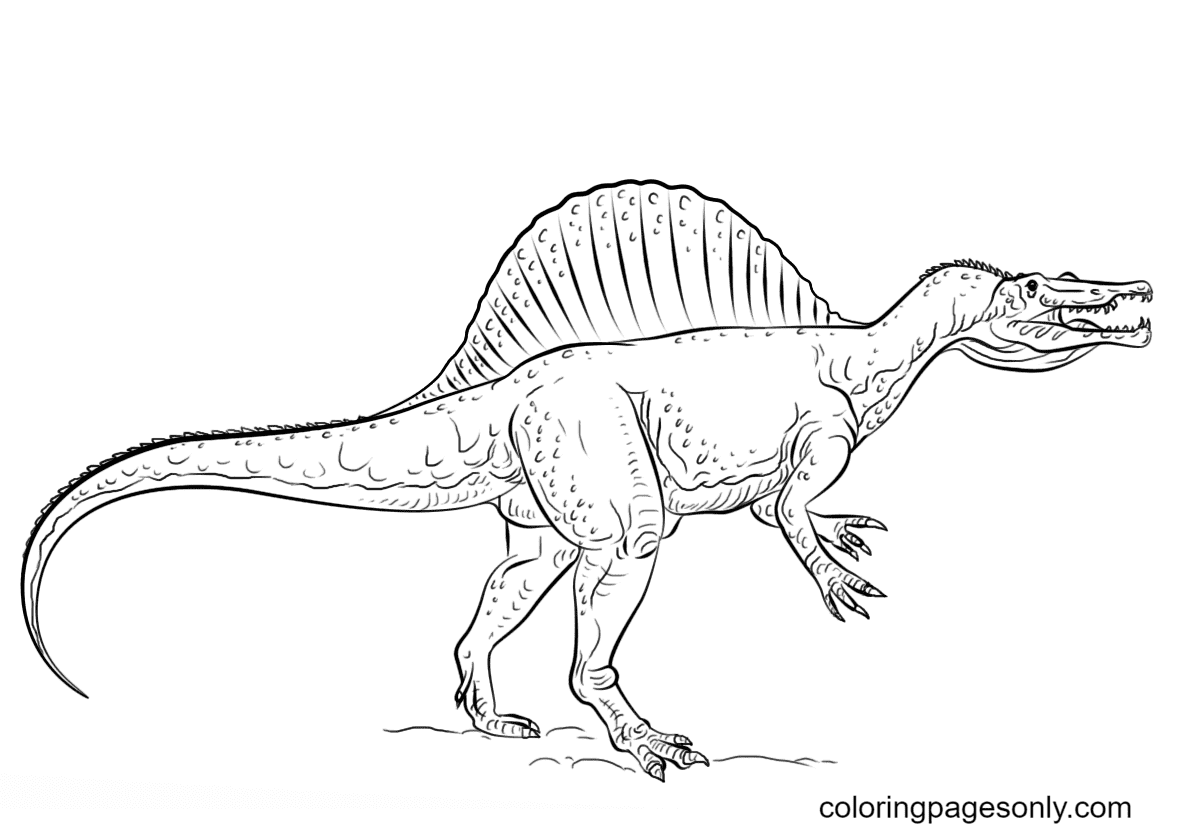
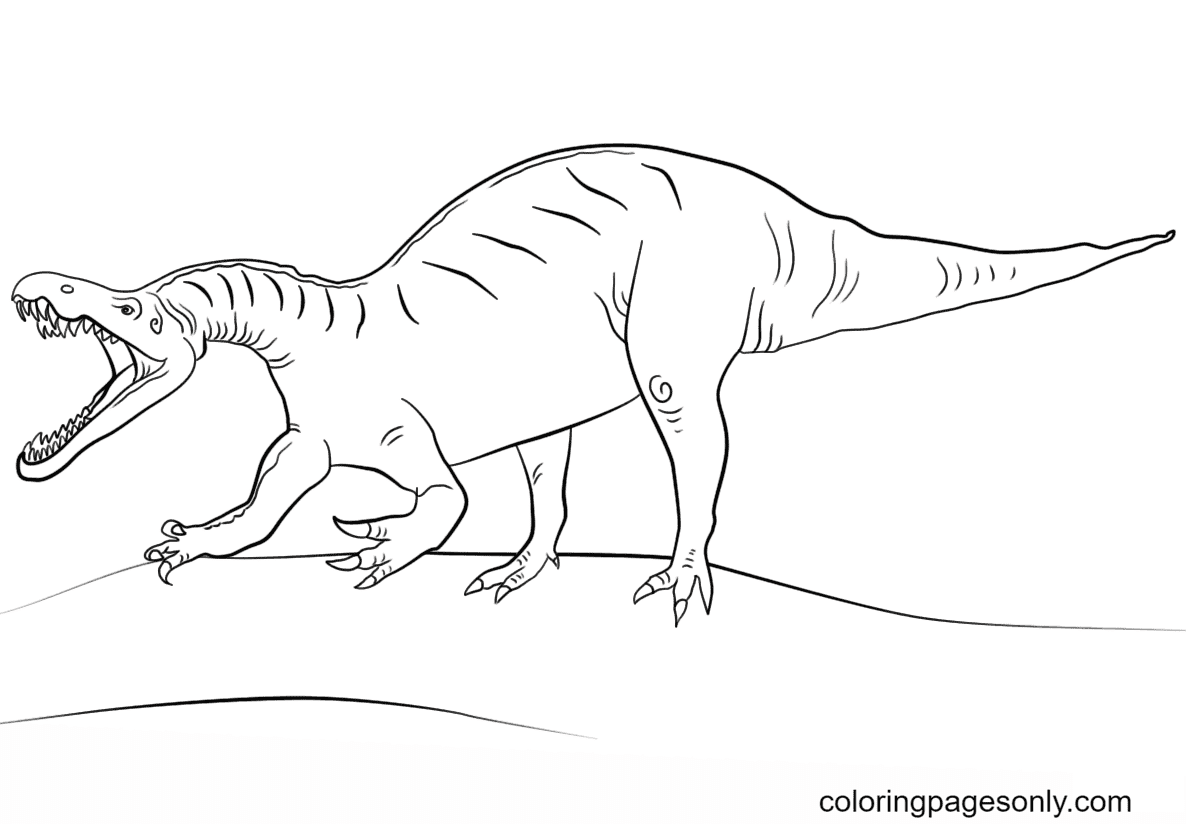
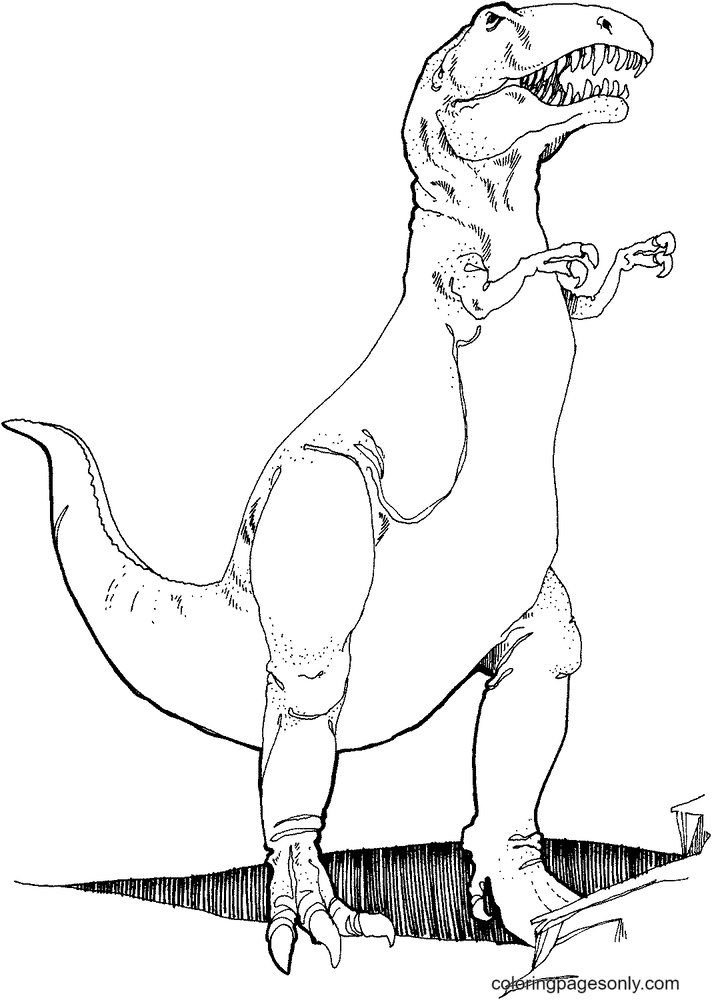
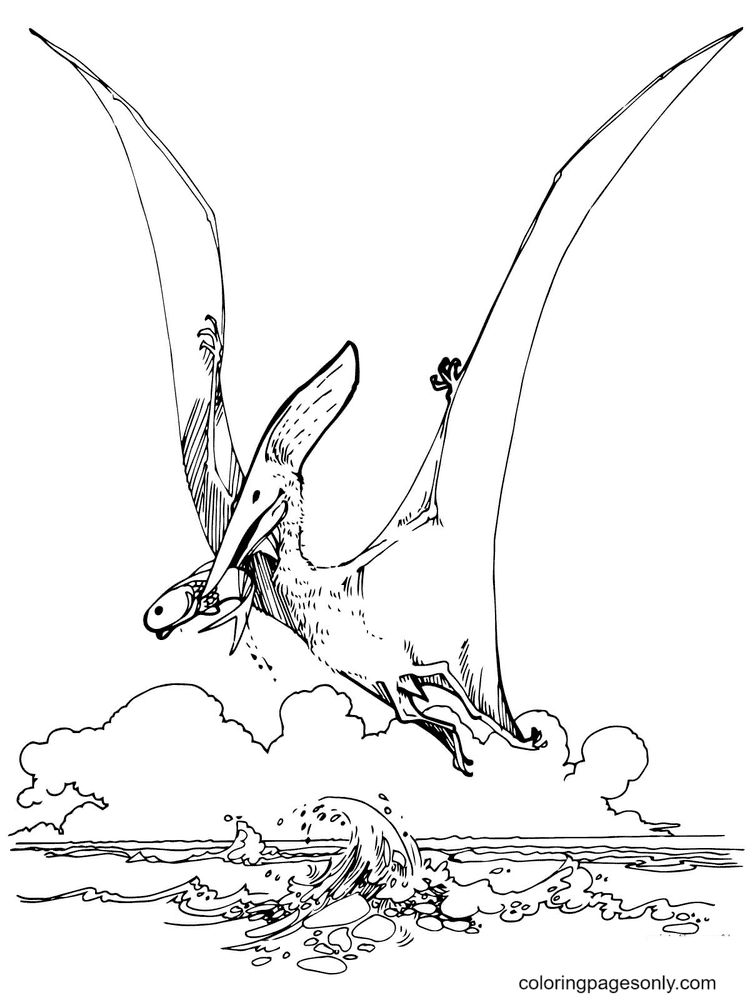
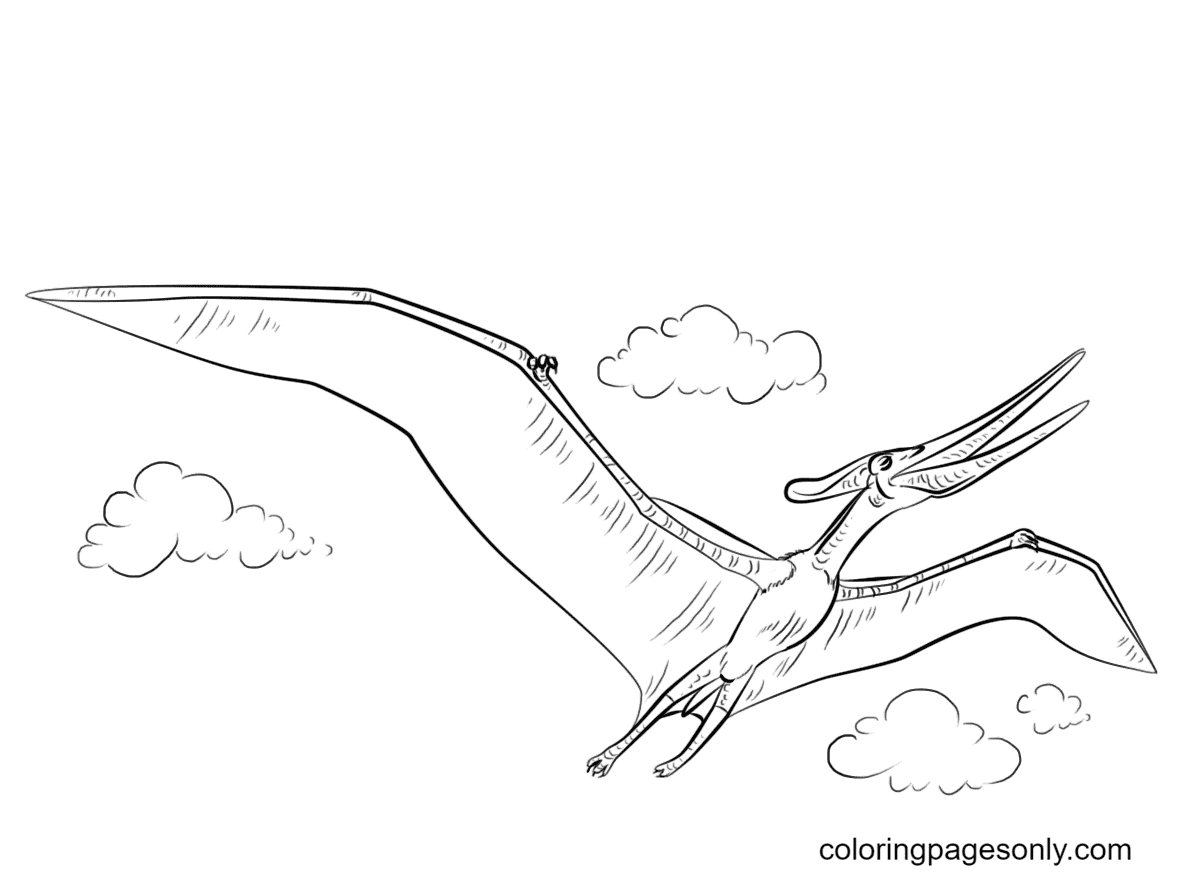
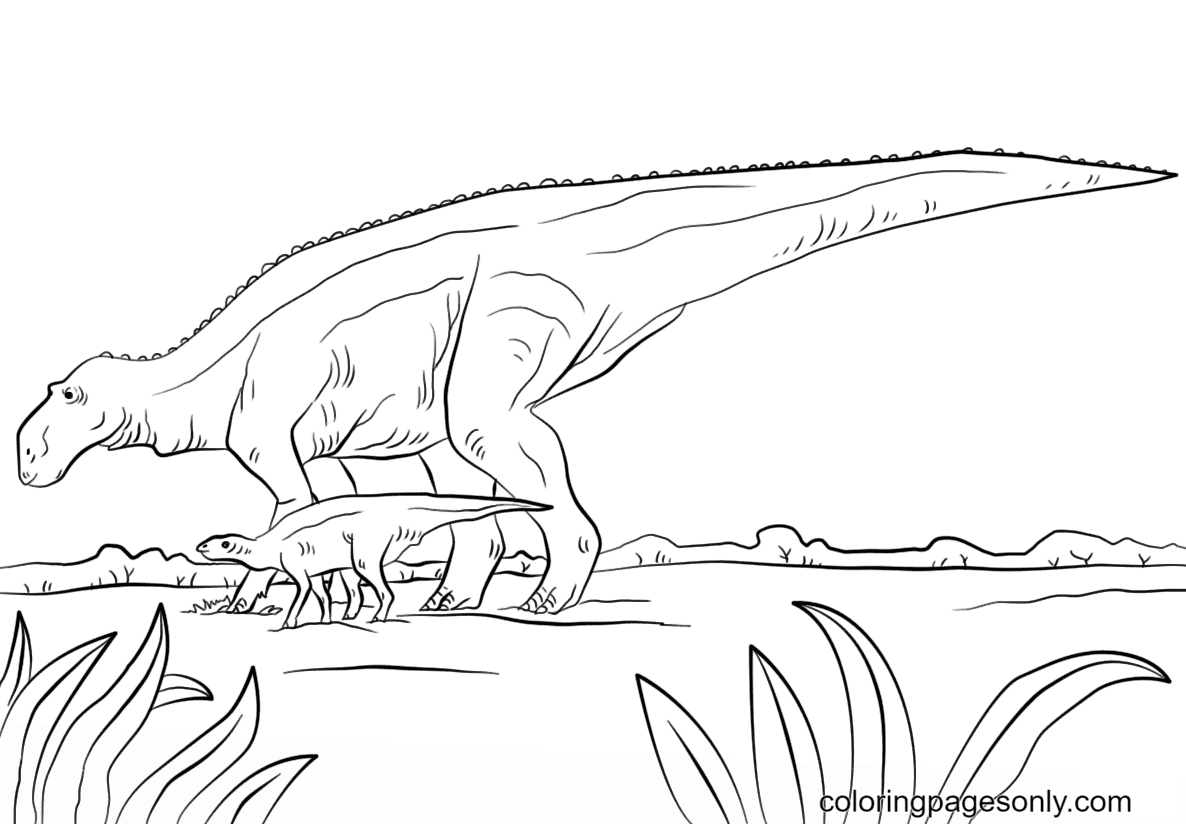
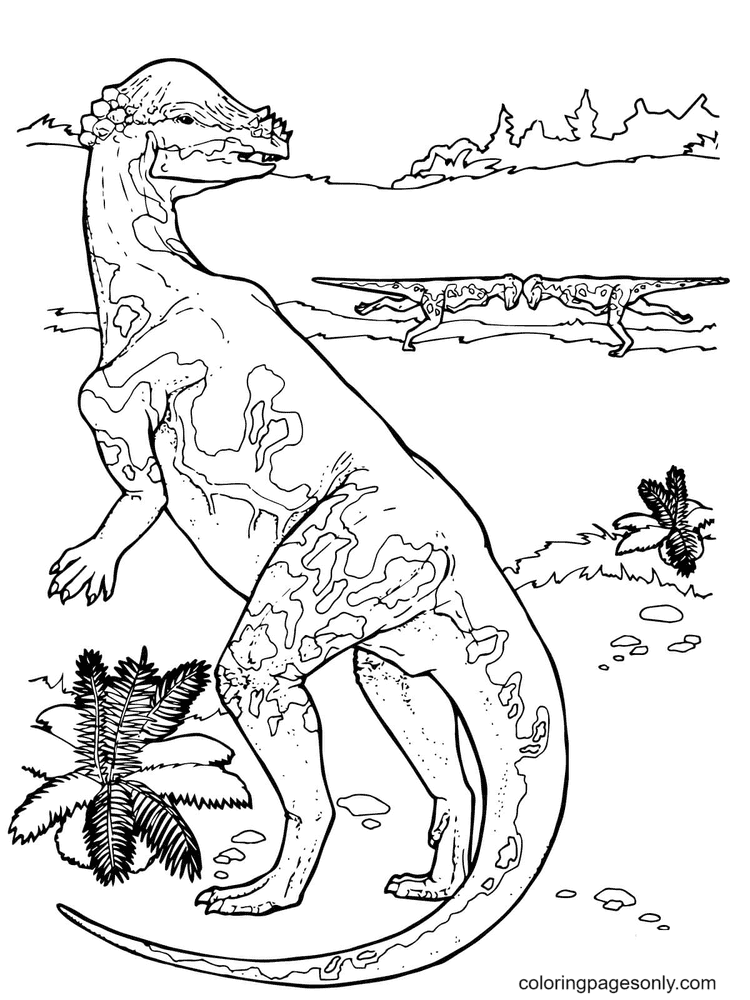
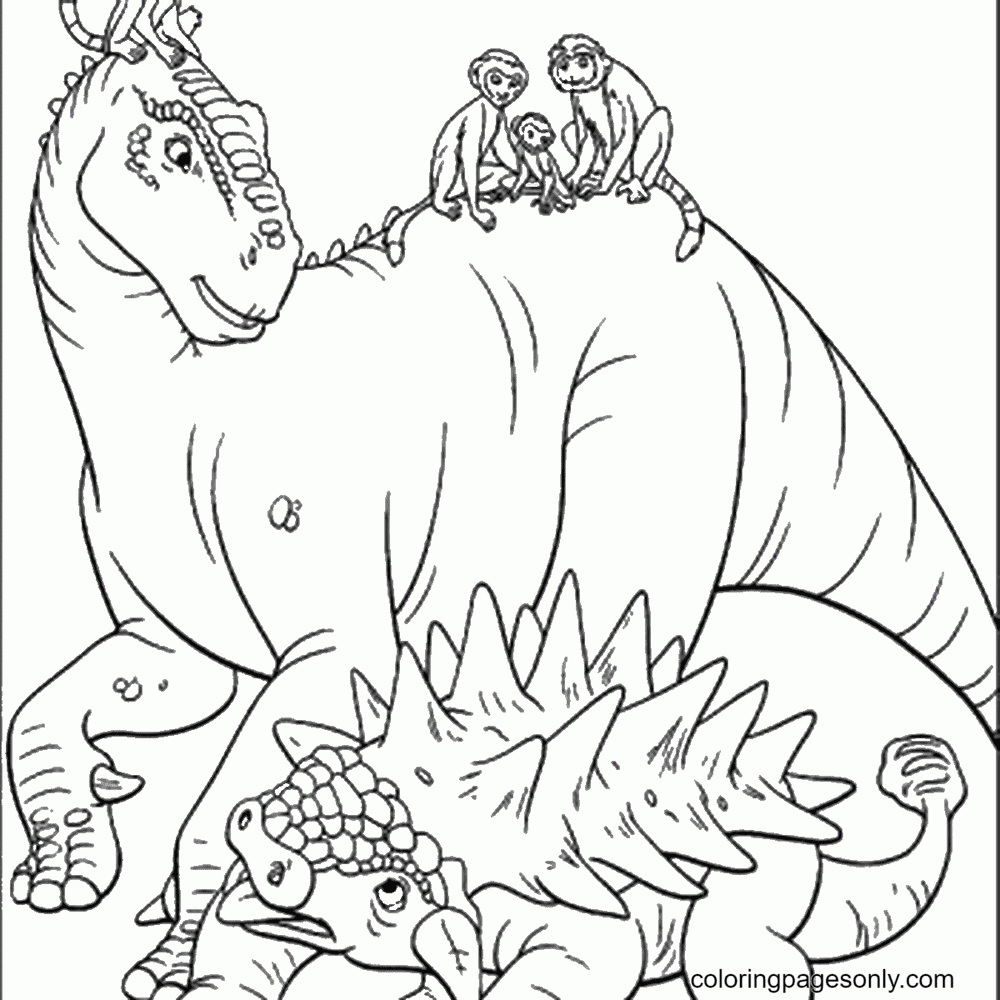
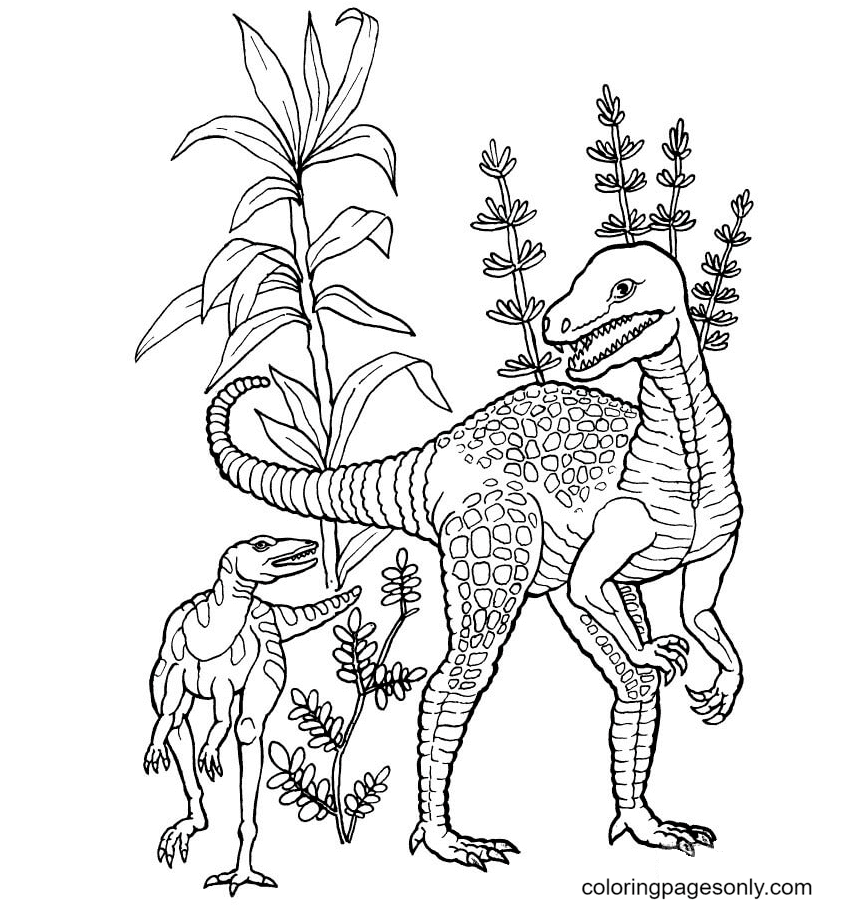
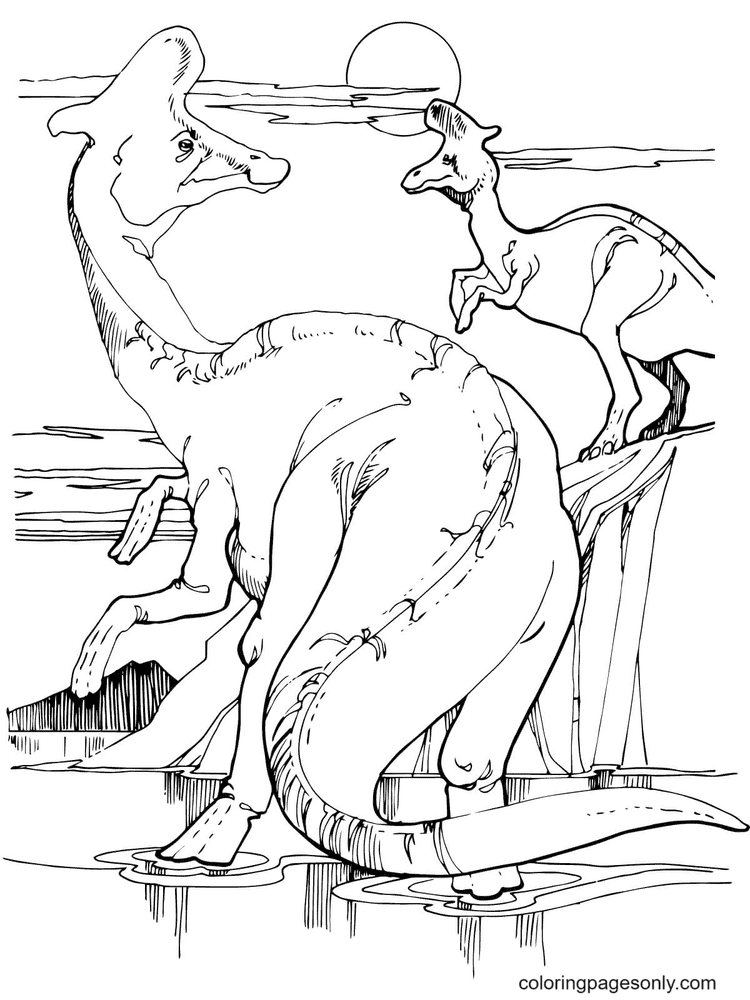
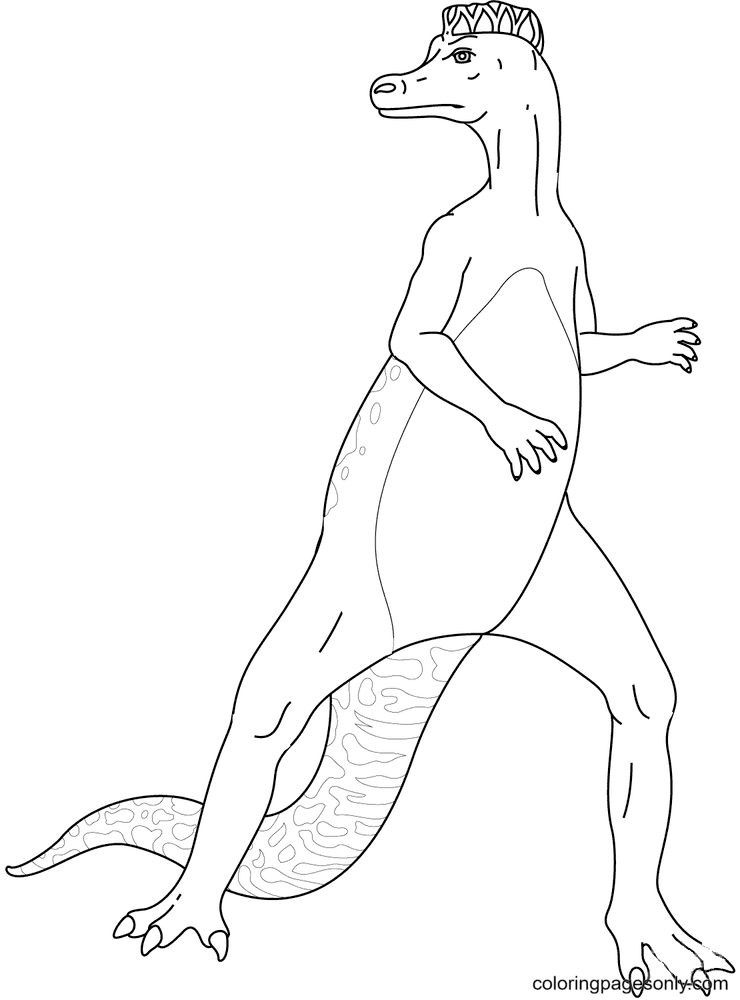
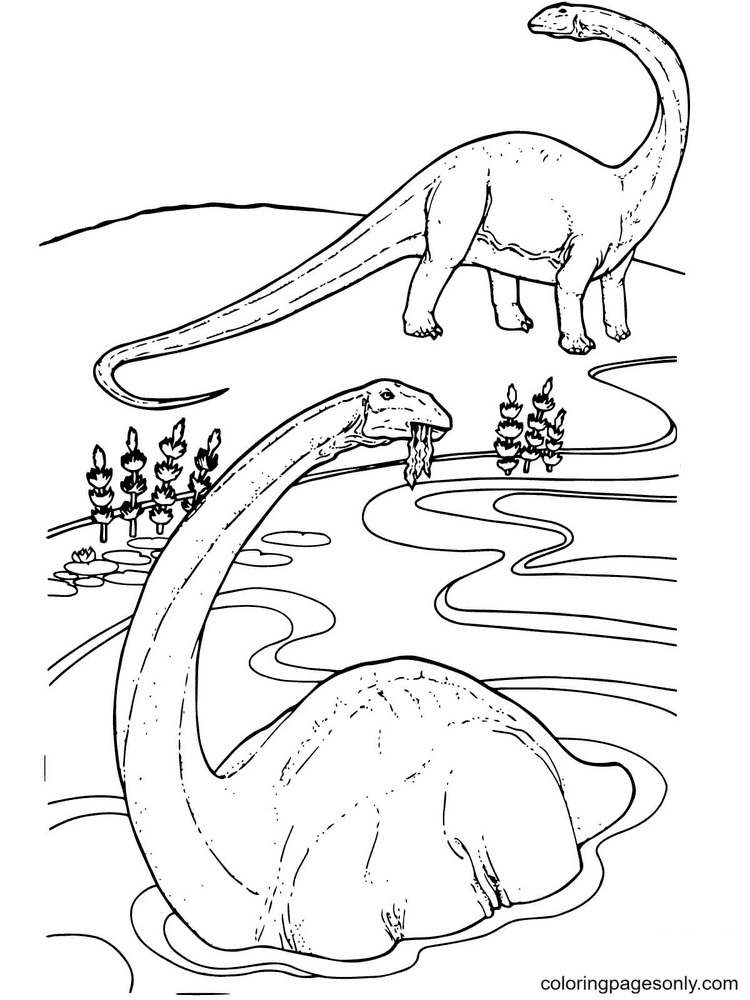
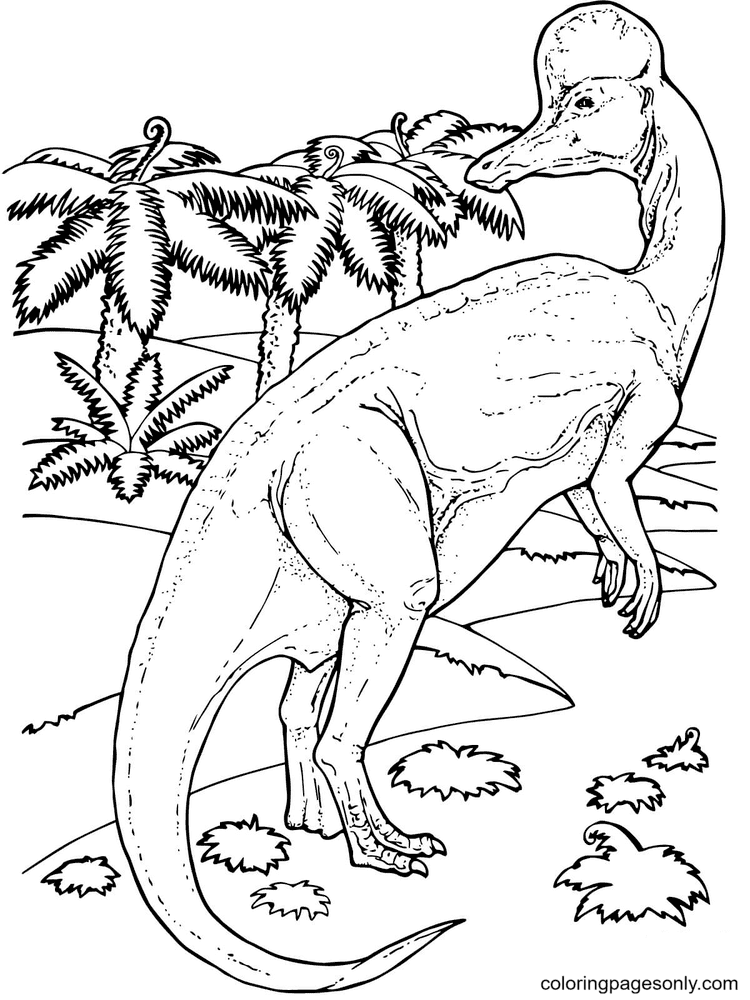
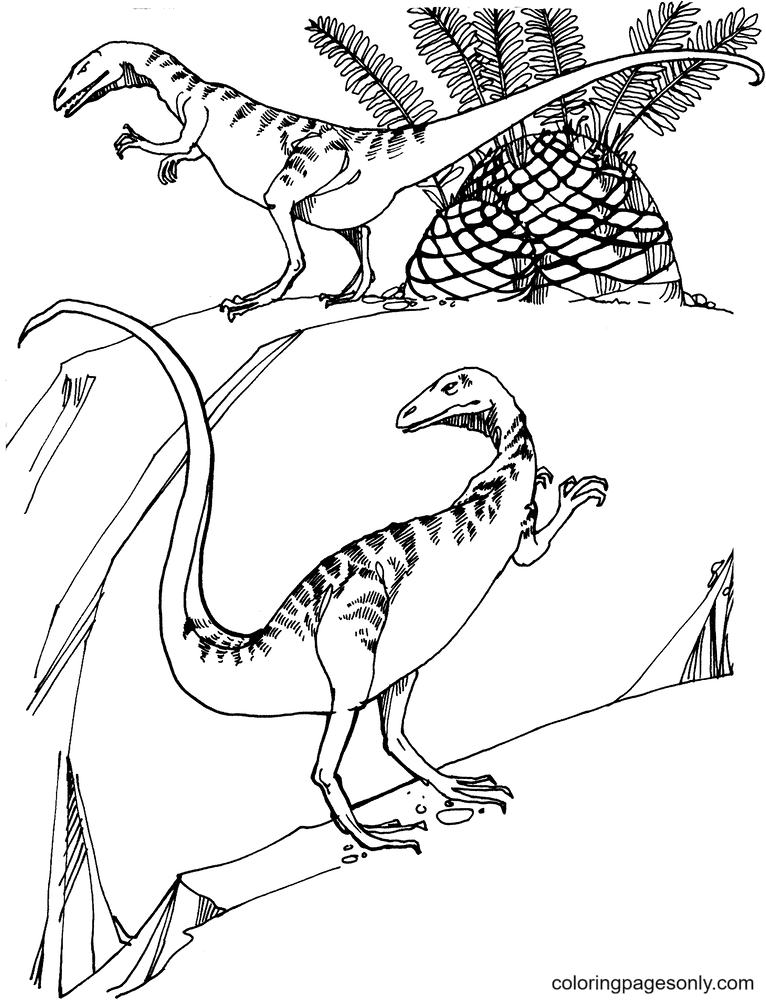
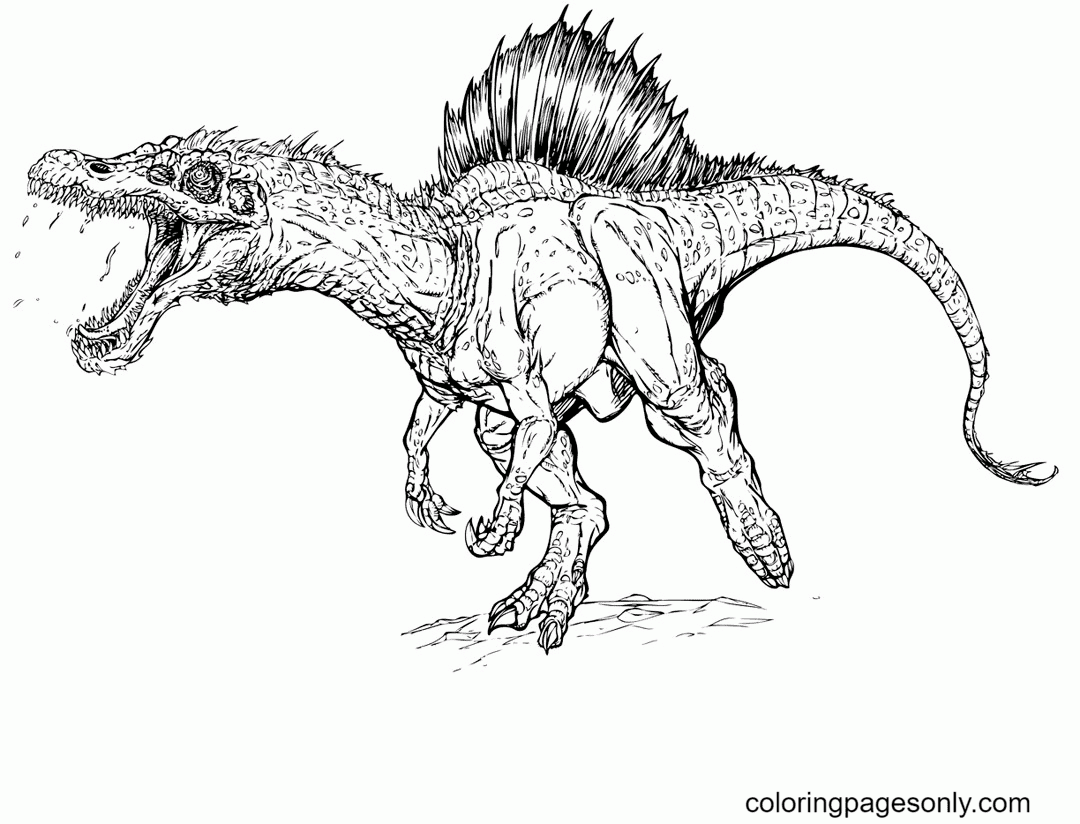
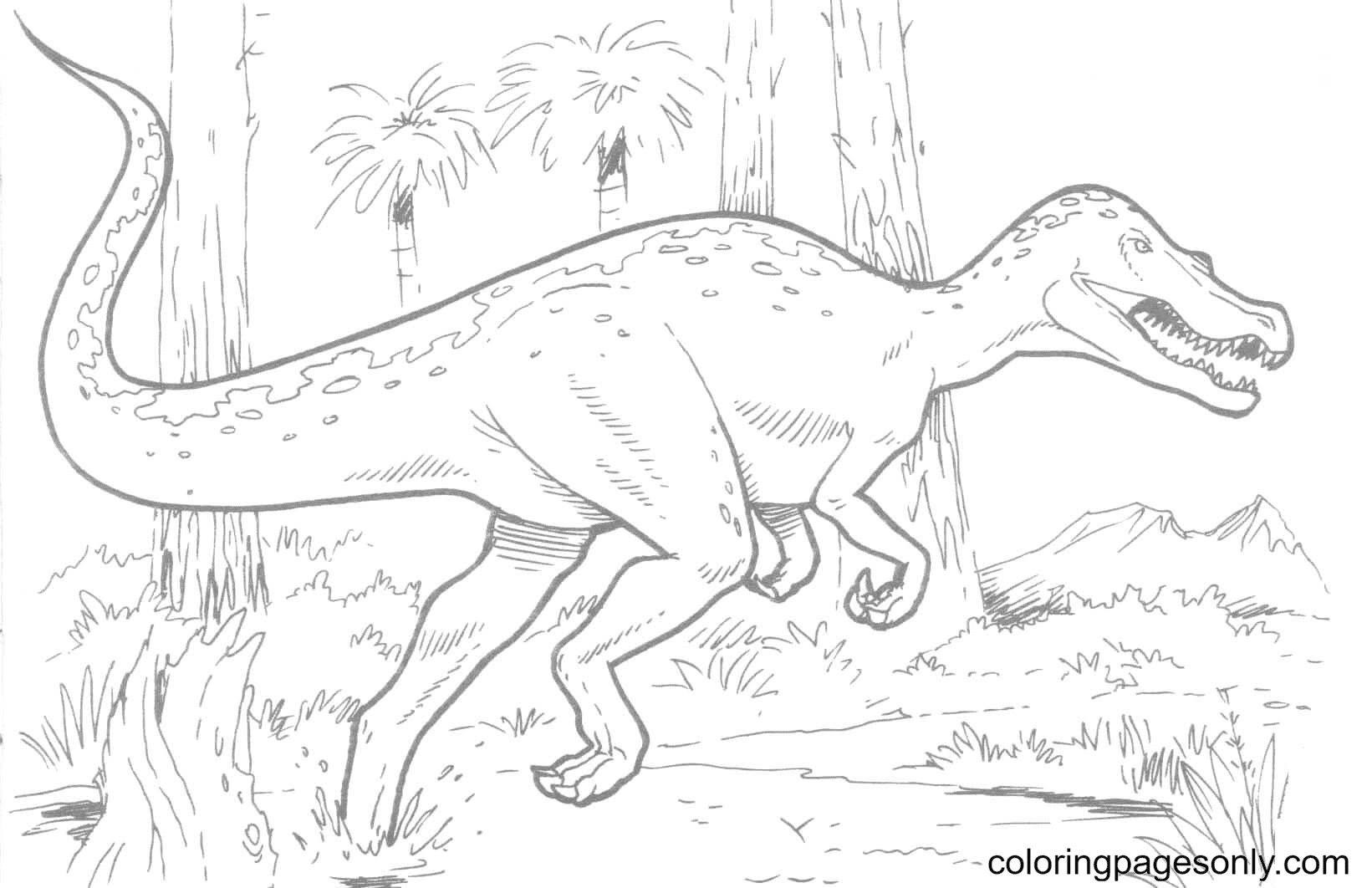
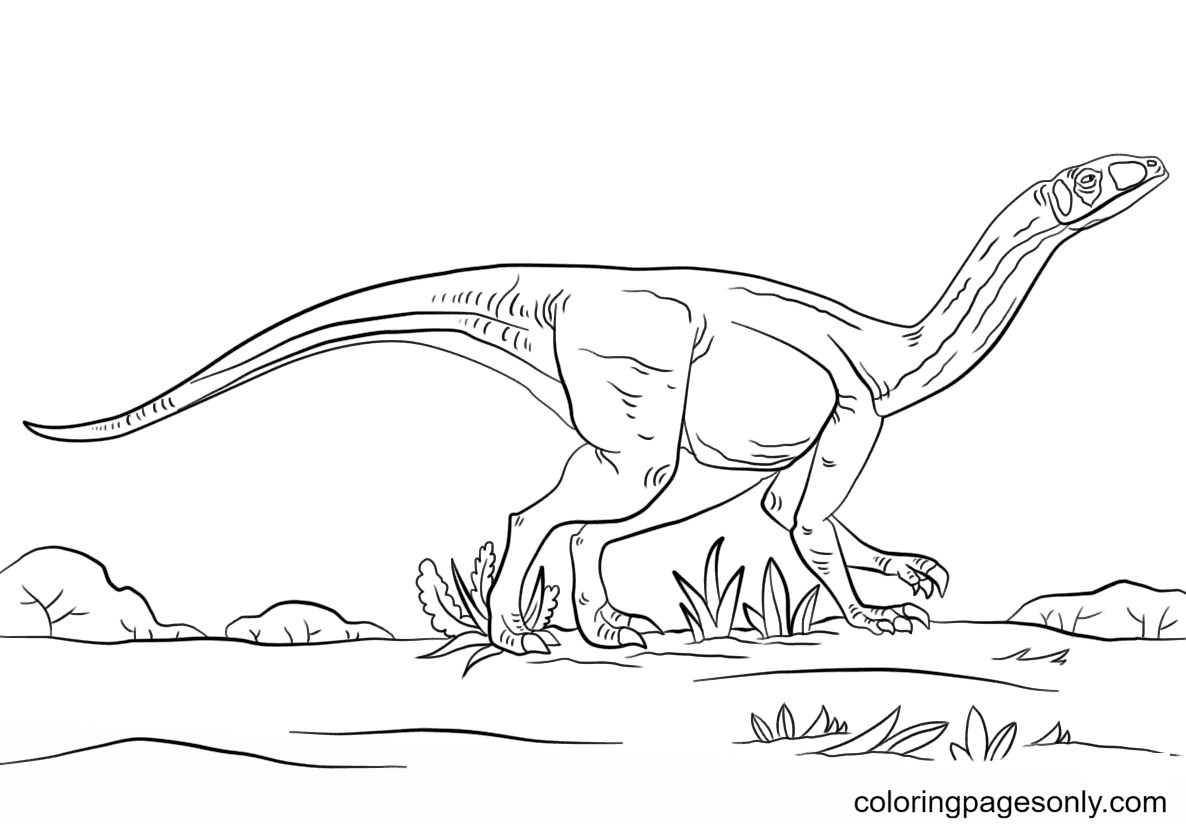
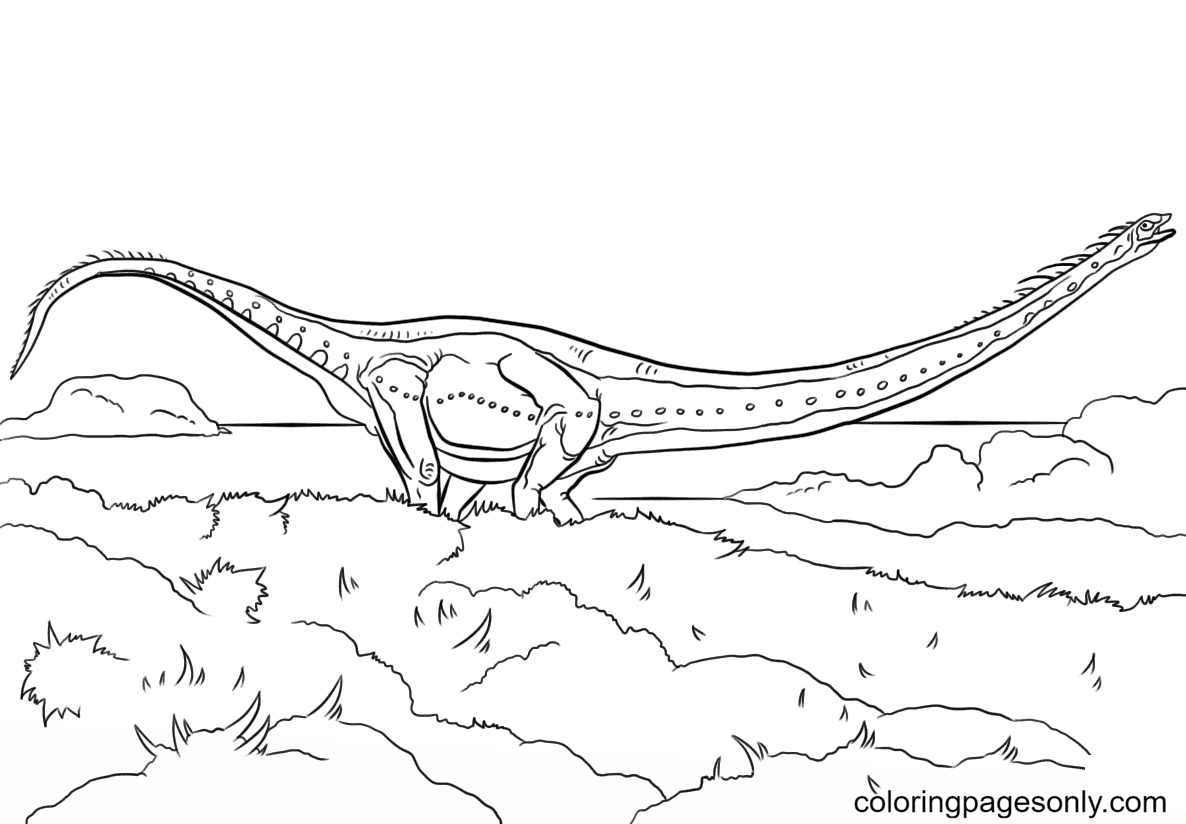
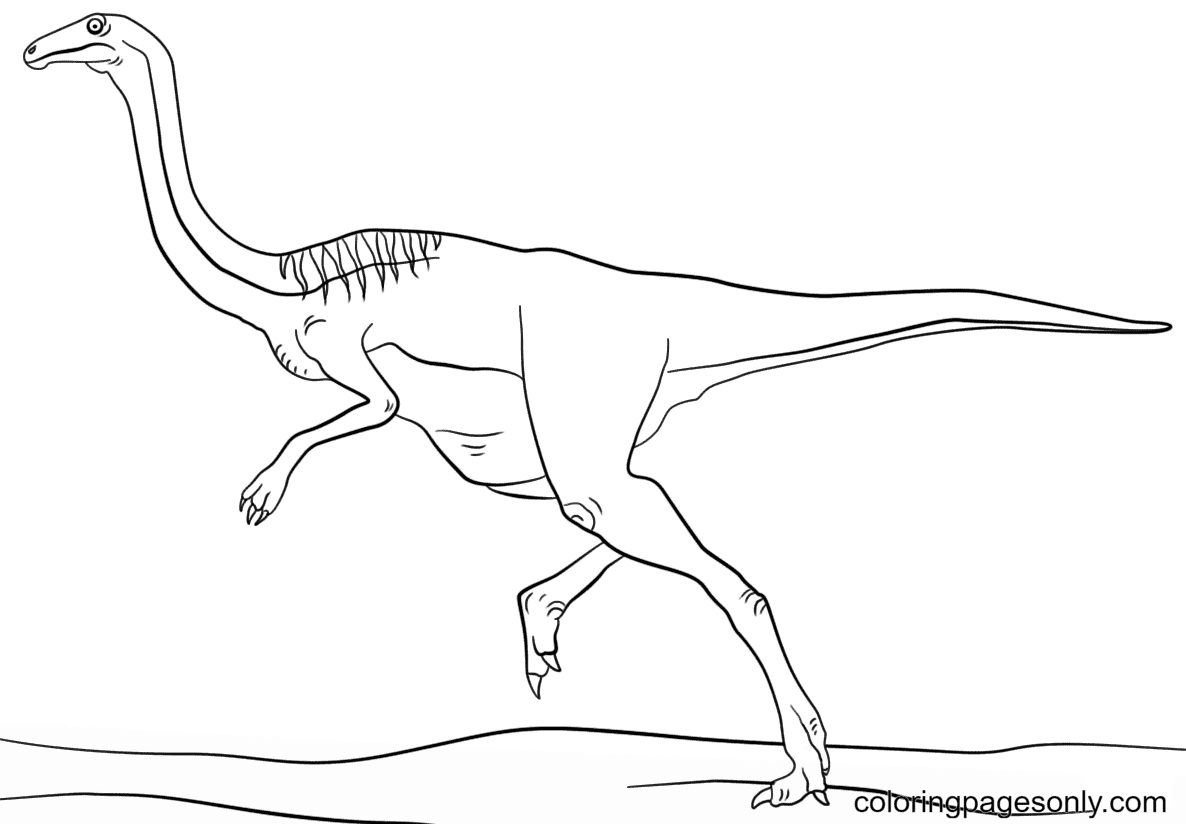
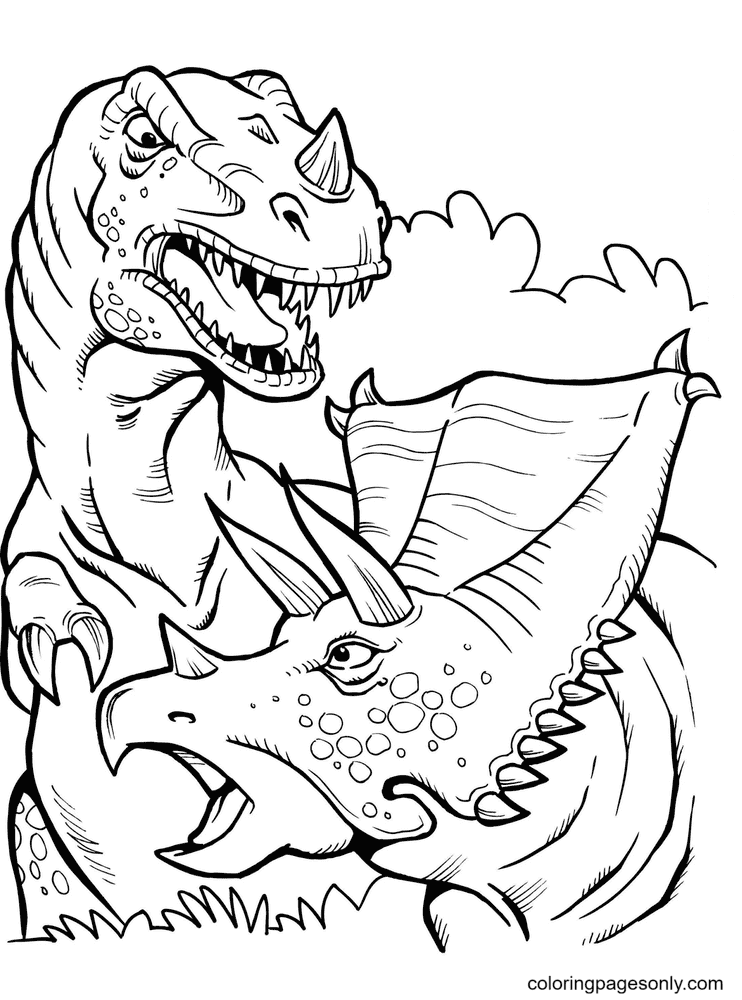
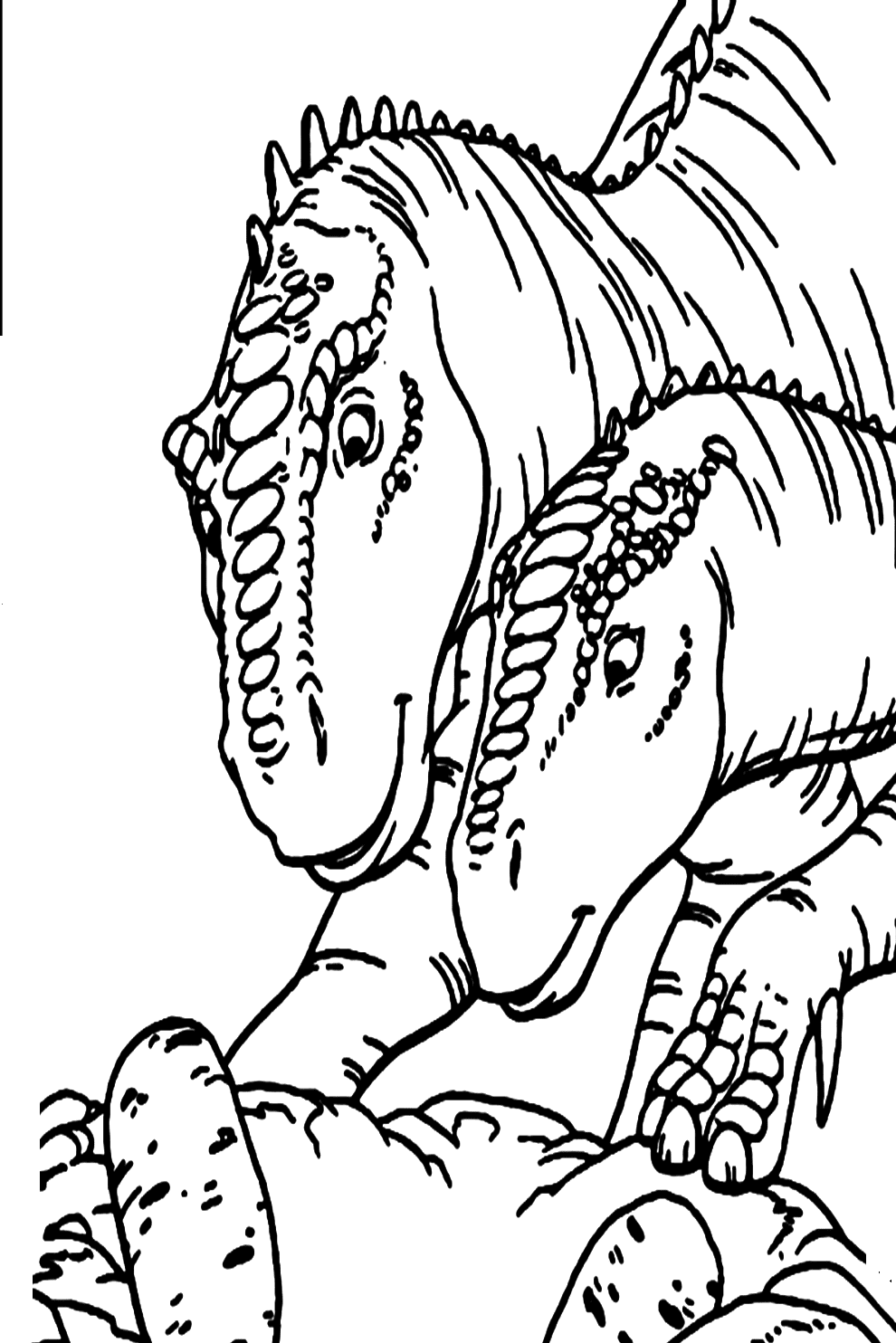
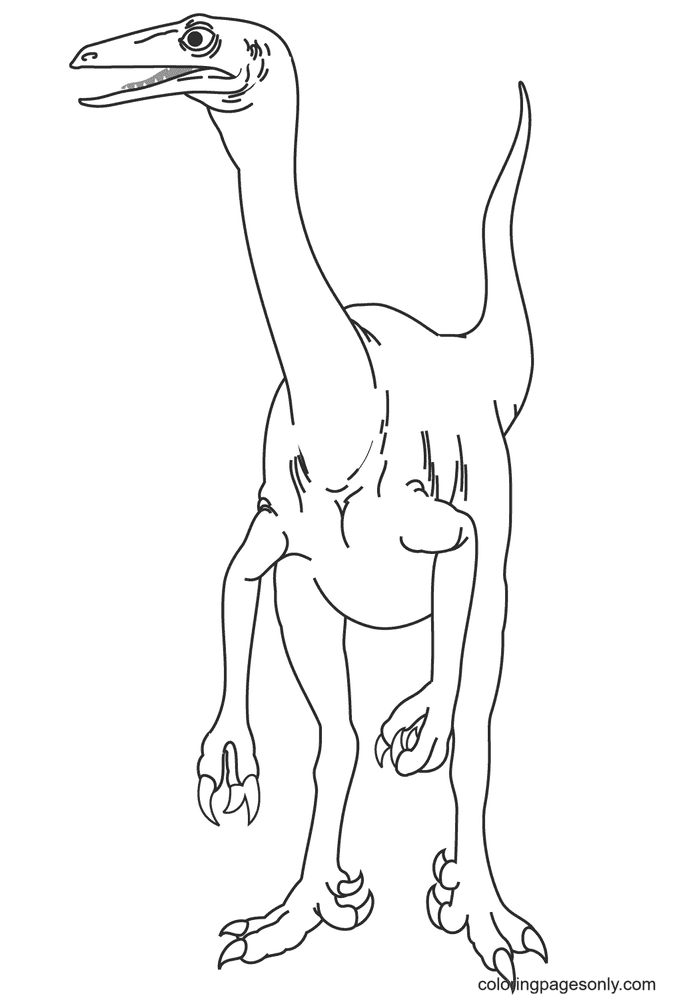
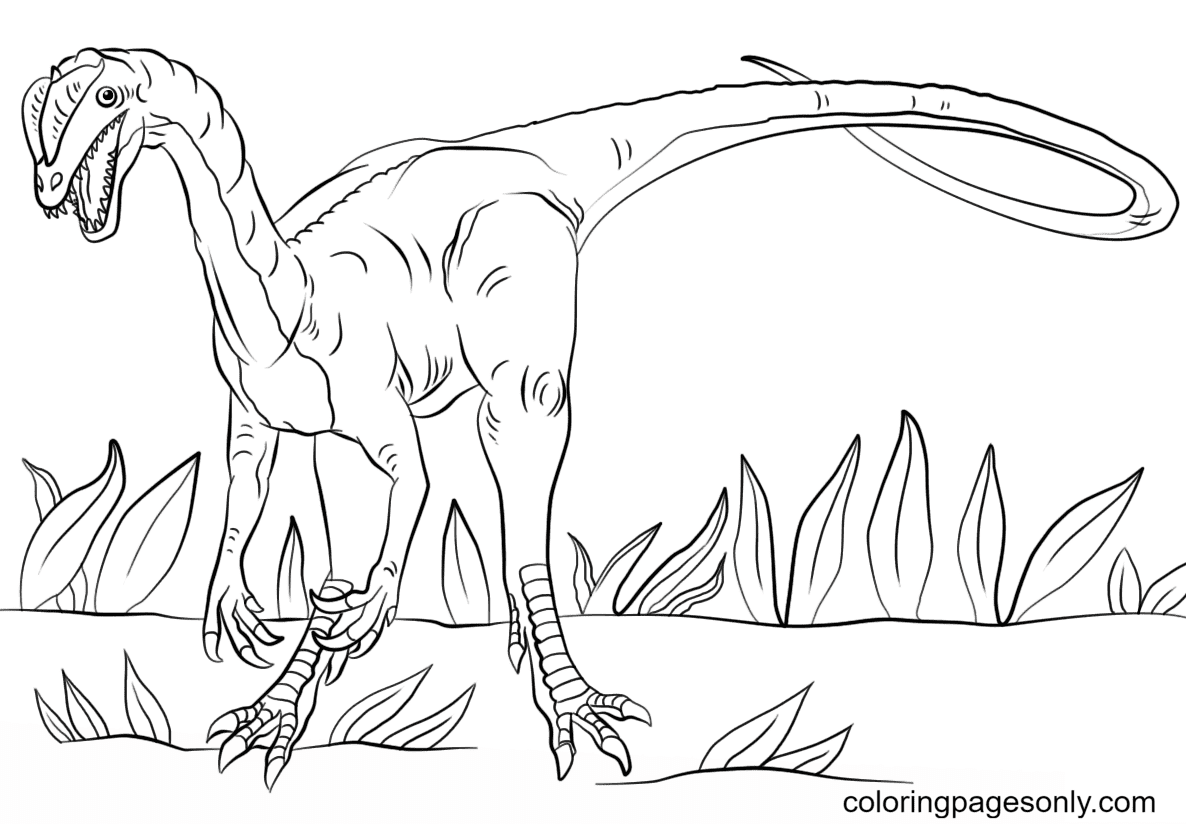
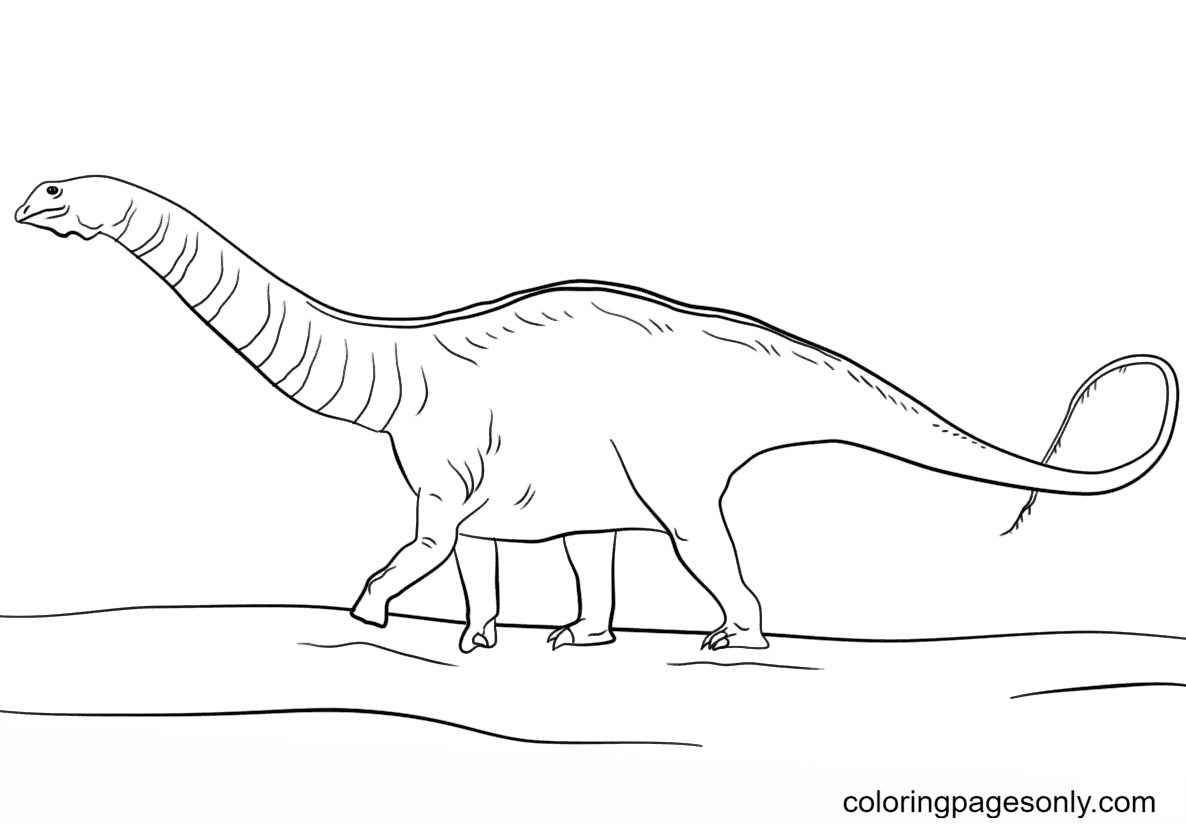
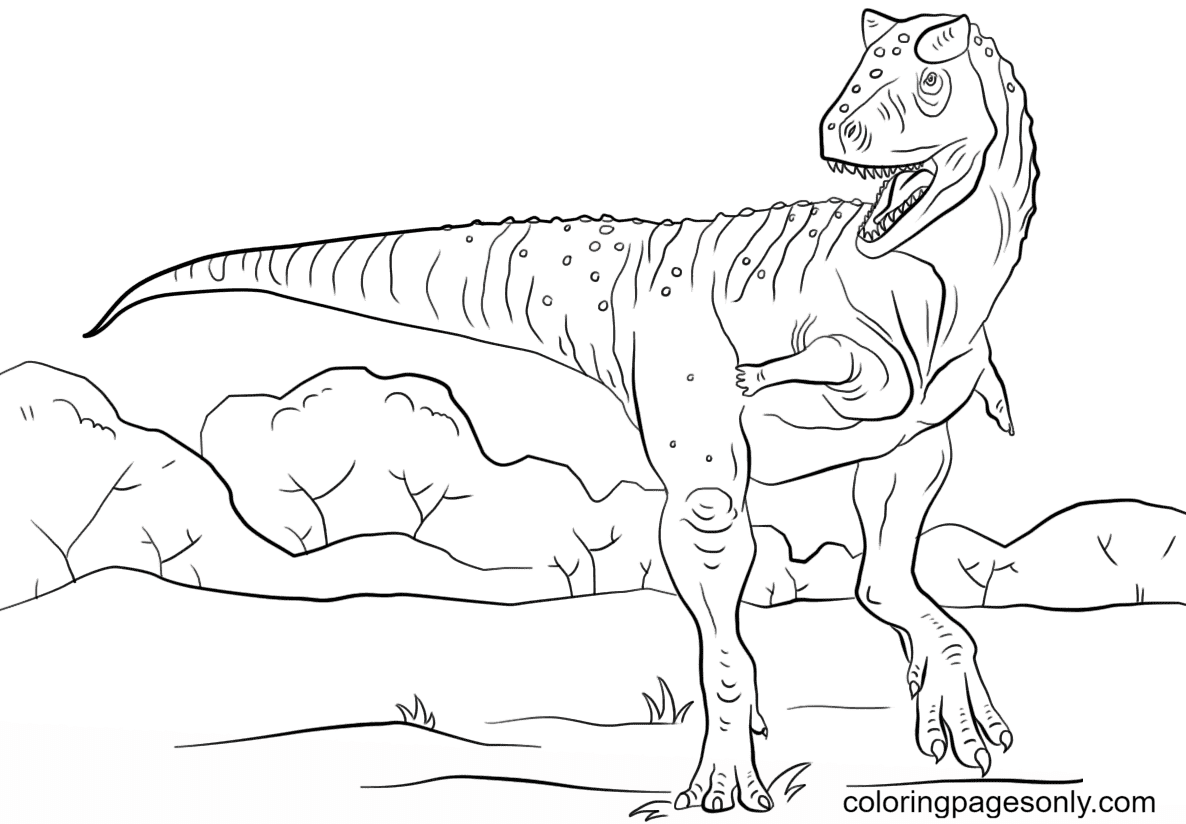
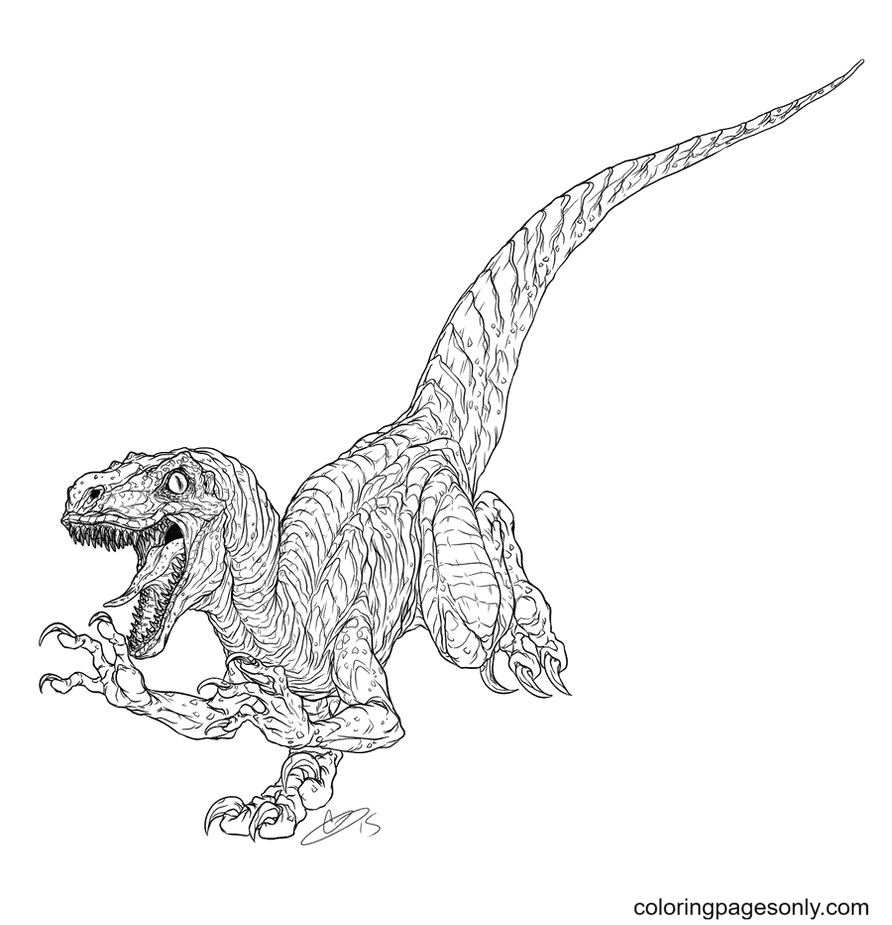
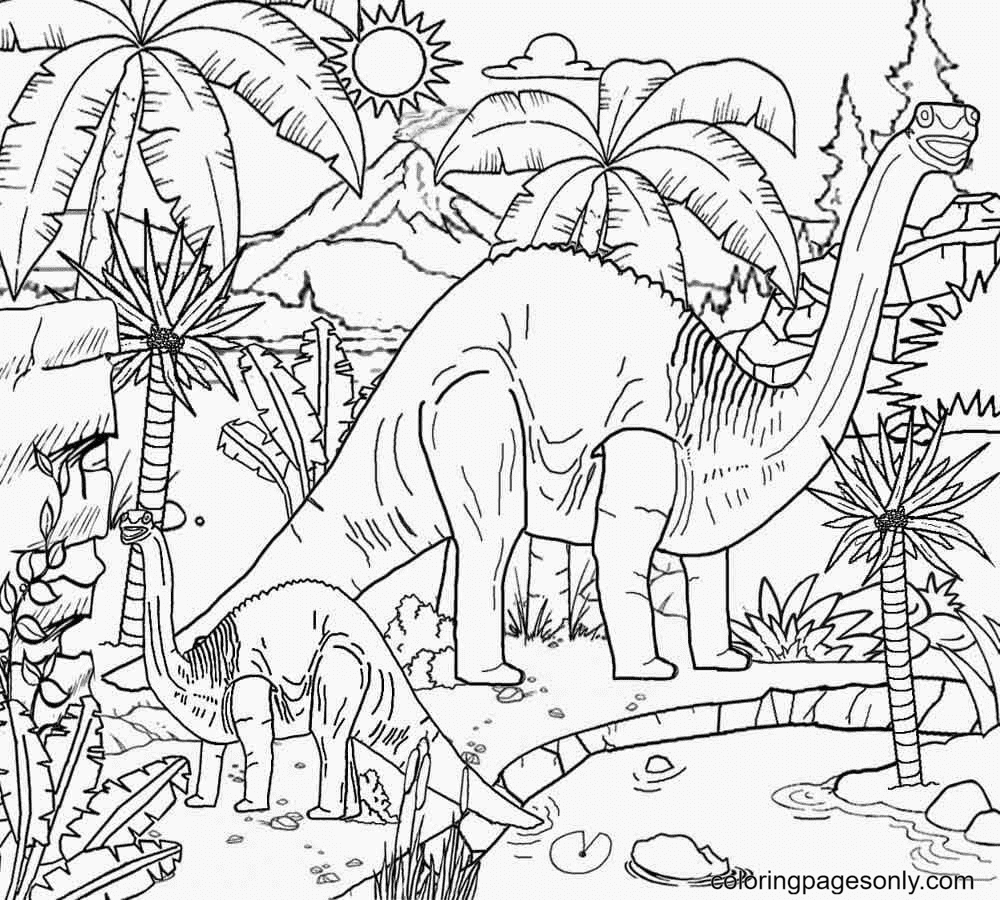
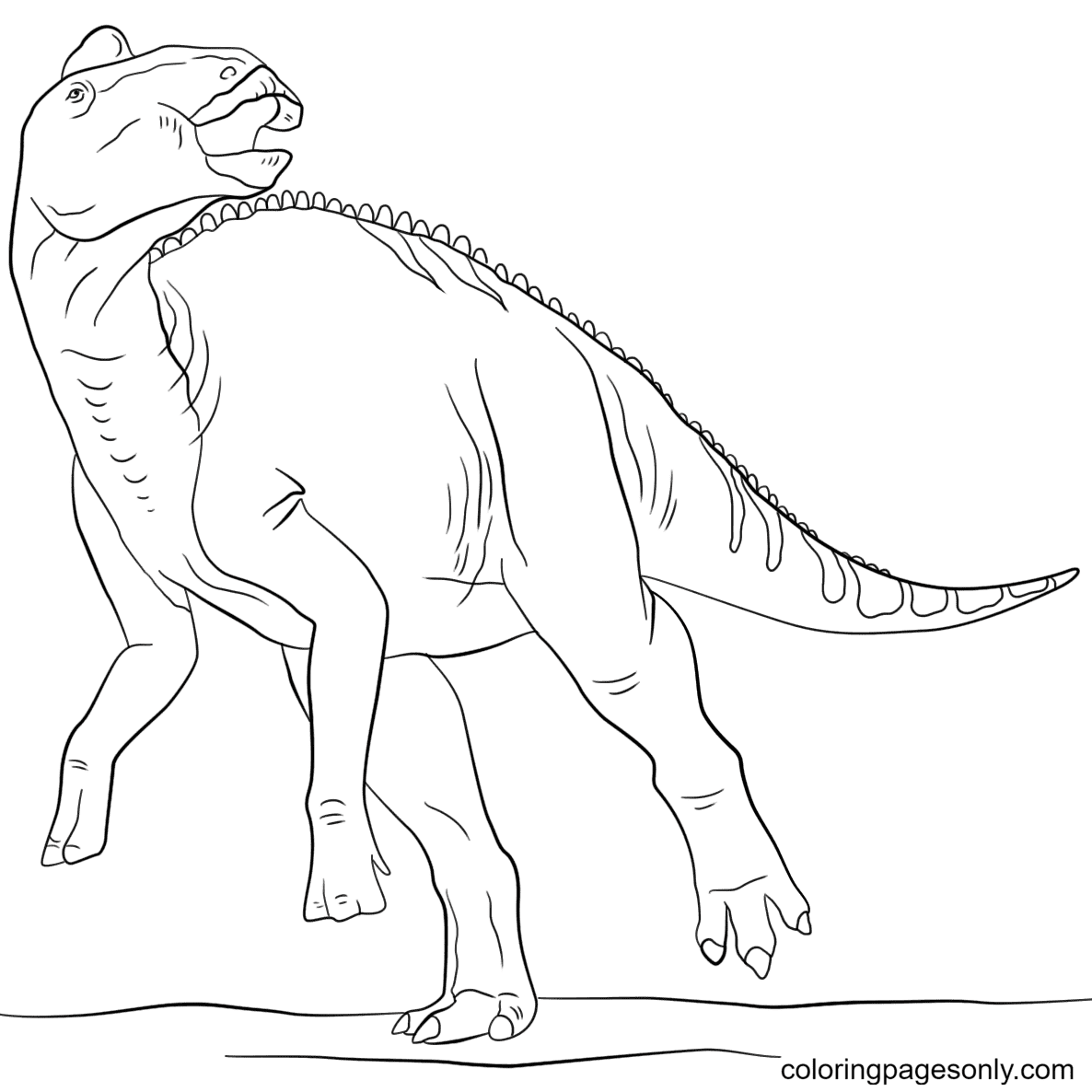
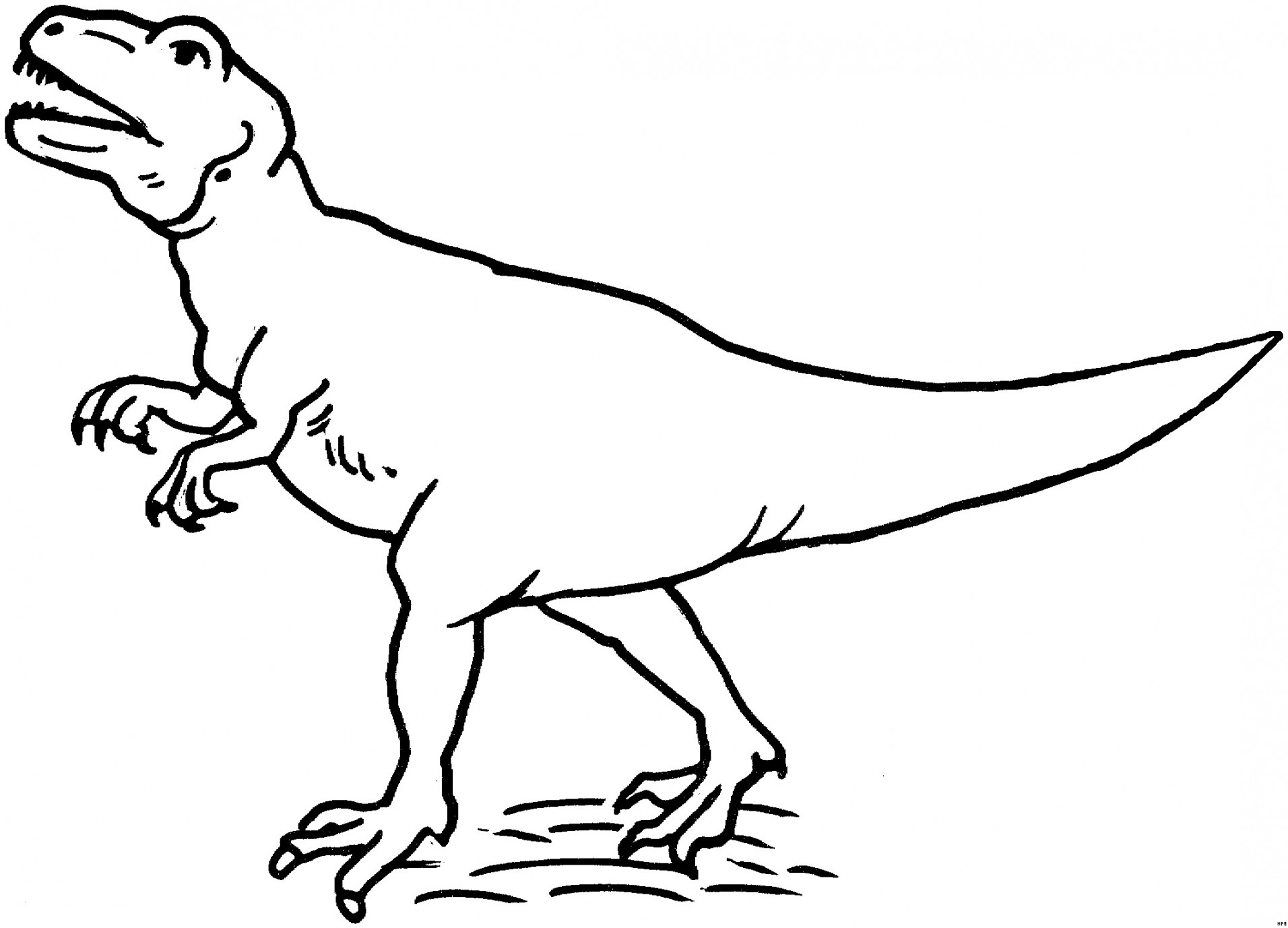
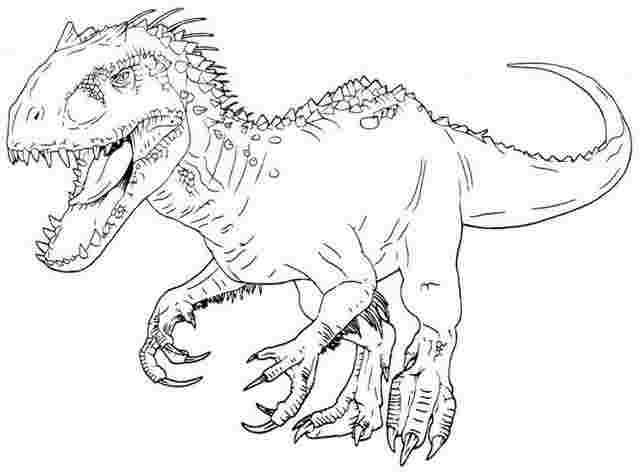
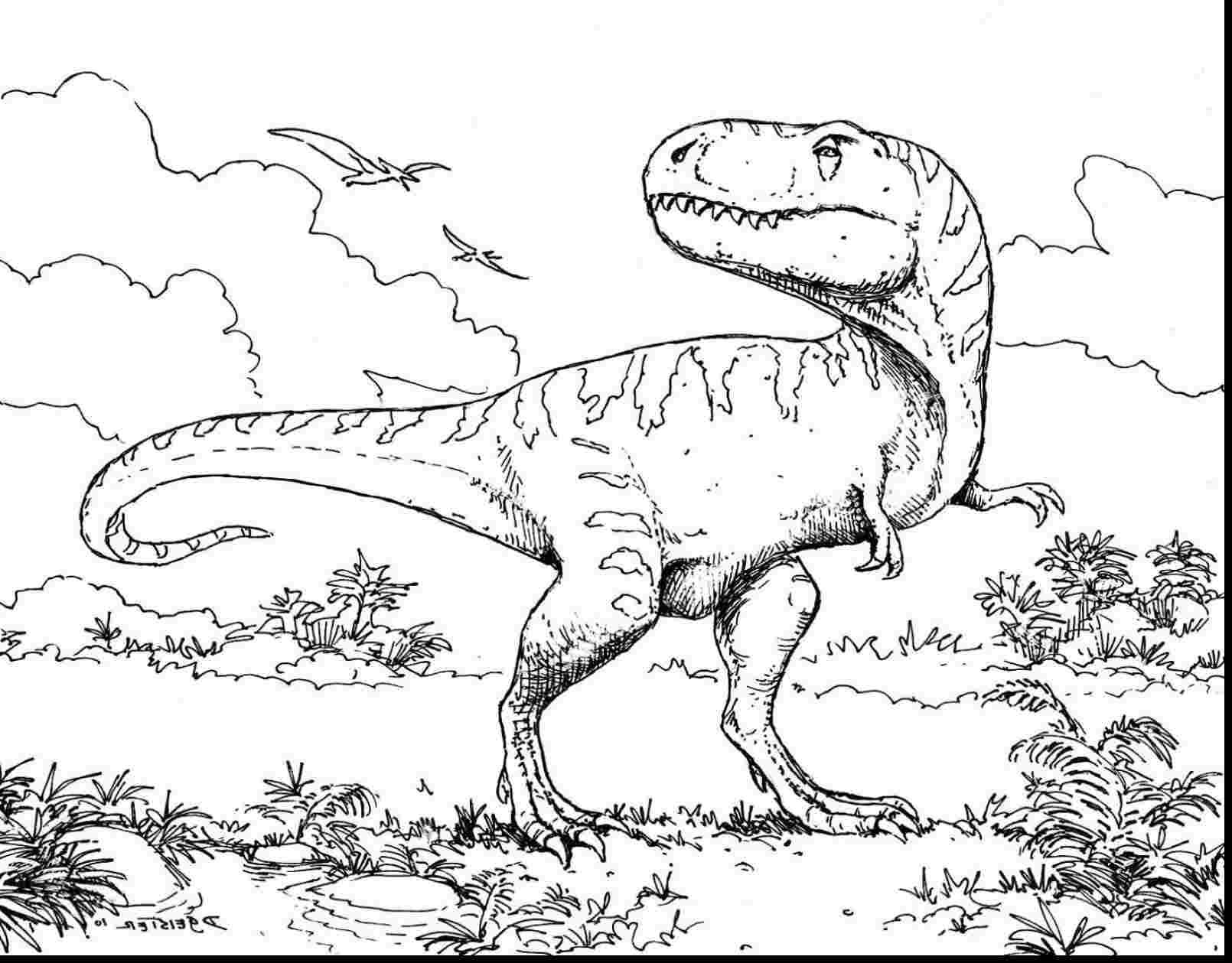
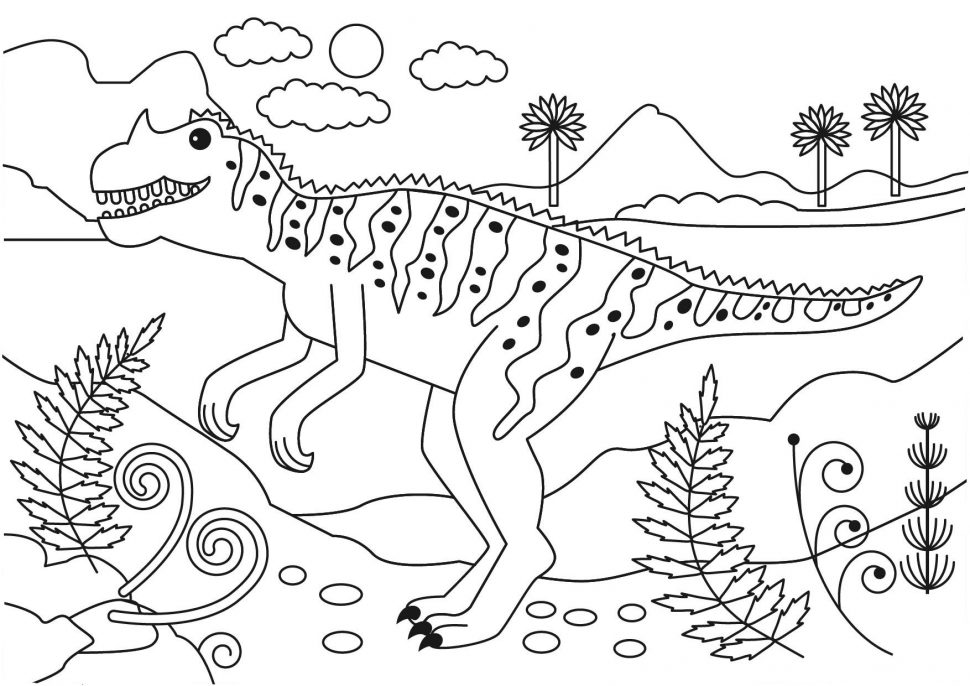
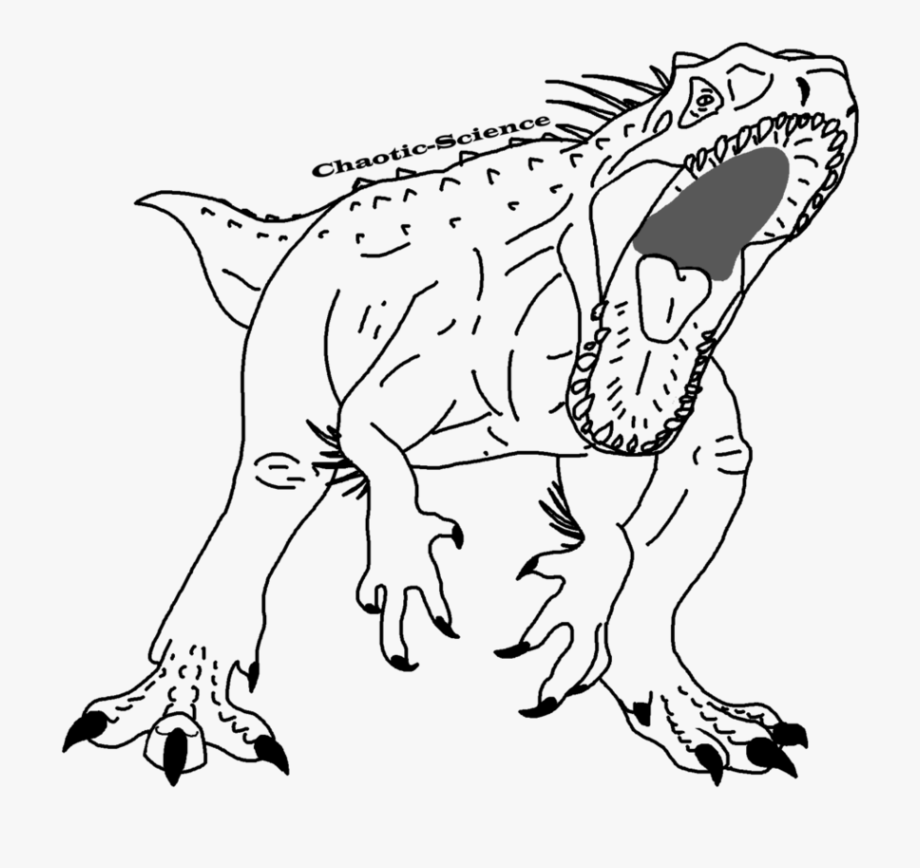
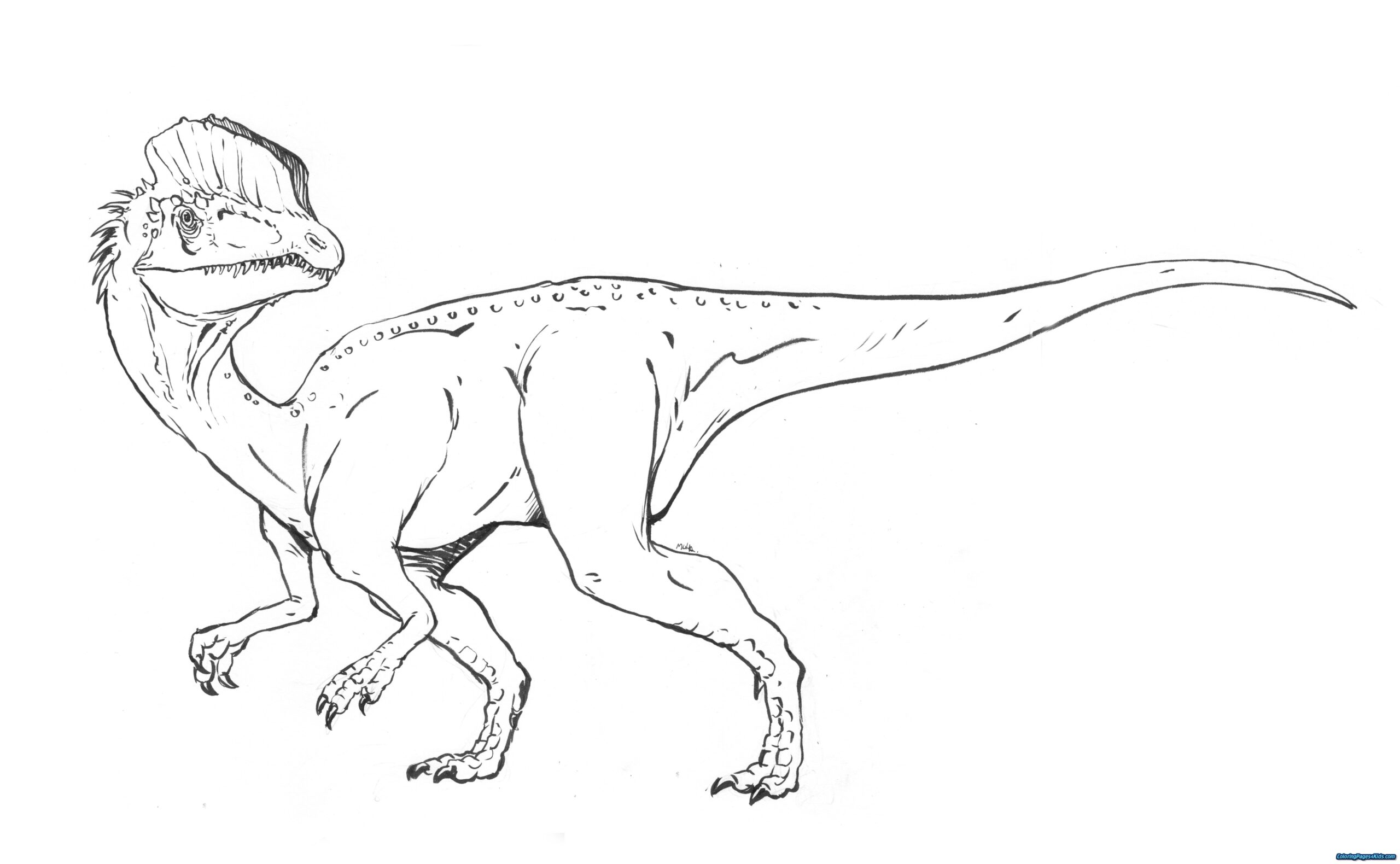
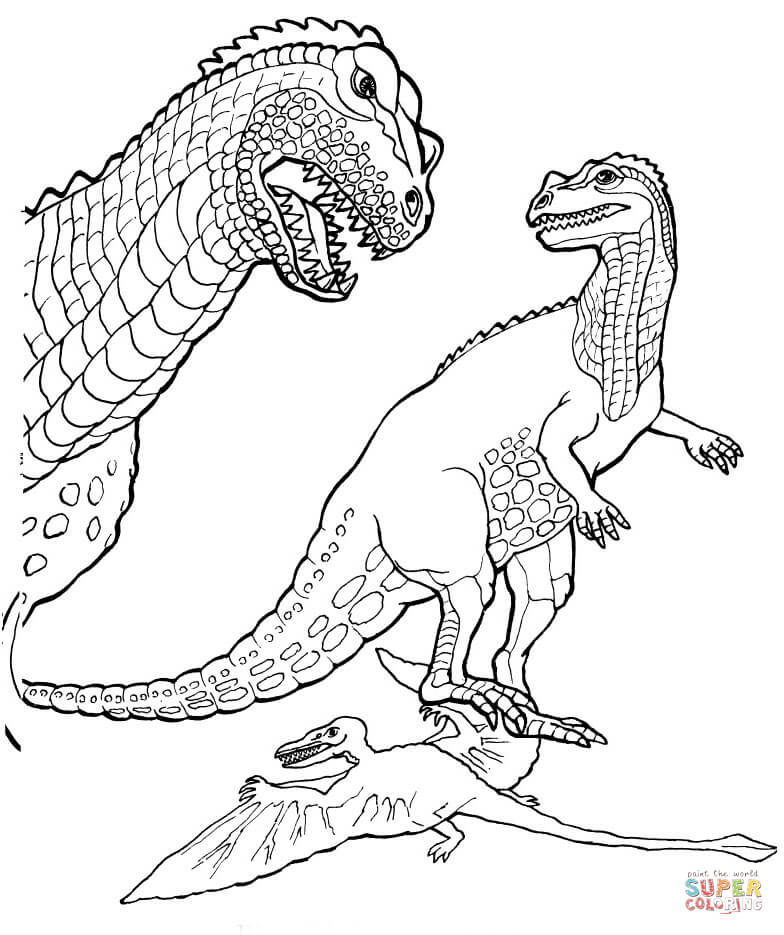
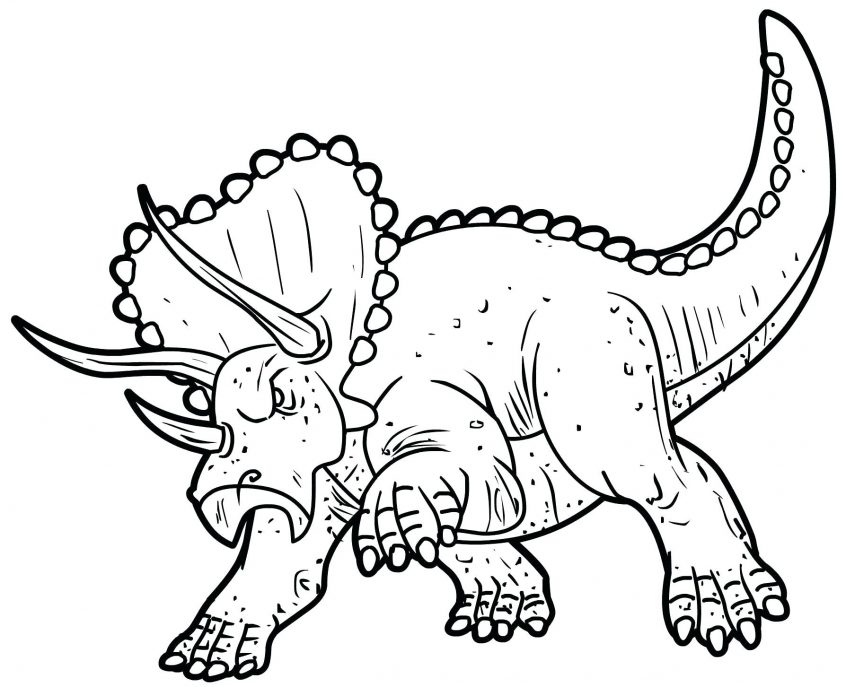
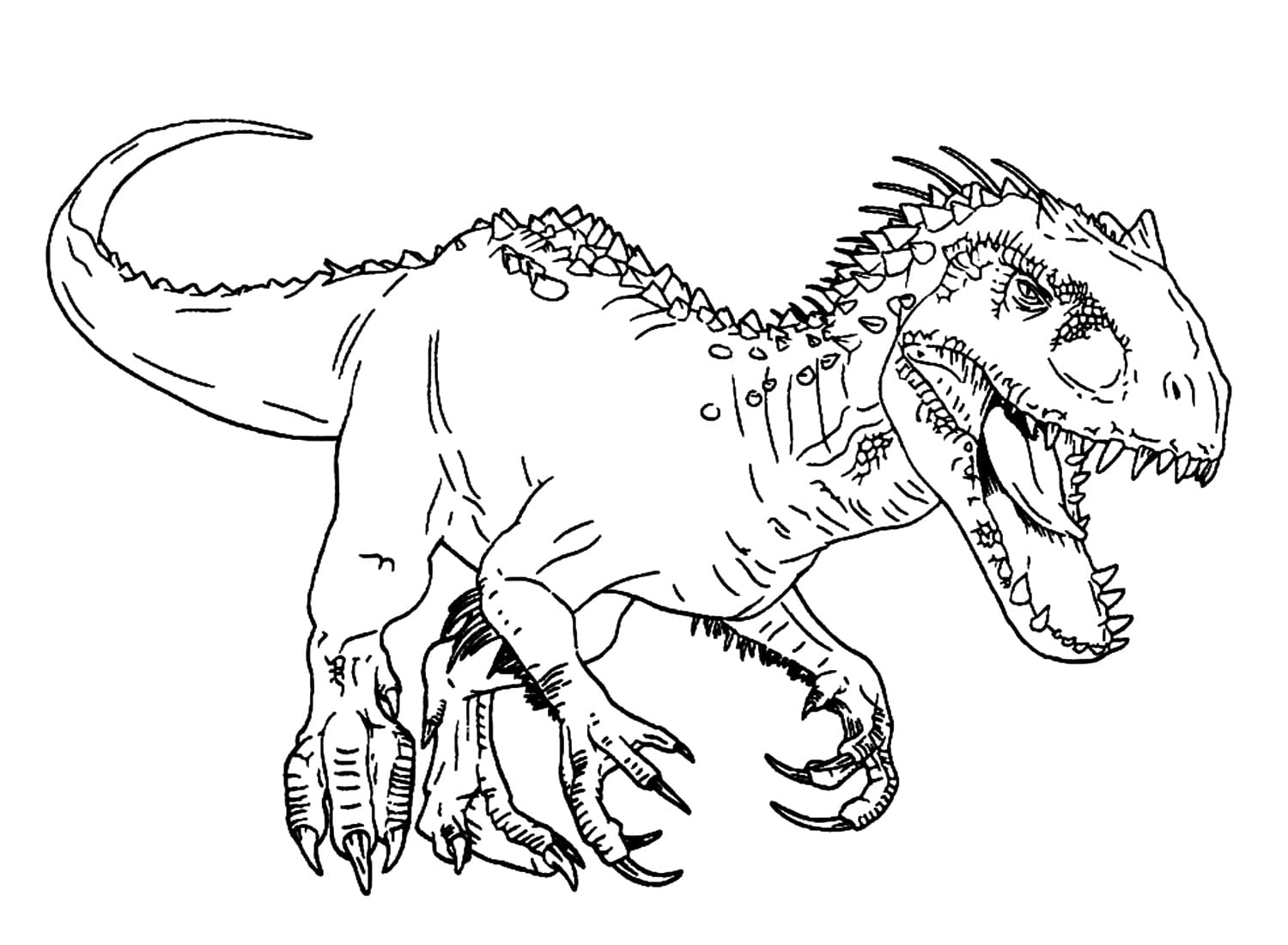
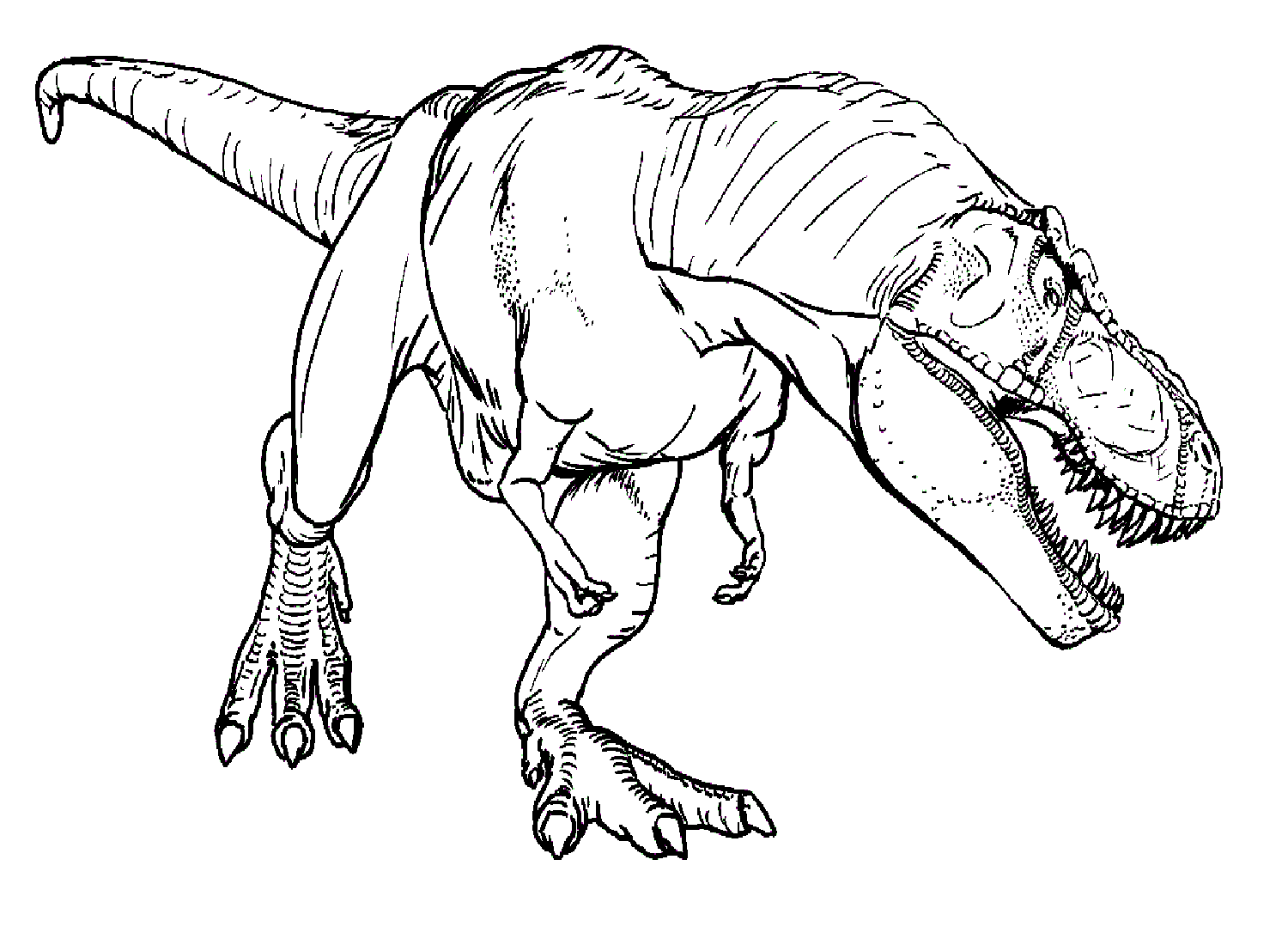
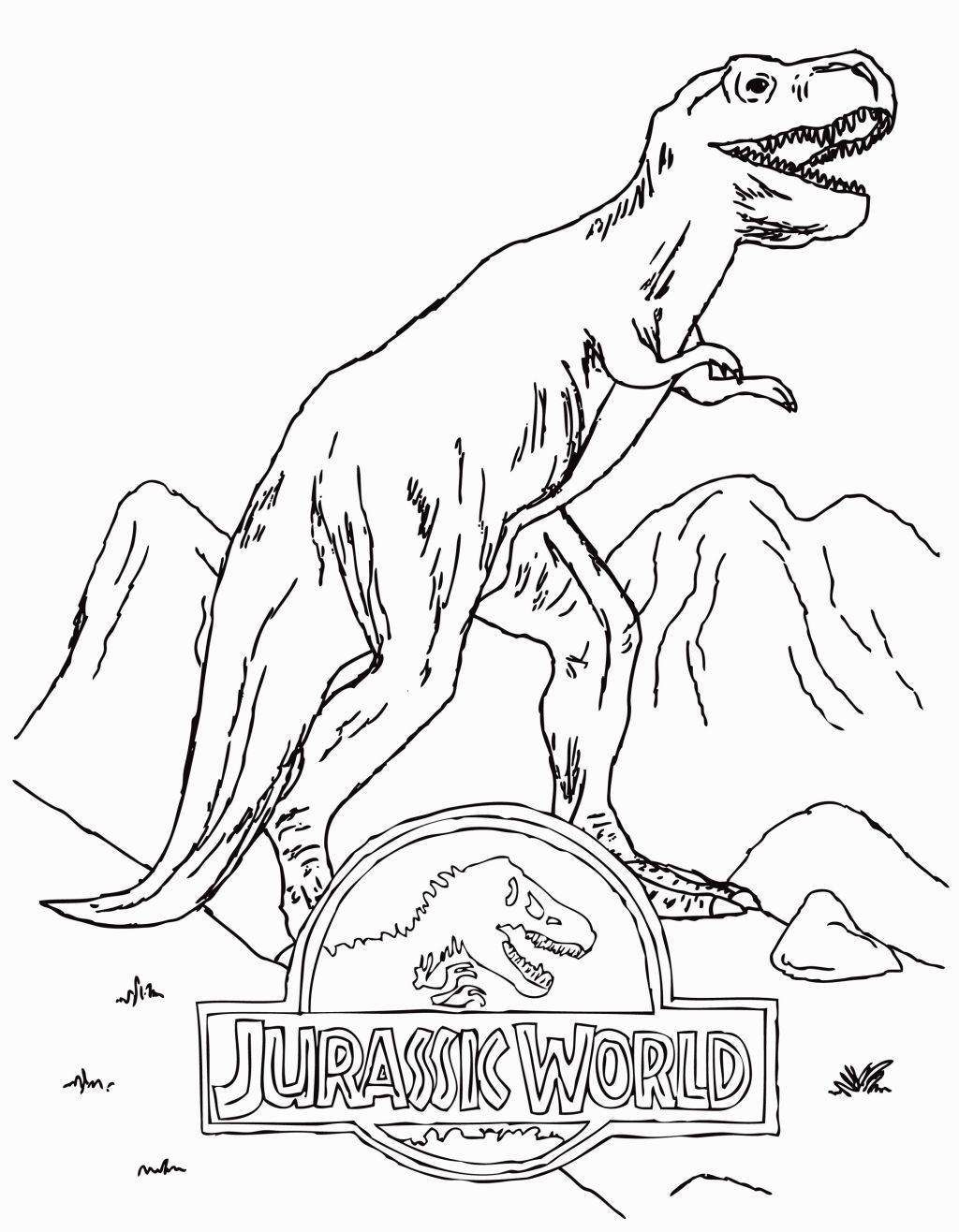
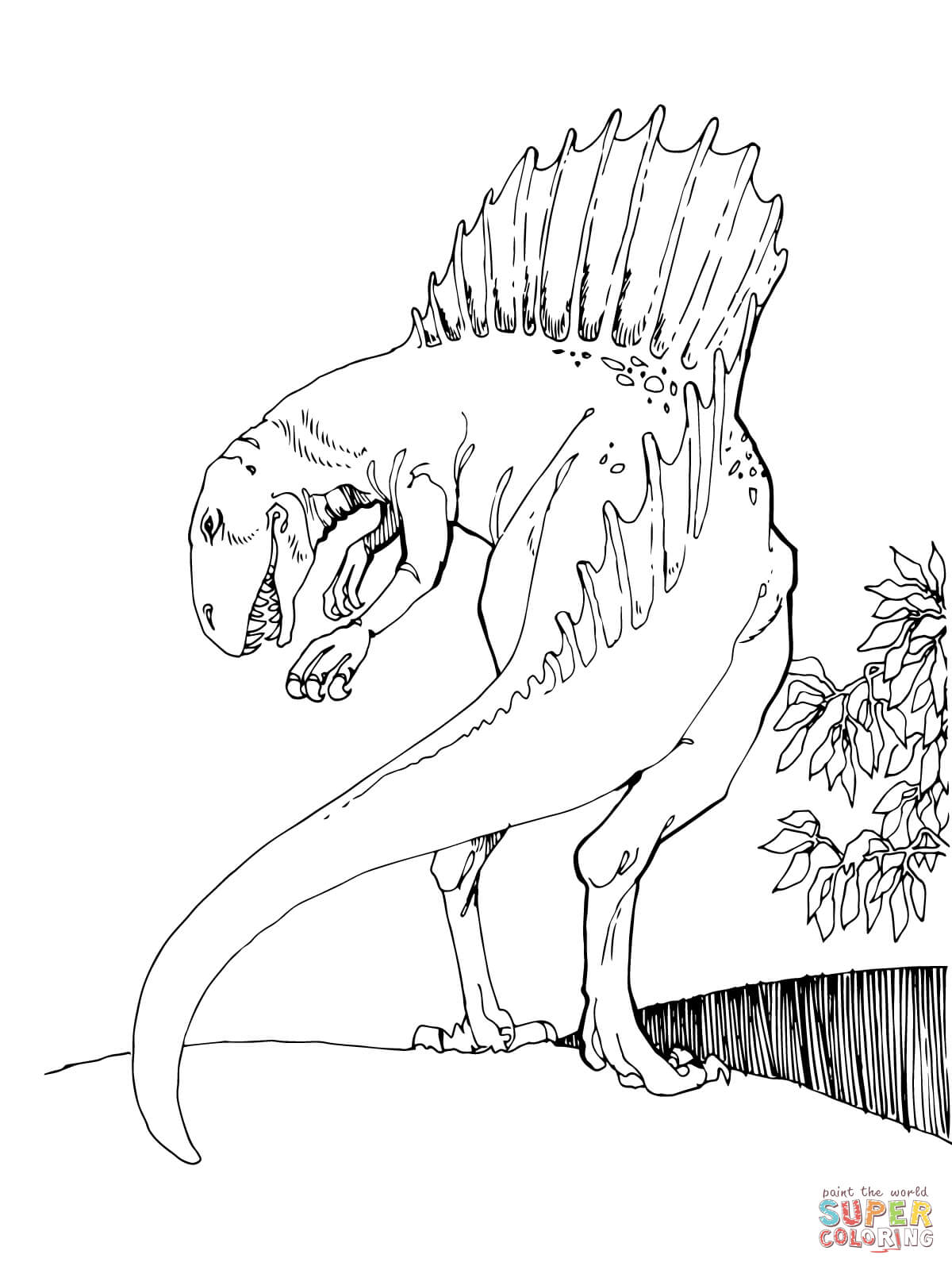
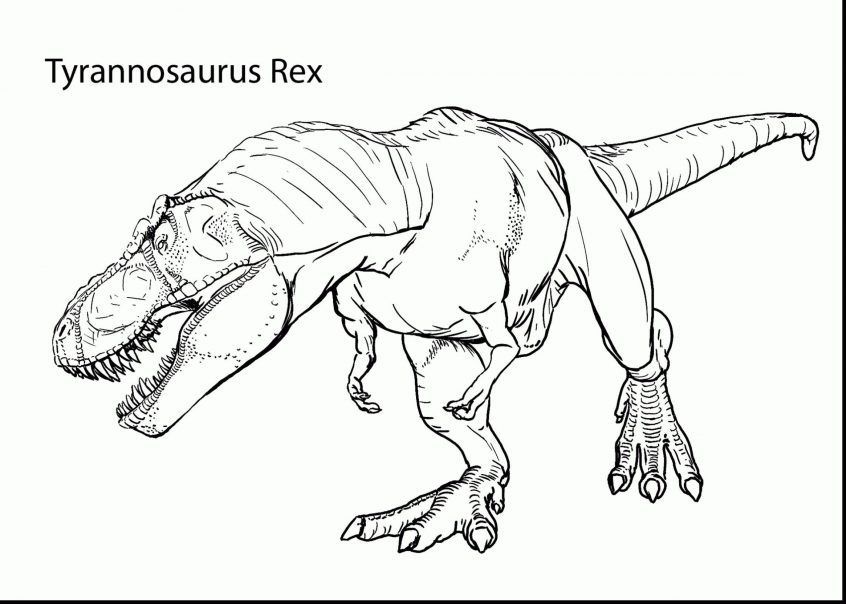
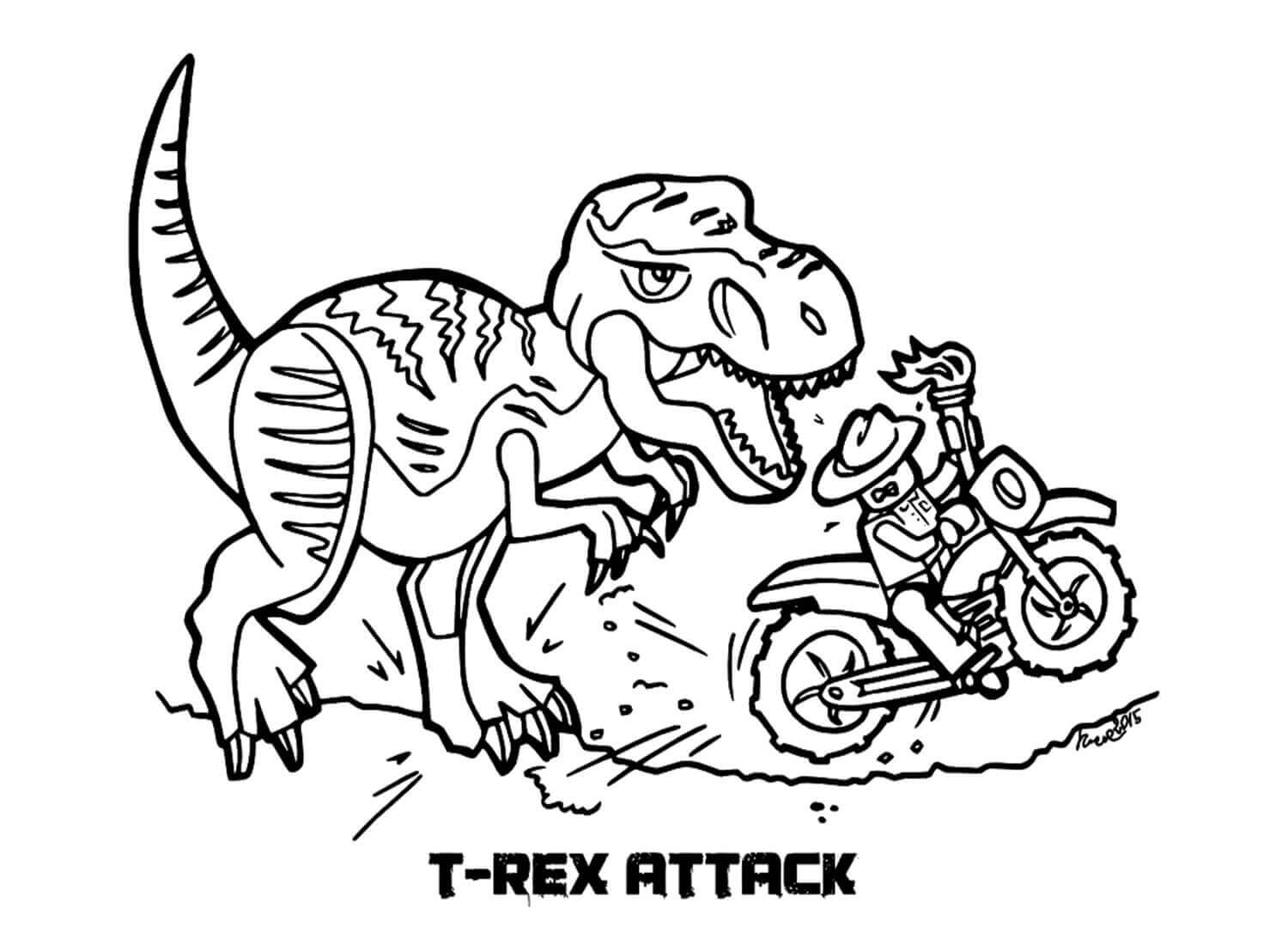
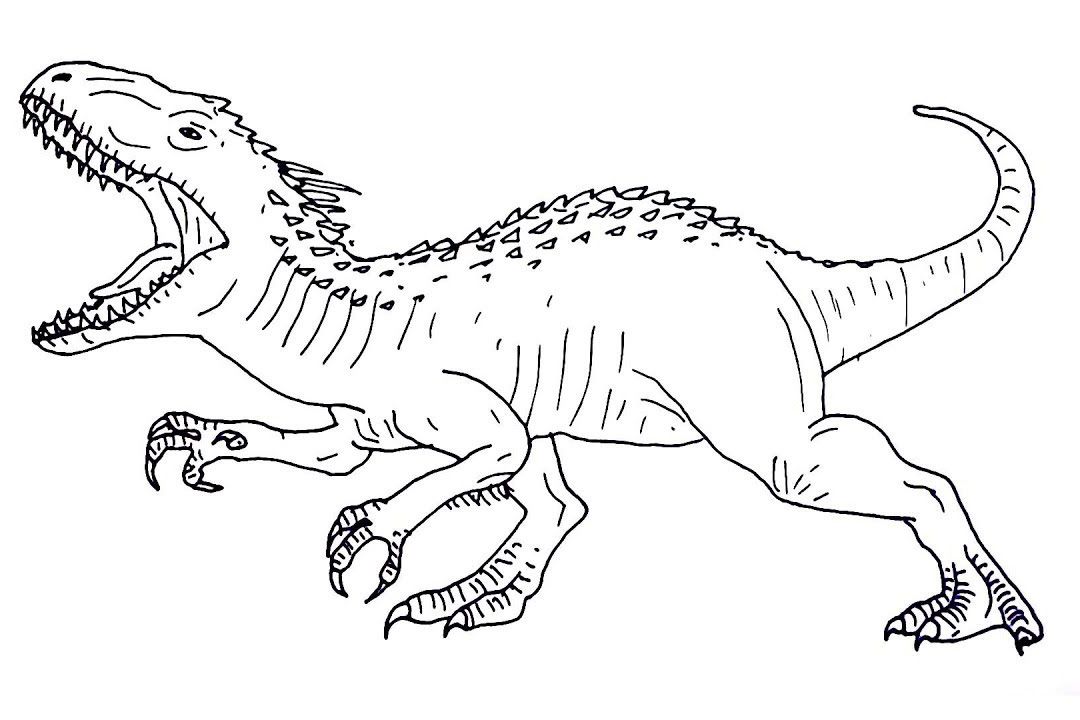
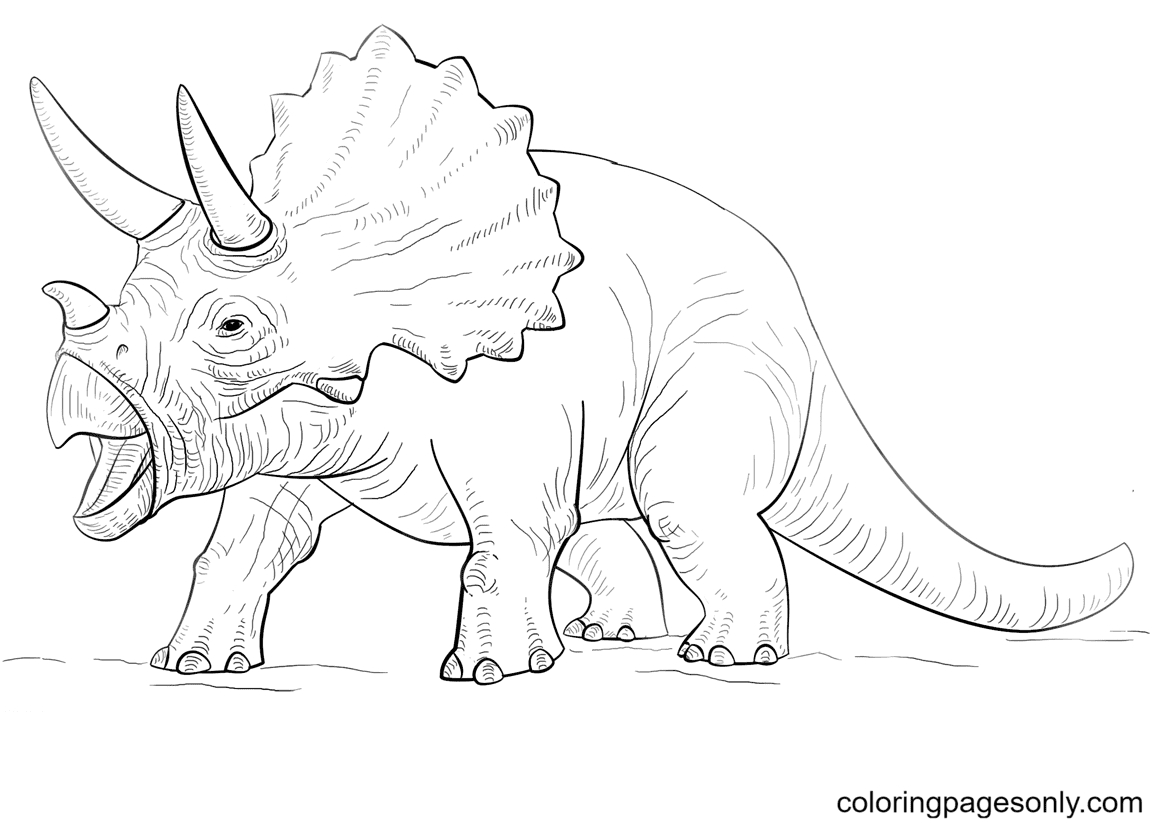
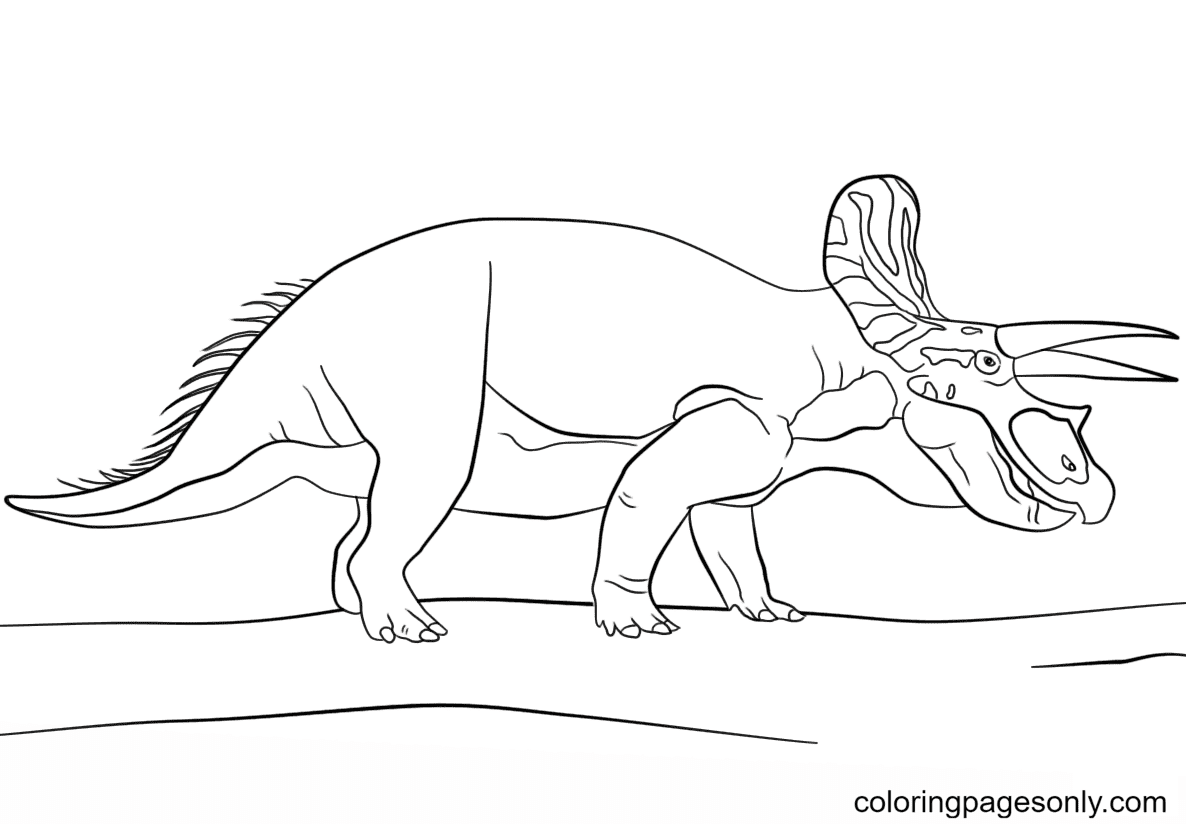
Jurassic World Coloring Pages at ColoringPagesOnly.com brings together 120+ free pages spanning the entire Jurassic franchise – individual dinosaur portraits of the T-Rex (Rexy), Velociraptor (Blue and the I.B.R.I.S. pack), Brachiosaurus, Stegosaurus, Triceratops, Spinosaurus, Mosasaurus, Dilophosaurus, and Pteranodon, hybrid pages for the Indominus Rex and Indoraptor, scene compositions including park environments, chase sequences, and battle scenes, plus LEGO Jurassic World variants. Download any page as a PDF to print, or color online in your browser. Connect with individual species collections at Triceratops Coloring Pages, Brachiosaurus Coloring Pages, and the broader Dinosaurs Coloring Pages hub.
What is Jurassic World?
Jurassic World is a science fiction adventure franchise based on the concept of de-extincted dinosaurs brought back through DNA cloning – a concept originating in Michael Crichton’s 1990 techno-thriller novel Jurassic Park, which Steven Spielberg adapted into a landmark 1993 film that won three Academy Awards for technical achievements and briefly held the record as the highest-grossing film of all time. The franchise has since expanded across seven theatrical films, two Netflix animated series, theme park attractions, and billions of dollars of merchandise, with a total worldwide box office exceeding $6 billion.
The franchise is divided into two primary eras. The original Jurassic Park trilogy – Jurassic Park (1993), The Lost World: Jurassic Park (1997), Jurassic Park III (2001) – is set on the remote island Isla Nublar and its neighboring Isla Sorna, and follows the repeated failure of InGen Corporation’s attempts to operate a dinosaur theme park. The core narrative is physicist Ian Malcolm’s chaos theory argument from the first film: that complex living systems cannot be controlled, and the attempt to control them always ends in collapse. Every film in the original trilogy is, structurally, a version of that collapse.
The Jurassic World trilogy – Jurassic World (2015), Jurassic World: Fallen Kingdom (2018), Jurassic World: Dominion (2022) – picks up twenty-two years after the 1993 incident. A new corporation, Masrani Global, has successfully operated a functioning dinosaur theme park on Isla Nublar for a decade before the 2015 film’s events. The central characters are Owen Grady, a Navy veteran and behavioral ethologist who trained the park’s Velociraptor pack, and Claire Dearing, the park’s operations manager. The trilogy escalates from a contained island disaster (2015) through the extinction threat posed by a volcanic eruption (2018) to the global crisis of dinosaurs released into the broader world ecosystem (2022).
The animated series Jurassic World: Camp Cretaceous (Netflix, 2020–2022) ran five seasons concurrently with the film trilogy’s timeline, following six teenagers stranded on Isla Nublar during the 2015 incident and surviving through the subsequent years. Its sequel series, Jurassic World: Chaos Theory (Netflix, 2024–2026), follows the same characters as adults navigating dinosaur trafficking and corporate conspiracy.
The most recent film, Jurassic World Rebirth (released July 2, 2025), is a standalone sequel directed by Gareth Edwards and written by David Koepp, who also wrote the original 1993 screenplay, starring Scarlett Johansson. Set five years after Dominion, the film takes place in a world where most dinosaurs released into the wild have struggled to survive in climates they were never designed for, with viable populations remaining only in isolated equatorial regions. The plot follows a covert operation to extract genetic material from three of the largest surviving specimens to develop a life-saving pharmaceutical compound – a deliberate return to the survival-thriller atmosphere of the original 1993 film.
Dinosaur and Character Guide
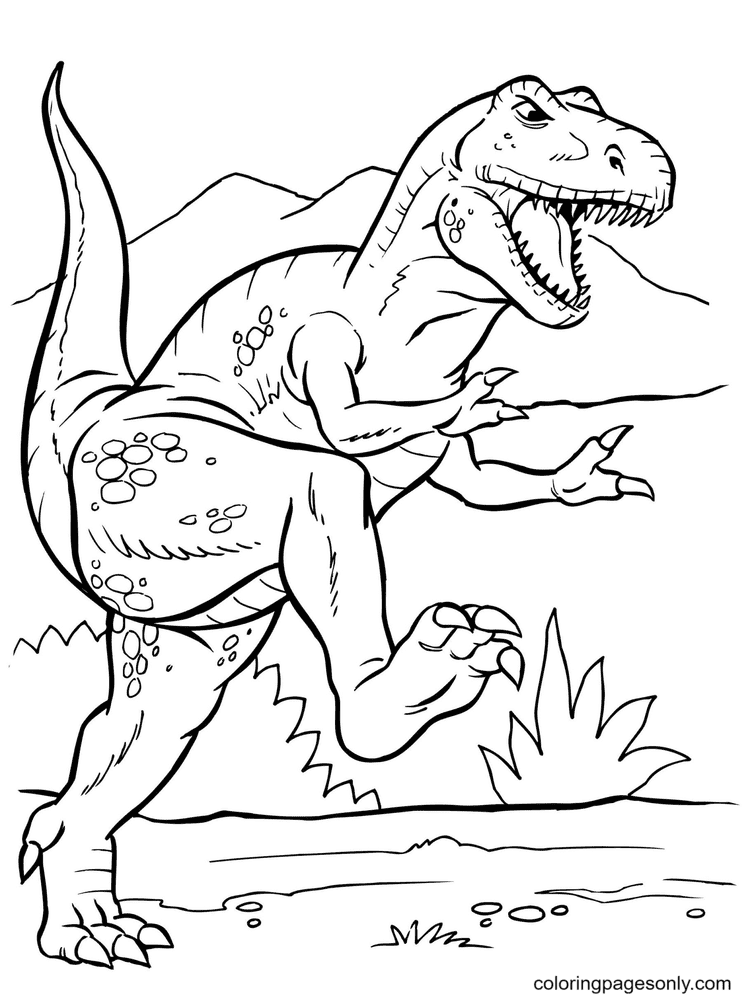
Rexy – The T. rex
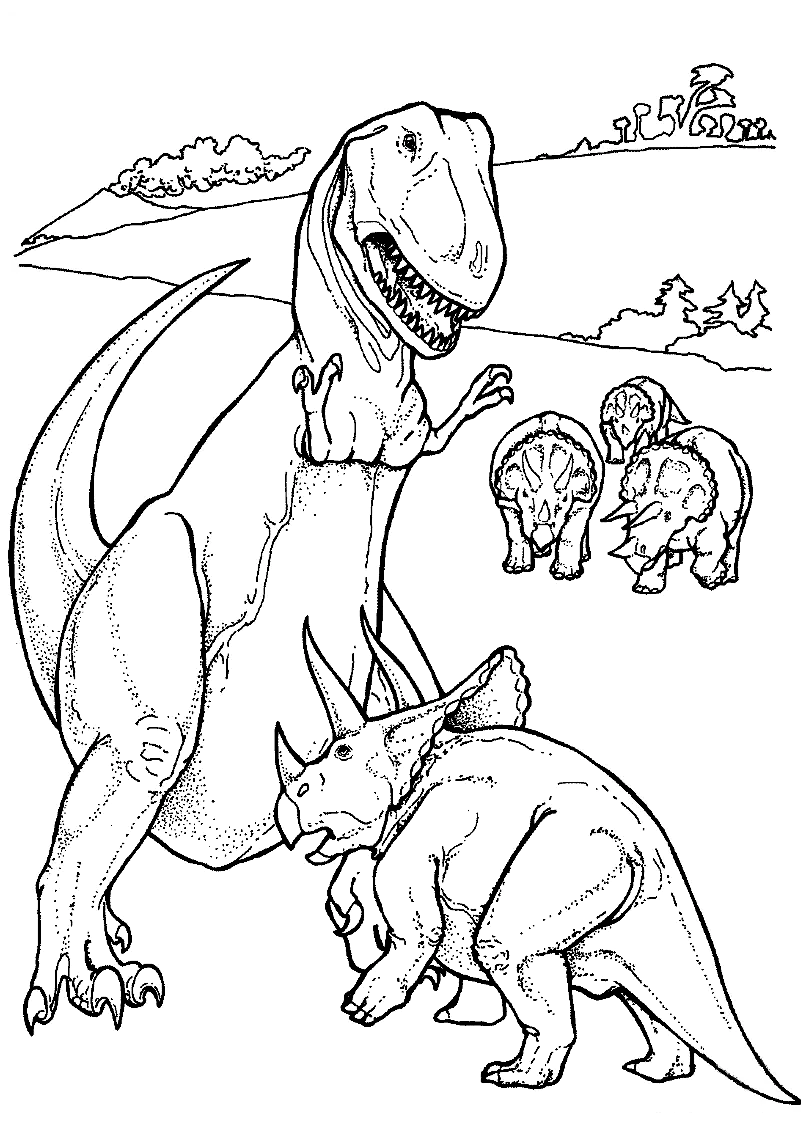
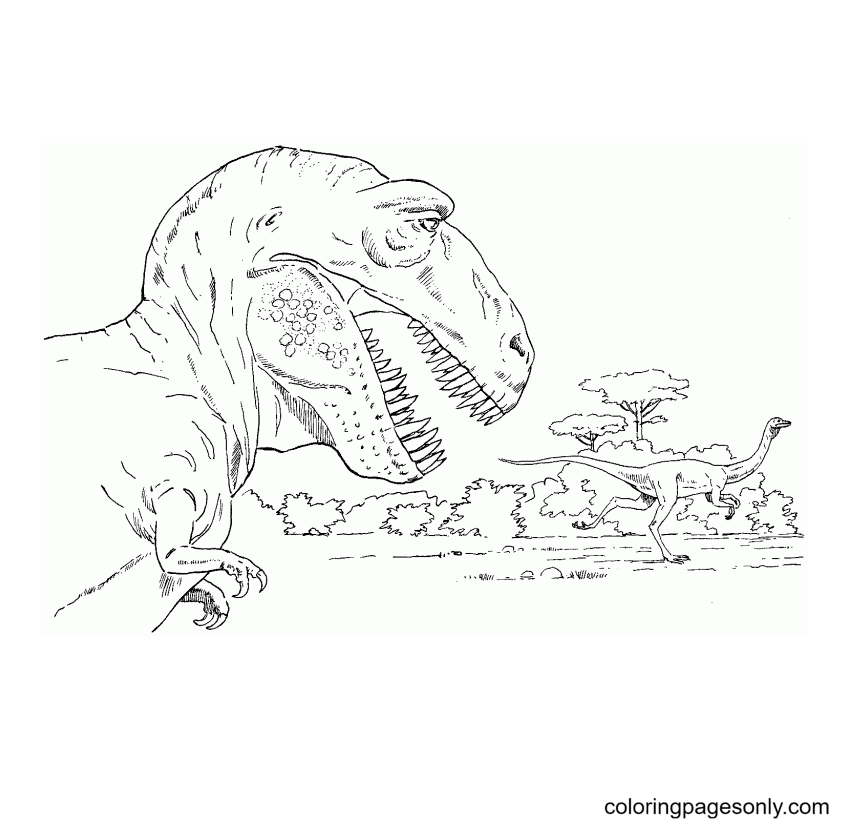
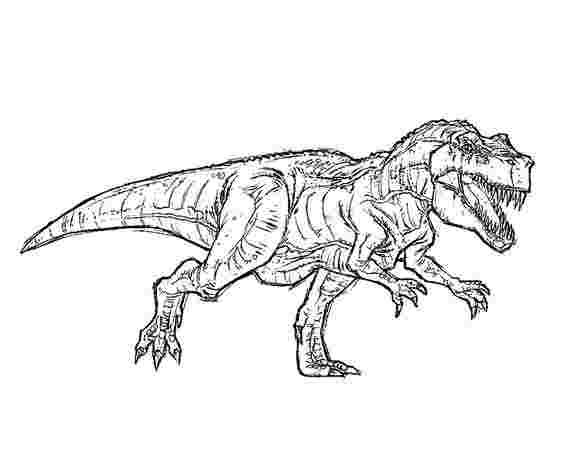
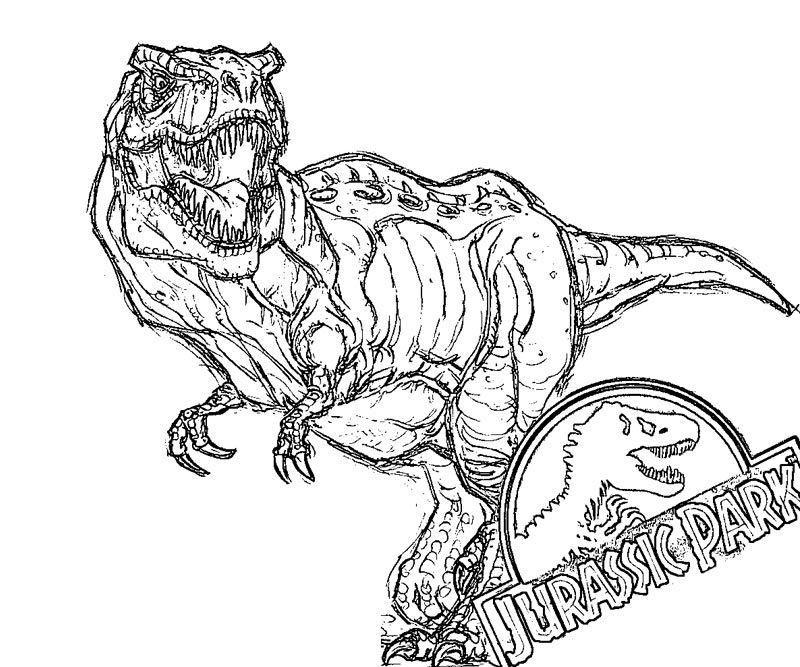
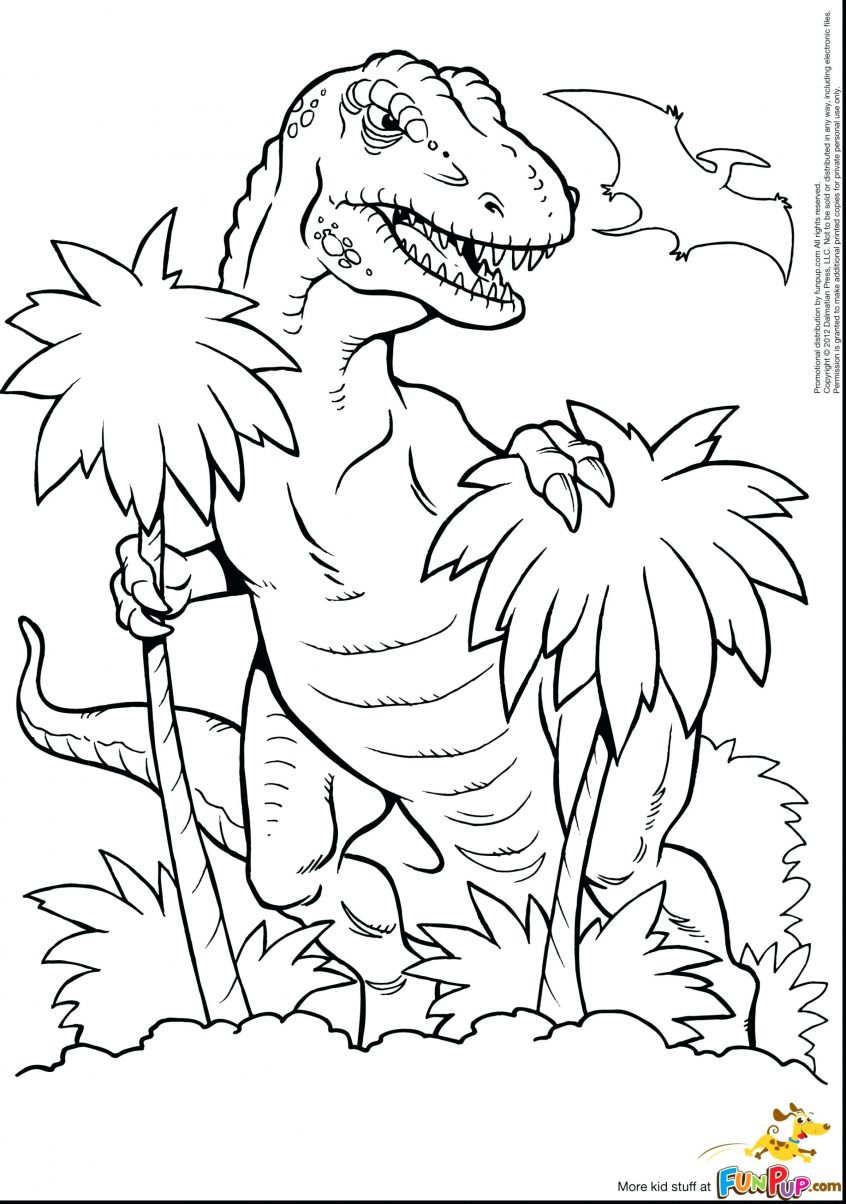
The Tyrannosaurus rex known in the franchise community as “Rexy” (her name in the official animated series; other sources use “Roberta”) is the single most important individual dinosaur in the franchise’s entire six-decade-spanning narrative arc. The same animal that broke through her electric fence on Isla Nublar in 1993, saved Alan Grant and the children from the Velociraptors in the Visitor Center, battled the Indominus Rex in 2015 alongside Blue, was evacuated from Isla Nublar during the 2018 volcanic eruption, roamed Northern California as a feral apex predator, and finally reached her narrative endpoint in 2022’s Dominion by killing the Giganotosaurus – completing what the film frames as a 65-million-year-old rivalry with the help of a Therizinosaurus.
Her canonical coloring in the films is a dark olive-brown to green-grey on the dorsal and lateral surfaces, with a noticeably lighter cream-tan on the underbelly and throat. The skin is not uniformly one color – there is significant mottling and variation across the body that makes her read as naturalistic rather than painted. The franchise has consistently depicted her with wrists pointing downward at an unnatural angle, which paleontologists have noted is anatomically incorrect (real T. rex had inward-facing wrists), but this design choice has been maintained across all films for visual continuity with the 1993 original. The Dominion prologue shows her in the Cretaceous period with protofeathers, but the modern character has the familiar fully scaly appearance.
For coloring: the dominant tone is a warm dark olive-green. The underside transitions to a lighter value – not white, but a muted cream – in a gradual gradient. Shadow areas in the skin folds and around the legs are a cooler, darker brown-green. The eyes in close-up pages should be bright amber-yellow with a dark pupil slit.
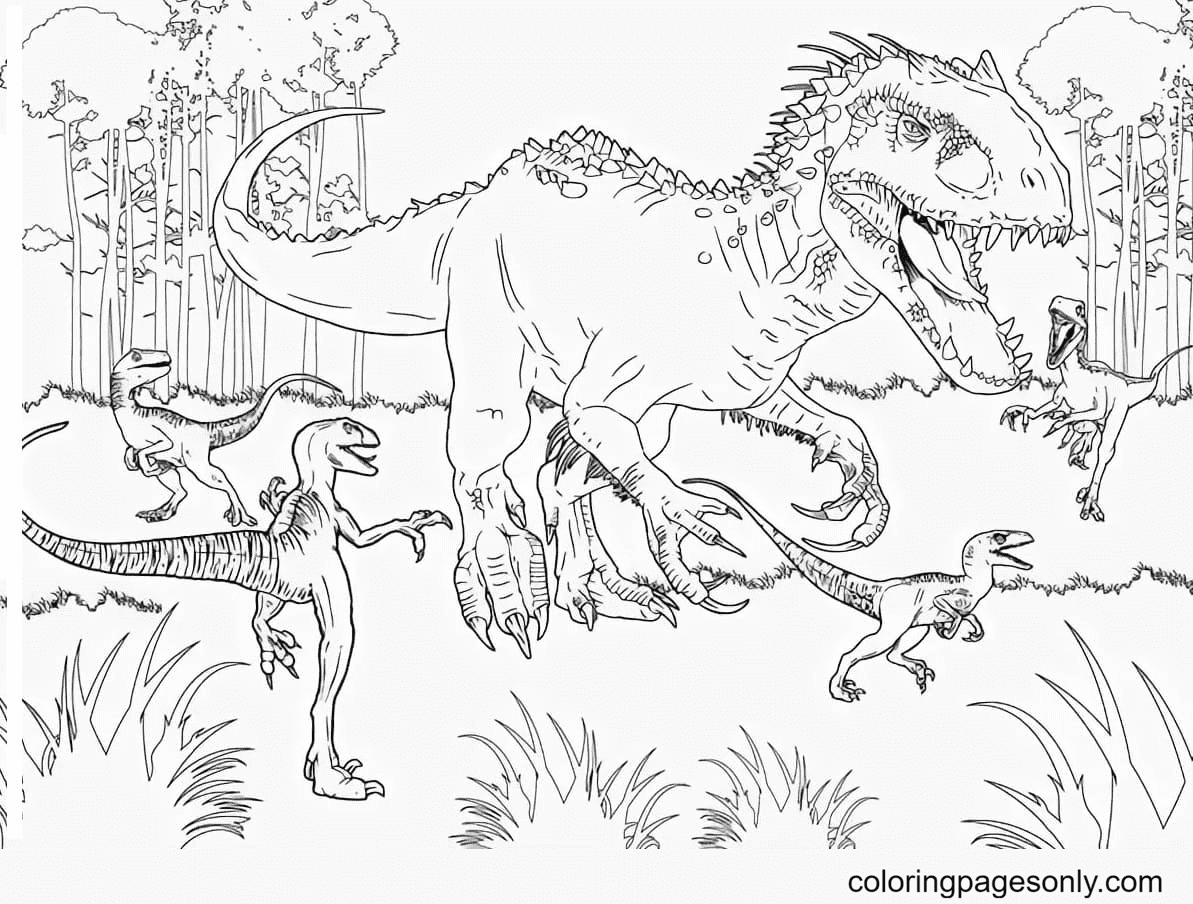
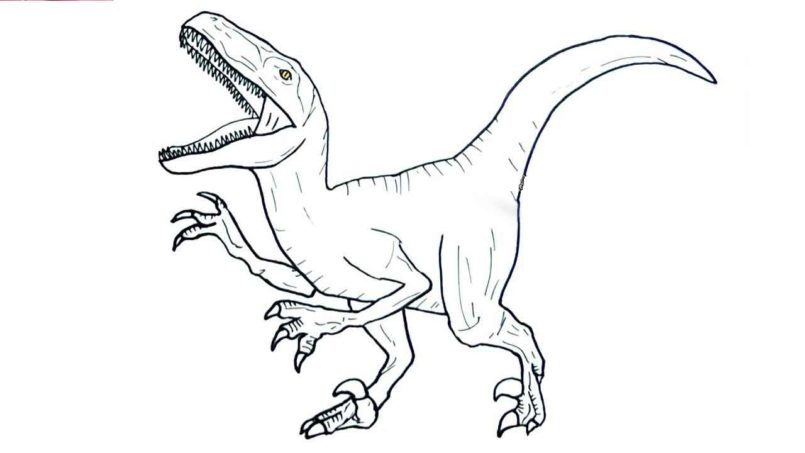
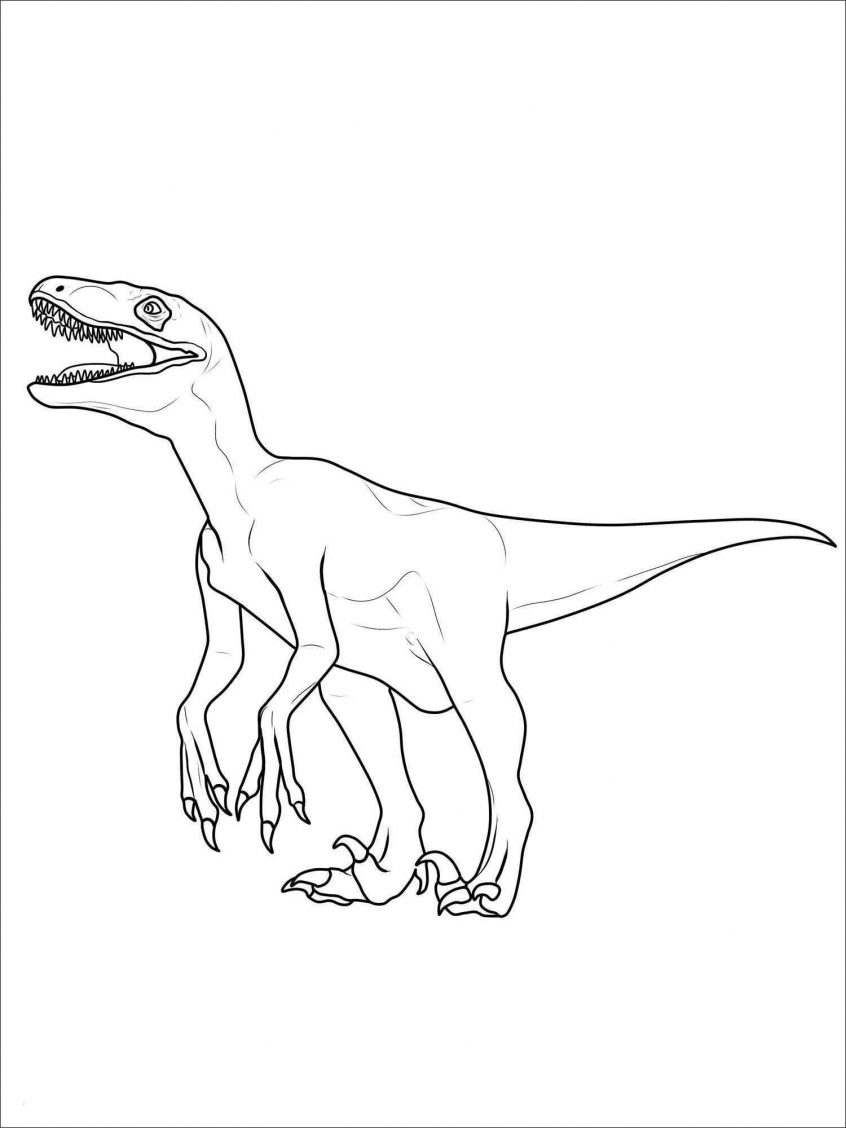
Blue – The Velociraptor
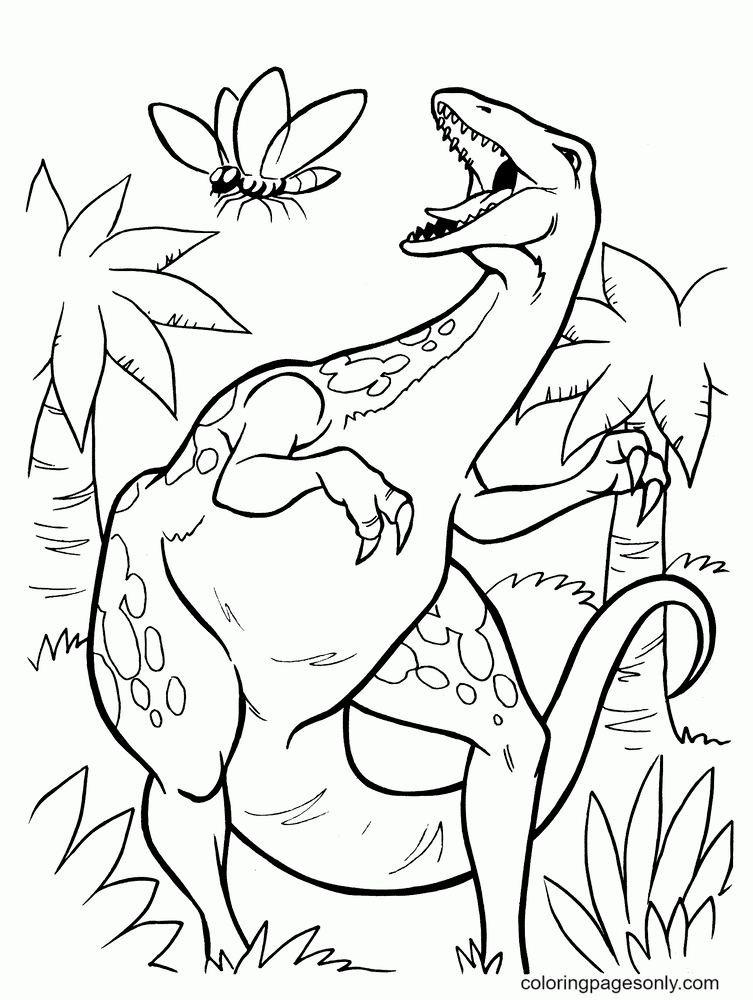
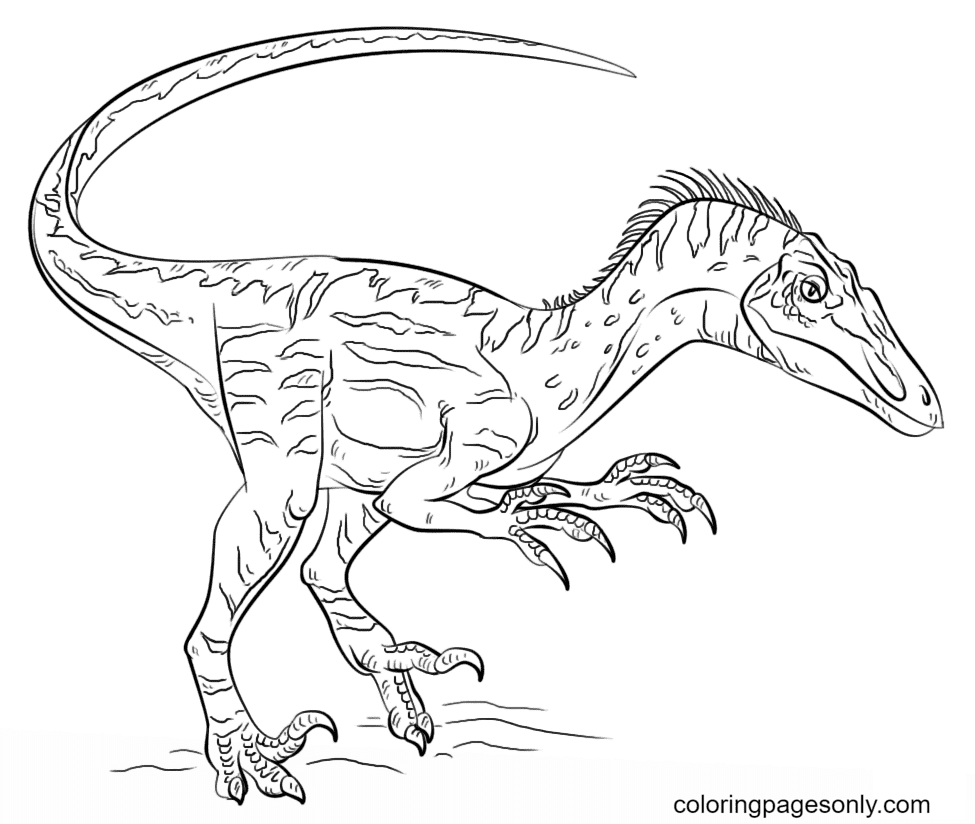
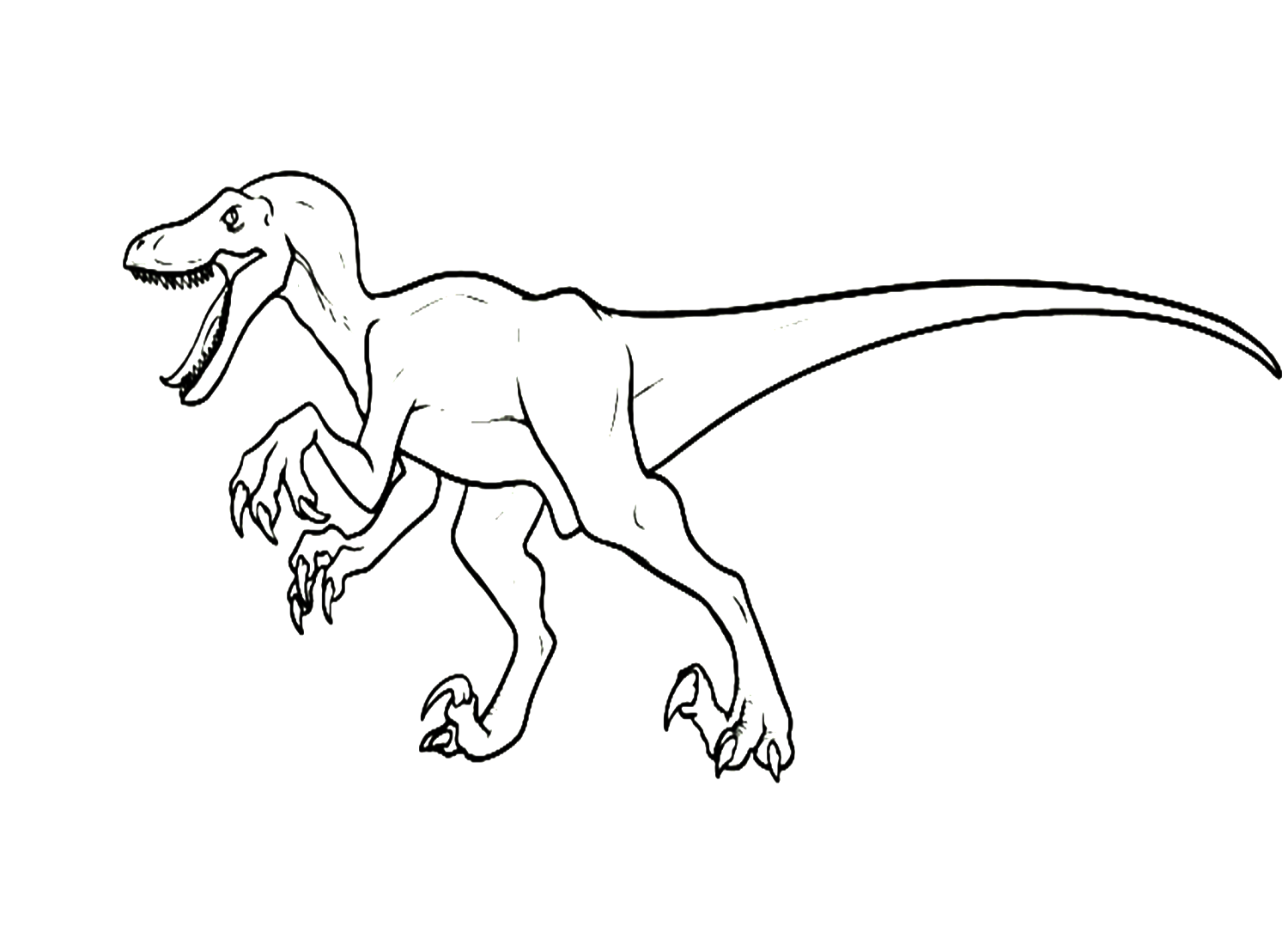
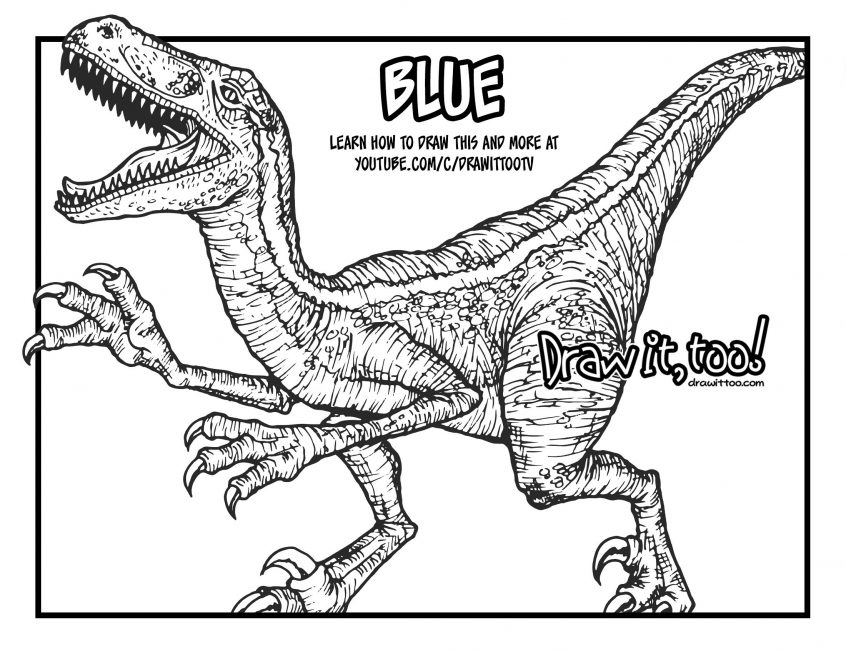
Blue is Owen Grady’s I.B.R.I.S. Velociraptor – the last surviving member of the pack he trained (Blue, Delta, Echo, Charlie) and the franchise’s most developed dinosaur character after Rexy. She first appeared in Jurassic World (2015) and returned in Fallen Kingdom (2018) and Dominion (2022), where her asexually produced offspring, Beta, was introduced.
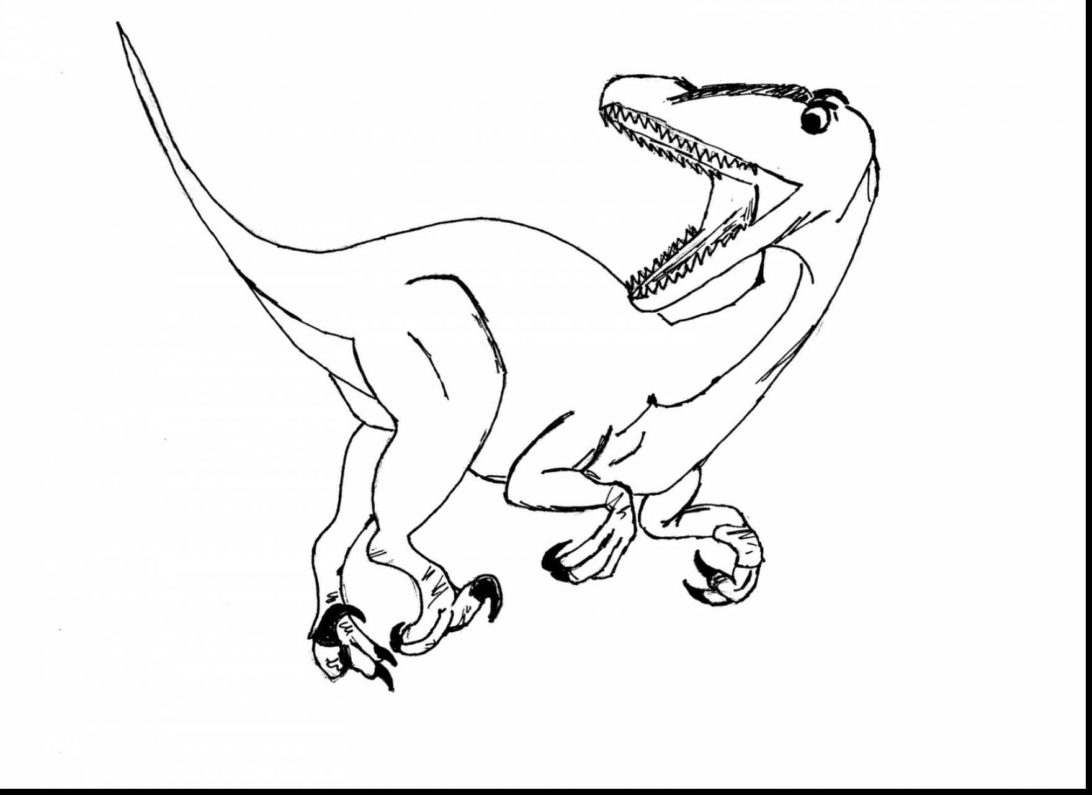
Blue’s defining visual characteristic is the iridescent blue-silver stripe that runs laterally along her body from the base of her skull to the tip of her tail. Against her darker grey-green base coloring, this stripe creates an immediate identification marker – no other dinosaur in the franchise has this design element. Her eyes are a vivid blue-green that shift in the lighting, contributing to the sense of intelligence the character conveys.
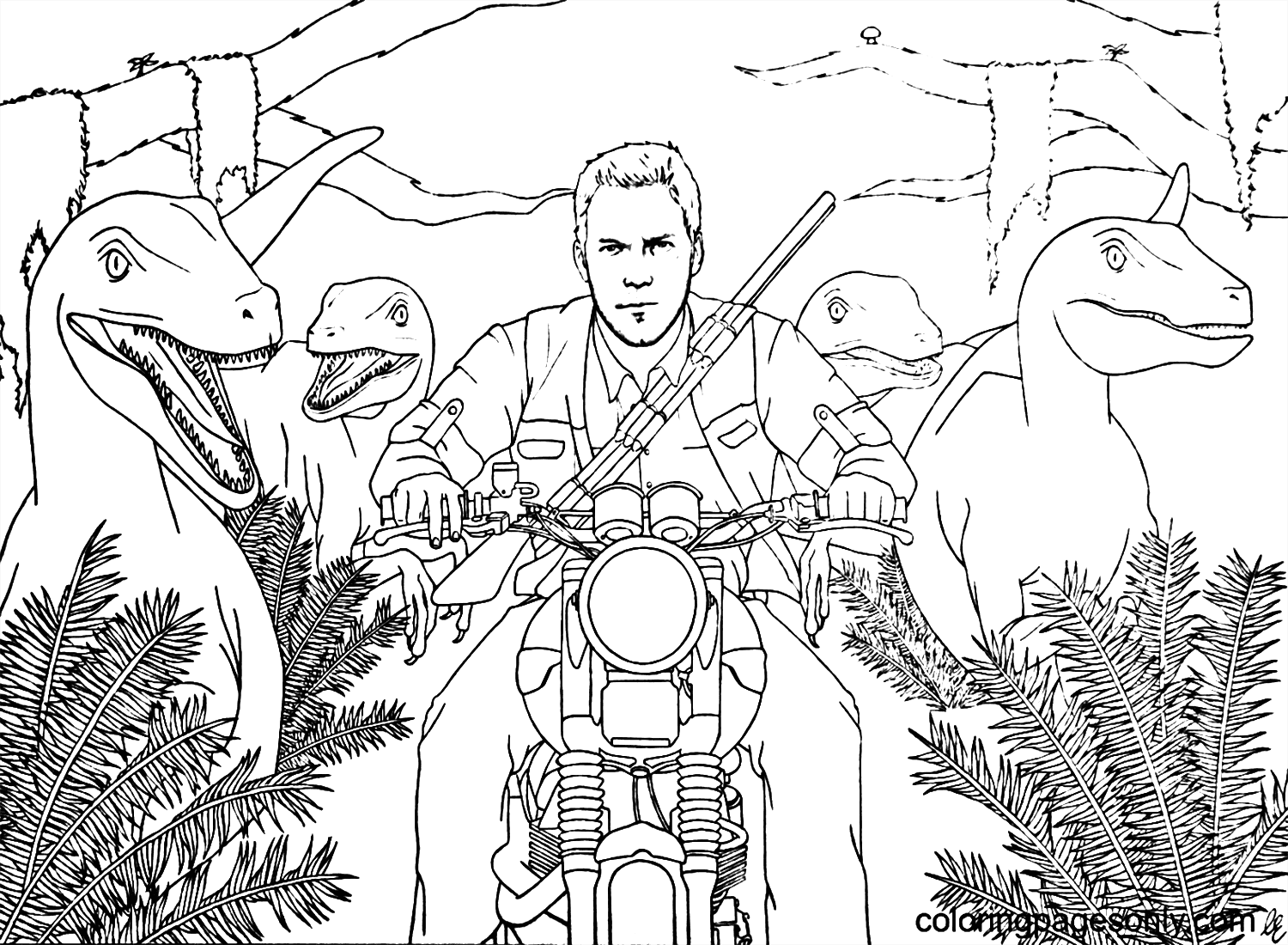
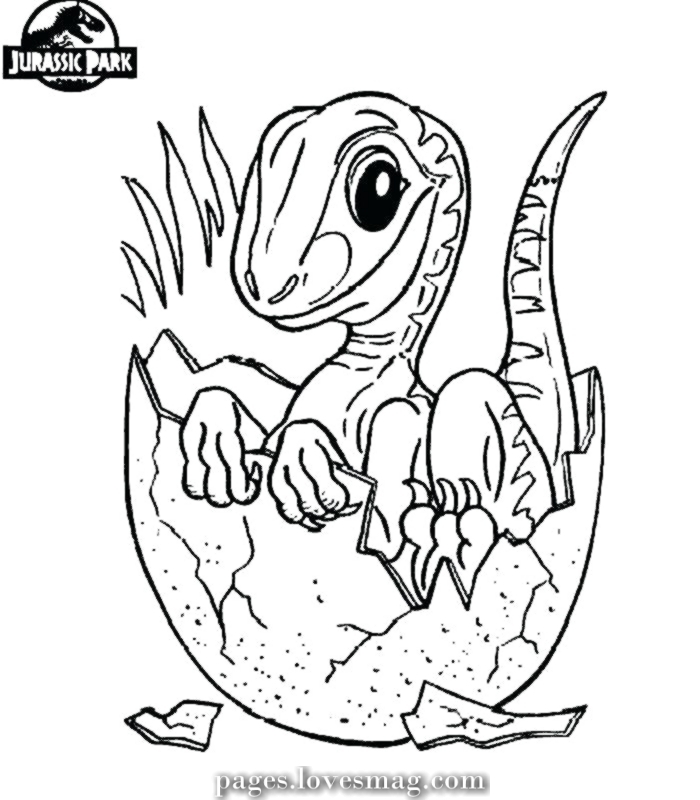
The I.B.R.I.S. pack members each had distinct coloring: Blue with the iridescent blue stripe; Delta with a greener, more mottled pattern; Echo with a prominent facial scar and a slightly more brownish tone; Charlie with a younger, more uniformly green appearance. Pages showing multiple raptors together should reflect these differences.
For the Owen Grady and velociraptors handler page: Owen’s practical field outfit – tan shirt, dark tactical vest, dark trousers – should be kept in neutral earthy tones to prevent his figure from competing visually with the colorful raptors beside him.
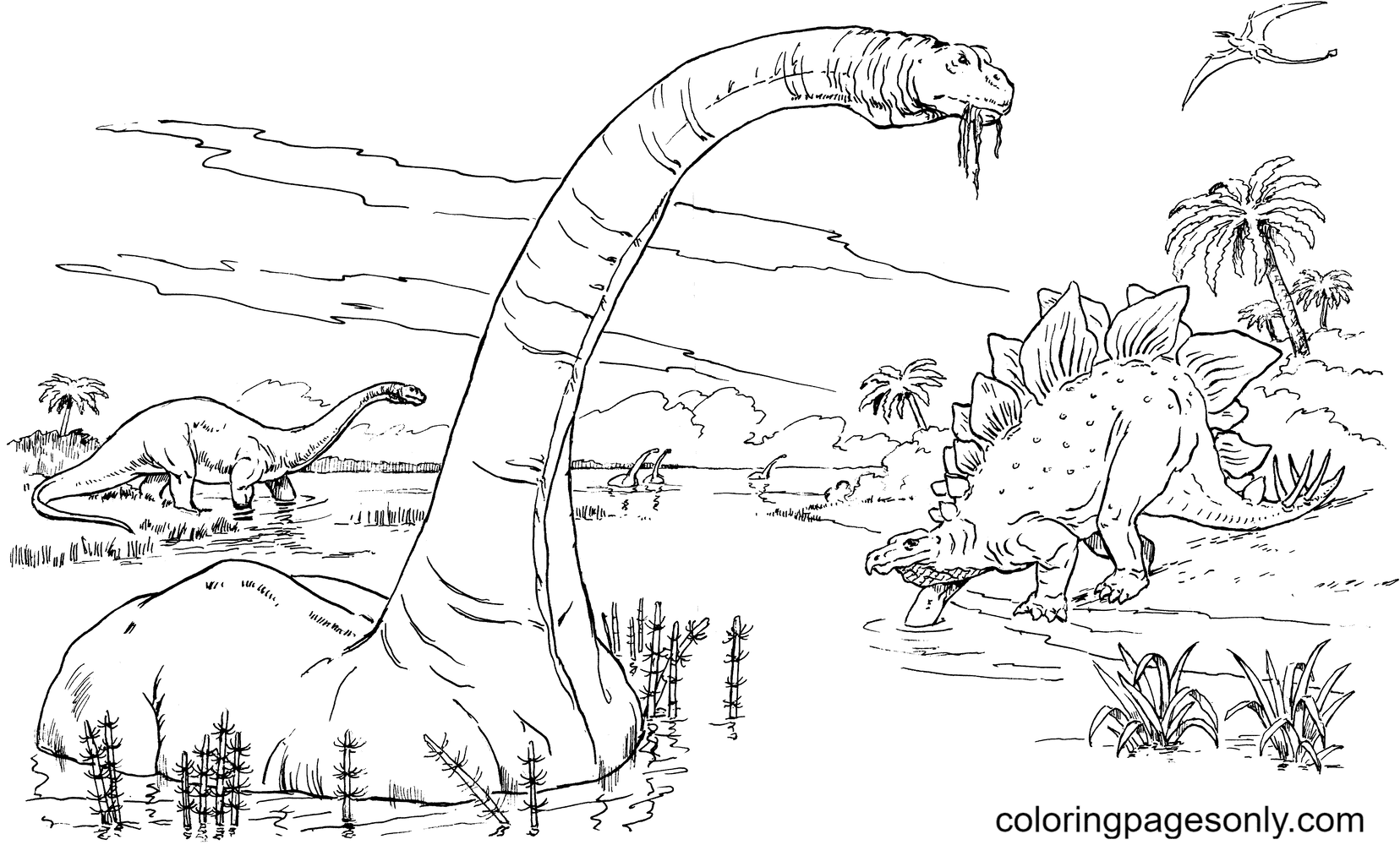
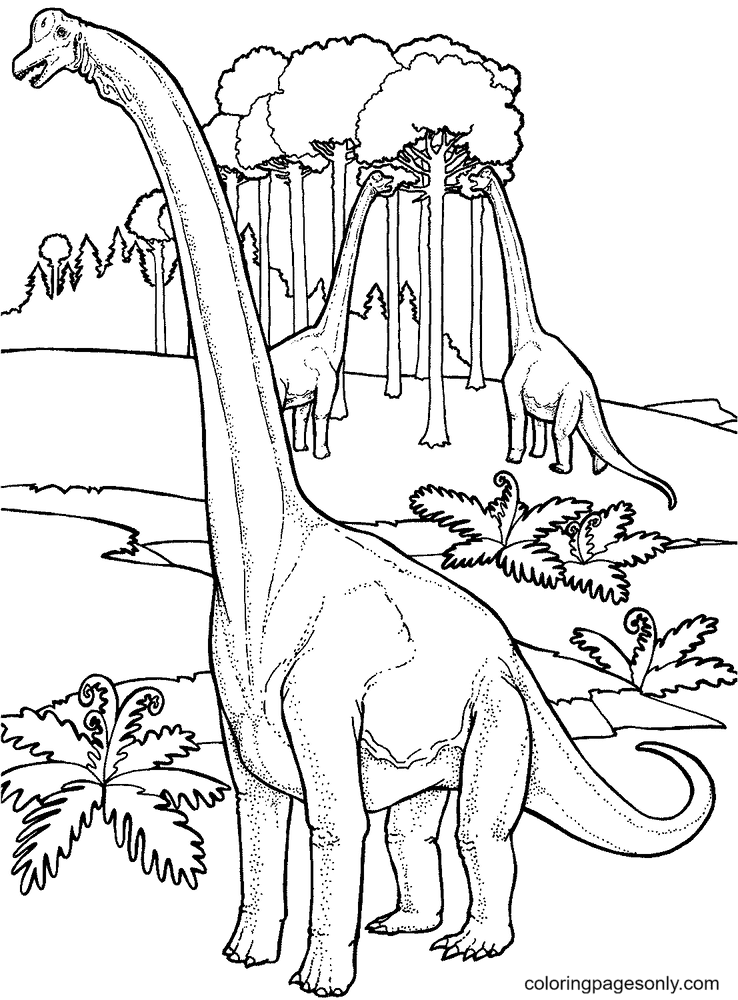
Brachiosaurus
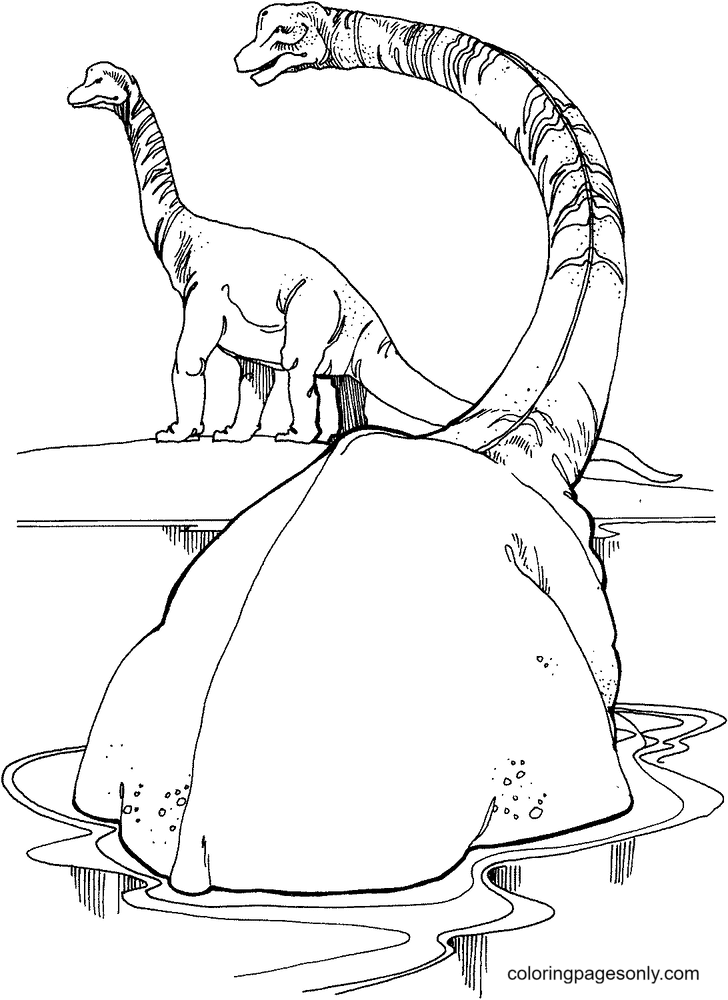
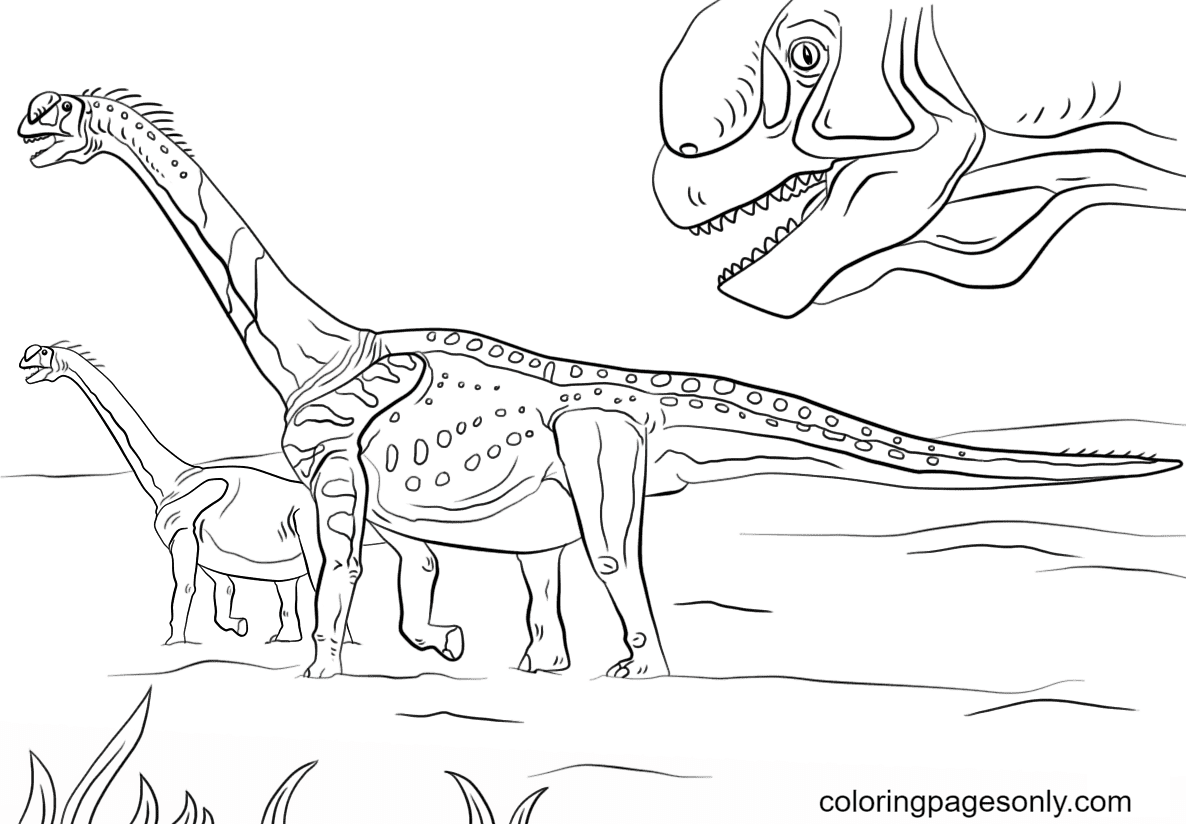
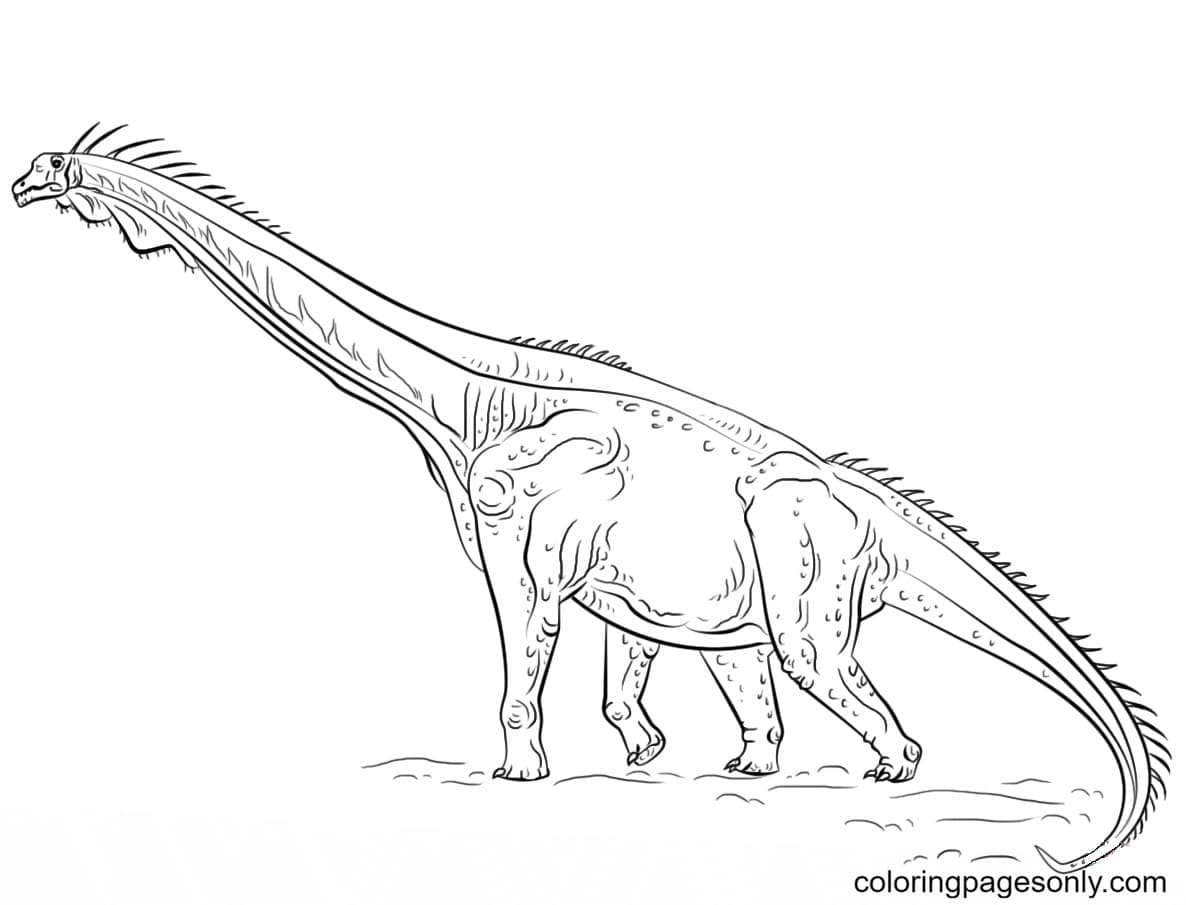
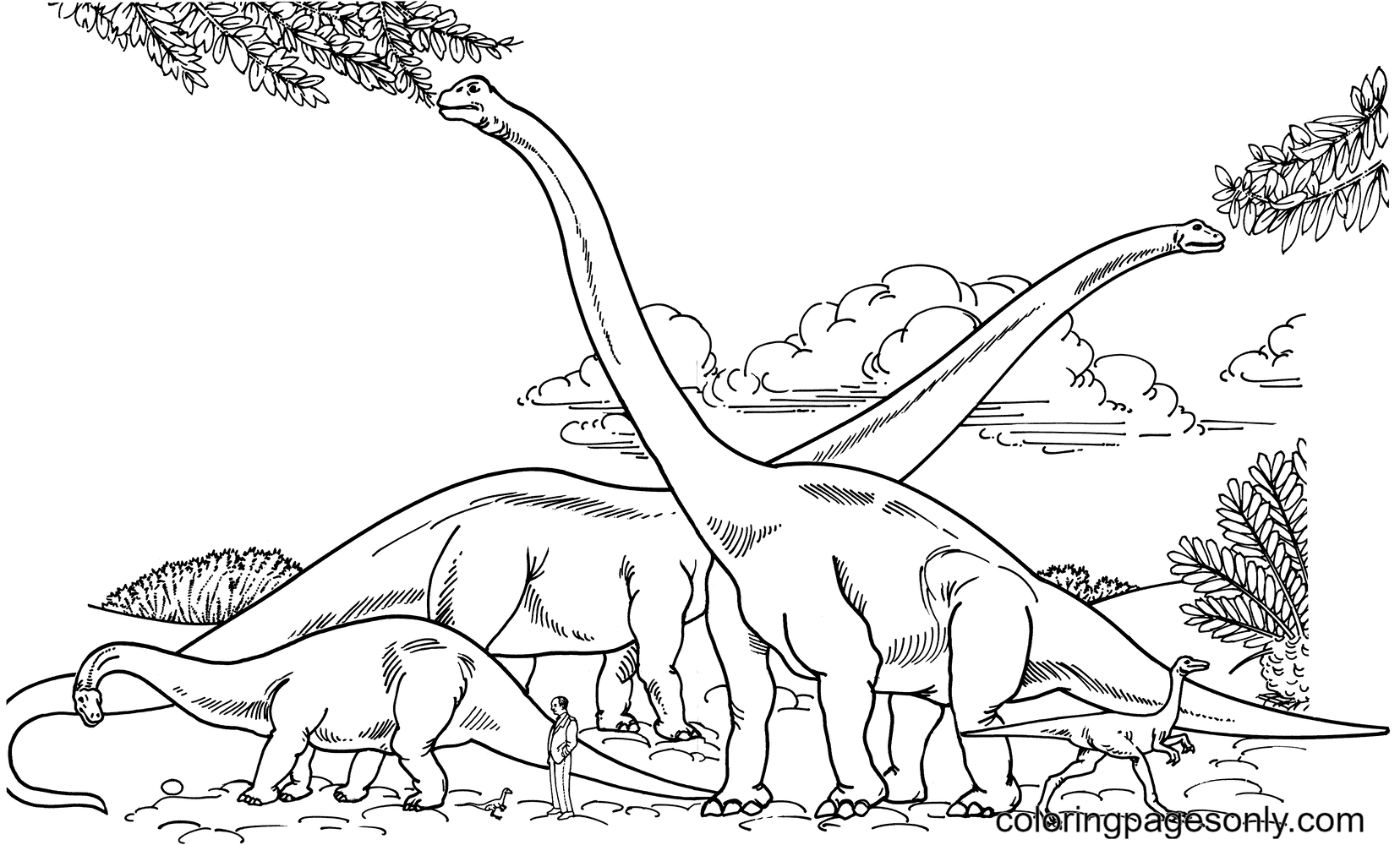
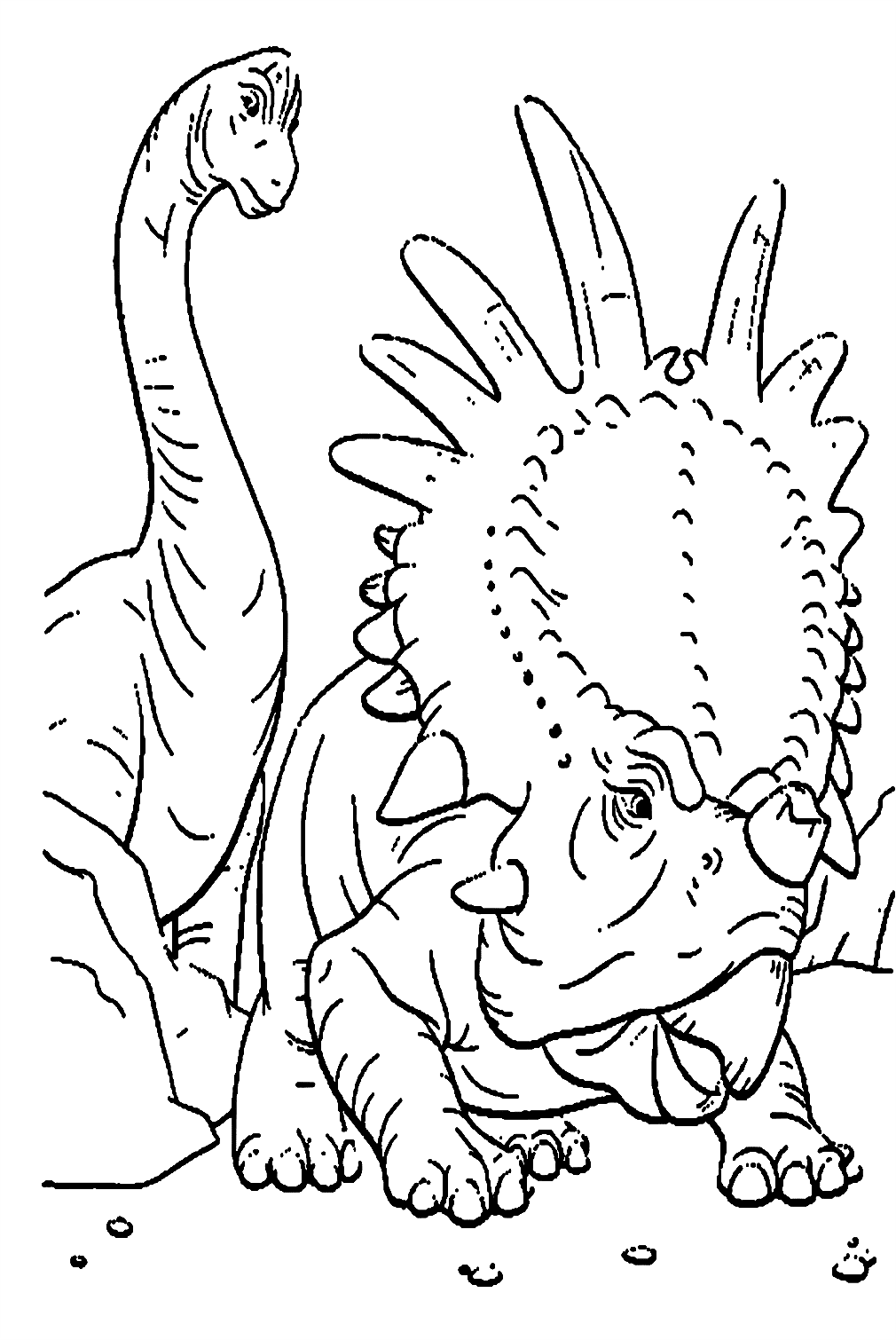
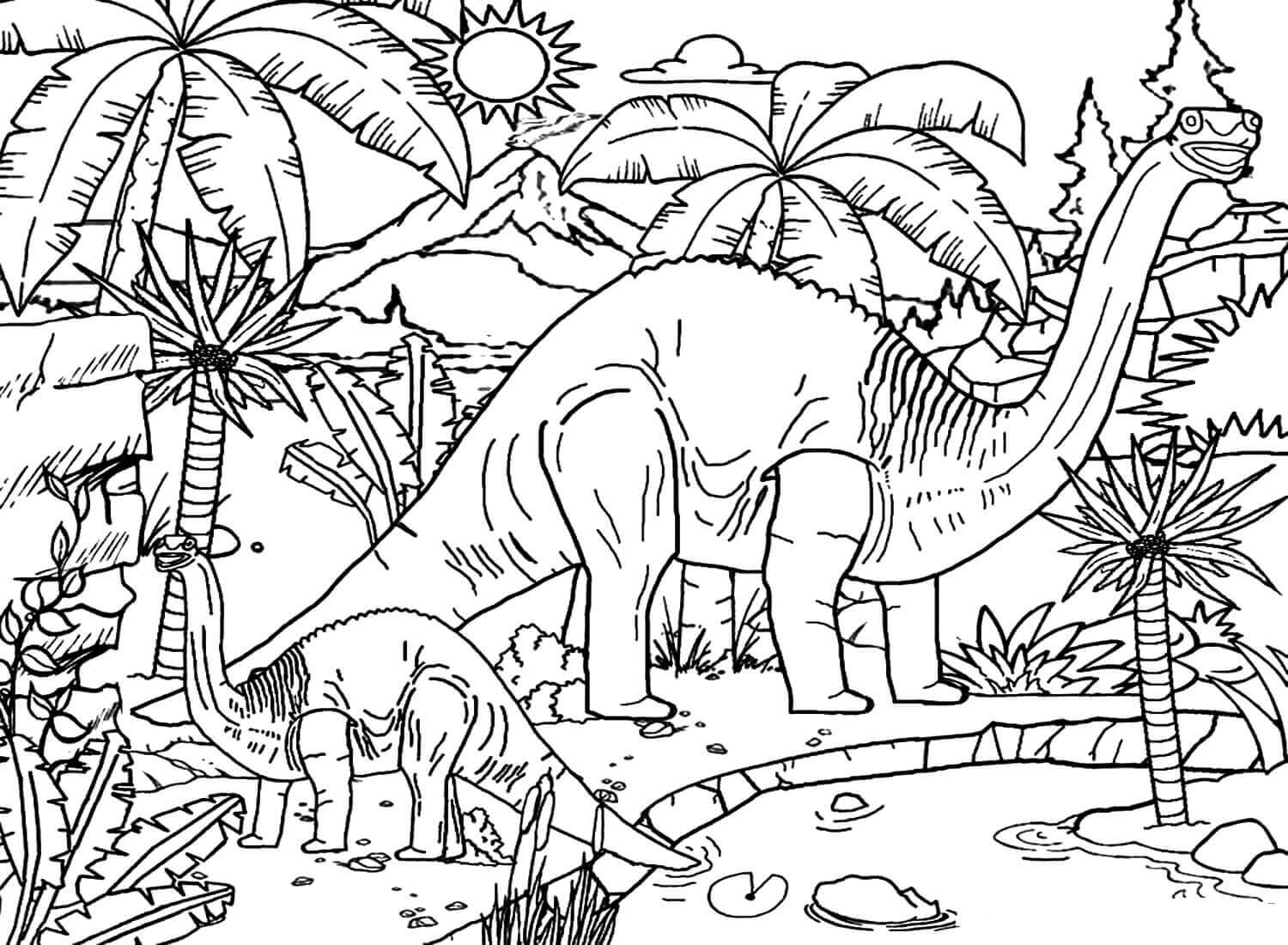
The Brachiosaurus is the first dinosaur seen in the 1993 film by Alan Grant and Ellie Sattler – standing in a sun-lit clearing, raising its long neck to feed from the treetops. That scene is widely considered one of the most emotionally resonant moments in the franchise because it captures the characters’ (and audience’s) genuine wonder at seeing a living creature that should not exist. The Brachiosaurus pages in the collection carry this context.
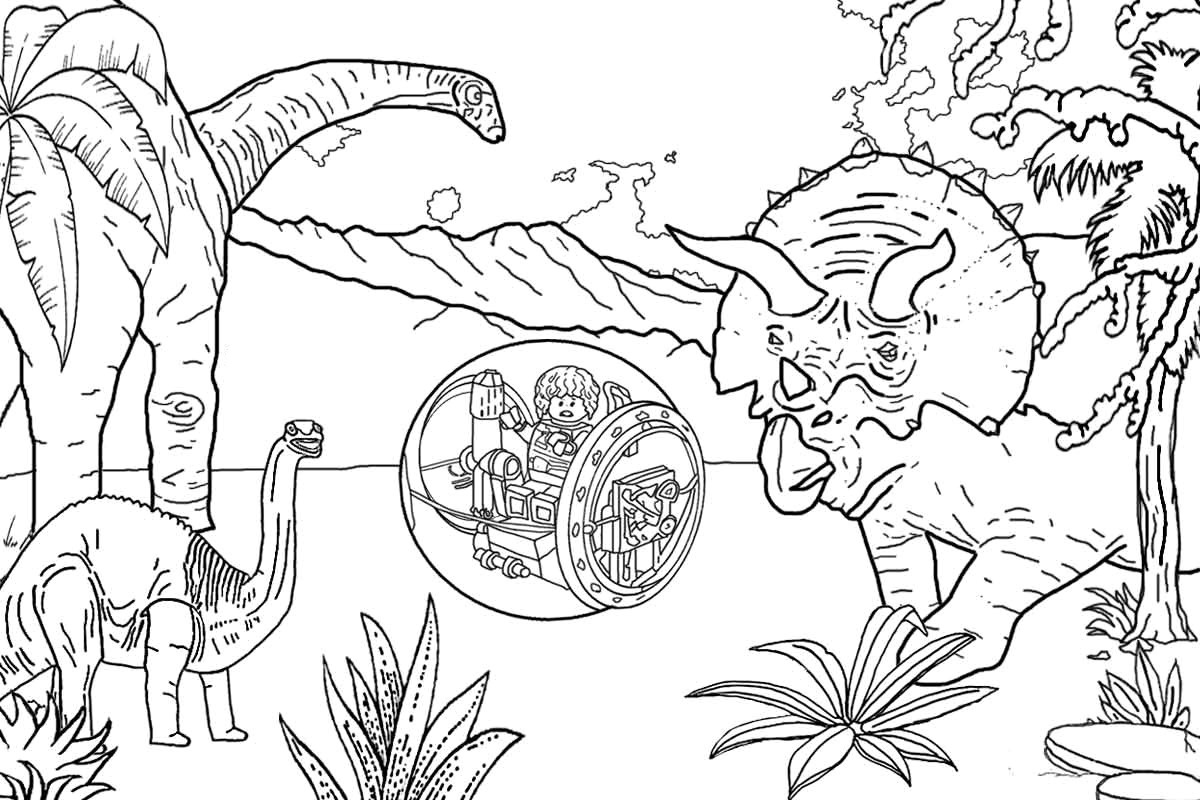
Canonically, the Jurassic franchise Brachiosaurus is rendered in a grey-green with mottled darker patches across the body, paler on the underbelly, with a slightly yellowish tinge on the face. The scale is one of the key coloring challenges: Brachiosaurus was one of the largest animals ever to walk on land, and pages showing it with trees, vehicles, or other reference objects require careful value management to communicate genuine enormity.
Stegosaurus
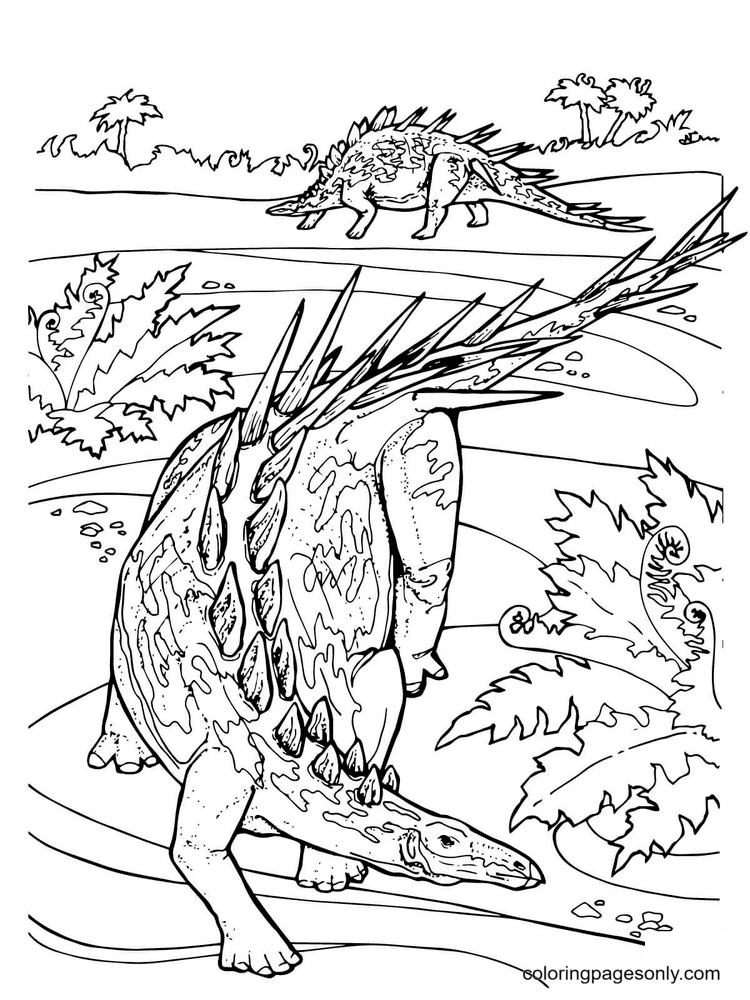
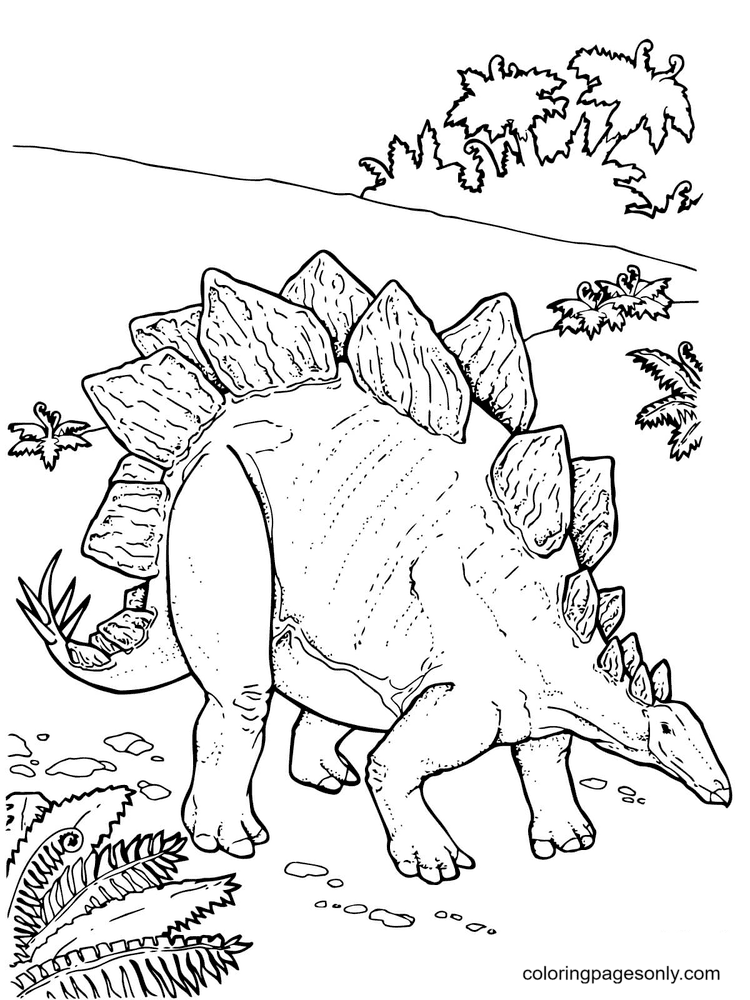
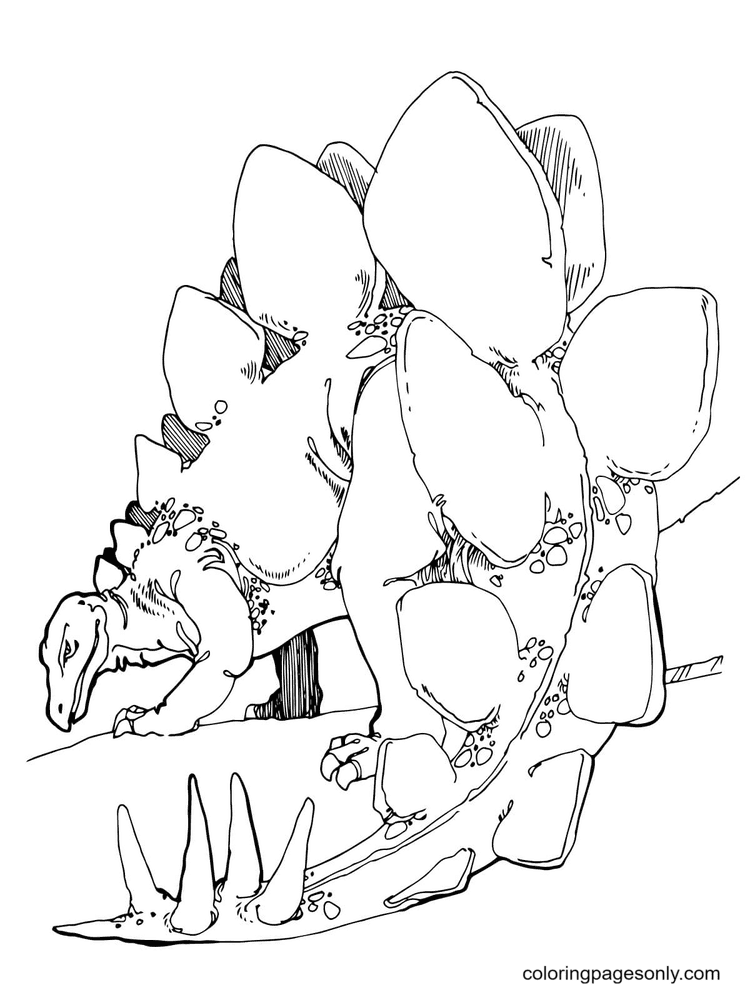
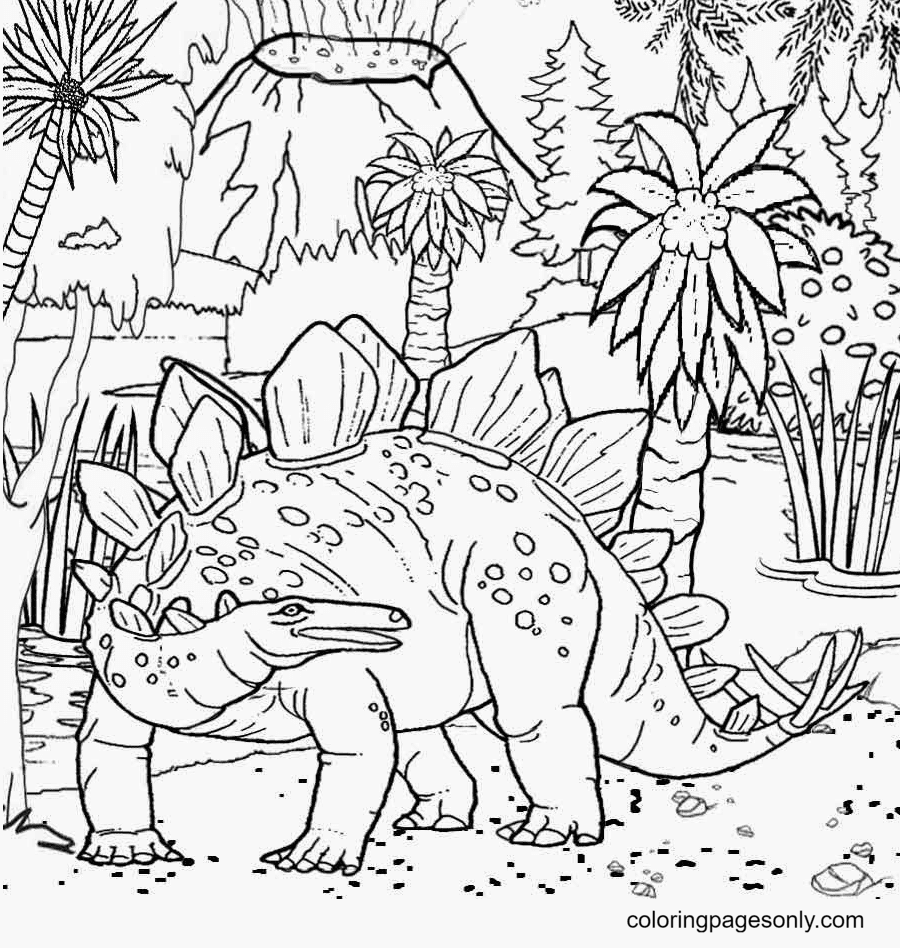
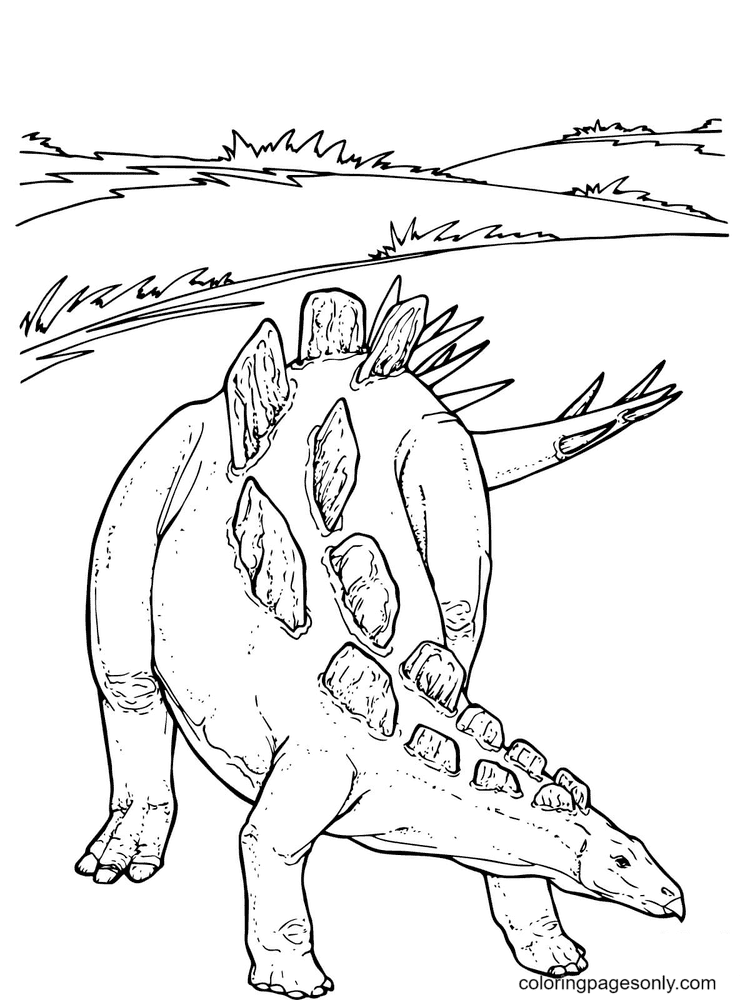
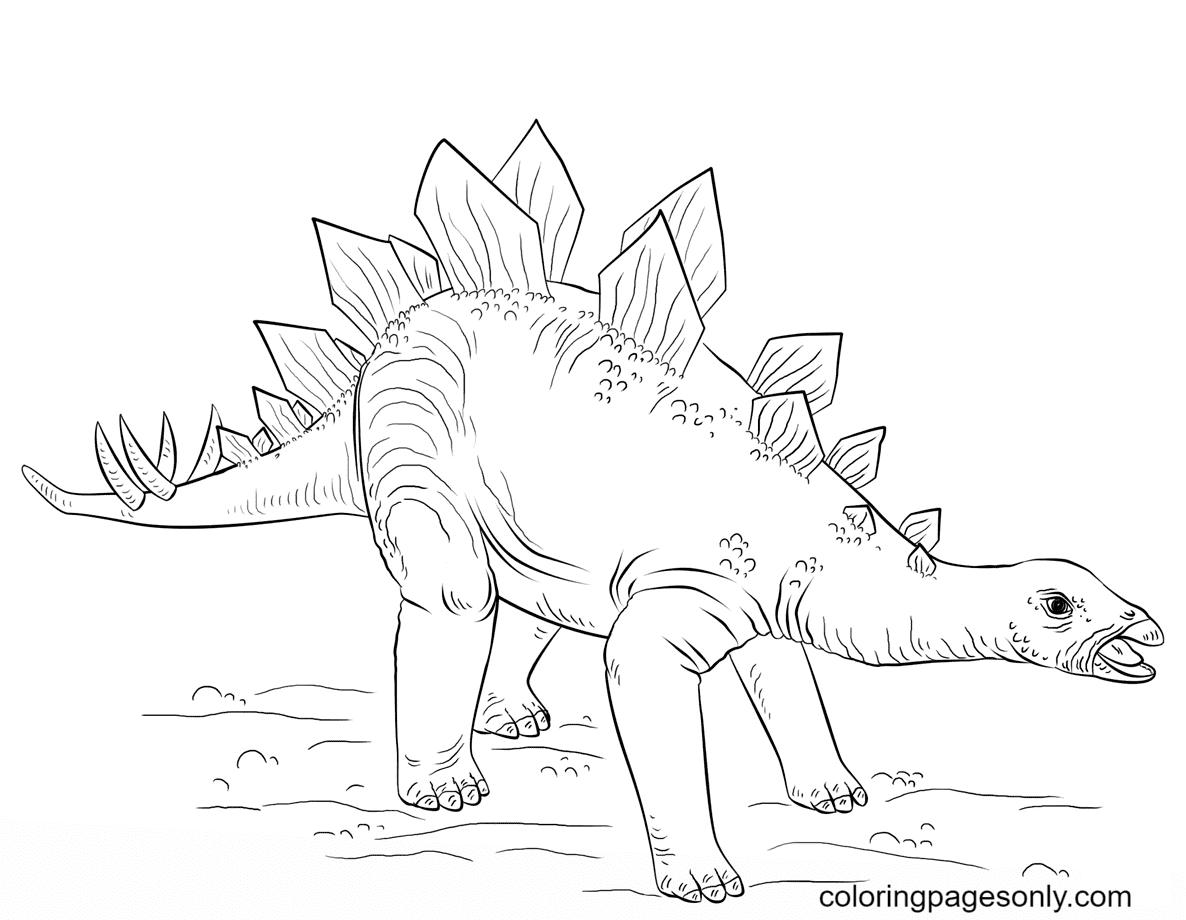
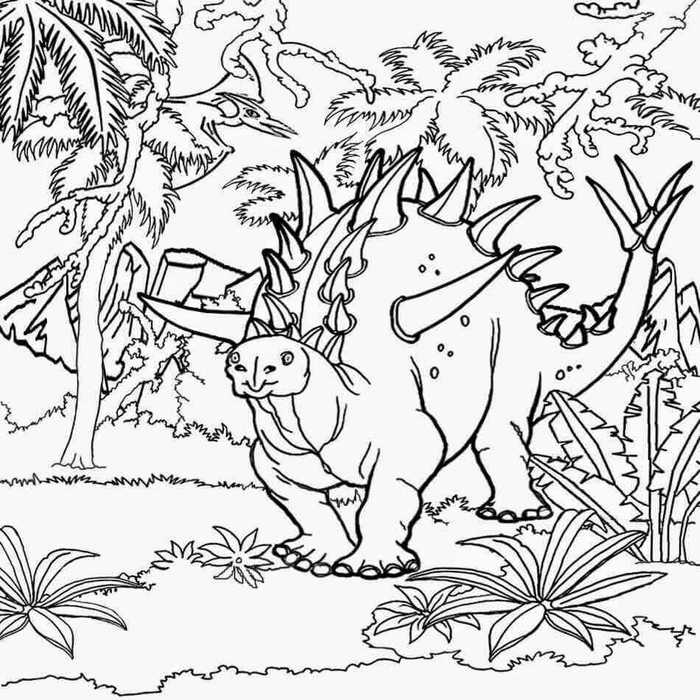
The Stegosaurus is depicted in the Jurassic World films with a warm, earthy orange-brown base coloring, paler on the underside. The signature plates running along the spine are the most important coloring element: in the franchise, they have a darker grey-brown tone with some reddish-orange variation, and they appear as armored keratin structures rather than smooth bone. The tail spikes are similarly dark. Pages showing Stegosaurus in attack posture – with the tail raised toward a threat – are particularly common in the collection and reward careful attention to the plate-spine relationship.
Indominus Rex
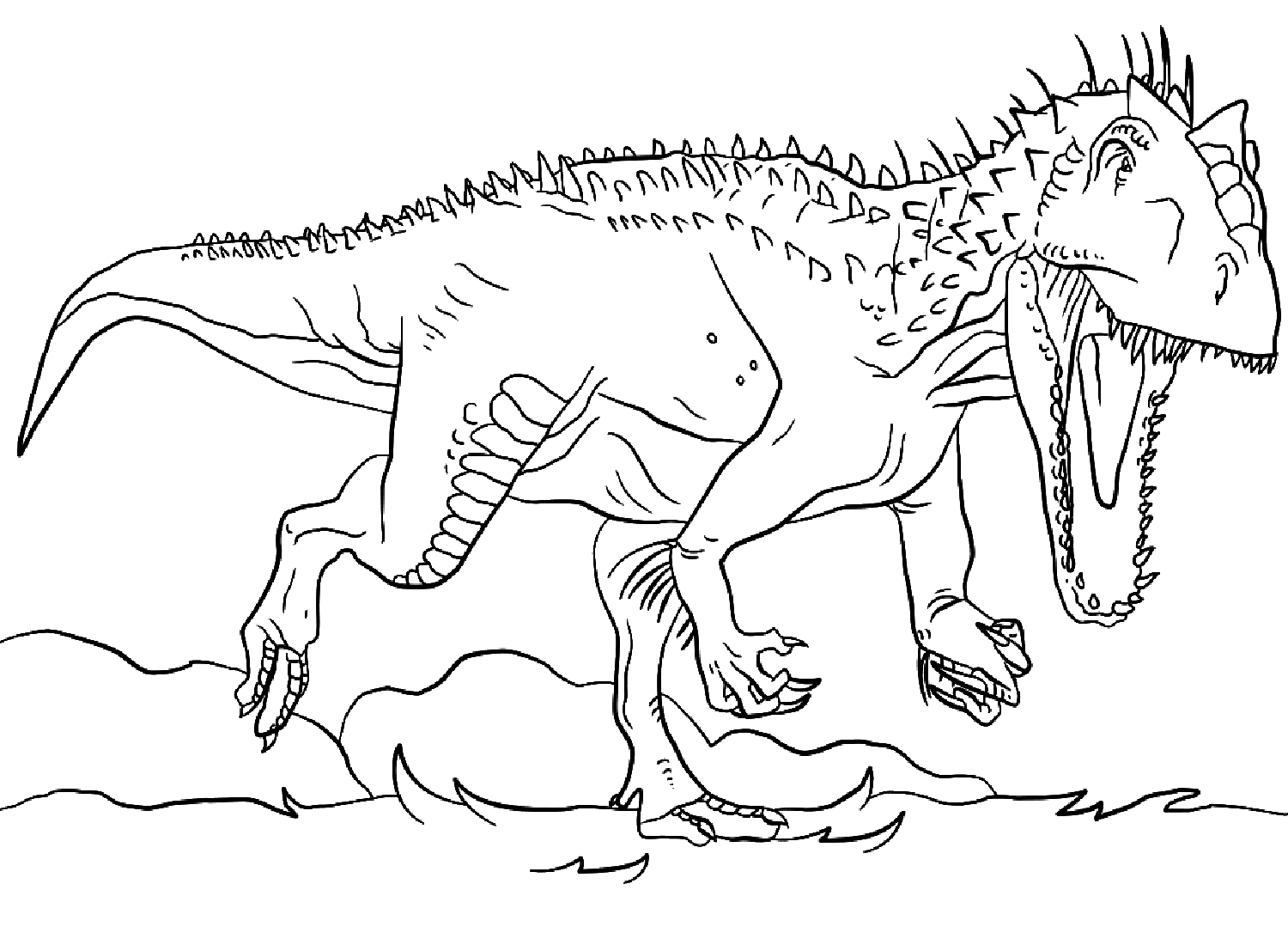
The Indominus Rex from Jurassic World (2015) is the franchise’s first major hybrid dinosaur – engineered from a T. rex base genome supplemented with Velociraptor, Giganotosaurus, Carnotaurus, Majungasaurus, Rugops, cuttlefish, and tree frog DNA. Its most critical design characteristic is its color: the Indominus is white. Not grey, not cream, not pale – white, with very subtle skin texture variation visible in close-up. This white coloring references the cuttlefish DNA that also gives the animal its camouflage ability: the Indominus can partially suppress its white coloring and blend into backgrounds, which is one of the central threats of the 2015 film.
For Indominus pages: the base should be a warm, near-white, slightly cream-toned, not pure cold white, with very subtle grey-green shadow areas in the skin folds. The transition from the white body to the darker coloring around the eye sockets and inside the mouth cavity is the most important value contrast in any Indominus portrait page.
Indoraptor
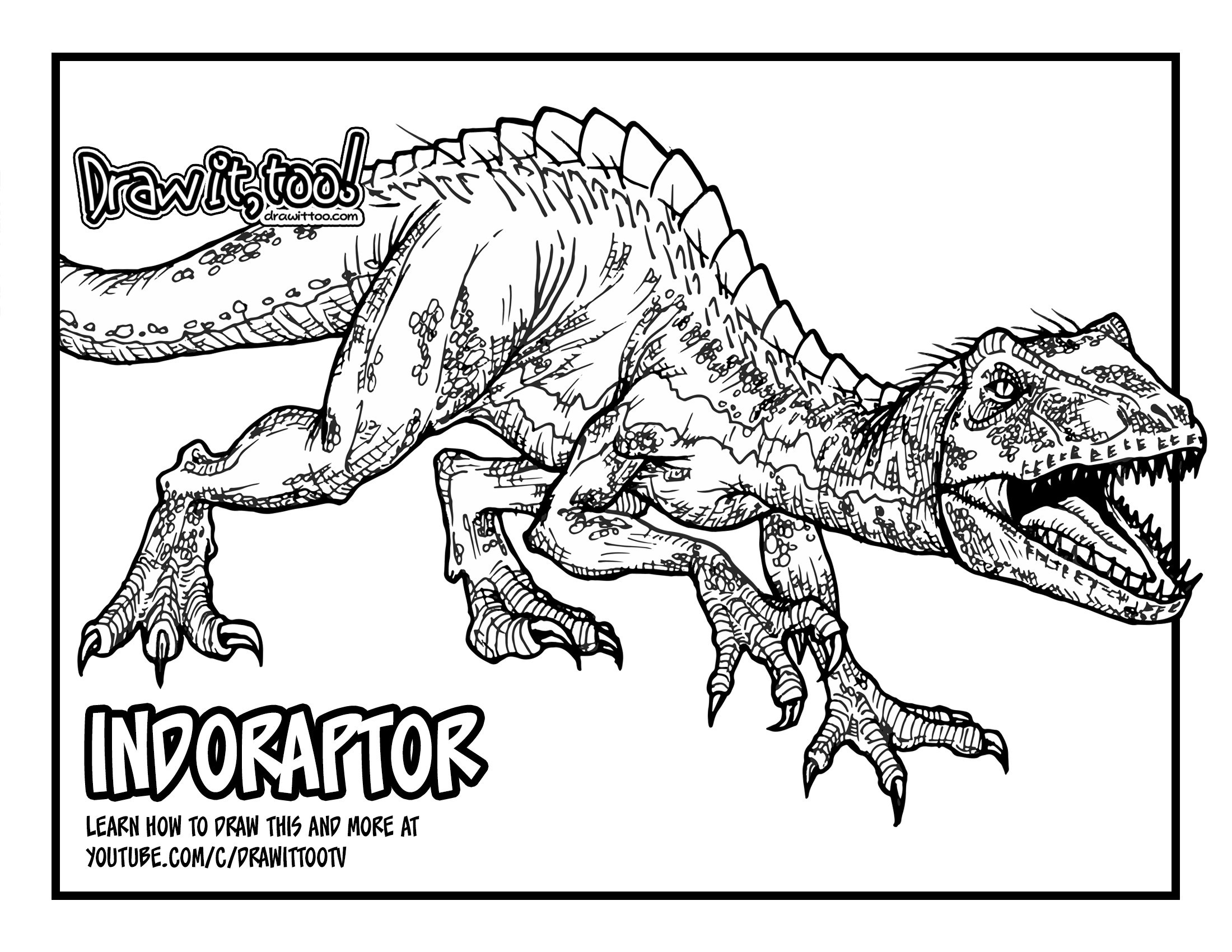
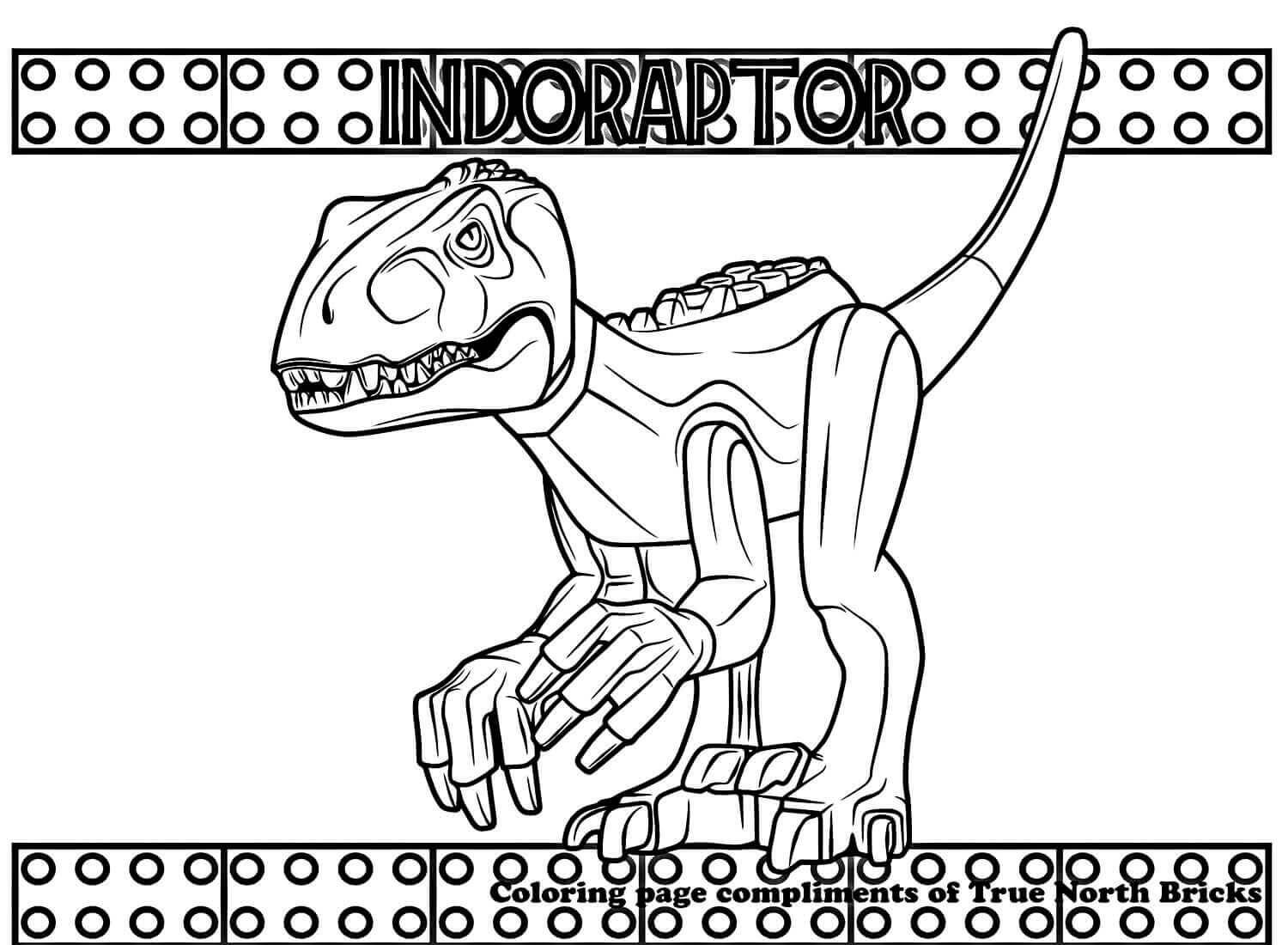
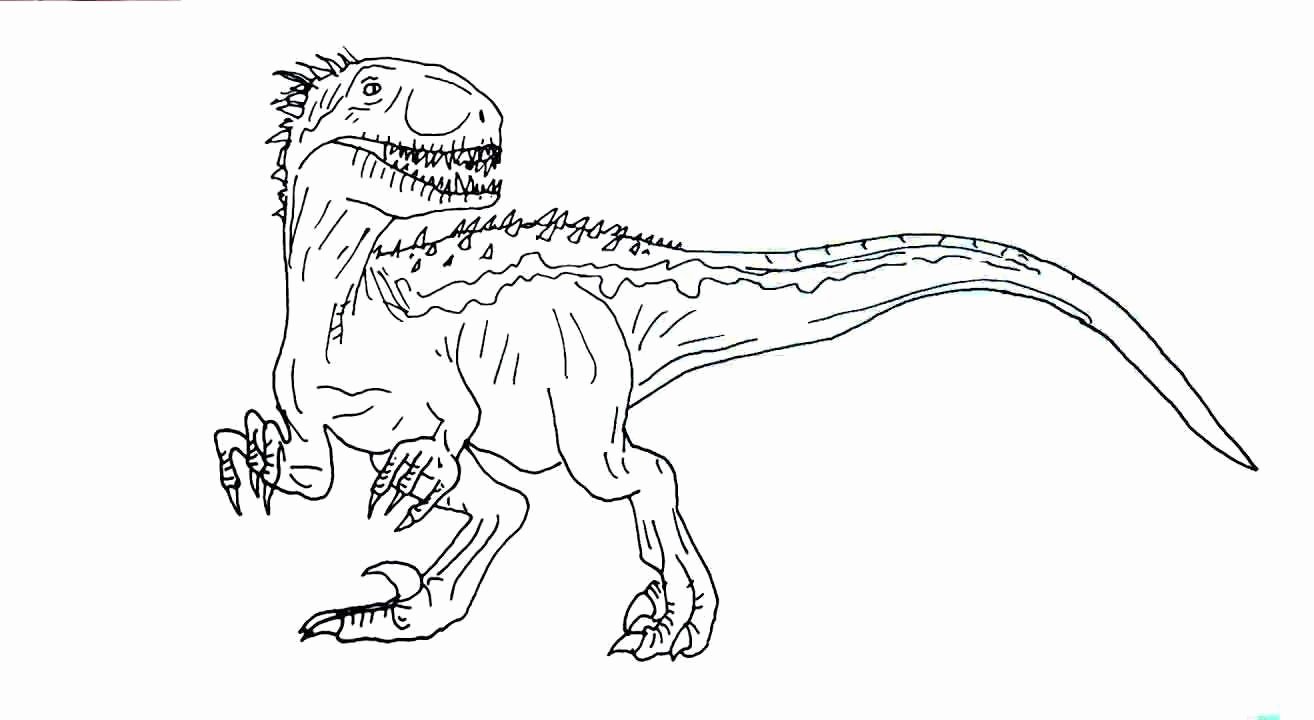
The Indoraptor from Fallen Kingdom (2018) is a smaller, weaponized follow-up to the Indominus – designed to respond to acoustic targeting signals. Its color scheme is entirely different from the Indominus: predominantly black with a gold-yellow stripe running along the dorsal surface, similar in placement to Blue’s blue-silver stripe but in a warmer, more ominous palette. The red eyes are distinctive among all franchise dinosaurs and are one of the clearest visual markers identifying the Indoraptor on a page.
For Indoraptor pages: the gold stripe should be a vivid, warm amber-gold against the very dark body – bright enough to create a clear contrast with the near-black. The red eyes should be rendered with an inner glow quality: a brighter red-orange at the center of the iris, deepening to a darker red at the edges.
Mosasaurus
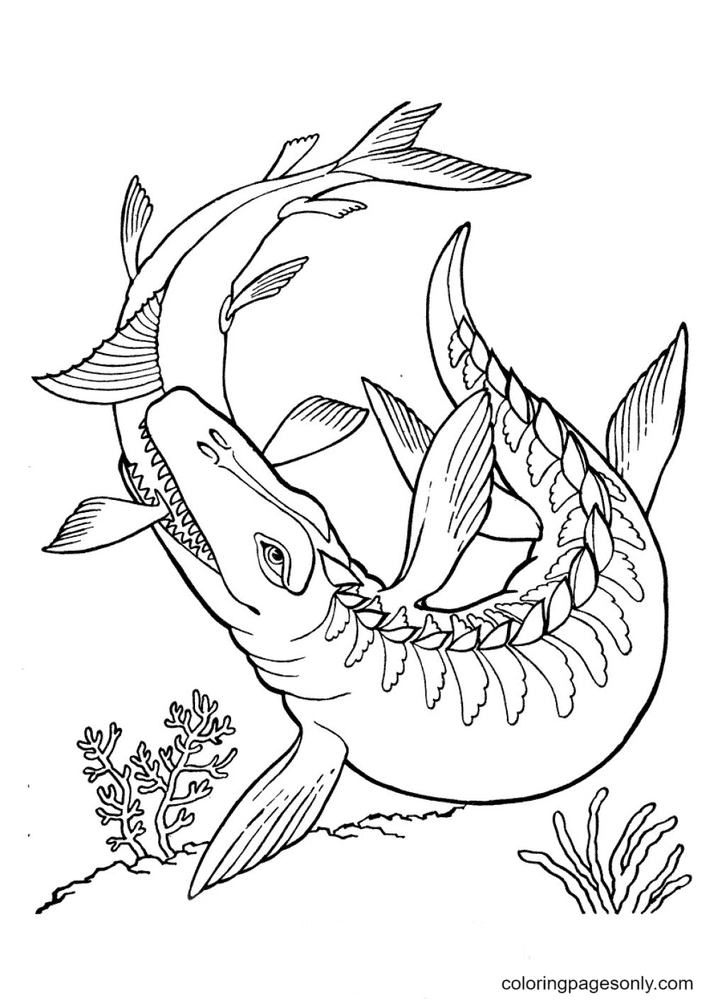
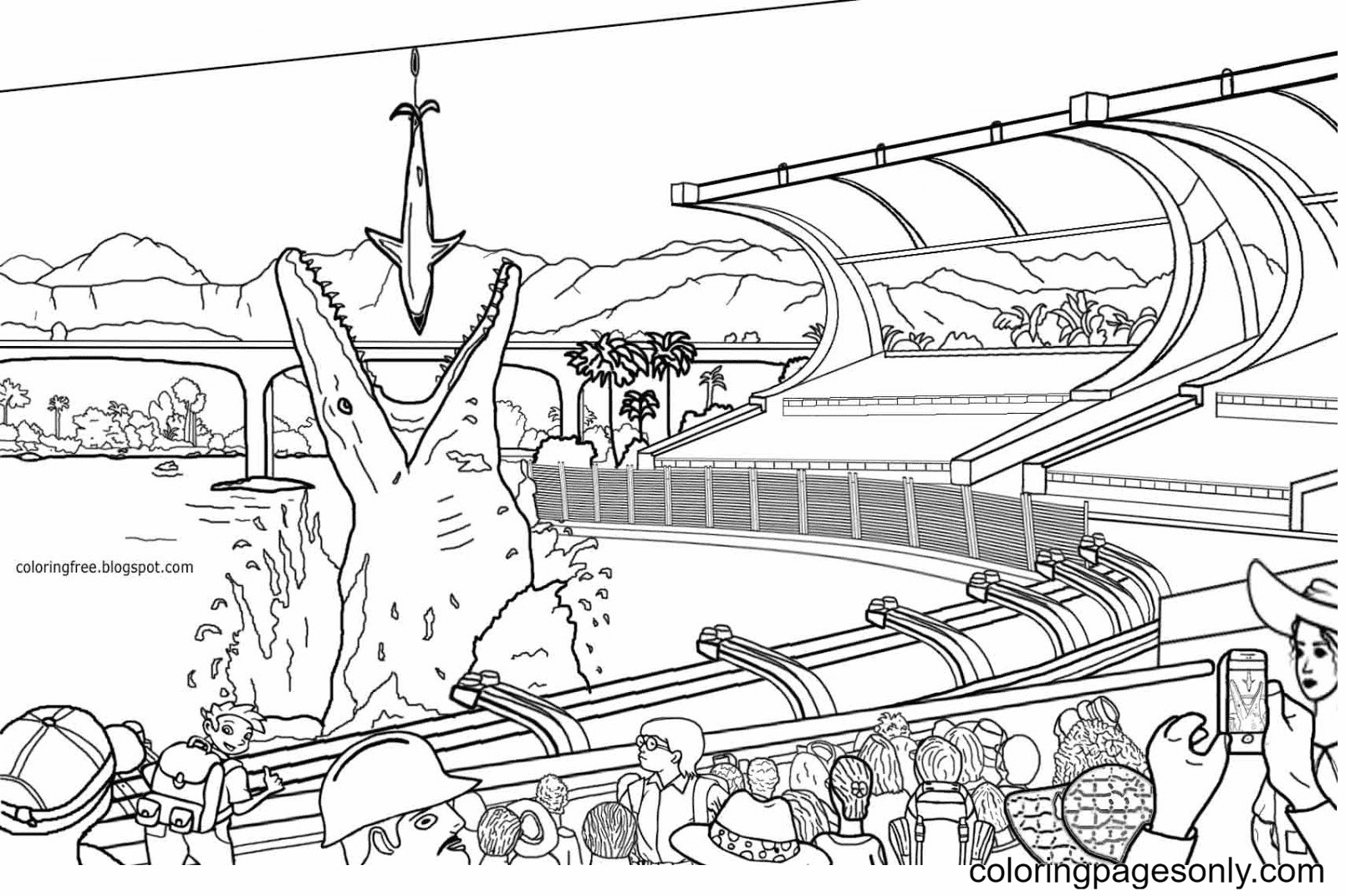
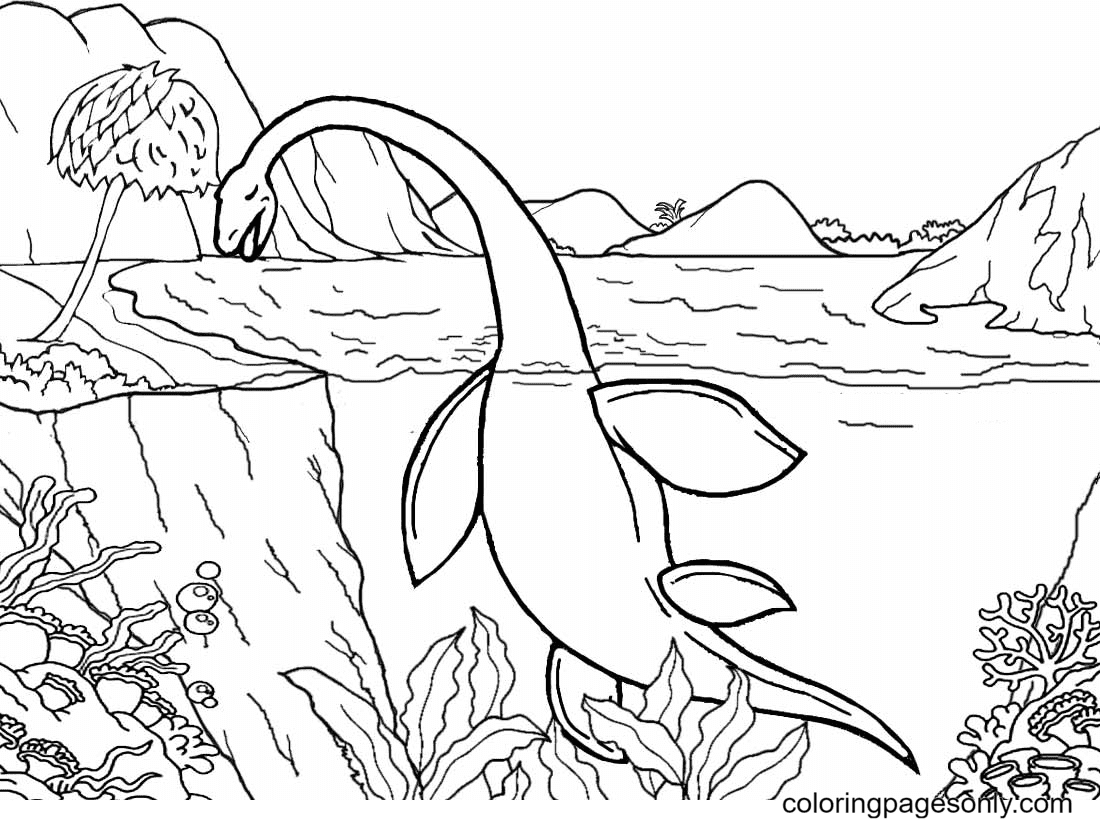
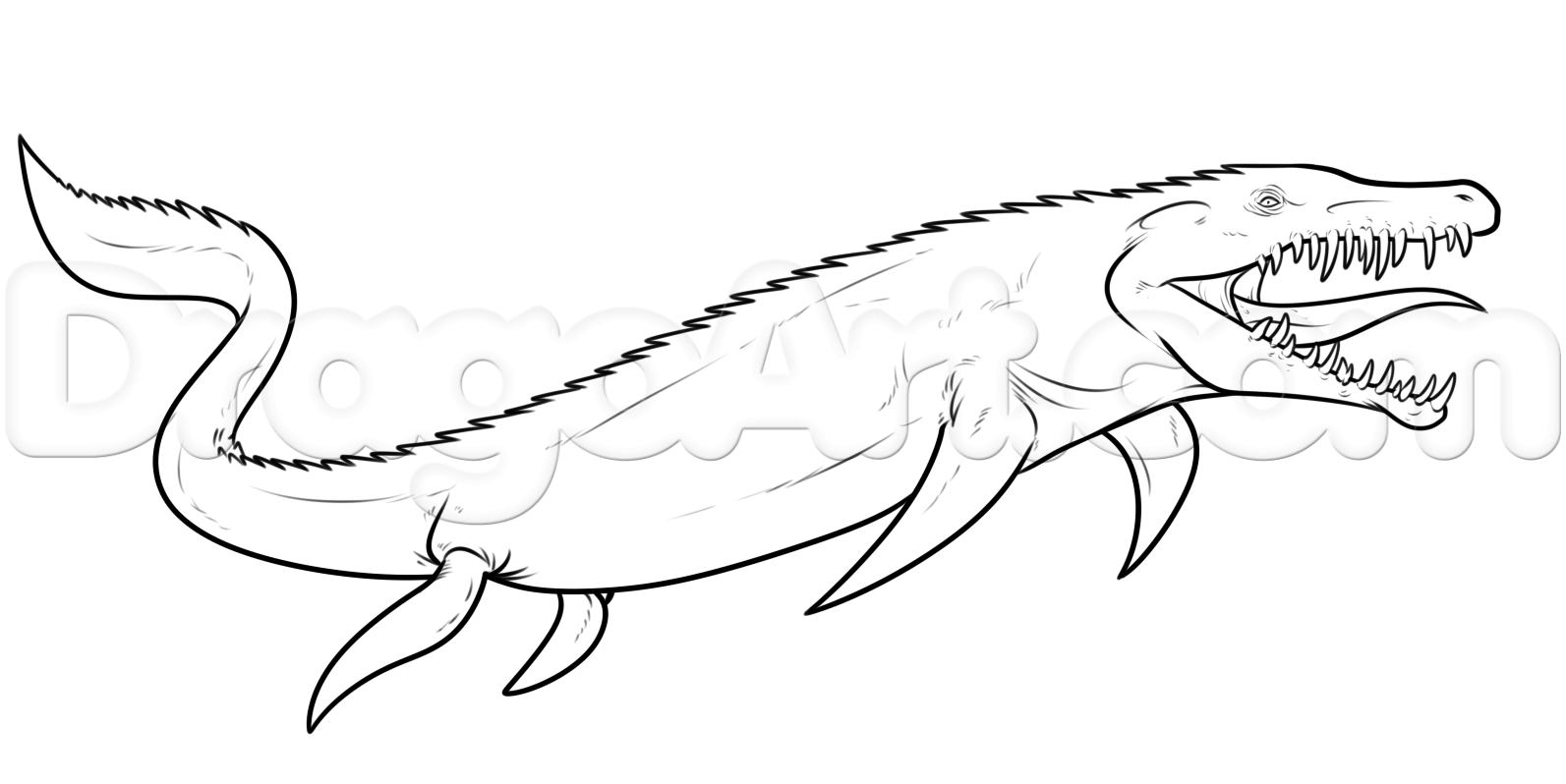
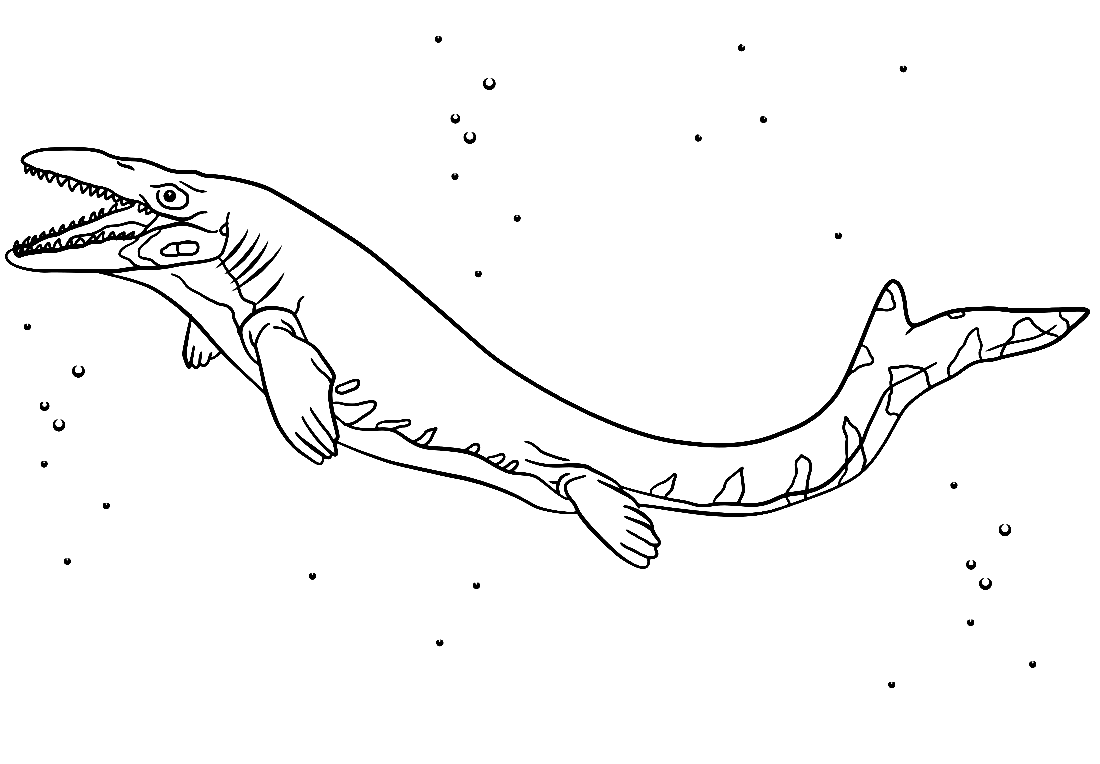
The franchise’s Mosasaurus – a massive marine reptile, not technically a dinosaur – is depicted as dark grey-olive on the dorsal surface with a lighter, slightly greenish belly. Its scale is deliberately overwhelming: in Jurassic World, it surfaces to swallow the Indominus whole in the climactic scene after the T. rex has weakened it. Pages showing the Mosasaurus emerging from water require a careful treatment of the water surface as the primary background – the transition from deep blue-black water to the churning white foam of the creature’s emergence is the environmental context that makes the scale legible.
Dilophosaurus
The Dilophosaurus in the franchise has two visual elements that are fictional but completely canonical to the films: the retractable neck frill (not present in real Dilophosaurus fossils) and the venom-spitting ability. The frill appears as a flat collar radiating outward from the neck, patterned in vivid reds, yellows, and blacks – the most colorful element of any carnivore design in the original trilogy. Pages showing the Dilophosaurus with frill deployed require managing these warm, vivid colors against the body’s cooler green-black base.
The Franchise Eras – Coloring Context
Understanding which film era a page references helps determine the appropriate color approach. The visual style of the franchise has shifted significantly across eras.
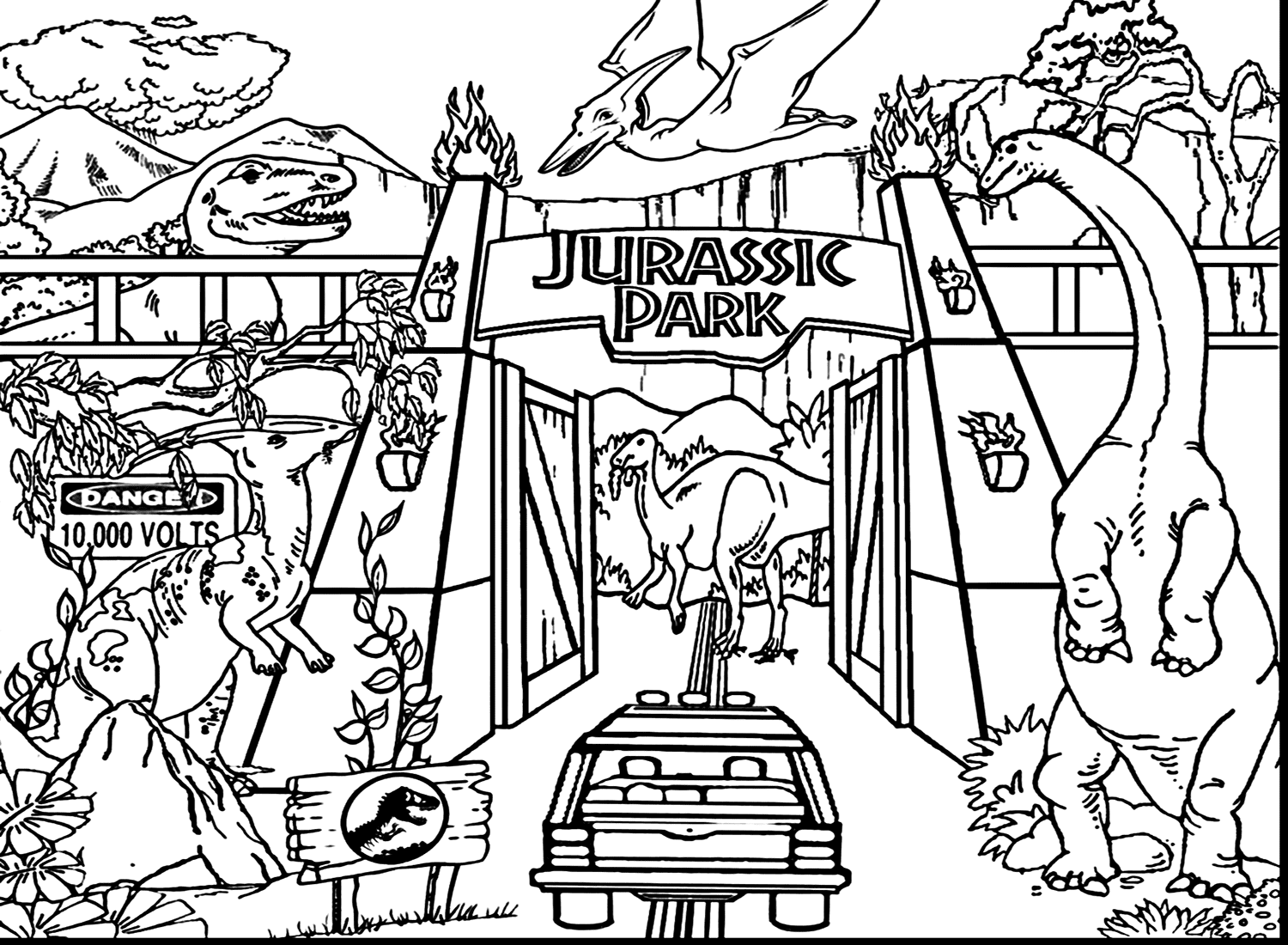
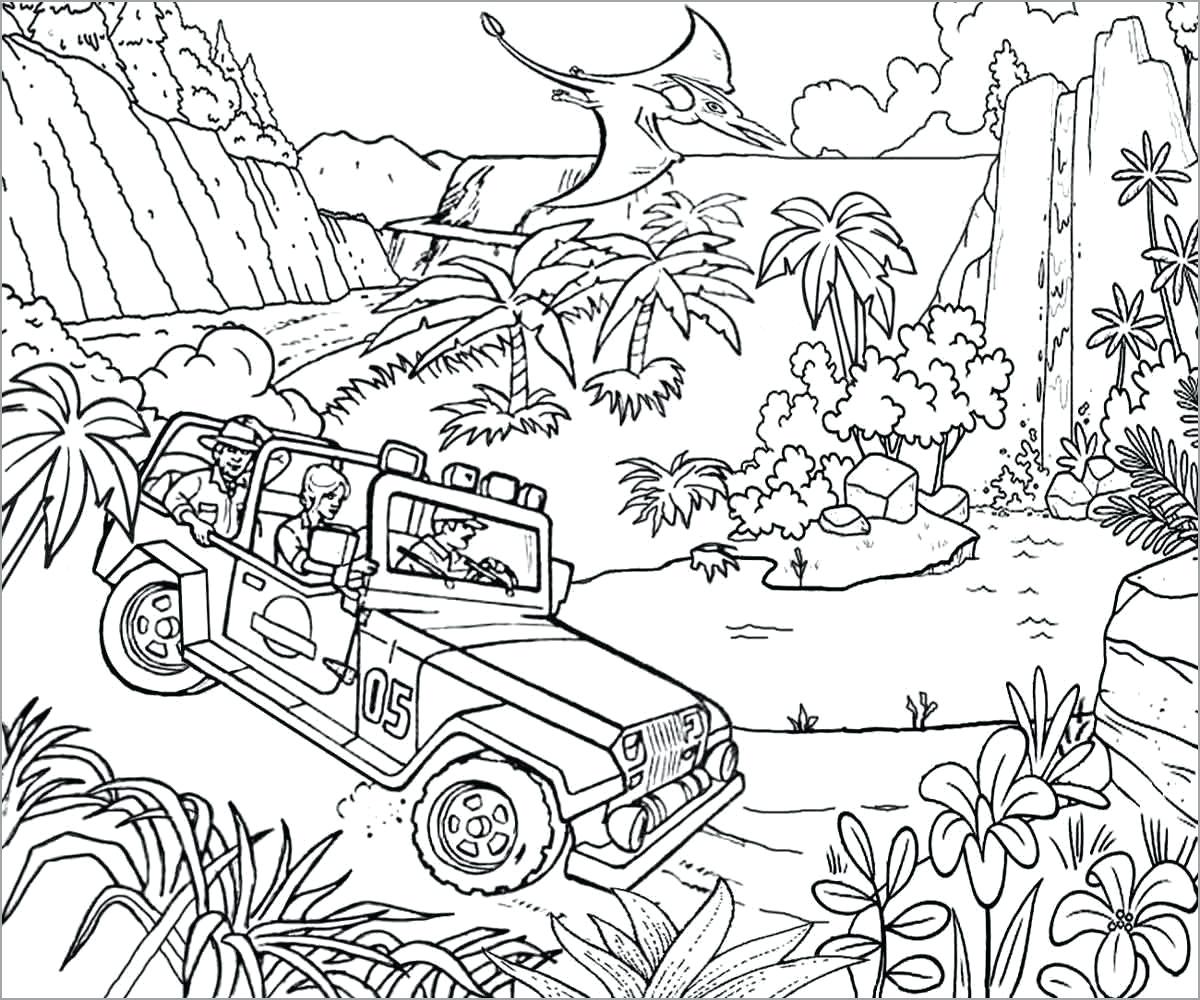
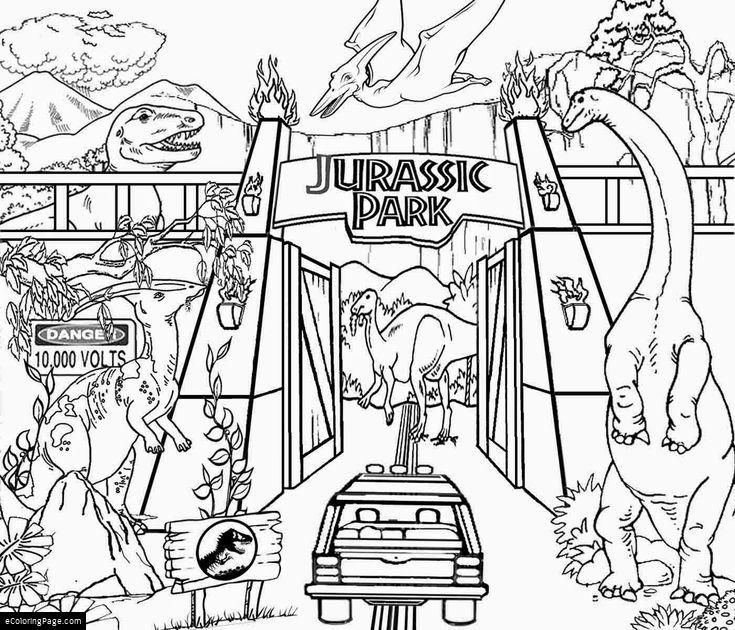
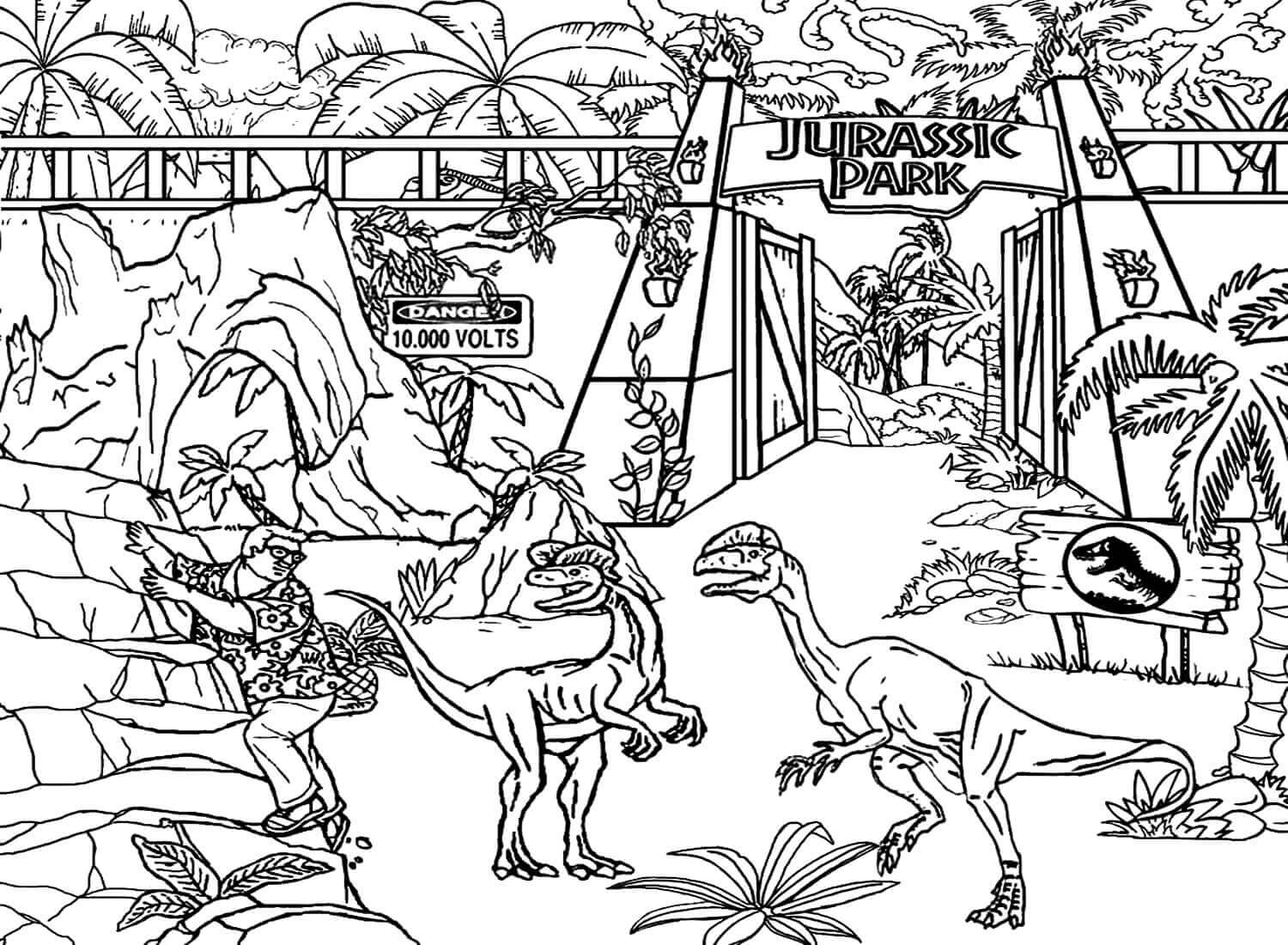
Jurassic Park (1993): The founding aesthetic – warm, golden-hour lighting on lush tropical vegetation, dense jungle greens, naturalistic dinosaur coloring without excess drama. The original film’s palette is warmer and more organic than later entries. Scenes reference the Jeep Wrangler tour vehicles in their distinctive yellow-and-brown scheme, the Visitor Center’s massive glass and steel architecture, and the iconic wooden entrance gate. For pages referencing this era, warm greens and earthy tones across the backgrounds, with naturalistic dinosaur coloring.
Jurassic World (2015–2022): Cleaner, more corporate-park aesthetic in early scenes (white architecture, manicured environments), shifting to chaos and destruction as each film progresses. The park’s branded orange-and-blue color scheme (Jurassic World logo colors) appears in signage, vehicles, and the park’s Gyrosphere attraction. Backgrounds shift from polished resort architecture to jungle overgrowth to volcanic crisis to global ecosystem.
Jurassic World Rebirth (2025): A deliberate return to the isolated, survival-horror atmosphere of the 1993 original – equatorial jungle settings with dense, oppressive vegetation. If future pages reference this film, the background palette should lean into the hot, humid tropical environment with dense greens and heavy shadow.
Coloring Tips
Establish the background environment before the dinosaur. This is the single most effective technique for Jurassic franchise coloring pages, and the most commonly skipped step. The franchise exists primarily in one of three environments: lush tropical jungle, enclosed park infrastructure, and open terrain at varying scales. Each environment creates different lighting on the dinosaur subjects. A T. rex standing in dense jungle receives dappled, green-filtered light – the green of the foliage reflects into the shadow areas of the skin. The same T. rex standing in an open savanna receives direct, neutral sunlight with no color contamination. Deciding which environment first, and locking that choice in before touching the dinosaur, creates visual coherence throughout.
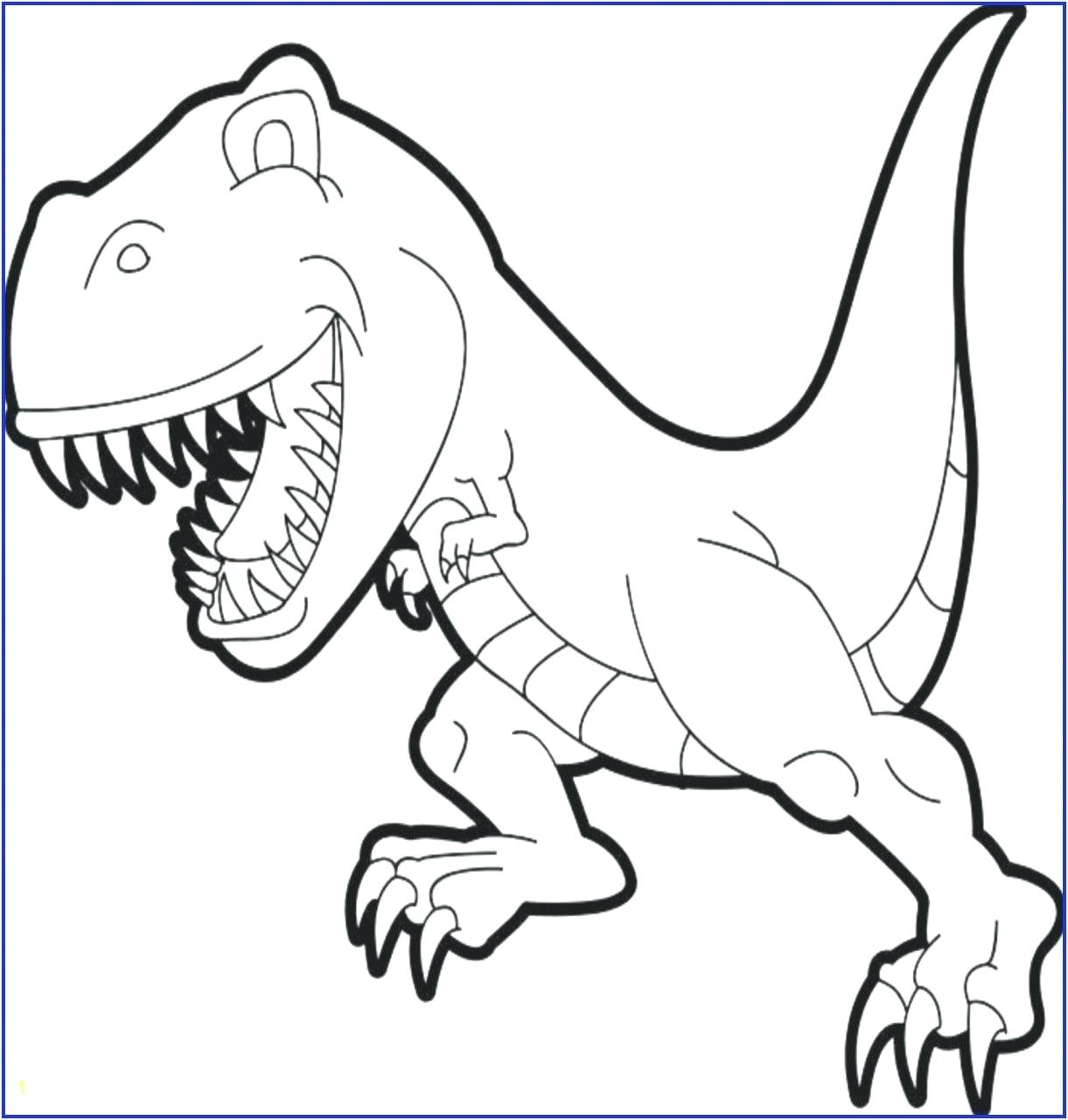
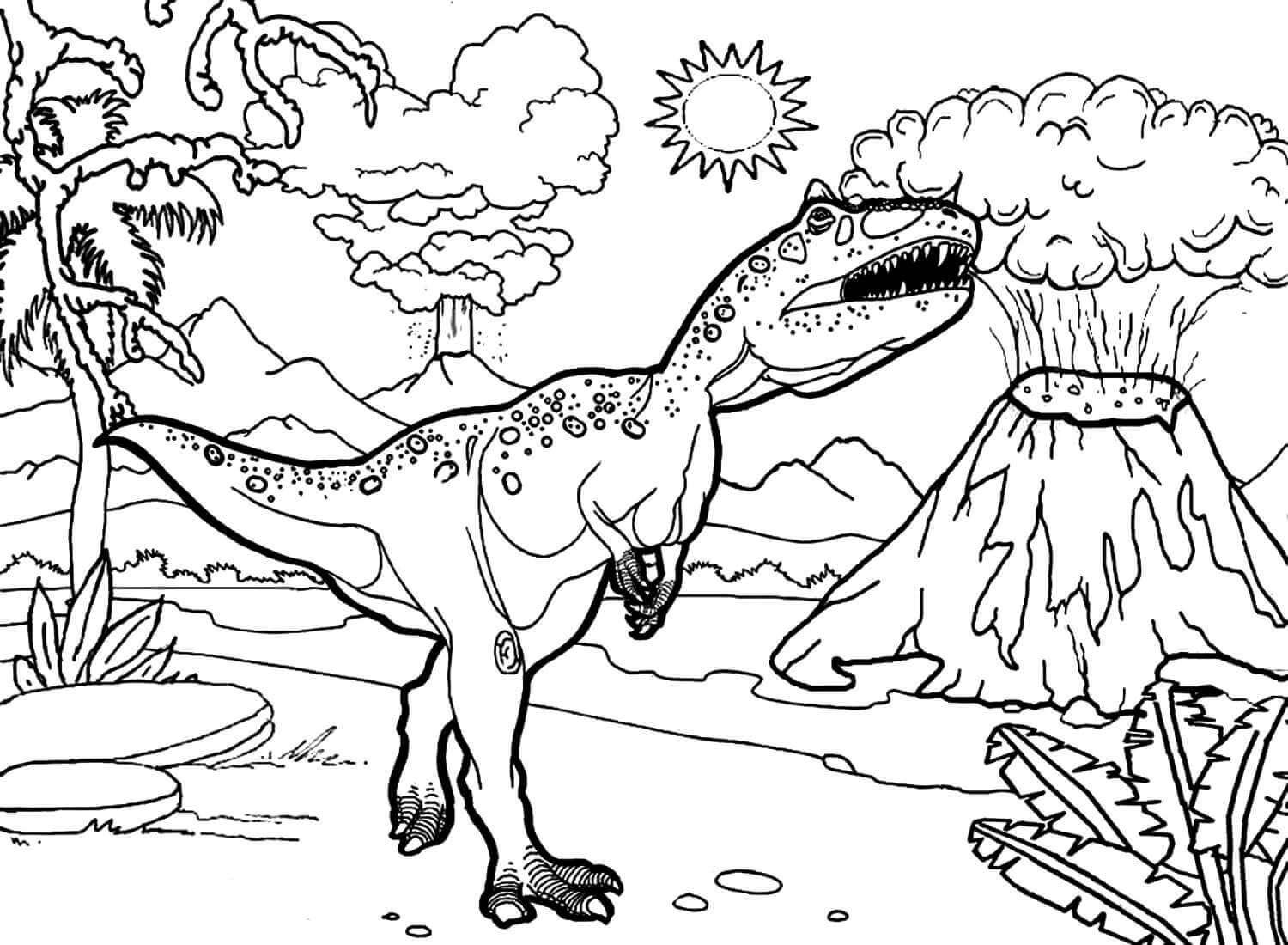
For the T. rex pages specifically, the most common mistake is applying the olive-brown too uniformly, producing a flat, plastic-looking result. Rexy’s skin has significant value variation across her body – the deepest shadow areas in the large skin folds of her neck and flank should go several values darker than the mid-tone of her general body surface. The belly is a noticeably different value from the dorsal surface. If the page shows her roaring, the interior of the mouth is a warm pink-red, transitioning to darker values toward the throat.
Blue’s iridescent stripe is the priority element of every Blue page. The stripe’s visual quality in the films is iridescent – it shifts slightly from blue-silver to blue-green depending on the light. To achieve this with standard colored pencils, apply a base layer of cool light blue, then overlay a slightly different blue-green or blue-violet in partial strokes over the top, leaving some of the first layer visible. The stripe should appear to have slight internal variation rather than being a flat single-tone band. The contrast between the blue stripe and the darker grey-green body is what makes Blue immediately identifiable at a distance.
For hybrid dinosaur pages (Indominus, Indoraptor): The hybrids are the most technically demanding of all Jurassic coloring subjects because their color schemes are more extreme and must be rendered with precision to read correctly. The Indominus’s near-white cannot be rendered as grey – the color must stay in the white-to-very-light-cream range while still showing shadow variation. The Indoraptor’s gold stripe against a near-black body requires maximum contrast between the two elements.
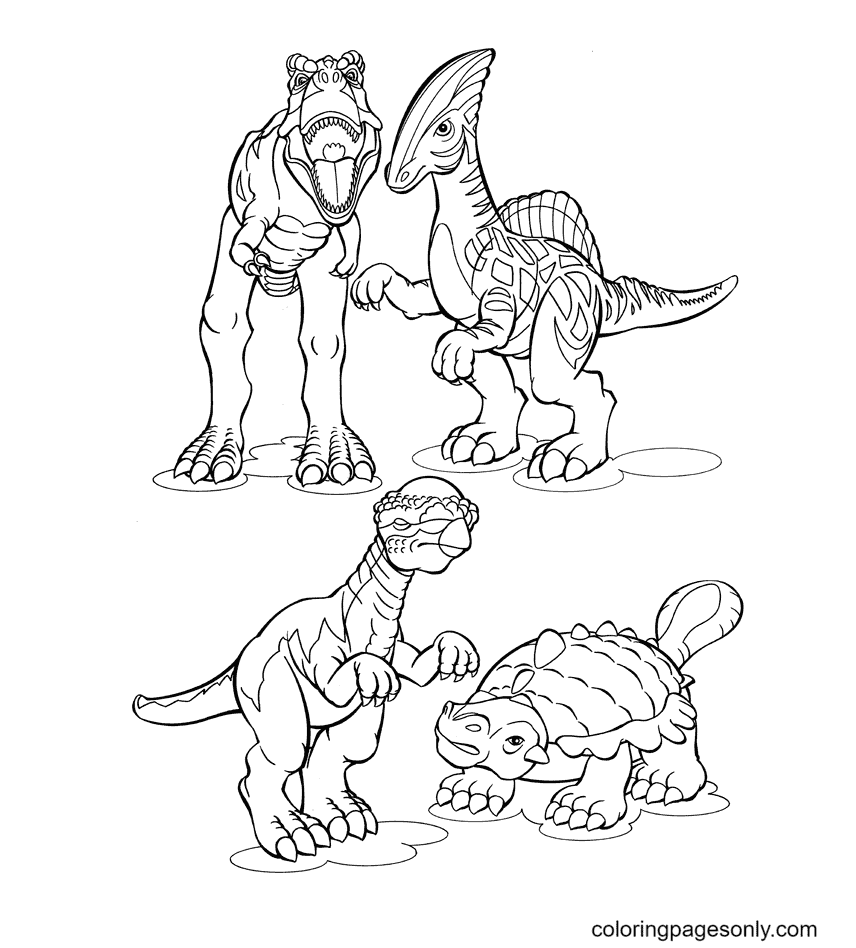
For group scene pages with multiple dinosaurs: Apply all the primary base colors first across every subject in the scene before adding shading to any individual. This allows you to check whether the palette reads as compositionally balanced – whether two similar-toned dinosaurs are placed adjacently in a way that creates visual confusion, or whether the overall color distribution across the page works rhythmically. Adjusting at the base color stage is far easier than after shading is complete.
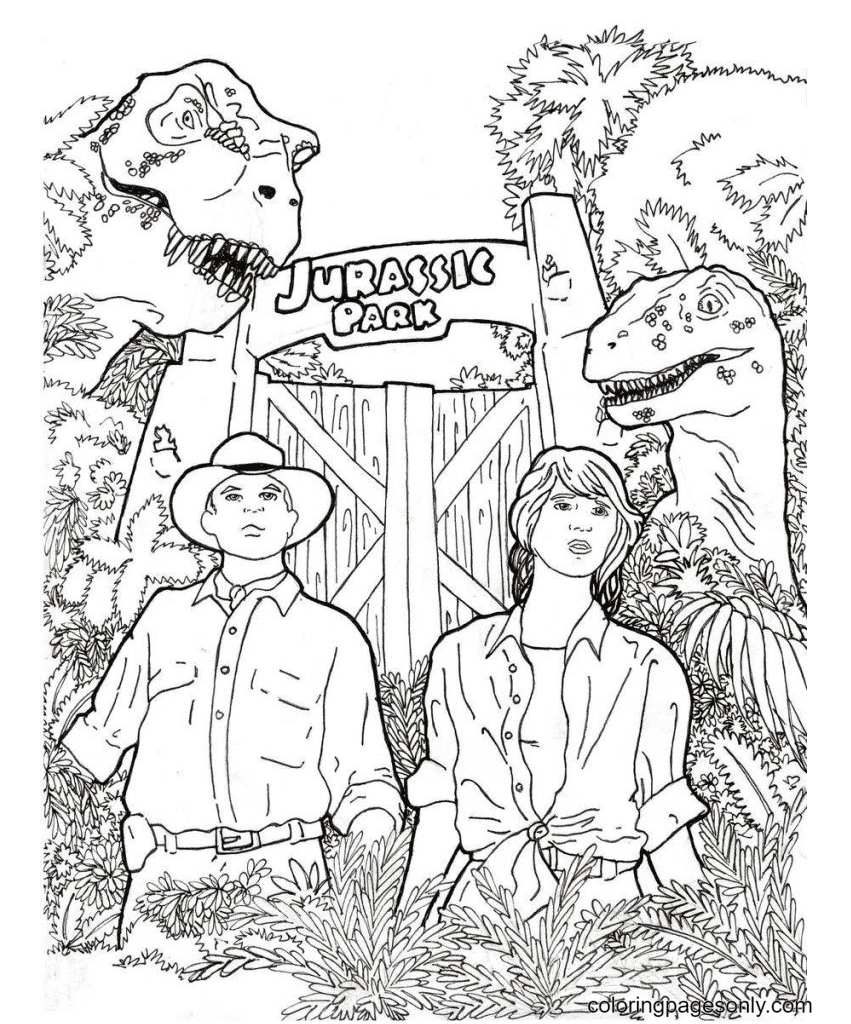
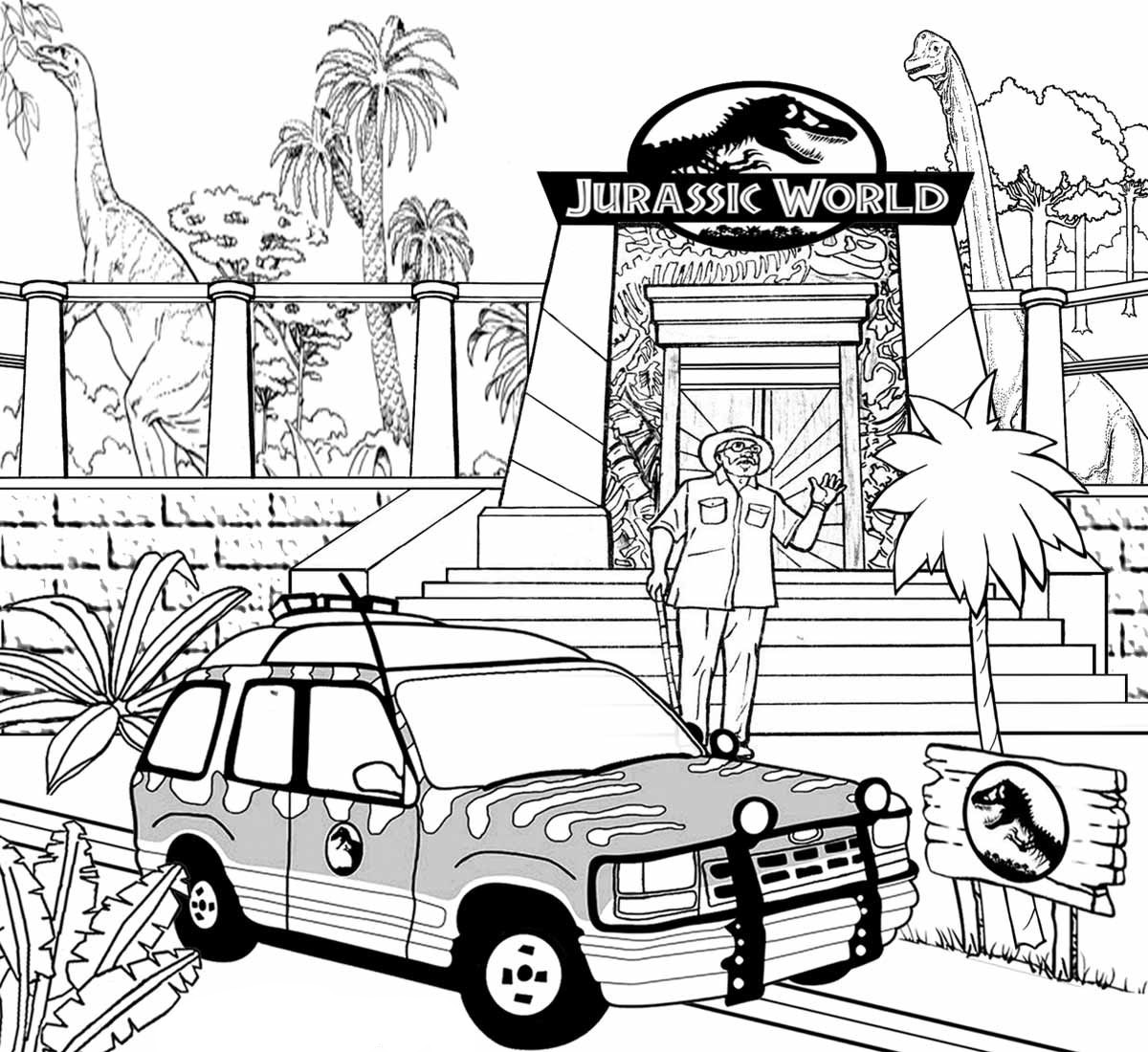
For the park environment pages (Jurassic Park gate, Jurassic World theme park): The iconic Jurassic Park wooden entrance gate uses warm natural wood tones – dark brown structural timbers with slightly lighter, weathered grain on the face surfaces – with the metal hardware and chains in cool grey. The bones and skeleton motif of the logo should stay in warm ivory cream. The Jurassic World theme park pages have a cleaner, more corporate visual language: white and light grey architectural surfaces, accents in the park’s orange-and-blue brand palette.
5 Activities
Color Rexy across the franchise timeline. Print any T. rex page in the collection. Color it as accurately as possible to Rexy’s canonical appearance: dark olive-brown dorsal surface, lighter cream underbelly, amber-yellow eyes. After finishing, write her five most important franchise moments in small text around the border of the page: 1993 paddock breakout → 1993 Visitor Center rescue → 2015 Indominus battle → 2018 volcanic evacuation → 2022 Giganotosaurus confrontation. This exercise is the Jurassic equivalent of a character arc study – a single dinosaur appearing in films spanning 29 years, whose visual appearance remained largely consistent while the world around her changed completely. The coloring activity becomes a form of franchise archaeology.
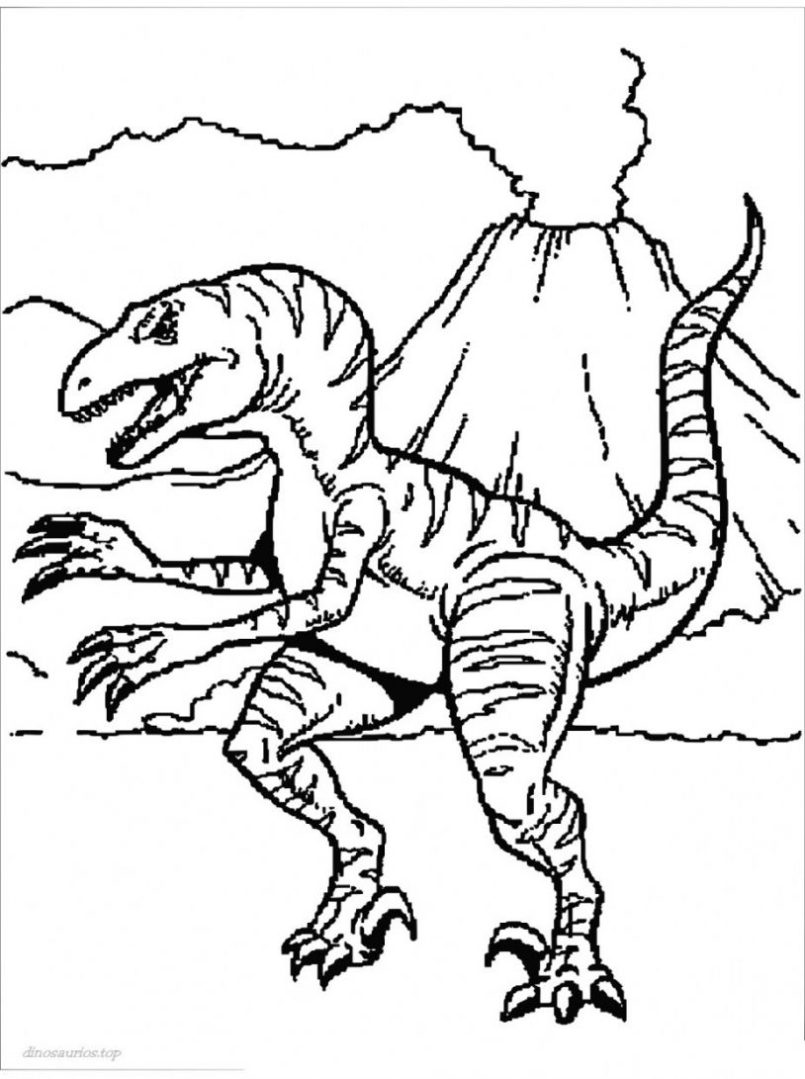
The raptor pack color-coding study. Print any Velociraptor page four times. Color the four copies in the distinctive colorings of Owen’s I.B.R.I.S. pack: Blue (grey-green body, iridescent blue-silver lateral stripe), Delta (greener, more mottled), Echo (brownish with a prominent facial scar represented by a value change on one side of the face), and Charlie (the youngest, most uniformly green). Arrange all four completed pages in a 2×2 grid. The completed display demonstrates the franchise’s specific approach to visual individuation within a species – the same basic body plan made recognizable through targeted color and marking differences. The same principle guides real-world animal identification in nature photography and wildlife biology.
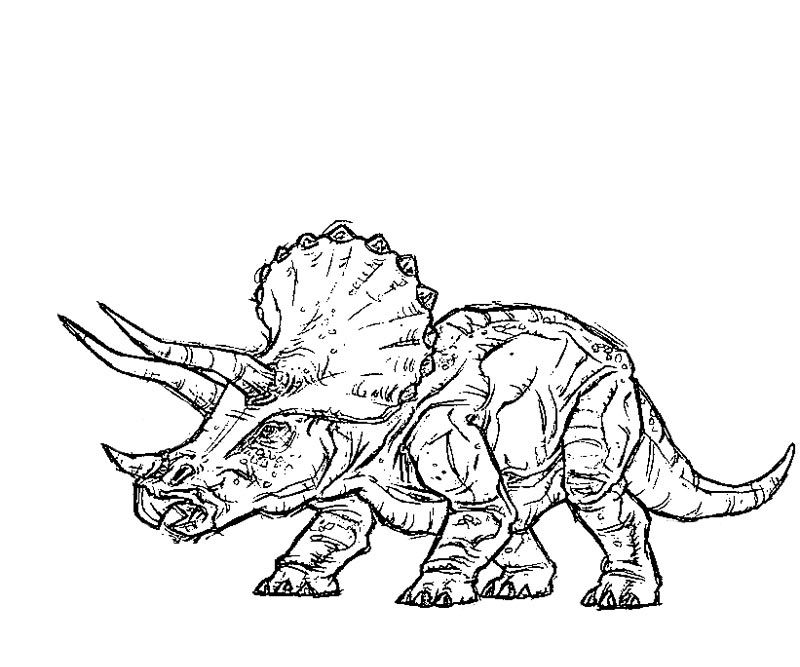
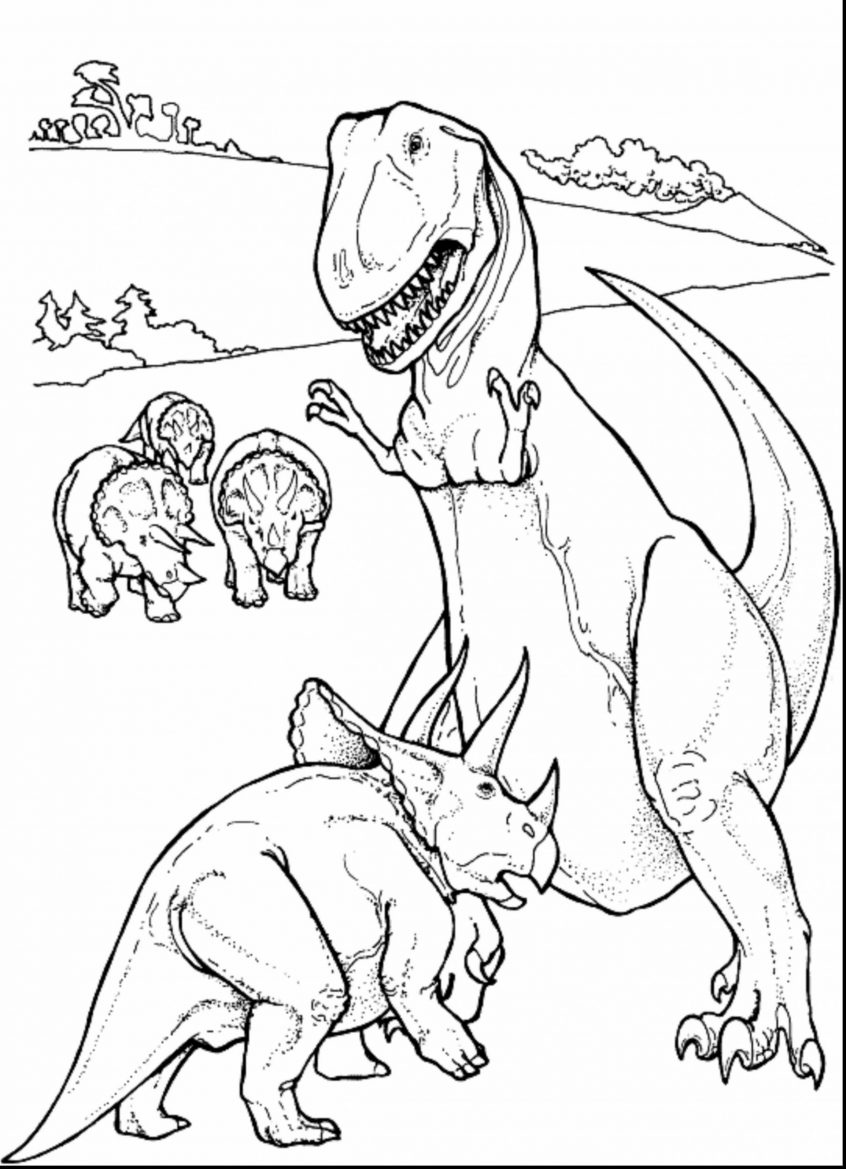
Hybrid vs. natural species color contrast. Print the Indominus Rex page and any classic dinosaur page (Triceratops or Brachiosaurus work well). Color the classic dinosaur in realistic, naturalistic tones – earthy greens and browns, the kind of palette an actual paleontologist might use for a scientific illustration. Color the Indominus in its canonical near-white with the extreme skin-fold shadows required to give the white form any three-dimensionality. Display both pages together. The contrast between the natural species’ organic, earth-toned palette and the hybrid’s stark, almost clinical white makes the film’s central visual argument about the hybrids visible: they don’t look like they belong to the same ecosystem as the natural dinosaurs, because they were designed by a laboratory rather than shaped by evolution.
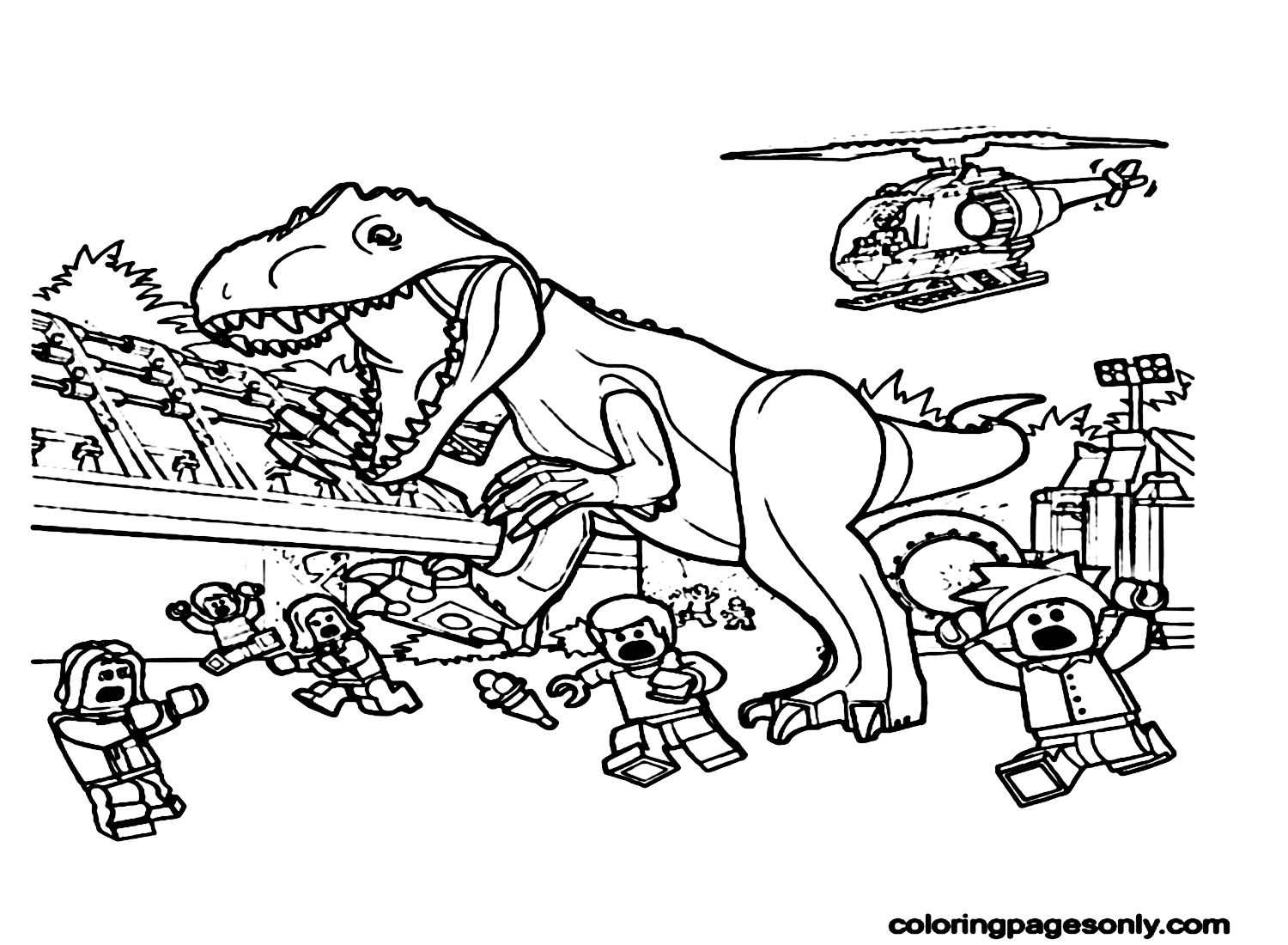
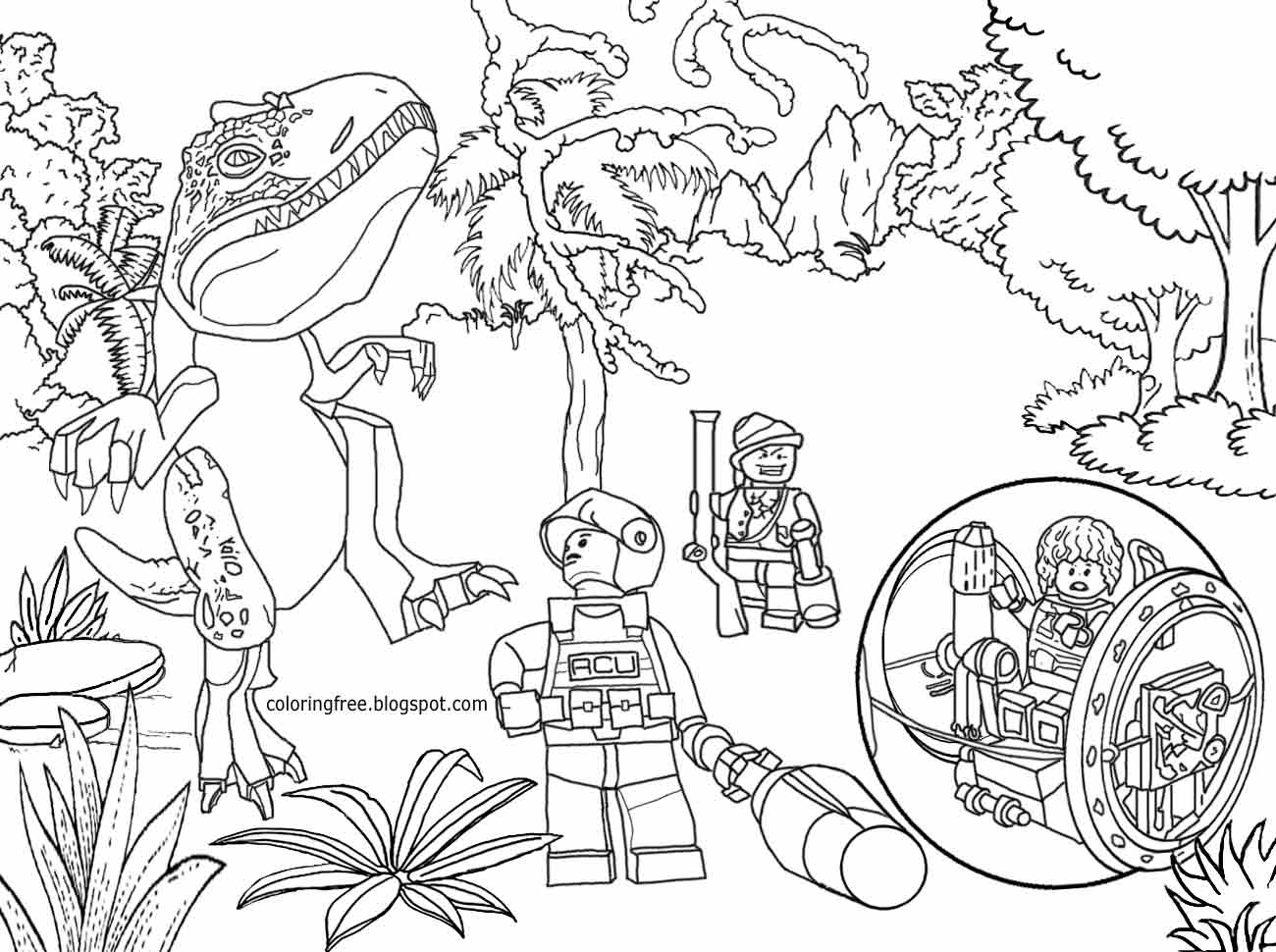
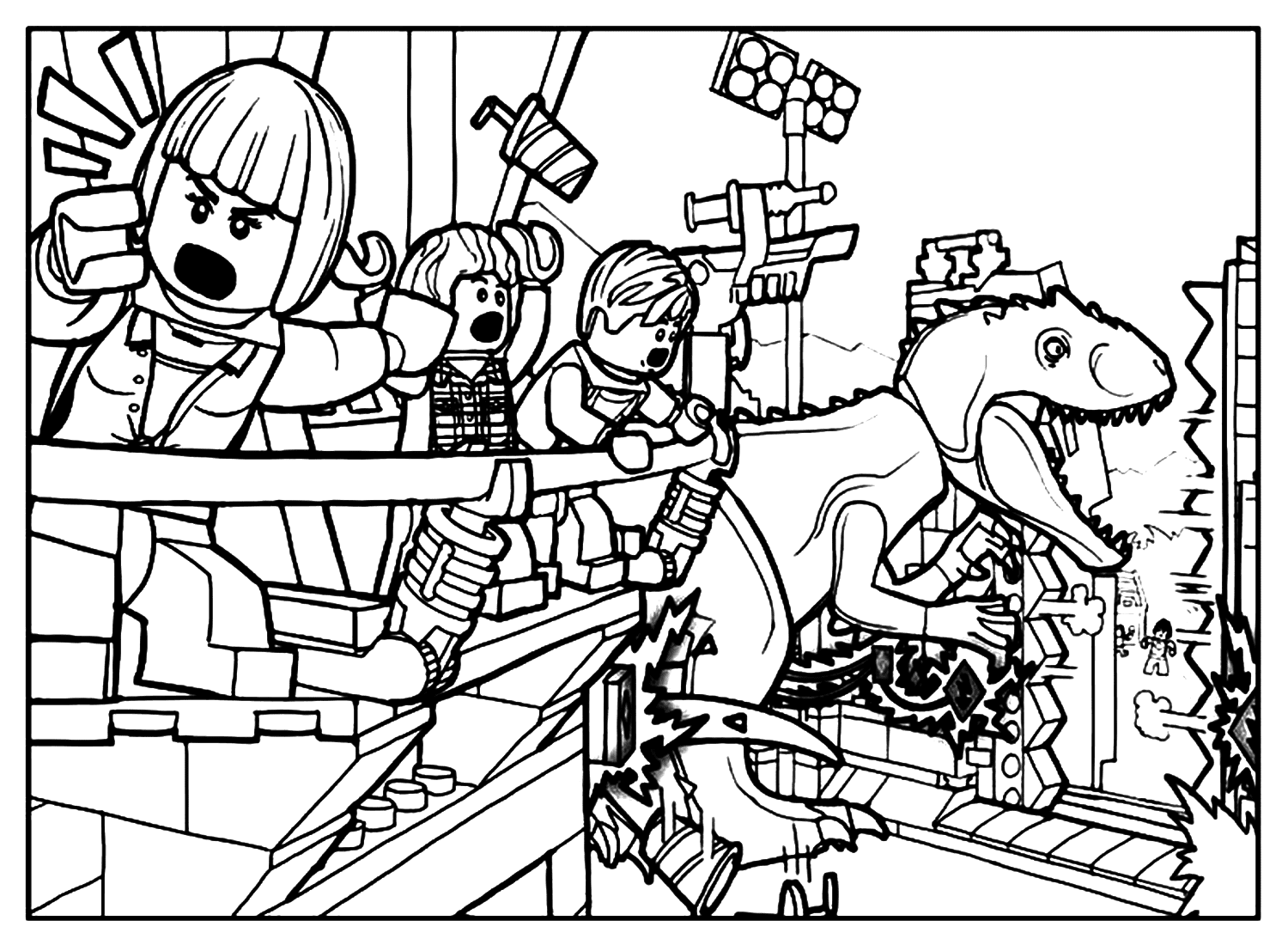
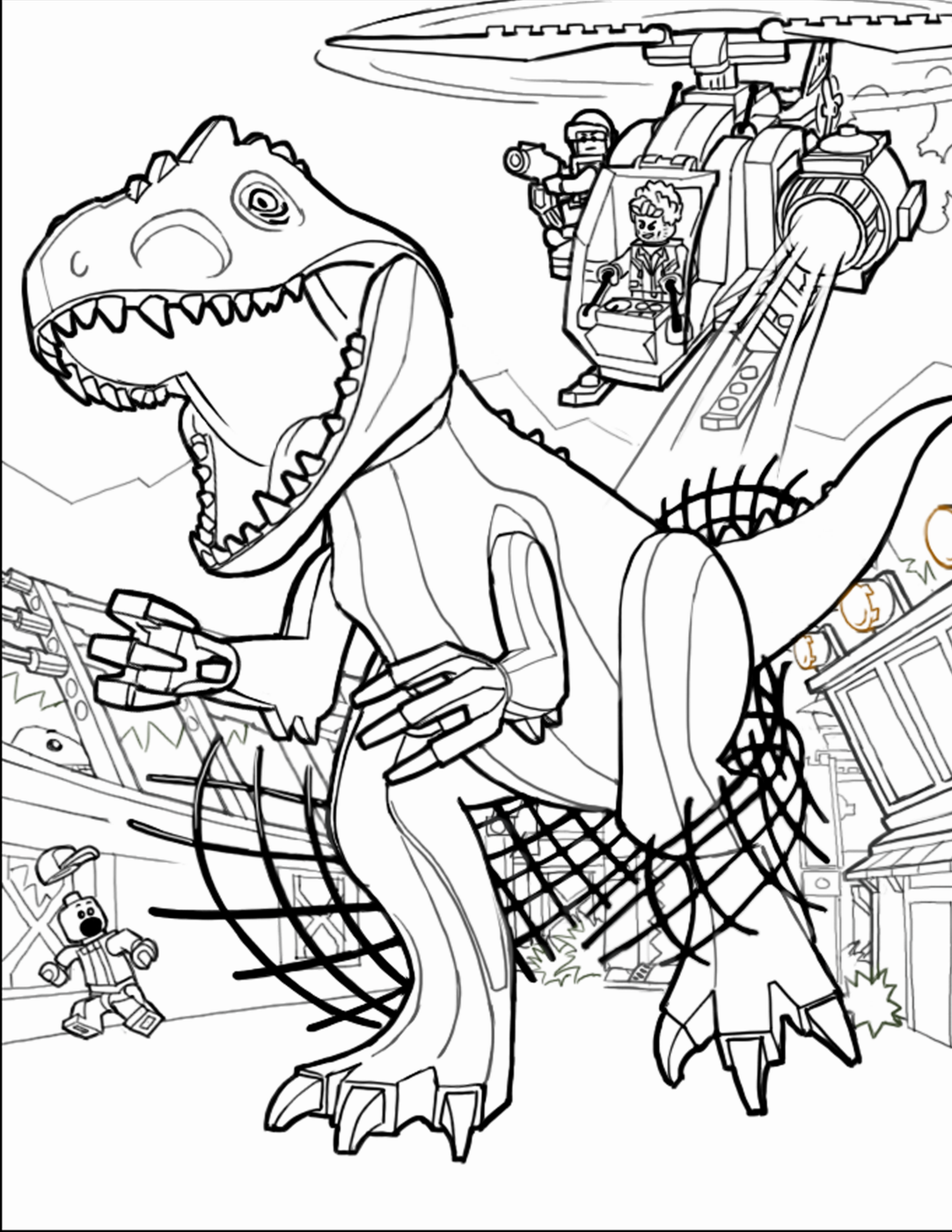
Color the LEGO Jurassic World page as a design translation exercise. The LEGO Jurassic World pages in the collection offer a unique coloring challenge: the LEGO aesthetic reduces dinosaurs and figures to smooth, simplified, brick-constructed approximations of their cinematic counterparts. The canonical colors still apply – Rexy is still olive-brown, Blue’s stripe is still blue – but the surface treatment is completely different. LEGO forms have flat, uniform surfaces with hard-edge shadow shapes rather than the organic curves and gradual tonal transitions of realistic dinosaur skin. Try applying the canonical franchise colors within the LEGO page’s simplified geometries, using harder color transitions than you would on a realistic page. The finished result should look like a LEGO toy in the franchise’s palette rather than a realistic dinosaur illustrated in a simplified style.
Design a new hybrid dinosaur following Dr. Wu’s approach. The franchise establishes that Henry Wu’s hybrid designs use a base genome supplemented with DNA from multiple sources that add specific functional attributes: cuttlefish for camouflage, tree frog for temperature adaptation, Velociraptor for intelligence and pack behavior. On a blank page, design your own hybrid following this methodology: choose a base species from the franchise, list three to five DNA donors and what attribute each contributes, and design the visual appearance that results from this genetic combination. Follow the franchise’s hybrid design conventions – the Indominus is near-white as a reference to the cuttlefish camouflage; the Indoraptor is near-black as a reference to its purpose as an assassination weapon; the color tells you something about what the animal is for. Name the hybrid with the franchise’s Latin-hybrid naming pattern (Indominus = untameable master; Indoraptor = untameable thief/plunderer). This is the most conceptually ambitious activity in the collection and directly engages with the franchise’s central ethical argument about the consequences of designing living things to specification.