Detective Conan Coloring Pages

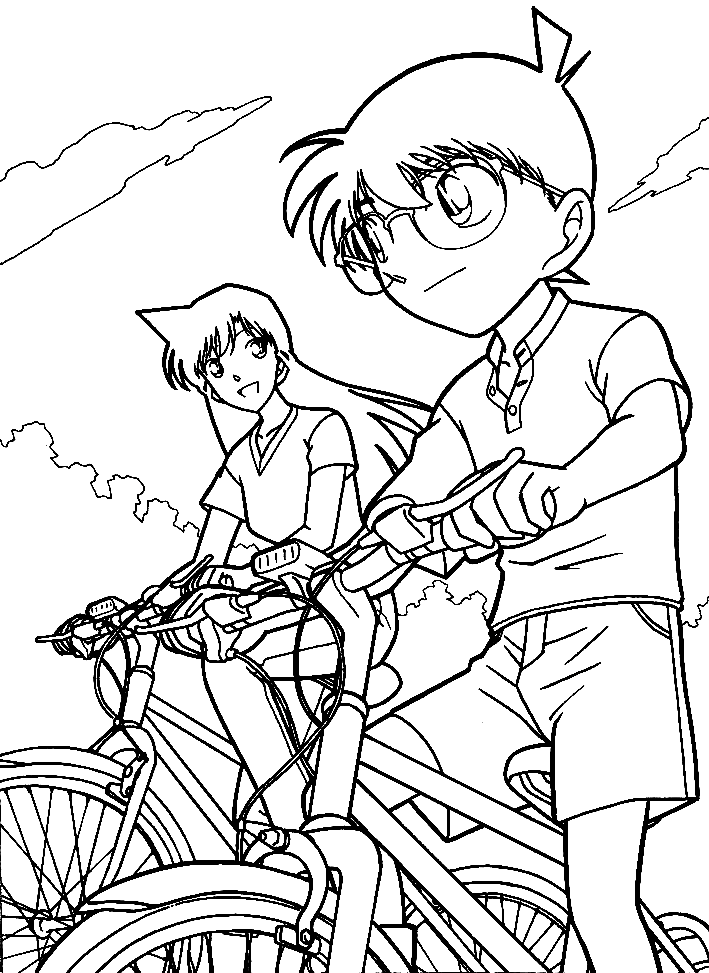
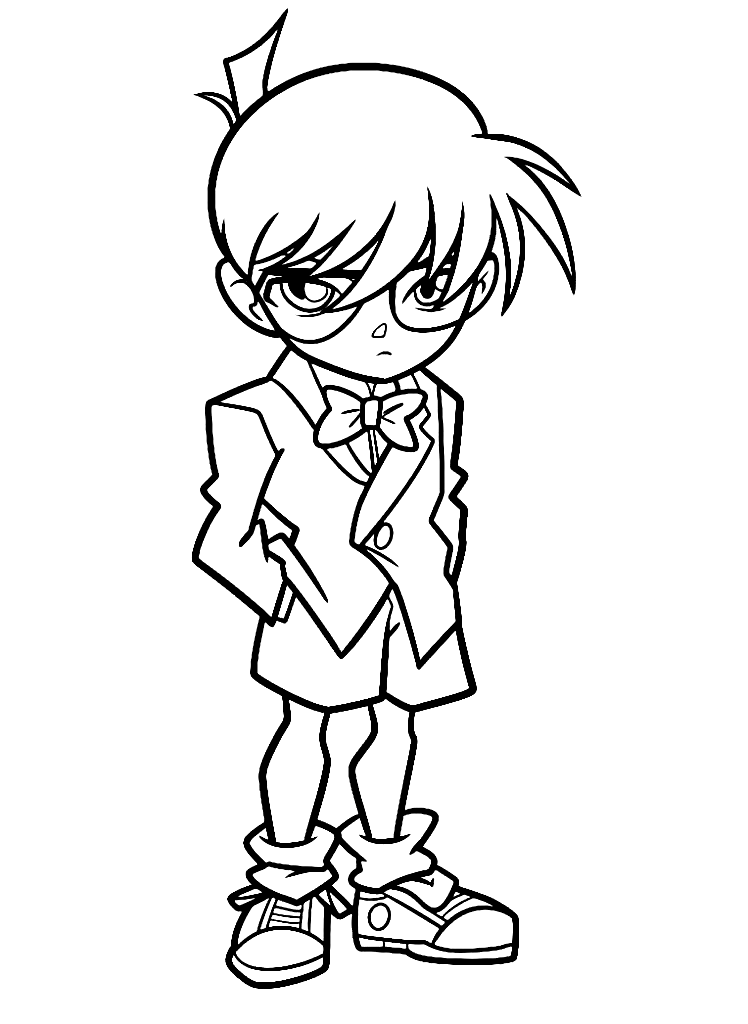
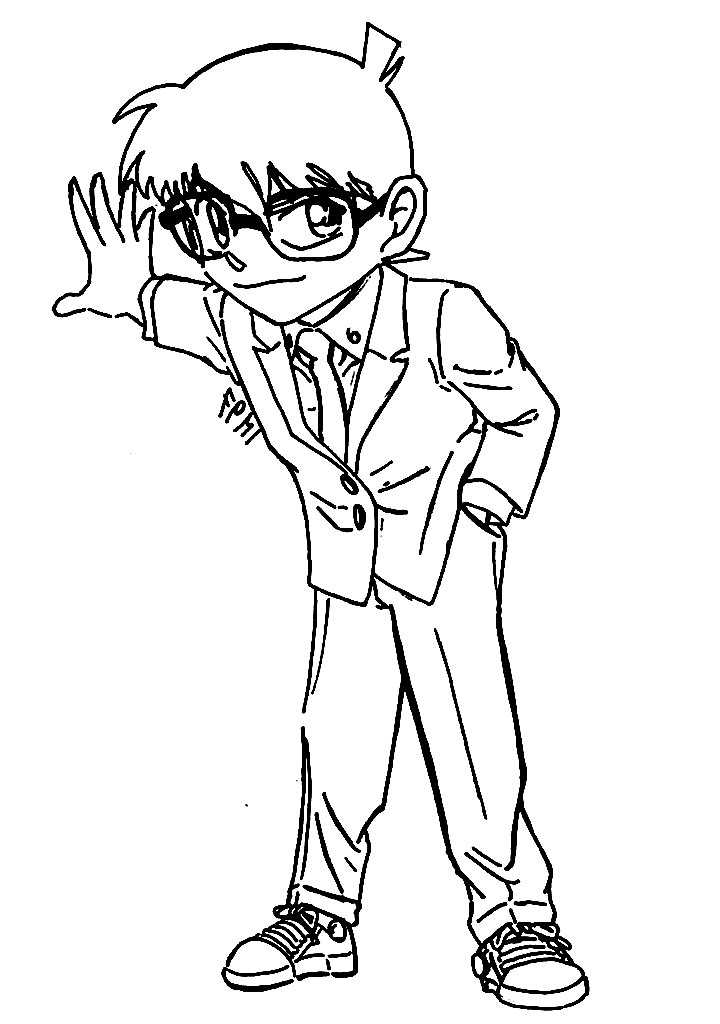
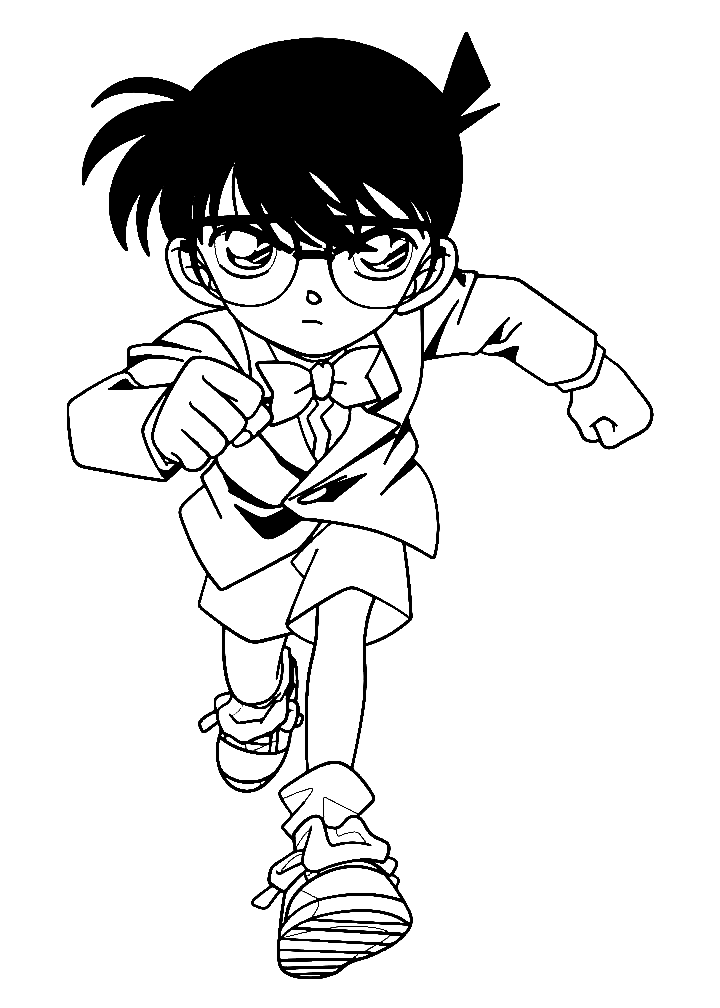
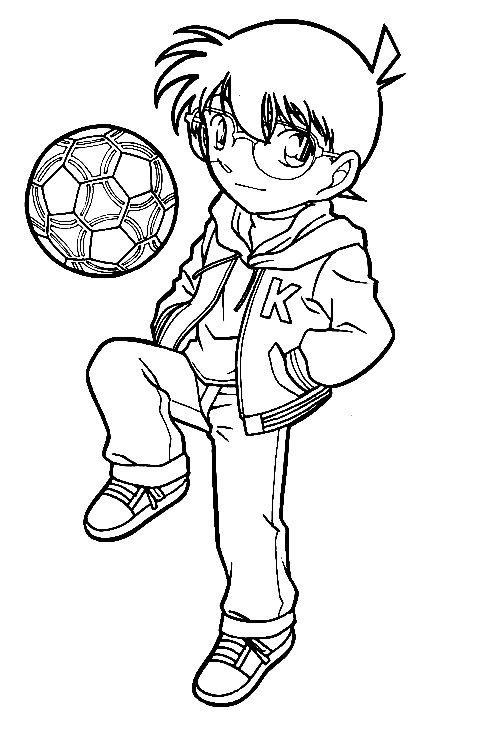
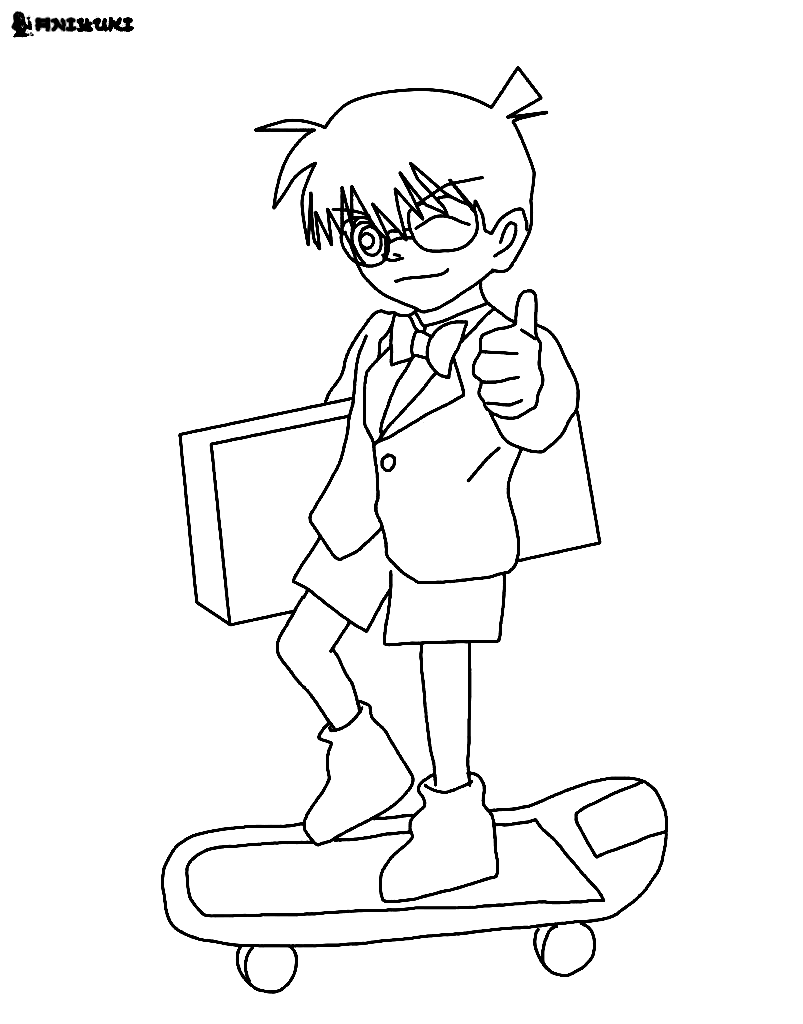
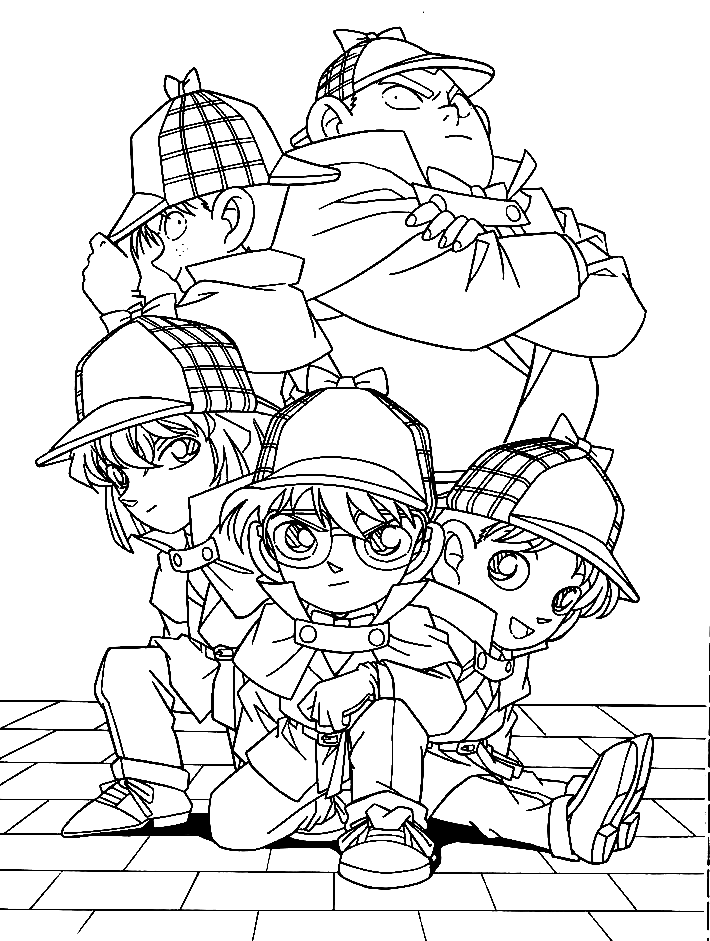
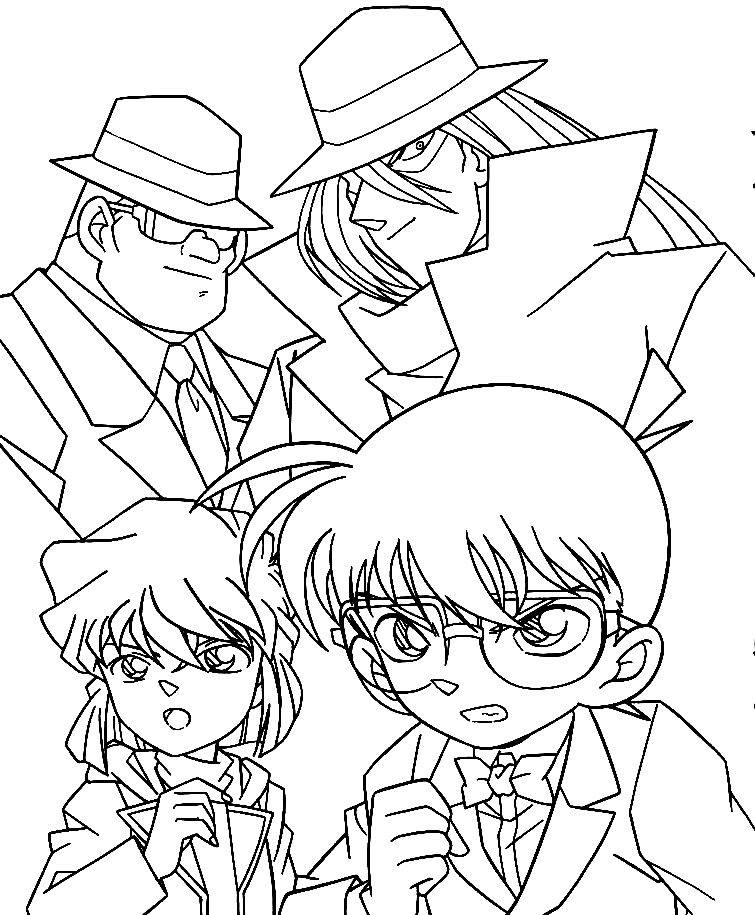
Detective Conan Coloring Pages at ColoringPagesOnly.com brings together 60+ free pages based on Gosho Aoyama’s long-running detective manga and anime series – Conan Edogawa in solo poses and action scenes, the full supporting cast including Ran Mouri, Heiji Hattori, Ai Haibara, Kogoro Mouri, Shuichi Akai, and Kaitou Kid, paired pages showing key character relationships, and activity pages showing Conan skateboarding, playing soccer, and riding a bike. Download any page as a PDF to print, or color online in your browser. The full Anime collection is at Anime Coloring Pages.
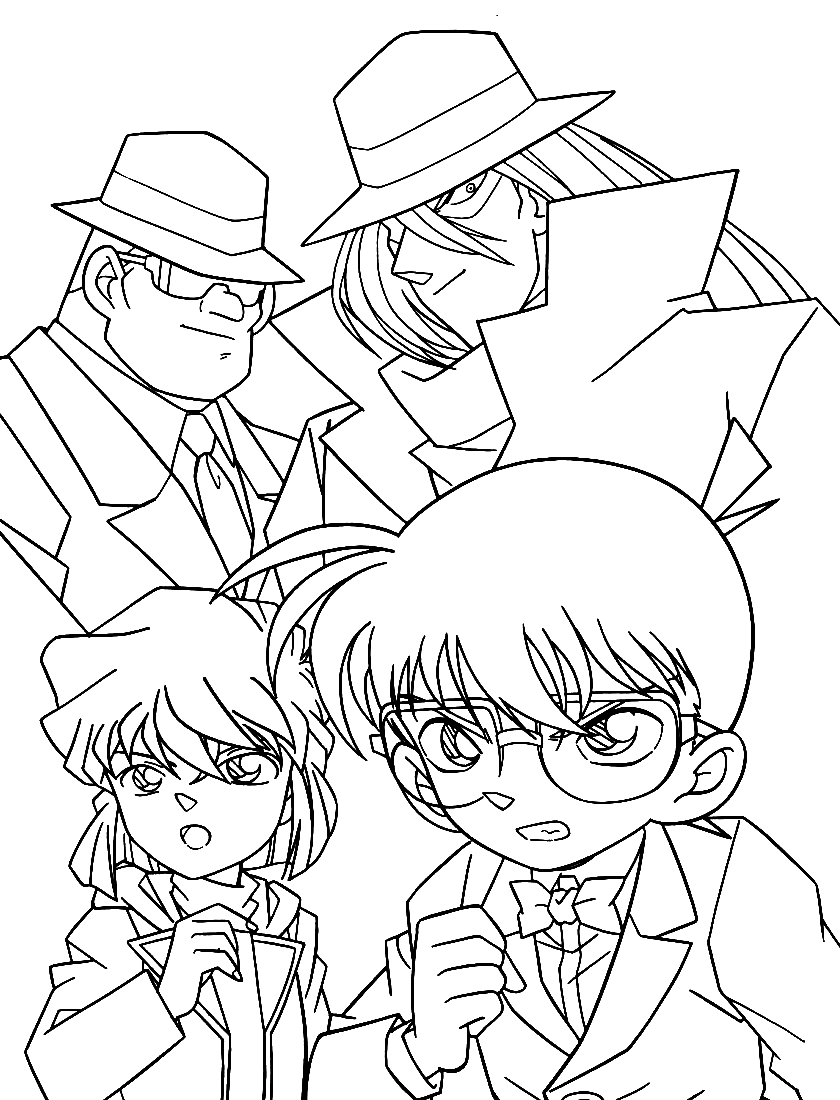
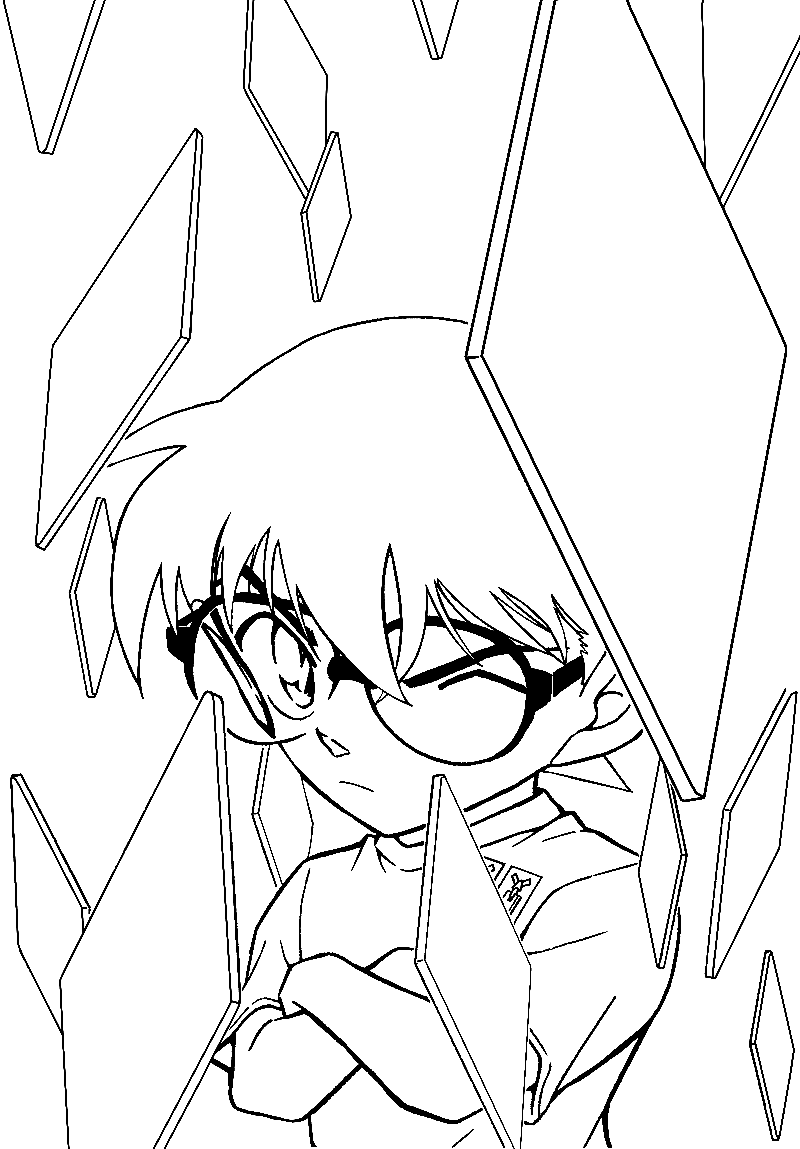

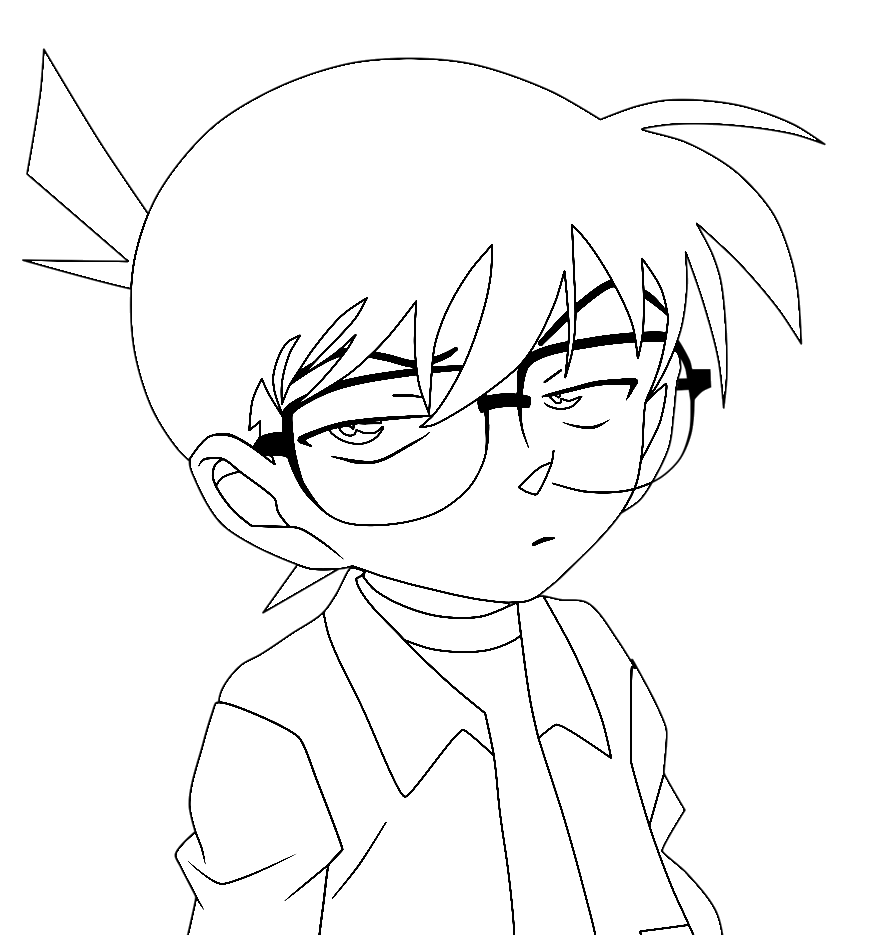
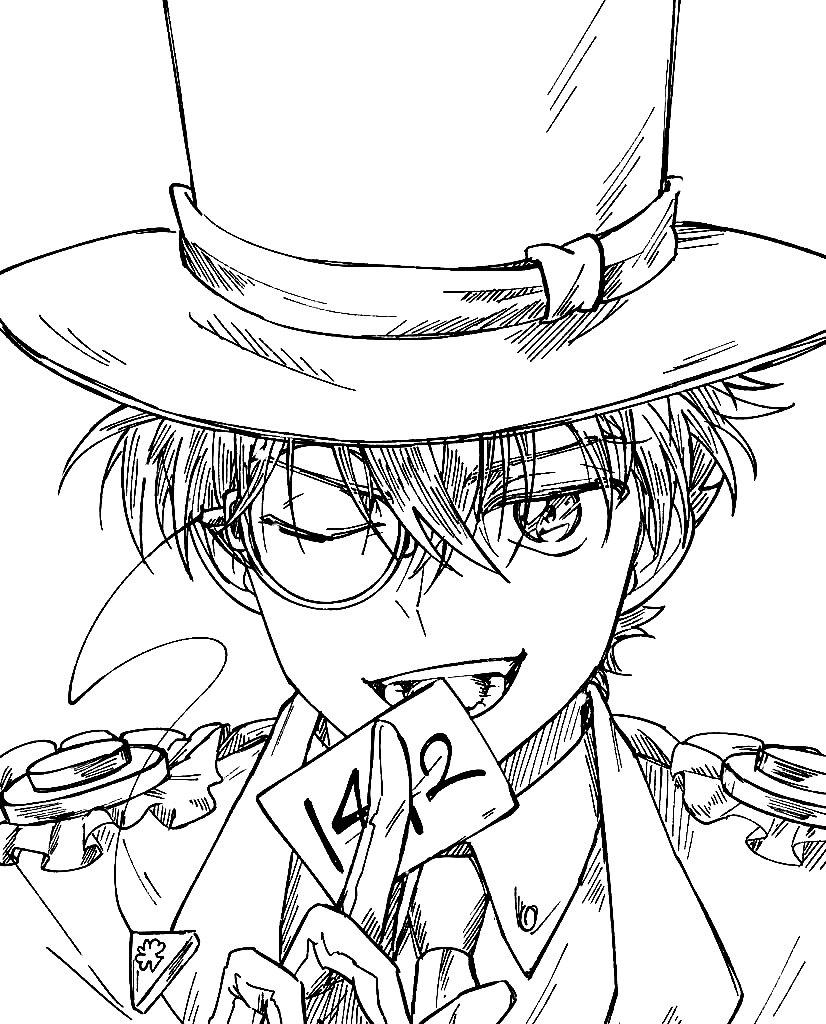
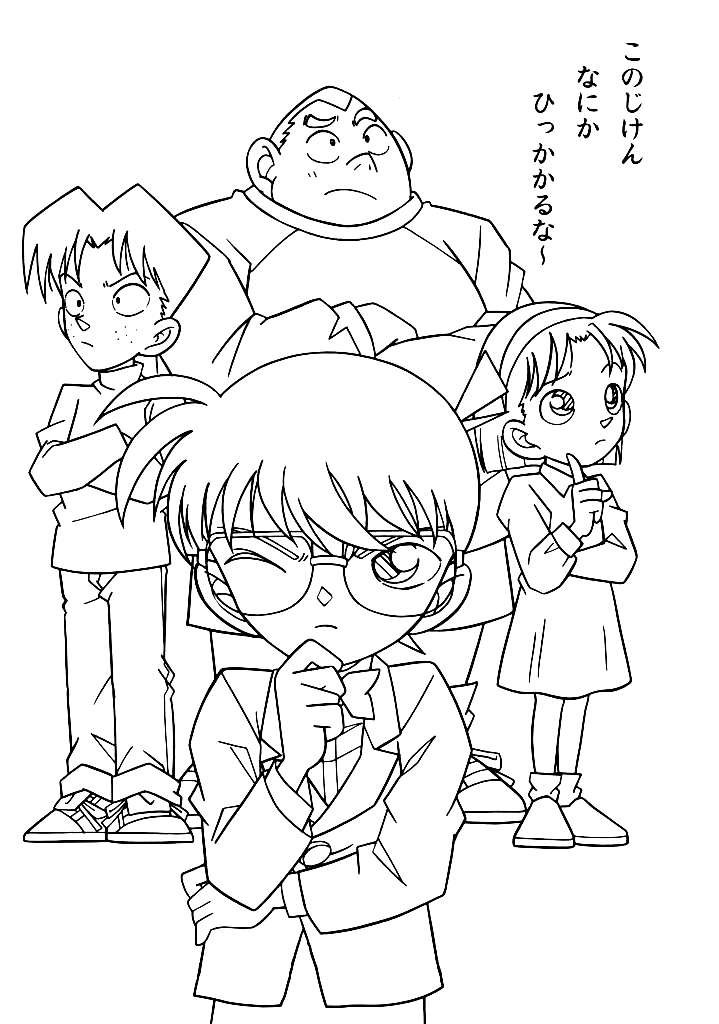
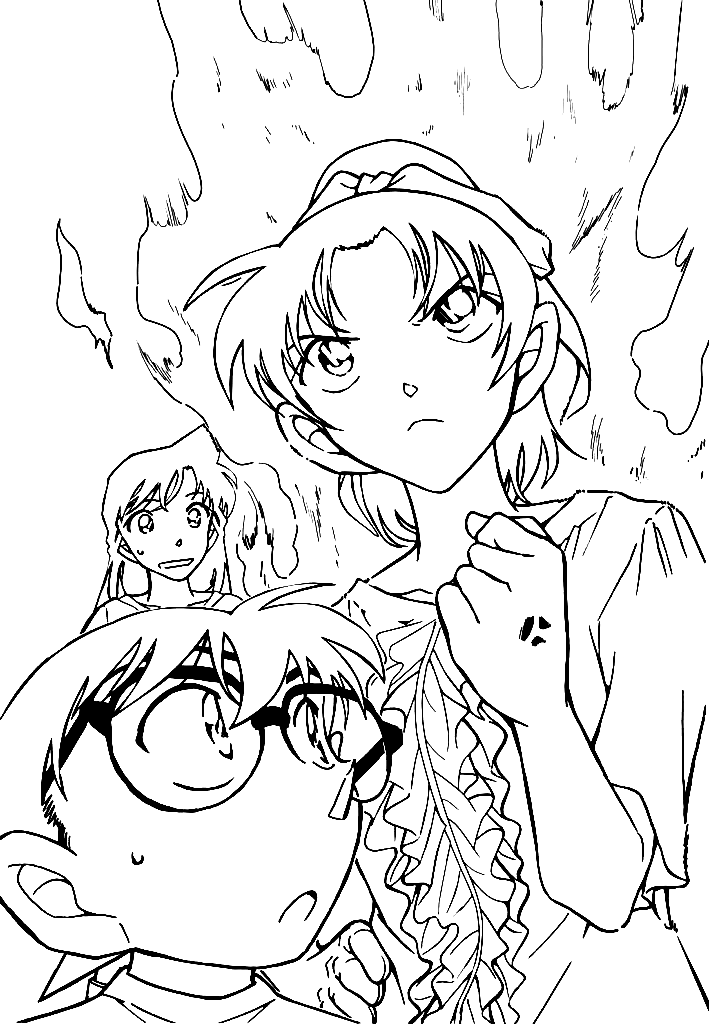
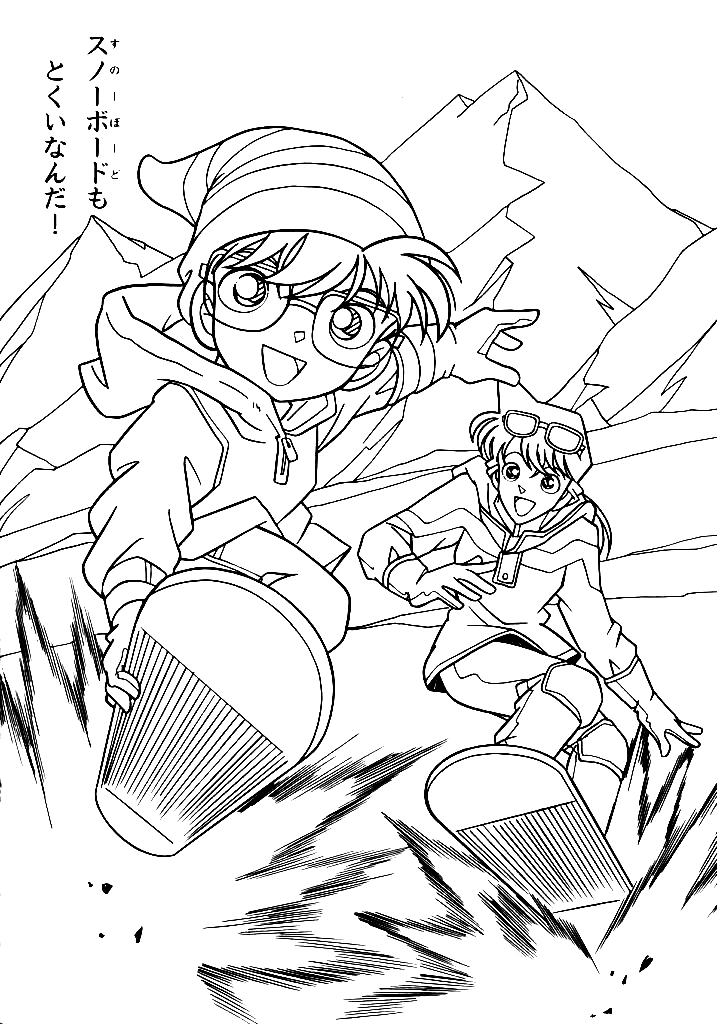
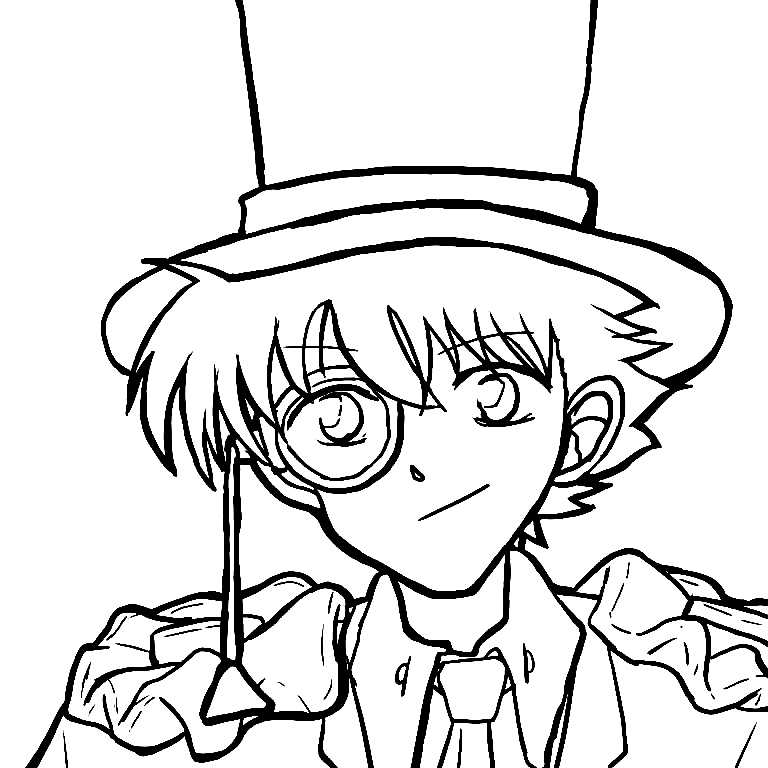

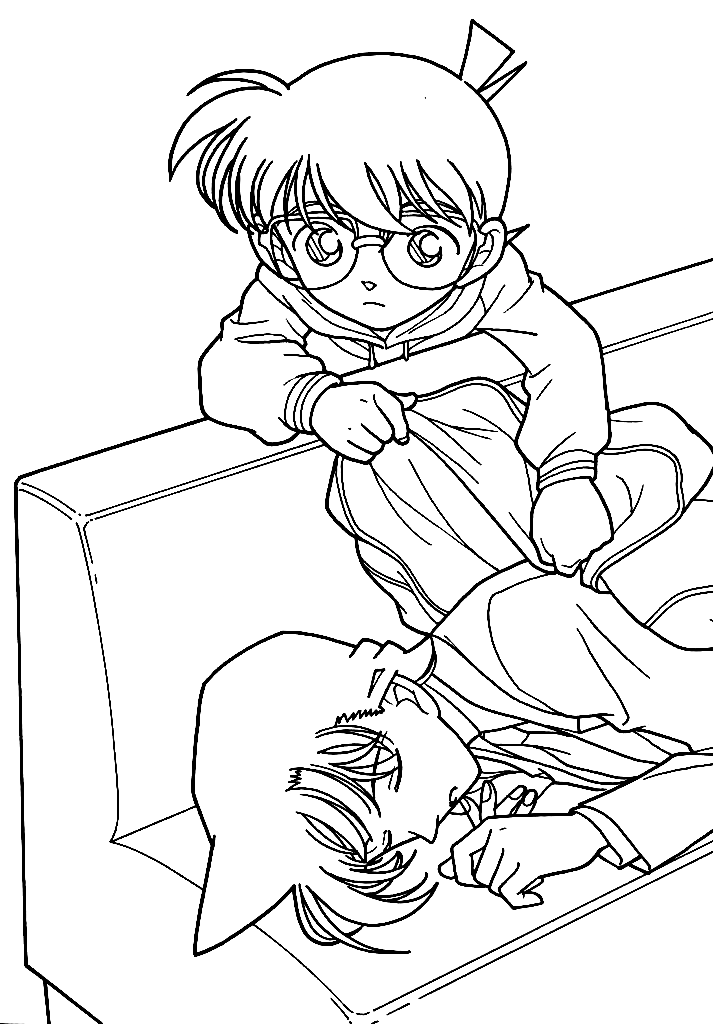

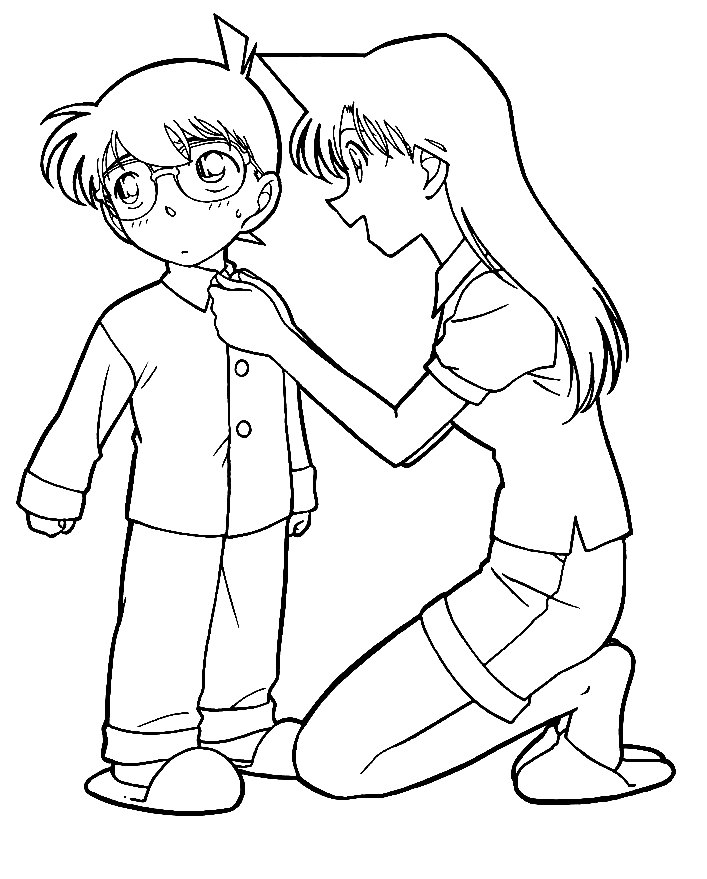
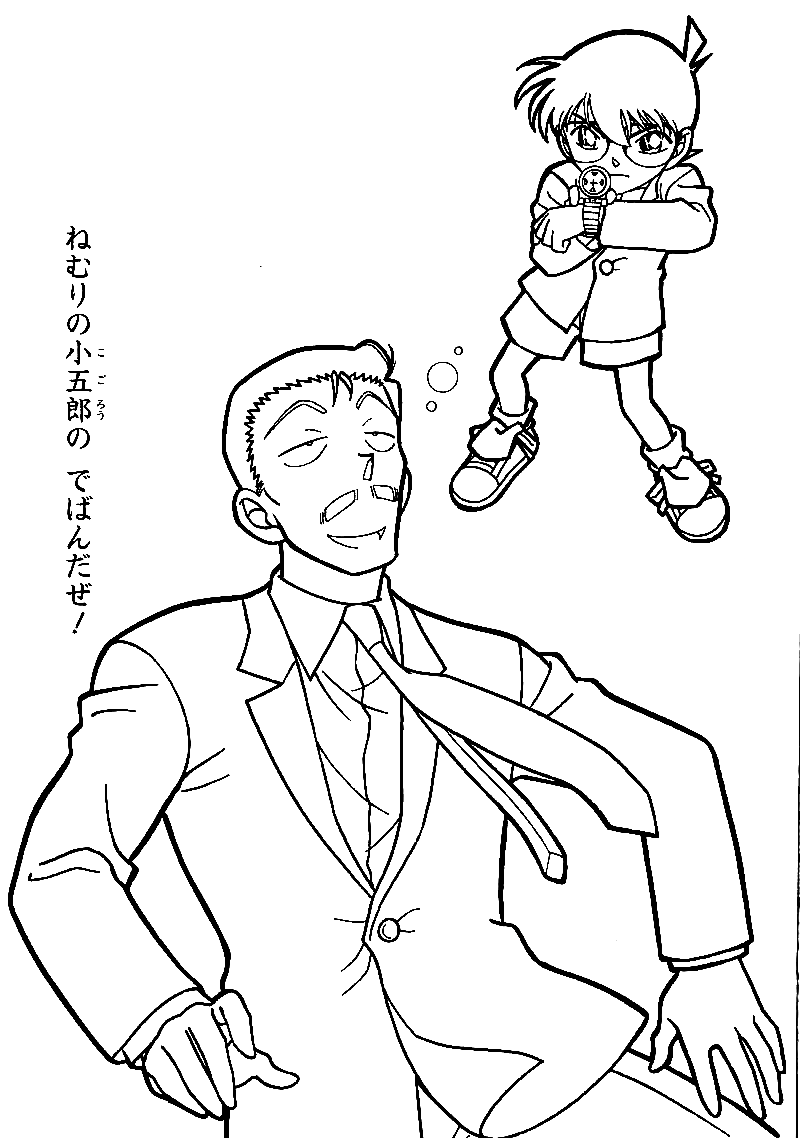
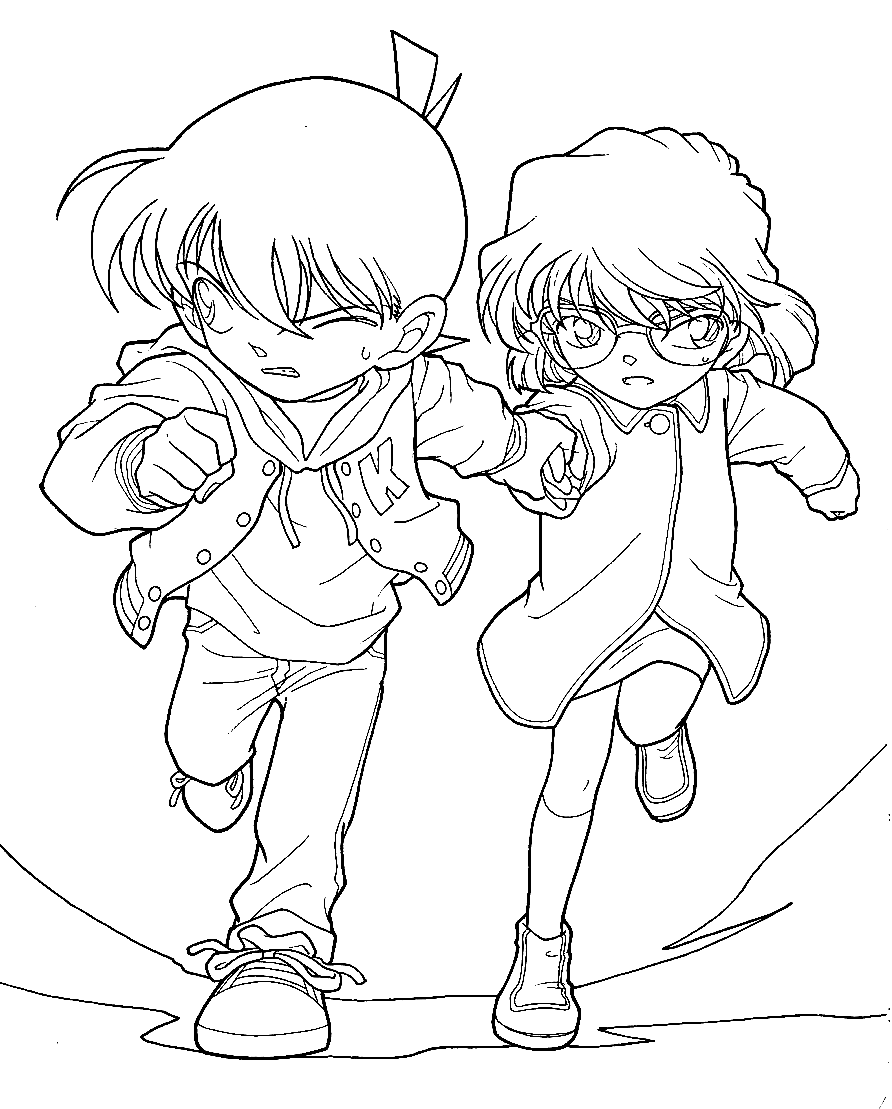
What is Detective Conan?
Detective Conan (名探偵コナン, Meitantei Conan) is a mystery manga series created by Gosho Aoyama, serialized in Weekly Shōnen Sunday since January 1994. The anime adaptation began airing in January 1996 and has continued for over 1,000 episodes, making it one of the longest-running anime series in history. Outside Japan, the series is also released under the title Case Closed in English-language markets.
The premise begins with Shinichi Kudo – a brilliant seventeen-year-old high school detective known as the “Savant of the East” – who is drugged by two members of the Black Organization, a mysterious criminal syndicate, after witnessing one of their deals. The drug, APTX 4869, was intended to kill without a trace, but its unexpected side effect on Shinichi is to shrink his body to that of a six-year-old child. To hide his identity from the organization – who would kill him if they knew he survived – Shinichi adopts the alias Conan Edogawa, a name drawn from two literary sources: Arthur Conan Doyle (creator of Sherlock Holmes) and Edogawa Ranpo (Japan’s pioneering mystery writer).
Conan moves in with Ran Mouri and her father, Kogoro Mouri, a bumbling private detective, and uses Kogoro’s cases as opportunities to solve crimes and gather information that might lead him back to the Black Organization. Using gadgets engineered by his neighbor Professor Hiroshi Agasa – including the Stun-Gun Wristwatch, the Voice-Changing Bow Tie, and the Turbo-Engine Skateboard – Conan solves murders, kidnappings, and thefts while maintaining the appearance of an ordinary first-grader and concealing his true identity from nearly everyone around him. The primary driving narrative of the series is his search for a way to return to his original body and dismantle the Black Organization.
The series is published in over 25 countries and has sold more than 270 million volumes worldwide, making it one of the best-selling manga series of all time. Annual theatrical films – released each April since 1997 – are major events in the Japanese box office calendar.
Character Guide
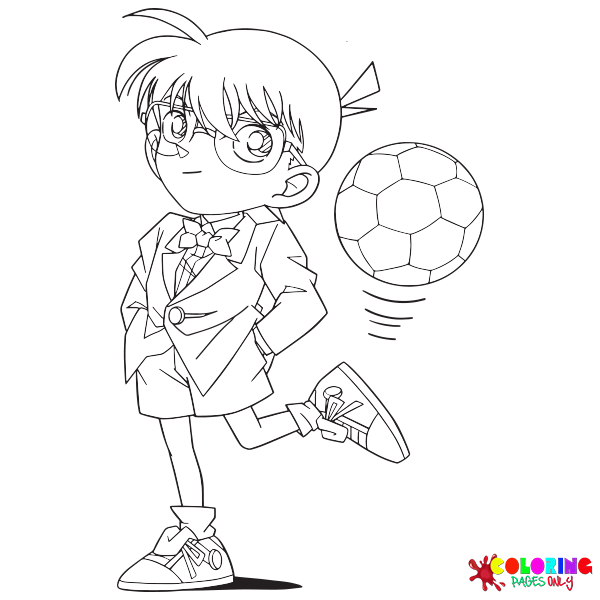
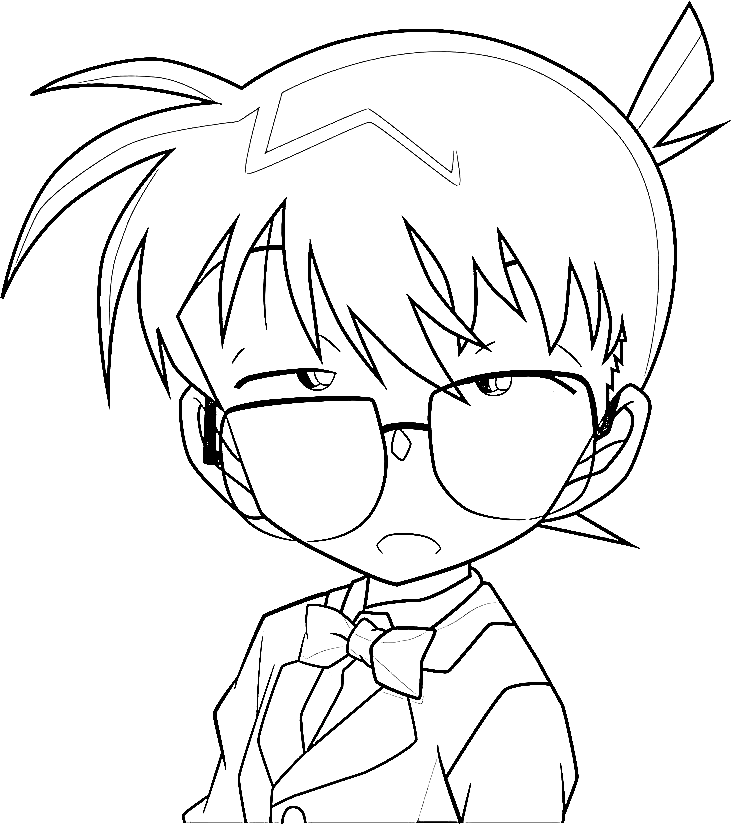
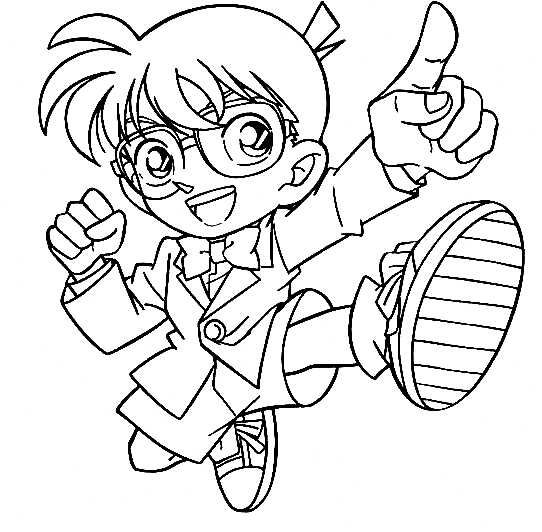
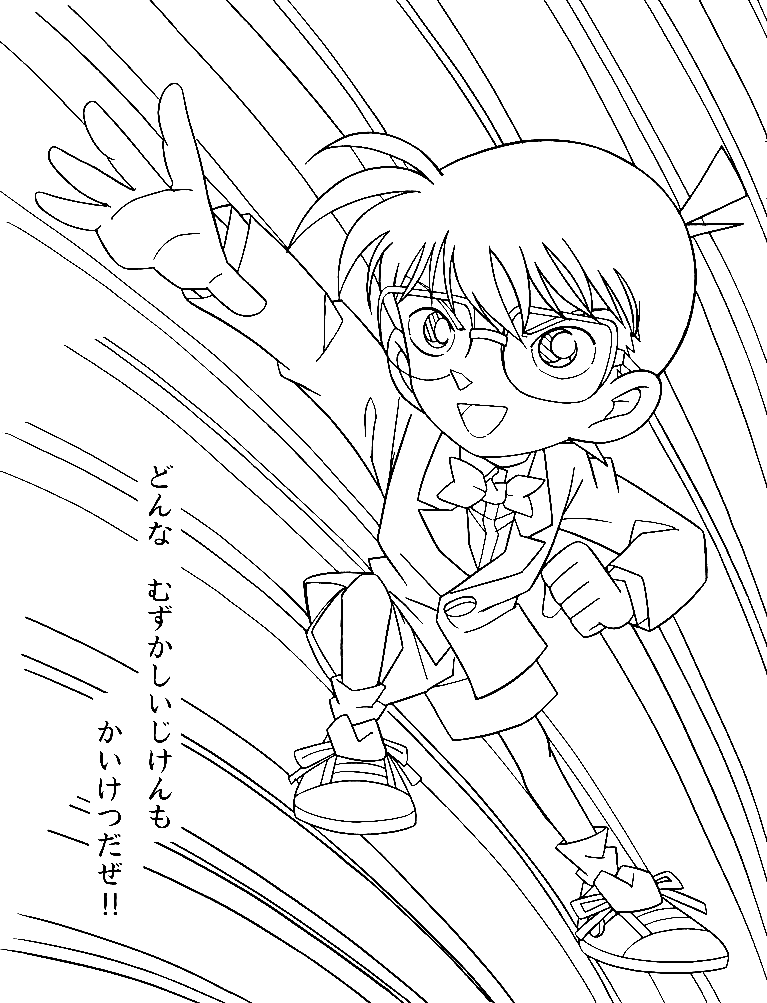
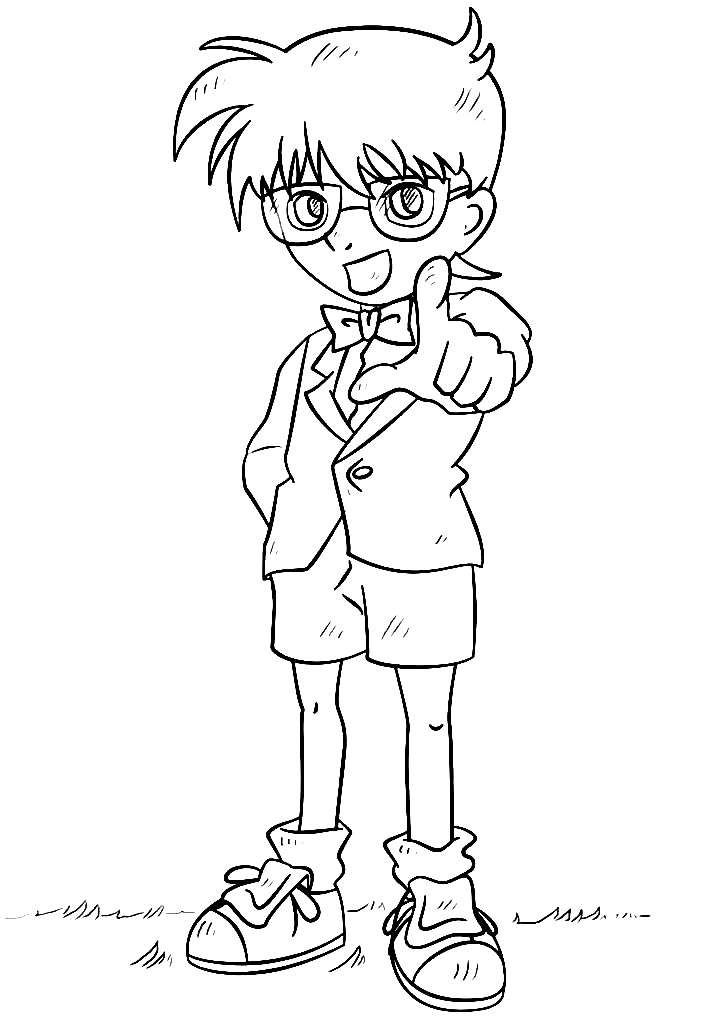
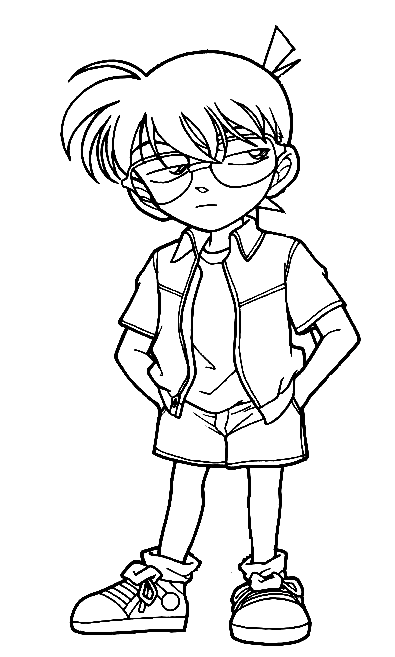
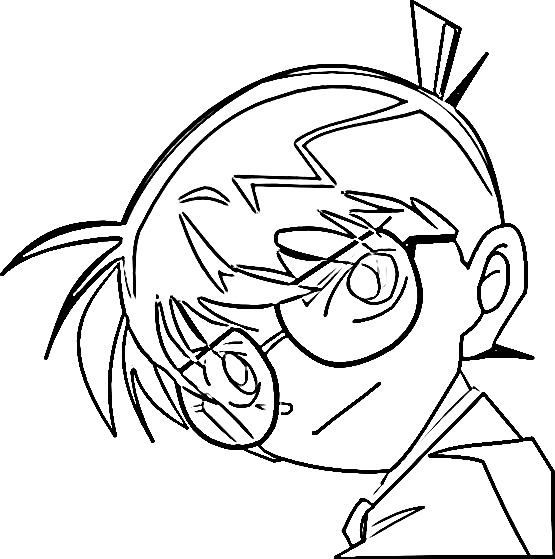
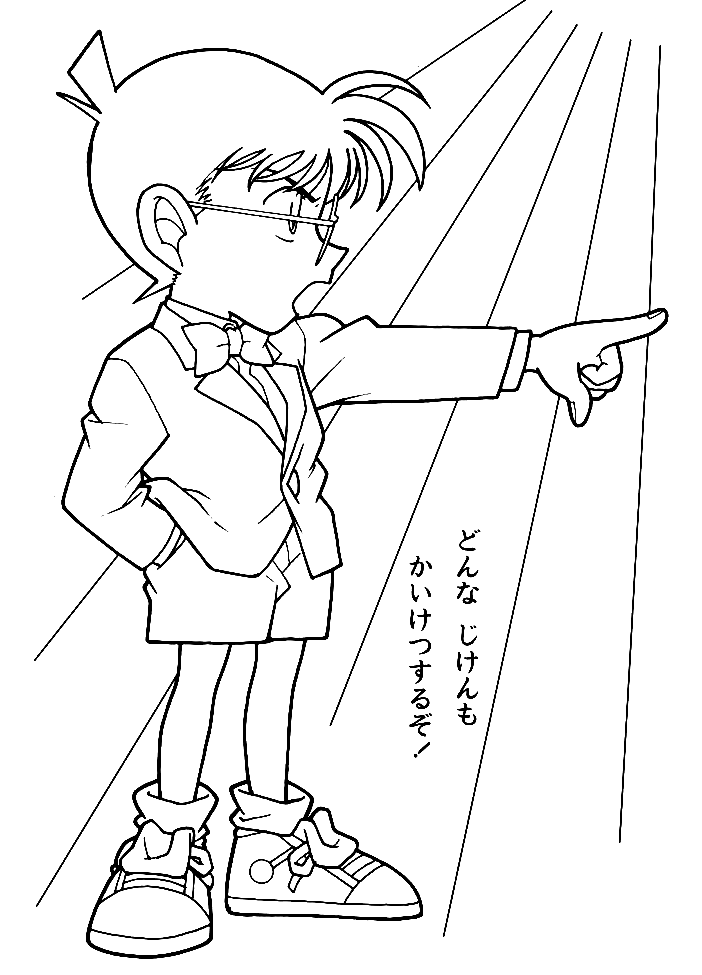
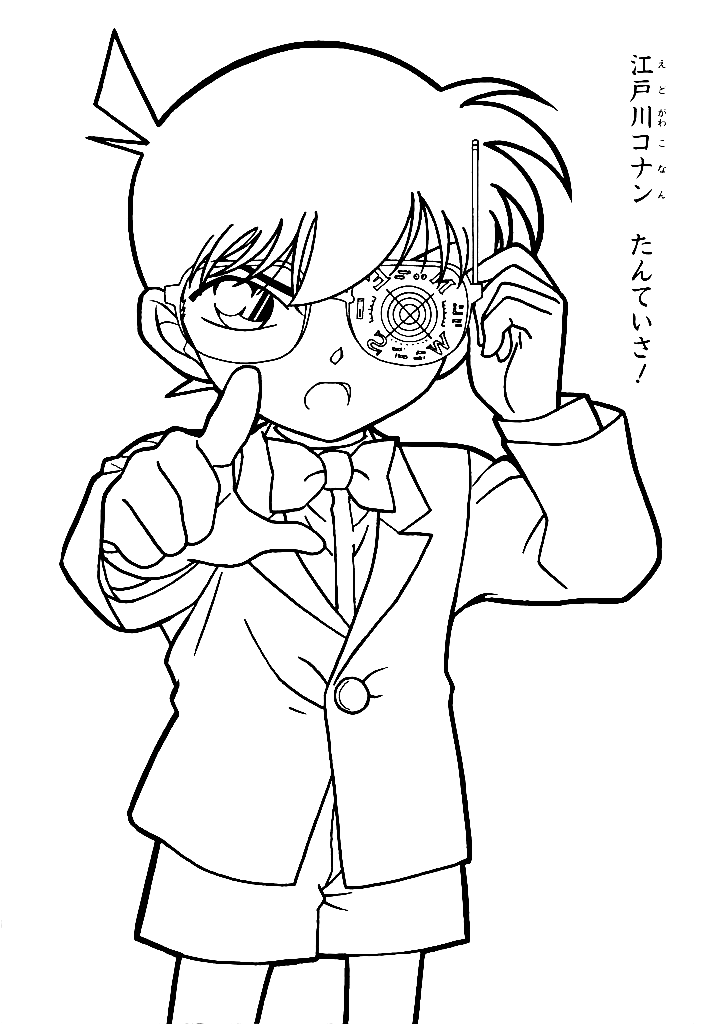
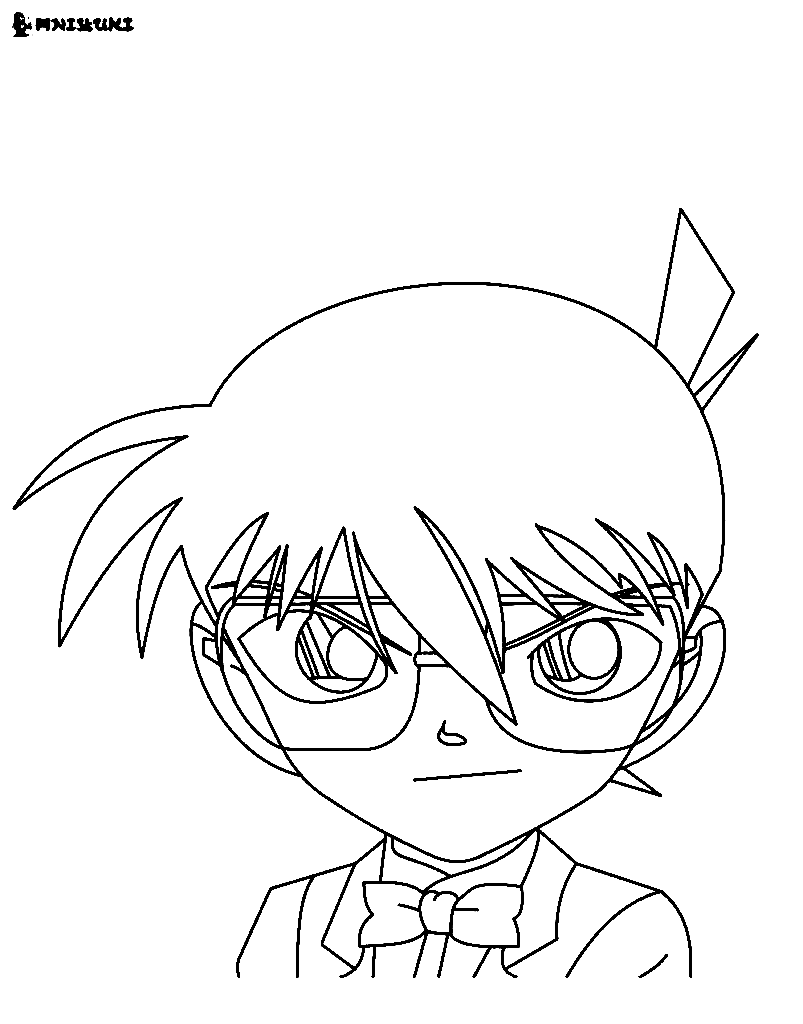
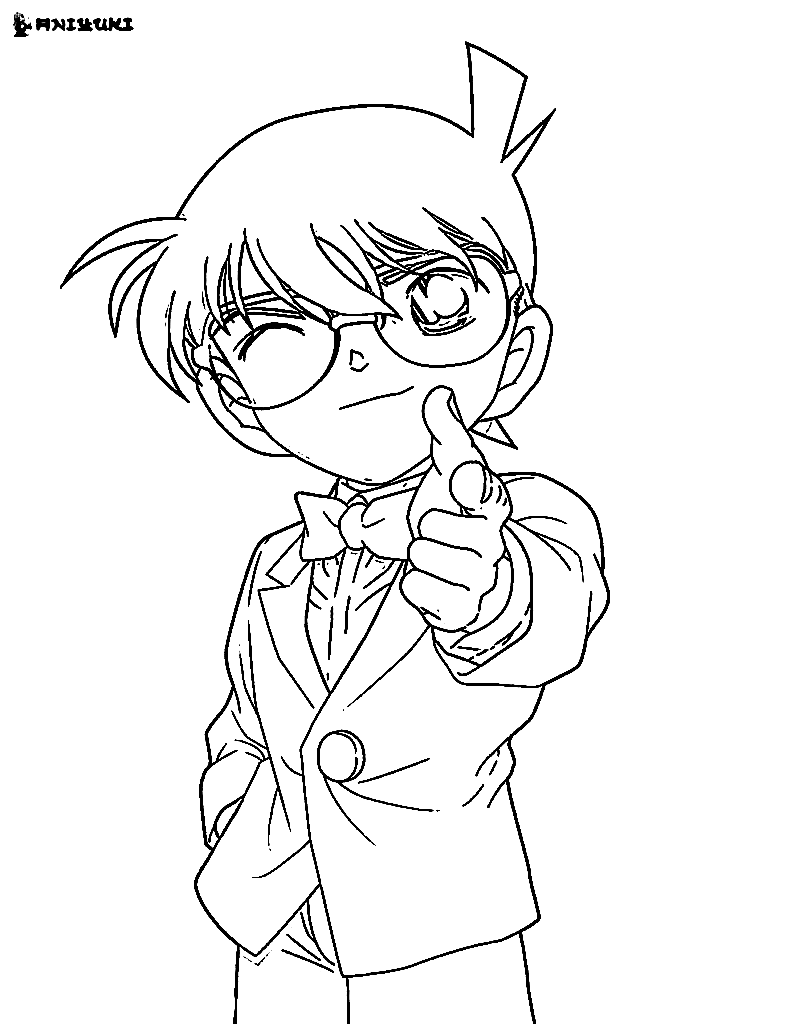
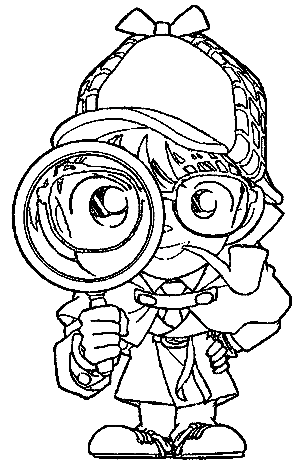
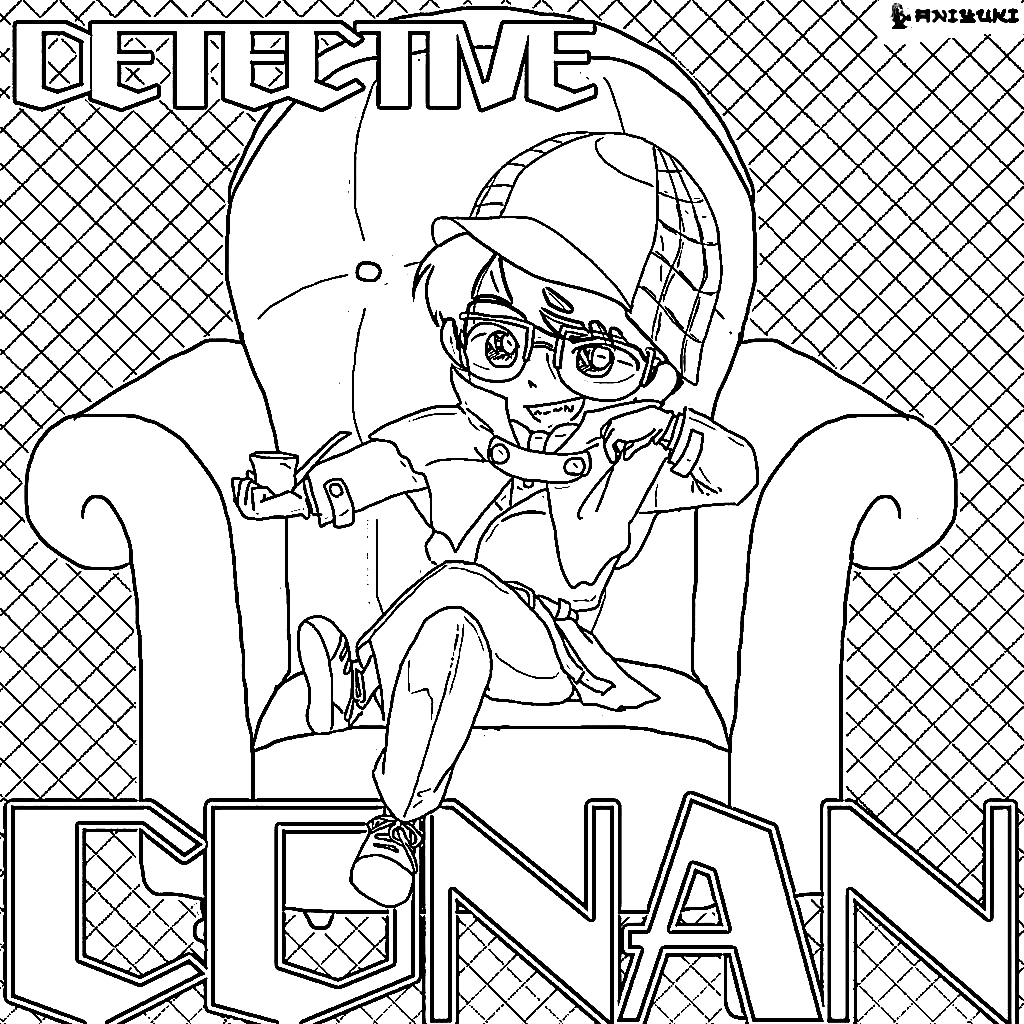
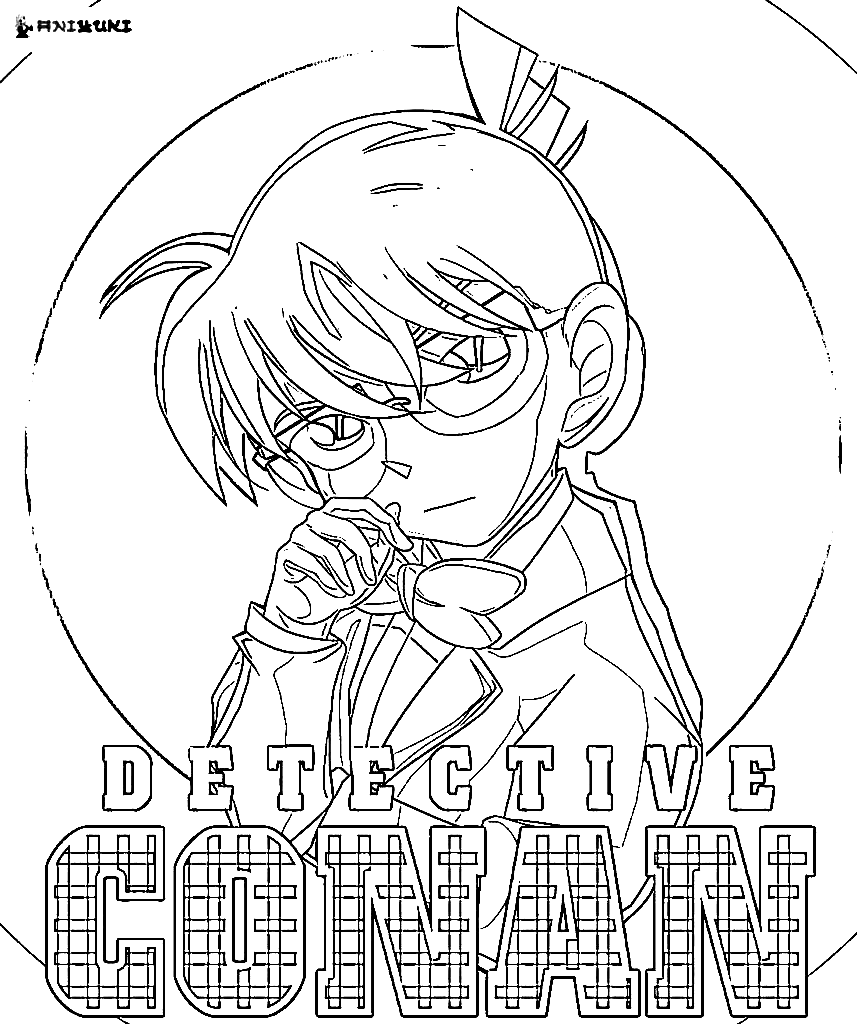
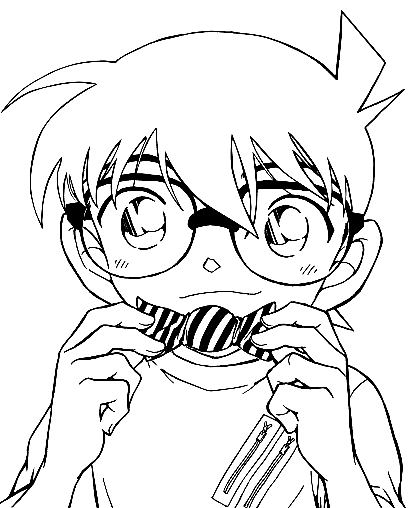
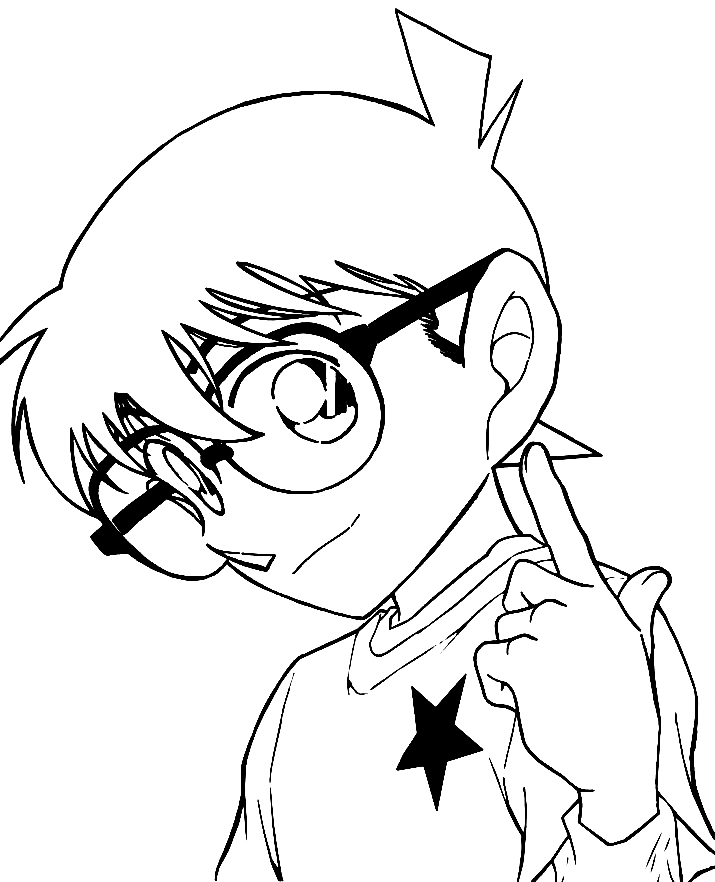
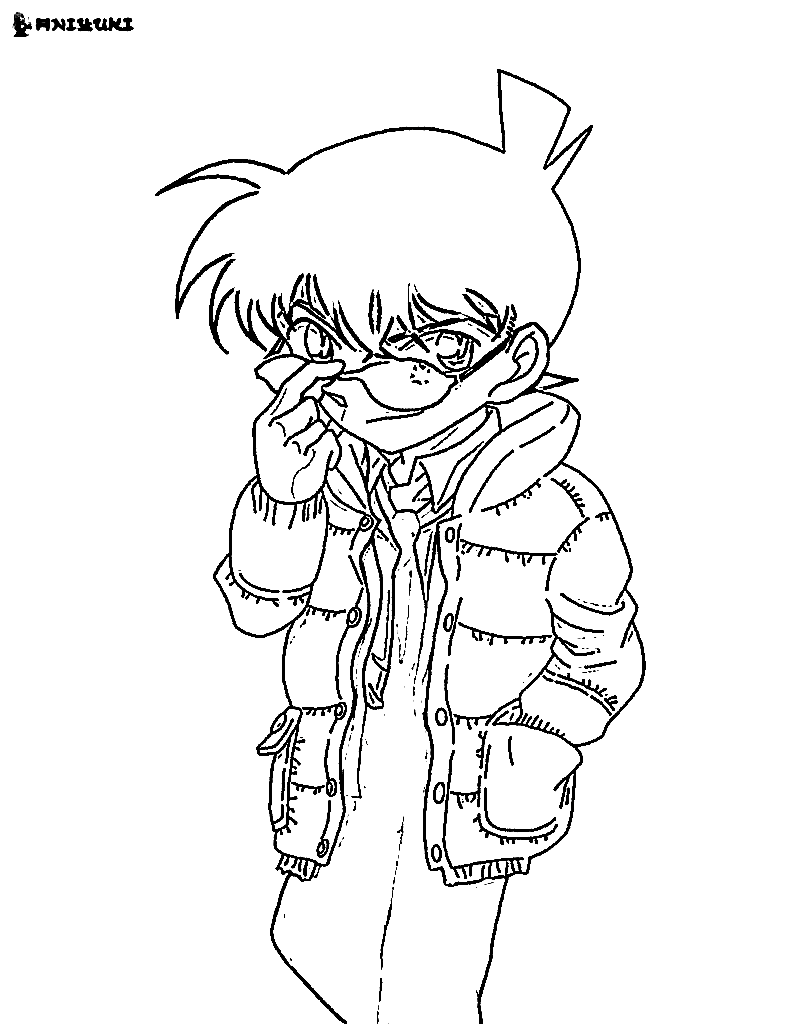
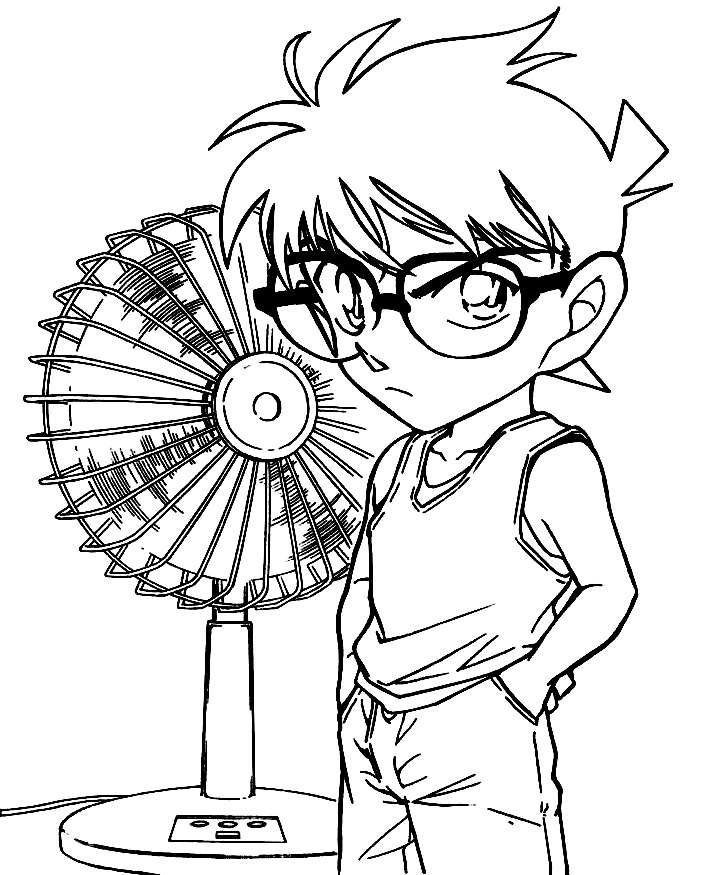
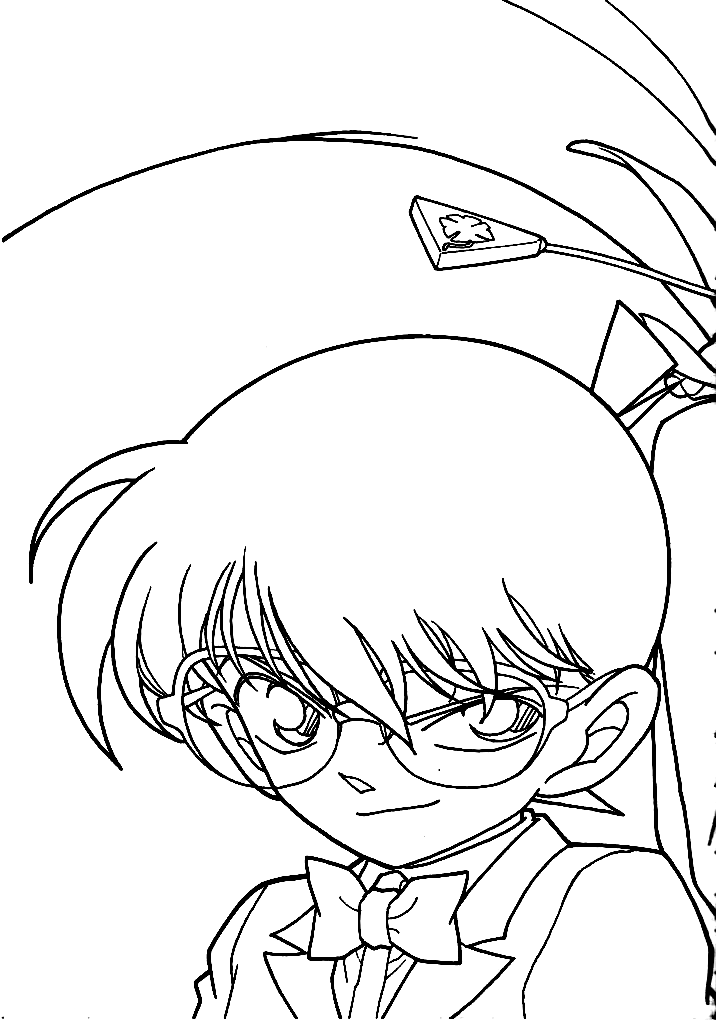
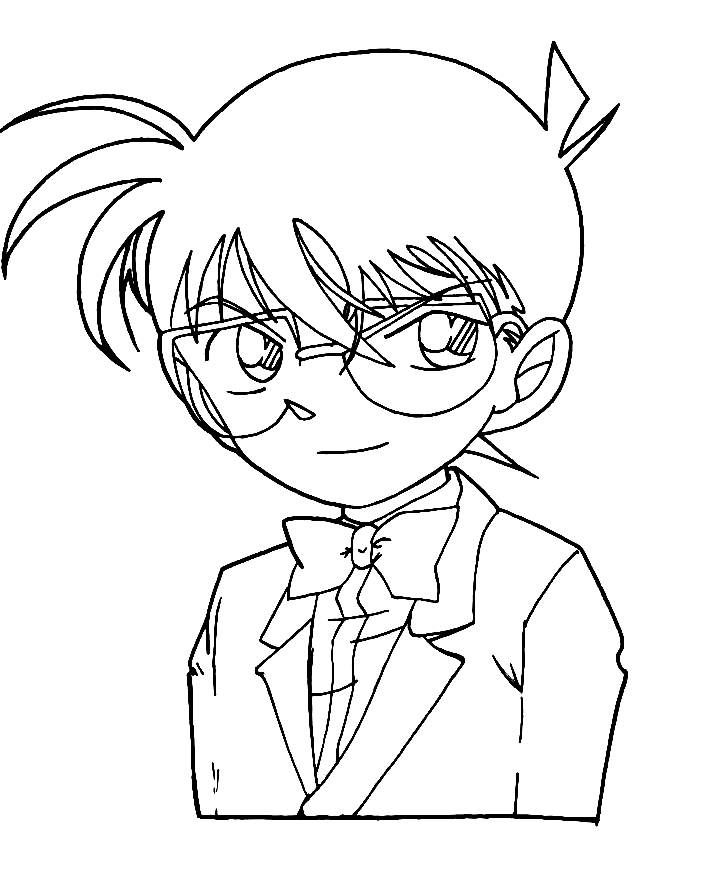
Conan Edogawa (真名: 工藤新一 / Shinichi Kudo) is the protagonist in his shrunken form – a small boy with jet-black hair cut in a slightly spiky style, large round glasses with dark frames, and the standard uniform of Teitan Elementary School: dark navy-blue shorts, a dark navy jacket, a white shirt, and his most visually distinctive accessory, a red bow tie. The bow tie is not just a fashion detail – it is the Voice-Changing Bow Tie, one of Agasa’s gadgets, which allows Conan to imitate any voice. His glasses are also gadgets, containing lenses that enhance vision and a tracking beam. Conan’s expression in action pages tends toward sharp concentration – the adult detective’s analytical gaze visible in the child’s eyes.
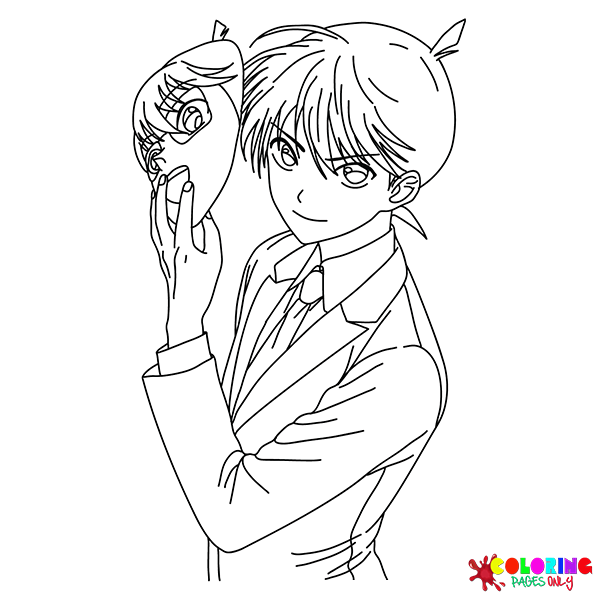
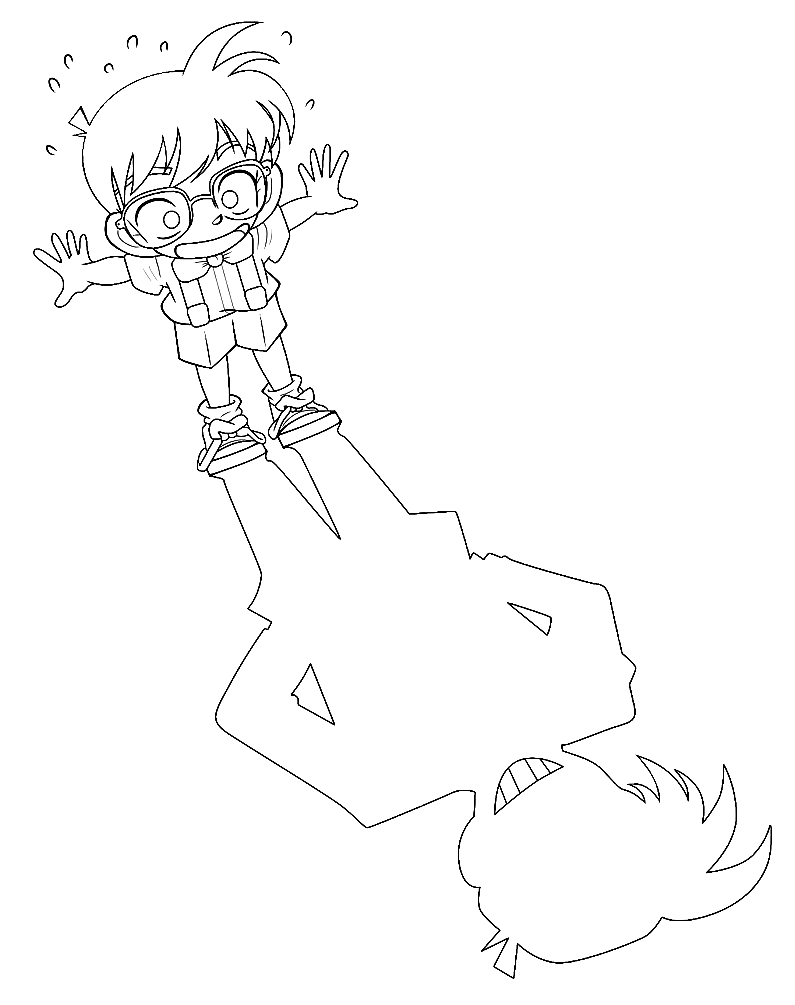
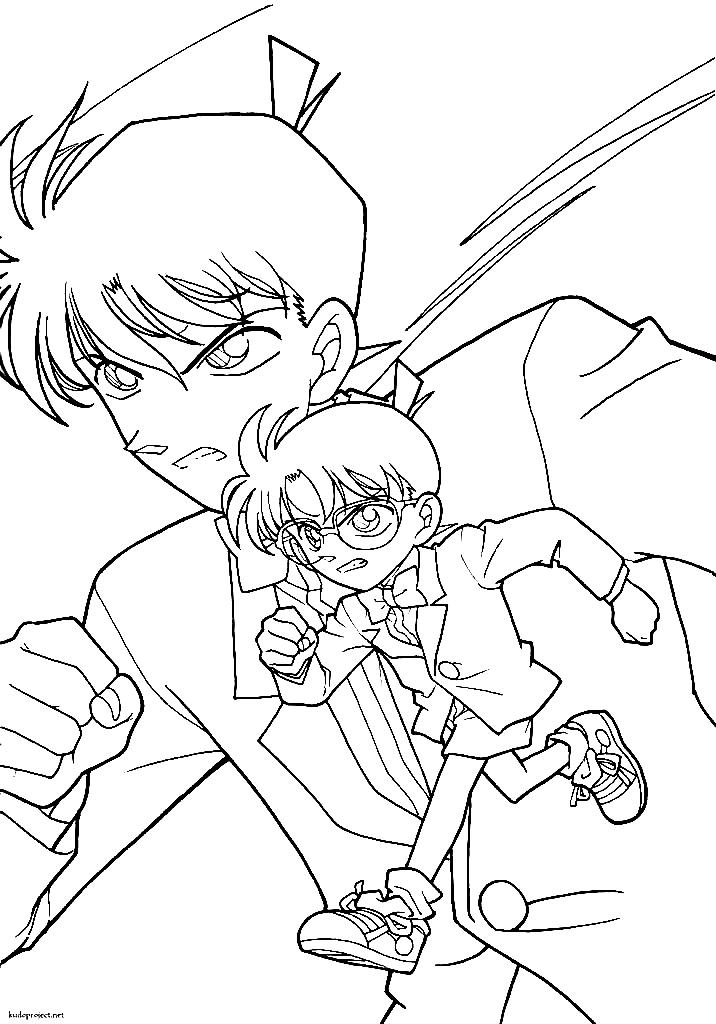
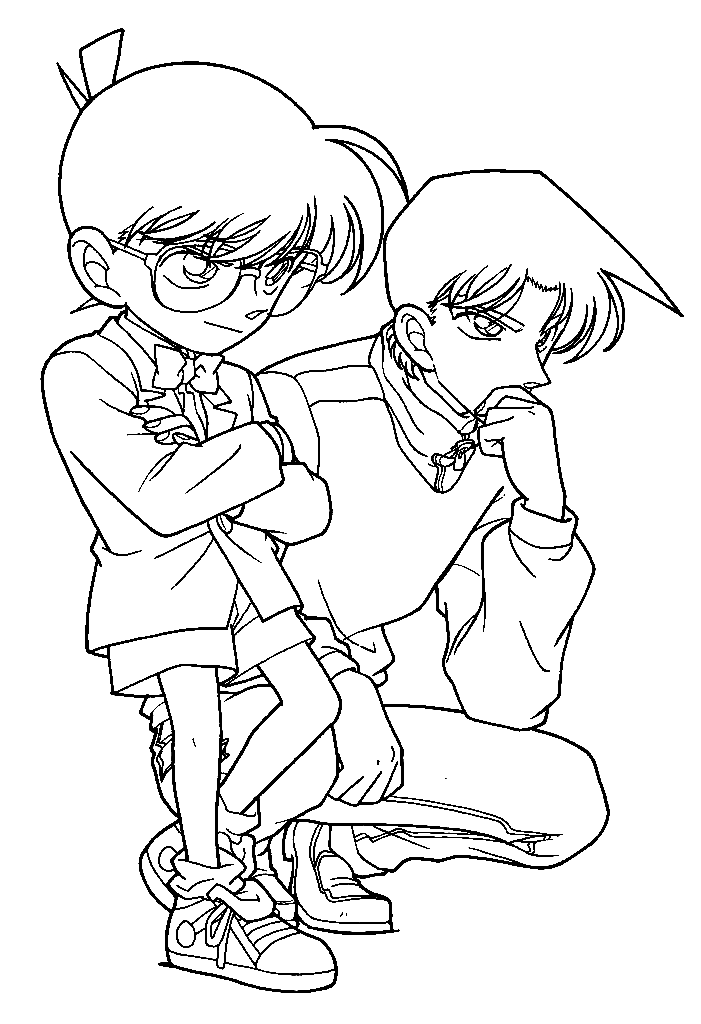
Shinichi Kudo appears in the collection primarily in the Conan and Shinichi page – a composition showing Conan’s child form alongside a silhouette or full rendering of his teenage self. Shinichi is a tall seventeen-year-old with the same jet-black hair as Conan (because they are literally the same person), a more athletic build, and typically dressed in either his high school uniform or casual teen-appropriate clothing. The visual relationship between Conan and Shinichi – identical hair, identical features, radically different body sizes – is one of the series’ central design motifs.
Ran Mouri (毛利蘭) is Shinichi’s childhood friend and Kogoro’s daughter, the person Conan lives with, and the emotional center of the series’ romantic subplot. She is a teenage girl with long dark brown hair that is typically worn partially pulled back and secured with a hair tie, leaving a ponytail or partially loose style. She is also a highly skilled practitioner of karate, which occasionally becomes relevant to the series’ action sequences. Her clothing varies by episode, making her coloring pages more palette-flexible than most other characters.
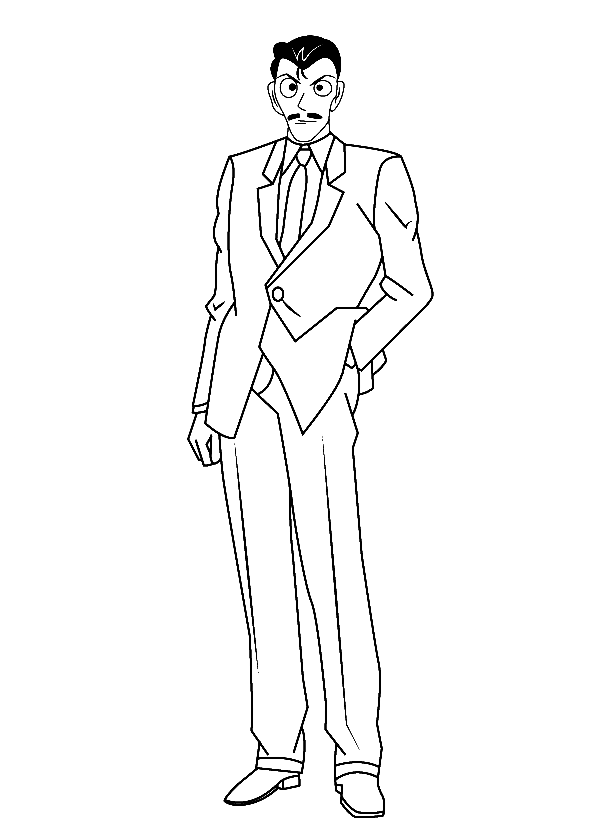
Kogoro Mouri (毛利小五郎) is Ran’s father and Conan’s reluctant host – a former police officer who has become a private detective of middling ability, frequently “used” by Conan as a puppet to deliver deductions. He is a stocky man in his mid-thirties with short dark brown hair and a small mustache, typically wearing business casual clothing: a collared shirt, trousers, and a jacket. His expression ranges from confident bluster to confused embarrassment, depending on how many times Conan has knocked him out in a given arc.
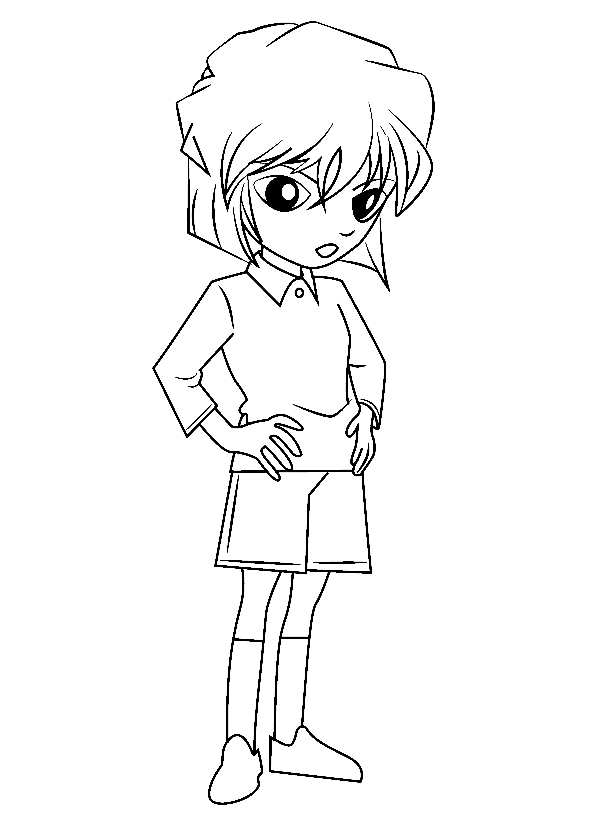
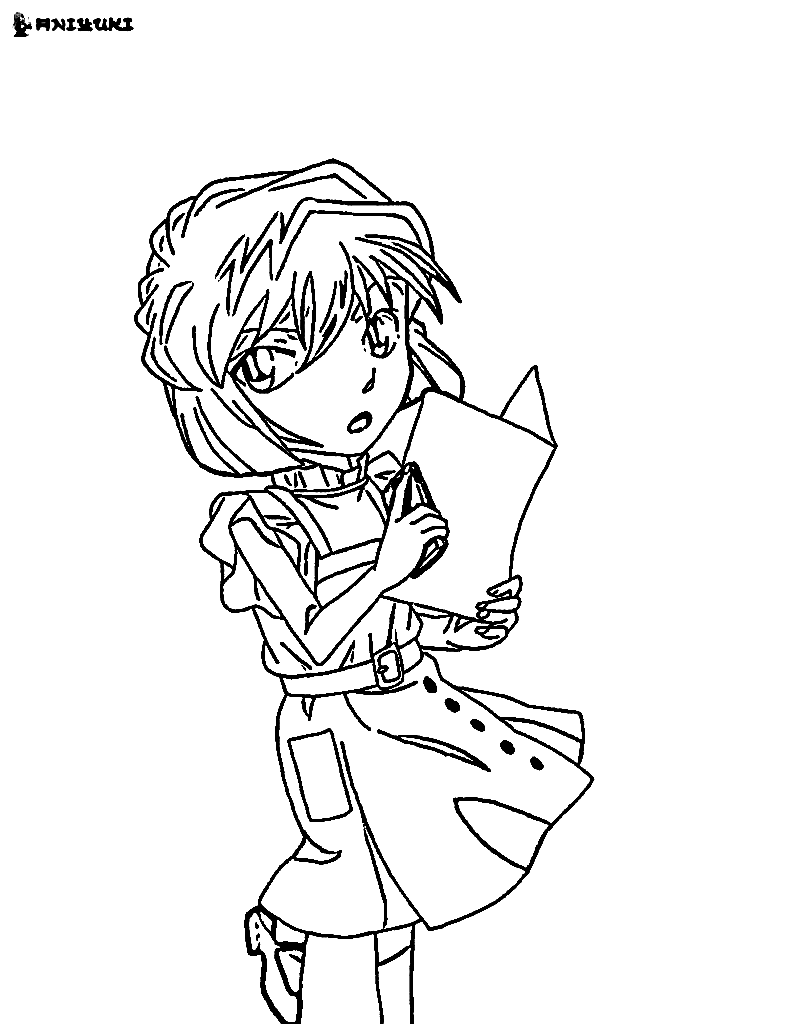
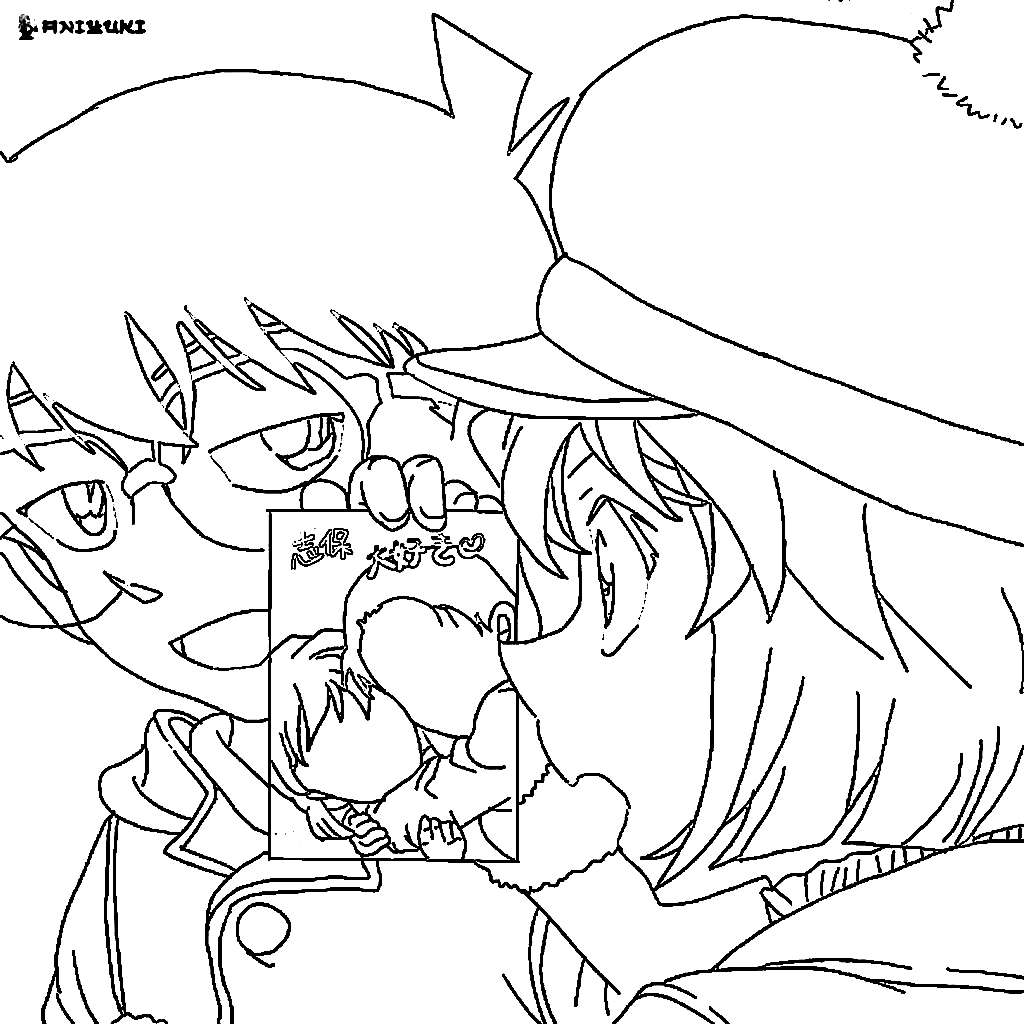
Ai Haibara (灰原哀, real name Shiho Miyano / 宮野志保) is a child with the same origin as Conan – she was a scientist in the Black Organization who created APTX 4869 and shrank herself with it to escape. She has distinctive strawberry-blonde or pale amber hair, an unusually composed and serious expression for a child, and typically wears light-colored or pastel clothing. Of all the supporting characters, Haibara is the one whose skin tone and hair color are most specifically unusual relative to the standard Japanese manga character palette – the light hair against fair skin and her habitually grave expression give her a visual distinctness that is central to her character.
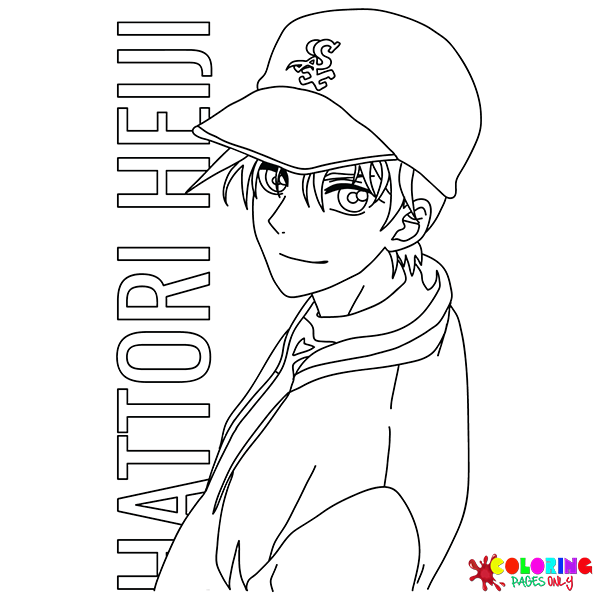
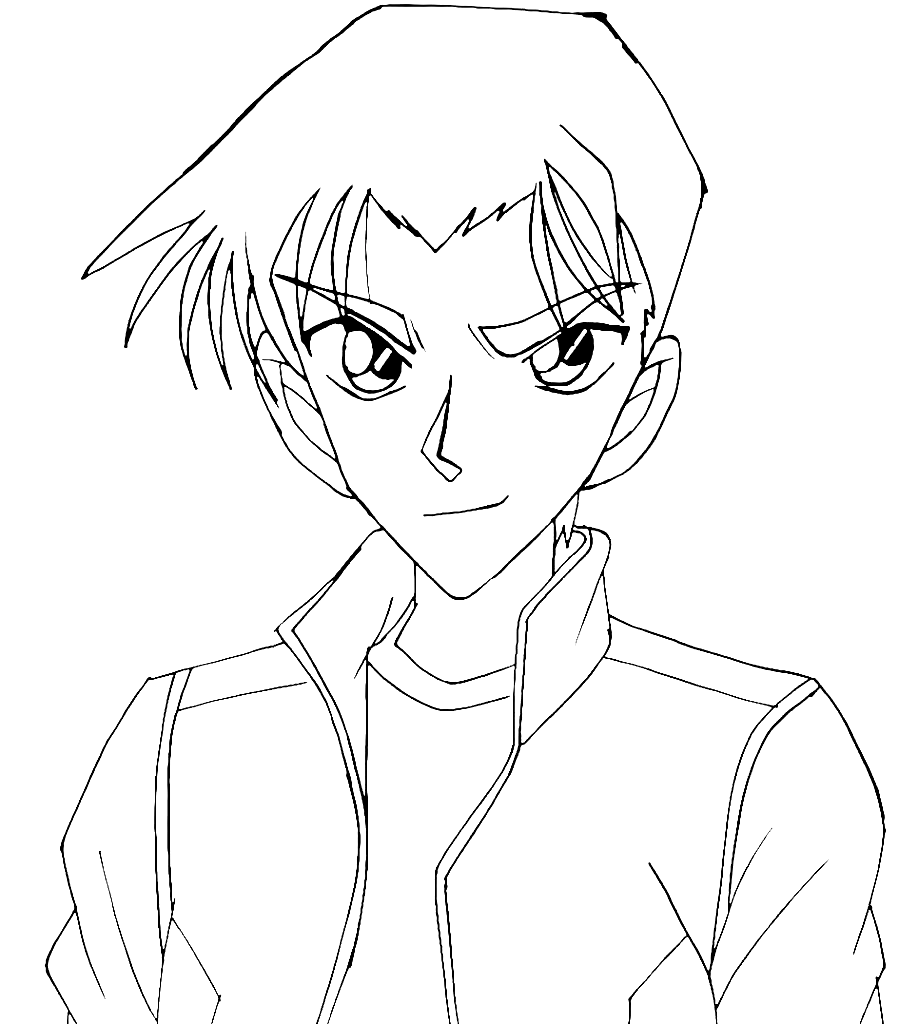
Heiji Hattori (服部平次) is a high school detective from Osaka who serves as Shinichi’s western Japan rival and closest peer – the only person who can match Conan case-for-case and who eventually figures out Conan’s secret identity. He has notably darker skin than Conan or the Tokyo characters, a short dark haircut, and generally wears more casual, street-oriented clothing than Conan’s school uniform. His Osaka dialect and aggressive personality are as distinctive as his appearance.
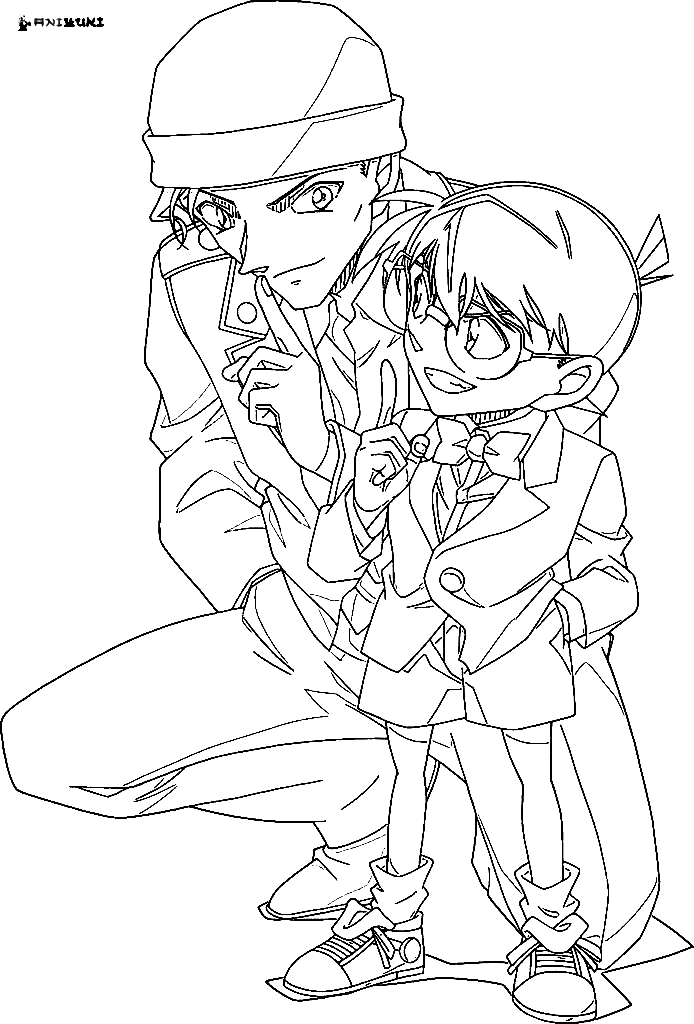
Shuichi Akai (赤井秀一) is an FBI agent who has been infiltrating the Black Organization and appears throughout the series as a morally complex ally. He is tall and lean with dark, somewhat disheveled hair and characteristically sharp, intense eyes. He is most often depicted in a dark, long coat – the coat is nearly as associated with him visually as Conan’s bow tie is with Conan. His coloring is consistently dark: dark hair, dark clothing, cool skin tone.
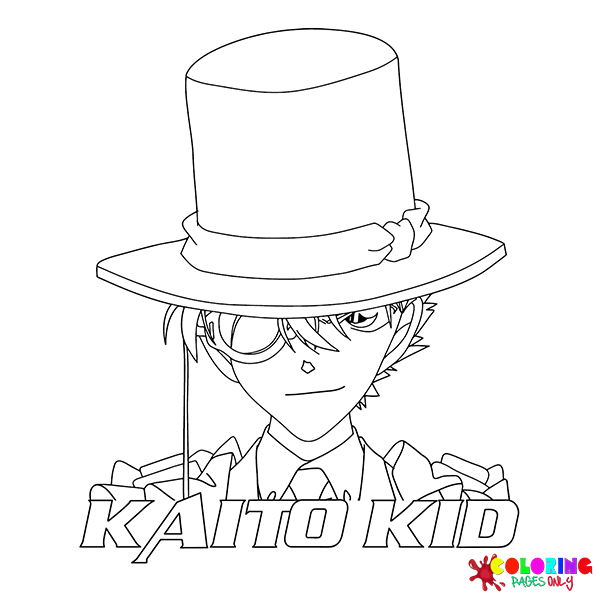
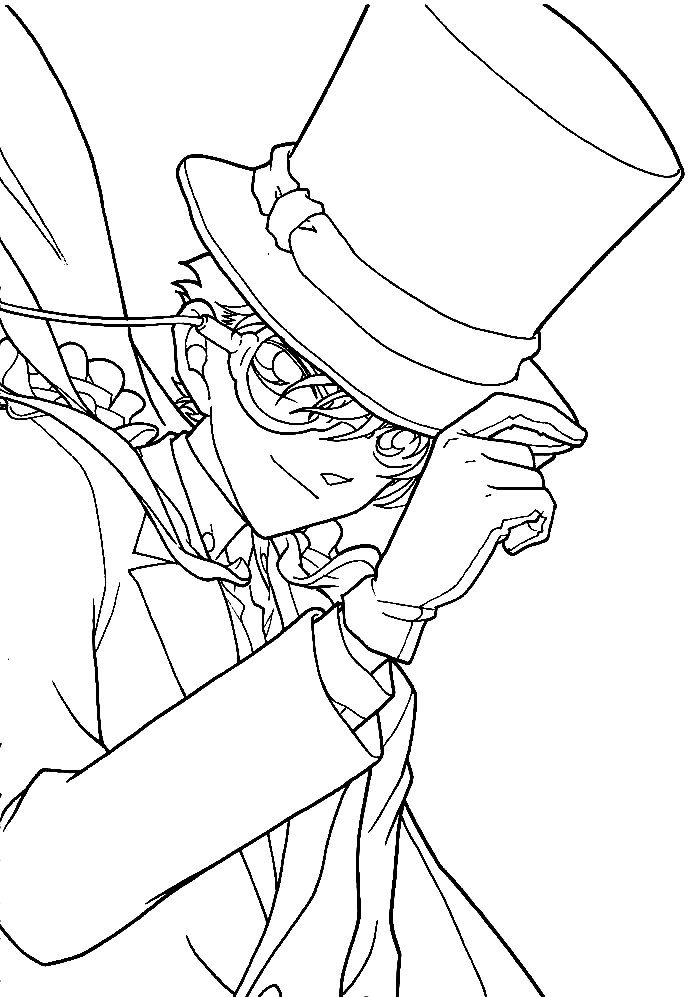
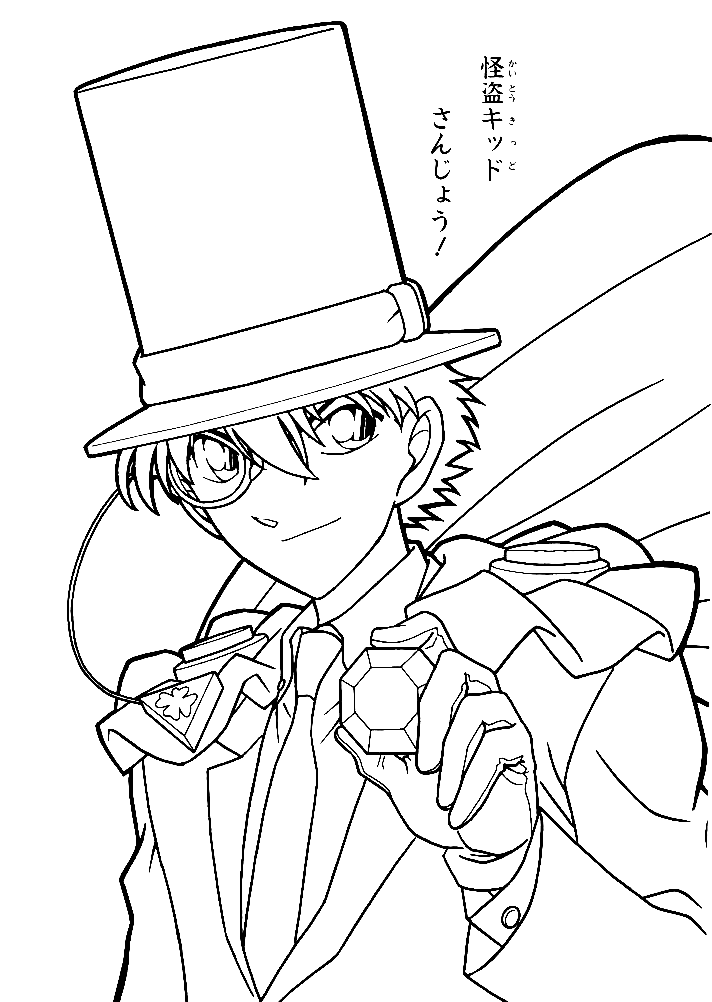
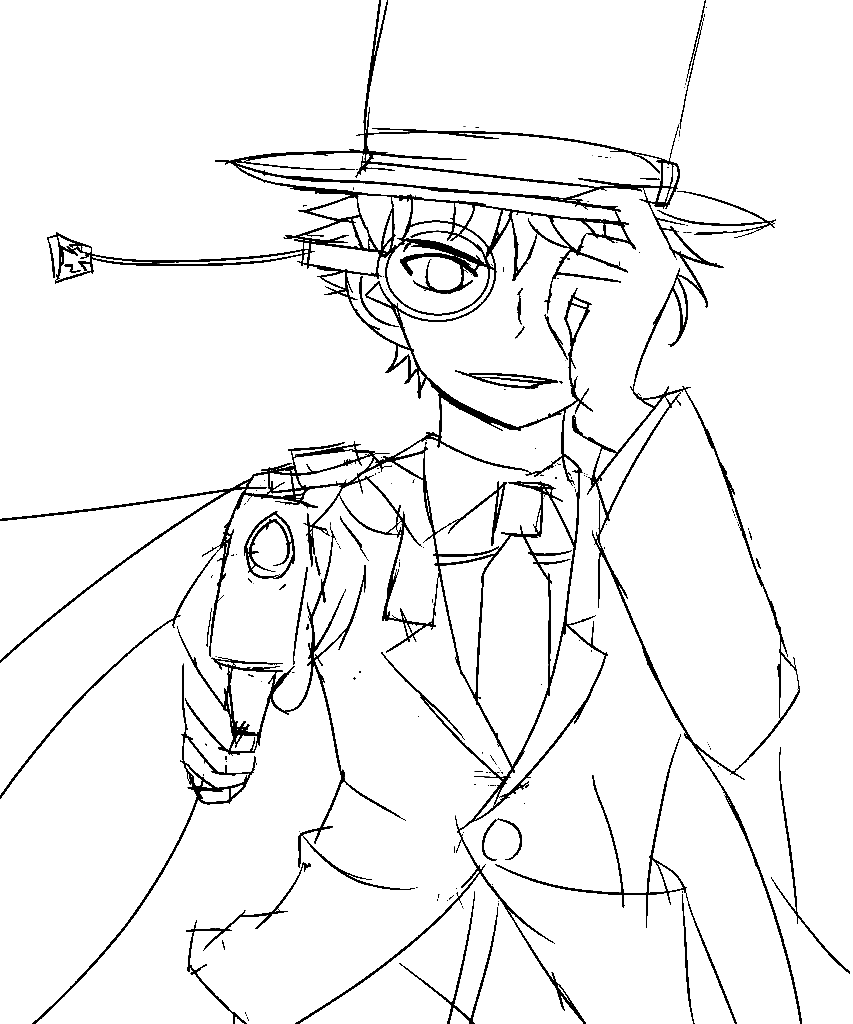
Kaitou Kid (怪盗キッド) – whose civilian identity is Kaito Kuroba (黒羽快斗) – is the phantom thief who serves as both antagonist and occasional reluctant ally to Conan. His most visually distinctive feature is his costume: an entirely white suit with white gloves, a white cape, a white top hat, and a monocle. He is the single most color-distinctive character in the collection because he is essentially monochromatic – pure white against whatever background is behind him. Kaito Kuroba in civilian clothes looks physically identical to Shinichi Kudo (and therefore to Conan’s teenage self), a fact the series exploits repeatedly for dramatic effect.
Professor Hiroshi Agasa (阿笠博士) is the elderly inventor who invented all of Conan’s gadgets and is one of the very few adults who know Conan’s true identity. He is an older man with a round, heavy-set build, gray or white hair, and typically wears a brown or tan jacket and slacks – a warm, professorial color palette that distinguishes him from the cooler, more formal tones of most other characters.
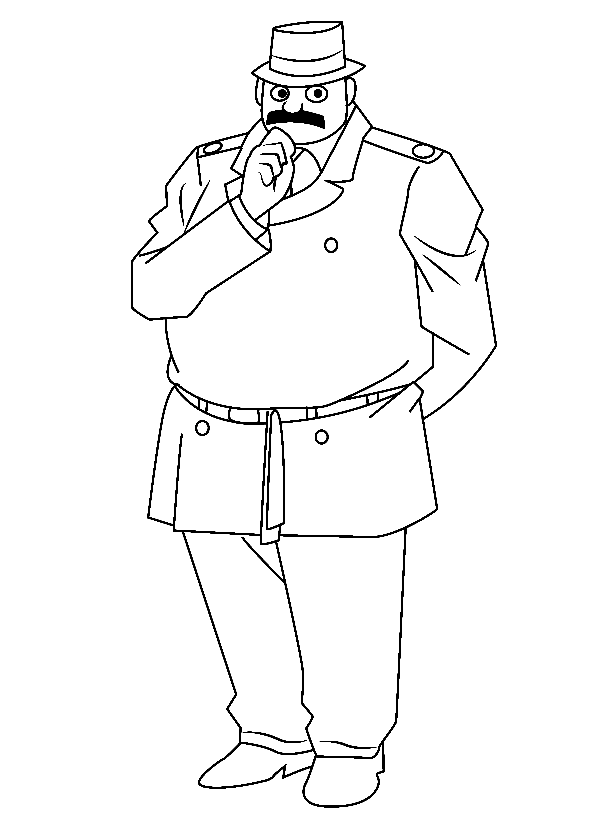
Inspector Juzo Megure (目暮十三) is the Tokyo Metropolitan Police inspector who frequently encounters Conan at crime scenes. He is a large, heavyset man who is almost never seen without his dark hat and trench coat – the hat in particular is so consistently present that it has become a visual signature of the character.
Coloring Tips
Conan’s navy uniform is the anchor of his visual identity and should be approached as a dark blue-gray rather than a pure navy or a royal blue. The specific value of his uniform reads as dark and serious – much closer to indigo-navy than to the bright blue used for many anime school uniforms. His bow tie is a clear, clean red – the single warm accent in an otherwise cool-and-dark outfit – which is why it reads so strongly as an accessory even in small-scale illustrations. The glasses frames are a dark grey-black; avoid making them brown, which would make them read as wooden rather than wire-frame.
Conan’s hair is jet black – rendered in anime as a very dark blue-black that shades from near-black in shadow areas to a dark navy highlight at the brightest point. Never color Conan’s hair as brown or medium-grey; the darkness of his hair is part of what makes his pale skin tone and red bow tie pop as clearly as they do. The same hair color applies to Shinichi Kudo on any page showing his teenage form – they are the same hair, on the same person.
Ran Mouri’s hair is a warm dark brown – darker than medium brown but not as dark as Conan’s near-black. Her hair has a warm, slightly auburn quality in some official illustrations, which can be captured by adding a touch of dark red-brown to a dark brown base. Her skin tone is slightly warmer than Conan’s, reflecting the standard warm-skin convention in the series for Japanese characters who spend time outdoors.
Ai Haibara’s hair is the most specific and unusual color in the entire collection – a pale amber or strawberry-blonde that sits between warm blonde and very light auburn. It should not be rendered as white, silver, or bright yellow-blonde; the warmth of the color is essential. Her hair, combined with her pale skin and serious expression, gives her an otherworldly quality, and the specific amber-pink of her hair is what creates it. Any shift toward either cool grey-blonde or vivid golden-blonde loses the character.
Heiji Hattori’s skin tone is darker than all the other major characters and should be rendered as a warm, medium-dark brown – neither the very pale skin of Conan and Ran nor any extreme. Getting Heiji’s skin tone right is the most important single decision on any page featuring him, because it is the primary visual element that distinguishes him from the Tokyo characters even at a glance.
Kaitou Kid presents the inverse challenge of most coloring pages: the entire character is white, and the coloring challenge is suggesting three-dimensional form within a near-monochromatic palette. The white suit has shadow areas (rendered in a cool light grey or very pale blue-grey) and highlight areas (paper white). The monocle is a small glass circle with a thin gold or silver frame – the gold-yellow of the monocle frame is the single color accent in the entire costume. The background on Kaitou Kid pages tends toward dramatic lighting – dark nights, spotlights, moonlight – which provides the contrast that makes the white costume legible.
For pages featuring both Conan and Shinichi (Conan and Shinichi), the compositional challenge is showing two visually identical faces in radically different body proportions. Both figures should have the same hair color and the same facial feature style; the age difference is communicated entirely through the body size and the clothing (child’s school uniform vs. teenager’s outfit).
For the Shuichi Akai pages – the dark coat, dark hair, and relatively cool skin tone of Akai make him one of the most tonally unified characters in the collection. His palette is almost entirely composed of dark values with very little warm accent. The coat is a dark charcoal or near-black, his hair is a dark blue-black similar to Conan’s, and his skin is rendered in a neutral-cool tone rather than the warmer skin of most other characters. The intensity of his expression – the sharp, watchful eyes – is what the page is organized around, and the surrounding dark tones support that focal point.
5 Activities with Your Detective Conan Pages
Color Conan and Shinichi as a matched identity portrait. Print Conan and Shinichi – the page showing both Conan’s child form and Shinichi’s teenage form in the same composition. Color both figures using exactly the same hair color (the same jet-black, with the same highlight approach) and exactly the same skin tone. The only coloring differences should be their clothing and their proportions. When finished, the two figures should read as clearly the same person at different ages, connected by the shared hair and skin palette. This exercise is a study in how coloring choices communicate continuity of identity across a visual discontinuity – the central visual paradox of the entire series.
Color the Kaitou Kid vs Conan pages as a light-versus-dark study. Print Kaitou Kid (or Kaitou Kid with Diamond) and any solo Conan page. Color Conan in his canonical dark palette – dark navy uniform, dark hair, dark glasses. Color Kaitou Kid in his all-white costume with grey shadow values. Display both pages side by side. The exercise shows two characters who are physically identical in face but visually opposite in palette – the dark-themed detective against the all-white phantom thief. Write a two-sentence description of what each color palette suggests about the character’s personality and role in the story.
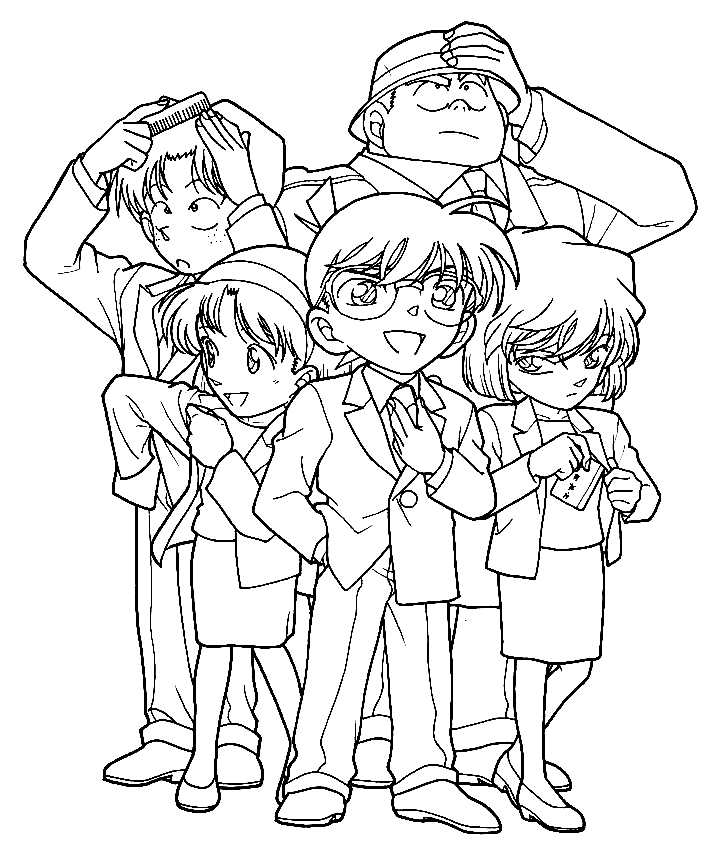
The full supporting cast portrait series. Print Heiji Hattori, Ai Haibara, Ran Mouri, and Kogoro Mouri as four individual pages. Color each in its canonical palette. When finished, arrange them in a row with Conan or the Detective Conan Characters group page in the center. Notice the series’ color design: each supporting character has a different dominant skin tone, hair color, and clothing palette that makes them immediately distinguishable even at a small scale. The exercise makes visible the deliberate visual differentiation that Aoyama built into the character designs across thirty-plus years of the series.
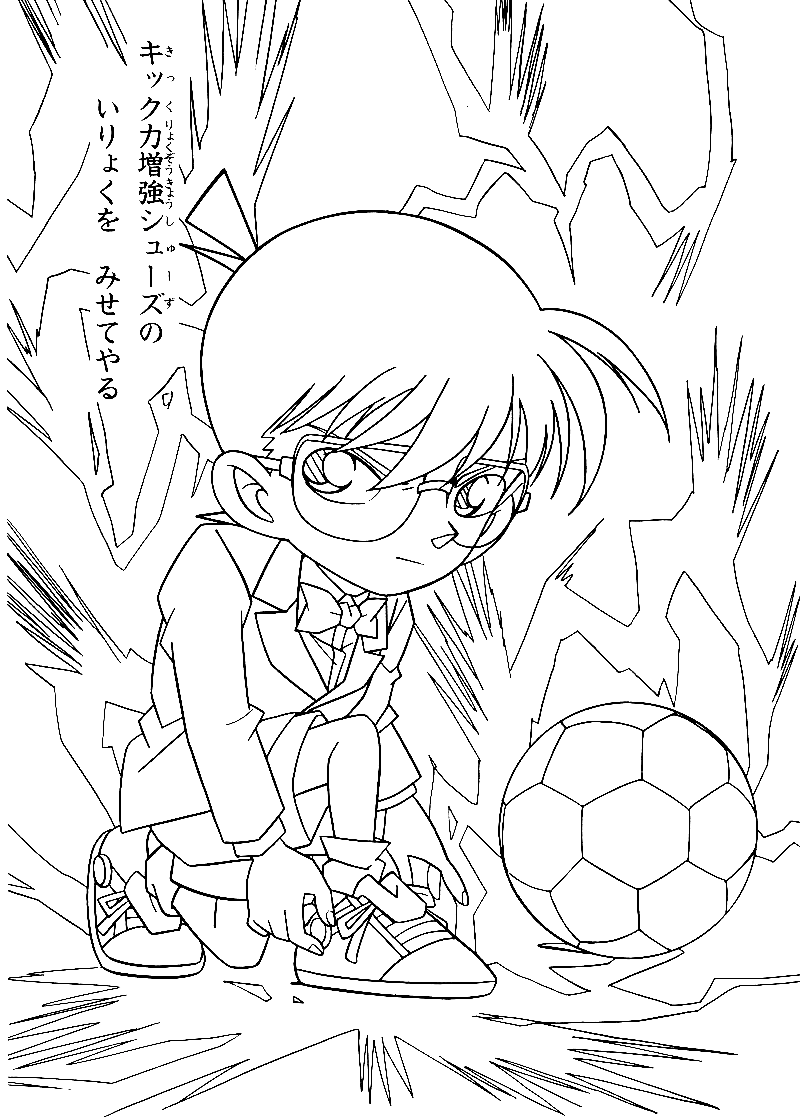
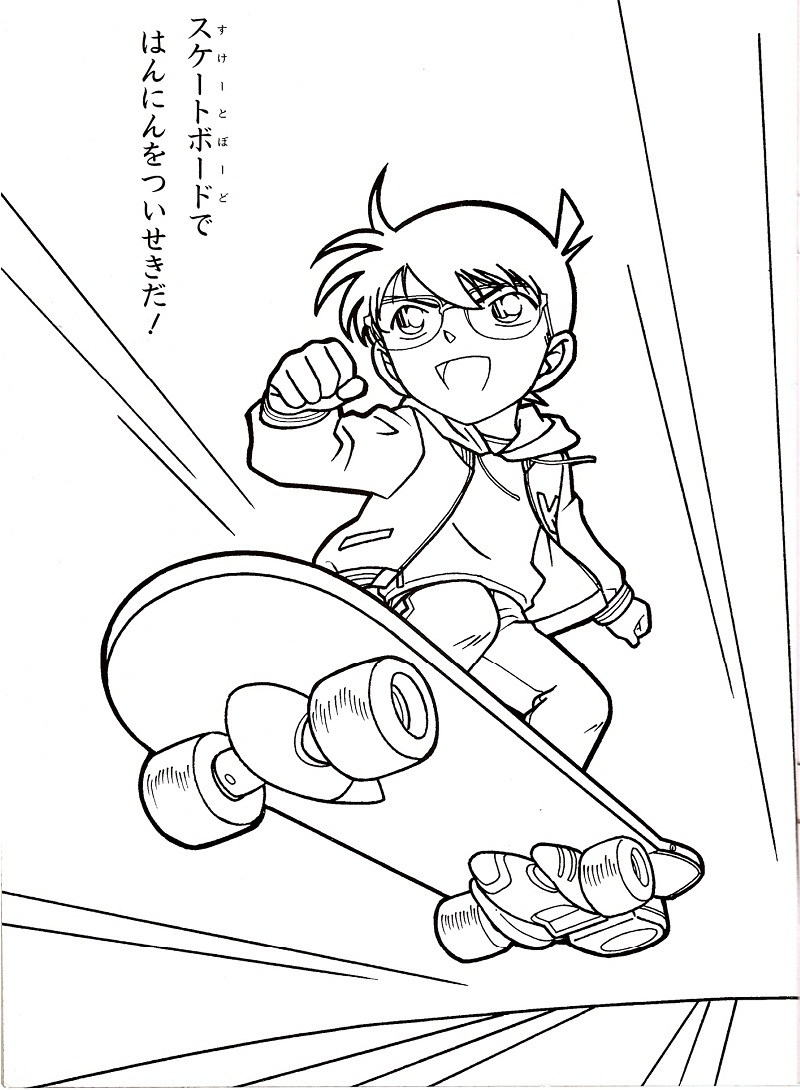
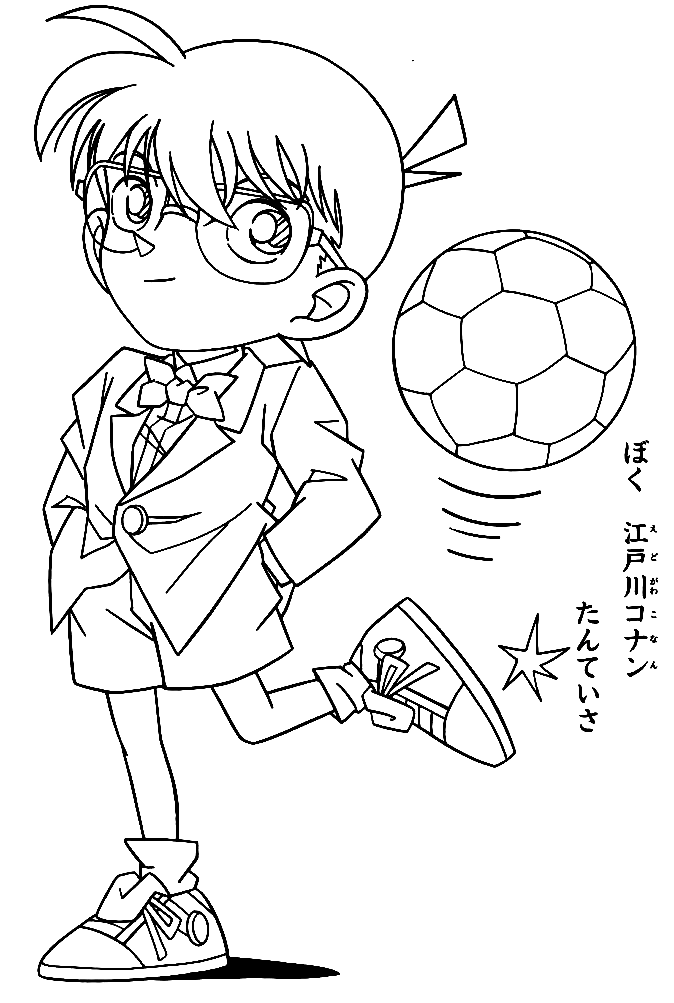
Color the action series. Print Detective Conan Running, Conan Ride a Bike, Conan Edogawa on a Skateboard, and Conan Edogawa Playing Soccer – four pages showing Conan in active motion. Color all four in consistent canonical colors: same navy uniform, same red bow tie, same dark hair. Pay specific attention to how the same colors read differently depending on motion and pose – a running figure and a skating figure have different limb positions, different implied lines of direction, and different implied energy, all of which affect how the same color palette reads compositionally. When finished, display the four pages together as a “day in the life of a detective” sequence.
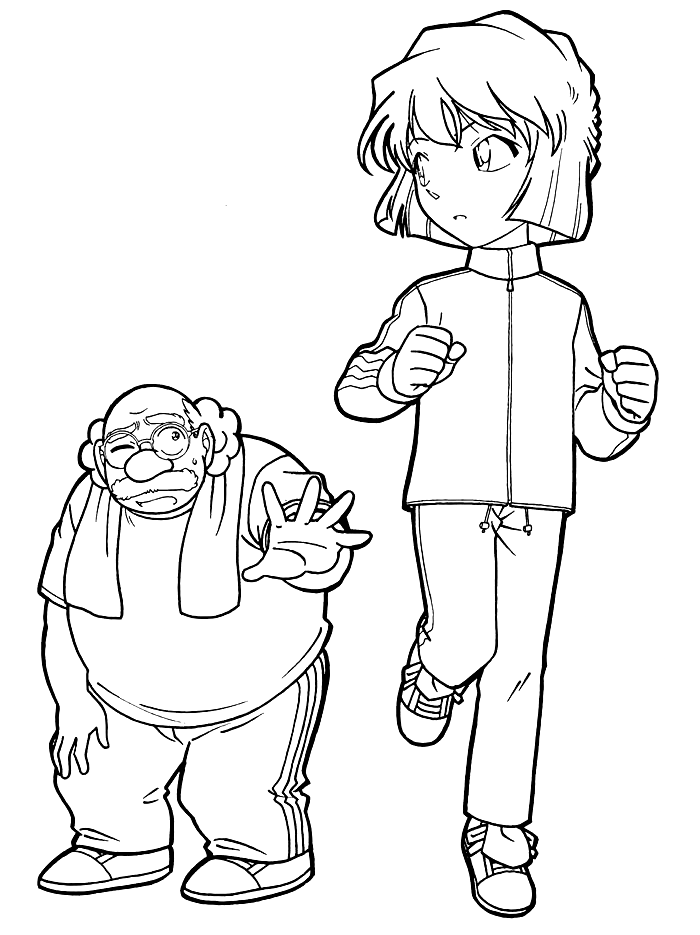
Color the Haibara and Conan relationship pages. Print Conan and Haibara Ai and Haibara and Agasa Hiroshi – two pages showing Haibara in her key relationships. Color both in consistent palettes: Haibara’s distinctive amber-blonde hair and light clothing across both pages, Conan’s dark uniform and dark hair on the first, Agasa’s warm brown jacket and white/grey hair on the second. The two finished pages together show Haibara’s two most important relationships: her alliance with Conan (the only other person in the same situation she is), and her guardianship by Agasa (the adult who protects her). After finishing, write one sentence about what each relationship means to Haibara based on how she is positioned in the composition relative to the other character.
These related coloring collections will help you explore the wonderful world of colors. Let’s choose, be creative, and show us your great pictures!