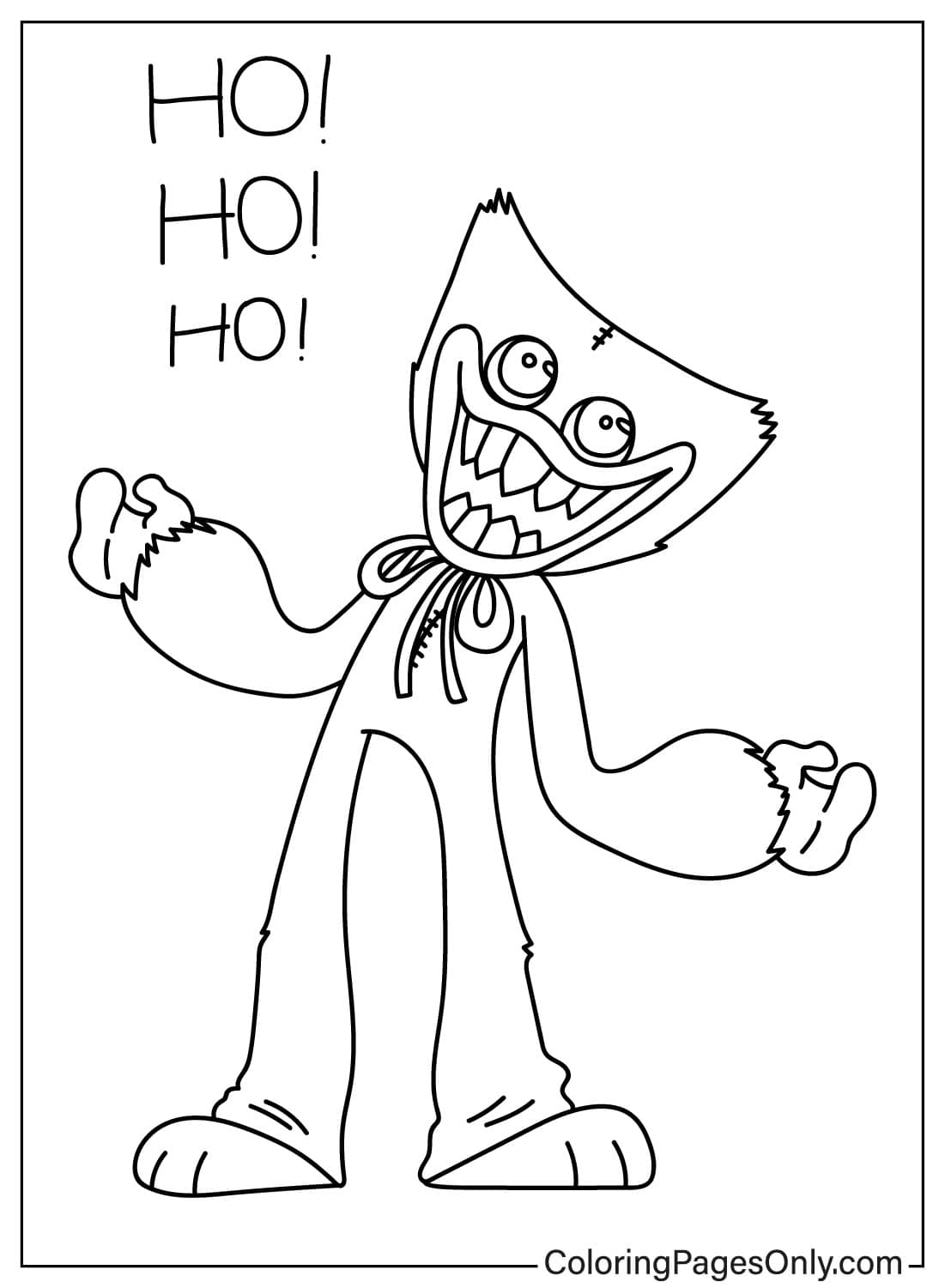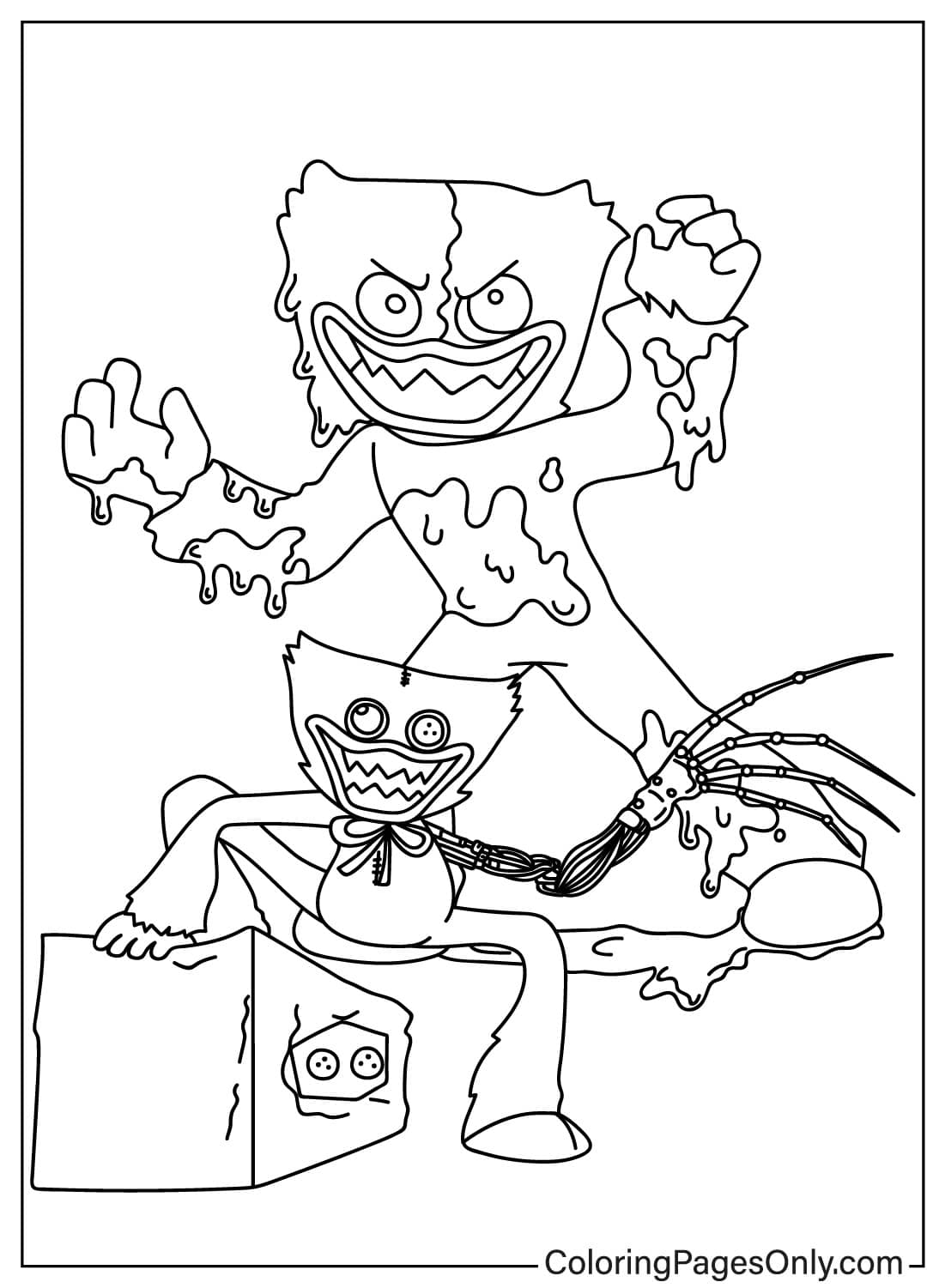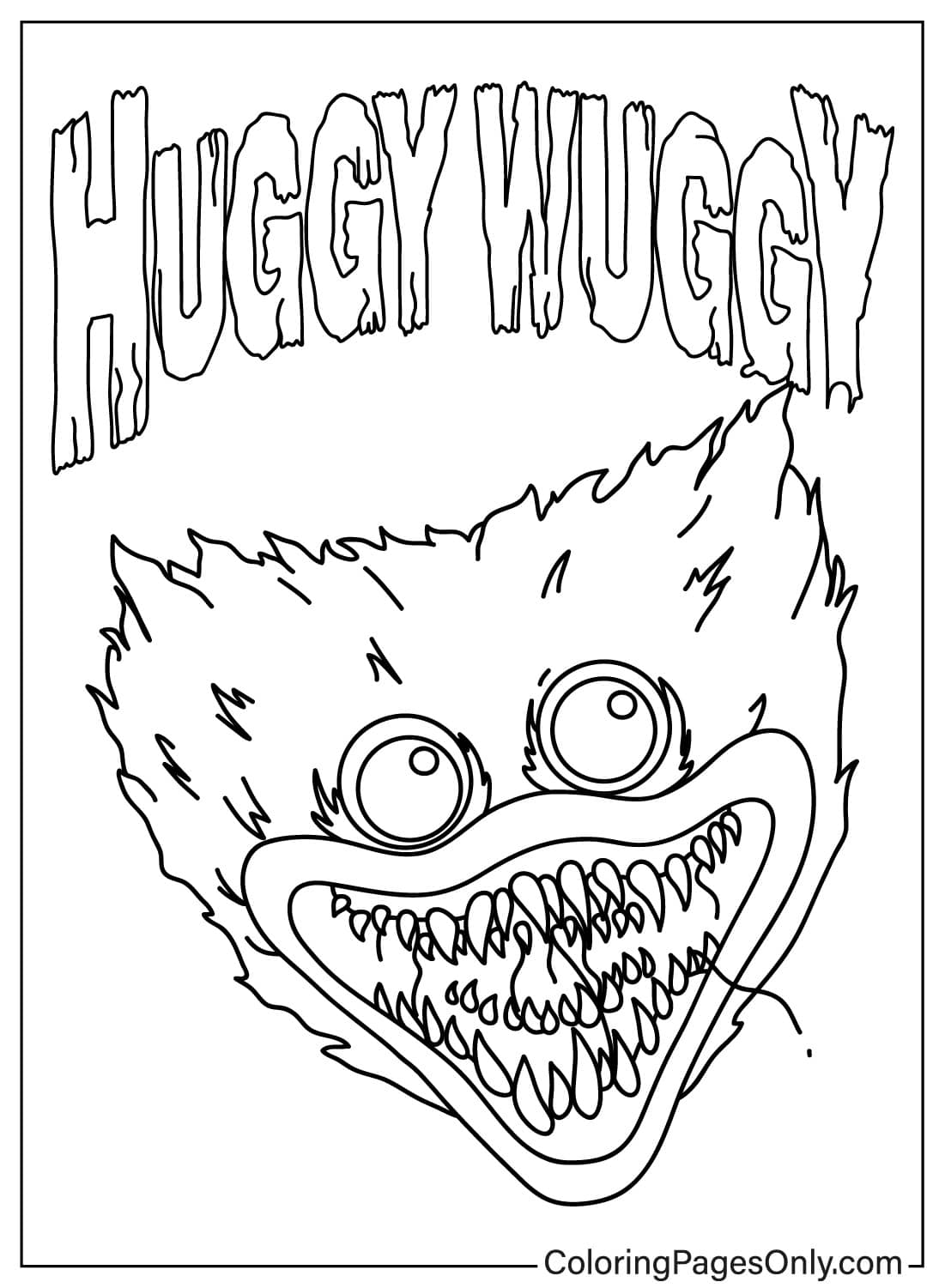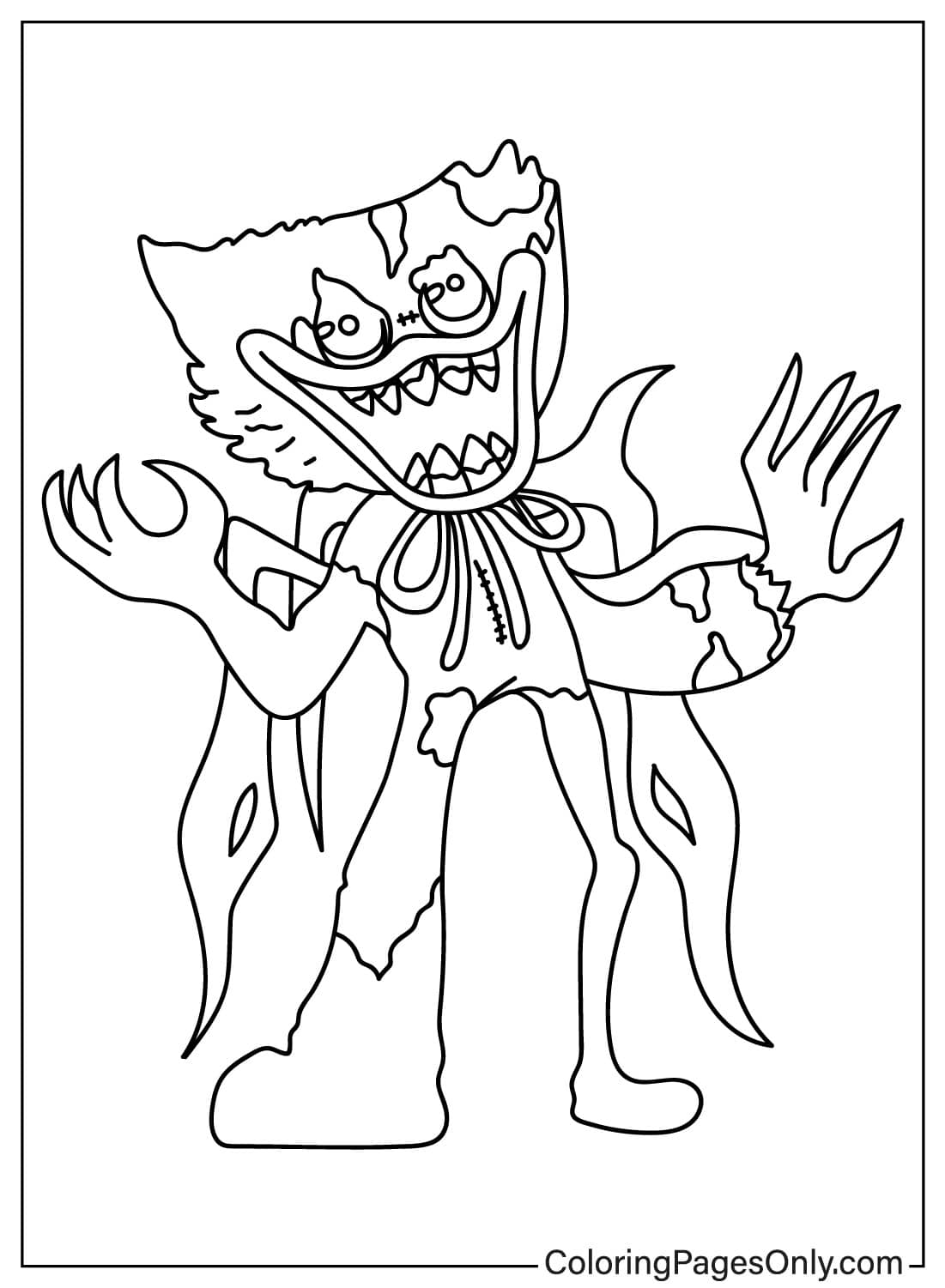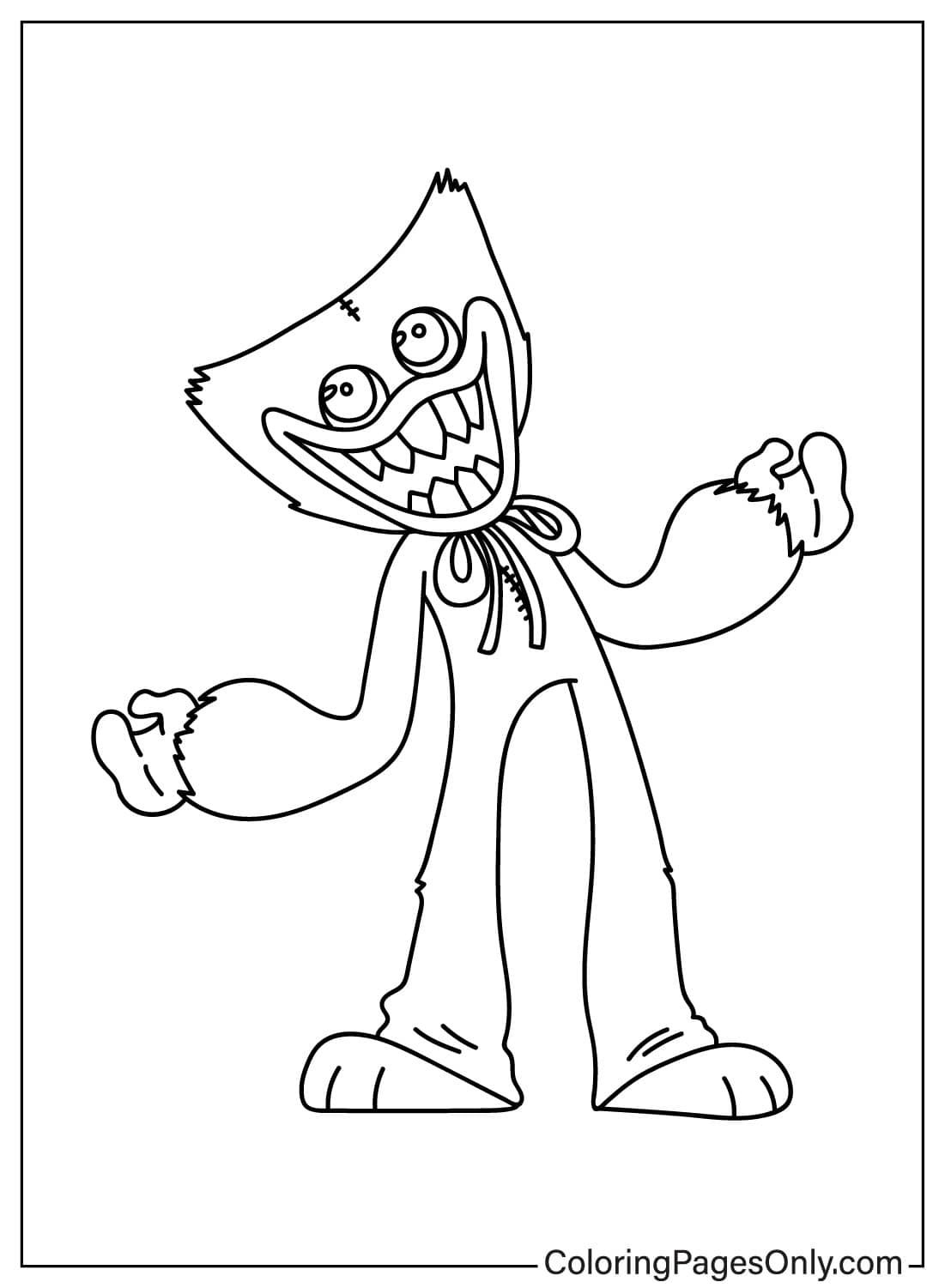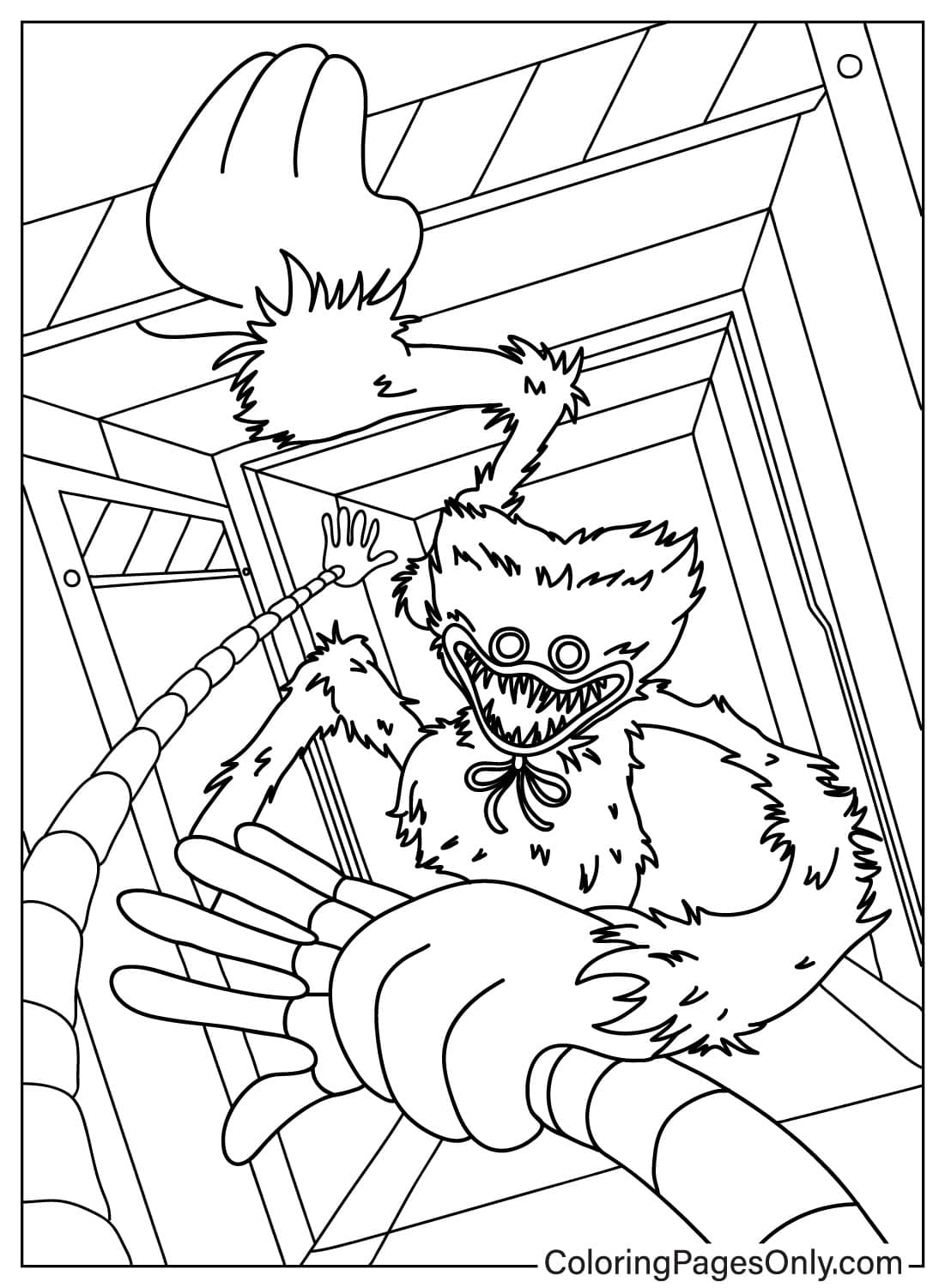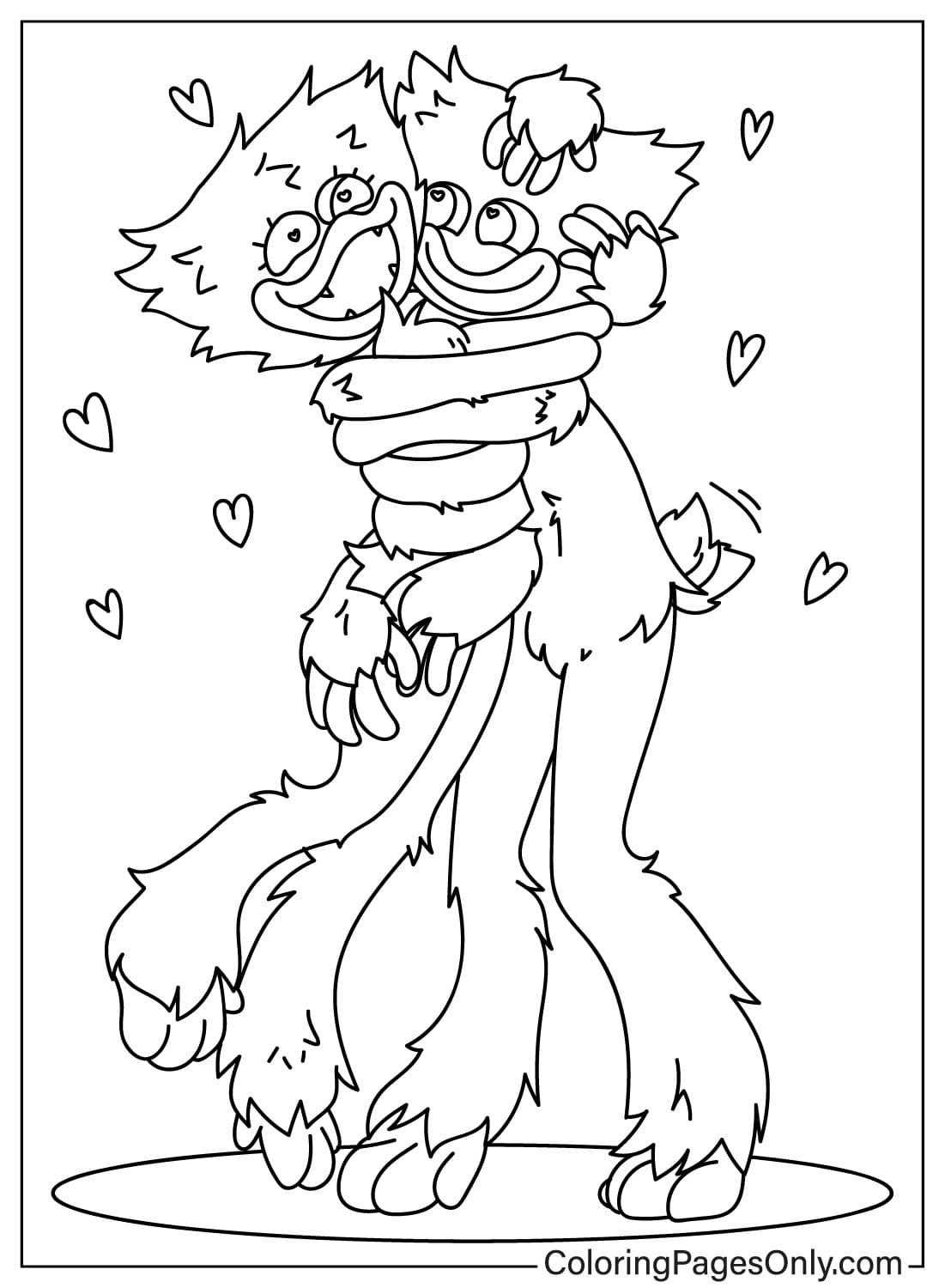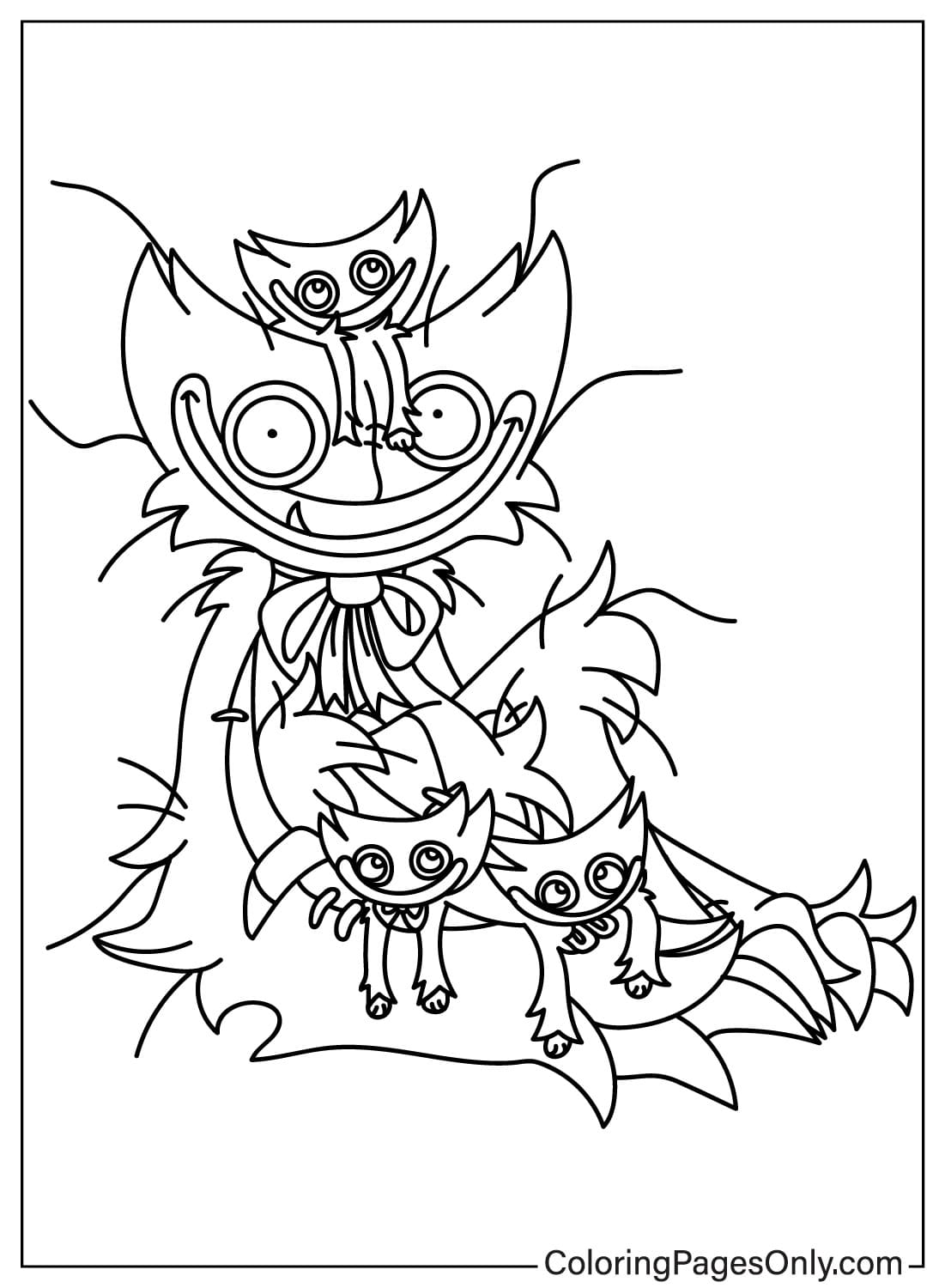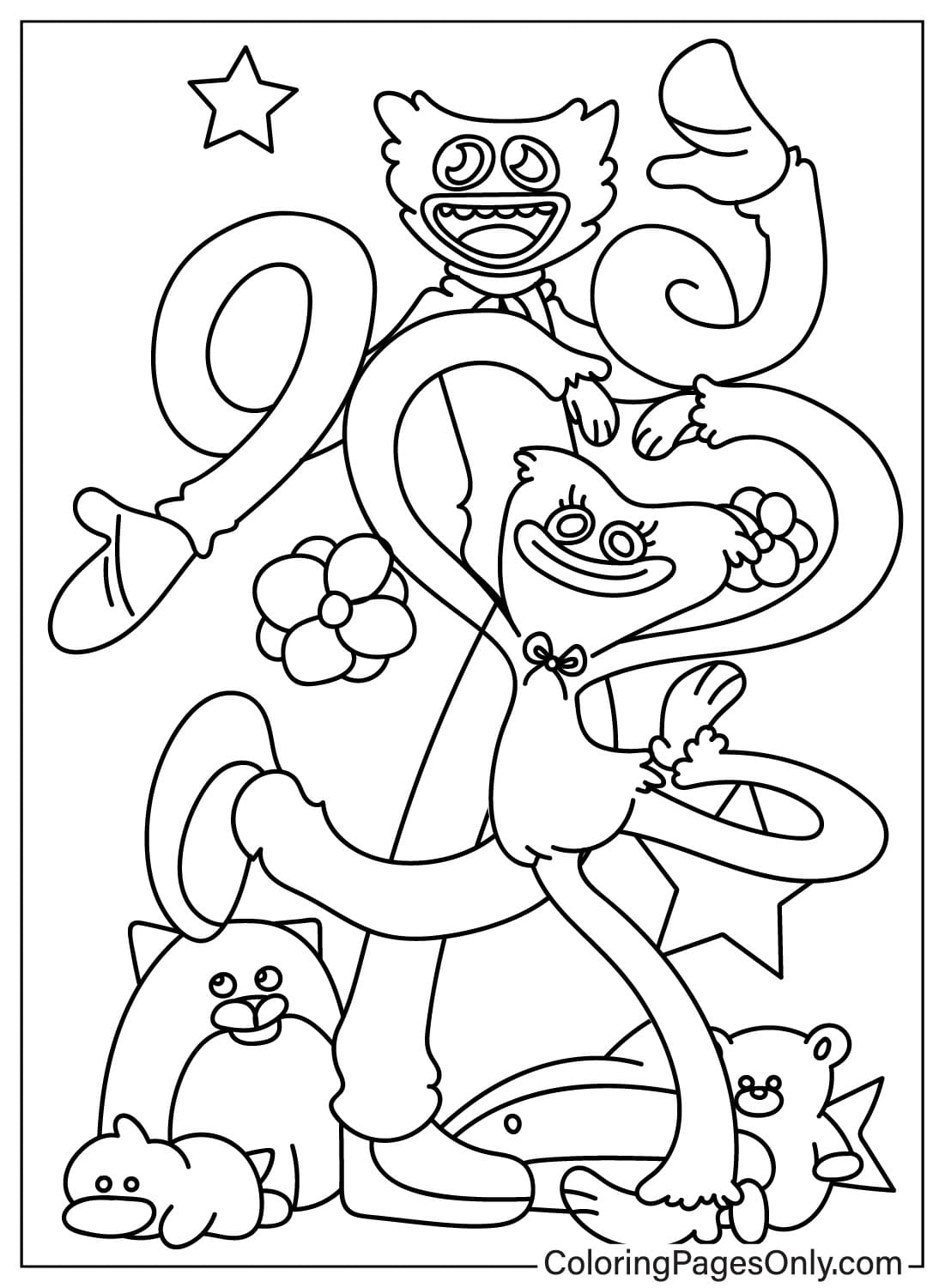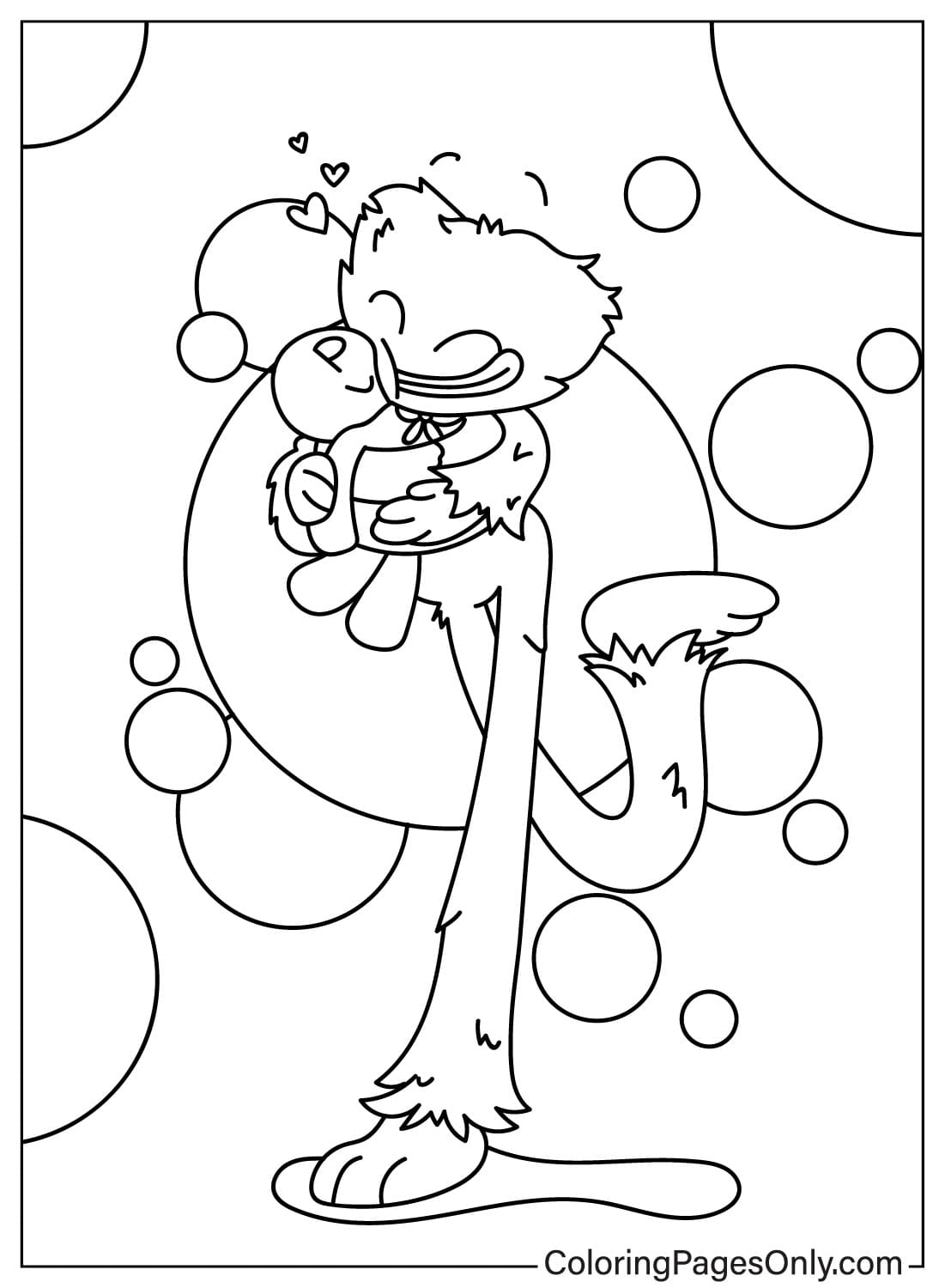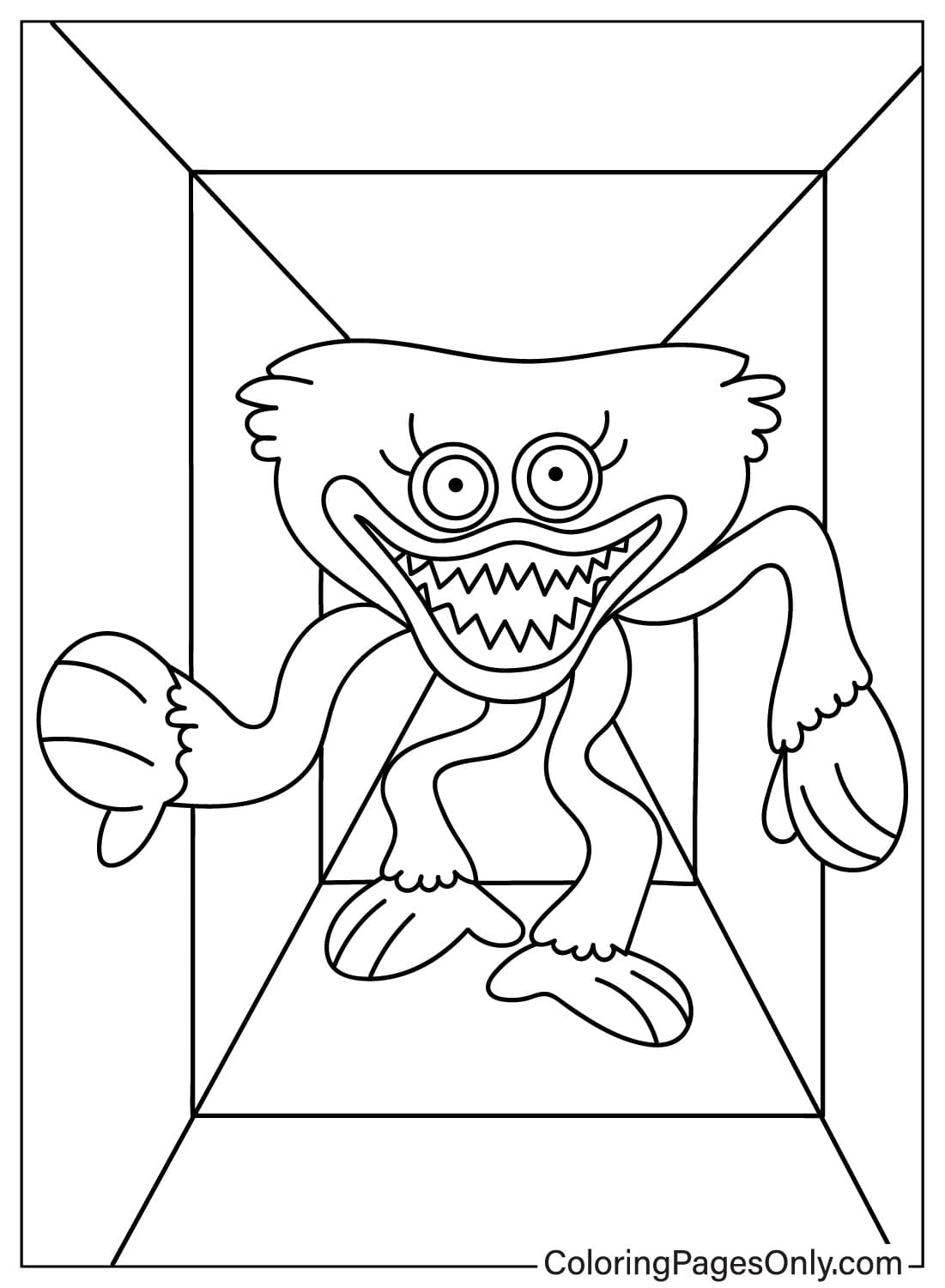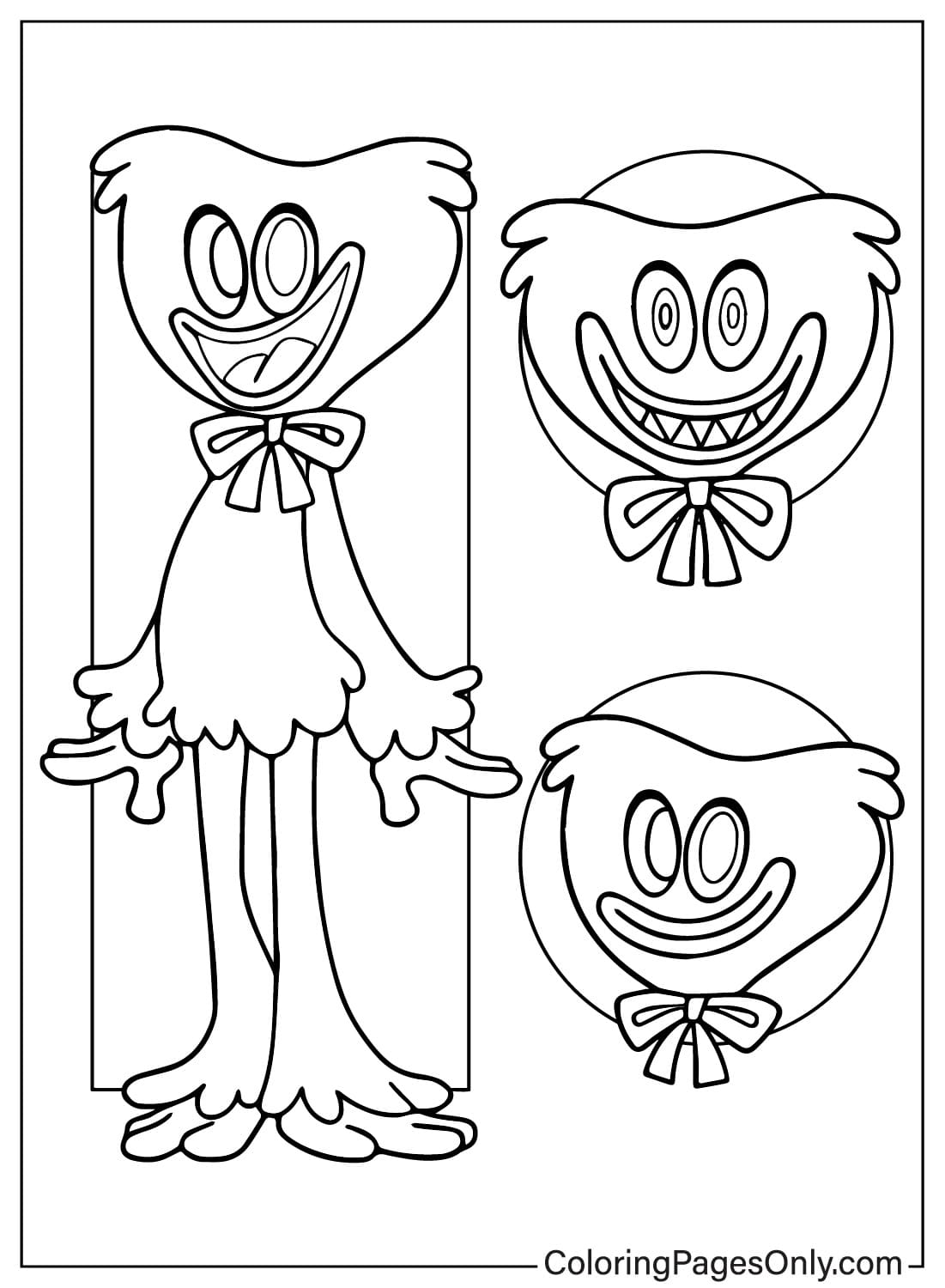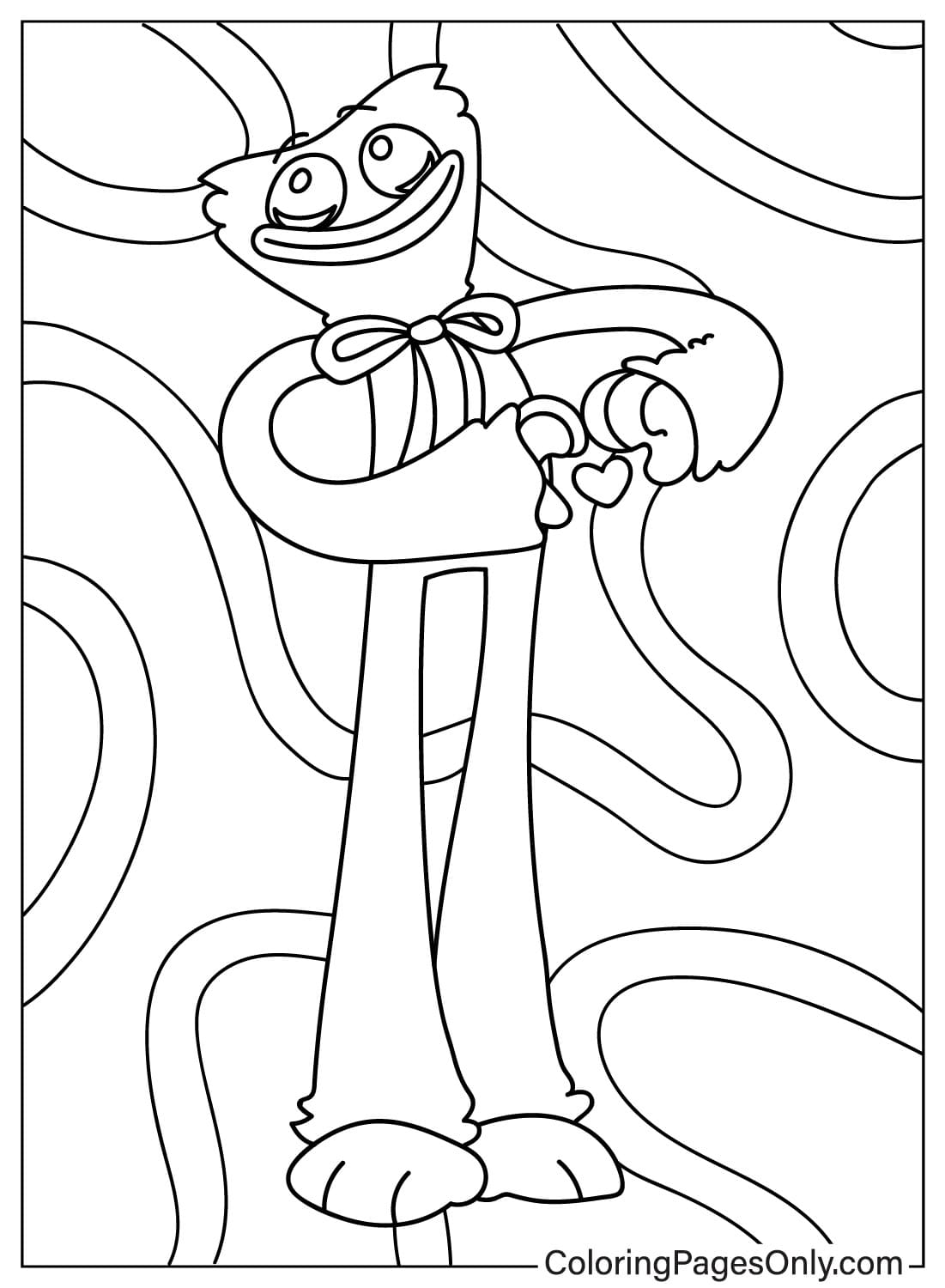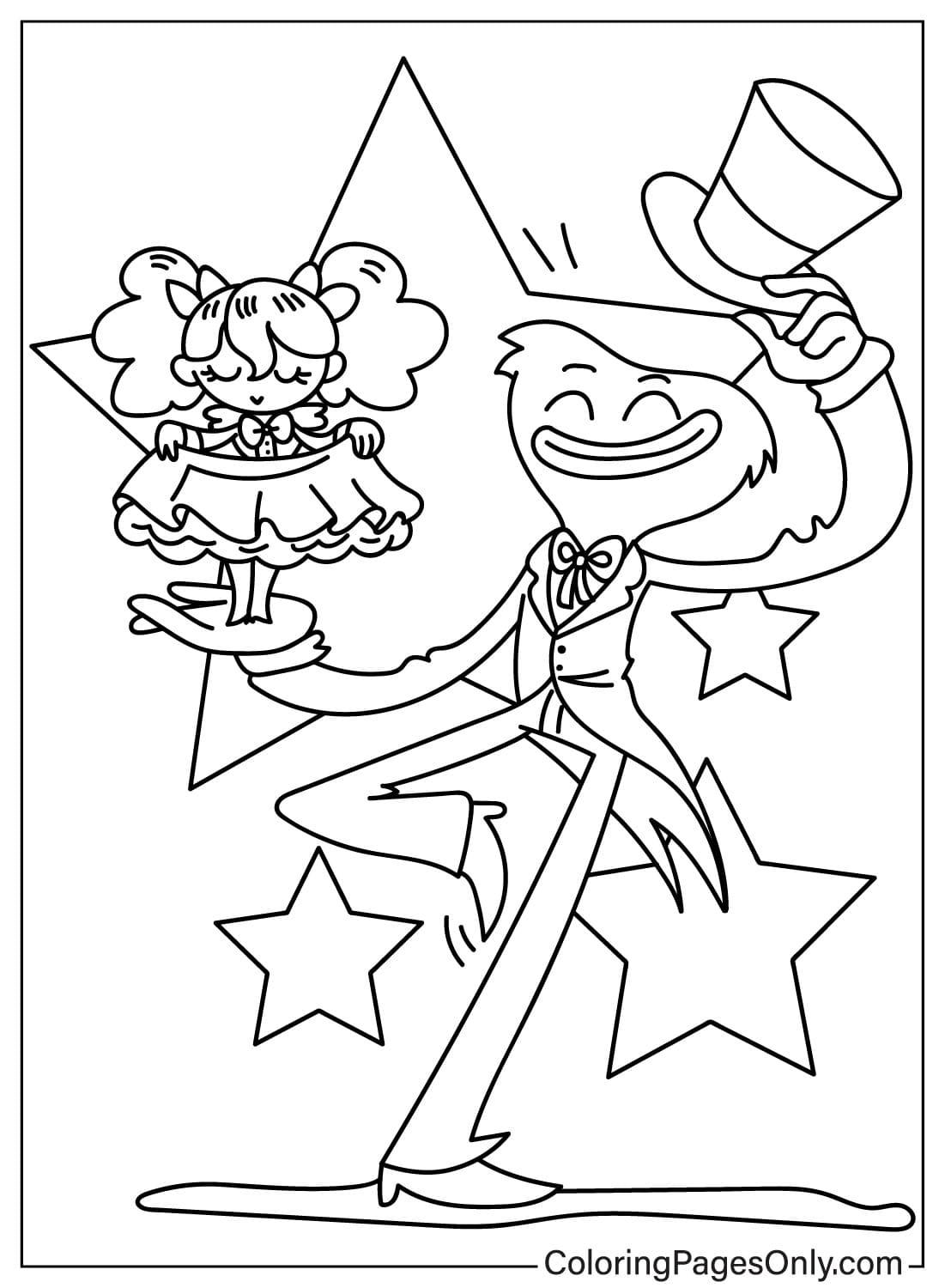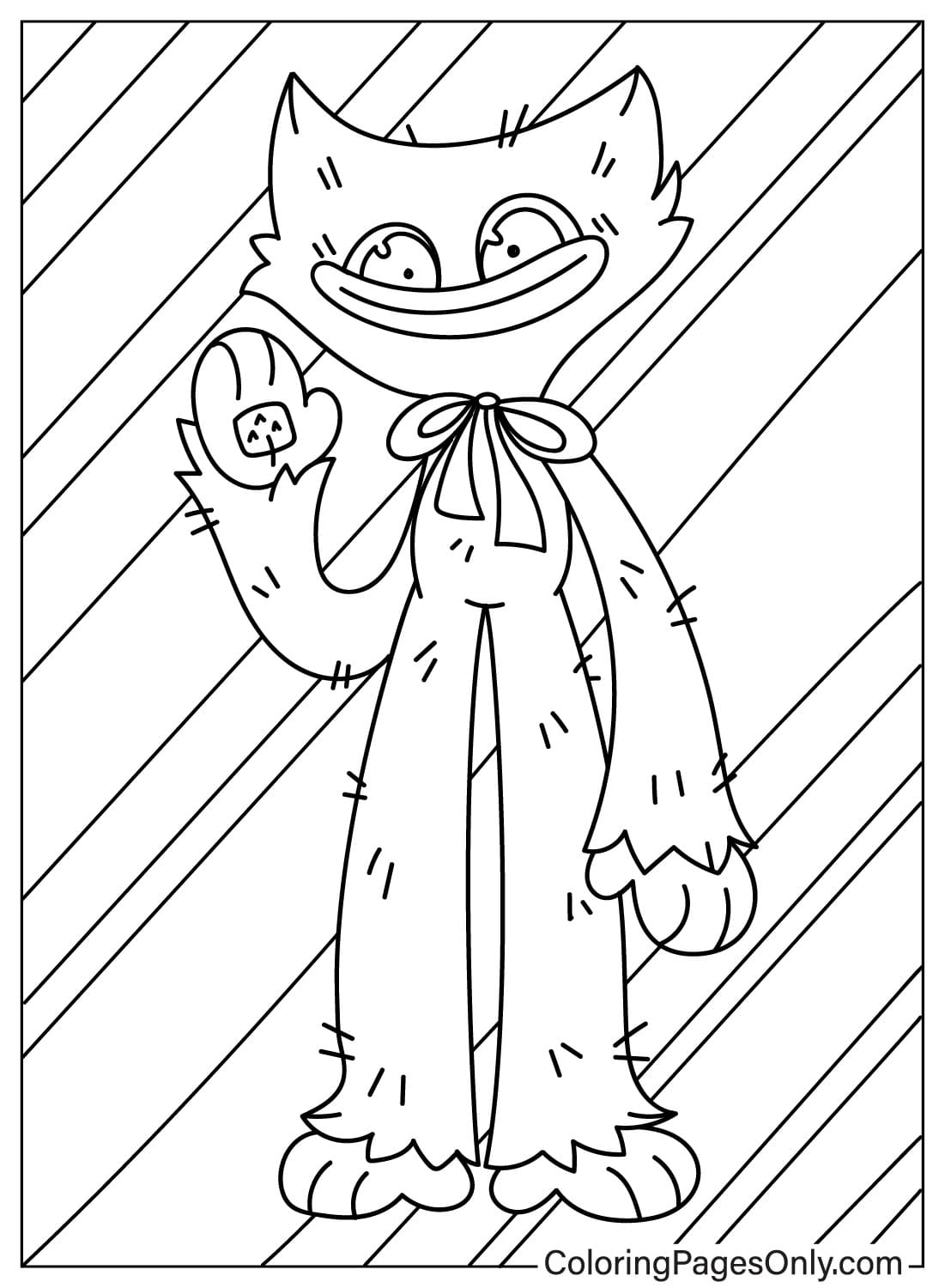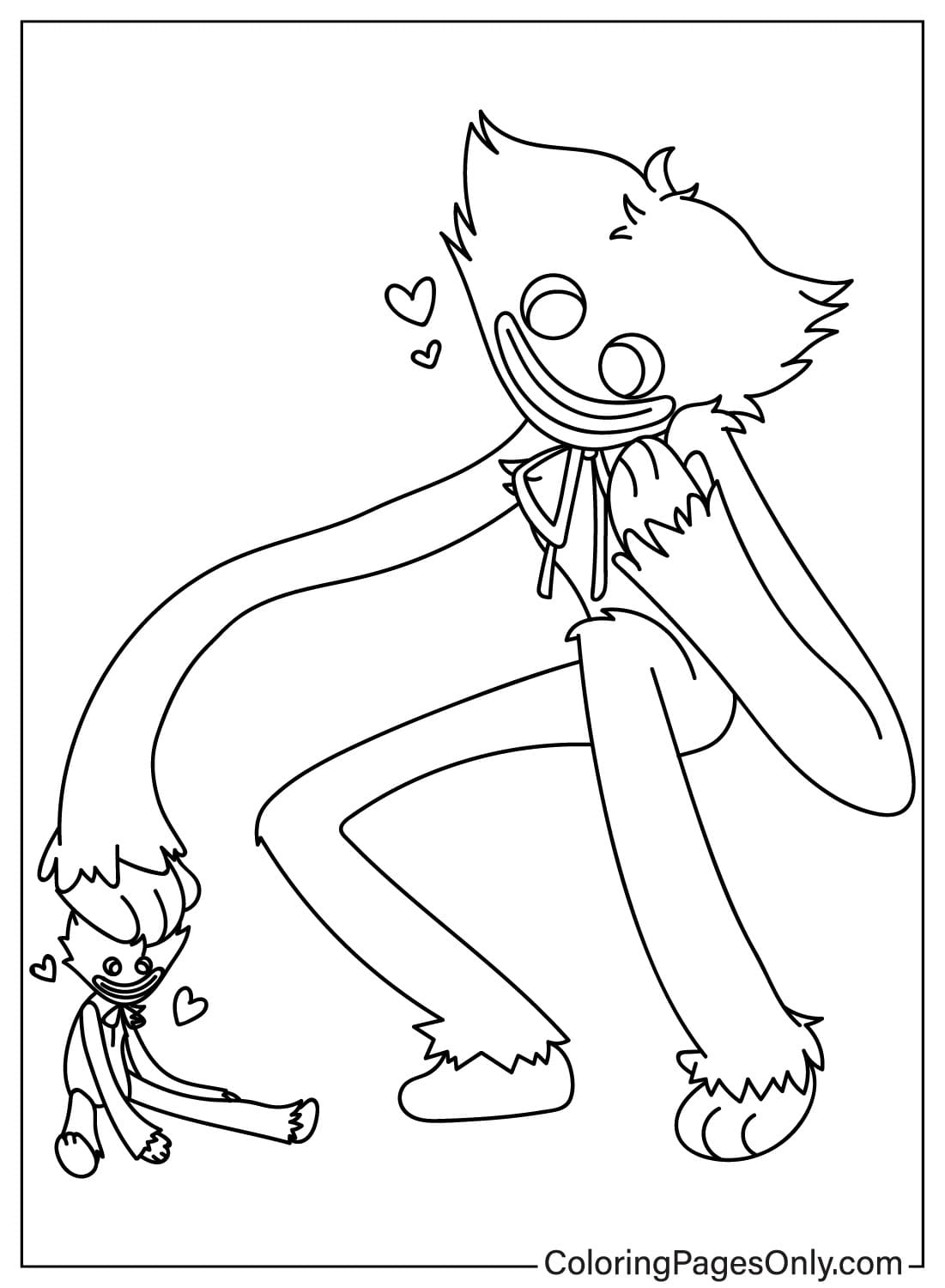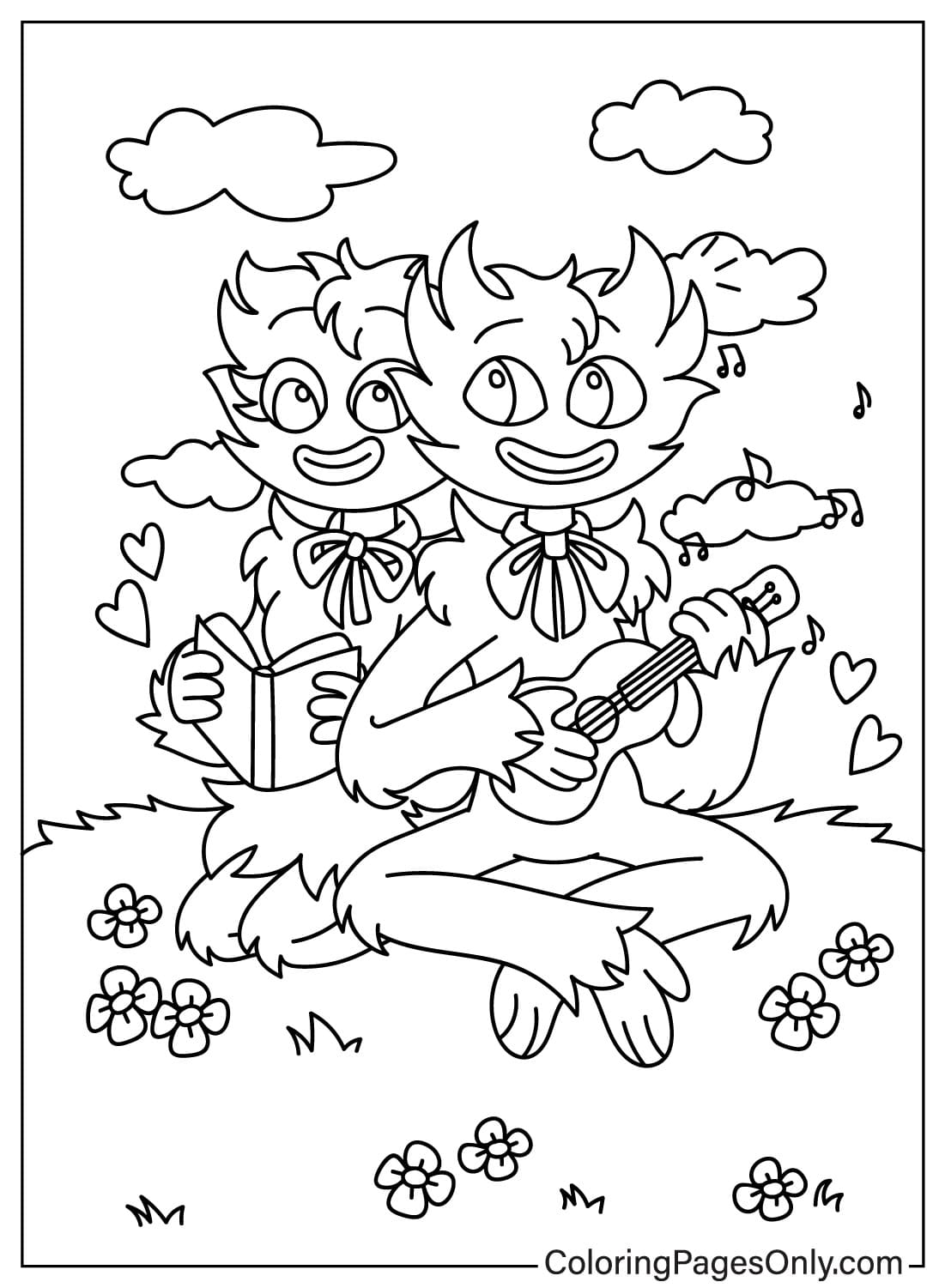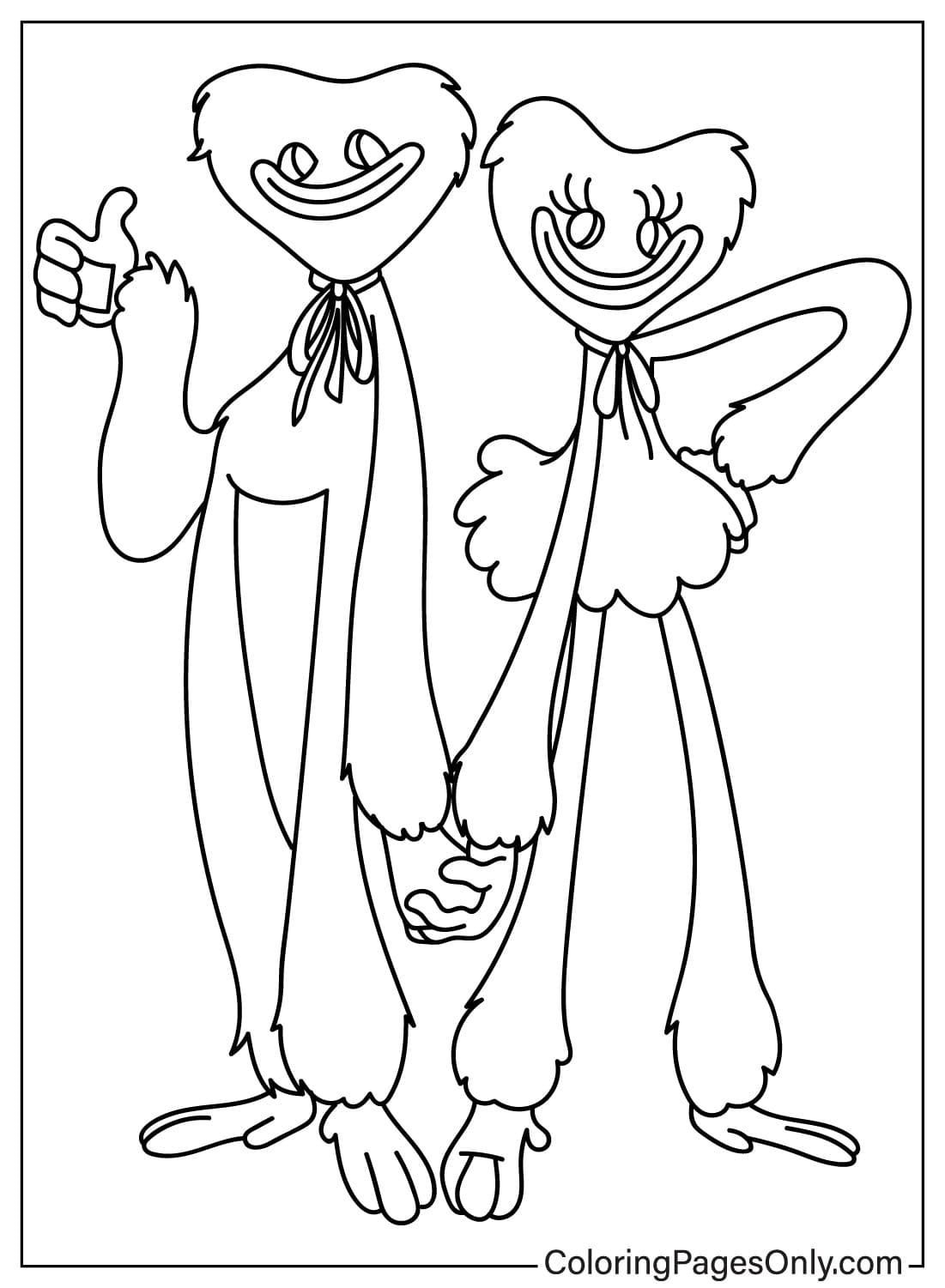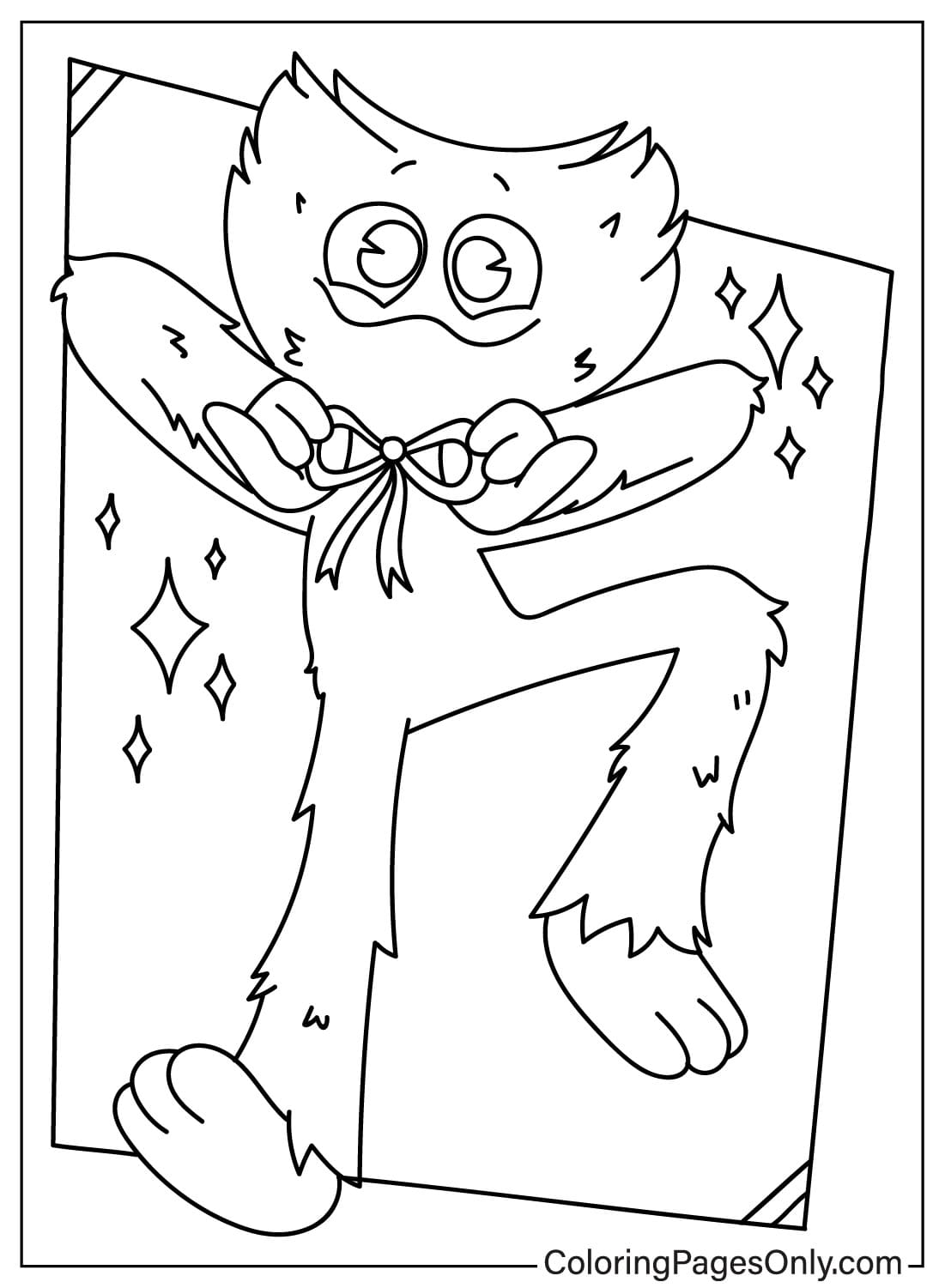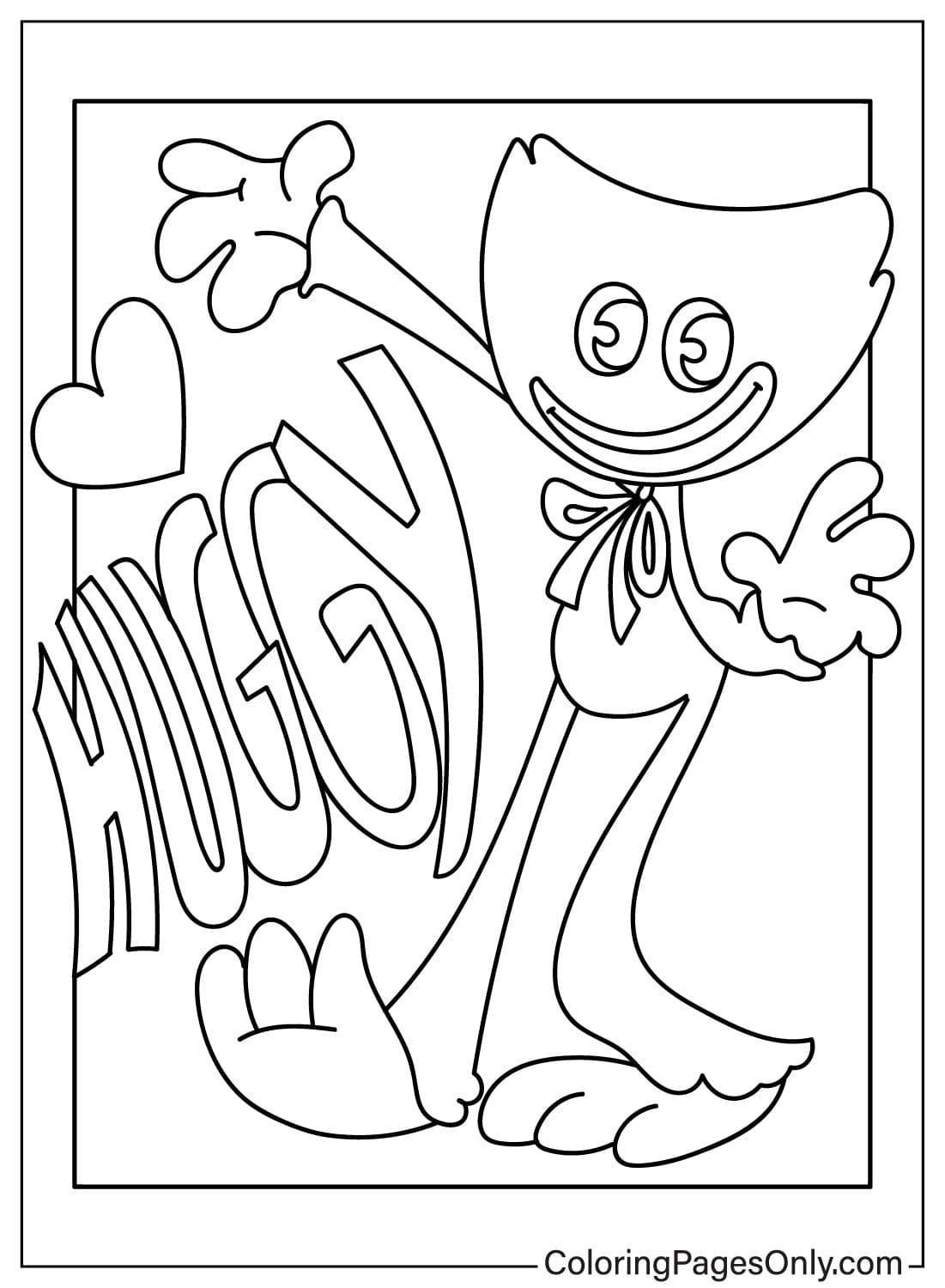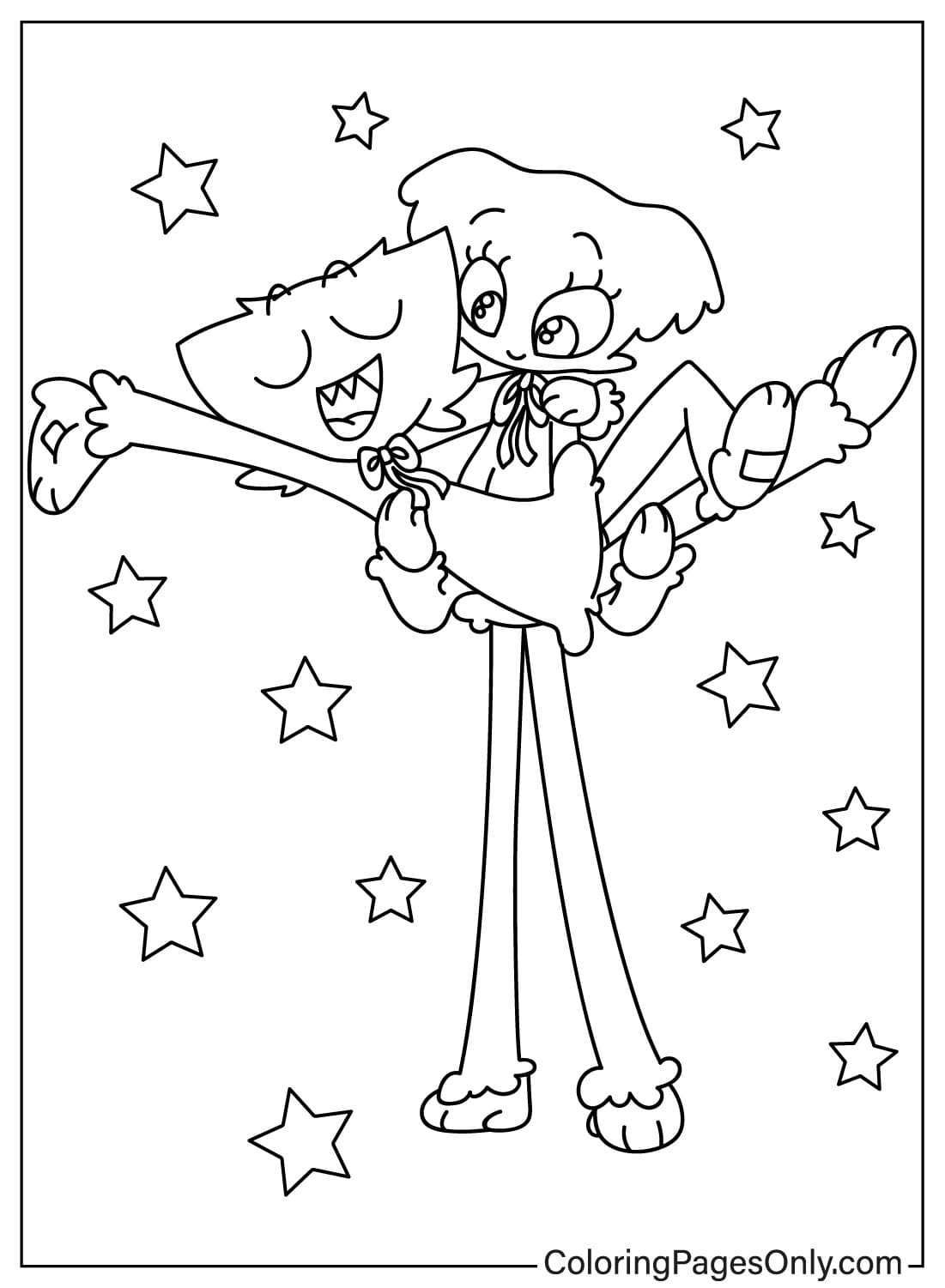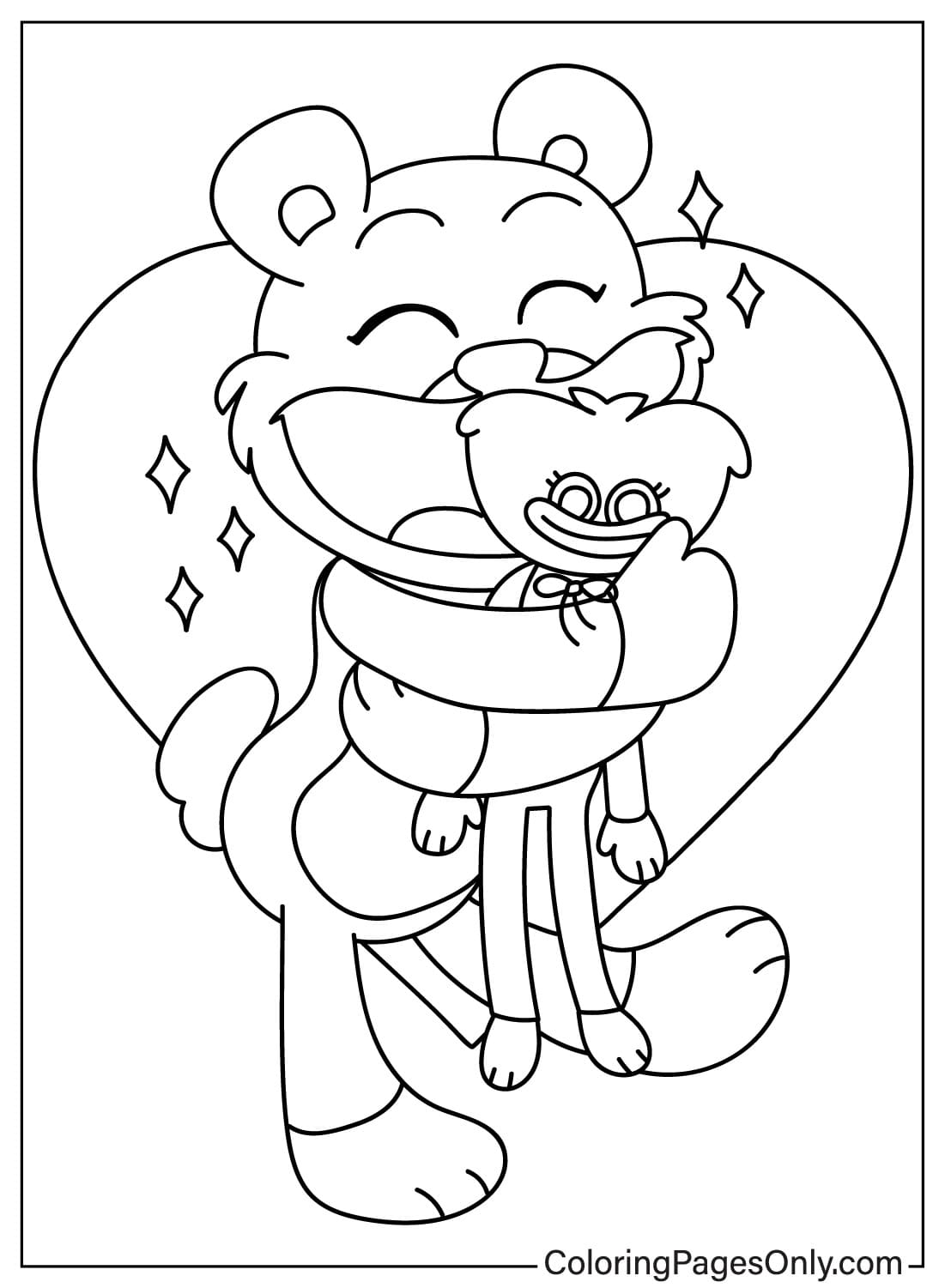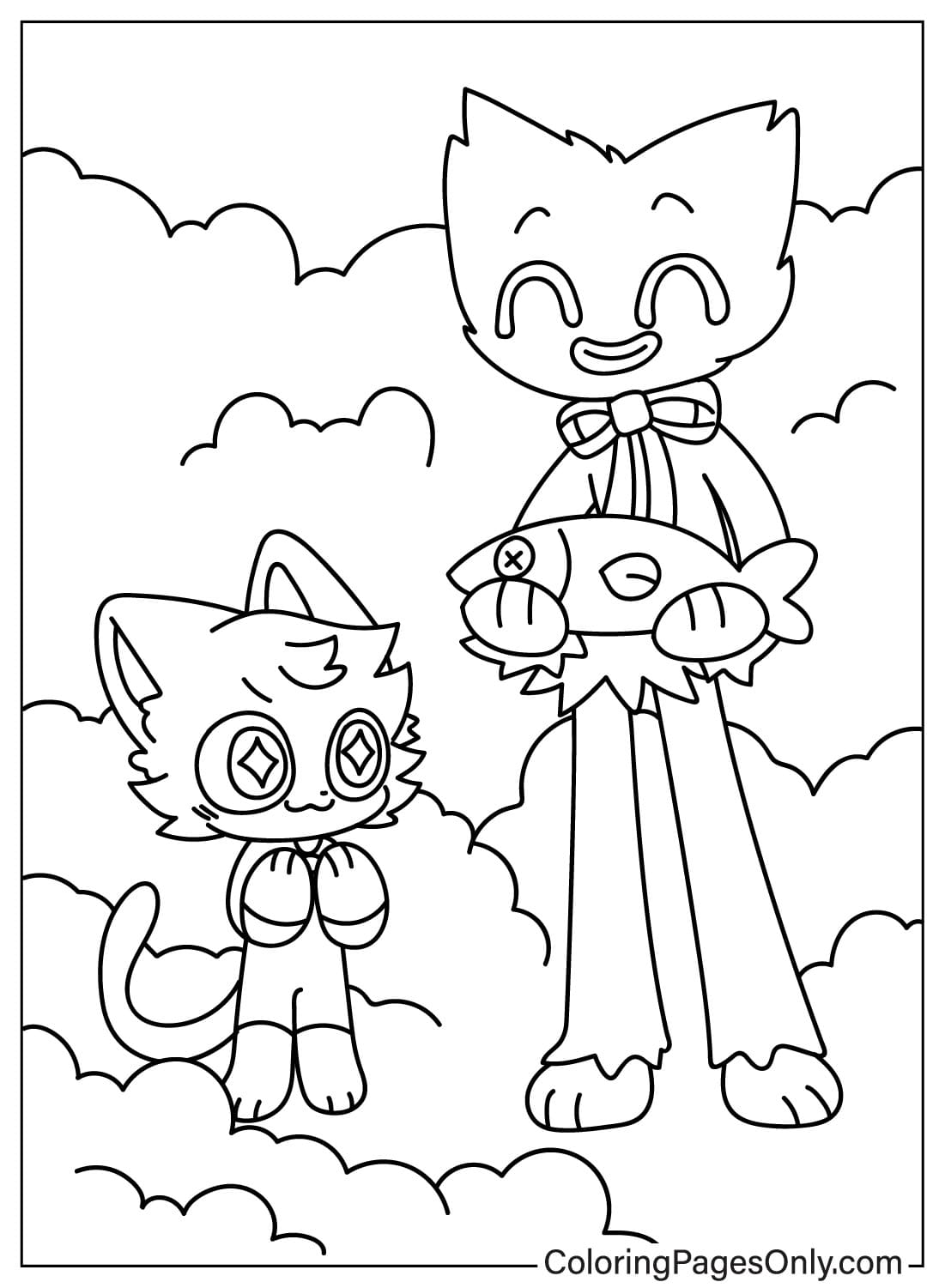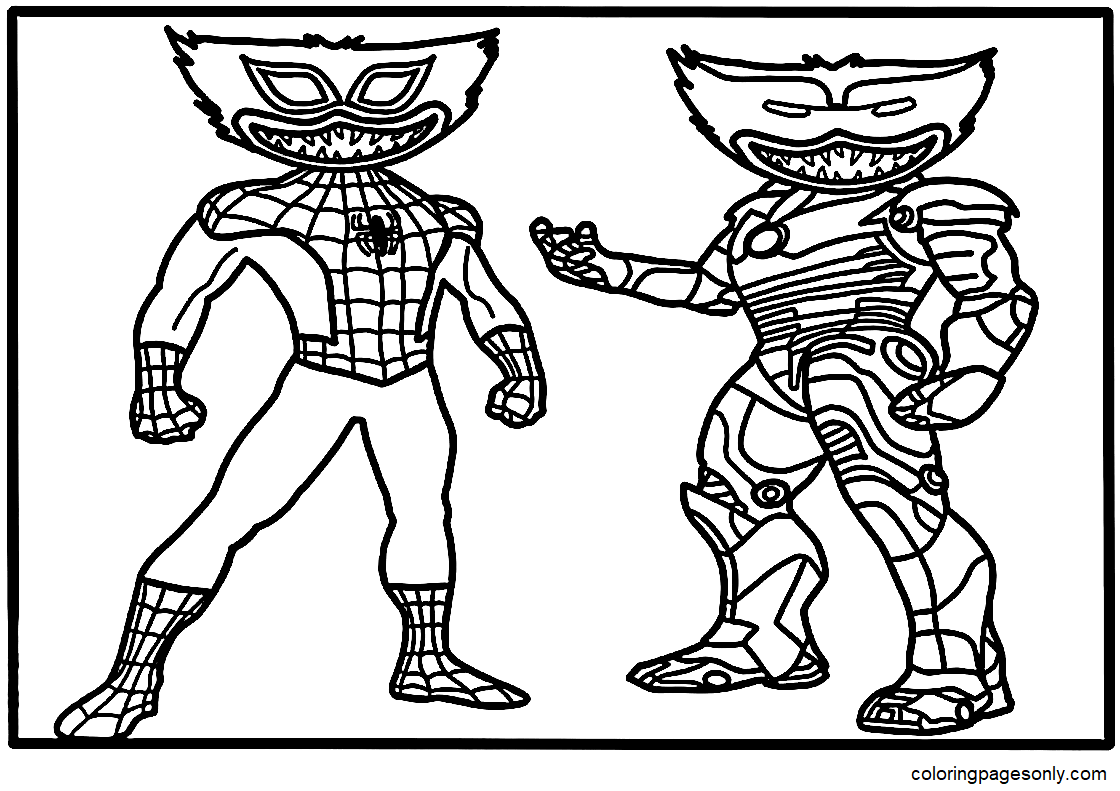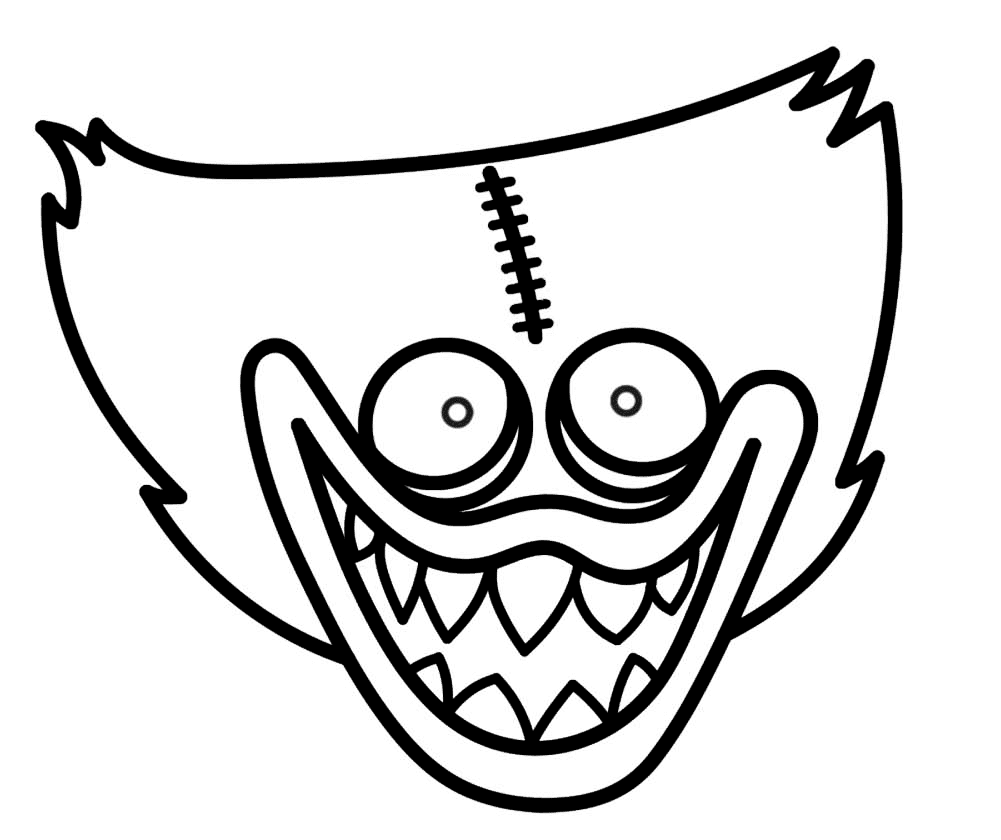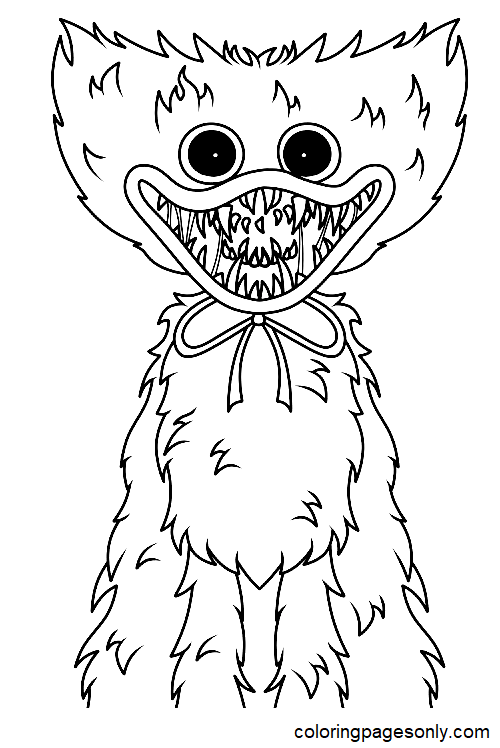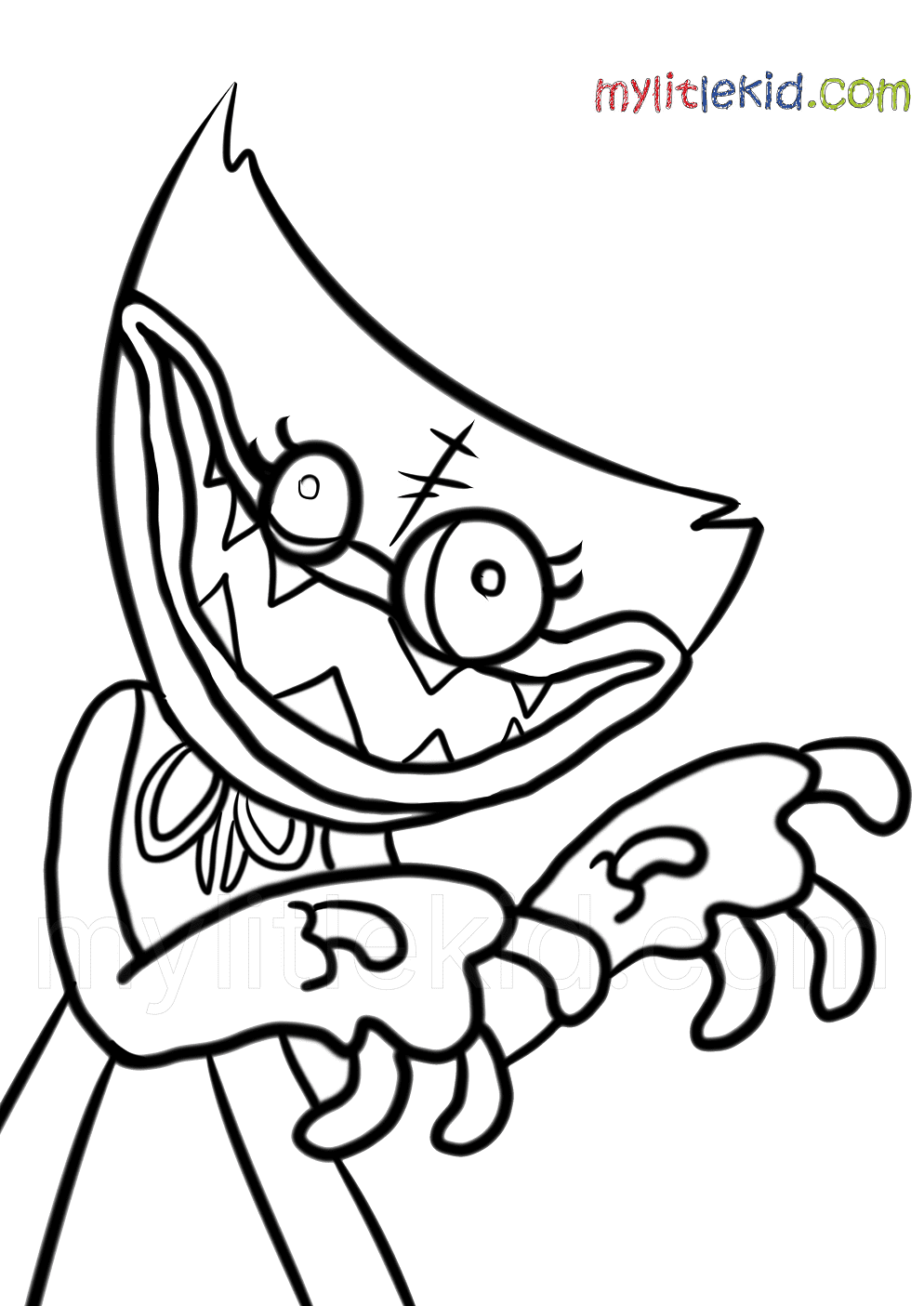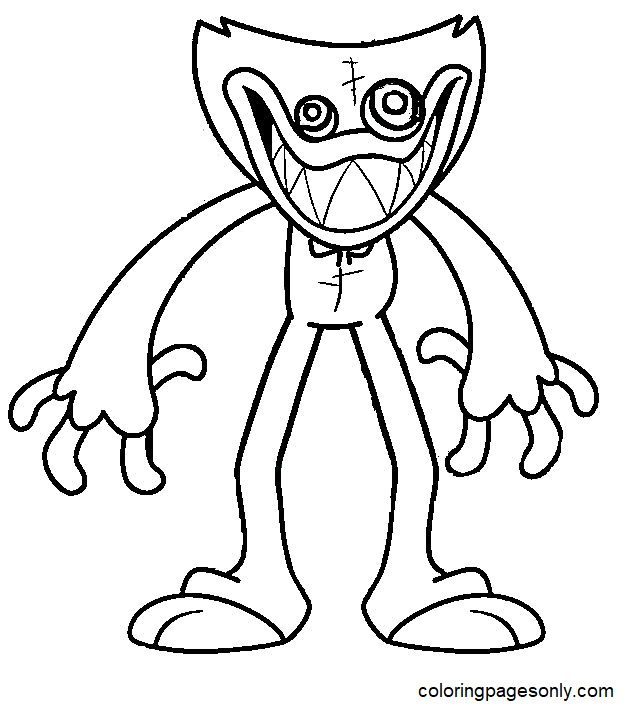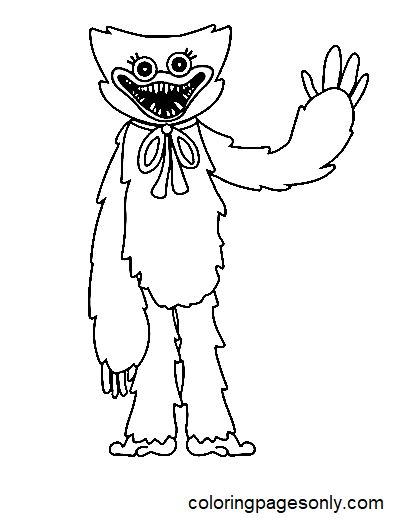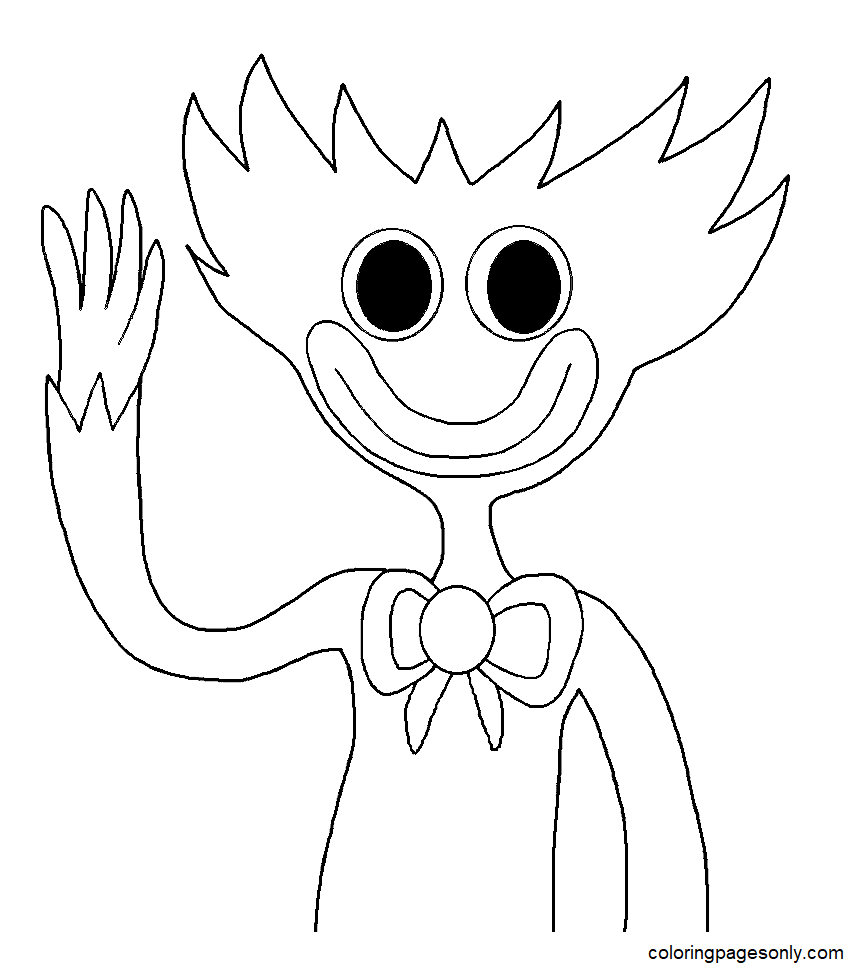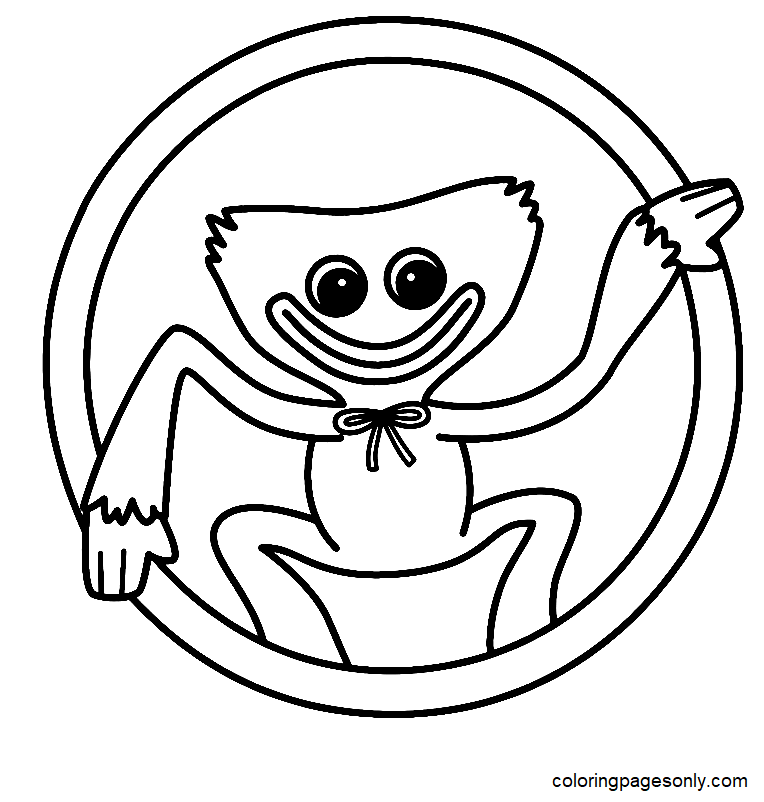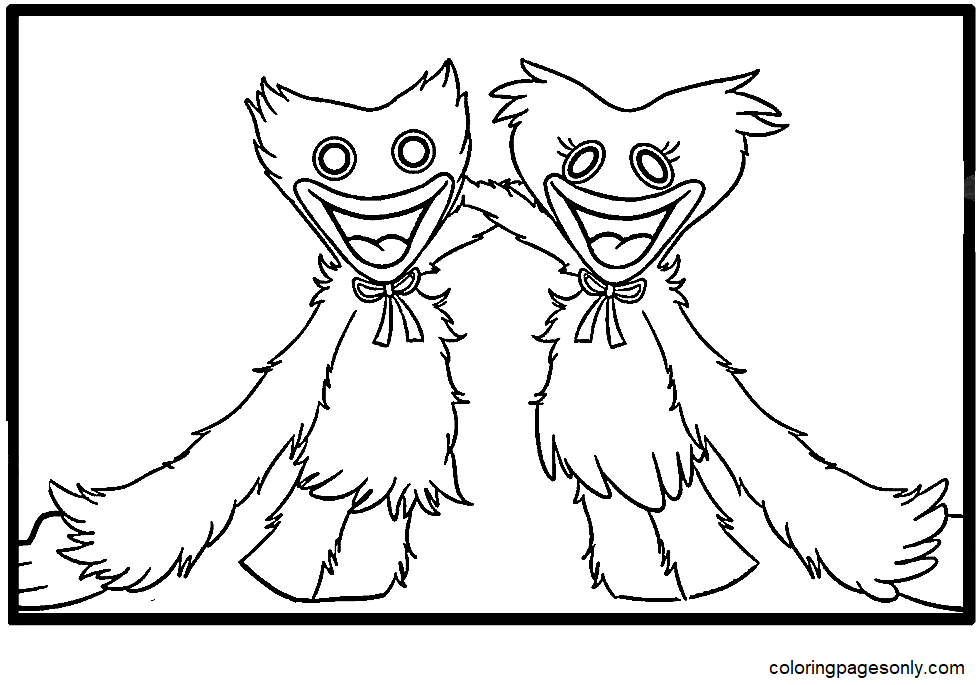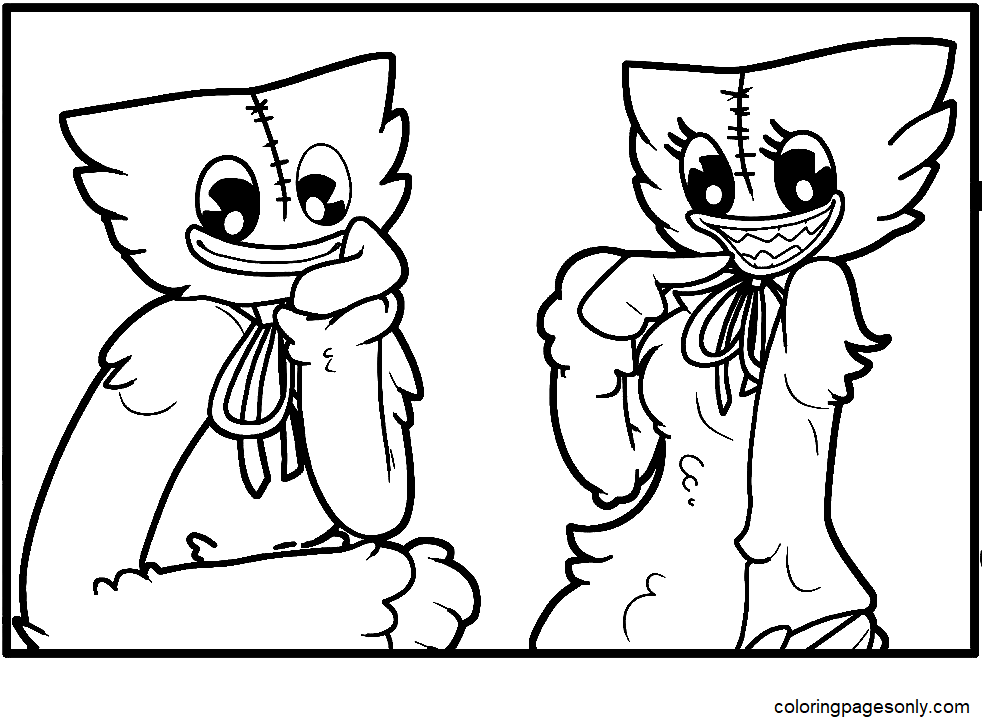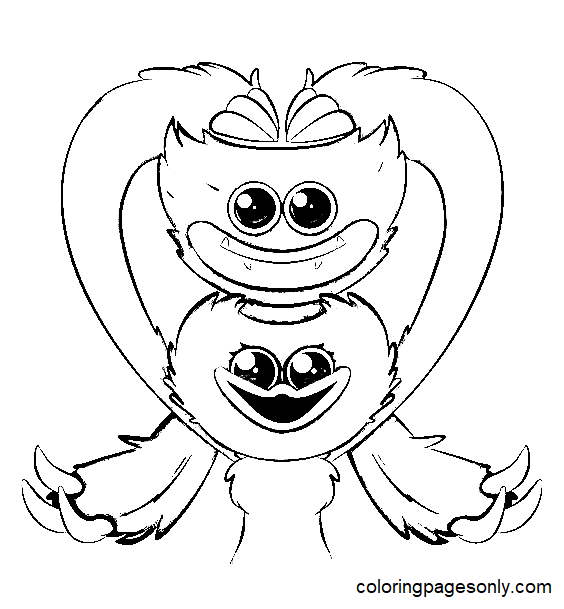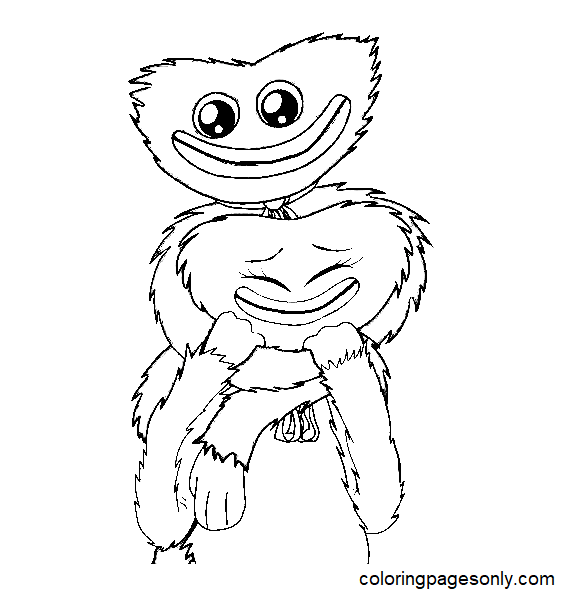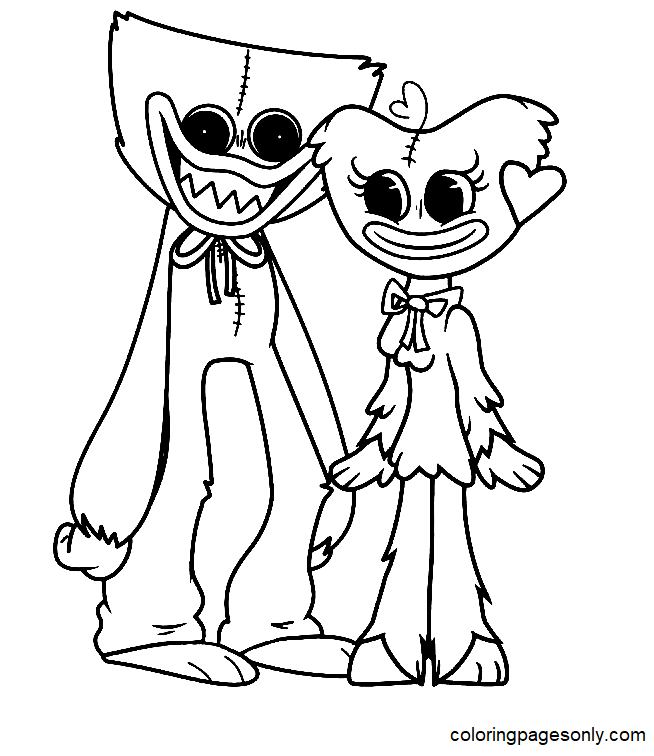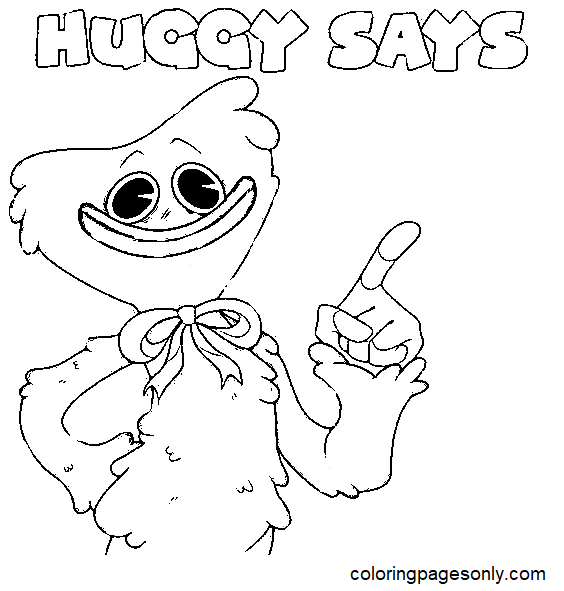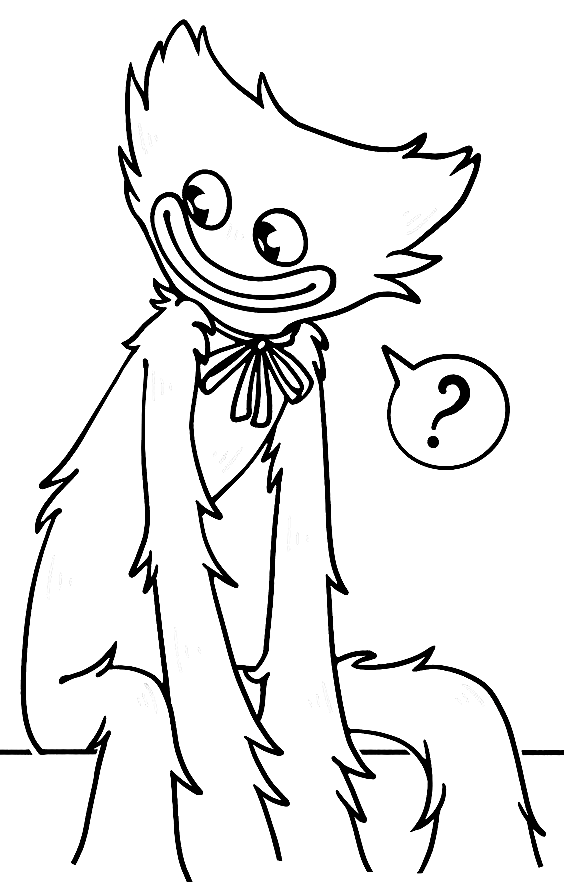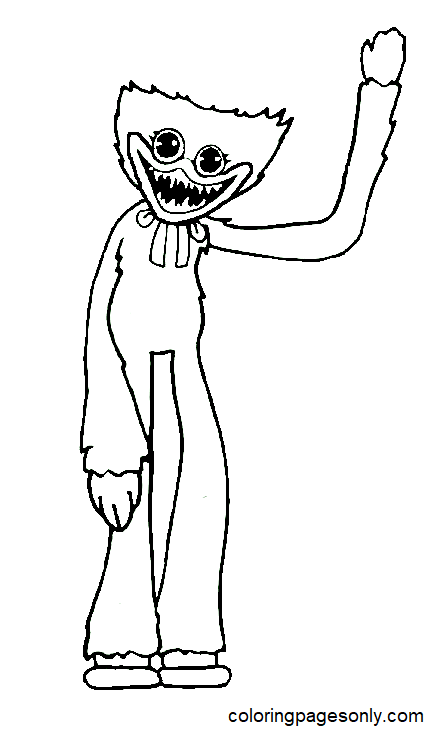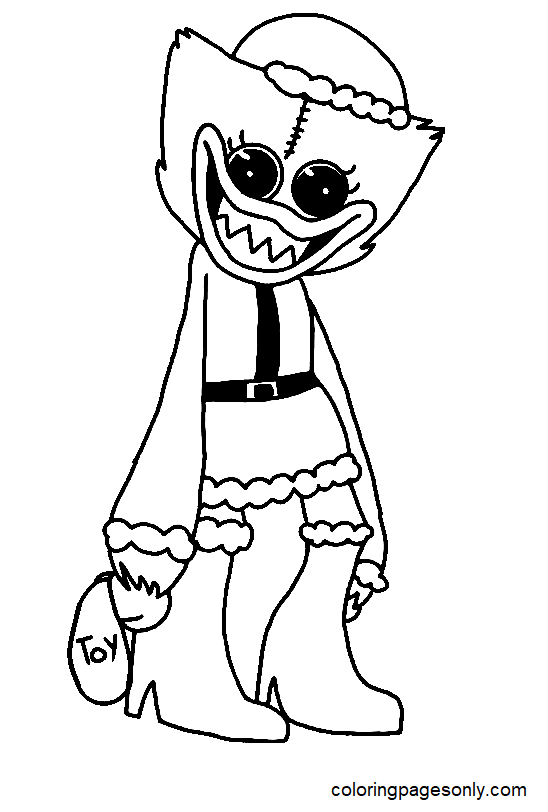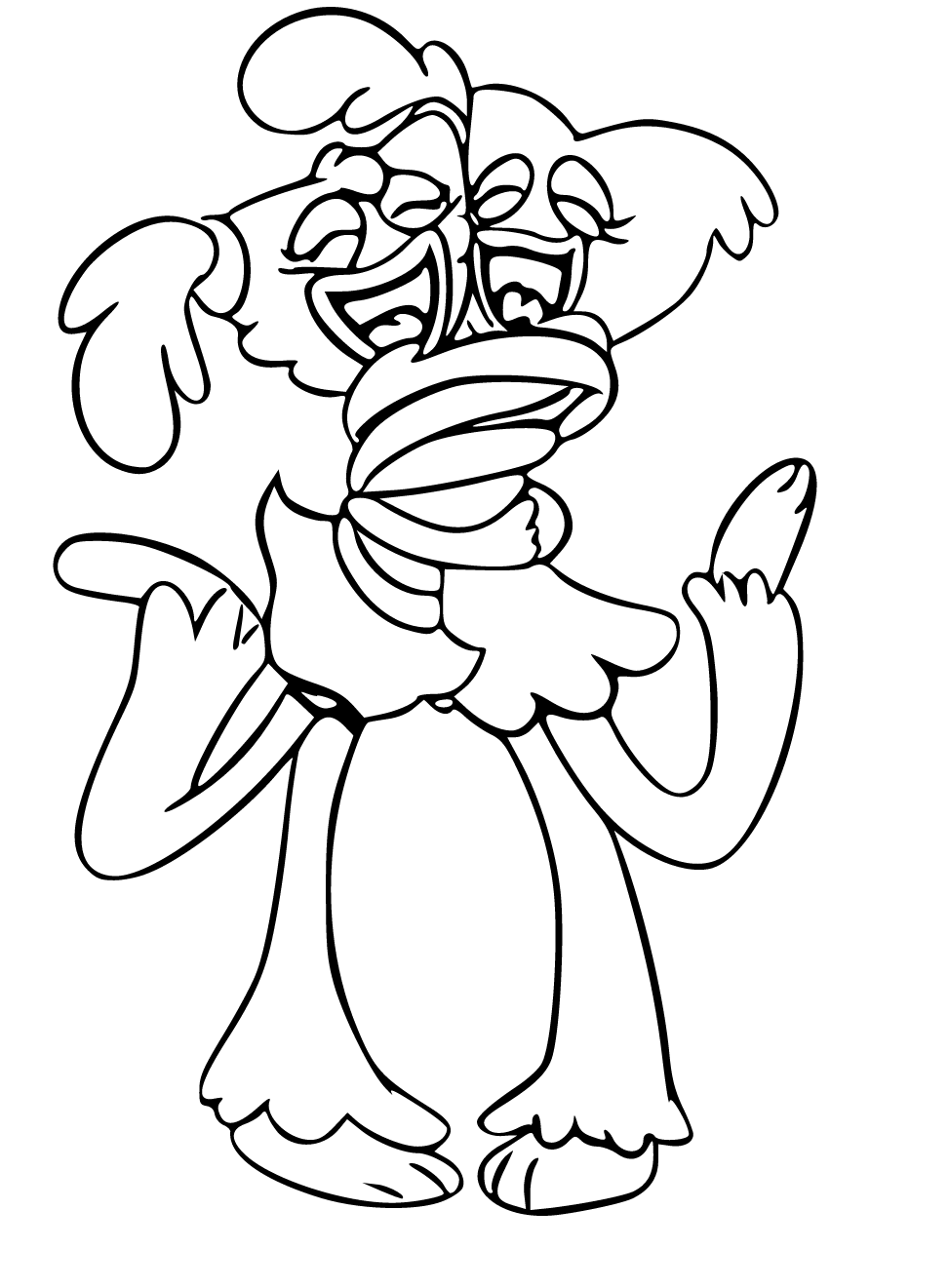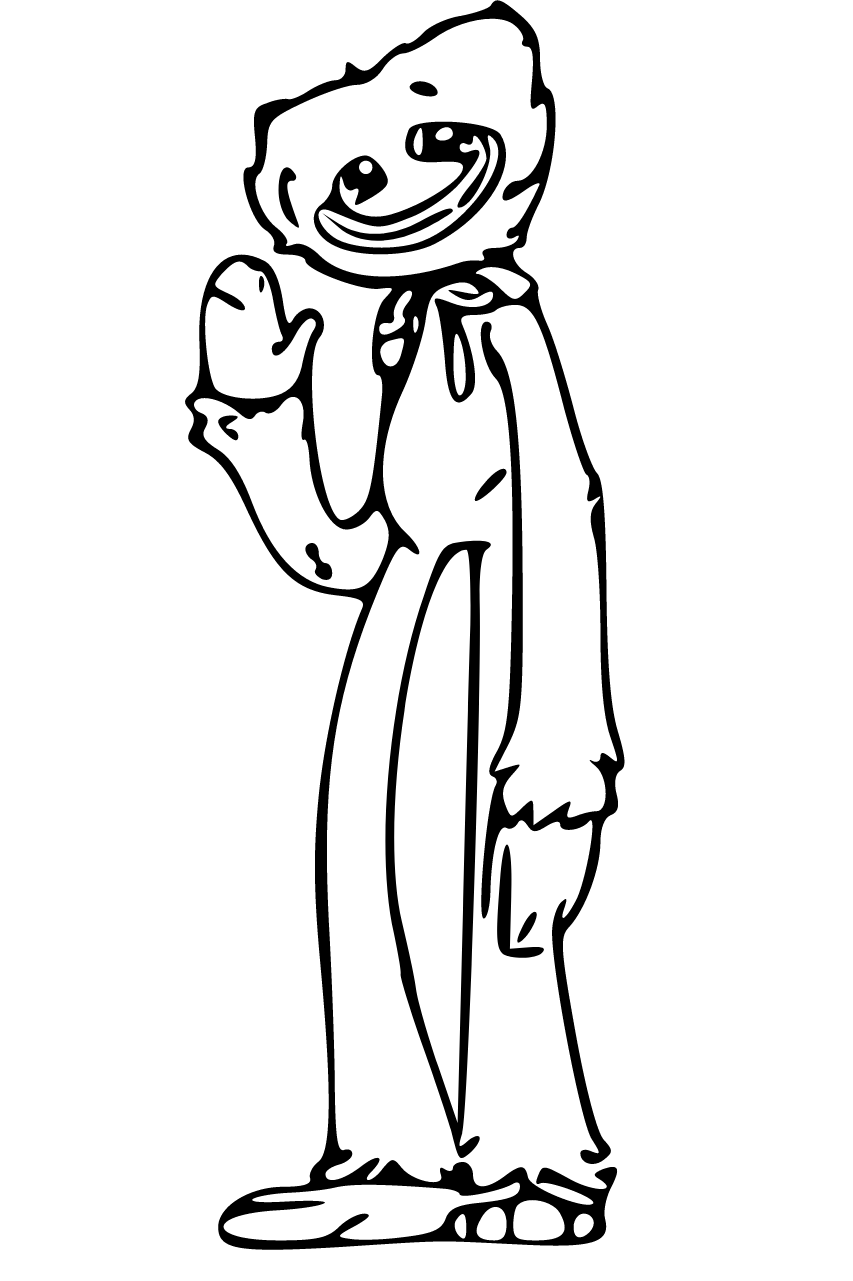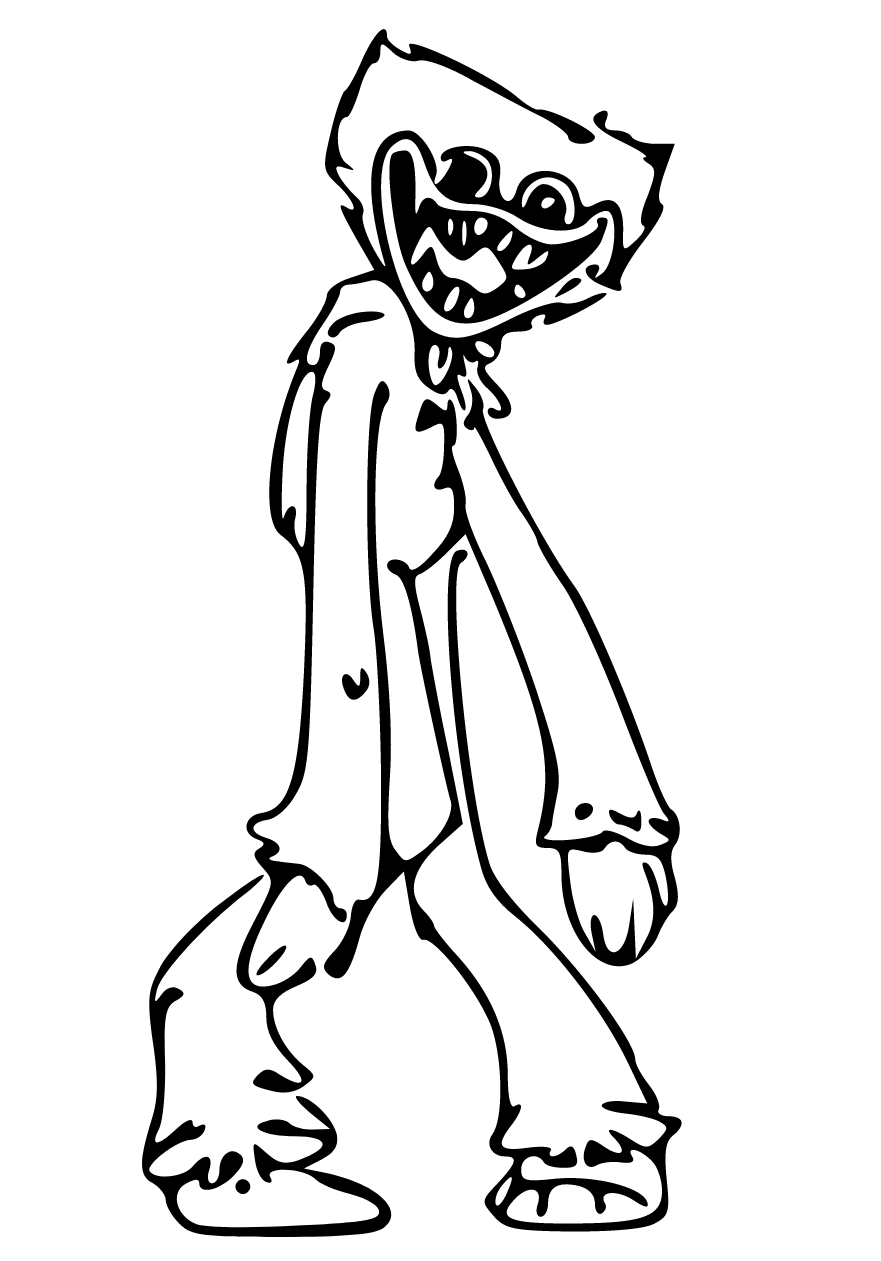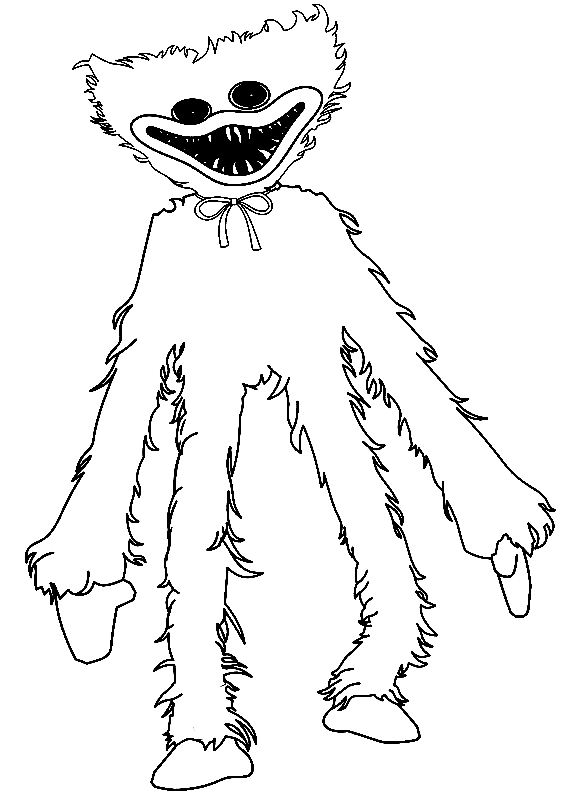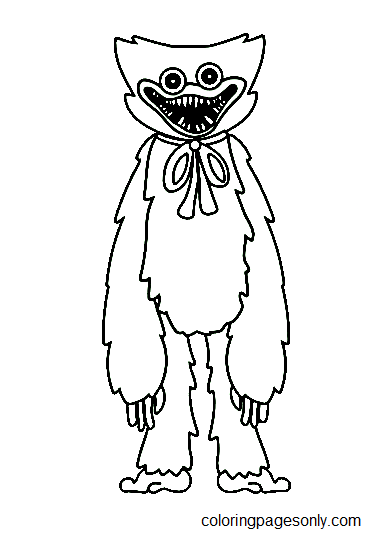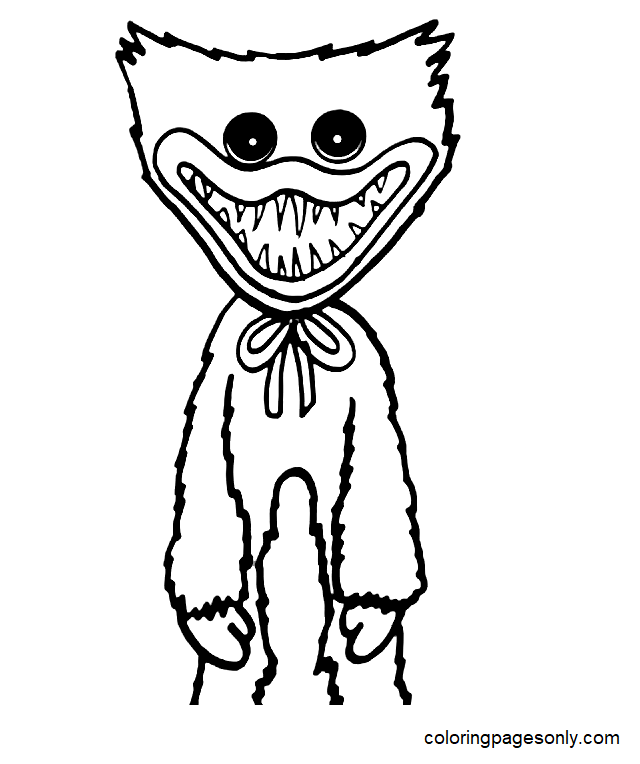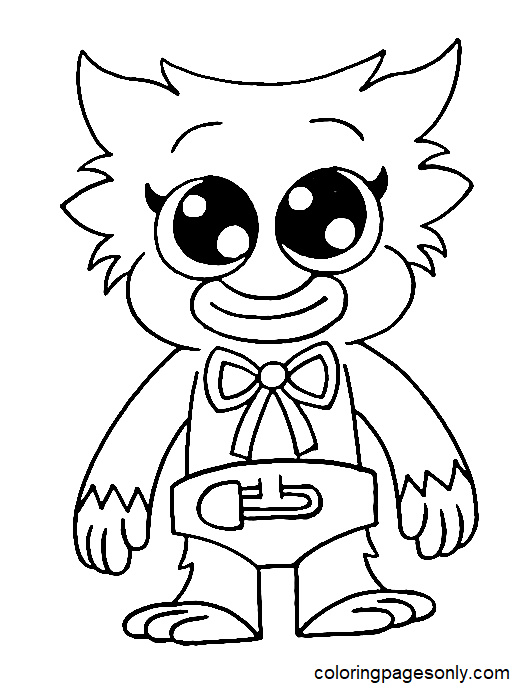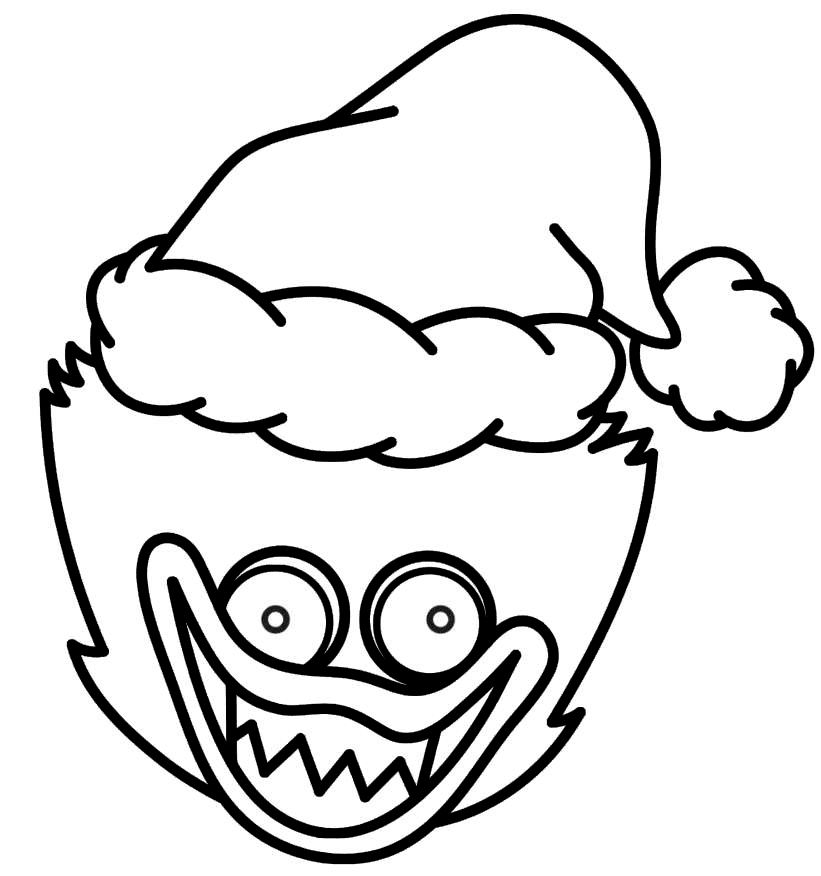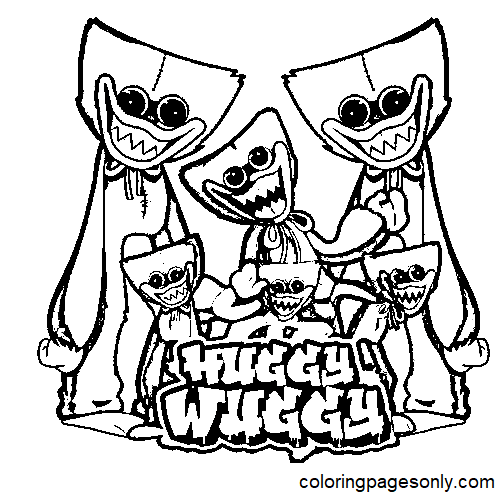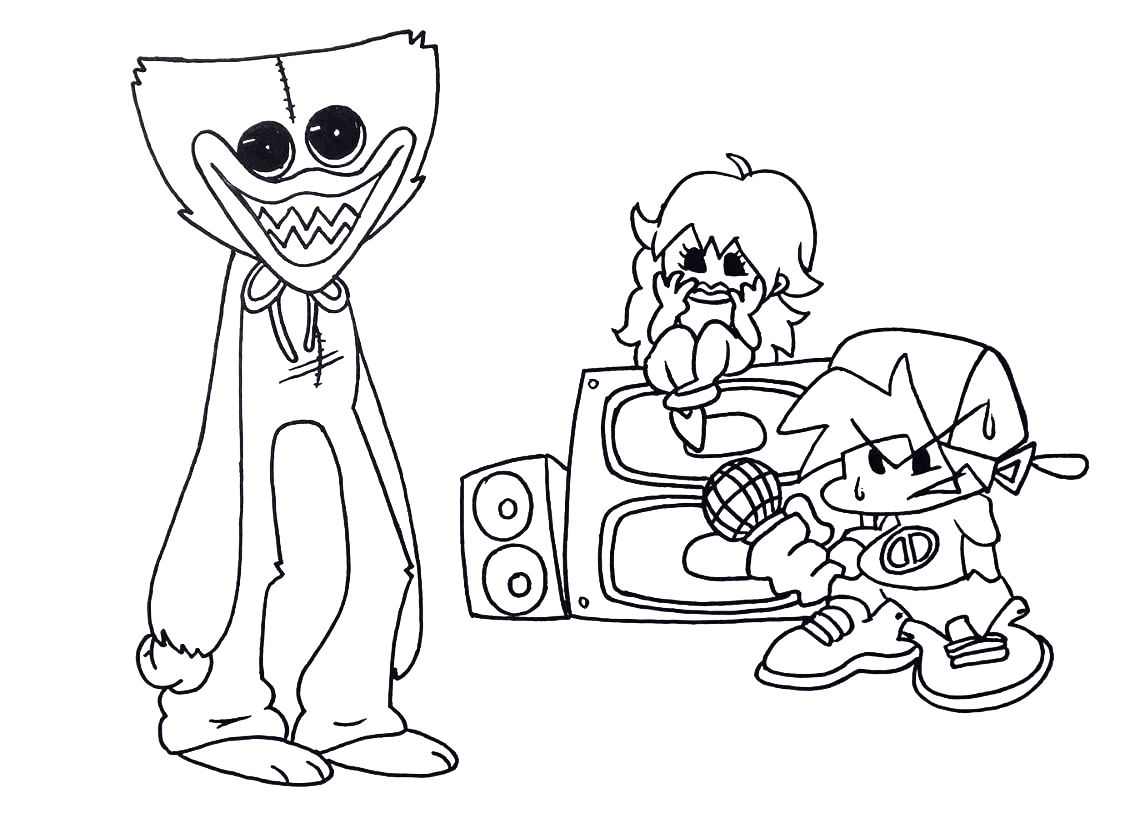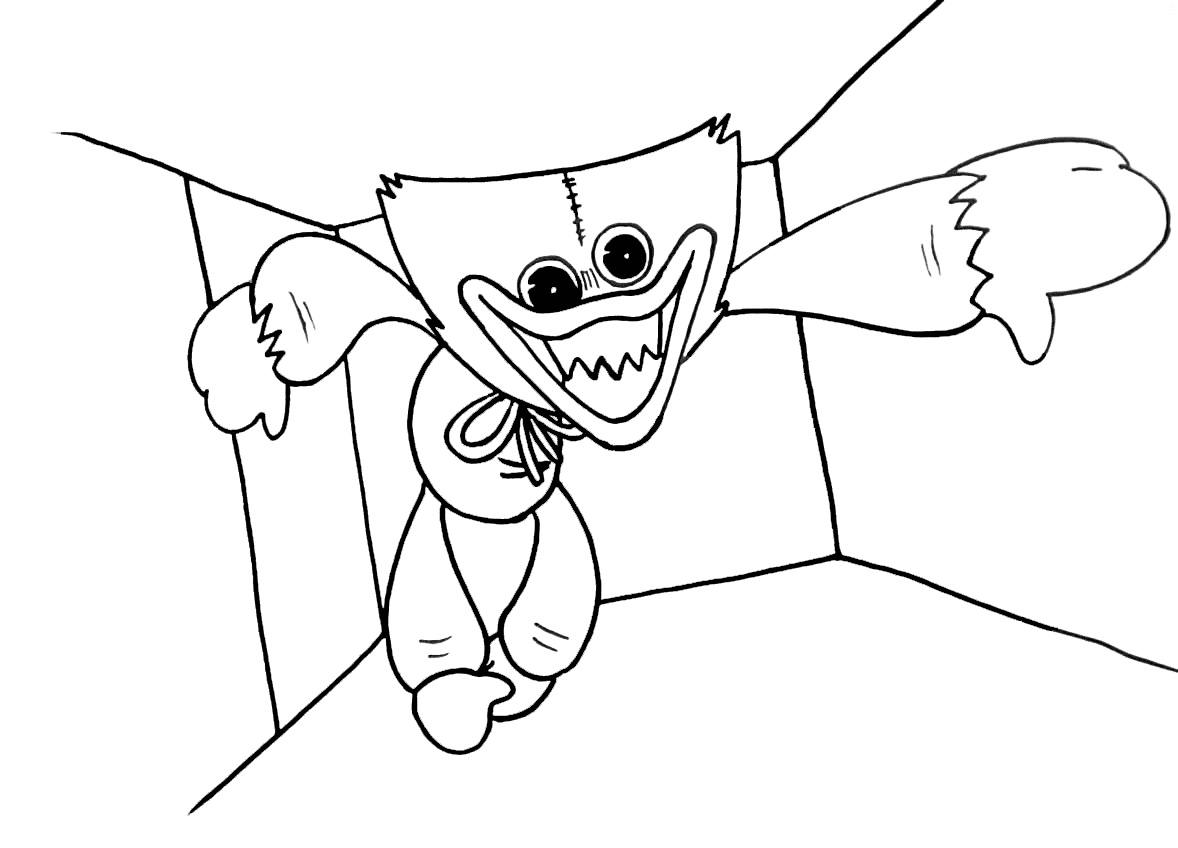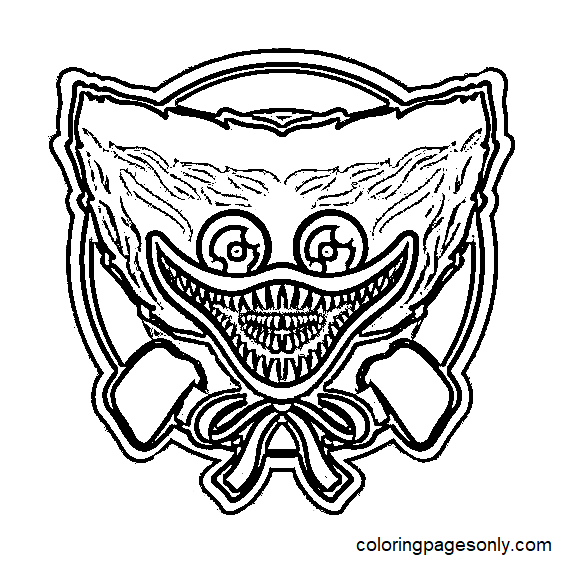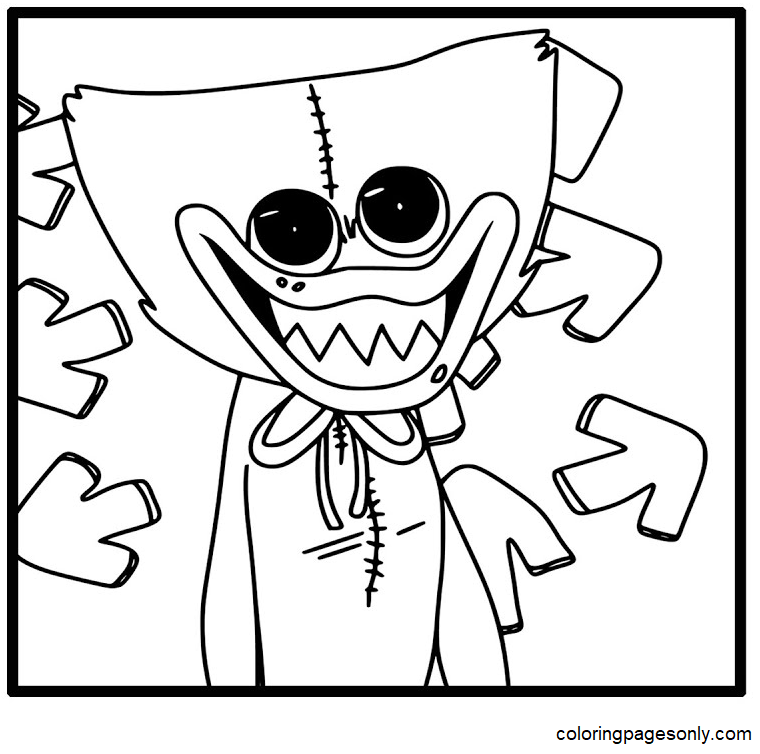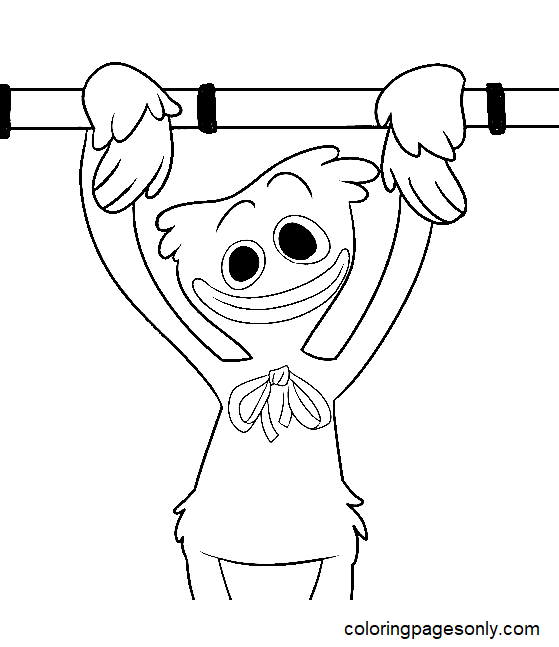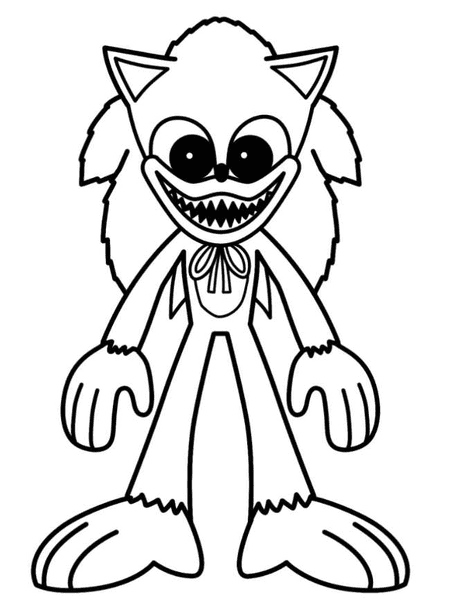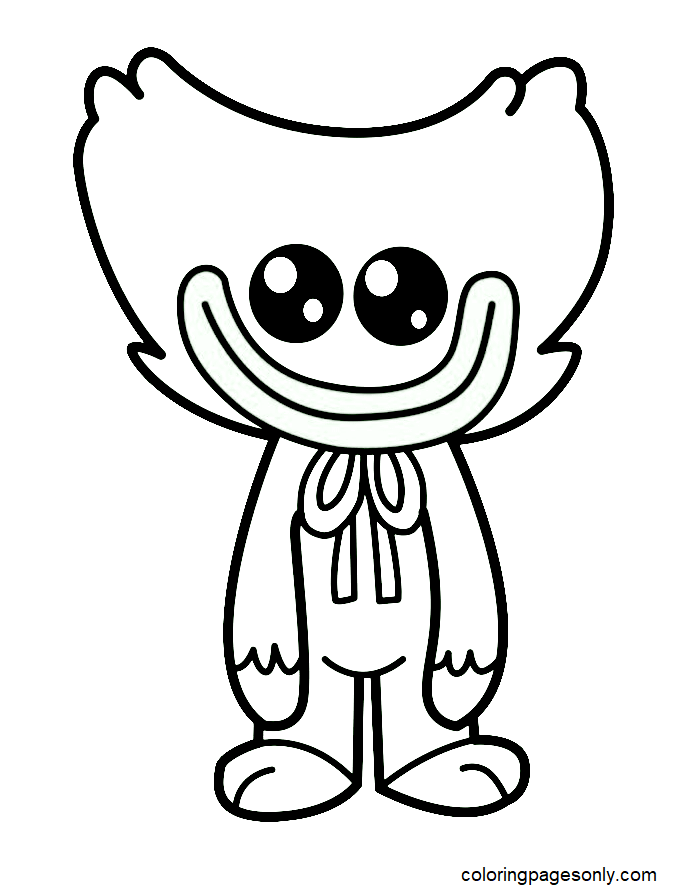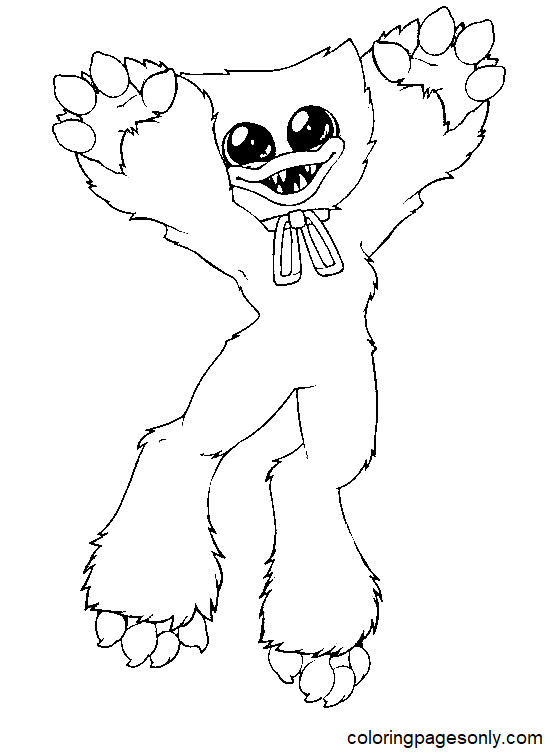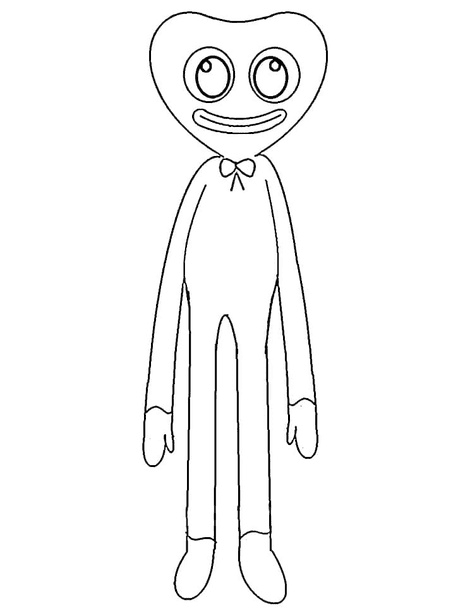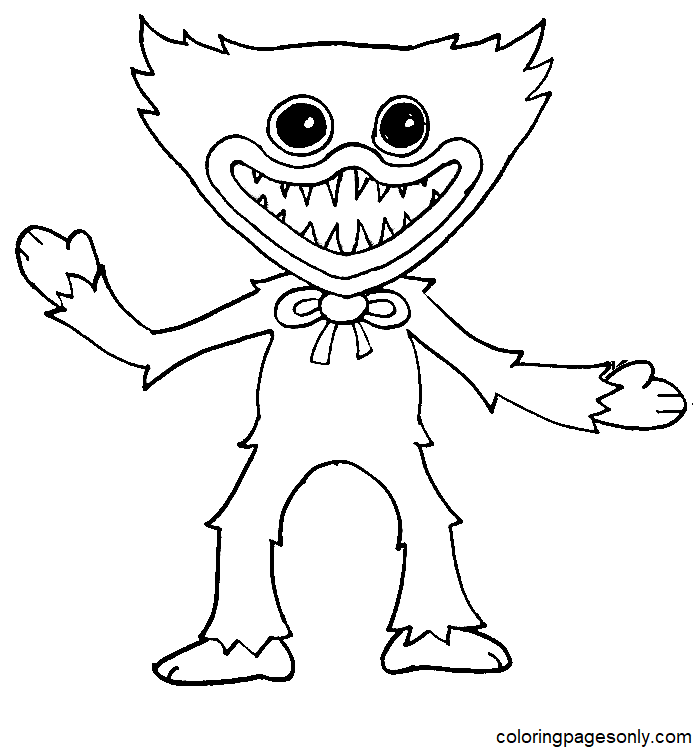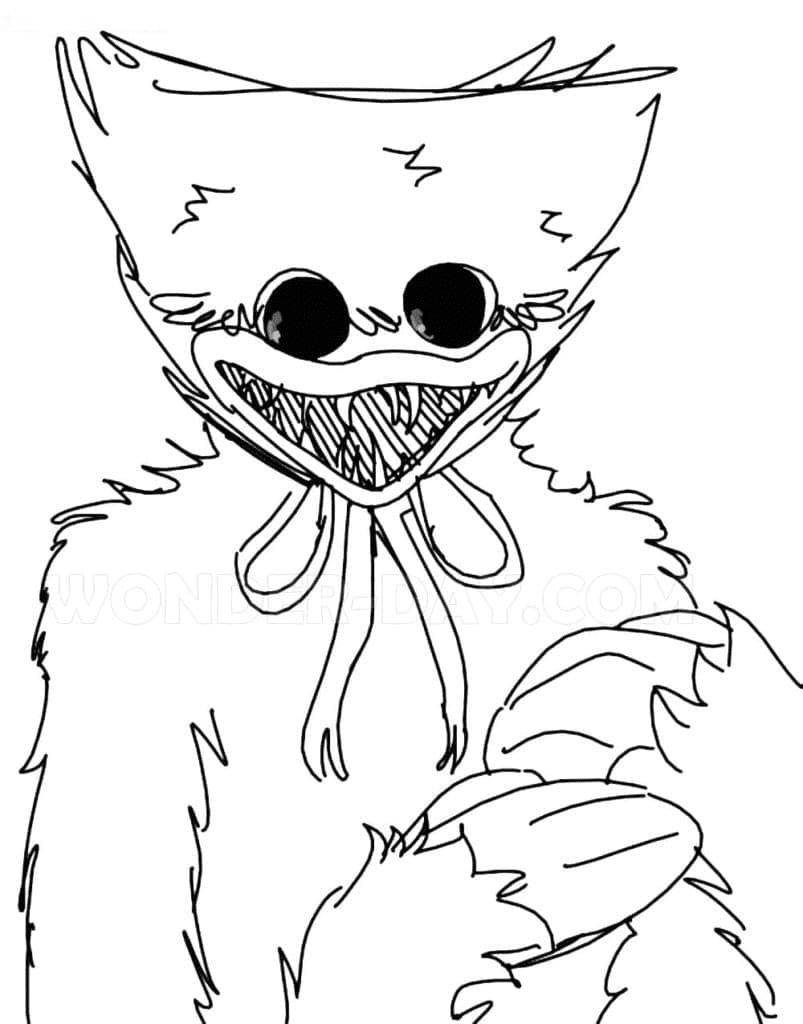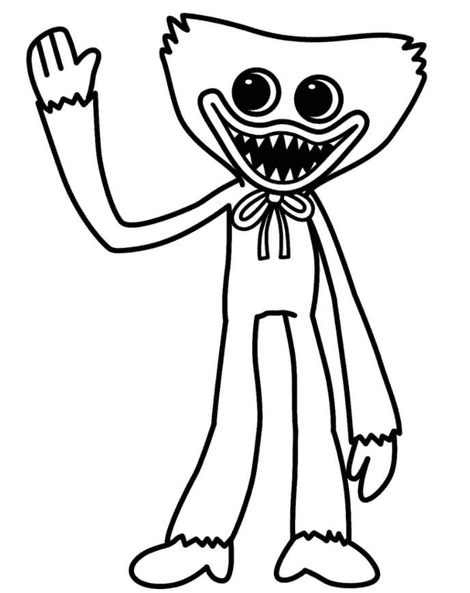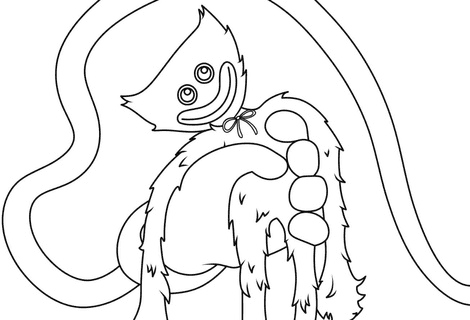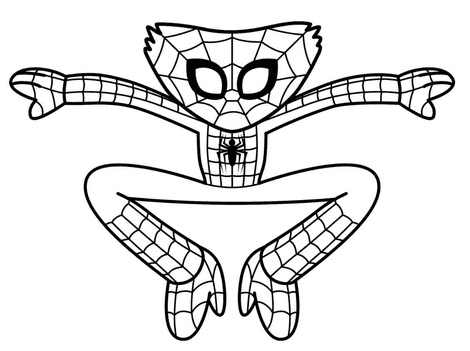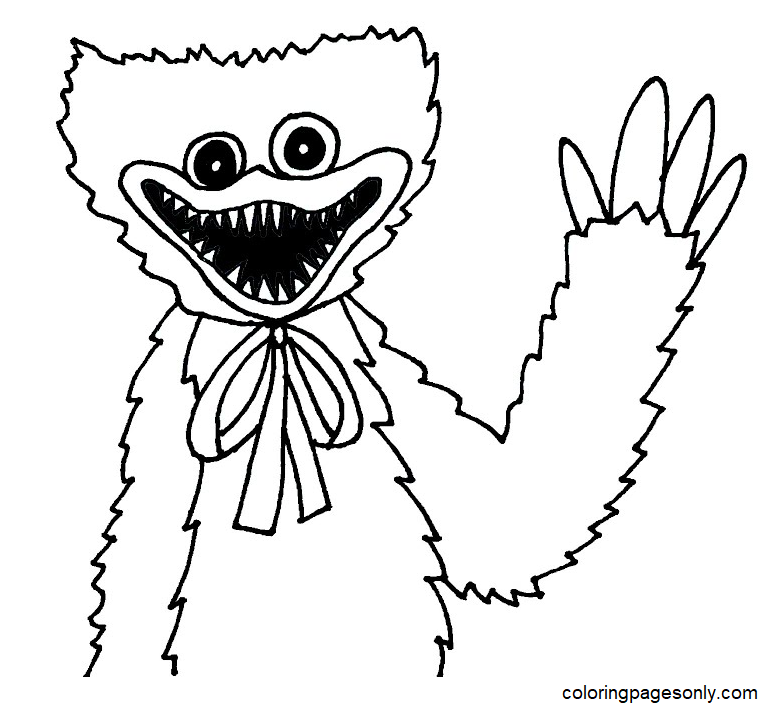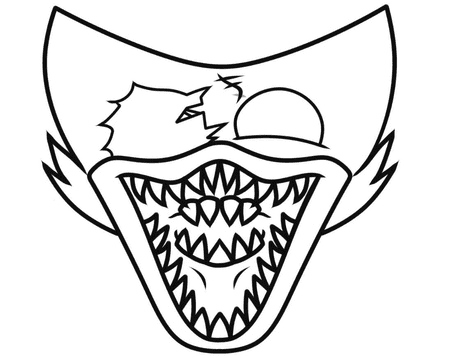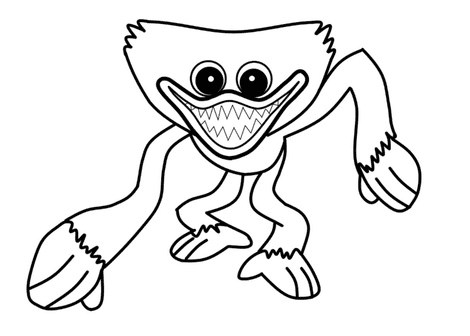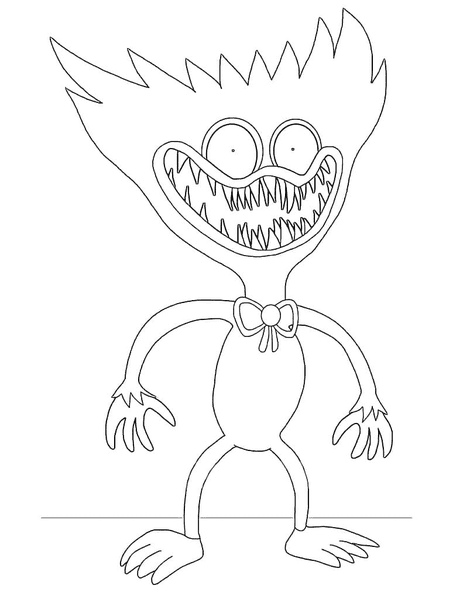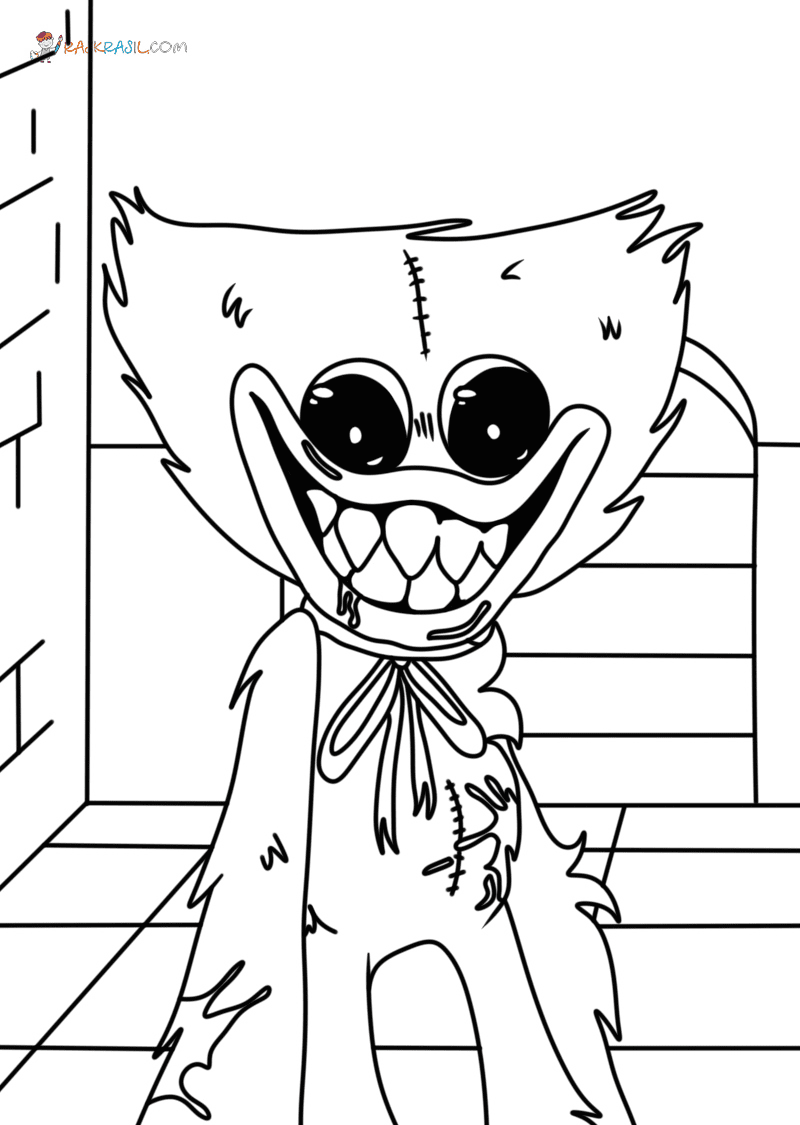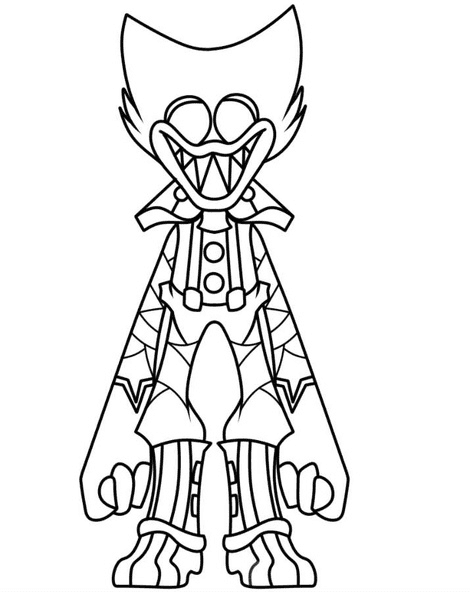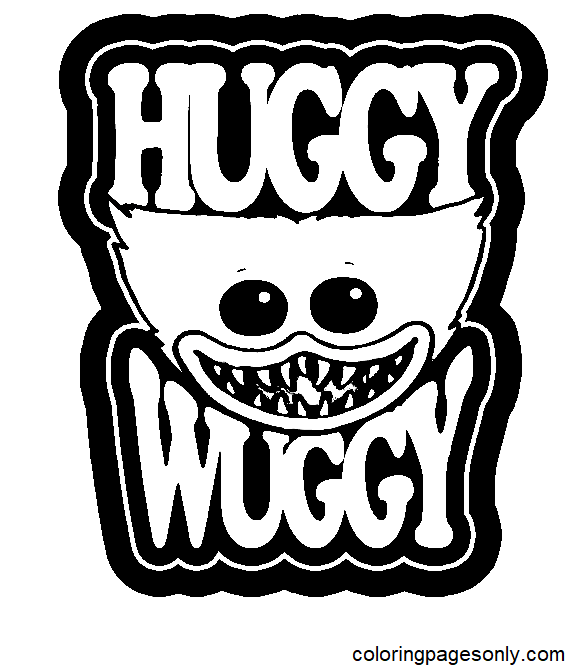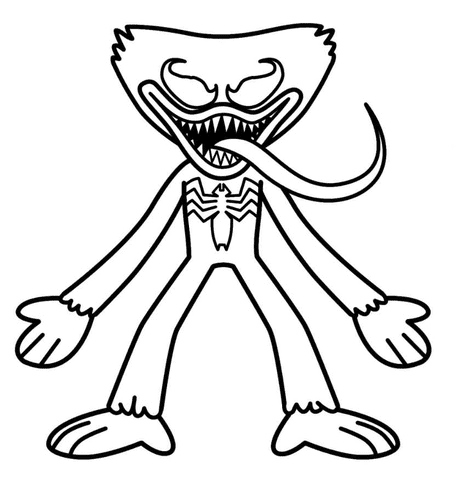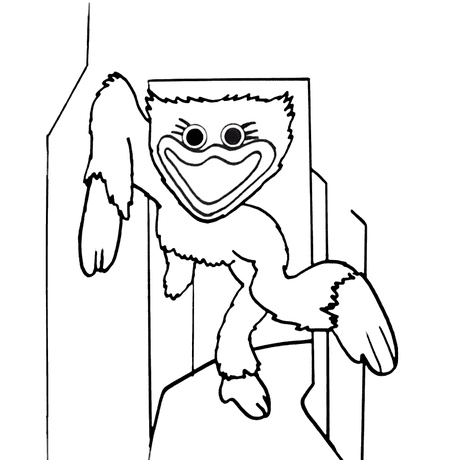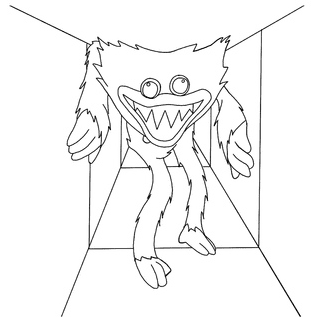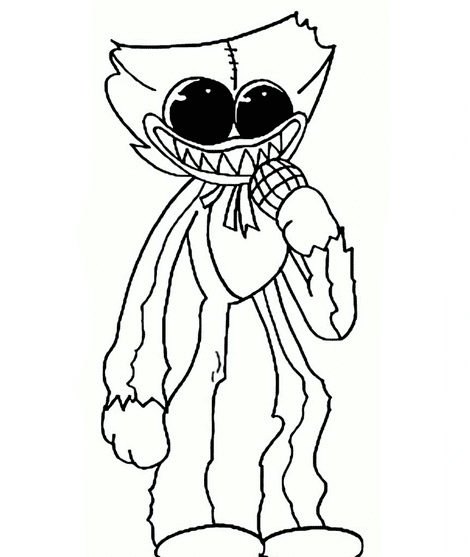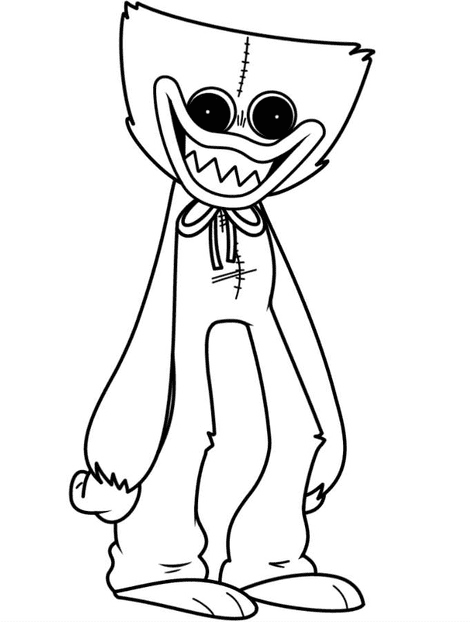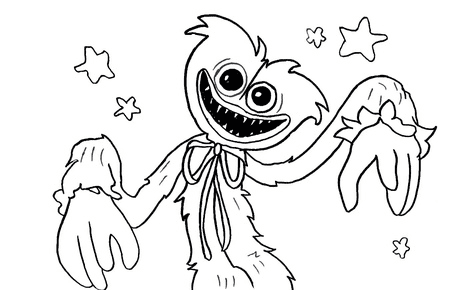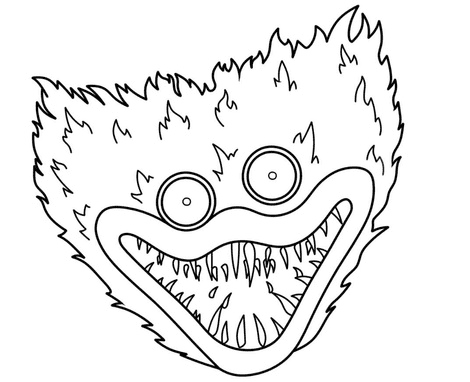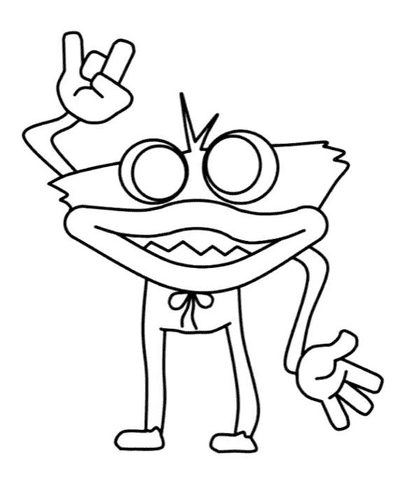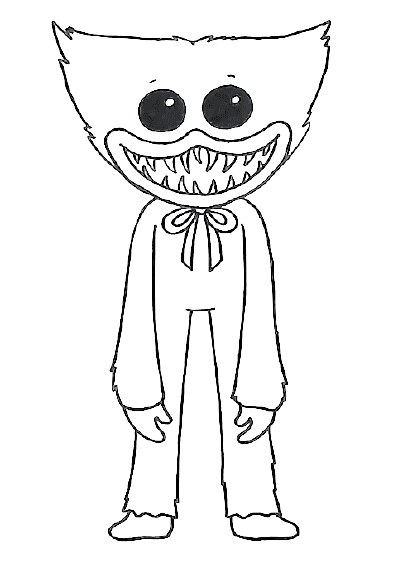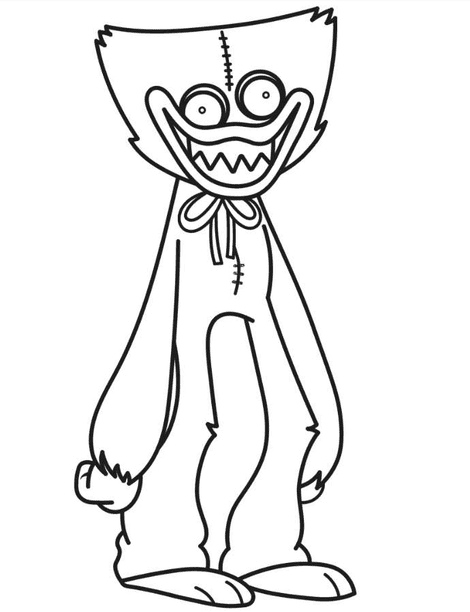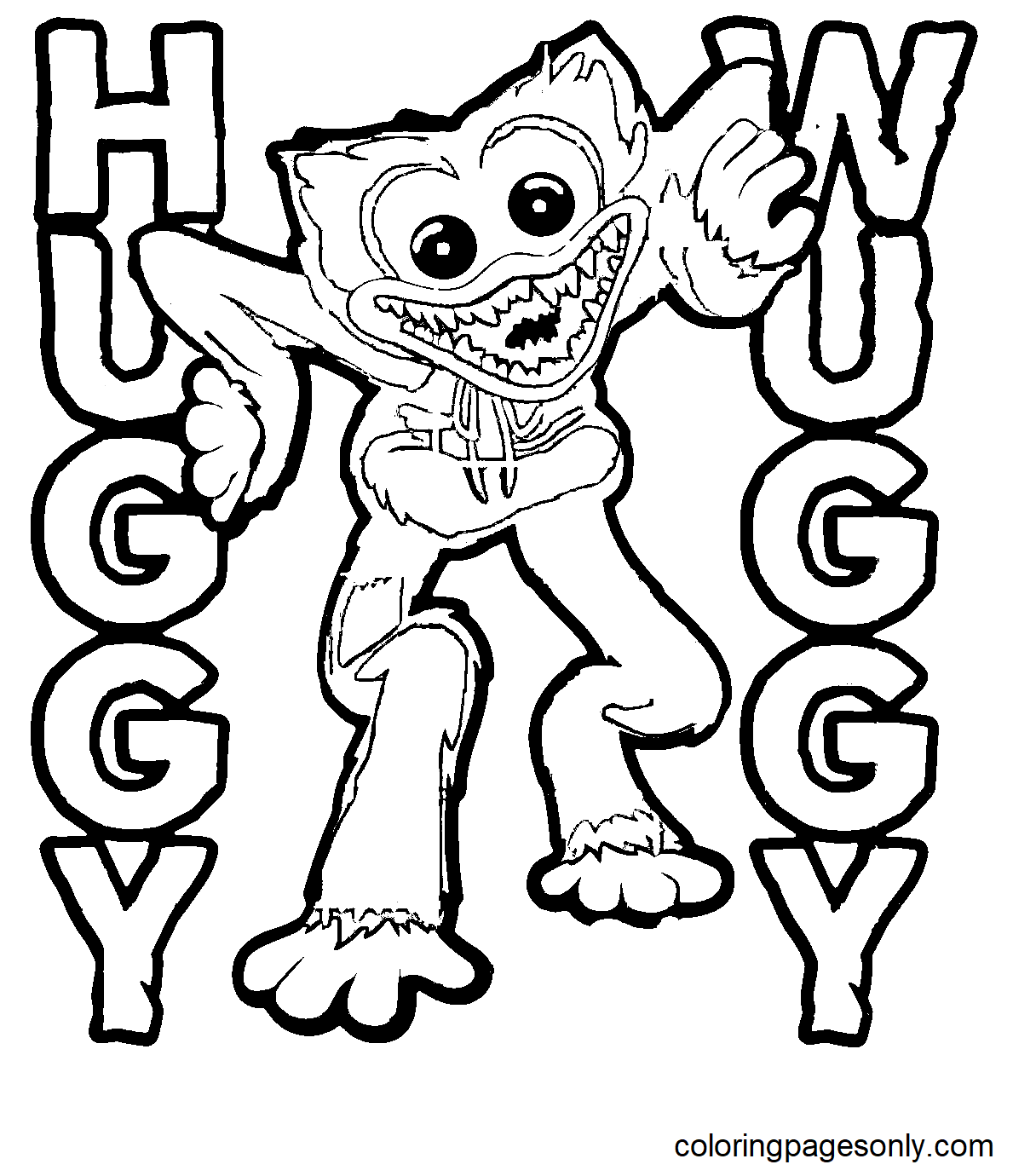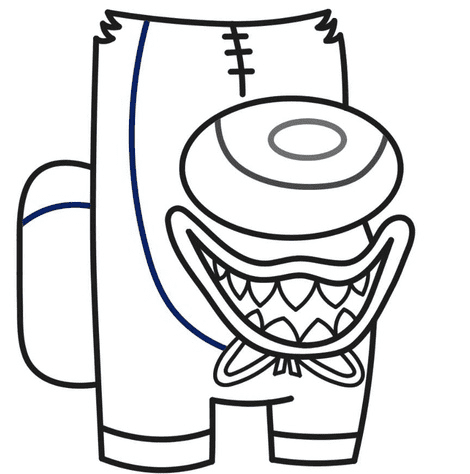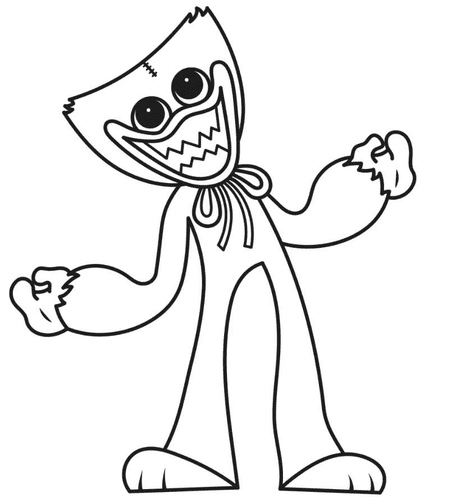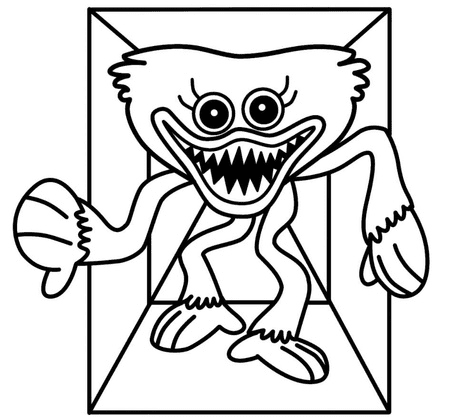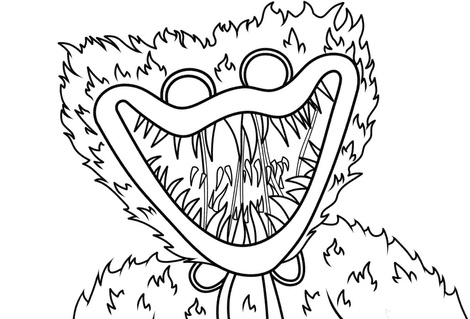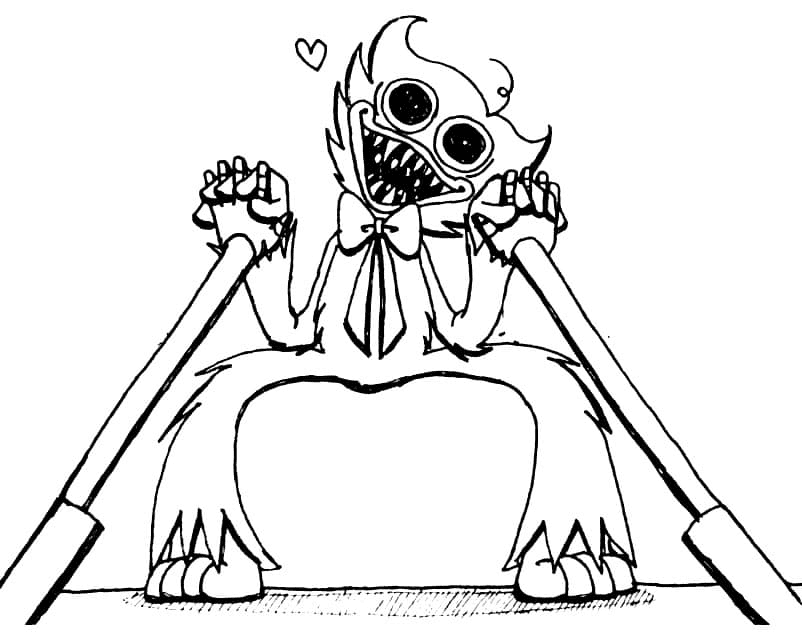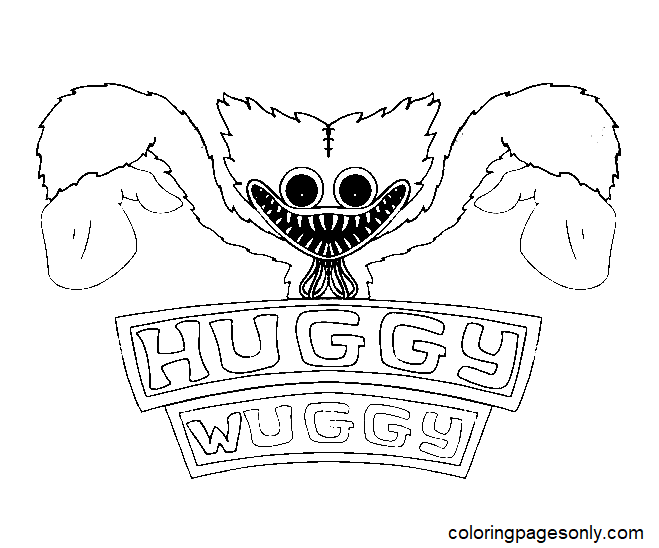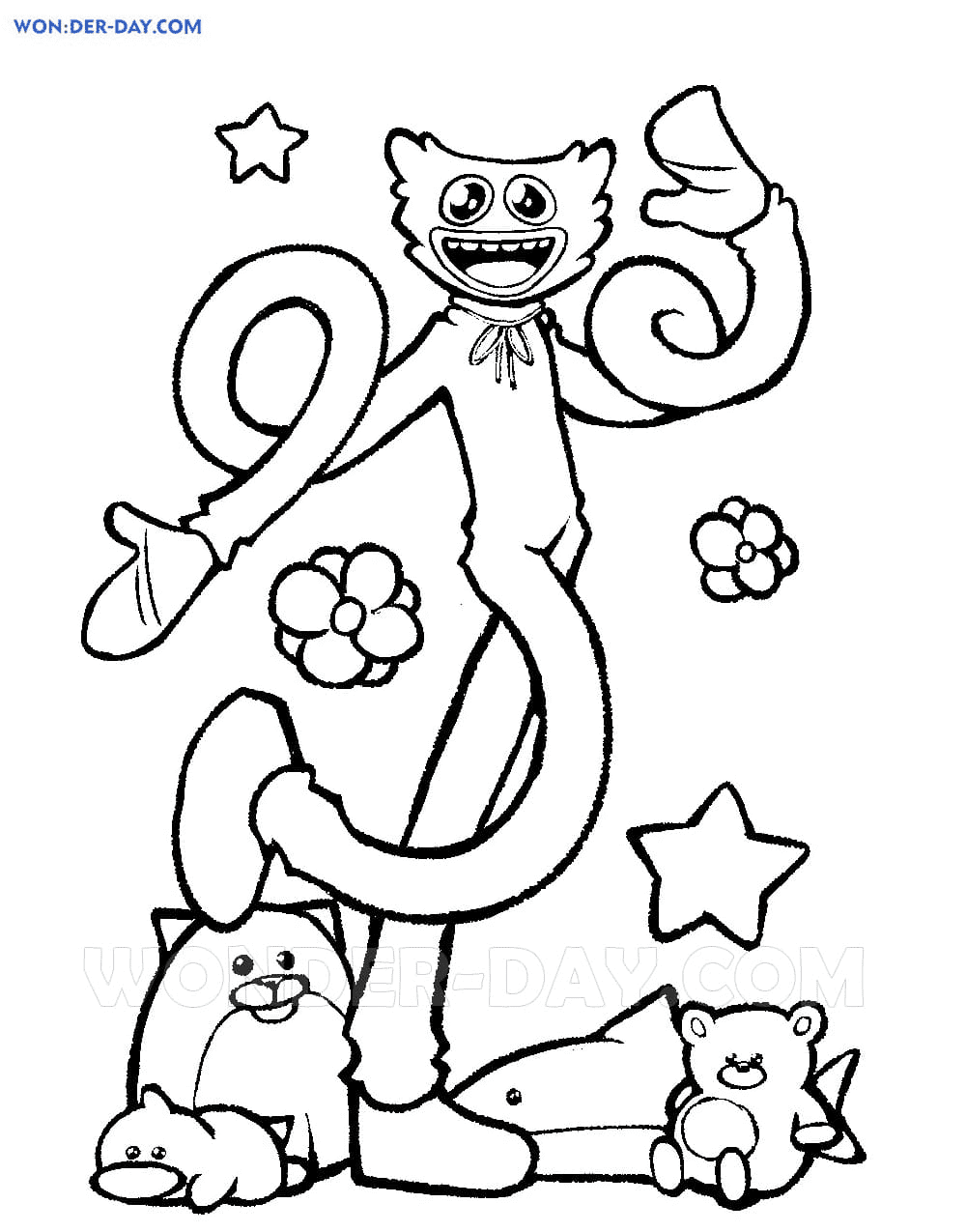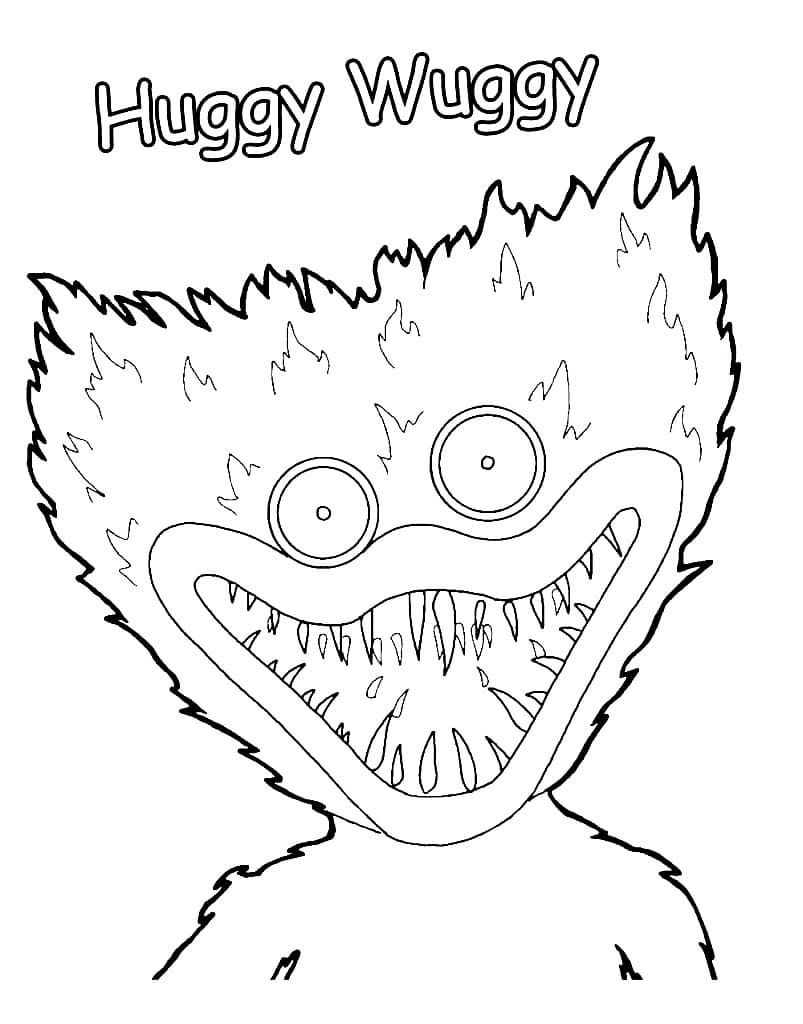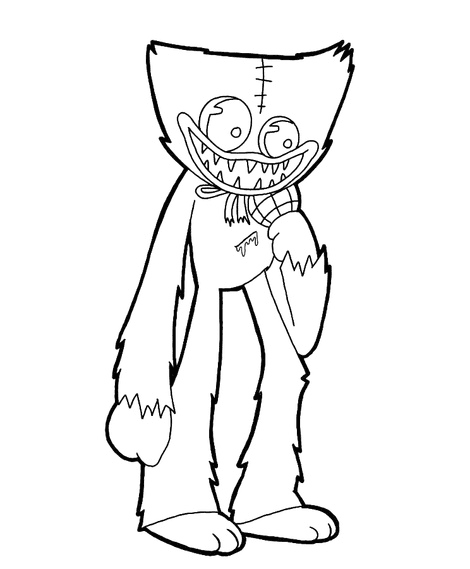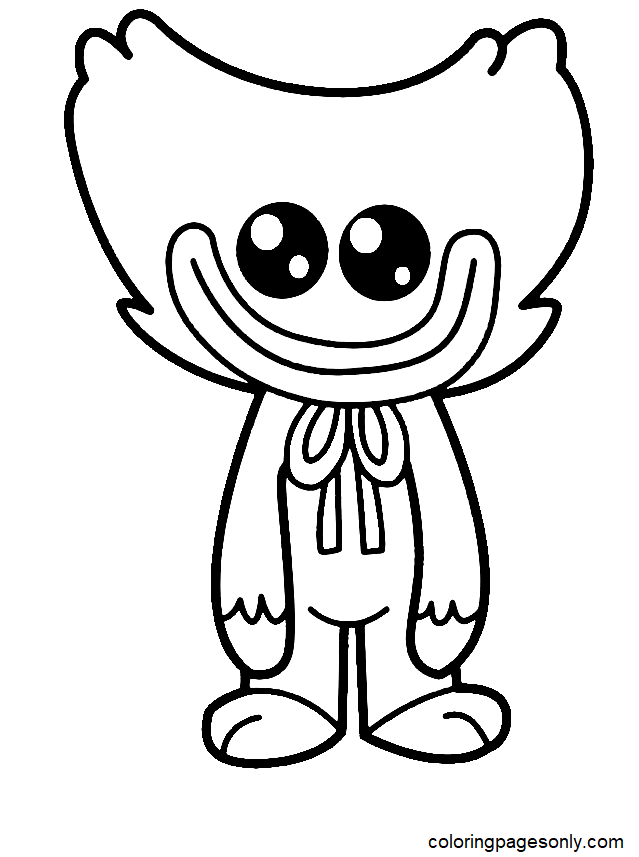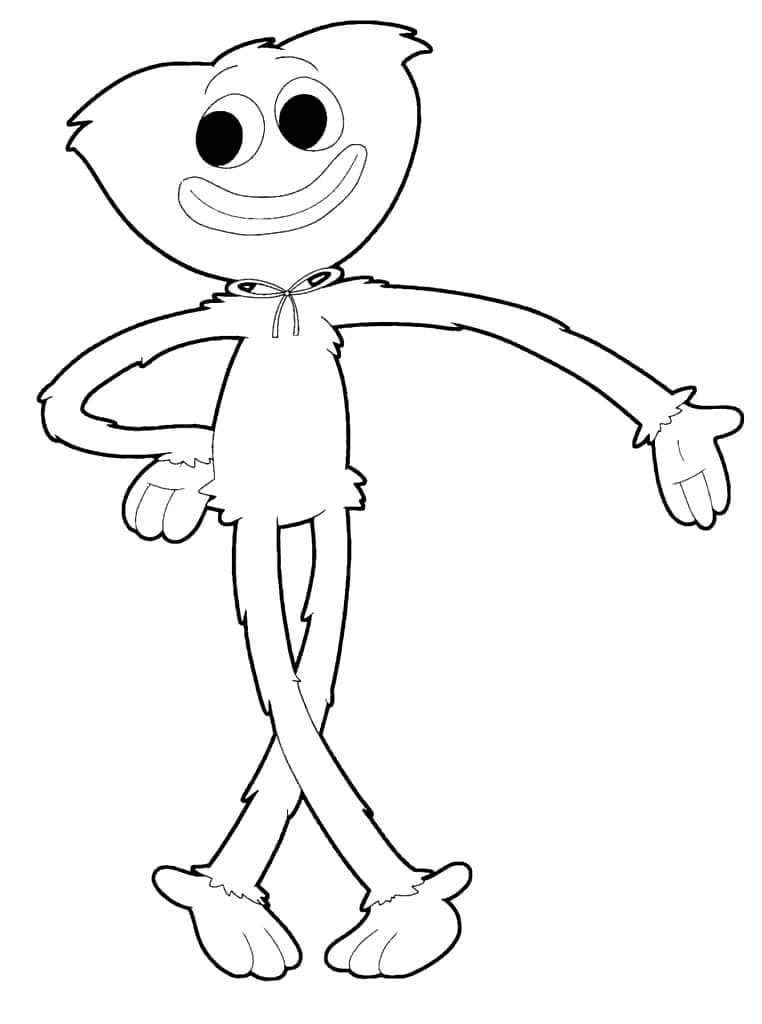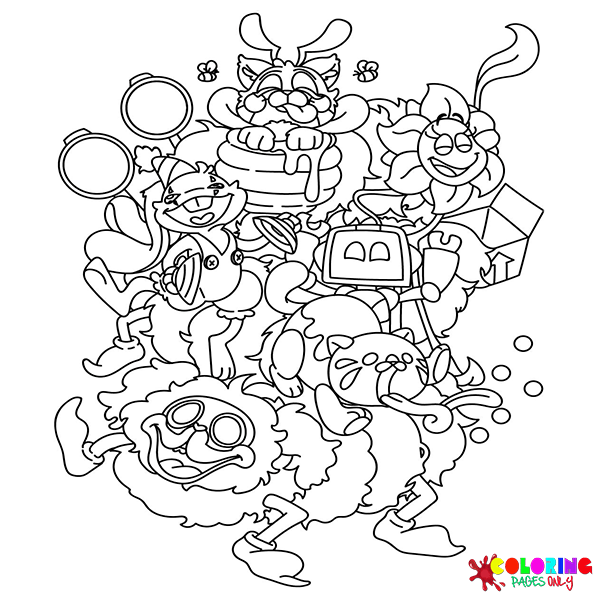
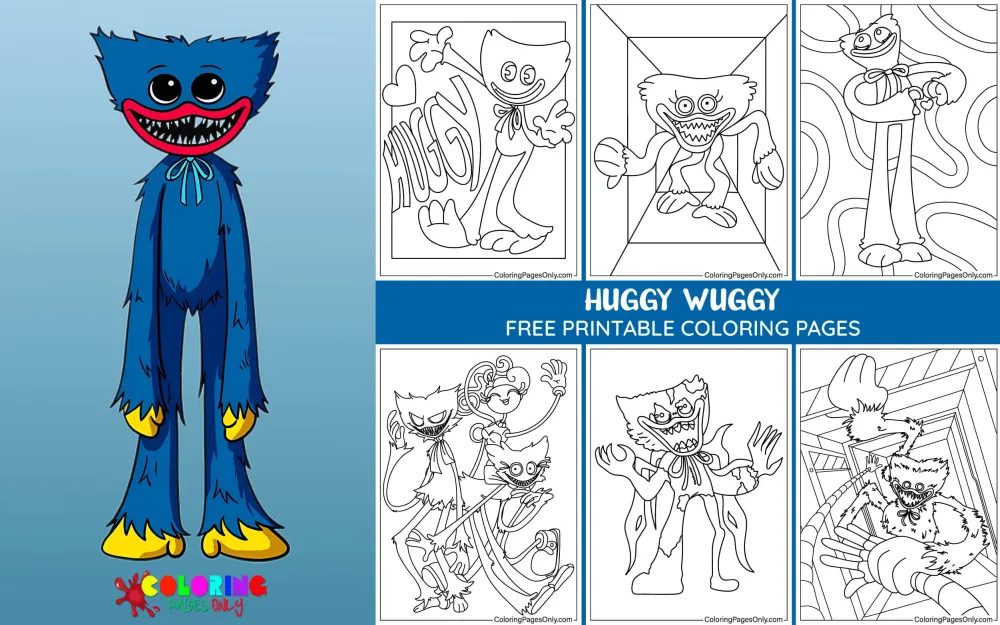
Huggy Wuggy Coloring Pages at ColoringPagesOnly.com brings together 110+ free pages based on the primary antagonist of MOB Games’ Poppy Playtime horror game series – Huggy Wuggy solo in a wide range of poses and expressions, Huggy Wuggy paired with Kissy Missy, crossover pages with other Poppy Playtime characters including CatNap and Bobby BearHug, holiday versions, Huggy Wuggy.Exe pages, and crossover fan art with Friday Night Funkin’ and superheroes. Download any page as a PDF to print, or color online in your browser. The full Poppy Playtime collection is at Poppy Playtime Coloring Pages.
Who is Huggy Wuggy?
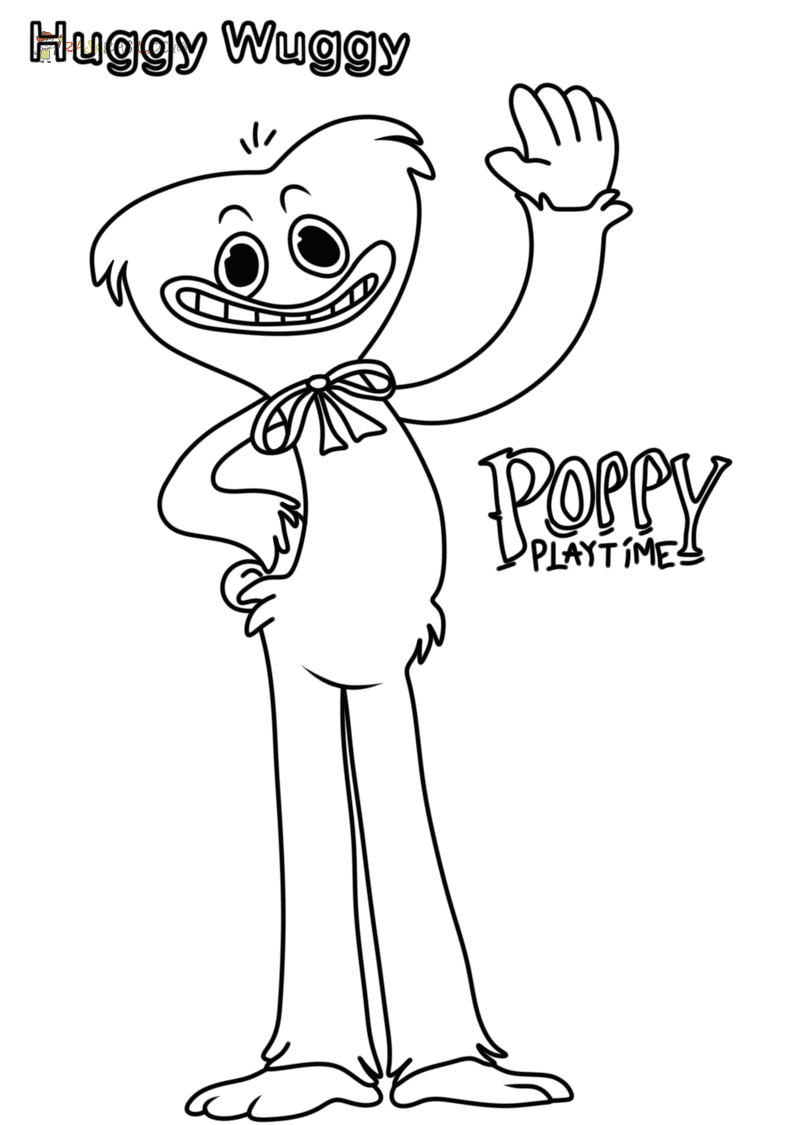
Huggy Wuggy is the primary antagonist of Chapter 1 of Poppy Playtime, a horror survival game developed by MOB Games that released its first chapter in October 2021. The game is set in the abandoned Playtime Co. toy factory, where the player character – a former employee – returns to investigate what happened to the factory’s staff. Huggy Wuggy is the mascot toy of Playtime Co.: in his promotional form, he is a large blue plush creature with a wide, friendly smile, meant to be cuddled and loved. In his in-game monster form, the same creature becomes the game’s primary threat.
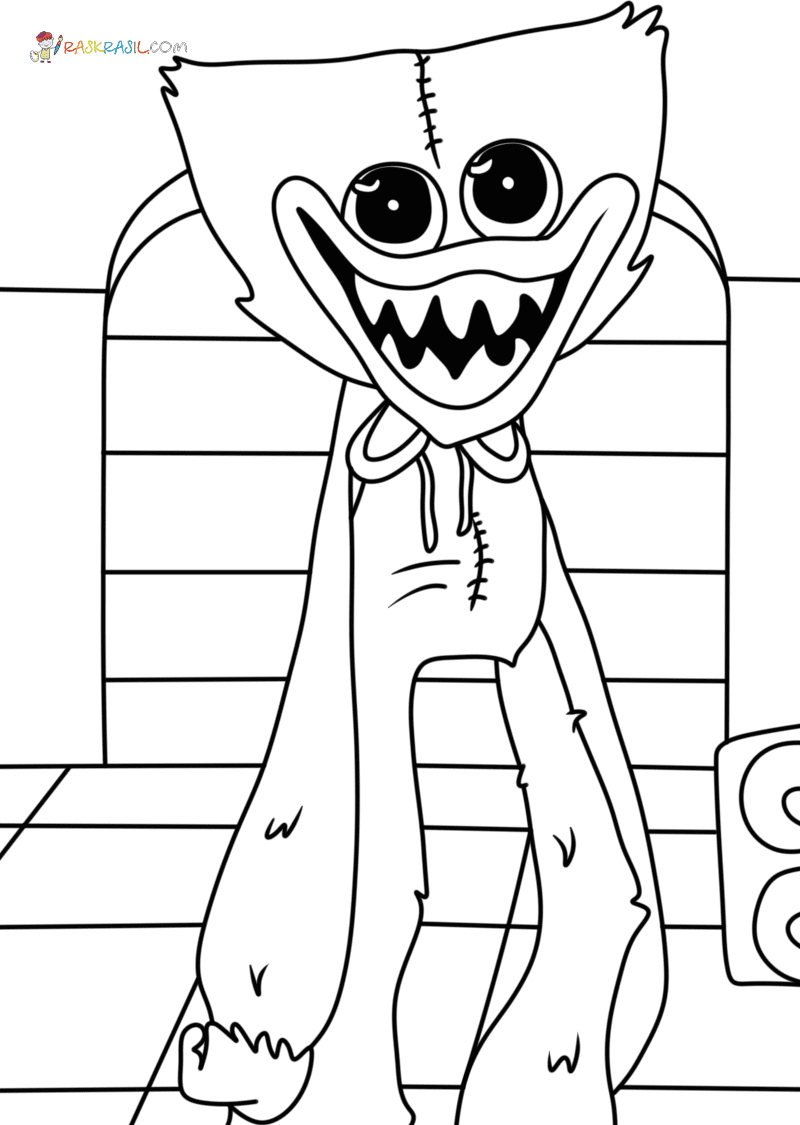
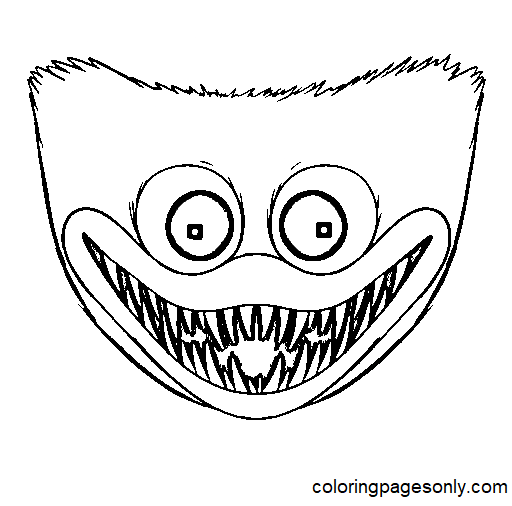
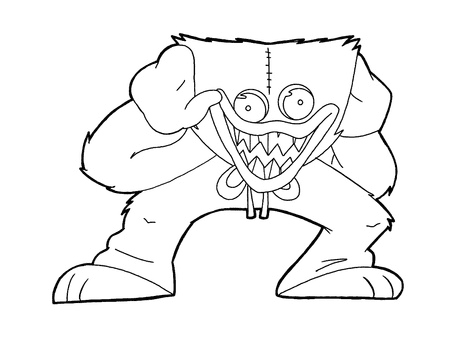
His design is built around a specific visual contrast that defines the entire Poppy Playtime franchise’s aesthetic: the surface appearance of a children’s toy – bright colors, soft fur, cartoonish proportions – mapped onto a creature whose dimensions, movement, and behavior are deeply wrong. Huggy Wuggy is massive, far larger than any real toy would be. His arms are disproportionately long, reaching to the ground even when he stands upright. His smile, which is fixed and wide in the friendly toy version, opens in the monster form to reveal multiple rows of sharp teeth occupying the full lower half of his face. His eyes are small – tiny white circles – which makes the teeth and the smile even more dominant as visual elements.
Poppy Playtime became one of the most-searched horror game franchises of 2021–2022, generating enormous fan art and coloring page demand that peaked when the game was at maximum cultural saturation. Huggy Wuggy specifically became one of the most-searched character names for coloring pages across all platforms in that period, driven by a combination of the character’s visually distinctive design, the game’s word-of-mouth growth through YouTube and TikTok, and the particular appeal of “scary but colorable” characters to children who had encountered the game or its fan community.
Chapter 2 (Fly in a Web, released May 2022) introduced Mommy Long Legs as the primary antagonist. Chapter 3 (Deep Sleep, released January 2024) introduced CatNap and Dogday as the main threats. Chapter 4 continued the franchise’s expansion. Huggy Wuggy, while a Chapter 1 antagonist, has remained the franchise’s face and most recognizable character across all chapters.
Character Guide
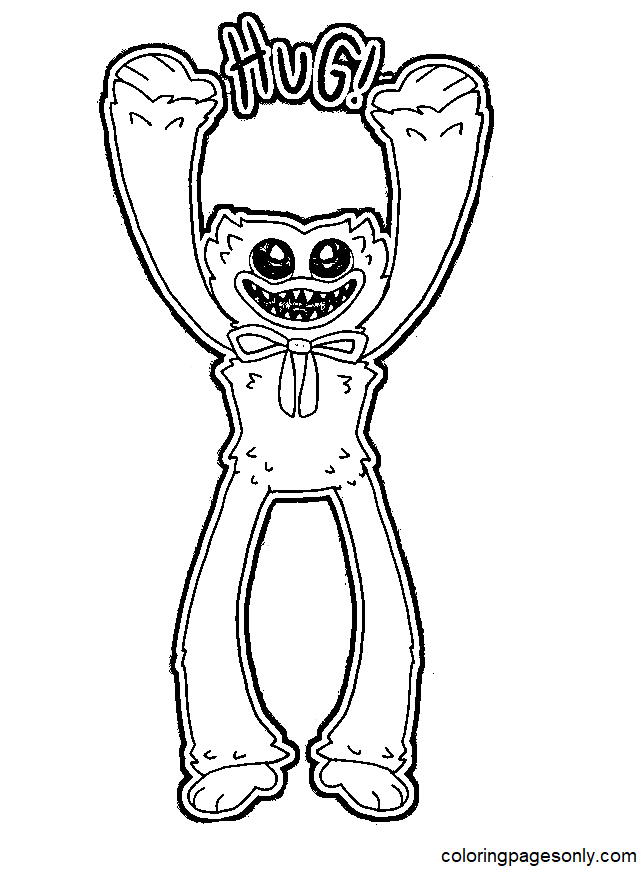
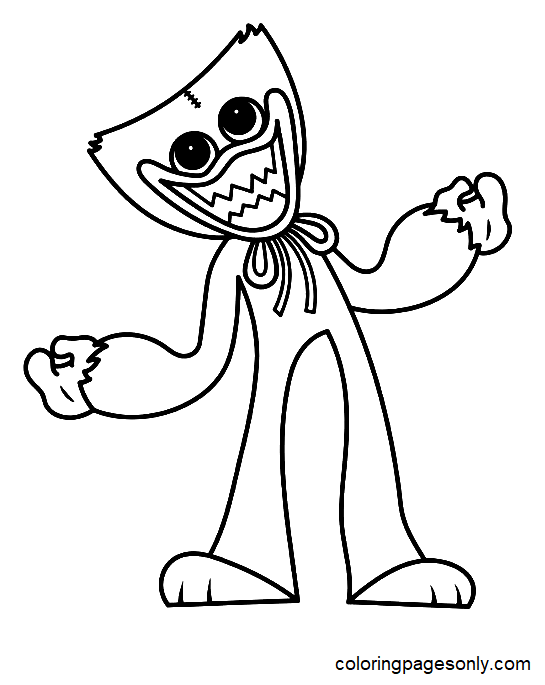
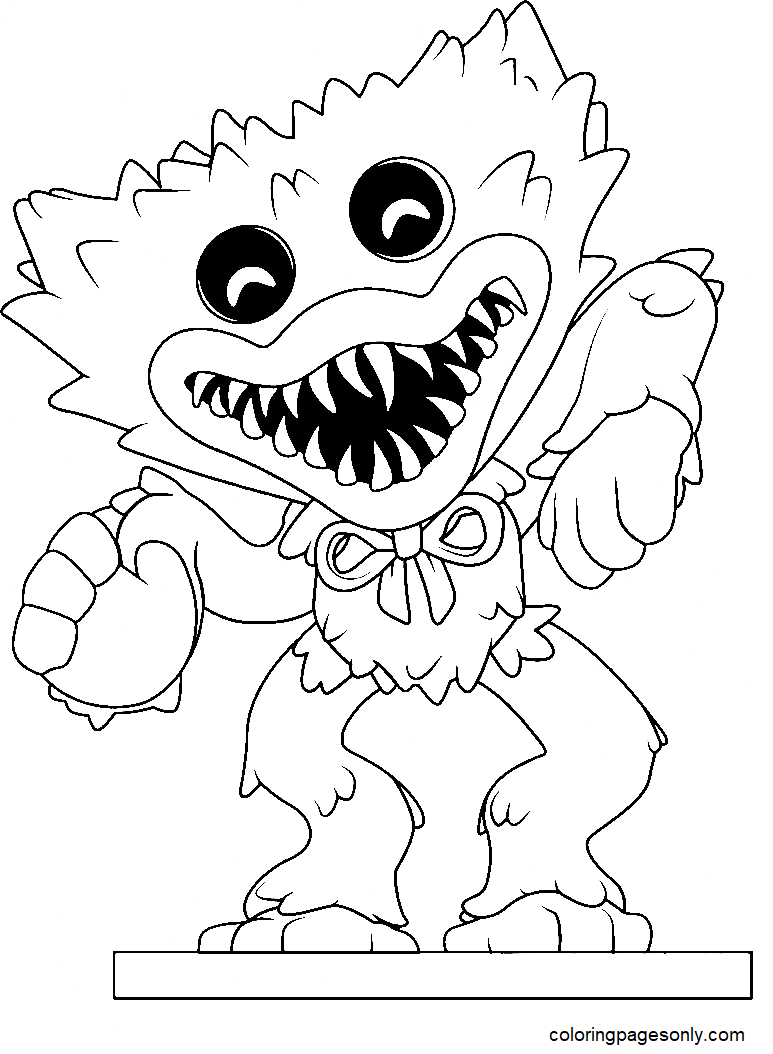
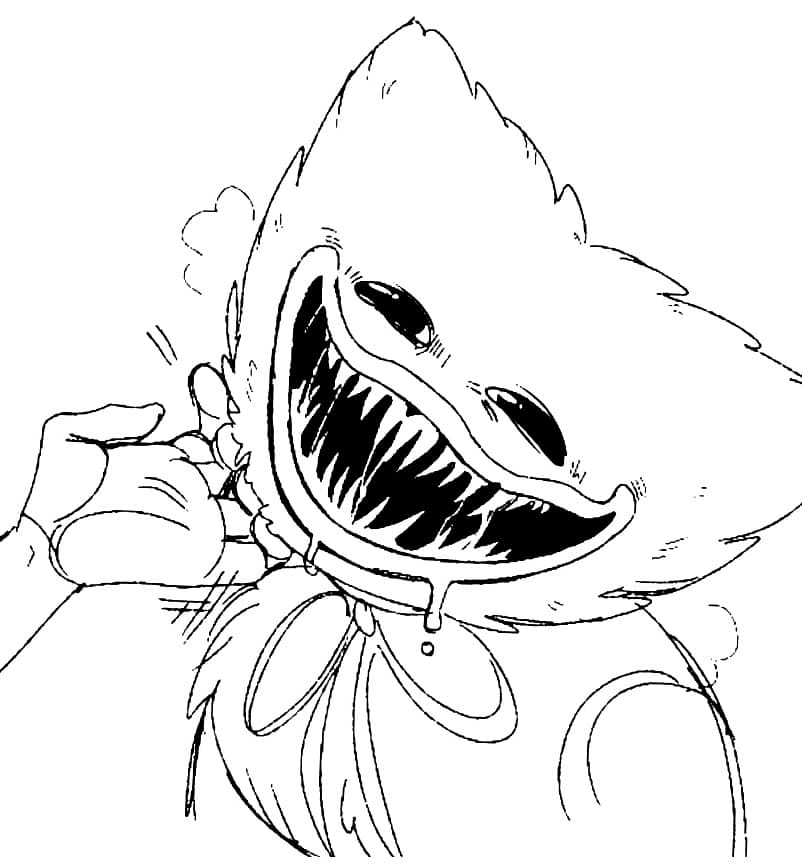
Huggy Wuggy is covered in thick blue fur – a specific mid-range blue that is neither too dark nor too bright, often described as the blue of a bright summer sky or a classic crayon blue. His hands and feet are yellow, standing out strongly against the blue body. His face is dominated by the wide, horizontally oriented mouth with its multiple rows of white teeth when open. In the friendly toy version depicted on some pages, the mouth forms a curved, closed smile, and the overall expression is welcoming. In the monster expression pages – Scary Huggy Wuggy, Scary Huggy Wuggy Face, Huggy Wuggy is Stalking – the mouth is open, and the teeth are the visual center of the composition.
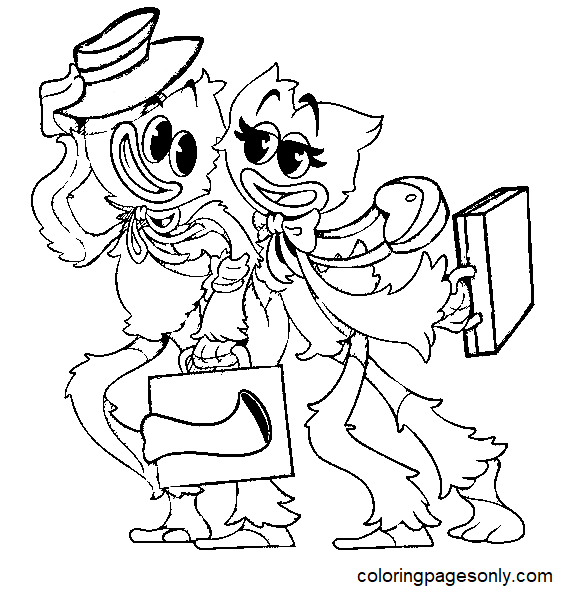
Kissy Missy is the pink counterpart to Huggy Wuggy – the same general design (large humanoid creature covered in fur, wide smile, long limbs) rendered in hot pink or magenta rather than blue. Her eyelashes distinguish her visually from Huggy Wuggy in pages where they appear together. In the Poppy Playtime lore, Kissy Missy is presented as more ambiguous in her relationship to the player than Huggy Wuggy – less clearly predatory, occasionally appearing to assist rather than hunt. Her pink is a warm, vivid hot pink, closer to magenta than to baby pink.
CatNap appears in CatNap and Huggy Wuggy Coloring Page. He is the primary antagonist of Chapter 3 – a large dark cat-like creature with a maroon or deep crimson-red body, multiple eyes that appear in his more disturbing forms, and an association with purple smoke (the Poppy gas/sleep gas that induces nightmares). His palette is dramatically darker than Huggy Wuggy’s – deep reds and near-blacks against the bright blue of Huggy Wuggy.
Bobby BearHug appears in Huggy Wuggy and Bobby BearHug. Bobby is a bear-shaped character from the Poppy Playtime universe with a warmer, more orange-brown palette than Huggy Wuggy’s cool blue. The bear-hugging design means his arms are positioned in an embrace – a design choice that mirrors Huggy Wuggy’s name but in a bear format.
Huggy Wuggy. Exe – appearing in Savage Huggy Wuggy. Exe and Huggy Wuggy and Huggy Wuggy. Exe – refers to the “Exe” horror game subgenre in which beloved game or media characters are reimagined in a corrupted, more overtly terrifying form. The .exe aesthetic typically involves glowing red or white eyes, distorted expressions, and visual “corruption” effects like static, glitching geometry, or blood. The Huggy Wuggy.Exe pages take the canonical blue design and push it into darker, more distorted visual territory.
Coloring Tips
Huggy Wuggy’s canonical blue is the most important single color decision on any page in this collection. The blue is medium-value and medium-saturation – not dark navy, not pale sky blue, but a clear, confident mid-blue. Think of the blue of a classic crayon labeled simply “Blue,” or the blue of a clear afternoon sky. The specific blue matters because it is what makes Huggy Wuggy immediately recognizable, and it also creates the particular tonal relationship with his yellow hands and feet that defines the character’s color palette. Blue and yellow are complementary colors – they sit opposite each other on the color wheel – which means the contrast between his blue fur and yellow extremities is inherently high-energy and visually active.
The fur texture on Huggy Wuggy is shown in most illustrations as a mass of dense, overlapping strands rather than a smooth surface. When coloring, you can suggest this texture by using short, parallel strokes in a slightly darker blue for shadow areas and leaving the base blue for the mid-tones, with the lightest areas (direct light on top of the head, shoulders, and upper arms) rendered in a slightly lighter or more sky-blue value. This three-value approach – shadow blue, mid blue, highlight blue – transforms a flat fill into a fur surface without requiring a detailed strand-by-strand approach.
The teeth are white – paper white in highlight areas – and recede to a very light grey in shadow areas, particularly at the back of the open mouth and between individual teeth. The gum area visible around the teeth (in open-mouth pages) should be a warm pink-red, darker and more muted than Kissy Missy’s hot pink, but in the same warm family. The teeth themselves should be the brightest elements in the entire composition when the mouth is open, because they are what the player’s eye is meant to be drawn to – this is the design’s entire frightening purpose.
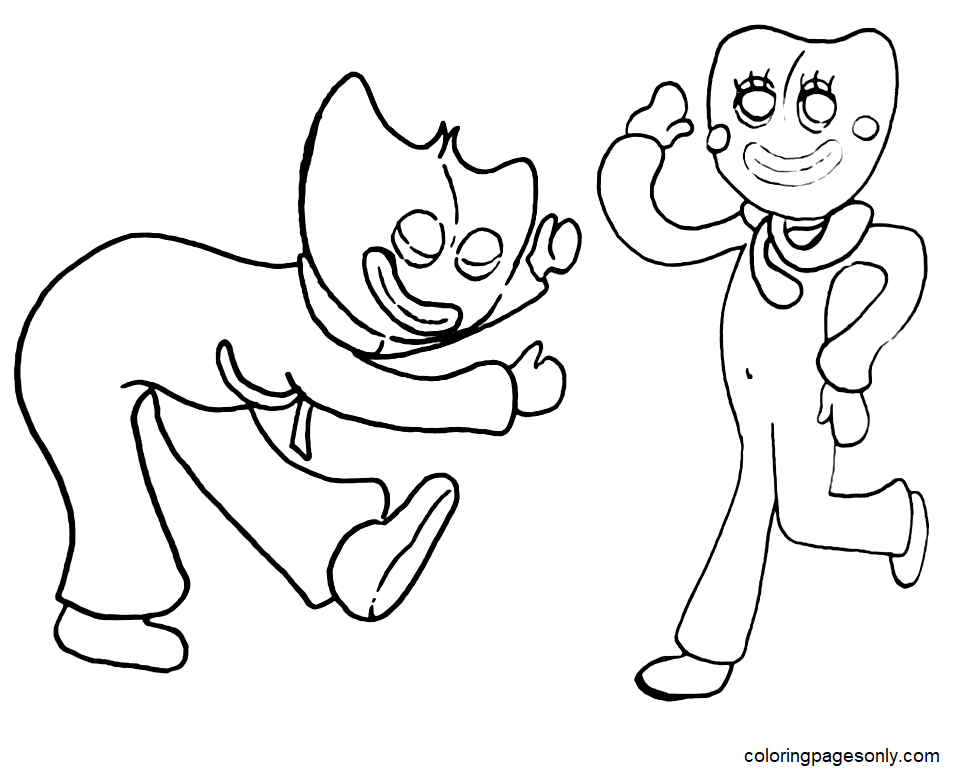
For Kissy Missy pages – Kissy Missy and Huggy Wuggy, Huggy Wuggy Hugs Kissy Missy, Dancing Huggy Wuggy and Kissy Missy, Huggy Wuggy with Kissy Missy in Love – the color contrast between the two characters is one of the most visually satisfying in the collection. Blue and pink sit near each other on the warm-cool spectrum and don’t provide the same high contrast as blue and yellow, so the pages with both characters together benefit from keeping each character’s color as pure and saturated as possible – the most vivid blue for Huggy Wuggy, the most vivid hot pink for Kissy Missy – to maintain their visual distinctness.
For CatNap pages – CatNap and Huggy Wuggy – the maroon-red of CatNap against Huggy Wuggy’s blue creates a red-versus-blue contrast that has both visual and narrative meaning: the two are antagonists from different chapters, and the cooler, brighter blue of Huggy Wuggy against the darker, warmer red of CatNap suggests their different character registers (Huggy as the blunt, direct threat; CatNap as the subtler, more psychological threat).
For the Huggy Wuggy. exe pages – Savage Huggy Wuggy. exe, Huggy Wuggy, and Huggy Wuggy. exe – the .exe design typically works in visual contrast to the canonical version. The most effective approach is to color the canonical Huggy Wuggy in his standard mid-blue with yellow hands, then give the .exe version a darker, more saturated or more desaturated version of the same blue – either pushing toward near-black with electric blue highlights, or draining the color to a grey-blue with bright red or white eye effects. The juxtaposition of the recognizable design and the corrupted version is the entire visual point.
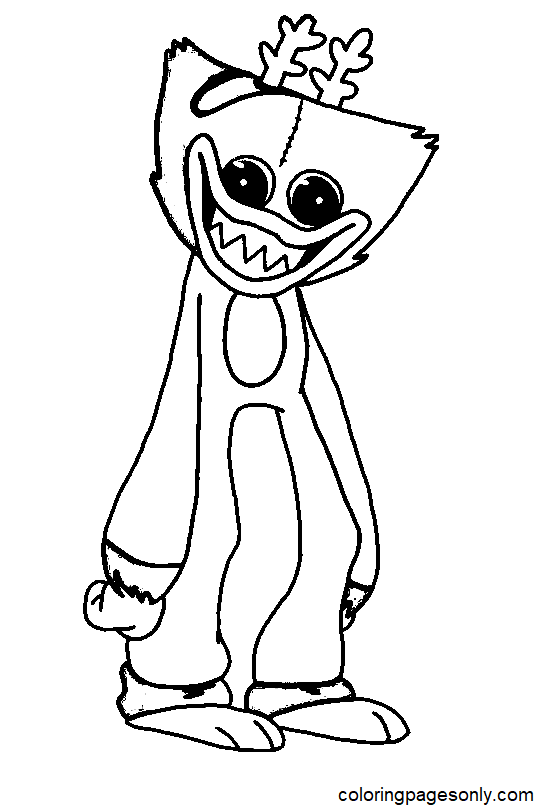
For the holiday pages – Huggy Wuggy Christmas, Huggy Wuggy Santa, Huggy Wuggy Reindeer – the challenge is maintaining Huggy Wuggy’s blue identity within a palette dominated by Christmas reds and greens. The most effective approach keeps Huggy Wuggy’s body in his canonical blue and introduces the holiday colors entirely through the costume elements: the red Santa hat, the green of holiday garland or wreath details, the gold of ornaments, and star toppers. The blue monster in a full Santa costume is the visual joke – lean into the contrast rather than trying to harmonize the colors.
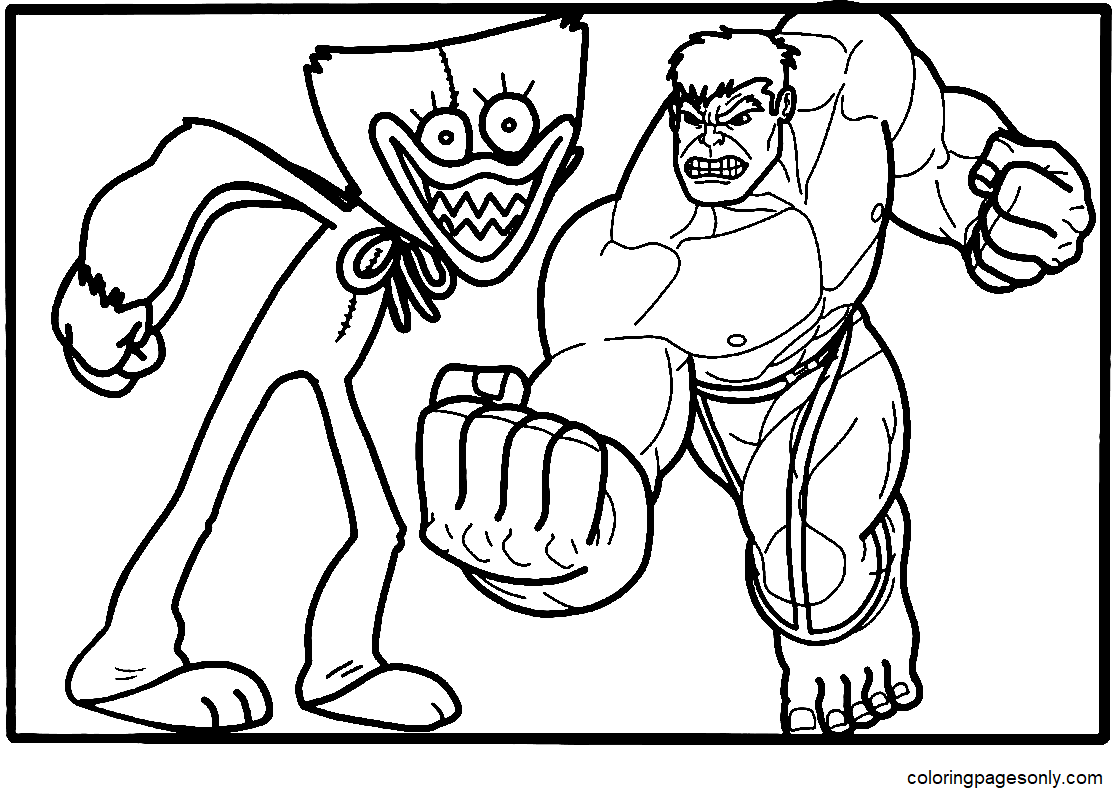
For the superhero crossover pages – Huggy Wuggy Spider-Man, Huggy Wuggy Sonic, Spiderman Huggy Wuggy vs Iron Man Huggy Wuggy, Huggy Wuggy Fights Hulk – each crossover page presents a unique color challenge because Huggy Wuggy’s canonical blue must interact with a completely different character’s iconic colors. For Huggy Wuggy Spider-Man, the red-blue of Spider-Man’s suit can be applied over Huggy Wuggy’s form, replacing or overlaying the canonical blue with the web-patterned red-and-blue of the suit. For Huggy Wuggy vs Iron Man, both characters have blue elements (Iron Man’s blue arc reactor glow, Huggy Wuggy’s blue fur), which creates an interesting design challenge: making the two blues read as distinctly different despite both being “blue.”
5 Activities with Your Huggy Wuggy Pages
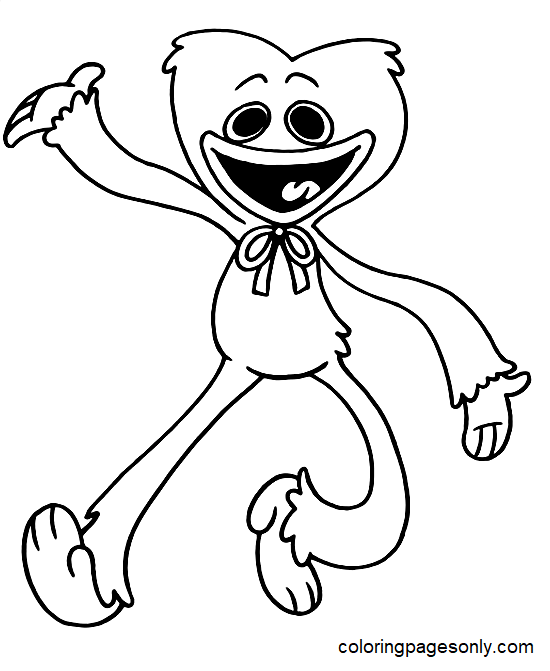
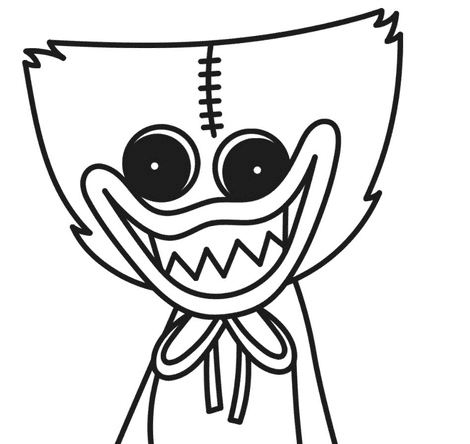
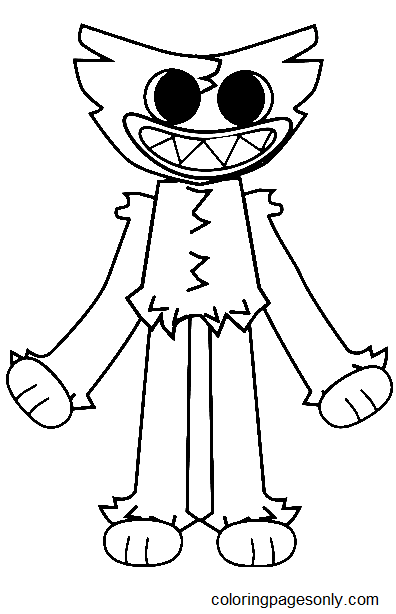
The before and after comparison. Print Huggy Wuggy Smiling (or Adorable Huggy Wuggy – a friendlier, more toy-like composition) and Scary Huggy Wuggy or Scary Huggy Wuggy Face. Color both pages using the same canonical blue for the body, the same yellow for the hands, keeping every color identical between the two. The only thing that changes between the pages is the expression. When finished, display the two pages side by side. The exercise shows exactly how the same color palette reads as friendly on one composition and frightening on another, driven entirely by the mouth, the eyes, and the posture rather than the colors. This is the core visual design principle of the entire Poppy Playtime franchise.
Color Huggy Wuggy and Kissy Missy as a matched portrait pair. Print Huggy Wuggy (a solo standing page) and one of the Kissy Missy solo pages if available, or use Kissy Missy with Huggy Wuggy. Color Huggy Wuggy first and establish his exact blue. Then color Kissy Missy’s pink to be as precisely opposite in temperature and value as possible – if Huggy Wuggy’s blue is cool and medium-value, make Kissy Missy’s pink warm and equally medium-value, creating a mirror-image palette rather than a tonal match. Display together as a matched portrait pair with their names written beneath each. The exercise teaches about complementary and analogous color relationships by working with one of the most distinctive character color pairings in contemporary game design.
The full Poppy Playtime roster. Print Huggy Wuggy, the CatNap and Huggy Wuggy page, and Huggy Wuggy Mommy Long Legs and Kissy Missy – three pages that together cover four of the franchise’s major characters. Color each character in their canonical palette: Huggy Wuggy in mid-blue with yellow extremities, Kissy Missy in hot pink, CatNap in deep maroon-red, Mommy Long Legs in her own pink (lighter and more bubblegum than Kissy Missy’s). When finished, note how the franchise’s character design uses a specific color to identify each character and makes each color uniquely theirs – no two characters share the same dominant hue, which allows them to coexist in the same frame without visual confusion.
Color the .exe version in contrast to the canonical. Print Huggy Wuggy and Huggy Wuggy. Exe Poppy Playtime 4 or Savage Huggy Wuggy. Exe. Color the canonical Huggy Wuggy in his precise standard blue with yellow hands. For the .exe version, choose a distortion strategy: either push the blue darker (deep navy, almost black, with electric blue-white highlights suggesting a corrupted version) or drain it toward grey (desaturated blue-grey with glowing red eye effects as the only vivid color). The finished pair should show the same recognizable form in two completely different emotional registers – familiar and frightening vs corrupted and wrong.

Color the holiday series. Print Huggy Wuggy Christmas, Huggy Wuggy Santa, and Huggy Wuggy Reindeer. Color all three in a consistent palette – the same blue body, the same yellow hands – across all three pages. For the Christmas page, add the holiday palette to the background elements and decorative details. For Santa Huggy Wuggy, apply the red Santa suit with white fur trim over his blue body (the suit covers the body, so the question is how much blue shows through versus how much is covered by the costume). For Huggy Wuggy Reindeer, the reindeer antlers and harness are the holiday elements, leaving his blue body mostly unaltered. The three finished pages together are a miniature Huggy Wuggy holiday collection – the same terrifying character in three seasonal celebrations.