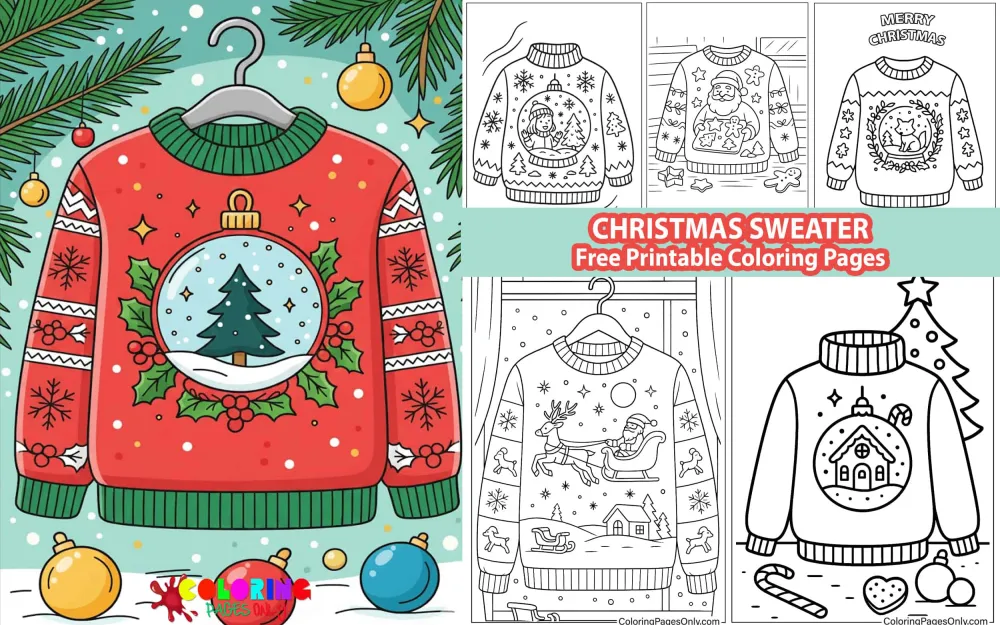
Free Christmas Sweater Coloring Pages: 60 printable PDF designs featuring character scenes, classic holiday patterns, themed motifs, and Santa and reindeer designs. Each page can be downloaded as a PDF to print or colored online in the browser.
The festive sweater has a longer history than the internet-famous “ugly sweater party” suggests. Hand-knit holiday sweaters, sometimes called jingle bell sweaters, date back to the 1950s, when they were valued mainly for warmth rather than style. The modern ugly Christmas sweater party tradition dates back to 2002, when two friends in Vancouver, Canada, organized the first known event of its kind, and the trend has since grown into National Ugly Christmas Sweater Day, held every third Friday of December in the United States.
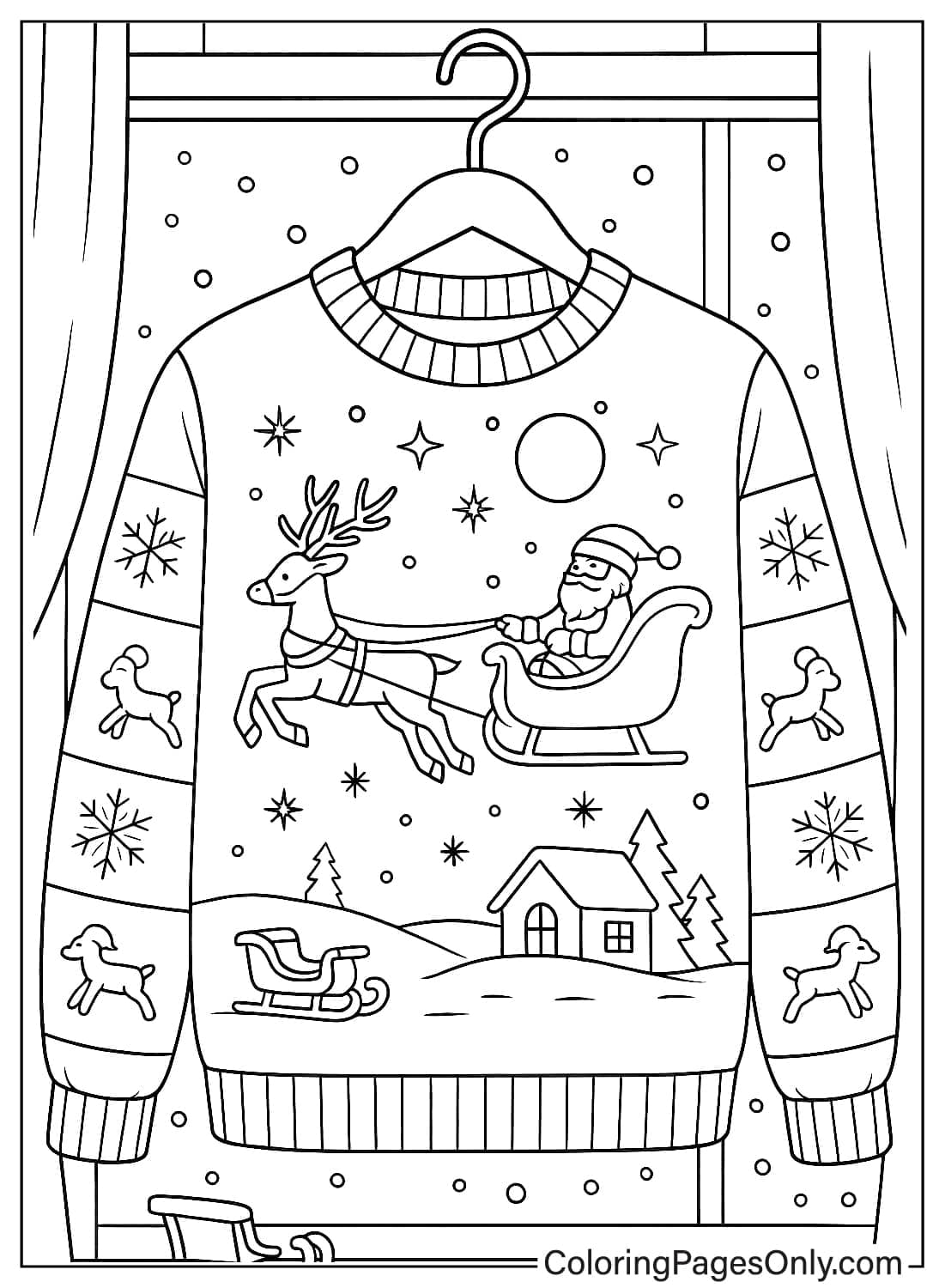
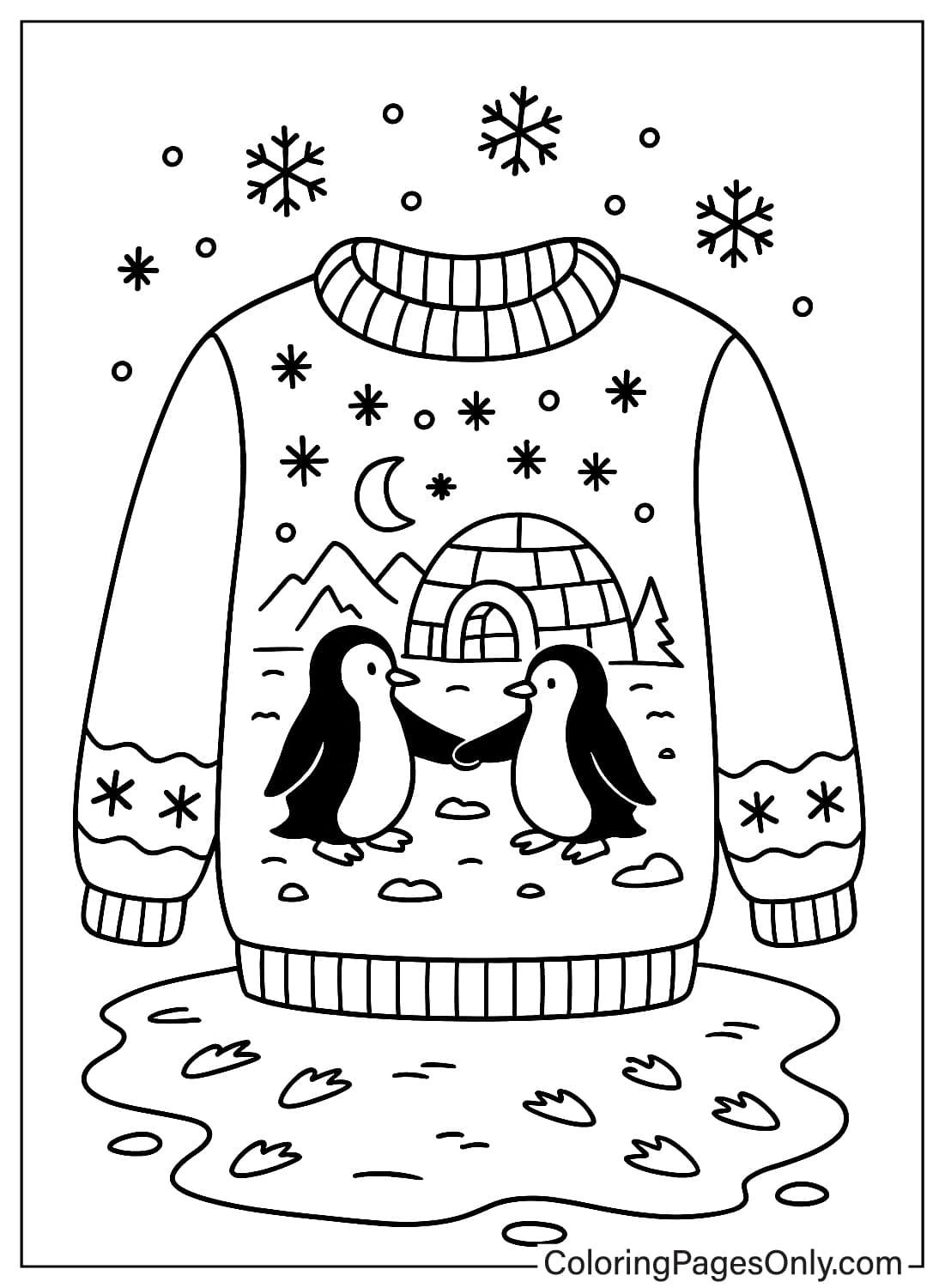
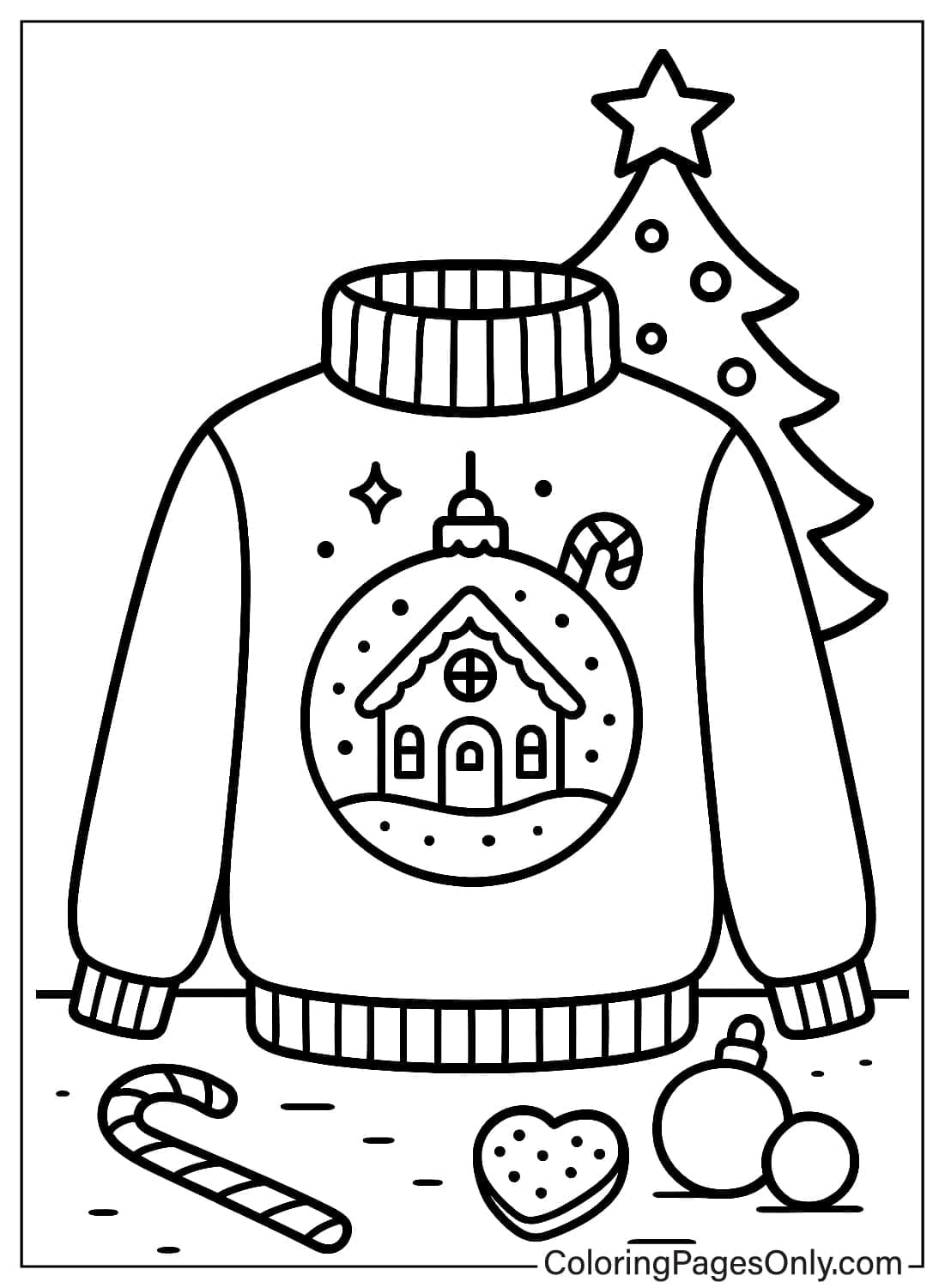
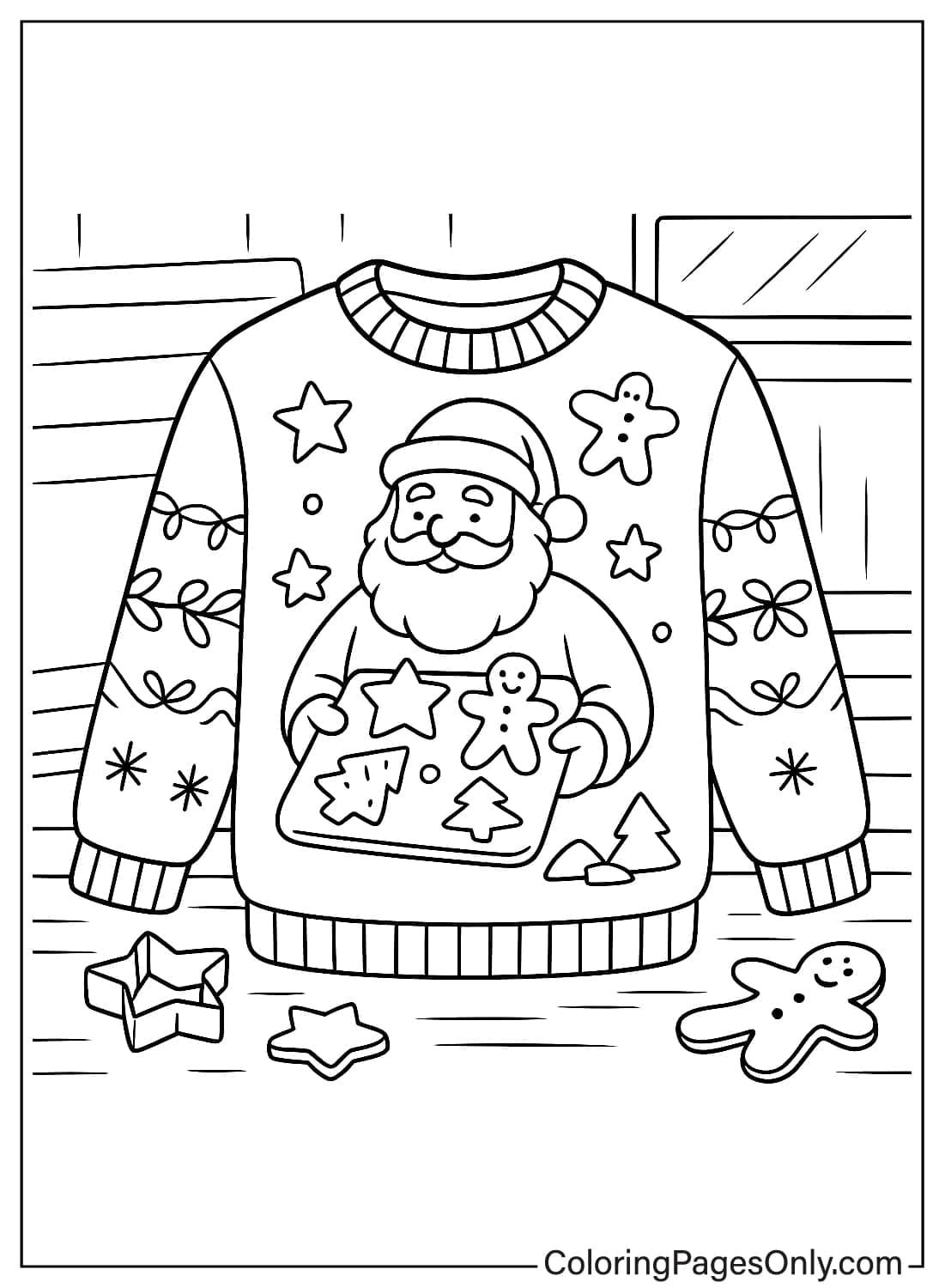
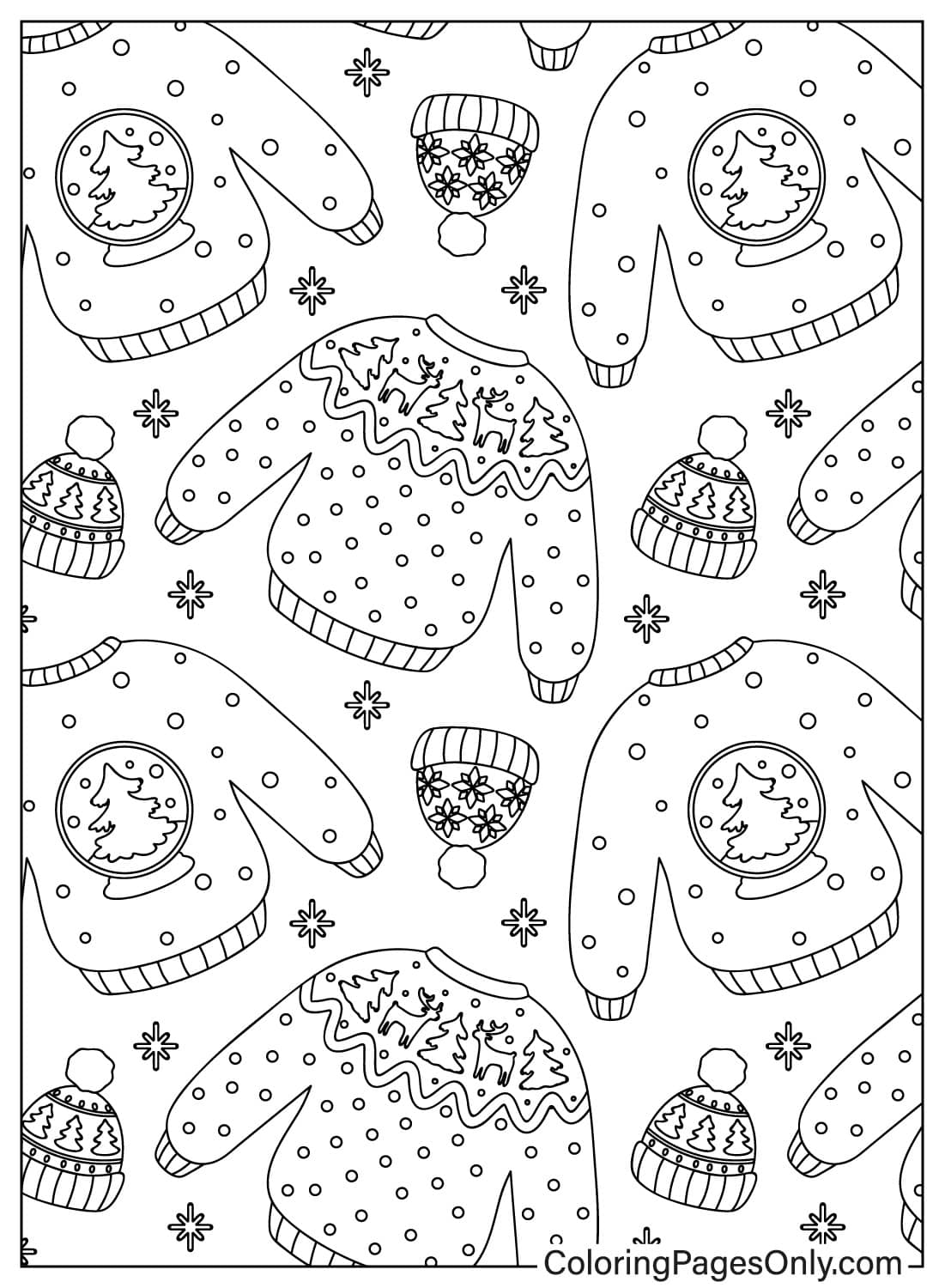
This collection reflects that mix of cozy and campy across 60 pages: sweaters shown on characters and in small scenes, classic all-over holiday patterns, sweaters built around a single themed motif like a gingerbread house or an alpine village, and a group centered on Santa and his reindeer. Knit-style borders and repeating holiday icons are the throughline across nearly every page.
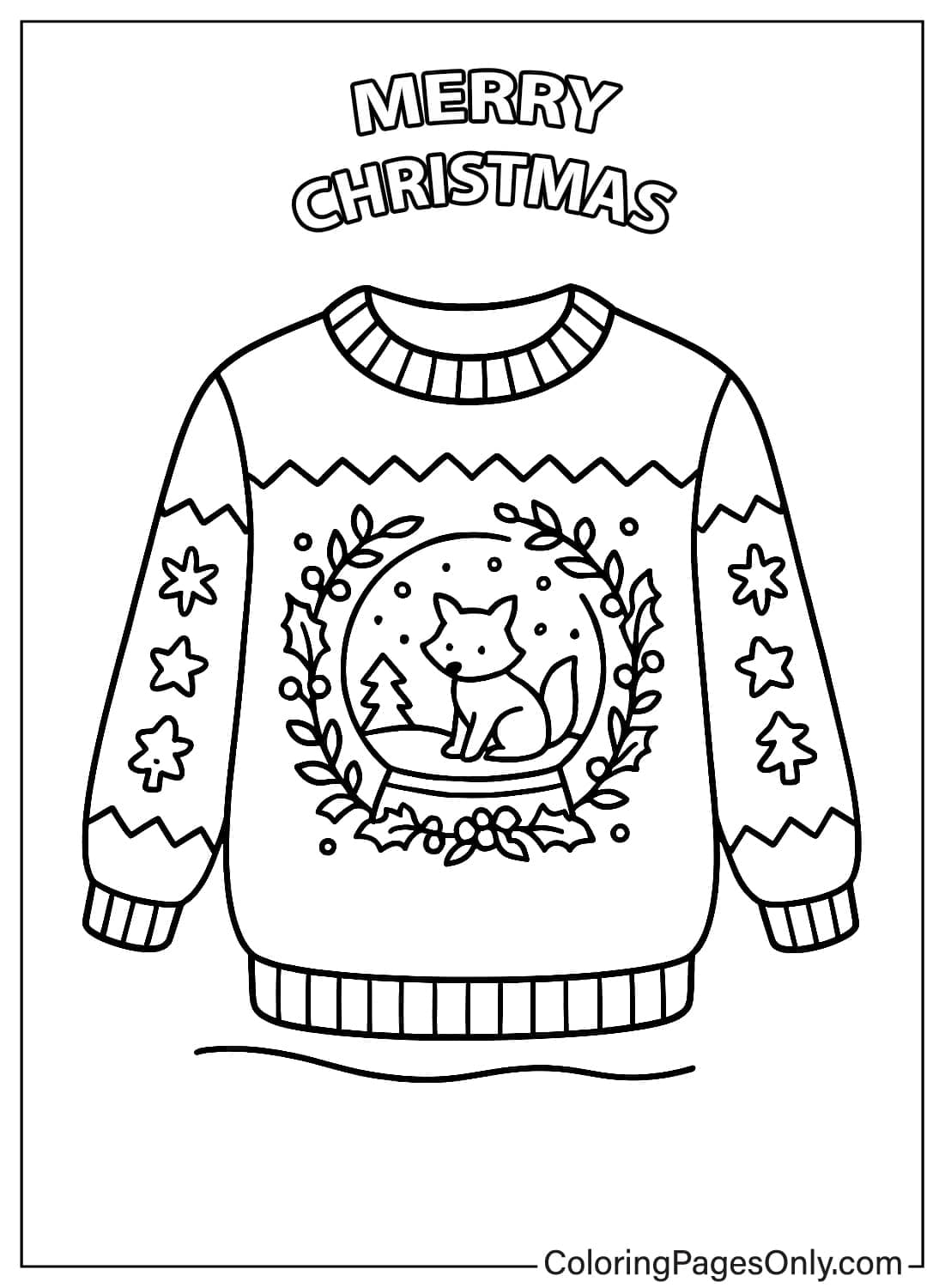
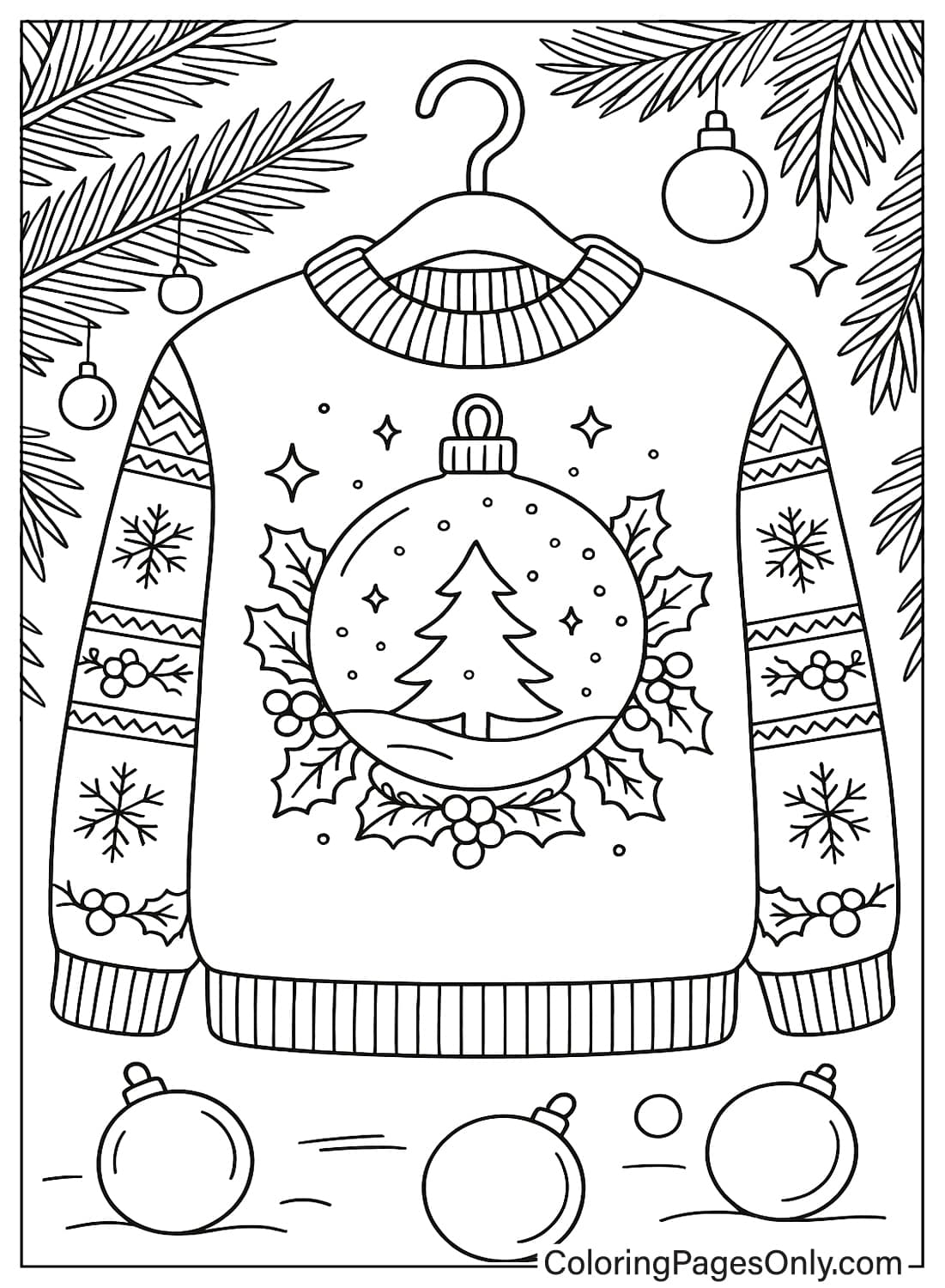
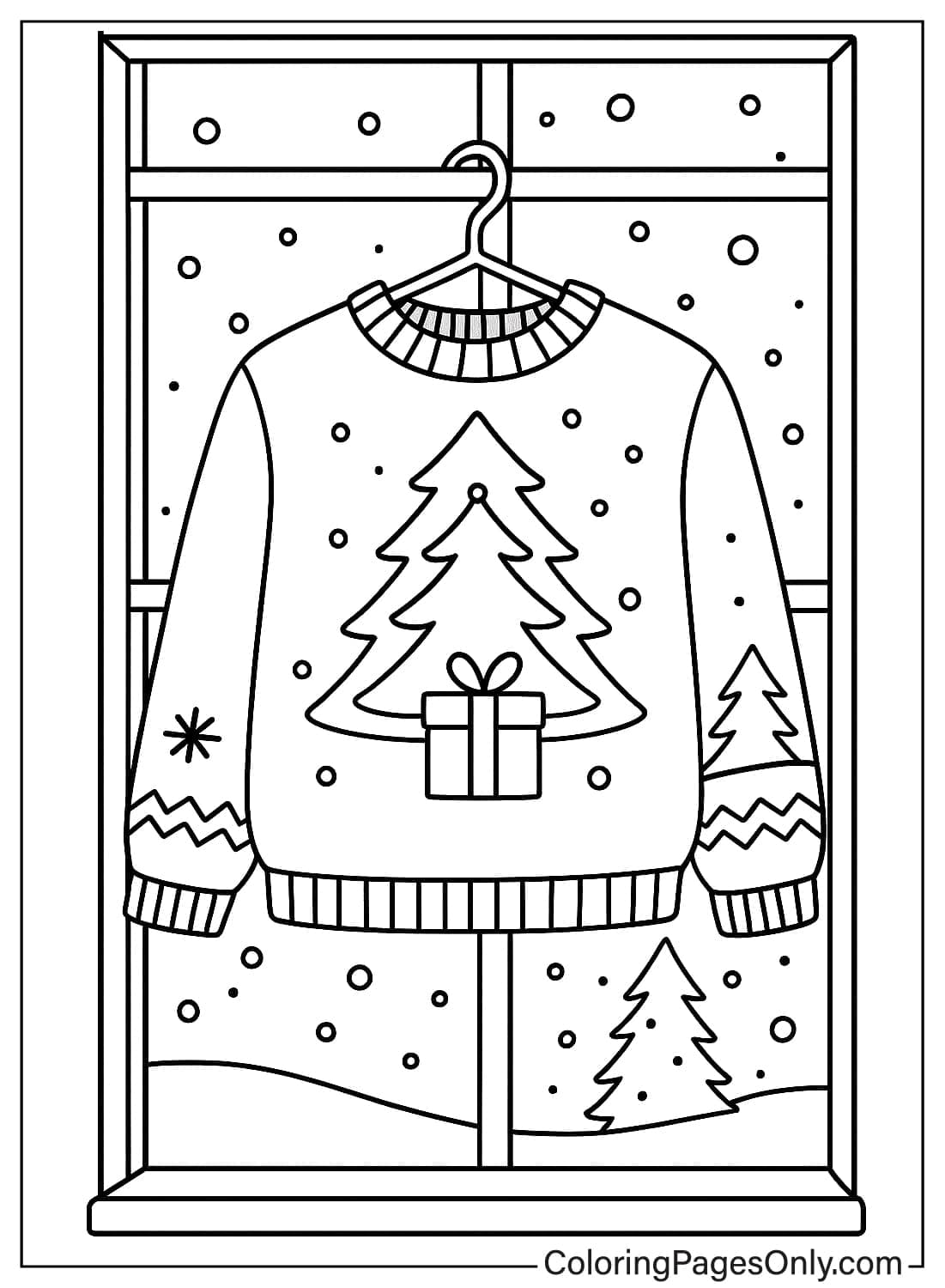
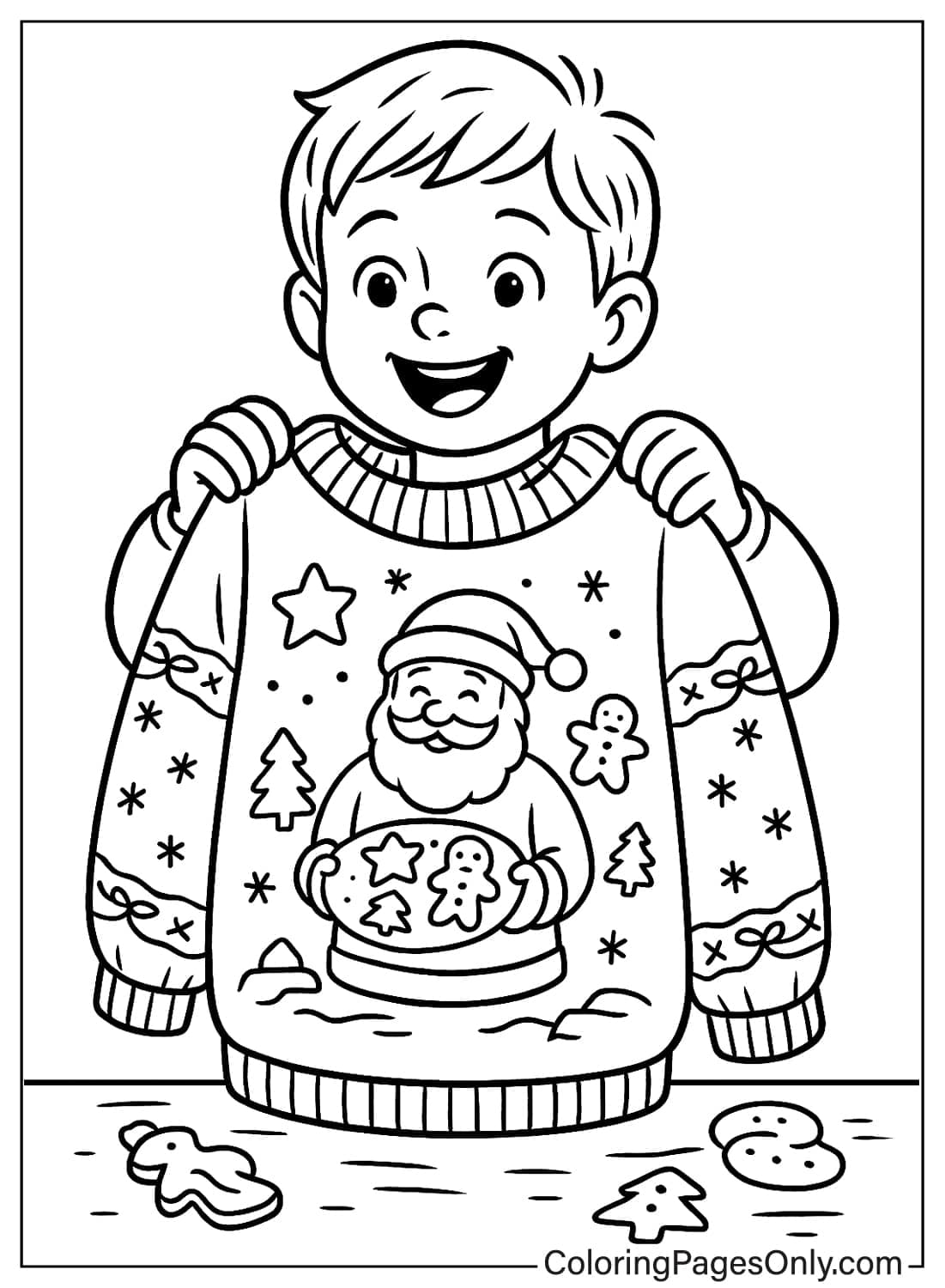
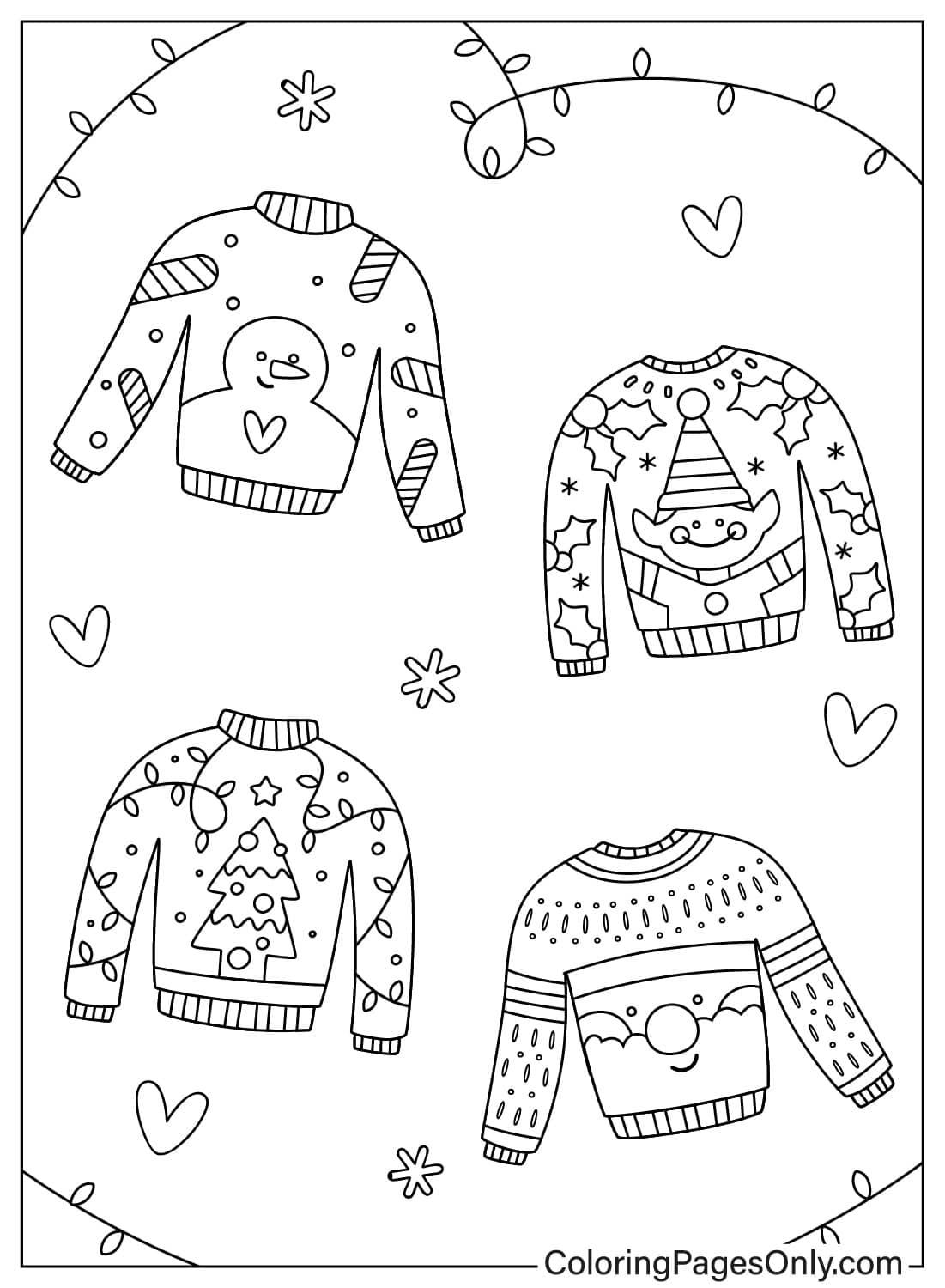
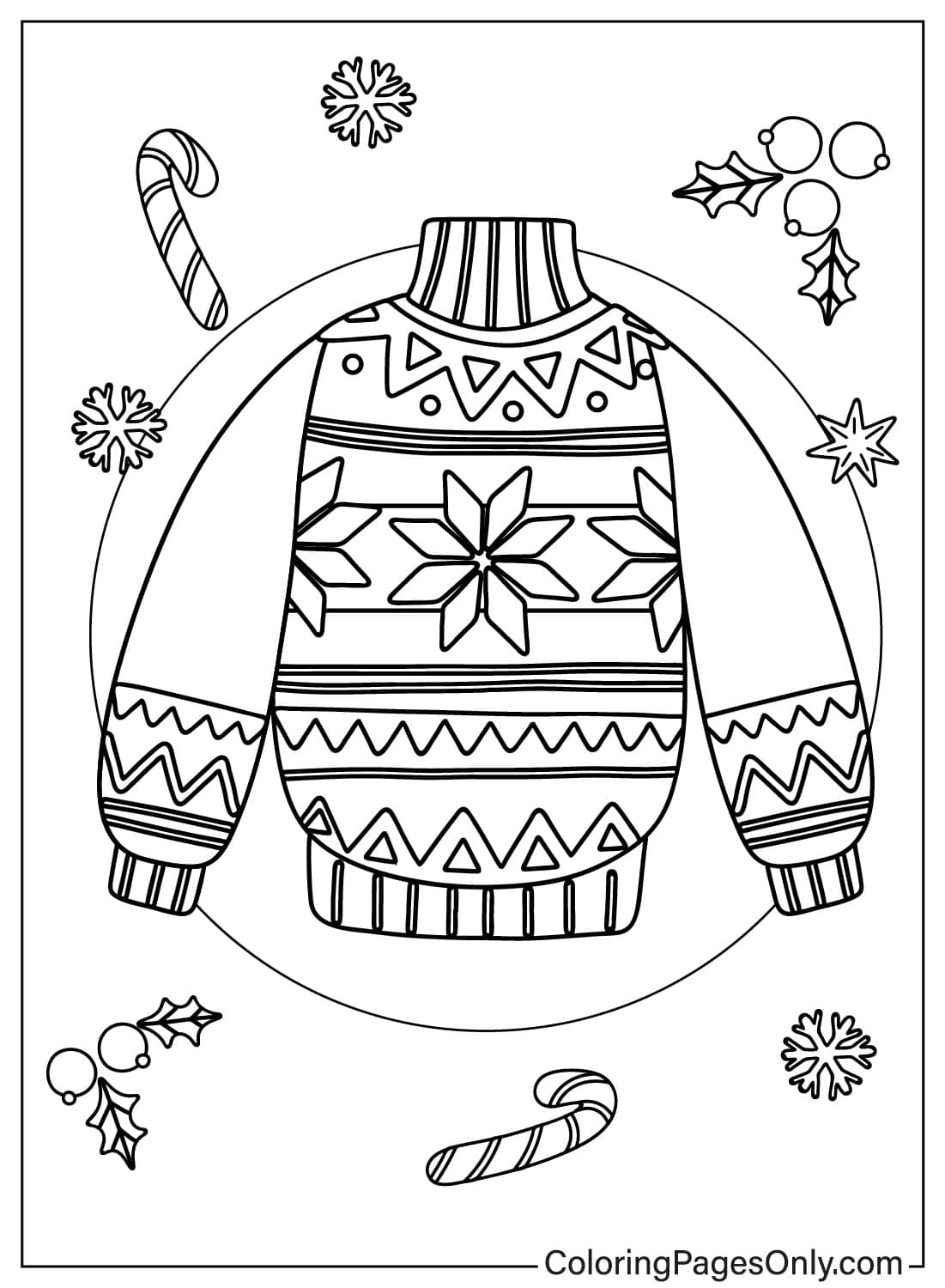
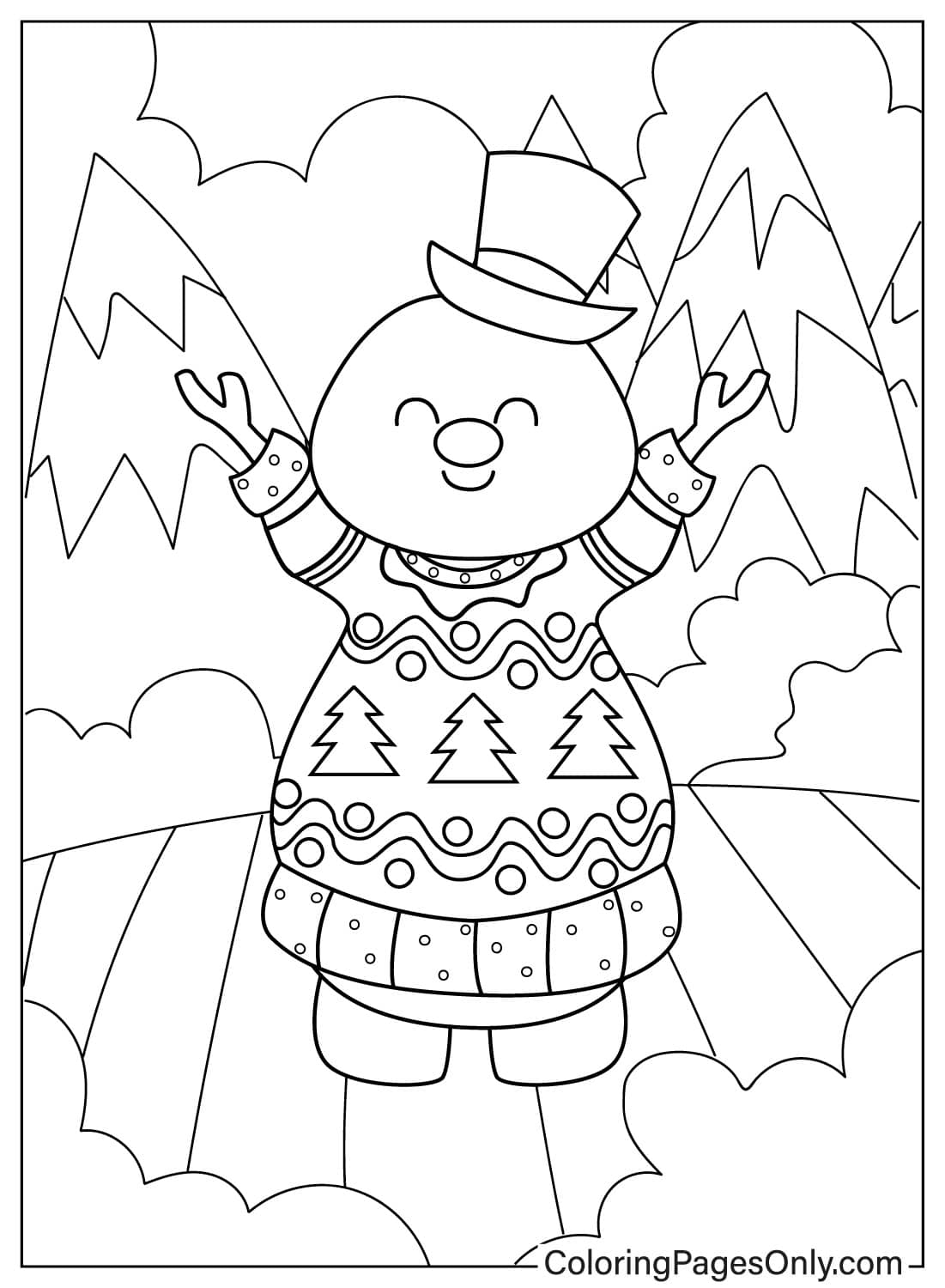
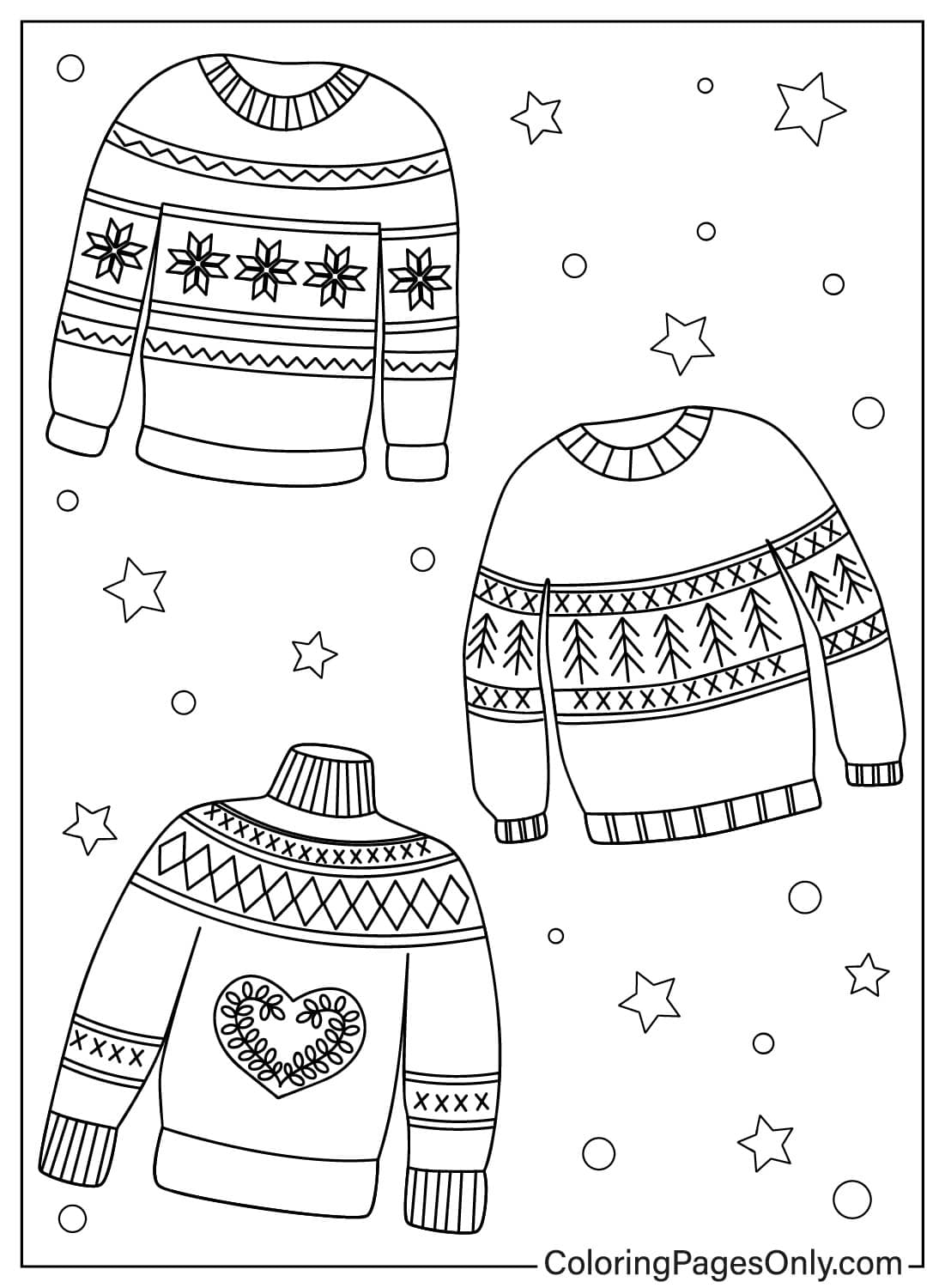
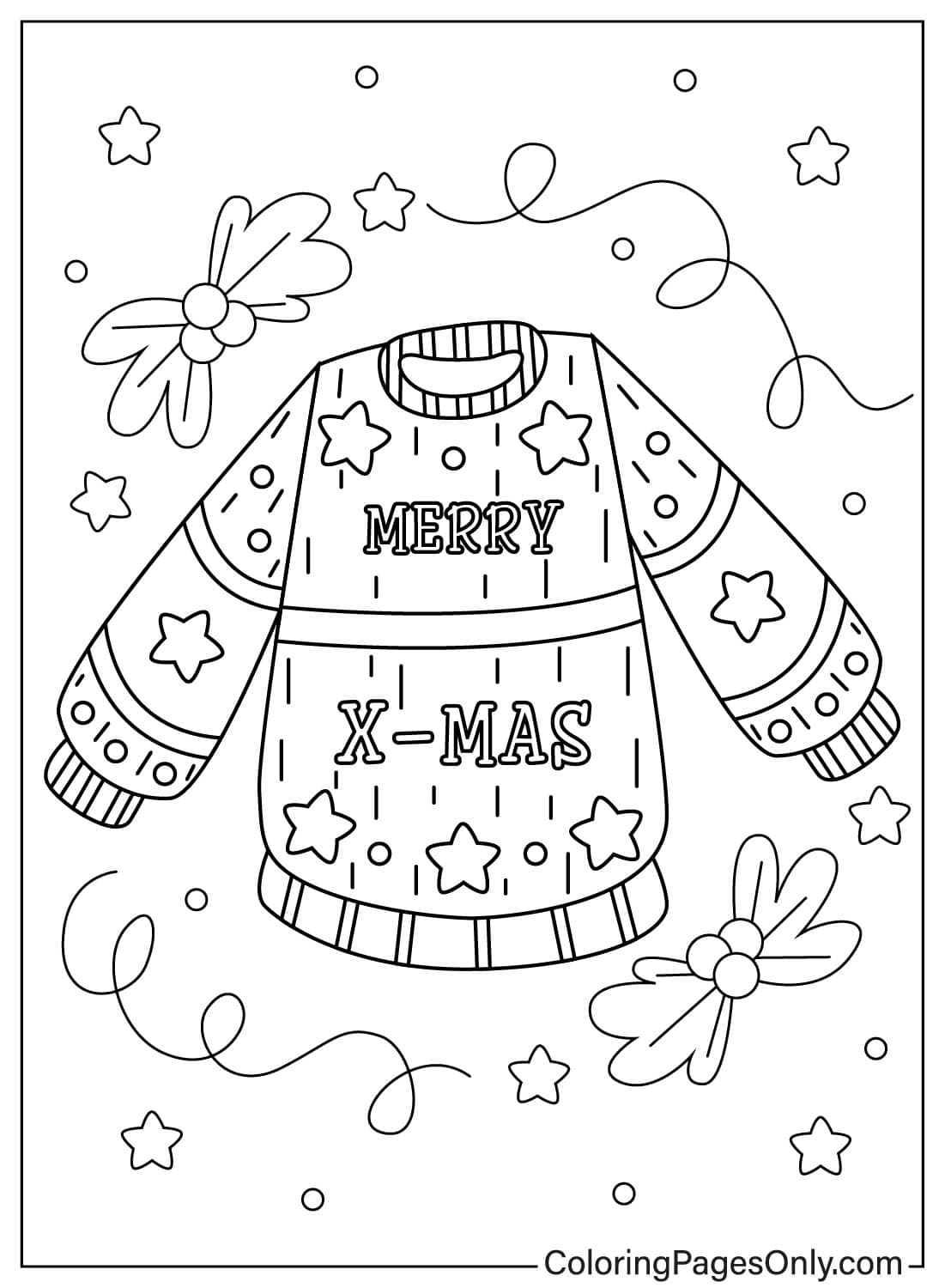
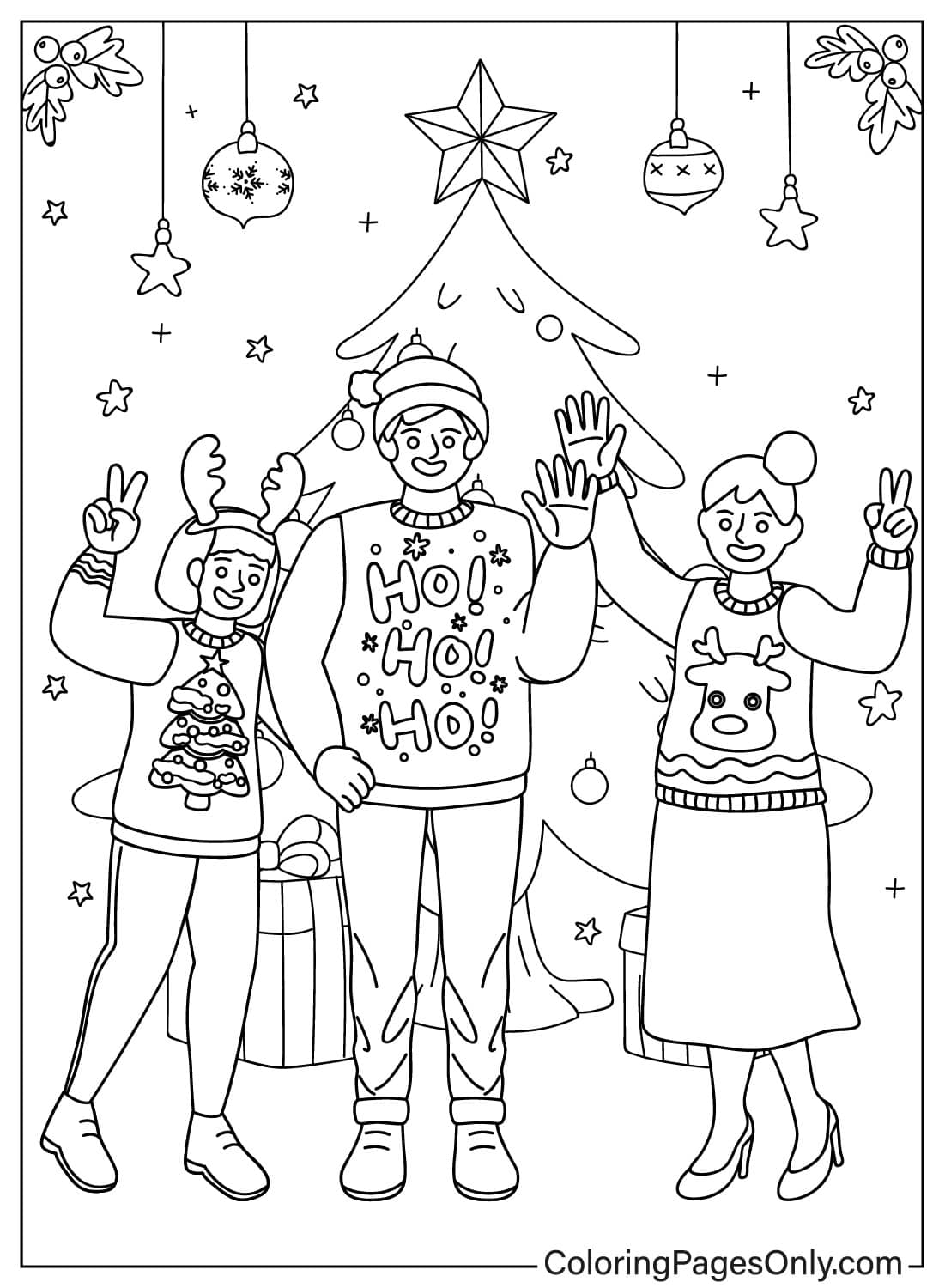
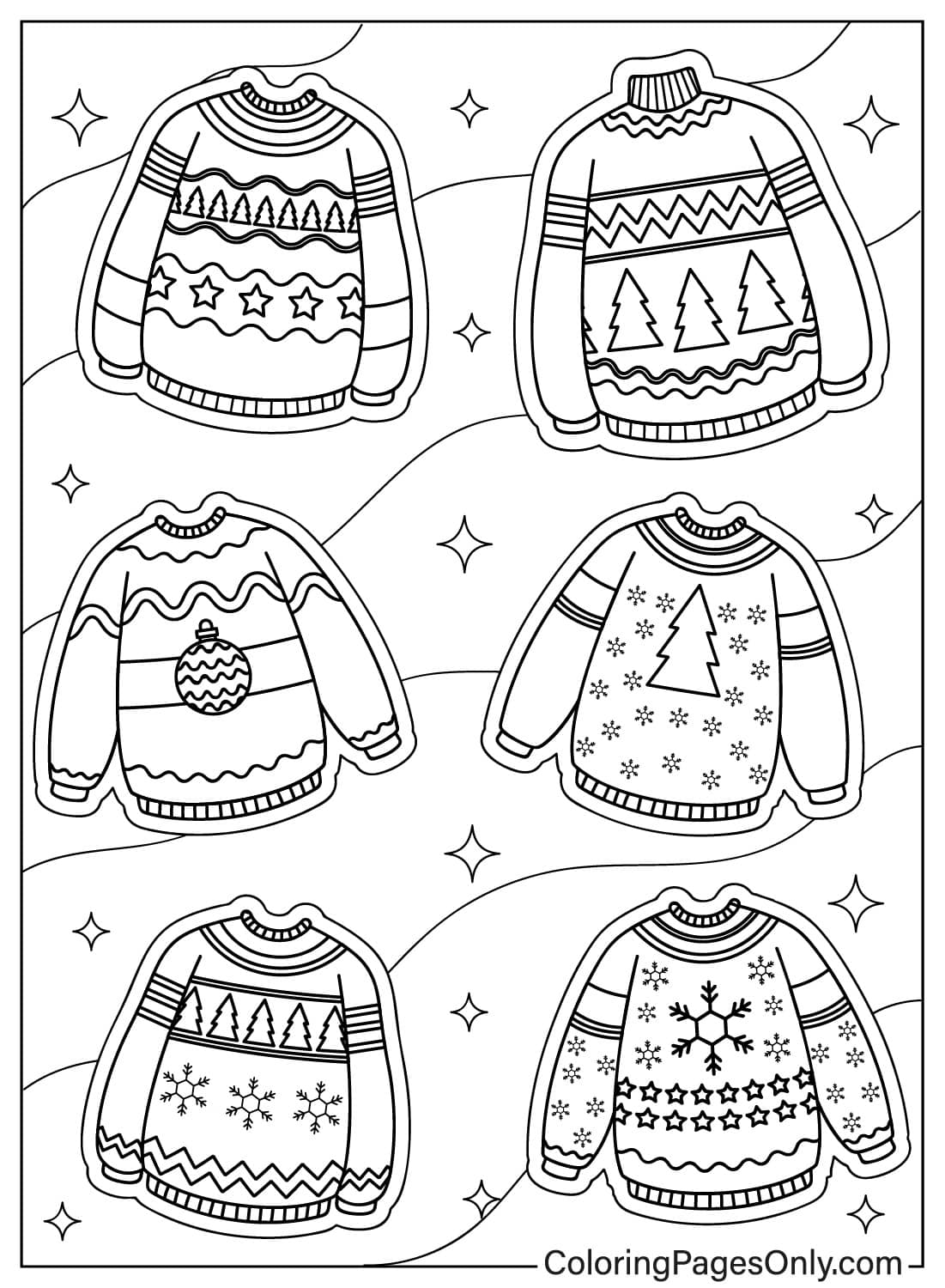
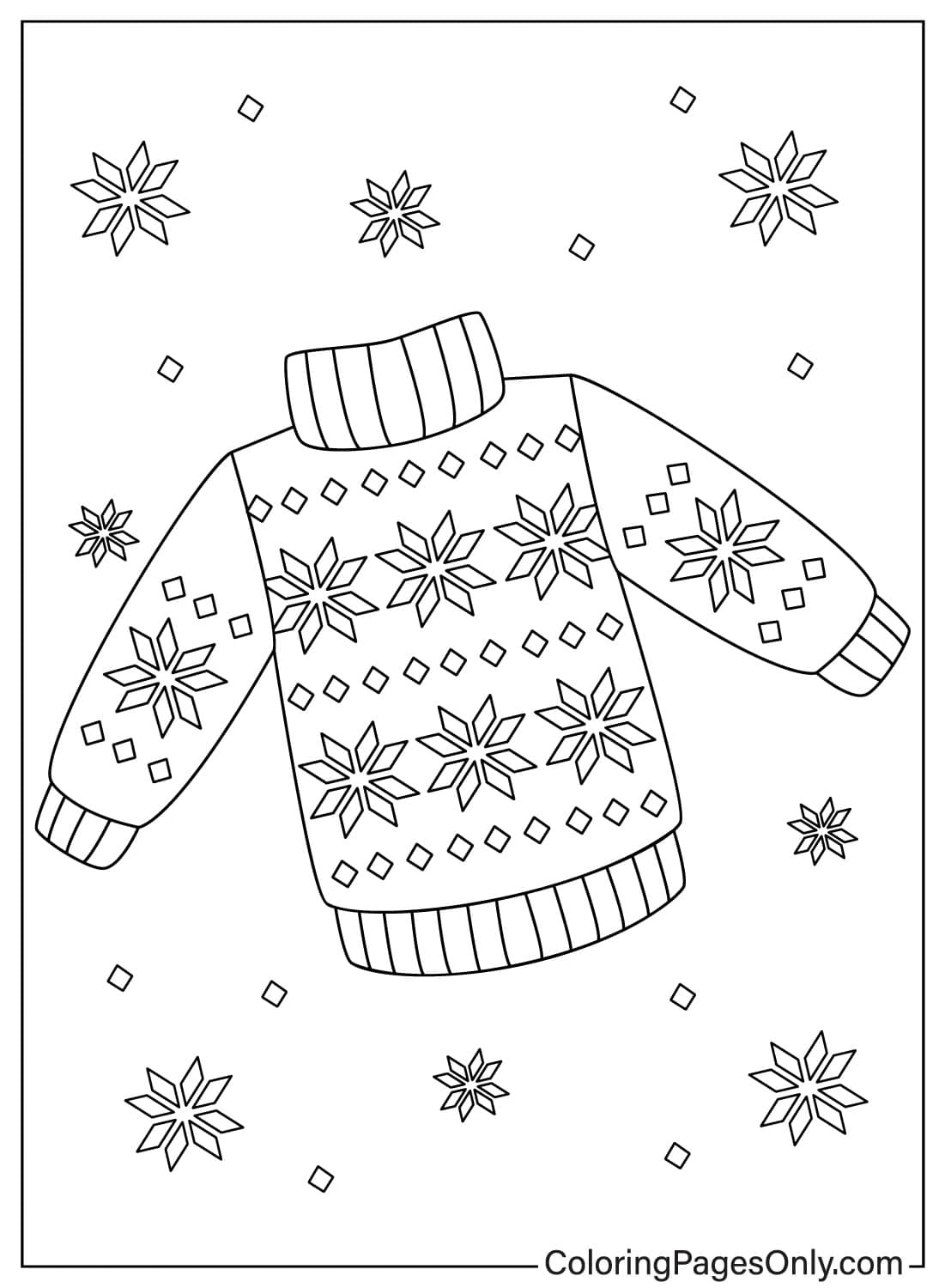
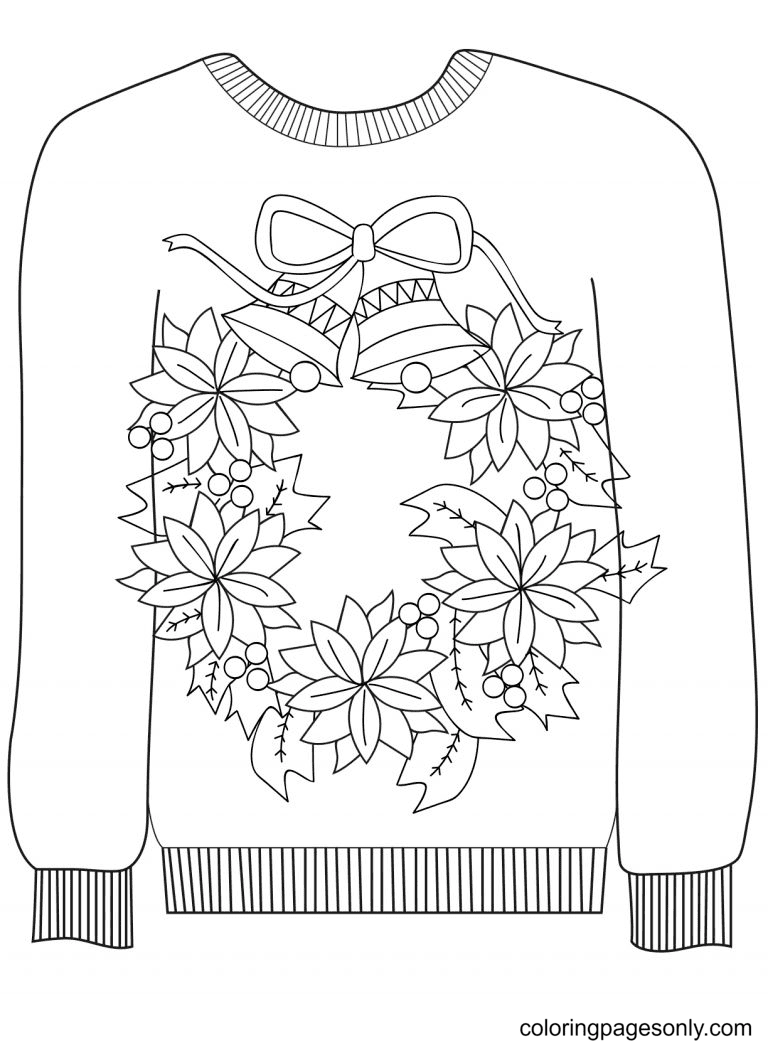


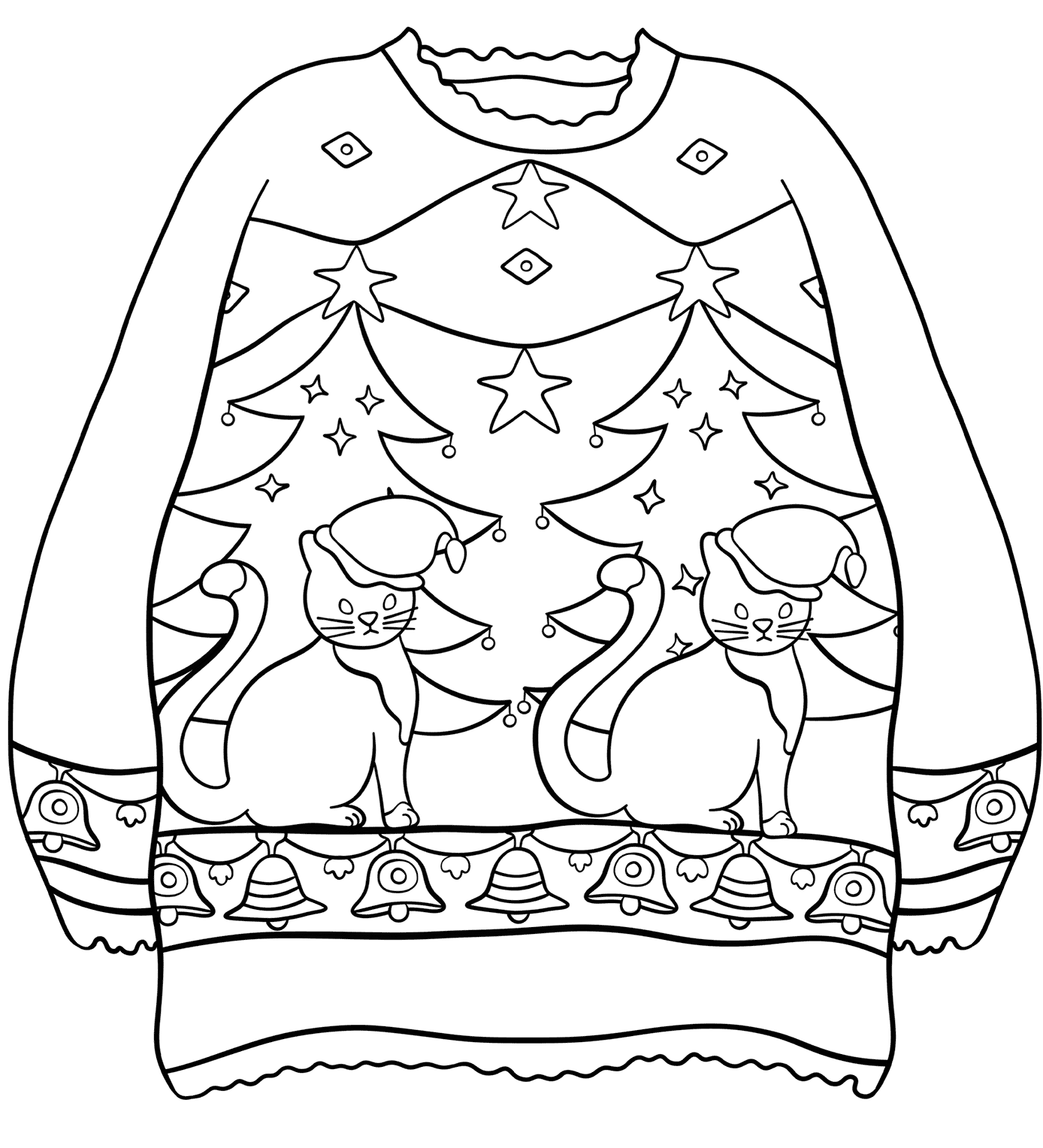

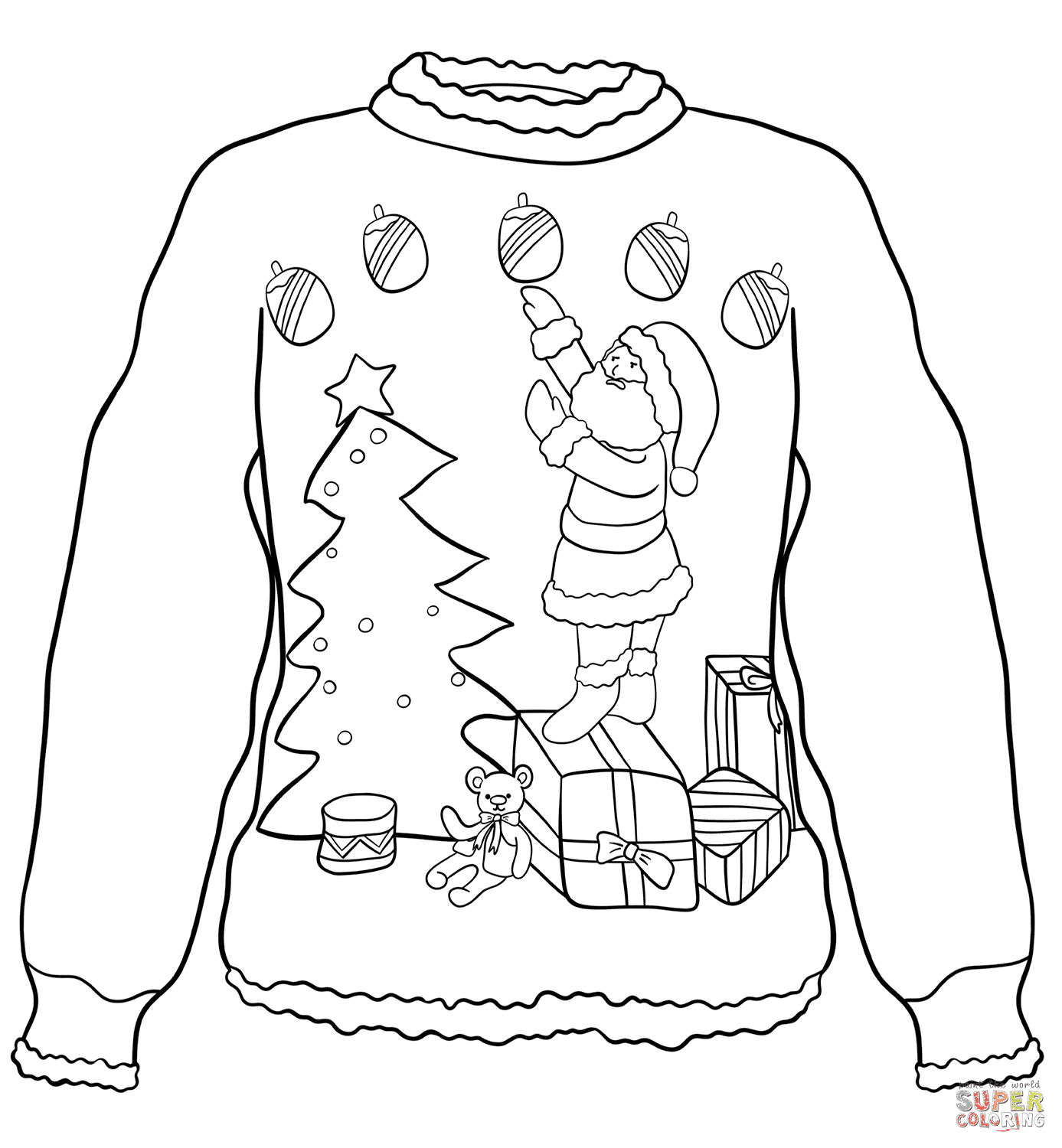
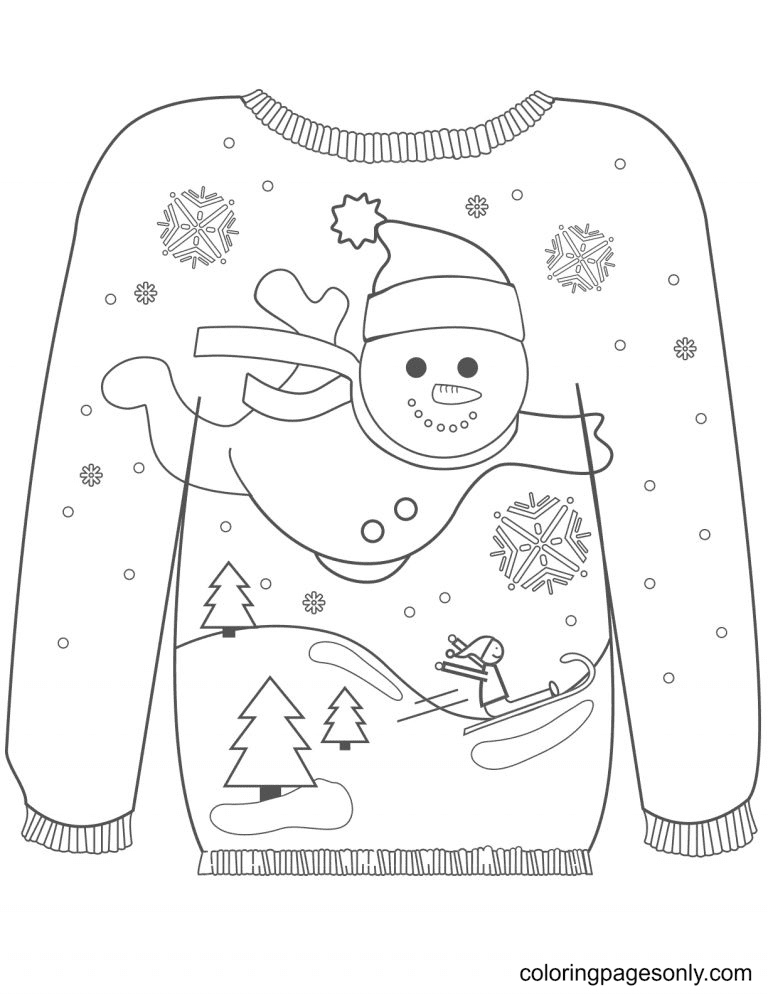
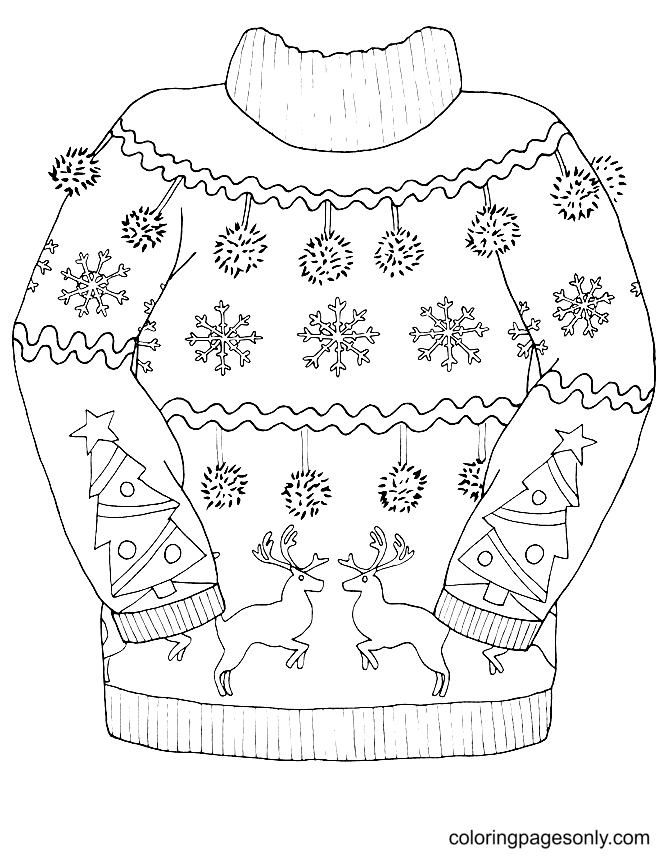
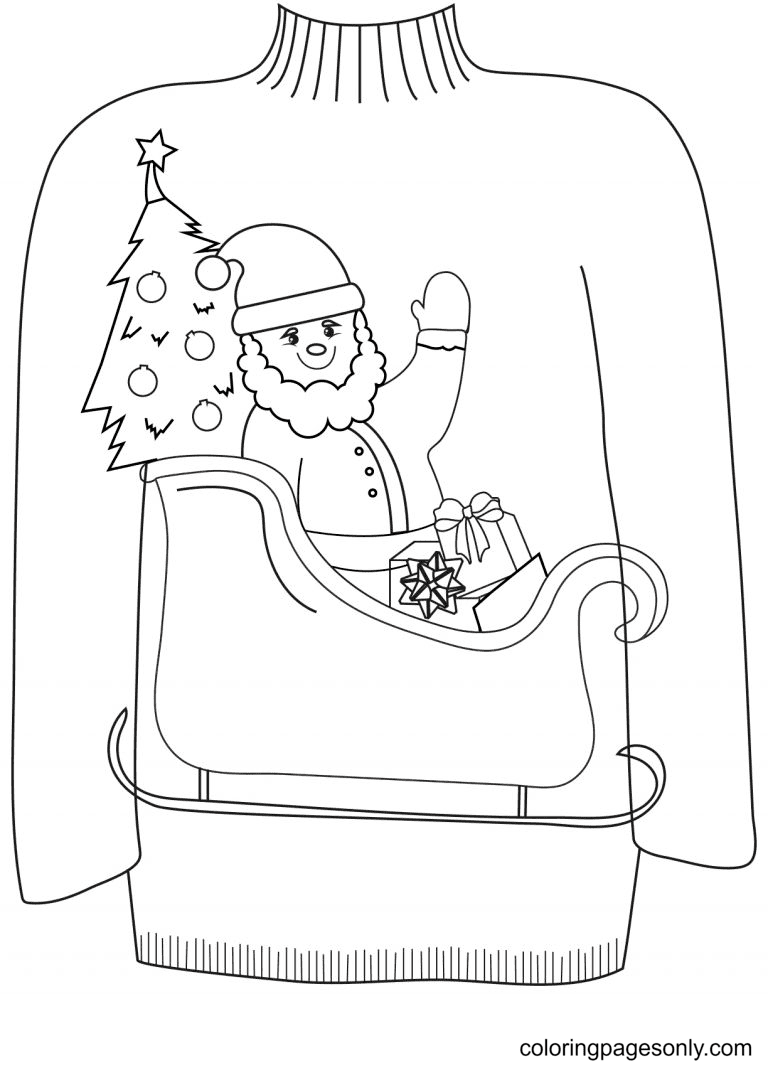
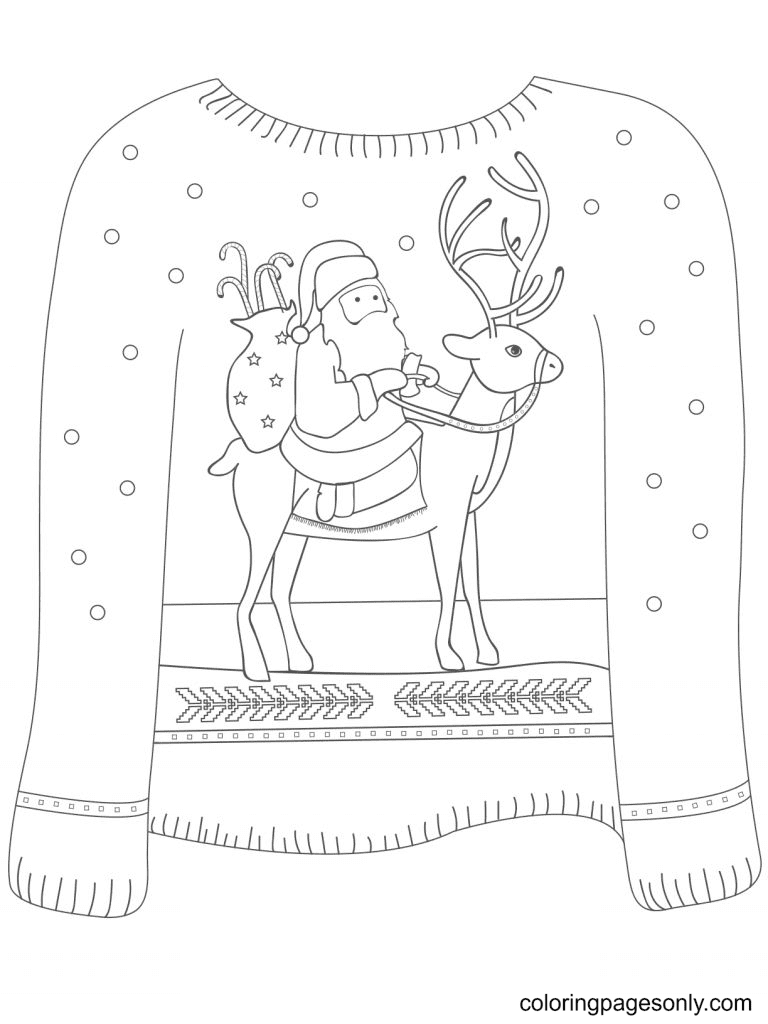
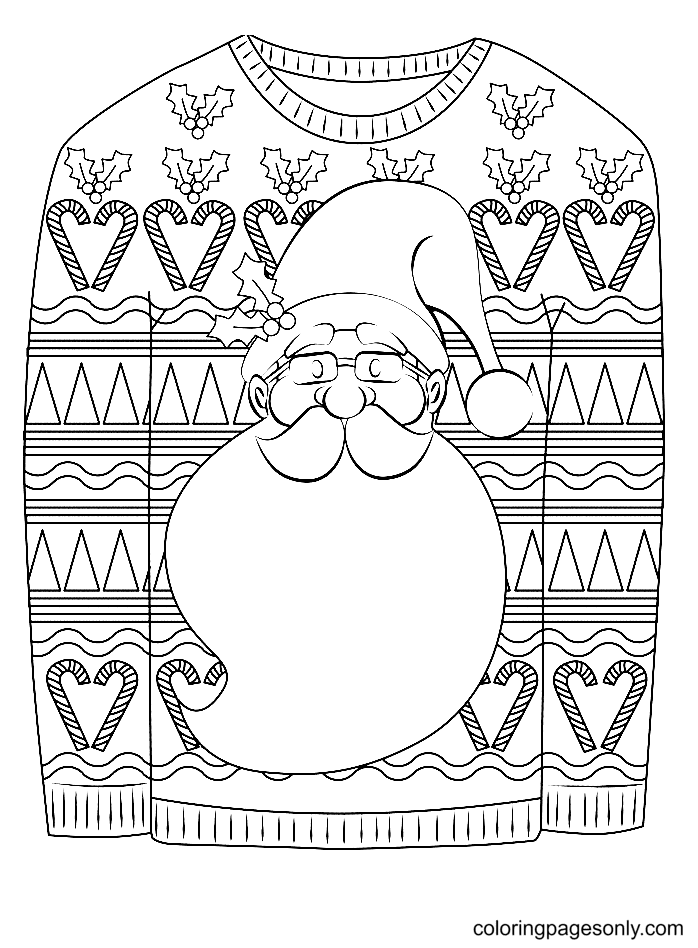
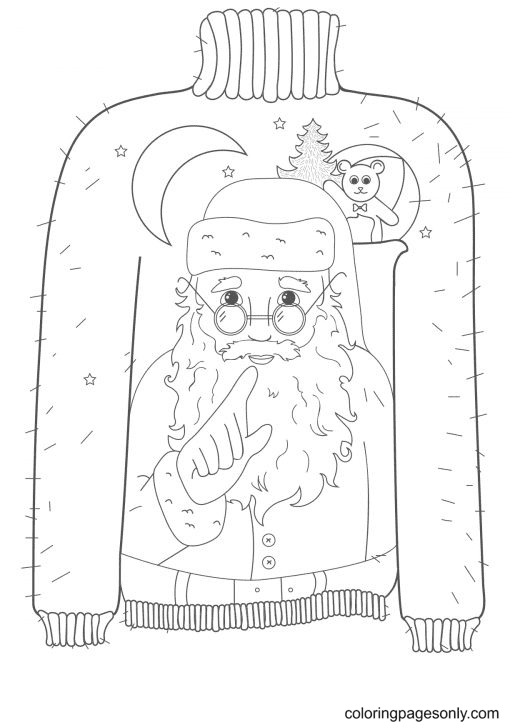
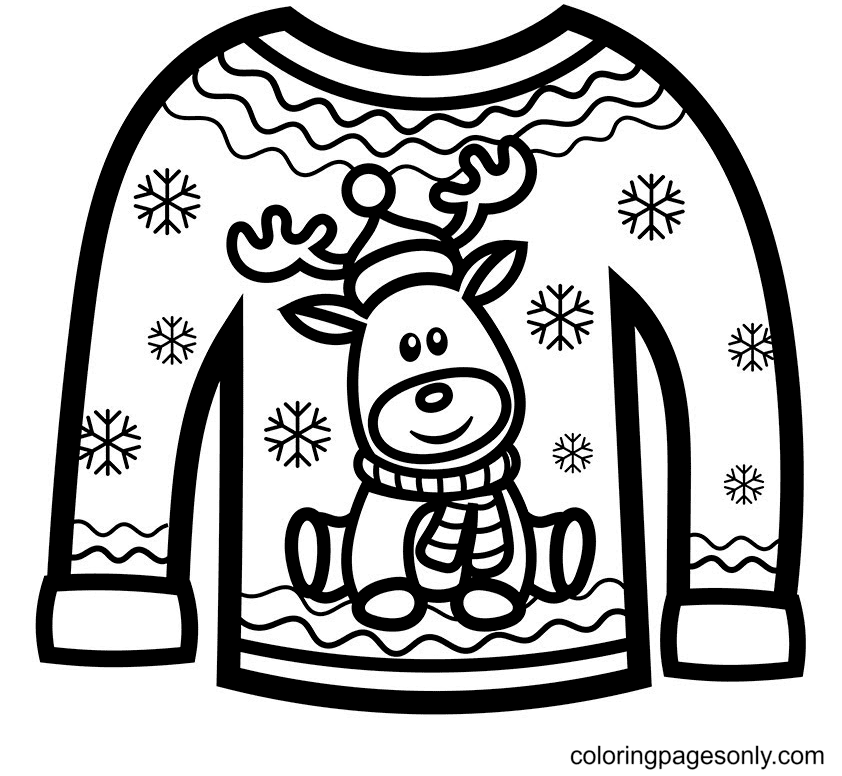
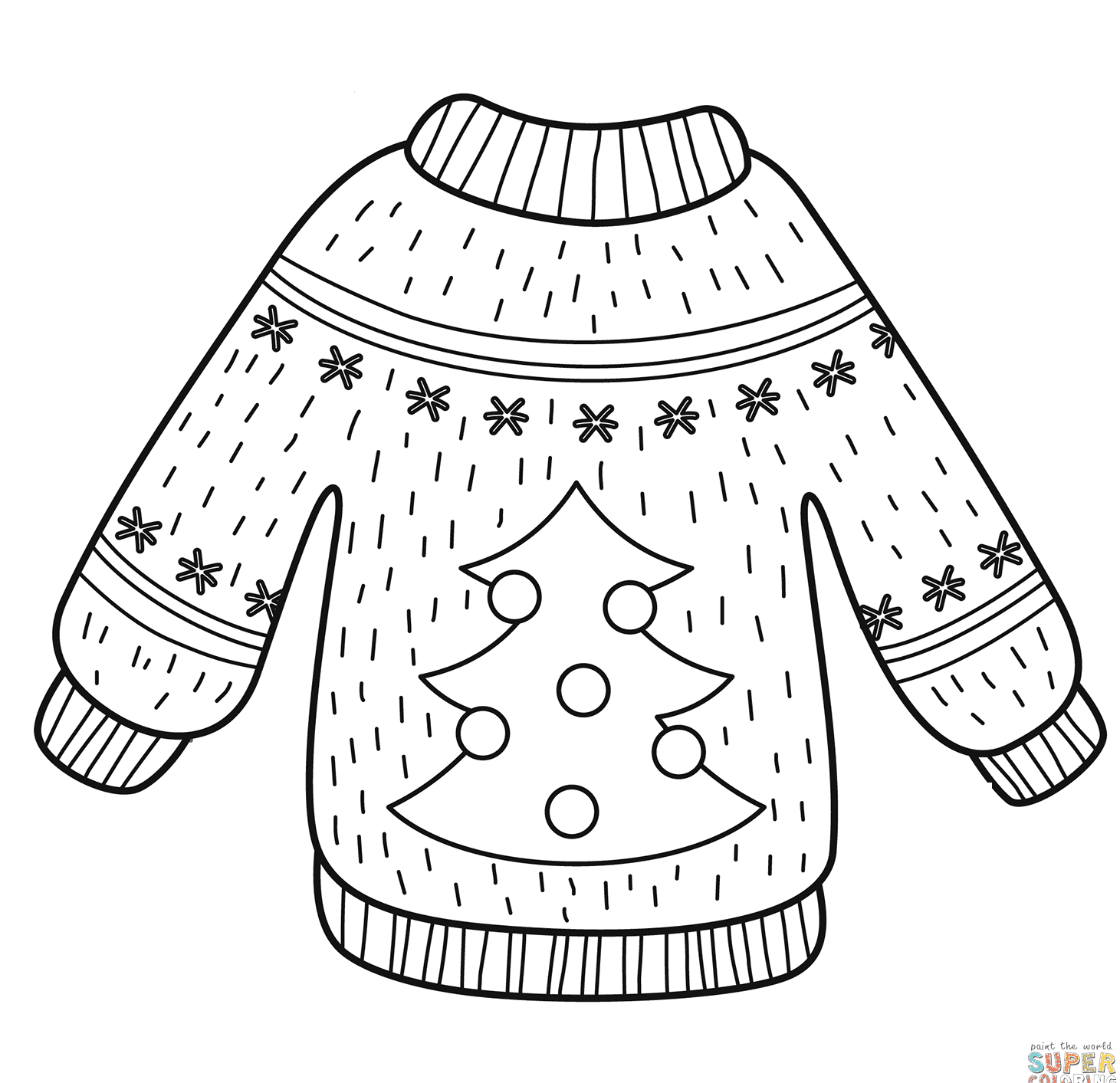
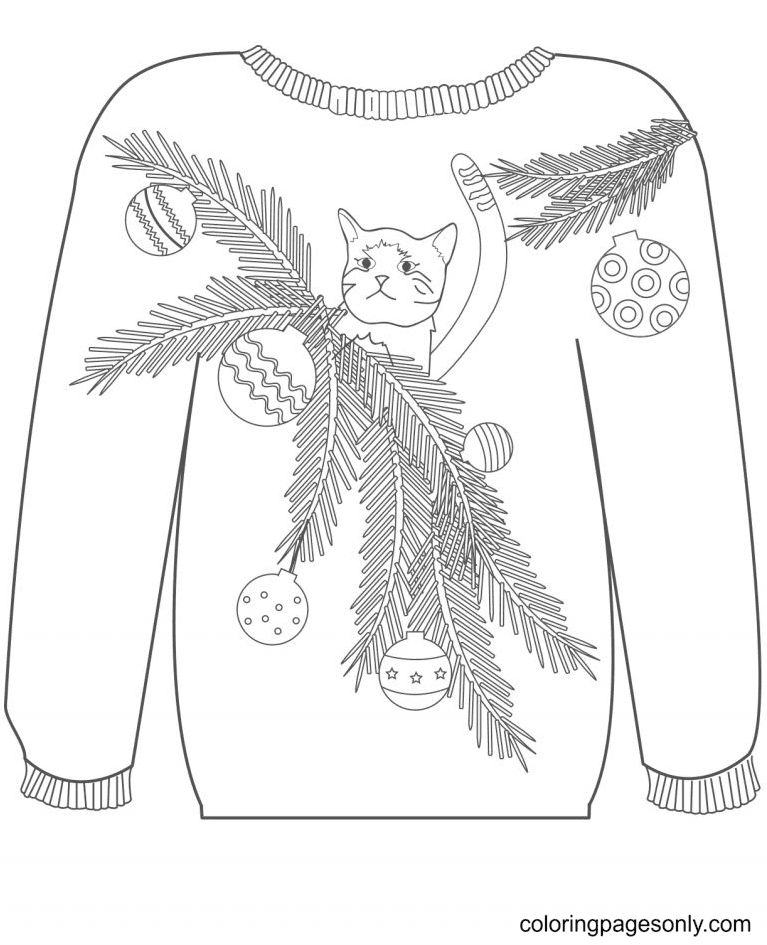
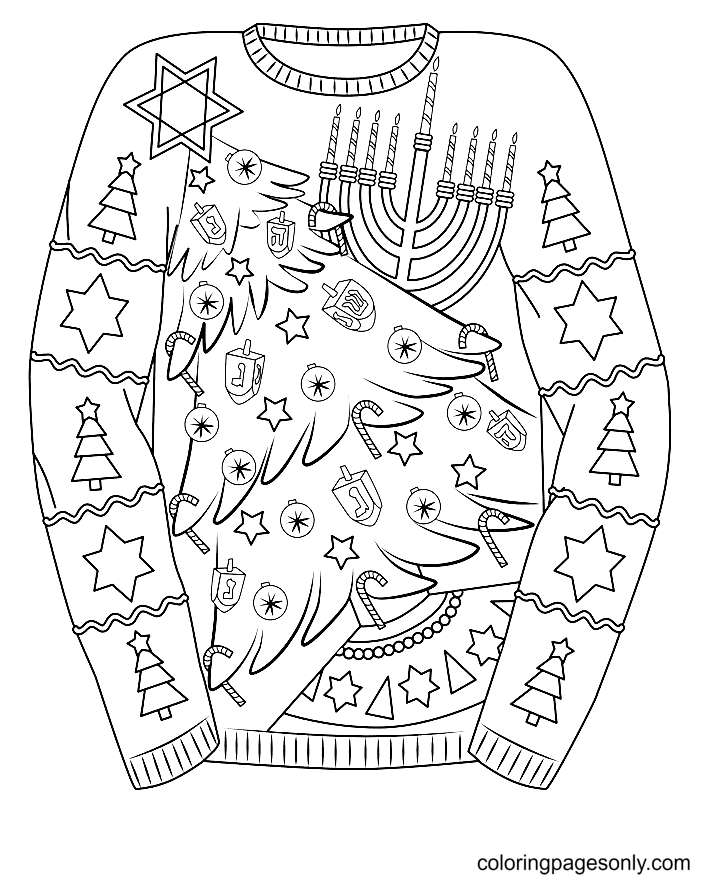
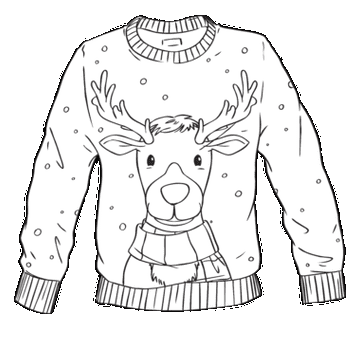
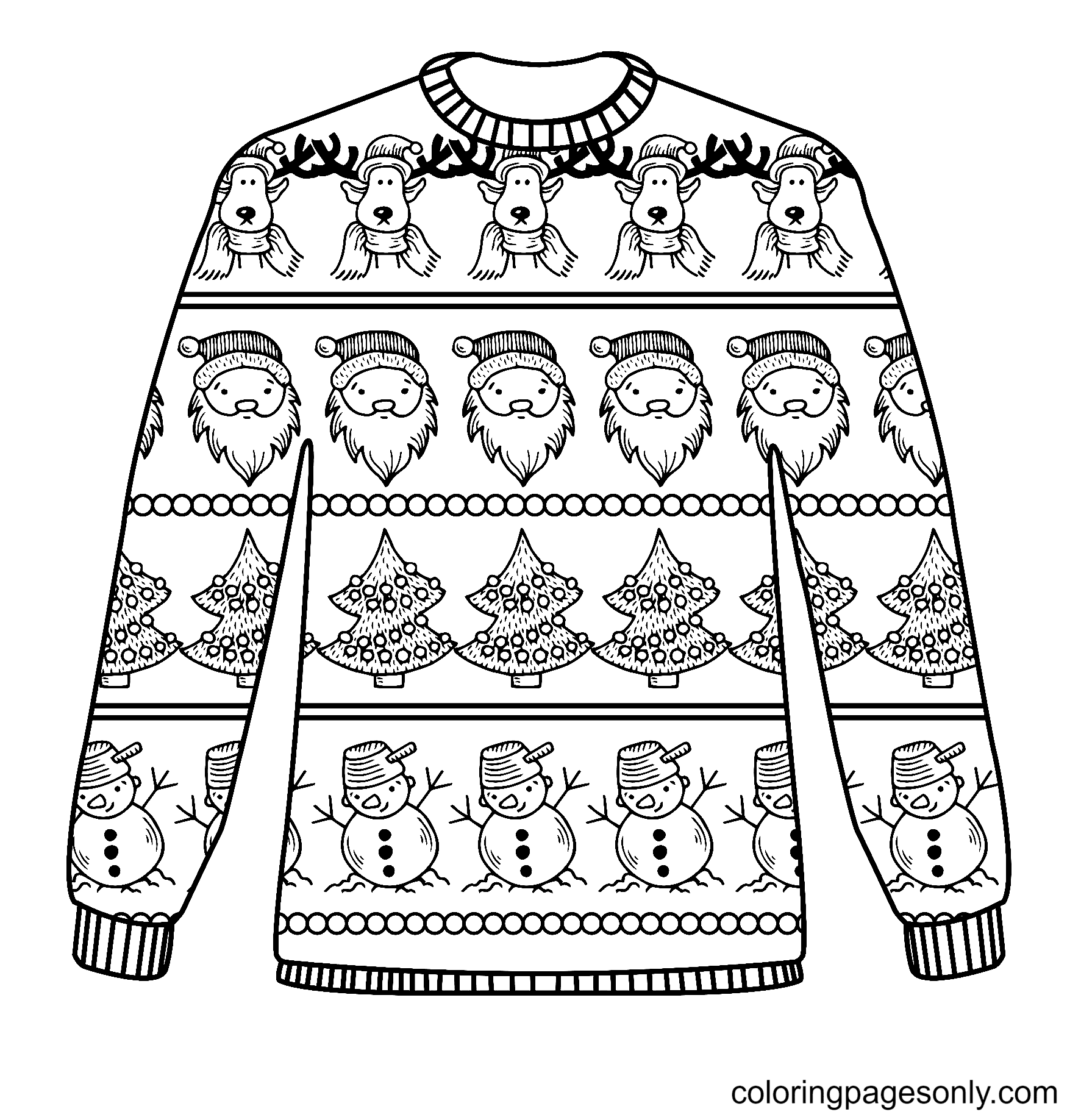
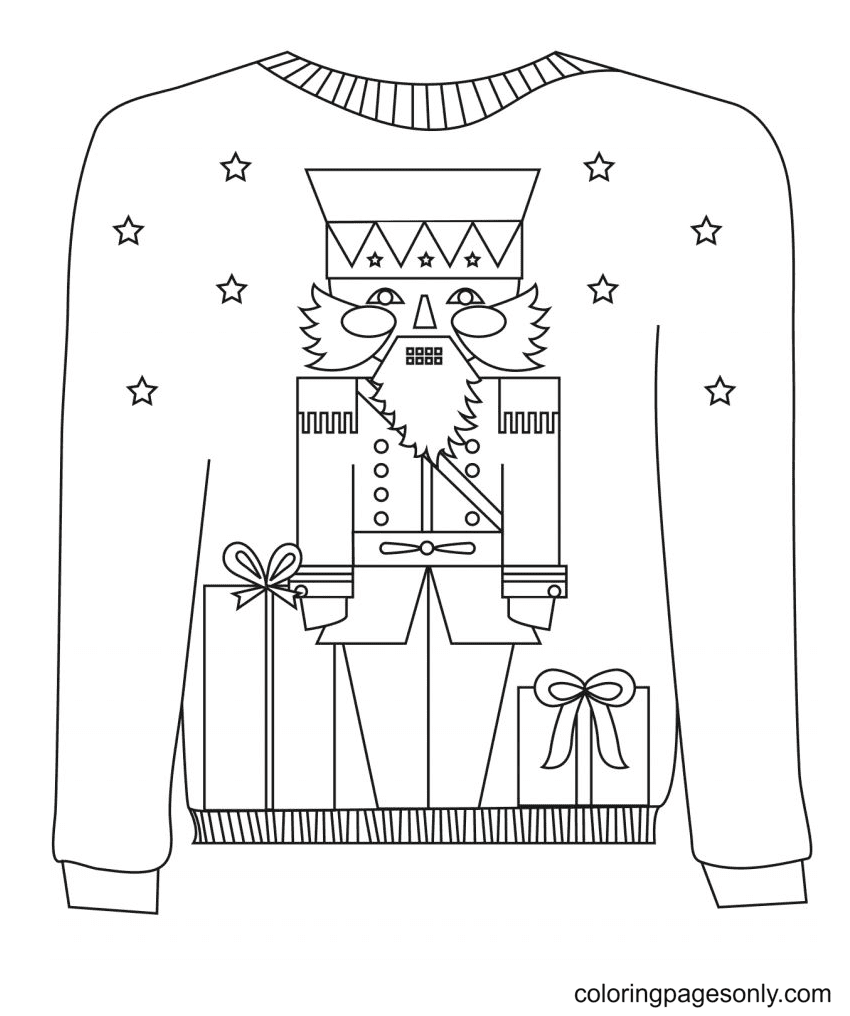
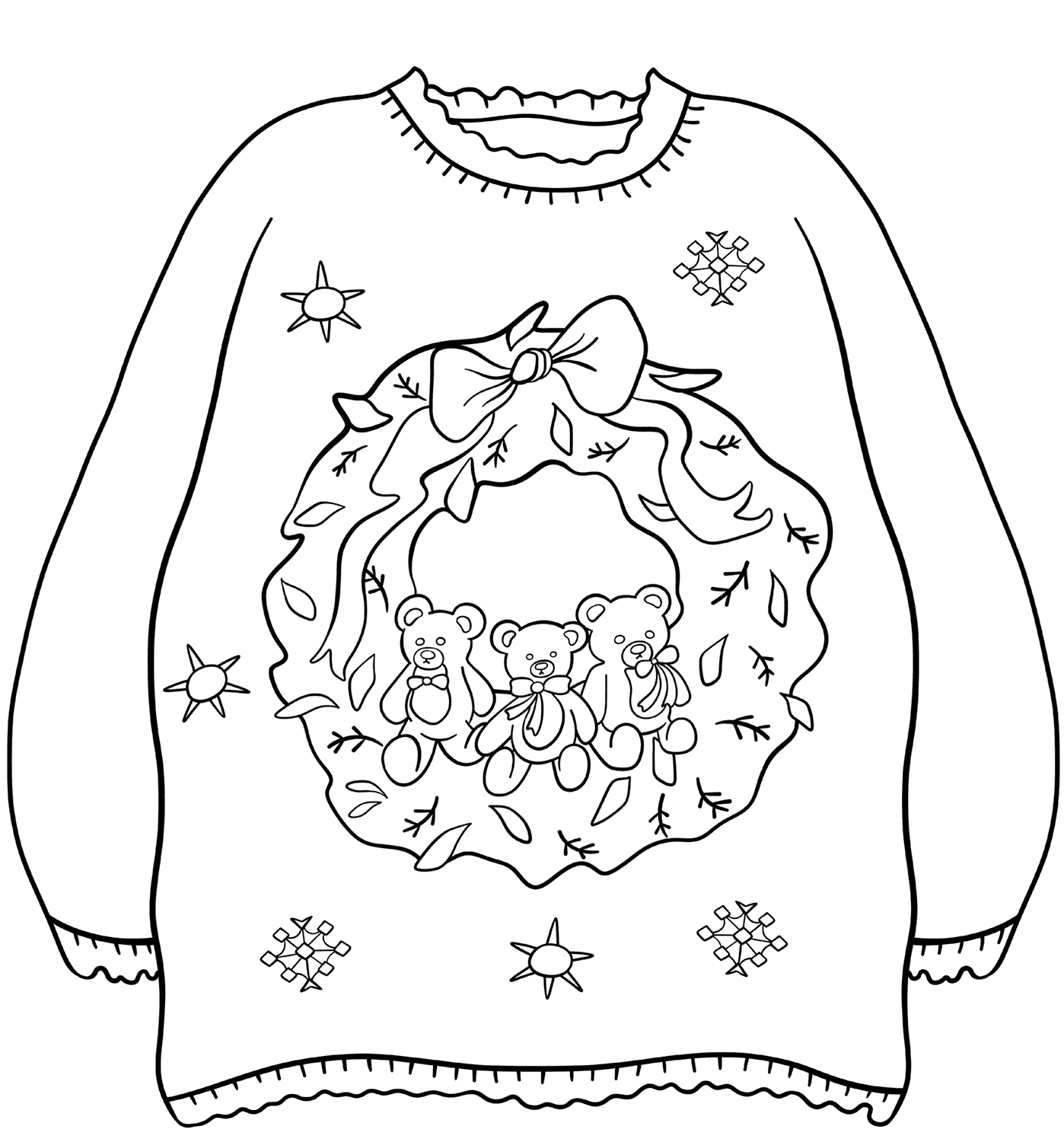
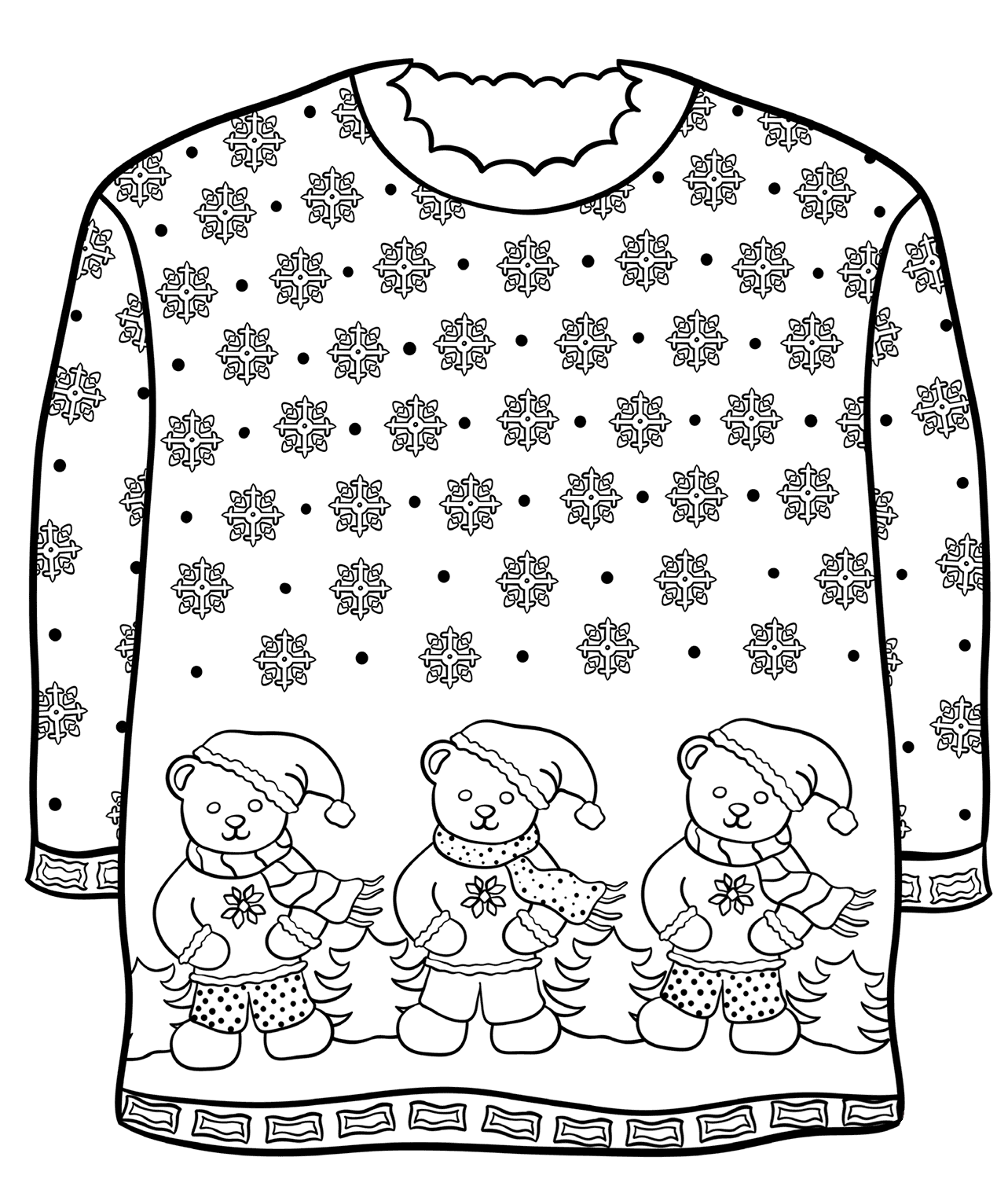
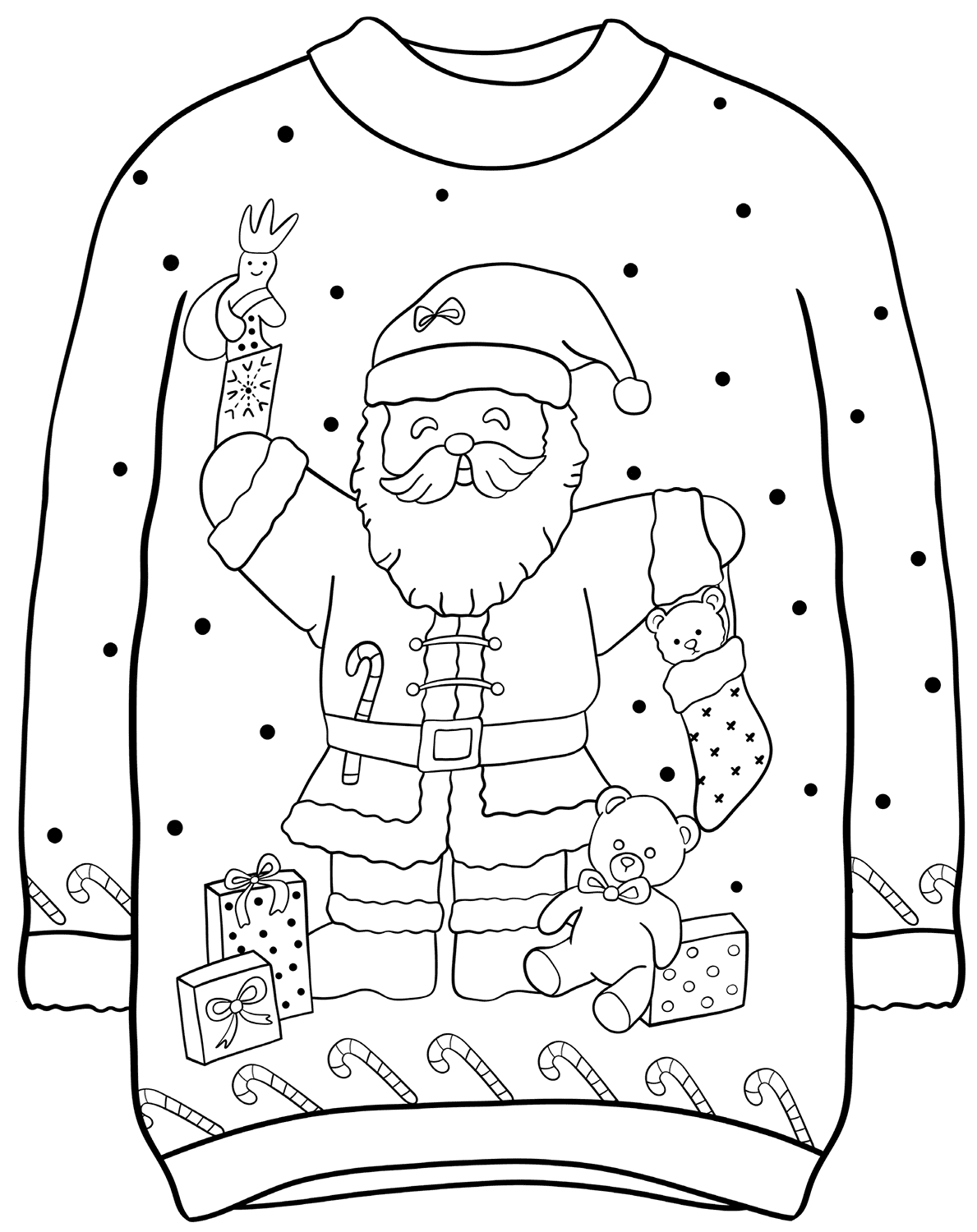

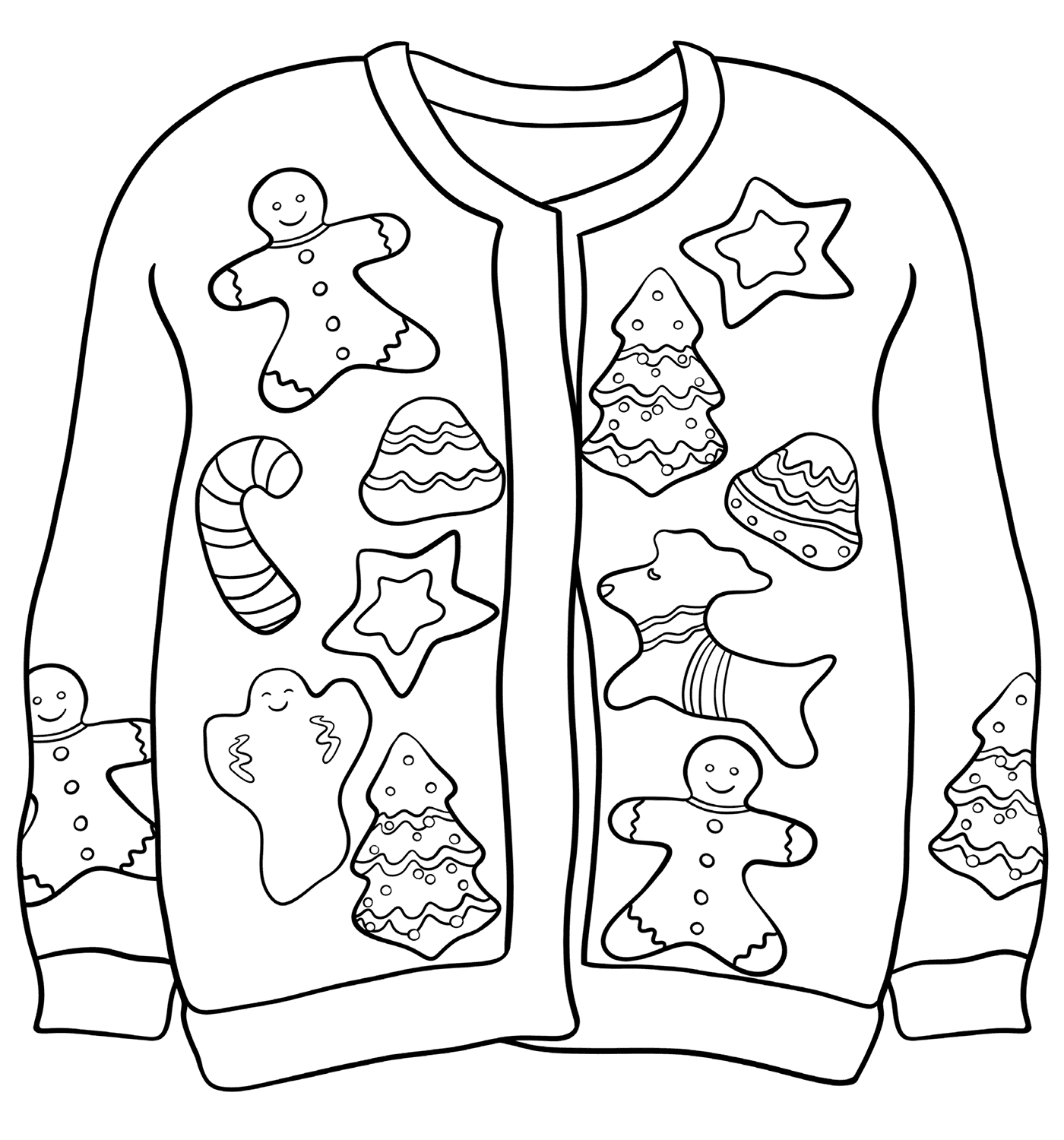
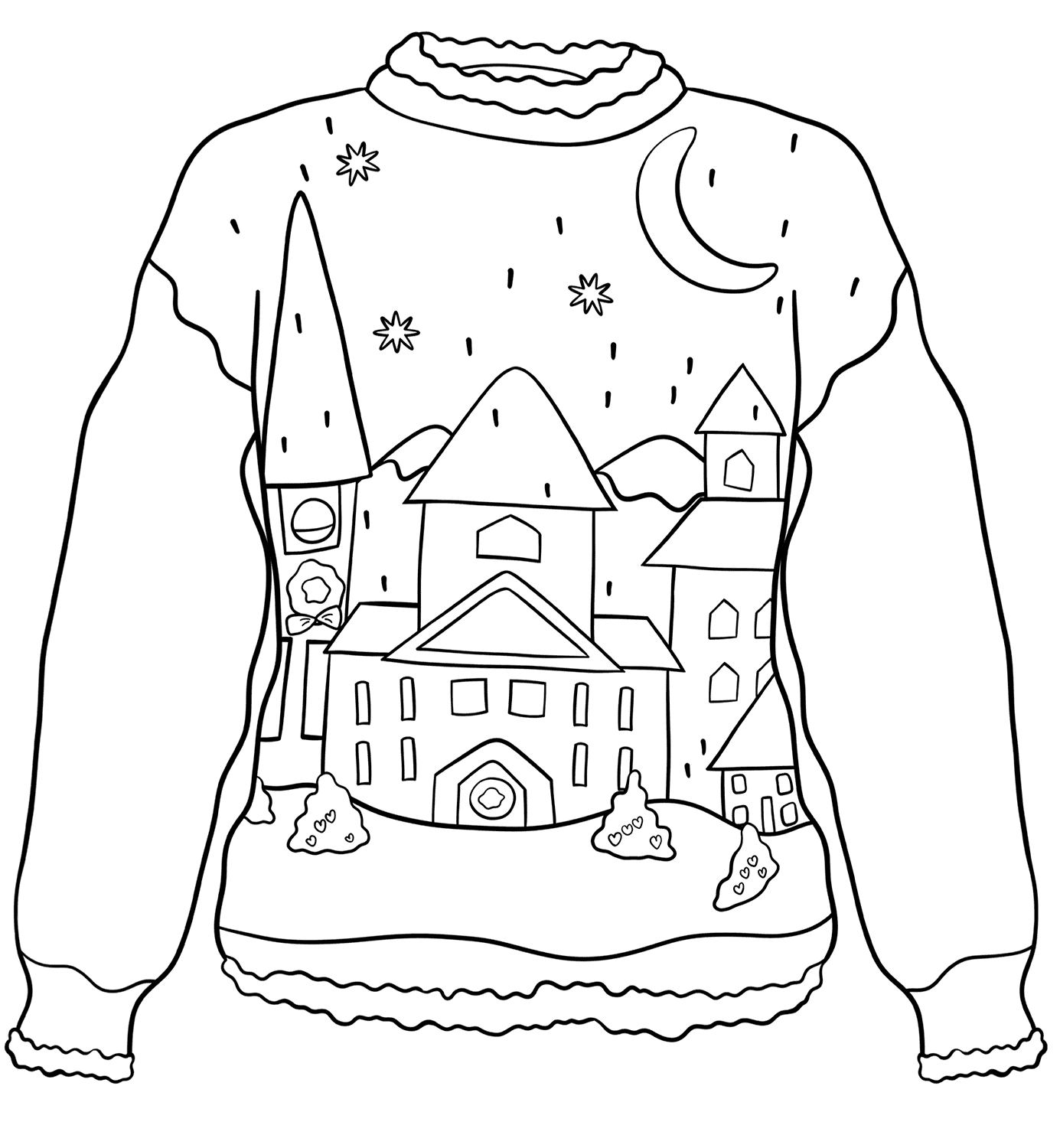
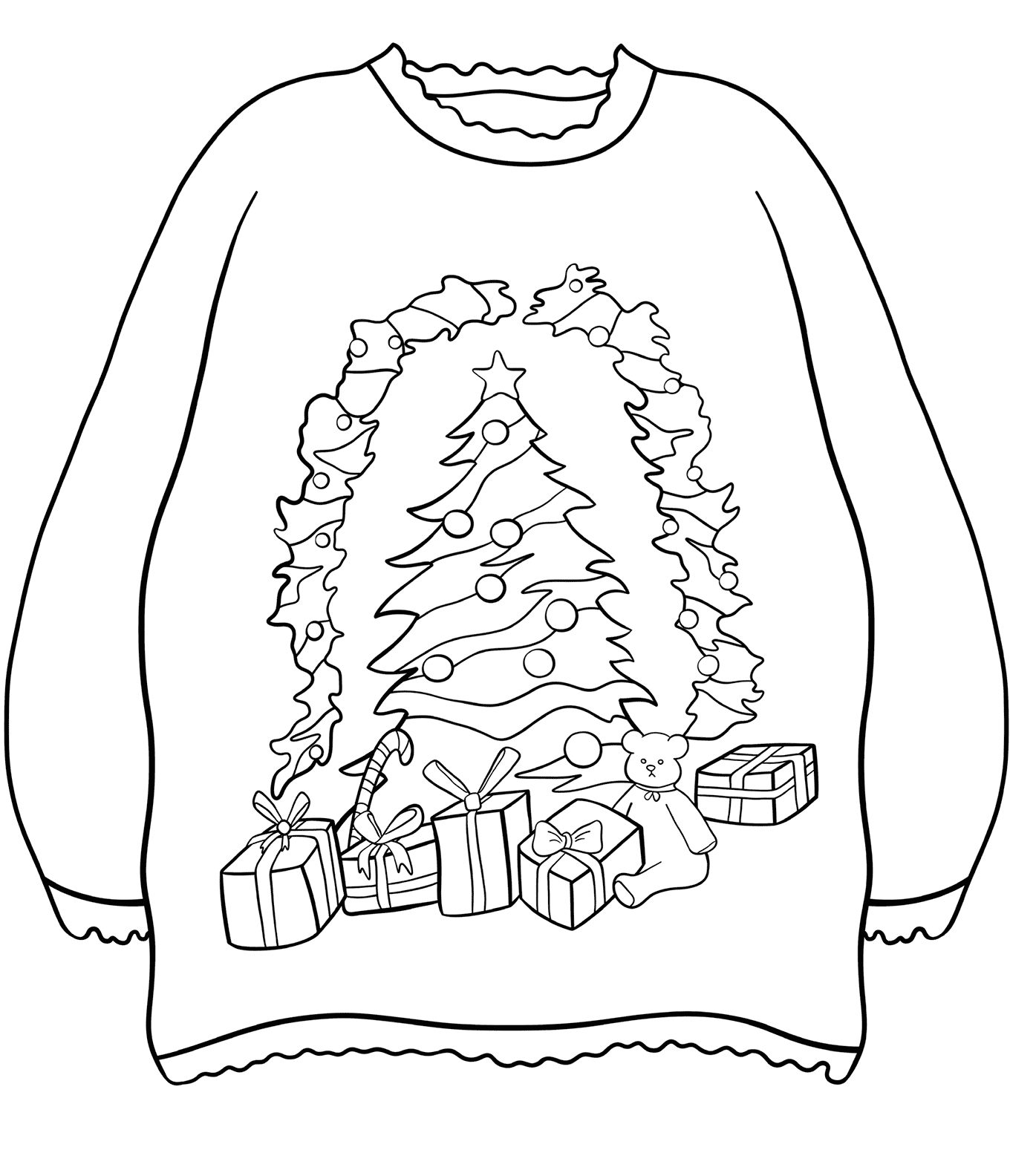
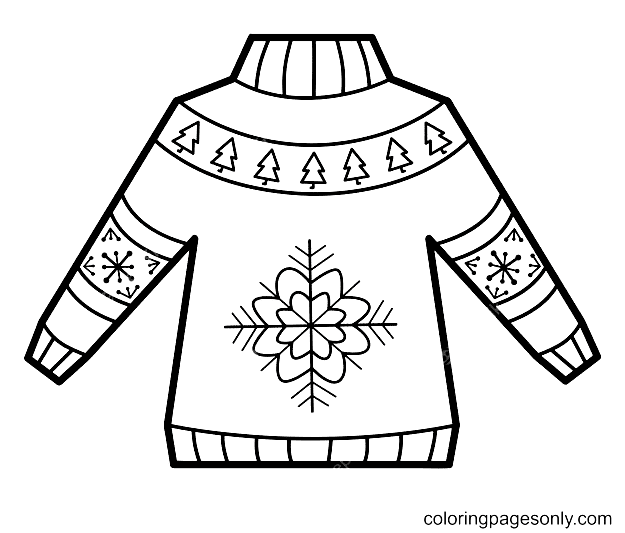
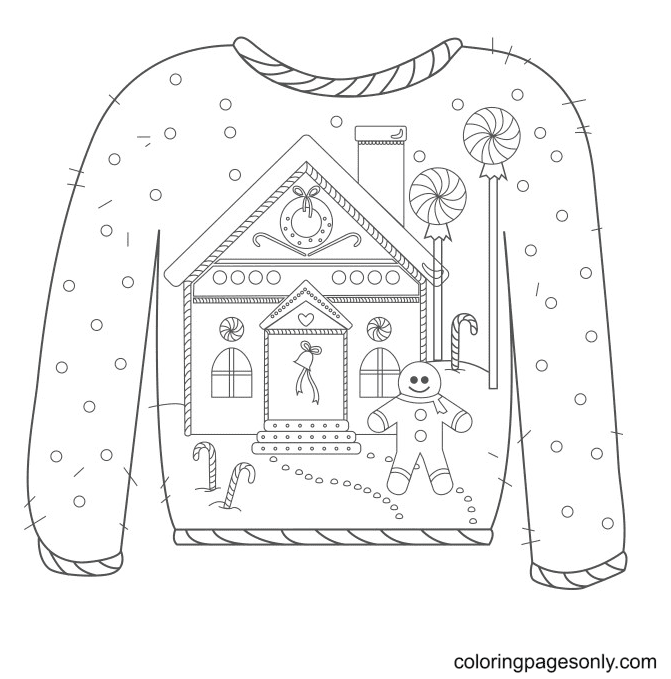
What Is Inside This Collection
The 60 pages are broken into four groups based on style and subject.
Character and Scene Sweaters
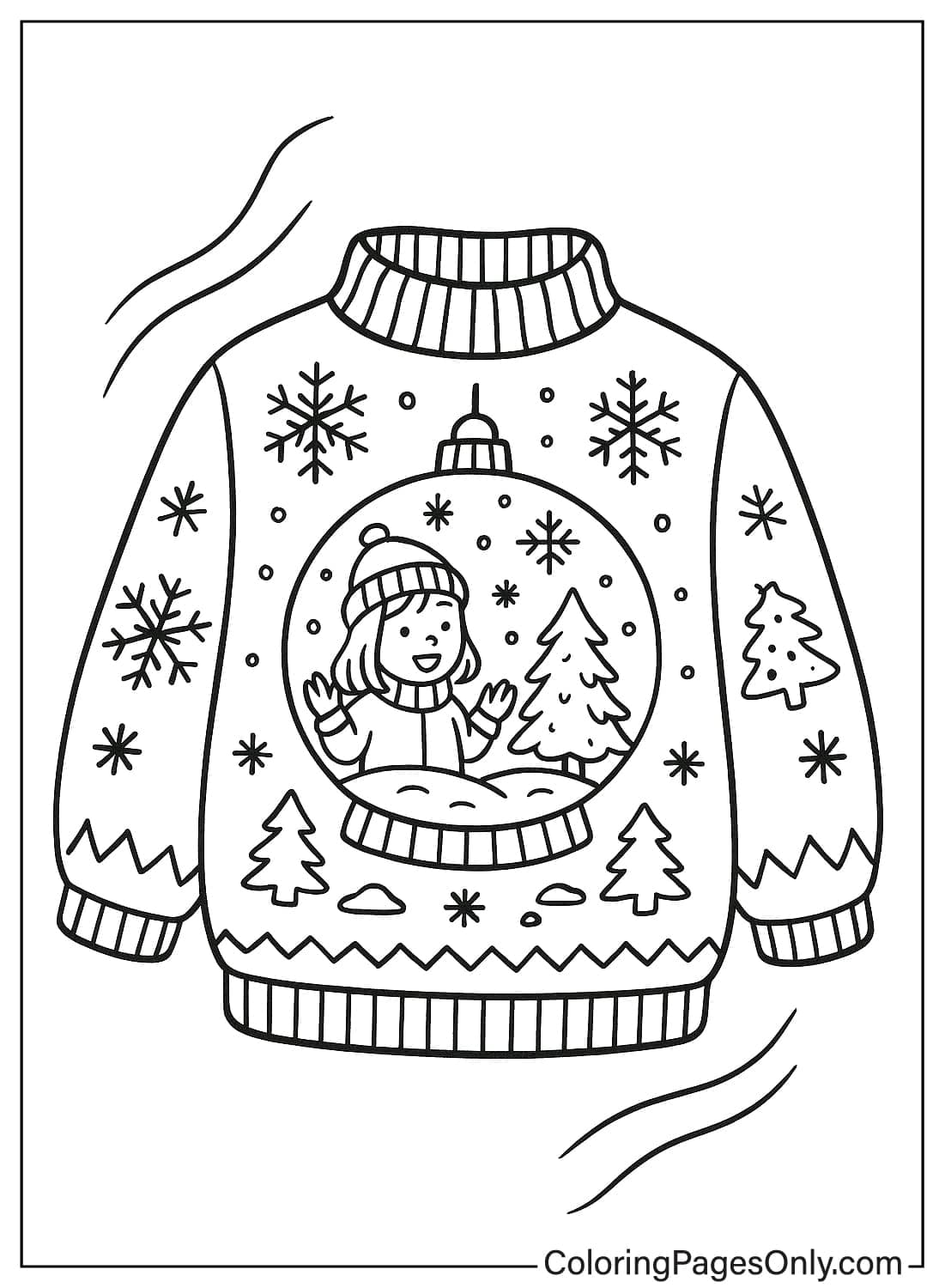
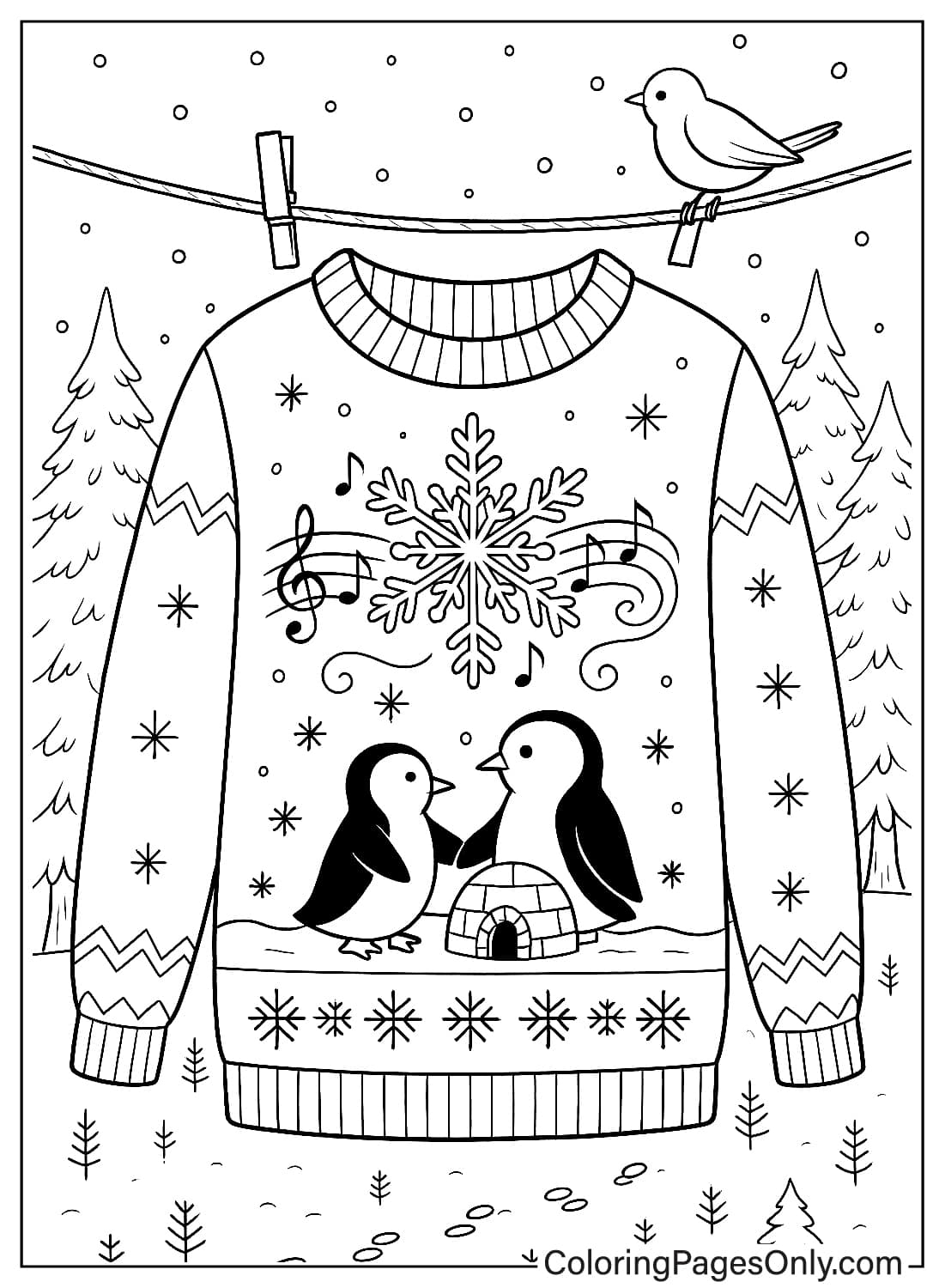
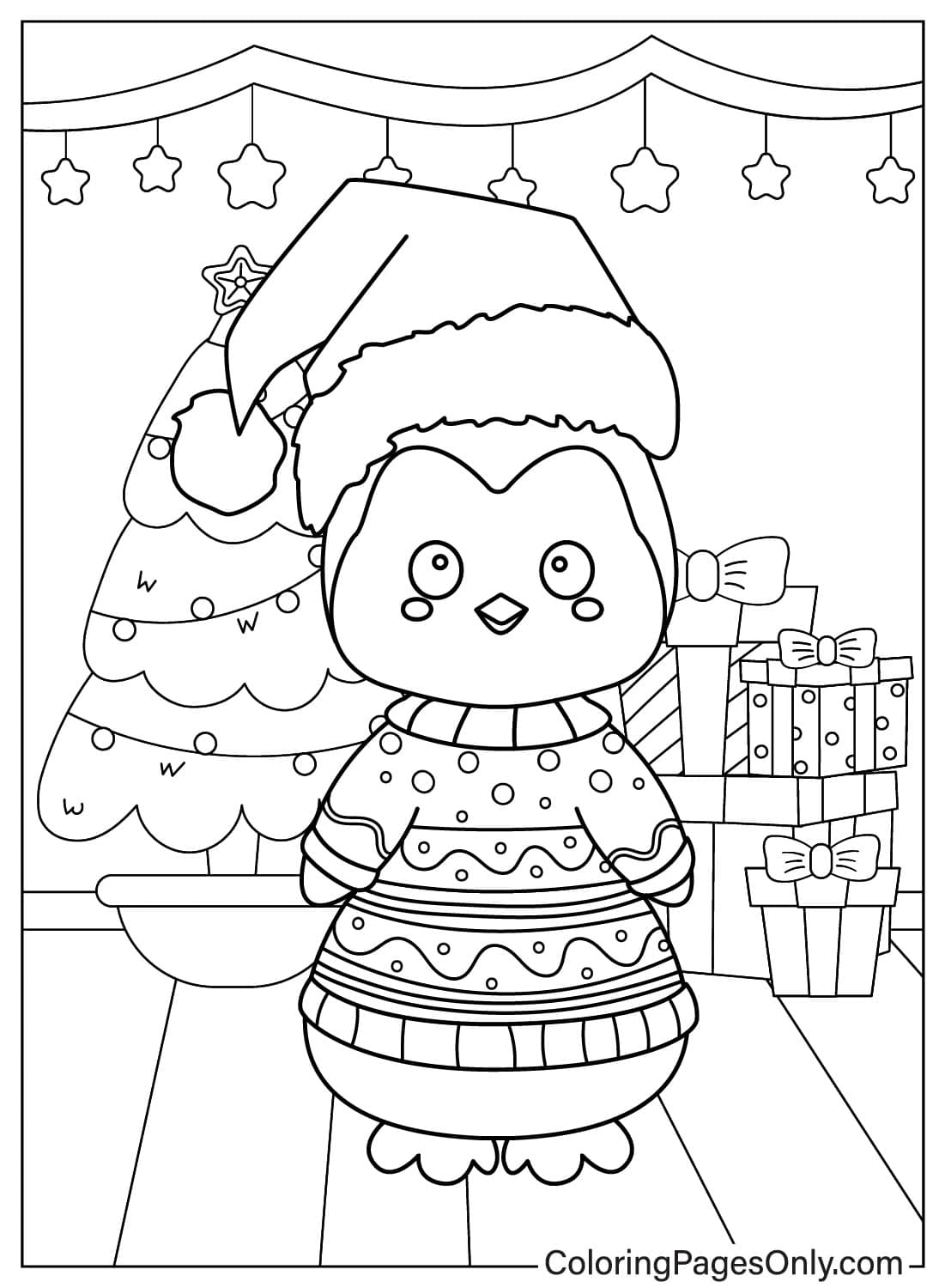
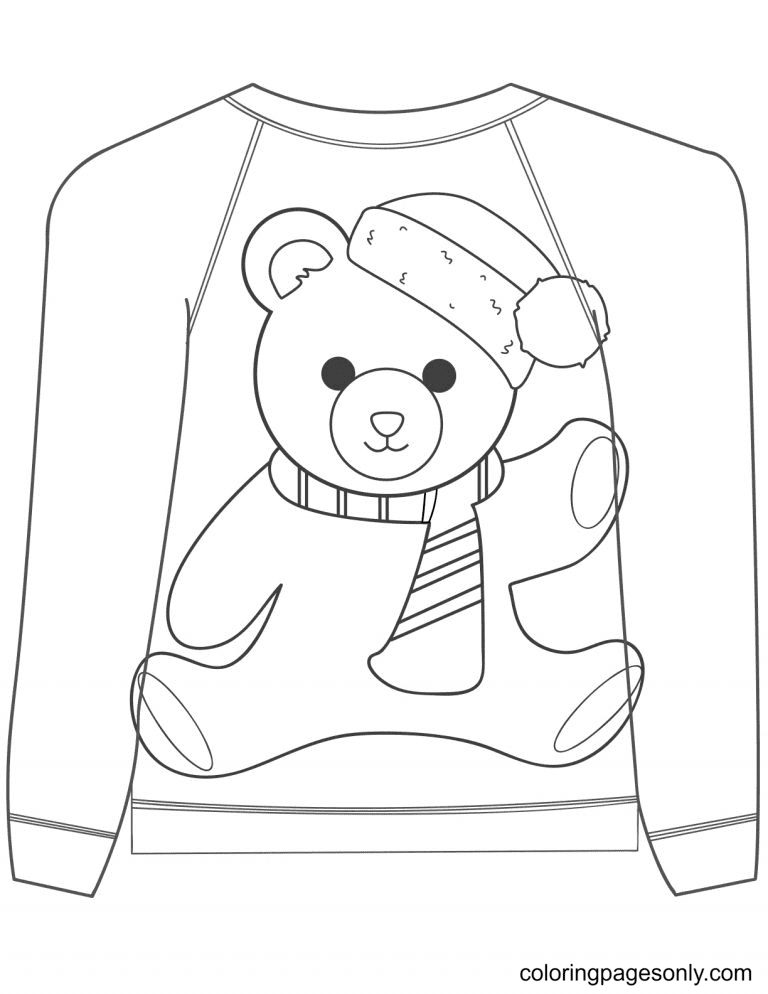
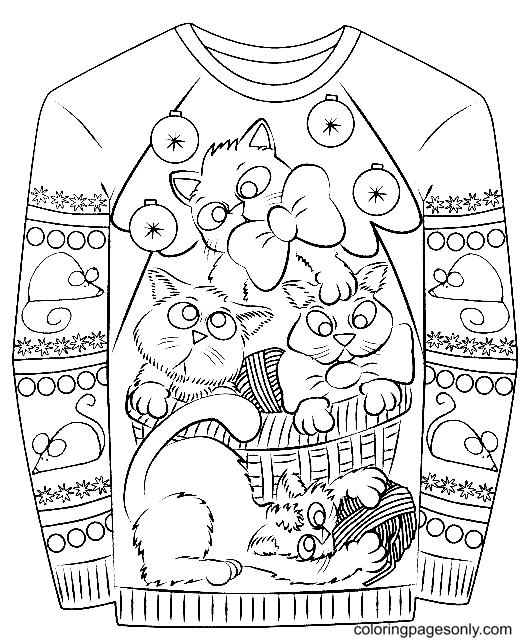
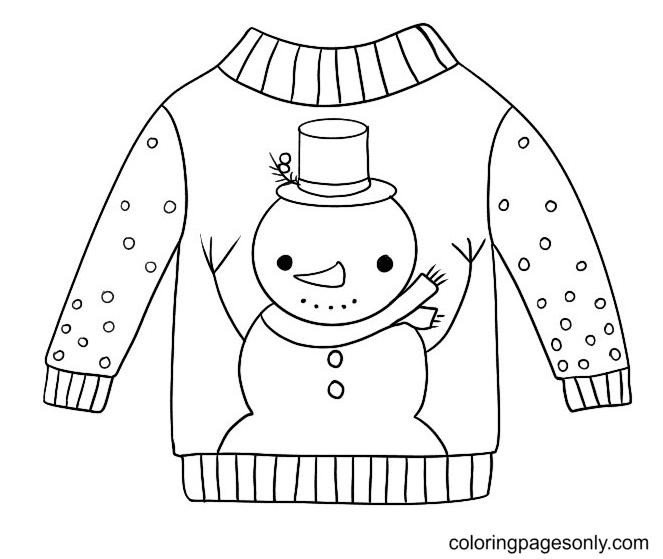
Fifteen pages show a sweater on a character or worked into a small scene, including a snowman, a penguin, a cat in a tree, and kids holding cookies or standing near a snow globe. Color suggestion: color the character or scene first in natural tones, then treat the sweater pattern as a separate decorative layer on top, so the two elements stay visually distinct.
Classic Holiday Sweaters
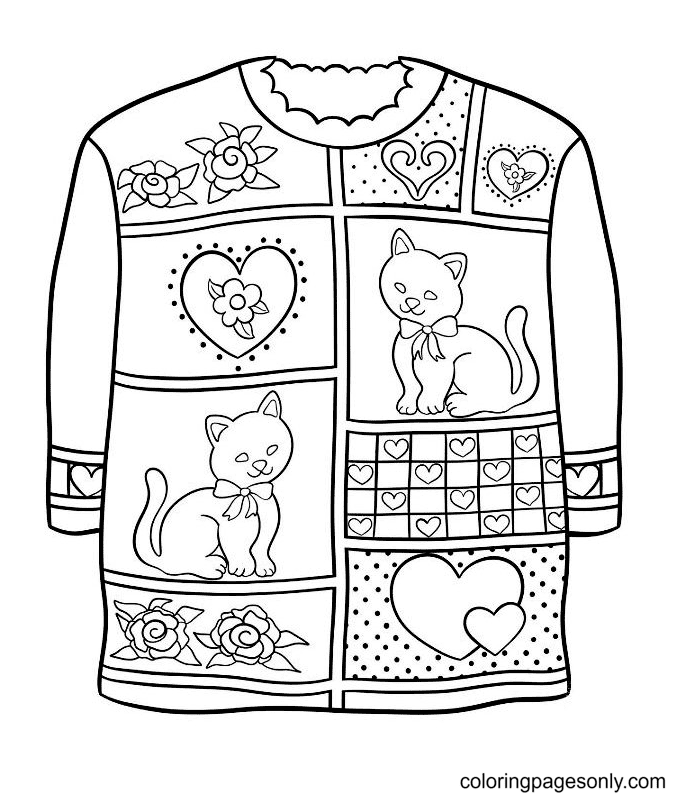
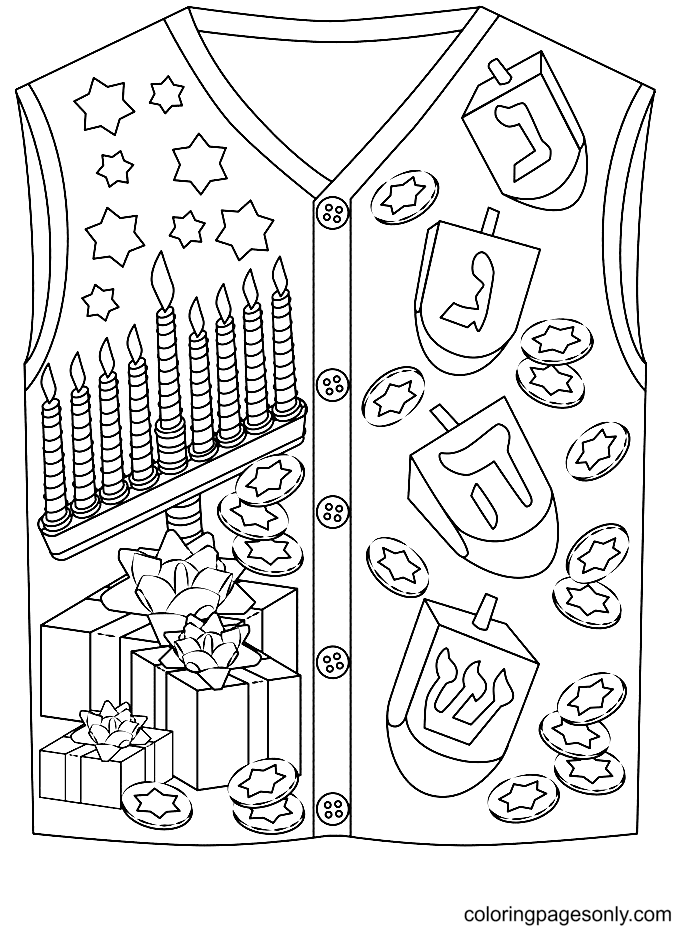
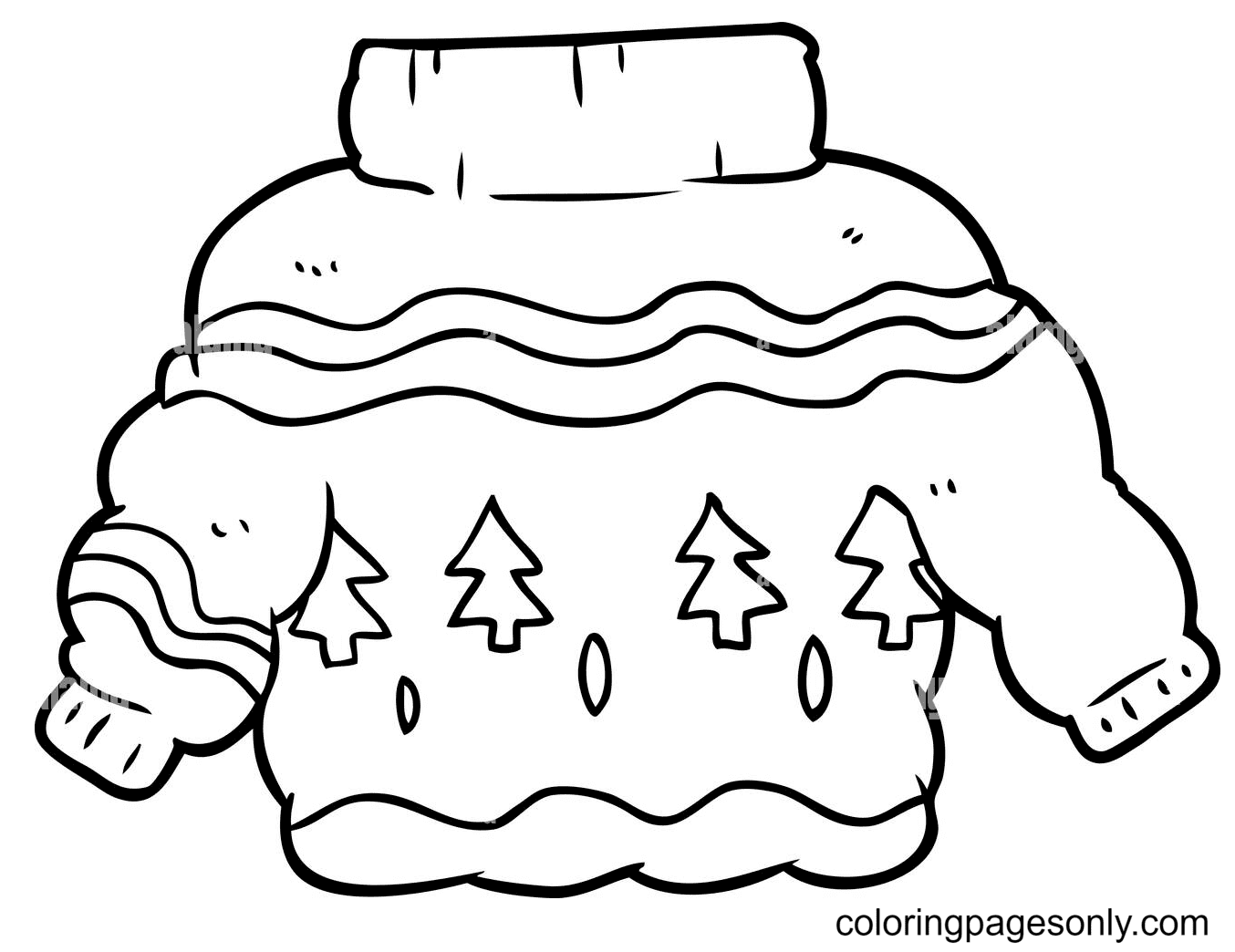
Thirteen pages show a plain sweater shape filled with an all-over festive pattern, without a specific single motif standing out. Color suggestion: pick one main color for the sweater body and no more than two accent colors for the pattern, since too many colors on an all-over print can make the design read as cluttered rather than cozy.
Themed Pattern Sweaters
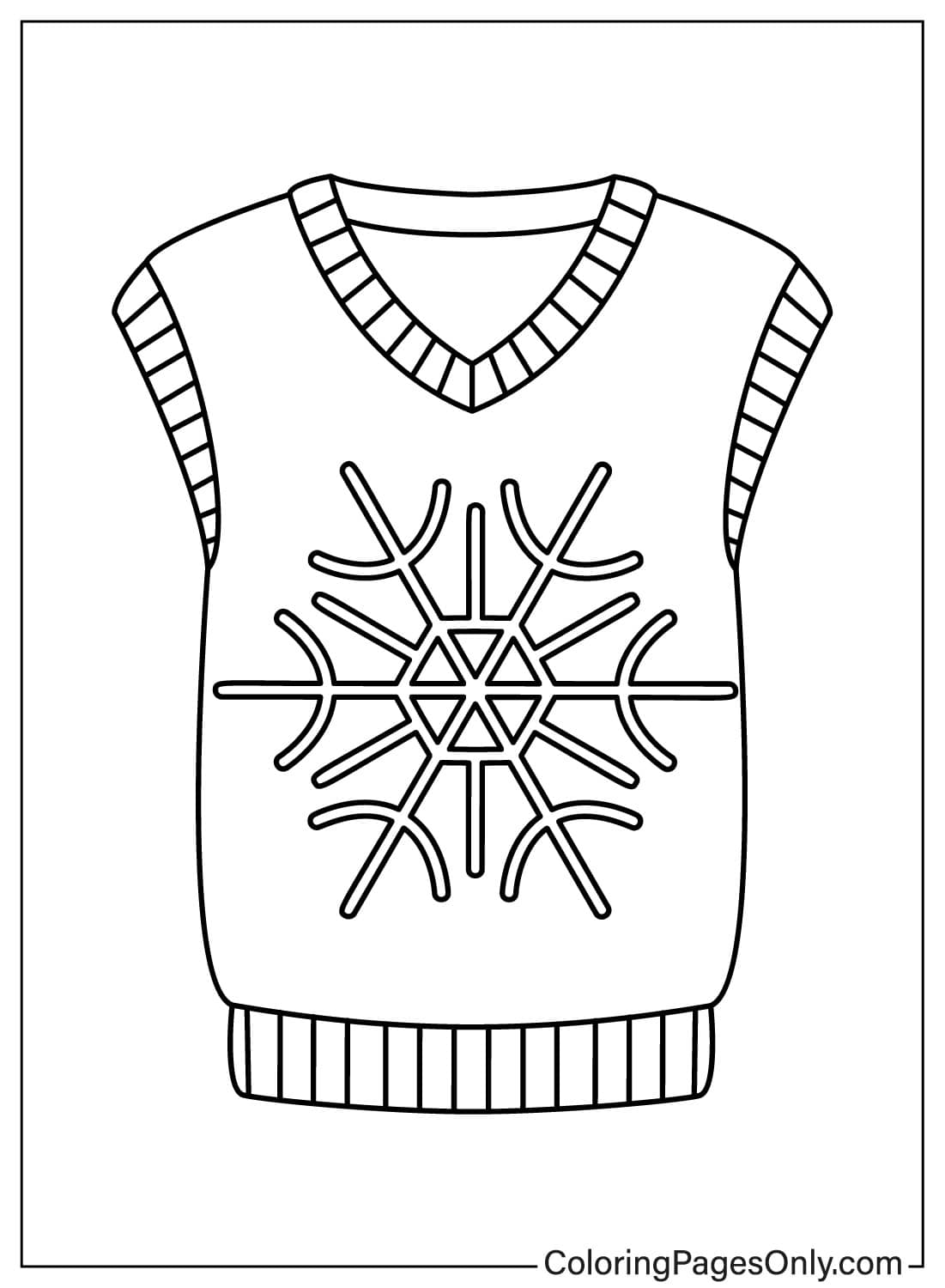
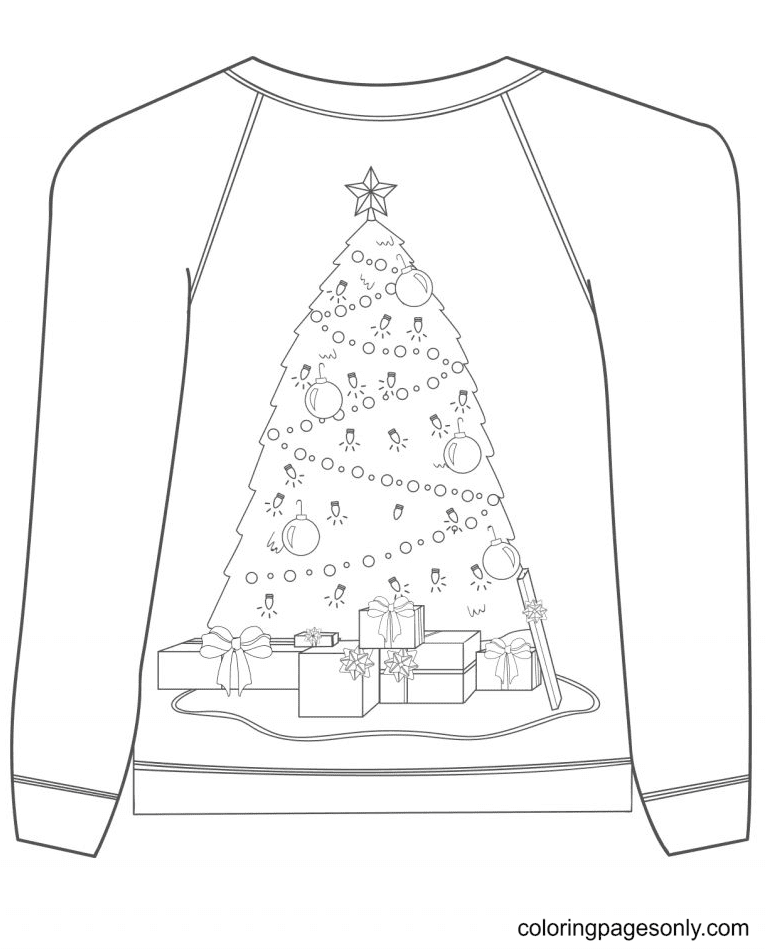
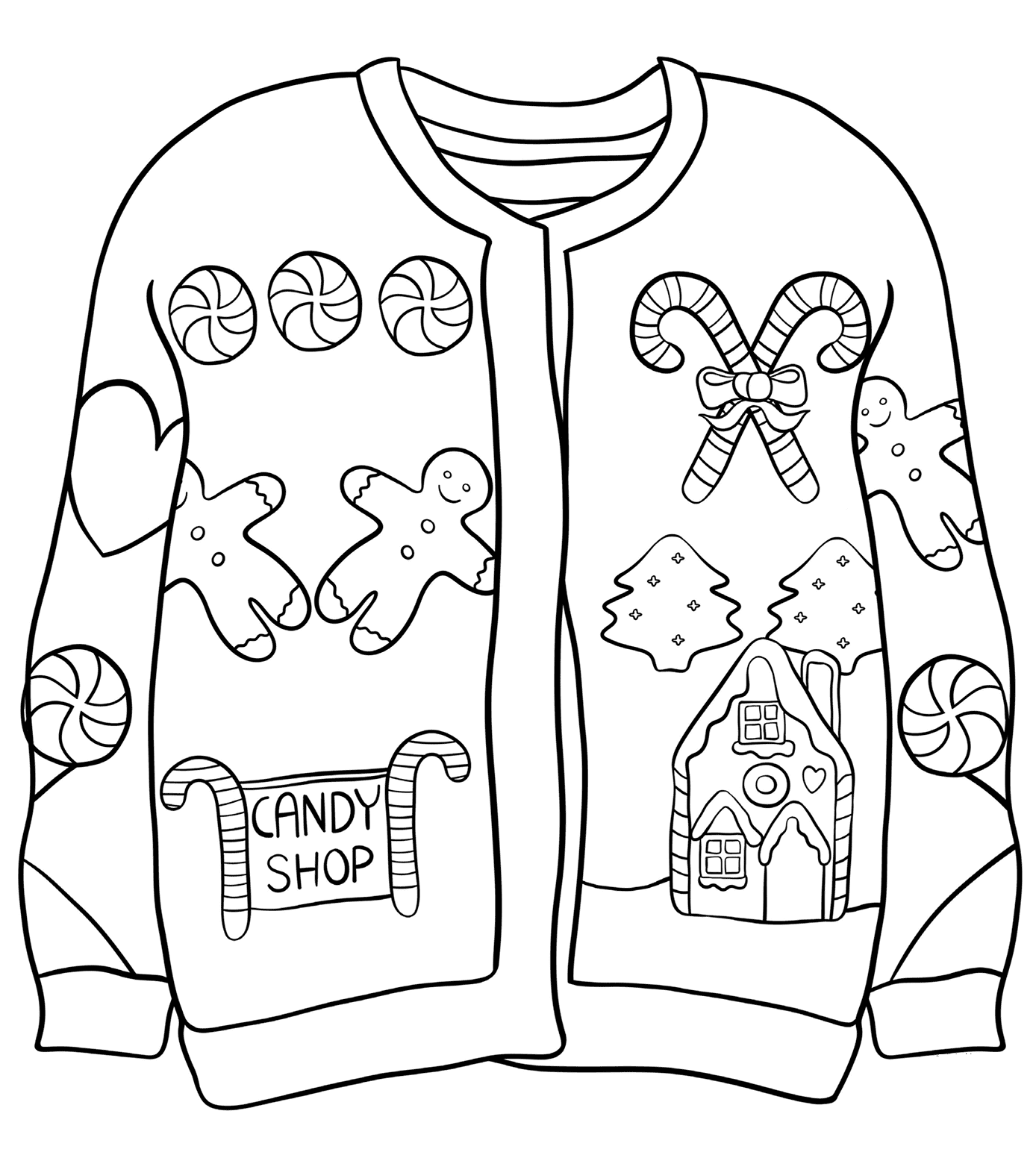
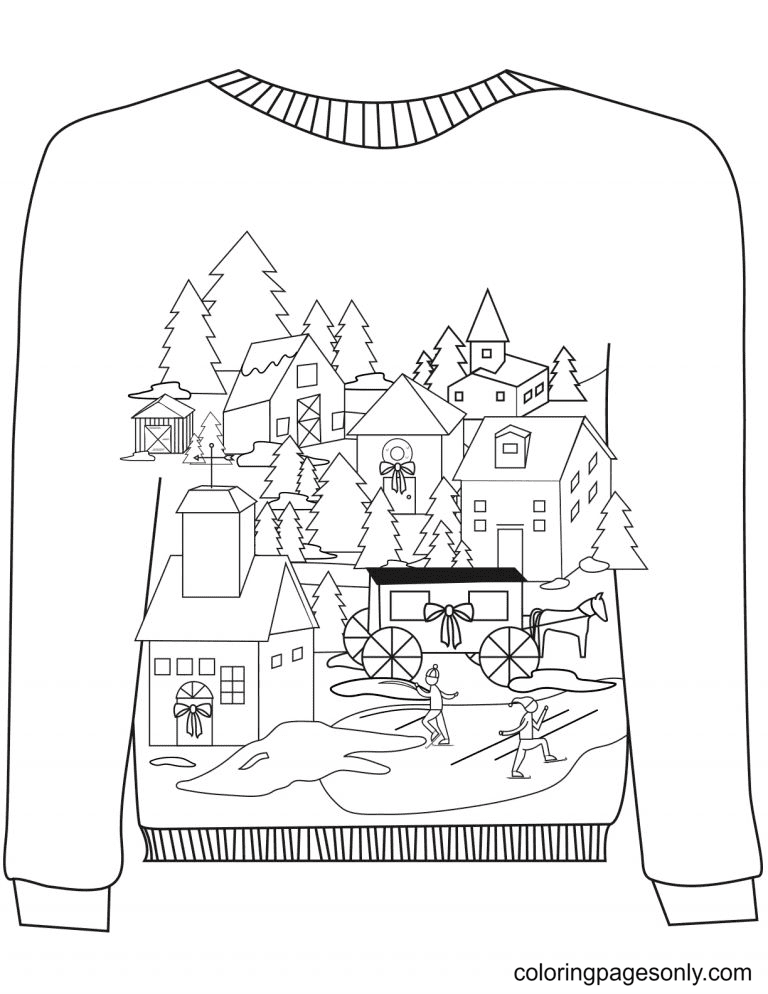
Twenty-three pages, the largest group in the set, build the sweater around one clear motif: a wreath, a gingerbread house, a nutcracker, snowflakes, a candy shop, or an alpine village. Color suggestion: let the featured motif use the boldest colors on the page and keep the surrounding knit pattern in more muted, repeating tones so the main image stays the focal point.
Santa and Reindeer Sweaters
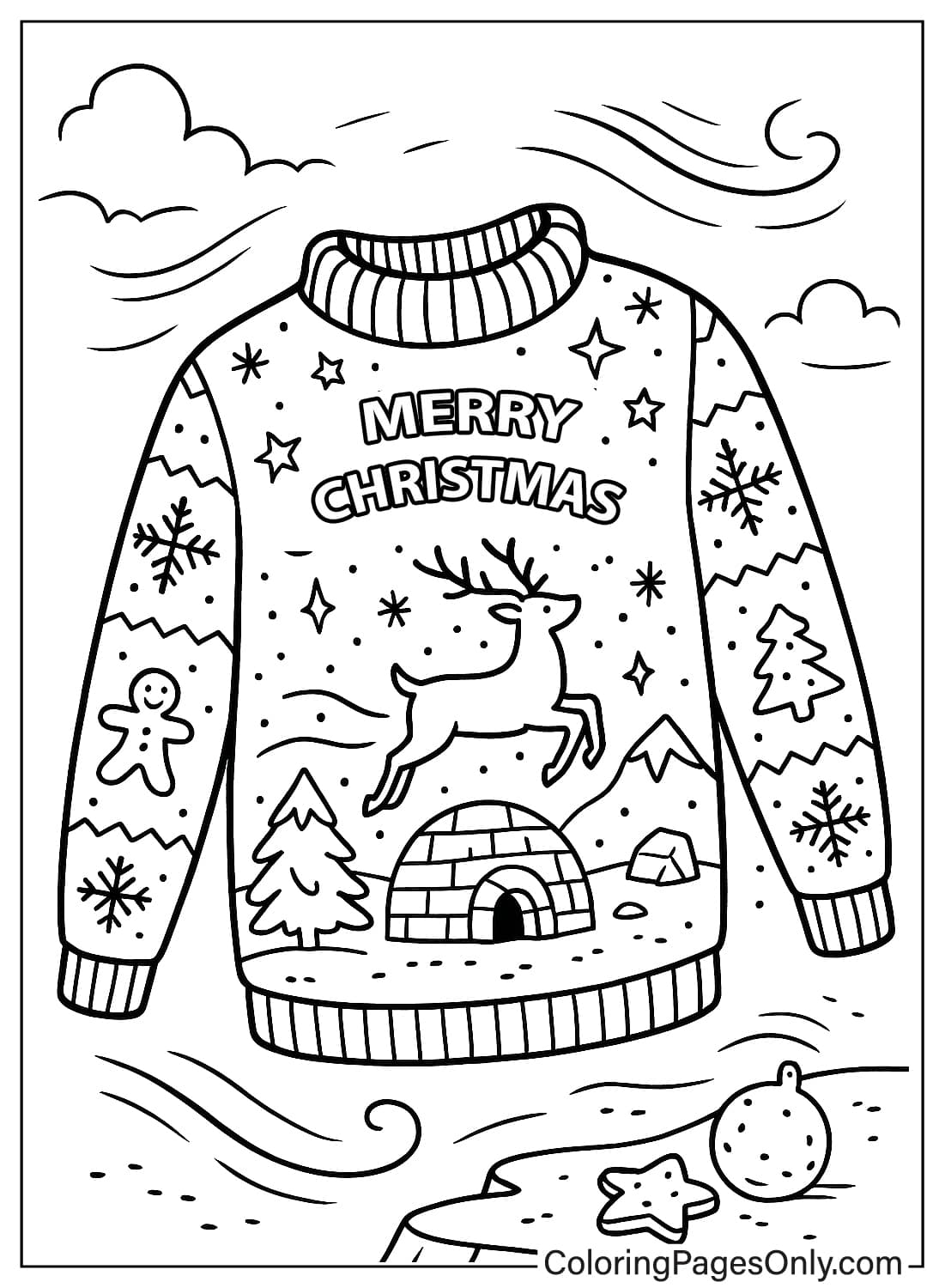
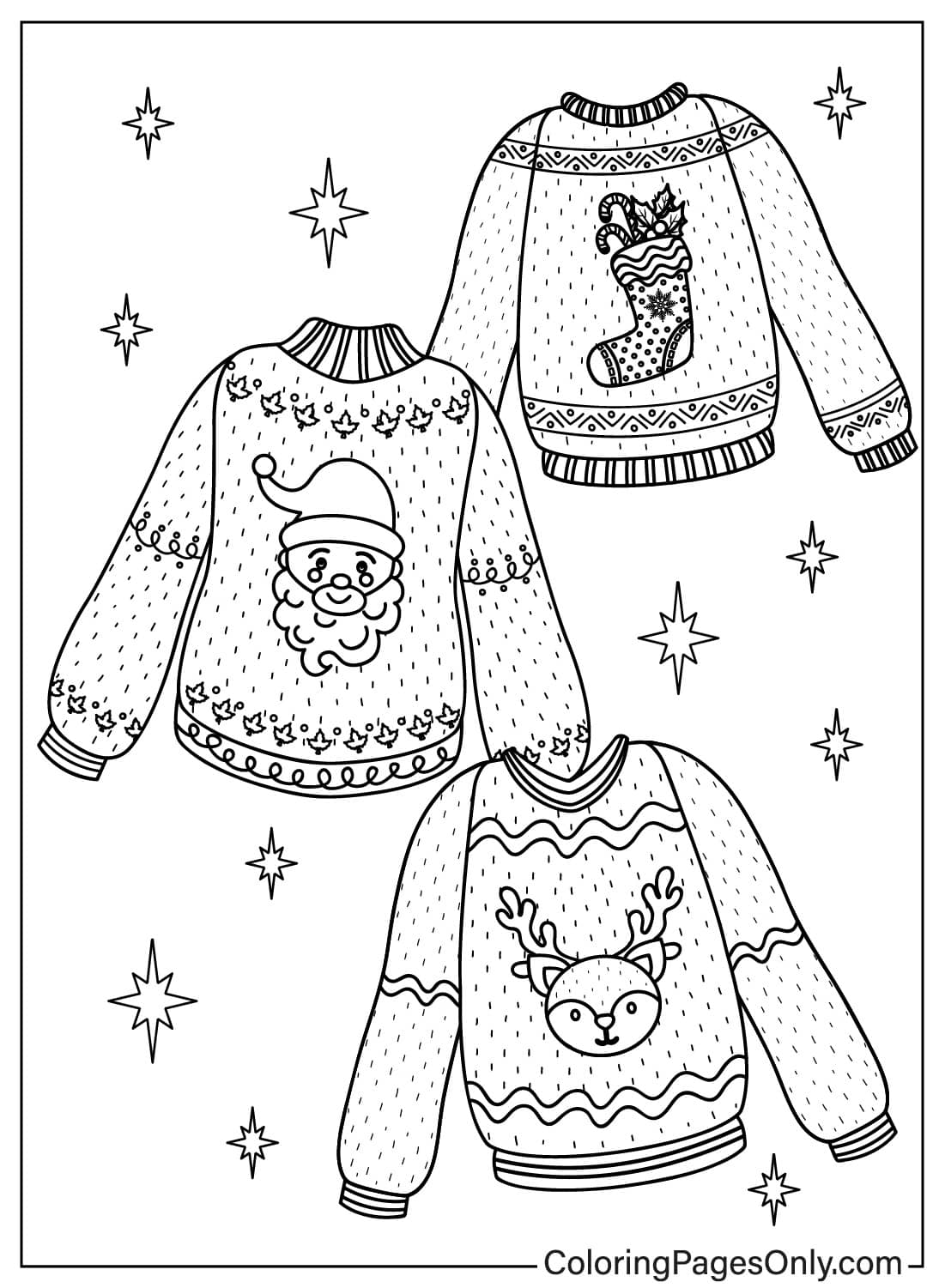
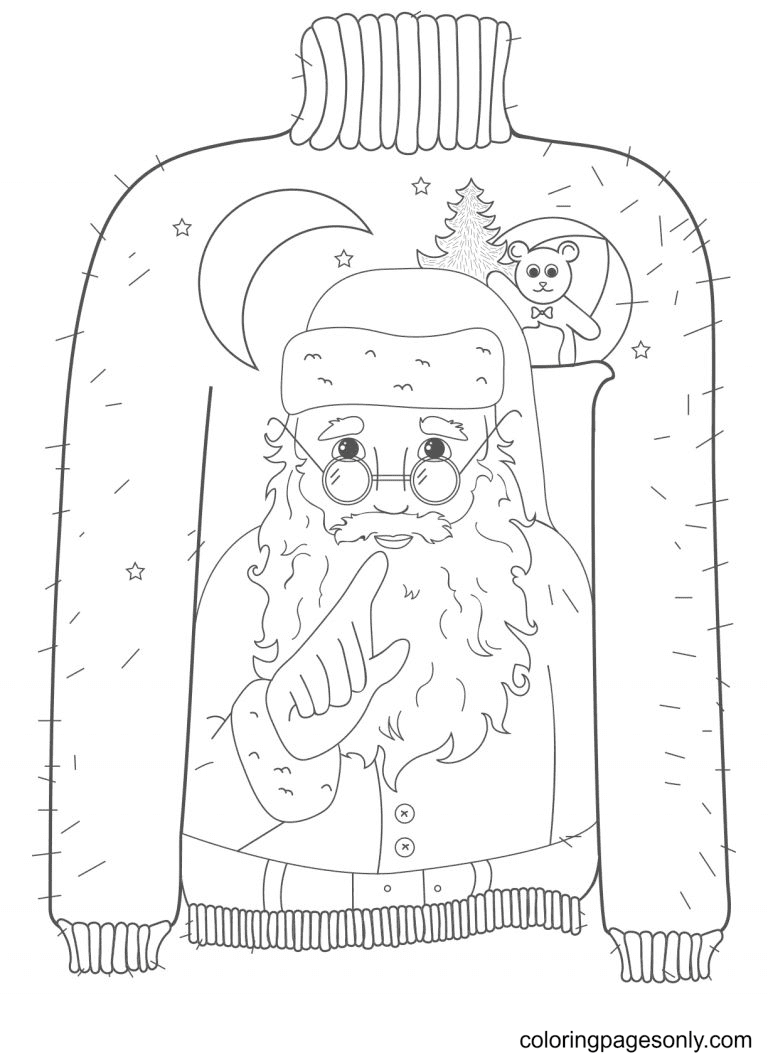
Nine pages center on Santa, his reindeer, or both together, including a sleigh scene and a candy cane design. Color suggestion: Santa’s classic red and white suit gives a strong anchor color for the whole page, so build the rest of the sweater’s palette around complementary greens and golds rather than competing reds.
What Christmas Sweater Coloring Pages Do
A close look at pattern repetition. Because knit sweater designs rely on repeating motifs, coloring these pages gives kids practice noticing and continuing a pattern, a different skill than coloring a single large picture.
Fine motor practice with small, dense details. The American Academy of Pediatrics identifies fine motor skill development as a core benefit of structured coloring for children ages 2 through 7, and the small repeated icons in an all-over sweater pattern give more precise practice than a page with only a few large shapes.
A natural design exercise. Because several pages in this set use a fairly plain sweater outline, kids can practice planning a color scheme, deciding on a base color and one or two accents, before starting to color, which is a useful habit for more complex pages later on.
A calm, familiar holiday activity. Research published in the Art Therapy Journal in 2005 found that structured coloring sessions were associated with a measurable reduction in reported anxiety. A cozy, low-stakes subject like a sweater pattern makes a good wind-down activity during a busy holiday season.
How to Color Christmas Sweater Pages Well
- Sweater base: Use Crayola Scarlet, Forest Green, or Midnight Blue as a main body color, since these read as classic knitwear tones rather than bright, flat colors.
- Knit texture: Add thin Crayola White or Cream lines along ribbed cuffs and hems to suggest the ridged texture of real knitting.
- Snowflakes and stars: Color these small repeated icons in Crayola White or Sky Blue so they stand out clearly against a darker sweater body.
- Gingerbread and candy motifs: Use Crayola Sepia for gingerbread shapes and Crayola Scarlet with white accents for candy canes, keeping the colors consistent with the real treats they represent.
- Santa and reindeer sections: Reserve Crayola Scarlet for Santa’s suit and Crayola Sepia or Tan for reindeer, so these two recurring characters stay easy to tell apart across different pages.
- Background scenes: On pages with a small scene worked into the sweater, use a simpler, more muted palette than the sweater pattern itself so the busiest part of the page stays the main knitwear design.
5 Creative Craft Ideas With Christmas Sweater Coloring Pages
1. Holiday Card Front
Color one of the sweater pages, fold a piece of cardstock in half, and glue the colored page to the front to make a simple handmade Christmas card.
2. Ugly Sweater Bulletin Board
Color several of the themed pattern pages differently, cut them out, and pin them together on a bulletin board to build a colorful, mismatched “ugly sweater” display for a classroom or office.
3. Advent Countdown Set
Color one sweater page each day leading up to Christmas and pin them in a row, crossing off the days as December counts down toward the holiday.
4. Gift Tag Set
Color a few of the smaller motif pages, trim them down to gift-tag size, punch a hole in the corner, and thread ribbon through to make a set of handmade gift tags.
5. Pattern Design Practice
Color one of the plain classic sweater pages, then use it as a reference to sketch and color an entirely new sweater pattern of your own on blank paper, using the same base color and accent approach.
Frequently Asked Questions
What are Christmas sweater coloring pages?
Free printable designs of holiday sweaters in character, classic pattern, themed motif, and Santa-and-reindeer styles. This collection has 60 pages available as PDF downloads or online coloring, with no account required.
Where does the ugly Christmas sweater tradition come from?
Hand-knit holiday sweaters date back to the 1950s, but the modern ugly sweater party tradition began in 2002 in Vancouver, Canada, and has since grown into National Ugly Christmas Sweater Day in mid-December.
When is National Ugly Christmas Sweater Day?
It is observed on the third Friday of December each year in the United States, though ugly sweater parties and events happen throughout the holiday season.
What kinds of patterns appear in this collection?
The set includes all-over classic knit patterns, single-motif designs like wreaths and gingerbread houses, character and scene sweaters, and pages centered on Santa and his reindeer.
Are these pages good for practicing pattern skills?
Yes. Because sweater designs rely on repeating shapes, these pages give kids practice noticing and continuing a pattern, which is a different skill from coloring a single large picture.
What age group are these pages best suited for?
The simpler classic sweater outlines suit younger children, while the more detailed themed motif and scene pages work better for children five and up who can manage smaller color areas.
Can these pages be used for a classroom holiday activity?
Yes. The variety of styles makes it easy to hand out different pages to a group, and several craft ideas, like the bulletin board display or gift tag set, work well for a shared classroom project.
Do the designs need a real sweater to compare against?
No. While real knitwear patterns inspire the pages, no sewing or knitting knowledge is needed. They are printable line-art designs meant for coloring.
Start Coloring
Download any page by clicking the design. No account, email, or payment is required. Pages print directly from the browser at full resolution or open in the online coloring tool for screen use. Share finished pages on Facebook or Pinterest using the share buttons at the top of each design page.