
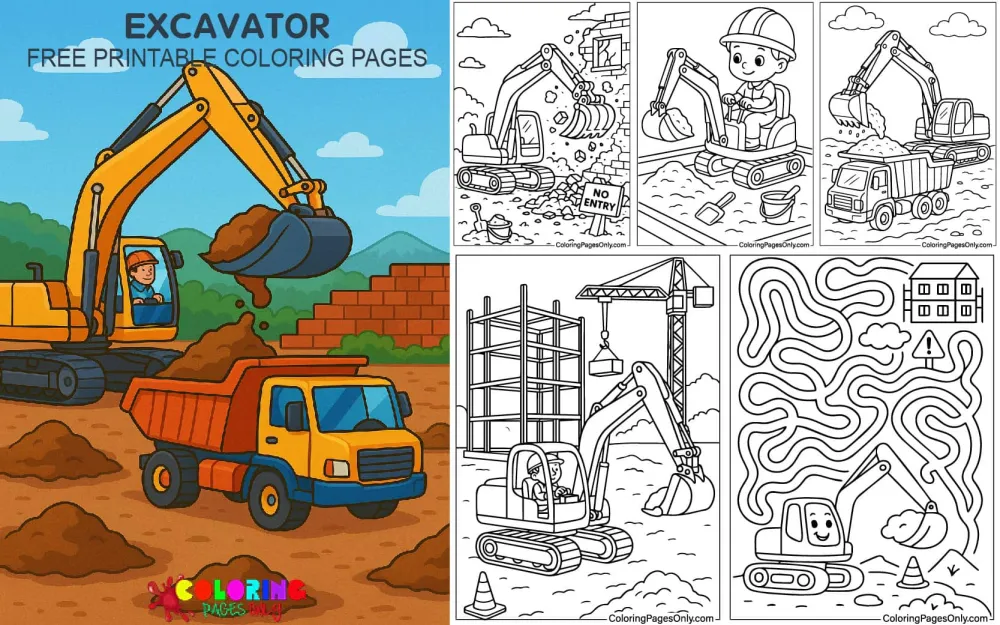
Free excavator coloring pages: 32 printable PDF designs featuring diggers at work, construction sites, and job-site scenes with dump trucks and cranes. Each page can be downloaded as a PDF to print or colored online in the browser.
The excavator’s ancestor is the steam shovel, patented by American engineer William Otis in 1835 to speed up railroad construction. Nearly fifty years later, in 1882, Sir W. G. Armstrong and Company built the first hydraulic excavator in England, work that eventually led to the diesel-and-hydraulic machines seen on job sites today. This set works for a toddler meeting a digger for the first time, an elementary classroom building a construction unit, and a parent looking for a screen-free activity that still feeds a vehicle obsession.
Real excavators are built from a handful of moving parts working together: a boom, an arm, a bucket, and a cab that rotates on a set of tracks. Coloring those parts as separate, clearly shaded pieces, rather than one flat machine-shaped block, is what makes a page read as a real digger rather than a toy outline.
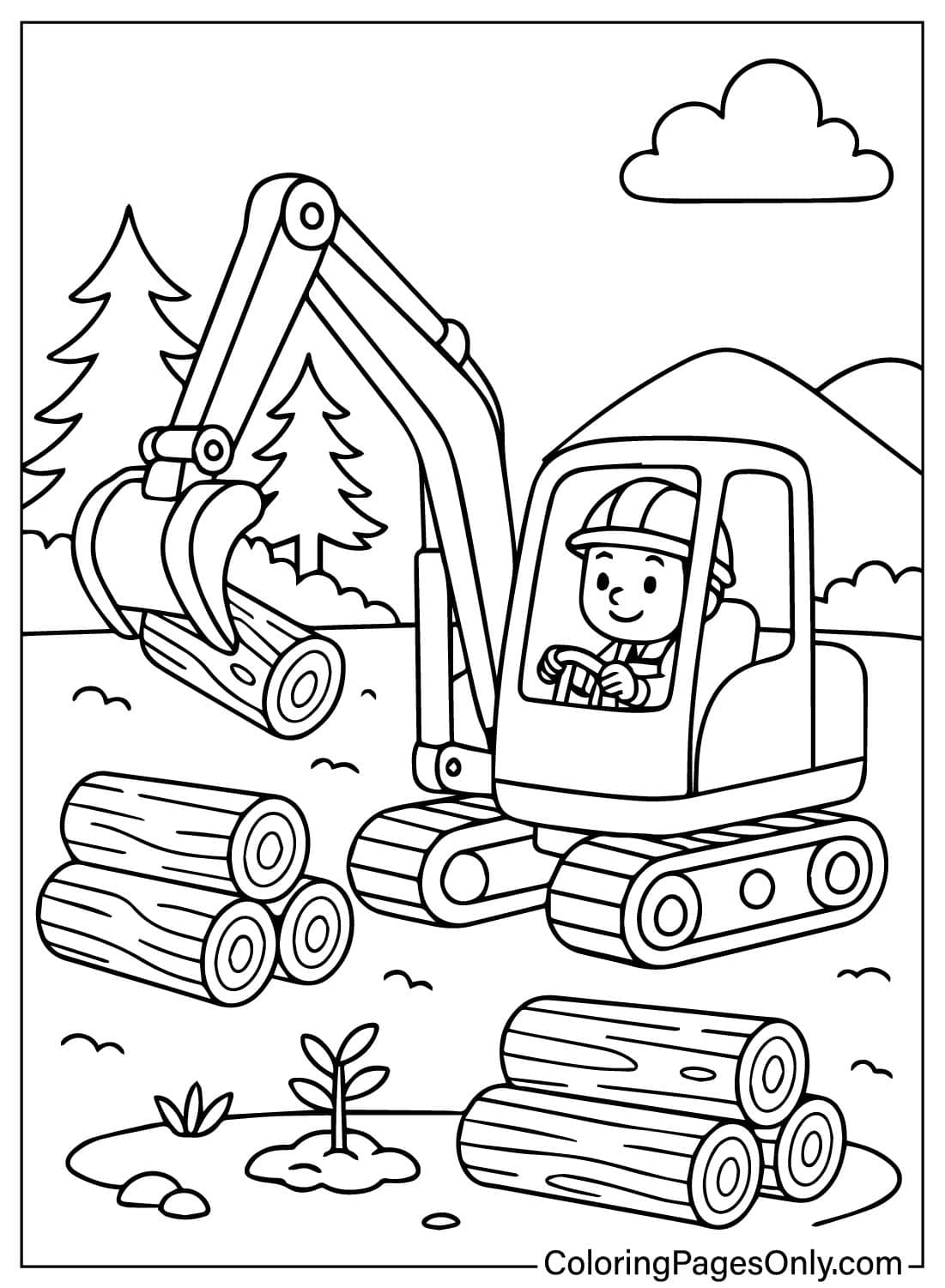
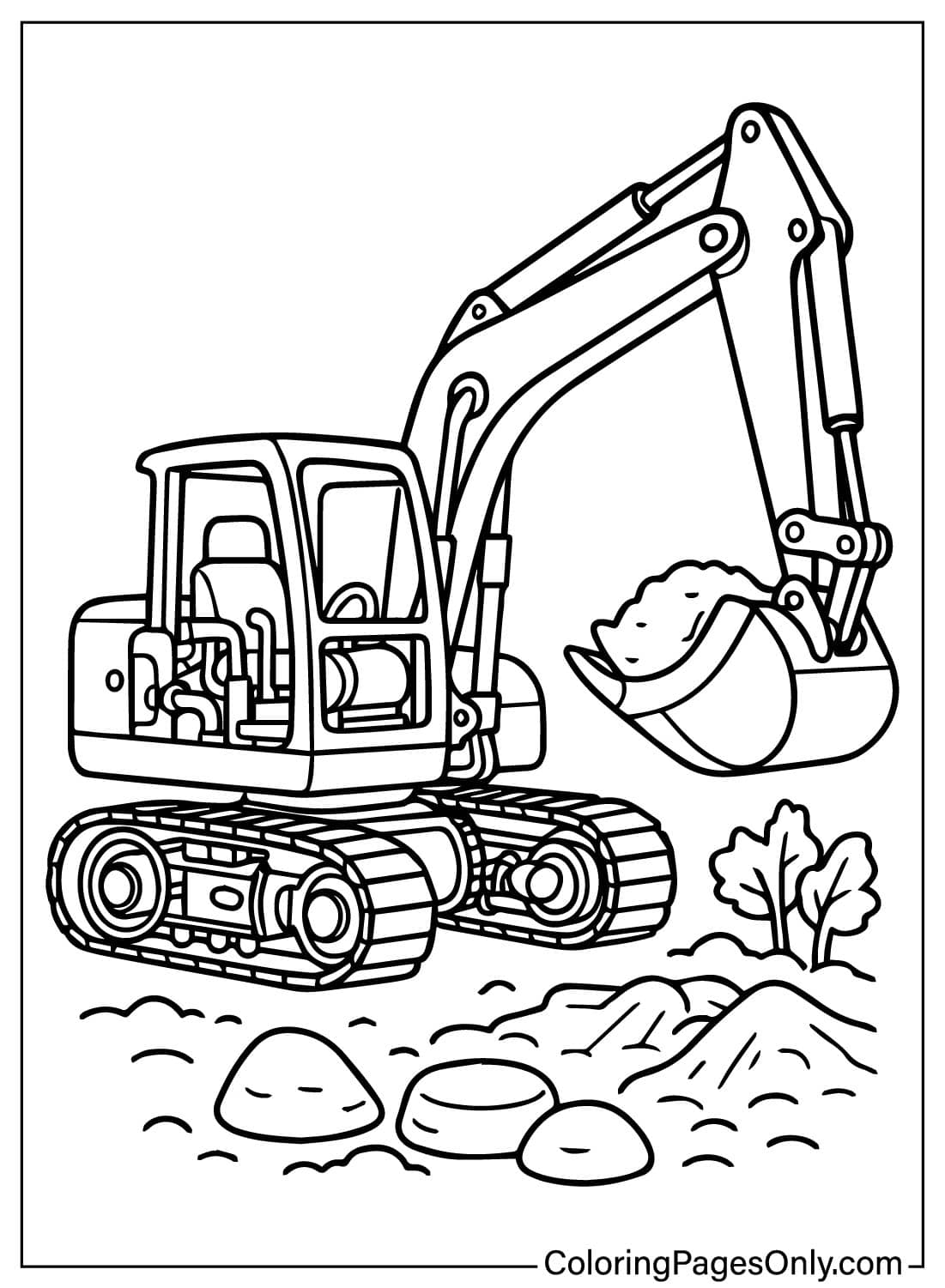
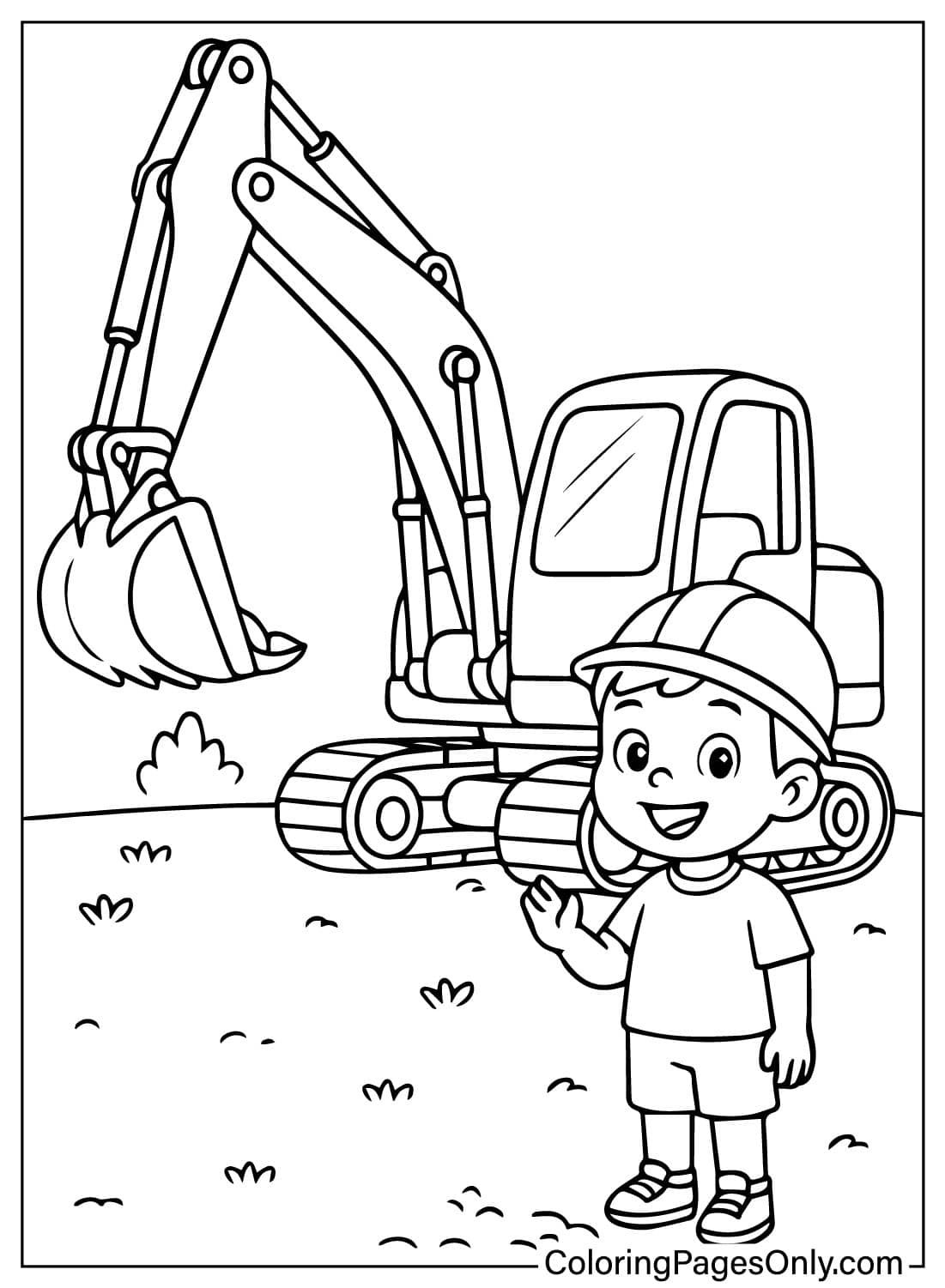
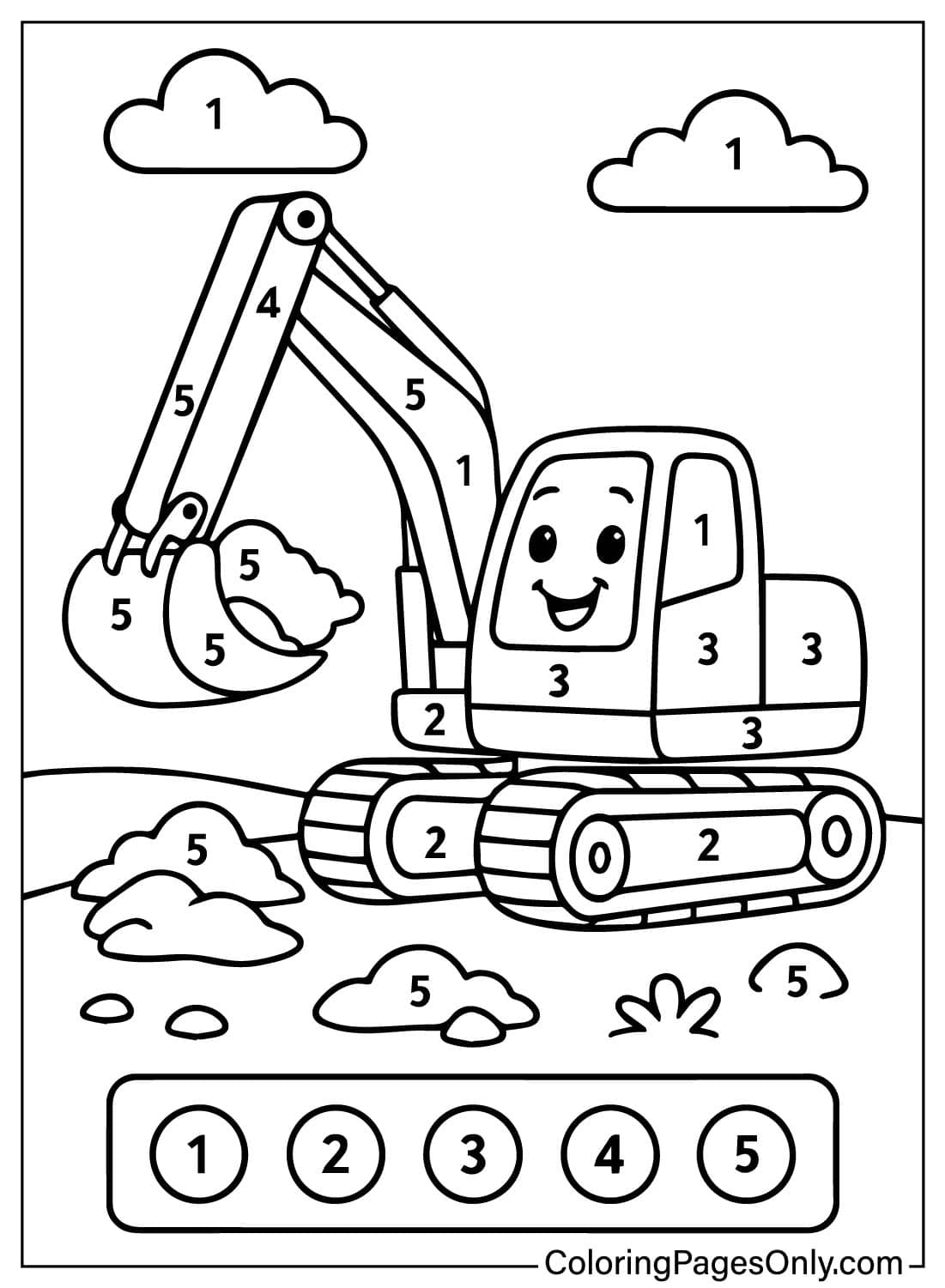
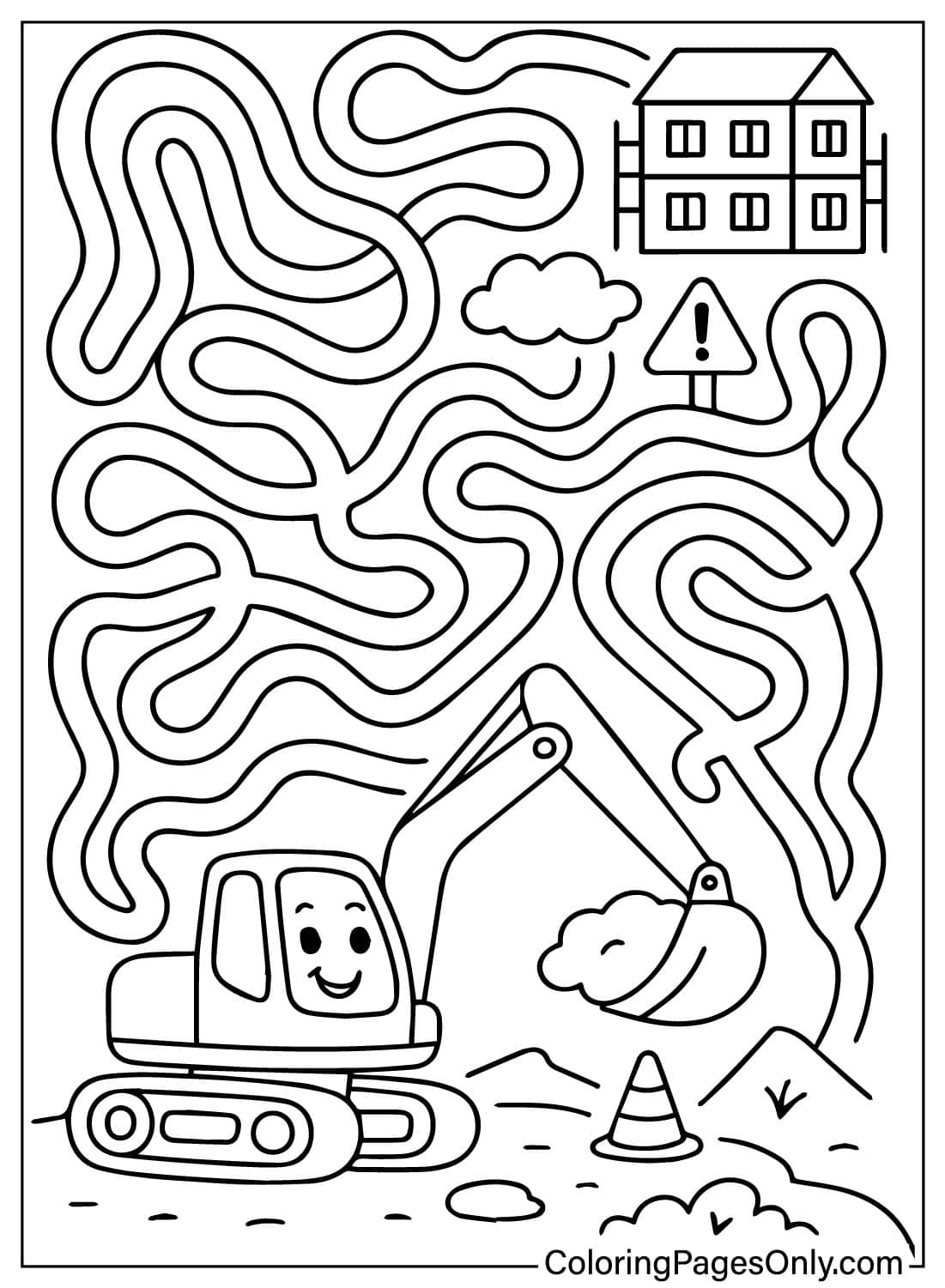
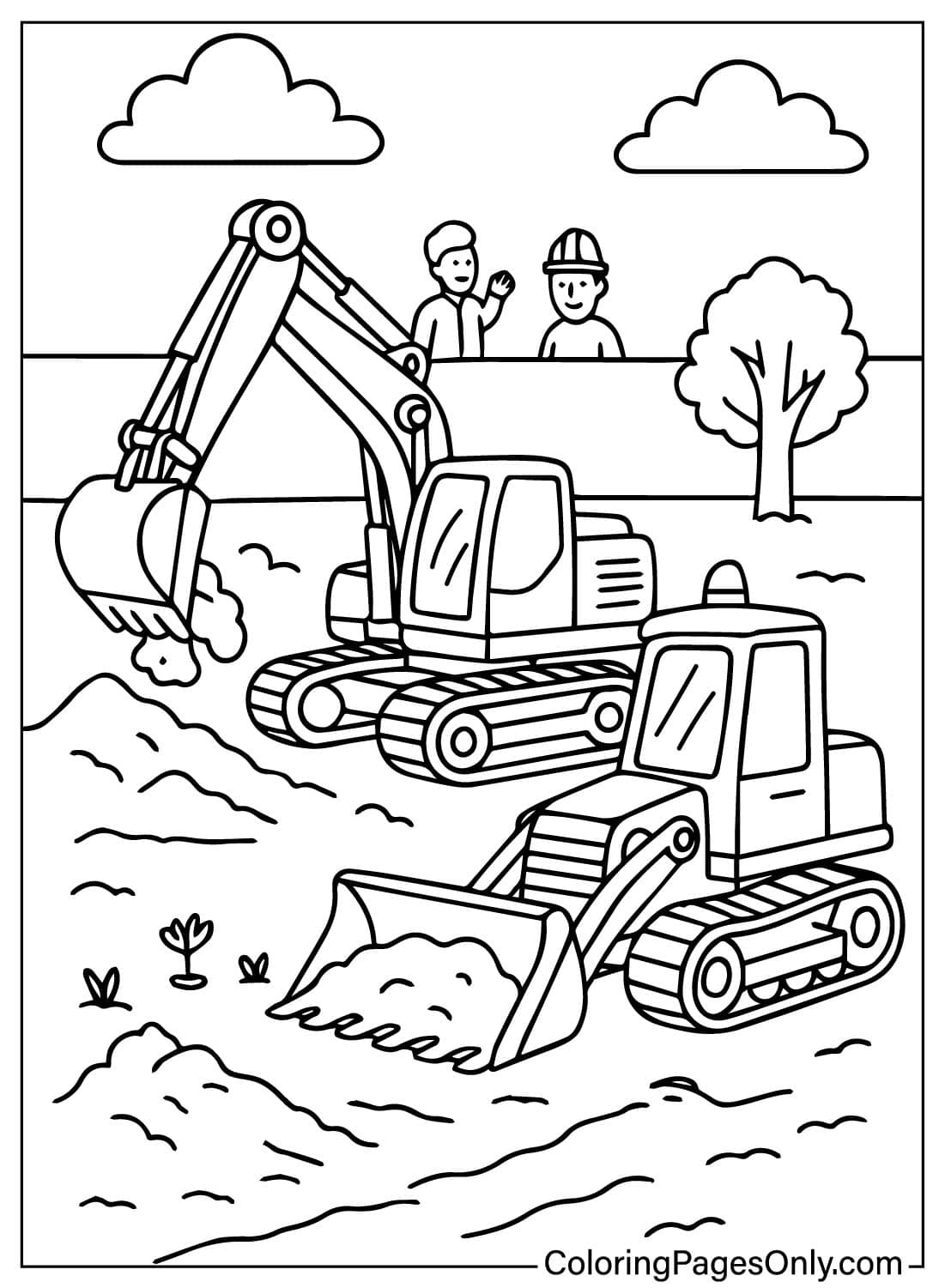
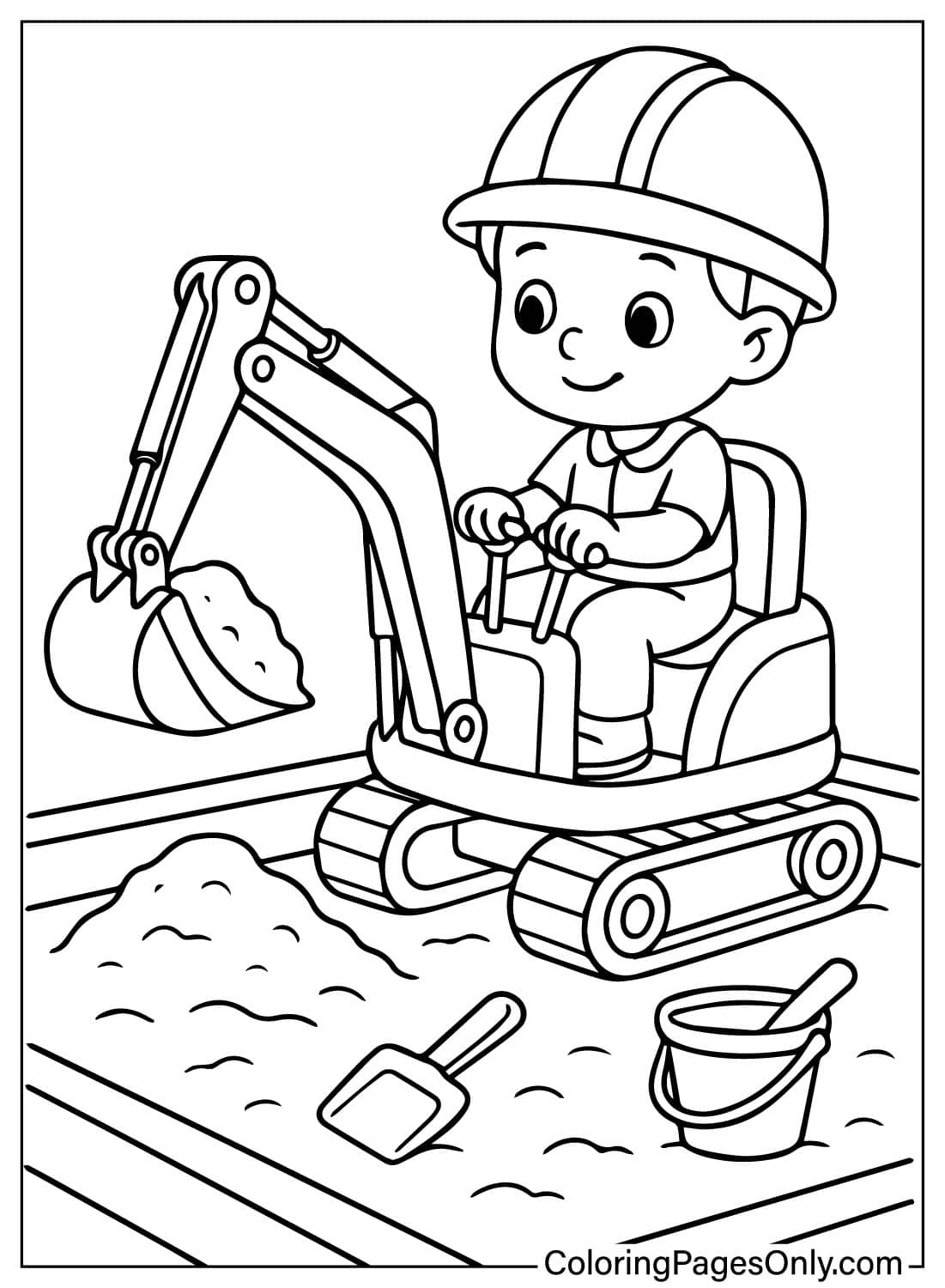
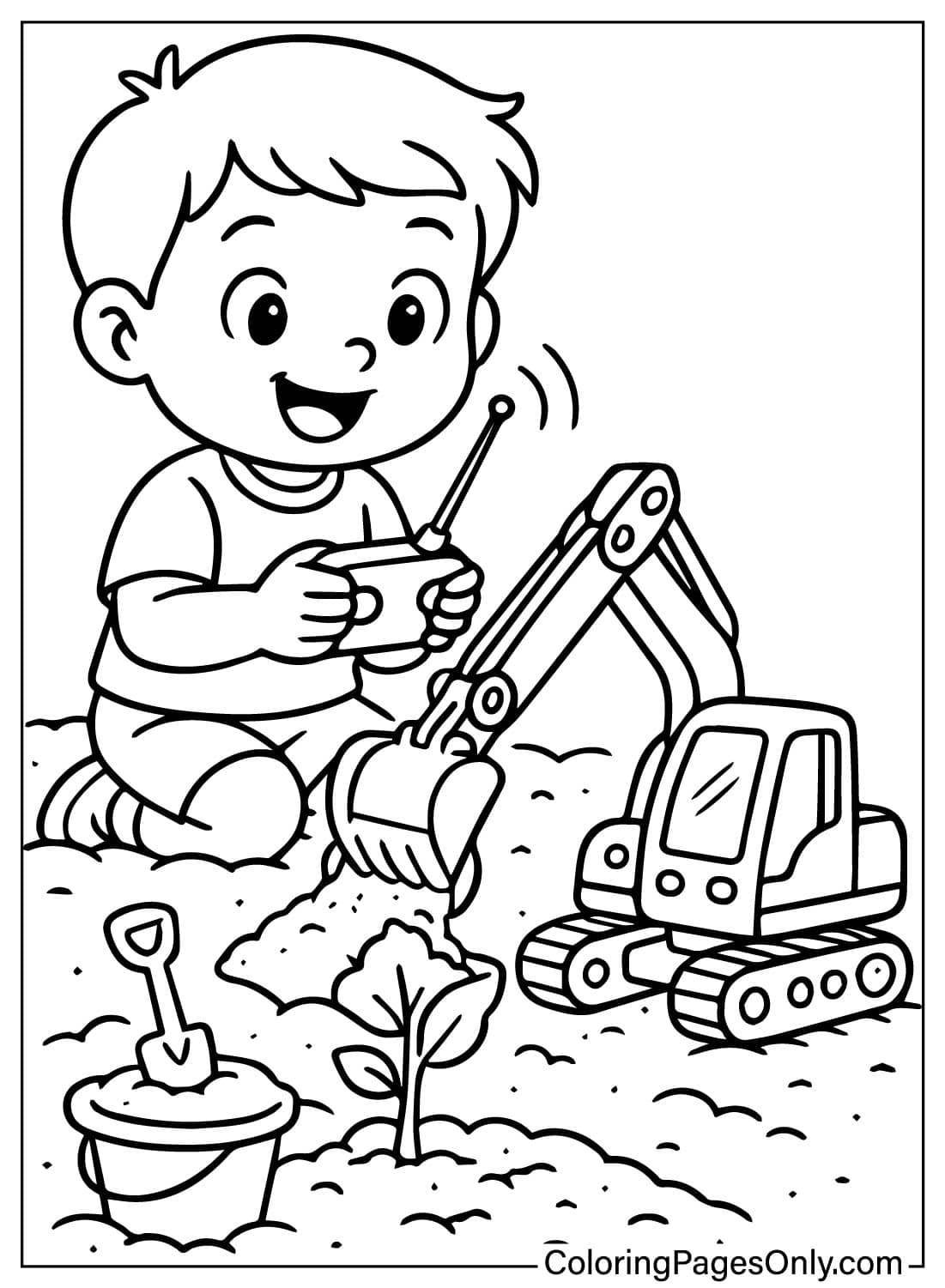
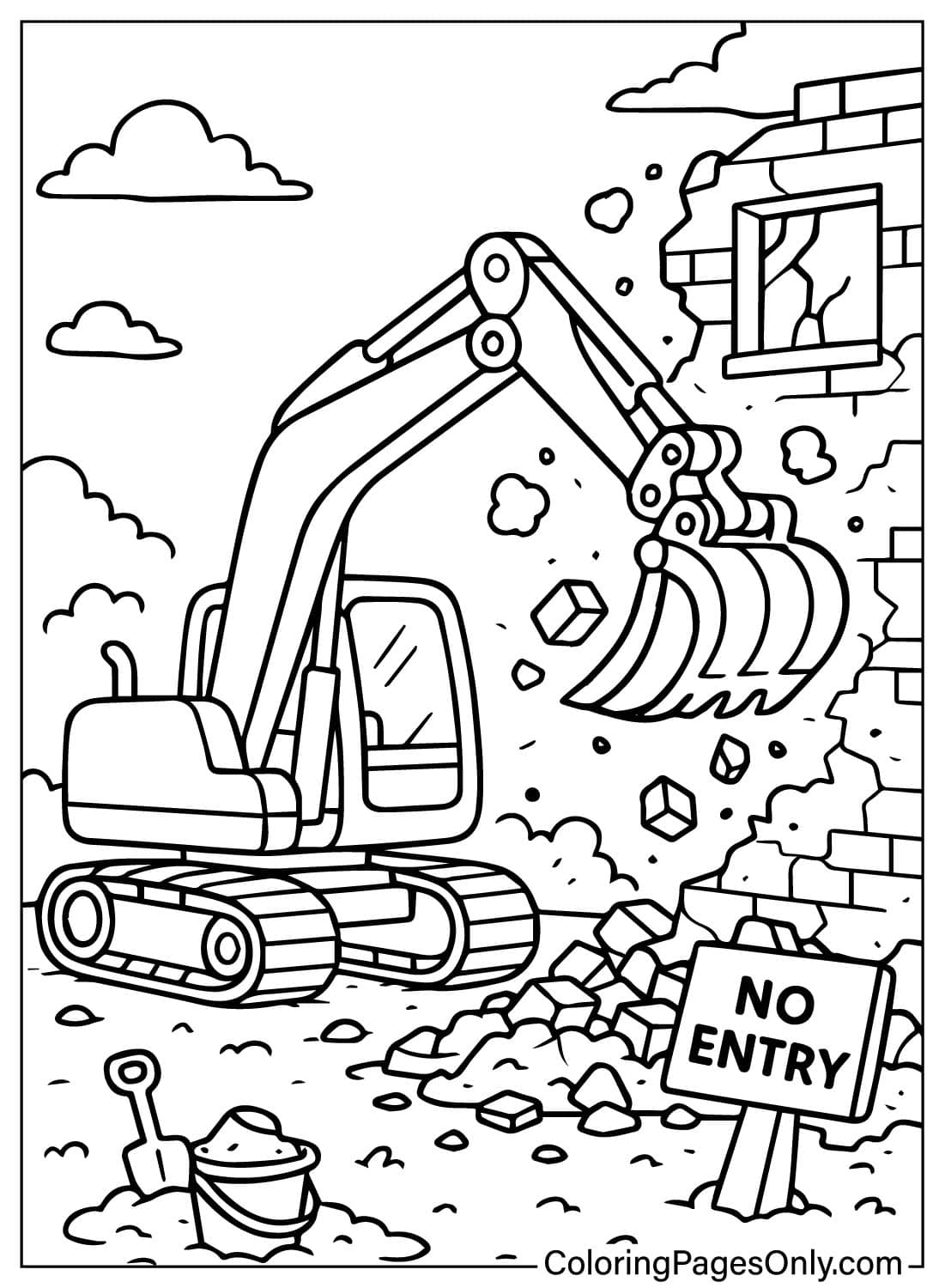
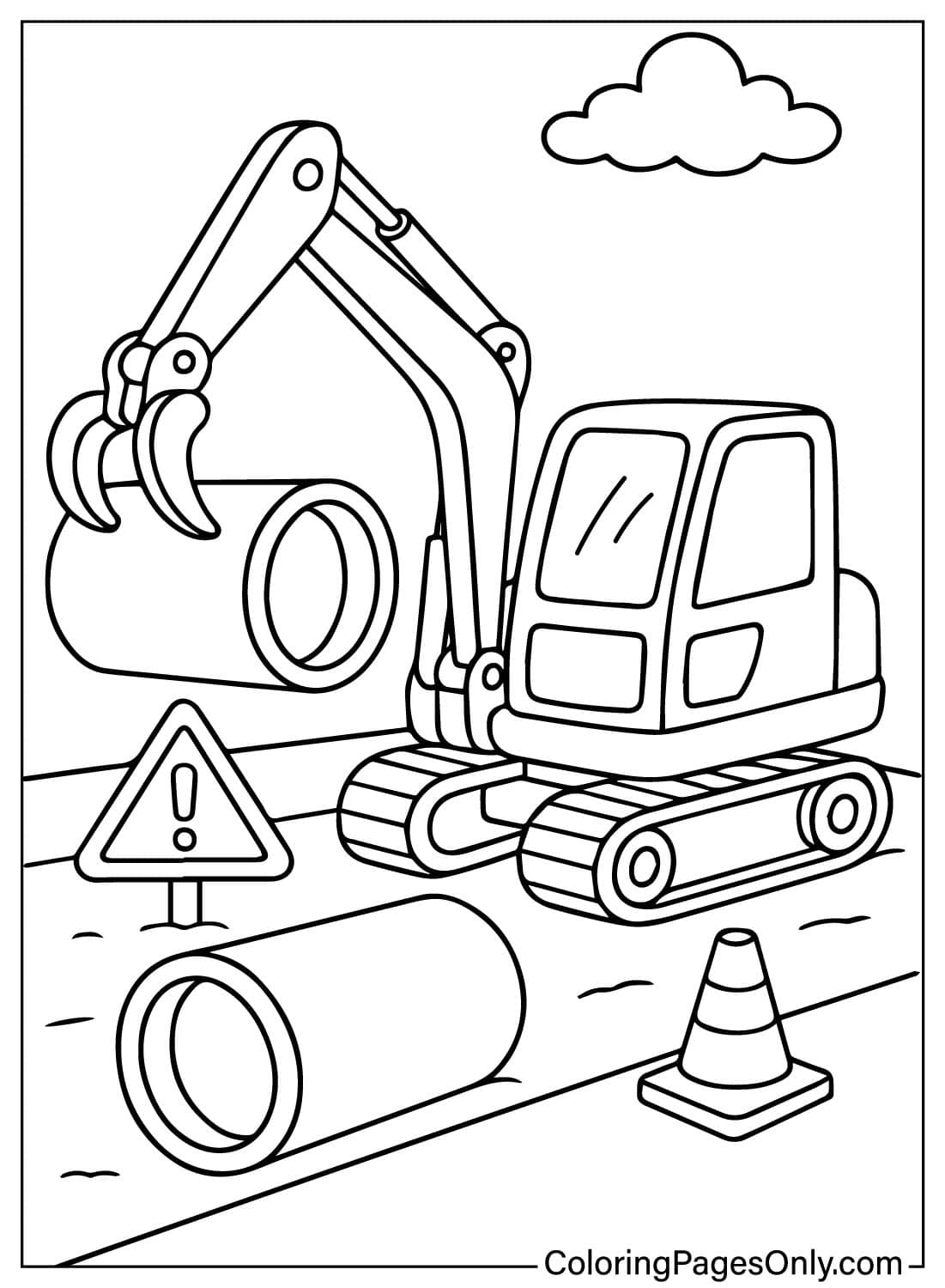
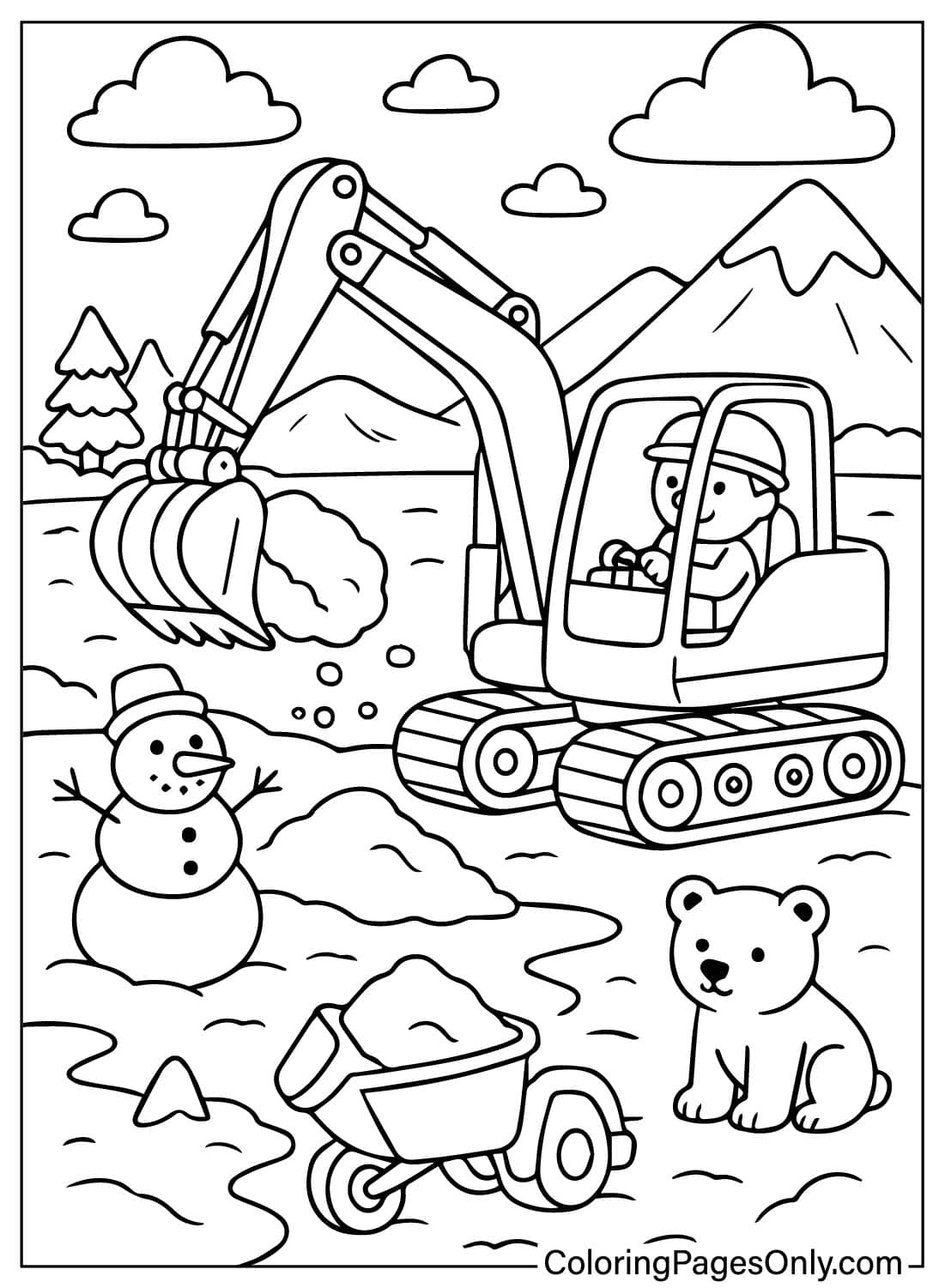
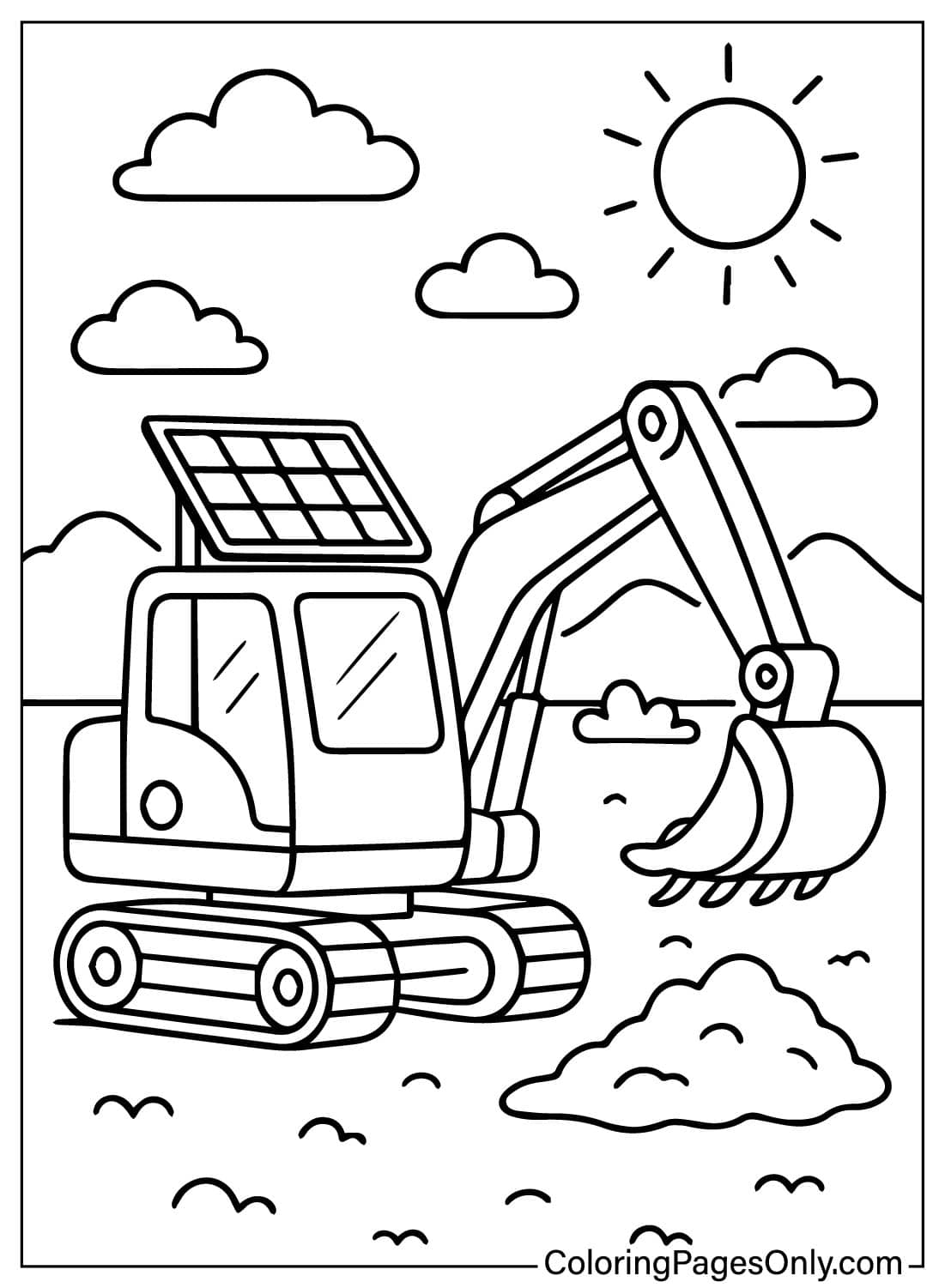
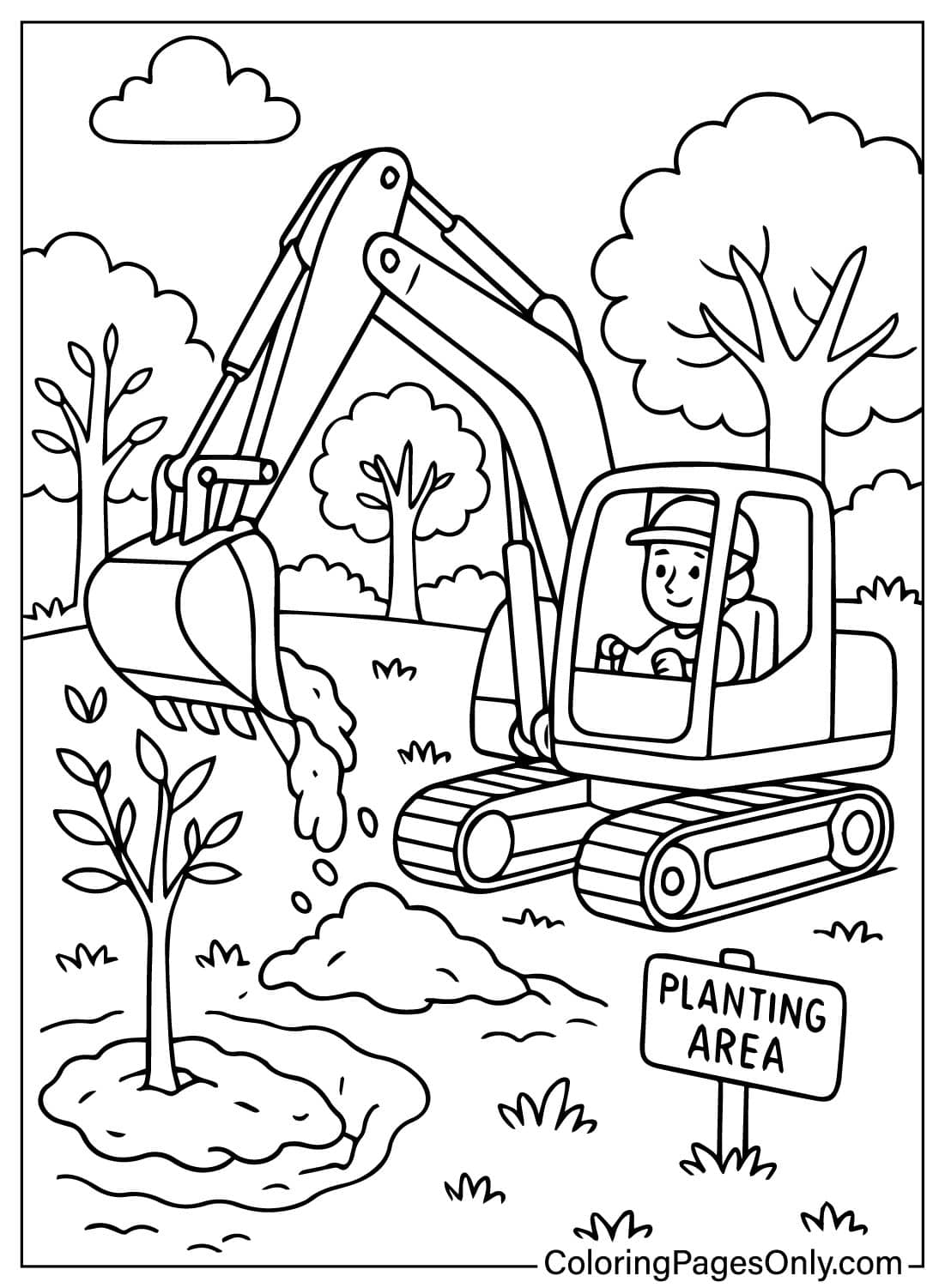
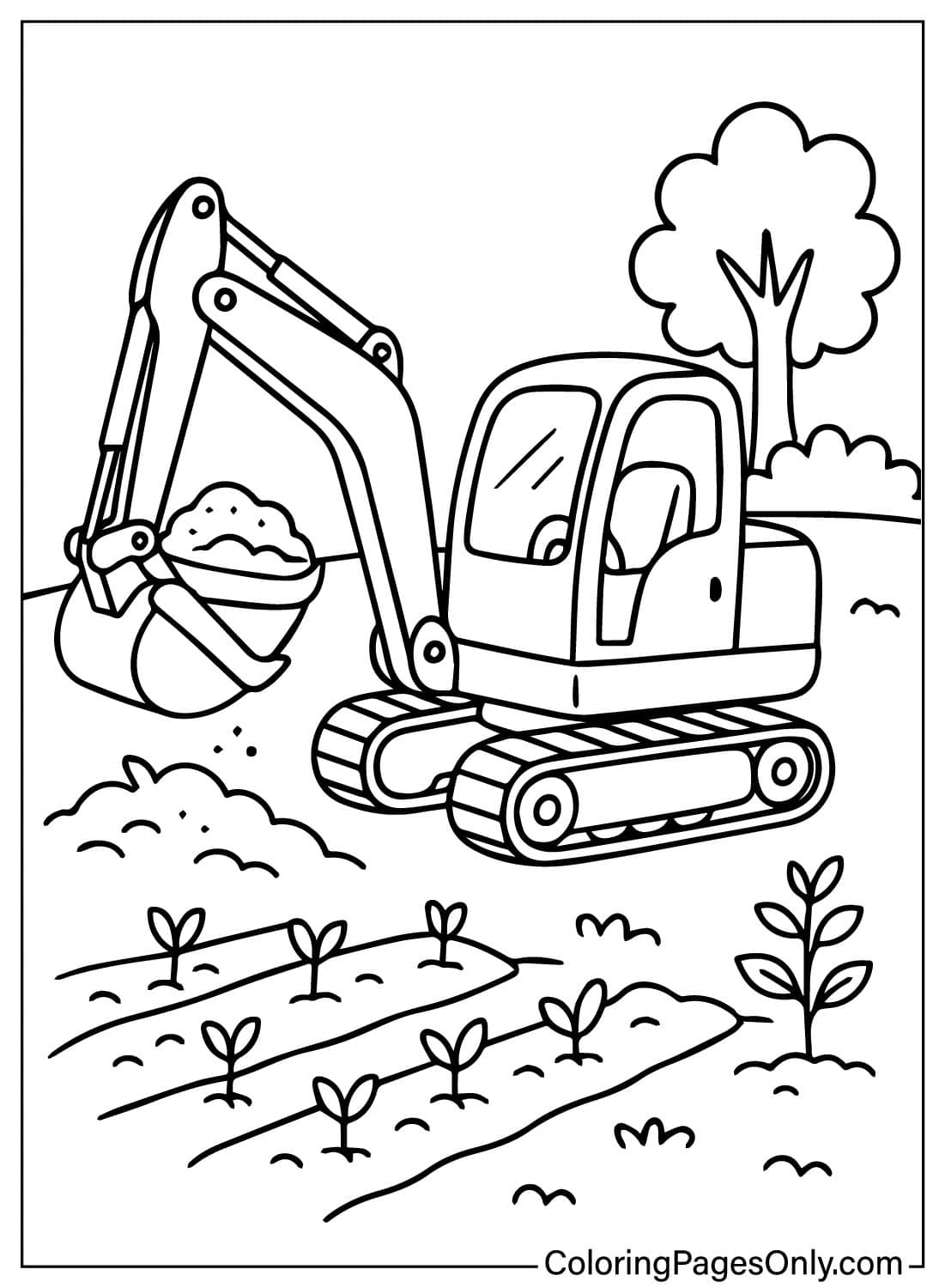
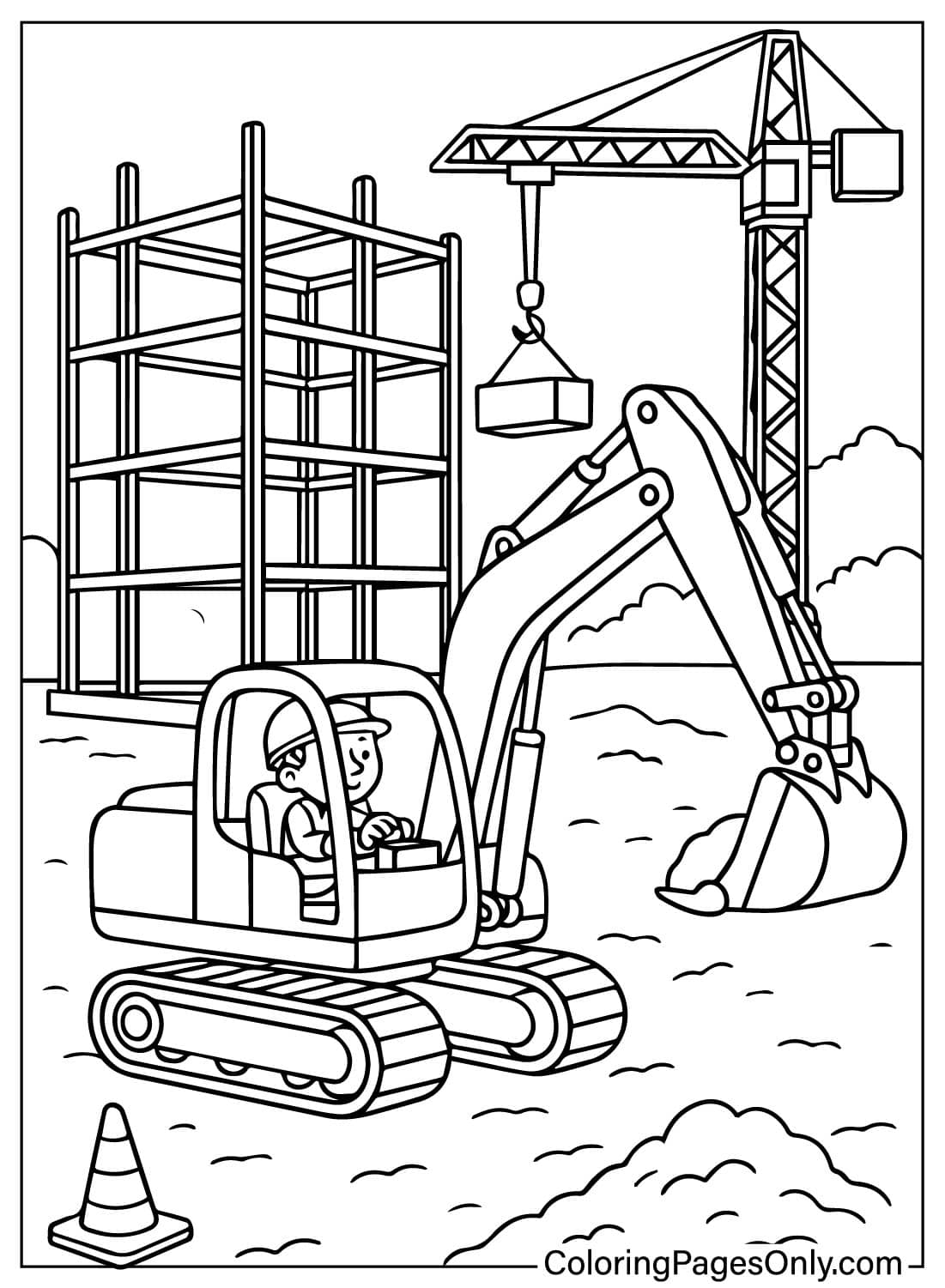
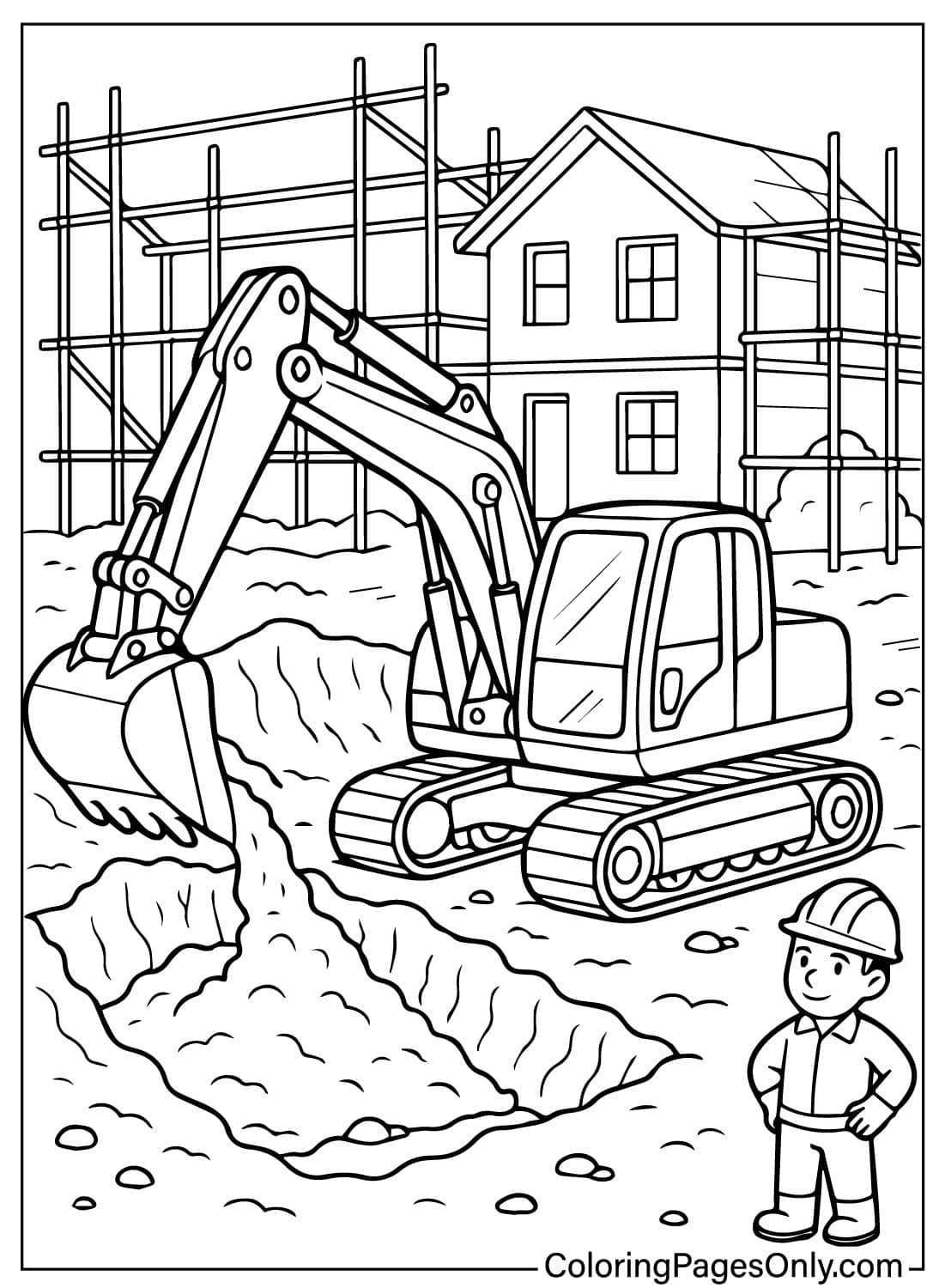
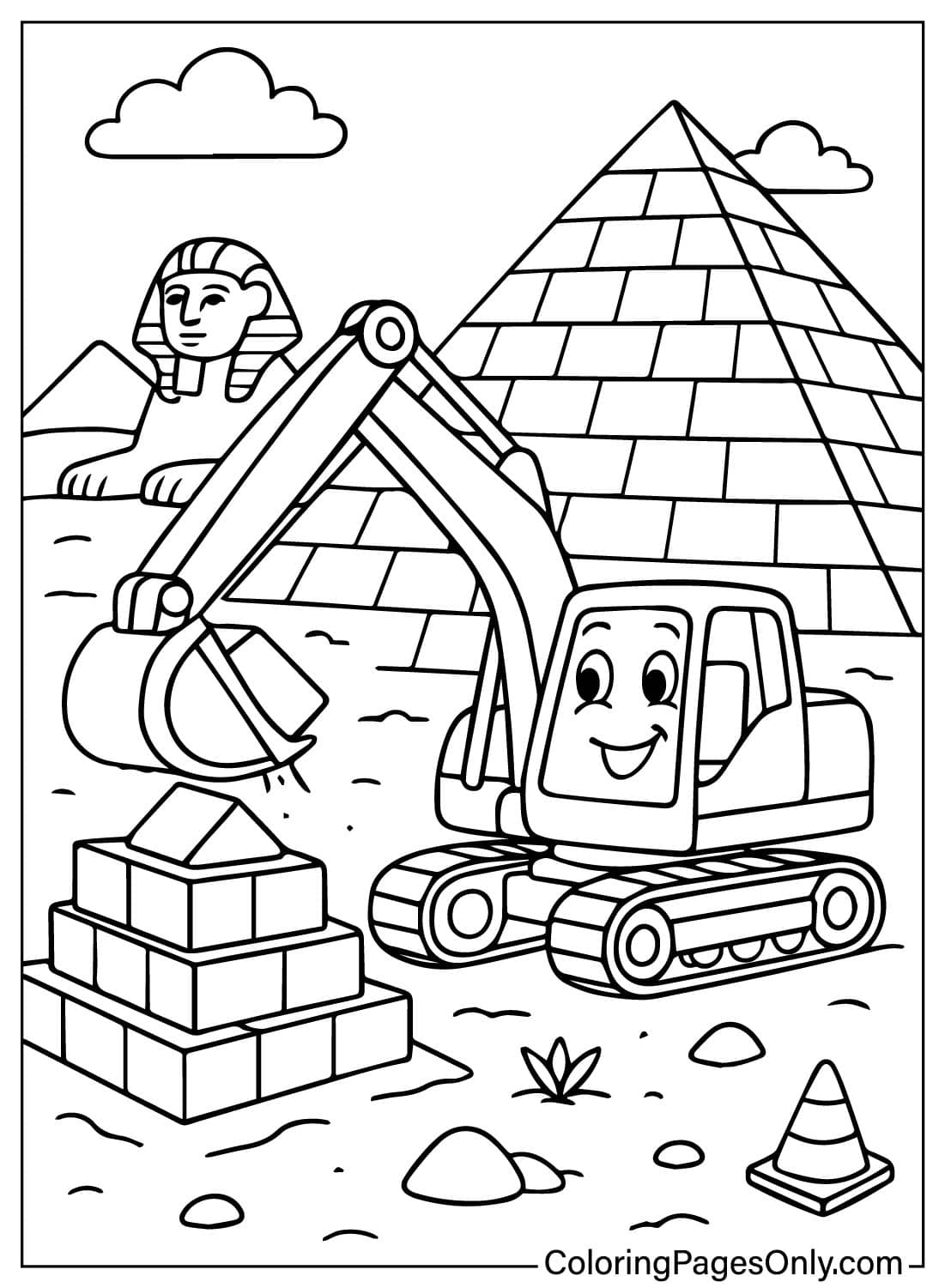
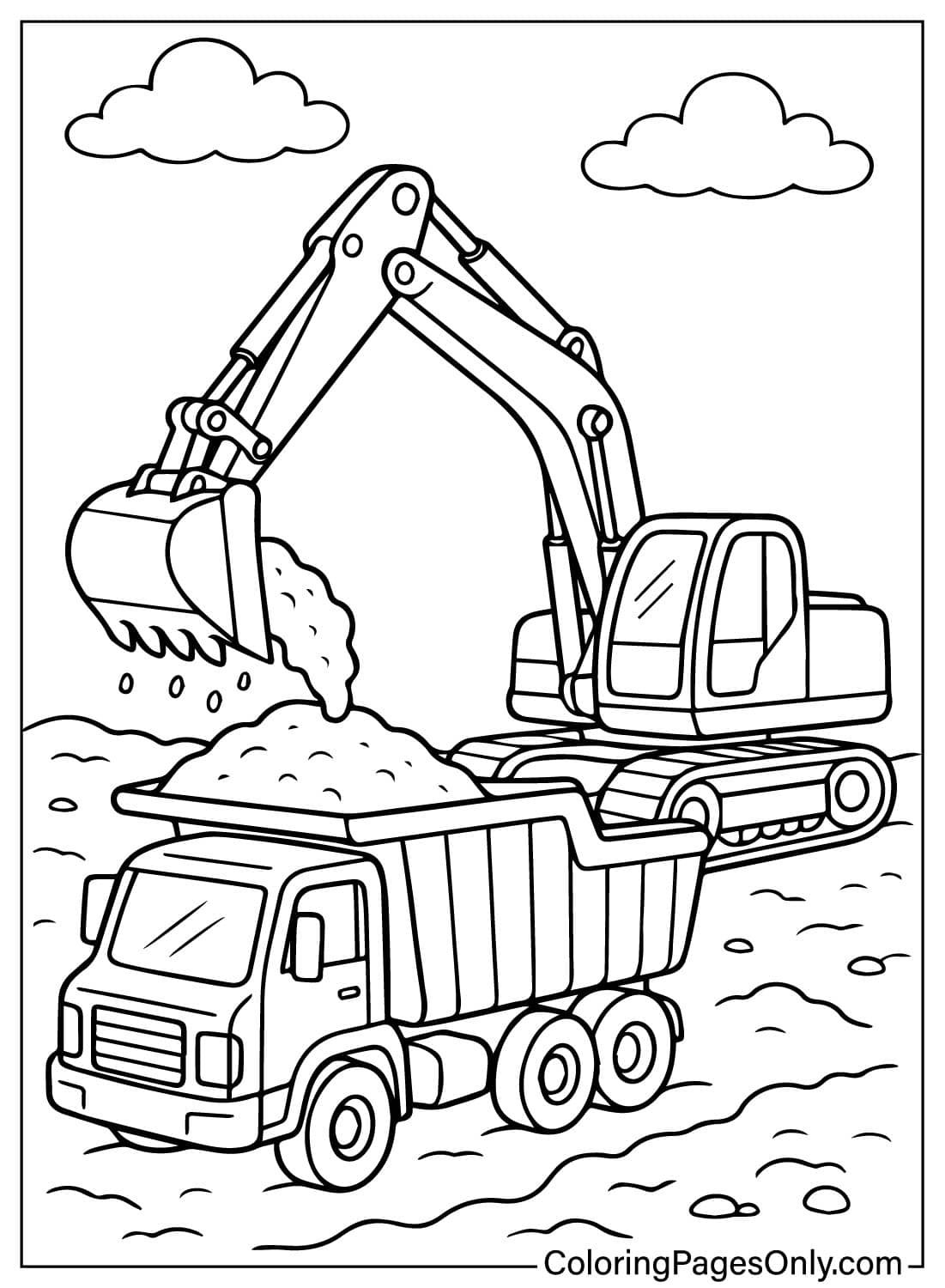
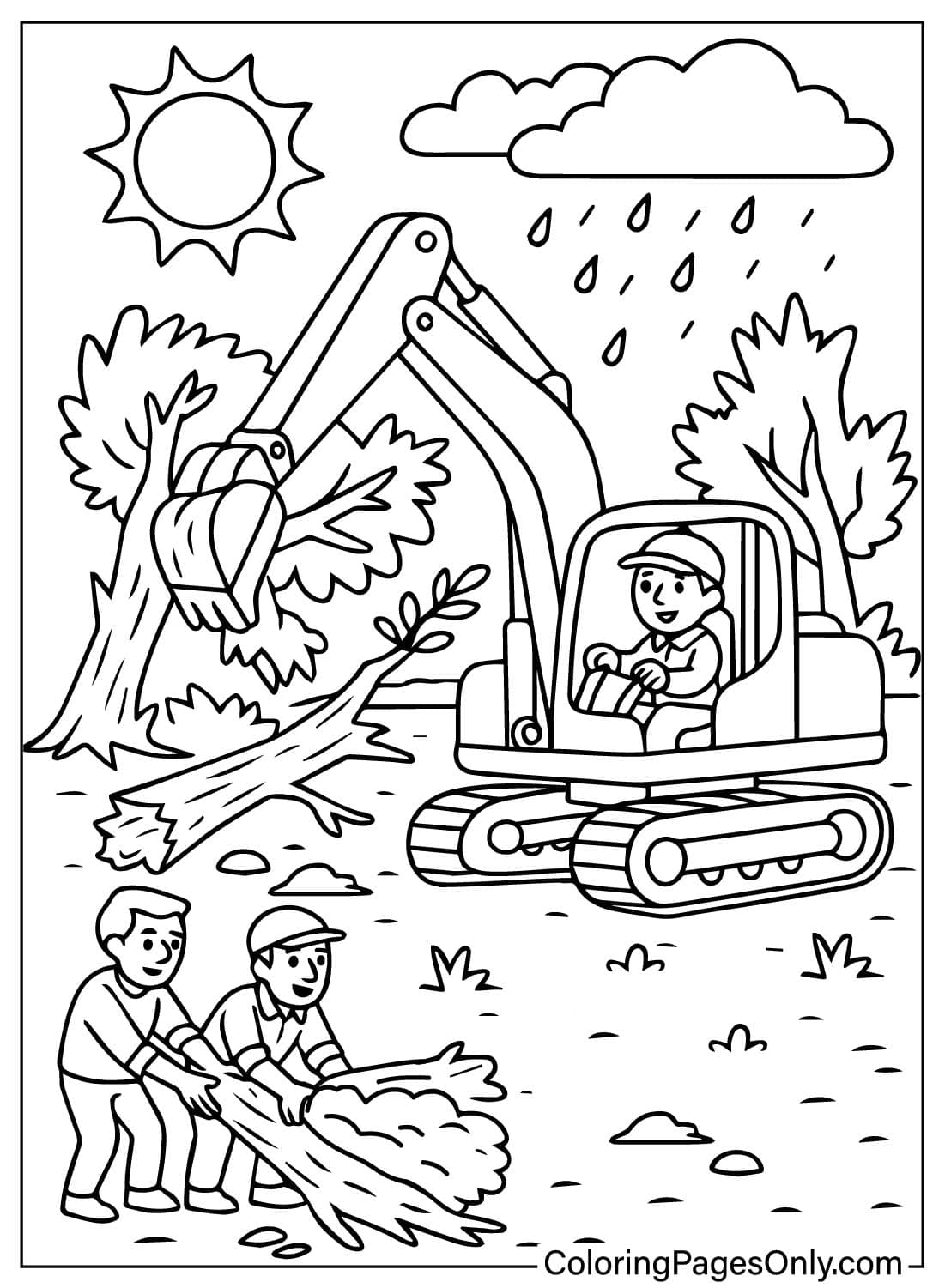
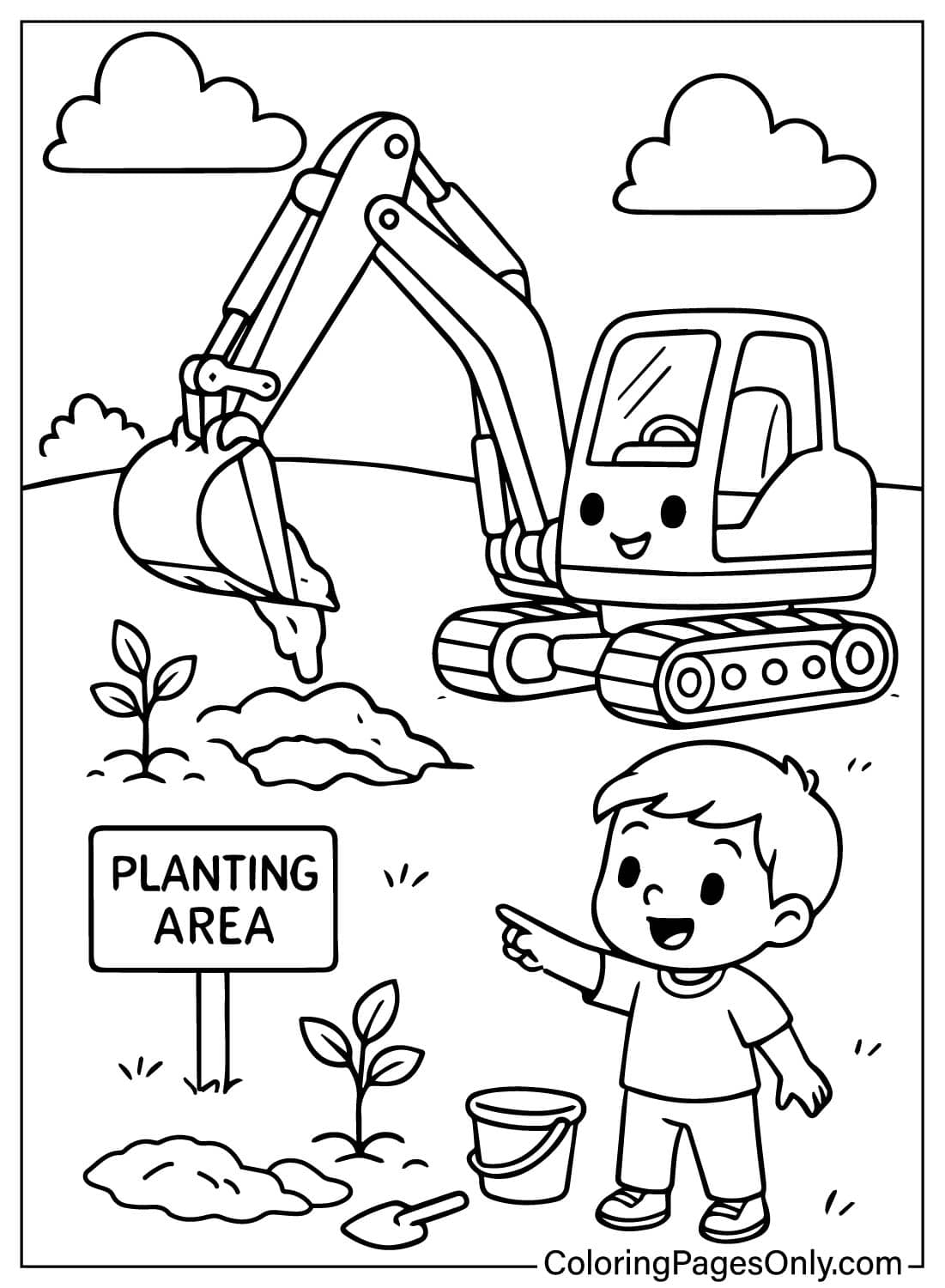
What Is Inside This Collection
The 32 pages fall into a few clear groups, built around solo excavator portraits, the machine at work, the settings it appears in, and a few pages made for younger colorers.
Classic Excavator Portraits
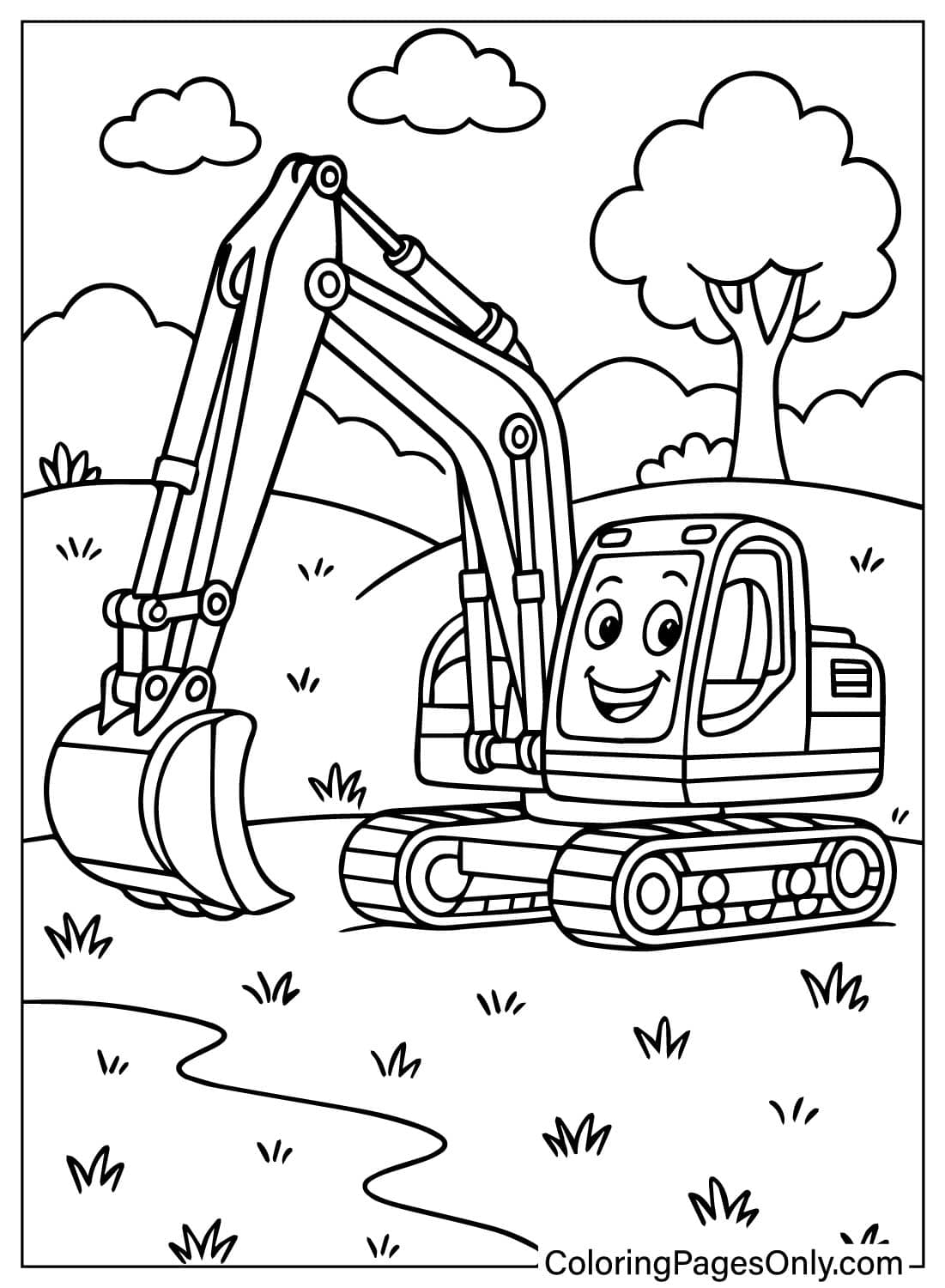
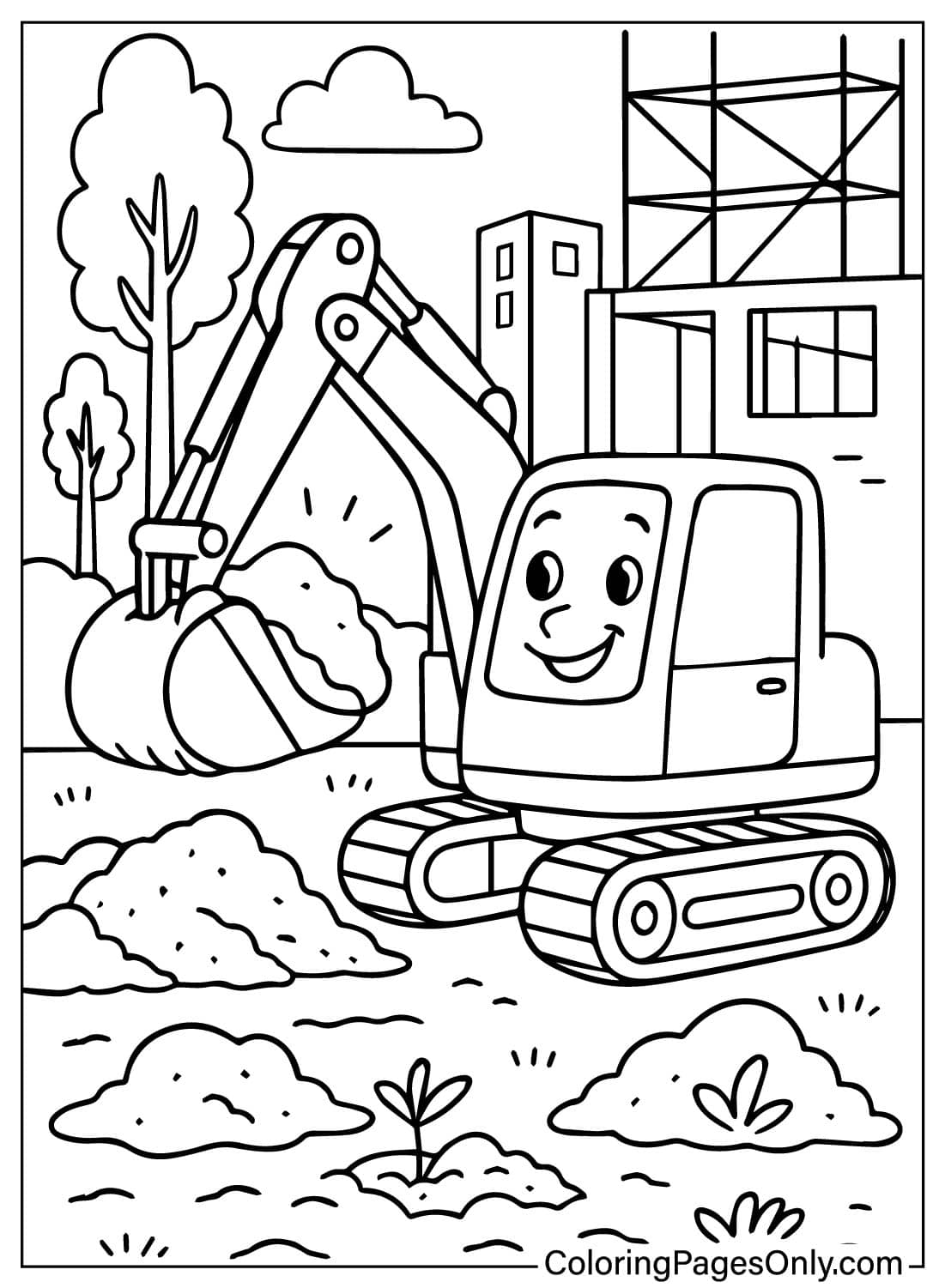
The largest share of the set, 10 pages, is made up of solo excavator portraits without a background scene: “Realistic Excavator,” “Retro Excavator,” “Simple Excavator Design,” “Excavator Outline,” and several smiling, cartoon-style versions for younger colorers. These pages put the machine itself, not the job site, at the center of the page. A base coat of Yellow or Orange with Black tracks covers most of these designs.
Excavators at Work
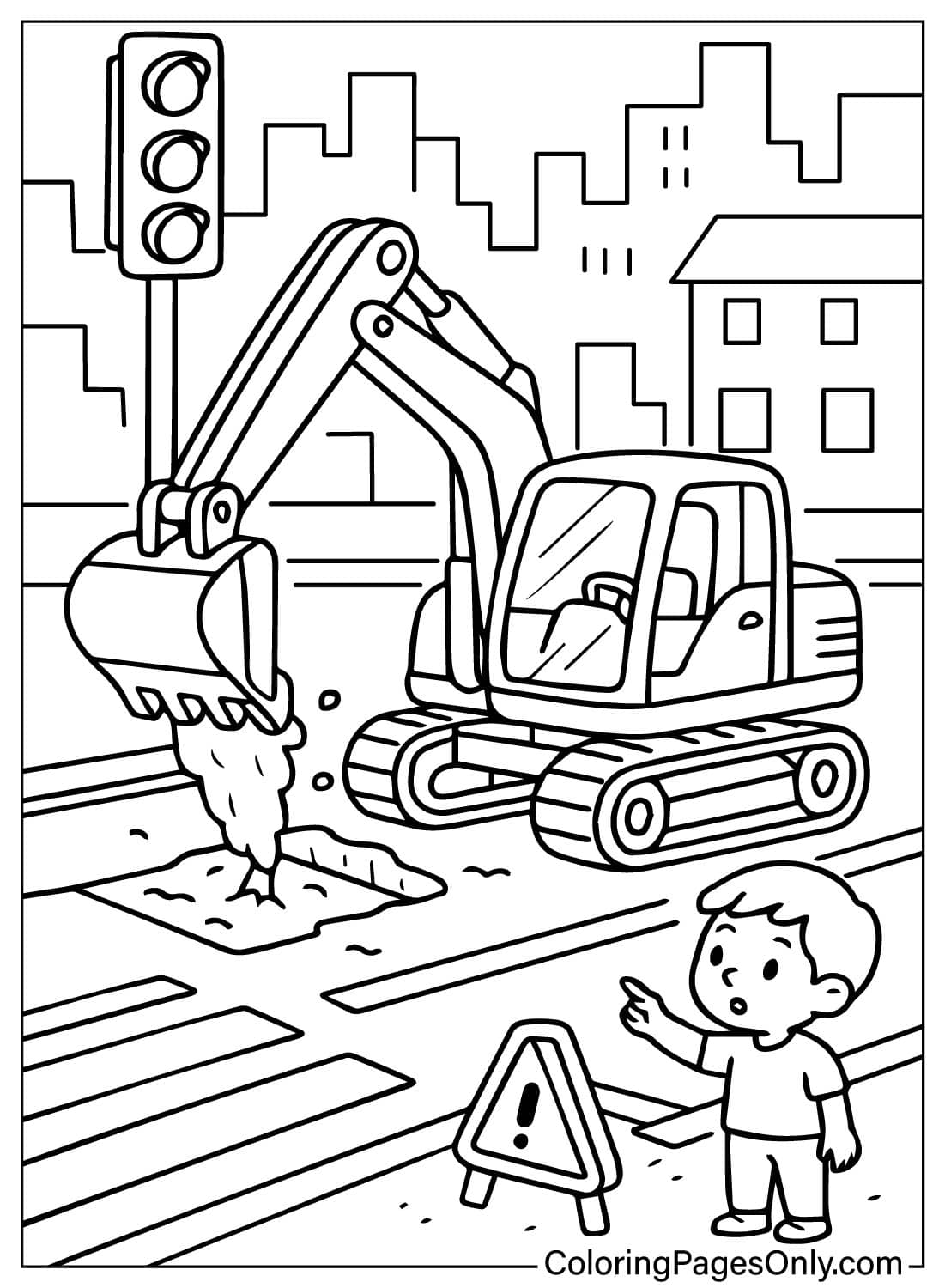
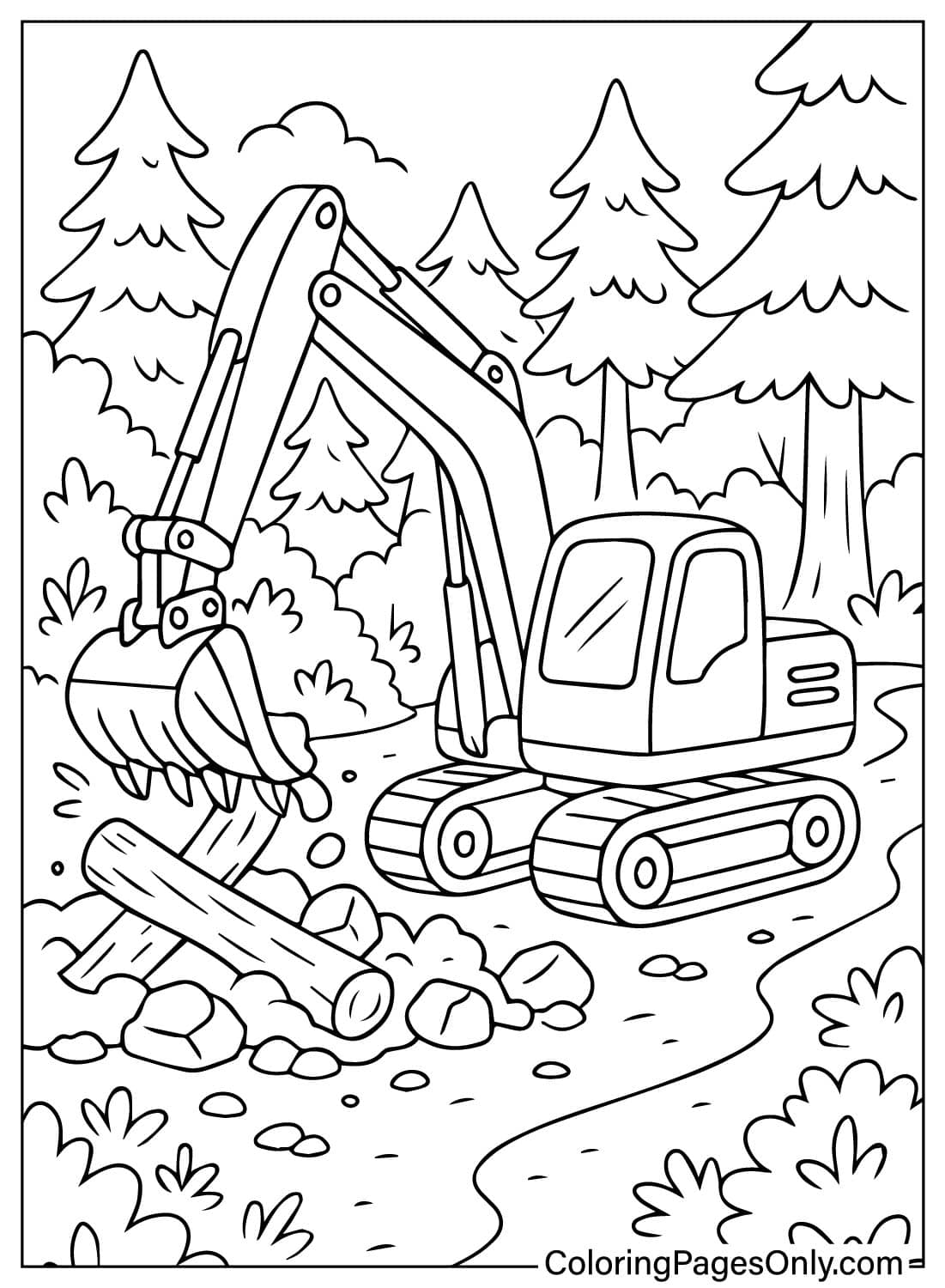
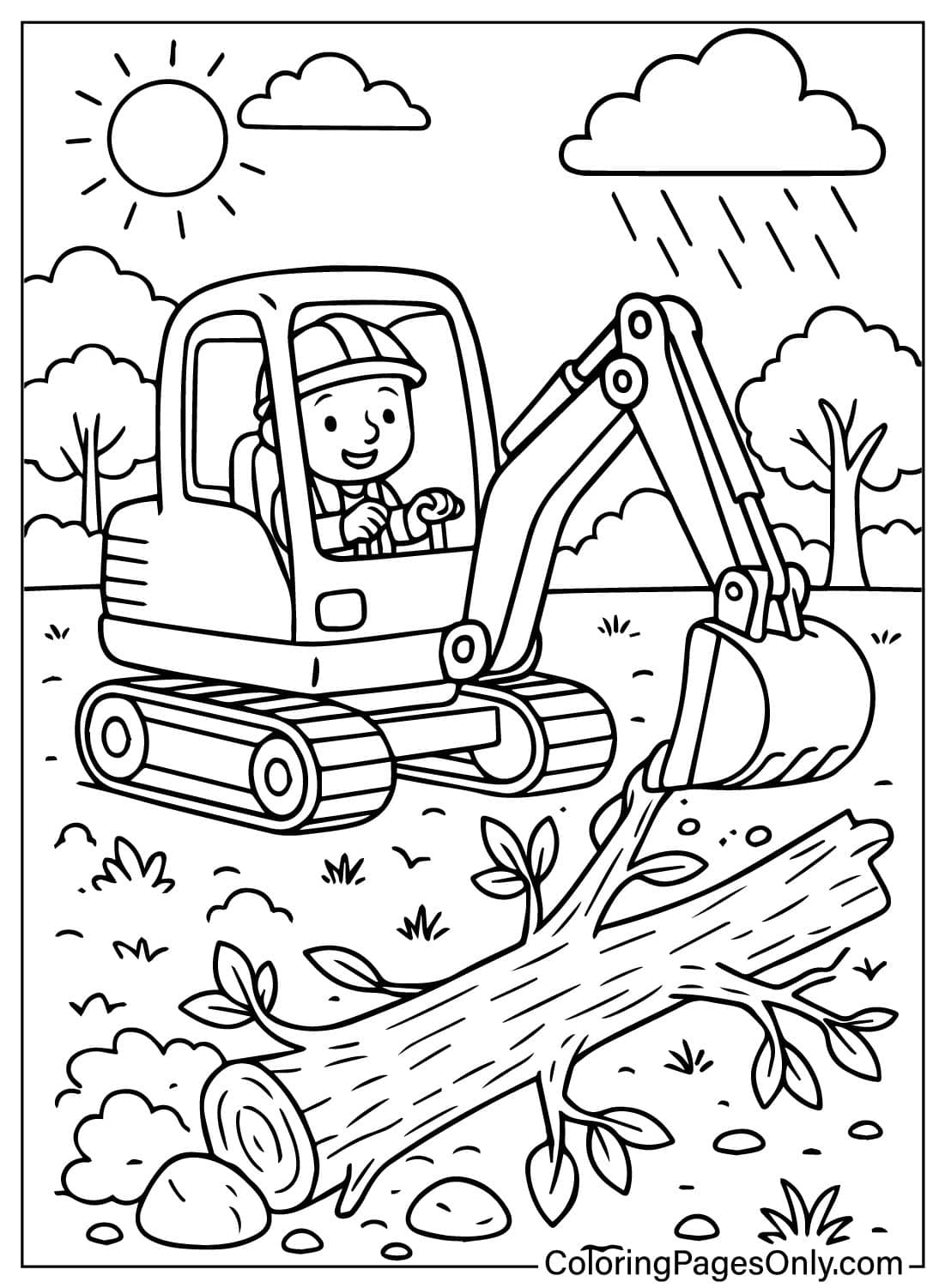
Ten pages show the excavator mid-task: digging soil, cutting a path through trees, building a road, or working alongside a dump truck and an operator in the cab. These pages have the most moving parts on display, since the boom, arm, and bucket are usually shown at different angles. Add Gray or Silver to the hydraulic cylinders and bucket teeth for a more mechanical look.
Excavators in Different Settings
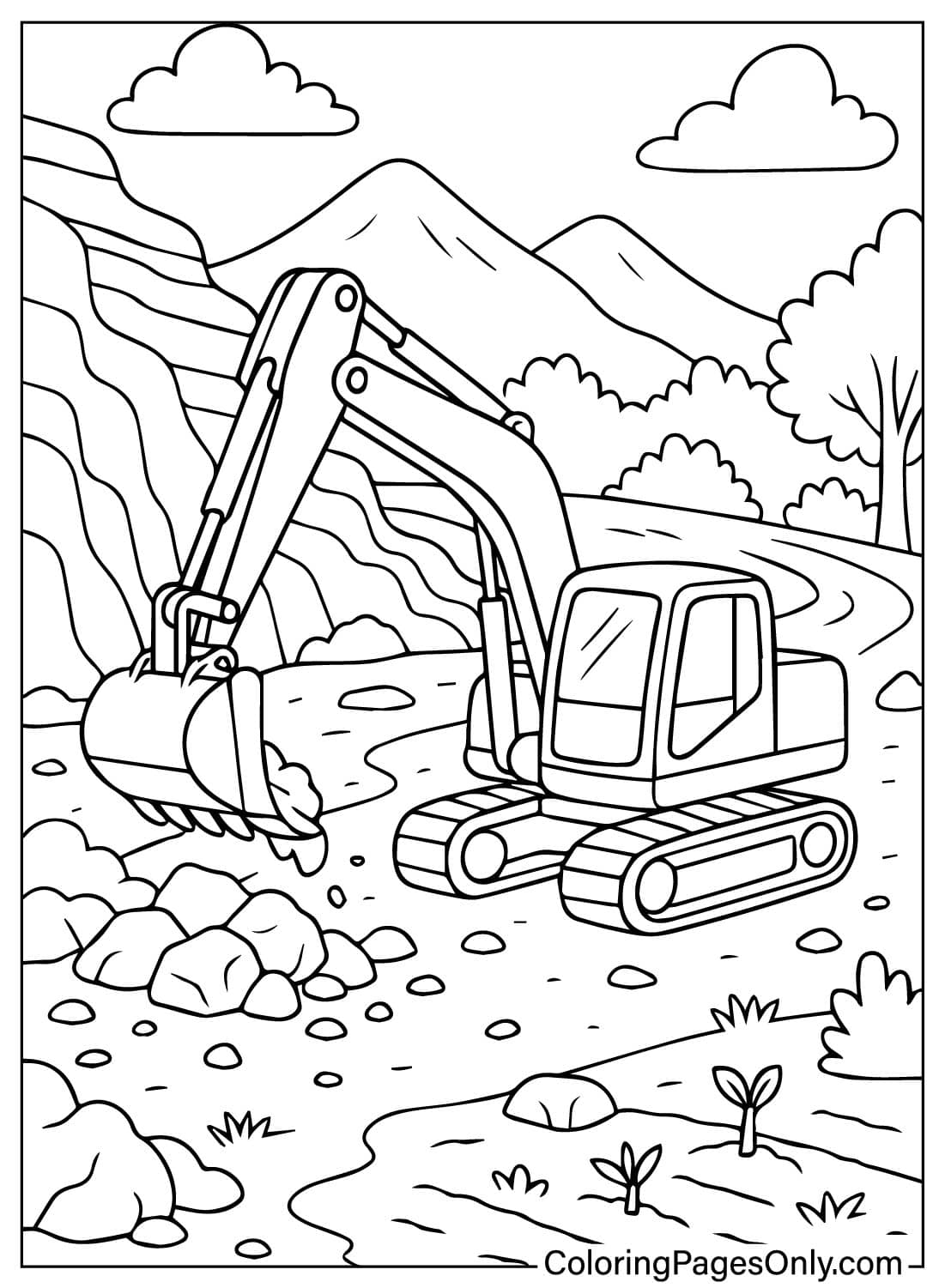
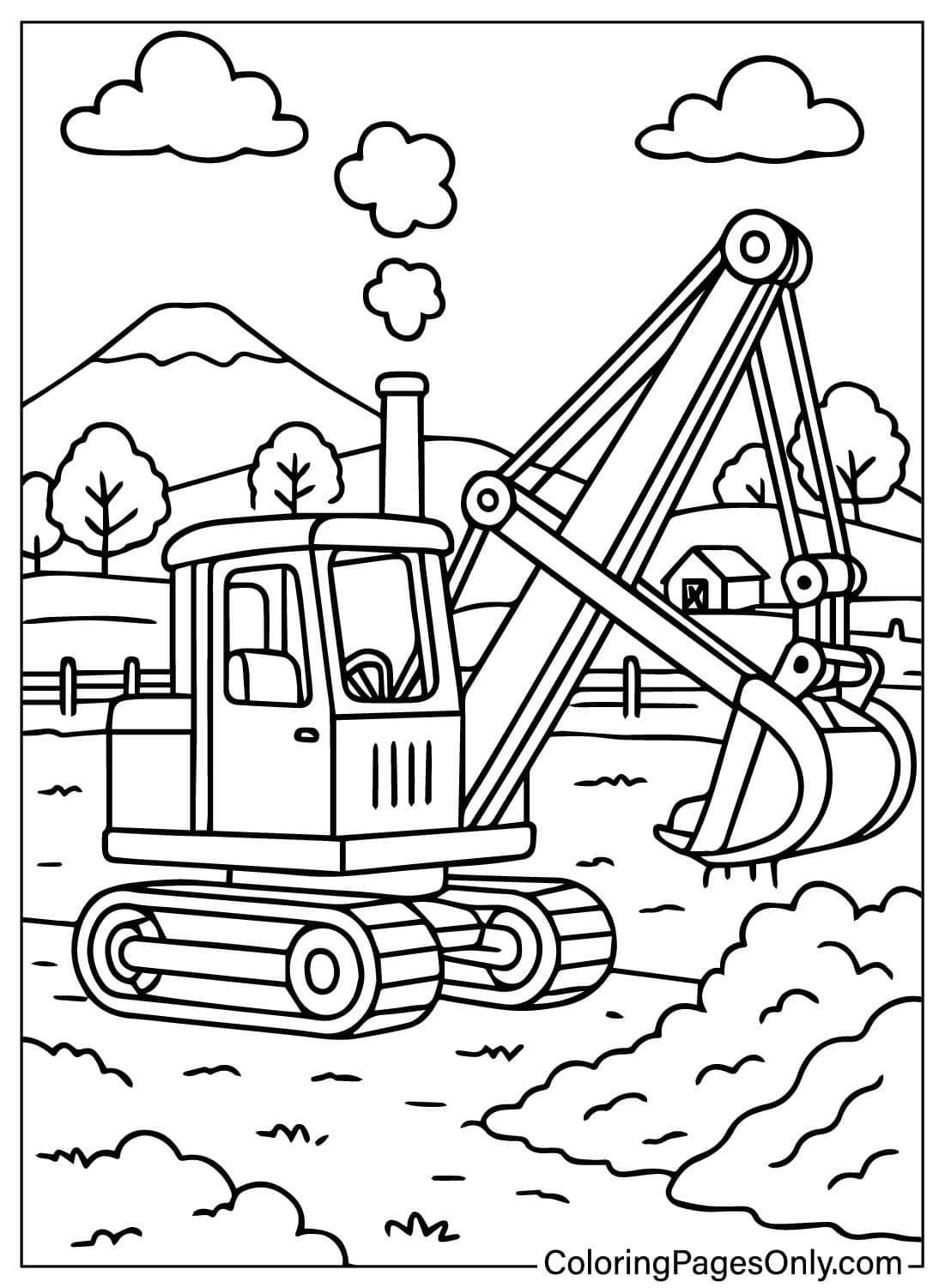
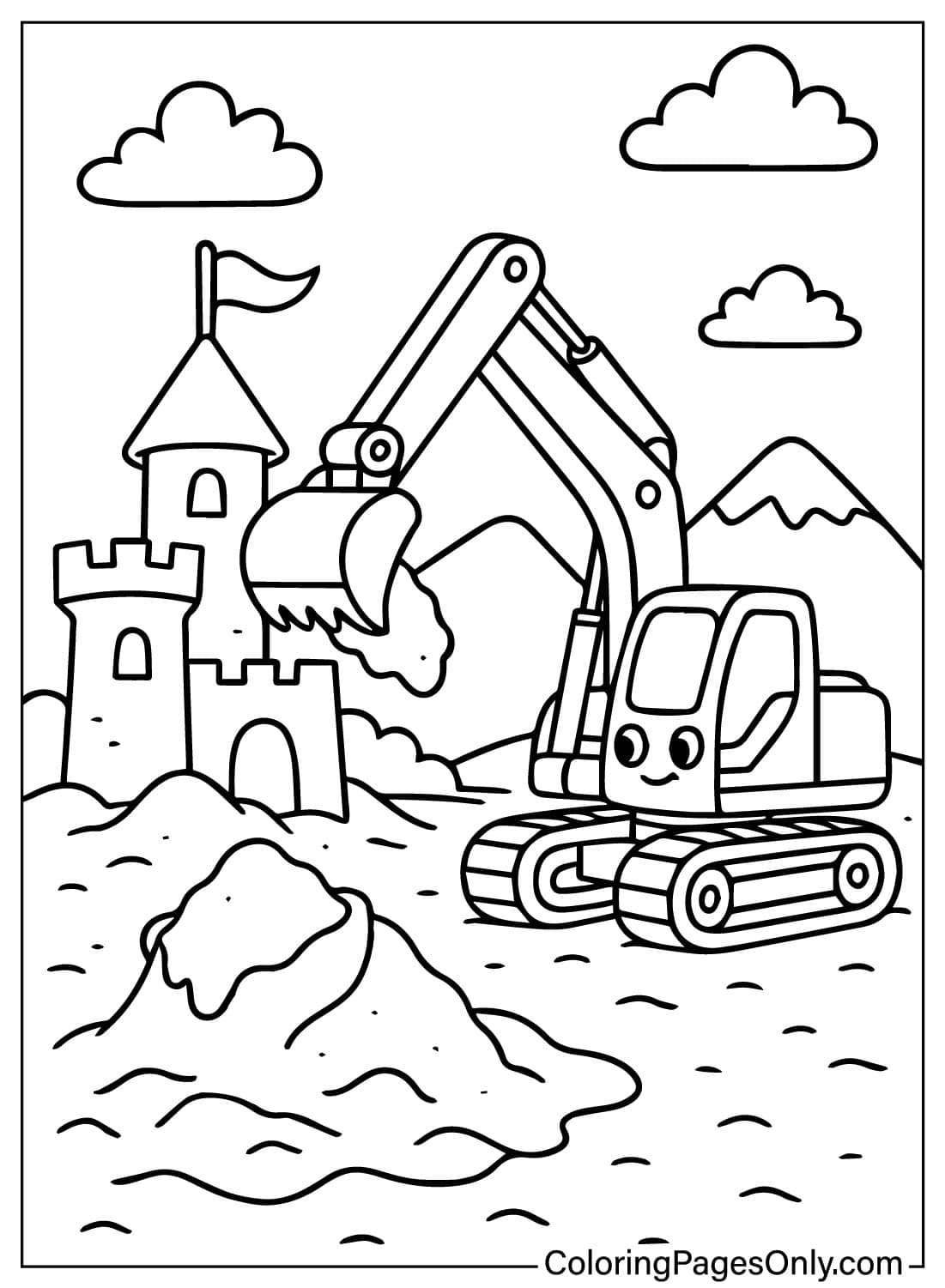
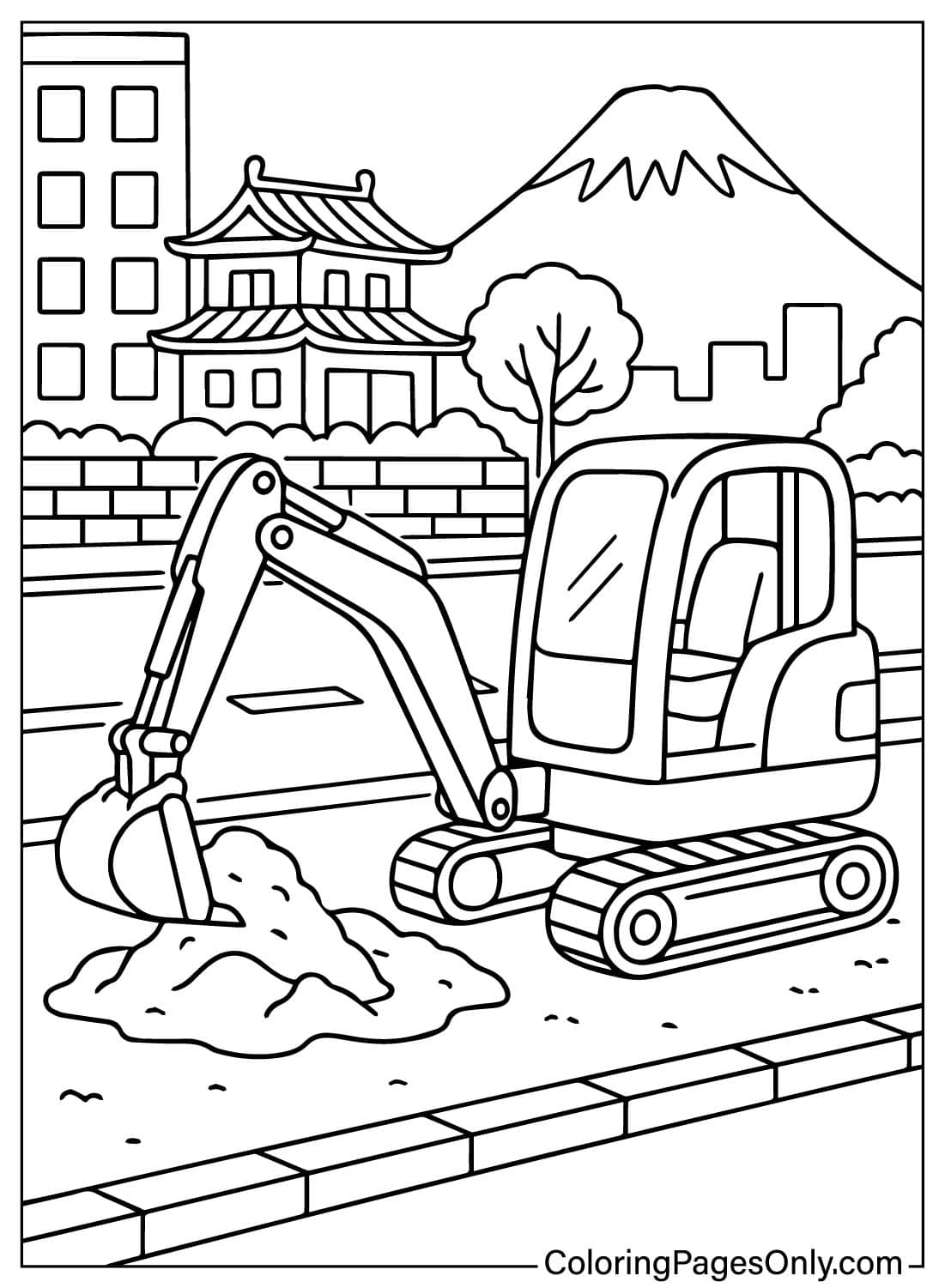
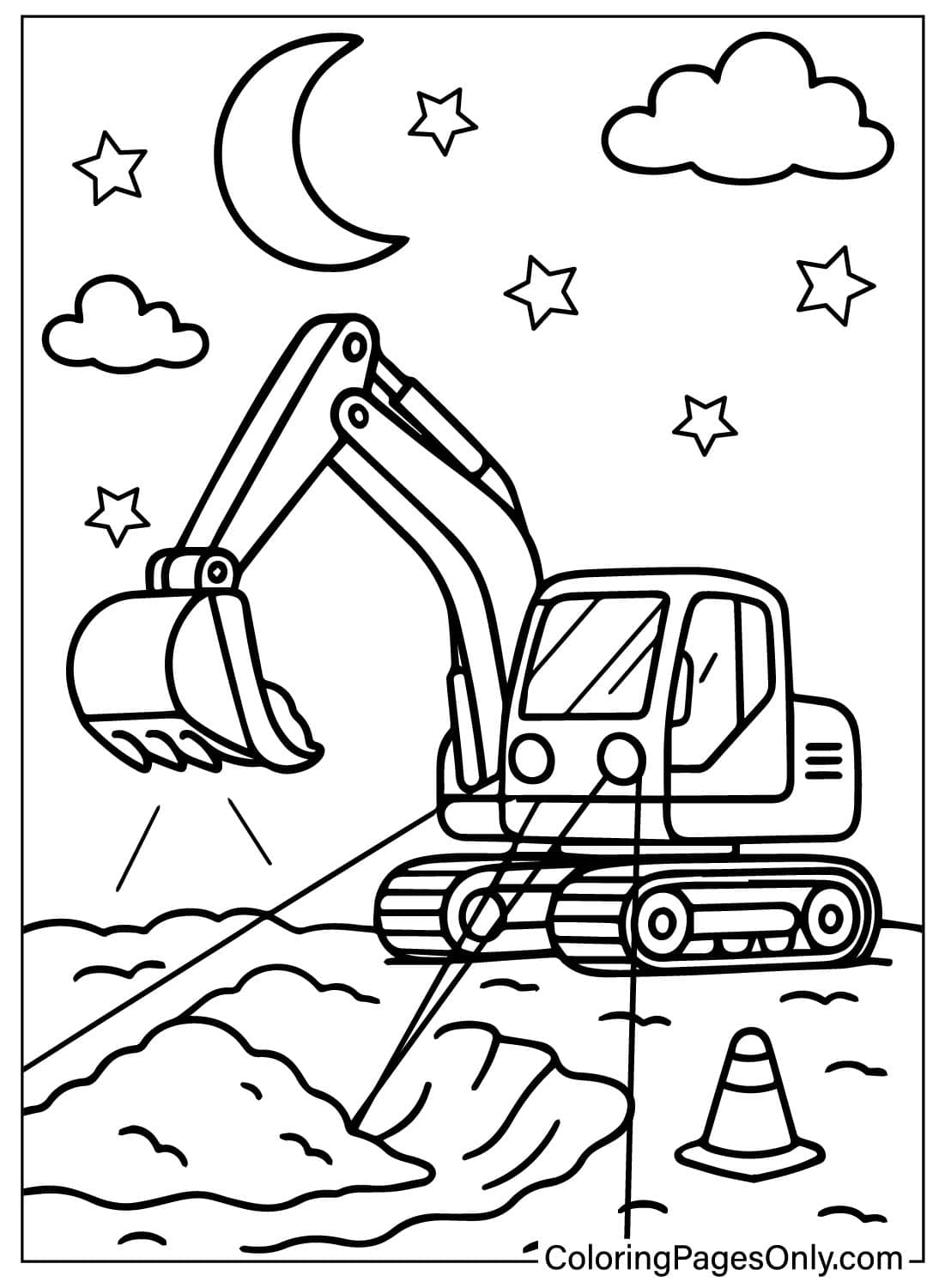
Nine pages place the excavator in a specific location: a muddy site, a mountain backdrop, a forest, a farm, or a city street, plus close pairings with a tree or traffic cones. The setting changes more than the machine does here, so the background carries most of the color variety. Keep the excavator’s Yellow or Orange consistent across every setting so it still reads as the same machine page to page.
Kids and Themed Pages
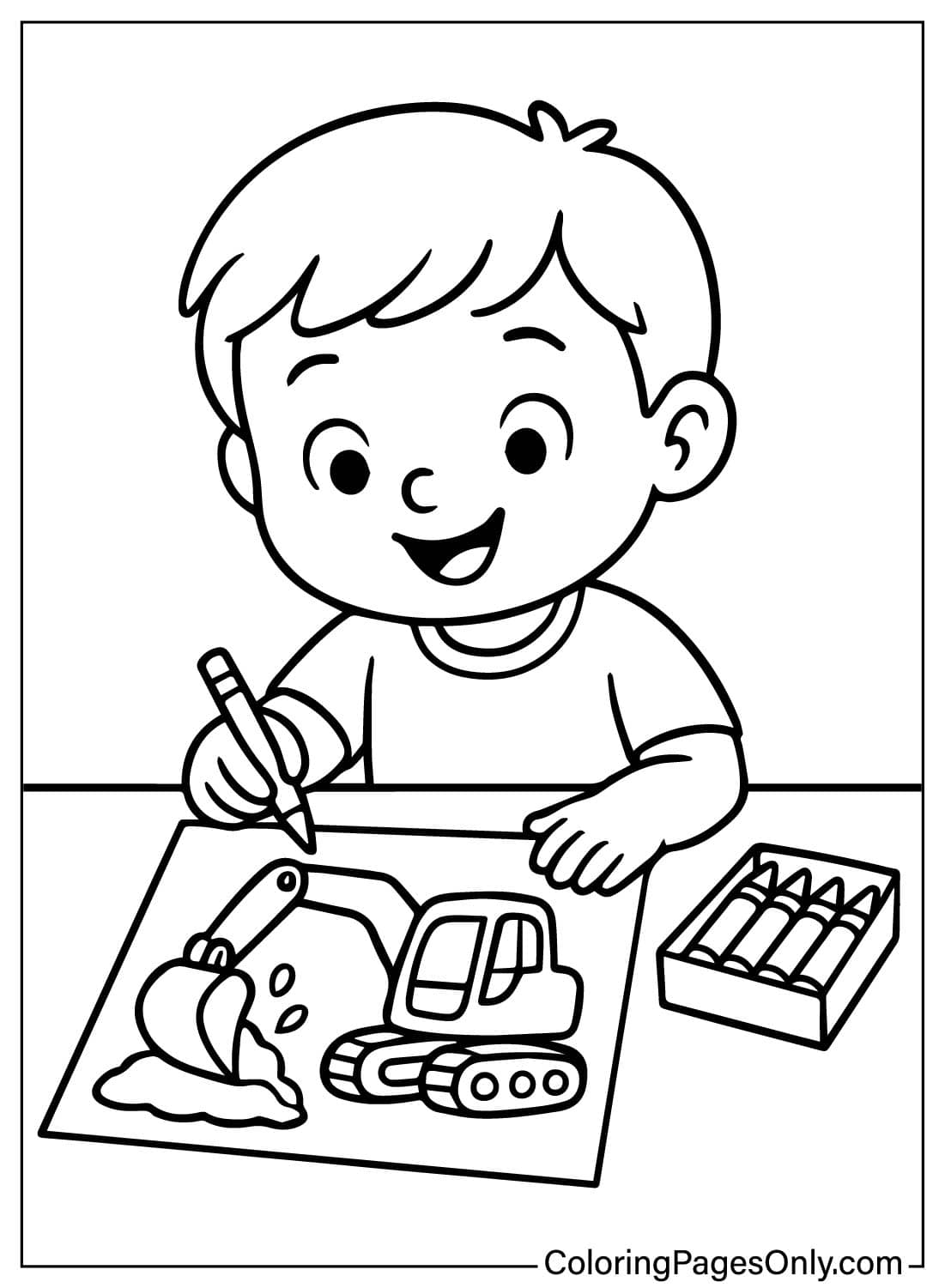
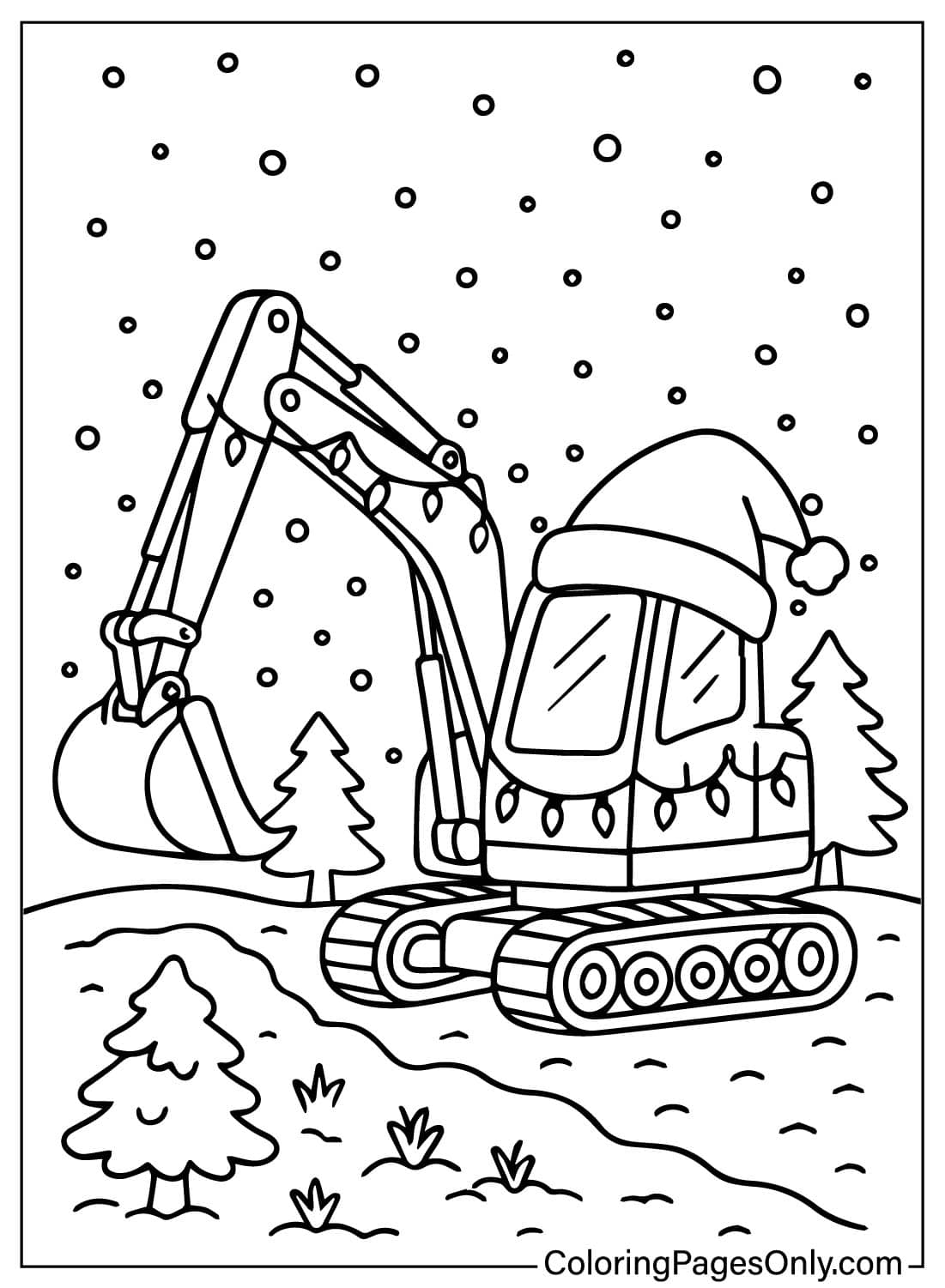
Three pages step outside the standard job-site look: a child playing with a toy excavator, a child drawing one, and a Christmas-themed version with festive details. These pages are the easiest entry point for a very young colorer, since the excavator itself is simplified in each one-the Christmas page swaps in Red and Green without changing the machine’s usual palette underneath.
What Excavator Coloring Pages Do
A machine made of separate, colorable parts. Unlike an animal or a leaf, an excavator is built from distinct mechanical pieces: a boom, an arm, a bucket, and tracks that a child can identify and color one at a time. Naming each part while coloring it turns the page into a quiet vocabulary lesson in how machines are put together.
Fine motor development. That same part-by-part structure also builds the fine motor control the American Academy of Pediatrics points to as a core benefit of structured coloring for children ages 2 through 7, since staying inside a narrow bucket tooth or a track link asks for a steadier hand than filling one large shape.
A real-world engineering conversation. A page showing an excavator digging or lifting is a natural opening for a conversation about how the machine actually works: hydraulic fluid pushed through cylinders extends the arm and curls the bucket, the same basic idea behind a lot of the machinery a child sees on a real job site.
Anxiety reduction through repetition. The repeated shapes across the collection, tracks, treads, ridged buckets, hydraulic lines, suit the kind of slow, structured coloring linked to measurable anxiety reduction in a 2005 Art Therapy Journal study, which makes these pages a reasonable choice for a wound-down bedtime routine and not just an energetic afternoon.
How to Color Excavator Pages Well
- Base color the body: Real excavators are commonly painted in bright, high-visibility colors for job-site safety. Use Yellow or Orange as the main body color, with Black for the tracks and undercarriage.
- Shade the boom and arm: Add a deeper Goldenrod or Burnt Orange along the underside of the boom and arm to suggest the metal catching shadow, rather than leaving the whole arm one flat color.
- Color the bucket teeth separately: Give the bucket’s teeth a metallic Silver or Gray, distinct from the Yellow or Orange body, since on a real machine, these are a different, harder material.
- Give tracks texture, not a flat line: Color the track treads in alternating Black and Gray segments rather than one solid strip, to suggest the individual metal links.
- Add mud and dirt realistically: Use Sepia or Brown, dabbed rather than painted in solid blocks, along the base of the tracks and bucket on any job-site scene, since real excavators pick up dirt unevenly.
- Keep operator cabs simple: Color the cab windows a light Sky Blue or Gray, and leave the operator, if shown, in simple clothing colors like Denim or Tan so the machine stays the main focus of the page.
5 Creative Craft Ideas With Excavator Coloring Pages
- Construction Site Diorama. Materials: colored excavator and construction pages, scissors, glue, a shallow box, and some sand or crumpled brown paper for “dirt.” Cut out the colored machines, arrange them inside the box on the sand or paper, and build a small construction site scene.
- Excavator Birthday Card. Materials: a colored excavator page, folded cardstock, scissors, and glue. Trim the colored page to fit the card front, glue it in place, and write a birthday message inside for a construction-loving friend.
- Digger Bookmark Set. Materials: two or three colored excavator pages, scissors, clear contact paper, and a hole punch. Cut each colored page into a bookmark-sized strip, cover both sides with contact paper, and punch a hole for a ribbon.
- Job-Site Garland. Materials: several colored excavator and truck pages, scissors, twine, and clear tape. Cut out each colored machine, tape it to the twine at intervals, and hang the finished garland for a construction-themed room or party.
- Construction Vehicle Fact Poster. Materials: two or three colored construction vehicle pages, a poster board, glue, and a marker. Glue the colored machines onto the poster board, then write one fact about each vehicle’s job underneath, such as digging, hauling, or lifting.
Frequently Asked Questions
What are excavator coloring pages?
Excavator coloring pages are printable designs featuring construction diggers, job-site scenes, and machines at work. This collection includes 32 free designs available as printable PDFs or online coloring pages.
Who invented the excavator?
The excavator’s ancestor is the steam shovel, patented by American engineer William Otis in 1835. The first hydraulic excavator followed in 1882, built by Sir W. G. Armstrong and Company in England.
What are the main parts of an excavator?
An excavator has a boom, an arm, a bucket, a rotating cab, and an undercarriage with tracks or wheels. Hydraulic cylinders power the boom, arm, and bucket to dig and lift.
What color are excavators usually painted?
Most real excavators are painted bright Yellow or Orange for job-site visibility, with Black or Gray tracks and metallic Silver bucket teeth.
How does an excavator dig?
Hydraulic fluid pushed through cylinders extends the arm and curls the bucket, letting the machine scoop soil or rock and swing it aside using the rotating cab.
Is an excavator the same thing as a bulldozer?
No. An excavator digs and lifts using a bucket on a rotating arm, while a bulldozer pushes material with a flat blade mounted on the front of the machine.
Are excavator coloring pages suitable for young children?
Yes. The simple portrait and outline pages suit ages 3 and 4. The job-site scenes, with more background detail, suit ages 5 and up.
Why do kids like excavators so much?
Excavators combine size, motion, and a clear job, digging and lifting, which is easy for a young child to observe and understand, unlike more abstract machinery.
Start Coloring
Download any page by clicking the design. No account, email, or payment is required. Pages print directly from the browser at full resolution or open in the online coloring tool for screen use. Share finished pages on Facebook or Pinterest with the share buttons at the top of each design page.