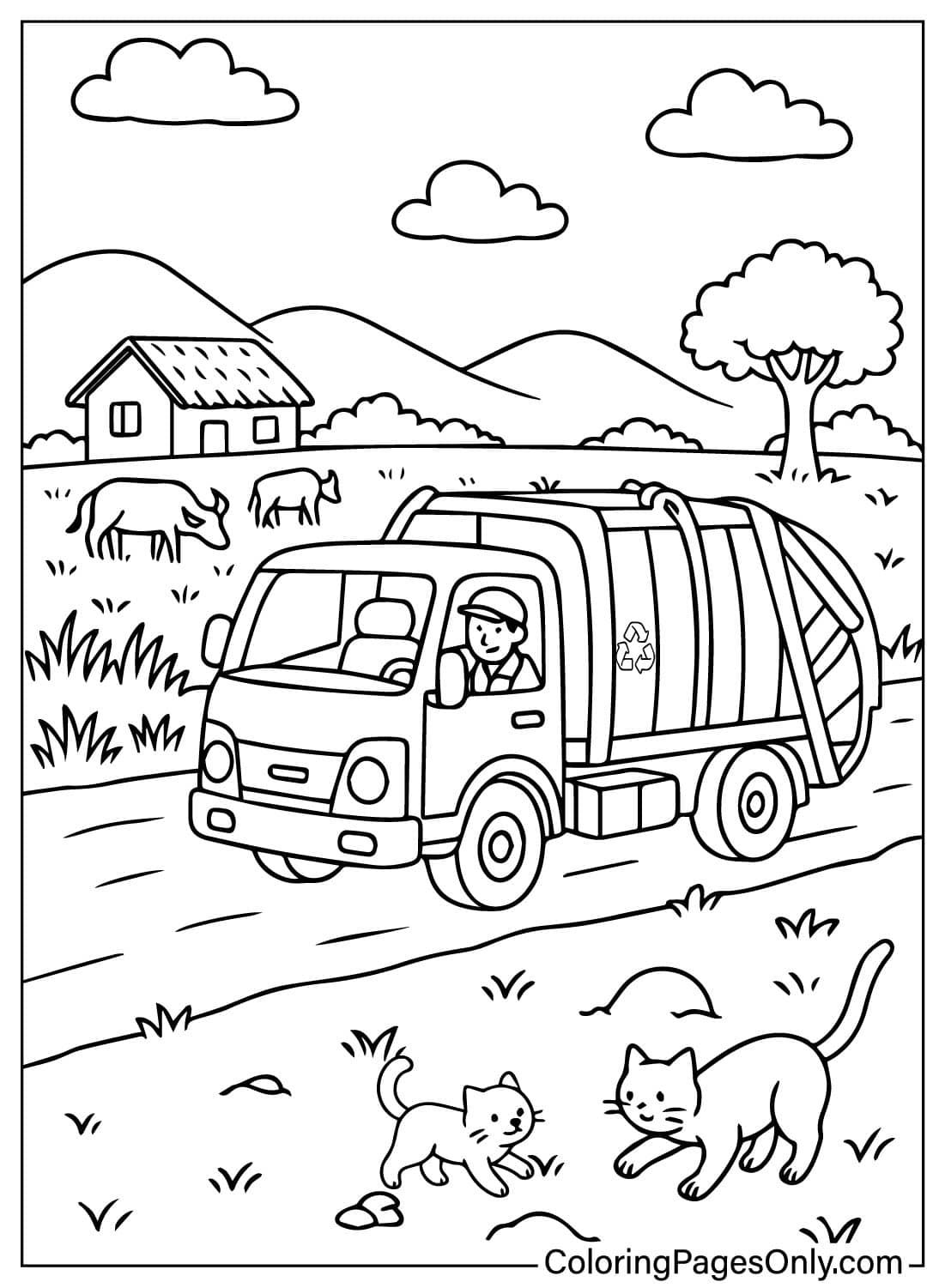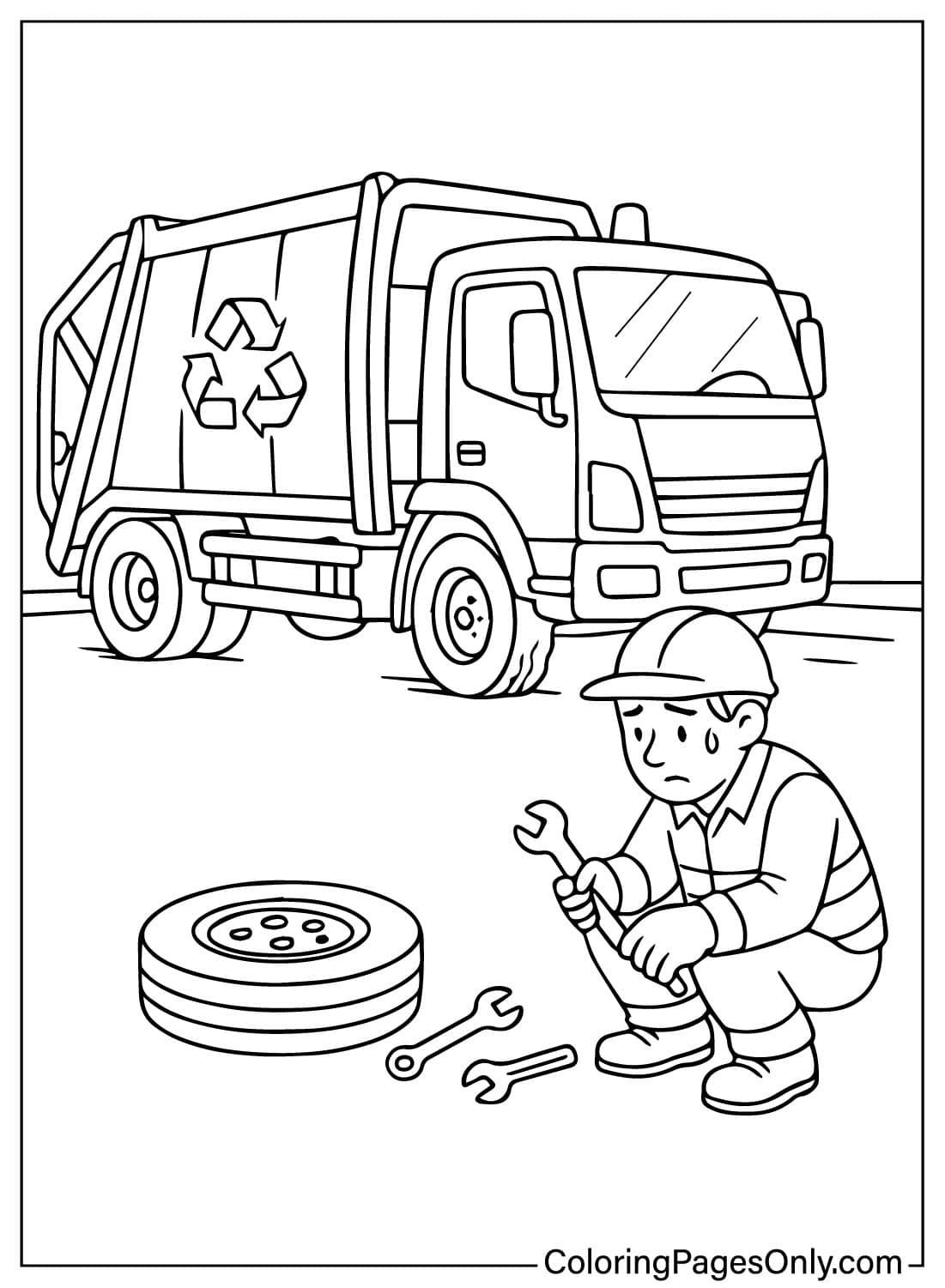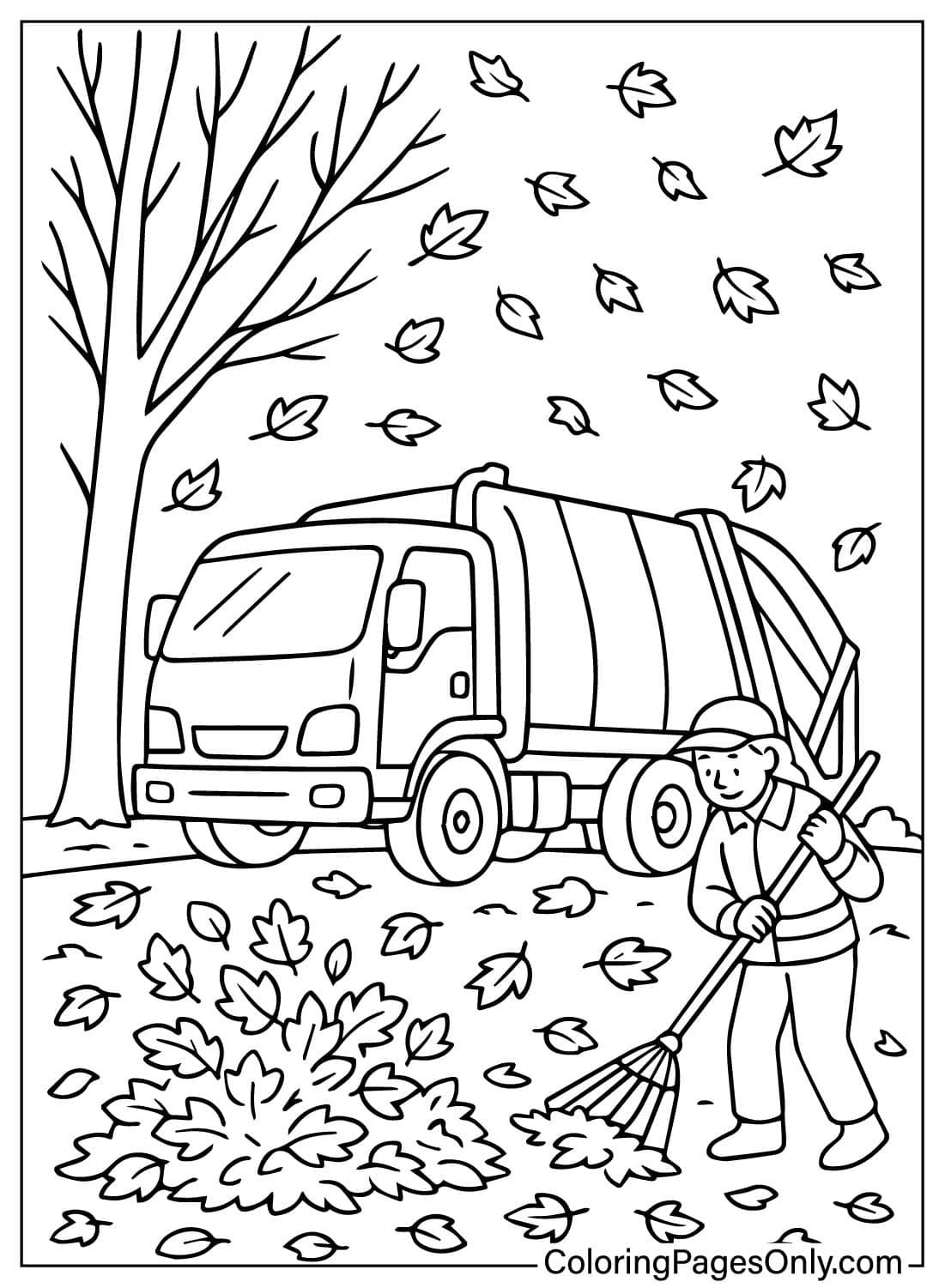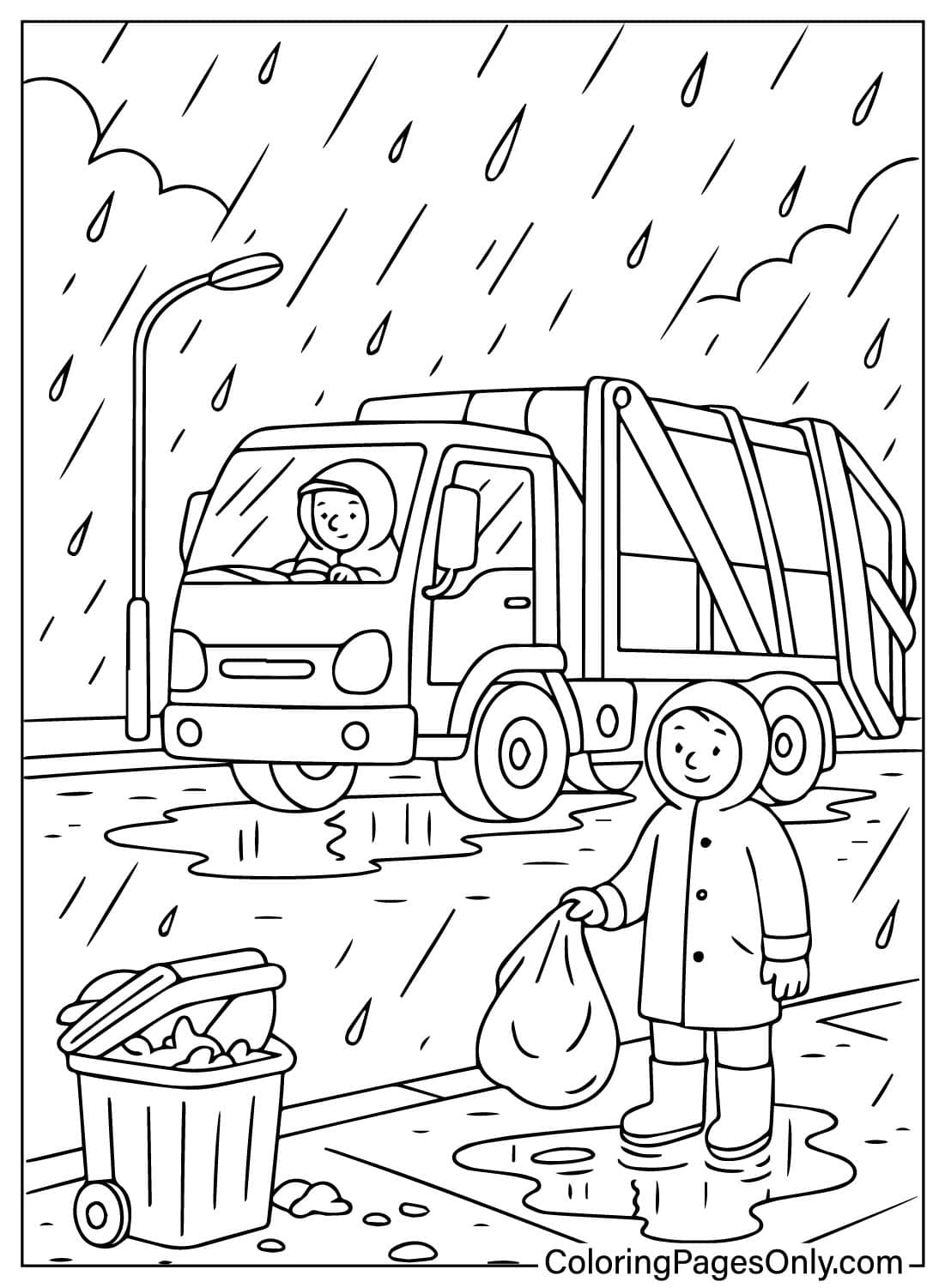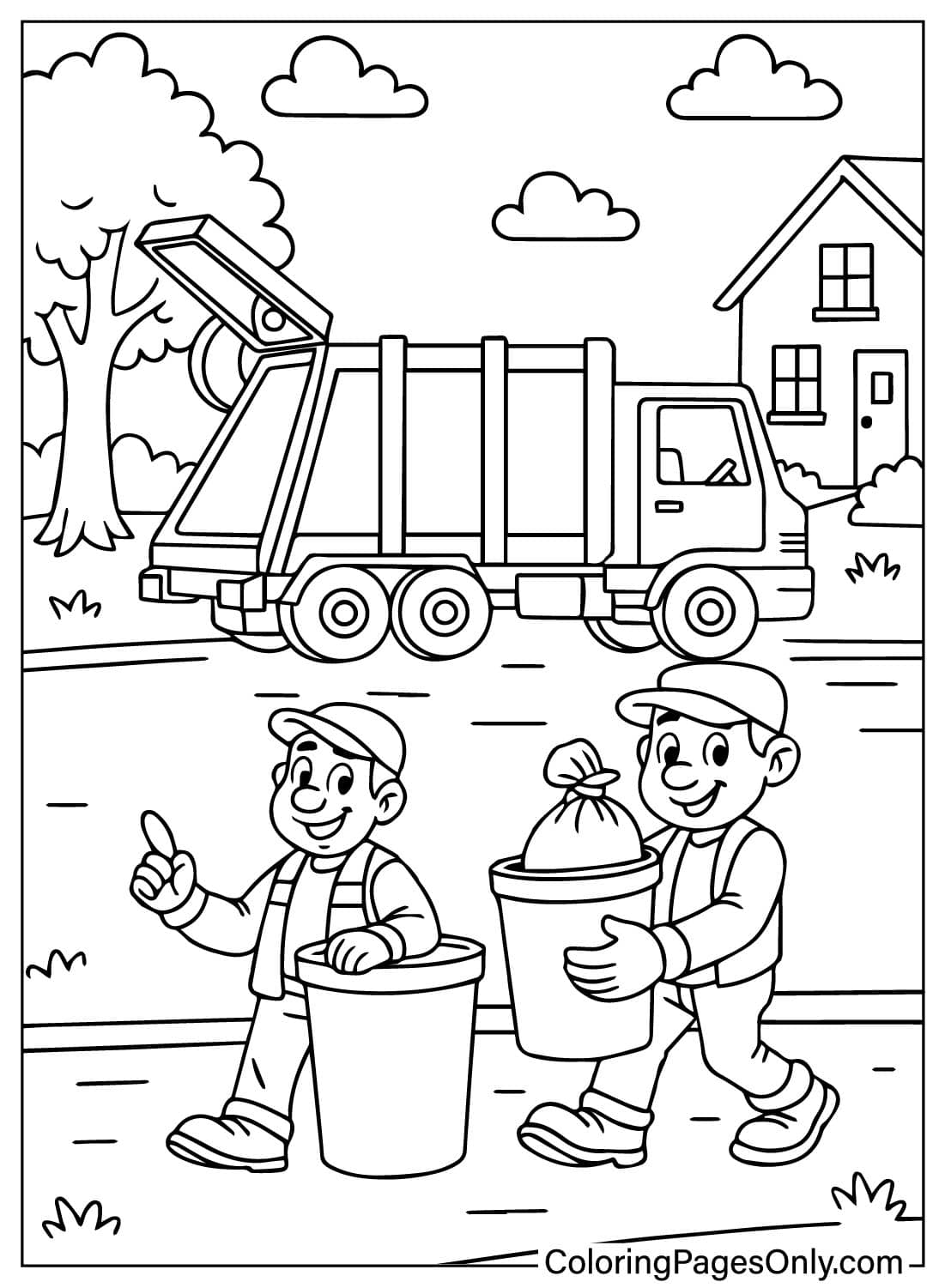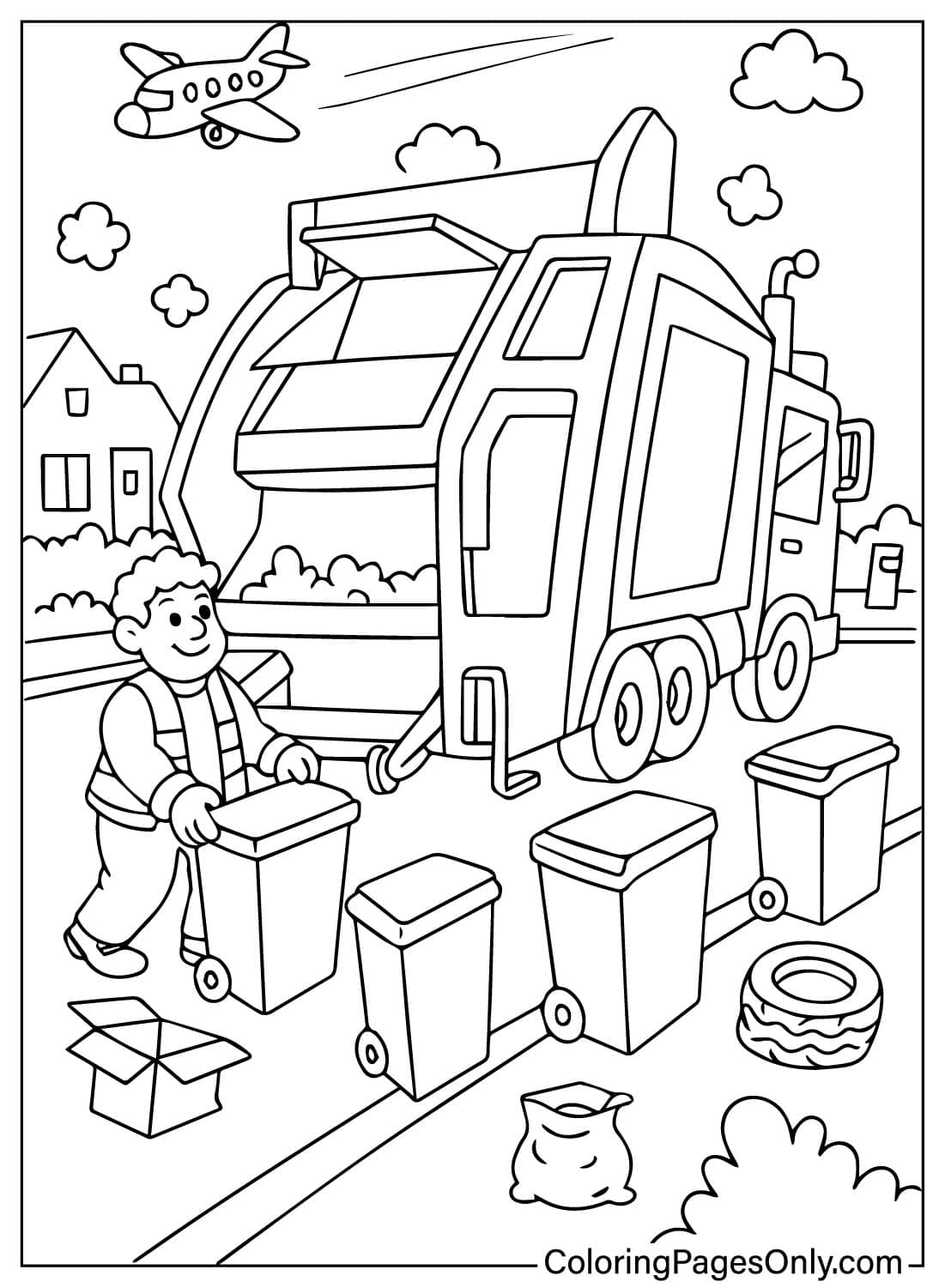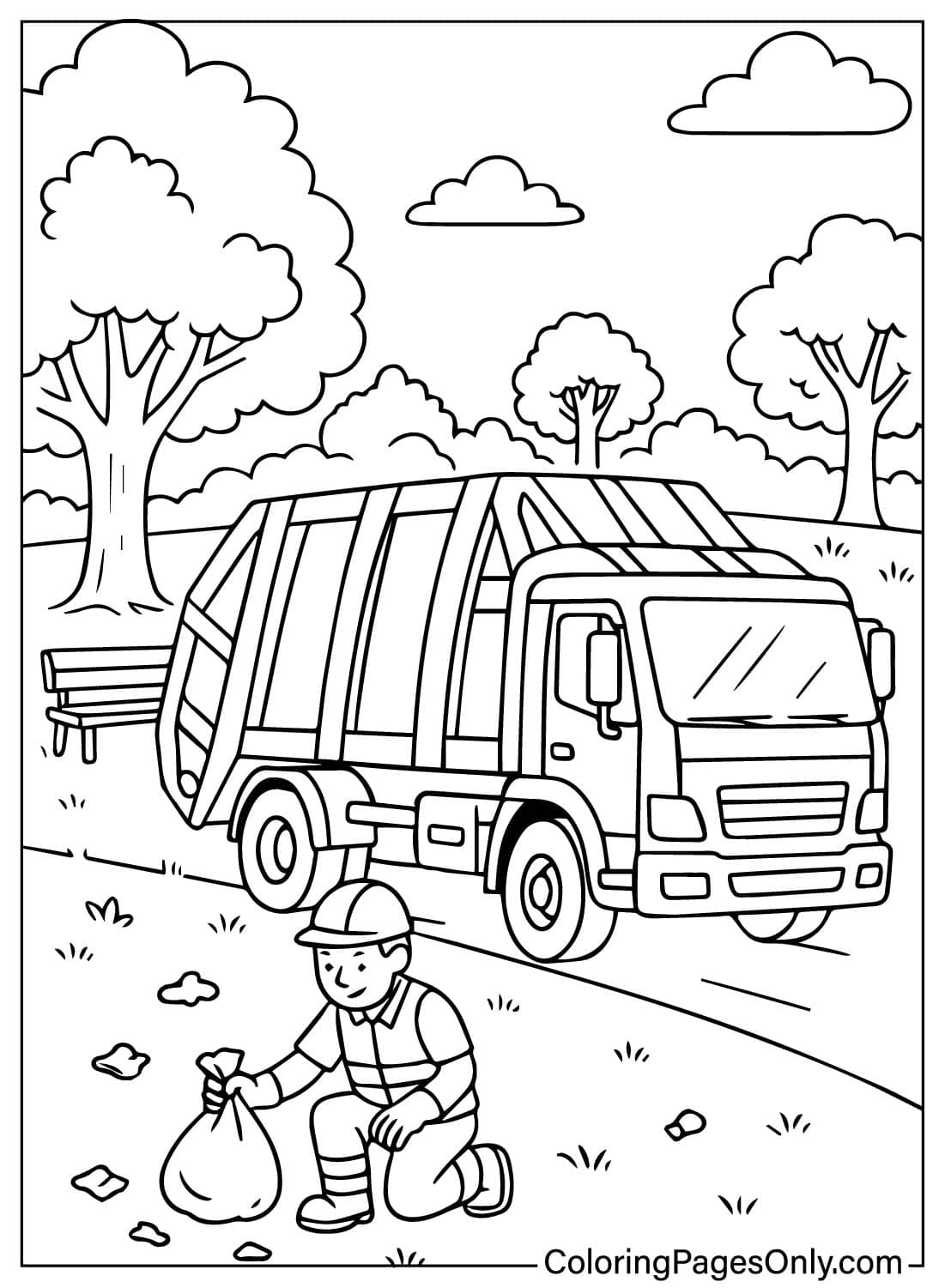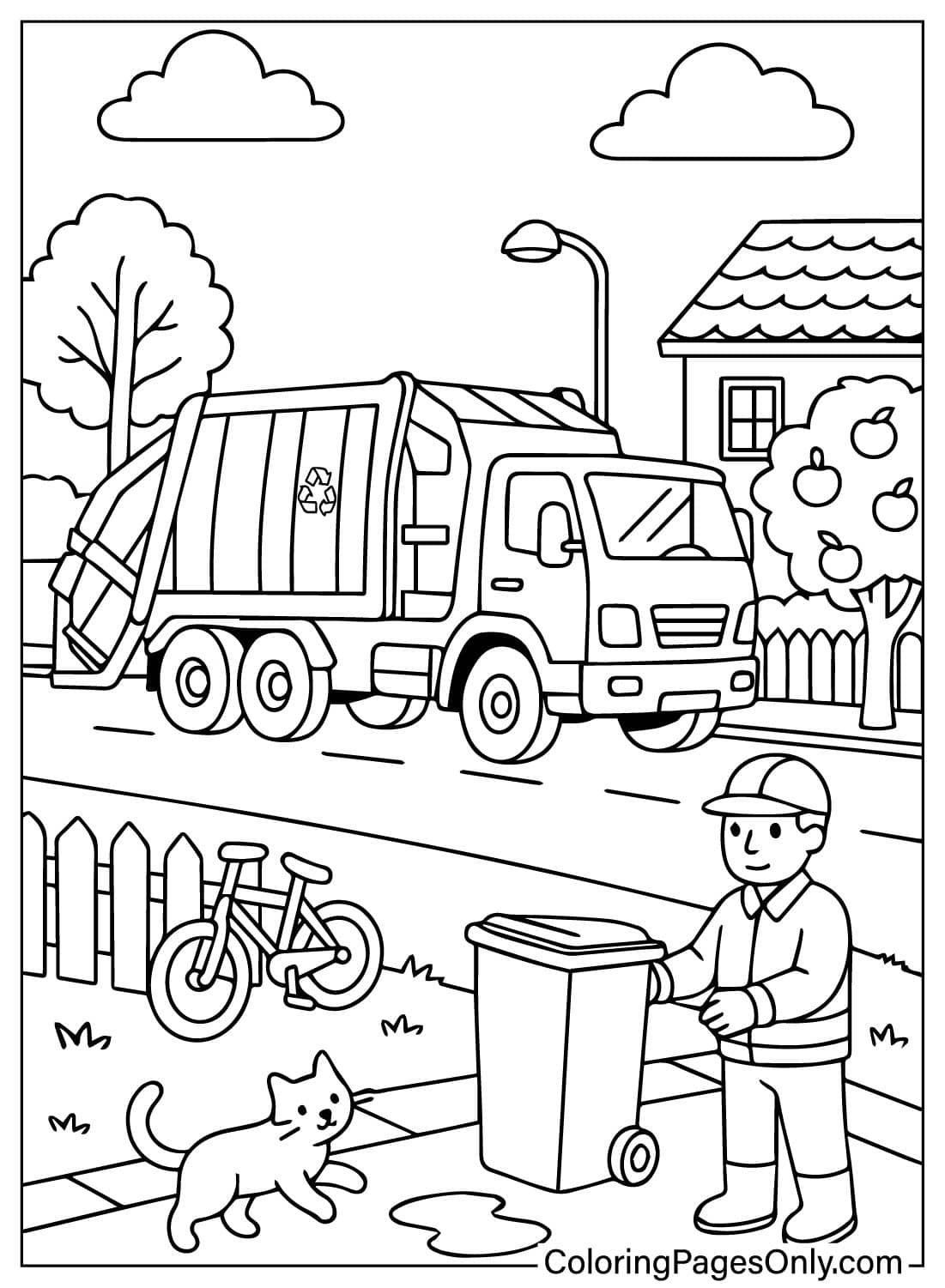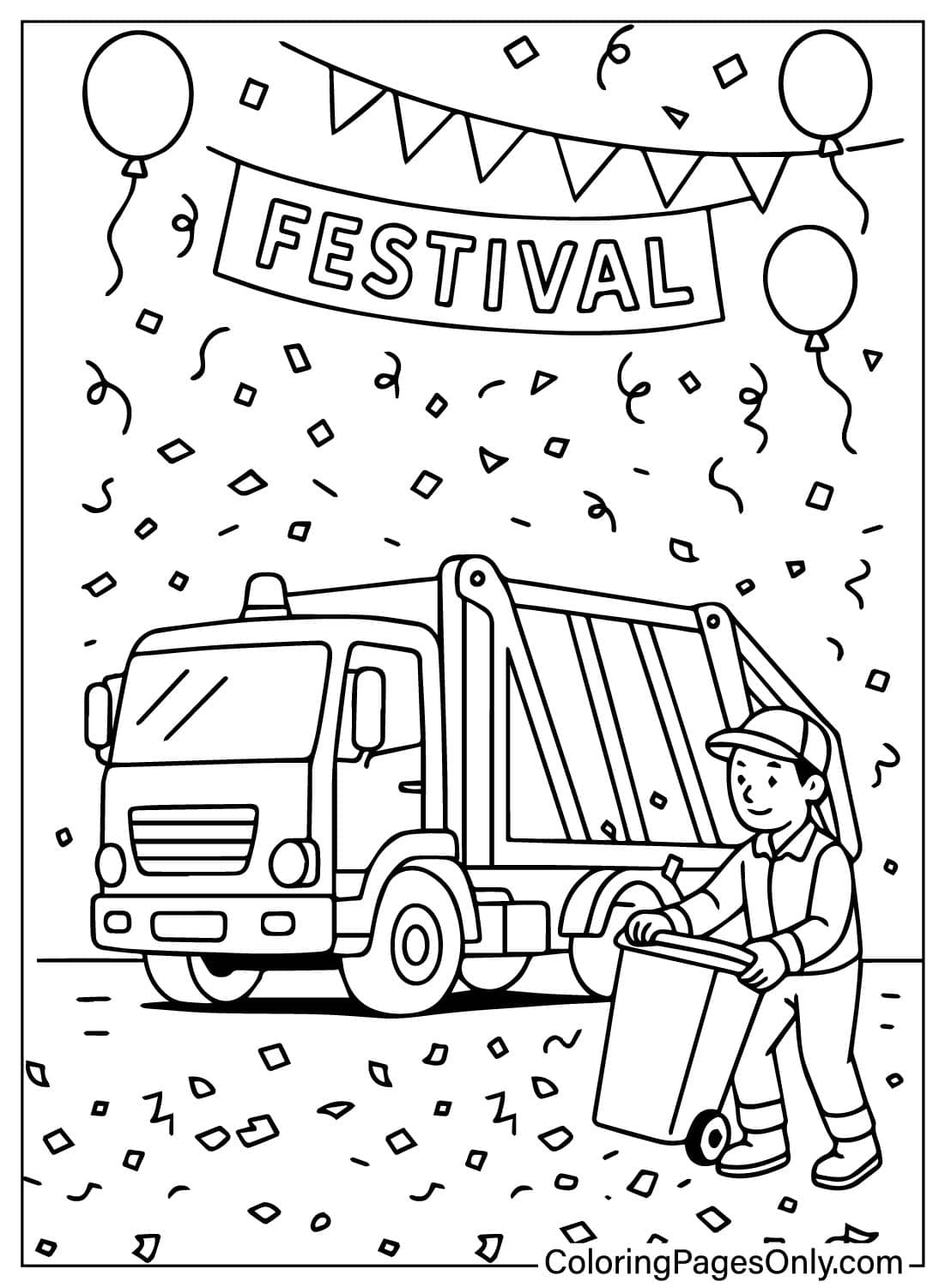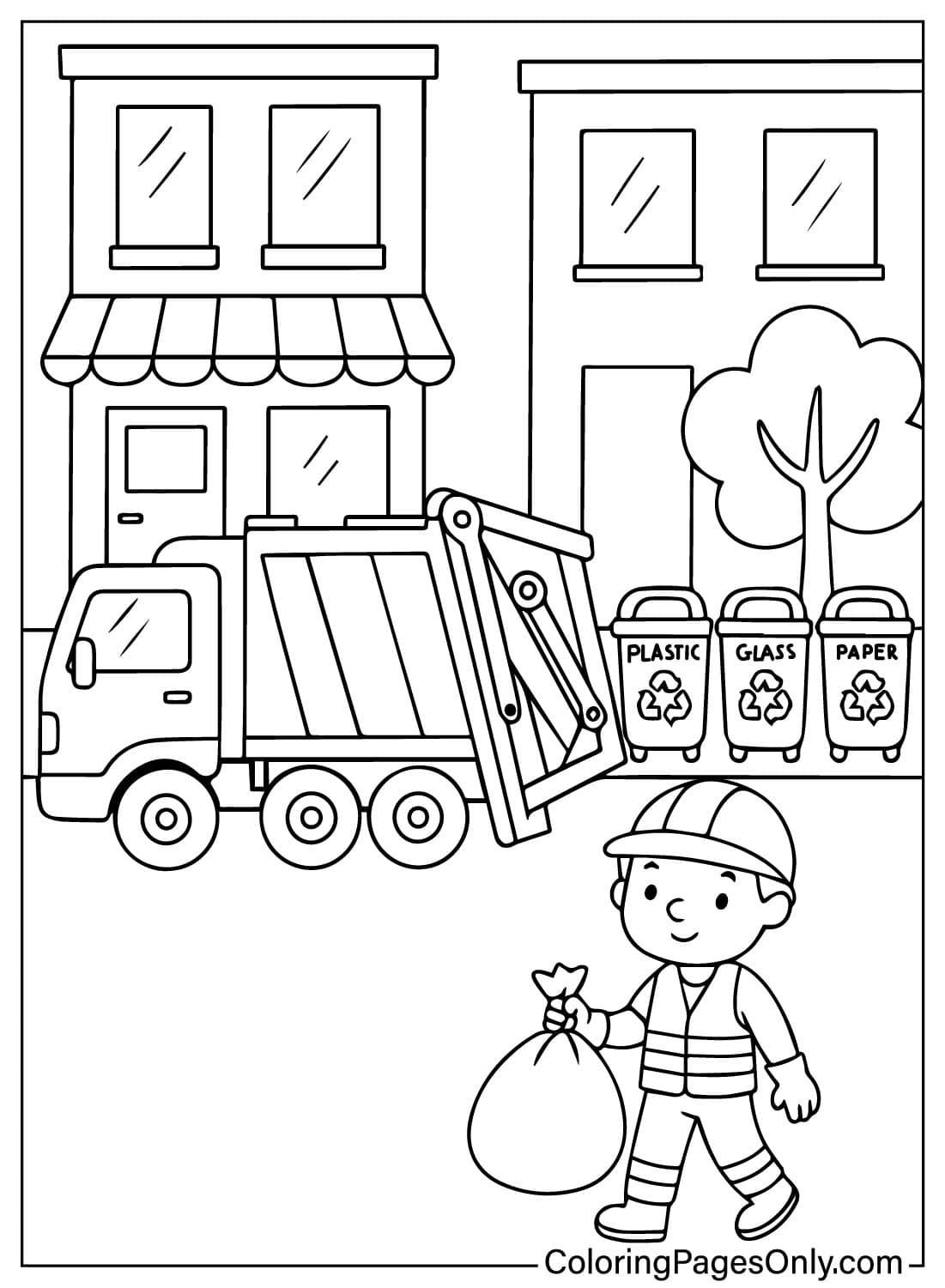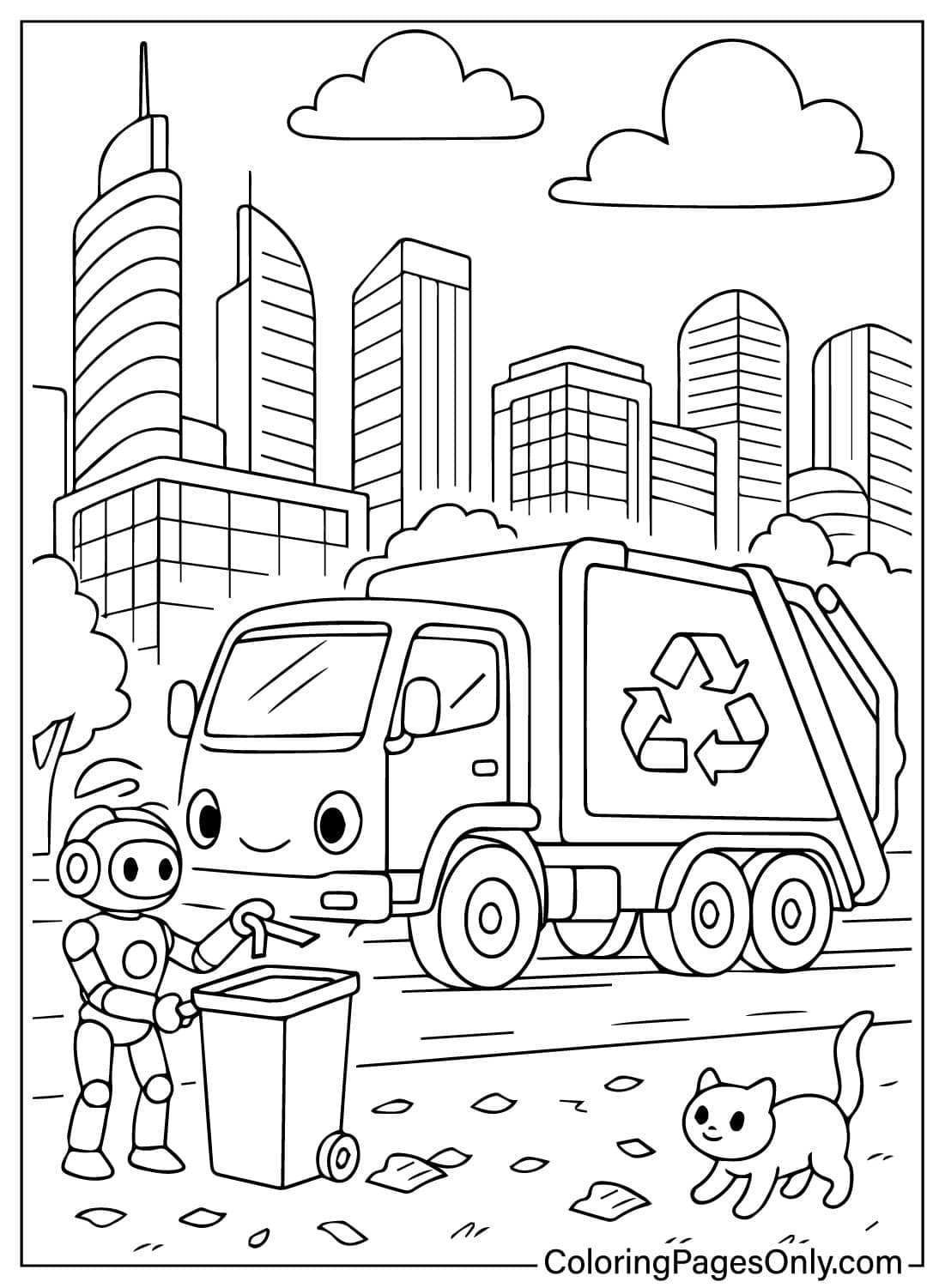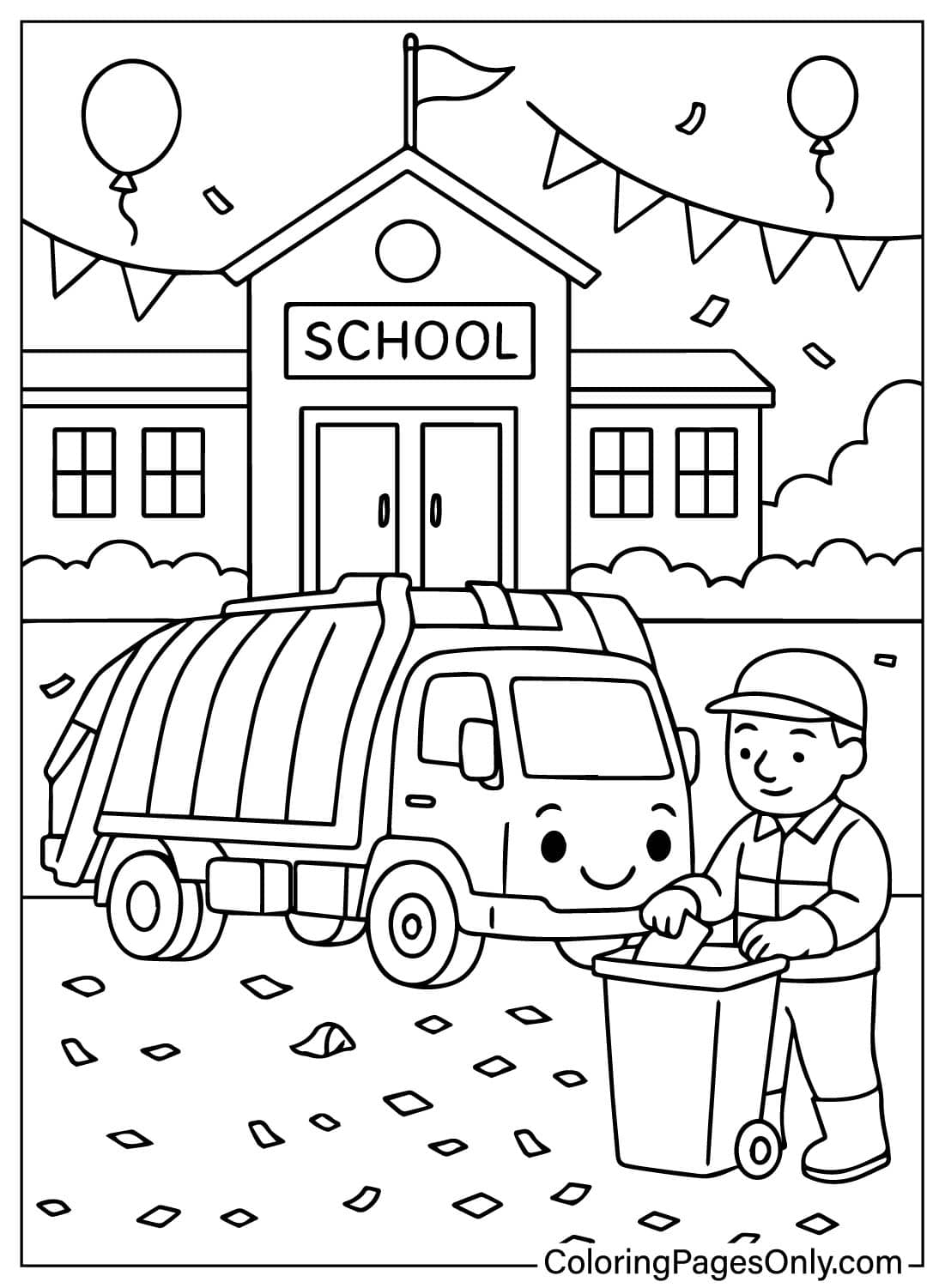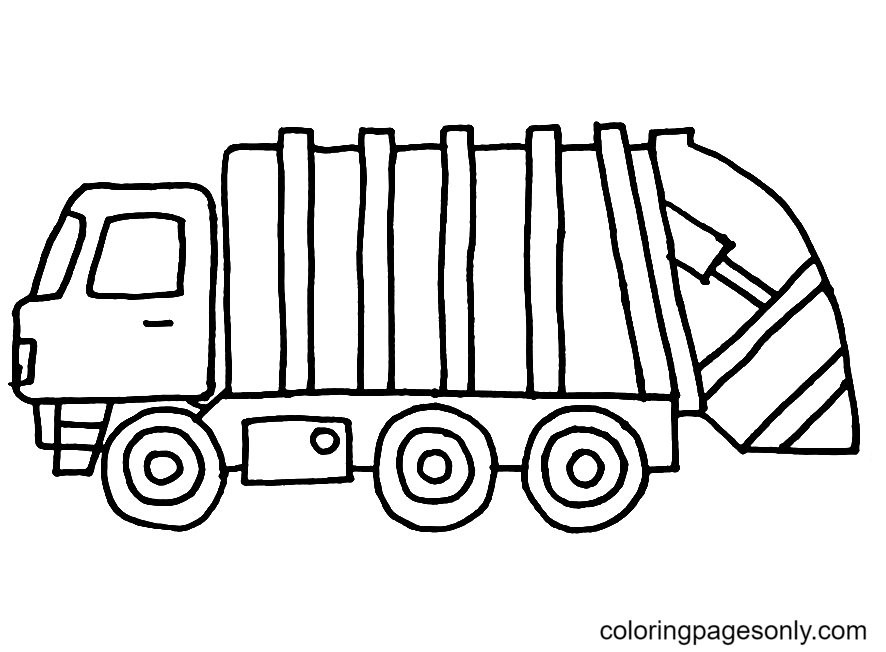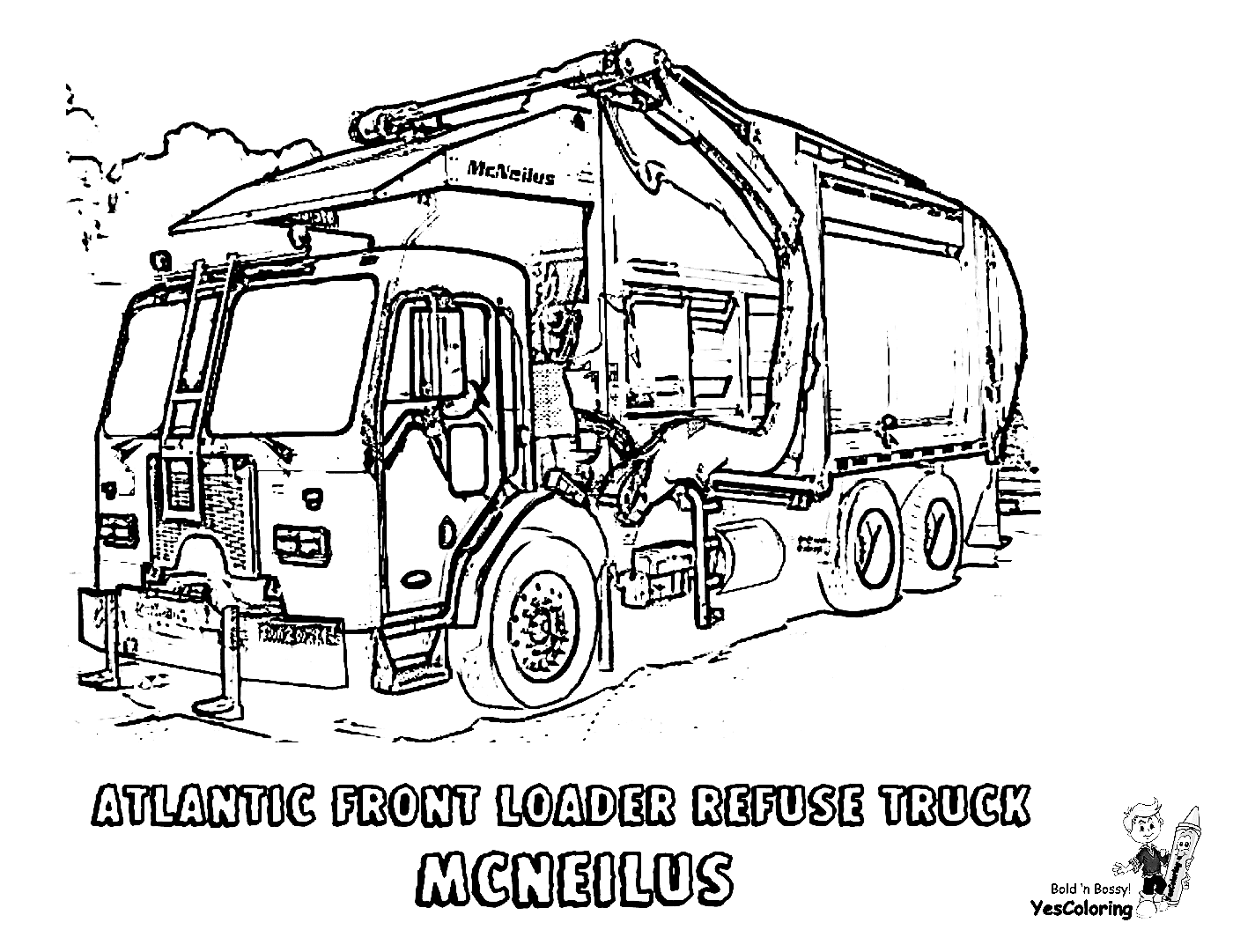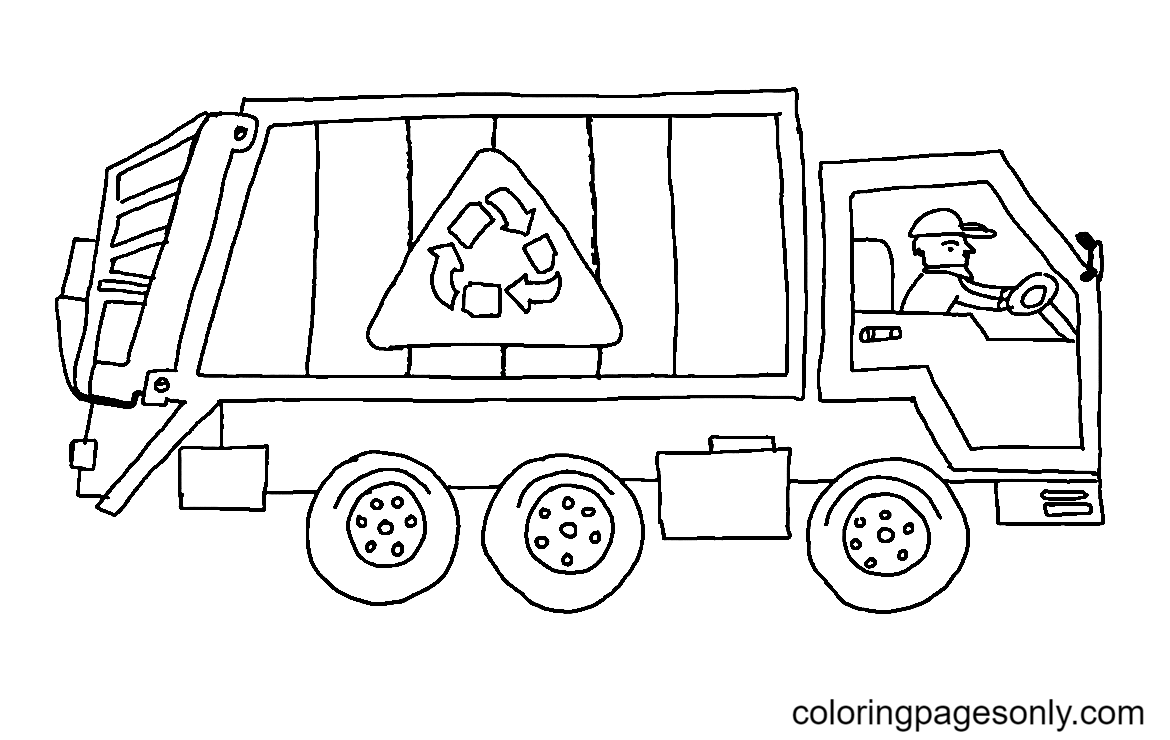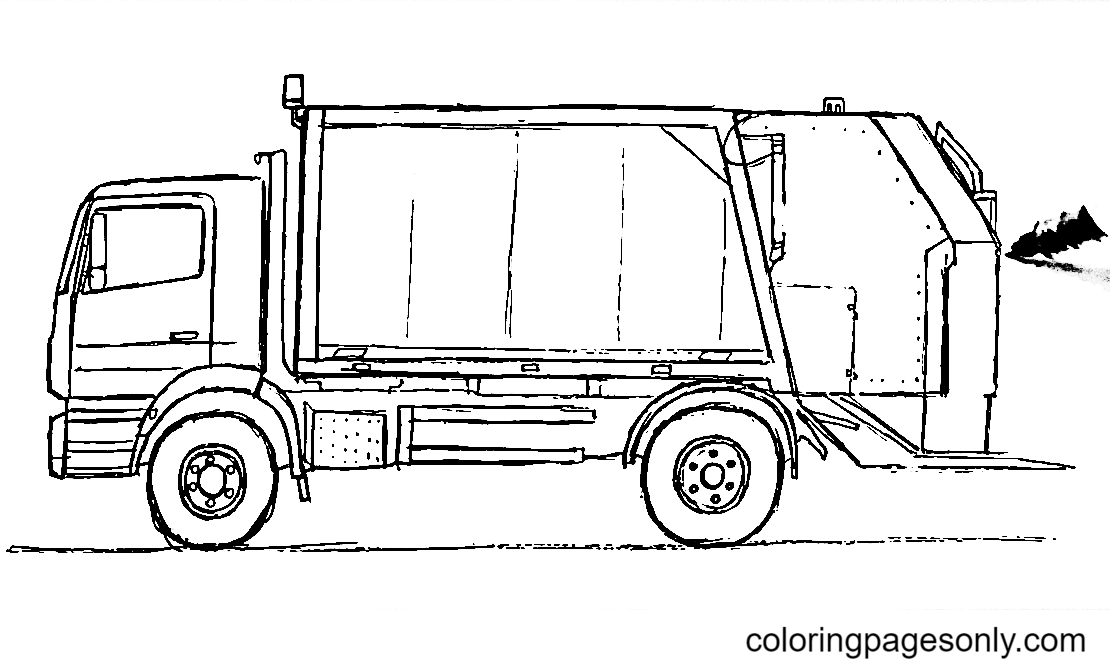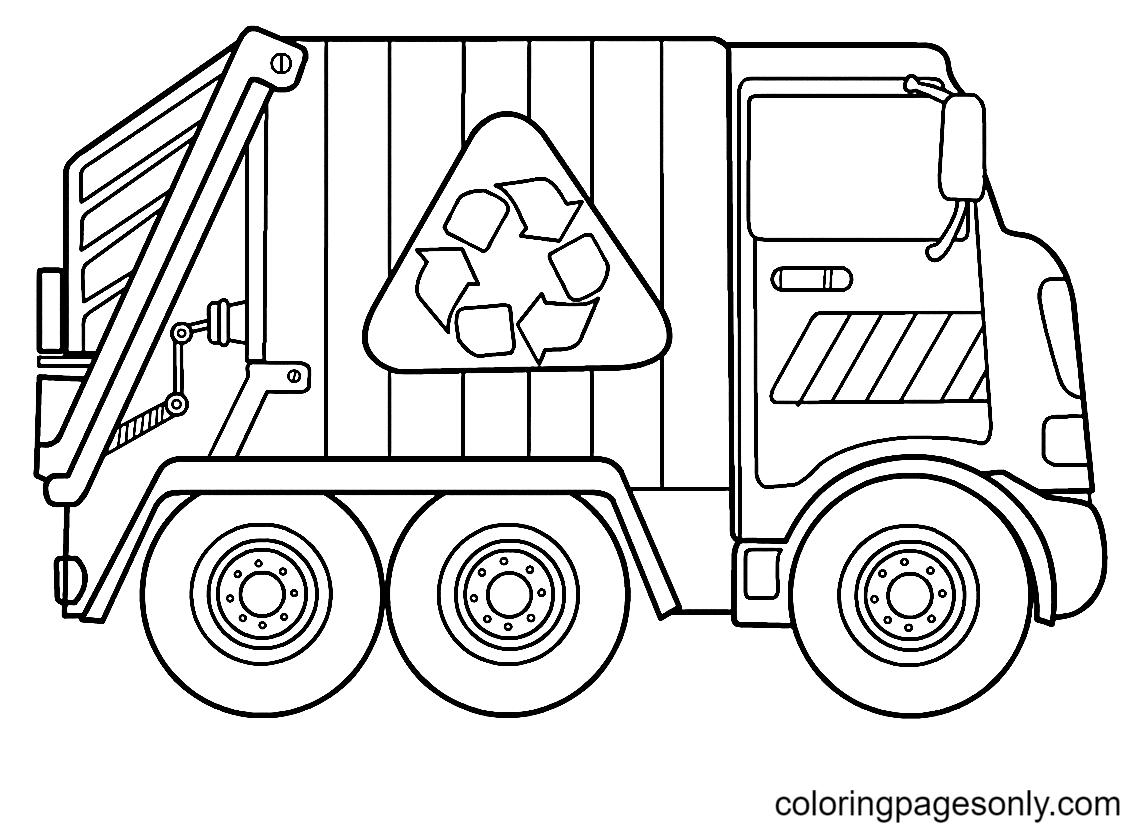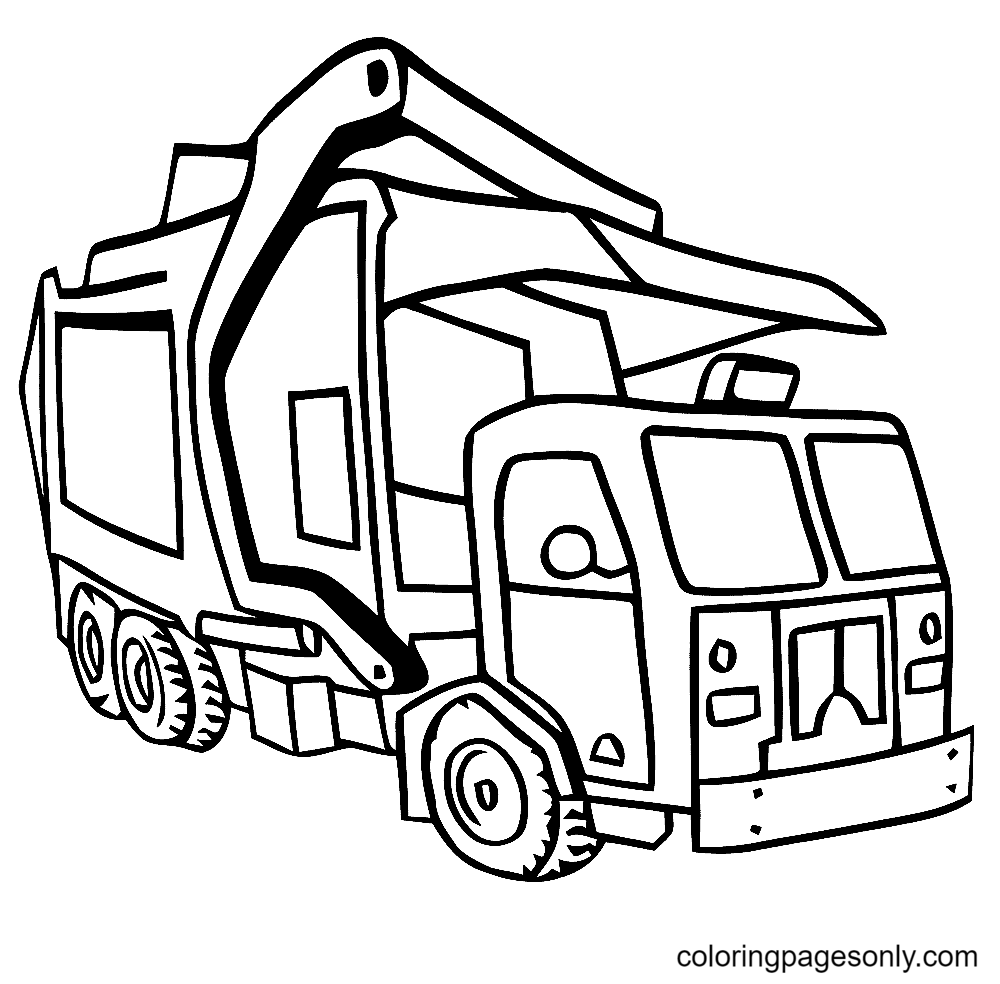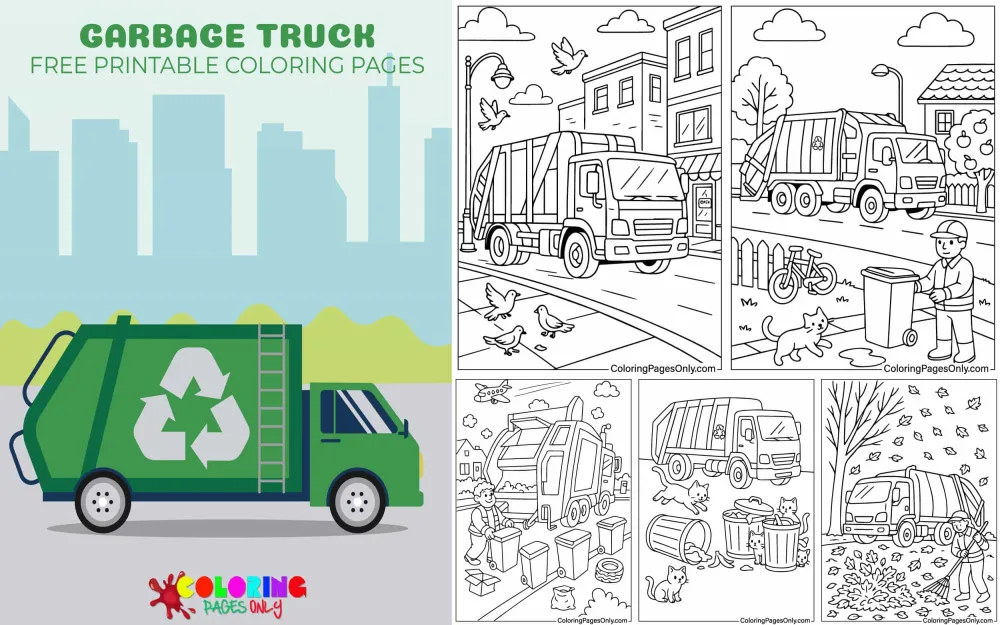
Free garbage truck coloring pages: 40+ pages featuring rear-loading compactor trucks in neighborhood collection scenes, front-loading trucks lifting commercial dumpsters with hydraulic forks, automated side-loaders with robotic arm mechanisms, roll-off trucks with open containers at construction sites, recycling trucks with split collection bodies, cartoon garbage trucks with friendly faces, detailed mechanical cross-section views showing compaction systems, collection workers alongside trucks on residential routes, and the full visual vocabulary of the refuse collection vehicle across its most common operational types. All free, printable PDF and online coloring for vehicle-enthusiast children of all ages.

The garbage truck, as a mechanized refuse collection vehicle, emerged in the 1930s, when hydraulic compaction technology was first applied to waste hauling. Before this, municipal refuse was collected in open wagons, and horses drew the vehicles through city streets. Two of the earliest successful rear-loading compactor trucks, the Pak-Mor and the Garwood Load Packer, were both developed in 1938, and they established the basic operational concept of the modern rear-loading garbage truck: waste deposited through a rear hopper, compressed by a hydraulic packing blade, and stored in a sealed body until disposal.

Before mechanized collection, organized waste management in American cities was a significant public health challenge. New York City Commissioner of Street Cleaning George Waring reorganized the city’s waste system beginning in 1895, introducing the first systematic separation of garbage, ash, and rubbish and establishing the framework for organized municipal collection. The United States Environmental Protection Agency estimates that Americans generate approximately 292 million tons of municipal solid waste annually, of which approximately 94 million tons (32%) is recycled or composted. Each American generates approximately 4.9 pounds of waste per day.

These 40+ free pages at ColoringPagesOnly.com cover every major garbage truck type. All free, PDF or PNG, print or color online.

What’s Inside

Rear-Loading Compactor Truck Pages

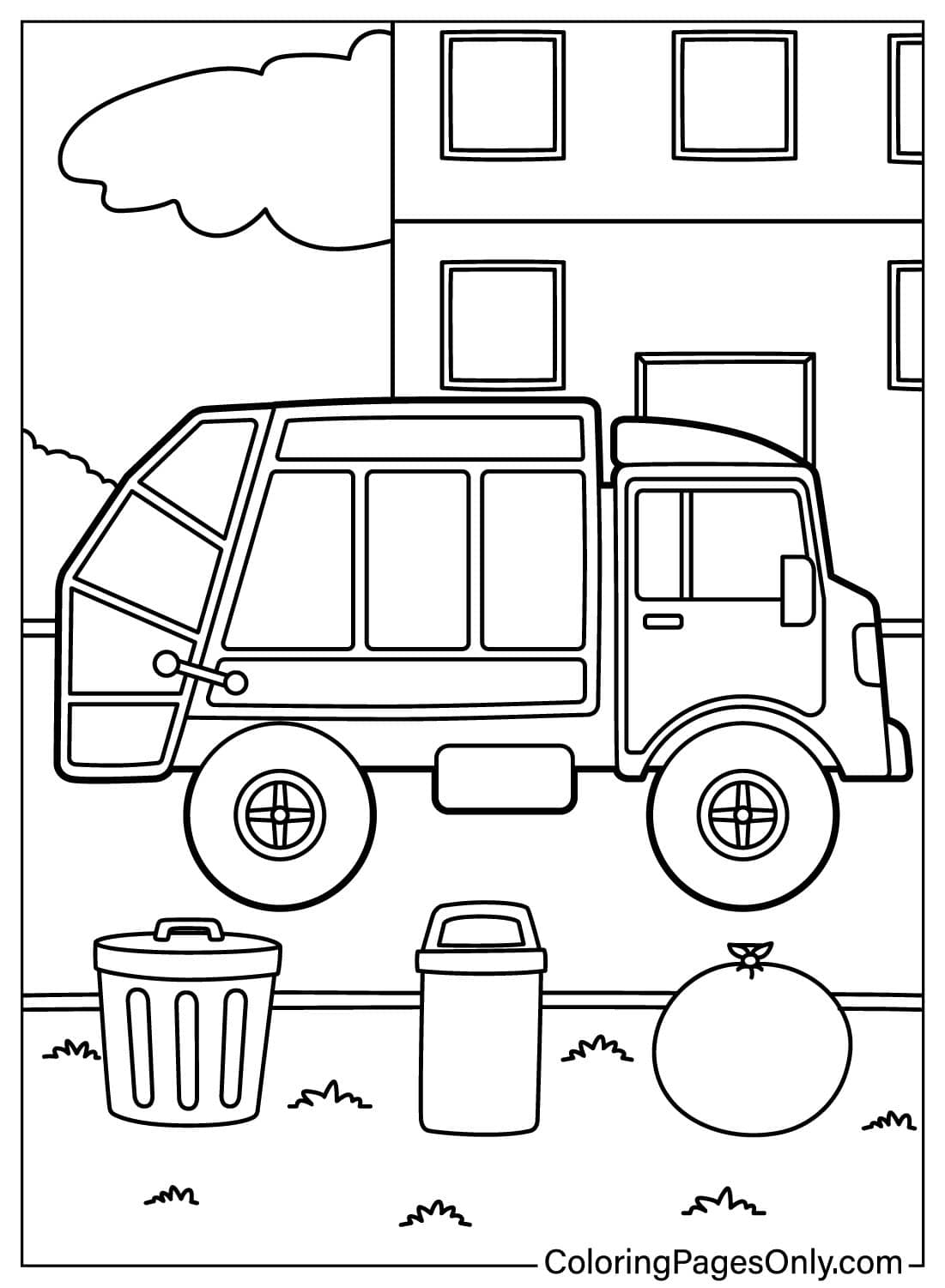
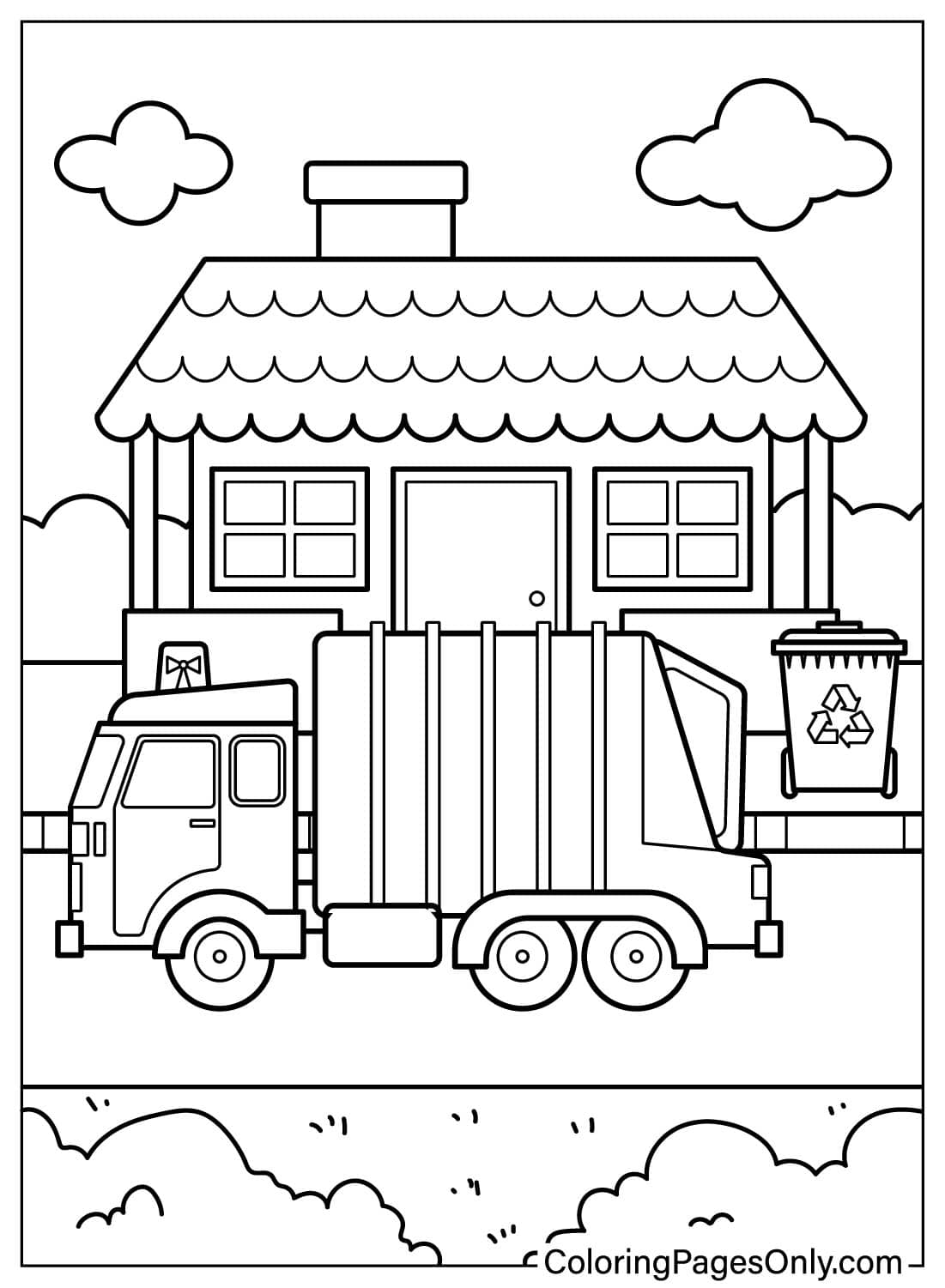
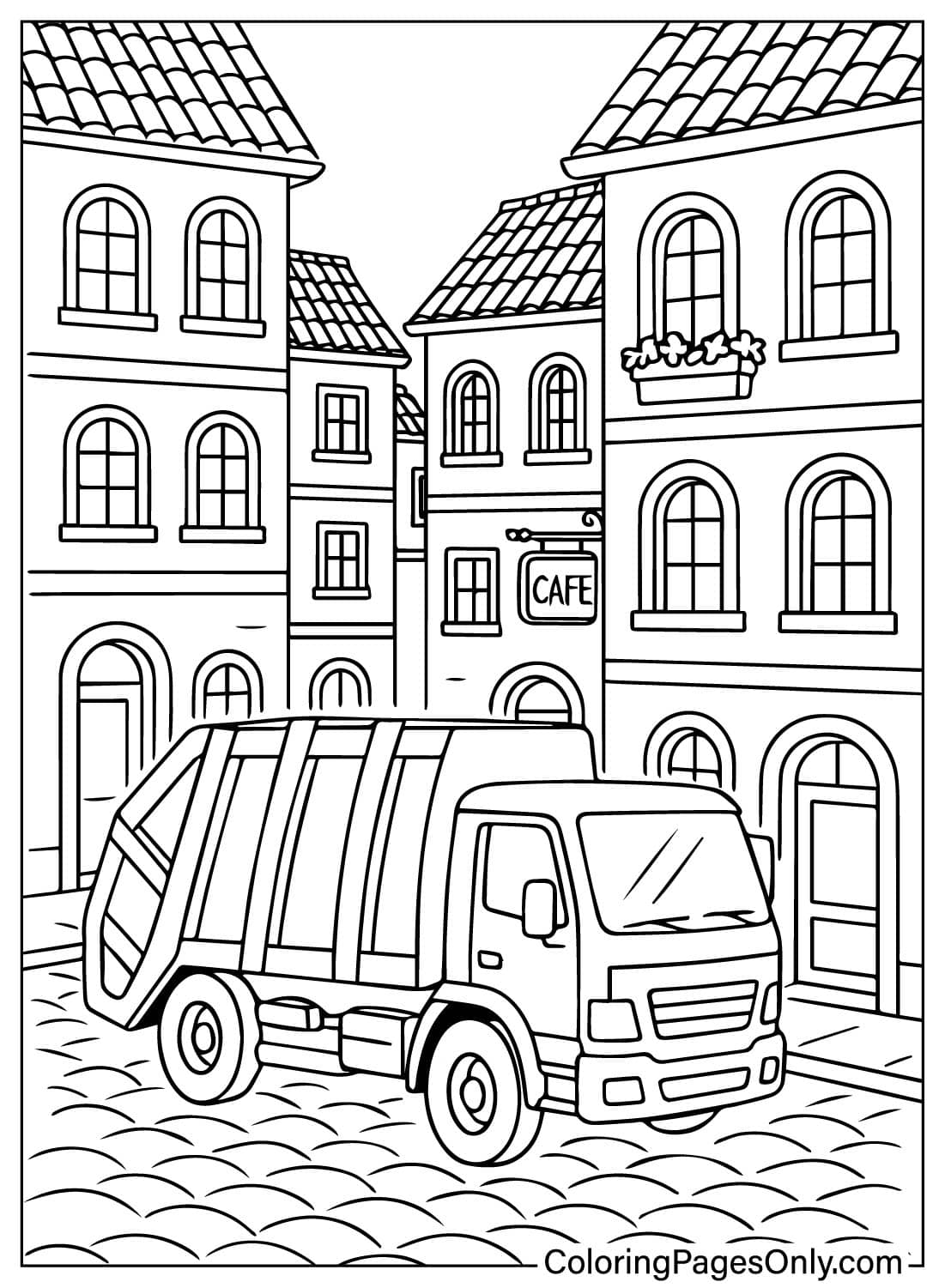
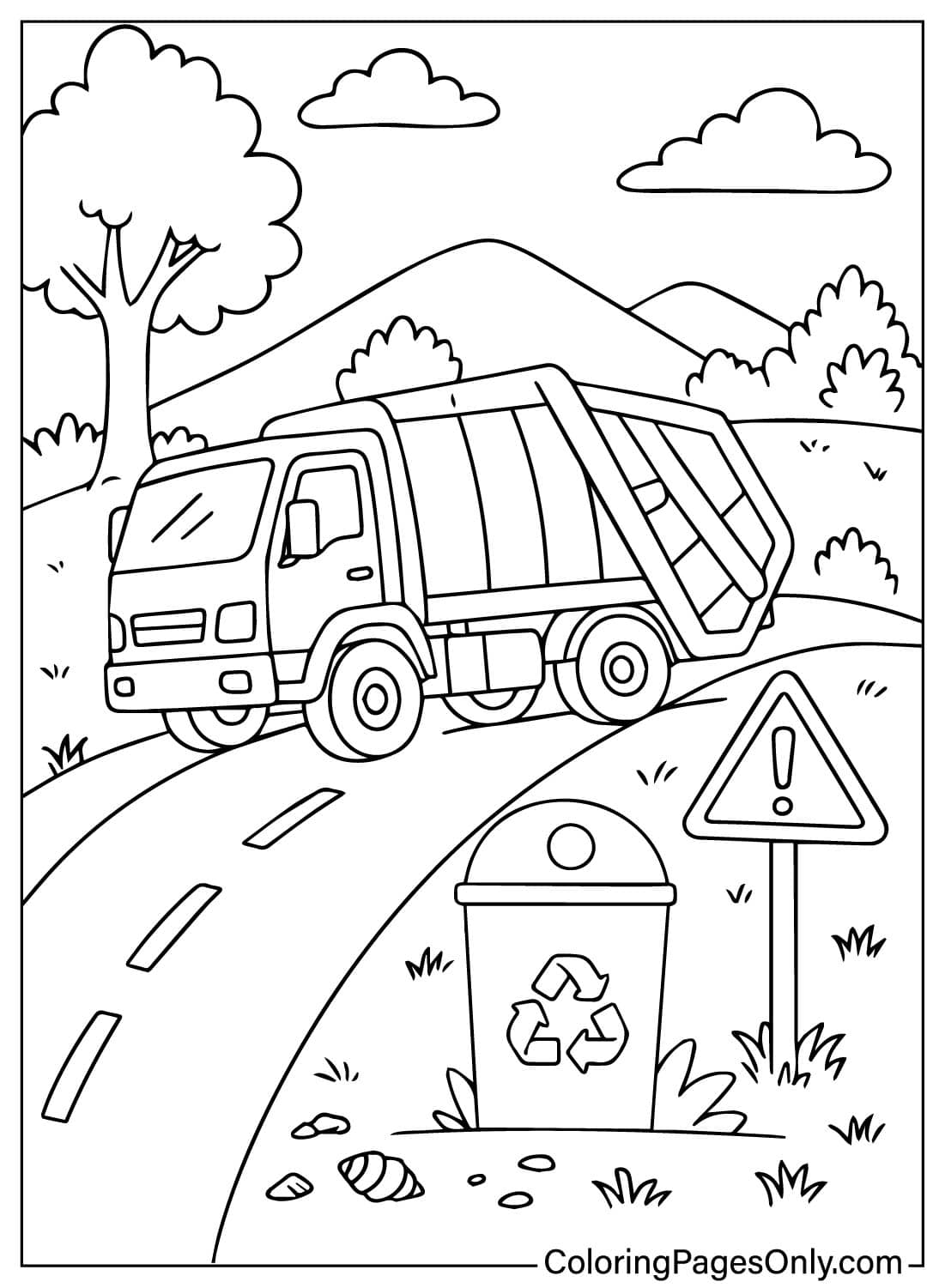
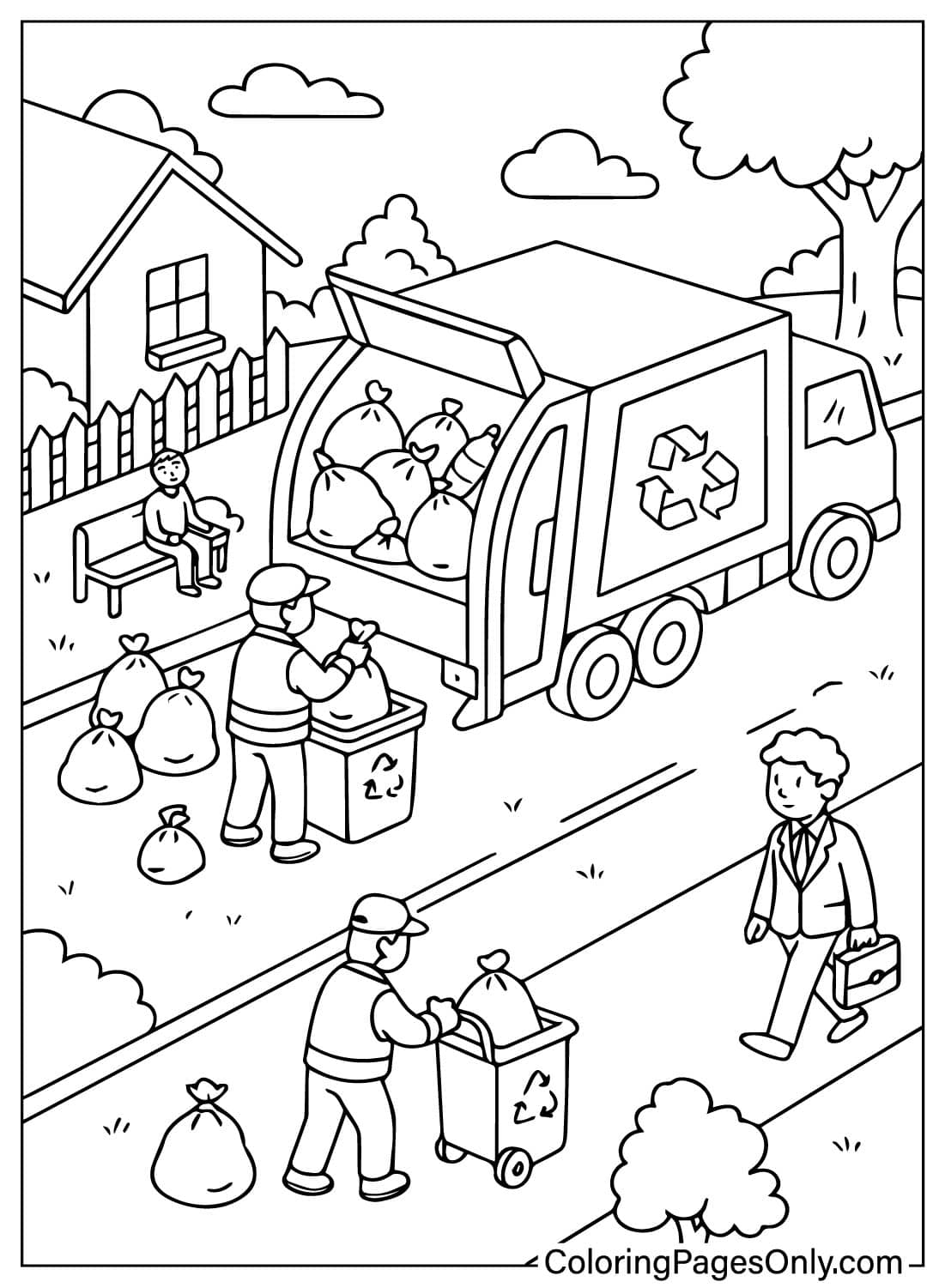
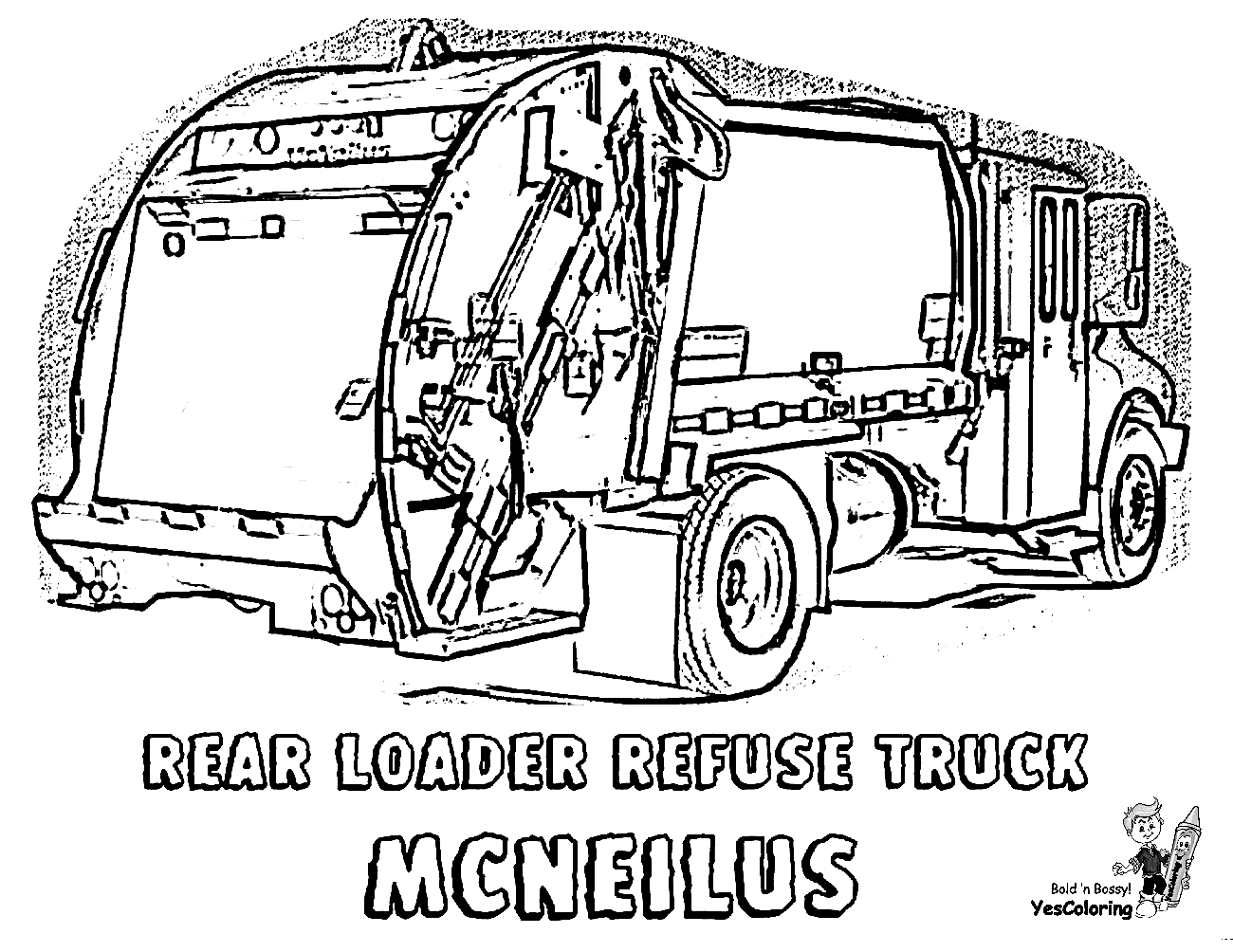
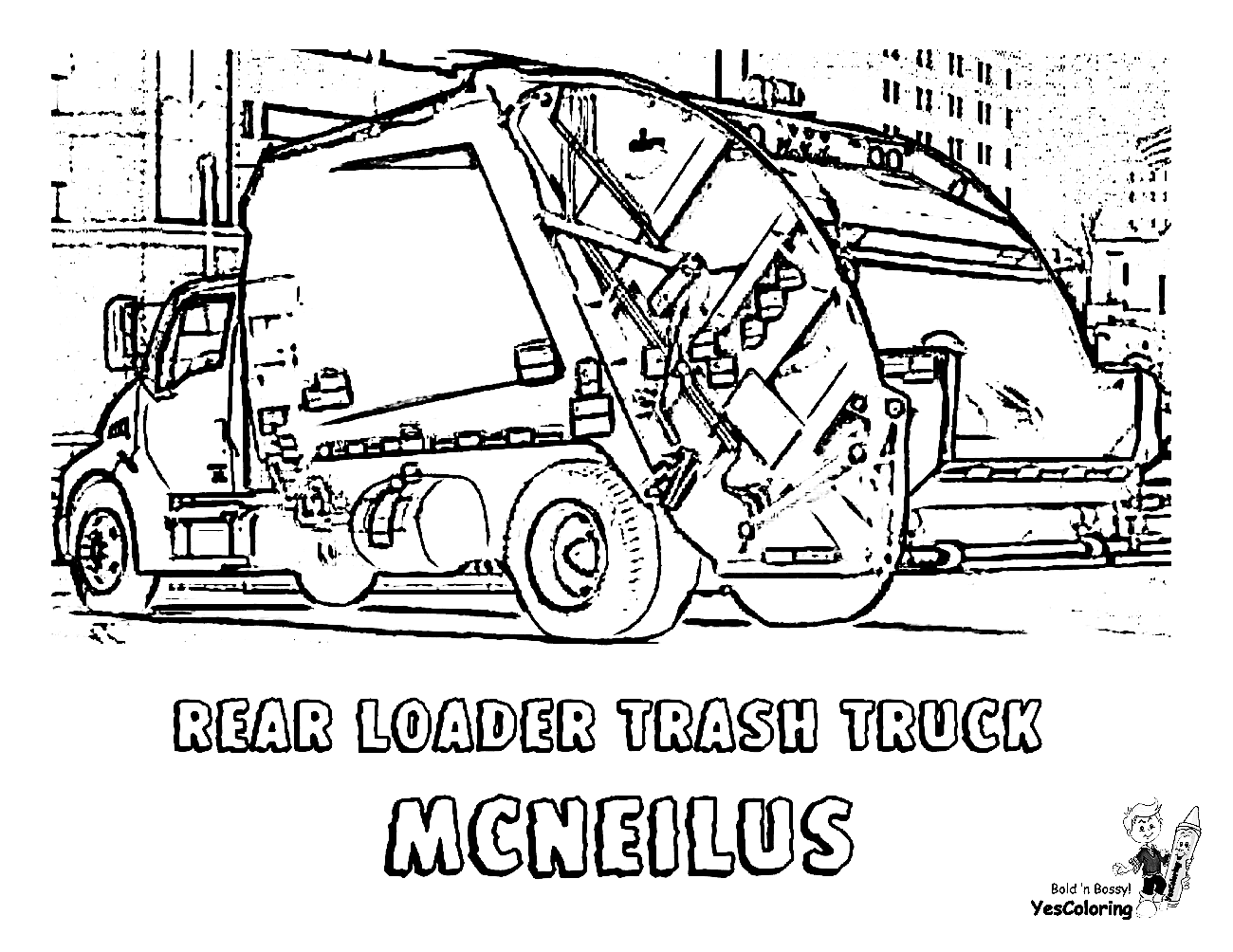
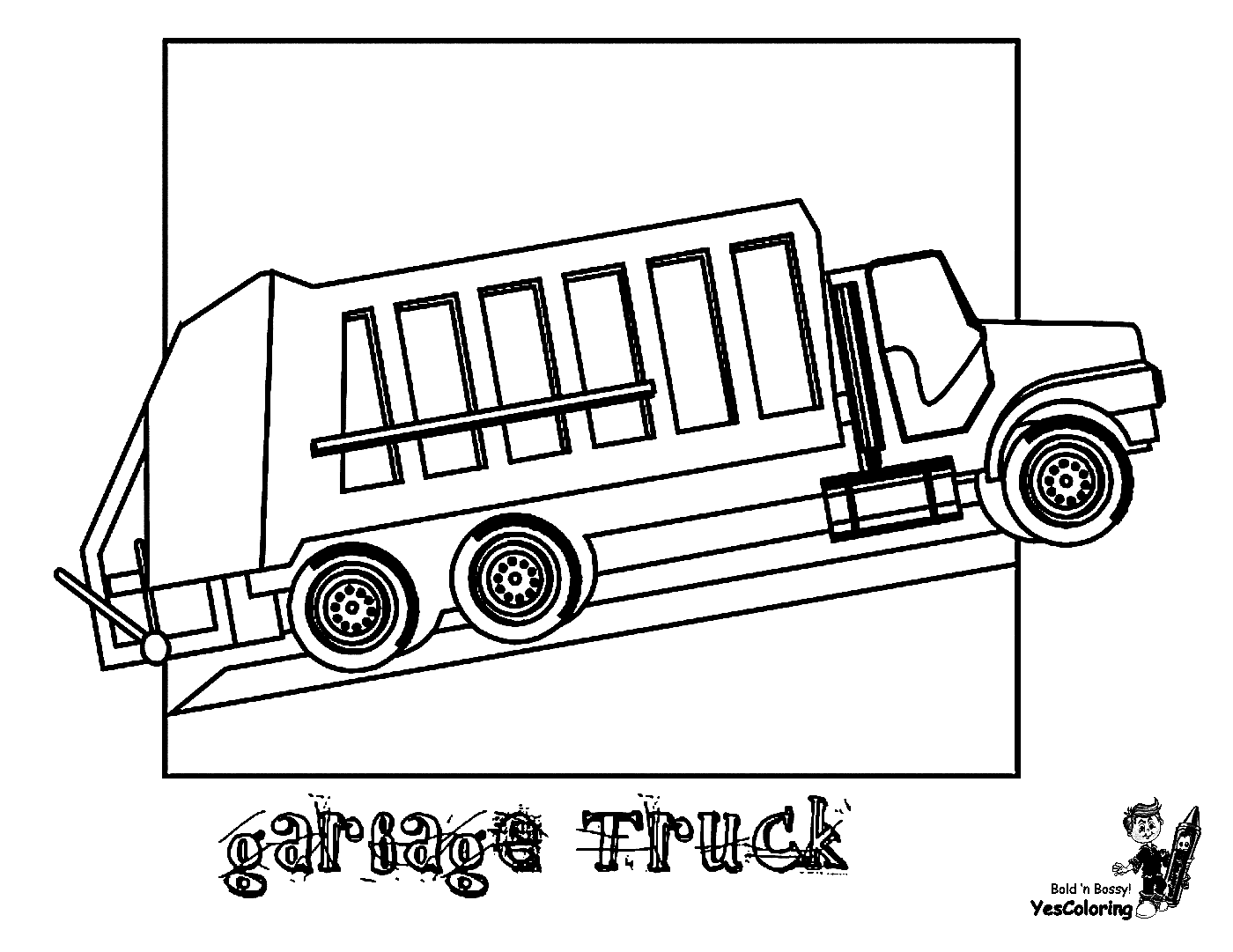
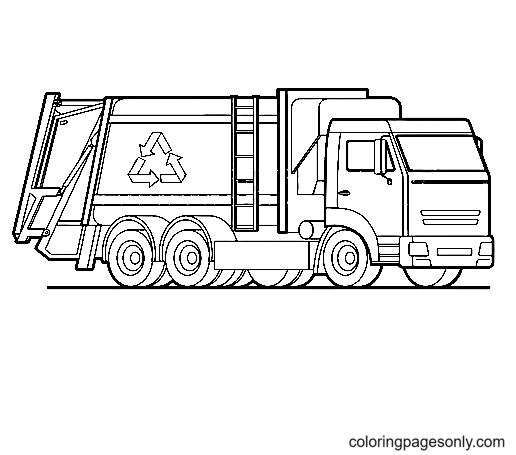
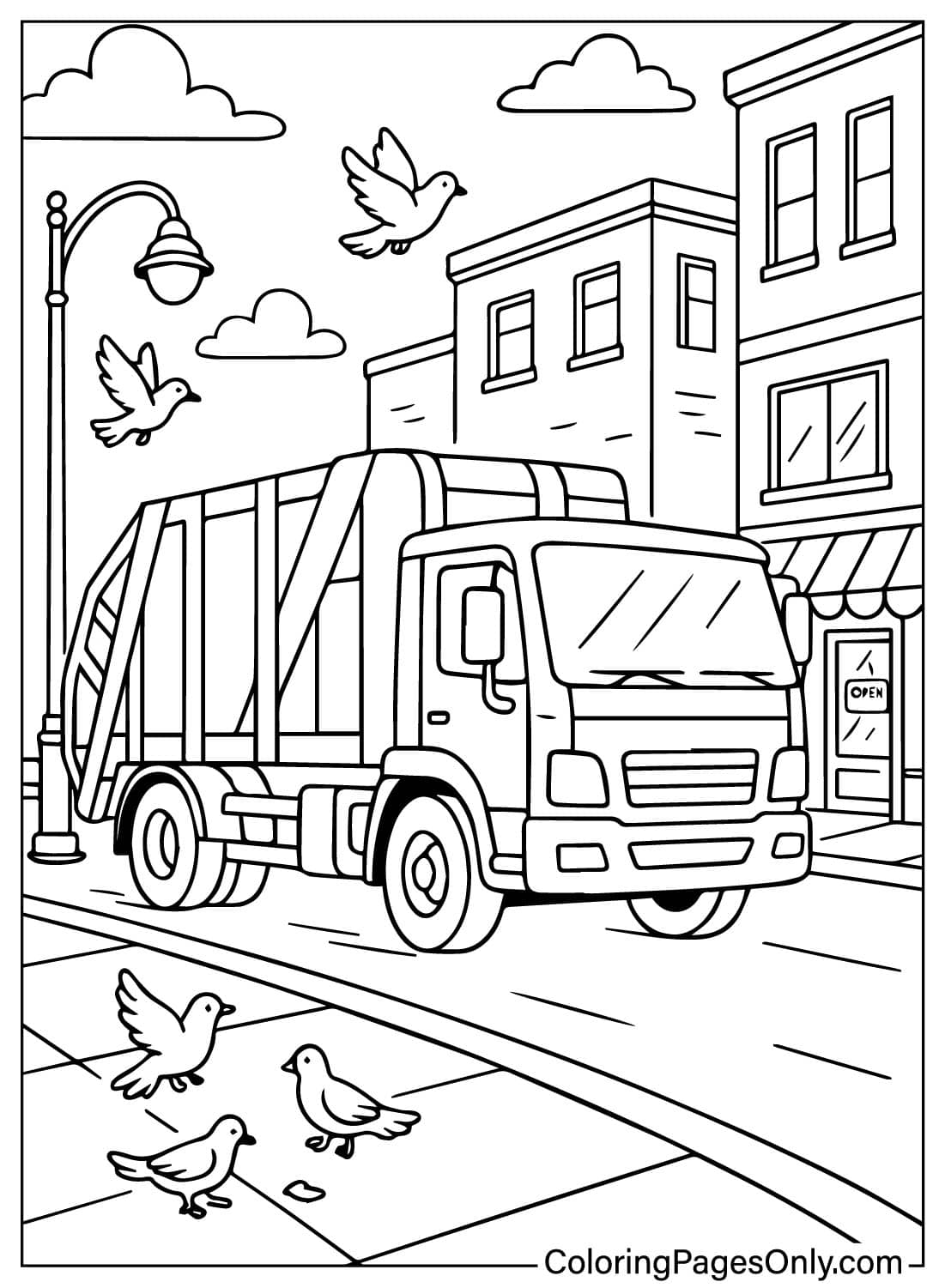
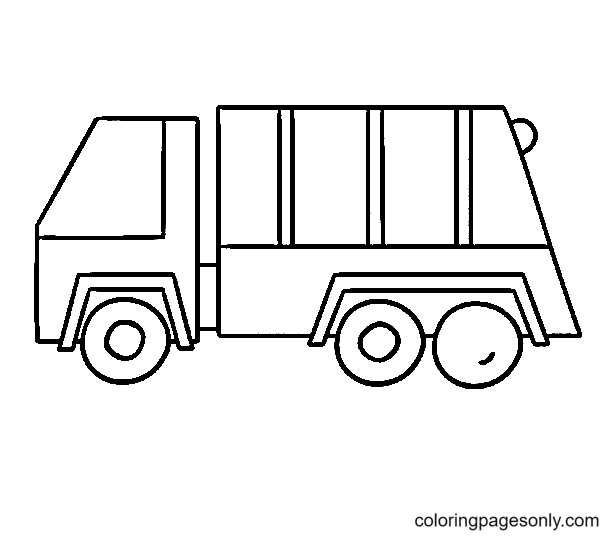
The rear-loading compactor is the most common type of refuse collection vehicle in residential use and the type most immediately recognized as “the garbage truck” by the children who watch it make its weekly appearance on their street. Its operational sequence is the one most directly observable by a curious child from a front window or driveway: the two collection workers lift garbage bags and bins to the rear hopper, the packing blade descends hydraulically to compress the fresh load forward into the body, and the truck moves to the next collection point.

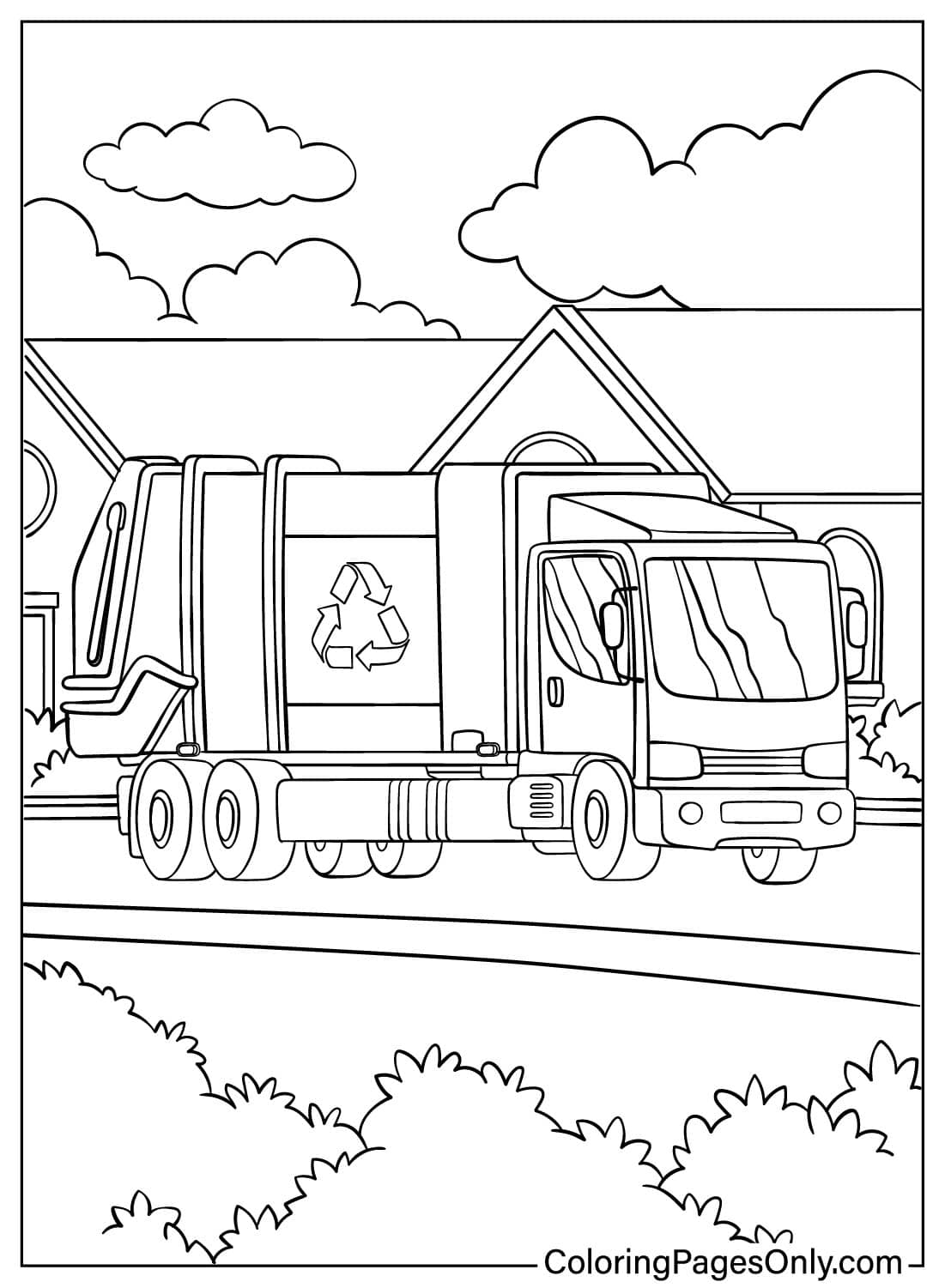
Its silhouette is one of the more visually specific of any truck type: the forward cab, the large enclosed body with its squared profile, and the distinctive open hopper at the rear with the visible packing blade mechanism above the loading lip. The hopper opening, approximately chest height on an adult standing worker, shows the internal blade and the compressed waste mass behind it during loading.

The packing blade in a standard rear-loader operates at hydraulic pressures of approximately 2,000 to 3,000 pounds per square inch, compressing waste by roughly a 4:1 ratio. A truck body that holds 25 cubic yards of compressed waste would hold only about 6 cubic yards of uncompressed loose garbage. The hydraulic compression system is the engineering innovation that made the modern garbage truck economically viable: without it, trucks would need to make far more trips to the landfill or transfer station.

Coloring rear-loader pages: The cab is the page’s forward section: apply the truck’s primary color (most commonly white, green, or yellow in American residential collections) across the full cab surface. The body is the page’s dominant large surface: the same primary color applied at full coverage. The hopper at the rear is a darker grey or near-black, as the interior of the loading mechanism shows the compressed waste mass and the hydraulic blade machinery. The cab windows are very dark grey or near-black with a subtle light grey highlight suggesting the windshield glass. Large tires use medium grey with near-black rubber side walls.

Front-Loading Compactor Truck Pages

The front-loading garbage truck is designed for commercial and industrial waste collection rather than residential: the hydraulic forks mounted on the front of the cab are sized for commercial dumpsters (large metal containers typically found behind restaurants, retail stores, shopping centers, and office buildings) rather than for residential garbage bags and bins.

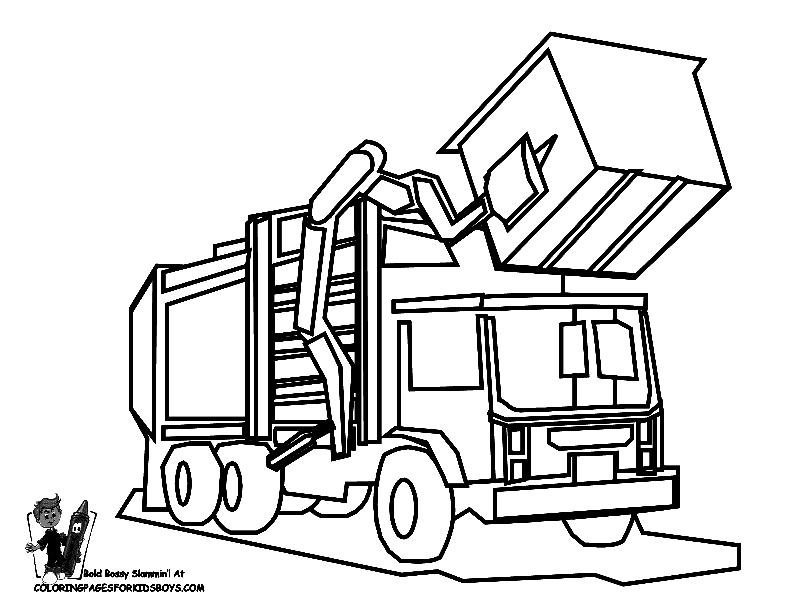
The front-loader’s operational sequence is visually dramatic: the driver approaches a commercial dumpster, positions the forks under the dumpster’s lift pockets, raises the dumpster on the hydraulic fork arms to height, tilts it to dump its contents into the truck’s hopper at the top of the body, and lowers it back to the ground. The entire operation is performed by the driver alone from inside the cab, making the front-loader one of the most mechanically self-sufficient of all refuse collection vehicle types.

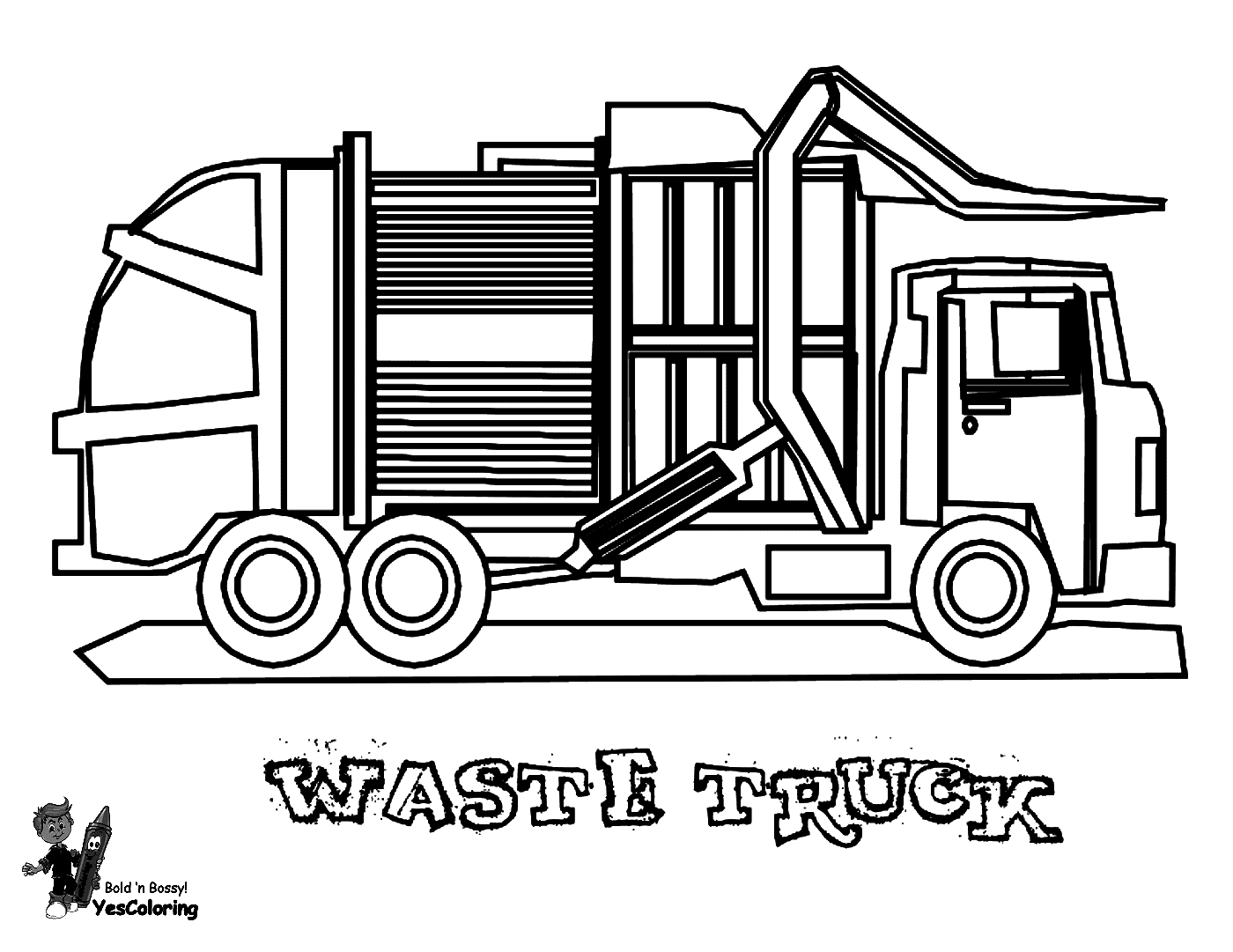
The fork arms at the front of the truck are the design’s most visually distinctive element: two large steel arms extending forward below the cab, with the spreading horizontal fork prongs at their ends. Pages showing the forks in raised position, with a commercial dumpster in the elevated dump position, are the collection’s most mechanically dramatic.

Coloring front-loader pages: The fork arms are dark grey or dark steel metallic, applying the standard three-zone metallic technique (lighter on the top face, mid-tone on the vertical face, darkest in the recessed areas between arm components). The commercial dumpster, if shown, is typically medium grey or dark green. The truck body uses the vehicle’s primary color. Any hydraulic cylinder elements visible along the fork arms are metallic grey.

Automated Side-Loader Pages

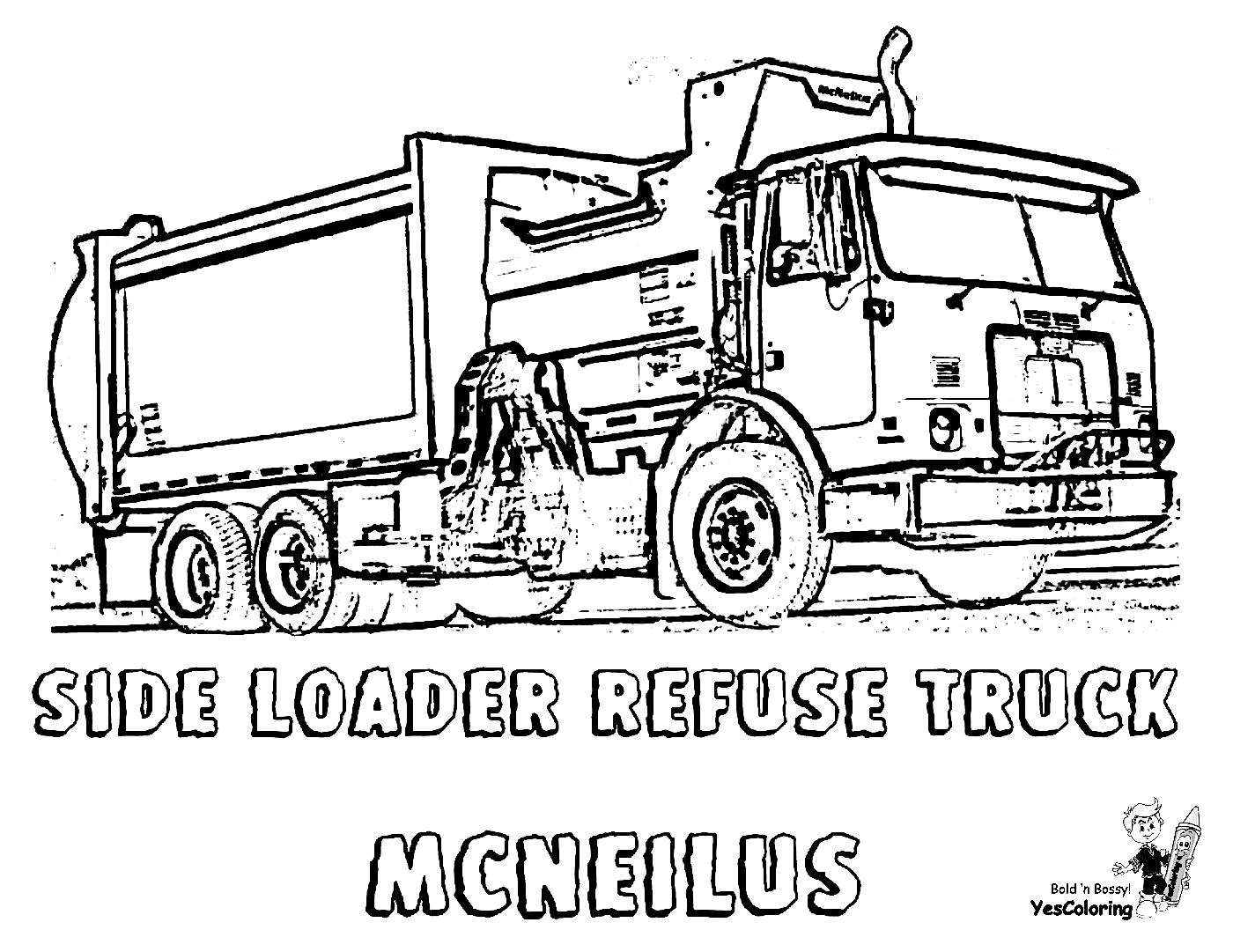
The automated side-loader (ASL) is the most rapidly growing type of residential refuse collection vehicle because it can typically be operated by a single driver with no separate collection workers, significantly reducing labor costs and eliminating the ergonomic injuries associated with manual waste lifting.

The ASL’s robotic arm is its defining visual element: a hydraulic arm mounted on the right side of the truck body that extends outward, grabs a specialized wheeled bin (which the resident places at the curb), lifts it over the truck body, inverts it to empty the contents into the top-loading hopper, and returns the empty bin to the curb. The entire cycle takes approximately 15 to 30 seconds per collection stop. The specialized wheeled bins required for ASL collection have integrated handles or lifting points that the robotic arm can grip.

Side-loader pages show this arm in various positions: extended and gripping the bin, in the raised and inverted dump position, or retracted and folded against the truck body. The arm mechanism is the most mechanically complex element visible from the outside of any standard refuse collection vehicle.

Coloring side-loader pages: The robotic arm uses dark grey and metallic grey in the three-zone technique, as it is a hydraulic steel mechanism. The wheeled collection bin, if shown, is typically grey or dark green with a slightly lighter grey lid. The arm’s hydraulic cylinder elements are bright metallic silver where they are exposed. The truck body’s right side panel, which the arm mounts on, typically shows arm attachment hardware in dark grey metallic.

Cartoon and Cute Garbage Truck Pages

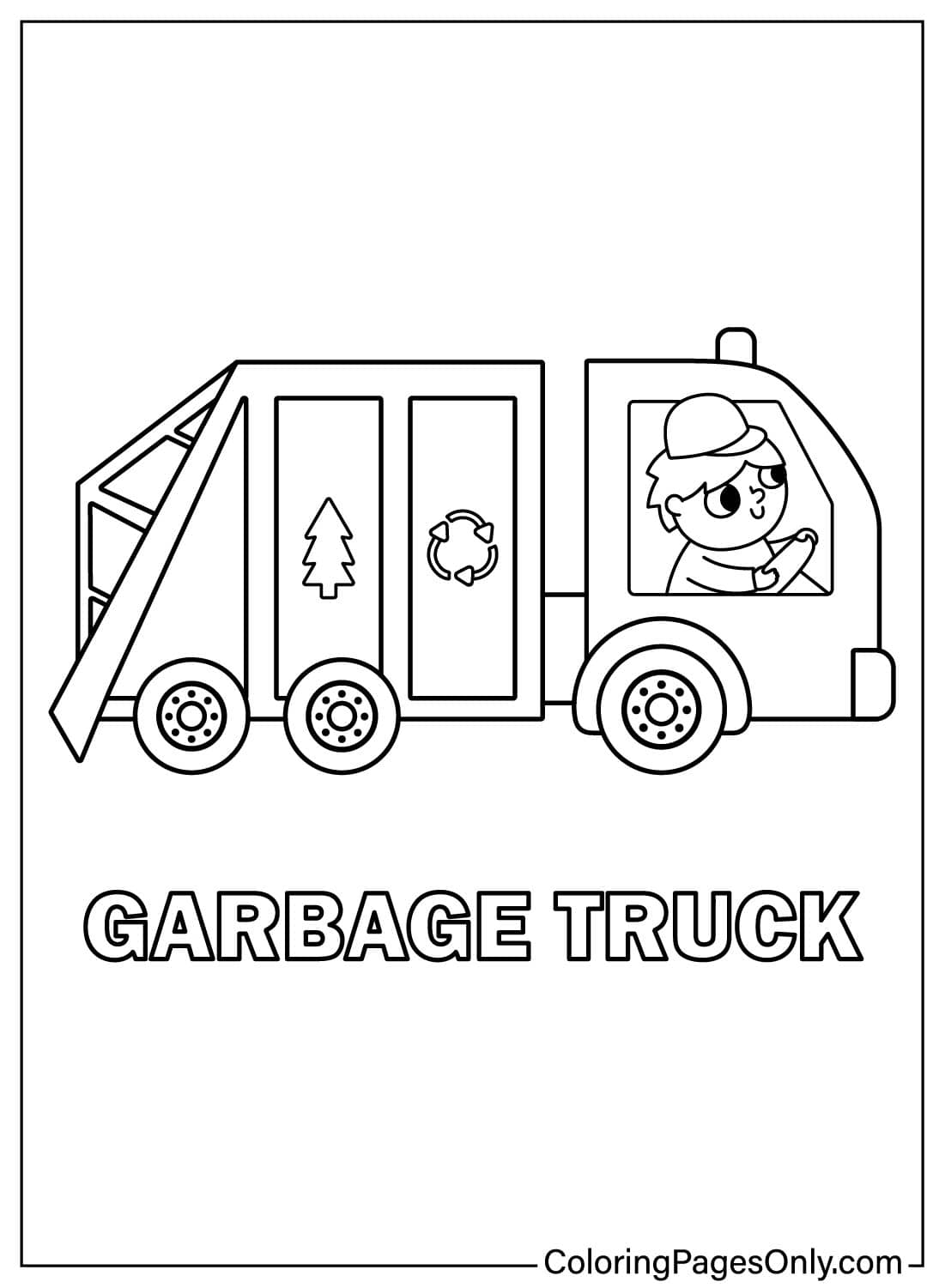
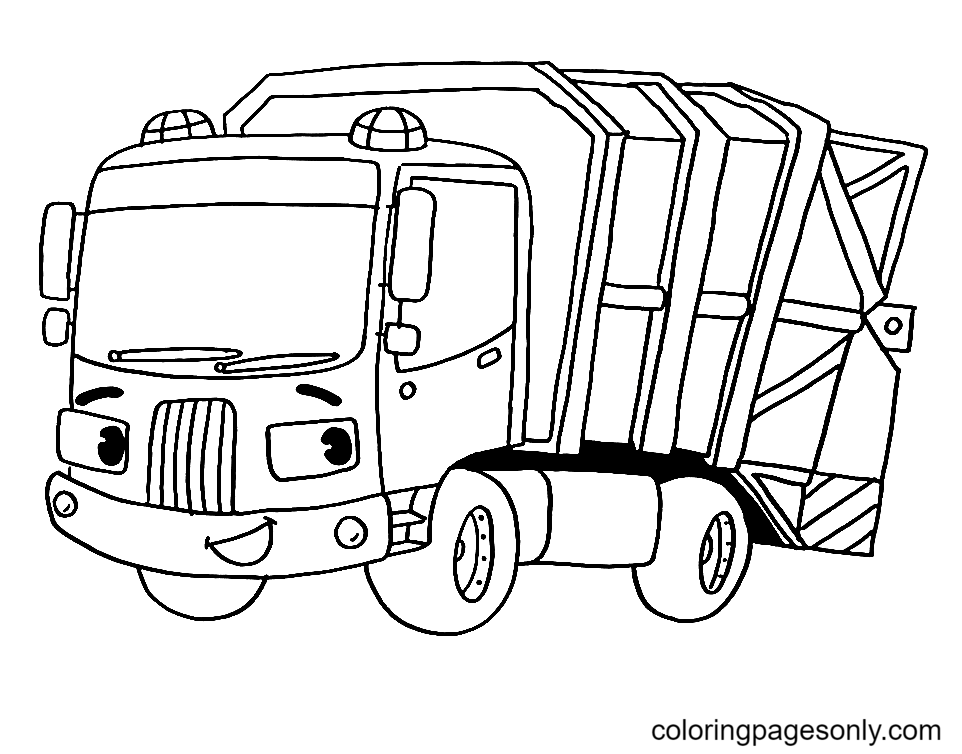
Cartoon garbage trucks with friendly faces, large expressive eyes, and cheerful color schemes are the collection’s most accessible pages for the youngest children and the most directly connected to the specific fascination that many children between ages two and five have with garbage trucks: the mystery of what is inside, the drama of the compression mechanism, the authority of the large vehicle, and the predictable schedule that makes it a weekly event of specific anticipation.

The cartoon truck’s face typically replaces the windshield area with large round eyes, giving the cab a face and the vehicle a personality: a truck that smiles while it works, that looks friendly rather than industrial, that communicates the specific warmth of a community service that children correctly identify as important without fully understanding why.

Coloring cartoon garbage truck pages: Vivid, fully saturated primary or secondary colors rather than the realistic grey-green of actual municipal vehicles. The eyes within the cab/windshield area use the standard animated eye treatment: vivid irises with dark pupils and a white highlight dot. The mouth, if present, is a broad, clean curve. Any decorative stripes or color panels on the cartoon truck body should use complementary accent colors at full saturation.
Roll-Off Truck Pages

The roll-off truck (also called a hook-lift truck) is the vehicle that delivers and retrieves the large open-top containers commonly seen at construction sites, demolition projects, large events, and major residential cleanouts. Its operation involves a hydraulic hook or cable system that slides the container (called a roll-off container or skip) off the truck bed onto the ground for filling, and then retrieves the full container by pulling it back onto the truck for transport.

The visual appeal of the roll-off truck for coloring pages is its mechanical complexity: the cable or hook mechanism visible at the rear, the hydraulic lift arms, and the distinctive silhouette of the truck bed at an angle during the container loading or unloading process.

Coloring roll-off pages: The truck cab and chassis use the same grey-green or yellow primary truck color as other commercial vehicles. The roll-off container, which is typically a different color from the truck, uses medium grey, dark green, or brown. The cable and hook mechanism uses dark grey metal. Any visible hydraulic components use the standard metallic treatment.

Recycling Truck Pages

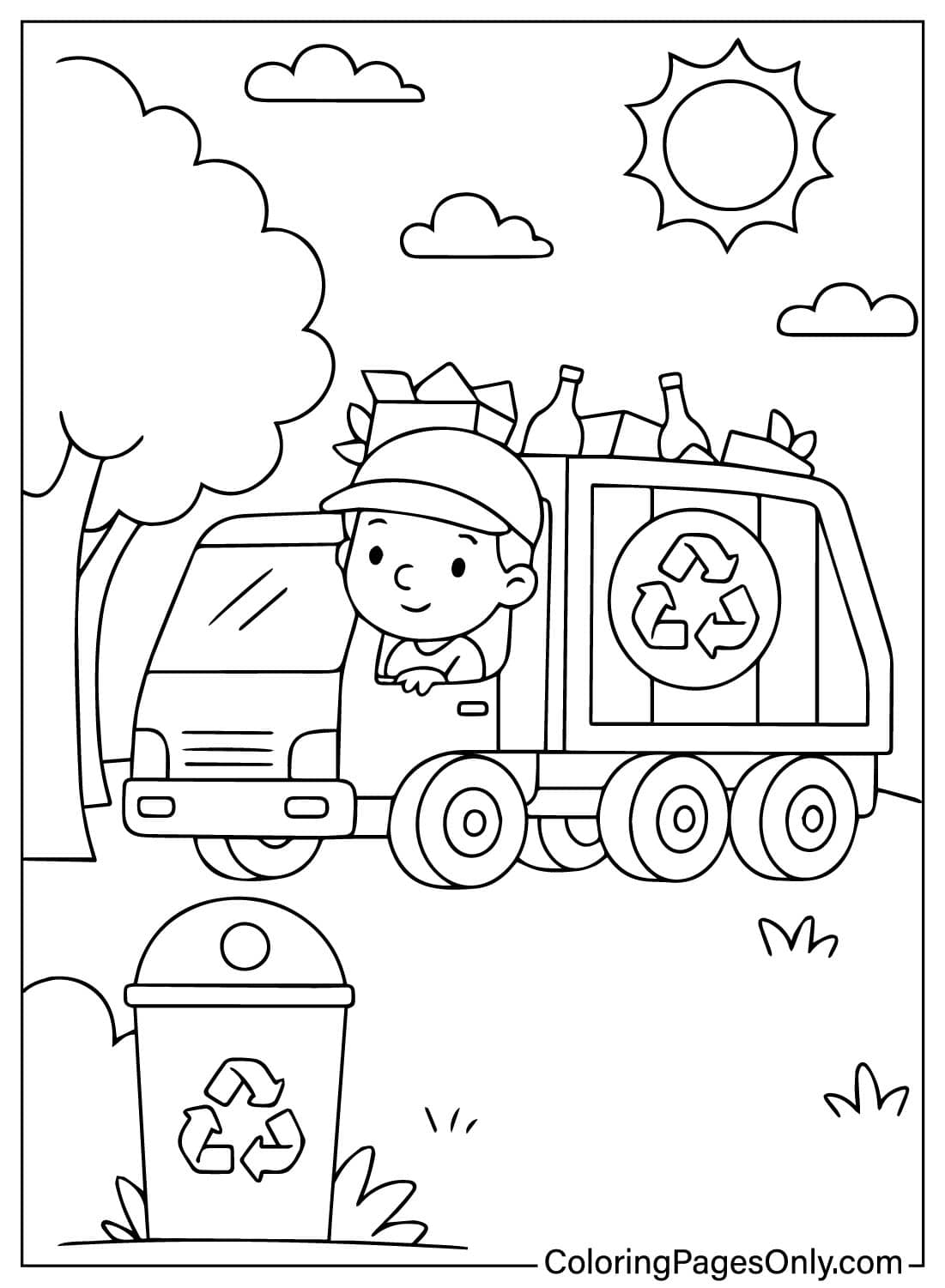
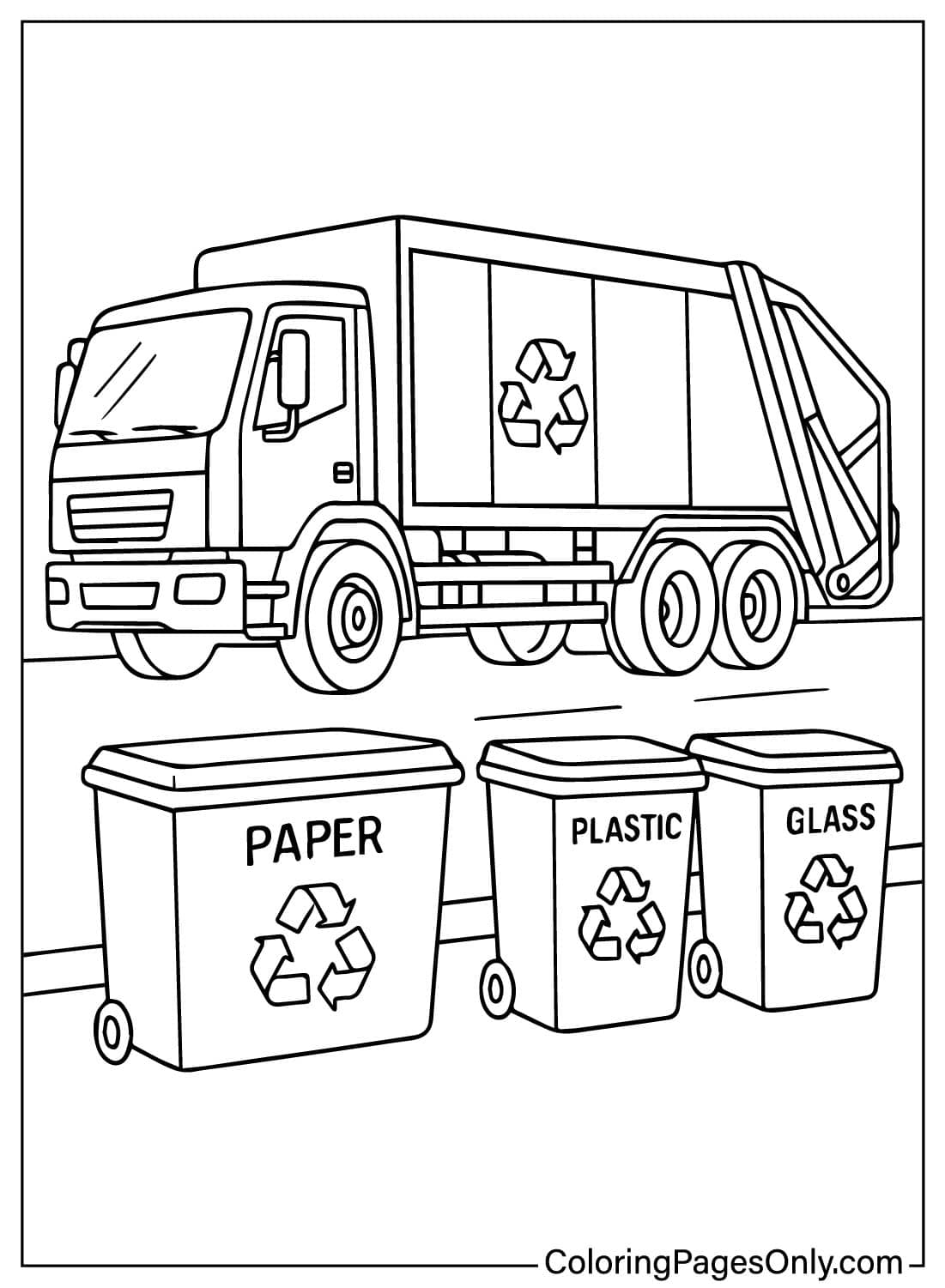
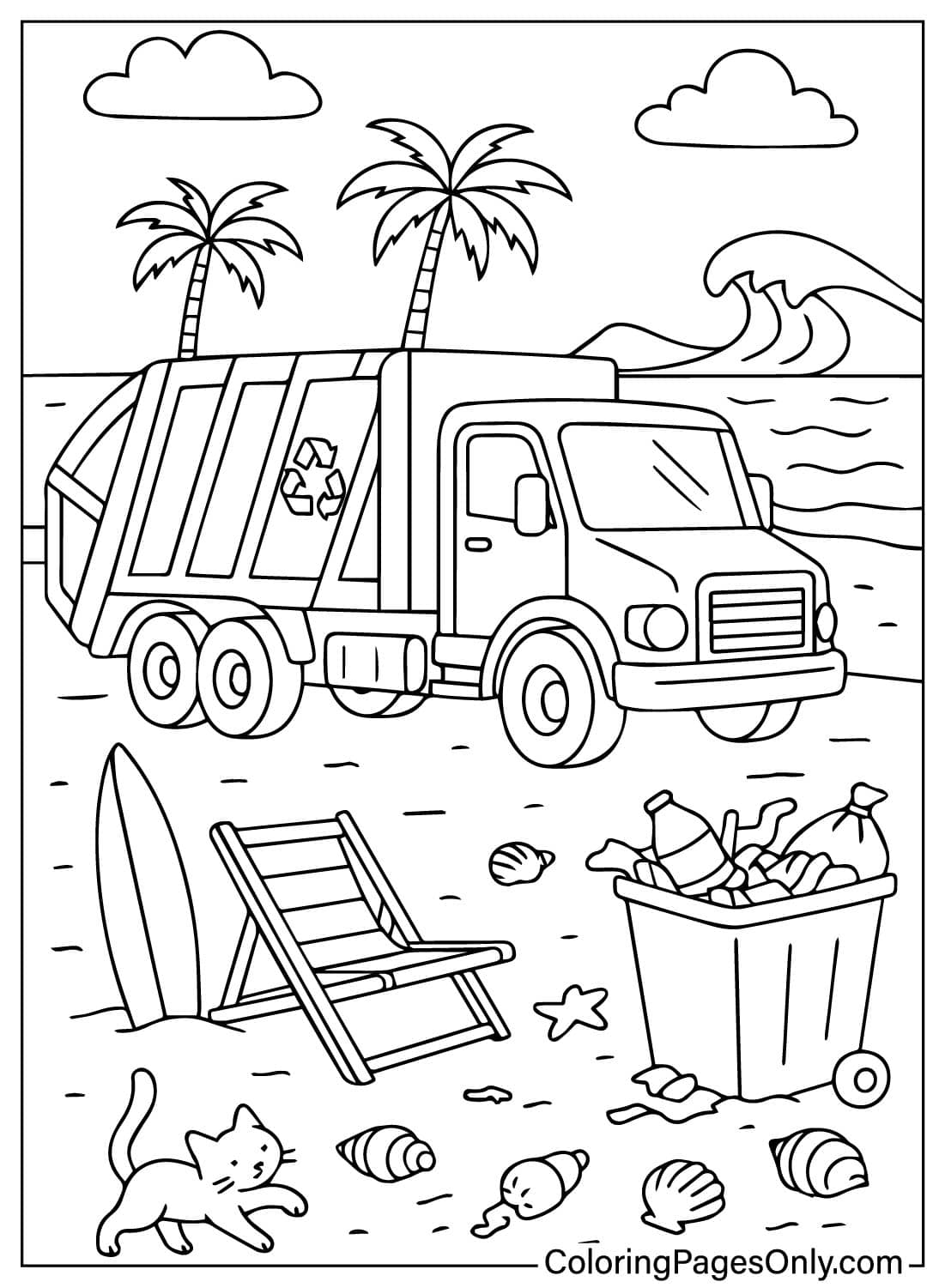
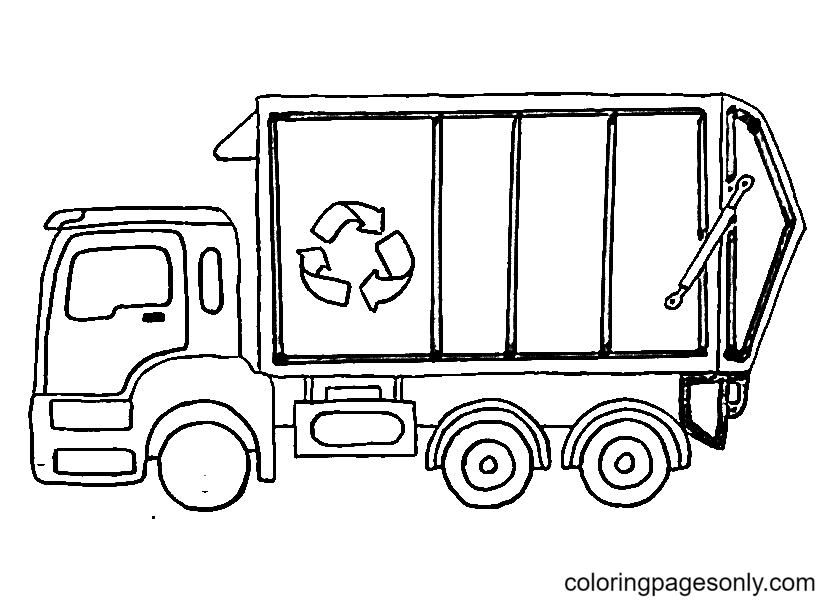
Recycling trucks are specifically designed for collecting recyclable materials: glass, paper, cardboard, metal cans, and plastic containers. Many recycling trucks have multiple compartments that allow different recyclable materials to be kept separate during collection. Some municipalities use single-stream recycling trucks that collect all recyclables in one compartment.

Recycling trucks are often painted in distinctly different colors from standard garbage trucks to help residents and drivers distinguish between collection types: blue is the most common color for recycling trucks in the United States, with some municipalities using green for organic waste collection.

Coloring recycling truck pages: Vivid medium blue as the primary truck color, the most common US recycling truck color. The recycling arrows symbol, if present on the truck’s body, uses slightly deeper blue or contrasting white. The split compartment body, if the page shows the multi-compartment interior, uses slightly different grey tones for each compartment section.

What These Pages Do

Sanitation and refuse collection are one of the foundational public health services of the modern city. New York City Commissioner George Waring’s 1895 reform of the city’s waste collection system, which introduced the first systematic waste separation and collection schedules, came directly out of the public health crisis of the 19th century American city: cholera epidemics in 1832 and 1866 had killed tens of thousands in New York alone, and the direct connection between unsanitary urban conditions and disease transmission was established by the medical research of the period. Waring’s reorganization, which dressed his sanitation workers in white uniforms and renamed them “the White Wings” to emphasize their civic dignity, reduced disease rates and established the framework within which American municipal solid waste management has operated since.

The refuse collection vehicle’s design evolution from horse-drawn open wagons (1890s) through the first hydraulic compactors (1938) to the automated side-loaders of the current era (widespread since the 1990s) represents one of the less-discussed but most practically significant industrial engineering progressions of the 20th century. Each phase reduced worker injury, increased collection efficiency, and reduced the public health risks associated with uncollected waste.

The American Academy of Pediatrics identifies fine motor skill development as a key childhood milestone throughout early childhood. The hydraulic arm mechanism detail, the truck body panel rendering, the compaction system’s visible blade elements, and the complex wheel and axle configuration of heavy commercial vehicles all provide sustained fine motor challenge across the collection’s age range. The 2005 Art Therapy Journal study on structured coloring and anxiety reduction applies throughout.

Children’s specific fascination with garbage trucks is well-documented among pediatric developmental researchers as an example of “vehicle fixation,” a normal developmental phenomenon in which children between approximately one and five years old develop intense, focused interest in specific types of vehicles, typically those that perform visible, dramatic, regular operations in their environment. The garbage truck’s weekly schedule, its size and noise, and the visible mechanical drama of its compaction system make it one of the most common subjects of vehicle fixation in this age range.

How to Color These Pages Well

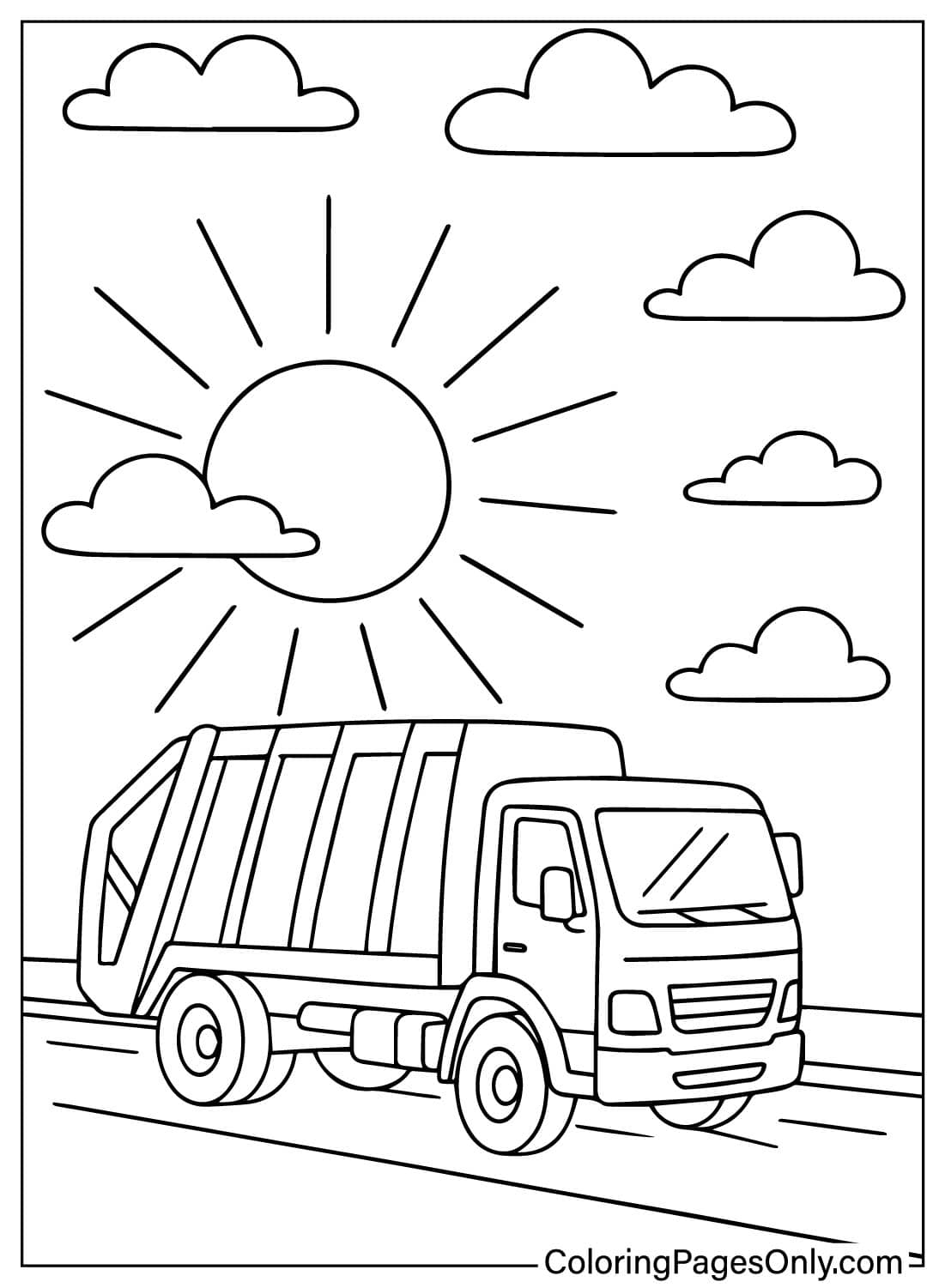
The truck body uses the three-zone vehicle metallic technique scaled to large flat surfaces. Unlike smaller vehicles, a garbage truck’s body presents very large flat panels that need value variation to read as three-dimensional rather than as flat rectangles of color. Apply the base truck color at full coverage across all body panels. Then identify where direct light hits the truck (the top of the body, the upper portion of the cab) and apply the same color at slightly lighter pressure there. Apply a slightly darker version of the same color along the shadow edges (the lower portions of the body panels, beneath any overhang or where one panel transitions to another). The three-zone treatment gives the large body its dimensional quality.

The rear hopper interior is the darkest area on a rear-loader page. The hopper opening at the rear of the truck shows the interior of the compression chamber: a dark, enclosed space with the packing blade visible above the loading lip. Apply near-black or very dark grey to the entire visible interior of the hopper. The packing blade, visible as a flat panel across the top of the hopper, is dark grey metallic. The compressed waste mass visible behind the blade is the darkest possible tone: near-black or very dark grey-brown. This dark interior against the truck’s lighter body color creates the maximum visual contrast that makes the hopper the page’s most eye-catching mechanical element.

Heavy-duty truck tires require a specific grey rather than black. Garbage truck tires are very large (typically 22.5-inch rims with dual rear tires) and are made of a dark grey-black rubber rather than the pure black of a car tire. Apply very dark grey rather than pure black to the tire surfaces, with the darkest point in the deeply recessed area between the tread blocks. The wheel rims are metallic: apply dark silver-grey for steel rims or slightly lighter metallic silver for polished aluminum rims. The dual rear tires (two tires side by side on each rear axle position) should show both tire outlines and the gap between them.

Hydraulic arm and cylinder elements use the three-zone metallic technique. All visible hydraulic components (the fork arms of a front-loader, the robotic arm of a side-loader, the lift arms of a roll-off truck) are unpainted or painted grey steel with hydraulic cylinder elements in polished metallic. Apply dark grey to the deepest shadow areas, medium grey on the main faces of each component, and light silver-grey to the top edges and most directly lit surfaces. The hydraulic cylinders (the smooth, shiny, polished metal elements that extend and retract) are the most metallic and most light-reflective: apply very pale silver-grey with a thin bright highlight line along the cylinder’s length.

Warning markings and safety elements are essential for realistic truck pages. Modern garbage trucks have specific required safety markings: retroreflective tape in alternating red-white or yellow-white stripes on the rear and sides, warning lights (amber/orange flashing lights at the top of the cab and rear body), and “CAUTION” or warning text panels. On realistic truck pages, these safety elements should be applied carefully: the reflective tape stripes use alternating red-orange and white in narrow diagonal bands, and the warning lights use vivid amber-orange for the light cover with a slightly lighter amber for the light’s glow effect.

5 Creative Craft Ideas

The Weekly Schedule Board

The garbage truck comes on a specific day, at approximately the same time, every week. For many children ages two to five who have developed a strong interest in the collection vehicle, the weekly schedule is one of their most important pieces of information: which day is collection day, approximately what time the truck arrives on their street, and how to be positioned at the window or yard to see it.

Print one garbage truck page. Color it in green or white that matches the actual collection vehicle in your area (or choose any vivid color for a creative version).

Mount on a backing sheet alongside a simple seven-day calendar. Circle or highlight the collection day. Add: “Garbage collection day: [Day]. Approximate arrival time: [Time]. Materials collected: [Garbage/Recycling/Organics]. The truck comes every week. It has come every week since [year].”

The Three-Stream Sorting Station

Many municipalities now operate a three-stream waste collection system: garbage (landfill-bound), recycling (paper, plastic, metal, glass for reprocessing), and organics (food scraps and yard waste for composting). Print three garbage/recycling truck pages. Color the garbage truck grey-white (general waste). Color the recycling truck blue (the most common US recycling truck color). Color the organics/compost truck green (the most common organics collection color).

On a large backing sheet, draw three labeled bins beneath the trucks: a dark bin for garbage, a blue bin for recycling, and a green bin for organics/compost. Draw arrows connecting each truck to its corresponding bin.

Add: “Three streams. One collection route. Garbage: landfill. Recycling: reprocessed into new materials. Organics: composted. The United States generates approximately 292 million tons of municipal solid waste annually. 94 million tons (32%) is recycled or composted. Source: US Environmental Protection Agency.”

The Compaction Diagram

The hydraulic compaction system of a rear-loading garbage truck compresses waste by approximately 4:1: a truck body holding 25 cubic yards of compacted waste would hold only about 6 cubic yards of uncompressed garbage. This compression makes the modern garbage truck economically possible: without it, trucks would need to make four times as many trips to the disposal facility.

Print a garbage truck page showing the rear of the truck. Color it in the realistic truck’s primary color.

Alongside the colored page, draw a simple diagram showing two rectangles: one large (labeled “6 cubic yards uncompressed garbage”) and one small (labeled “1.5 cubic yards after 4:1 compression”). Draw an arrow between them labeled “Hydraulic packing blade: 2,000-3,000 psi.”

Add: “The modern rear-loading compactor, first developed in 1938. Hydraulic compression: reduces waste volume by approximately 75%. Without compression: four times as many landfill trips per collection route. The packing blade: the engineering innovation that made modern residential garbage collection economically viable.”

The George Waring White Wings Page

George Waring became Commissioner of Street Cleaning for New York City in January 1895, inherited a department widely regarded as one of the most corrupt and ineffective in the city’s government, and within three years had transformed it into one of the most praised urban sanitation operations in the world. He dressed his sanitation workers in white uniforms, renamed them the “White Wings,” required systematic waste separation, established regular collection schedules, and organized the first significant waste recycling program in an American city.

Print the most formal, most “official-looking” garbage truck page in the collection. Color it in clean white, referencing the White Wings’ distinctive uniforms.

On the backing card: “George Waring. Commissioner of Street Cleaning, New York City, 1895-1898. Reform: reorganized collection, introduced systematic waste separation, and established regular schedules. The White Wings: sanitation workers dressed in white uniforms to emphasize civic dignity and visibility. Before Waring, New York streets were widely described by visitors as among the filthiest in the world. After Waring: cited as model for municipal sanitation reform globally. Waring died of yellow fever in 1898, contracted during an emergency sanitation mission to Cuba.”

The Garbage Truck Route Map

A single residential garbage truck typically collects from 800 to 1,500 homes per day, making approximately 1,000 collection stops across its route. The route is planned by municipal logistics teams for maximum efficiency: the sequence of streets that allows the truck to cover the maximum distance without backtracking, while managing the timing of the truck’s trips to the transfer station or landfill to empty its load.

Print a simple garbage truck page. Color it in any vivid primary color.

On a large backing sheet, draw a simple neighborhood street map (a grid of named streets). Mark 20 small house symbols along the streets. Draw the collection route as a colored line connecting all houses in the most efficient order (no backtracking). Draw a star marking the transfer station at the edge of the map.

Add: “A standard residential garbage truck: 800-1,500 collection stops per day. Route planning: the sequence that maximizes efficiency and minimizes backtracking. Transfer station: where the truck unloads its compacted waste for transport to the landfill. Each truck: approximately 1-3 trips per shift to the transfer station, depending on route volume.”

Frequently Asked Questions

What is a garbage truck, and what are the main types? A garbage truck, formally called a refuse collection vehicle (RCV), is a specialized heavy vehicle designed to collect, compact, and transport municipal solid waste. The four most common types are: the rear-loading compactor (the most common residential type, where waste is deposited through a rear hopper and compressed by a hydraulic packing blade), the front-loading compactor (used for commercial dumpsters, with hydraulic forks at the front that lift and empty large containers), the automated side-loader (with a robotic arm that grabs and empties wheeled bins, increasingly common for residential collection), and the roll-off truck (which delivers and retrieves large open-top containers for construction sites and major cleanouts). Each type is designed for a specific waste stream and collection context.

How does the compaction system in a garbage truck work? The compaction system in a rear-loading garbage truck uses hydraulic pressure to compress waste deposited in the rear hopper into a more compact mass that is then pushed forward into the truck body. When waste is loaded into the hopper, a packing blade activates at hydraulic pressures of approximately 2,000 to 3,000 pounds per square inch, pushing the new load forward into the already-compressed waste in the body. This process reduces the volume of waste by approximately 75%, so that waste occupying four cubic yards before compaction occupies approximately one cubic yard after. The compaction system makes the modern garbage truck economically viable by allowing it to collect waste from many more stops before needing to travel to the landfill or transfer station to unload.

When were the first mechanized garbage trucks developed? The first hydraulic compacting garbage trucks were developed in 1938. Before this, refuse was collected in open wagons that required frequent trips to disposal sites because they could not compact the waste they carried. The Pak-Mor and the Garwood Load Packer were among the first successful rear-loading compactor designs developed in 1938. Before mechanized collection, American cities collected waste using horse-drawn open wagons, a system that was inefficient and contributed to the serious sanitation problems of 19th and early 20th-century urban areas. New York City Commissioner George Waring’s 1895 reform of the city’s waste collection system established the organized collection framework that mechanization later transformed.

What is an automated side-loader, and why is it increasingly common? An automated side-loader (ASL) is a refuse collection vehicle equipped with a hydraulic robotic arm mounted on the side of the truck body. The arm grabs specialized wheeled bins placed curbside by residents, lifts them over the truck body, inverts them to empty their contents into the top-loading hopper, and returns the empty bin to the curb. The entire cycle takes approximately 15 to 30 seconds per collection stop. Automated side-loaders are increasingly common in residential collection because they can typically be operated by a single driver with no separate collection workers, significantly reducing labor costs. They also reduce the ergonomic injuries associated with manual waste lifting, which historically made refuse collection one of the more physically demanding and injury-prone occupations in municipal employment.

How much waste does the United States generate, and how is it managed? The United States Environmental Protection Agency estimates that Americans generate approximately 292 million tons of municipal solid waste (MSW) annually, which works out to approximately 4.9 pounds of waste per person per day. Of this total, approximately 94 million tons (approximately 32%) is recycled or composted. The remaining waste is primarily disposed of in landfills, with a smaller amount processed through waste-to-energy facilities that burn waste to generate electricity. The three primary categories of municipal solid waste management are landfill disposal (the largest portion), recycling and composting (increasing), and waste-to-energy incineration. Municipal solid waste does not include industrial, agricultural, or construction waste, which are managed through separate regulatory frameworks.

Why are garbage trucks fascinating to young children? The specific fascination that many children between approximately one and five years old develop for garbage trucks is a well-documented phenomenon in developmental psychology, often categorized under the broader “vehicle fixation” pattern common in this age range. The garbage truck combines several characteristics that tend to strongly attract children’s attention: it is very large and makes distinctive sounds; it operates on a predictable, repeating schedule (weekly collection creates anticipation and recognition); it performs a visible, dramatic mechanical operation (the compaction system’s sounds and movements are directly observable); and it carries out a function that children correctly identify as important (making the neighborhood’s trash disappear). The regular, predictable nature of the weekly collection and the dramatic scale of the vehicle’s operation make it one of the most consistently captivating scheduled events in many young children’s experience.

What age group are these pages best suited for? Garbage truck coloring pages serve a particularly wide age range. The simplest cartoon garbage truck pages with large, friendly faces and minimal mechanical detail are accessible from ages two and three, specifically for the population of very young children who have developed a strong interest in garbage trucks as their most anticipated weekly event. Standard realistic truck outline pages with large color areas for the body and cab are most rewarding from ages four to seven, where the vehicle recognition and developing motor control combine productively. The mechanically detailed pages showing hydraulic arm mechanisms, compaction systems, multiple truck types, and safety marking details are most engaging from ages six to ten, where fine motor control allows careful rendering of smaller elements. Adult vehicle enthusiasts and parents who share their children’s interest in refuse collection vehicles also find the more detailed pages satisfying.

Browse the full collection at ColoringPagesOnly.com. All 40+ pages free, no sign-up, PDF or PNG, print or color online.

George Waring arrived at the New York City Department of Street Cleaning in January 1895. The streets were filthy, the department was corrupt, and the city had documented disease problems connected directly to sanitation conditions. He dressed his workers in white uniforms, called them the White Wings, required waste separation, established collection schedules, and organized recycling.

The first hydraulic compacting garbage truck appeared in 1938. It compressed waste by approximately 4:1. It changed how many stops a truck could make before returning to the landfill.

The truck comes every week. Most children ages two to five know exactly what day and approximately what time. They are at the window before the sound reaches the street.

Pick up your vivid green or your white for the truck body. Apply full coverage across the large flat panels. The hopper interior at the rear is the darkest element on the page. The hydraulic cylinders are the most metallic.

Share your work on Facebook and Pinterest and tag #Coloringpagesonly. The three-stream sorting station and the compaction diagram pages are particularly worth sharing.

Color the truck. Apply the hopper dark. The White Wings have been collecting since 1895. The hydraulic blade has been compressing since 1938. The truck comes every week.

These related coloring collections will help you explore the wonderful world of colors. Let’s choose, be creative, and show us your great pictures!

Jennifer Thoa – Content Editor & Designer

Jennifer Thoa is Content Editor and Designer at ColoringPagesOnly.com. Degree in Journalism and Creative Writing, University of Kansas. She writes and edits long-form educational articles on anime, film, animals, world cultures, and automotive history - verified against named primary sources before publication.