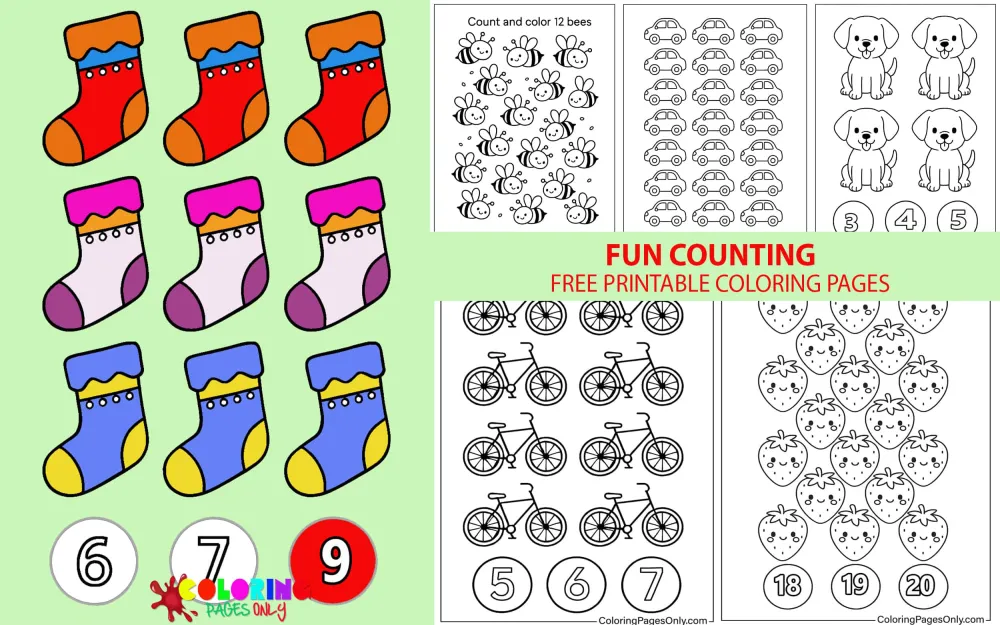
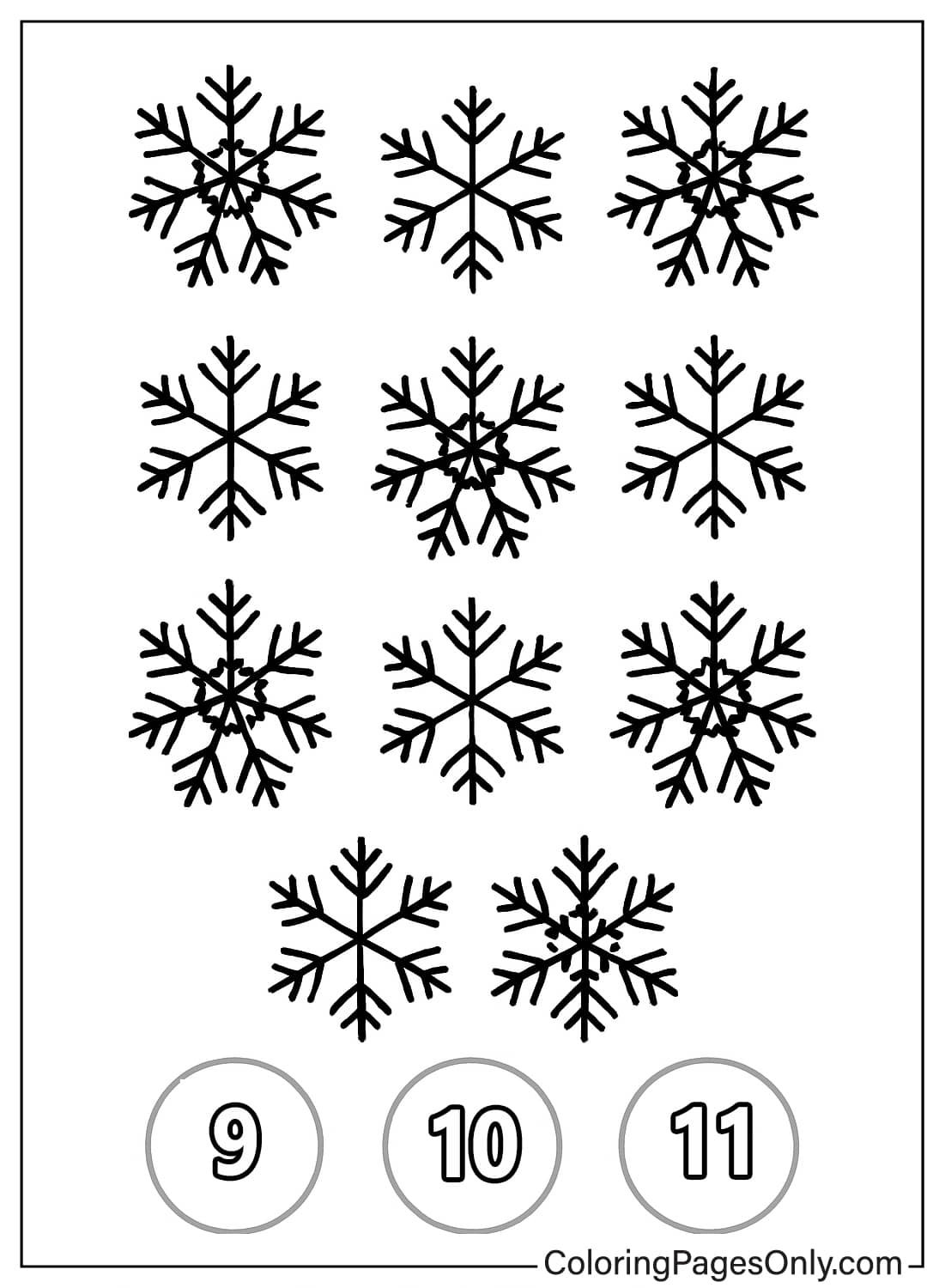
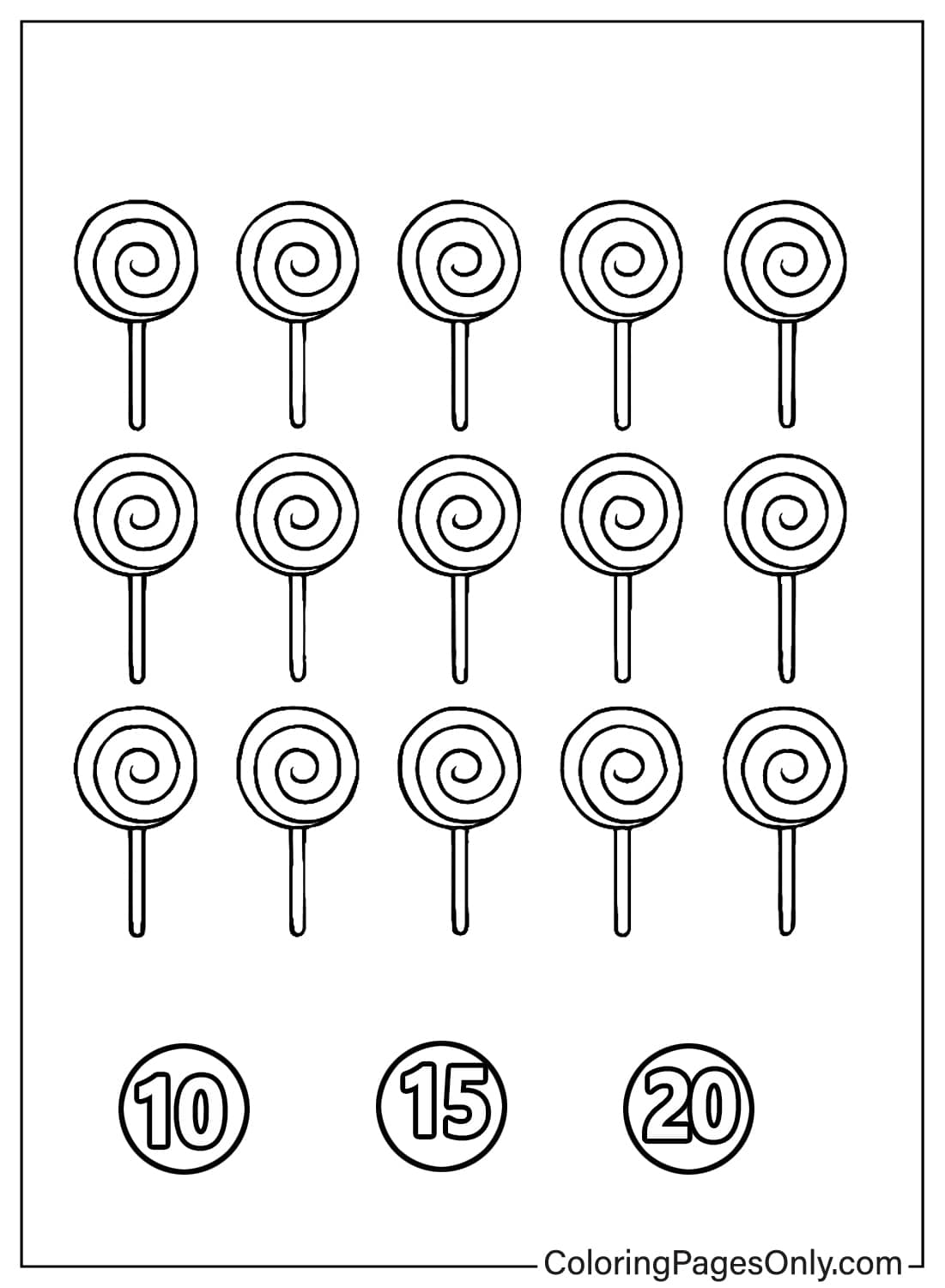
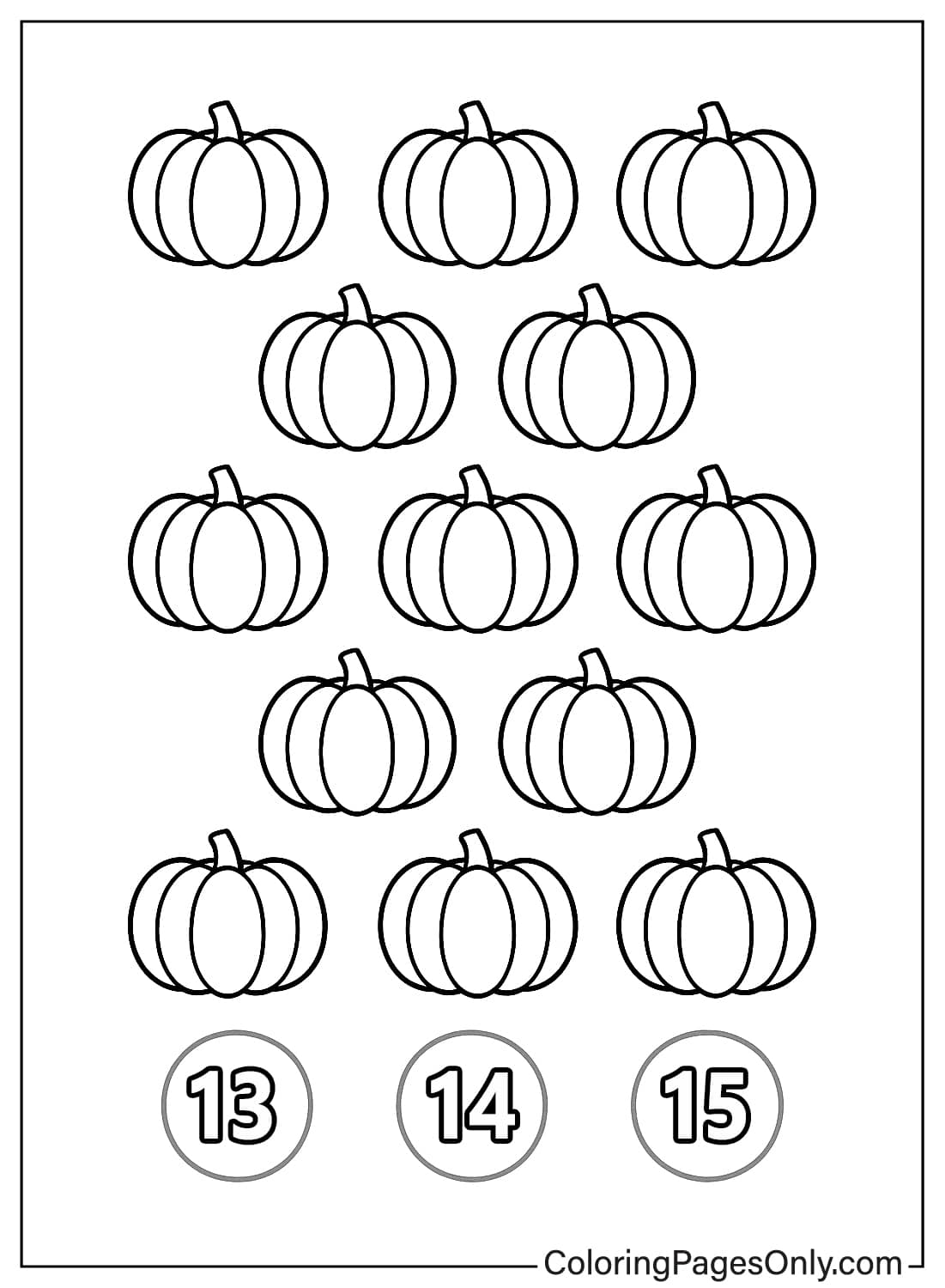
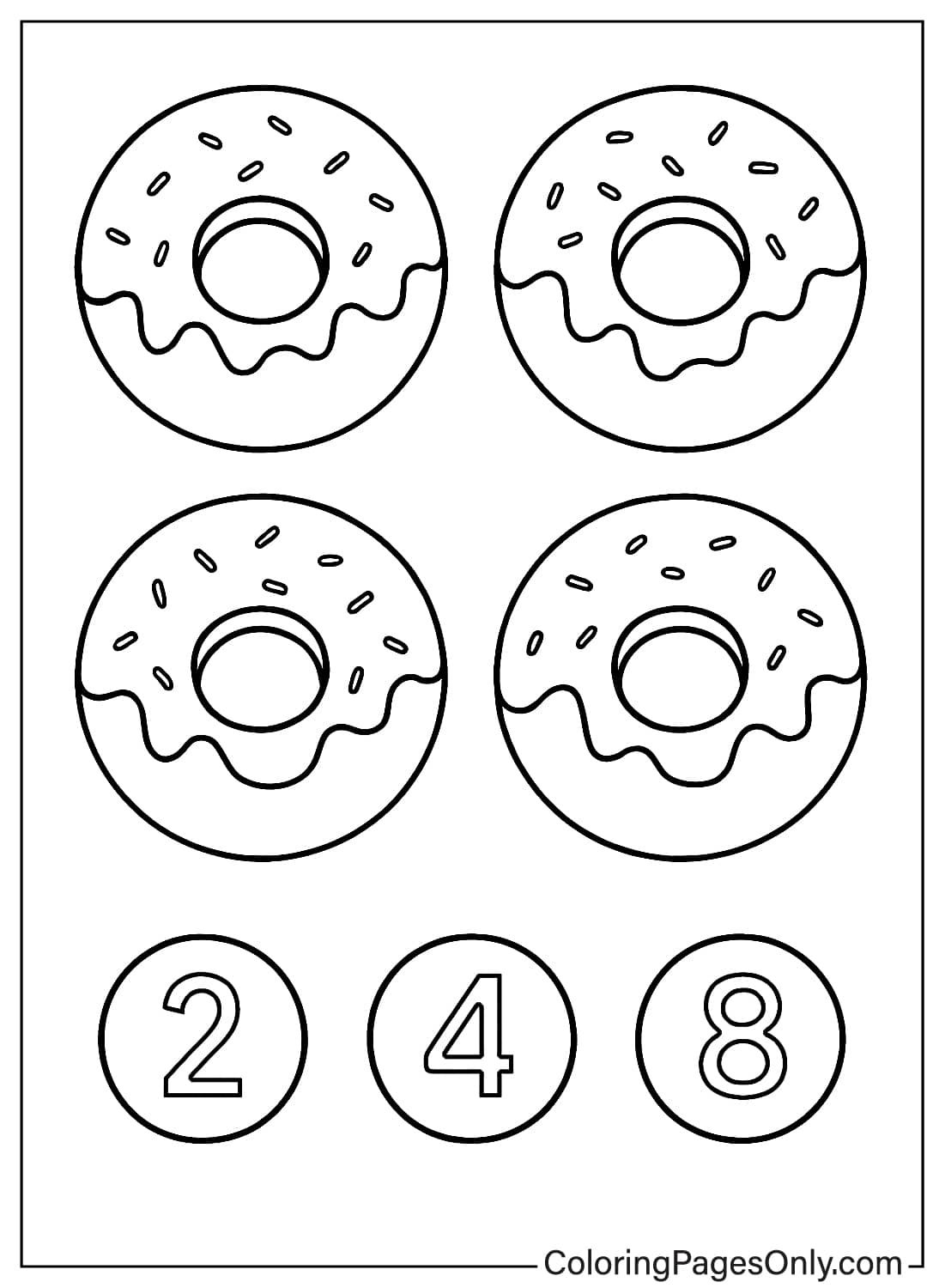
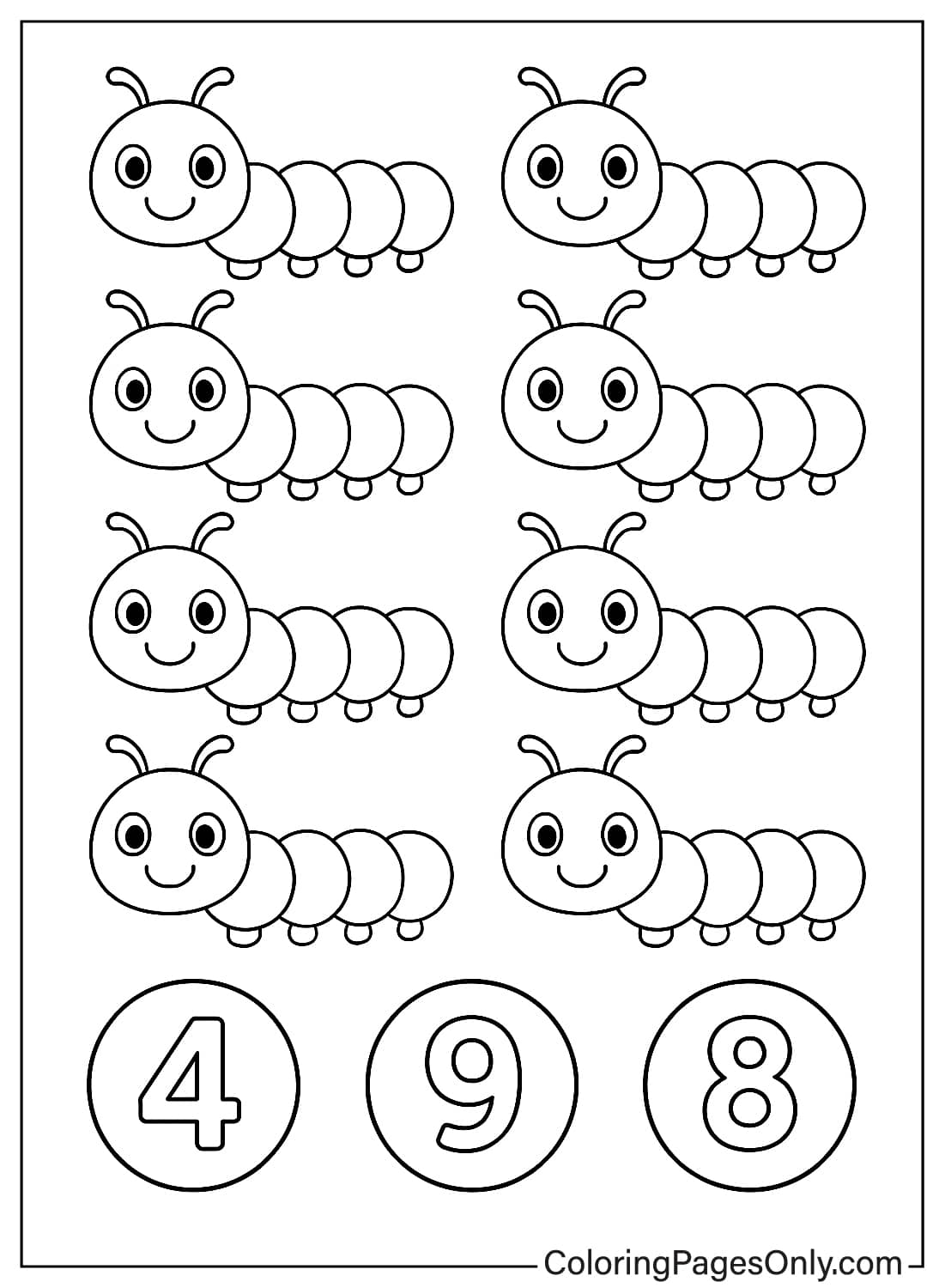
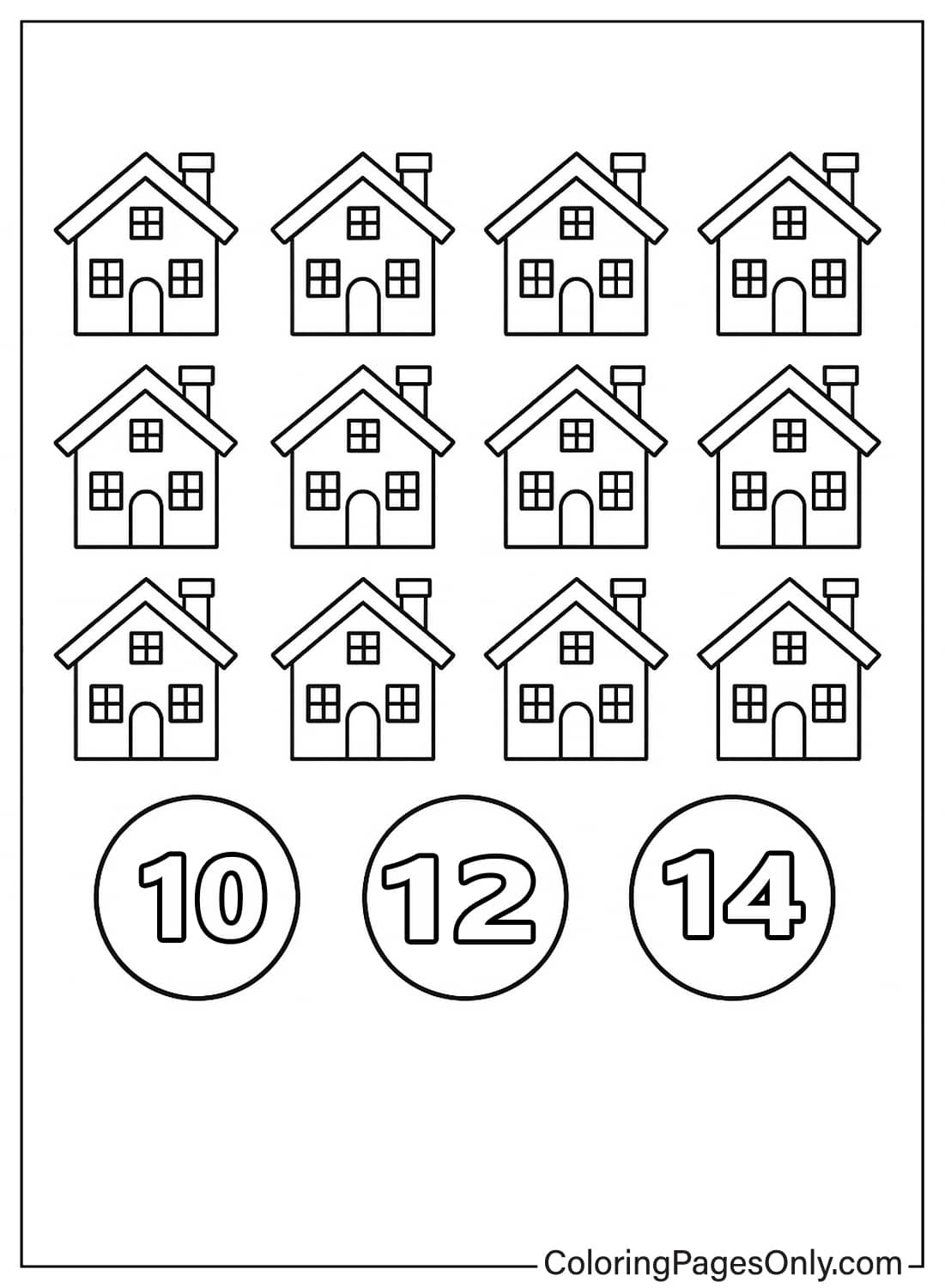
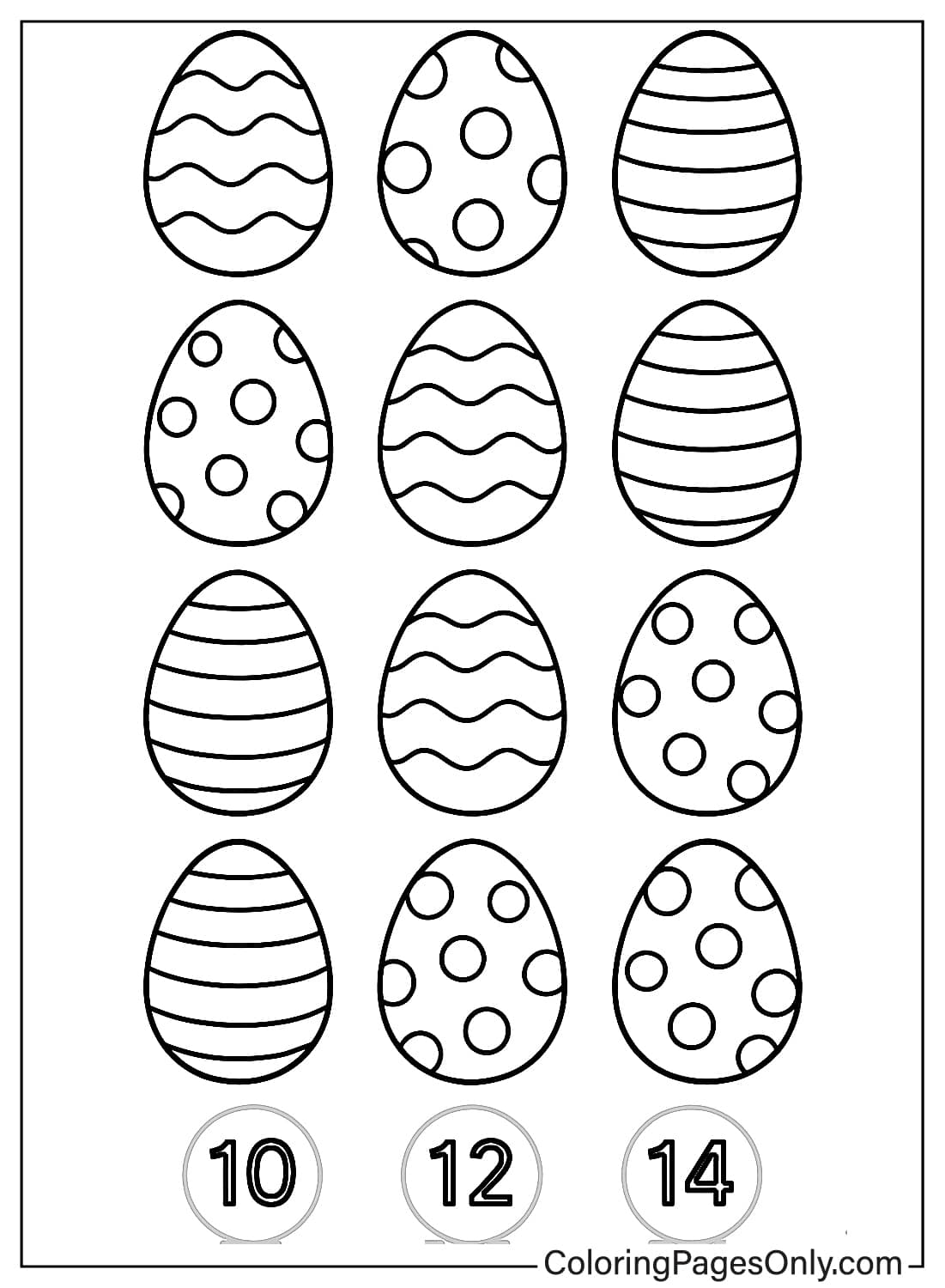
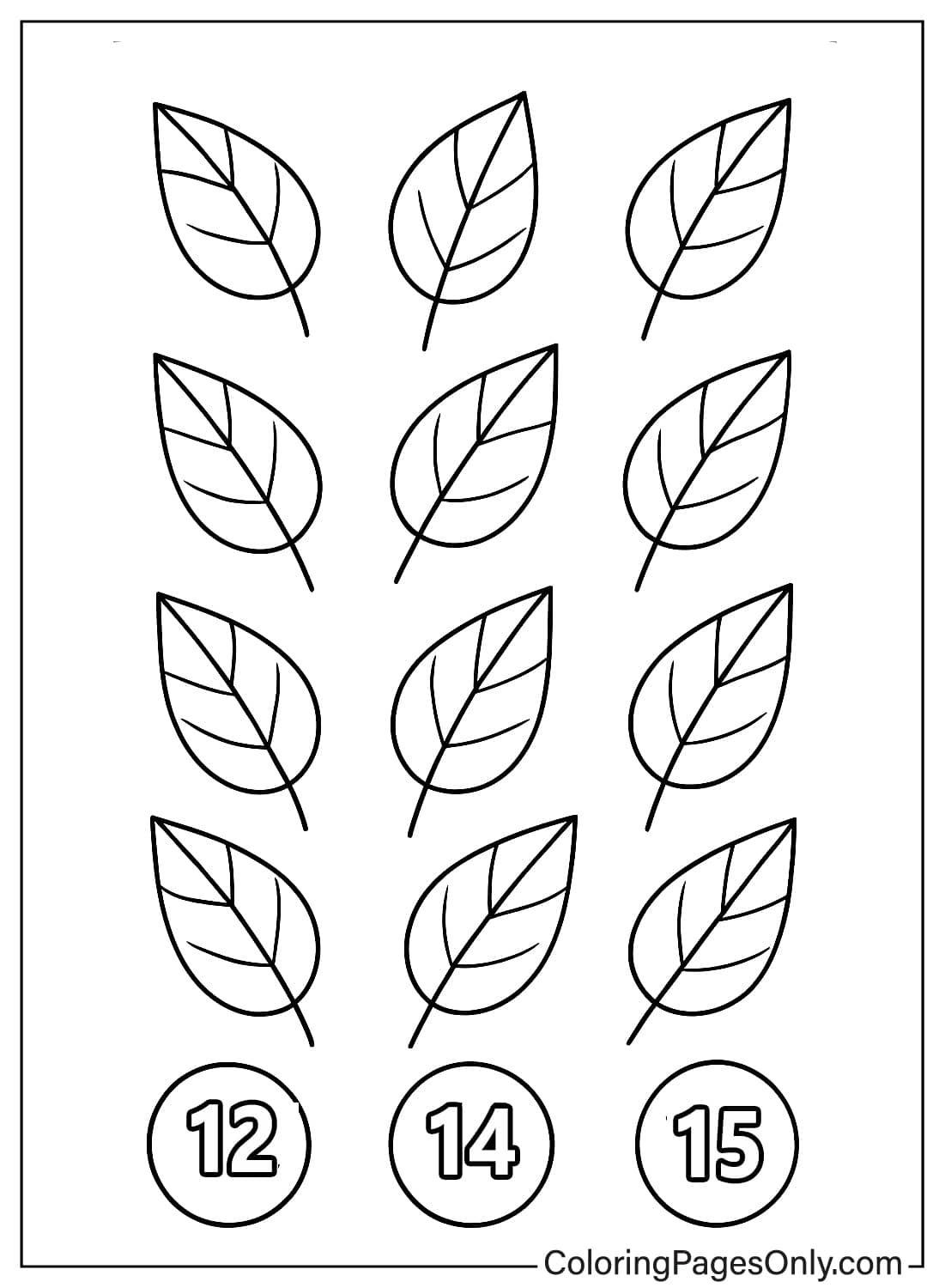
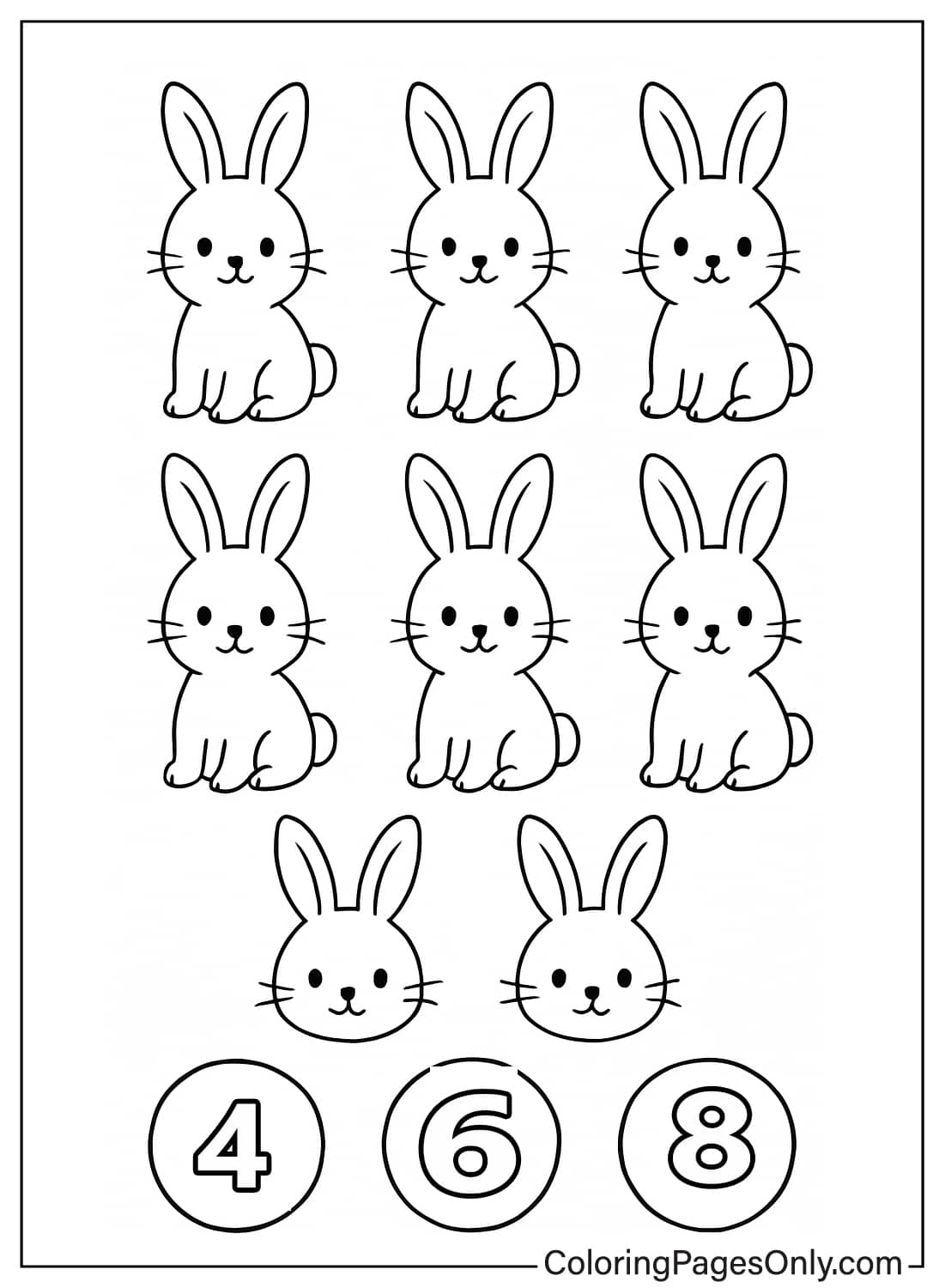
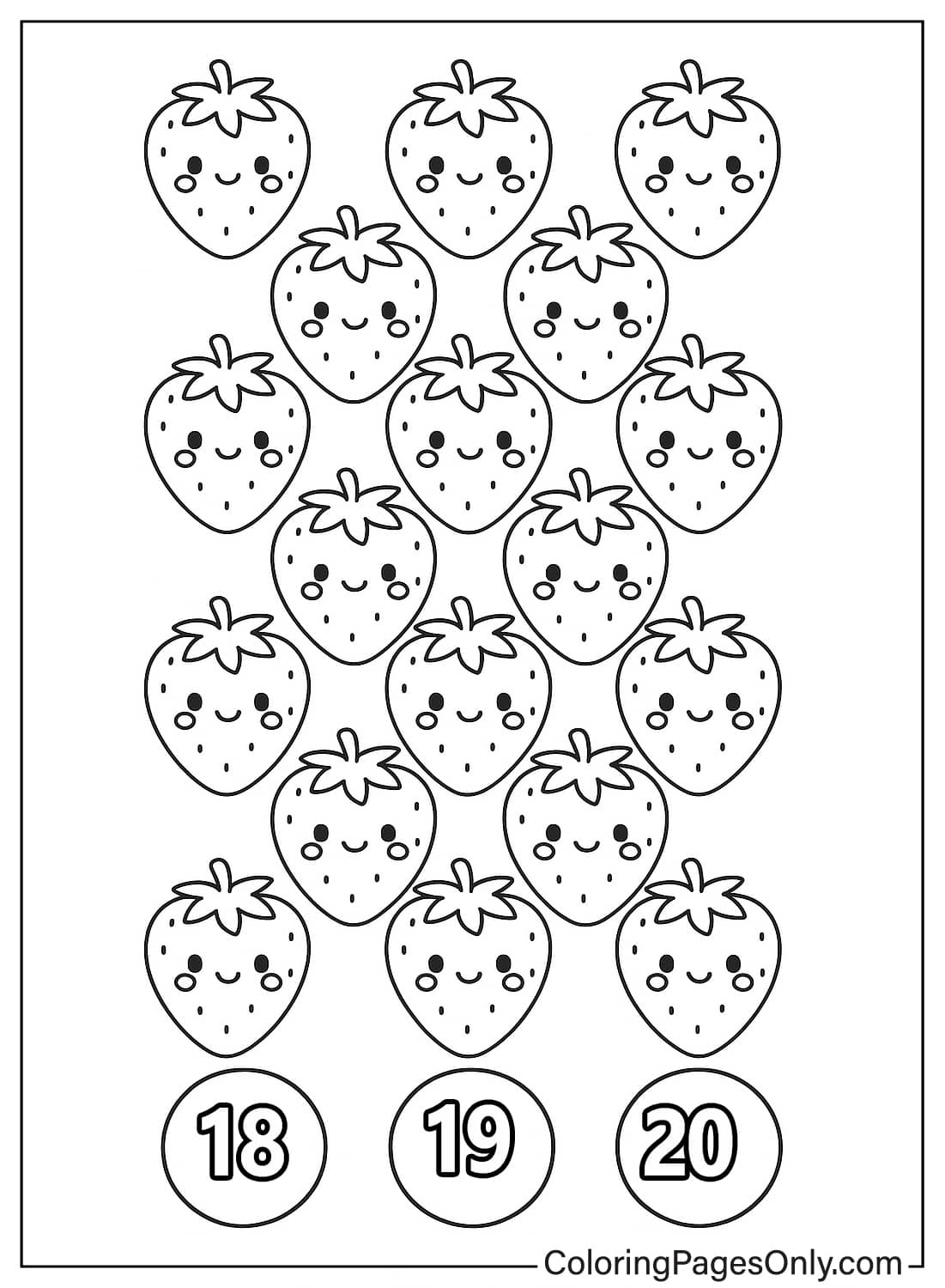
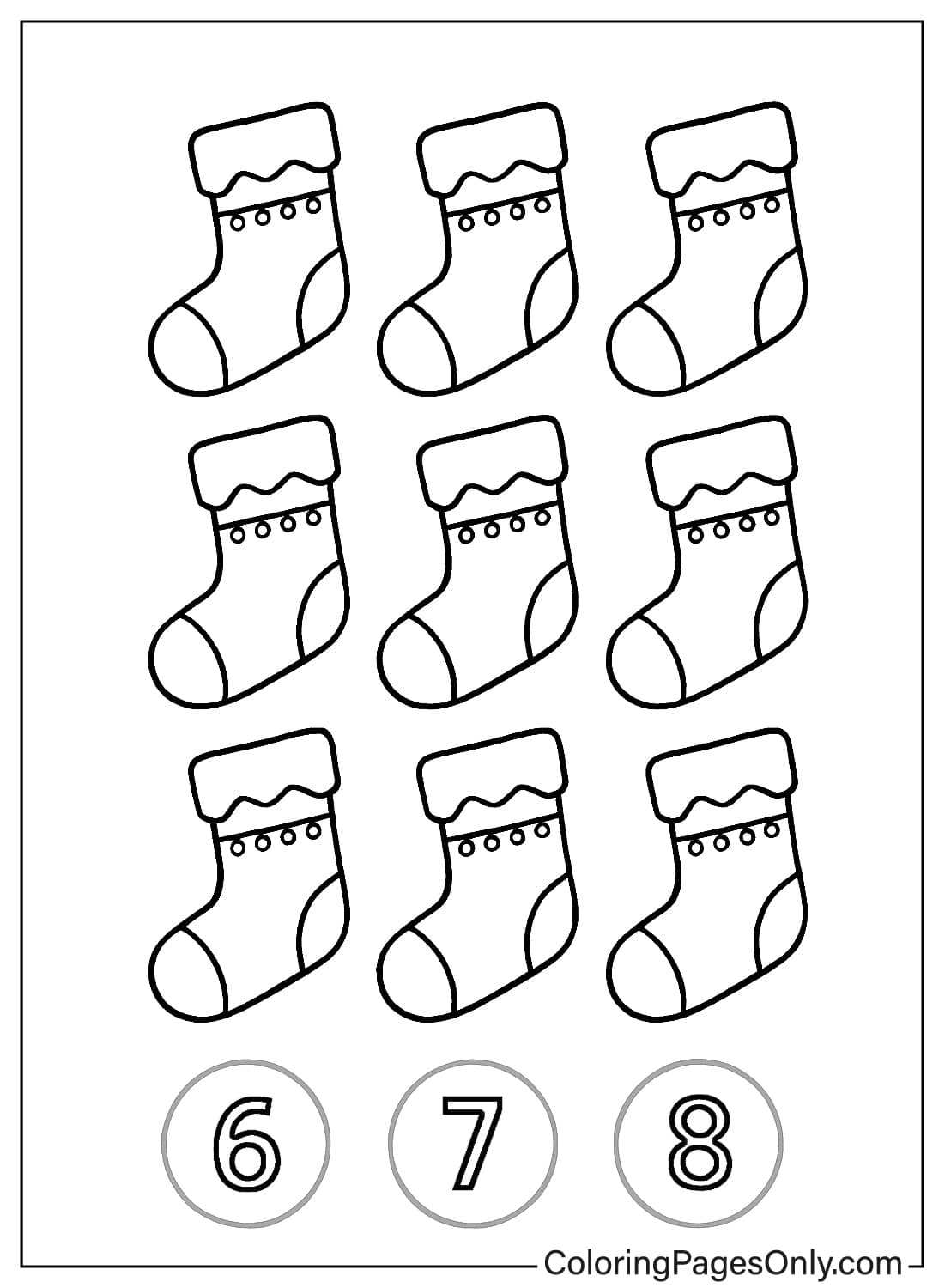
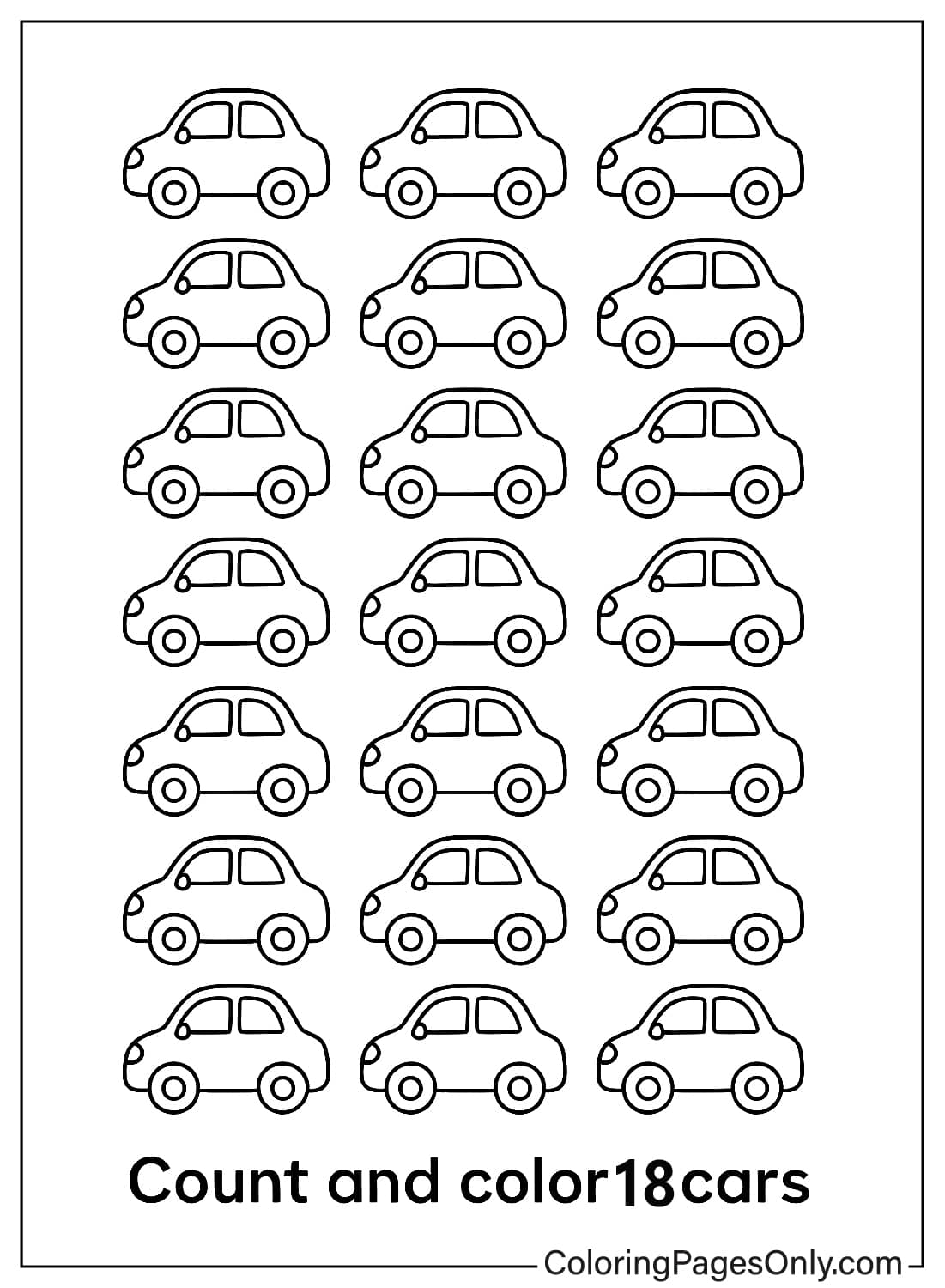
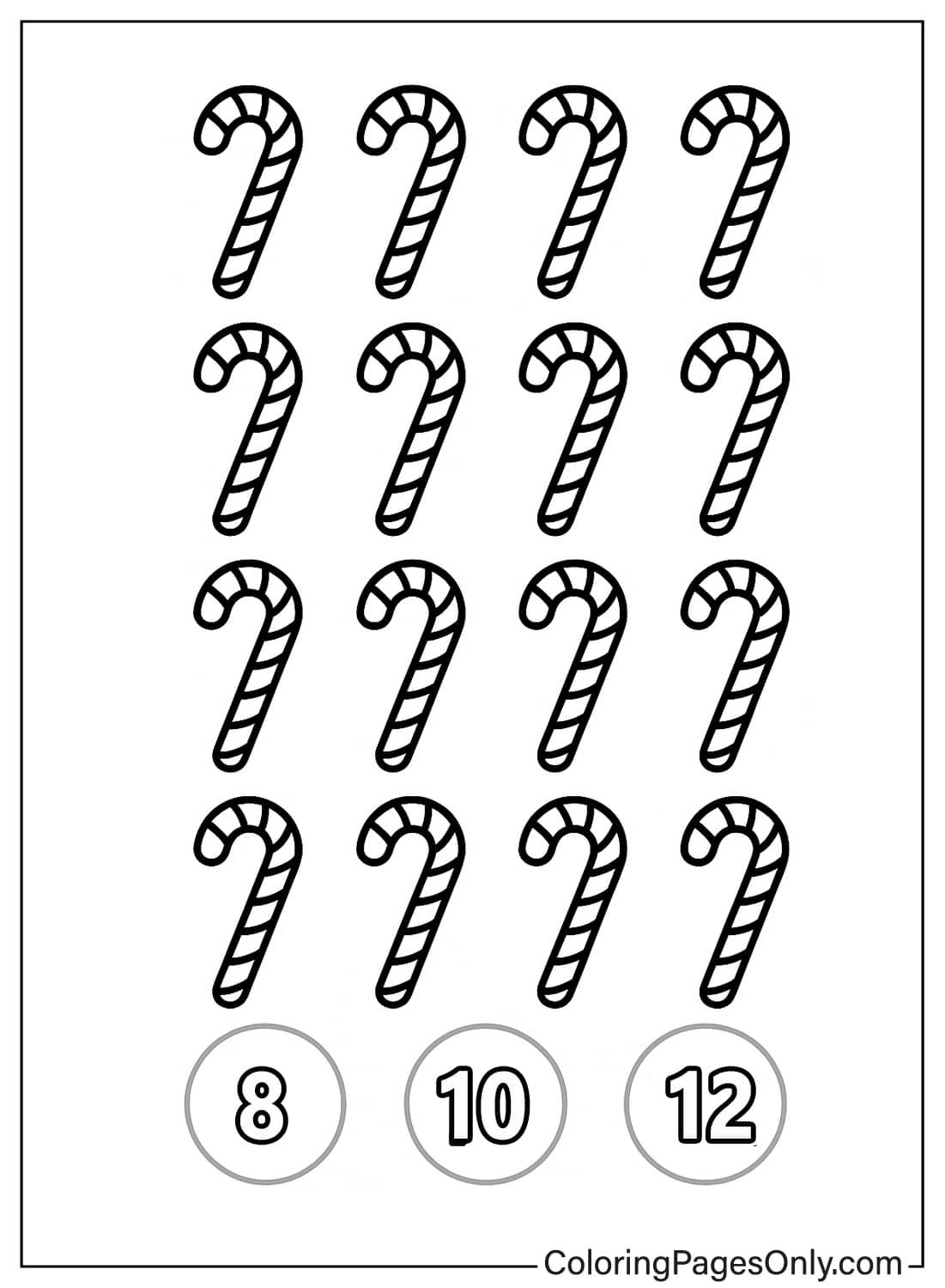
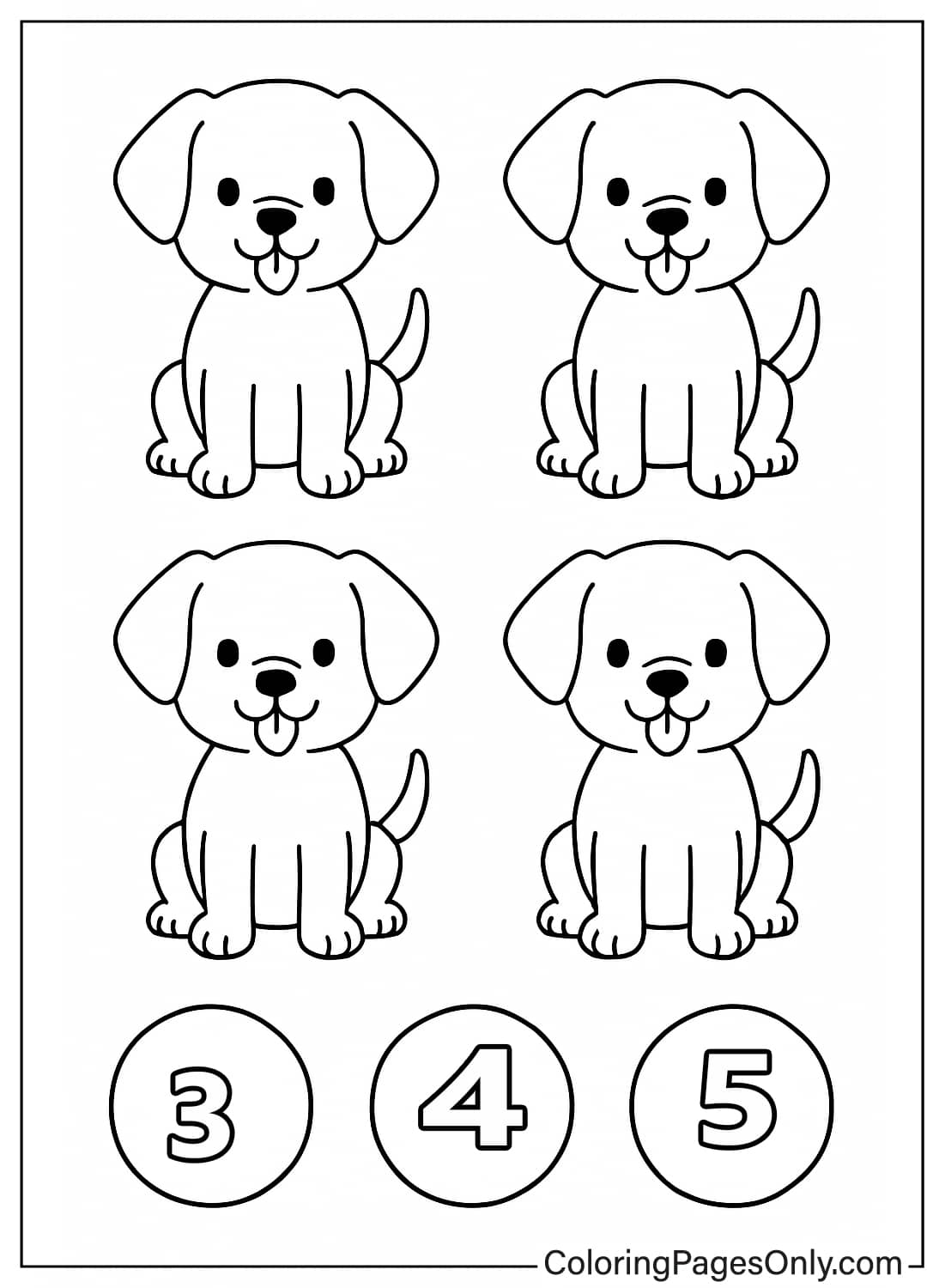
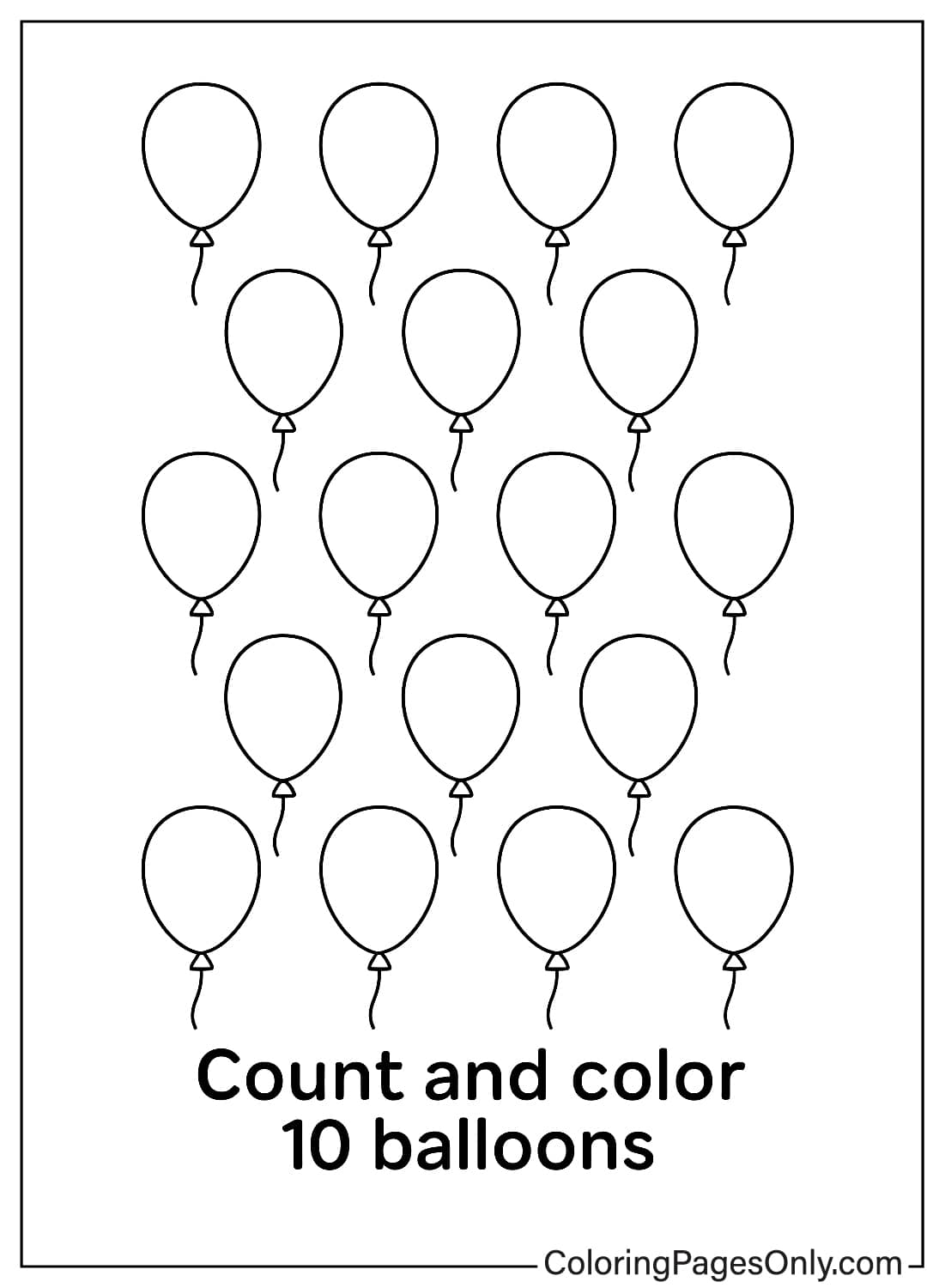
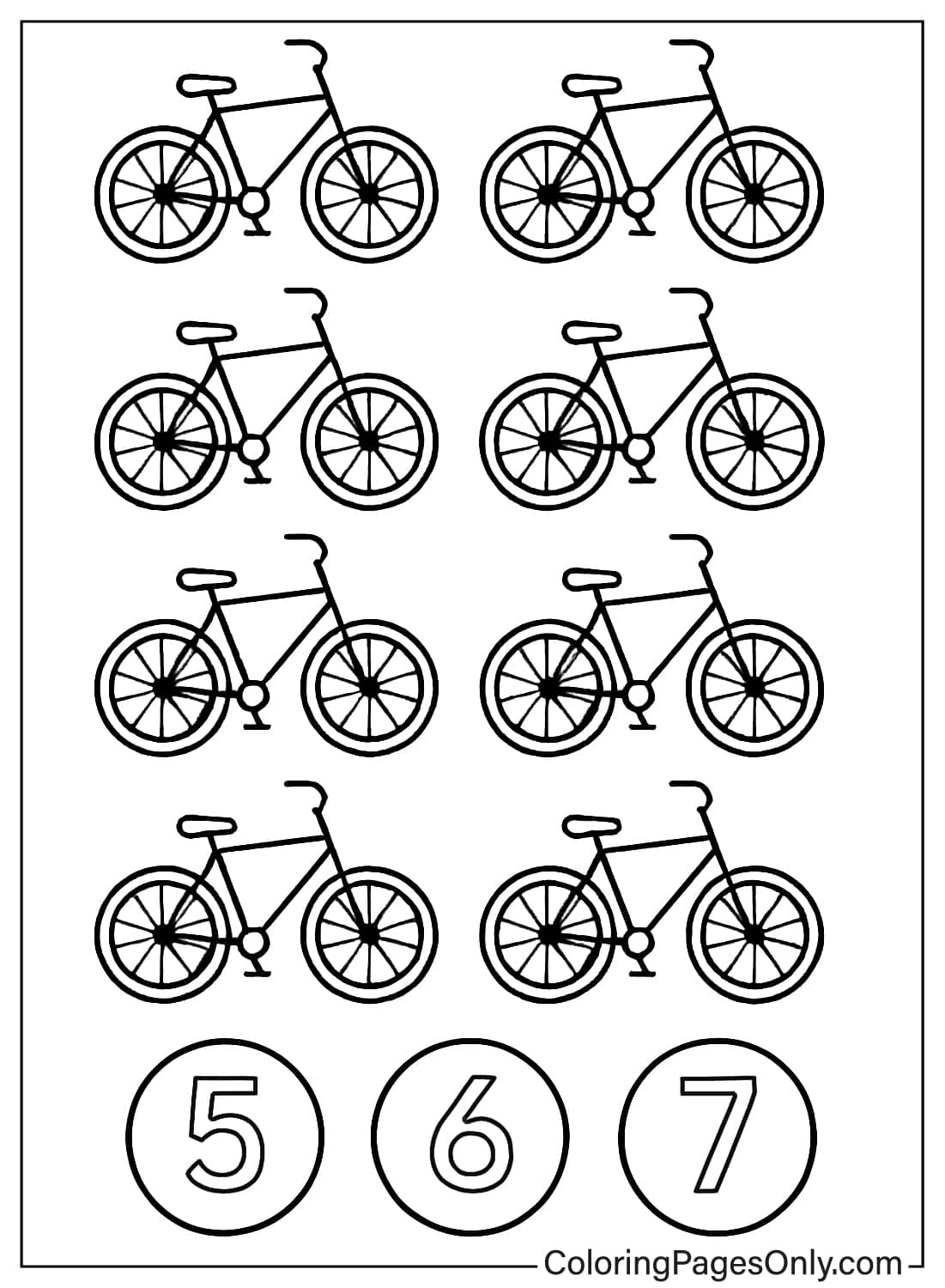
Fun Counting Coloring Pages at ColoringPagesOnly.com brings together 30+ free printable worksheets that combine early counting practice with creative coloring – each page presents a set of illustrated objects and a specific counting challenge that the child must complete before or during the coloring activity. The collection spans a wide range of fun subjects: teddy bears, rubber ducks, dolphins, lollipops, snowflakes, pumpkins, ghosts, donuts, fish, clouds, umbrellas, stars, dresses, gifts, and more. Download any page as a free PDF to print, or color online directly in your browser.
This collection sits within the Educational Coloring Pages hub. For number-focused learning without counting activities, see Numbers Coloring Pages. For color-coded number learning, see Color by Number Coloring Pages. For alphabet learning, see Alphabet Coloring Pages.
What Makes This Collection Different – The Counting-First Format
Standard number coloring pages show children a digit and ask them to color it. Standard coloring pages show children an image and ask them to fill it with color. This collection does something more specific and more challenging than either: it places children inside an active counting task that must be completed in order for the coloring to make sense.
The pages in this collection use two distinct activity formats, and understanding the difference between them clarifies exactly what skill each page is targeting.
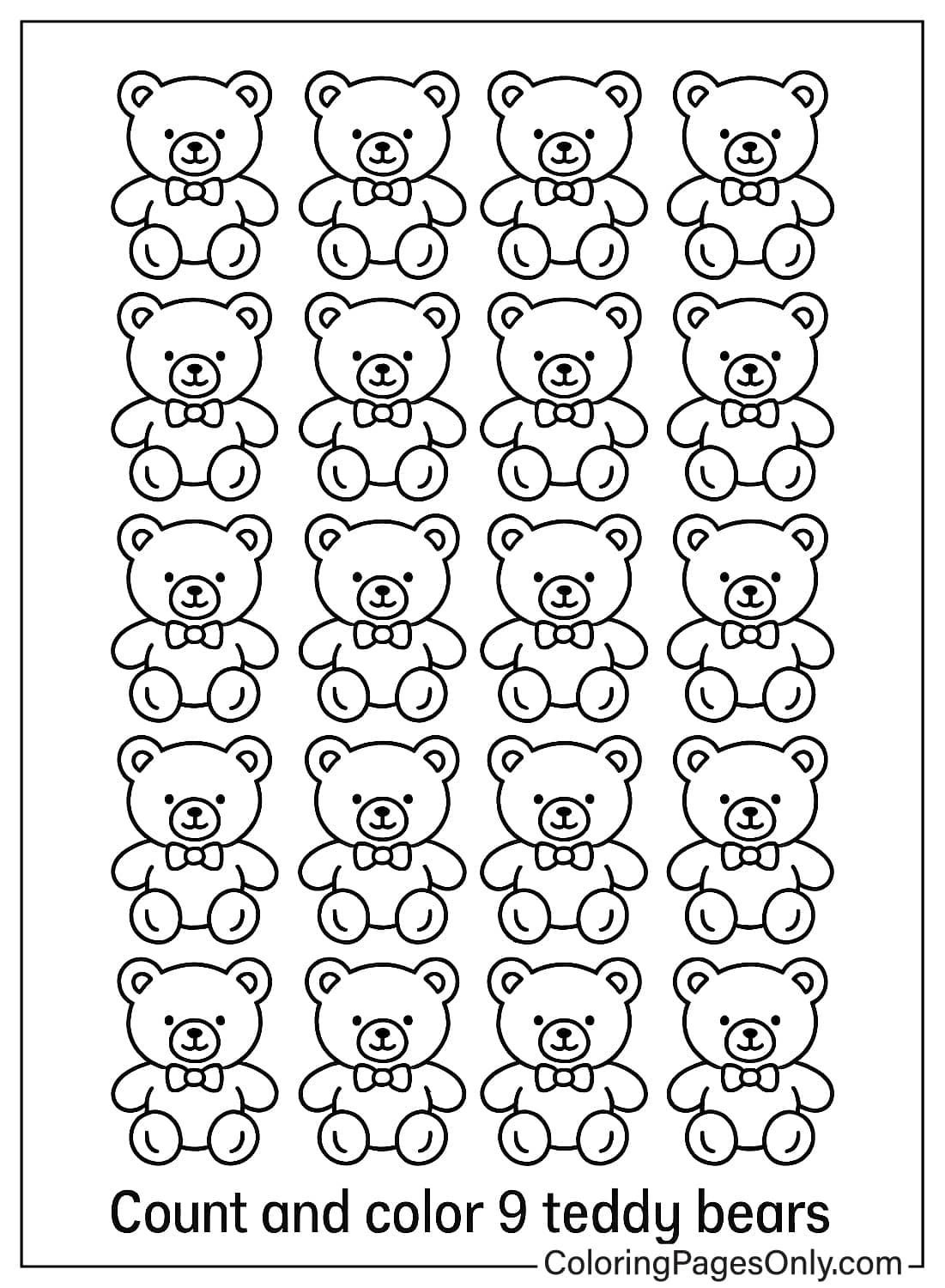
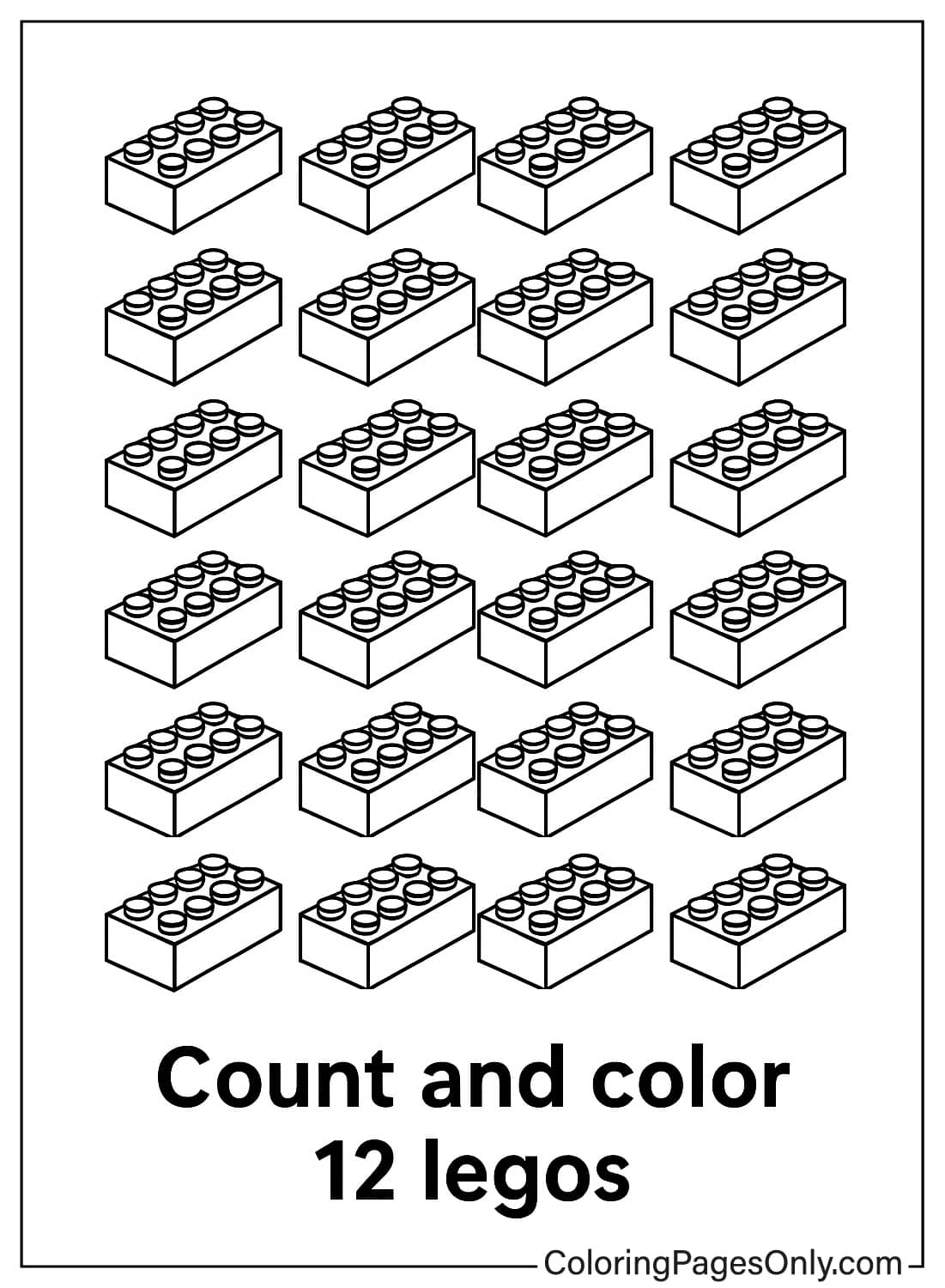
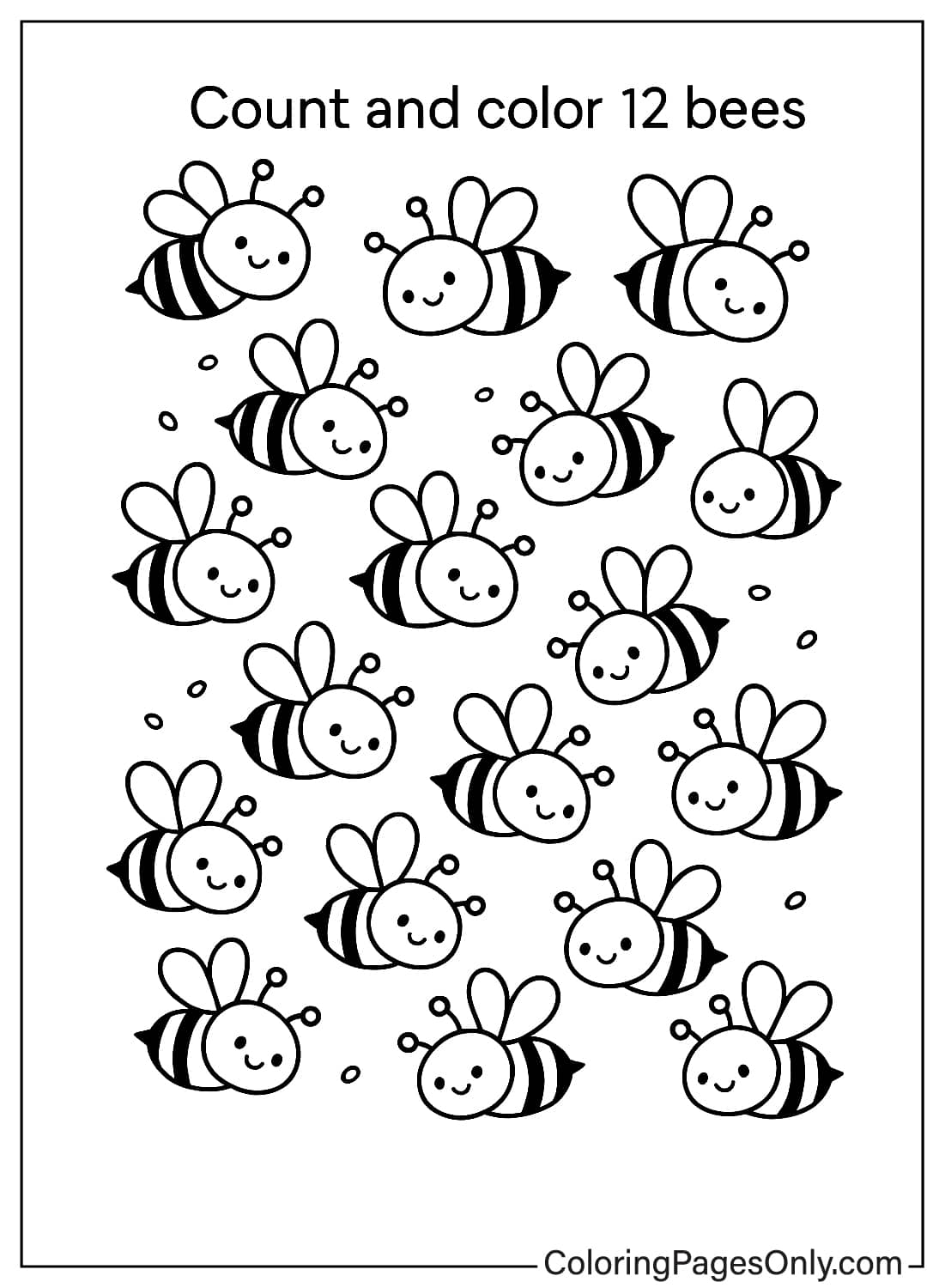
Format 1 – “Count and Color Exactly N”: The page shows a larger-than-needed set of illustrated objects – perhaps twelve teddy bears scattered across the page – along with a written instruction: “Count and color 9 teddy bears.” The child must count out exactly nine bears, coloring each one as they go (or counting first and then coloring), and stop when they reach nine. The bears beyond nine remain uncolored.
This format asks the child to do something that sounds simple but is developmentally significant: control a count in progress, stop at a specific number, and recognize that the instruction number represents the exact quantity required – no more, no less. Children who understand this task have internalized cardinality: the understanding that a number represents a precise quantity, not just a position in a sequence. Children who haven’t yet internalized cardinality often continue coloring past the target number, or stop randomly, because they do not yet fully understand that “9” means exactly this many.
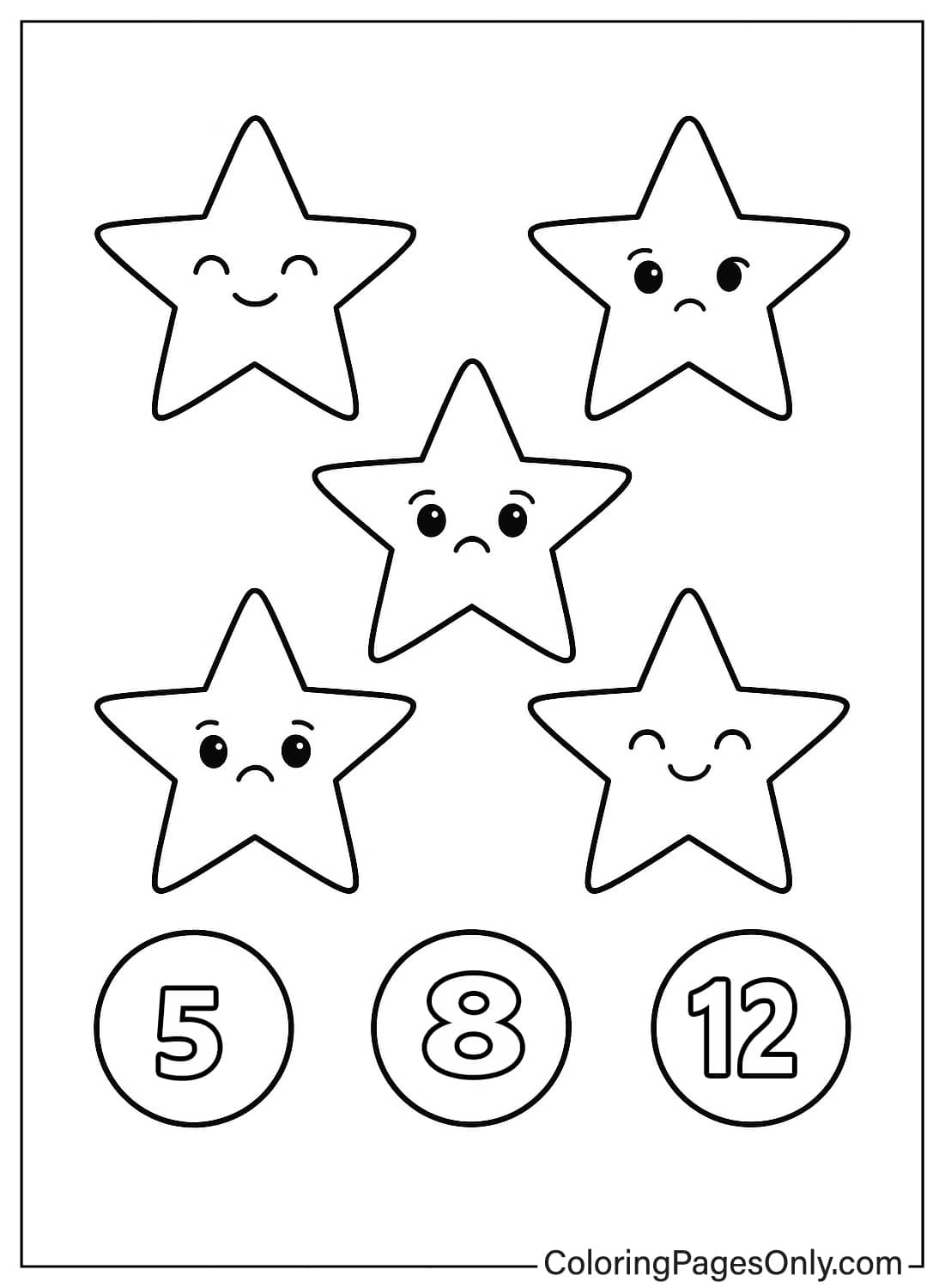
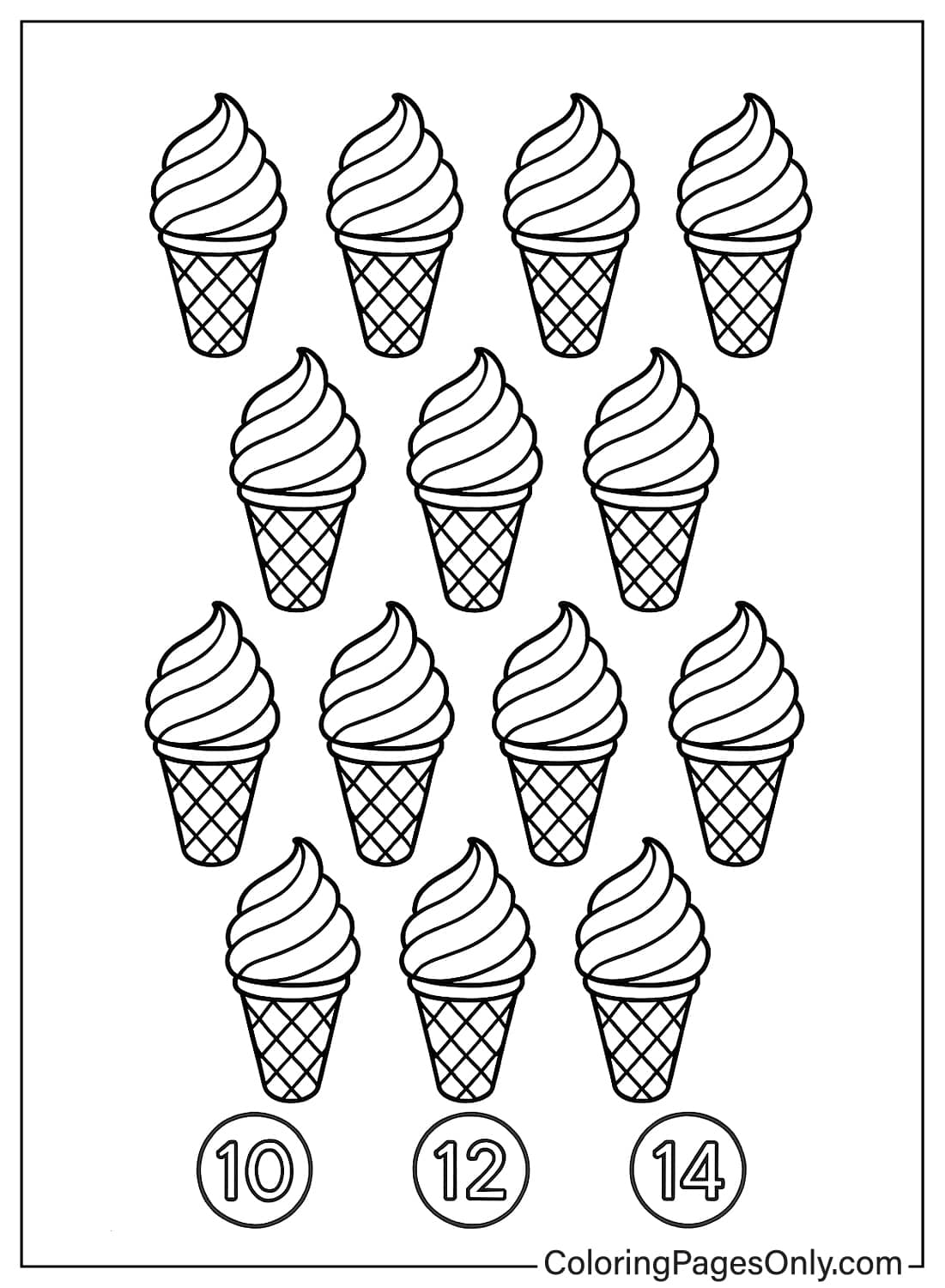
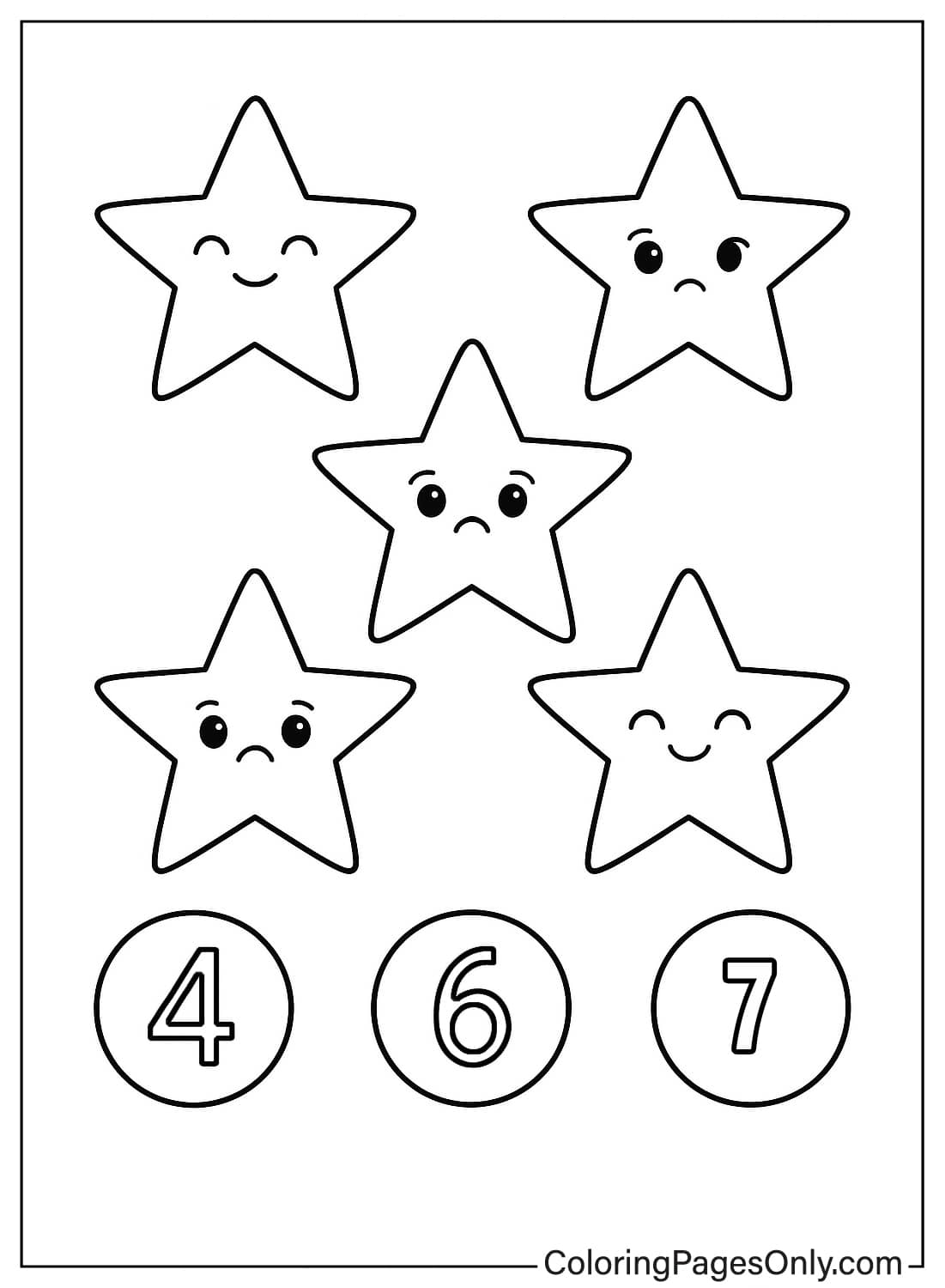
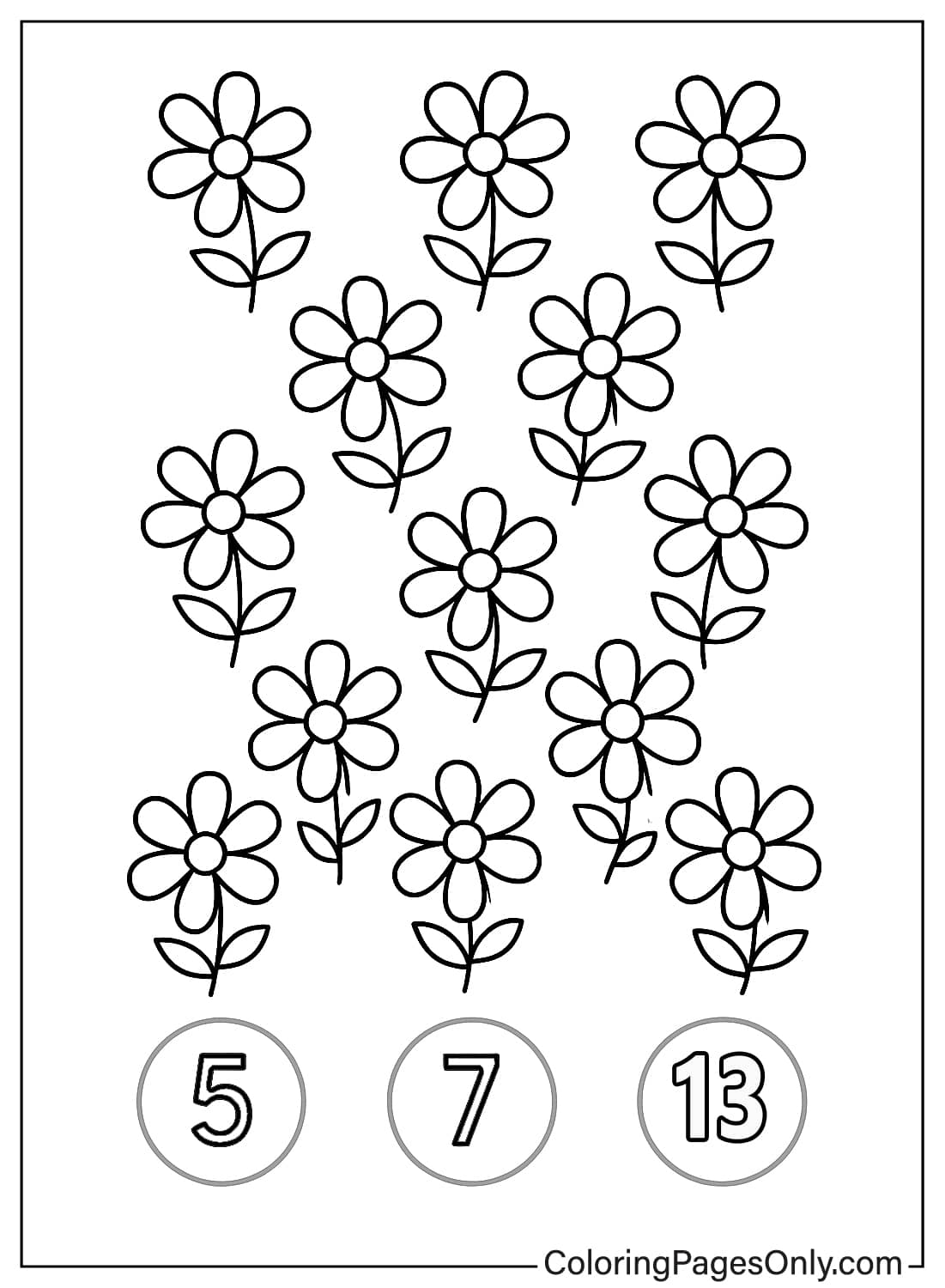
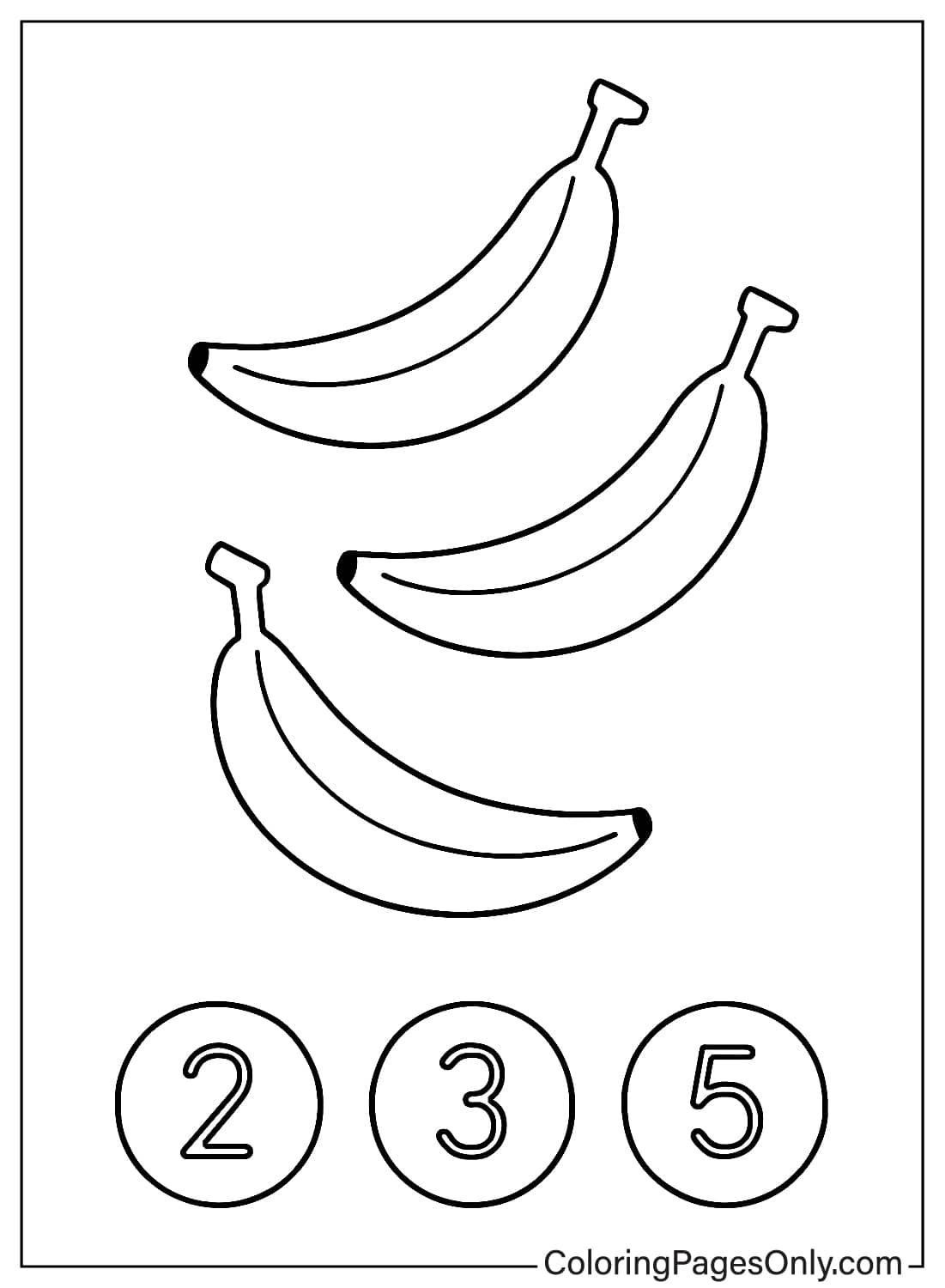
Format 2 – “Count and Identify the Correct Number”: The page shows a set of objects – five stars, or ten snowflakes, or twelve fish – along with three number choices printed below, for example: 5, 8, 12 or 9, 10, 11. The child must count the objects carefully and circle or identify the correct number from the three options.
This format targets number verification and one-to-one correspondence accuracy: can the child count each object once and only once, track their progress, and arrive at a count that matches one of the provided numbers? The multiple-choice structure also introduces a basic form of mathematical reasoning – the ability to evaluate options and choose the one supported by evidence (the count).
Together, these two formats cover the full arc of early counting development: counting to produce a specific quantity (Format 1) and counting to identify an existing quantity (Format 2). Both are foundational numeracy skills that early childhood mathematics education considers essential before a child is ready for addition and subtraction.
The Five Principles of Counting – What These Pages Are Building
Early childhood mathematics researchers have identified five principles that govern how children learn to count meaningfully. Understanding these principles explains why the counting-and-coloring format is more educationally powerful than it might appear.
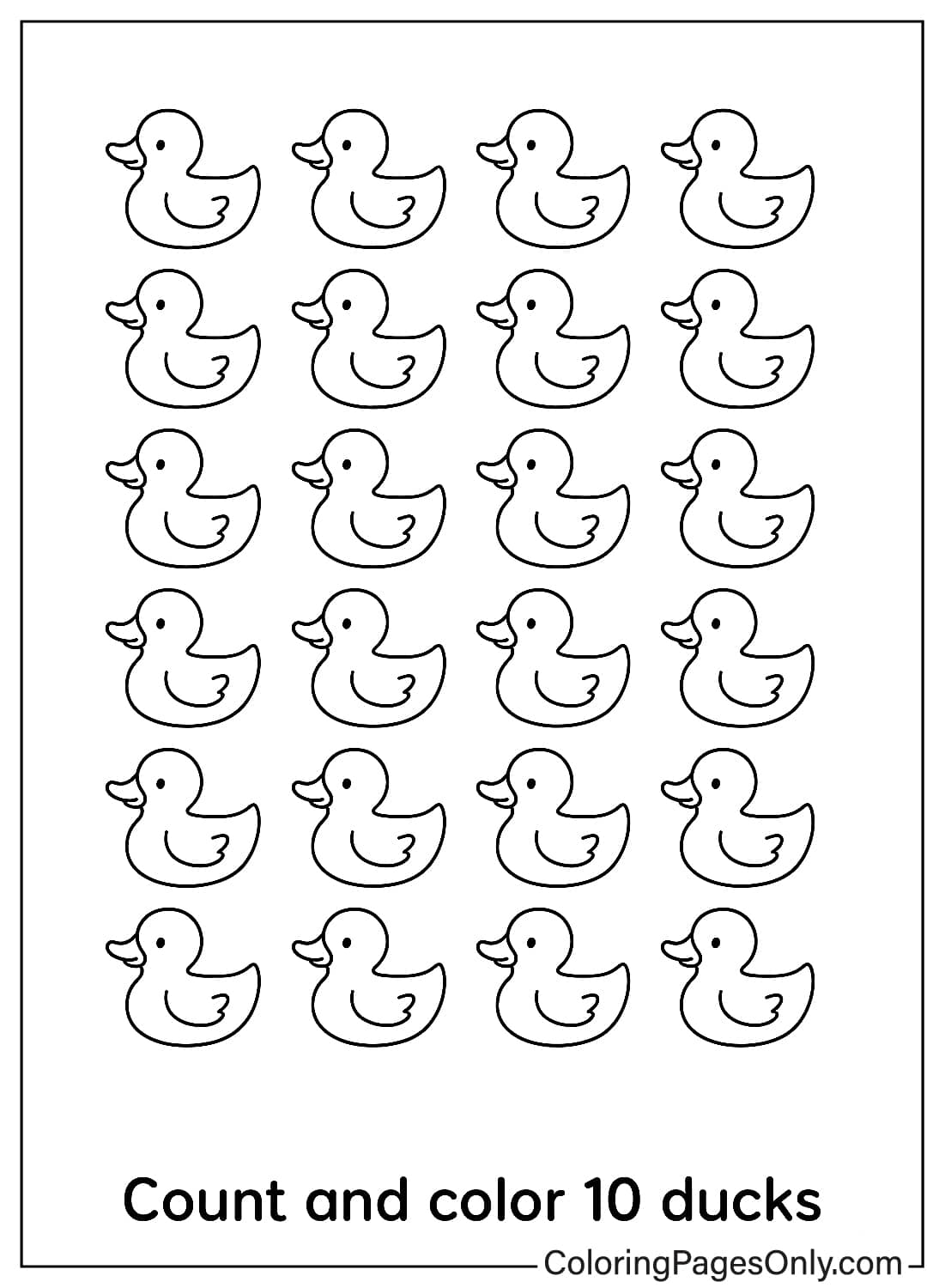
One-to-one correspondence is the principle that each object in a counted set corresponds to exactly one number word, and each number word corresponds to exactly one object. When a child counts the ten rubber ducks on the ducks page, they must point to or touch each duck once as they say each number word. Pointing to the same duck twice, skipping a duck, or saying two number words while pointing to one duck all violate one-to-one correspondence. Young children frequently make all three of these errors, especially when objects are arranged irregularly or the set is large. The coloring component of these pages – where the child colors each counted object as they count it – creates a natural tracking system that helps prevent these errors, because a colored duck has already been counted and an uncolored duck has not.
The stable order principle is the understanding that number words must always be recited in the same order: 1, 2, 3, 4, 5… not 1, 3, 2, 5, 4. Children who understand stable order have internalized the counting sequence as a fixed, non-negotiable list rather than a flexible set of words that can be used in any arrangement. Pages in this collection that include multiple-choice number options (5, 8, 12; or 9, 10, 11; or 13, 14, 15) implicitly reinforce stable order by presenting numbers in their correct sequence, giving children repeated exposure to numbers in order.
The cardinal principle – often called cardinality – is the understanding that the final number word in a count represents the total quantity of the set. This is the most significant milestone in early counting, and it is harder to acquire than it sounds. Many children who can recite “1, 2, 3, 4, 5, 6, 7” while pointing at seven stars cannot correctly answer “How many stars are there?” when asked immediately after. They must recount. A child who has internalized cardinality says “7” without recounting, because they understand that the last number they said during the count is the answer to “how many.”
The “Count and Color Exactly N” format targets cardinality directly. When a child stops at “9 teddy bears” and puts down their crayon, they are demonstrating that they understand 9 as a quantity, not just as a word in a sequence. When a child who has not yet internalized cardinality continues coloring past the 9th bear, they are showing exactly what they still need to develop.
The abstraction principle is the understanding that any collection of items – regardless of their type, size, color, shape, or arrangement – can be counted as a set. You can count five bears, five umbrellas, five snowflakes, or five items that are all completely different from each other. The same number applies. This collection’s wide variety of subjects – bears, fish, donuts, ghosts, dolphins, dresses – reinforces the abstraction principle by giving children experience counting different types of objects and arriving at the same numbers, demonstrating that “seven” is seven regardless of what is being counted.
The order irrelevance principle is the understanding that the order in which items are counted does not affect the total. Five clouds counted from left to right produce the same answer as five clouds counted from right to left or from the center outward. Pages where objects are scattered irregularly (rather than arranged in neat rows) provide natural practice with this principle, as children must develop strategies for keeping track of which objects have been counted when there is no built-in spatial order.
The Counting Range in This Collection – A Progression Guide
The pages in this collection span a range of counting challenges that map closely onto the developmental progression from early preschool through kindergarten readiness.
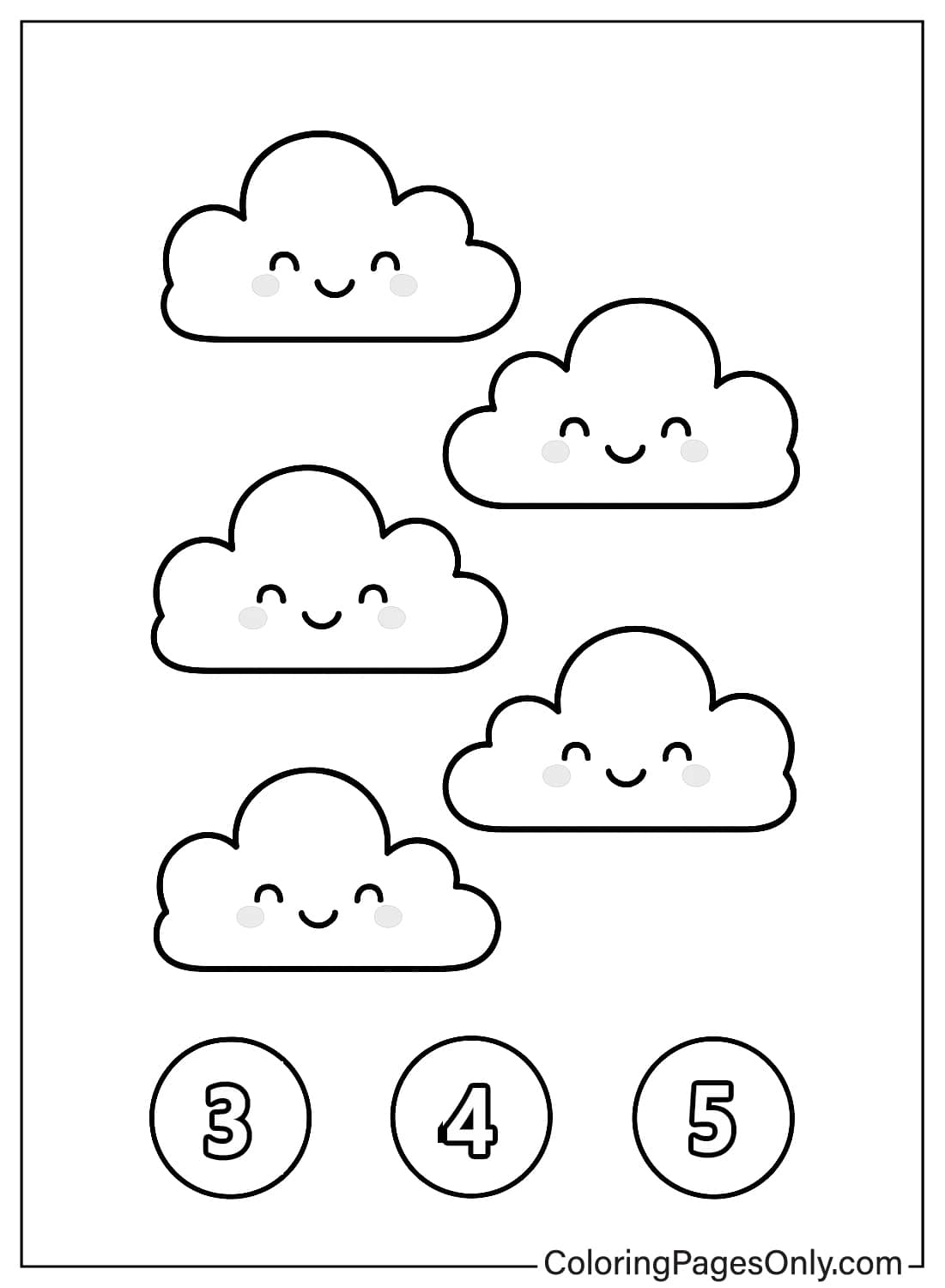
Very small numbers (1–5): Pages like the Four Delicious Donuts (4 donuts) and the Smiling Clouds (5 clouds, with choices 3, 4, 5) target the foundational counting range where one-to-one correspondence is first established. Most children ages 3–4 are developing reliable counting within this range. At this level, even the arrangement of objects matters enormously: four donuts neatly arranged are easier than four donuts scattered randomly. The multiple-choice format at this level (the cloud page offering 3, 4, or 5) is accessible even to children who haven’t yet consolidated cardinality, because the three options are close together and the set is small enough to recount quickly.
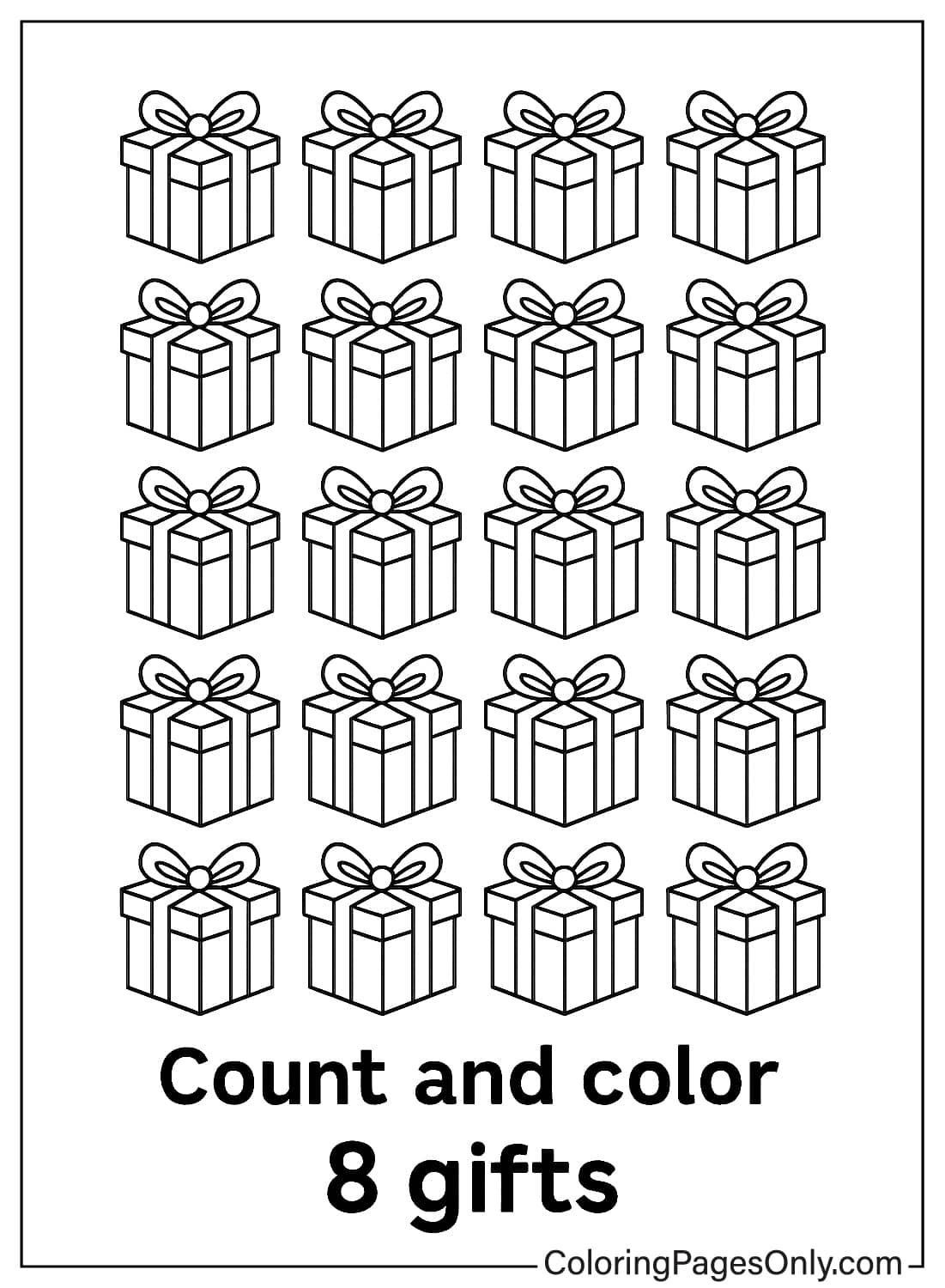
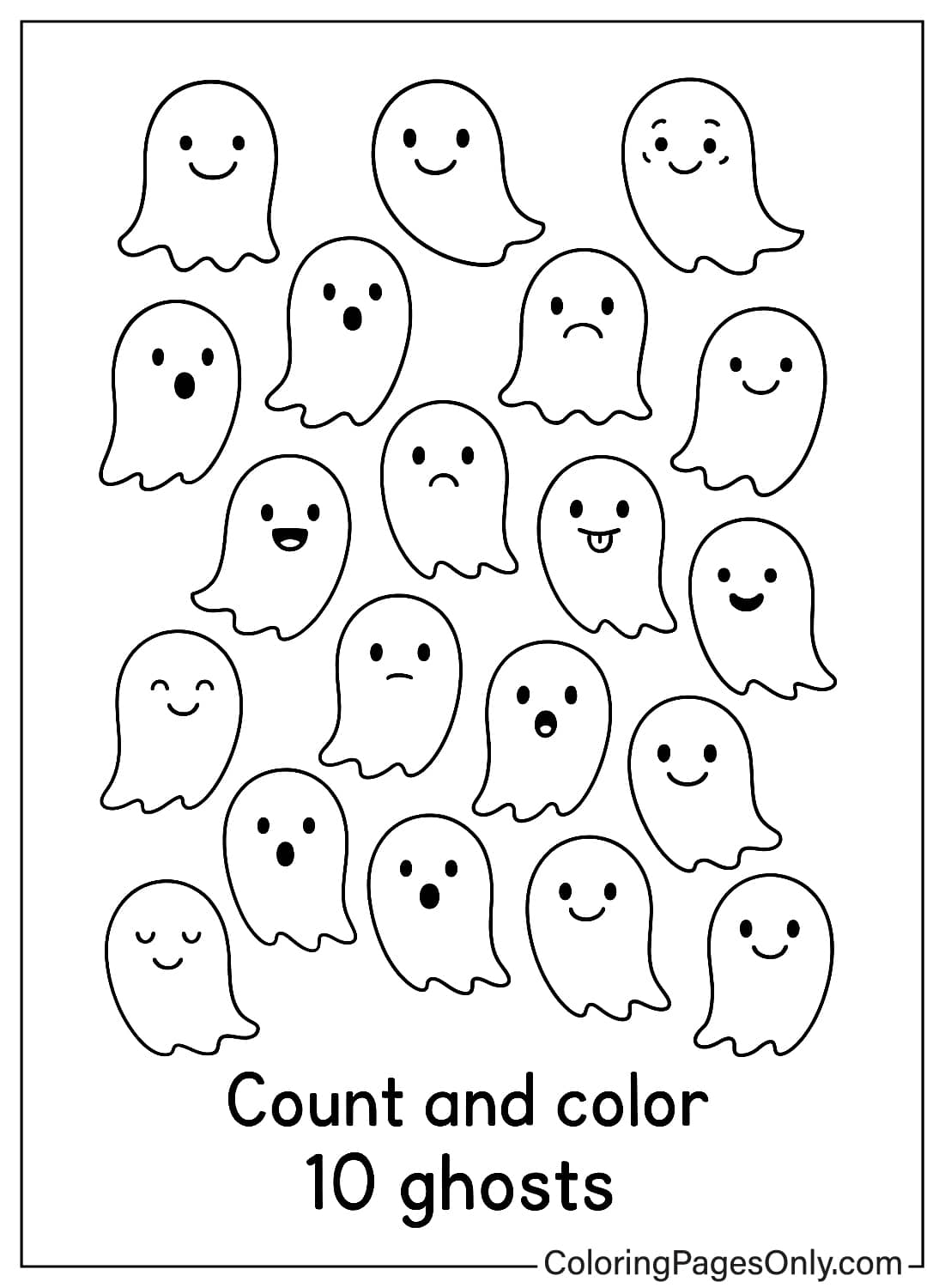
Middle numbers (6–10): Pages like the Umbrellas (7), Gifts (8), Teddy Bears (9), Rubber Ducks (10), Cute Ghosts (10), and Snowflakes (10 with choices 9, 10, 11) represent the primary target range for preschool and pre-kindergarten counting development. US Common Core State Standards specify that by the end of kindergarten, children should be able to count reliably to 20 and demonstrate one-to-one correspondence and cardinality – but the 1–10 range is where this foundation is built. Pages in this range are ideal for children ages 4–5.
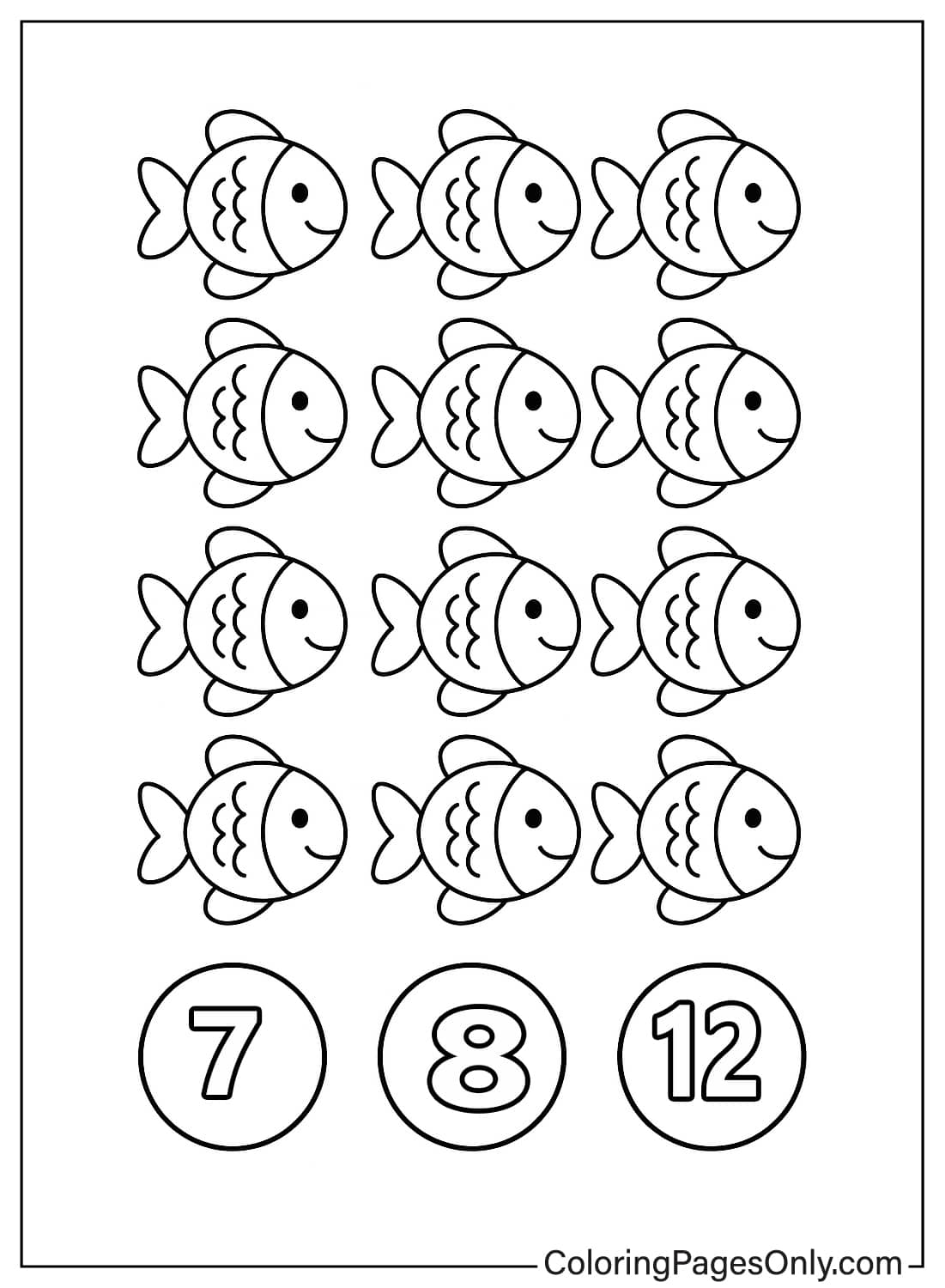
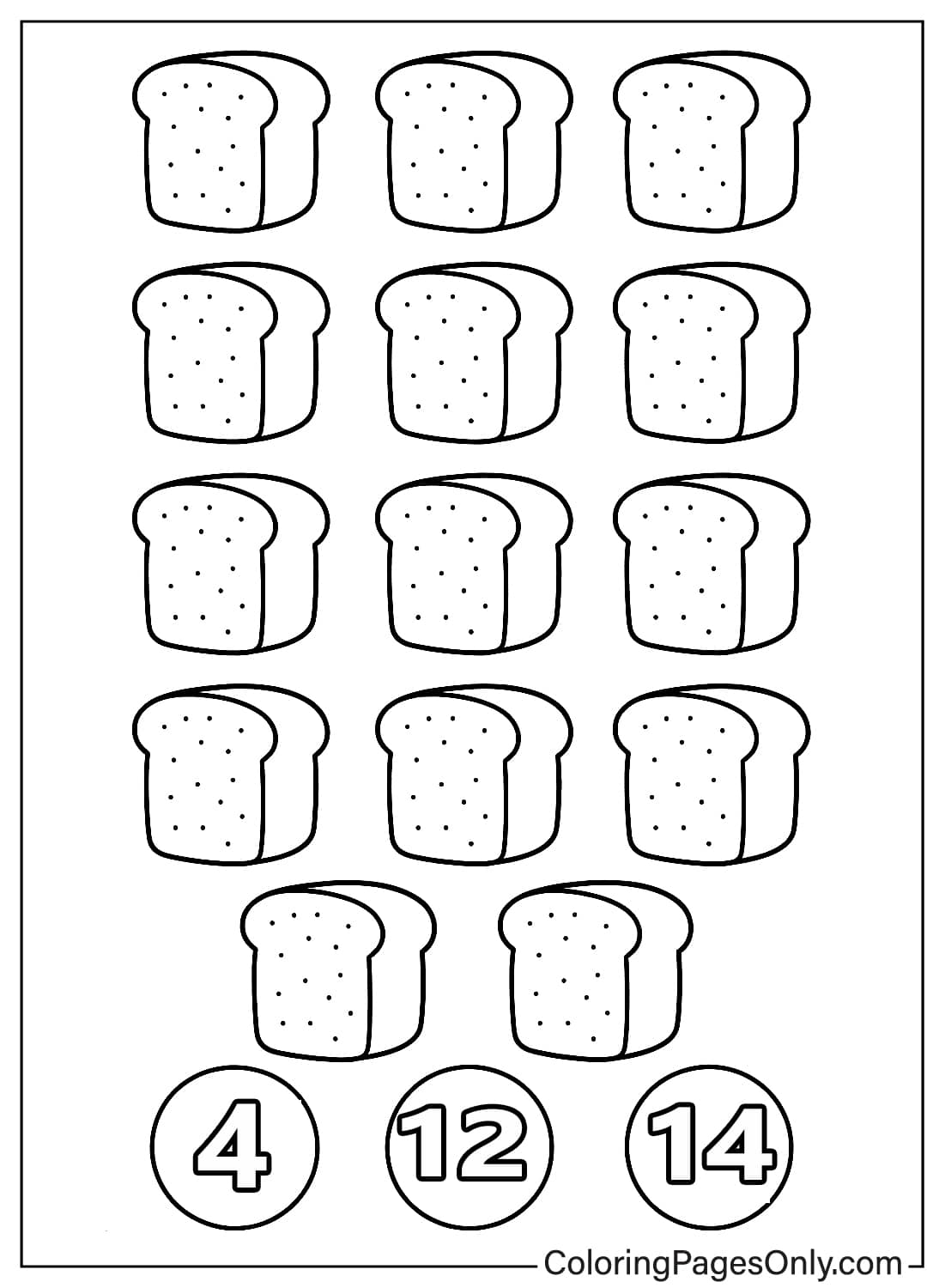
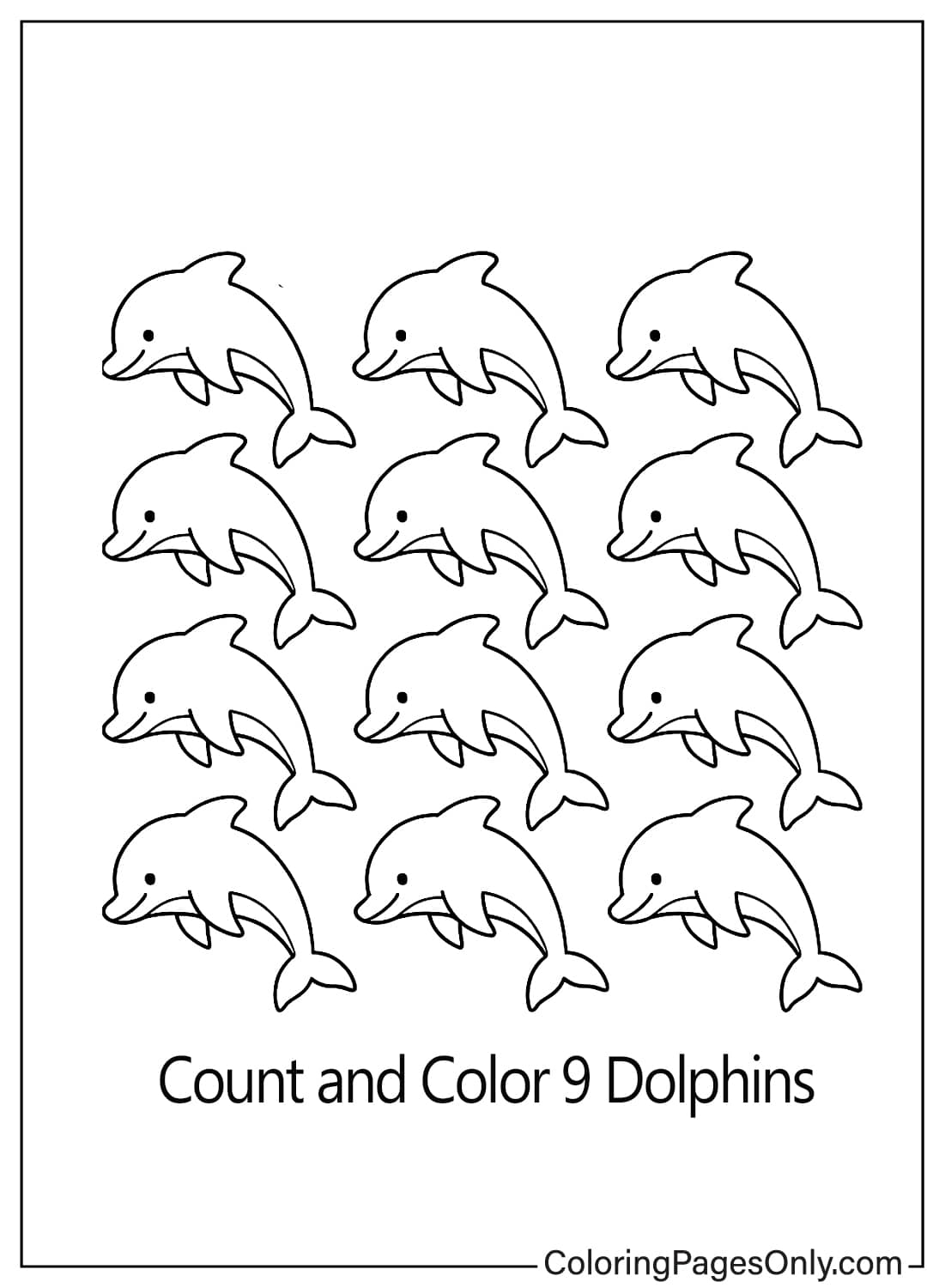
Larger numbers (11–15): Pages like the School of Fish (12 with choices 7, 8, 12), Slices of Bread (14 with choices 4, 12, 14), Lollipops (15 with choices 10, 15, 20), Dolphins (9, from a larger group), and Pumpkins (15 with choices 13, 14, 15) extend counting practice into the range where tracking accuracy becomes more challenging. When a child must count a group of twelve fish without losing their place, they are developing the concentration, systematic scanning, and tracking strategies that support accurate counting of larger sets. Pages in this range are appropriate for children ages 5–6 and kindergarteners building toward the 1–20 counting target.
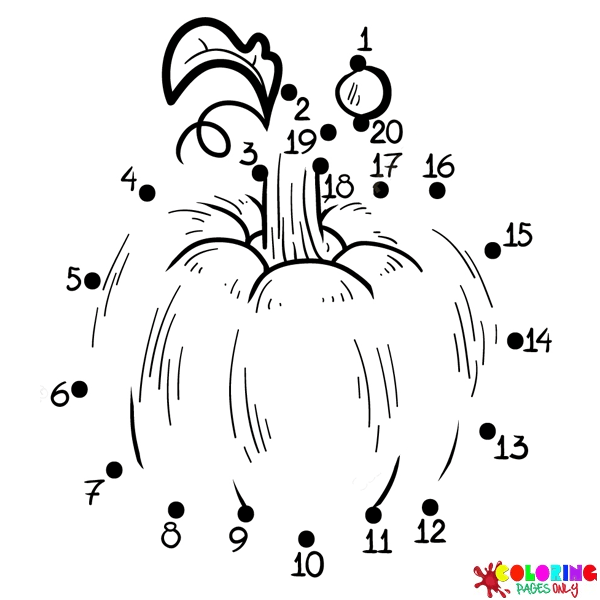
The multiple-choice design teaches more than it appears. The three number choices provided on identification pages (e.g., 13, 14, 15 for the pumpkins) are carefully calibrated to include consecutive or nearby numbers, not wildly different options. This design is intentional: if the choices were 2, 15, and 100, a child could guess correctly without counting accurately. By offering three adjacent numbers (13, 14, 15), the page requires genuine counting precision – a child who counts 13 when there are 15 pumpkins will select a wrong answer that is adjacent to the correct one, revealing exactly where the counting error occurred. Parents and teachers who review completed pages can use these near-miss errors diagnostically: if a child consistently selects the number one or two less than the correct answer, they may be skipping objects in the middle of their count; if they consistently select one more than the correct answer, they may be double-counting.
A Guide to the Collection’s Subjects
The collection’s subjects are chosen not just for visual appeal but for counting clarity – objects that are easy to distinguish from each other, count individually, and represent groups that children can relate to from their daily experience.
Toys and familiar objects – Teddy Bears, Rubber Ducks – are the most immediately engaging for the youngest colorists. Teddy bears and rubber ducks are objects children handle and count in play contexts, making the counting task feel continuous with familiar experience rather than abstract. These pages are the gentlest entry points into the collection.
Nature and weather – Smiling Clouds, Snowflakes – use objects whose visual simplicity (each cloud is essentially a white fluffy shape; each snowflake a symmetrical crystal) makes individual counting straightforward. The clouds page is a gentle 1–5 range page; the snowflakes page extends into the 9–11 challenge range with the three-choice format. Coloring these pages also invites natural conversations about weather, seasons, and observation.
Ocean and water animals – School of Fish, Dolphins, Rubber Ducks – connect counting to a subject with intrinsic appeal to most children. The fish page, with twelve fish and the options 7, 8, 12, is one of the more demanding pages in the collection because fish in a “school” arrangement may overlap or appear similar – requiring careful individual counting rather than perceptual guessing.
Seasonal and holiday themes – Pumpkin Counting (autumn), Cute Ghosts (Halloween), Gifts (holiday/Christmas), Snowflakes (winter) – anchor counting practice to specific times of year, making these pages particularly useful as seasonal classroom or at-home activities. A child who counts and colors 15 pumpkins in October is building numeracy skills in a context that feels festive and timely.
Food and sweets – Four Delicious Donuts, Lollipops, Slices of Bread – tap into universal childhood enthusiasm. The donut page (4 donuts, choices 2, 4, 8) is one of the simplest pages in the collection and an ideal starting point for very young or hesitant counters. The lollipop page (15 lollipops, choices 10, 15, 20) is one of the more challenging, as fifteen spiral lollipops require careful, systematic counting.
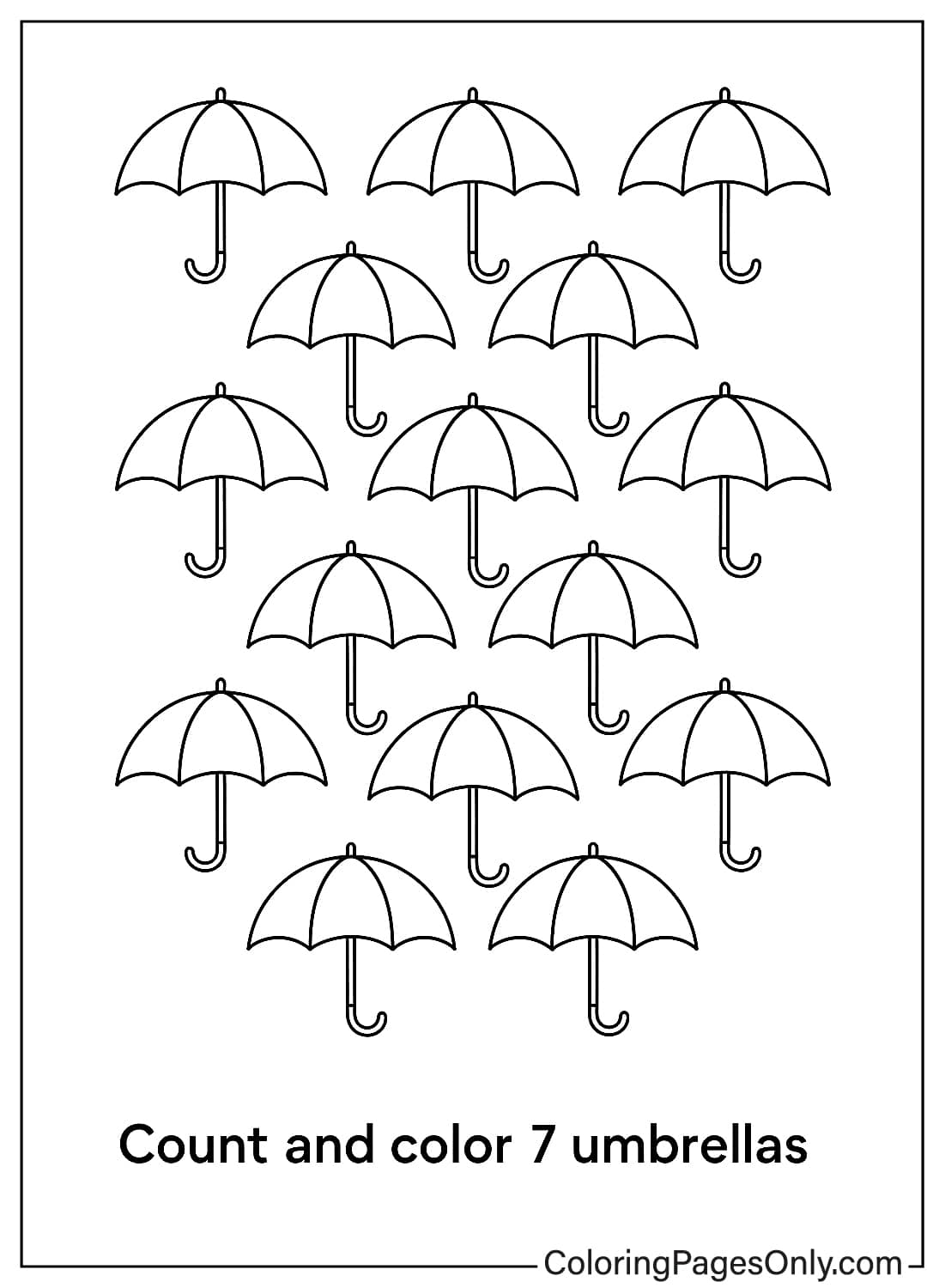
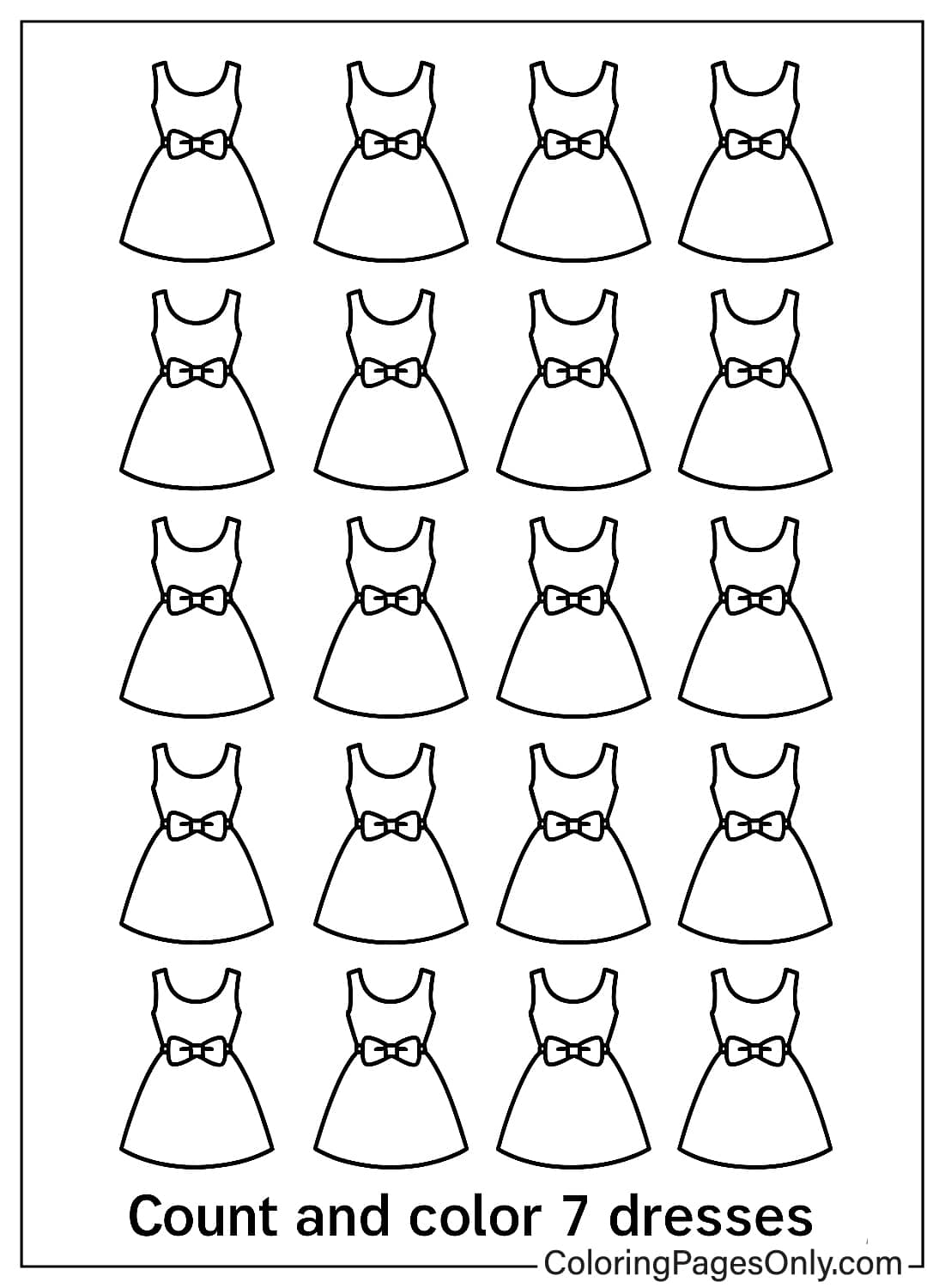
Everyday objects – Umbrellas, Dresses, Stars – provide variety that prevents any single subject from dominating the collection’s visual identity. The umbrella page (7 umbrellas, count and color exactly 7) and the dresses page (7 dresses, count and color exactly 7) both target the same number but with completely different visual content, giving children variety while reinforcing the same quantity.
Coloring Tips for Counting Pages
Color as you count, not after. The most effective approach to Format 1 pages (“Count and color exactly N”) is to count and color simultaneously – say “one” as you begin coloring the first object, “two” as you finish it and move to the second, and so on. This synchronized counting-and-coloring uses the physical act of coloring as a natural one-to-one correspondence tracker: once an object is colored, it has been counted and should not be counted again. Children who count first and then try to color the correct number often lose track of which objects they counted, leading to inaccurate results.
Start from one corner and work systematically. On pages where objects are scattered rather than arranged in rows, establish a counting order before starting: “We’re going to start with the duck in the top left corner, then move across to the right, then come down to the next row.” This systematic spatial approach prevents double-counting (accidentally counting the same object twice) and skipping (missing an object entirely). Pointing at each object while counting, or touching the page, further reduces errors by creating a physical tracking marker.
Use two different colors – one for “counted” and one for “the rest.” On Format 1 pages, consider coloring the target objects in one color and the remaining uncounted objects in a different (lighter) color once the activity is complete. This two-color approach produces a visual result that shows both the counted set and the full set, making the mathematical relationship between “9 of 12” immediately visible on the page. It transforms the page from a practice exercise into a concrete representation of a number within a larger group.
For multiple-choice pages, count first, then circle the answer, then color. On Format 2 identification pages (the star, cloud, snowflake, fish, bread, lollipop, and pumpkin pages), complete the counting and answer selection before coloring anything. Coloring before counting can alter the visual field in ways that make accurate recounting more difficult – a brightly colored fish is harder to re-examine than an uncolored outline. Save the coloring as the reward that comes after the counting task is complete.
Let the child re-examine their count. If a child selects an answer on a multiple-choice page and then, upon reviewing the colored objects, notices something seems off, encourage them to recount. The ability to check one’s own work – to recognize that a result might be incorrect and verify it – is an early metacognitive skill that is just as important as the counting itself. Respond to self-corrections with enthusiasm: “You noticed something and went back to check – that’s exactly what careful mathematicians do.”
Make coloring choices that mirror counting decisions. On the teddy bear page, for instance, the 9 colored bears become visually distinct from the uncolored bears because of the coloring choice. Encourage children to color all 9 counted bears in the same color – creating a visually unified group – to reinforce the concept that the 9 colored bears form a set. If each bear is a different color, the visual grouping of the set is less clear.
5 Activities
The stop-at-the-number game. Print the Teddy Bears (9) or Rubber Ducks (10) page. Before handing it to the child, scatter additional small objects (pennies, blocks, beads) on the table to match the number of uncounted objects on the page – so if there are 12 bears total and the target is 9, place 3 additional objects on the table to represent the “extra” bears. As the child counts and colors 9 bears on the page, count out 9 objects from the table pile in parallel. When the child finishes coloring, and you’ve counted 9 table objects, compare: do the 9 colored bears match the 9 counted objects? This parallel counting – one set on the page, one set on the table – dramatically reinforces cardinality by creating two concrete representations of the same quantity simultaneously. Children who complete this activity together quickly internalize that 9 is 9 regardless of what is being counted.
The counting error detective. Complete any multiple-choice identification page with a deliberate counting error – count wrong on purpose, selecting an incorrect answer. Then invite the child to “check your work” by pointing at each object with a finger while you count together aloud. When you arrive at the correct count, and it doesn’t match the circled answer, ask: “Hmm, something’s wrong. What happened?” Walk through where the counting went off – did you count one object twice? Did you skip one? This activity develops error detection and verification – the metacognitive skill of checking one’s own mathematical work – by making the error visible and recoverable. Children who learn to be deliberate checkers of their own counting are developing one of the most valuable mathematical habits of mind they can have.
The comparison challenge. Print two pages that share the same target number – the Umbrellas (7) and the Dresses (7) pages both ask for 7. Complete both pages together in separate sessions. When both are finished, lay them side by side and ask: “This one has 7 umbrellas. This one has 7 dresses. Do they have the same amount?” Then line up the colored umbrellas and colored dresses one-to-one – one umbrella matched to one dress – to visually confirm that 7 = 7. This activity teaches number conservation and the abstraction principle: seven is seven, regardless of what you are counting. For children who understand this intuitively, the confirmation is satisfying. For children who are still developing this understanding, seeing the one-to-one match can be a genuine conceptual breakthrough – the moment they realize that the same number name produces the same-sized set no matter what the objects are.
The “how many more?” extension. After completing any Format 1 page, use the result to introduce simple subtraction reasoning. On the Teddy Bears page: “We colored 9 teddy bears. There are some bears that didn’t get colored. Let’s count them.” Count the uncolored bears (3, if there were 12 total). Then ask: “We colored 9 and didn’t color 3. How many bears are on the whole page altogether?” This is not a formal addition problem – children should count the total if needed rather than adding in their heads – but it introduces the idea that numbers relate to each other: 9 colored plus 3 uncolored equals 12 total. The counting page becomes a concrete model for the relationship between a part and a whole, which is the conceptual foundation of both addition and subtraction.
The seasonal counting book. Over the course of a school year, complete one or two pages from the collection each month, selecting pages that connect to the current season or time of year: pumpkins and ghosts in October, gifts and snowflakes in December, clouds and flowers in spring. When each page is finished, label it with the month, the child’s name, and the number counted. At the end of the year, bind all completed pages into a personal counting book ordered by month. The book documents both seasonal awareness (the child can explain which season each page belongs to) and mathematical progression (the numbers increase across the year, reflecting the child’s developing counting range). A child who counts 4 donuts in September and 15 lollipops in May holds the evidence of their own mathematical growth in a single handmade book.
What Counting With Purpose Teaches – The Research Basis
Early childhood mathematics research consistently distinguishes between rote counting – reciting number words in order without attaching them to objects – and meaningful counting – applying number words to a set of objects with one-to-one correspondence, arriving at a cardinally meaningful total.
Rote counting develops first and is often mistaken for mathematical understanding. A child who can recite “1, 2, 3, 4, 5, 6, 7, 8, 9, 10” fluently may still not understand that “10” at the end of a count means there are ten things here. The transition from rote counting to meaningful counting – from reciting to understanding – requires repeated, concrete counting experiences where the child physically enumerates real objects and is held accountable for the accuracy of their count.
Research by Gelman and Gallistel (1978) – whose five counting principles are summarized earlier in this guide – established that children must develop these principles gradually through experience, and that they cannot be simply taught through explanation. Children develop counting competence by counting many things, many times, in many different contexts. The variety of subjects in this collection (16+ different objects spanning toys, animals, food, holiday items, and nature) provides this variety within a format that makes the counting goal explicit and the result visible.
Research on kindergarten mathematics readiness consistently finds that children who enter kindergarten with strong foundational counting skills – specifically, reliable one-to-one correspondence, cardinality, and counting accuracy to 10 – show significantly stronger mathematics outcomes through the early elementary grades. The connection is not merely that counting is a prerequisite for addition; it is that the mathematical thinking habits built through careful counting practice – precision, verification, systematic enumeration – carry forward into all subsequent mathematical work.