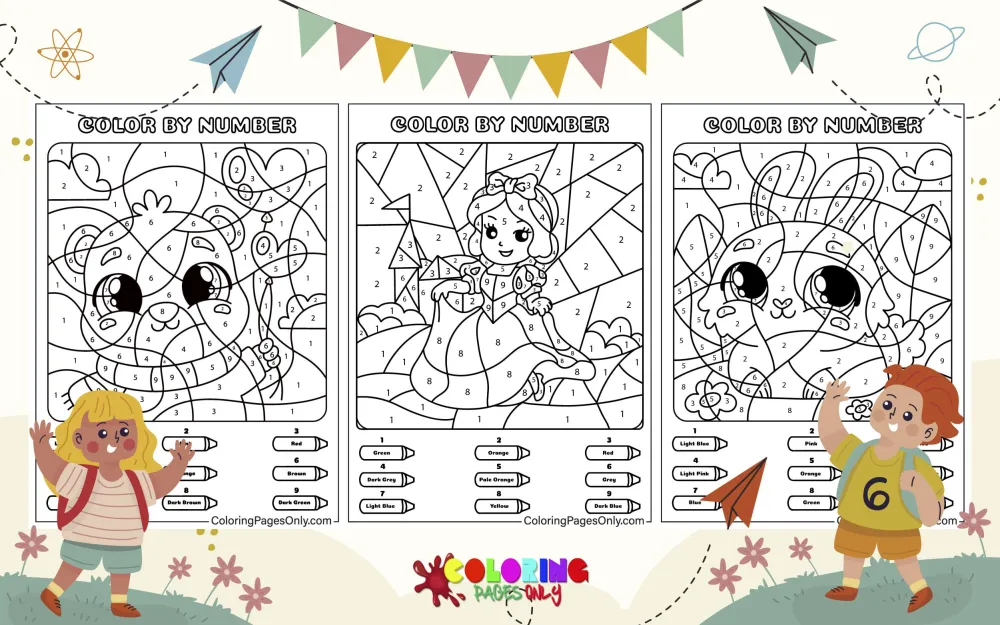
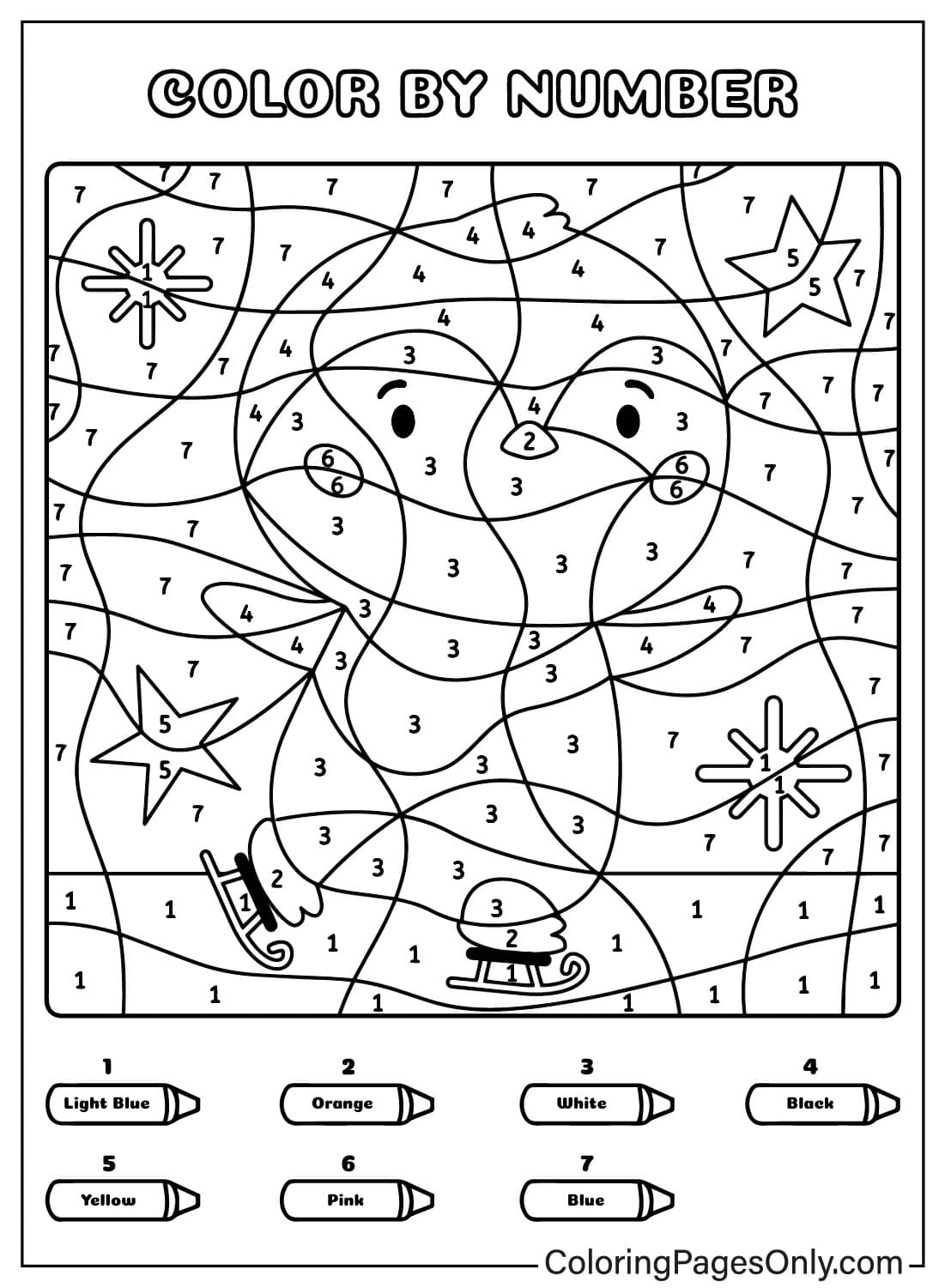
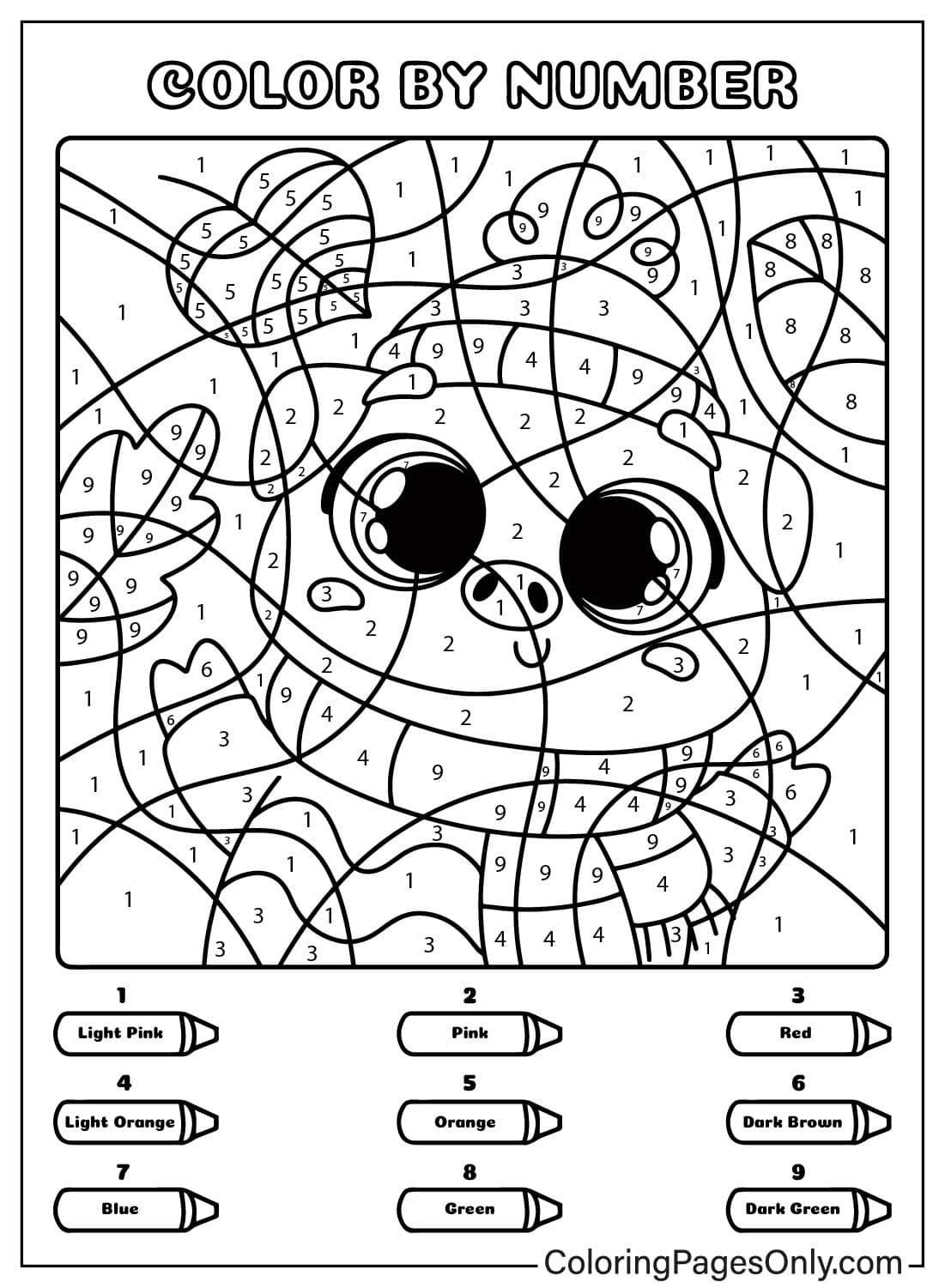
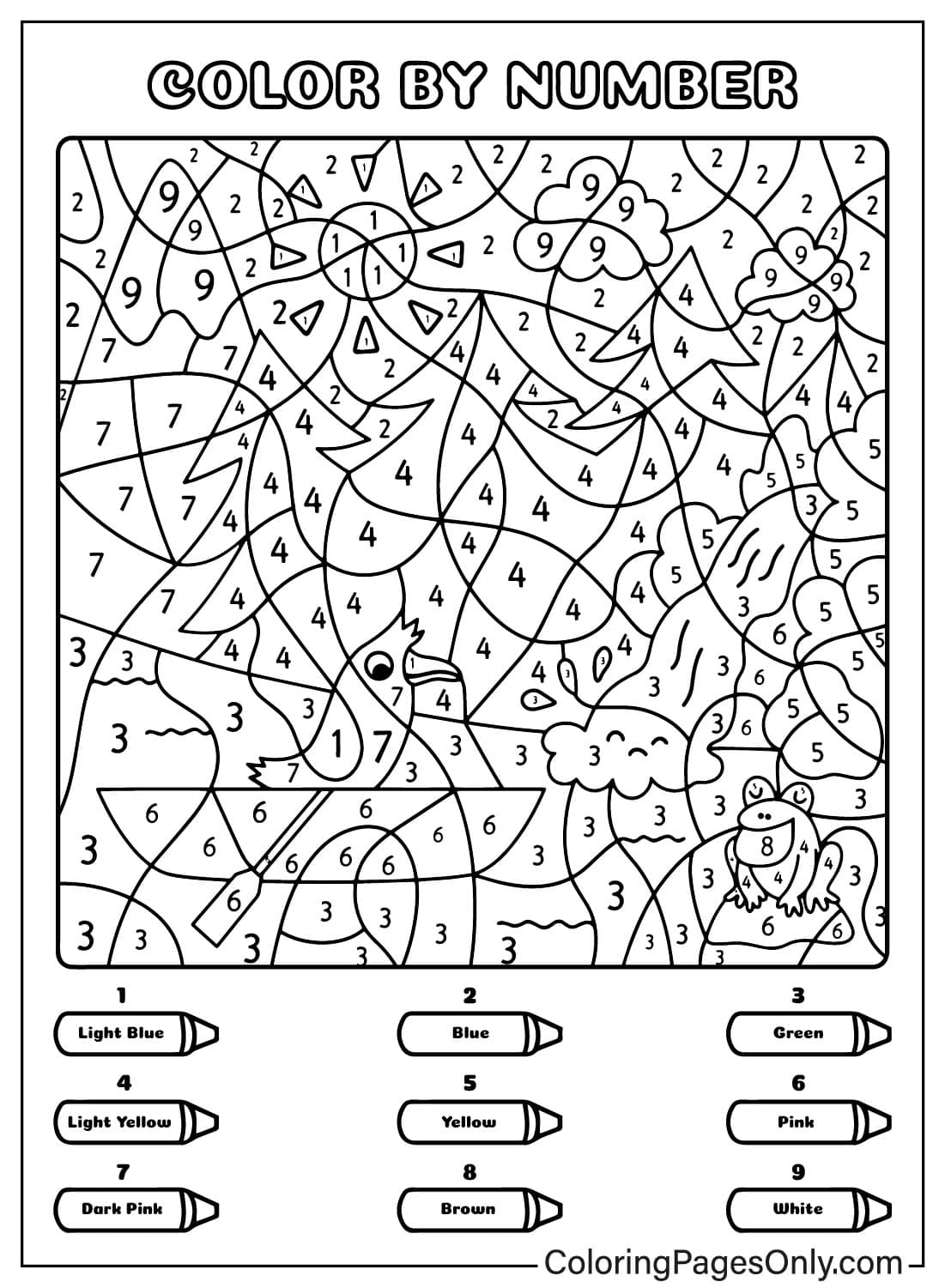
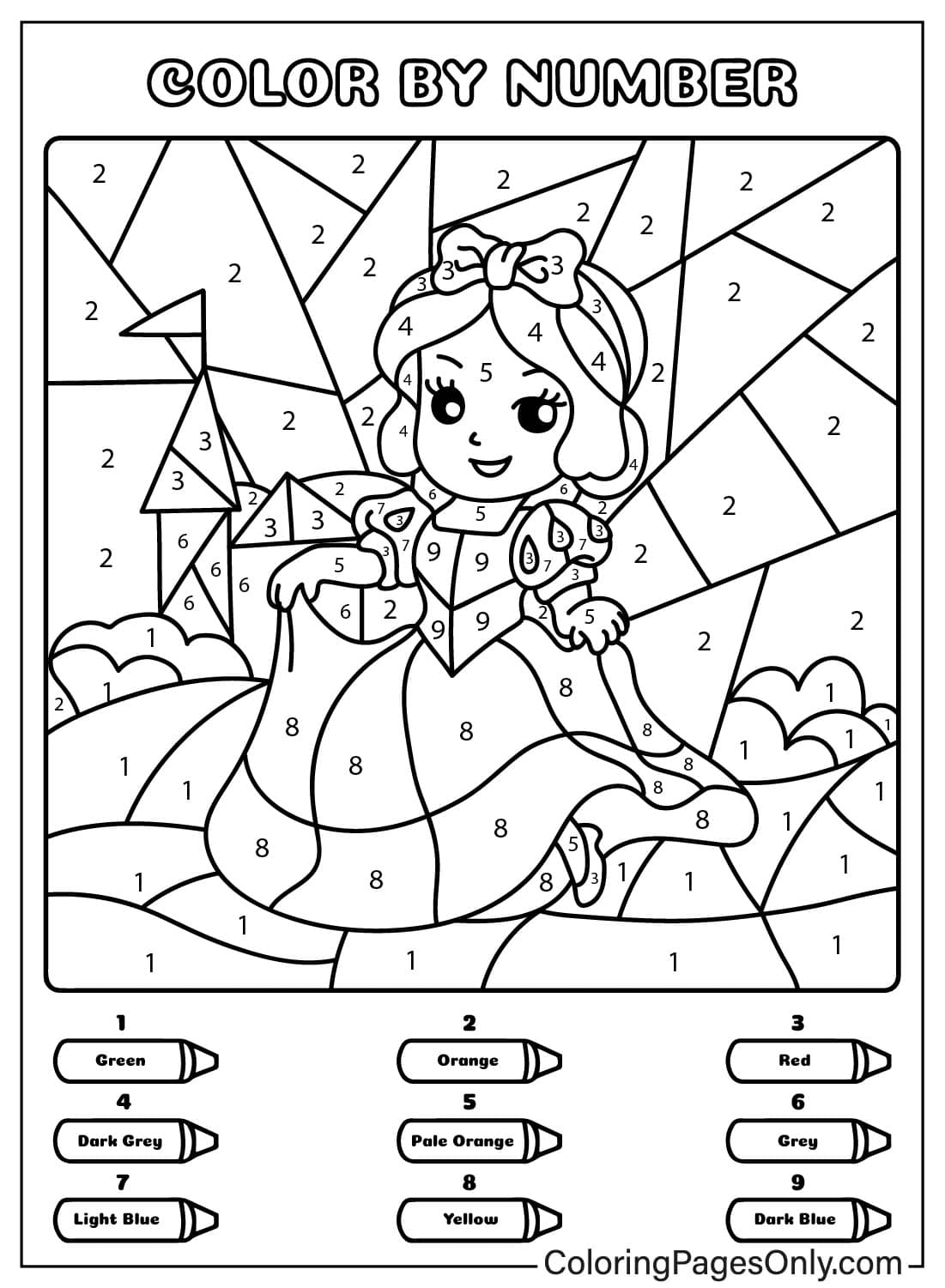
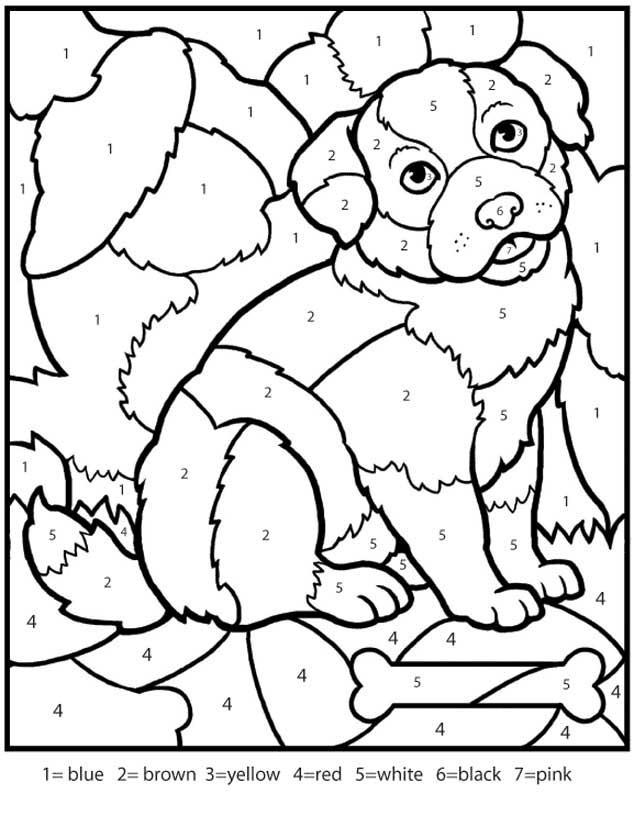
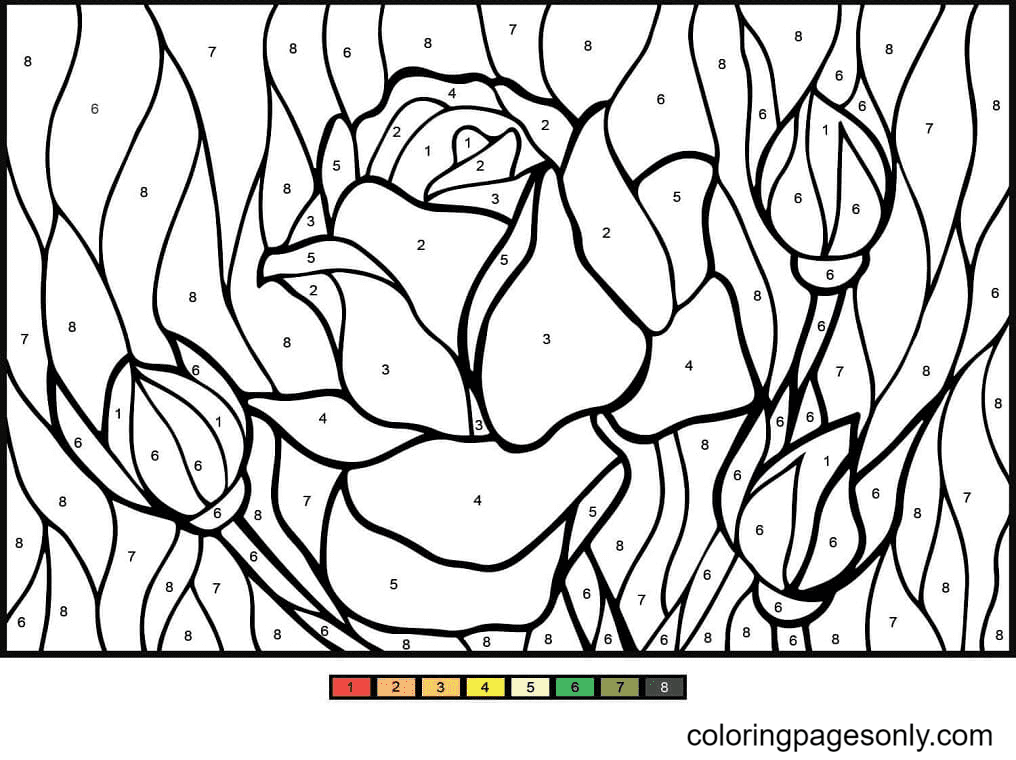
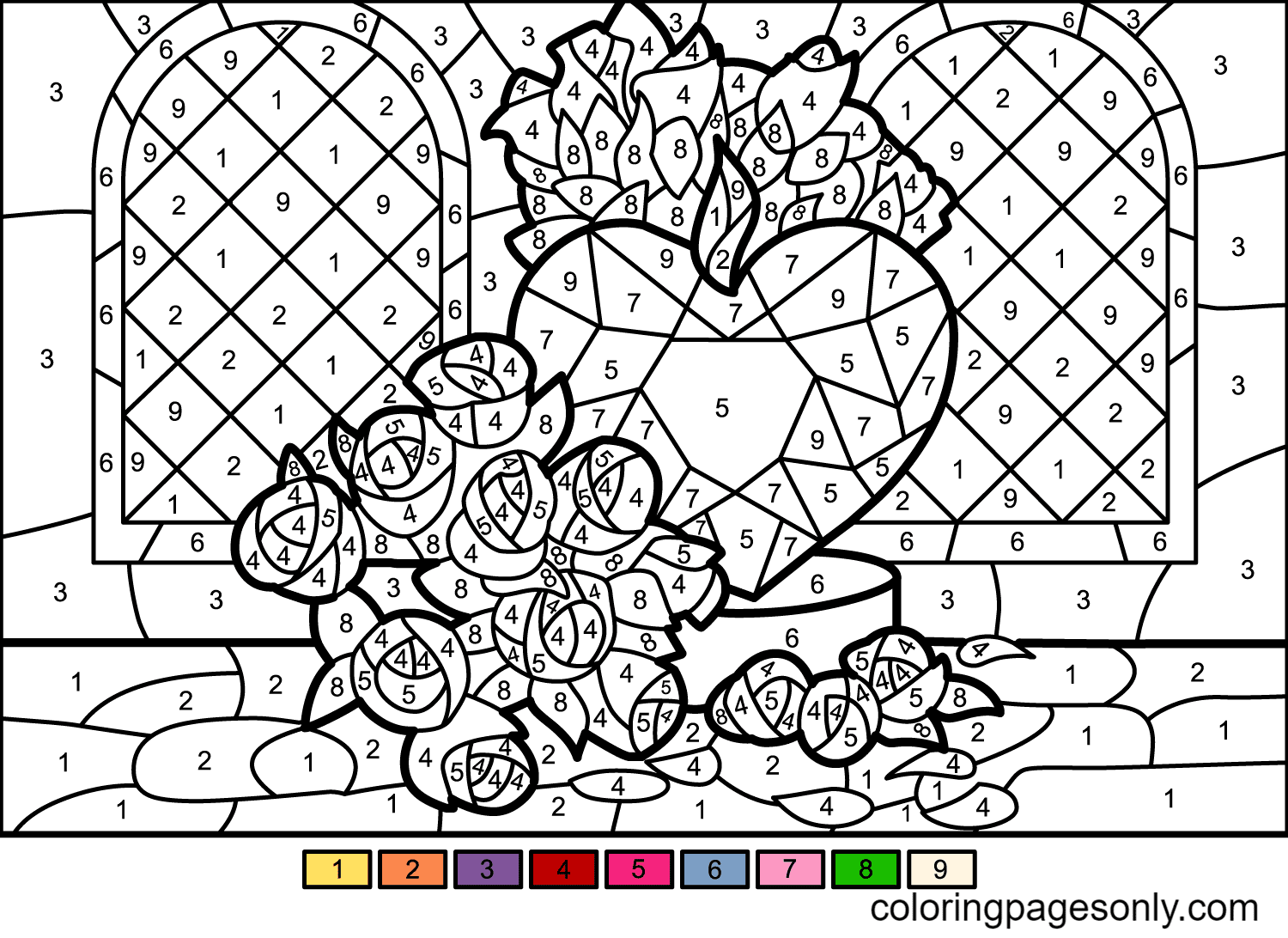
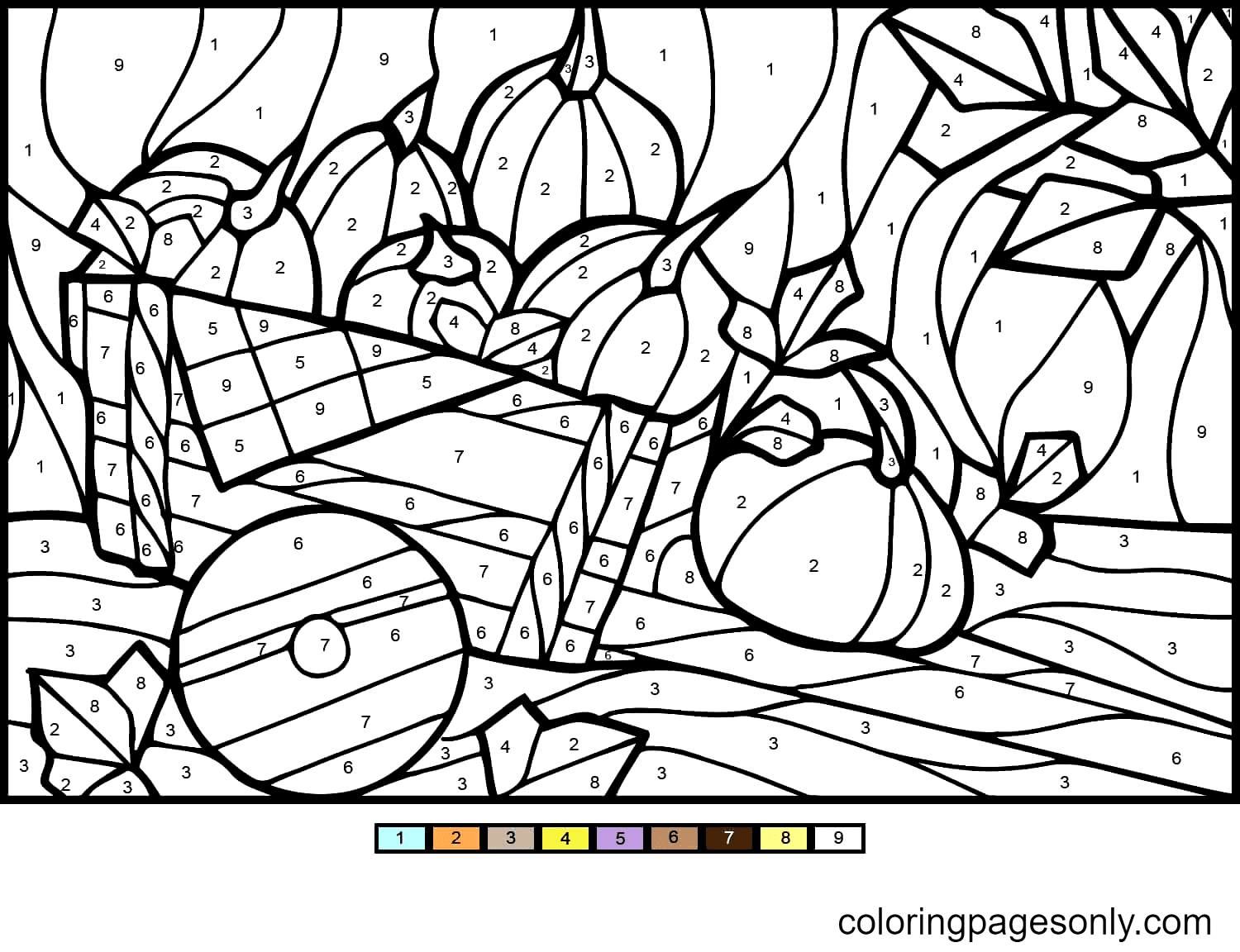
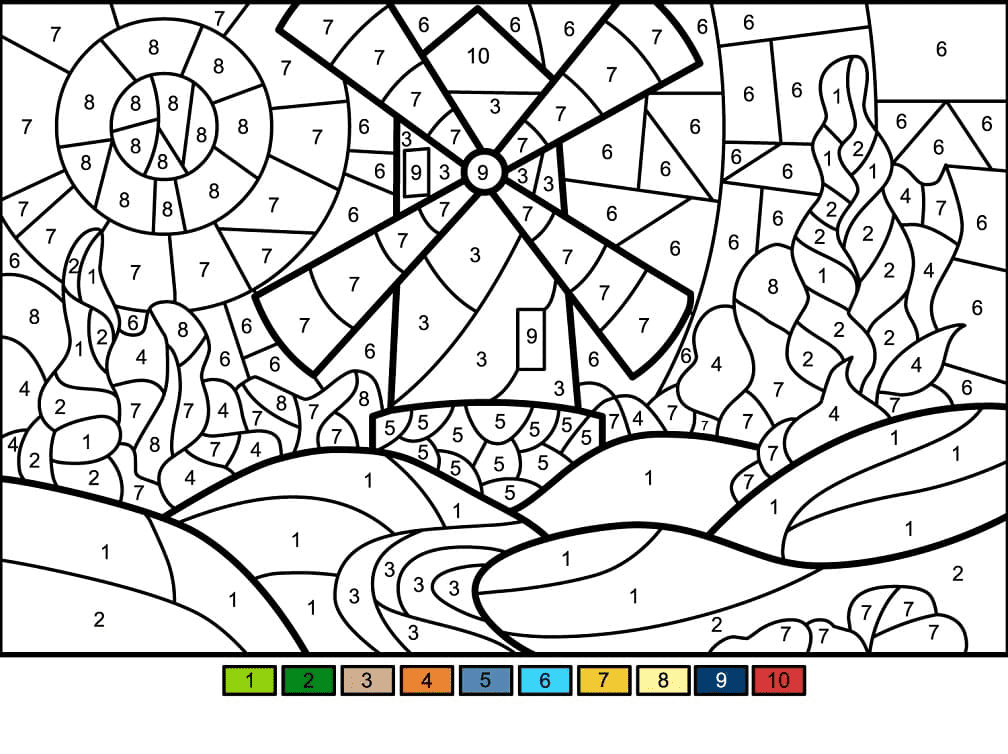
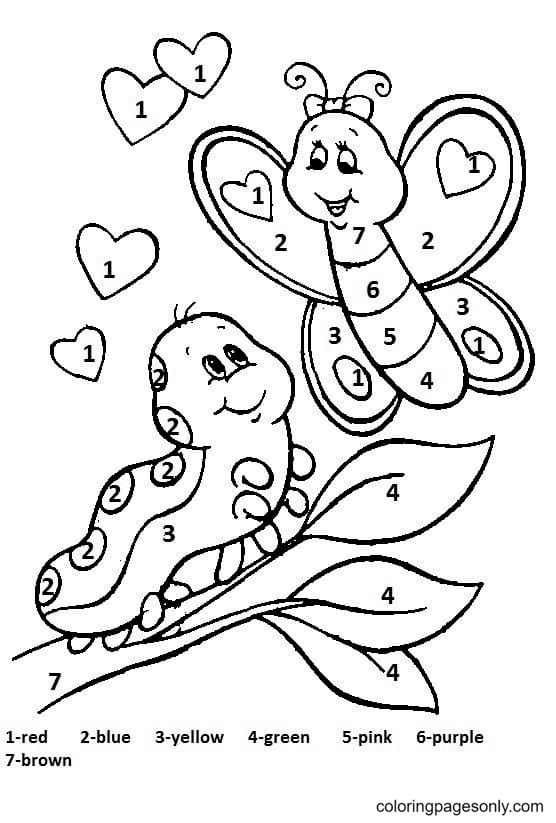
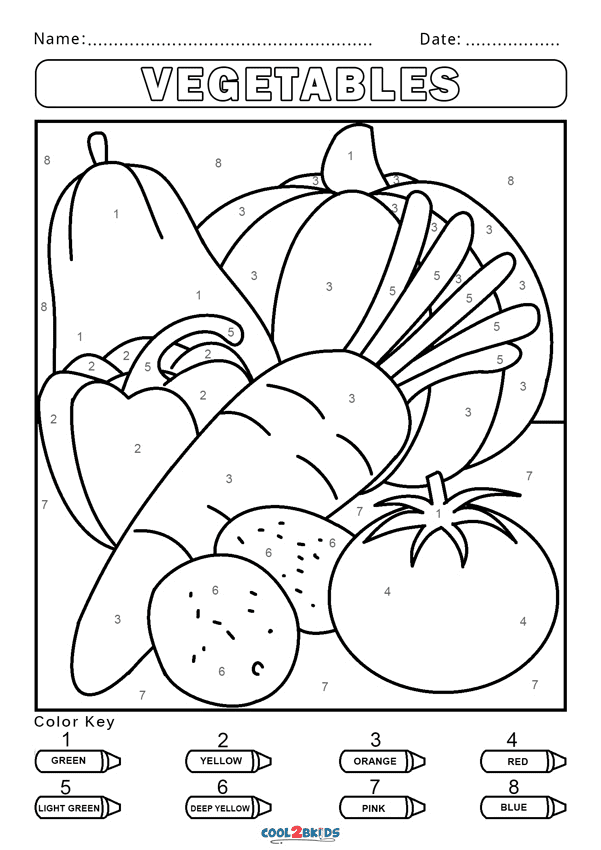
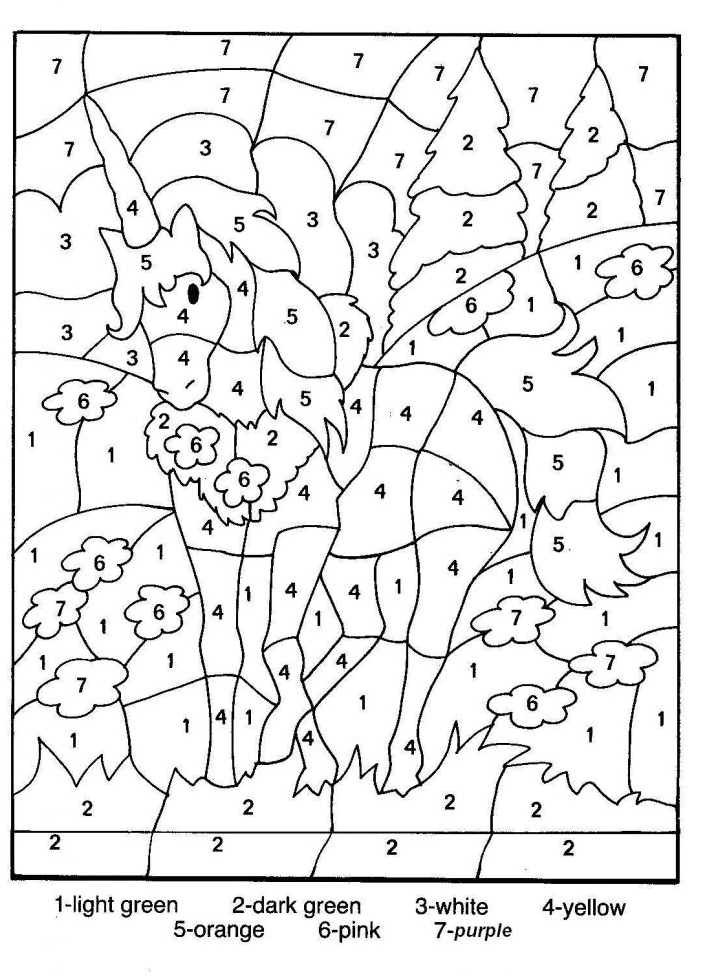
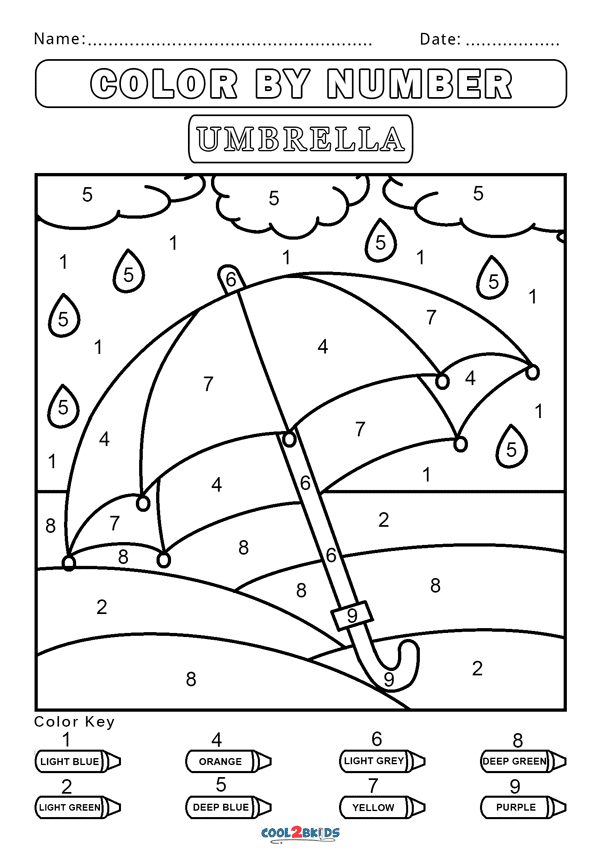
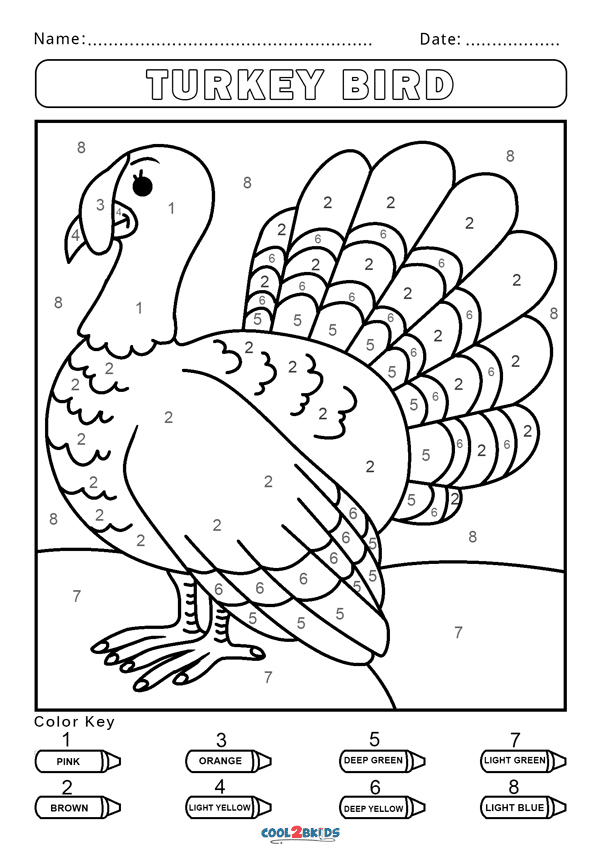
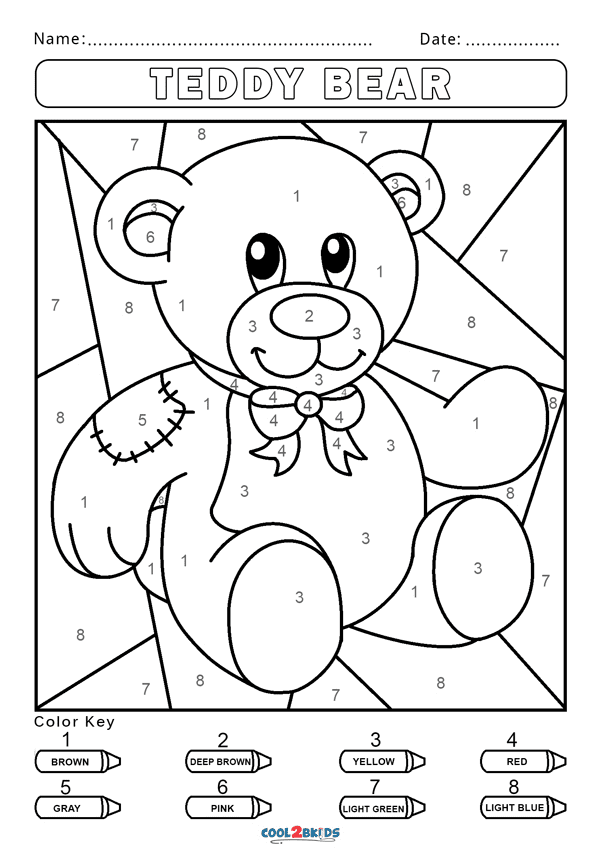
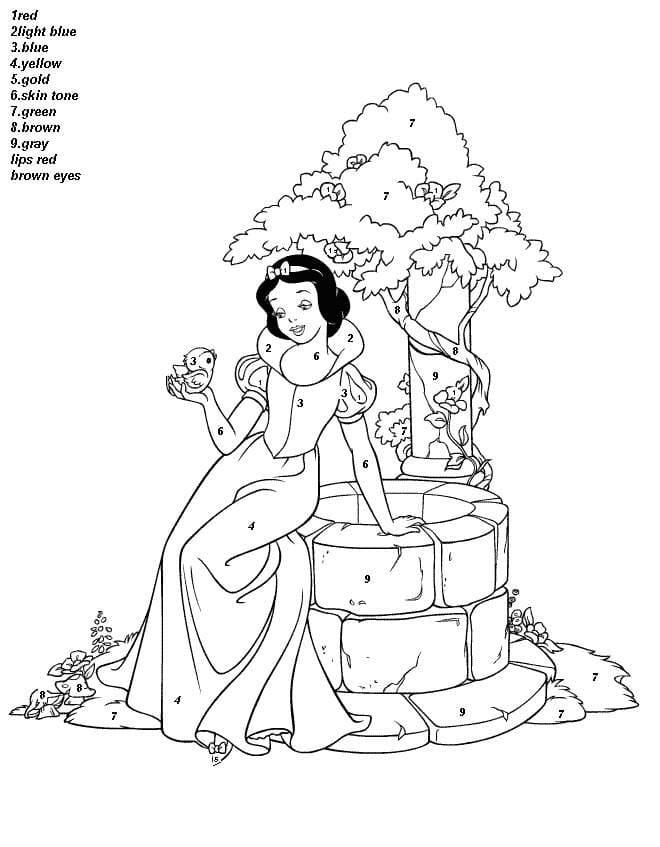
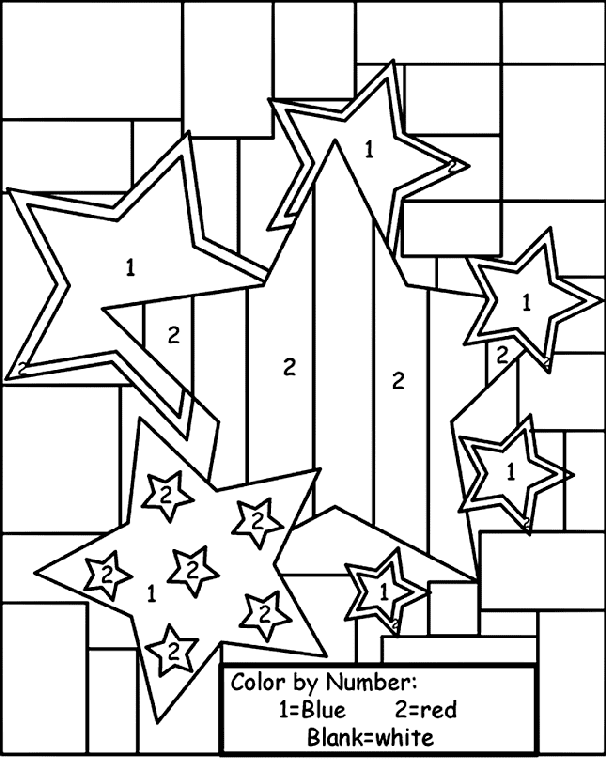
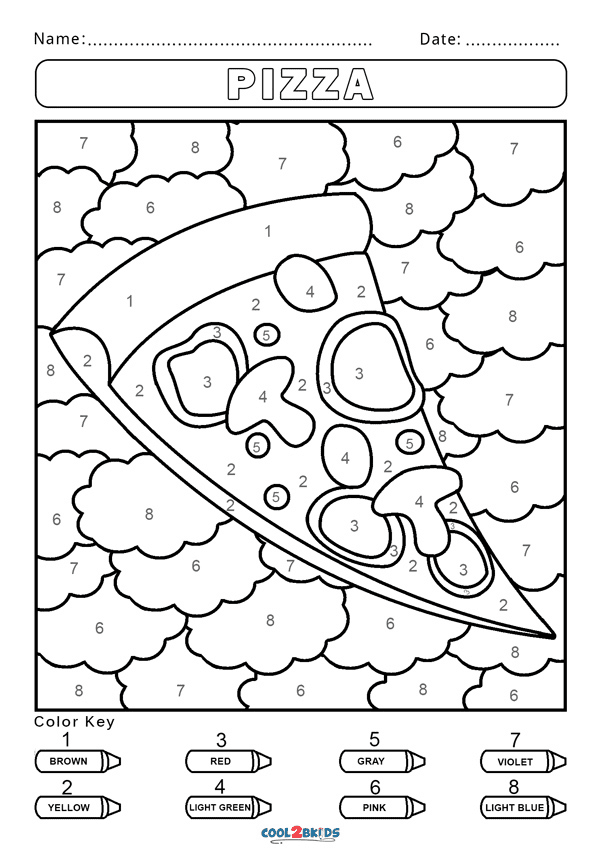
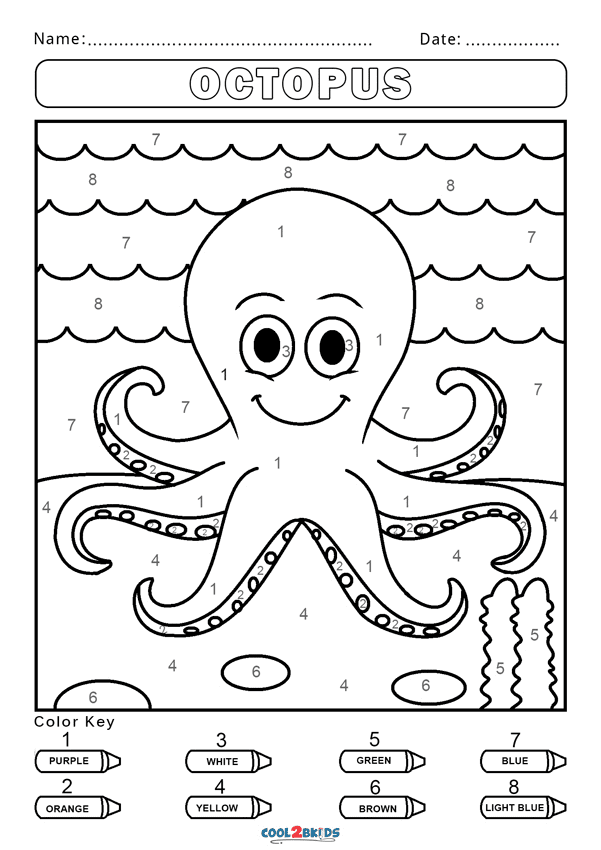
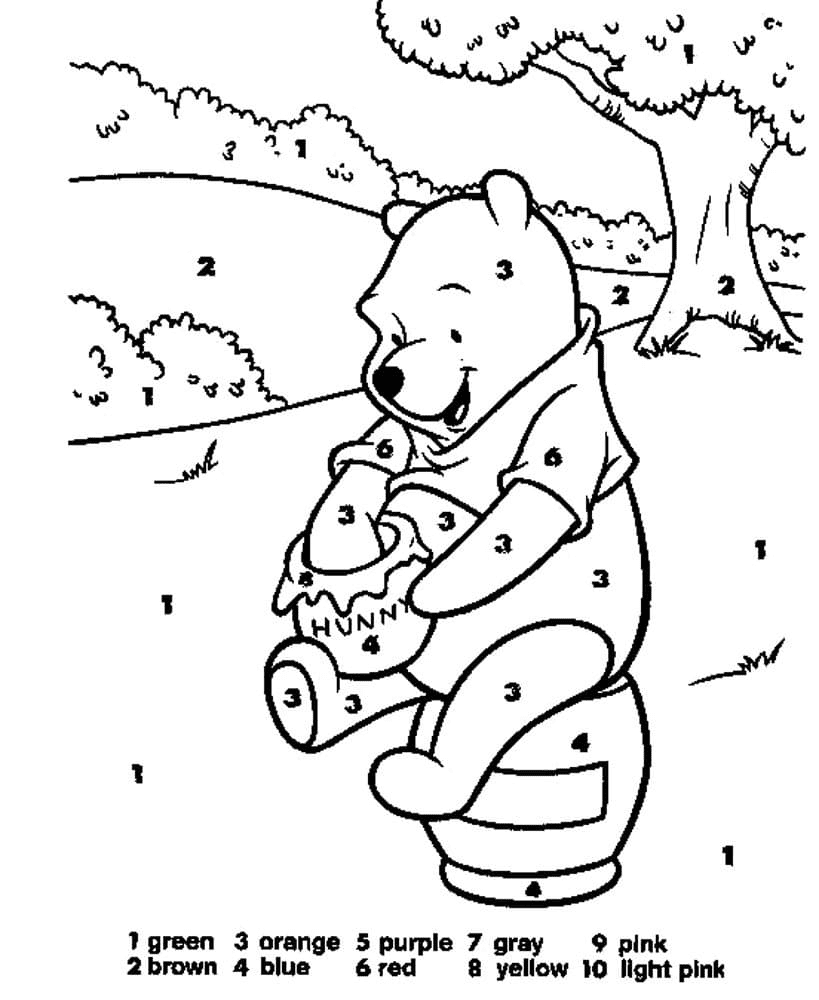
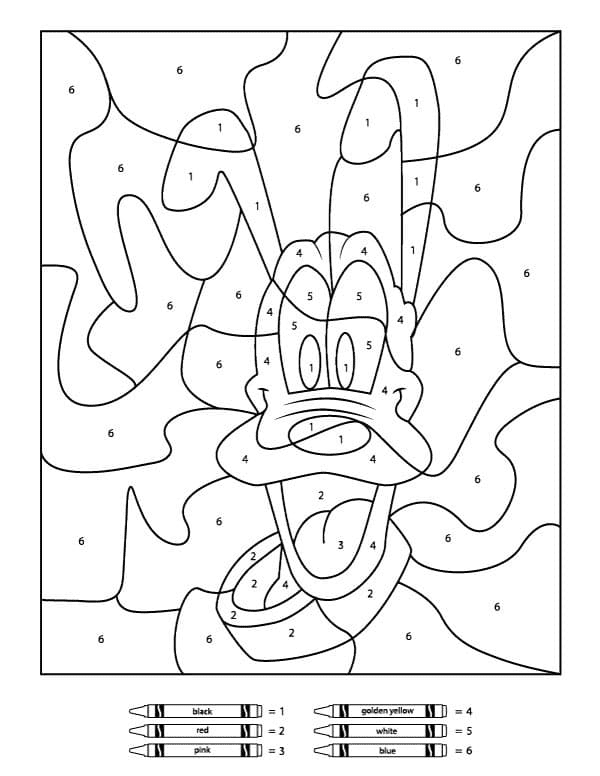
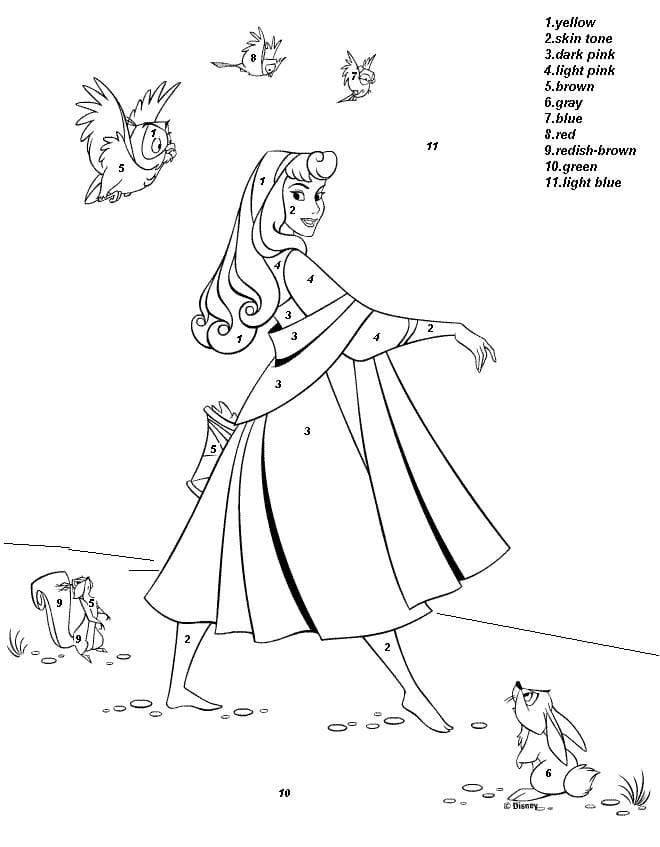
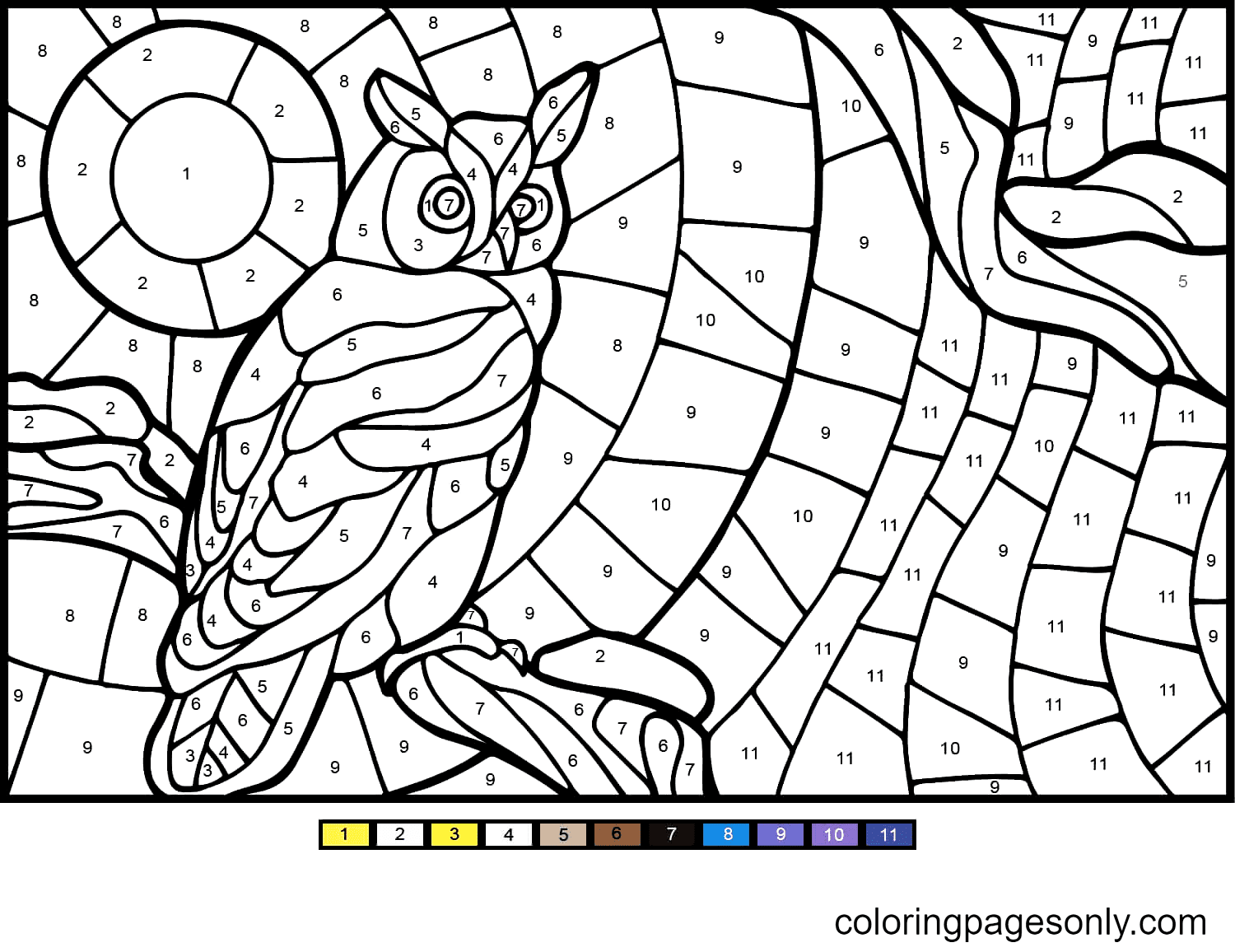
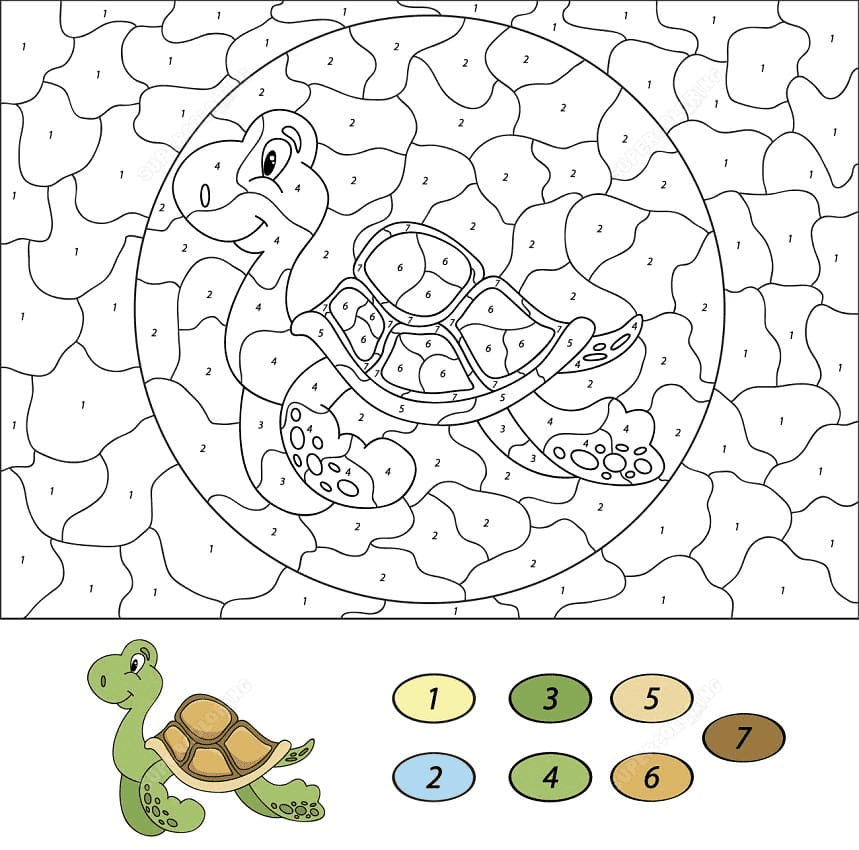
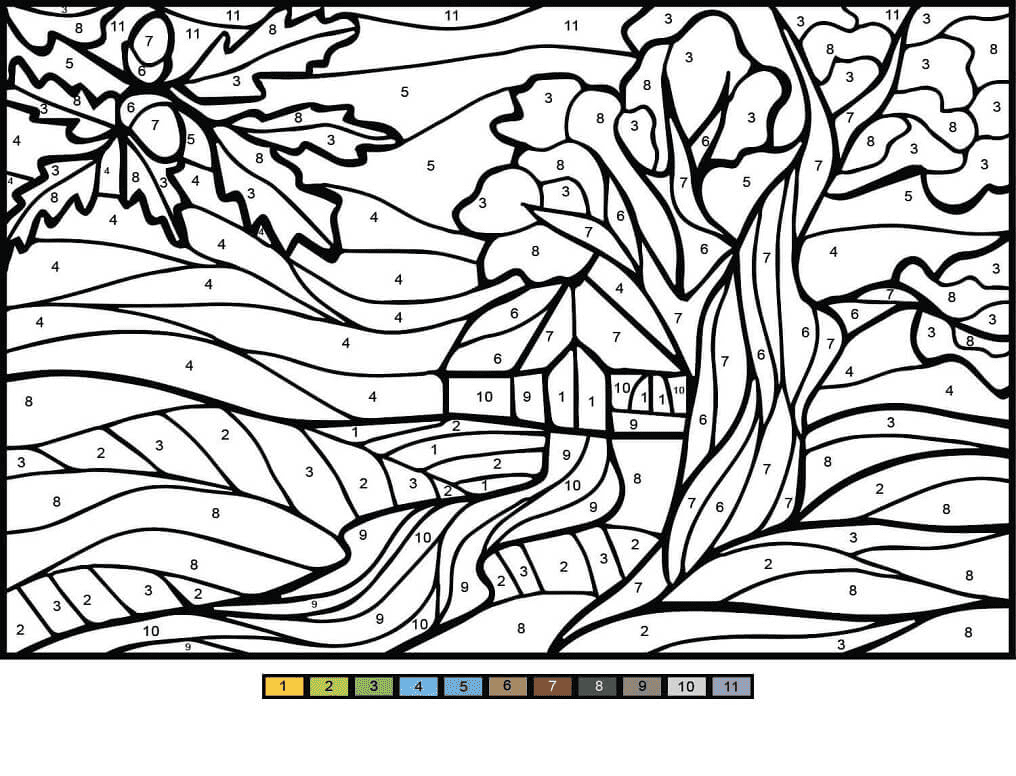
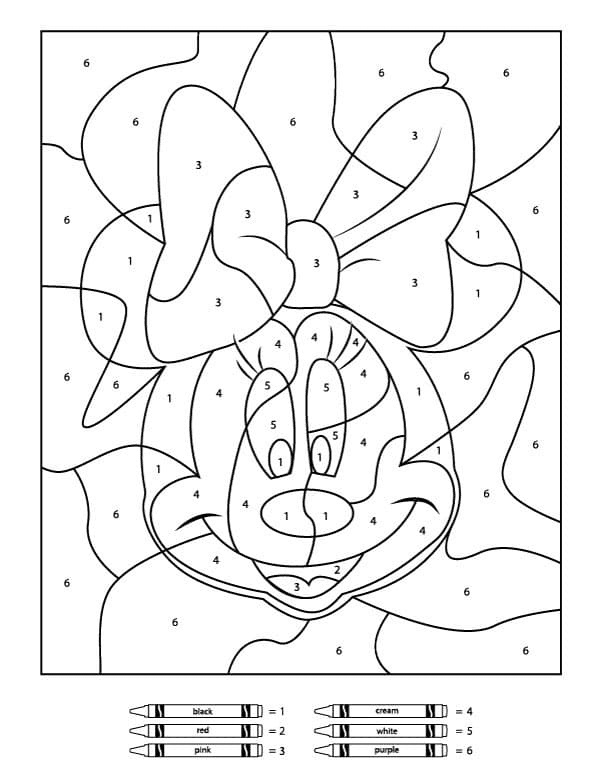
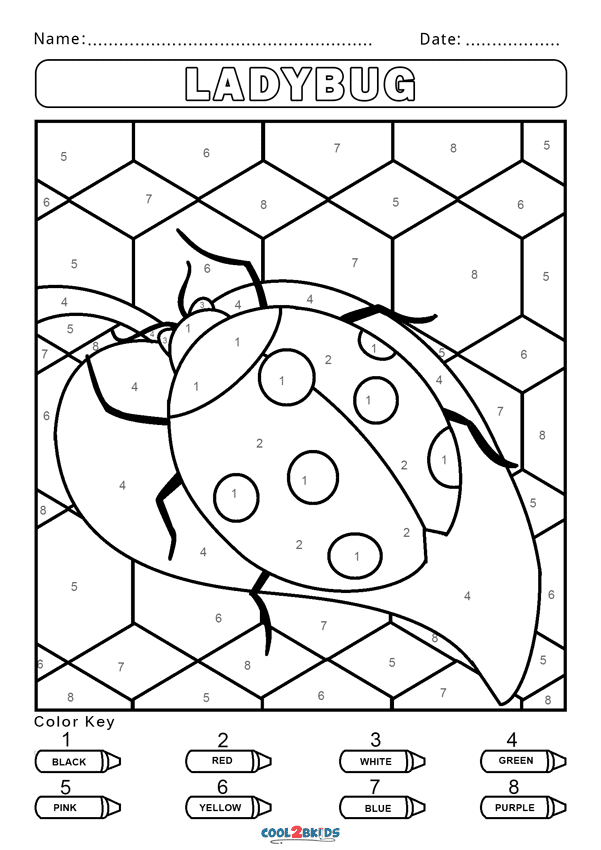
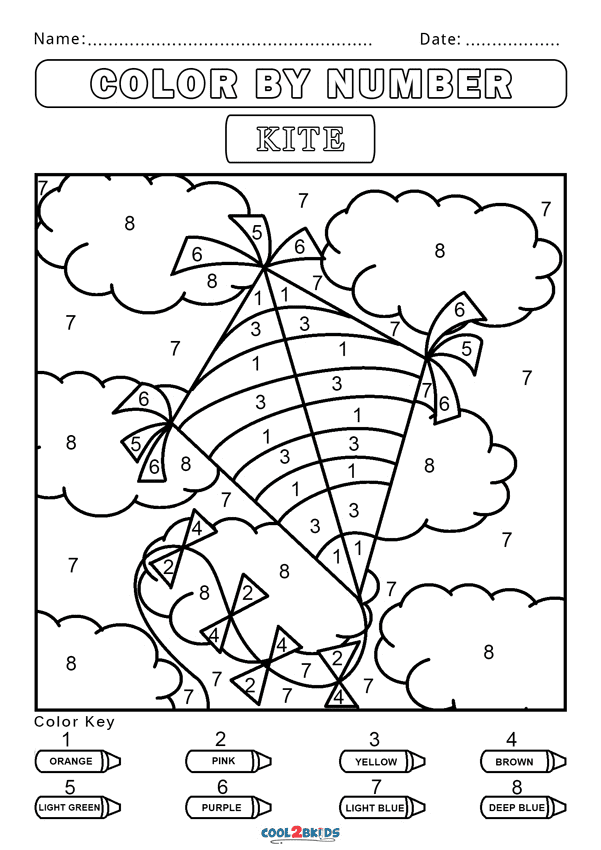
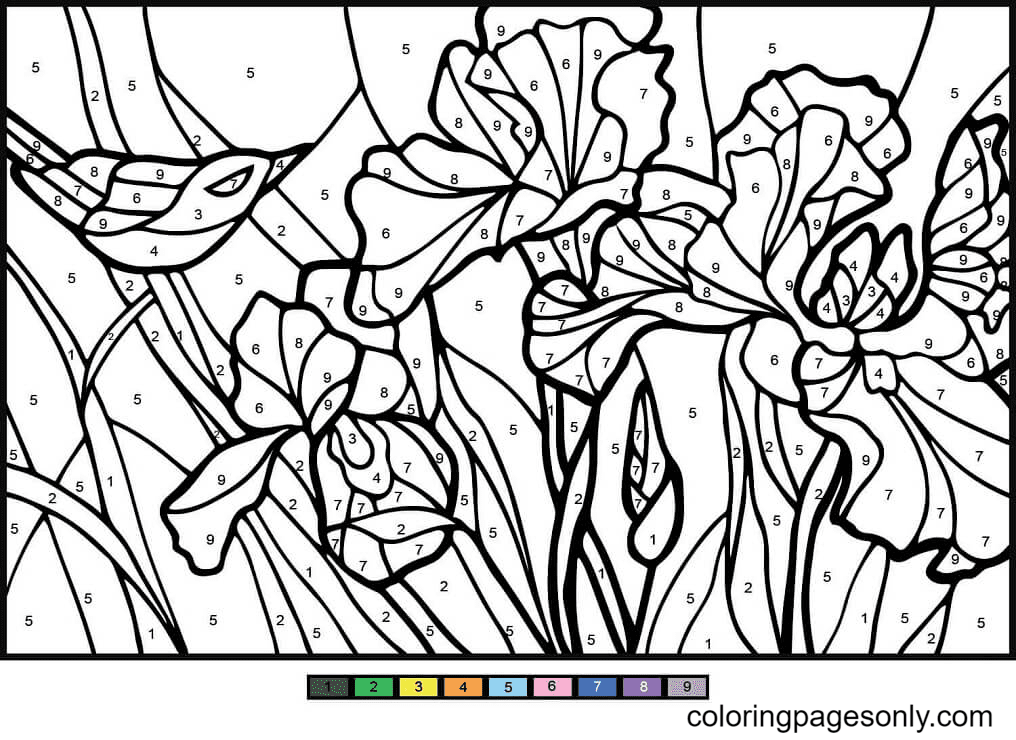
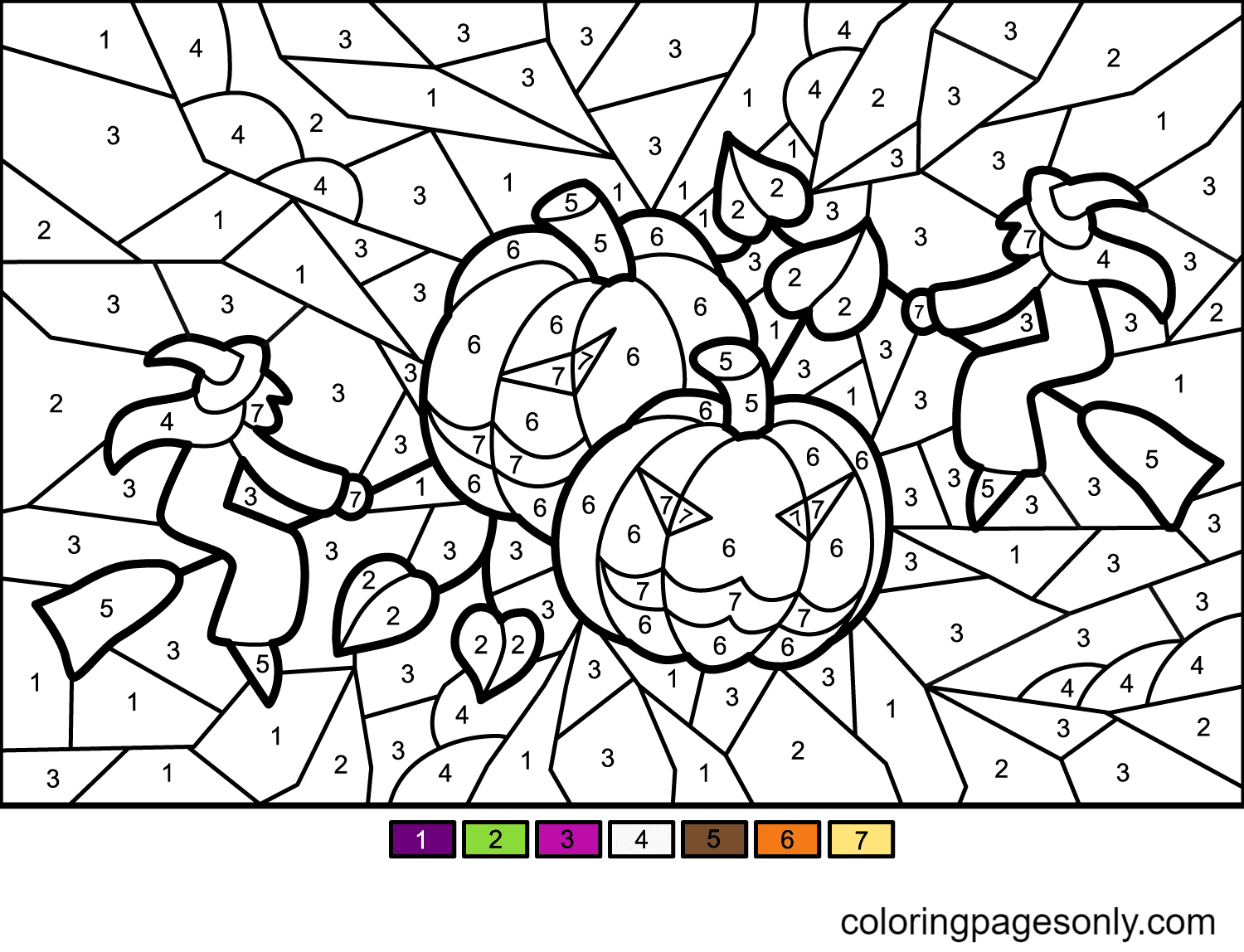
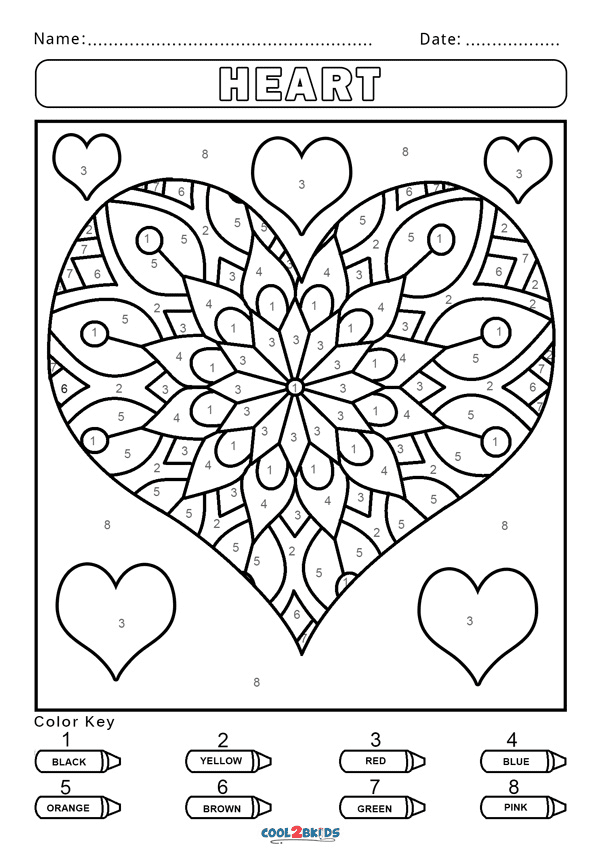
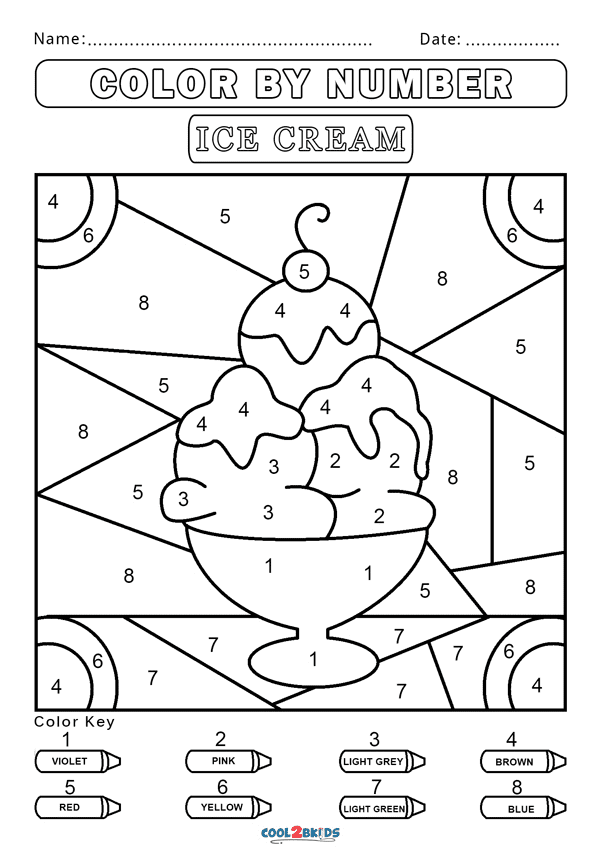
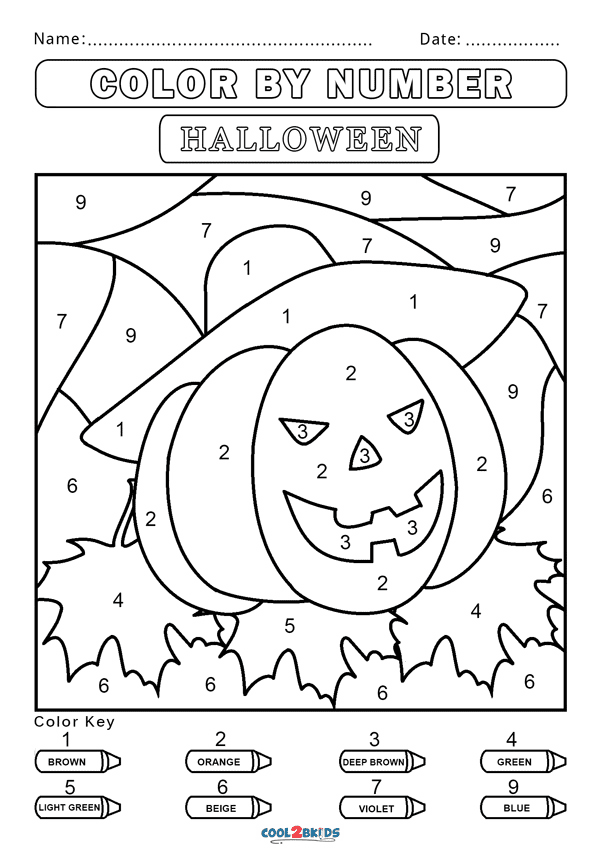
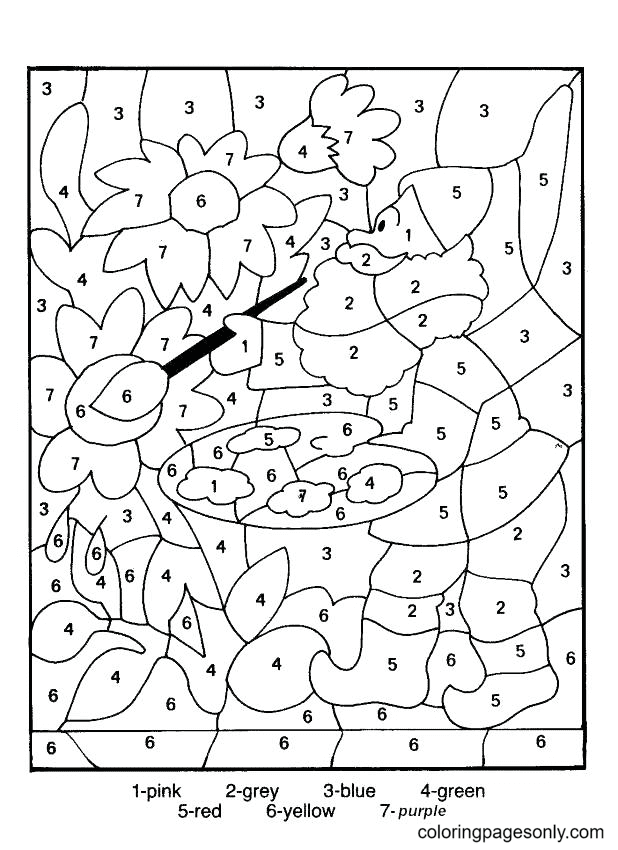
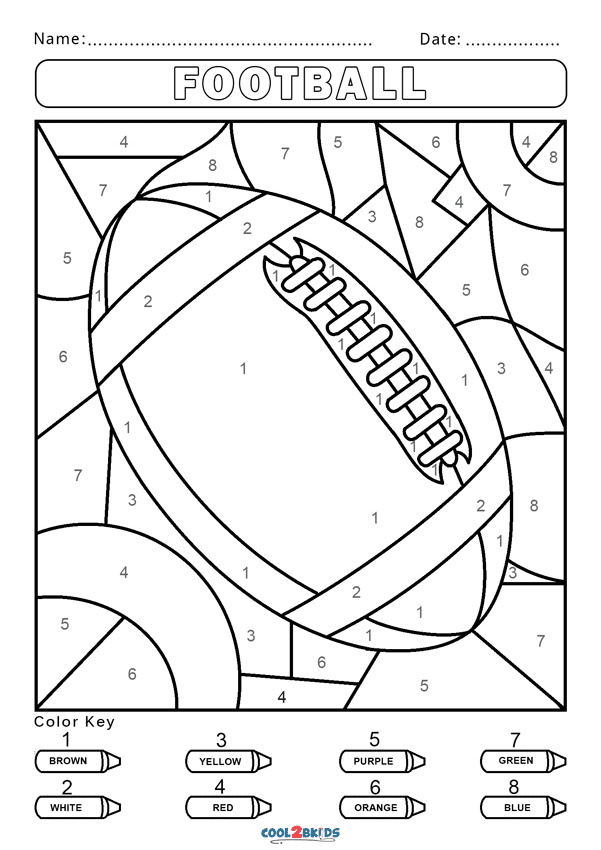
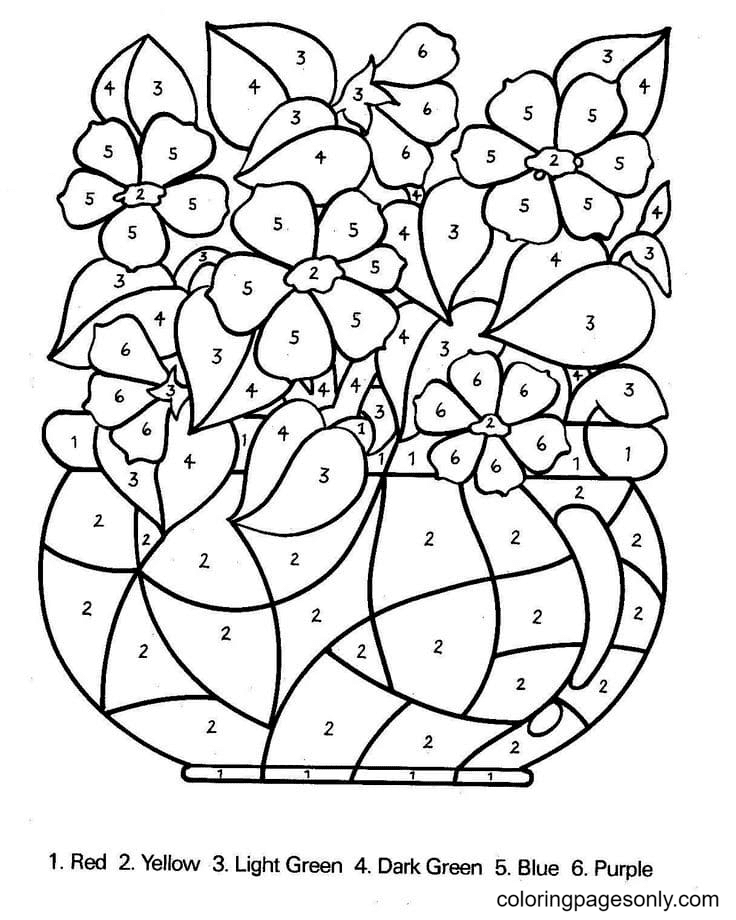
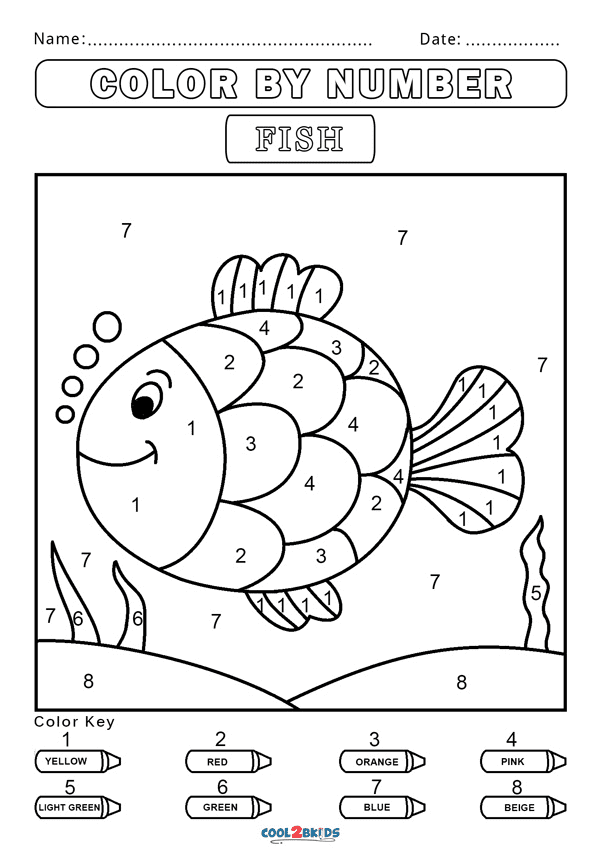
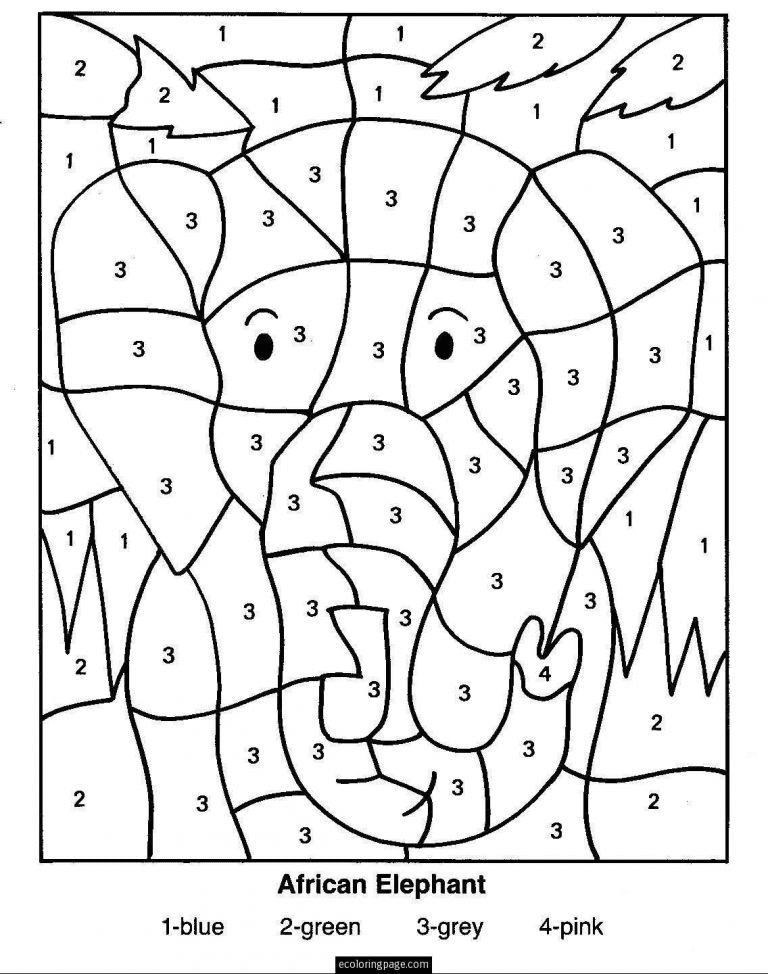
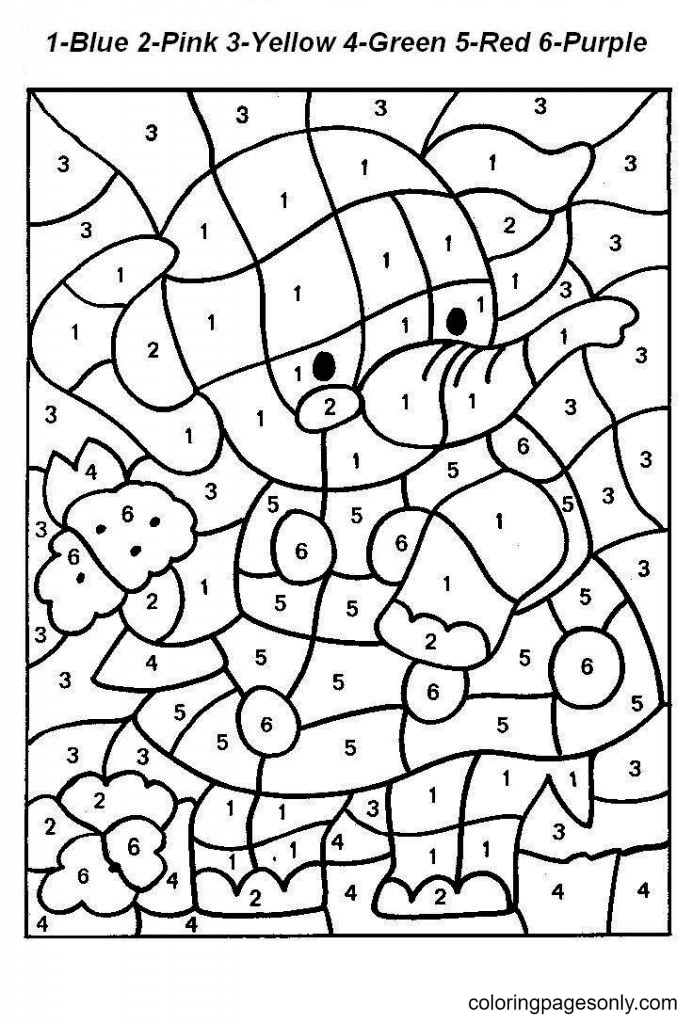
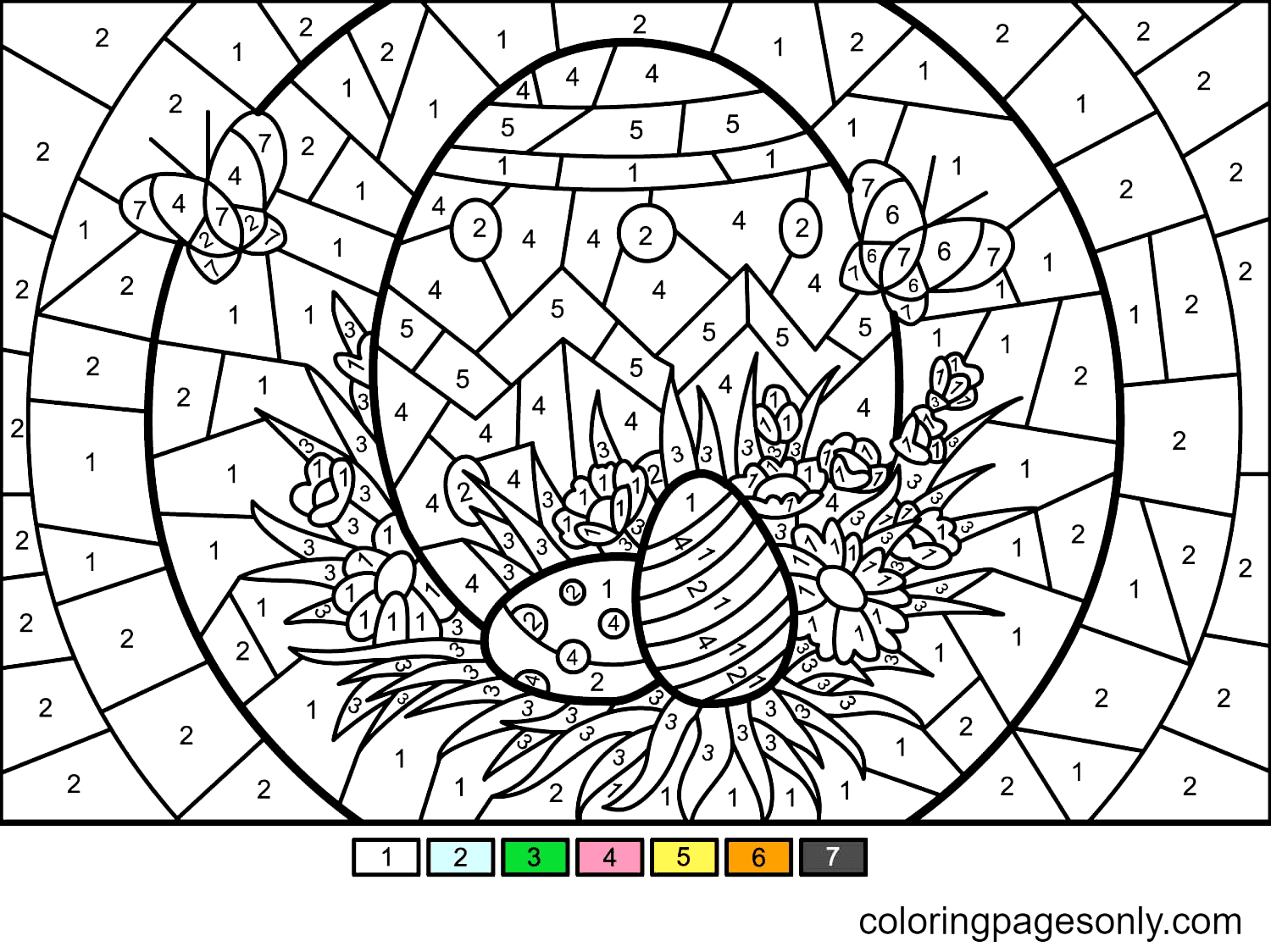
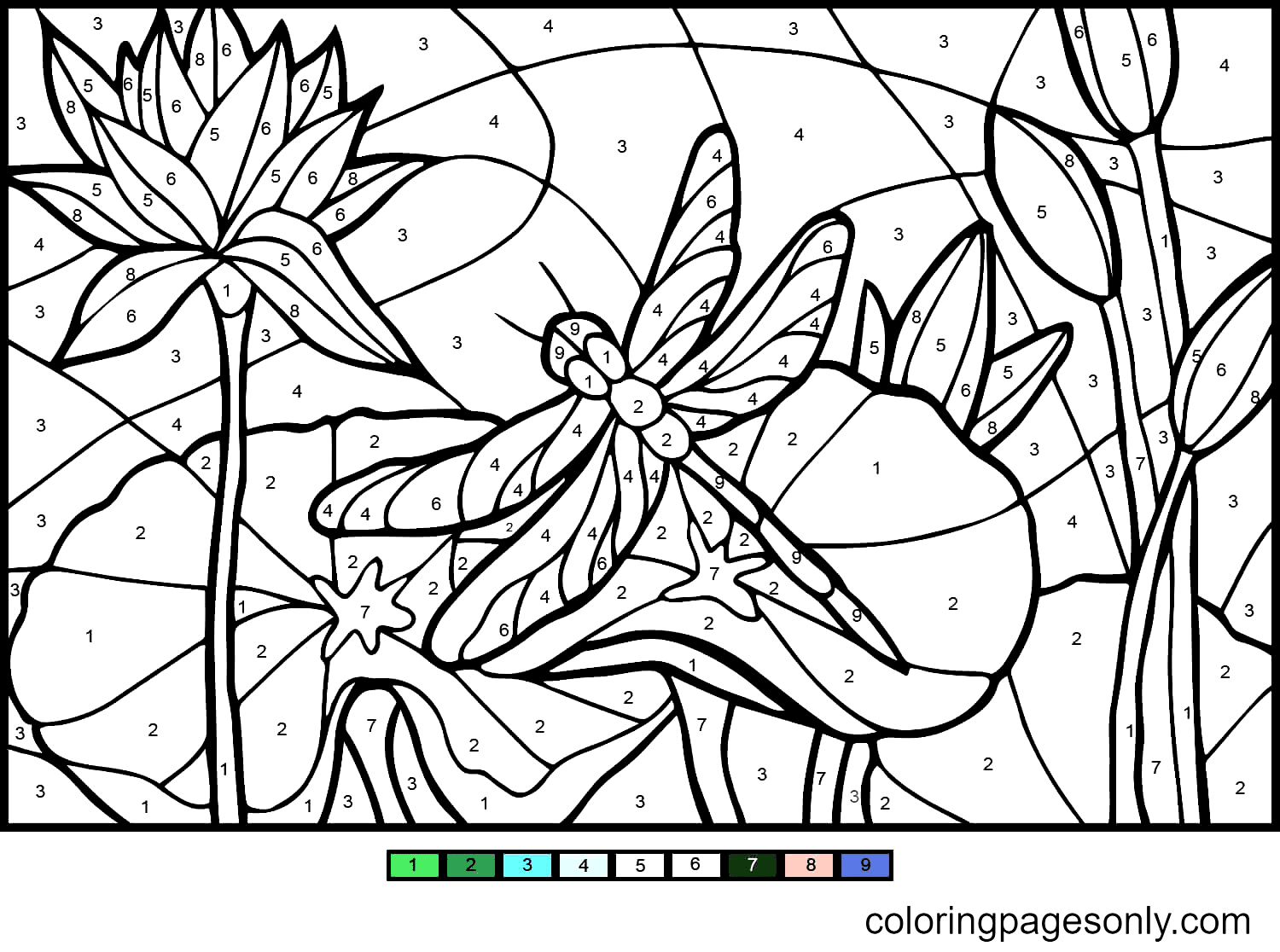
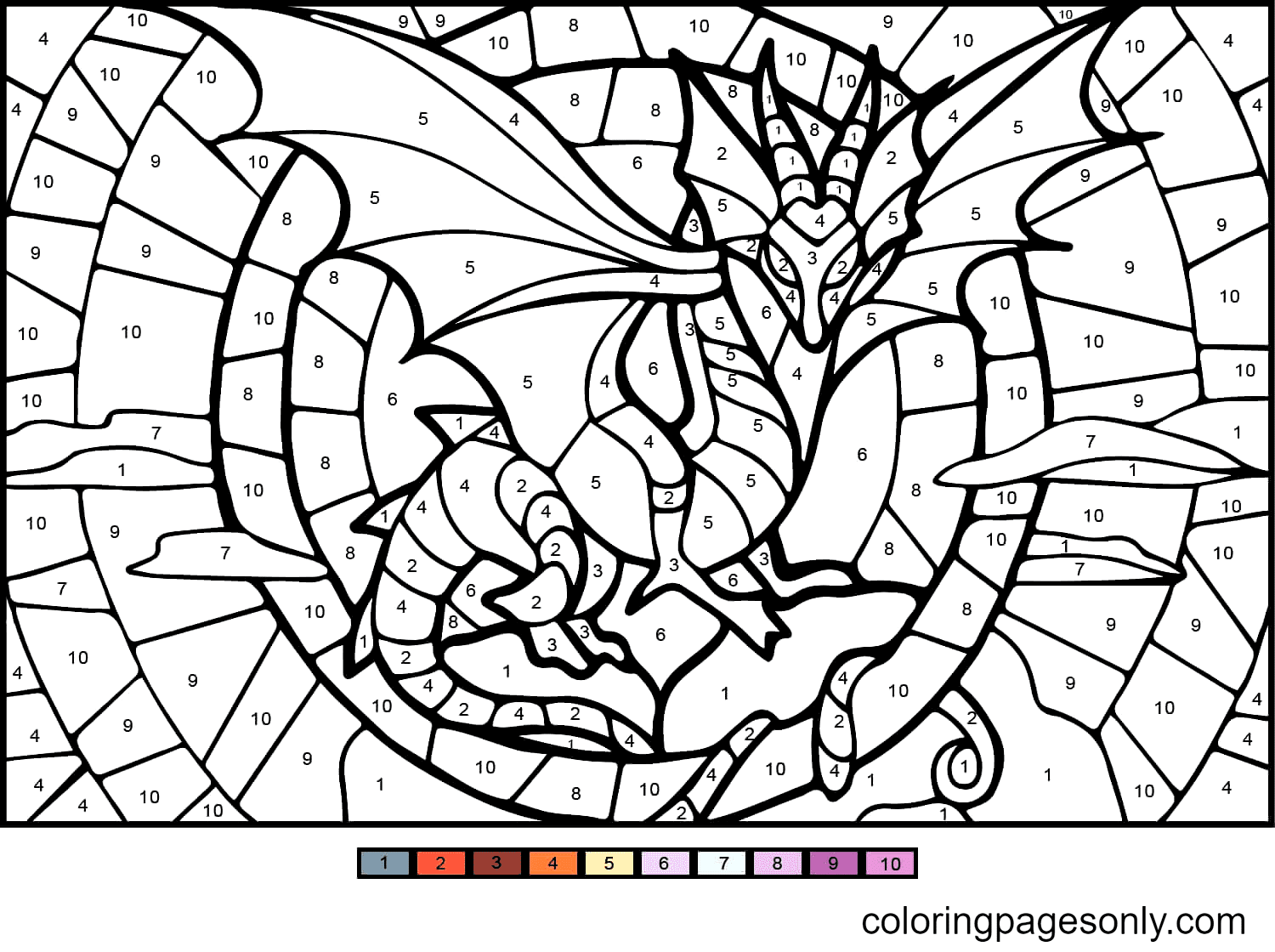
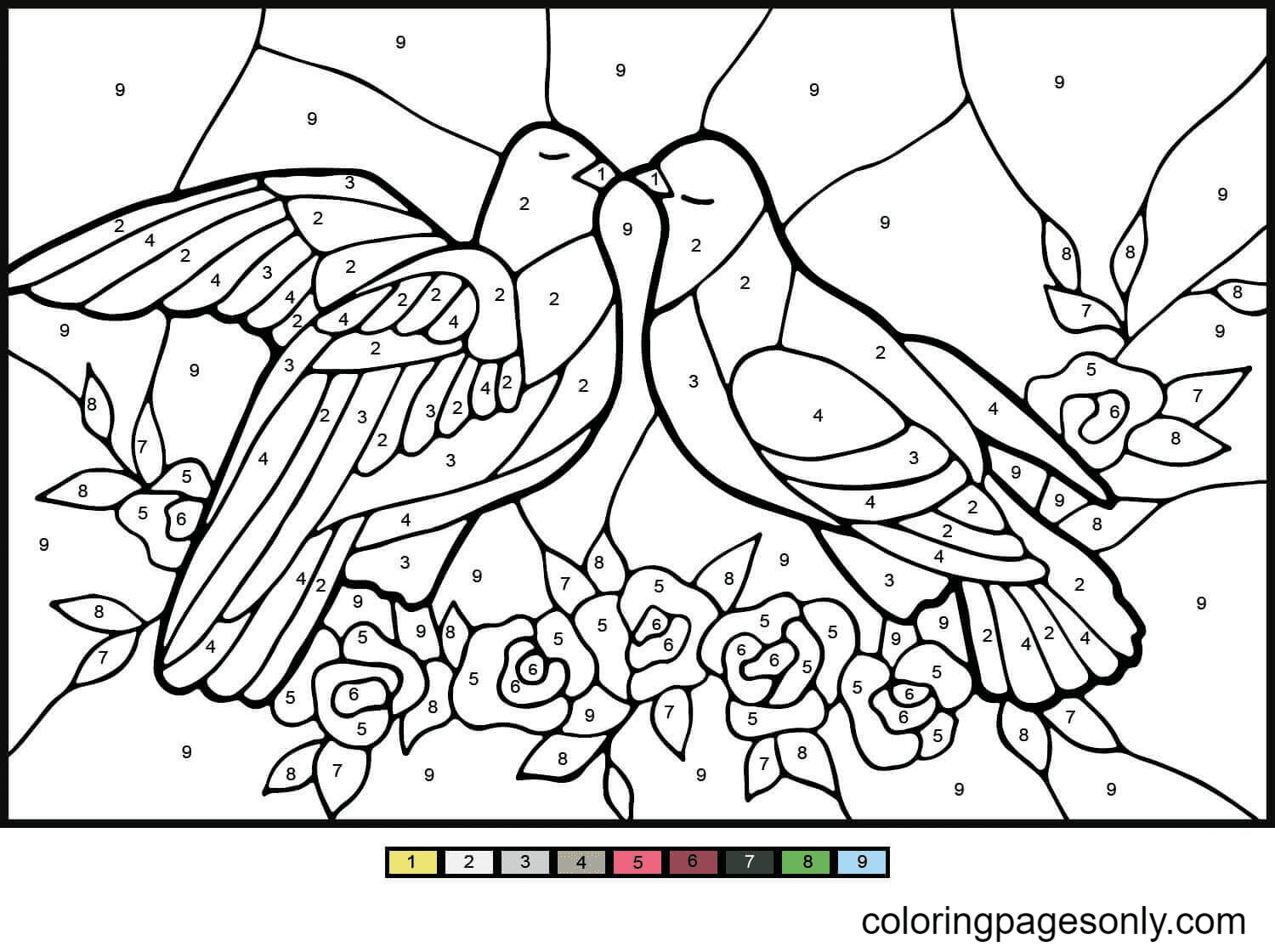
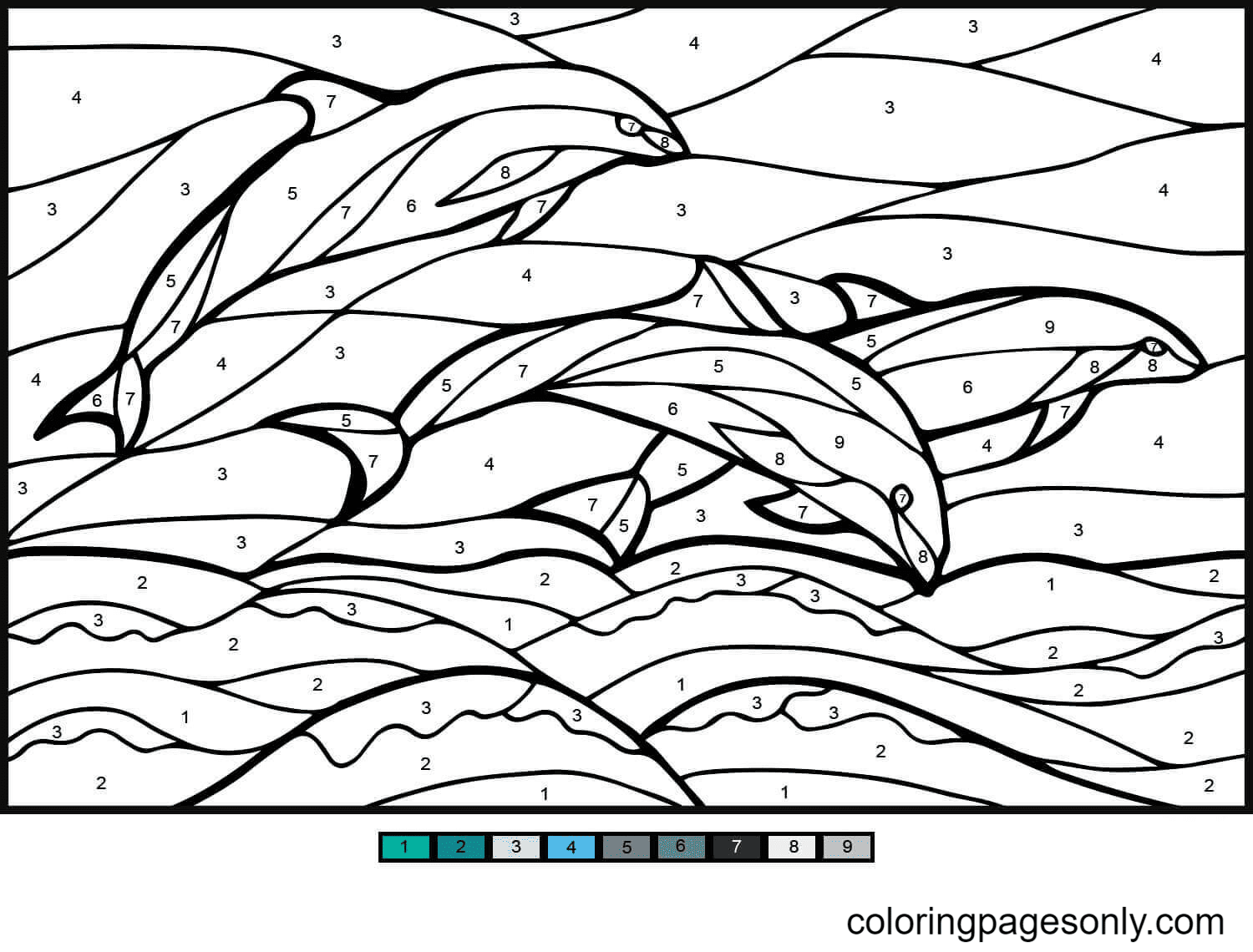
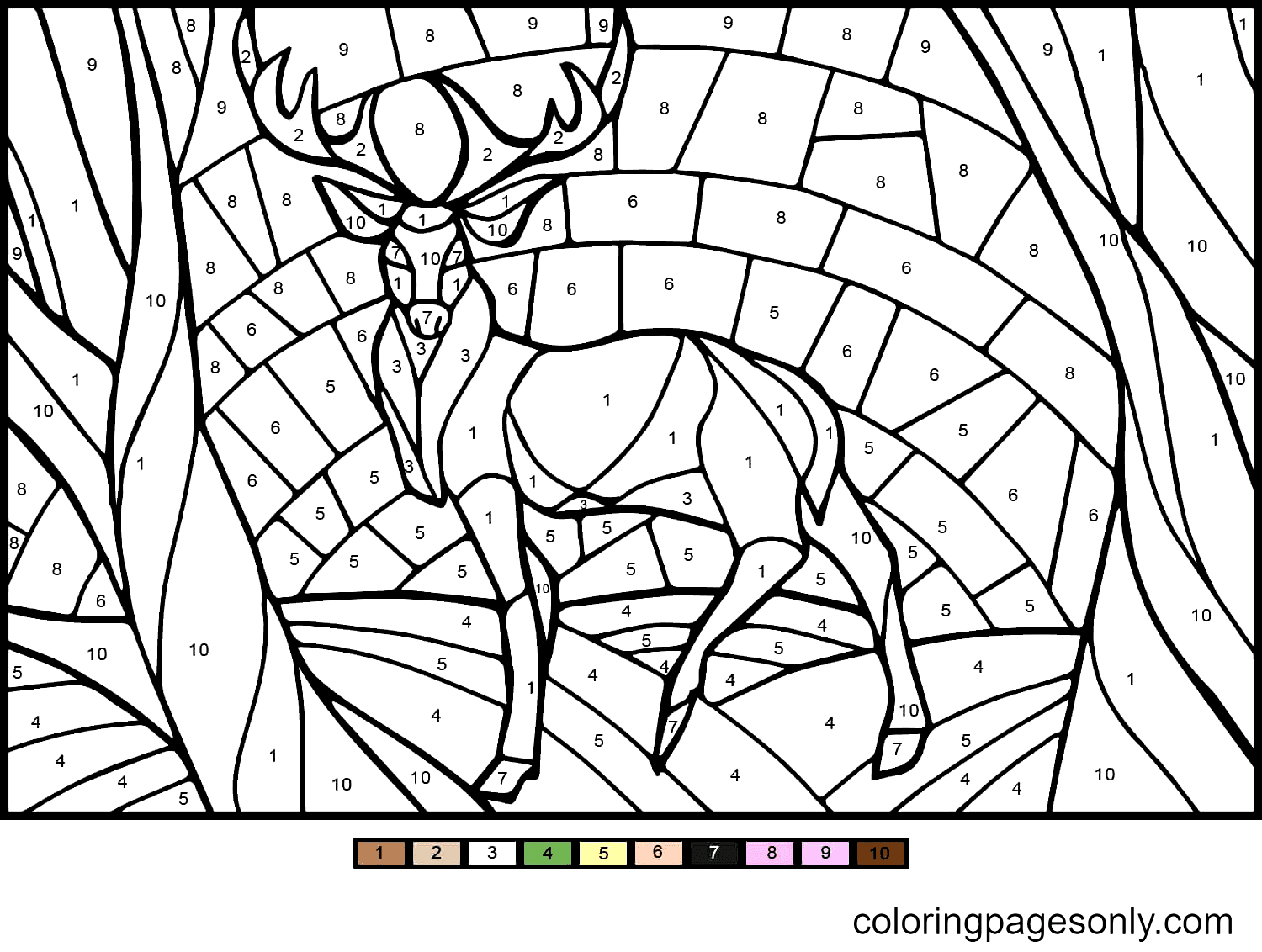
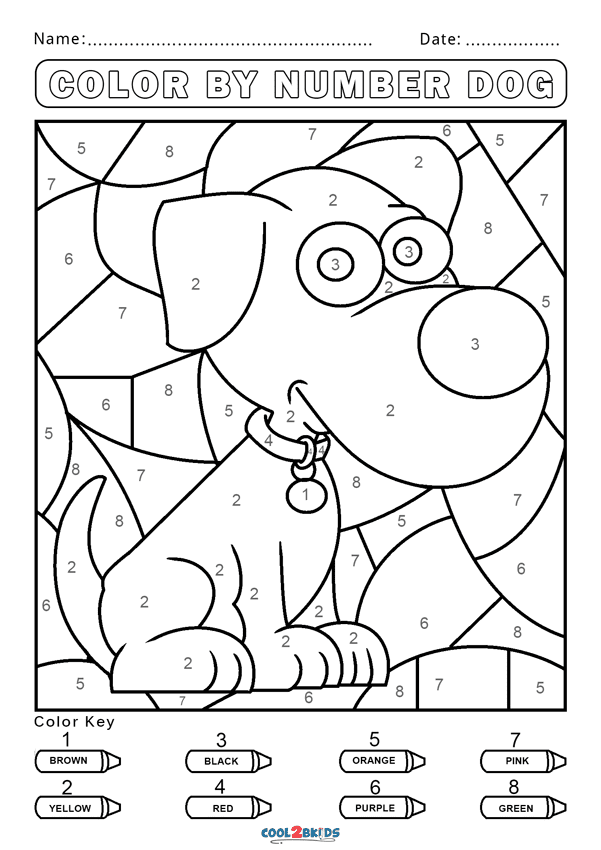
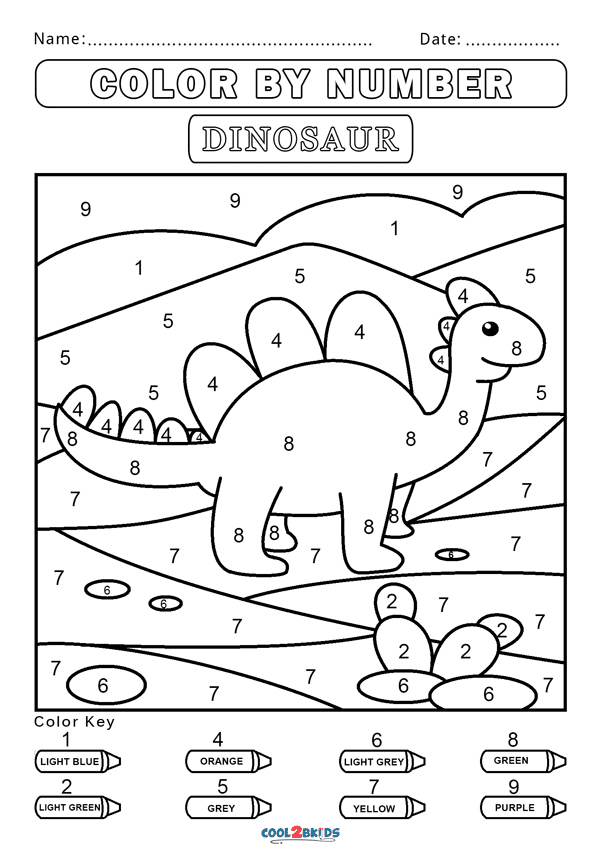
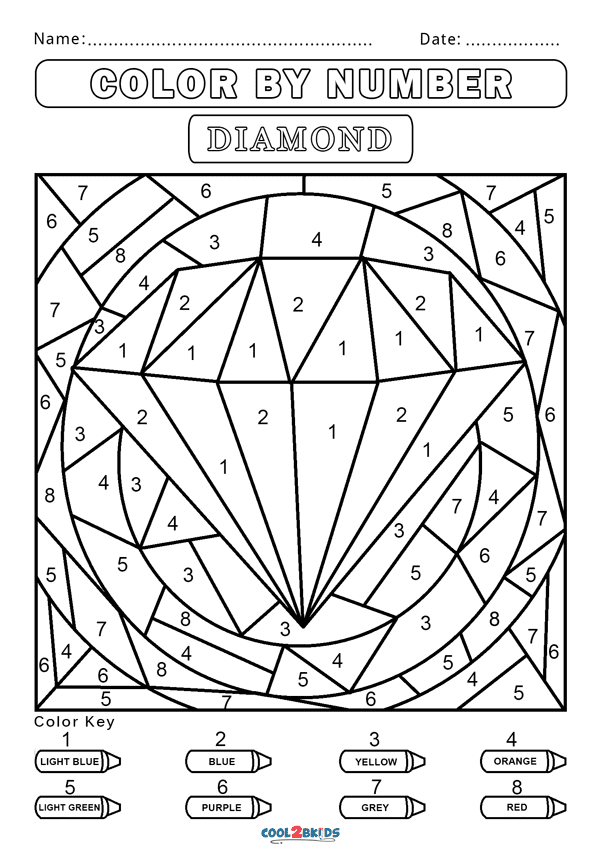
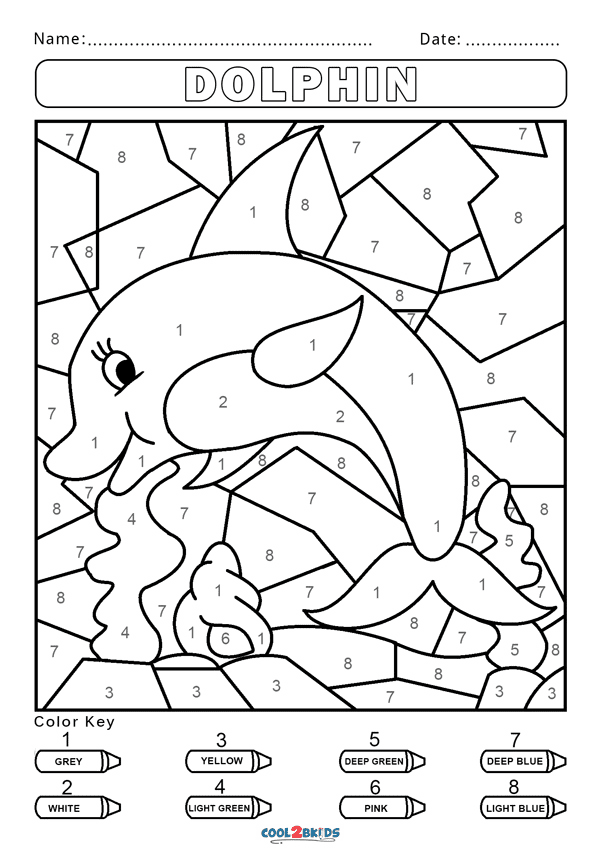
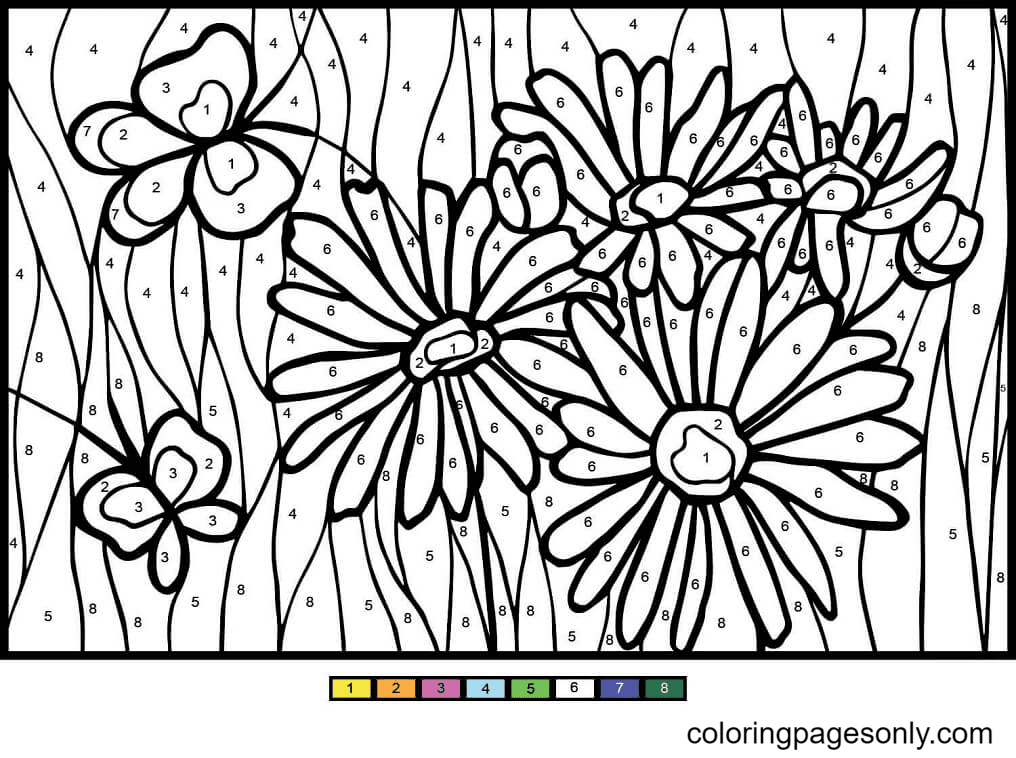
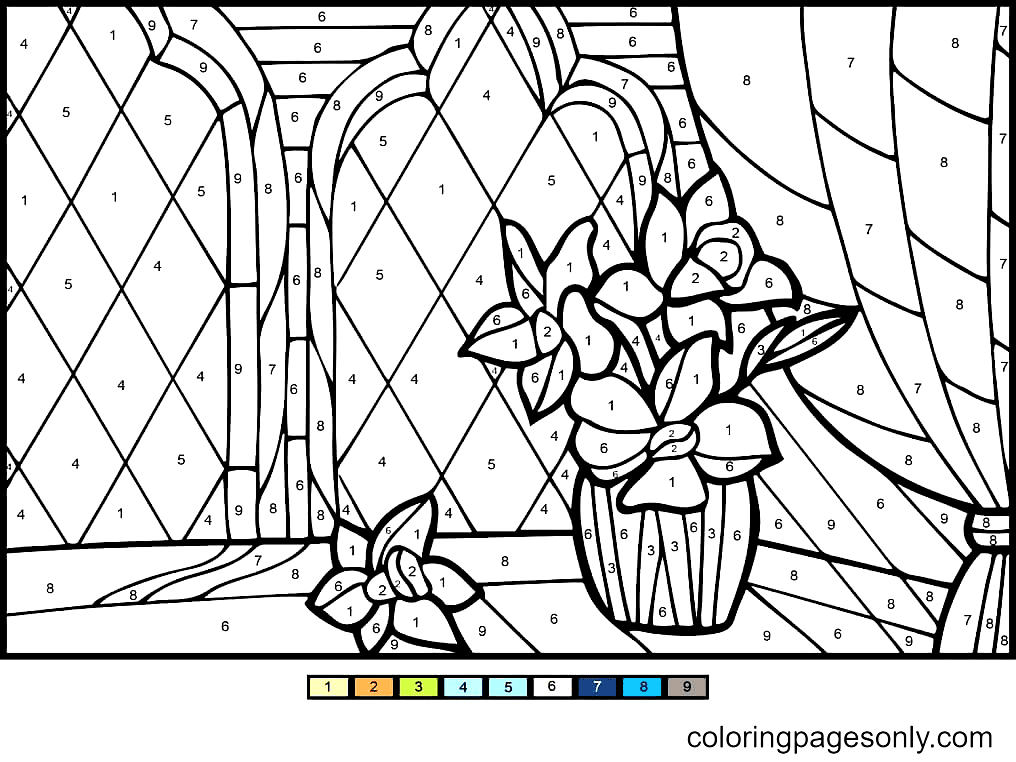
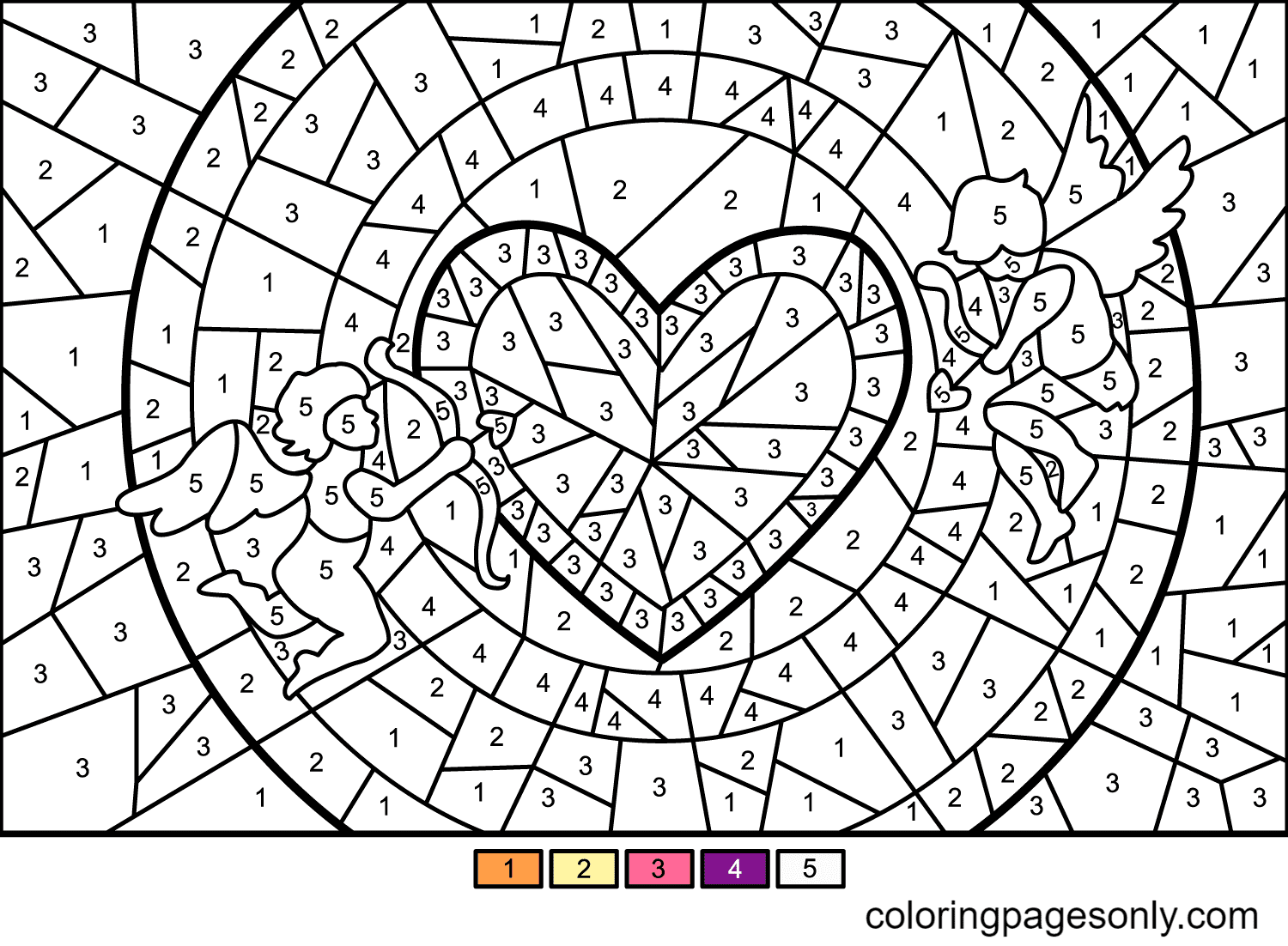
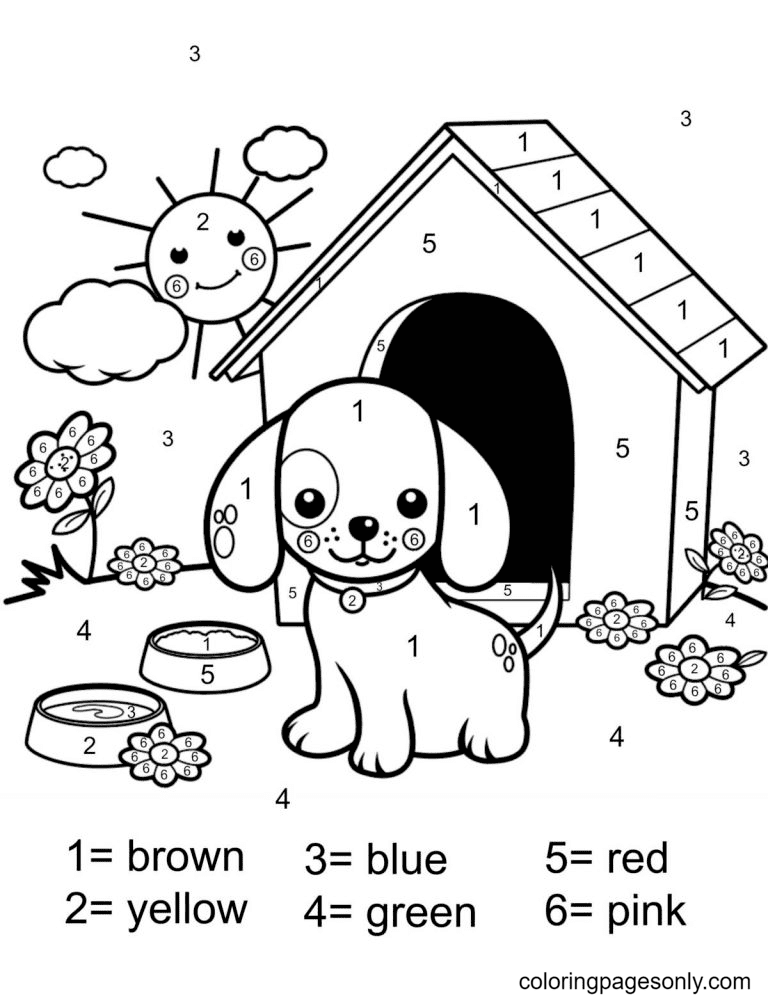
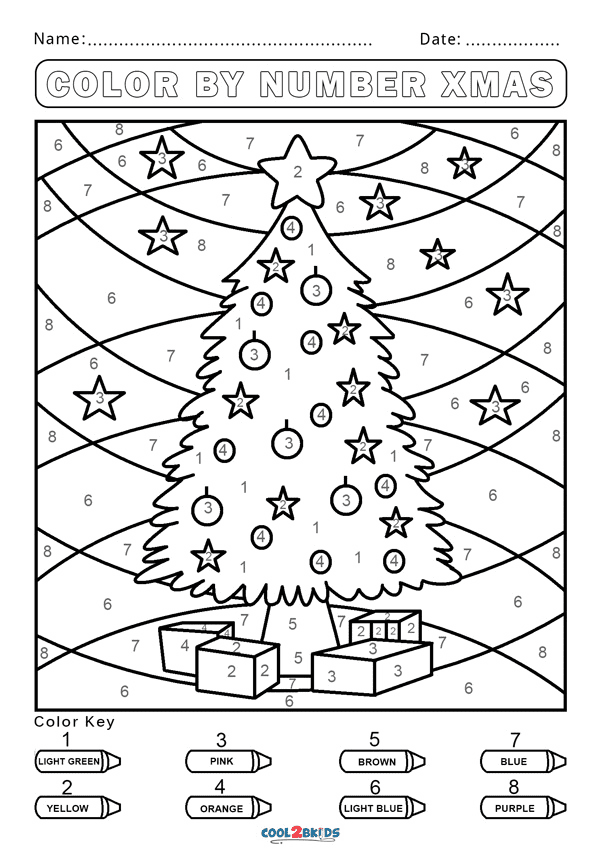
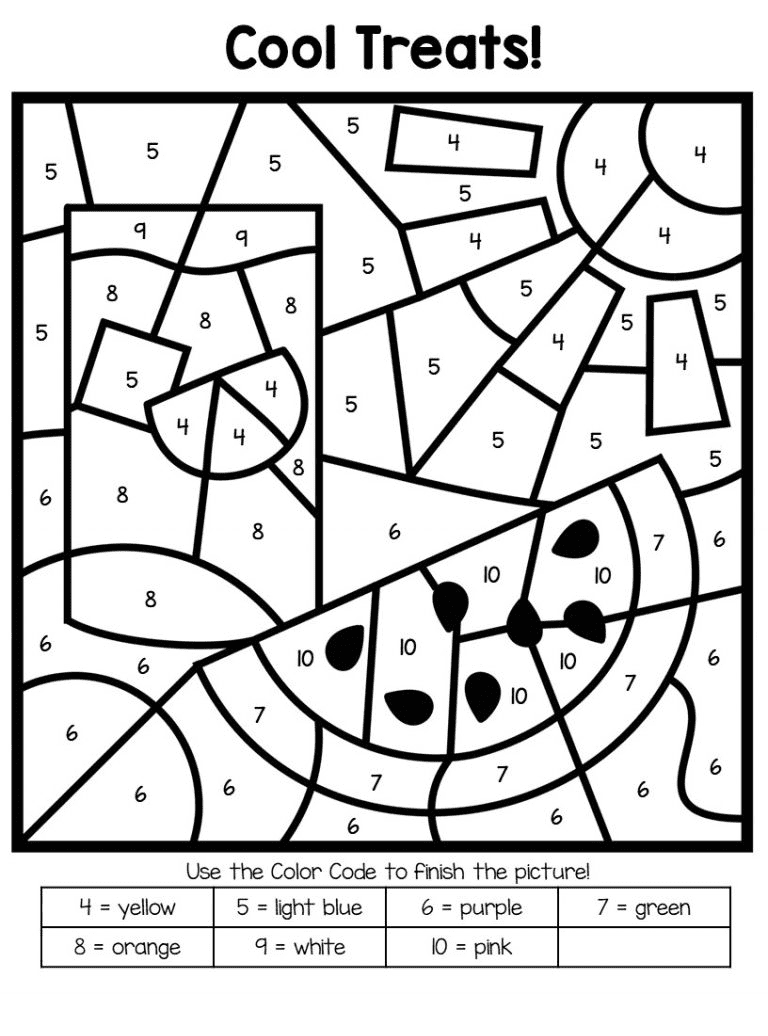
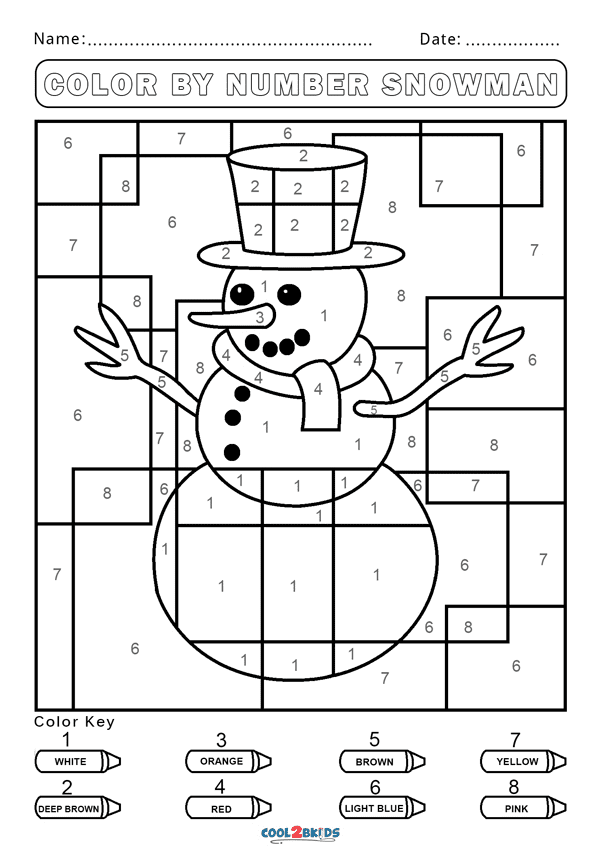
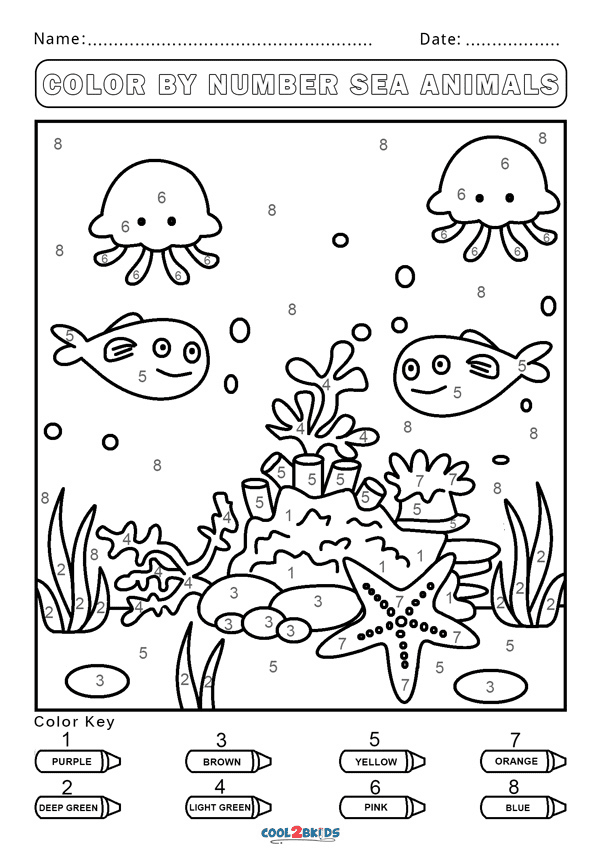
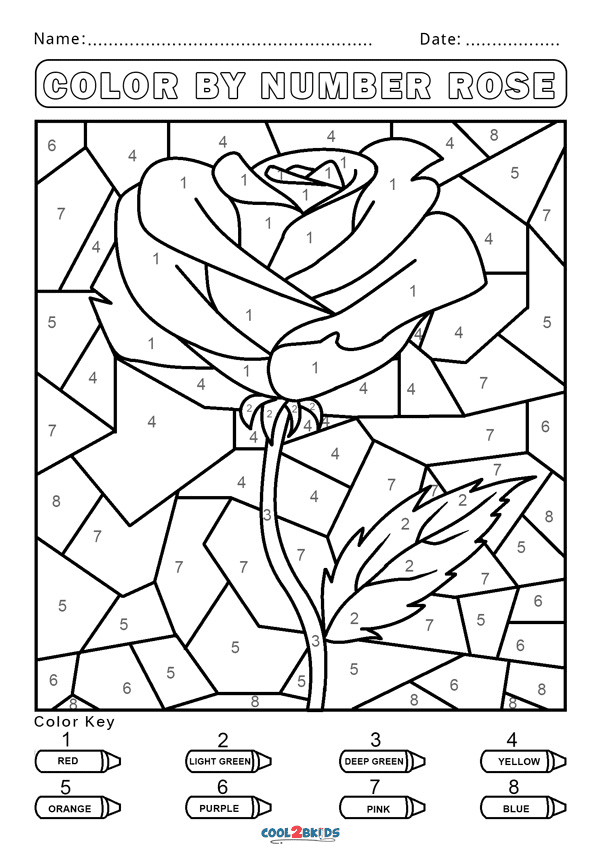
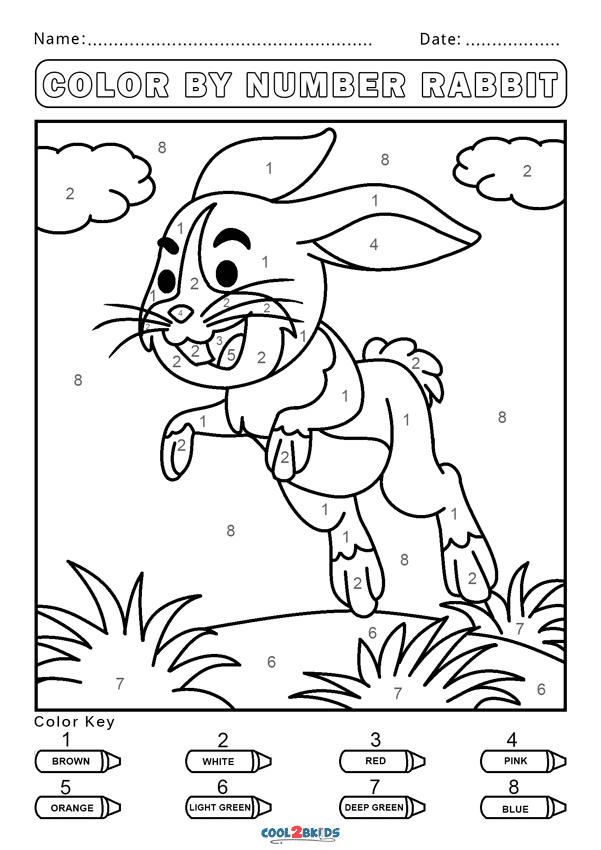
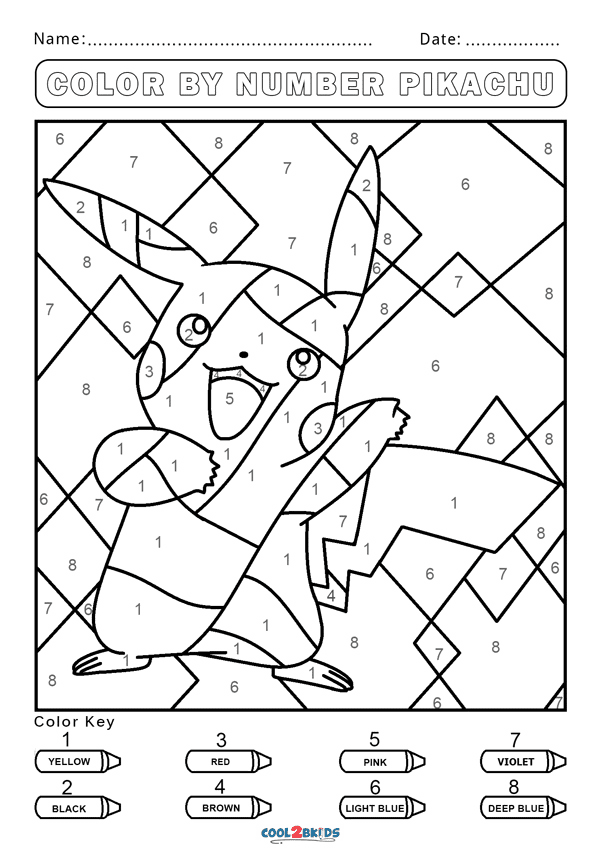
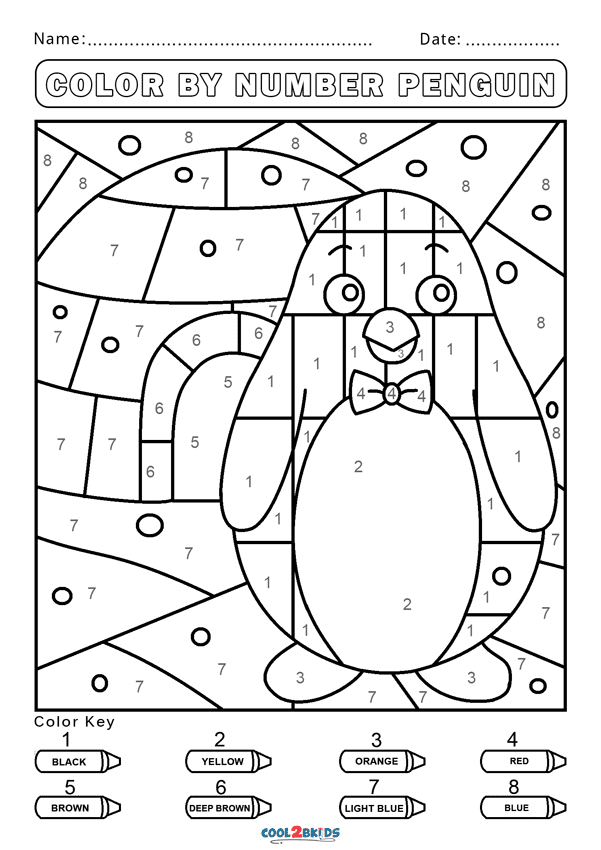
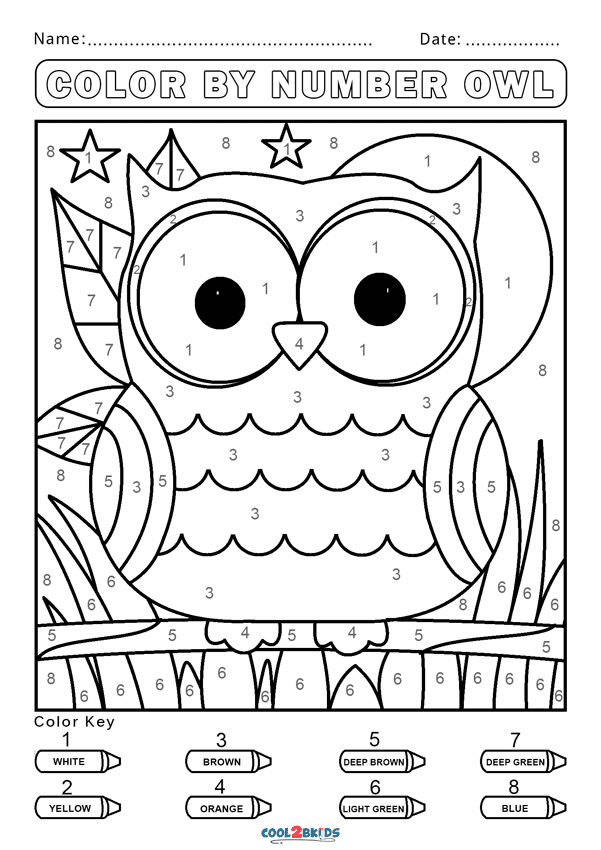
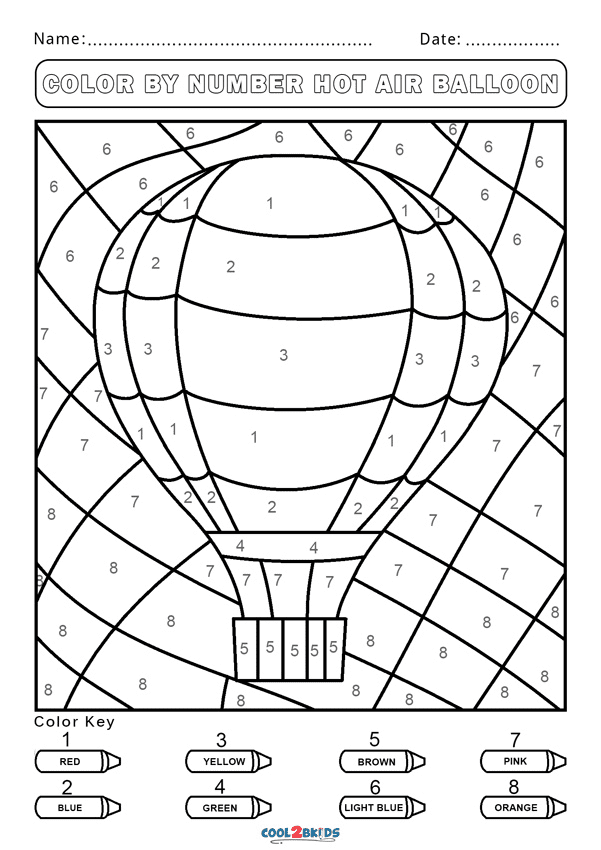
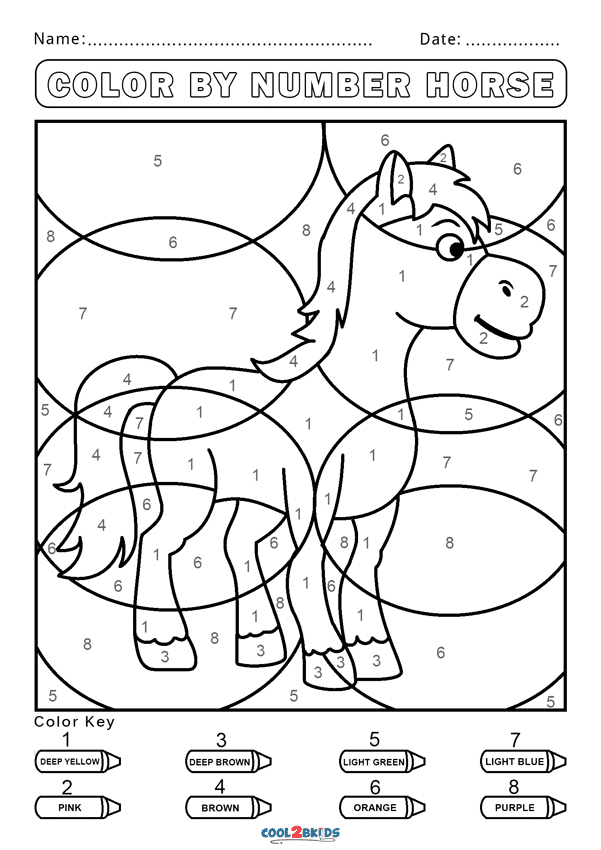
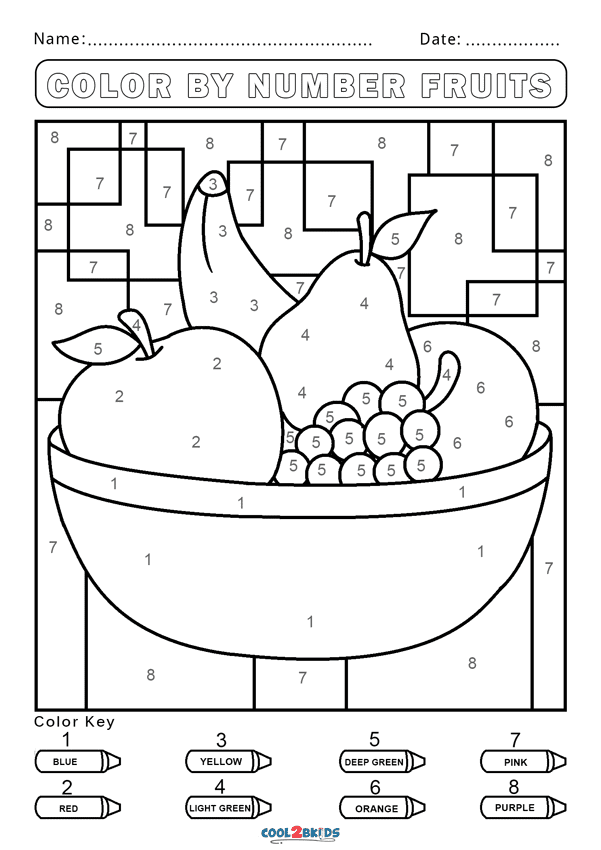
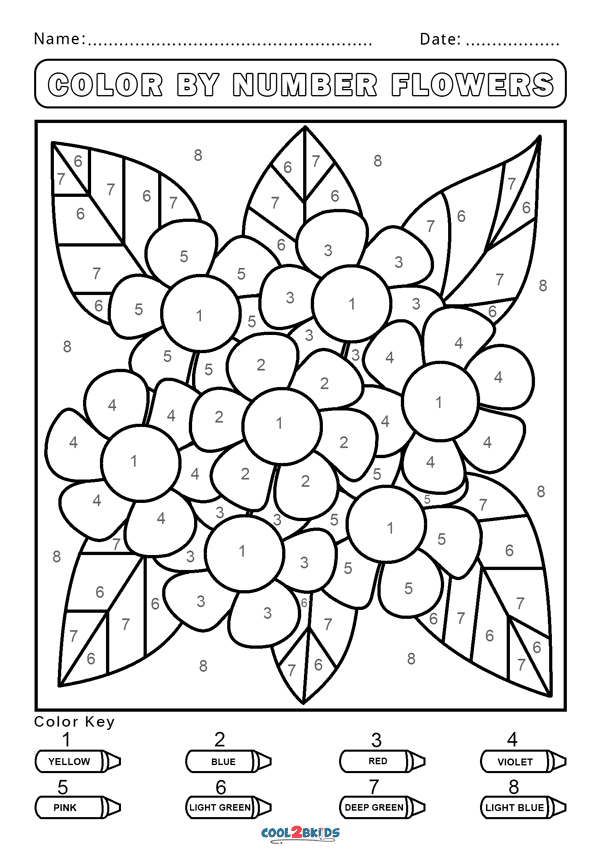
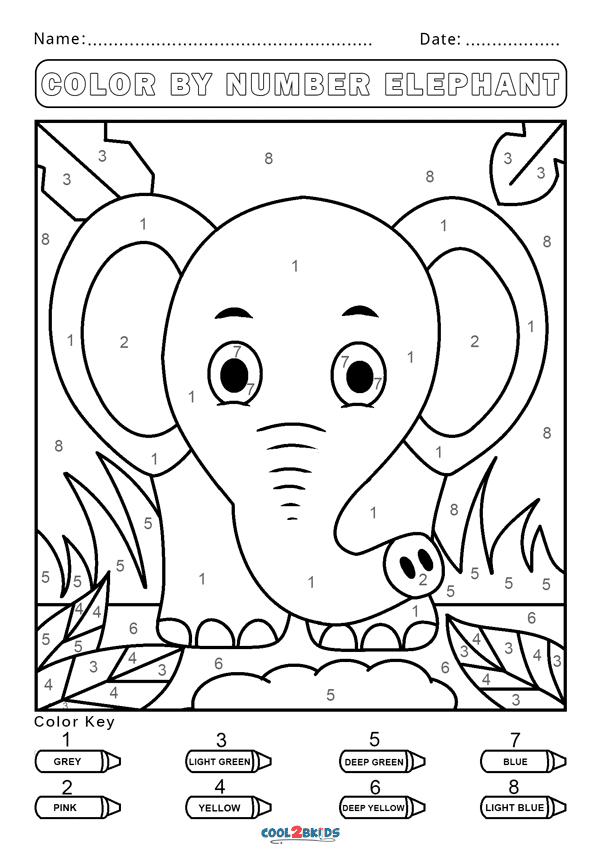
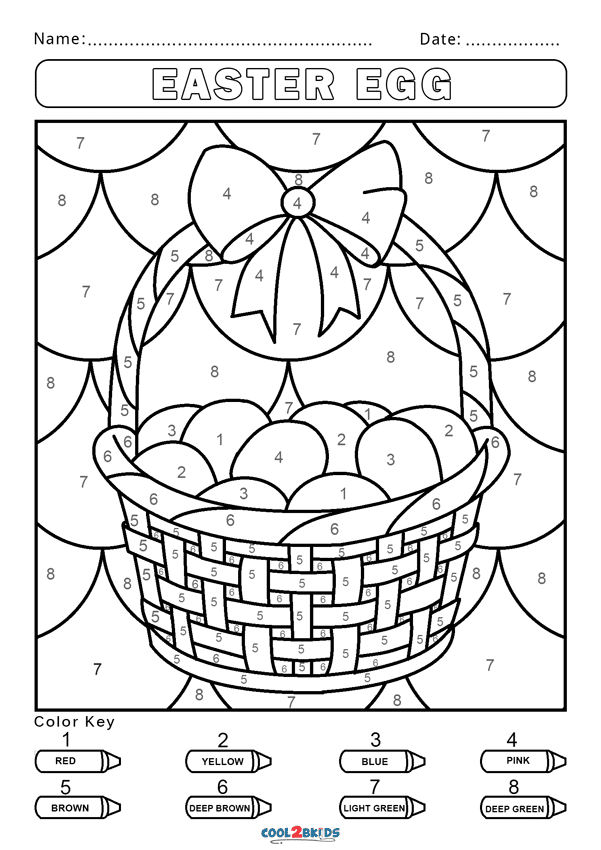
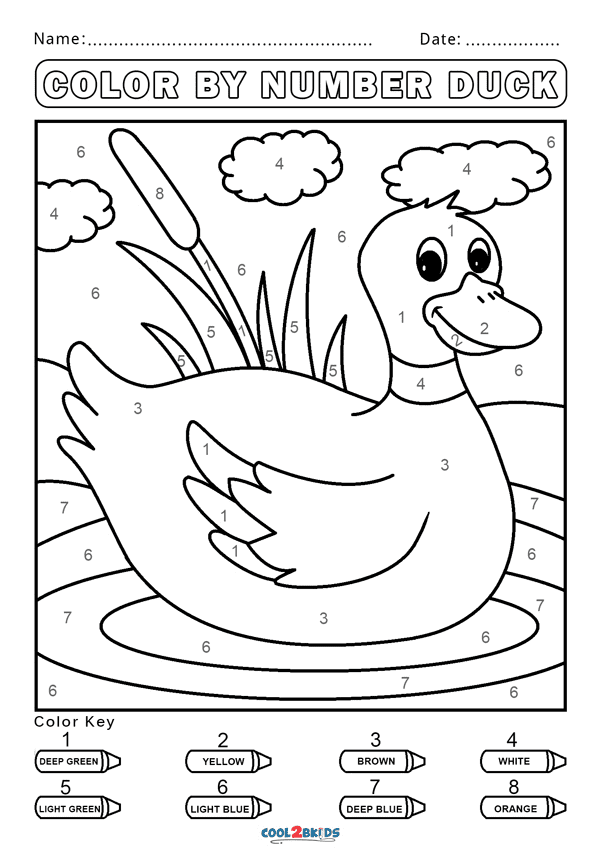
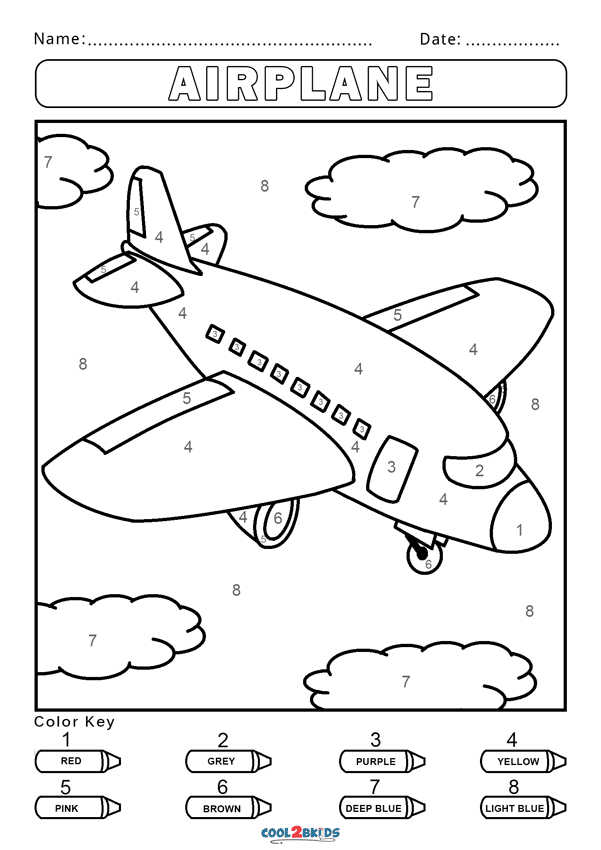
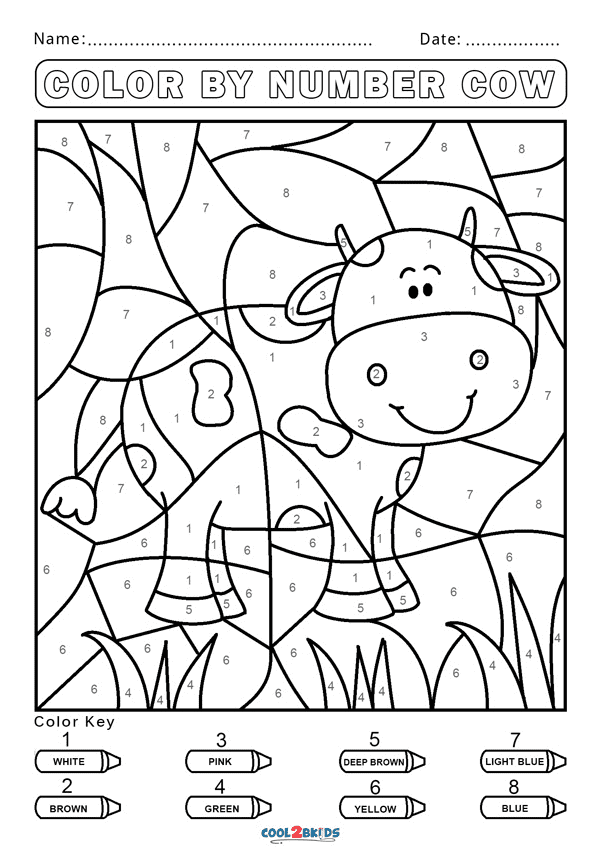
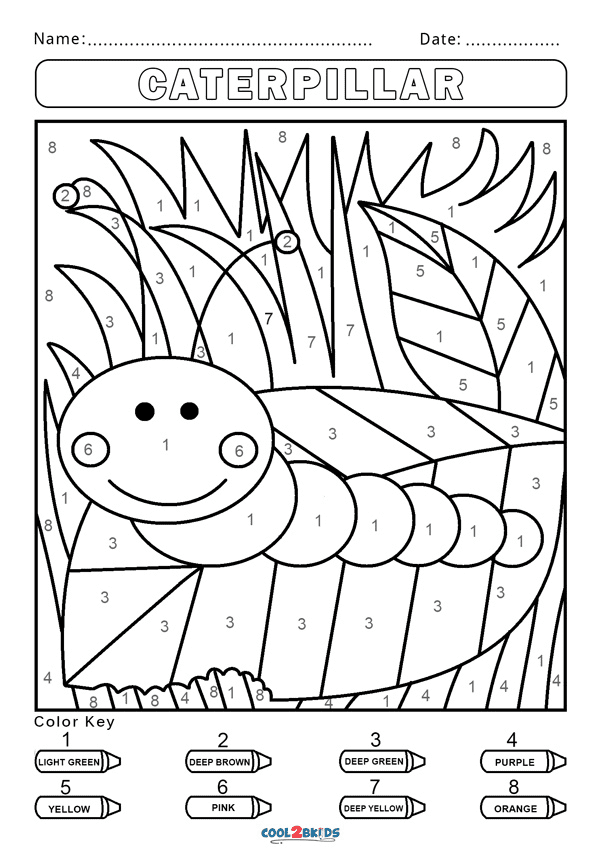
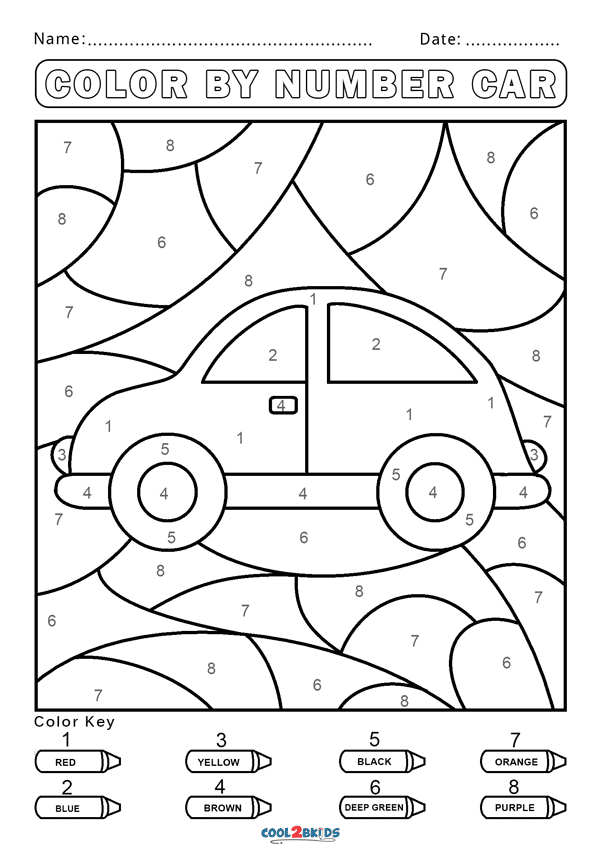
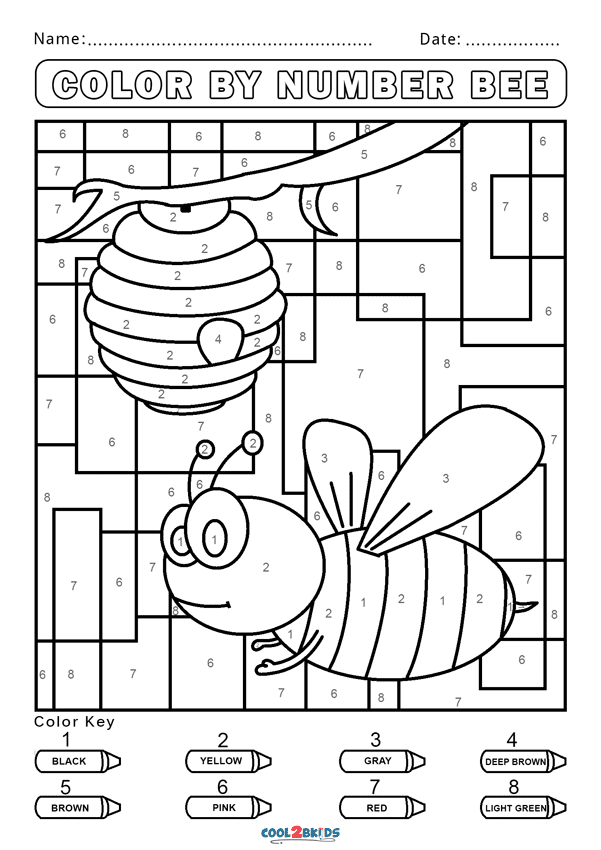
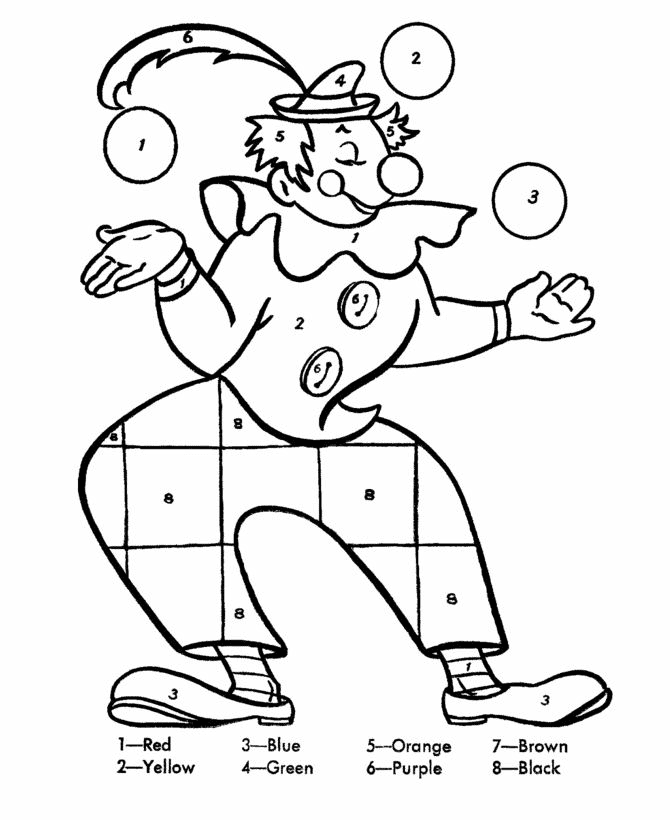
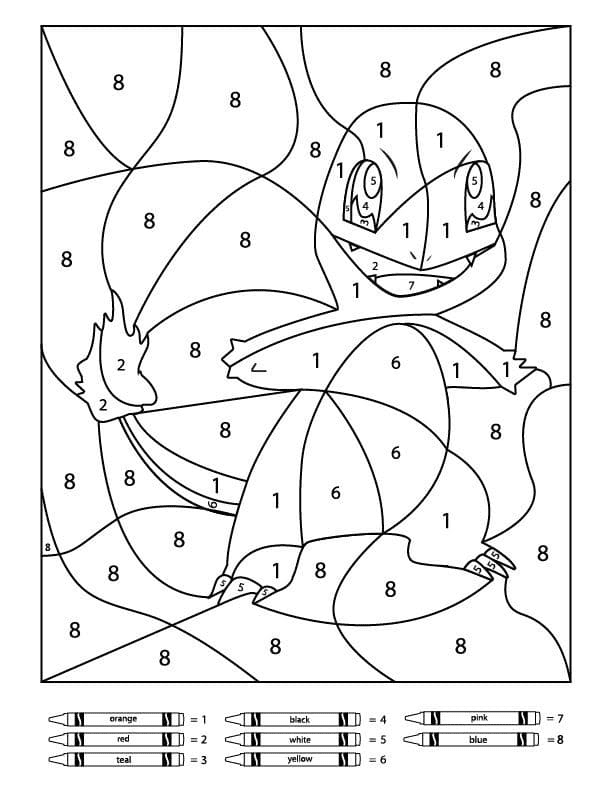
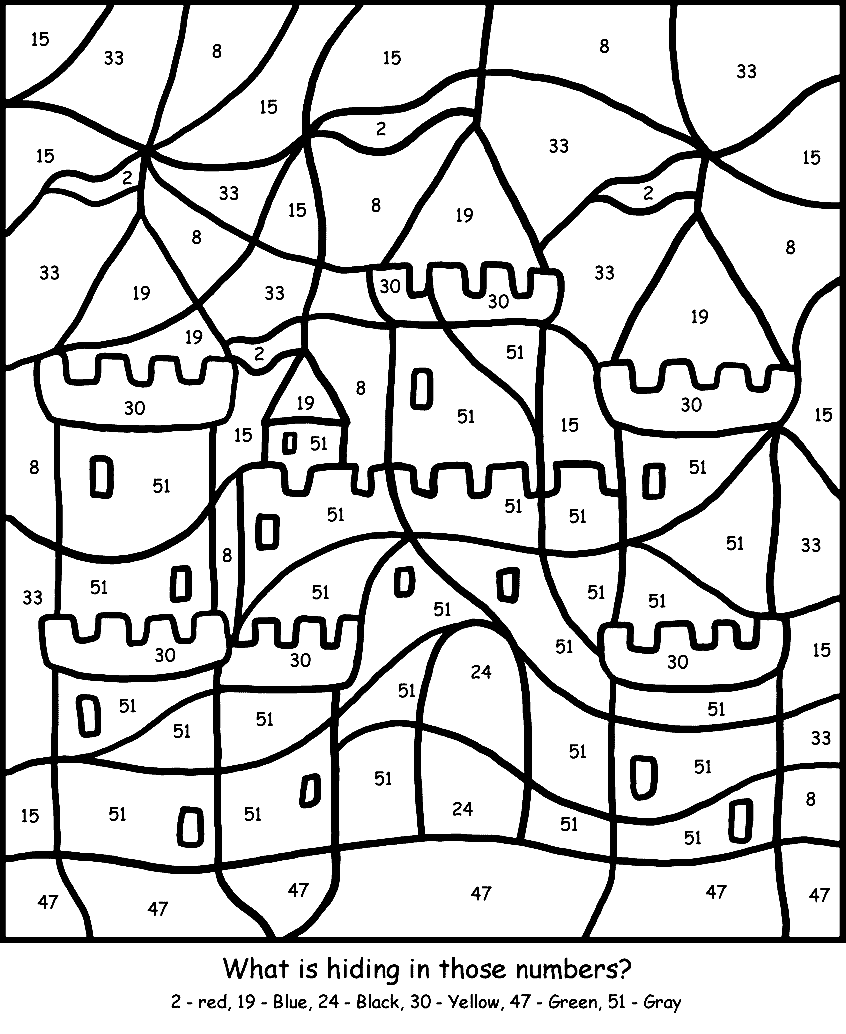
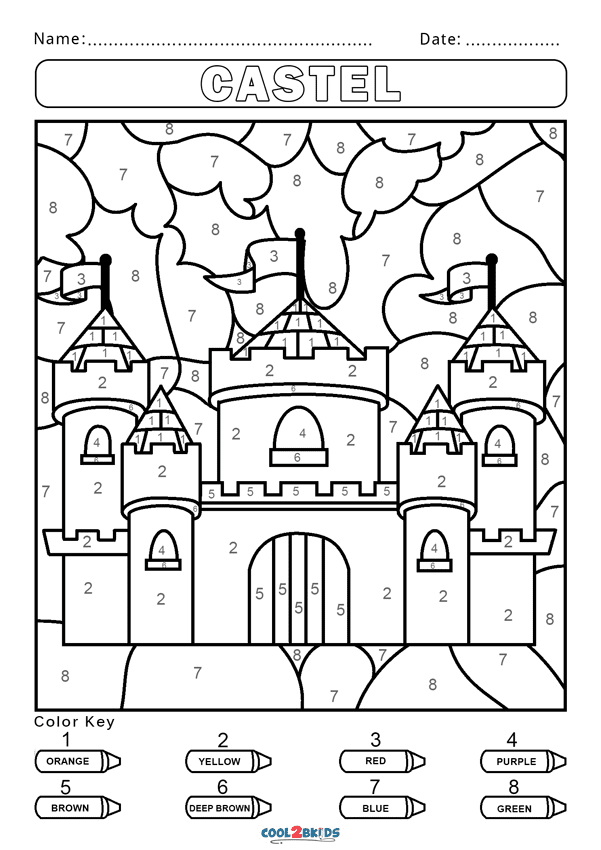
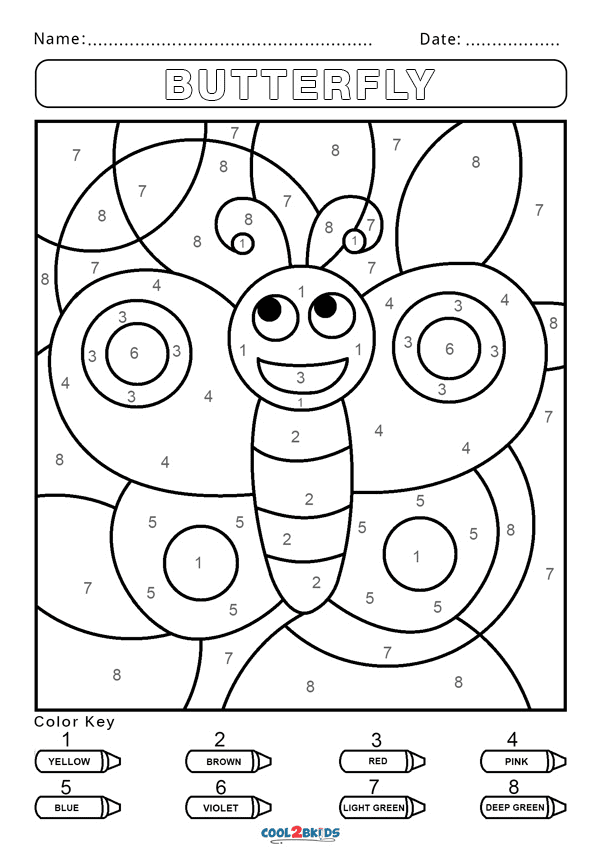
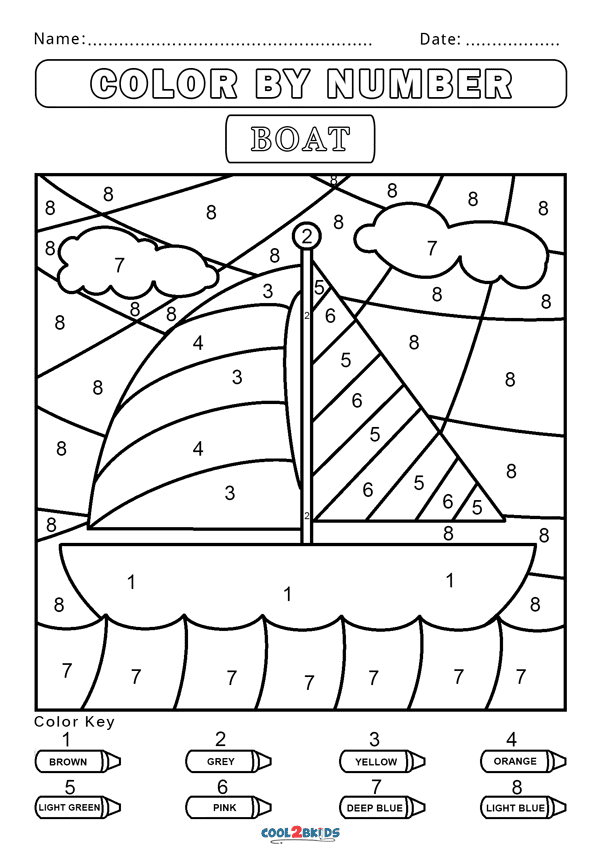
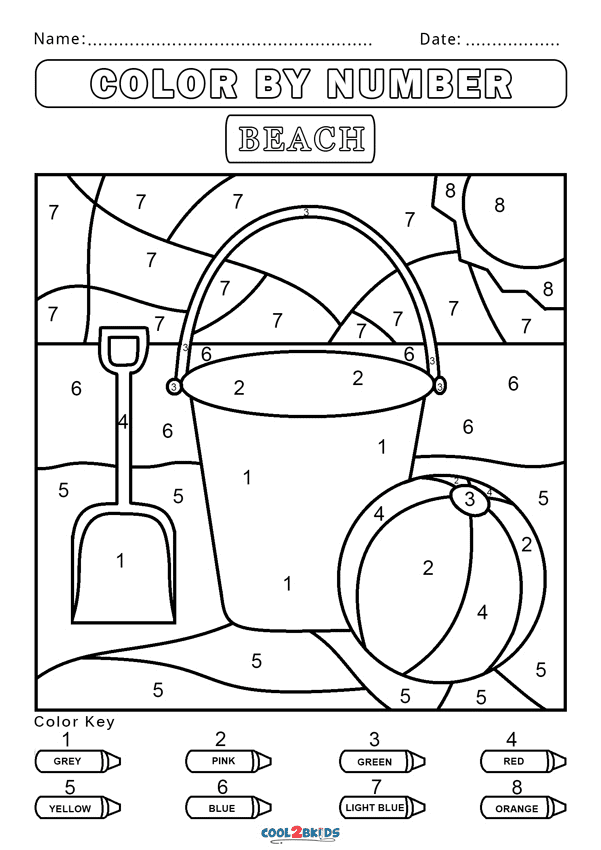
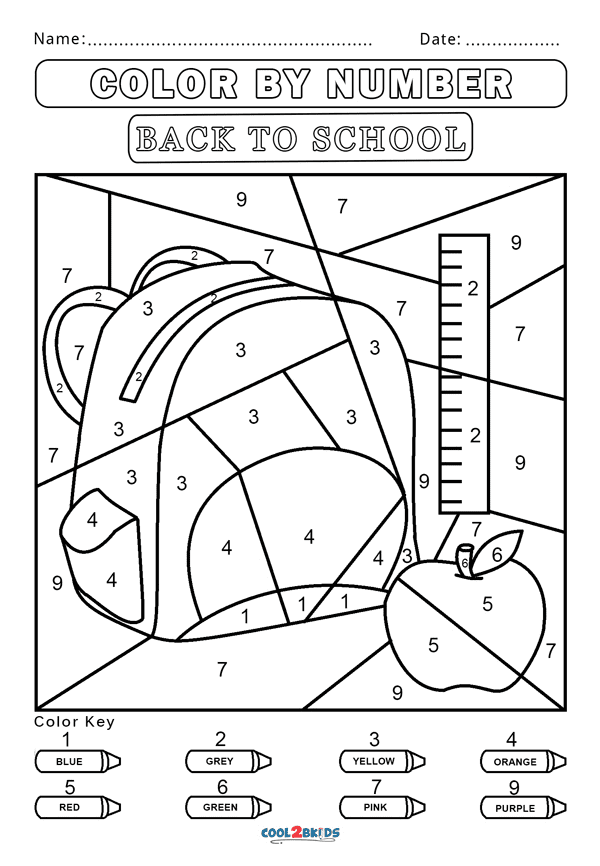
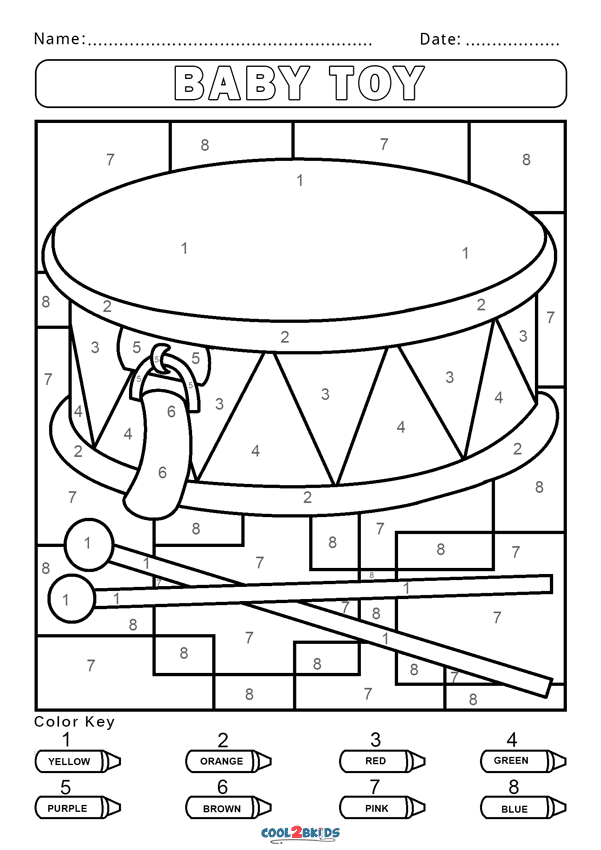
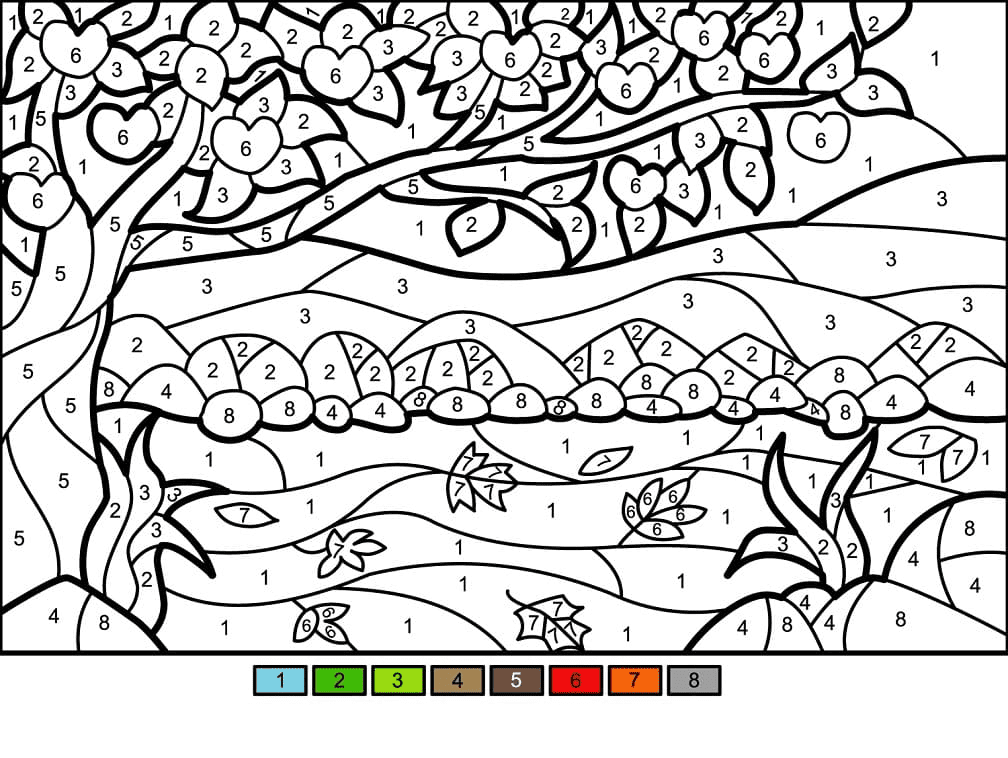
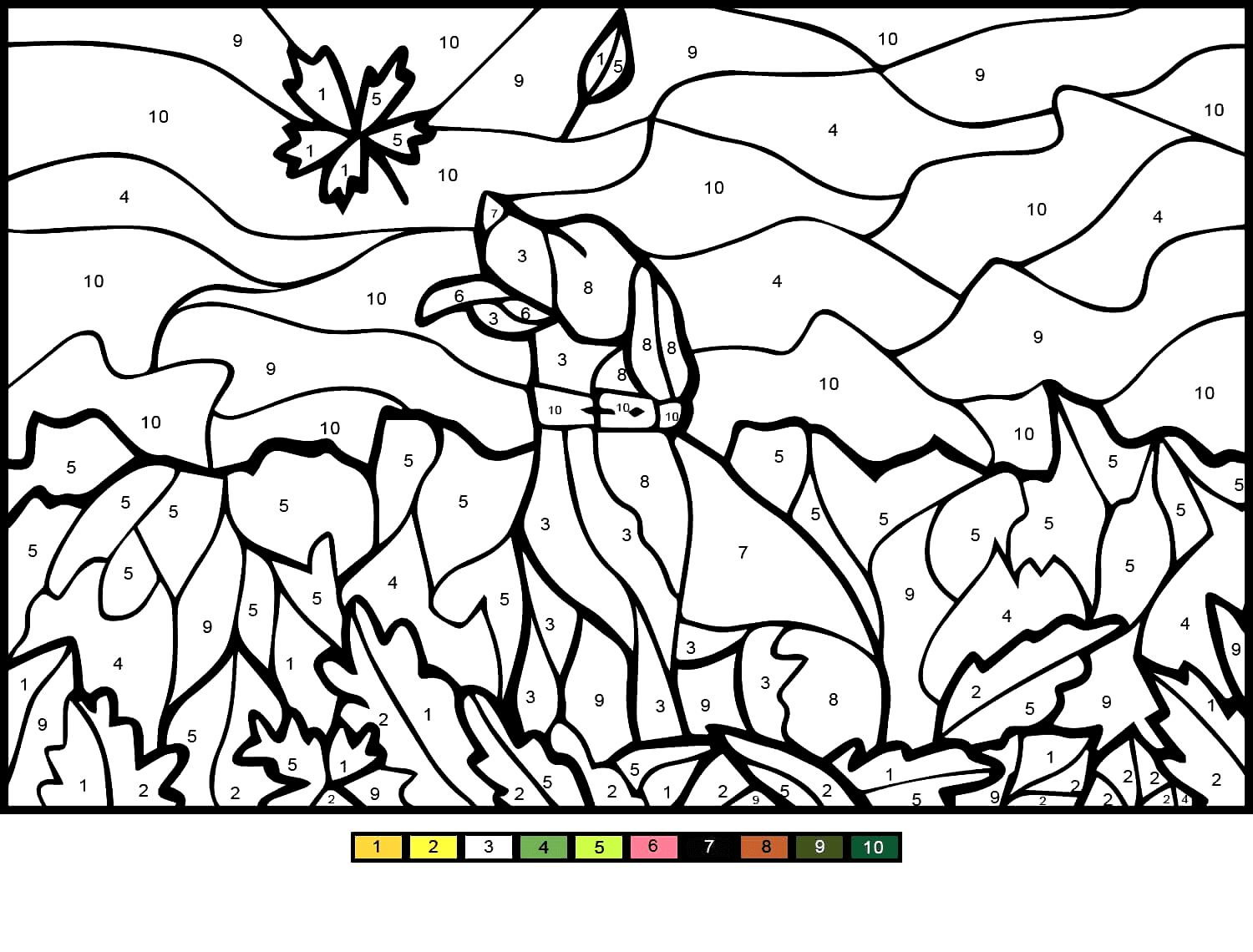
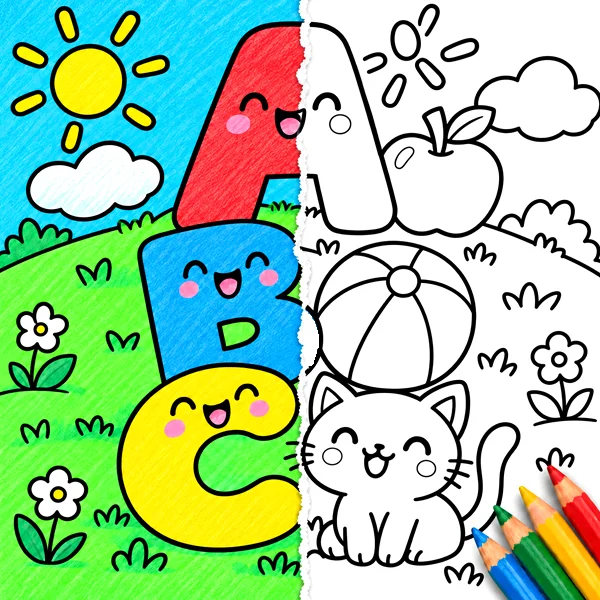
Color by Number Coloring Pages at ColoringPagesOnly.com brings together 100+ free printable pages across a wide range of subjects – animals (bears, dogs, dolphins, fish, penguins, pigs, rabbits, seahorses, unicorns), nature and seasonal scenes (roses, pumpkins, scenery), character compositions, holiday themes, and mixed educational designs. Every page uses the same format: numbered sections within an outlined image, each number corresponding to a specific color in the provided key. Download any page as a free PDF to print, or use the online coloring tool directly in your browser.
Color by Number pages sit within the broader Educational Coloring Pages collection. For related number learning, see Numbers Coloring Pages. For alphabet-focused activities, see Alphabet Coloring Pages and ABC Letter Tracing Coloring Pages.
The History Behind Color by Number – From da Vinci to 20 Million Kits
The format of color by number is older than its modern packaging suggests. Dan Robbins, a Detroit-based commercial artist who began working at the Palmer Show Card Paint Company in 1949, has said in his memoir that the concept traced back to Leonardo da Vinci – specifically to da Vinci’s teaching method of handing numbered pattern sheets to his apprentices so they could learn composition and color relationships by filling in designated areas with corresponding pigments. The logic was the same: structure the image so that a person with no prior painting experience could produce a recognizable, coherent artwork by following a numbered code.
Robbins adapted this principle into a commercial product: he would paint an original artwork, lay a plastic sheet over it, trace the forms and shapes of each distinct color region, number each region, and match every number to a specific paint. The result was a kit containing a pre-printed canvas, numbered paints, and two brushes – marketed under the now-famous tagline: “Every man a Rembrandt.”
The first kit Robbins designed, called Abstract No. 1, was a vibrant abstract still life – but abstraction proved too unfamiliar for mass audiences. Landscapes, animals, and portraits were more immediately appealing. Palmer Paint (soon renamed Craft Master to handle the demand) pivoted to representational imagery, and the results were extraordinary. By 1954, the company had sold more than 12 million kits. By 1955 alone, 20 million kits were sold in the United States – flooding the walls of American homes with amateur paintings. Craft Master grew to 800 employees, producing 50,000 paint sets per day to keep pace.
Paint by number was, as one collector later recalled, “viral before there was viral – bigger than hula hoops and bigger than TV dinners.” The Smithsonian National Museum of American History dedicated a 2001 exhibition to the phenomenon: Paint by Number: Accounting for Taste in the 1950s. Andy Warhol riffed on the kits in his 1962 “Do-It-Yourself” series as a commentary on popular culture’s relationship to mass-produced art.
Art critics were less celebratory – dismissing paint-by-number as conformist, formulaic, and a symptom of mindless 1950s America. Robbins was unbothered. “I never claim that painting by number is art,” he wrote in his 1998 memoir Whatever Happened to Paint-By-Numbers? “But it is the experience of art, and it brings that experience to the individual who would normally not pick up a brush, not dip it in paint. That’s what it does.” Robbins died on April 1, 2019, at age 93.
The format he invented has never disappeared. Today, color by number exists in three distinct formats: the original paint kits (canvas, paint, brush), adult coloring books and apps with sophisticated pixel-level designs, and the printable coloring page format used in this collection – where numbered sections are filled with crayons, markers, or colored pencils rather than paint. The underlying mechanism – numbered region, color key, follow the code to reveal an image – is identical across all three.
How Color by Number Works – The Mechanism
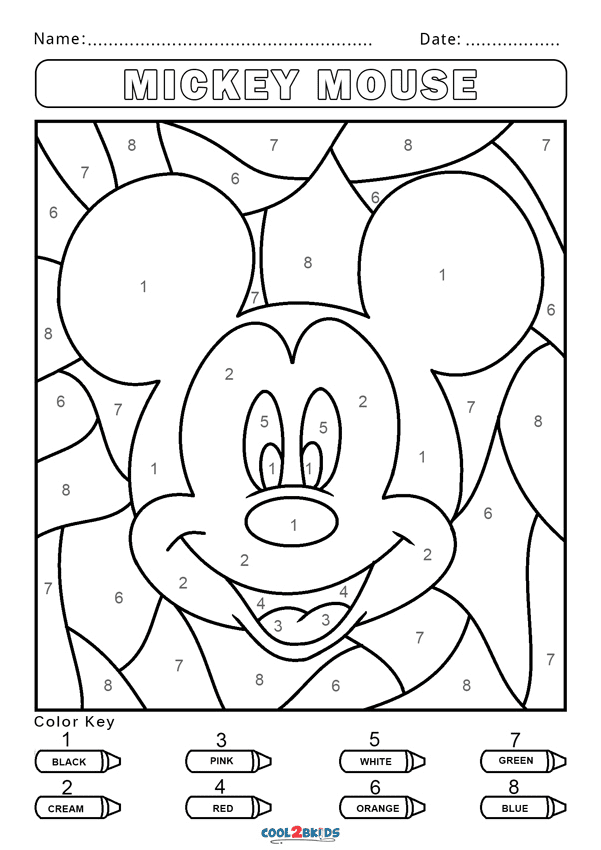
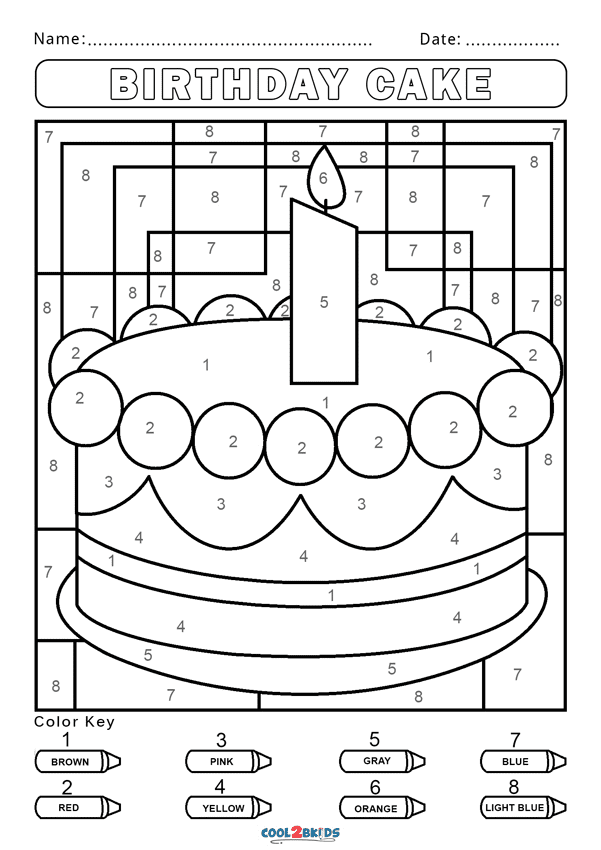
The color-by-number system is built around a simple but elegant structure. Every page contains an outlined image divided into distinct regions. Inside each region is a number. A color key appears on the page, listing which color corresponds to which number: 1 = red, 2 = blue, 3 = yellow, 4 = green, and so on, up to however many colors the design requires.
The child (or adult) reads each number, finds the corresponding color in the key, and fills the region with that color. As more regions are filled, the image gradually reveals itself – a process that creates a specific and uniquely motivating experience: the satisfaction of watching something invisible become visible through your own sequential action.
This reveal dynamic is the psychological engine of the format. Unlike a standard coloring page – where the image is fully visible from the first moment, and the child’s only task is to choose colors – a color-by-number page at the start looks like a collection of numbered shapes with no discernible image. As coloring progresses, the image emerges region by region. The partial image creates curiosity about what comes next; each completed section is a small discovery. This forward-momentum dynamic is what educators and parents observe when they note that children often complete color-by-number pages without stopping in a way they might not with open-ended coloring.
The format is also self-correcting in a way that open coloring is not. If a child colors the wrong number or reads the key incorrectly, the resulting color typically looks obviously wrong within the context of the emerging image – providing immediate feedback that something is off, without any adult intervention needed.
What Color by Number Teaches – The Educational Value
Color by number sits at an unusual intersection of skills that don’t often appear together in a single activity, which is why it has remained a classroom staple for decades alongside its role as a leisure activity.
Number recognition and association. Every time a child searches for all the regions labeled “3” to fill them with yellow, they are scanning an image for a specific numeral, identifying it correctly against other numerals, and making a number-color association that is actively reinforced through physical action. A child who does this twenty times in one session – finding, confirming, and filling all the 3s – is practicing number identification in a deeply embedded, motivating context. Research on early mathematics has found that children form stronger and more durable numeral recognition when numbers are encountered through active, goal-directed tasks rather than passive observation or rote drilling.
Following multi-step instructions. Color by number requires a child to hold a process in mind across multiple steps: look at the number in a region → look up that number in the key → identify the corresponding color → apply that color → return to the image → find the next region. This sequence requires working memory, attention management, and systematic task execution – all of which are foundational executive function skills that predict academic success across subjects.
Color recognition and vocabulary. For younger children, especially, the color key introduces color names as functional labels. “4 is green” is not an abstract fact when green is actively needed to complete the next section. The color vocabulary acquired through this functional use is more durable than color names learned through flashcards or passive labeling.
Pattern recognition and spatial awareness. As a color-by-number image develops, children begin to notice patterns – all the blue sections form the sky; all the green sections form the ground; all the brown sections form the animal’s body. This recognition of how parts contribute to a whole image is foundational spatial reasoning, which underlies geometry, reading maps, understanding diagrams, and countless other academic and practical skills.
Sustained attention. Color by number is one of the few children’s activities where the completion of one small step creates an intrinsic motivation to complete the next. The progressive image reveal means that stopping partway through leaves an obviously incomplete picture, which most children find unsatisfying in a way that motivates continuation. This natural attention-sustaining quality makes color-by-number pages particularly valuable for children who find it difficult to maintain focus on less immediately rewarding tasks.
Fine motor precision. The requirement to stay within numbered regions, especially on pages with many small regions, demands fine motor control that builds the same hand strength and pencil precision that writing requires. Coloring within small, specific boundaries is a more structured fine motor exercise than open coloring, providing a measured challenge appropriate for the child’s current skill level.
Types of Pages in This Collection
The 105+ pages in this collection span a range of subject matter, complexity levels, and visual styles. Understanding what to expect from different types of pages helps in selecting the most appropriate starting point.
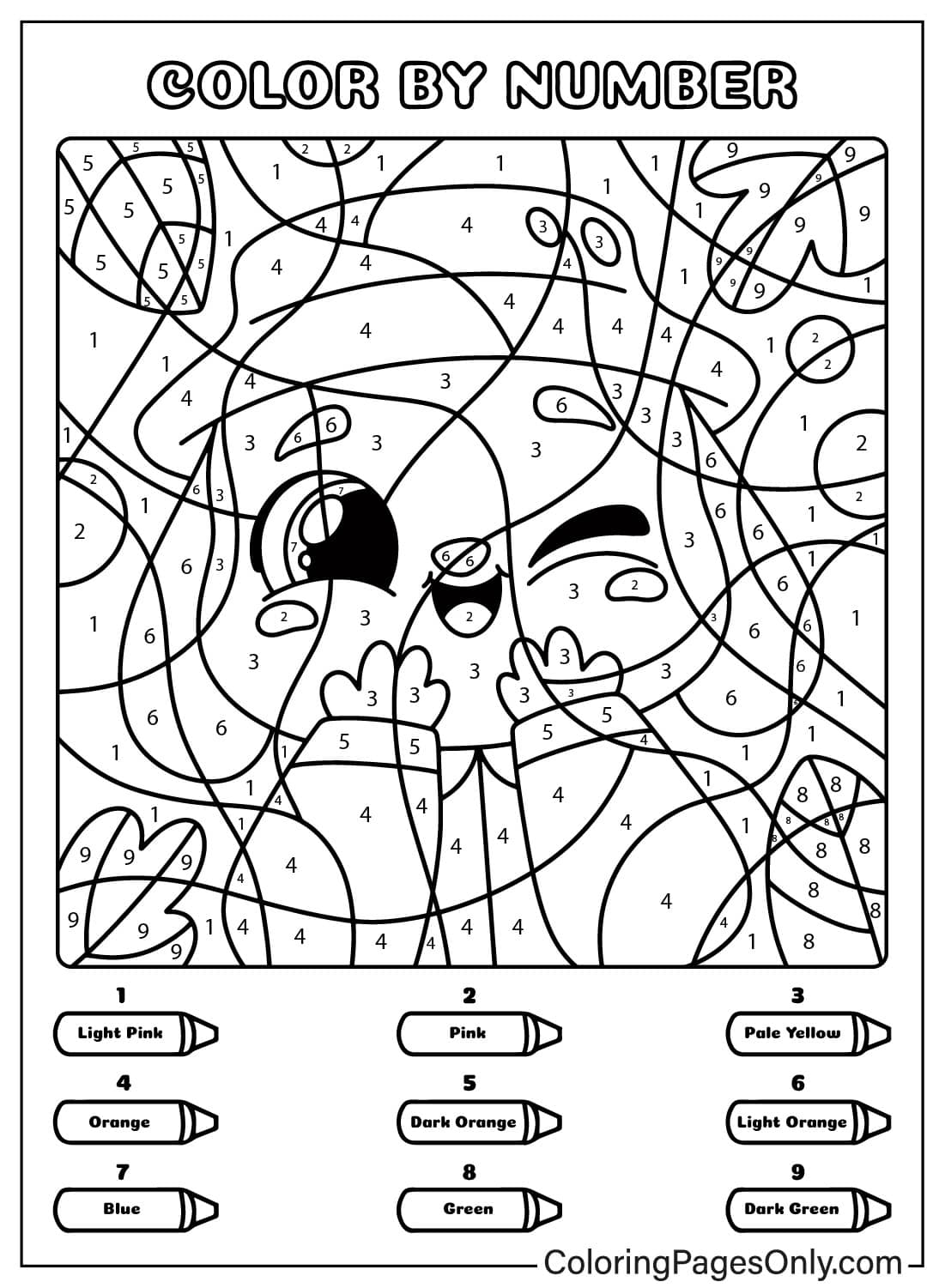
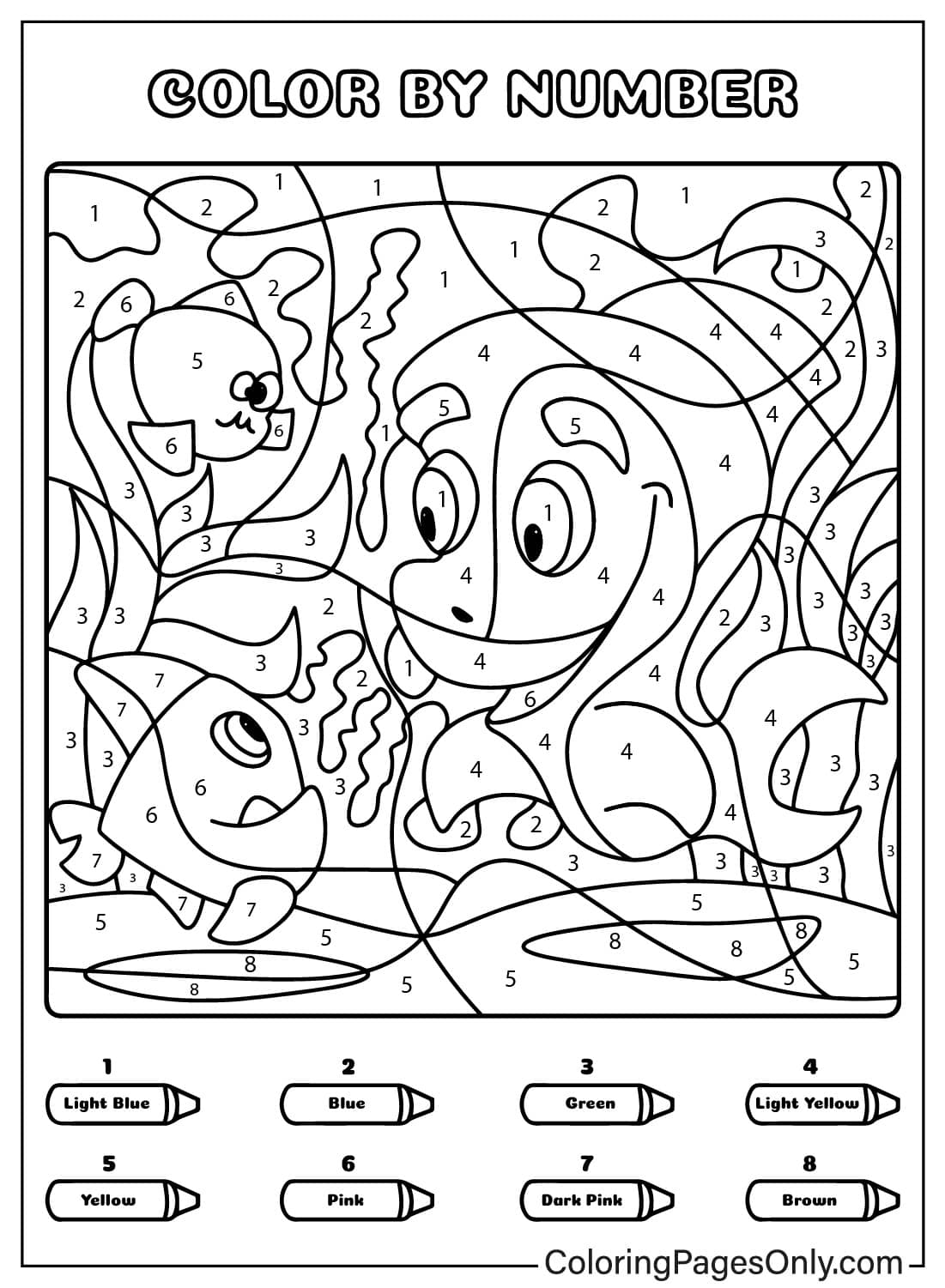
Simple animal portraits – bear, dog, dolphin, fish, pig, rabbit, seahorse – are the most accessible pages in the collection. These typically feature a single animal subject, a limited color palette (5–8 colors), and relatively large color regions that are easy to fill without requiring fine precision. The animal’s body provides natural color zones (body, face, ears, background) that keep the image intuitive even before it is revealed. These pages are recommended for children ages 4–7 and for anyone new to the color-by-number format.
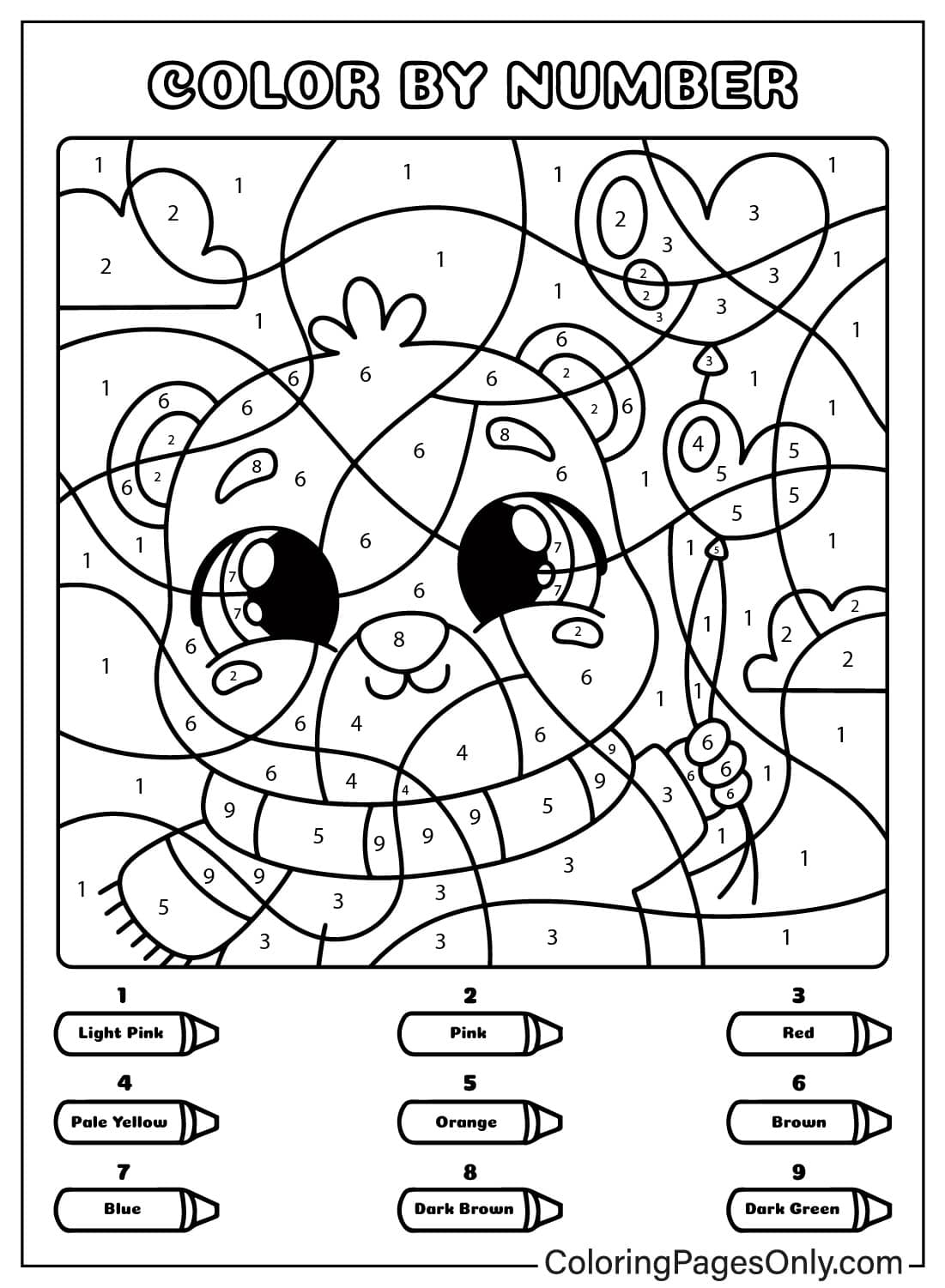
Action and scene pages – such as the penguins skiing, the bear holding balloons, and the dog hugging a ball – add compositional complexity by placing animals in contextual scenes with backgrounds. These pages have more color regions, more variation in region size, and require more careful reading of the key because similar-looking regions may require different colors. The action element also makes the finished image more narratively engaging – the penguins are doing something, which gives the image personality. Recommended for ages 6–10.
Nature and scenery pages – including the roses, scenic landscape, and seasonal designs – move away from animal subjects toward environmental composition. These pages require an understanding that color in nature is often non-obvious: a rose might have multiple shades of pink and red; a landscape might distinguish between light sky, dark sky, light grass, shadow grass, tree bark, and leaf. This color nuance makes scenery pages the most artistically complex in the collection and the most rewarding for older children and adults. Recommended for ages 8 and up.
Holiday and themed pages – pumpkins, the unicorn, and rainbow – use seasonal or thematic context to add additional engagement. The pumpkin page’s orange-and-black-and-green palette is immediately familiar and satisfying to complete. The unicorn page offers the most creative latitude in the collection, as unicorns have no canonical colors – the color key gives a suggested palette, but the finished image is widely understood to be an expression of the colorist’s own imagination.
Multi-element educational pages – including the mixed-composition educational design – combine multiple objects or characters into a single composition, creating a more complex visual puzzle with a larger number range and more distinct color regions. These pages are best suited for children who have completed several simpler pages and are ready for a longer, more challenging session.
Difficulty Levels – How to Choose the Right Page
Color-by-number pages vary considerably in complexity, and choosing a page at the right difficulty level is one of the most important factors in whether a child has a satisfying or frustrating experience.
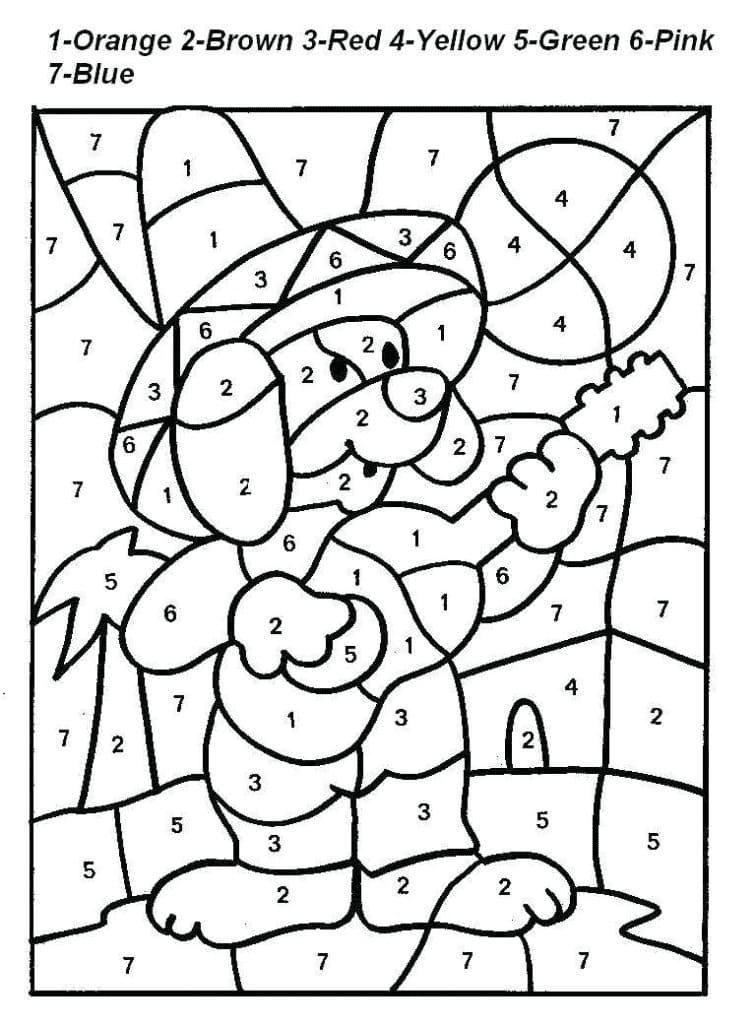
Beginner (ages 4–6, or anyone new to the format): Look for pages with 4–6 distinct colors in the key, large regions that are easy to fill without precision, a simple subject with obvious color associations (a brown bear, a pink pig, a grey rabbit), and no more than 20–30 distinct numbered regions on the page. The color-by-number dog, rabbit, and pig pages in this collection fit this description well.
Intermediate (ages 6–9): Pages with 7–10 colors, a mix of large and small regions, subjects in context (an animal doing something, rather than just sitting), and 40–70 numbered regions. The penguins skiing, bear holding balloons, and fish pages fit here.
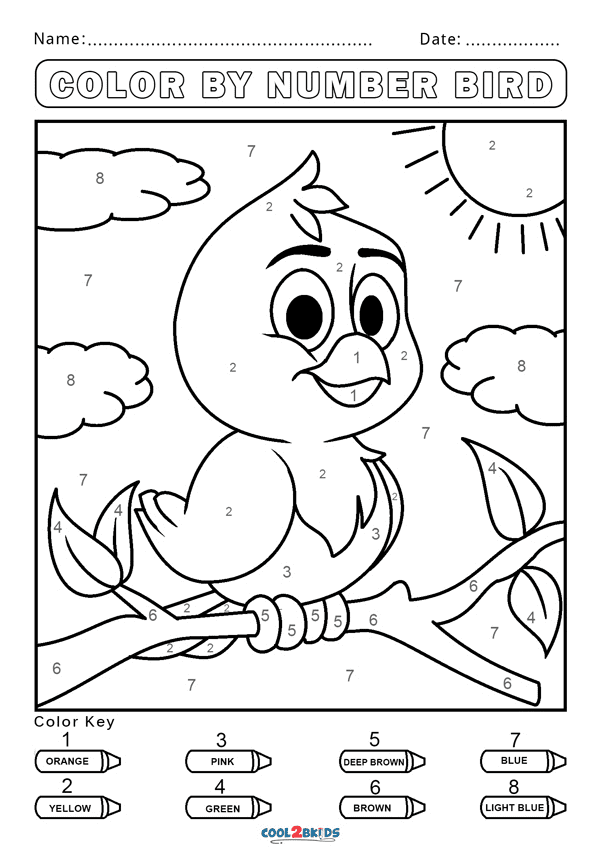
Advanced (ages 9+, or adults): Pages with 10+ colors, many small regions requiring careful coloring precision, complex backgrounds, shading or gradient effects built into the numbered system, and 80+ distinct regions. The scenery pages, the roses, and the multi-character compositions reach this level.
One common mistake is starting a child with a page that is too complex for their current age or experience level. The result is frustration – too many small regions, too many colors to track, too long before the image becomes recognizable. Starting simpler and progressing builds both confidence and the specific skills (careful key-reading, precise region-filling, sustained attention) that make more complex pages rewarding rather than overwhelming.
How to Approach a Color by Number Page – Tips for Every Age
Read the key completely before starting. Before touching a single region, look at the entire color key and gather all the colors you will need. Arrange them in front of you in numerical order if possible. This preparation step prevents the most common frustration: getting halfway through a region and discovering the needed color is across the room.
Start from the largest regions and work toward the smallest. Large color regions are the easiest to fill, and completing them first reveals the most image in the shortest time, giving the colorist a clear picture of what they are building toward. Small regions, which typically represent details (eyes, highlights, outlines), are more satisfying to complete when the broader context of the image is already established.
Work in color families. Rather than moving region by region across the page, complete all the regions of one number before moving to the next. If all the 3s are green, find every 3 on the entire page and color them all green before picking up a different color. This approach is faster (no switching between colors repeatedly), more accurate (you are in a single-color mindset while looking for that number), and produces cleaner results because you are less likely to accidentally use the wrong color mid-flow.
Leave white regions for last. Many color-by-number pages have regions designated white (or the background color of the paper). Coloring white sections with a white pencil or crayon leaves a very subtle texture that actually helps define boundaries between regions. However, if the paper itself is white and the background is meant to be white, these regions can simply be left unfilled.
For young children – name the colors aloud. As you or the child fills each section, say the color name and number together: “This is number 5 – 5 is yellow. All the 5 sections are yellow.” This verbal reinforcement builds the number-color association more deeply than silent filling does. It also turns the activity into a natural conversation: “How many yellow sections can you find? Let’s count them all before we color any.”
For beginners who lose their place, use a small sticky note or finger to mark the region they are currently working on in the key. One of the early challenges children face with color by number is losing track of which number they were looking at while moving their eyes from the key to the page. A physical marker eliminates this problem.
When the finished image doesn’t look right, check for missed regions (small numbered areas that were accidentally skipped), wrong color assignments (a region colored with the wrong number’s color), or coloring outside the lines of one region into an adjacent one. These are fixable in almost all cases with an eraser (pencil) or a correction using the intended color over the incorrect one (marker or crayon).
5 Activities
The mystery reveal game. Print any page from the collection and hide it from your child before they begin. Describe the subject of the image (“There is an animal in this picture – but I won’t tell you what it is until you’ve finished coloring it”) and set a timer to see how quickly they can color enough sections for the animal to become recognizable. Stop the timer when the child can correctly name what they are coloring. The reveal moment – when the image goes from “a collection of numbered shapes” to “a dog” or “a dolphin” – is the most memorable experience the format offers, and turning it into a guessing game magnifies the engagement. This activity also teaches inference: children begin to use partial visual information to make predictions, which is a critical reading comprehension skill.
The color substitution experiment. Select any completed color-by-number page. Print a second copy. Tell the child they can color this second copy with any colors they choose, regardless of what the key says – but they must keep every region of the same number the same color (so if they decide 3 is purple instead of green, all the 3s must be purple). Compare the two finished versions. Which looks more realistic? Which looks more interesting? Which is their favorite? This activity introduces an essential concept in visual art and design: color coding systems – the idea that any consistent system of color assignment can produce a coherent image, and that the “correct” colors are one choice among many. It also develops color decision-making, which is exactly what traditional coloring requires – but within a structure that makes the decision’s consequences immediately visible.
The DIY color-by-number project. Give the child a simple drawn outline of an animal or object – it can be from a standard coloring page, or one they draw themselves. Ask them to: divide the image into distinct color regions by drawing borders where different colors would meet; assign a number to each color region; create a key showing which number corresponds to which color; and exchange their creation with a sibling, parent, or friend who then completes it. This activity reverses the direction of the color-by-number experience, requiring the child to think like a designer rather than a colorist. It builds compositional thinking (where should the color boundaries be?), systematic organization (building the key), and perspective-taking (will someone else be able to understand my system?). The activity is also genuinely difficult, and children who complete it gain a deep appreciation for the craft involved in creating a well-designed color-by-number page.
The number frequency study. Before coloring any page, scan the entire image and count how many times each number appears. Make a simple tally chart: “Number 1 appears 12 times. Number 2 appears 8 times. Number 3 appears 20 times.” Then predict which number will be the most prominent color in the finished image – usually the number that appears most frequently. Color the page and confirm whether the prediction was correct. This activity turns a coloring session into a data collection exercise: the child is conducting a survey, making a prediction based on evidence, and testing the prediction – exactly the process used in basic scientific inquiry and early statistics. The tally chart also provides additional number-writing practice and introduces the concept of counting frequency.
The color-by-number exhibition. Over the course of a month, complete one page per week from the collection. Choose pages of increasing complexity: begin with a simple animal (the rabbit or pig), progress to an action scene (penguins skiing, bear holding balloons), then a natural composition (roses, scenery). When all four pages are completed, mount them on a wall or large poster board with labels: the subject name, the colorist’s name, the date completed, and one sentence the child dictates about what they found most interesting or challenging about each page. This creates a personal exhibition that documents development over time – the technical improvement visible in the progression from the first simple page to the fourth complex one. The labeling activity provides writing practice; the dictation provides language and reflection practice. And displaying the finished work publicly is the same experience that professional artists seek – an audience for something you made, and the satisfaction that comes from that recognition.
Why This Format Works Across Ages
The enduring quality of color by number – from the 1950s living rooms where Americans hung their Craft Master landscapes, to the kindergarten classrooms where teachers use CBN pages as quiet-time activities, to the adult coloring book market where pixel-level CBN apps have found enormous popularity – reflects something genuine about the format’s appeal.
For children, the appeal is the game-like quality: there is a system, the system has rules, following the rules produces a result, and the result is always a surprise reveal of something you couldn’t see at the start. This is the structure of a puzzle, and children are drawn to puzzles with the same intrinsic motivation that makes them return to building blocks or pattern-matching toys – the satisfaction of bringing order to apparent chaos.
For adults, the appeal is different but related: the removal of creative decision-making. When every color is specified, the colorist is free from the anxiety of choosing wrong – and can instead focus entirely on the meditative pleasure of careful, precise, unhurried filling. This is why color by number has found significant application in art therapy settings, where the structure of a prescribed system provides a sense of safety and achievability that open-ended creative activities sometimes don’t.
Both experiences – the child’s game and the adult’s meditation – trace back to the same structural insight that Dan Robbins borrowed from da Vinci in 1949: give someone a system, and they will discover that following it is not a constraint on creativity but an invitation to experience what creating feels like.