Free crayon coloring pages: 60+ pages featuring single crayons in vivid colors, classic Crayola-style crayon boxes, cartoon crayon characters with expressive faces, rainbow crayon arrangements, crayons in action poses, melted crayon art designs, jumbo and standard crayon sizes, and the full visual vocabulary of the most universally recognized art tool in children’s creative education. All free, printable PDF and online coloring for kids and adults.
The modern wax crayon as the world knows it today was introduced commercially in 1903 when Binney and Smith released the first box of Crayola crayons, priced at five cents and containing eight colors: black, brown, blue, red, purple, orange, yellow, and green. The name “Crayola” was created by Alice Stead Binney, combining the French word “craie” (chalk) with “ola,” a suffix suggesting oil. That original eight-color box began one of the most documented manufacturing stories in American consumer history.
Since 1903, Crayola has produced over 100 billion crayons at its primary factory in Easton, Pennsylvania. The color count grew from 8 in 1903 to 16, then 64, then 96, and eventually to more than 120 distinct colors currently in production. More than 3 billion Crayola crayons are manufactured each year. The crayon is typically the first art tool a child ever uses, with most children beginning between ages two and three, making it the foundational instrument of early creative development worldwide.
These 60+ free pages at ColoringPagesOnly.com capture the crayon in its full visual range. All free, PDF or PNG, print or color online.

What’s Inside
Single Crayon Portrait Pages
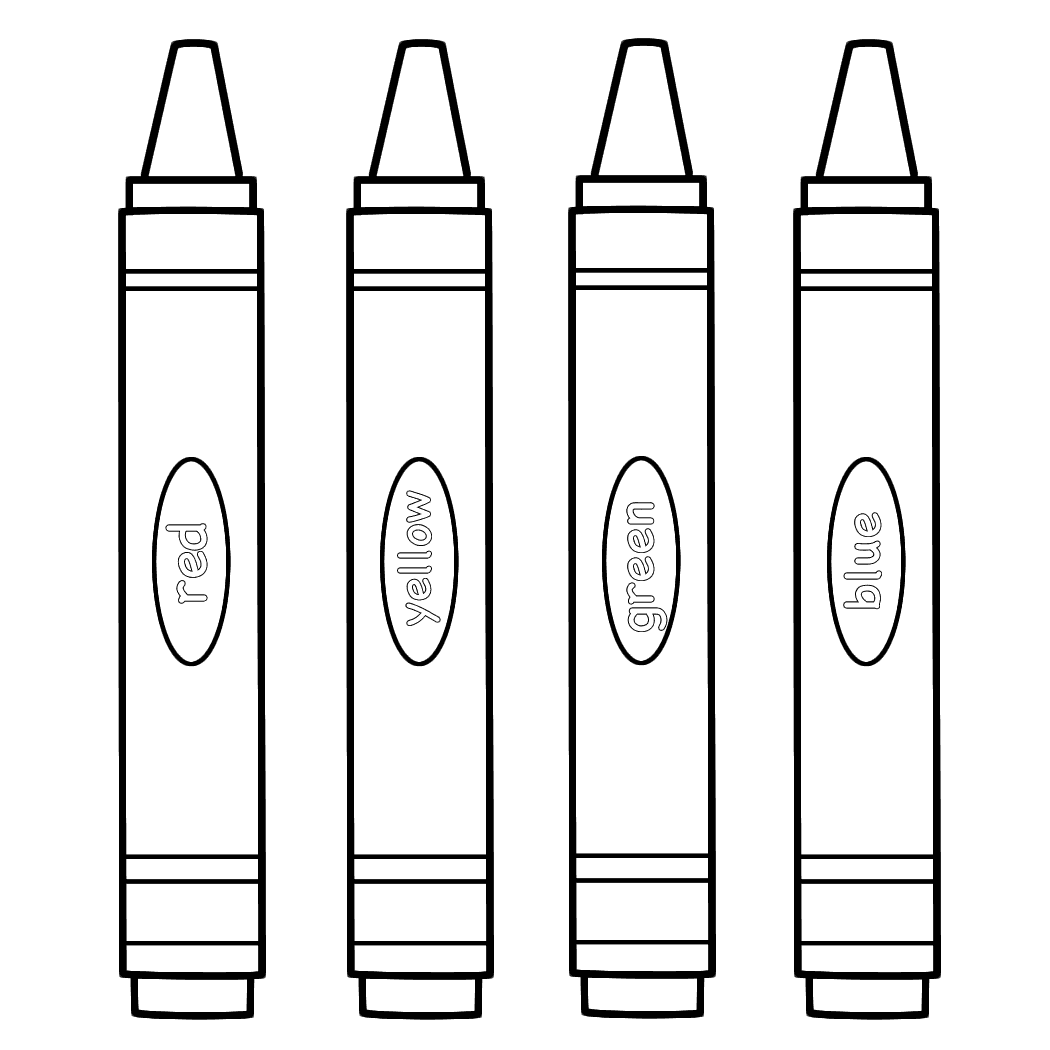
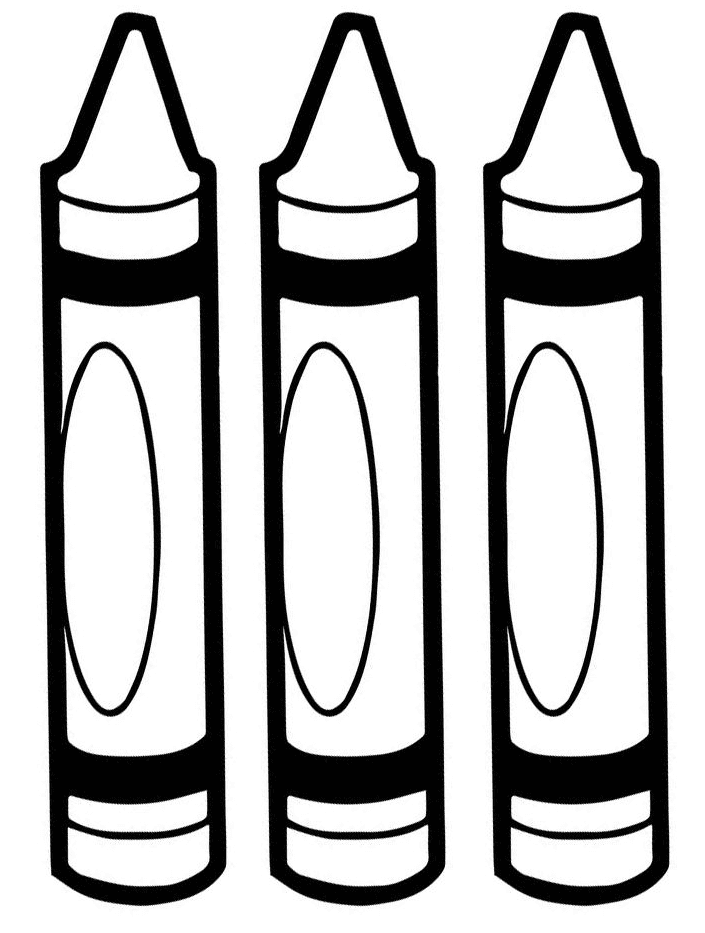
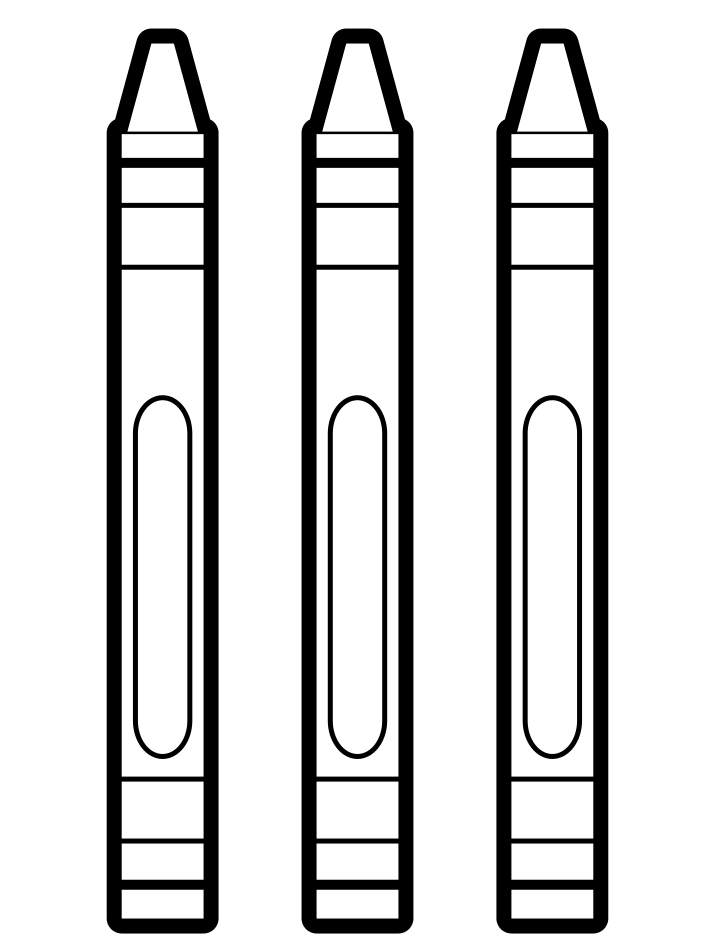
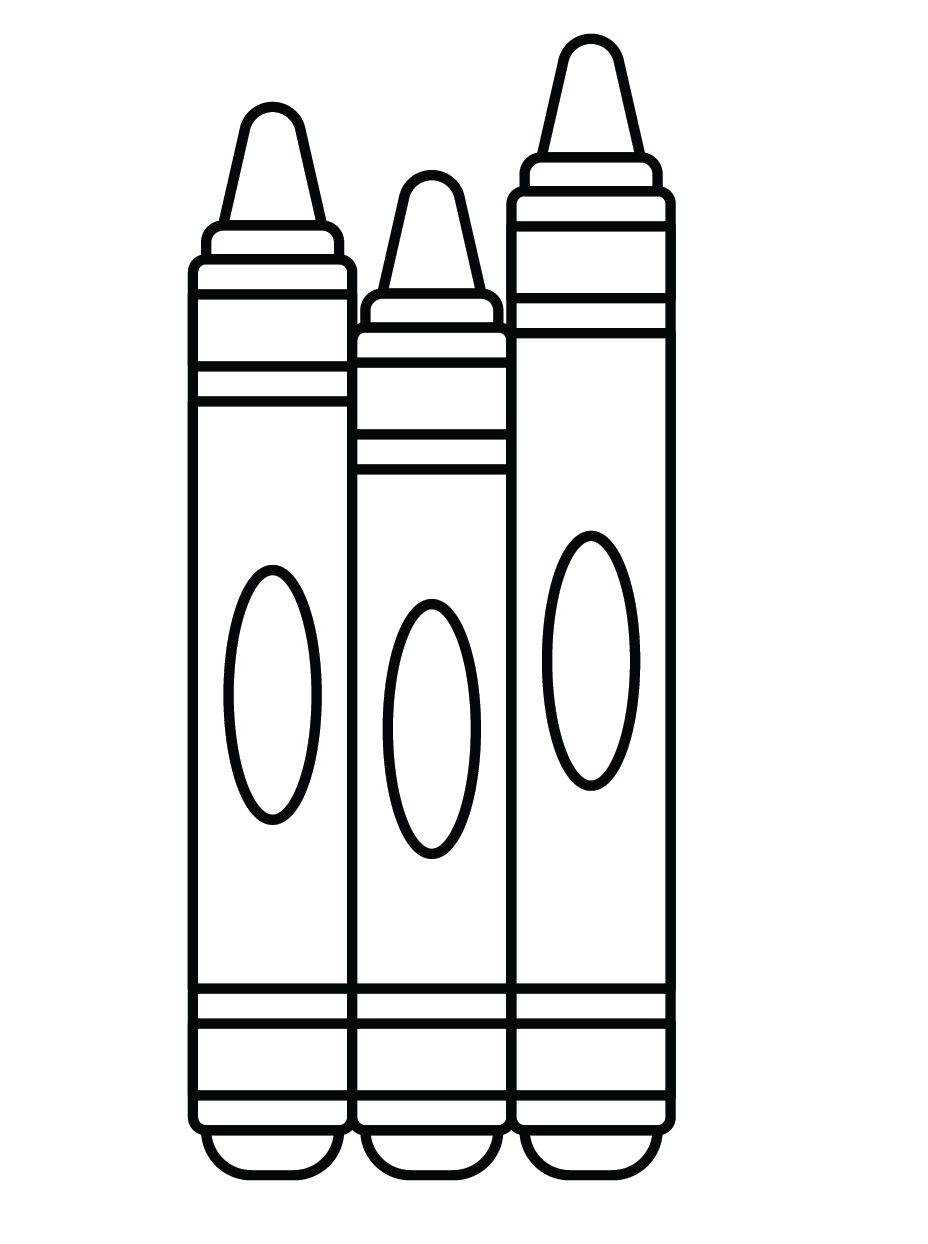
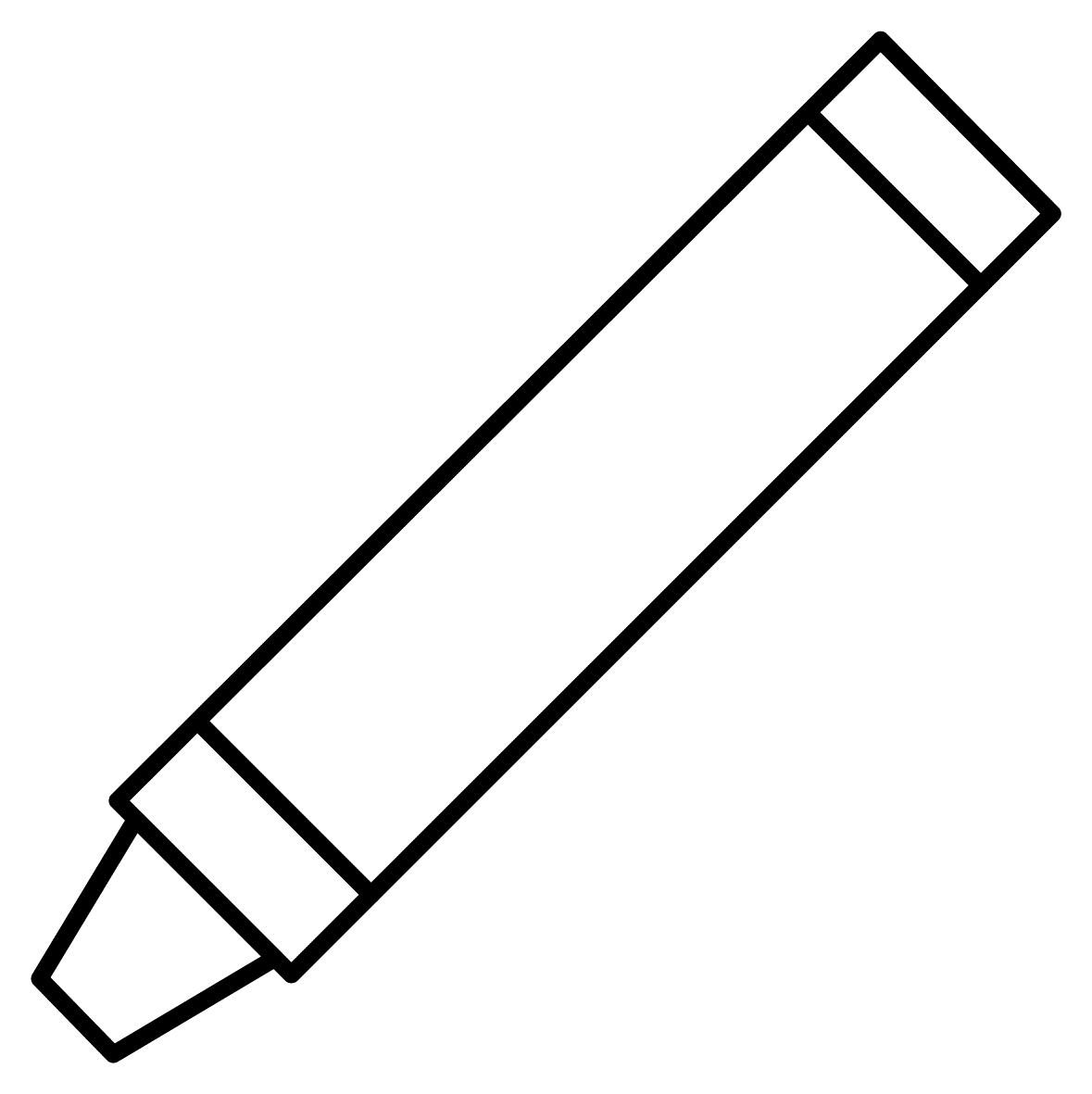
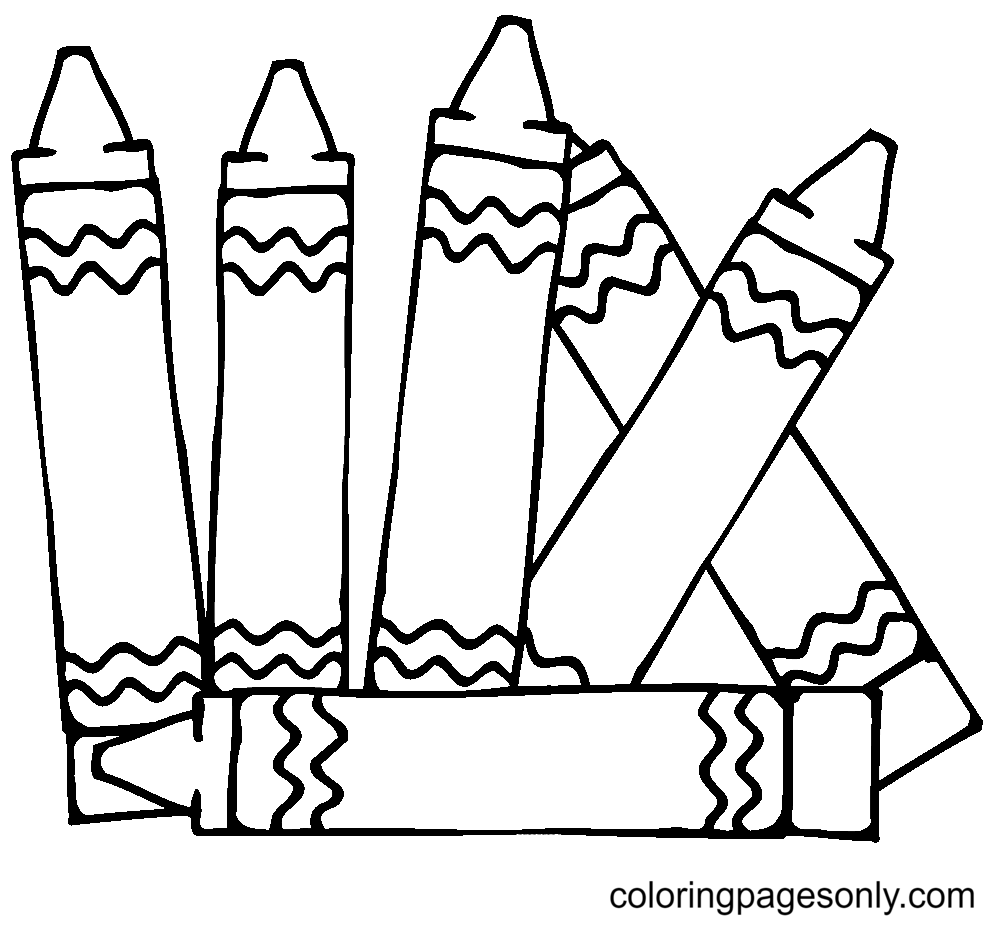
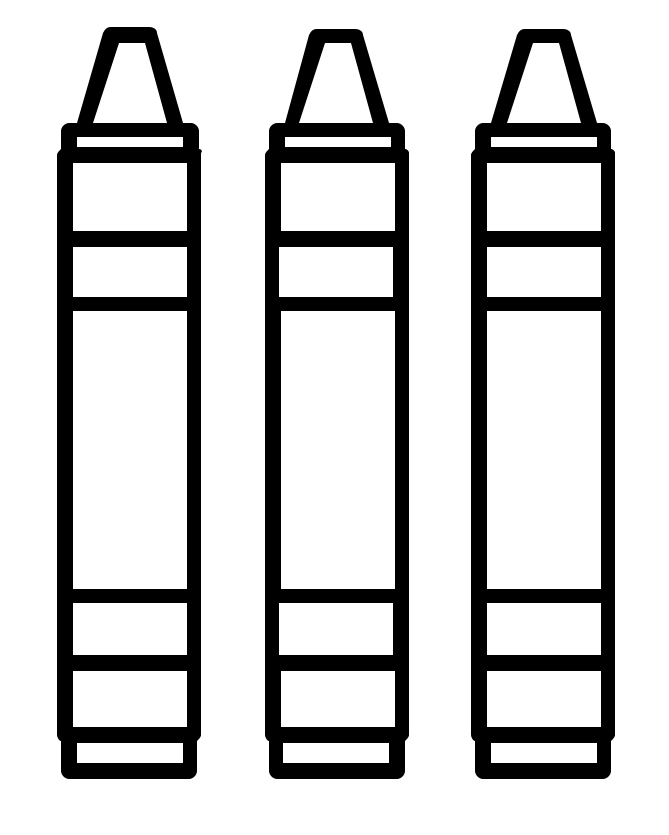
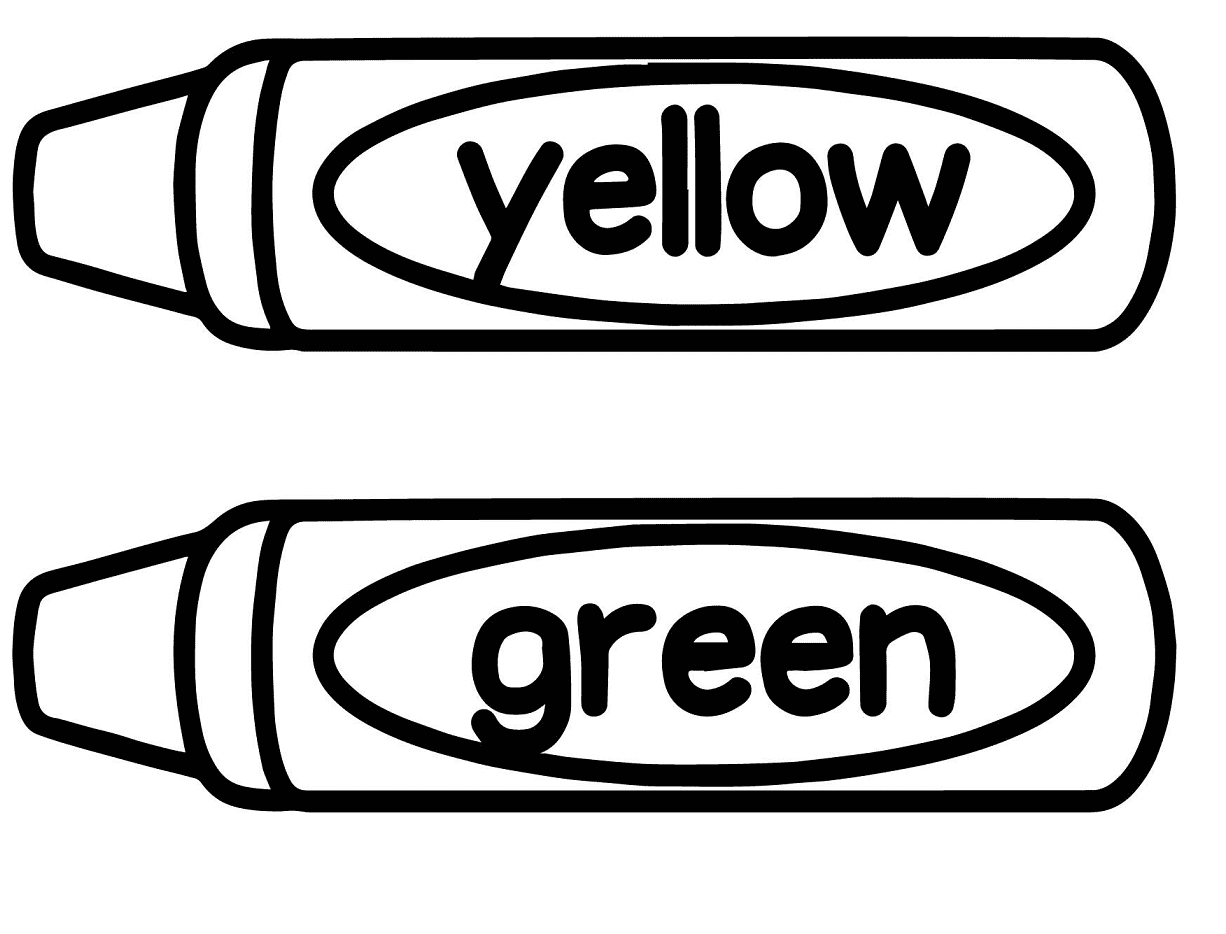
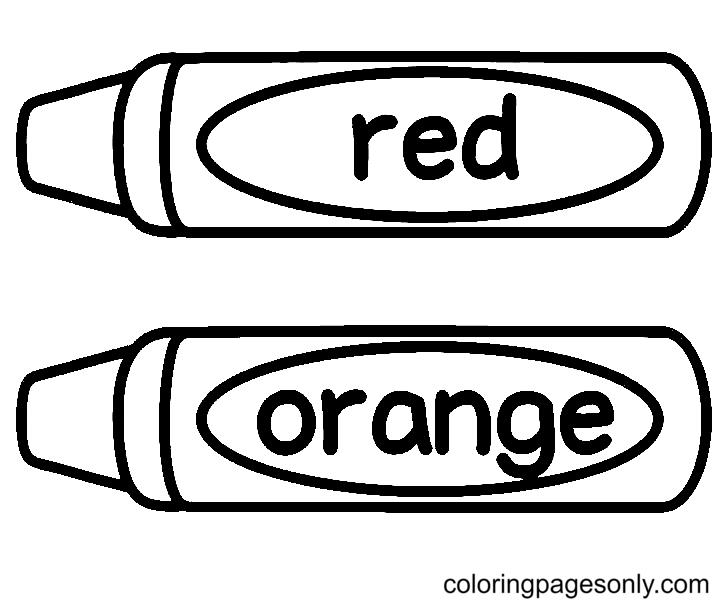
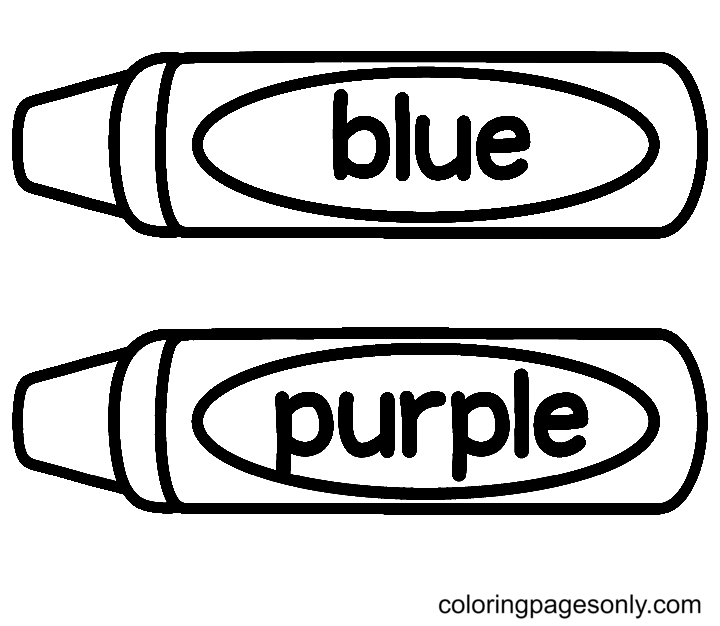
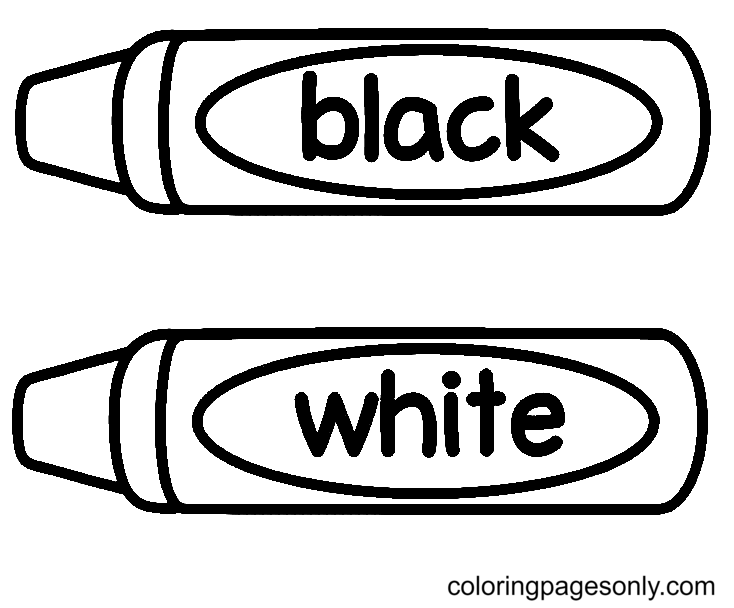
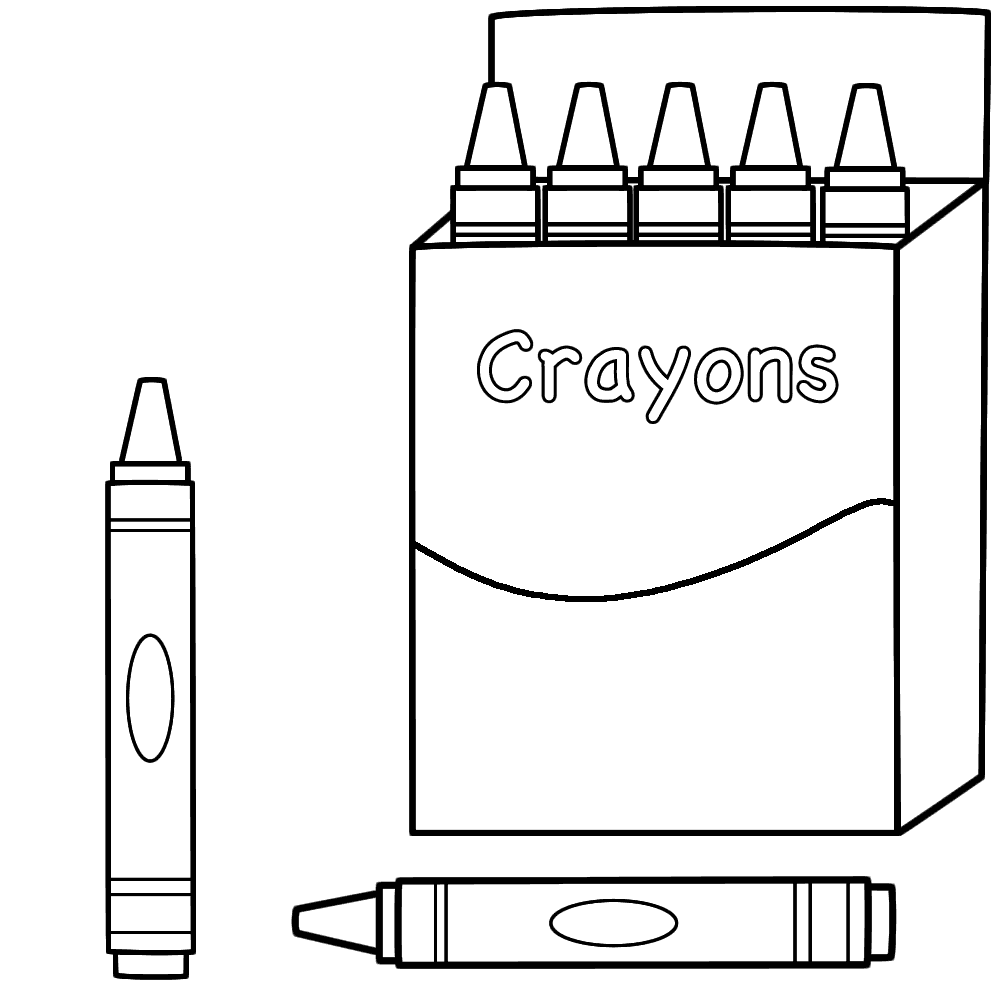
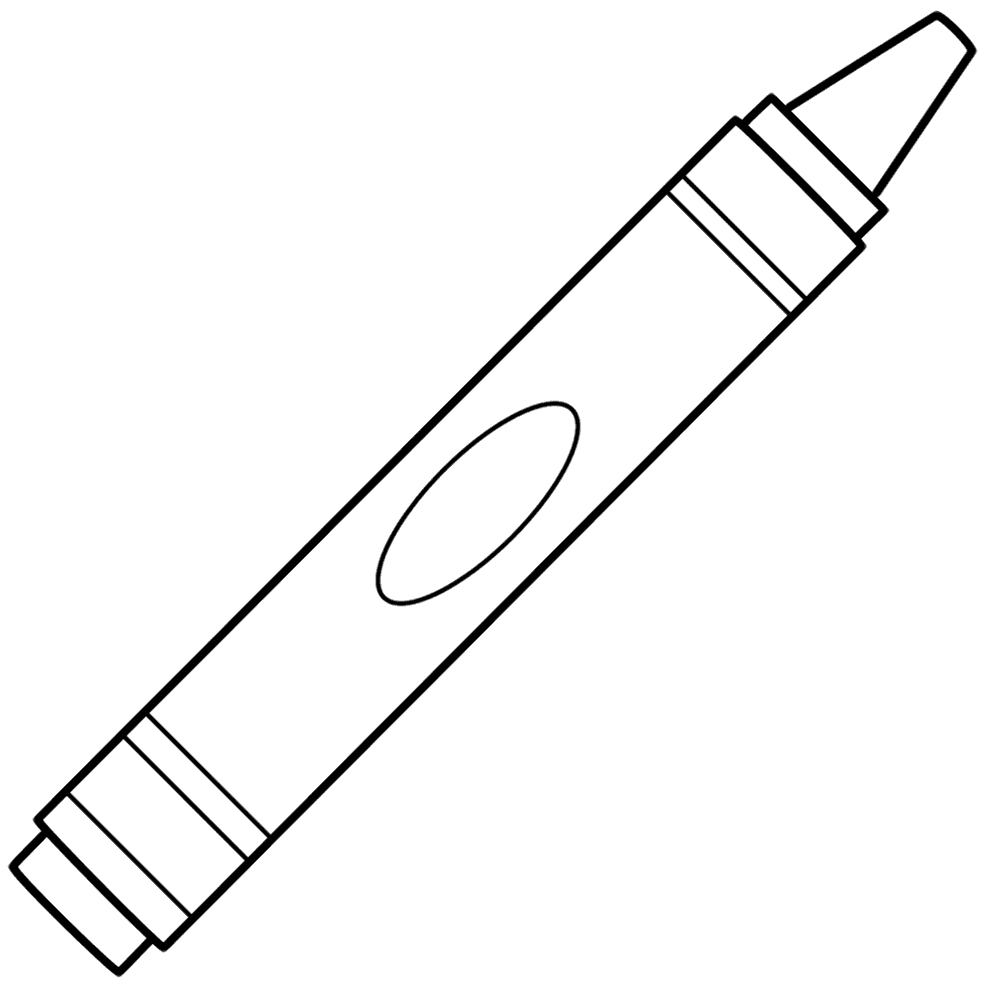
The single crayon portrait is the collection’s most graphically direct subject: one crayon, full length, the paper label clearly visible, the tip either sharp or worn depending on the page’s design register. The crayon’s silhouette is one of the most immediately recognizable shapes in children’s visual culture: a long cylinder with a conical tip, tapering to the specific point shape that children learn to associate with drawing before they can name the object itself.
The label area of a crayon is its most visually interesting section. The Crayola label design, with its distinctive diagonal gold stripe and the color name printed at an angle, has been part of American visual culture since 1958, when the current logo design was introduced. These label details reward the most careful coloring in the collection. The color name on a crayon label is not merely text: it is one of the most specific and creative naming traditions in consumer product history. Crayola’s color names range from the straightforward (“Red,” “Blue”) to the atmospheric (“Cornflower,” “Burnt Sienna,” “Raw Umber”) to the playfully specific (“Macaroni and Cheese,” “Tickle Me Pink,” “Vivid Violet”).
Coloring single crayon pages: The crayon body should receive the full, vivid version of the color the crayon represents. A red crayon should be the most saturated red available. A blue crayon should be the most vivid blue. The label area is typically white or cream, applied cleanly before the color name lettering is added. The tip of the crayon is slightly darker than the main body, as the pigmented wax at the tip tends to be denser in color concentration than the labeled shaft.
Crayon Box Pages
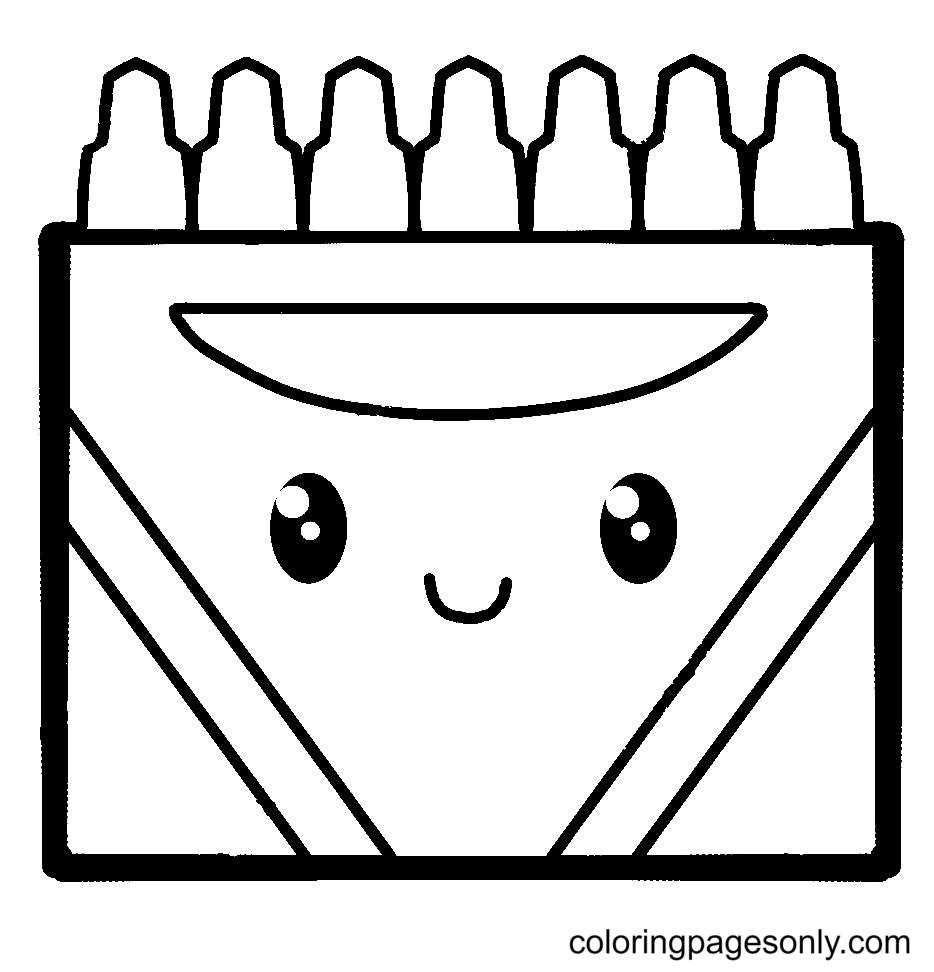
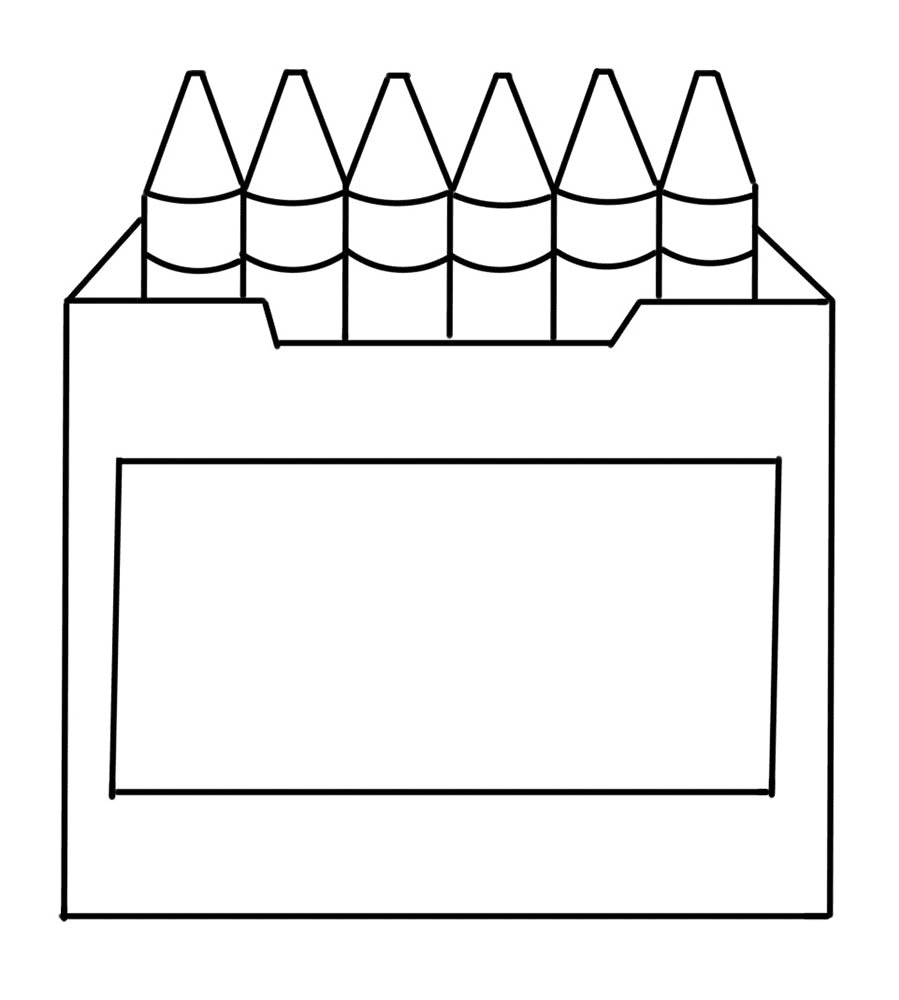
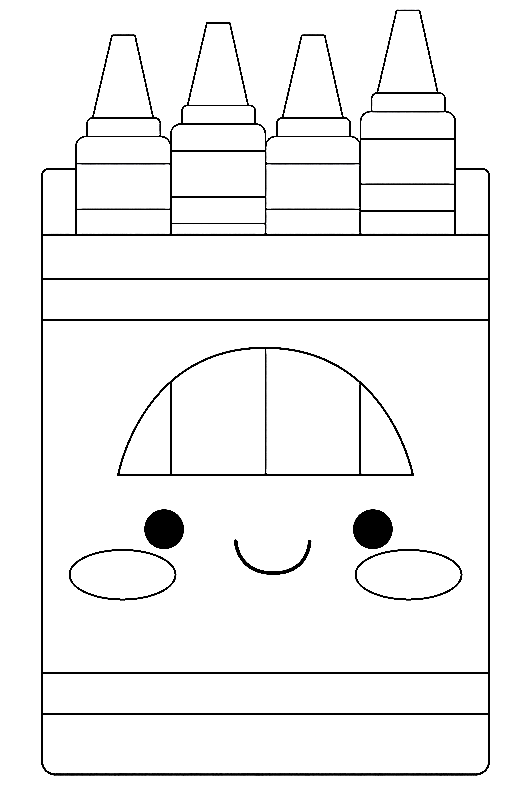
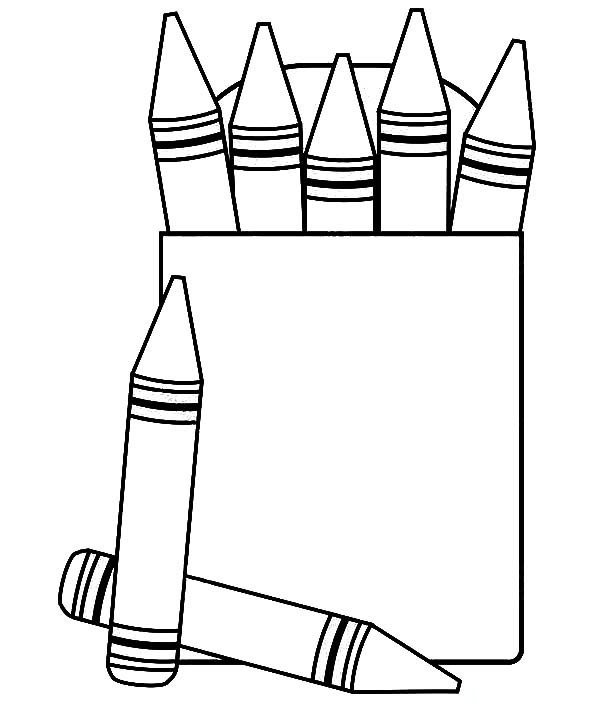
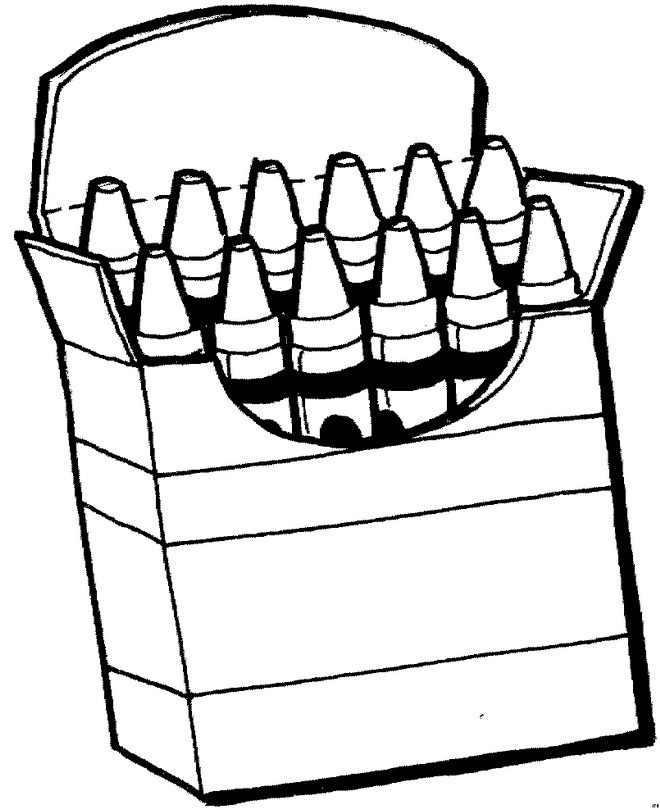
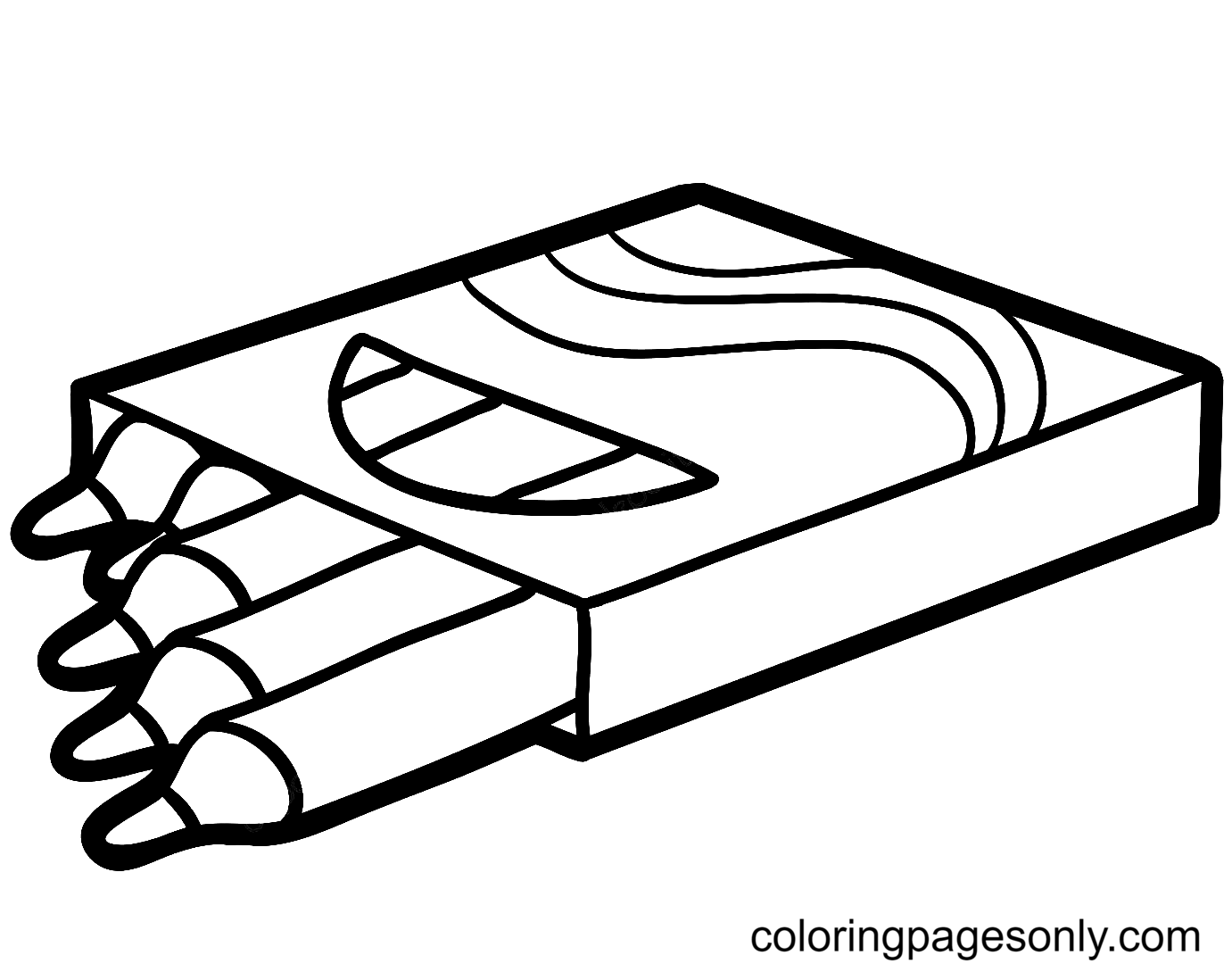
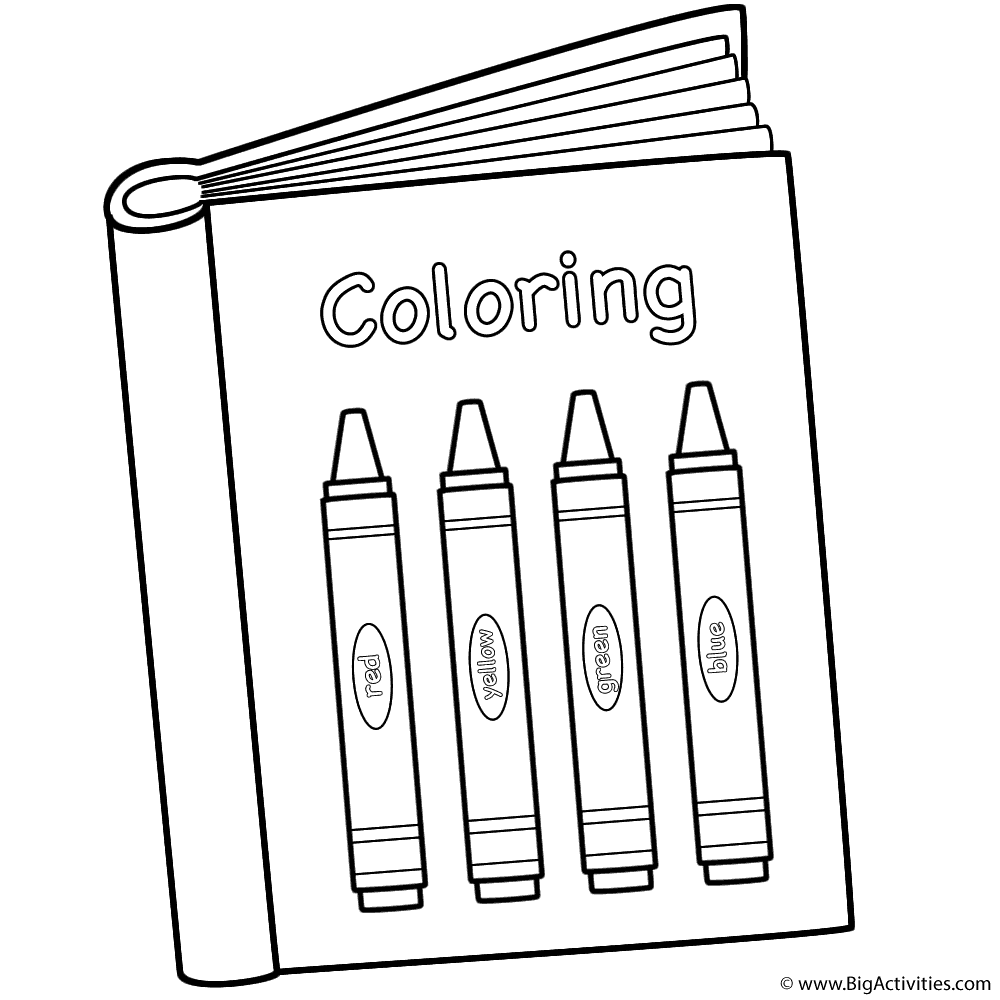
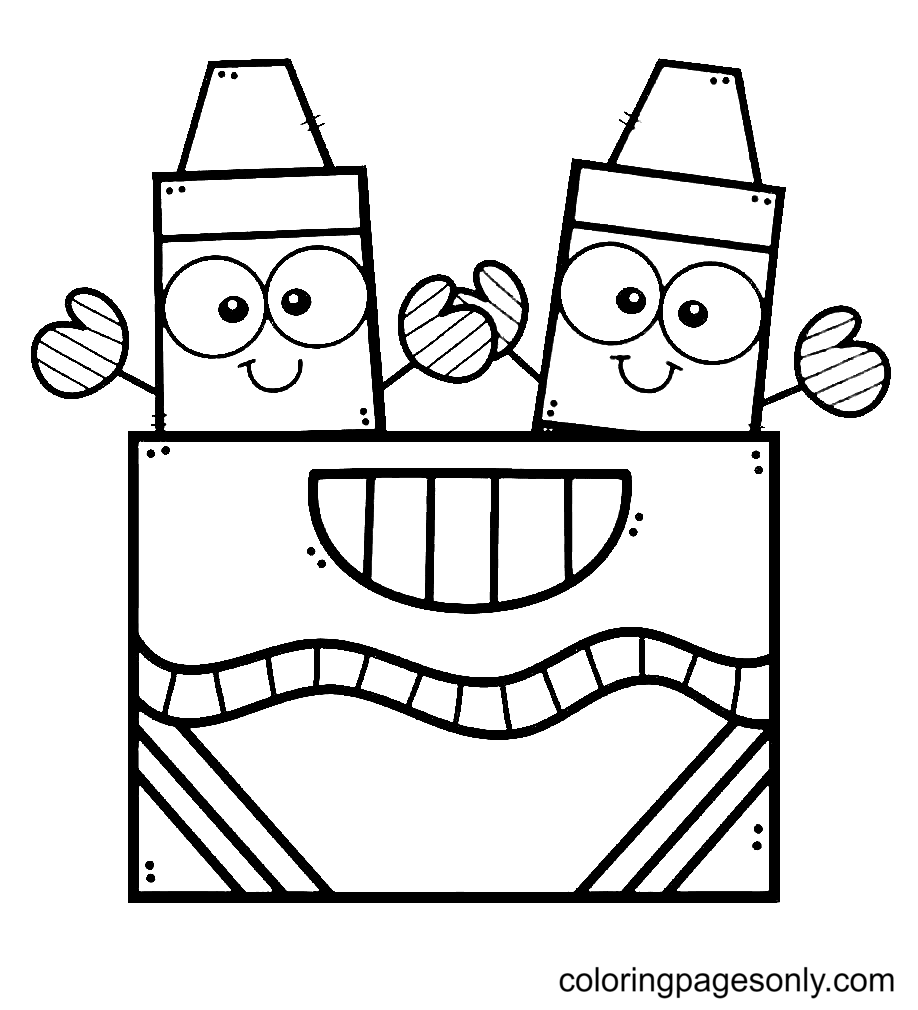
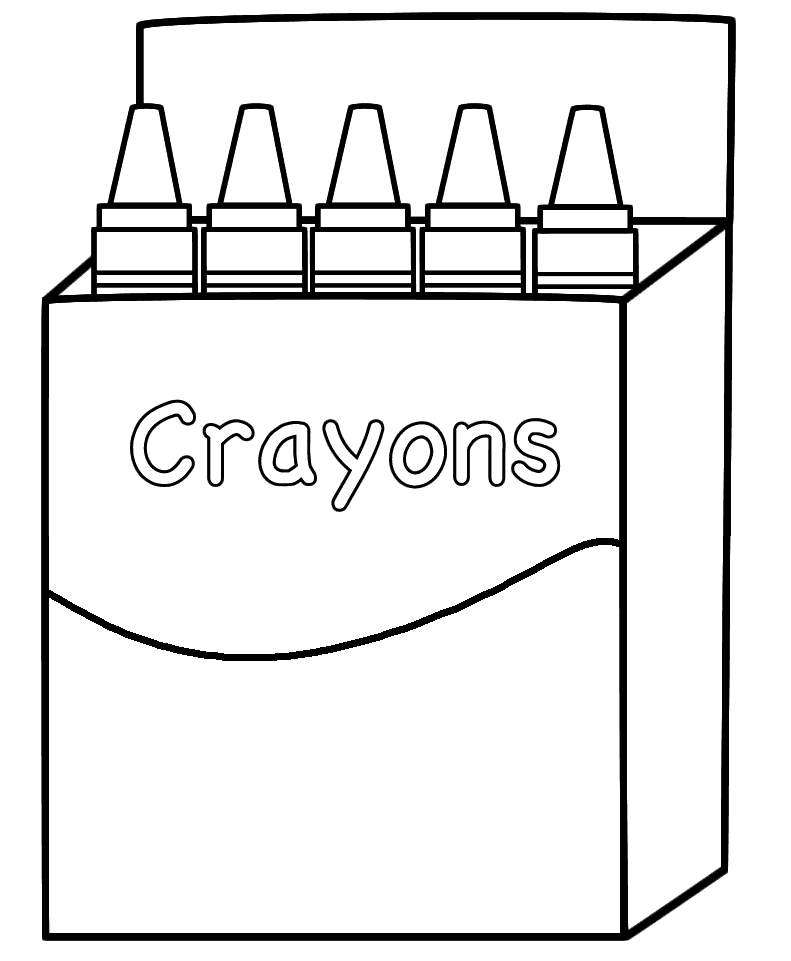
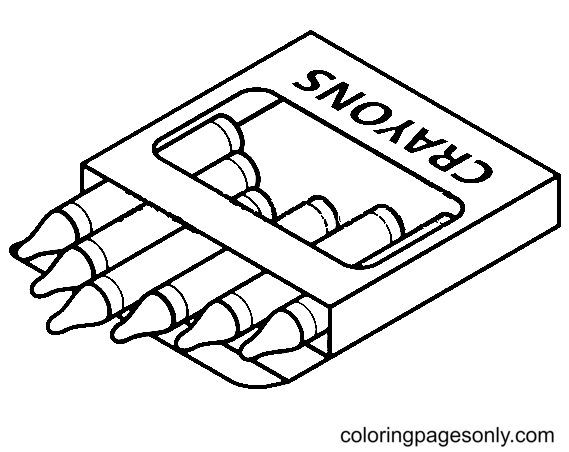
The crayon box is the collection’s most compositionally complex subject: a rectangular box, lid open or closed, with multiple crayons arranged in rows either inside or displayed beside it. The iconic Crayola box design uses a specific yellow-green color for its exterior, with the diagonal gold stripe and the large numeral indicating the crayon count (8, 16, 24, 64, 96) prominently displayed on the front panel.
The arrangement of multiple crayons in a box creates the collection’s most demanding color management challenge. Each crayon in the box is a different color, and the arrangement should show a spectrum from warm to cool or from light to dark, reflecting how actual crayon boxes are organized. The classic 64-count box, introduced in 1958, was the first to include a sharpener built into the back panel, and it became so culturally significant that it appeared on a US postage stamp in 1998.
Coloring crayon box pages: Plan the full spectrum before applying any color. Assign each visible crayon in the box to a specific color from the actual Crayola range. Apply each crayon’s color at full saturation, working from one end of the box to the other in spectral order: reds and oranges, then yellows, then greens, then blues, then purples. The box exterior in classic Crayola yellow-green should be applied after all crayons are colored, ensuring the box color does not compete with the crayons it contains.
Cartoon Crayon Characters
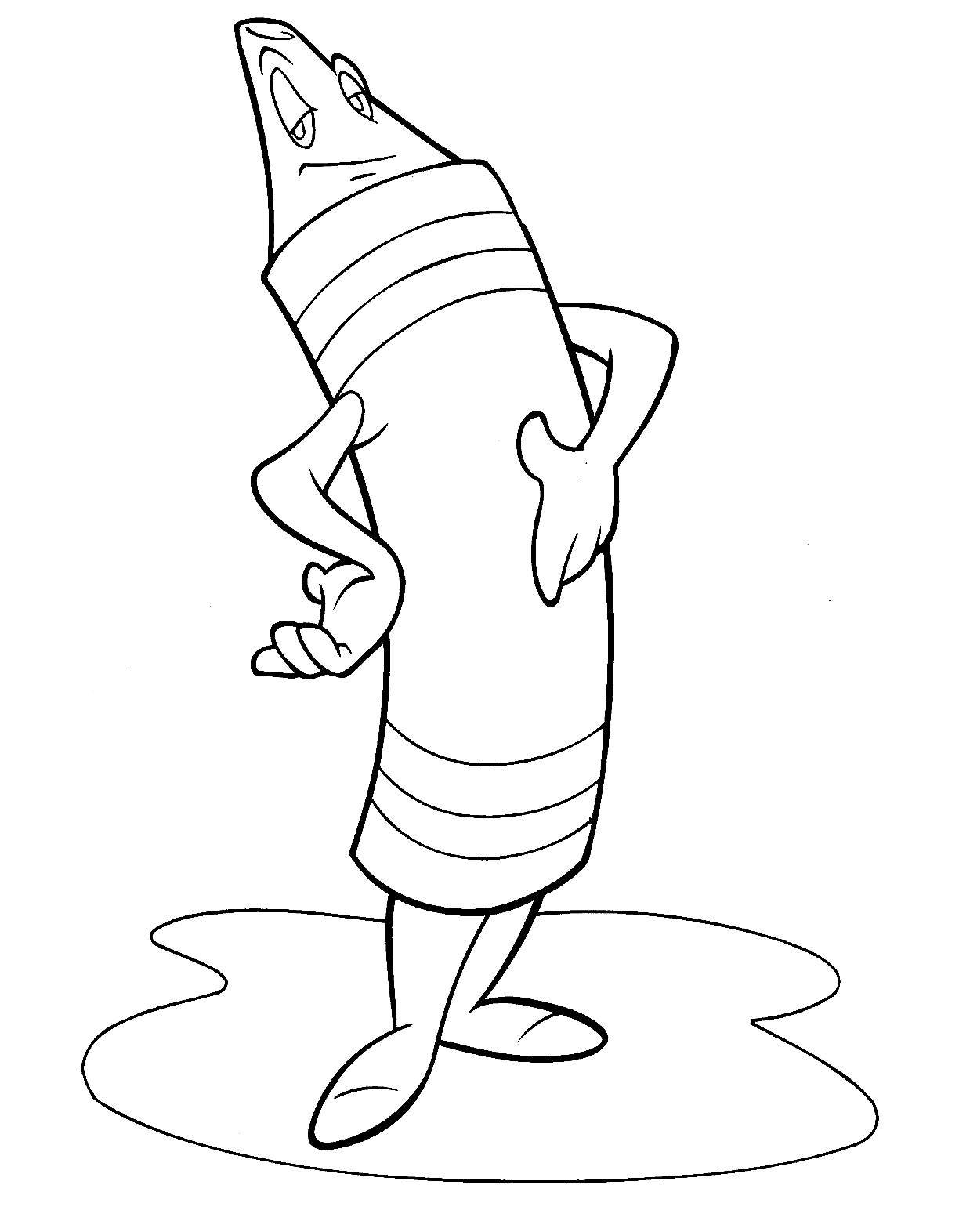
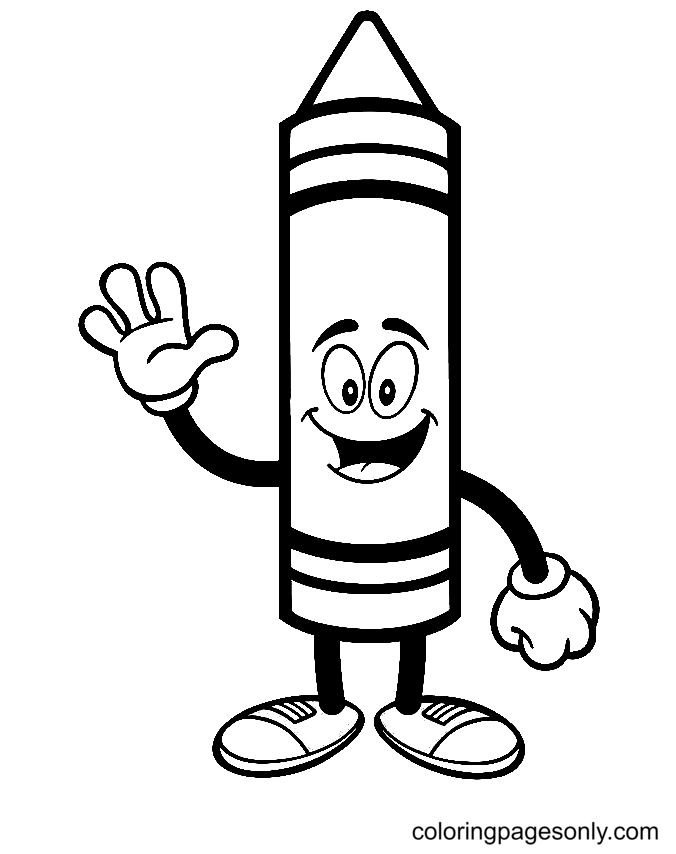
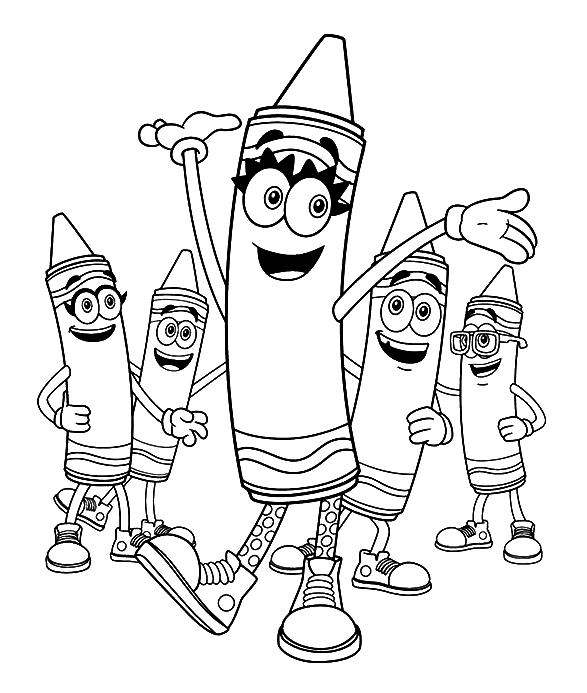
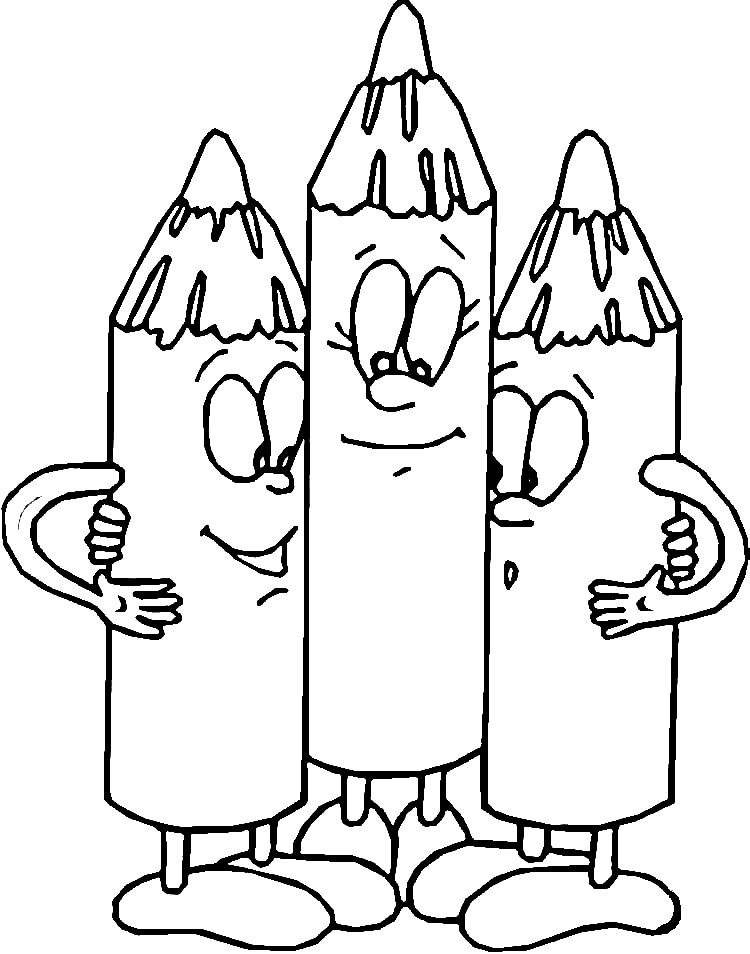
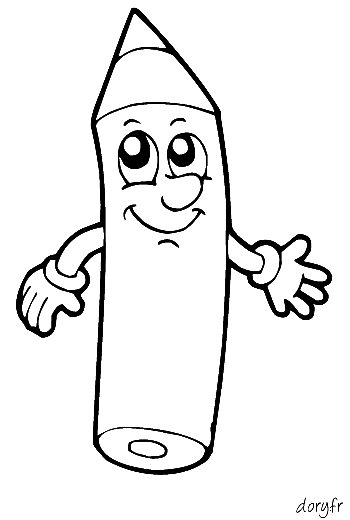
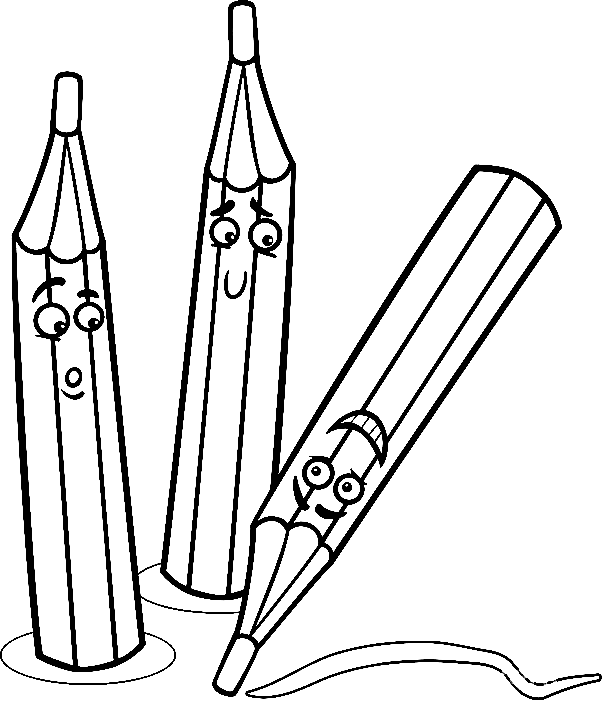
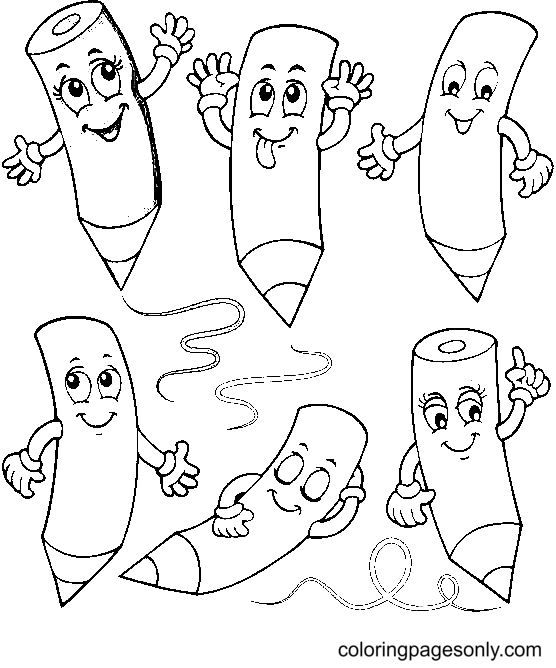
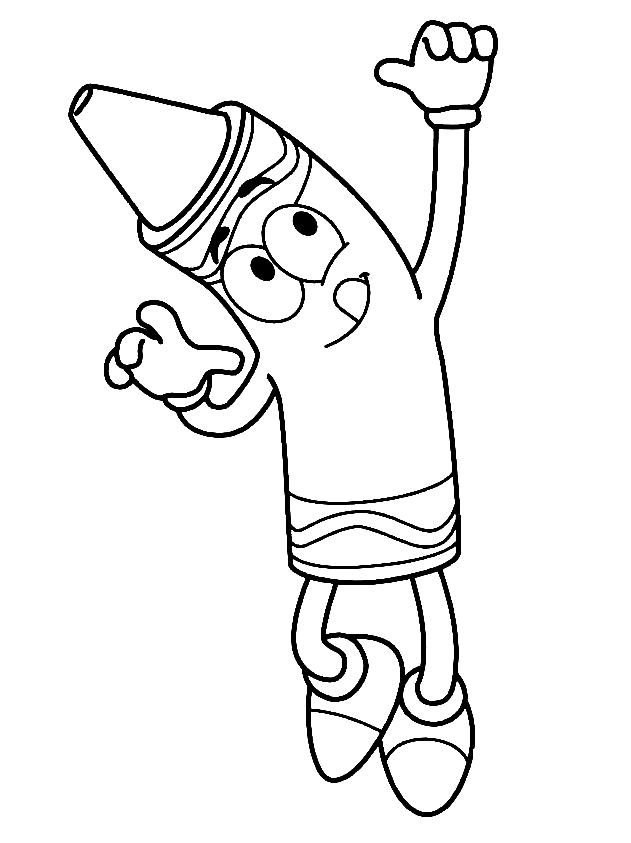
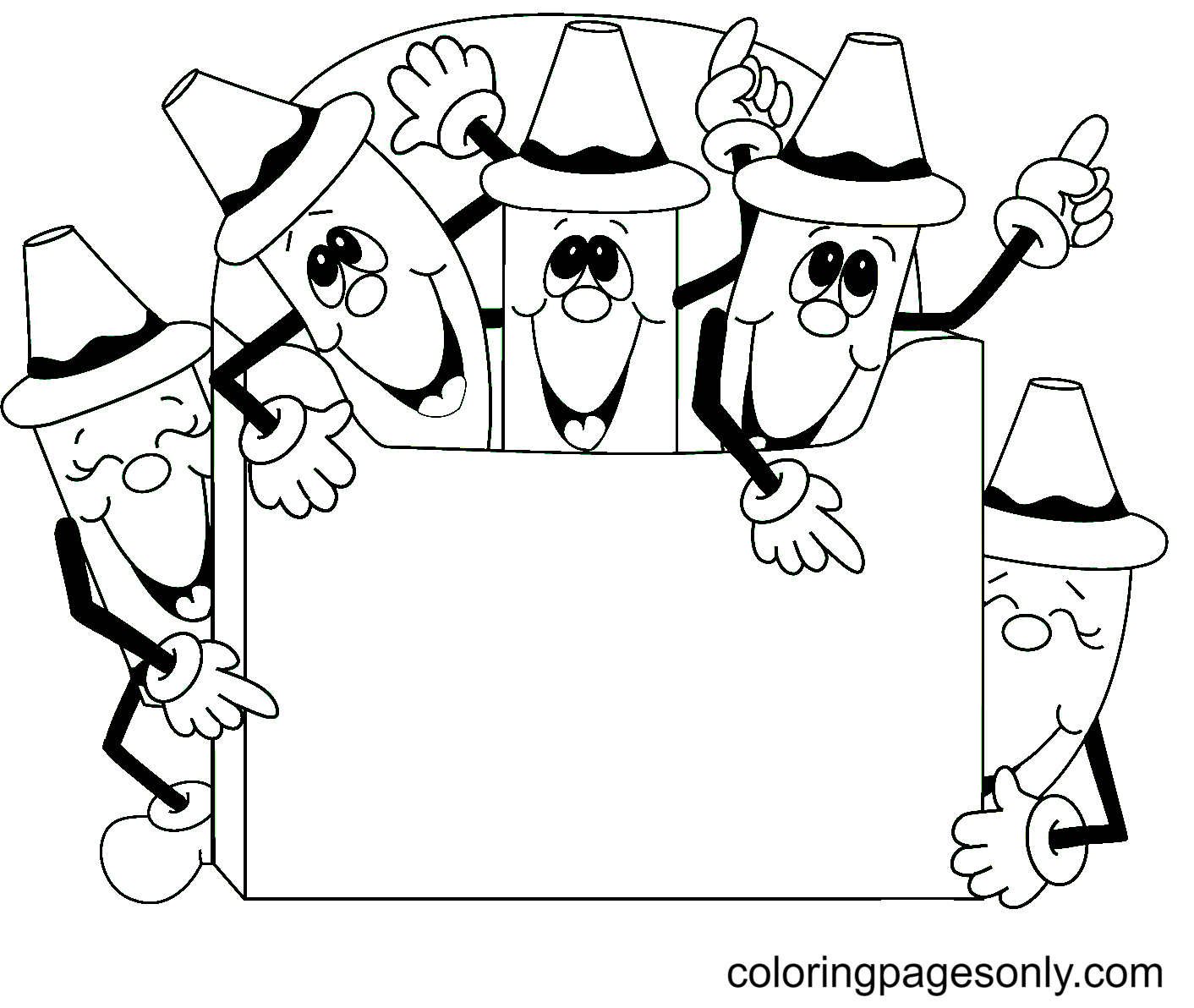
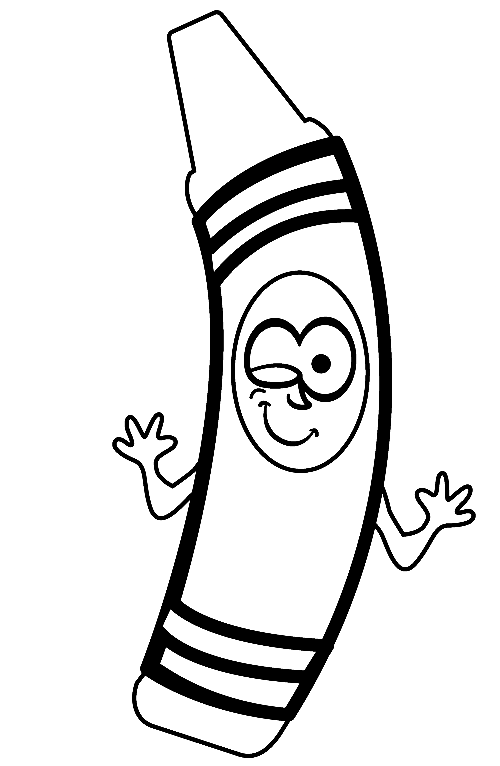
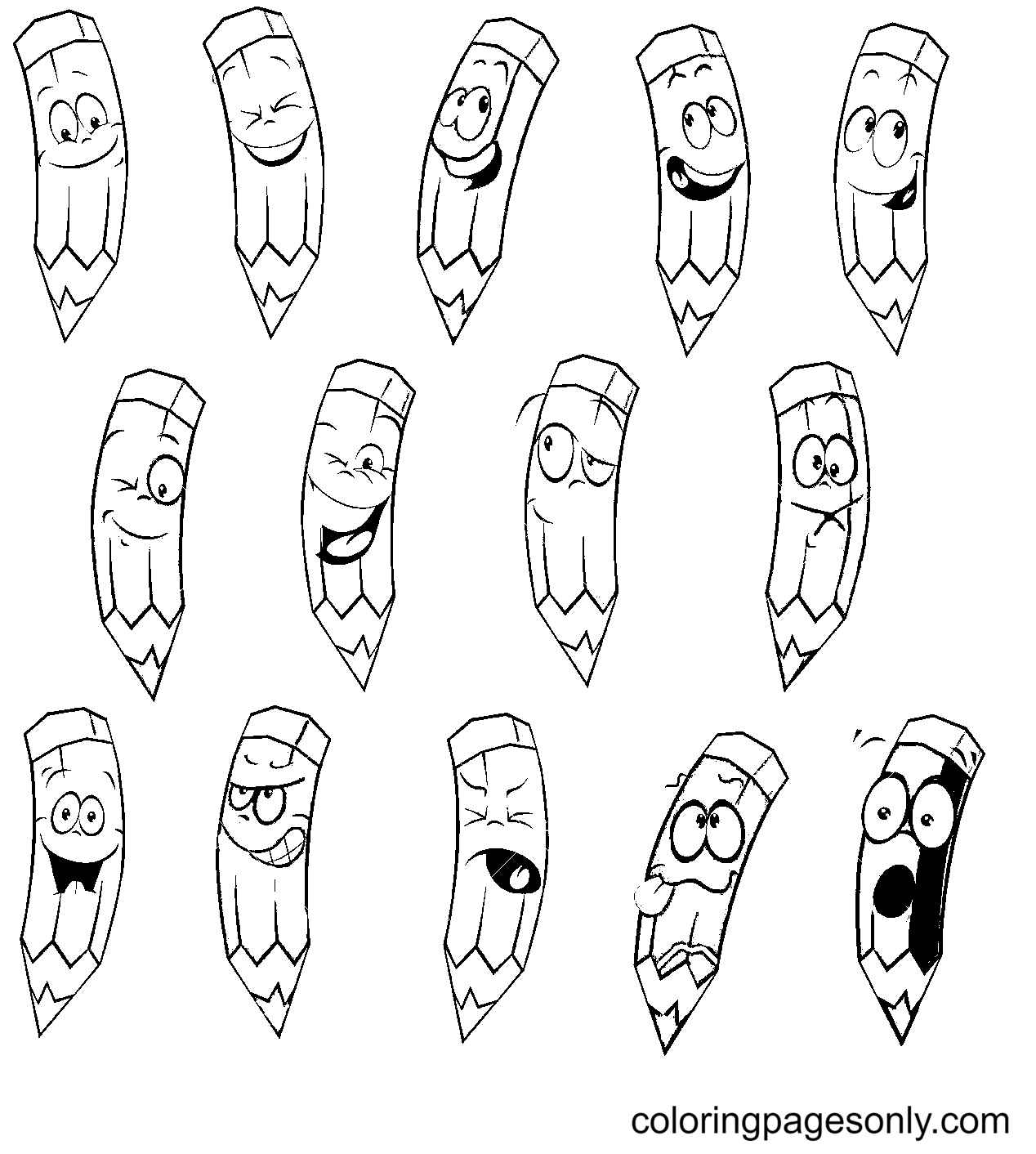
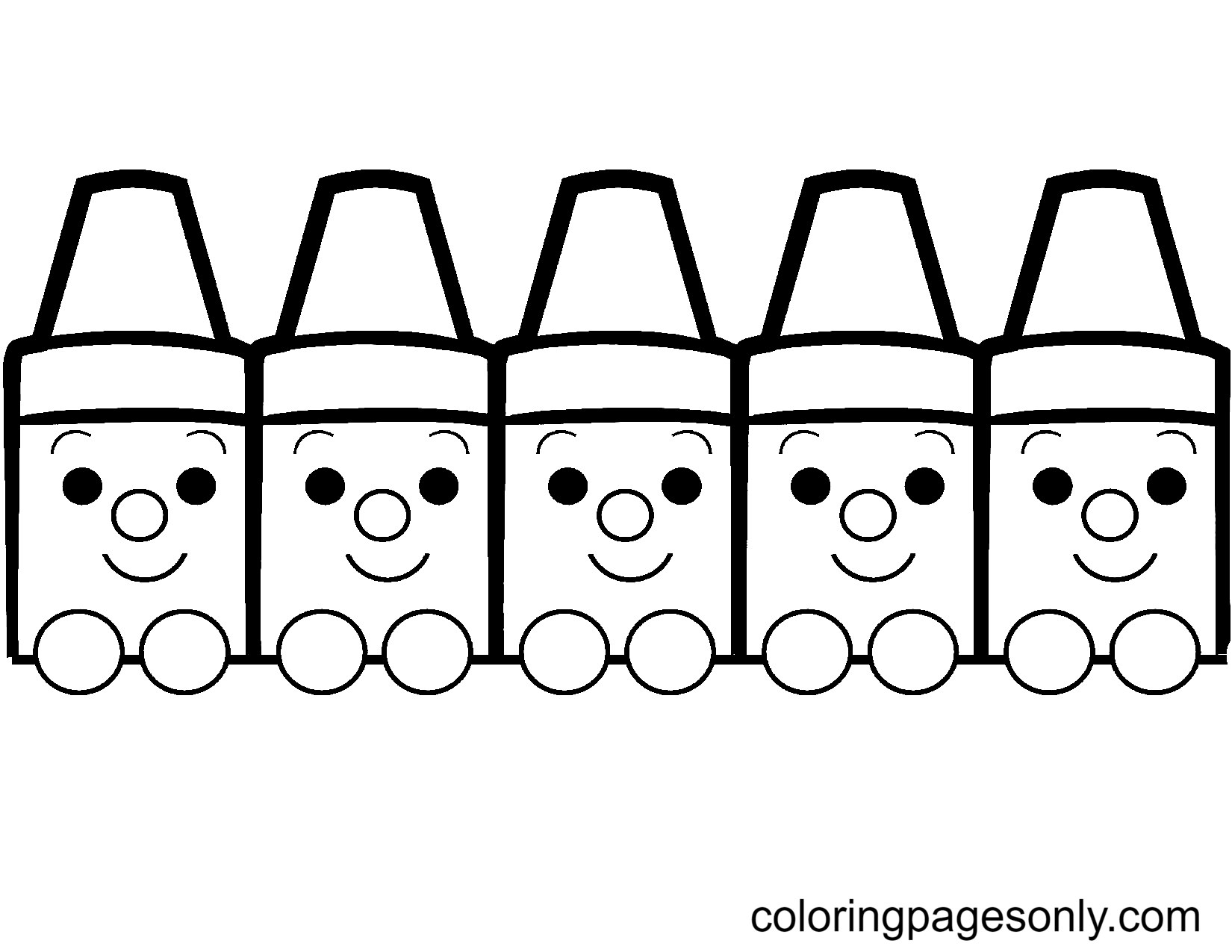
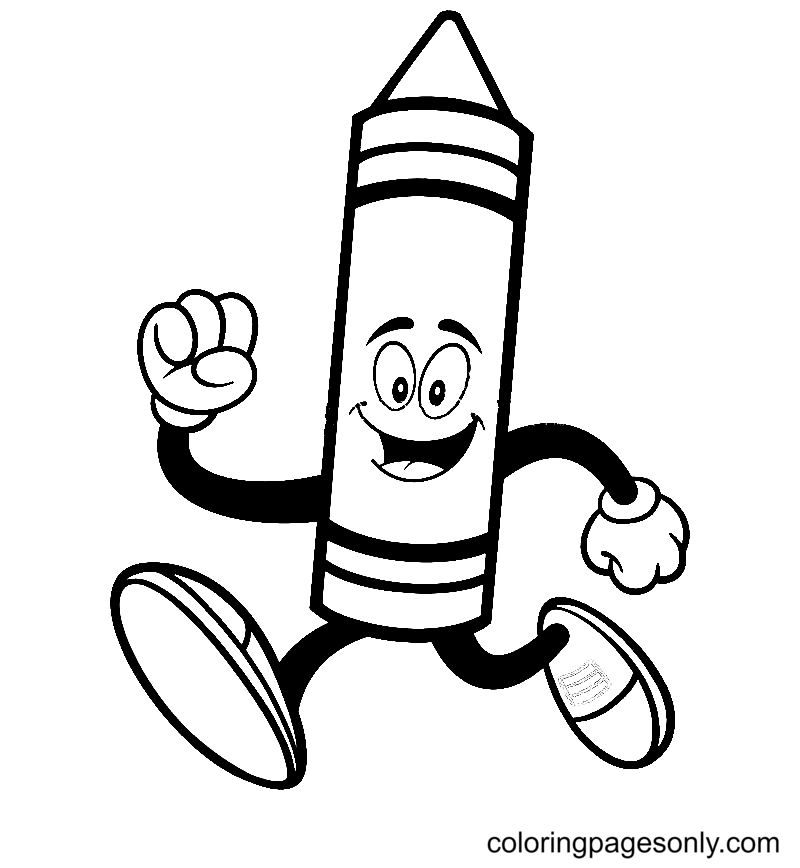
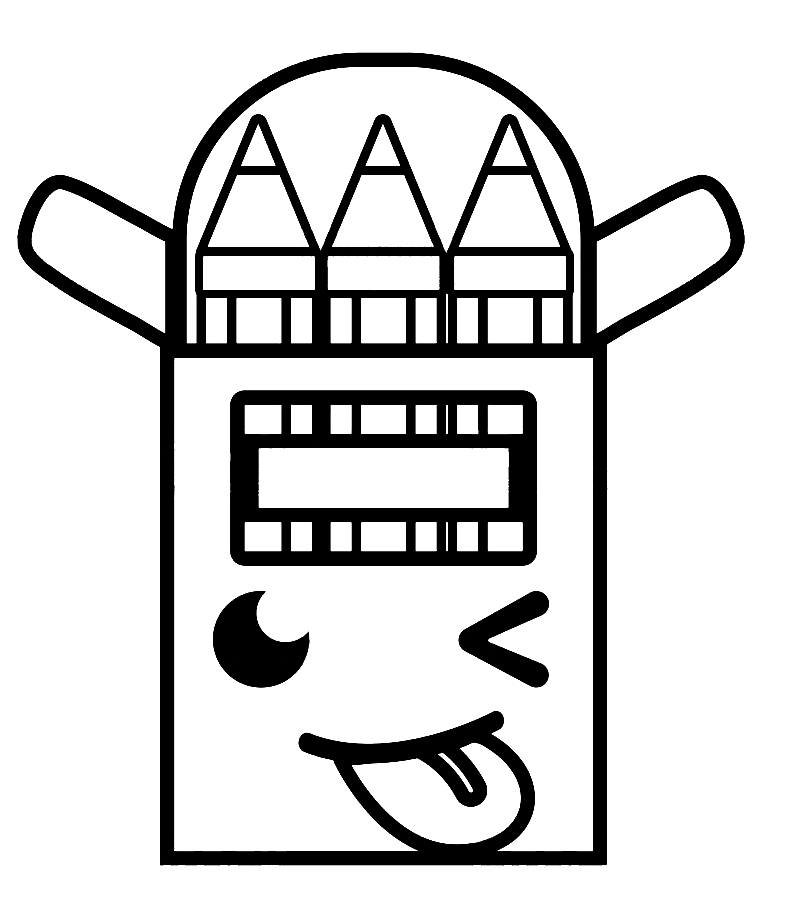
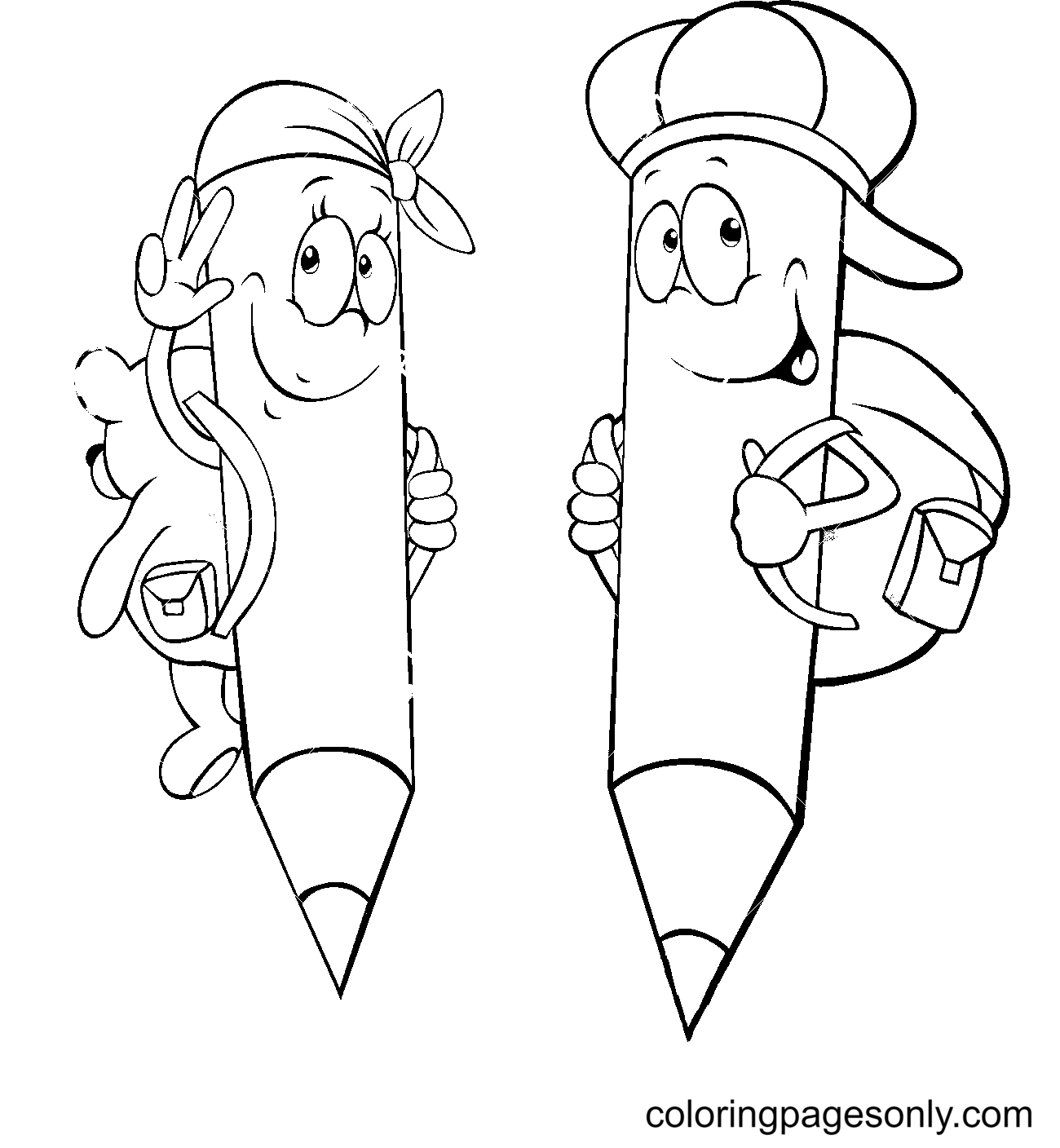
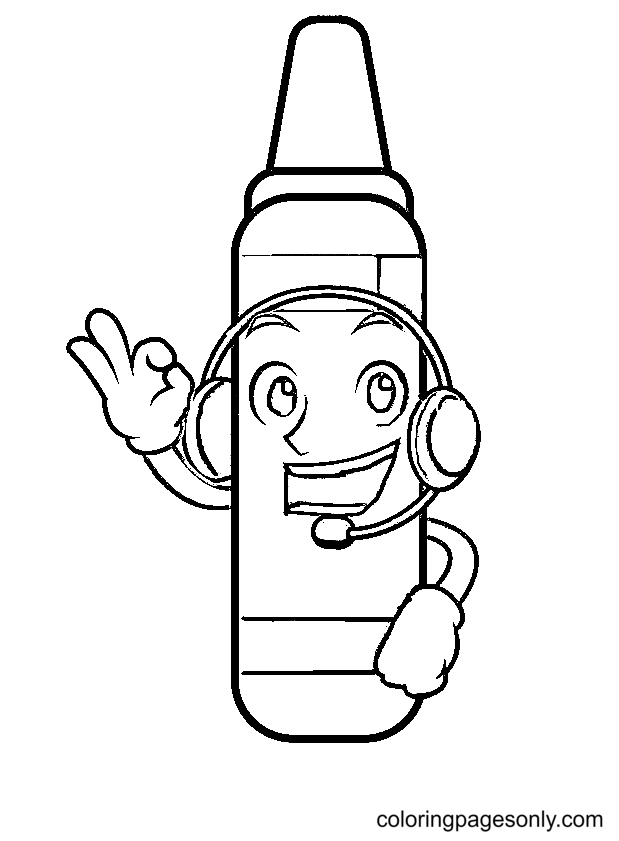
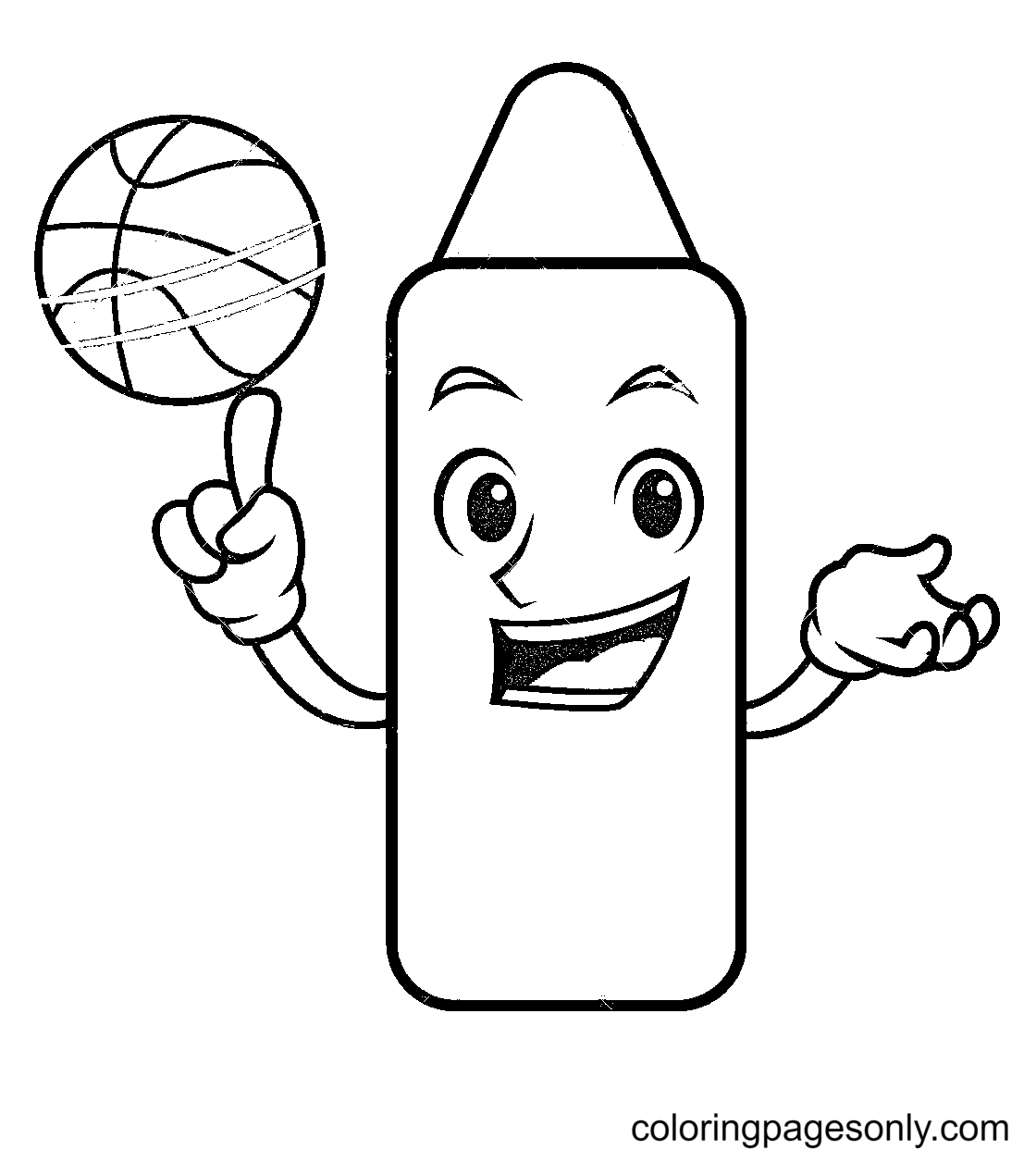
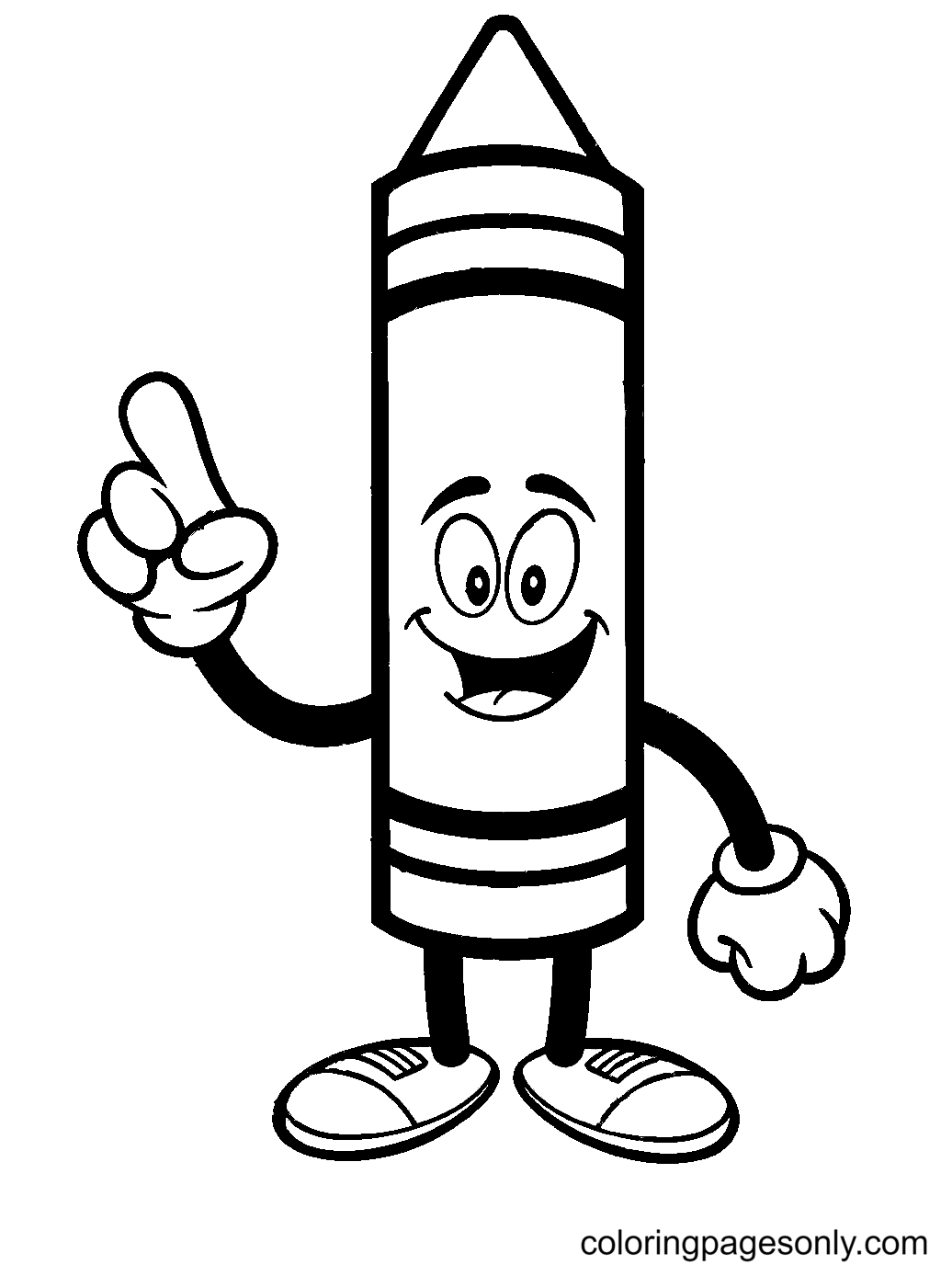
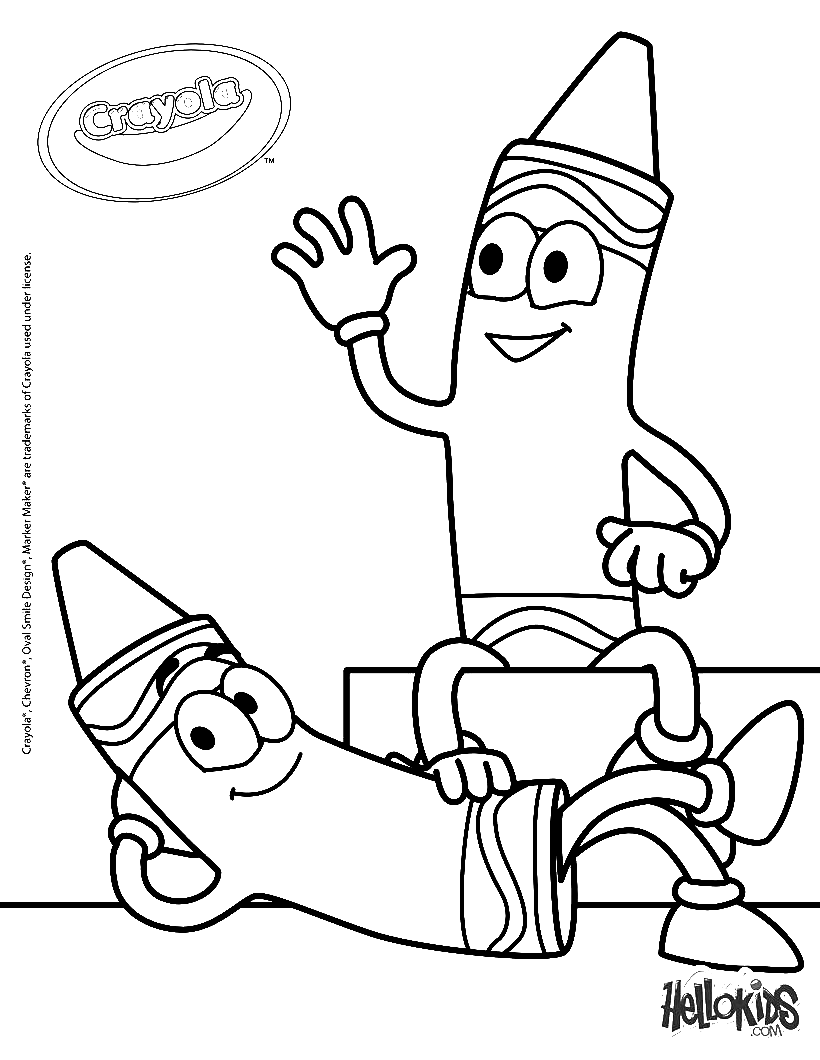
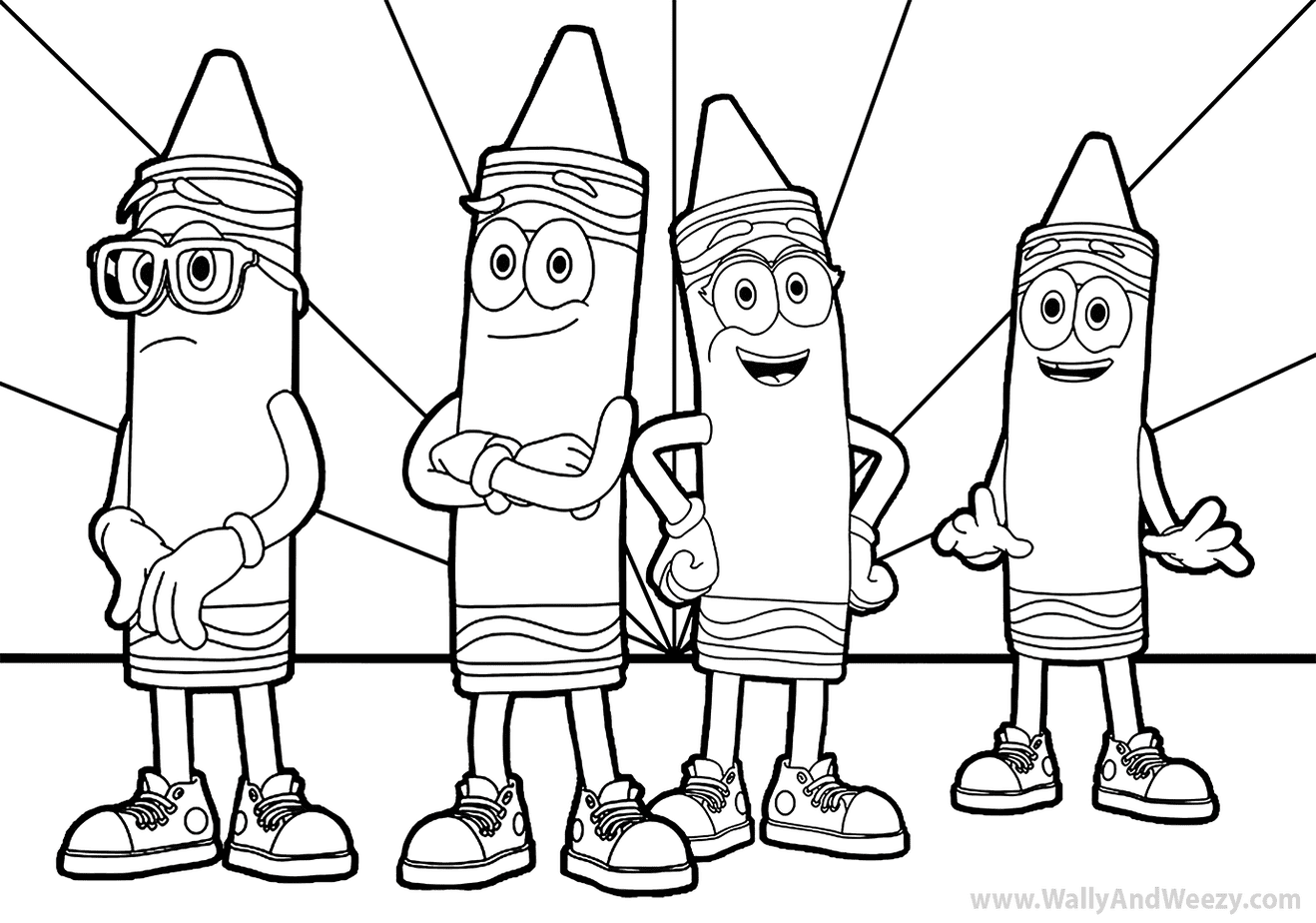
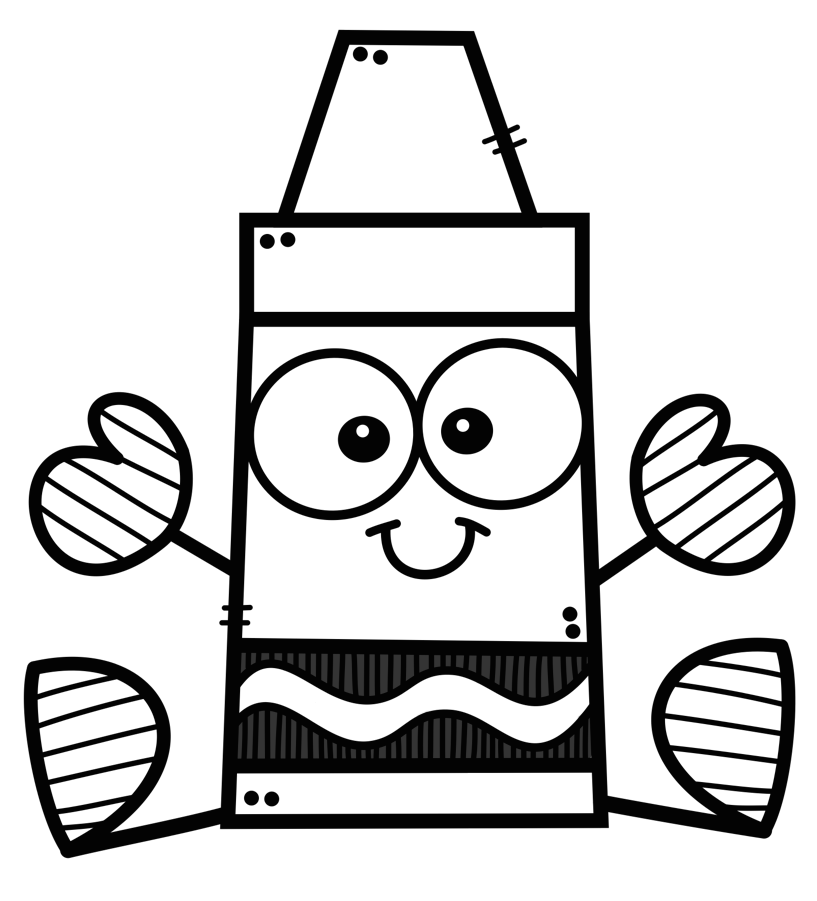
Several pages in the collection show crayons as animated characters: anthropomorphized crayons with eyes, smiling mouths, arms and legs, running or dancing or holding hands in groups. This design tradition reflects the crayon’s cultural status as a friend and companion to young children rather than merely a tool.
The cartoon crayon character typically retains the crayon’s cylindrical body as its torso, with the label area functioning as its shirt or clothing, the conical tip as its hat or head, and simple stick or rounded limbs extending from the sides. The expression on the character’s face communicates the emotional register of the page: a single crayon character in portrait reads as friendly and approachable, while a group of cartoon crayons often shows a variety of expressions reflecting different personalities.
Coloring cartoon crayon characters: The body color is determined by the character’s identity as a specific crayon color. A red crayon character has a vivid red body. A blue character has a vivid blue body. The eyes and face elements are typically white or cream with dark outlines. Any clothing or accessory details added to the cartoon design should use colors that contrast with the body while remaining harmonious with the overall composition.
Rainbow Crayon Arrangements
Rainbow arrangement pages show multiple crayons fanned out in a semicircle or arranged in a gradient sequence from red through orange, yellow, green, blue, and violet. These pages are the collection’s most chromatic challenge and its most rewarding color study: the sequence of colors must be smooth and consistent, with each crayon reading as clearly distinct from its neighbors while the whole arrangement reads as a unified spectrum.
The rainbow arrangement reflects one of the most common ways children organize their crayons spontaneously, and it mirrors the spectral organization of light itself. The specific sequence of colors in a rainbow (red, orange, yellow, green, blue, indigo, violet) follows the wavelength order of visible light, and crayons arranged in this sequence give the coloring activity an implicit science lesson.
Coloring rainbow arrangement pages: Apply colors in strict spectral sequence: red at one end, violet at the other, with orange, yellow, green, and blue in between. Each crayon should be a pure, fully saturated representative of its color family. The transition from one crayon to the next should create a smooth visual gradient when the page is viewed as a whole. No two adjacent crayons should use the same color family.
Melted Crayon Art Pages
Some pages reference the melted crayon art trend, which became widely practiced after becoming a popular craft project in the early 2010s. In this technique, crayons are arranged vertically on a canvas, and a heat source causes the wax to melt and drip downward, creating vivid streaks of color. Pages inspired by this technique show crayon silhouettes at the top with long, flowing color streaks descending below them.
Coloring melted crayon art pages: The streaks below each crayon should match the crayon’s own color, but should be rendered with a gradient technique: more saturated and vivid at the top, where the wax first melts, gradually lightening and spreading as the streaks descend. The streaks from adjacent crayons may blend slightly where they meet, reflecting the actual behavior of melted wax mixing at the edges.
What These Pages Do
The crayon is the most universally used art tool in early childhood education, and the coloring pages in this collection give children a creative subject they already know and love. The American Academy of Pediatrics identifies fine motor skill development as a key milestone throughout early childhood. Coloring crayon pages, with their cylindrical forms, label lettering, and tip detail, provides targeted practice for the pincer grip and controlled stroke application that underlie handwriting readiness.
The 2005 Art Therapy Journal study on structured coloring and anxiety reduction documented measurable calming effects from focused coloring activity in both children and adults. Crayon-themed pages carry a specific dimension of this benefit: the crayon is a culturally familiar, non-threatening subject associated with positive creative experiences. Children who color crayon pages are not just practicing a skill; they are engaging with an object that represents their own creative agency.
The history embedded in crayon pages is genuinely educational content for curious learners. The fact that Alice Stead Binney named Crayola in 1903, that the color “Flesh” was renamed “Peach” in 1962 in response to the civil rights movement, that the 64-count box was the first consumer product to include a built-in sharpener, and that more than 3 billion Crayola crayons are manufactured every year in Easton, Pennsylvania: these are specific, verifiable facts that give a coloring activity depth beyond the act of applying color.
Color recognition and color naming develop through repeated, motivated exposure to color in context. The crayon box pages, with their spectrum of colors each requiring a specific choice, are among the most effective color education activities in the collection. A child who correctly colors a box of crayons in spectral sequence has demonstrated both color recognition and spectral ordering, two measurable developmental outcomes.
How to Color These Pages Well
The crayon body color must be the most saturated version available. A crayon is the source of color, and its coloring page representation should honor that by being as vivid as the page can hold. A muted, pale, or desaturated crayon on a coloring page reads as wrong in a way that a muted apple or flower does not, because the cultural expectation of a crayon is maximum color intensity. Apply the body color at full pressure throughout.
The paper label is the most detail-rich area on any crayon page. The label typically shows the color name, the brand name area, and decorative stripe elements. Apply the label’s white or cream base first, letting it fully cover the label area. Then add any text or stripe details as a second layer over the base. The contrast between the vivid crayon body and the neutral label is what makes the crayon read as a manufactured object rather than a simple colored shape.
The tip and the base need slightly different treatment. The tip of a crayon (the pointed end) is typically slightly darker and more saturated than the main body, because the wax pigment is more concentrated at the working tip. Apply the main body color first, then darken the tip by approximately one value step. The flat base of the crayon (the blunt end) can be slightly lighter than the main body, as the base shows the raw cross-section of the wax where it was molded.
Cartoon crayon characters need warm, bright backgrounds. An anthropomorphized crayon character set against a white or pale background loses the energy its character design intends. A warm yellow, light green, or soft orange background gives the character a stage that complements its vivid body color without competing with it. Background color should be in a different color family from the crayon’s body to ensure the figure reads clearly against the ground.
Rainbow arrangement pages require a pre-planning step. Before applying any color to a multi-crayon page, count the visible crayons and assign each a specific color from the spectrum. Write the color assignment lightly in pencil next to each crayon if needed. The pre-planning step prevents the most common error in rainbow arrangements: accidentally skipping a color, repeating a color family, or creating an arrangement that does not read as a coherent spectrum when complete.
Metallic and glitter effect crayons can be suggested with a highlight technique. Some crayon pages depict metallic or specialty crayons. To suggest a metallic finish without metallic media, apply the base color at medium pressure across the entire body, then add a bright white highlight stripe running the full length of the cylinder at approximately one-third of the width from one edge. This single highlight stripe creates the illusion of a reflective metallic surface on a flat colored page.
5 Creative Craft Ideas
My Favorite Color Box
Print the most complete crayon box page in the collection, specifically one that shows multiple crayons inside or alongside the box. Color each crayon a different color, choosing only colors that represent things you genuinely love: the blue of the ocean, the green of a favorite forest, the orange of the best sunset seen.
Label each crayon with the name of the thing its color represents, written in small lettering alongside the color name on the label. Instead of “Cerulean,” write “Sky at noon.” Instead of “Forest Green,” write “Pine trees in winter.”
The finished page is a personal color autobiography: a box of crayons where every color tells something true about the person who chose it.
The Color That Changed Its Name
In 1962, Crayola renamed the crayon color “Flesh” to “Peach,” following letters from schoolchildren and educators who pointed out that “Flesh” assumed all skin was the same color. This is one of the most documented examples of a consumer product changing in direct response to public feedback about inclusion.
Print a portrait crayon page. Color the crayon peach. On a backing card beside the colored page, write: “Crayola ‘Flesh’ color, 1903 to 1962. Renamed ‘Peach’ in 1962 following feedback that the name excluded children of color. One crayon name. One letter. One change that mattered.”
The finished display makes a coloring page into a piece of civil rights history.
120 Colors in One Page
Crayola currently produces more than 120 distinct crayon colors. Print several crayon pages, enough to represent the full current color range when colored. Color each page with a different section of the spectrum: one page for all the reds and pinks, one for oranges and yellows, one for greens, one for blues and purples, one for browns and neutrals.
Mount all completed pages together on a large backing sheet in spectral order. Title the display: “Crayola, 2025: 120+ colors. The original 1903 box had 8.”
The finished display documents the expansion of the crayon color range across 120 years in a single visual.
The Melted Crayon Science Page
Crayon wax is paraffin, which melts at approximately 46 to 68 degrees Celsius, depending on formulation. This is why crayons left in a hot car melt, why they can be used in encaustic art, and why the melted crayon art trend works.
Print a melted crayon art-inspired page. Color the crayons at the top in full, vivid colors. Color the melted streaks below each crayon using the gradient technique: fully saturated at the top, lightening and spreading as the streaks descend.
On a small card attached to the page, write: “Paraffin wax melting point: 46 to 68 C. Crayon composition: paraffin wax plus pigment. What happens when heat meets color: this.”
The 1903 Box
The first Crayola box sold in 1903 contained exactly eight colors: black, brown, blue, red, purple, orange, yellow, and green. Print any crayon box page or eight individual crayon pages. Color only those eight original colors, one per page or per crayon in the box.
Mount on a backing sheet with the title: “The first Crayola box, 1903. Eight colors. Five cents. Easton, Pennsylvania.” Below: “The box that started it all contained exactly these colors and no others.”
The finished display is a historical document made from a coloring activity.
Frequently Asked Questions
What is a crayon? A crayon is a stick of colored wax used for drawing and coloring. Modern crayons are made primarily from paraffin wax mixed with pigment, poured into cylindrical molds, and wrapped with a paper label identifying the color. The modern wax crayon was developed in the early twentieth century and became a standard tool in children’s art education globally. Crayons are designed to be non-toxic, easy to grip, and simple to use, making them the first art tool most children encounter. The word “crayon” derives from the French word for pencil or chalk, reflecting the tool’s European origins.
Who invented the Crayola crayon and when? Crayola crayons were developed by the American company Binney and Smith, co-founded by Edwin Binney and C. Harold Smith. The first box of Crayola crayons was sold in 1903 at a price of five cents, containing eight colors. The brand name “Crayola” was created by Alice Stead Binney, wife of Edwin Binney, by combining the French word “craie” (chalk) with “ola,” a suffix suggesting oil. The crayons were initially marketed to schoolteachers as a safe, affordable alternative to imported art supplies. Binney and Smith, later renamed Crayola LLC, has been based in Easton, Pennsylvania, throughout its history.
How many Crayola crayon colors exist? Crayola currently produces more than 120 distinct crayon colors, a significant expansion from the original eight colors in the 1903 box. The color count grew gradually: 8 colors in 1903, 16 in 1949, 64 in 1958, 72 in 1972, 80 in 1990, and continuing to expand through subsequent decades. The 64-count box, introduced in 1958, was a particularly significant milestone as it was the first crayon product to include a built-in sharpener in the back panel. Throughout its history, Crayola has retired certain colors, renamed others, and introduced new colors in response to changing cultural contexts and creative demands.
How are crayons made? Crayons are manufactured by heating paraffin wax to a liquid state, mixing in pigment to achieve the desired color, and pouring the hot mixture into cylindrical metal molds. The molds are cooled with water, causing the wax to solidify quickly into the crayon shape. The finished crayons are ejected from the molds, inspected for quality, and wrapped with paper labels identifying the color and brand. The manufacturing process at the Crayola factory in Easton, Pennsylvania, produces more than 3 billion crayons per year. The entire process from liquid wax to labeled crayon takes approximately three to five minutes per crayon.
What is the difference between crayons and oil pastels? Crayons are made from paraffin wax mixed with pigment, producing a harder stick that applies color in a slightly waxy, translucent layer. Oil pastels are made from a mixture of oil and wax binders with pigment, producing a softer, more heavily pigmented stick that applies color in a thicker, more opaque layer similar to paint. Oil pastels blend more easily than wax crayons and produce richer, more saturated marks, but they are also more fragile and more difficult to control for fine detail. Wax crayons are more durable, easier to handle for young children, and produce a lighter, more transparent color application that allows layering and blending through burnishing. Both are appropriate for coloring pages, but produce visually different results.
Why was the crayon color “Flesh” renamed to “Peach”? Crayola renamed the color “Flesh” to “Peach” in 1962 following letters from educators and members of the public who observed that the name “Flesh” incorrectly implied that all human skin was the same color, excluding children of color from seeing their own skin represented as the default. The renaming was one of the earliest documented instances of a major consumer product changing its naming in response to civil rights-era concerns about racial representation. The change was made eight years after the Supreme Court’s ruling in Brown v. Board of Education (1954) and one year after the height of the Freedom Rides (1961), placing it directly within the active period of the American civil rights movement.
What age group are these pages best suited for? Crayon coloring pages work across a wider age range than most coloring subjects. Simple individual crayon outline pages with large, clearly defined areas are accessible from ages two and three, where the subject’s cultural familiarity makes it immediately engaging for the youngest children. The crayon box pages with multiple crayons requiring different colors are most rewarding from ages four to seven, where developing color recognition and fine motor control allow for the more complex color management these pages require. The rainbow arrangement pages, which require spectral sequencing, and the cartoon crayon character pages with their facial detail work, are most engaging for ages five to nine. Adult coloring enthusiasts find the historical dimension of crayon pages particularly engaging, especially pages that allow for accurate rendering of specific Crayola color names and label designs.
What is the best way to use actual crayons on these coloring pages? For the best results with wax crayons on printed coloring pages, use medium to heavy pressure for solid fills and lighter pressure for gradient effects. Apply color in the same direction throughout each area rather than switching directions, as consistent stroke direction produces more even coverage. For smooth blends between adjacent colors, apply both colors at medium pressure and then burnish the boundary area with the lighter color using heavy pressure. A white crayon applied over another color creates a wax resist effect that lightens the color and adds texture. Crayons work best on standard printer paper or heavier card stock; very lightweight paper may tear under heavy pressure. Allow multiple layers to build up gradually for maximum color saturation rather than attempting to achieve full coverage in a single application.
Browse the full collection at ColoringPagesOnly.com. All 60+ pages free, no sign-up, PDF or PNG, print or color online.
Alice Stead Binney named a wax crayon brand in 1903 by combining two words from two languages. Her husband and his partner put eight colors in a box and sold it for five cents. More than 100 billion crayons later, the box still starts with eight colors at the back of the shelf at every school supply store in the country.
The crayon is the first art tool most children ever hold. The coloring pages in this collection give that tool its own moment: the subject becomes the medium, the instrument becomes the image, and the act of coloring a crayon with a crayon closes a loop that is, in its small way, entirely satisfying.
Pick up your most vivid red. The body goes first at full pressure. The label comes second.
Share your work on Facebook and Pinterest and tag #Coloringpagesonly. The historical displays and the 1903 box projects are especially worth sharing.
Color the crayon. Name the color. The box started with eight.
More from our educational and art supply collections: