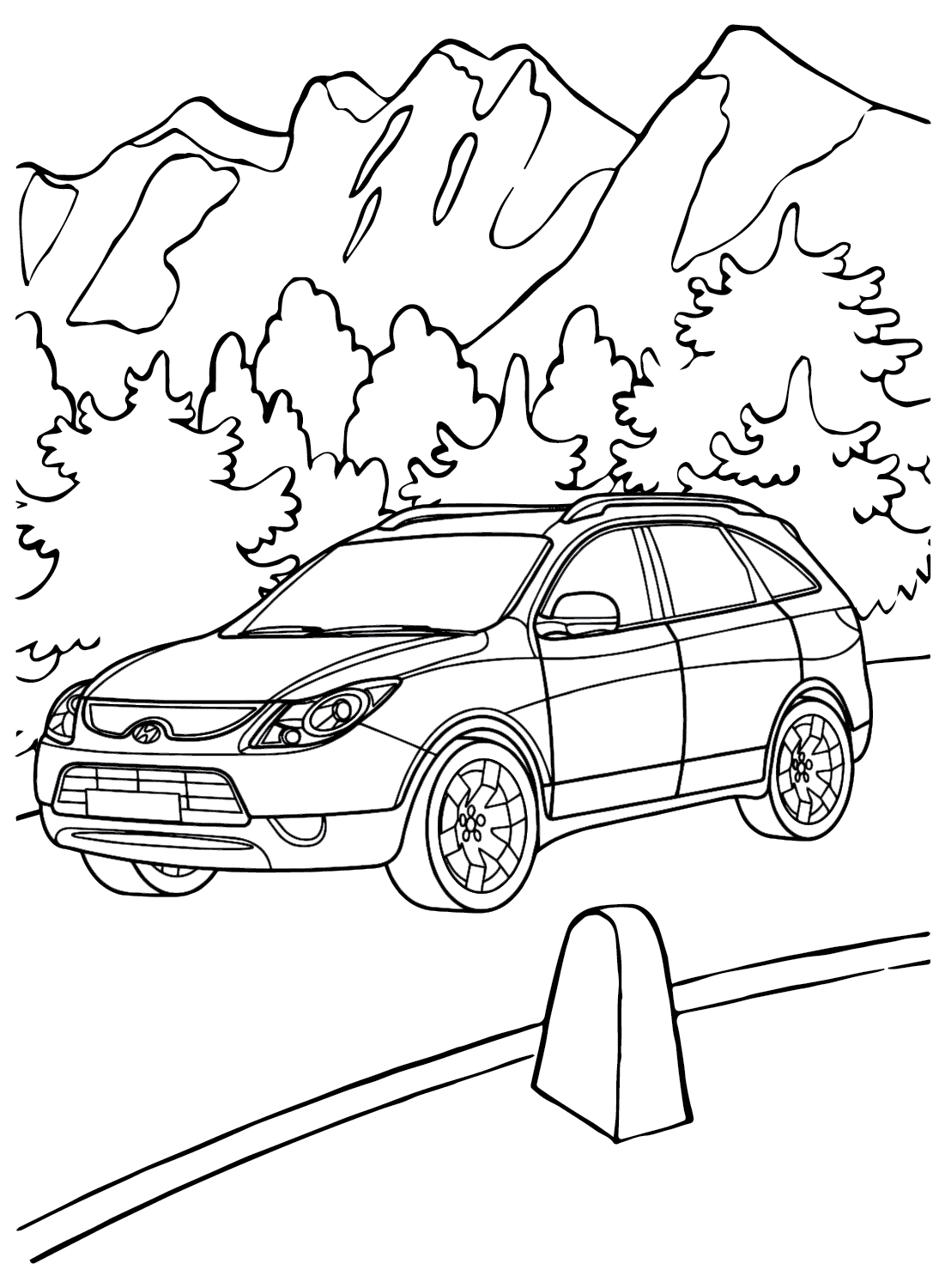
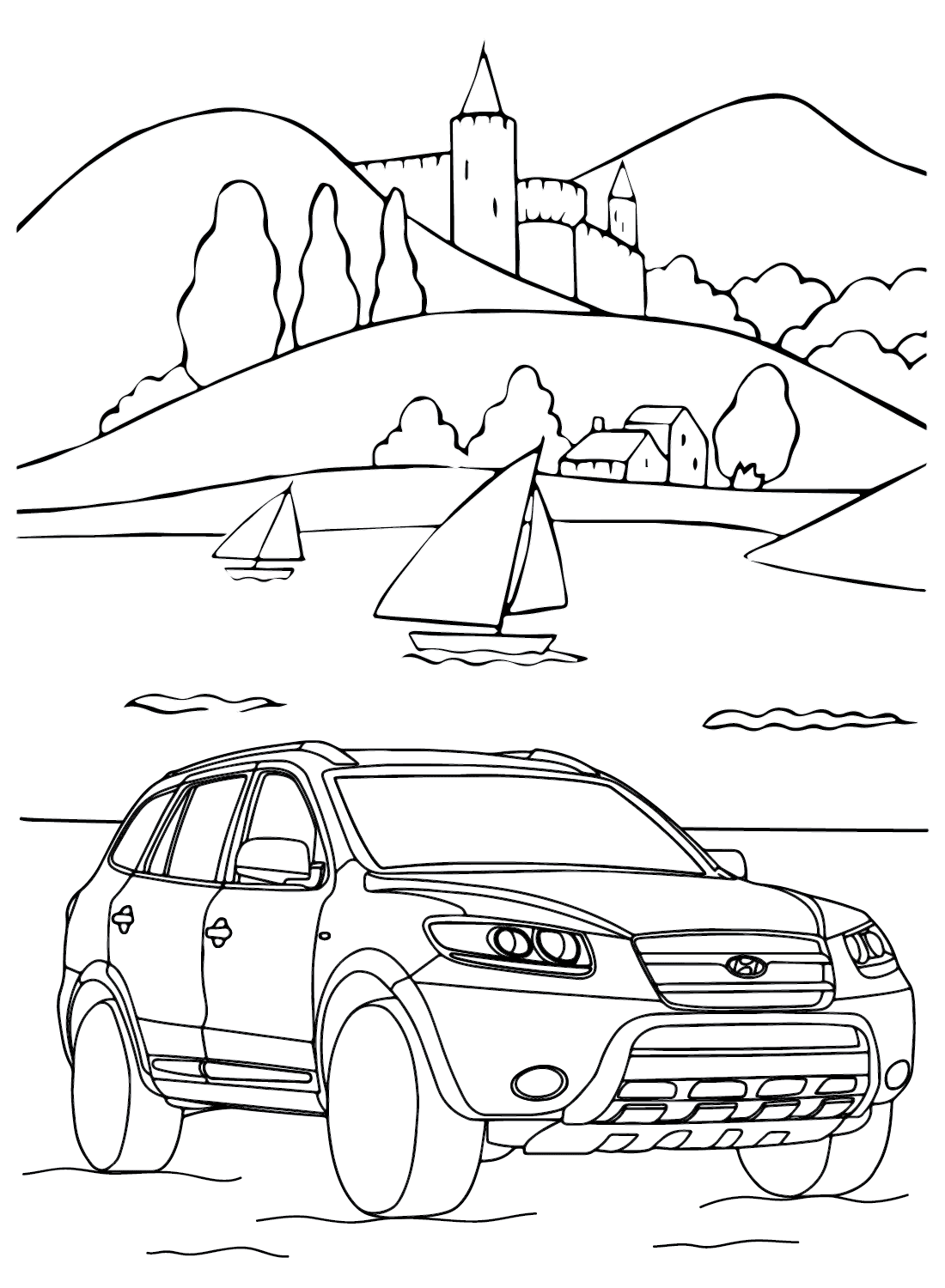
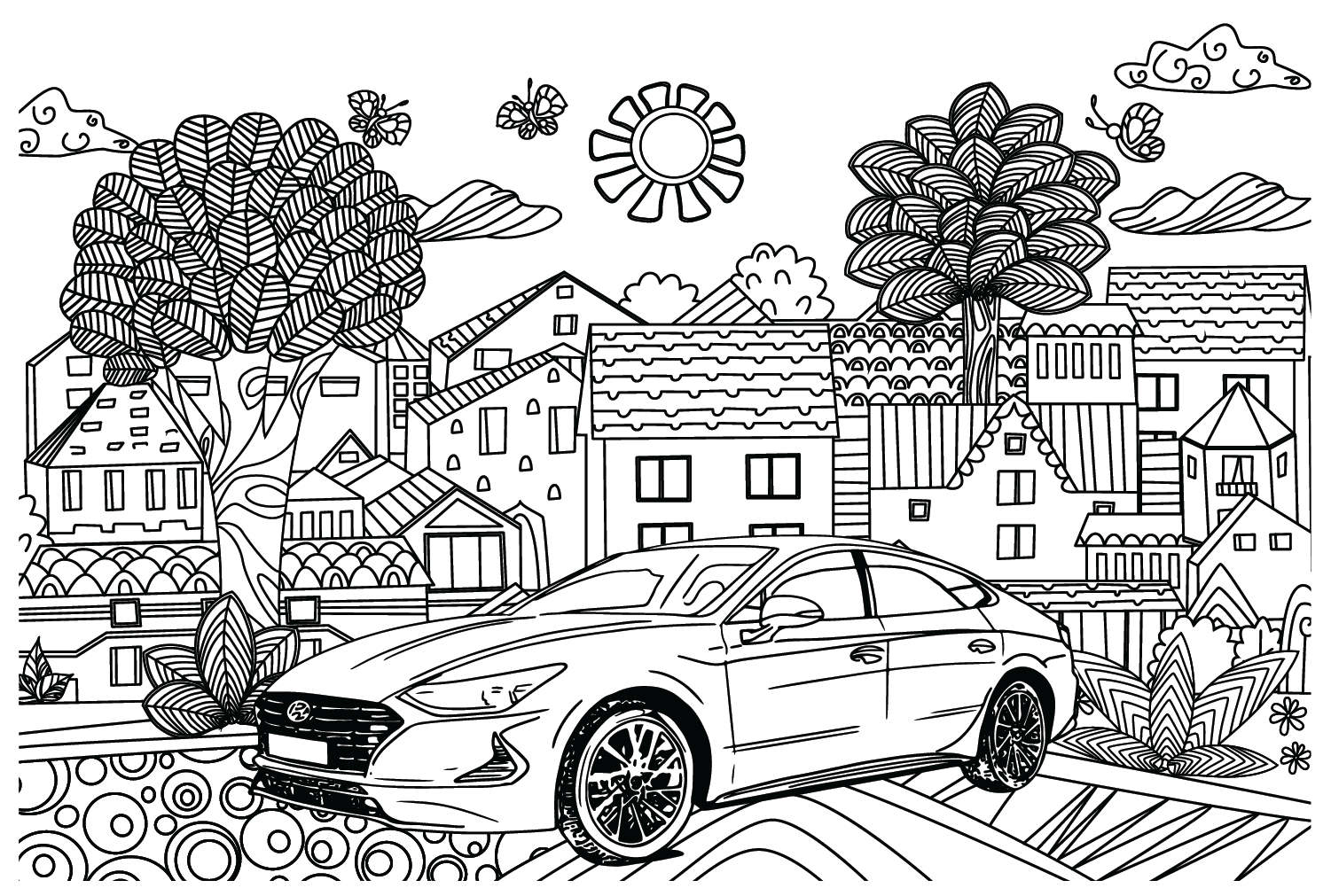
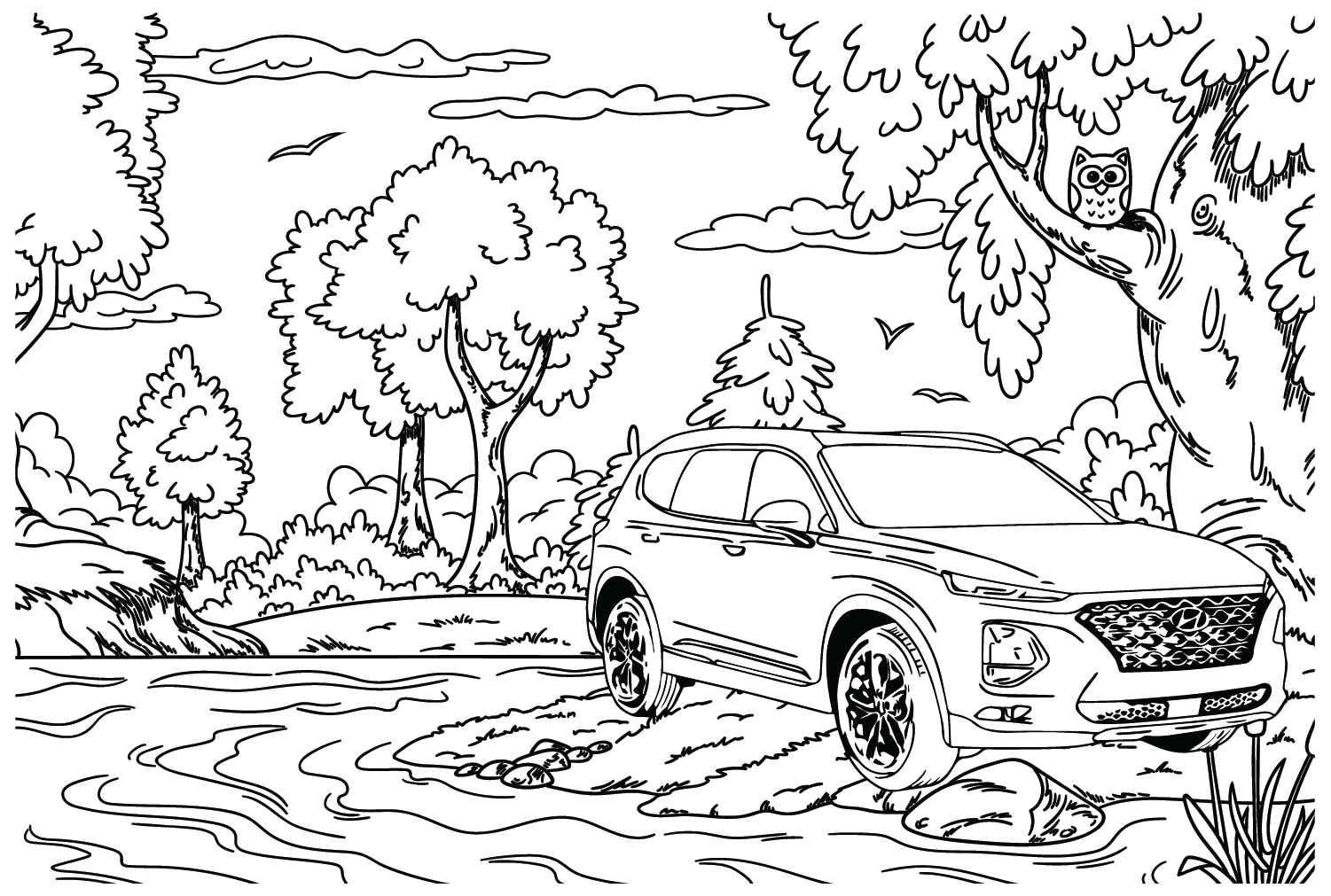
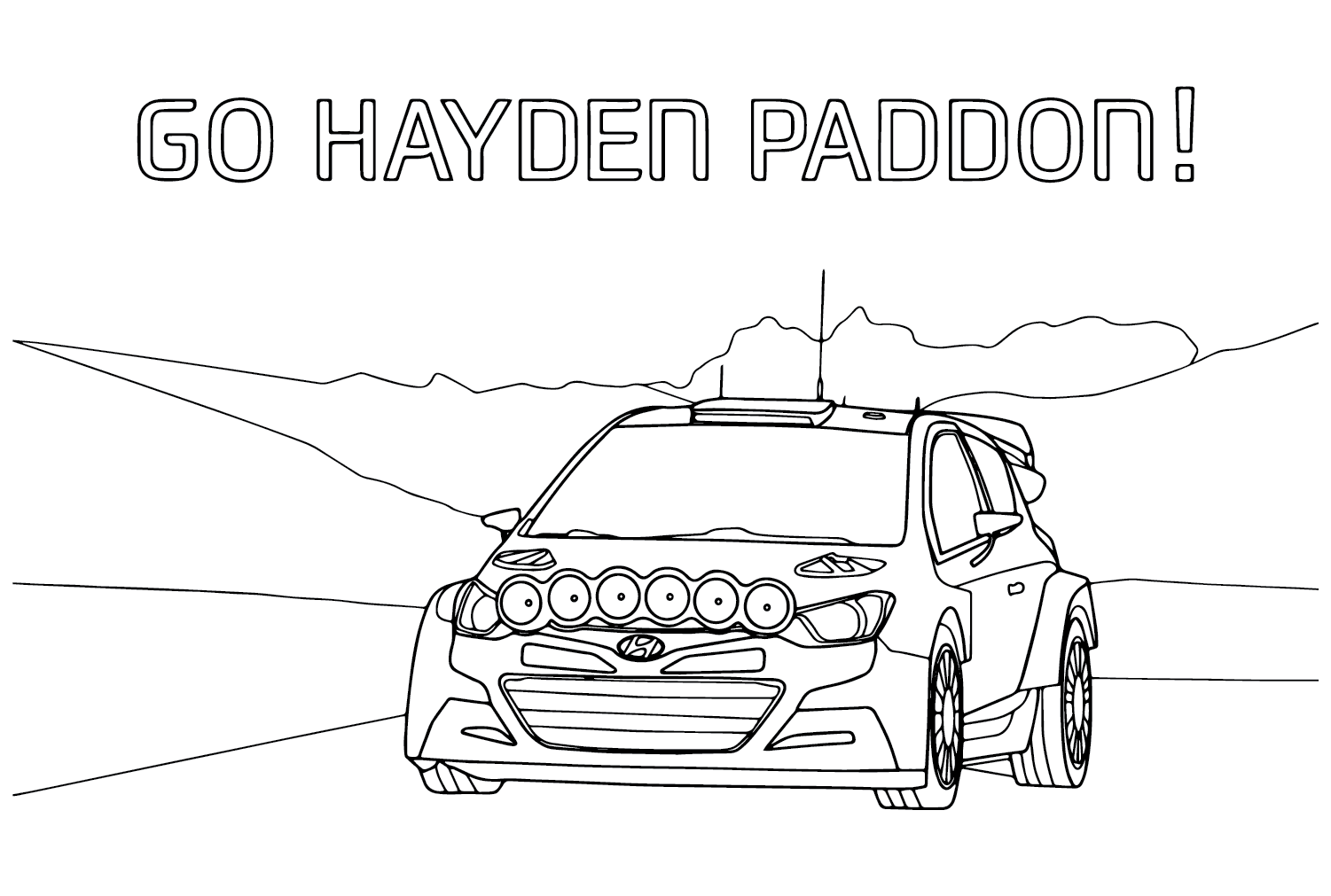
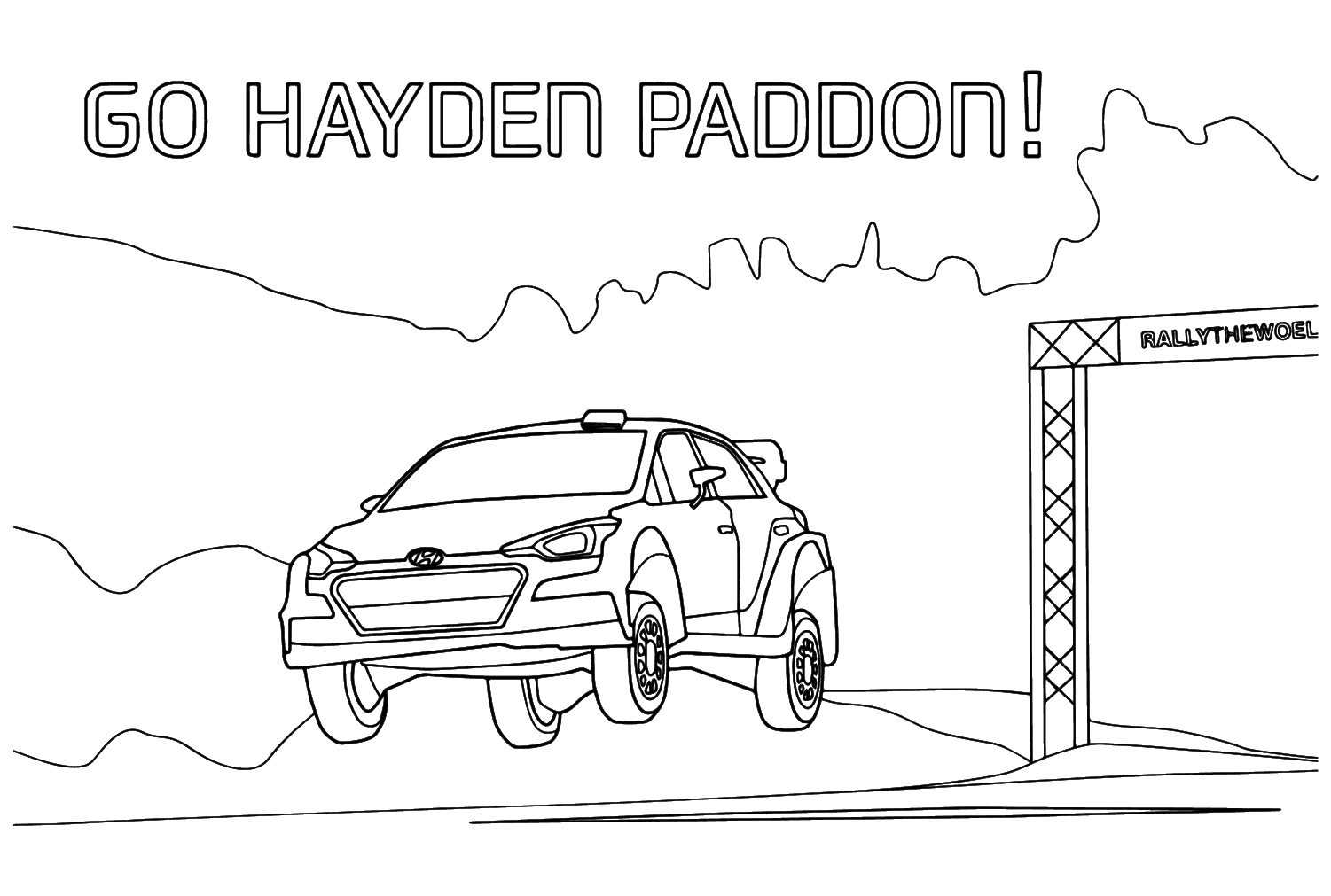
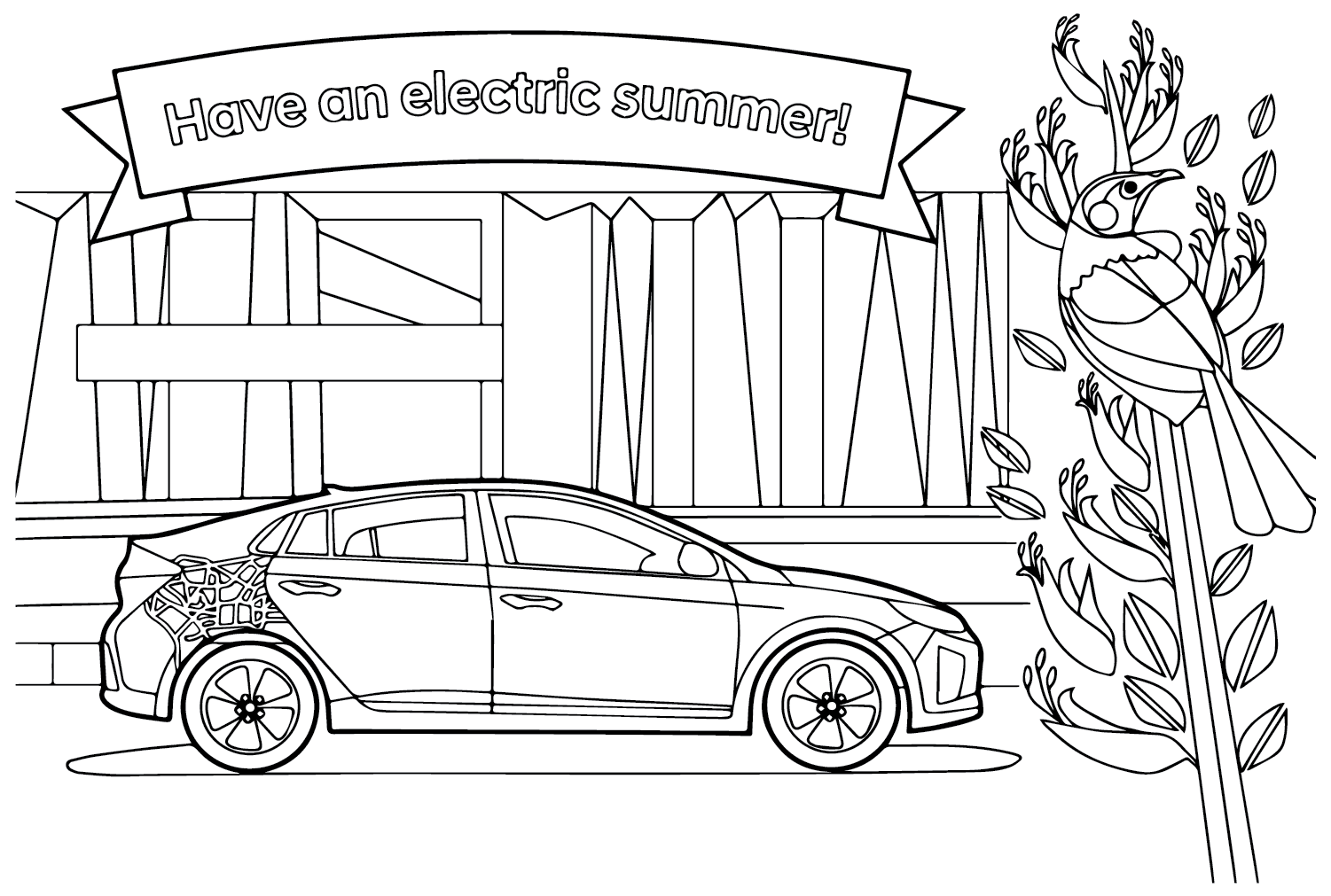
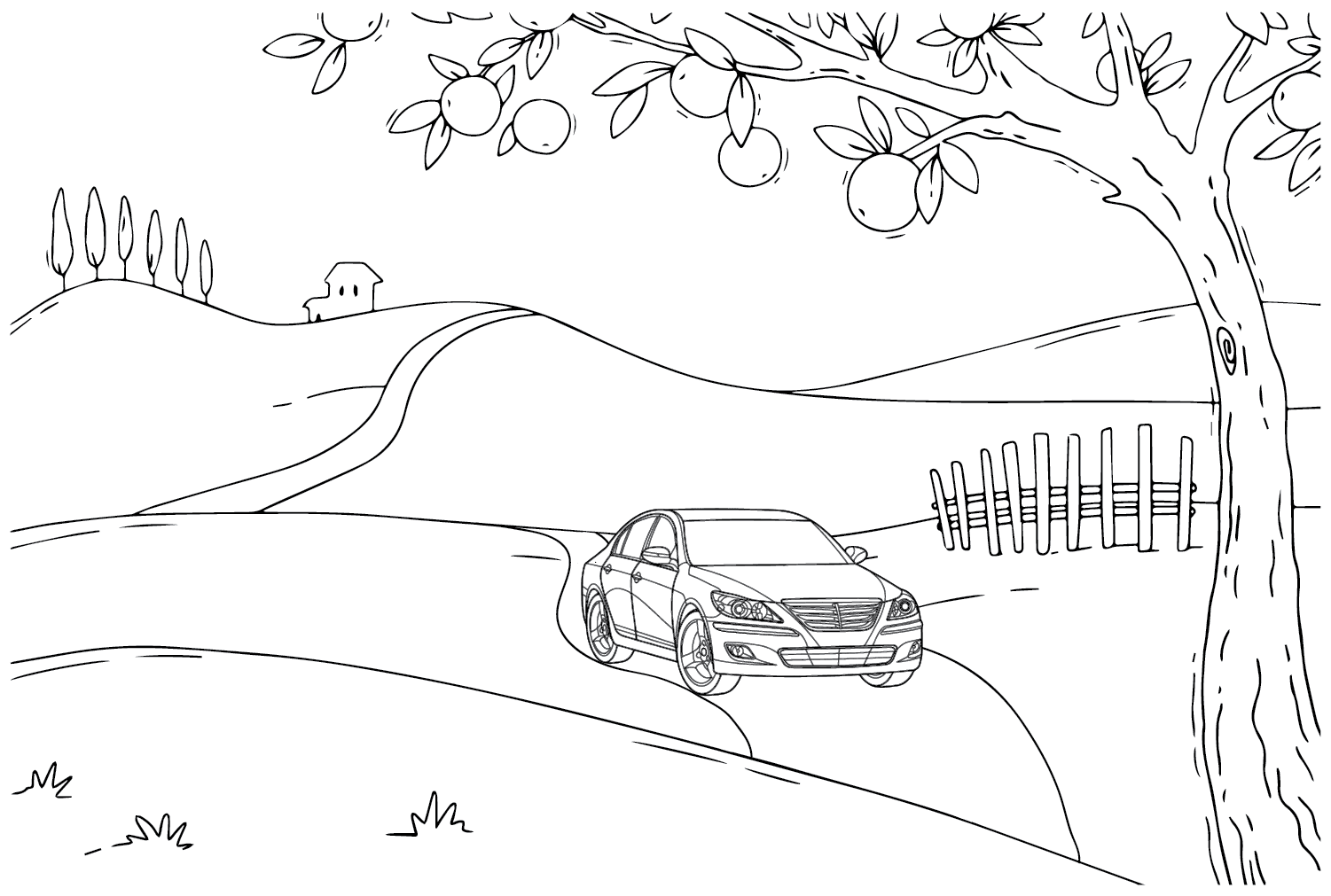
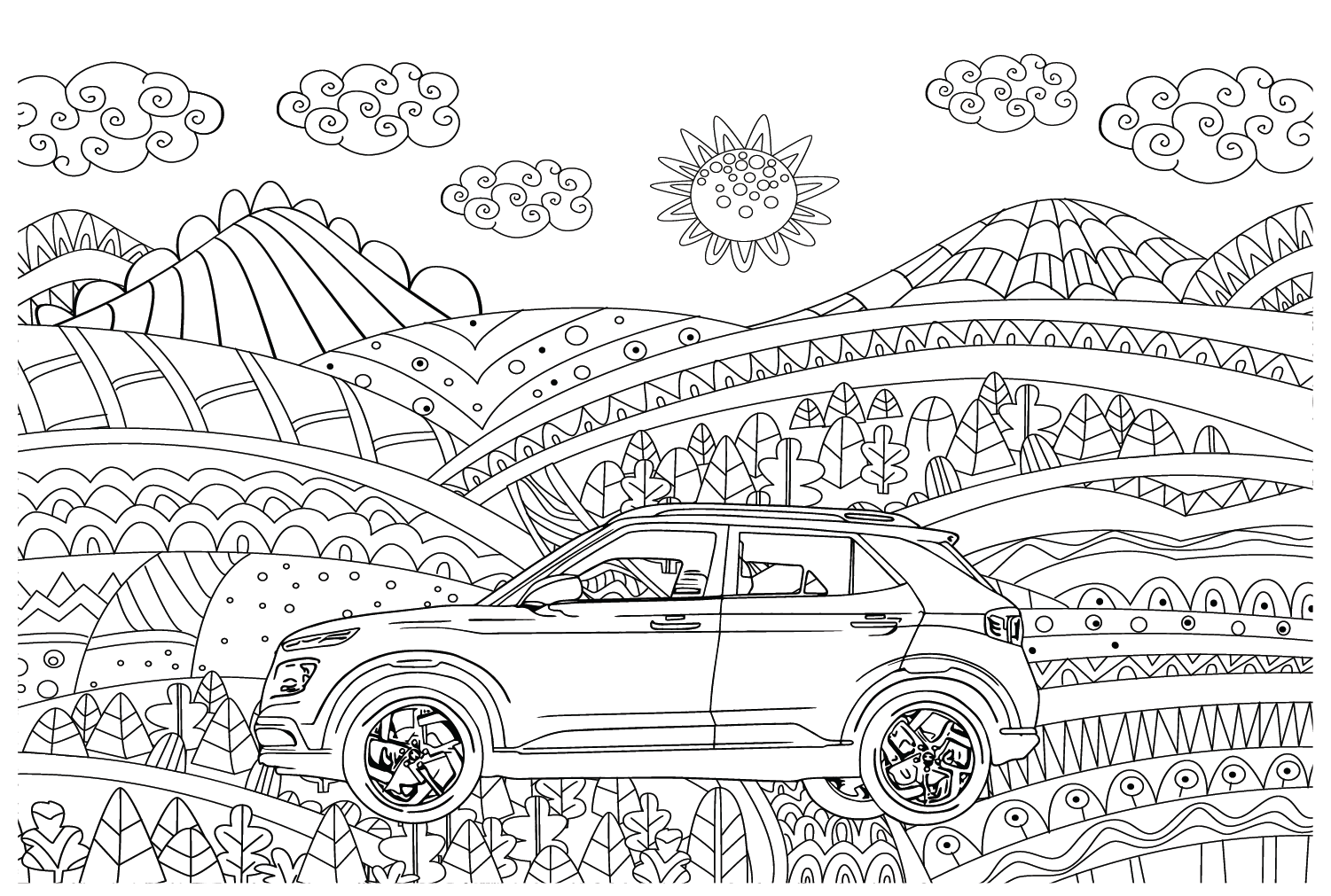
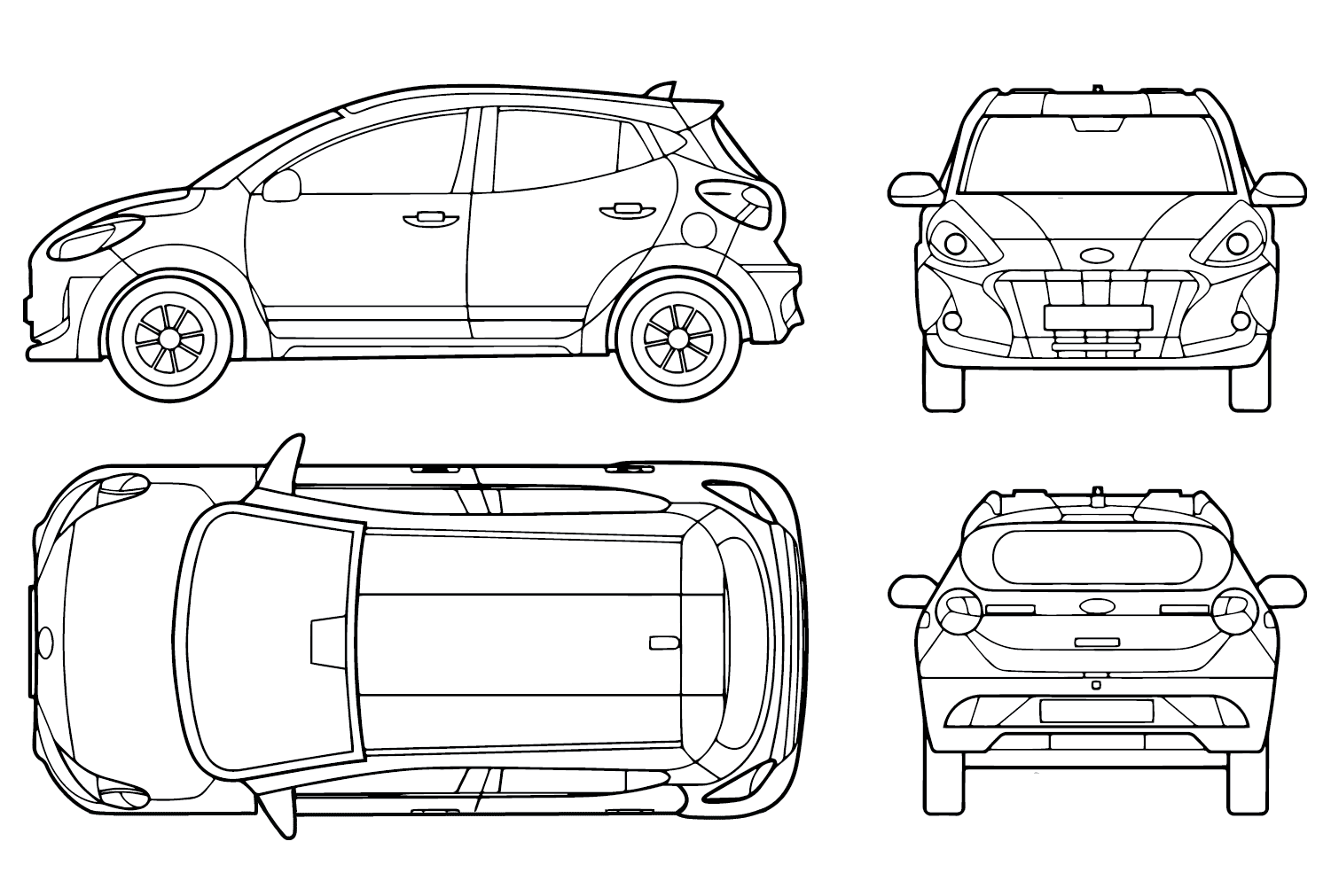
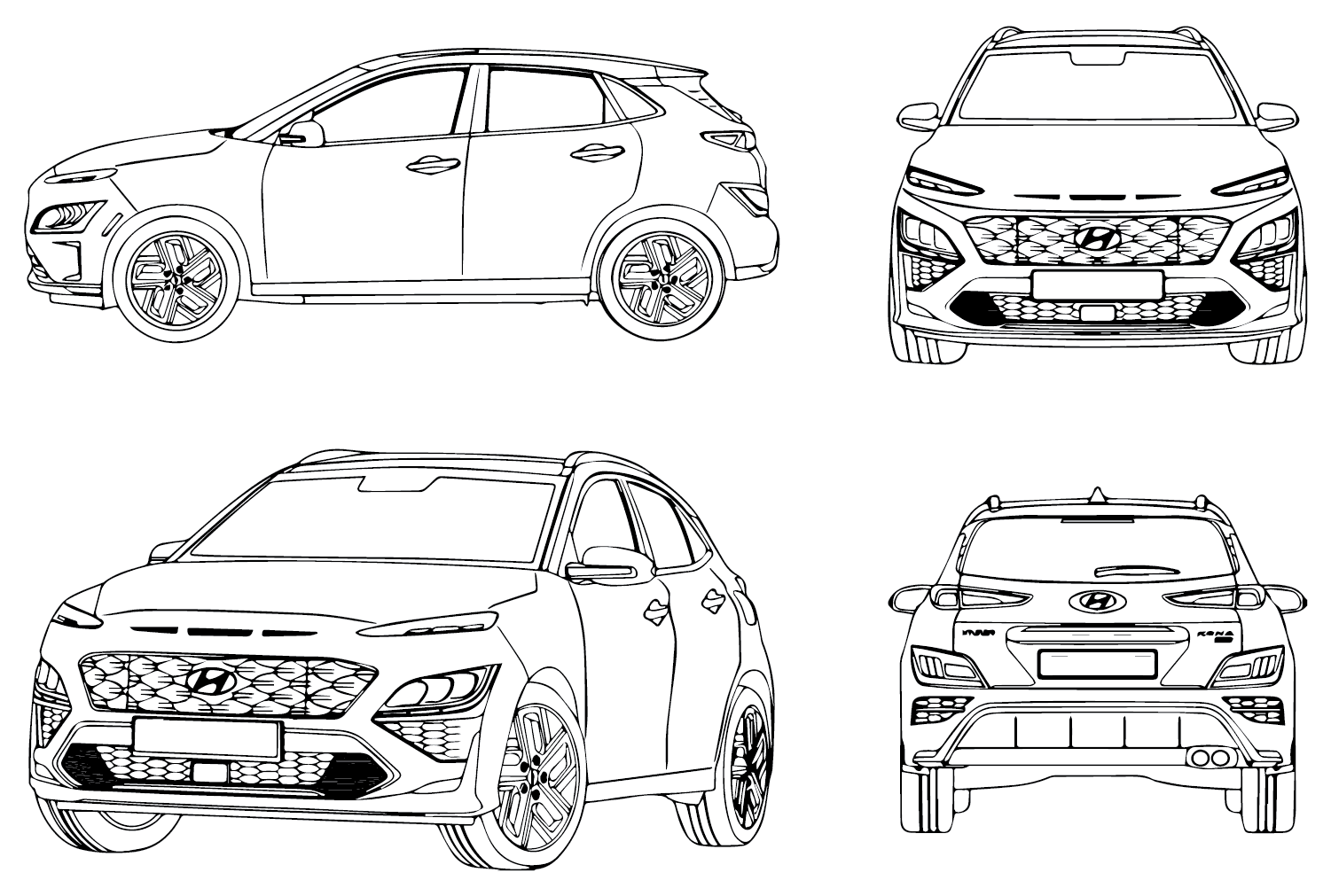
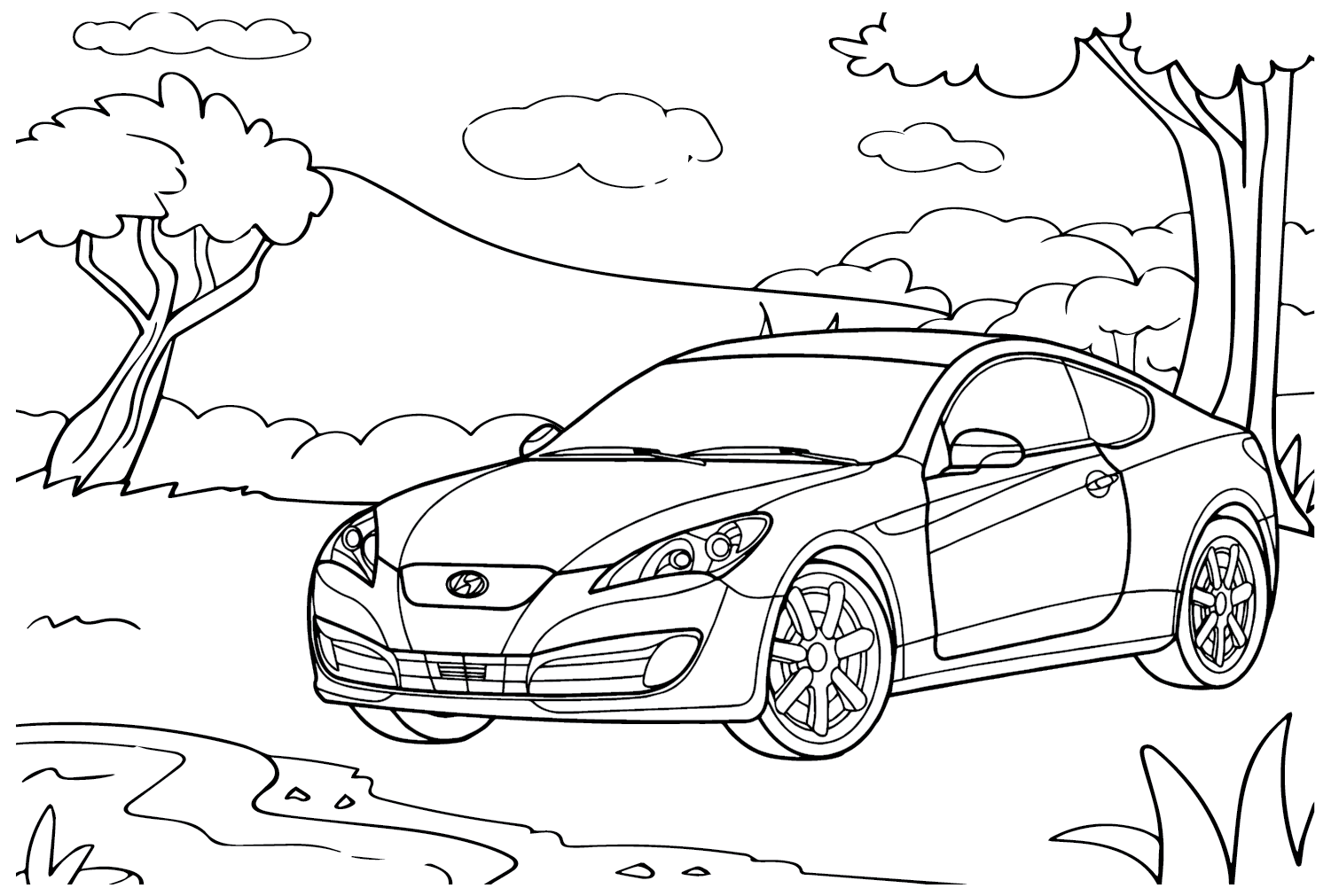
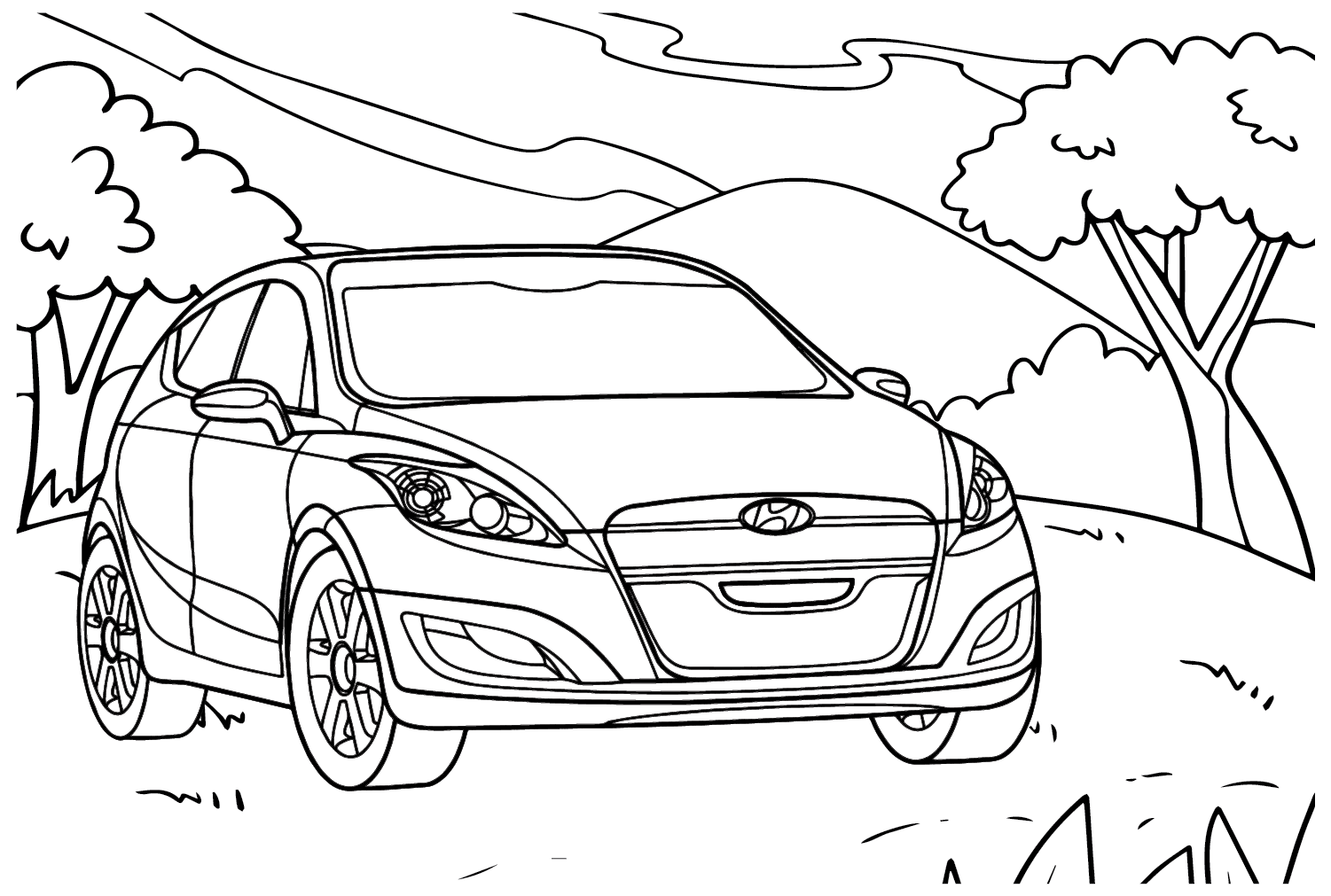
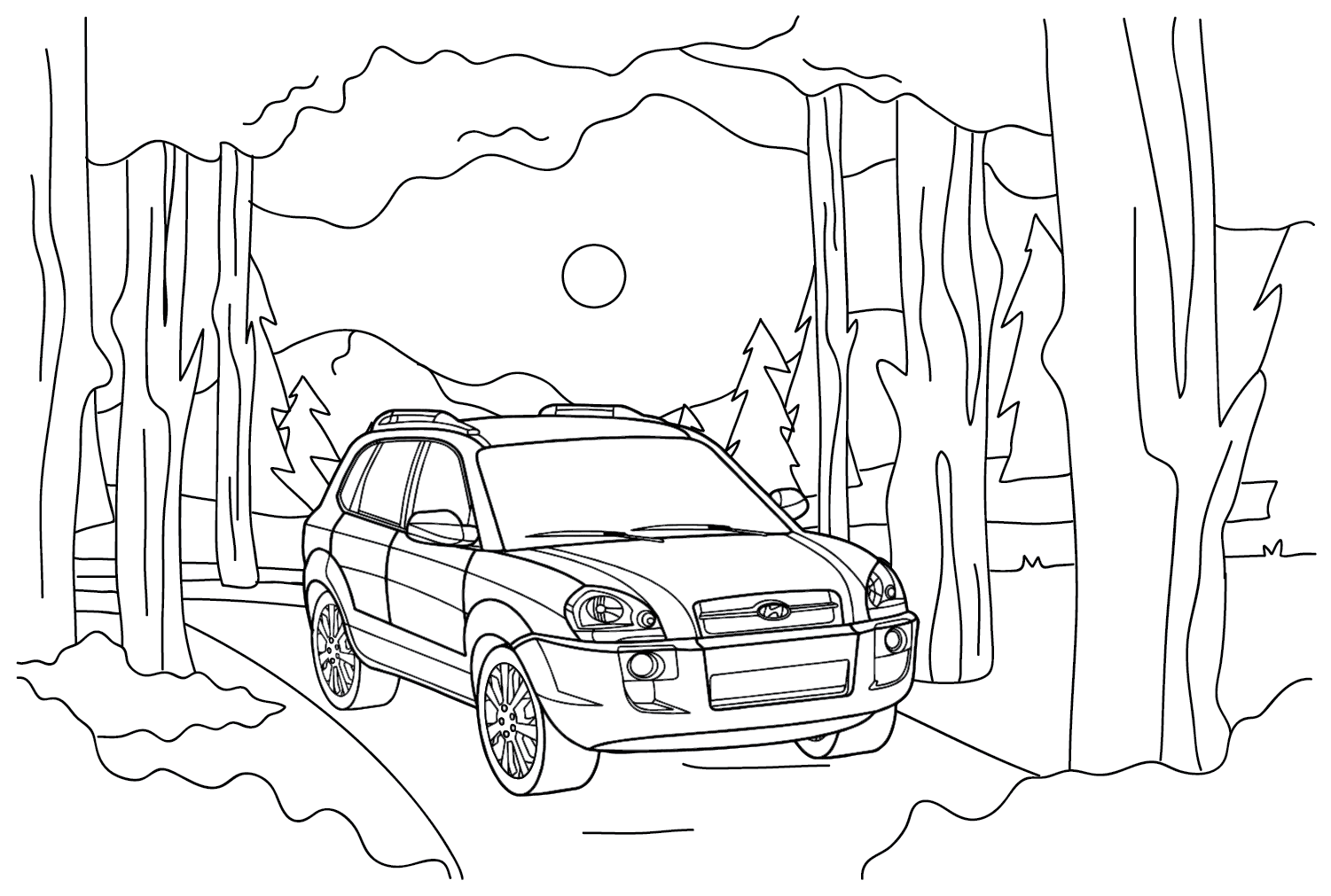
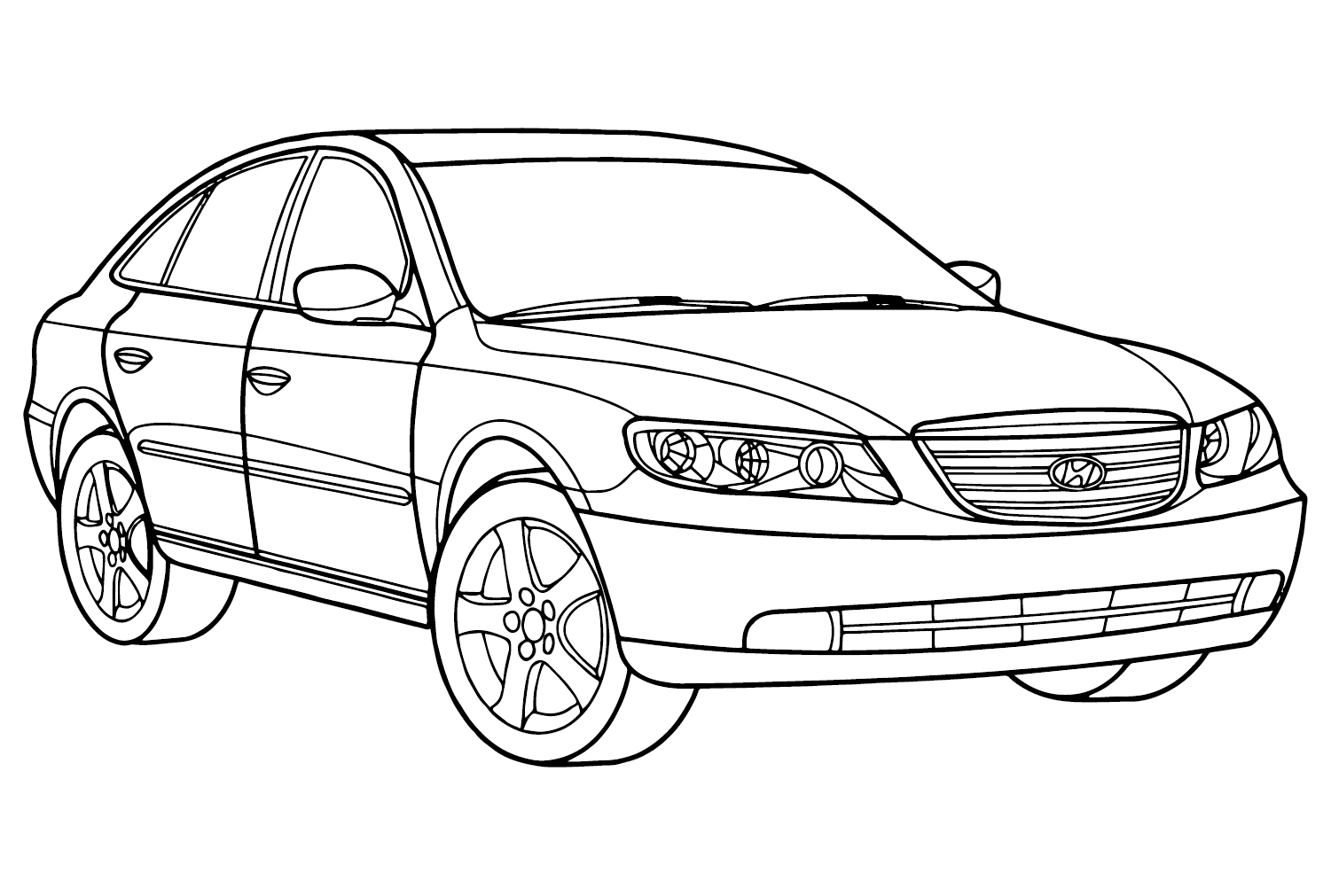
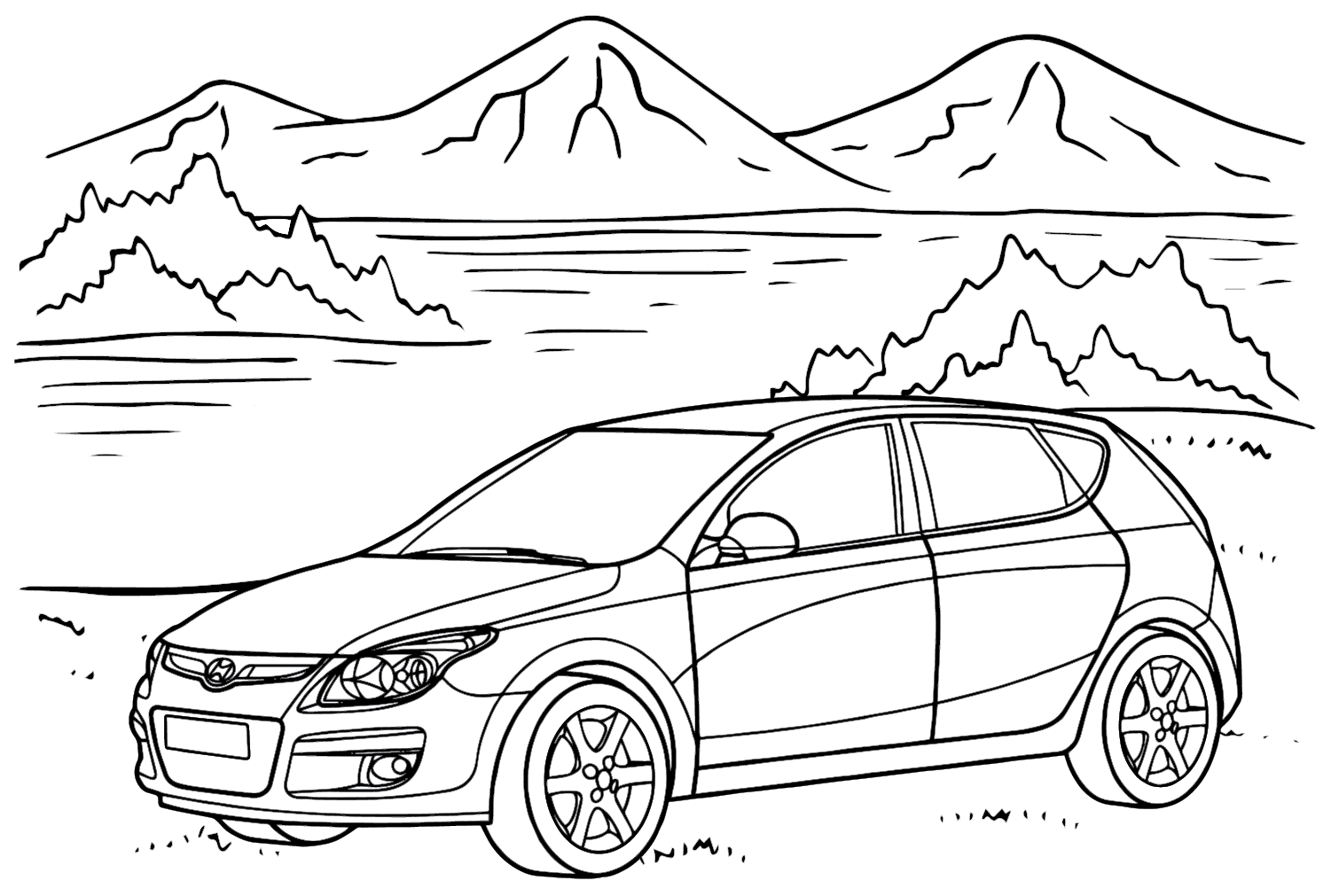
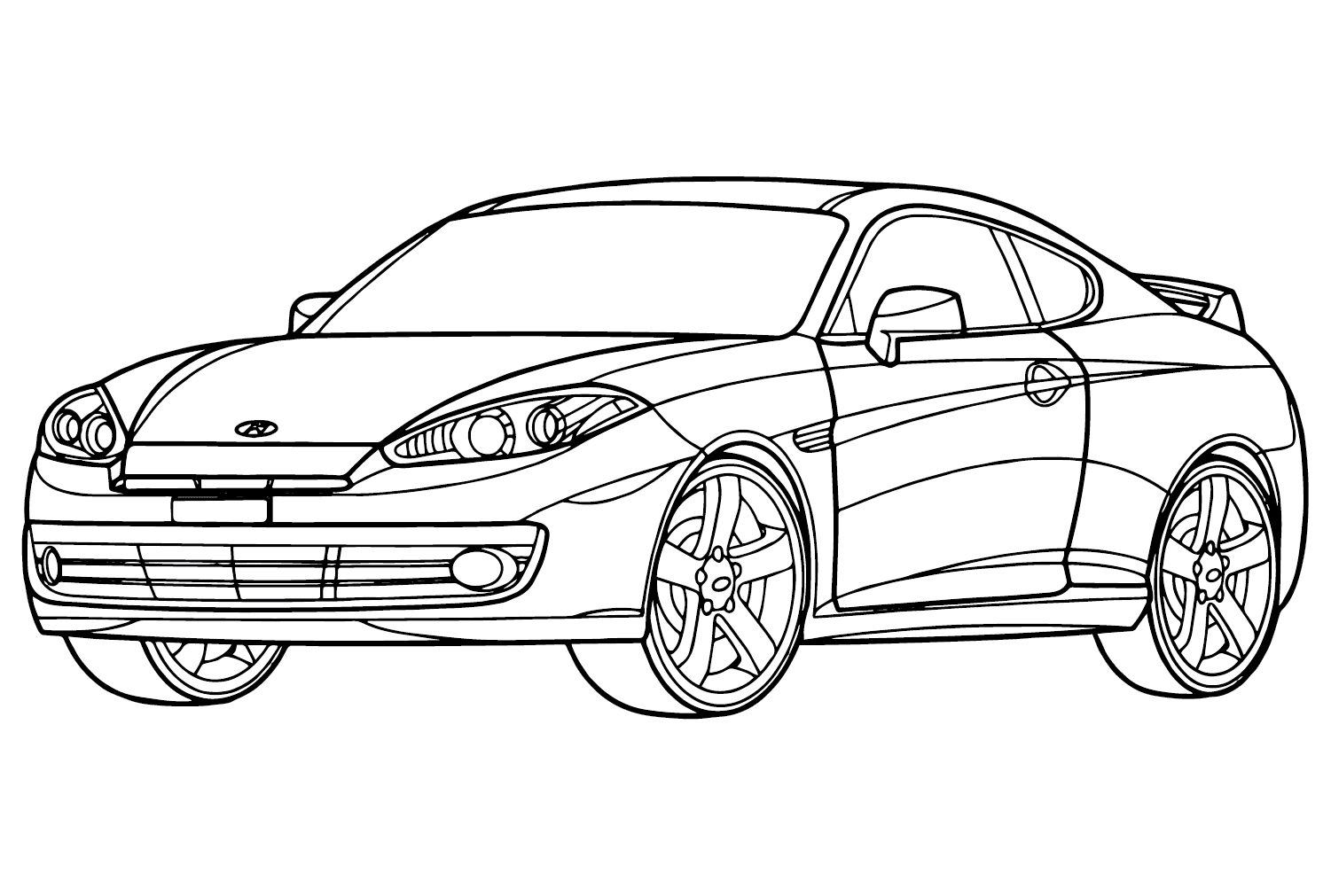
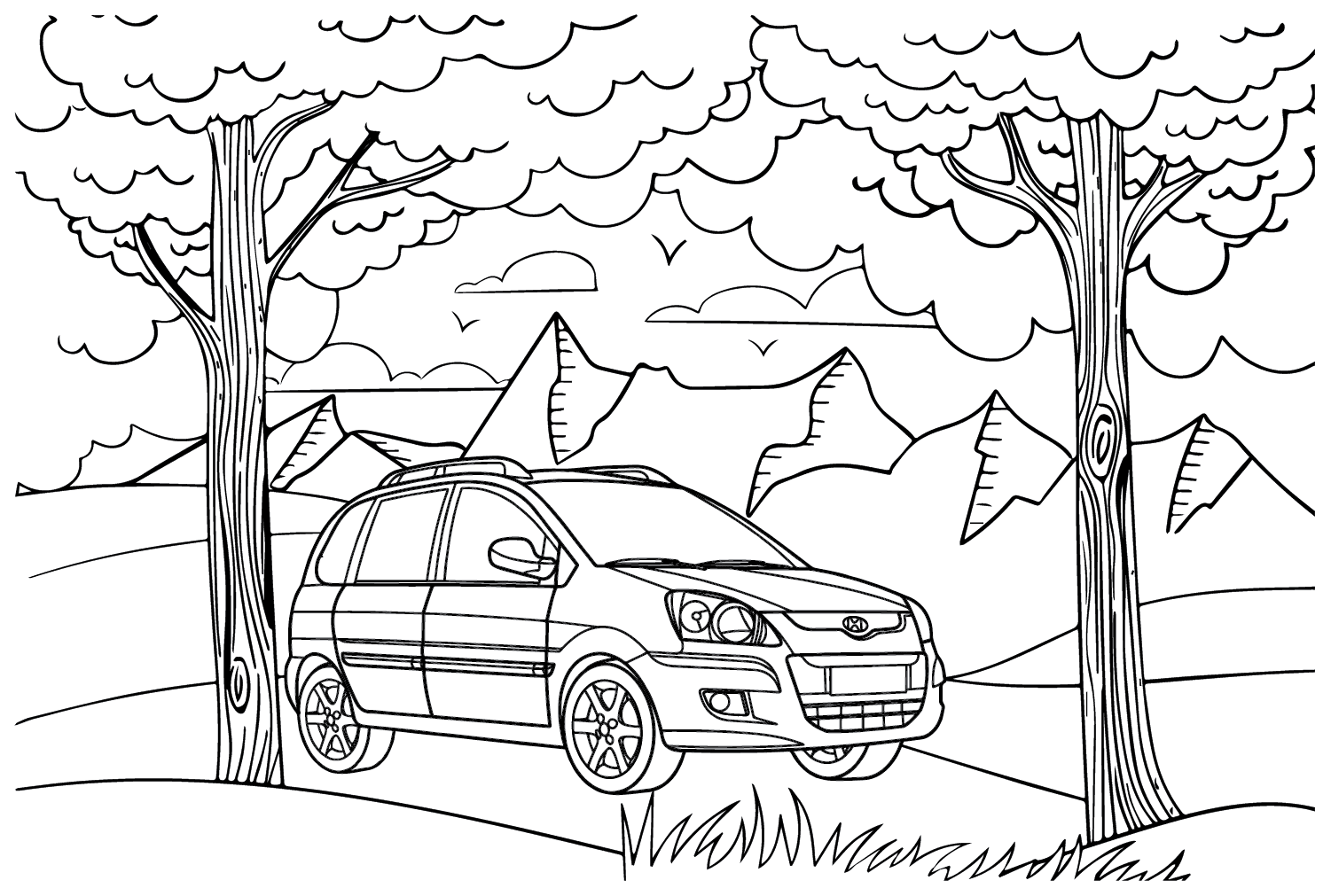
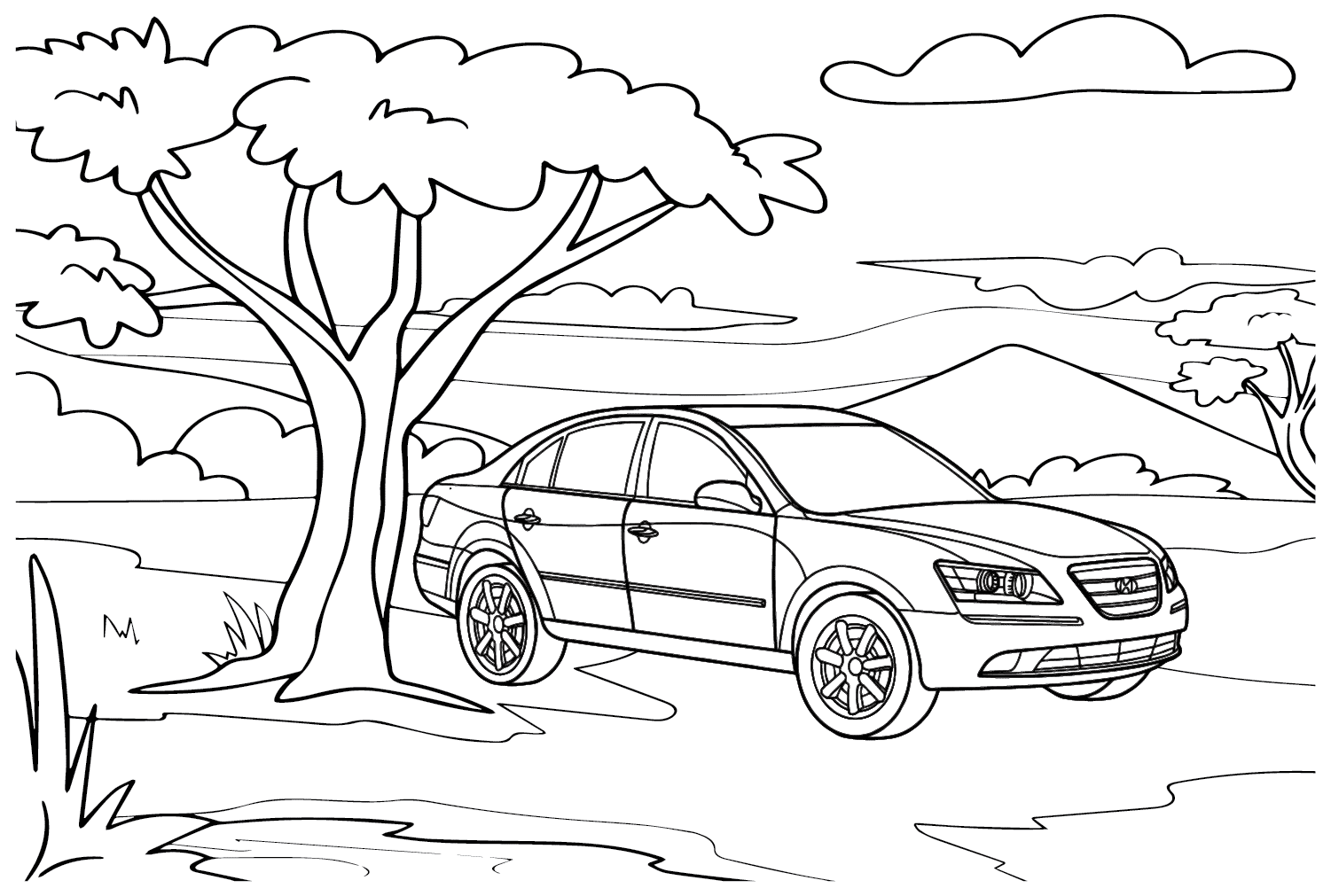
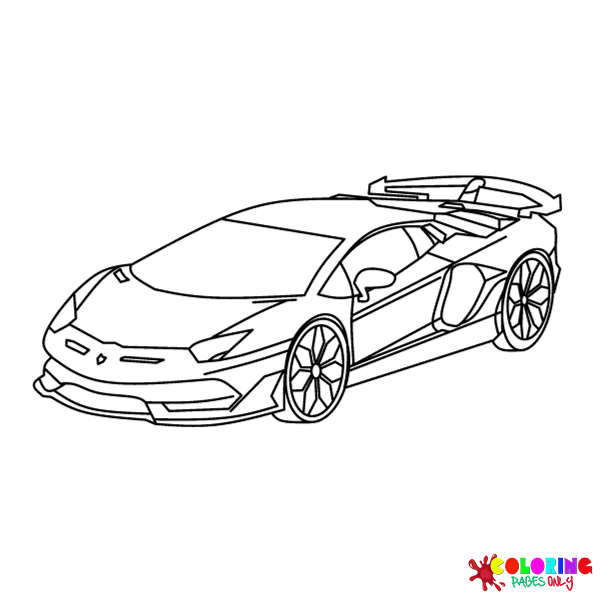
Free Hyundai coloring pages – 30+ pages featuring the Hyundai Elantra, Sonata, Tucson, Santa Fe, IONIQ 5, IONIQ 6, N Performance models, the iconic H logo, racing designs, and model profiles across the brand’s history – free printable PDF and online coloring for automotive fans of all ages.
Hyundai Motor Company was founded by Chung Ju-yung in 1967 in South Korea. The name Hyundai (현대) means “modernity” or “contemporary” in Korean – a deliberate statement of forward direction from a company whose founding ambition was to build South Korea’s own automobile industry rather than simply assemble imported designs.
The company’s first years involved licensed production of existing foreign models, but the decisive moment came in 1975 with the Hyundai Pony – South Korea’s first mass-produced domestically designed car. Its exterior was drawn by Giorgetto Giugiaro, the Italian designer who had previously shaped the original Volkswagen Golf and the BMW M1, and whose involvement with a South Korean manufacturer at that early stage was itself a statement about where Hyundai intended to go. The Pony was powered by a Mitsubishi engine and was aimed at a domestic market with no tradition of private car ownership, which Hyundai, largely single-handedly, created.
In 1986, Hyundai entered the United States market with the Excel. It became the fastest-selling first-year import in American history, priced low enough that buyers who had never considered owning a new car found one within reach. The quality of that first generation was not a selling point – the price was the entire argument. What followed over the next four decades was one of the great quality turnarounds in automotive history: Hyundai becoming genuinely competitive with Japanese and German brands through persistent investment in engineering, design, and warranty coverage, arriving at the IONIQ 5 winning World Car of the Year in 2022 as a specific, measured confirmation that the brand had completed the journey its name always described.
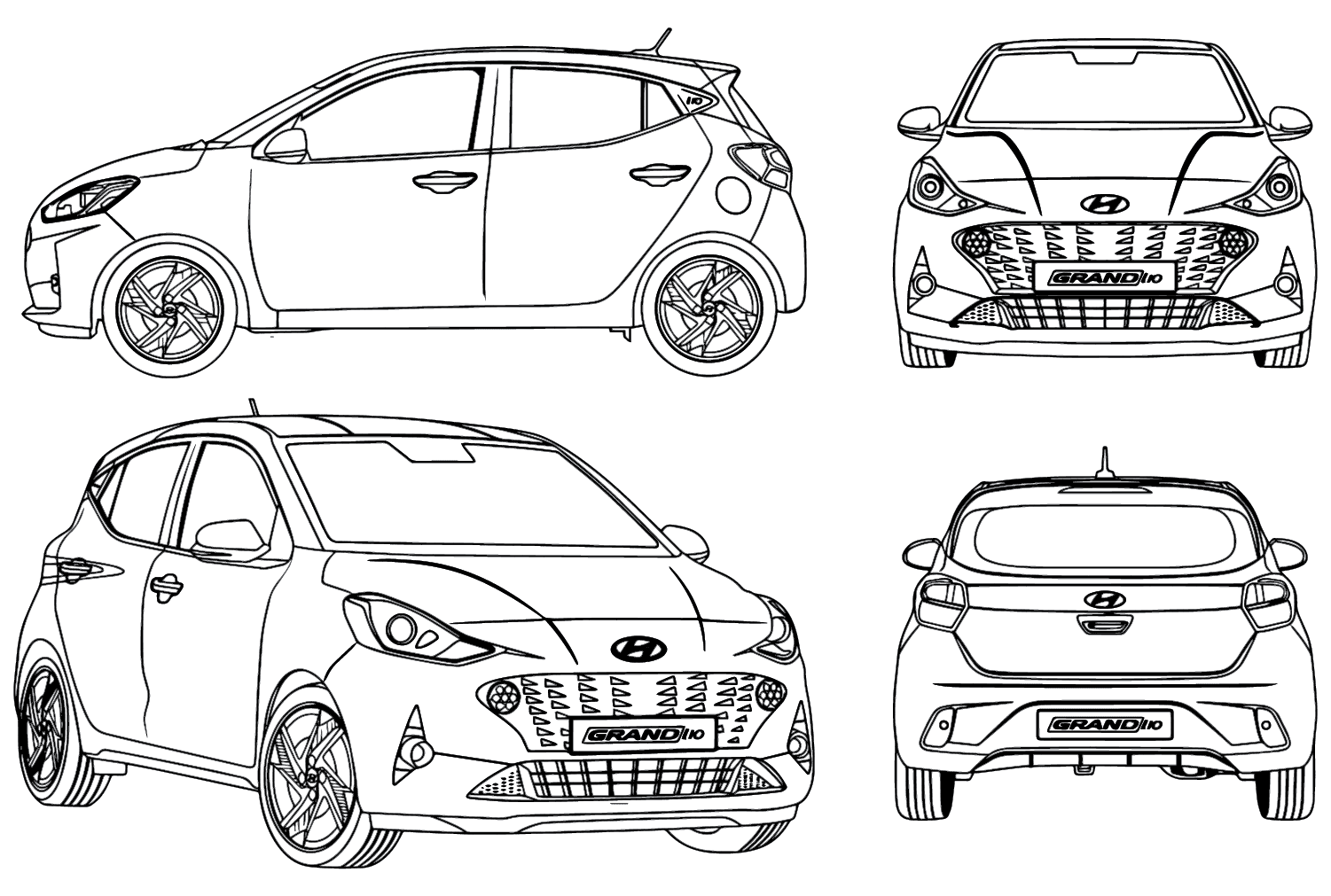
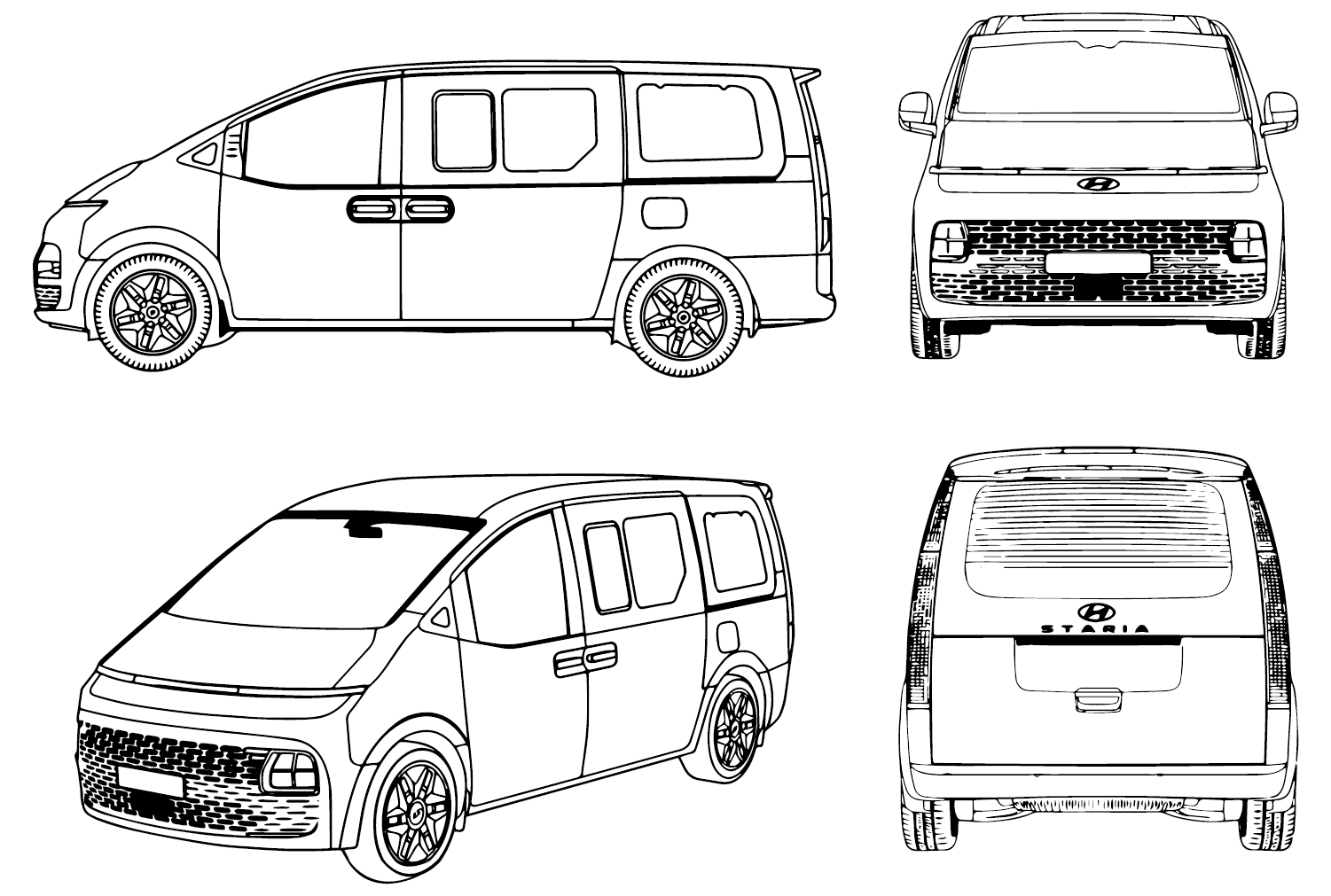
These 30+ free pages at ColoringPagesOnly.com span Hyundai’s full model range. All free, PDF or PNG, print or color online.
What’s Inside
Hyundai IONIQ 5 – The Award-Winner
The IONIQ 5 is Hyundai’s most critically significant recent product – the electric compact CUV that won the World Car of the Year 2022, the World Electric Vehicle of the Year 2022, and the Car Design of the Year 2022 simultaneously, a triple that no vehicle had previously achieved. Its design draws on a 1974 concept car called the Hyundai Pony Coupe – itself designed by Giugiaro, the same designer who shaped the original Pony – giving the car a retro-futuristic visual identity that references the brand’s own history while being unmistakably contemporary.
Its most distinctive visual elements are the pixel-inspired lighting – small rectangular LED units arranged in grid patterns for the headlights and taillights, creating a pixelated quality that the rest of the exterior design elaborates on through the parametric surface treatment – and its flat-floor interior produced by the dedicated EV platform, which creates unusual interior spaciousness relative to the car’s external footprint.
The IONIQ 5 is built on Hyundai’s 800-volt electrical architecture, which allows it to charge significantly faster than most competitors – adding approximately 100 kilometers of range in approximately five minutes at a compatible fast charger. This technical specification is reflected in a design that communicates confidence rather than anxiety about range or infrastructure.
Coloring the IONIQ 5: The IONIQ 5 has been offered in a palette of colors that reflects its specific market positioning: Gravity Gold Matte, Atlas White, Cyber Gray Metallic, and Digital Teal Metallic – colors with a contemporary quality that matches the car’s pixel-era design language. The pixel headlight arrangement is the most technically interesting coloring element: small rectangular units, each requiring precise placement, creating a grid pattern that rewards careful, measured application. The body’s flat, parametric surfaces have fewer traditional character lines than conventional car body design, which makes the three-zone metallic technique – highlight, mid-tone, shadow – particularly direct to apply across its large panels.
Hyundai IONIQ 6 – The Streamliner
The IONIQ 6 followed the IONIQ 5 into production in 2022 and won the World Car of the Year 2023 – making the IONIQ series the first consecutive winner in that award’s history. Its design is built around one specific engineering priority: aerodynamic efficiency. The IONIQ 6’s drag coefficient of 0.21 Cd is among the lowest of any production vehicle, achieved through a fastback silhouette that draws on the visual language of 1950s and 1960s streamlined concept cars – smooth, continuous curves, no visual interruption in the body’s airflow path.
The result is a sedan with an aerodynamic profile that reads as immediately distinctive: low, tapered at both ends, with a greenhouse that flows into the roofline and a rear that descends gradually rather than abruptly. The pixel lighting of the IONIQ 5 continues here in a different arrangement, integrated into the more continuous body surfaces.
Coloring the IONIQ 6: Its smooth, flowing body surfaces are the opposite of the IONIQ 5’s flatter, more parametric panels – the IONIQ 6’s curves reward a more gradual, blended shadow treatment that follows the body’s continuous sweep. The light catches the body at multiple points across a curved surface rather than at the sharp panel-change points of a more conventional design. Apply highlights at the highest point of each curve, let the mid-tone cover the main surface, and add shadow at the inward curve near the sills and under the bumper overhangs.
Hyundai Elantra – The Reinvented Sedan
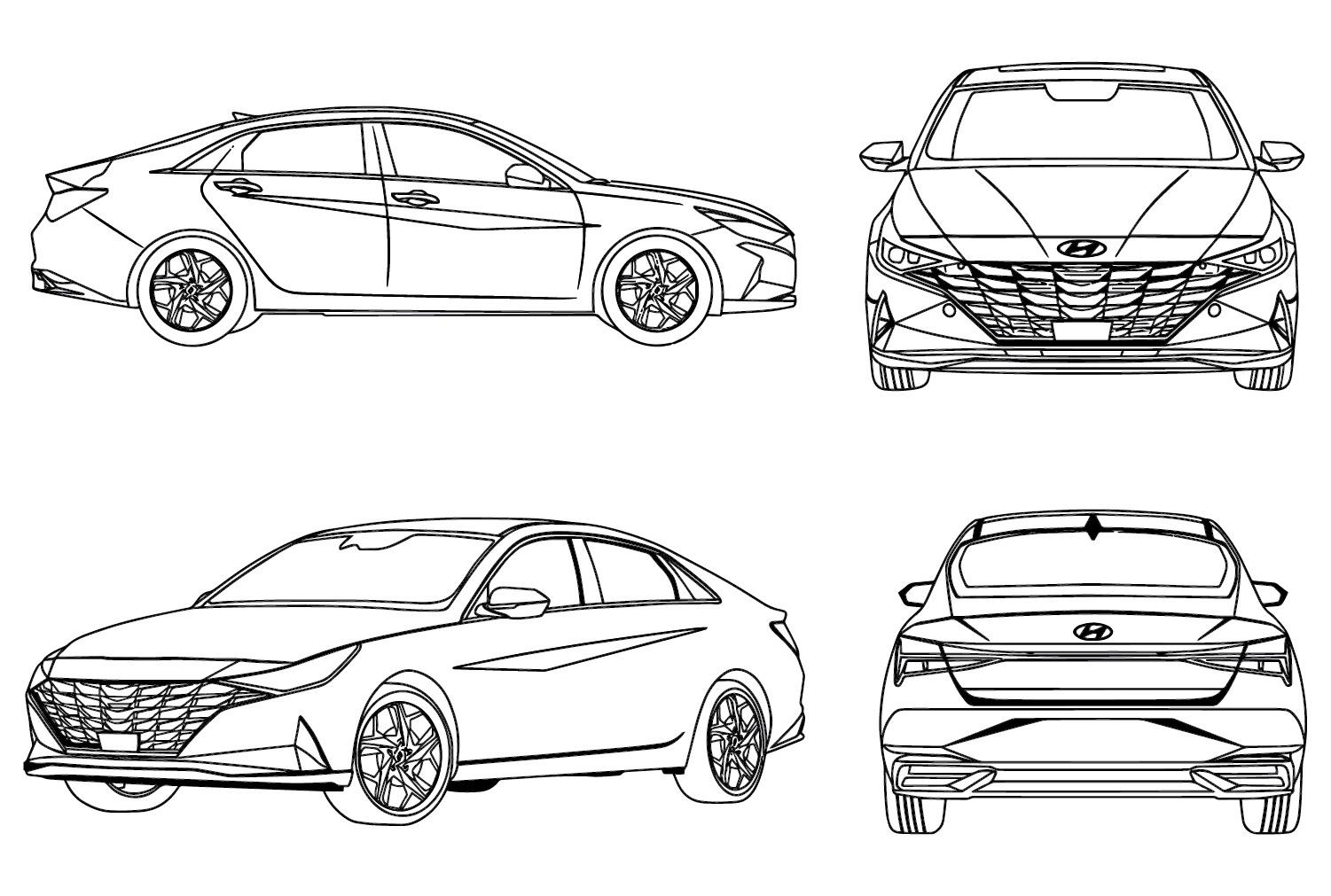
The Elantra has been produced since 1990 and has evolved through eight generations – the first aimed squarely at affordability and the eighth, the current generation introduced in 2021, aimed at something considerably more ambitious. The 2021 redesign is one of the most dramatically styled sedan redesigns in recent automotive history: angular lines, triangular surface tensions, a parametric pattern integrated into the bodywork surfaces, and a profile that reads as visually complex in a segment where visual complexity is rarely attempted.
The Elantra’s eighth-generation design won multiple design awards on release and is credited with demonstrating that affordable sedans do not need to be visually conservative. The model has been among Hyundai’s best-sellers in the American market across most of its production history.
The Elantra N – the performance variant launched in 2021 – adds aerodynamic elements, larger brakes, and a 2.0-liter turbocharged engine producing 276 horsepower, placed in the same distinctively styled body.
Coloring the current Elantra: The 2021 generation’s surface complexity – the angular feature lines, the parametric pattern in the lower bumper area, the triangular graphic elements – reward careful coloring that treats each angular zone as a distinct surface plane rather than blending across them. The parametric surface elements are typically rendered in a slightly different tone from the main body to show their three-dimensional texture.
Hyundai Tucson – The Distinctive Crossover
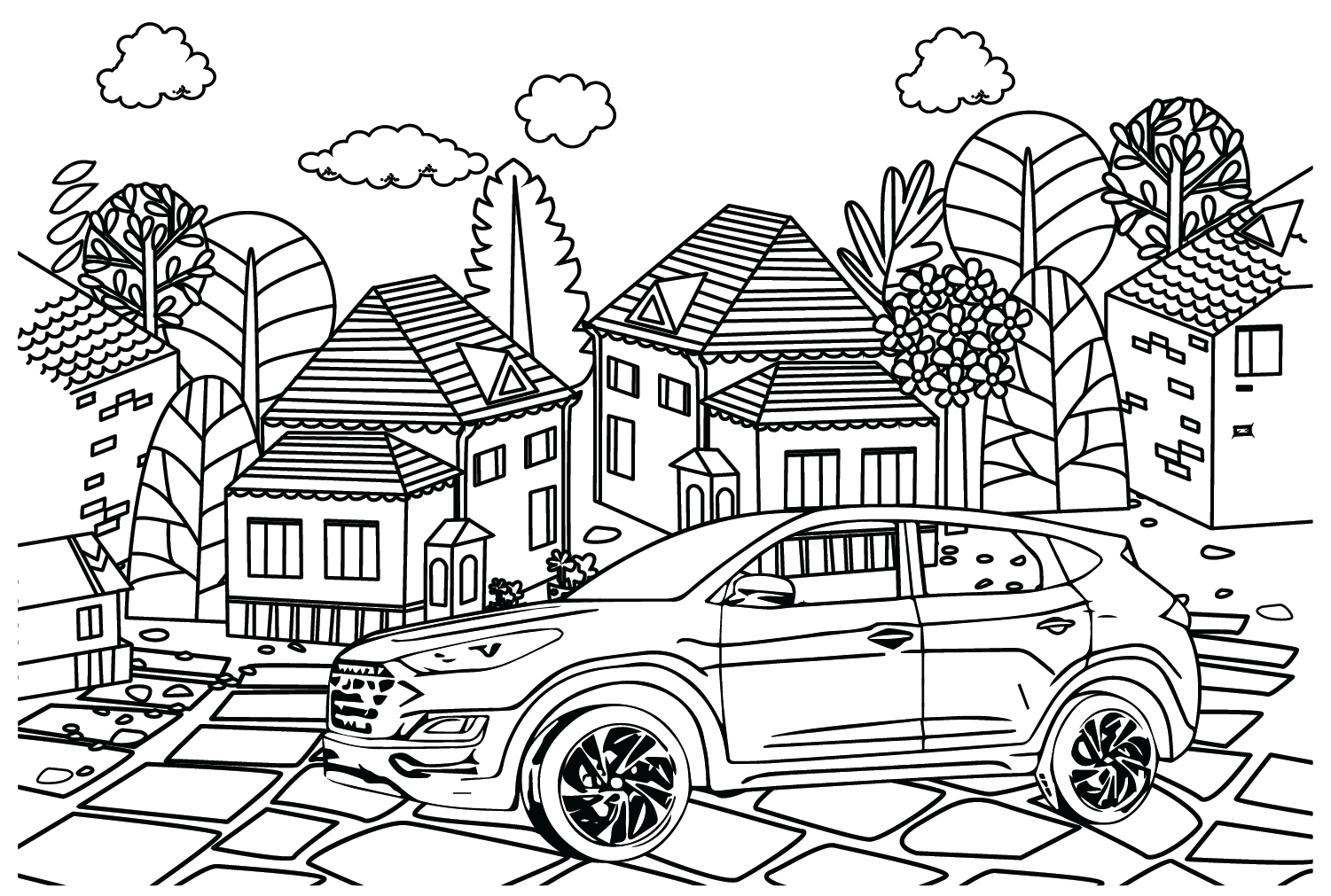
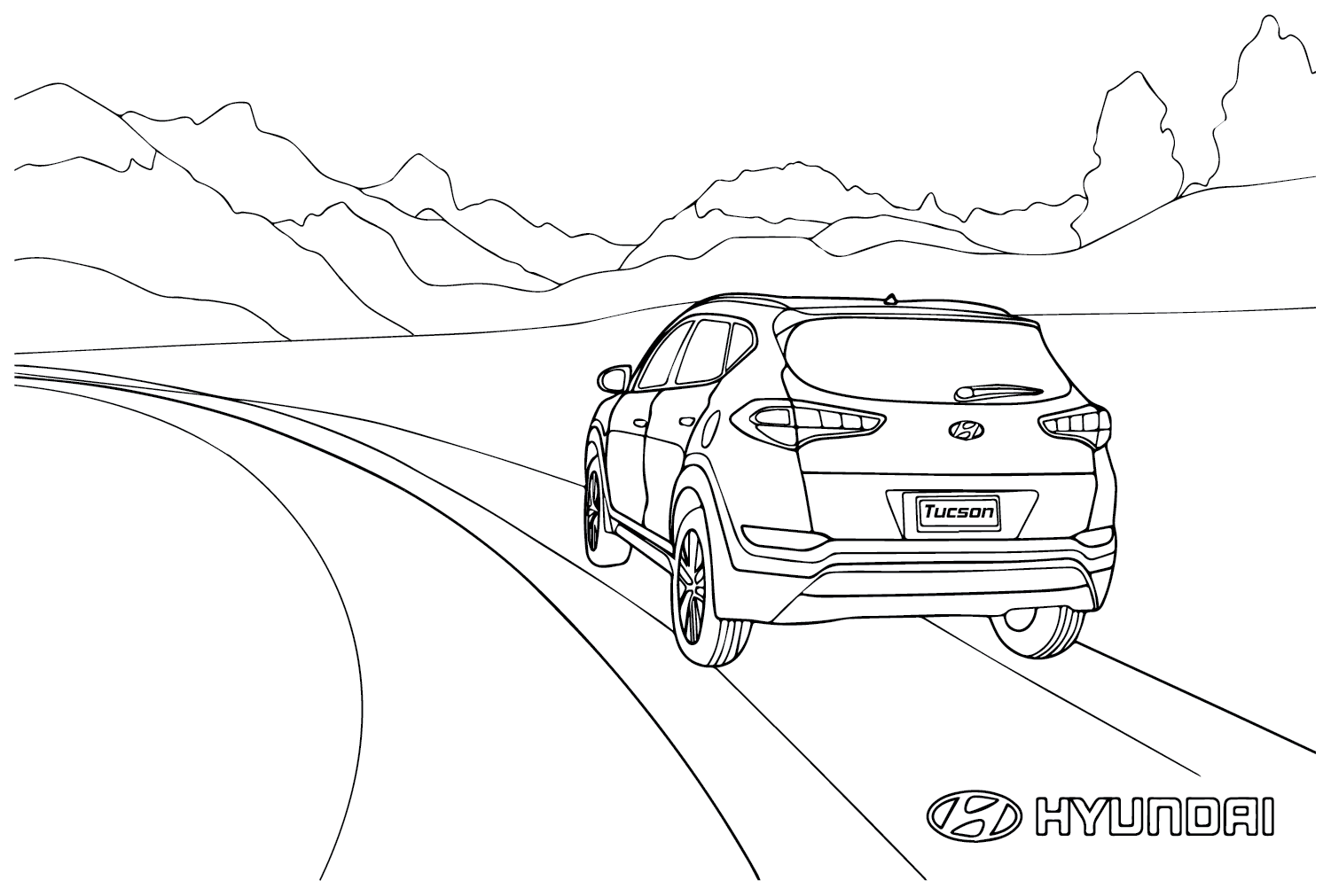
The Tucson has been produced since 2004 and has become one of Hyundai’s most globally significant vehicles – a compact crossover SUV named after Tucson, Arizona, that competes directly with the Toyota RAV4 and Honda CR-V in the world’s most competitive vehicle segment.
The fourth-generation Tucson, introduced in 2021, applied the same commitment to visual drama that characterized the Elantra redesign to the crossover format. Hidden rear taillights integrated into the body surface, a front fascia with angular lighting graphics, and parametric surfacing across the body create a vehicle that is immediately recognizable in its generation – a deliberate departure from the more conservative design of the segment’s historically dominant competitors.
The Tucson is available as a hybrid and plug-in hybrid in addition to a conventional powertrain, giving it a range of energy options that the current market requires.
Coloring the Tucson: The hidden taillights – where the taillight graphic is integrated into the body surface and appears active only when illuminated – present a specific coloring challenge. In the off state, the taillight area reads as body color with a slight recess line indicating where the light element is. In pages that show the taillights active (illuminated), the graphic should be rendered in the warm red-orange of activated taillights against the body color. The angular front graphic – the H logo surrounded by parametric lighting elements – is the front fascia’s most important coloring detail.
Hyundai Santa Fe – The Family SUV
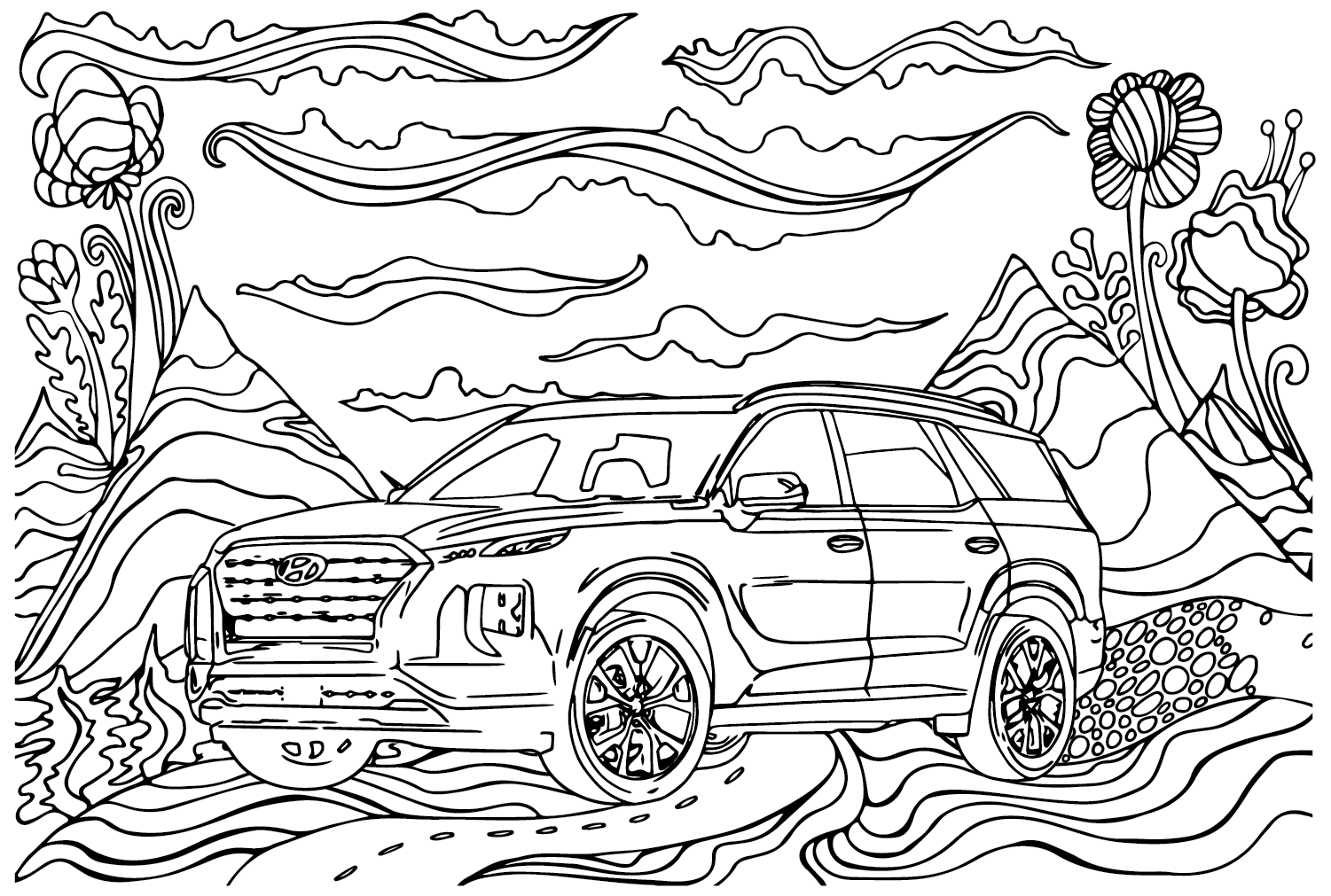
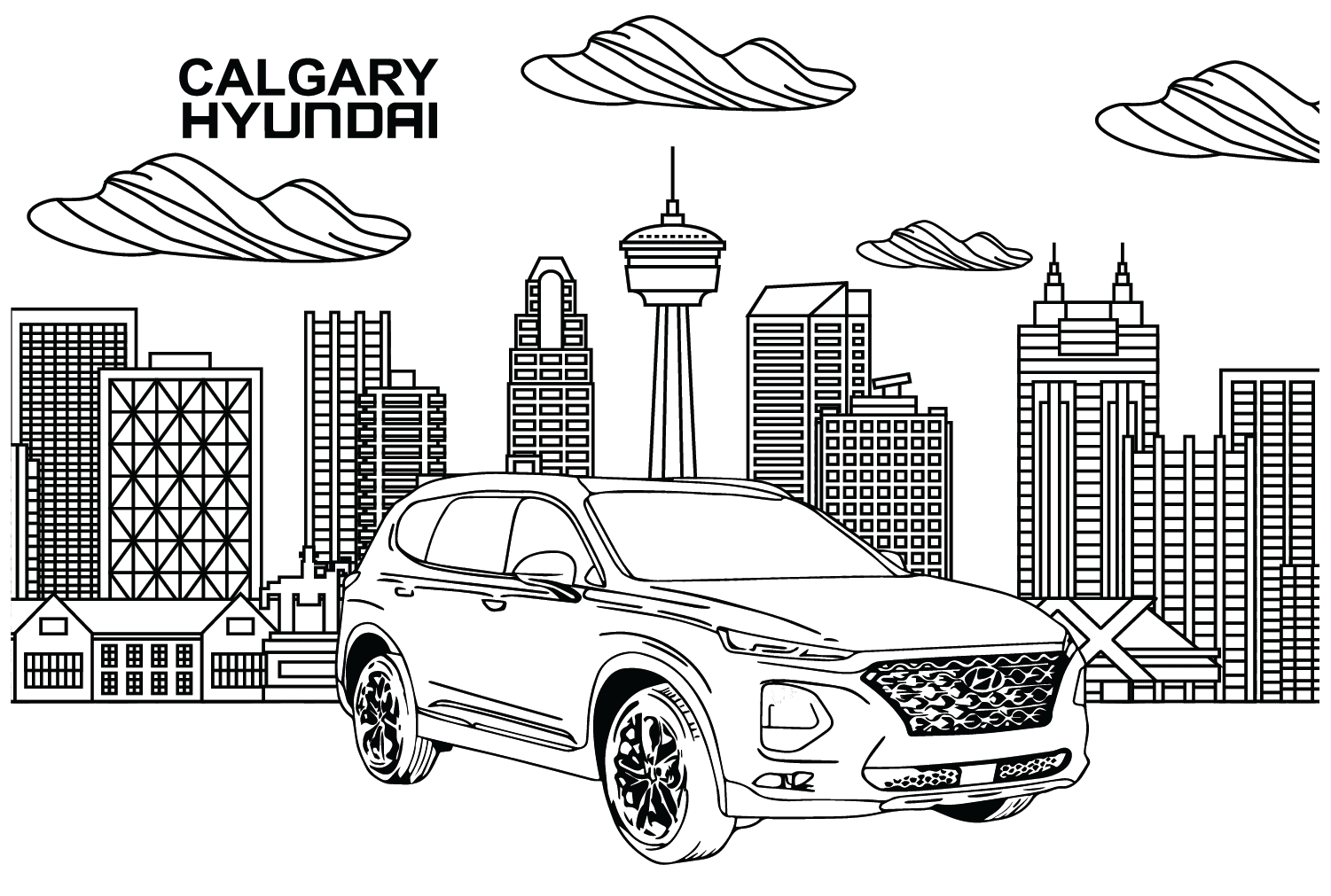
The Santa Fe has been produced since 2001 and has grown with each generation from a compact SUV into the mid-size three-row family vehicle that its fifth generation represents. Named after Santa Fe, New Mexico – continuing Tucson’s American Southwest place-naming – it has been Hyundai’s flagship SUV through most of its production history, a role shared with the larger Palisade in the brand’s current lineup.
The fifth-generation Santa Fe, introduced in 2023, adopted a dramatic redesign that echoes the IONIQ 5’s pixel design language in its lighting while applying a more upright, boxy body structure – the specific aesthetic of a contemporary SUV that communicates presence through volume rather than through aerodynamic drama.
Coloring the Santa Fe: The fifth-generation model’s upright proportions make it one of the collection’s simplest silhouettes in terms of basic shape – a large rectangular body on substantial wheel arches. The design’s interest is in its detailed work: the lighting graphics, the surface creases, and the wheel designs. For a large, upright body in a metallic color, the three-zone technique applied across the very large flat surfaces of the sides is the most important technical element.
Hyundai N Performance Models
Hyundai’s N performance division was established as a dedicated performance engineering unit with a specific testing philosophy: all N models must be developed and validated on the Nürburgring Nordschleife – the German racing circuit universally regarded as the world’s most demanding road circuit test – as a condition of the N badge’s award.
The division has produced the i20 N (hot hatch), the i30 N (performance hatchback extremely popular in Europe), the Elantra N (US market), and most significantly the IONIQ 5 N – the performance electric vehicle that laps the Nürburgring in under 8 minutes and produces 641 horsepower from its dual electric motors.
The N models’ visual identity adds aerodynamic elements – front splitters, rear diffusers, N-specific lighting graphics, larger wheel and tire packages – to the standard model designs. The N badge, a small and specific red-and-blue logo, appears on steering wheels, door sills, and exterior badging.
Coloring N Performance models: The performance body elements – front splitter, rear diffuser, side sills – are typically rendered in gloss black or dark grey, differentiating them from the body color through material contrast rather than color contrast. The N badge’s red and blue should be rendered precisely – it is the brand’s most specific visual identifier on performance-spec vehicles.
The Hyundai H Logo Pages
The Hyundai logo – a slanted, stylized H in an oval – is one of the more deliberately designed automotive logos in use. The H is angled rather than vertical, creating a dynamic forward lean. The oval surround gives it the containment that automotive logos conventionally use. The logo appears in chrome on vehicle exteriors and in the specific blue-and-white version in the brand’s marketing materials.
Logo pages are the collection’s most graphically clean – the large, simple form of the H and oval gives the colorist maximum control over the most minimal possible line drawing.
What These Pages Do
Hyundai’s design evolution is one of the most documented transformations in brand identity. The 1986 Excel and the 2022 IONIQ 5 are products of the same company, and comparing the design language of those two moments makes the brand’s trajectory legible as a visual fact. Coloring through the collection’s different model generations traces this arc.
The IONIQ series’ pixel design language is a genuine lesson in contemporary automotive design philosophy. The decision to reference 1970s pixel technology in a 2021 electric vehicle – to draw a line between the first digital era and the current one – is a specific design thinking approach that produces specific visual results. The pixel headlights are not nostalgic; they are the application of a historical visual language to a contemporary technical context.
Large automotive body panels develop confident color application. The IONIQ 5’s flat parametric surfaces, the Santa Fe’s upright body sides, the Sonata’s long hood – these large coloring areas require sustained, consistent pressure and direction. The 2005 Art Therapy Journal study on structured coloring and anxiety reduction applies directly: the focused, extended attention required to render a large automotive body panel correctly produces exactly the calm, absorbed state the research identifies.
Fine motor development. The American Academy of Pediatrics identifies fine motor development as a key childhood milestone. The pixel lighting elements, the N badge precision, the parametric surface patterns – all provide motivated, sustained fine motor practice at the detailed scale that is most developmentally effective.
How to Color These Pages Well
The IONIQ 5’s pixel lights require a system before you start. The pixel headlight and taillight arrangements are grids of small rectangular LED units. Before coloring, count the units in the grid on the page and establish their positions. Apply the base color to all units simultaneously – a warm white or very pale yellow for headlights, warm red-orange for taillights – then add the darker borders between units in a consistent darker tone. The grid should read as a pattern, not as individual units of varying sizes. Consistency of unit size and spacing is what makes it read as correct.
Metallic blue or teal on the Tucson or IONIQ models works best with three blue tones. For a metallic blue-grey or teal body color, the lightest tone is a very pale blue-grey or pale teal applied along the shoulder line and any surface directly facing the light source. The mid-tone is the primary body color – medium blue-grey or teal – across the main body surfaces. The shadow tone is a deeper, slightly cooler version applied at the sills, under the bumper overhangs, and in the shadow areas beneath the door handles. Three distinct blue-family tones on one body produce the metallic quality that a single flat blue application cannot.
The Elantra’s angular surfaces are defined by their edges. The 2021 Elantra’s design is built on sharp, angular feature lines rather than smooth curves. The coloring technique for this design is the opposite of the IONIQ 6’s gradual blending: apply solid mid-tone across each angular panel, then add a thin bright highlight precisely along the top edge of each character line and a thin dark shadow precisely along the underside of each character line. The sharpness of the transition – from highlight line to mid-tone panel to shadow line – is what makes the angular design read as sharp rather than soft.
The N models’ dark aerodynamic elements anchor the performance aesthetic. Apply the gloss black or dark grey to the front splitter, rear diffuser, and side sill extensions as cleanly as possible – the boundary between the body color and the aerodynamic element color should be a sharp, precise line. The N models’ visual identity depends on the clean contrast between their body color and the dark performance elements.
The H logo’s slant is its defining characteristic. The Hyundai H is not vertical – it leans forward at a deliberate angle. When coloring any page that includes the logo, ensure the slant is clearly visible by giving it the same treatment you would give a chrome badge: bright highlight on the upper-left surfaces, mid-tone chrome grey across the main letter surfaces, darker grey along the lower-right edges, and the oval’s inner edge.
5 Creative Craft Ideas
Hyundai Design Evolution Timeline
Print pages representing different eras of Hyundai design – the earliest model the collection includes (representing the brand’s affordable origins), the mid-period Elantra or Sonata (representing quality improvement), and the current IONIQ 5 (representing design award leadership). Color each in a palette appropriate to its era: warm, conservative colors for older models; contemporary metallic or matte colors for the IONIQ 5.
Mount all in chronological order on a long horizontal backing sheet. Add approximate year ranges and one descriptor below each: “1986-1999: Making cars accessible,” “2000-2015: Building quality,” “2016-present: Defining design.” The finished timeline is a brand story told through color and silhouette.
IONIQ 5 Pixel Light Study
The IONIQ 5’s pixel lighting is the most technically interesting detail in the collection. Print the most detailed IONIQ 5 page available – specifically one that shows the headlight or taillight arrangement clearly. Before coloring, study the pixel grid structure of the light unit.
Color the pixel lights first, working systematically through the grid: all lit units in one pass (warm white for headlights), then all border elements in a consistent darker tone. Then color the rest of the car. The finished page will have the pixel grid rendered as a precise, systematic pattern – a coloring result that demonstrates patient, methodical work rather than the organic approach that most coloring pages reward.
Korean Car Brand Comparison
This craft uses pages from two separate collections on this site – Hyundai and Kia, Hyundai Motor Group’s other brand. Print one flagship page from each: the IONIQ 5 from Hyundai and the EV6 (or equivalent) from Kia. Color each in their most distinctive branded color – a contemporary blue-grey for the IONIQ 5, a vivid color for the Kia.
Mount both side by side on a backing sheet with their brand names and logos. Below each, add one line: the World Car of the Year year each won and the car that won it. (IONIQ 5: 2022; EV6: the same year, as Kia’s companion vehicle.) The display captures the specific moment when one Korean automotive group produced two consecutive world-class electric vehicles simultaneously.
N Performance vs. Standard Display
Print the standard Elantra page and the Elantra N page (if both are available in the collection). Color the standard Elantra in a calm silver – the color of an everyday transport choice. Color the Elantra N in a vivid Performance Blue – the color used for N model promotional materials – with the dark grey aerodynamic elements and the N-specific details.
Mount both side by side: “Elantra” on the left, “Elantra N” on the right. Below each, add the specific performance figure that differentiates them: “147 HP / 0-60: 8.0 sec” for the standard, “276 HP / 0-60: 5.3 sec” for the N. The display makes the performance variant’s visual and numerical departure from the standard model legible in a single comparison.
My IONIQ 5 Color Study
The IONIQ 5 has been offered in a range of deliberately named colors: Atlas White, Gravity Gold Matte, Cyber Gray Metallic, Digital Teal Metallic, and Lucid Blue. Print three copies of the same IONIQ 5 page. Color the first in Atlas White with very subtle cool shadows. Color the second in Gravity Gold Matte – a specific warm, non-glossy gold that reads as contemporary. Color the third in Digital Teal – a vivid, slightly blue-shifted teal.
Mount all three side by side with the color name below each. The exercise demonstrates that the same vehicle reads as three completely different objects across three color choices – and that Hyundai’s color naming (Gravity Gold, Cyber Gray, Digital Teal) is itself a piece of design thinking, naming colors to match the car’s technological identity.
Frequently Asked Questions
Who founded Hyundai, and when was the company established? Hyundai Motor Company was founded by Chung Ju-yung on December 29, 1967, in Seoul, South Korea. Chung Ju-yung was already a prominent South Korean businessman through Hyundai Engineering and Construction before establishing the automotive division. The word “Hyundai” (현대) means “modernity” or “contemporary” in Korean – the name was a deliberate statement of the company’s orientation toward progress. The Hyundai Motor Group, which Hyundai Motor Company anchors, also includes the Kia and Genesis brands and is one of the largest automotive groups in the world by vehicle sales volume.
What was the Hyundai Pony, and why is it historically significant? The Hyundai Pony, launched in 1975, was South Korea’s first mass-produced domestically designed automobile. Giorgetto Giugiaro, the Italian designer responsible for the original Volkswagen Golf, the BMW M1, and numerous other significant automotive designs, drew the exterior design. The Pony was powered by a Mitsubishi engine and built on a platform developed with Mitsubishi’s assistance, but its design and overall development were a Korean-led project. The Pony is historically significant as the vehicle that established South Korea as a country capable of designing and manufacturing its own cars rather than merely assembling foreign designs under license, and it laid the foundation for Hyundai’s subsequent export ambitions.
What is the IONIQ 5, and what awards has it won? The Hyundai IONIQ 5 is a battery electric compact CUV launched in 2021, built on Hyundai Motor Group’s dedicated Electric Global Modular Platform (E-GMP) and featuring 800-volt electrical architecture that allows rapid charging. Its design draws on the 1974 Hyundai Pony Coupe concept, applying a retro-futuristic visual language with pixel-inspired lighting to a contemporary electric vehicle. The IONIQ 5 won the World Car of the Year 2022, the World Electric Vehicle of the Year 2022, and the Car Design of the Year 2022 – the first vehicle in the award’s history to win all three simultaneously. Its 800V charging capability allows it to add approximately 100 kilometers of range in approximately five minutes at a compatible fast charger.
What is Hyundai’s N performance division? Hyundai’s N performance division was established as a dedicated motorsport and performance engineering unit, with the N designation derived from both Nürburgring – the German racing circuit used as the primary development and validation venue for all N-badged vehicles – and Namyang, the location of Hyundai’s main research and development center in South Korea. The division produces performance variants of existing Hyundai models, including the i20 N, i30 N, Elantra N, and the IONIQ 5 N – an electric performance vehicle producing 641 horsepower that laps the Nürburgring Nordschleife in under eight minutes. N models are distinguished by aerodynamic body additions, performance brake systems, and unique suspension tuning validated at the Nürburgring.
How did Hyundai’s reputation change between the 1980s and today? Hyundai entered the United States market in 1986 with the Excel, priced aggressively low and achieving record first-year import sales. However, the Excel’s reliability was poor, and by the early 1990s,s Hyundai had developed a significant reputation for low quality. The company responded with major investments in engineering, manufacturing quality, and the introduction of a 100,000-mile powertrain warranty in 1998 – significantly longer than any competitor offered at the time – which served as a public commitment to the quality improvements being made internally. Through the 2000s and 2010s, Hyundai’s quality improved consistently across third-party assessments. The IONIQ series’ World Car of the Year wins in 2022 and 2023 confirmed the brand’s arrival at the global top tier of automotive design and engineering.
What is the relationship between Hyundai, Kia, and Genesis? Hyundai, Kia, and Genesis are three distinct automotive brands within the Hyundai Motor Group, South Korea’s largest automotive conglomerate. Hyundai is the group’s volume brand, positioned as offering mainstream vehicles at competitive value. Kia, acquired by Hyundai in 1998, operates as a sister brand with a distinct design identity and overlapping model segments. Genesis, established as a standalone luxury brand in 2015, serves as the group’s premium entry – comparable to Toyota’s relationship with Lexus or Nissan’s with Infiniti. The three brands share engineering platforms, components, and manufacturing infrastructure while maintaining distinct design languages and market positioning.
Browse the full collection at ColoringPagesOnly.com. All 30+ pages free, no sign-up, PDF or PNG, print at home or color online.
Chung Ju-yung founded Hyundai Motor in 1967 and built South Korea’s first domestically designed car in 1975. The company entered the United States in 1986 with a car that sold in enormous numbers and performed poorly. It responded by building better cars, one generation at a time, until the IONIQ 5 arrived in 2021 and won every major award in the automotive world.
The word “Hyundai” means modernity. The trajectory of the brand across six decades is the most literal possible fulfillment of that name: a company that has consistently moved toward the contemporary, rebuilt its reputation through engineering investment rather than marketing redefinition, and arrived at the current moment as one of the design leaders in the industry’s most significant technological transition.
Pick up your teal, your silver, or your gold. The pixel lights are ready to render.
Share your work on Facebook and Pinterest and tag #Coloringpagesonly. We especially want to see the design evolution timelines and the IONIQ 5 pixel light studies.
Color the H. Honor the modernity. The future is already in production.
More from our automotive collections: