
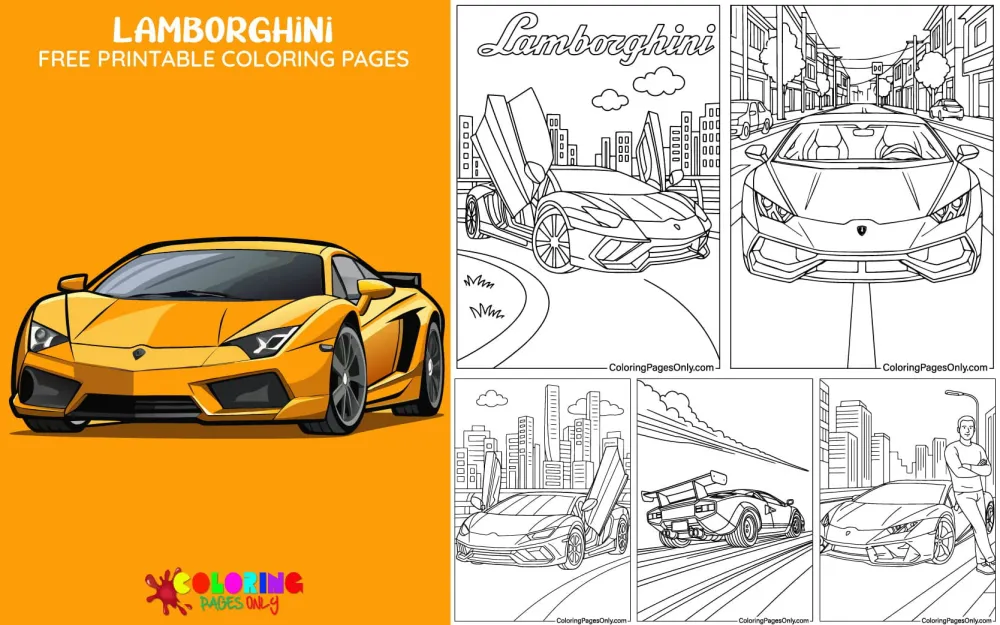
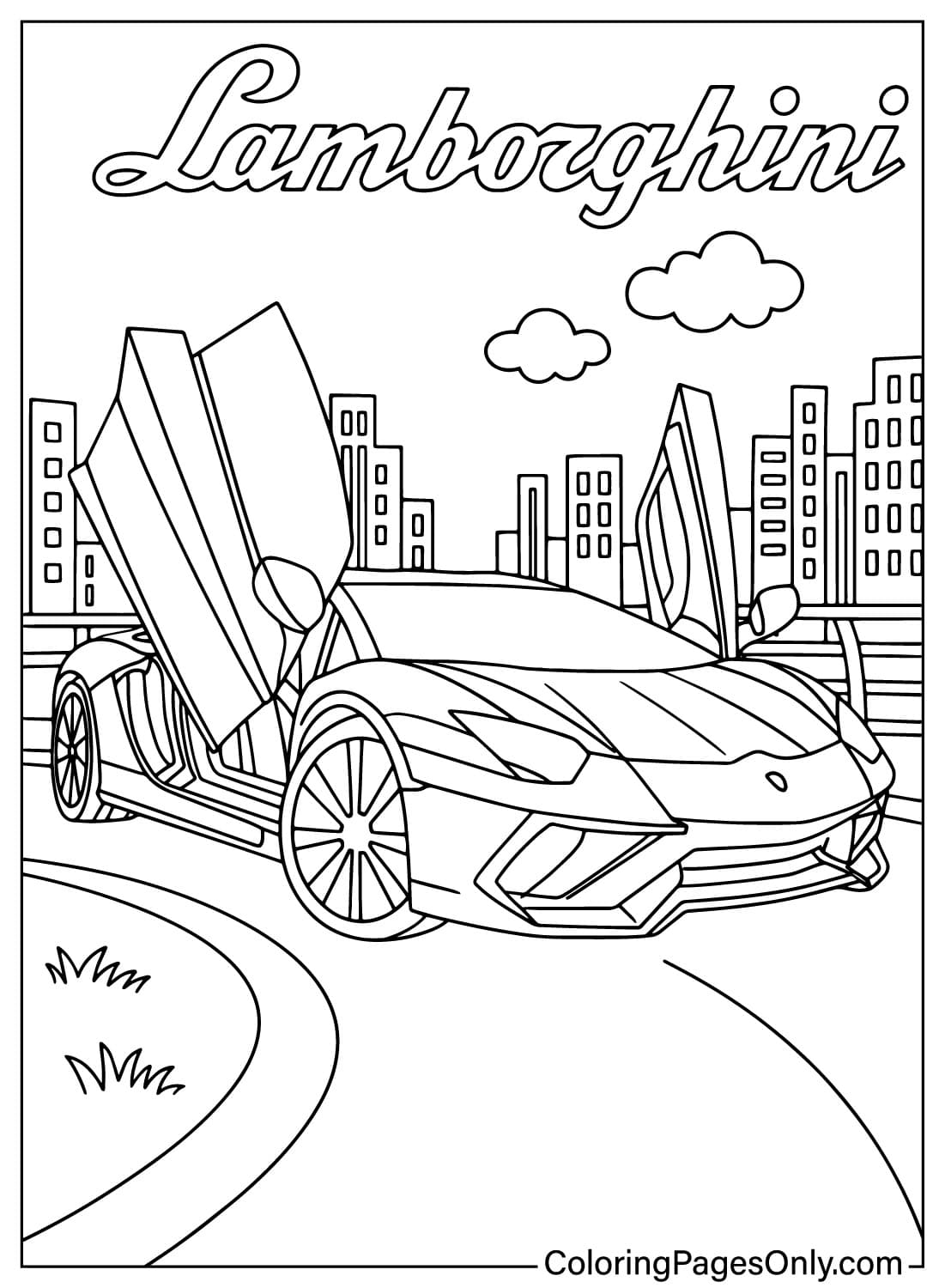
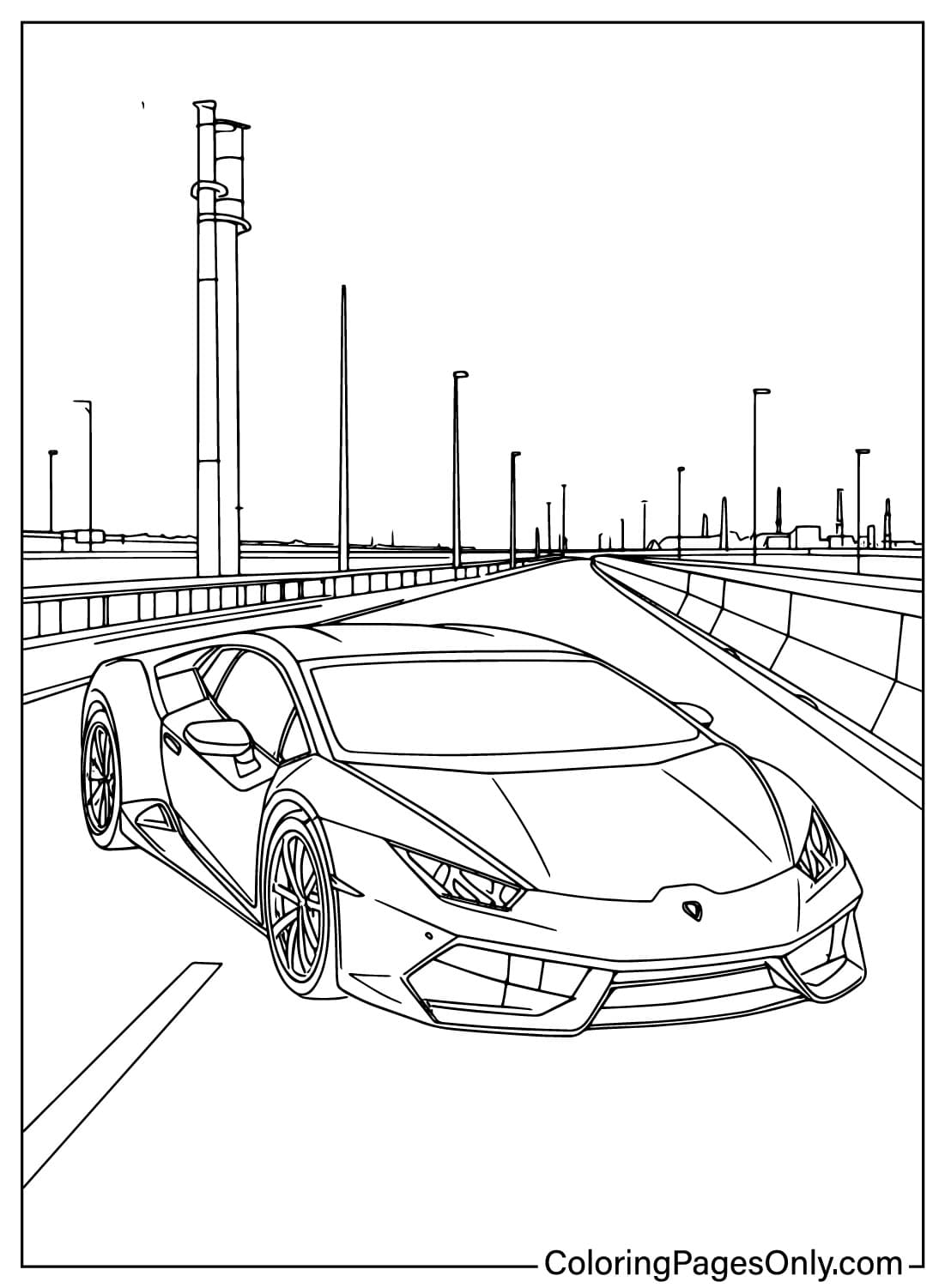
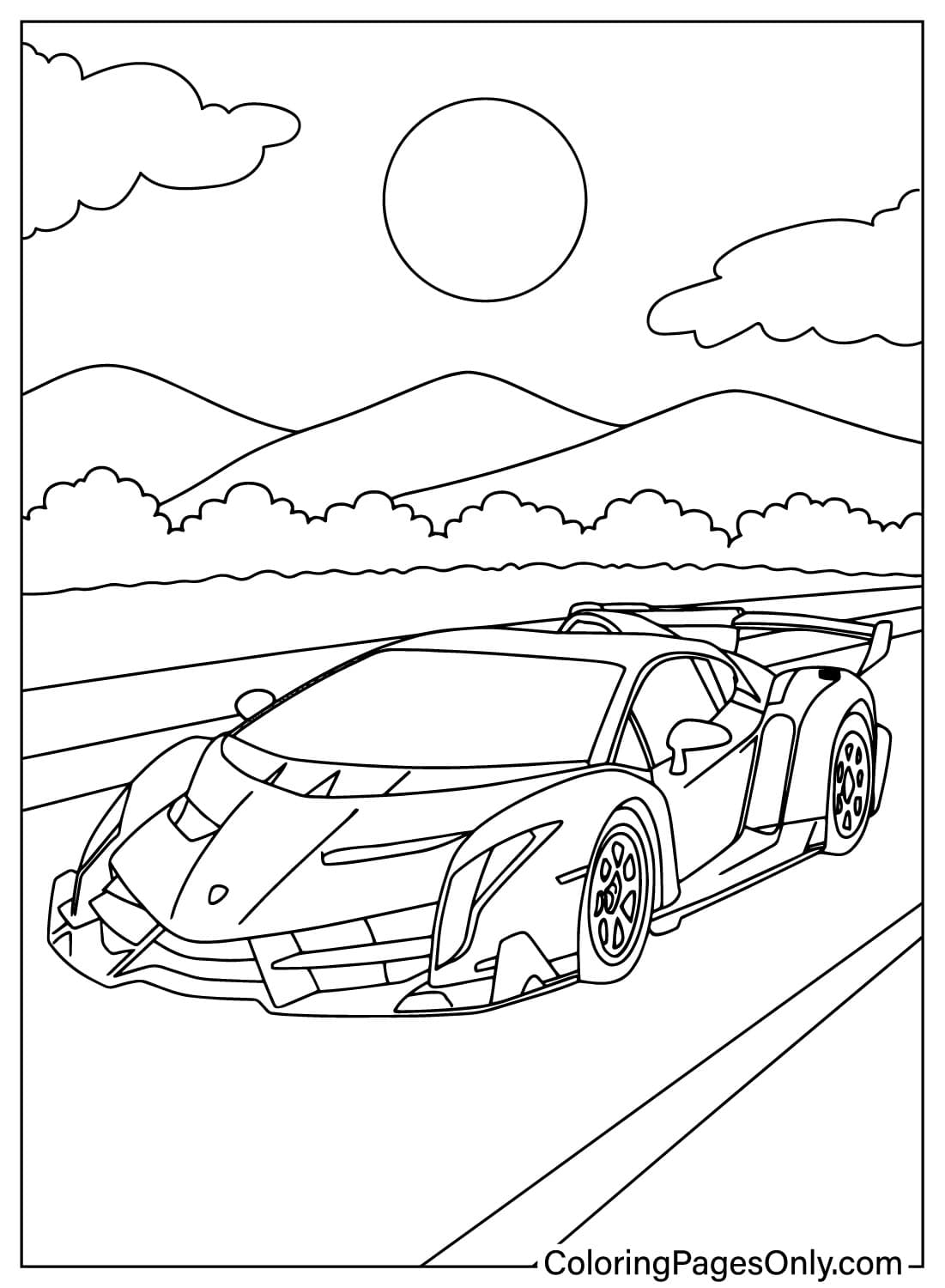
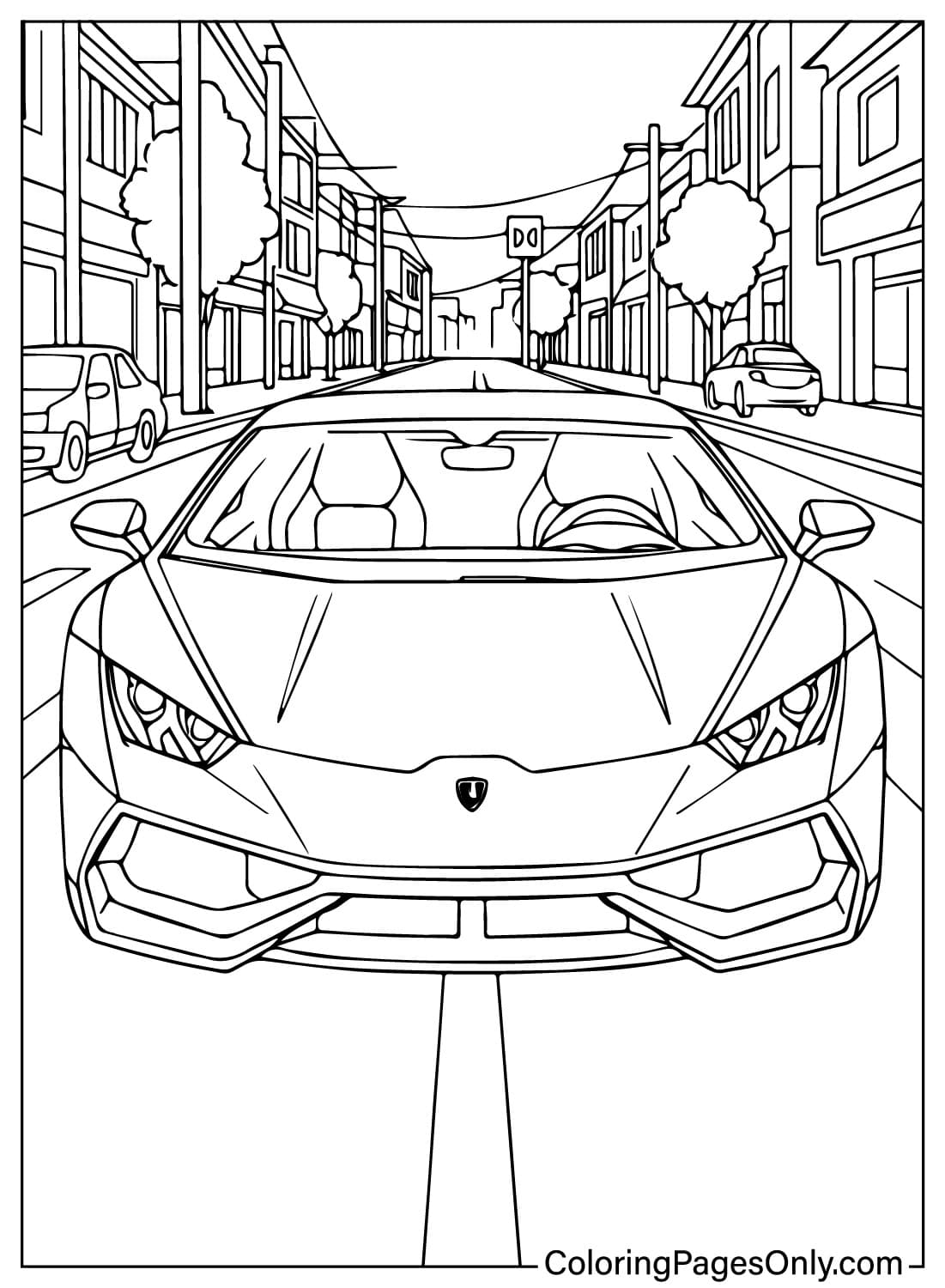
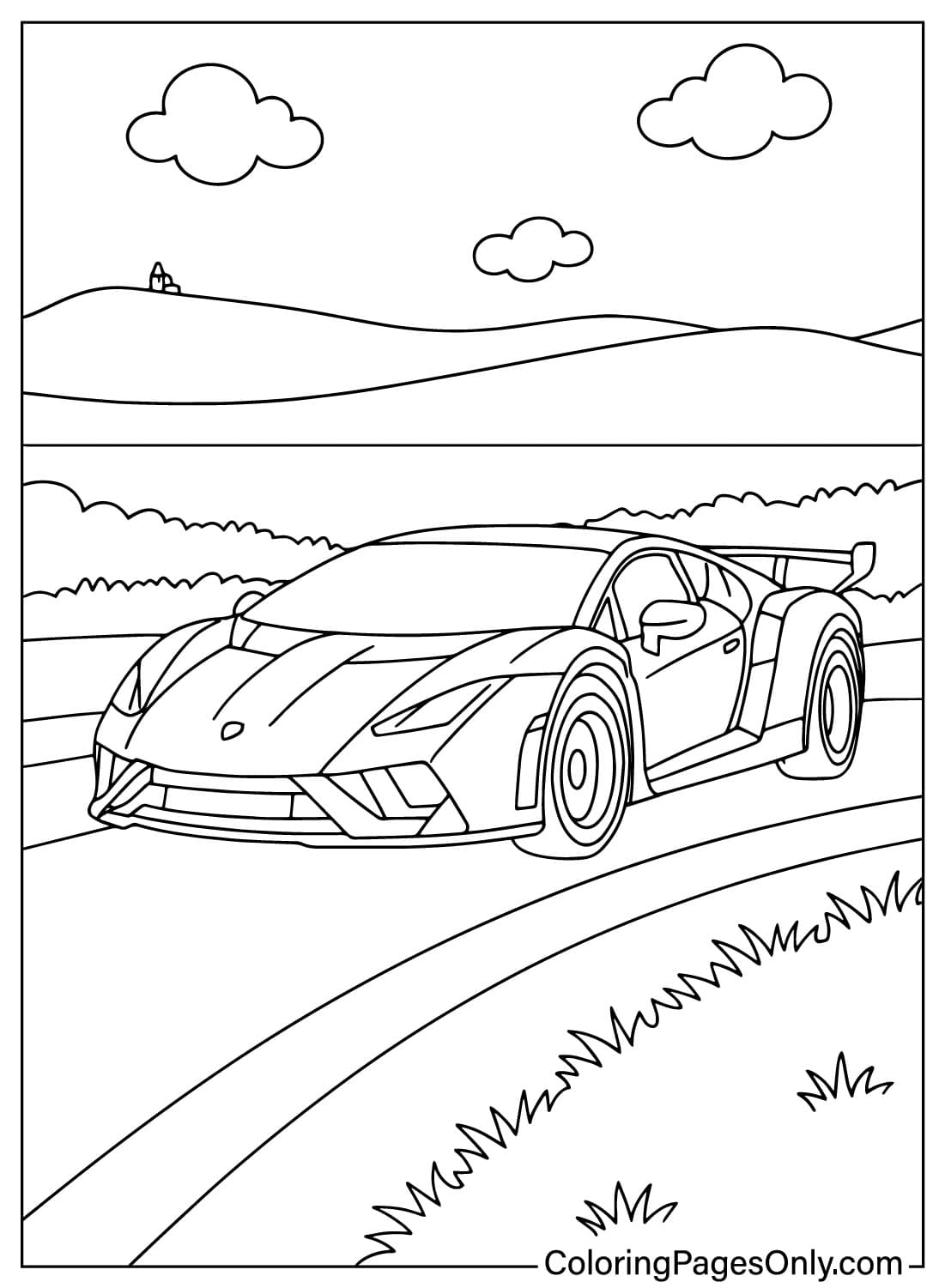
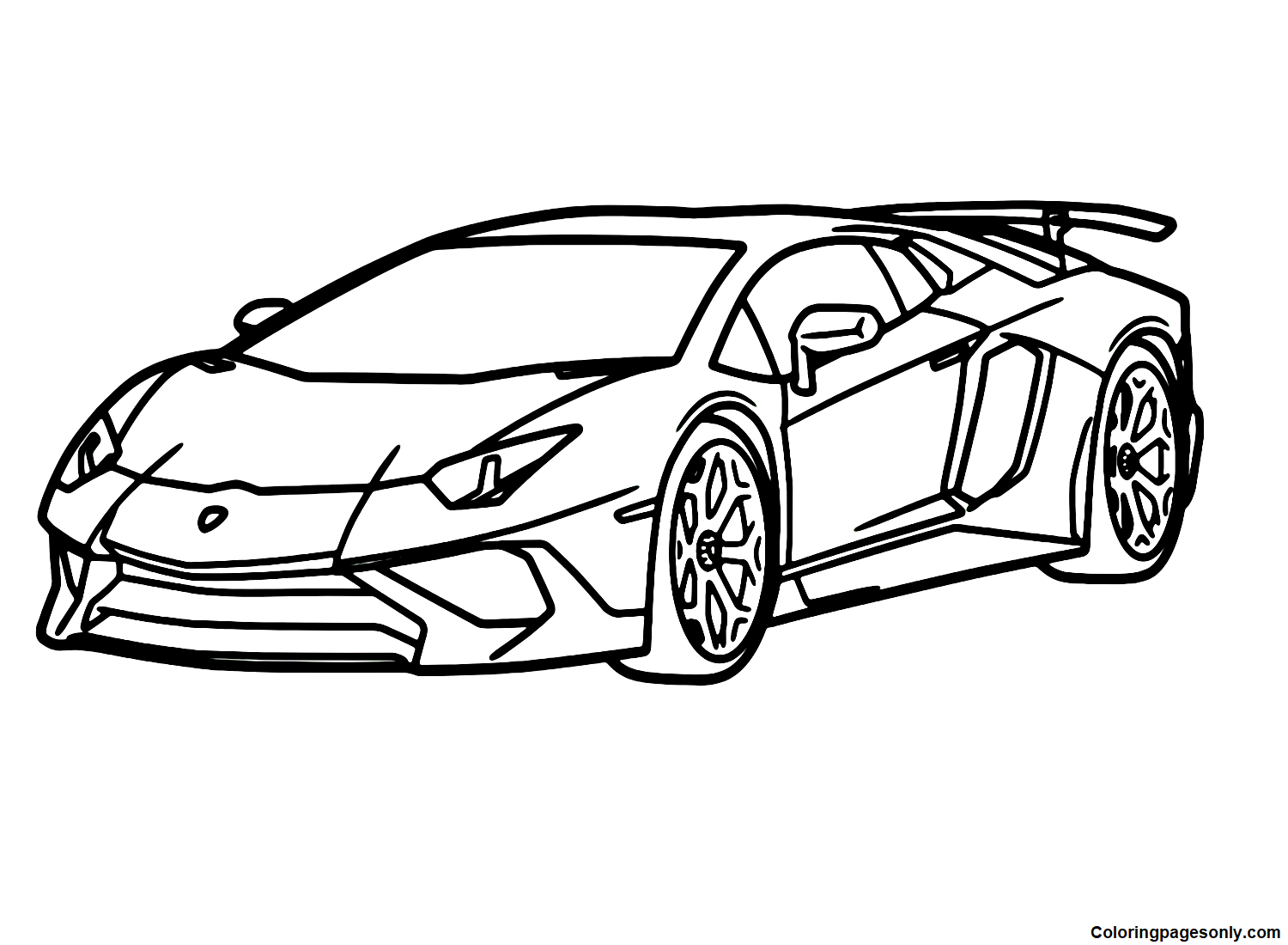
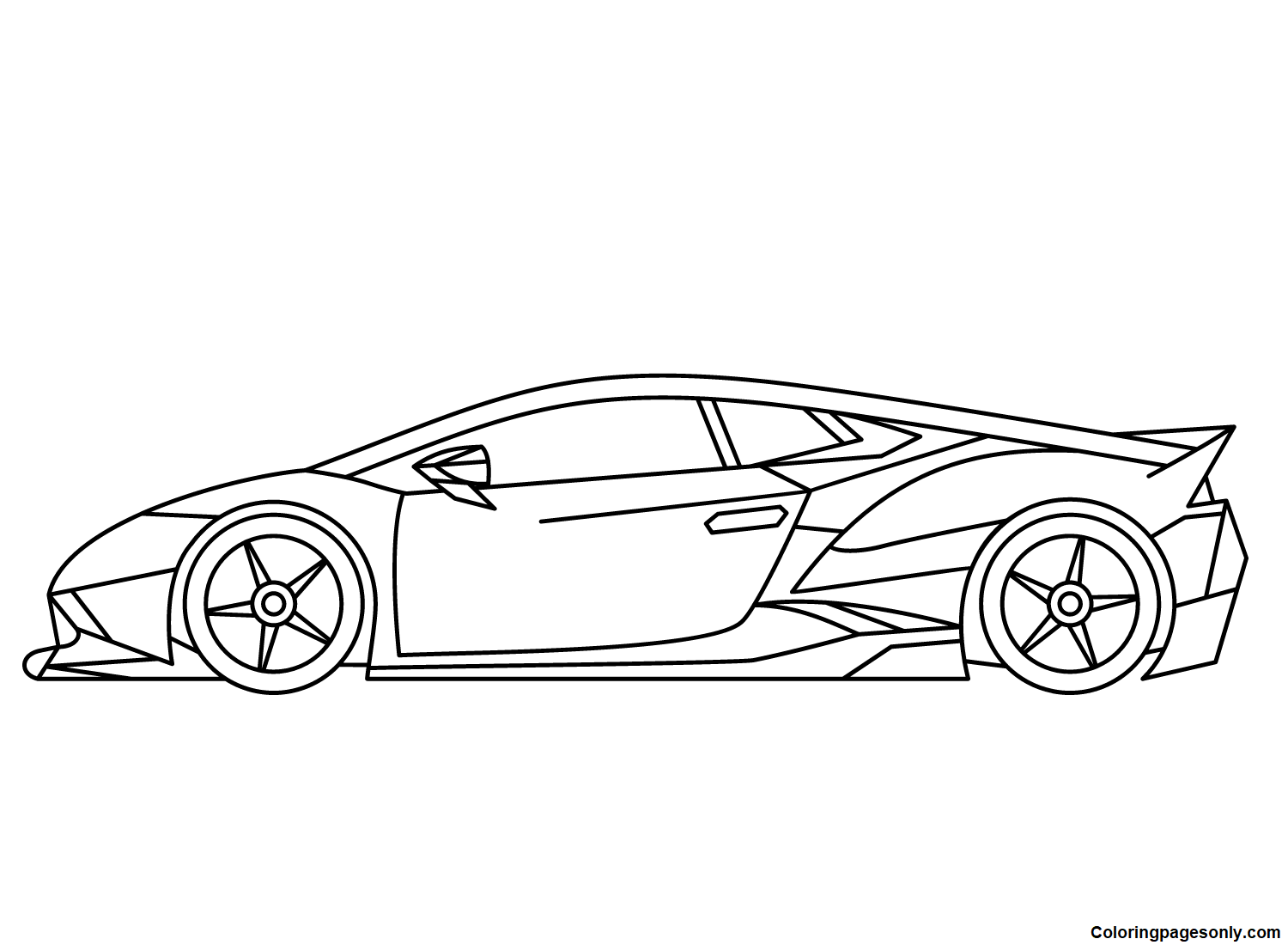
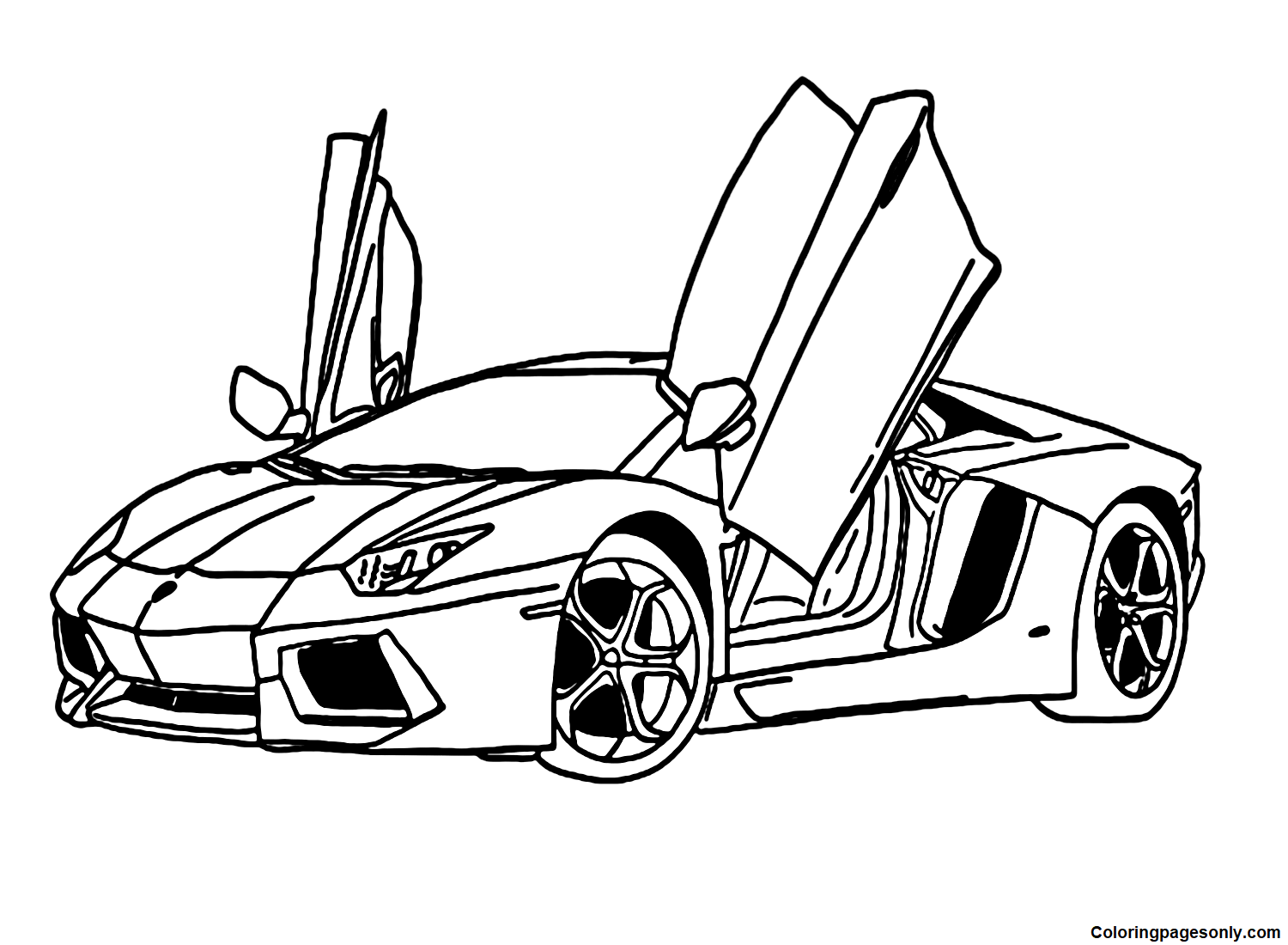
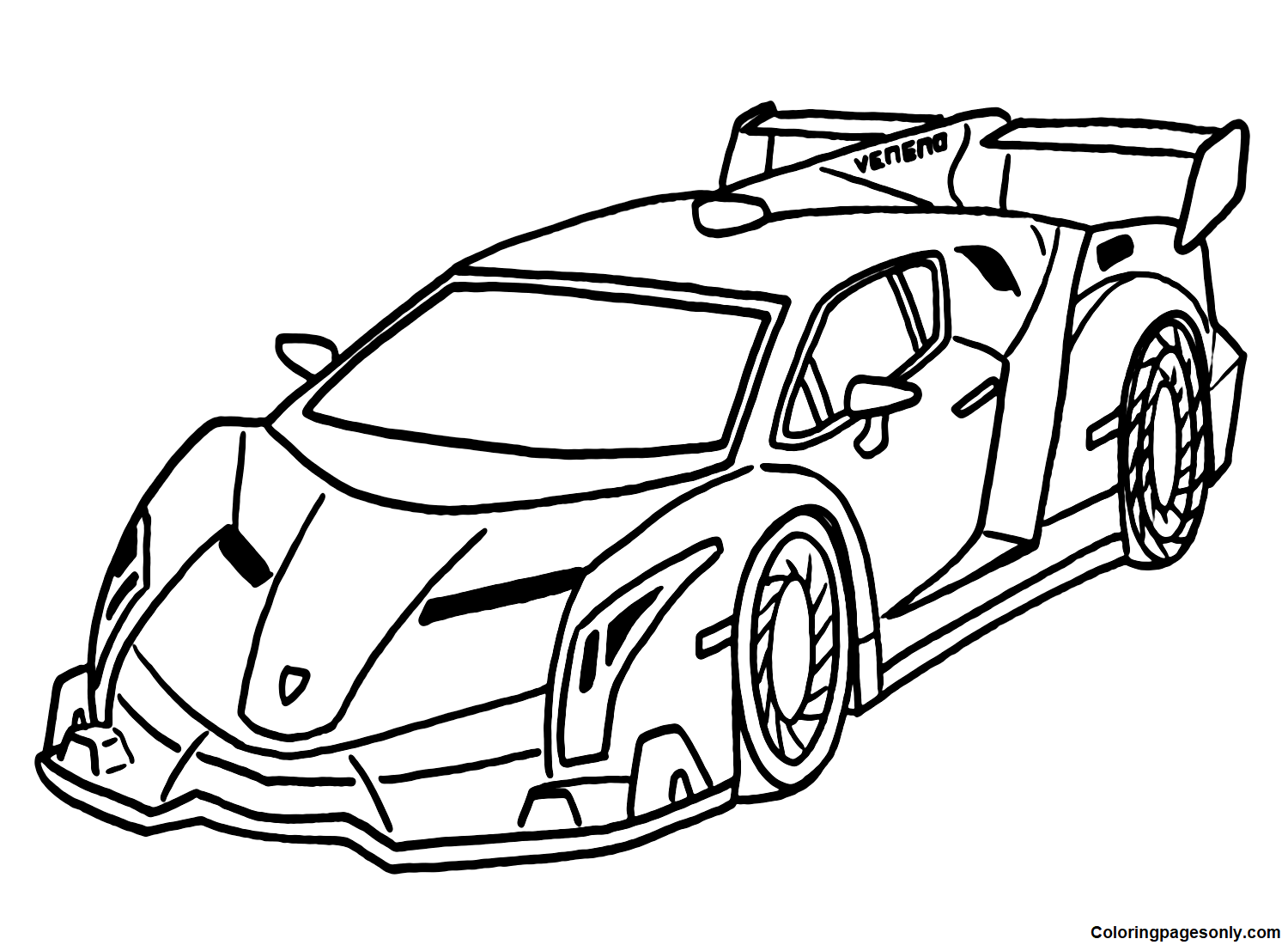
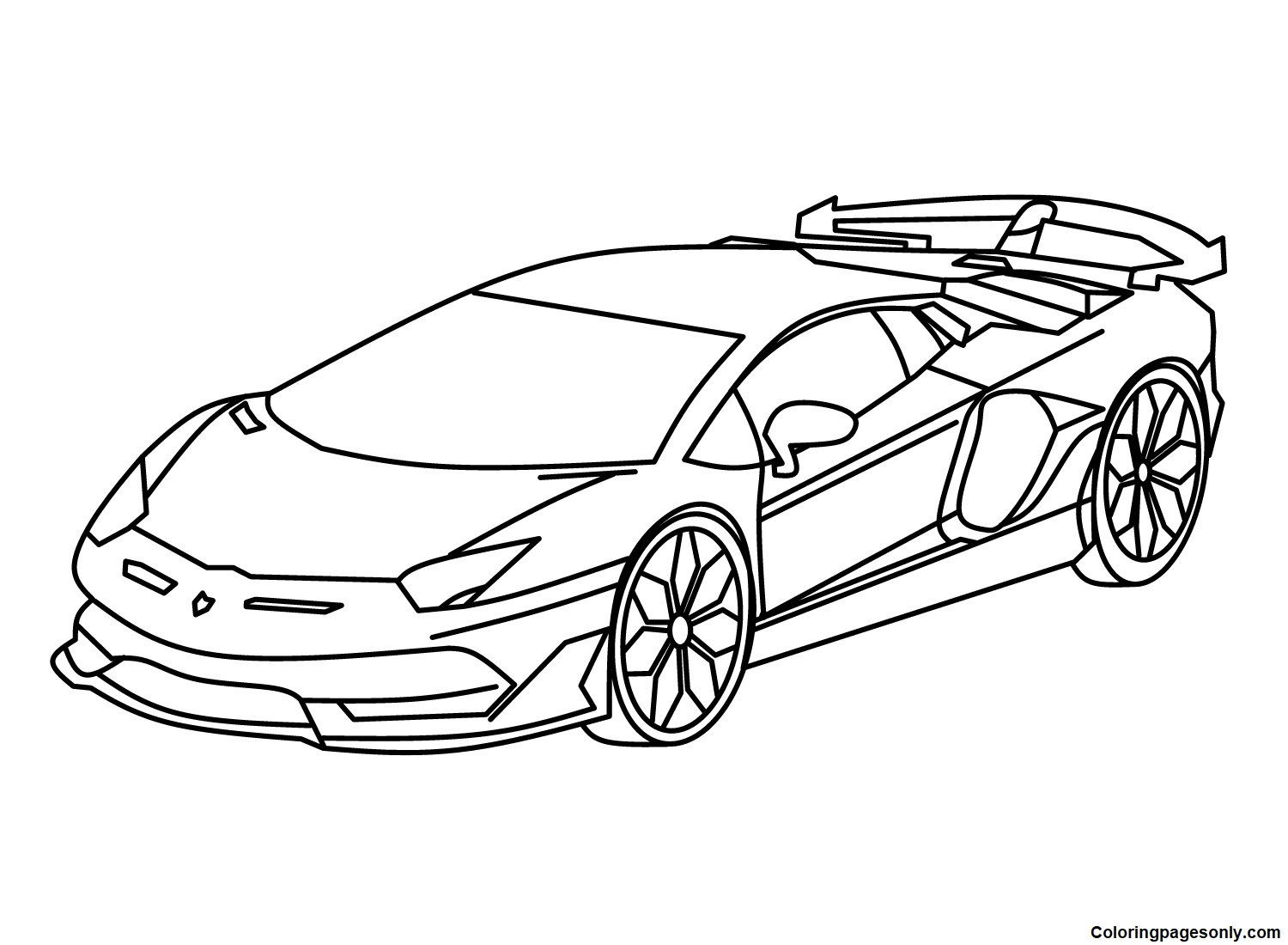
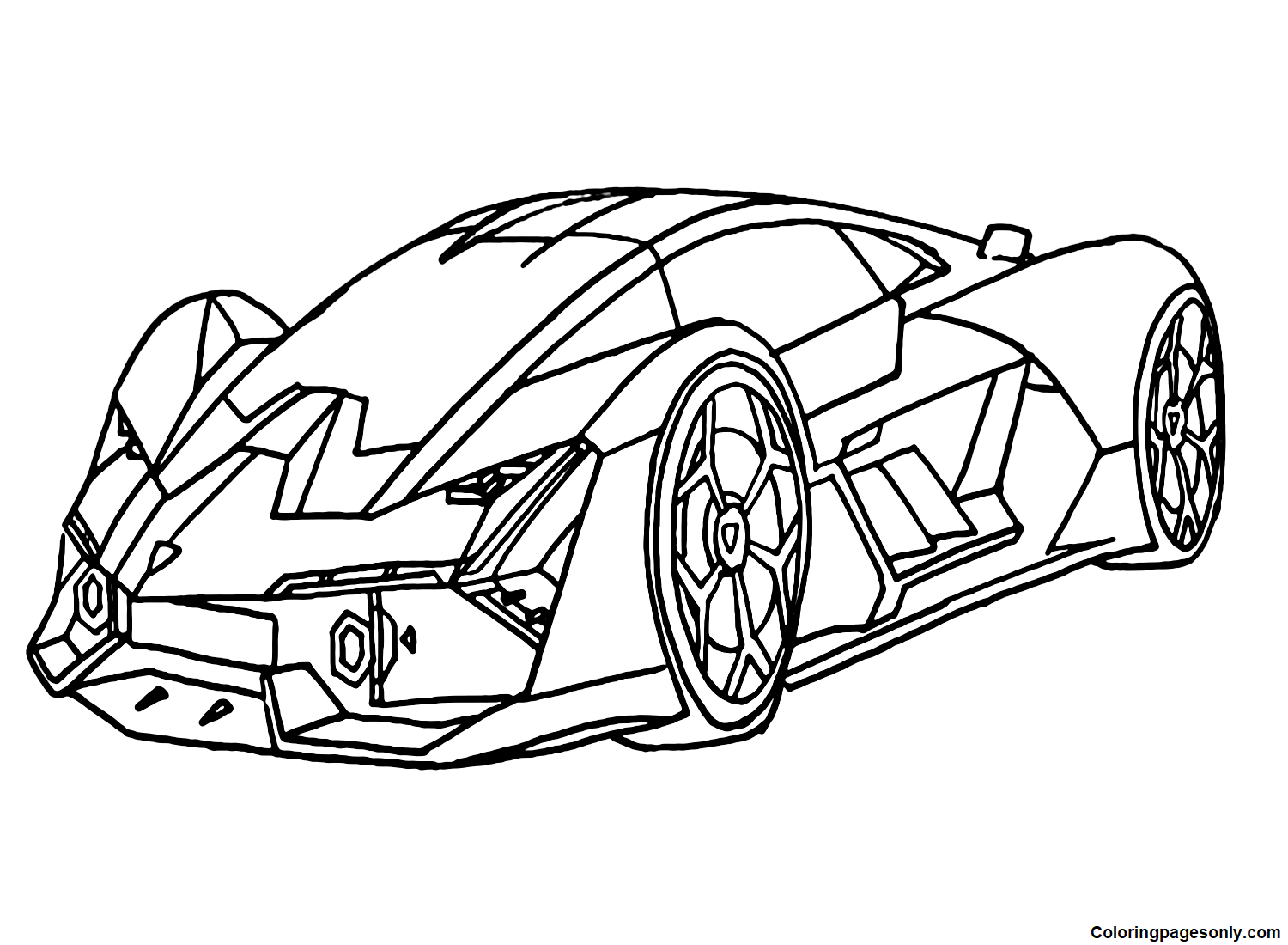
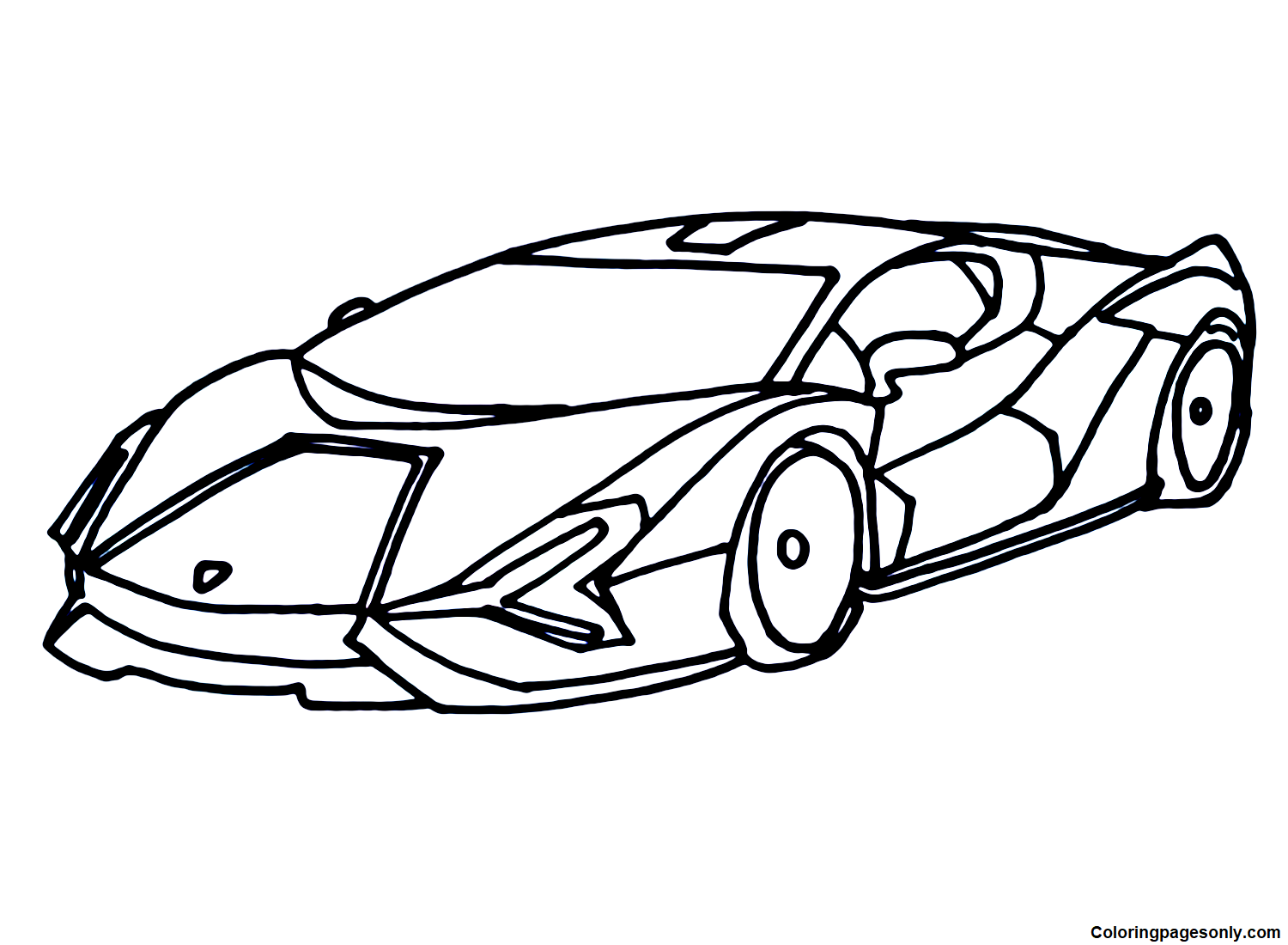
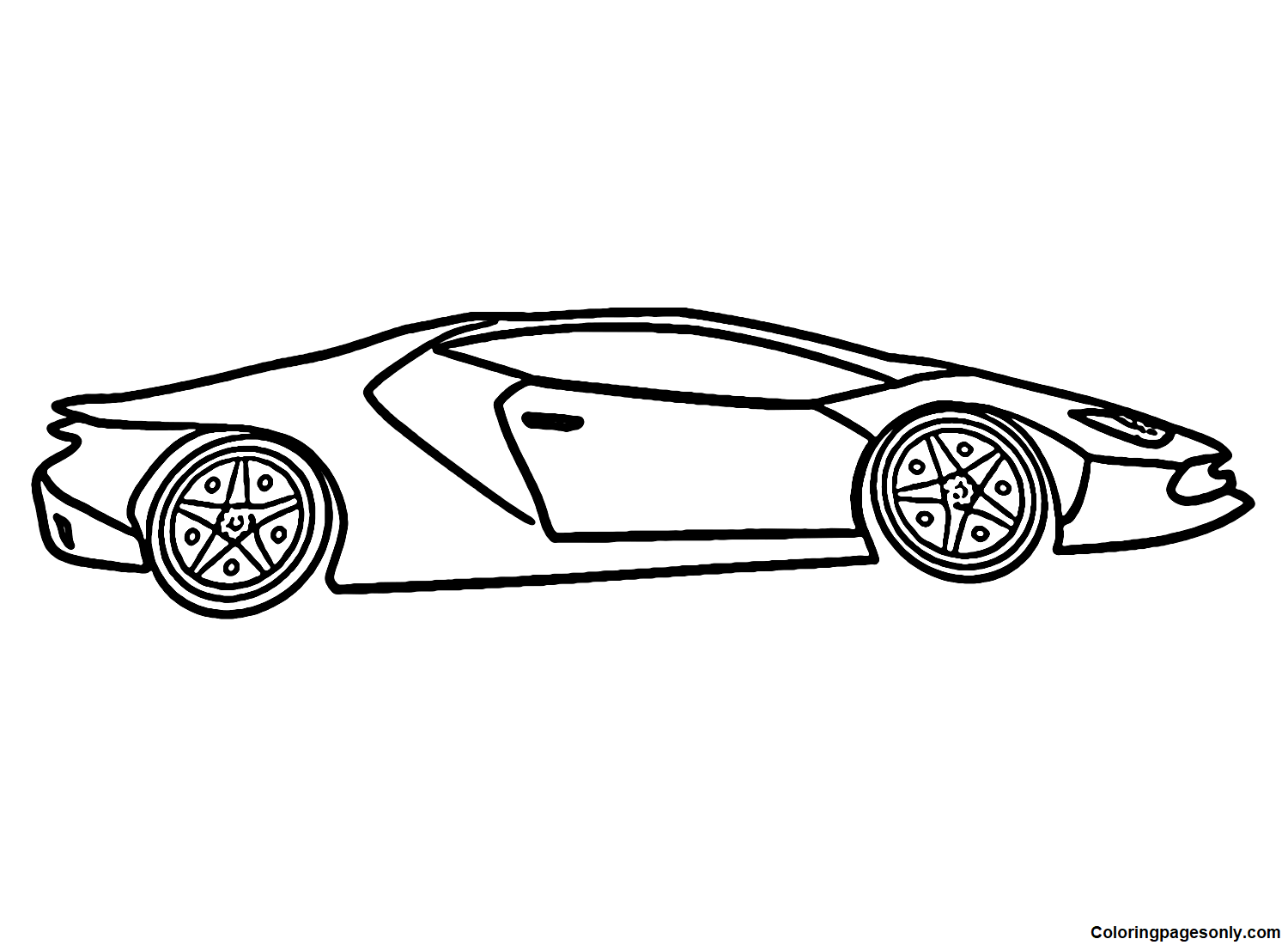
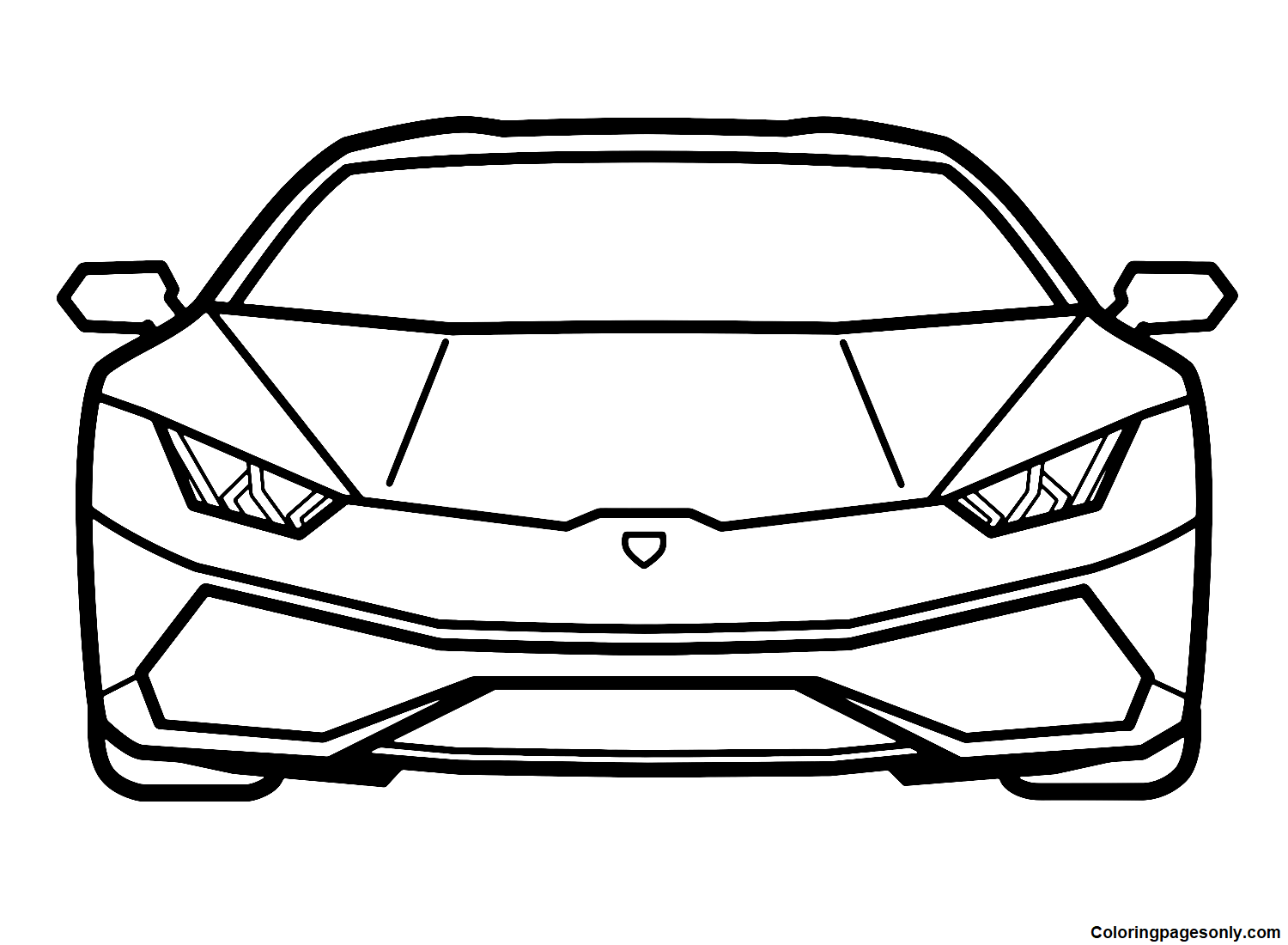
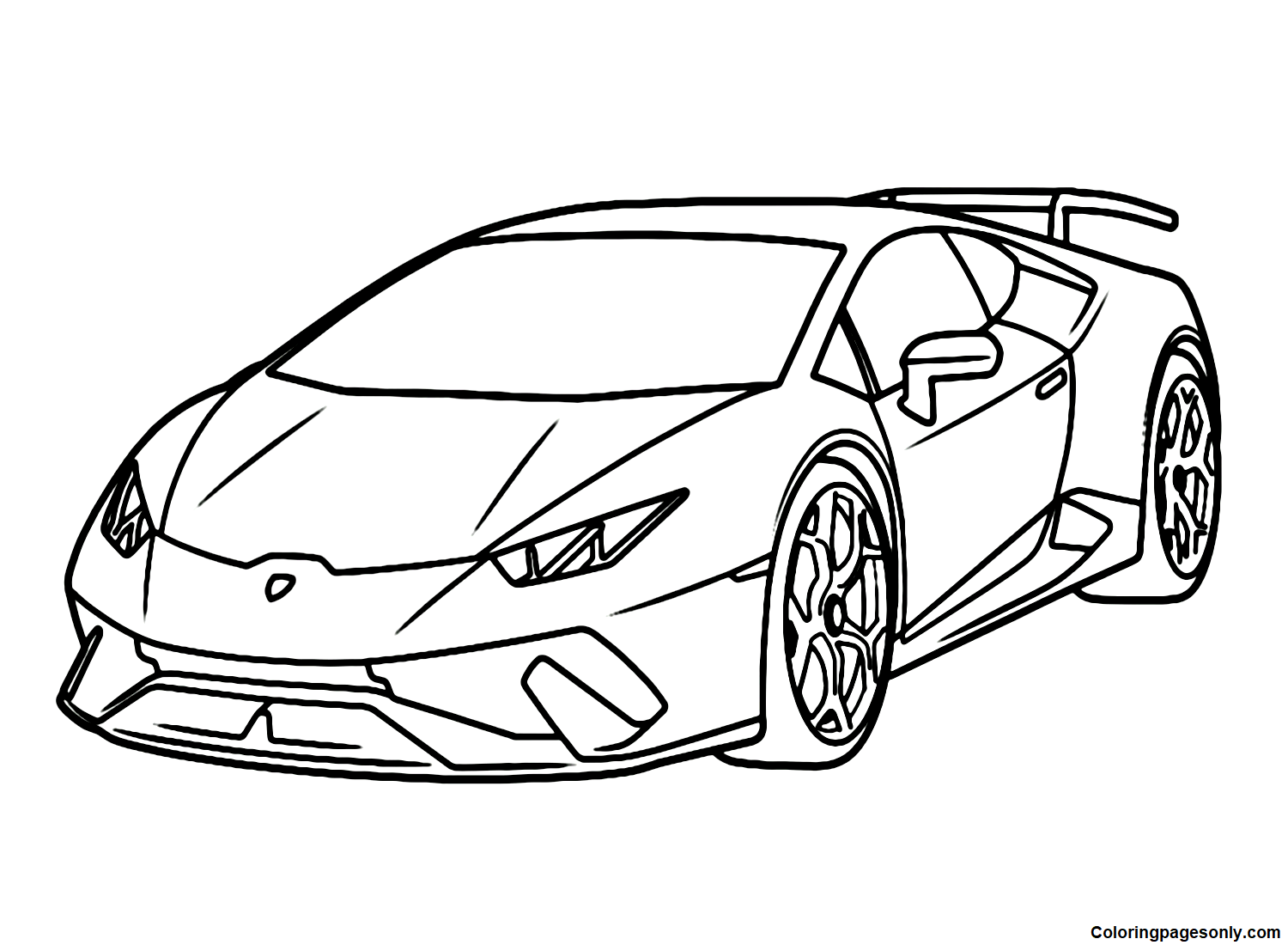
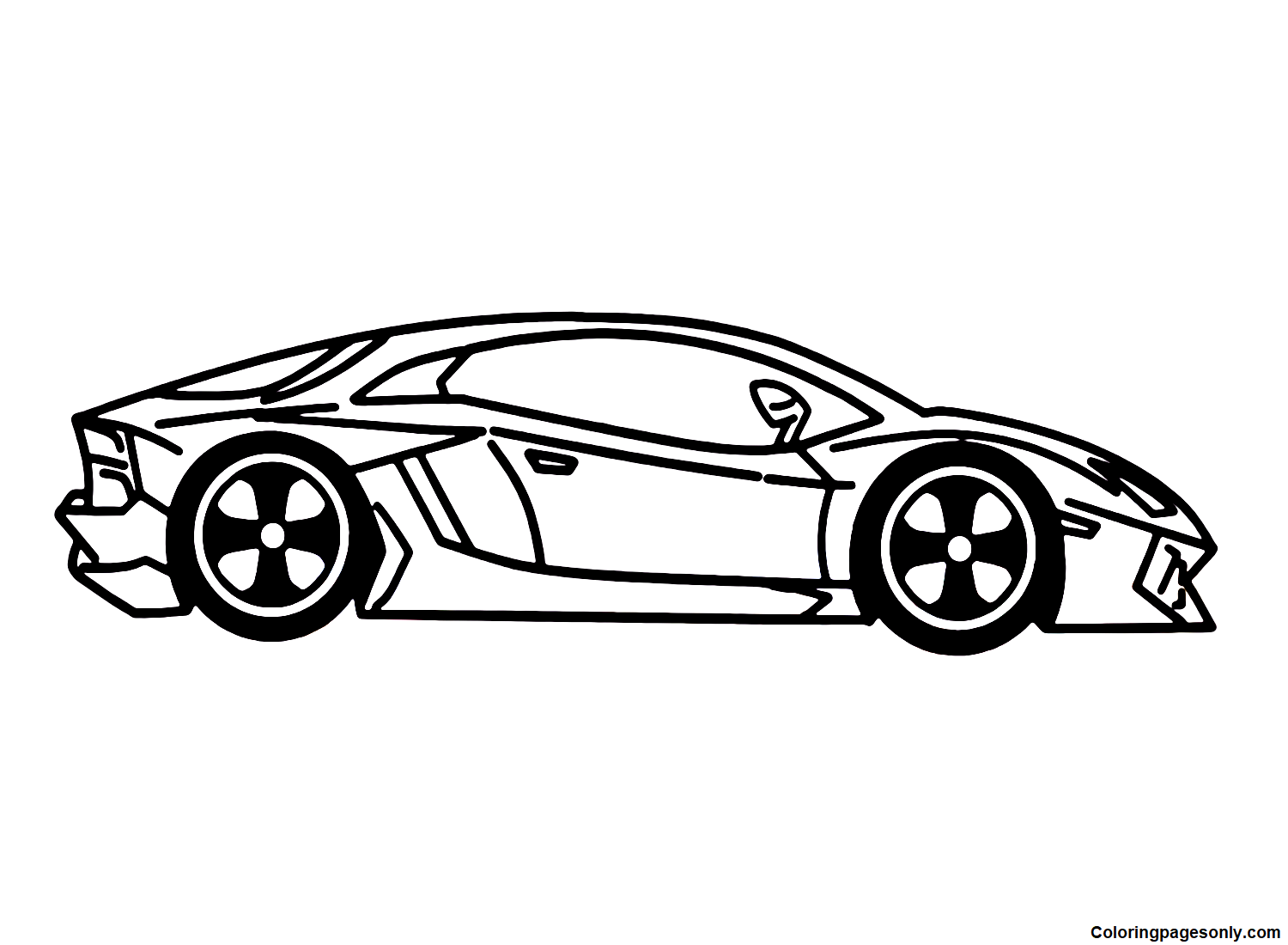
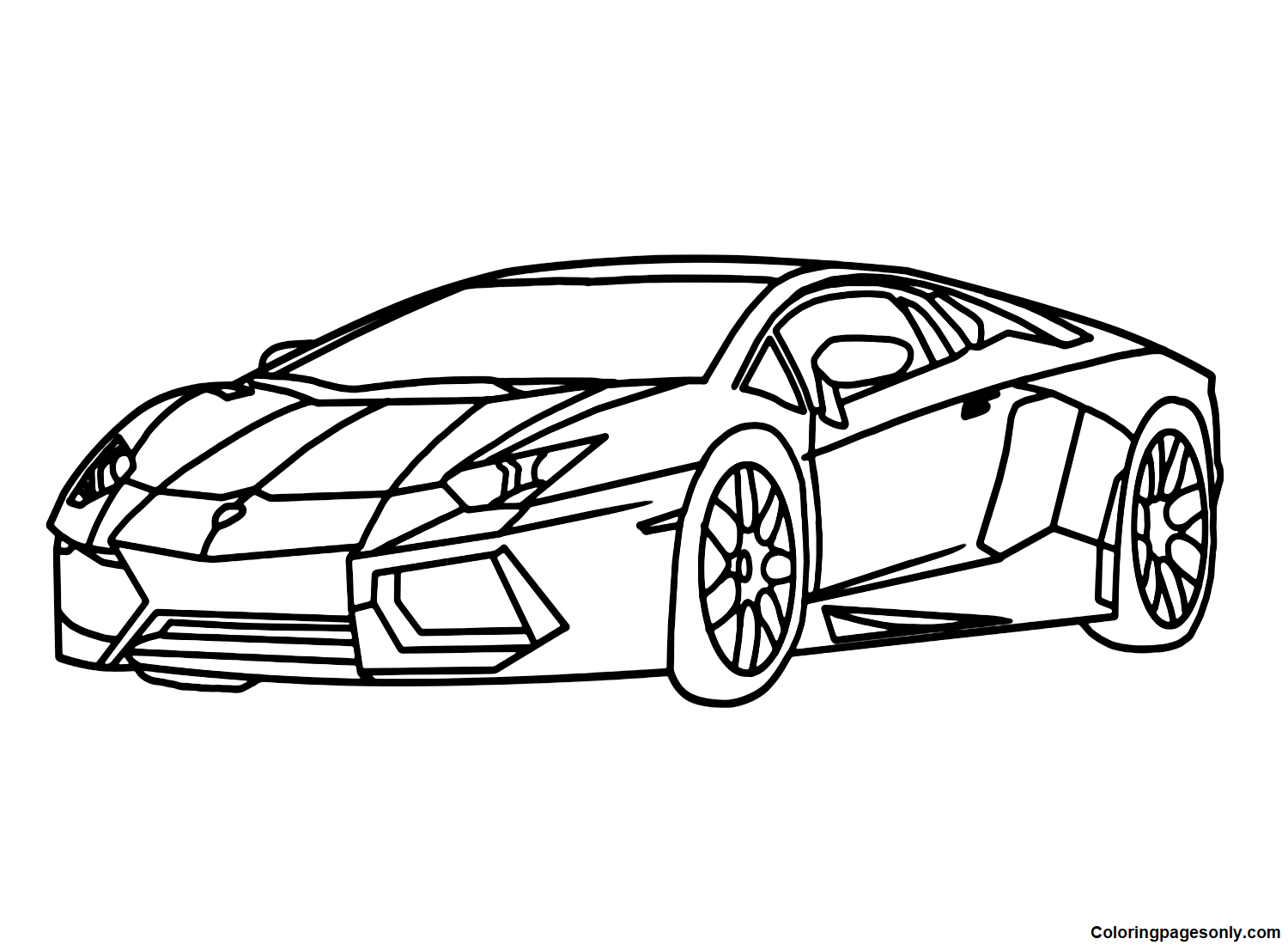
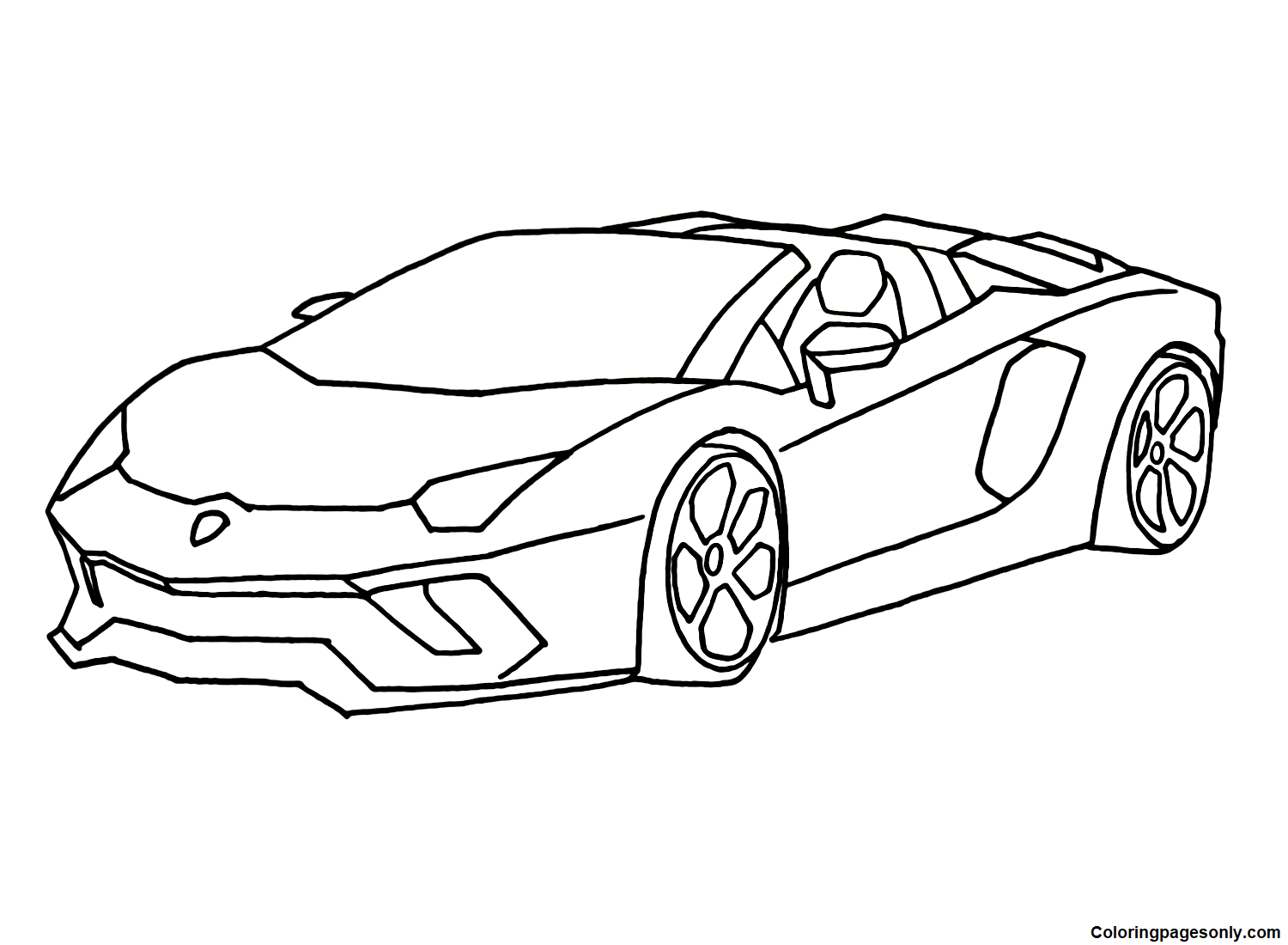
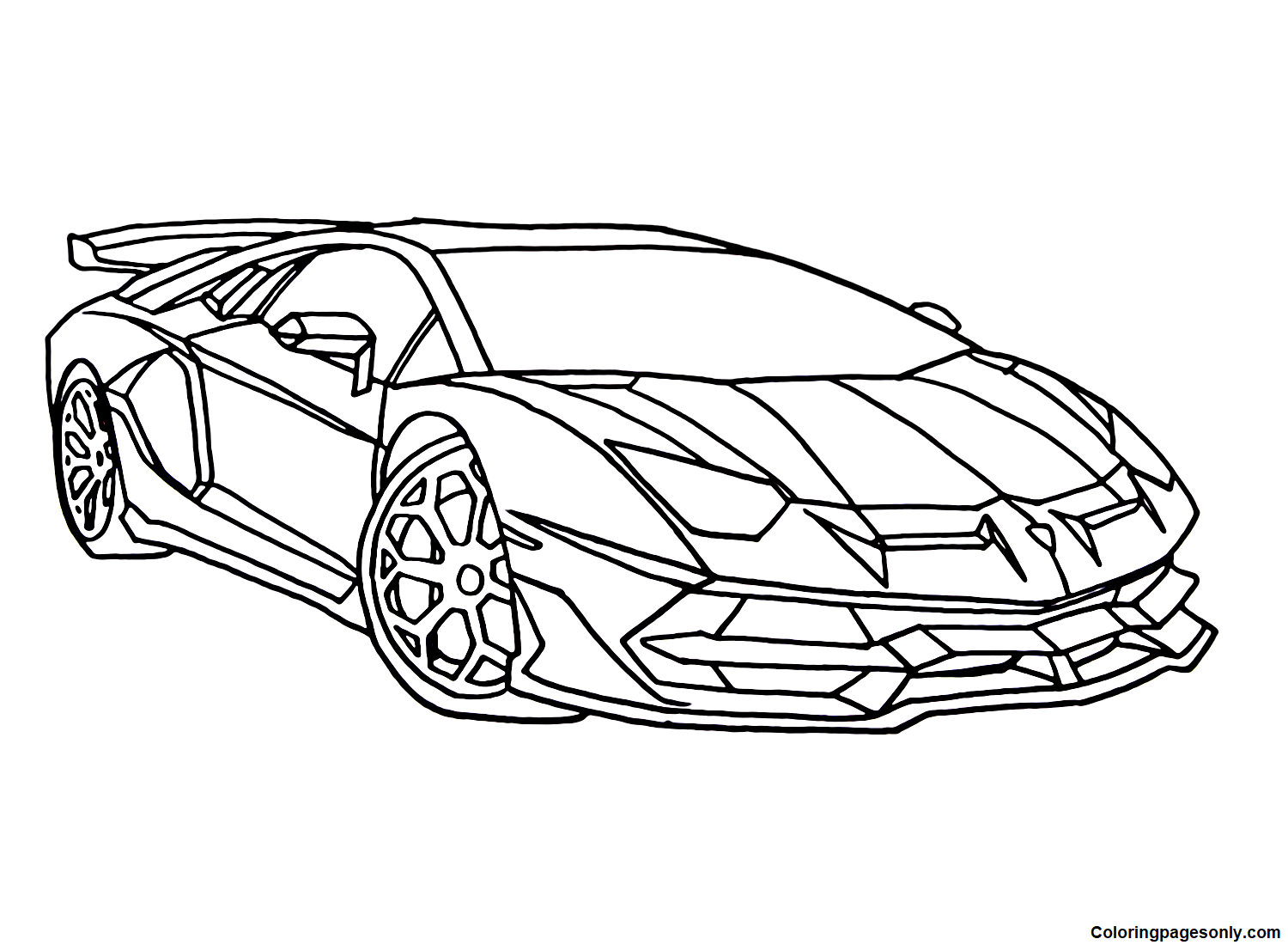
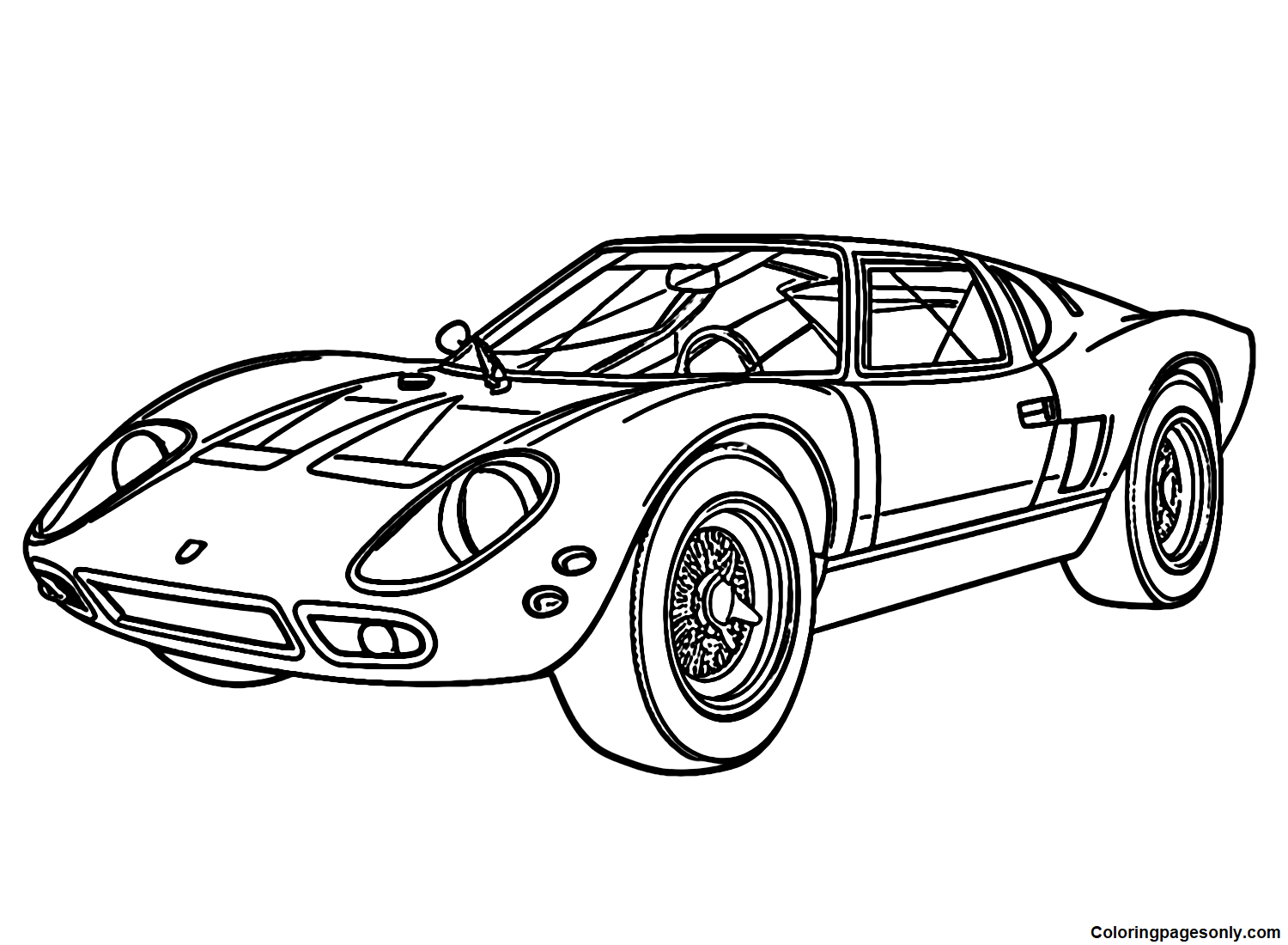
Free Lamborghini coloring pages: 40+ pages featuring the Lamborghini Aventador in front, side, and three-quarter view compositions, the Huracán in coupe and Spyder configurations, the Urus SUV profile, the classic Countach wedge silhouette that defined 1970s and 1980s supercar design, the Murciélago with its scissor doors, the Revuelto hybrid successor, the charging bull emblem in standalone design pages, interior cockpit detail studies, scissor door deployment sequences, Lamborghini on circuit and road settings, racing livery variants, and the full visual vocabulary of one of the most recognizable automotive brands in the world across sixty-two years of supercar production. All free, printable PDFs and online coloring for car enthusiasts of all ages.
Automobili Lamborghini S.p.A. was founded in 1963 by Ferruccio Lamborghini (born April 28, 1916, died February 20, 1993) in Sant’Agata Bolognese, near Bologna, in the Emilia-Romagna region of Italy. Ferruccio Lamborghini had built a successful tractor manufacturing business (Lamborghini Trattori, founded 1948) and decided to enter the sports car market in direct competition with Ferrari, which was also headquartered in the same Emilia-Romagna region. The first production Lamborghini, the 350 GT, debuted at the 1963 Turin Motor Show. The Lamborghini Miura, which debuted at the 1966 Geneva Motor Show, is cited by many automotive historians as the world’s first supercar: the first production car to use a mid-mounted V12 engine layout that has since defined high-performance sports car engineering globally.
Lamborghini was acquired by the Volkswagen Group through Audi AG in 1998. The company’s logo features a charging bull on a shield, referencing both Ferruccio Lamborghini’s zodiac sign (Taurus) and the Spanish fighting bull tradition: every Lamborghini model since the Miura has been named after a famous fighting bull, bull-related term, or a bull from bullfighting history.
These 40+ free pages at ColoringPagesOnly.com cover Lamborghini across its key models. All free, PDF or PNG, print or color online.
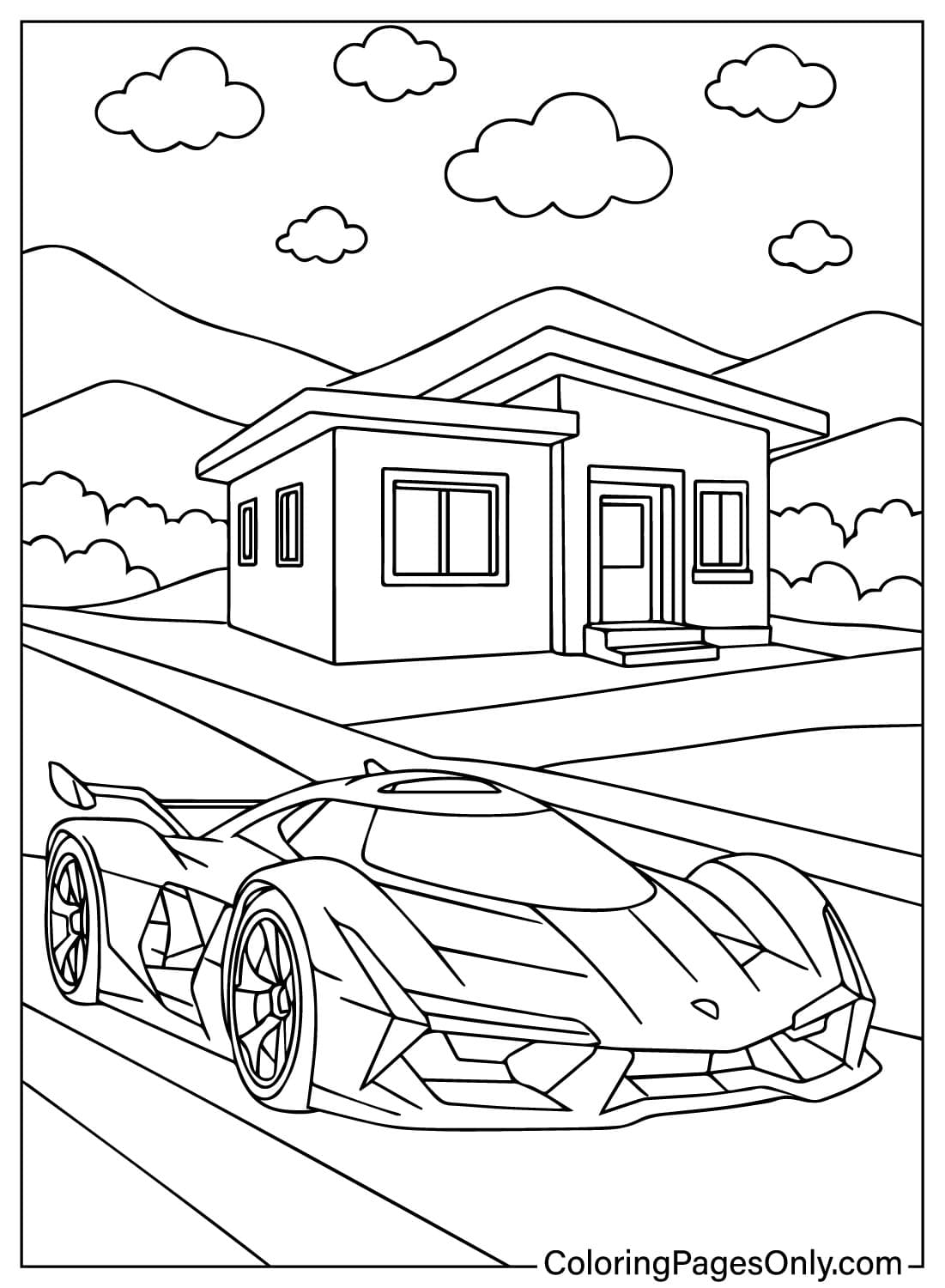
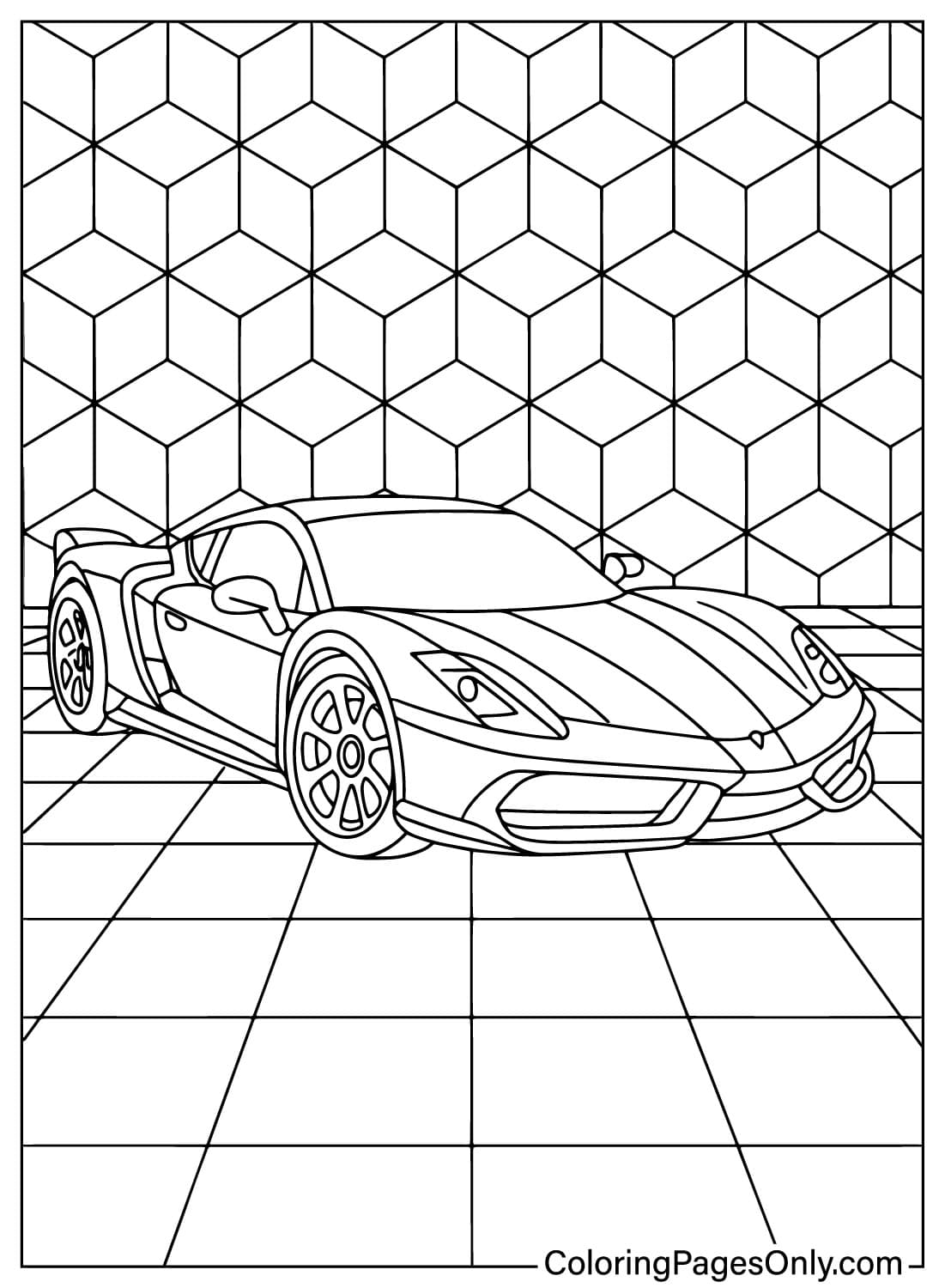
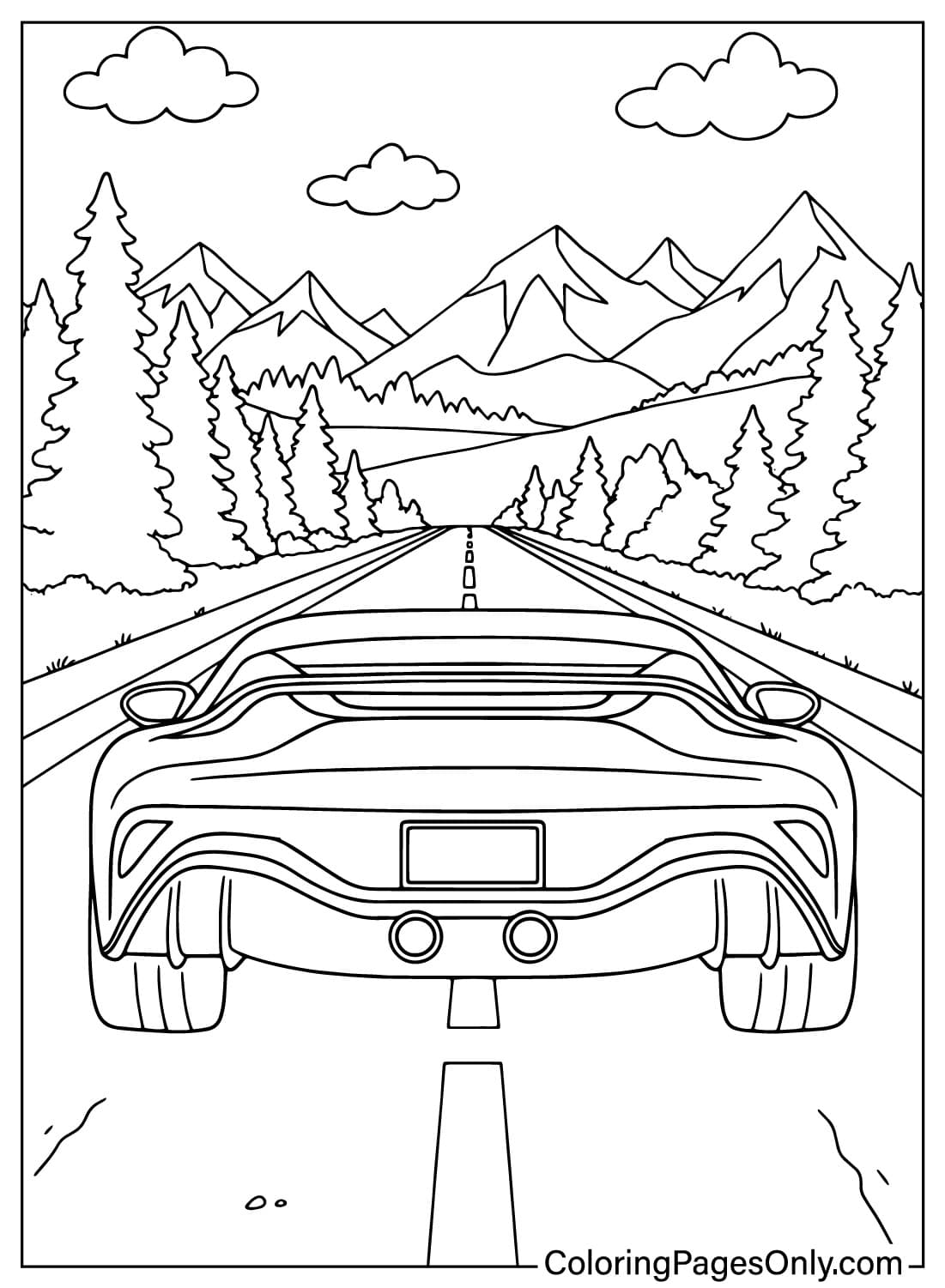
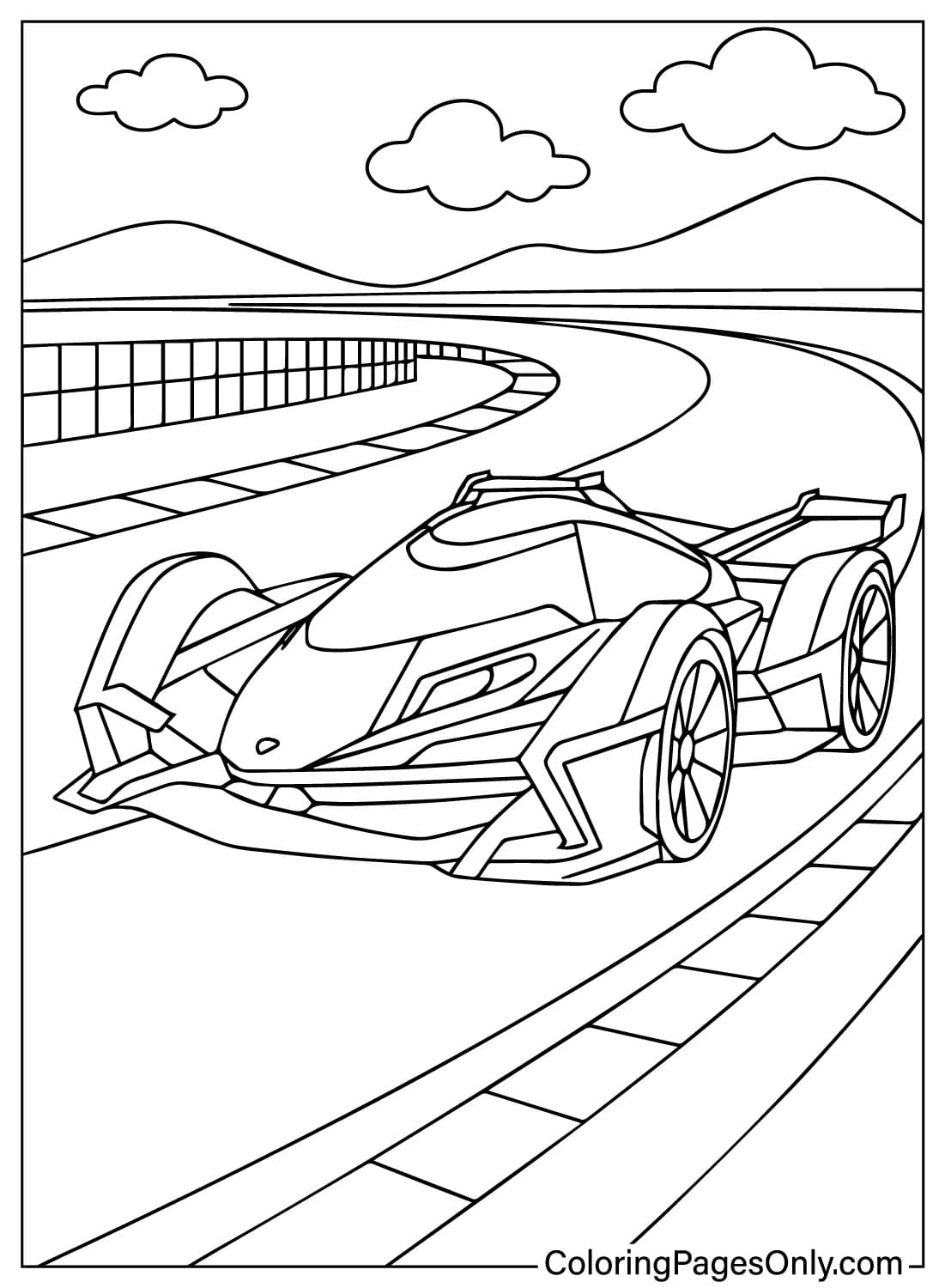



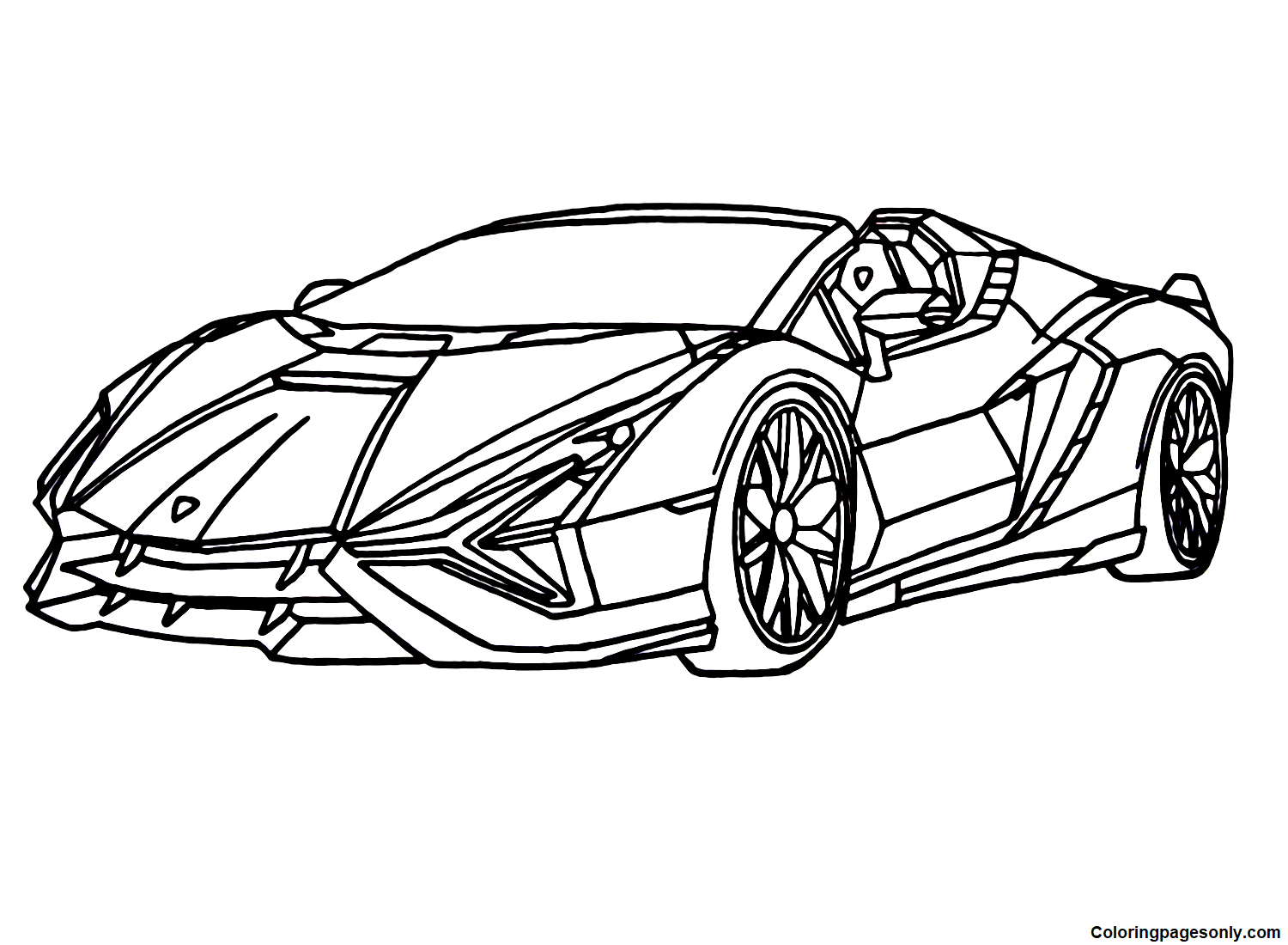
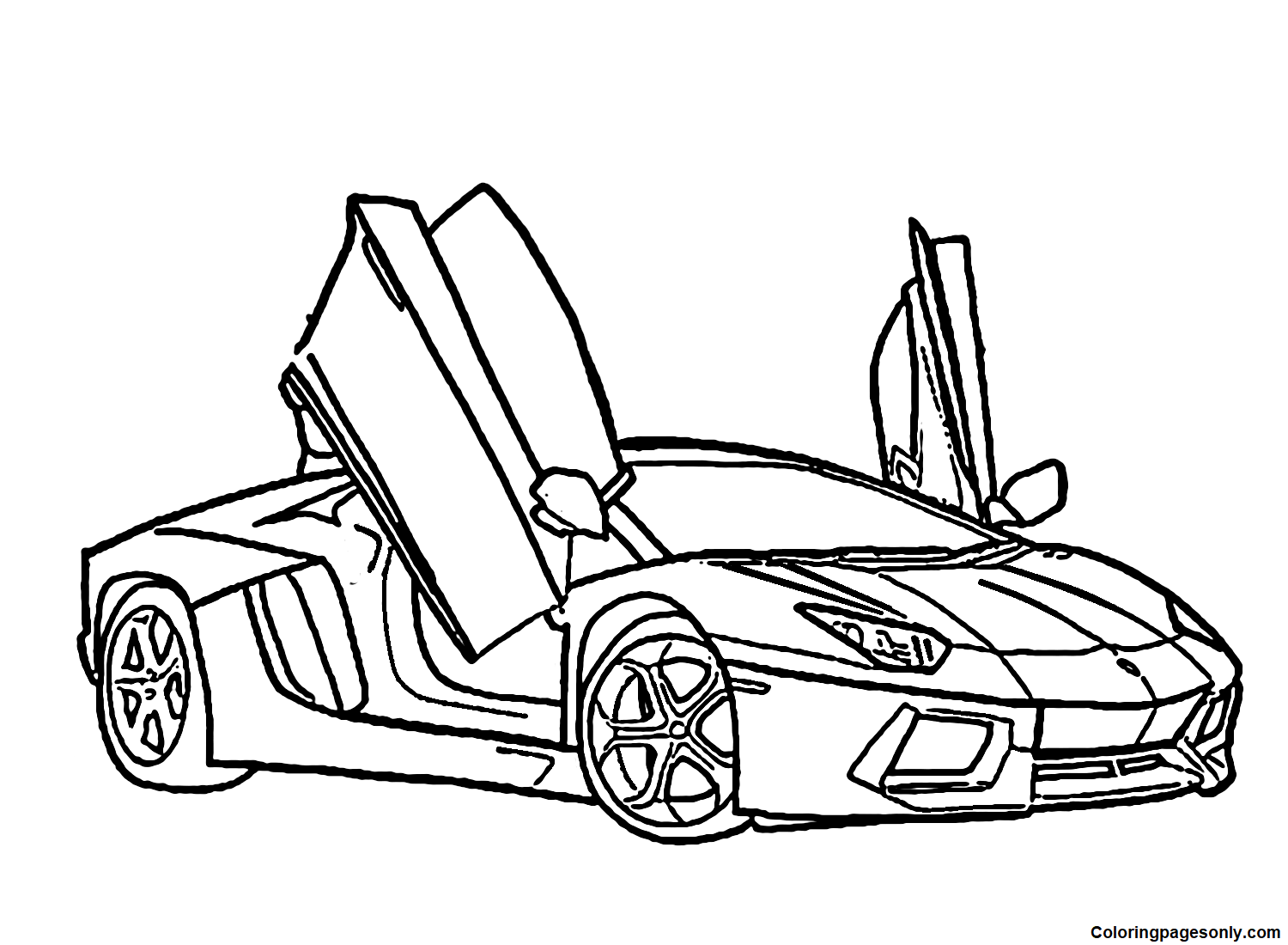
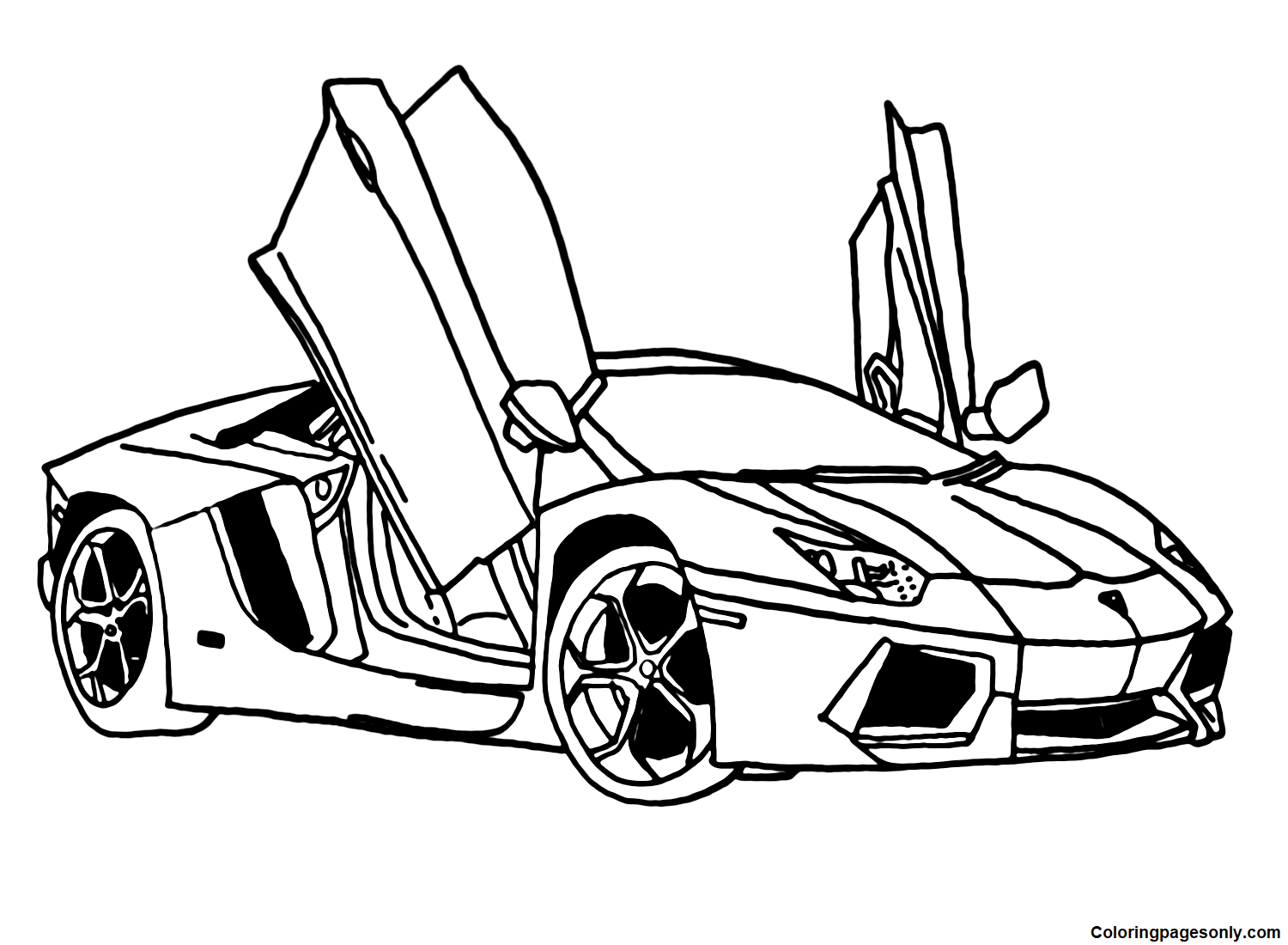
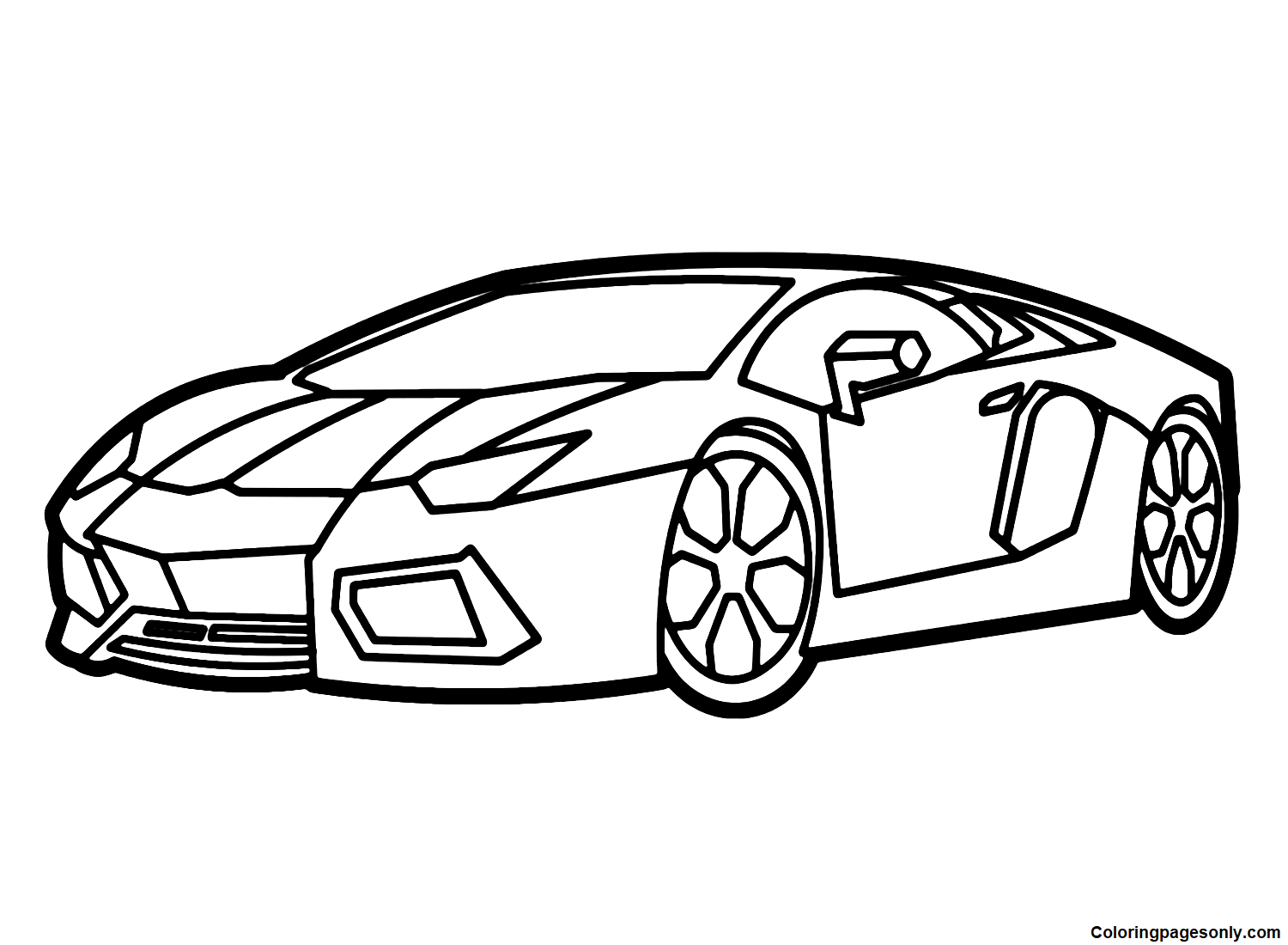


What’s Inside
Lamborghini Aventador Pages
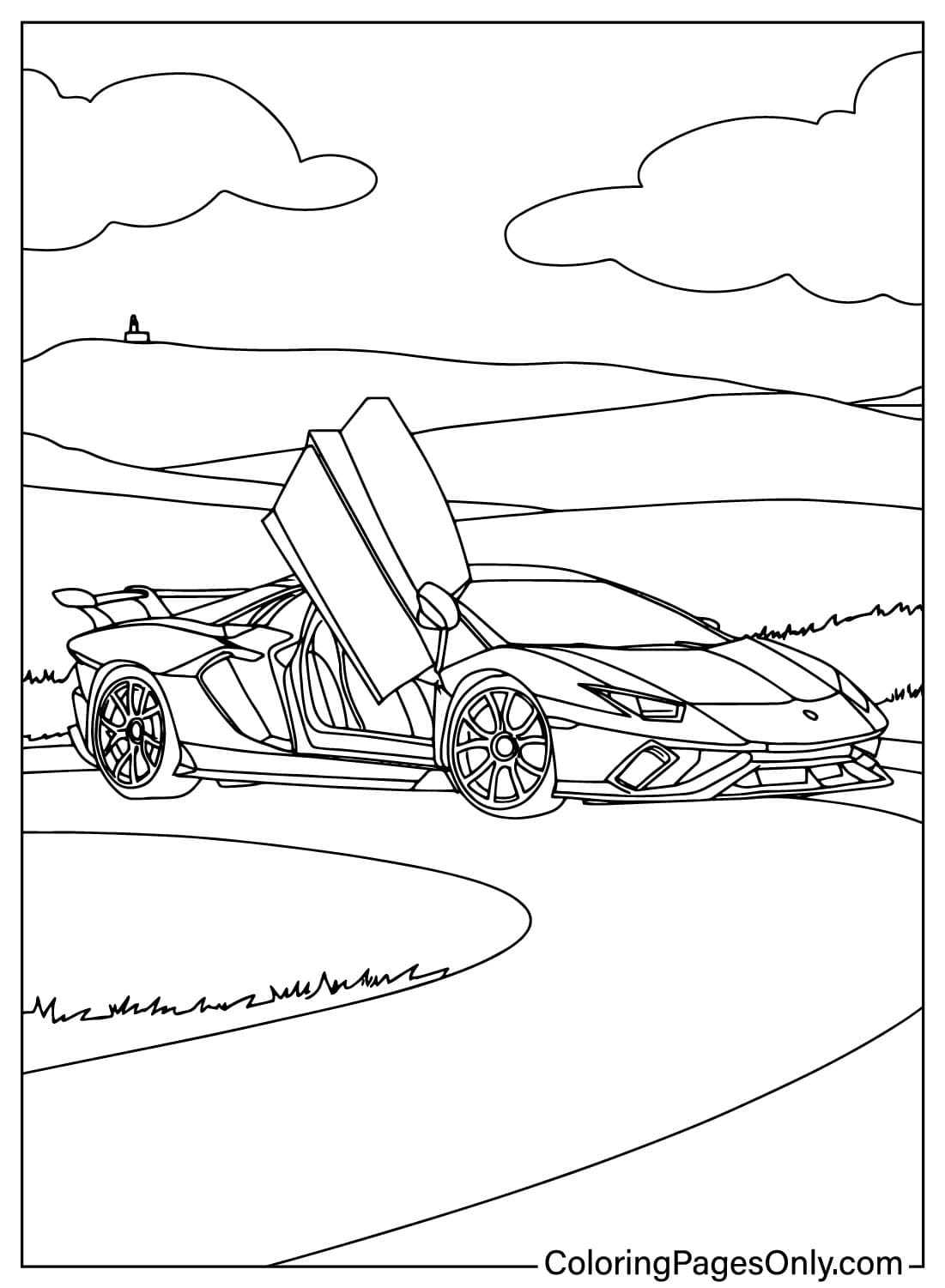
The Lamborghini Aventador was produced from 2011 to 2022 and is named after a bull that competed in the 1993 Zaragoza bullfighting festival in Spain, where it won the Trofeo de la Peña La Madroñera award for outstanding bravery. Its production run of approximately 11,465 units across all variants made it the most commercially successful V12 Lamborghini model in the company’s history.
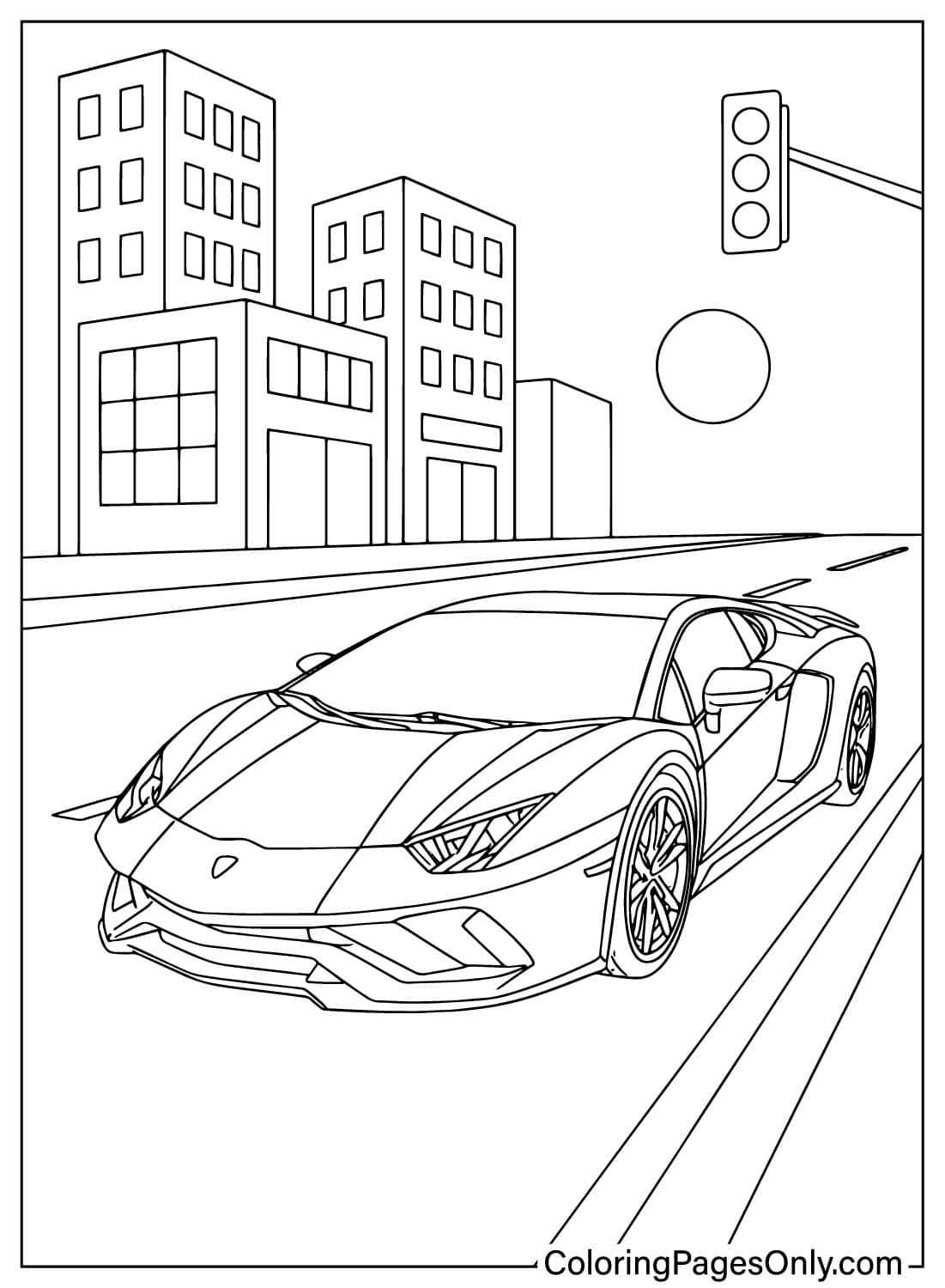
The Aventador’s design language uses the angular, aerospace-influenced aesthetic that has defined Lamborghini since the Countach era: deep aerodynamic channels cut into the body, sharp edges at panel transitions, the low roofline of a mid-engine sports car, and the hexagonal shapes visible throughout the vehicle’s air intakes, vents, and architectural details. The hexagonal motif (called “Y-shape” in Lamborghini’s design vocabulary) references aeronautical cockpit design and appears in the headlights, exhaust tips, interior elements, and body surface cutouts.
The Aventador SVJ (Super Veloce Jota), introduced in 2018, produced 770 horsepower from a naturally aspirated 6.5-liter V12 and held the Nürburgring production car lap record at 6 minutes 44.97 seconds at the time of its announcement. The final Aventador rolled off the production line in September 2022, marking the end of Lamborghini’s naturally aspirated V12 production era.
Coloring Aventador pages: The body panels use the metallic body color technique: apply the base color at full saturation across all main body surfaces, then apply slightly lighter tones at the most directly lit panel edges and slightly darker tones at the deepest body creases. For yellow Aventadors (one of the most frequently depicted colors): vivid warm yellow at full coverage, with pale yellow-white at the sharpest panel-edge highlights. The large air intakes and body channels use near-black or very dark grey to suggest the deep shadow of the aerodynamic openings. The hexagonal taillights and headlights use deep red and vivid white, respectively.
Lamborghini Huracán Pages
The Lamborghini Huracán (Spanish: hurricane) was produced from 2014 through 2024, replacing the Gallardo as Lamborghini’s entry-level V10 model. Named after a Spanish fighting bull known for its valor in the 1879 bullfighting season, the Huracán was built on a joint platform with the Audi R8, both sharing the same 5.2-liter naturally aspirated V10 engine architecture.
The Huracán Performante, introduced in 2017, set a Nürburgring production car lap record of 6 minutes 52.01 seconds, using an aerodynamics system called ALA (Aerodinamica Lamborghini Attiva) that actively channels airflow to either generate downforce or reduce drag depending on the driving situation. The Huracán STO (Super Trofeo Omologata), introduced in 2020, brought racing car-derived aerodynamics to the road in the most track-focused version of the model range.
The Huracán’s design departed from the Aventador’s extreme sharp angles toward a slightly more curved aesthetic: smoother transitions between body surfaces, a more continuously flowing roofline, and a visual quality that reads as aerodynamic evolution rather than stylistic aggression. It became Lamborghini’s most produced single model, with more than 20,000 units manufactured across its ten-year production run.
Coloring Huracán pages: The Huracán’s smoother body surfaces require more attention to the primary body surface’s gradual curvature compared to the Aventador’s sharp panel-edge language. Apply the base body color at full coverage. The curvature highlight moves gradually across a broader surface area rather than concentrating at sharp edges: apply a slightly lighter tone across the broadest section of the curved roof and rear haunches, where the body curves away from the viewer and catches maximum direct light. Any carbon fiber elements (roof, mirror housings, splitters) use the crosshatch technique: apply near-black at full coverage, then add slightly lighter dark grey in a diagonal crosshatch pattern, suggesting the woven fiber structure.
Lamborghini Urus Pages
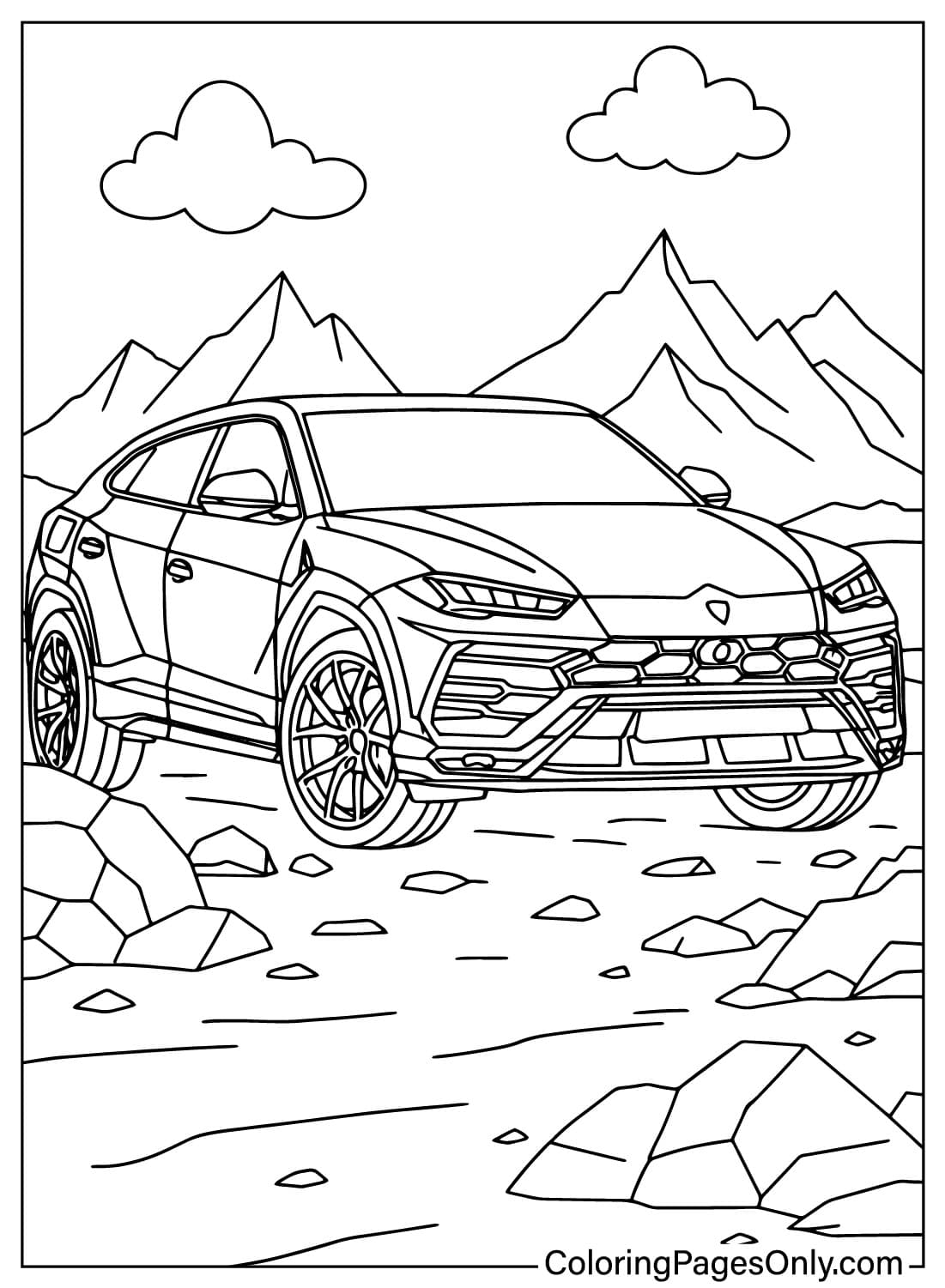
The Lamborghini Urus, introduced in 2018, is named after the aurochs (Bos primigenius), the extinct ancestor of domestic cattle that itself predates the fighting bull tradition from which other Lamborghini names derive. It is Lamborghini’s first SUV in modern production and the company’s second SUV overall, following the LM002 off-road vehicle produced from 1986 to 1993.
The Urus uses a 4.0-liter twin-turbocharged V8 producing 641 horsepower in its original specification and 666 horsepower in the Urus S variant, significantly different from the naturally aspirated V10 and V12 engines of Lamborghini’s sports car lineup. After its introduction, the Urus became Lamborghini’s best-selling model by volume: in 2022, Lamborghini delivered 9,233 vehicles in a single year, a company record, with the Urus accounting for the majority of deliveries. This dramatically expanded the company’s total annual production compared to its pre-Urus output.
The Urus’s design applies Lamborghini’s angular aesthetic language to the SUV body form: low for an SUV, with sharp character lines running from the nose through the doors to the rear, air inlets at the front with the hexagonal shapes consistent with the sports car range, and a roofline that slopes aggressively toward the rear rather than maintaining the upright profile of more conventional SUVs.
Coloring Urus pages: The SUV body form is taller and longer than the sports car models, with more surface area to manage. Apply the base body color across the larger panel surfaces using even, full-coverage application. The most distinctive coloring element is the contrast between the upper body (in the main body color) and the lower body trim (typically in a darker grey or near-black) along the door sills and wheel arch extensions. These trim elements use a slightly warm dark grey, clearly darker than the body but not quite near-black. The large five-spoke or multi-spoke alloy wheels use the standard metallic three-zone technique.
Lamborghini Countach: The Classic
The Lamborghini Countach, produced from 1974 to 1990, is the model most responsible for establishing the visual language that the word “supercar” evokes. Designed by Marcello Gandini at Bertone, the Countach introduced an extreme wedge-shaped body form, a very low roofline, massive rear fender flares, and vertically-opening scissor doors (officially called “butterfly doors” in period terminology) that have been a Lamborghini trademark on every subsequent flagship model.
“Countach” is an exclamation of astonishment in the Piedmontese dialect of Italian, allegedly spoken by a Bertone engineer when he first saw the 1971 Countach prototype. The car’s visual impact in the period was described by automotive journalists using words suggesting shock and disbelief: a vehicle whose proportions, angles, and overall presence had no equivalent in any production car that preceded it.
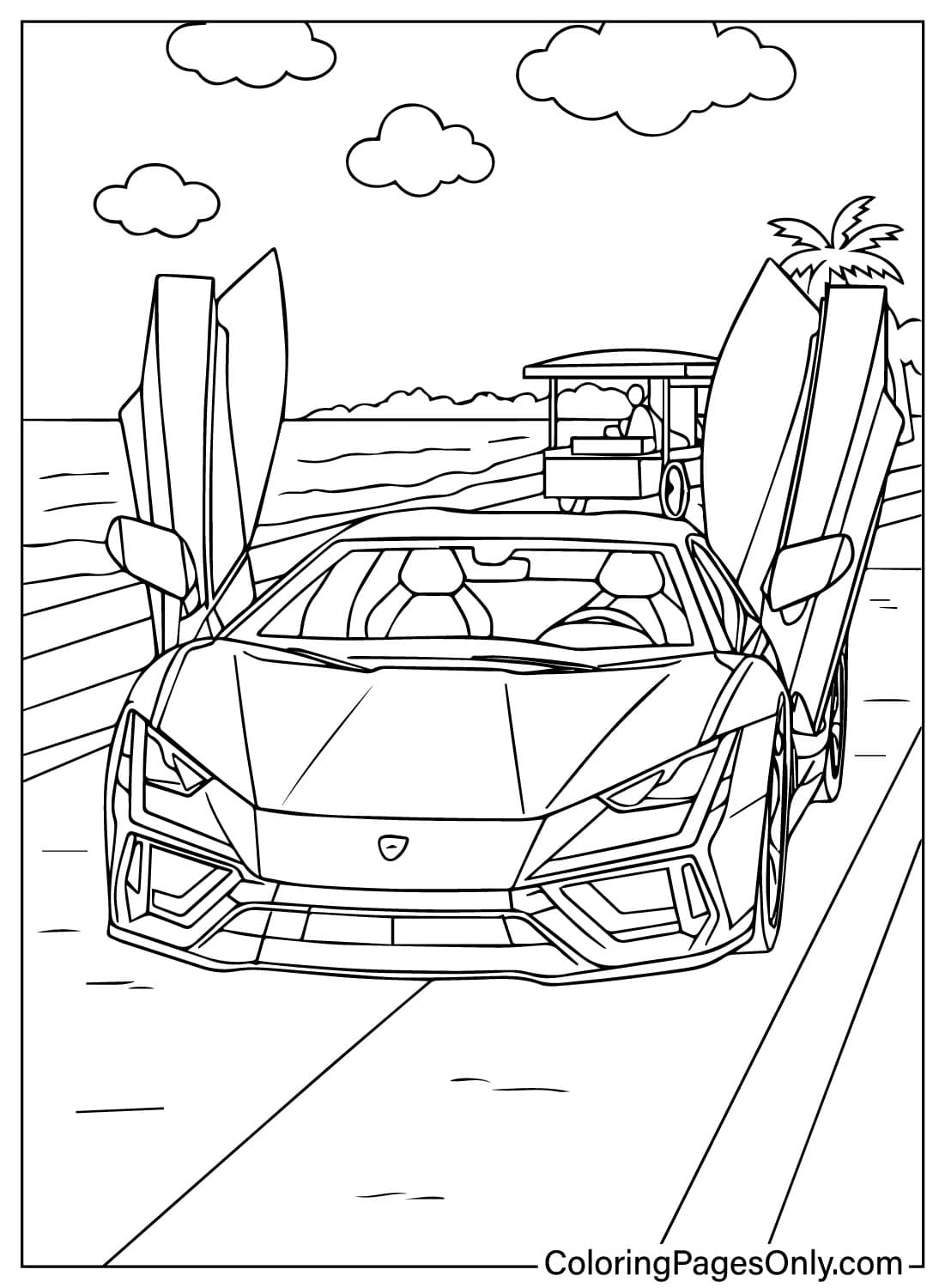
The scissor doors, technically called vertically-hinged doors, pivot upward from a horizontal hinge at the front of the door opening rather than swinging outward from a vertical hinge at the rear edge. They allow entry and exit in tight parking conditions impossible for conventionally hinged wide doors, while also producing one of the most photographically dramatic vehicle details in automotive history.
Approximately 2,042 Countachs were produced across all variants from 1974 to 1990. A revised Countach LPI 800-4 was produced in a limited run of 112 units in 2021 to mark Lamborghini’s 50th anniversary, bringing the design back with hybrid technology.
Coloring Countach pages: The wedge body is the most geometrically distinct of any Lamborghini model: apply the base body color across the dramatically angled flat surfaces, noting that the Countach has very little curved surface compared to more contemporary cars. Panel lines between the flat faces of the body are sharp and defined. Many Countachs are depicted in white (a particularly striking color on the sharp-edged design), vivid red, or the specific period colors of 1970s-1980s supercar photography. The scissor door, if shown open, displays the door’s inner panel surfaces: typically a contrasting dark or body-color interior surface visible as the door swings vertically upward.
The Lamborghini Revuelto and Hybrid Era Pages
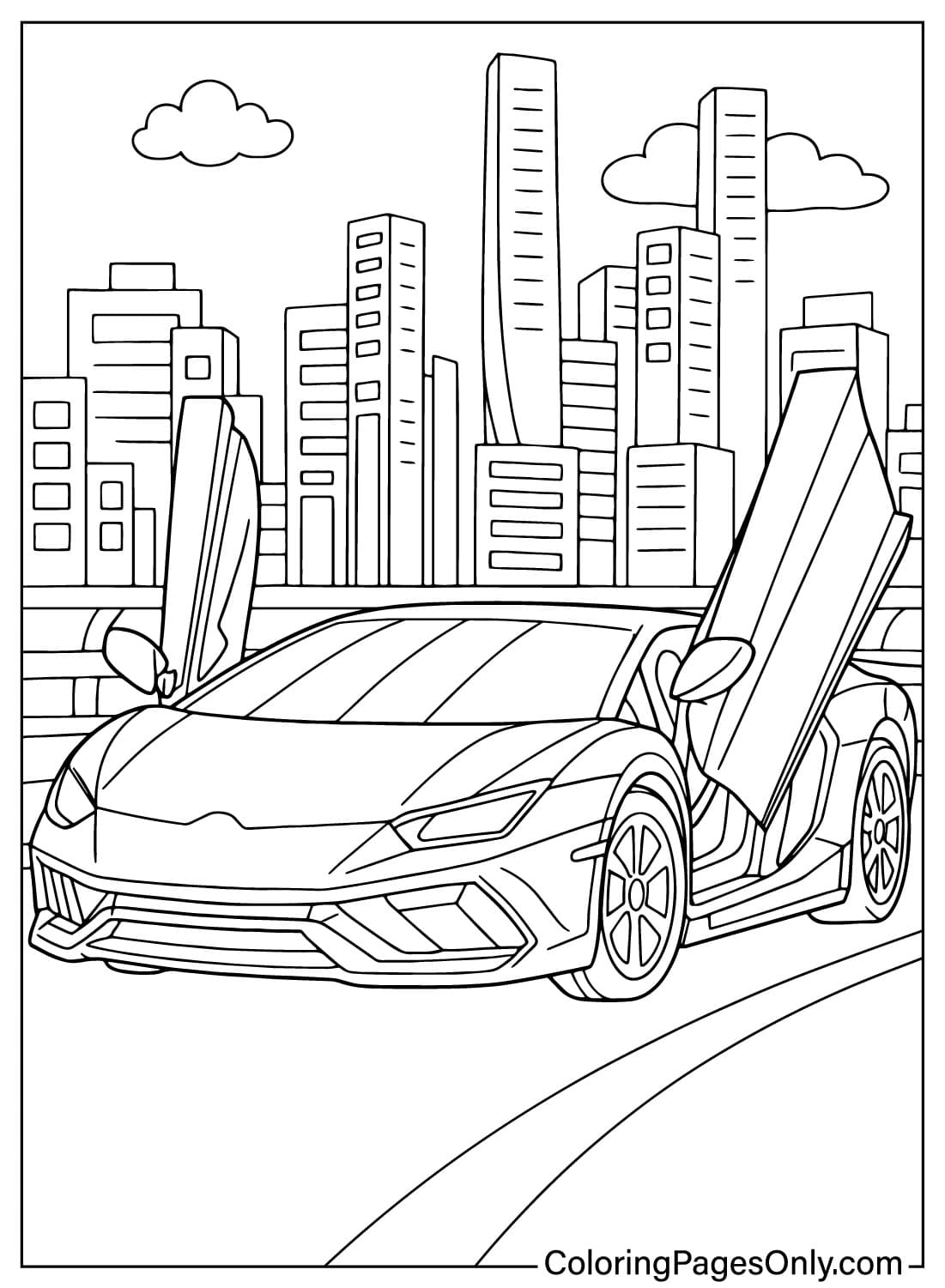
The Lamborghini Revuelto, introduced in 2023 as the Aventador’s successor, represents a fundamental shift in the brand’s powertrain philosophy: for the first time in Lamborghini’s history, a V12 flagship model uses a hybrid powertrain rather than a purely combustion engine. The Revuelto combines a 6.5-liter naturally aspirated V12 producing 825 horsepower with three electric motors (two on the front axle, one integrated into the gearbox) for a combined system output of 1,001 horsepower, making it Lamborghini’s most powerful production car at its introduction.
The name “Revuelto” is a Spanish adjective meaning “scrambled,” “stirred,” or “mixed,” referencing the mixture of combustion and electric power sources in its hybrid architecture. The car maintains the Aventador’s vertically-opening scissor doors and the hexagonal design language of the Aventador era while updating the body proportions and aerodynamic elements for the 2020s.
The Revuelto’s base price is approximately $500,000 USD, and the production allocation for its first production year was reported to be fully subscribed within days of ordering opening. The car is built in Sant’Agata Bolognese using a carbon fiber monocoque structure.
Coloring Revuelto pages: The Revuelto’s body is more aerodynamically complex than the Aventador it replaces: more active aerodynamic elements (movable rear wing, active front splitters) create more detailed surface structures to render. Apply the base body color at full coverage. The active aerodynamic components (wing elements, front diffuser sections) use slightly darker tones or carbon fiber cross-hatch rendering to distinguish them from the primary body panels. The hexagonal taillights use deep, vivid red at full saturation.
Logo and Emblem Pages
The Lamborghini bull emblem, a black charging bull set on a black-and-gold shield, is among the most recognized automotive logos globally. The bull faces to the right (the viewer’s left), positioned in an aggressive forward-charging posture with horns lowered. The gold framing of the shield and the gold lettering of “LAMBORGHINI” across the base of the emblem are the primary non-black color elements.
The charging bull’s specific design has evolved subtly across decades but maintains consistent elements: the powerful forward-leaning posture, the lowered horns, and the aggressive silhouette that communicates the same forward momentum of the vehicles bearing the badge. The bull emblem pages are the collection’s most heraldically styled compositions, referencing the European tradition of automotive coat-of-arms badges.
Coloring emblem pages: The bull itself uses near-black or very dark charcoal-brown, applied at full coverage to the entire bull form. The shield border and any gold lettering elements use vivid warm gold at full saturation: the gold must read as vivid and precious rather than as dull yellow or brown-gold. The shield background uses near-black or the specific dark navy that the Lamborghini emblem uses. The gold framing lines around the shield perimeter use the three-zone metallic gold technique: bright pale gold at the frame’s most lit upper surfaces, standard vivid gold on the main frame faces, deeper amber-gold in the shadow areas.
What These Pages Do
Lamborghini’s position in automotive culture extends beyond the commercial performance car market into a specific territory of cultural aspiration documented across popular music, film, video game design, and visual culture for six decades. The Countach’s appearance on bedroom posters throughout the 1970s and 1980s is documented in sociological and cultural studies of that era’s consumer aspiration imagery. The specific visual of a Lamborghini on a poster represented a specific form of accessible fantasy: the car could be seen, could be understood as extraordinary, could be reproduced in poster form and placed on a bedroom wall, without the viewer needing any context beyond the visual itself to understand that something exceptional was being depicted.
The Lamborghini Miura’s 1966 Geneva Motor Show debut is documented in automotive history as the event that definitively established the mid-engine supercar category. Before the Miura, high-performance sports cars, including Ferrari’s flagship models, used front-mounted engines. The Miura’s transversely mounted V12 behind the driver gave it a weight distribution that transformed how sports cars handled at the limit and established the engineering template that Ferrari, McLaren, Porsche, and every subsequent supercar manufacturer has followed. The engineering journalist and historian L.J.K. Setright described the Miura’s debut as “the most beautiful car ever designed.”
The American Academy of Pediatrics identifies fine motor skill development as a key childhood milestone throughout early childhood. The complex panel line work of the Aventador and Huracán designs, the metallic body color rendering techniques required for realistic car coloring, the wheel spoke detail, the carbon fiber cross-hatch texture, and the logo’s precise gold and near-black heraldic composition all provide sustained fine motor challenge across the collection’s wide age range. The 2005 Art Therapy Journal study on structured coloring and anxiety reduction applies throughout.
How to Color These Pages Well
Lamborghini’s most iconic body colors require a specific metallic quality rather than flat application. The colors most associated with Lamborghini (vivid yellow, vivid orange, vivid green) are typically applied to the production cars in metallic or pearlescent finishes rather than as flat paint. To suggest this quality on a coloring page: apply the base vivid color at full saturation. Then apply a slightly lighter, slightly more golden version of the same color in a very narrow strip along the most directly lit body edge (the top of each fender arch, the highest point of the roof, the leading edge of the hood). This single highlight strip gives the body color its metallic quality with minimal complexity.
Panel lines on angular Lamborghini bodies are the design’s most specific structural element and must be rendered precisely. Every Lamborghini body panel is separated from adjacent panels by sharp, clearly defined crease lines rather than the smooth, blended transitions of rounder cars. On any Lamborghini page, identify every panel line before applying any color: these crease lines separate the hood from the fenders, the door from the sill, the body from the front and rear fascias. After the base body color is applied, apply a very thin line of slightly darker body color (or near-black) at each panel line position. These shadow lines give the body its sharp, architectural quality.
Wheel rendering is the most technically complex single element on most car coloring pages. Lamborghini uses multi-spoke alloy wheels with varying spoke designs across different models. Apply the base silver-grey (for standard alloys) or dark grey (for dark-finished wheels) at full coverage across the entire wheel circle first. Then apply slightly lighter silver-grey or pale grey-white along the top-facing and most directly lit surface of each spoke. Apply slightly darker grey in the deepest shadow areas at the spoke roots and the shadow-facing spoke sides. The brake caliper visible behind the wheel uses vivid yellow-green (Lamborghini’s signature brake caliper color) or vivid red, depending on the page’s specific depiction.
The carbon fiber elements use the crosshatch technique rather than flat dark grey. Many Lamborghini models incorporate carbon fiber body elements visible in exterior depictions: roof panels, mirror housings, front splitters, and rear diffusers. These areas use the carbon fiber crosshatch technique: apply near-black at full coverage across the carbon fiber area. Then apply very dark grey in a diagonal line pattern at approximately 45 degrees across the area, then again at 90 degrees to the first set of lines, producing the woven appearance of carbon fiber weave. The two-directional dark grey lines over the near-black base create a specific visual of visible carbon fiber without requiring realistic photo-accuracy.
Window glass on three-quarter view pages uses a very dark, slightly warm-tinted application rather than true black. Car windows in coloring pages are frequently colored either as pure black (too opaque, not glassy) or as pale blue-grey (too transparent, not automotive). The correct treatment is very dark grey with a very slight warm-green or blue-grey tint: a color that reads as tinted automotive glass rather than as either a black void or a window screen. Apply the window color at full pressure, but using a dark grey with the faintest warmth rather than true neutral black.
5 Creative Craft Ideas
The Ferrari Argument Origin Story
The founding story of Lamborghini, as widely reported in automotive history, is that Ferruccio Lamborghini complained to Enzo Ferrari about the clutch quality of his Ferrari 250 GT, and Ferrari dismissed him. The specific exchange reported in various sources: Enzo Ferrari told Ferruccio that a tractor manufacturer had no business telling him how to build sports cars. Ferruccio Lamborghini responded by founding Automobili Lamborghini.
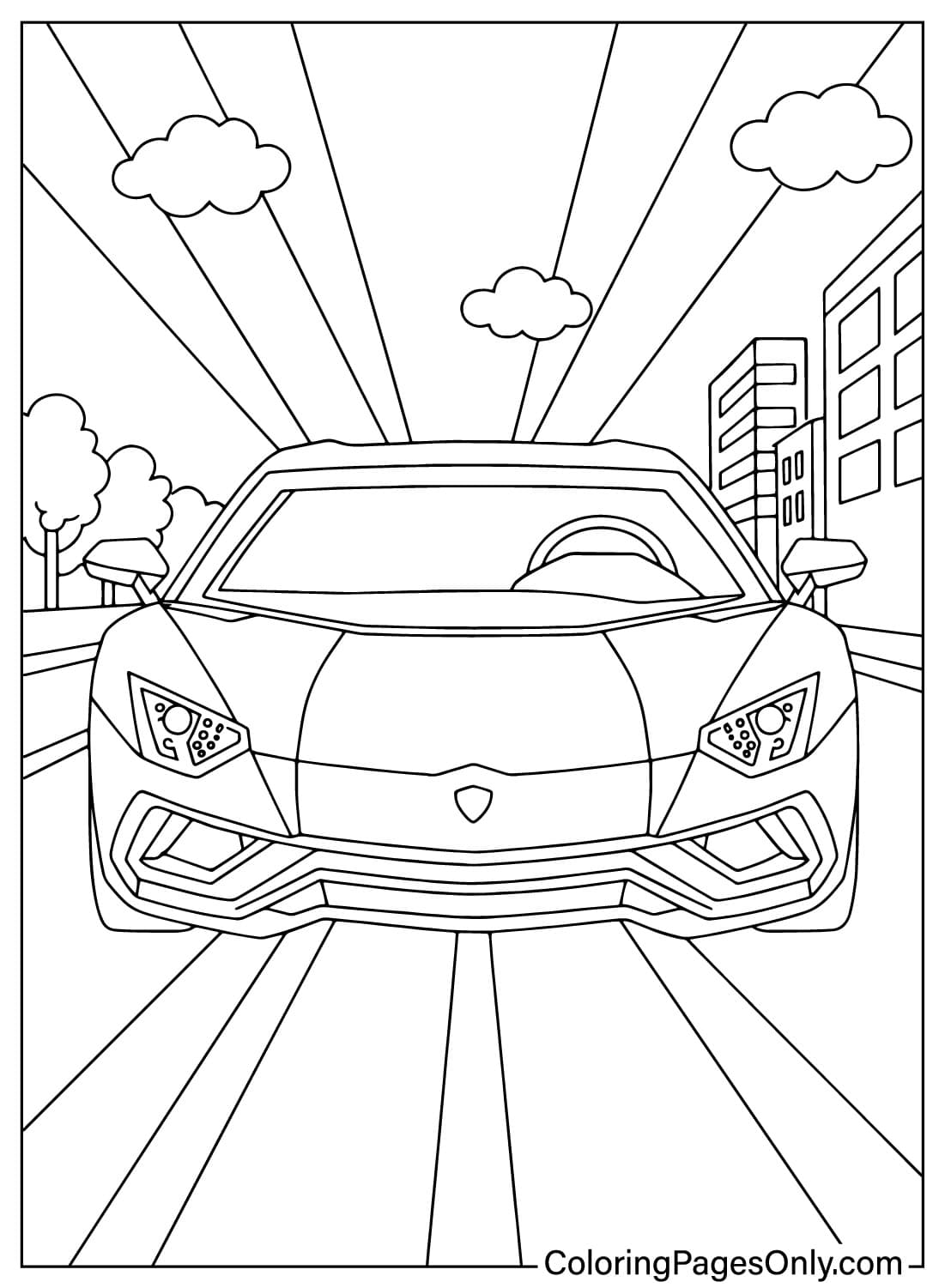
Print the most powerful Lamborghini front-view page in the collection. Color in the most vivid yellow or orange available: full saturation, maximum vibrancy.
On the backing card: “Ferruccio Lamborghini. Born April 28, 1916, Renazzo, Italy. Occupation: tractor manufacturer (Lamborghini Trattori, founded 1948). Vehicle owned: Ferrari 250 GT. Complaint: the clutch. The reported response from Enzo Ferrari: a tractor maker should not tell him how to build sports cars. Ferruccio Lamborghini’s response to the reported dismissal: founded Automobili Lamborghini in 1963, Sant’Agata Bolognese. First production car: Lamborghini 350 GT, 1963 Turin Motor Show. Ferrari’s Sant’Agata Bolognese headquarters: 19 kilometers away. Both are still operating.”
The Countach Bedroom Poster Study
The Lamborghini Countach appeared on bedroom posters throughout the 1970s and 1980s to an extent that made it one of the most specifically documented objects of consumer aspiration in that era. The poster format of the period (large-format color photography of exotic vehicles against sunset or airfield backgrounds) became a defined cultural genre. Walter Hurn, a British photographer, produced some of the most widely distributed Countach poster images.
Print a Countach page. Color in vivid red (one of the most common period poster colors) using the flat metallic technique: bold and vivid, with the specific high-contrast quality of period color photography printed on large poster stock.
On the backing card: “Lamborghini Countach. Designer: Marcello Gandini at Bertone. Production: 1974-1990. Total units: approximately 2,042. Name meaning: an exclamation of astonishment in the Piedmontese dialect of Italian. Scissor doors: first appeared on this model. Made permanent by every subsequent Lamborghini flagship. The bedroom poster: a defined cultural artifact of 1970s and 1980s consumer aspiration. The Countach on the wall: recorded in sociological studies of that era’s adolescent material culture. The children who had it on their wall in 1978 are now in their late 50s and 60s. Some of them eventually bought one.”
The Bull Names Timeline
Every major Lamborghini model is named after a fighting bull or bull-related term. The naming tradition began with the Miura (1966), named after Eduardo Miura’s famous bull-breeding ranch in Spain, and has continued without interruption through the current Revuelto and Urus.
Print one page each of as many different Lamborghini models as the collection contains. Color each in a different body color (the collection’s diversity of body colors on different models illustrates the range).
Mount all in a row with labels: “Lamborghini model names and their bull origins. Miura (1966): Eduardo Miura’s breeding ranch, Seville. Islero (1968): a bull that killed matador Manolete in 1947. Espada (1968): ‘sword’ (the sword used to kill the bull). Urraco (1972): a small, fierce bull. Countach (1974): Piedmontese exclamation. Diablo (1990): ‘devil.’ Murciélago (2001): a famous bull that survived a 1879 fight. Gallardo (2003): a famous Spanish fighting bull strain. Aventador (2011): won the 1993 Trofeo de Zaragoza. Huracán (2014): a famous 1879 bull. Urus (2018): the aurochs, ancestor of cattle. Revuelto (2023): ‘scrambled/mixed.’
The First Supercar Study
The Lamborghini Miura is described by many automotive historians and publications as the world’s first supercar. Its specific engineering claim to this designation: it was the first production car to mount its engine transversely (sideways) in a mid-engine position behind the driver, a layout that gave it a weight distribution and handling balance that no production sports car had previously achieved.
Print a Lamborghini page in the most classic silhouette available (if the collection contains a Miura or Countach page, use that; otherwise, use the most classically proportioned Lamborghini page available). Color in period-appropriate colors for 1966-1970 Italian supercar photography: metallic orange, vivid red, or silver.
On the backing card: “Lamborghini Miura. Debut: 1966 Geneva Motor Show. Engine position: mid-mounted V12, transverse layout. Significance: first production car to use mid-transverse V12 mounting. Result: weight distribution that transformed sports car handling. Before the Miura, front-engine layout dominated high-performance production cars, including Ferrari’s flagships. After the Miura, Ferrari, McLaren, Porsche, and every subsequent supercar manufacturer adopted the mid-engine layout. L.J.K. Setright (automotive journalist/historian): described the Miura as ‘the most beautiful car ever designed.’ Total Miuras produced: approximately 764.”
The Scissor Door Study
Vertically-hinged doors (commonly called scissor doors) have been a Lamborghini trademark since the Countach (1974). Unlike conventional hinges at the door’s rear vertical edge that swing the door outward, scissor doors use a hinge at the front of the door opening that pivots the door upward. The mechanism allows the door to open in a parking space too narrow for a conventional door swing while creating the dramatic visual that has defined Lamborghini’s flagship aesthetics for fifty years.
Print a Lamborghini page showing the side view with doors. If possible, find or draw the scissor door in open position alongside the page.
On the backing card: “Lamborghini scissor doors (vertically-hinged doors). First production use: Lamborghini Countach, 1974. Mechanism: hinge at the front of the door opening; door pivots vertically upward rather than swinging outward. Practical advantage: opens in parking spaces too narrow for a conventional door swing. Visual effect: one of the most photographed single automotive design elements in the world. Models featuring scissor doors since 1974: Countach, Diablo, Murciélago, Aventador, Revuelto. Models without: Gallardo, Huracán, Urus (conventional doors). The door angle is fully open: approximately 45-90 degrees above horizontal. Duration as a Lamborghini trademark: 50 years.”
Frequently Asked Questions
Who founded Lamborghini and why? Automobili Lamborghini was founded in 1963 by Ferruccio Lamborghini, born April 28, 1916, in Renazzo, Italy, who died February 20, 1993. Ferruccio Lamborghini was a successful tractor manufacturer (Lamborghini Trattori, founded 1948) who owned high-performance sports cars, including a Ferrari 250 GT. According to widely reported accounts, his complaints about the clutch quality of his Ferrari were dismissed by Enzo Ferrari, who reportedly said a tractor manufacturer had no business telling him how to build sports cars. Ferruccio Lamborghini’s response was to found his own sports car company in Sant’Agata Bolognese, approximately 19 kilometers from Ferrari’s headquarters. The first production Lamborghini, the 350 GT, debuted at the 1963 Turin Motor Show. The historical accuracy of the specific Ferrari exchange has been questioned by some historians, but the competitive motivation is well documented.
Why are Lamborghini models named after bulls? Lamborghini’s bull-naming tradition references both Ferruccio Lamborghini’s zodiac sign (Taurus, the bull) and the Spanish and Portuguese tradition of fighting bulls, whose courage, power, and forward aggression aligned with the qualities Ferruccio wanted to communicate about his cars. The Miura (1966) was named after Eduardo Miura’s famous bull-breeding ranch. Subsequent models were named after individual bulls of historical note (Murciélago: a bull famous for surviving an 1879 fight; Aventador: a bull that won a 1993 Zaragoza competition), fighting bull breeds (Gallardo), or related terms (Urus: the aurochs, ancestor of domestic cattle; Revuelto: scrambled/mixed). The charging bull on the Lamborghini logo reinforces this identity.
What is the Lamborghini Miura’s historical significance? The Lamborghini Miura, which debuted at the 1966 Geneva Motor Show, is cited by many automotive historians as the world’s first supercar, specifically because it was the first production car to use a transversely-mounted V12 engine in a mid-engine position behind the driver. This layout, which provides significantly better weight distribution and cornering balance than the front-engine configuration then standard in high-performance sports cars, became the defining engineering characteristic of the supercar category. Ferrari, McLaren, and effectively every subsequent supercar manufacturer adopted the mid-engine layout following the Miura’s influence. The Miura was designed by Marcello Gandini at Bertone, and approximately 764 units were produced between 1966 and 1973.
What are Lamborghini’s most famous models and their key specifications? The Lamborghini Countach (1974-1990) introduced the scissor door and the extreme wedge body that defined supercar design for two decades, with approximately 2,042 units produced. The Gallardo (2003-2013) became Lamborghini’s best-selling model with 14,022 units produced over its production run. The Aventador (2011-2022) used a 6.5-liter naturally aspirated V12 producing from 691 to 770 horsepower across its variants, with approximately 11,465 total units produced, and the SVJ variant holding the Nürburgring production car lap record at 6 minutes 44.97 seconds at its announcement in 2018. The Huracán (2014-2024) produced over 20,000 units across its production run with a V10 engine. The Urus (2018-present) SUV uses a 641-horsepower twin-turbocharged V8 and became Lamborghini’s highest-volume model, helping the company achieve a record 9,233 vehicle deliveries in 2022.
What are the scissor doors, and which Lamborghini models have them? Lamborghini’s vertically-hinged doors, commonly called scissor doors, are a design trademark introduced on the Countach in 1974. Unlike conventional doors that swing outward on a vertical hinge at the door’s rear edge, scissor doors hinge at the front of the door opening and pivot the door vertically upward to approximately 45 to 90 degrees above horizontal. This mechanism allows the door to open in parking spaces too narrow for a conventional door swing and produces the dramatic visual effect most associated with Lamborghini flagship models. Models featuring scissor doors include the Countach, Diablo, Murciélago, Aventador, and the current Revuelto. The Gallardo, Huracán, and Urus use conventional door hinges.
Who currently owns Lamborghini? Lamborghini has changed ownership multiple times since Ferruccio Lamborghini sold his shares beginning in 1972 during a period of economic difficulty. After various ownership transitions through the 1970s and 1980s, Chrysler acquired the company in 1987. In 1994, Chrysler sold Lamborghini to V’Power Corporation. Volkswagen Group, through its Audi AG subsidiary, acquired Automobili Lamborghini in 1998, bringing the company into the Volkswagen portfolio alongside Audi, Volkswagen, Porsche, Bentley, and Bugatti. Under Volkswagen/Audi ownership, Lamborghini launched the Murciélago (2001), Gallardo (2003), Aventador (2011), Huracán (2014), Urus (2018), and Revuelto (2023). The company remains headquartered in Sant’Agata Bolognese, Italy.
What age group are these pages best suited for? Lamborghini coloring pages serve vehicle enthusiasts across a wide age range. The simpler logo and emblem pages, with their bold near-black and vivid gold color areas, are accessible from ages four and five, where the bull emblem’s clear, strong shapes provide achievable coloring targets. The side-profile car pages with large flat body areas are most rewarding for ages five to nine. The three-quarter view pages showing multiple panel surfaces simultaneously, the pages with interior cockpit detail, and the pages depicting scissor doors in their open position all require more spatial understanding and are most appropriate for ages seven to twelve. The historical context craft projects connecting specific models to their bull names, their engineering significance, and their cultural impact are most engaging for teenagers and adults who bring automotive knowledge and interest to the coloring activity.
Browse the full collection at ColoringPagesOnly.com. All 40+ pages free, no sign-up, PDF or PNG, print or color online.
Ferruccio Lamborghini made tractors. He drove a Ferrari. He had a complaint. The response, as reported: go back to your tractors. He drove home to Sant’Agata Bolognese and founded Automobili Lamborghini in 1963. Ferrari’s factory was 19 kilometers away.
Marcello Gandini designed the Countach in 1974. The door opened upward. The body was a wedge. There had been nothing like it in a production car. It went on bedroom walls across the 1970s and 1980s. The children who had it on the wall eventually grew up.
The Miura debuted at Geneva in 1966. The engine was in the middle, mounted sideways. It was the first production car to do this. Ferrari, McLaren, and every subsequent supercar manufacturer adopted the same layout. L.J.K. Setright called it the most beautiful car ever designed. Approximately 764 were built.
Pick up your most vivid yellow or orange for the body. Apply at maximum saturation. Find the panel lines. Apply a slightly darker thin line at each one. The panel lines are what make a Lamborghini look like a Lamborghini. The body color is secondary.
Share your work on Facebook and Pinterest and tag #Coloringpagesonly. The bull names timeline and the scissor door study pages are particularly worth sharing.
Apply the base body color at full saturation. Identify every panel line. Add a slightly darker tone at each crease. The panel lines separate Lamborghini from every other car on the page.