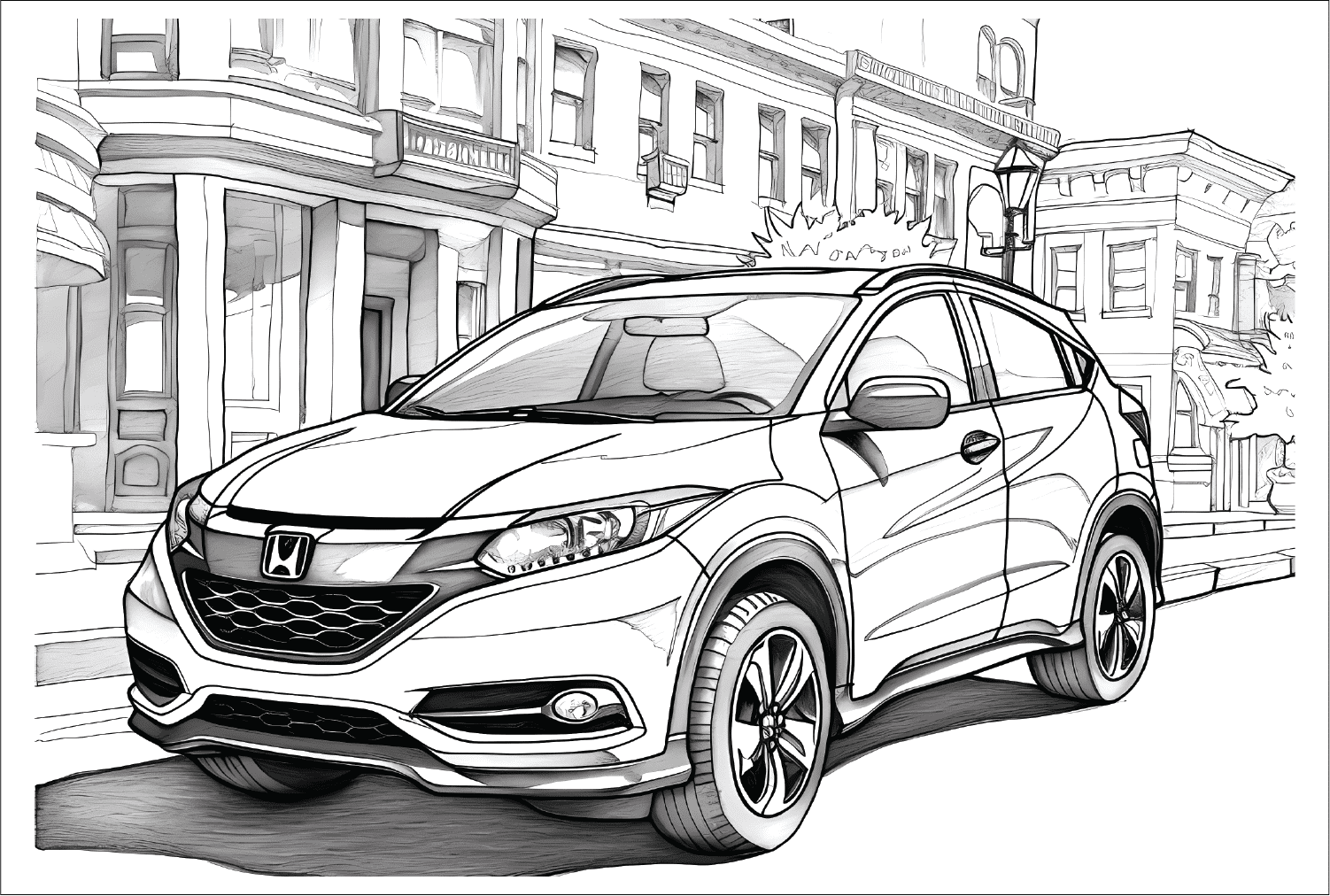
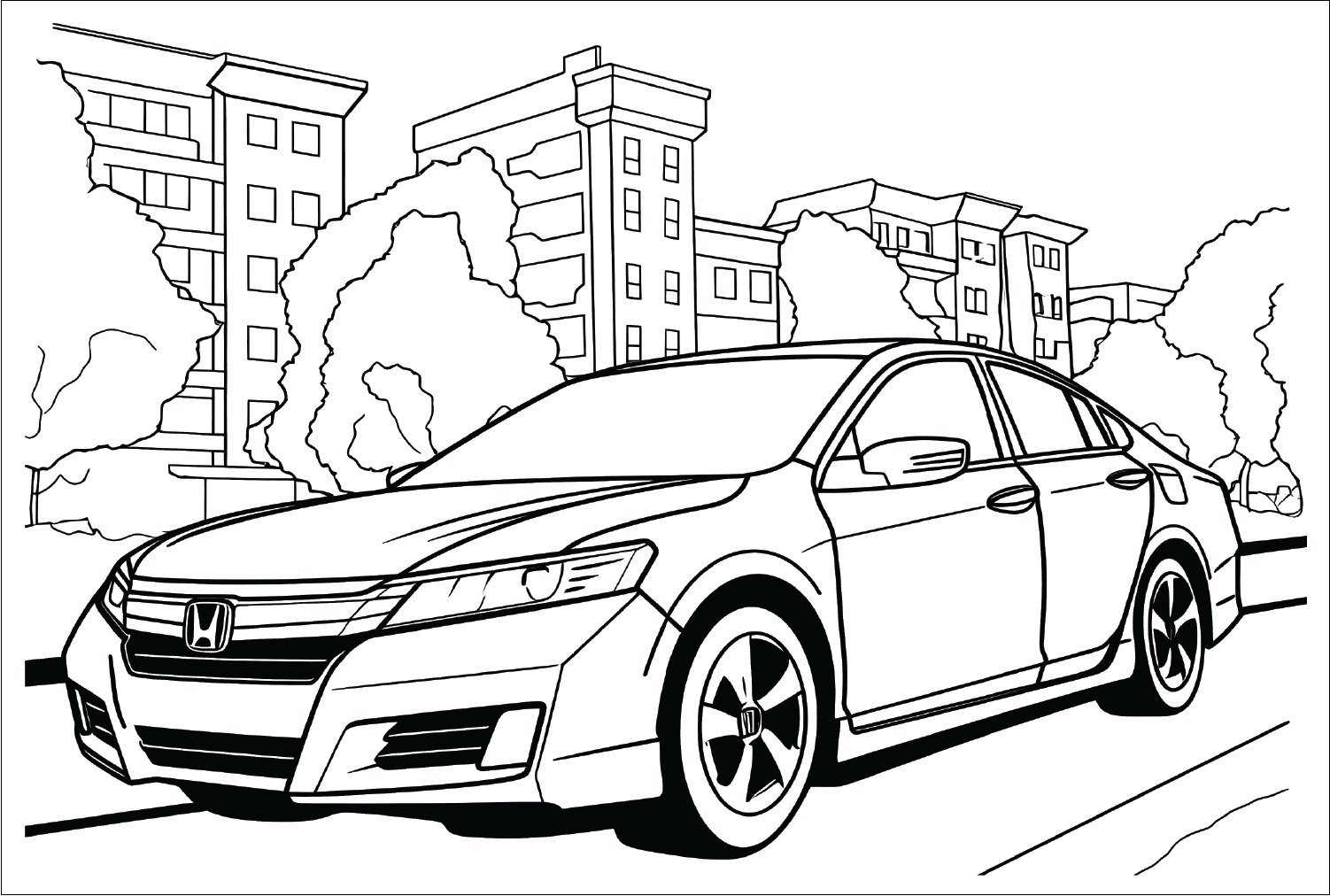
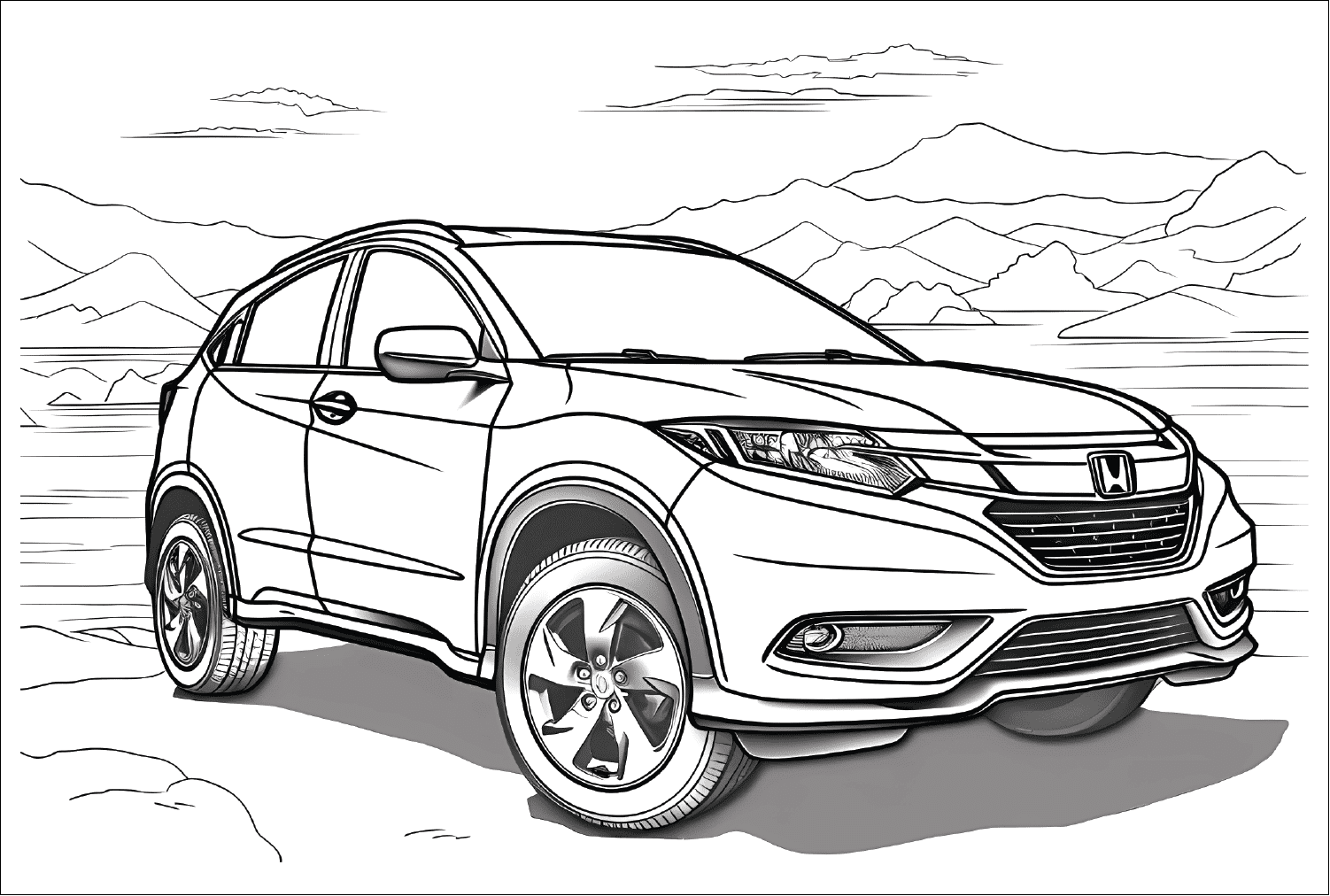
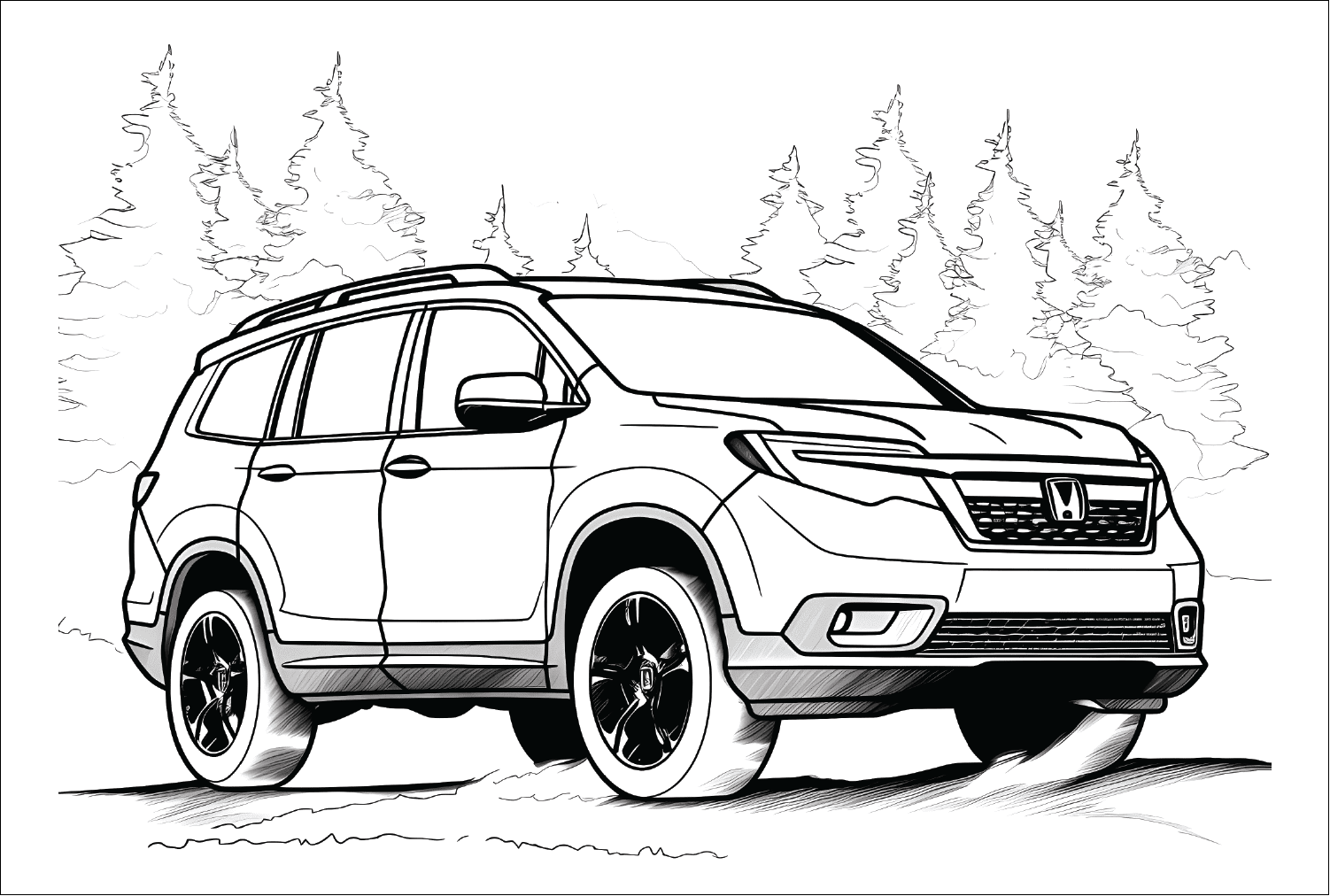
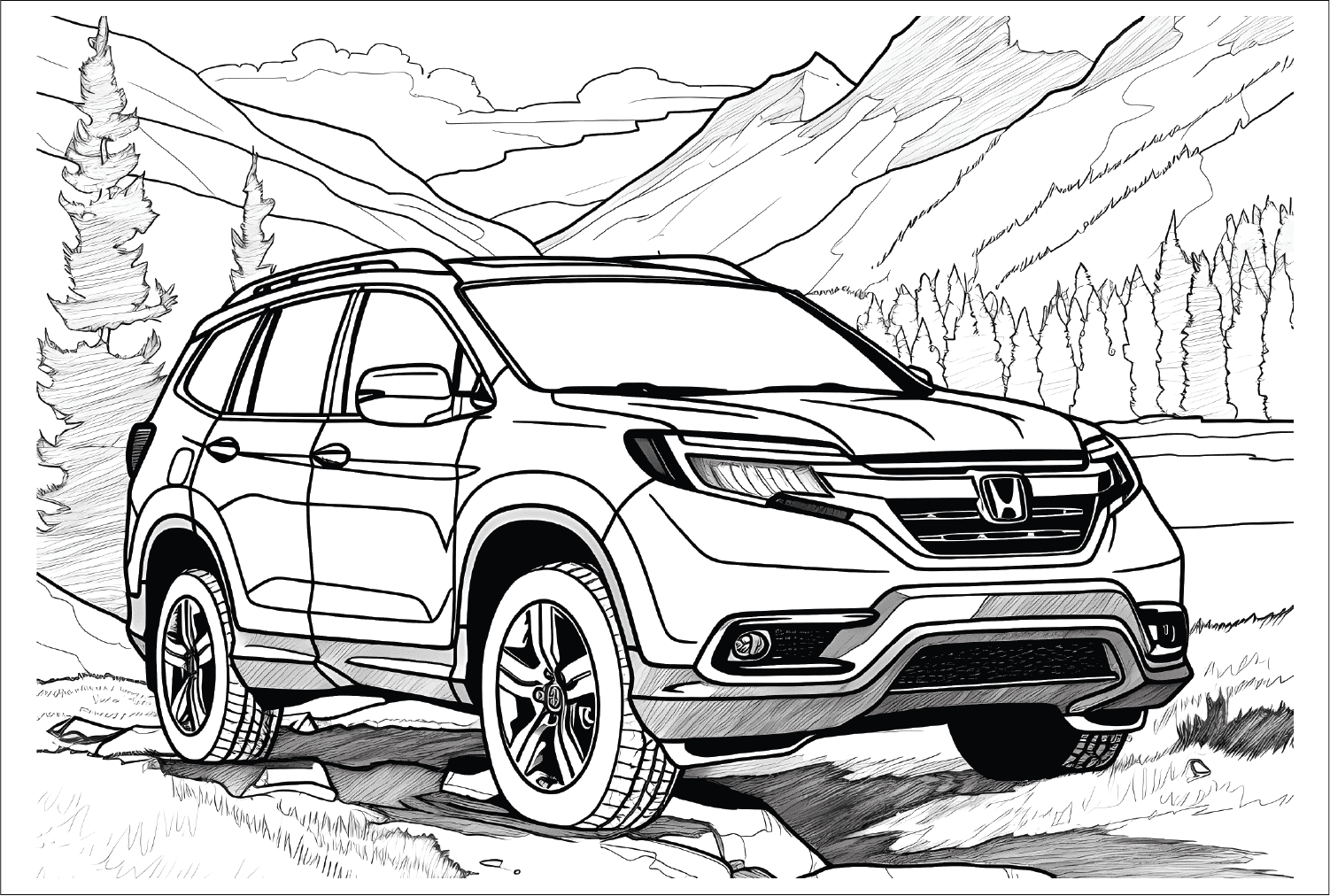
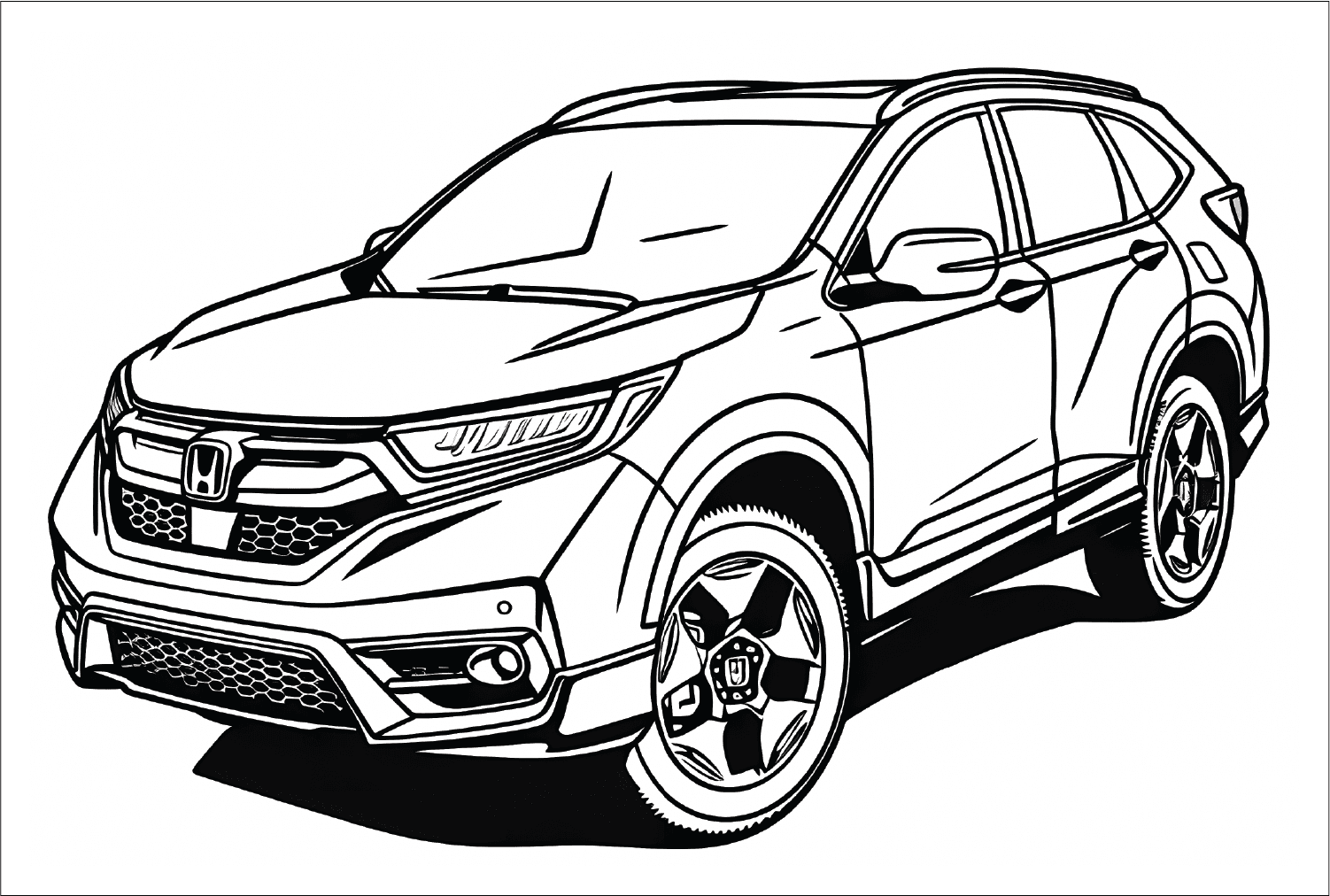
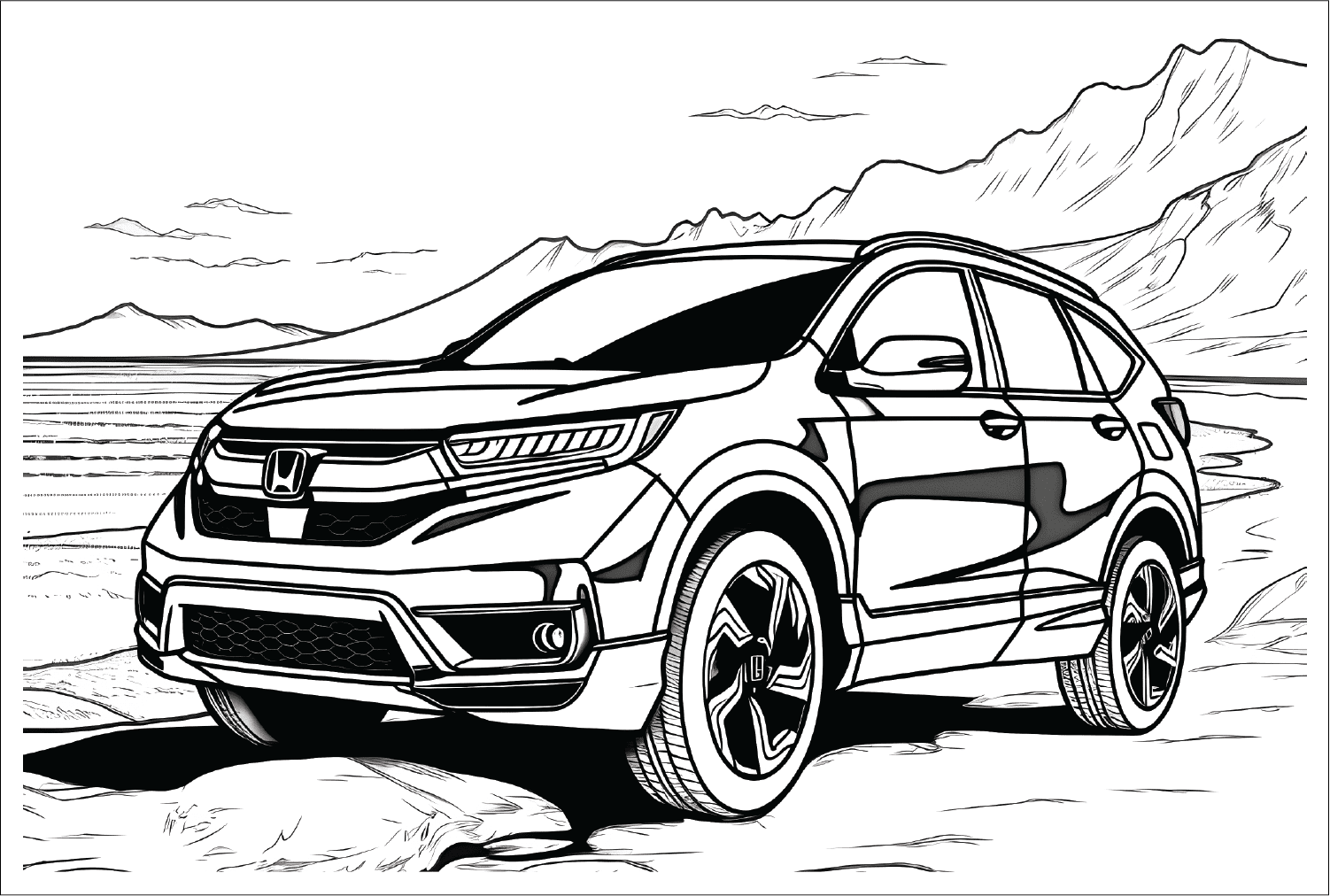
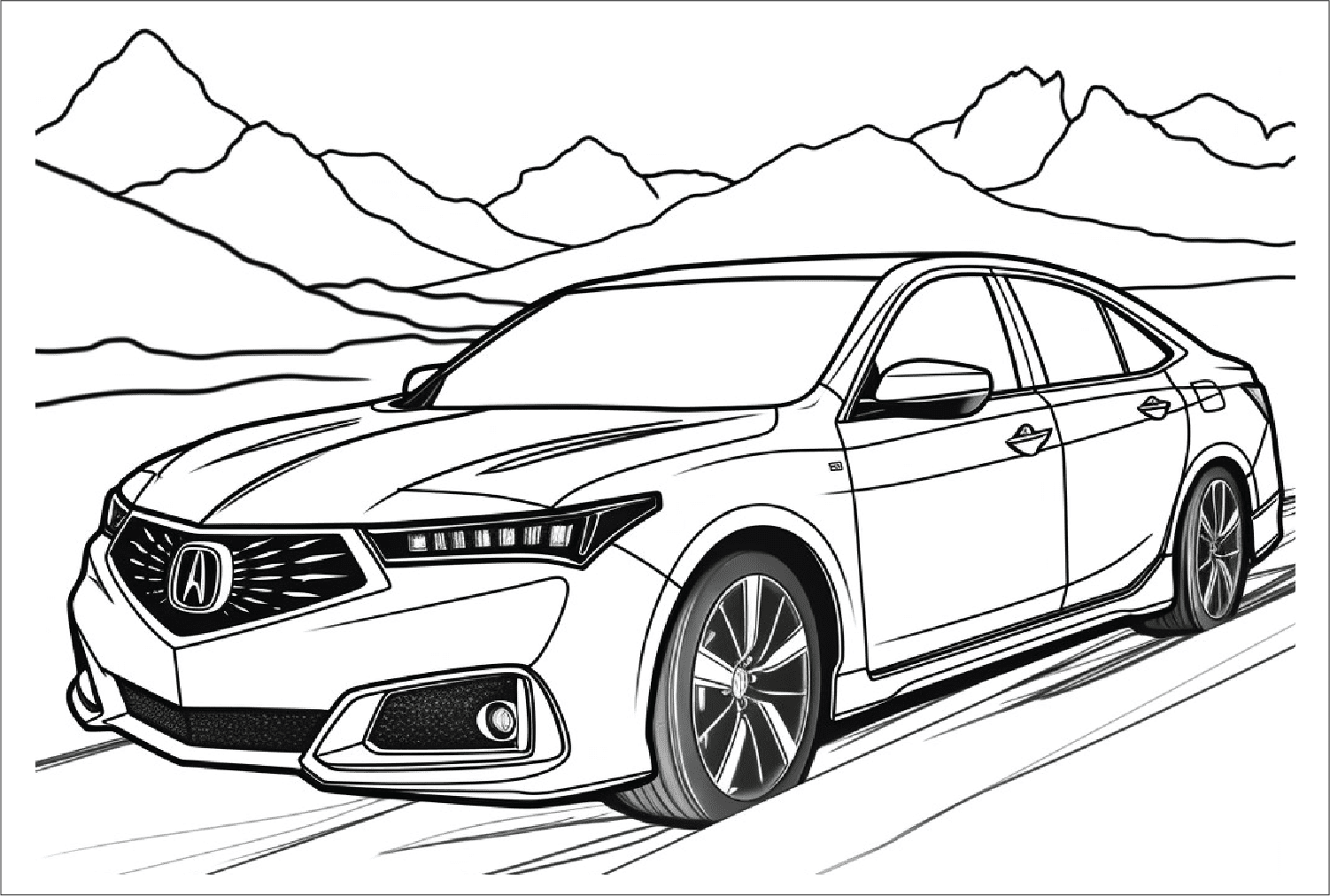
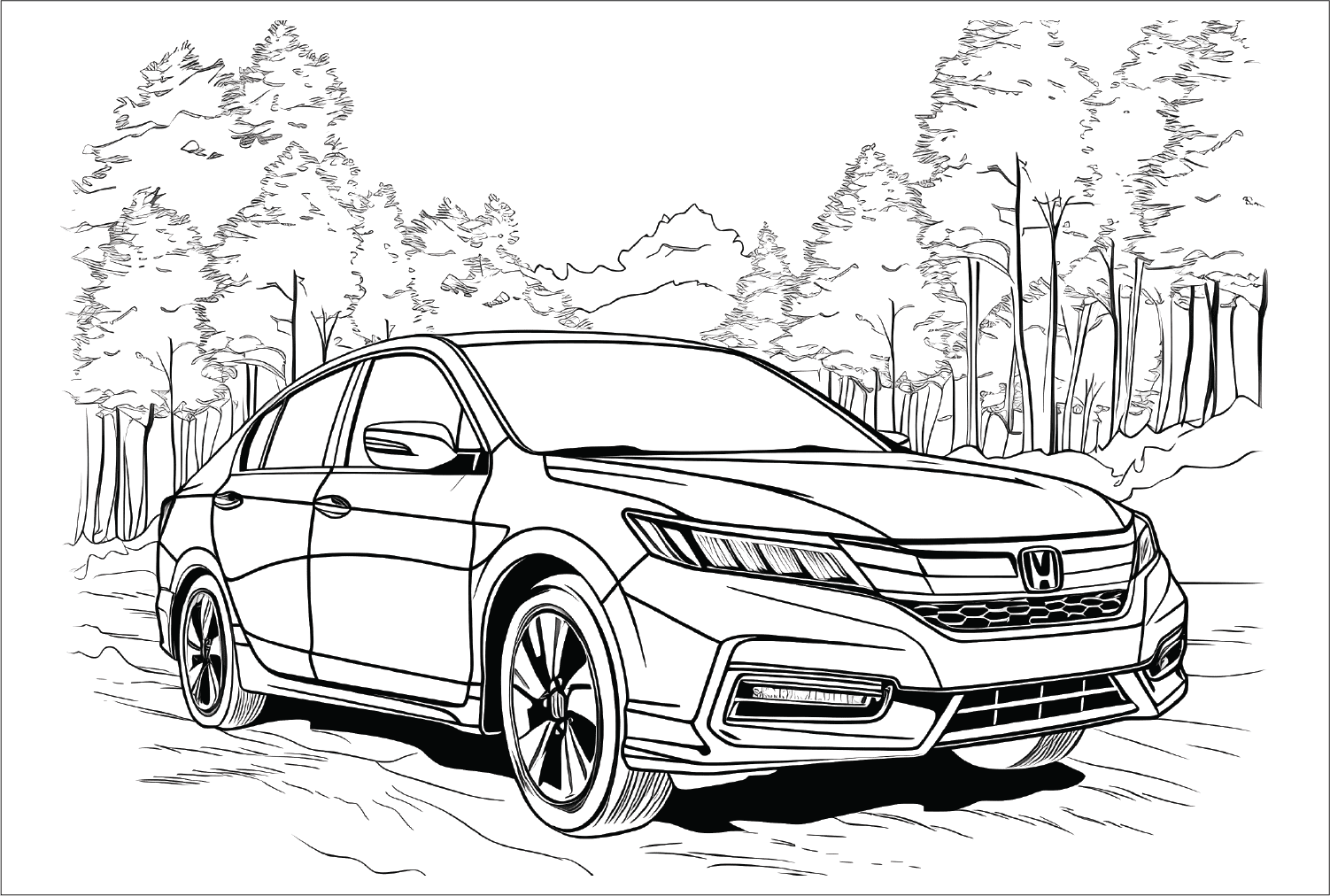
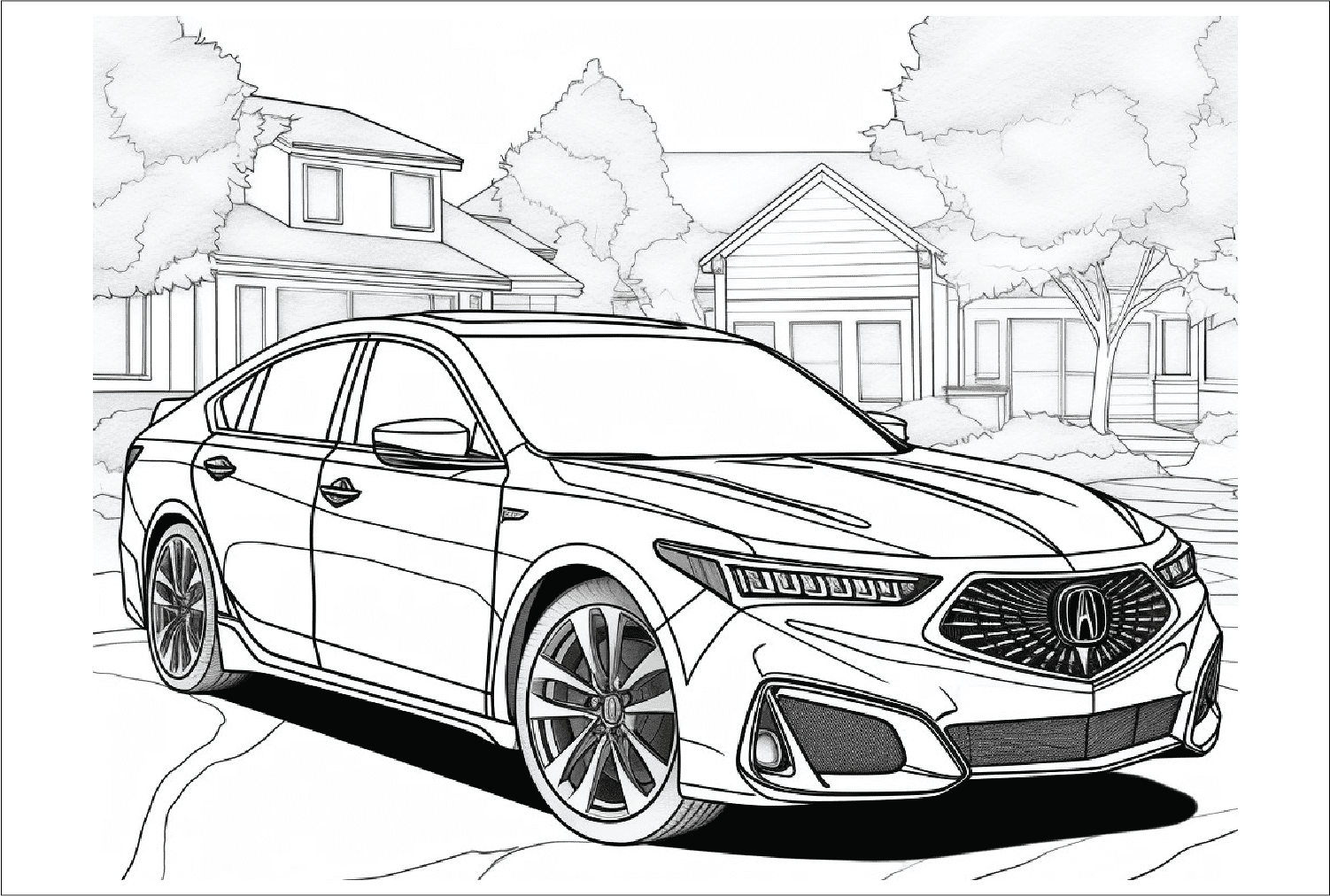
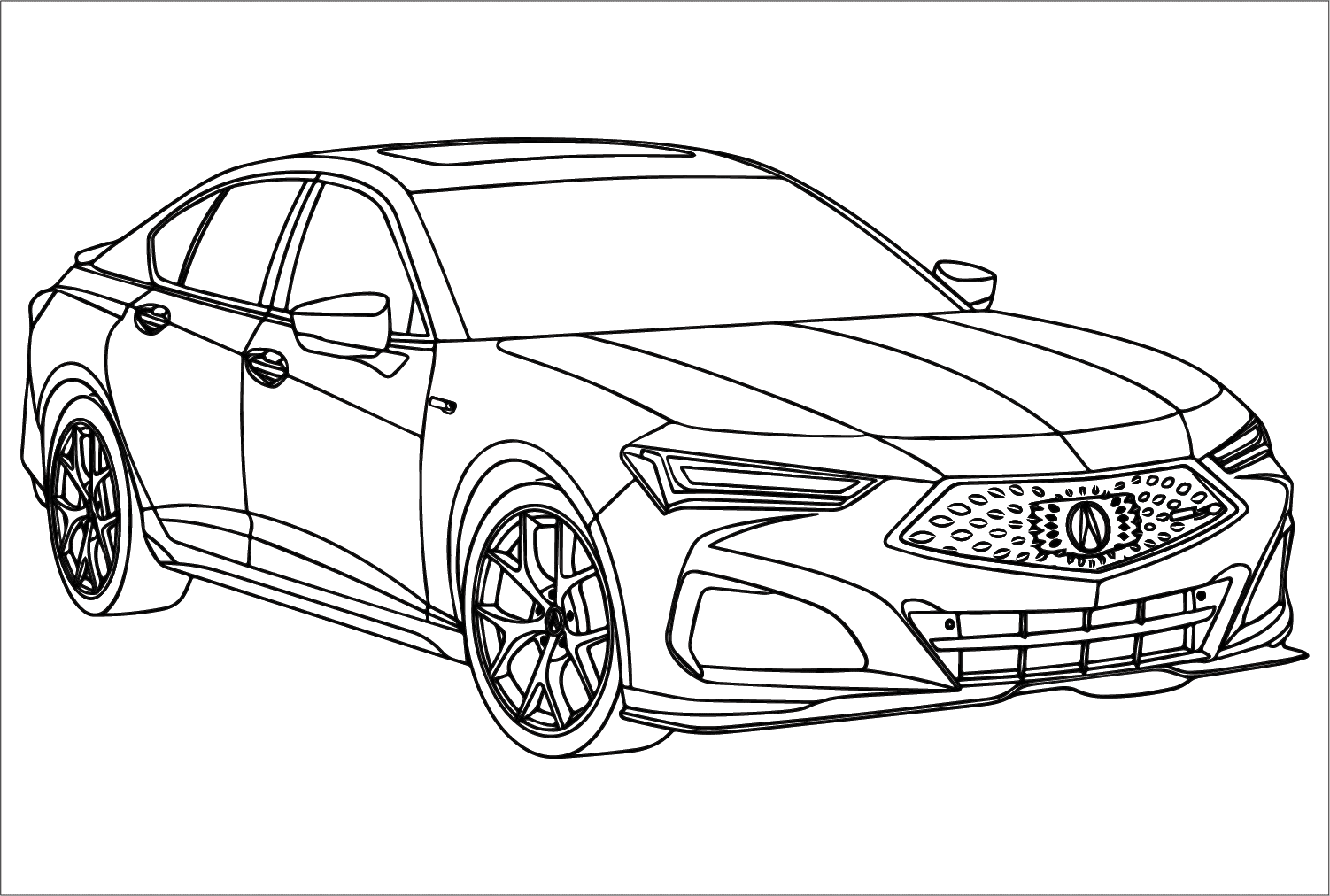
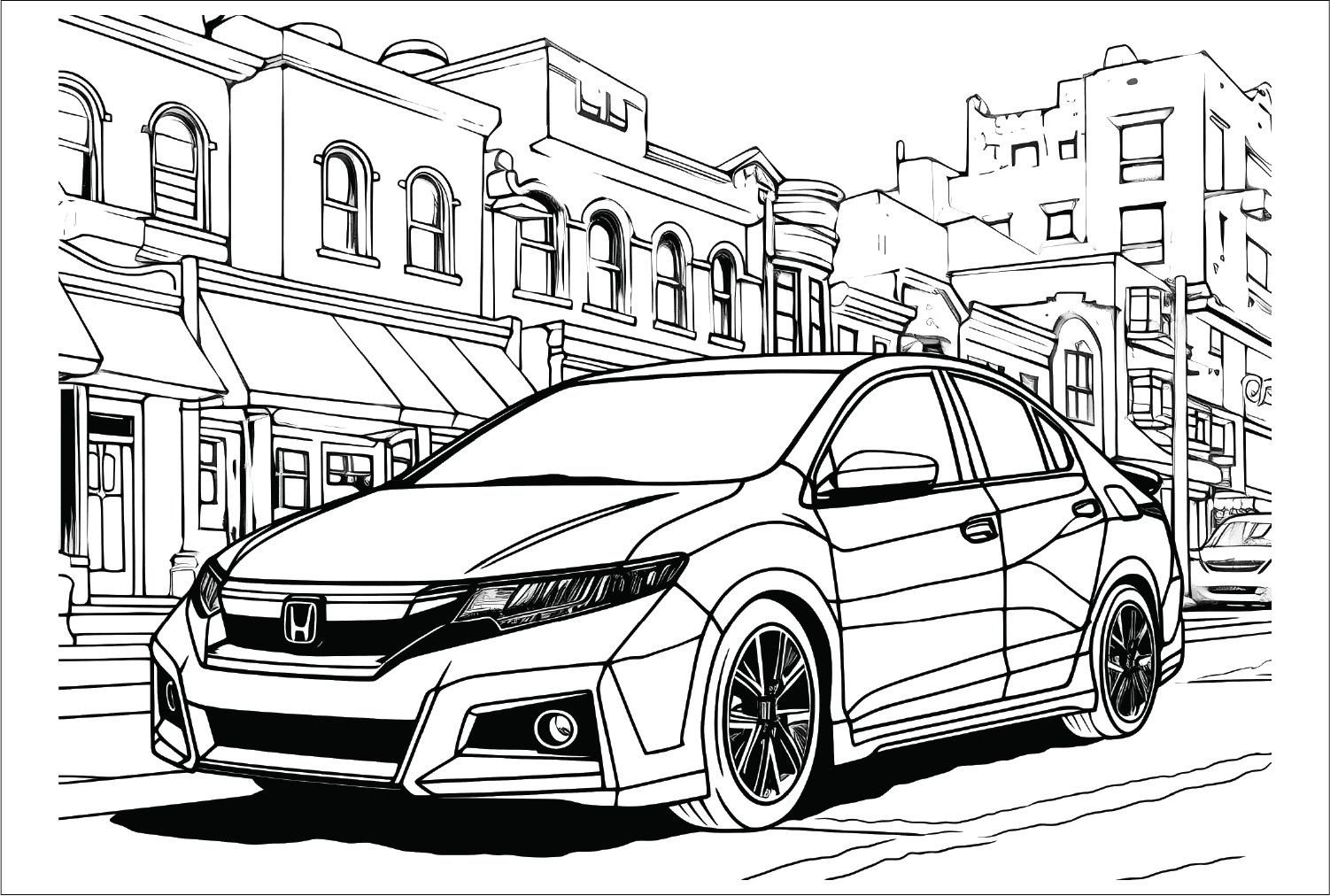
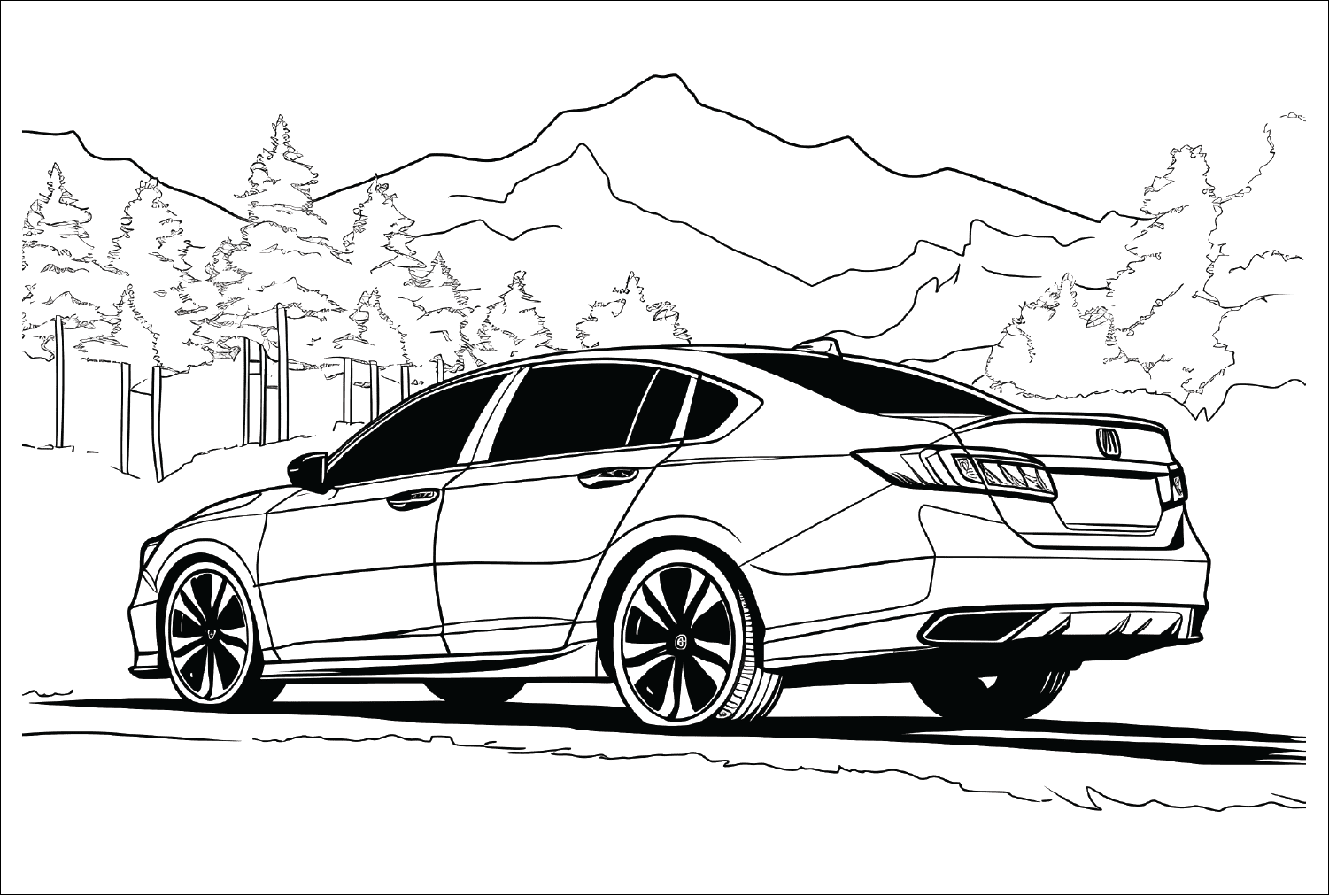
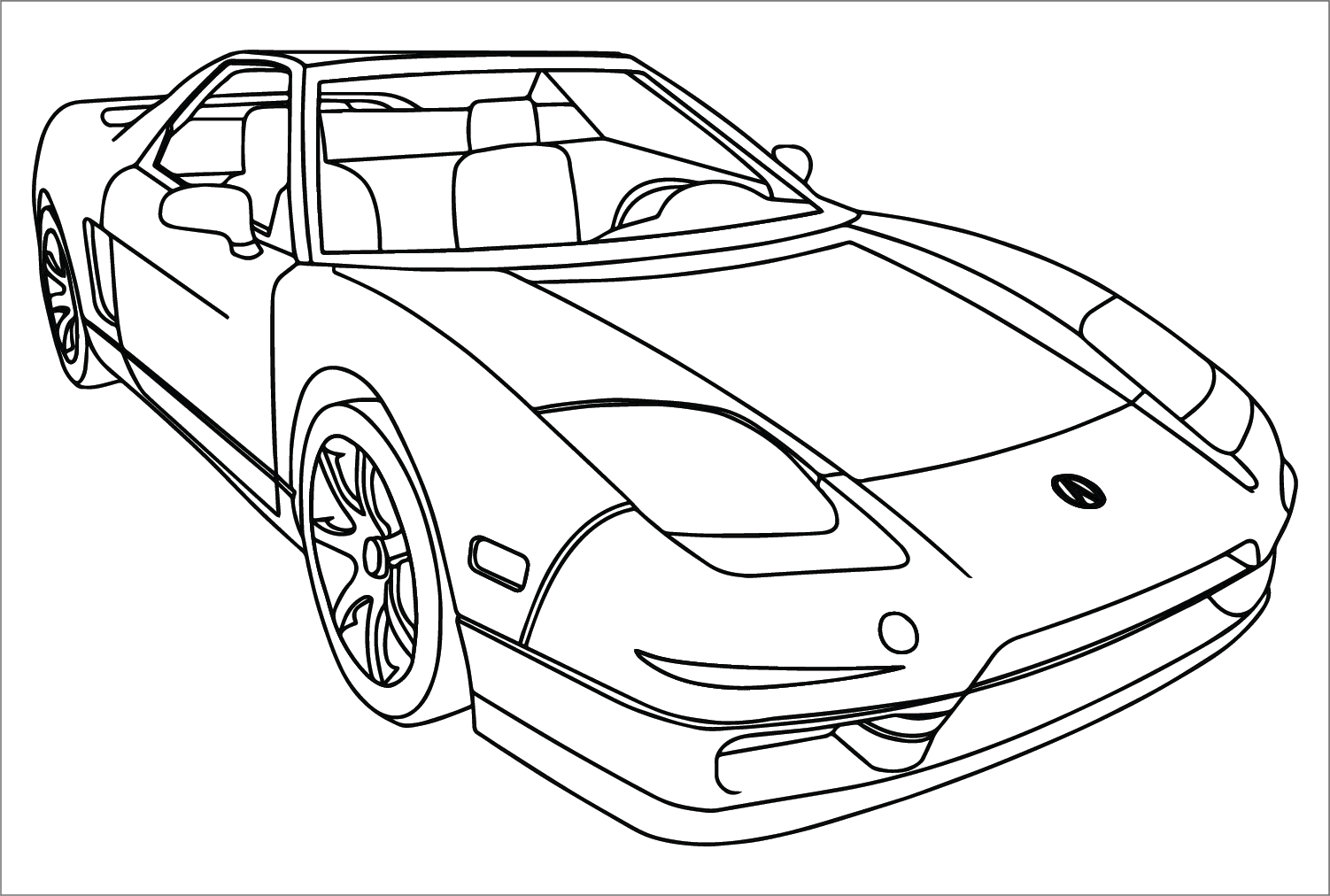
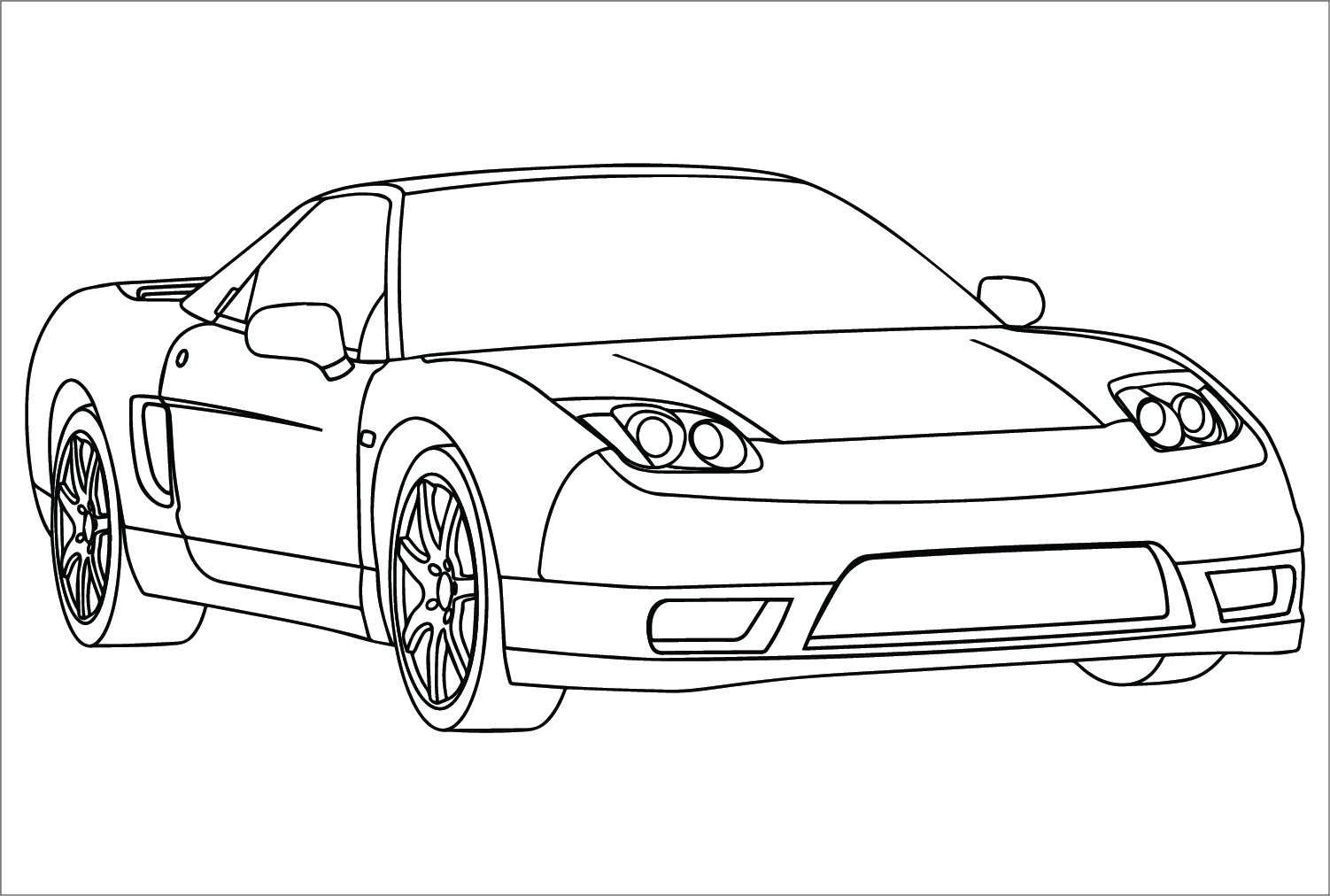
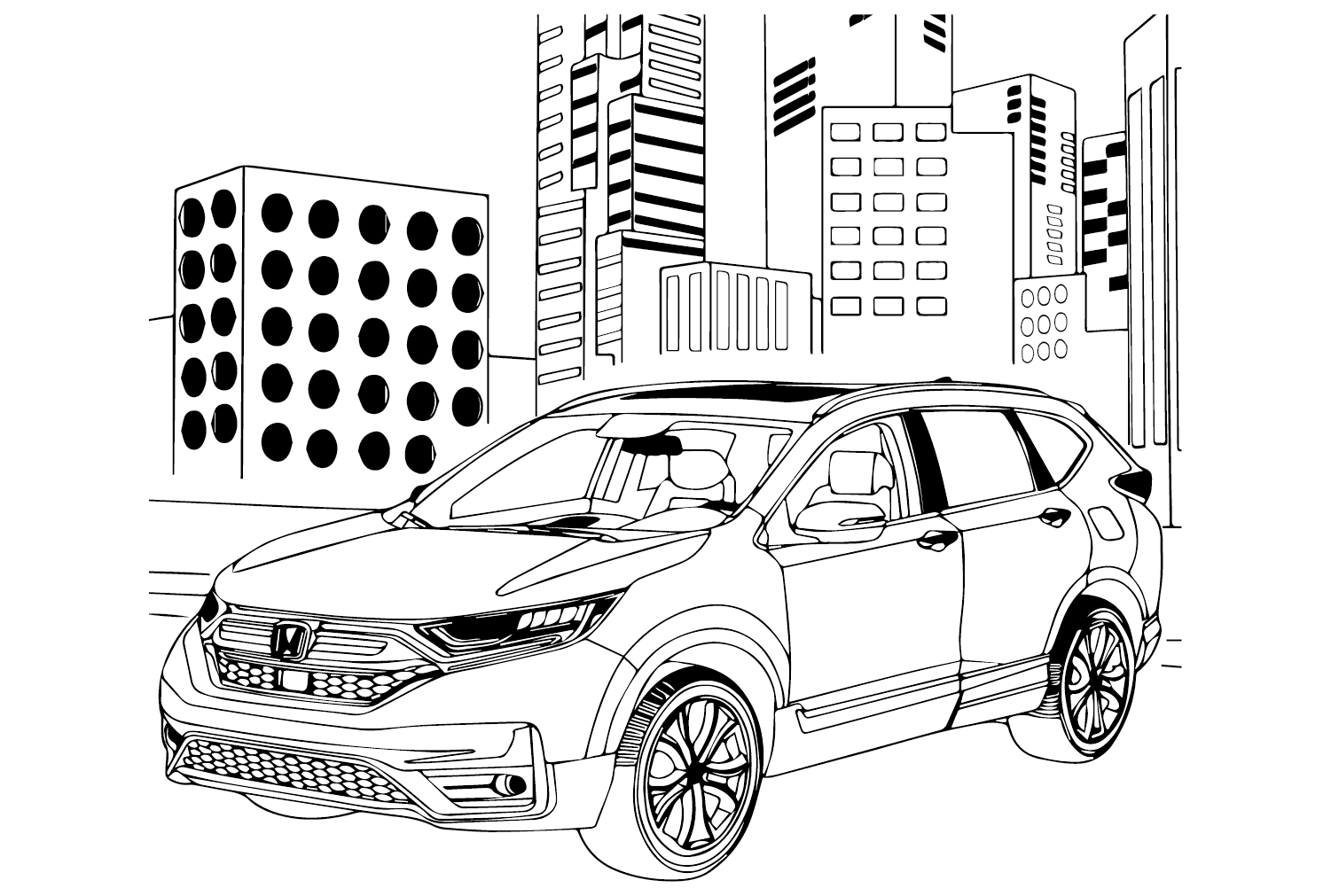
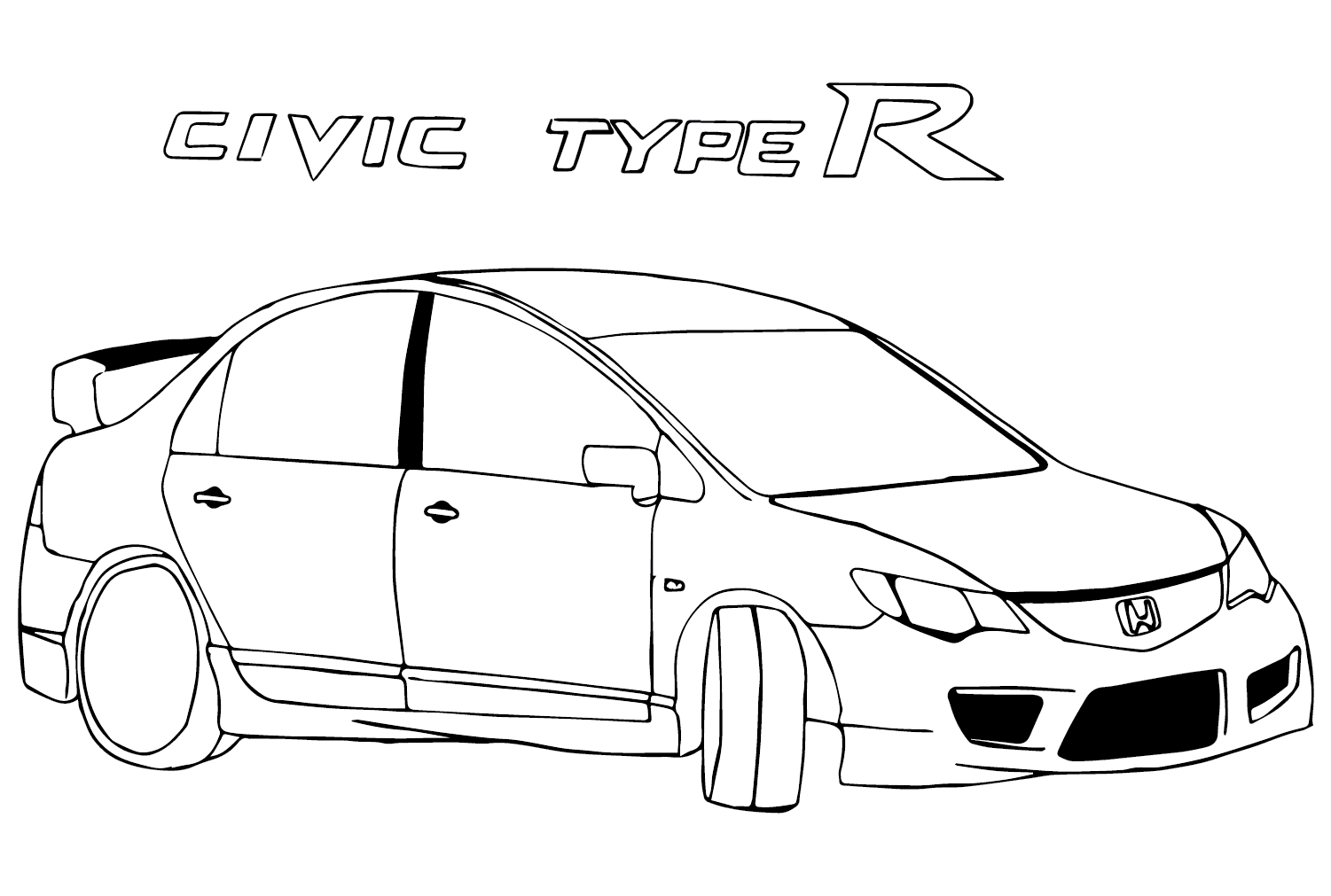
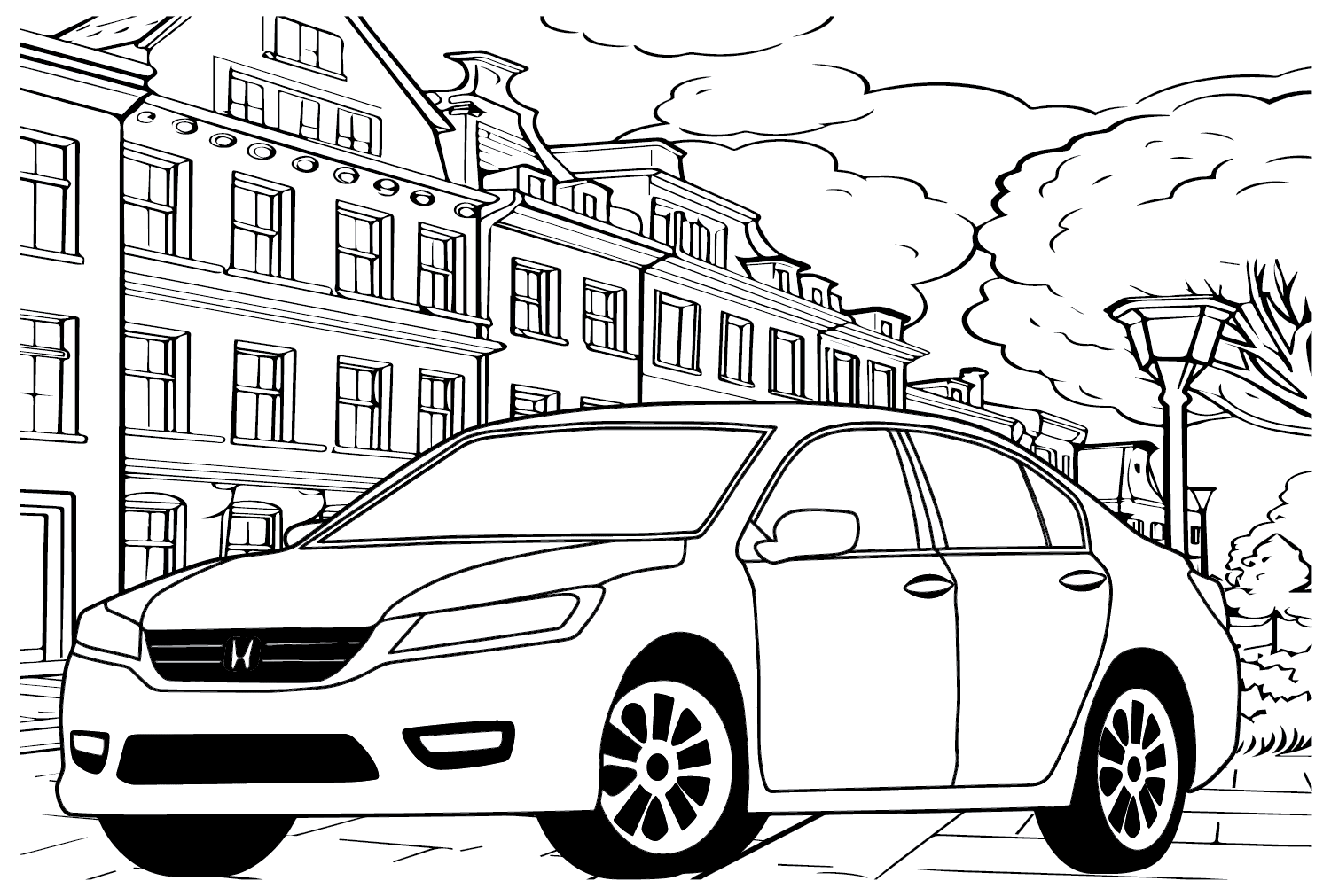
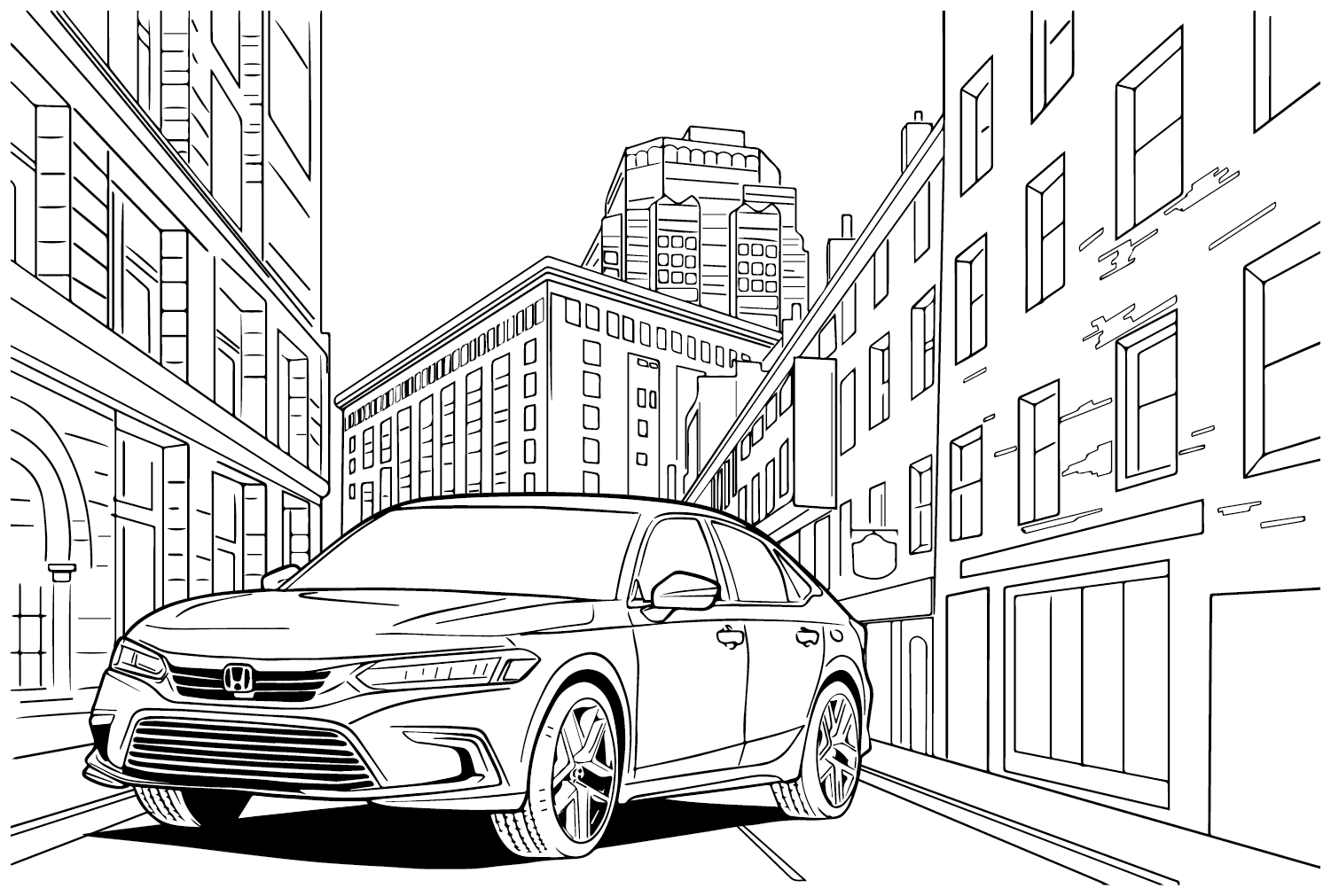
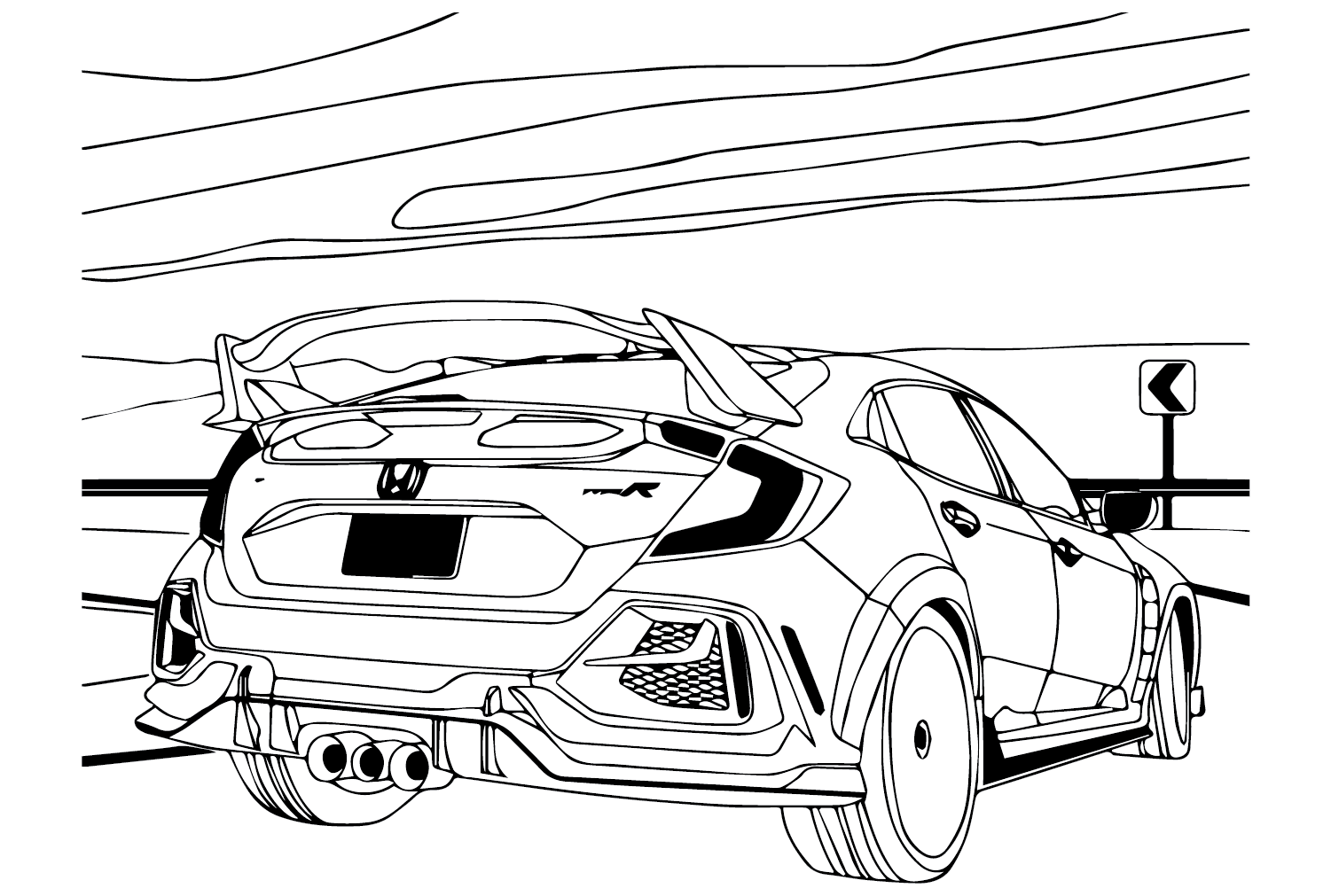
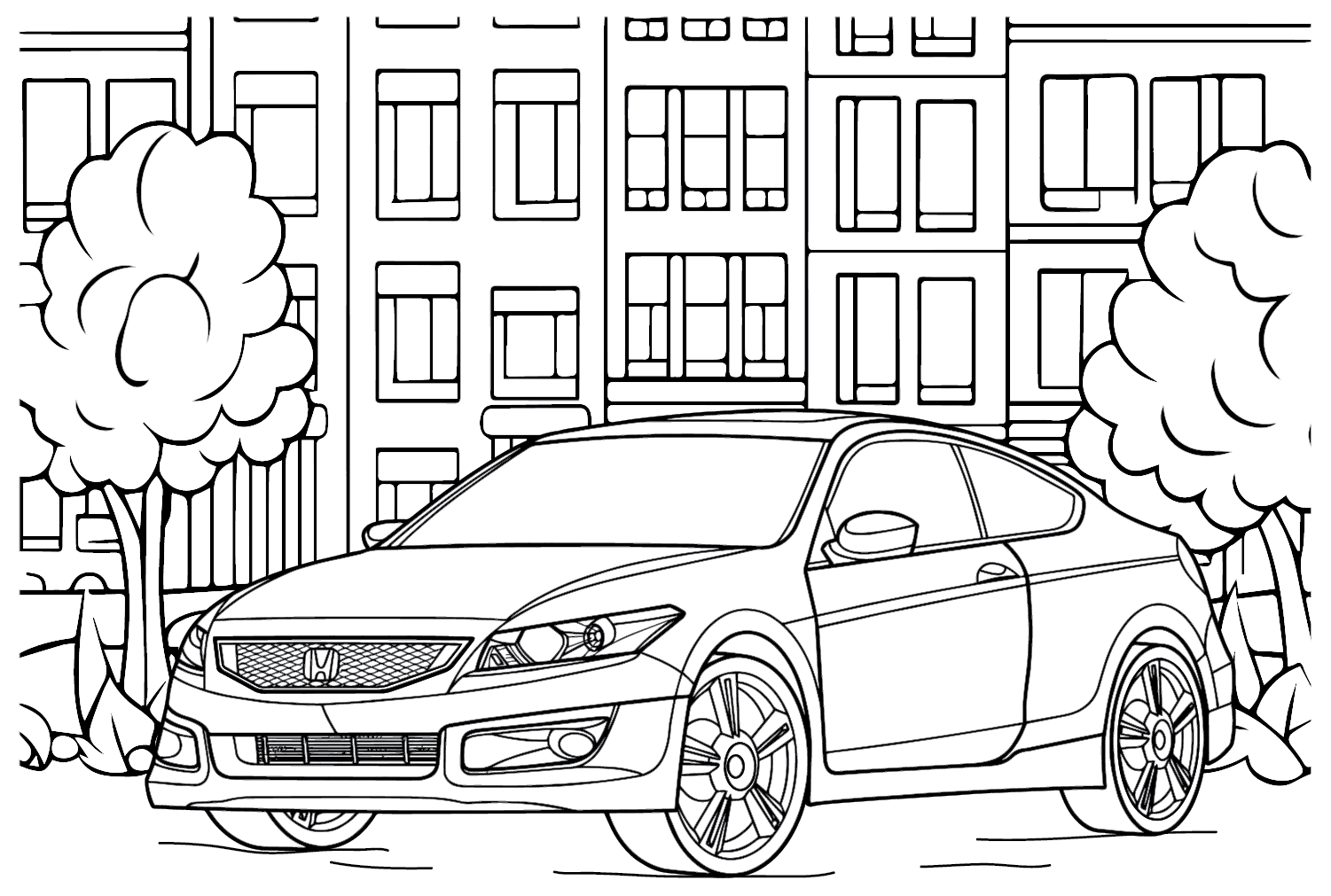
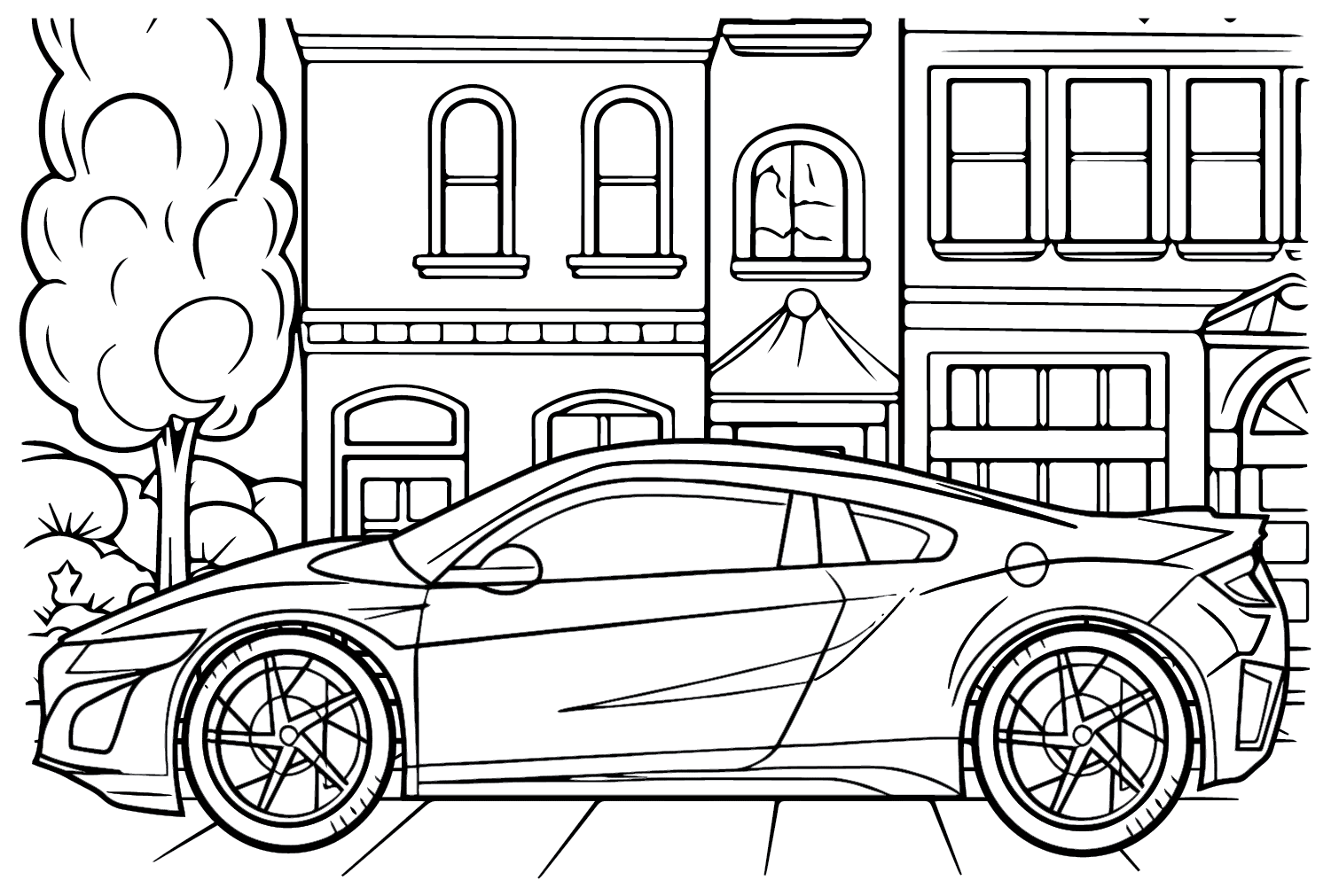
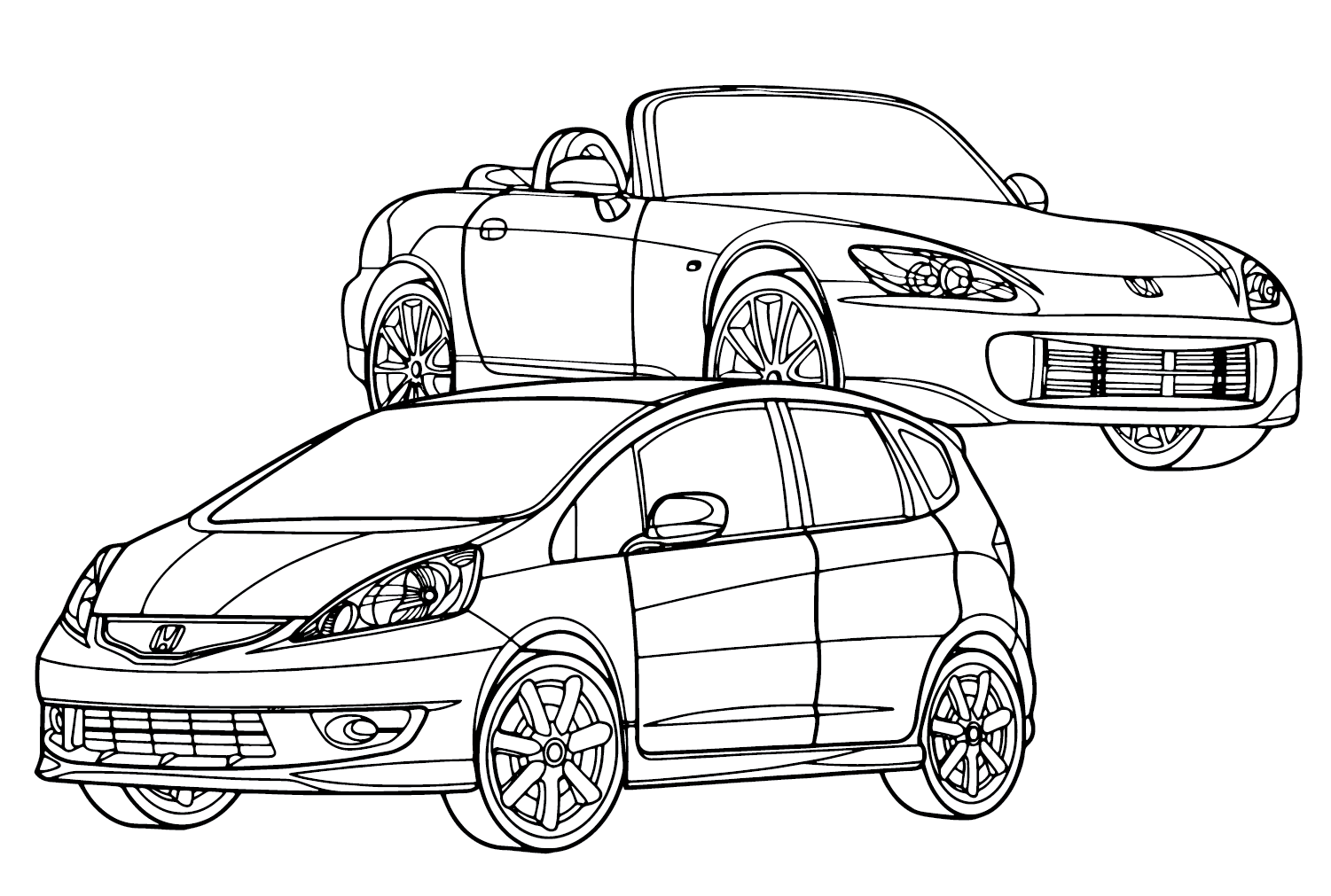
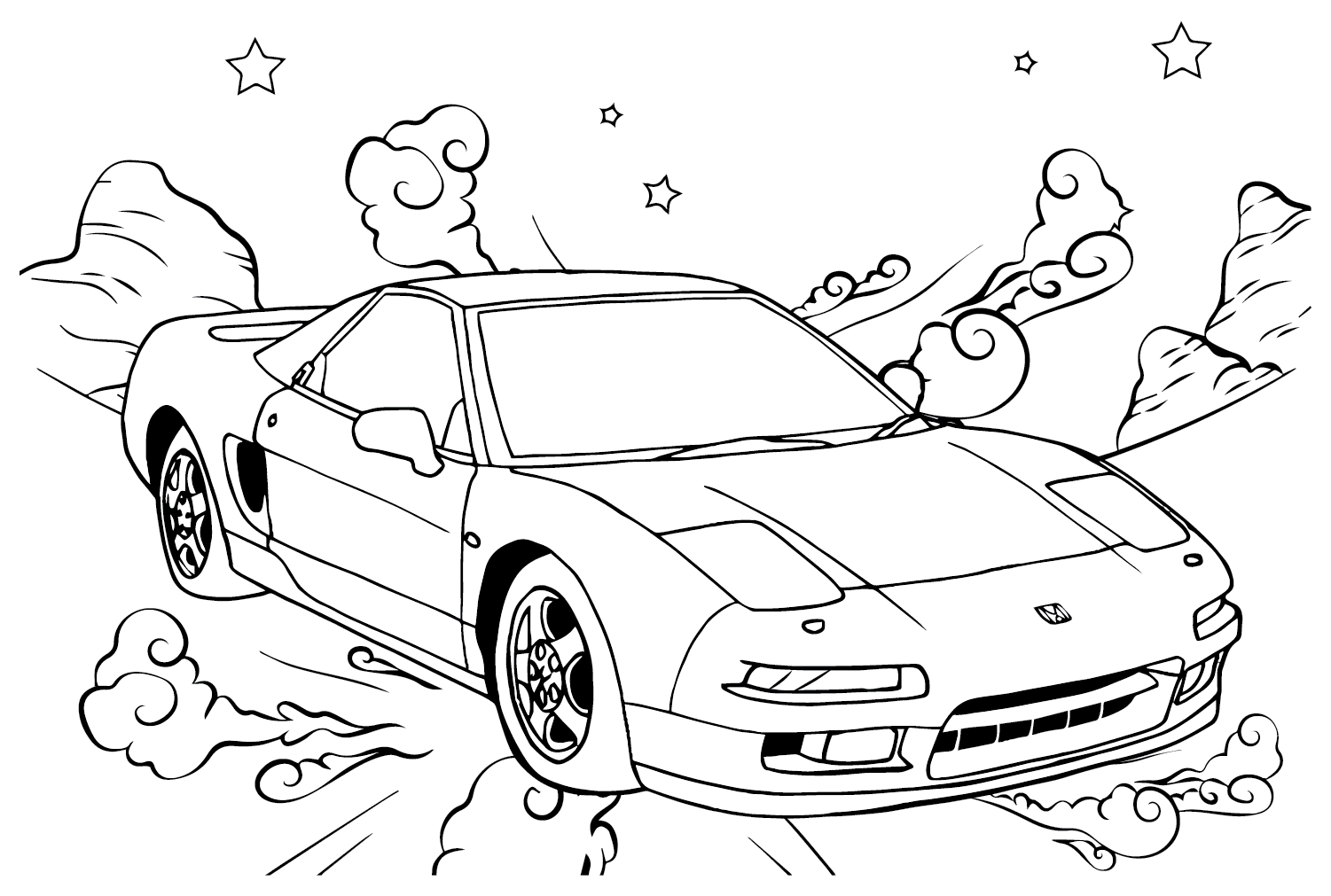
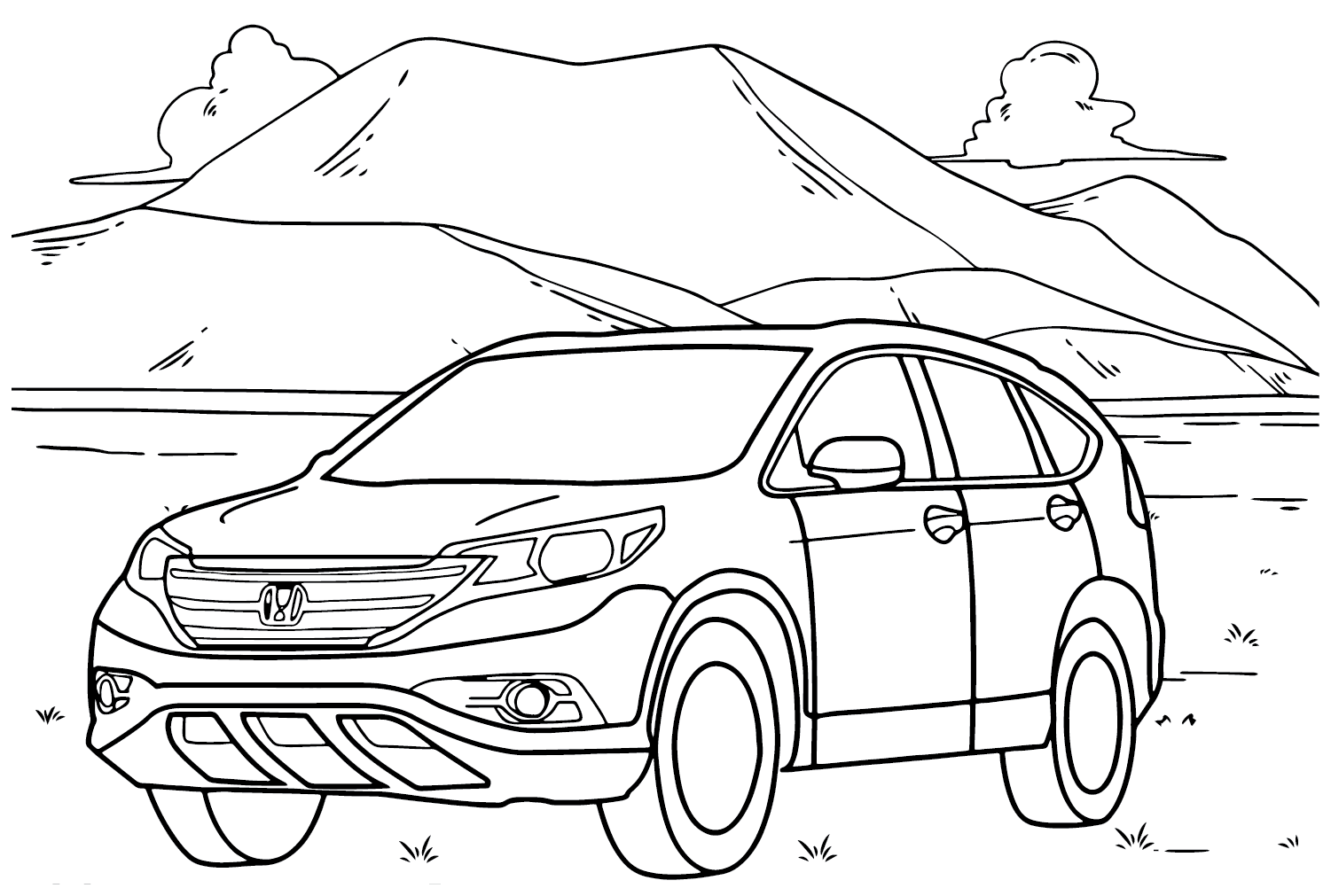
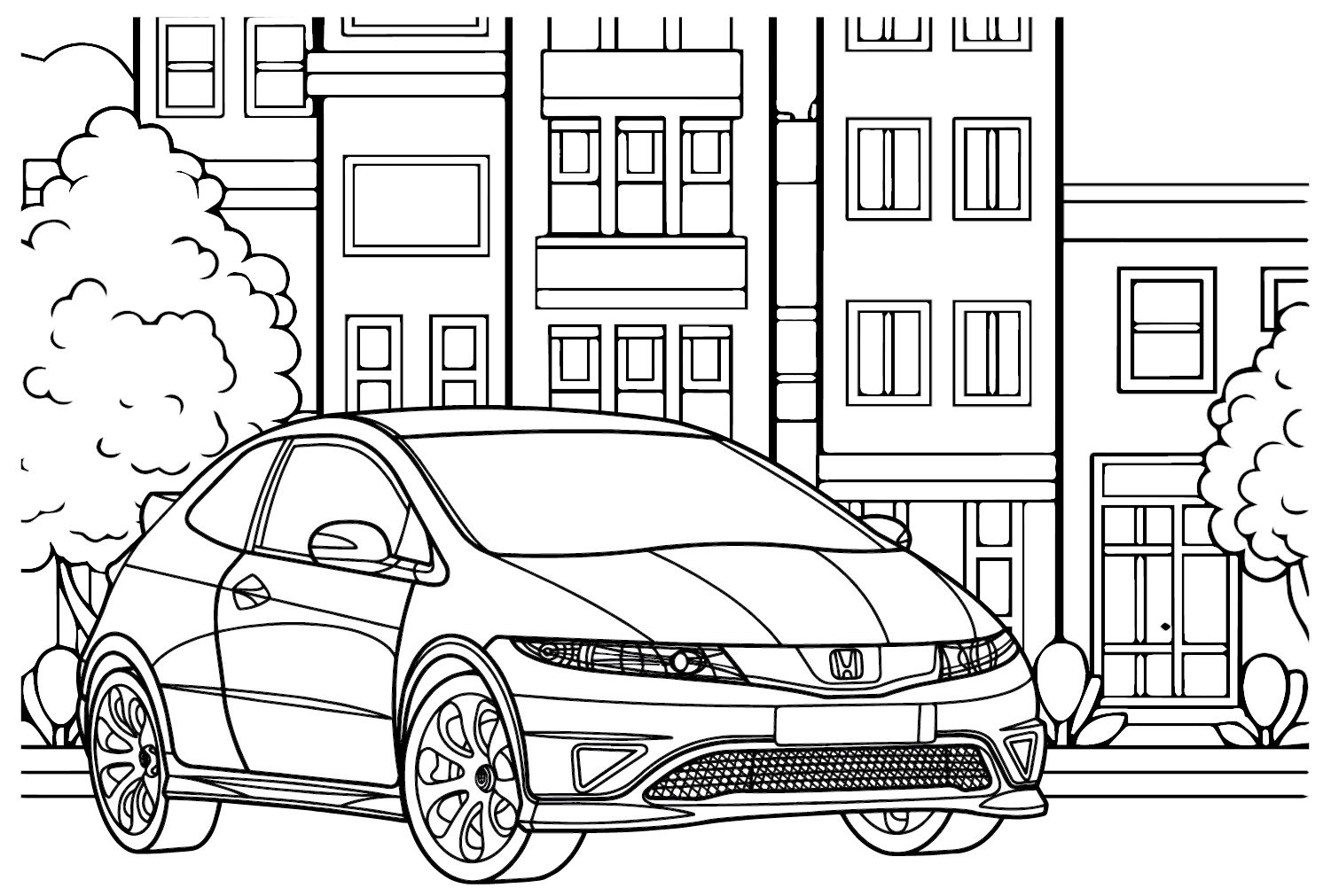
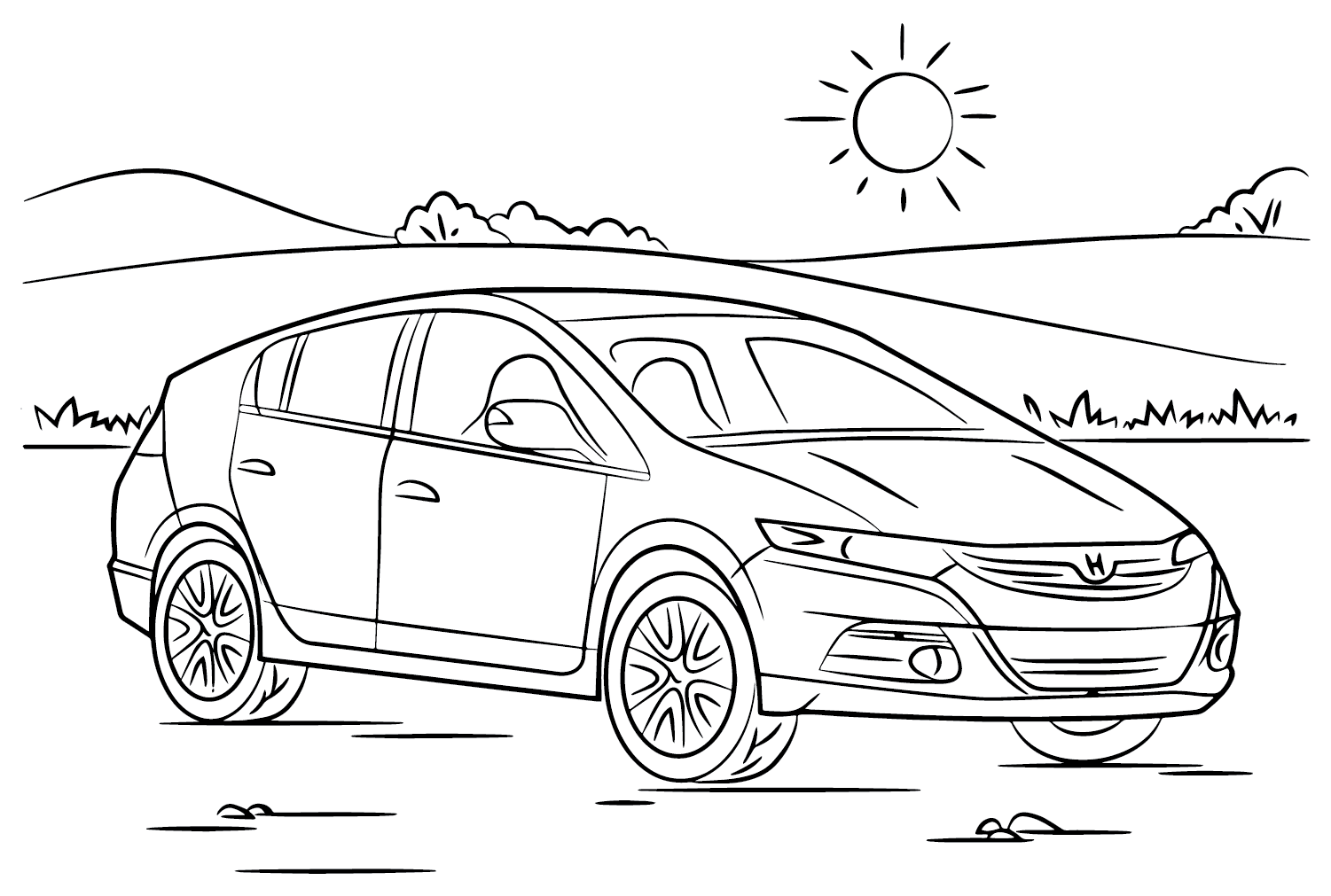
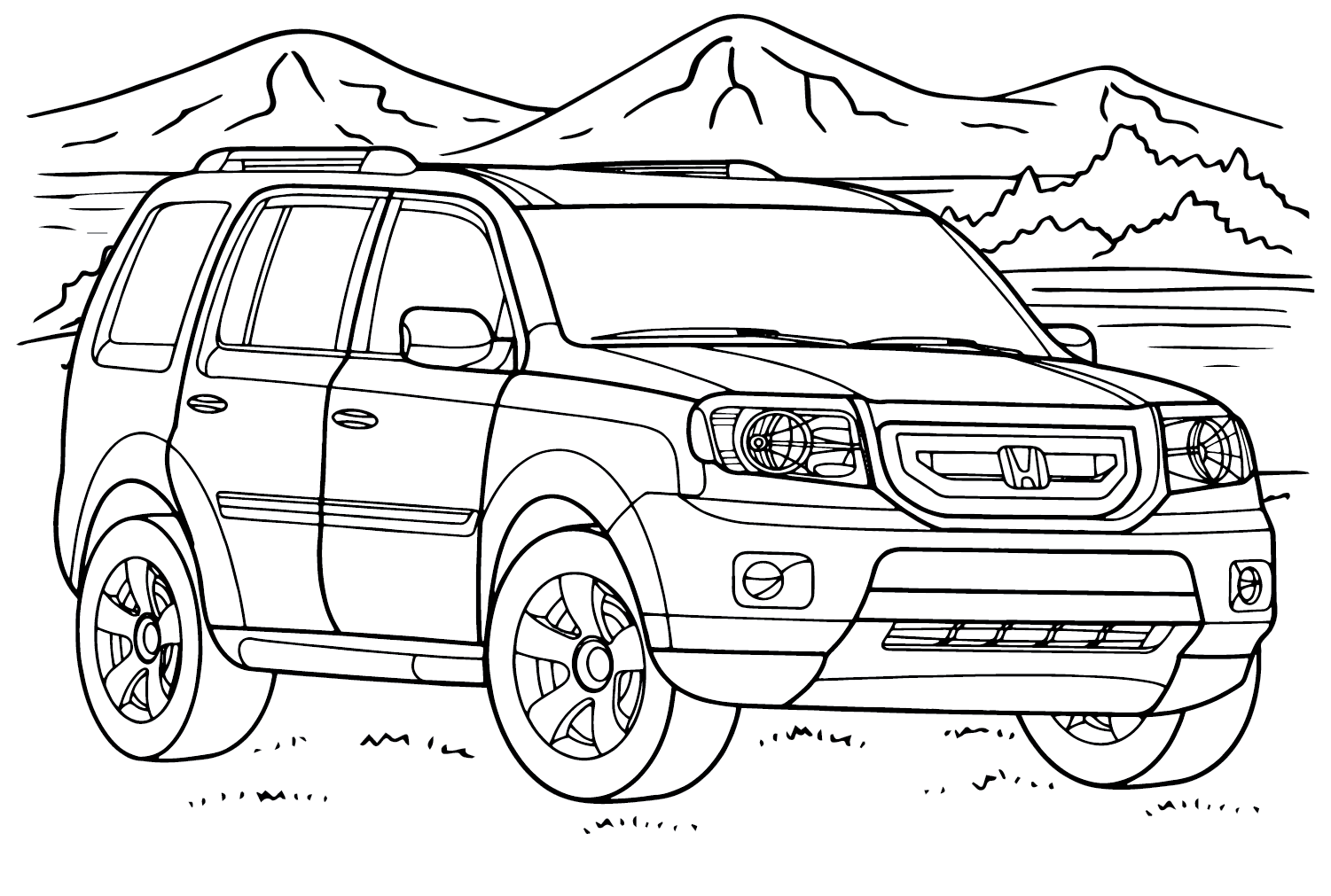
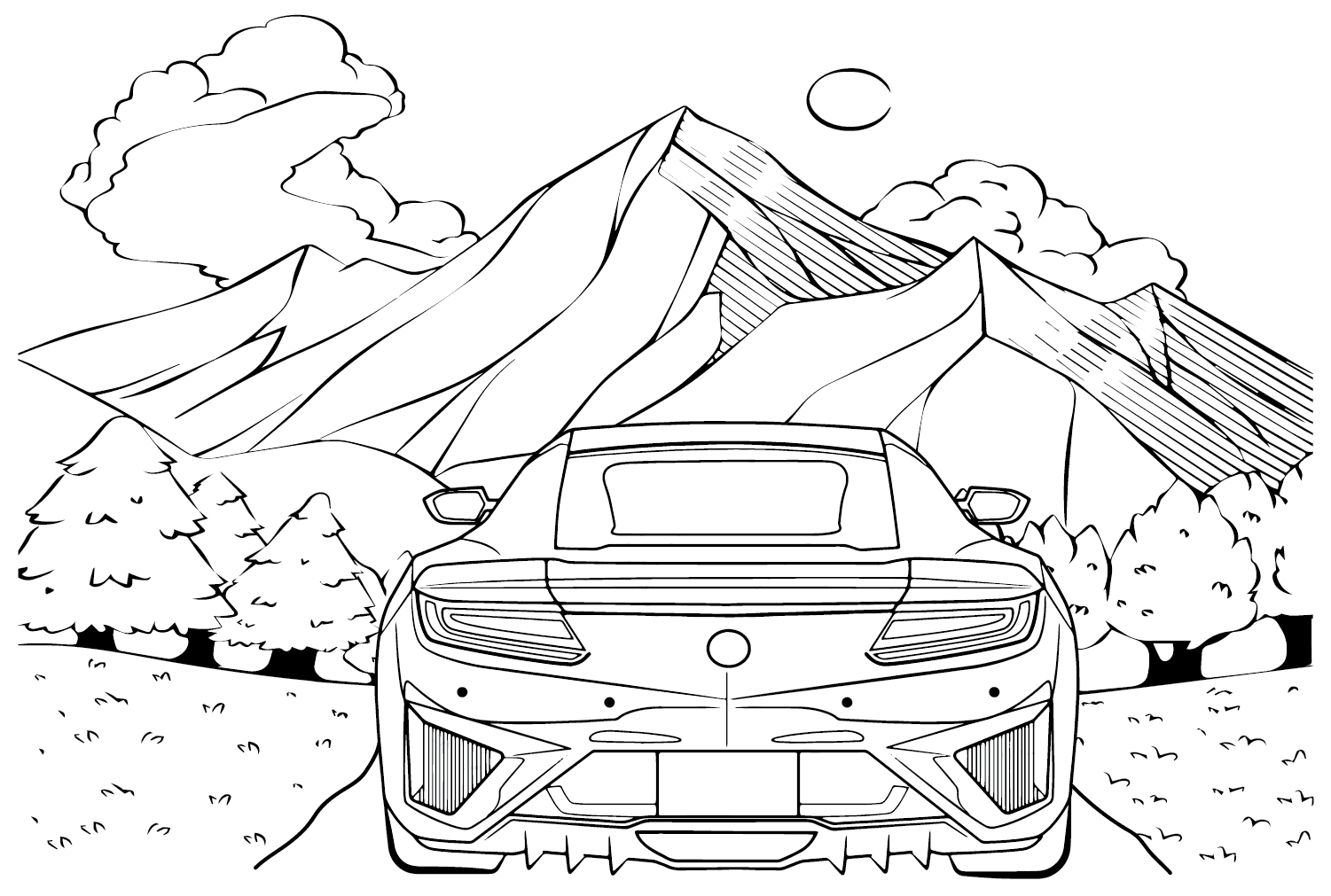
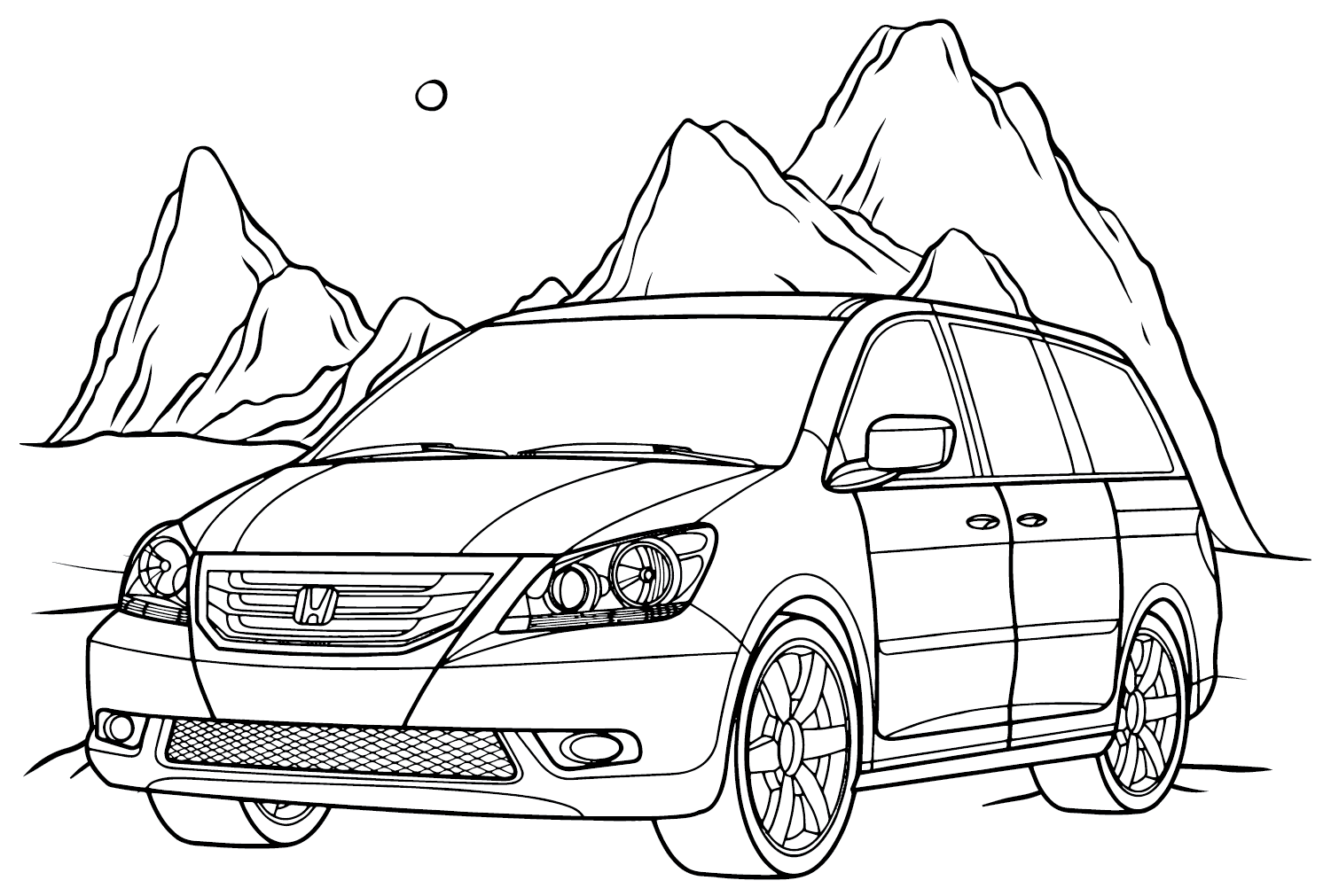
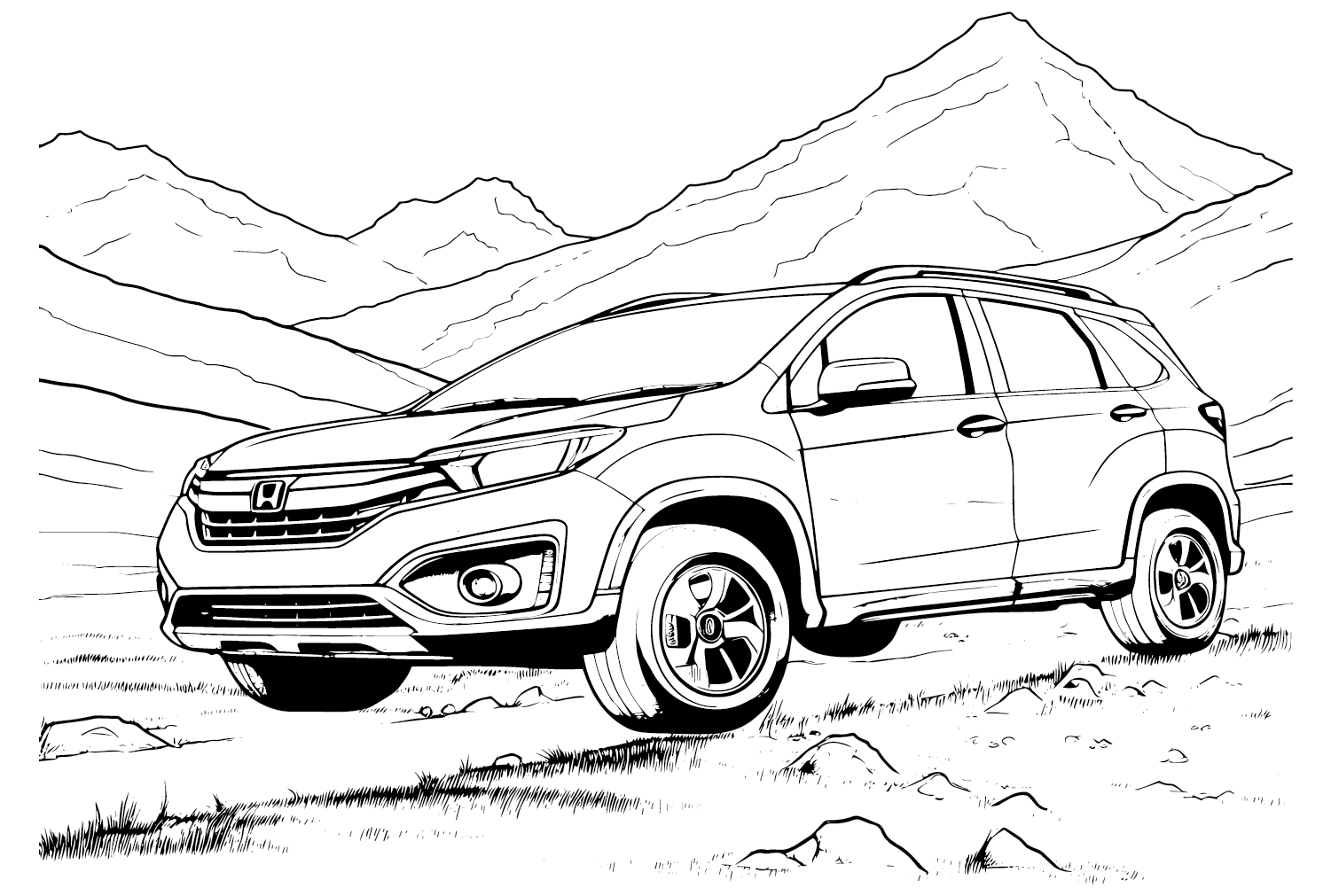
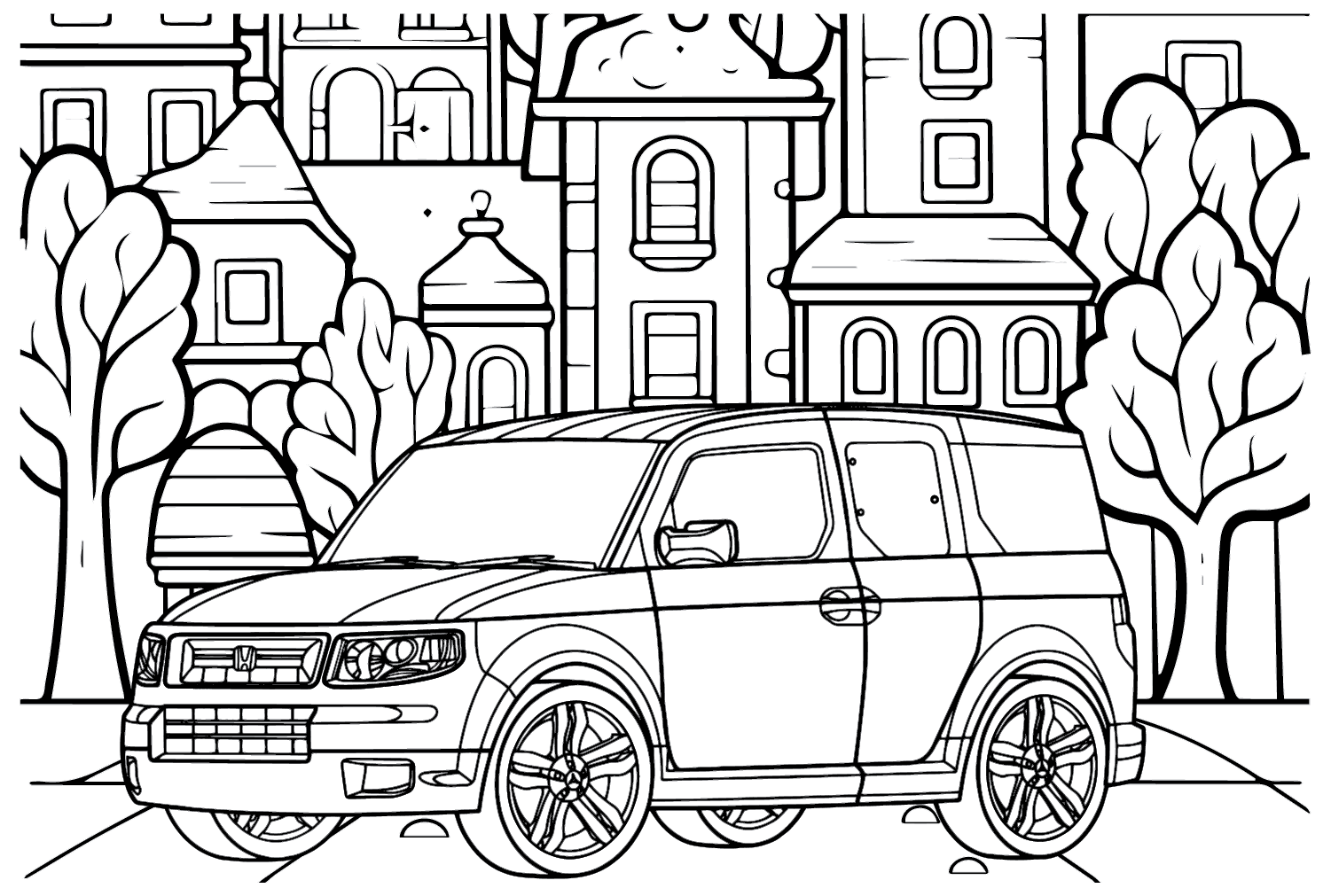
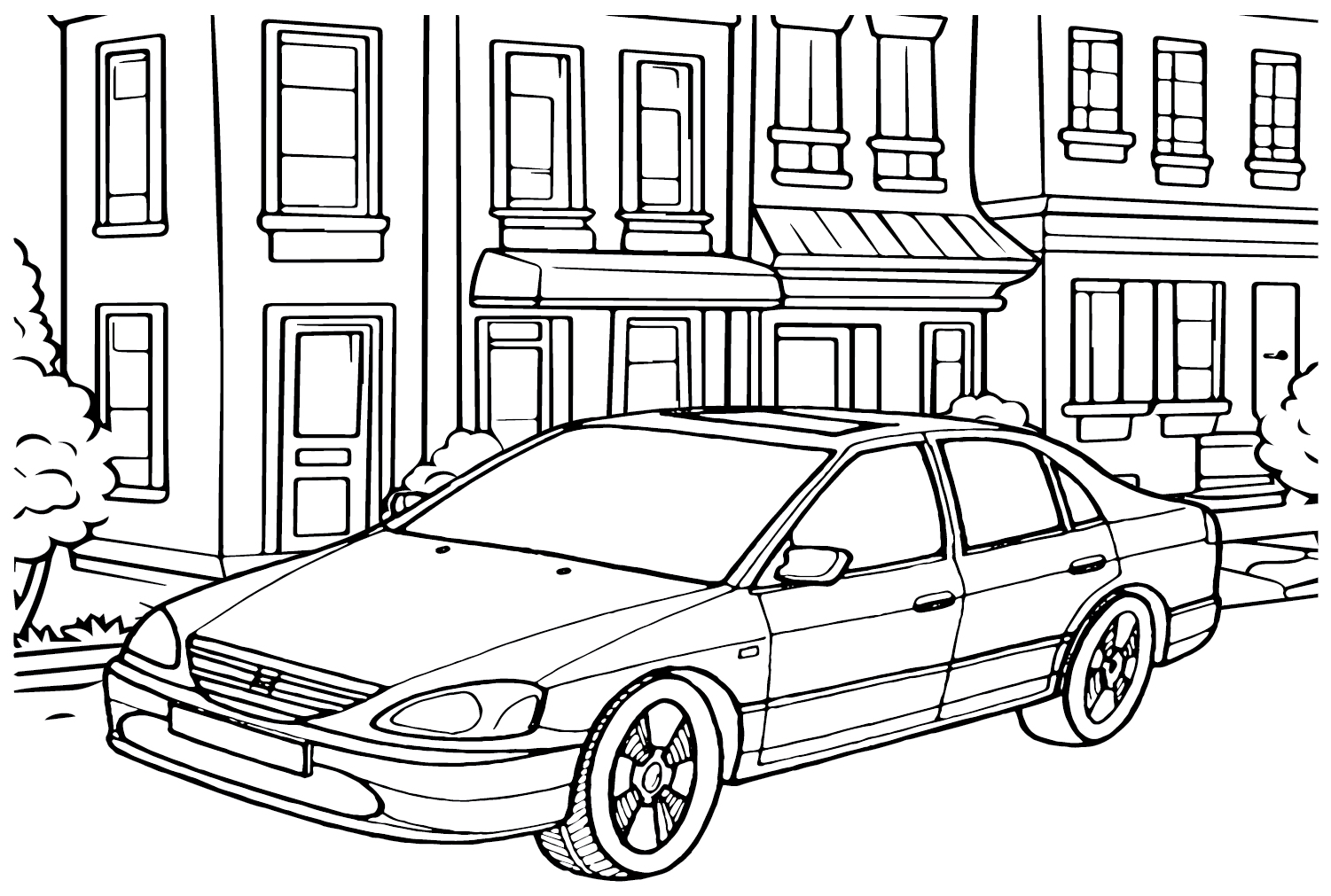
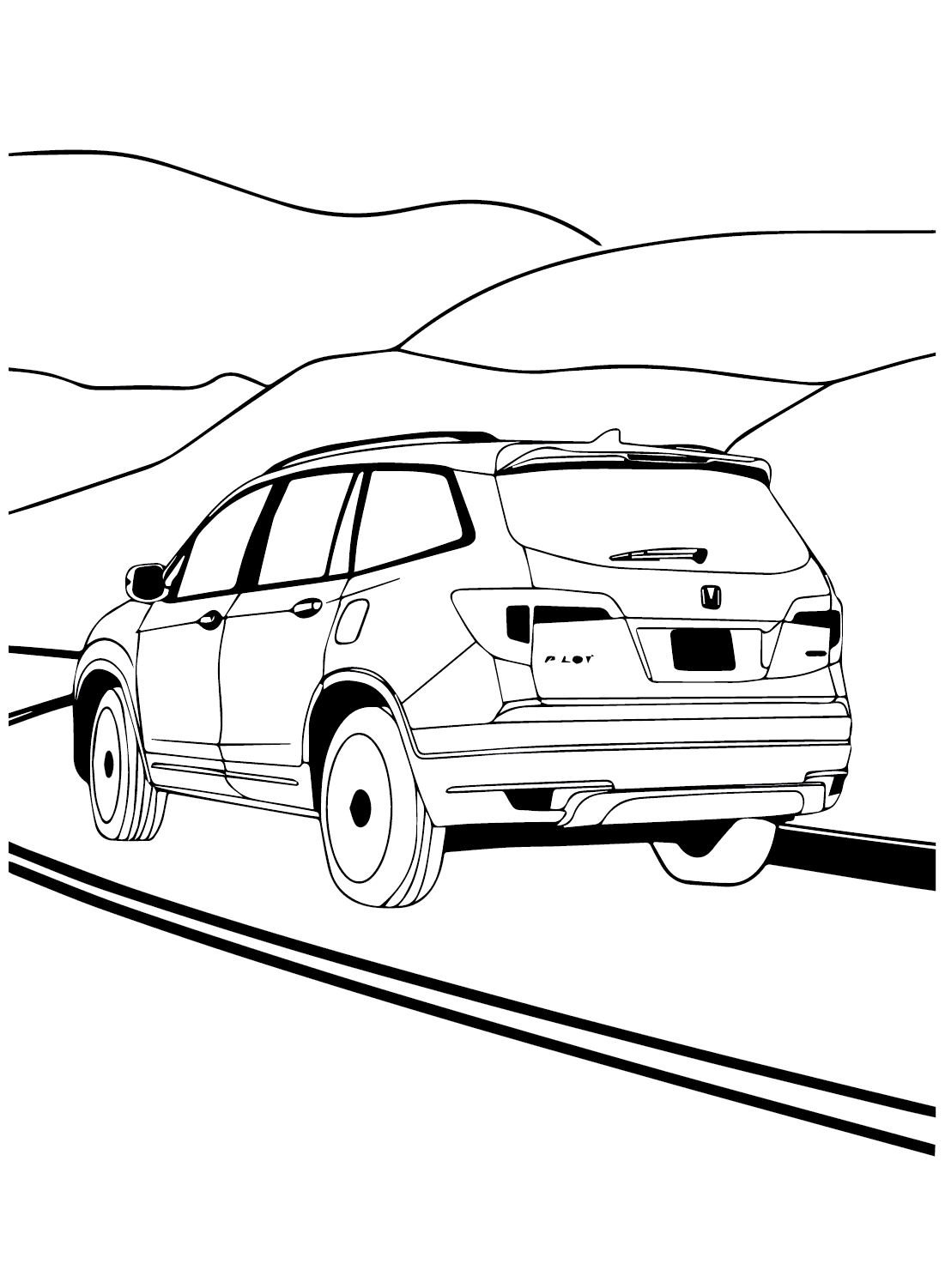
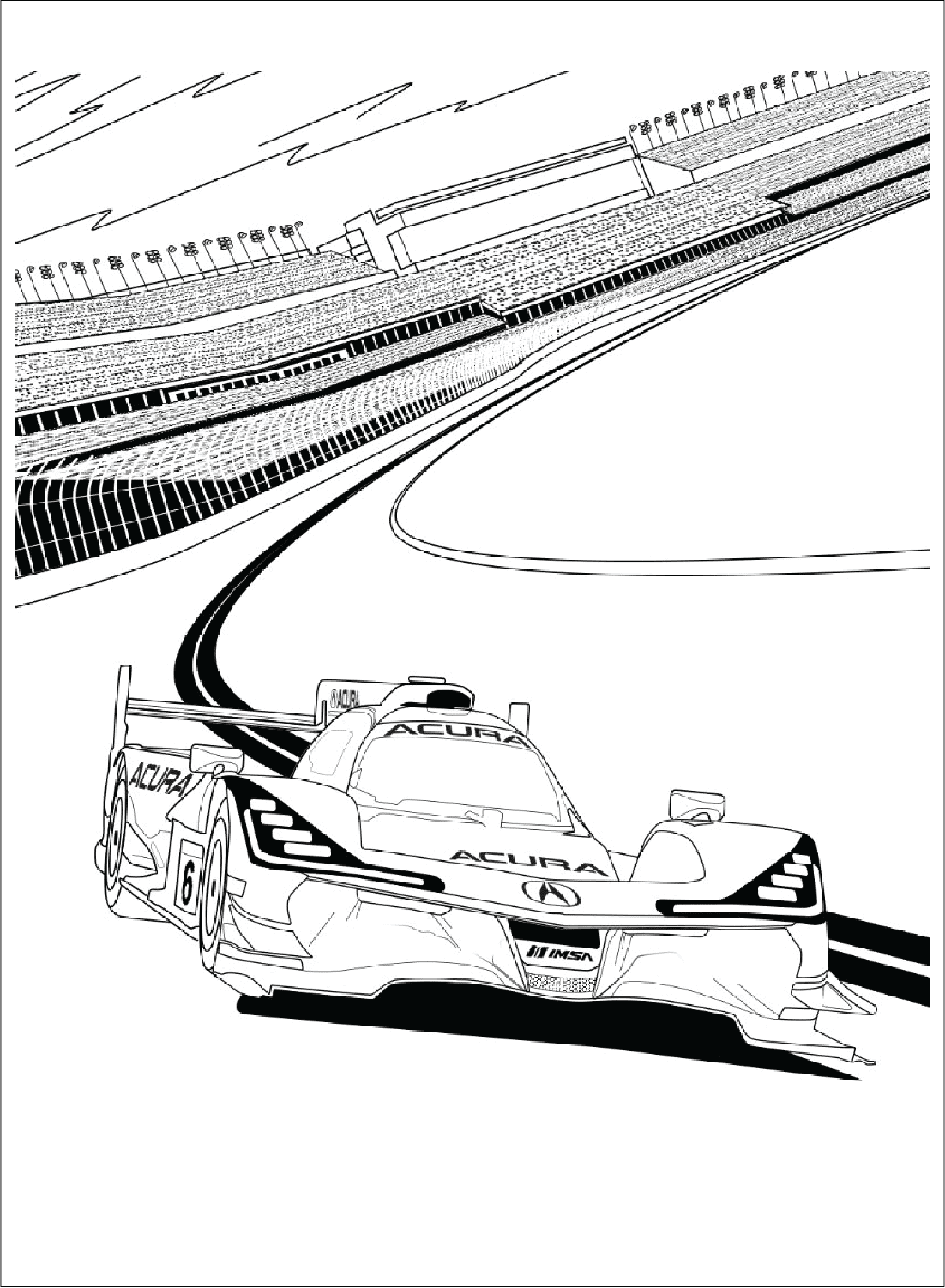
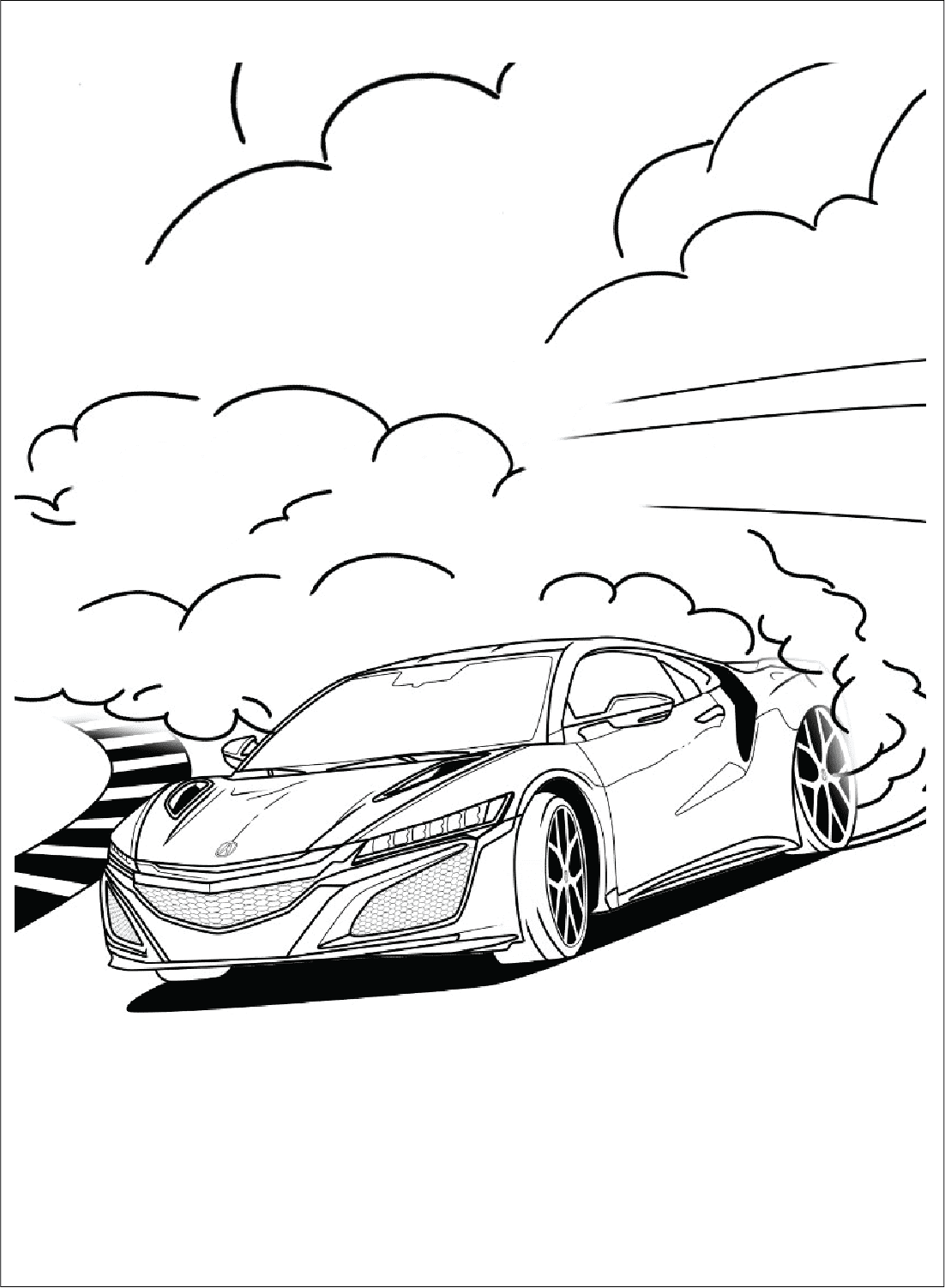
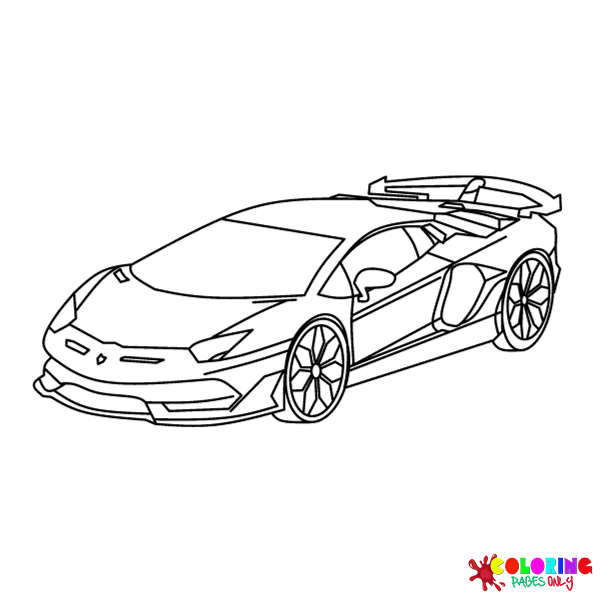
Free Honda coloring pages – 40+ pages featuring the Honda Civic, Civic Type R, Accord, CR-V, NSX, S2000, Honda motorcycles, the Super Cub, racing Honda designs, and the iconic Honda logo – free printable PDF and online coloring for car and motorcycle enthusiasts of all ages.
Honda Motor Co., Ltd. was founded by Soichiro Honda and his business partner Takeo Fujisawa on September 24, 1948, in Hamamatsu, Shizuoka Prefecture, Japan. Soichiro Honda was an engineer and inventor who had spent his early career building piston rings for Toyota, then building his own motorized bicycles from war surplus engines after World War II. The company that emerged from those post-war experiments grew into one of the largest and most recognizable manufacturers of automobiles, motorcycles, and engines on earth.
Honda entered automobile production in 1963 with the T360 mini truck and the S500 sports car – both small, both technically ambitious, both reflecting Soichiro Honda’s belief that engineering excellence and driving pleasure were inseparable goals. The Honda Civic arrived in 1972, the Accord in 1976, and both became globally dominant in their segments. In 1982, Honda became the first Japanese automaker to build cars in the United States, opening its Marysville, Ohio assembly plant. Its current global reach spans automobiles, motorcycles, power equipment, marine engines, aircraft – the HondaJet is a genuine business aircraft – and robotics research. ASIMO, the humanoid robot Honda developed beginning in 2000, represented a decade of publicly visible research into bipedal locomotion.
The company’s motorsport record includes Formula 1 championships as an engine supplier – most recently providing power to Red Bull Racing during Max Verstappen’s championship seasons – and MotoGP dominance through the Repsol Honda team. Its slogan, “The Power of Dreams,” is the most direct statement of what Honda has consistently pursued across every product category it has entered.
These 40+ free pages at ColoringPagesOnly.com span Honda’s full range. All free, PDF or PNG, print or color online.
What’s Inside
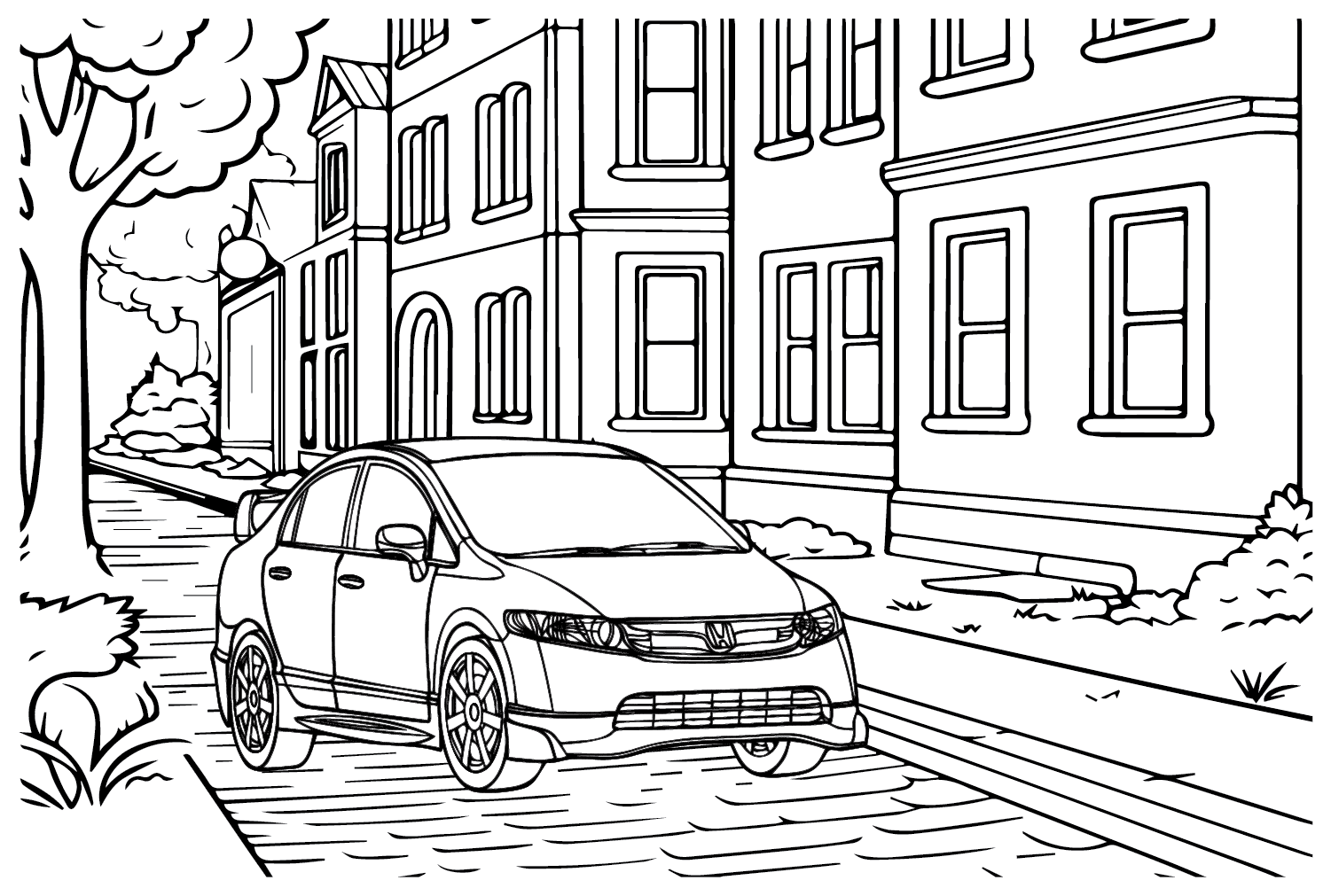
Honda Civic – The Global Standard
The Honda Civic first appeared in 1972 as a small, fuel-efficient car designed for the fuel-crisis era – a time when the American market was beginning to question whether large cars were the only kind worth making. The Civic answered that question by being excellent rather than merely adequate: it handled well, used fuel responsibly, and built a reputation for reliability that compounded across successive generations.
The Civic is now in its eleventh generation. Across fifty-plus years and millions of units sold in nearly every market on earth, it has been a sedan, a coupe, a hatchback, a station wagon, and a high-performance track car. The range of its visual identity across generations – from the simple, rounded economy car of the 1970s to the aggressive, angular design of the current generation – makes it one of the most visually varied single model lines in automotive history.
The collection’s Civic pages span this variety. Some pages show earlier generation Civics, with their rounder, simpler body lines and more upright proportions. Others show the current generation’s sharper, more complex surface design.
Coloring the Civic: The Civic has been produced in more colors than almost any other car model – white, silver, black, red, blue, grey, and dozens of special editions and market-specific colors across its history. For coloring purposes: championship white is the most historically resonant Honda color, red is the brand’s signature, and the current generation’s Sonic Grey Pearl has become associated with the eleventh-generation design. Choose based on generation: older Civics suit softer, warmer palettes; the current generation suits the contrast-heavy, metallic palette of modern automotive design.
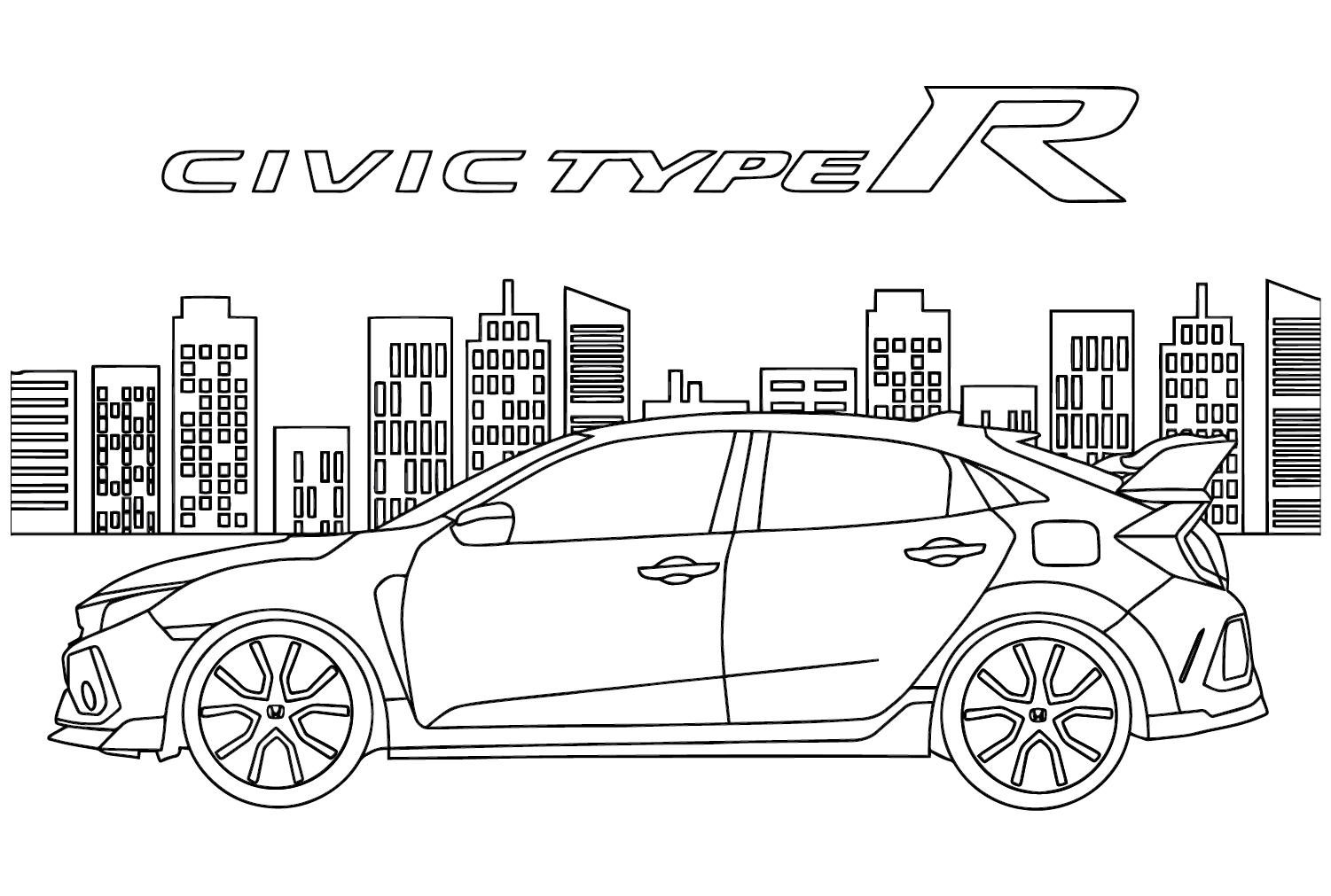
Honda Civic Type R – The Track-Focused Variant
The Civic Type R is the Civic with every performance consideration prioritized over every comfort consideration – a car designed by Honda’s engineers for people who understand what the red H badge on a white body means to the community that has followed Honda’s performance cars since the 1990s.
Its visual identity is immediately distinguishable from the standard Civic: the large rear wing (functional, not decorative), the aggressive front splitter, the enlarged air vents, the three exhaust pipes at the rear (arranged in a specific triangular pattern that has become the Type R’s most recognizable detail), and the red interior accents on the seats and steering wheel.
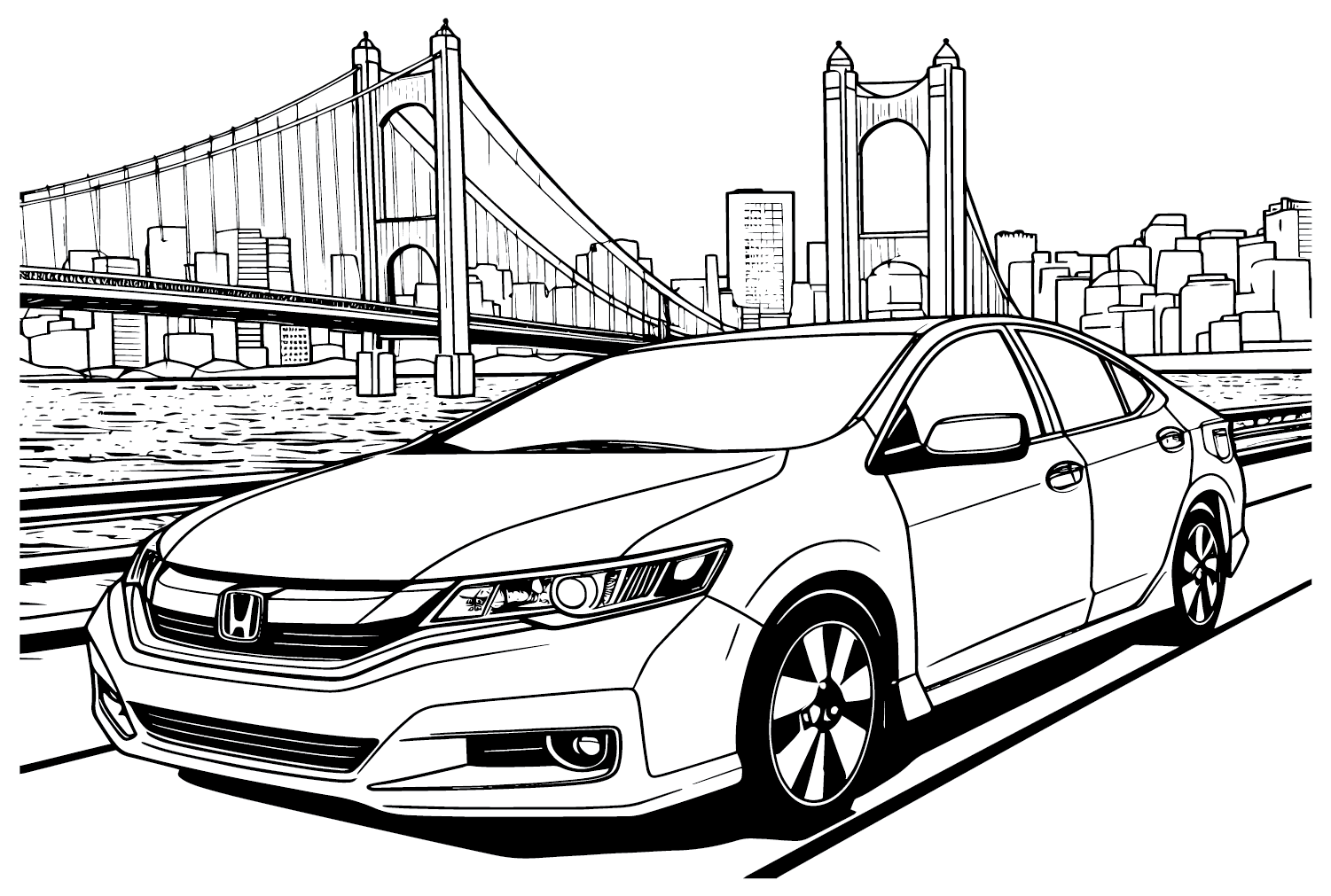
The Type R pages are the collection’s most visually complex car designs – the aerodynamic bodywork has more surface variation than the standard model, the front fascia has multiple distinct zones, and the rear is dominated by the wing and exhaust arrangement that makes it immediately recognizable from behind.
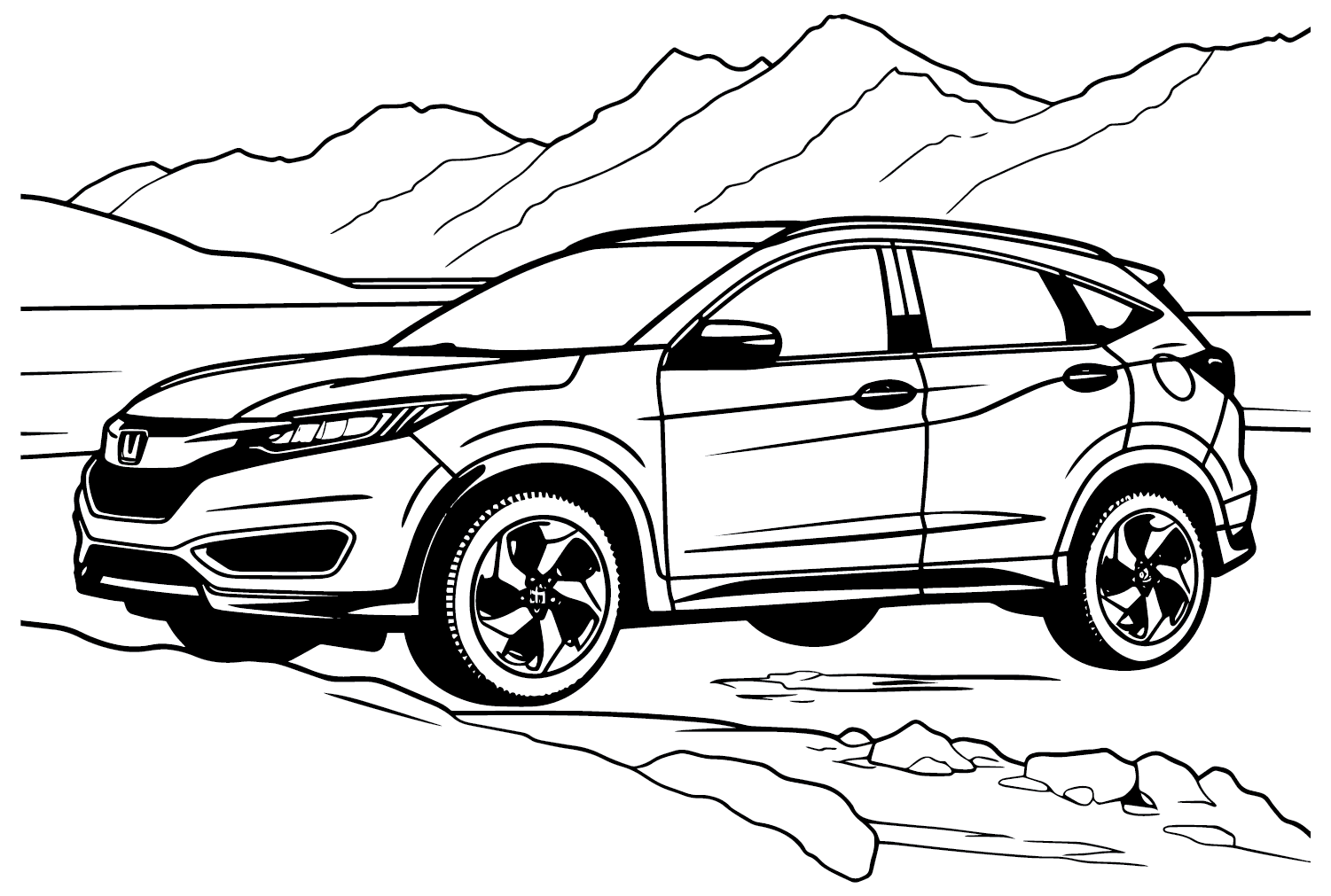
Coloring the Type R: Championship White with red accents is the canonical Type R palette – white body, red H badge, red brake calipers visible through the wheels, red seat stitching and trim. This is the color combination that appears in virtually every official Honda performance image. The large rear wing should receive shadow treatment at its underside and support struts to show its three-dimensional structure – it is not a flat surface and should not be rendered as one.
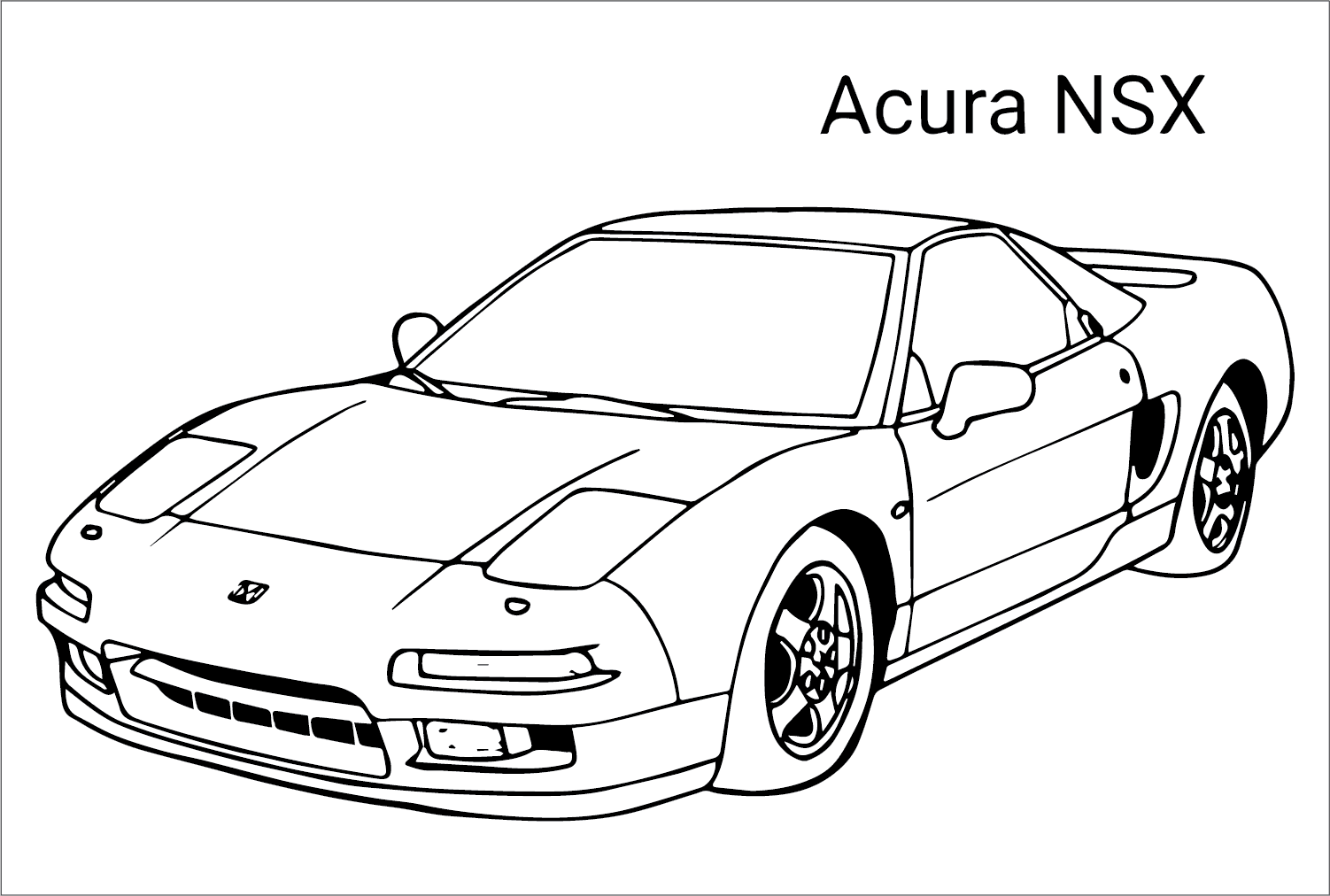
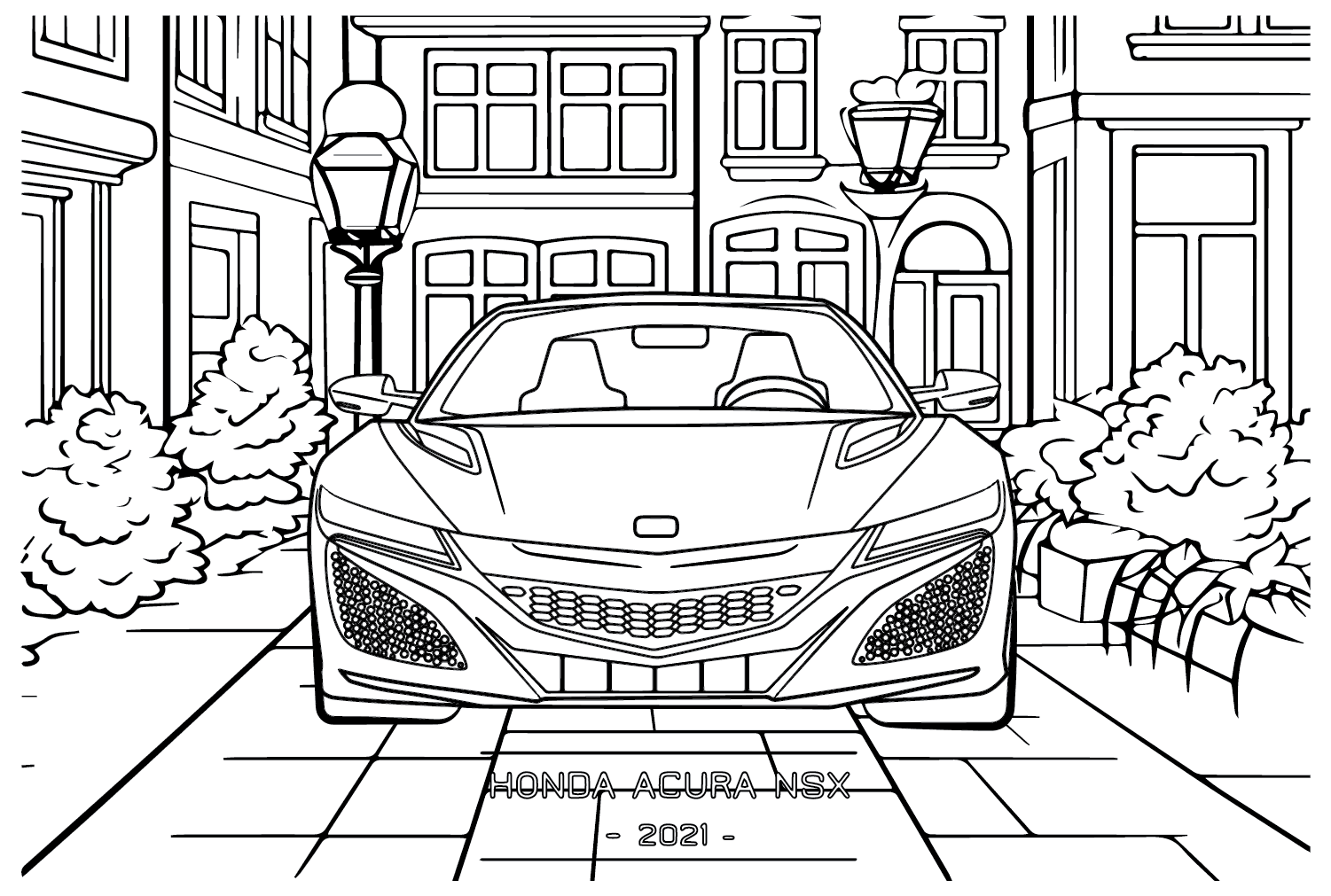
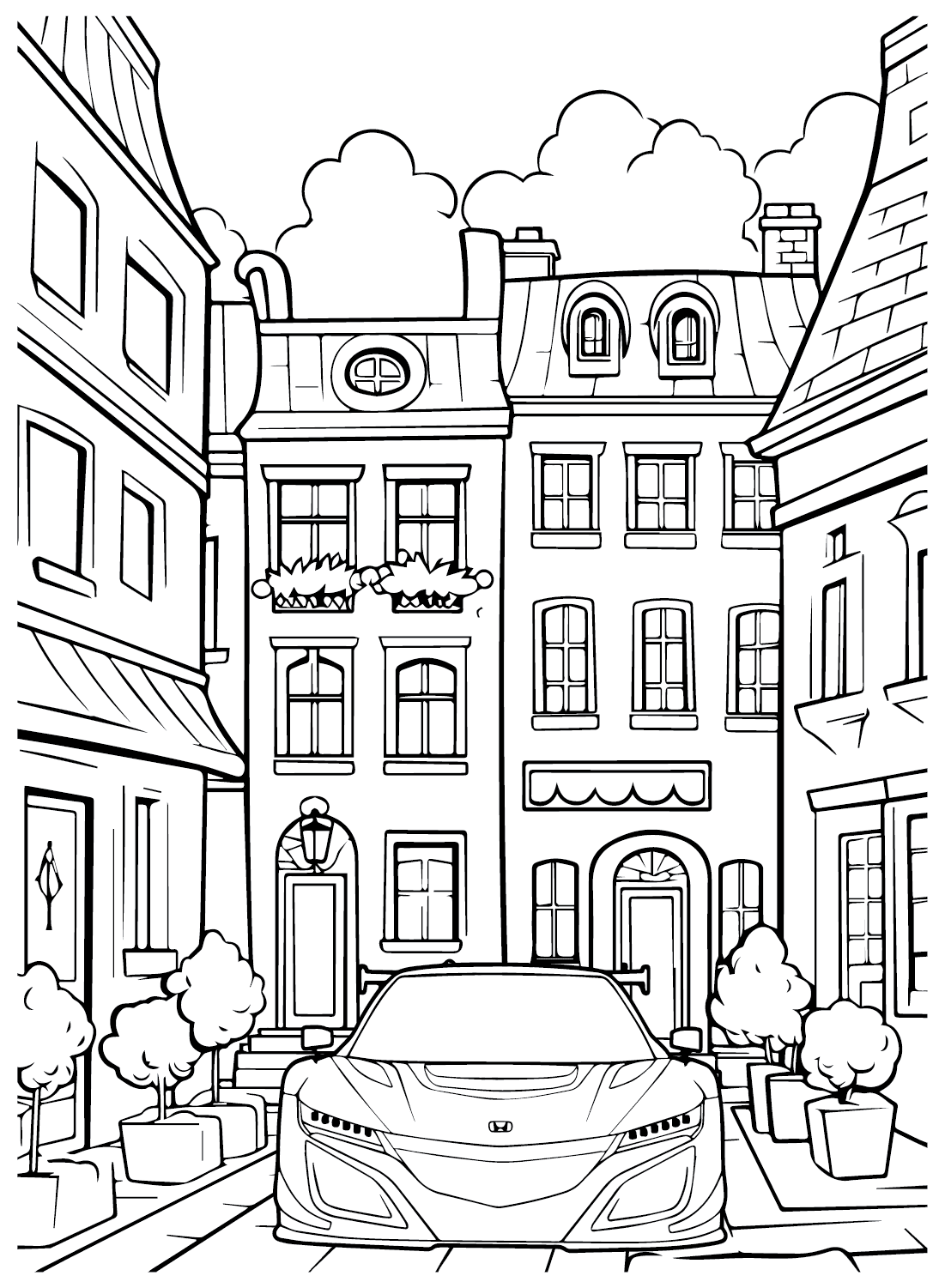
Honda NSX – The Supercar That Drives Like a Civic
The original Honda NSX debuted at the 1989 Chicago Auto Show and reached production in 1990 – a mid-engine sports car designed to demonstrate that a Japanese manufacturer could produce a supercar that equaled Ferrari and Porsche, but could be driven to work every day without the anxiety and unreliability those Italian cars were famous for requiring.
Ayrton Senna – three-time Formula 1 world champion and the most revered racing driver of his generation – participated in the NSX’s development and testing. His feedback specifically shaped the car’s steering feel and chassis responses, and his involvement is part of the NSX’s origin story that Honda has never downplayed.
The original NSX was produced until 2005. The second-generation NSX – launched in 2016 as a hybrid supercar – used a twin-turbocharged V6 with three electric motors: one at the rear and one for each front wheel, creating a performance all-wheel-drive system. It was produced until 2022.
The NSX pages are the collection’s most dramatically proportioned – the low, wide, mid-engine silhouette with its pop-up headlights (original generation) or complex LED lighting (second generation), the dramatic rear haunches over the rear wheels, and the overall visual language of a car designed to communicate speed at rest.
Coloring the original NSX: Red is the most associated color with the original NSX in its cultural moment – the early 1990s, when the car appeared alongside Ferrari 348s in the same price bracket and made the Ferraris look unreliable by comparison. The original’s pop-up headlights should be rendered in the closed position for most pages – two flush-fitting rectangular covers integrated into the hood. The body is very low to the ground – shadow beneath the sills and under the front and rear overhangs is essential to making the car’s height read correctly.
Honda S2000 – The High-Revving Roadster
The S2000 was produced from 1999 to 2009 as Honda’s sports roadster – a two-seat convertible with a 2.0-liter naturally aspirated engine that produced 240 horsepower at 8,300 RPM, achieving a specific output of 120 HP per liter that placed it among the most power-dense naturally aspirated engines in production at the time.
Enthusiasts who drove the S2000 in the period described it as demanding – a car that required and rewarded driver input more than almost any other production car in its price range. Its reputation among driving enthusiasts has grown since its discontinuation: it is now one of the most sought-after Japanese sports cars on the used market, regularly cited alongside the Mazda MX-5 as the definitive small-displacement sports roadster.
Its design is timeless in the specific way of successful roadsters: long hood, short deck, minimal overhangs, and a cabin positioned far rearward in the wheelbase to balance the car over its rear axle. The soft top, when folded, disappears cleanly behind the seats.
Coloring the S2000: Grand Prix White is the S2000’s most iconic color – the white that Honda used for its racing cars applied to its most driver-focused road car. The design has minimal surface complexity compared to the Type R, which makes it an excellent candidate for precise, careful application of the three-zone metallic technique: highlight, mid-tone, shadow, applied across the clean body surfaces with full attention to the car’s proportions.
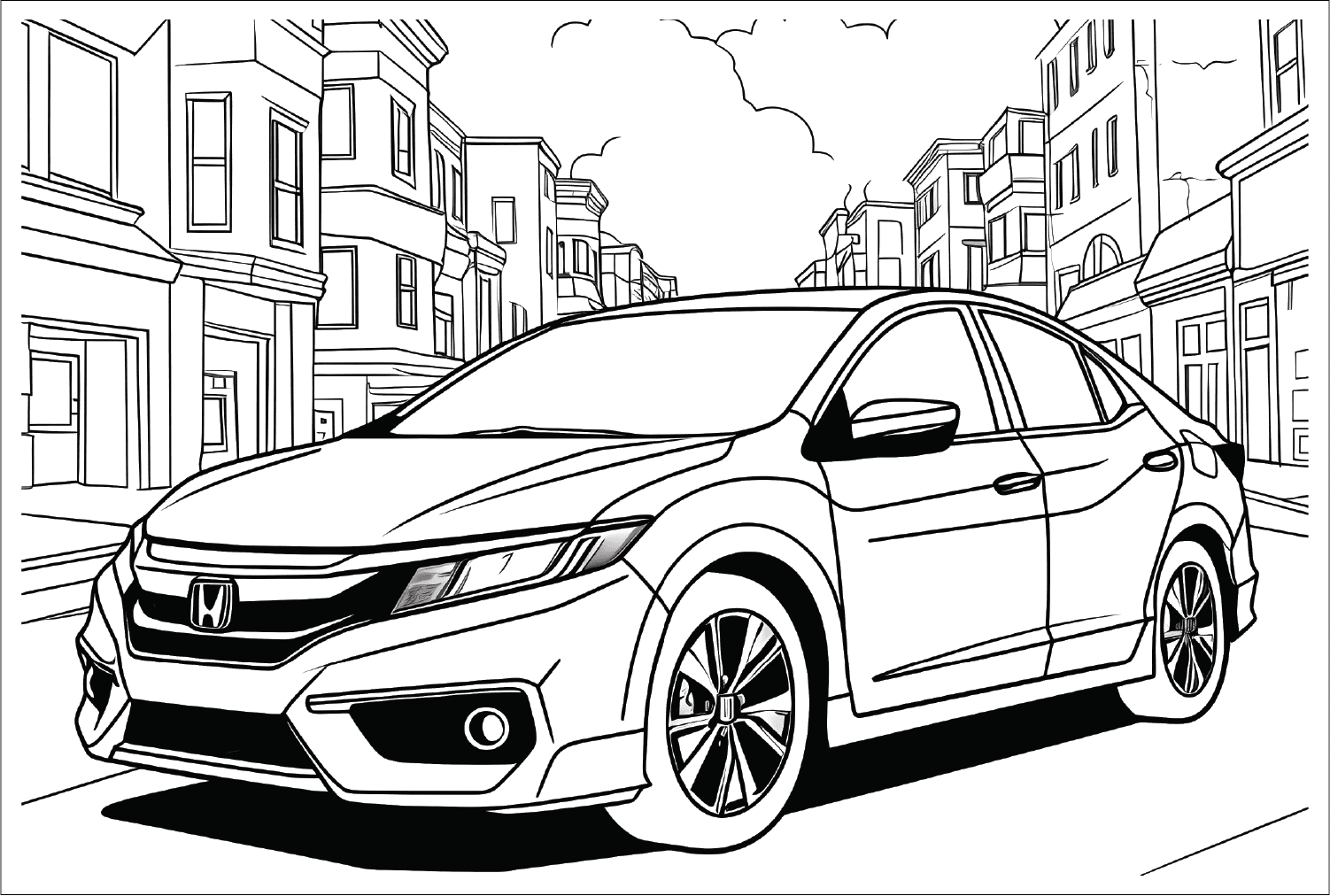
Honda Accord – The Mid-Size Benchmark
The Accord has been produced since 1976 across eleven generations and has spent decades on the list of the best-selling cars in the United States. Its consistent presence in that market across fifty years reflects what it has consistently been: a well-executed, well-built mid-size car that improves reliably from generation to generation without taking risks that could alienate the buyers who depend on it.
The Accord has been a sedan, a coupe, a station wagon, and – in the North American market since the 1990s – primarily the four-door sedan that represents the mainstream of the mid-size segment. Its design has evolved from the boxy, upright early generations through the aerodynamic mid-period, through the current generation’s fastback-influenced silhouette.
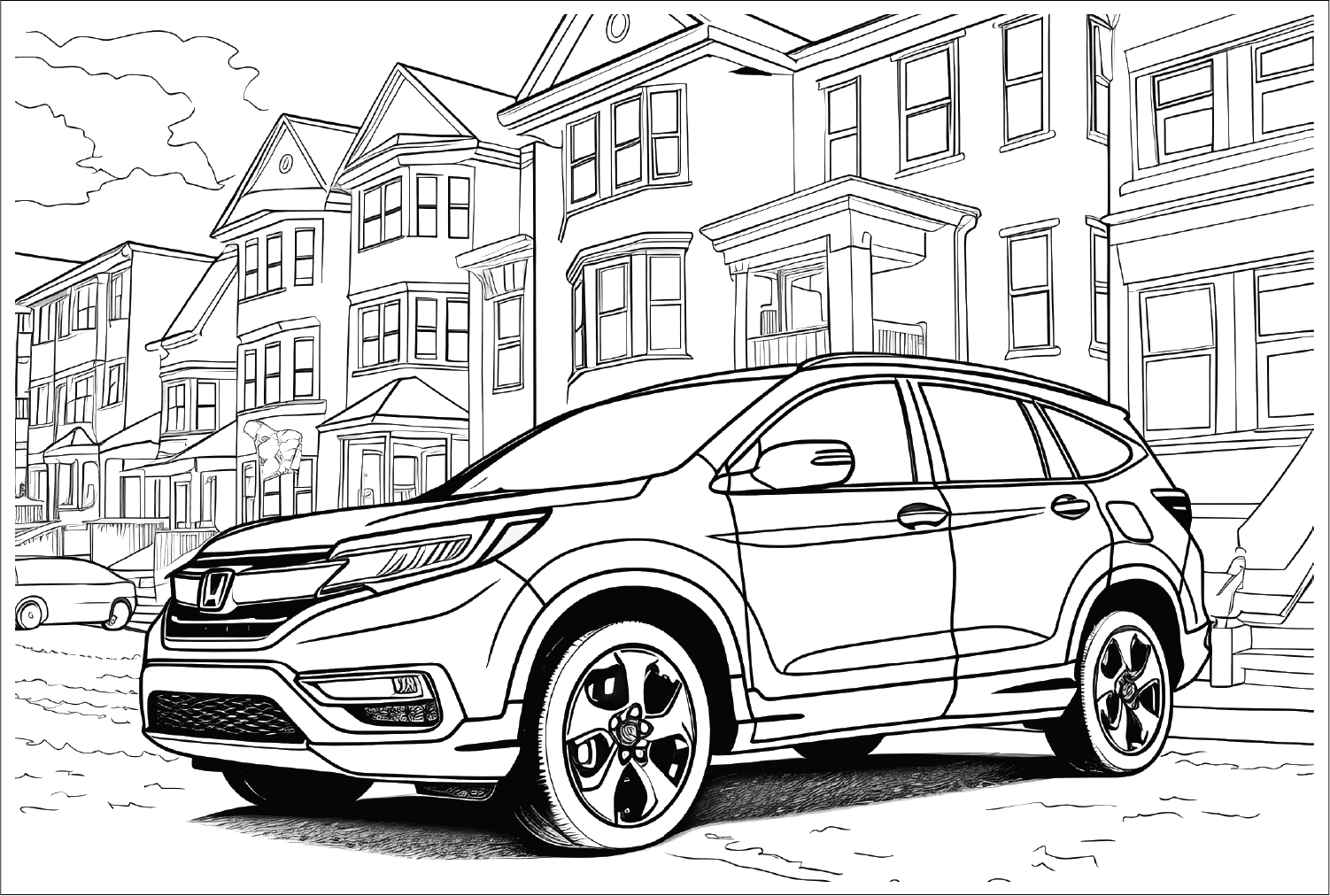
Honda CR-V – The Crossover That Defined Its Segment
The Honda CR-V arrived in 1995 as one of the first vehicles to fully develop the compact crossover SUV segment – body-on-frame truck capability in a car-based package that could be driven daily without the compromises of a traditional truck. It was not the first crossover, but it was among the first to demonstrate that the format could be executed with the refinement of a passenger car.
The CR-V is now in its sixth generation and remains one of the best-selling vehicles in its segment globally, including in Southeast Asian markets where Honda’s crossover lineup is particularly strong. Its design has evolved across generations from the rounded, upright original to the more conventionally SUV-styled current version with its sharper creases and more imposing front fascia.
Honda Motorcycles – The Super Cub and Beyond
Honda’s motorcycle heritage is as significant as its automobile history – more so, by some measures. The Honda Super Cub, introduced in 1958, is the best-selling motorized vehicle of all time with over 100 million units produced. Its step-through frame, automatic transmission, and practical design made it accessible to riders who had never considered motorcycles and created the global motorcycle commuter market as it currently exists.
The Honda CB750, launched in 1969, is considered the motorcycle that established the template for the modern sport motorcycle – an inline-four engine in a double-cradle frame with hydraulic front disc brakes, at a price and reliability level that made Japanese motorcycles dominant in the global market within a decade.
The motorcycle pages in the collection span this history: the classic CB silhouette, the sport-touring Gold Wing, the adventure-oriented Africa Twin, and the Super Cub, whose simple, practical design has been essentially unchanged across sixty-plus years.
Coloring Honda motorcycles: The classic CB series motorcycles look best in the red-and-chrome combination of period Honda color schemes – red painted panels over a chrome exhaust system. Racing Honda motorcycles (the Repsol Honda MotoGP bikes) use the orange, red, and white of Repsol’s livery.
Honda Racing Pages
The racing pages cover Honda’s two primary motorsport presences: Formula 1 and MotoGP.
In Formula 1, Honda’s most celebrated era as an engine supplier was its partnership with McLaren from 1988 to 1992 – the period in which Ayrton Senna and Alain Prost drove McLaren-Hondas to four consecutive constructors’ championships. Honda’s more recent return as Red Bull Racing’s engine supplier produced multiple championships with Max Verstappen beginning in 2021.
In MotoGP, the Repsol Honda team’s RC213V – developed specifically for the prototype racing formula – won six world championships with Marc Marquez between 2013 and 2019. The Repsol livery (white with orange and red Repsol branding over the Honda red base) is one of the most recognizable racing color schemes in motorcycle racing.
What These Pages Do
Honda’s history is a documented record of engineering-driven improvement over eight decades. Coloring through the model generations – from the early Civics to the current Type R, from the Super Cub to the Gold Wing – traces a specific story about what can be built when engineering discipline is applied consistently across time.
The Type R’s three-exhaust-pipe arrangement is a design lesson. The specific triangular arrangement of the three exhaust tips at the rear of the Civic Type R exists because one center pipe and two offset outer pipes produce different exhaust flow characteristics than three equal-spaced pipes. The visual consequence – an asymmetric, visually dynamic rear end – is a direct result of engineering decisions, not styling choices. Coloring these pages carefully enough to render that arrangement correctly requires understanding why it is there.
Motorcycle pages introduce a different visual vocabulary. Cars and motorcycles require completely different approaches to coloring – the open structure of a motorcycle, with its visible engine, exhaust routing, frame tubes, and mechanical components, demands attention to multiple overlapping surfaces that cars, with their enclosed bodywork, do not. The Honda motorcycle pages develop this more complex visual literacy.
Fine motor development. The American Academy of Pediatrics identifies fine motor development as a key childhood milestone. The Honda pages – with their body panel complexity, wheel spoke details, and logo work – provide exactly the kind of motivated, sustained fine motor practice that is most developmentally effective. The 2005 Art Therapy Journal study on structured coloring and anxiety reduction applies throughout.
How to Color These Pages Well
Honda Red is a specific, vivid red. The red in Honda’s logo and racing heritage is a saturated, slightly warm red – not a dark maroon, not a cool crimson, but a vivid, pure red that reads at maximum distance. When coloring any Honda racing or Type R page, make this red as vivid as the tools allow.
The Honda wing logo requires precision. The Honda logo – an H formed from two wing-like strokes – appears on grilles, steering wheels, and wheels across the collection’s pages. The logo is a specific shape: the two vertical strokes angle slightly outward as they extend upward, creating the wing impression. Apply red to the logo with careful attention to its edges – the boundary between the red logo and whatever surface it sits on is the logo’s most important detail.
Sports car body panels want the full three-zone metallic treatment. The Type R, NSX, and S2000 all have complex body surfaces that benefit most from consistent light-direction treatment. Establish the upper-left as the light source. Every surface facing upper-left: lightest tone. Every main vertical surface: mid-tone. Every surface facing away from light, and every surface beneath overhangs: shadow tone. Apply this system consistently, and the car’s form will read as three-dimensional without requiring blending techniques.
Wheels are the car’s most important finishing detail. A precisely rendered wheel – spokes clearly differentiated from the center hub and the outer rim, brake rotor visible as a darker grey disc behind the spokes – transforms a good car coloring into an excellent one. The brake caliper, visible through the spoke openings, is typically red on Honda performance models.
Motorcycle chrome needs warm highlights. Honda’s classic motorcycle exhaust systems are chrome – the most reflective surface in the collection. Simplify chrome to three zones: near-white highlight along the upper edge of each pipe, warm light grey across the main pipe surface, and a very subtle cool grey at the underside where the pipe faces away from the light. Add a thin dark line along the very bottom edge of each pipe – this ground reflection is what makes chrome read as chrome rather than as painted metal.
5 Creative Craft Ideas
Honda Generation Timeline
Print one Civic page from each of three or four distinct visual eras the collection represents – the rounded early Civic, the more aerodynamic mid-period design, the angular current generation, and the Type R. Color each in white – the same color across all generations allows the shape change to be the only variable.
Mount all in chronological order on a long horizontal backing sheet. Below each car, hand-letter the generation number and approximate year range: “1st Gen – 1972-1979,” “6th Gen – 1995-2000,” “11th Gen – 2022-present,” “Type R – 2023.” The finished timeline shows fifty years of evolution in a single display, with white chosen deliberately to shape the subject.
Performance Hierarchy Display
The Honda performance lineup has a specific hierarchy: Civic → Civic Sport → Civic Si → Civic Type R → NSX. Print one page representing each level. Color each in escalating visual intensity: the standard Civic in a calm silver, the Si in white with red accents, the Type R in Championship White with full red brake caliper and wing treatment, the NSX in the most dramatic palette available – deep red or carbon black.
Mount all five in a vertical stack, standard Civic at the bottom, NSX at the top. Add a label on the right side: “Everyday → Performance → Supercar.” The visual escalation in color treatment mirrors the escalation in performance specification.
Repsol Honda Racing Livery Study
Print the most complete Honda motorcycle racing page available. The Repsol Honda MotoGP bike uses a specific livery: white as the primary base, orange in large panels on the fairing sides and tank, red at specific accent points including the Honda wing logo, and the dark blue Repsol text.
Color the bike in the Repsol livery, using the actual color proportions – roughly 50% white, 35% orange, 10% red, 5% dark text. The challenge is maintaining the Repsol color proportions correctly while also executing the metallic quality of each panel. The finished page is a studied recreation of one of motorcycle racing’s most recognized liveries.
The Super Cub Heritage Card
Print one Super Cub motorcycle page – the simple, step-through design that has been produced in essentially the same form since 1958. Color it in the classic combination: red painted bodywork panels over chrome exhaust, cream or white seat. Keep the color application clean and simple – the Super Cub’s design has no visual complexity to render, just the direct, honest shape of the world’s most practical motorcycle.
Mount the finished page on cardstock. On the back or on a card attached with a string, write: “Honda Super Cub – Introduced 1958. Over 100 million produced. The world’s best-selling motorized vehicle.” The card format recognizes the Super Cub as what it is: a historical object that deserves deliberate recognition.
Honda vs. The World – Comparison Display
This craft uses pages from multiple automotive collections on this site. Print the Honda Civic Type R and find comparable pages from the Toyota GR Corolla, the Volkswagen Golf R, or other hot hatches. Color the Honda Type R in Championship White with red accents; color the comparison car in its canonical color.
Mount both side by side on a neutral backing sheet. Below each car, add three stats: horsepower, 0-60 mph time, and one distinguishing feature. For the Type R: “329 HP / 0-60: 4.9 sec / Three exhaust pipes.” The finished display is an automotive comparison reference created through the coloring process – a piece of car knowledge made visual and personal.
Frequently Asked Questions
Who founded Honda, and when was the company established? Honda Motor Co., Ltd. was founded by Soichiro Honda and Takeo Fujisawa on September 24, 1948, in Hamamatsu, Shizuoka Prefecture, Japan. Soichiro Honda was a mechanical engineer and inventor who had spent years building his own engines before establishing the company with Fujisawa, who provided the business expertise that Soichiro acknowledged he lacked. The partnership between Soichiro’s engineering vision and Fujisawa’s business management is credited with transforming what could have been a small specialty manufacturer into a global corporation. Soichiro Honda received the Ordre national de la Légion d’honneur in 1984 and was inducted into the Automotive Hall of Fame in 1989.
What is the Honda Civic Type R, and what makes it different from a standard Civic? The Honda Civic Type R is a high-performance variant of the Honda Civic produced specifically for driving enthusiasts who prioritize track capability and driving engagement over comfort or practicality. The current eleventh-generation Type R uses a 2.0-liter turbocharged four-cylinder engine producing 329 horsepower, mated to a six-speed manual transmission – no automatic option is offered. Its distinguishing visual features include a large functional rear wing, an aggressive front splitter and air dams, enlarged brake cooling vents, a triple-exhaust-pipe arrangement at the rear (one center pipe and two outer pipes in a triangular configuration), and red interior accents on seats, steering wheel, and trim. The Type R designation has been used across multiple Honda models since the 1990s, including the Integra Type R and NSX Type R.
What is the Honda NSX, and what was Ayrton Senna’s involvement? The Honda NSX is Honda’s mid-engine sports car, produced in its original form from 1990 to 2005 and in a second-generation hybrid form from 2016 to 2022. The original NSX was designed to demonstrate that a Japanese manufacturer could produce a supercar competitive with Ferrari and Porsche at a significantly lower price and with dramatically better reliability. Ayrton Senna – the three-time Formula 1 world champion who drove for McLaren using Honda engines during his most dominant years – participated in the NSX’s development and testing at Honda’s Tochigi proving ground. His feedback specifically influenced the car’s steering feel and chassis tuning, and his involvement was publicly acknowledged by Honda and has been part of the NSX’s heritage narrative since the car’s debut.
What is the Honda Super Cub, and why is it historically significant? The Honda Super Cub is a step-through motorcycle first introduced in 1958 that has become the best-selling motorized vehicle in history, with over 100 million units produced as of 2017 – making it more widely produced than any car model in history. Its design features a pressed-steel step-through frame (allowing riders to mount and dismount without swinging a leg over the seat), an automatic centrifugal clutch, a single-cylinder engine, and a fully enclosed drivetrain and engine that required minimal maintenance. Its accessibility – requiring no motorcycle license in Japan when it was introduced, simple to maintain, practical for urban commuting and rural transportation – made it the vehicle through which Honda dominated the global motorcycle market and created a new category of everyday transportation.
What is Honda’s racing history in Formula 1? Honda has participated in Formula 1 as a constructor and engine supplier across several distinct periods. As a constructor from 1964 to 1968, Honda won the 1965 Mexican Grand Prix with Richie Ginther. As an engine supplier to Williams and Lotus from 1983 to 1987, Honda engines won multiple championships. Honda’s most celebrated F1 period was its partnership with McLaren from 1988 to 1992, during which McLaren-Honda won four consecutive constructors’ championships and produced some of the most dominant F1 cars in the sport’s history – particularly the 1988 McLaren MP4/4, which won 15 of 16 races that season with Ayrton Senna and Alain Prost driving. Honda returned as an engine supplier to Red Bull Racing beginning in 2019, with Max Verstappen winning drivers’ championships in 2021, 2022, 2023, and 2024 using Honda-derived power units.
What does Honda produce besides cars and motorcycles? Honda is one of the most diversified manufacturers in the world. Beyond cars and motorcycles, Honda produces power equipment, including generators, lawn mowers, and general-purpose engines used across industrial and consumer applications globally. Honda Marine produces outboard engines. Honda Aircraft Company produces the HondaJet – a genuine business aircraft that entered service in 2015 and is produced at the company’s facility in Greensboro, North Carolina. Honda’s robotics research produced ASIMO, the humanoid robot first presented publicly in 2000 and developed for over two decades as a research platform for bipedal locomotion, stair climbing, and human-environment interaction. Honda also develops hydrogen fuel cell technology through the Clarity Fuel Cell vehicle.
Browse the full collection at ColoringPagesOnly.com. All 40+ pages free, no sign-up, PDF or PNG, print at home or color online.
Soichiro Honda built piston rings in a shed during World War II and sold them to Toyota. After the war ended, he attached surplus military engines to bicycles and called it a motorized bicycle. In 1948, he and Fujisawa turned that into a company. In 1958, the Super Cub began its march toward 100 million units. In 1969, the CB750 changed what a motorcycle could be. In 1972, the first Civic appeared. In 1990, Ayrton Senna helped tune the NSX at the proving ground.
That is seventy-plus years of engineering as consistent pursuit – the belief that building something better is worth the effort, that refinement across generations compounds into excellence, that the person who drives or rides what you built deserves the best version of it you can produce.
The pages in this collection are the visual record of that pursuit. The Civic’s half-century of evolution. The Type R’s three exhaust pipes. The NSX’s Senna-shaped handling.
Pick up your red. Start with the wing logo. The rest of the car follows from there.
Share your work on Facebook and Pinterest and tag #Coloringpagesonly. We especially want to see the generation timelines and the Repsol livery studies.
Color the H badge. Honor the dream. The power is in the details.
More from our automotive collections: