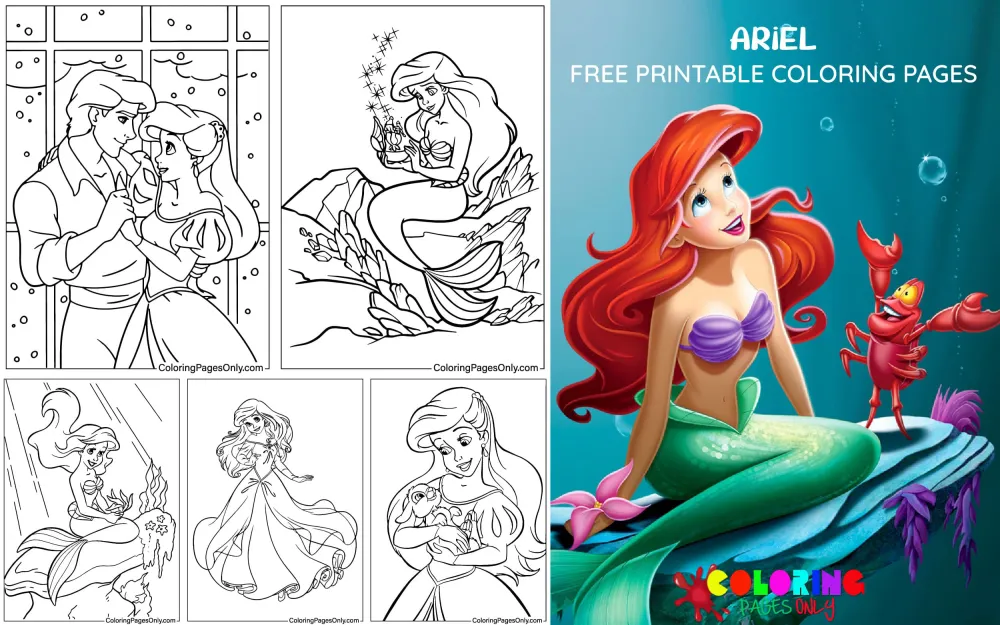
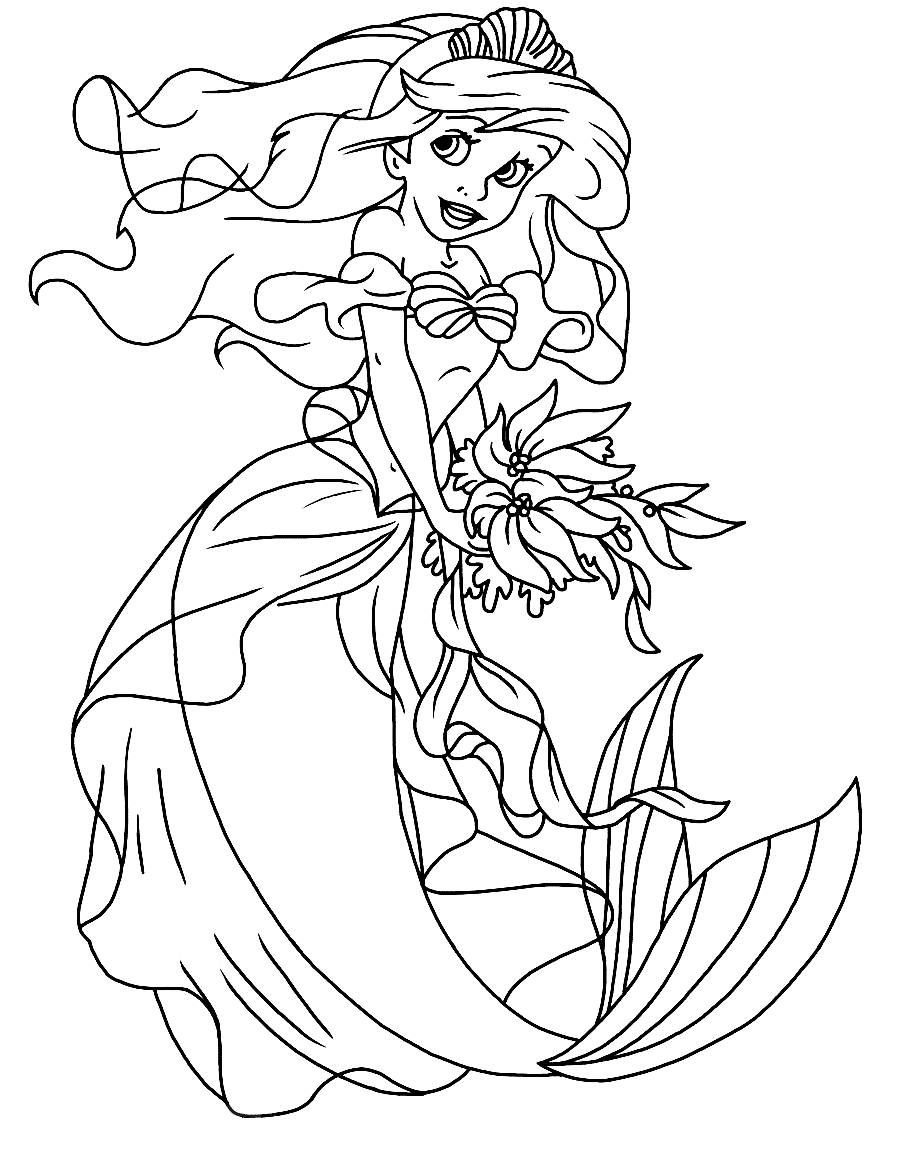
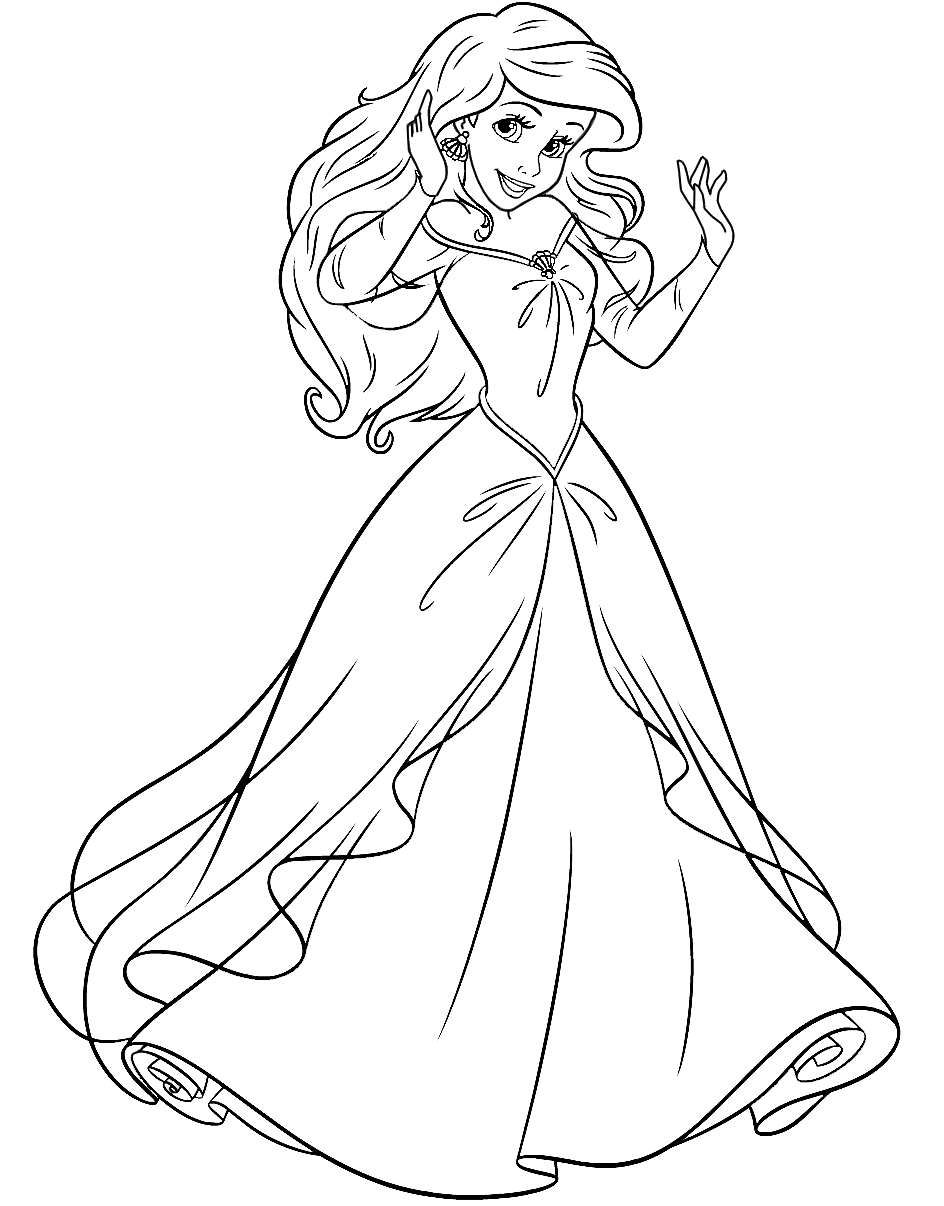
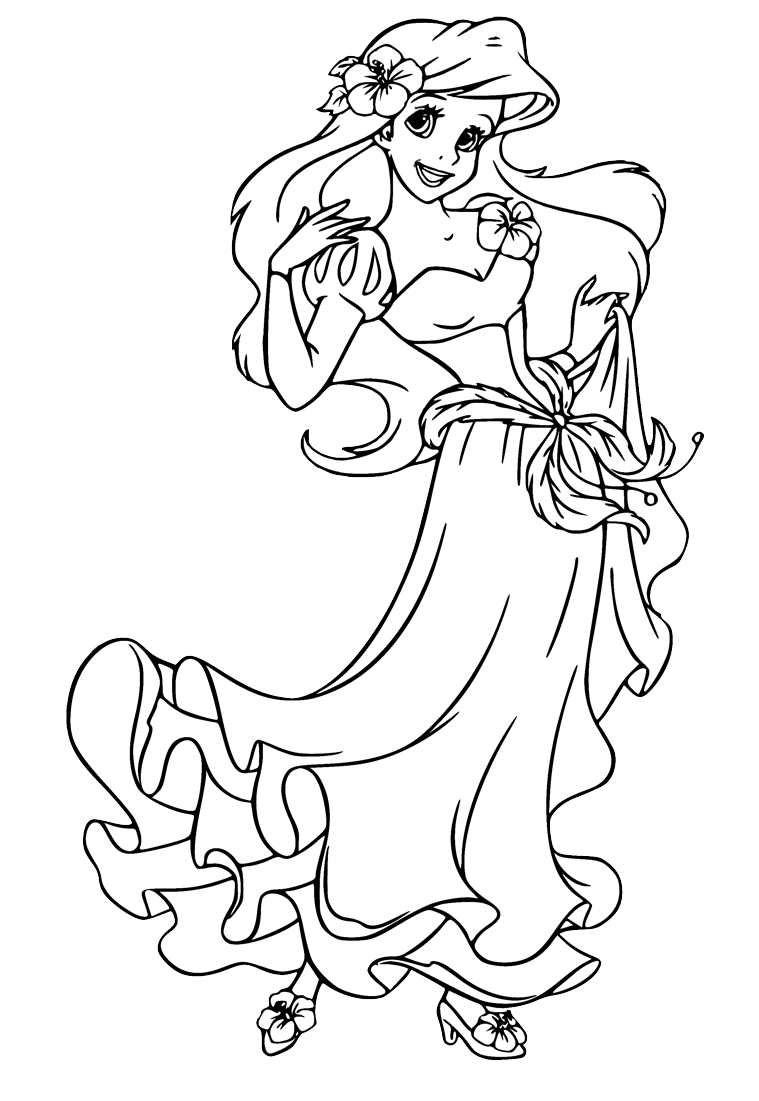
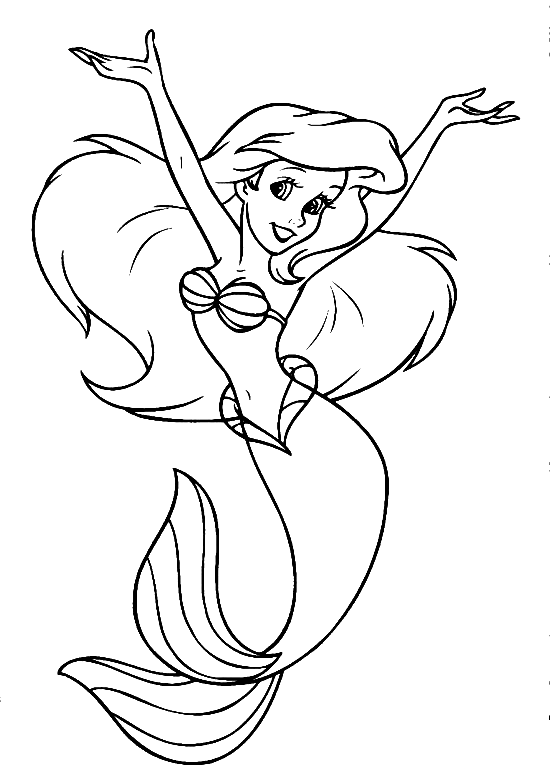
Free Ariel coloring pages: 60+ pages featuring Ariel in her mermaid form with the iconic green tail and vivid red hair, Ariel at the ocean surface in the signature moonlit rock scene, Ariel as a human in her blue dress, the grotto collection scene with human artifacts, underwater compositions with Flounder and Sebastian, Ursula the sea witch in her purple and white design, King Triton with his golden trident, portrait close-ups of the legendary red hair, the shell necklace that holds the stolen voice, and the full visual vocabulary of the animated feature that launched the Disney Renaissance. All free, printable PDFs and online coloring for Disney fans of all ages.
The Little Mermaid was produced by Walt Disney Pictures and released on November 17, 1989, directed by Ron Clements and John Musker, with music by Alan Menken and lyrics by Howard Ashman. The film earned $235 million worldwide against a production budget of approximately $40 million, received the Academy Award for Best Original Score and the Academy Award for Best Original Song (“Under the Sea”), and is broadly credited as the beginning of the Disney Renaissance, the period of revived critical and commercial success for Disney animation that ran from 1989 through approximately 1999 and included Beauty and the Beast (1991), Aladdin (1992), The Lion King (1994), and Mulan (1998).
The film’s source is the 1837 fairy tale “Den lille havfrue” (The Little Mermaid) by Hans Christian Andersen, published on April 7, 1837, in Fairy Tales Told for Children (Eventyr, fortalte for Børn, Volume 1), published in Copenhagen by C.A. Reitzel. Andersen was born April 2, 1805, in Odense, Denmark, and died August 4, 1875, in Copenhagen. His original story is substantially darker than the Disney adaptation: the Little Mermaid trades her voice for legs, each step on land causes her pain “like walking on knives,” and the prince marries another woman. The mermaid dissolves into sea foam rather than receiving a happy ending. Disney’s adaptation retained the core bargain (voice for legs, human love as the goal) while adding the characters of Sebastian, Flounder, and Scuttle, and transforming the ending into one of self-determination and mutual love.
These 60+ free pages at ColoringPagesOnly.com cover the full cast and major scenes. All free, PDF or PNG, print or color online.


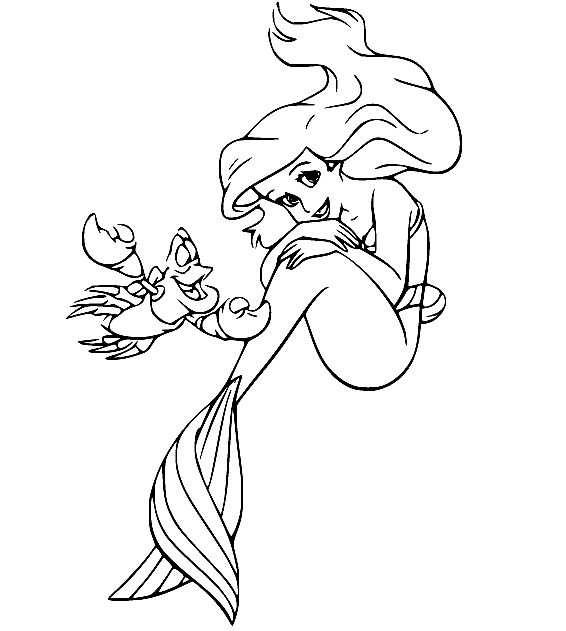
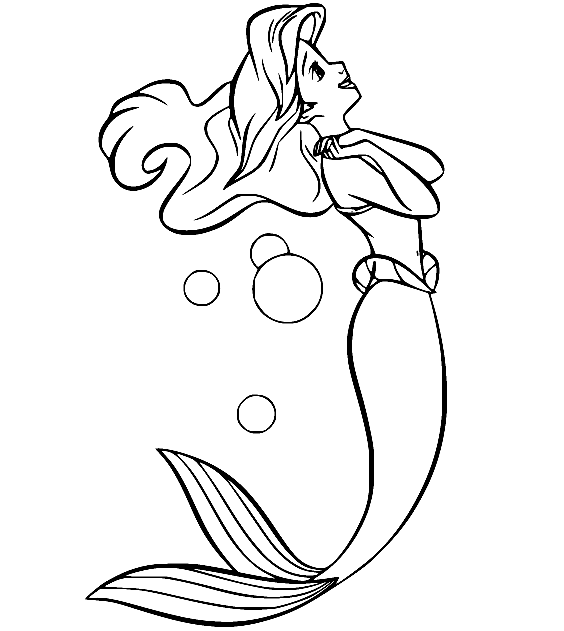
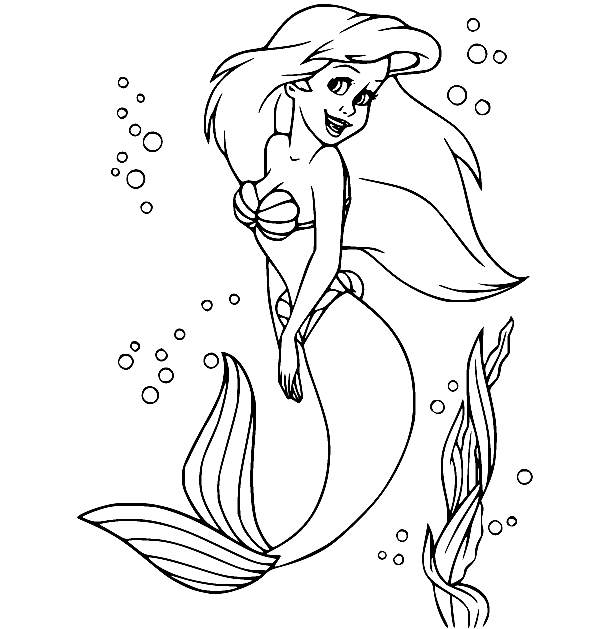
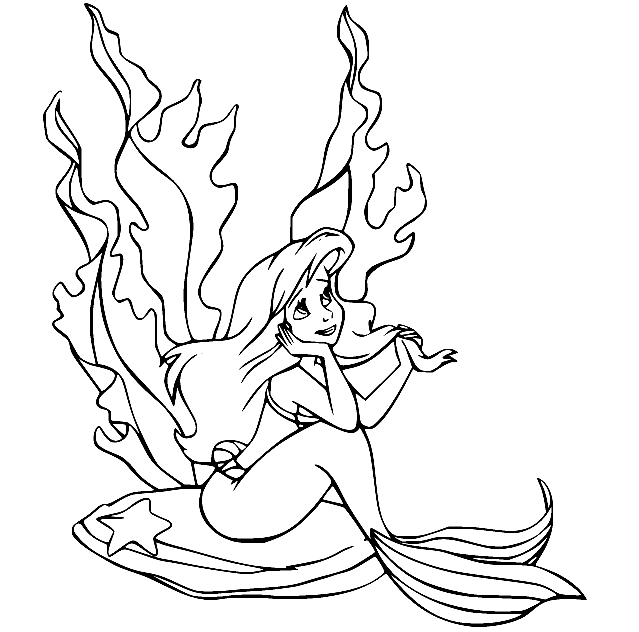

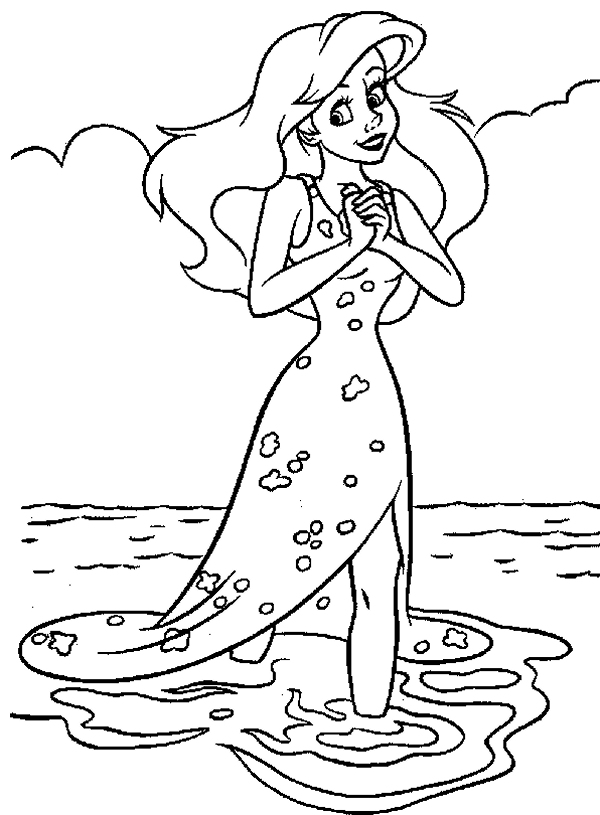
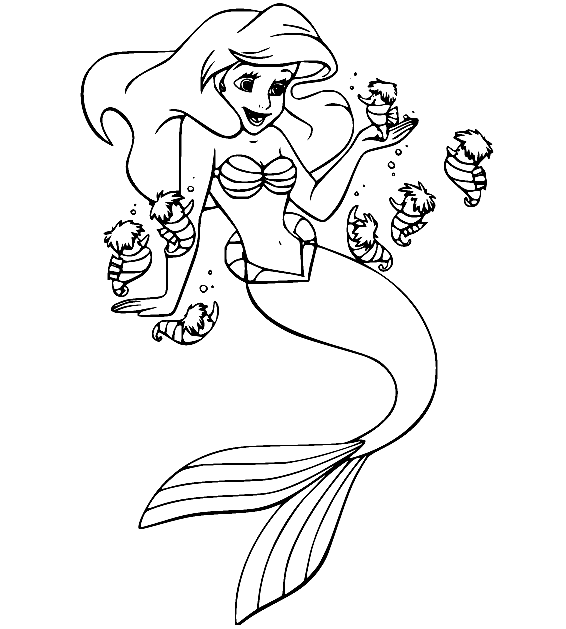
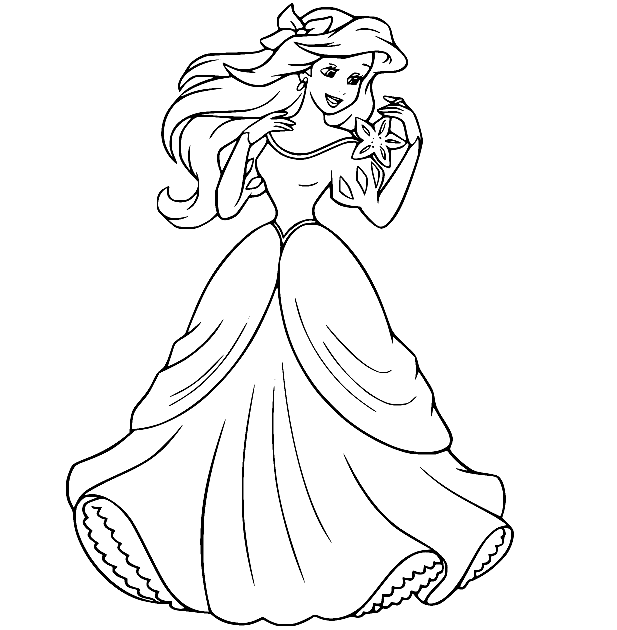

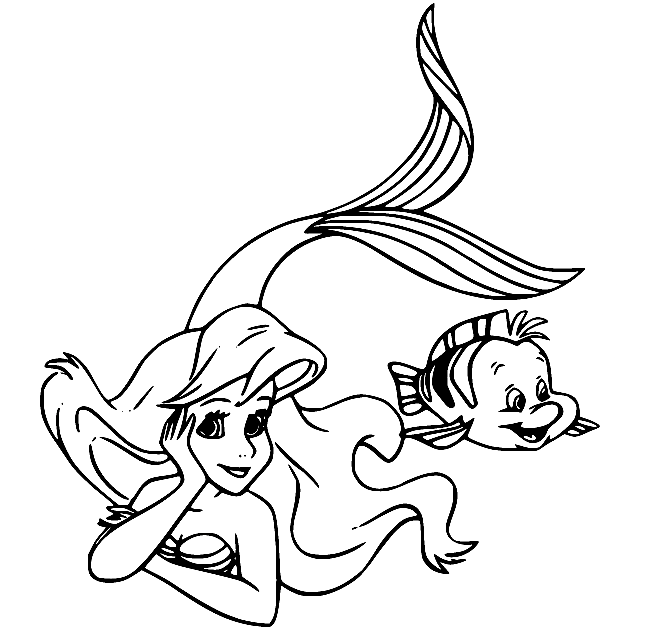
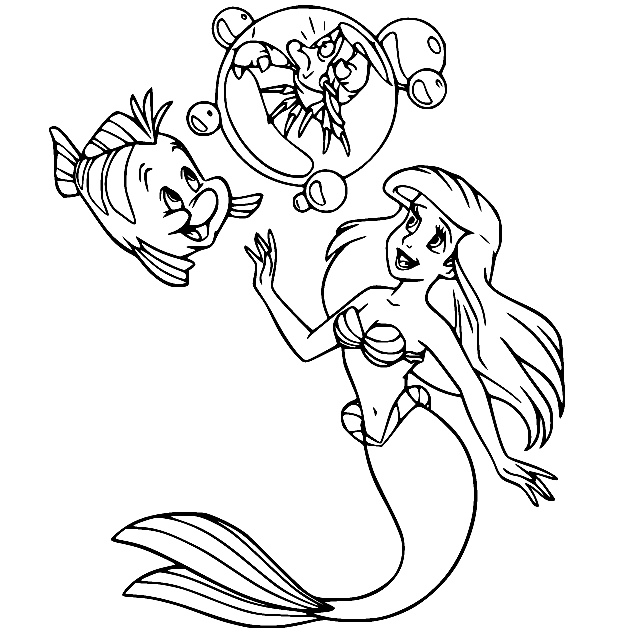
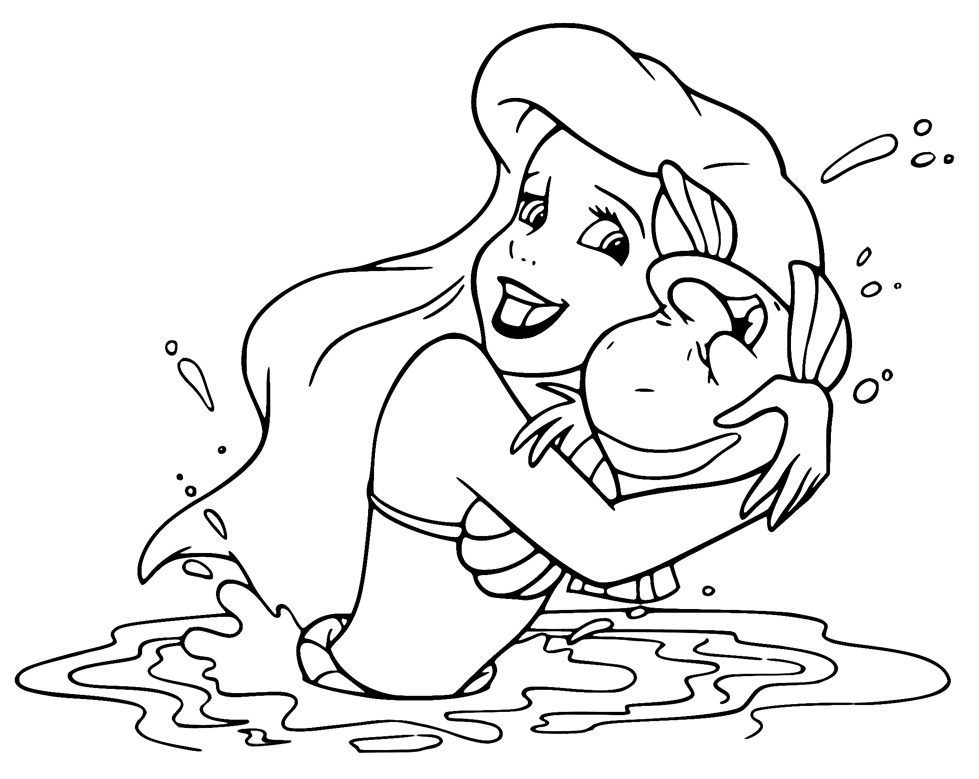
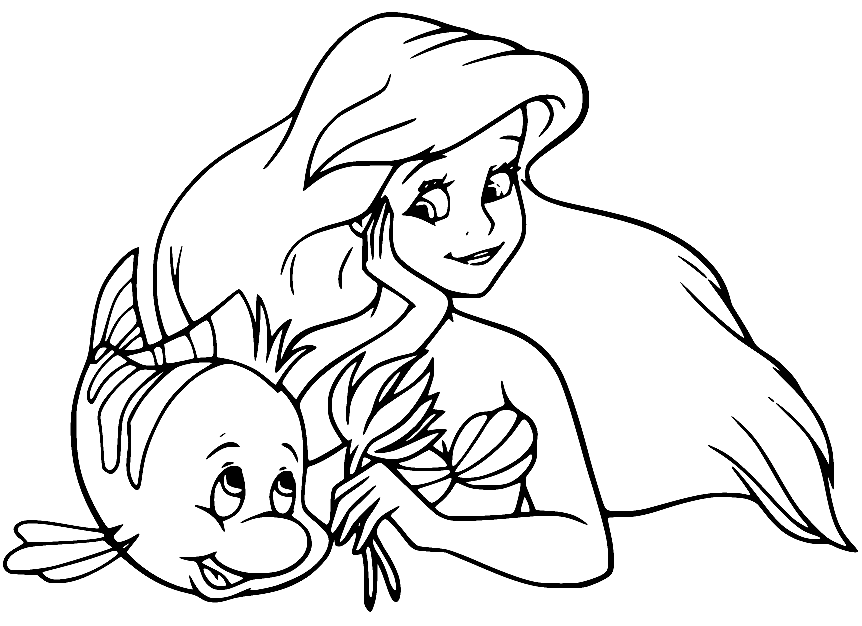
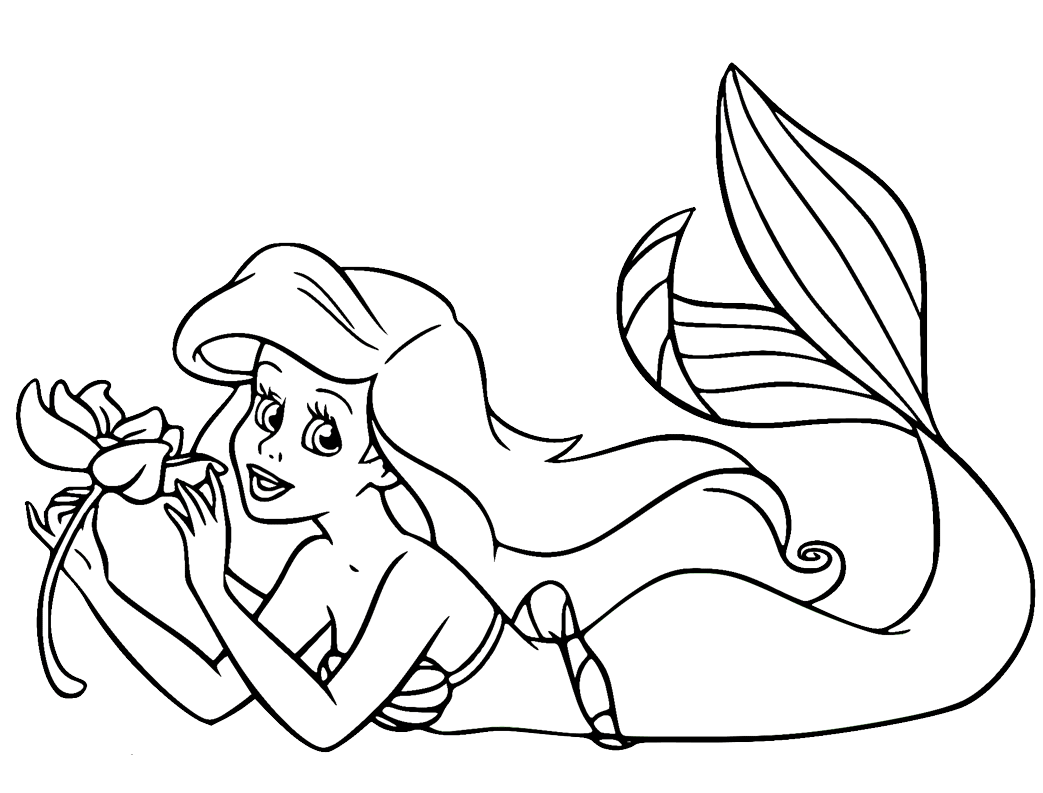
What’s Inside
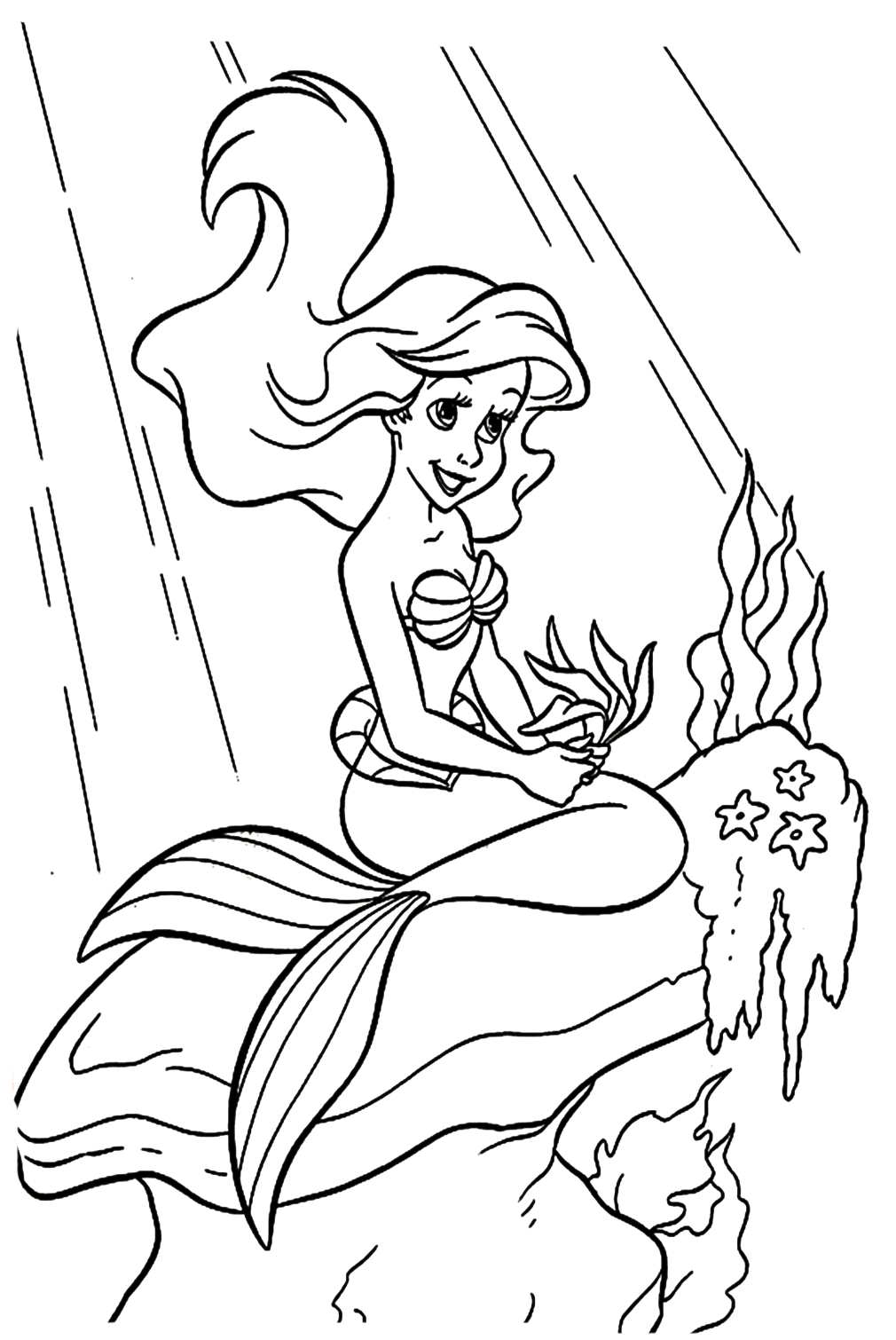
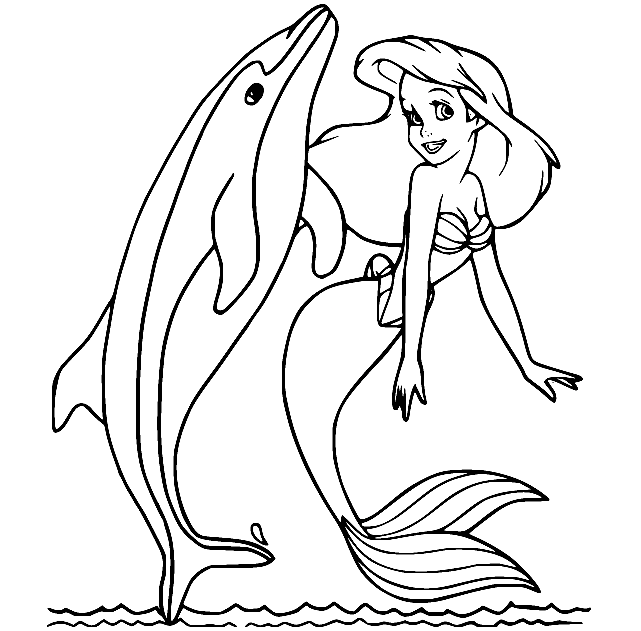
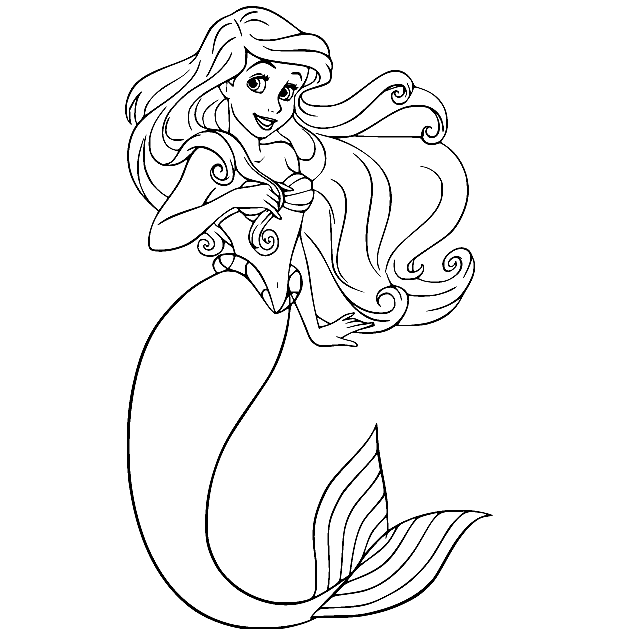
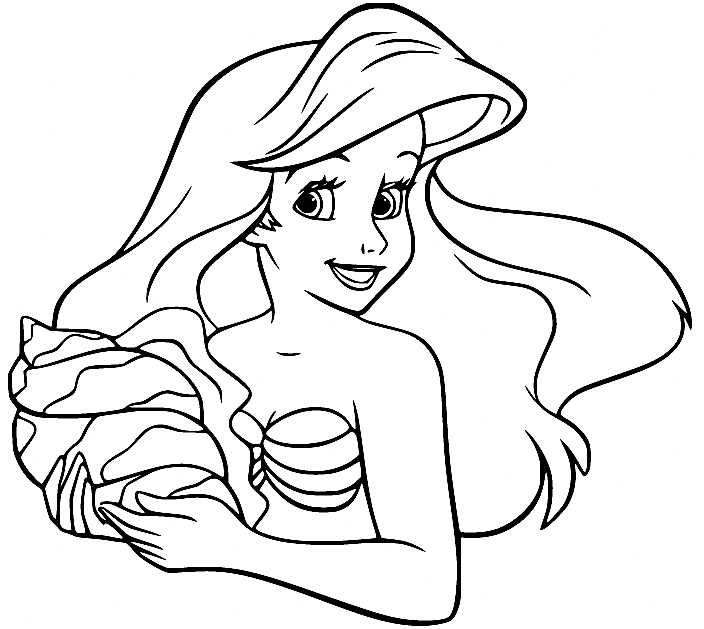
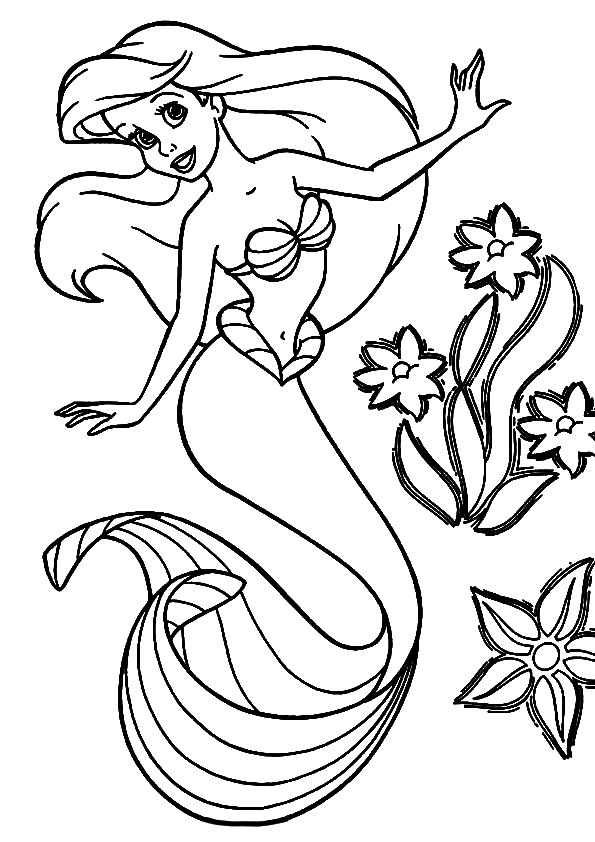
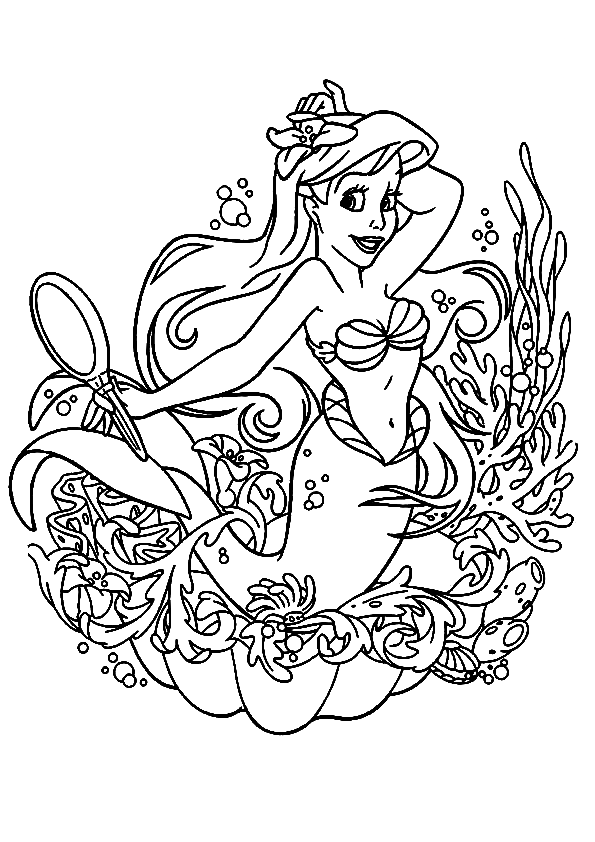
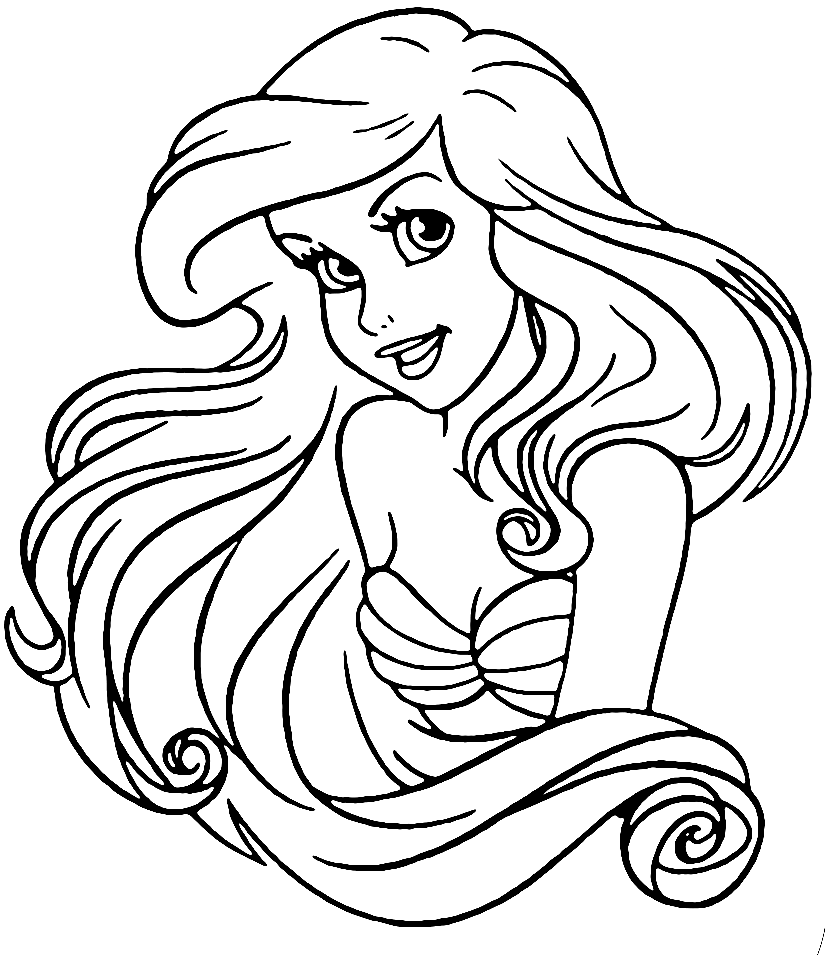
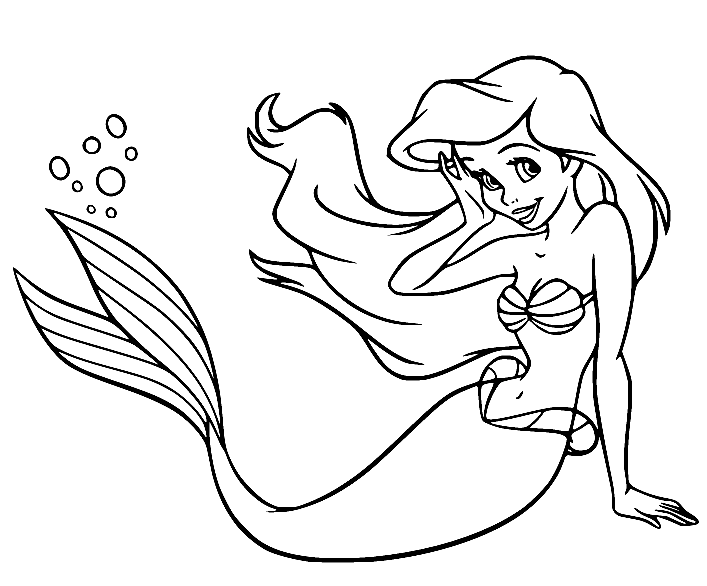
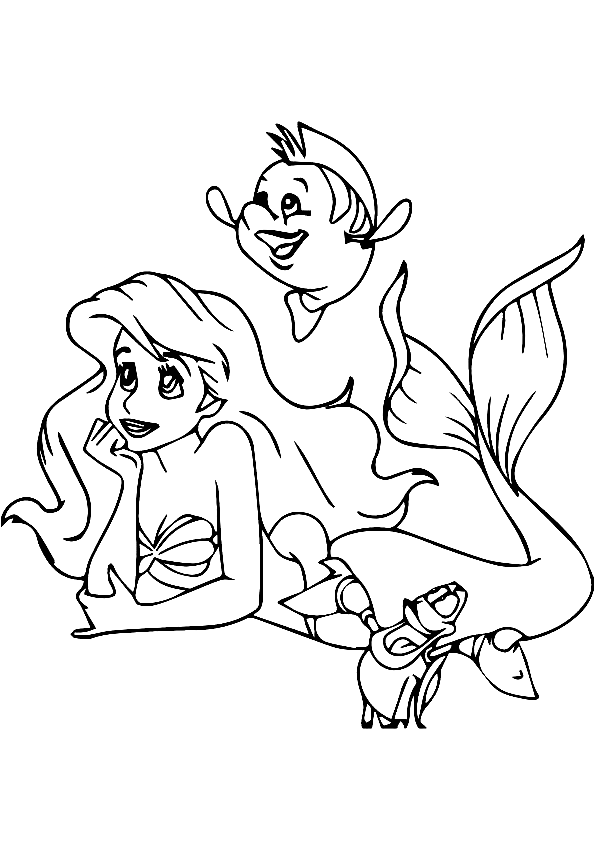
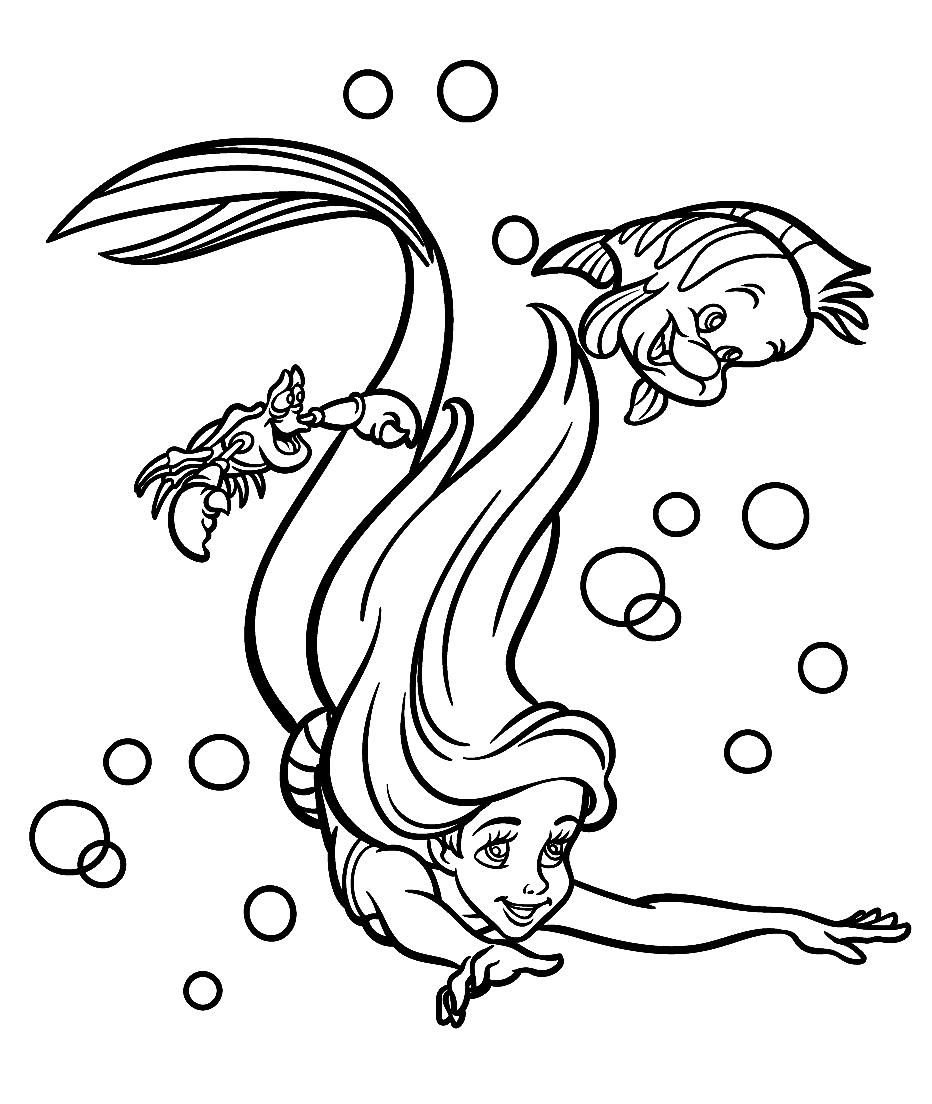
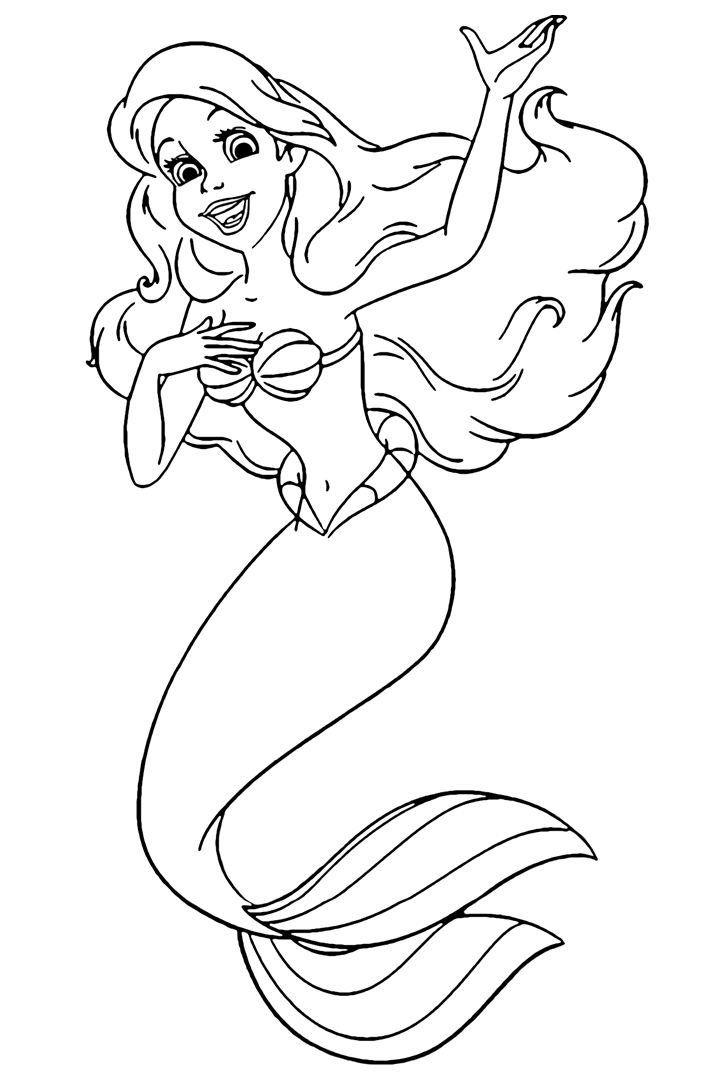
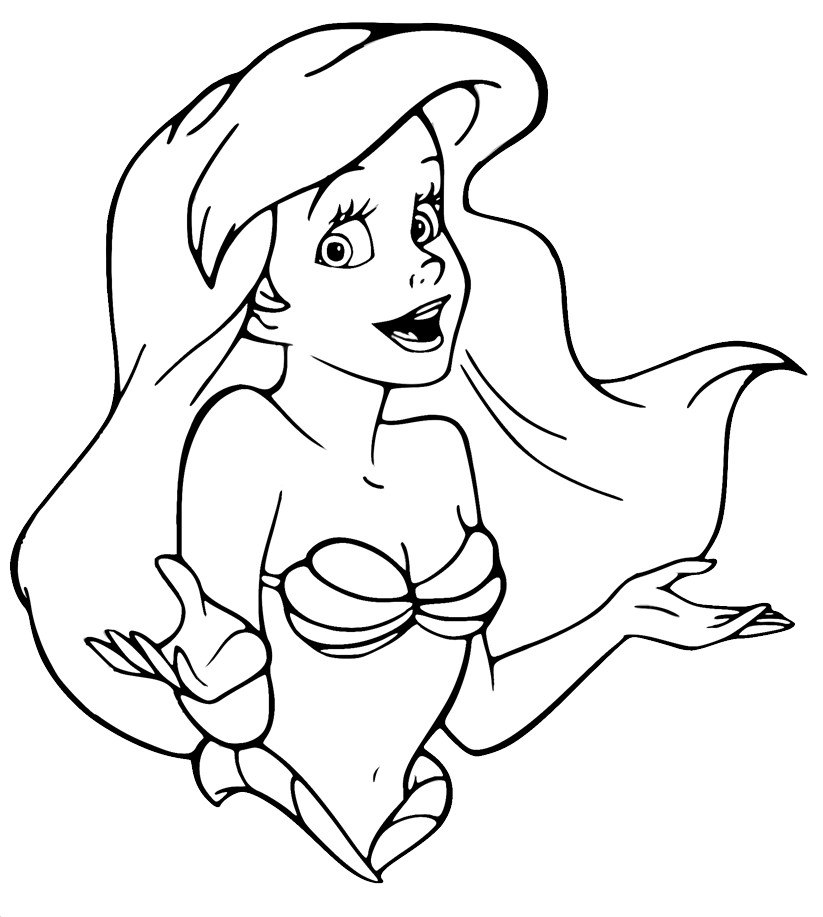
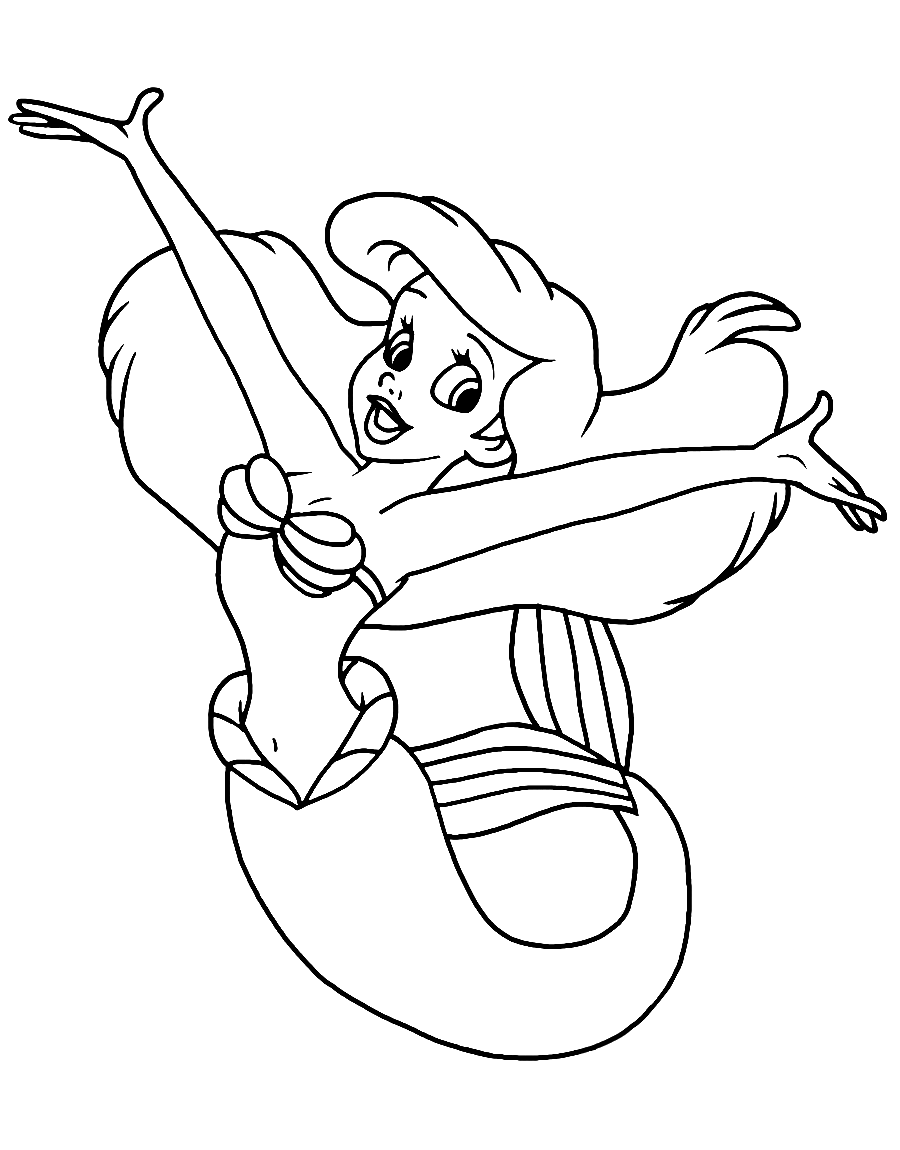
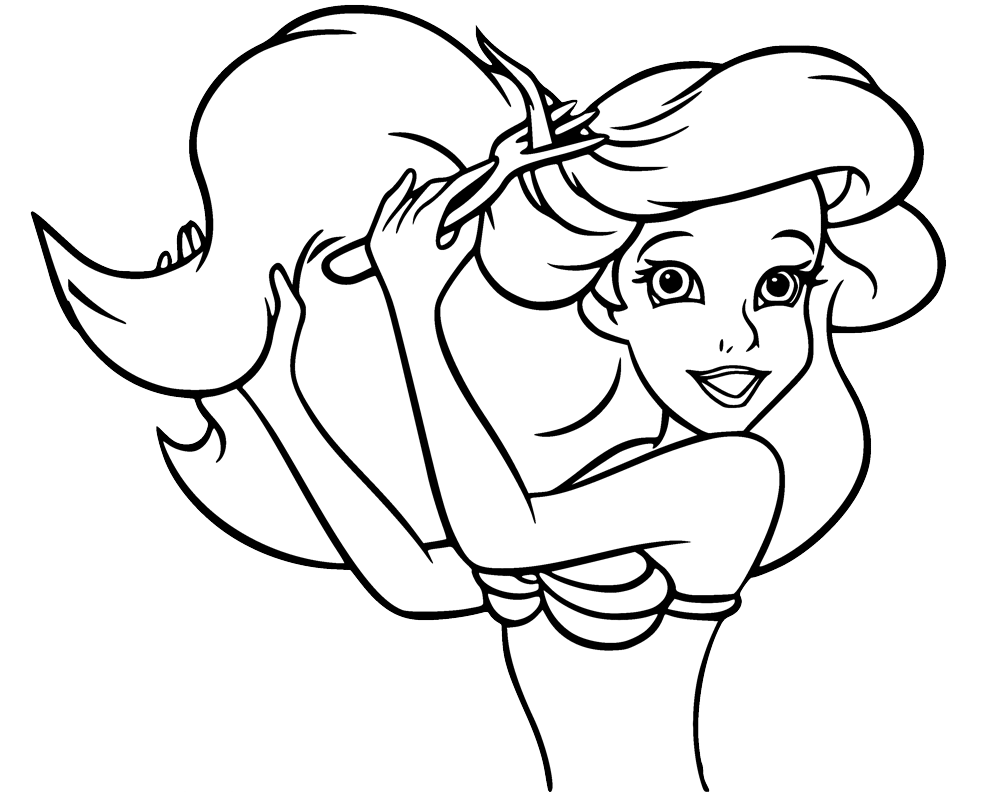
Ariel as a Mermaid: Portrait and Swimming Pages
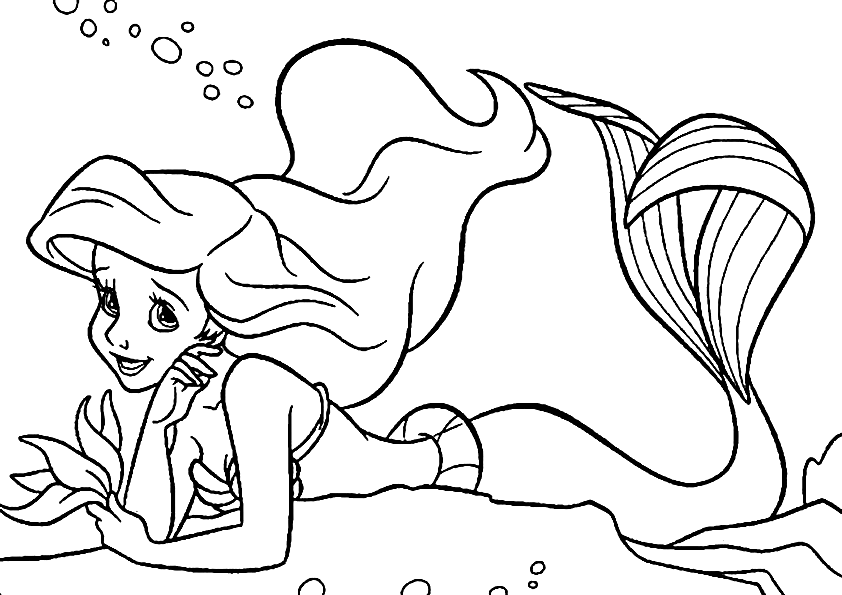
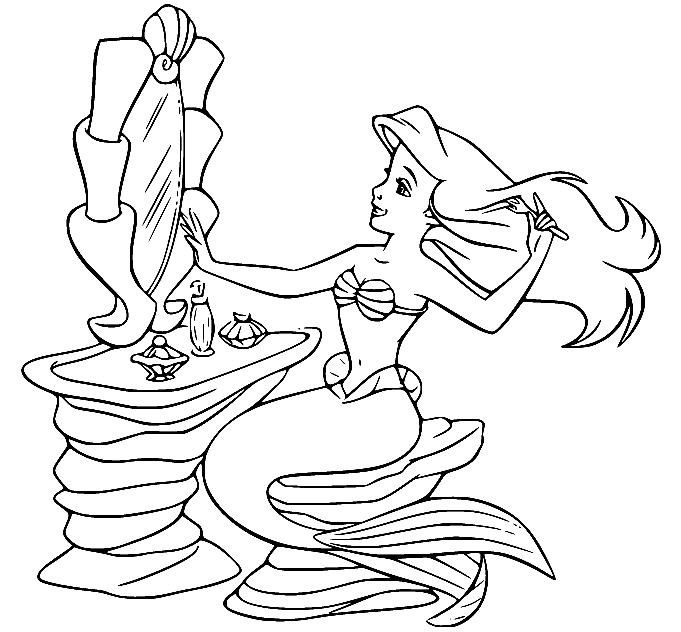
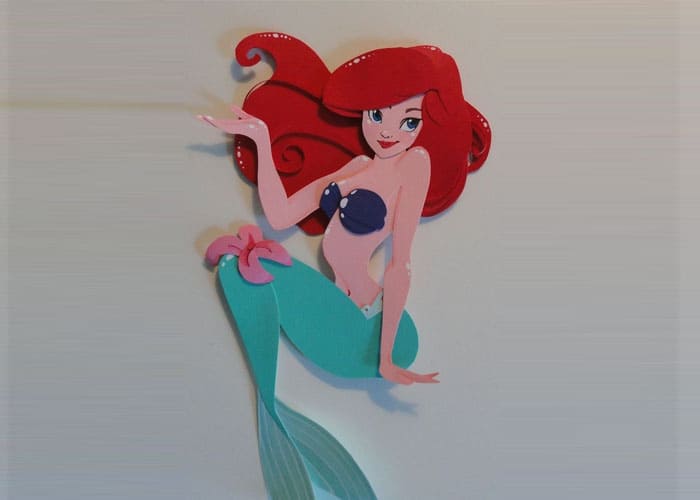
Ariel’s mermaid design is one of Disney animation’s most consistently reproduced character designs across thirty-five years of merchandise, film, and promotional material: the combination of the vivid red-orange hair, the pale skin, and the green mermaid tail with purple shell accessories is immediately recognizable globally and represents one of the clearest examples of how a specific color combination can define a character’s visual identity more completely than any other design element.
Her hair is the design’s most distinctive feature. The vivid red-orange falls in thick waves and has been described across the film’s production history as a challenge for the animators: the hair needed to move believably underwater while also being clearly visible against the varying blues and greens of the ocean environment. The solution was to animate the hair as a semi-independent element with its own motion logic, giving it the flowing quality that distinguishes Ariel from every other Disney Princess in underwater scenes.
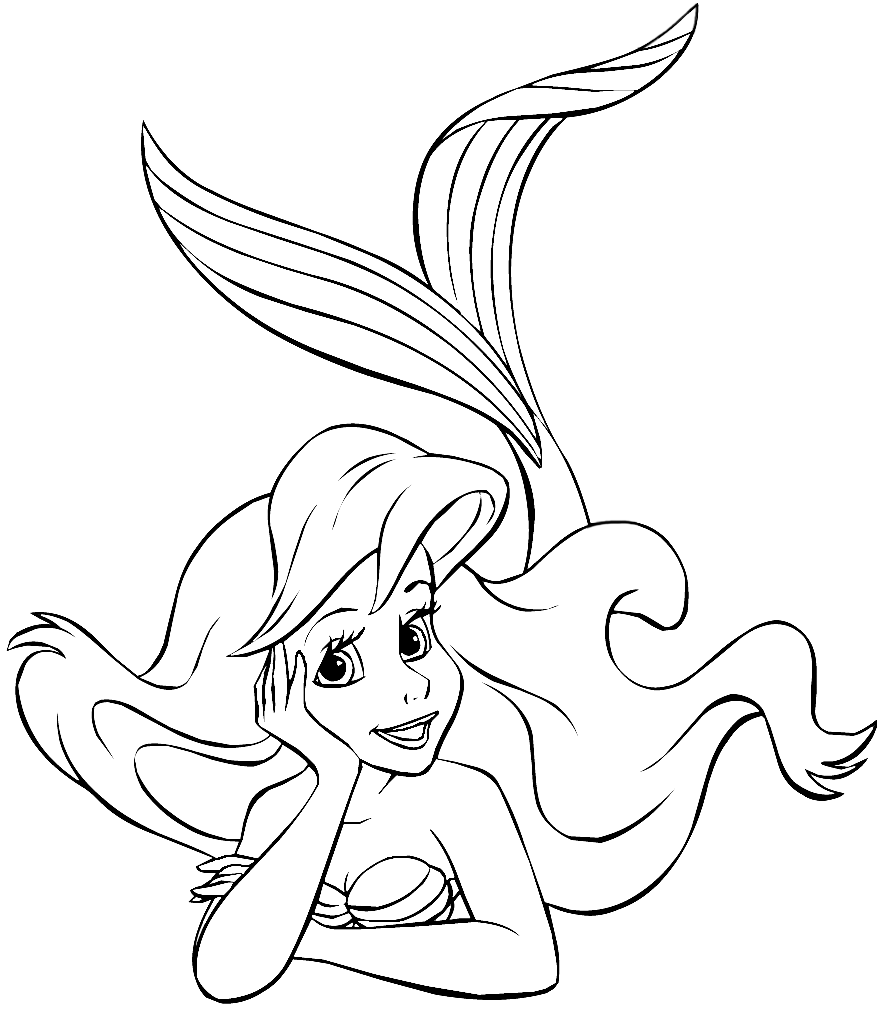
Her mermaid tail is a specific green: not the bright medium green of new spring leaves but a slightly deeper, slightly blue-shifted teal-green that reads as oceanic, the color of the sea itself in the sunlit upper waters. The tail’s specific scale pattern, when the page design includes it, is one of the most rewarding, detailed coloring elements in any mermaid page.
The purple shell bra top is the design’s secondary vivid color accent: a warm, vivid purple that sits against the green tail to create a complement-adjacent color relationship with significant visual energy.
Coloring mermaid pages: The tail uses a specific teal-green rather than standard medium green: slightly more blue, slightly deeper than a pure green. Apply it at full saturation across the full tail length. The scale pattern, if present, can be suggested by applying slightly darker teal-green along the scale lines in a regular overlapping pattern. The hair is the most important coloring decision: vivid warm red-orange, the specific tone of a sunset or of copper in firelight, applied at full saturation throughout. The purple shell top is warm, vivid purple, slightly red-shifted rather than blue-shifted.
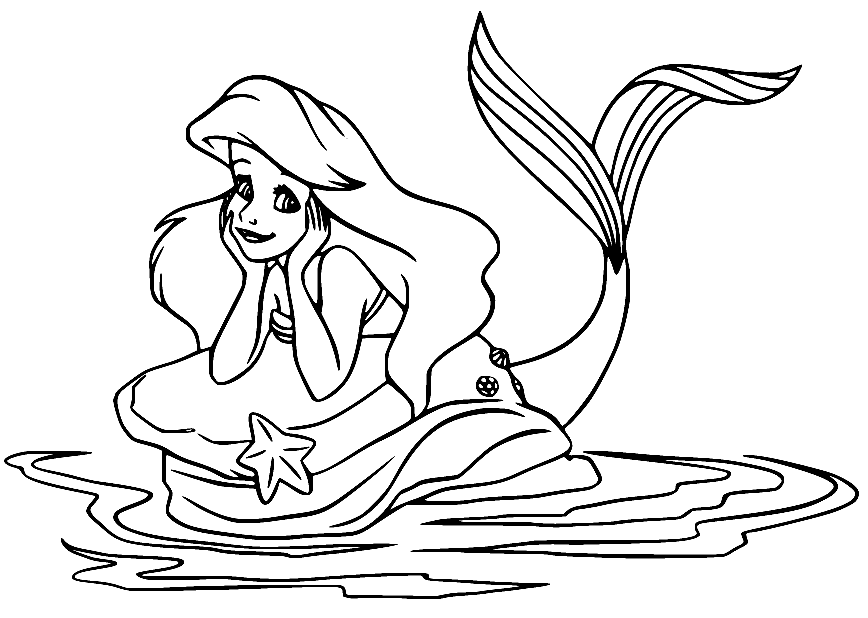
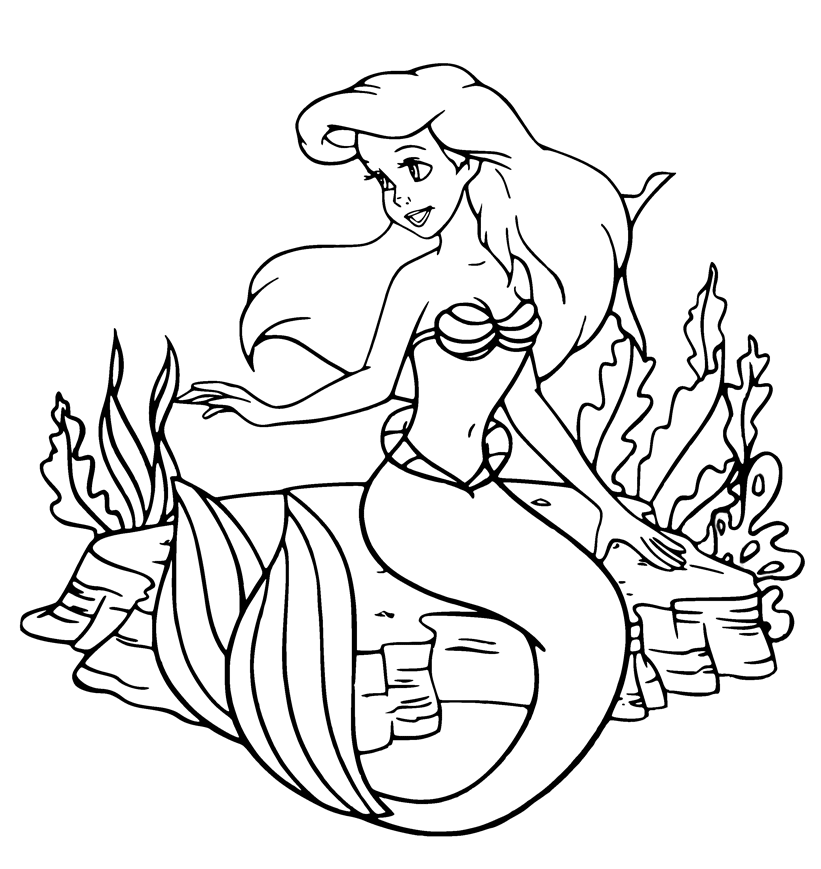
Ariel at the Surface: The Moonlit Rock Scene
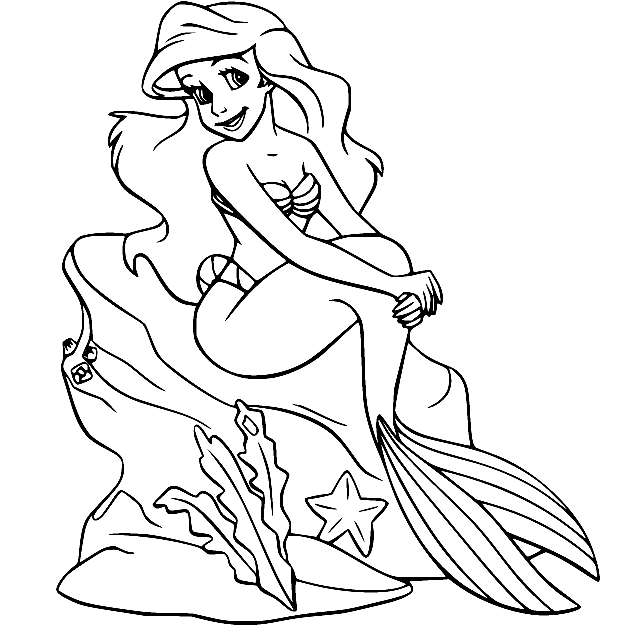
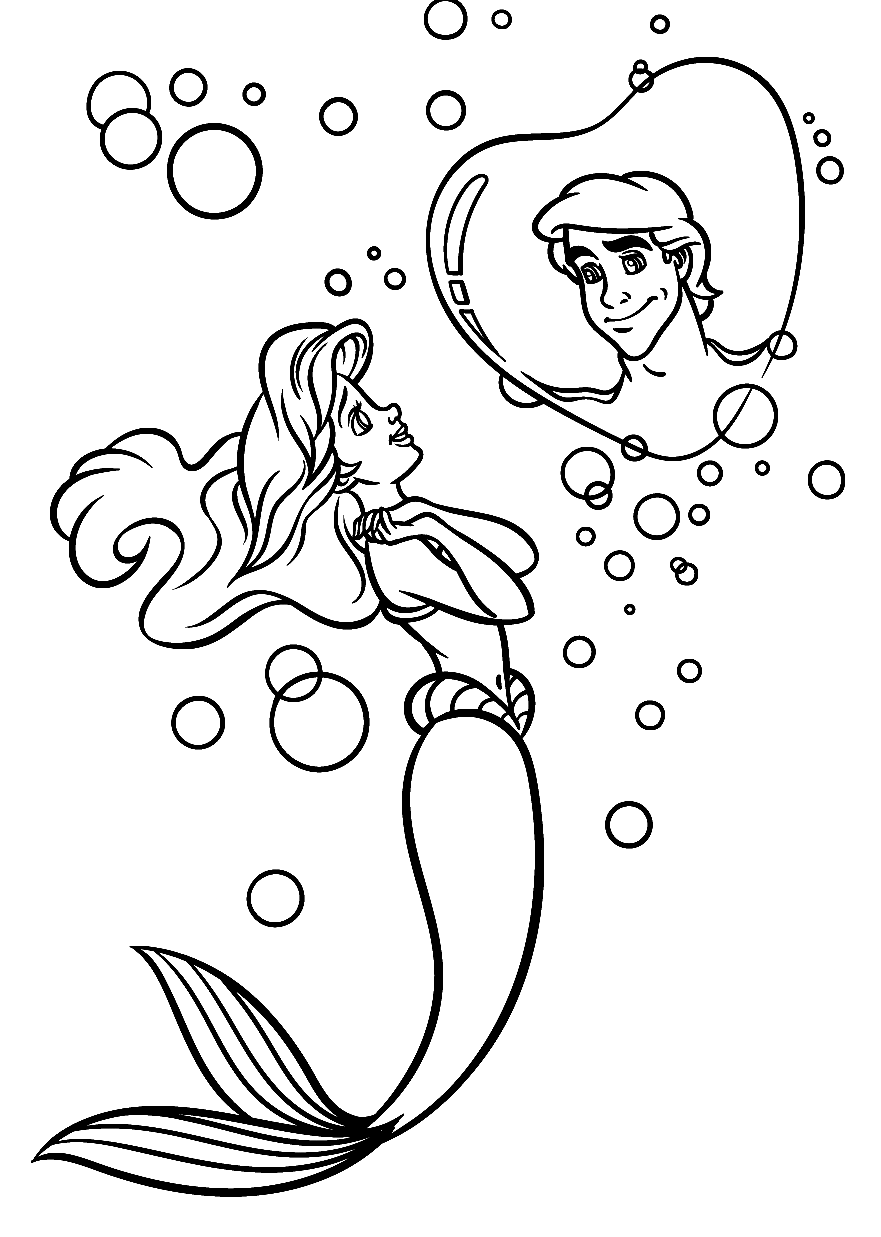
The image of Ariel sitting on a rock at the ocean surface, hair flowing in the breeze, looking out at the horizon or up at the sky, is the film’s most reproduced single composition. It appears in the “Part of Your World (Reprise)” sequence, when Ariel has just rescued Eric from drowning and left him on the beach: she surfaces, sits on a rock in the moonlit sea, and sings the reprise as Eric wakes on shore in the background. It is the film’s most purely romantic visual and the one most directly connected to the film’s emotional center.
This specific composition, which appears in countless posters, prints, and promotional materials, shows Ariel from behind or three-quarter view, the red hair and green tail against the blue-black of the night ocean, the moon providing the scene’s primary light source.
Coloring surface pages: The night ocean is deep midnight blue, applied at full coverage as the primary background. The moon, if present, creates a warm, pale gold reflection on the water’s surface: apply the reflection as a vertical column of warm pale gold extending downward from the moon’s position on the water. Ariel’s red hair catches the moonlight along its upper surface: slightly lighter, slightly more golden-orange at the top where the moonlight hits, deeper red-orange in the interior. The green tail against the dark water reads with maximum contrast.
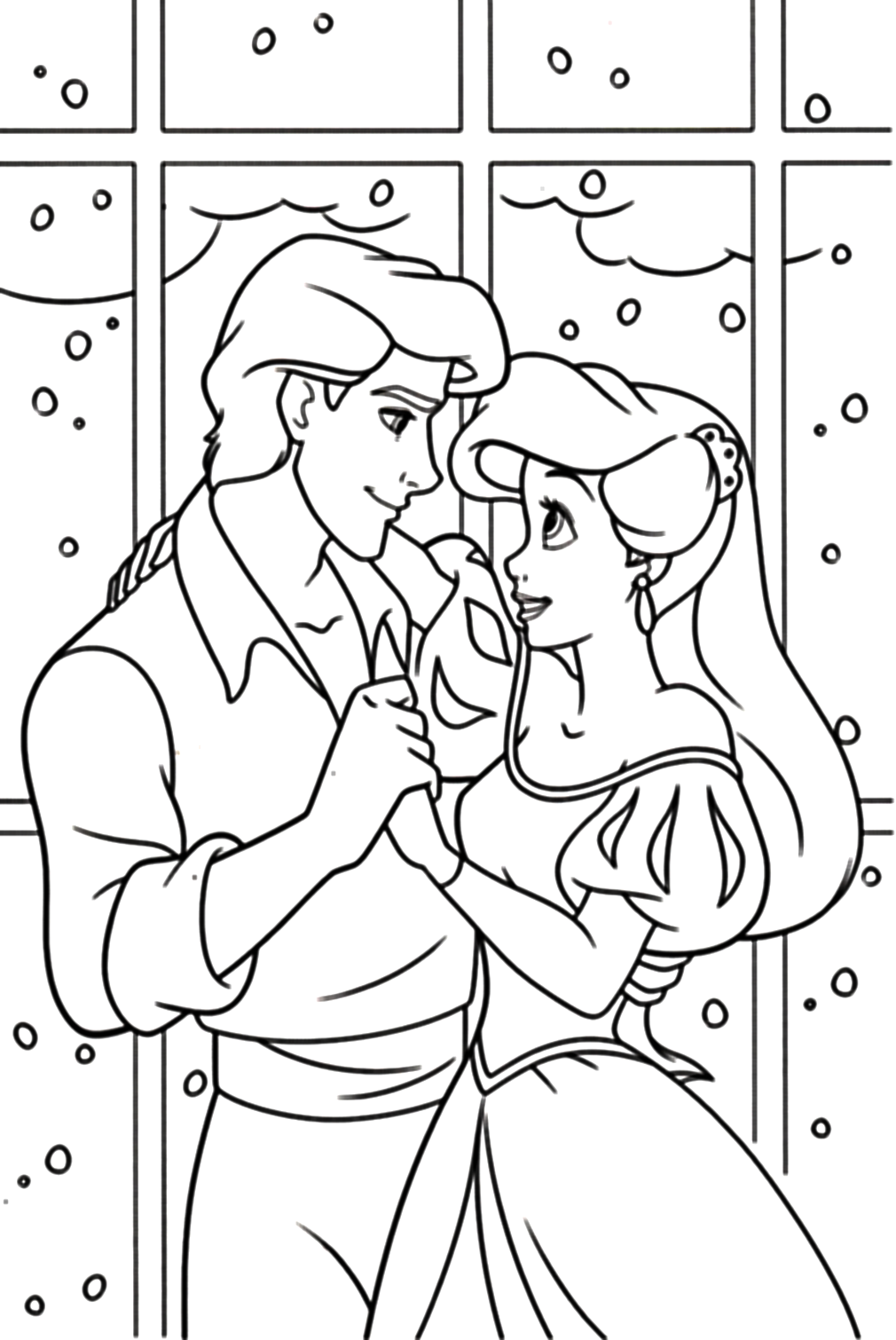
Ariel as a Human: The Blue Dress
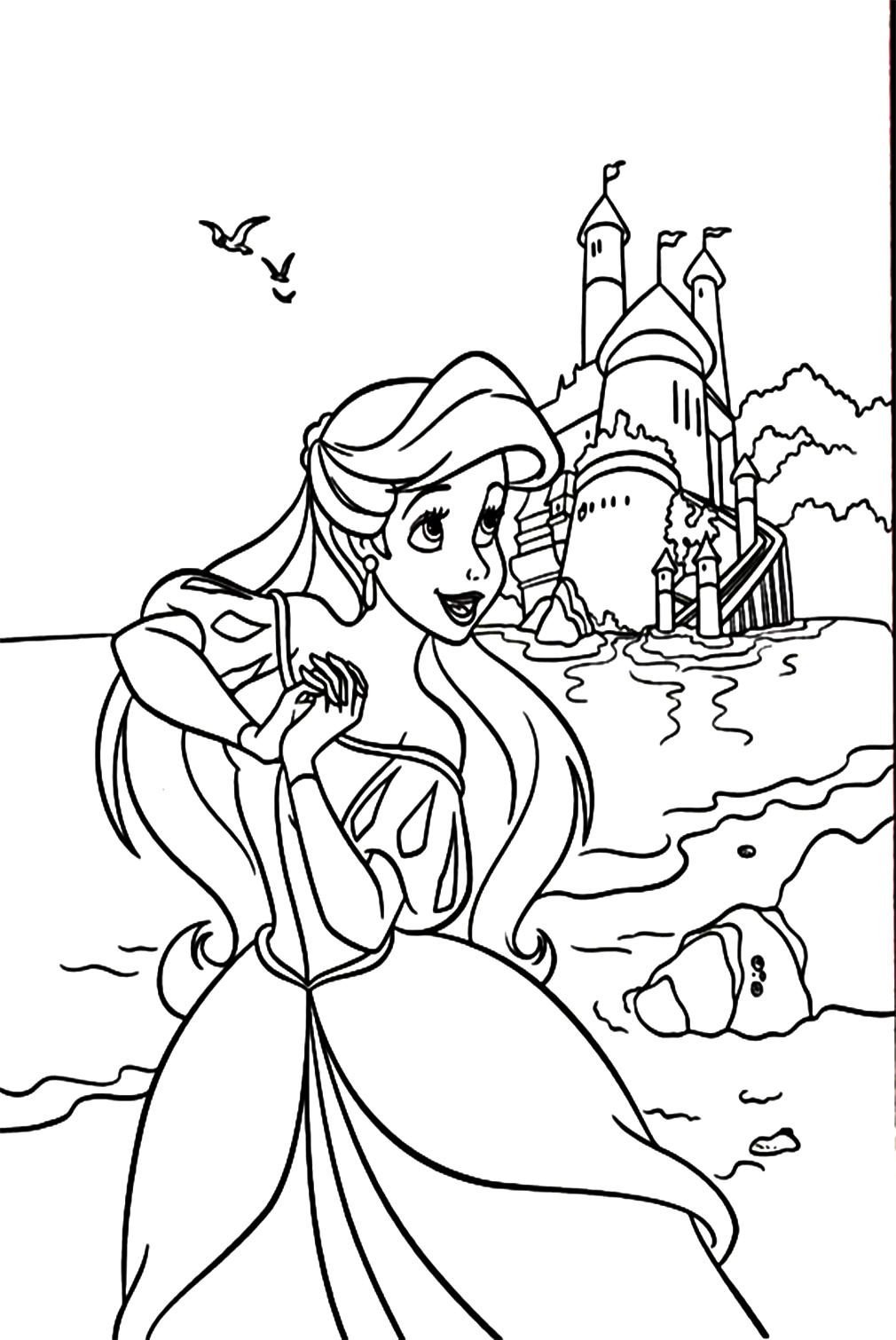
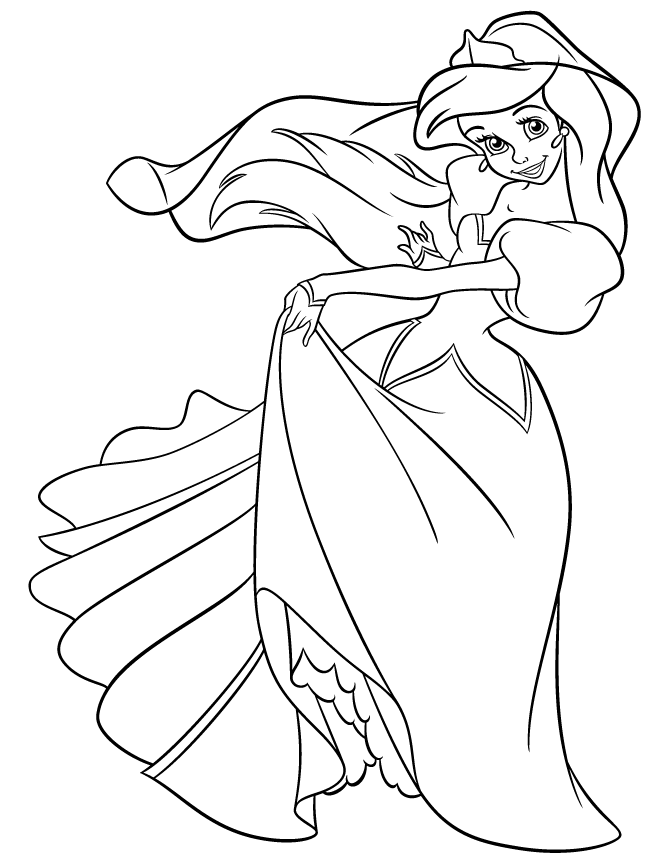
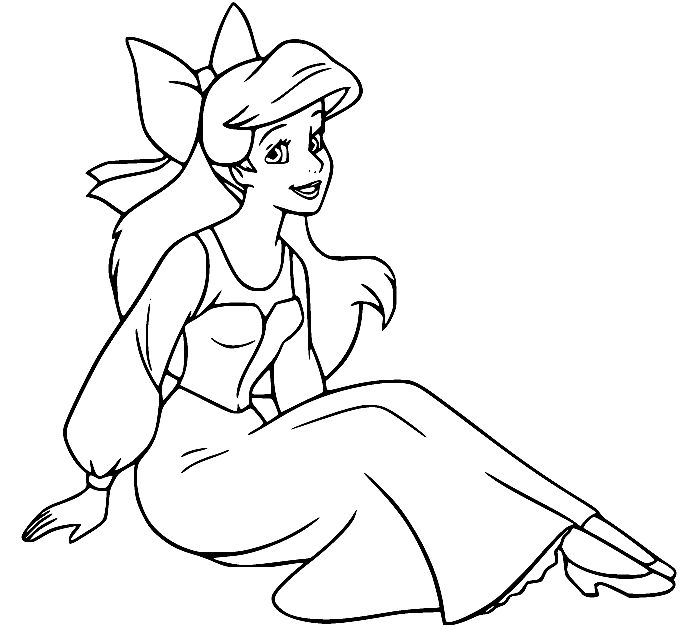
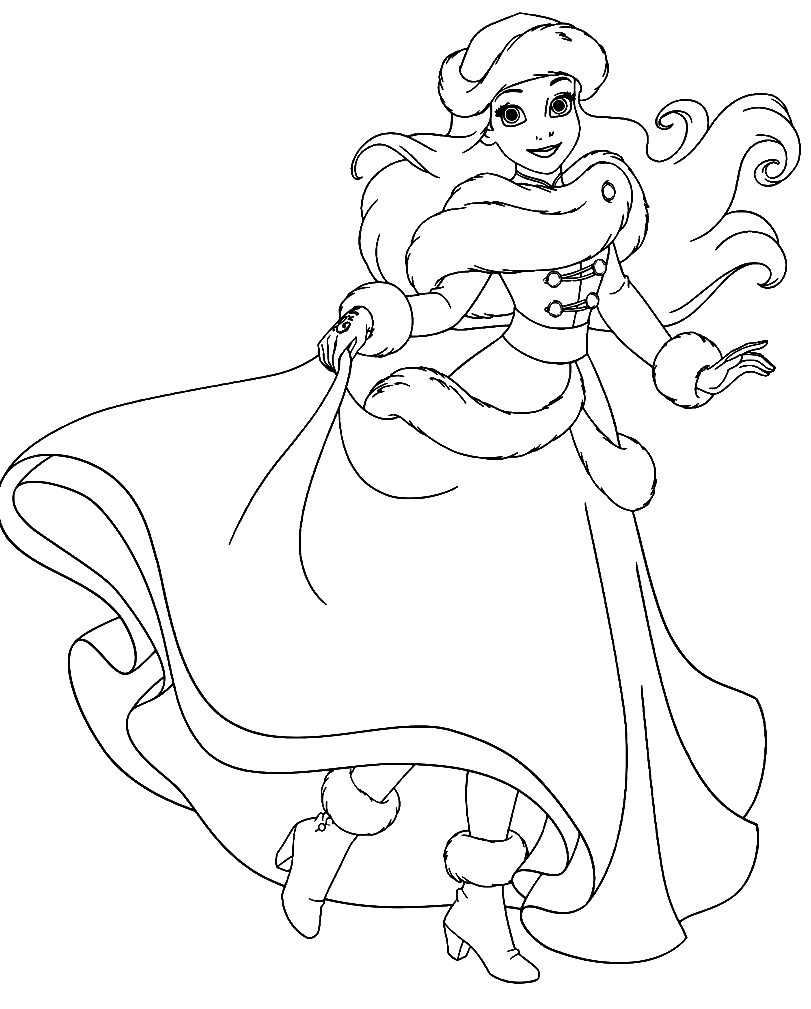
When Ariel transforms into a human through Ursula’s deal, she initially has no clothing and is given a sail by Eric. She later wears her most recognizable human costume: a blue dress with white petticoat details and black ballet flats. This is the costume she wears through much of the film’s second half, through the dinner with Eric, the rowing scene (“Kiss the Girl”), and the film’s climax.
The blue dress is a warmer, medium blue rather than the cool navy of Catboy’s suit or the pale blue of Belle’s village dress: it is a warm sky-blue with enough warmth to suggest sunlight, appropriate for the film’s surface-world scenes, which are consistently lighter and warmer in palette than the underwater sequences.
Coloring human Ariel pages: The blue dress uses warm sky-blue at full coverage. The white petticoat trim or underskirt uses clean, bright white. Her black ballet flats are the darkest element in the costume. Her skin tone is pale and warm, consistent across mermaid and human forms. Her red hair, now above the water and air-dried, has a slightly different quality than her underwater hair: it still flows, but with the specific texture of hair in open air rather than floating in water.
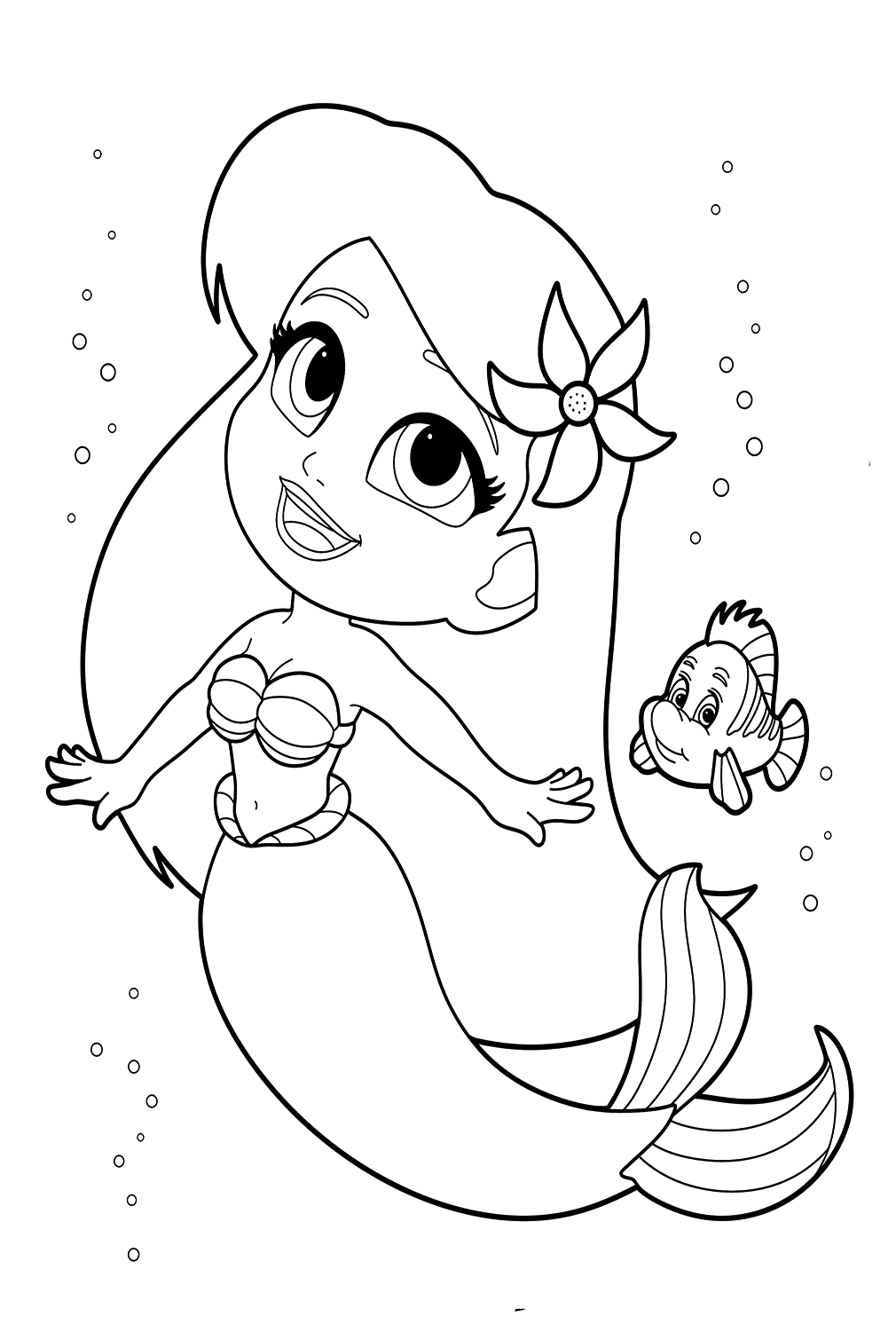
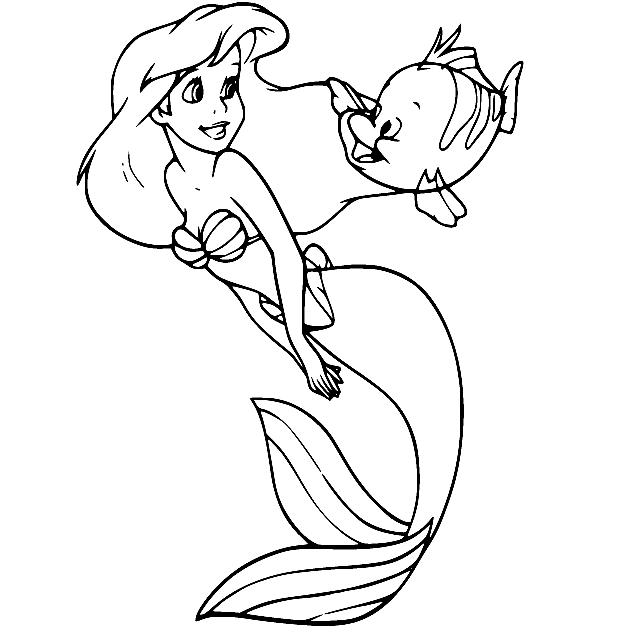
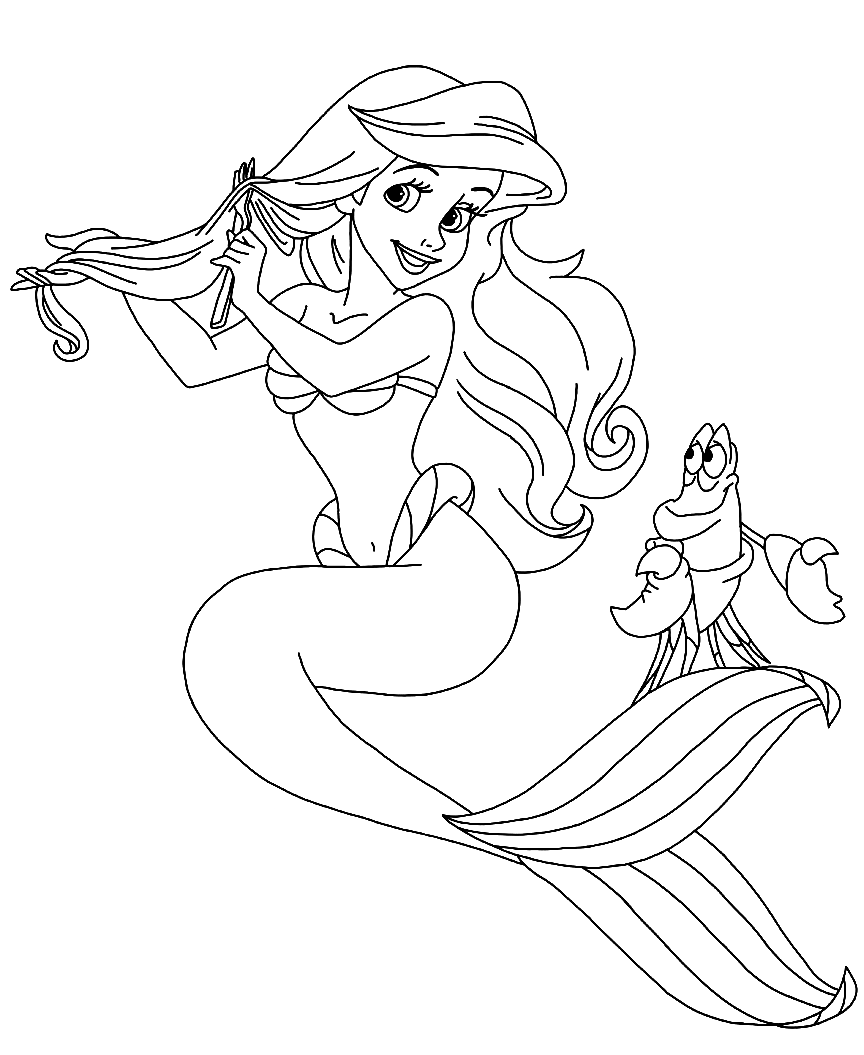
Sebastian and Flounder: The Companions
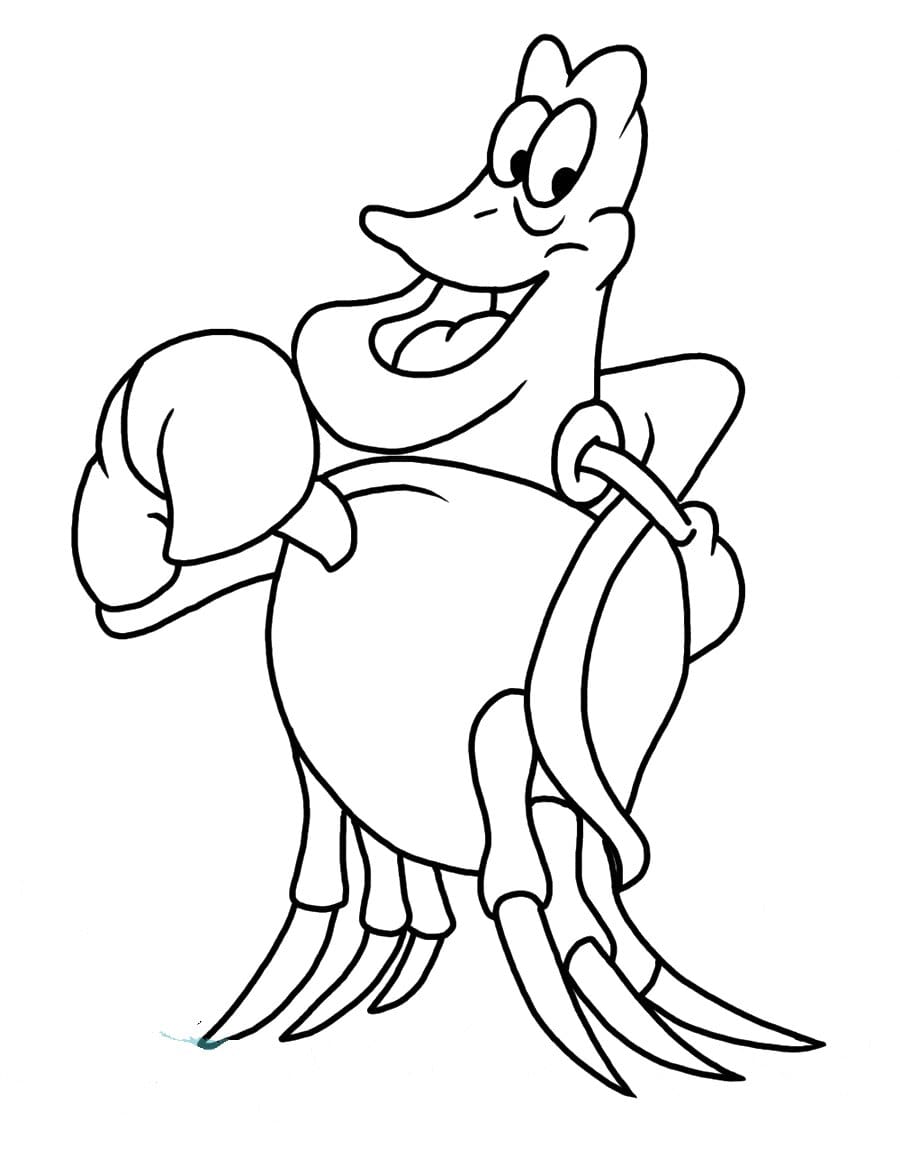
Sebastian (full name: Horatio Felonious Ignacious Crustaceous Sebastian) is a red crab who serves as King Triton’s court composer and the reluctantly appointed guardian of Ariel. He is the film’s most complex supporting character: he is genuinely loyal to King Triton, genuinely fond of Ariel, perpetually stressed by the impossibility of his situation, and periodically capable of extraordinary acts (his conducting of the underwater concert at the film’s opening, his composition of “Under the Sea” and “Kiss the Girl”) that remind the audience that beneath the comic panic there is genuine musical talent.
He is red: the specific warm, vivid red of a tropical crab, applied evenly across his compact carapace and appendages.
Flounder is Ariel’s best friend: a small yellow-and-blue striped tropical fish whose name is an anatomical misnomer (he is clearly not a flounder, which is a flat bottom-dwelling fish, but instead resembles a tropical angelfish). He is brave when it matters, despite spending most of each adventure in a state of fear. His coloring is yellow-gold with vivid blue stripes, one of the most vivid two-tone color combinations in the film.
Coloring Sebastian pages: Vivid warm red as the primary body color, applied at full coverage. His legs, claws, and antennae are slightly darker red. His eyes are large and expressive within the small crab face: warm dark pupils with a white highlight dot. Coloring Flounder pages: Vivid yellow-gold as the base body color, with vivid blue stripes applied over the yellow base in horizontal bands. The blue should be the most vivid available, clearly contrasting with the yellow without muddying into green at the boundary lines.
Ursula: The Sea Witch
Ursula is one of Disney animation’s most celebrated villain designs: a large, purple-skinned woman from the waist up with six black tentacles below, white hair styled into an elaborate updo, dramatic eye makeup (dark eyeshadow and exaggerated eyelashes), red lipstick, and the specific physical presence of someone who takes up exactly as much space as she wants to. She was voiced by Pat Carroll, and her “Poor Unfortunate Souls” is one of the animated film’s most dramatically effective villain songs.
Her visual design was influenced by, among other sources, the appearance of the American drag performer and actor Divine (Harris Glenn Milstead, 1945-1988), which gives her design a specific, theatrical, deliberately exaggerated quality that distinguishes her from the more straightforwardly threatening villains of earlier Disney films.
Her nautilus shell necklace, which contains Ariel’s stolen voice and glows with trapped magical energy, is the design’s most dramatically important accessory: it is the visual representation of the bargain and the key plot object of the film’s second half.
Flotsam and Jetsam, her eel henchmen, are long, dark, and sinister: black-green bodies with unnaturally yellow-green glowing eyes that are among the film’s most effectively creepy minor character designs.
Coloring Ursula pages: Purple is her entire body’s primary color: apply a vivid, cool-toned purple across the full upper body. The tentacles are black or very near-black, applied at full coverage. Her hair is bright white or pale grey-white. Her eye makeup is dark purple-black eyeshadow with dramatically extended false eyelashes. Her lips are vivid red. The nautilus shell necklace glows: apply a vivid pale teal-green to the shell with a bright luminous center where the trapped voice produces its glow.
King Triton and the Trident
King Triton, ruler of Atlantica, is depicted as a large, powerful merman with a white beard and hair, a muscular upper body, and a vivid green mermaid tail. His most important visual accessory is his golden trident: the three-pronged magical weapon that allows him to command the sea and generate powerful energy attacks. The trident is the golden object that catches light in every scene and the instrument through which his power is visually communicated.
His relationship with Ariel is the emotional secondary story of the film: a father whose protective love has become overcontrolling, whose fear of the world above the sea causes him to destroy the things Ariel loves most (her grotto collection), and who ultimately sacrifices his own mermaid form to give Ariel permanent human legs as an act of love that accepts who she is.
Coloring King Triton pages: His tail uses the same teal-green as Ariel’s, reinforcing their family connection. His upper body skin is a warm, slightly weathered medium tone. His hair and beard are white or very pale grey. The trident is vivid warm gold: the most vivid, warmest gold available, applied at full pressure along all three prongs and the handle.
The Grotto Collection Scene
Ariel’s grotto is the sunken cave beneath the ocean floor where she keeps her collected human artifacts: “gadgets and gizmos aplenty, whosits and whatsits galore.” The grotto scene, in which she sings “Part of Your World,” is the film’s most character-defining moment: it shows exactly who Ariel is (someone whose entire internal world is oriented toward something she cannot yet access) before any of the film’s events have shaped her.
The grotto’s visual is one of Disney’s most warm-toned underwater environments: the collected objects catch light and create warm golden-amber reflections against the cooler blue-green of the surrounding water, and the overall effect is of a warm, personal space within a larger cold environment.
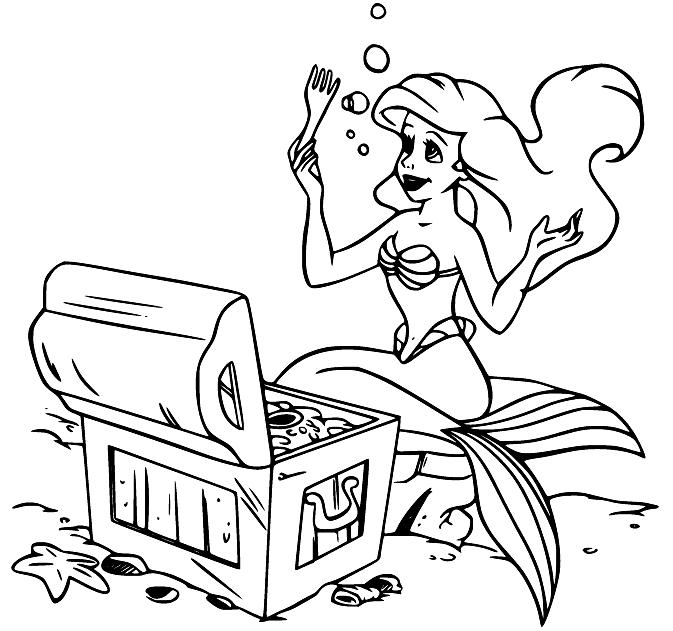
Coloring grotto pages: The collected objects use their canonical object colors: the dinglehopper (fork) is silver-grey metallic, books use warm brown leather with warm cream pages, and any lanterns or light sources create warm amber-gold glow effects. The grotto walls are cool blue-green stone. The specific contrast between the warm collected objects and the cool stone walls is what gives the grotto its visual character of a personal warm space within an impersonal ocean environment.
What These Pages Do
Howard Ashman’s approach to the songs in The Little Mermaid established the musical theater template that defined the Disney Renaissance: rather than songs that existed alongside the story, Ashman’s songs advanced character and plot in the way Broadway musicals use songs, so that “Part of Your World” could not be removed from the film without losing essential character information. This approach, which Ashman brought from his experience writing the musical Little Shop of Horrors (1982, Broadway; 1986, film), made The Little Mermaid function as a musical in a way that the earlier Disney princess films, which used songs as atmospheric rather than narrative devices, did not. The precedent set by The Little Mermaid governed not only subsequent Disney films but the broader field of animated musical film for the following decade.
Hans Christian Andersen published “Den lille havfrue” on April 7, 1837, when he was thirty-one years old and had been publishing fairy tales for two years. The story he wrote about a mermaid who wanted to become human and gain a soul has since been analyzed by literary scholars as autobiographical in its emotional content: Andersen himself occupied complex positions of desire and social marginality throughout his life, and the story’s themes of longing for a world that does not fully receive you have been read through multiple biographical lenses across the 187 years since its publication.
The American Academy of Pediatrics identifies fine motor skill development as a key childhood milestone throughout early childhood. The mermaid tail’s scale pattern, Ariel’s flowing hair in underwater scenes, the grotto’s collected object details, the trident’s decorated prongs, and the detailed sea life that fills the underwater backgrounds all provide sustained fine motor challenge across the collection’s full age range. The 2005 Art Therapy Journal study on structured coloring and anxiety reduction applies throughout.
The 2023 live-action adaptation, with Halle Bailey as Ariel and Melissa McCarthy as Ursula, earned $569.6 million worldwide and continued the character’s cultural presence across three decades since the original film.
How to Color These Pages Well
Ariel’s red hair is the most important single color decision in the collection, and it must be vivid, warm red-orange. The specific tone of Ariel’s hair has been one of the most discussed color choices in Disney character design since 1989: it is not a natural red-brown, not a strawberry blonde, and not an orange-red, but a specific, vivid warm red-orange that reads as dramatically red while also having warmth and movement. Apply the most vivid warm red-orange available at full pressure throughout the entire hair mass. If the result reads as too orange, add a small amount of deeper red. If it reads as too burgundy-dark, apply a layer of vivid orange-red over the base. The hair should be the warmest, most vivid element in any Ariel composition.
The mermaid tail is teal-green rather than standard green. The most common error on Ariel tail pages is applying a standard medium green that reads as grass or leaf color. Ariel’s tail is a specific teal-green with a blue shift: it reads as oceanic rather than terrestrial, suggesting the color of sunlit seawater. If the available green reads as too warm or too yellow, add a small amount of blue over it. The tail color should feel like it belongs underwater.
Underwater background pages use layered blues rather than a single uniform blue. The ocean environment in The Little Mermaid uses multiple overlapping blues to suggest depth: the surface water is lighter, warmer, and more green-blue; the mid-depth water is medium cool blue; the deep background is near-indigo or deep navy. Apply these three zones in sequence from foreground to background: lighter warm blue-green near the surface or near the viewer, medium cool blue in the middle ground, deep navy at the furthest visible depth.
Ursula’s purple must be the coolest, most vibrant purple in the collection. Ursula’s body purple is specifically cool-toned rather than warm: it leans toward blue-purple rather than red-purple. Apply the most vivid cool purple available across the full upper body and let it saturate fully. The contrast between her vivid purple body, her white hair, her black tentacles, and her red lips creates the specific visual register of theatrical villainy that the character requires.
Light and glow effects in underwater scenes use pale teal-blue-white. The specific quality of underwater light in the film is pale, cool, and slightly blue-green: light filtered through water takes on this quality. Any glow effects from the nautilus shell, from magical trident attacks, or from bioluminescent sea life should use a very pale teal-blue-white at their center, radiating outward to the surrounding water’s normal dark blue tone.
5 Creative Craft Ideas
Andersen to Disney: The Source Story Study
Hans Christian Andersen published “Den lille havfrue” on April 7, 1837. In his version, the Little Mermaid dissolves into sea foam after refusing to kill the prince. In Disney’s 1989 adaptation, Ariel marries Eric. The distance between these two endings is the distance between Andersen’s specific moral framework (self-sacrifice and suffering as the path to a spiritual soul) and the Disney Renaissance’s specific message (love and self-determination as the path to happiness).
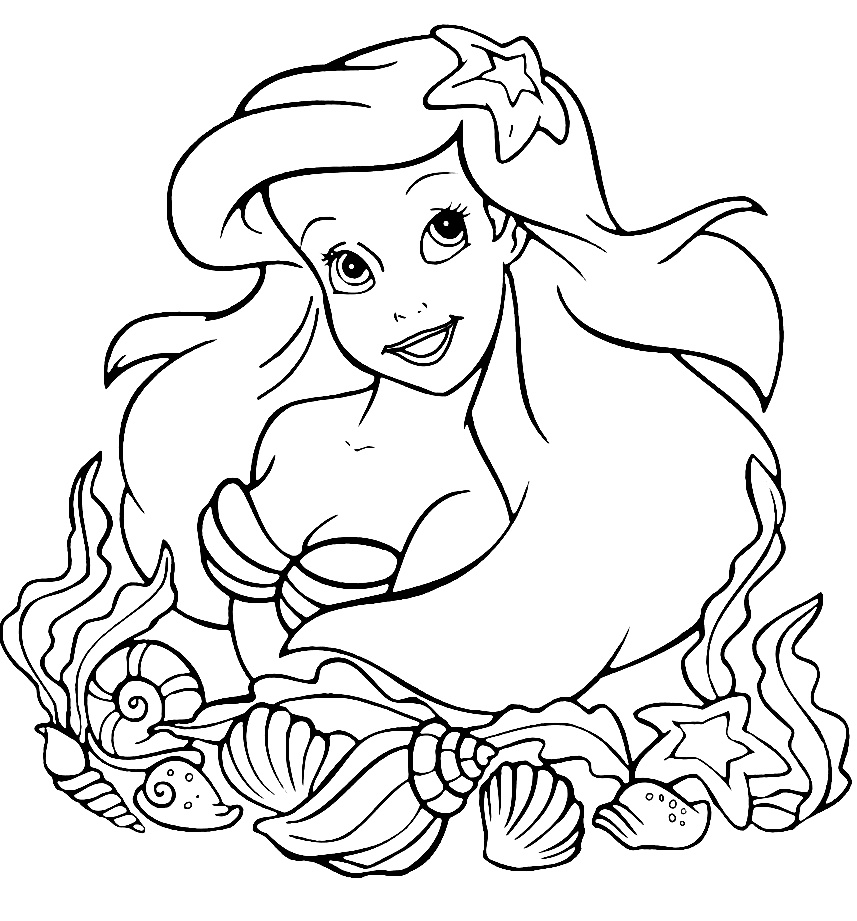
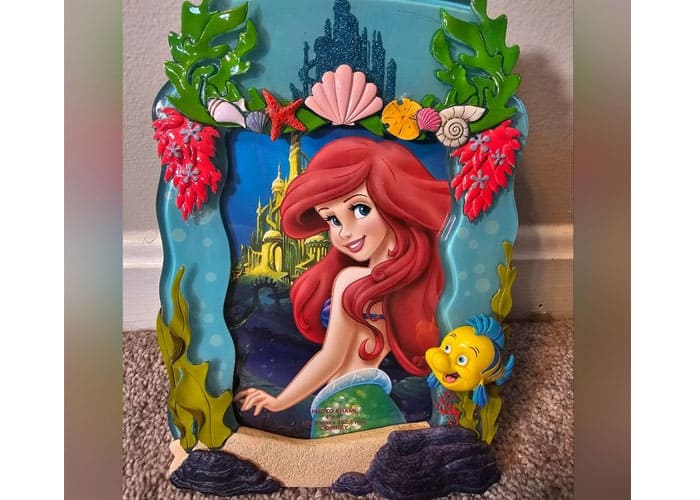
Print the most portrait-like Ariel page in the collection. Color carefully in the canonical red, green, and purple design.
On the backing card: “Hans Christian Andersen. ‘Den lille havfrue.’ Published April 7, 1837. Copenhagen, Denmark. The original ending: sea foam. The Disney ending: married, 1989. The distance between them: 152 years, and the specific question of what a story about longing for another world is supposed to teach the child who reads it.”
The Disney Renaissance Launch Page
Animation historians identify The Little Mermaid (1989) as the beginning of the Disney Renaissance, the period of revived Disney animated film production that followed a stretch of commercially and critically weaker output through the 1970s and early 1980s. The film’s musical approach, established by Alan Menken and Howard Ashman, set the template for Beauty and the Beast (1991), Aladdin (1992), and the other films that followed.
Print a dramatic Ariel portrait page. Color in full canonical colors at maximum saturation.
On the backing card: “The Disney Renaissance. 1989-1999. The Little Mermaid (1989): Academy Awards for Best Original Score and Best Original Song. Beauty and the Beast (1991): First animated film nominated for Best Picture. Aladdin (1992). The Lion King (1994). Mulan (1998). The beginning: November 17, 1989. The beginning was a mermaid with red hair who wanted to be somewhere she had never been.”
The Three-Color Portrait Study
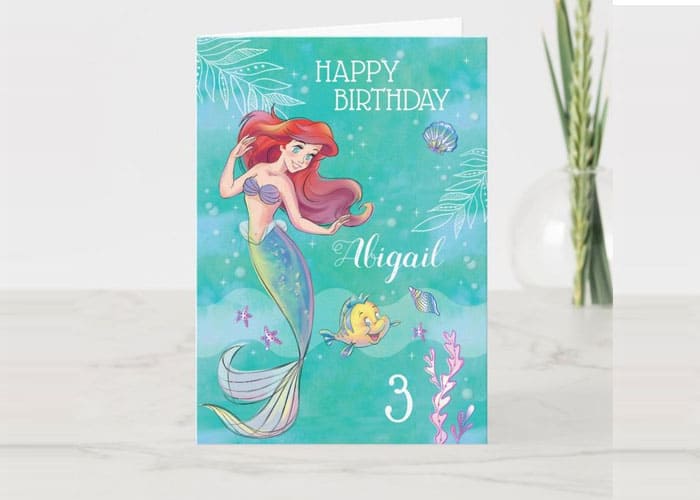
Ariel’s mermaid design uses three specific vivid colors that together constitute one of the most recognized color combinations in Disney history: vivid red-orange (hair), teal-green (tail), and warm purple (shell top). These three colors create a vibrant triadic or near-triadic color relationship that produces the specific visual energy of her design.
Print three copies of the same Ariel mermaid portrait page. Color the first with all three canonical colors at full saturation (the reference). Color the second changing only the hair color to a different vivid hue while keeping tail and top canonical (substitute blue or golden-yellow for the red). Color the third, changing only the tail color to a different vivid hue while keeping hair and top canonical (substitute orange or deep blue for the teal-green).
Mount all three: “The canonical design and two experiments. The red hair is the non-negotiable element. Every other change is less disorienting.”
The Howard Ashman Memorial Page
Howard Ashman wrote the lyrics for “Part of Your World,” “Under the Sea,” “Kiss the Girl,” “Poor Unfortunate Souls,” and every other song in The Little Mermaid. He also wrote the lyrics for Beauty and the Beast (1991). He died on March 14, 1991, before seeing the latter film released. His approach to Disney animated film songs, which treated them as character-advancing musical theater numbers rather than atmospheric interludes, is credited as foundational to the Disney Renaissance.
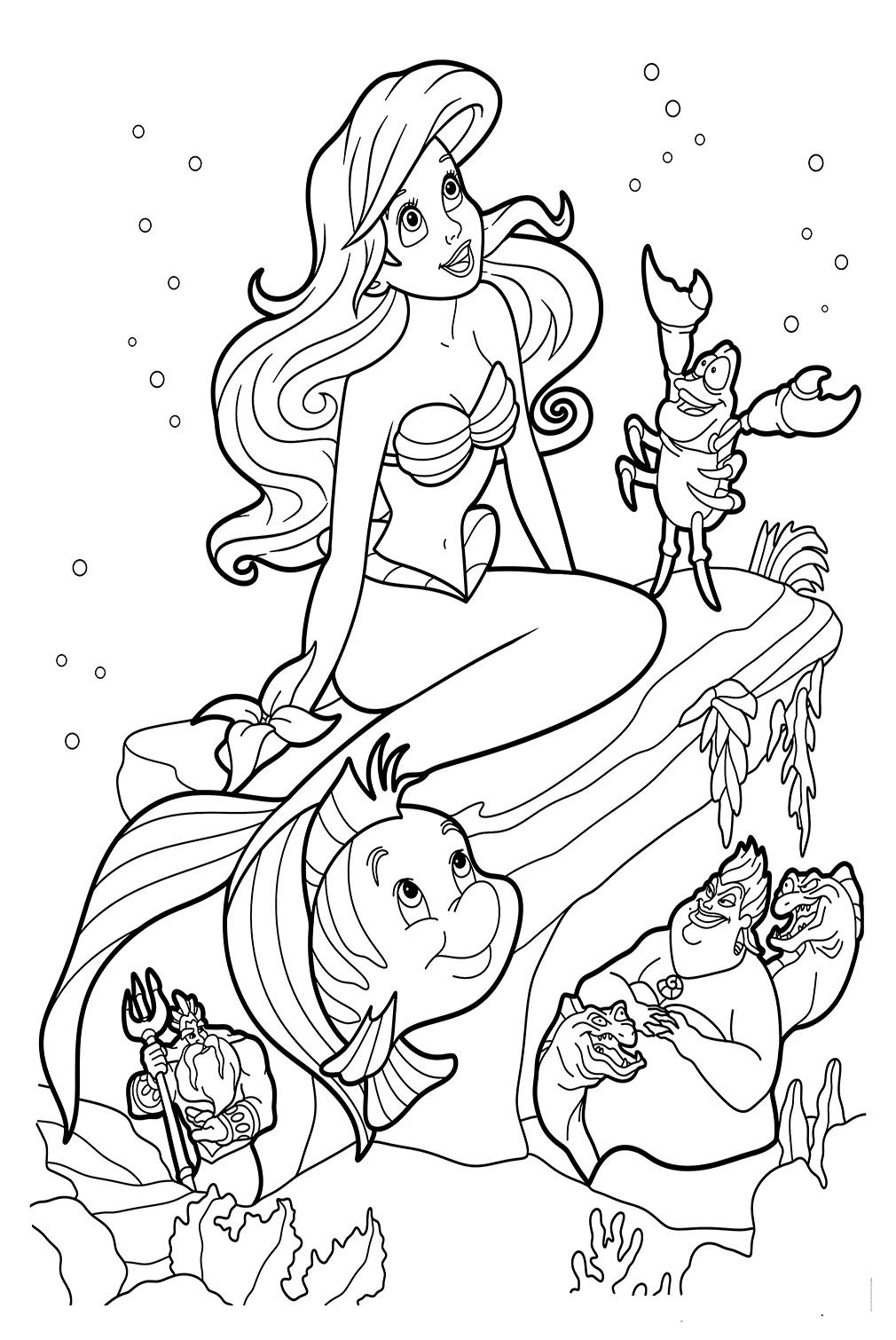
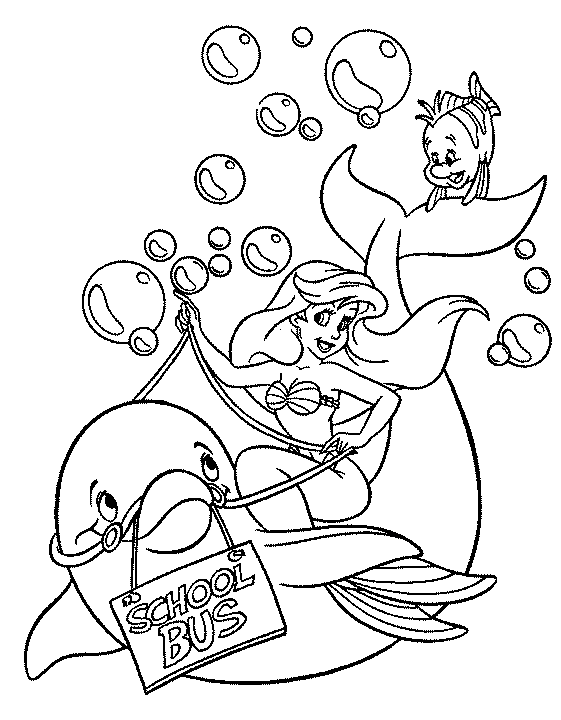
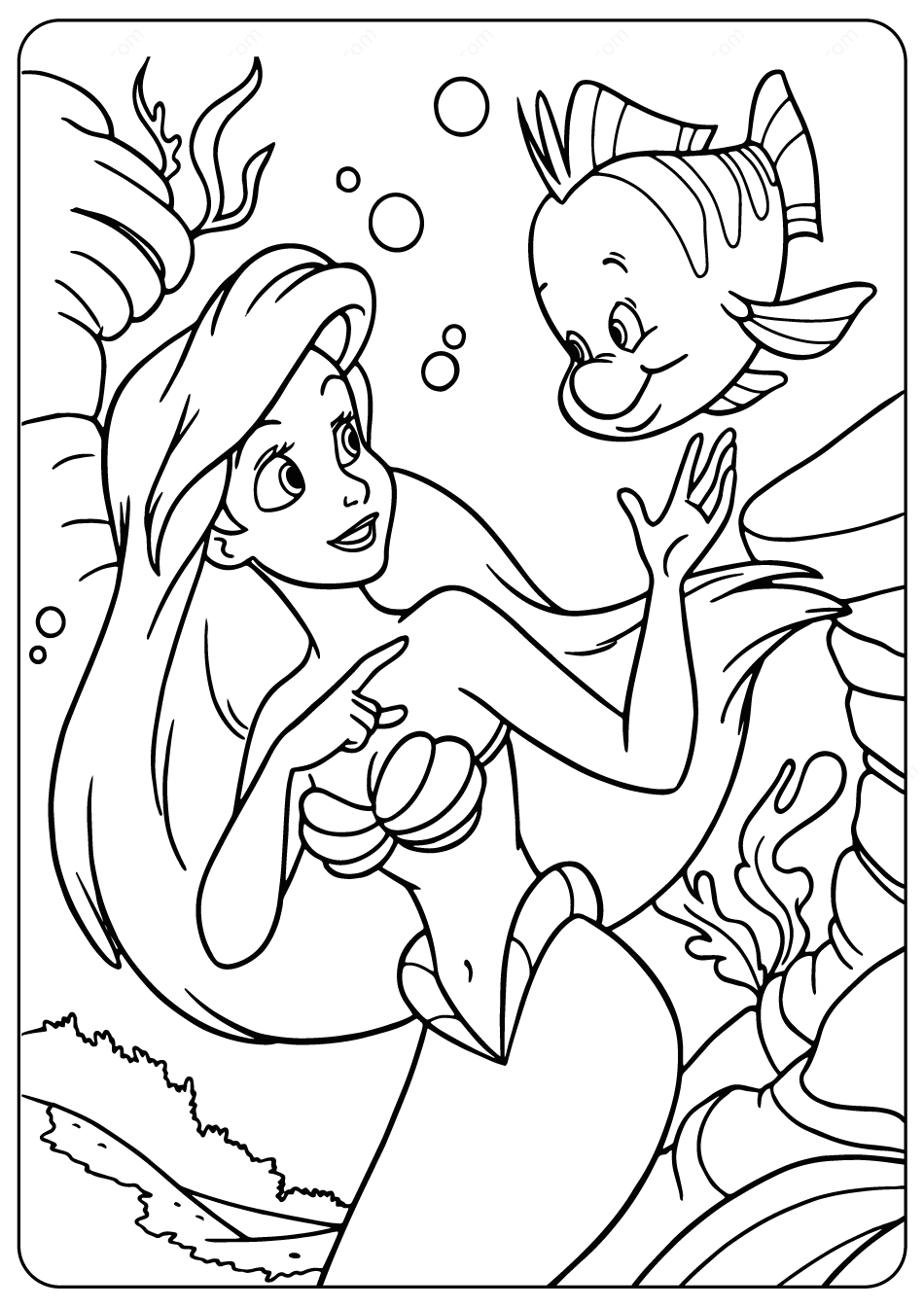
Print an underwater scene page with multiple characters: Ariel, Sebastian, Flounder, or any combination from the film’s musical numbers. Color all figures in canonical colors.
On the backing card: “Howard Ashman. Lyricist. ‘Part of Your World.’ ‘Under the Sea.’ ‘Kiss the Girl.’ ‘Poor Unfortunate Souls.’ ‘Be Our Guest.’ ‘Beauty and the Beast.’ He died March 14, 1991. The Little Mermaid: released November 17, 1989. Beauty and the Beast: released November 13, 1991. Eight months. The dedication on Beauty and the Beast: ‘To our friend Howard, who gave a mermaid her voice and a beast his soul.'”
The Voice in the Shell
The nautilus shell necklace that Ursula uses to trap Ariel’s voice is the film’s central plot object and its most visually significant piece of jewelry. When Ariel makes the deal, her voice leaves her body and is sealed inside the shell, where it glows with a pale, luminous teal-blue light. The necklace around Ursula’s neck is simultaneously Ursula’s trophy, Ariel’s loss, and the plot mechanism through which the film’s third act operates.
Print an Ursula page (preferably one showing the shell necklace clearly). Color Ursula in her canonical purple-and-white design. Apply the most luminous pale teal-blue-white to the glowing shell, with the glow radiating slightly outward to the surrounding costume elements.
On the backing card: “The deal. Ariel’s voice: for human legs. Three days. The prince’s kiss: the condition for keeping both. The shell: what holds the voice. ‘Poor Unfortunate Souls,’ 1989. Music: Alan Menken. Lyrics: Howard Ashman. The voice was always the most important thing. In Andersen’s 1837 original, the Little Mermaid’s voice was her most treasured gift. Disney’s 1989 adaptation: the same. Both stories agree on what was lost. They disagree on what was gained.”
Frequently Asked Questions
Who is Ariel, and what film does she come from? Ariel is the main protagonist of The Little Mermaid, produced by Walt Disney Pictures and released on November 17, 1989, directed by Ron Clements and John Musker. She is a sixteen-year-old mermaid princess, the youngest of King Triton’s seven daughters, and a princess of the underwater kingdom of Atlantica. Ariel is characterized by an all-consuming fascination with the human world above the ocean: she collects human artifacts, aspires to walk on land, and makes a dangerous bargain with the sea witch Ursula to trade her voice for three days as a human, during which she must receive the kiss of true love from Prince Eric or return to the sea permanently under Ursula’s power. The film was voiced by Jodi Benson, who has continued to voice Ariel across the franchise for more than thirty-five years.
What is the source of the ” The Little Mermaid story? The Little Mermaid is based on “Den lille havfrue,” a fairy tale written by Danish author Hans Christian Andersen, born April 2, 1805, in Odense, Denmark, who died August 4, 1875, in Copenhagen. The story was first published on April 7, 1837, in the first volume of Fairy Tales Told for Children (Eventyr, fortalte for Børn), published by C.A. Reitzel in Copenhagen. Andersen’s original story is significantly darker than the Disney adaptation: in it, the Little Mermaid trades her voice for legs that cause her intense pain with each step, the prince marries another woman, and the Little Mermaid dissolves into sea foam rather than receiving a happy ending. Disney’s adaptation retained the core bargain while adding the characters of Sebastian, Flounder, and Scuttle, transforming the ending, and building the story around themes of self-determination and cross-cultural love.
Why is The Little Mermaid considered the beginning of the Disney Renaissance? Animation historians and Disney scholars broadly identify The Little Mermaid (1989) as the beginning of the Disney Renaissance because of the specific creative and commercial template it established. The film’s approach to its songs, developed by composer Alan Menken and lyricist Howard Ashman, treated them as character-advancing musical theater numbers that could not be removed without losing essential story information, in contrast to the more atmospheric use of songs in earlier Disney films. This approach produced films that worked as integrated musicals rather than illustrated songs, and the critical and commercial success of The Little Mermaid established the creative framework for Beauty and the Beast (1991), Aladdin (1992), The Lion King (1994), and the subsequent films through approximately 1999. The film received the Academy Awards for Best Original Score and Best Original Song.
Who are Ariel’s companions, Sebastian and Flounder? Sebastian is a red Jamaican crab (full name: Horatio Felonious Ignacious Crustaceous Sebastian), voiced by Samuel E. Wright, who serves as King Triton’s court composer and conductor. He is assigned to watch over Ariel and report to King Triton, and he spends most of the film in a state of escalating panic as Ariel’s actions repeatedly exceed his ability to manage them. Despite his stress, he is responsible for two of the film’s most celebrated songs, “Under the Sea” and “Kiss the Girl.” Flounder is Ariel’s best friend, a small yellow-and-blue striped tropical fish (visually resembling a tropical angelfish rather than an actual flounder), voiced by Jason Marin. He is genuinely brave when it matters most, despite spending most of the story being afraid, and his loyalty to Ariel is one of the film’s most consistent emotional supports.
Who is Ursula, and what was her bargain with Ariel? Ursula is the sea witch villain of The Little Mermaid, voiced by Pat Carroll. She is depicted as a large woman from the waist up with six black tentacles below, purple skin, white hair, and the theatrical, deliberately exaggerated presentation of a character who occupies her own space unapologetically. Her bargain with Ariel was: in exchange for Ariel’s voice (her most prized gift), Ursula would give Ariel three days in human form. If Ariel received the “kiss of true love” from Prince Eric within those three days, she would remain human permanently, and her voice would be restored. If she did not, she would return to the sea as Ursula’s property. Ursula then used the stolen voice (kept in a nautilus shell necklace) to disguise herself as a human woman named Vanessa to deceive Eric, aiming to prevent the kiss from occurring and claim both Ariel’s and King Triton’s trident.
What is the 2023 live-action Little Mermaid, and how did it differ from the original? The 2023 live-action adaptation of The Little Mermaid was directed by Rob Marshall and starred Halle Bailey as Ariel and Melissa McCarthy as Ursula. Jonah Hauer-King played Prince Eric, with Daveed Diggs voicing Sebastian, Jacob Tremblay voicing Flounder, and Awkwafina voicing Scuttle. The film was produced on a budget of approximately $250 million and earned $569.6 million worldwide. It recreated the original film’s songs and added new numbers by Alan Menken with lyrics by Lin-Manuel Miranda, including “For the First Time” (a new song for Ariel in human form). Halle Bailey’s casting as Ariel received significant media attention and was widely praised for the representation it provided.
What are Ariel’s most iconic costumes, and how should they be colored? Ariel appears in three primary looks across the film. As a mermaid, she wears the iconic green tail and purple shell accessories, with her vivid red-orange hair flowing around her. As a newly human Ariel, she initially wears a sail given to her by Eric (pale blue-grey fabric wrapped into a dress). As a more established human character, she wears a blue dress with white petticoat details and black ballet flats. The mermaid form is her most iconic: the teal-green tail (slightly blue-shifted, oceanically teal rather than warm green), the warm, vivid purple shell top, and the vivid red-orange hair are the three colors that together constitute her most recognized visual identity and the one most associated with her across thirty-five years of the Disney Princess franchise.
What age group are these pages best suited for? Ariel coloring pages serve a wide age range. The simplest portrait pages with large, clearly defined color areas (the mermaid form showing the main red, green, and purple zones) are accessible from ages three and four, where Disney Princess recognition and the bold color targets provide immediately achievable and satisfying results. The pages with underwater scene backgrounds, mermaid tail scale detail, grotto object collections, and companion character faces (Sebastian’s red crab face, Flounder’s striped yellow-blue body) are most rewarding from ages five to nine, where developing fine motor control allows for more careful color application. The most detailed pages, including Ursula’s elaborate design, the trident’s decorative elements, and the nighttime moonlit surface scenes with their layered blue backgrounds, are most engaging for ages seven and older and for adult fans of the film.
Browse the full collection at ColoringPagesOnly.com. All 60+ pages free, no sign-up, PDF or PNG, print or color online.
Hans Christian Andersen published his story in Copenhagen on April 7, 1837. His mermaid wanted to become human, traded her voice, and walked on legs that hurt with every step. The prince married someone else. She dissolved into sea foam.
Ron Clements and John Musker made a different story in 1989. Howard Ashman wrote the songs. Their mermaid wanted to become human, traded her voice, and got the kiss,d the legs, and the prince. The film won two Academy Awards. Ashman died March 14, 1991. He did not see Beauty and the Beast.
The red hair has been in the collection since 1989. It has not become less vivid in thirty-five years.
Pick up your most vivid warm red-orange. The hair goes first. Pick up your teal-green for the tail. Pick up your warm purple for the shell. These three colors together: that is who she is.
Share your work on Facebook and Pinterest and tag #Coloringpagesonly. The Disney Renaissance launch pages and the Andersen-to-Disney source study displays are particularly worth sharing.
Color the red. Apply the teal-green. The mermaid with the vivid hair has wanted to be somewhere else since 1837. The color has not faded.