Lightning McQueen Coloring Pages
 By:
Jennifer Thoa – Content Editor & Designer
Updated:
By:
Jennifer Thoa – Content Editor & Designer
Updated:
Free Lightning McQueen coloring pages – 40+ pages featuring Lightning McQueen in racing action and Radiator Springs settings, Mater the tow truck, Doc Hudson, Sally Carrera, Chick Hicks, Cruz Ramirez, Jackson Storm, Radiator Springs characters, race track compositions, and character portraits from across all three Cars films – free printable PDF and online coloring for fans of Pixar’s racing franchise.
Cars is a feature film produced by Pixar Animation Studios and released by Walt Disney Pictures on June 9, 2006. It was directed by John Lasseter, with Joe Ranft as co-director, who died in an automobile accident on August 16, 2005, during the film’s production, and earned $461.9 million worldwide. The voice cast includes Owen Wilson as Lightning McQueen, Paul Newman in his final animated film performance as Doc Hudson, Larry the Cable Guy as Mater, and Bonnie Hunt as Sally Carrera. Two sequels followed: Cars 2 (June 24, 2011, directed by Lasseter) and Cars 3 (June 16, 2017, directed by Brian Fee).
Lightning McQueen is a rookie race car who carries race number 95 – a number interpreted by the film’s team as a tribute to 1995, the year Pixar released Toy Story, its first feature film. His sponsor in the first film is Rust-eze, a medicated bumper ointment brand, and his dream throughout that film is to win the Piston Cup and earn the coveted Dinoco sponsorship. He is vivid red – the specific saturated race-car red that makes him immediately visible on any track or any page. His windshield functions as his eyes. His grille is his mouth. When he flashes his headlights with particular satisfaction, he says: “Ka-chow.”
The arc of the first Cars film – Lightning’s journey from self-centered ambition to genuine friendship and belonging in Radiator Springs – is among the most carefully constructed character development arcs in Pixar’s catalog.
These 40+ free pages at ColoringPagesOnly.com span all three films’ visual worlds. All free, PDF or PNG, print or color online.
What’s Inside
Lightning McQueen – The Race Car
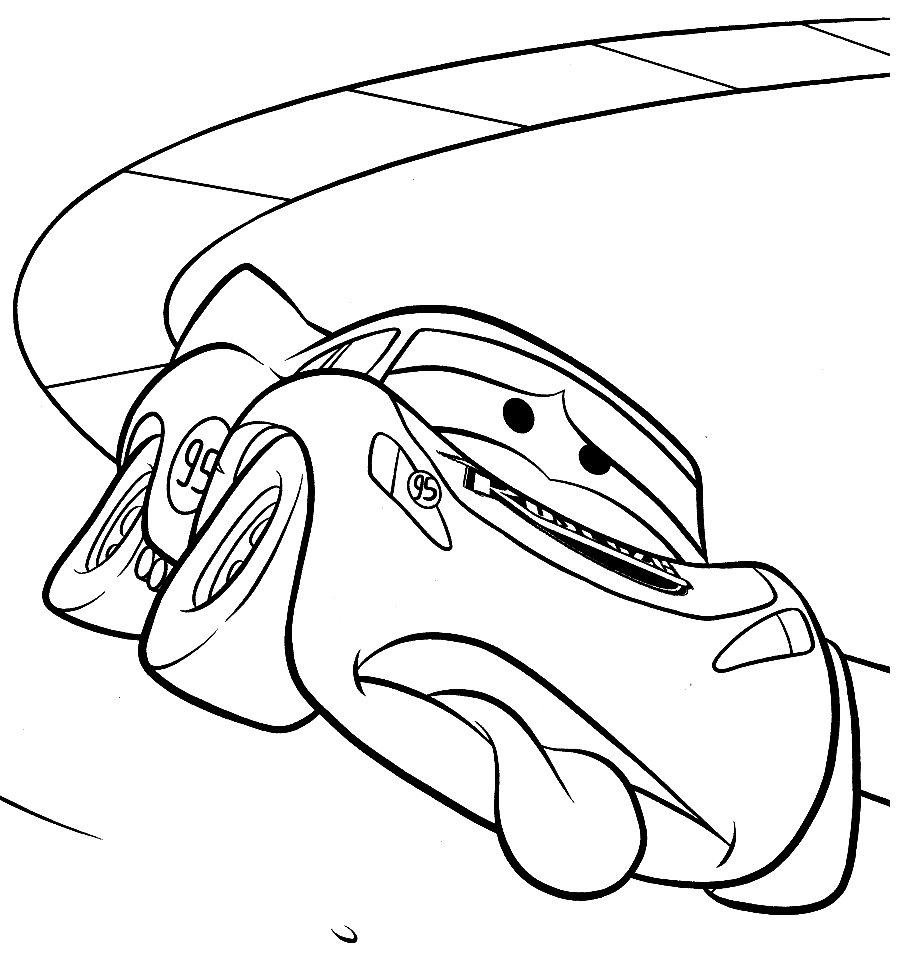
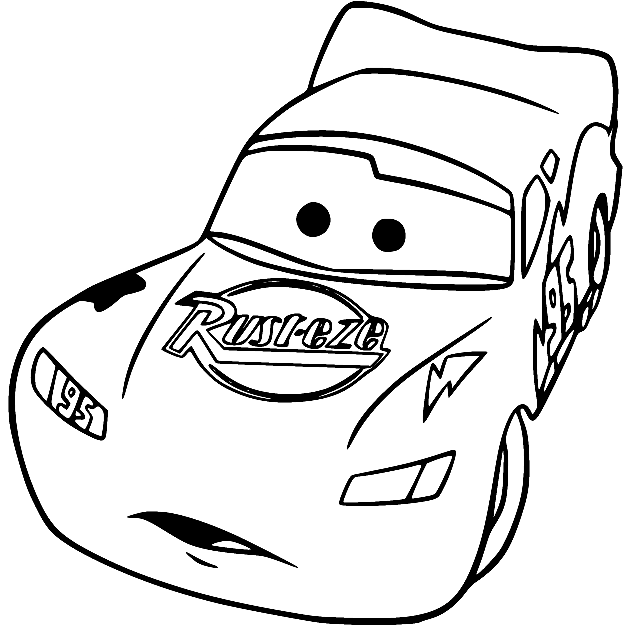
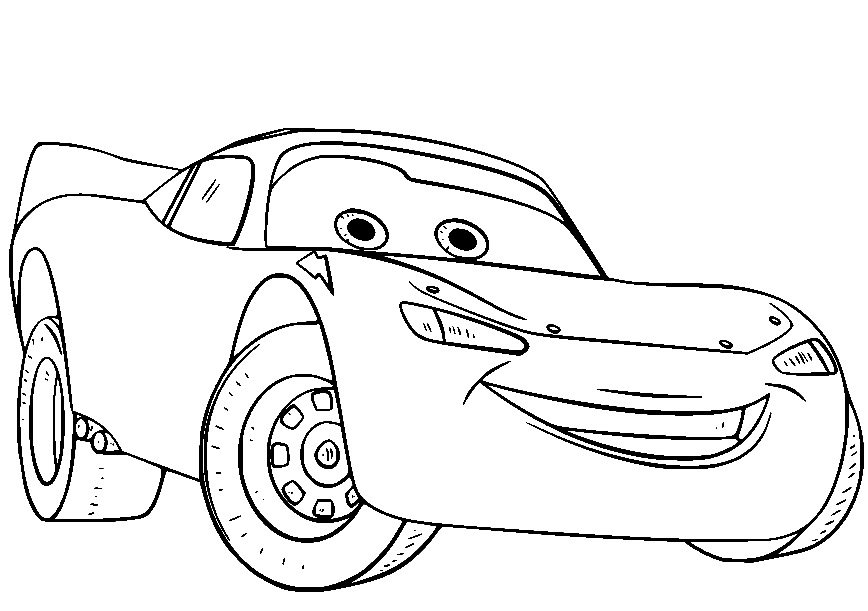
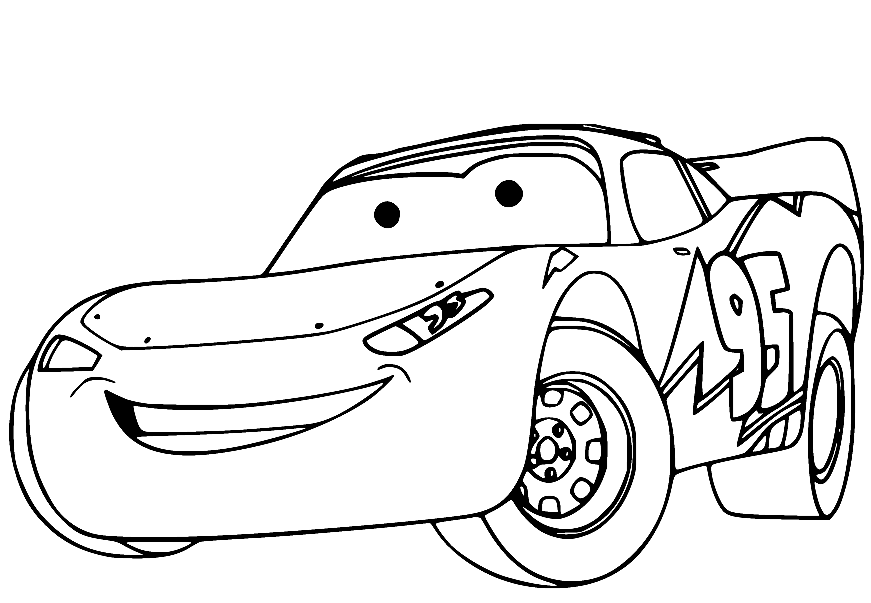
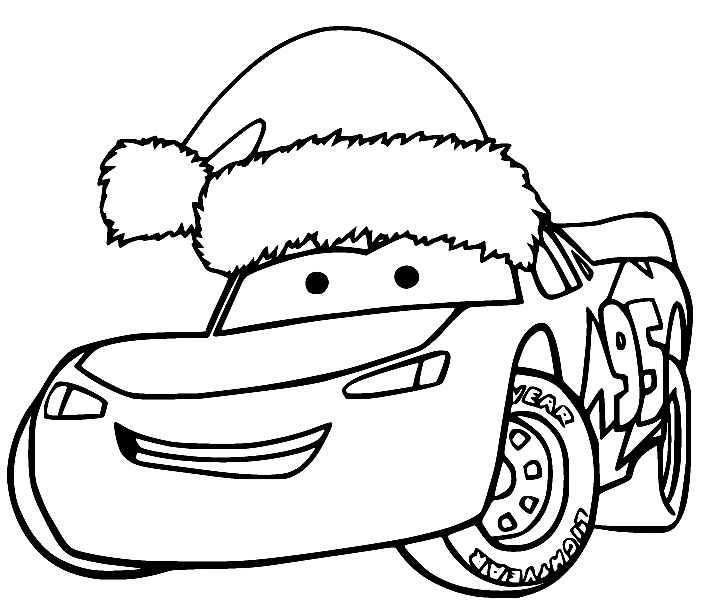
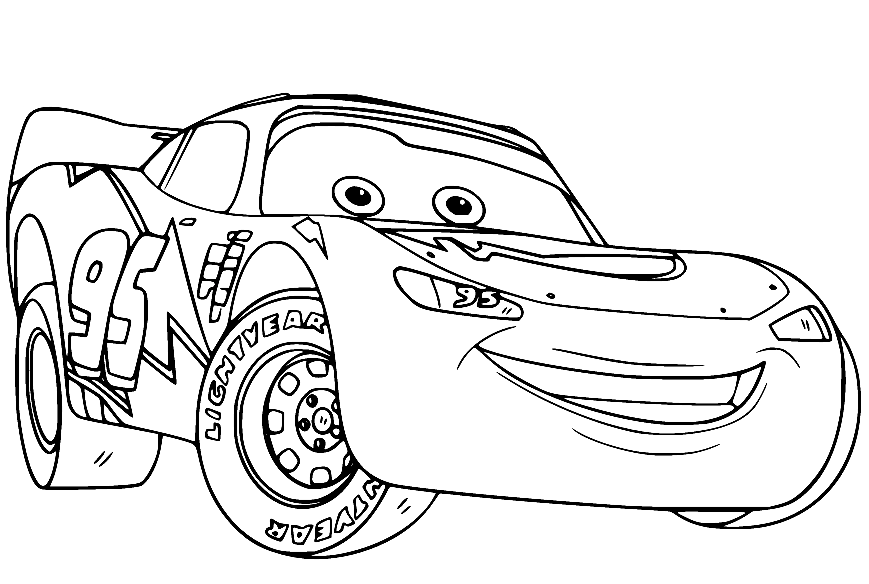
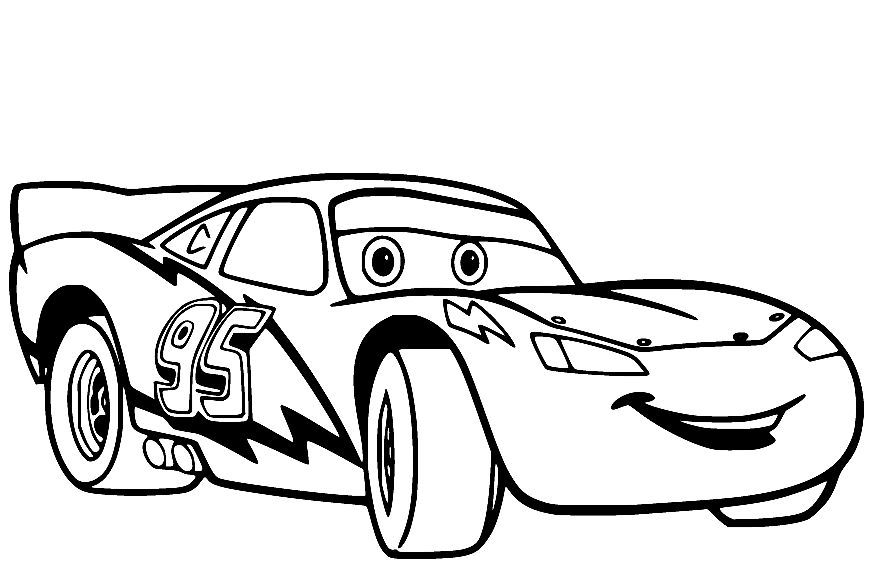
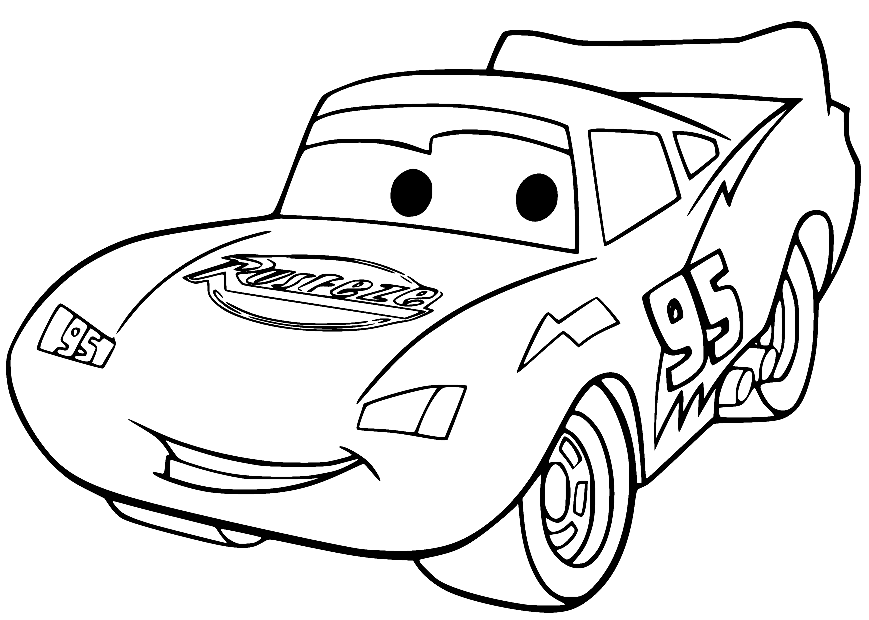
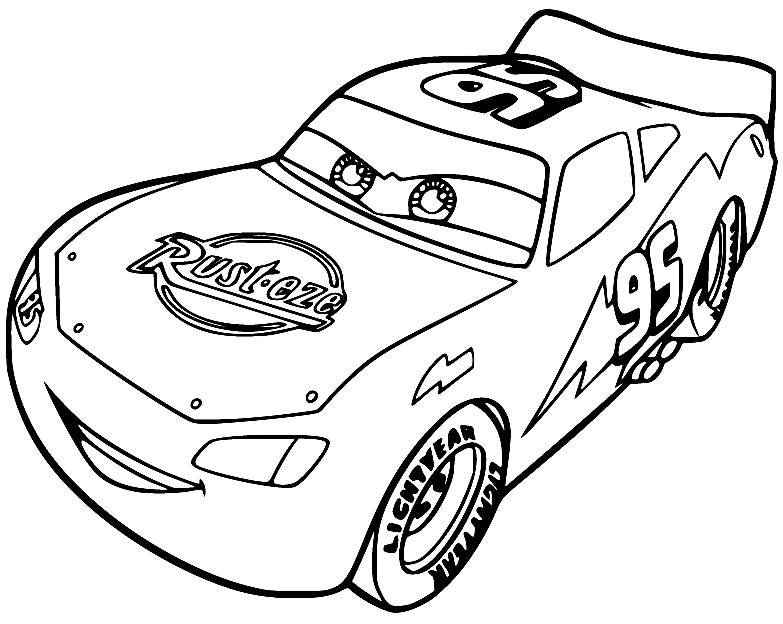
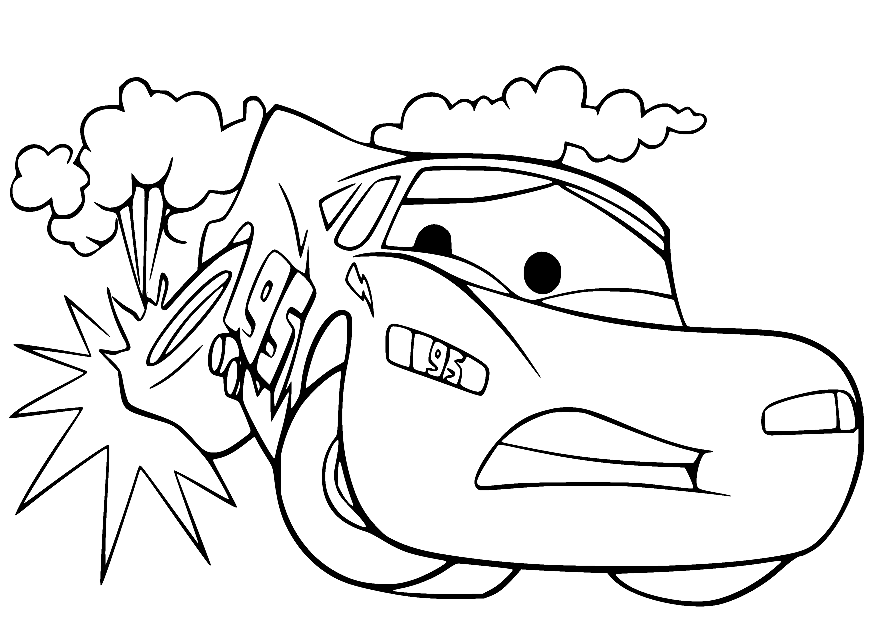
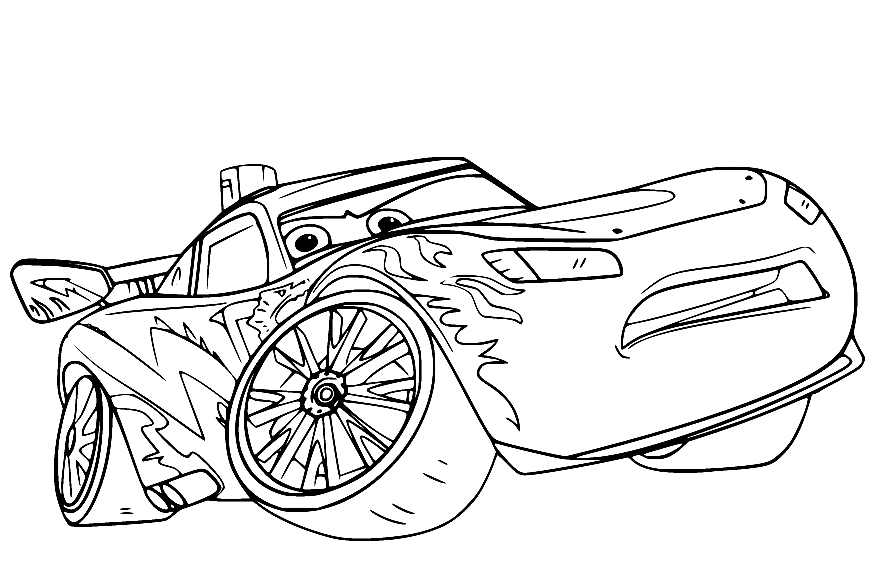
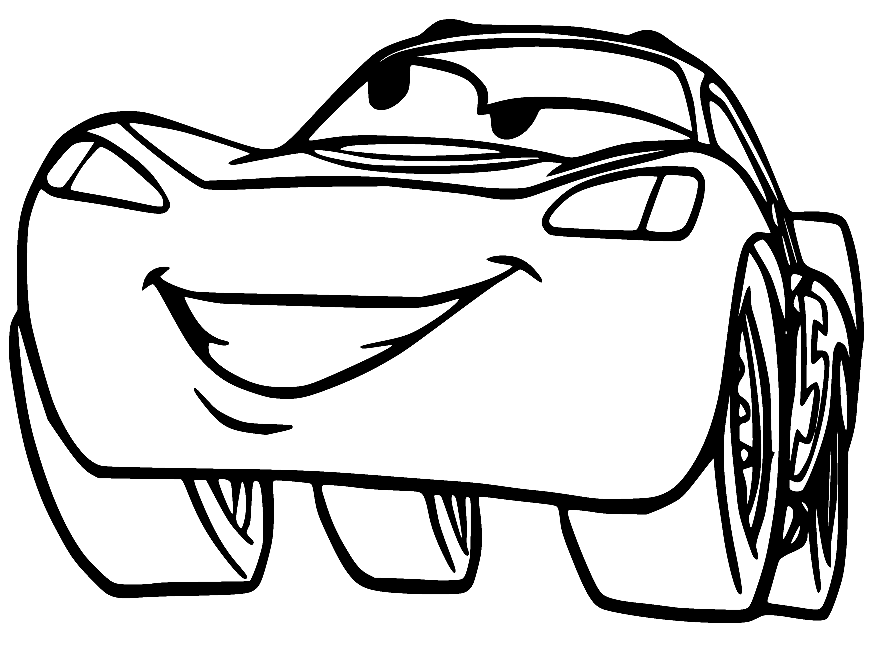
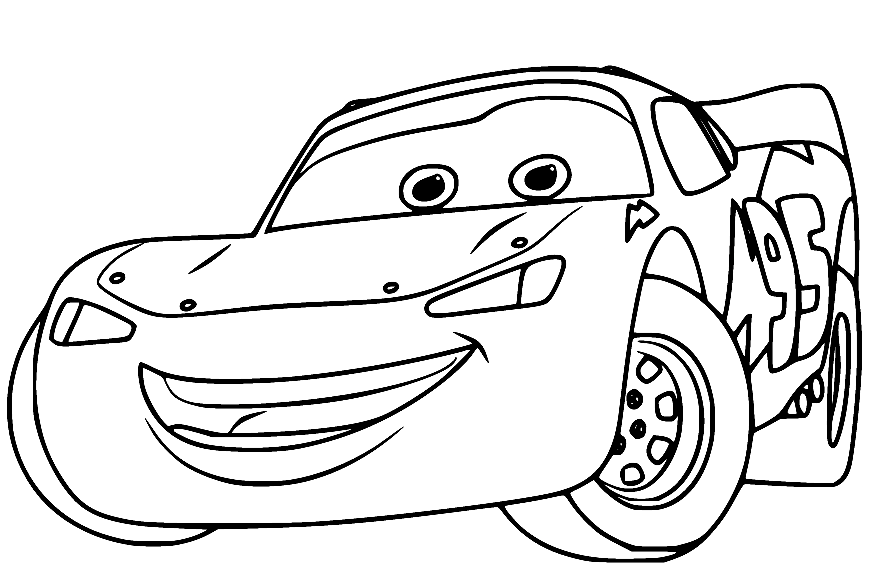
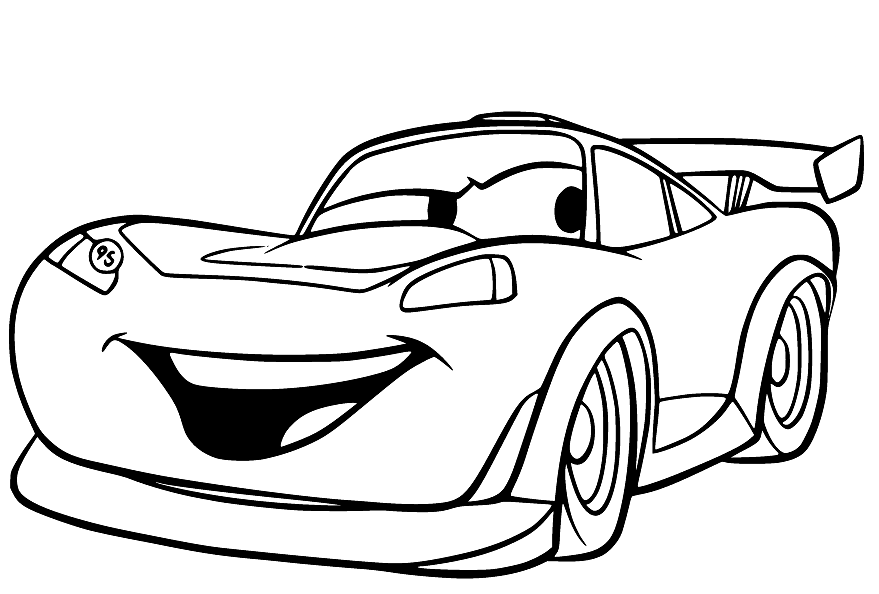
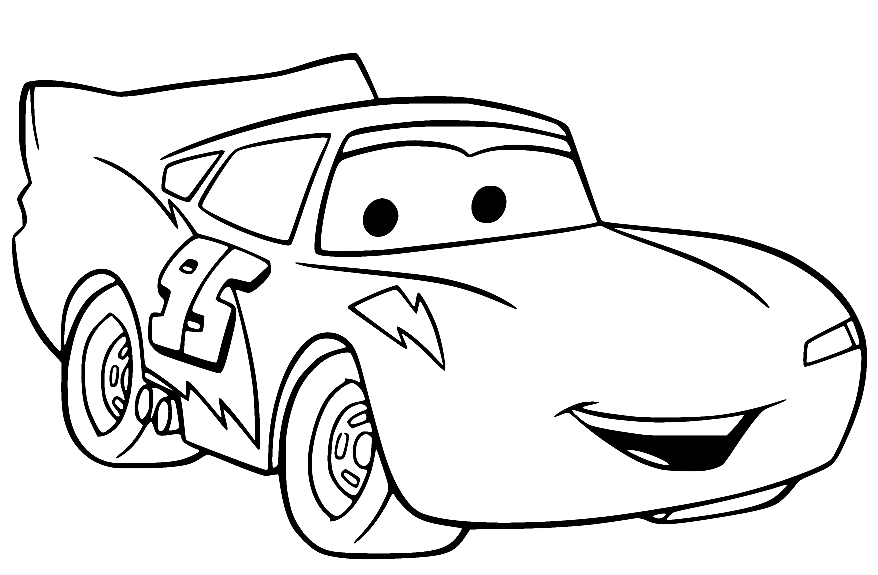
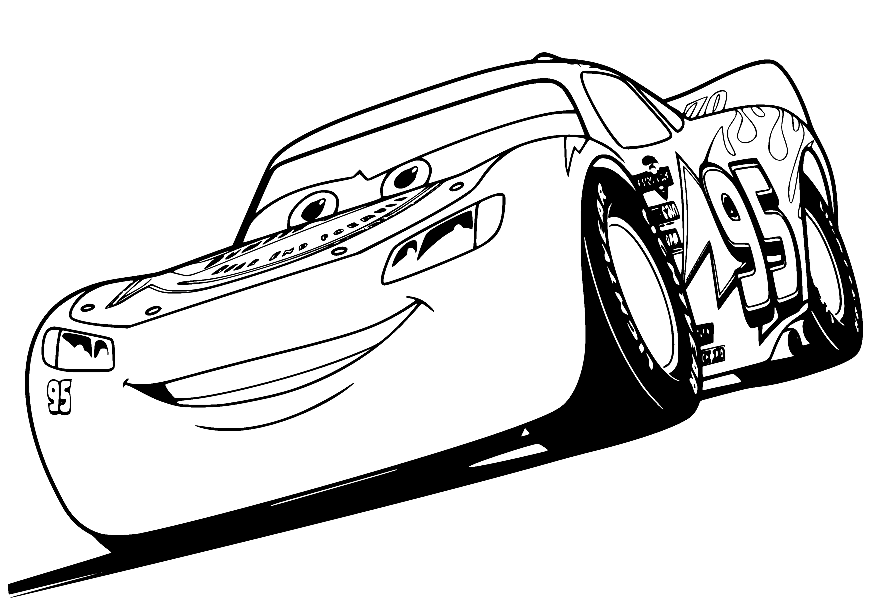
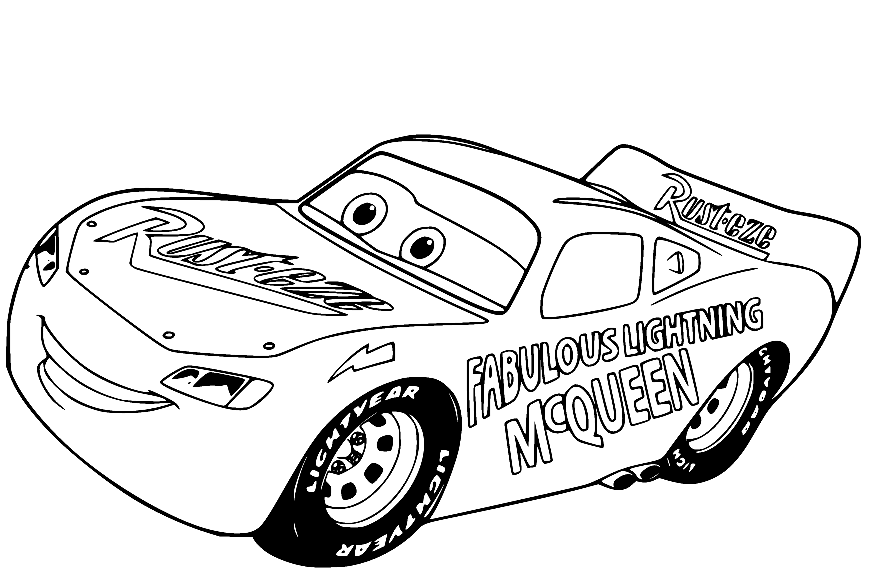
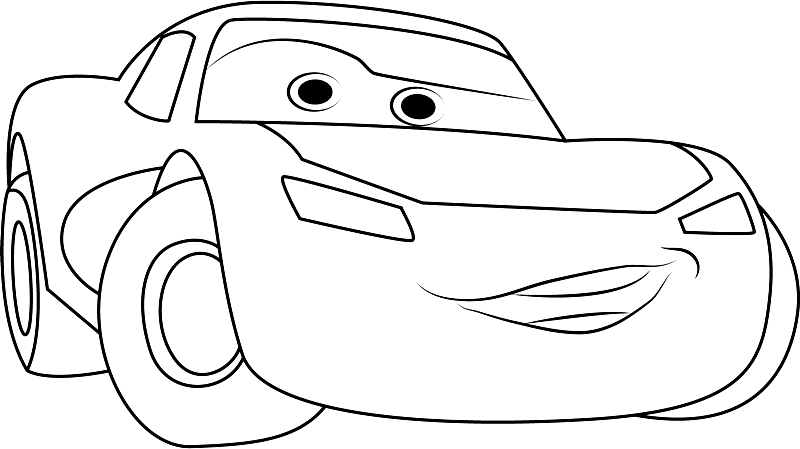
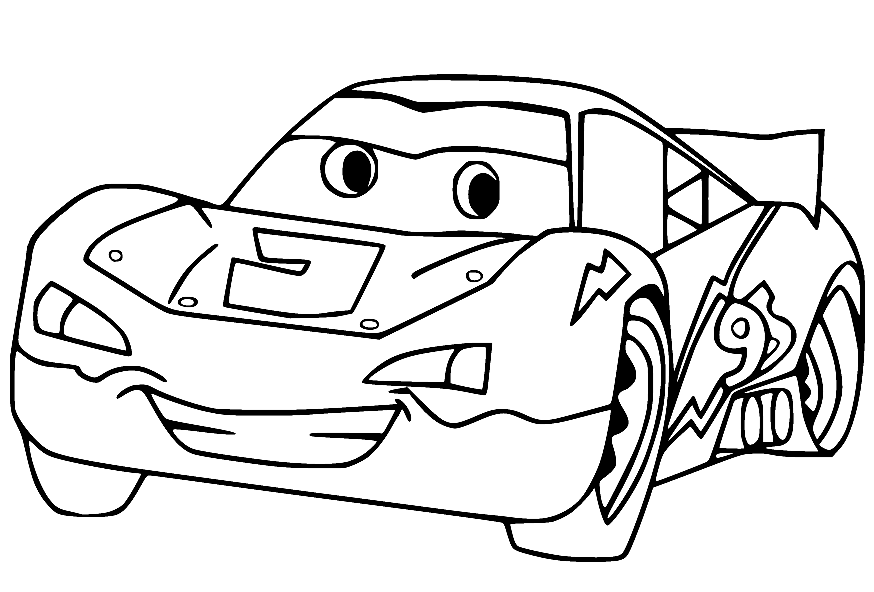
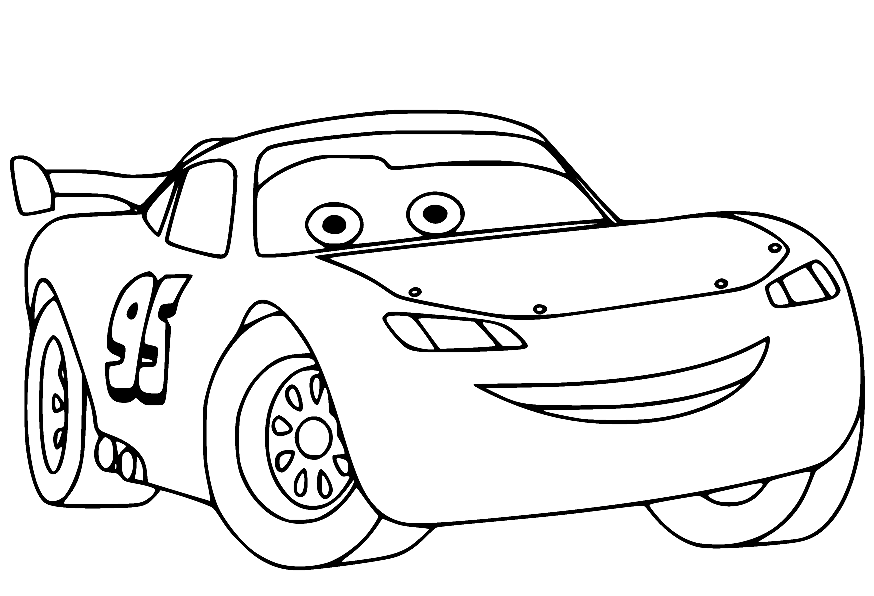
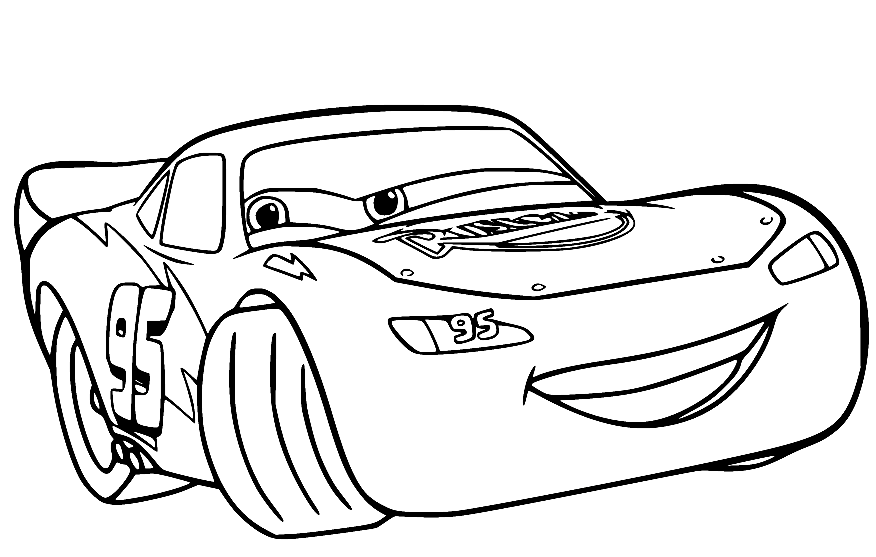
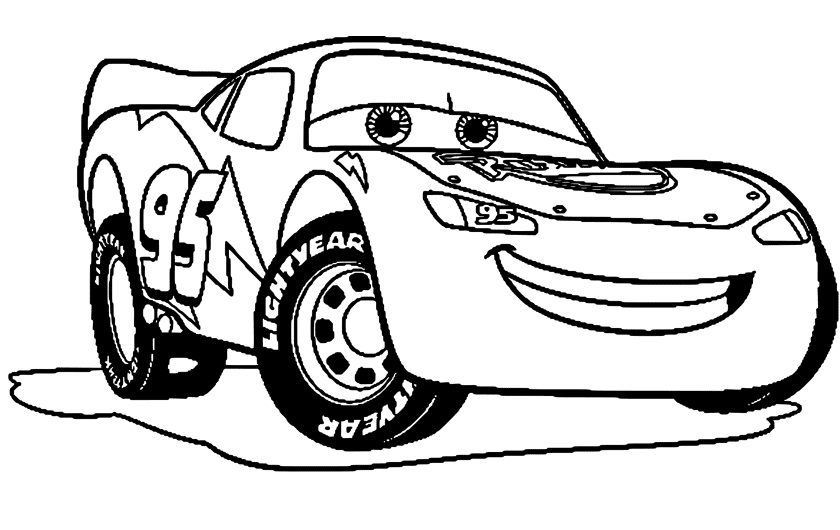
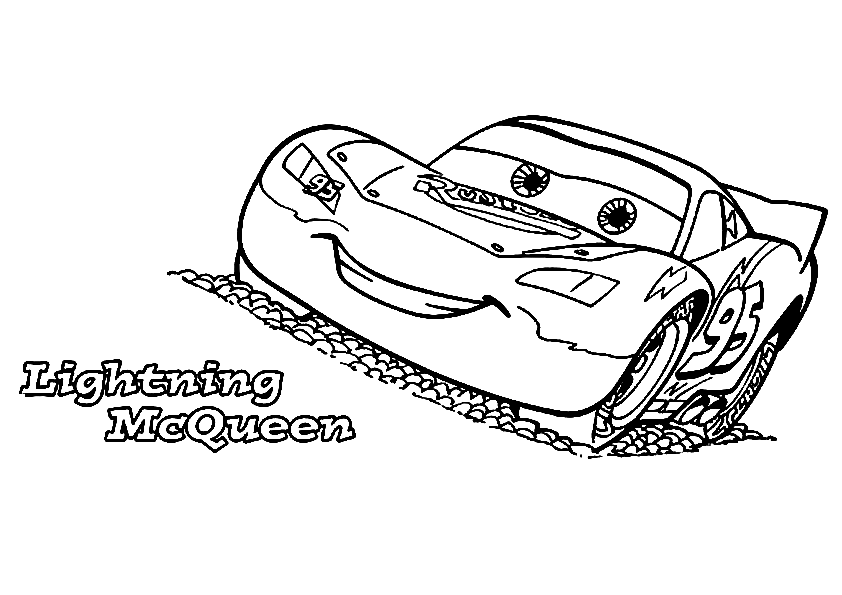
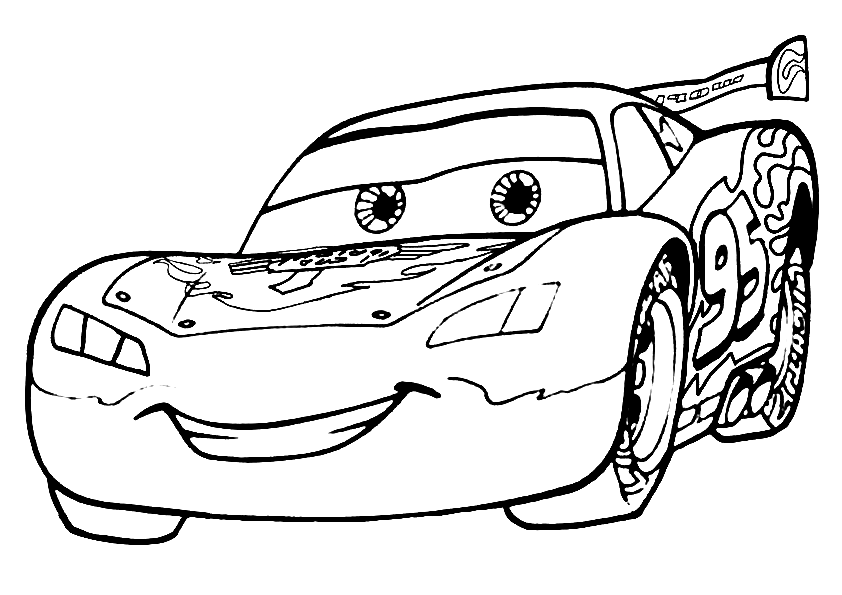
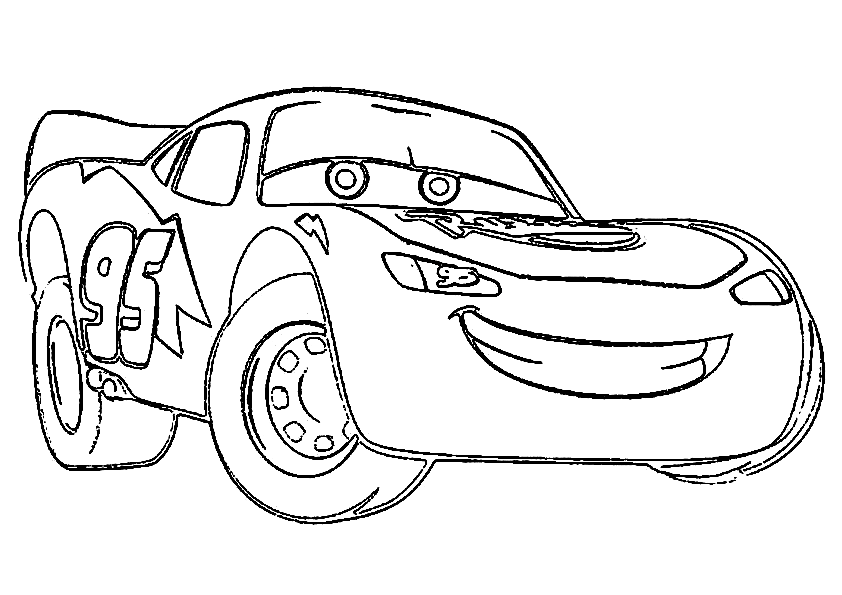
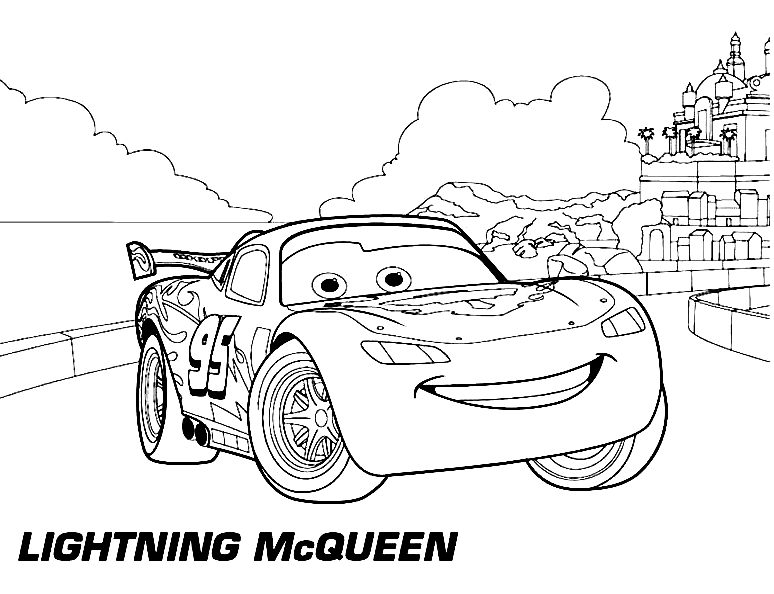
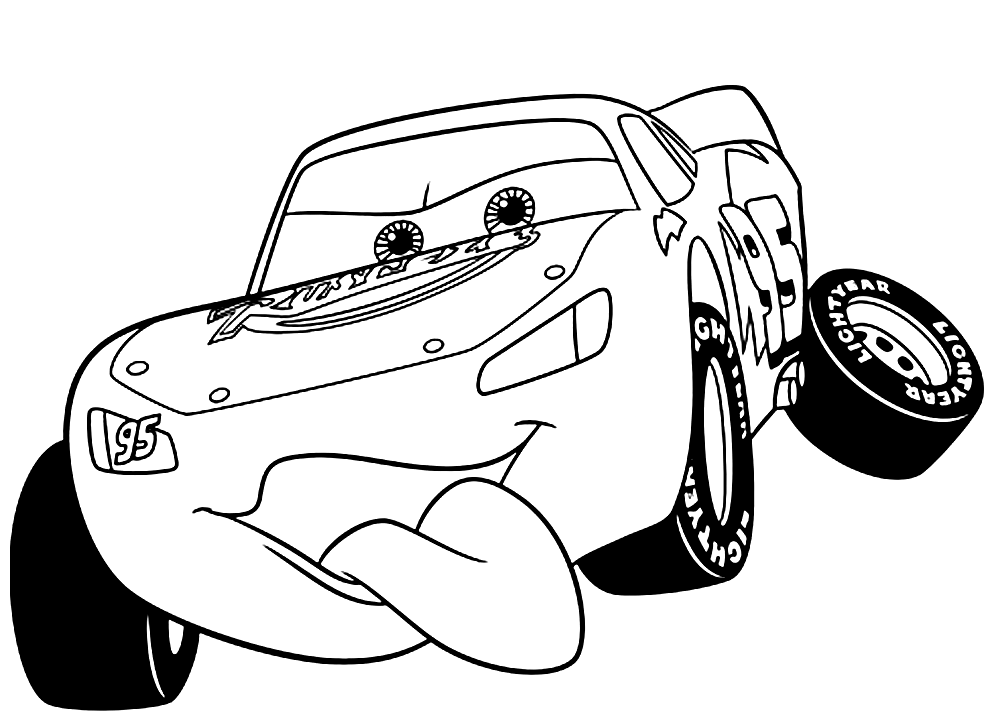
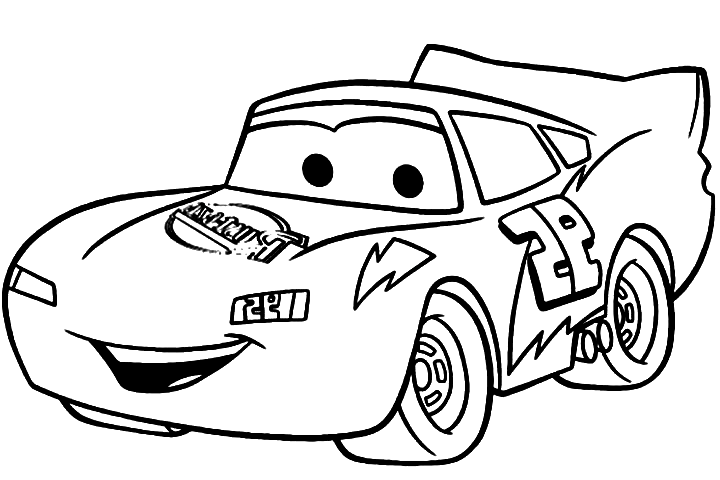
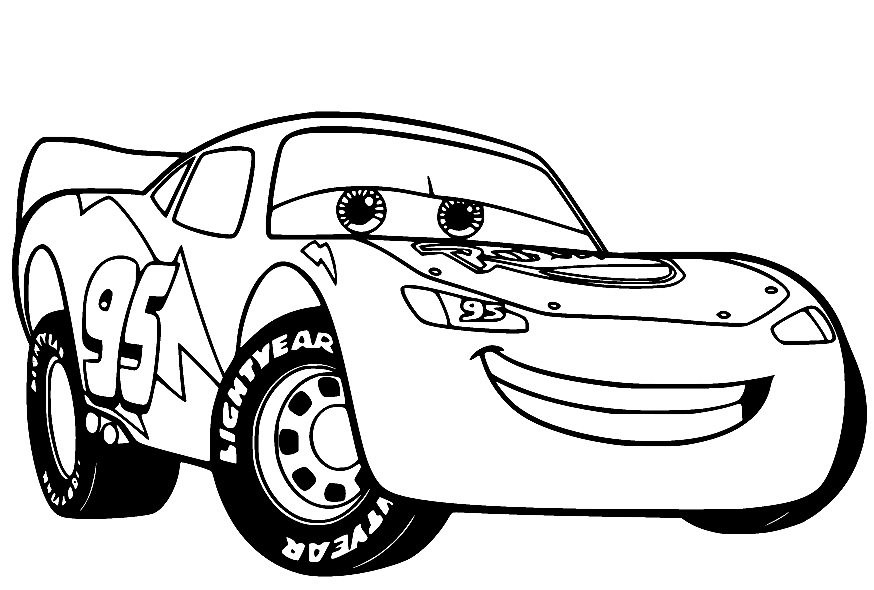
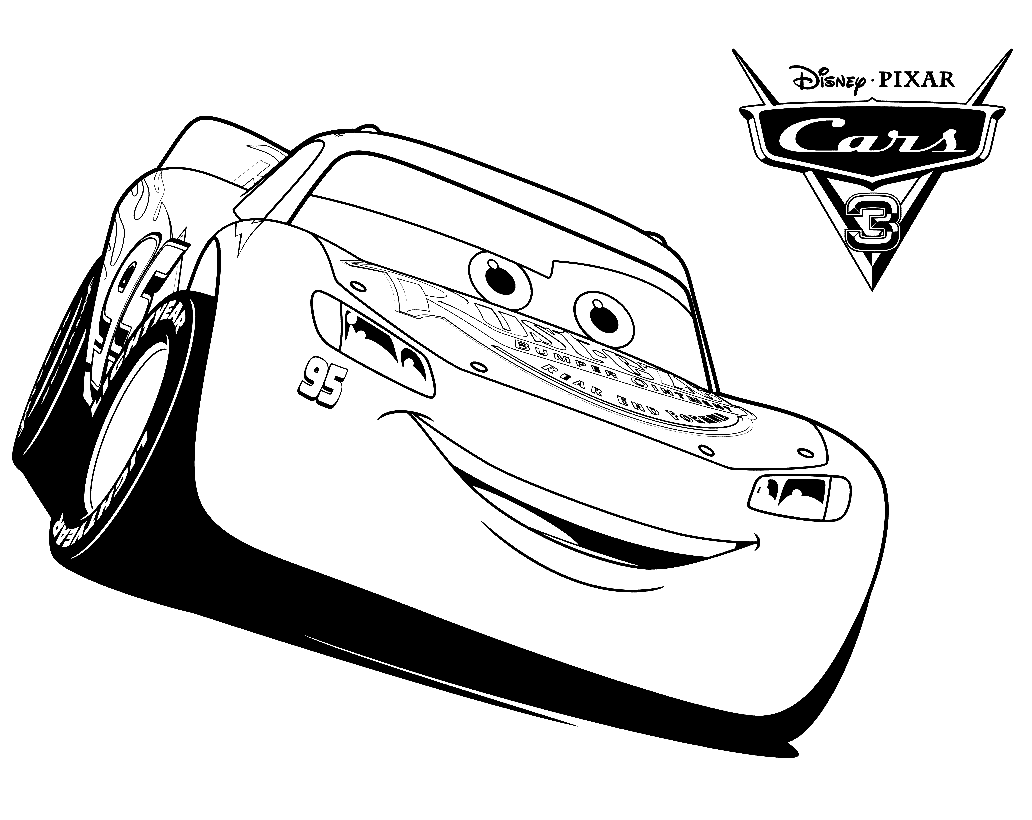
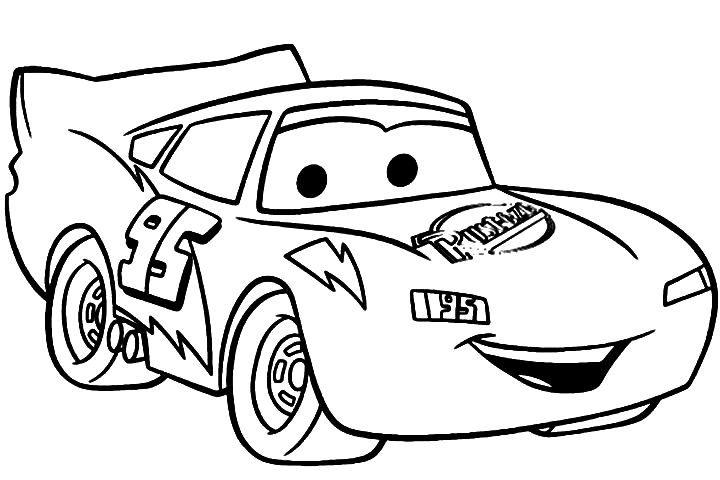
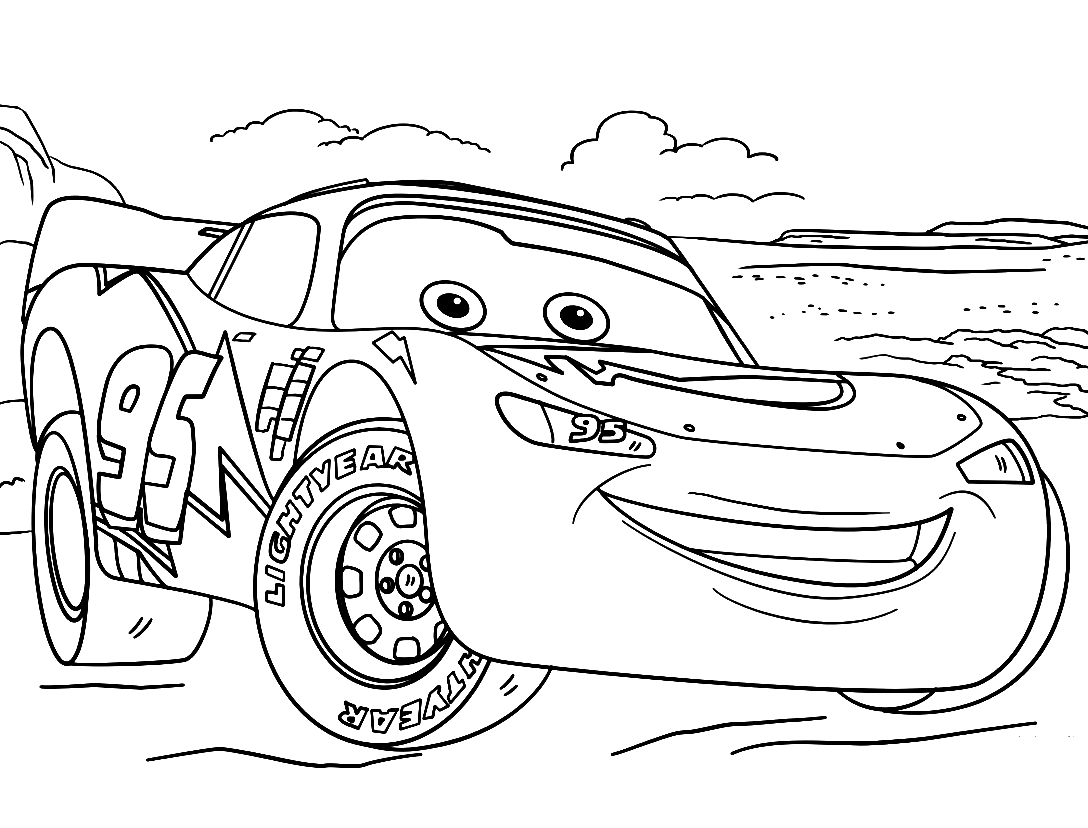
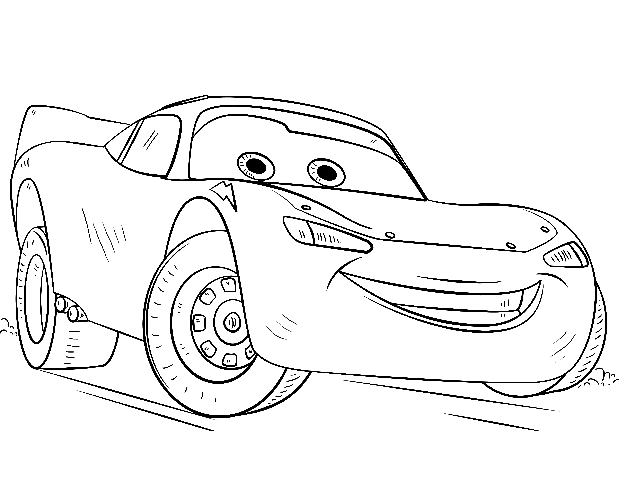
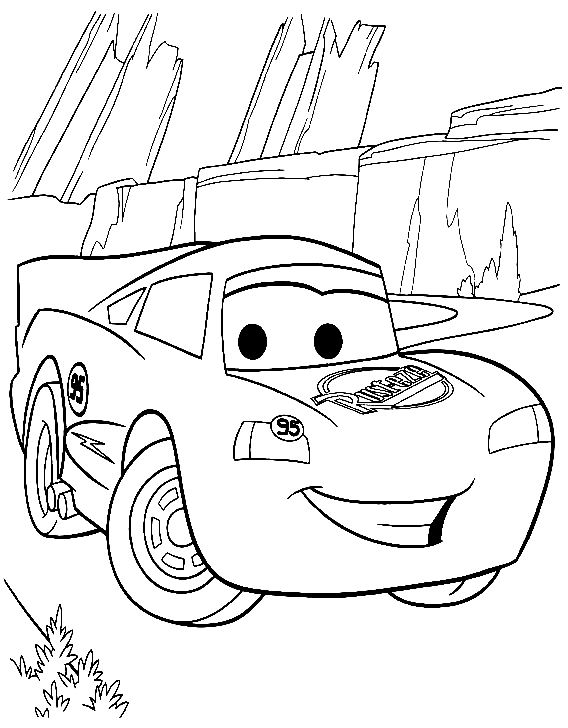
Lightning’s design is the collection’s most important color subject – a vivid, fully saturated red race car with a low, wide aerodynamic body, a rear spoiler, and the specific face-in-the-front design that makes all Cars characters immediately legible as characters rather than as vehicles. His windshield is large and expressive, shaped to convey his current emotional state through the specific curvature of the windshield’s lower edge.
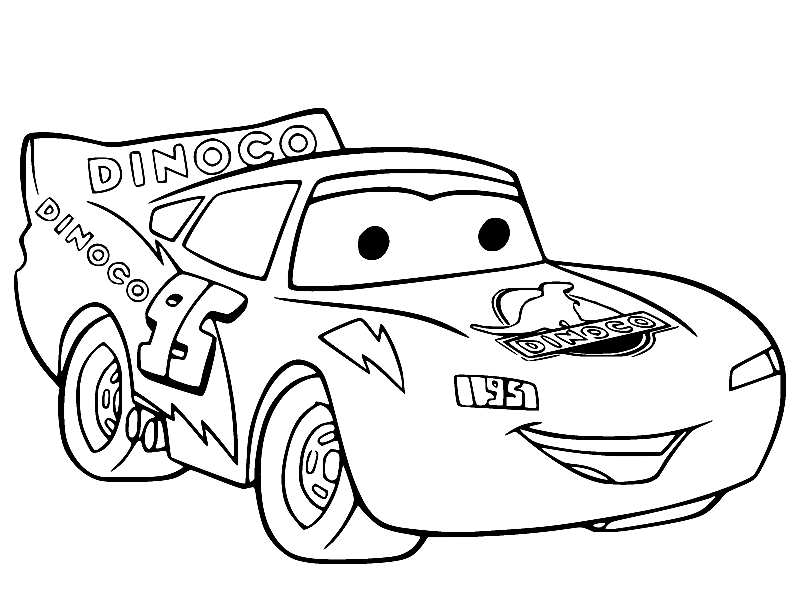
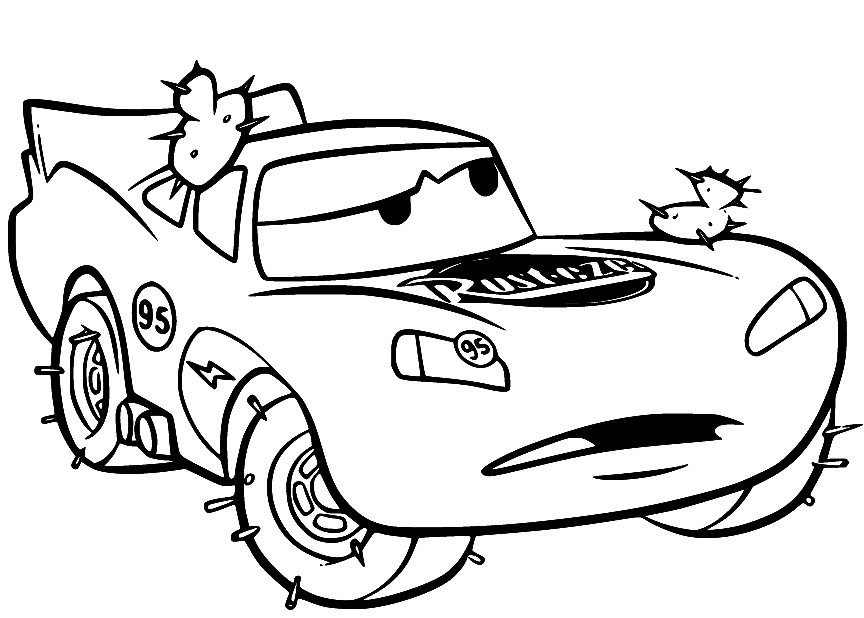
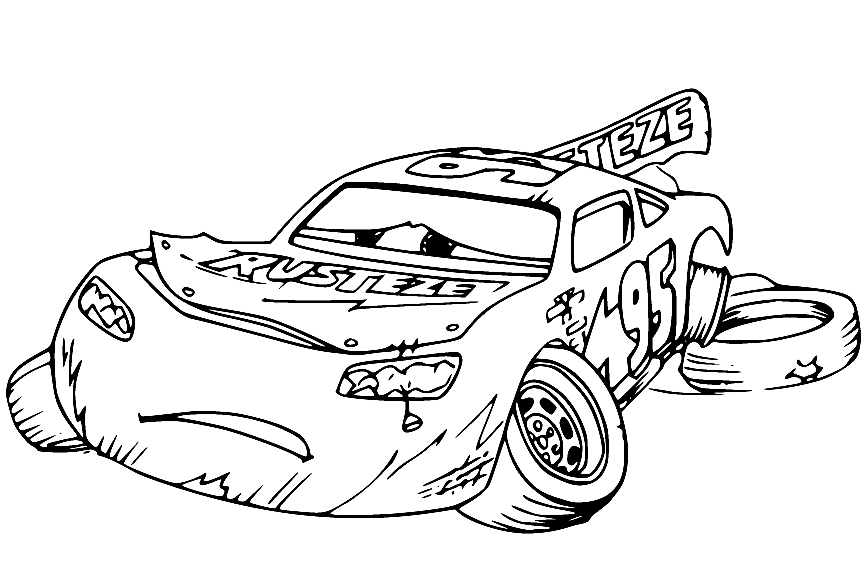
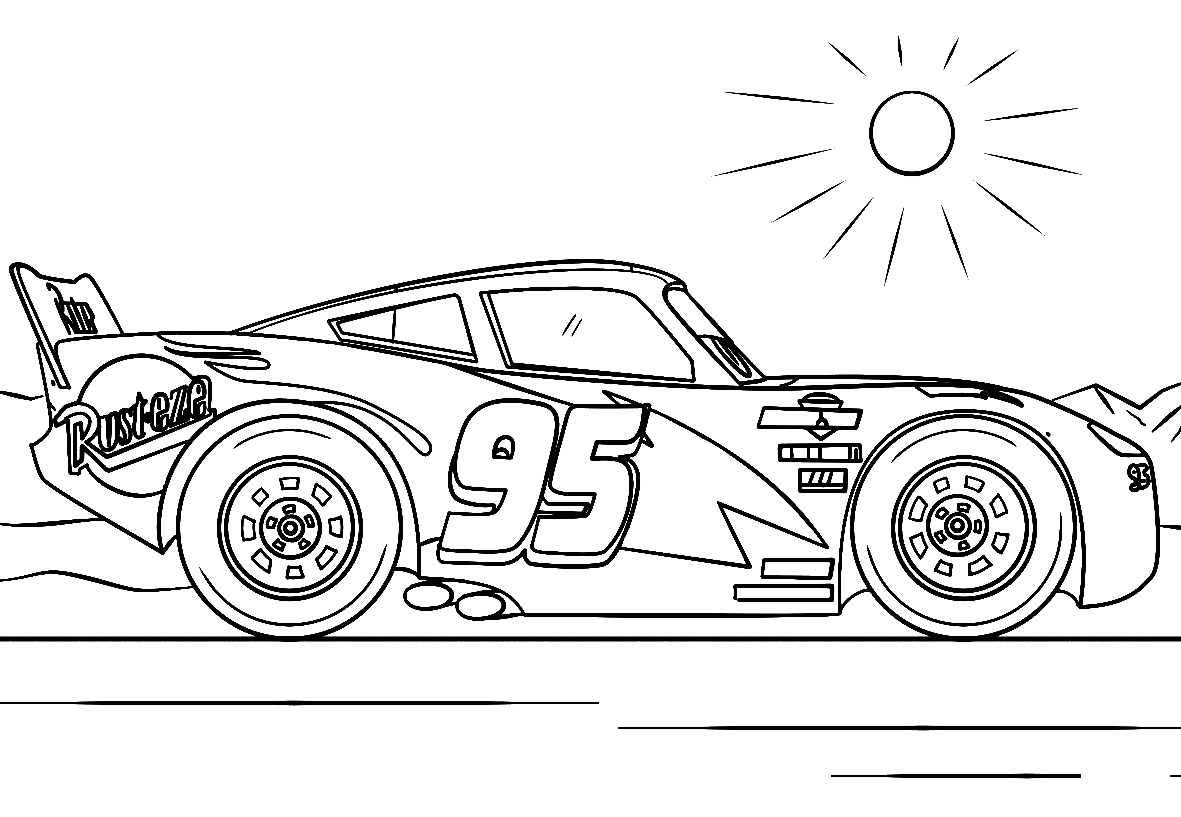
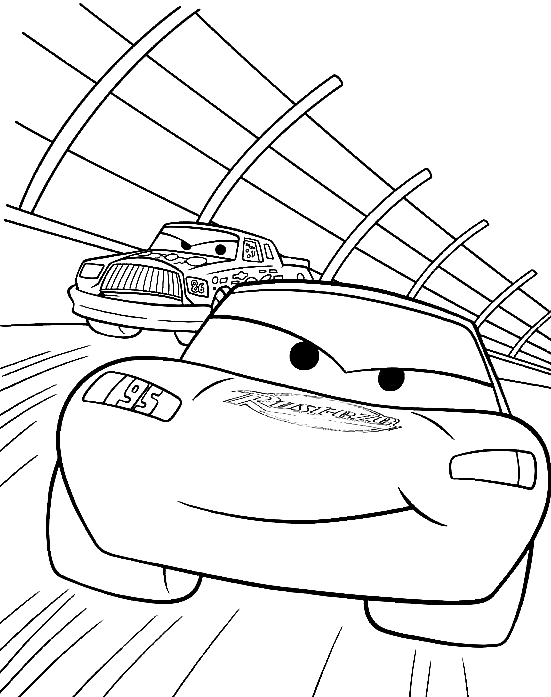
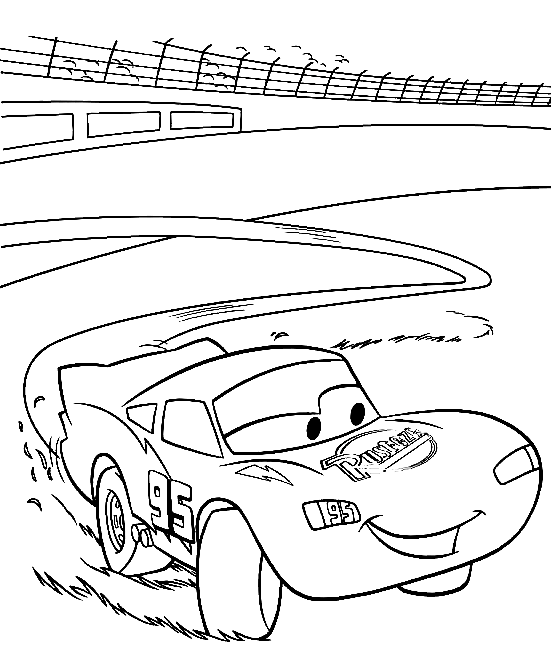
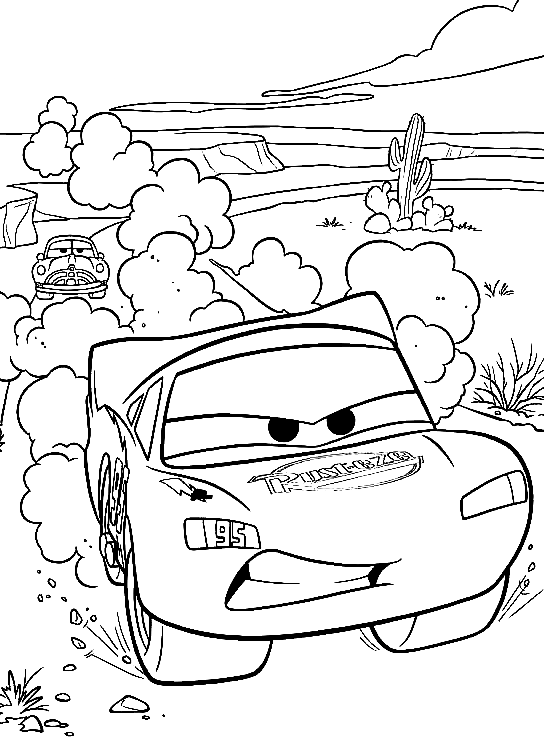
His race number 95 appears on his sides and roof. The Rust-eze logo – the sponsor from the first film – appears on his hood. His rear spoiler is the same red as his body. His tires are black with visible rim details. His body is a clean, modern race car silhouette without the grime and wear of Mater or the age of Doc Hudson.
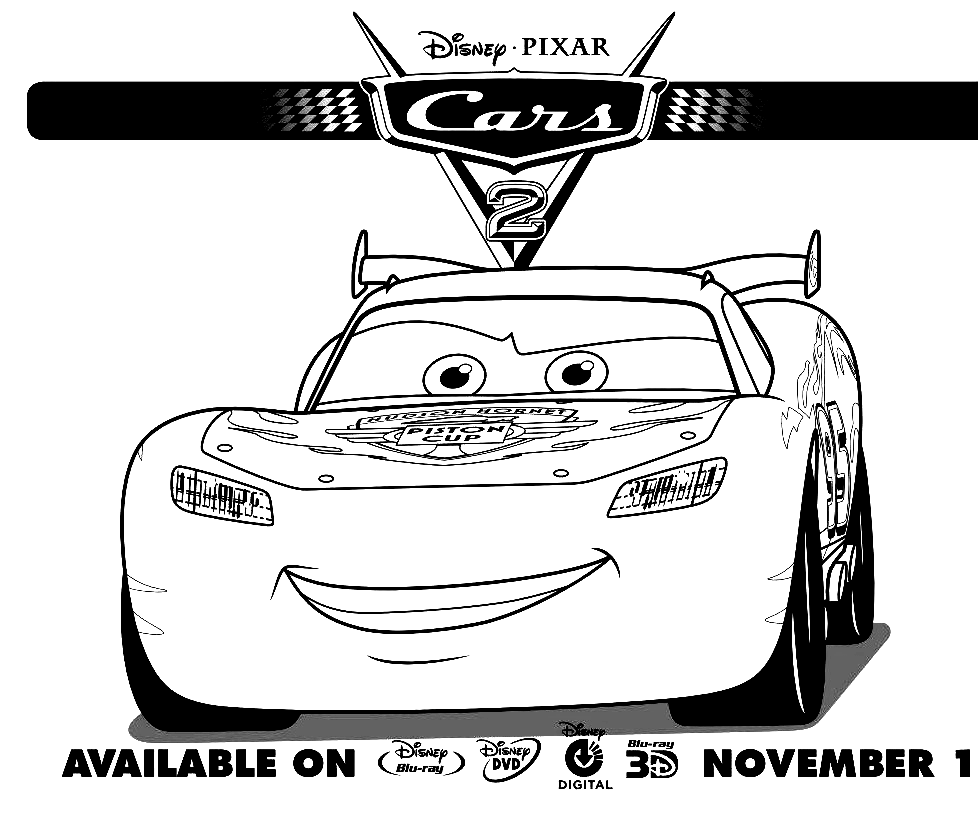
The collection spans Lightning across his three film appearances: the brash, self-assured rookie of the first film, the seasoned champion of the second, and the aging veteran of Cars 3 who faces the specific challenge of a generation of technologically superior competitors designed on computers rather than evolved through experience.
Coloring Lightning McQueen: His red is vivid and fully saturated – the specific fire-engine red that reads immediately as “Lightning McQueen red” rather than any muted, brick, or dark version. Apply it at full pressure across all body surfaces. The windshield in his eyes-open expression: white or pale blue-grey with the specific blue-green of the animated character’s expressive windshield. His tires are black. His rims are silver-grey chrome. The Rust-eze logo on his hood, where visible, is in the logo’s specific yellow and red. The number 95 on his sides: white or yellow against the red body.
Mater – The Tow Truck
Mater is the film’s deuteragonist and Lightning’s best friend – a 1950s-era tow truck in a state of cheerful disrepair that the film treats as a positive quality rather than a deficiency. He is rusty, missing a front tooth (one of the radiator grille sections is absent), has mismatched headlight eyes, and radiates a warmth and generosity that the film presents as the direct consequence of having never been corrupted by ambition.
His design is everything Lightning’s is not: warm brown-orange rust rather than vivid red, irregular and weathered rather than sleek and maintained, slow rather than fast, and carrying a tow hook and chains that suggest his function is to help others rather than to compete. He is voiced by Larry the Cable Guy with a performance that gives Mater the specific speech pattern and enthusiastic simplicity that defines him across all three films.
The film’s most important emotional statement is made through Mater’s friendship with Lightning – the recognition that the most valuable thing Lightning finds in Radiator Springs is not a sponsor or a trophy but a specific relationship with this particular rusty tow truck.
Coloring Mater: Warm brown-orange rust across his body – the specific warm rust-orange of a vehicle that has been left to the elements long enough to develop character rather than damage. The rust is not uniform – some areas are more heavily rusted (darker brown) and others less so (lighter orange-tan). His eyes (headlights) are slightly mismatched in their expression. His tow hook and cables are dark metallic grey. His teeth (grille) have a gap that makes him Mater.
Doc Hudson – The Hudson Hornet
Doc Hudson is voiced by Paul Newman – one of the most significant actors of the twentieth century – in what was Newman’s final voice performance before his death on September 26, 2008. This biographical fact gives the Doc Hudson pages a specific weight: every coloring page of the blue Hudson is also a memorial of one of Hollywood’s most enduring performances.
Doc Hudson is a 1951 Hudson Hornet – a real automobile that genuinely dominated early NASCAR racing, winning 79 races in three seasons between 1951 and 1954. The Hudson Hornet’s racing success is documented history that the film invokes in Doc’s backstory. His character arc – a champion racer who was forgotten after an accident, who found his place in Radiator Springs as its doctor and judge, who becomes Lightning’s mentor by teaching through withholding rather than by explaining – is the film’s most specifically adult emotional content.
Coloring Doc Hudson: His body is a deep, cool blue-grey – the specific blue of the 1951 Hudson Hornet, which was available in colors including a specific shade called “Hudson Blue.” His red Hudson Hornet racing colors are visible in flashback scenes – the white with red racing stripes of his championship years. His eyes have the specific seriousness that carries Doc’s character: not hostile but deeply deliberate.
Sally Carrera – The Porsche
Sally is a light blue Porsche 911 (996 series) – a former big-city lawyer who arrived in Radiator Springs looking for something she could not find in her previous life and decided to stay. She is Lightning’s romantic interest across the trilogy and the voice of Radiator Springs’ conscience – the character most aware of what the town is, what it represents, and what would be lost if it were forgotten.
Her design is the most aerodynamically elegant of the Radiator Springs characters – the Porsche body’s clean, curved surfaces contrasting with Mater’s rust and Sheriff’s bulk. Her light blue paint and the specific Porsche body shape make her immediately recognizable.
Coloring Sally: Light blue – a cool, medium-light blue, the specific Porsche light blue that reads as elegant and composed. The Porsche body’s smooth, curved surfaces reward the gradual gradient shading technique rather than the sharp-zone technique of Lightning’s flatter race car body. The largest, most gently curved surface – the hood and upper body – should show a gentle progression from slightly lighter blue on the highest surface to slightly darker blue at the sides.
Chick Hicks – The Villain
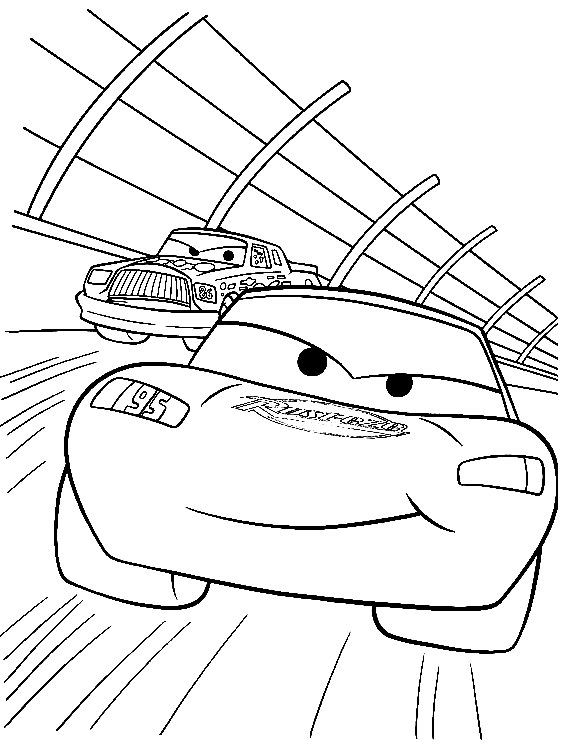
Chick Hicks is the first film’s primary antagonist – a veteran race car driver who has built his career on cutting corners, blocking competitors, and cheating rather than outperforming. His design communicates his villainy through specific visual choices: dark green body (where Lightning is red and The King is blue, the three primary flag colors, Chick gets the one that reads as least heroic), a mustache-like design on his grille (the specific mark of the cartoony villain), and the general quality of a vehicle that looks as if it wins more often than it should.
His sponsor is Hostile Takeover Bank – a corporate name that the film uses as a single-line commentary on the relationship between finance and sport. His race number is 86.
Coloring Chick Hicks: Dark green – the specific forest green or dark military green that reads as antagonistic in the red-blue-green color language of the film. Darker and cooler than the heroic reds and blues around him. His mustache grille detail should be carefully rendered – it is the face element that communicates his sneer even in a still image.
Cruz Ramirez and Jackson Storm – Cars 3
Cars 3 introduces two new major characters whose relationship with Lightning defines the film’s emotional arc.
Cruz Ramirez is a bright yellow race car – Lightning’s trainer at the Rust-eze Racing Center, a character who wanted to be a racer but gave up on the dream and redirected into coaching. Her design is warm, friendly, and optimistic – the yellow of her body communicating the specific quality of someone who has enthusiasm and capability without having had the confidence. Her arc in the film is the discovery that the confidence was always there.
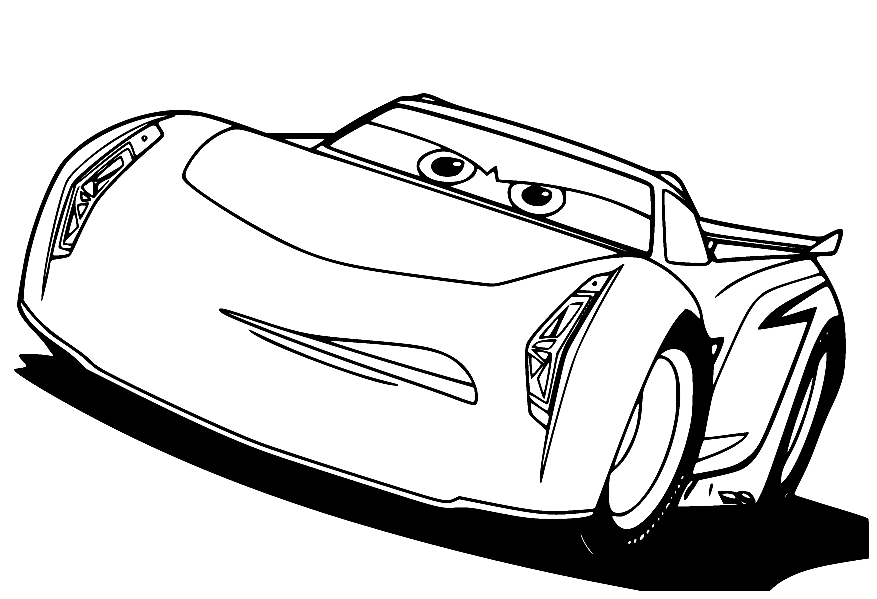
Jackson Storm is Lightning’s antagonist – a dark blue-grey, impossibly fast next-generation race car designed with computer modeling rather than evolved through experience. His design communicates technological superiority through sleekness: he is sharper, lower, and more aerodynamically precise than Lightning, and he knows it. His race number is 20. He is voiced by Armie Hammer.
Coloring Cruz Ramirez: Warm, vivid yellow – fully saturated, the specific cheerful yellow of a character designed to be encouraging. Her Dinoco sponsorship elements are blue against the yellow body. Coloring Jackson Storm: Dark blue-grey with a darker, almost-blue-black for the deepest shadow areas. His design is sleek enough that the gradient shading should be particularly smooth – he is too aerodynamically perfect for harsh shadow edges.
What These Pages Do
The first Cars film contains one of Pixar’s most carefully constructed morality arguments. Lightning McQueen enters the film believing that winning is everything, that speed and fame are the point, that the people around him are supporting characters in his own story. The film spends ninety-six minutes showing him how wrong he is, and arrives at the conclusion through specific human (car) relationships rather than through abstract lesson-delivery. Coloring pages from this film carry that argument in their specific characters.
The Hudson Hornet’s real racing history gives Doc Hudson’s character a documentary dimension. The 1951-1954 Hudson Hornet genuinely dominated NASCAR with 79 wins in three seasons – this is verifiable automotive history, not invention. The film’s use of this real car as Doc Hudson’s identity connects the animated character to a specific historical moment in American motorsport. Coloring Doc Hudson while knowing this history is coloring a character who references real events.
Paul Newman’s final performance gives the Doc Hudson pages biographical resonance. Newman died on September 26, 2008, at age 83. He had been ill during the production of Cars 2, which is why Doc Hudson’s absence from the second film is explained through the character’s death. Every Doc Hudson coloring page is, in a specific way, a portrait of one of the twentieth century’s most significant actors in his final creative work.
Fine motor development. The American Academy of Pediatrics identifies fine motor skill development as a key childhood milestone throughout early childhood. The race car body panels, Lightning’s sponsor logo details, the rust texture of Mater’s surface, and the specific face expressions of each character all provide motivated, sustained fine motor practice. The 2005 Art Therapy Journal study on structured coloring and anxiety reduction applies throughout.
How to Color These Pages Well
Lightning’s red must be committed and unmodified. The most common error on Lightning McQueen pages is using a red that has drifted toward orange, toward brick, or toward pink. Lightning’s red is the specific vivid fire-engine red of the animated character – fully saturated, at maximum chromatic intensity, applied at full pressure across every red body surface. Test the red before applying: it should be the reddest red available. The number 95 and the Rust-eze logo on top of this vivid red provide contrast through their white and yellow elements.
The windshield eyes are the character’s emotional center. Each character’s windshield communicates their emotional state through its specific curvature. Lightning’s windshield in his default expression has a slight downward curve at the inner corners – the cartoon eyebrow position of someone alert and forward-looking. Apply the windshield color (a pale, slightly blue-grey or blue-green) across the windshield area. The windshield frame is typically darker – the edge of the glass where it meets the body. This frame-and-glass distinction is what makes the character’s face readable.
Mater’s rust requires irregular application. The specific quality of rust is that it is not uniform – it is heaviest at the edges of panels, at damaged areas, and wherever moisture collects, and iron oxidizes. Apply the rust orange-brown at different intensities across Mater’s body – heaviest at the panel edges and joints, lighter across the main panel surfaces. Add the darkest rust-brown in the areas of most severe oxidation. The variation in rust intensity is what makes him look genuinely weathered rather than painted brown.
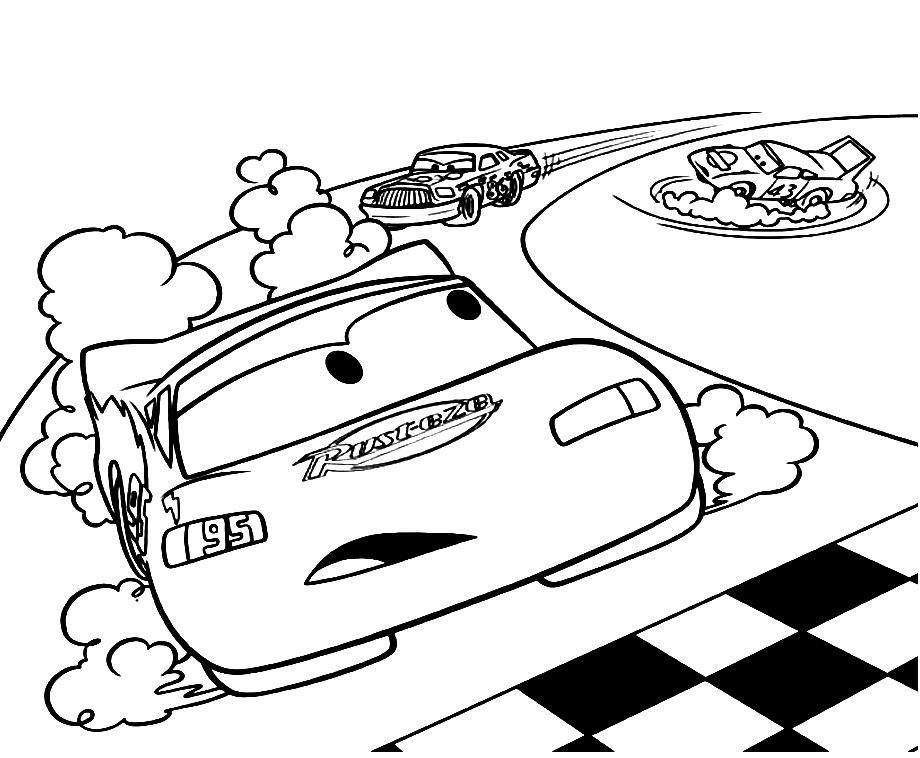
The race track pages want motion blur context. Pages showing Lightning McQueen in racing action often include speed lines radiating behind and around him. These speed lines should be rendered in a very light grey – almost white, much lighter than the car itself – so they read as environmental motion rather than as drawn marks. The lighter the speed lines, the more effectively they communicate speed without competing with the car’s color for visual priority.
Jackson Storm’s sleekness needs smooth gradients. Unlike Mater’s rough, irregular surface or Radiator Springs’ flat-paneled older cars, Jackson Storm’s design is aerodynamically smooth – every surface curves precisely into every other. The shading on Storm’s pages should be the smoothest in the collection: gradual, continuous transitions from dark blue-grey to medium blue-grey to a barely-lighter blue-grey at the most directly lit surfaces. No sharp lines, no distinct zones – just a continuous, controlled gradient across every surface.
5 Creative Craft Ideas
Ka-chow! Racing Card
Print the most dynamic Lightning McQueen racing pose in the collection. Color it in canonical vivid red with the #95 clearly visible and the Rust-eze logo rendered on the hood.
Cut to a trading card format (approximately 6cm × 9cm, or standard card dimensions). On the back, hand-letter Lightning’s stats: “Lightning McQueen. #95. Sponsor: Rust-eze. Type: Stock Car. Top Speed: Fast. Best friend: Mater. Catchphrase: Ka-chow!”
Mount between two pieces of cardstock to create a proper double-sided card. The finished object is a character trading card made by hand – a personal tribute that functions as both coloring project and collectible artifact.
(Image placeholder: Ka-chow Racing Card)
The Hudson Hornet Legacy Display
Print one Doc Hudson page and color it carefully in the specific blue-grey of the 1951 Hudson Hornet. On a separate card, hand-letter the real Hudson Hornet’s racing record: “The 1951-1954 Hudson Hornet won 79 NASCAR races in three seasons. It was the most successful stock car racer of its era. Doc Hudson was a champion. He was also a doctor. He was also Paul Newman.”
Mount the colored page alongside the historical note. Add: “Paul Newman: January 26, 1925 – September 26, 2008. His final performance was a blue Hudson Hornet in a small town called Radiator Springs.”
Radiator Springs Character Lineup
Print one page each for the main Radiator Springs residents: Lightning McQueen, Mater, Sally, Doc Hudson, Ramone, Flo, Luigi, and Sheriff. Color all in their canonical colors – vivid red, rust orange, light blue, Hudson blue, Ramone’s purple lowrider, Flo’s gold show car, Luigi’s lime green Fiat, Sheriff’s police black and white.
Mount all in a row on a long backing sheet, arranged as if parked along Radiator Springs’ main street. Add the town name at the top: “Radiator Springs – A Little Piece of Automotive Heaven.” Below each car: their name and one descriptor.
Three Films, Three McQueens
Lightning McQueen changes across the three films – not dramatically, but in ways that reflect his character’s growth. Print three McQueen pages that represent his different stages: the brash rookie (#95 with full Rust-eze sponsorship, aggressive racing posture), the seasoned champion (slightly more settled, confident without the edge), and the veteran of Cars 3 (dealing with the prospect of becoming obsolete).
Color all three in identical vivid red – the color should be consistent across all three pages, with only the posture and expression suggesting the different stages. Mount in order: “Cars (2006),” “Cars 2 (2011),” “Cars 3 (2017).”
My Race Number
This craft uses the coloring page as a starting point for a personal identity project. Print any Lightning McQueen page. Color him in vivid red with the #95 clearly visible on his side.
On a separate piece of paper, design your own race car identity: choose your racing number (any number with personal meaning), choose your sponsor name (it can be anything – your family name, your favorite food, your school), and choose your body color.
Draw a simplified car shape and apply your design. Label it with your name and racing number at the bottom. Mount alongside the completed McQueen page: Lightning’s #95 on the left, your number, and your design on the right.
Frequently Asked Questions
Who is Lightning McQueen and what film is he from? Lightning McQueen is the protagonist of Pixar’s Cars film trilogy – Cars (2006), Cars 2 (2011), and Cars 3 (2017). He is a vivid red stock car racer voiced by Owen Wilson who carries race number 95, a number the filmmakers have said honors 1995, the year Pixar released its first feature film, Toy Story. In the first film, Lightning is a rookie racer on the verge of winning the Piston Cup who ends up stranded in Radiator Springs, a small town on Route 66, where he learns the value of friendship, community, and belonging over pure competitive success. His signature exclamation is “Ka-chow!” – typically accompanied by flashing his headlights.
Who are the main characters in Radiator Springs? Radiator Springs is home to a community of car characters whose diversity reflects the range of residents a small American town might have. Mater (voiced by Larry the Cable Guy) is a rusty 1950s tow truck and Lightning’s best friend. Doc Hudson (voiced by Paul Newman) is a 1951 Hudson Hornet, Radiator Springs’ doctor and judge, and a former racing champion. Sally Carrera (voiced by Bonnie Hunt) is a light blue Porsche 911 and Lightning’s romantic interest. Ramone (Cheech Marin) is a 1959 Chevrolet Impala lowrider who runs the town’s body art shop. The town also includes Flo, Luigi, Guido, Fillmore, Sarge, and Sheriff – each based on a specific car type from American automotive history.
What is the real story of the Hudson Hornet? The 1951-1954 Hudson Hornet was a genuine NASCAR-dominant race car that won 79 races in three seasons – a record that made it the most successful American stock car of its era. Hudson Motors, the manufacturer, was an independent American automaker founded in 1909 in Detroit, Michigan. The Hudson Hornet’s racing success came from the car’s low center of gravity – its “step-down” body design placed the chassis below the frame rails rather than atop them, making it handle better at speed than competing designs. Hudson Motors merged with Nash Motors to form American Motors Corporation (AMC) in 1954, effectively ending Hudson’s independent existence. The Cars filmmakers used the real Hudson Hornet’s racing history as the basis for Doc Hudson’s backstory, giving the character a documentary dimension that most animated film characters do not carry.
Who voiced Doc Hudson, and why is it significant? Doc Hudson was voiced by Paul Newman, one of the most celebrated American actors of the twentieth century, known for films including The Hustler (1961), Butch Cassidy and the Sundance Kid (1969), The Verdict (1982), and The Color of Money (1986), for which he won the Academy Award for Best Actor. Newman’s voice performance in Cars was his final appearance in an animated feature; he died on September 26, 2008, at age 83. Doc Hudson’s absence from Cars 2 is addressed in that film through the character’s death – a direct acknowledgment of Newman’s passing. The Doc Hudson character in Cars 3 is referenced through archival footage of his racing career within the film.
What is the significance of Route 66 to the Cars films? Route 66 – the historic American highway running from Chicago to Santa Monica, California – is the cultural and geographic backdrop of Radiator Springs and the first Cars film. The film draws on the real history of Route 66 towns, many of which declined significantly after the Interstate Highway System bypassed them beginning in the 1950s and 1960s. Radiator Springs represents the hundreds of small American communities whose main streets emptied when through traffic was redirected to faster, more direct interstate routes. Director John Lasseter was inspired in part by his own travels along Route 66, and the film includes references to actual Route 66 landmarks in its landscape and architecture. Route 66 was officially decommissioned as a United States highway in 1985.
What is the plot of Cars 3, and how does it change Lightning McQueen’s character? Cars 3 (2017) finds Lightning McQueen facing the challenge of a new generation of racers – led by Jackson Storm – who are faster, smoother, and designed with computer technology that Lightning cannot match through experience and effort alone. The film is structured as Lightning’s confrontation with obsolescence and with what comes after being the best. His training relationship with Cruz Ramirez – a young racer who gave up on her own dream – becomes the film’s emotional center, as Lightning realizes that his most meaningful contribution might not be winning the Piston Cup himself but enabling Cruz to win it instead. The film ends with Cruz taking on the #95 and racing under Lightning’s sponsorship, while Lightning moves toward a Doc Hudson-like mentoring role.
What age group are these pages best suited for? Lightning McQueen coloring pages work across a wide age range. The simplest portrait pages – clean outlines with large, clearly defined color areas – are accessible from ages three and four, particularly for children already familiar with the films. Action pages showing Lightning at speed with race track elements are most engaging for ages five to eight. The more detailed pages – group compositions, multi-character scenes, pages with extensive sponsor logo detail and background elements – are most rewarding for ages seven and up. Adult fans of the franchise will find the most detail in the pages that reference specific film moments or that show multiple characters with full environmental context.
Browse the full collection at ColoringPagesOnly.com. All 40+ pages free, no sign-up, PDF or PNG, print or color online.
John Lasseter and Joe Ranft were making a film about a racecar that had to slow down to find out what mattered. Joe Ranft died in an automobile accident on August 16, 2005, before the film was finished. John Lasseter finished it. Paul Newman voiced Doc Hudson and died before the sequel was made. Larry the Cable Guy gave Mater the specific voice of someone who has never needed to be more than exactly what he is.
The film came out on June 9, 2006. Lightning McQueen was vivid red and self-assured and entirely wrong about what the point was. He learned it in Radiator Springs. He kept the number 95. He said Ka-chow.
Pick up your most vivid red. Everything else follows.
Share your work on Facebook and Pinterest and tag #Coloringpagesonly. We especially want to see the Hudson Hornet legacy displays and the Radiator Springs character lineups.
Color the red. Find the number 95. Ka-chow.