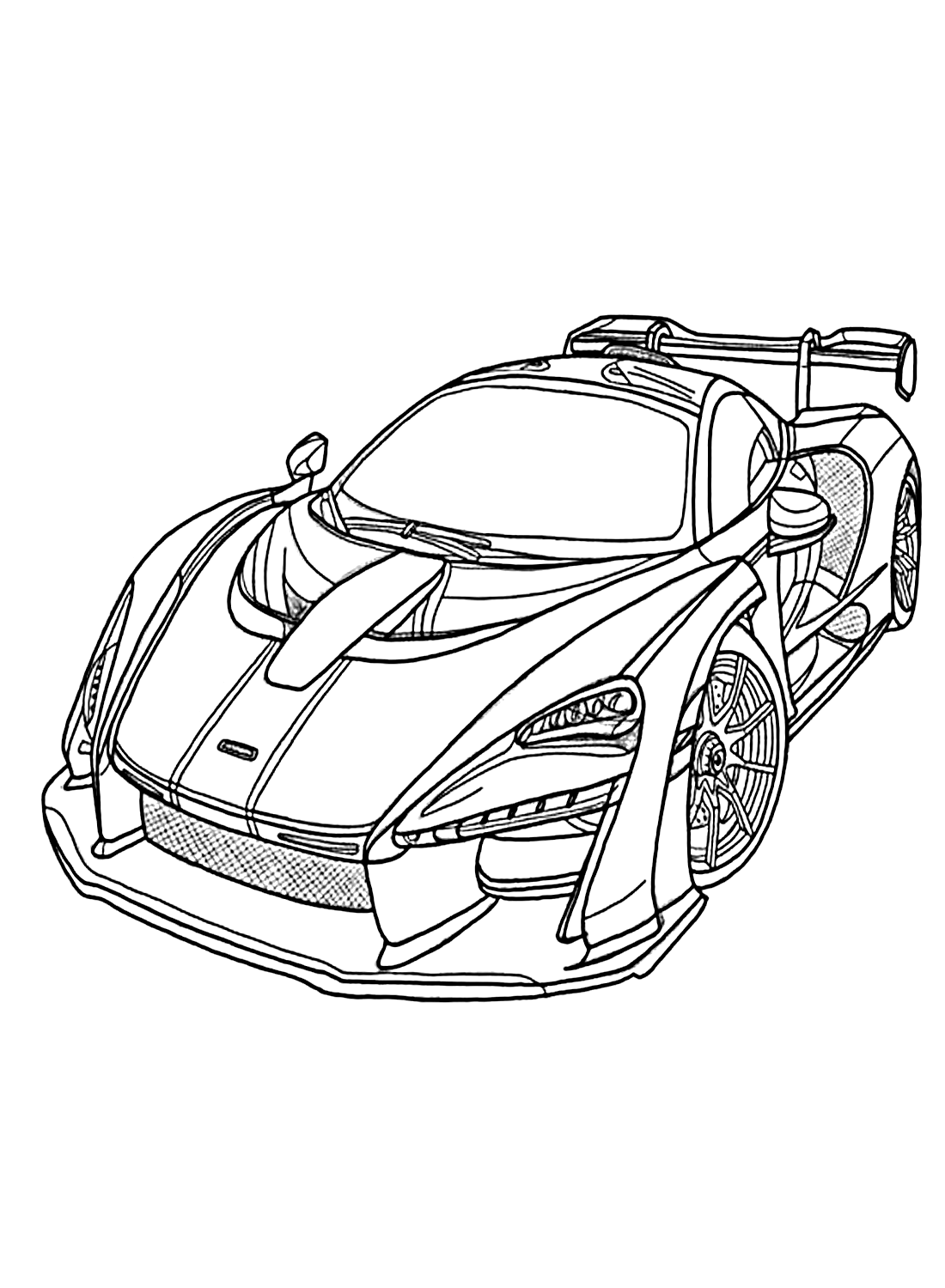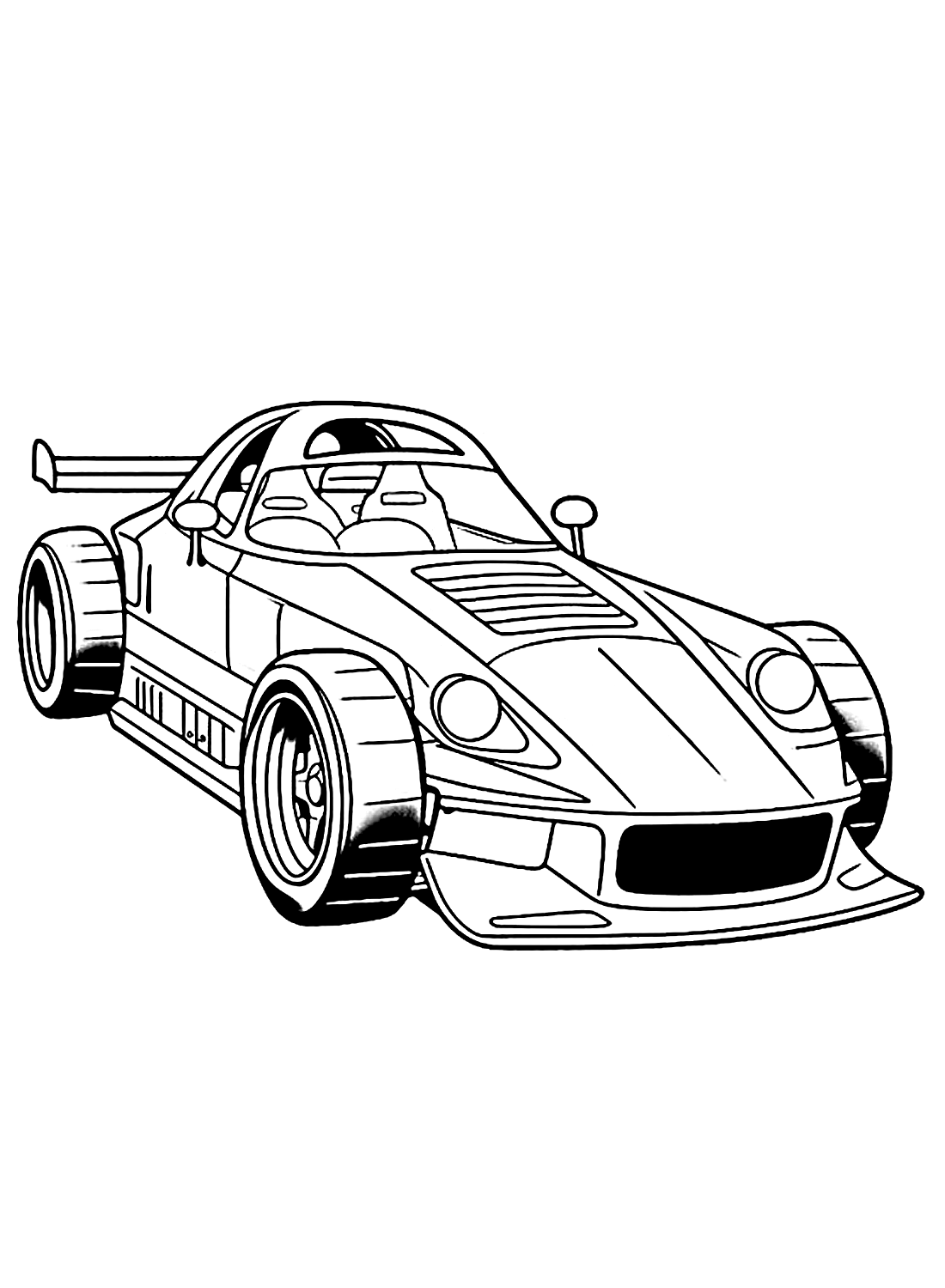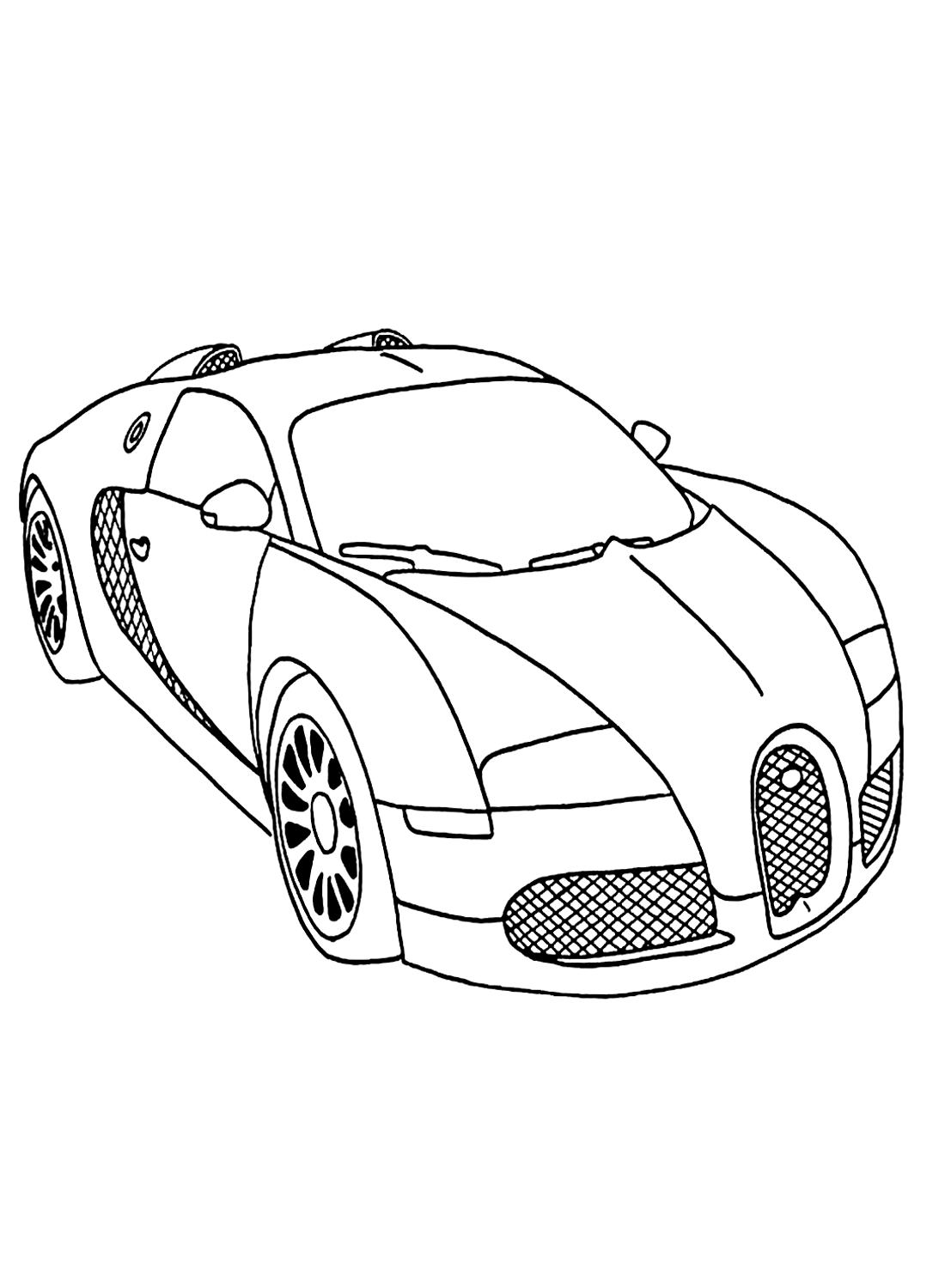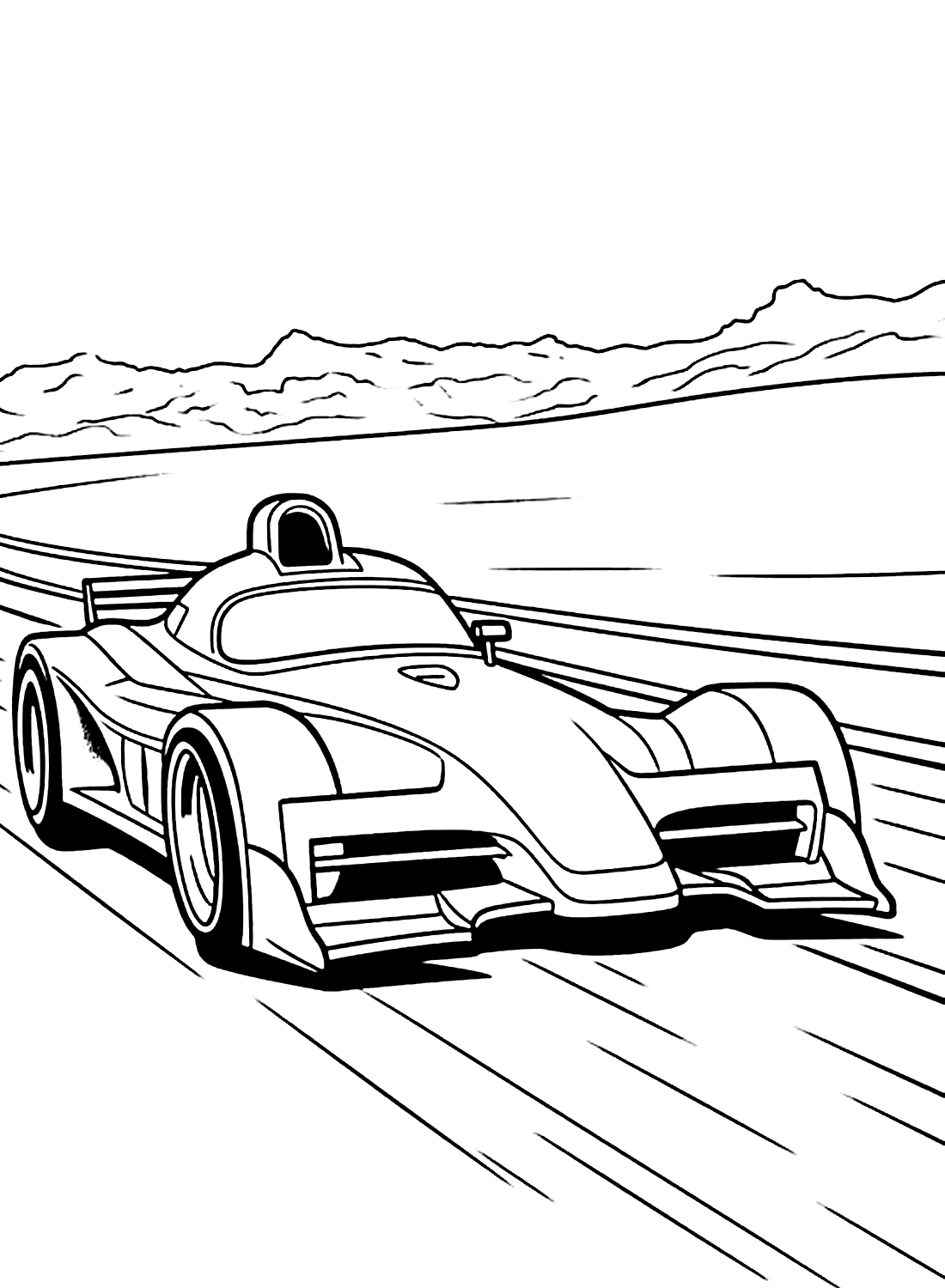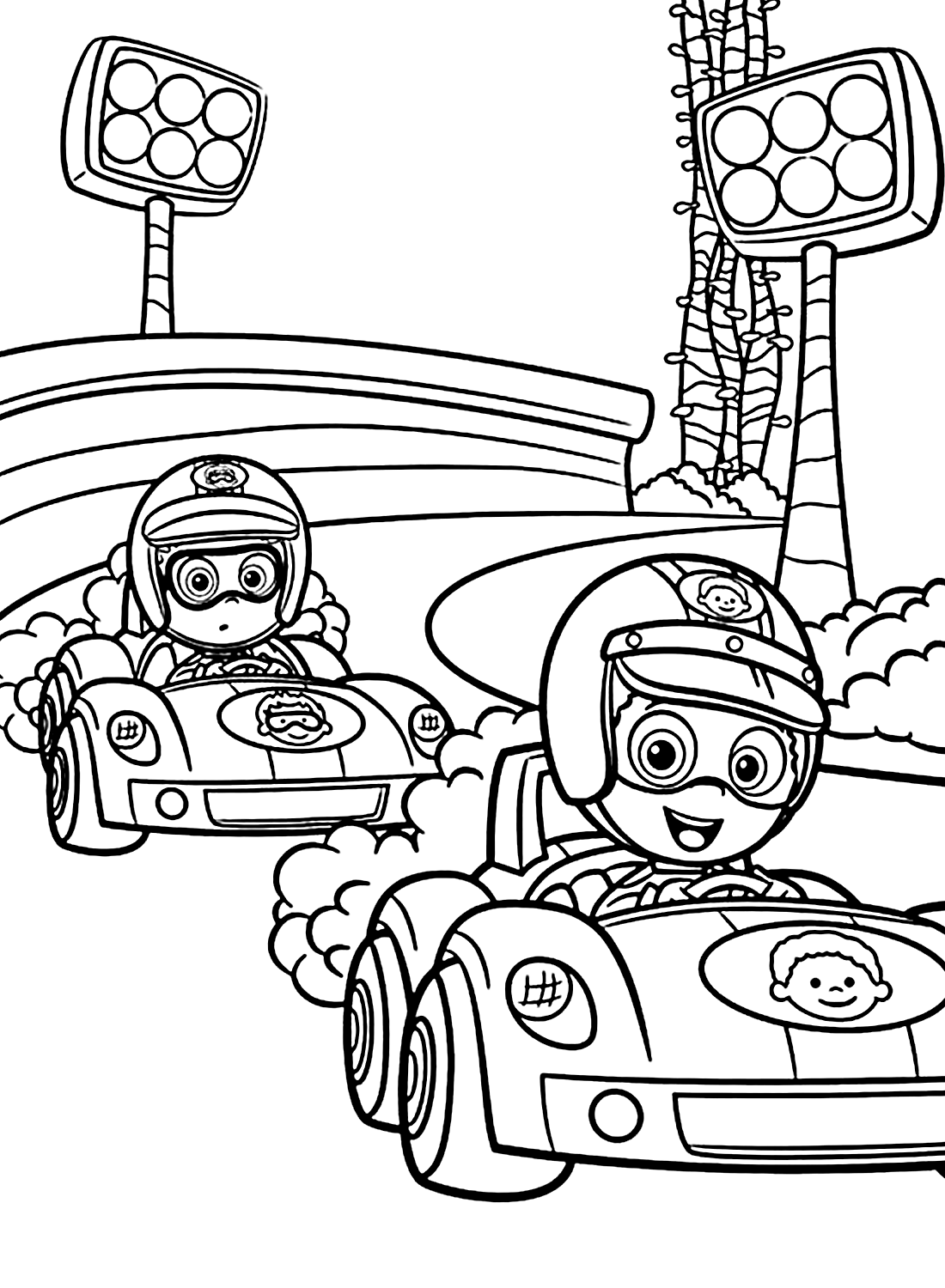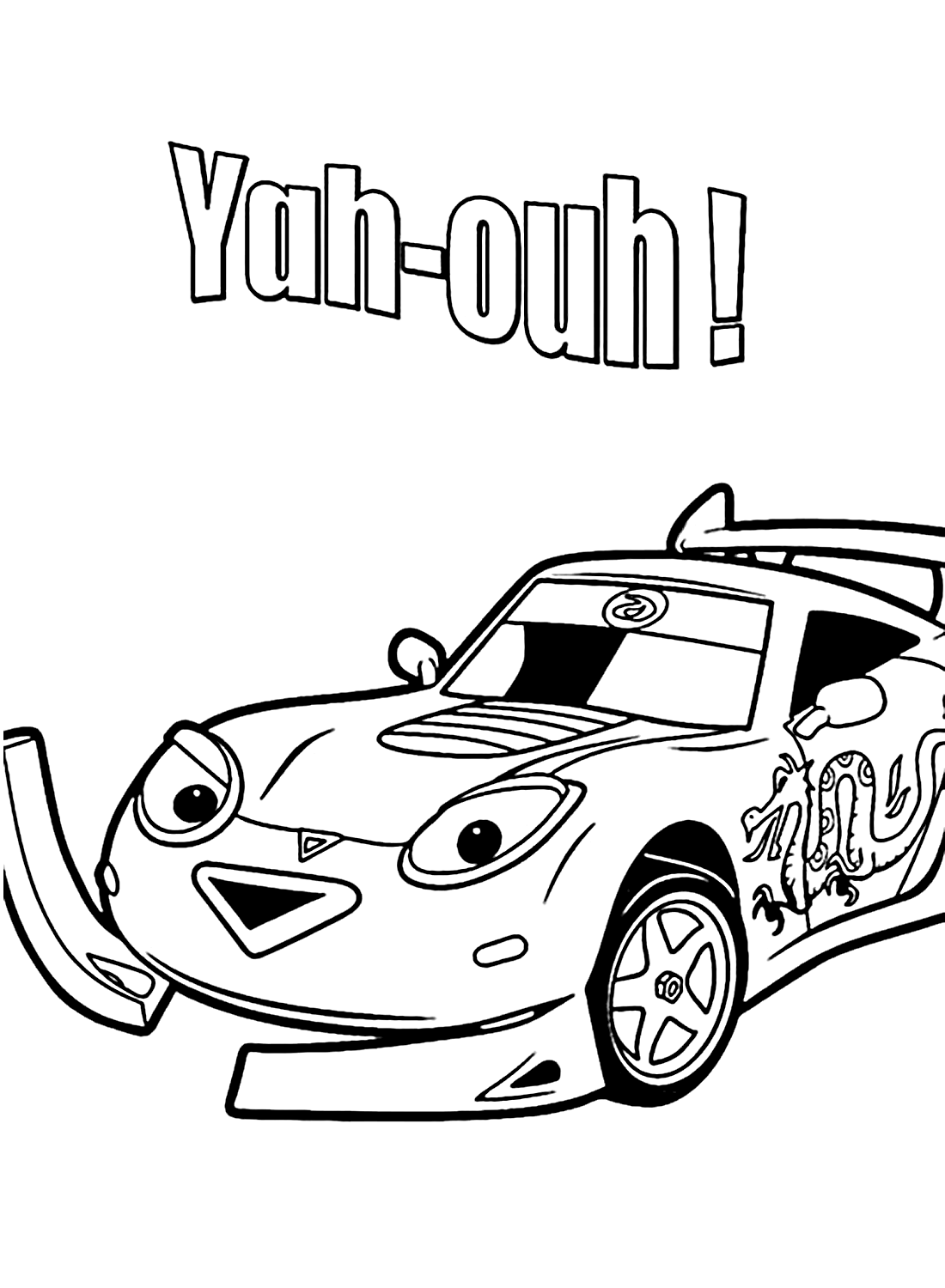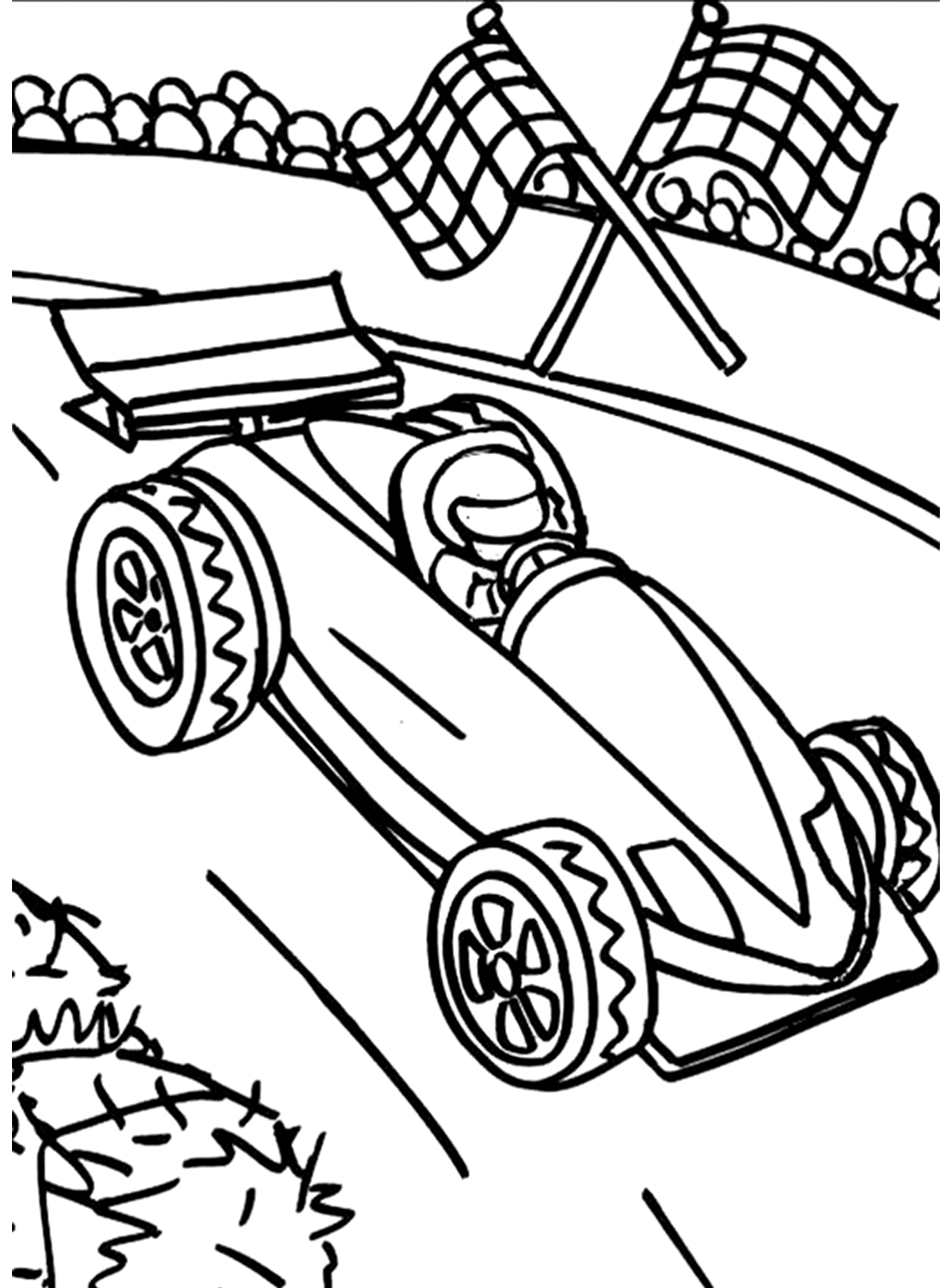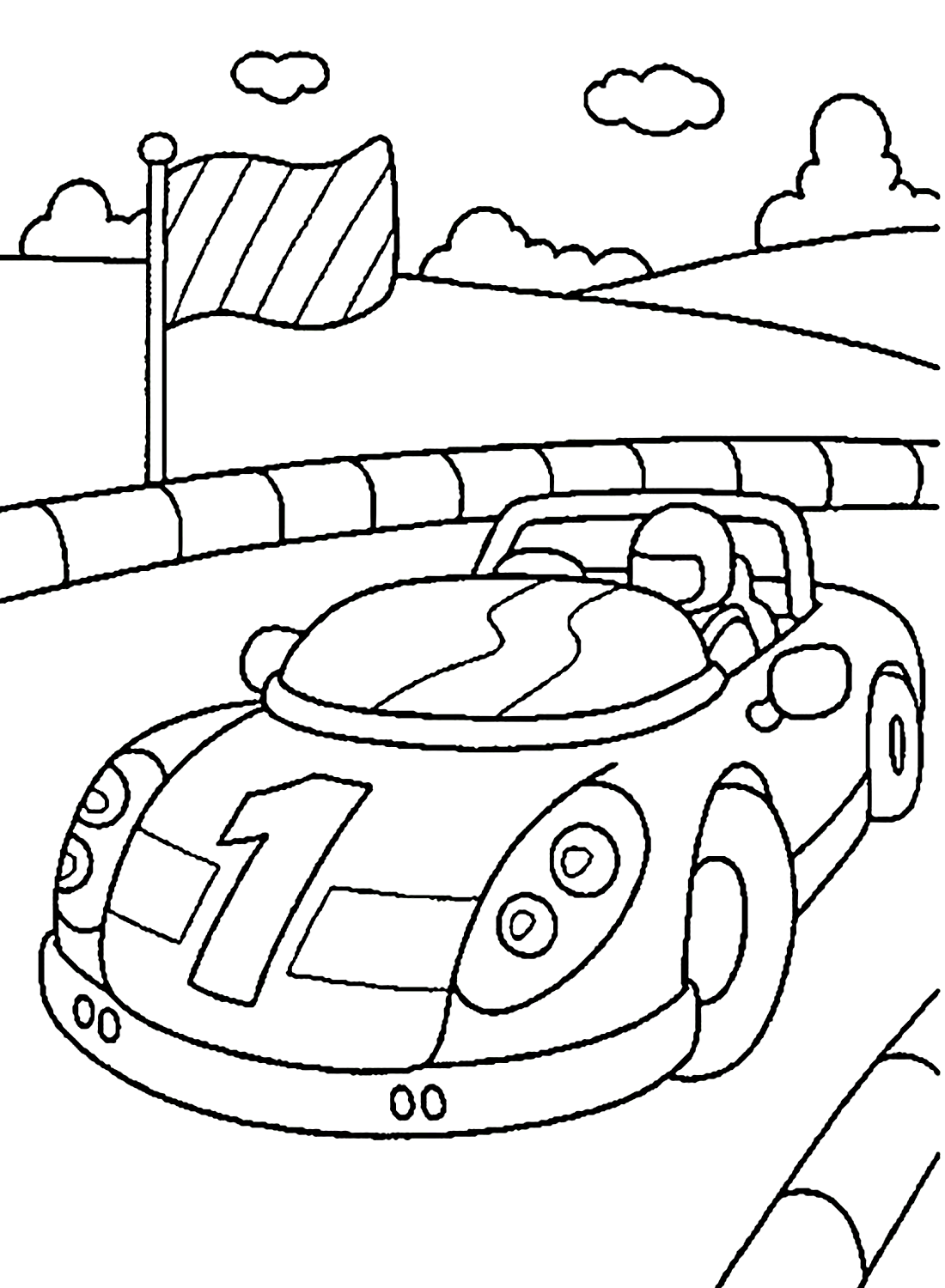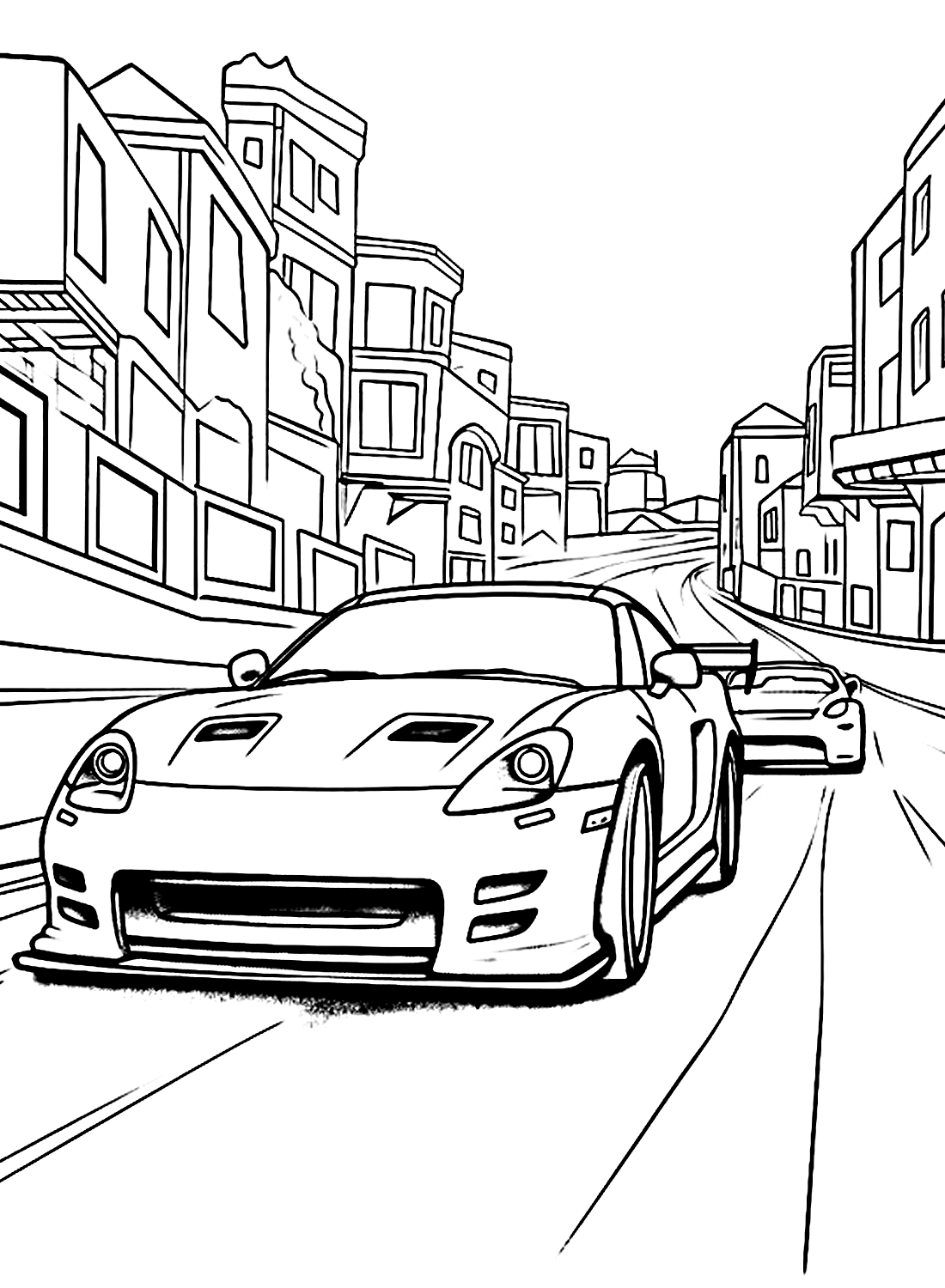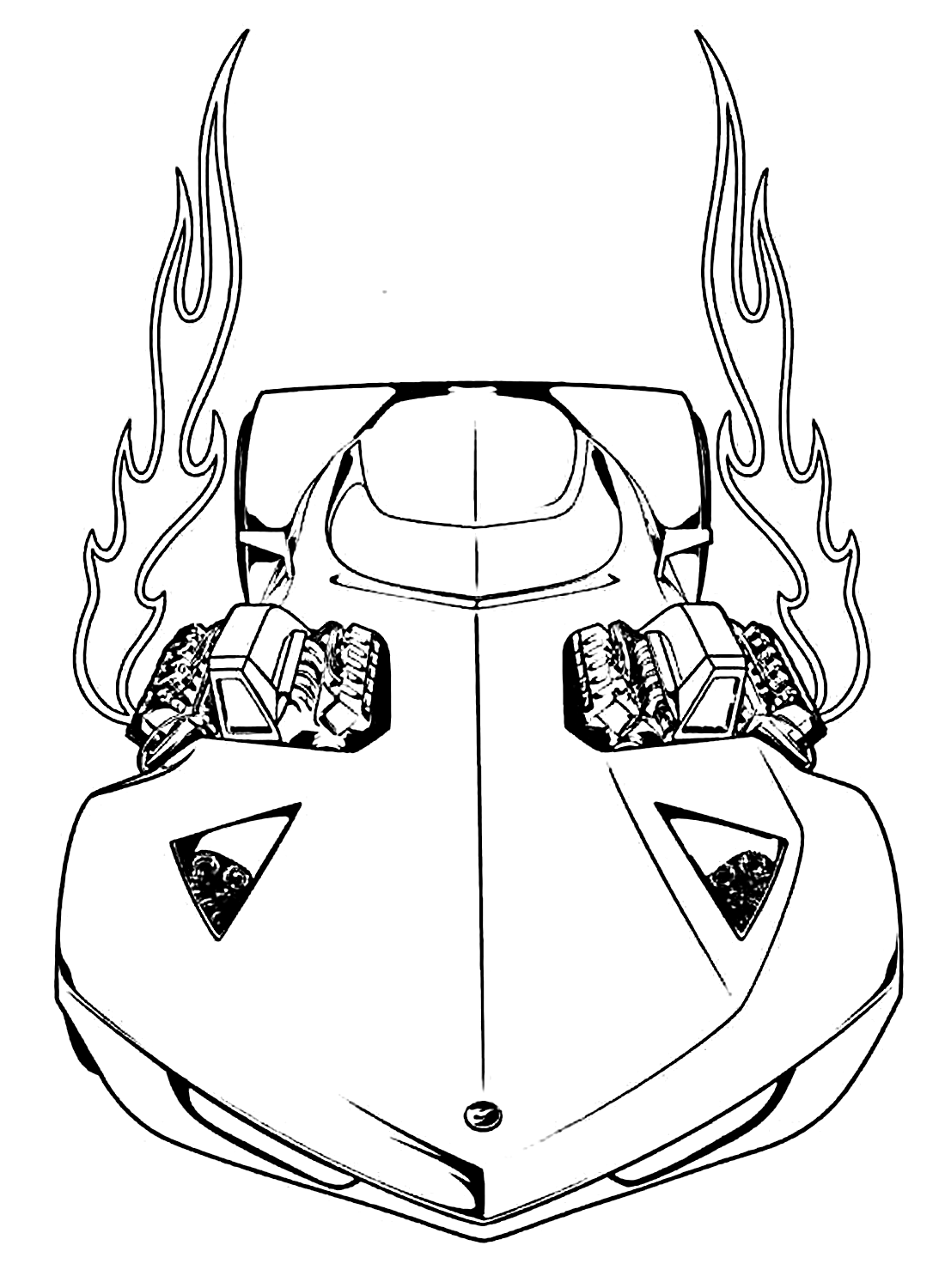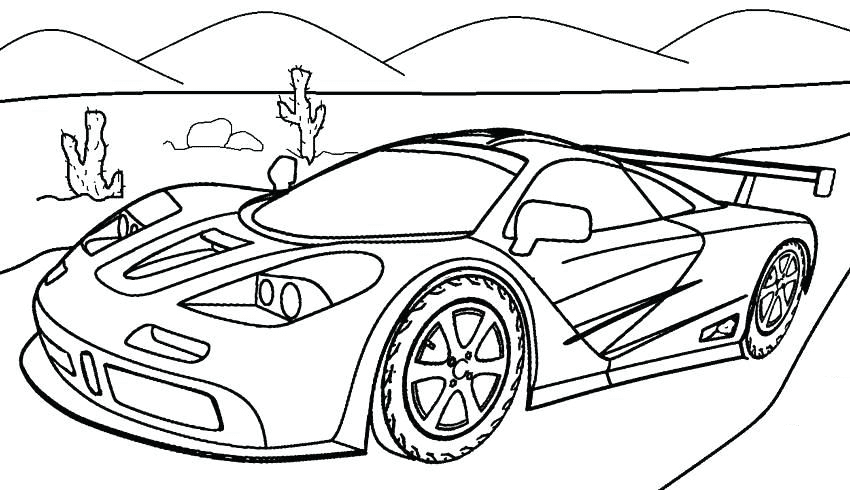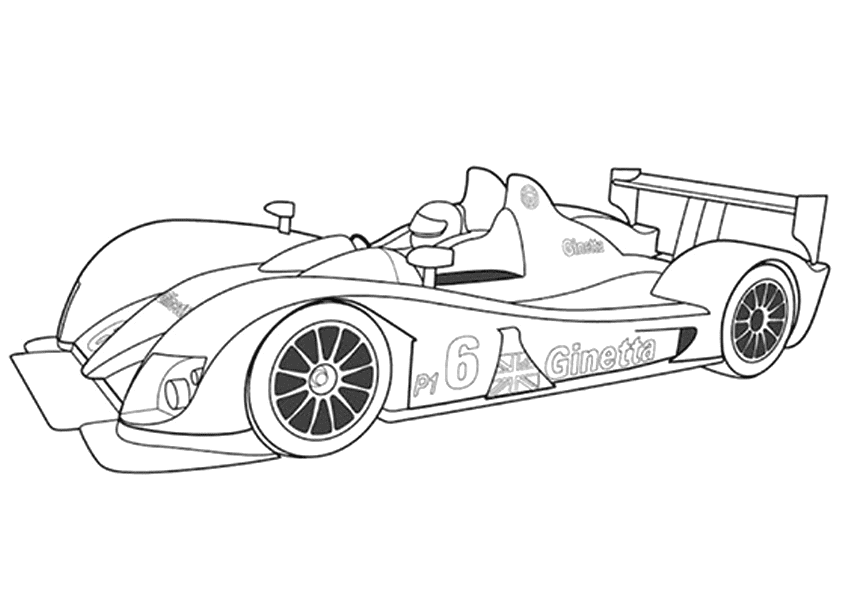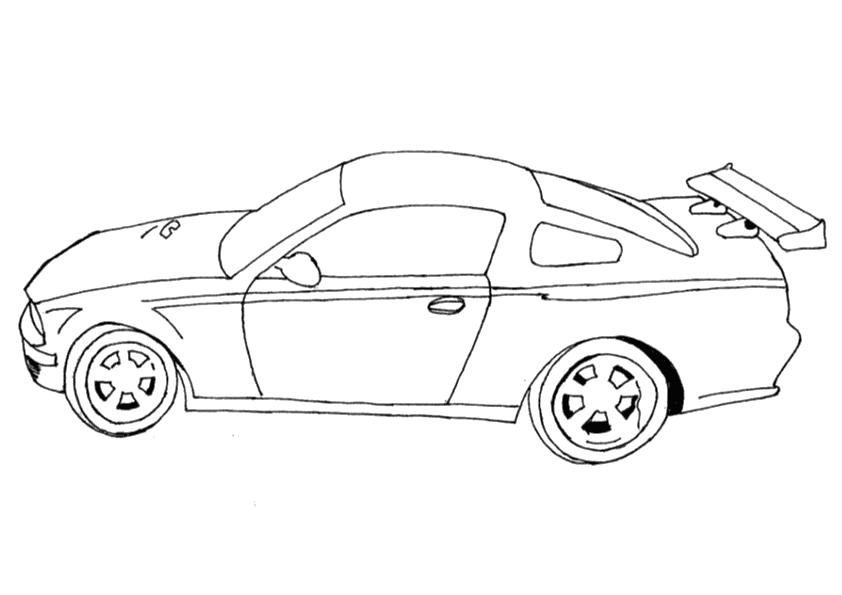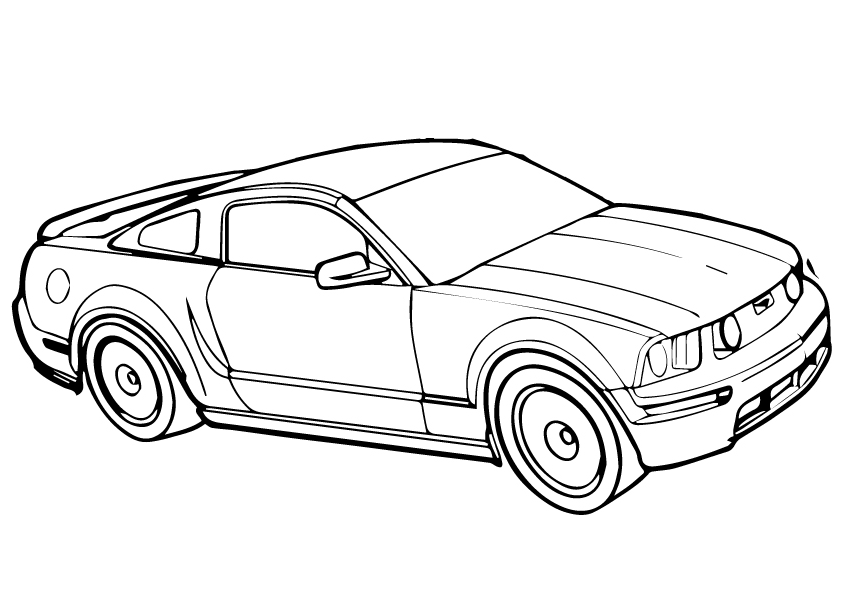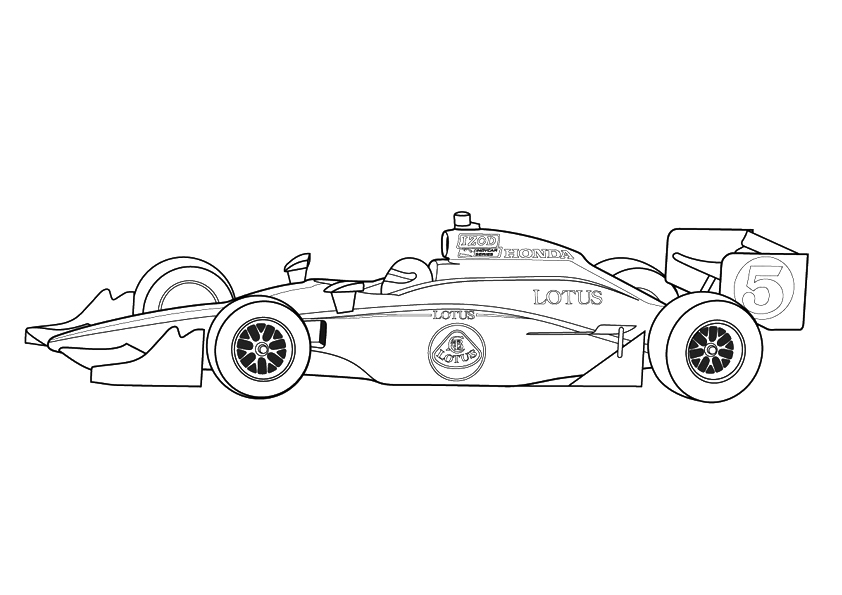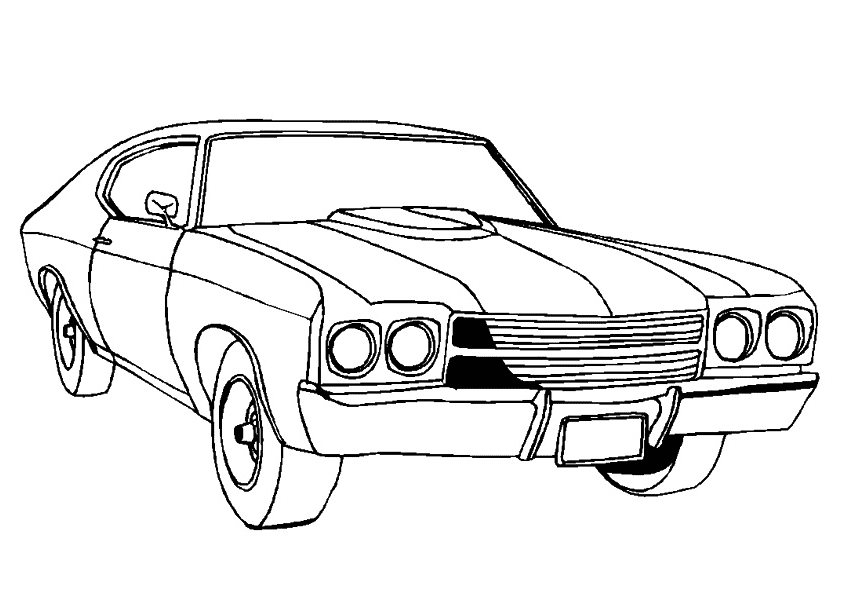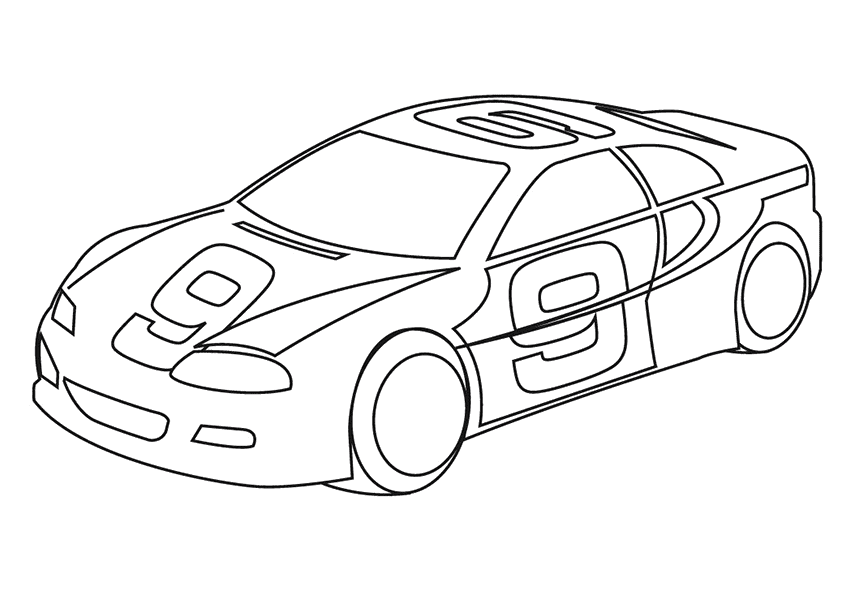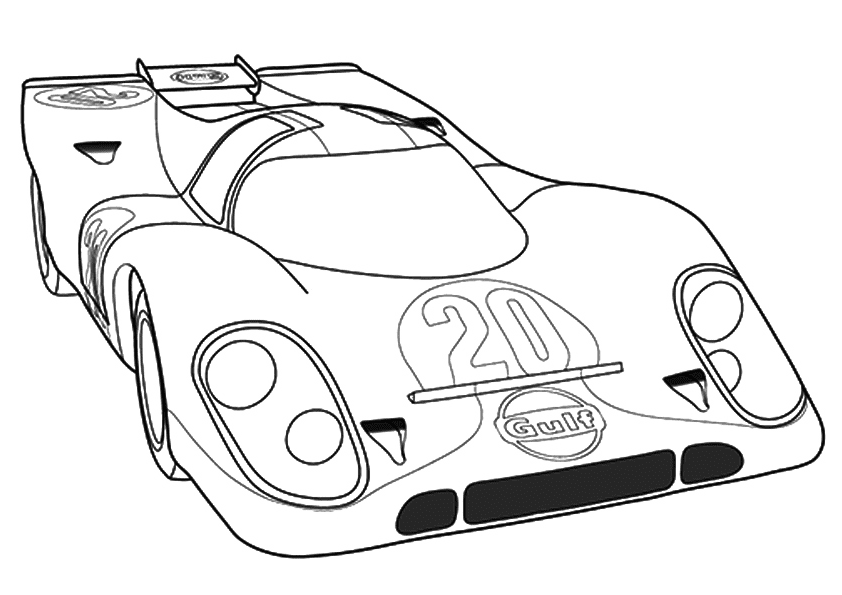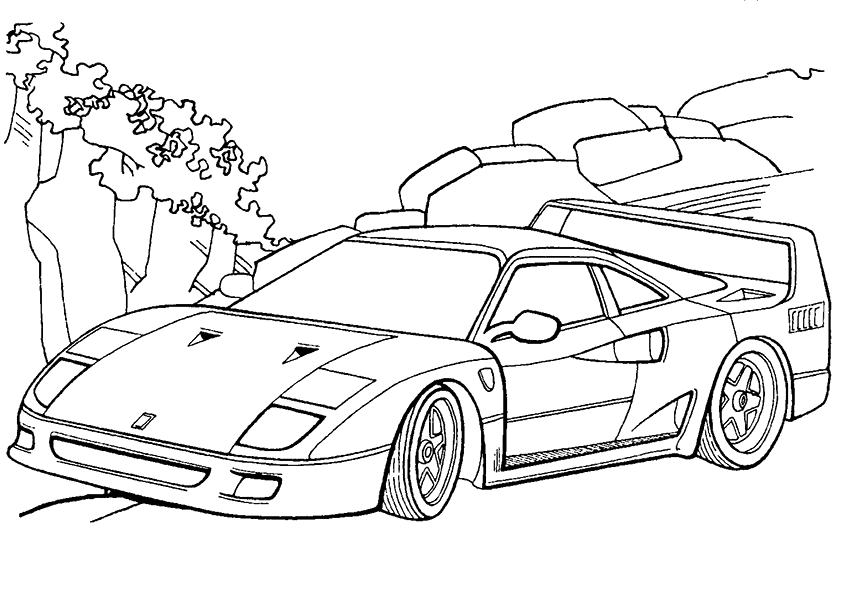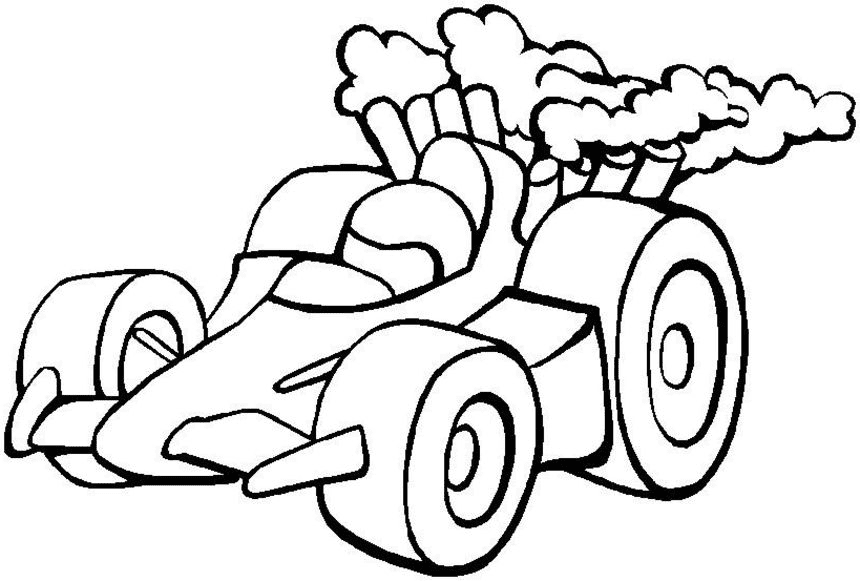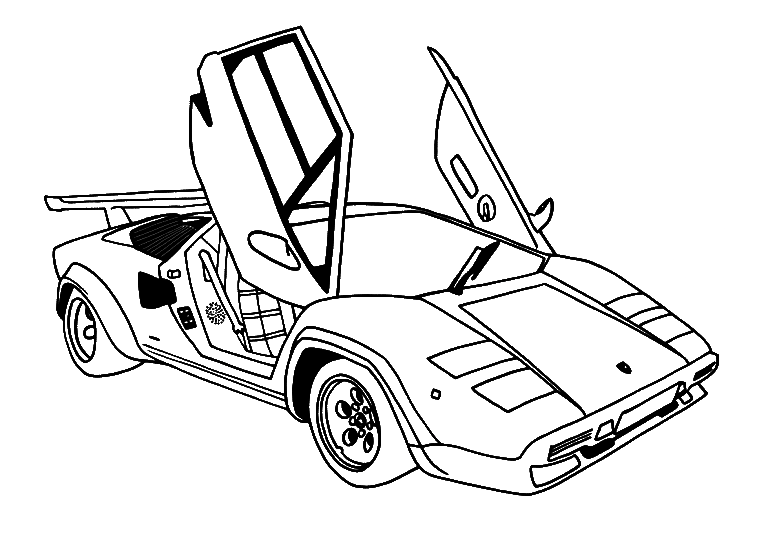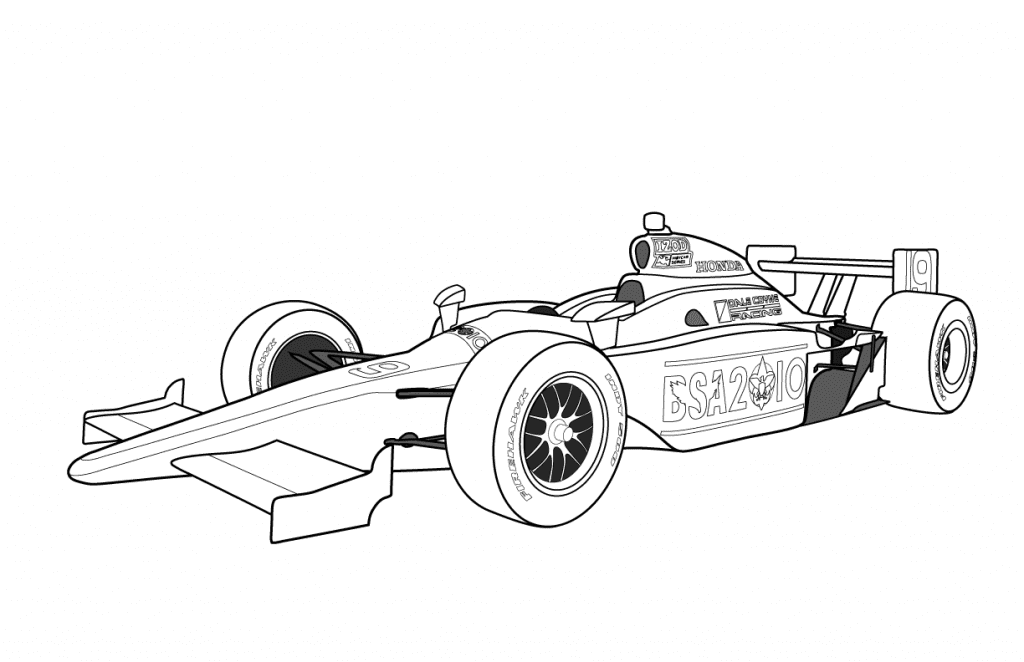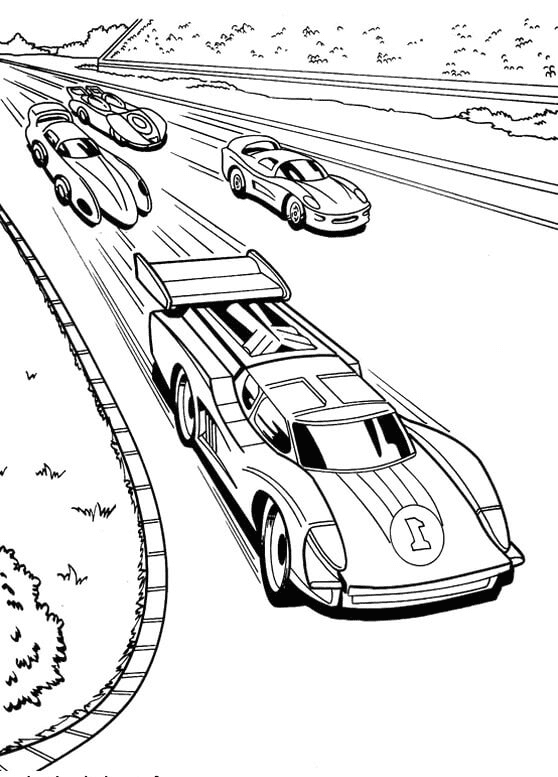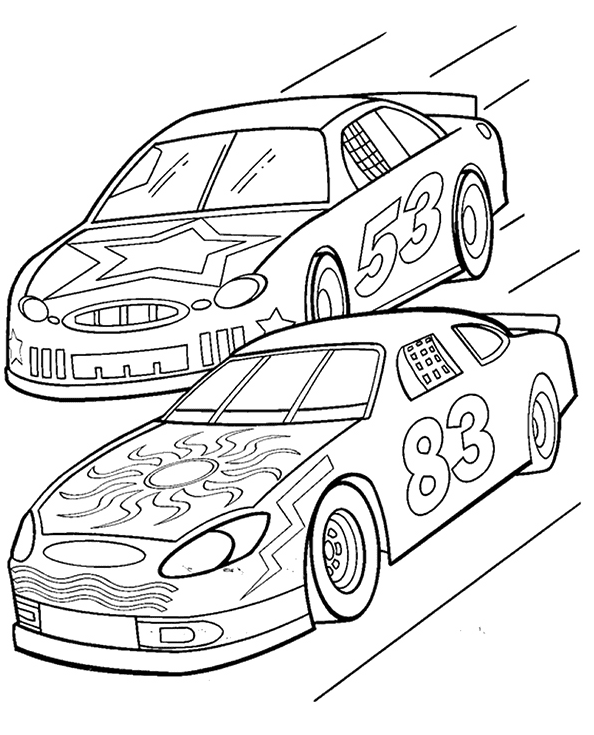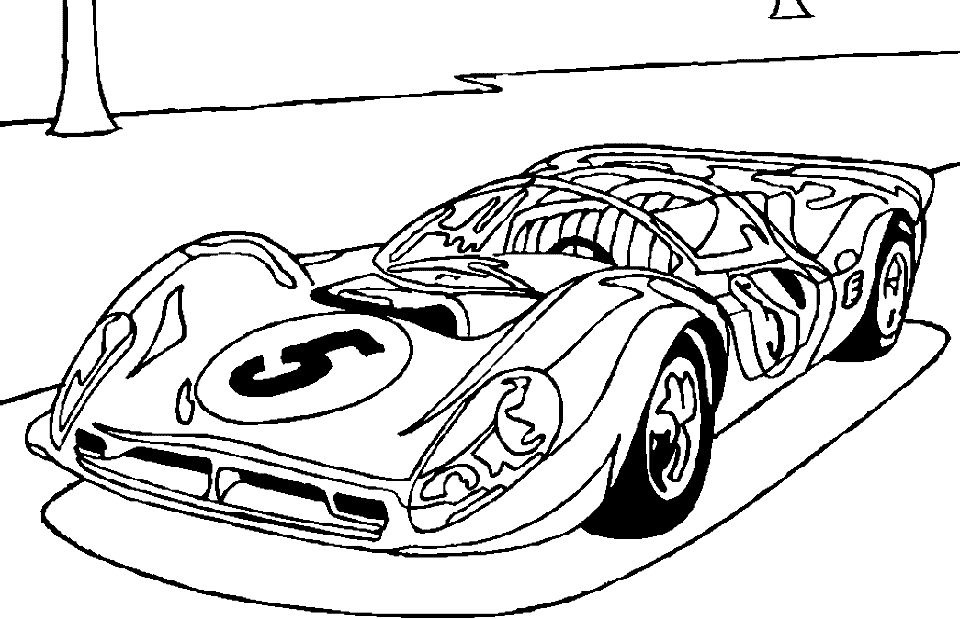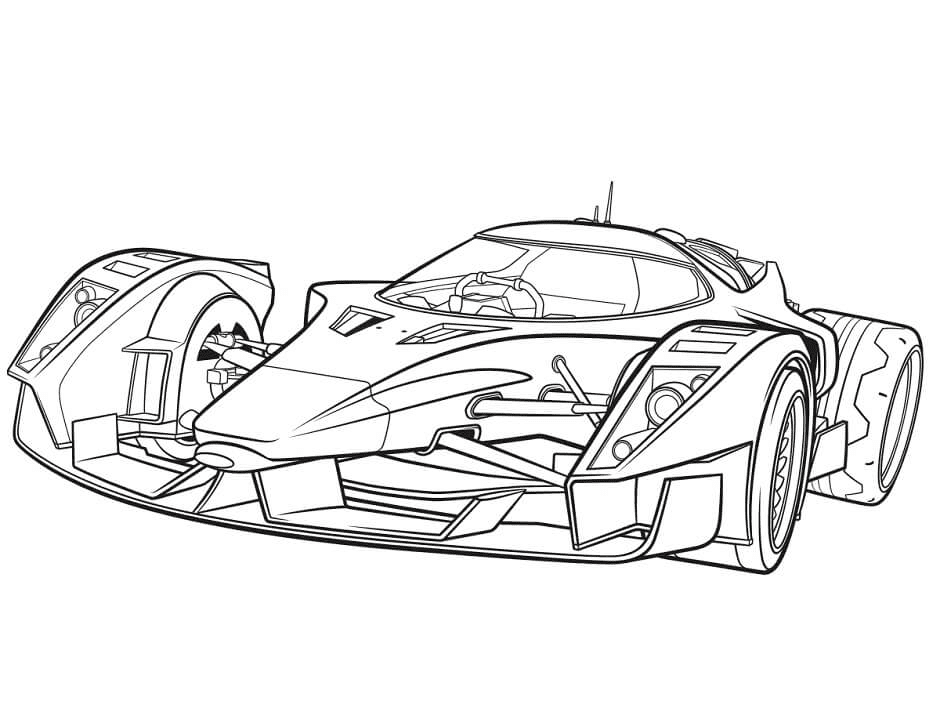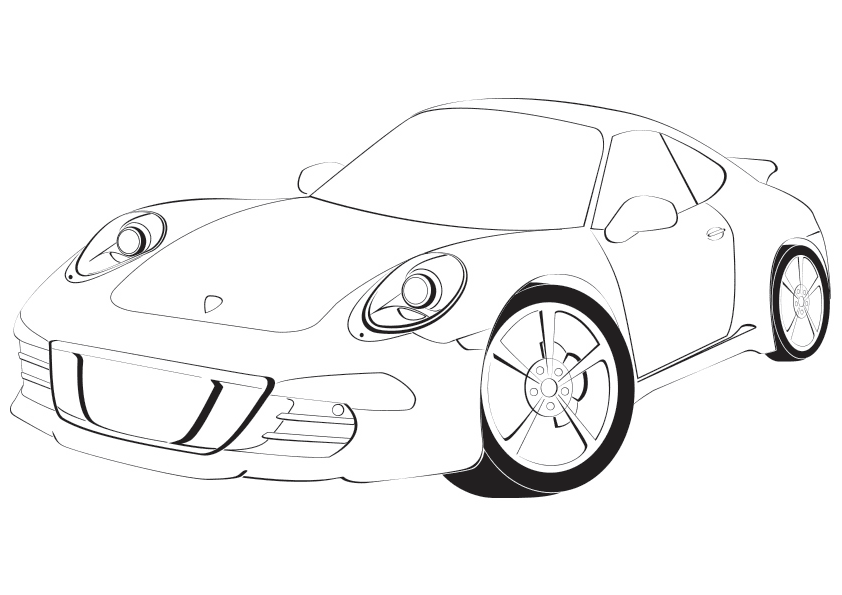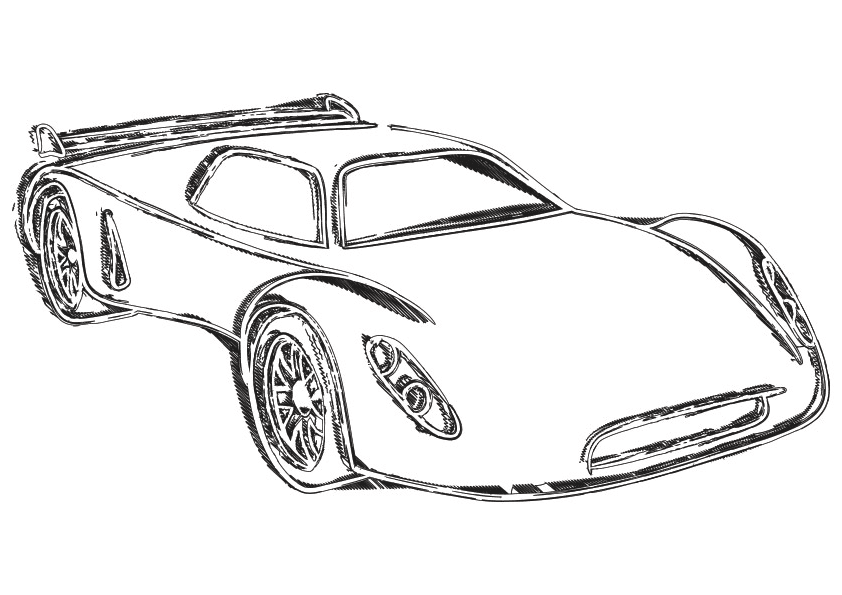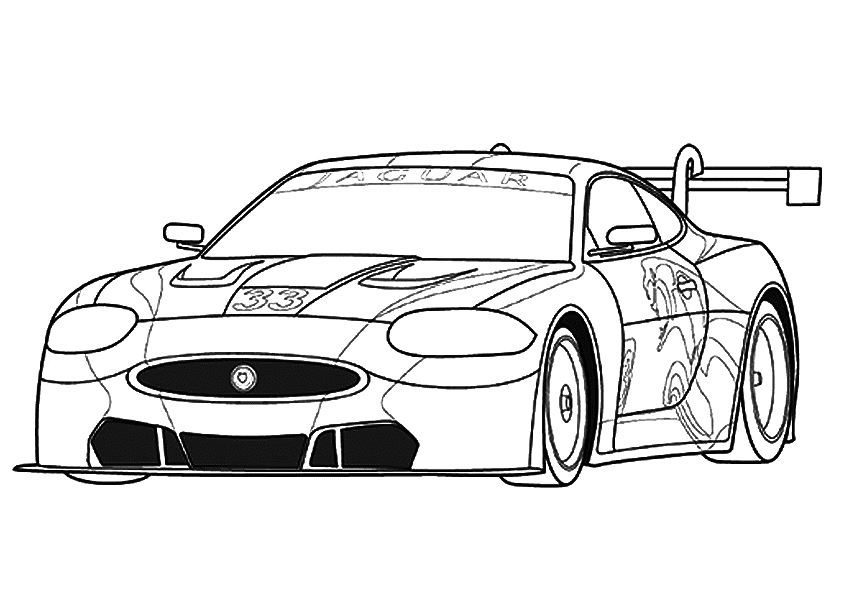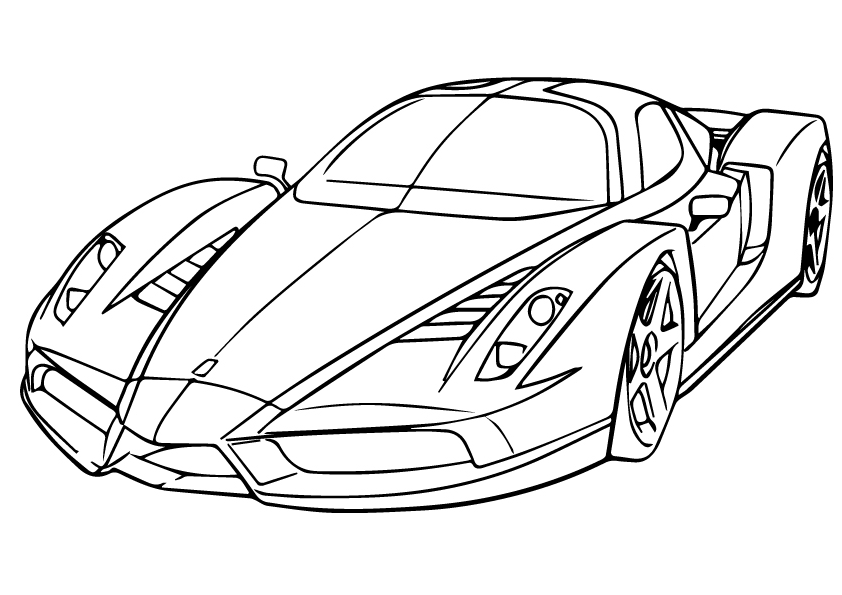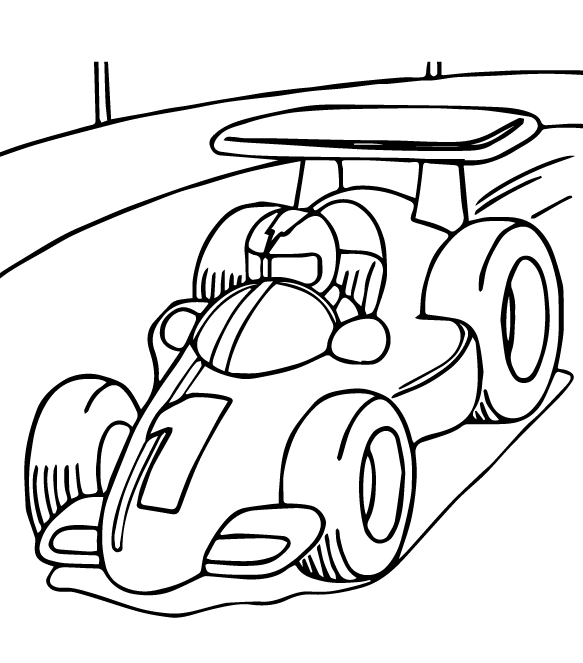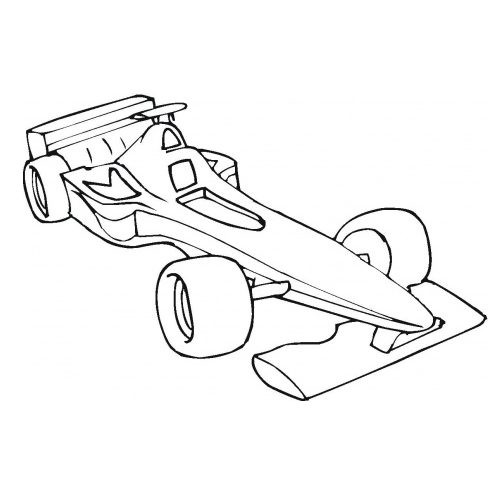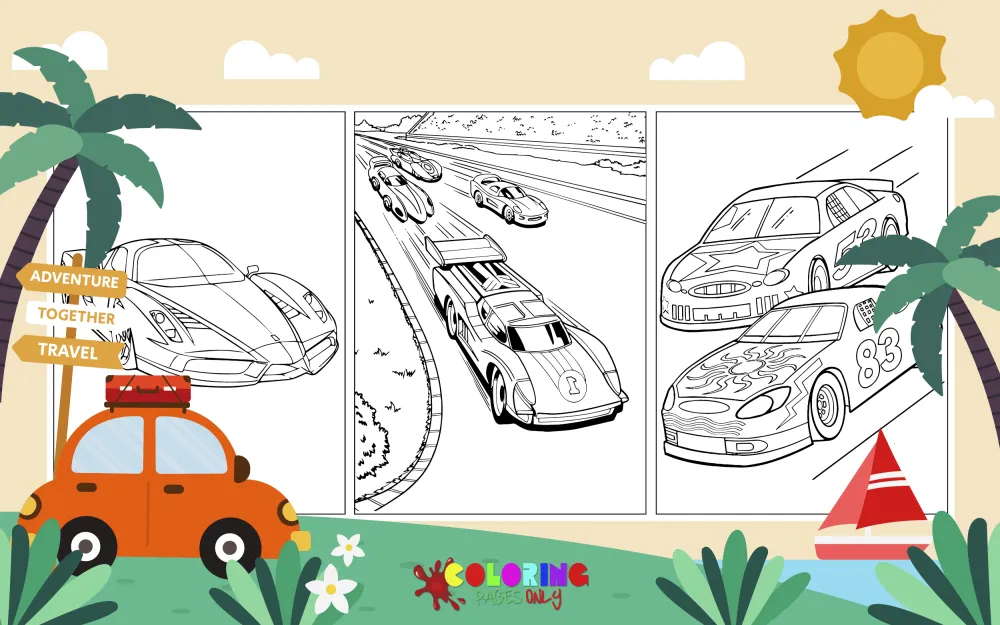
Free racing car coloring pages – 50+ pages featuring Formula 1 single-seaters, NASCAR stock cars, rally cars, Le Mans prototypes, drag racing machines, GT sports cars, vintage grand prix cars, race track compositions, and the full visual vocabulary of motorsport across its major disciplines – free printable PDF and online coloring for racing enthusiasts of all ages.

Organized motorsport began in 1894 with the Paris-Rouen reliability trial – a 127-kilometer run from Paris to Rouen in which twenty-one vehicles competed, with the first vehicle to complete the course under its own power winning a 5,000-franc prize. The winner was a steam-powered vehicle, but the petrol-engined entries’ superior speed was noted. Within a year, the first true race had been held: the 1895 Paris-Bordeaux-Paris, covering 1,178 kilometers, won by Émile Levassor in a Panhard et Levassor with a two-cylinder Daimler engine, completing the course in approximately 48 hours and 47 minutes of driving time. He reportedly said: “C’était une course du diable, je faisais du 30 à l’heure!” (It was a devil’s race, I was doing 30 kilometers per hour).

Since 1895, motorsport has differentiated into dozens of distinct disciplines – Formula 1, NASCAR, IndyCar, the 24 Hours of Le Mans, the World Rally Championship, drag racing, hill climbing, touring car racing – each with its own specific rules, its own specific vehicle design requirements, and its own specific visual identity. The Formula 1 car’s extreme aerodynamic downforce package and its narrow open-wheel silhouette look nothing like a NASCAR stock car, which looks nothing like a Le Mans prototype, which looks nothing like a Top Fuel dragster.

The first Formula One World Championship season ran in 1950. NASCAR was founded by Bill France Sr. on February 21, 1948. The 24 Hours of Le Mans has been run since 1923. The diversity of the 50+ pages in this collection reflects motorsport’s genuine visual diversity across its major disciplines.

These 50+ free pages at ColoringPagesOnly.com span the full spectrum of racing. All free, PDF or PNG, print or color online.

What’s Inside

Formula 1 – The Pinnacle of Motorsport

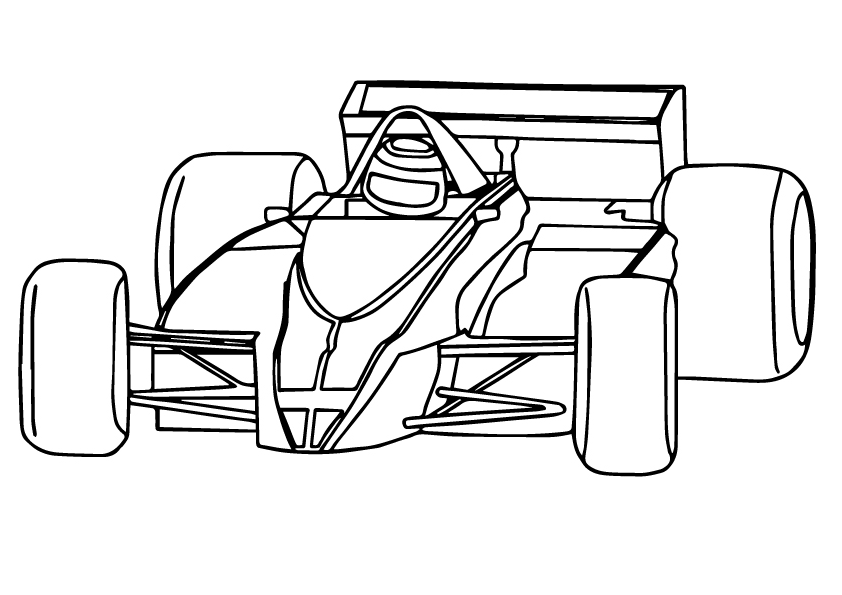
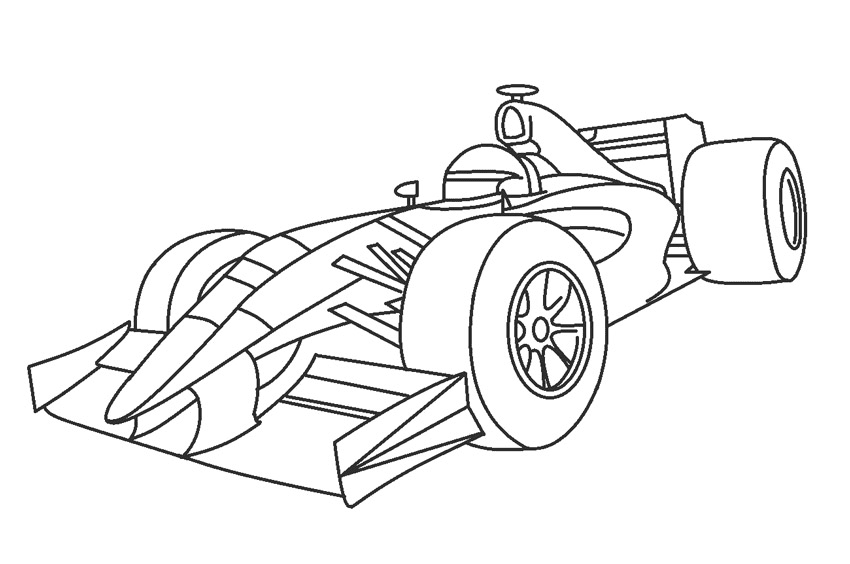
Formula 1 is the highest class of single-seater open-wheel car racing in the world – the racing series where the most advanced technology, the largest budgets, and the most skilled drivers converge. The FIA Formula One World Championship began in 1950, with the first race held at Silverstone, UK, on May 13 of that year. The 2024 season marked the championship’s 74th year of continuous operation.

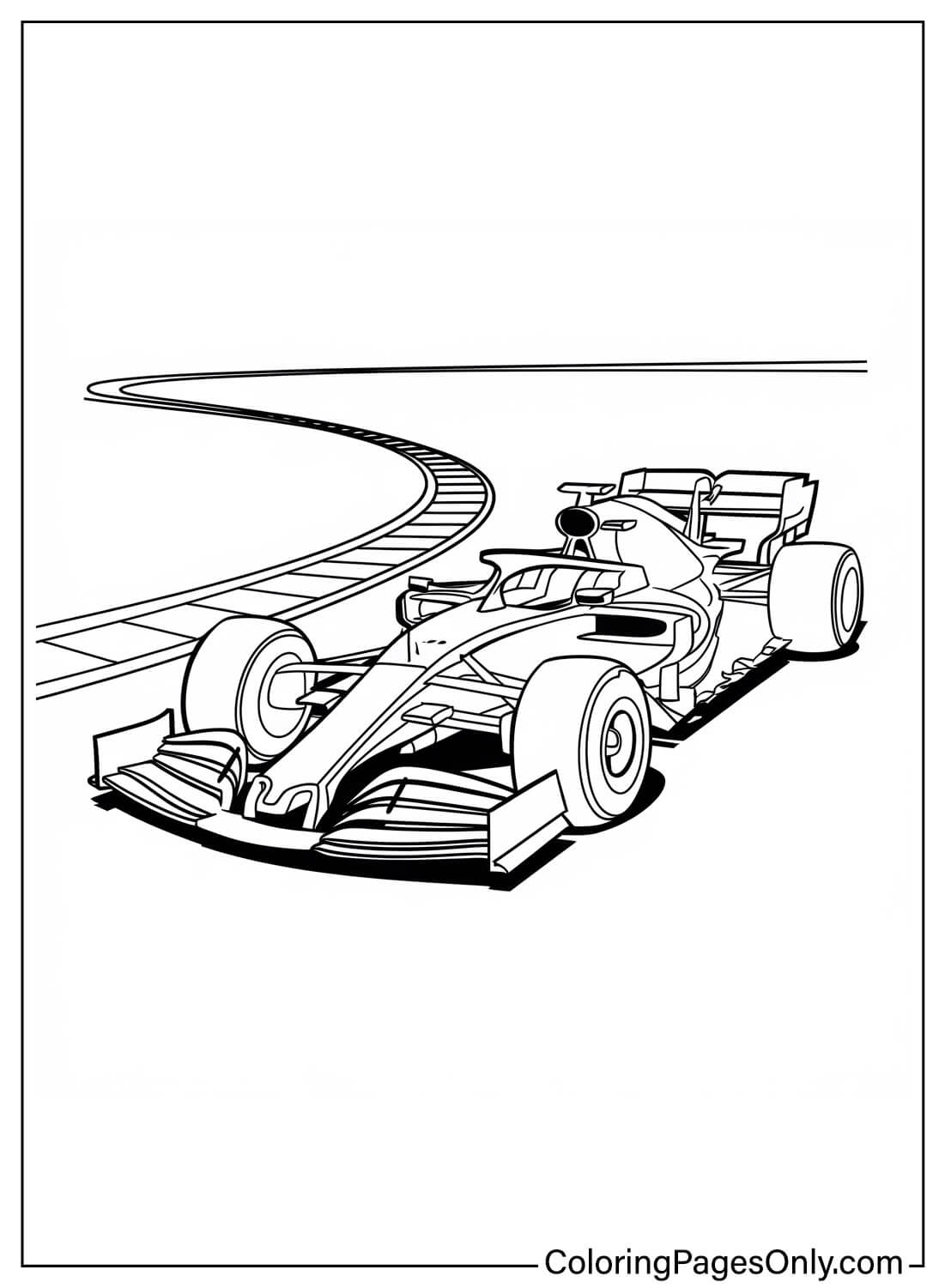
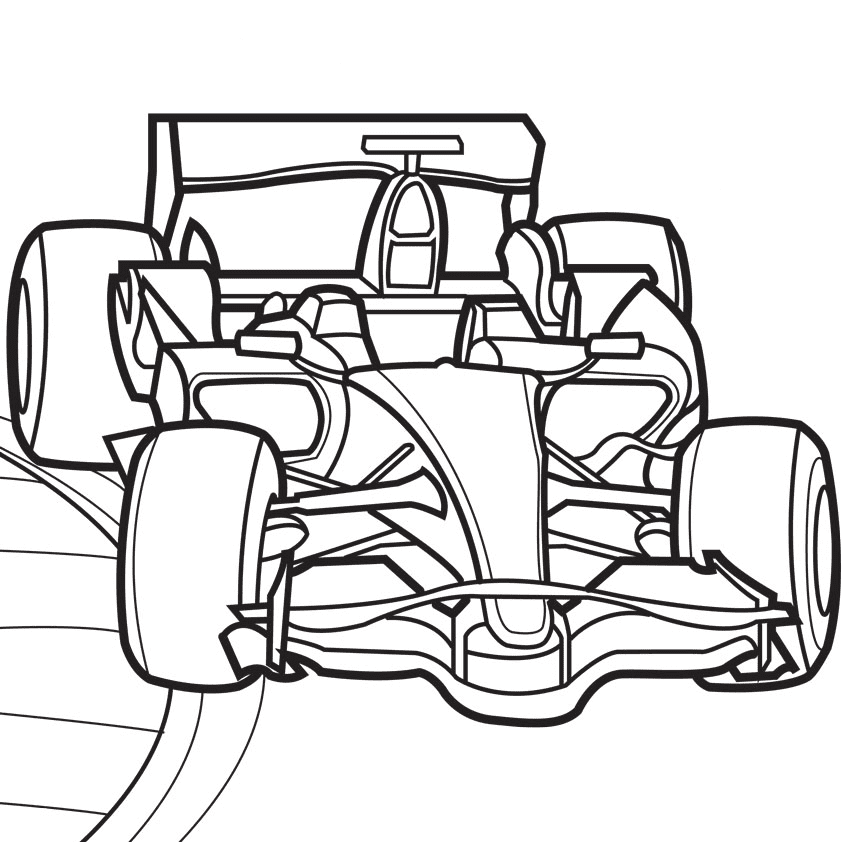
The Formula 1 car is the most aerodynamically sophisticated racing car in existence – a carbon fiber monocoque chassis producing several times its own weight in aerodynamic downforce, powered by a 1.6-liter V6 turbo-hybrid power unit producing approximately 1,000 horsepower, and capable of generating lateral G-forces during cornering that would render an untrained person unconscious. Its visual profile is immediately recognizable and unlike any road car: extremely low, extremely wide at the front wing, narrow at the cockpit, with exposed wheels extending beyond the bodywork, and a large rear wing visible above the rear of the car.

The current constructors’ grid includes Mercedes (the most successful constructor of the hybrid era, with eight consecutive Constructors’ Championships from 2014 to 2021), Red Bull Racing (four consecutive championships from 2022 to 2024 under Max Verstappen), Ferrari (the oldest and most historically titled constructor), McLaren, Aston Martin, Alpine, Williams, Haas, Visa Cash App RB, and Kick Sauber.

Coloring F1 cars: The F1 car’s livery – the sponsor color scheme applied to the carbon fiber body – is the car’s primary visual identity. Each team has a distinctive livery: Ferrari’s iconic red, McLaren’s papaya orange and black, the Mercedes silver, Red Bull’s dark blue with yellow accents, and Aston Martin’s British racing green. The wings (front and rear), the sidepods, and the nose section are the large continuous surfaces that receive the livery’s primary color. The floor and underside of the car are typically darker. The tires are black with the manufacturer’s name (Pirelli) in white or gold lettering.

NASCAR – America’s Racing

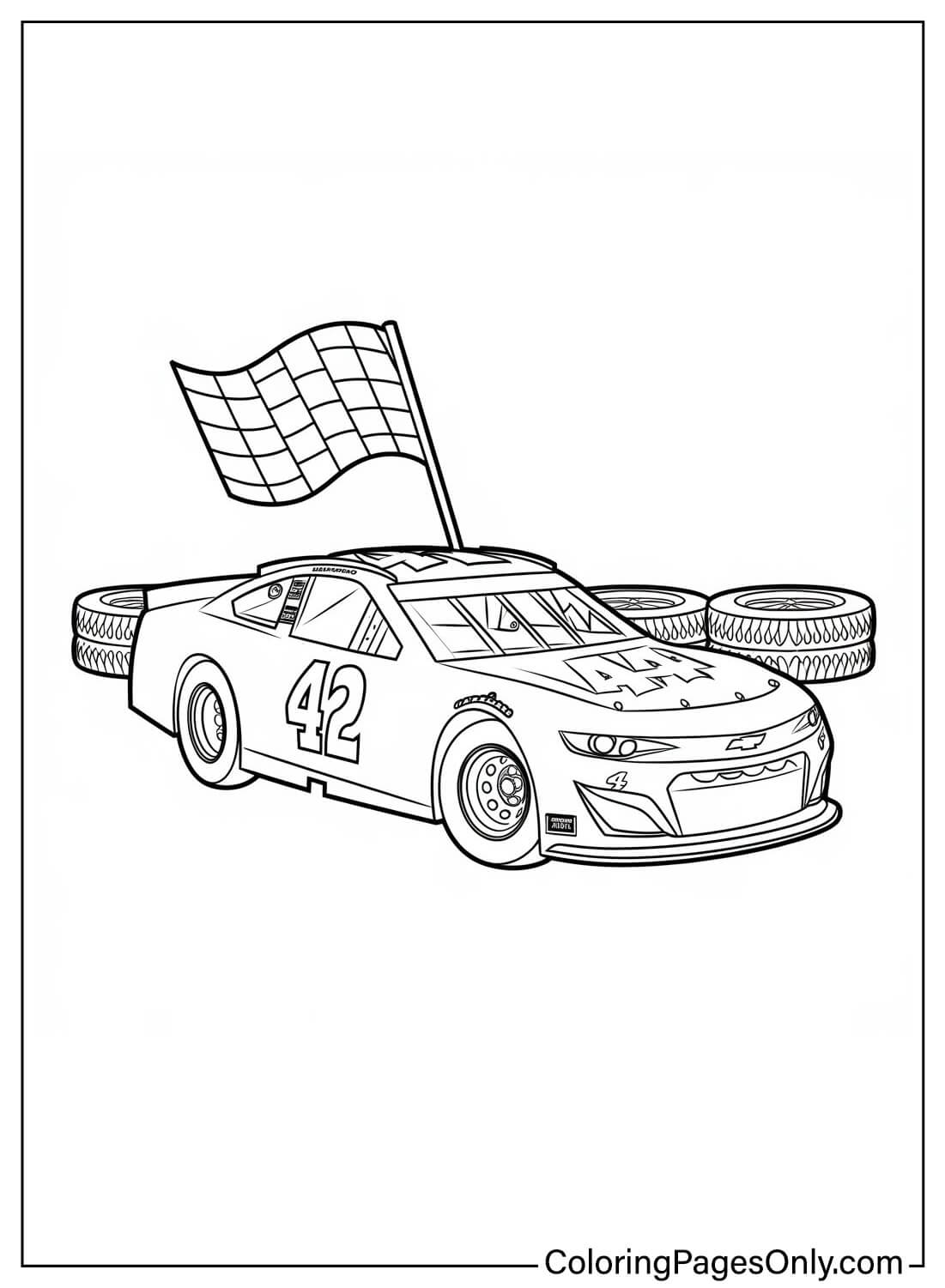
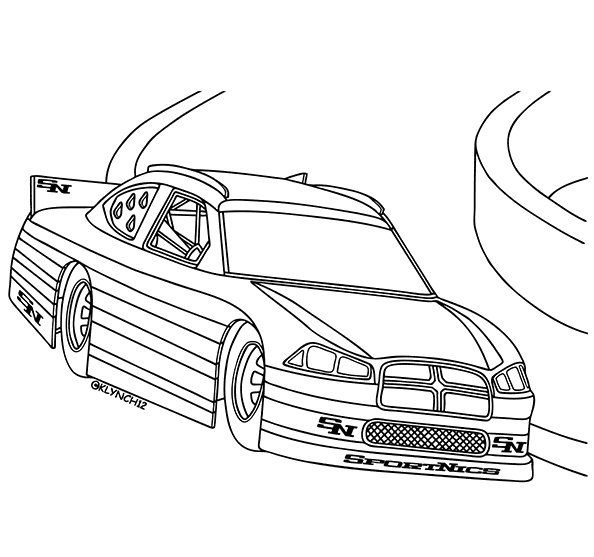
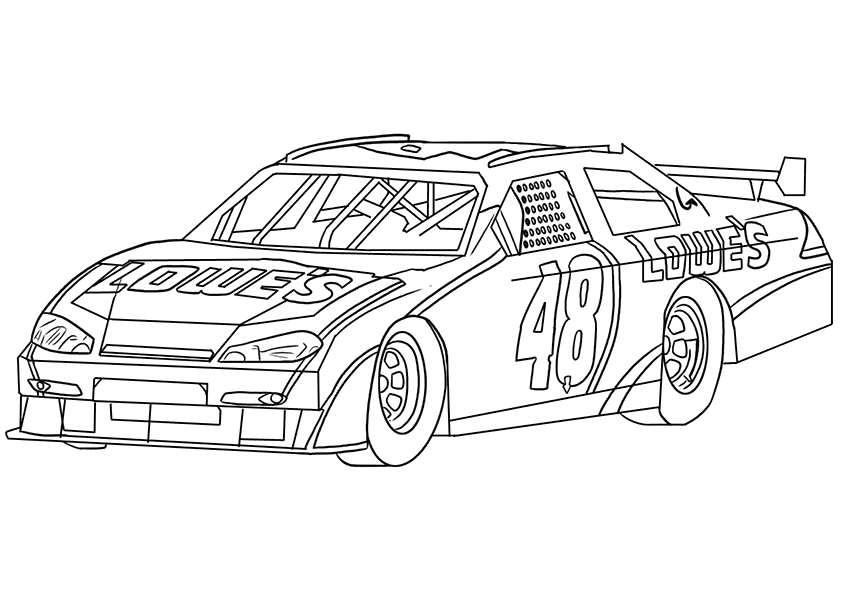
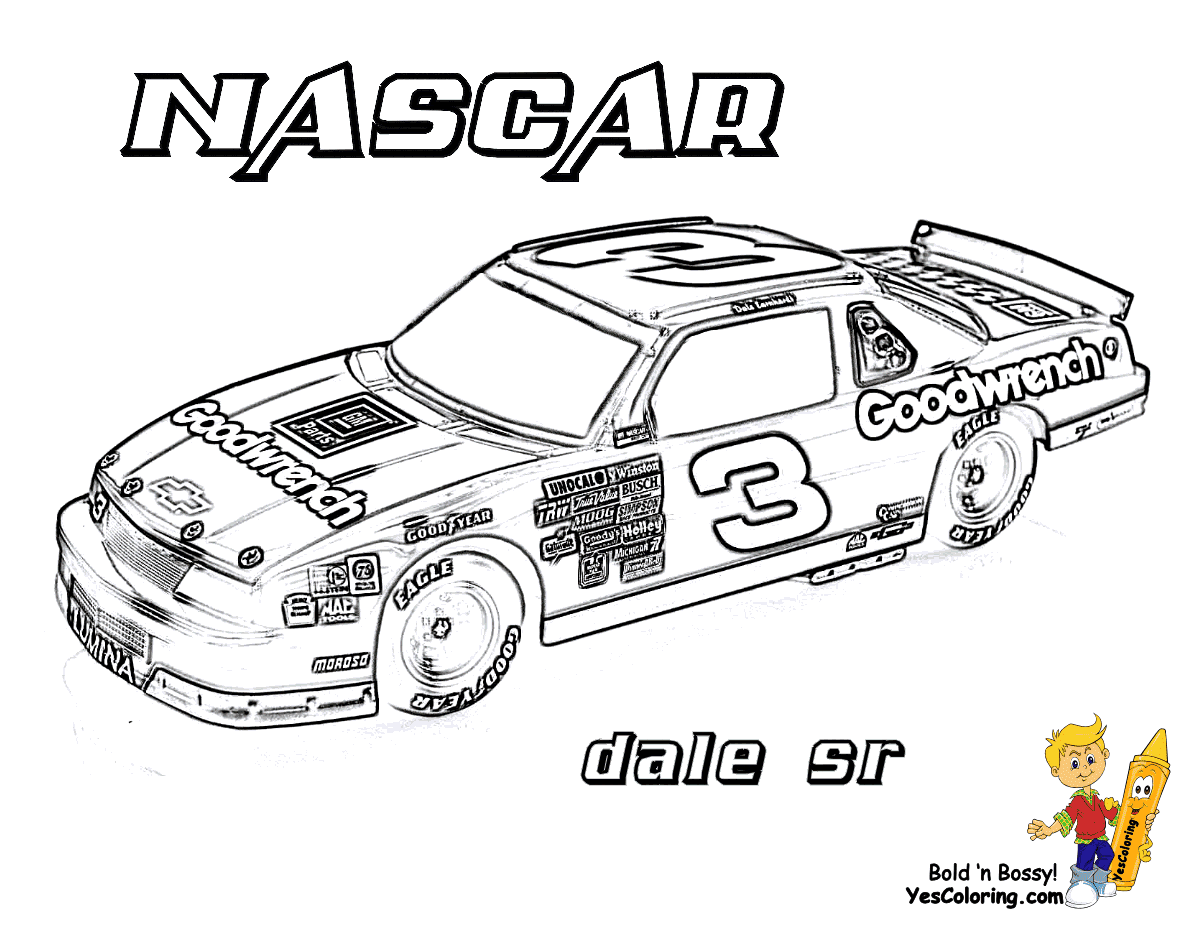
NASCAR – the National Association for Stock Car Auto Racing – was founded in Daytona Beach, Florida, by Bill France Sr. on February 21, 1948. The original concept was a racing series for “stock” cars – production cars that anyone could buy from a dealership – which would make the racing more accessible to both drivers and fans. The cars have evolved into purpose-built racing machines that retain only the aesthetic of production sedans, but the stock car identity remains central to the sport’s character and its connection to American automobile culture.

The NASCAR Cup Series runs annually across approximately 36 races on a mix of oval superspeedways (Daytona International Speedway, Talladega Superspeedway), intermediate ovals, short tracks, and a growing number of road courses. The most storied race is the Daytona 500, run annually on the 2.5-mile Daytona oval since 1959.

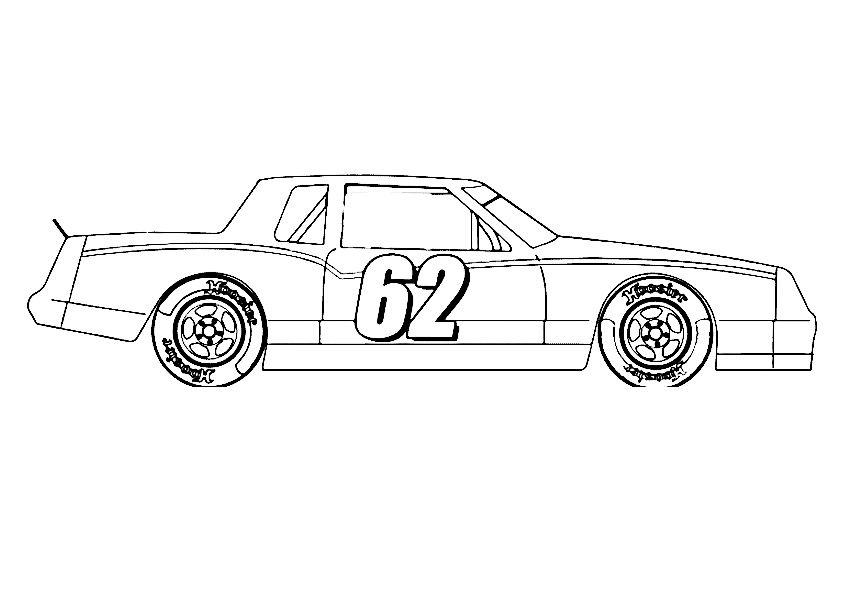
The current generation of NASCAR cars – the Next Gen car introduced in 2022 – is based on the silhouette of the Chevrolet Camaro, the Toyota Camry, and the Ford Mustang. The cars are heavier, wider, and taller than Formula 1 cars, with a significantly different aerodynamic philosophy: less downforce through wings, more through underbody design. Race numbers are prominently displayed on the doors and roof. Sponsor liveries cover the entire body.

Coloring NASCAR cars: The stock car silhouette is the most immediately recognizable element – the production sedan roofline, the door shape, the hood, and trunk proportions. Apply the team’s primary sponsor color across the large body panels. The number – typically two or three digits in a contrasting color – should be clearly readable on the door and roof. The front and rear fascias, wheel arch surrounds, and lower splitter are often in a contrasting color or dark material.
Rally Cars – Sideways Through the Forest

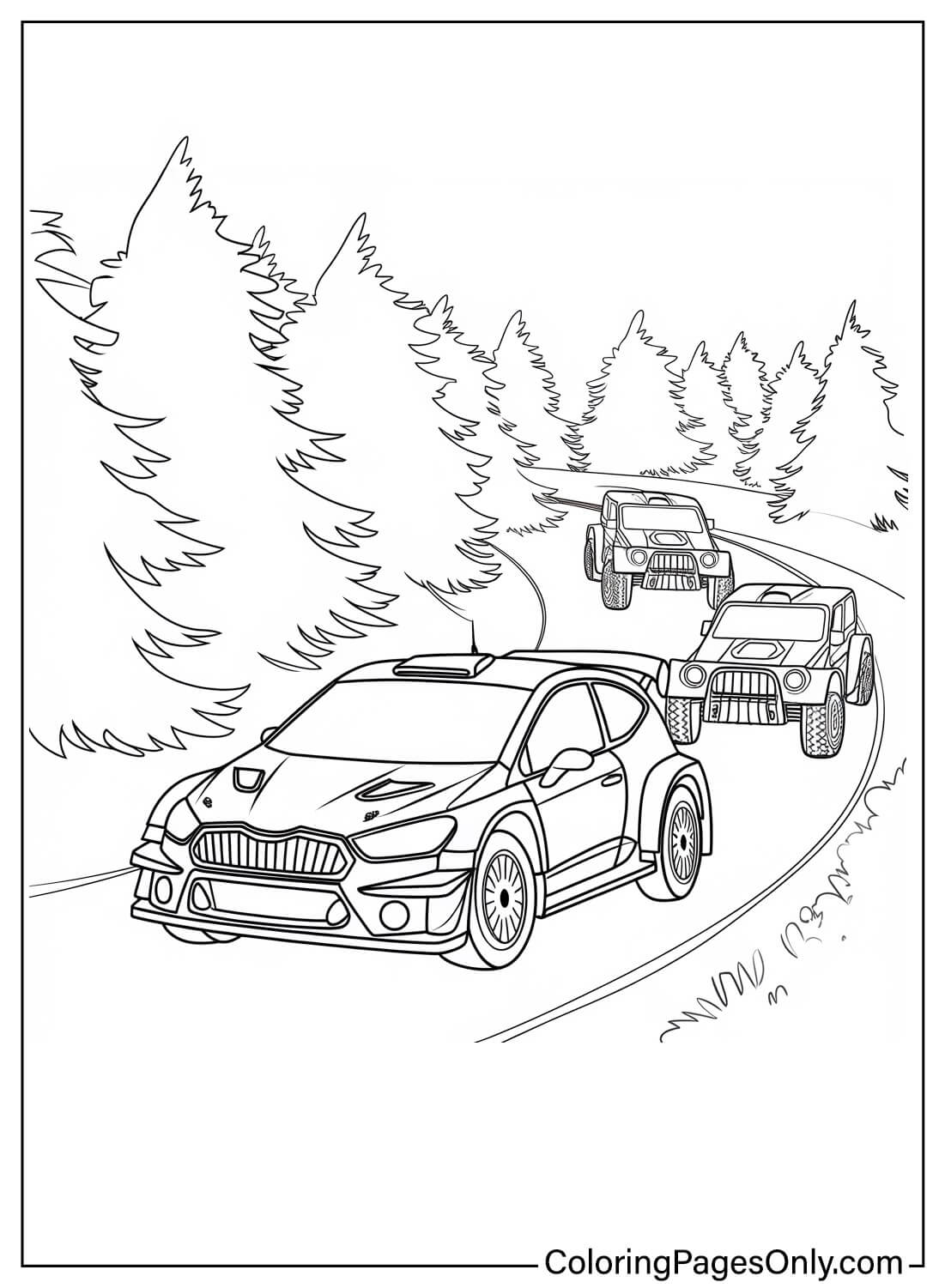
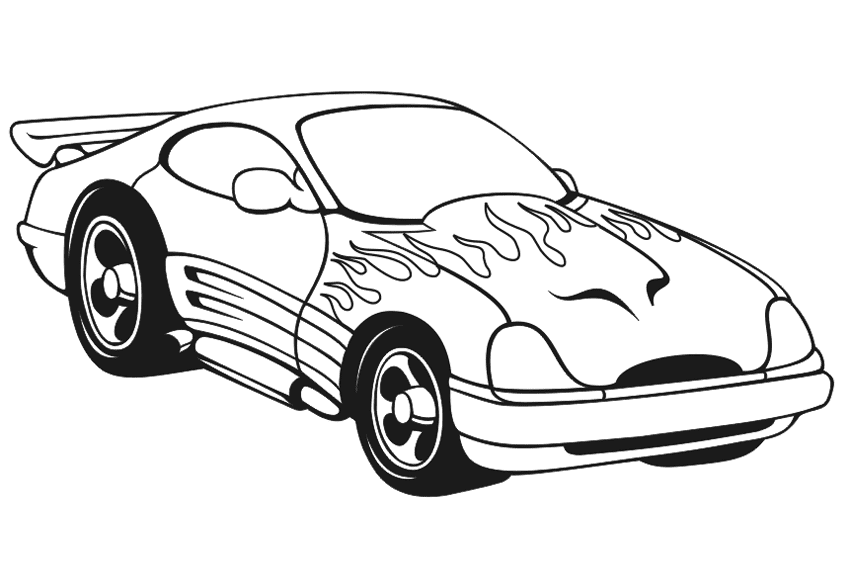
World Rally Championship (WRC) cars are based on production hatchbacks – the Hyundai i20 N Rally1, Toyota GR Yaris Rally1, Ford Puma Rally1, Citroën C3 WRC – modified to an extreme degree for performance on gravel, asphalt, snow, and mud across special stages on closed public roads. They are the closest of any major racing category to road-going cars in visual terms, retaining the production car’s basic silhouette while adding the specific visual markers of rally preparation.
Those visual markers are immediately recognizable: the roof-mounted light pod (for night stages), the hood-mounted air intake scoop, the mud flaps extending behind each wheel arch, the sponsor livery typically applied in the vivid, high-contrast colors required for visibility on forest stages, and – in the action shots that coloring pages sometimes reference – the specific drama of a car with all four wheels airborne over a crest, or sliding sideways through a forest corner with the co-driver calling pace notes.

Sébastien Loeb of France holds the record for most WRC World Championships with nine consecutive titles (2004-2012). Sébastien Ogier of France has eight championships. The WRC has been one of motorsport’s most internationally diverse championships, with stages held on every continent.

Coloring rally cars: The road car silhouette is the foundation – more upright and more compact than an F1 car, recognizably a hatchback even under the rally modifications. The roof-mounted light pod should be dark grey or black. The sponsor livery on WRC cars is often applied in very vivid, high-contrast schemes to maximize visibility in forest lighting conditions. Mud on the lower body (if the page shows rally context) is rendered in warm tan-brown, applied irregularly to the wheel arches and lower body panels.

Le Mans Prototypes – Endurance at Speed

The 24 Hours of Le Mans, held annually on the Circuit de la Sarthe near Le Mans, France, since 1923, is the oldest and most prestigious endurance race in the world. Le Mans prototype cars – the LMP1 and LMP2 classes, and the current Hypercar class that replaced LMP1 – are designed for sustained high performance over 24 hours rather than for outright peak speed. They must balance pace with reliability, fuel efficiency, and tire management.

Their visual design is distinct from all other racing categories: an enclosed cockpit (unlike F1), a very long, smooth aerodynamic body, massive downforce-generating elements, and the specific lighting setup required for a race that continues through darkness – two headlights in the front body creating a distinctive visual at night, the taillight clusters visible from behind, the whole glowing against the darkness of the Sarthe countryside.

Coloring Le Mans prototypes: The enclosed cockpit distinguishes these cars from F1 – the canopy over the driver creates a different overall profile. The long body surface is the primary color surface. The headlight clusters (forward-facing) and taillight clusters (rearward-facing) are important coloring details – vivid white/yellow for headlights, vivid red for taillights. The underside aerodynamic package is visible in some angles – dark, complex, not the primary visual focus.

Drag Racing – Pure Straight-Line Speed

Top Fuel dragsters are the fastest-accelerating vehicles on Earth. From a standing start, a Top Fuel dragster covers a quarter mile in less than 3.7 seconds, reaching speeds exceeding 330 miles per hour (530 km/h). The engine – a supercharged nitromethane-fueled V8 producing over 10,000 horsepower – burns approximately 15 US gallons of nitromethane per run, produces more power in one second than a NASCAR engine produces in four hours, and typically requires complete rebuilding after each run.

The visual of a Top Fuel dragster is unlike any other racing car: an extremely long, narrow body (essentially a chassis with the minimum required body work), massive rear slick tires, a supercharger protruding from the top of the engine, and the parachutes at the rear used for braking (conventional brakes alone cannot stop the car from racing speeds in the available distance). Funny Cars – the enclosed-body category of fuel drag racing – add a full-body shell over a similar mechanical package.

Coloring drag racing cars: The Top Fuel dragster’s length is the most distinctive visual element – the car is much longer relative to its width than any other racing category. The rear tires are extremely large – wider than they are tall, with a distinctive wrinkle-wall appearance. The supercharger on top of the engine is chrome-silver. The parachutes at the rear are deployed in some action pages – typically brightly colored fabric billowing behind.

GT and Sports Cars – The Most Visually Diverse

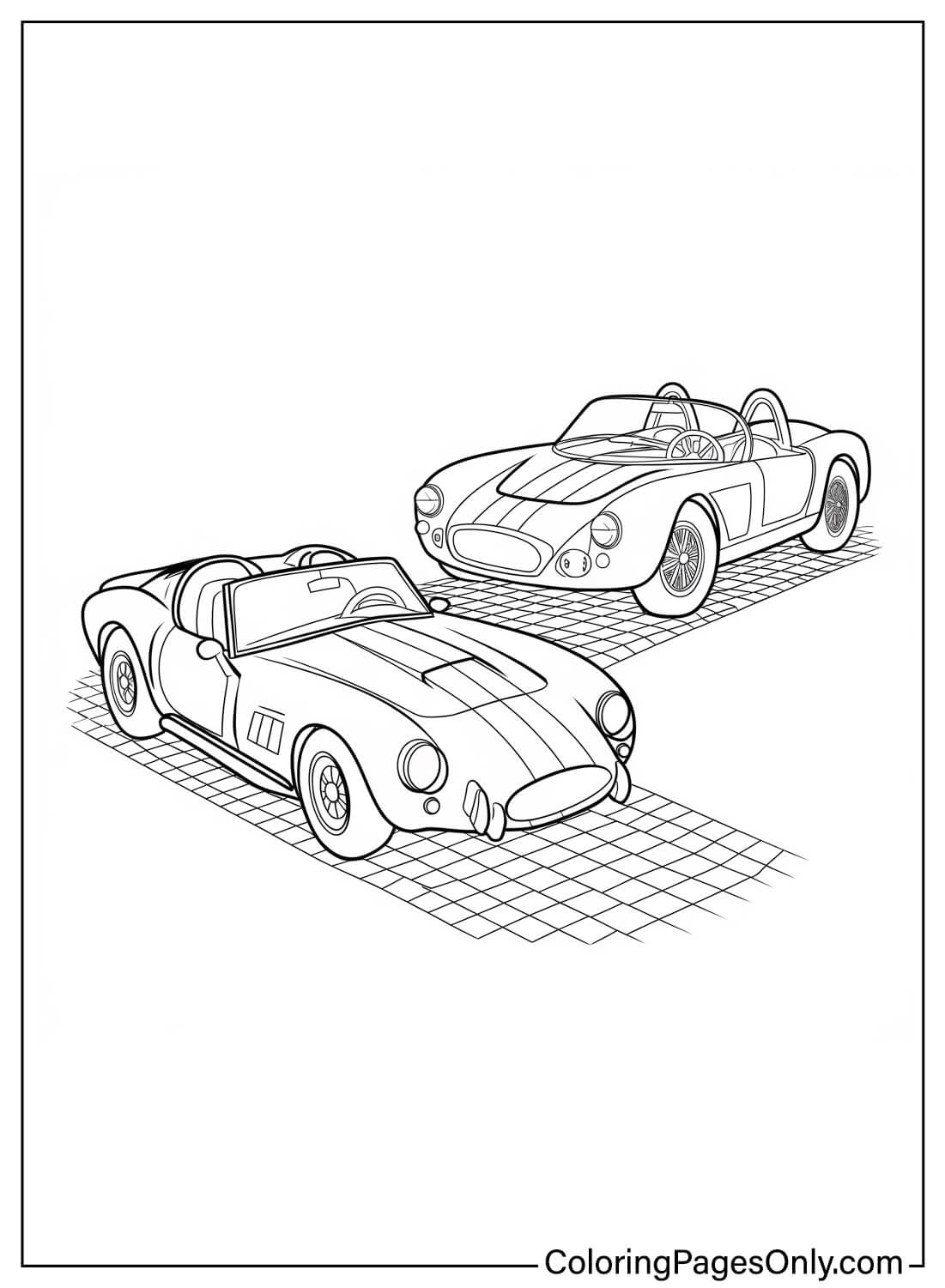
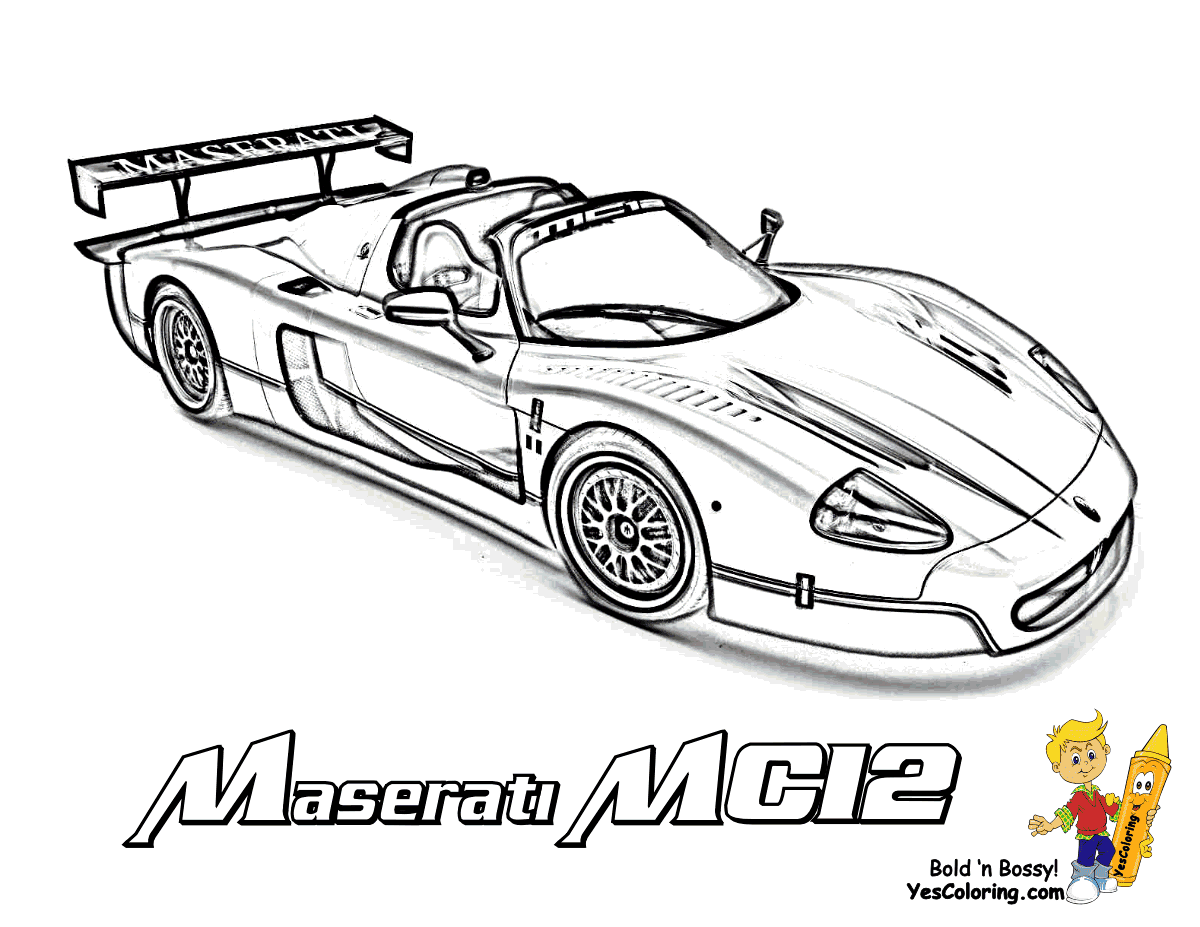
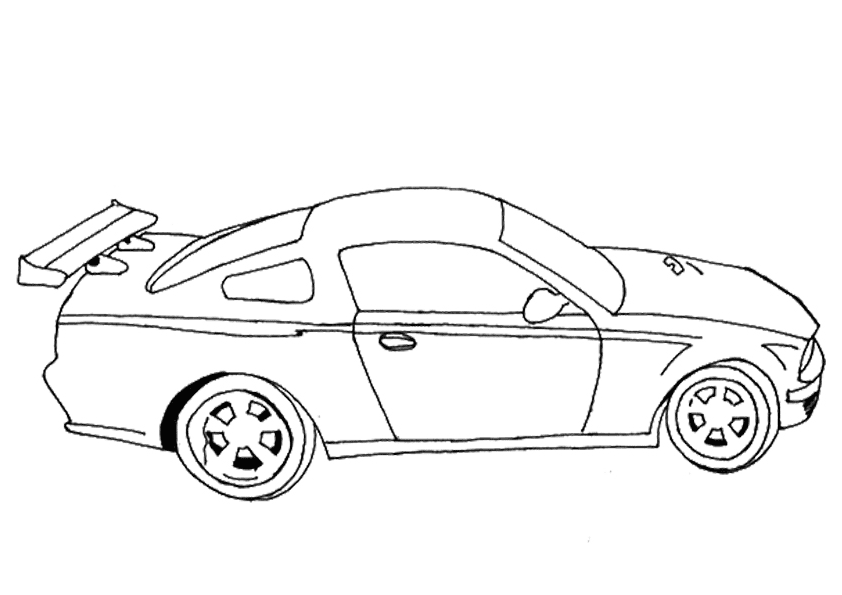
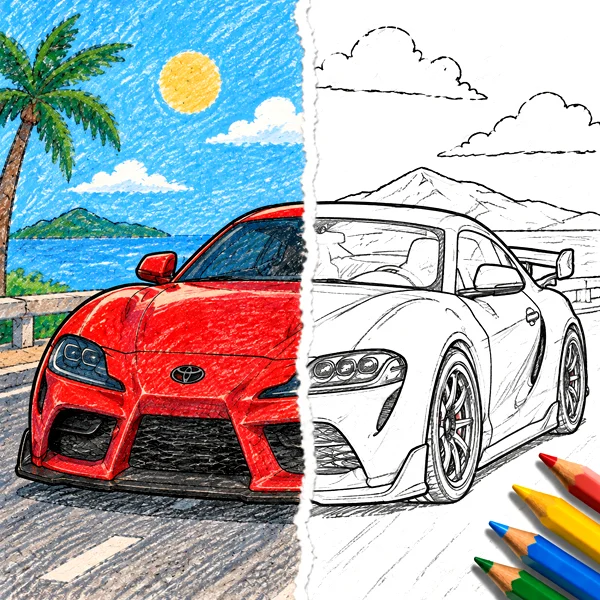
GT racing – GT3, GT4, GTE – features purpose-built racing versions of sports car brands: Ferrari, Porsche, Lamborghini, McLaren, BMW, Audi, Mercedes-AMG, Aston Martin. These cars retain the visual identity of their road-car counterparts while adding racing-specific elements: wider bodywork, aerodynamic wings, racing brake systems, and the full sponsor livery that transforms a recognizable production sports car into a racing machine.

The Porsche 911 GT3 R, the Ferrari 296 GT3, the Lamborghini Huracán GT3 EVO2, and the McLaren 720S GT3 are some of the most visually dramatic racing cars – the proportions of their road-car origins (the long hood of a Ferrari, the rear-engine position of a Porsche 911, the mid-engine wedge of a McLaren) modified and extended by racing bodywork.

What These Pages Do

Motorsport’s visual diversity is the collection’s most immediately educational quality. An F1 car, a NASCAR stock car, a Top Fuel dragster, and a WRC rally car are not variations on the same theme – they are completely different engineering solutions to completely different performance objectives. The F1 car’s maximum aerodynamic downforce, the dragster’s maximum straight-line acceleration, the rally car’s maximum terrain adaptability, the NASCAR car’s maximum oval speed – each objective produces a different machine. Coloring through these categories develops the design literacy to read a car’s function from its shape.

The racing livery tradition is one of automotive design’s most dynamic visual art forms. The full-body sponsor livery applied to racing cars – from the understated silver of Mercedes to the vivid papaya orange of McLaren to the competitive multicolor schemes of lesser-funded teams – produces distinctive visual identities that are immediately recognizable. The coloring pages give direct access to this tradition, allowing colorists to reproduce canonical liveries or design their own.

Speed lines, aerodynamic forms, and mechanical detail provide a specific fine motor challenge. The American Academy of Pediatrics identifies fine motor skill development as a key childhood milestone throughout early childhood. The F1 car’s complex front wing assembly, the NASCAR number’s size and placement, the rally car’s light pod and mud flap detail, and the dragster’s supercharger all provide motivated, sustained fine motor practice. The 2005 Art Therapy Journal study on structured coloring and anxiety reduction applies throughout.

The collection serves the full range of motor racing’s multigenerational fan base. A five-year-old who wants to color a fast car and an adult Formula 1 fan who wants to render a specific team’s livery accurately are both served by the 50+ pages of this collection – the simpler cartoon racing car pages for the youngest colorists, the detailed, realistic pages for the most experienced.

How to Color These Pages Well

Livery color is team identity – commit to canonical colors. The most immediately recognizable quality of any racing car page is whether the livery colors are correct. Ferrari red is Ferrari red – a specific vivid red, not orange-red and not dark red. McLaren papaya is a vivid warm orange-yellow. Mercedes silver is a cool light grey. Red Bull’s dark navy is much darker than royal blue. Before applying any color to an F1 car page, identify the team being depicted and research the specific livery palette. Apply it at full saturation – racing liveries are designed to be visible at 300 km/h, which means they are maximally saturated.

The race number is the most important single coloring detail on NASCAR and stock car pages. The number identifies the car more directly than any other element – it appears on both doors, the roof, and often the hood and rear. Apply it in the sponsor’s designated number color (typically white, black, or a contrasting accent color) against the car’s primary color background. The number should be large, clearly readable, and precisely centered in its designated area. On NASCAR pages, the number’s legibility determines whether the car reads as a specific machine or as a generic stock car.

Speed lines communicate velocity without the car moving. Many pages in the collection include speed lines – radial lines emanating from behind or around the car to suggest rapid forward motion. These should be rendered in a very light grey – barely darker than the white paper – so they read as motion context rather than as objects. The lighter the speed lines, the more effectively they communicate speed without competing with the car’s color for visual priority.

Different racing categories have different ground clearance – render it accurately. An F1 car’s floor barely clears the ground – there should be almost no space between the underside of the car and the track surface. A NASCAR car sits noticeably higher. A rally car has substantial ground clearance to manage rough terrain. A dragster sits very low at the front and high at the rear (due to the massive rear tires). These clearance differences are visible in coloring pages as the gap between the car’s underside and the ground surface, and getting them right makes each category immediately identifiable.

Tire color and texture differ by category. All racing tires are black rubber, but their specific rendering differs: F1 tires are very wide, smooth-surfaced slicks (in dry conditions) or treaded intermediates and wets; NASCAR tires are similarly smooth but sized differently; rally car tires have visible tread patterns for loose surfaces; drag racing rear tires are extremely wide with very subtle tread markings. The rim inside each tire – visible in most views – is metallic grey or silver, often with the wheel’s ventilation holes indicated by the line drawing.

5 Creative Craft Ideas

Design Your Own Racing Livery

Print any generic racing car page – the most neutral shape with the least existing sponsor decoration. This is your canvas for a custom racing livery design.

Choose a primary color and a contrasting secondary color. Design a livery: apply the primary color across the main body surfaces, the secondary color in accent stripes or wing elements. Add a number (choose any two-digit number with personal meaning). Add a made-up team name along the sidepod and a sponsor name on the hood.

Color the design at full saturation. Add the team name, number, and sponsor names in hand-lettering using the contrasting color. The finished car is a personal racing team – your number, your colors, your livery, your identity.

The Four Categories Side by Side

Print one page from each of the four most visually distinct racing categories covered in the collection: an F1 car, a NASCAR stock car, a rally car, and a drag racing car. Color each in a canonical, historically documented livery – Ferrari red for the F1 car, a classic NASCAR scheme for the stock car, a recognizable WRC livery for the rally car, and a fire-red scheme for the drag car.

Mount all four side by side on a long backing sheet. Below each, add: the category name, one specific dimension that defines the category’s uniqueness (F1: “1,000 HP, generates 5G in corners.” NASCAR: “200+ mph oval racing, 36 races per season.” Rally: “Gravel, snow, asphalt – same car for all surfaces.” Drag: “0-330 mph in 3.7 seconds, quarter mile.”).

Historic vs. Modern – The F1 Evolution

Formula 1 cars have changed dramatically in visual appearance across seven decades. Print two F1 car pages – one referencing a vintage design (the simple, cigar-shaped cars of the 1950s and 1960s) and one referencing a current car (the complex multi-wing design of the 2022+ regulations). Color both in red – Ferrari red across both eras, so the color is consistent, and the design evolution is the only visible variable.

Mount side by side: “1950s – Minimal aerodynamics, front-engined, narrow.” “2020s – Maximum downforce, hybrid power, complex aerodynamics.” The display is a seven-decade F1 design history compressed into two colored pages.

Pit Stop Scene

Print the most detailed racing car page available. Color it in the racing team’s full canonical livery. Cut the car out around its outline.

On a separate backing sheet, draw a simple pit lane scene – a set of pit wall markers, a checkered pit lane floor, and tool trolleys. Mount the colored car at the center of the pit lane scene as if stopped for a tire change.

Add small colored circles around the car to represent the four tire positions being changed. The finished craft is a race scene with the coloring page as the starring element.

My Racing Team Card

Print one or two simple racing car pages. Color them in a completely custom livery – your own colors, your own number, your own design. Color both in identical livery to establish the team identity.

Create a racing team card on a separate piece of paper:

  • Team Name: [Your team name]
  • Base: [City or country]
  • Car Number: [Your number]
  • Racing Category: [F1 / NASCAR / Rally / GT – your choice]
  • Primary Sponsor: [Made-up sponsor name]
  • Driver: [Your name or a name you choose]
  • Championship Wins: [Any number you aspire to]

Mount the colored car alongside the team card. The finished set is a complete racing team identity – car and team documentation together.

Frequently Asked Questions

What is Formula 1, and how is it different from other racing categories? Formula 1 is the highest class of single-seater open-wheel car racing sanctioned by the FIA (Fédération Internationale de l’Automobile). The FIA Formula One World Championship has run annually since 1950. F1 cars are the most technologically advanced racing cars in existence – carbon fiber monocoque chassis, 1.6-liter V6 turbo-hybrid power units producing approximately 1,000 horsepower, advanced aerodynamics generating multiple times the car’s weight in downforce, and top speeds exceeding 360 km/h. What distinguishes F1 from other categories is its combination of maximum technology, maximum downforce aerodynamics, the single-seater open-wheel configuration, and a global race calendar spanning 24 races across five continents.

When was NASCAR founded, and what makes stock car racing distinctive? NASCAR – the National Association for Stock Car Auto Racing – was founded by Bill France Sr. in Daytona Beach, Florida, on February 21, 1948. The series was originally designed around production-based “stock” cars that could be purchased from dealerships, creating a more accessible form of racing than the purpose-built race cars of European motorsport. Modern NASCAR Cup Series cars retain only the exterior silhouette of production vehicles (the Chevrolet Camaro, Toyota Camry, and Ford Mustang) while being purpose-built racing machines. NASCAR races are primarily contested on oval tracks, from short tracks to massive superspeedways like Daytona and Talladega, with racing often involving close multi-car drafting at speeds exceeding 200 mph.

What is the 24 Hours of Le Mans? The 24 Hours of Le Mans is an endurance race held annually since 1923 on the Circuit de la Sarthe near Le Mans, France. Teams of two or three drivers share driving duties over a continuous 24-hour period, with the team covering the greatest distance winning. The race features multiple car classes competing simultaneously, including the elite Hypercar class. Le Mans is the oldest surviving endurance race and is the centerpiece of the FIA World Endurance Championship. The fastest Le Mans prototype cars can exceed 340 km/h on the course’s long straight sections. Le Mans cars are designed for the specific challenge of maintaining high performance over 24 hours – balancing absolute speed with reliability and fuel efficiency.

What is the World Rally Championship, and how are rally cars different from road cars? The FIA World Rally Championship (WRC) is an annual motorsport championship in which modified production cars compete on closed public roads across a variety of surface types – gravel, asphalt, snow, and mud – in timed special stages. WRC Rally1 cars are based on current production hatchbacks (Hyundai i20, Toyota GR Yaris, Ford Puma) but are extensively modified for competition: they use 4WD transmission, turbocharged 1.6-liter engines producing approximately 500 horsepower, full roll cage safety structures, and rally-specific suspension. Visually, they retain the production car’s basic silhouette but add roof-mounted light pods, wide body aerodynamic kits, mud flaps, and sponsor liveries. The WRC has run annually since 1973.

What are the fastest types of racing cars? The fastest racing cars by measured top speed are Top Fuel drag racing cars, which reach speeds exceeding 530 km/h (330 mph) during a quarter-mile run and generate over 10,000 horsepower from supercharged nitromethane-fueled V8 engines. Among circuit racing cars, the Bugatti Bolide and similar track-only hypercars hold the highest outright speed records. In major championship racing, F1 cars at circuits with long straights (Monza, Spa-Francorchamps, Baku) reach approximately 360 km/h (225 mph) during races. Le Mans prototypes on the Mulsanne straight (before chicanes were added) reached over 400 km/h. NASA Cup Series cars at superspeedways reach approximately 320 km/h during racing conditions.

What age group are racing car coloring pages best suited for? The simplest cartoon racing car pages – single cars with large color areas and minimal detail – are accessible and engaging from ages three and four for young children who love fast vehicles. The side-profile realistic car pages with clear sponsor livery areas are most rewarding from ages five to eight, where developing motor control allows more precise number and sponsor detail work. The complex pages – F1 cars with detailed front wing assemblies, multi-car race scenes, pages showing specific team liveries with multiple sponsor logos – are most engaging for ages eight and up and for adult motorsport fans who want to render specific liveries accurately. The collection’s 50+ pages cover this full developmental range.

Browse the full collection at ColoringPagesOnly.com. All 50+ pages free, no sign-up, PDF or PNG, print or color online.

Émile Levassor drove 1,178 kilometers from Paris to Bordeaux and back in 1895. He said he was doing 30 kilometers per hour, and it felt like the devil’s own race.

Max Verstappen won four consecutive Formula 1 World Championships. A Top Fuel dragster covers a quarter mile in 3.7 seconds. A Le Mans prototype runs for 24 hours. A rally car takes the same corners at full speed on gravel, on snow, and on asphalt, in the same week.

Speed has a hundred different shapes. The collection has fifty pages of them.

Pick up the red for Ferrari. The papaya orange for McLaren. The dark navy for Red Bull. The number goes on the door.

Share your work on Facebook and Pinterest and tag #Coloringpagesonly. We especially want to see the custom racing livery designs and the four categories side-by-side displays.

Color the car. Name the team. The race is always just about to start.

These related coloring collections will help you explore the wonderful world of colors. Let’s choose, be creative, and show us your great pictures!

Sophia Williams – Writer and Social Network

Hi everyone! I’m Sophia Williams, a social media specialist at Coloringpagesonly.com. My goal is to spread the love of color and creativity to everyone. Join me online as we share inspiration, connect through art, and fill the world with vibrant, joyful colors!