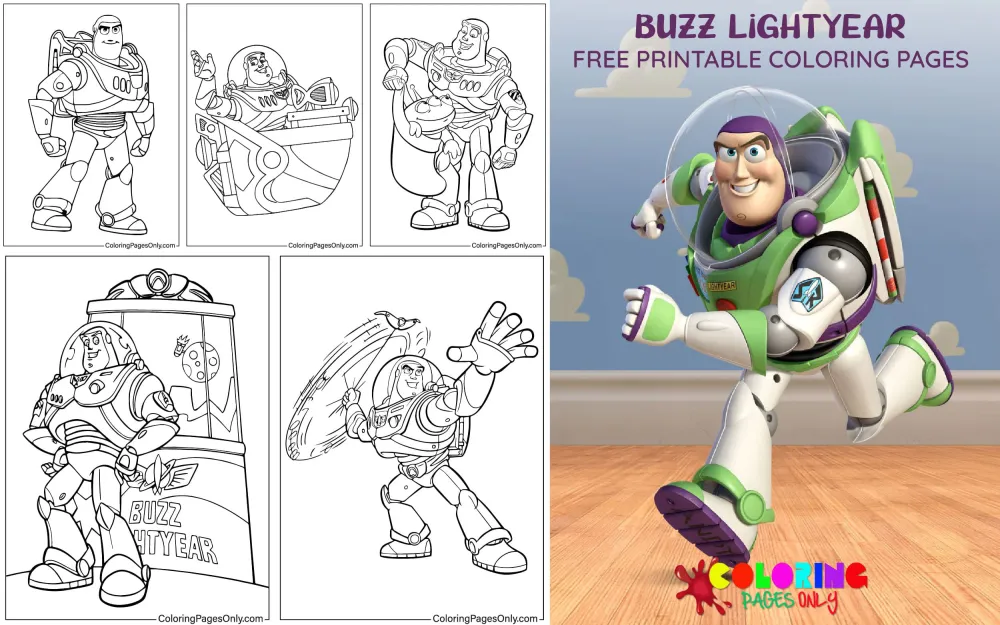
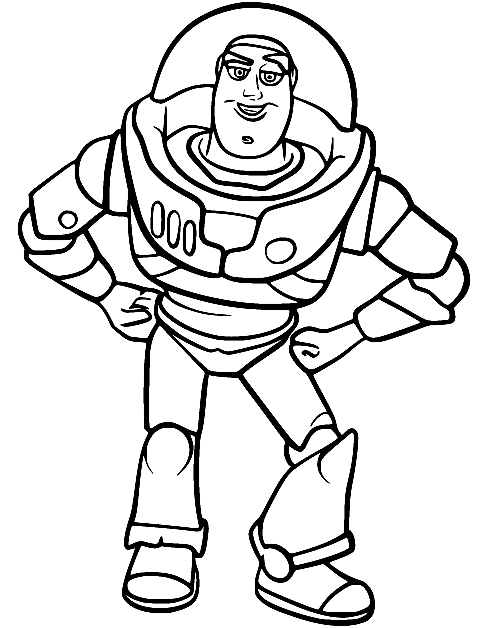
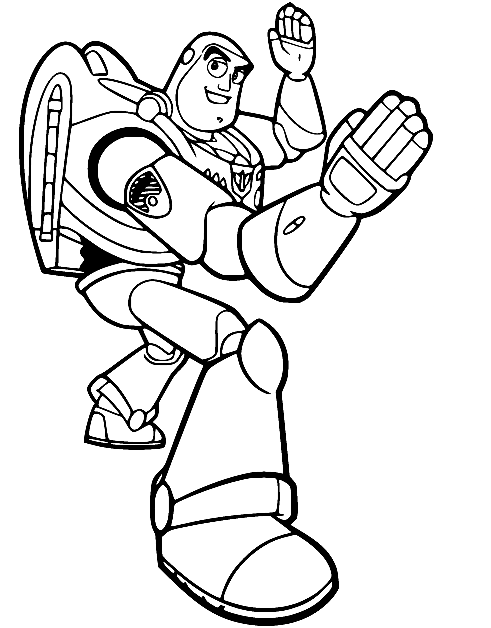
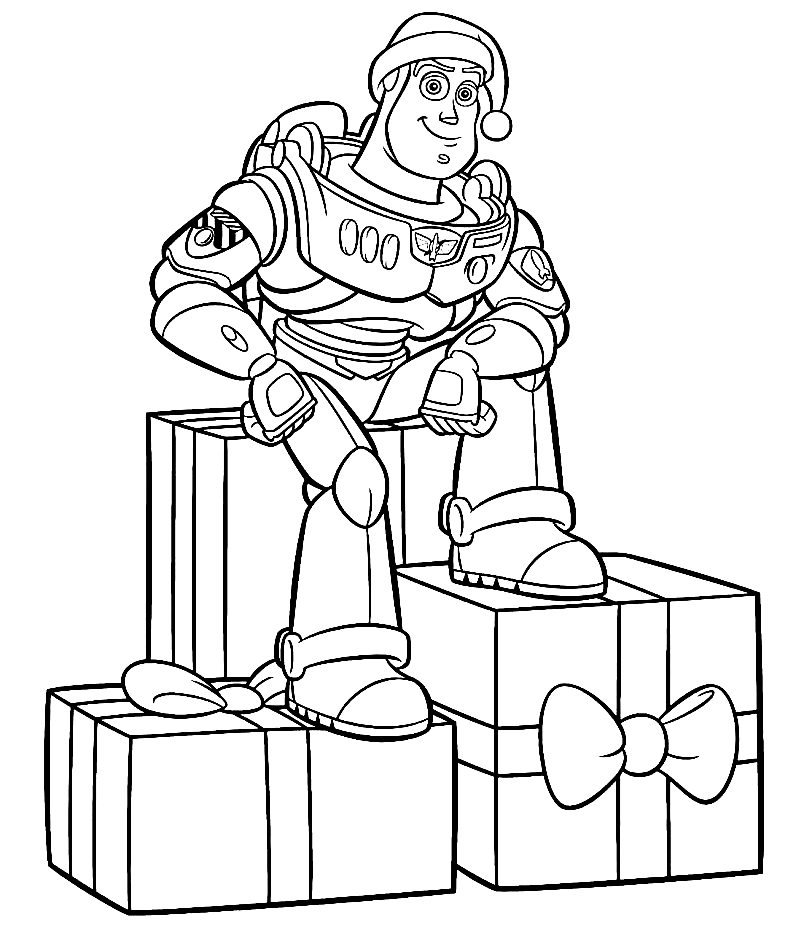
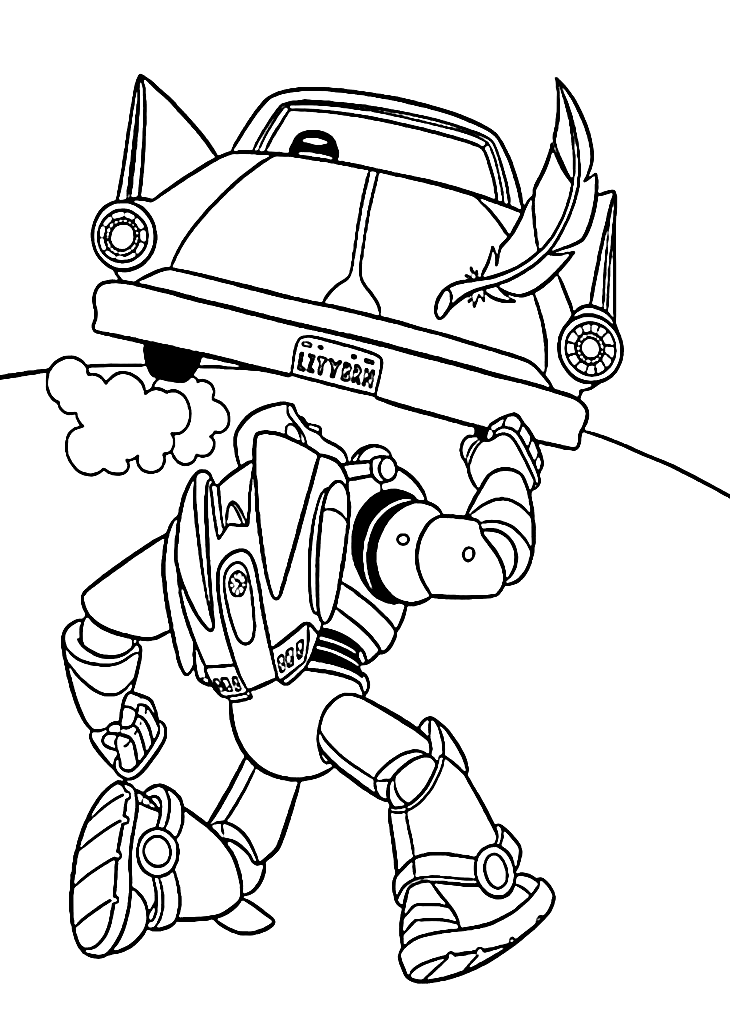
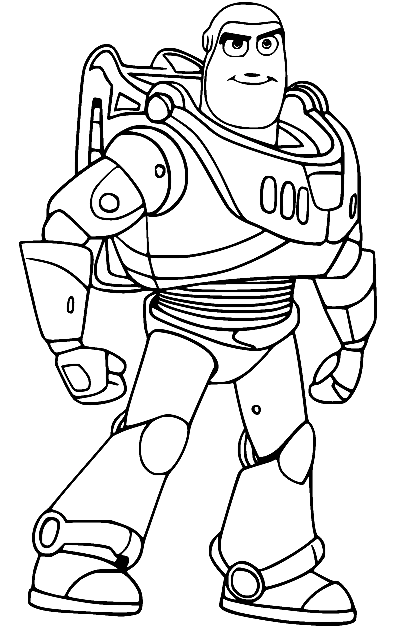
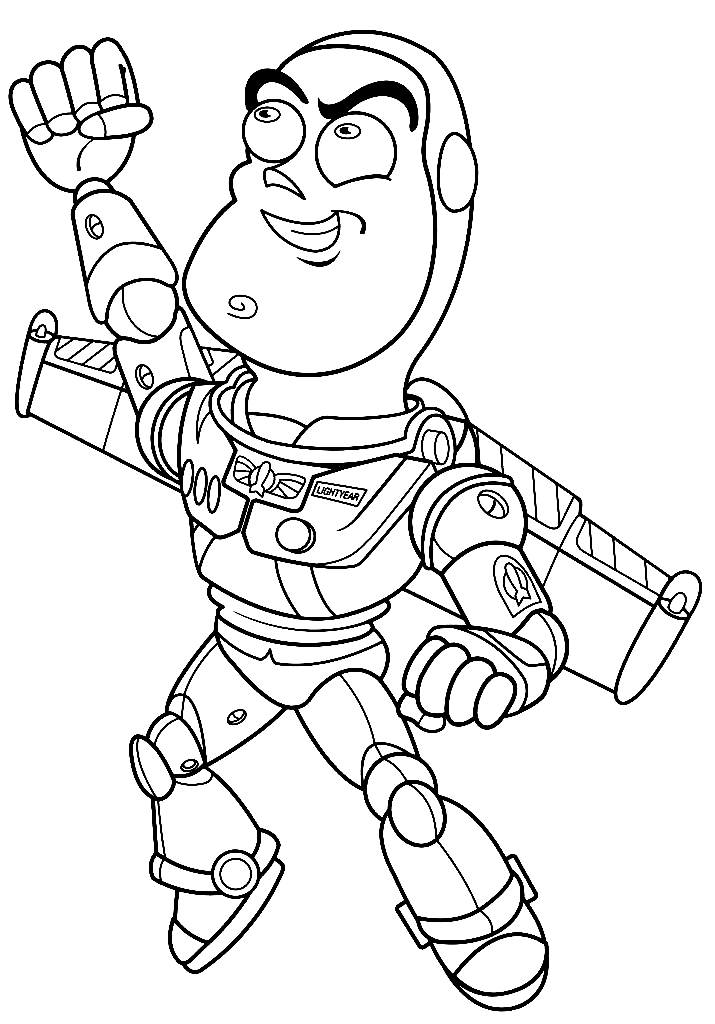
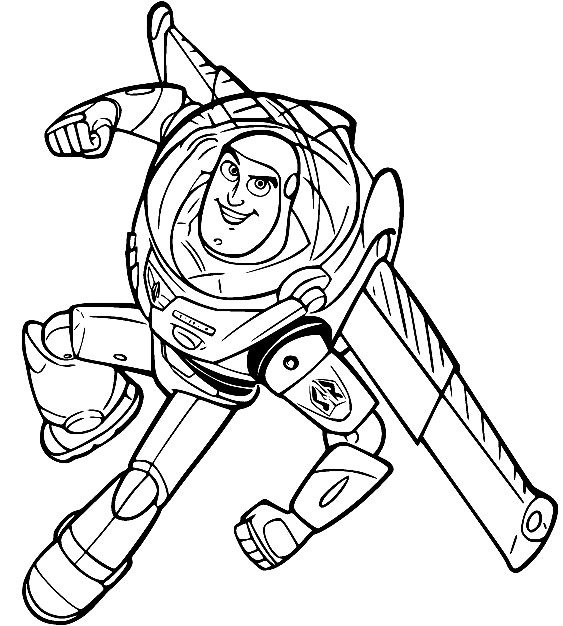
Free Buzz Lightyear Coloring Pages: 40+ pages featuring the Space Ranger in heroic standing poses with wings deployed, flight sequences against starfield backgrounds, wrist laser action scenes, the iconic “To infinity and beyond!” catchphrase pose, Buzz alongside Woody, confrontations with Emperor Zurg, the Spanish mode dancing pose from Toy Story 3, the Lightyear (2022) astronaut design, group scenes with the full Toy Story ensemble, close-up helmet and visor studies, and the full visual vocabulary of Pixar’s Space Ranger across four films and three decades. All free, printable PDF and online coloring for Toy Story fans of every generation.
Buzz Lightyear first appeared in Toy Story, released on November 22, 1995, as the first feature-length computer-animated film ever produced. Toy Story was directed by John Lasseter, produced by Bonnie Arnold and Ralph Guggenheim, and made by Pixar Animation Studios in partnership with Walt Disney Pictures. The film was produced on a budget of approximately $30 million and earned $373 million worldwide. Tim Allen voiced Buzz Lightyear in this film and in every subsequent Toy Story production through 2019.
The historical significance of Toy Story as the first fully CGI feature film extends beyond the Buzz Lightyear character: it demonstrated that computer-generated imagery could support sustained narrative storytelling and genuine emotional connection in a way that previous CGI experiments had not. Pixar Animation Studios was founded in 1986 after Steve Jobs purchased the computer graphics division of Lucasfilm. The Toy Story franchise has since earned over $3 billion worldwide across four theatrical films. Disney acquired Pixar in January 2006 for $7.4 billion.
The 2022 film Lightyear, directed by Angus MacLane and released June 17, 2022, presented the fictional in-universe origin of the Buzz Lightyear character: the film that Andy supposedly watched before asking for the Buzz toy. Chris Evans voiced this version. The film earned $226 million worldwide.
These 40+ free pages at ColoringPagesOnly.com cover Buzz across his full visual history. All free, PDF or PNG, print or color online.

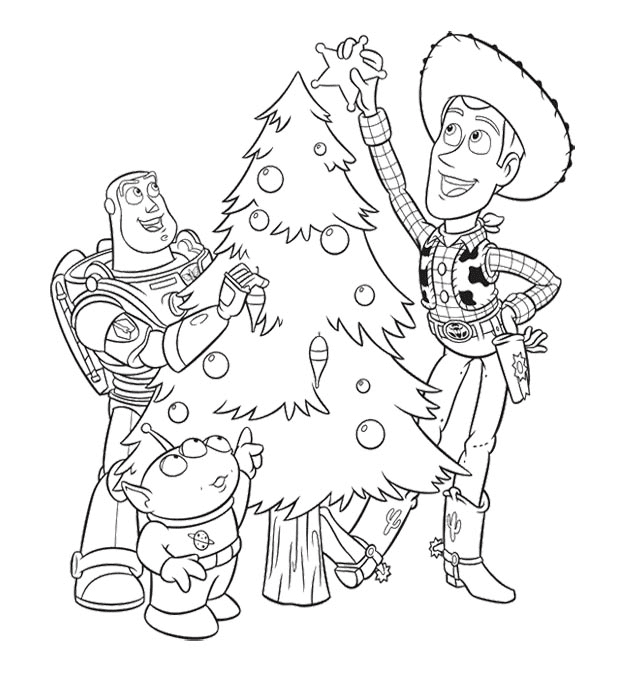
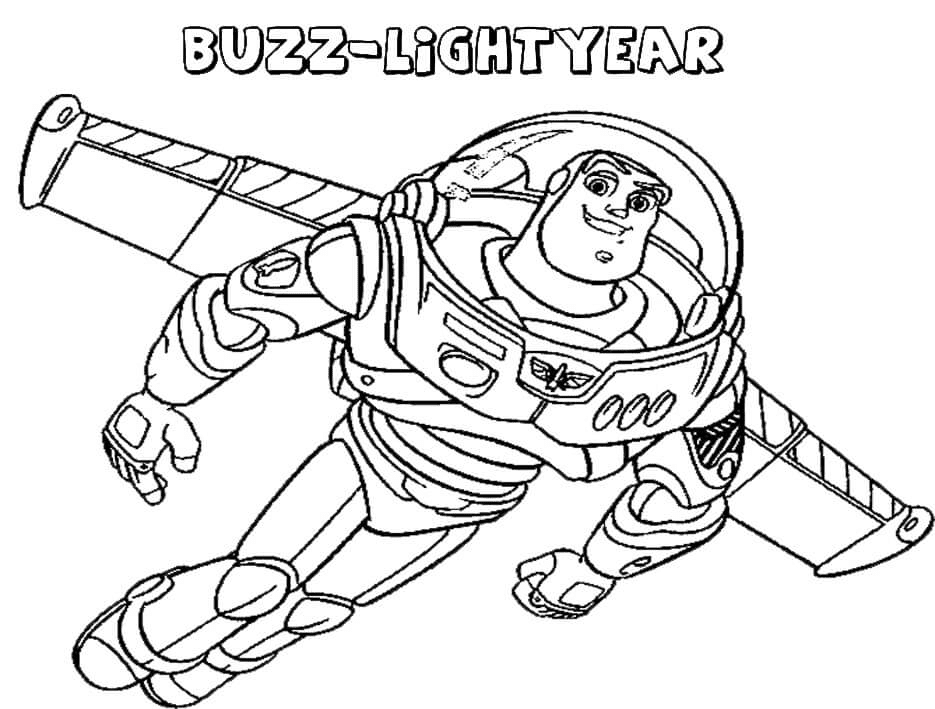
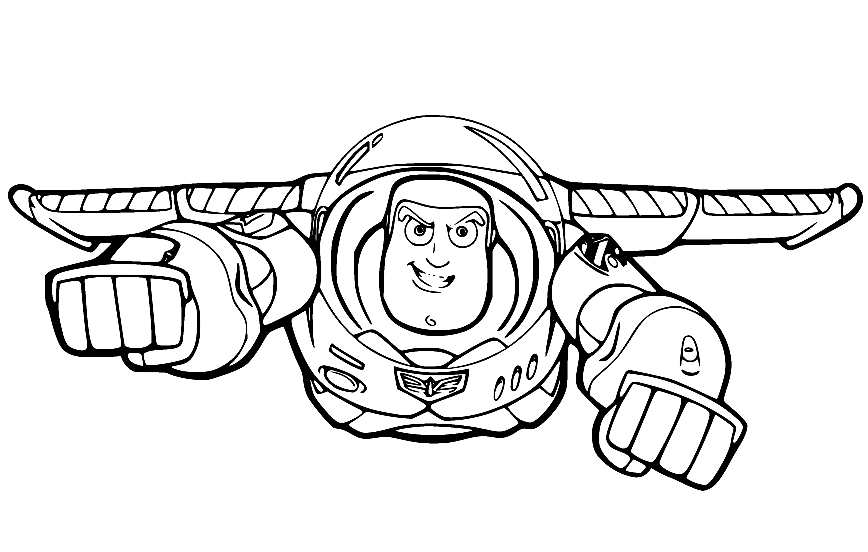
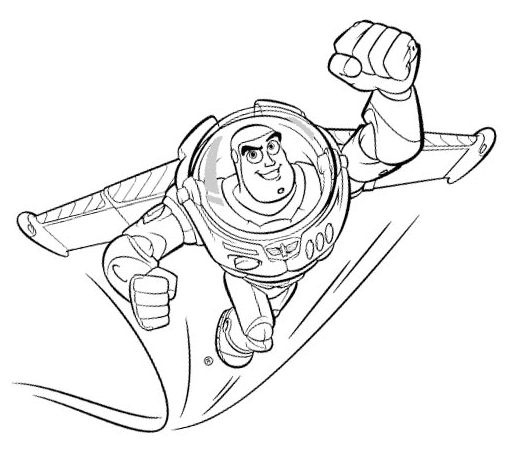
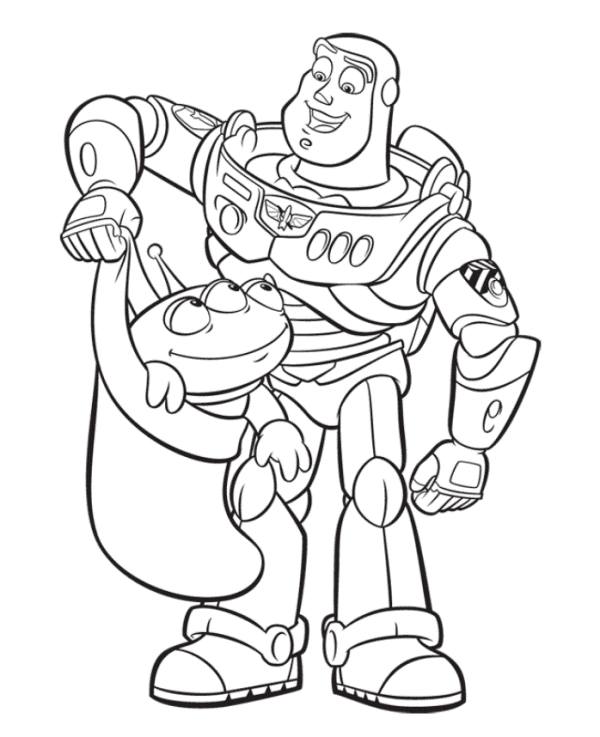
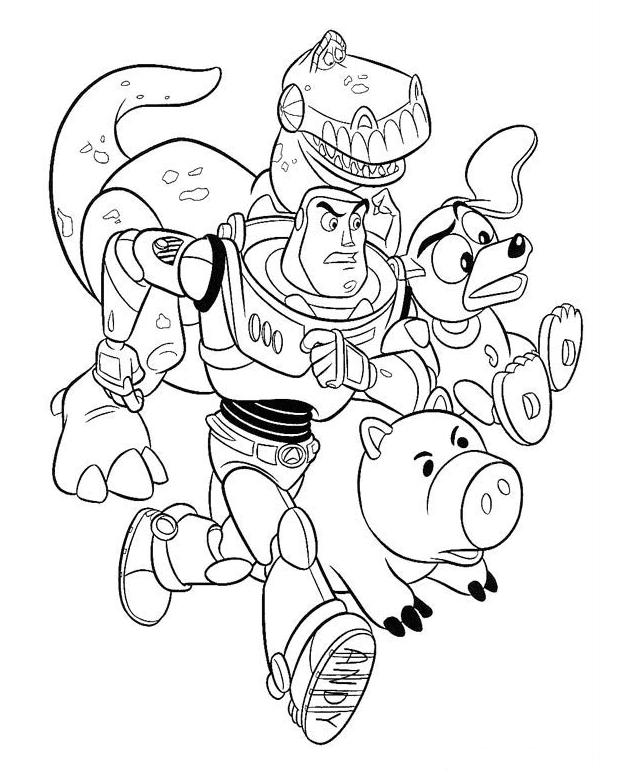
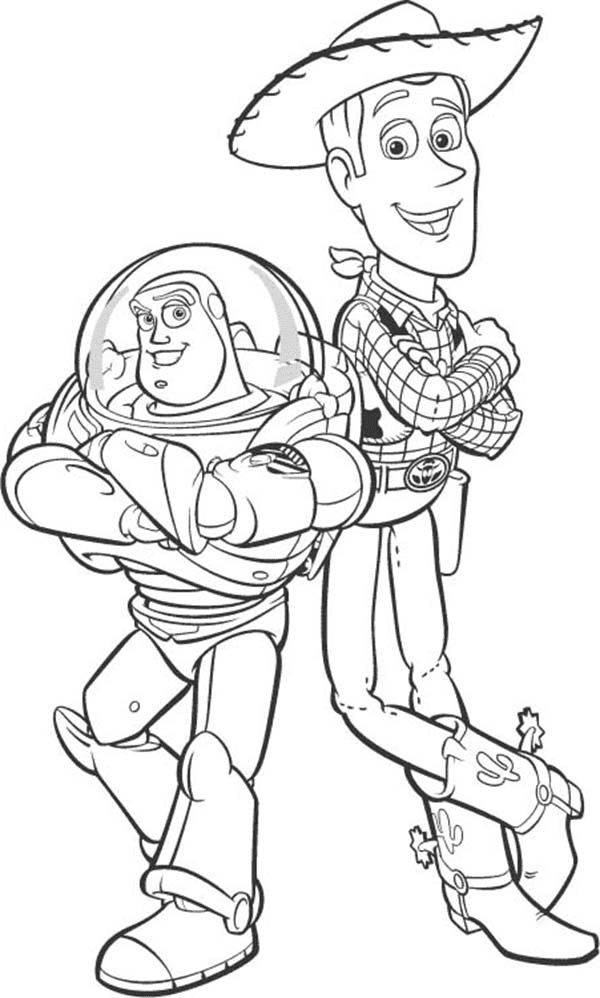
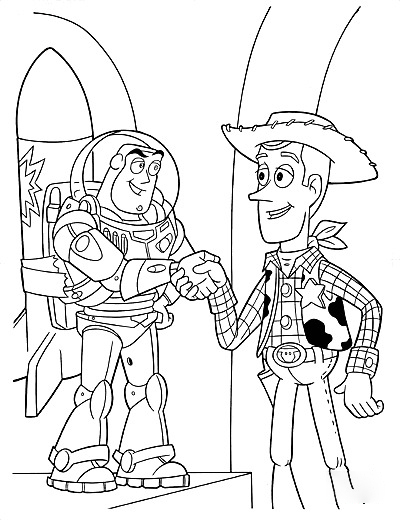
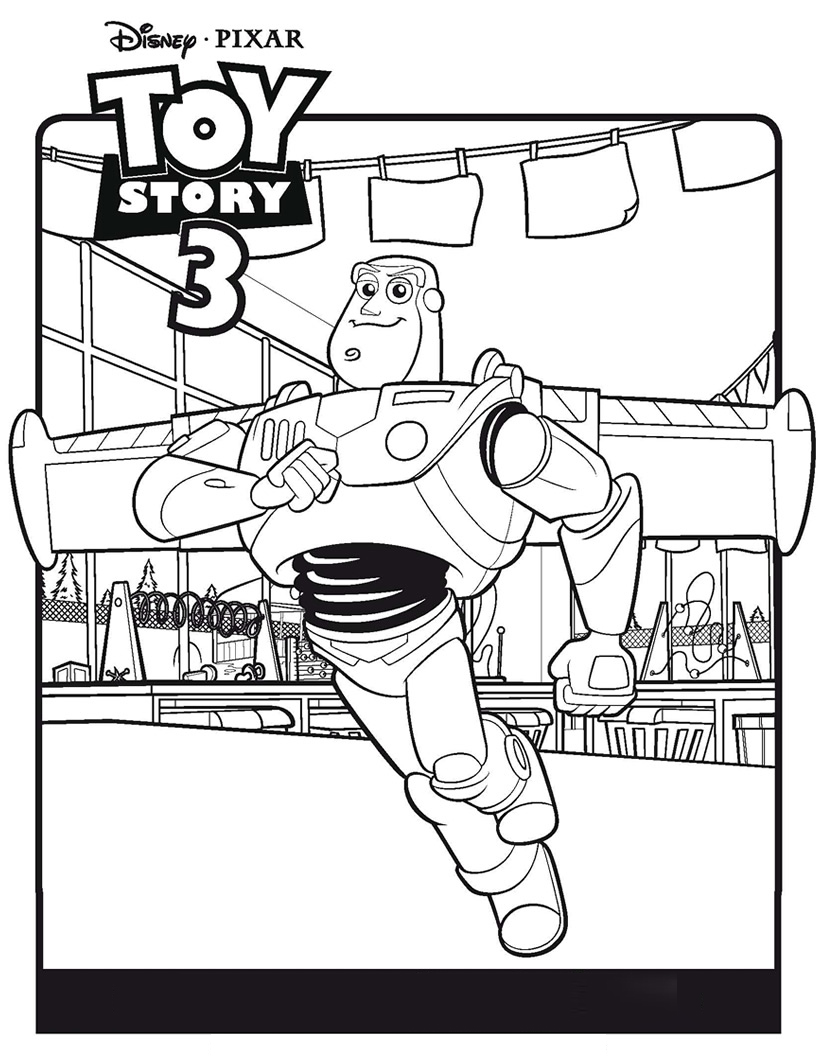
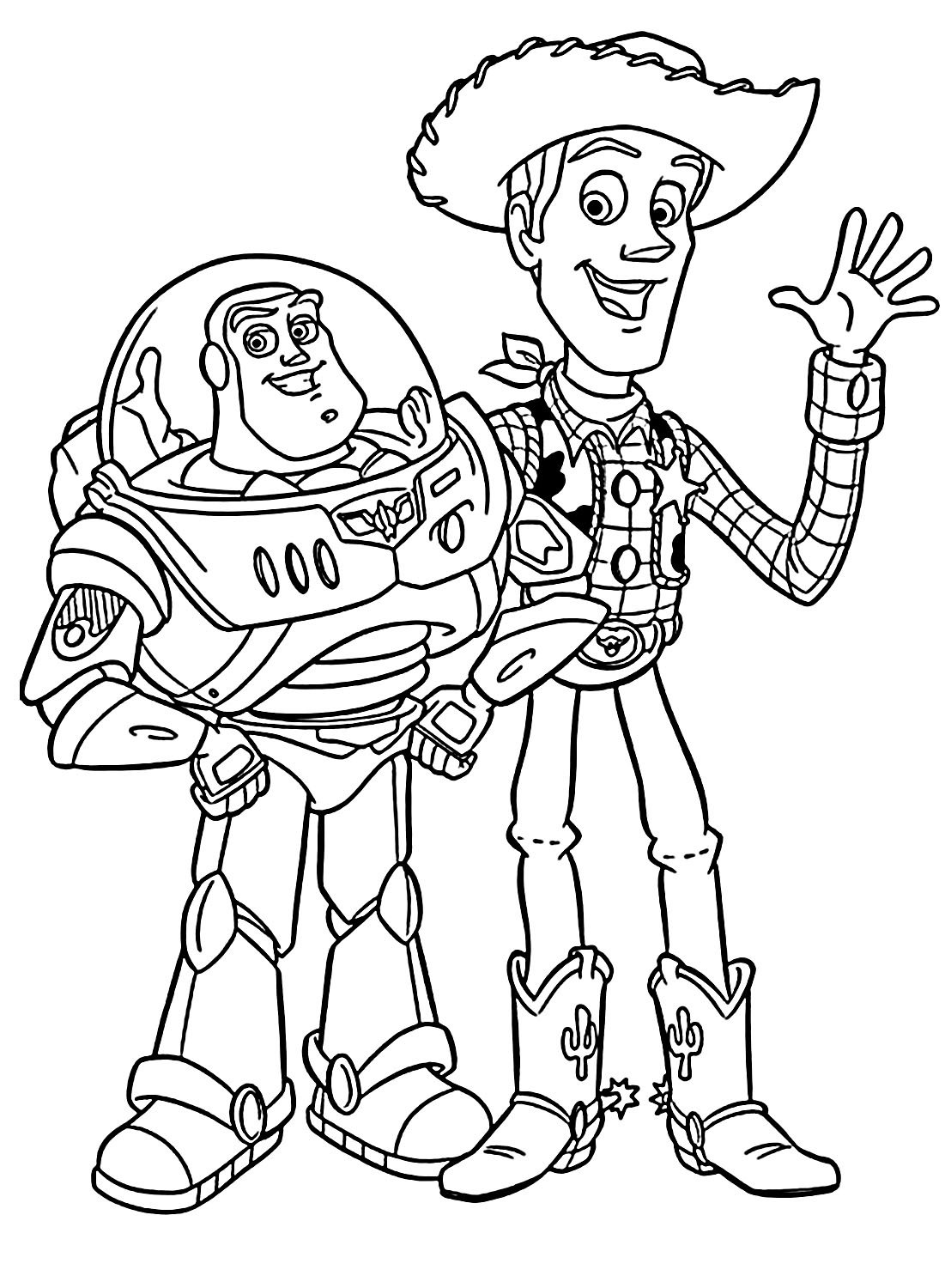

What’s Inside
Buzz Lightyear: Portrait and Heroic Standing Pages
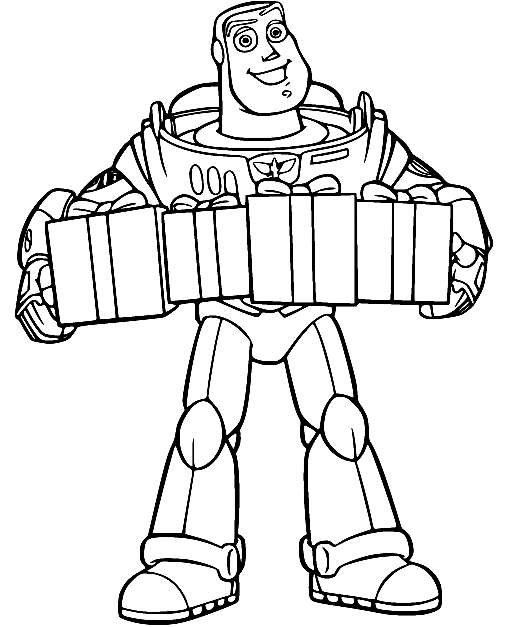
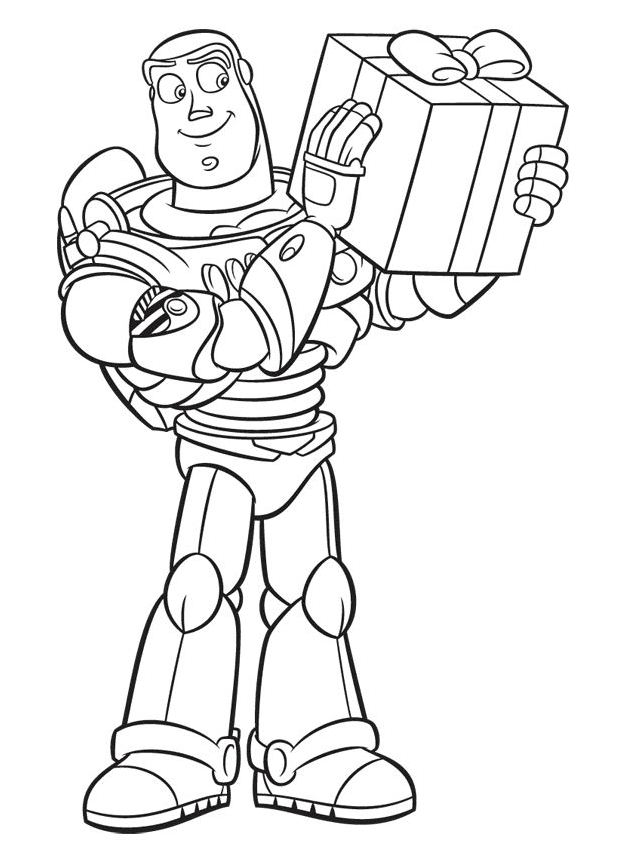
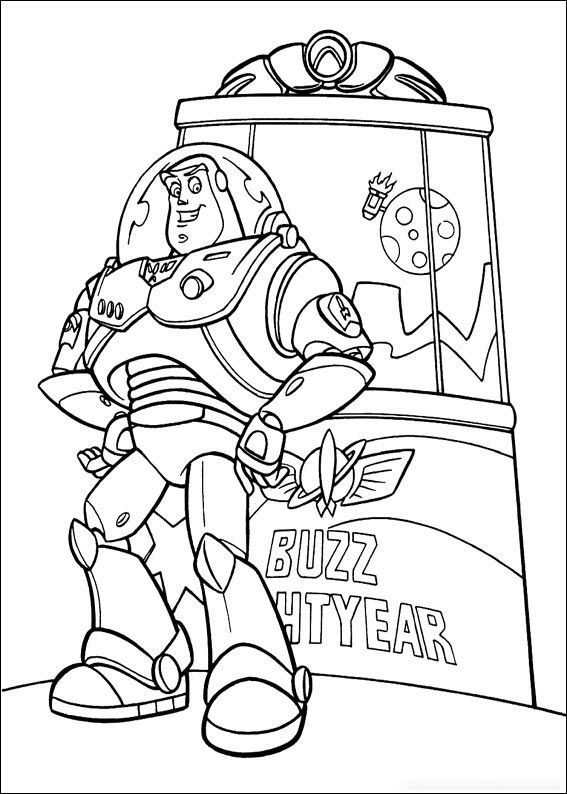
Buzz Lightyear’s suit design is one of Pixar’s most specifically and deliberately detailed costume designs: it reads as both a functional space suit (with the helmet dome, the life support chest panel, the structural articulations at the joints) and as a toy (with the action-feature buttons on the chest that the toy Buzz in the film can actually operate, the deployable wings, and the wrist laser). This dual reading, simultaneously functional space equipment and manufactured toy, reflects the character’s central arc in the first film: his journey from believing himself to be a real Space Ranger to understanding that being a well-loved toy is its own genuine form of purpose.
The suit is primarily white: a clean, bright white that covers most of the suit’s surface area and reads as the specific bright white of exploratory optimism rather than the sterile white of clinical environments. Purple is the secondary color, appearing in a specific range of accent positions: along the sides of the torso, on portions of the arms and legs, and in the trim elements that give the suit its visual structure. The purple used is a medium, slightly blue-shifted purple, neither deep violet nor bright lavender.
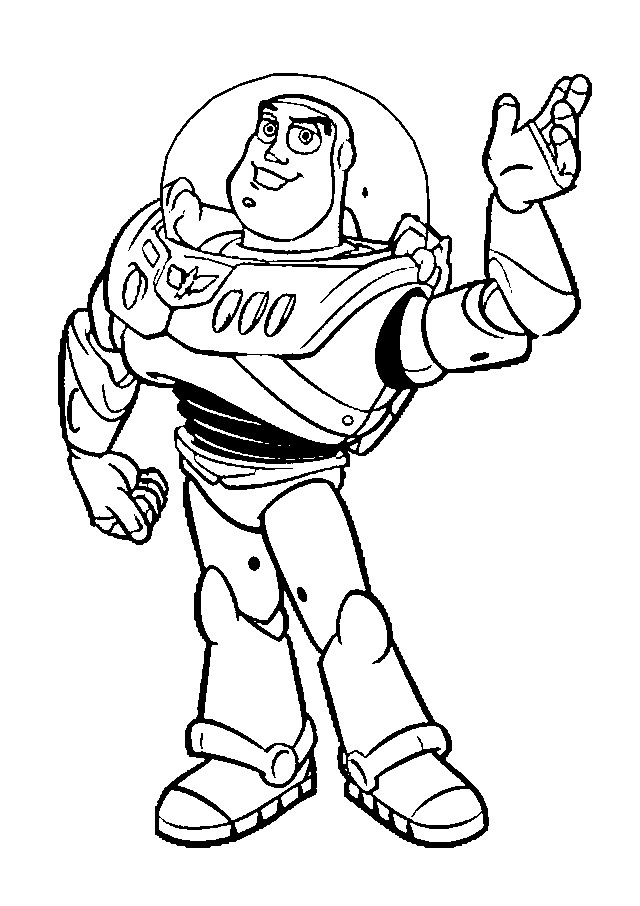
The helmet is a transparent dome with a green tint in many classic depictions, allowing full visibility of Buzz’s face while protecting it. His face shows the specific confident, square-jawed heroic quality that the character’s voice and personality consistently reinforce: he is designed to look like what he believes himself to be, even in the face of evidence to the contrary.
Coloring Buzz portrait pages: The white suit areas use clean, bright white at full coverage, applied evenly across all white surfaces. The purple accent elements use medium blue-shifted purple, fully saturated and applied consistently to all purple-designated surfaces: the arm panels, the torso side panels, and any leg accent areas. The helmet dome is transparent: apply a very faint, very pale green wash at minimum pressure over the dome area, light enough to suggest tinted transparency without blocking the face details beneath. The chest panel buttons use vivid red for the main control elements, with yellow-green for any lit display elements.
Flight and “To Infinity and Beyond” Pages
“To infinity and beyond!” is Buzz Lightyear’s signature phrase, spoken at the moment of commitment to action: when he steps off a ledge, when he launches into flight, when he commits to a mission that seems impossible. The phrase’s structure is what gives it its specific resonance: “infinity” already means everything, already means without end, and “beyond” asserts that the goal exceeds even that boundless category. For a toy who genuinely believes he is a Space Ranger on a universal mission, the phrase is a sincere statement of purpose. For the audience who knows he is a toy, it is simultaneously a declaration of genuine character and a moment of gentle irony.
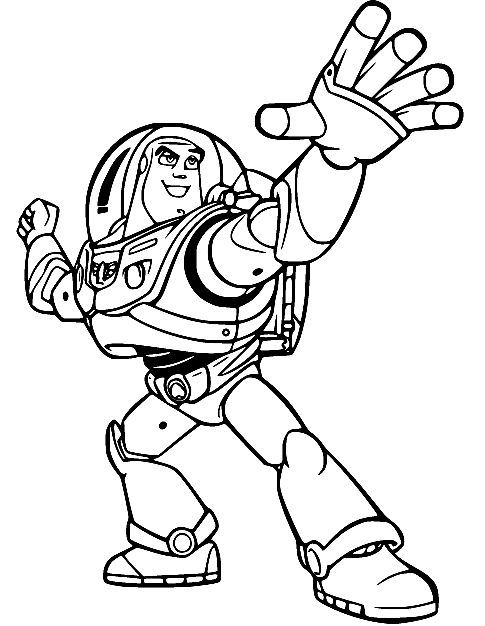
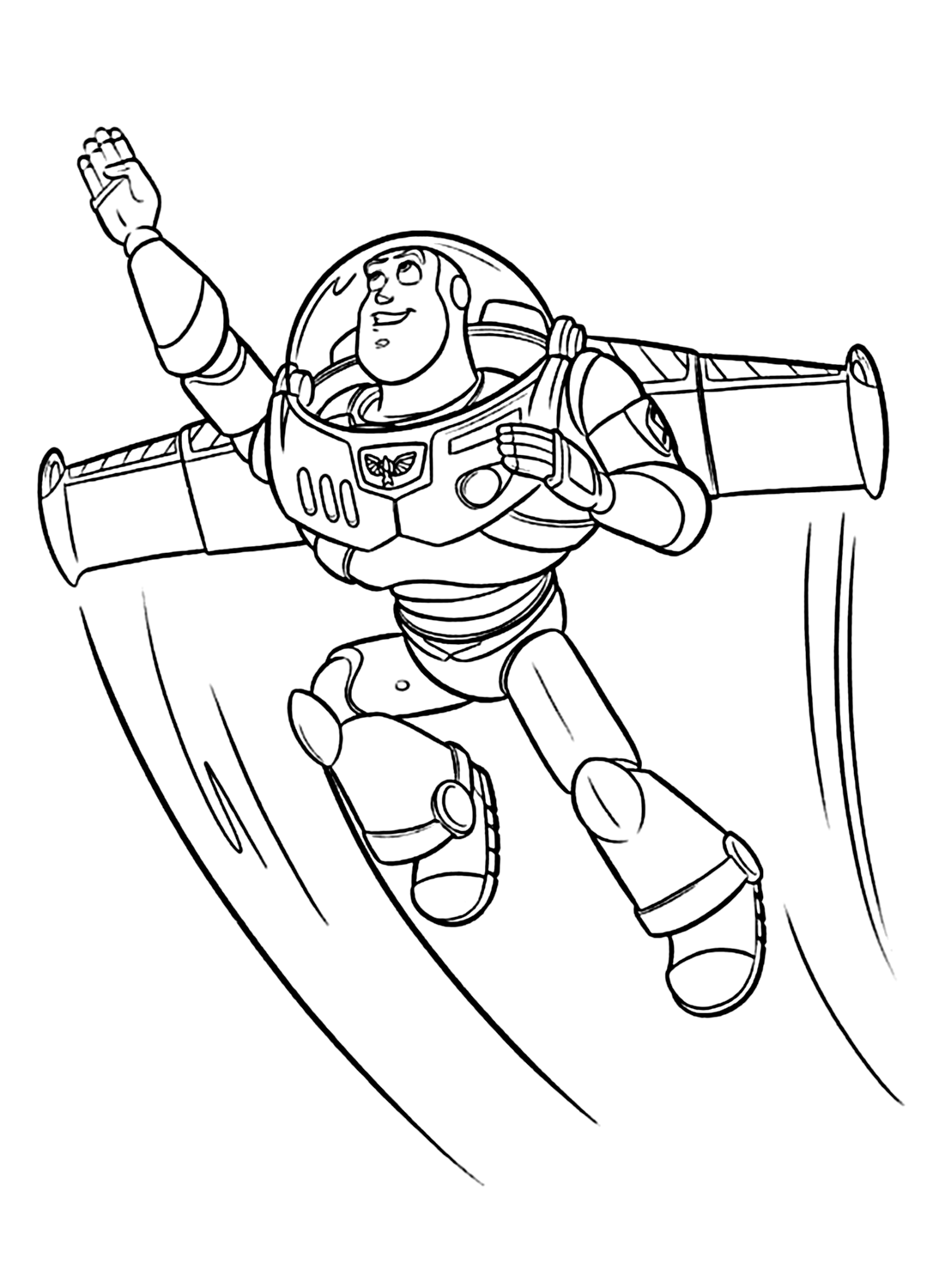
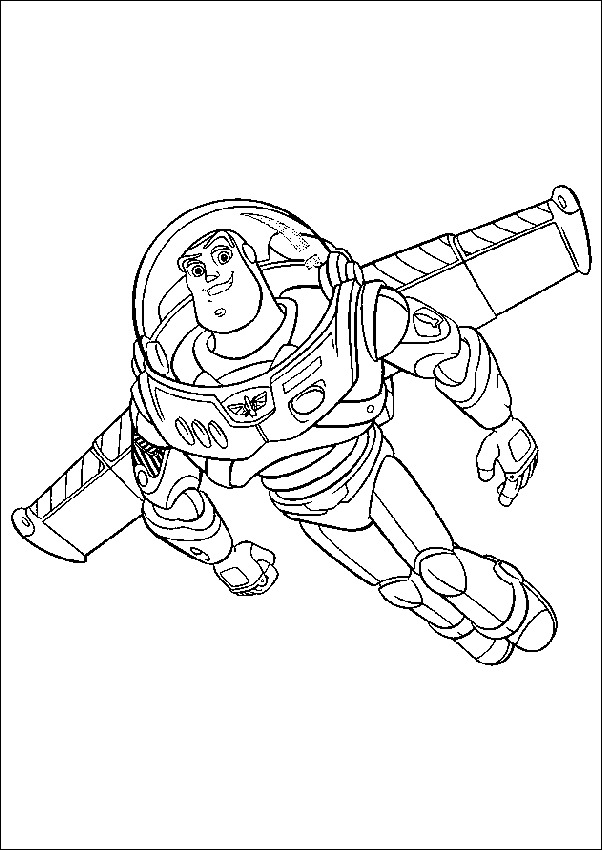
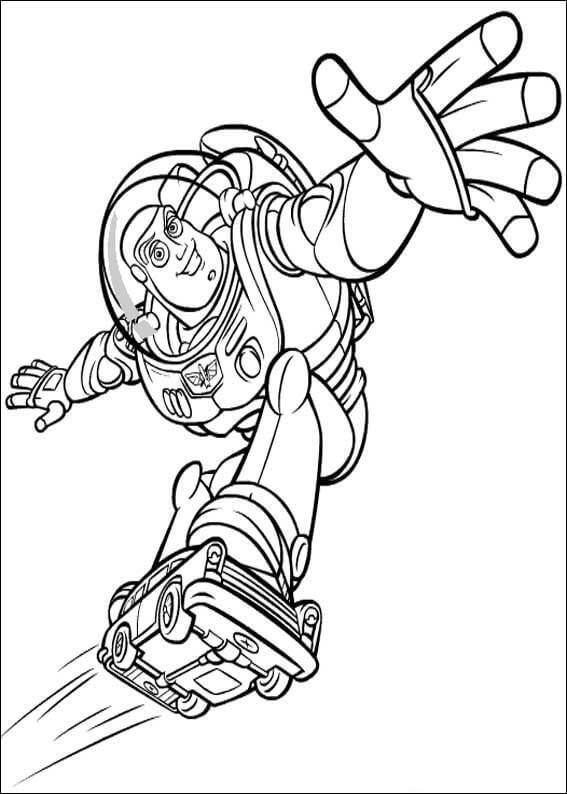
Flight pages show Buzz with his wings deployed: small white wings that extend from the back of his suit and are decorated with small silver-metallic accents. In the context of the first film, Buzz’s “flight” at Andy’s house is actually a series of coincidental bounces, ricochets, and fortunate accidents that he interprets as controlled flight. The famous sequence ends with Buzz riding inside a rocket attached to a flying RC car while the line “This isn’t flying, this is falling with style!” is delivered by Woody. Both are correct.
Coloring flight pages: The wings, when deployed, show white primary surfaces with small silver-metallic accent details. Any speed or motion effects should be applied in pale blue-grey at minimum pressure, reading as motion rather than as solid shapes. Space or sky backgrounds behind the flying Buzz use deep midnight blue or near-black for space settings with small star dot highlights, or warm blue for daytime settings above Andy’s house.
Buzz and Woody: Duo Pages
The friendship between Buzz Lightyear and Woody the cowboy is the emotional core of the Toy Story franchise: a partnership between two toys whose opposing personalities and initially hostile relationship transform over four films into one of animated cinema’s most deeply established friendships. Woody, voiced by Tom Hanks in all four films, is a pull-string cowboy doll who predates Buzz as Andy’s favorite toy and initially regards Buzz’s arrival as a competitive threat.
The specific visual contrast between Buzz and Woody is one of the franchise’s most intentional design choices: Buzz’s sleek, high-tech, white-and-purple space suit reads as modern and exciting against Woody’s warm, slightly worn, brown-and-yellow cowboy costume. The contrast between the technological future and the nostalgic past is not just a visual opposition but the thematic foundation of the first film’s conflict.
Coloring Buzz and Woody pages: The color contrast between the two characters should be maximized. Buzz’s white suit at full brightness against Woody’s warm cowboy palette (warm yellow for the star design on his vest, warm brown for his cowboy hat and boots, the specific warm red-orange of his shirt). The visual contrast when both characters appear together is what makes the duo pages compositionally effective: the cool white and purple of Buzz against the warm browns and yellows of Woody.
Emperor Zurg Pages
Emperor Zurg, Buzz Lightyear’s in-universe nemesis in the fictional Buzz Lightyear franchise, is a large, imposing villain in dark purple and black armor who wields an ion blaster. He is a direct parody of the Darth Vader archetype: the dark, imposing intergalactic villain who opposes the brave Space Ranger.
His most memorable franchise moment comes in Toy Story 2 (1999), when a Zurg toy from the same product line encounters one of the alternative Buzz toys (who, like the original Buzz in the first film, believes himself to be the real Space Ranger). Zurg declares, “I am your father,” directly referencing The Empire Strikes Back (1980) revelation scene, at which point the alternative Buzz drops to his knees in shock. The sequence parodies the Star Wars scene while also establishing that, within the Buzz Lightyear toy mythology, Zurg is canonically Buzz’s father figure.
Coloring Zurg pages: His armor is deep purple or dark purple-black, the darkest available tone in the purple family. The Omega symbol on his chest is a slightly lighter purple or white. His weapon (the ion blaster) is dark grey metallic. His eyes glow red within his dark helmet visor: apply vivid red at the eye position, providing the only warm vivid color accent in an otherwise cool, dark composition.
The Lightyear (2022) Design Pages
The 2022 film Lightyear, directed by Angus MacLane, presents the fictional film within the Toy Story universe that supposedly inspired the Buzz Lightyear toy. This Buzz is a human astronaut rather than a toy: Buzz Lightyear, as he would appear in the in-universe science fiction franchise. Chris Evans voiced this version.
The Lightyear design is a more grounded, realistic space suit interpretation of the toy’s design: similar color palette (white with purple accents) but with the texture, functional detail, and weathering of a functional space exploration suit rather than a mass-produced toy’s simplified surface. The helmet is more integrated with the suit, the surface details are more technically elaborate, and the overall aesthetic is closer to realistic astronaut equipment than to the toy version.
Coloring Lightyear (2022) design pages: The same white and purple palette as the toy Buzz, but with more complex surface detail work: the white has more texture variation, suggesting the specific surface quality of functional space suit material rather than smooth plastic. Shadow areas in the suit folds and structural elements use cool grey rather than the flat white of the toy design. The purple accents are in the same family as the toy but may have more material depth.
Group and Ensemble Pages
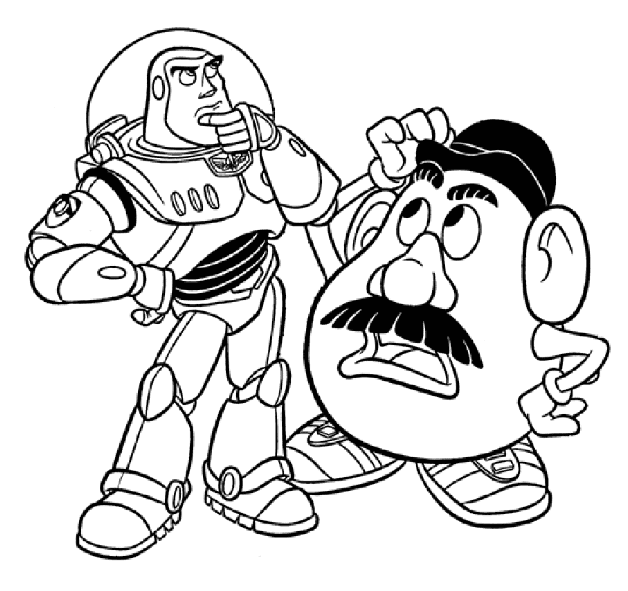
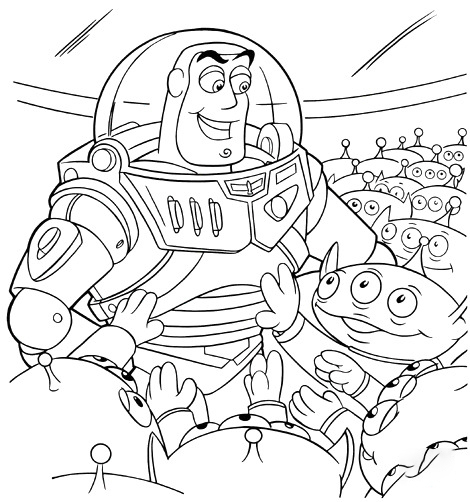
Group pages featuring Buzz alongside Rex, Hamm, Slinky Dog, Mr. Potato Head, and the Little Green Men / Squeeze Toy Aliens give the collection its widest color range: the ensemble of Andy’s toys represents a diverse palette of toy types, materials, and colors that contrasts effectively with Buzz’s predominantly white suit.
Coloring ensemble pages: Apply Buzz’s white and purple first as the compositional anchor. Rex (the green T. rex toy) is vivid medium green. Hamm (the piggy bank) is vivid pink or rose. Slinky Dog is warm tan-brown. The Little Green Men are vivid medium green with large three-eyed faces. The contrast among all these colors against Buzz’s white and purple creates a compositionally rich palette that rewards careful advance planning.
What These Pages Do
Toy Story was the first feature-length computer-animated film ever made, and its November 22, 1995, release is a documented milestone in both cinema and computer science history. The film was produced by Pixar using RenderMan, Pixar’s proprietary rendering software, on a network of Unix workstations. Individual frames required significant computational time to render, and the production used what was at the time an unprecedented computing infrastructure for feature film production.
John Lasseter’s decision to anchor the film’s emotional and narrative center in the friendship between Woody and Buzz, rather than in the novelty of the technology that produced it, established the template for all subsequent Pixar films: the CGI was in service of character and story, not the reverse. This creative principle, consistently applied across Pixar’s subsequent productions, has been credited by film scholars and animation researchers as the reason Pixar’s early films have retained their emotional effectiveness despite significant advances in CGI quality since 1995.
The American Academy of Pediatrics identifies fine motor skill development as a key childhood milestone throughout early childhood. The suit panel detail on Buzz’s chest, the circular dome helmet’s curves, the precise button positions in the chest control panel, the wing deployment detail, and the wrist laser’s specific form all provide sustained fine motor practice across the collection’s age range. The 2005 Art Therapy Journal study on structured coloring and anxiety reduction applies throughout.
Buzz’s character arc across the franchise, from the comic grandiosity of his belief in his own Space Ranger reality in the first film to the wisdom of his eventual acceptance of his identity as a beloved toy, provides the collection’s pages with a narrative context that children who have watched the films will bring to the coloring activity.
How to Color These Pages Well
Buzz’s white suit must be kept clean and bright throughout the entire coloring process. The most important technical decision on any Buzz Lightyear page is maintaining the specific, clean, bright white of his suit against all surrounding colors. Any contamination of the white areas by surrounding colors reduces the suit’s heroic visual quality. Plan the coloring sequence so that the white areas are protected: apply the purple accent elements first, then work the white inward from the edges of the purple, keeping the white areas clean throughout.
The purple accent elements use a consistent specific purple that should not drift toward blue or red. The purple in Buzz’s suit is a medium blue-shifted purple: it reads as clearly purple without approaching violet (too blue) or magenta (too red). Apply the same purple consistently to every purple-designated surface on the suit. Any inconsistency in the purple, where some areas appear more blue and others more red, breaks the visual coherence of the suit’s design.
The helmet dome transparency requires the lightest possible touch. The dome over Buzz’s face is transparent, showing his face through the material. To suggest this transparency without obscuring the face, apply a very pale, very cool green-grey across the dome area at minimum pressure: just enough to suggest the tinted material without blocking the face details beneath. The dome’s reflective highlight (a small bright curved white area on one edge of the dome) should remain as the paper’s natural white with no color applied.
The chest control panel requires the most precise small-scale work on the page. The buttons and display elements on Buzz’s chest panel are small and must be individually applied. Apply the red button elements first (the largest control elements). Then the yellow-green display elements. The panel background is slightly darker grey than the surrounding white suit, creating a framed inset quality. If the panel is too small for precise individual button work, apply the overall panel area in the appropriate muted control-panel grey and add the button colors as small accent marks within it.
Wings, when deployed, require a subtle metallic-silver detail at the wing structure. The wings that pop from Buzz’s back are primarily white but have small structural elements at their hinges and along their leading edges that read as metallic silver. Apply these metallic elements in a light grey that has a very subtle warm undertone (to suggest metal rather than cool grey plastic), along the structural lines of the wing panel.
5 Creative Craft Ideas
The First CGI Feature Page
Toy Story (1995) is the first feature-length computer-animated film in history. Print the most heroic Buzz Lightyear standing pose in the collection. Color in full canonical white and purple.
On the backing card: “Toy Story. Pixar Animation Studios / Walt Disney Pictures. Released November 22, 1995. Director: John Lasseter. The first feature-length computer-animated film ever made. Budget: approximately $30 million. Box office: $373 million. Tim Allen as Buzz Lightyear. Tom Hanks as Woody. The individual frames are rendered on a network of workstations, requiring hours per frame. The film demonstrated that CGI could tell an emotionally resonant story. The Toy Story franchise has since earned over $3 billion worldwide.”
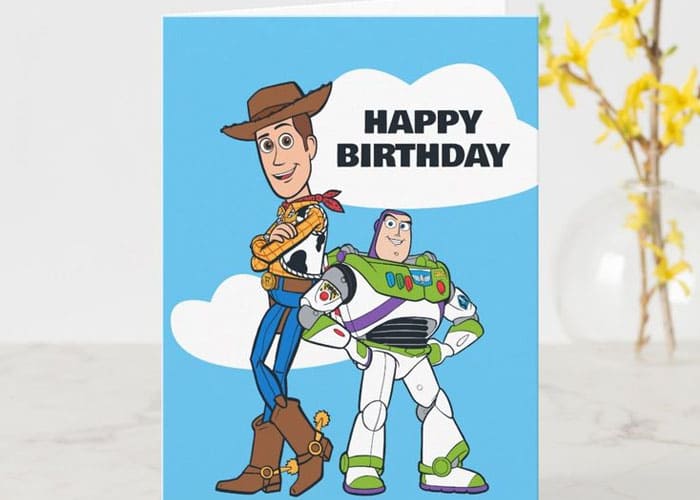
The “Falling With Style” Moment
In Toy Story (1995), Buzz Lightyear demonstrates his “flying” to the other toys at Andy’s house through a sequence that is actually a series of coincidental bounces, ricochets, and lucky accidents he interprets as controlled flight. Woody’s response is: “That’s not flying, that’s falling with style.” Buzz’s response is to push his wings out button and confirm: “To infinity and beyond!” Both are making accurate statements about what just happened. Both are also making accurate statements about Buzz as a character.
Print a Buzz in-flight page with wings deployed. Color in full canonical colors.
On the backing card: “The flight sequence. Andy’s room. Toy Story (1995). What Buzz believed was happening: controlled Space Ranger flight. What was actually happening: a bounce off a ball, a ricochet off a race track loop, a landing on a toy car, an RC car launch, and a glide on deployed wings that Woody called ‘falling with style.’ Buzz’s response to being told this: ‘To infinity and beyond!’ Both were right.”
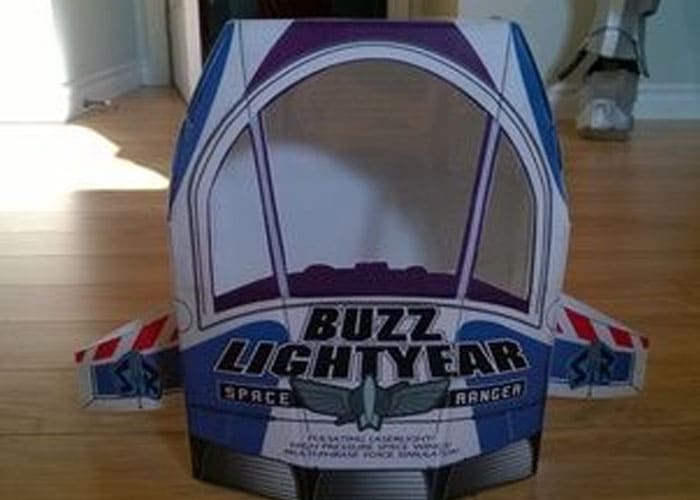
Make a Buzz Lightyear Toy Box (Resource: instructables.com)
The Zurg Father Reveal Parody
In Toy Story 2 (1999), a Zurg toy from the same product line as Buzz encounters the alternative Buzz Lightyear toy. When the alternative Buzz asks who Zurg is, Zurg declares, “I am your father!” in direct parody of the Darth Vader/Luke Skywalker revelation scene from Star Wars: The Empire Strikes Back (1980, directed by Irvin Kershner). The alternative Buzz drops to his knees in shock.
Print one Buzz page and one Zurg page. Color Buzz in canonical white and purple. Color Zurg in deep dark purple-black armor.
Mount both: “Toy Story 2. 1999. The scene: a Zurg toy and an alternative Buzz toy, both of whom believe they are real. The line: ‘I am your father!’ The reference: The Empire Strikes Back (1980), Irvin Kershber, director. Darth Vader to Luke Skywalker. The Toy Story version: Zurg to Buzz. The alternative Buzz’s response: drops to his knees. Woody’s response: silent. John Lasseter’s team: paid attention to everything.”

The Spanish Mode Page
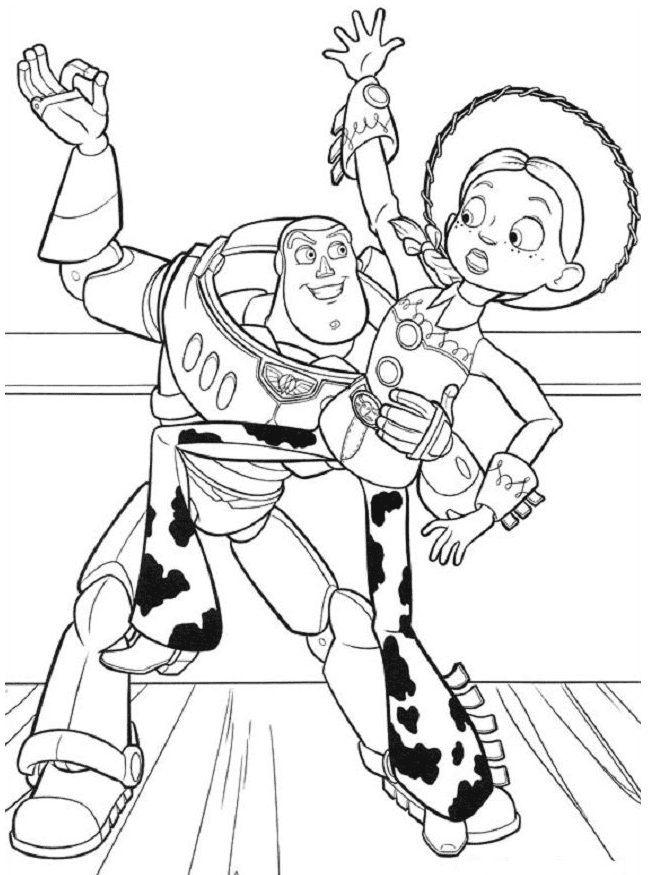
In Toy Story 3 (2010), Buzz Lightyear is accidentally reset to his Spanish language mode by Lotso’s henchman. In Spanish mode, Buzz becomes a dramatically different character: a romantic flamenco dancer who serenades Jessie and speaks in passionate Spanish while striking theatrical poses. The sequence was widely cited in reviews as one of the film’s most unexpectedly funny sequences.
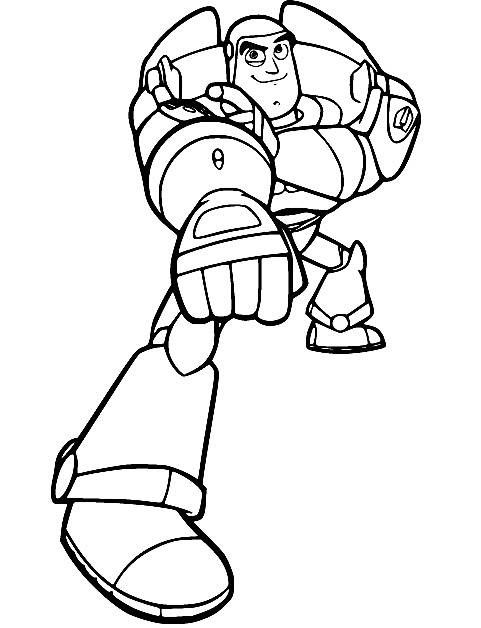
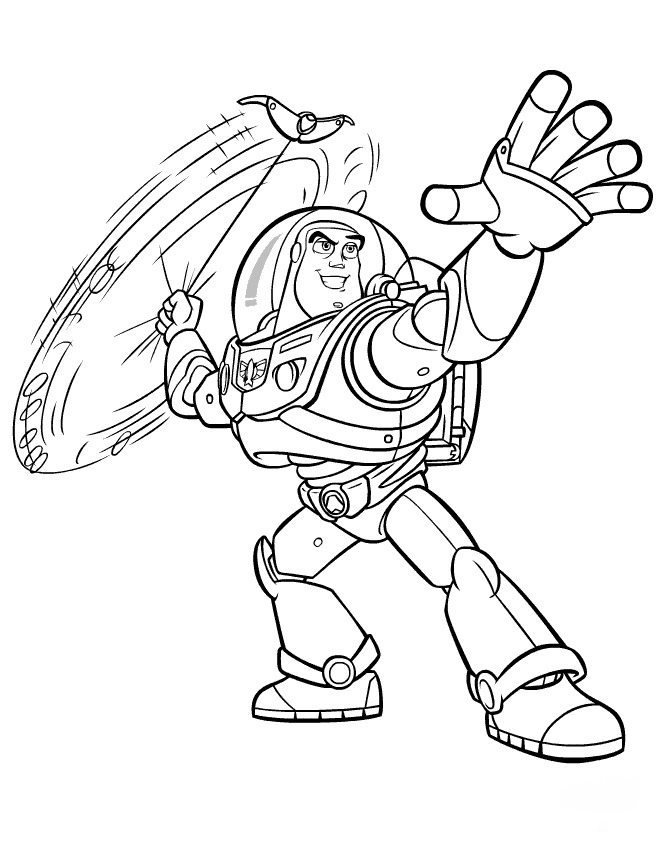
Print the most action-oriented or dramatic Buzz pose in the collection. Color in canonical white and purple.
On the backing card: “Toy Story 3. Released June 18, 2010. The Spanish mode sequence: Buzz Lightyear is accidentally reset to his Spanish language settings. The result: a flamenco-dancing, romantic Spanish-speaking version of Buzz Lightyear who serenades Jessie. The cause: the reset button. The fix: a second reset. Before the fix: the most unexpected dance sequence in Pixar history. Toy Story 3: Academy Award for Best Animated Feature, 83rd Academy Awards, 2011.”
The Tim Allen and Chris Evans Study
Tim Allen voiced Buzz Lightyear in the four Toy Story films (1995, 1999, 2010, 2019). Chris Evans voiced Buzz Lightyear in Lightyear (2022), the origin film designed to show the in-universe movie that inspired the toy. The change from Allen to Evans for the 2022 film was noted by fans and media, with Tim Allen publicly expressing that he had expected to reprise the role.
Print one page that references the classic toy Buzz design and one page that references the Lightyear (2022) more realistic space suit design. Color the toy design in the clean, bright white and vivid purple of the classic Pixar toy aesthetic. Color the Lightyear design in the slightly more textured, more realistically detailed version of the same white-and-purple palette.
Mount both: “Buzz Lightyear as toy: Tim Allen, Toy Story (1995), Toy Story 2 (1999), Toy Story 3 (2010), Toy Story 4 (2019). Buzz Lightyear as astronaut: Chris Evans, Lightyear (2022). Same character. Different interpretations. Same catchphrase. Same colors. The toy is inspired by the movie. The movie is inspired by the toy that inspired children to imagine.”
Frequently Asked Questions
Who is Buzz Lightyear, and what is his origin? Buzz Lightyear is a fictional character created by Pixar Animation Studios, first appearing in Toy Story, released on November 22, 1995, as the first feature-length computer-animated film ever made. Within the Toy Story fictional world, Buzz is a “Buzz Lightyear Space Ranger” action figure from a popular in-universe toy brand. His central characteristic in the first film is that he believes himself to be the real Buzz Lightyear, an actual Space Ranger from the planet Morph on a mission to defeat Emperor Zurg, rather than accepting that he is a toy. The arc of his acceptance of his identity as a beloved toy, and his understanding that this identity is genuinely meaningful constitutes his primary character development. He was voiced by Tim Allen in all four Toy Story films (1995-2019) and by Chris Evans in the 2022 spin-off film Lightyear.
What are the details of Buzz Lightyear’s suit, and why is it designed that way? Buzz Lightyear’s suit is primarily white with medium purple accent panels on the sides of the torso, arms, and legs. It features a transparent dome helmet with a slight green tint, a chest control panel with buttons in red and yellow-green, small deployable wings on the back with metallic structural elements, and a wrist laser on the left arm. The design deliberately reads as both a functional space suit (with structural articulations, a life support chest panel, and a protective helmet) and a mass-produced toy (with action-feature buttons, simplified surface detail, and the specific bright palette of a children’s toy). This dual reading reflects Buzz’s own situation throughout the franchise: he is simultaneously a Space Ranger (in his own belief) and a toy (in reality), and his design embeds both truths in its visual language.
Which Toy Story films has Buzz Lightyear appeared in? Buzz Lightyear has appeared as a primary character in all four Toy Story theatrical films: Toy Story (directed by John Lasseter, released November 22, 1995), Toy Story 2 (directed by John Lasseter and Ash Brannon, released November 24, 1999), Toy Story 3 (directed by Lee Unkrich, released June 18, 2010), and Toy Story 4 (directed by Josh Cooley, released June 21, 2019, which won the Academy Award for Best Animated Feature at the 92nd Academy Awards). He also appeared in the spin-off film Lightyear (directed by Angus MacLane, released June 17, 2022), in which Chris Evans voiced a human astronaut version of the character who is presented as the fictional in-universe figure who inspired the toy.
Who is Emperor Zurg? Emperor Zurg is the primary villain from the fictional Buzz Lightyear in-universe franchise (the toy line and media property that the Buzz Lightyear action figure is based on in the Toy Story world). He is a large, imposing figure in dark purple and black armor who declares his mission as galactic domination and who Buzz is sworn to defeat. In Toy Story 2 (1999), a Zurg toy encounters one of the alternative Buzz Lightyear toys (who, like the original Buzz in the first film, believes himself to be the real Space Ranger). Zurg declares, “I am your father!” in direct parody of the Darth Vader reveal in The Empire Strikes Back (1980), at which point the alternative Buzz collapses in shock. Within the Lightyear (2022) film, Zurg’s character is given a significantly different and more complex treatment.
What is the historical significance of Toy Story? Toy Story (1995) is the first feature-length film produced entirely using computer-generated imagery (CGI). Before its release, CGI had been used for effects sequences in live-action films and for shorter animated segments, but no studio had produced a fully computer-animated theatrical feature of feature length. Pixar Animation Studios, founded in 1986 from the computer graphics division of Lucasfilm after Steve Jobs purchased it, spent years developing the computational and artistic capabilities that made Toy Story possible. The film demonstrated that CGI could support sustained narrative storytelling and genuine emotional connection at feature length. Disney acquired Pixar in January 2006 for $7.4 billion. The Toy Story franchise has earned over $3 billion worldwide across four films.
What is Lightyear (2022) and how does it relate to Toy Story? Lightyear (2022), directed by Angus MacLane and released June 17, 2022, is a Pixar production that presents itself as the fictional in-universe movie that Andy (the child from the Toy Story films) supposedly saw before asking for the Buzz Lightyear toy. Within this framing, the film shows Buzz as a human astronaut rather than a toy: the real (within the fiction) Space Ranger whose adventures inspired the manufactured action figure. Chris Evans voiced this version of the character. The film was accompanied by some public discussion about Tim Allen not reprising the role. Lightyear earned $226 million worldwide against its $200 million budget, a performance considered below Pixar’s typical theatrical results.
What age group are these pages best suited for? Buzz Lightyear coloring pages serve a very wide age range. The simplest portrait pages with large, clearly defined white and purple areas are accessible from ages three and four, where the character’s instant recognizability and the bold palette of clean white against vivid purple provide immediately clear coloring targets. The more detailed pages with chest panel button work, helmet dome transparency rendering, wing deployment detail, and group ensemble compositions are most rewarding for ages five to ten. The historical context pages about Toy Story‘s status as the first CGI feature film and the character arc discussions are most engaging for older children and adults. Adult fans of the franchise who watched Toy Story in 1995 as children find the most elaborate pages and the nostalgia-anchored craft projects most satisfying.
Browse the full collection at ColoringPagesOnly.com. All 40+ pages free, no sign-up, PDF or PNG, print or color online.
John Lasseter directed the first feature-length computer-animated film in November 1995. The character he put at the center of it believed he was a Space Ranger on a universal mission to defeat Emperor Zurg. He was a toy. This is not a contradiction. Both things are true.
Tim Allen voiced him from 1995 to 2019. Tom Hanks voiced the cowboy beside him. Together they demonstrated that a film about toy learning what they are could make people cry in a cinema in 1995, in 1999, in 2010, and in 2019.
“To infinity and beyond” means: the goal exceeds even everything. For a toy, it means: Andy’s room is enough. Both are correct.
Pick up your brightest white for the suit. Apply at full coverage, protected at every edge. Pick up your medium blue-shifted purple for the accents. The chest panel buttons go last: red for the main controls, yellow-green for the display. The helmet dome gets the lightest possible pale green wash.
Share your work on Facebook and Pinterest and tag #Coloringpagesonly. The First CGI Feature page and the Zurg Father Reveal pages are particularly worth sharing.
Color the suit white. Apply the purple accent panels. To infinity and beyond. Both the toy and the Space Ranger mean it.