
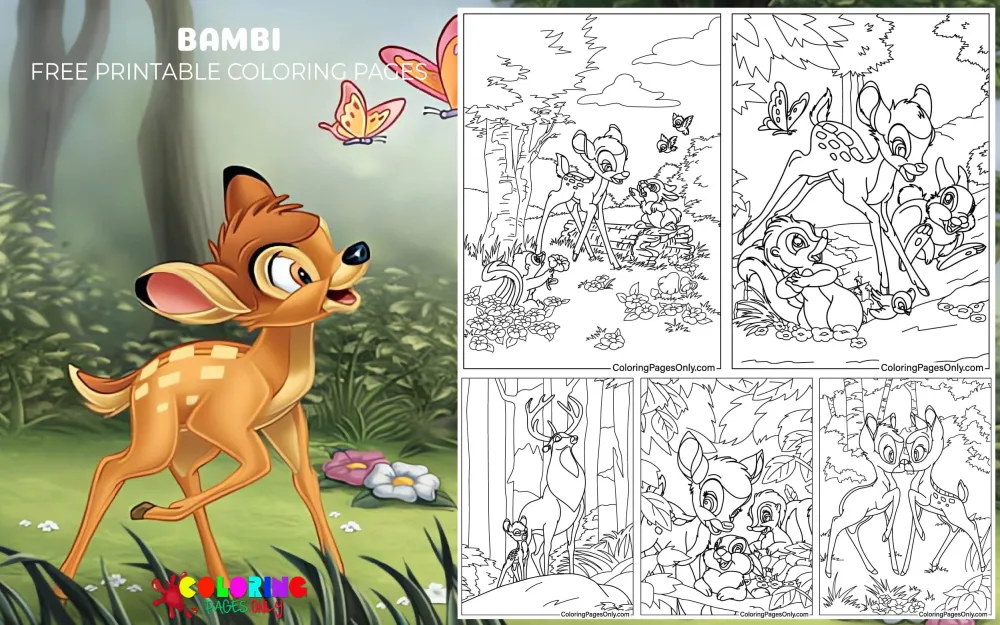
Free Bambi Coloring Pages: 20 printable PDF designs featuring Bambi in classic portraits, forest scenes, and moments with Thumper, Flower, and Faline. Each page can be downloaded as a PDF to print or colored online in the browser.
Bambi is Disney’s 1942 film, based on Felix Salten’s 1923 Austrian novel Bambi, a Life in the Woods, and directed by David Hand with a team of sequence directors. Disney changed Bambi’s species from a roe deer, native to Europe, to a white-tailed deer so he would match the animals native to the American forests shown in the film. This collection colors that same forest, its changing seasons, and the friends who share it with Bambi.
This set works well for a conversation about growing up and finding your place, since the film follows Bambi from a wobbly newborn fawn to the forest’s next Great Prince. The forest and character scenes give an older child more background detail to work through, while the simpler portraits suit a child just starting to color a face and ears.
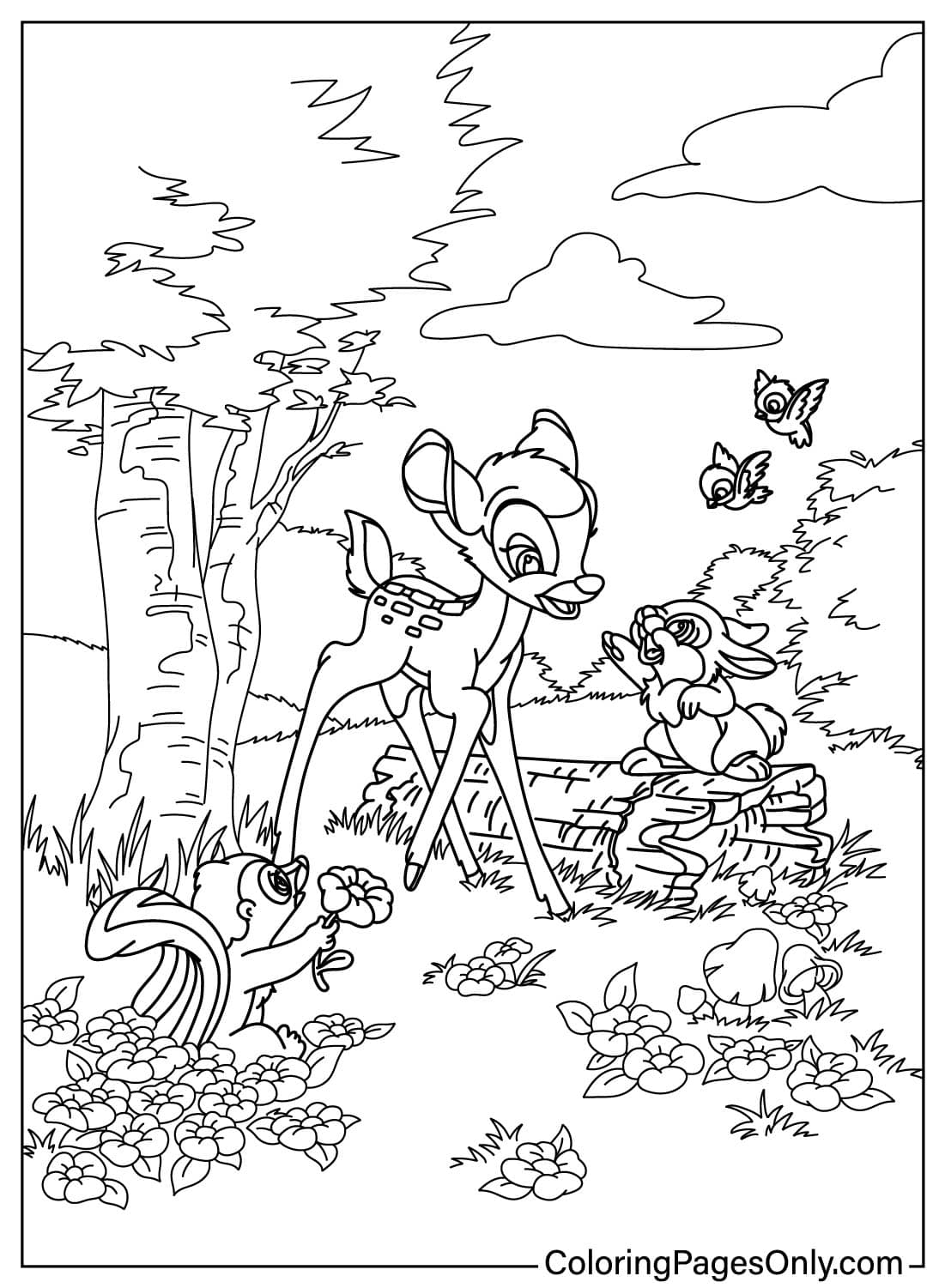
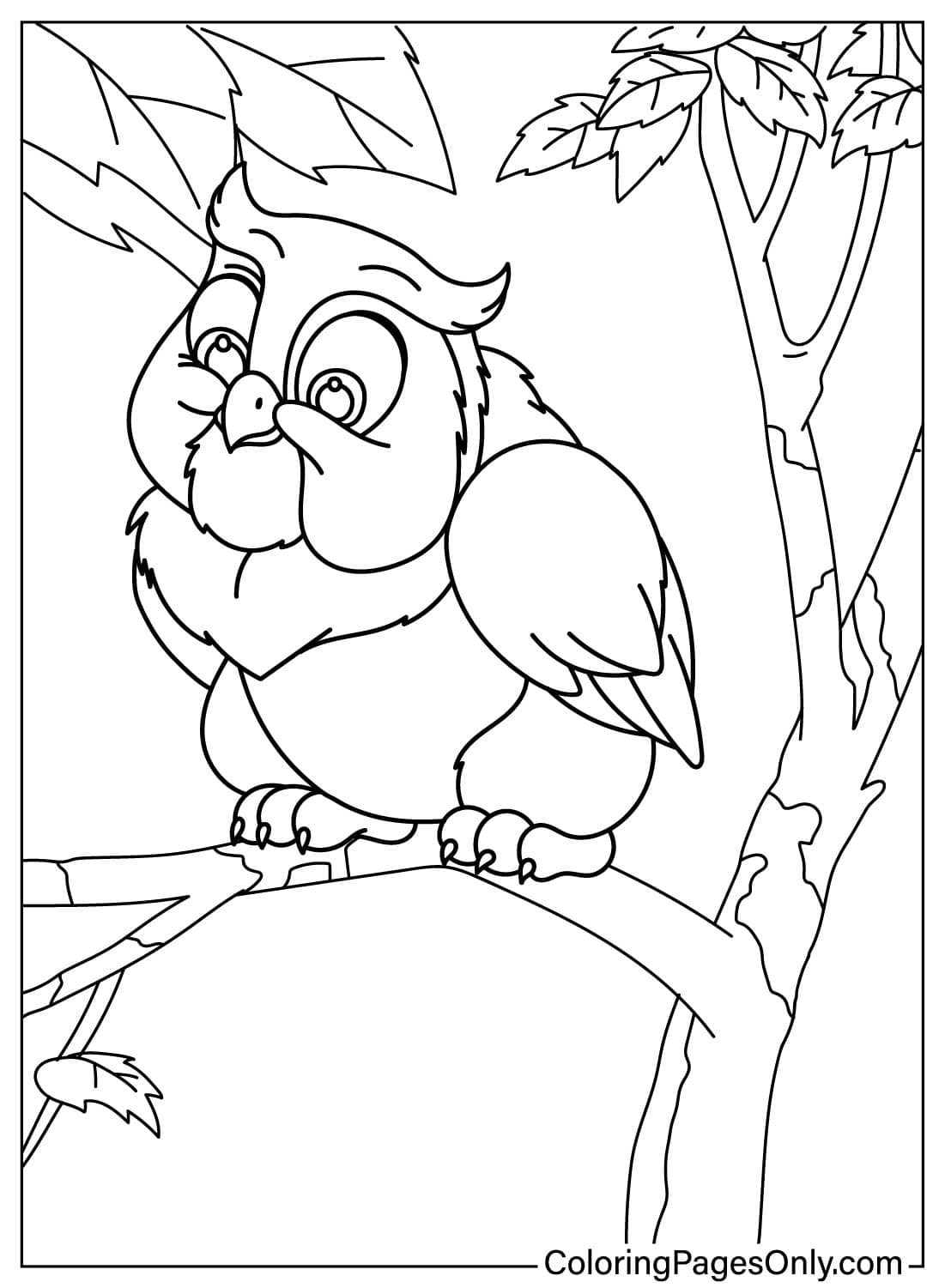
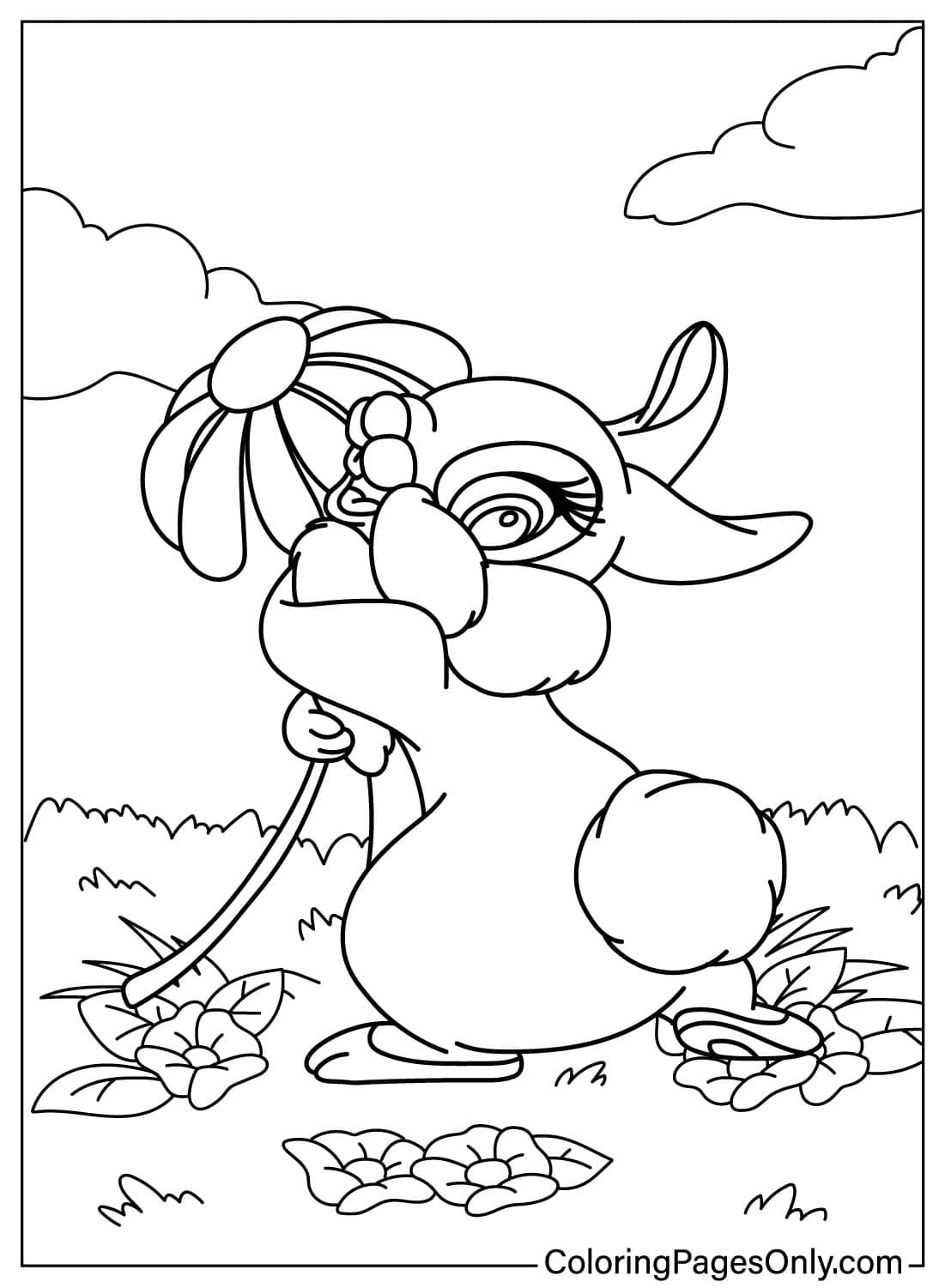
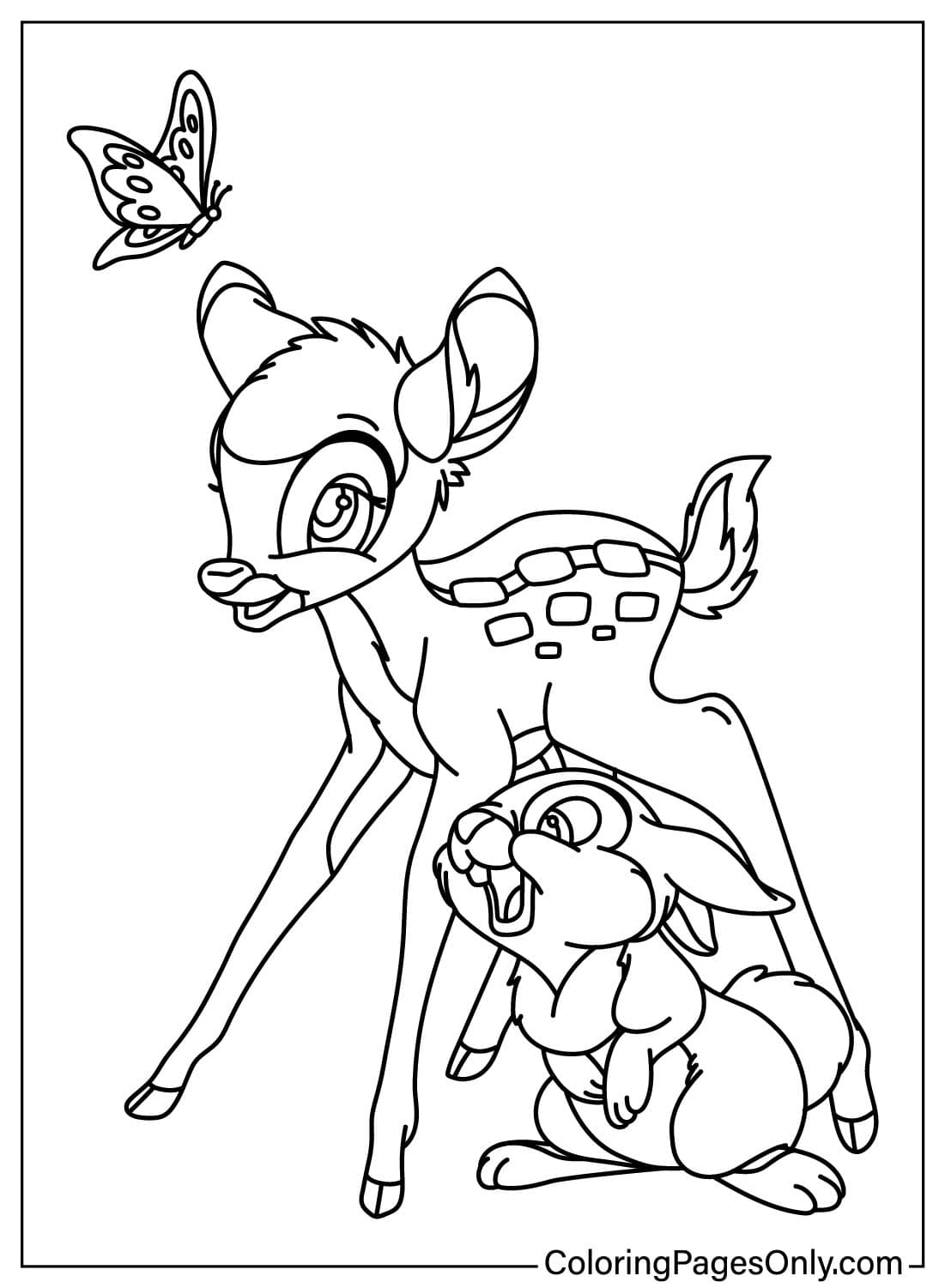
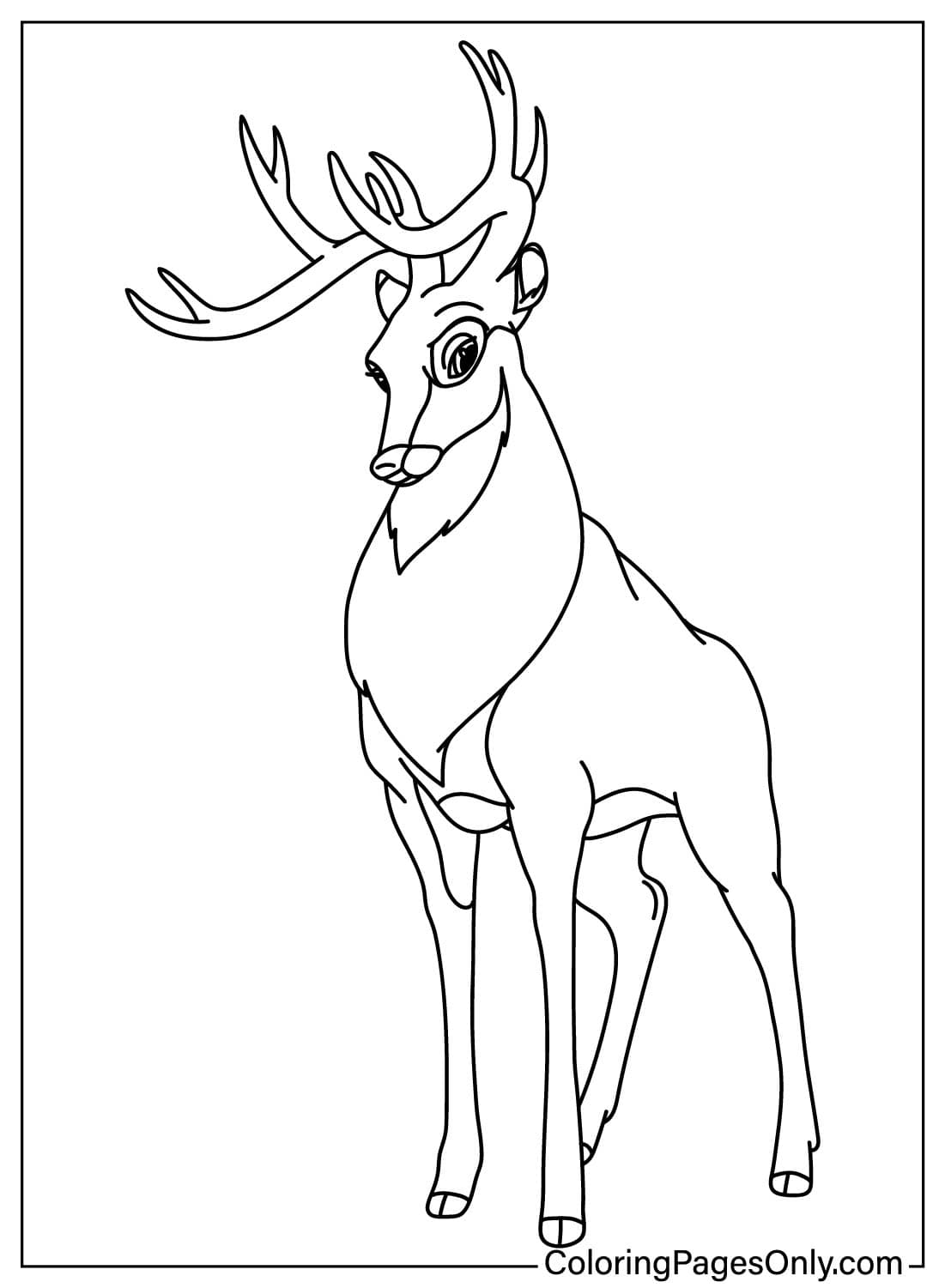
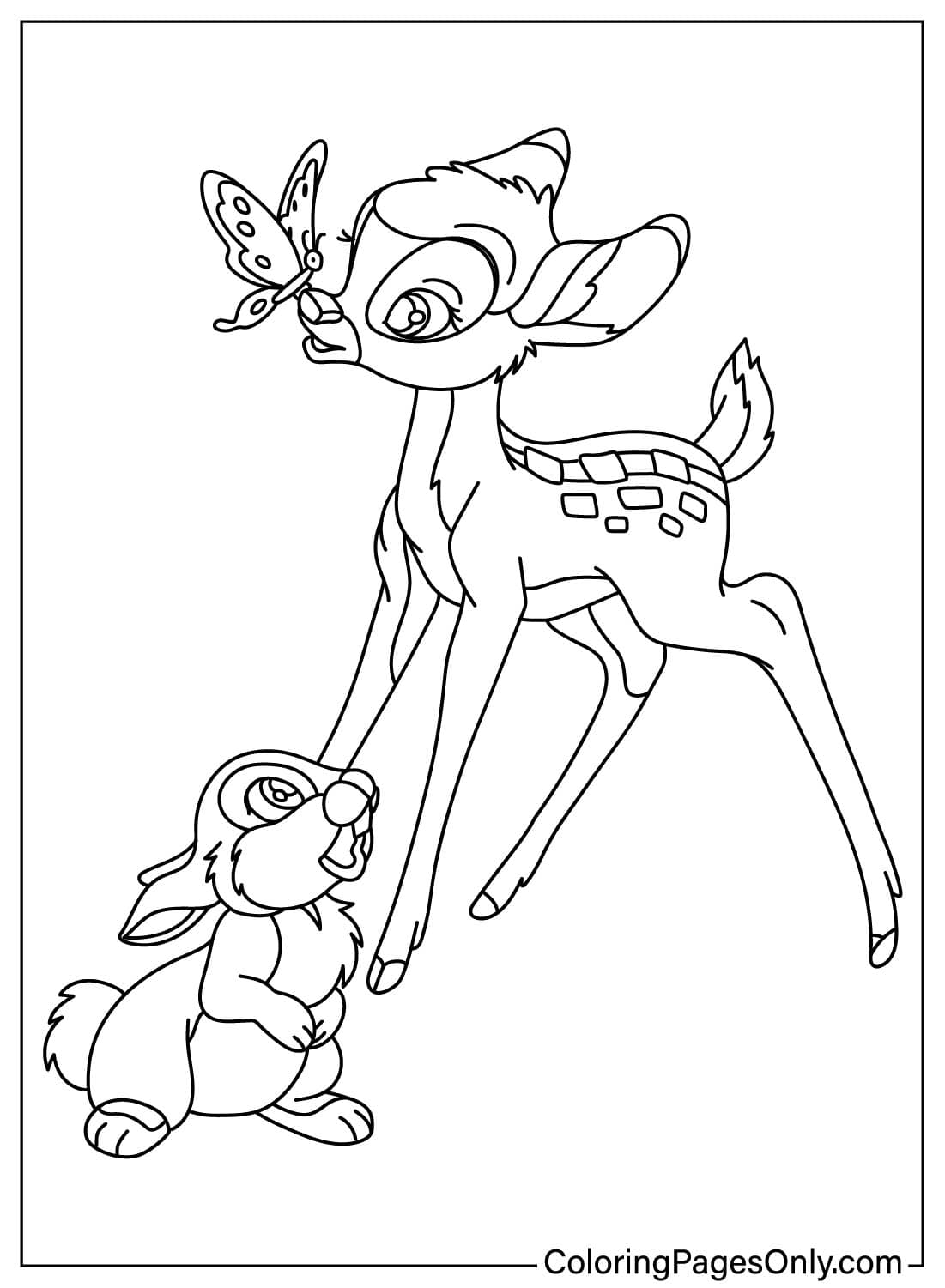
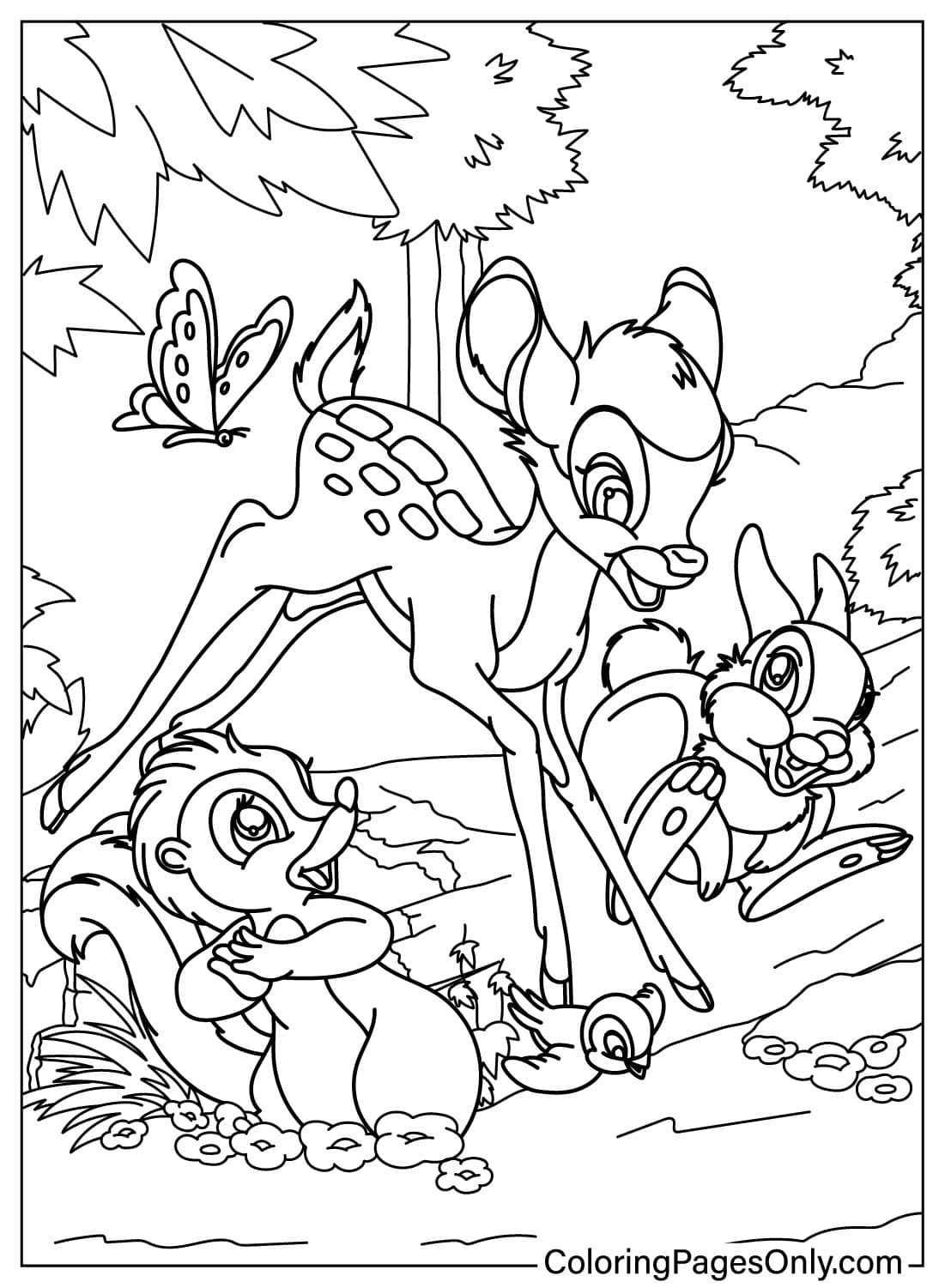
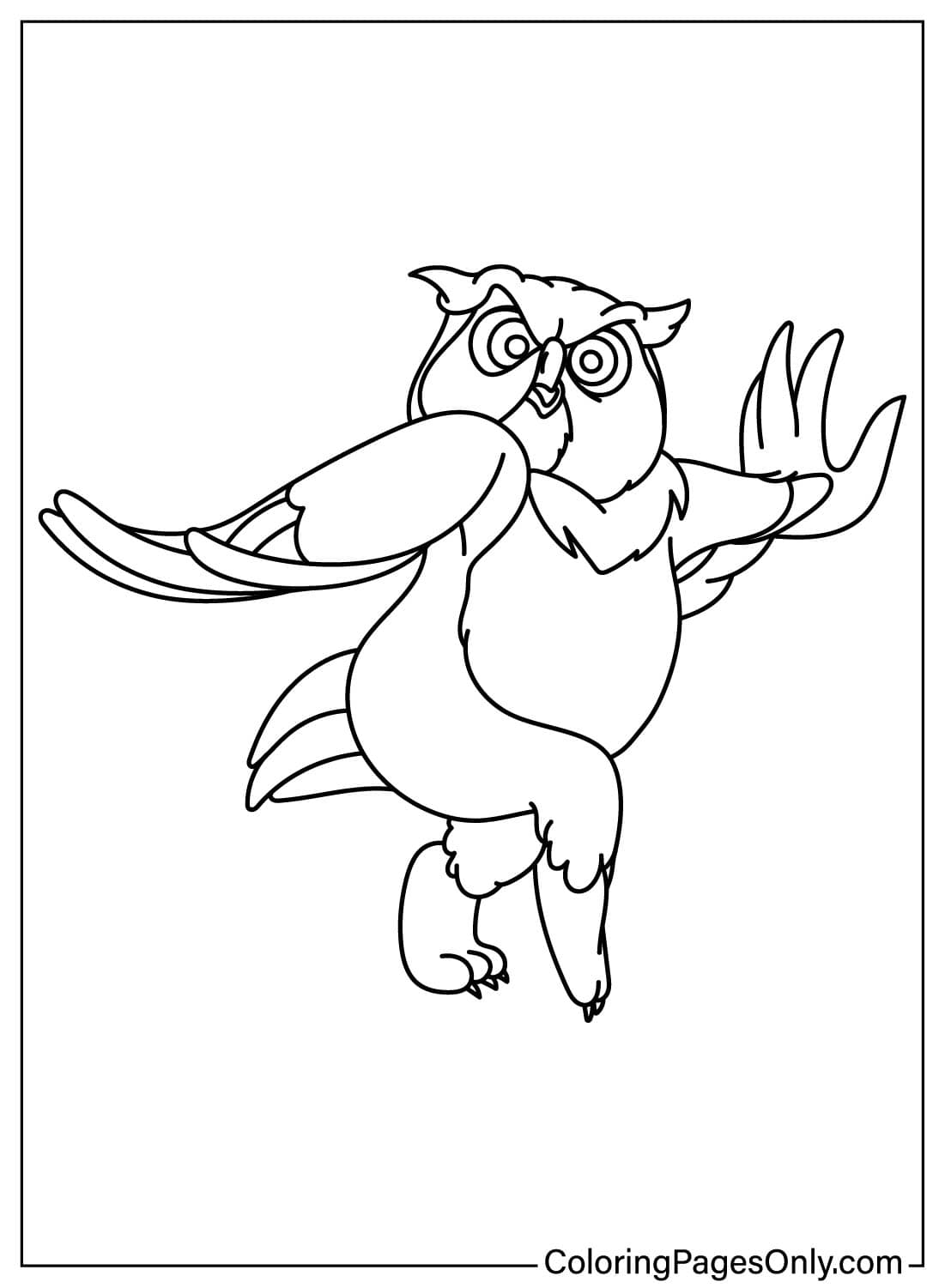
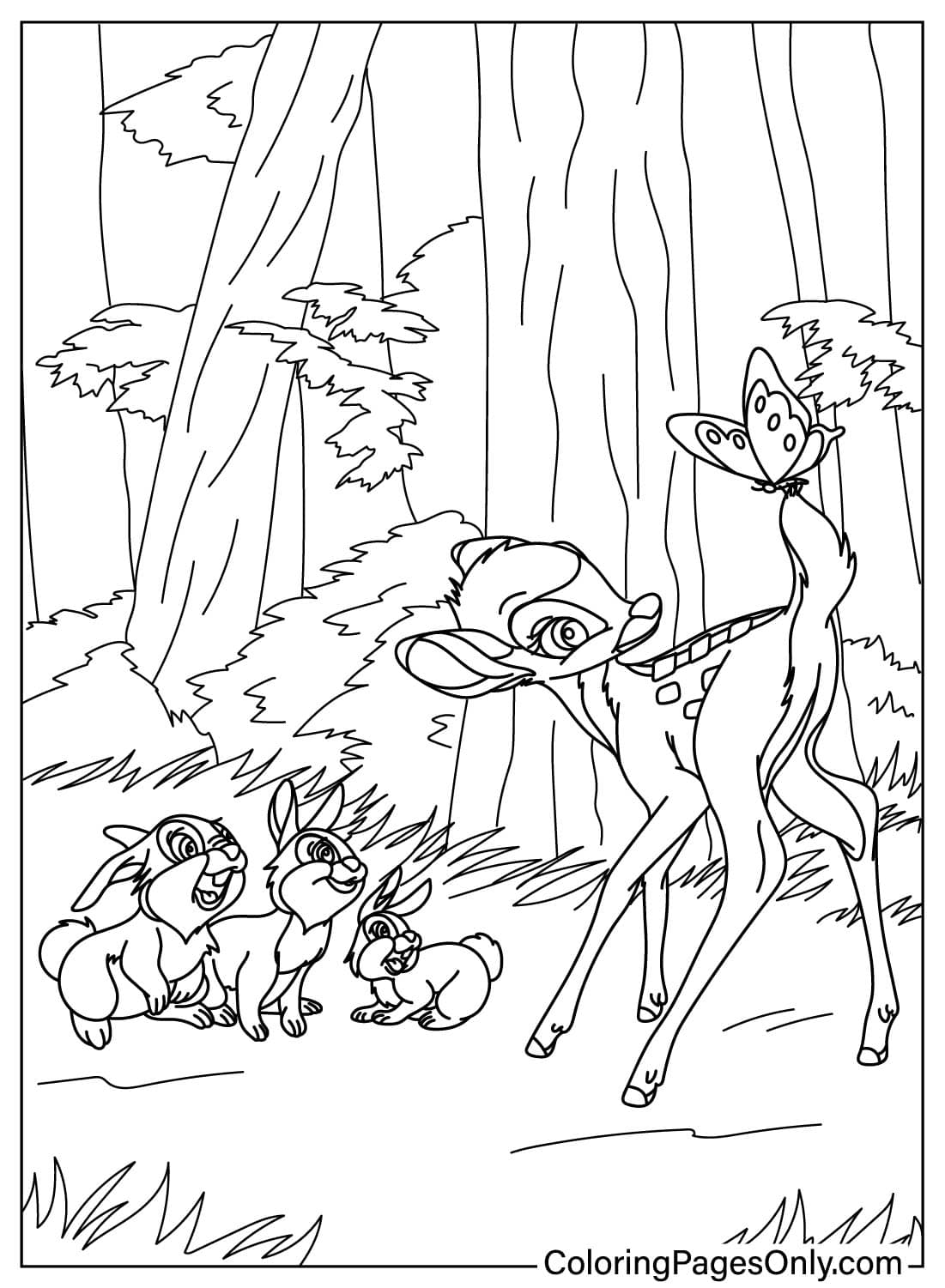
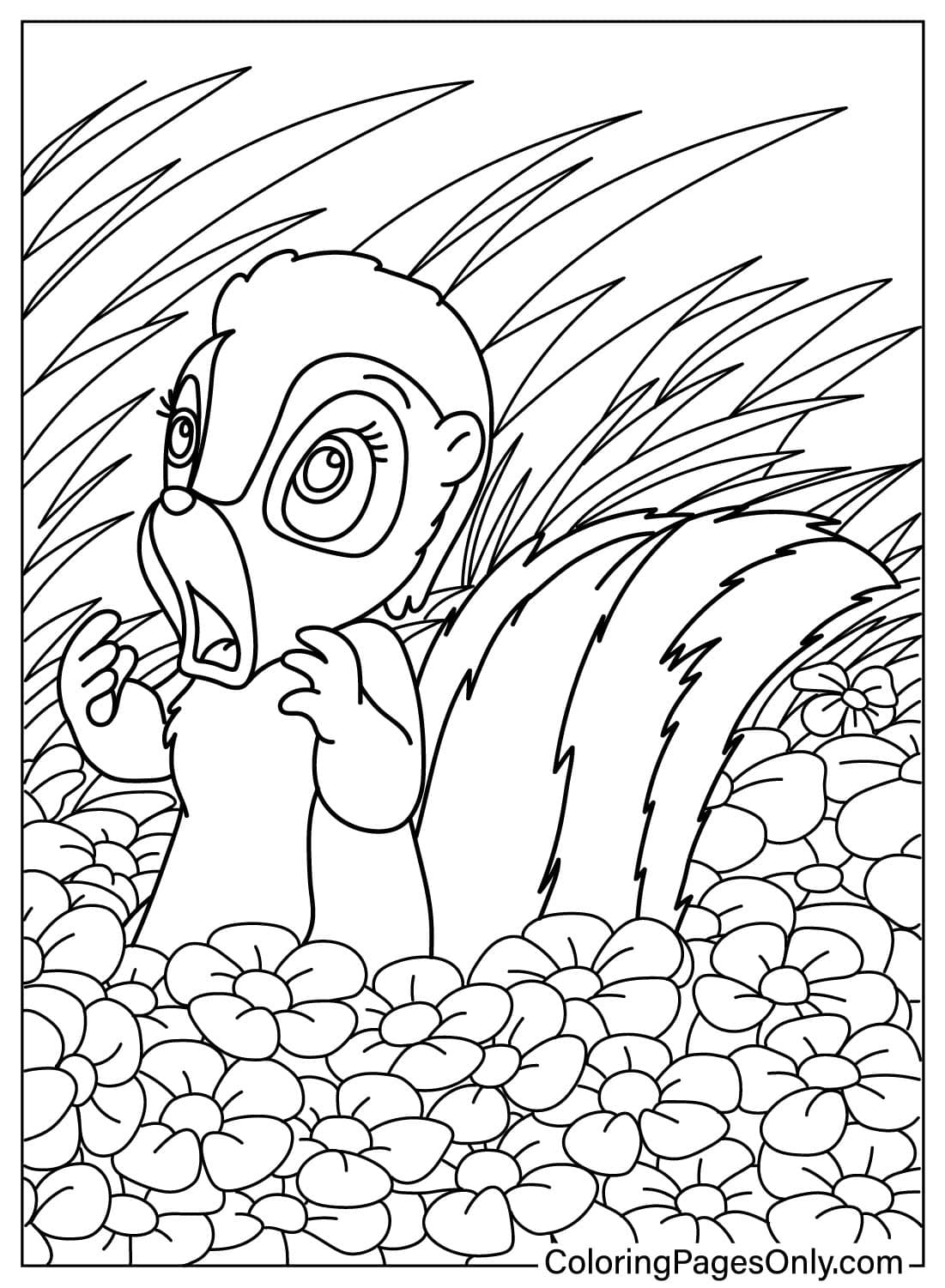
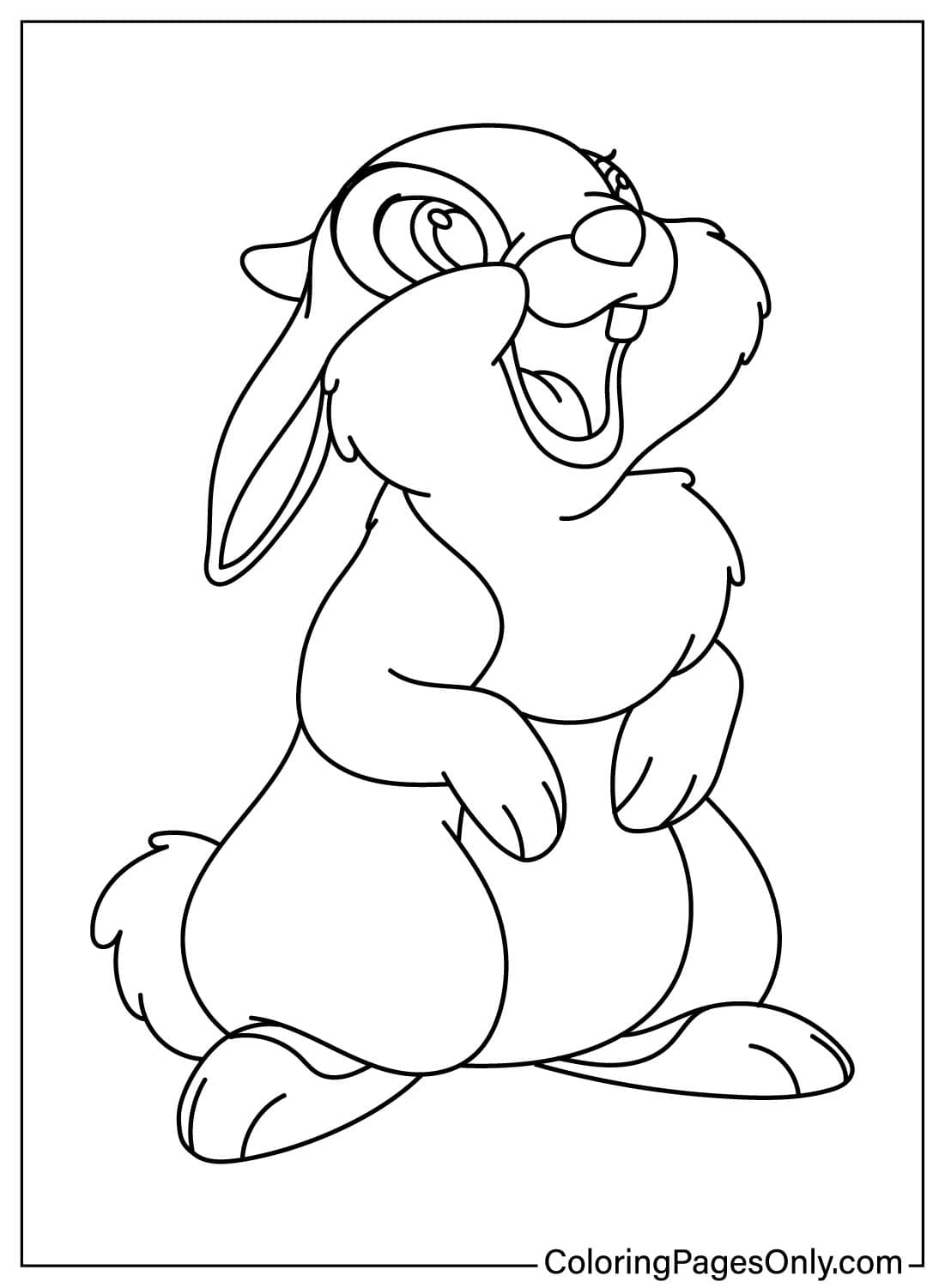
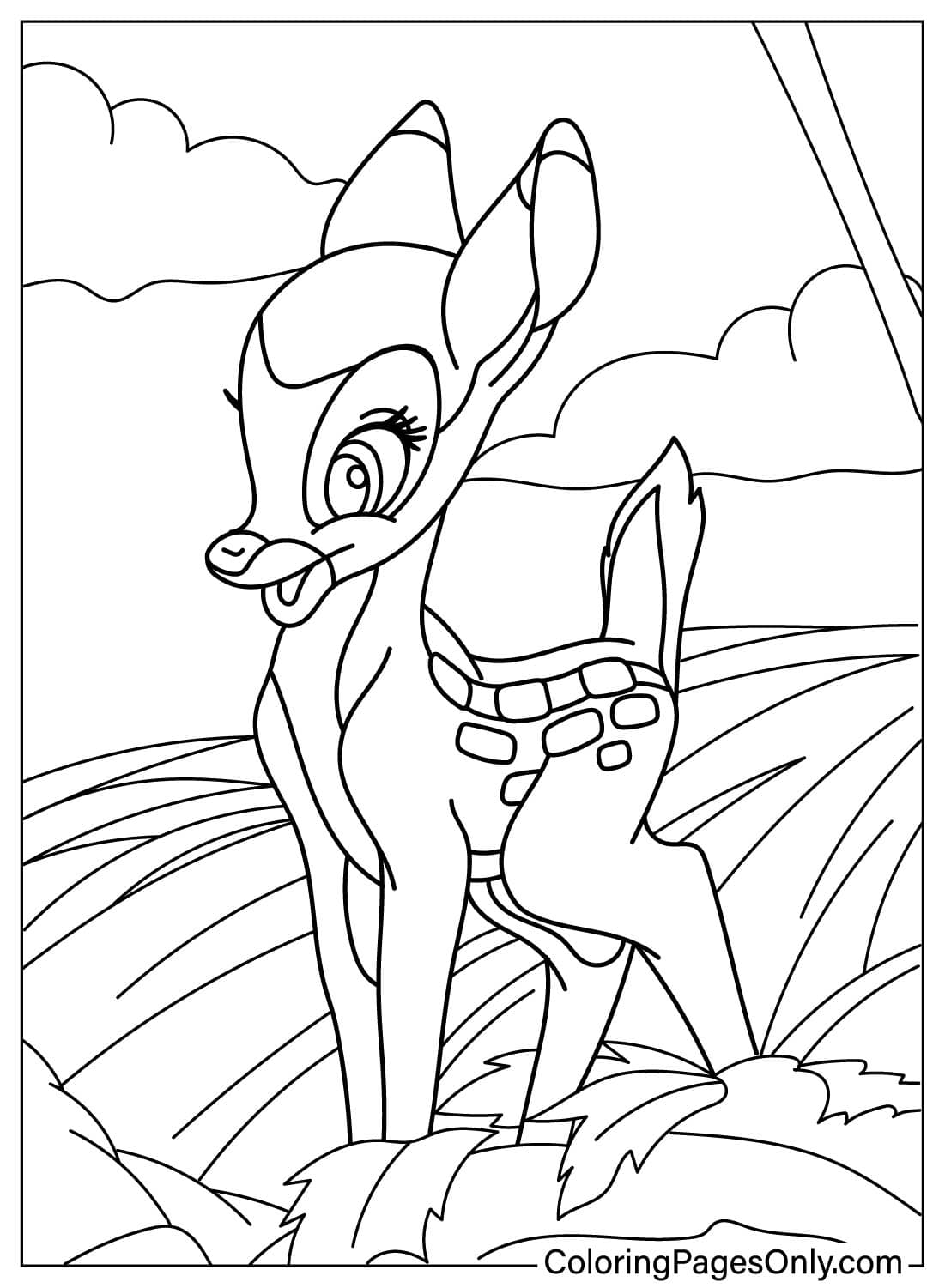
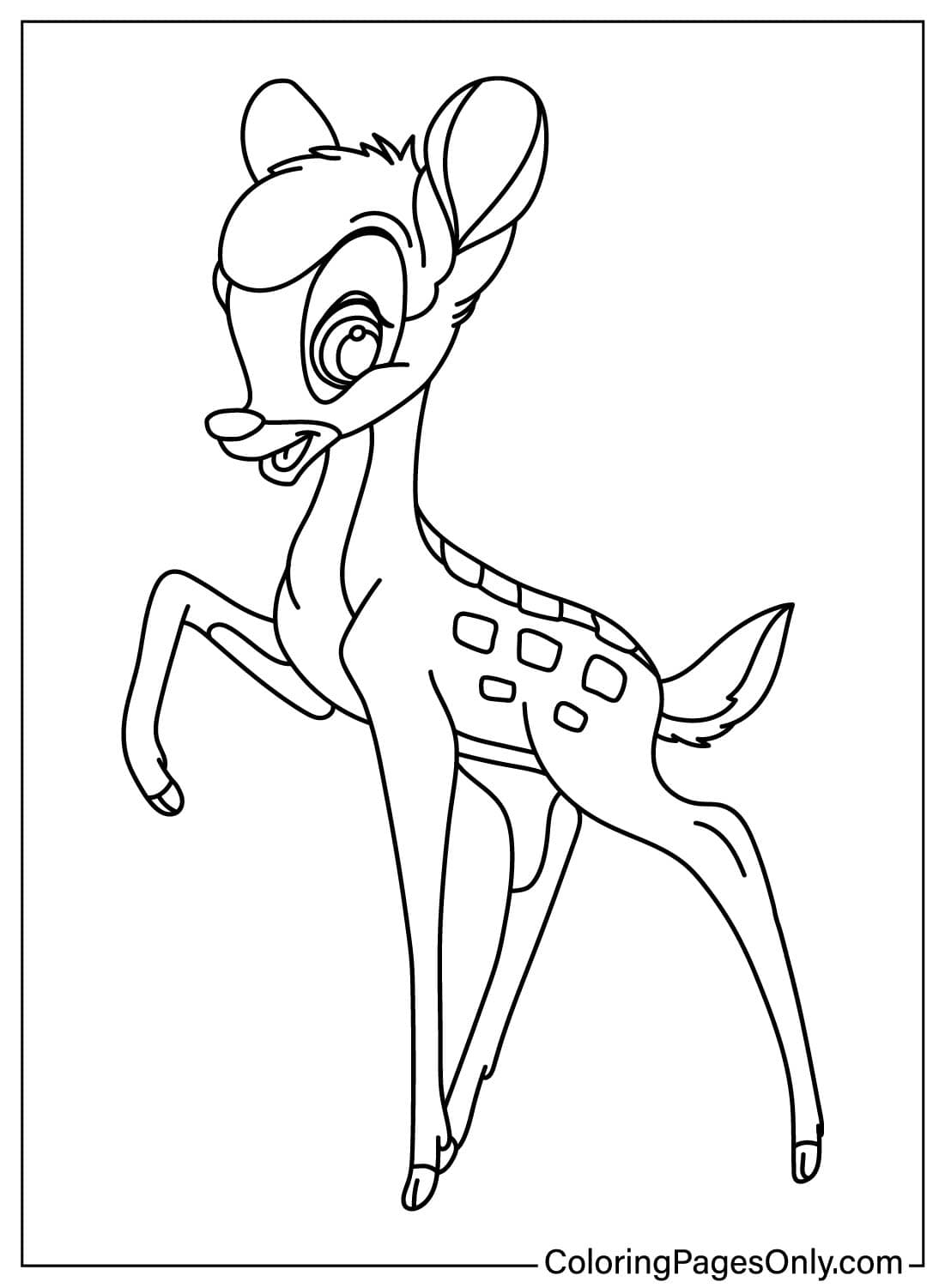
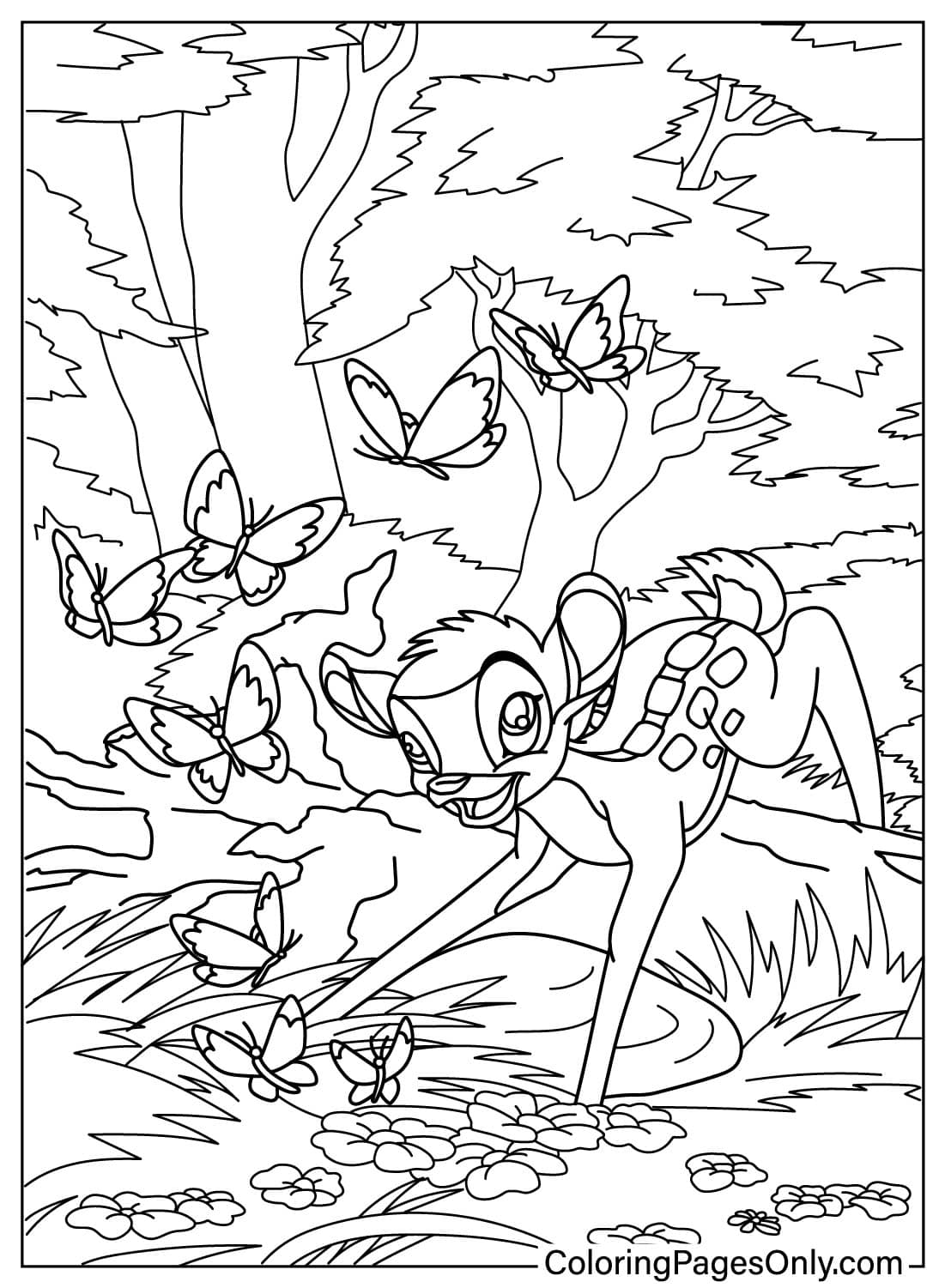
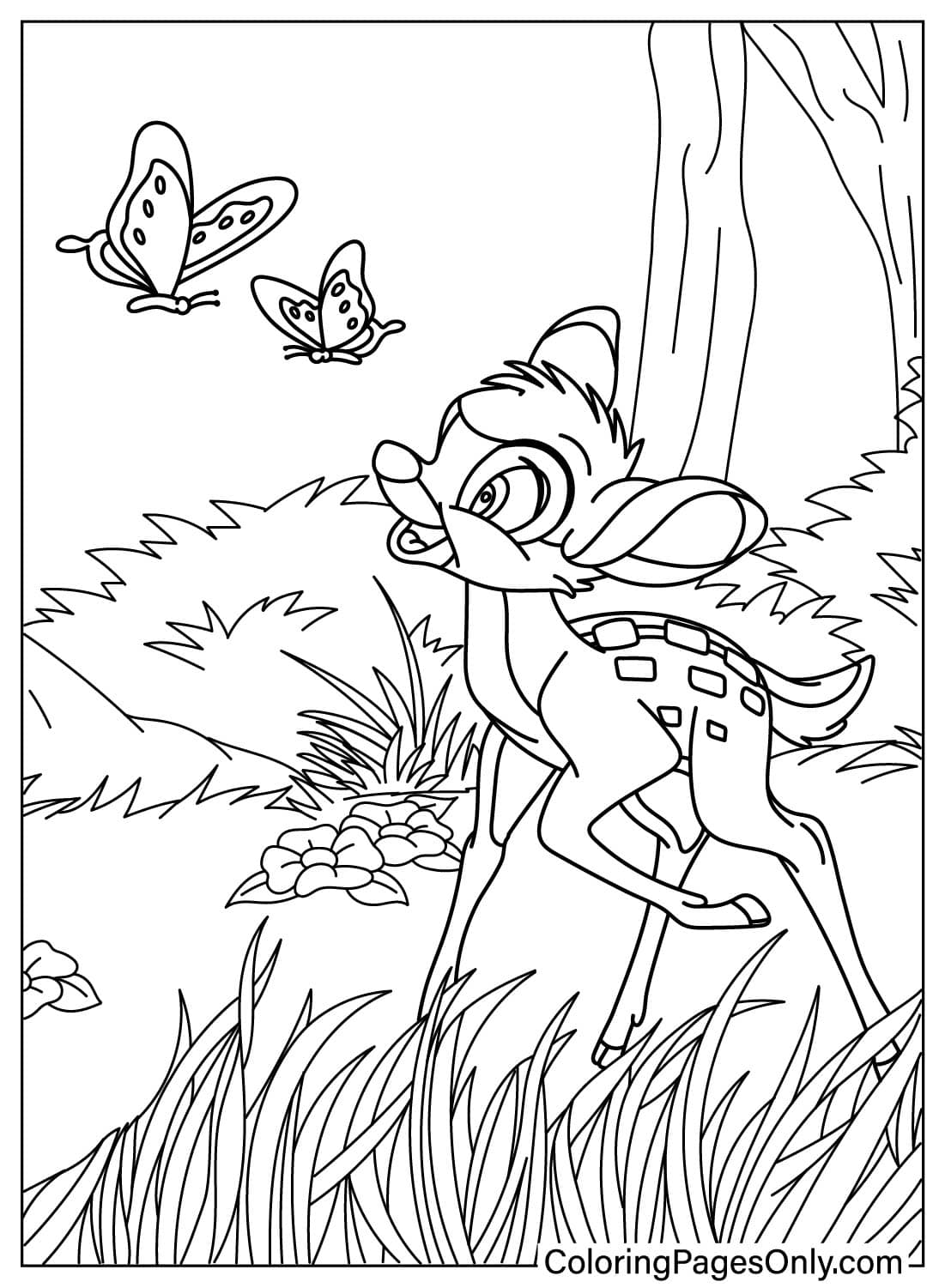
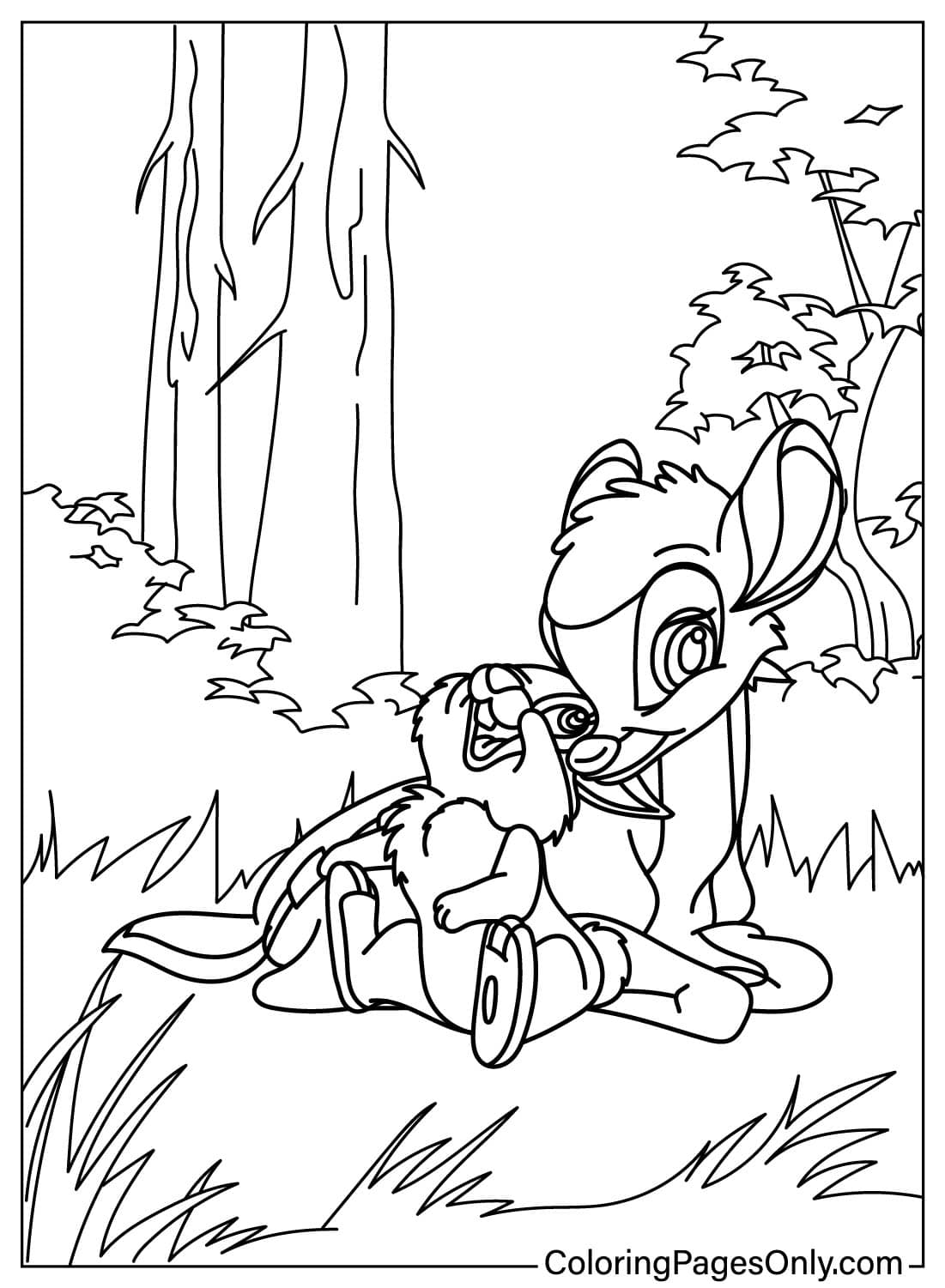
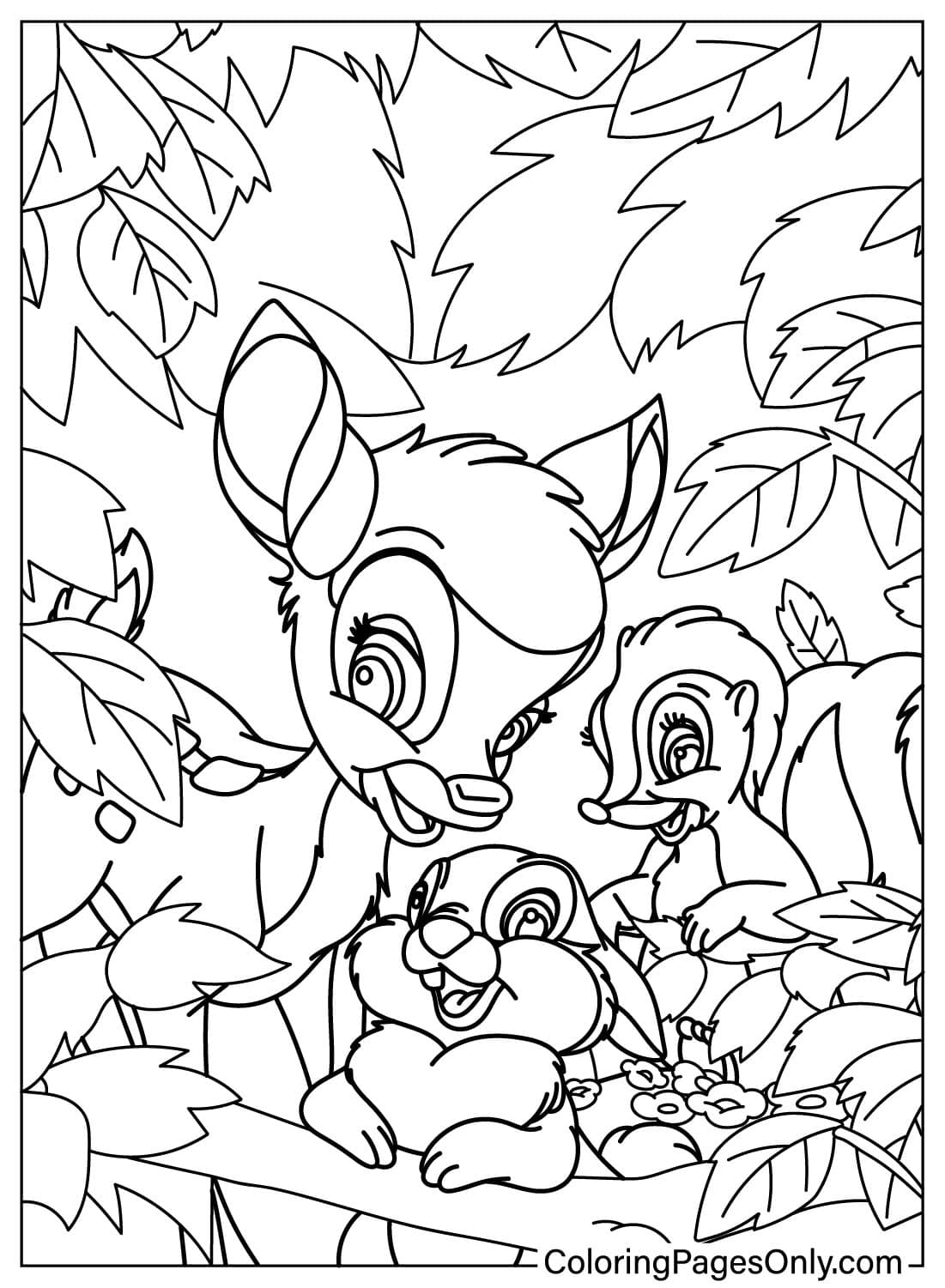
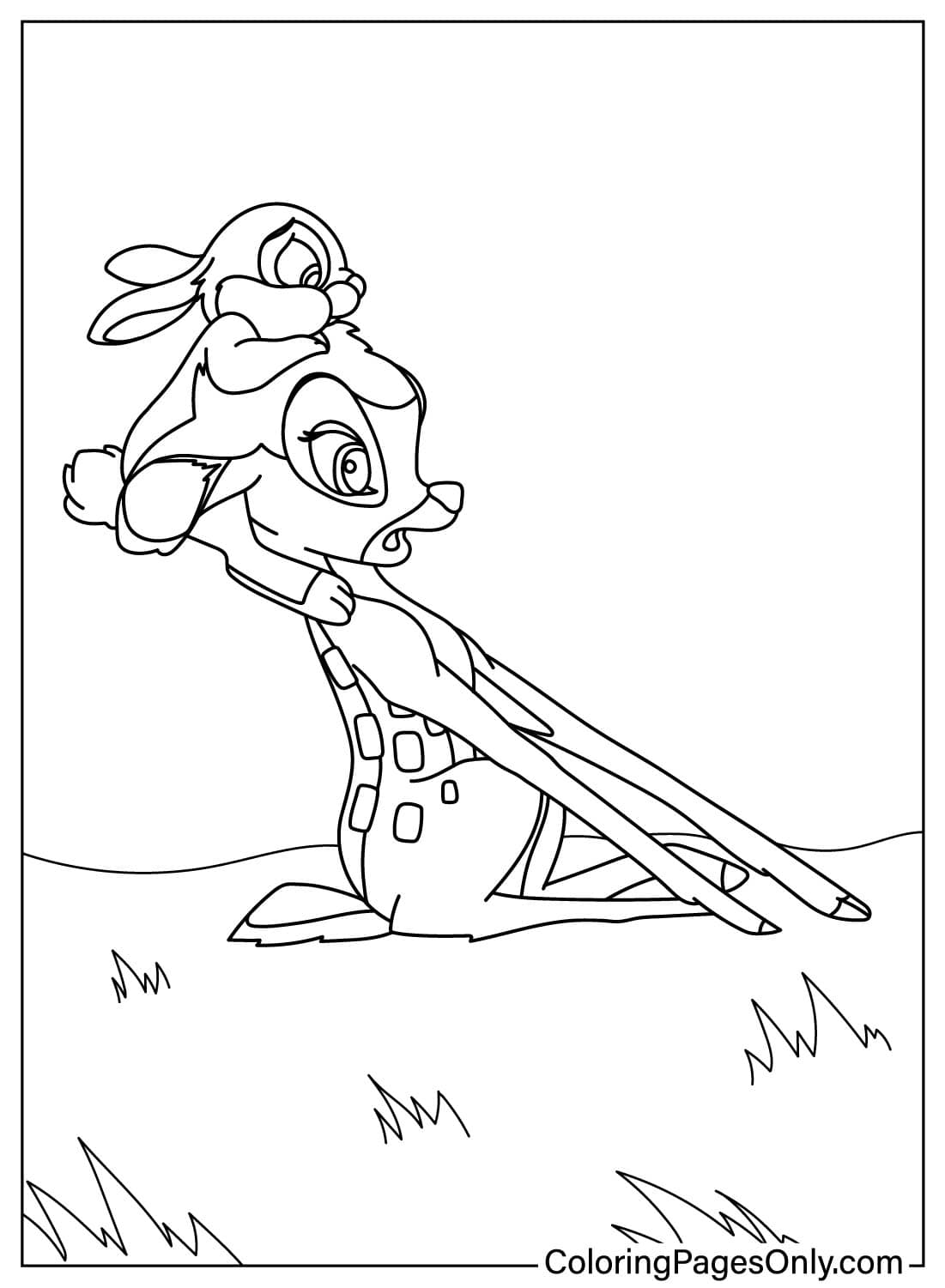
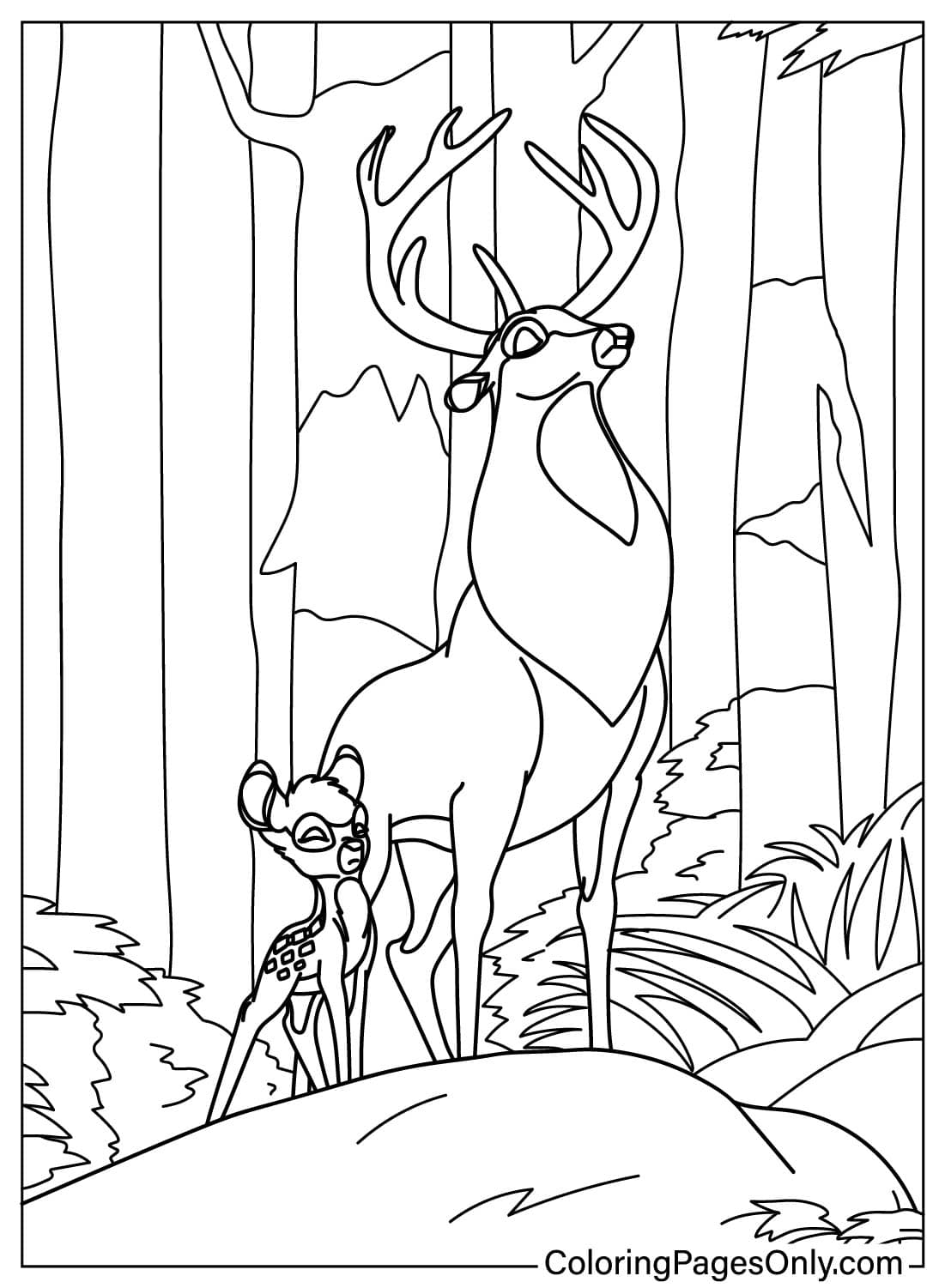
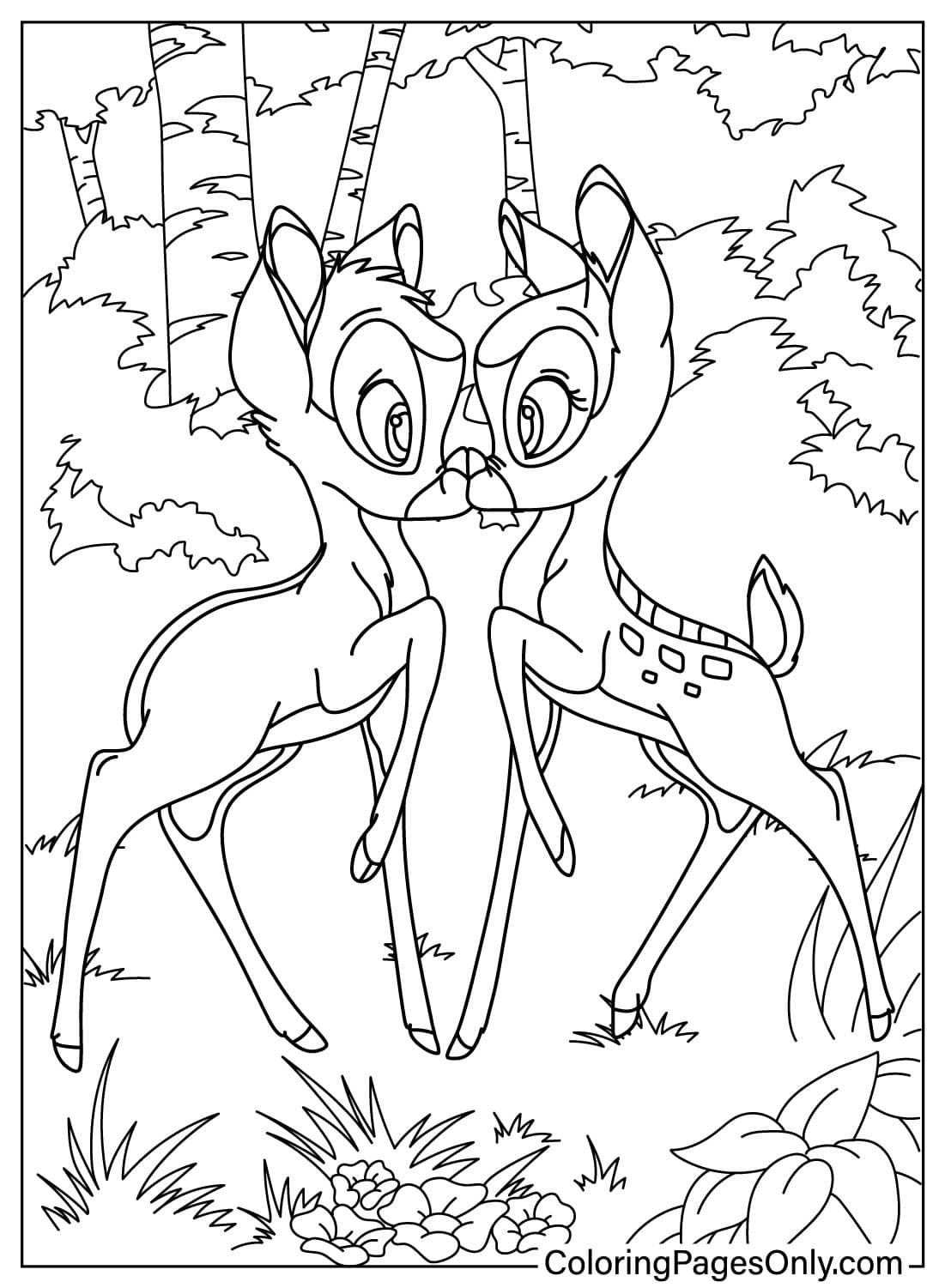
What Is Inside This Collection
The 20 pages fall into a few clear groups, built around Bambi’s expressions, his forest friends, his father, and his companion Faline.
Classic Bambi Portraits
A large share of the set is solo portraits showing Bambi standing or playing in the forest. Color his body a light Reddish-Brown with White spots and a cream-colored belly, the coloring of a young fawn, and keep his ears a slightly darker brown so his face reads clearly.
Bambi and His Forest Friends
Several pages pair Bambi with Thumper the rabbit or Flower the skunk. Color Thumper Gray with a White chest and pink-lined ears, and give Flower Black fur with a single White stripe down his back, so both companions stay visually distinct next to Bambi’s warmer tones.
The Great Prince of the Forest
A number of pages show Bambi’s father, the Great Prince, a fully grown stag who leads the forest deer. Color him a deeper, grayer Brown than young Bambi, with a full rack of Tan antlers, since his older, more weathered coloring is part of what marks him as the forest’s leader.
Bambi and Faline
The rest of the set shows Bambi with Faline, his childhood friend and eventual mate. Color Faline a warmer Reddish-Brown than Bambi with lighter markings, and keep her proportions slightly smaller and more delicate so the two deer read as distinct individuals rather than mirror copies.
What Bambi Coloring Pages Do
A deer’s coat is not one flat color. Bambi’s fur shifts between reddish-brown, cream, and white across different parts of his body, so coloring him accurately means blending or layering more than one shade rather than filling in a single flat color. The American Academy of Pediatrics identifies this kind of layered, detailed coloring as a core contributor to fine motor skill development in children ages 2 through 7.
A film built to look like a real forest. Bambi’s backgrounds were shaped by the artist Tyrus Wong, whose watercolor-style paintings gave the film a softer, more impressionistic look than earlier Disney movies. Coloring the forest scenes with a light hand, letting some white space show through, echoes that same original style more closely than filling every inch solid.
Structured coloring has a documented calming effect. A 2005 Art Therapy Journal study found that people coloring inside defined shapes showed a greater drop in anxiety than those drawing freely. The repeated leaf, grass, and flower shapes throughout this collection give a child the same steady, one-section-at-a-time task.
A story that treats loss as part of growing up. Bambi is also remembered for handling difficult moments, including the loss of his mother, with restraint rather than showing them in graphic detail. For families who have seen the film together, coloring one of Bambi’s calmer forest scenes can be a gentle way to keep talking about the story at a child’s own pace.
How to Color Bambi Pages Well
- Reddish-brown coat with white spots: Color young Bambi a light Reddish-Brown with White spots and a cream underside, the coloring of a fawn before its coat matures.
- Thumper in soft gray: Color Thumper Gray with a White chest and belly, and add a touch of Pink inside his ears for contrast.
- Flower in black with one white stripe: Color Flower is mostly Black with a single White stripe running down its back, the standard pattern for a skunk.
- The Great Prince in deeper brown: Color Bambi’s father a deeper, more Gray-Brown than young Bambi, with Tan antlers, to show his age and status clearly.
- Faline in warm reddish tones: Color Faline a warm Reddish-Brown, slightly different from Bambi’s shade, so the two characters remain easy to tell apart on shared pages.
- Soft, layered greens for the forest: Use several shades of Green and Yellow-Green for leaves and grass rather than one flat color, since the film’s backgrounds are built from many soft, layered tones rather than solid blocks.
5 Creative Craft Ideas With Bambi Coloring Pages
- Forest Diorama. Materials: a colored Bambi page, a small box, green and brown paper, scissors, and glue. Cut out the colored figure, line the inside of the box with green paper for grass and brown strips for tree trunks, and stand the figure inside to build a simple forest scene.
- Pressed Leaf Nature Card. Materials: a colored Bambi or forest page, cardstock folded in half, a few real pressed leaves, and glue. Glue the colored page to the front of the folded card, then glue one or two pressed leaves beside it for a card that mixes real nature with the artwork.
- Thumper and Flower Finger Puppets. Materials: colored pages of Thumper and Flower, scissors, tape, and paper strips sized to fit a finger. Cut out each colored character, tape it to a paper strip fitted around a finger, and use the pair to act out a small forest scene.
- Antler Headband. Materials: a colored Great Prince page, a strip of cardstock sized to fit a child’s head, scissors, tape, and brown paint or marker. Trace and cut two antler shapes from cardstock, color them to match the Great Prince’s antlers, and tape them to the headband strip for simple forest-themed dress-up.
- Seasons of the Forest Poster. Materials: four colored Bambi pages, scissors, poster board, and glue. Arrange the four pages in a row on the poster board, labeling each one for a season: spring, summer, fall, and winter, to show how the forest changes across the year.
Frequently Asked Questions
What are Bambi coloring pages?
Bambi coloring pages are printable designs featuring the young deer in forest scenes, portraits, and moments with Thumper, Flower, and Faline. This collection offers 20 free designs as printable PDFs or online coloring pages.
Who created Bambi, and when did the film debut?
Bambi was directed by David Hand and released by Disney in 1942, based on Felix Salten’s 1923 novel Bambi, a Life in the Woods. It premiered in London on August 9, 1942, before opening in the United States four days later.
What colors does Bambi have?
Young Bambi has a light reddish-brown coat with white spots and a cream underside, the typical coloring of a fawn, while his father, the Great Prince, has a deeper, grayer brown coat as a fully grown stag.
Who is Tyrus Wong, and why does he matter to this film?
Tyrus Wong was the artist whose watercolor-style paintings shaped Bambi’s forest backgrounds, giving the film a softer, more impressionistic look than earlier Disney movies. His contribution to the film’s visual style went largely uncredited for many years.
Why is Bambi remembered as an emotional film?
The film is known for handling difficult moments, including the loss of Bambi’s mother, with restraint rather than showing them in detail on screen. It remains one of the most discussed examples of a children’s film addressing loss gently.
Who are Thumper and Flower?
Thumper is a young rabbit, and Flower is a skunk, both close friends who meet Bambi in his first spring and remain with him through the rest of the story.
Are Bambi coloring pages suitable for young children?
The simple portraits suit ages 3 and 4. The forest scenes with more background detail suit ages 5 and up.
What age group are the forest and character scenes best for?
These pages include smaller background details like leaves, grass, and multiple characters, so they suit children ages 6 and up with some coloring experience.
Start Coloring
Download any page by clicking the design. No account, email, or payment is required. Pages print directly from the browser at full resolution or open in the online coloring tool for screen use. Share finished pages on Facebook or Pinterest with the share buttons at the top of each design page.