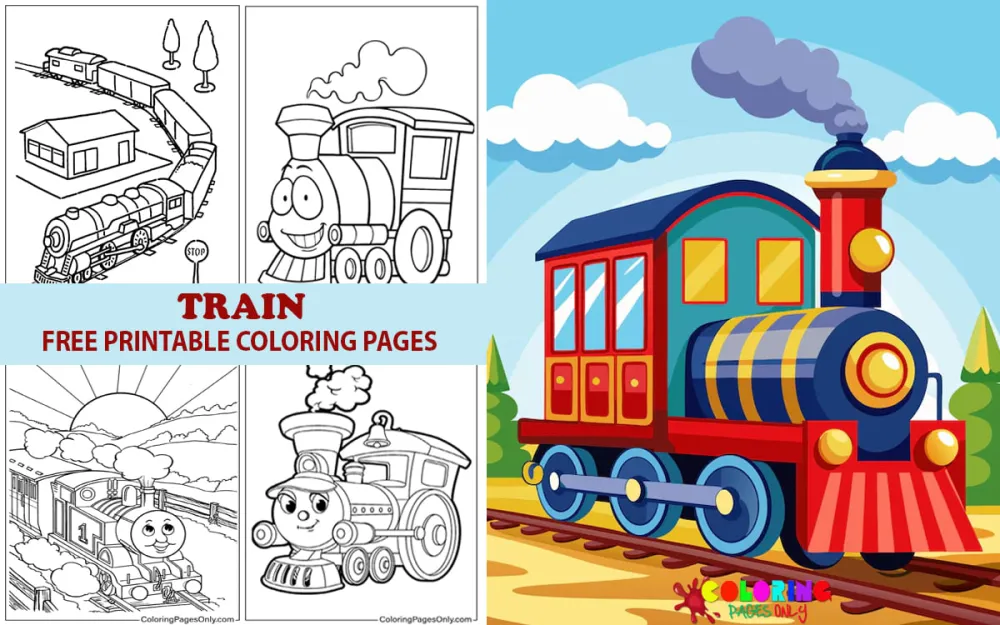
Free Train Coloring Pages: 59 printable PDF designs covering steam locomotives, toy trains, passenger and freight scenes, and a handful of cute cartoon-style engines. Each page can be downloaded as a PDF to print or colored online in the browser, with no account required.
Trains have carried people and freight since the early 19th century, and this collection spans that full range, from vintage steam locomotives with billowing smoke to circus trains and modern high-speed designs. A small number of pages reference specific named trains rather than generic engines, giving a couple of pages a slightly different feel from the rest of the set.
The 59 pages in this set are split into steam and vintage locomotives, toy and play trains, passenger and freight scenes, cute cartoon-style trains, a few named character references, and a large group of general portrait pages, giving colorists a wide range of styles and detail levels to choose from.
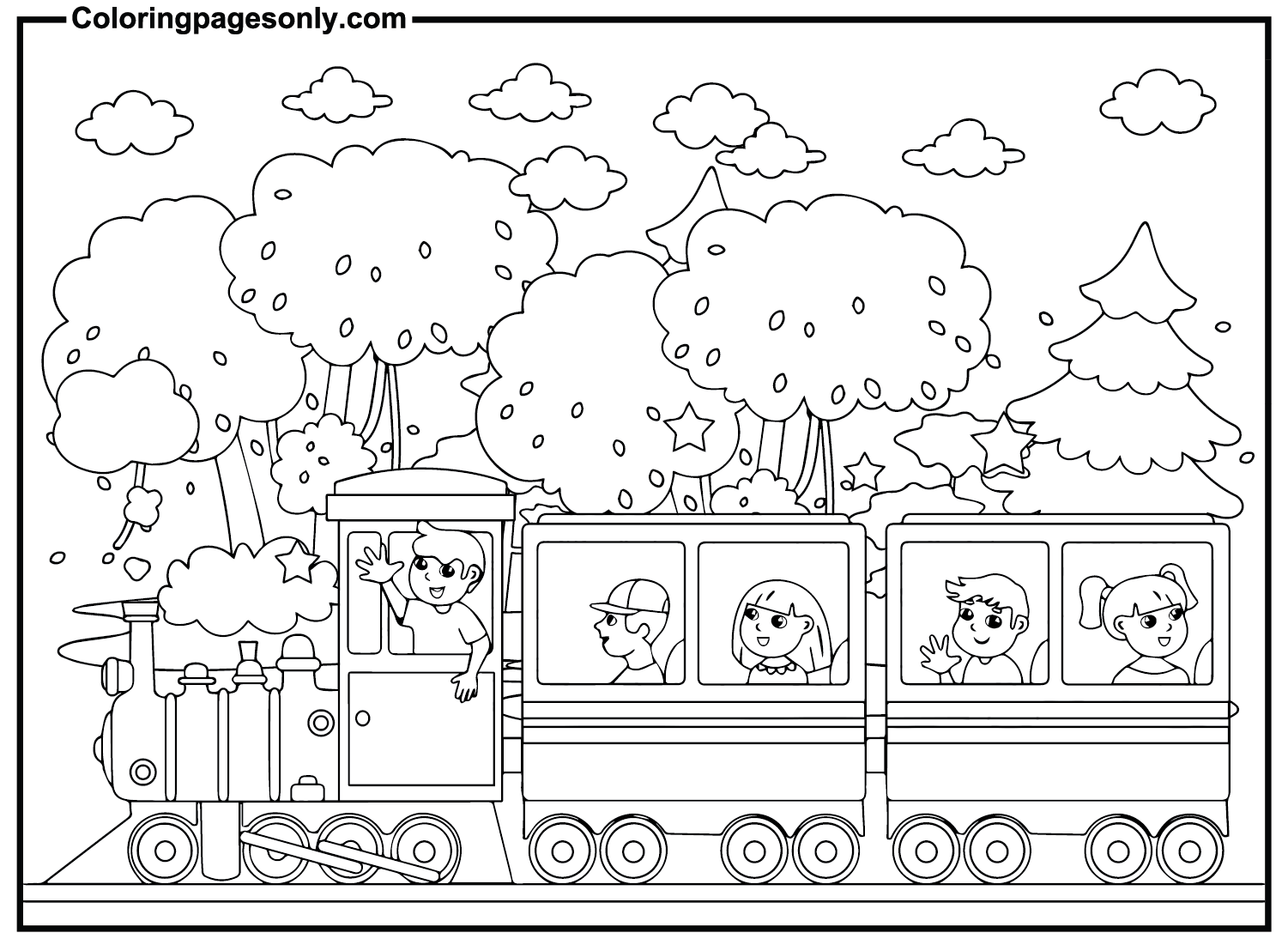
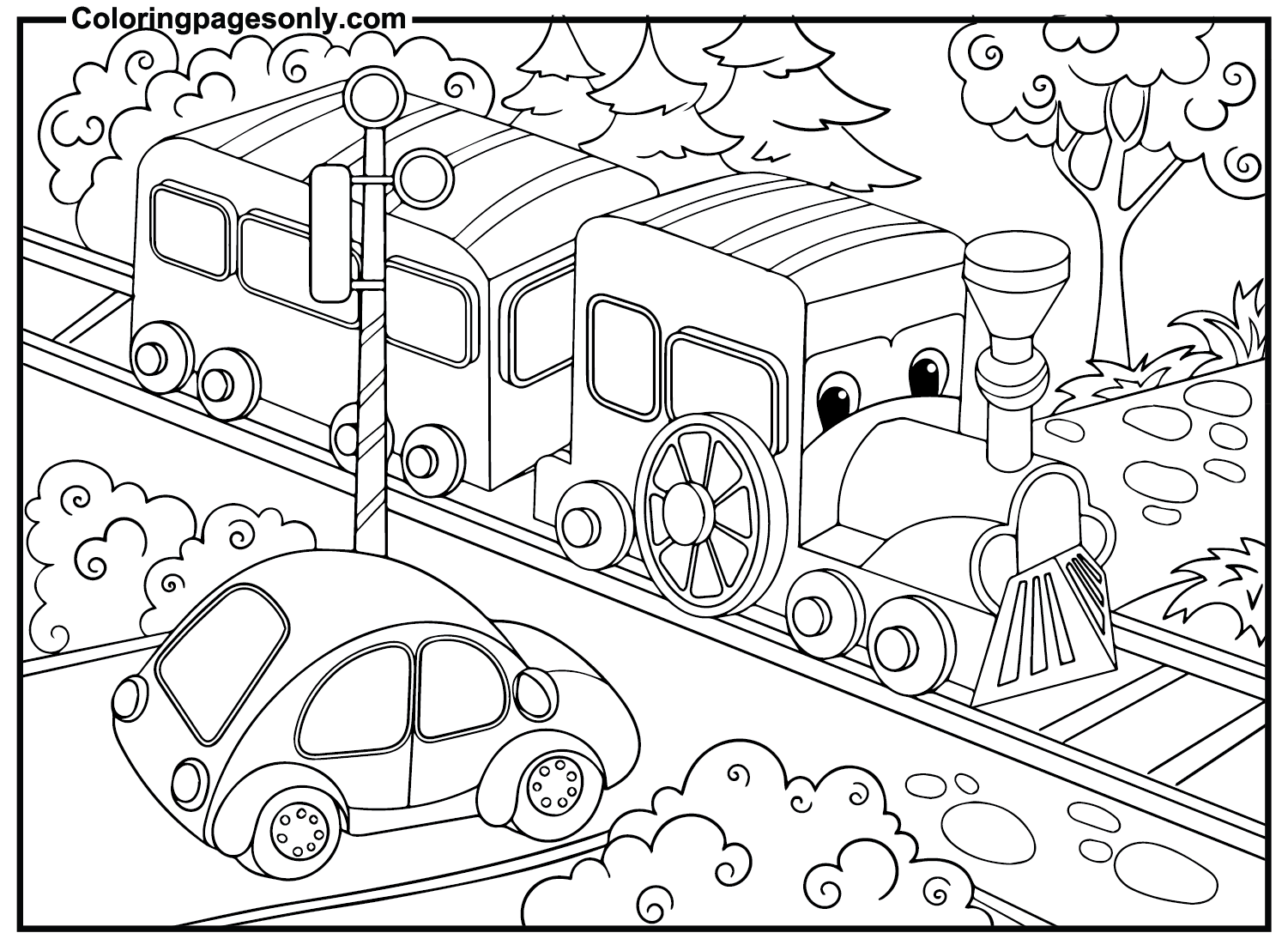
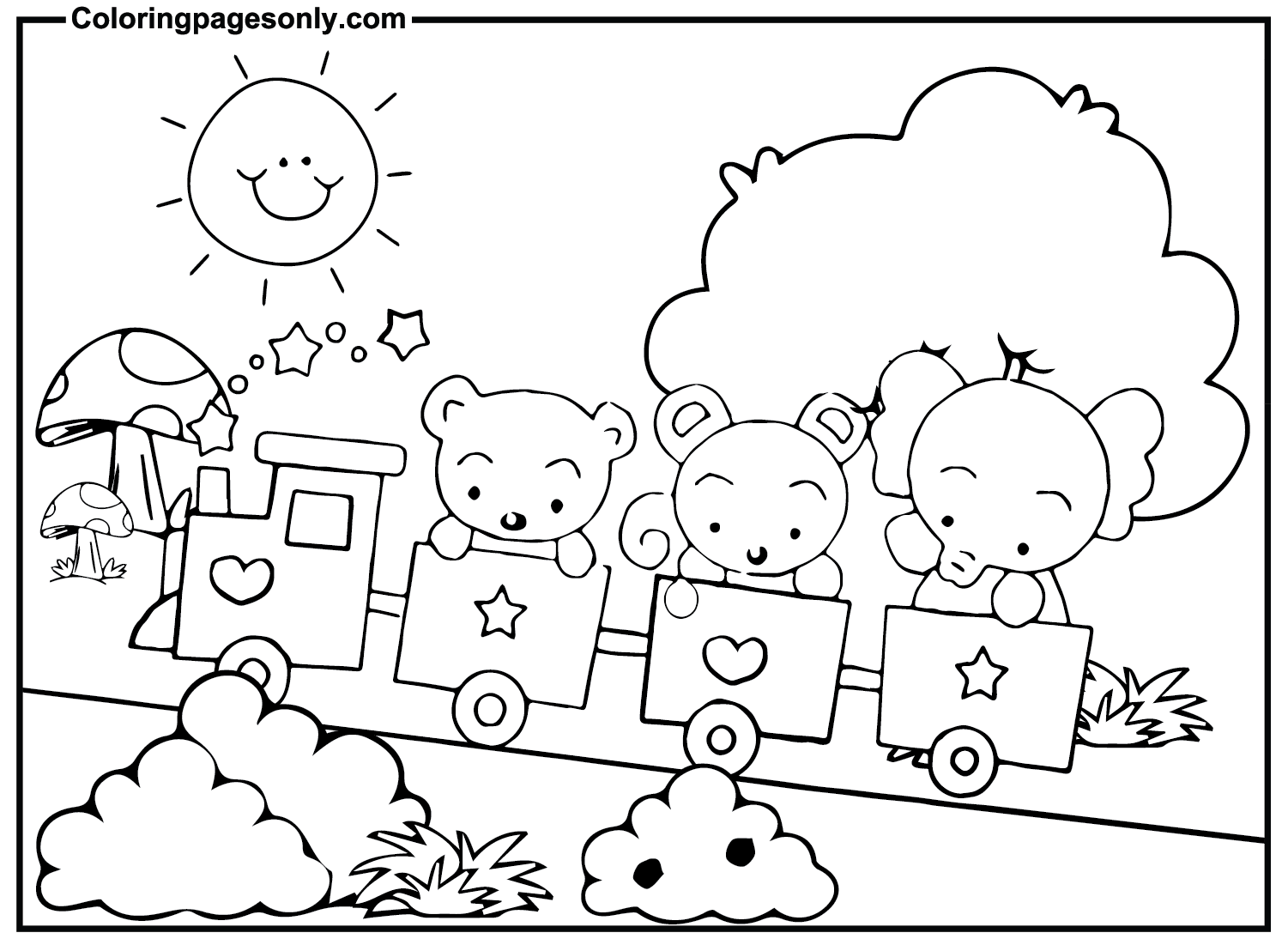
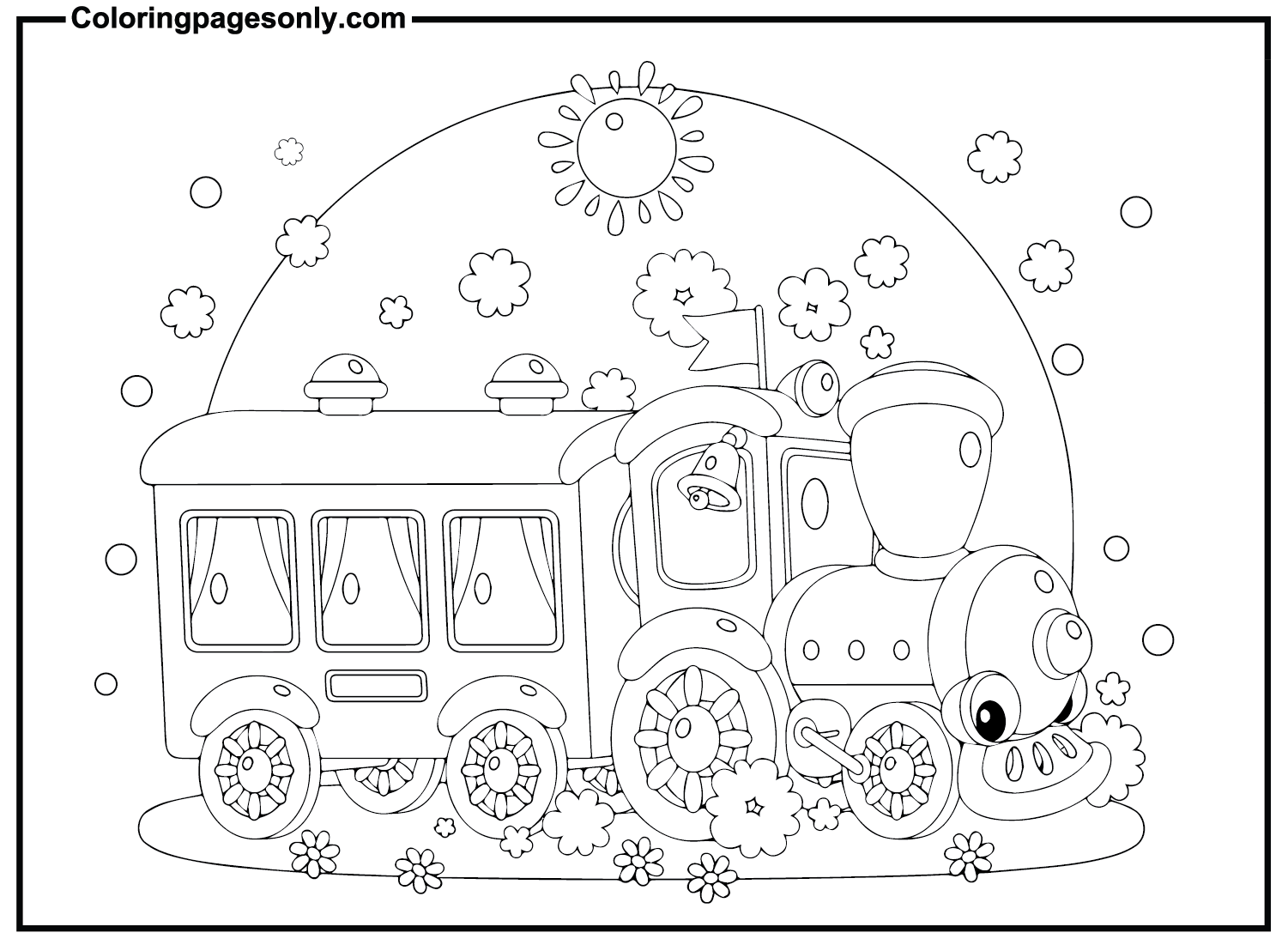
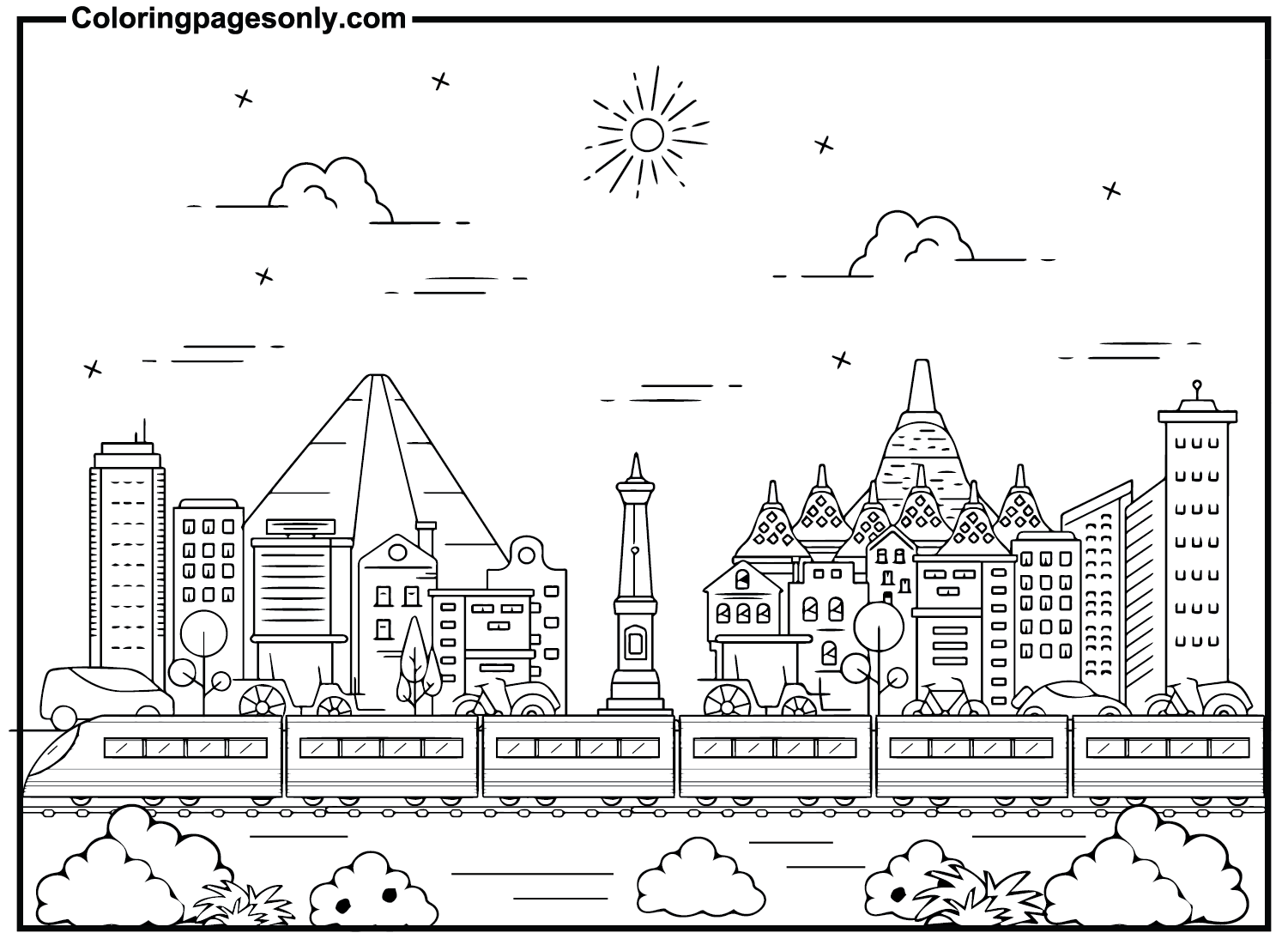
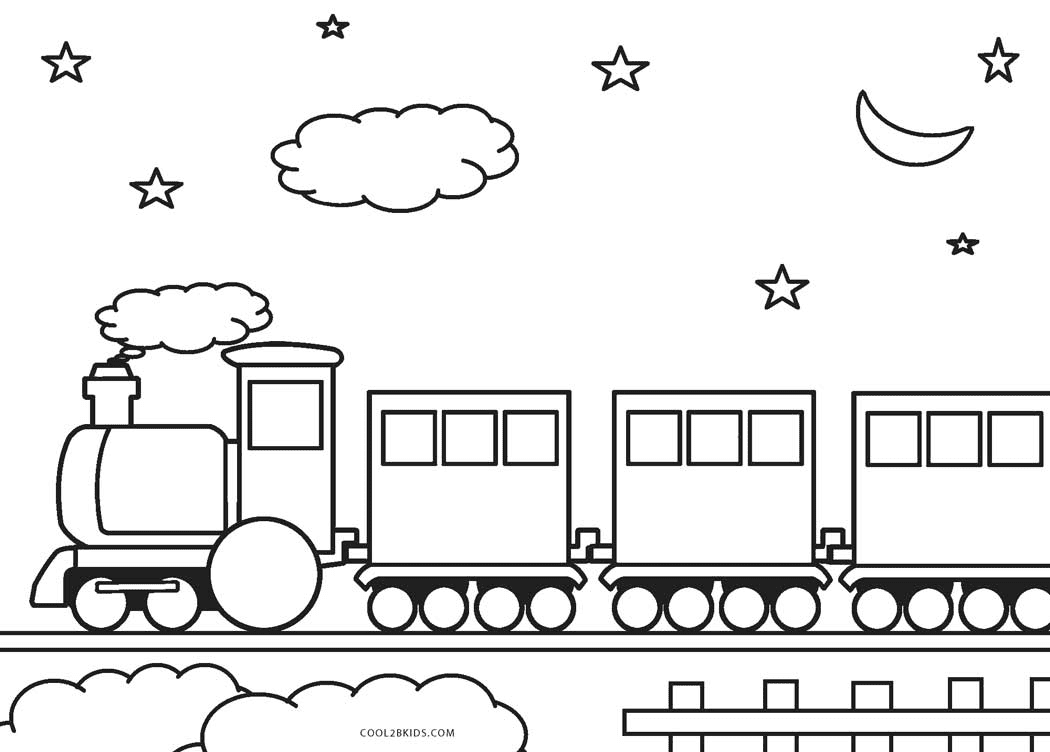
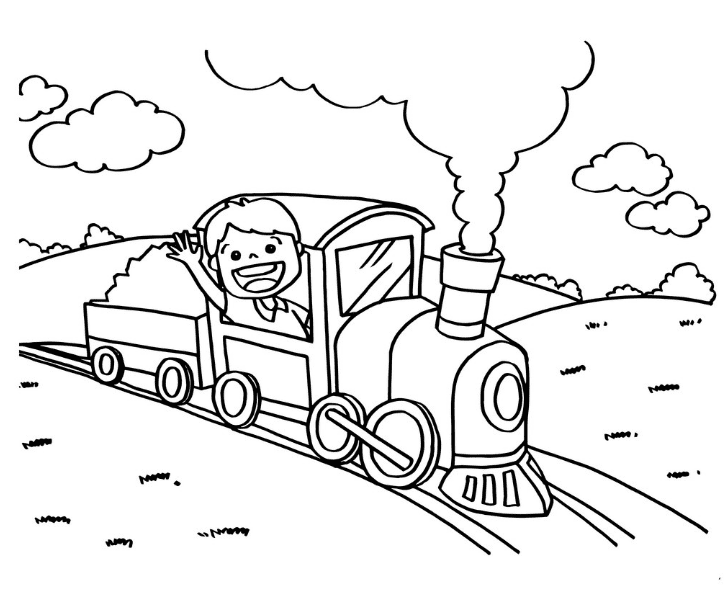
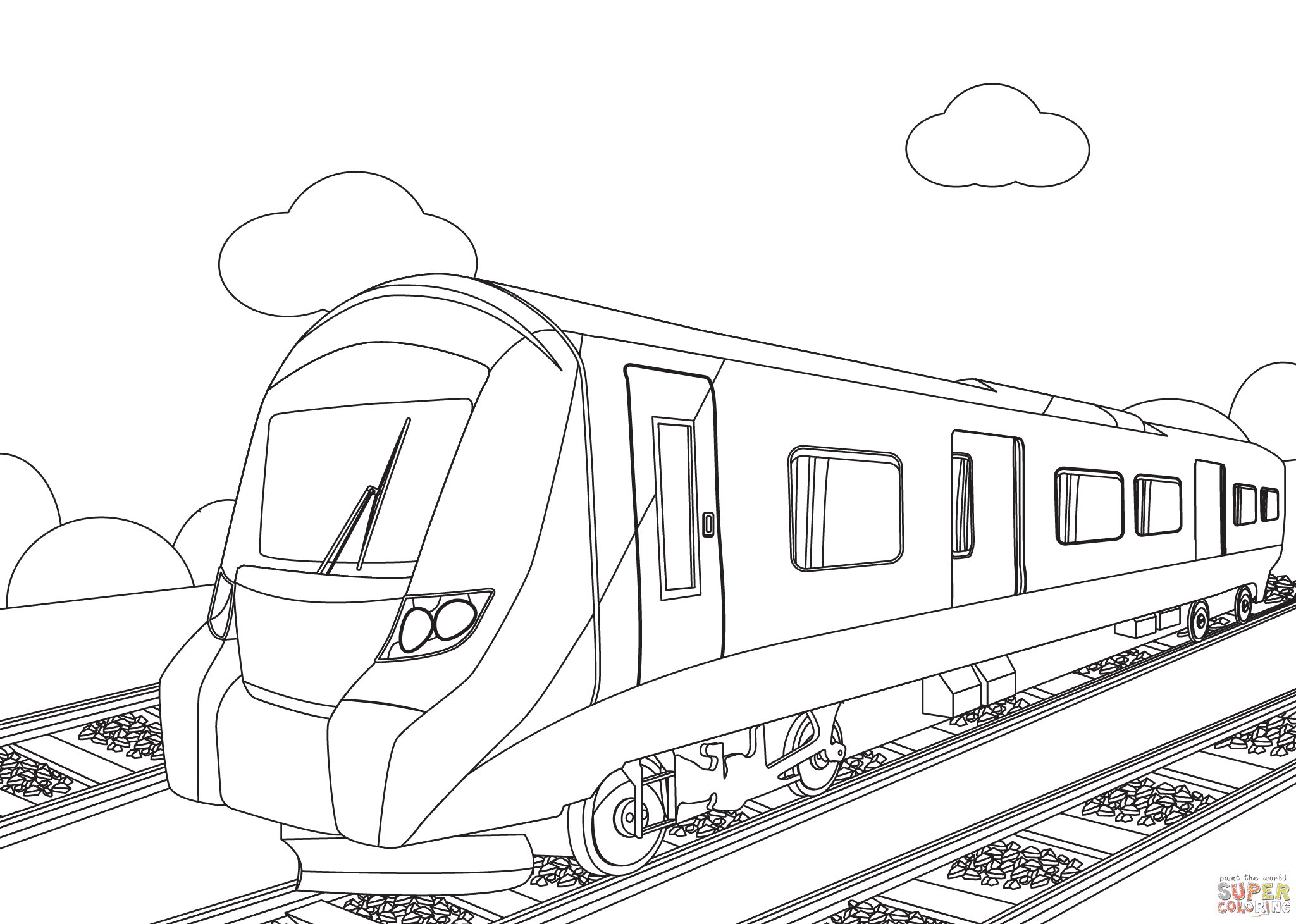

What Is Inside This Collection
The 59 pages are grouped by train type and style rather than by a single repeated scene.
Steam and Vintage Locomotives
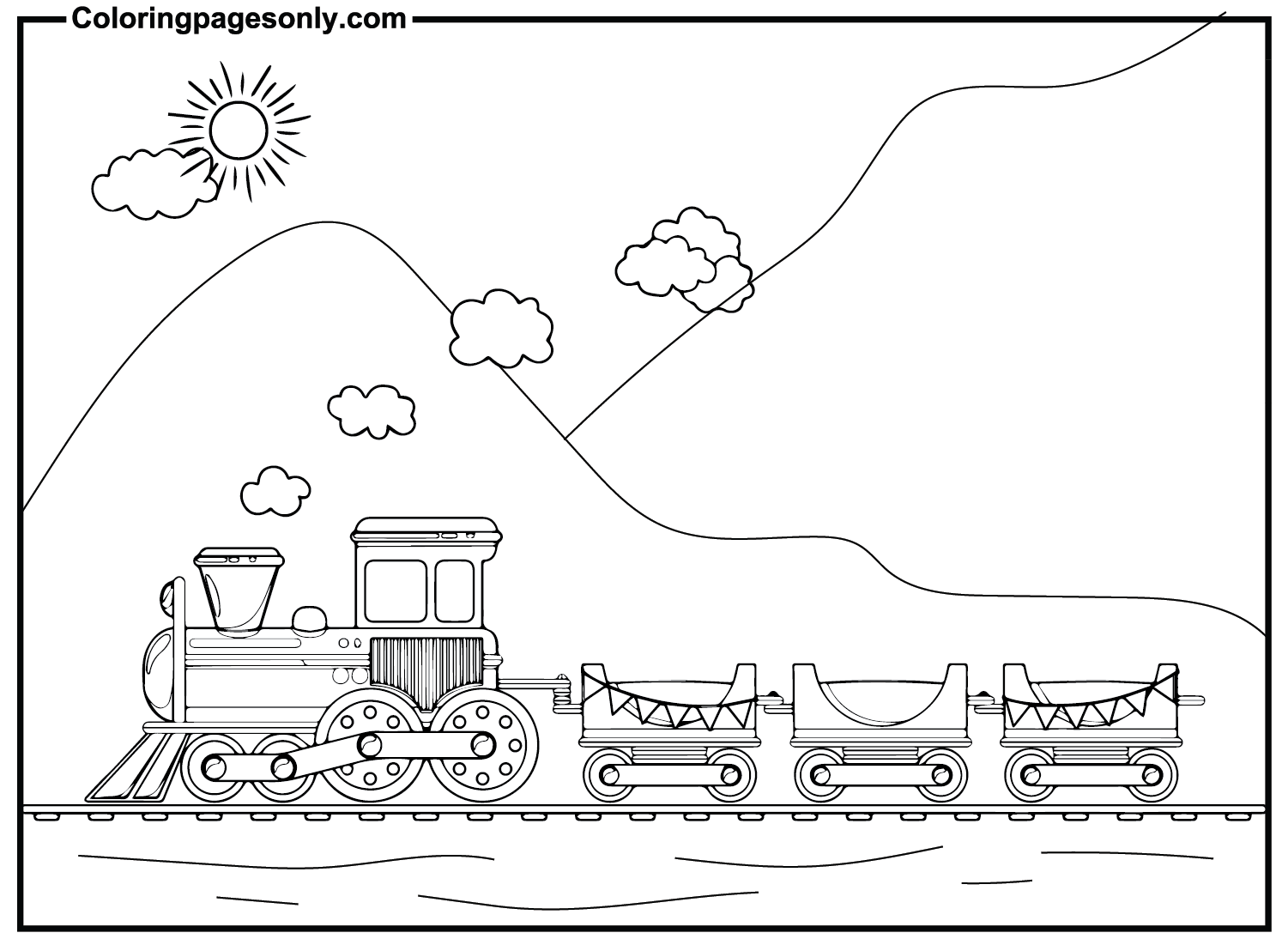
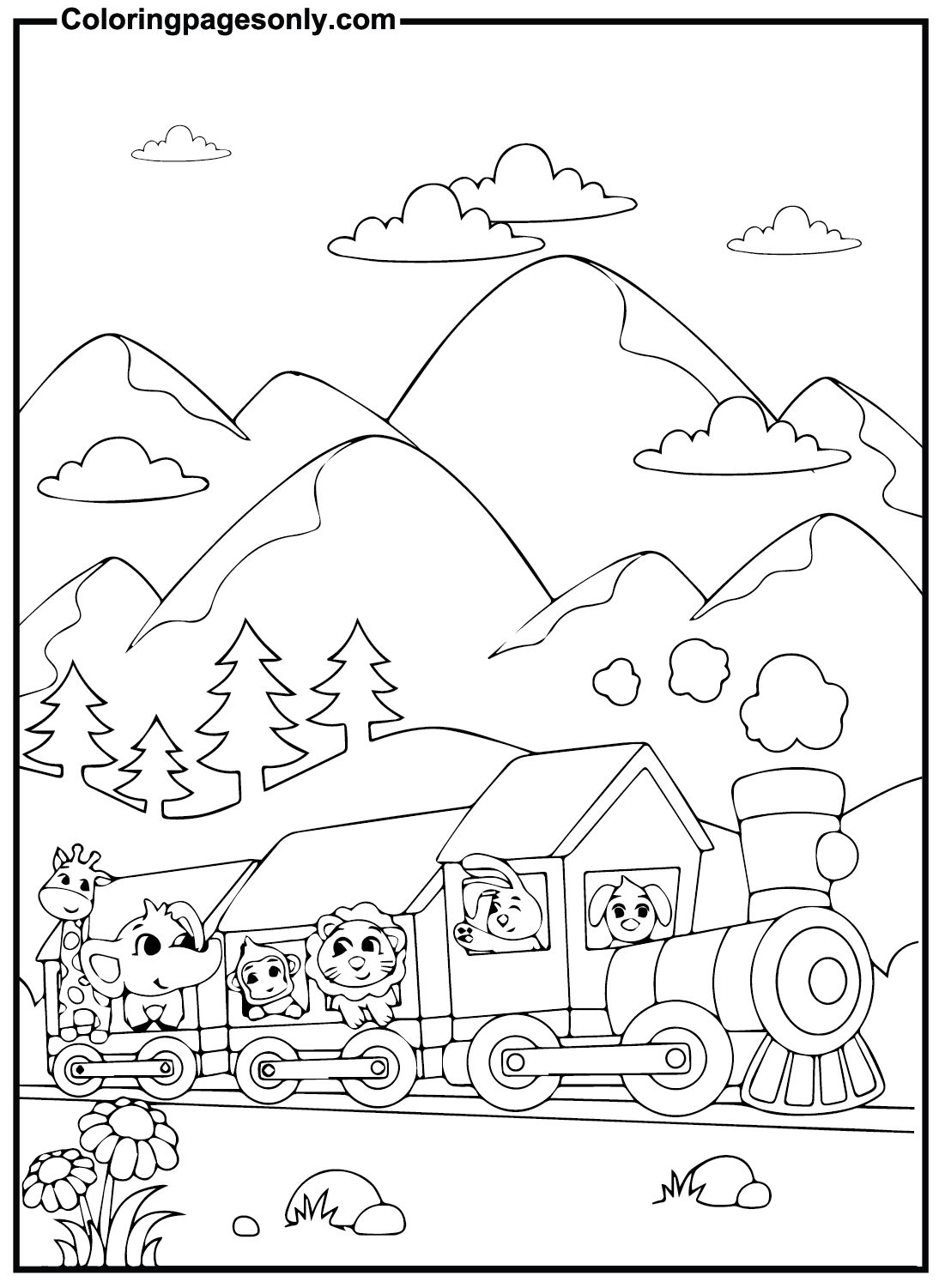
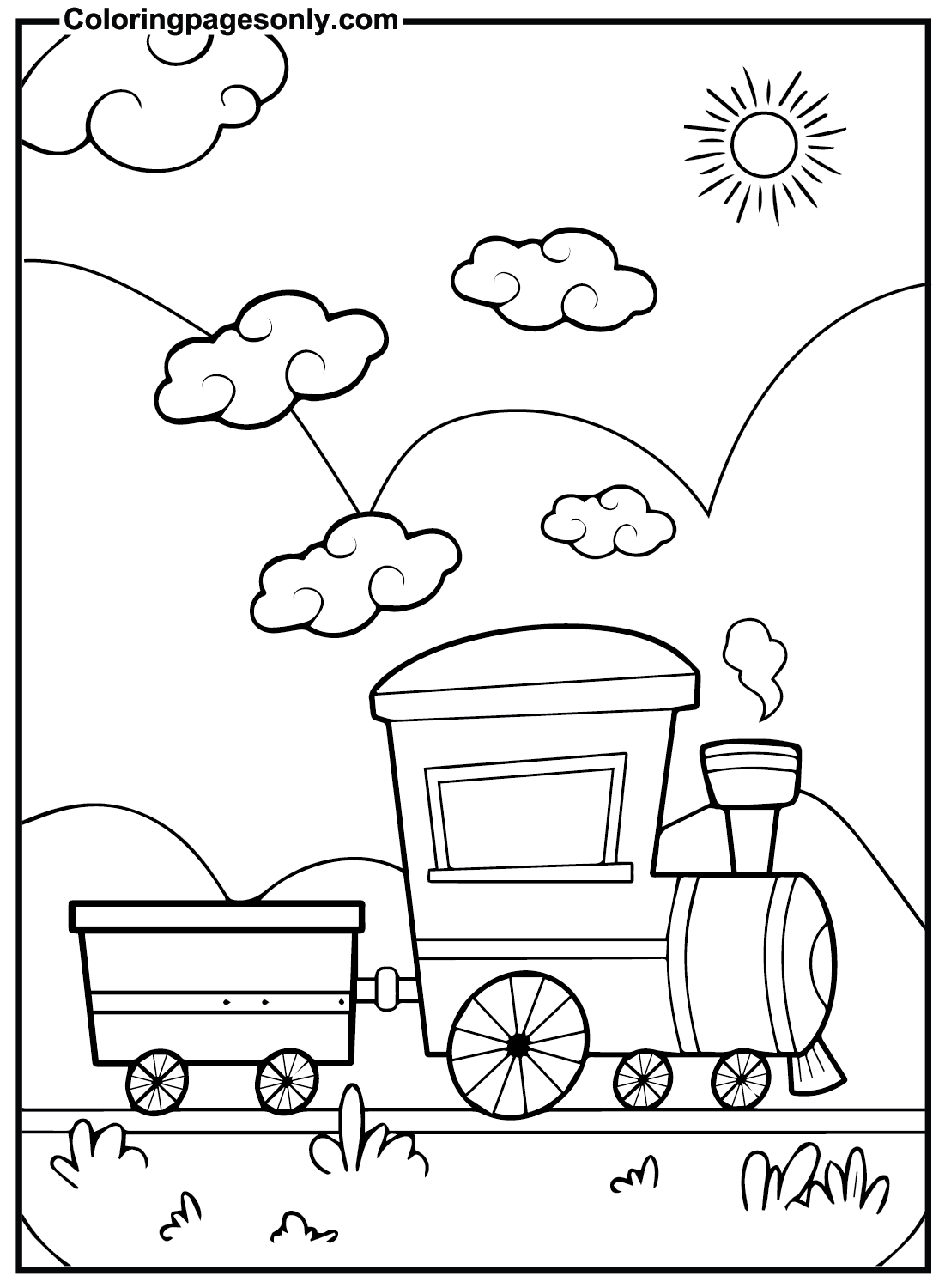
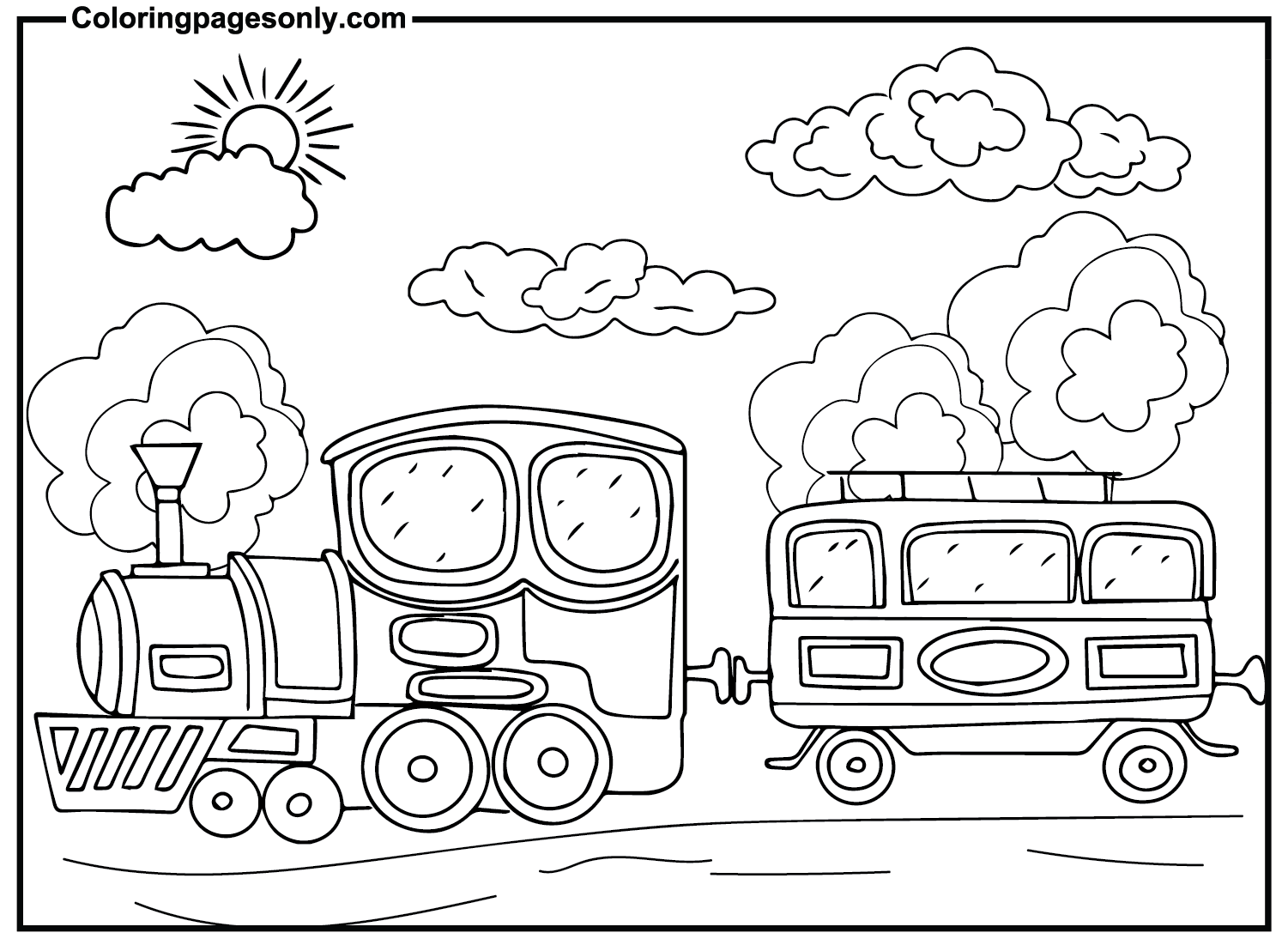
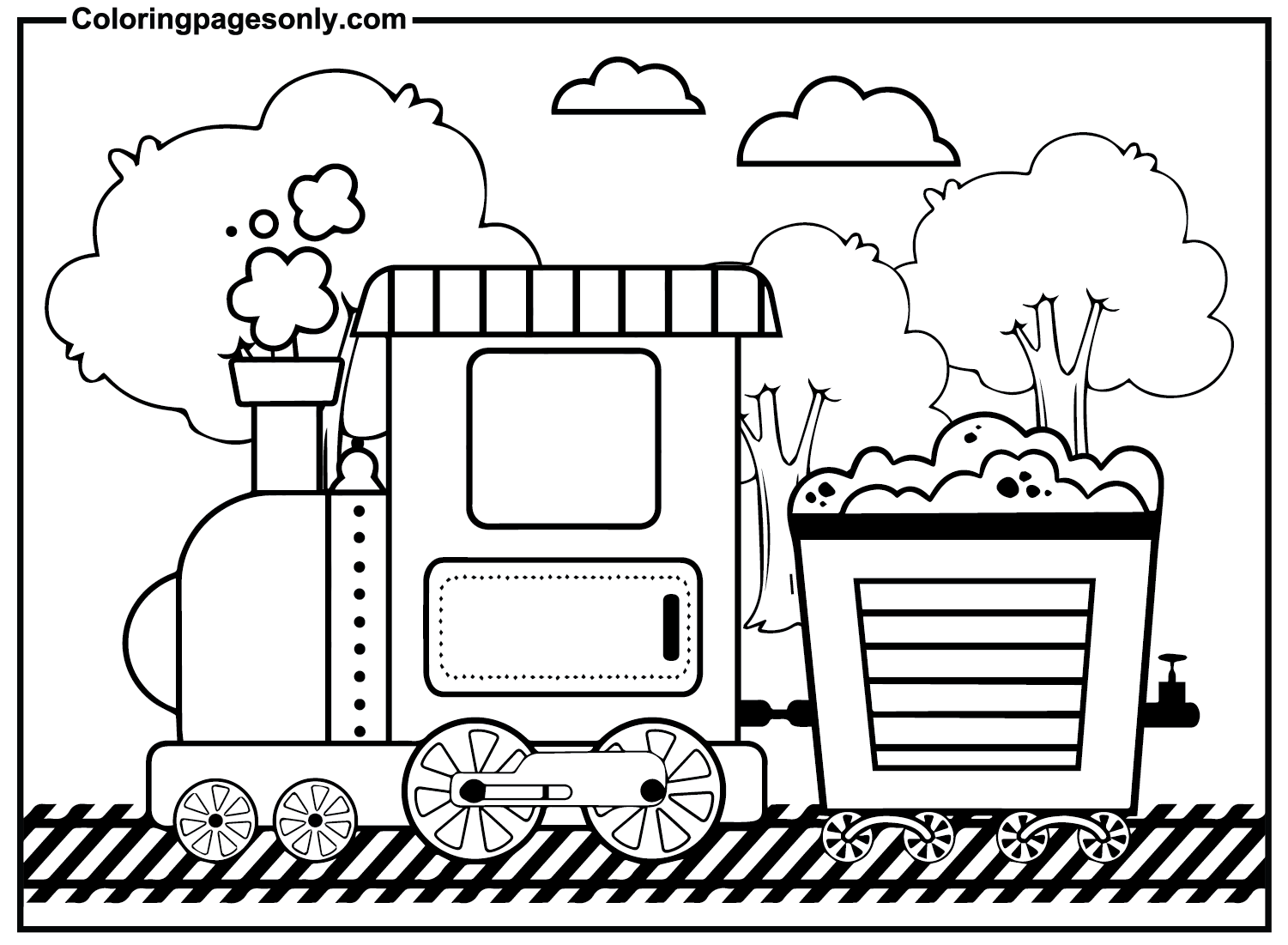
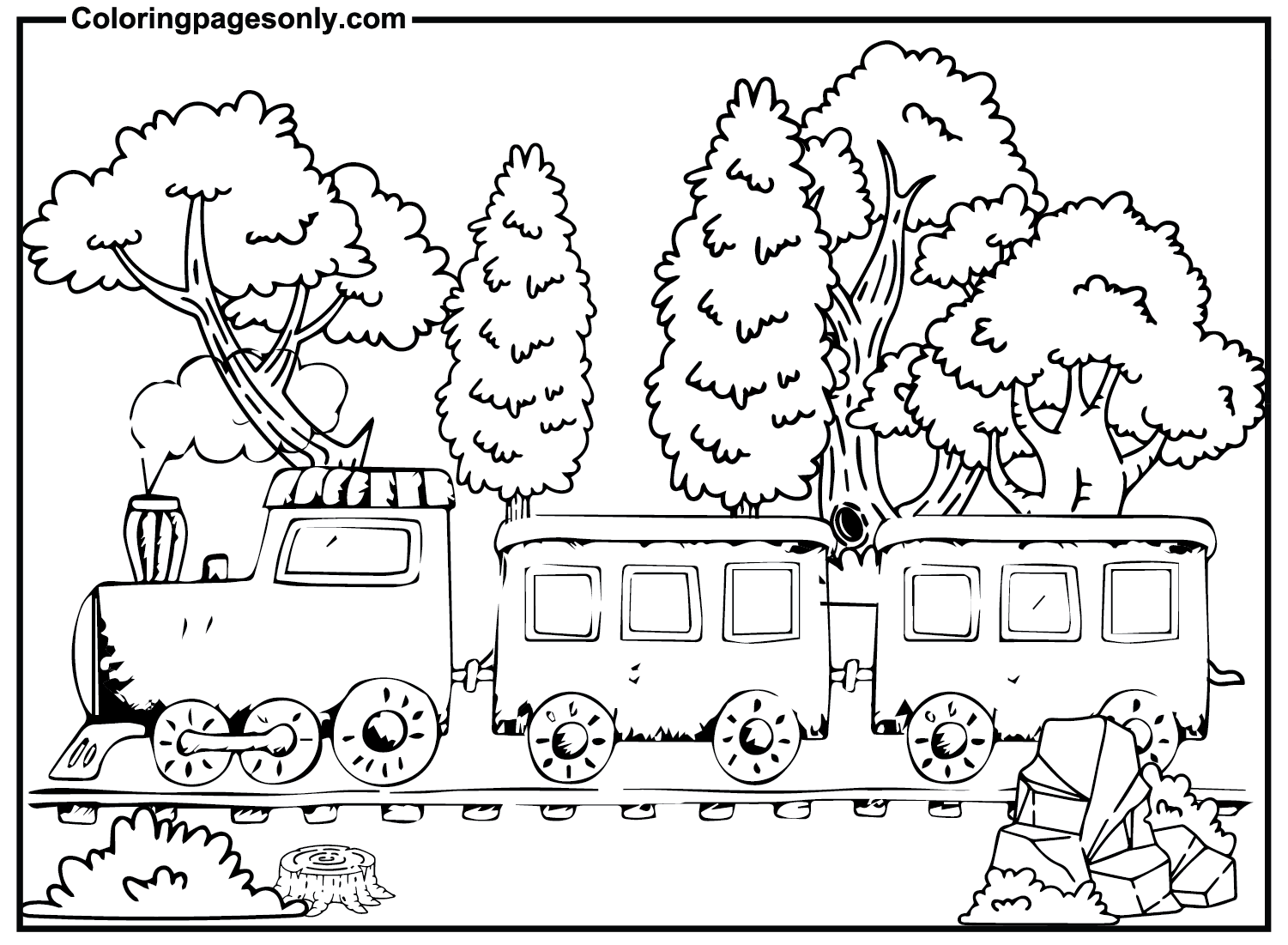
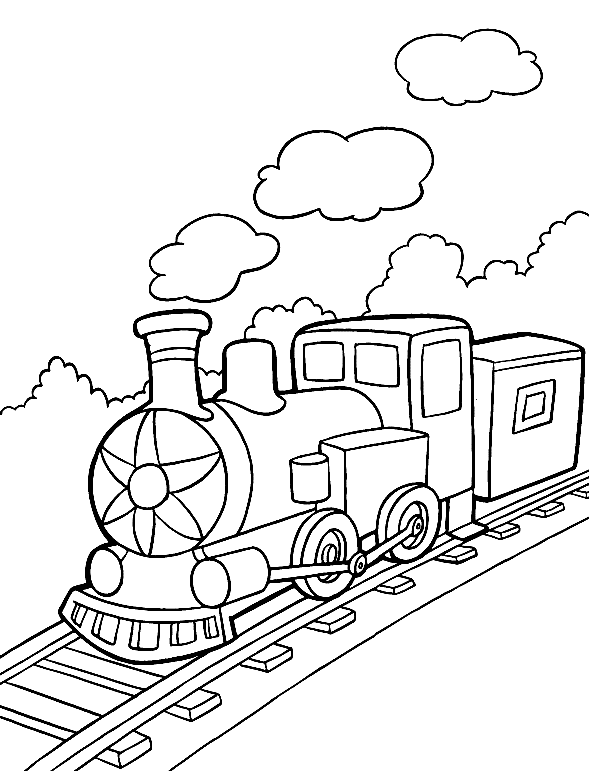
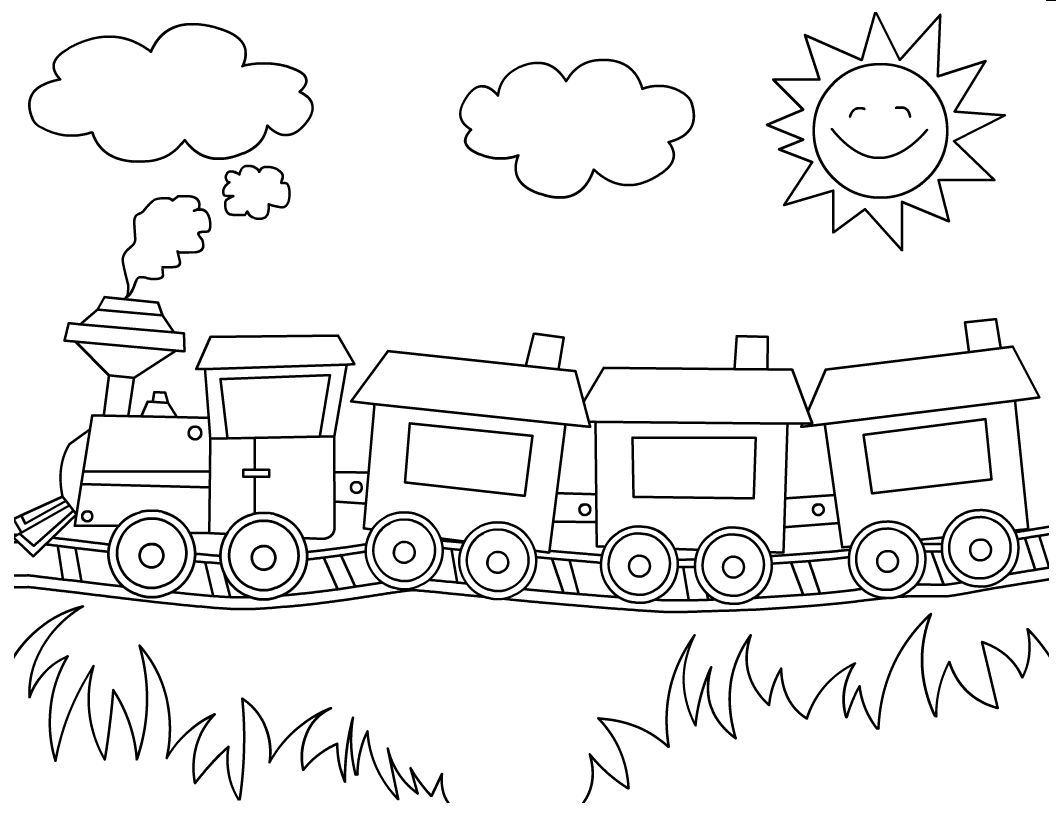
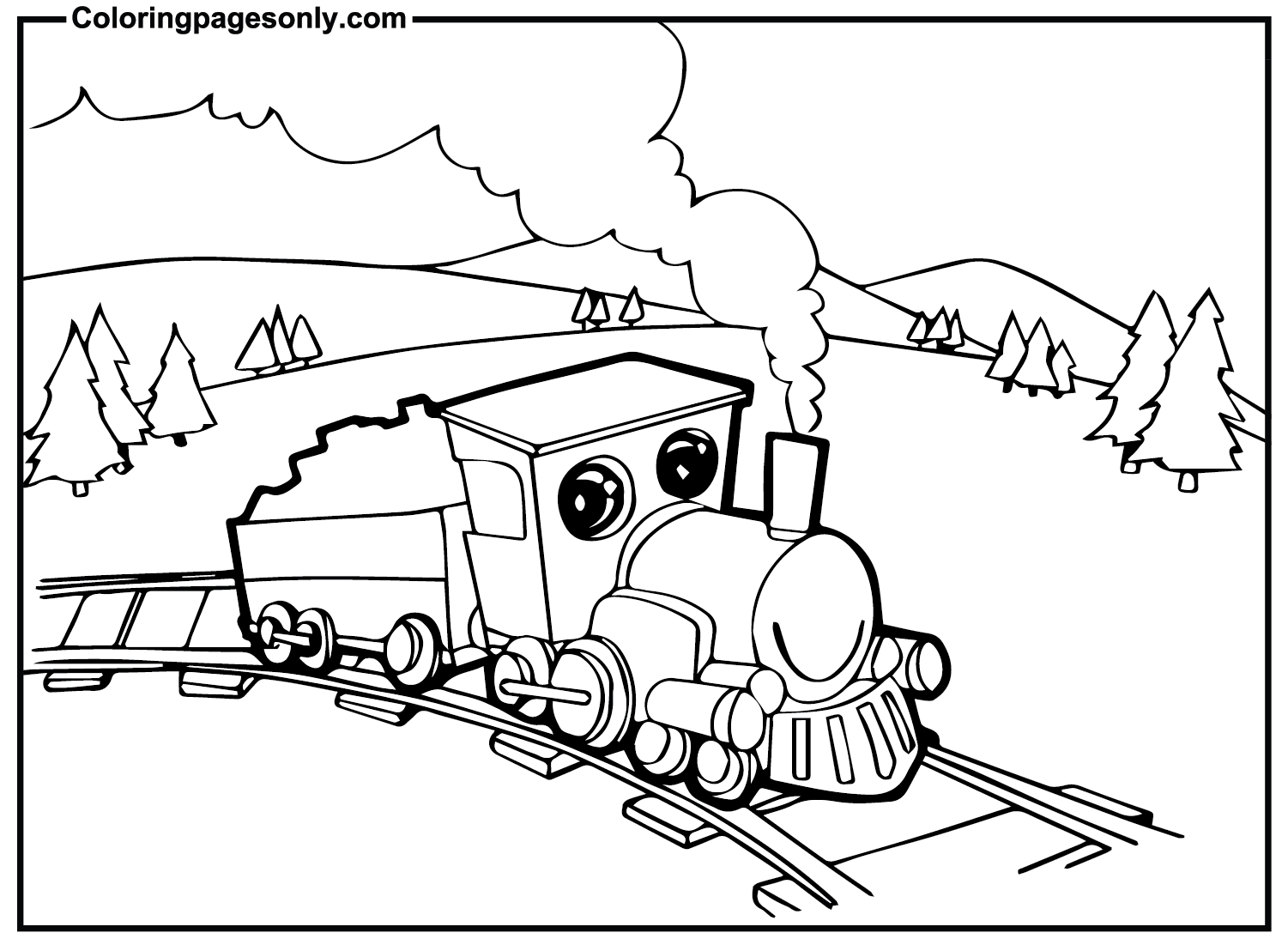
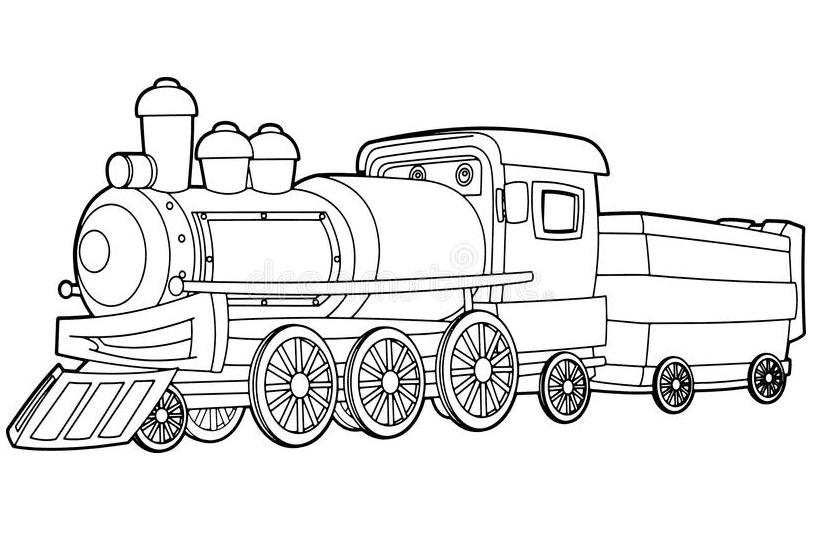
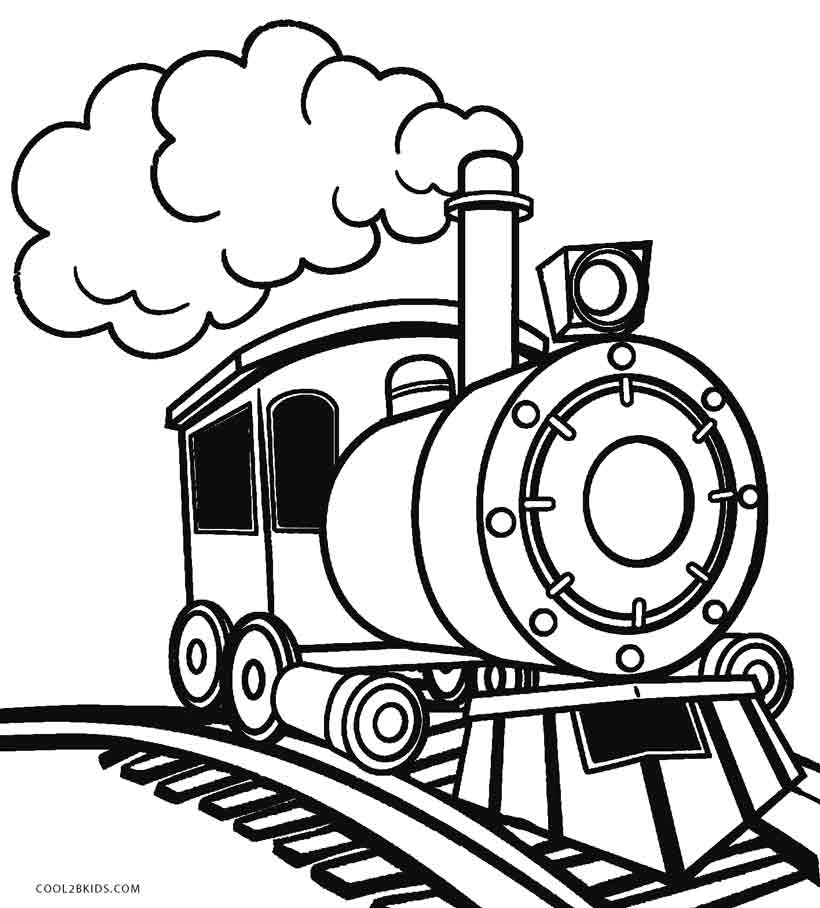
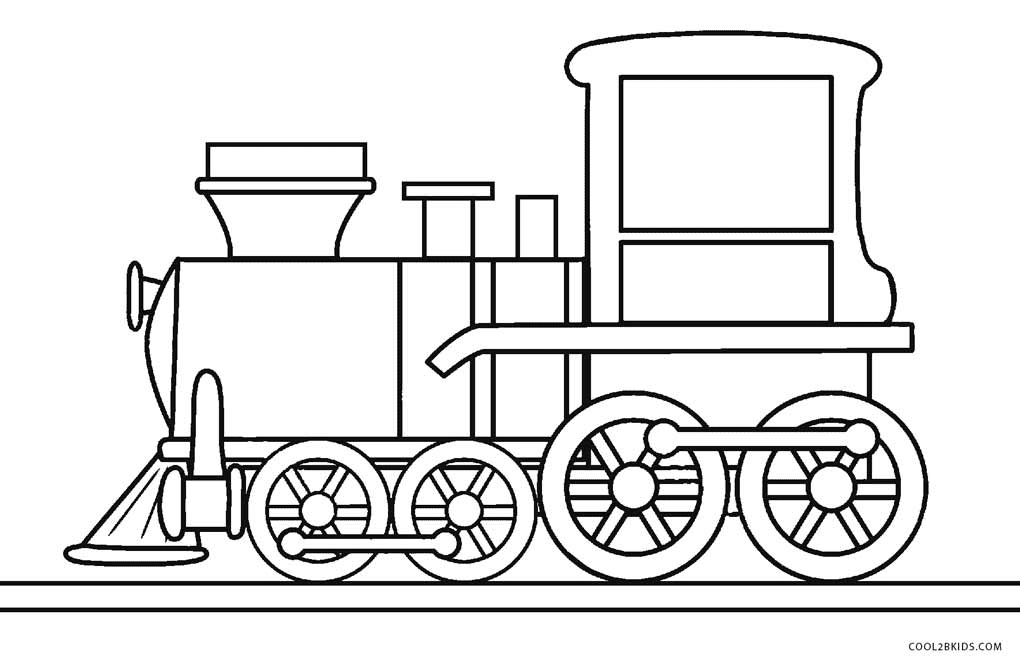
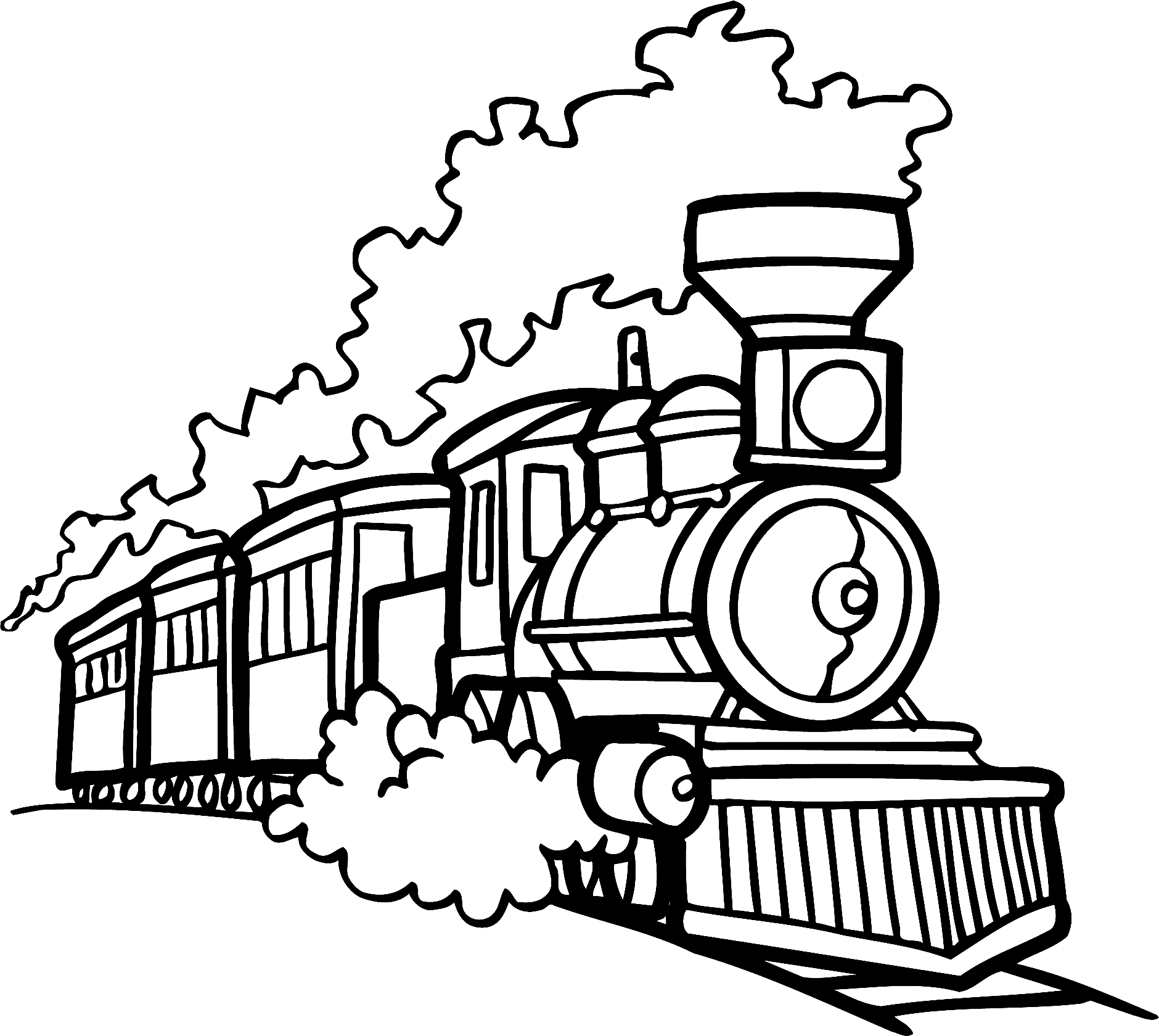
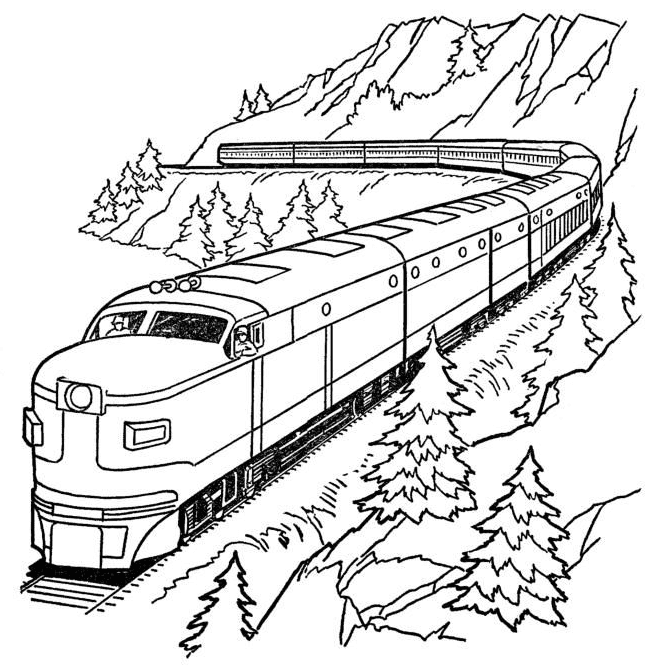
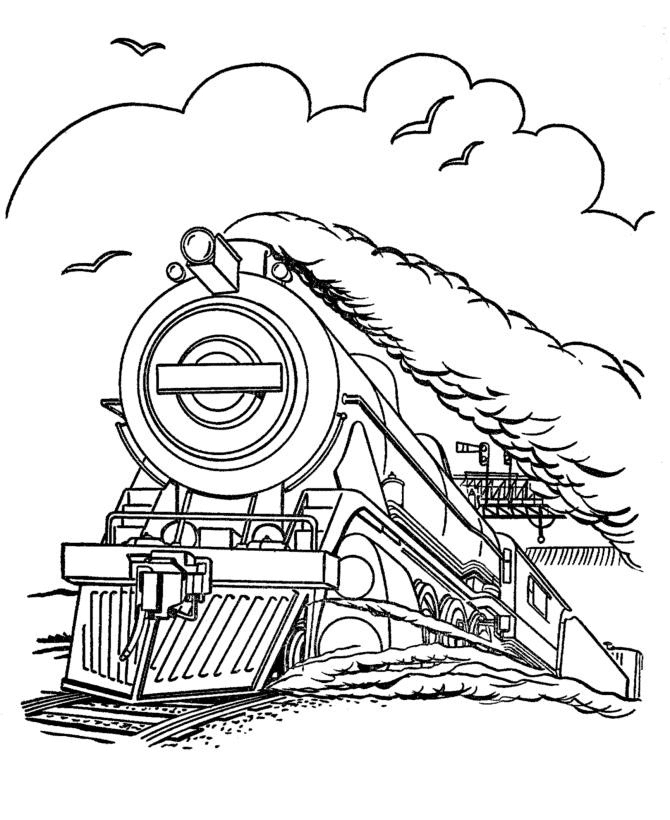
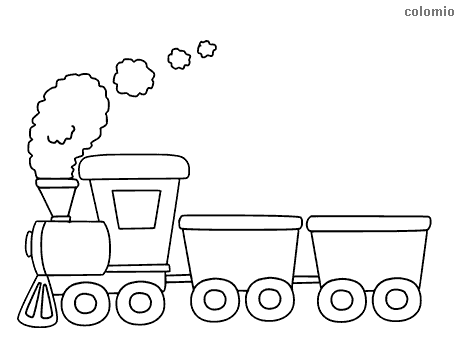
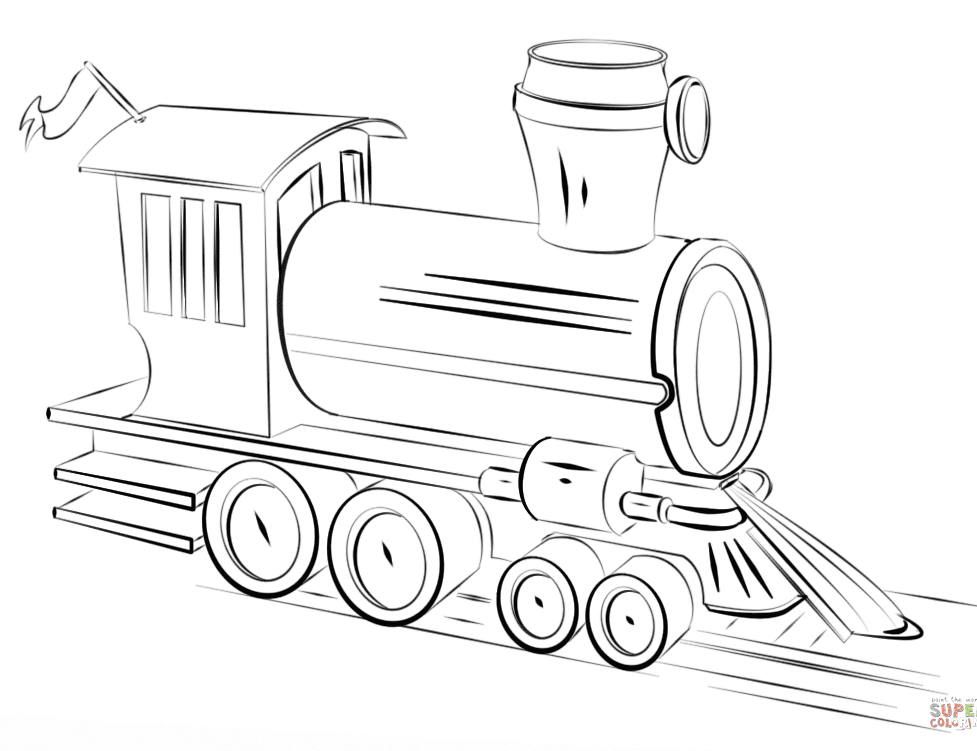
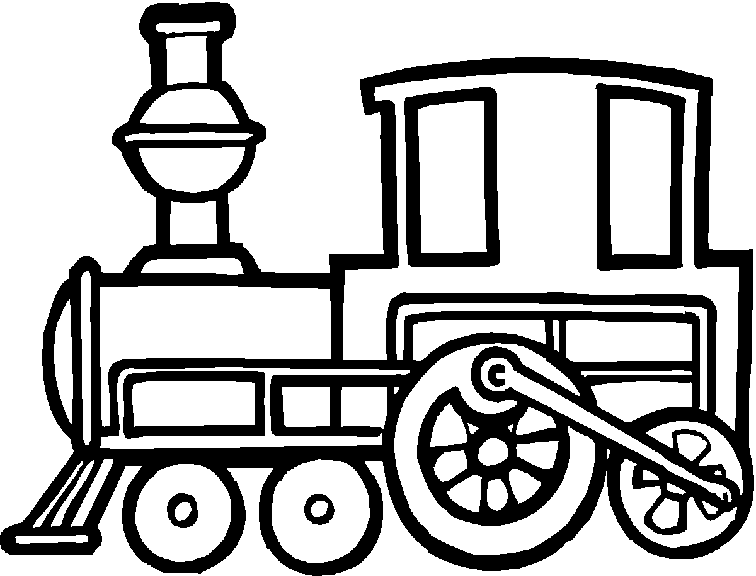
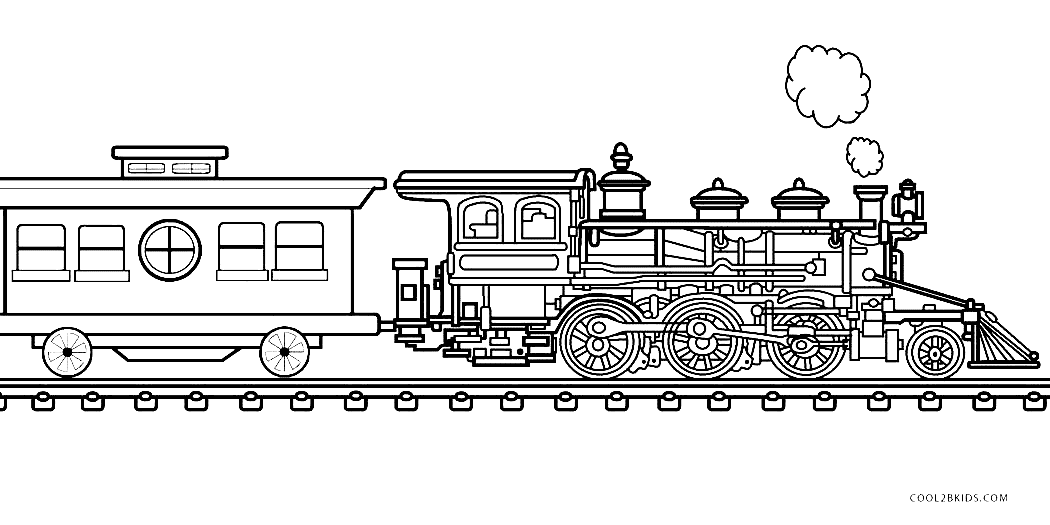
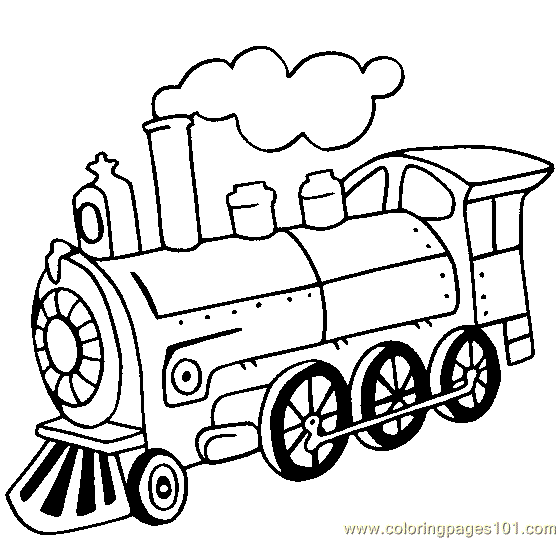
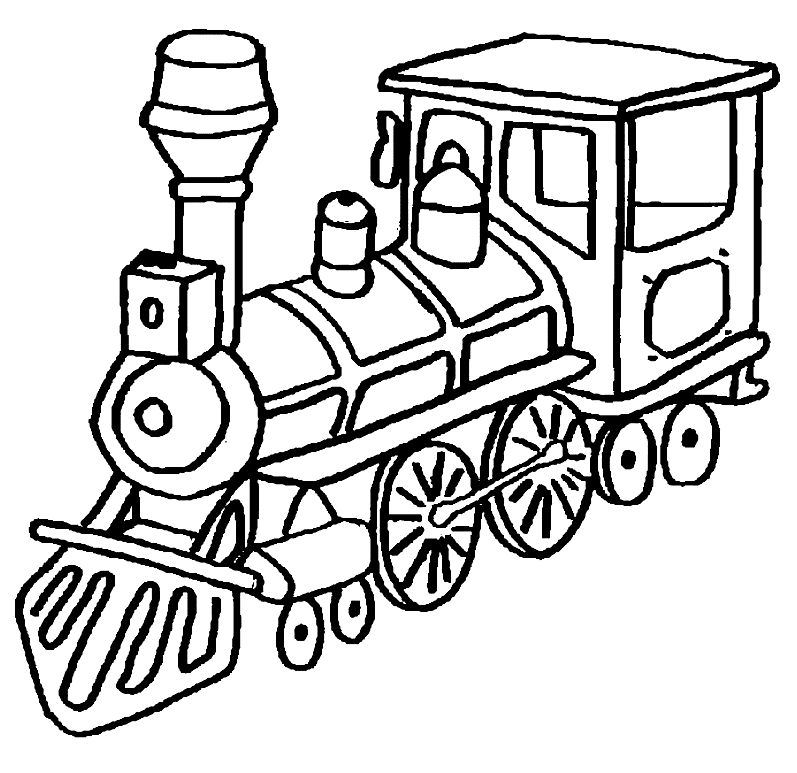
A solid group of pages focuses on classic steam engines, with smokestacks, carriages, and mountain-crossing scenes. These suit dark Charcoal or Black for the boiler and undercarriage, with soft Gray or White puffs of smoke rising from the stack.
Toy and Play Trains
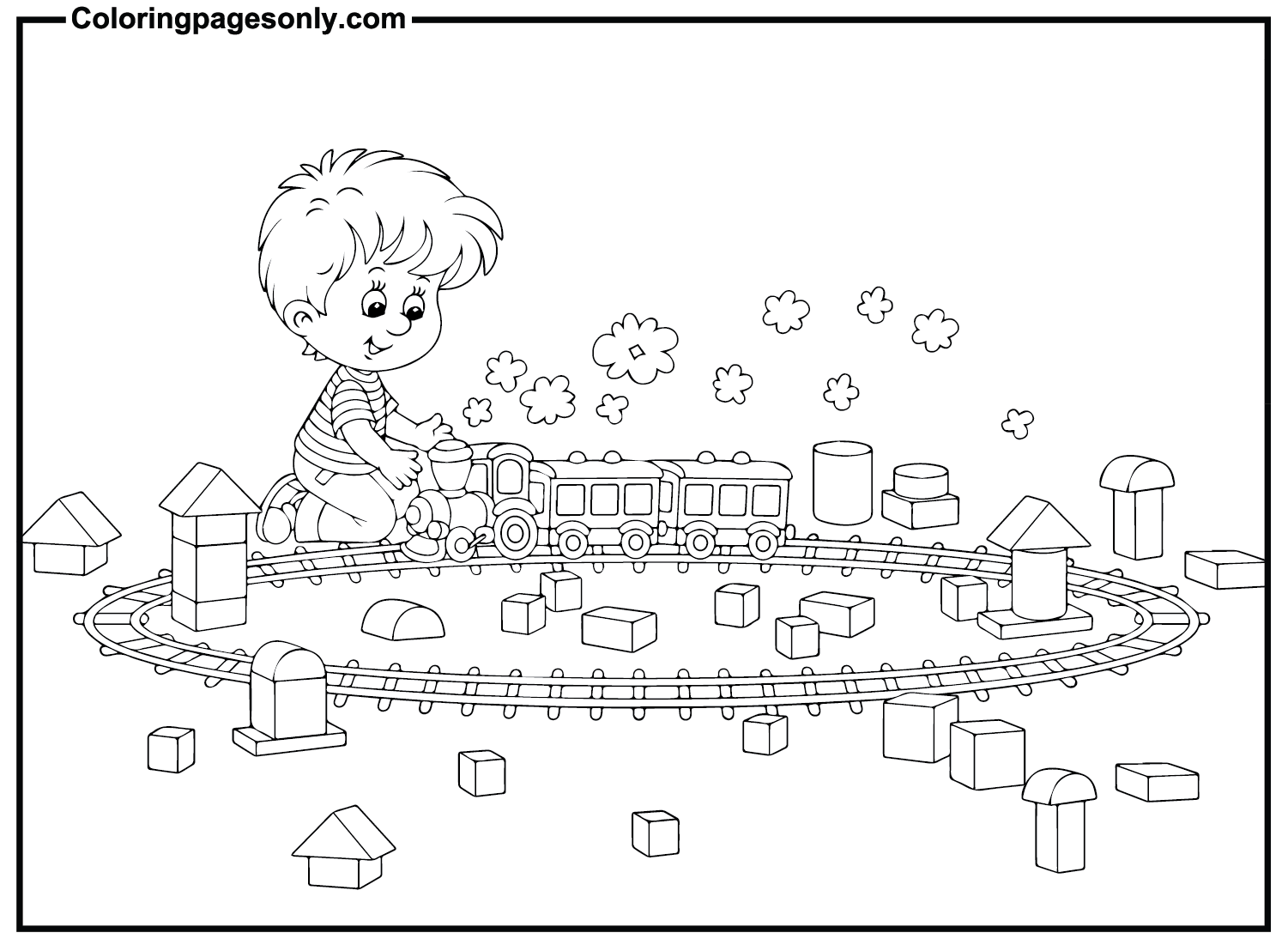
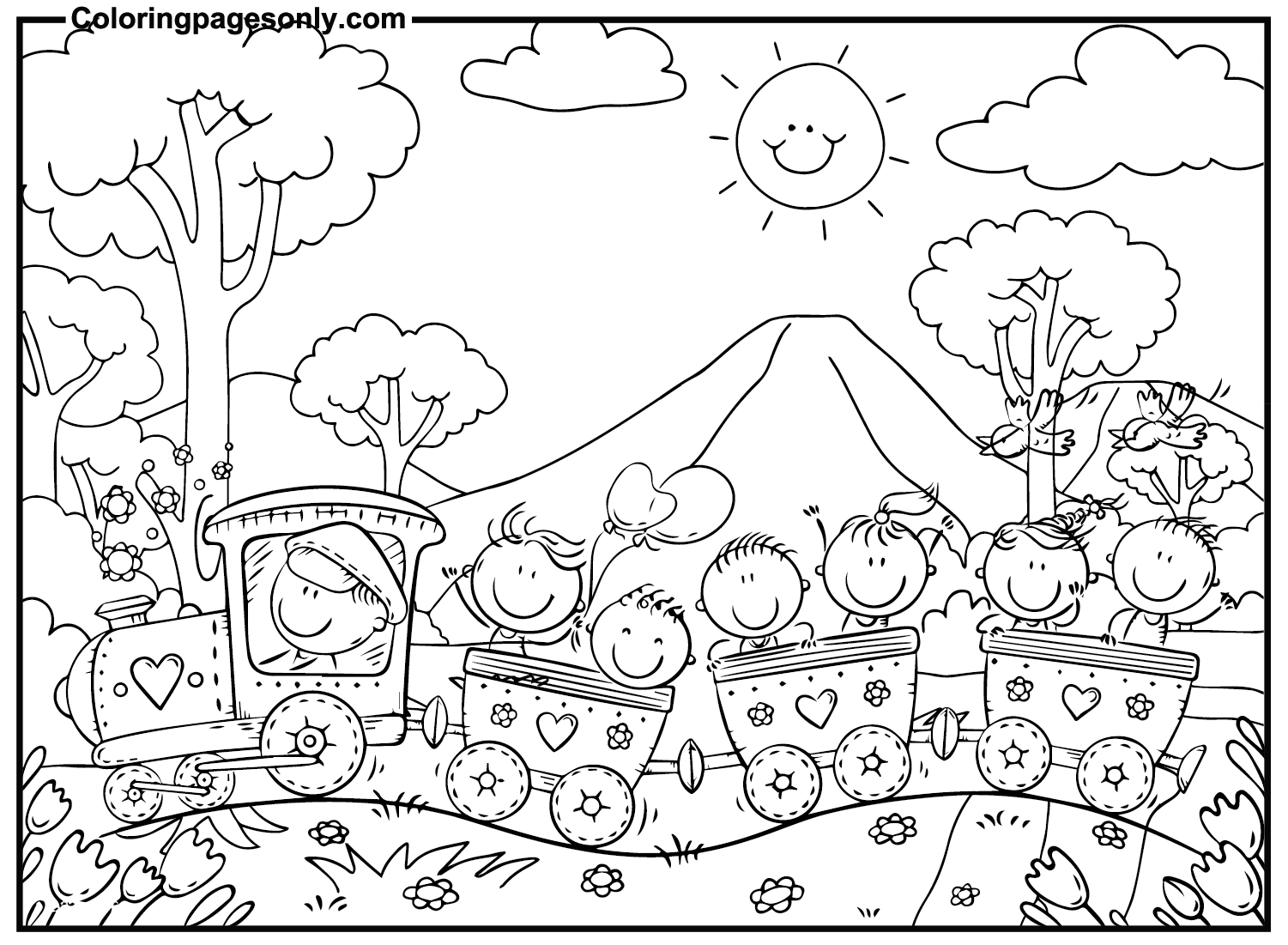
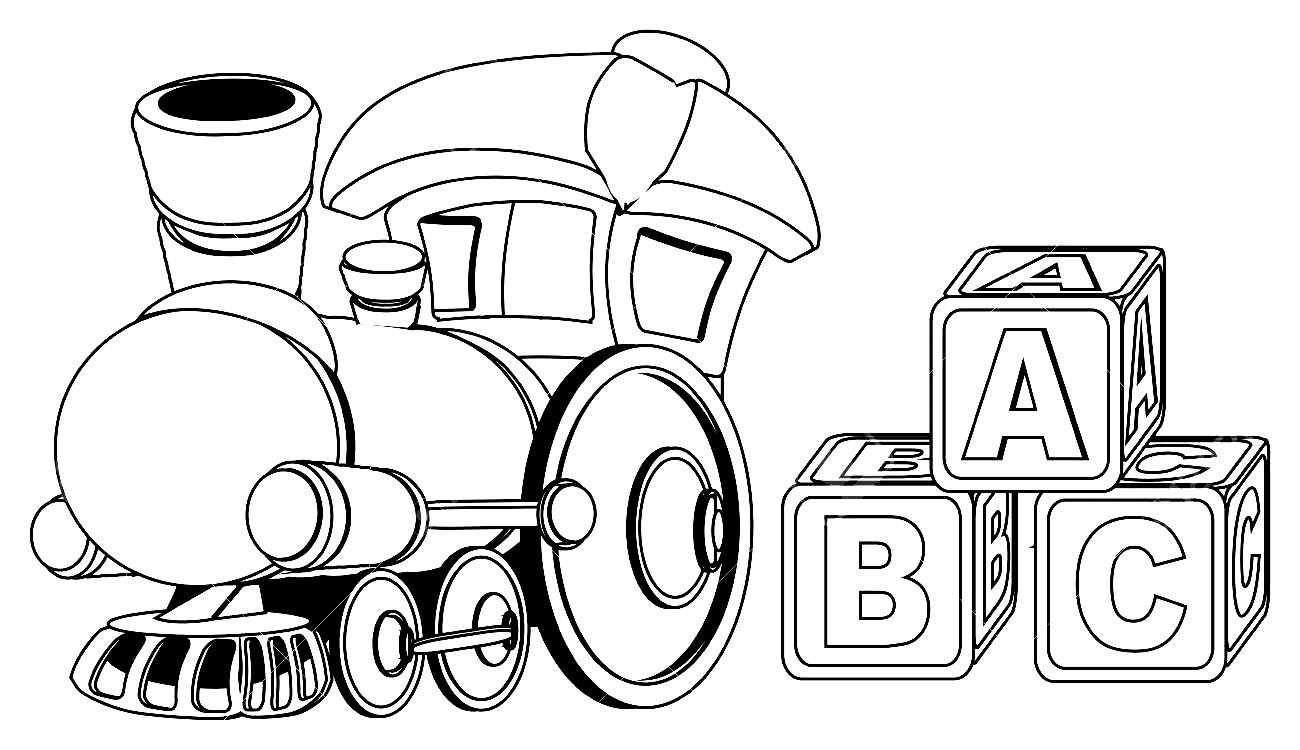
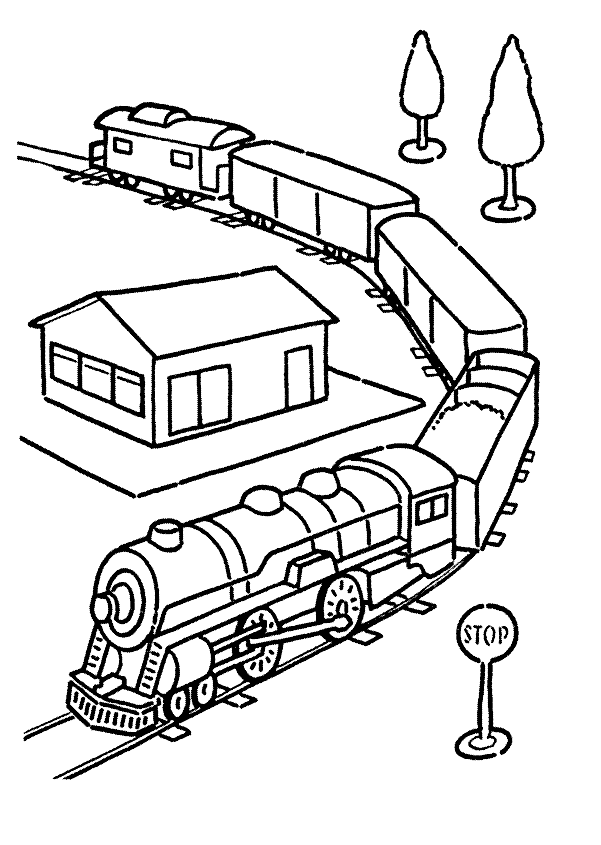
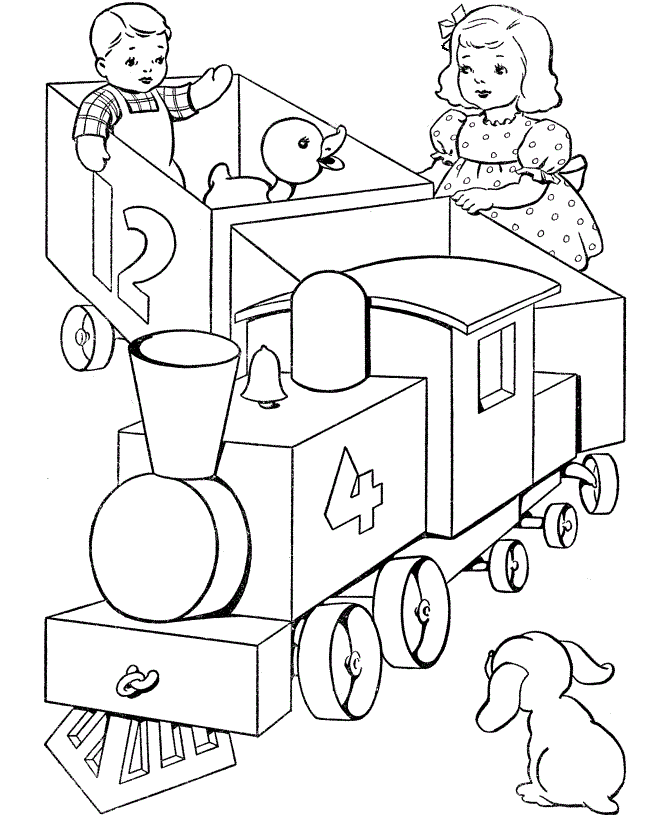
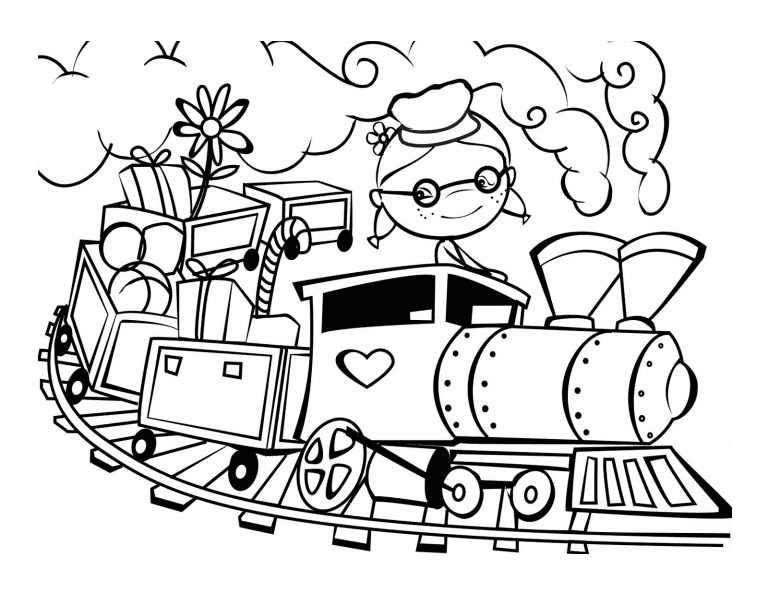
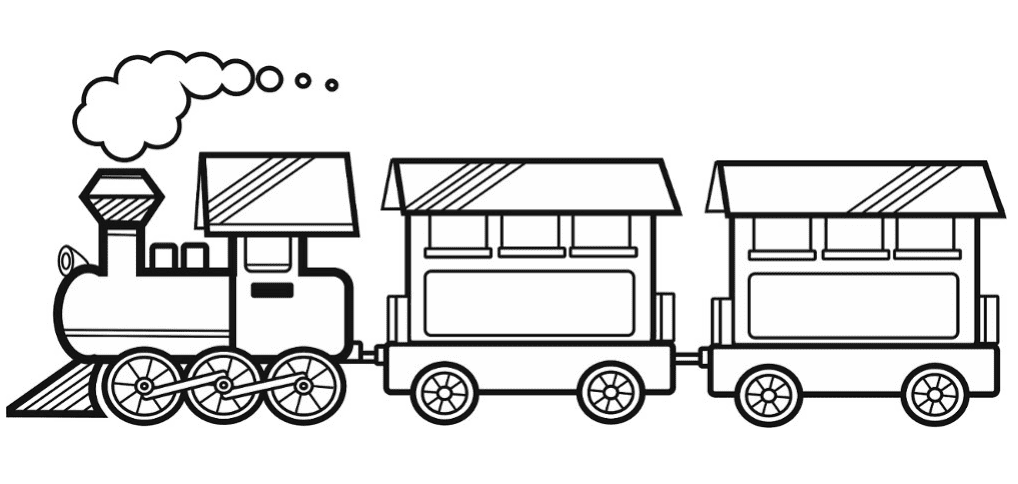
A second group shows trains in a playroom or toy-set context, including an electric train set on a track and a page with babies and toys aboard. These pages work well with brighter, more saturated colors than the realistic locomotives, since toy trains are usually painted in bold primary colors.
Passenger, Freight, and Everyday Scenes
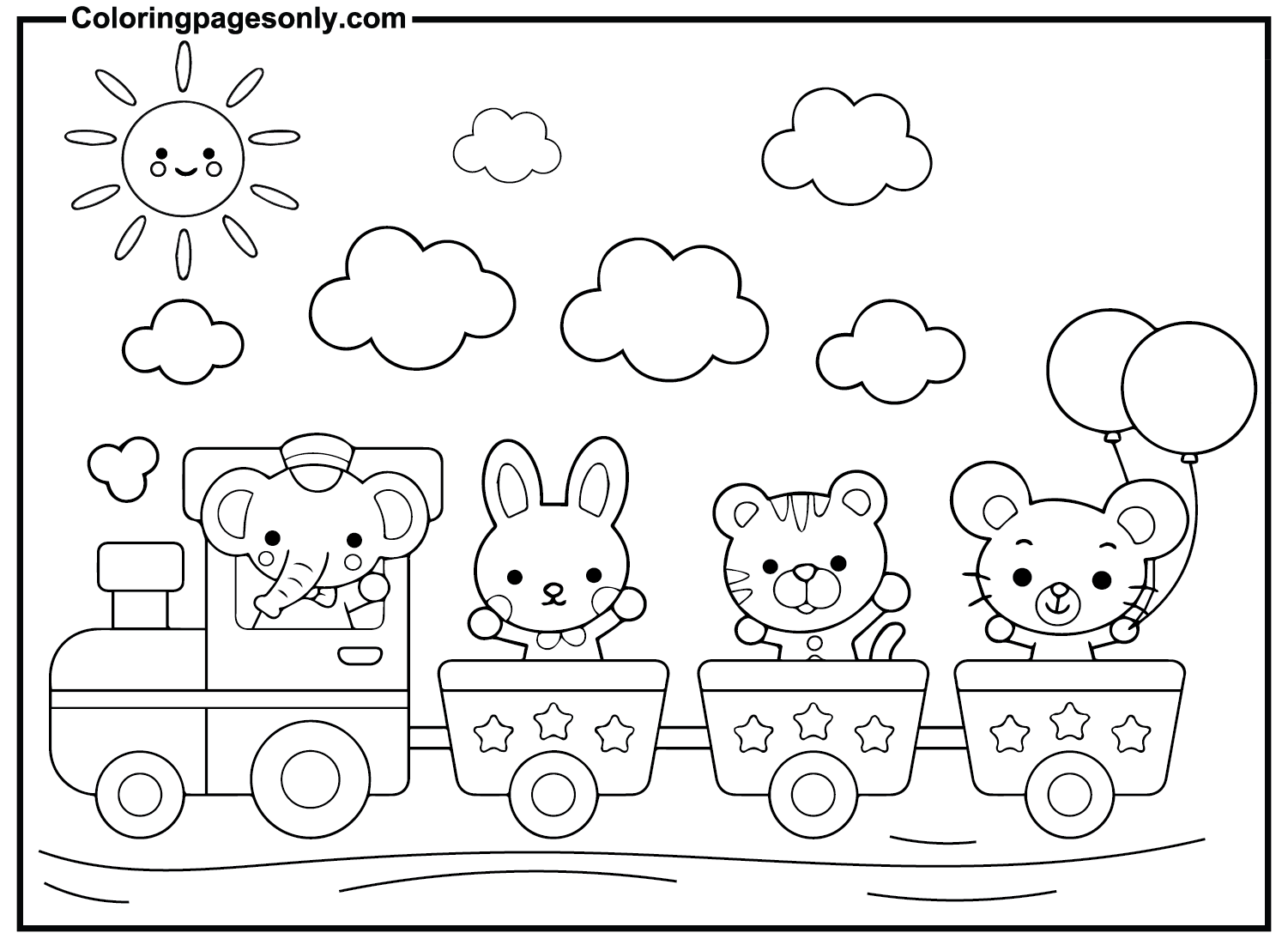
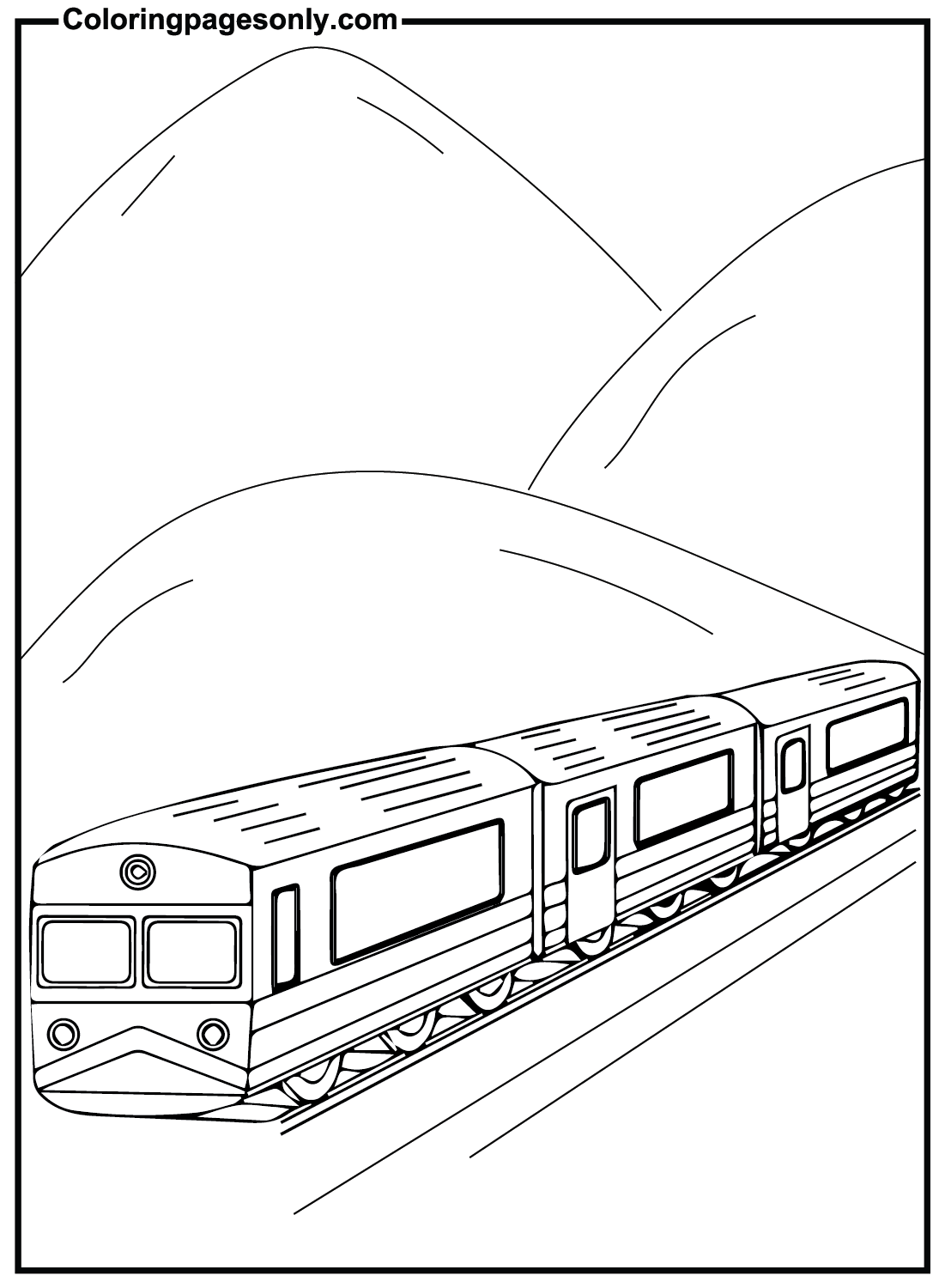
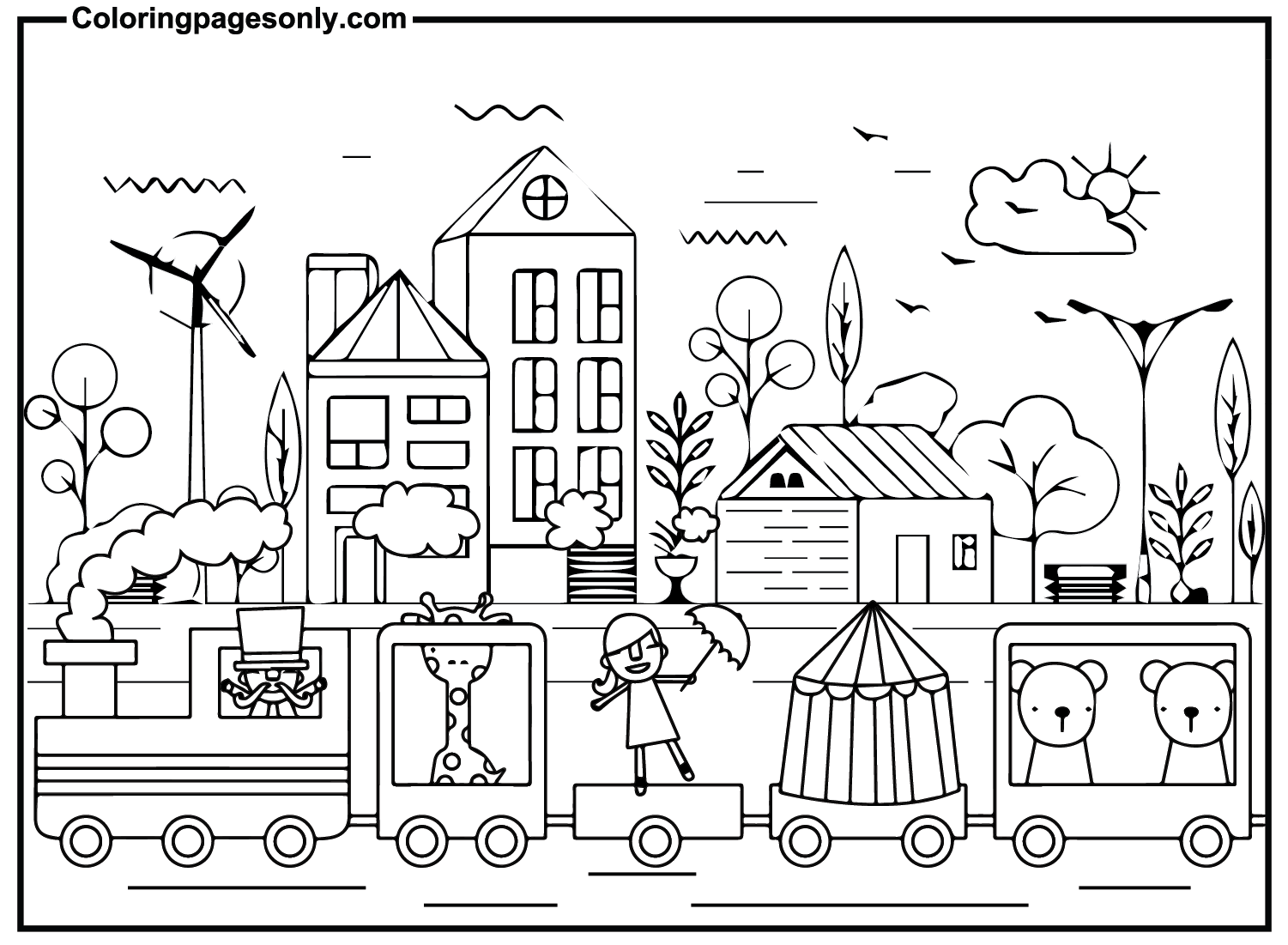
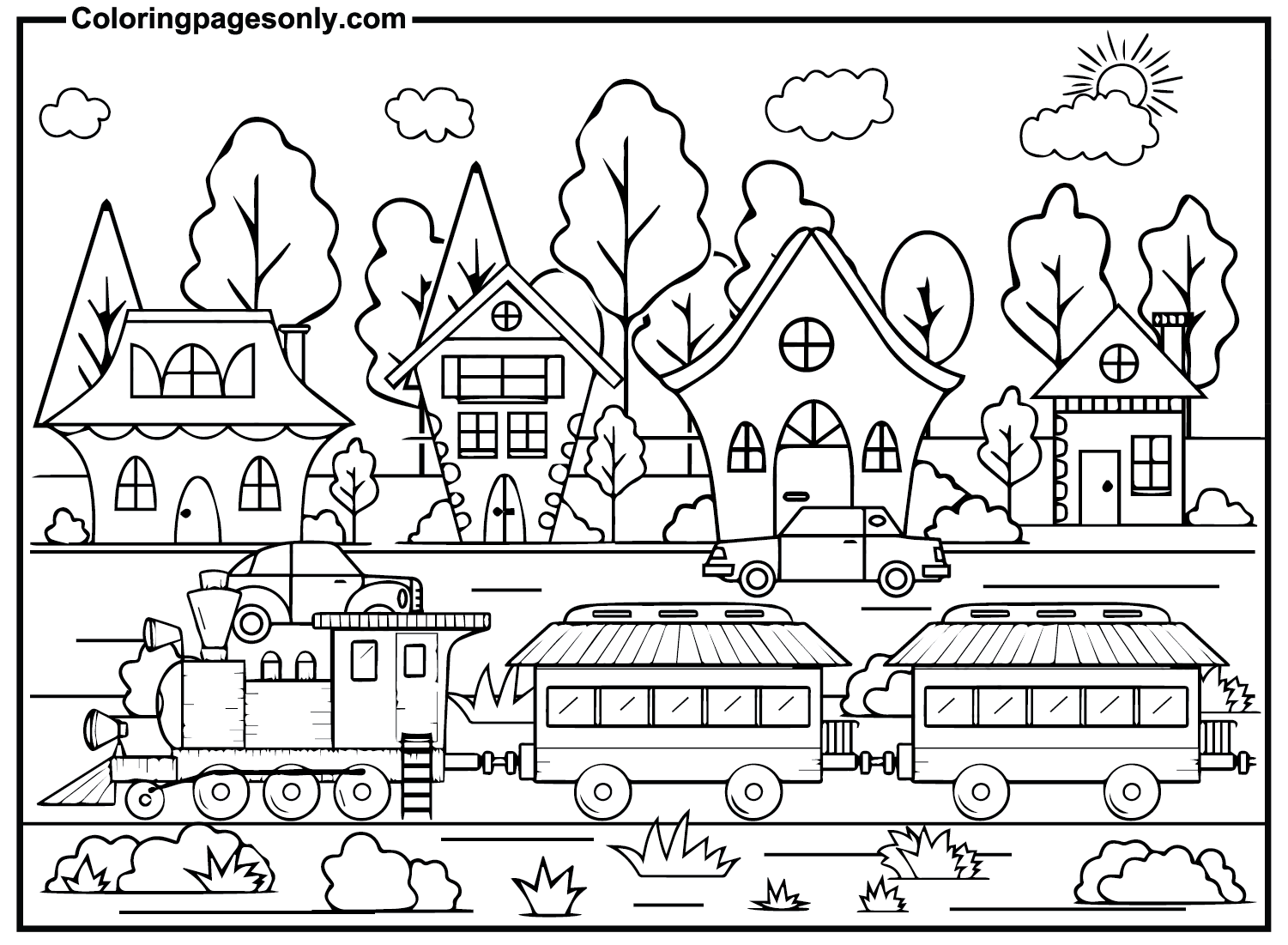
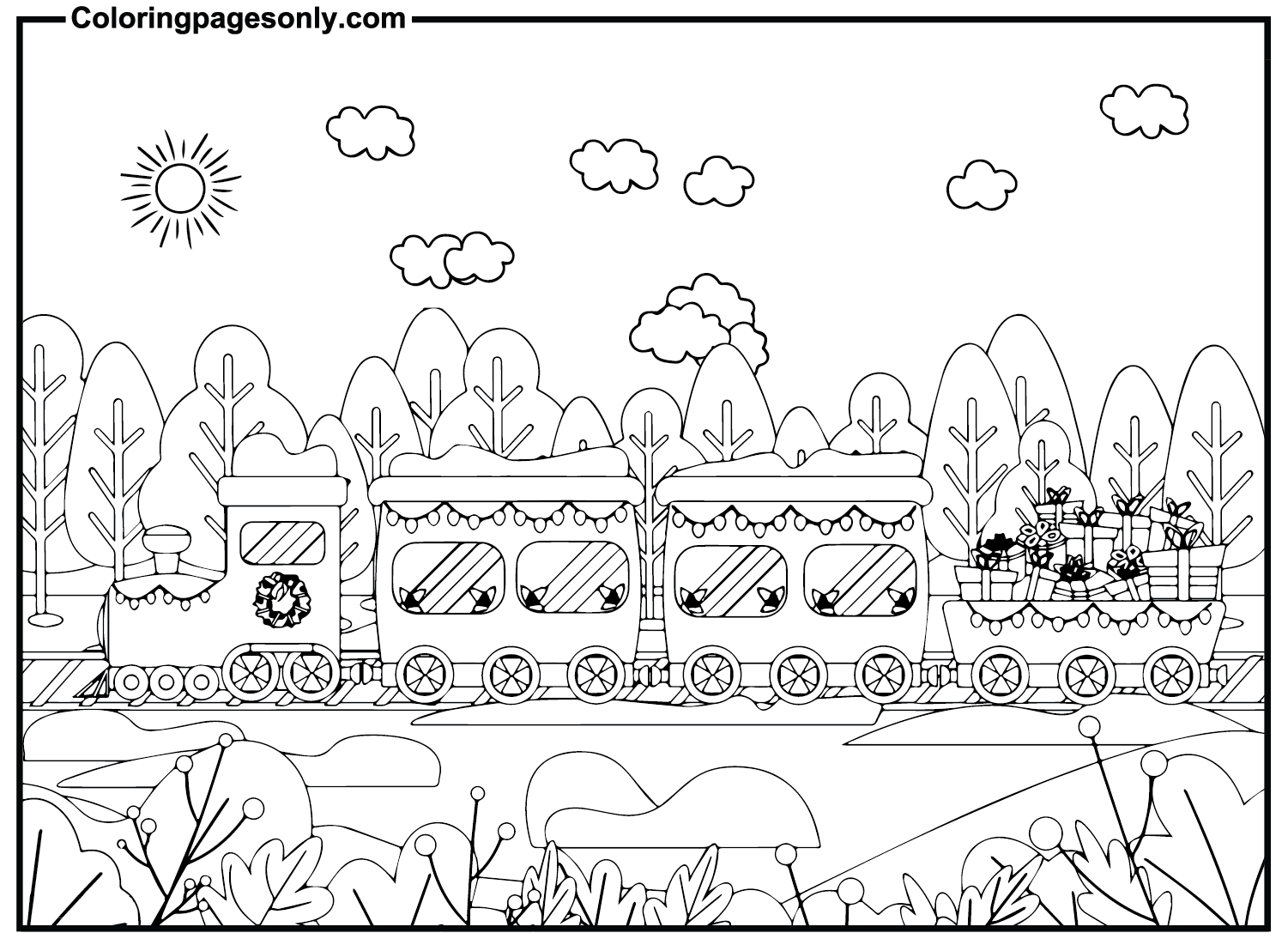
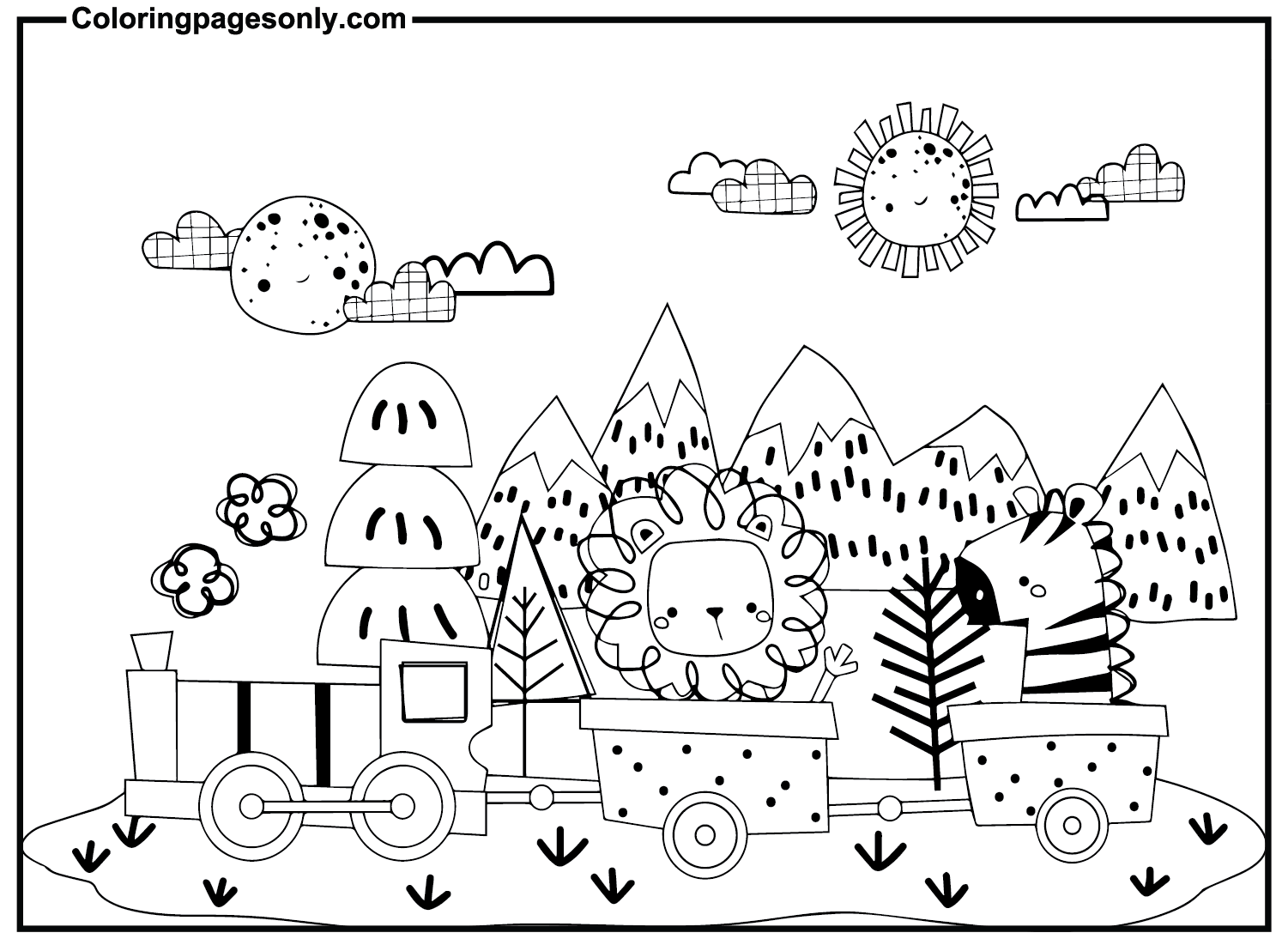
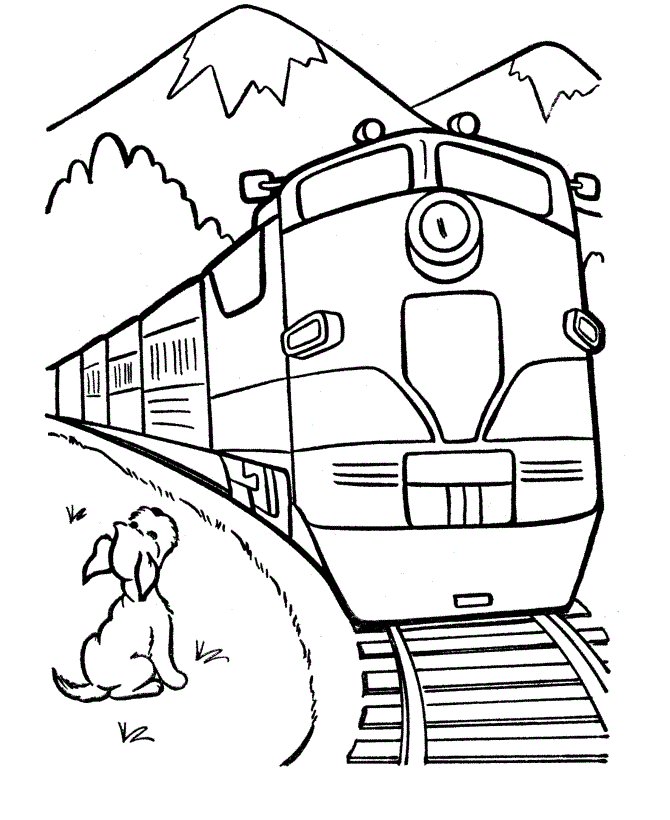
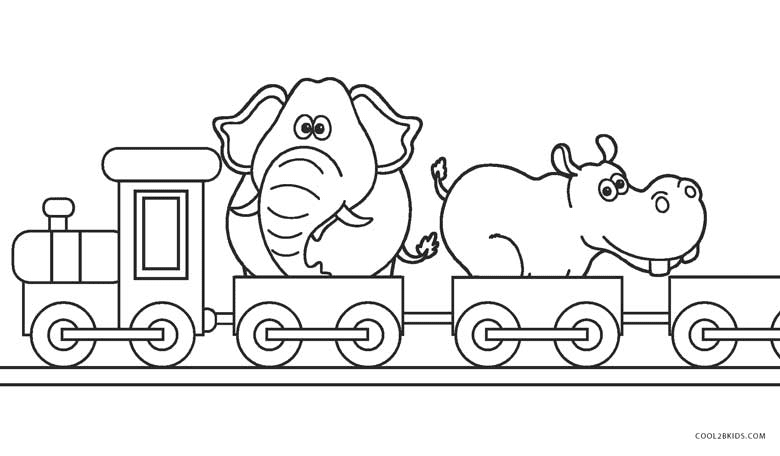
A varied group covers real-world train contexts: a station, a freight train, a circus train, passenger cars, and a couple of pages pairing a train with animals or riders. These suit a realistic palette matched to the setting, such as Sky Blue skies for outdoor scenes and warm Tan or Brick tones for a station platform.
Cute and Cartoon-Style Trains
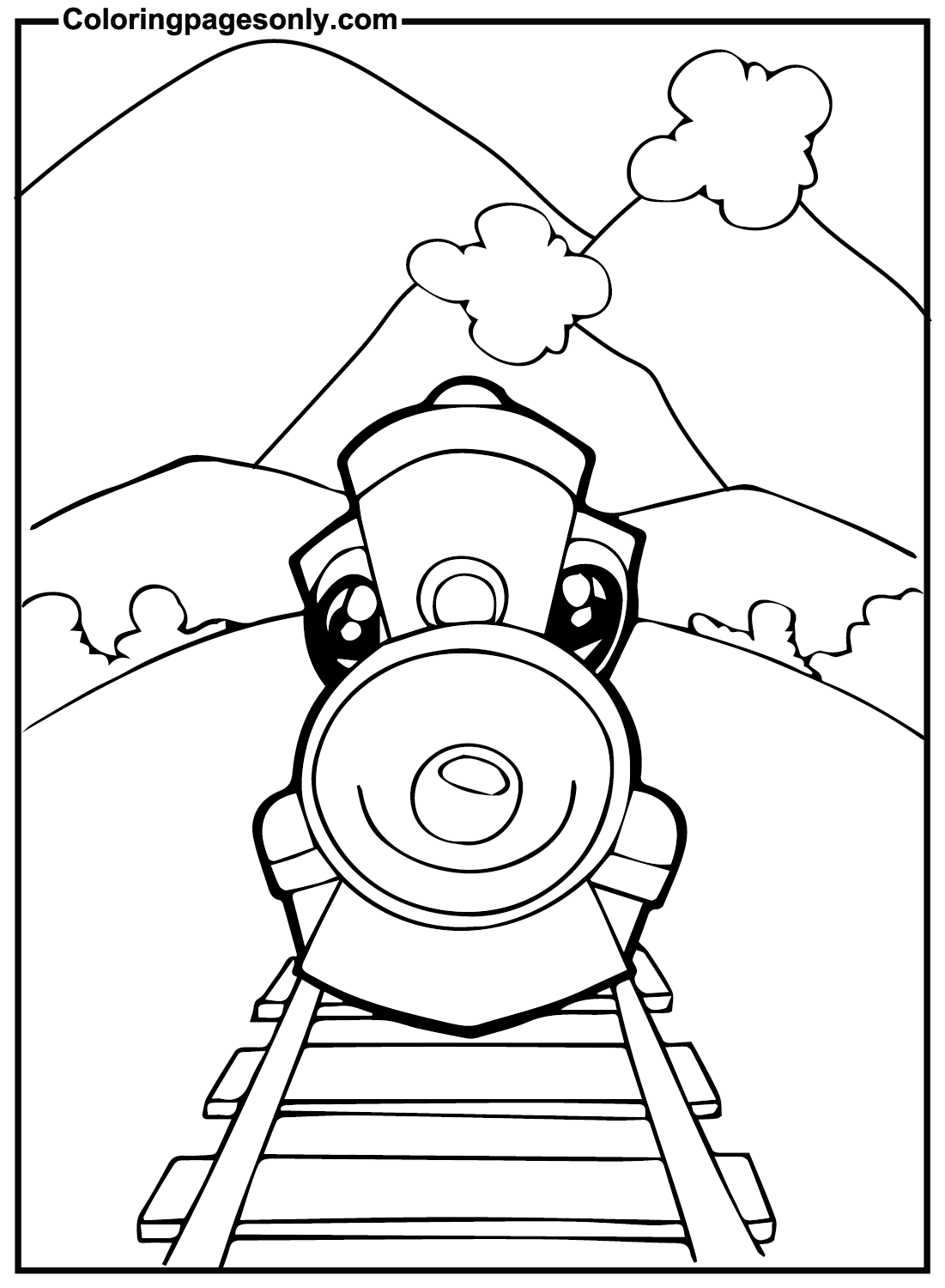
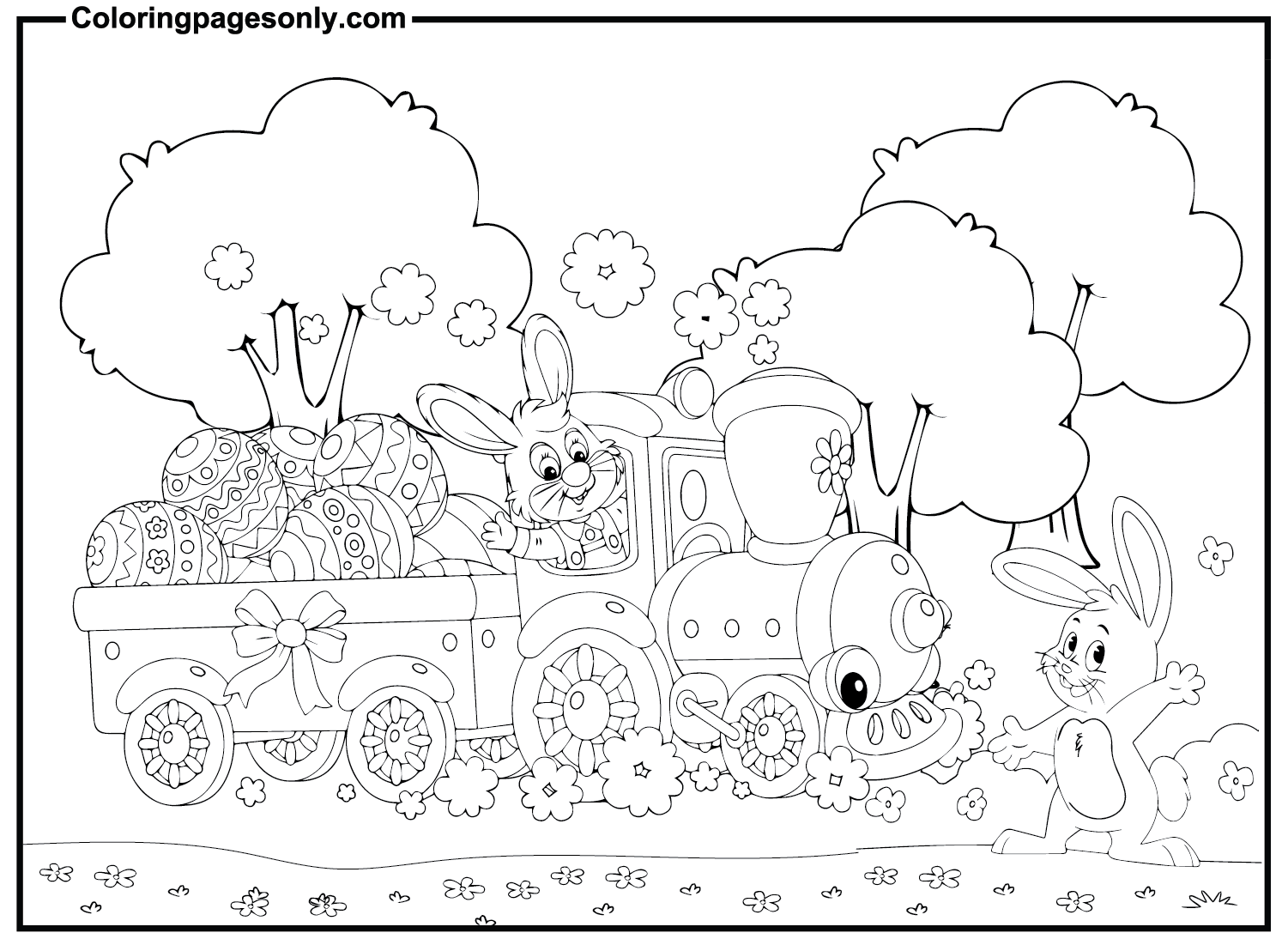
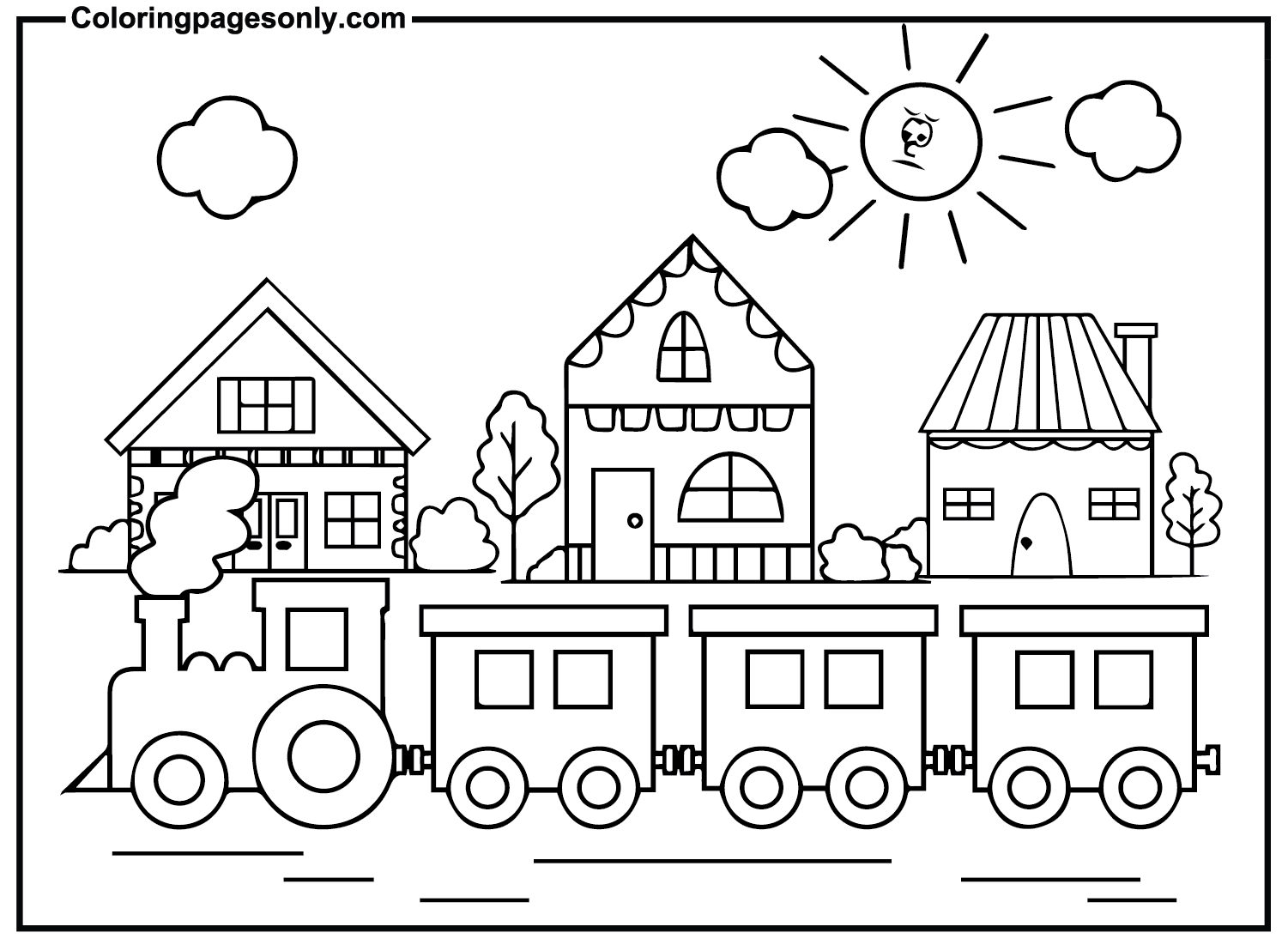
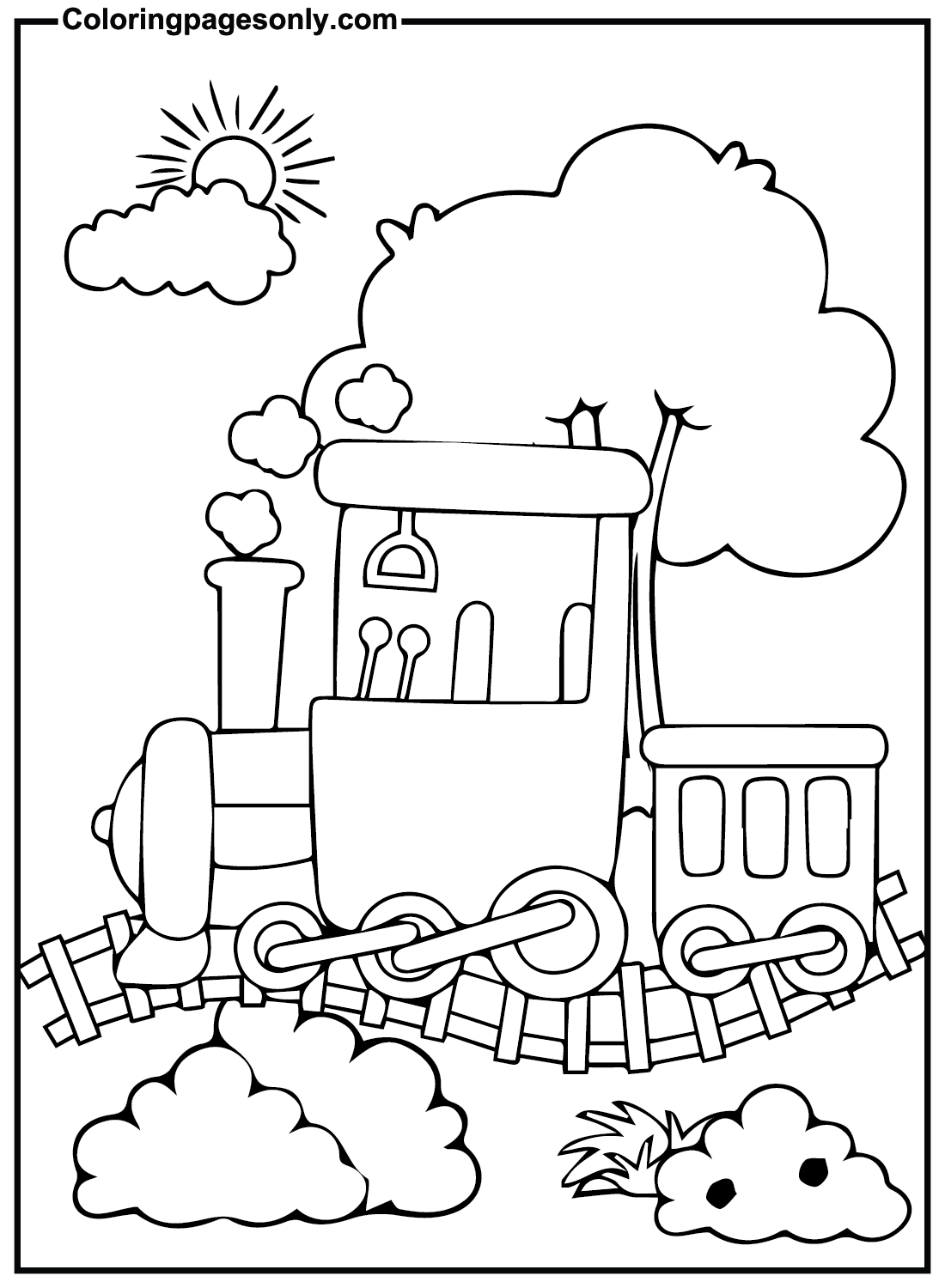
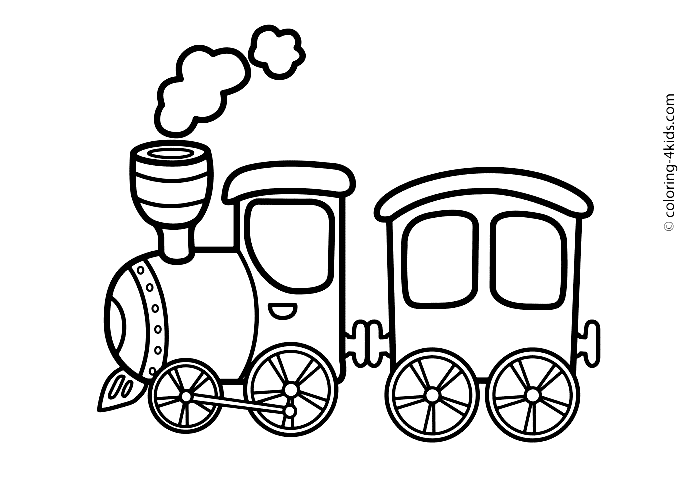
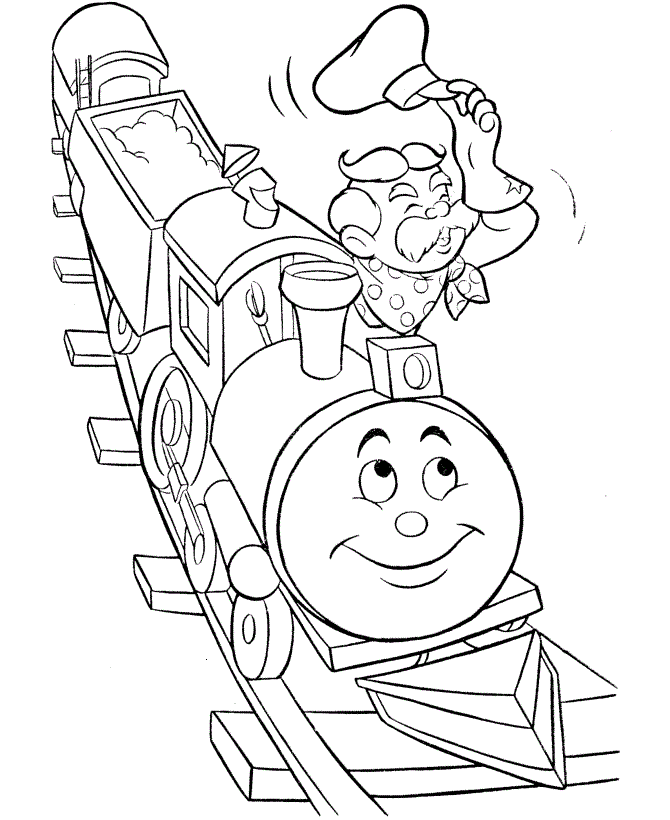
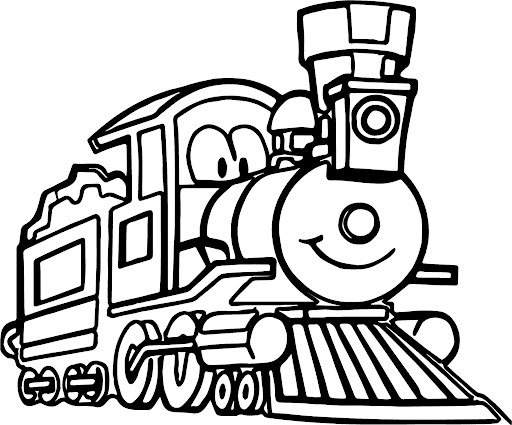
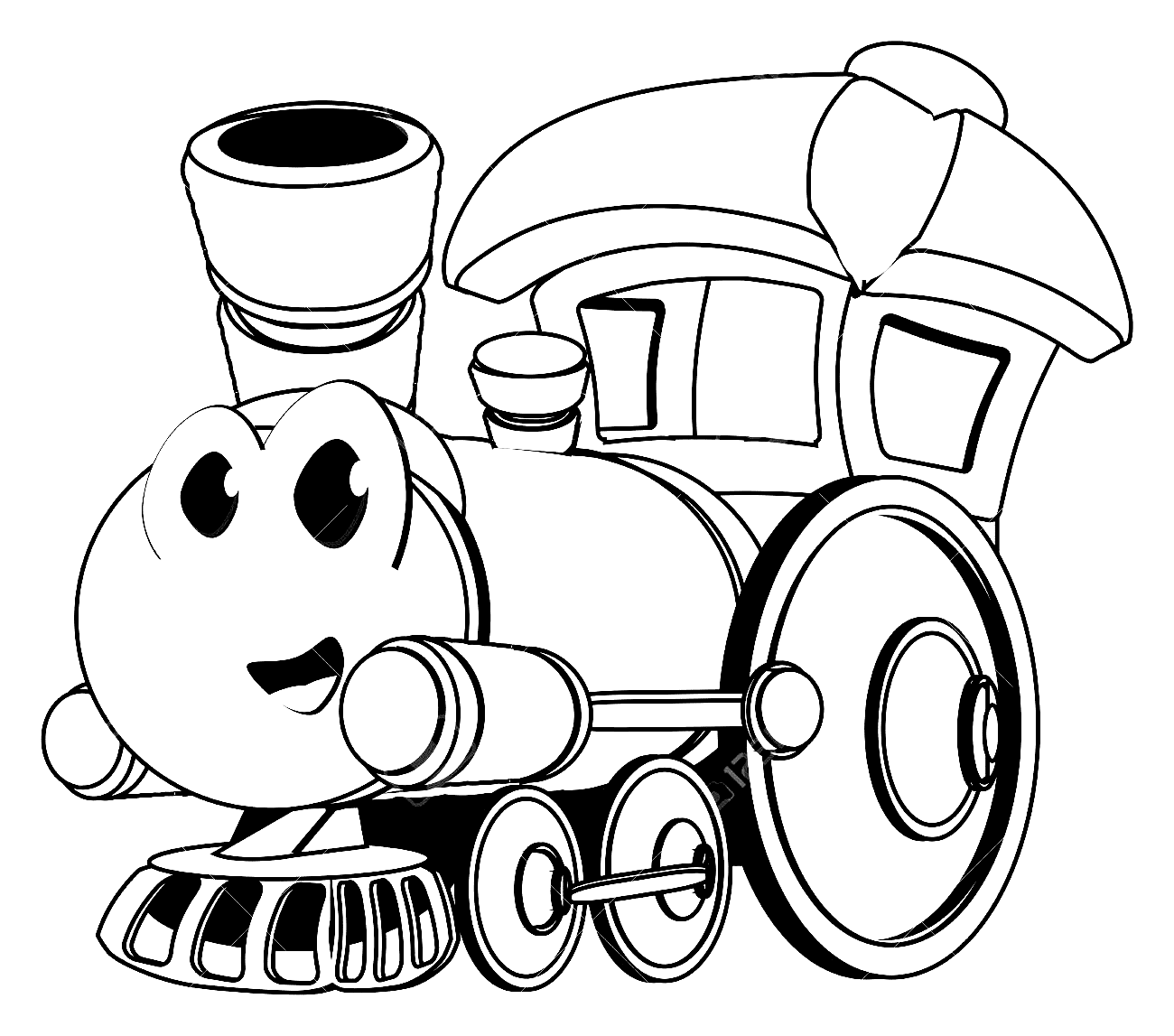
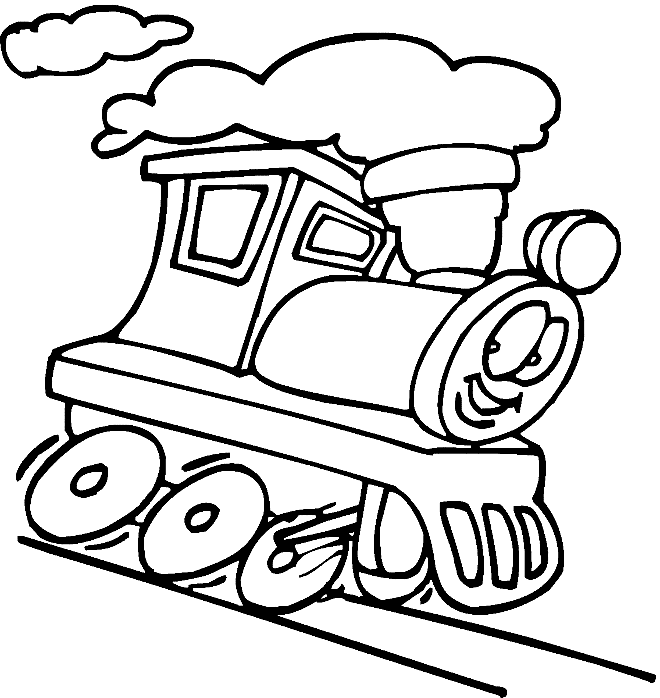
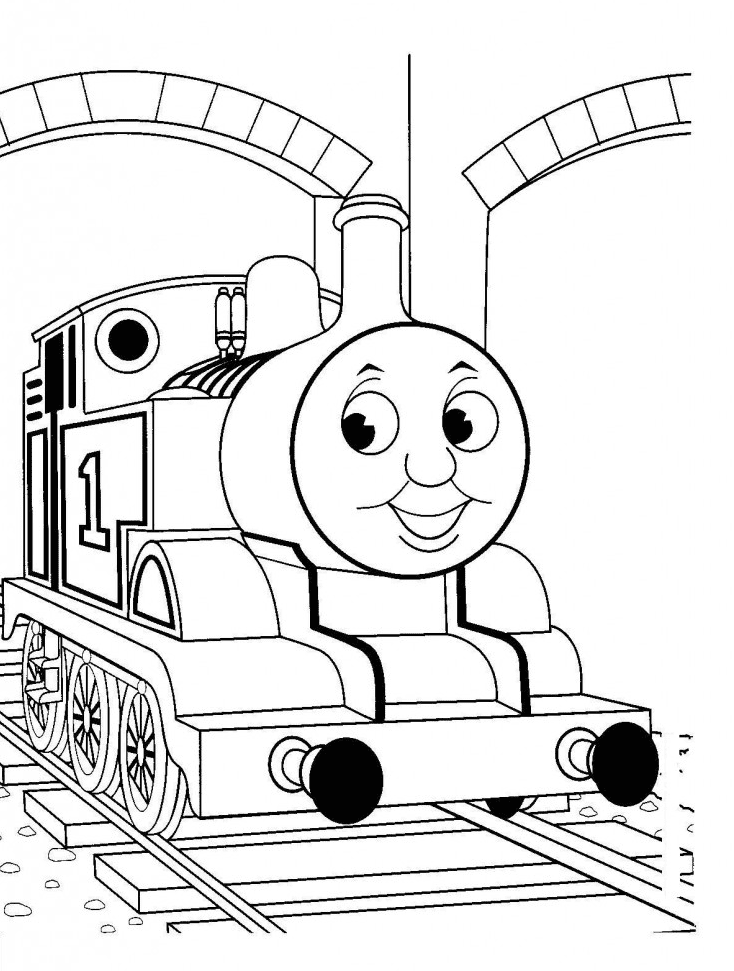
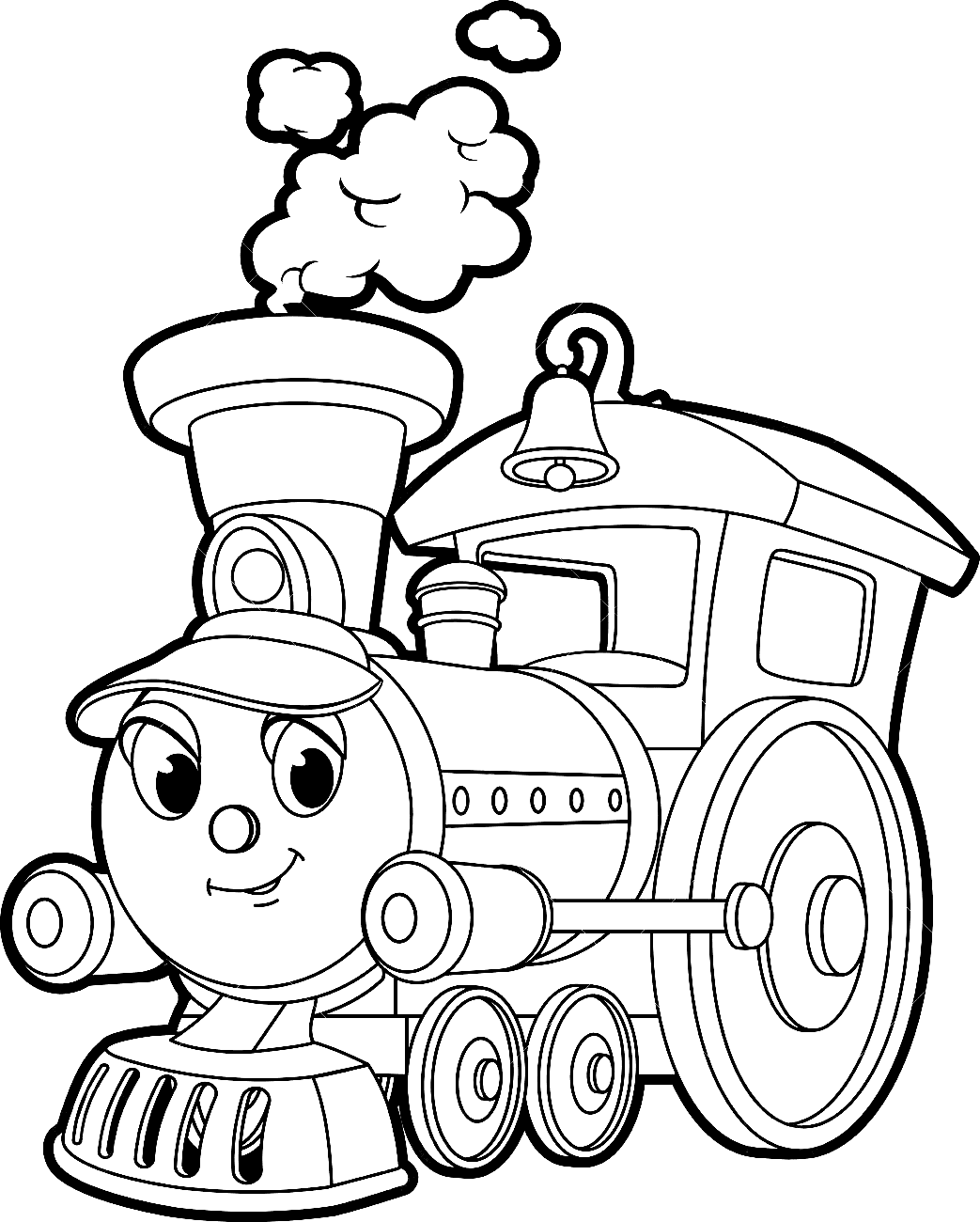
A friendly group gives individual trains a face and personality, from happy and smiling engines to simple, rounded cartoon designs. These suit whatever bright color feels most cheerful, since the style favors playful color choices over strict realism.
Named Character References
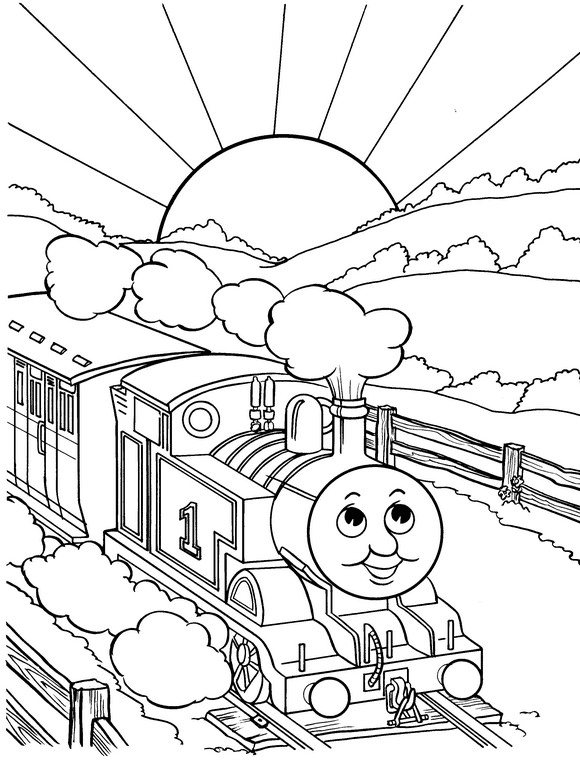
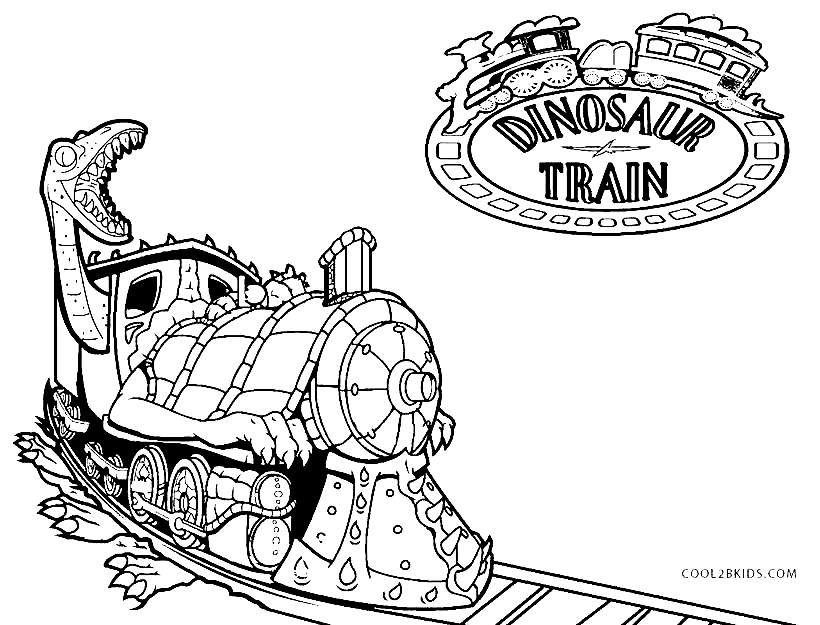
A small number of pages reference specific named trains rather than a generic engine, including designs labeled with the name Thomas and one labeled Dinosaur Train. These are worth treating separately, since they connect to existing children’s media franchises rather than being original designs, and are addressed further in the FAQ.
General Portrait Pages
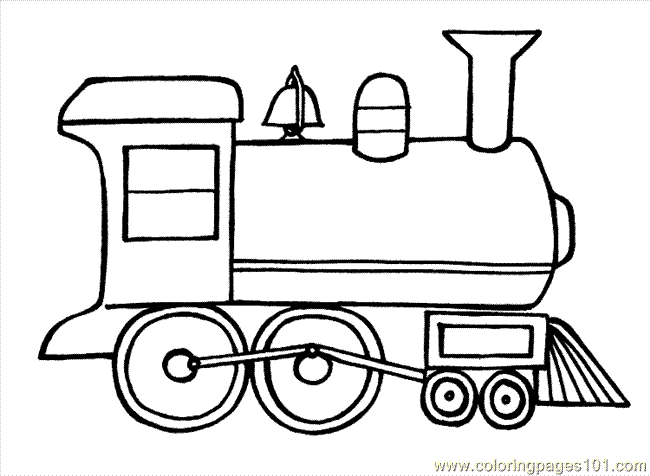
The remaining pages are simpler, single-subject train designs without a specific scene or story attached, repeating the basic train shape as a flexible practice set.
What Train Coloring Pages Do
Fine motor development through mechanical detail. The American Academy of Pediatrics identifies fine motor skill development as a core benefit of structured coloring for children ages 2 through 7, and a train’s wheels, connecting rods, and window rows give that practice a genuinely mechanical shape to work through, different from the organic curves most animal or character pages use.
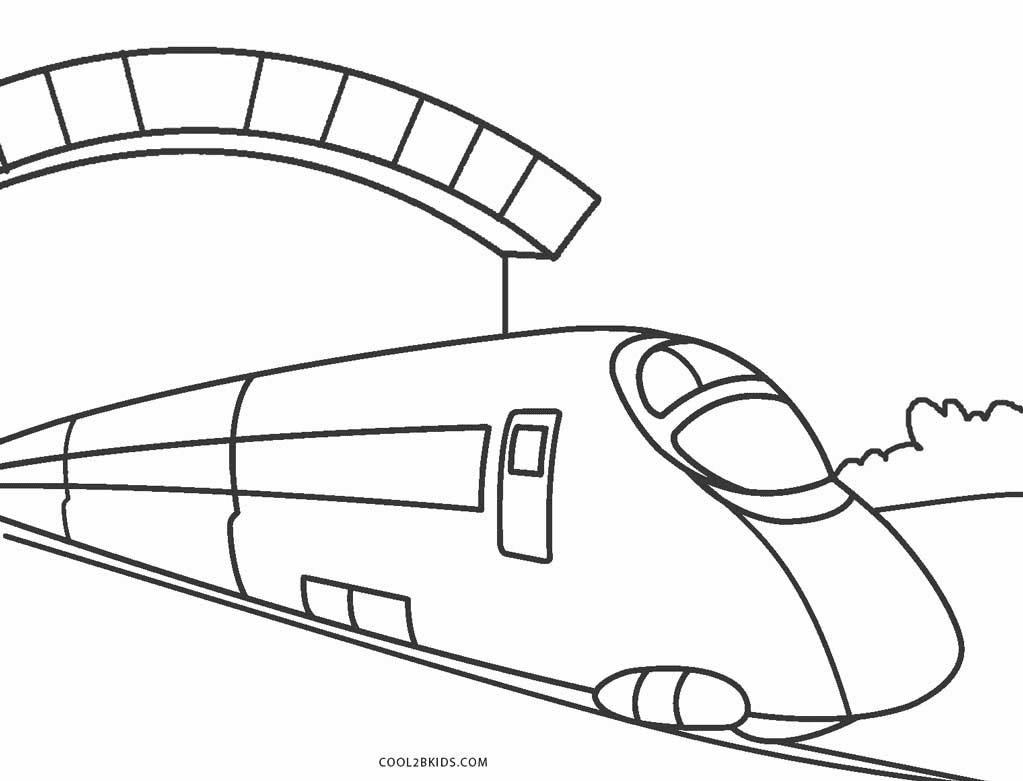
A real engineering timeline in miniature. This collection spans roughly two centuries of train design in one set, from early steam locomotives to the high-speed trains that followed Japan’s Shinkansen, which reached passenger service in 1964, running at around 210 kilometers per hour and now operates at up to 320 kilometers per hour on some lines. Coloring a steam engine next to a high-speed train side by side gives a visual sense of just how much the technology has changed.
Calm, repetitive shading through smoke and steam detail. A 2005 study in the Art Therapy Journal documented measurable reductions in anxiety following structured coloring sessions, and the curling smoke rising from a steam locomotive’s stack calls for the same slow, layered shading the study associated with that calming effect, rather than one flat color fill.
A useful mix of realistic and playful styles in one set. Because this collection ranges from detailed, mechanically accurate locomotives to simple smiling cartoon trains, it gives a family or classroom a single set to choose from, depending on whether the goal is a quick, cheerful coloring session or a longer, more detailed project.
How to Color These Pages Well
- Steam locomotive body: Use Black or Charcoal for the boiler and undercarriage, since real steam locomotives were typically painted dark to hide soot and grime.
- Smoke and steam: Layer light Gray into White for the smoke rising from the stack, keeping the shape loose and curling rather than a solid cloud.
- Toy trains: Use bold, saturated colors like Scarlet, Sky Blue, and Golden Yellow, since toy train sets are usually painted in bright primary colors rather than realistic tones.
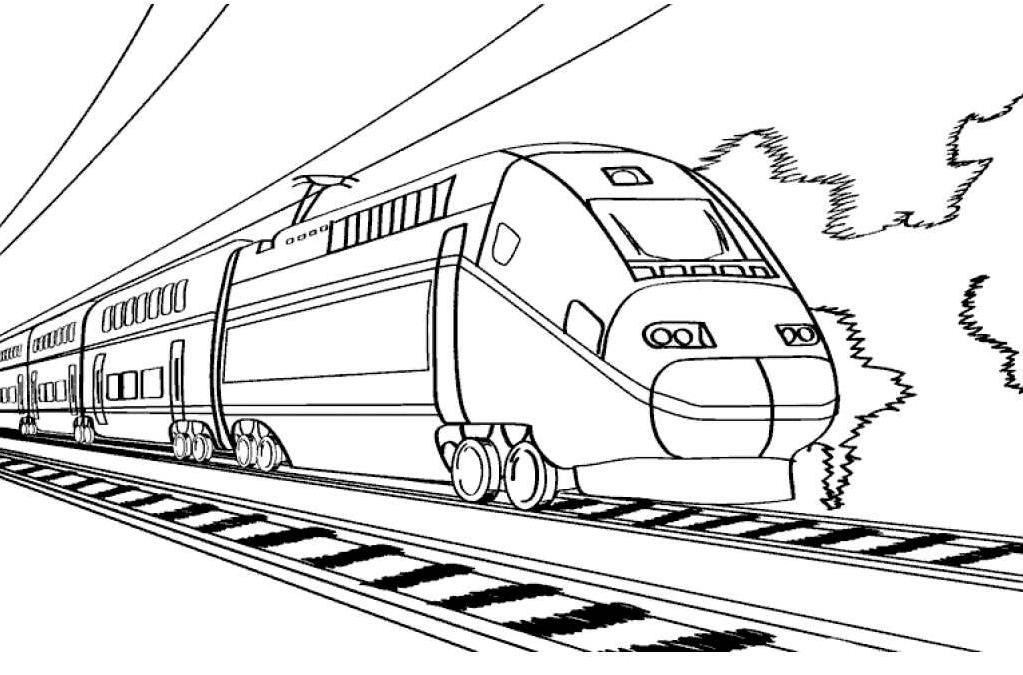
- Passenger cars: Keep window rows a consistent Sky Blue or pale Gray across the whole train, since evenly spaced, matching windows are what make a passenger car read clearly.
- High-speed trains: Use Silver or White as the base with a single bold accent stripe, such as Scarlet or Cerulean Blue, matching the sleek, aerodynamic look of real modern high-speed trains.
- Tracks and ground: Color rails a metallic Silver or Gray, with Sepia or Raw Umber for wooden ties, and keep the surrounding ground simple so the train itself stays the visual focus.
5 Creative Craft Ideas With Train Coloring Pages
1. Paper Track Layout
Color several train pages and cut a long strip of gray or brown paper to serve as a simple track across a table or wall. Arrange the colored trains end to end along the strip to form one continuous line.
2. Steam Cotton Ball Smoke
Color a steam locomotive page and glue small pieces of pulled cotton ball along the printed smoke shape rising from the stack. Let the cotton dry in place for a soft, three-dimensional smoke effect.
3. Train Car Accordion Book
Color four or five train pages, trim each into a rectangle of the same size, and tape the edges together in a zigzag so the pages fold up like an accordion. Stand the finished strip up so each train faces forward like a line of connected cars.
4. Toy Shelf Display Cards
Color a few of the toy-train pages and mount each on a folded piece of cardstock so it stands upright on its own. Line the finished cards up on a shelf or windowsill like a small train display.
5. Speed Comparison Chart
Color one steam locomotive page and one high-speed train page side by side. Write each train type’s approximate top speed underneath to build a simple, visual speed comparison.
Frequently Asked Questions
What are train coloring pages?
A free set of 59 printable PDF and online coloring designs covering steam locomotives, toy trains, passenger and freight scenes, and cute cartoon-style engines. Every page downloads free or opens for online coloring, with no account required.
What types of trains are included in this collection?
The set includes classic steam locomotives, toy and play trains, passenger and freight cars, a circus train, cute cartoon-style engines, and a small number of pages referencing named characters from existing train franchises.
Is the Thomas-themed page part of the official Thomas & Friends franchise?
No. These pages are fan-made designs referencing the general look of a well-known train character. They are not affiliated with, licensed by, or endorsed by the official Thomas & Friends franchise or its rights holders.
Is the Dinosaur Train page based on the PBS Kids show of the same name?
The page is labeled with that name but is not an official product of the PBS Kids series or its creators, so it should be treated as a fan-made or independently drawn design rather than official show artwork.
What is the difference between a steam locomotive and a modern high-speed train?
A steam locomotive burns coal or wood to heat water into steam, which powers pistons that turn the wheels. At the same time, a modern high-speed train, like Japan’s Shinkansen, uses electric motors and reaches speeds many times faster than any steam engine could achieve.
Why do steam trains produce so much smoke?
The smoke comes from burning fuel, usually coal or wood, inside the locomotive’s firebox to heat water into steam, and that combustion smoke rises visibly through the smokestack as the engine runs.
Are train coloring pages appropriate for young children?
Yes. The simple toy train and cute cartoon designs suit toddlers and preschoolers. At the same time, the more detailed steam locomotive and high-speed train pages work well for older children interested in mechanical detail.
Can this collection be used for a classroom lesson on transportation?
Yes. The steam-to-high-speed range in this set pairs well with a basic lesson on how train technology has changed over time, and the passenger and freight pages support a discussion of different real-world uses for trains.
Start Coloring
Download any page by clicking the design. No account, email, or payment is required. Pages print directly from the browser at full resolution or open in the online coloring tool for screen use. Share finished pages on Facebook or Pinterest using the share buttons at the top of each design page.