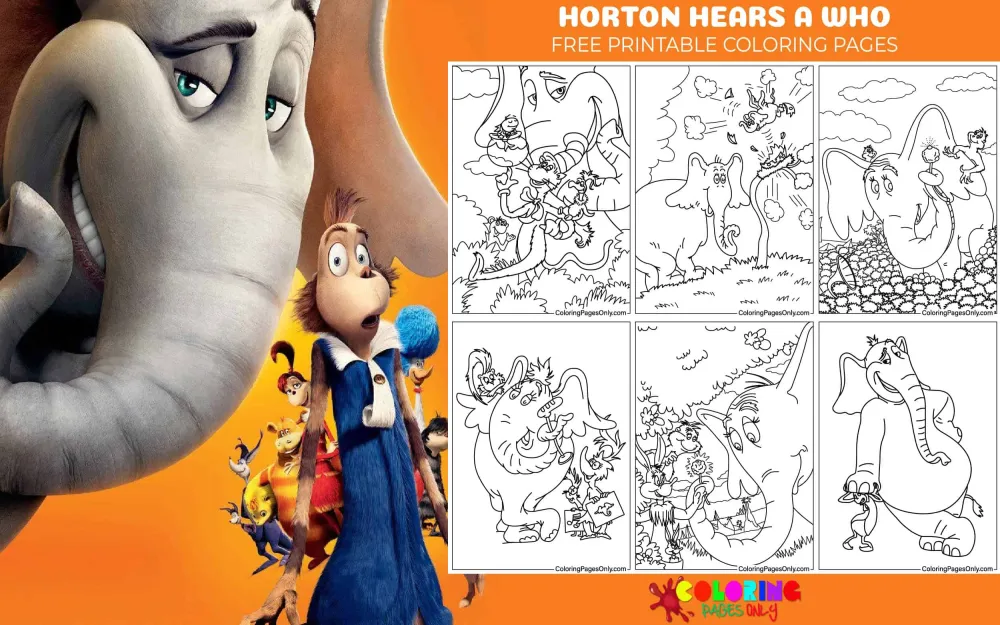
Free Horton Hears a Who Coloring Pages: 21 printable PDF designs featuring Horton the Elephant, the Wickersham Brothers, and other characters from Dr. Seuss’s classic story. Each page can be downloaded as a PDF to print or colored online in the browser, with no account required.
Horton Hears a Who! was written and illustrated by Dr. Seuss and published by Random House in 1954, serving as a sequel to his earlier book Horton Hatches the Egg. The story follows Horton, an elephant in the Jungle of Nool, who discovers a tiny, unseen community called Whoville living on a speck of dust and works to protect it despite the other jungle animals’ disbelief. The original book was illustrated using only four colors: black, white, orange, and blue.
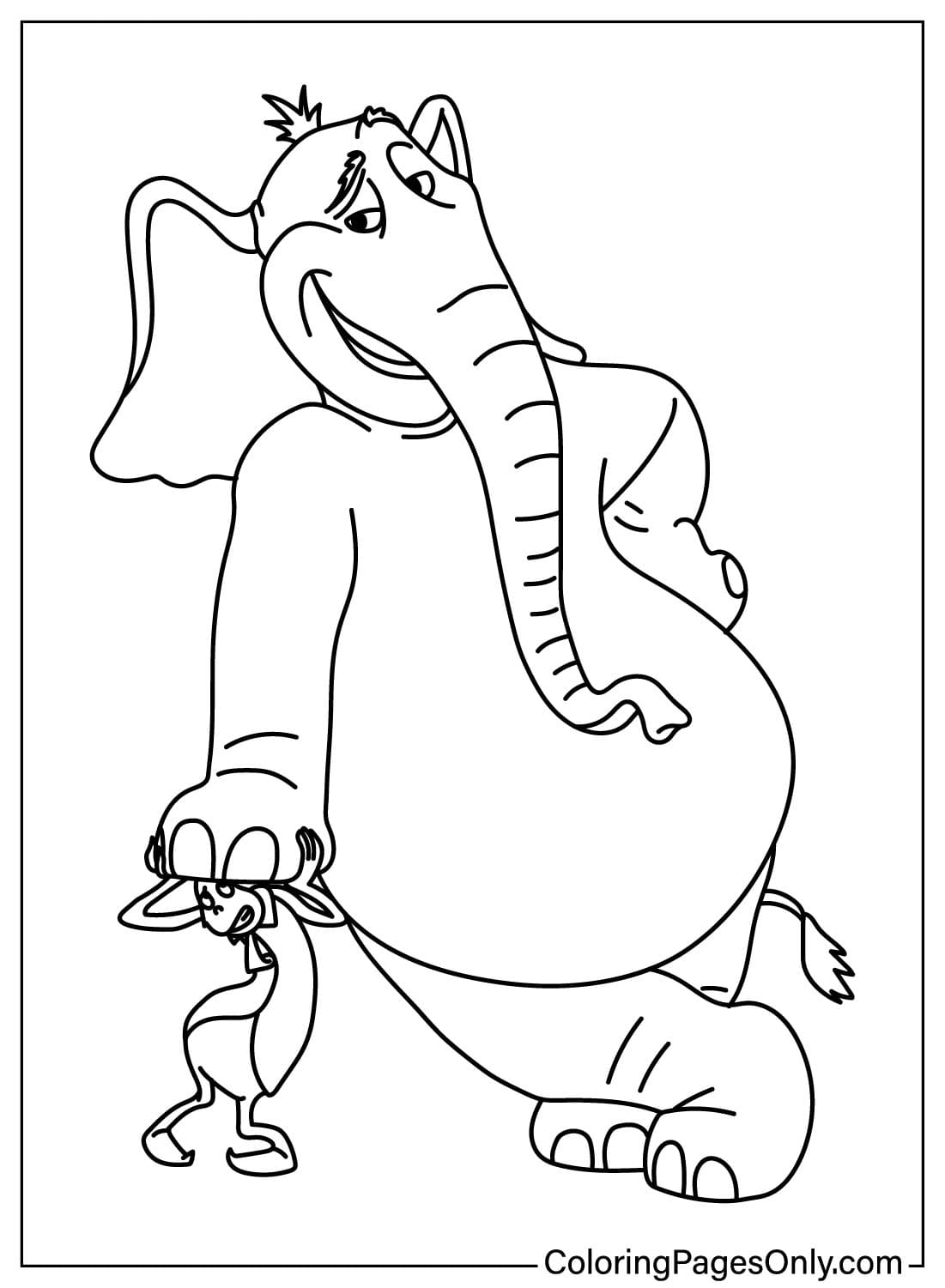
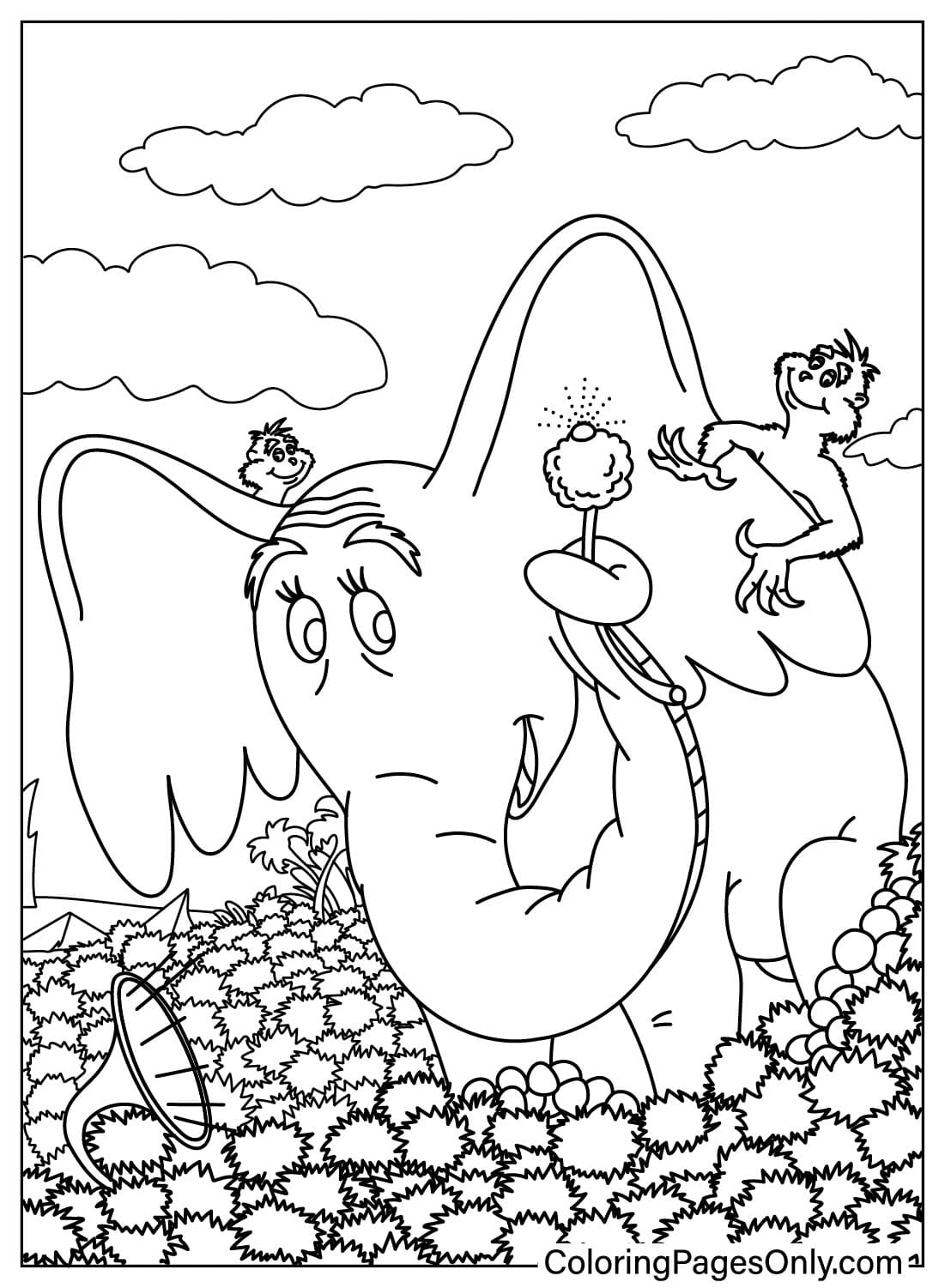
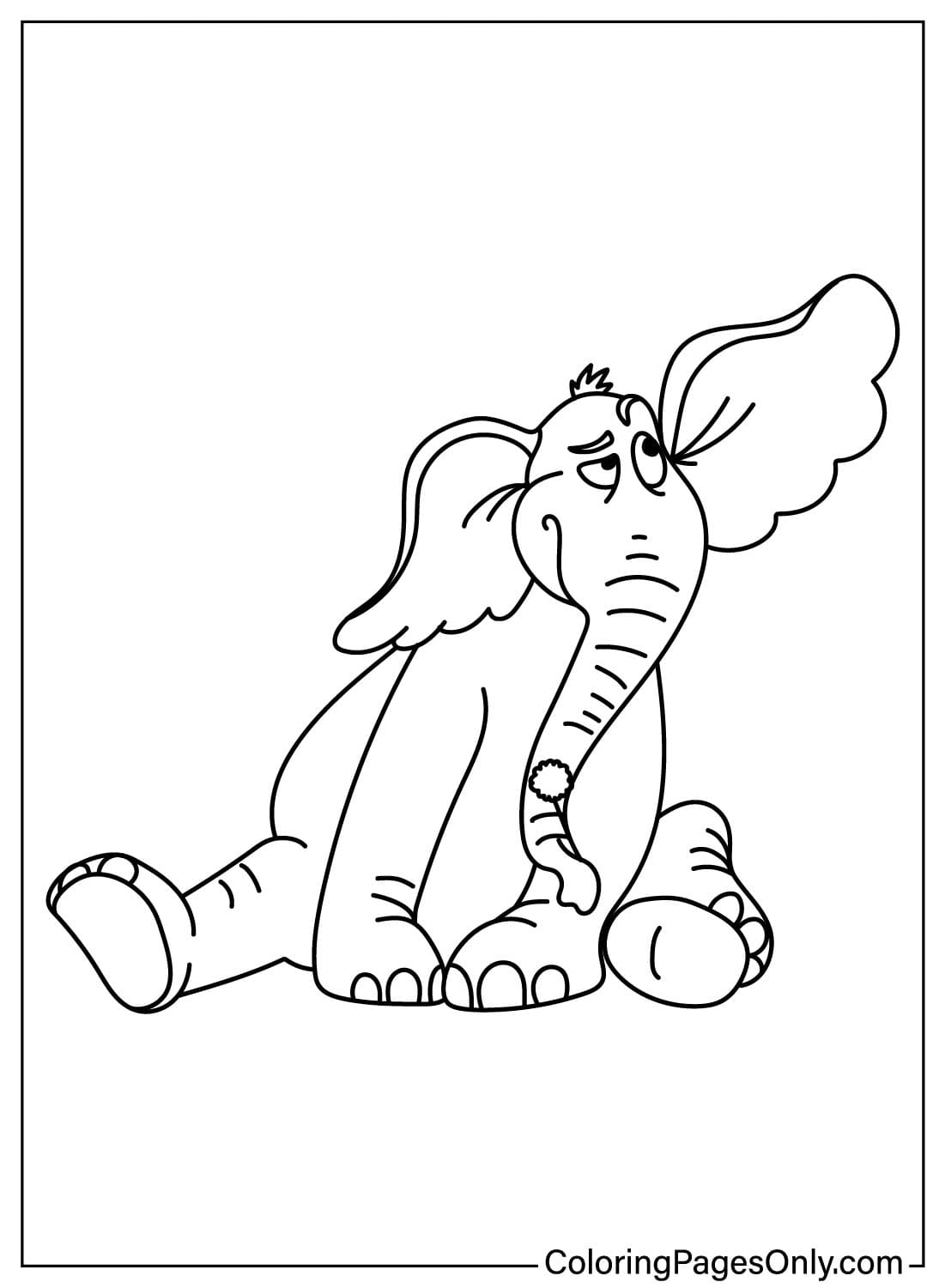
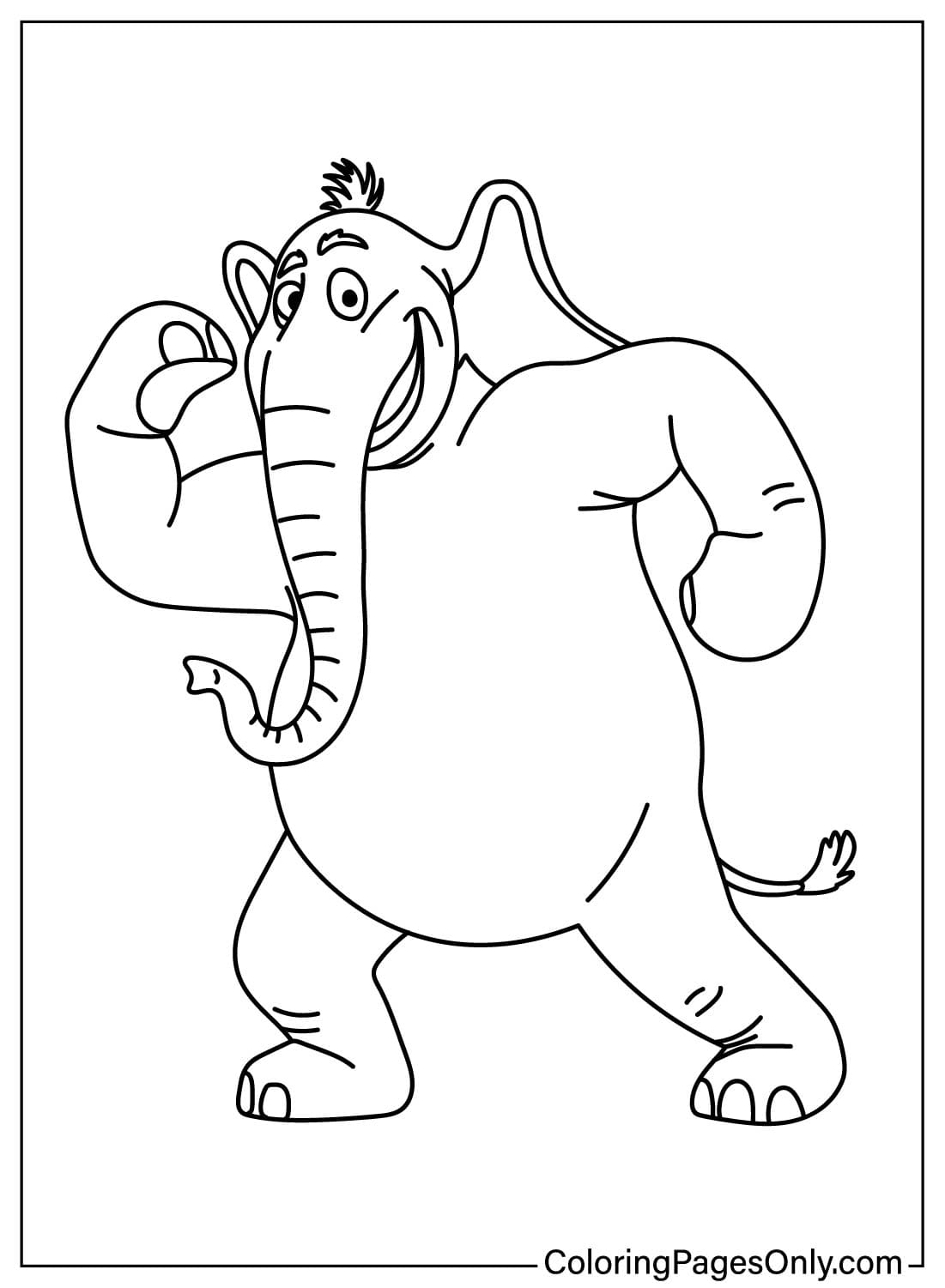
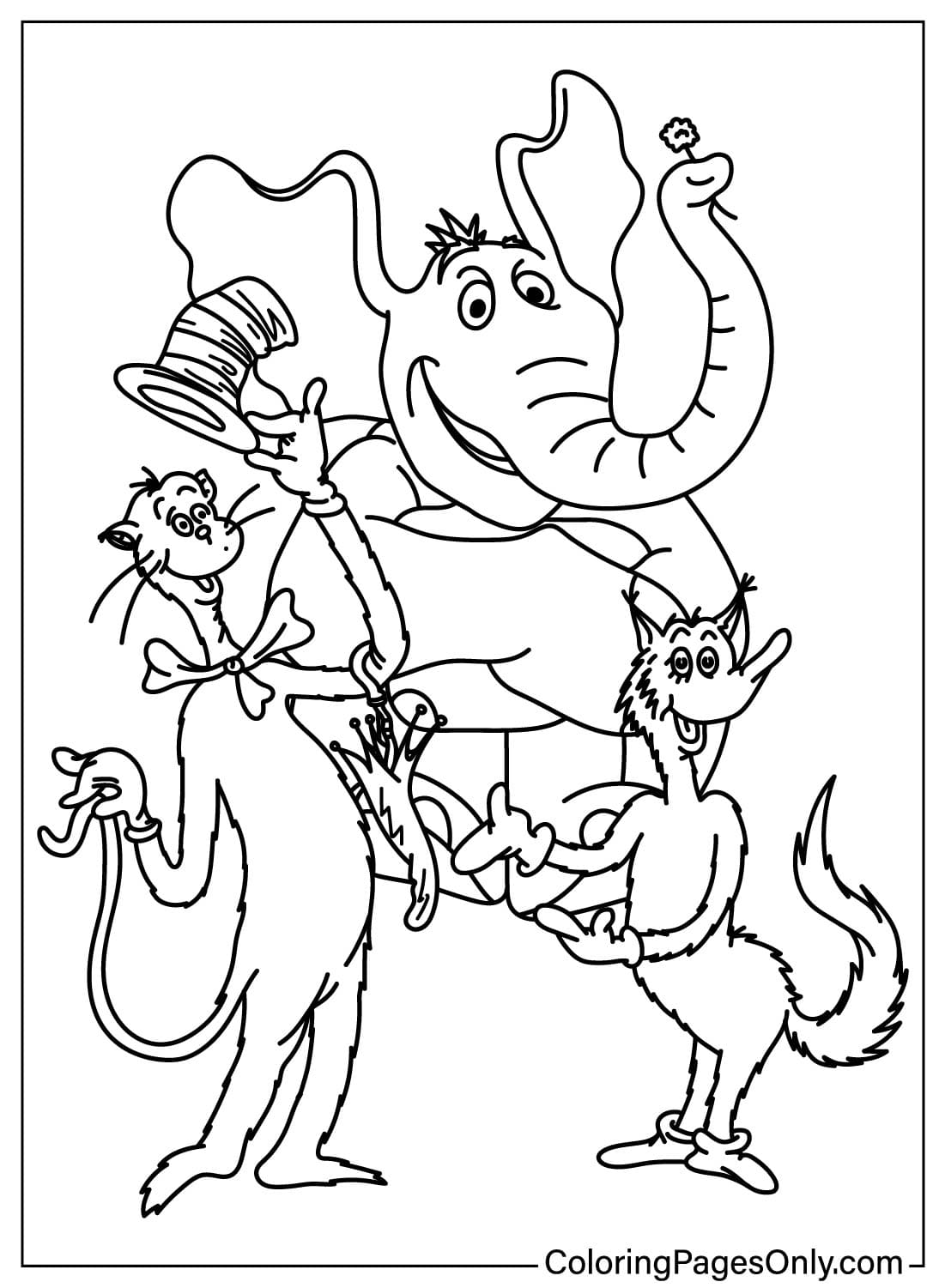
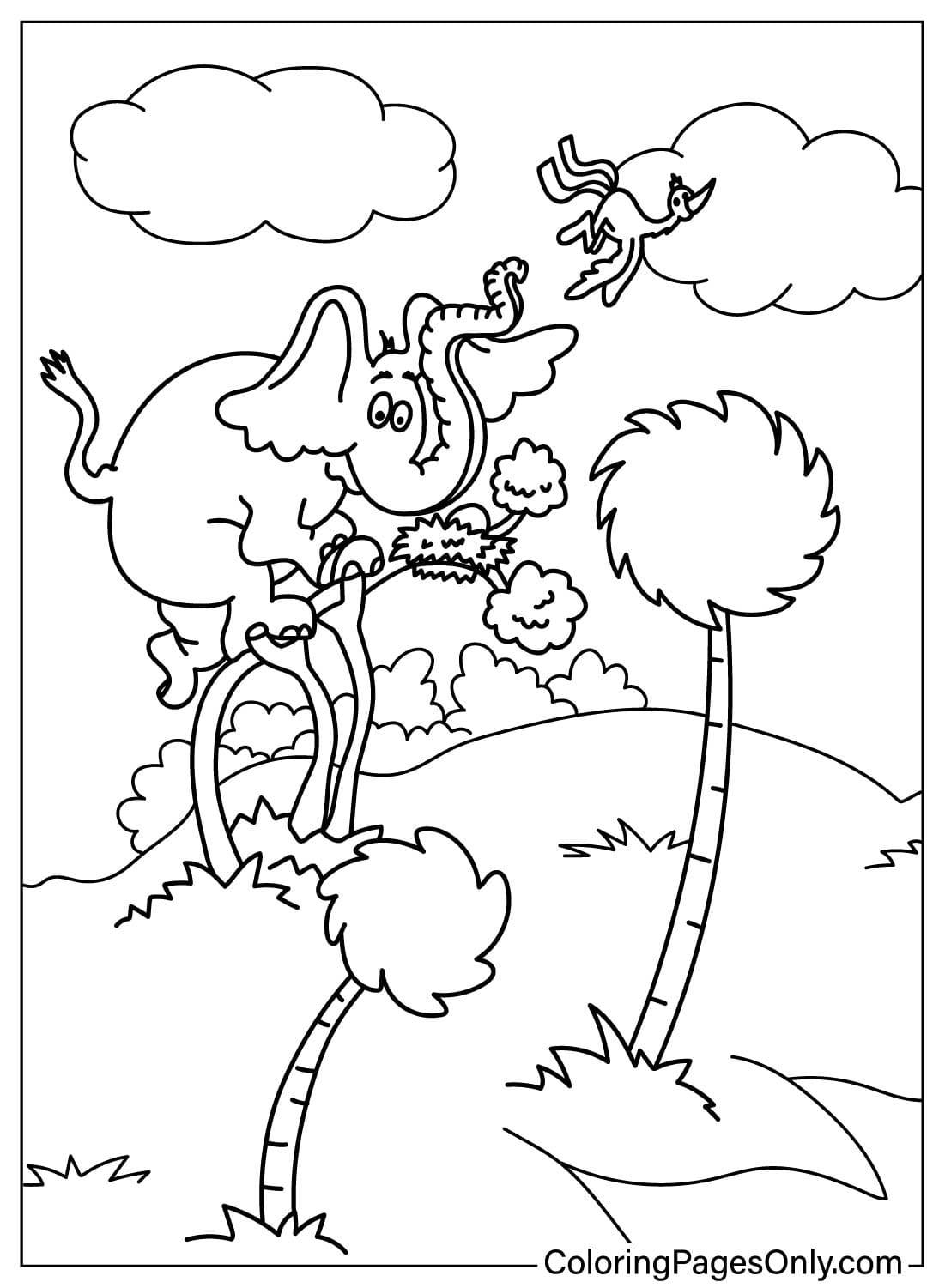
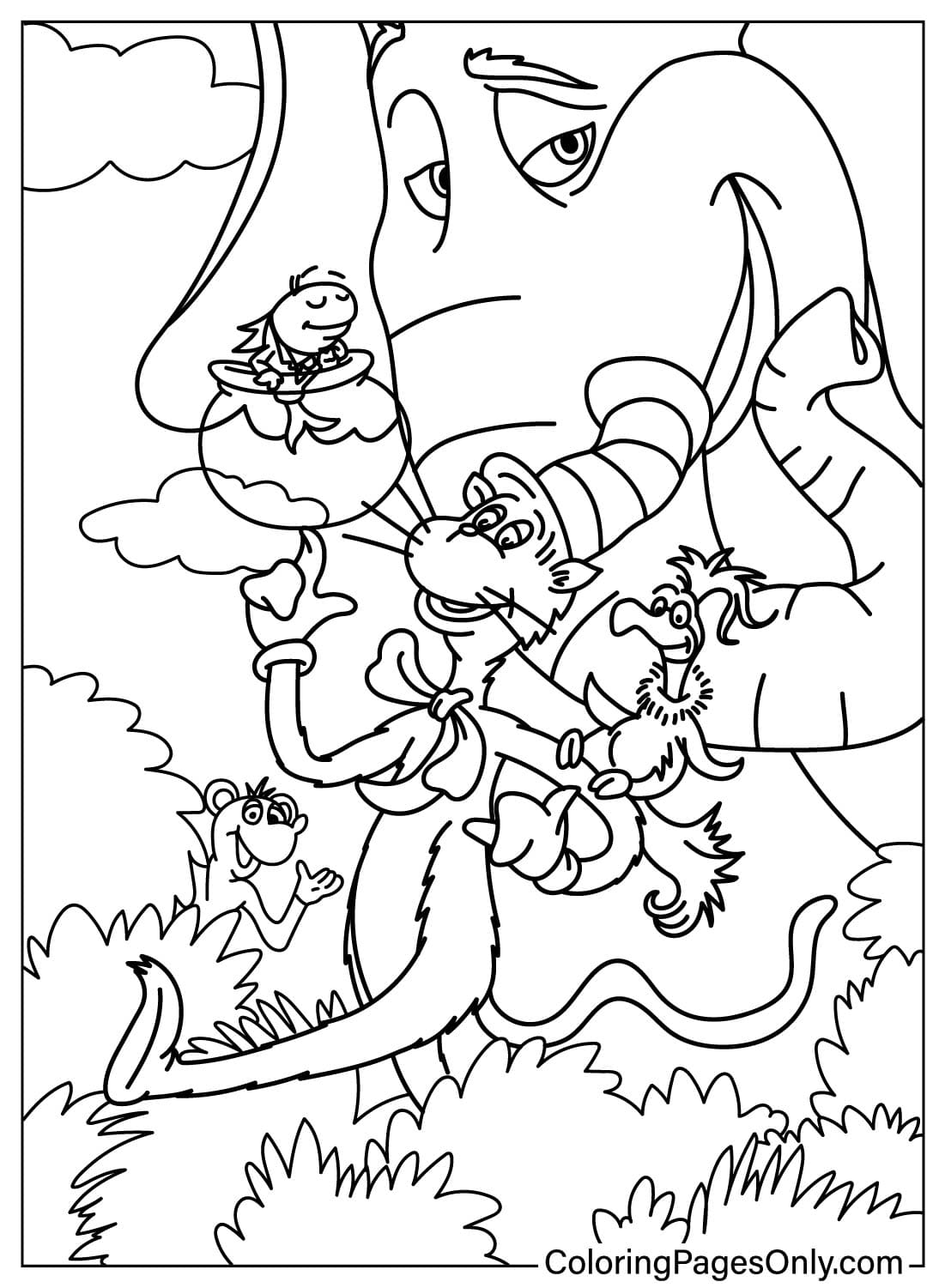
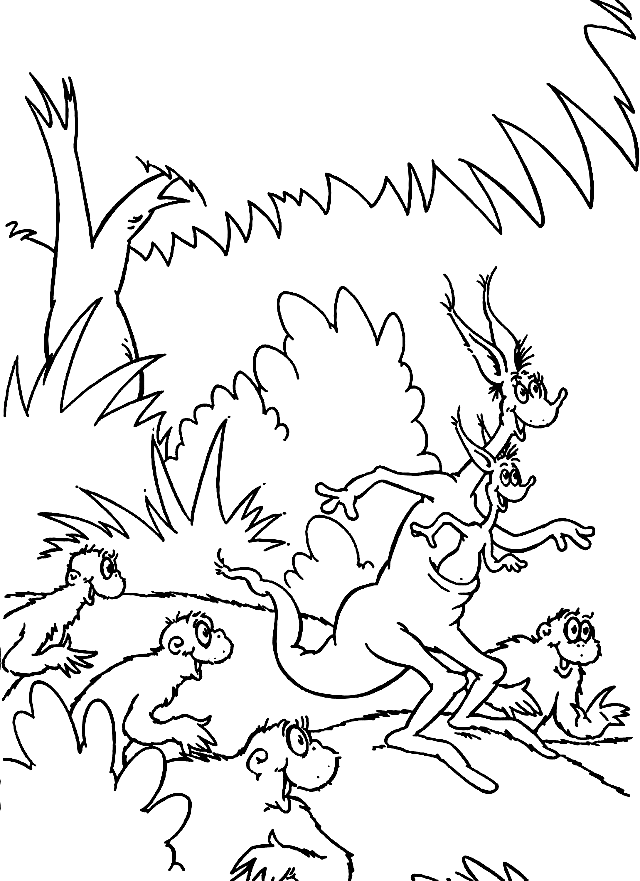
The 21 pages in this set move between solo Horton portraits, scenes with his jungle friends and rivals, and a couple of pages that cross over with another Dr. Seuss character. That range gives colorists both simple character studies and a few busier group scenes to work through.
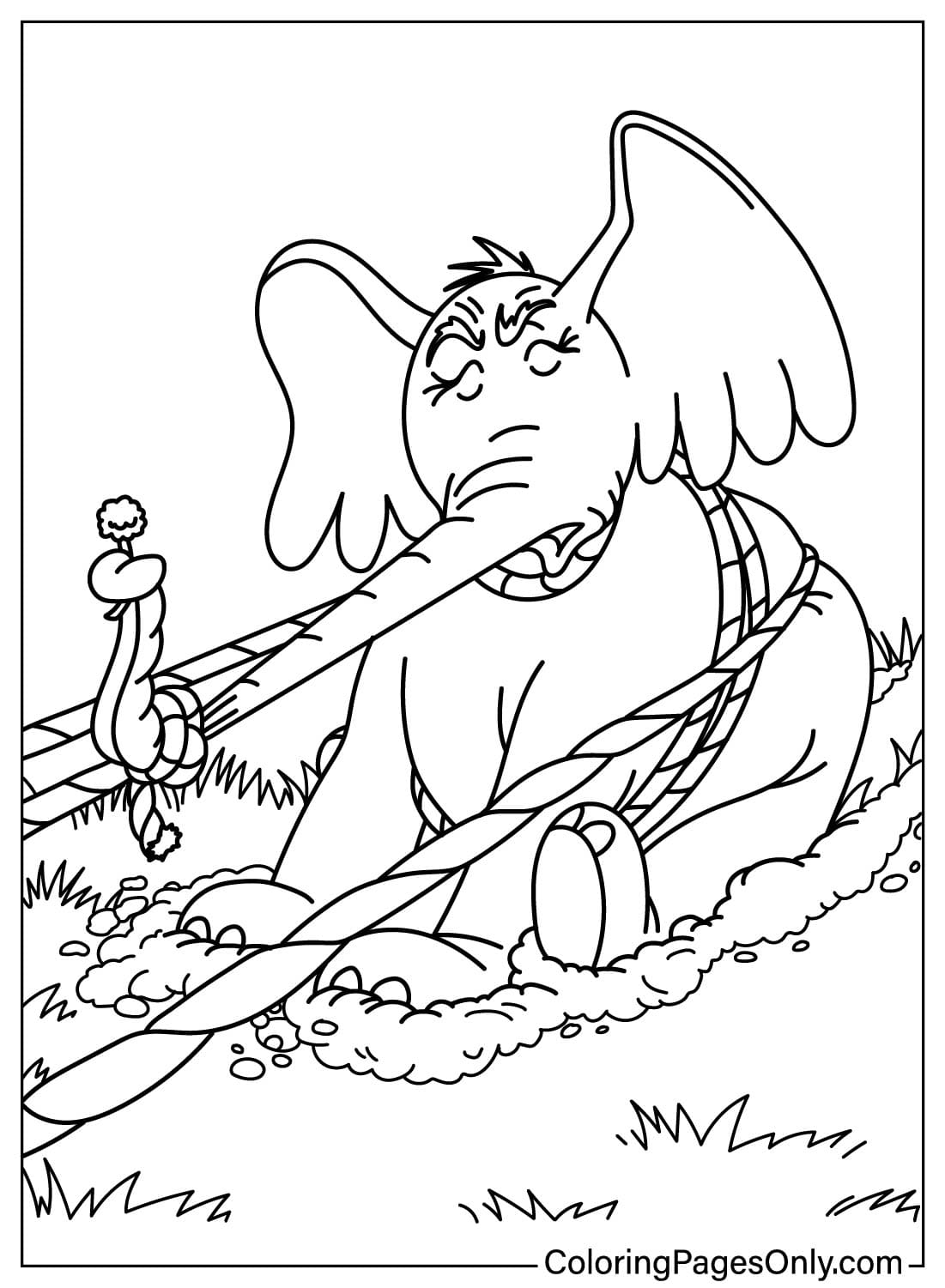
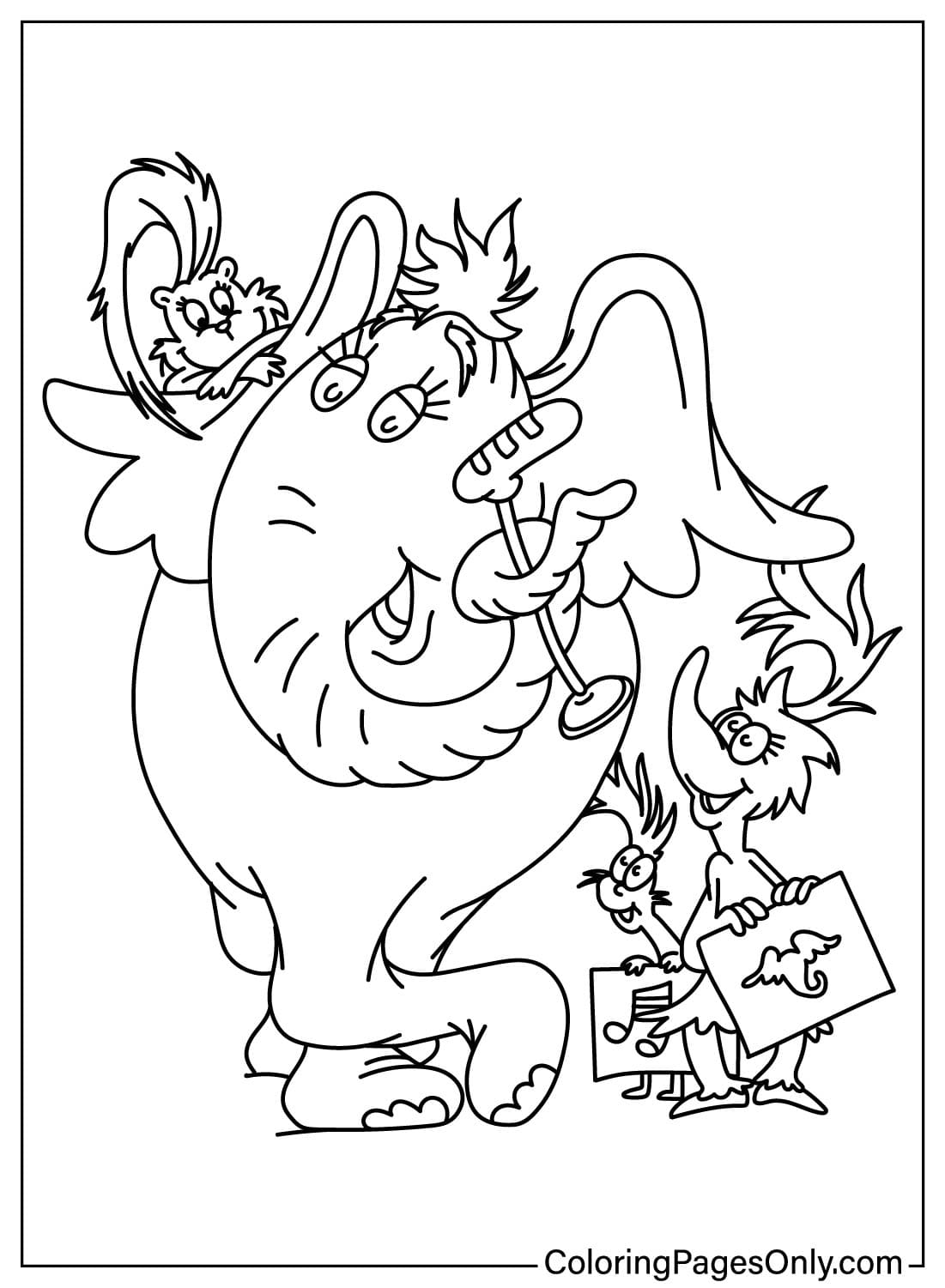
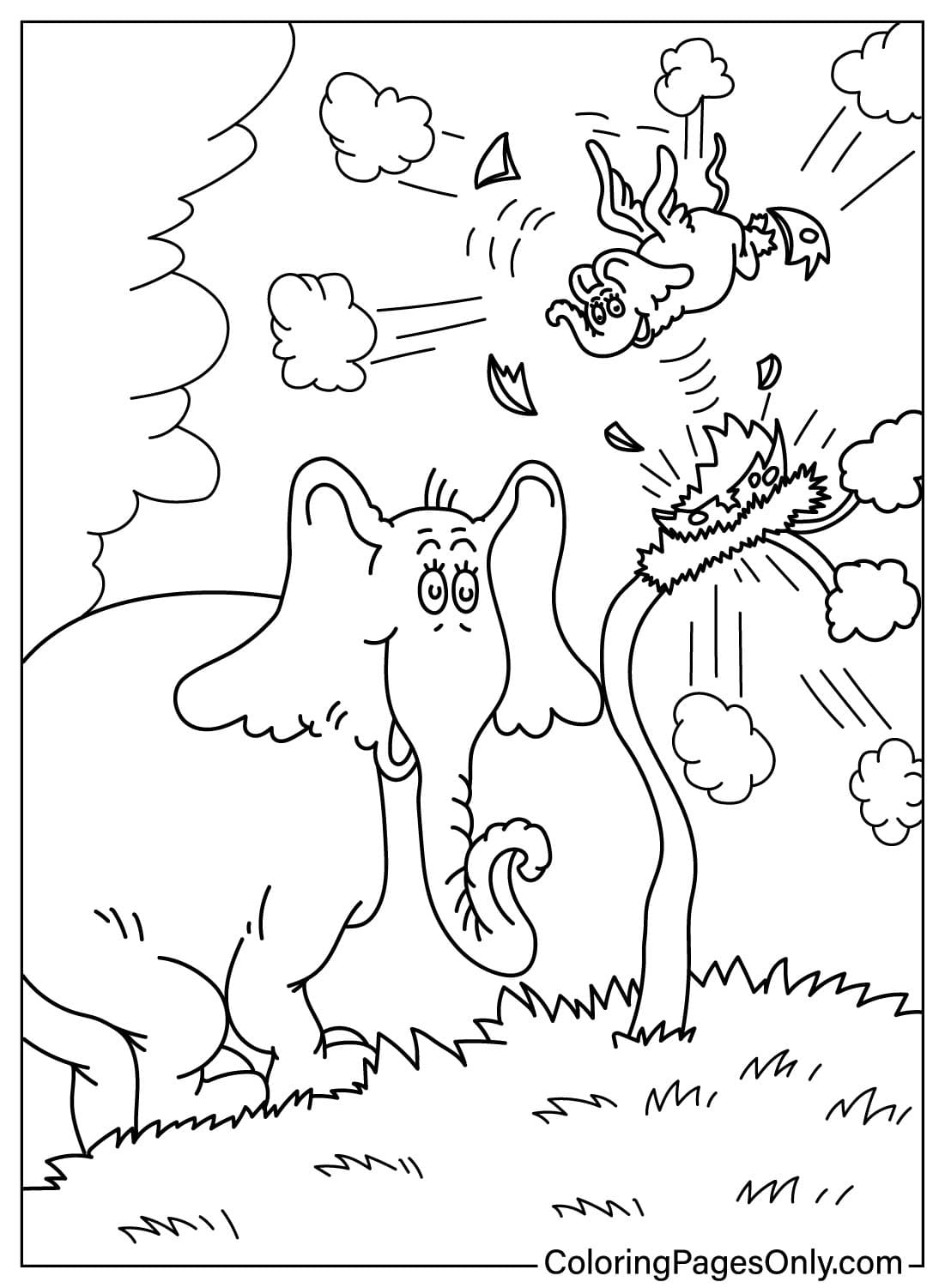
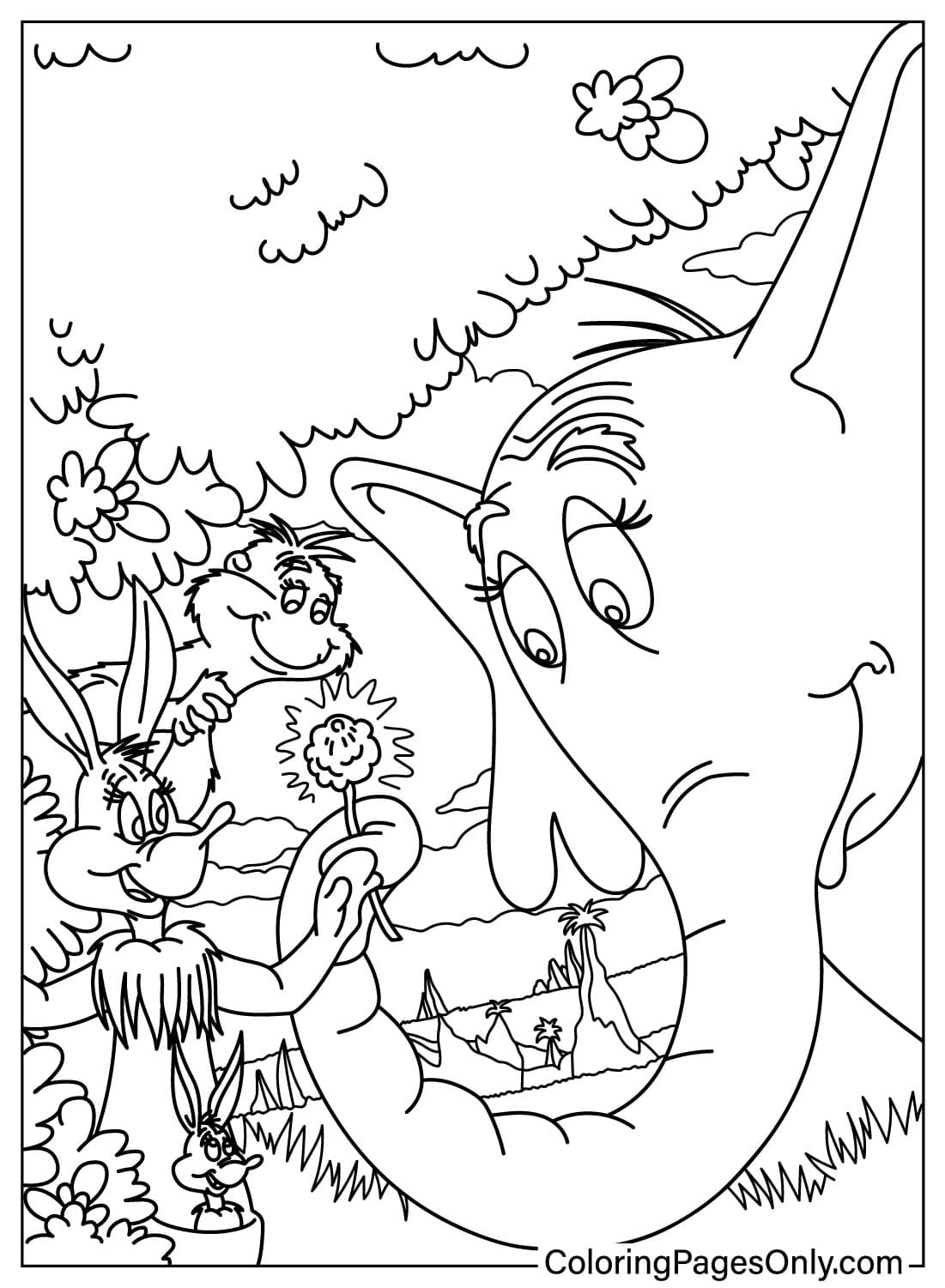
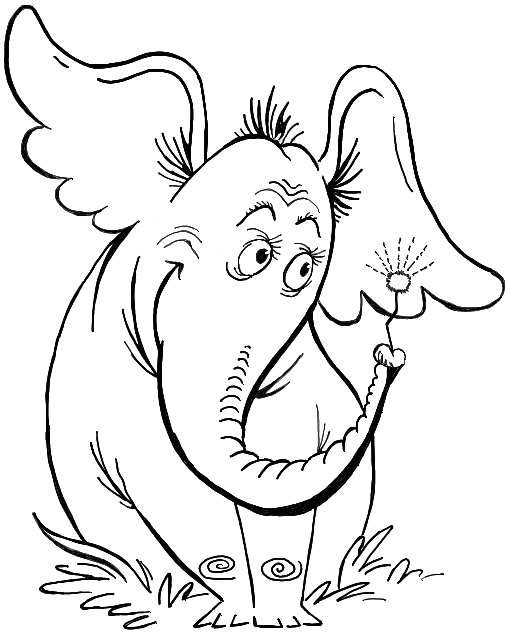
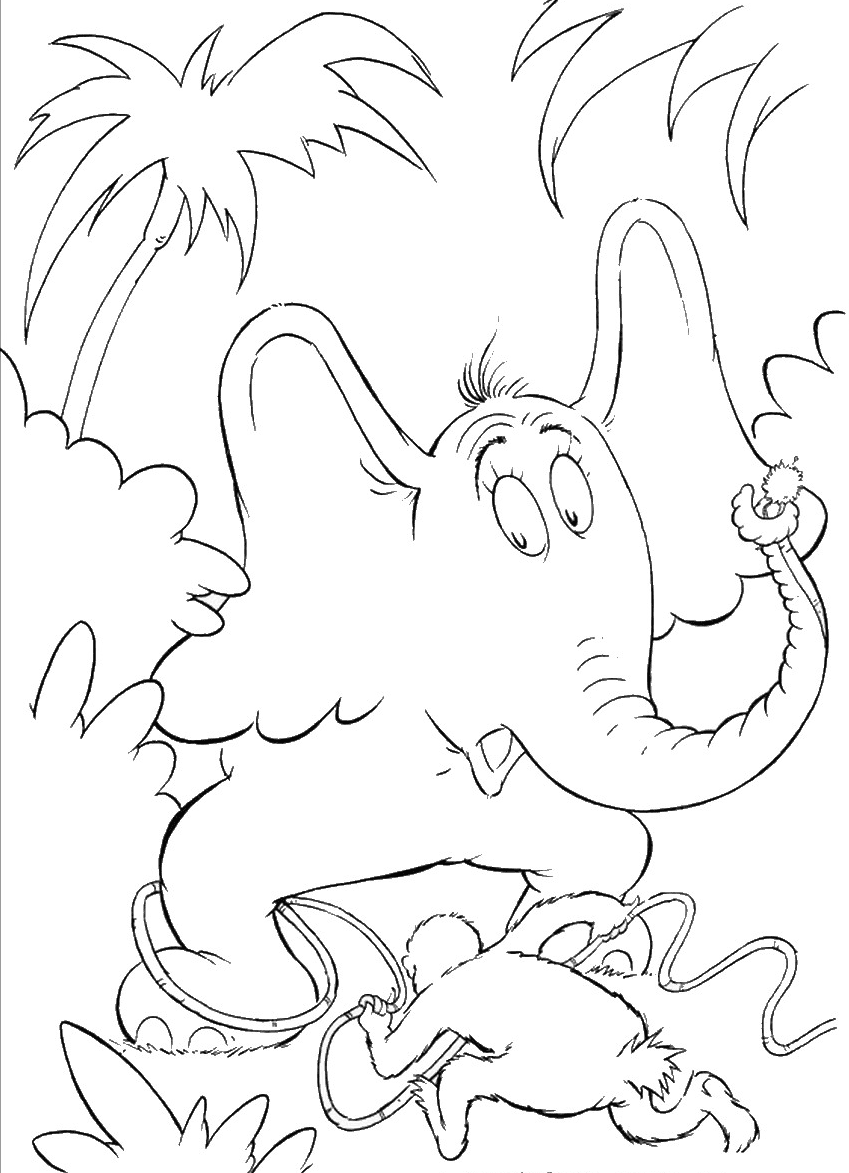
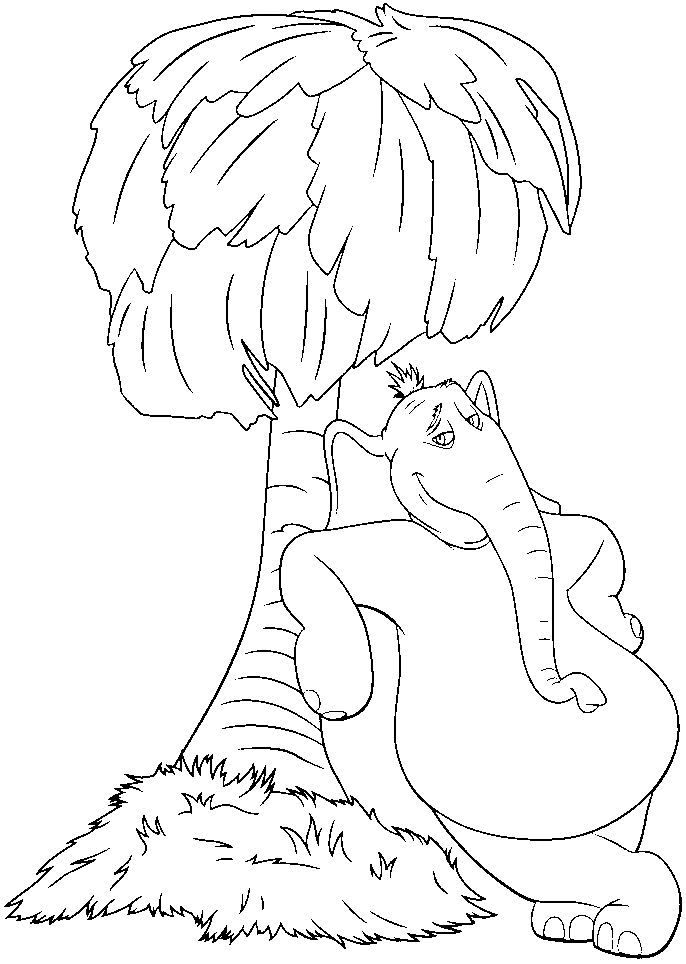
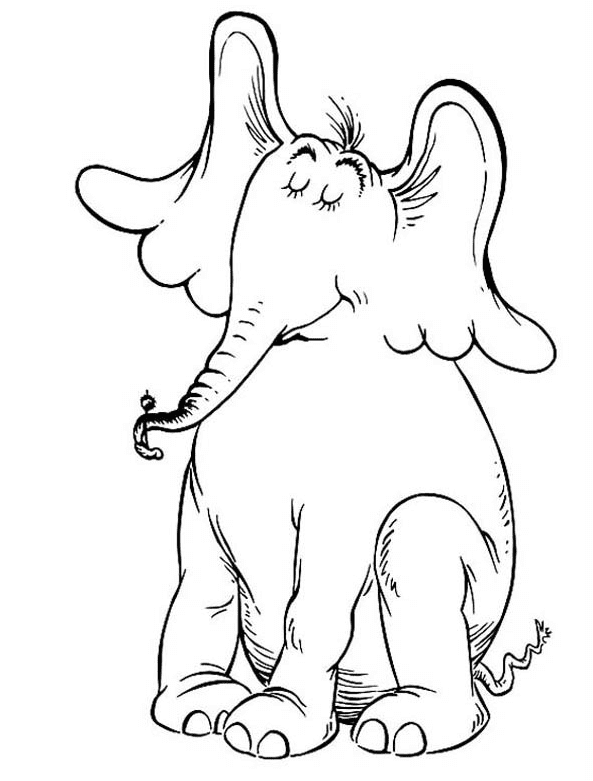
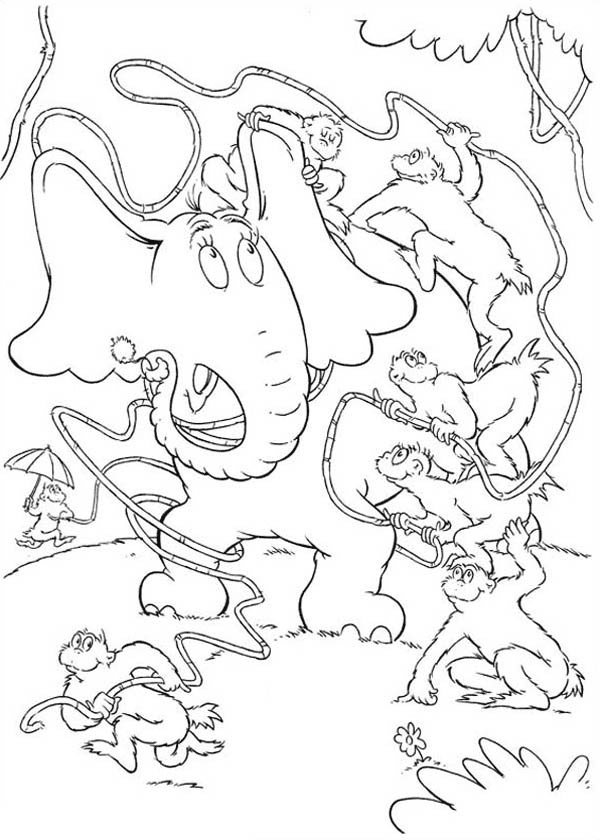
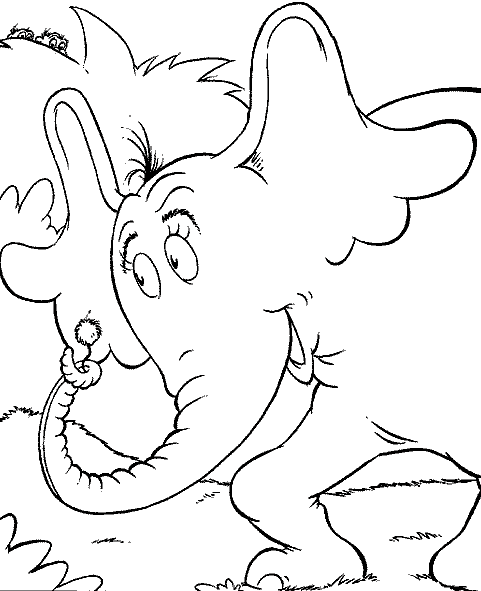
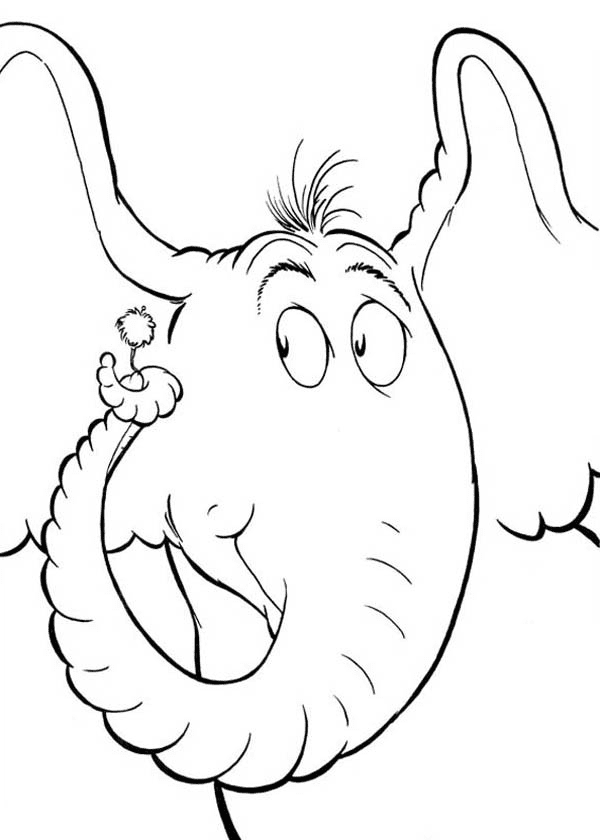
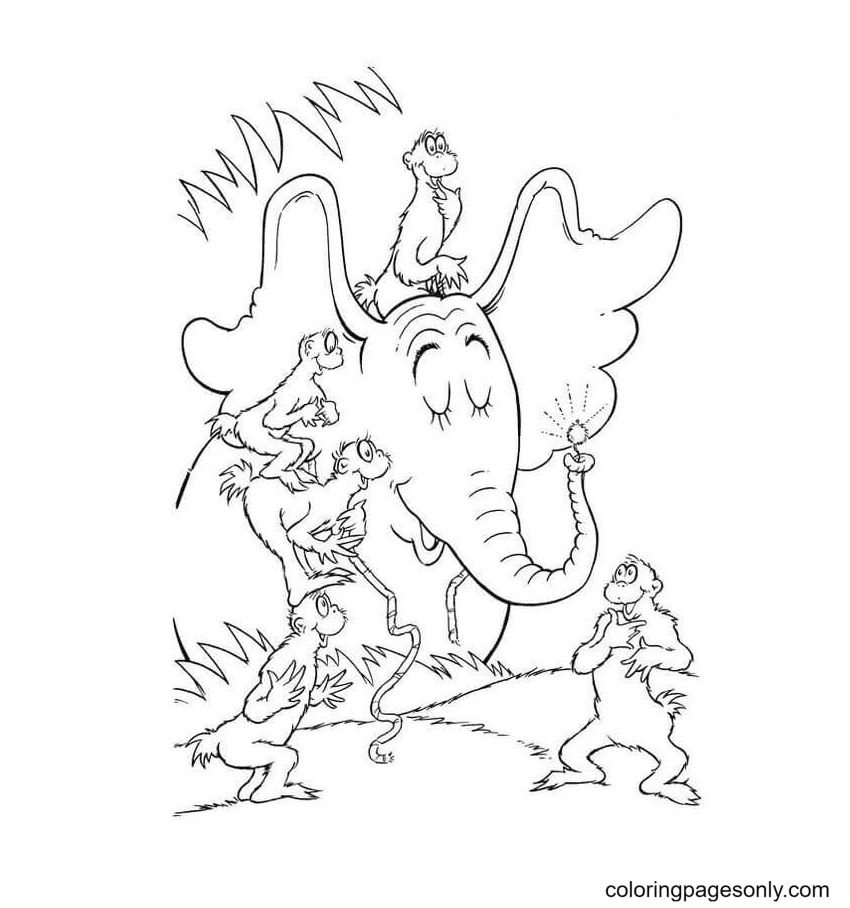
What Is Inside This Collection
The 21 pages fall into three groups by who appears alongside Horton rather than by a single repeated scene.
Solo Horton Portraits
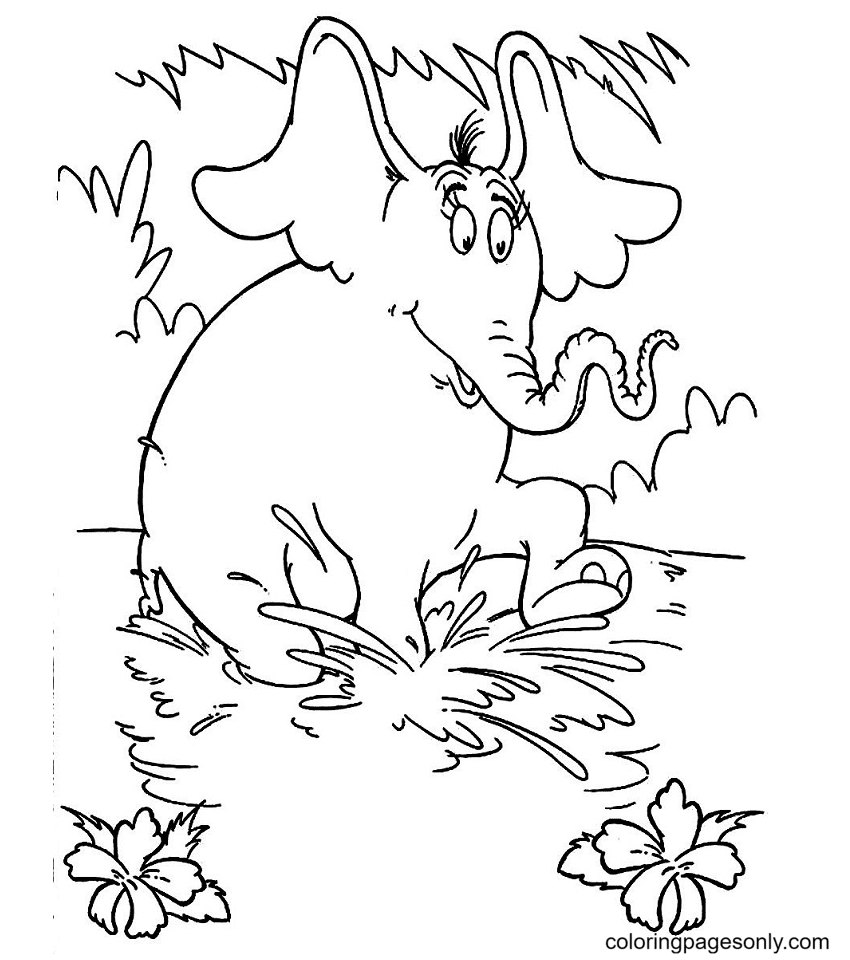
The largest group keeps the focus on Horton alone, across a range of poses and expressions from a simple standing portrait to Horton resting against a tree stump. These suit a soft Gray for his skin, with a warm Peach or Salmon for the inside of his large ears.
Horton with Jungle Friends
A second group brings in the supporting cast: the Wickersham Brothers, the Kangaroo and her son Rudy, and general group scenes with Horton’s friends. These pages work well with each character keeping its own established coloring, such as Raw Umber for the monkey-like Wickershams and a warm Tan for the Kangaroo.
Dr. Seuss Crossover Pages
A small group pairs Horton with characters from outside his own story, including a page featuring the Cat in the Hat. These are worth treating as a fun crossover rather than an accurate scene from either original book, since Horton and the Cat in the Hat do not actually appear together in Dr. Seuss’s stories.
What Horton Hears a Who Coloring Pages Do
Fine motor development through a genuinely large, detailed subject. The American Academy of Pediatrics identifies fine motor skill development as a core benefit of structured coloring for children ages 2 through 7, and Horton’s large ears, long trunk, and heavy legs give that practice a bigger, more deliberate outline to work through than a small character would offer.
A story built around a specific, well-known message. Horton’s most famous line, “A person’s a person, no matter how small,” gives these pages a real point of connection to the book’s actual theme of protecting and respecting those who are easy to overlook, rather than a generic moral added on afterward.
Calm, repetitive shading through a limited color approach. A 2005 study in the Art Therapy Journal documented measurable reductions in anxiety following structured coloring sessions, and coloring within the original book’s own four-color scheme, black, white, orange, and blue, encourages the same slow, deliberate decision-making the study associated with that calming effect, since every color choice carries more weight in a limited palette.
A shared story across book, film, and stage. Horton Hears a Who! has appeared as a 1954 book, a 2008 animated film from Blue Sky Studios, and material that helped shape the 2000 Broadway musical Seussical, giving these pages a genuine, decades-long history to connect to rather than a single, recent adaptation.
How to Color These Pages Well
- Horton’s skin: Use a soft Gray as the base, with a deeper Charcoal in the folds around his knees and trunk for a more three-dimensional look.
- Horton’s ears: Color the outer ear Gray to match his body, but shift to a warm Peach or Salmon on the inside of the ear for contrast.
- The Wickersham Brothers: Use Raw Umber or Sepia for their fur, keeping the shade consistent across every Wickersham page in the set.
- The Kangaroo and Rudy: Both have a warm Tan color, with a slightly darker shade for Rudy to distinguish the smaller character from his mother.
- Whoville details: On any page referencing the speck or Whoville, use small, bright accent colors against a mostly neutral background, since Whoville is meant to stand out as something easy to miss.
- Limited-palette pages: For a page colored in the original book’s style, stick to only Black, White, Orange, and Cerulean Blue rather than reaching for a broader crayon box.
5 Creative Craft Ideas With Horton Hears a Who Coloring Pages
1. Four-Color Seuss Palette Challenge
Color one of the simpler Horton pages using only black, white, orange, and blue, matching the original 1954 book’s own color scheme. Compare the finished page to a normally colored one to see how different a limited palette looks.
2. Kindness Message Bookmark
Trim a simple Horton portrait into a tall bookmark strip and write “A person’s a person, no matter how small” along the edge. Laminate or cover the strip in clear contact paper for everyday use in a book.
3. Dust Speck Magnifying Scene
Color a Horton page, then draw and cut out a tiny paper circle to represent the speck of dust holding Whoville. Glue the speck onto a paper cutout shaped like a magnifying glass and attach it to the scene.
4. Wickersham Puppet Row
Color two or three of the Wickersham Brothers pages, cut around each one, and glue each cutout to a craft stick. Line the finished puppets up side by side for a simple retelling of their part in the story.
5. Rhyming Caption Card
Color a favorite Horton scene and write a short, two-line rhyme underneath it in the spirit of Dr. Seuss’s own rhyming style. Share the finished card with a friend or family member who also enjoys wordplay.
Frequently Asked Questions
What are Horton Hears a Who coloring pages?
A free set of 21 printable PDF and online coloring designs featuring Horton the Elephant and other characters from Dr. Seuss’s classic story. Every page downloads free or opens for online coloring, with no account required.
What is Horton Hears a Who about?
The story follows Horton, an elephant in the Jungle of Nool, who discovers a tiny, unseen community called Whoville living on a speck of dust and works to protect it despite other animals refusing to believe it exists.
When was Horton Hears a Who first published, and who wrote it?
Horton Hears a Who! was written and illustrated by Dr. Seuss, the pen name of Theodor Seuss Geisel, and published by Random House in 1954 as a sequel to his earlier book Horton Hatches the Egg.
Was Horton Hears a Who made into a movie?
Yes. A computer-animated film adaptation was released in 2008 by Blue Sky Studios and 20th Century Fox, featuring Jim Carrey as the voice of Horton and Steve Carell as the voice of the Mayor of Whoville.
What does “A person’s a person, no matter how small” mean?
It is Horton’s central message in the story, expressing the idea that everyone deserves care and respect regardless of their size or how easy they are to overlook, and it remains the book’s most quoted line.
Who are the Wickersham Brothers and the Kangaroo?
The Wickersham Brothers are a group of monkeys who cause trouble for Horton throughout the story. At the same time, the Kangaroo is a skeptical character who refuses to believe Whoville exists and repeatedly challenges Horton to give up the speck.
Are these official Horton Hears a Who coloring pages?
No. These are fan-made coloring designs inspired by Dr. Seuss’s characters and are not affiliated with, licensed by, or endorsed by Dr. Seuss Enterprises, Random House, or Blue Sky Studios.
Are Horton Hears a Who coloring pages appropriate for young children?
Yes. The simple solo portraits suit toddlers and preschoolers, while the busier group scenes with the Wickersham Brothers and Kangaroo work well for older children who want more detail to color.
Start Coloring
Download any page by clicking the design. No account, email, or payment is required. Pages print directly from the browser at full resolution or open in the online coloring tool for screen use. Share finished pages on Facebook or Pinterest using the share buttons at the top of each design page.