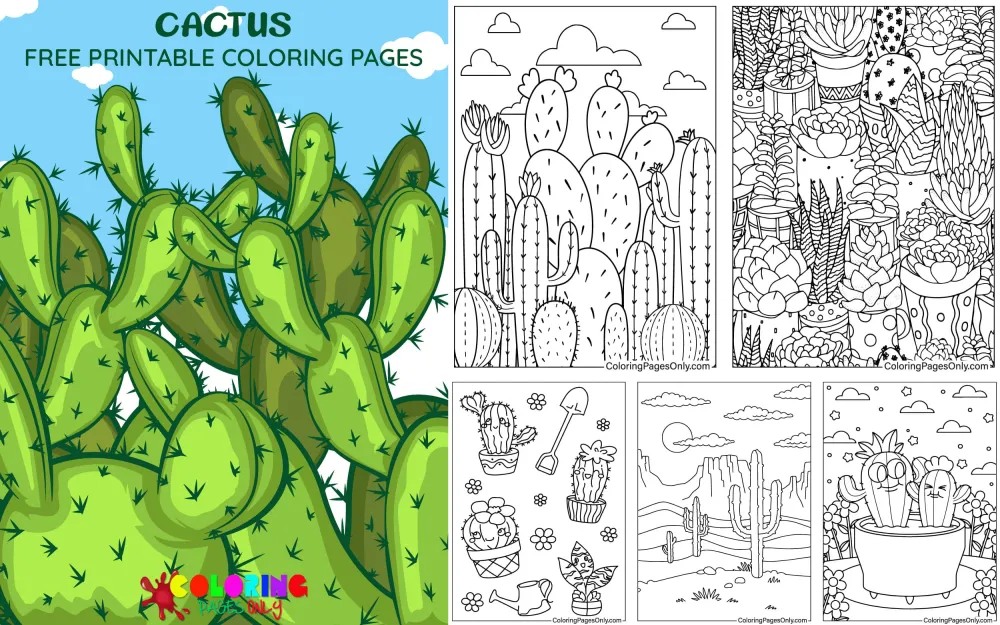
Free Cactus Coloring Pages: 15 printable PDF designs of desert scenes, potted cacti, patterns, and playful character pairings. Every page downloads as a free PDF or opens for online coloring, with no account needed for either.
A saguaro cactus, one of the most recognizable desert plants, grows remarkably slowly. It can take up to ten years to reach one inch tall, and many saguaros don’t grow their first arm until they’re 75 to 100 years old. That slow pace is part of a real survival strategy: a cactus stores water in its thick stem rather than its leaves, and what look like leaves are usually spines instead, a modification that helps the plant lose far less water to evaporation in a dry climate.
The 15 pages are split into five even groups: simple solo portraits, desert and landscape scenes, potted and decorative cacti, character and animal pairings, and repeating patterns. Since a cactus’s basic shape stays fairly simple, the coloring variety comes mostly from setting, style, and what’s paired alongside it.
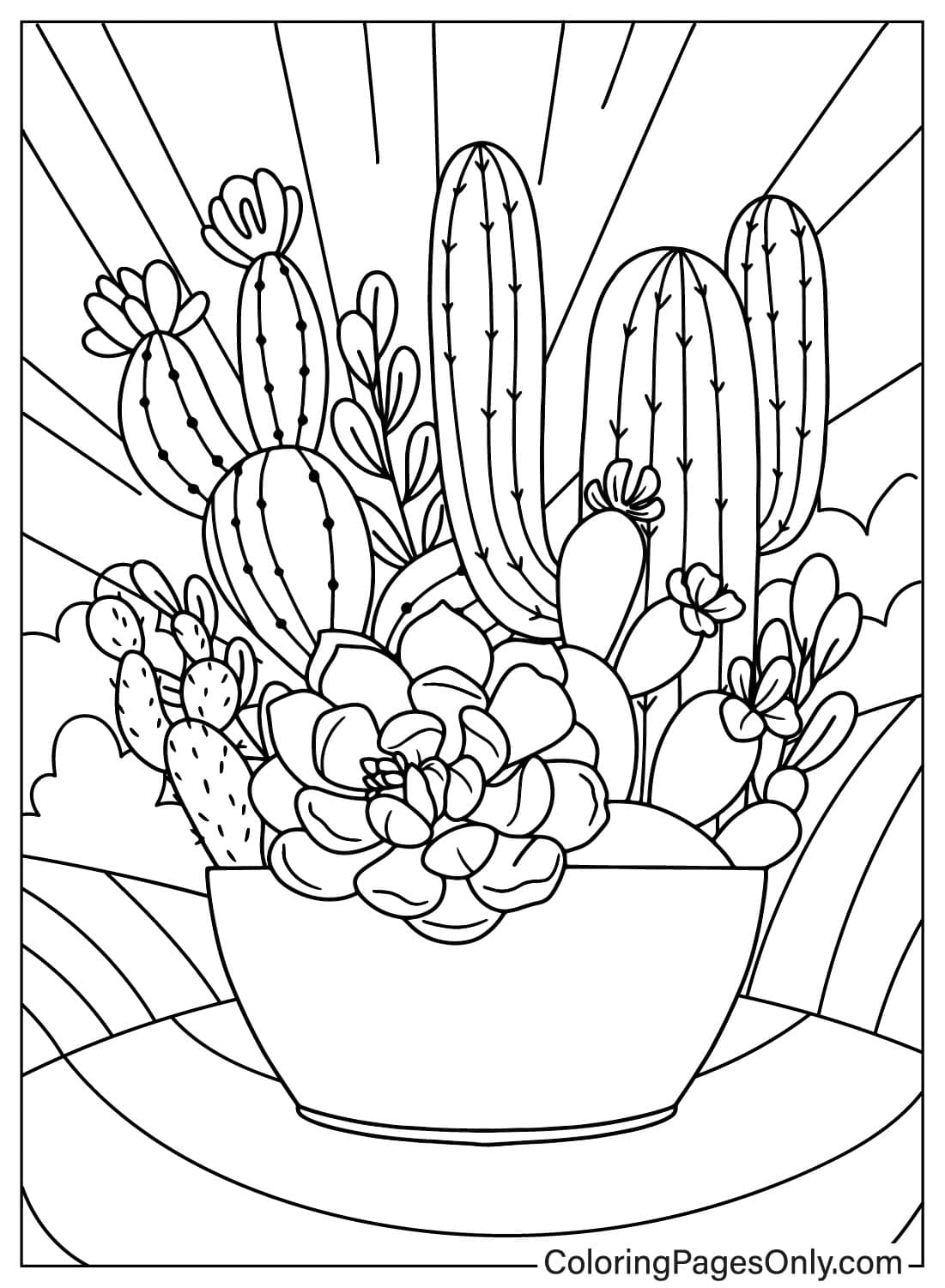
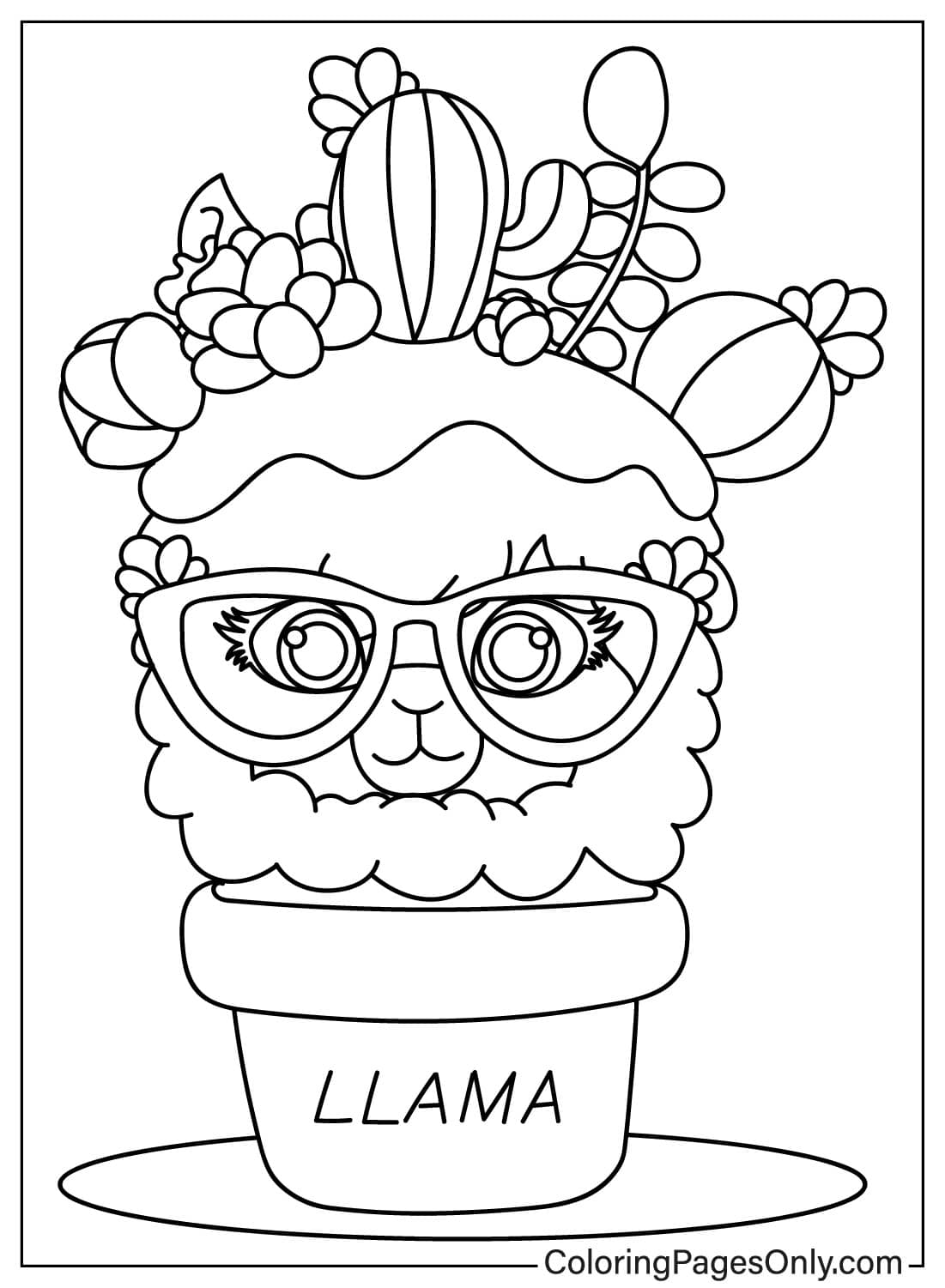
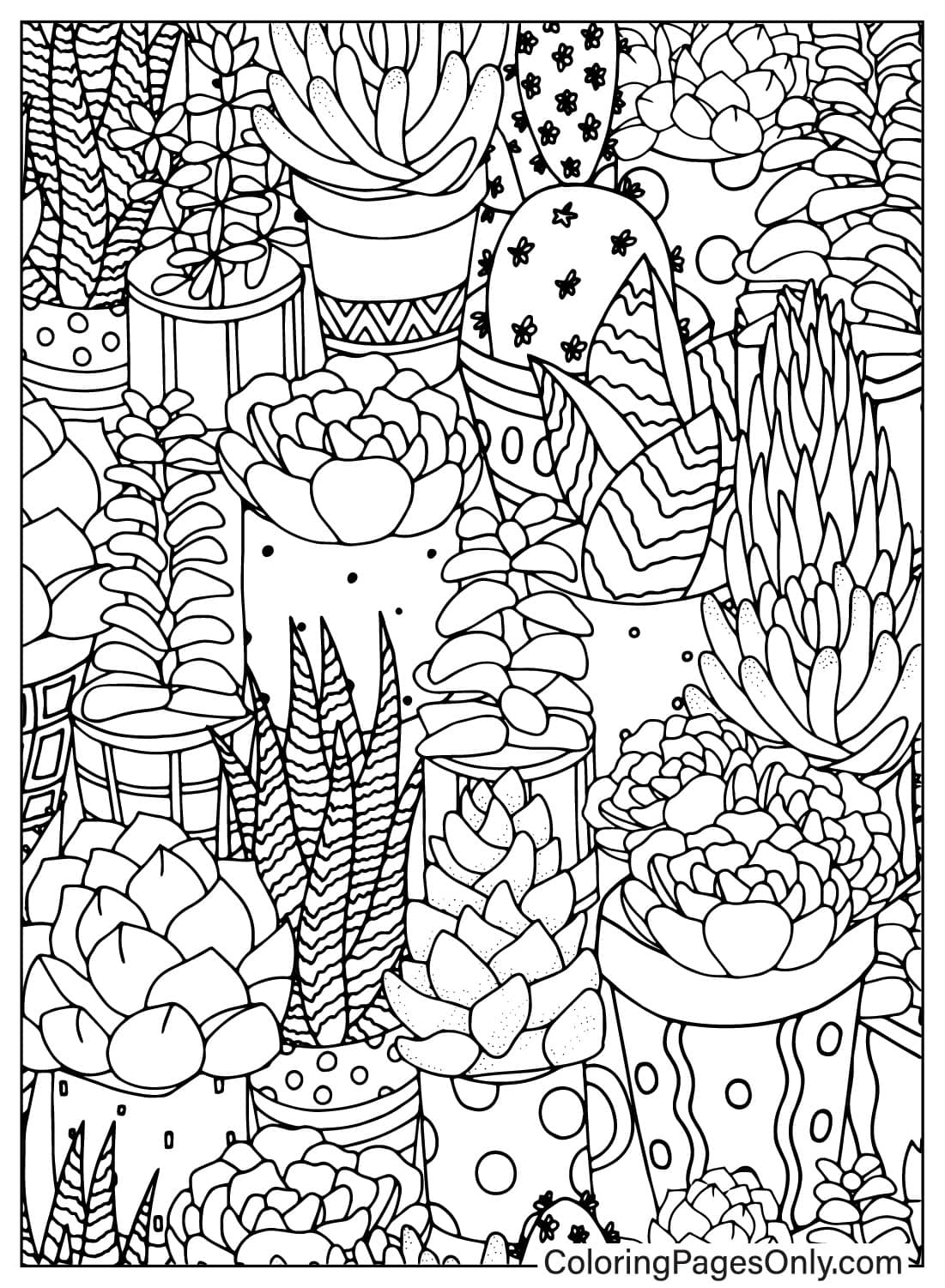
What Is Inside This Collection
Five groups organize the 15 pages, each offering a different way to picture a cactus, alone, in the desert, potted, paired with a character, or repeated as a pattern.
Simple Solo Portraits
These pages show a plain cactus outline or a loose, doodled sketch, without a wider scene around it. Coloring suggestion: Use these as a chance to try a few different green tones side by side, since a real cactus rarely reads as just one flat shade of green.
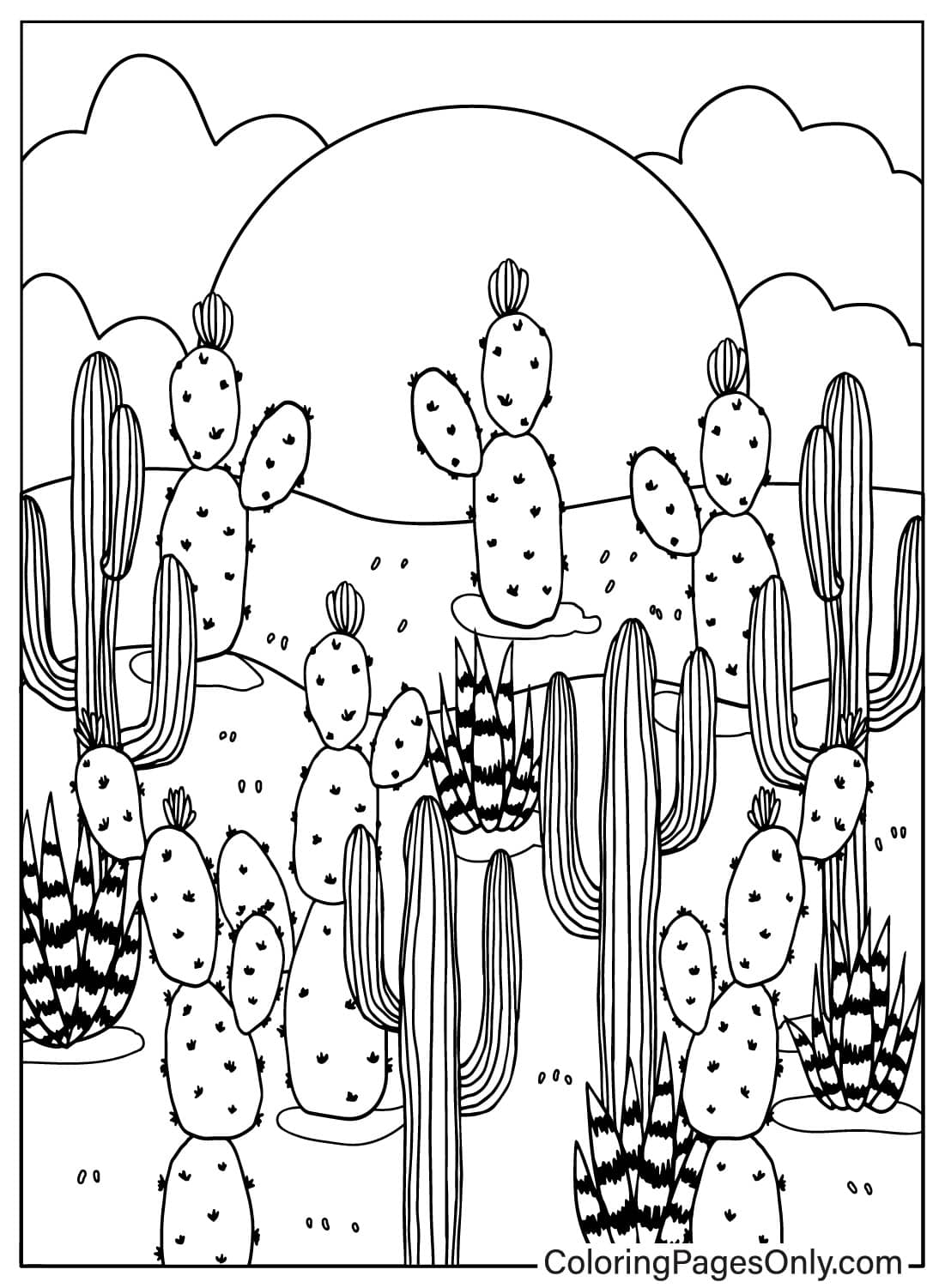
Desert and Landscape Scenes
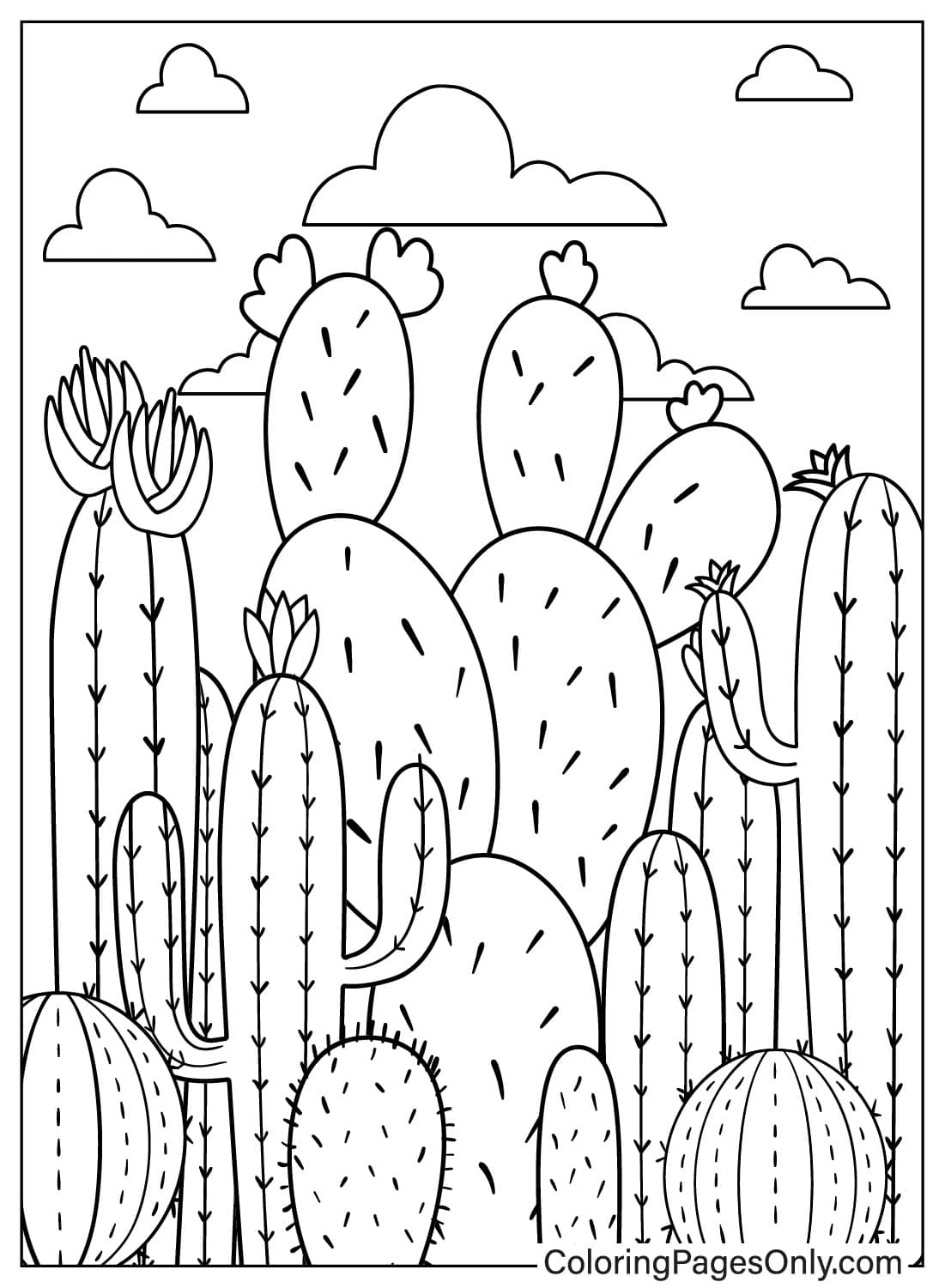
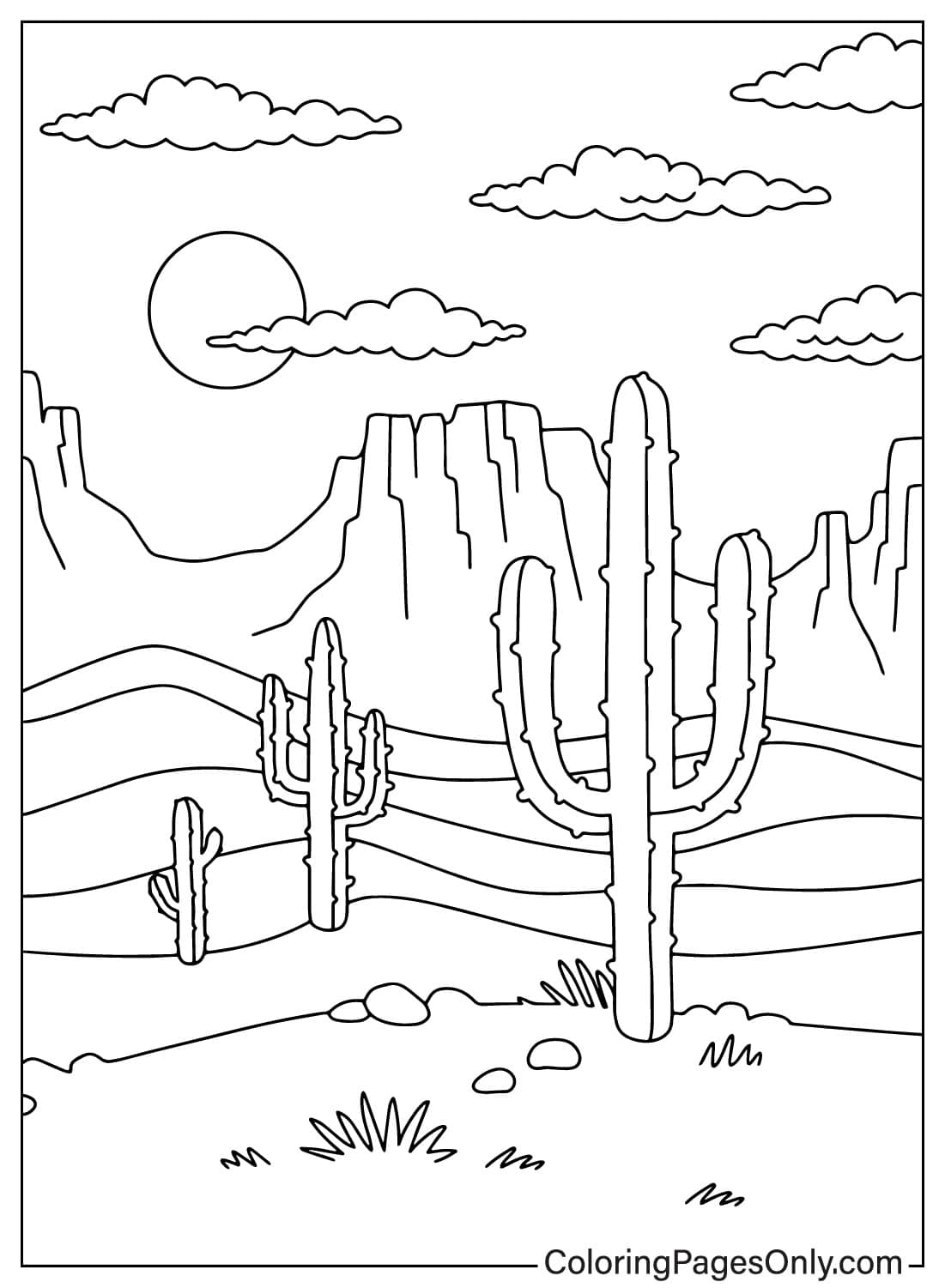
These pages set a cactus within a wider desert view, sometimes alongside blooming flowers or an open sky. Coloring suggestion: use warm sandy tones for the ground and a clear blue or golden-hour palette for the sky, keeping the cactus itself the coolest color on the page.
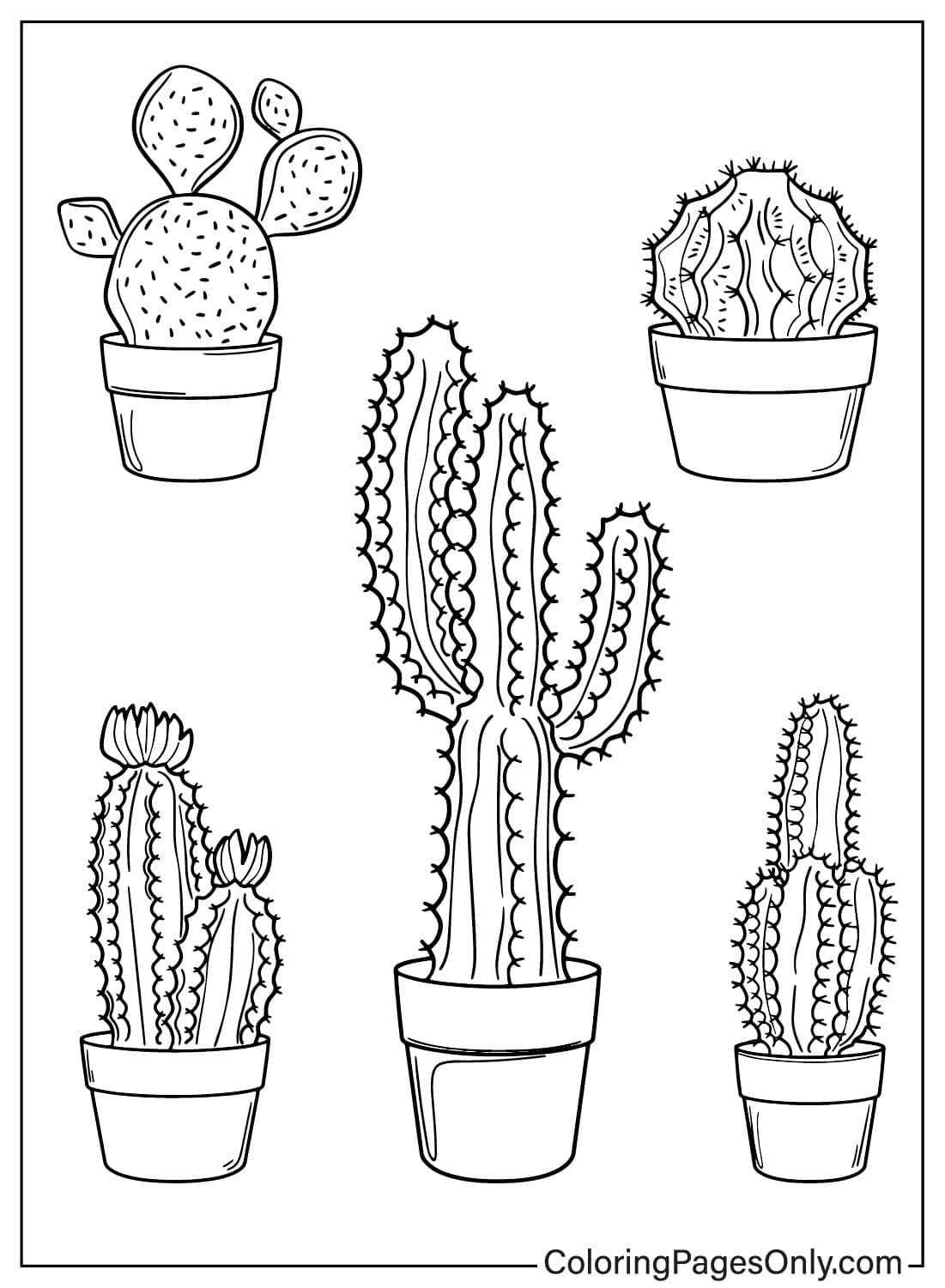
Potted and Decorative Cacti
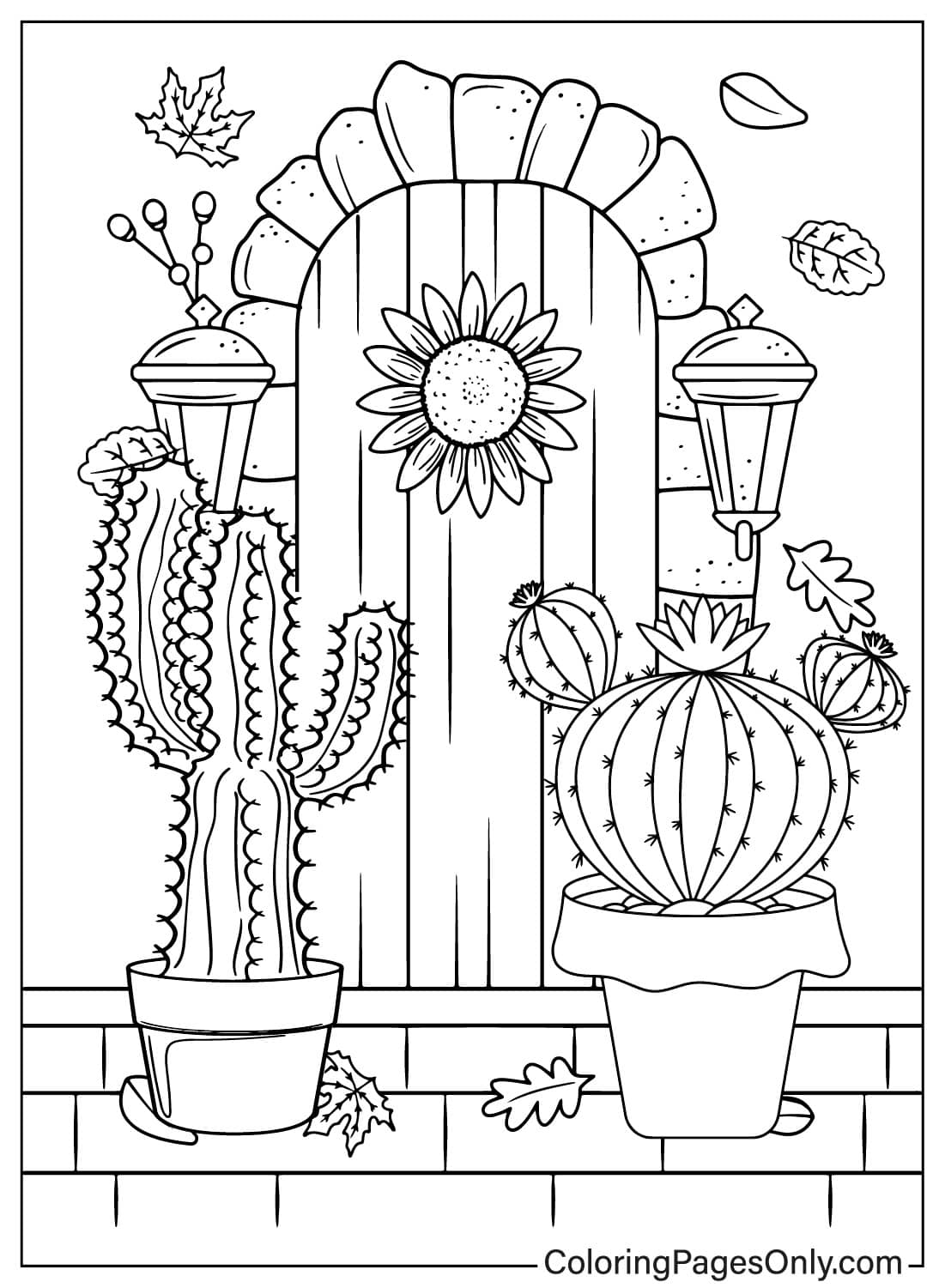
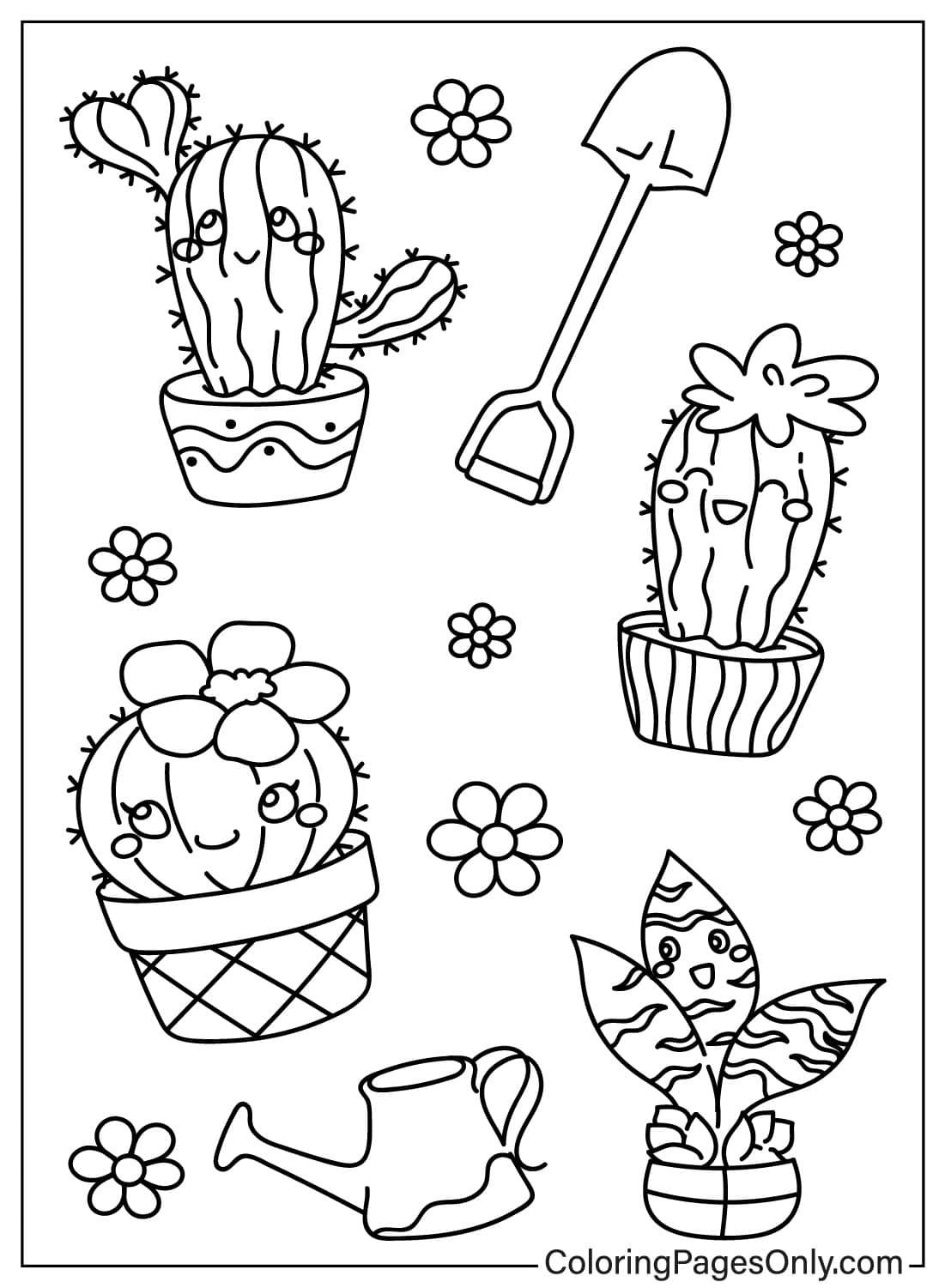
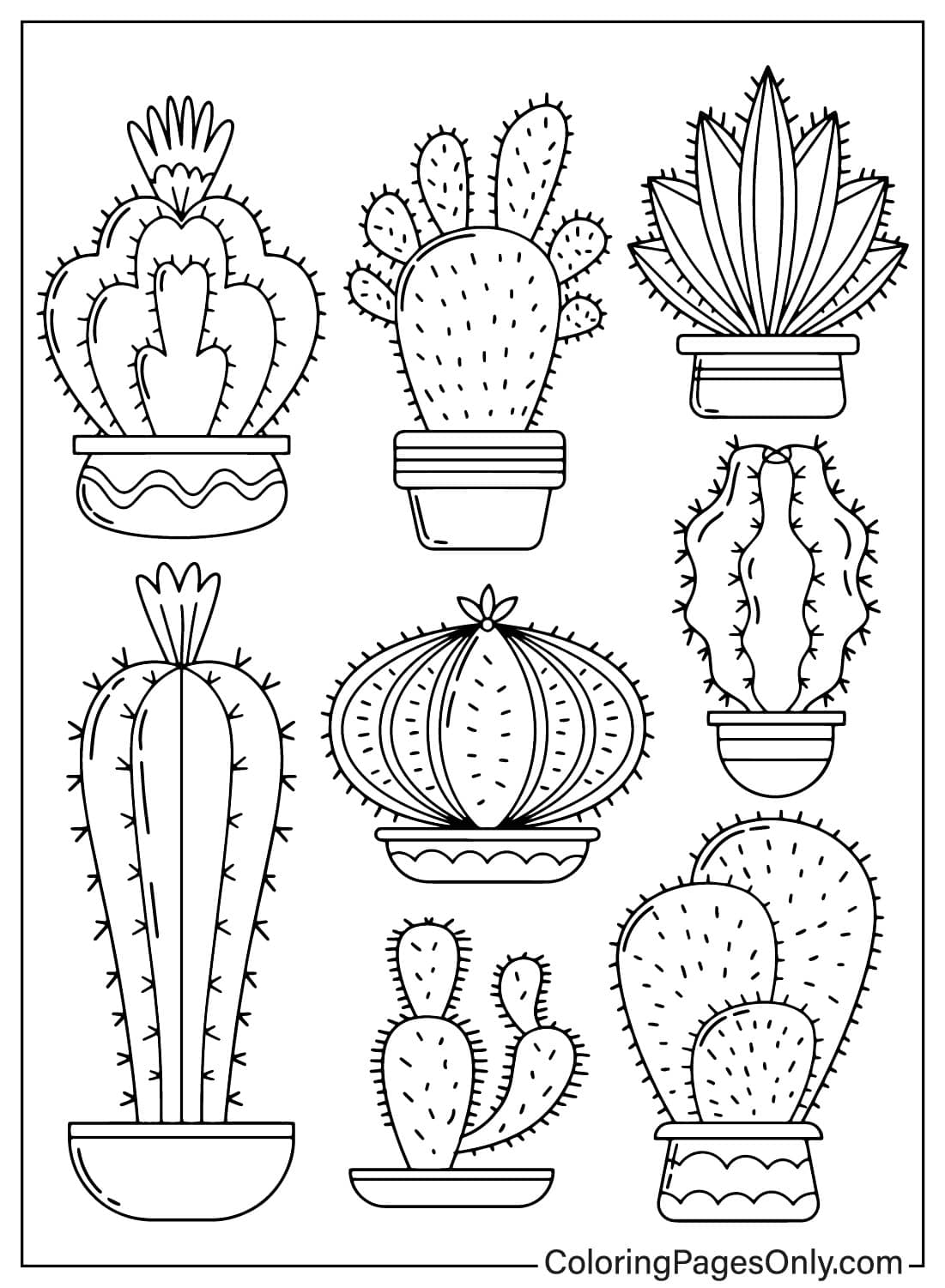
These pages show cacti in pots, whether lined up outside a house or grouped as houseplants. Coloring suggestion: give each pot its own distinct color or pattern so a group of potted cacti doesn’t blur into one repeated shape.
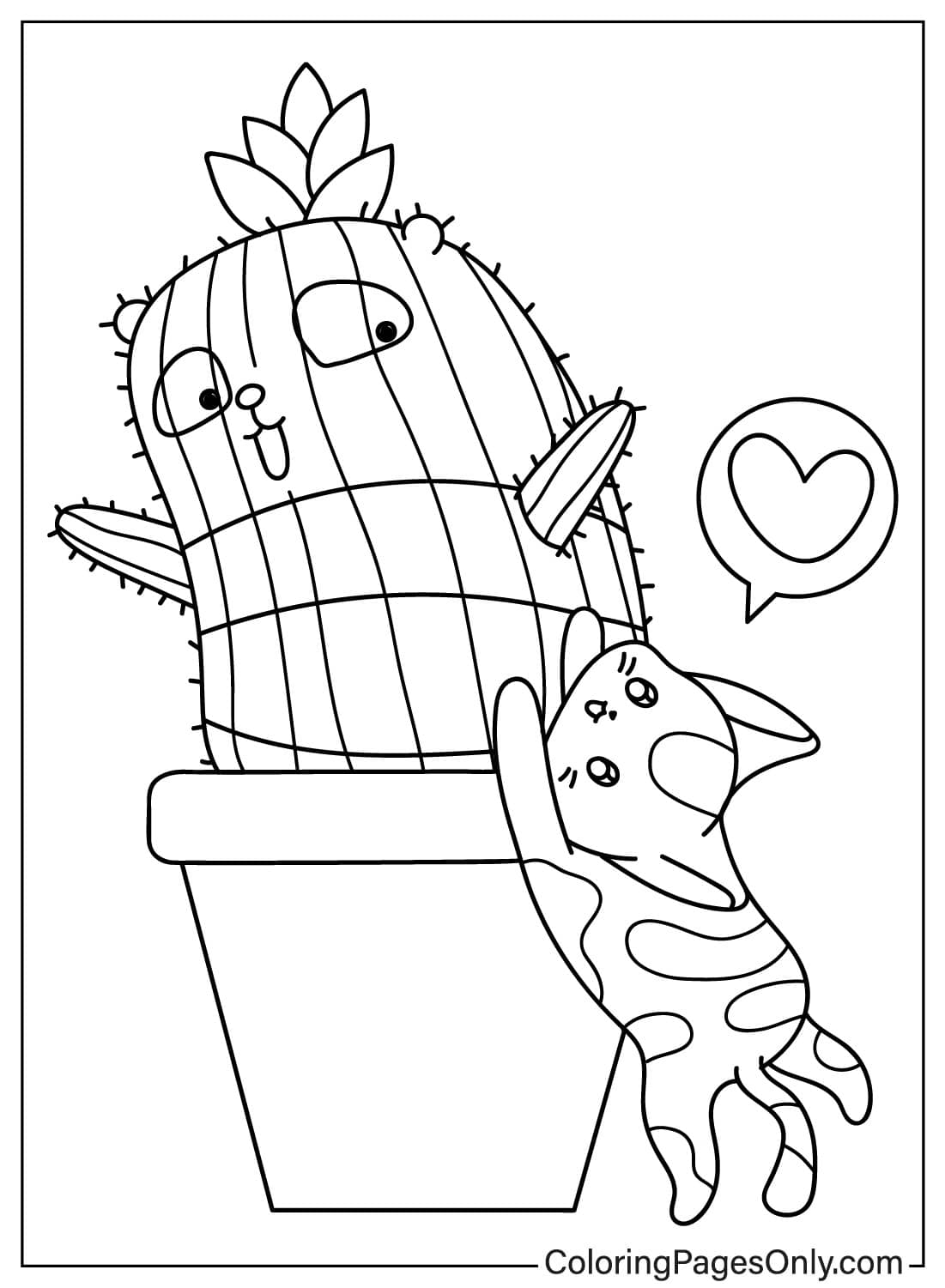
Character and Animal Pairings
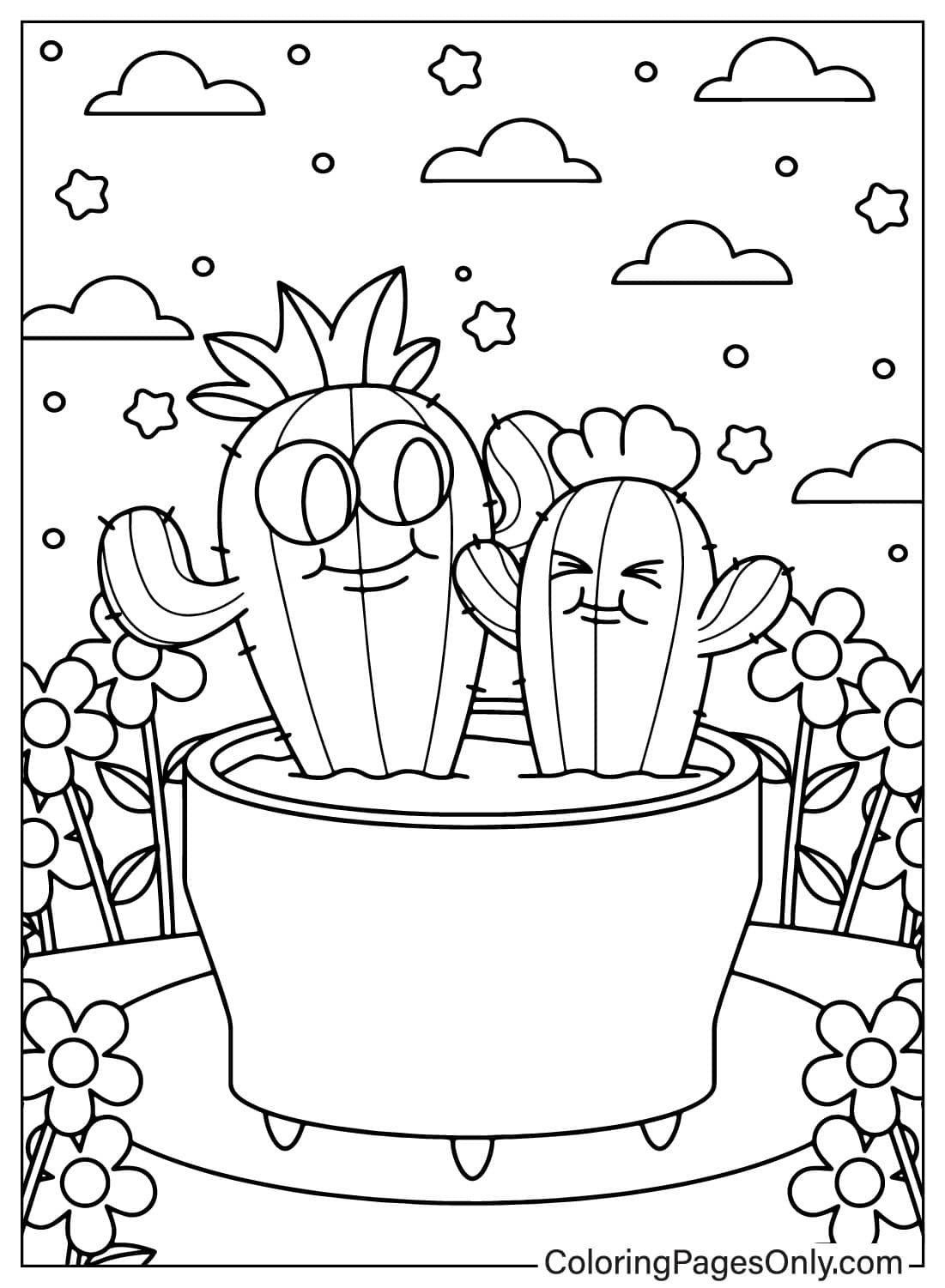
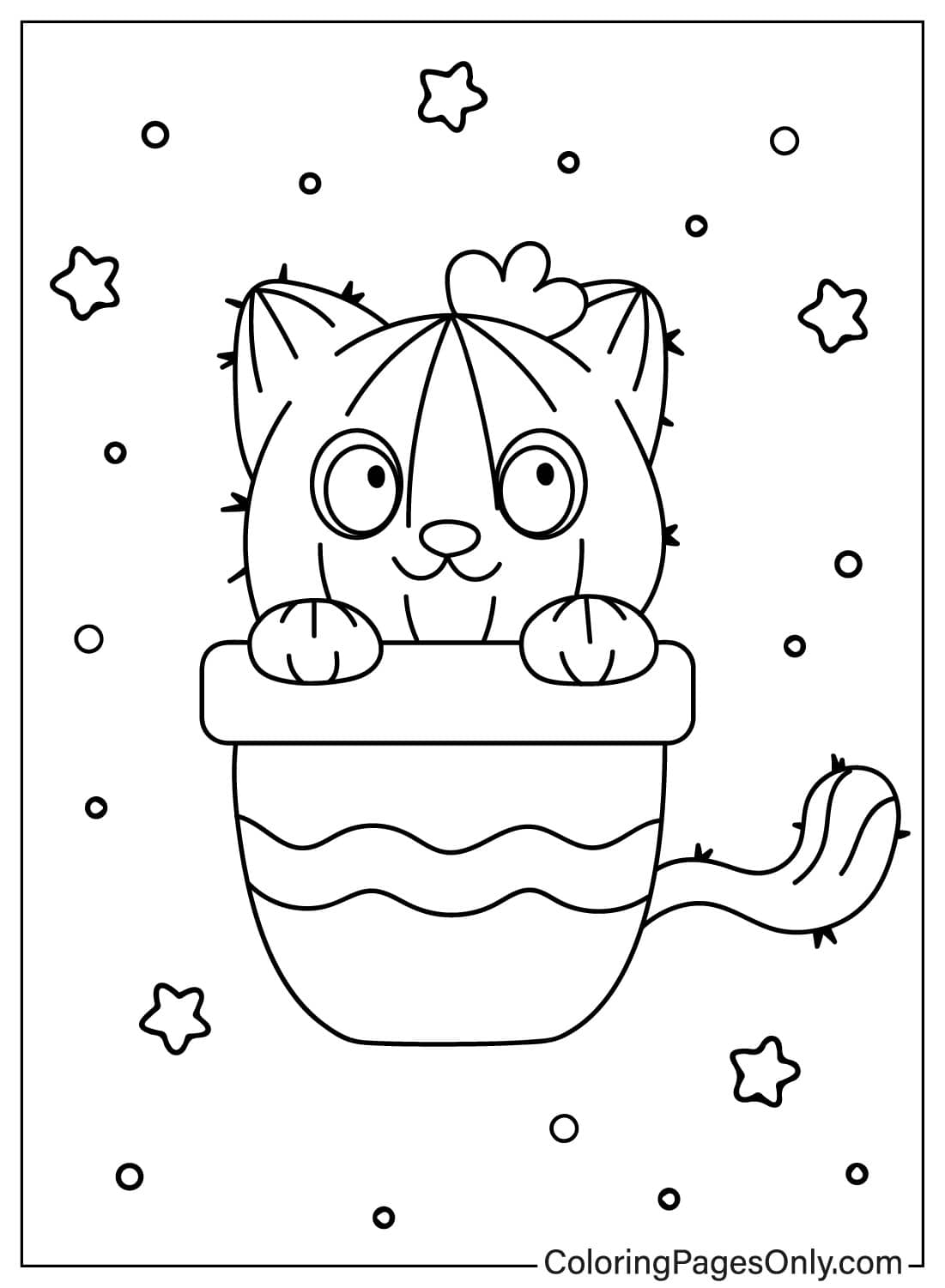
These pages pair a cactus with an animal, a cat, a panda, or a pair of llamas. Coloring suggestion: keep the animal in soft, natural, or classic tones so the cactus’s spines and shape still stand out as the page’s other clear focal point.
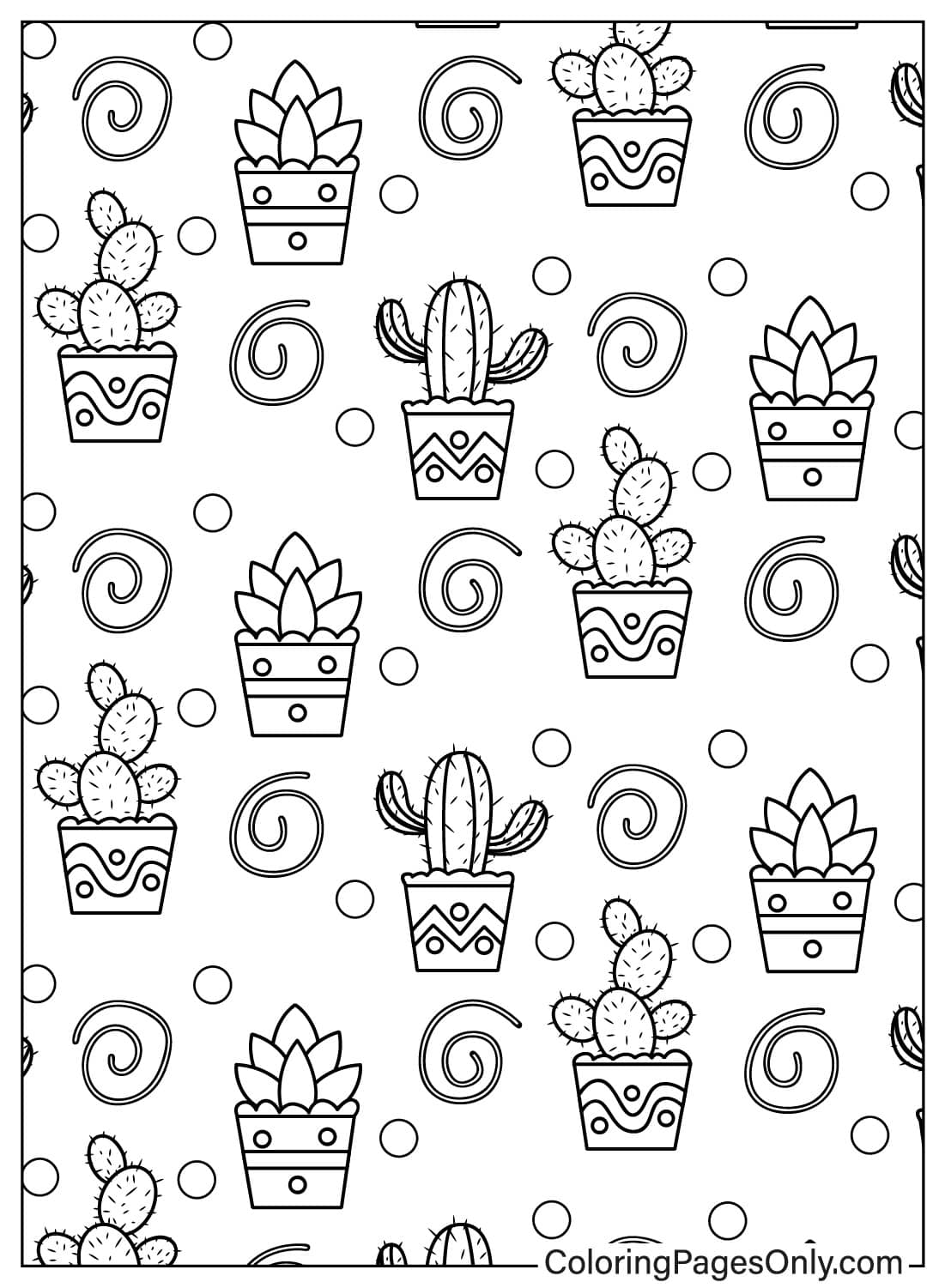
Repeating Patterns
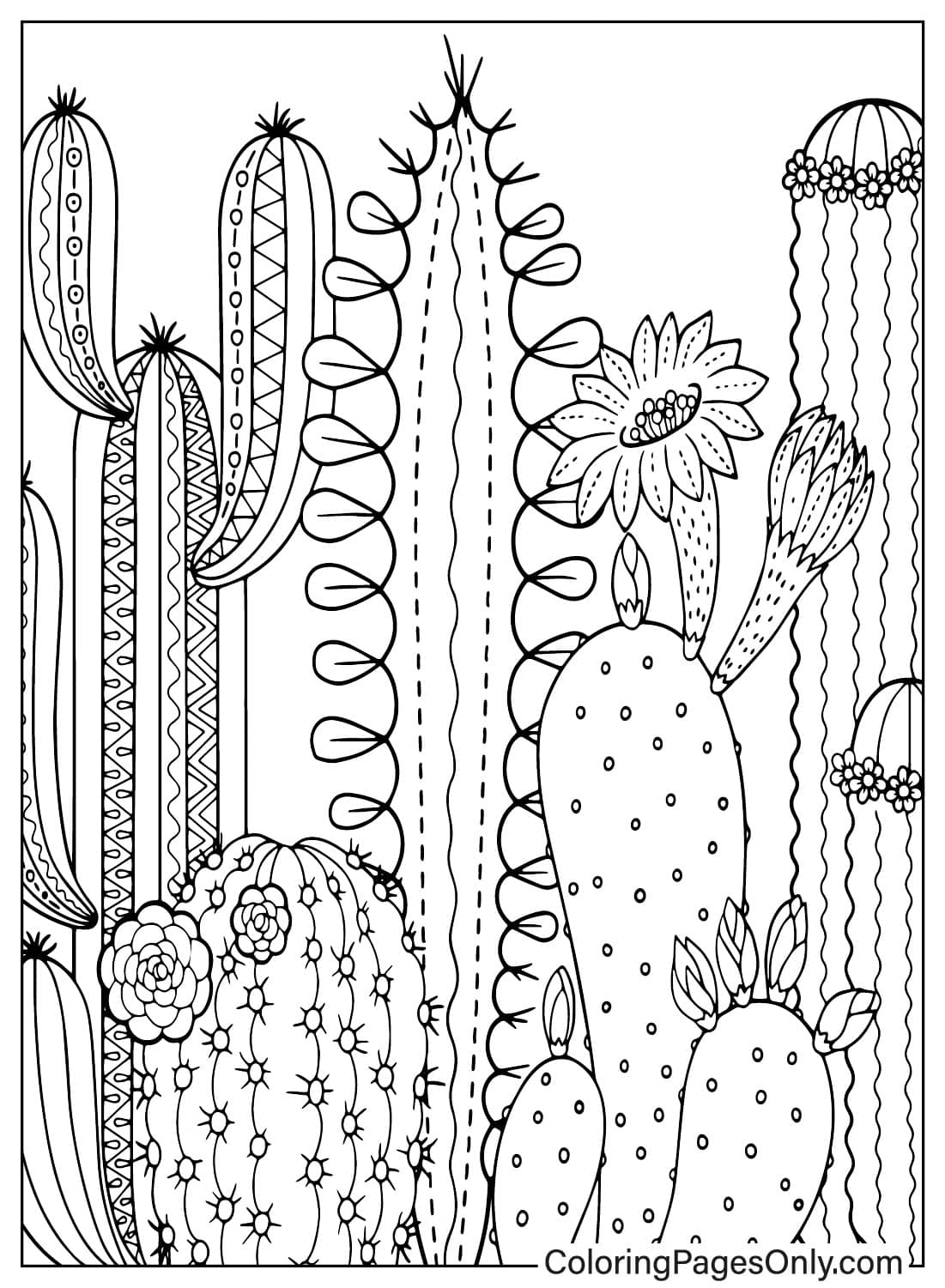
These pages arrange cacti and succulents into a seamless, all-over pattern rather than a single central subject. Coloring suggestion: pick a small, consistent color palette, three or four shades at most, and repeat it across the whole pattern for a cohesive look.
What Cactus Coloring Pages Do
Small spines, steady hands. A cactus’s spines are short, straight, and packed closely together, and coloring or carefully working around them without smudging the surrounding body takes real, sustained hand control, the kind of fine motor practice the American Academy of Pediatrics associates with structured coloring in children ages two through seven.
A decade for one inch. A saguaro cactus, one of the most iconic desert plants, can take up to ten years to grow just a single inch tall, and won’t typically produce its first arm until it’s 75 to 100 years old, a genuinely slow pace even by plant standards.
A slow pace, worth sitting with. A saguaro cactus can spend a full decade growing just one inch, one of the slowest, most patient growth rates of any desert plant. There’s a fitting echo of that unhurried pace in taking a slow, careful approach to a coloring page, the kind of patient, structured activity a 2005 Art Therapy Journal study linked to reduced anxiety.
Spines that used to be leaves. What looks like a cactus’s leaves are actually modified spines. This adaptation dramatically cuts down on water loss through evaporation, while the plant’s thick stem takes over the job of storing water instead.
How to Color Cactus Pages Well
- Cactus body: layer at least two shades of green, since a real cactus rarely reads as one single flat tone.
- Spines: use a pale yellow, white, or light tan, keeping each one a short, distinct mark rather than one blurred texture.
- Desert scenes: use warm sandy tones for the ground and a clear blue or golden sky, keeping the cactus the coolest color on the page.
- Potted cacti: give each pot its own distinct color or pattern so a group of pots doesn’t blur into one repeated shape.
- Animal pairings: keep the animal in soft, natural tones so the cactus’s spines and shape still stand out clearly.
- Pattern pages: pick a small, consistent palette, three or four shades at most, and repeat it across the whole design.
5 Creative Craft Ideas With Cactus Coloring Pages
1. Saguaro Growth Fact Card
Color a page and write the fact that a saguaro cactus can take ten years to grow just one inch on the back.
2. Cactus Pattern Wrapping Paper
Color one of the pattern pages and use it as custom wrapping paper for a small gift.
3. Potted Cactus Diorama
Color a potted cactus page, cut it out, and stand it up inside a small box for a simple desert windowsill scene.
4. Cactus Bookmark
Color a smaller solo portrait, cut it into a bookmark shape, and cover it with clear tape for a durable reading marker.
5. Desert Scene Collage
Color a landscape page and a few solo cacti, cut out the cacti, and glue them onto the landscape for a layered desert scene.
Frequently Asked Questions
What are Cactus coloring pages?
A free set of 15 printable designs of cacti, including solo portraits, desert scenes, potted plants, character pairings, and patterns. Every page downloads as a PDF or opens in the online coloring tool without an account.
Why do cacti grow so slowly?
It varies by species, but a saguaro cactus, one of the most recognizable types, can take up to ten years to grow just one inch tall, a genuinely slow pace tied to how it conserves water and energy in a harsh desert climate.
Are a cactus’s spines actually leaves?
In a sense. A cactus’s spines are modified leaves, an adaptation that reduces water loss through evaporation, while the thick stem takes over the plant’s water storage instead.
How old is a saguaro cactus before it grows its first arm?
Typically, between 75 and 100 years old, and some saguaros never grow an arm at all.
What kinds of scenes appear in this collection?
Simple solo portraits, desert and landscape scenes, potted and decorative cacti, character and animal pairings, and repeating patterns.
Can these pages be colored without printing them?
Yes. Every page in the set opens directly in the site’s browser-based coloring tool, so a page can be finished on screen before deciding whether to print it.
Are Cactus coloring pages suitable for young children?
The simple outline and solo portrait pages work well for a young child. The pattern and multi-element scenes suit an older child with more coloring experience.
Do all cacti live in the desert?
No. While many well-known cacti are desert plants, some species grow in tropical or high-altitude regions instead, which is why coloring choices for a cactus can reasonably shift beyond just sandy, desert tones.
Start Coloring
A decade to grow one inch, and just a few minutes to add some color: pick a page above, download the PDF, or color it online, free and without an account. Share the finished piece through the Facebook or Pinterest buttons at the top of the design.