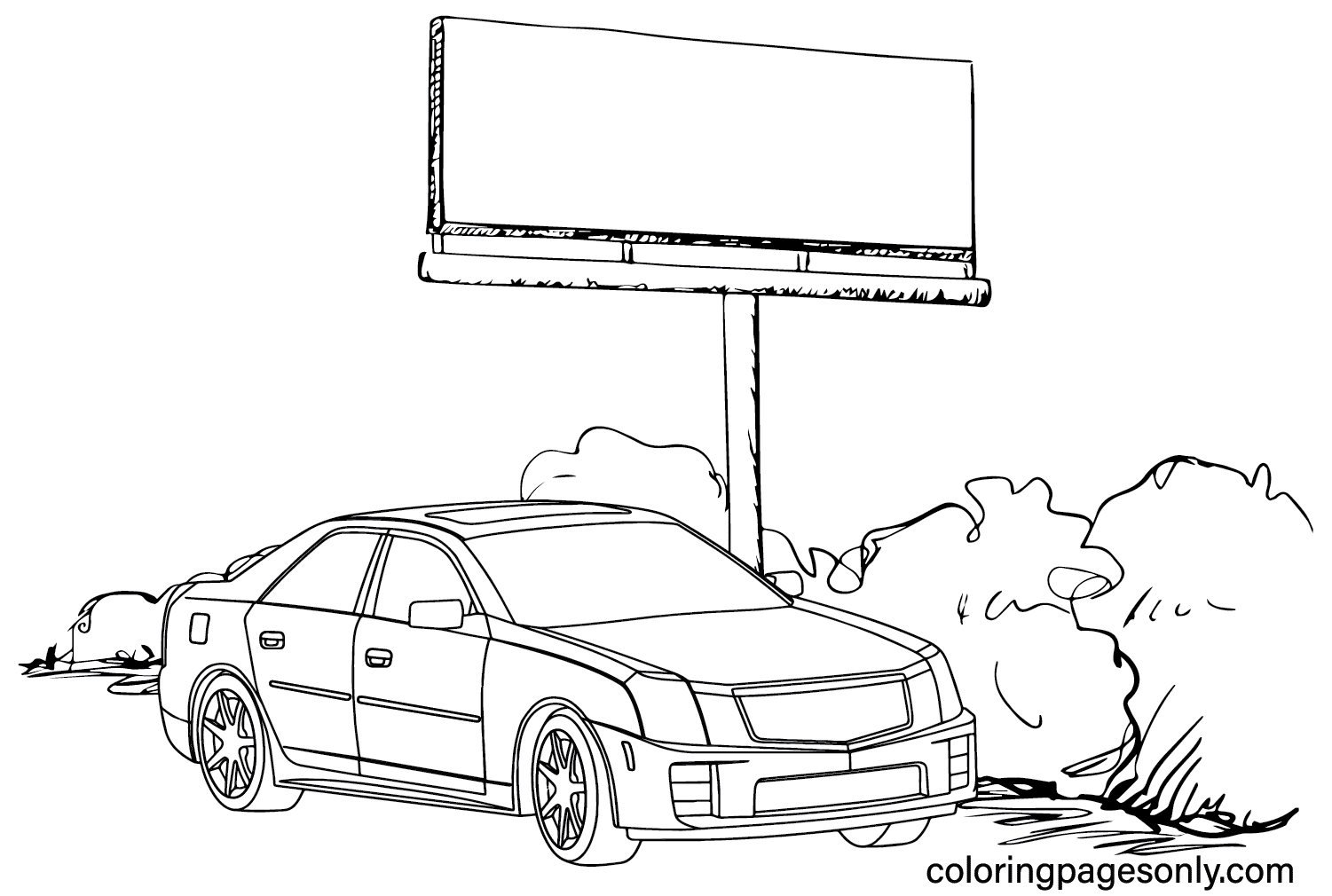
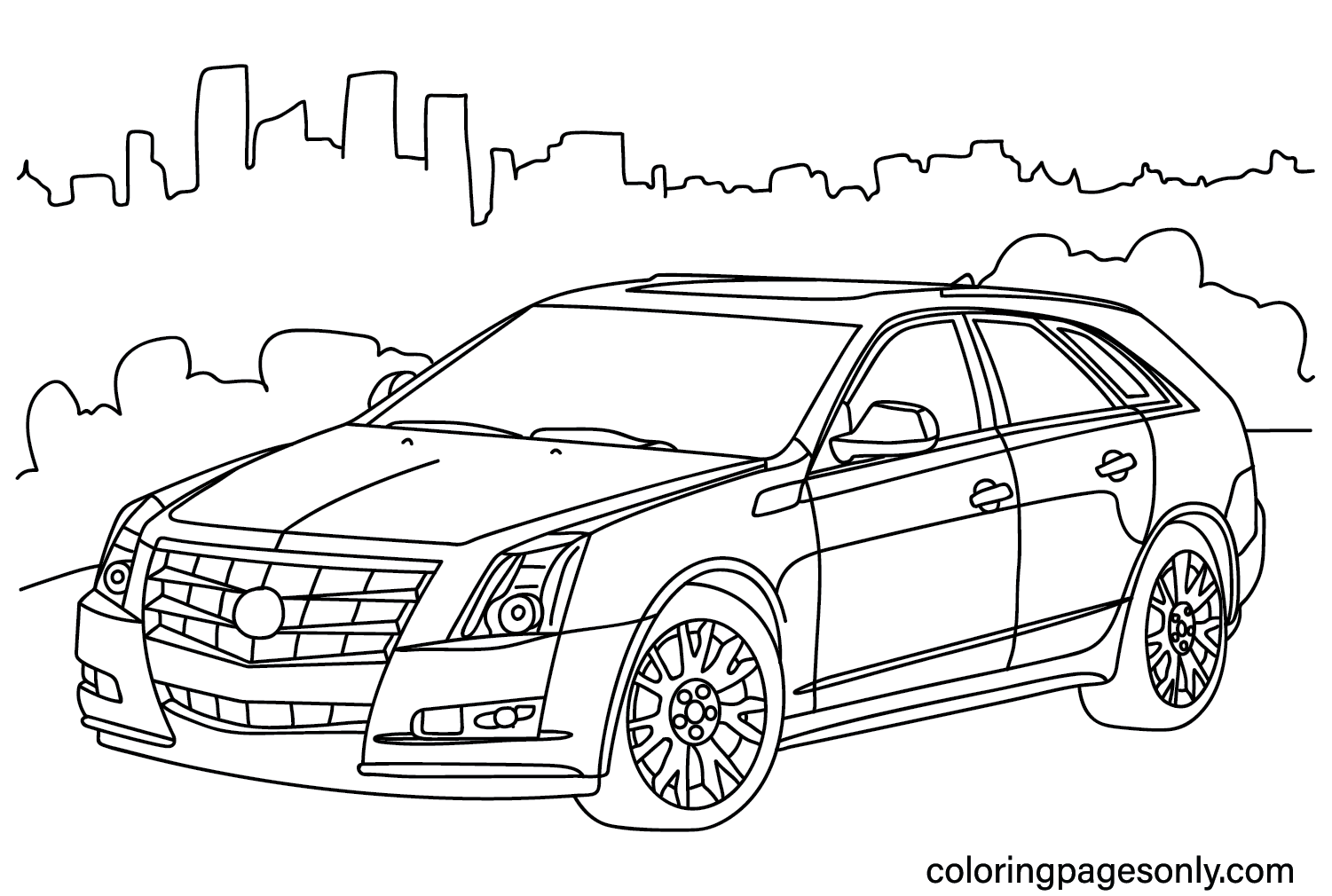
Free Cadillac coloring pages – 20+ pages featuring the Escalade, ATS Coupe, CT6 V-Sport, XT5, XT6, SRX, LYRIQ, Fleetwood 75, and the iconic 1959 Cadillac – line drawings of real models spanning the brand’s history from postwar American excess to electric luxury – free printable PDF and online coloring for car enthusiasts of all ages.
Cadillac was founded on August 22, 1902, in Detroit, Michigan, named after Antoine Laumet de La Mothe, sieur de Cadillac, the French explorer who established Fort Pontchartrain du Détroit (now Detroit) in 1701. In 1908, Cadillac became the first American automaker to win the Dewar Trophy from the Royal Automobile Club of Great Britain, awarded for demonstrating that three randomly selected Cadillacs could have their parts interchangeably dismantled and reassembled without fitting or adjustment. The feat, accomplished at a time when every car component was individually machined and fitted by hand, demonstrated that Cadillac had achieved manufacturing precision no competitor had matched. It established “Standard of the World” – Cadillac’s tagline since 1908 – as something the brand had actually earned rather than simply claimed.
The 1959 Cadillac is the physical limit of an aesthetic idea: tail fins that reached 42 inches above the road surface, dual rear bullet taillights, a length of 225 inches, and the specific confidence of a culture that had won a world war and was not yet sure anything was beyond its reach.
These 20+ free pages at ColoringPagesOnly.com span that entire arc – from the 1959 fin to the LYRIQ’s electric future. All free, PDF or PNG, print or color online.
The Models – What Each Page Represents
The 1959 Cadillac – The Fin Car
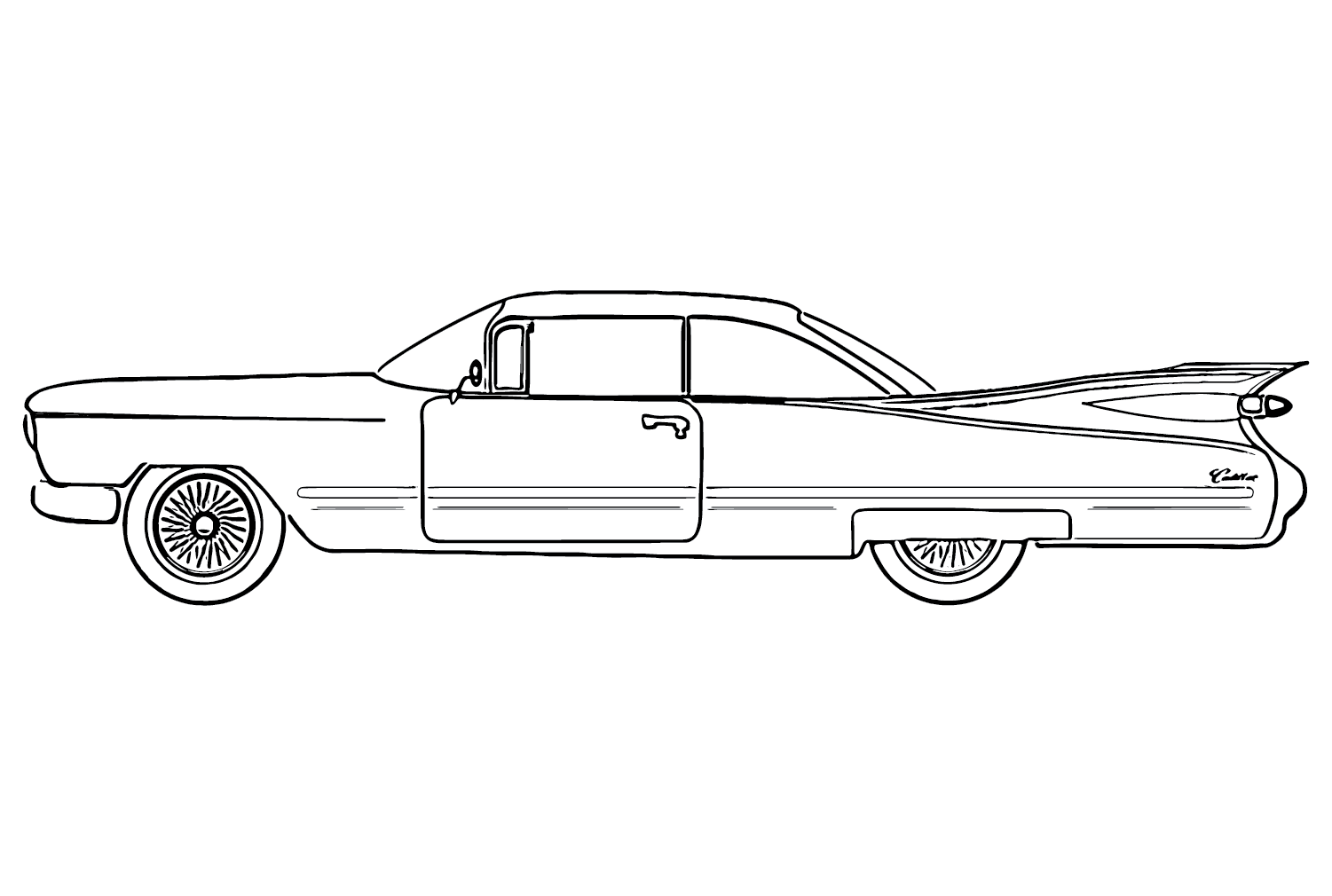
The Cadillac Devil 1959 Coloring Page is the collection’s most historically significant page and one of the most recognizable automotive silhouettes in American cultural history. The 1959 Cadillac Series 62 – designed under the direction of General Motors’ design chief Harley Earl, who pioneered the tail fin as a design element beginning in 1948 with the first postwar Cadillac – reached the logical and physical extreme of the fin aesthetic in 1959 and then retreated from it immediately.
The tail fins on the 1959 Cadillac stand 42 inches from the ground – taller than the waist of an average adult. The dual bullet-shaped taillights embedded in each fin were inspired by the afterburners of jet aircraft. The car stretched 225 inches – nearly 19 feet – and weighed over 4,900 pounds. It was powered by a 390 cubic inch V8 engine producing 325 horsepower.
The “Devil” designation in the page title likely refers to the Series 62 or the Eldorado Biarritz convertible – the most elaborate and expensive variant of the 1959 lineup. The Eldorado Biarritz started at $7,401 in 1959 – roughly $78,000 in 2025 dollars – and represented the brand’s most extravagant expression of postwar American confidence.
Coloring the 1959 Cadillac: The fins are the coloring challenge that defines this page. They are not a small detail – they dominate the rear half of the car’s silhouette and should dominate the coloring attention. The dual bullet taillights should be vivid red against the fin’s body color. Classic 1959 Cadillac colors include: Regal Silver Metallic, Tuxedo Black, Florentine Gold Metallic, Roman Red, and White – any of which creates a spectacular finished page. The chrome trim – bumpers, window surrounds, the elaborate grille – should be rendered in three-tone metallic: light warm silver for highlights, medium grey for the main surface, darker cool grey in shadow areas.
The Cadillac Escalade – American Luxury SUV
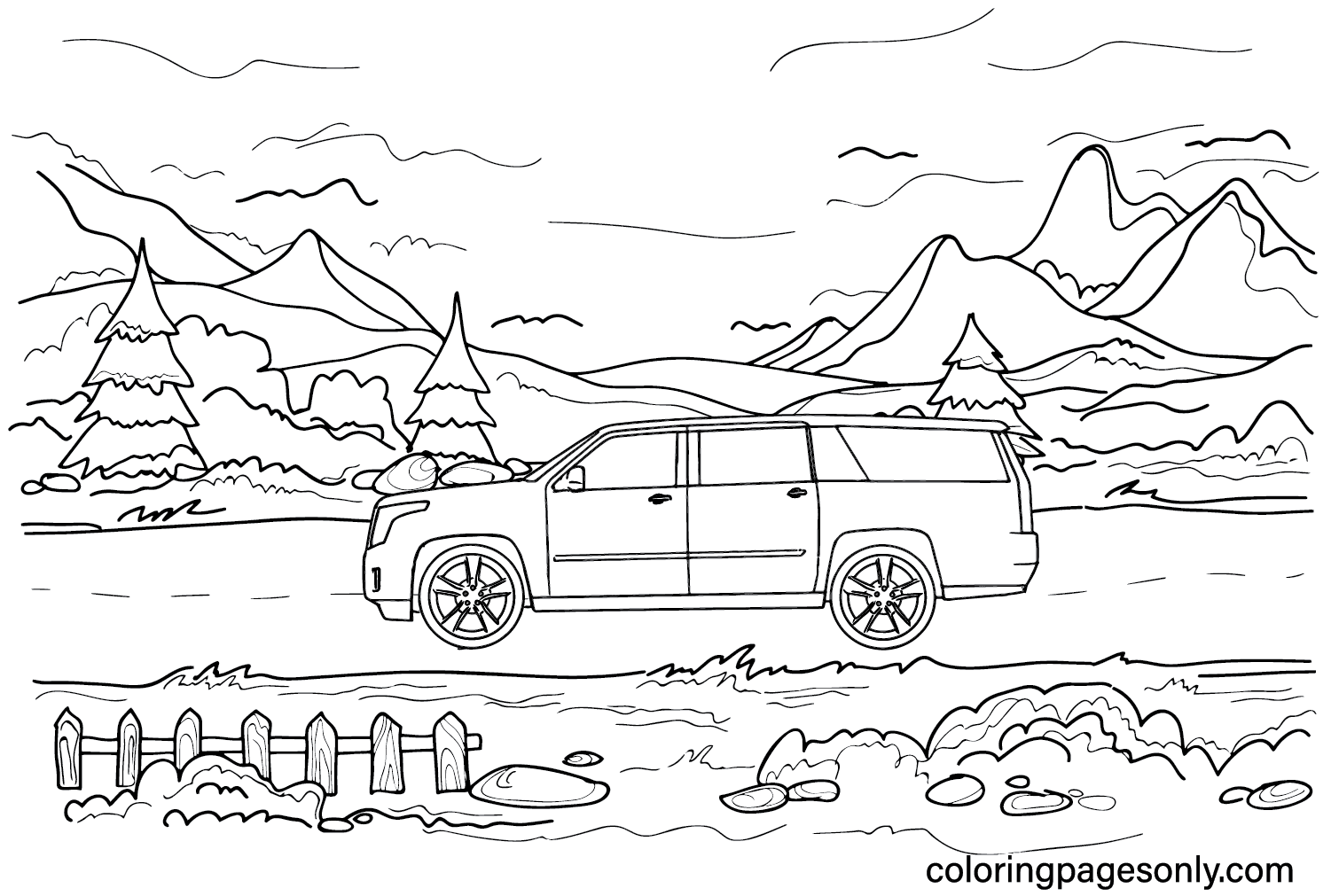
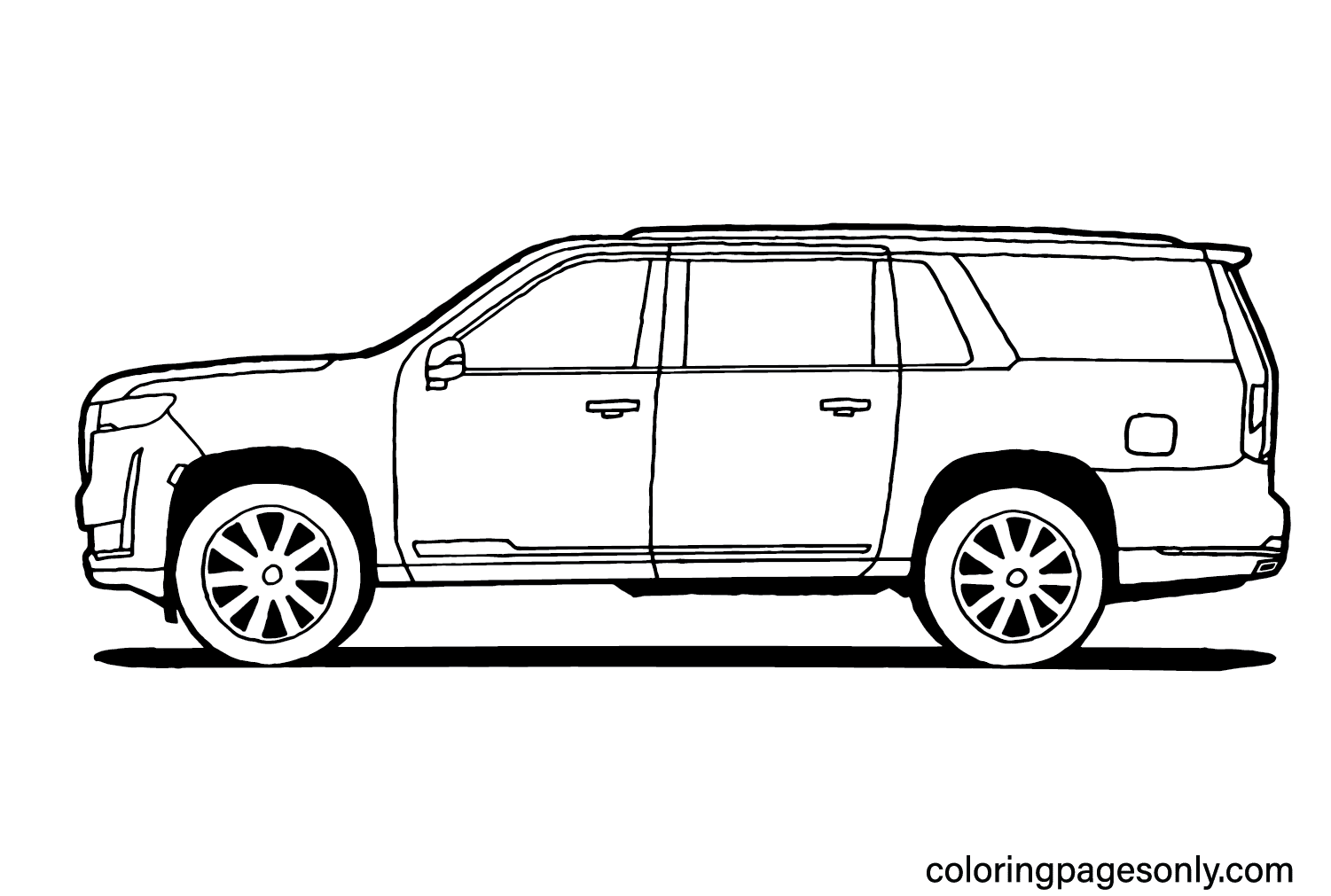
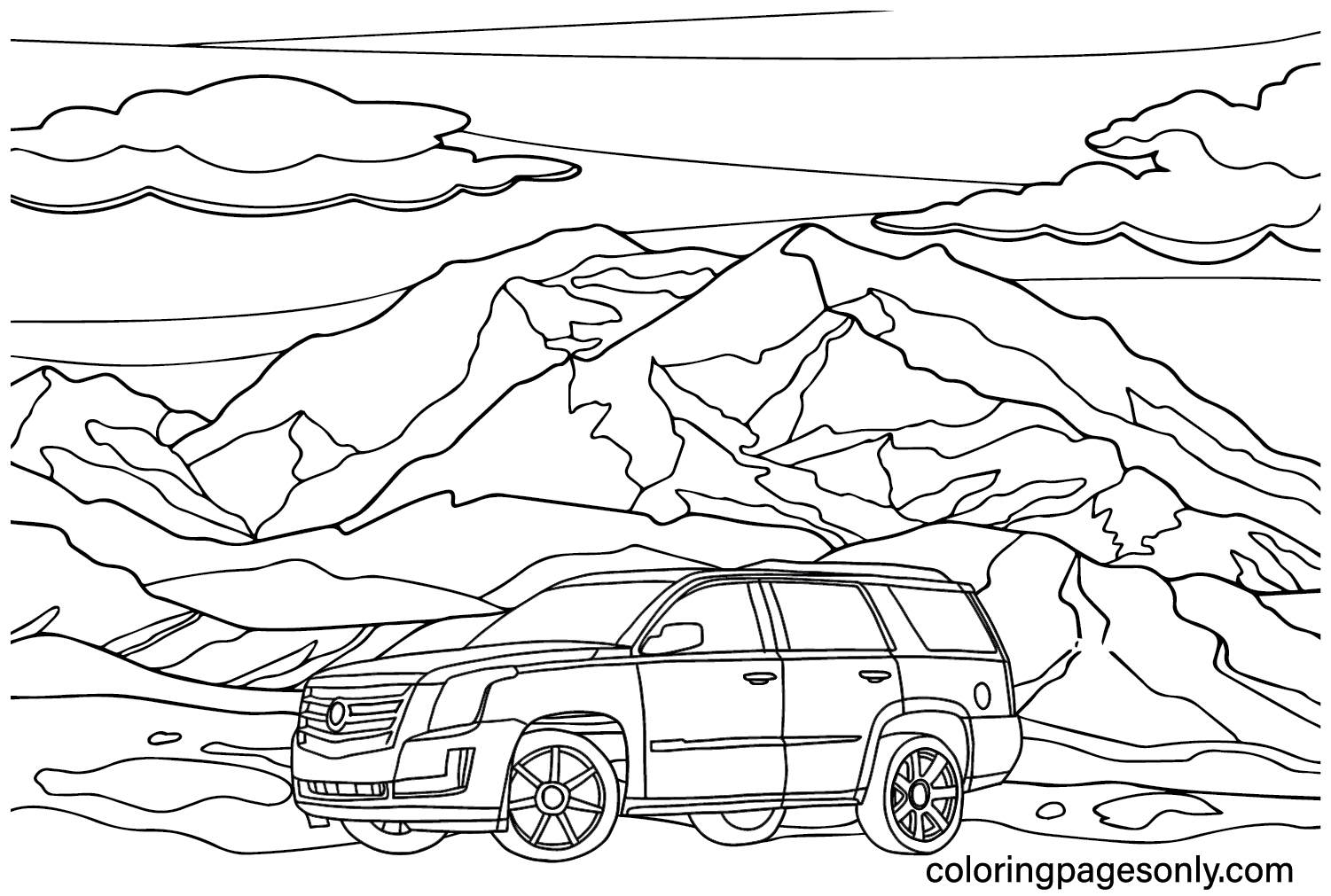
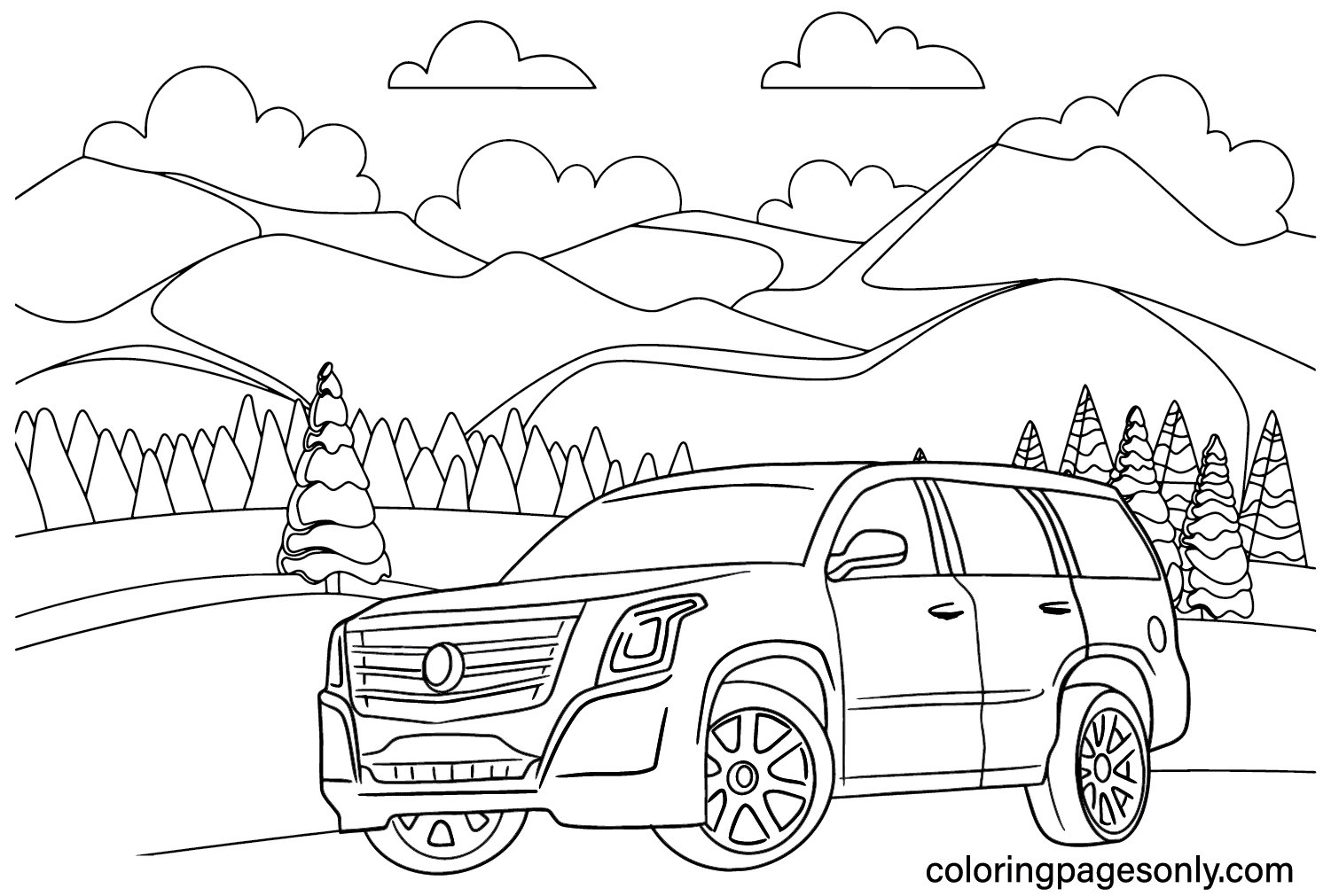
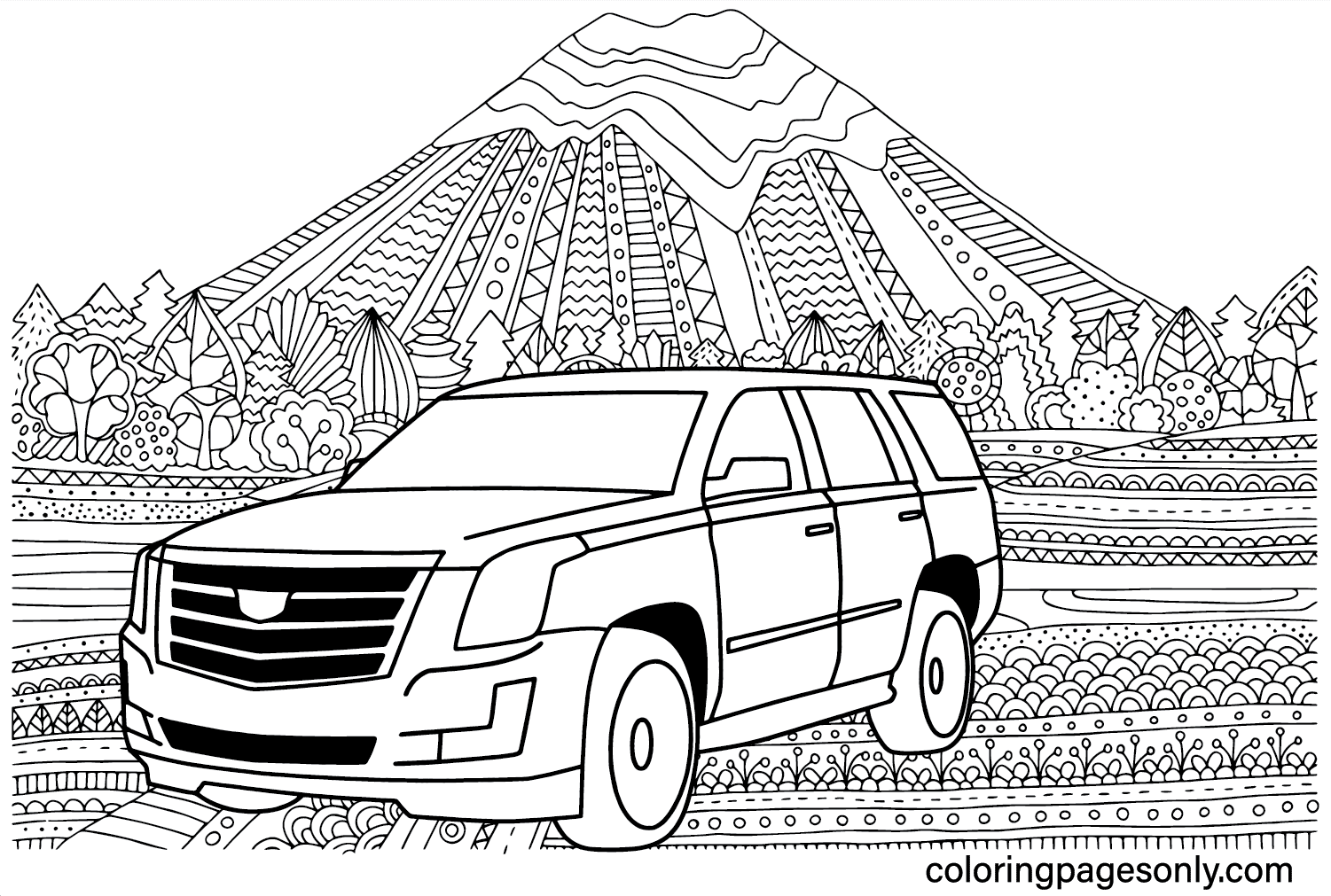
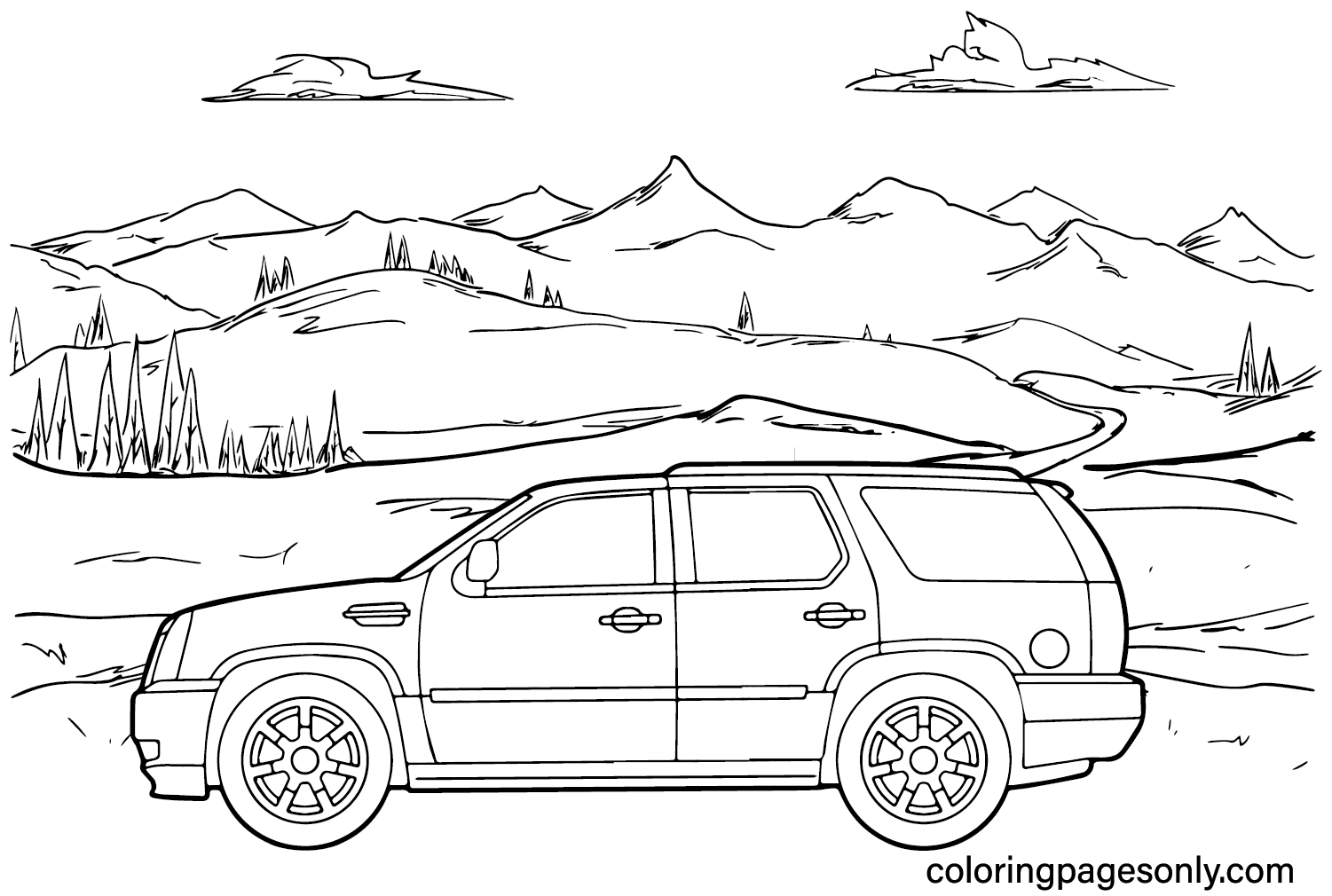
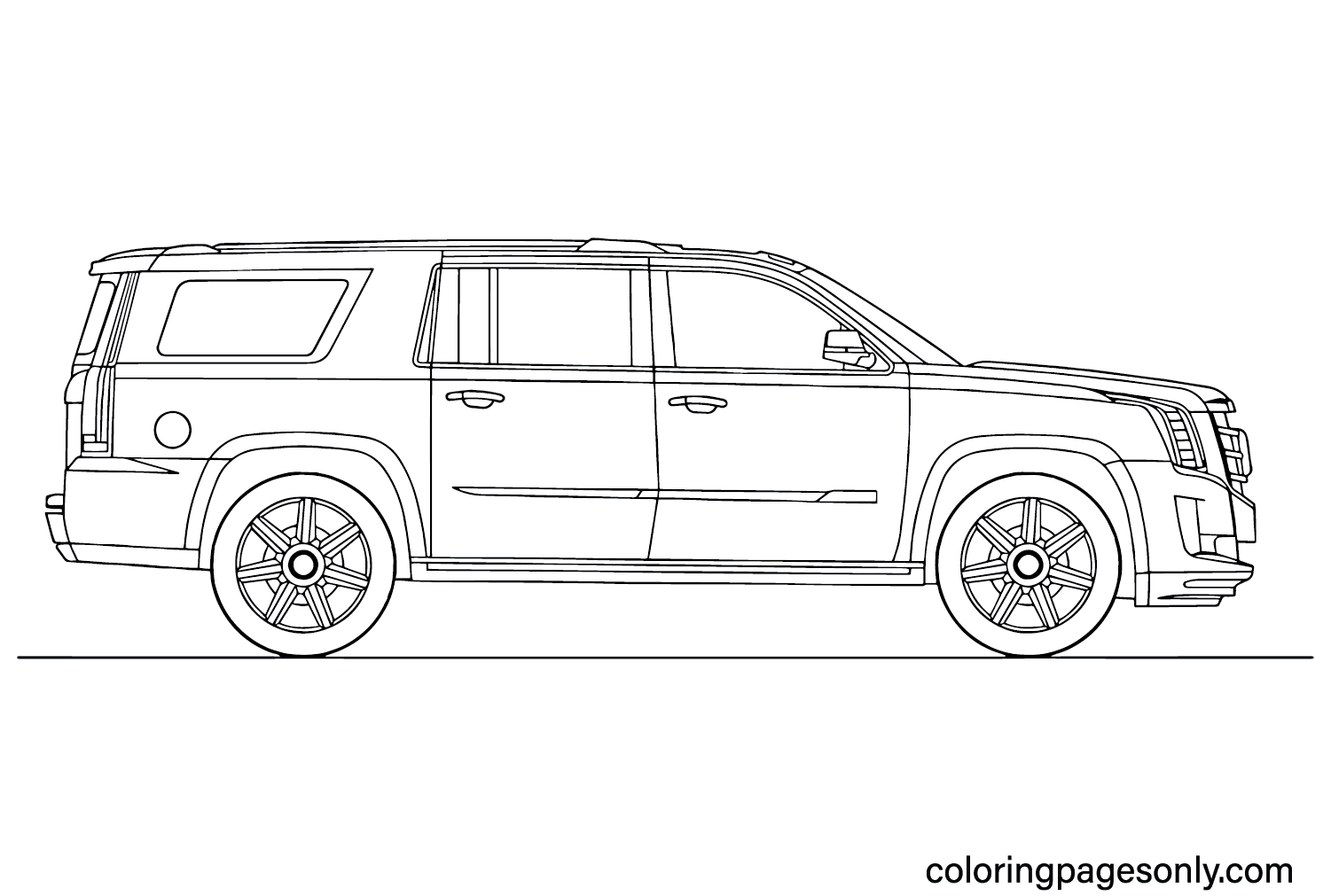
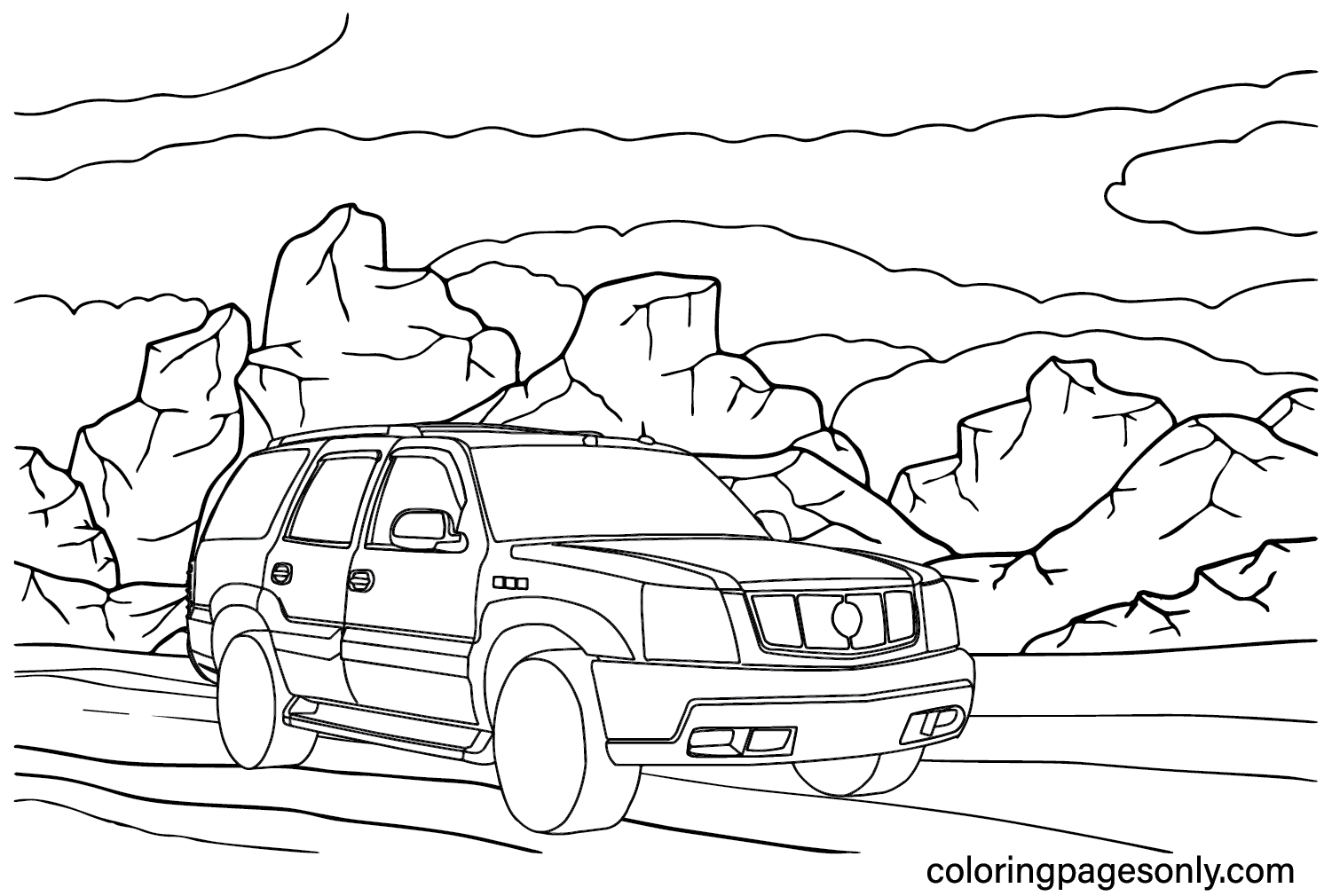
Cadillac Escalade SUV Coloring Page, Cadillac Escalade Coloring Page, and Cadillac Escalade Coloring Page give three pages to Cadillac’s most commercially successful current model – the full-size luxury SUV that has been in continuous production since 1999 and has become one of the most culturally embedded vehicles in American entertainment, music, and celebrity culture.
The Escalade was introduced in a 30-day development sprint in 1998 when General Motors needed a Cadillac response to the newly launched Lincoln Navigator – Ford’s answer to its own Expedition SUV with luxury trim. The rushed development timeline produced a vehicle that critics initially dismissed as a cynical rebadge of the GMC Yukon Denali. By its second generation (2002), the Escalade had developed its own distinct design language and loyal customer base. By its fourth generation (2021), it had become the best-selling full-size luxury SUV in North America.
The current fifth-generation Escalade (2021–present) is 227 inches long – two inches longer than the 1959 Cadillac – on a wheelbase extended to accommodate a curved OLED dashboard screen spanning 38 inches across the instrument panel. Its proportions are deliberately imposing: a near-vertical front fascia, a tall roofline, broad shoulder character lines, and the vertical LED lighting signature that has become Cadillac’s current visual identity across the lineup.
Coloring the Escalade: Its proportions demand strong horizontal character lines that span the full width of the vehicle. The front grille – a large, bold mesh structure with Cadillac’s shield logo at the center – requires patience and a fine-tip tool for the mesh detail. The vertical LED light strips at each corner of the front are Cadillac’s signature light element and should be rendered as a cool, slightly blue white against the darker front fascia. Popular Escalade colors: Summit White, Satin Steel Metallic (a warm light grey), Black Raven, and Radiant Red Tintcoat.
The Cadillac CT6 V-Sport – Performance Flagship
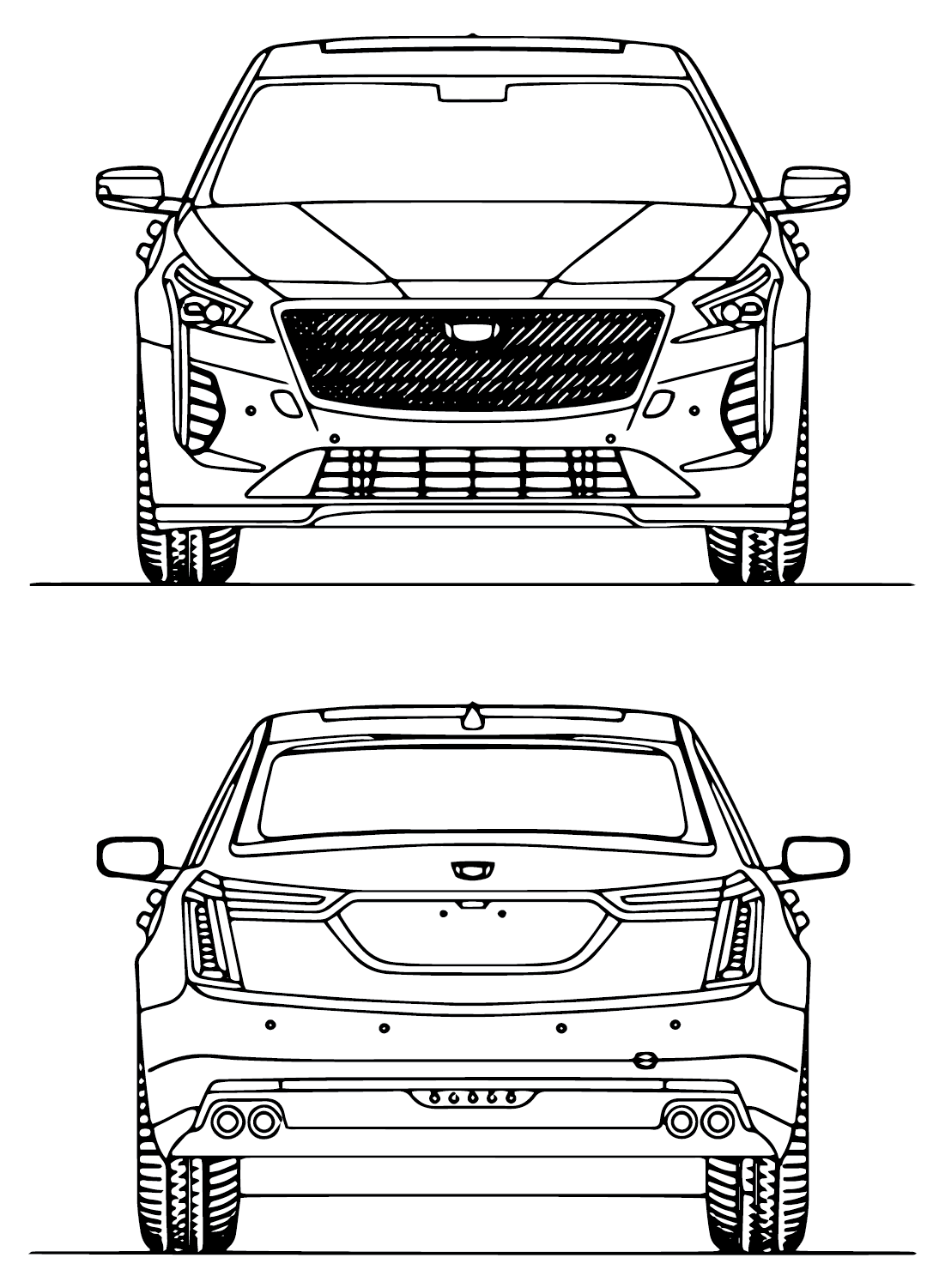
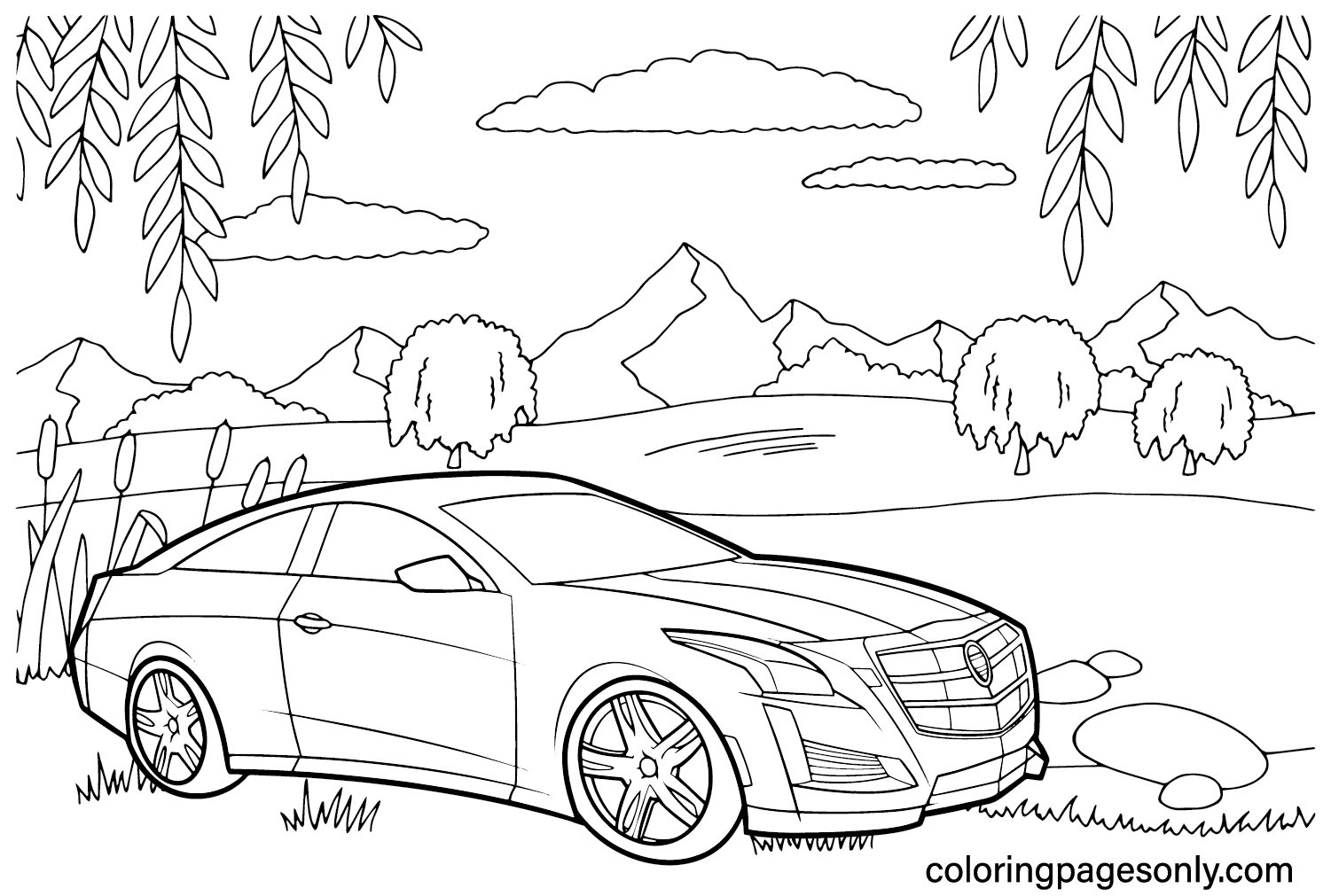
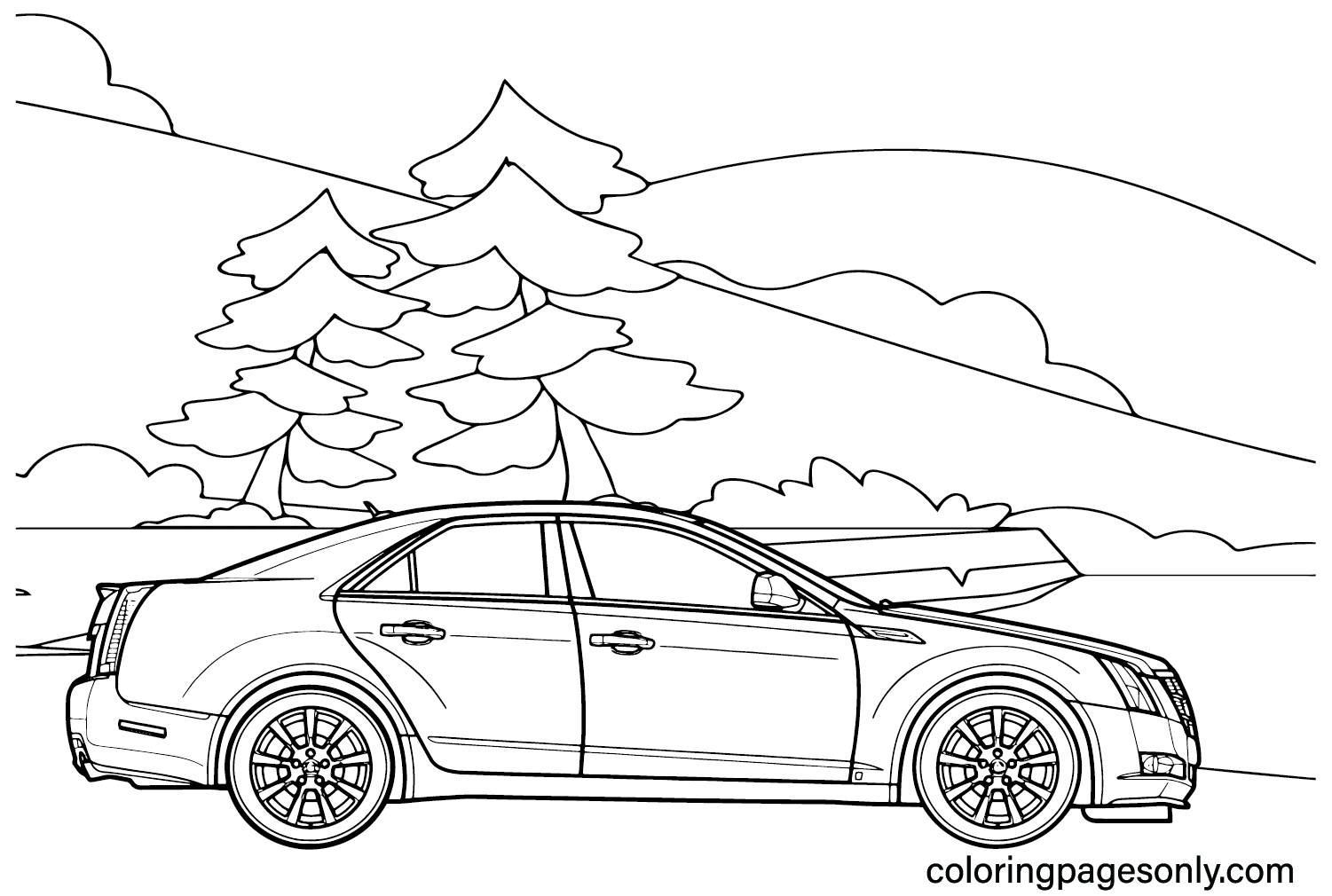
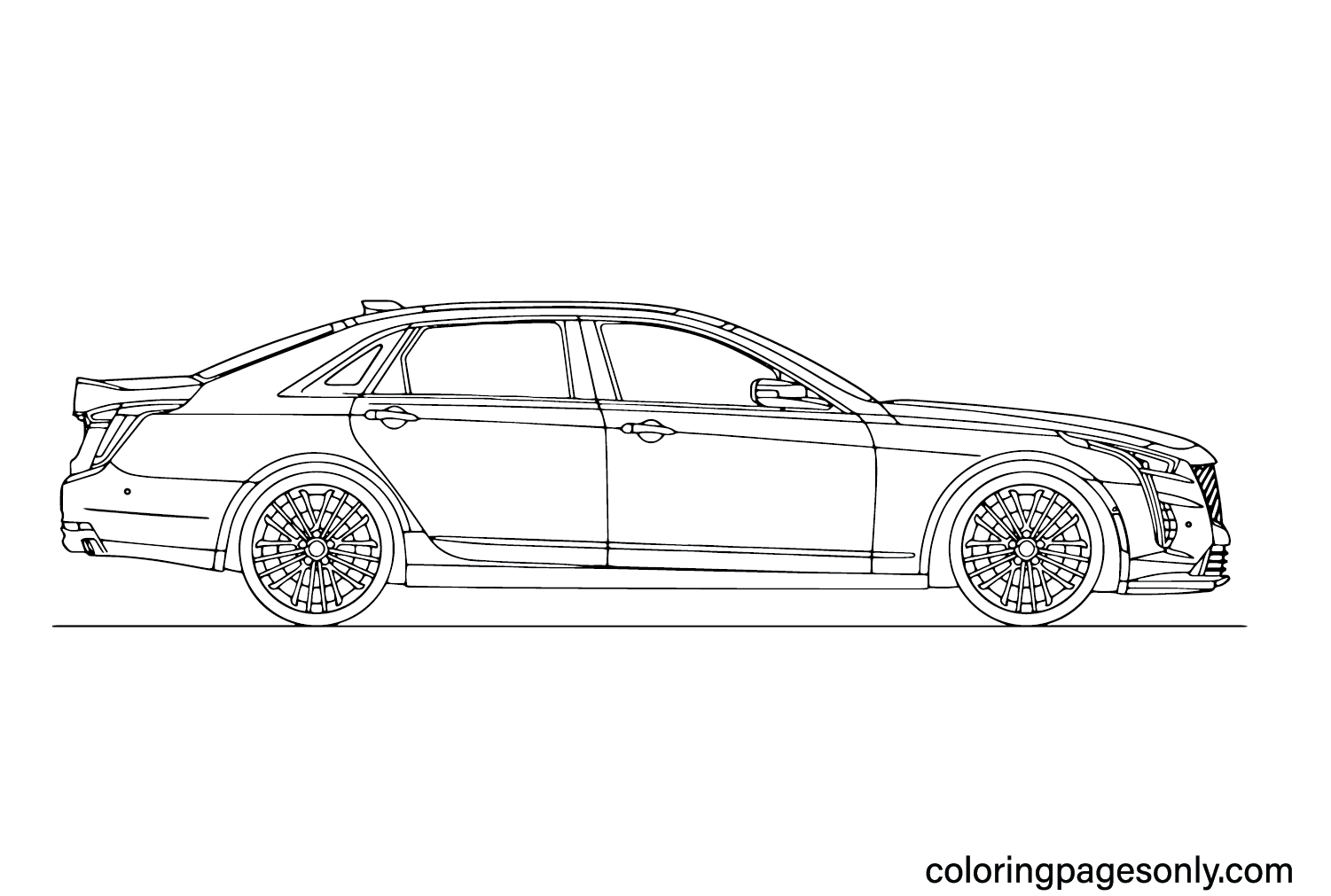
Cadillac CT6 V-Sport Coloring Page and Cadillac CT6 V-Sport Color Page give two versions of what was Cadillac’s performance flagship sedan – the CT6-V (later designated V-Sport) was powered by a twin-turbocharged 4.2-liter V8 producing 550 horsepower, positioned to compete with the Mercedes-Benz S-Class AMG and BMW 7-Series M760i.
The CT6 was produced from 2016 to 2020 and represented Cadillac’s most ambitious attempt to establish itself in the global luxury flagship sedan segment – a market category dominated by German manufacturers. Its aluminum-intensive body construction reduced weight significantly versus conventional steel construction, and its Magnetic Ride Control suspension system used magnetorheological fluid in the shock absorbers to adjust damping rates in real time.
The CT6 was discontinued in 2020 as Cadillac shifted production resources toward SUVs and the LYRIQ electric vehicle – a decision that reflected the broader market shift away from large sedans, but one that left a gap in the brand’s performance lineup that the V-Series Blackwing sedans (the CT4-V Blackwing and CT5-V Blackwing) partially fill on a smaller scale.
Coloring the CT6 V-Sport: The CT6’s design is long, low, and deliberately restrained by Cadillac’s historical standards – the Art & Science design language applied to a global luxury competitor means clean surfacing, precise character lines, and the vertical LED light signature that runs from the CT6 through the current lineup. Dark colors – Stellar Black Metallic, Dark Adriatic Blue Metallic – read particularly well on the CT6’s smooth, shadow-catching surfaces.
The Cadillac ATS Coupe – The Sport Entry
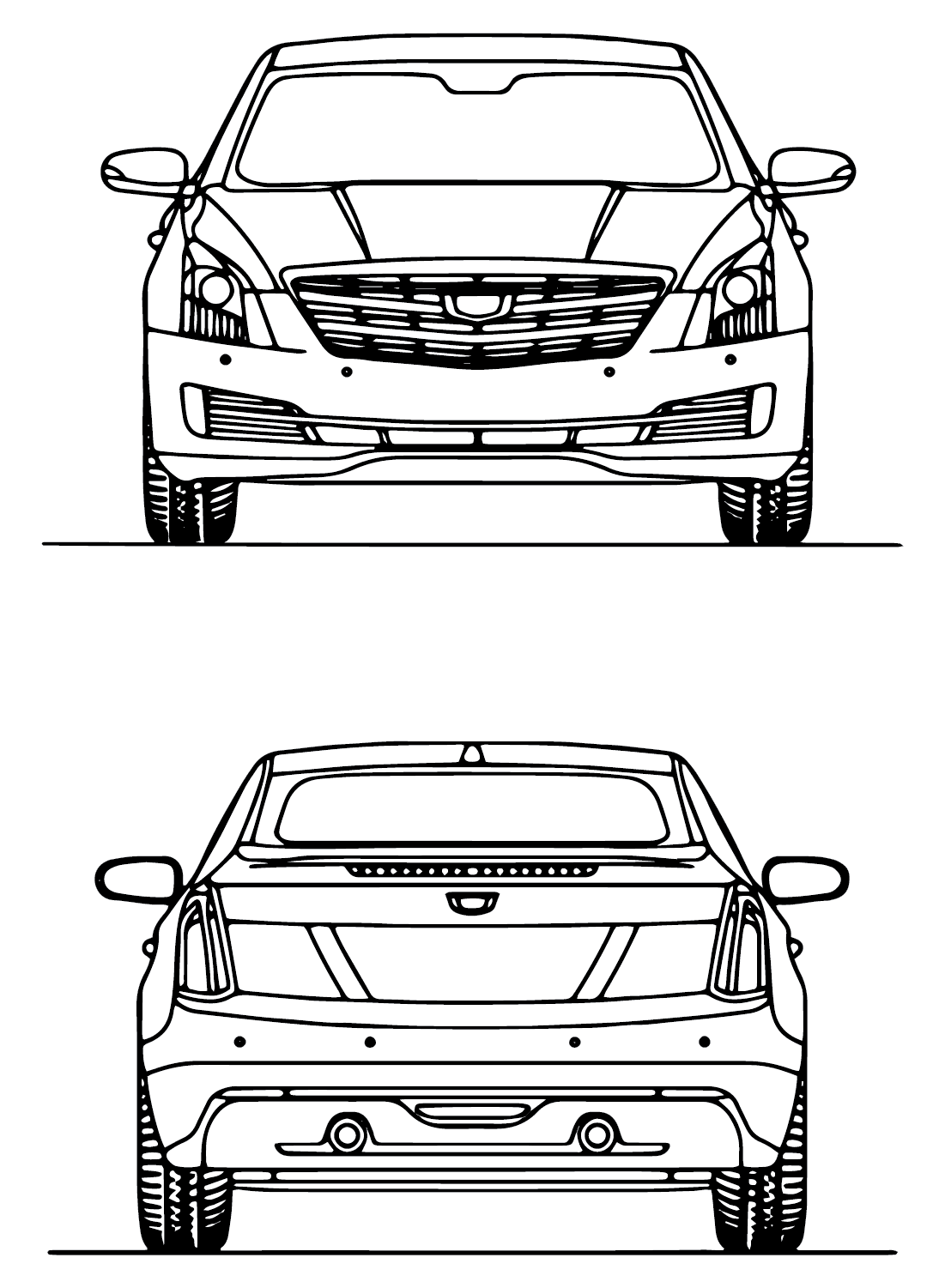
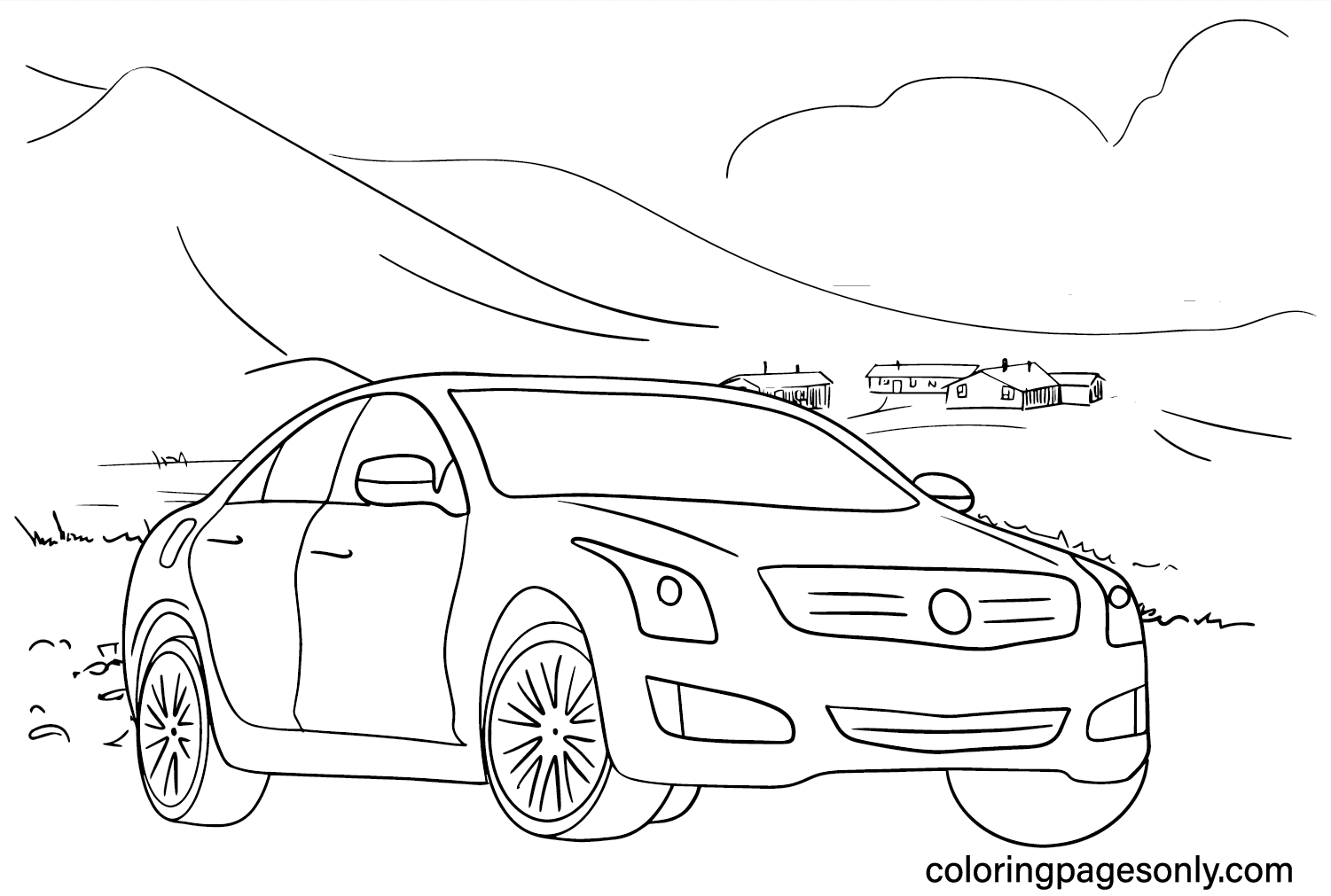
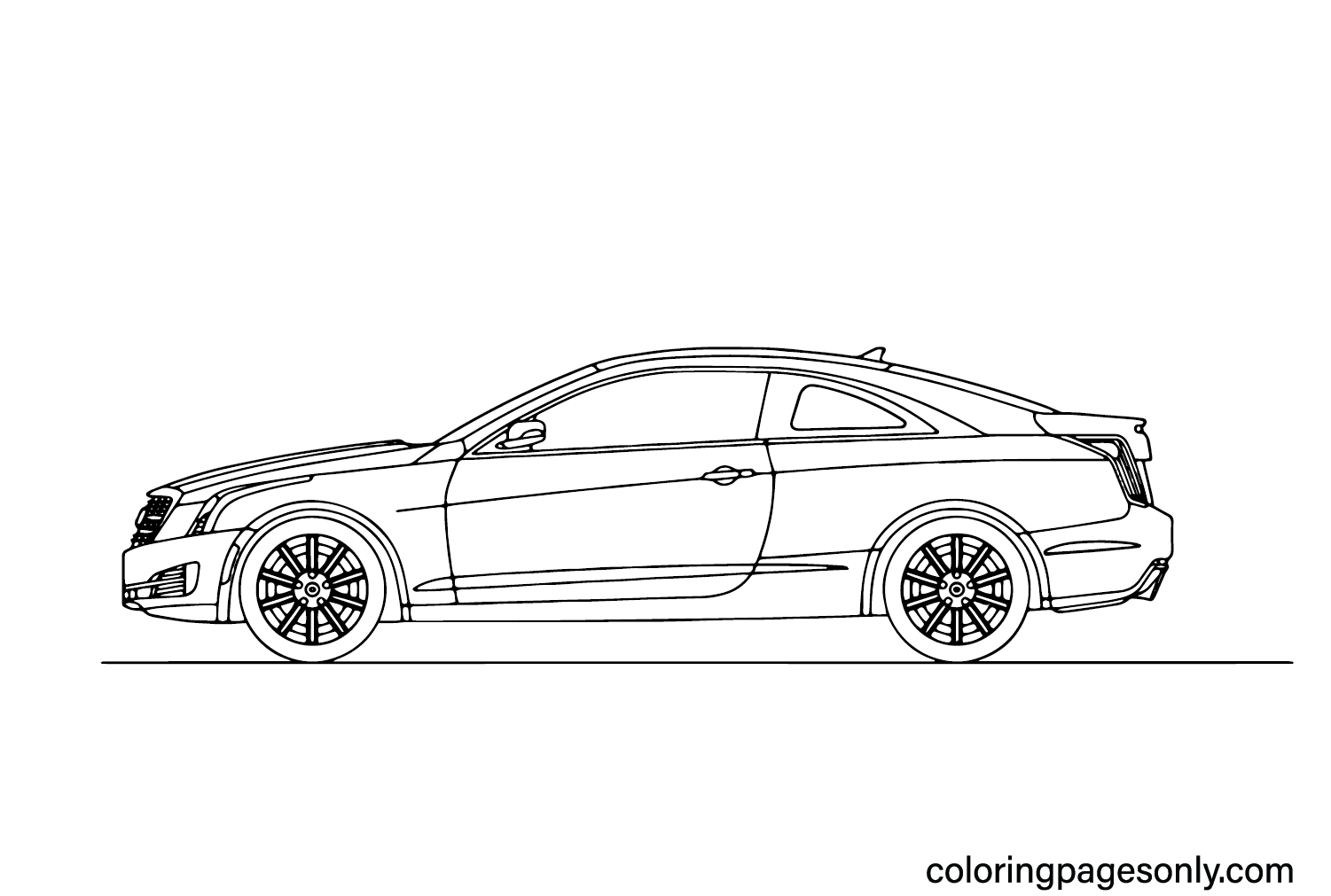
Cadillac ATS Coupe Coloring Page and Cadillac ATS Coupe Color Page feature the compact premium coupe that Cadillac produced from 2013 to 2019 as its entry into the sport premium segment – targeting the BMW 3 Series Coupe and Mercedes-Benz C-Class Coupe directly.
The ATS Coupe was developed alongside the ATS sedan on the Alpha rear-wheel-drive platform – the same architecture used for the Chevrolet Camaro – which gave it a chassis that automotive press consistently described as among the most dynamically rewarding in its class. Its 2.0-liter turbocharged four-cylinder and available 3.6-liter V6 provided performance appropriate to the competition, and the standard manual gearbox in V-Sport guise was a deliberate statement that Cadillac was serious about driving dynamics rather than simply comfort.
The coupe body reduced the roofline significantly versus the sedan, giving the ATS a profile that was more visually dynamic than the larger CT6 or the upright Escalade. The fastback rear roofline, the muscular rear quarter treatment, and the sharply angled front fascia make the ATS Coupe one of the more rewarding pages in the collection for anyone who enjoys rendering aerodynamic surfaces.
The Cadillac XT5 and XT6 – The Crossover Core
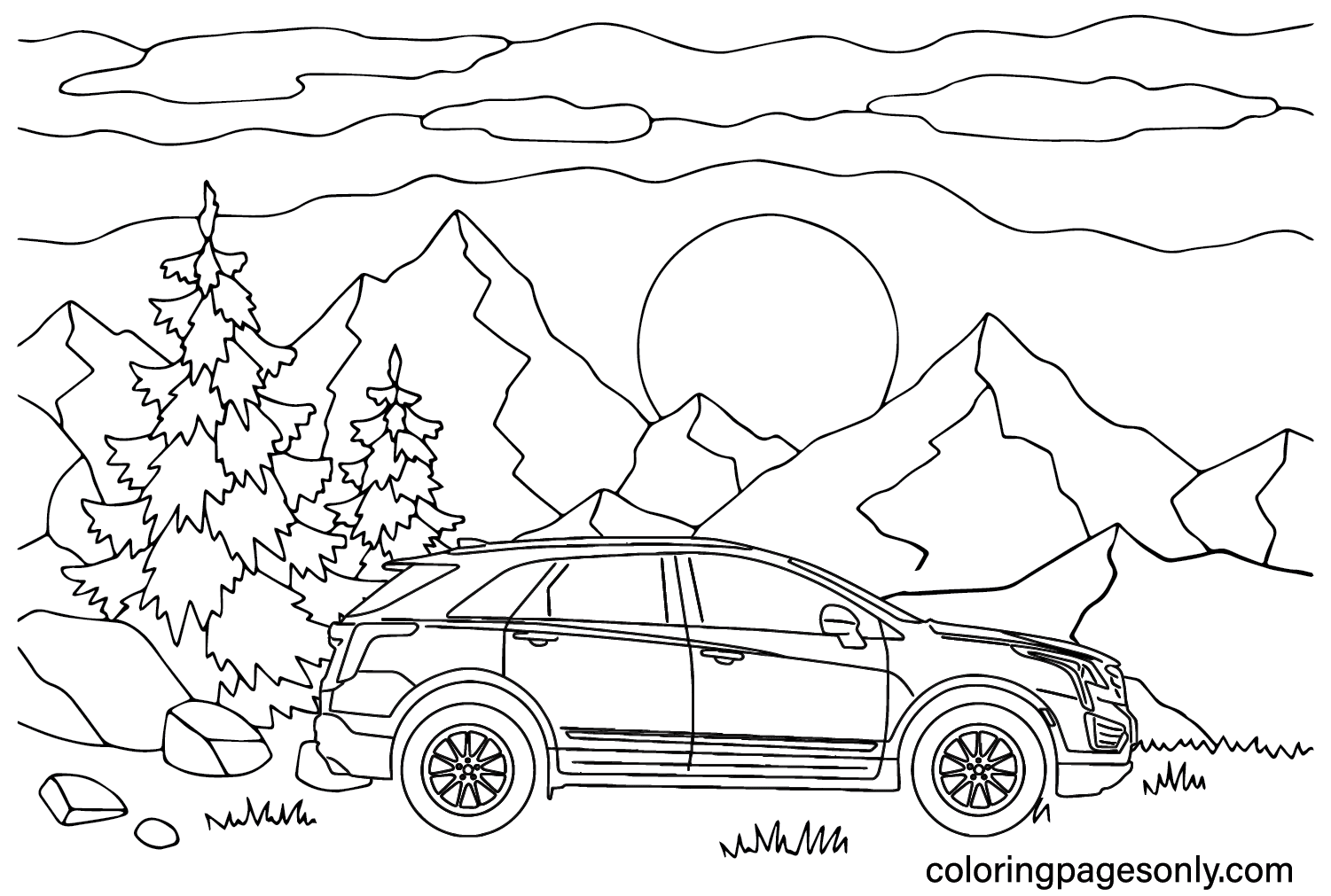
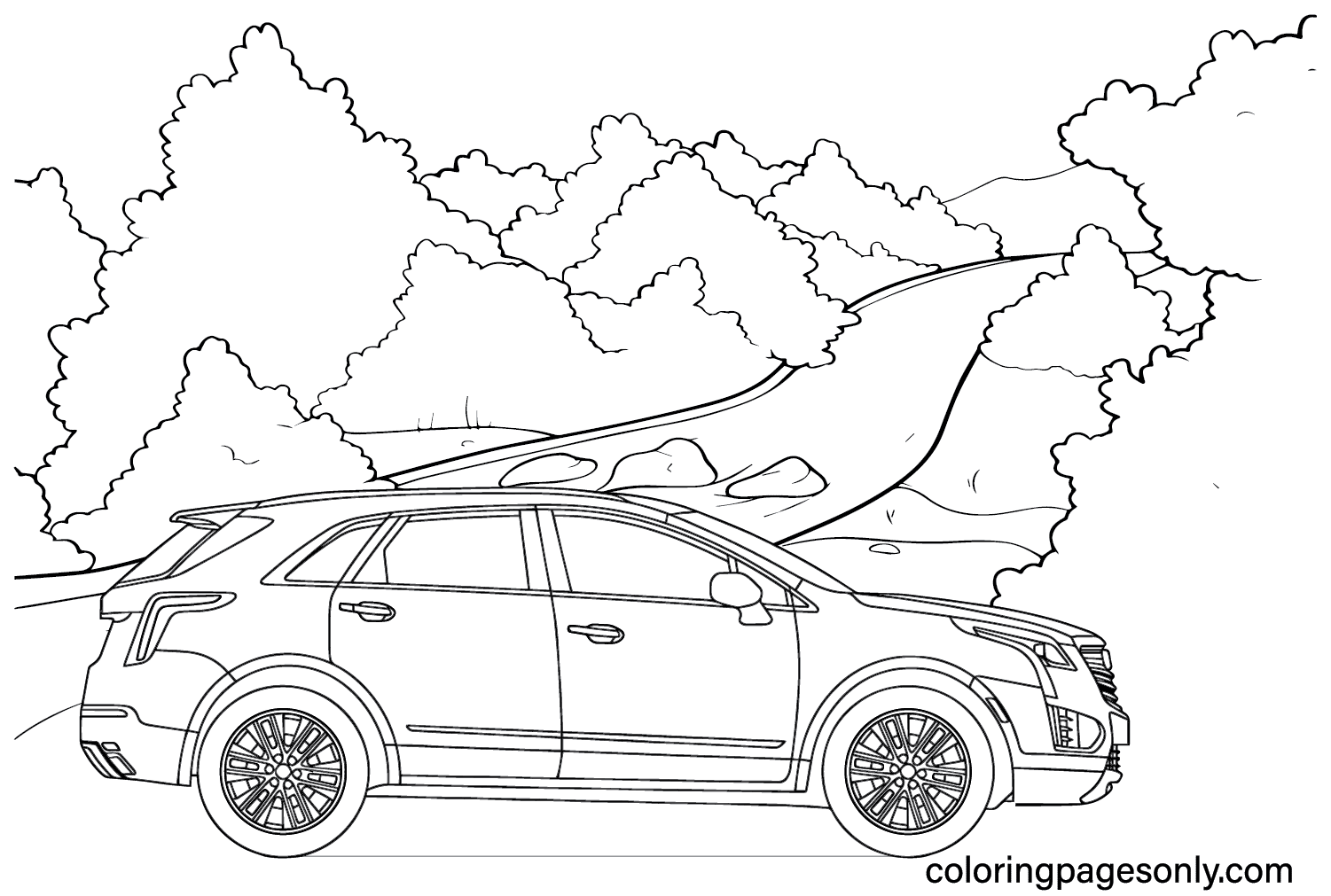
Cadillac XT5 Coloring Page and Cadillac XT6 Coloring Page represent the mid-size crossover segment that has become the backbone of Cadillac’s sales volume in the current market.
The XT5 (2017–present) replaced the SRX in the mid-size crossover position and became Cadillac’s best-selling model before the Escalade’s current surge. Its front-wheel-drive-based platform, five-passenger capacity, and more restrained visual approach compared to the Escalade gave it broader appeal across global markets – the XT5 sells strongly in China, where Cadillac has a significant and growing presence.
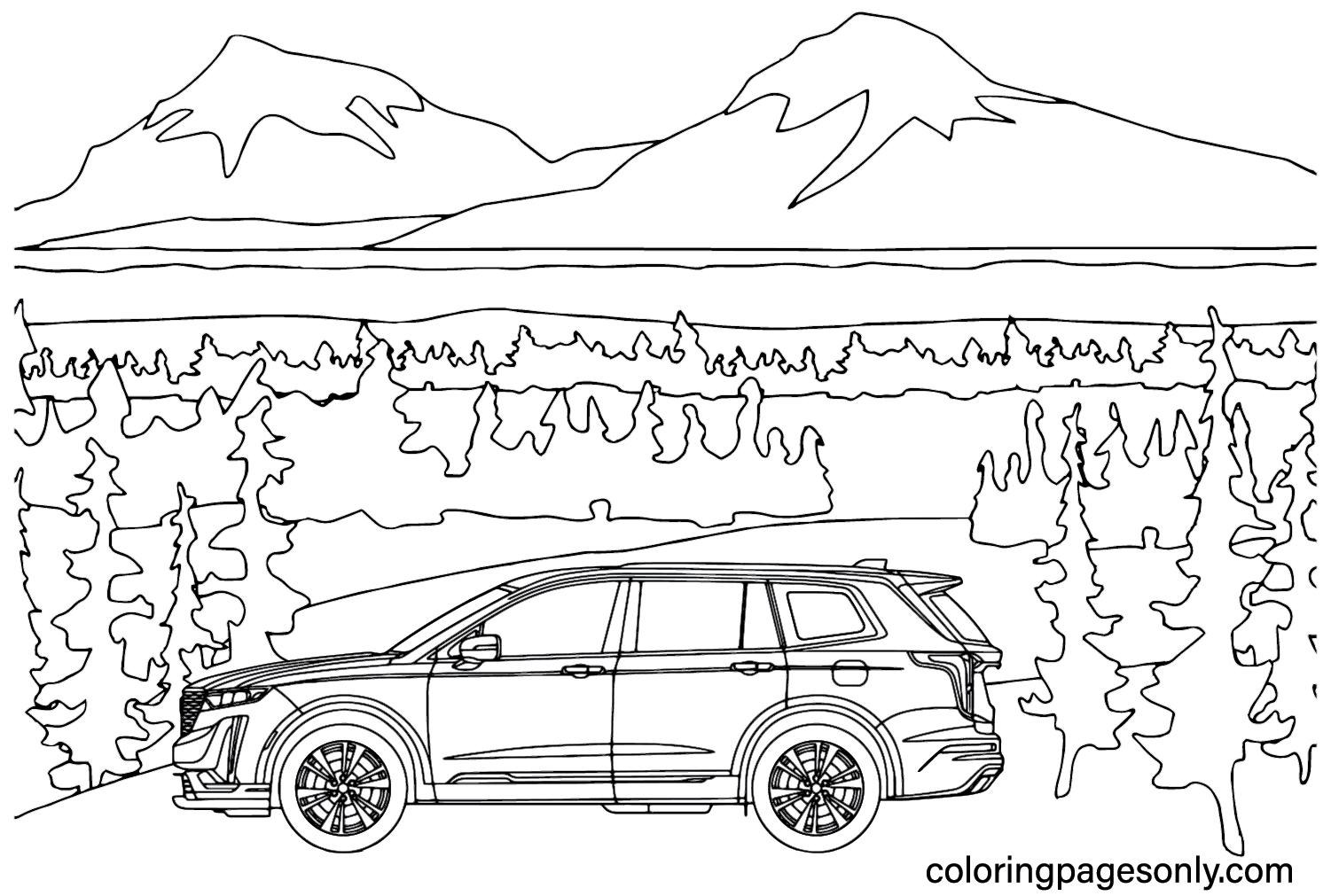
The XT6 (2020–present) adds a third row to the XT5’s general formula, expanding the capacity to six or seven passengers while maintaining the brand’s premium positioning. Its longer wheelbase gives it more imposing proportions than the XT5, with a more prominent front fascia and wider rear flanks.
The Cadillac LYRIQ – The Electric Future
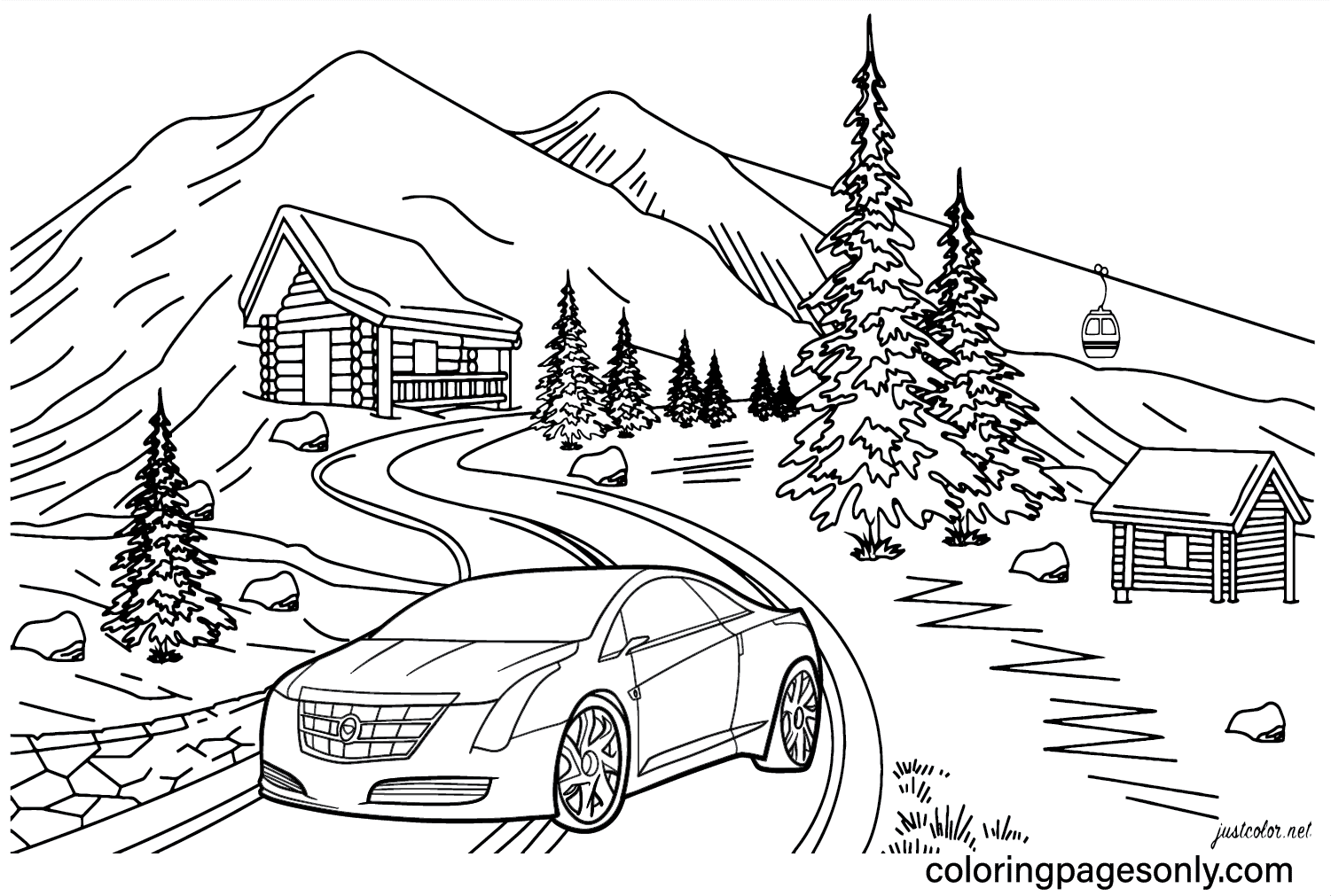
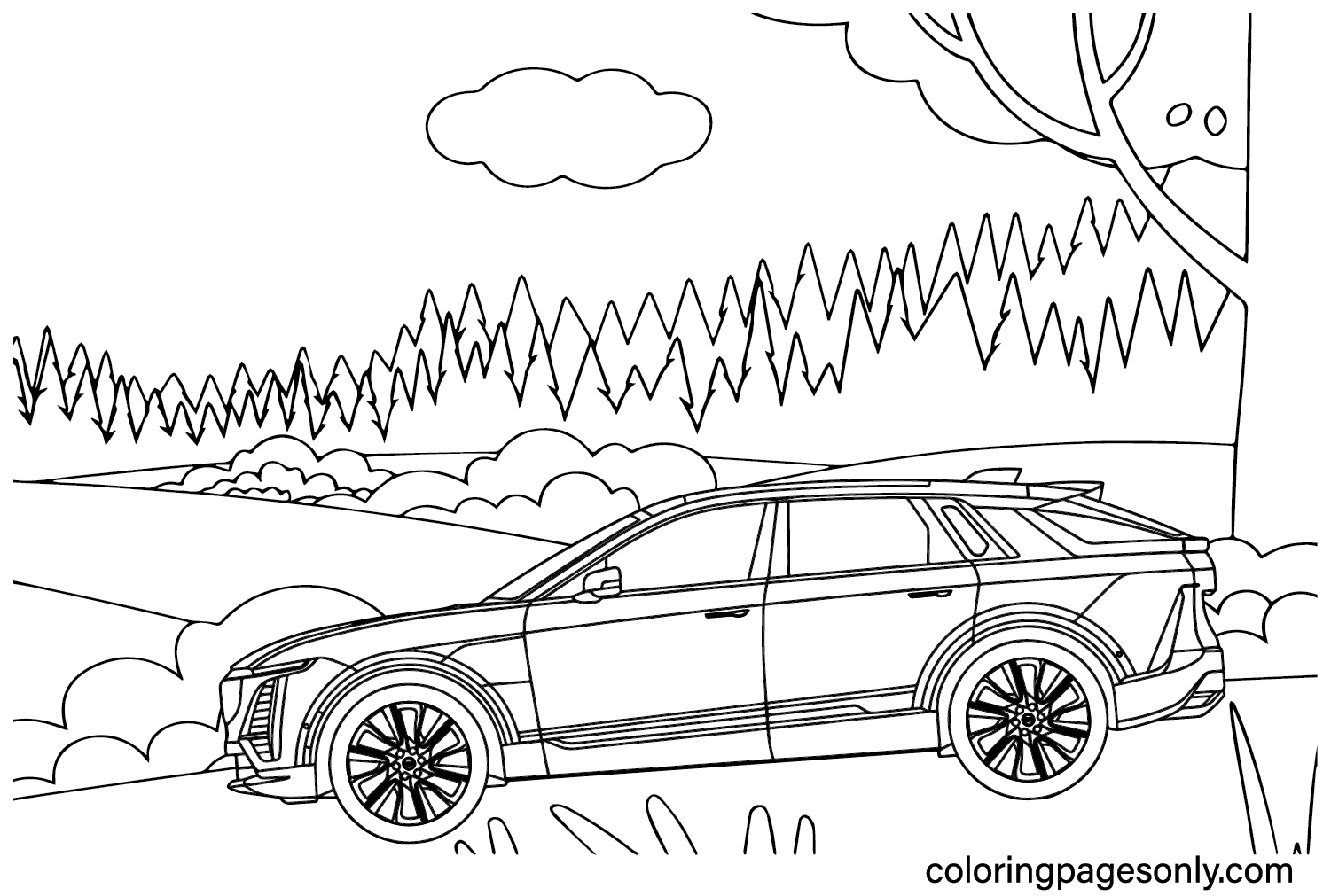
Cadillac Lyriq Coloring Page is the collection’s most forward-looking page – the LYRIQ is Cadillac’s first dedicated battery-electric vehicle, launched in 2023 as the brand’s stake in the luxury electric segment alongside the Tesla Model X, BMW iX, and Mercedes-Benz EQS.
The LYRIQ’s exterior design is among the most resolved in the electric vehicle segment – its long, low fastback profile, the illuminated grille (which contains no air intake since the electric drivetrain doesn’t require the cooling that combustion engines do), and the continuous light bar across the rear create a distinctive visual identity that is unmistakably Cadillac while being clearly oriented toward the future. The 33-inch diagonal curved OLED infotainment screen inside is the largest in any production vehicle.
The LYRIQ delivers approximately 530 km of range on a single charge (EPA-estimated in rear-wheel-drive configuration) and can accept DC fast charging at up to 190 kW – adding approximately 120 km of range in ten minutes at a compatible charger.
The Cadillac SRX and Fleetwood 75
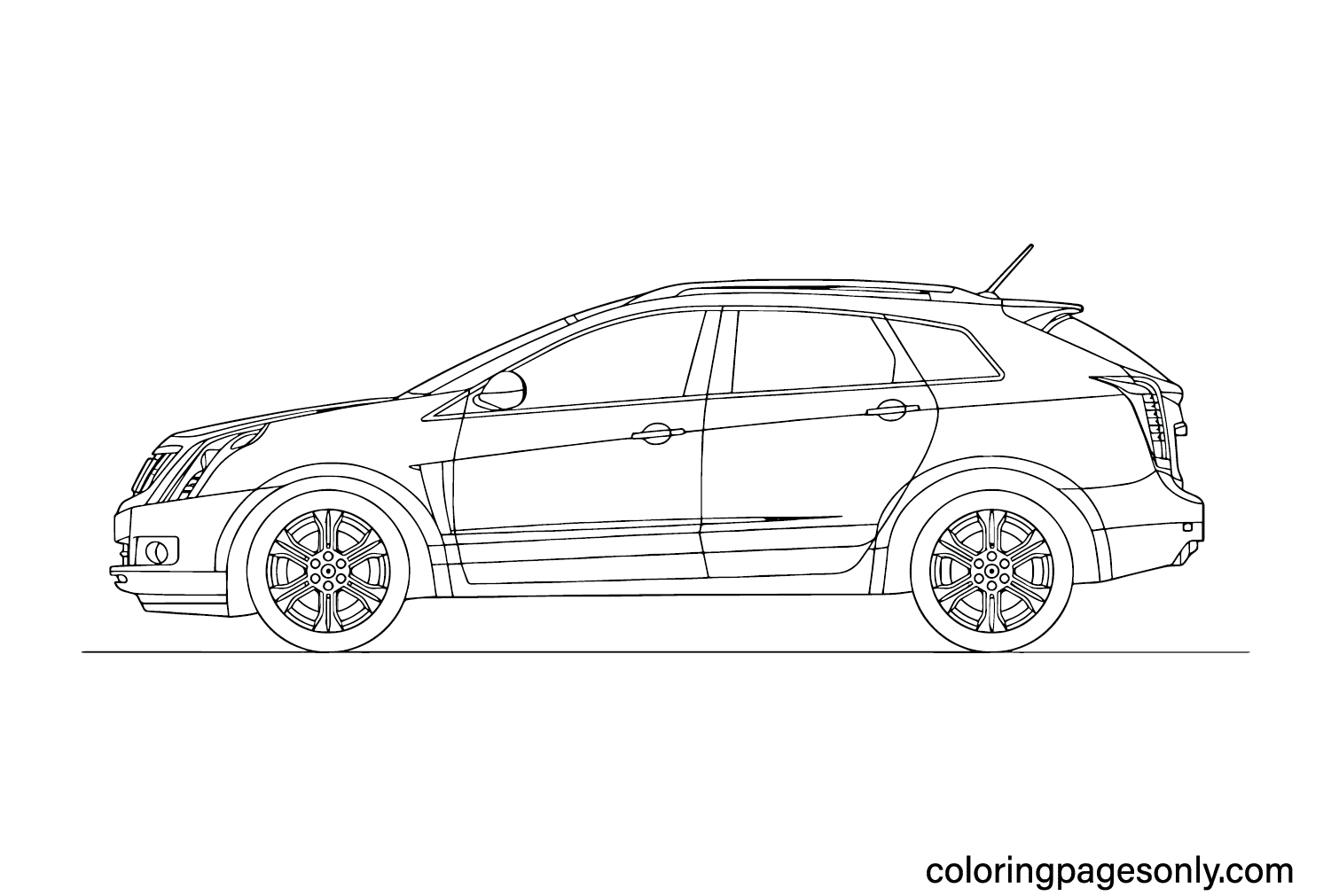
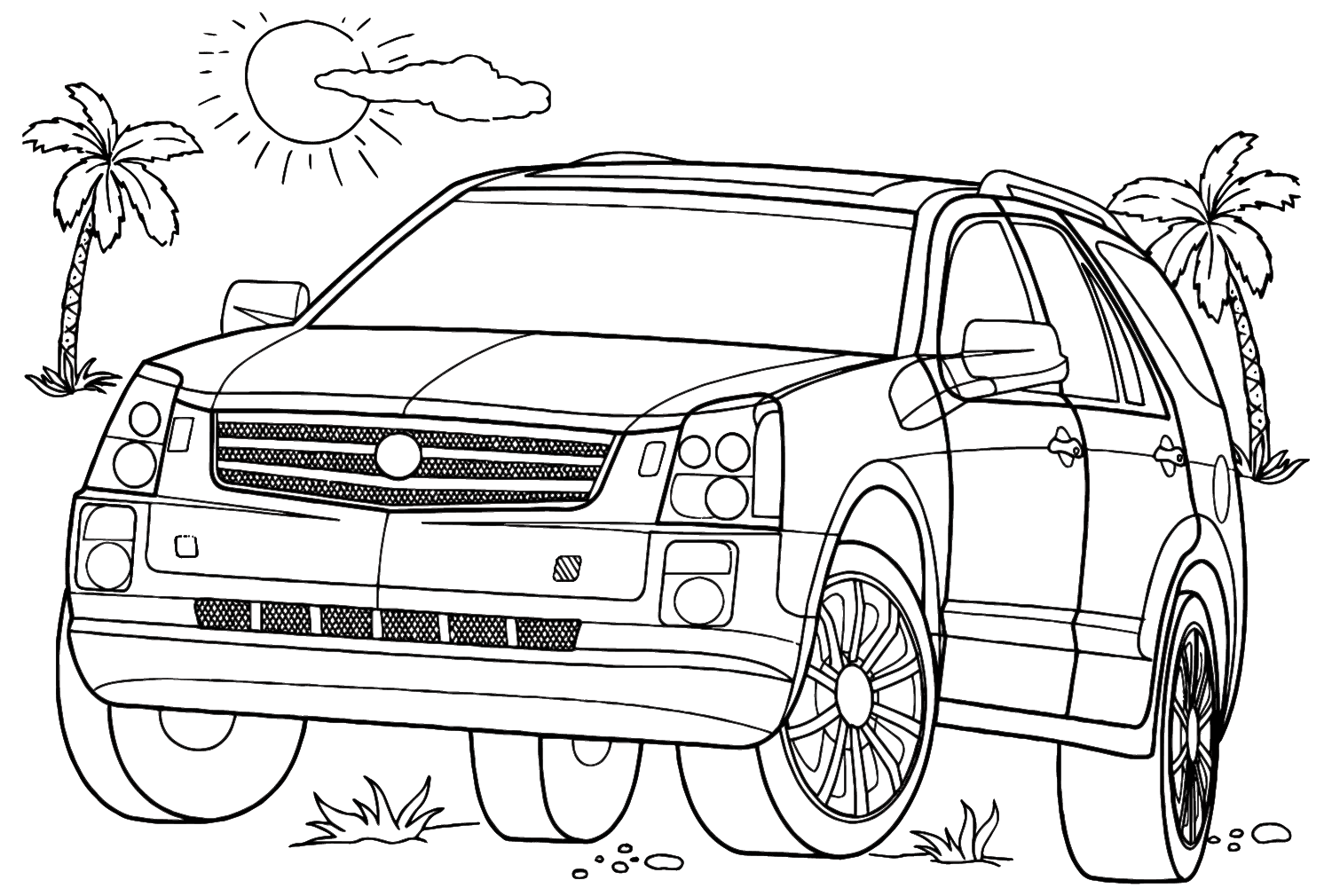
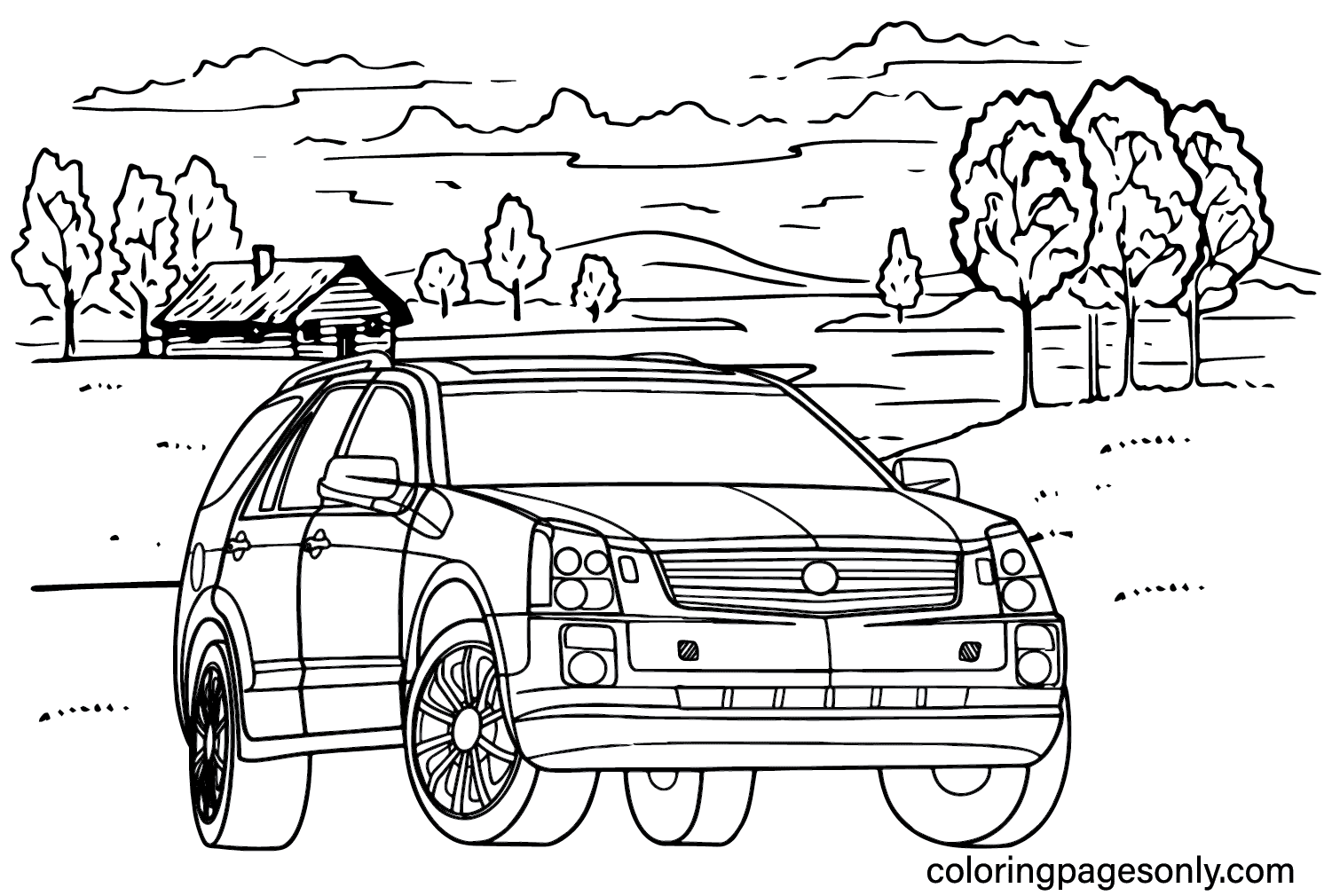
Cadillac SRX Coloring Page and Cadillac SRX Color Page show the mid-size luxury crossover that the XT5 replaced – the SRX was produced from 2004 to 2016 and was one of the first crossovers to establish that a luxury SUV did not need the truck-based platform of the Escalade to succeed commercially.
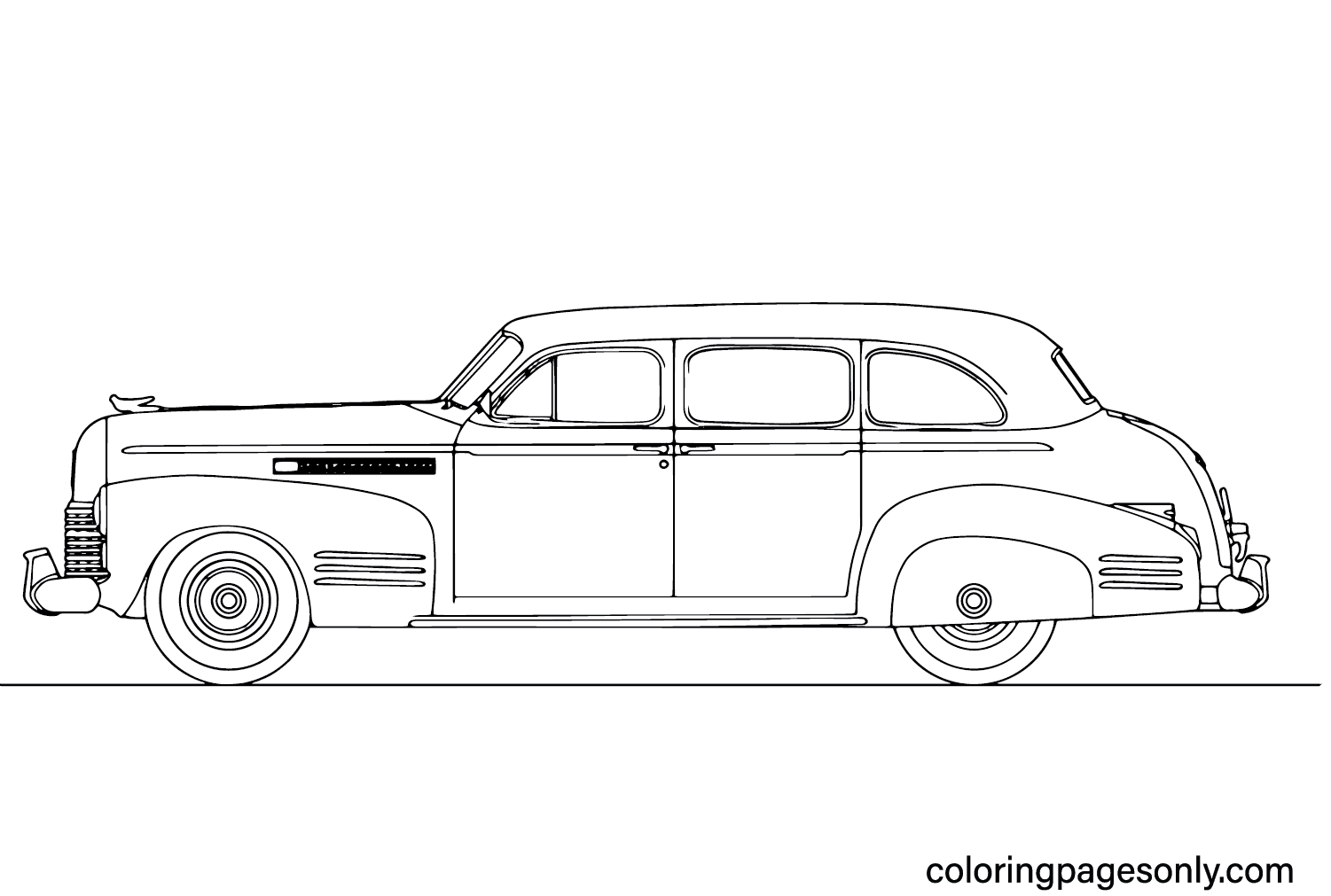
Cadillac Fleetwood 75 Touring Sedan to Color is the collection’s second historical page alongside the 1959 Cadillac – the Fleetwood 75 was Cadillac’s limousine-length formal sedan, produced across multiple decades from the 1930s through the 1990s. Its extended wheelbase and imposing length made it the vehicle of choice for formal occasions across American public life – presidential motorcades, state funeral processions, corporate executives – and it represents Cadillac’s traditional role as the default American luxury standard before the German manufacturers established their postwar prestige.
What These Pages Do
Cadillac’s history spans the entire history of American automotive aspiration. From the 1908 Dewar Trophy to the 1959 tail fins to the LYRIQ’s electric illuminated grille, the brand’s visual history is a direct record of what America has wanted its most aspirational cars to look like at each moment. Coloring these pages across eras – the 1959 fin car alongside the LYRIQ – makes that evolution visible in a way that reading about it doesn’t quite replicate.
Automotive surface design is genuine design literacy. Understanding why the 1959 Cadillac’s fins look the way they do – what jet aircraft aesthetics meant to postwar America, what Harley Earl was communicating – is real design history. Understanding why the LYRIQ’s illuminated grille is blank of air intakes – what that says about what a car needs to do in an electric future – is real design thinking. These pages, colored while thinking about these questions, build genuine visual design intelligence.
Fine motor development through chrome and metallic surfaces. Cadillac’s design language has always relied on extensive chrome trim – bumpers, window surrounds, grille details, light housings – that creates some of the most demanding fine motor coloring exercises in the automotive collection. The three-zone metallic technique (highlight, mid-tone, shadow) applied to chrome elements is the most technically sophisticated surface treatment in car coloring. The American Academy of Pediatrics identifies fine motor development as a key milestone; the motivated, patient practice that a car enthusiast brings to getting Cadillac’s chrome right is exactly what that development requires.
The 2005 Art Therapy Journal study applies. Structured coloring reduces anxiety. The specific quality of luxury automotive coloring pages – the long, precise character lines, the clear geometric surfaces, the satisfying sense of rendering something imposing and well-made – produces exactly the quality of absorbed attention the research identifies as most effective.
How to Color These Pages Well
The 1959 Cadillac’s tail fins require vertical emphasis. The fins rise nearly four feet from the road surface. When coloring this page, the vertical dimension of the fins should be treated with the same light-source discipline as any large curved surface: lighter at the outer edge (facing the sky), slightly darker on the inner surface (in shadow from the fin above). The bullet taillights – oval, deeply recessed within the fin – should be a vivid, saturated red against the fin’s body color. Leave a small white highlight in the upper portion of each taillight to suggest the glass lens catching light.
Cadillac’s current LED light signature is a vertical line. Across the modern lineup – LYRIQ, Escalade, XT5, XT6, CT6 – Cadillac uses vertical LED running light elements at the outer corners of the front fascia. These should be rendered as thin, clean, very bright white or cool blue-white lines against the darker front fascia. They are narrow but important – getting them right immediately identifies the vehicle as a modern Cadillac.
The Escalade’s chrome grille mesh is worth the time. The current Escalade’s large front grille has a distinctive open mesh pattern. For the coloring page, establish the dark background of the grille opening first (the interior of the grille is dark because it opens into a dark engine bay). Then apply the chrome mesh lines on top using a fine tip in warm silver-grey. Keep the mesh lines consistent in width and spacing – it takes patience and a sharp pencil point, but the finished grille looks dramatically more convincing than a flat grey rectangle.
LYRIQ colors work best in the dark. The LYRIQ’s illuminated grille and continuous rear light bar read most dramatically against dark body colors – the specific navy of its launch color (Celestiq Blue, not available on LYRIQ but a similar deep blue-black reads well), deep graphite, or black. On a coloring page, choosing a deep, saturated body color for the LYRIQ and keeping the illuminated elements (front light bar, rear light strip) as near-white or very pale cool blue creates the visual dynamic the design was built around.
Classic Cadillac colors are worth researching. Cadillac’s historical color names are among the most evocative in automotive history – Florentine Gold, Roman Red, Tuxedo Black, Regal Silver, Matador Red, Cotillion White. For the 1959 and Fleetwood pages specifically, referencing original period color swatches (available through Cadillac historical archives and enthusiast communities) before selecting your palette produces results that feel genuinely period-correct rather than generically colorful.
5 Creative Craft Ideas
Cadillac Through the Decades Timeline
Print the collection’s two historical pages alongside the modern models – the 1959 Cadillac, the Fleetwood 75, and the SRX as the transitional mid-era model, plus the LYRIQ as the current direction. Color each in period-appropriate colors: vivid two-tone for the 1959, deep formal black for the Fleetwood, a contemporary metallic for the SRX, and a deep tech-forward dark for the LYRIQ.
Mount all four in chronological order on a long horizontal strip of poster board. The visual progression – from the 1959’s extravagance through the Fleetwood’s formality through the SRX’s crossover practicality to the LYRIQ’s electric future – makes the entire arc of the brand visible in a single display. Add the production year range below each vehicle.
The Tail Fin Study
Print the 1959 Cadillac page twice. Color both identically – same body color, same chrome treatment, same red bullet taillights. But on one copy, color only the tail fin section in extreme detail: multiple layers of light and shadow across the fin’s surface, precise rendering of the bullet taillight’s lens, the chrome trim line along the fin’s upper edge treated with full three-zone metallic technique.
Mount both versions side by side: the complete car on the left, the detail study on the right. This craft teaches the difference between an overview and a close study – between understanding a car’s overall design and understanding one element of it in sufficient depth to render it convincingly.
Escalade vs. LYRIQ Comparison
Print the Escalade and LYRIQ pages and color each with maximum attention to the design elements that distinguish Cadillac’s present from its future. The Escalade: imposing scale, the bold chrome grille, the traditional luxury SUV proportions that signal presence through size. The LYRIQ: lower, sleeker, the illuminated grille that references tradition while eliminating the air intake that tradition required, the fastback roofline that the Escalade’s height makes impossible.
Mount both on a single backing sheet with a dividing line at the center and a simple label: “NOW” above the Escalade, “NEXT” above the LYRIQ. The comparison makes visible what Cadillac’s design team is navigating: maintaining the brand identity established over 120 years while transitioning to a powertrain that changes the physical requirements of the car.
Personal Dream Cadillac
Use the Cadillac Car Coloring Page or Cadillac Images to Color – the more general Cadillac vehicle outlines – as a starting point for a personal color design. Choose a color combination that does not exist in the current Cadillac palette. Name it with the evocative naming convention the brand uses: two words, one referencing a color family (Florentine, Celestiq, Stellar), one referencing an elevation or quality (Gold, Silver, Black, Blue Metallic).
Color the vehicle, write the color name at the bottom of the page, and add a brief description below: who is this color designed for, what does it communicate about the car, and what occasion or customer does it fit. This is the brief that Cadillac’s color and materials team works from when developing a new exterior color, and practicing it develops genuine visual communication thinking.
American Luxury Heritage Poster
This project pairs the Cadillac pages with pages from other American luxury automotive brands on this site – Rolls-Royce (British, but culturally embedded in American luxury iconography), Lincoln, if available, or other premium American marques. Color all pages. Arrange the Cadillac pages at the center (the 1959 and the LYRIQ as bookends of the Cadillac story), with supporting pages flanking.
Mount on a dark navy or black poster board – the colors of American formal elegance. Hand-letter a title: “Standard of the World – 120 Years of Cadillac.” The finished poster is a celebration of the specific kind of American design ambition that produced both the 1959 tail fin and the LYRIQ’s illuminated electric grille – two moments, the same aspiration.
Frequently Asked Questions
Who founded Cadillac, and when was the company established? Cadillac was founded on August 22, 1902, in Detroit, Michigan, by Henry M. Leland, a precision machinist who had previously supplied engines to the early Oldsmobile operation and who named the company after Antoine Laumet de La Mothe, sieur de Cadillac, the French explorer who founded Detroit in 1701. Leland’s commitment to precision manufacturing was the foundation of Cadillac’s early reputation: in 1908, the company won the Dewar Trophy from the Royal Automobile Club of Great Britain for demonstrating interchangeable parts – the first American automaker to achieve this standard. General Motors acquired Cadillac in 1909 for $4.5 million.
What does “Standard of the World” mean as a Cadillac slogan? “Standard of the World” has been Cadillac’s tagline since 1908, when the brand won the Dewar Trophy for demonstrating that three randomly selected Cadillacs could have their parts interchangeably dismantled and reassembled without individual fitting or adjustment. At a time when all automotive components were individually fitted by hand, this demonstrated a level of manufacturing precision that no other automaker had achieved. The phrase claimed that Cadillac had established the benchmark against which automotive quality should be measured – a claim that the 1908 Dewar Trophy gave it genuine grounds to make.
Why did the 1959 Cadillac have such large tail fins? The tail fin was introduced to American automotive design by Harley Earl, General Motors’ design chief from 1927 to 1958, who was inspired by the twin-boom tail of the Lockheed P-38 Lightning fighter aircraft. Earl first applied fins to the 1948 Cadillac and increased them with each subsequent model year through 1959, when they reached their maximum height of 42 inches. The fins reflected the postwar American fascination with aerospace technology – jet aircraft, rockets, and the future they implied. By 1960, fins were already being reduced; by 1965, they had been eliminated. The 1959 Cadillac represents the highest point and the beginning of the end simultaneously.
What is the Cadillac LYRIQ, and how does it differ from traditional Cadillac models? The Cadillac LYRIQ is Cadillac’s first battery-electric vehicle, launched for the 2023 model year. It delivers approximately 530 km of range in rear-wheel-drive configuration (EPA-estimated) from a 102 kWh battery pack, and can accept DC fast charging at up to 190 kW. Unlike traditional Cadillac models, its front fascia contains no functional air intake – the electric drivetrain doesn’t require the cooling that combustion engines demand, which allowed Cadillac’s designers to create an illuminated grille that references the brand’s traditional grille identity while eliminating its mechanical necessity. Its interior features a 33-inch curved OLED display – the largest in any production vehicle at launch.
What is the Cadillac Escalade, and why is it culturally significant? The Escalade is Cadillac’s full-size luxury SUV, introduced in 1999 as a response to the Lincoln Navigator. It became one of the most commercially successful vehicles in Cadillac’s modern history and developed strong cultural associations with success, wealth, and status through its pervasive presence in music, film, and celebrity culture throughout the 2000s and 2010s. The current fifth-generation Escalade (2021–present) is Cadillac’s best-selling model and the top-selling full-size luxury SUV in North America. It stretches 227 inches in standard length (263 inches in the ESV extended version) and is available in both combustion and hybrid configurations.
What colors does Cadillac offer, and which work best for coloring pages? Cadillac’s current color palette includes Summit White, Radiant Red Tintcoat, Satin Steel Metallic, Black Raven, Stellar Black Metallic, and several other options depending on the model. For coloring pages, darker body colors – Stellar Black, dark navy, deep metallic grey – provide the strongest contrast for rendering chrome and LED light elements. The 1959 Cadillac pages work particularly well in the bold two-tone combinations of the era: white with red, black with gold, or any vivid single color that lets the chrome and fin proportions read clearly against the body.
What age group are these pages best suited for? The simpler vehicle shapes – the XT5 and XT6 crossovers, with their clean, relatively uncomplicated body surfaces – work well for children aged 7–8 who are interested in cars and developing colored pencil control. The CT6, ATS Coupe, and SRX pages require more precise rendering of character lines and surface transitions – these suit ages 9–10 and up. The 1959 Cadillac and the Escalade – with their chrome-intensive designs, complex light elements, and elaborate surface detail – are the most technically demanding and are most satisfying for ages 12 and up and for adult car enthusiasts who want to practice metallic surface rendering.
Browse the full collection at ColoringPagesOnly.com. All pages free, no sign-up, PDF or PNG, print at home or color online.
In 1908, Cadillac won a trophy for proving its parts were interchangeable. In 1959, it built the largest tail fins in American automotive history and called itself the Standard of the World. In 2023, it launched an electric vehicle whose grille lights up but doesn’t need to open. The brand has been claiming to set the standard for 120 years – and the cars in this collection are the evidence it has submitted across those twelve decades.
Pick up your colors. Start with whichever car you know. Work your way to the one you don’t yet.
Share your work on Facebook and Pinterest and tag #Coloringpagesonly. We especially want to see the 1959 tail fin studies and the decades timeline displays.
Color the standard. Honor the chrome. Drive something worth driving.
More from our automotive collections: