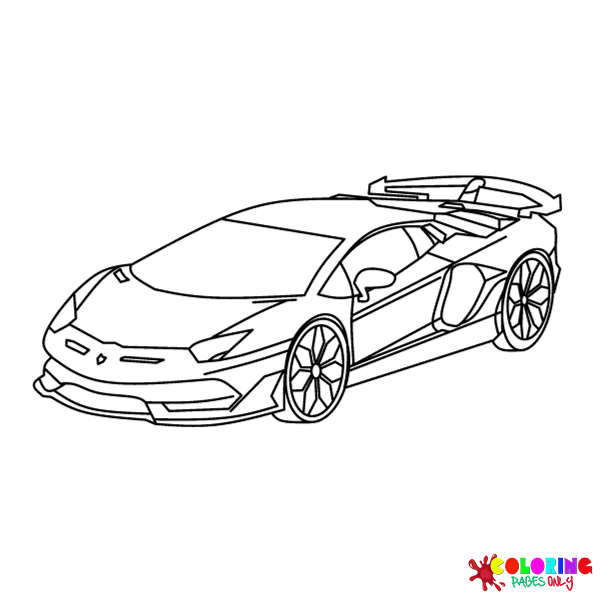
Free Citroën coloring pages – 20+ pages featuring the iconic 2CV, the revolutionary DS, the C1, C3, C4 Cactus, C4 Picasso, C5, DS3, Berlingo, Saxo, Jumpy, C-Crosser, Cruise Crosser, C Sport Lounge concept, Bubble concept, and classic vintage models – free printable PDF and online coloring for car enthusiasts of all ages.
André Citroën founded Société Anonyme André Citroën on June 4, 1919 – just months after the end of World War I, in a France that needed to rebuild everything, including its manufacturing base. He had been running a munitions factory during the war and pivoted immediately to automobile production with the same mass-production thinking he had applied to artillery shells. The first car produced was the Type A, launched in 1919 – the first mass-produced car in Europe outside Britain. Citroën went on to produce vehicles that redefined what a car could be designed to do for the person driving it: not just transport, but comfort, stability, and a kind of democratic access to mobility that its competitors were not prioritizing.
The DS – unveiled at the Paris Motor Show on October 5, 1955 – was so far ahead of its time that 80,000 people placed orders in the first 15 minutes of the show. Its hydropneumatic suspension, self-centering power steering, and aerodynamic body designed by Italian sculptor Flaminio Bertoni made it the subject of a famous essay by Roland Barthes, who called it a déesse – a goddess.
These 20+ free pages at ColoringPagesOnly.com span Citroën’s extraordinary range – from the most charming city car ever made to the most audacious concept cars the company has produced. All free, PDF or PNG, print or color online.
The Models – What Each Page Represents
Citroën 2CV – The Car That Changed Everything
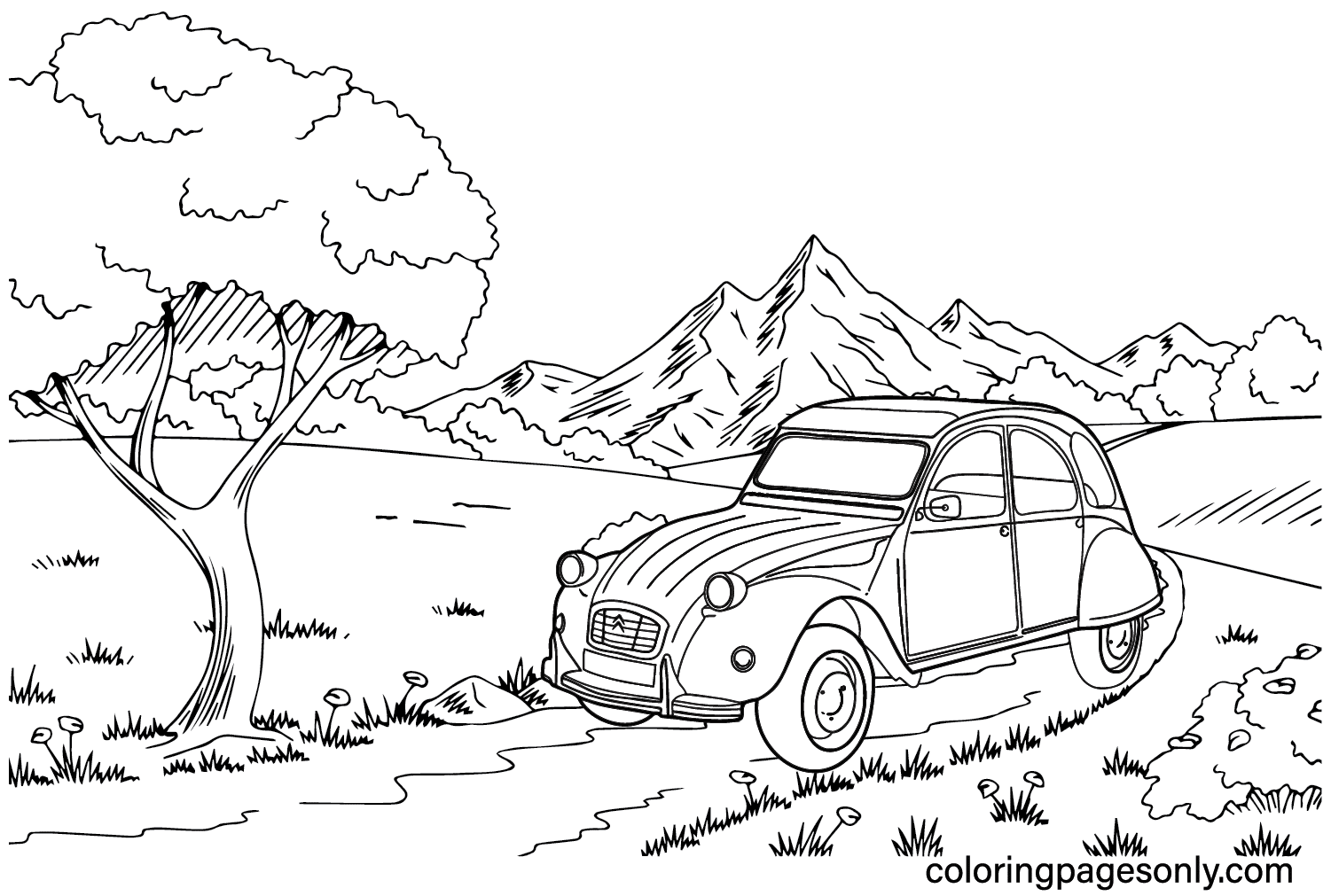
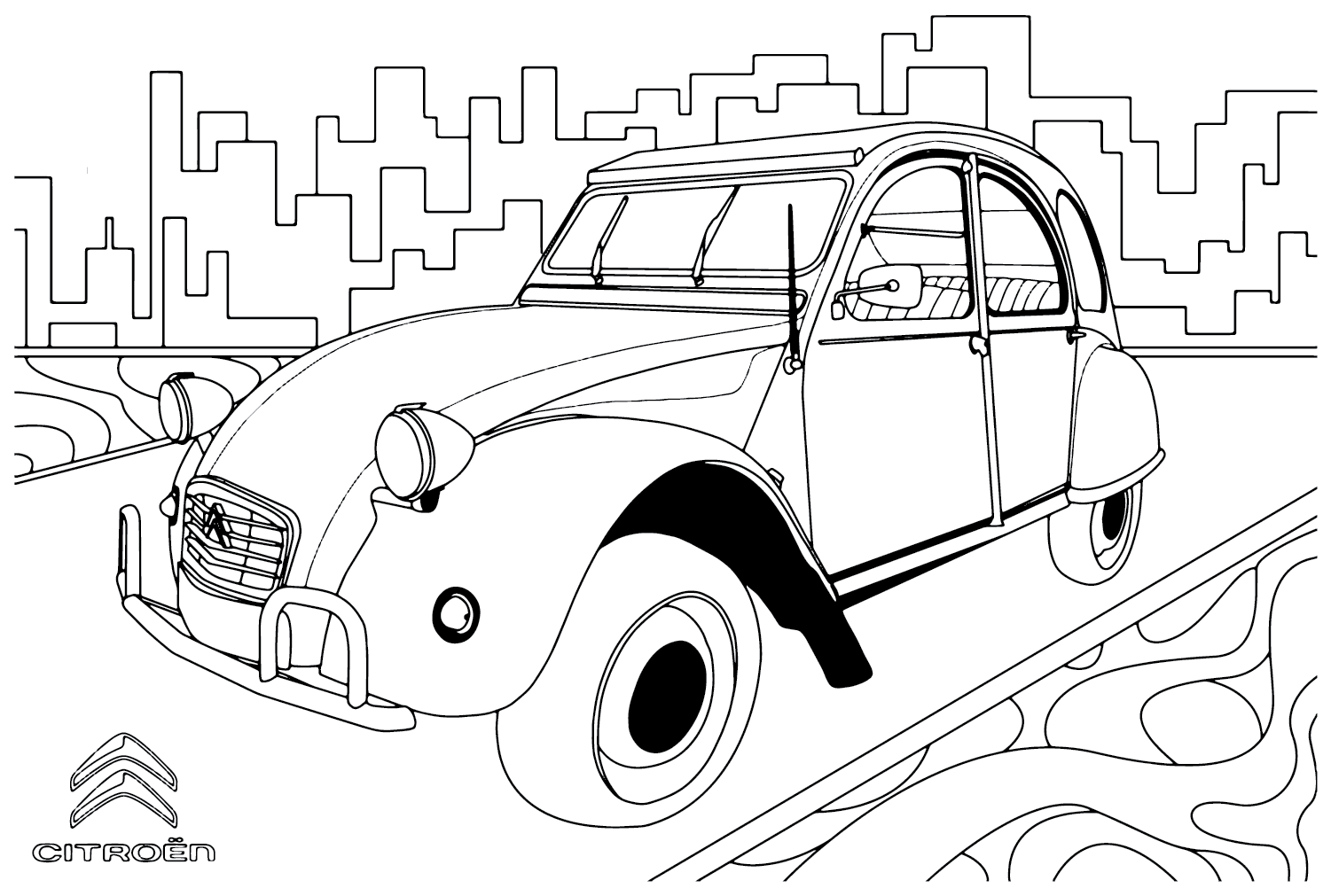
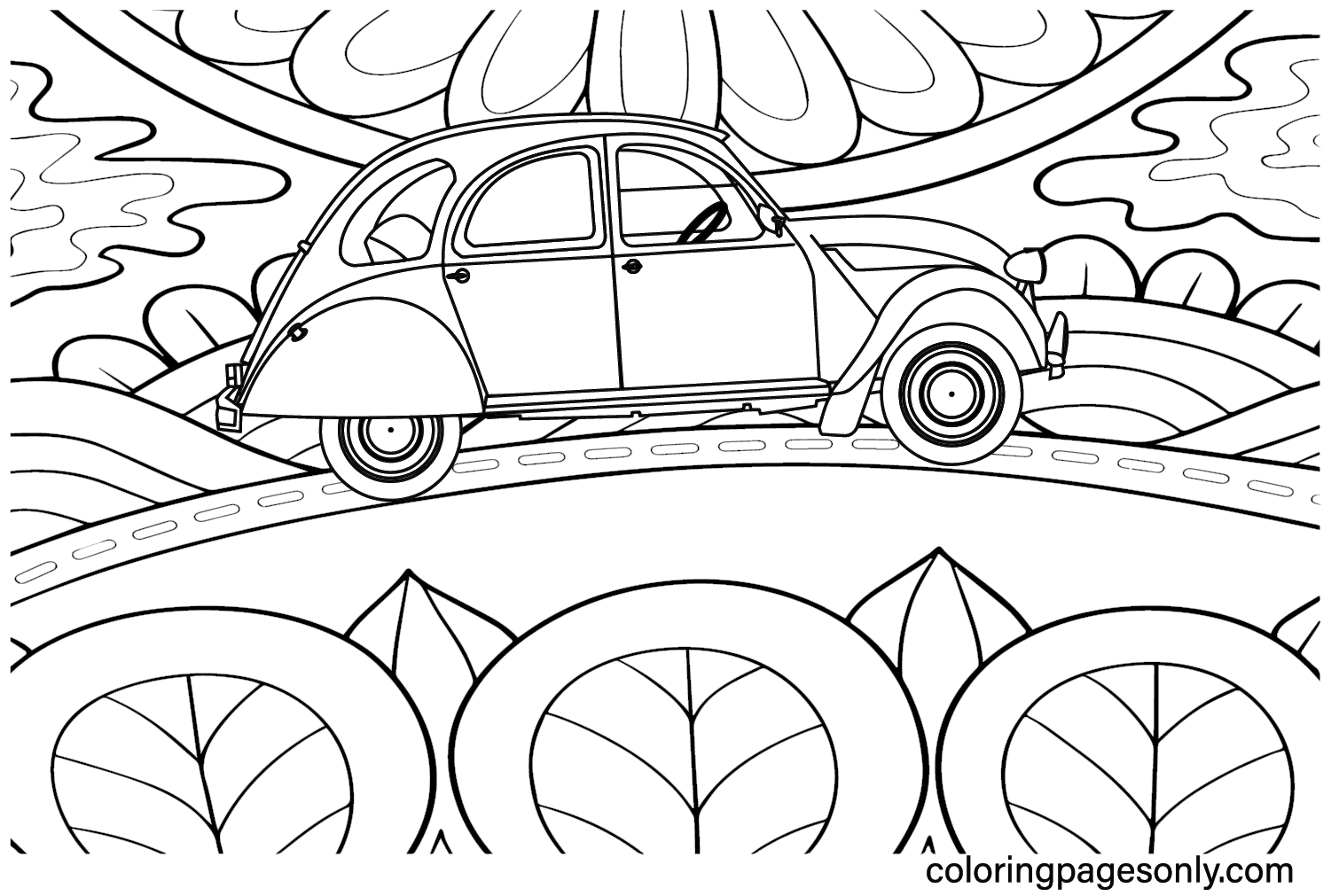
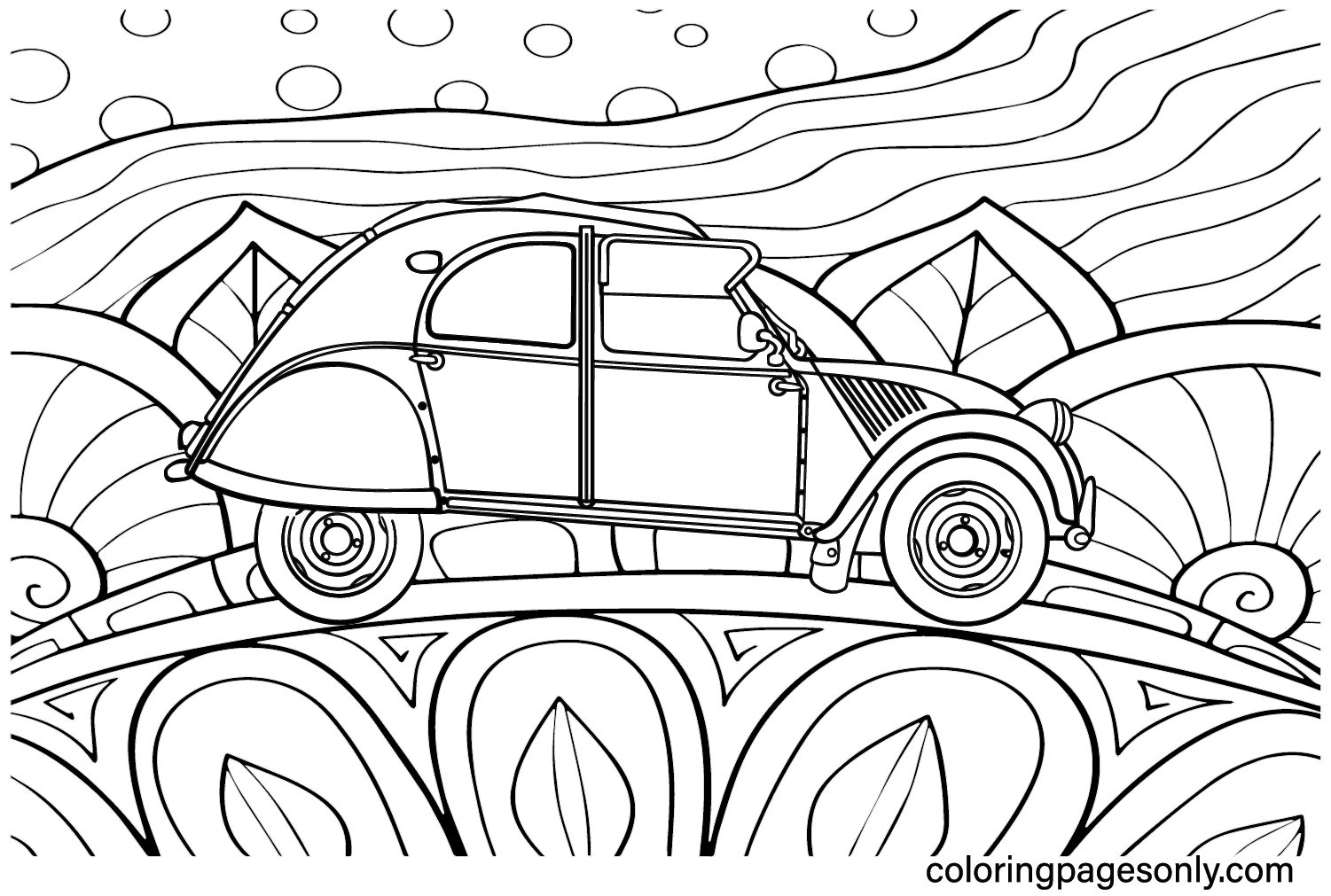
The Citroen 2 CV Coloring Page and Citroën 2CV Coloring Page give two versions of the most beloved and democratically intentioned car in French automotive history. The Deux Chevaux – “Two Horsepower” – was conceived in 1936 by Citroën’s technical director Pierre Boulanger with a brief that has become legendary in automotive history: design a car capable of carrying “four people and 50kg of farm goods at 60km/h on a dirt road” while using no more than 3 litres of fuel per 100km, and make it affordable enough that French farmers could buy it.
The design that emerged – first shown to the public in 1948, after years of wartime secrecy (Citroën reportedly destroyed 250 prototypes to prevent them falling into German hands) – was radically minimal: a rounded body that looked like an upturned bathtub, a 375cc engine producing 9 horsepower, roll-back canvas roof, interconnected suspension that provided an extraordinarily comfortable ride on poor road surfaces, and a spartan interior where the seats could be removed by the owner and used for picnics in the field. It weighed 495 kilograms.
The 2CV was produced from 1948 to 1990 – 42 years – with over 5 million units built. It is the car that France most identifies as its own, appearing in period photographs the way the Volkswagen Beetle appears in Germany or the Mini in Britain.
Coloring the 2CV: Its body is a simple, rounded form that rewards smooth, confident color application without complexity. The car was produced in a wide range of single-tone colors – pale blues, greys, cream, soft reds, yellows – all of which work beautifully. The distinctive corrugated bonnet panels and the roll-back roof canvas are its most characteristic design details. Color the body first in a full-saturation choice, then add the darker corrugation shadows as thin parallel lines across the bonnet.
Citroën DS – The Goddess
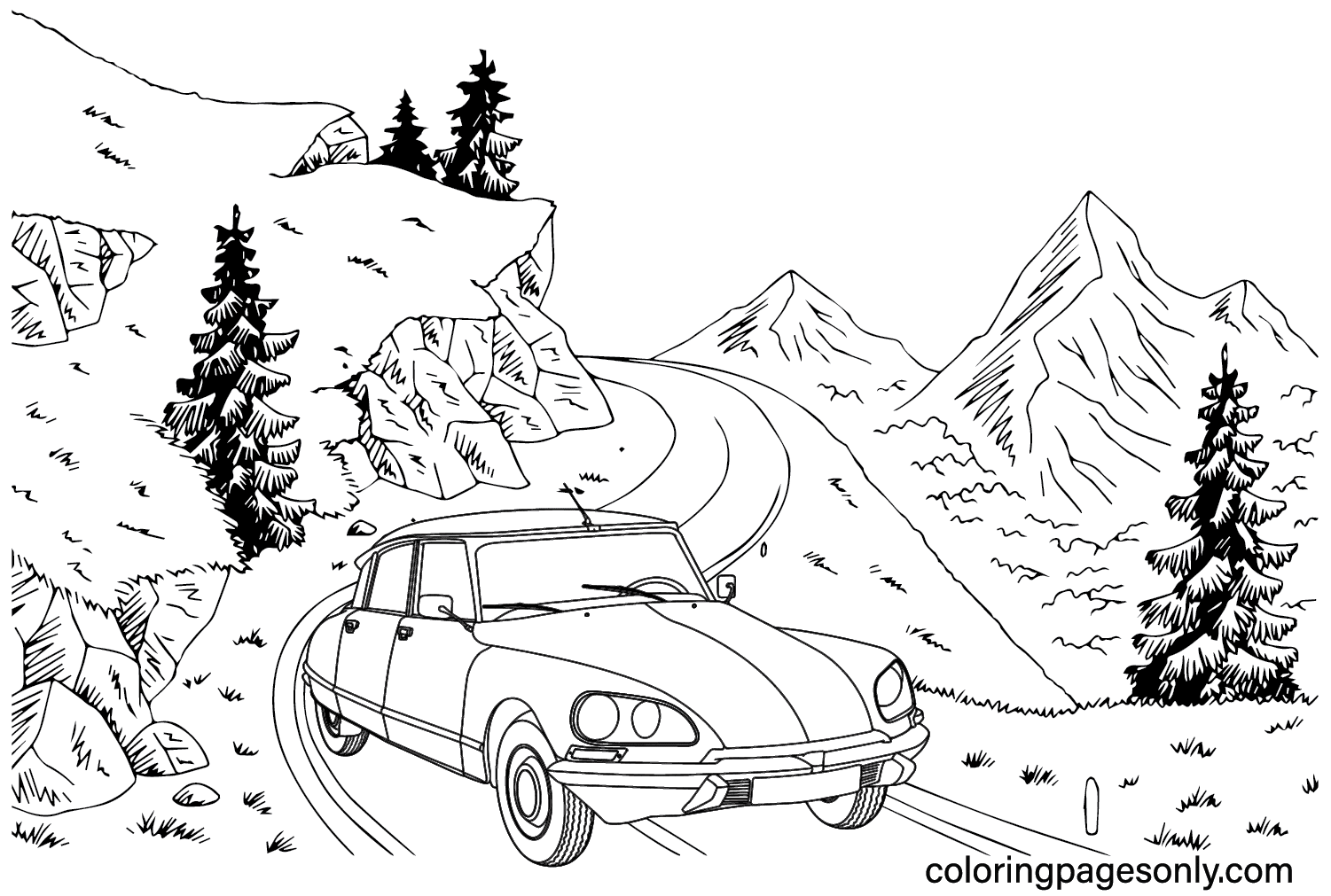
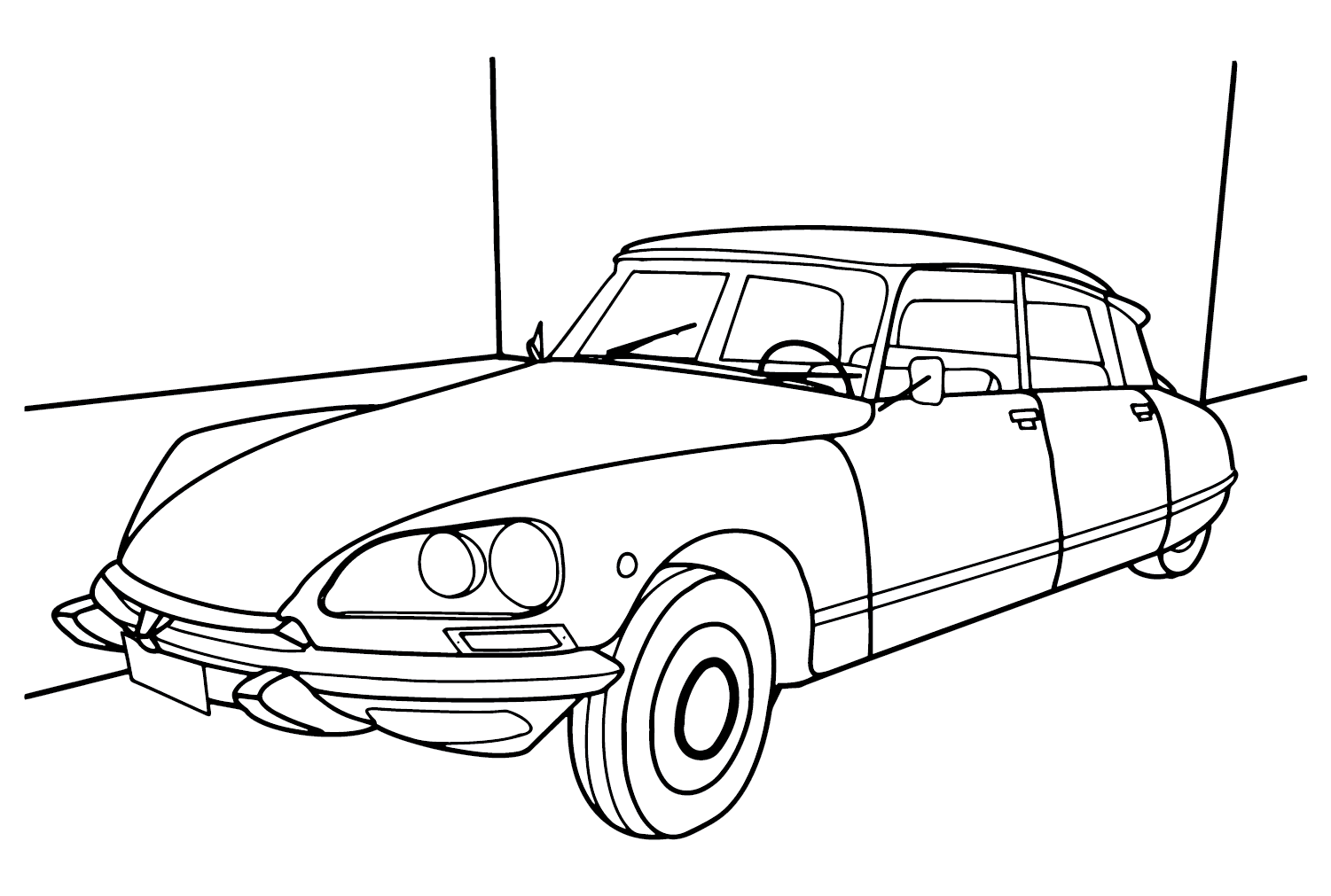
The Citroen DS Coloring Page and Citroen DS Coloring Page Free depict the car that Roland Barthes described in his 1957 essay “La Nouvelle Citroën” as something that had fallen from the sky – an object that seemed to belong to a different category of technology from the cars around it.
The DS debuted at the 1955 Paris Motor Show and caused a sensation that is difficult to convey from a contemporary perspective. Its hydropneumatic suspension – using hydraulic pressure rather than conventional springs – allowed the car to self-level regardless of load, maintain constant ground clearance, and deliver a ride quality that contemporary journalists compared to hovering above the road surface rather than driving on it. Its brakes were disc brakes on all four wheels at a time when drum brakes were universal. Its steering was power-assisted and self-centering. Its aerodynamic body, designed by Flaminio Bertoni (the sculptor who had previously designed the Traction Avant), was so far outside automotive convention that many observers genuinely struggled to categorize it.
The car’s name – DS – is pronounced déesse in French, meaning “goddess.” Whether this was intentional from the beginning or a happy accident that the company gratefully adopted is disputed. It became one of the most famous pieces of French design of the 20th century.
Coloring the DS: Its profile is extraordinarily elongated and low – the long, tapered nose, the sweeping fastback roof, the wide C-pillar, the distinctive rear fenders that read as separate sculptural elements. The DS rewards a two-tone treatment: a body color for the main surfaces and a contrasting lighter or darker tone for the roof, which was often specified in white or silver in the original. Any color suits it; the form is strong enough to work with virtually anything. The chrome brightwork – window surrounds, bumpers – should be rendered in a warm silver or light grey.
Citroën DS3
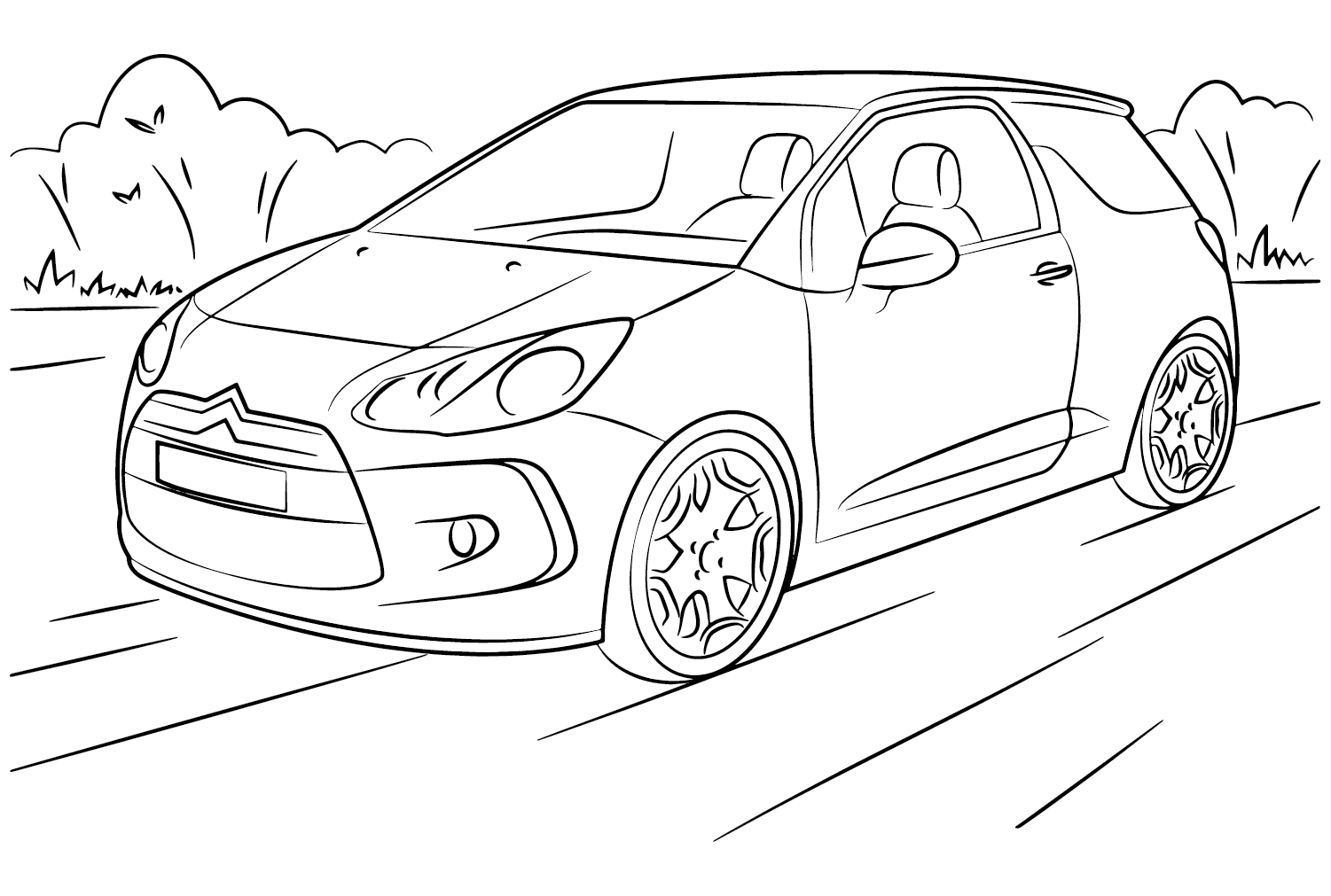
The Citroën DS3 Coloring Page shows the modern DS sub-brand’s compact premium hatchback, launched in 2009 under Citroën’s “DS” premium line before that line became a fully separate brand (DS Automobiles). The DS3 used the name of its legendary predecessor to brand a very different vehicle – a small, stylish premium hatchback competing with the MINI and Audi A1 – and was moderately successful in positioning itself as aspirational within the mainstream French market.
Citroën C1, C3, C4, and C5 – The Modern Range
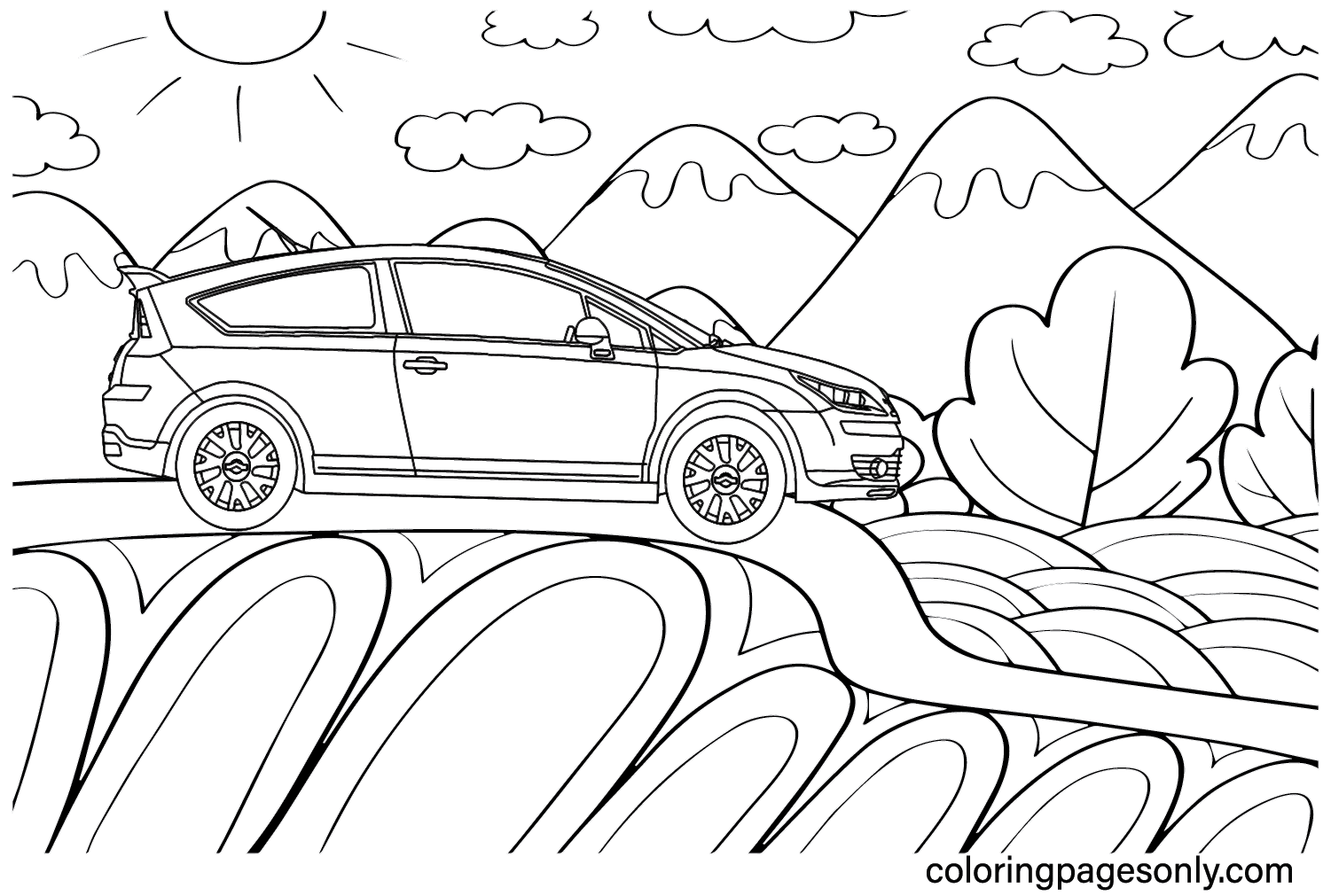
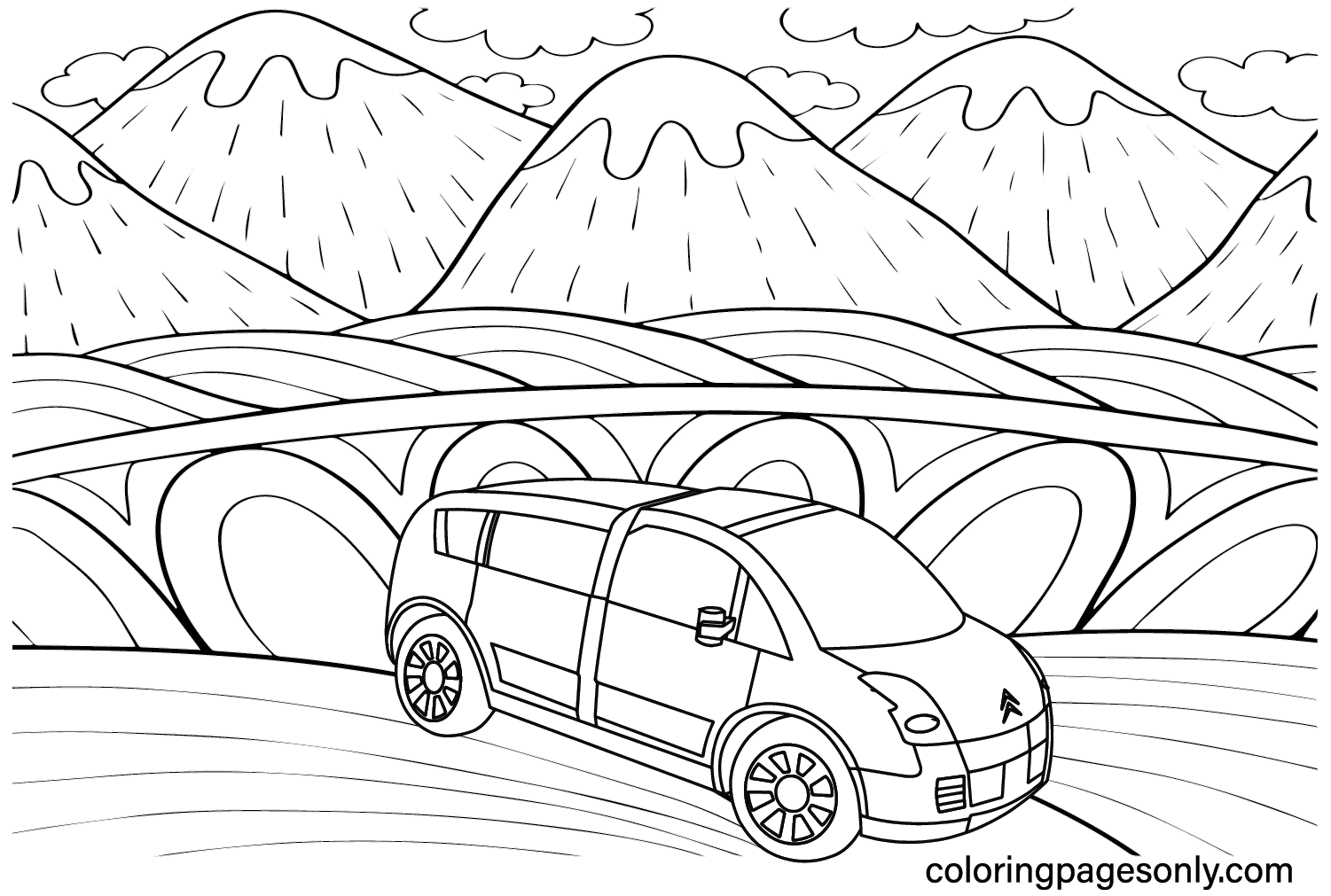
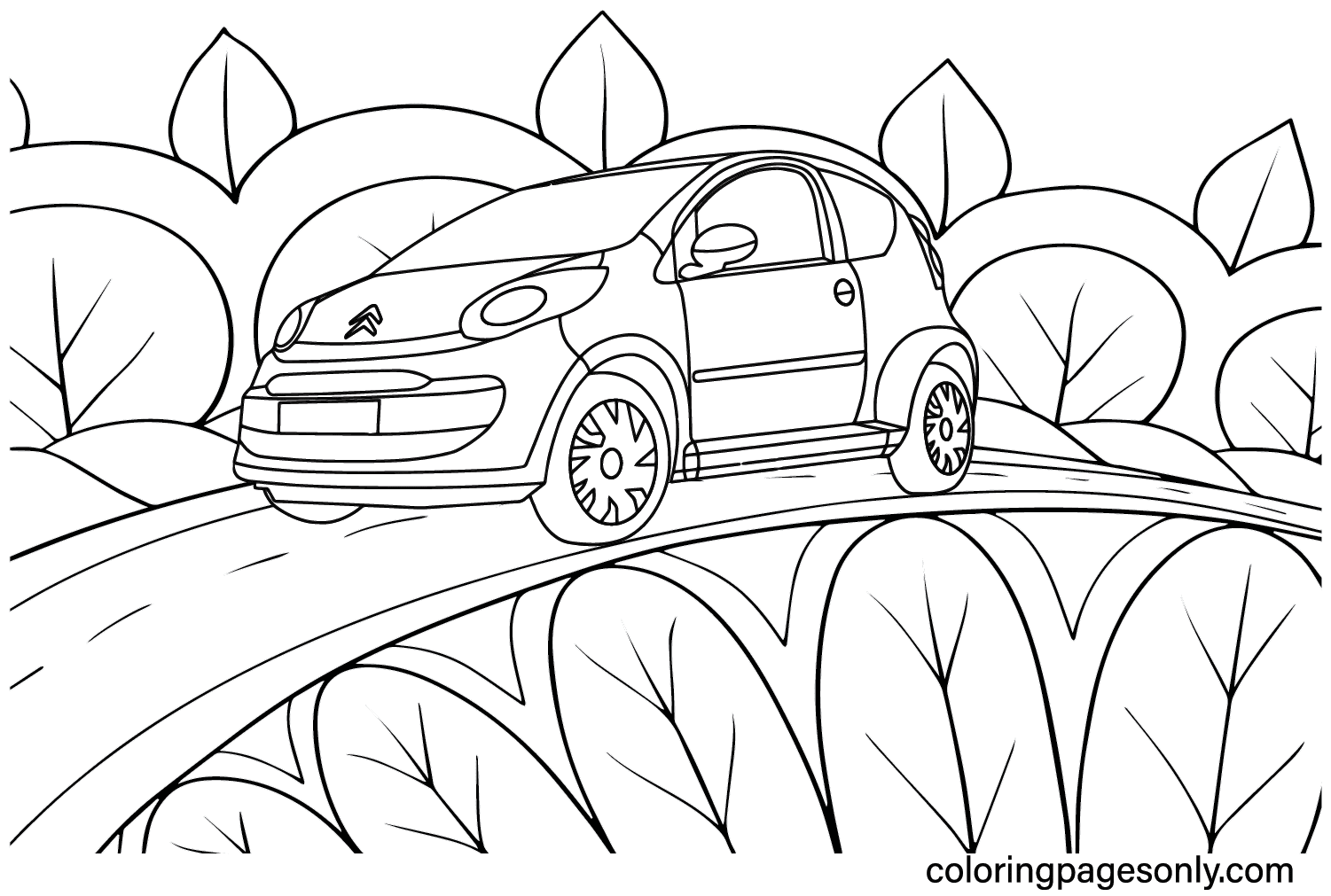
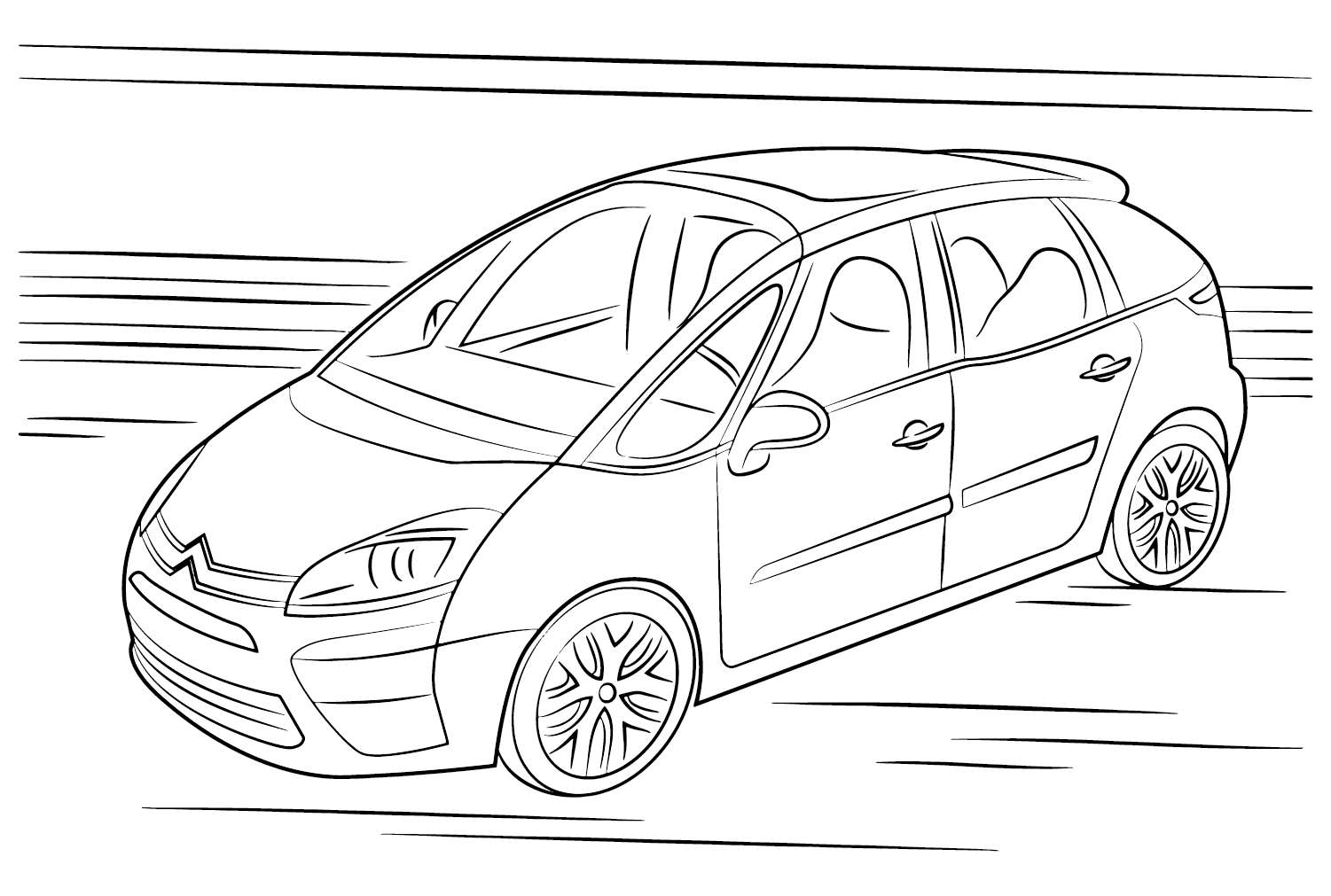
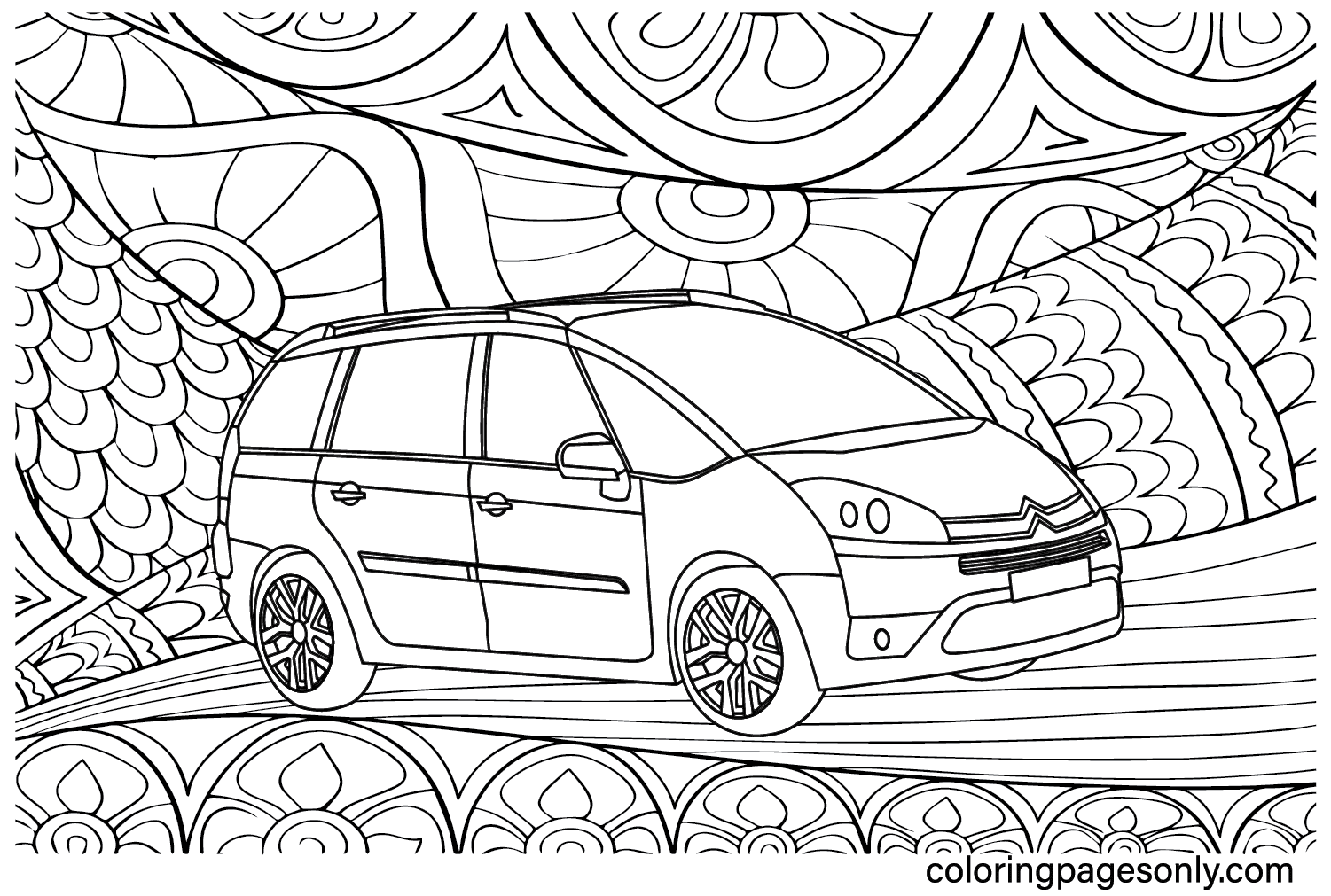
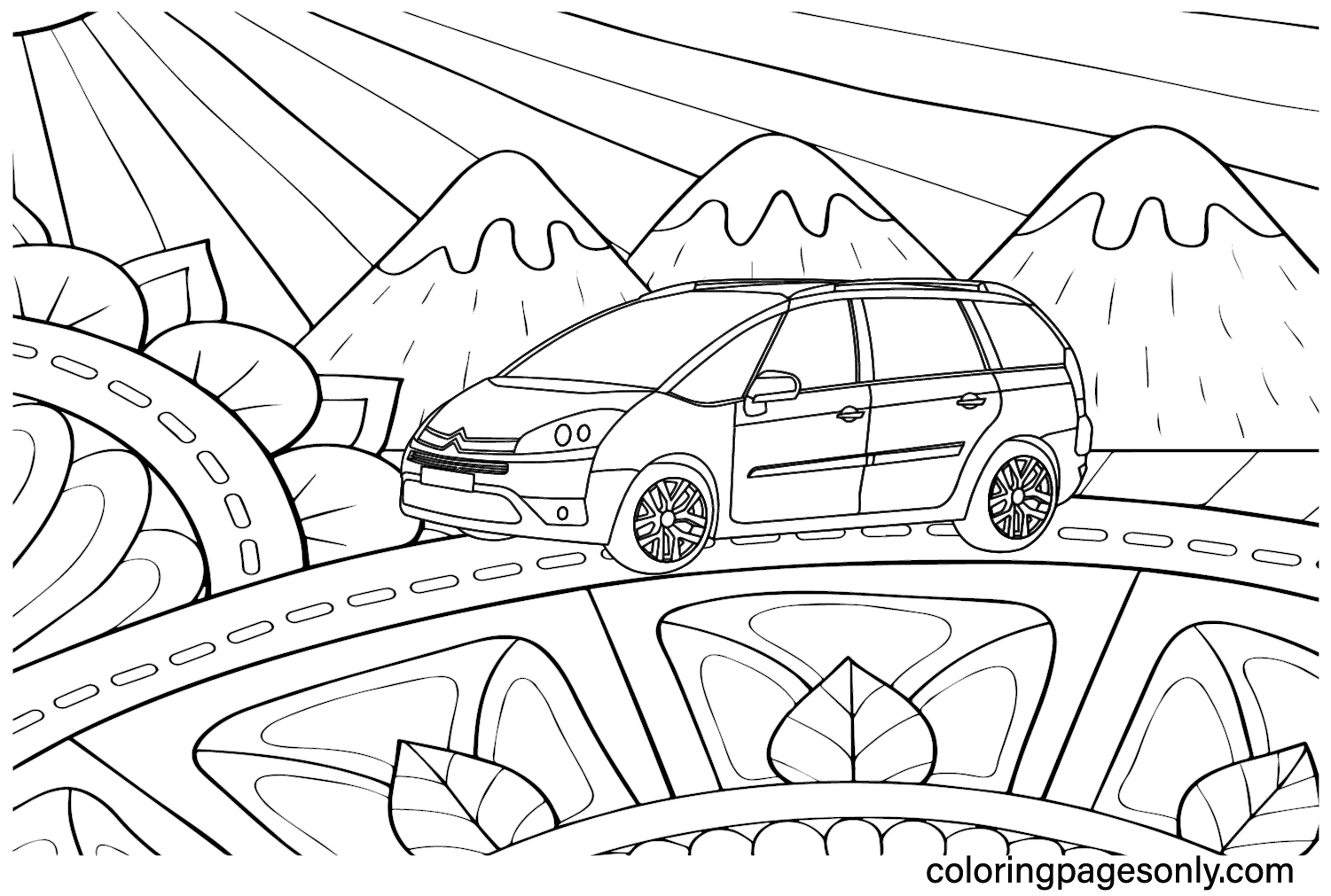
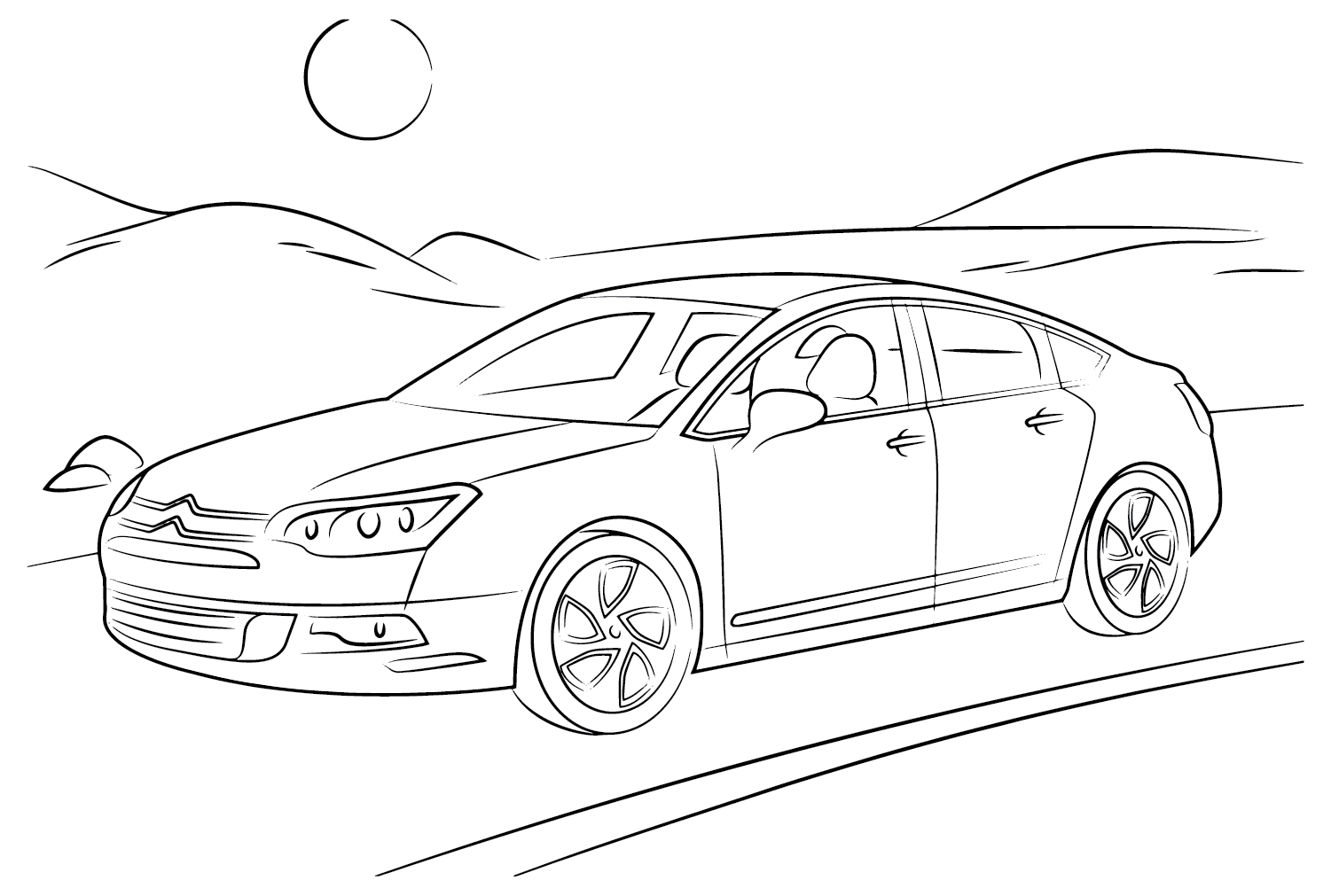
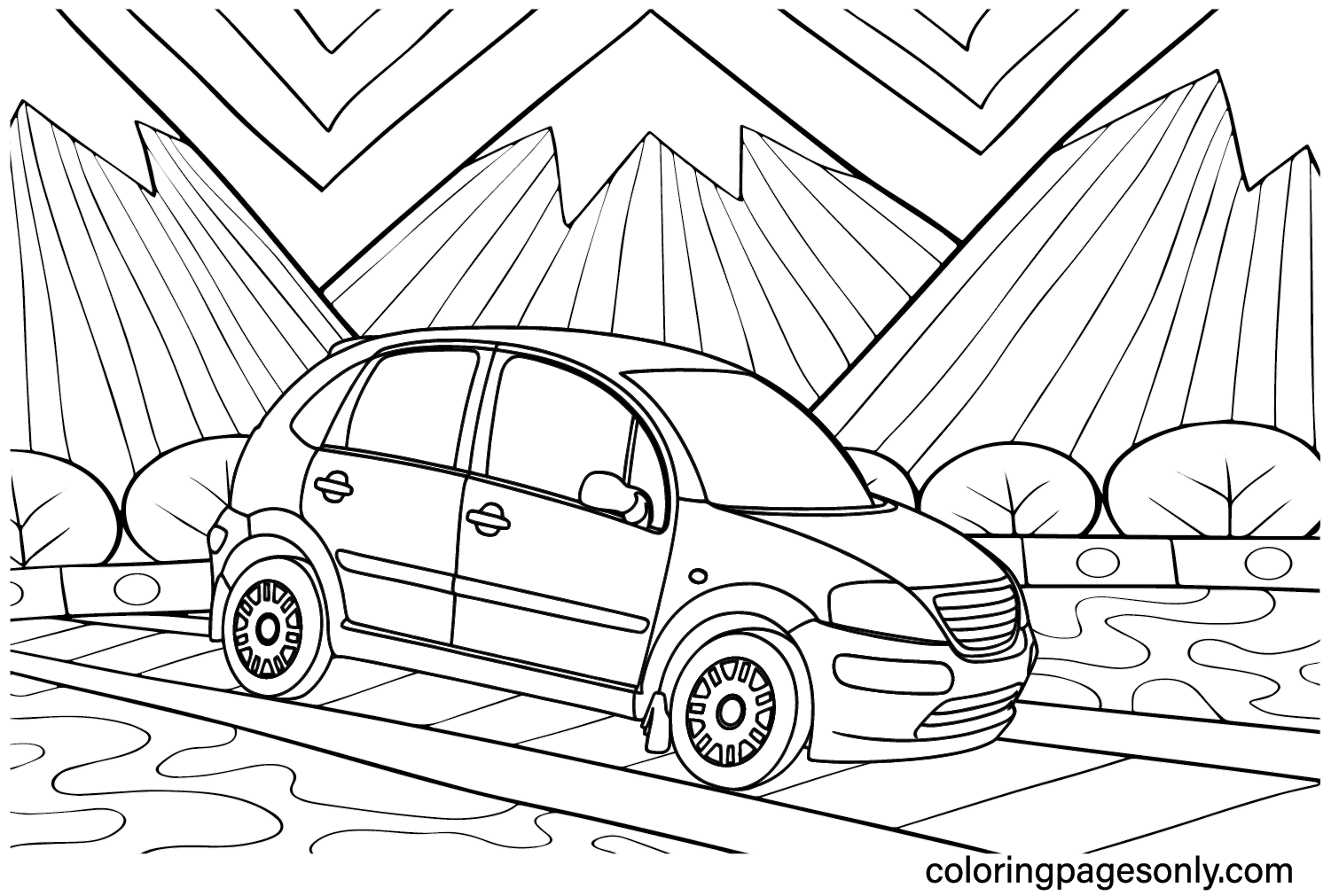
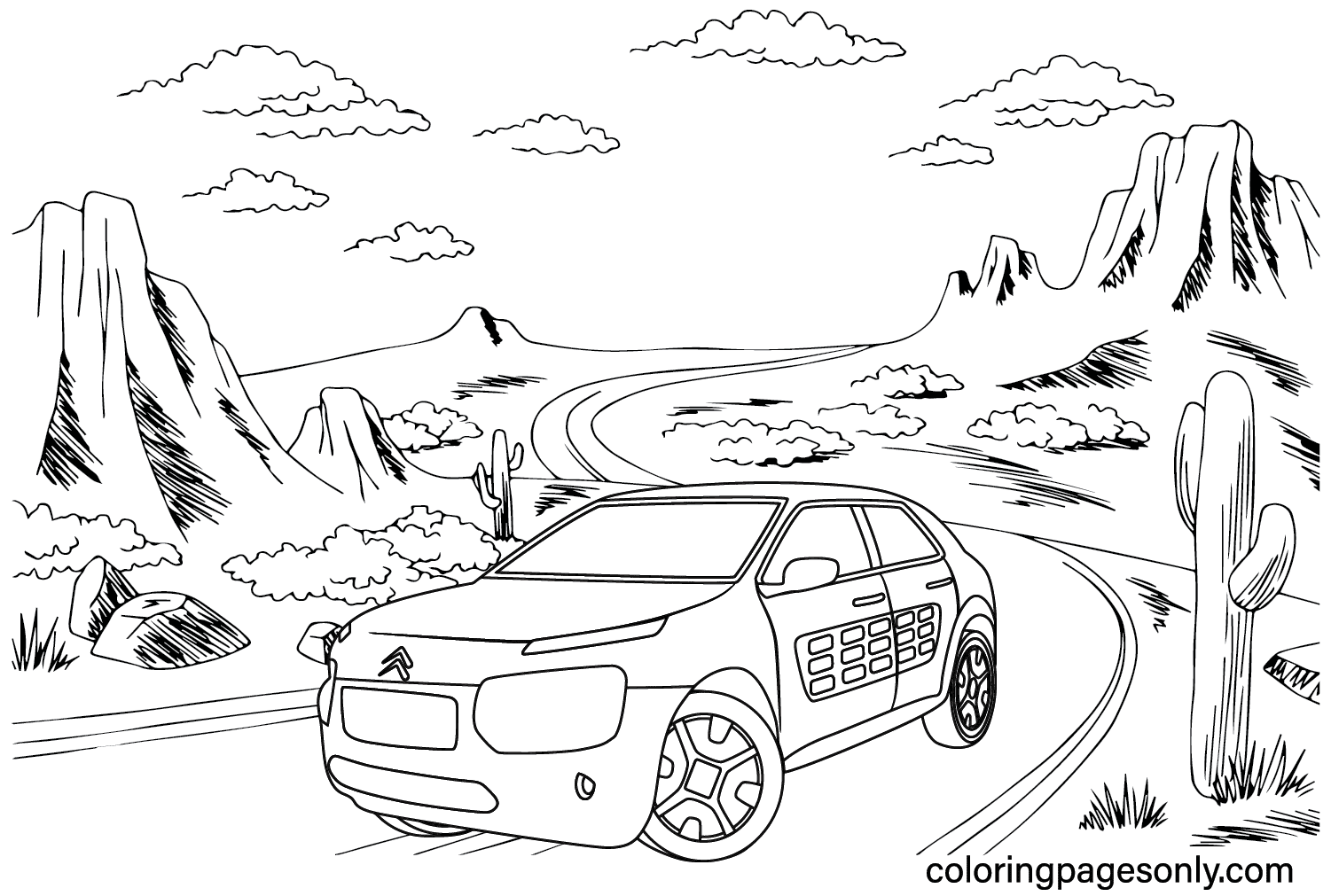
Citroen C1 Coloring Page, Citroen C3 Coloring Page, Citroën C5 Coloring Page, Citroen C4 Cactus Coloring Page, Citroën C4 Picasso Coloring Page, Citroen C4 Xara Picasso Coloring Page, and Citroen C Picasso Coloring Page represent the contemporary Citroën lineup that has carried the brand through the early 21st century.
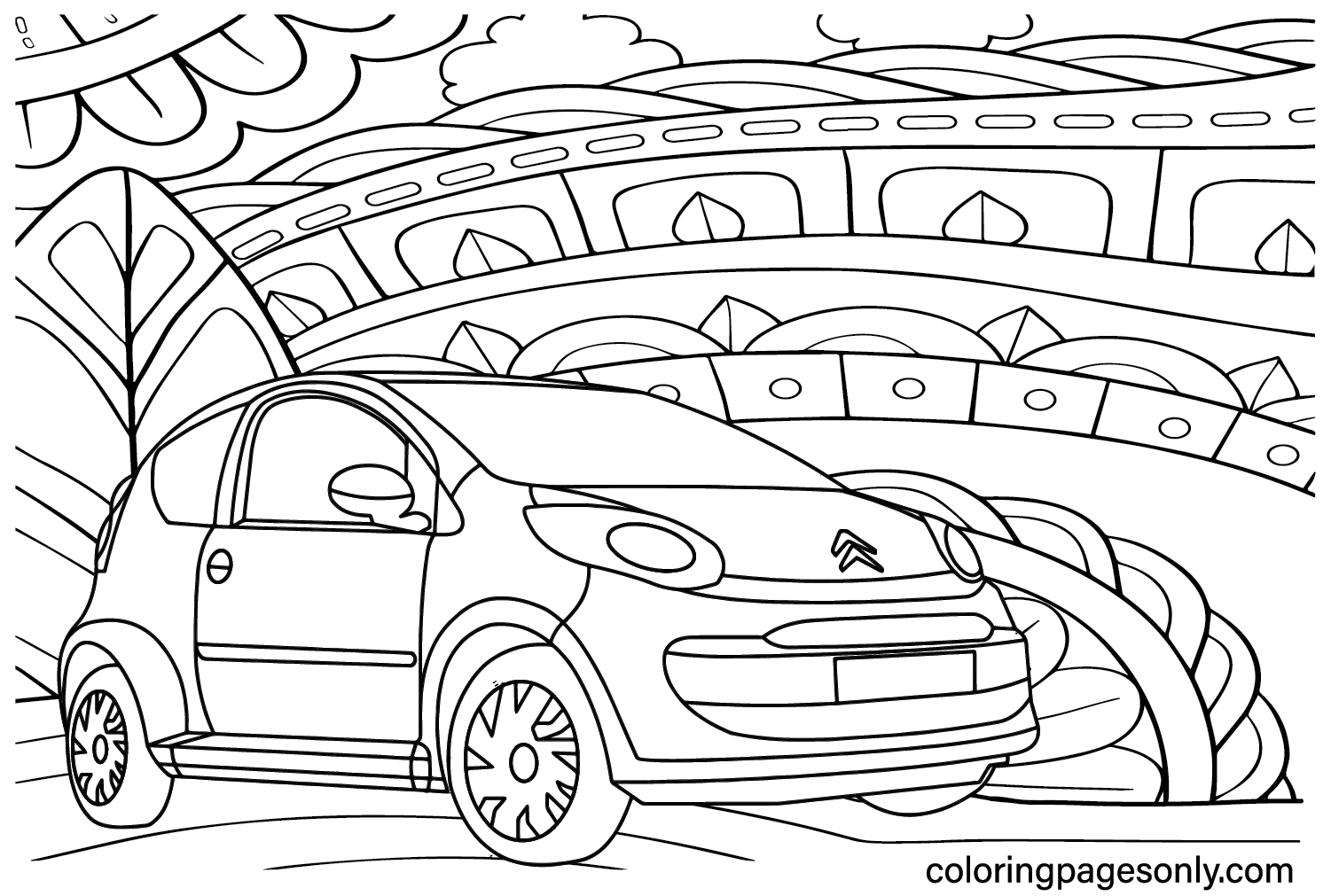
The C1 is Citroën’s entry-level city car – small, efficient, urban-focused, and produced in collaboration with Toyota (as the Aygo) and Peugeot (as the 107) from a shared platform. The C3 is the brand’s core small hatchback – arguably Citroën’s current equivalent of the role the 2CV played in the postwar decades.
The C4 Cactus deserves specific mention: launched in 2014, it introduced Citroën’s “Airbump” exterior panels of thermoplastic polyurethane air-filled cushions on the door sides, designed to absorb parking knocks without damage. The Airbump was a genuine design statement that polarized opinion sharply, received significant press coverage, and won the Red Dot Design Award in 2015. The C4 Cactus page is the most visually interesting modern model in the collection for its distinctive Airbump detail.
The C-Picasso, C4 Picasso, and C4 Xara Picasso pages reference the “Picasso” model name – named after Pablo Picasso, whose estate licensed the use of the name to Citroën specifically for vehicles notable for their interior space and innovative packaging (a reference to the cubist artist’s reconfiguration of conventional visual space).
The Berlingo – Practical and Persistent
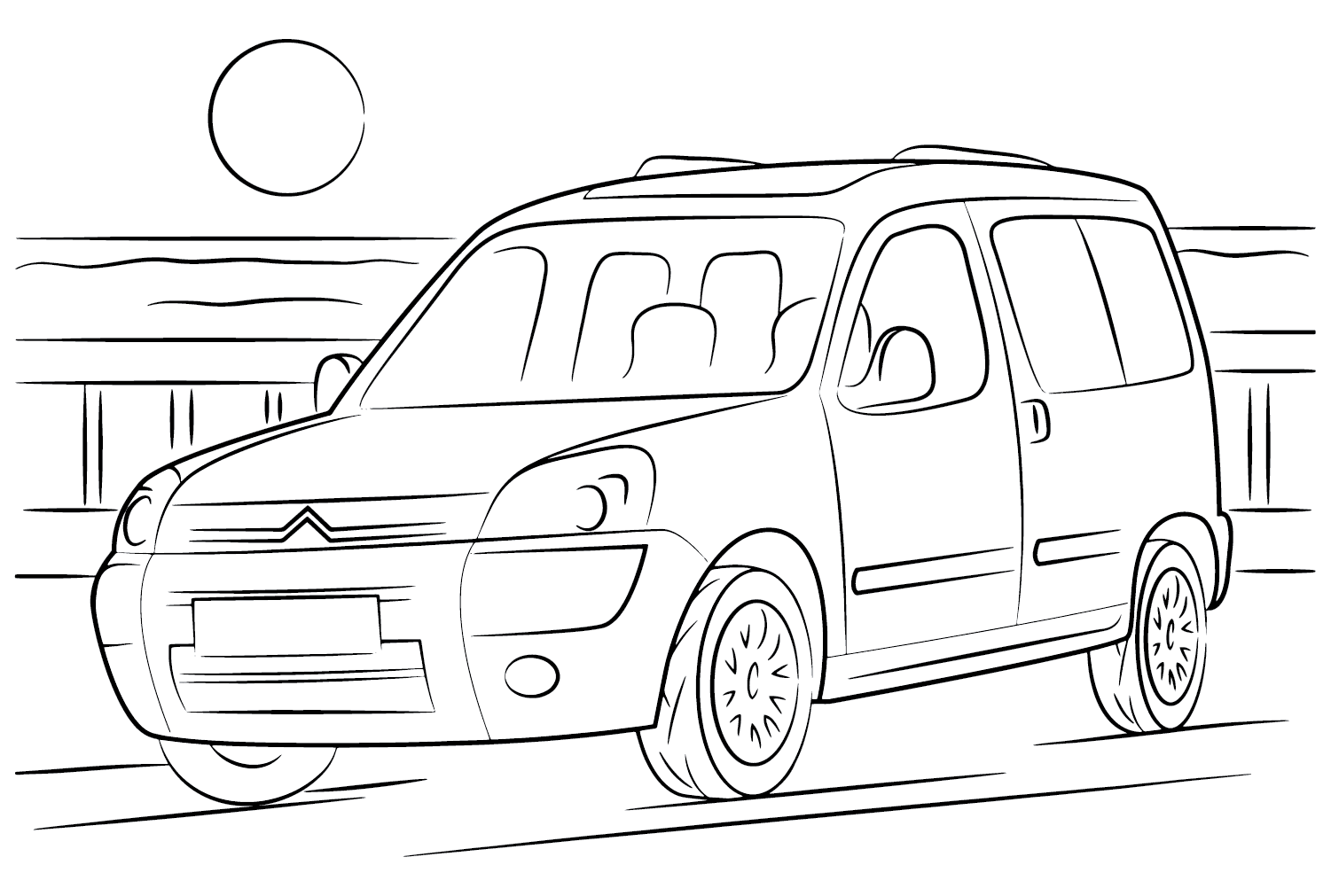
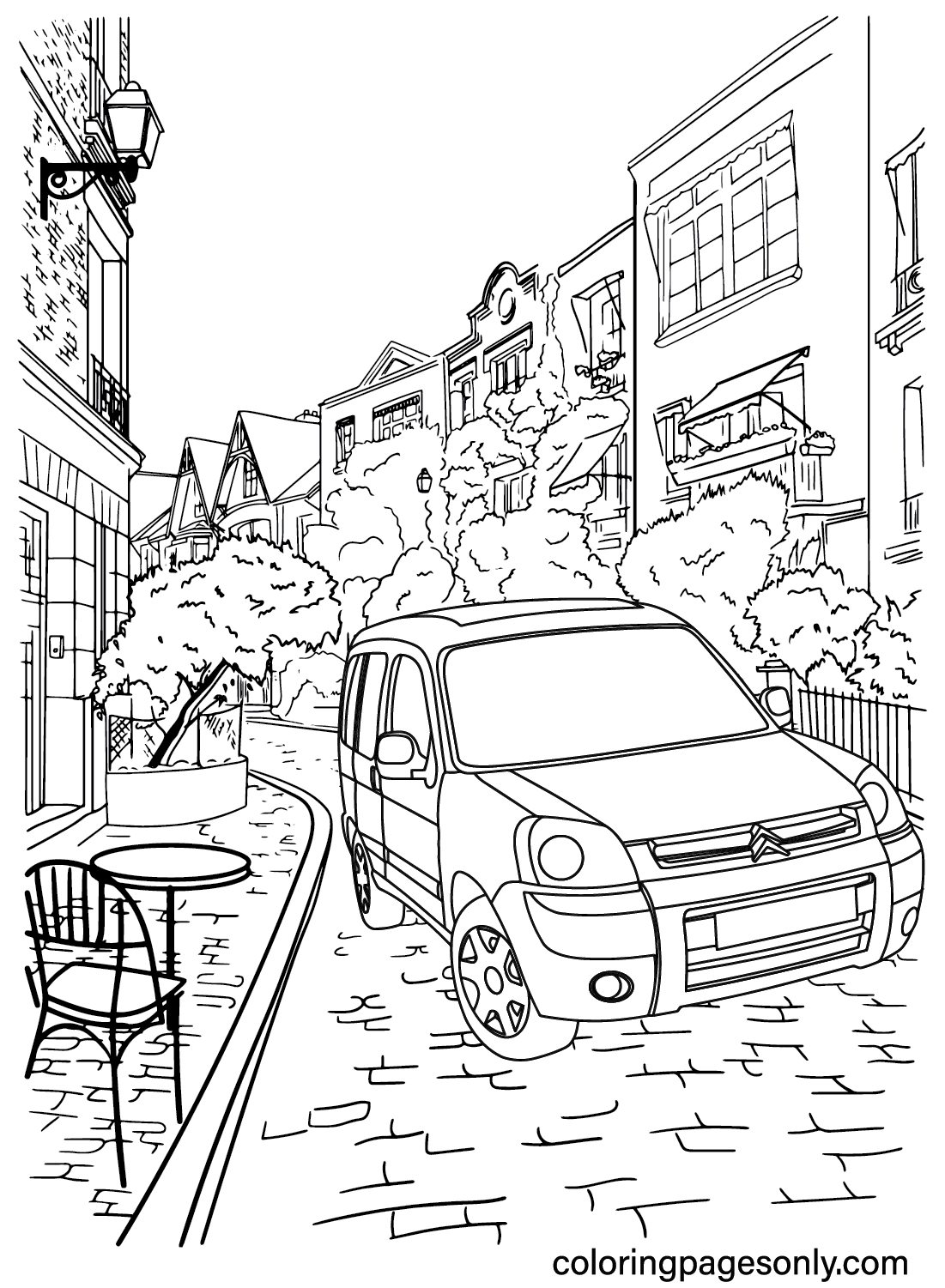
The Citroen Berlingo Coloring Page and Citroën Berlingo Coloring Page give two versions of one of the most commercially successful vehicles in Citroën’s recent history. The Berlingo – launched in 1996 – is a multi-purpose van/people carrier built on the Peugeot Partner platform, positioned between a conventional car and a full commercial van. It has become particularly popular among families seeking maximum practicality and among small businesses needing light commercial transport. The current generation is notably taller and boxier than most consumer vehicles, which gives it distinctive proportions on the coloring page.
The Saxo, Jumpy, and Crosser Models
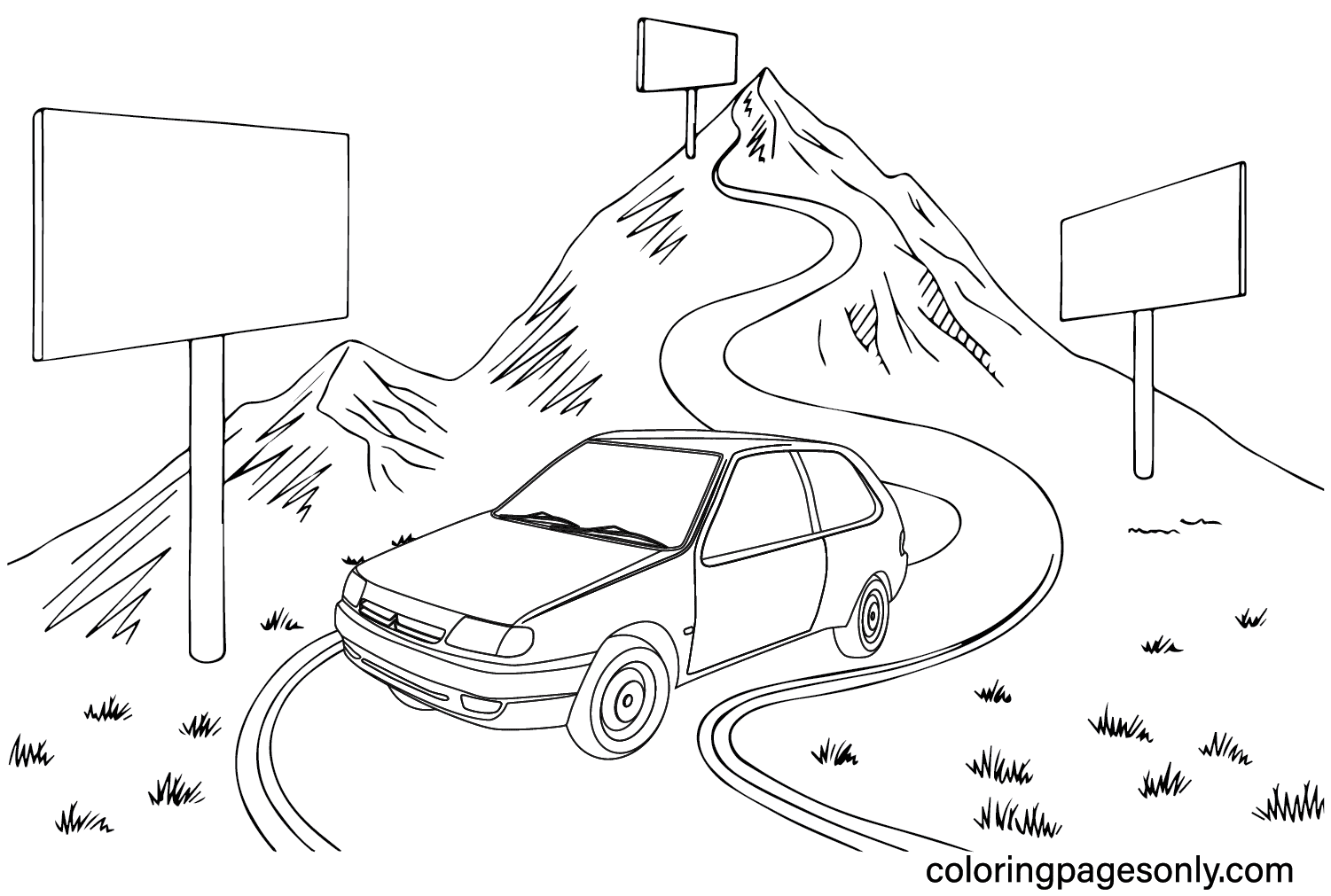
Citroen Saxo Coloring Page depicts the small hatchback produced from 1996 to 2003 – the successor to the AX, positioned as Citroën’s entry-level front-wheel-drive small car before the C1/C3 lineup replaced it. The Saxo VTS hot hatch variant was particularly popular with younger drivers for its performance-to-price ratio.
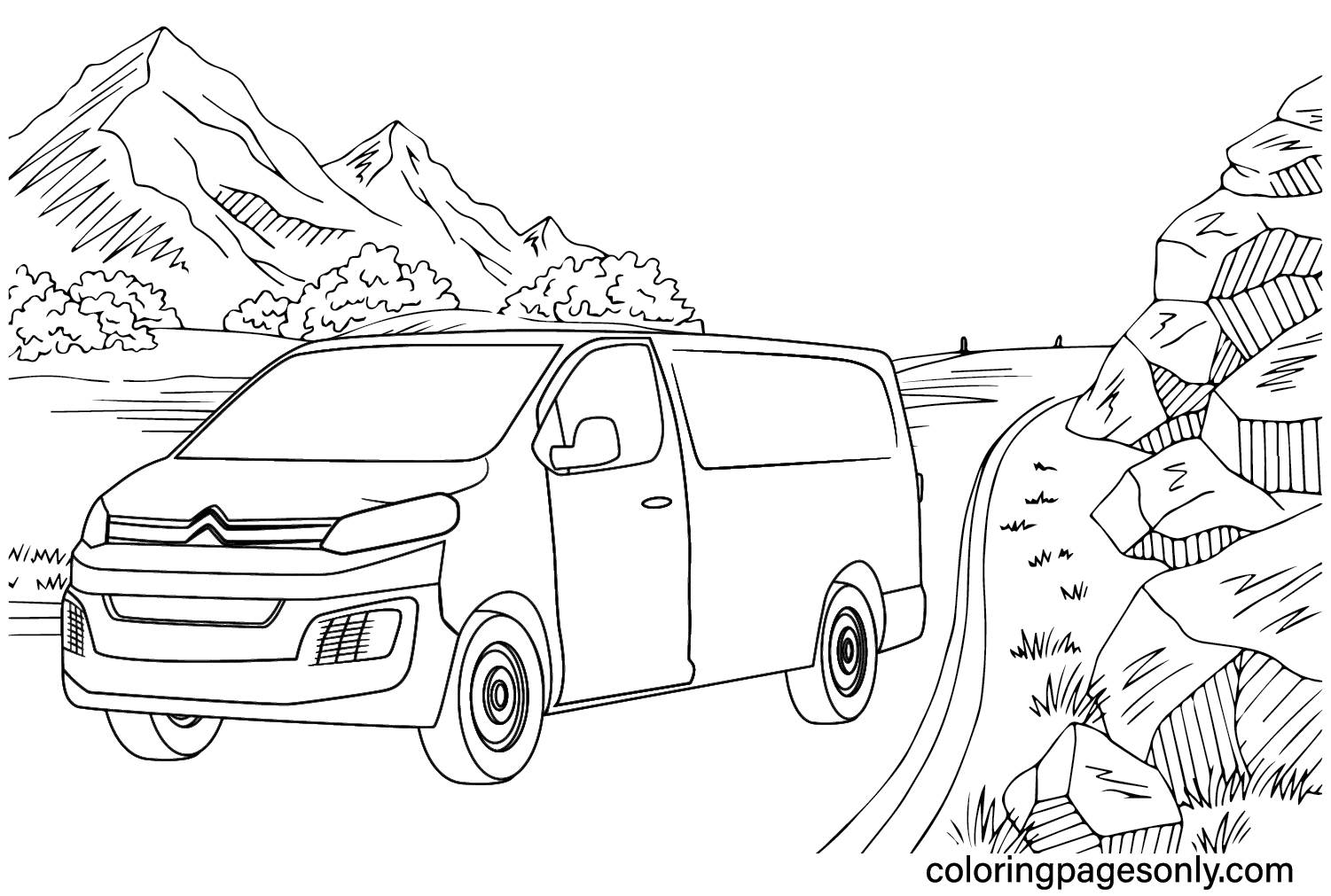
Citroen Jumpy Coloring Page shows the medium van – a commercial vehicle built on the same platform as the Peugeot Expert and Fiat Scudo, used extensively for business and tradespeople transport across Europe.
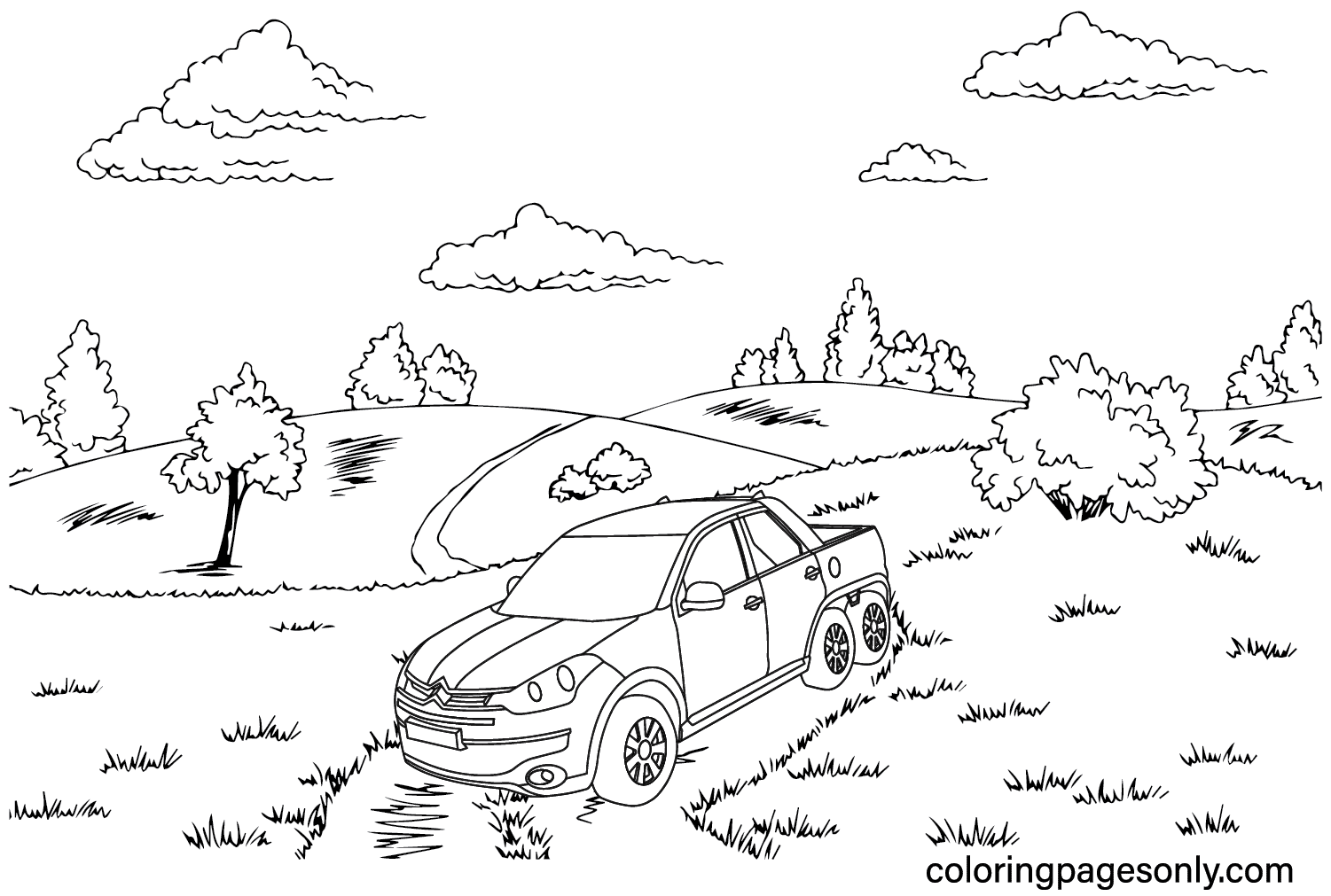
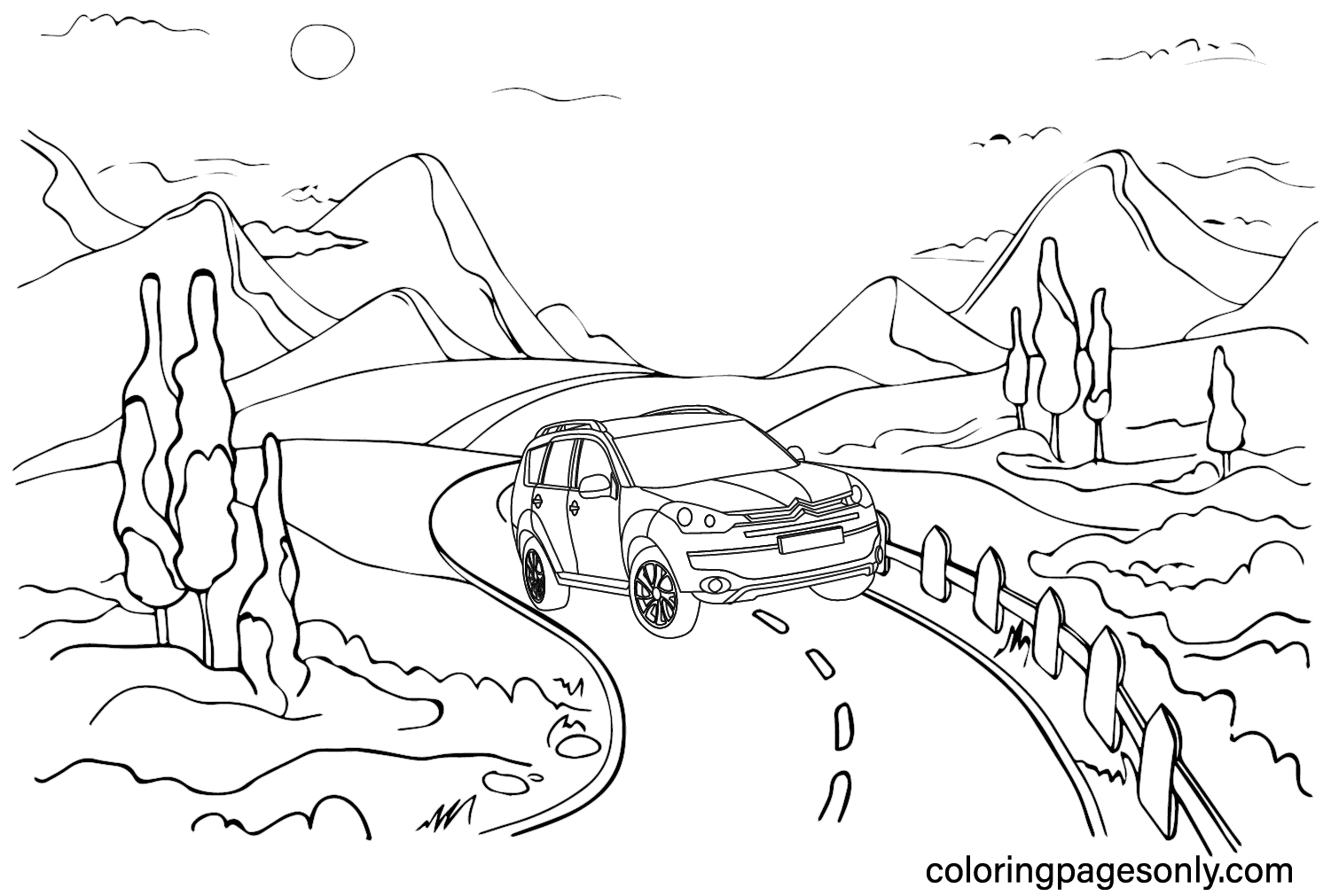
Citroen C Crosser Coloring Page, Citroen Crosser Coloring Page, and Citroen Cruise Crosser Coloring Page show the brand’s SUV and crossover entries – including a concept vehicle (the Cruise Crosser) that explored what a large, comfortable crossover might look like in Citroën’s design language.
Concept and Specialty Pages
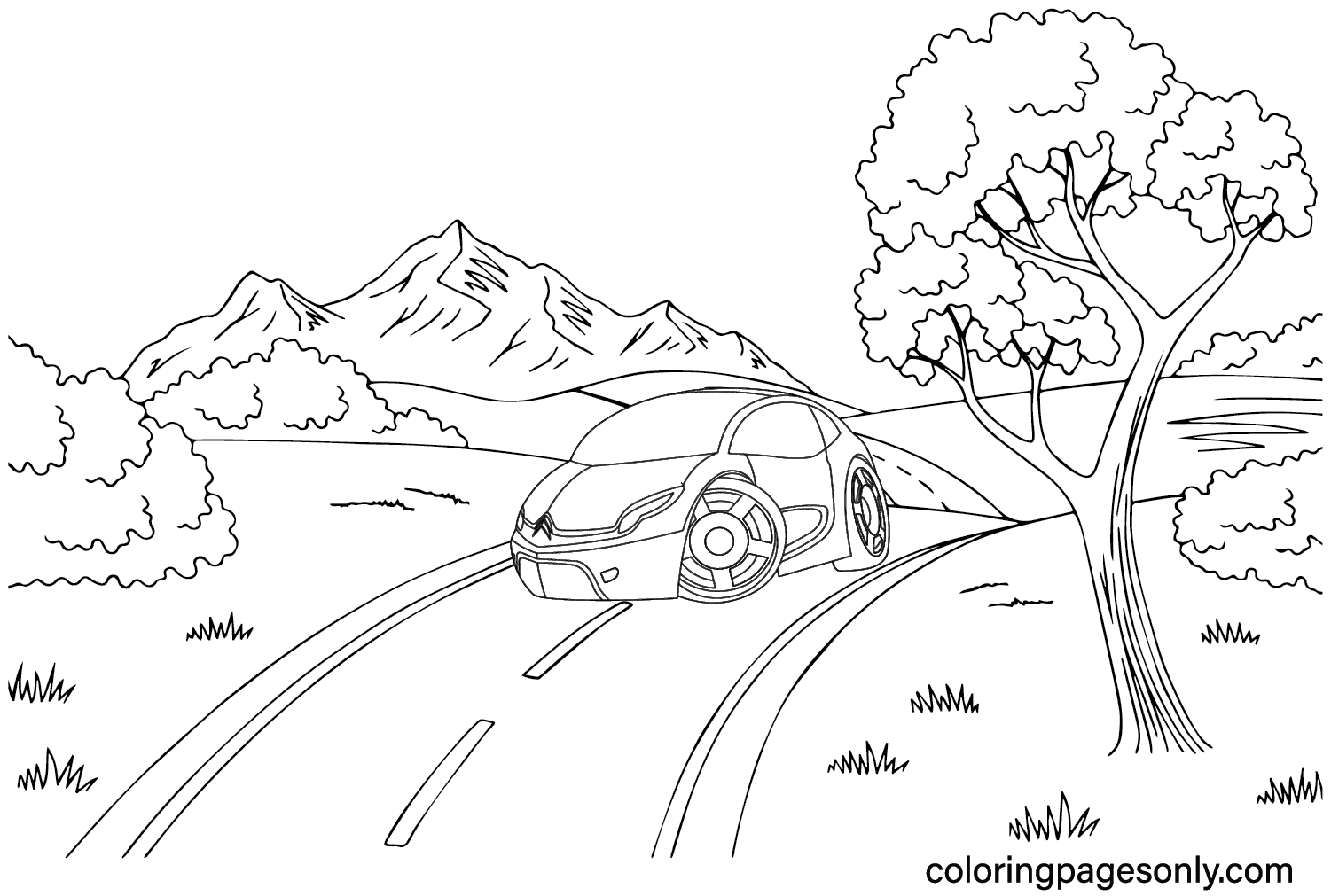
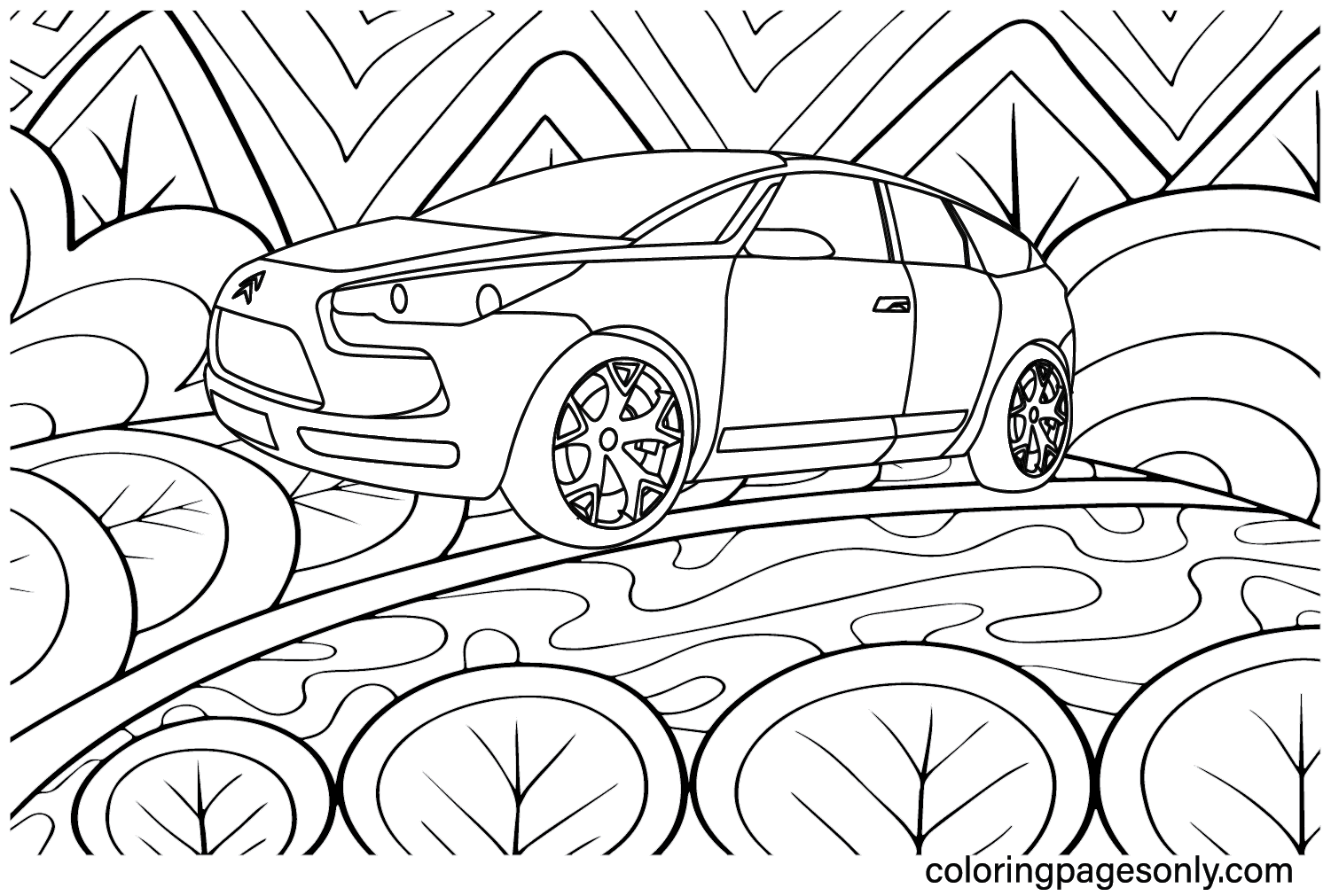
Citroen C Sport Lounge Coloring Page depicts a concept car – a large, low, sporting four-door saloon that Citroën showed as a design study – rendered with a fastback roofline and the kind of visual ambition that concept vehicles allow, specifically because they are not subject to production constraints. Citroen Bubble Coloring Page shows another concept study – a compact, rounded vehicle with a distinctively enclosed, pod-like appearance that references some of the experimental design thinking Citroën has applied in concept work.
Old Citroen Coloring Page and Citroën Car Coloring Page and Free Citroën Coloring Page offer more general Citroën vehicle representations – classic and contemporary designs that suit colorists who want to engage with the brand without committing to a specific model’s constraints.
What These Pages Do
Citroën’s design history is genuinely worth knowing. Of all the major automotive manufacturers, Citroën has the most internally consistent commitment to designing vehicles that challenge the conventions of their time. The 2CV challenged the convention that cars needed to be complex. The DS challenged the convention that cars needed to use conventional engineering. The C4 Cactus challenged the convention that exterior surfaces needed to be hard and vulnerable to parking damage. Coloring these pages while understanding what each model was trying to solve teaches genuine design thinking – the process of identifying a problem and proposing an unexpected solution.
The historical models invite comparison across eras. Displaying the 2CV page alongside the DS page alongside the C4 Cactus page shows 65 years of design evolution from the same company – three radically different answers to the question “what should a car be?” The comparison is visible in the colored pages in a way that reading about the cars doesn’t quite replicate.
Fine motor development through automotive surface complexity. Citroën’s vehicles are particularly rich in coloring subjects because their surface designs are more varied than most manufacturers. The 2CV’s corrugated panels, the DS’s sculptural rear fenders, the Berlingo’s tall boxy proportions, the C4 Cactus’s Airbump panels – each requires a different coloring technique and different attention to the relationship between flat areas and three-dimensional surface detail. The American Academy of Pediatrics identifies fine motor development as a key childhood milestone, and the motivated, sustained practice that a child brings to coloring a vehicle they find interesting is one of the most effective tools for building it.
The 2005 Art Therapy Journal study applies. Structured coloring reduces anxiety. Automotive coloring pages – with their clean geometric surfaces, clear outlines, and satisfying sense of rendering a recognizable object – produce the quality of focused, absorbing attention that the research identifies as most effective.
How to Color These Pages Well
Establish a light source before any color goes on. Citroën’s vehicles – particularly the DS, the 2CV, and the concept cars – have complex three-dimensional surfaces that respond dramatically to light direction. Before choosing any color, decide where your imaginary light source is (upper left is standard). Every surface facing upper left receives your lightest tone; every surface facing away receives your darkest. The intermediate surfaces receive the main body color. For the DS in particular, this three-zone approach transforms a flat line drawing into a convincing representation of one of the most sculptural car bodies ever produced.
The 2CV’s corrugated bonnet is a technical challenge worth attempting. The horizontal corrugation lines across the bonnet and front panels are the 2CV’s most distinctive surface detail. When coloring this area, apply the base body color uniformly across the entire surface first. Then use a slightly darker tone of the same color to add thin shadow lines directly below each corrugation ridge – these lines should be horizontal, consistent in width, and evenly spaced. Finally, add a very subtle lighter line directly above each corrugation ridge to suggest the highlight that catches on the upper surface of each pressed panel. The result looks far more convincing than the alternative of trying to leave the paper white for highlights.
The DS deserves the most careful surface treatment. Its body panels change angle gradually and continuously rather than at sharp character lines – which means the color should transition gradually across the body rather than changing suddenly. Apply the body color, then blend additional darker tones in the shadow areas using soft, layered strokes that follow the direction of the surface’s curve. The effect you’re aiming for is the visual impression of a large, smoothly curved surface catching light from one side – which is exactly what the DS’s body was designed to produce.
Gray for the Berlingo and Jumpy van panels. Commercial and multi-purpose vehicles like the Berlingo and Jumpy are typically seen in white or silver in real-world use – practical colors for vehicles that get used hard. White works as a coloring choice for the body, but a very light warm grey applied with minimal pressure gives the white panels more visual interest than leaving the paper blank. Add slightly darker grey in the wheel arch recesses and under the bumpers.
The C4 Cactus Airbump panels need a contrasting treatment. The Airbump panels – which run along the door sides – were typically specified in a contrasting color to the main body in real production versions, emphasizing their design intent as a separate functional element. When coloring the C4 Cactus page, choosing a distinctly different color for the Airbump zone than for the main body is both historically accurate and visually more interesting than coloring the entire car in a single tone.
5 Creative Craft Ideas
Citroën Through the Decades Timeline
Print one page representing each era of Citroën’s history represented in this collection: the 2CV (1948–1990), the DS (1955–1975), the Saxo (1996–2003), the Berlingo (1996–present), the C4 Cactus (2014–present), and a concept car. Color each one. Mount them in chronological order on a long horizontal strip of poster board, with the model name and production years labeled below each vehicle.
The finished timeline makes visible what the models individually obscure: Citroën’s consistent willingness to look completely different from whatever it made before. The progression from the 2CV’s upturned bathtub to the DS’s flying saucer to the C4 Cactus’s Airbump panels is one of the most distinctive design lineages in automotive history – and it is visible in the coloring pages when they are displayed together in sequence.
Two-Tone Study
The 2CV and DS were both frequently specified in two-tone color combinations in period production – the 2CV in contrasting body and roof colors, the DS in white-roof combinations. Print two copies of each: color one in a single tone, color the other in a two-tone treatment.
Mount both versions of each car side by side on a backing sheet, labeled “Single-tone” and “Two-tone.” The comparison shows what color does to a vehicle’s visual proportion – how two-tone treatments change where the eye goes and how the car’s height reads relative to its length. This is genuine automotive design knowledge delivered through a coloring exercise.
Personal Citroën Design
Print the Old Citroen Coloring Page or Citroën Car Coloring Page – the more generic Citroën shapes that don’t commit to a specific model. Color the vehicle in a completely original color combination of your choice, then name the combination as Citroën would: the brand uses evocative color names like “Rouge Hypnotic,” “Bleu Electrique,” “Vert Olive.”
On a separate piece of paper, write: the color name you’ve invented, a brief description of who this color is designed for, and what the color communicates about the car’s character. This is the kind of brief that automotive color and materials designers work from – connecting a paint color to a customer psychology and a vehicle personality.
Concept vs. Production Comparison
Print the C Sport Lounge, Cruise Crosser, and Bubble Coloring Page alongside the production models closest to them in intent – the C5, the C-Crosser, and the C1, respectively. Color each concept in the boldest, most experimental palette available (concept cars are shown in colors that production vehicles rarely use). Color each production model in a realistic, market-appropriate color.
Mount each pair – concept on the left, production on the right – on a backing sheet. The comparison shows the gap between automotive aspiration and automotive reality: what designers imagine when freed from manufacturing constraints, and what survives the transition to production. The gap is always instructive.
Classic French Automotive Heritage Poster
This project uses the Citroën pages alongside pages from the Renault coloring collection on this site – France’s other great automotive brand. Print the 2CV and DS pages from this collection alongside Renault’s most historically significant models. Color all pages. Arrange them on a large dark backing sheet – navy blue, the color of French technical excellence – with the two brands separated by a thin line of white or gold.
Add hand-lettered text at the top: “French Automotive Design: A Century of Originality.” The finished poster celebrates the specific character of French industrial design – the willingness to be odd, to be daring, to prioritize comfort and practicality in ways that other traditions didn’t – in a format that works as wall art.
Frequently Asked Questions
Who founded Citroën, and when was the company established? Citroën was founded by André Citroën, a French engineer and industrialist born in Paris in 1878. He established Société Anonyme André Citroën on June 4, 1919, immediately after the end of World War I, converting his wartime munitions factory on the Quai de Javel in Paris to automobile production. The first model, the Type A, was launched in 1919 – the first mass-produced car in Europe outside Britain. André Citroën was known for his marketing flamboyance (he famously had the Eiffel Tower illuminated with the Citroën name in giant letters from 1925 to 1936) and his commitment to making cars accessible to ordinary French families. Financial overextension led to the company’s bankruptcy in 1934; it was acquired by the Michelin tire company, which has been a significant shareholder ever since. André Citroën died in 1935.
What made the Citroën DS so revolutionary? The Citroën DS, unveiled at the Paris Motor Show on October 5, 1955, was revolutionary for several simultaneous reasons. Its hydropneumatic suspension – a hydraulic-pneumatic system that replaced conventional steel springs – gave the car a ride quality unlike anything available at the time and allowed automatic self-leveling regardless of load. It featured disc brakes on all four wheels at a time when drum brakes were universal. Its power steering was self-centering. Its semi-automatic gearbox required no clutch pedal. Its aerodynamic body, designed by sculptor Flaminio Bertoni, was so unusual that it appeared to belong to a different decade. The name DS – pronounced déesse in French, meaning “goddess” – became one of the most celebrated product names in automotive history. It attracted the attention of philosopher Roland Barthes, who wrote a famous essay about it in his 1957 collection Mythologies.
What was the design brief for the Citroën 2CV? The 2CV’s design brief was established by Citroën’s technical director Pierre Boulanger in 1936 and is one of the most demanding and specific in automotive history: design a vehicle capable of transporting four people and 50kg of farm produce at 60km/h on unpaved rural roads; use no more than 3 litres of fuel per 100km; be affordable enough for French farmers to purchase; and be simple enough that the driver could learn to operate it without mechanical training. Boulanger added that the car should be capable of crossing a plowed field without disturbing a basket of eggs on the back seat – the origin of the 2CV’s extraordinarily soft, long-travel suspension. The first running prototypes were produced in 1939; the design was hidden during the German occupation. The car was publicly revealed in 1948 and remained in production until 1990, with over 5 million units built.
What is the Citroën Berlingo used for? The Berlingo, launched in 1996, is a multi-purpose vehicle positioned between a conventional family car and a light commercial van. It shares a platform with the Peugeot Partner. In its passenger car configuration, it provides car-like driving dynamics with van-like interior volume – tall roof, flat floor, sliding rear doors in some versions – making it particularly popular for families requiring maximum cargo or passenger flexibility. In its commercial variant, it functions as a small delivery and tradespeople’s vehicle. The current third-generation Berlingo (2018–present) is significantly larger and more car-like in its interior quality than the original.
What is the C4 Cactus Airbump? The Citroën C4 Cactus, launched in 2014, featured an exterior design element called the Airbump – panels of thermoplastic polyurethane filled with air-filled cells, applied to the lower door surfaces. The Airbump was designed to absorb the low-speed impacts of parking in urban environments – doors opening into other cars, shopping trolleys, and similar urban hazards – without damage to the vehicle body. It won the Red Dot Design Award in 2015. The Airbumps were typically specified in a contrasting color to the main body, making them a visible design feature as well as a functional one. The feature was controversial among automotive press – some praised its practical intelligence, others found its appearance strange – but it generated significant media coverage and made the C4 Cactus immediately recognizable.
Which Citroën model is named after Pablo Picasso and why? The Citroën Picasso and C-Picasso model names were licensed from the Picasso estate to name vehicles notable for their interior space and innovative packaging – Citroën drew a parallel between Pablo Picasso’s artistic reorganization of conventional visual space (cubism) and the Picasso minivan’s reorganization of conventional automotive interior space. The C-Picasso was a compact MPV with a raised roof and panoramic windscreen that provided an unusually airy, space-efficient cabin. The name licensing agreement between the Picasso estate and Citroën was one of the more unusual brand partnerships in automotive history.
What is the Citroën double-chevron logo and what does it represent? The Citroën logo consists of two inward-pointing chevrons – an inverted V shape doubled. The chevrons derive directly from the herringbone helical gears that André Citroën began manufacturing in 1900, before moving into automobile production. These gears – which engage at an angle rather than straight across, producing smoother and quieter operation – were the product that established Citroën’s original engineering reputation. The logo is one of the most literal in automotive history: it directly depicts the product that made the company’s reputation before it built its first car.
Browse the full collection at ColoringPagesOnly.com. All pages free, no sign-up, PDF or PNG, print at home or color online.
André Citroën founded his company in 1919 and went bankrupt in 1934. Between those dates, he built one of the most interesting automotive brands in history – one willing to look strange in pursuit of being right, willing to challenge the conventions of the industry in ways that occasionally failed and occasionally produced the DS. The company that survived him continued in the same spirit. The 2CV was strange. The DS was strange. The C4 Cactus was strange. All of them were trying to answer the same question: what would a car be if we started from what people actually need rather than from what cars have always looked like?
These coloring pages are the visual record of those answers.
Pick up your colors. Choose your model. Color something from a century of French automotive originality.
Share your work on Facebook and Pinterest and tag #Coloringpagesonly. We especially want to see the decade timeline displays and the two-tone study comparisons.
Color the chevron. Honor the goddess. Vive la différence.