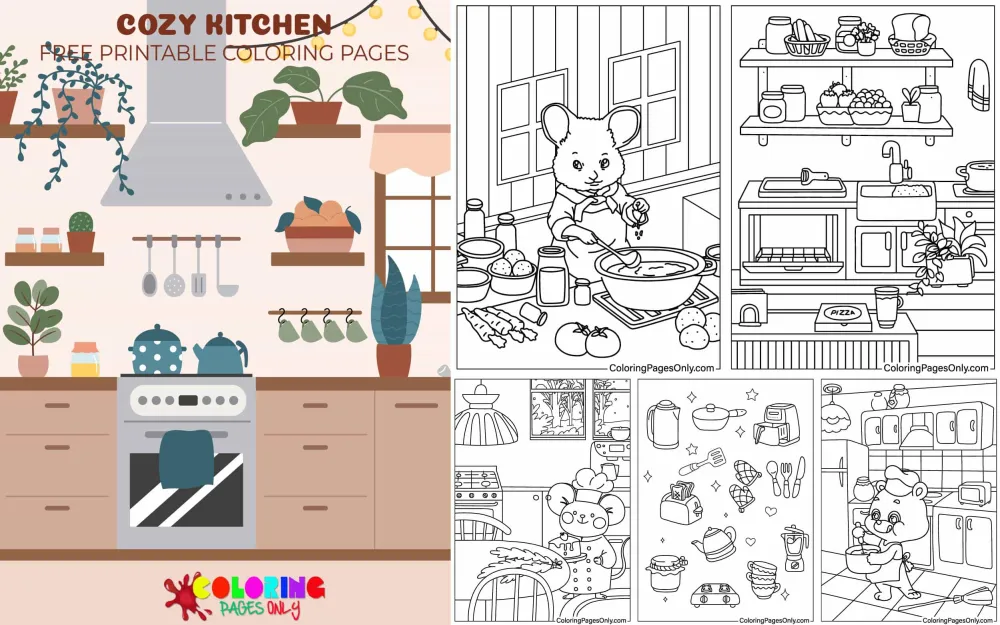
Free Cozy Kitchen coloring pages: 20 printable PDF designs featuring warm country-style kitchen rooms, animal characters cooking and baking, and close-up studies of kitchen objects and appliances. Each page can be downloaded as a PDF to print or colored online in the browser.
The “cozy kitchen” look borrows from farmhouse and cottage interior design: open wood shelving, a kettle on the stove, hanging copper pots, and checked curtains at the window. Some designs in this set are full-room scenes. Others isolate a single kitchen object or appliance. The rest hand the room over to animal characters, cooking, baking, or resting among the cookware. No two pages repeat the same layout, so the set moves through a wide range of drawing styles while staying inside one setting.
Twenty pages, three approaches, one consistent palette of warm wood, copper metal, and soft checked fabric. Color choice, not character choice, becomes the main decision on every design.

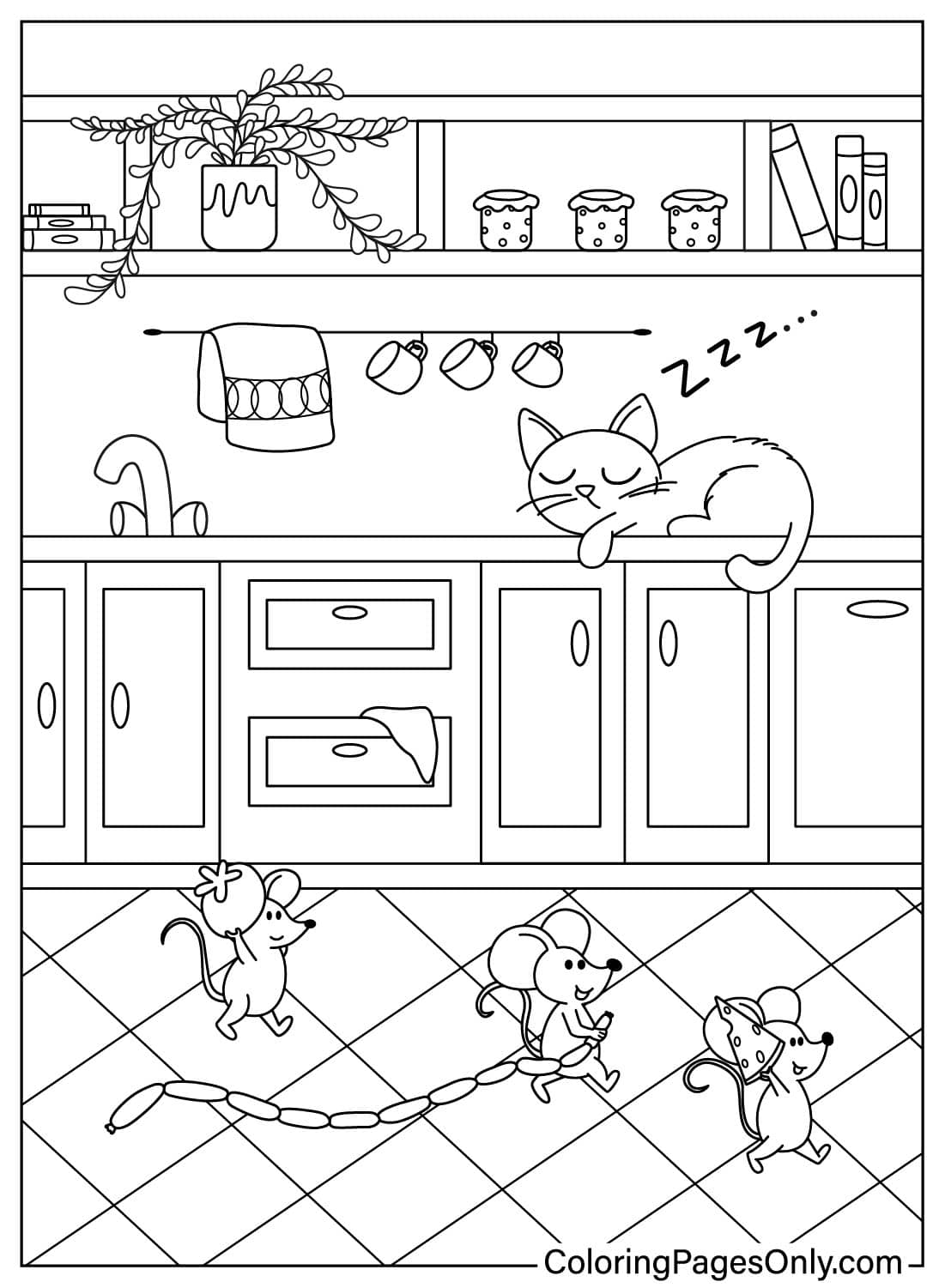
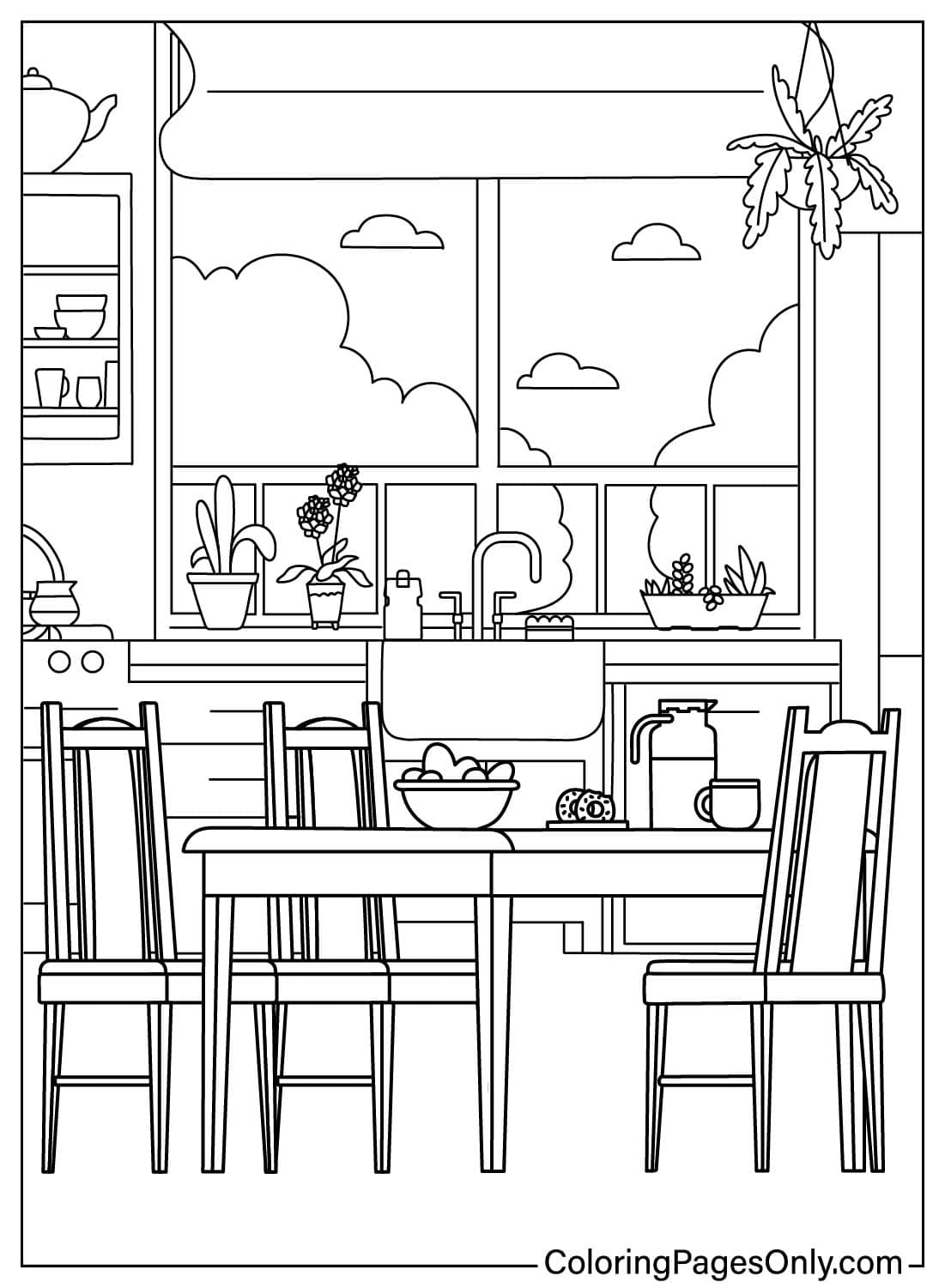
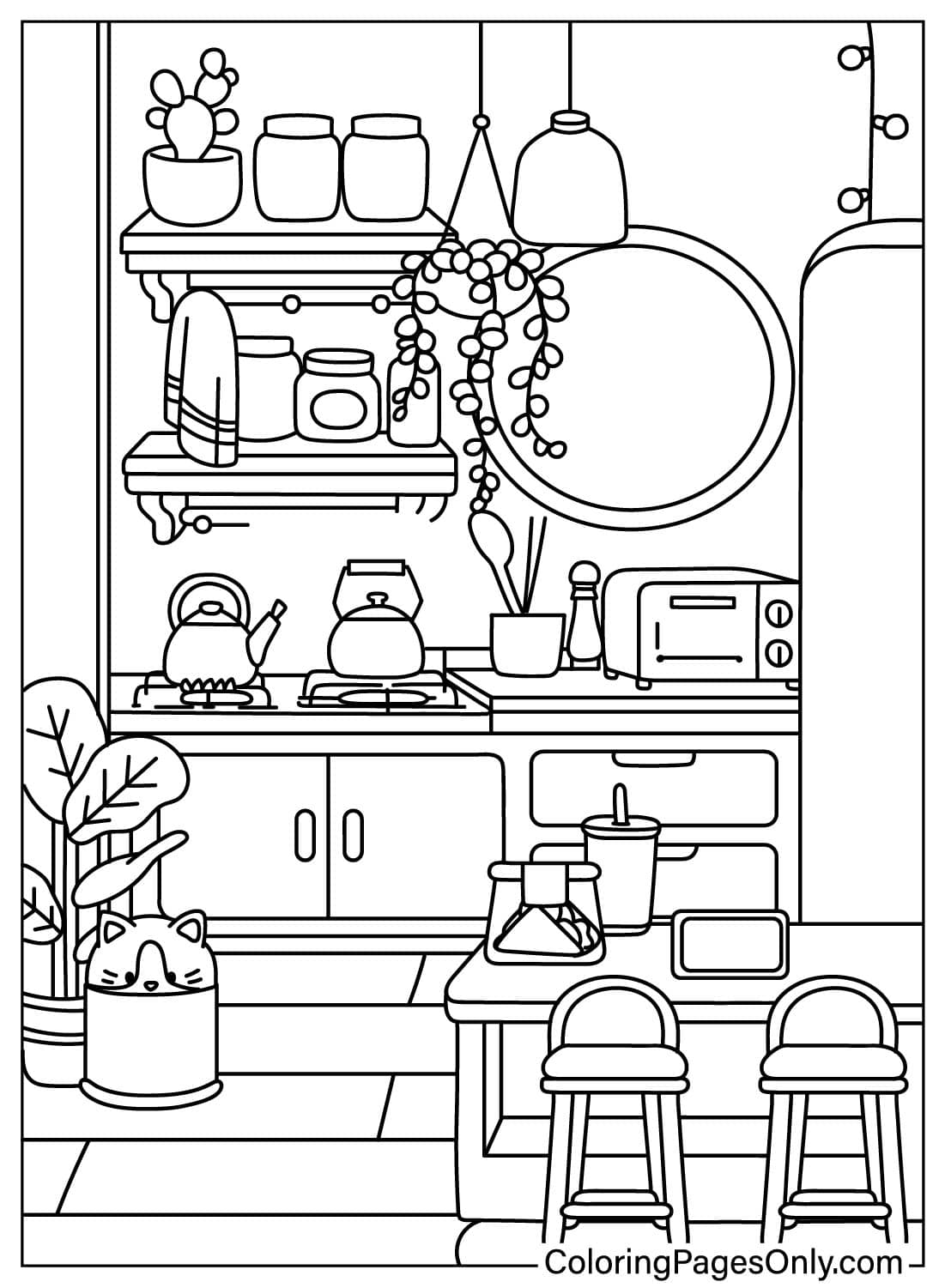
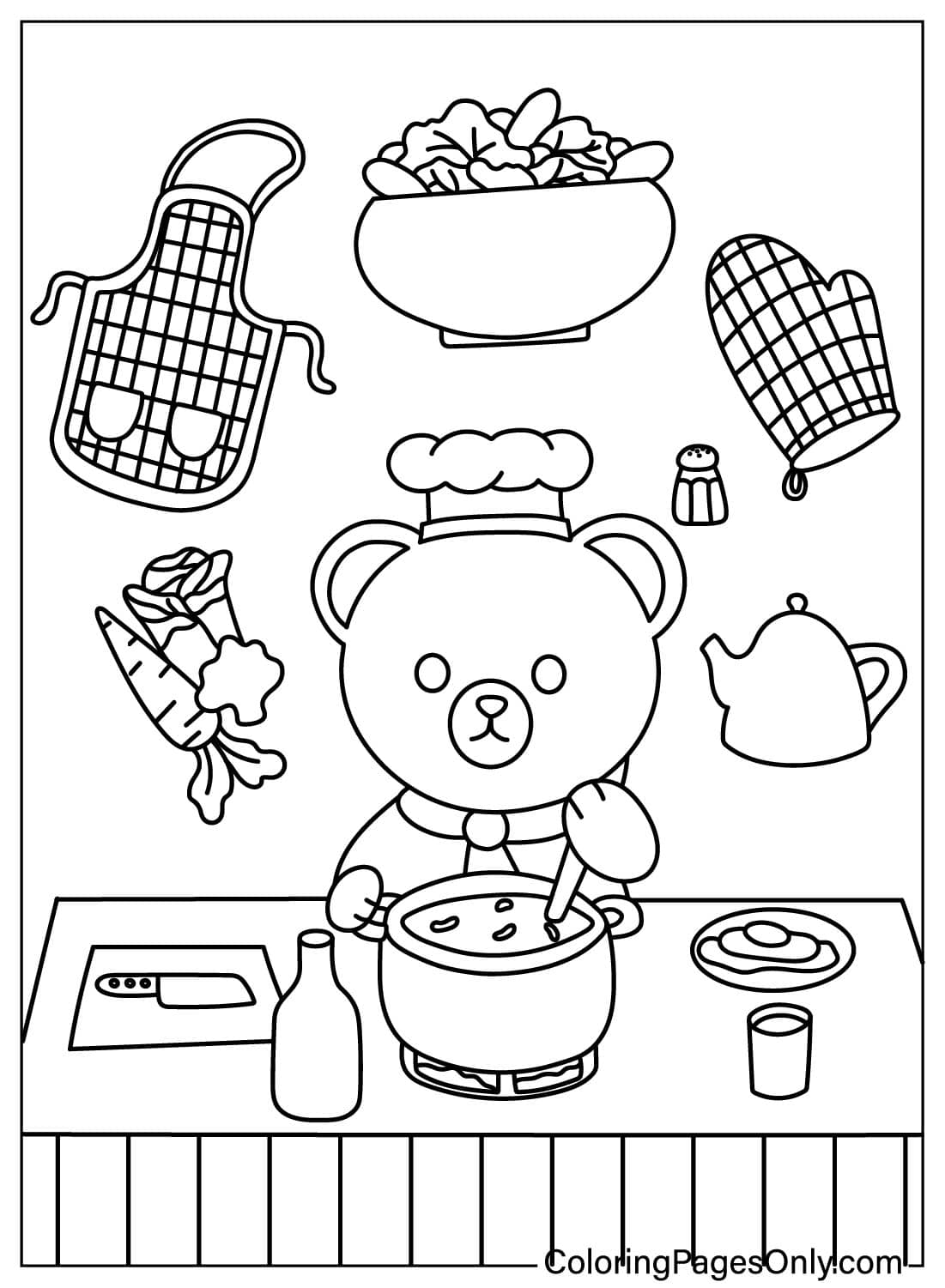
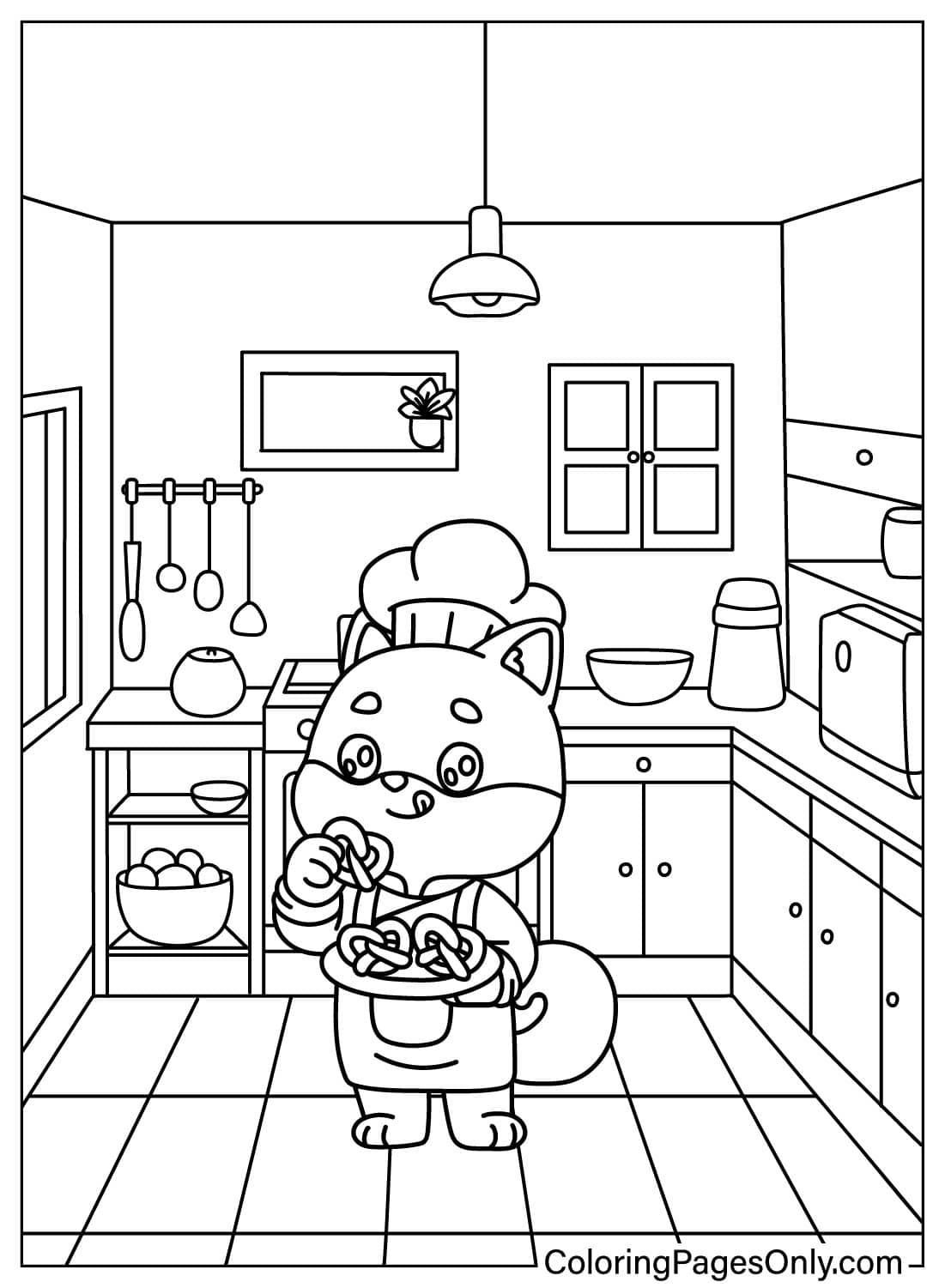
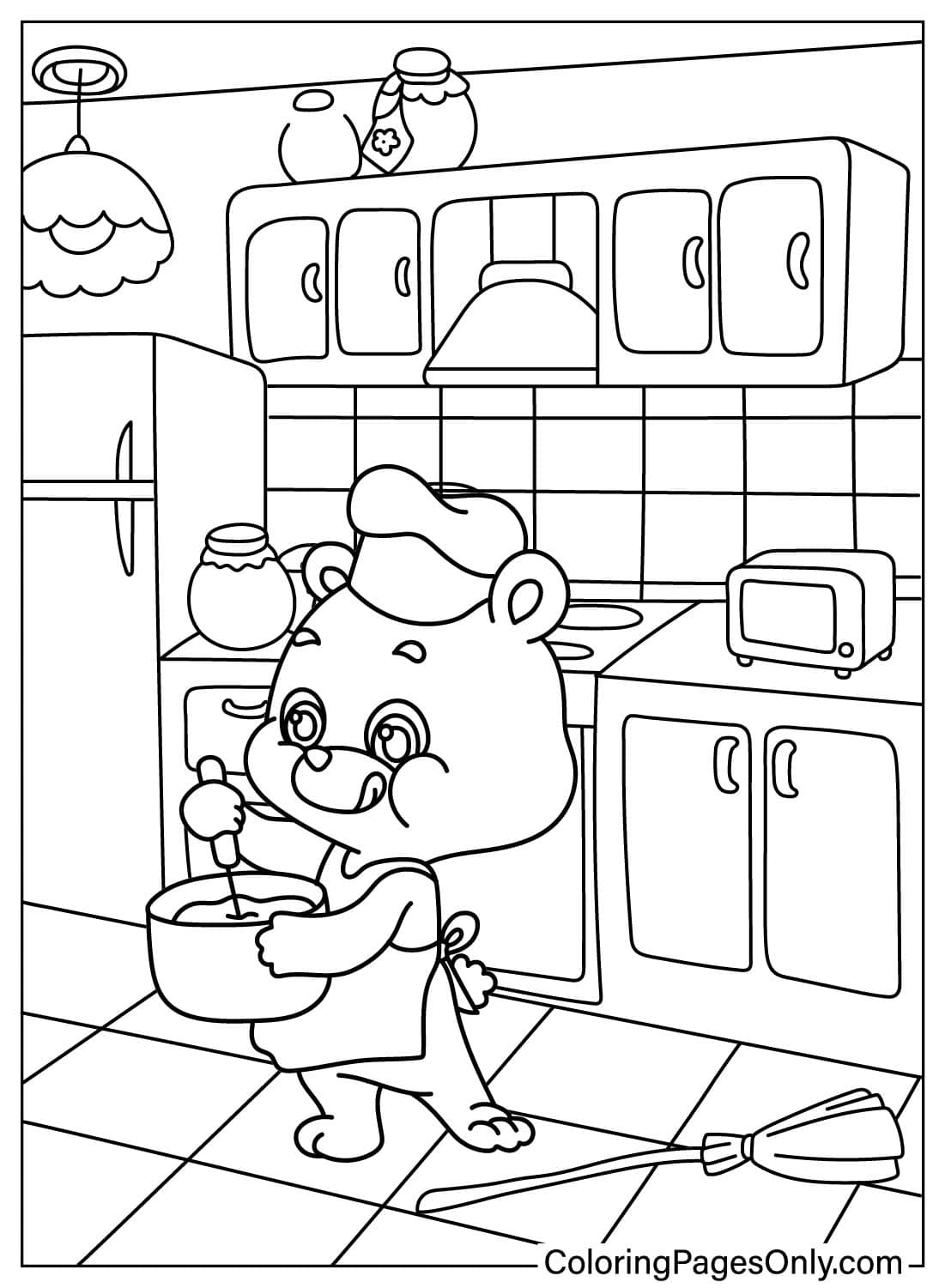
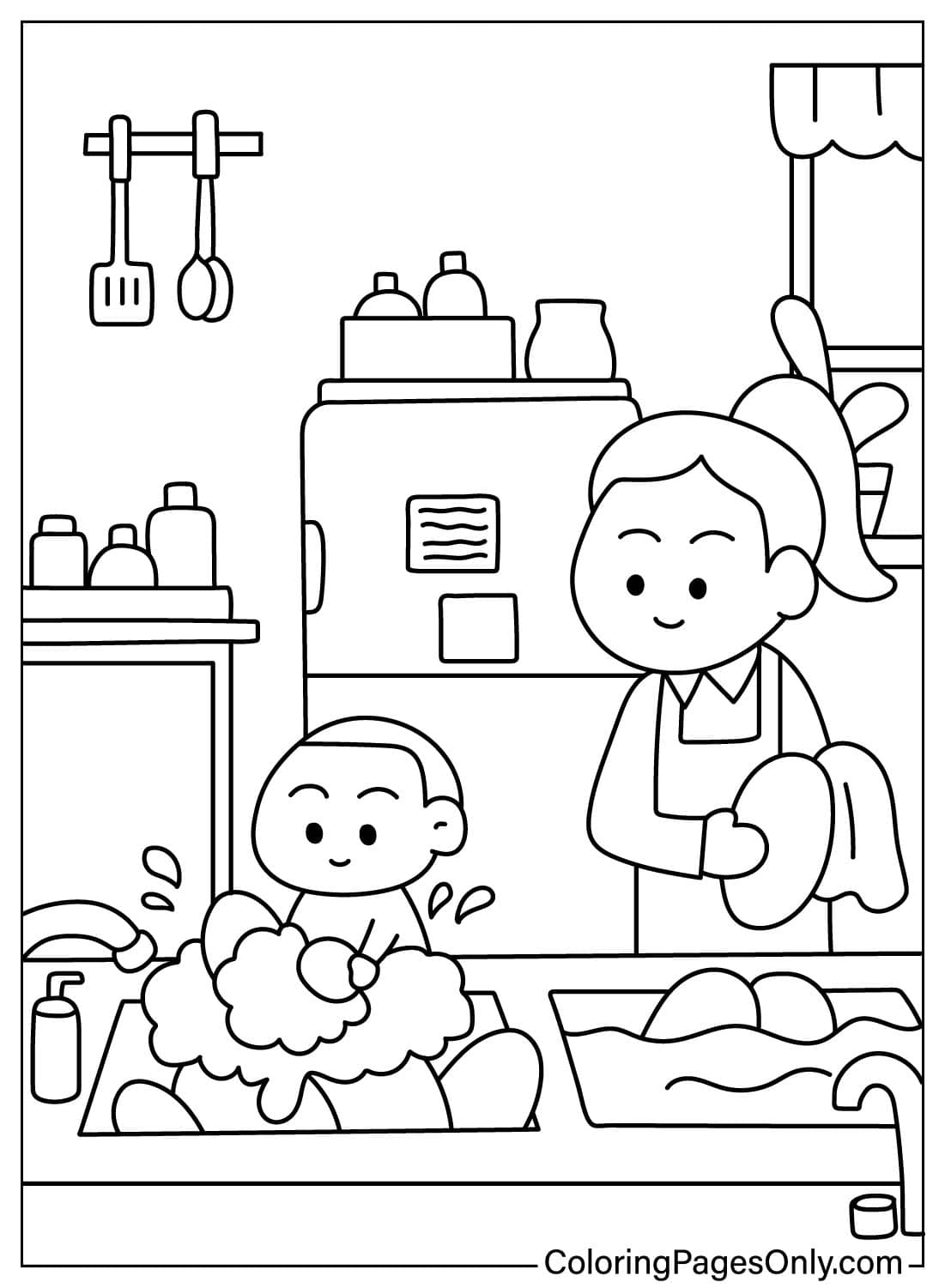
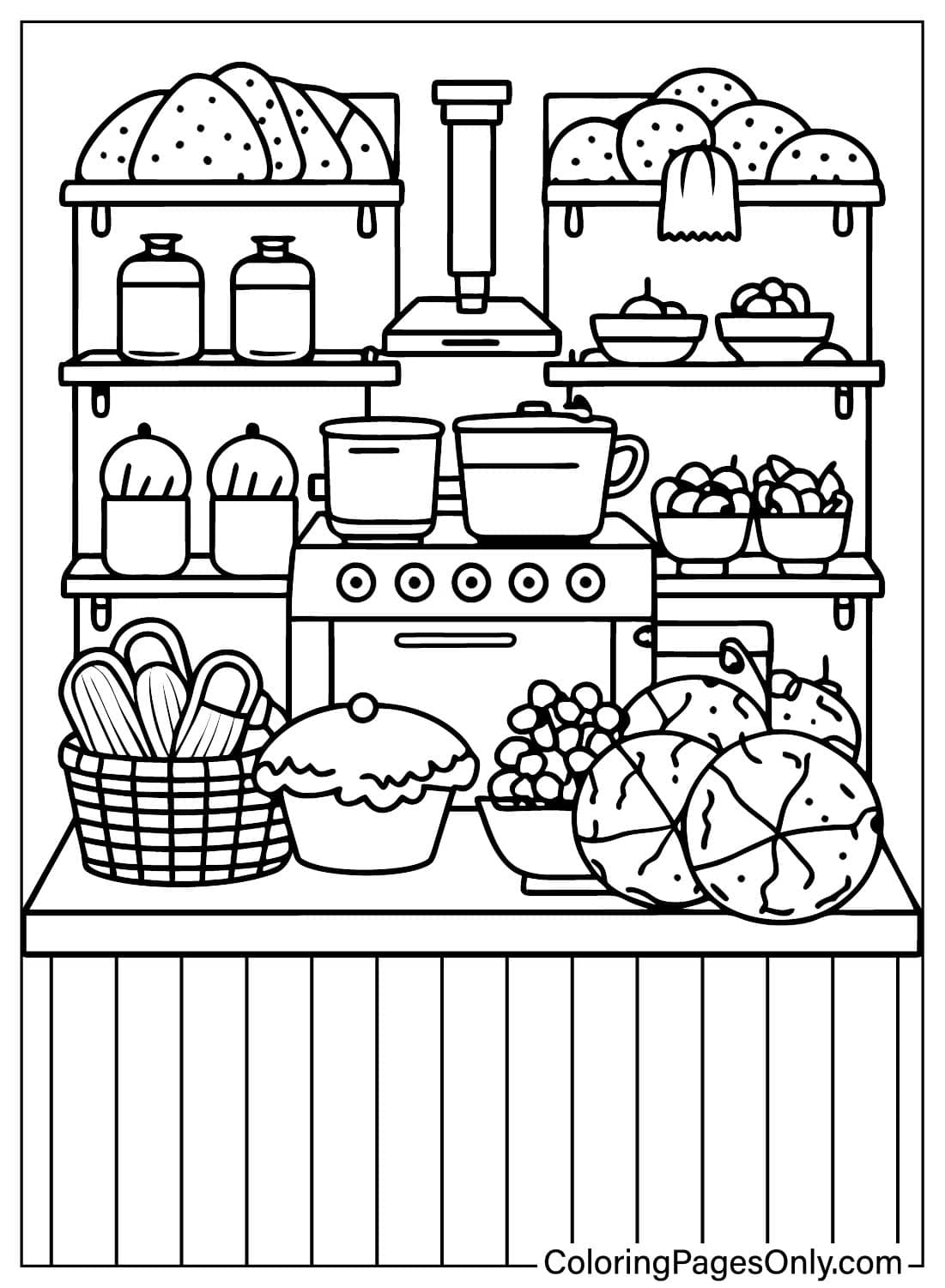

What Is Inside This Collection
The kitchen scenes divide loosely into three approaches: animal characters interacting with the room, the room itself shown as a full scene, and individual objects or appliances pulled in close.
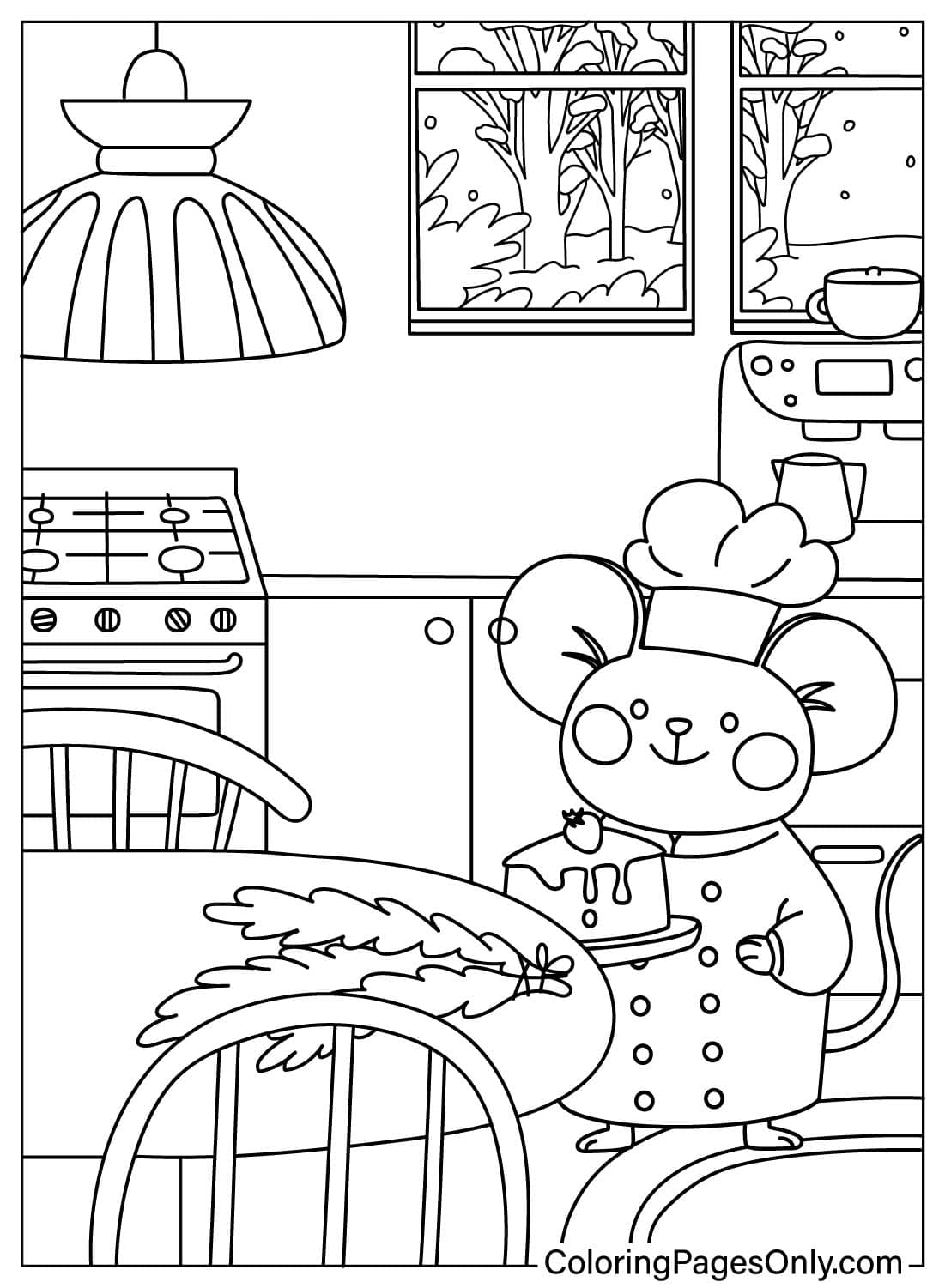
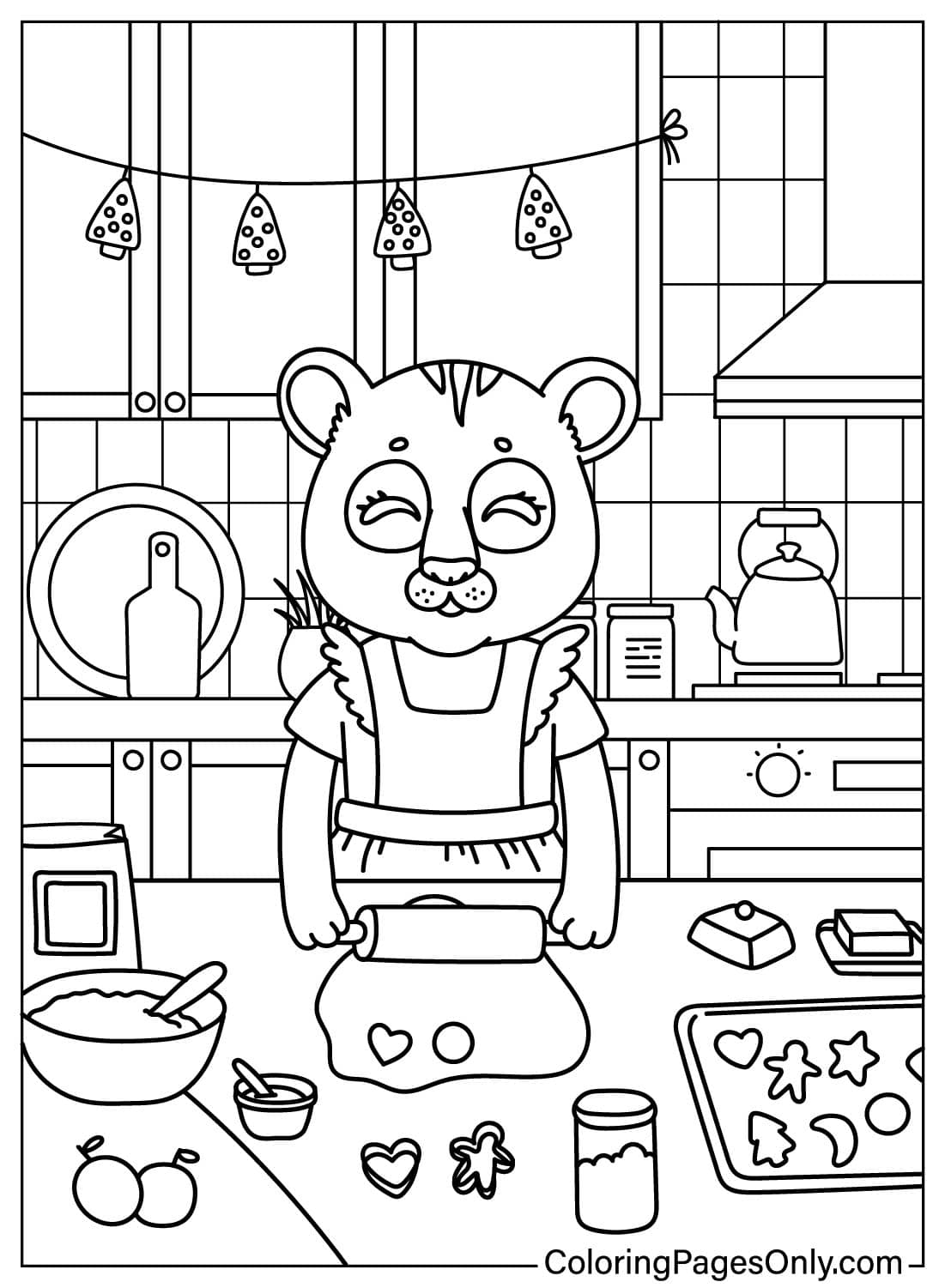
Animal Characters at Work in the Kitchen
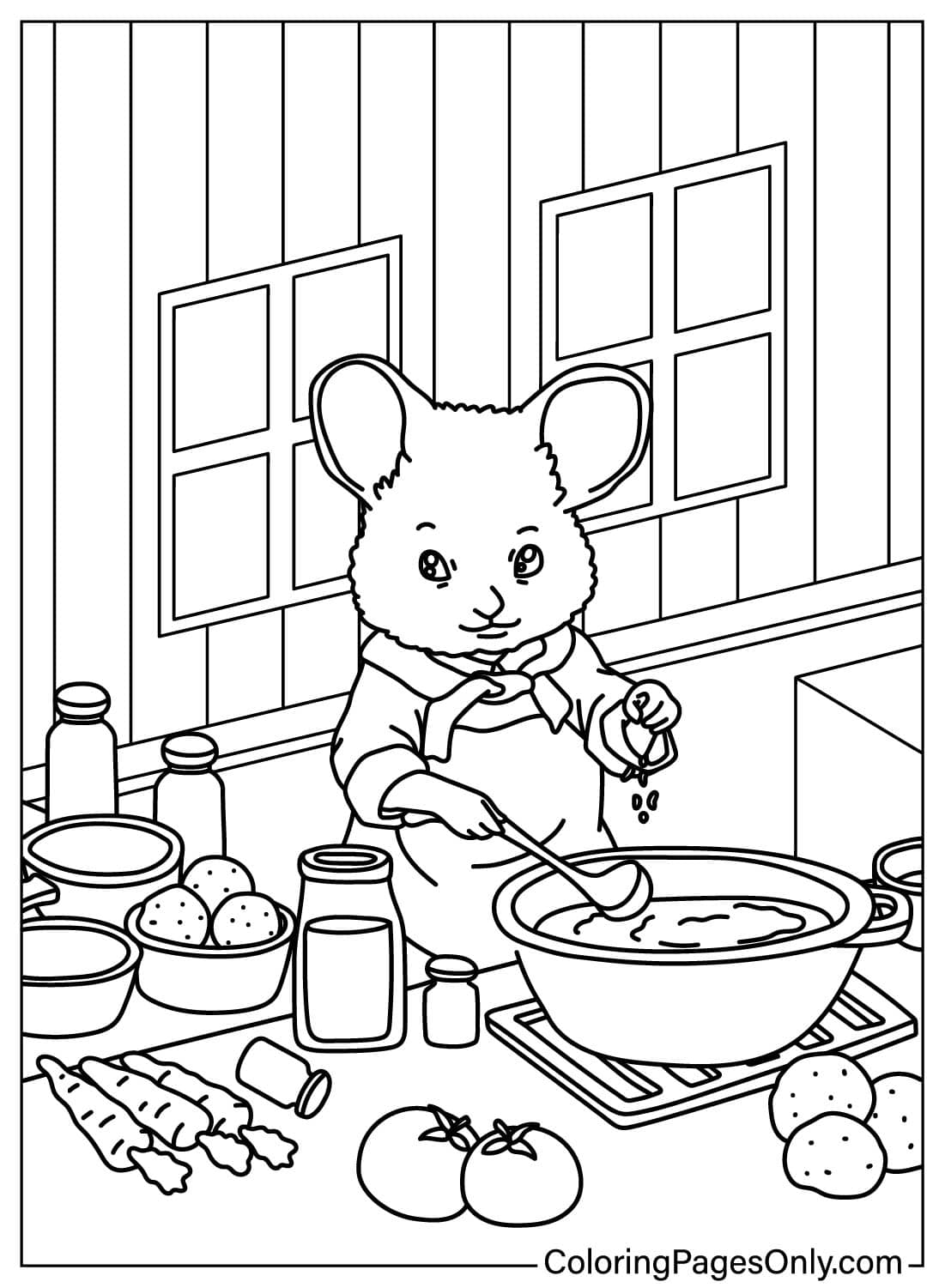
A handful of pages give the kitchen over to an animal character rather than a person, each shown interacting with the room in its own way, from cooking at the stove to resting quietly among the cookware.
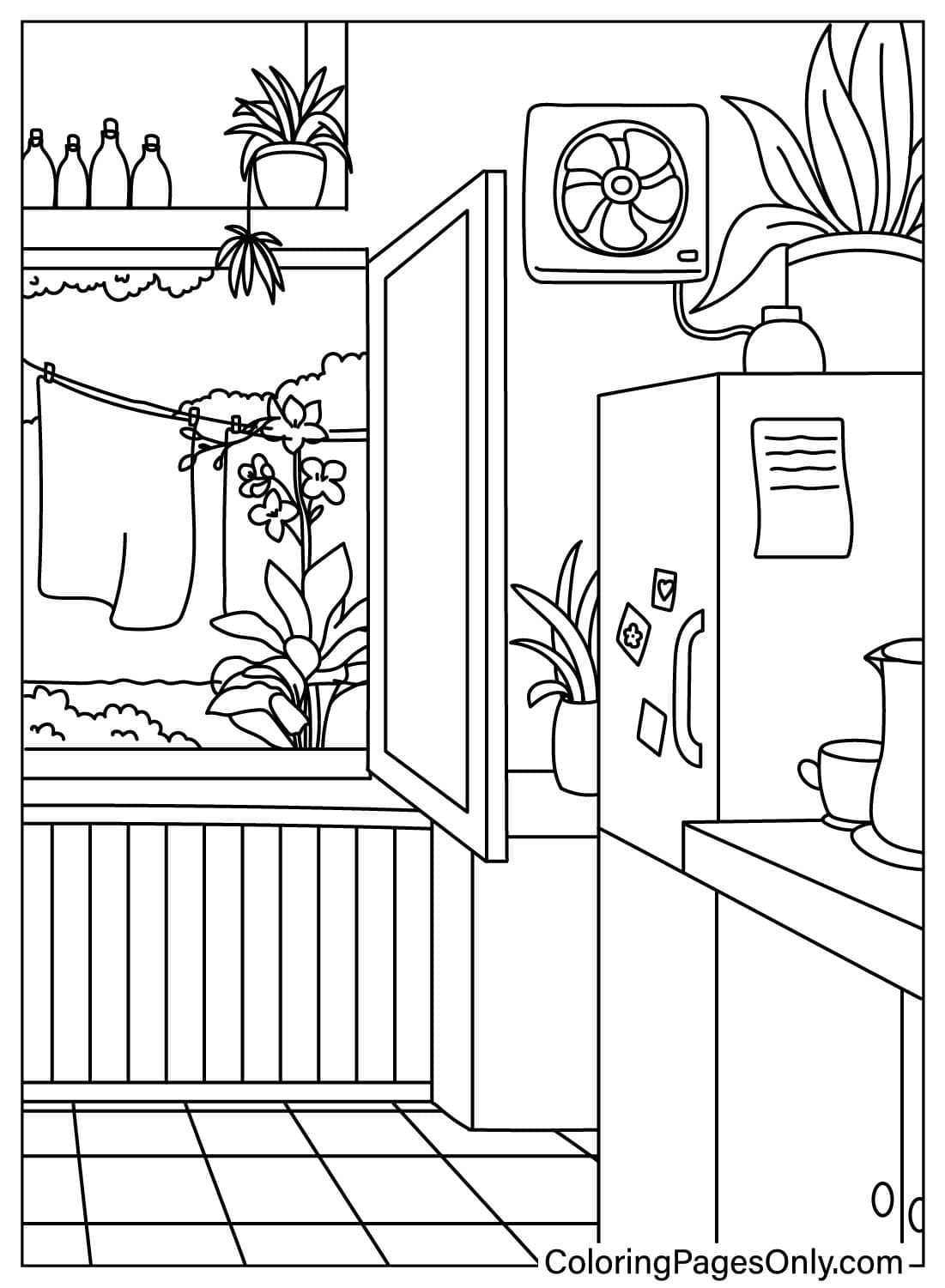
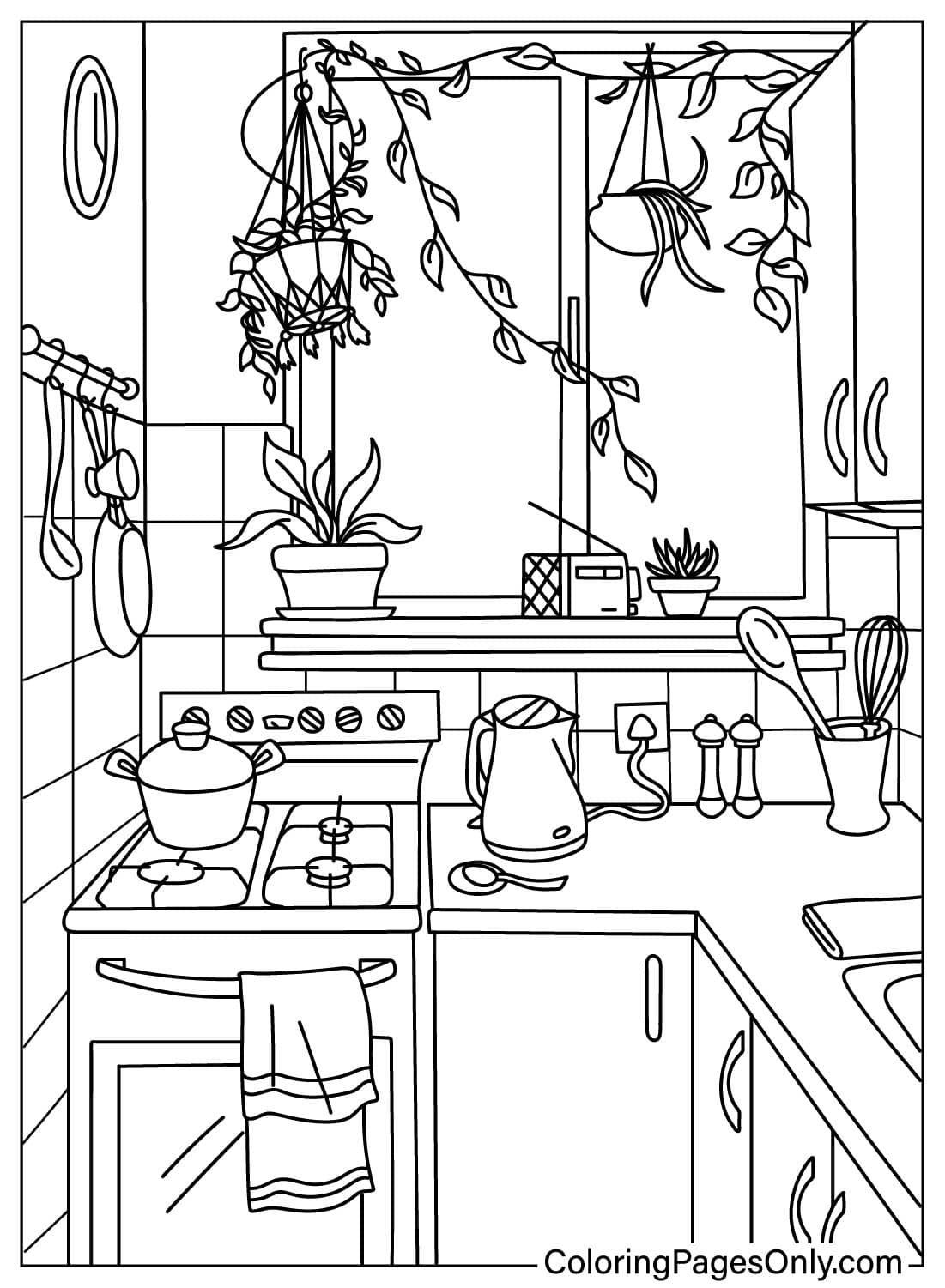
Kitchen Rooms and Cozy Scenes
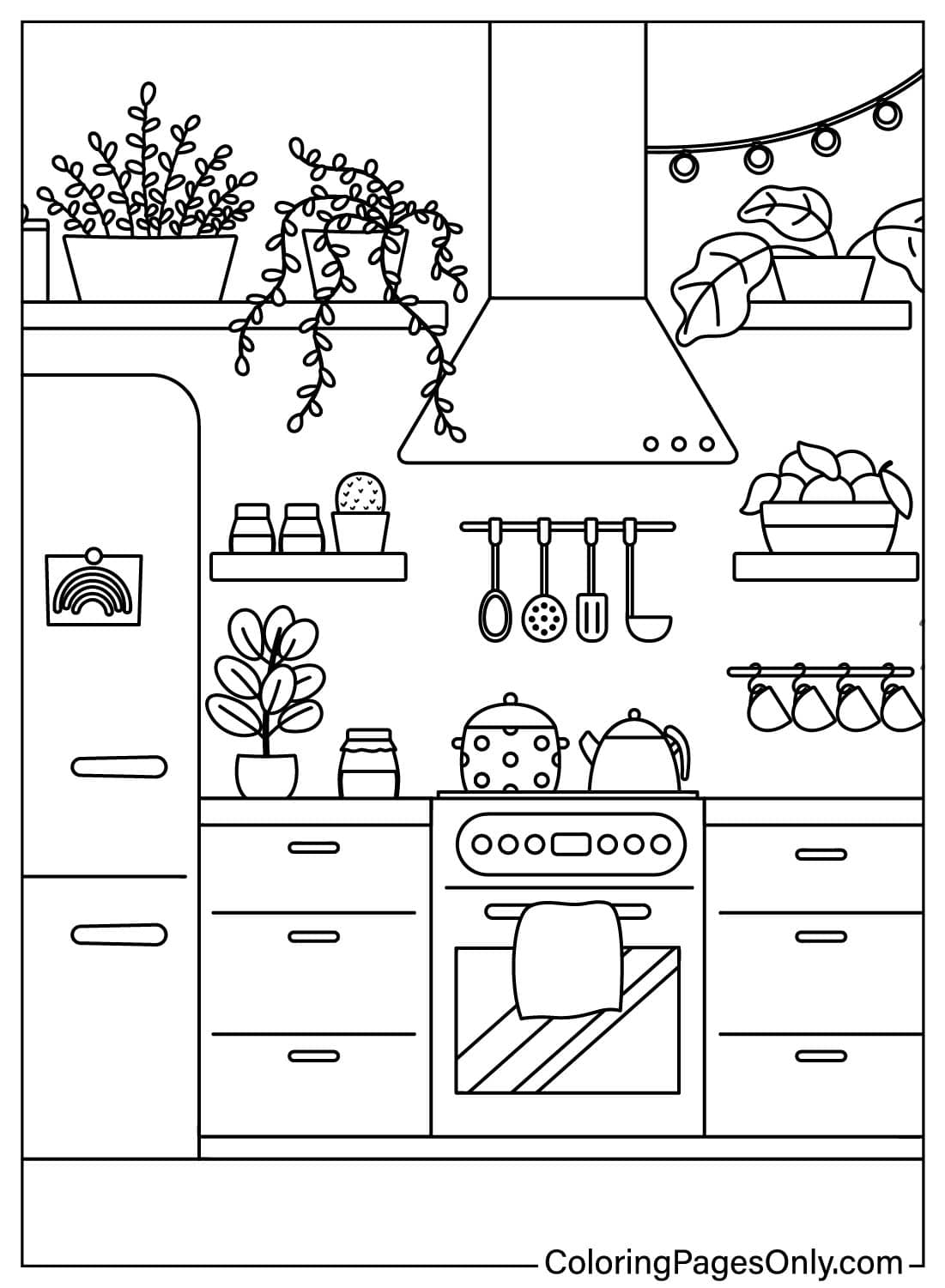
Another set of pages treats the kitchen itself as the subject, ranging from a bare, open layout to a fuller room dense with cabinets, cookware, and warm window light.
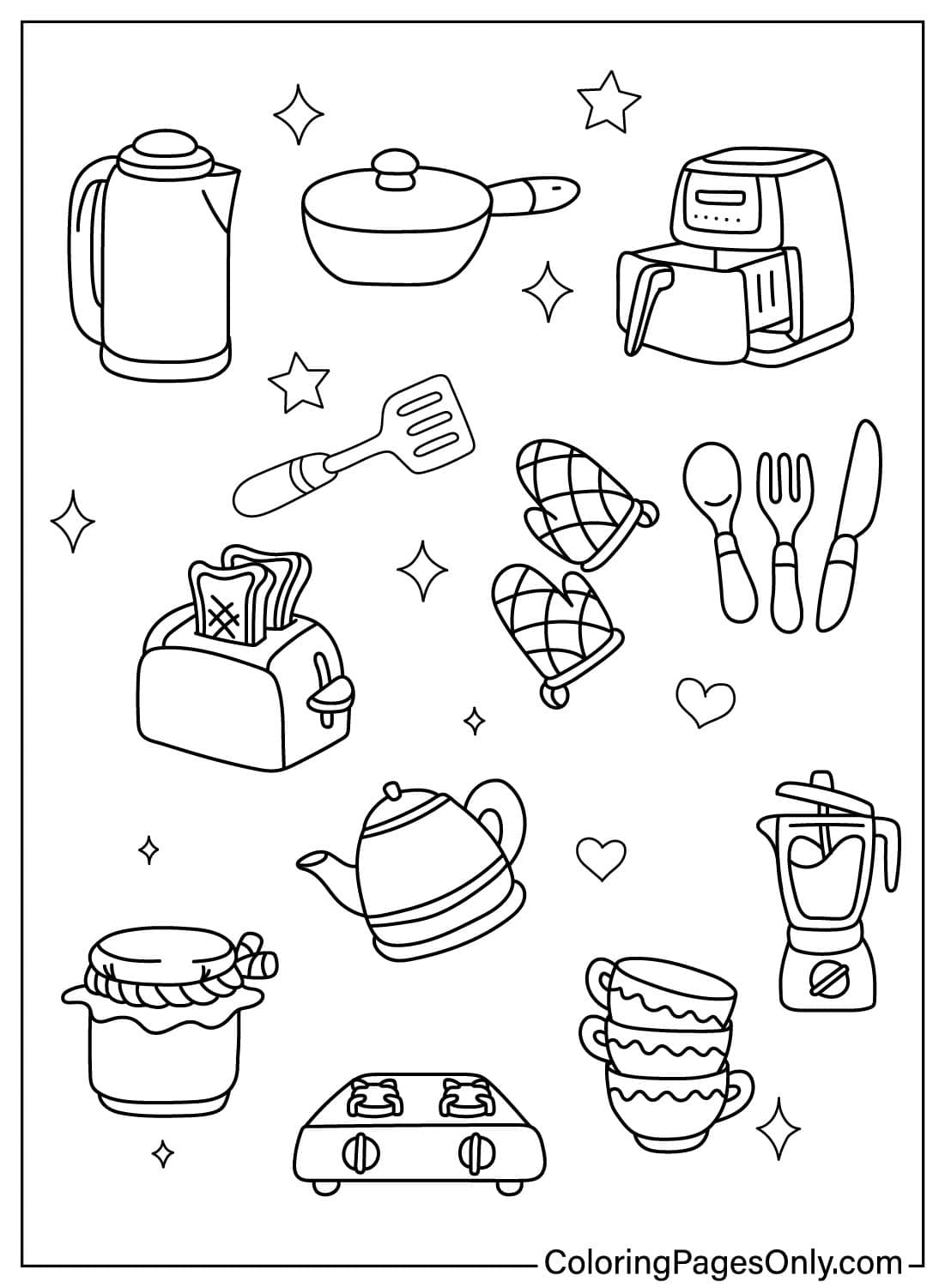
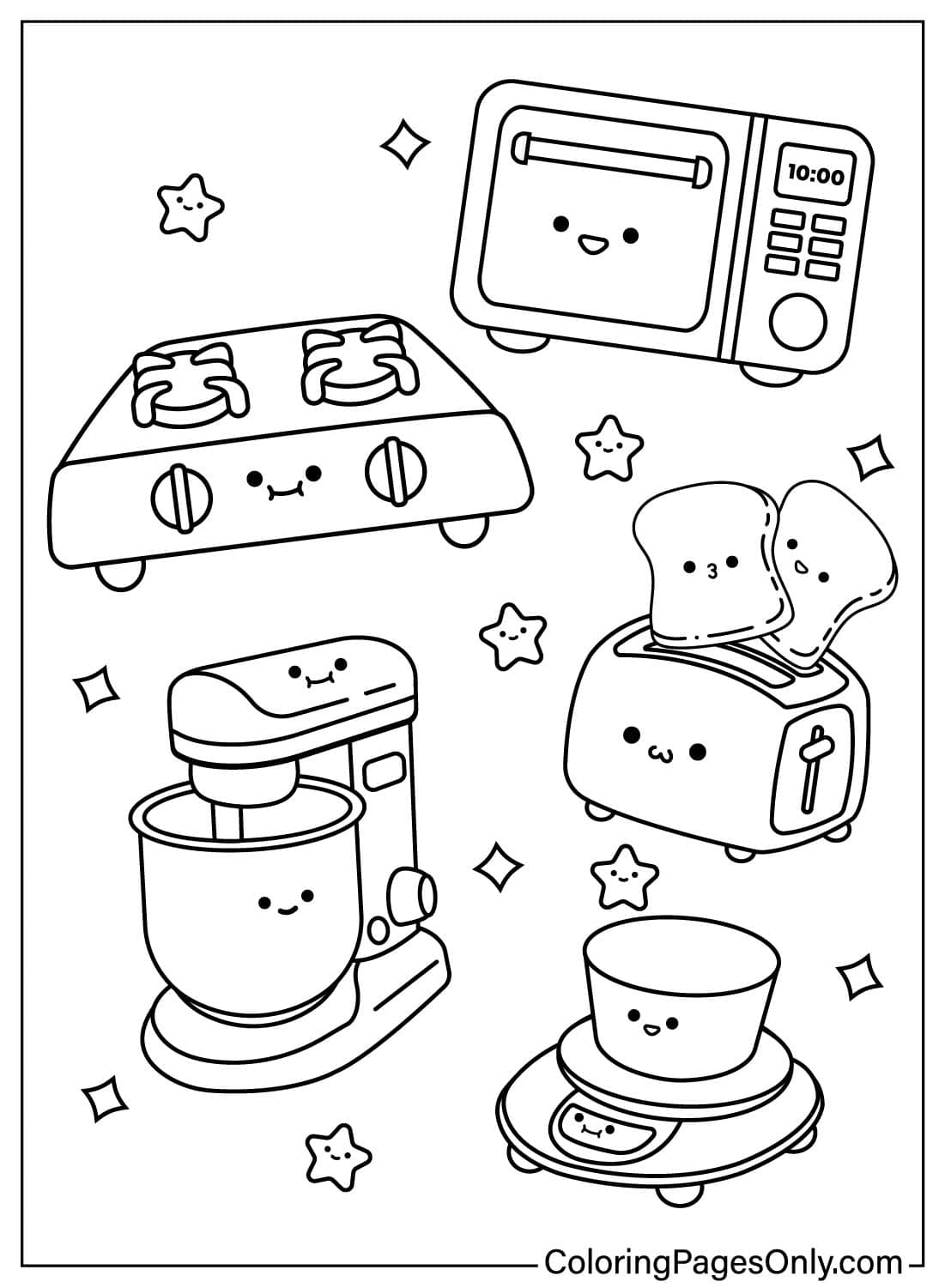
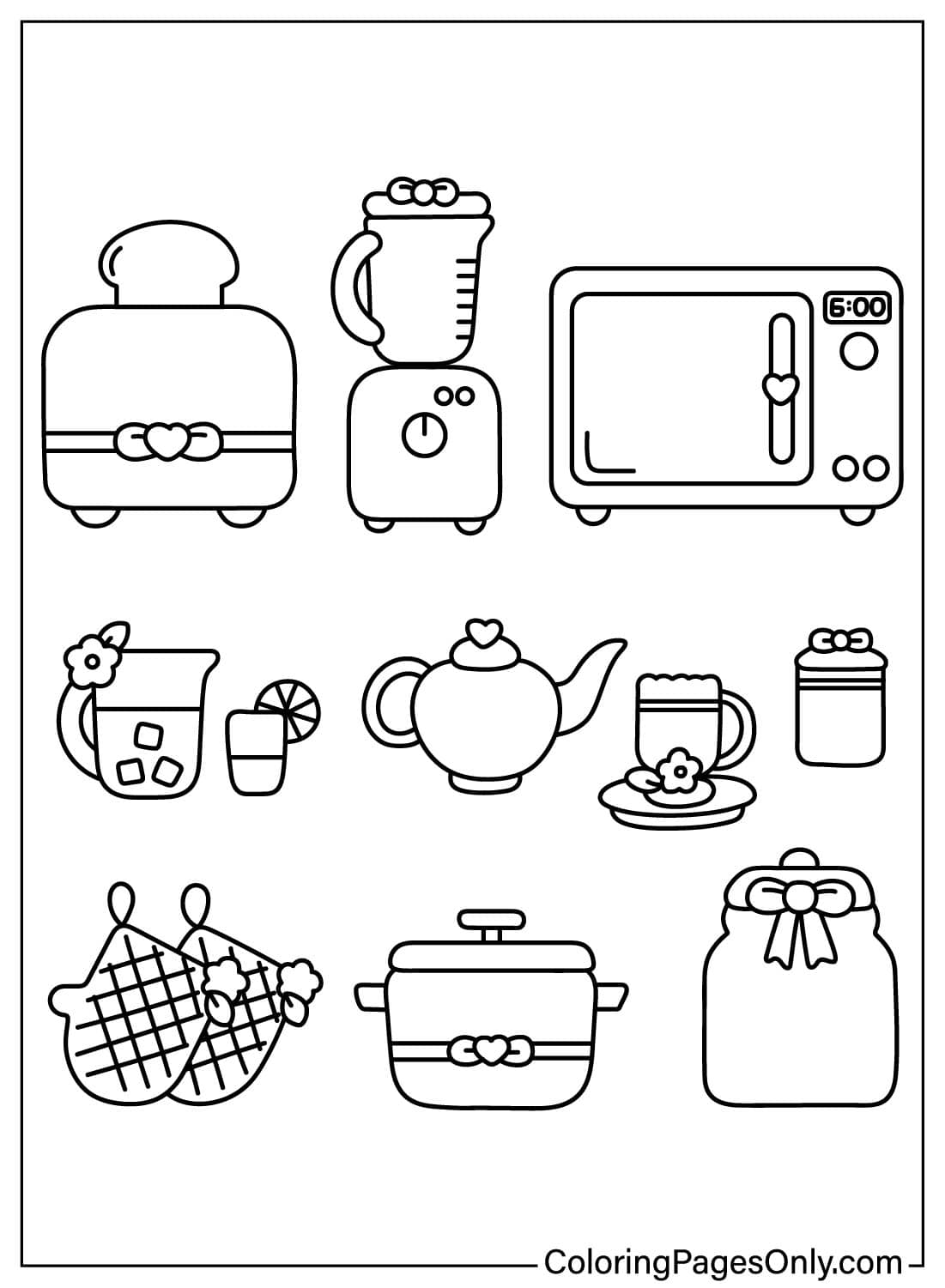
Kitchen Objects and Appliances
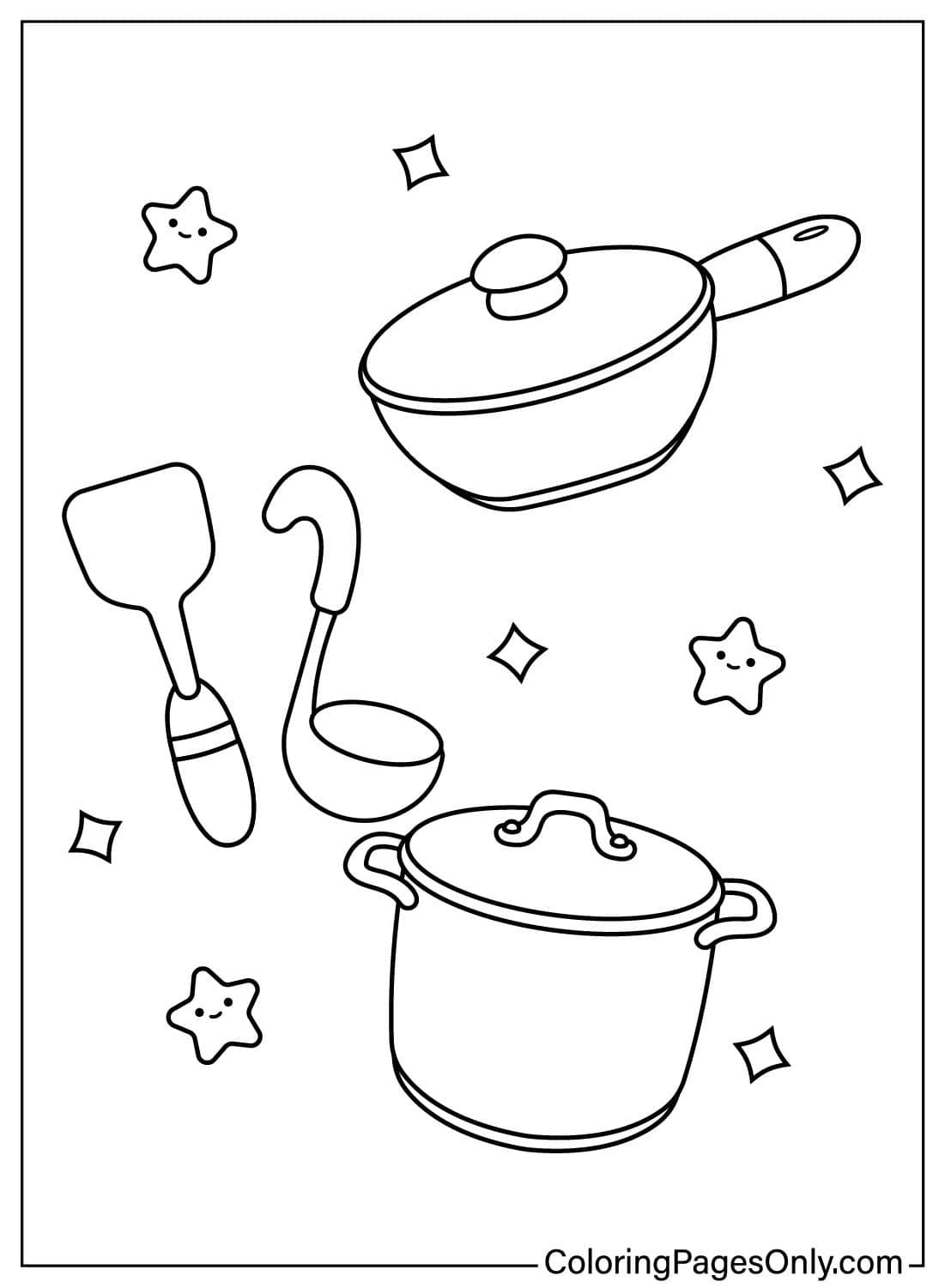
The remaining designs move in close on individual kitchen items and appliances, better suited to a shorter coloring session focused on a handful of shapes and textures rather than a full room.
What Cozy Kitchen Coloring Pages Do
Fine motor development. Structured coloring supports fine motor skill growth in children ages 2 through 7, a benefit the American Academy of Pediatrics counts among the strongest arguments for keeping coloring in a young child’s routine.
Everyday-object vocabulary. Naming a kettle, a whisk, a mixing bowl, or a refrigerator while coloring gives a young child a direct link between a familiar household object and its name, something a fantasy scene rarely offers in the same concentrated way.
Anxiety reduction through focus. Following a 2005 study published in the Art Therapy Journal, participants who completed structured coloring sessions showed a measurable drop in reported anxiety afterward.
A shared, everyday setting. A kitchen needs no introduction. A child recognizes a stove or a teapot on sight, which means coloring can start immediately instead of requiring an explanation of an unfamiliar world first.
How to Color Cozy Kitchen Pages Well
- Wood cabinets and shelving: Base the wood in Crayola Raw Sienna, then add curved Crayola Brown lines along panel edges for grain. A light pass of Crayola Tan across the flat centers keeps the wood from looking uniform.
- Copper pots and kettles: Color the metal in Crayola Copper, then add short streaks of Crayola Burnt Orange near the base of each pot for shadow. Leave a few unshaded lines, or add a light Crayola White highlight, for the shine of polished metal.
- The bear and mouse characters: Color the bear’s fur in Crayola Brown with Crayola Sepia shading under the arms and belly. Color the mice in Crayola Gray with Crayola Salmon ears and nose, since warm pink keeps a gray mouse from reading as flat.
- The tiger and sleeping cat: Alternate Crayola Orange and Crayola Black for the tiger’s stripes, leaving the belly and paws unshaded white. Color the cat in soft Crayola Gray with a white chest patch and paws, adding a slightly darker gray along the back for form.
- Checked curtains and tablecloths: Use Crayola Scarlet and white in an even checkerboard, or swap in Crayola Cerulean for a cooler scene. Keep the checks a consistent size across the fabric so the pattern reads clearly from a distance.
- Warm window and stove light: Blend Crayola Yellow Orange closest to a window or stove flame, fading to Crayola Goldenrod farther from the light source. This gradient is what gives a page its late-afternoon warmth rather than a flat, evenly lit room.
5 Creative Craft Ideas With Cozy Kitchen Coloring Pages
1. Recipe Box Front
Color a full kitchen room scene and trim it to size. Glue it to the front of a recipe card box or tin used to store family recipes. The finished box turns a coloring page into something used in the kitchen itself.
2. Kitchen Window Garland
Color three or four pages and punch a hole in each top corner. String them together with twine and hang the strand across an actual kitchen window. The garland works as a rotating display piece for finished pages.
3. Fridge Character Gallery
Color the animal character pages and cover each with clear contact paper for durability. Display them together on the refrigerator using magnets. The gallery gives finished pages a permanent spot in the room they depict.
4. Wipeable Placemat
Color a full kitchen scene page, then cover both sides with clear contact paper. The laminated page becomes a durable, wipeable placemat for snack time. It holds up to repeated use far better than a plain printed sheet.
5. Kitchen Helper Chart Border
Color the appliance and object pages, then cut them into strips. Use the strips to border a simple kitchen chore or helper chart for children. The border ties the chart’s kitchen theme directly to the coloring set.
Frequently Asked Questions
What are Cozy Kitchen coloring pages?
A free set of 20 printable designs built around one warm kitchen setting, split across full room scenes, kitchen object and appliance pages, and animal characters cooking or resting in the room.
What is the “cozy kitchen” style based on?
It follows the farmhouse and cottage interior trend: open wood shelving, visible cookware, checked textiles, and warm natural light. It is a decorating style, not a fictional world, so any palette still reads as the same kitchen.
Which animal characters appear in the set?
A bear, a tiger, a cat, a puppy, and two mice, each interacting with the kitchen differently. None is tied to an existing show, book, or brand.
What does the object and appliance group include?
Close-up pages of items like a stove, refrigerator, and mixer, pulled out of a full room and shown on their own for a shorter, more focused coloring session.
What colors work best for a cozy kitchen scene?
Warm wood tones like Crayola Raw Sienna and Tan, Crayola Copper for cookware, and a soft Crayola Yellow Orange glow near light sources carry the look. Cool accent colors can be used for textiles without breaking the warm palette.
Can these pages be colored online instead of being printed?
Yes. Every design opens in the browser-based coloring tool, so a page can be finished on a tablet or computer without printing or downloading anything first.
Are Cozy Kitchen coloring pages suitable for young children?
Yes. The room-scene and object pages use large, simple shapes that suit children around age three, while the animal character pages and denser room scenes fit better with children five and up.
Can these pages be used in a classroom kitchen or cooking unit?
Yes. The object pages support kitchen vocabulary lessons, and the room scenes fit naturally into a classroom unit on food, family routines, or home safety.
Start Coloring
Click any design to open it; no account, email, or payment is needed at any step. Print straight from the browser at full resolution, or skip the printer and finish the page inside the online coloring tool instead. Once a page is done, the Facebook and Pinterest share buttons above each design send it out directly.