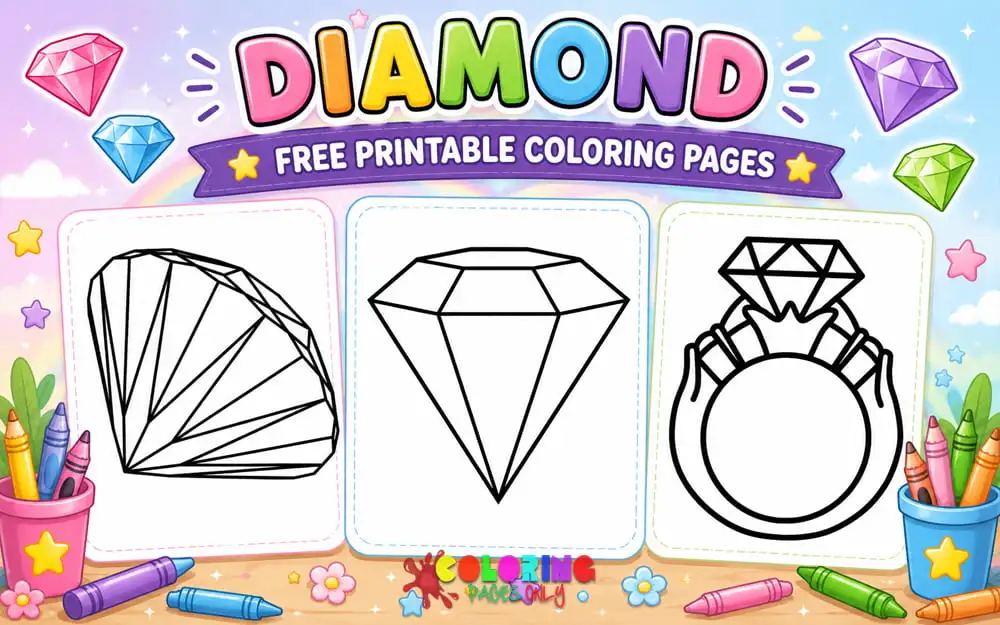
Free Diamond Coloring Pages: 30+ printable PDF pages featuring classic cut diamonds, an uncut rough diamond, a glitter diamond ring, heart-shaped diamonds, a mandala with diamonds, cartoon and sticker designs, an Easter egg diamond, and simple outlines for kids. All free, download PDF to print, or color online.

A diamond page is really a geometry lesson in disguise. The familiar pointed shape is actually a precise arrangement of flat triangular and kite-shaped faces called facets, each angled to catch and redirect light. Getting a coloring page to look like a real diamond means thinking about how light behaves: bright white at the top center where light enters, grading outward through cool grey and blue, and using the facet boundaries as natural color divisions rather than filling the whole shape as a single flat tone.

A diamond is a naturally occurring mineral made of pure carbon, the hardest known natural material on Earth, rated 10 on the Mohs hardness scale. According to the Gemological Institute of America, diamonds are evaluated using the Four Cs: Cut, Color, Clarity, and Carat, a system the GIA developed, and that has become the global standard. The most popular cut is the Round Brilliant, which uses 58 precisely angled facets to maximize sparkle. Diamond is also the birthstone for April. That combination of geometry, light, and symbolic meaning gives these pages a richer creative direction than most simple shape pages. Simpler outlines and cartoon versions suit younger children, while the detailed faceted designs and the mandala page challenge older learners and adults.

They work well at home, in the classroom, or as part of a geometry and science activity. Because diamonds are natural gemstones rather than characters or brands, no licensing disclaimer is needed here.

Quick Answer

Diamond coloring pages are a free set of 30+ printable PDFs and online coloring sheets covering classic cut diamonds, an uncut rough stone, a diamond ring, heart and mandala designs, cartoons, stickers, and simple outlines. The key coloring challenge is using light and shadow to make a flat geometric outline read like a real faceted gem.

Best for: kids, older learners, adults, fans of geometry and gemstones, and anyone practicing gradient and light-effect coloring 

Formats: printable PDF and online coloring 

Popular styles: classic cut diamonds, heart-shaped diamonds, mandala with diamonds, cartoon and sticker designs, and simple outlines for kids 

Creative uses: geometry and science activities, light-effect coloring practice, mandala relaxation, gemstone design study, and April birthstone projects

What’s Inside Diamond Coloring Pages

Classic Cut Diamond Pages

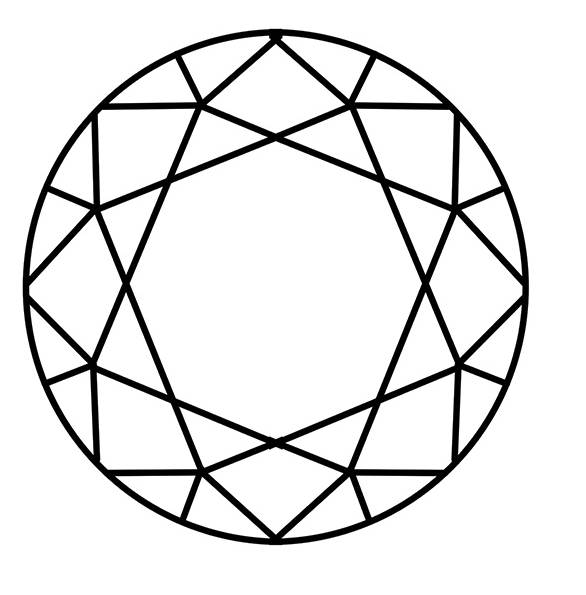
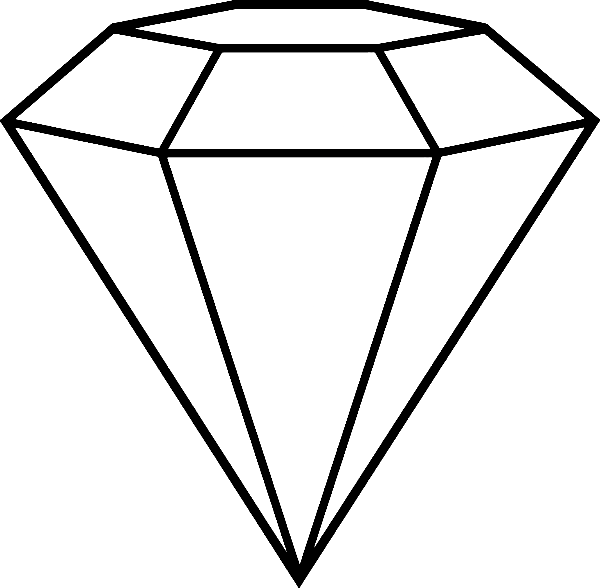
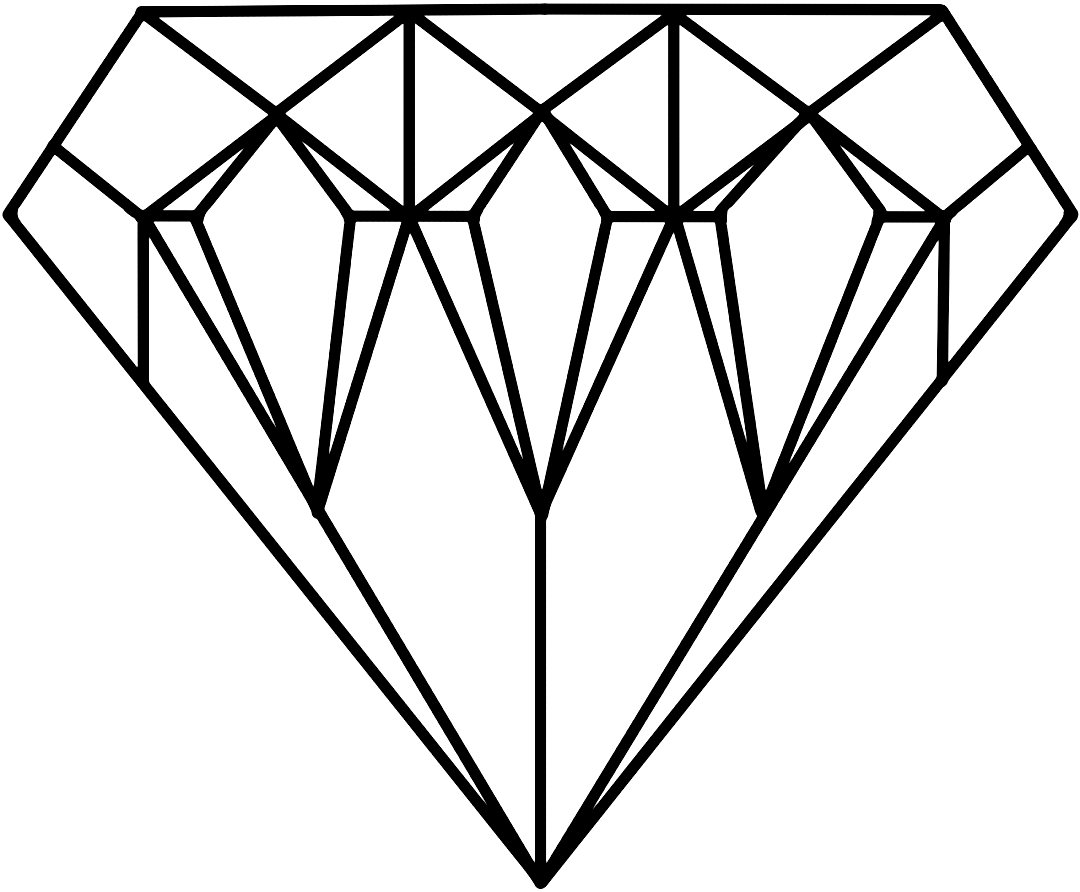
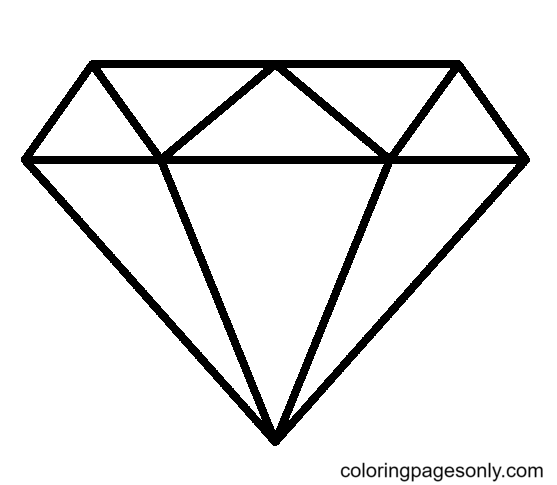
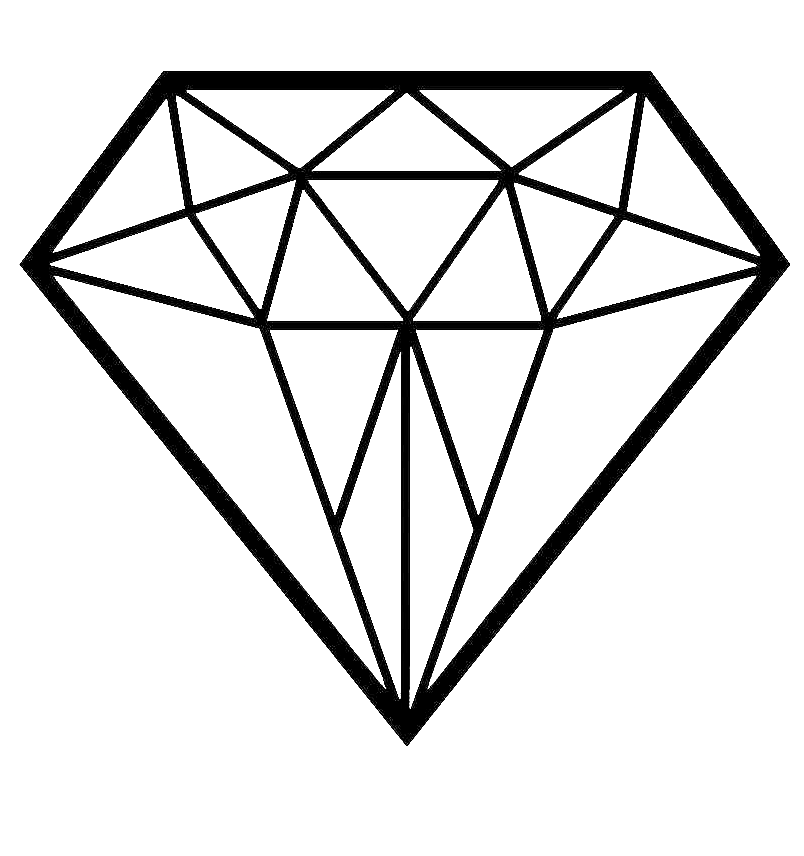
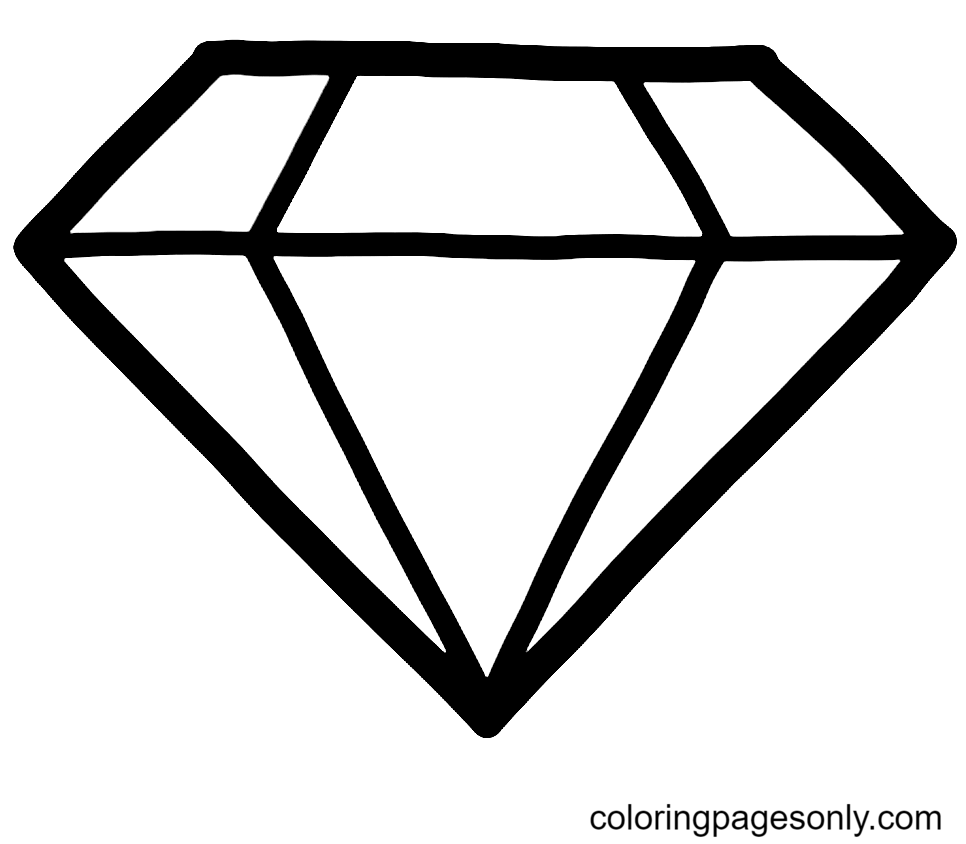
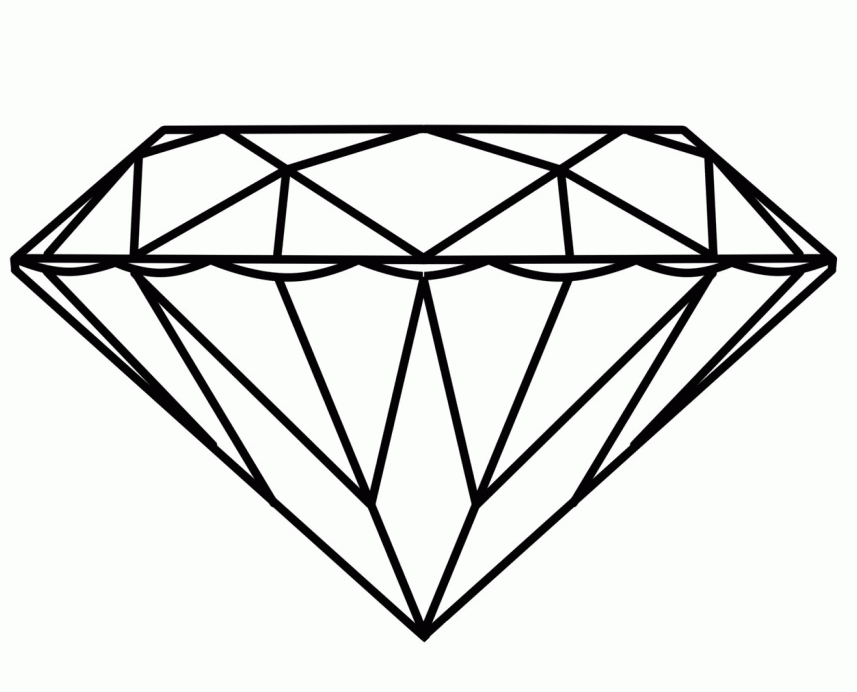
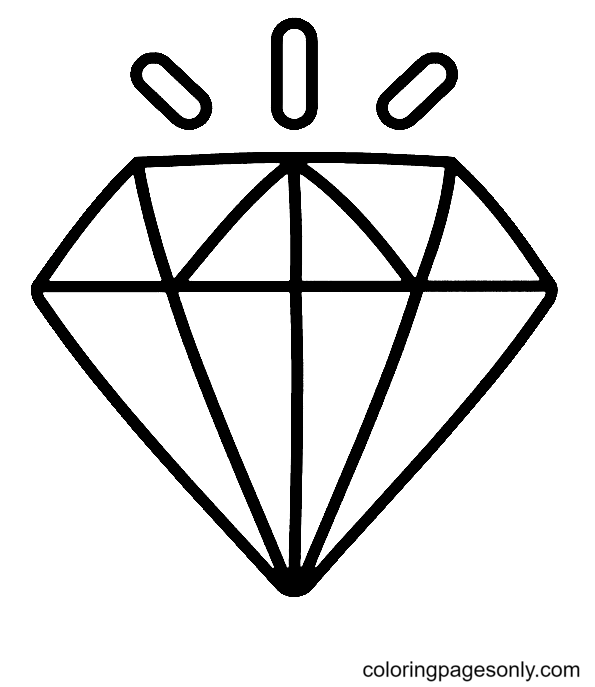
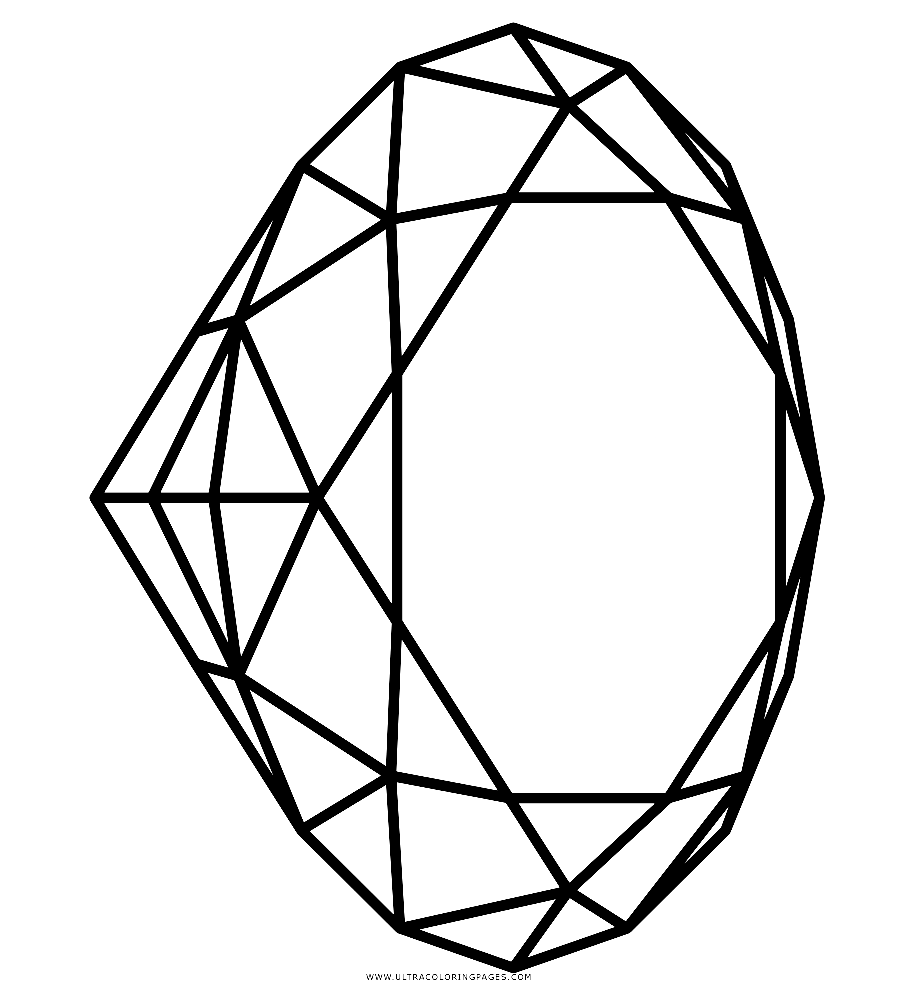
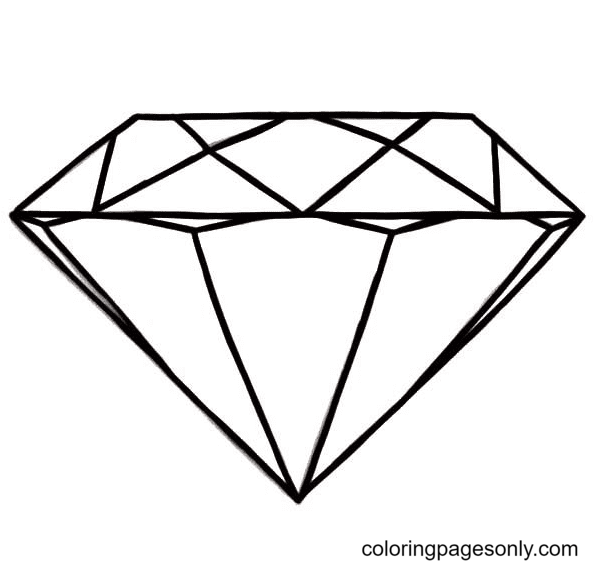
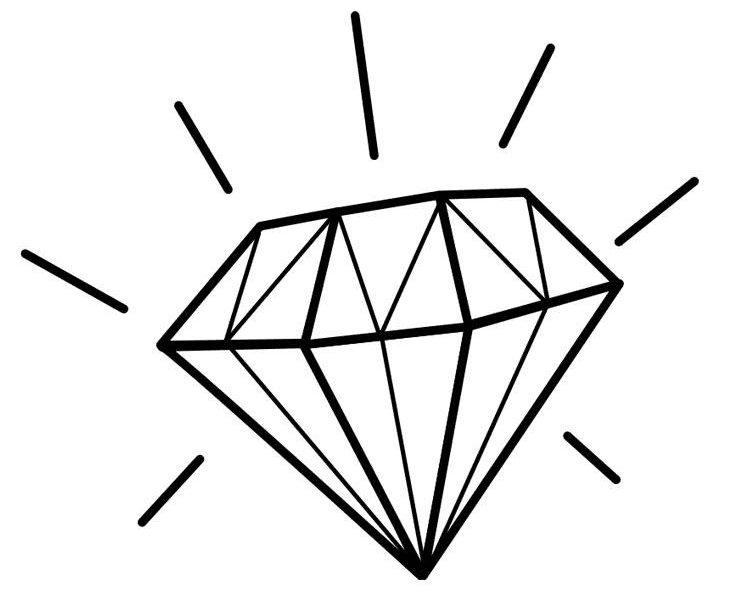
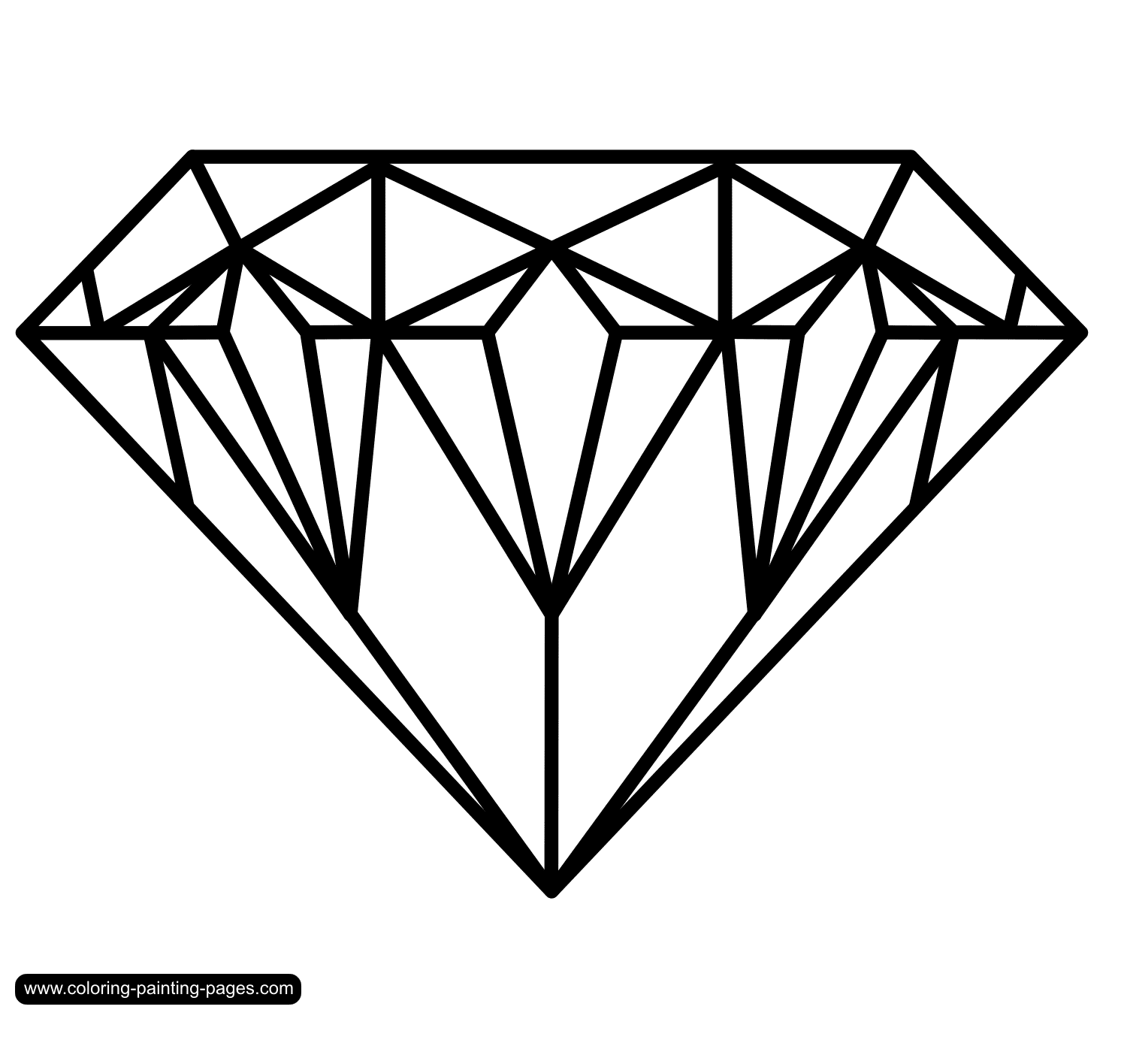
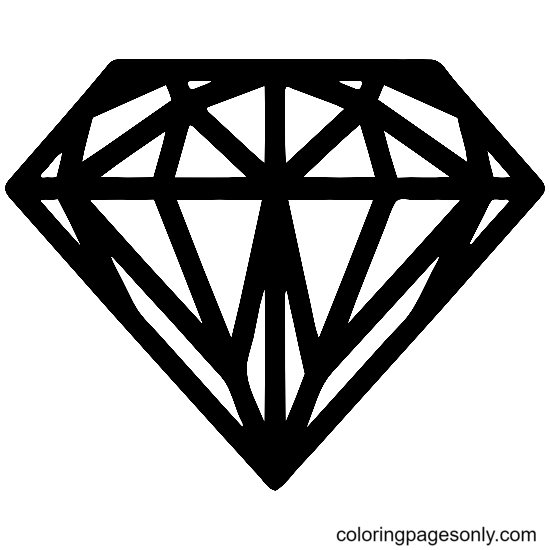
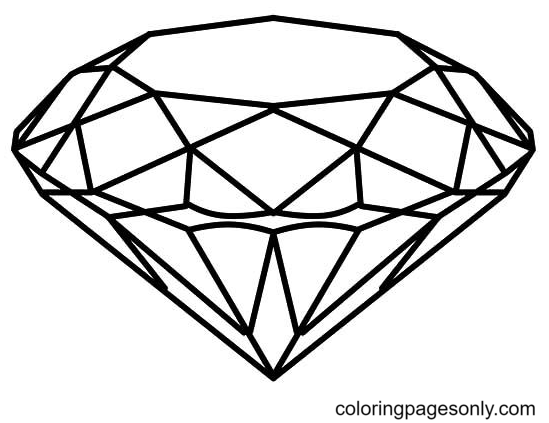
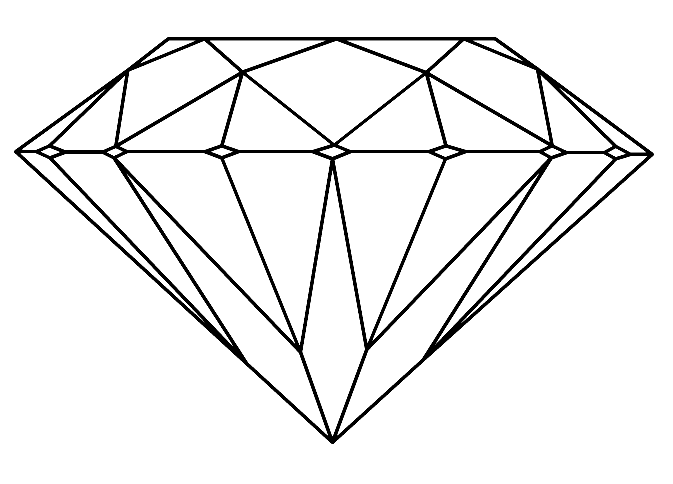
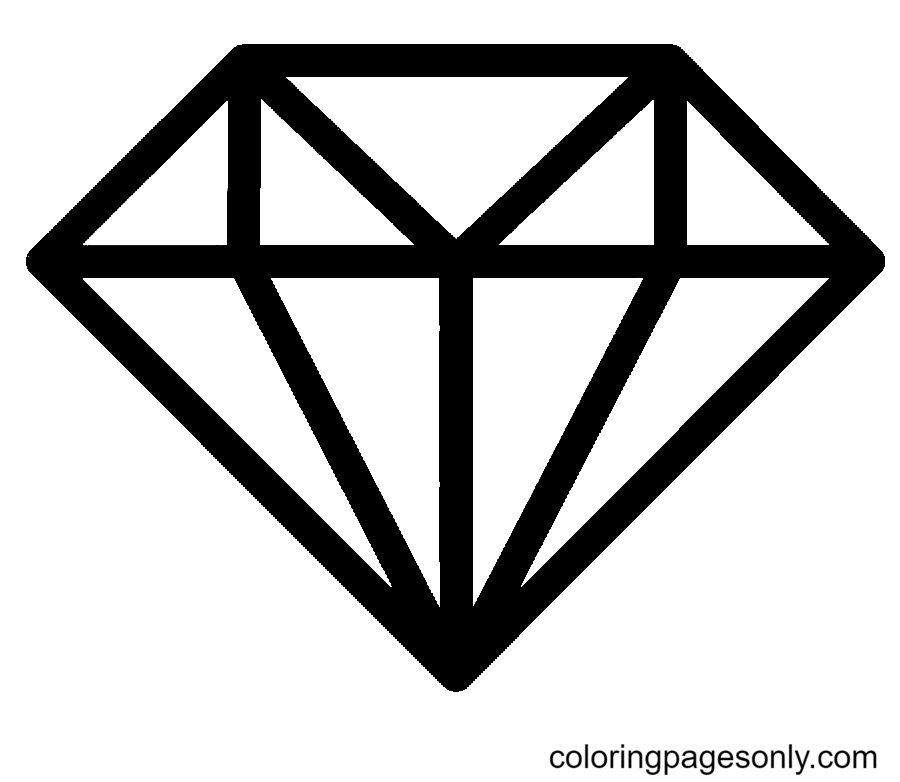
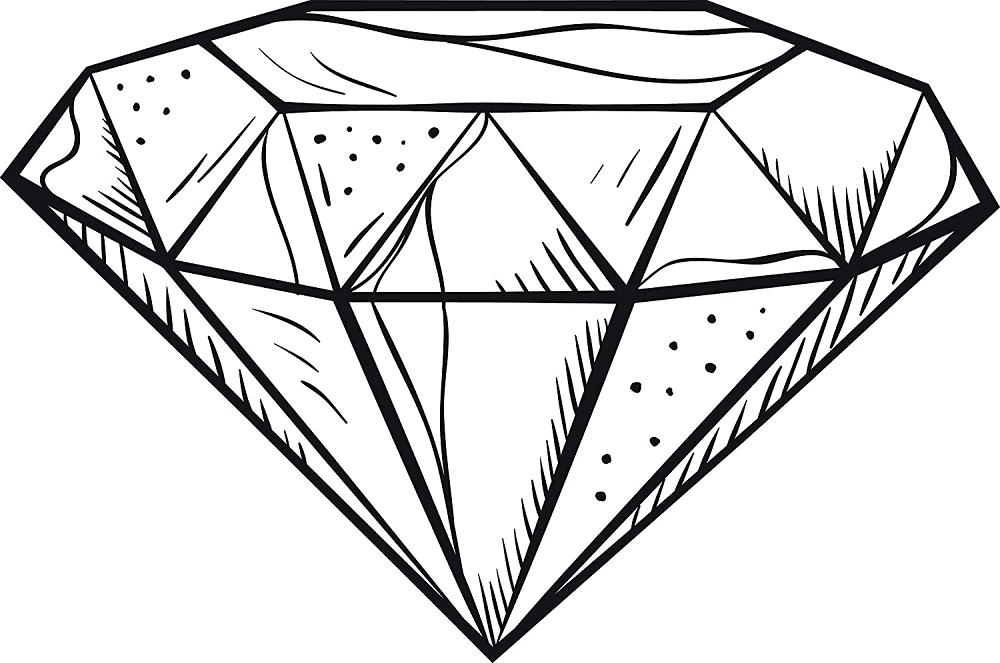
The largest group covers the classic diamond shape in various sizes and styles: standard diamond icons, a cut diamond with visible facets, and several printable outline versions.

Coloring cut diamonds: treat the facet lines as your guide. Each triangular face catches light differently, so assign the very top facet (the table) a near-white, then grade adjacent faces through pale grey and ice blue as they angle away from the light. The deepest facets at the edges and lower pavilion can go to a cool medium grey or faint purple. This three-tone approach gives even a simple outline the look of a real faceted stone.

Uncut Diamond Page

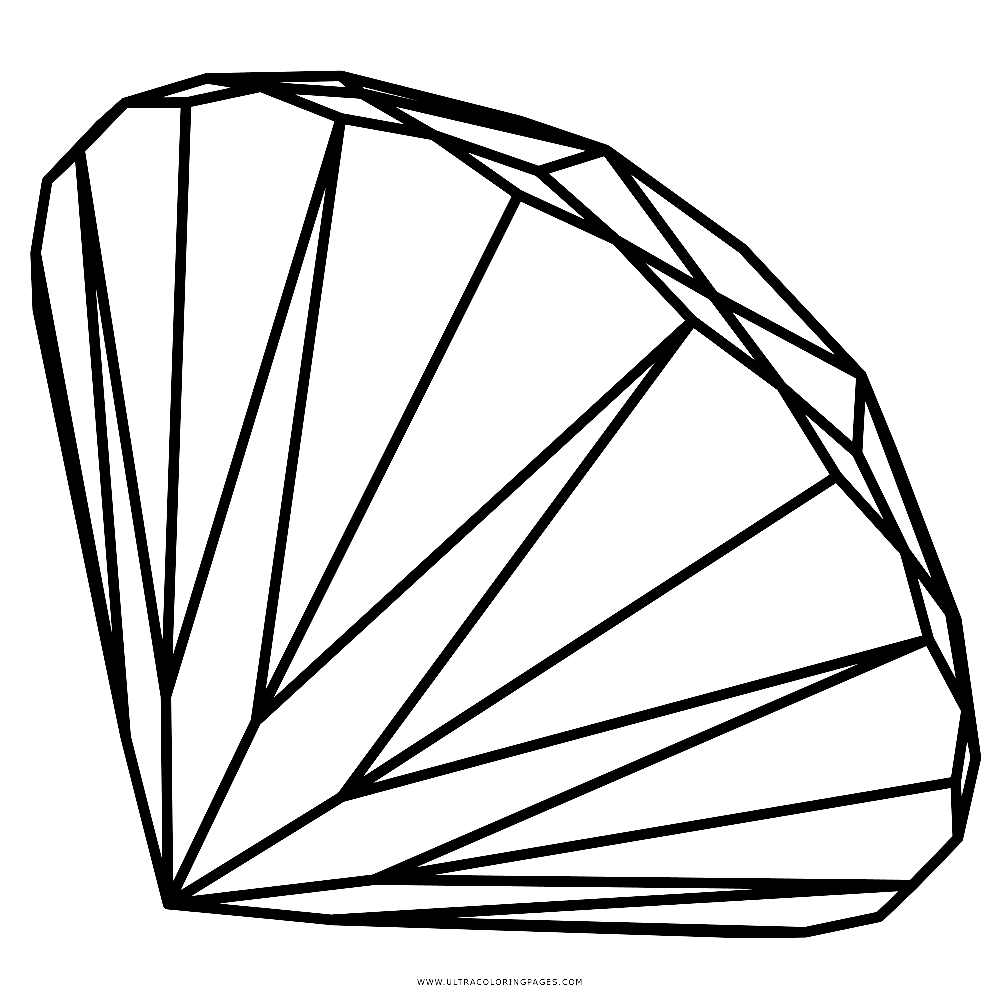
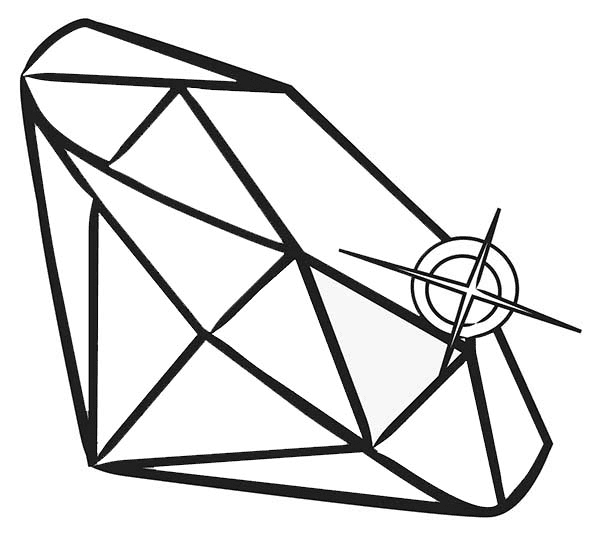
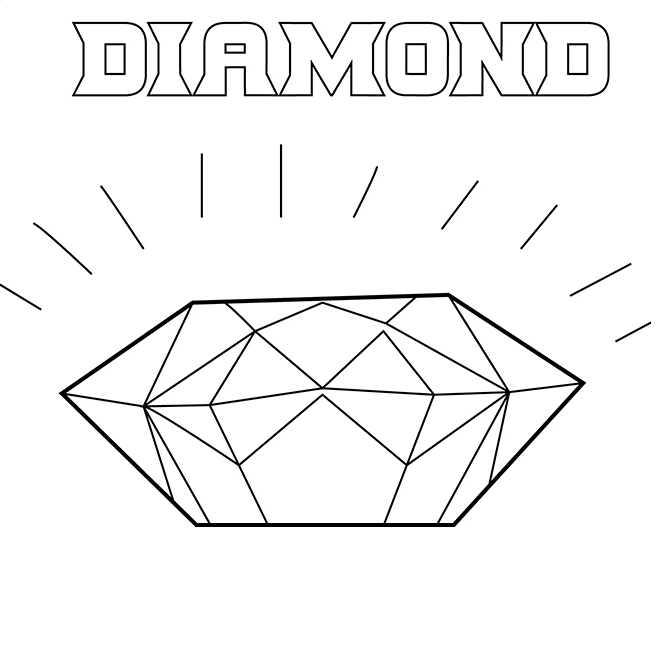
One sheet shows an uncut or rough diamond, with the irregular natural form before any faceting has taken place.

Coloring the uncut diamond: Rough diamonds do not sparkle. Their surfaces are matte and mineral-looking, running from pale cream and grey to warmer tan tones. A slightly textured coloring approach, short overlapping strokes rather than a smooth fill, captures the raw, unpolished surface better than blending.

Diamond Ring Page

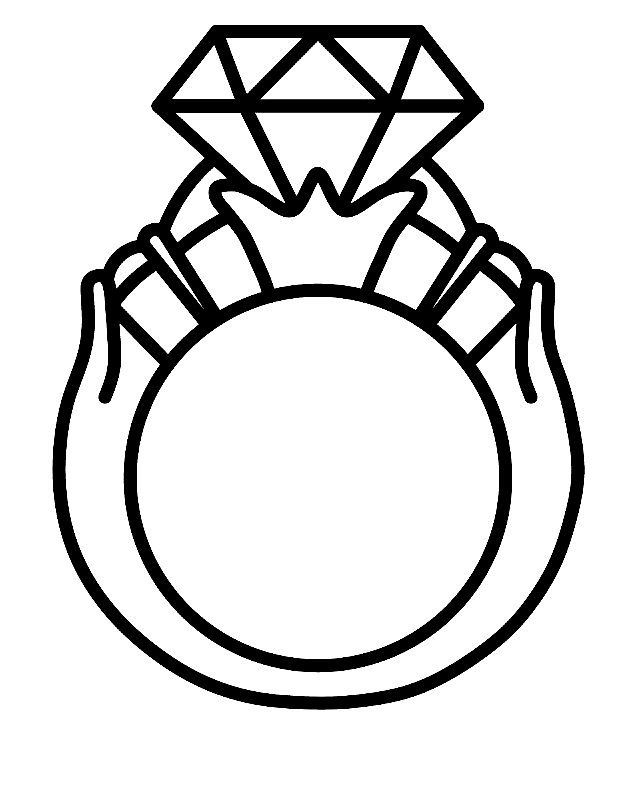
The glitter diamond ring page puts the gemstone in its most familiar setting, mounted on a band with decorative detail.

Coloring the ring: split the page into two tasks. Color the band first in gold (warm yellow and ochre with a darker shadow on the underside) or silver (cool grey with white highlights along the top edge). Then color the diamond in the crown using the facet-based light-to-dark gradient described above, keeping the stone visually separate from the metal.

Heart Shape Diamond Pages

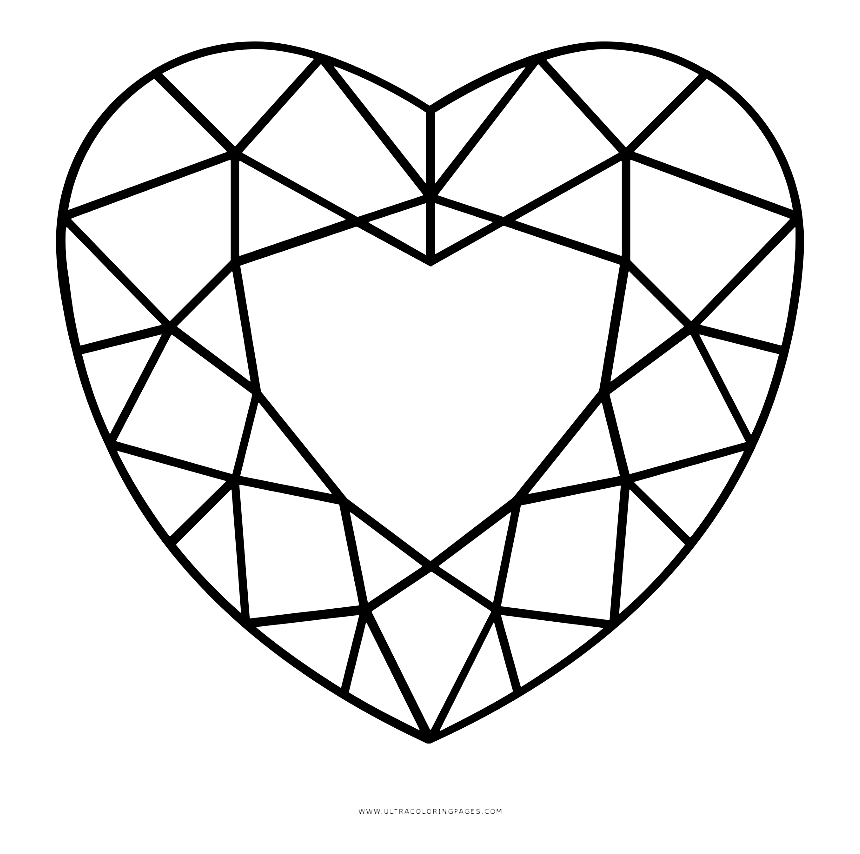
Several sheets present the diamond shape drawn as a heart, combining the geometric precision of a faceted gem with a romantic outline.

Coloring heart diamonds: the facet-lighting approach still applies here, but the curved top and pointed base of the heart shape mean the light entry point shifts to the upper center of the heart. Work the gradient from that center point outward rather than straight down.

Mandala with Diamonds Page

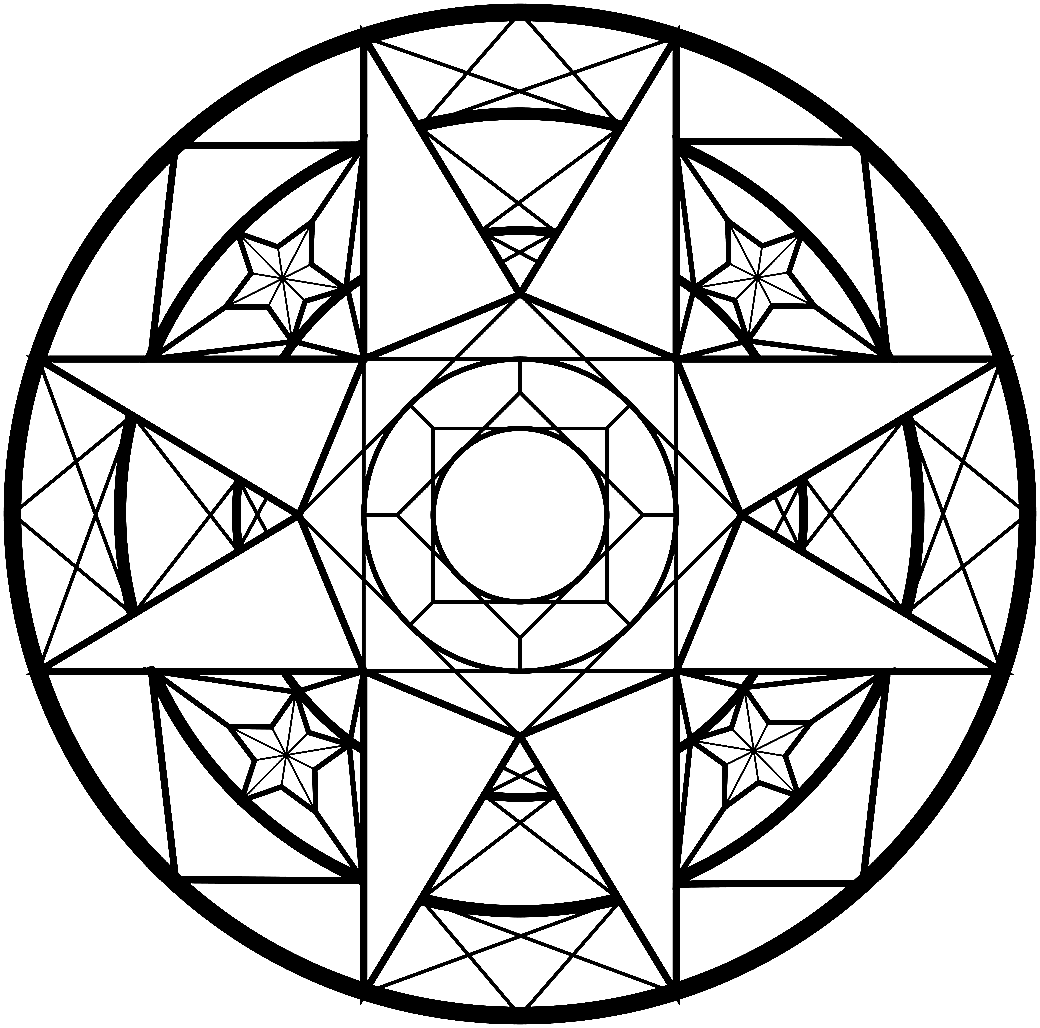
One page combines the diamond motif with a full mandala design, placing the geometric gem form within a layered circular pattern.

Coloring the mandala page: This is the most meditative page in the set. Work from the center outward, assigning a consistent color logic to each ring of the pattern. Cool blues, silvers, and whites paired with a single warm accent (pale gold or rose) keep the palette feeling gem-like without losing the mandala’s visual rhythm.

Cartoon, Sticker, and Themed Pages

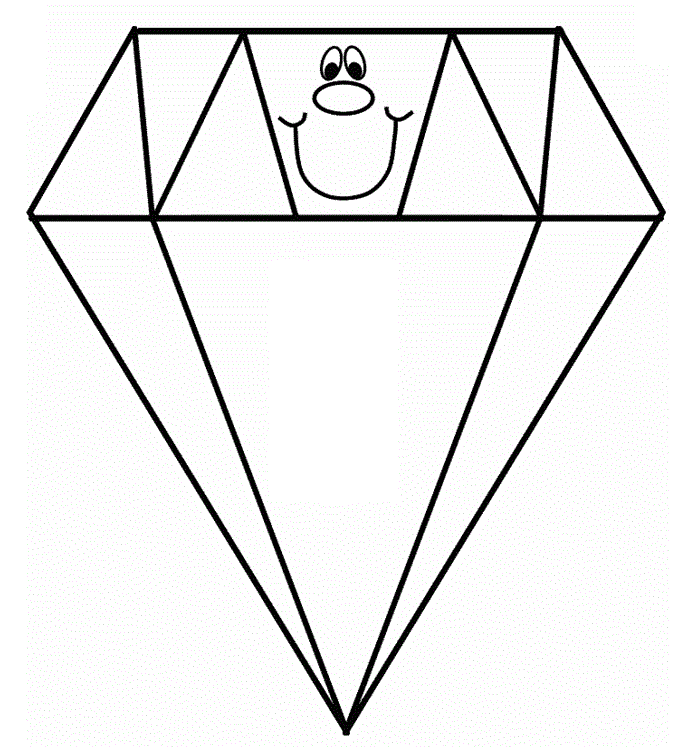
Other sheets take a lighter approach: a cartoon version with a face, a sticker design, an Easter egg shaped like the gem, and a simple diamond-shaped page.

Coloring the fun pages: rules loosen here. The cartoon diamond suits bold, flat, saturated colors and a friendly expression. The Easter egg diamond can take any seasonal palette, pastels and brights together. The sticker page works well with a gradient fill that makes it look dimensional even at a small size.

Simple Outlines for Kids

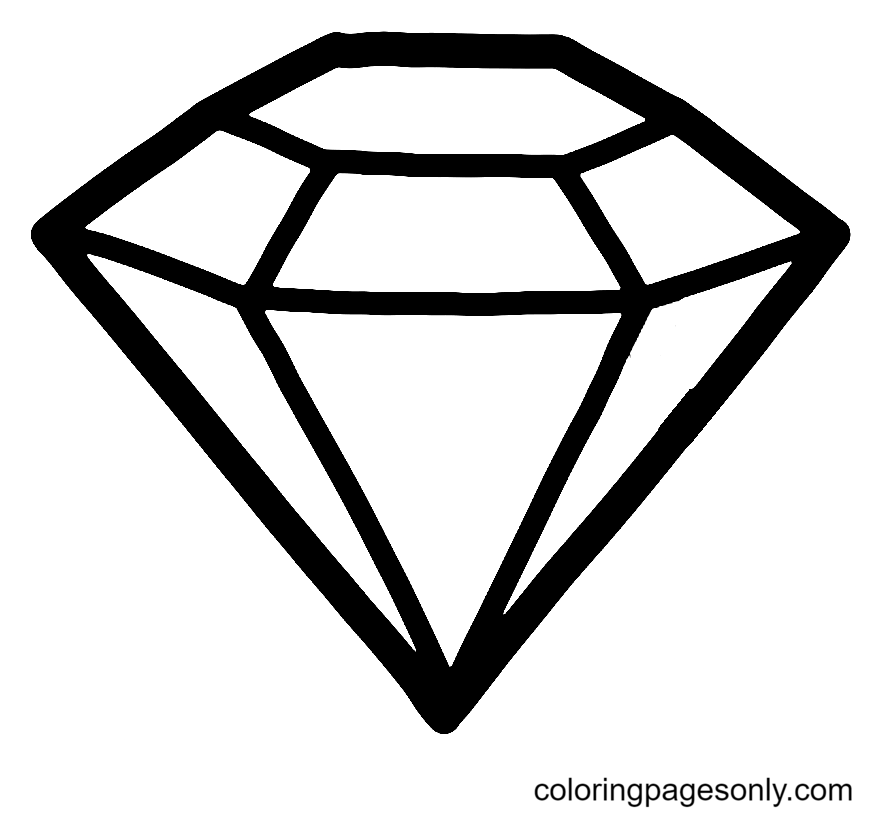
The simplest pages, labeled for kids and for children, have clean outlines and open areas designed for young colorists.

Coloring the simple pages: these are the best starting points for anyone new to geometric coloring. Choose two or three cool tones (light blue, soft grey, white) and fill alternate facets, just like coloring a simple stained-glass pattern. Even this basic approach gives the diamond more depth than a single flat fill.

Printable PDF and Online Diamond Coloring Pages

Every design comes in two ways: a printable PDF for paper, or the same artwork colored on screen.

Using both formats: print the PDF when you want a clean sheet for pencils, fine-liners, or crayons, and use the on-screen version when there is no printer available. The PDF holds the fine facet lines cleanly on standard letter or A4 paper.

What These Pages Do

These pages sit at the intersection of art, geometry, and science, and that overlap is what makes them more interesting than a standard shape page. The faceted diamond shape is not arbitrary: each face is a flat polygon angled to redirect light through the stone, and the visual logic of coloring a diamond, bright at the center, darker at the edges, follows the same physics as real gem optics. Working through these pages builds a practical intuition for how light falls across geometric surfaces, a skill that carries over to any subject that has a three-dimensional form, from glass objects to architecture to jewelry illustration. The mandala page adds a meditative layer: repeated geometric patterns at a careful scale have long been used for focused, calming creative work, and the diamond motif fits naturally into that tradition. The GIA notes that a diamond’s beauty depends entirely on the precision of its cut, and the same principle applies here: a carefully colored facet pattern rewards patience and close observation in a way that a flat fill never does. From here, mandala coloring pages are the natural companion for the meditative angle, and crystal coloring pages and geometric coloring pages extend the same visual logic to other mineral and shape subjects.

The American Art Therapy Association describes everyday coloring as recreation and self-care rather than clinical therapy, and the mandala and detailed facet pages in this set fit that description precisely: structured, absorbing, and calming. The American Academy of Pediatrics points to hands-on creative play as a support for children’s spatial reasoning and fine-motor development, and coloring a faceted diamond outline, deciding which face gets which shade, holding a line between narrow triangular sections, is exactly the kind of precise, rewarding task that builds both.

How to Color Diamond Coloring Pages

These steps work for any page in the set, from the simplest kids’ outline to the detailed mandala.

Plan the light source first. Decide where the light enters the diamond (almost always from above or slightly above center) before touching any color. Every other coloring decision follows from that single choice.

Work lightest to darkest. Lay the palest tone (white or near-white) on the facets closest to the light source, then move outward through pale blue or grey, and finish with the deepest tones at the outer edges and lower pavilion. Building from light to dark keeps the pale areas clean.

Use the facet lines as color boundaries. Each line represents the edge between two differently angled faces of the gem. Treat them as hard stops rather than blending across them. Sharp boundaries between adjacent facets create the crisp, geometric sparkle that makes a diamond look real.

Add a dark outline to the very edge. A slightly darker tone at the outermost rim, just inside the printed outline, gives the stone a sense of weight and stops it from floating against the background.

Keep the background neutral or contrasting. A white or very pale background makes the diamond’s tonal gradients read clearly. A dark navy or deep purple background creates dramatic contrast and makes even a simple facet layout look elegant.

5 Creative Craft Ideas with Diamond Coloring Pages

Gemstone Science Display

Color the cut and uncut diamond pages side by side, then label the facets on the cut version with their correct names (table, crown, girdle, pavilion, culet).

Pair them with a short note about the Four Cs and display them as a small gemstone science exhibit.

Light and Shadow Study

Color the same basic diamond outline three times using different light sources: light from above, light from the left, and light from below.

Pin all three versions in a row to create a visual study of how light direction changes the appearance of the same geometric shape.

April Birthstone Card

Color a heart diamond or classic cut diamond page, cut it out, and mount it on a folded card.

Write “April Birthstone” or a personal message inside for a handmade birthday card that doubles as a small piece of gem art.

Mandala Gem Meditation Page

Set aside fifteen to twenty minutes and color the mandala with diamonds using a single limited palette of three to four cool tones.

Work from the center outward, section by section, as a focused, screen-free relaxation activity.

Sticker Sheet Design

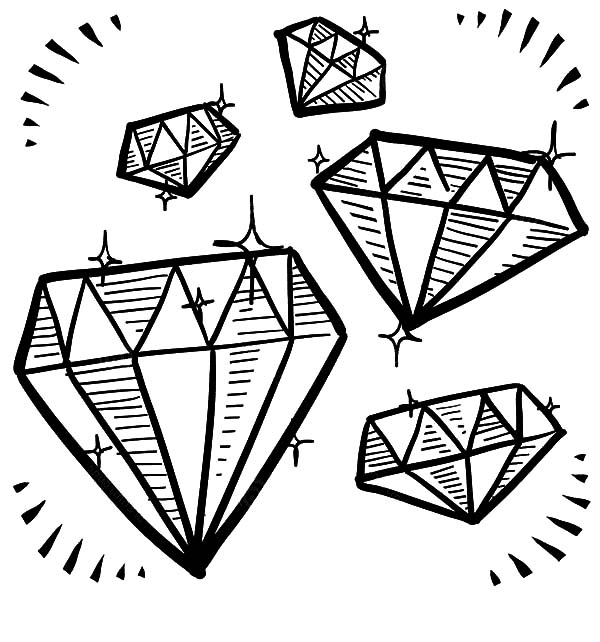
Color all of the smaller diamond pages and sticker designs in different palettes, then cut them out and arrange them on a large sheet of dark cardstock.

Use them as decorative stickers for notebooks or cards, or photograph them as a flat-lay gemstone art piece.

FAQ About Diamond Coloring Pages

Are these diamond coloring pages free, and can I color them online? 

Yes. Every page is free, with no account, email, or payment required. Download the PDF to print at home, or color the design on screen in the browser.

What types of diamond pages are included? 

The set covers classic cut diamonds in several sizes and styles, an uncut rough diamond, a glitter diamond ring, heart-shaped diamonds, a mandala with diamonds, cartoon and sticker designs, an Easter egg diamond, and simple outlines for young children.

What is a diamond? 

Diamonds are crystalline carbon minerals, the hardest natural material on Earth at 10 on the Mohs scale, prized for the way precisely angled facets bend and reflect light into the brilliant sparkle the gem is known for. You can read more on the Wikipedia page for diamond.

What colors should I use for a realistic diamond? 

A realistic faceted diamond uses near-white on the brightest top facets, graduating through pale grey, icy blue, and cool lavender toward the edges. The deepest outer and lower facets can go to a medium grey or faint purple. Avoiding warm tones keeps the diamond looking like a colorless gem rather than a colored stone.

What is a facet, and why does it matter for coloring? 

A facet is one of the flat, polished surfaces of a cut diamond. Each facet is angled to redirect light through the stone. When coloring, treating each facet as a separate zone with its own shade, rather than filling the whole diamond with one color, is what makes the finished page look dimensional and gem-like.

Are these pages good for younger children? 

Yes. The simple and kids’ outlines have thick borders and large areas that suit young colorists. The detailed faceted pages and the mandala are better for older children, teens, and adults who want a more precise coloring challenge.

Can I use these for a geometry or science class? 

Yes. The cut diamond and uncut diamond pages work well alongside a lesson on crystal structure, mineral hardness, or the geometry of polygons. The facet-labeling craft activity is a natural fit for a STEM or earth science lesson.

What are the Four Cs of diamonds? 

The Four Cs, established by the Gemological Institute of America, are Cut, Color, Clarity, and Carat. They are the global standard for describing and grading diamonds. You can read more at the GIA website.

What is the difference between a cut and an uncut diamond? 

A cut diamond has been shaped and polished into a precise geometric form with multiple flat facets, designed to maximize brilliance. An uncut or rough diamond has its natural mineral surface, which is matte and irregular, with no facets or sparkle yet.

What crafts can I make with these pages? 

Popular options include a gemstone science display, a light and shadow study, an April birthstone card, a mandala gem meditation page, and a sticker sheet design.

More Geometric and Nature Coloring Pages

Browse the full set at ColoringPagesOnly.com, then open any design to print it or color it on screen.

These pages suit home use, the classroom, and geometry or science activities for all ages. They are original coloring designs free to use for personal and educational purposes.

For the final pass, plan the light source first, work from lightest to darkest, and treat every facet line as a hard boundary rather than blending across it. Those three habits turn any diamond outline into something that actually looks like a gemstone.

Share your work on Facebook and Pinterest and tag #ColoringPagesOnly. We would love to see your gemstone science displays, light-and-shadow studies, and mandala meditation pages.

Jennifer Thoa – Content Editor & Designer

Jennifer Thoa is Content Editor and Designer at ColoringPagesOnly.com. Degree in Journalism and Creative Writing, University of Kansas. She writes and edits long-form educational articles on anime, film, animals, world cultures, and automotive history - verified against named primary sources before publication.