Camel Coloring Pages
 By:
Jennifer Thoa - Content Editor & Designer
Updated:
By:
Jennifer Thoa - Content Editor & Designer
Updated:
Free Camel Coloring Pages: 36 printable PDF designs featuring dromedary and Bactrian camels in desert scenes, cartoon settings, and detailed portrait poses. Each page can be downloaded as a PDF to print or colored online in the browser, with no account required.
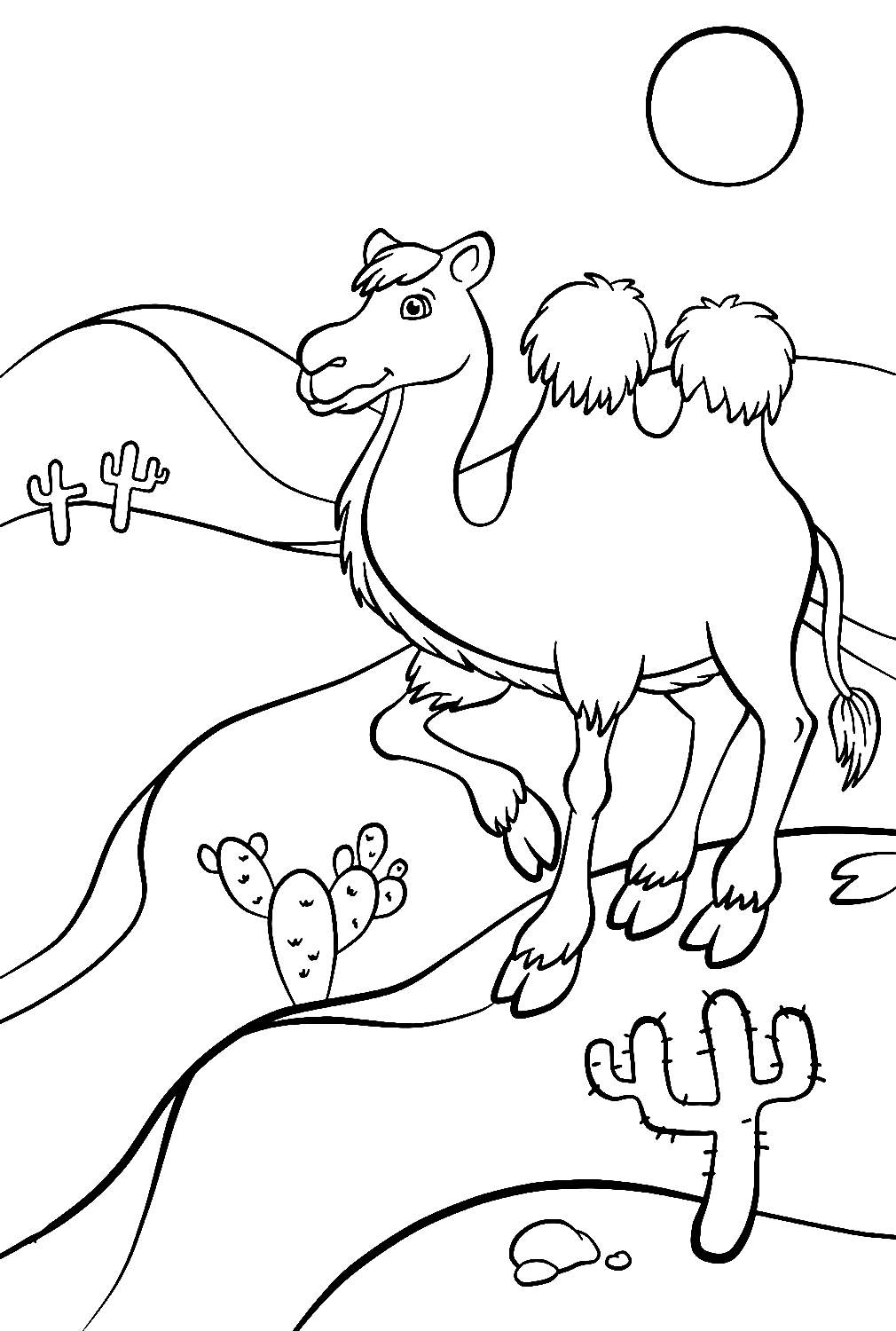
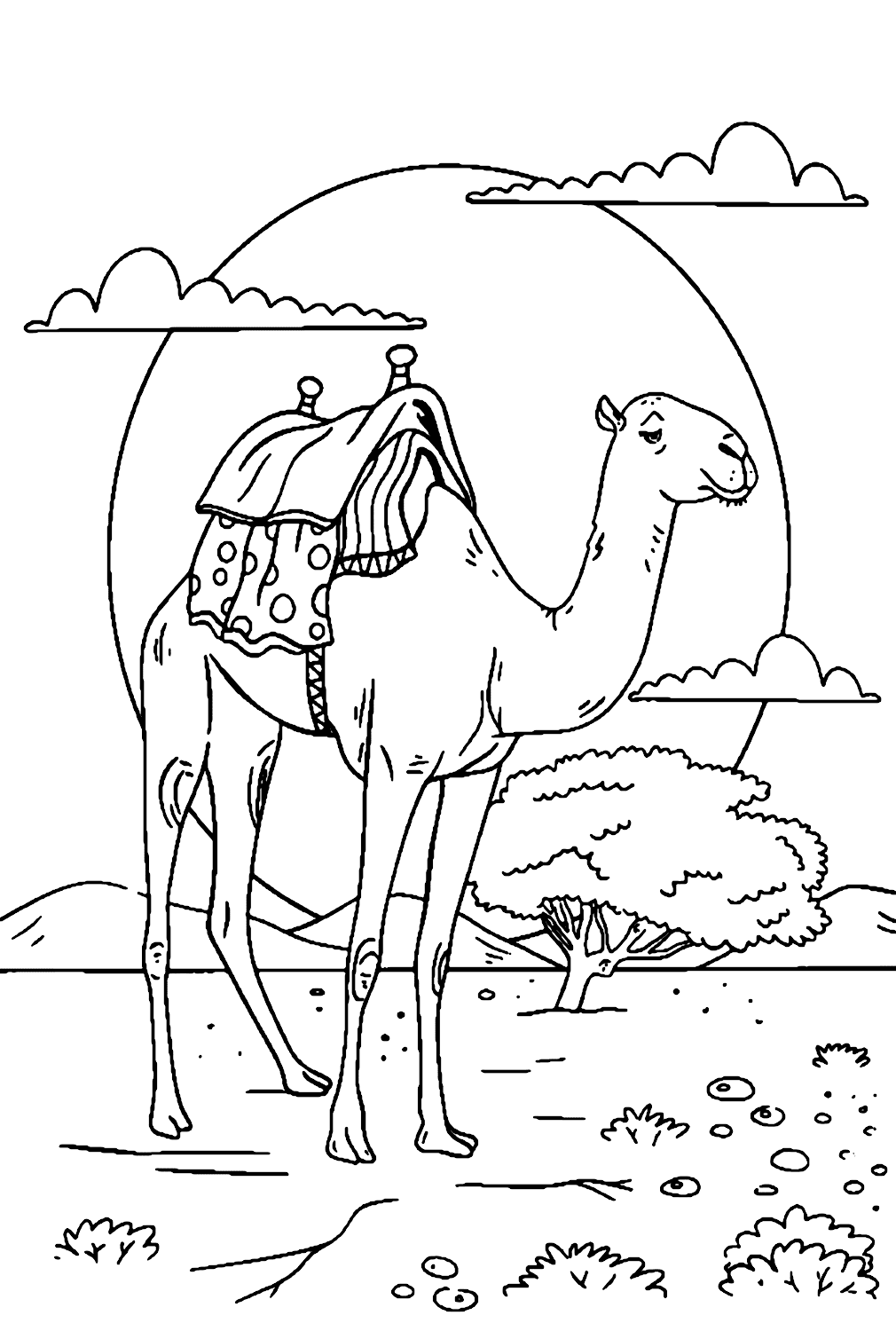
A camel can go more than a week without drinking water and survive for months without food by drawing on the fat stored in its hump. This collection holds 36 camel coloring pages, covering the two living types of camel: the single-humped dromedary and the two-humped Bactrian camel. Designs range from realistic desert portraits to cartoon camels riding into playful scenes, plus a simple alphabet page for early letter recognition.
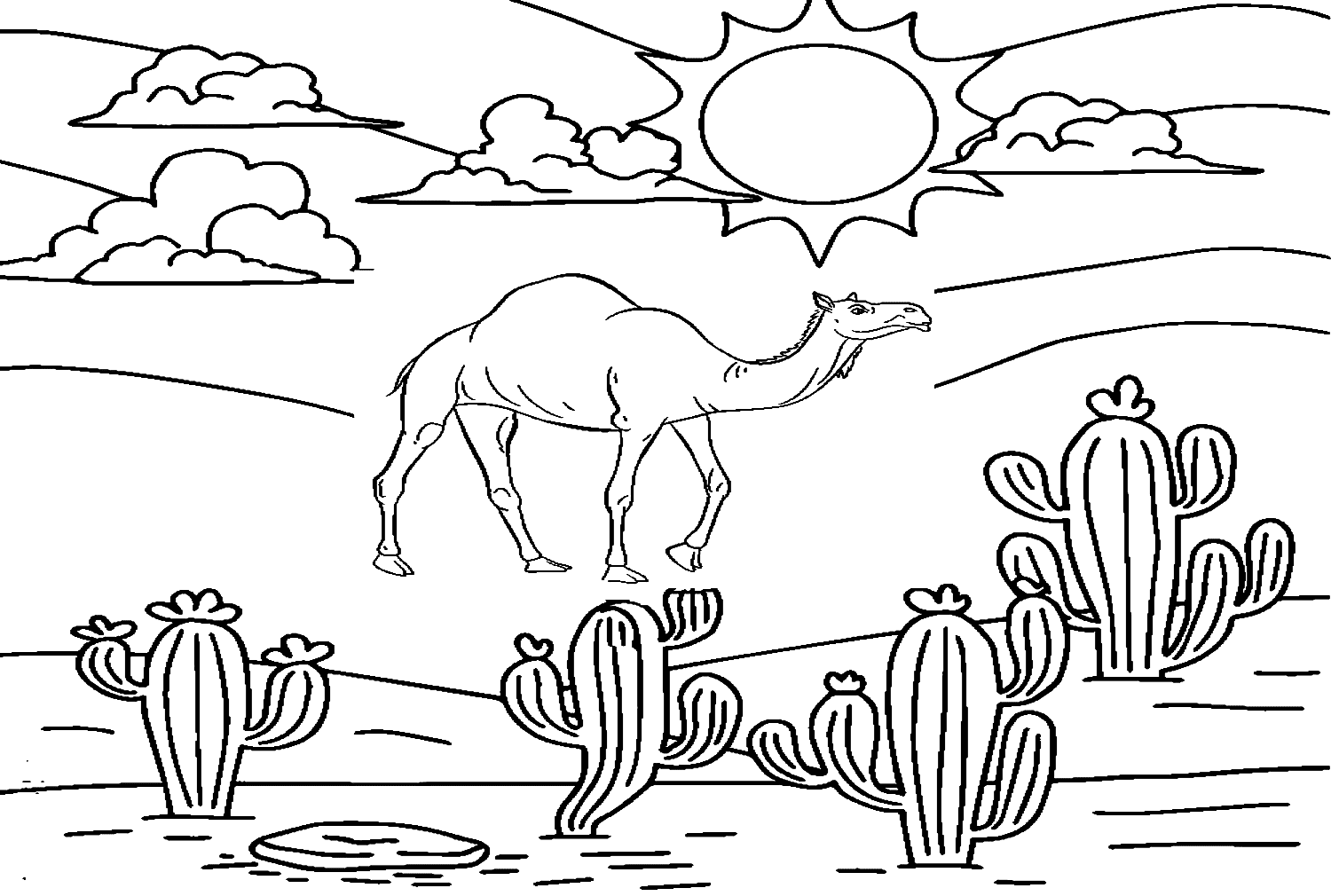
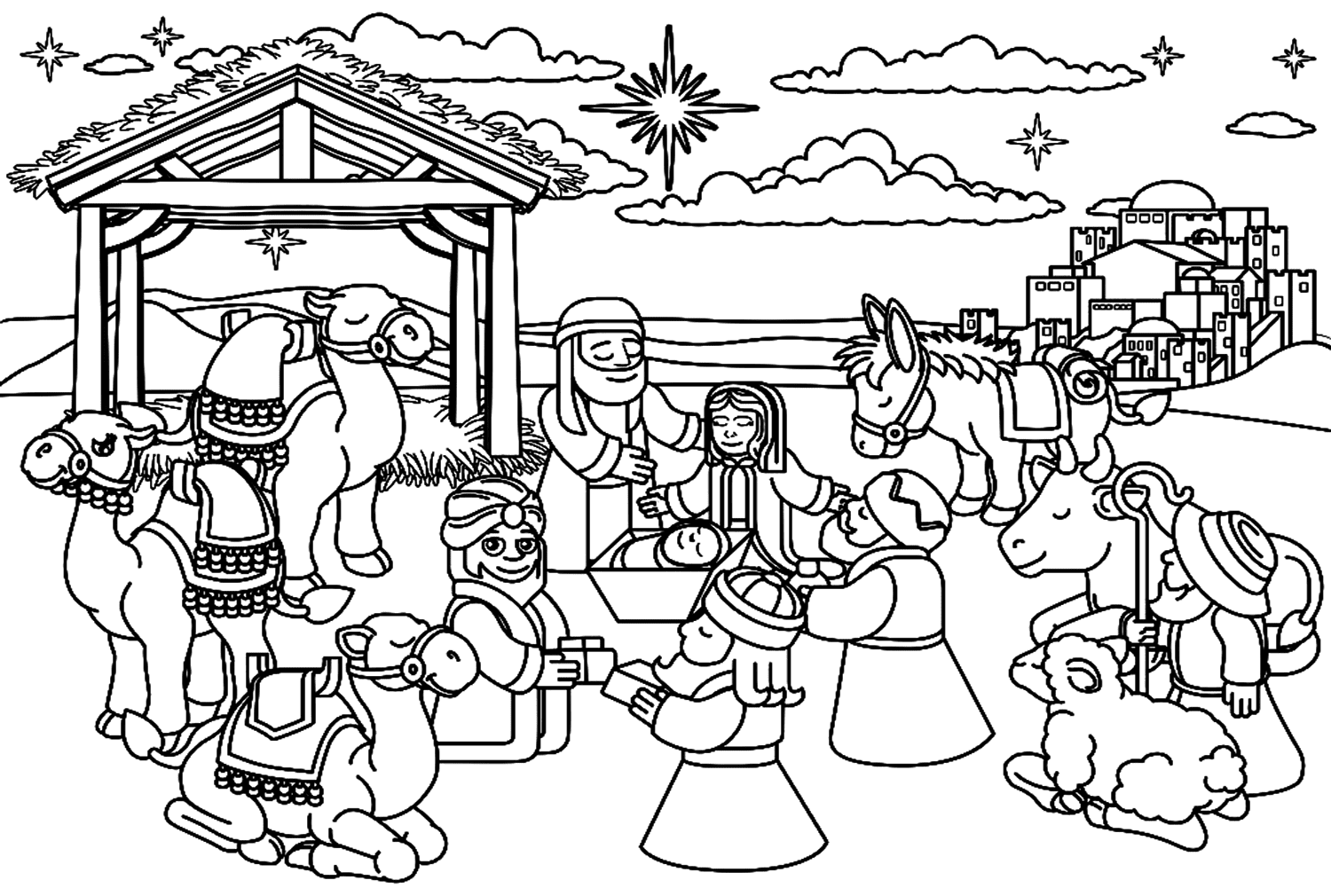
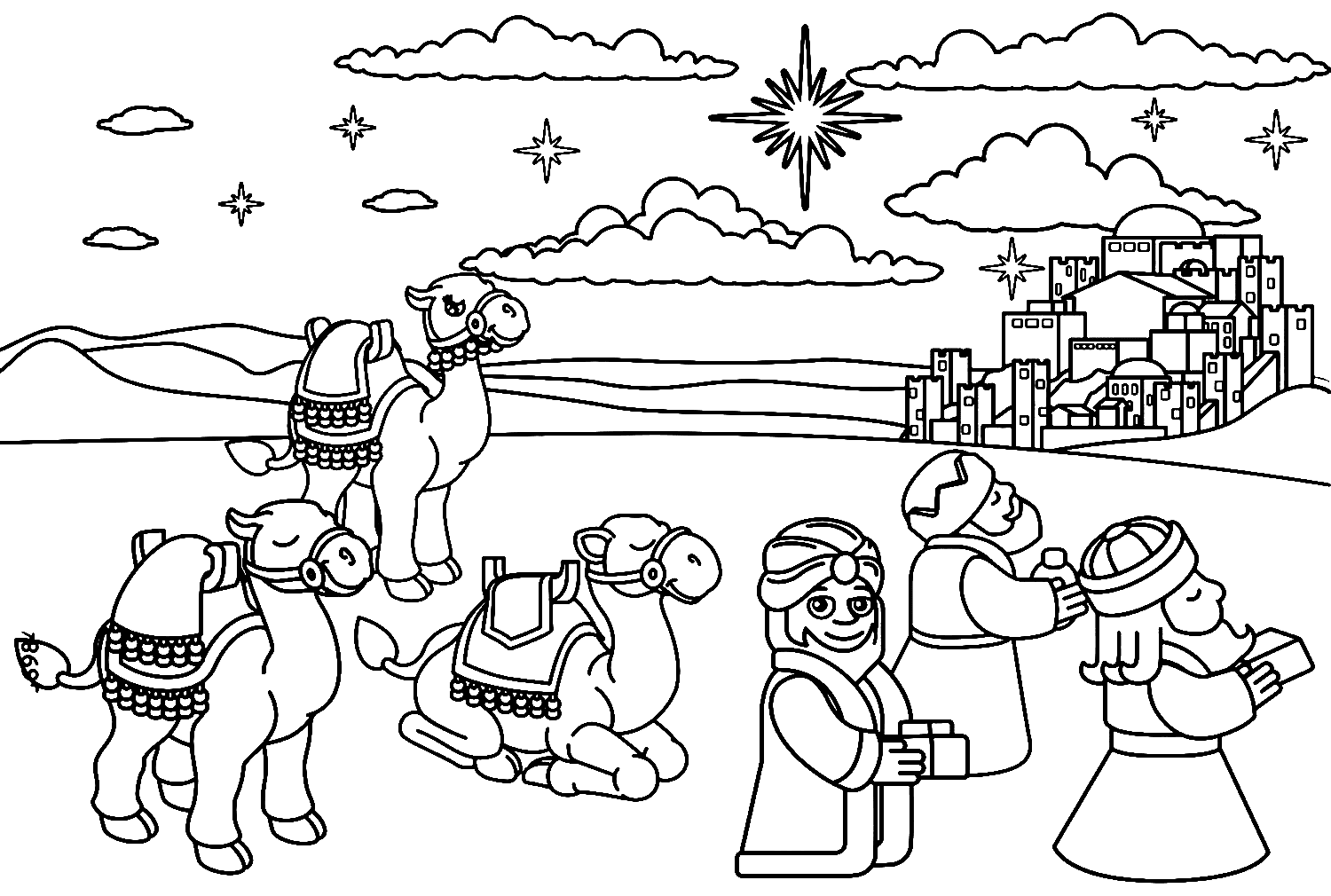
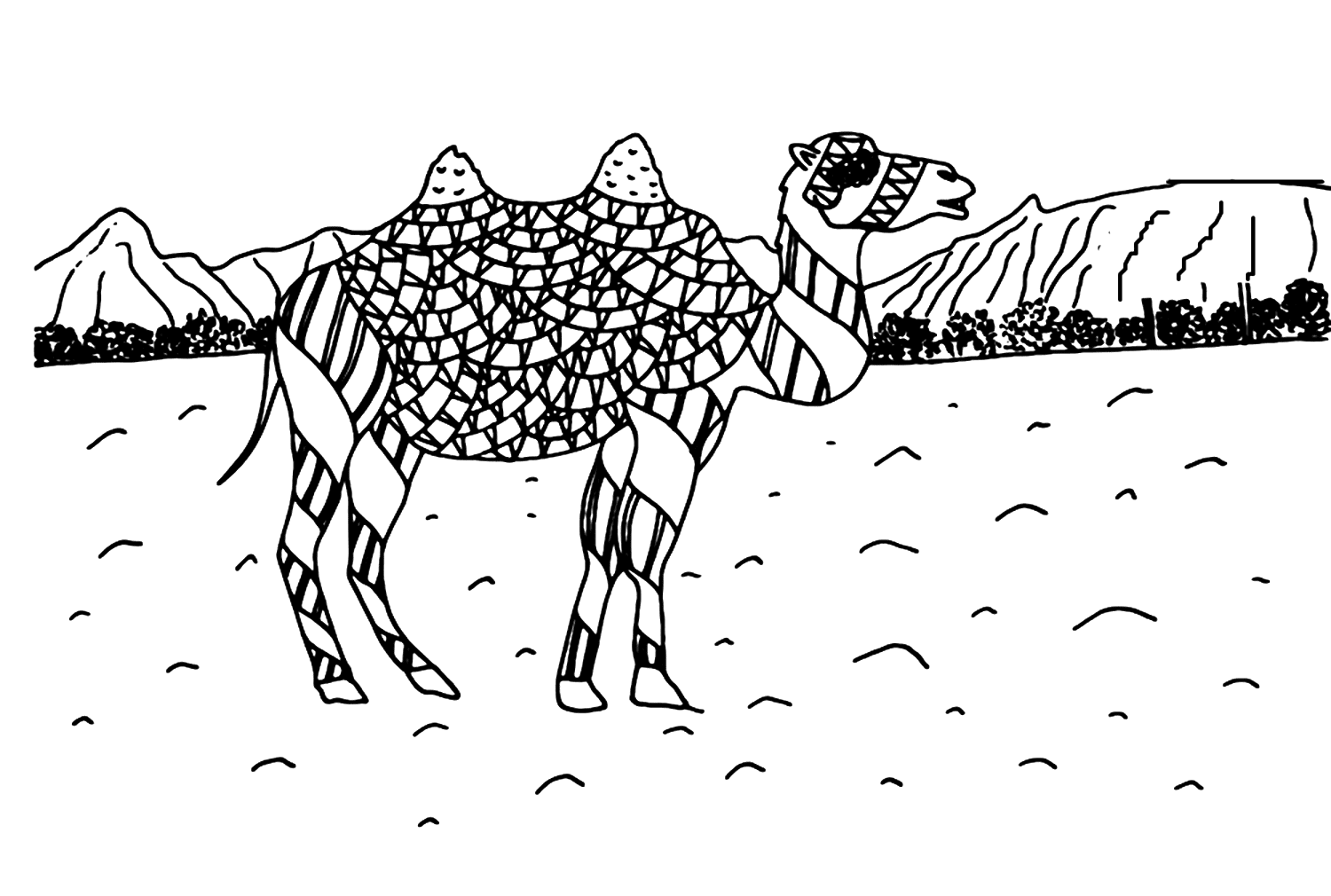
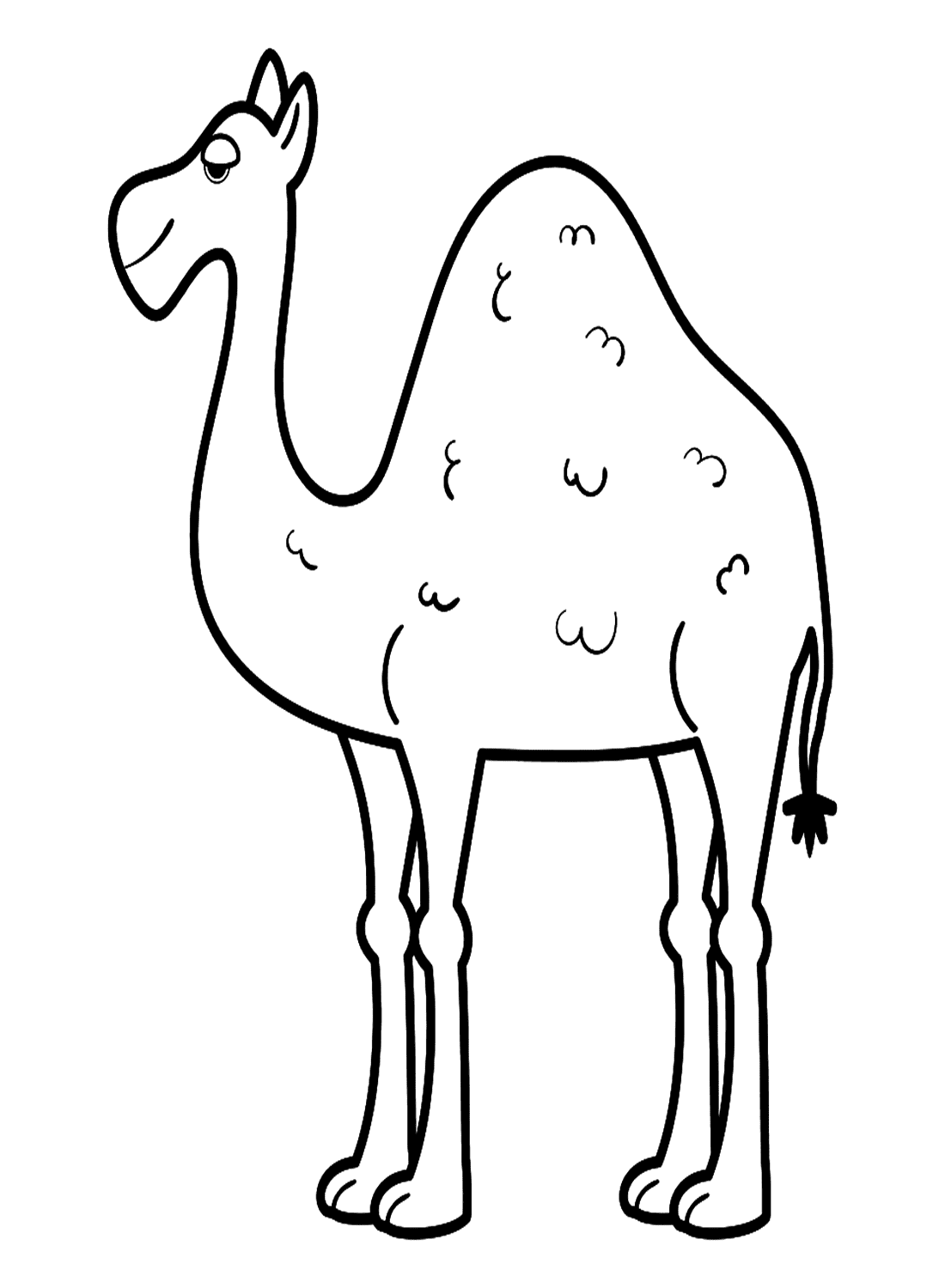
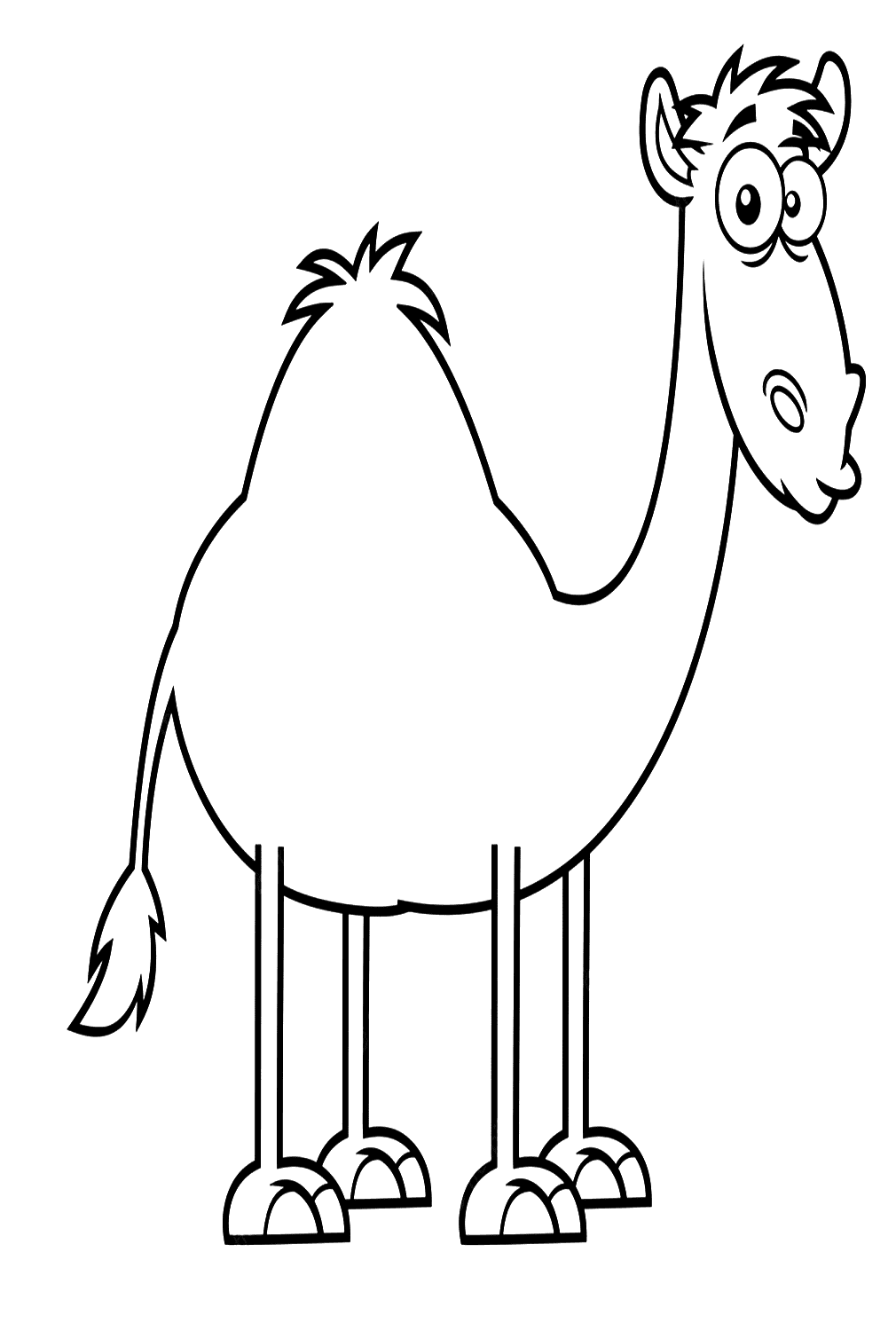
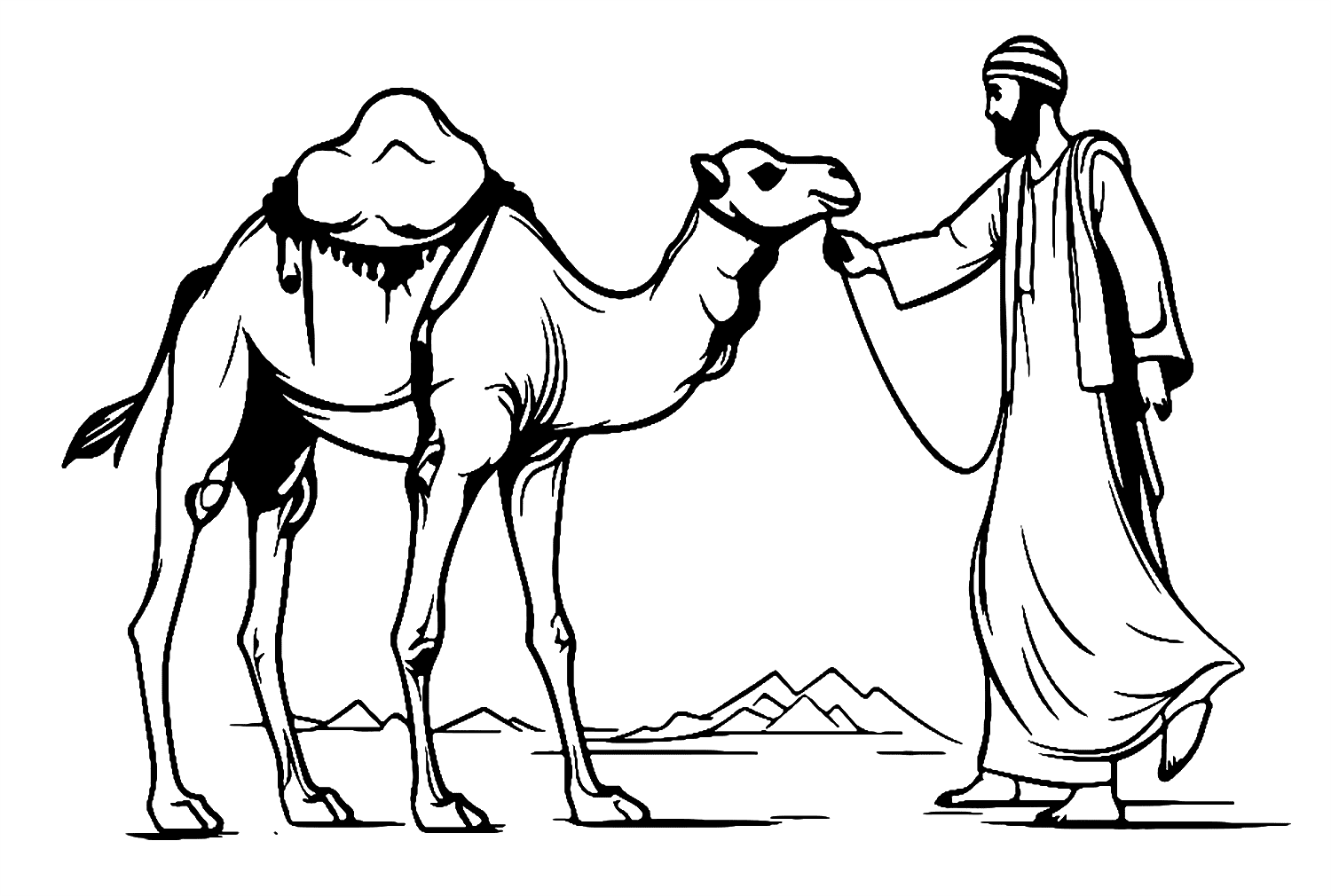
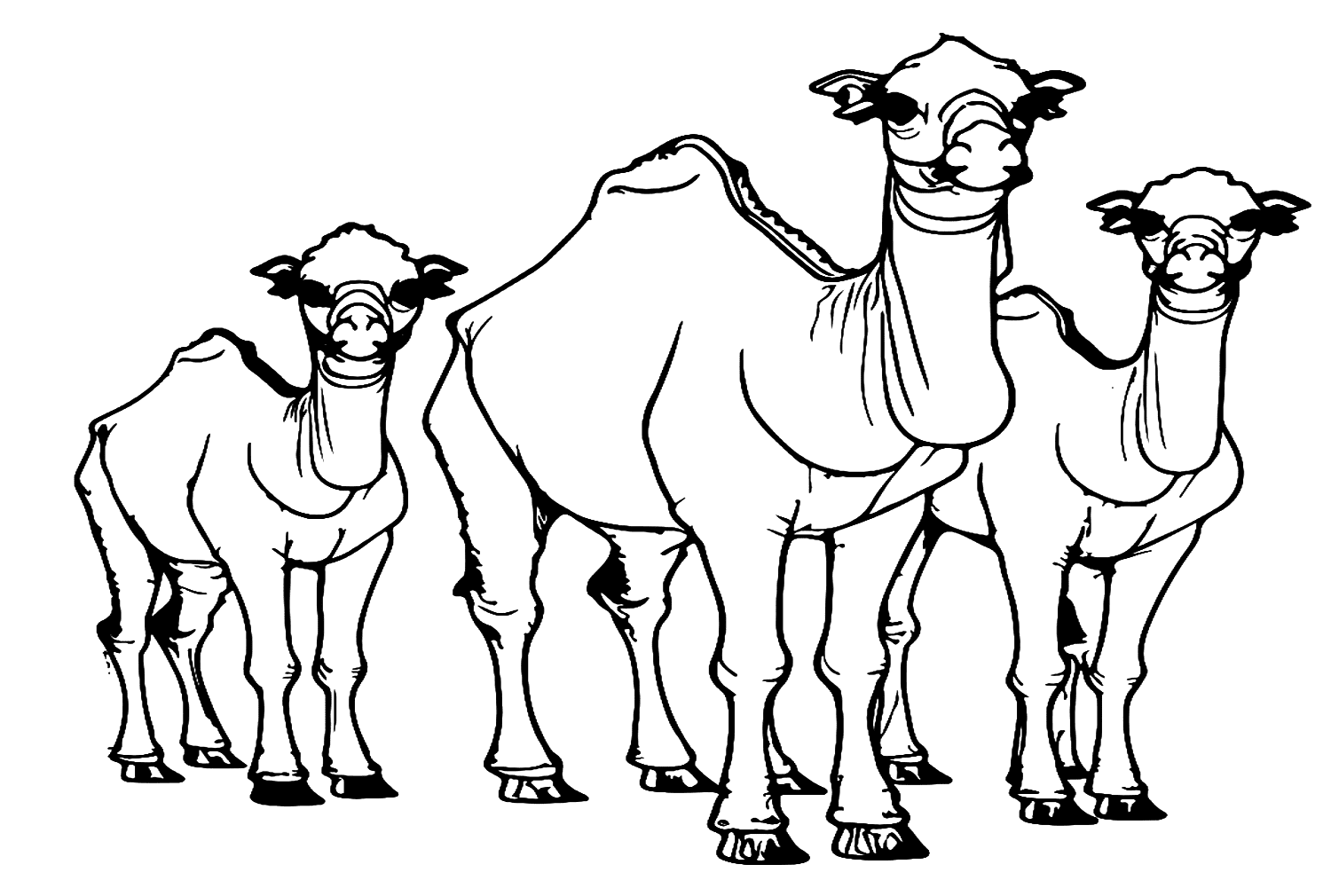
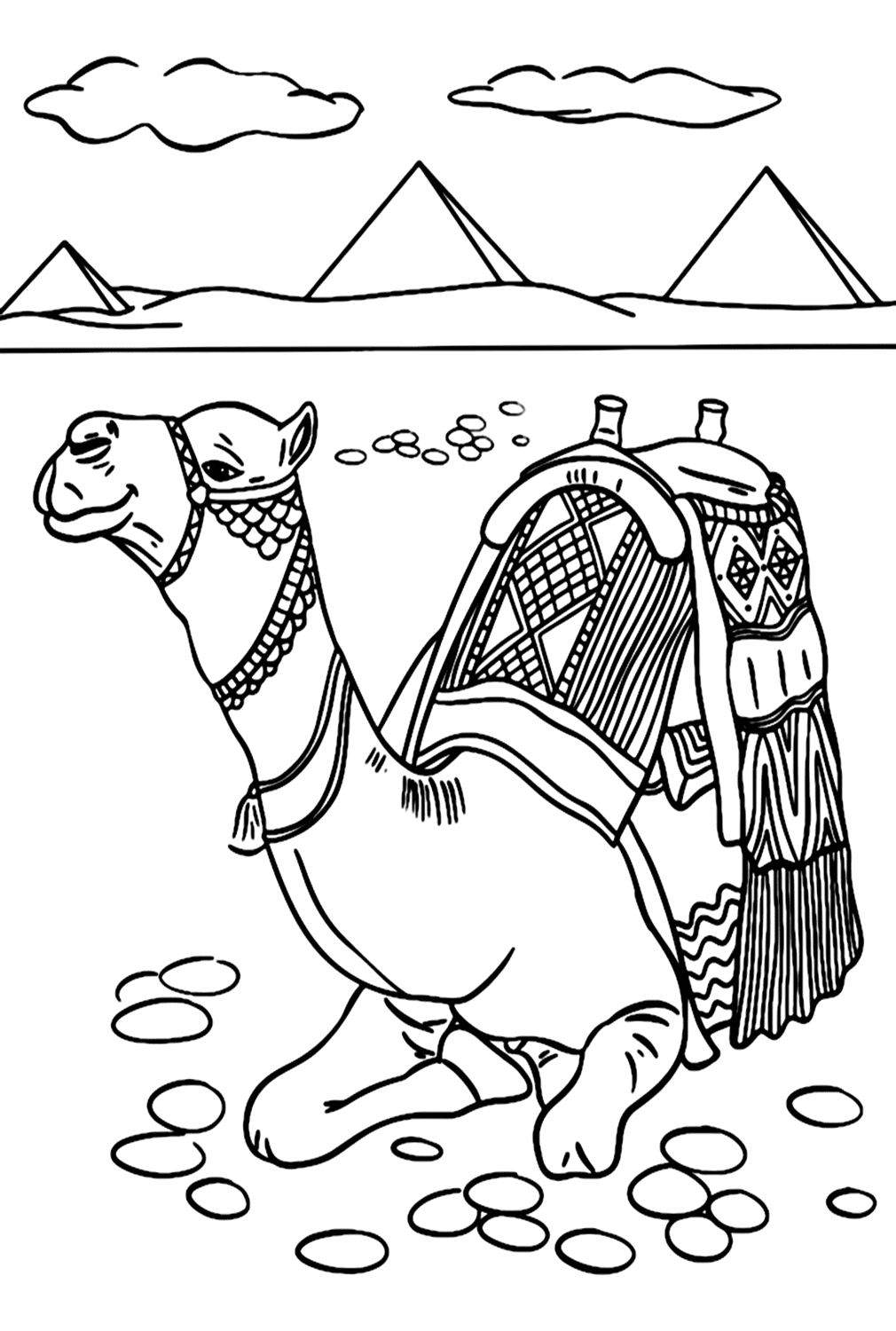
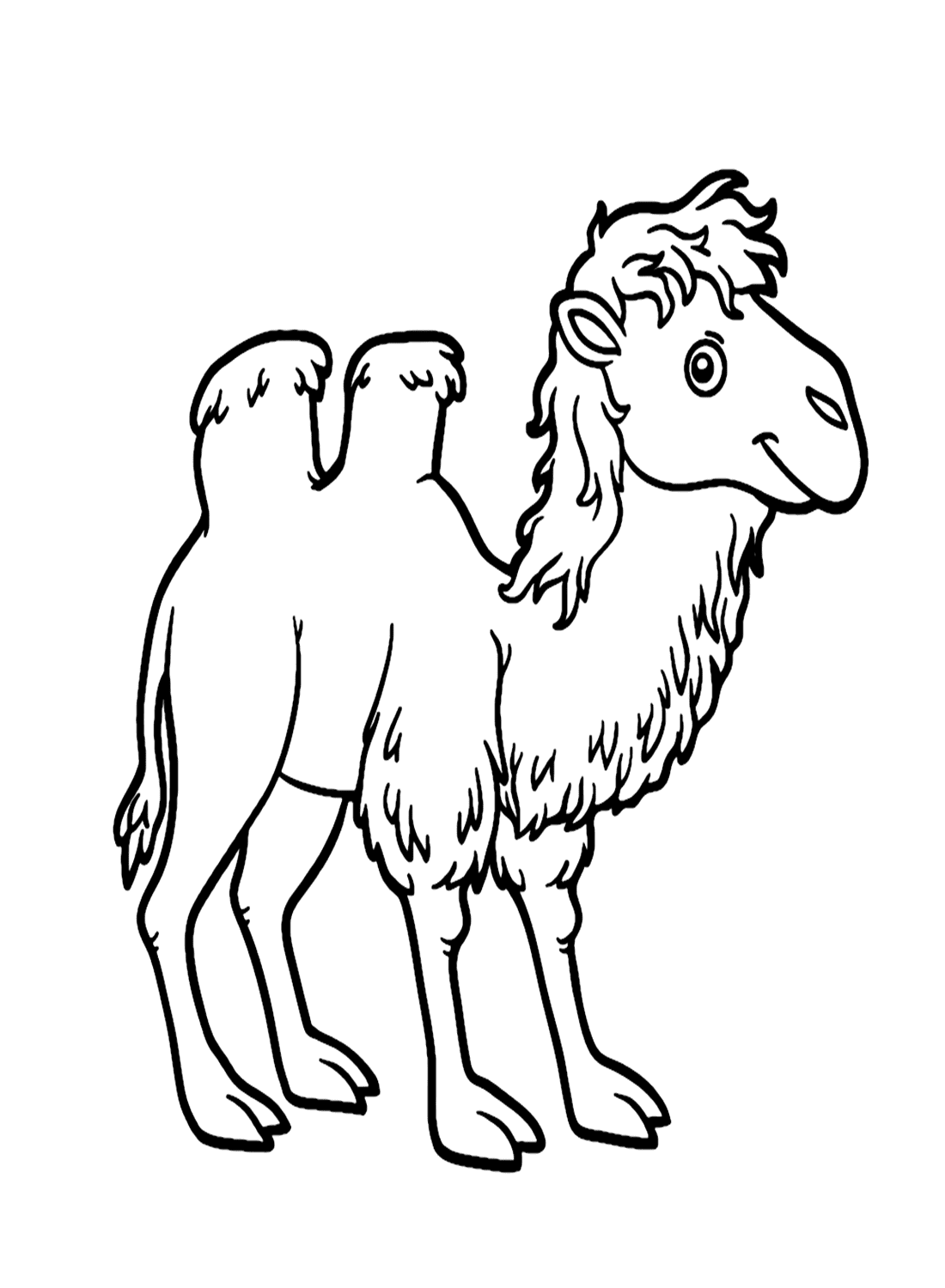
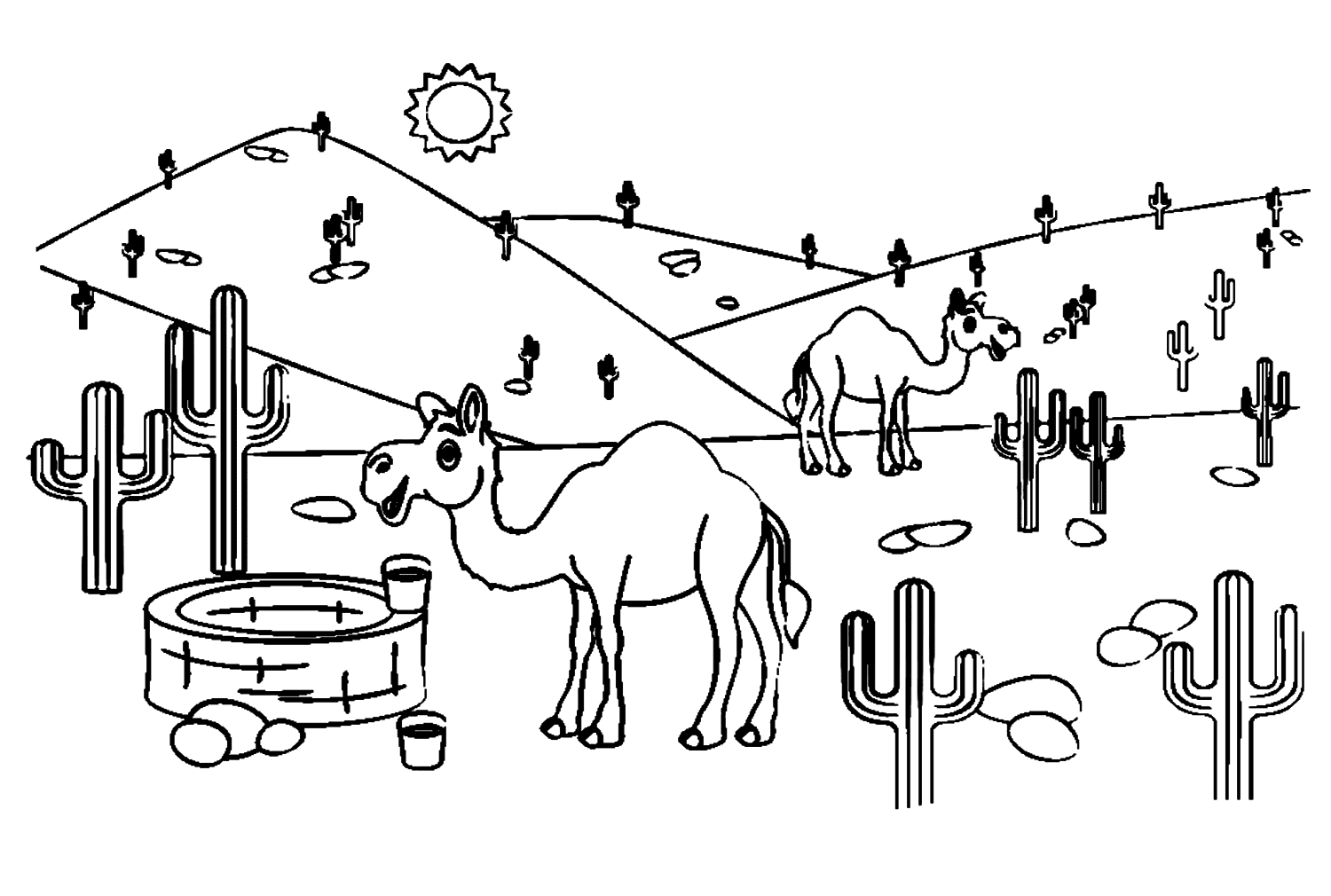
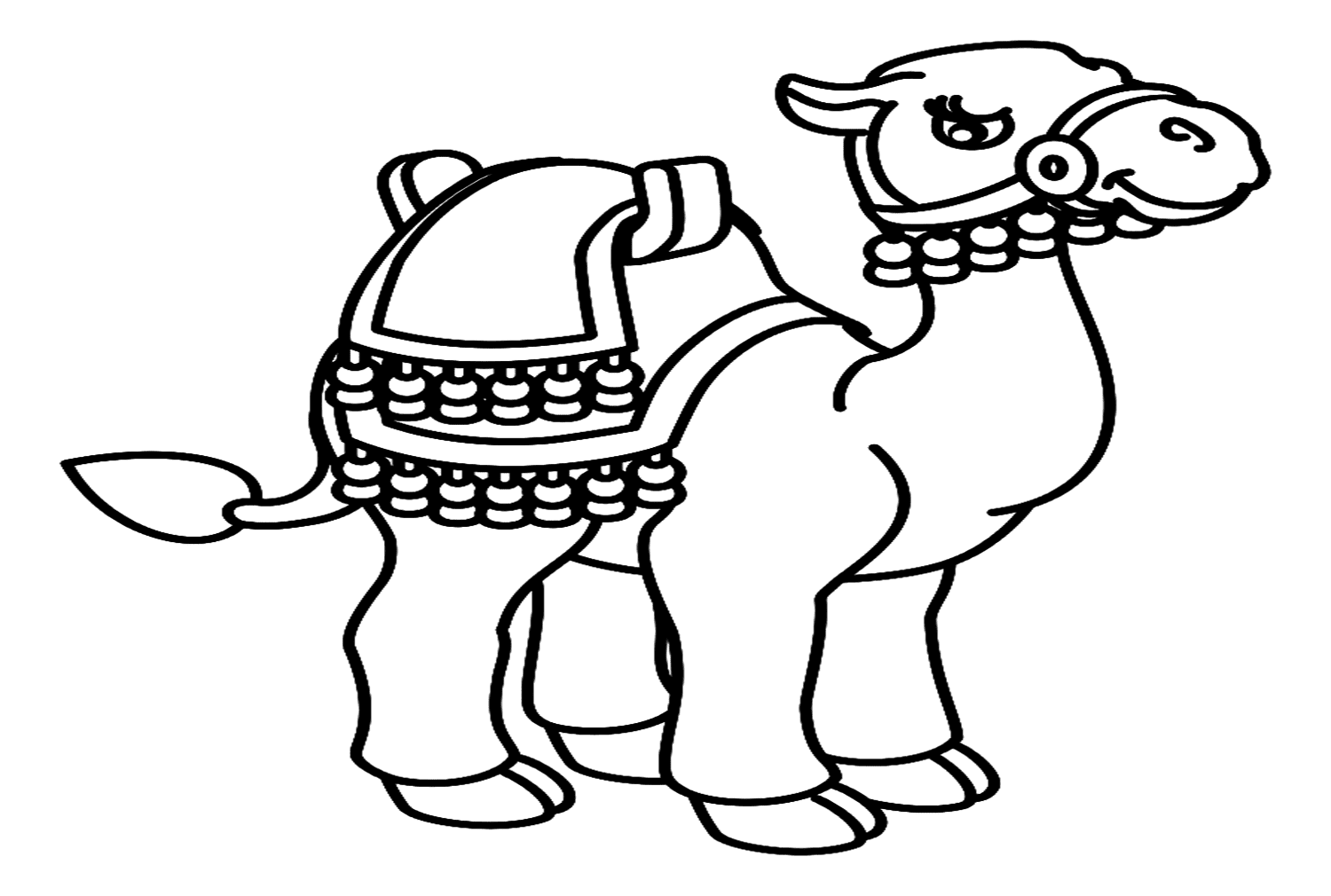
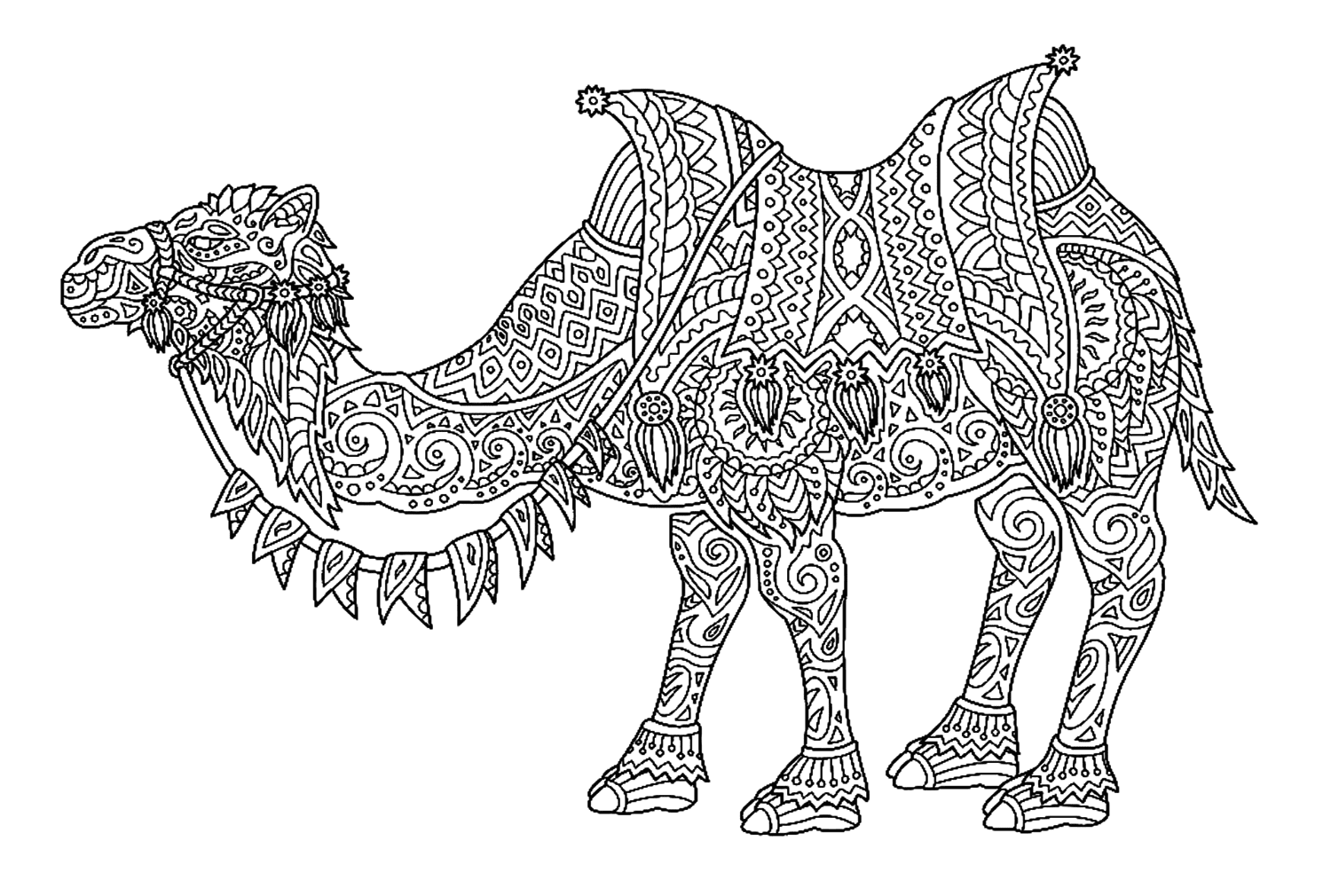
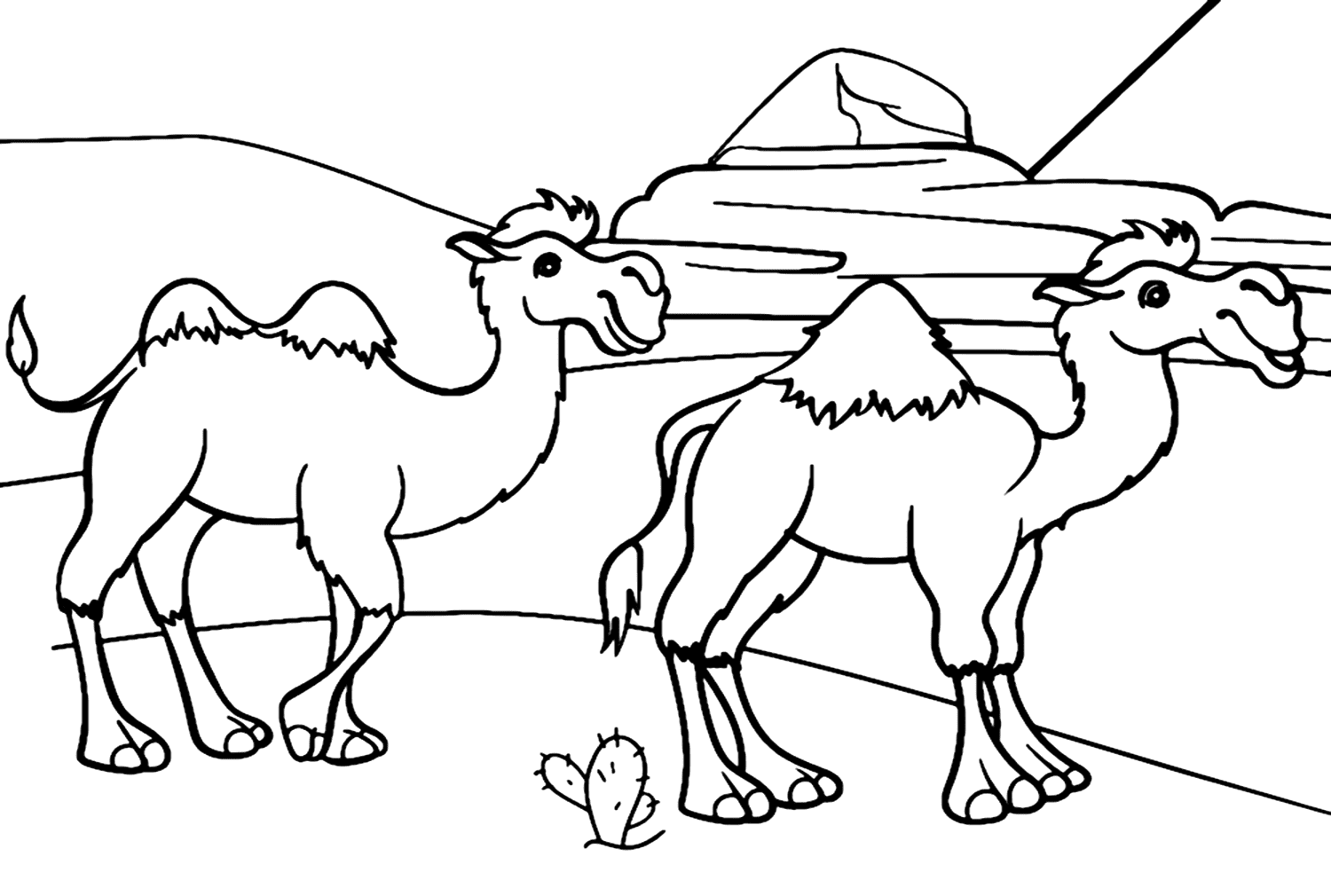
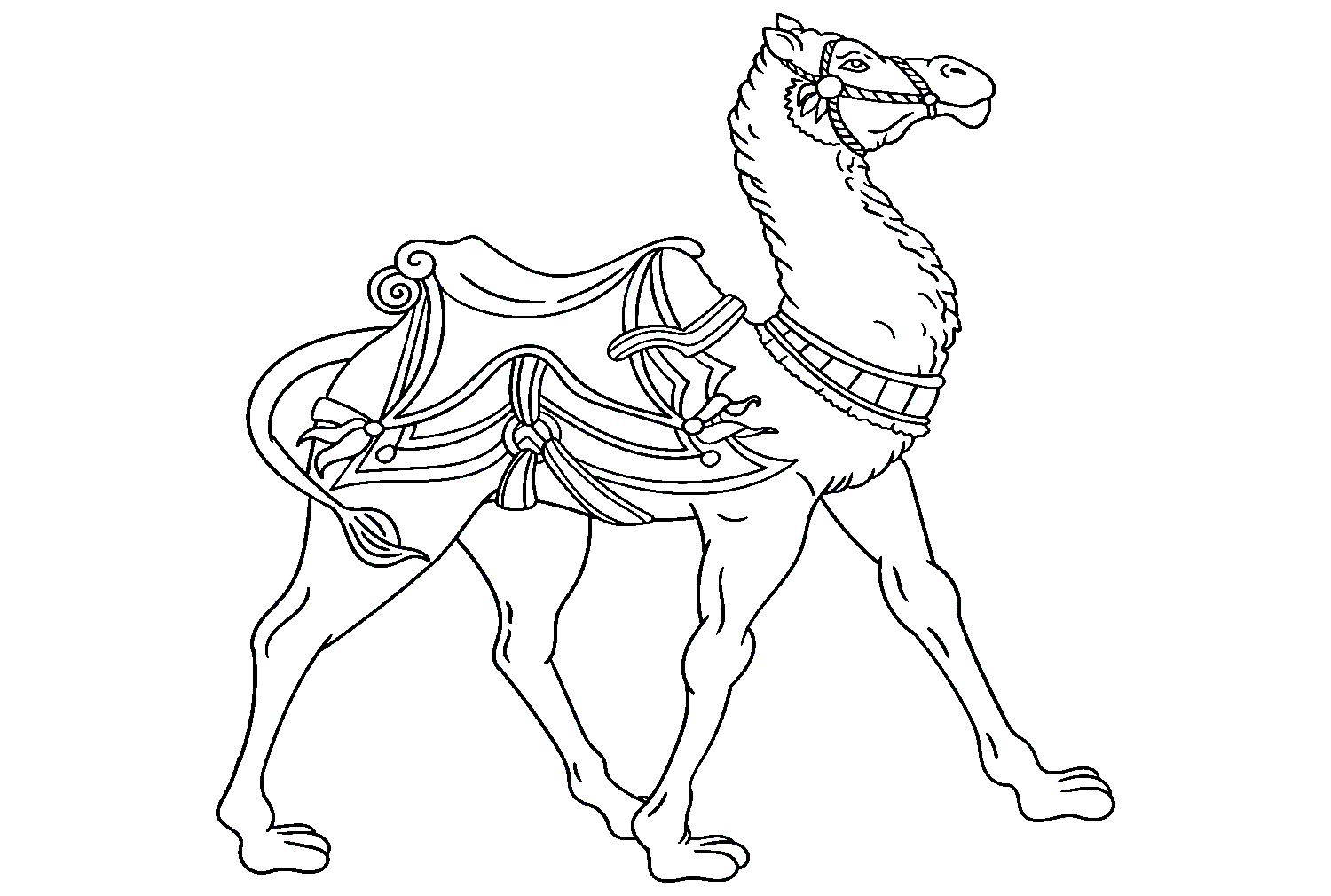
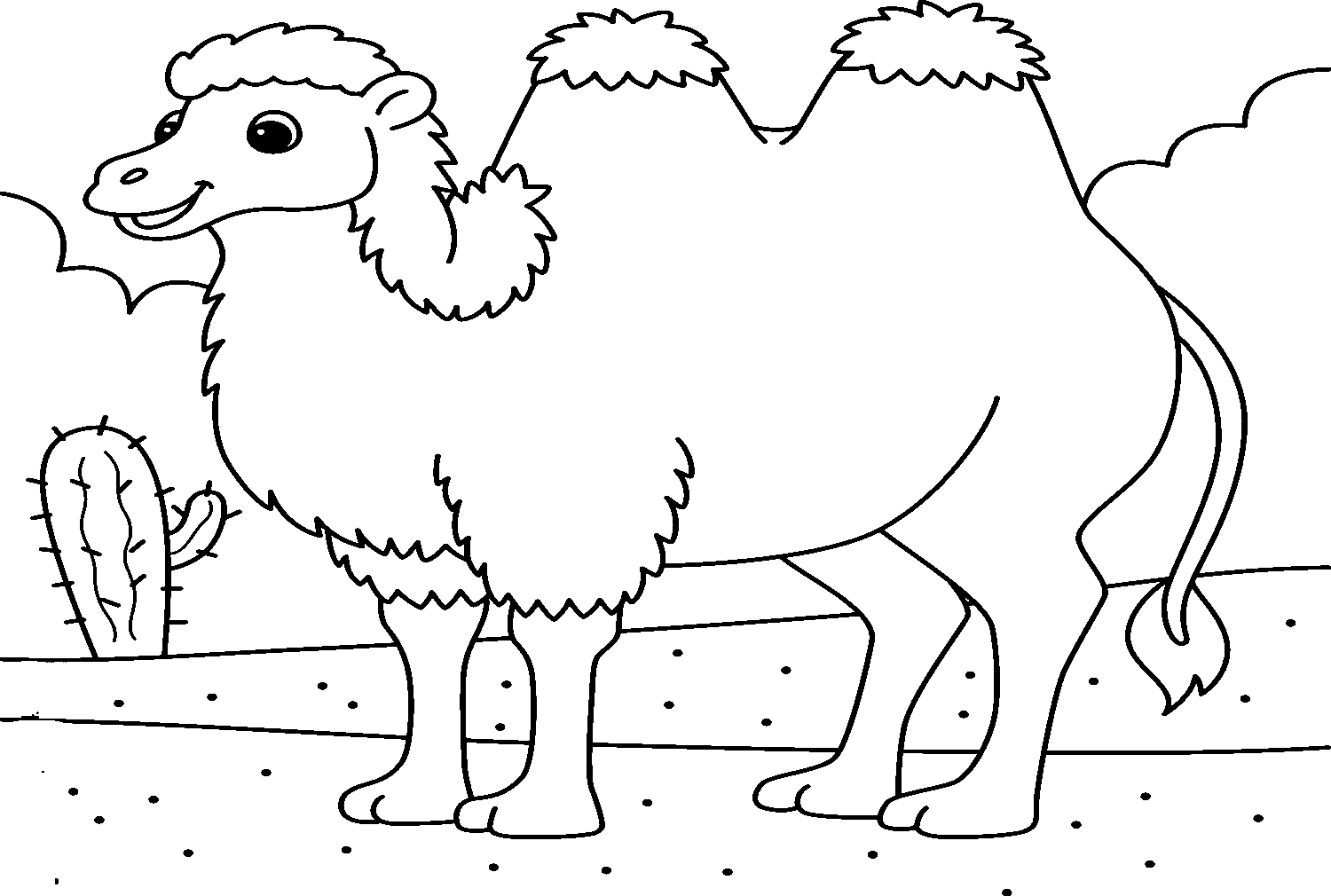
The set includes solo camel portraits, desert landscape scenes, cartoon camels paired with people or other animals, cultural and travel scenes, and a pattern and early-learning group, giving colorists a wide range of styles and difficulty levels to work through.
What Is Inside This Collection
The 36 pages are grouped by style and setting rather than by a single repeated scene.
Realistic and Detailed Camels
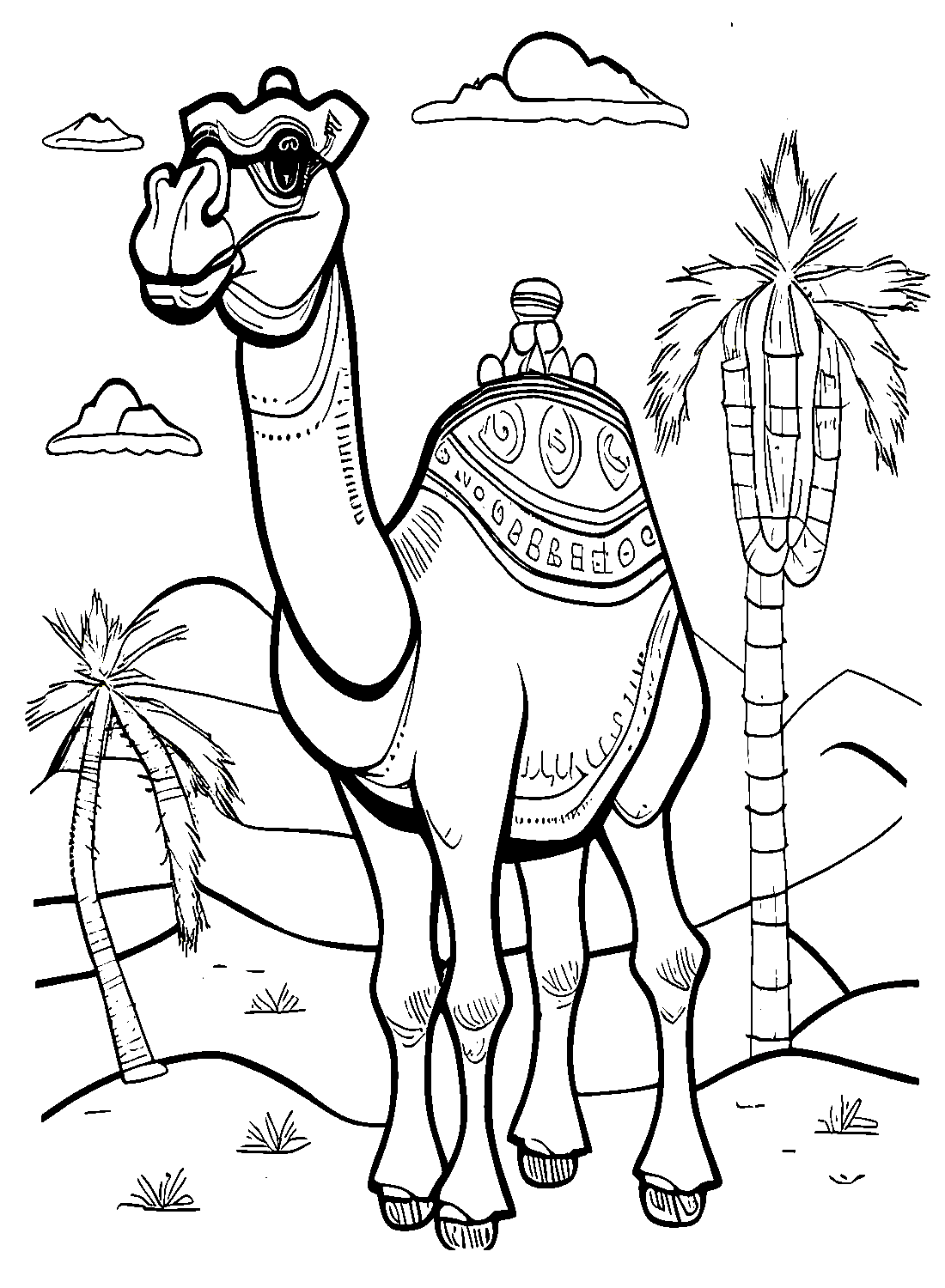
Several pages focus on anatomical accuracy, showing the long eyelashes, broad padded feet, and hump shape that distinguish real camels. These suits older colorists who want to work in fine, layered detail rather than large, flat shapes.
Desert Landscape Scenes
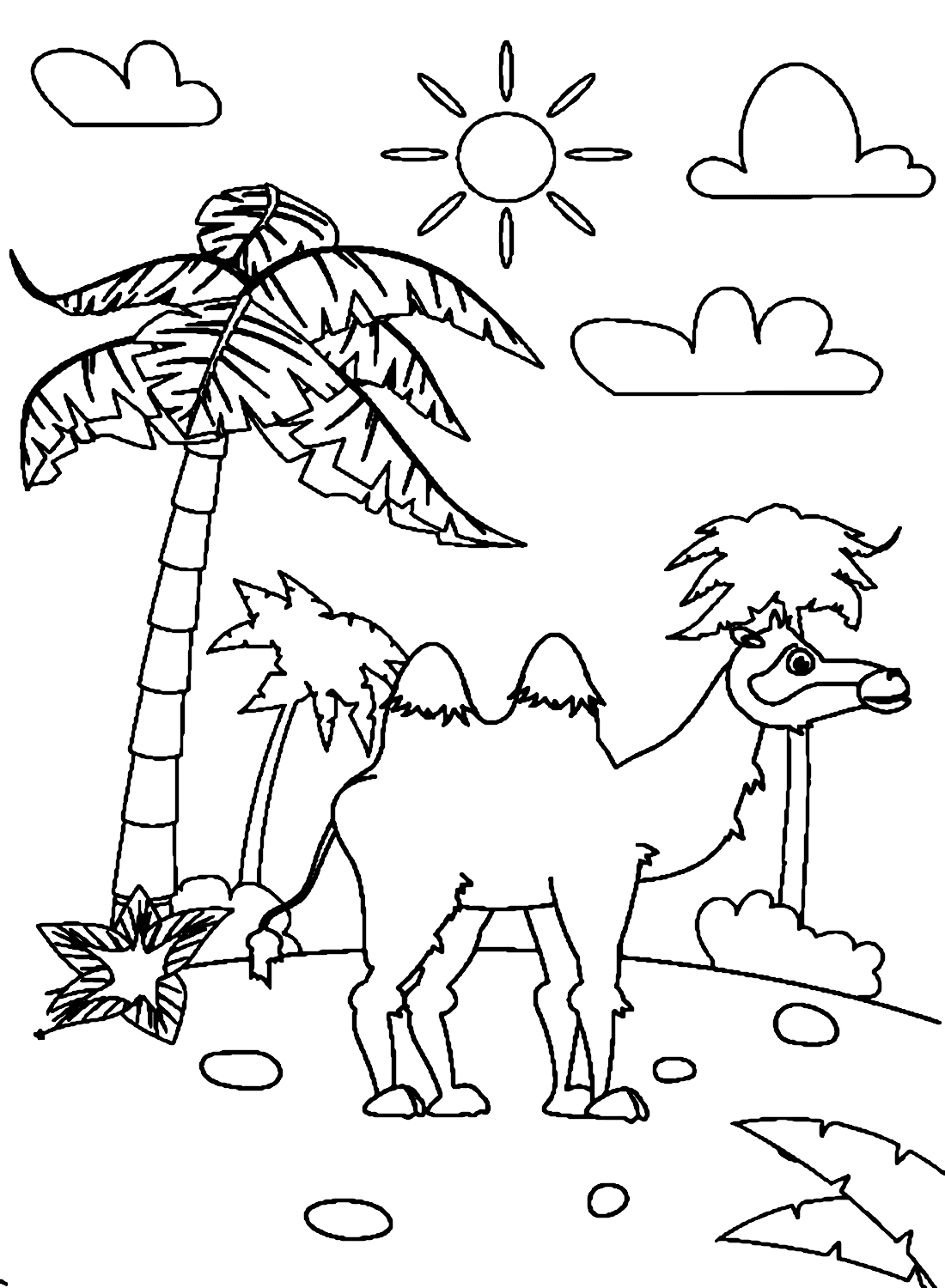
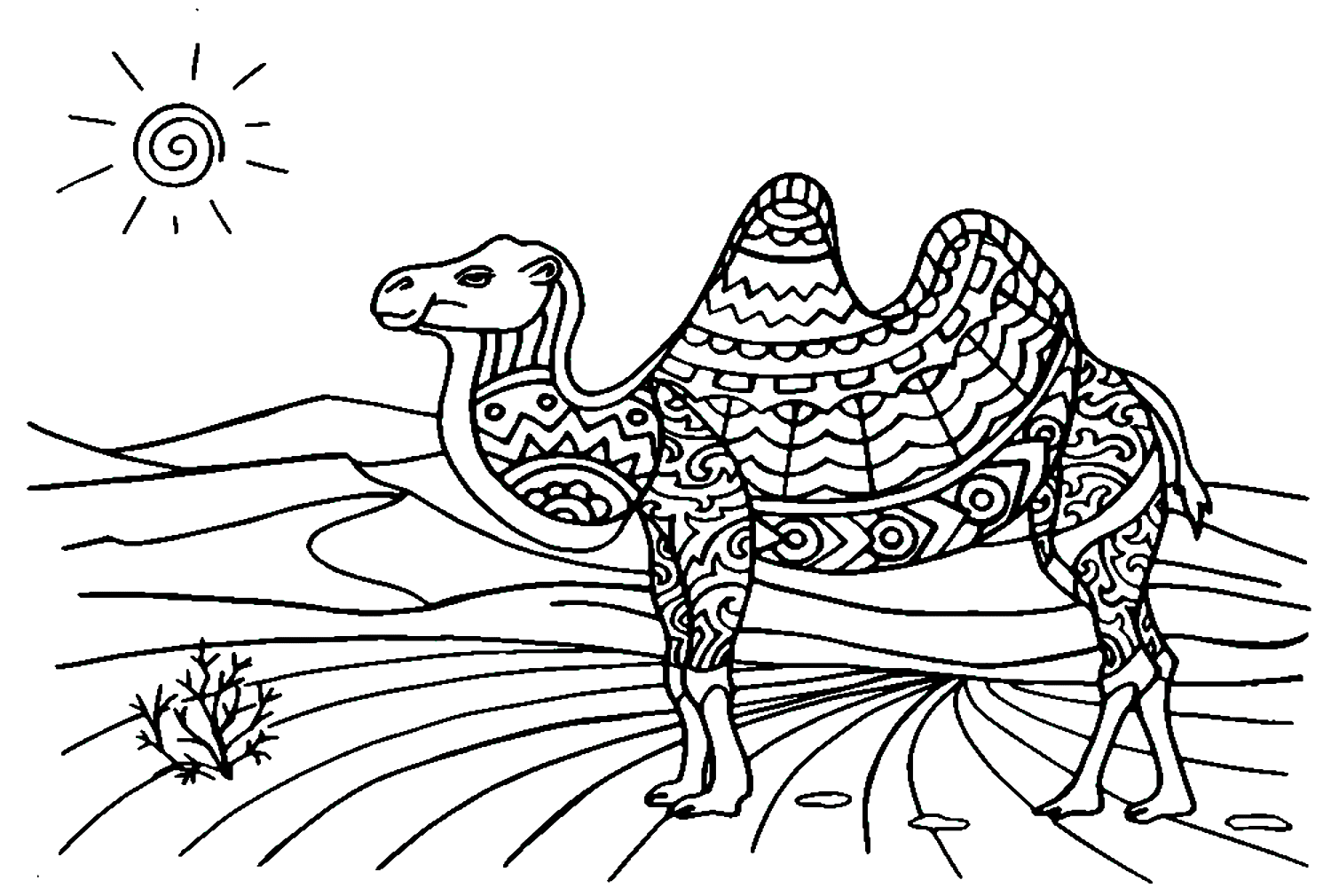
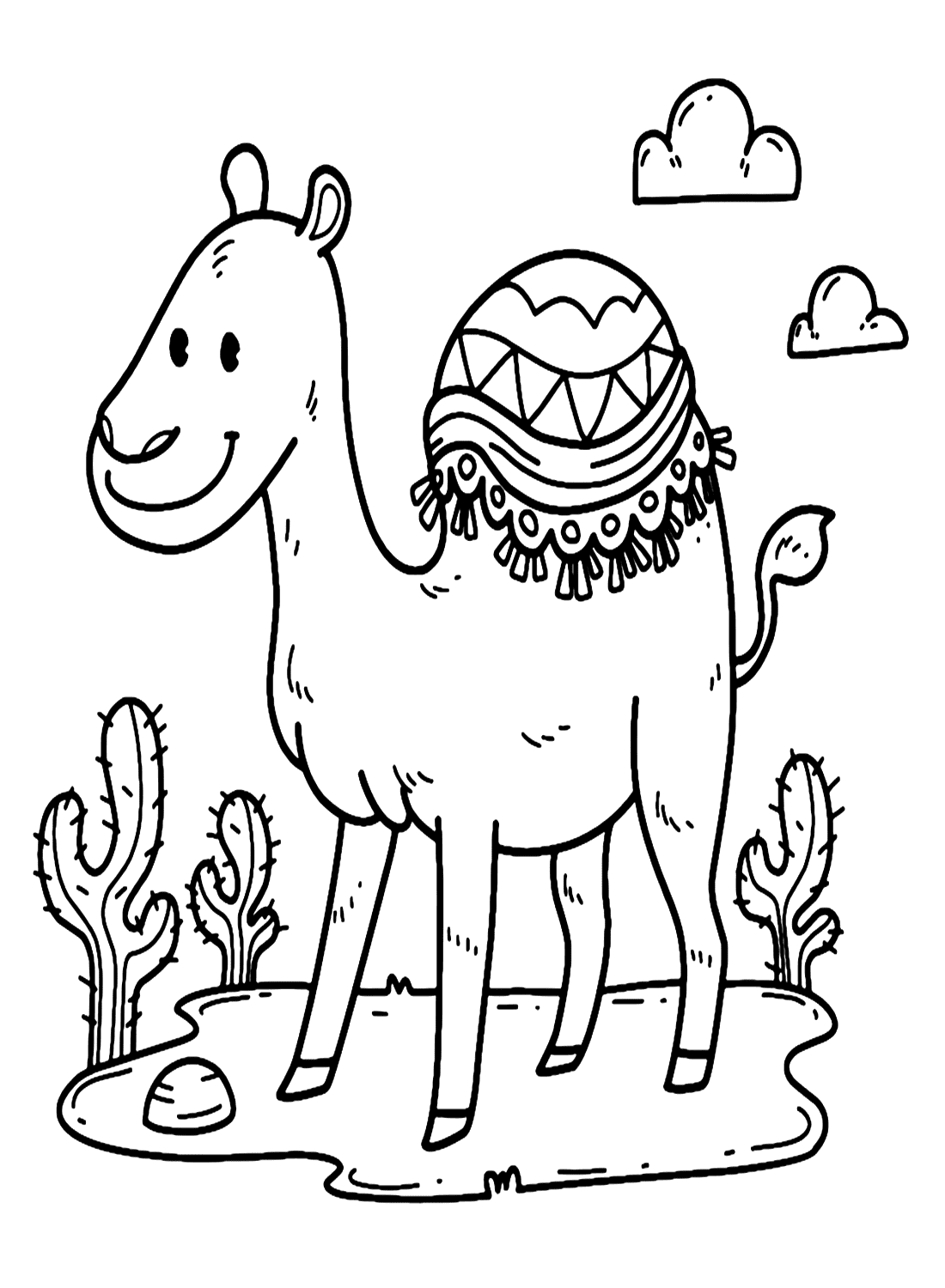
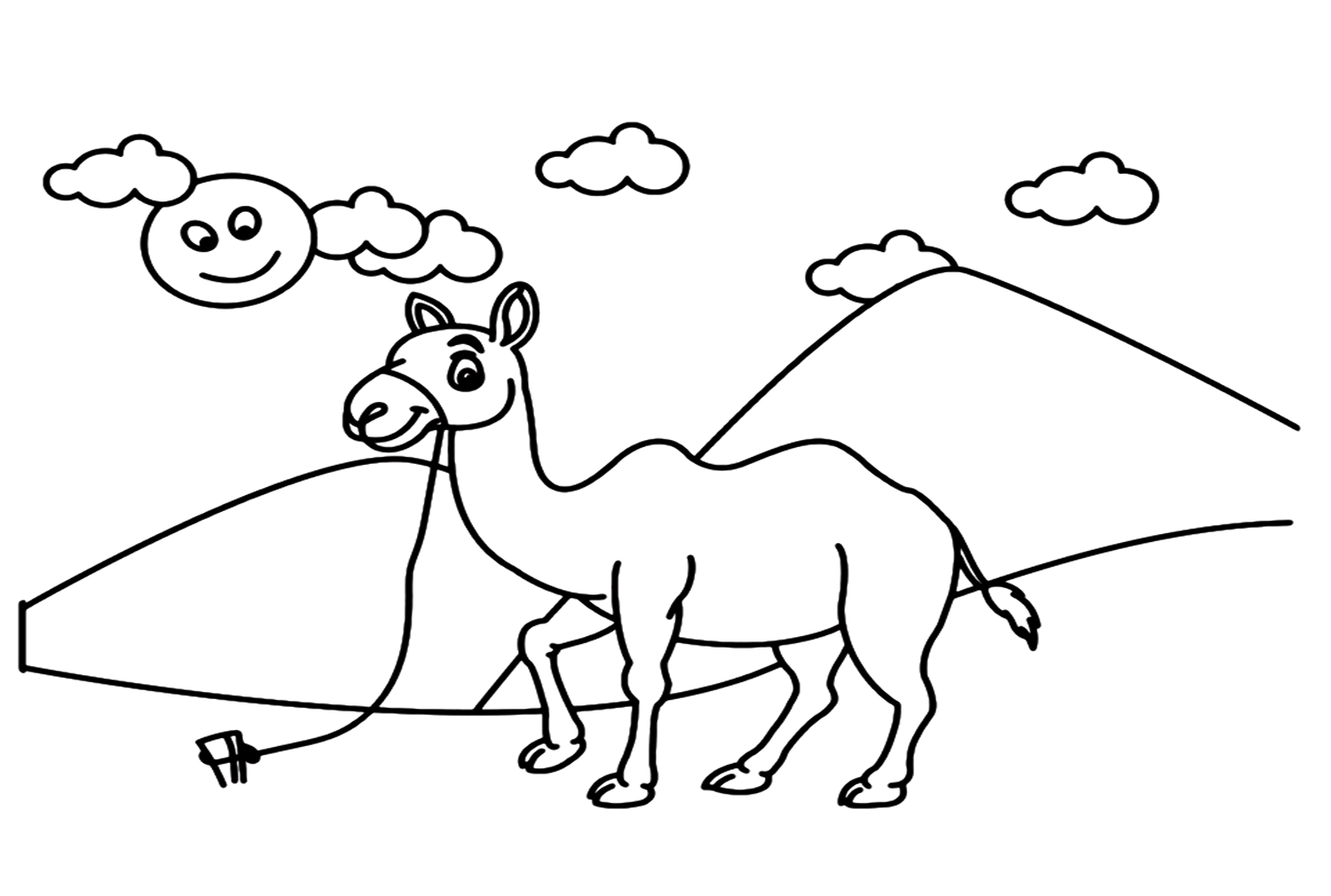
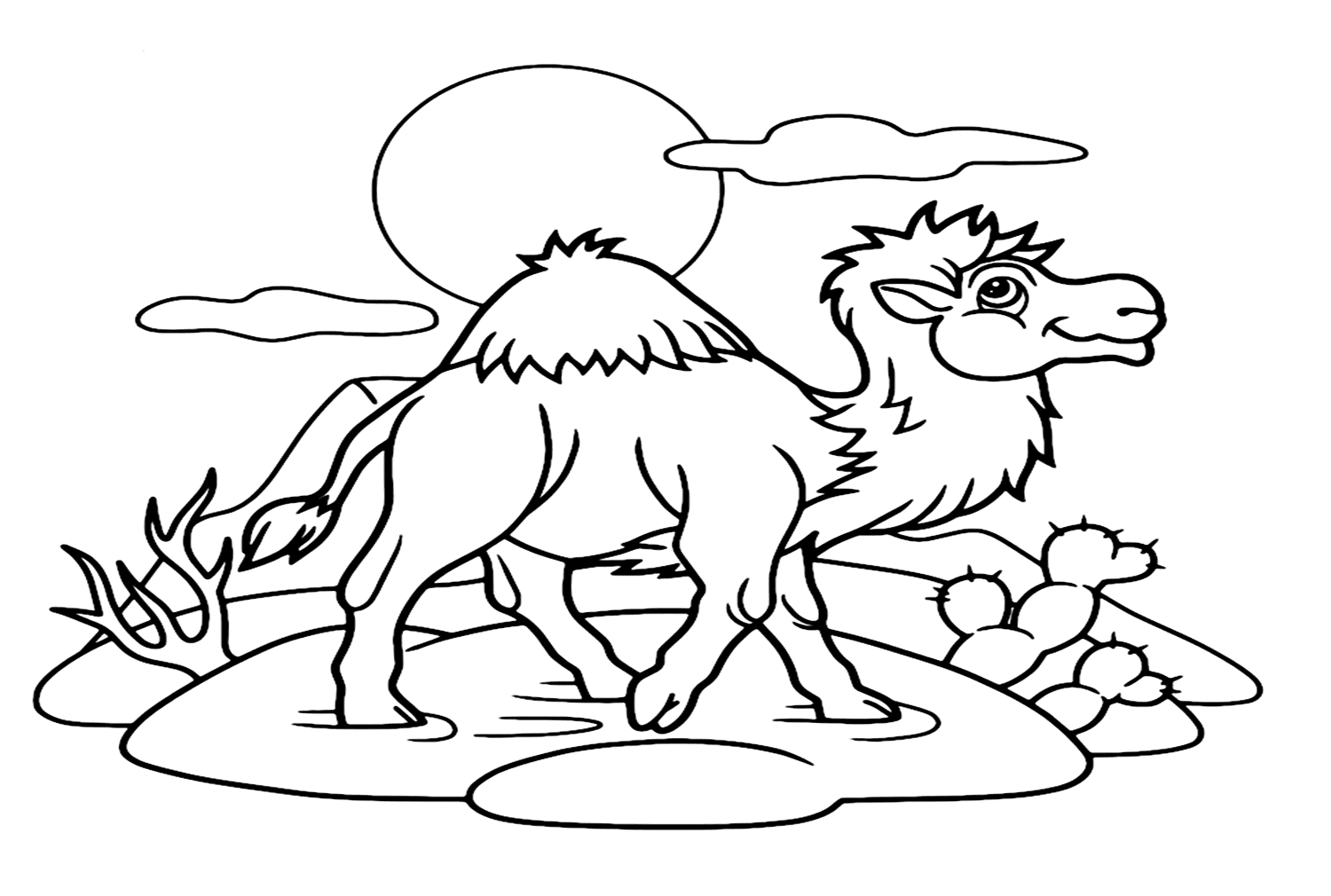
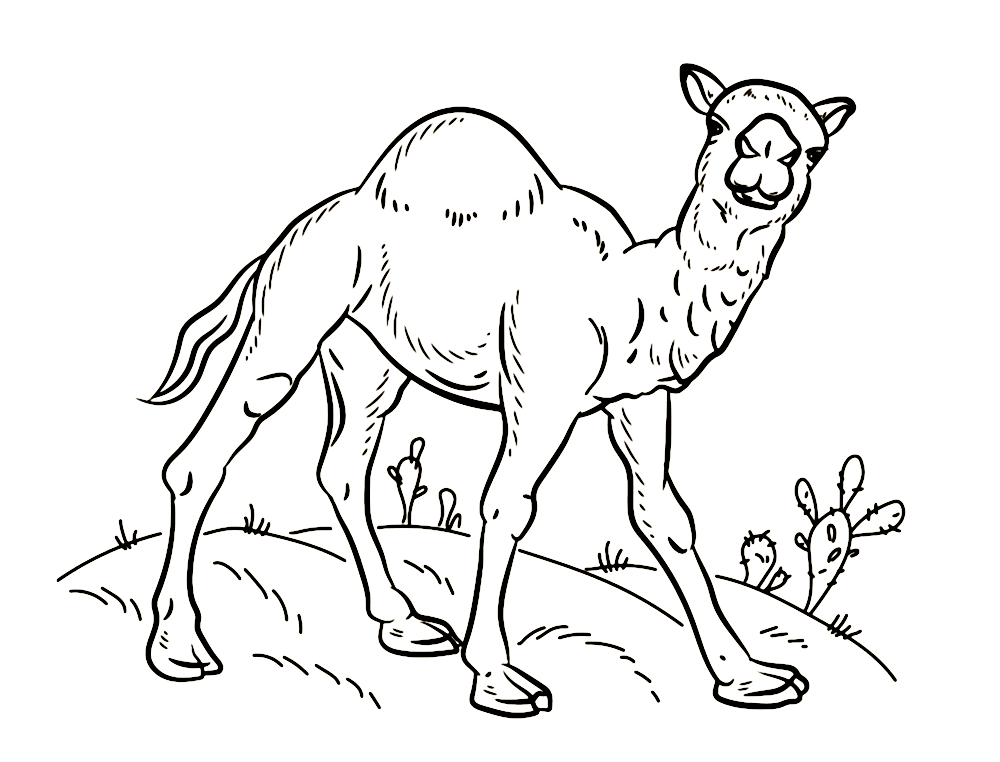
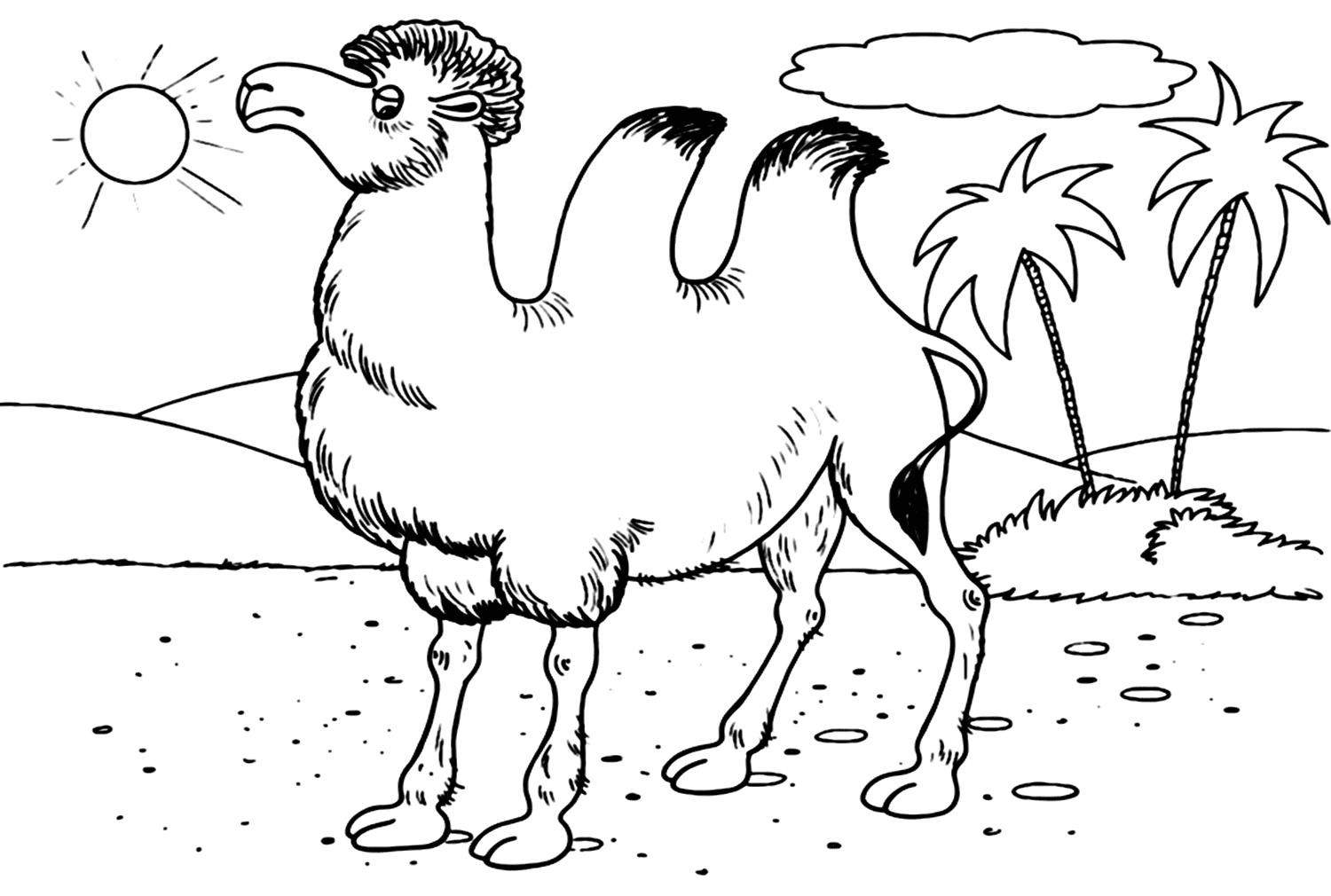
A large group sets the camel against its natural habitat, with dunes, cactus, and open sky filling the background. These give colorists room to practice blending warm sand tones with cooler shadow colors.
Cartoon and Character Camels
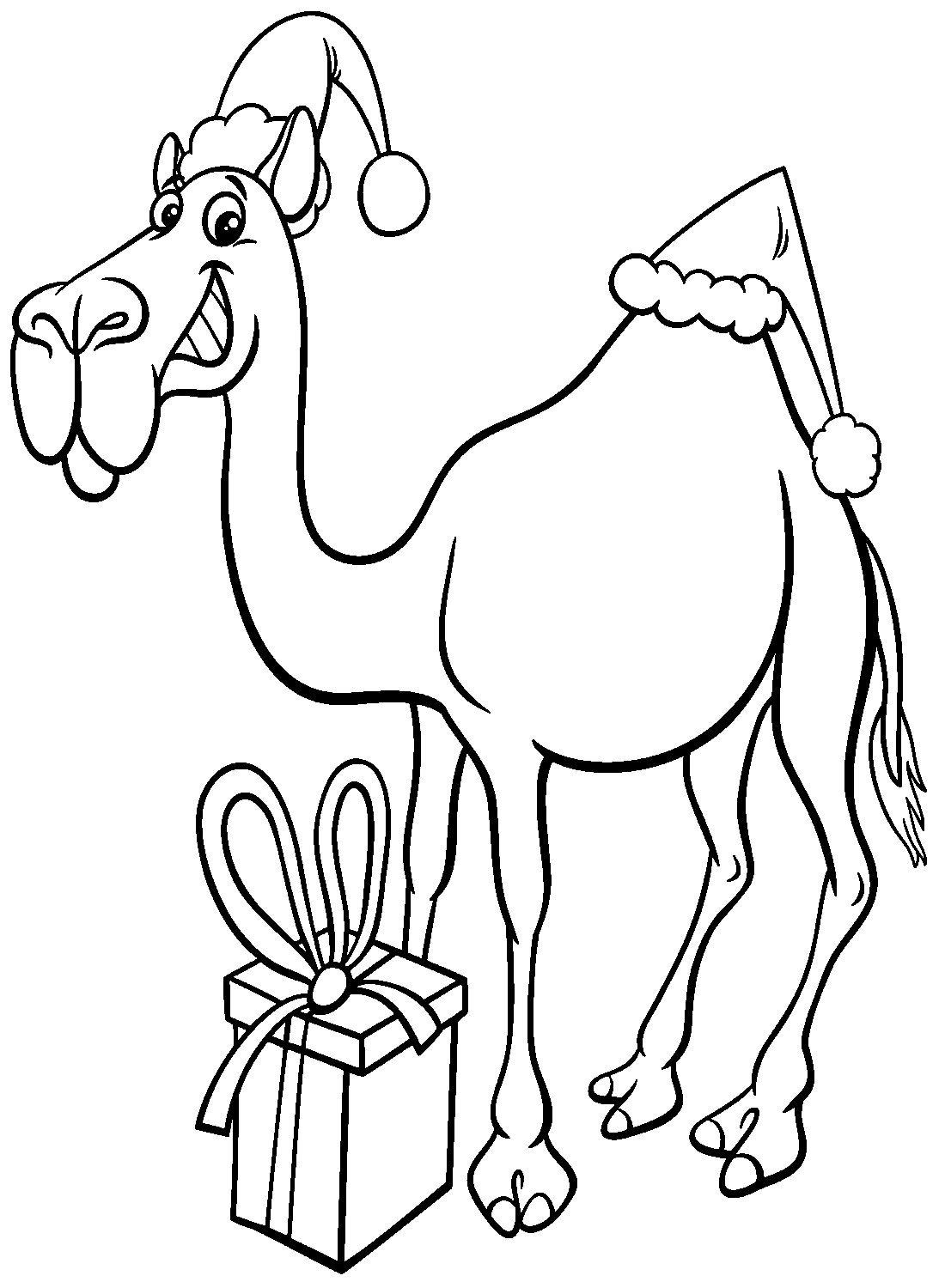
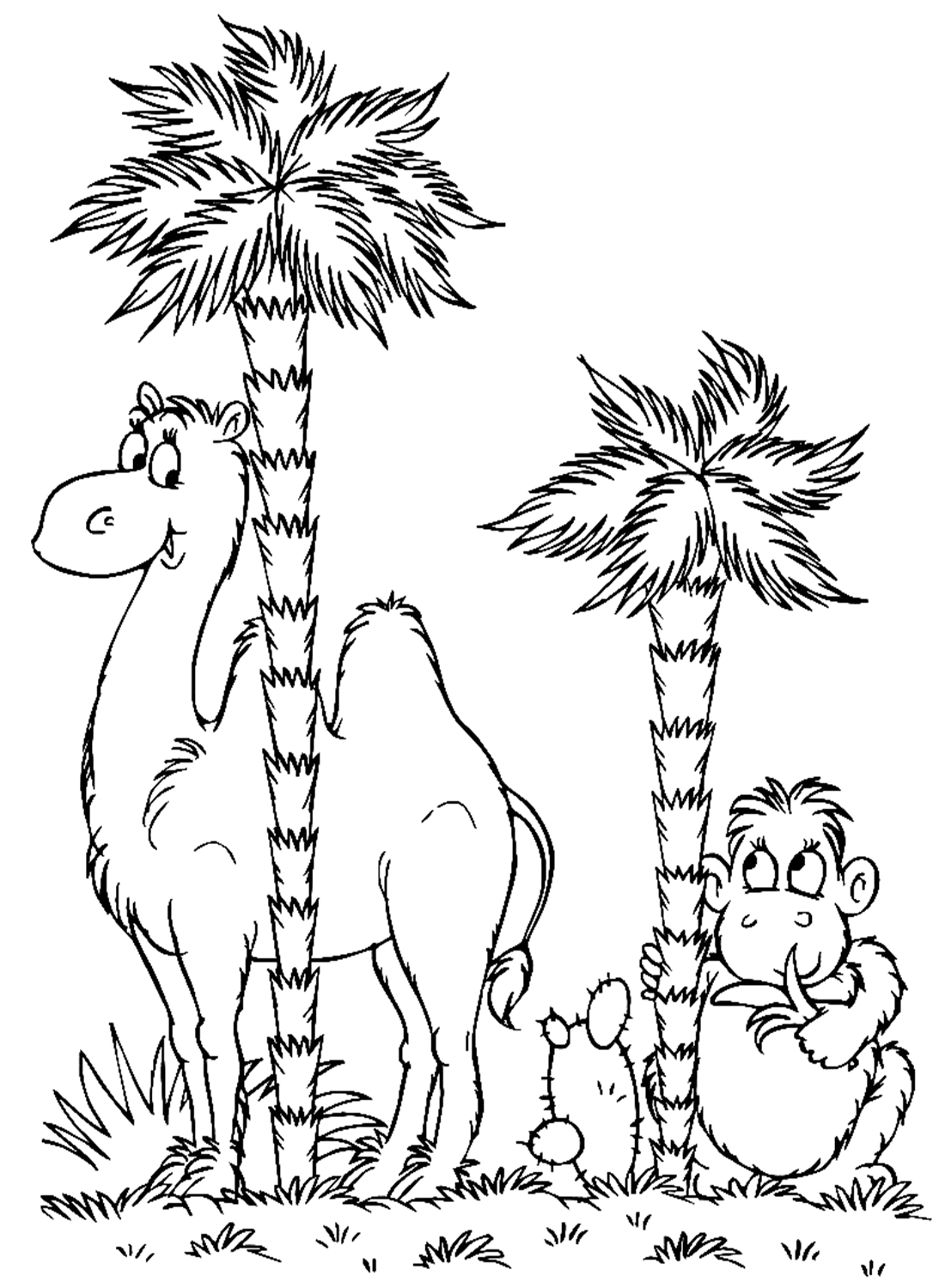
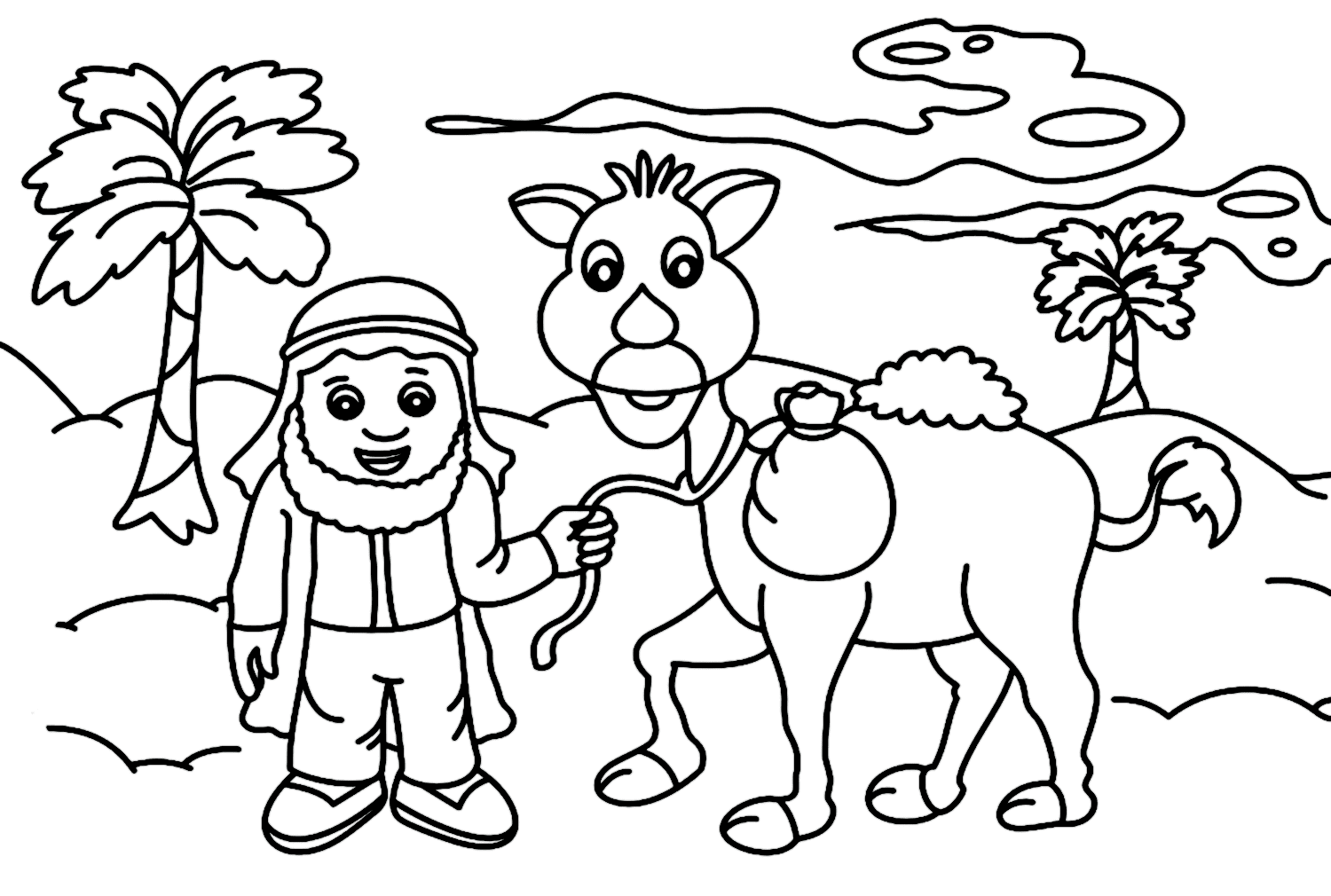
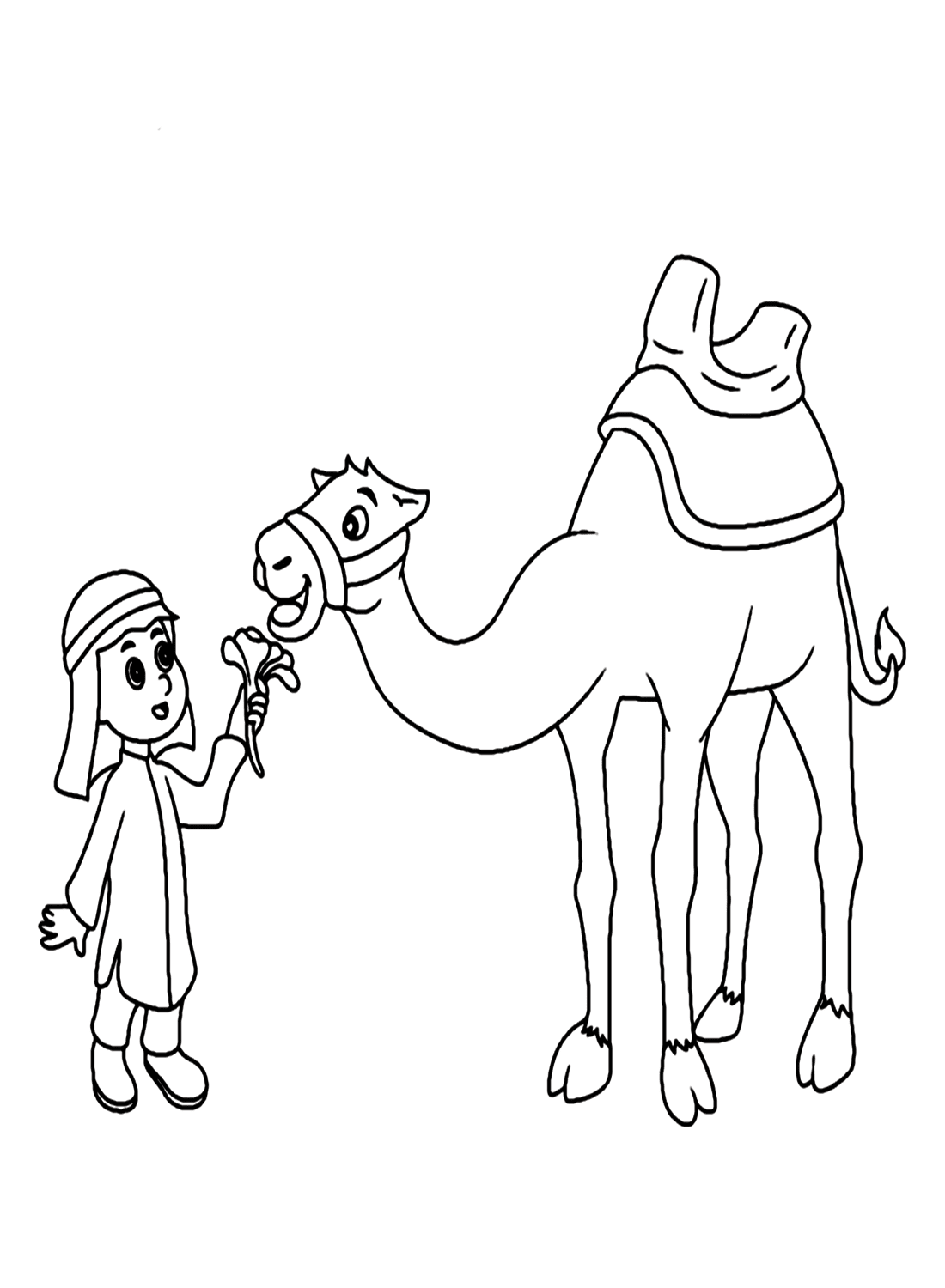
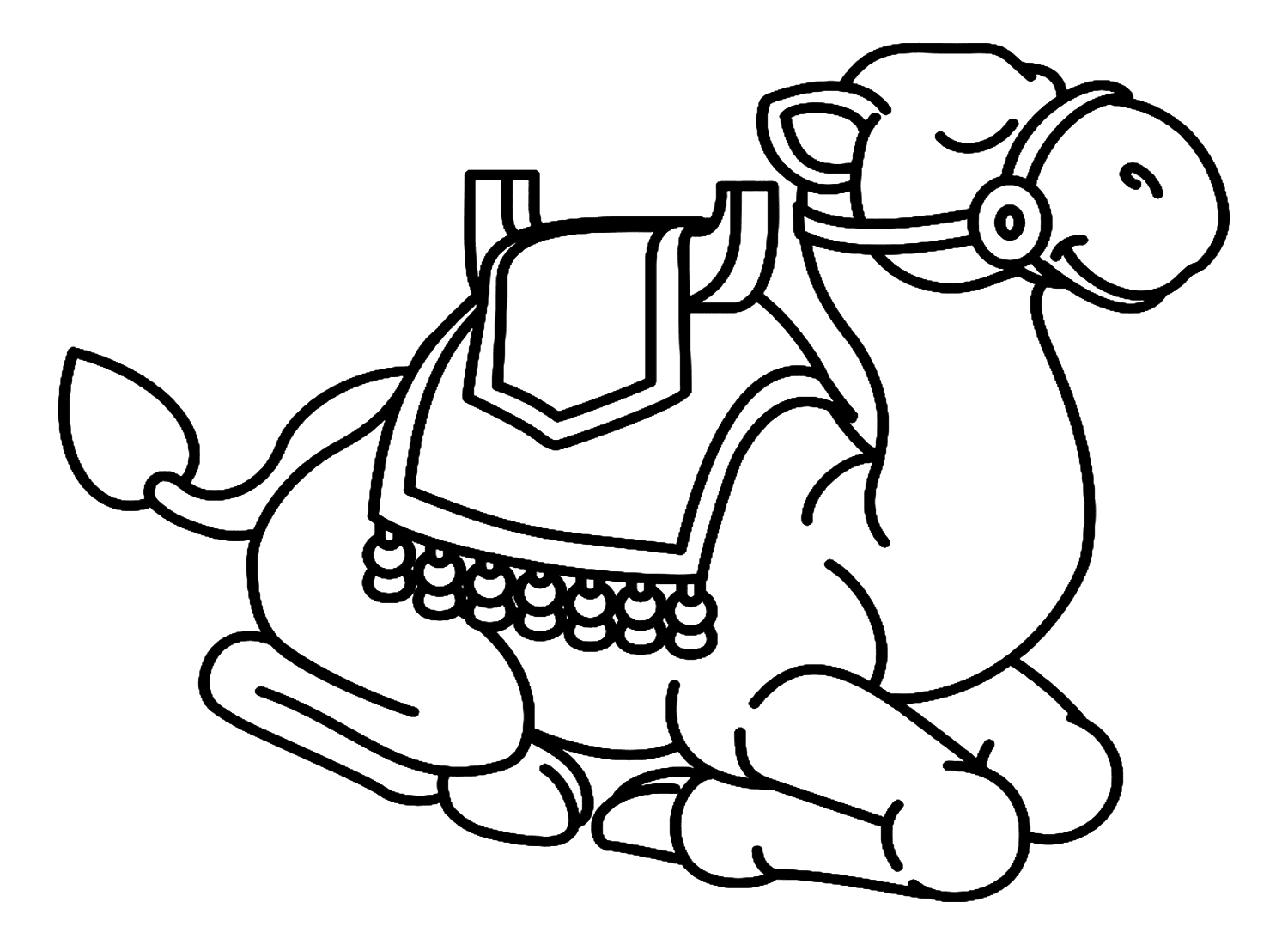
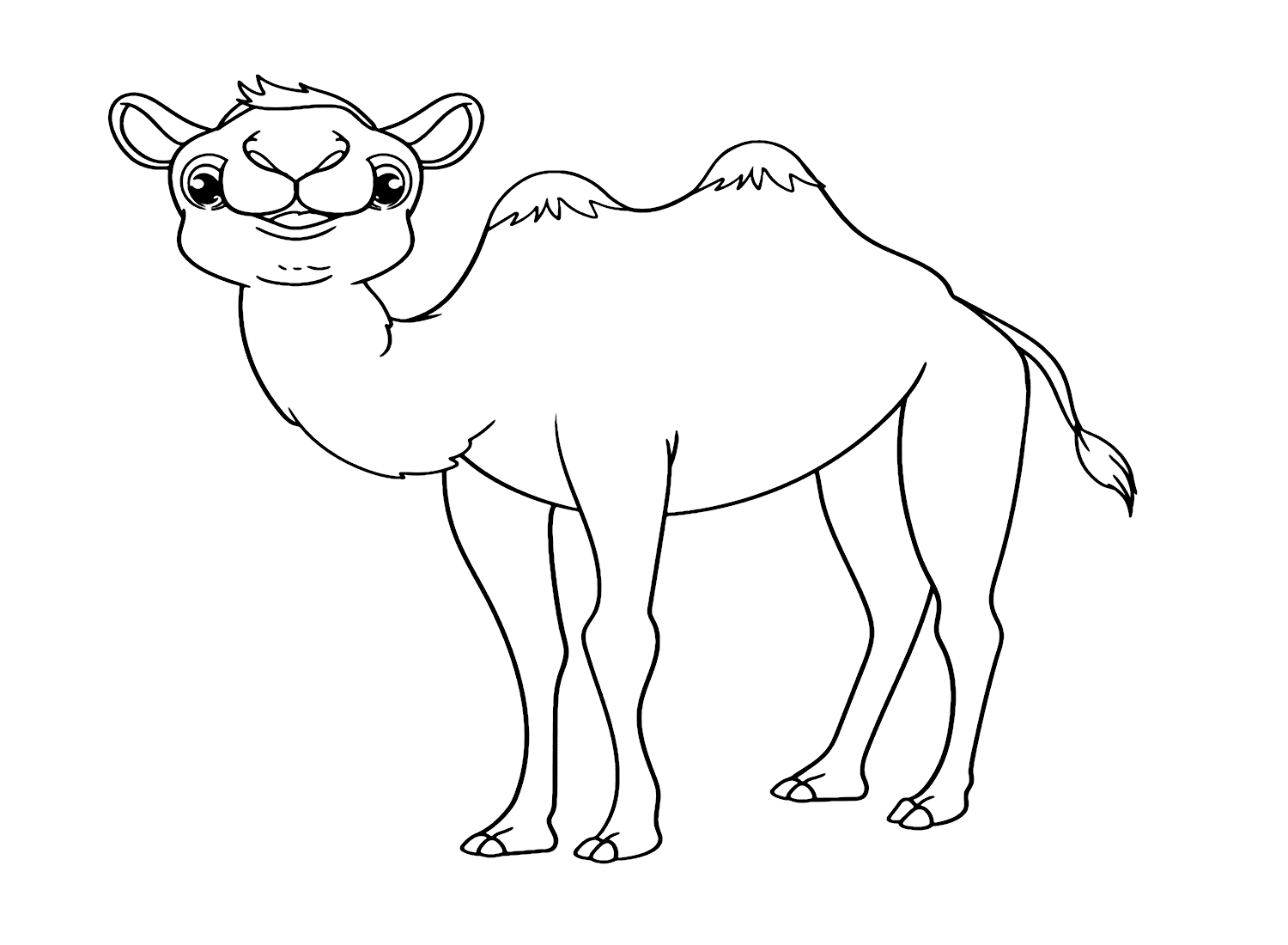
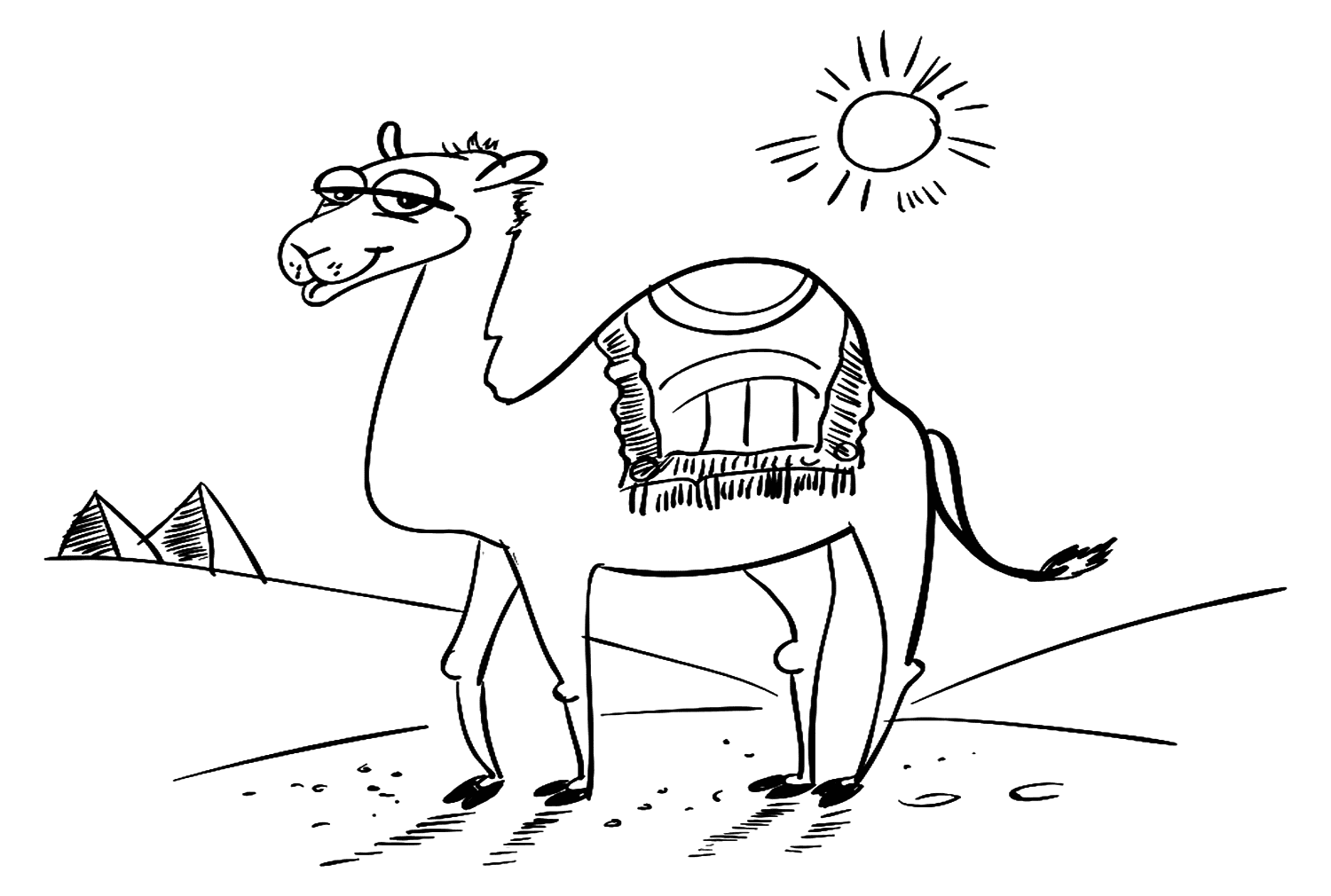
These pages simplify the camel into rounded, expressive cartoon shapes, often paired with a child or another animal for a storytelling feel. They suit quicker coloring sessions with younger children.
Cultural and Travel Scenes
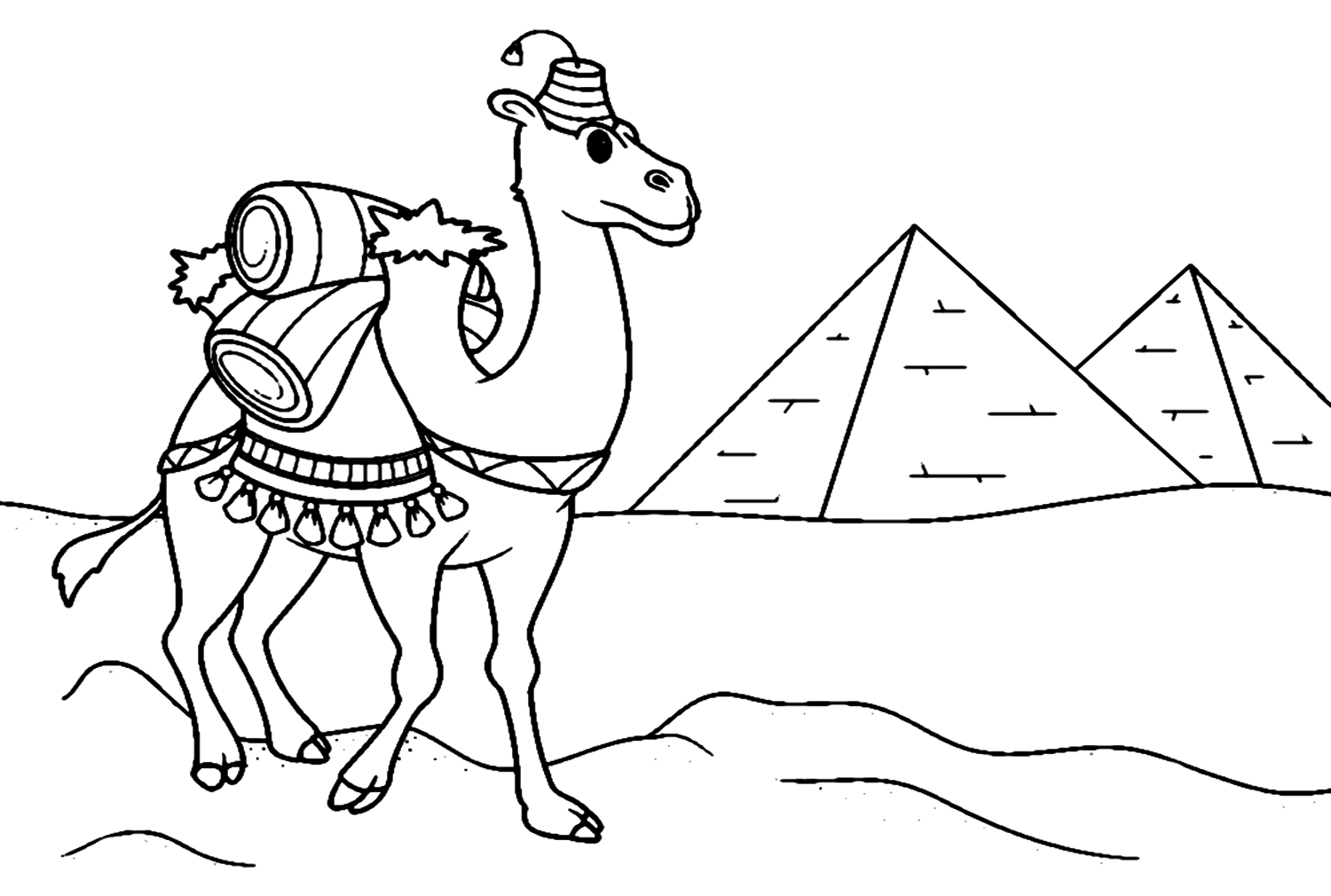
A smaller set shows camels in their long-standing role as pack and transport animals, including caravan and cargo-carrying scenes. These pair well with a classroom unit on desert life or historic trade routes.
Pattern and Early-Learning Pages
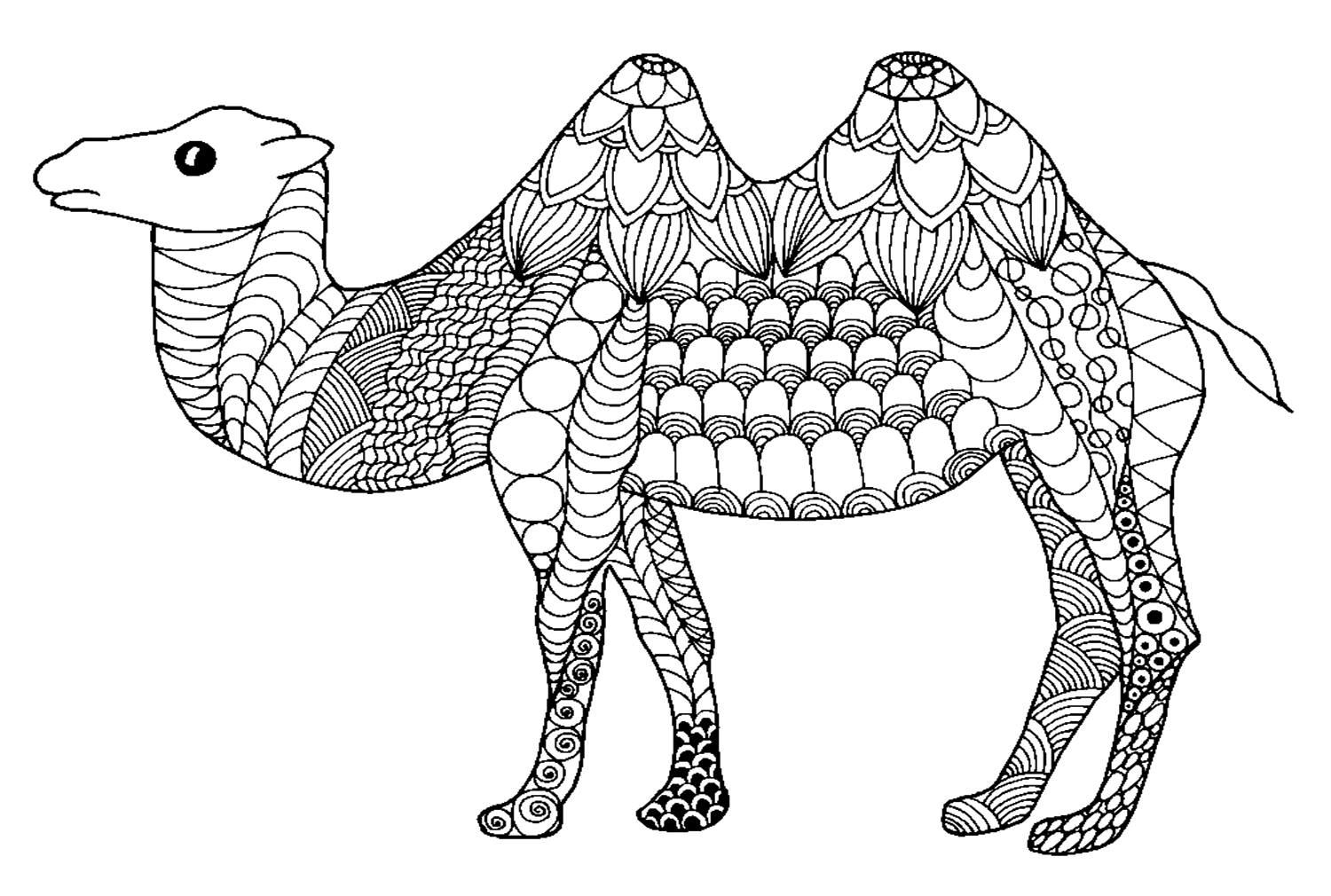
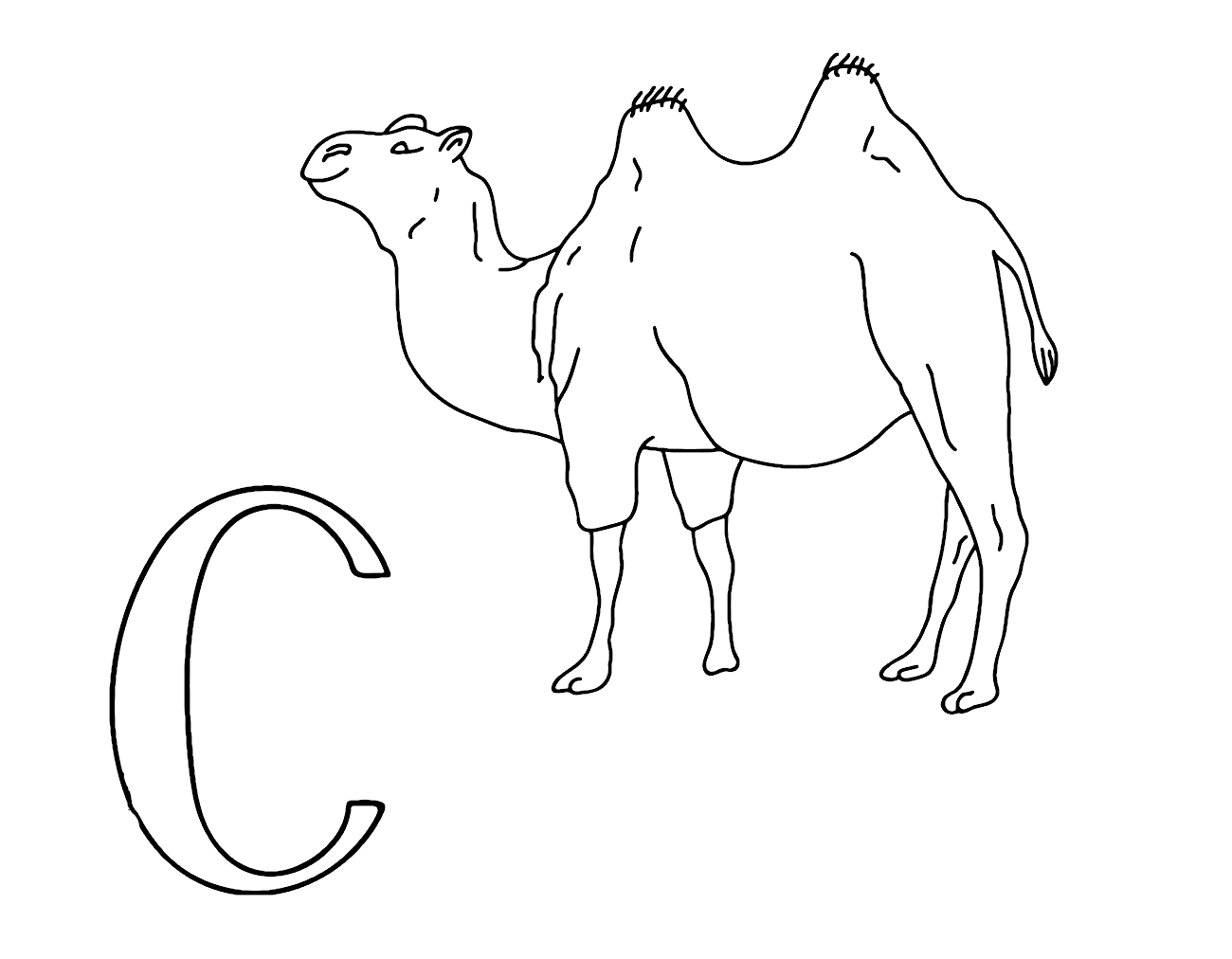
A small group covers two different needs: a pattern-filled, zentangle-style design for meditative, detailed coloring, and a simple letter-recognition page pairing the camel with the letter C for younger colorists.
What Camel Coloring Pages Do
Fine motor development through the camel’s distinct shape. The American Academy of Pediatrics identifies fine motor skill development as a core benefit of structured coloring for children ages 2 through 7, and staying inside a camel’s long legs, curved neck, and rounded hump asks for smaller, more controlled hand movements than a simpler animal outline would.
A visual way to tell two species apart. Camels have either one hump or two, and coloring in that distinction gives children a concrete, hands-on way to separate the dromedary from the Bactrian camel, rather than relying on a name alone.
Calm, repetitive focus through coat and pattern detail. A 2005 study in the Art Therapy Journal documented measurable reductions in anxiety following structured coloring sessions, and the slow, repeated motion of filling in a camel’s coat, or working through the zentangle-style pattern page, calls for the same steady attention the study associated with that calming effect.
A built-in adaptation lesson. Features like sealable nostrils and long eyelashes exist specifically to keep out blowing desert sand, which turns a coloring session into a short, visual introduction to animal adaptation rather than a purely decorative exercise.
How to Color These Pages Well
- Body coat: Use Tan or Desert Sand for the base coat, then layer Brown or Sepia into the creases along the legs and neck for depth.
- Hump shading: Shade the hump’s lower edge with Burnt Sienna and leave the top lighter to suggest light catching the curve.
- Desert background: Blend Yellow Orange into Tan for the dunes, using a light, circular motion to suggest texture in the sand.
- Sky and shadow: Pair a soft Sky Blue with long, thin Gray shadows to ground the scene in a specific time of day.
- Bactrian camel detail: Use short, choppy Brown strokes for the shaggier neck and face fur instead of a flat fill, since Bactrian camels have a noticeably rougher coat than dromedaries.
- Cargo and rope details: Color rope and cargo straps in dark Brown or Gray so they stand out clearly against the camel’s coat.
5 Creative Craft Ideas With Camel Coloring Pages
1. Caravan Trail Display
Color several camel pages, cut around each one, and arrange them in a single curving line across a wall or poster board. Space them slightly apart to suggest a caravan moving across the desert.
2. Hump Comparison Chart
Color one dromedary page and one Bactrian camel page side by side, then write the hump count and a short fact underneath each. Use the finished chart as a simple visual comparison of the two species.
3. Sand Texture Rubbing
Place a piece of thin paper over a sheet of fine sandpaper and rub a Tan or Sepia crayon across it to create a textured background. Glue a colored camel cutout on top of a page with real sand-like texture.
4. Letter C Learning Card
Color the Letter C for Camel page and glue it to an index card alongside two or three other pictures that start with the letter C. Use the finished card for early letter-recognition practice.
5. Camel Fact Trading Cards
Trim a few solo camel portraits into card-sized pieces and write one real camel fact on the back of each, such as hump function or desert adaptations. Collect the finished cards into a small deck.
Frequently Asked Questions
What are camel coloring pages?
A free set of 36 printable PDF and online coloring designs featuring dromedary and Bactrian camels in desert, caravan, and cartoon scenes. Every page downloads free or opens for online coloring, with no account required.
How many types of camels are shown in this collection?
Both living types appear: the one-humped dromedary and the two-humped Bactrian camel, each shown on its own dedicated portrait page as well as across the wider set.
Why do camels have humps?
The hump stores fat rather than water, which the camel’s body converts to energy when food is scarce. A hump shrinks and leans to one side after a long stretch without enough food.
Where do camels live in the wild?
Dromedaries are found across North Africa and the Middle East, with a large feral population in Australia, while Bactrian camels are native to the Gobi Desert and the Mongolian steppes.
What makes a camel able to survive in the desert?
Long eyelashes and sealable nostrils keep out blowing sand, and broad, padded feet keep the animal from sinking into loose ground. At the same time, the ability to drink large amounts of water at once helps it go long stretches between drinks.
Are camels wild or domesticated animals?
Most camels today are domesticated and have worked as pack animals for thousands of years. However, a small, critically endangered population of truly wild Bactrian camels still survives in remote parts of Mongolia and China.
Are camel coloring pages appropriate for all ages?
Yes. Simple outlines and cartoon pages suit toddlers and early elementary kids, while the detailed, pattern-filled designs suit older kids, teens, and adults who want a longer coloring project.
Can this collection be used for a classroom lesson on deserts?
Yes. The caravan and cargo pages pair well with a lesson on historic trade routes, while the realistic portraits support a lesson on animal adaptations like the hump and sealable nostrils.
Start Coloring
Download any page by clicking the design. No account, email, or payment is required. Pages print directly from the browser at full resolution or open in the online coloring tool for screen use. Share finished pages on Facebook or Pinterest with the share buttons at the top of each design page.