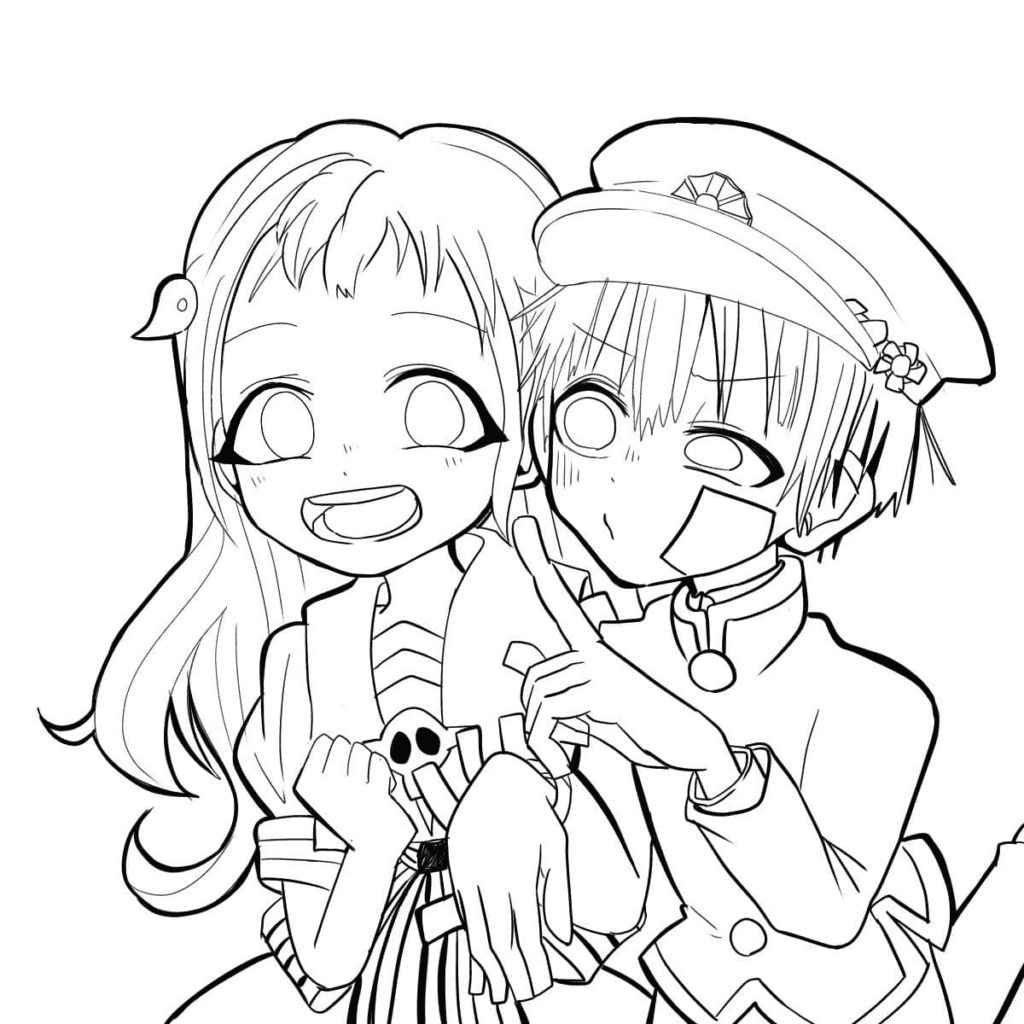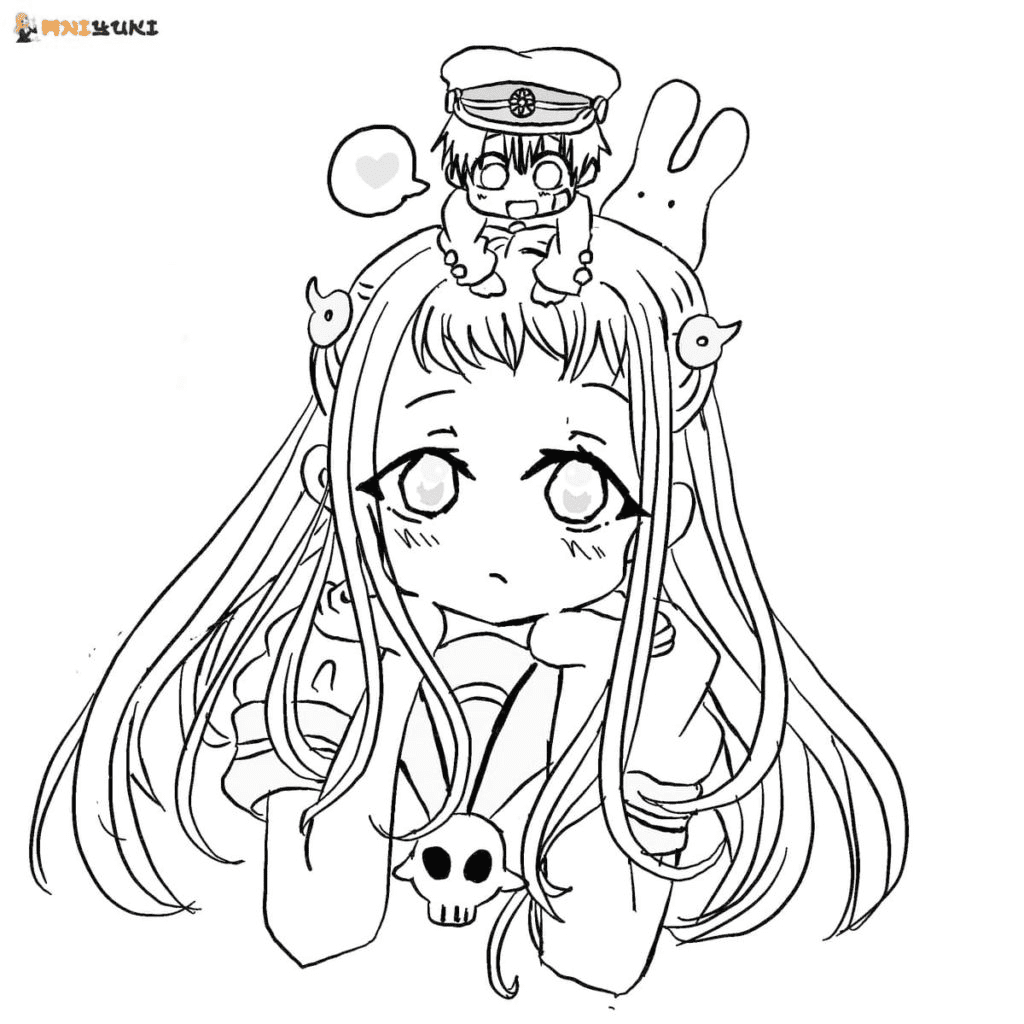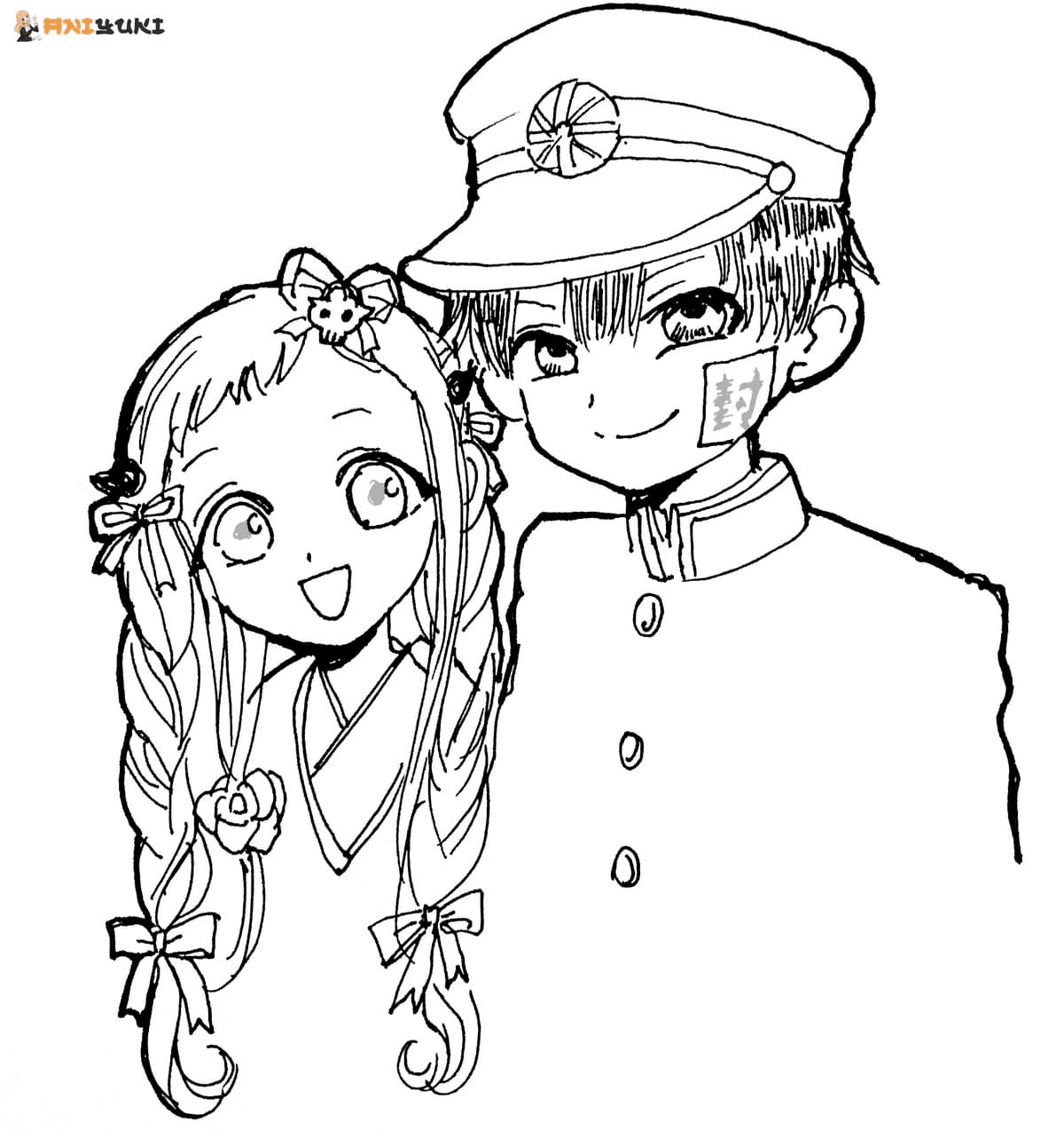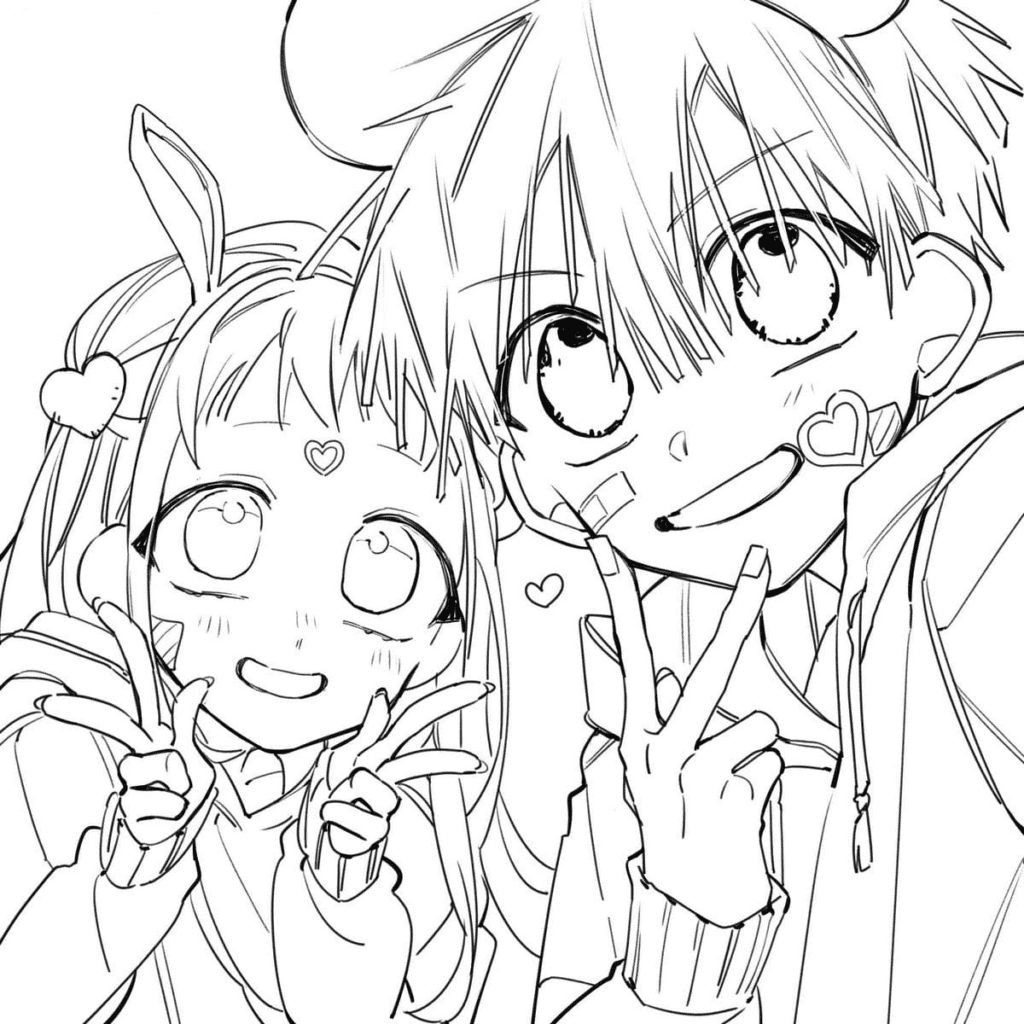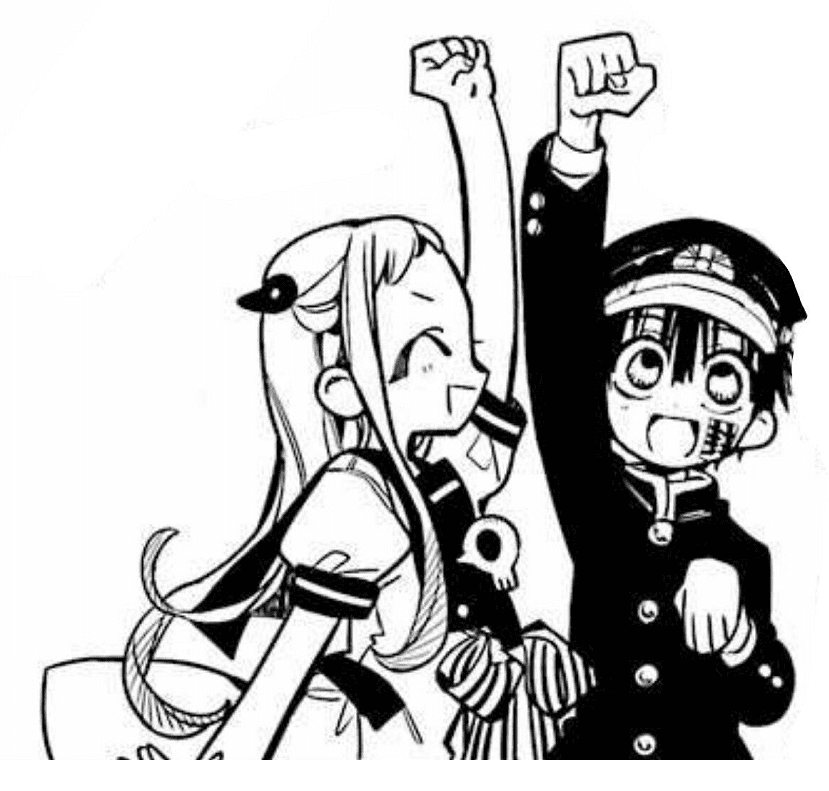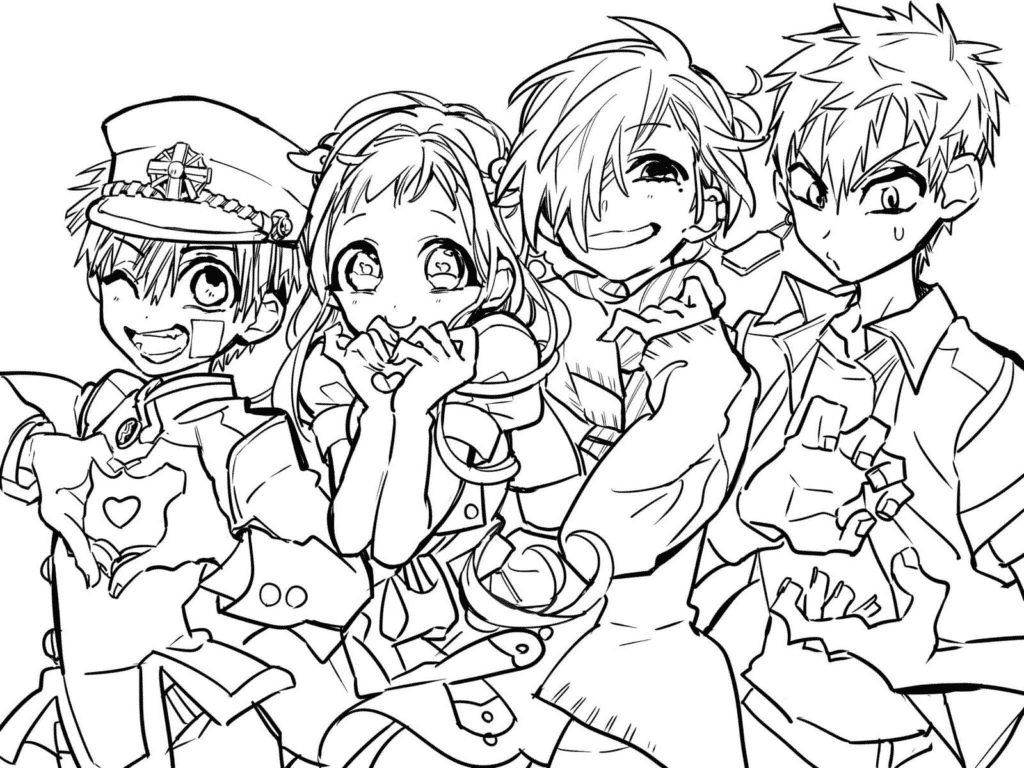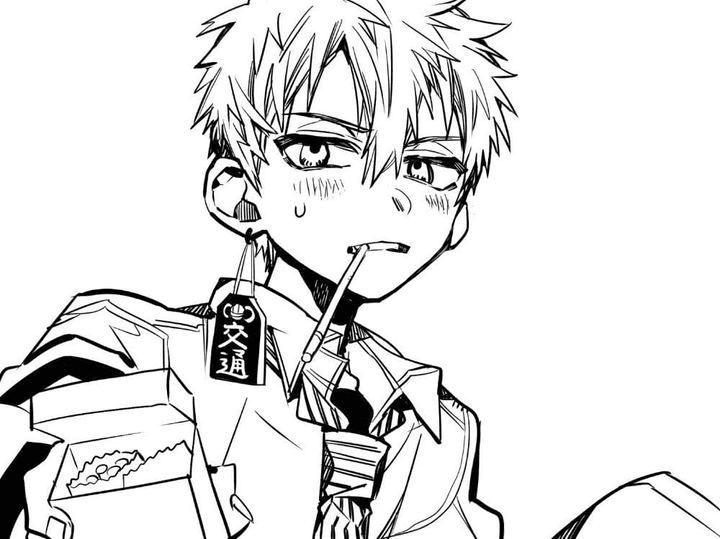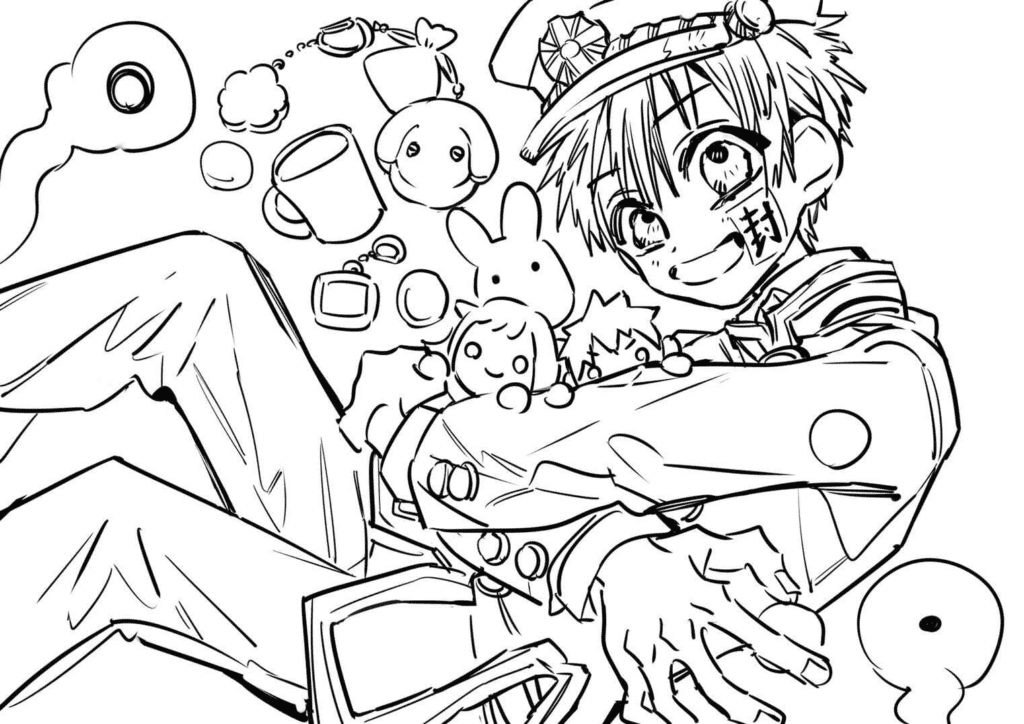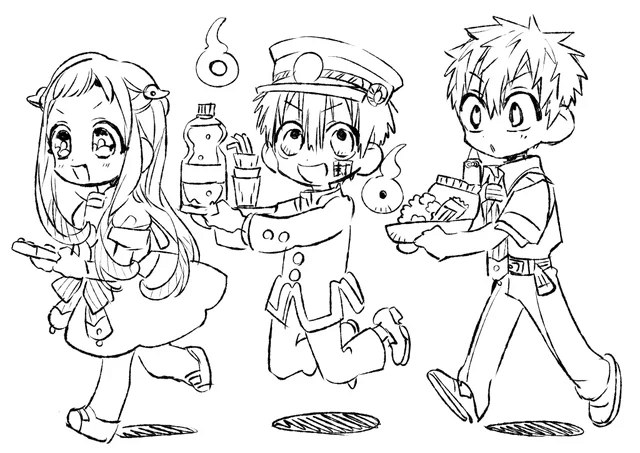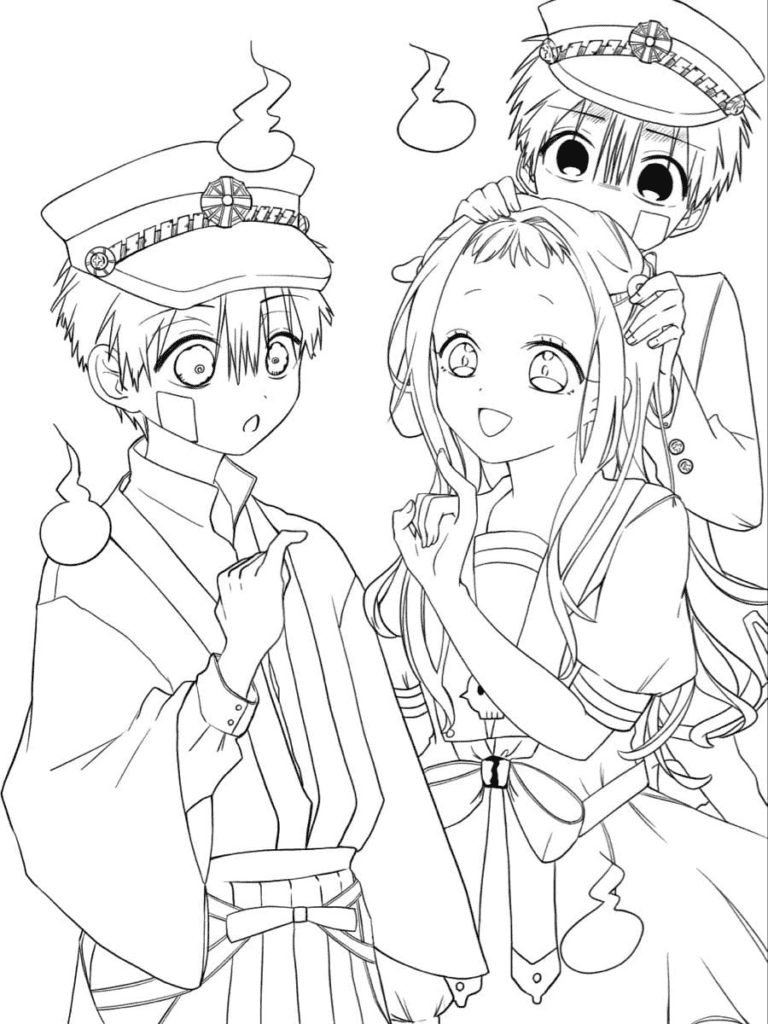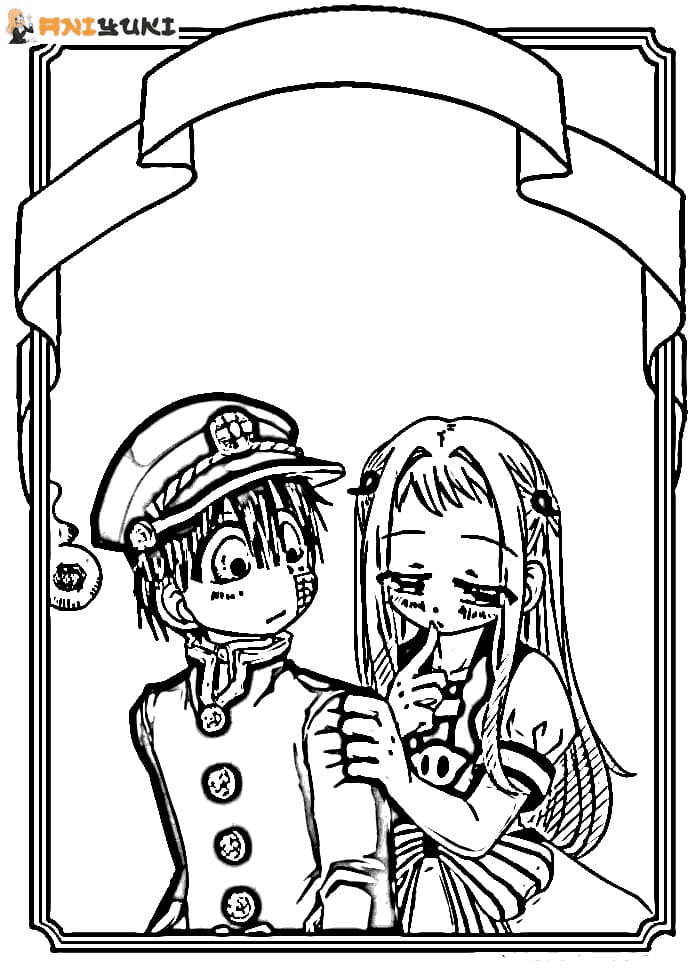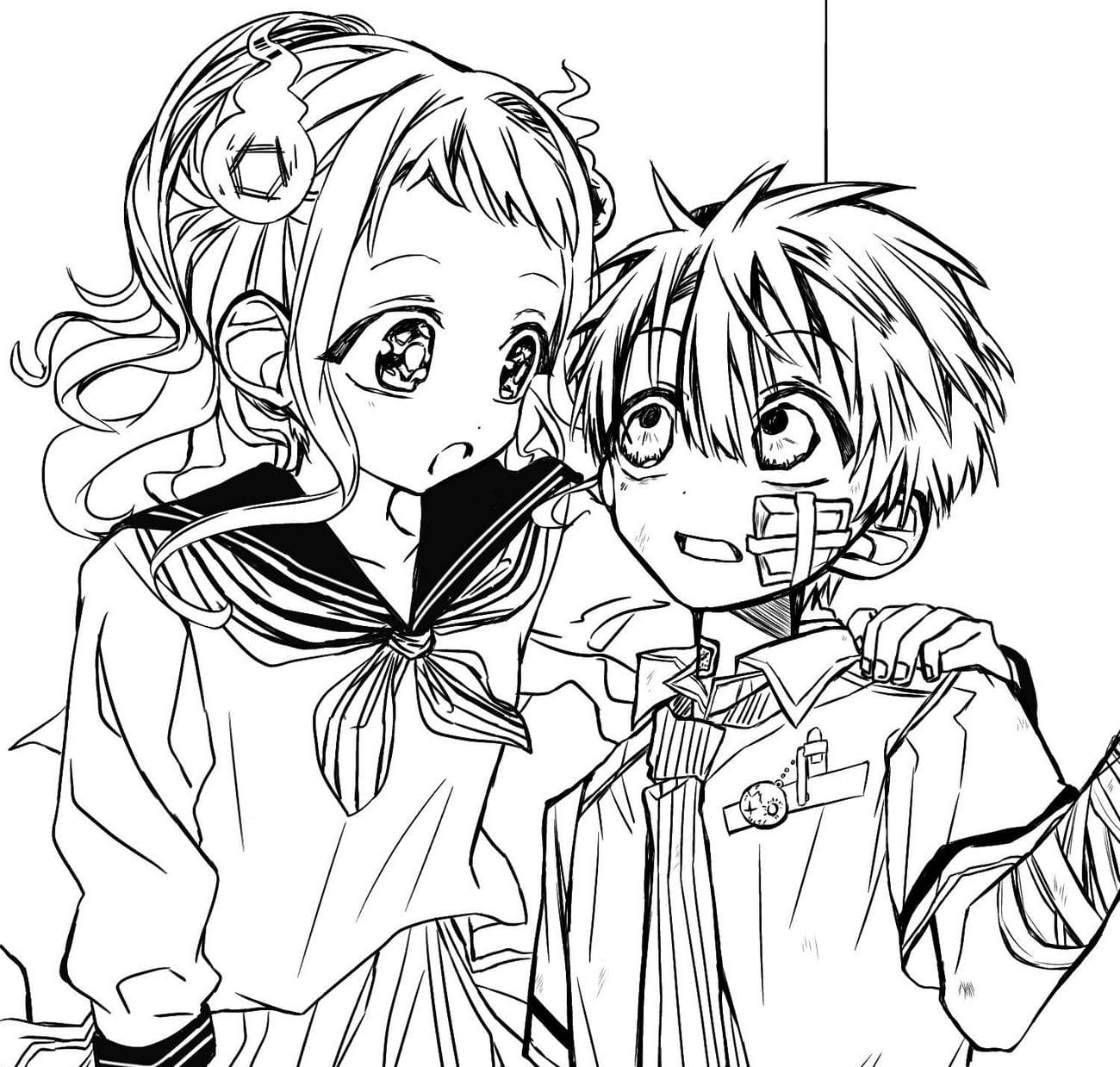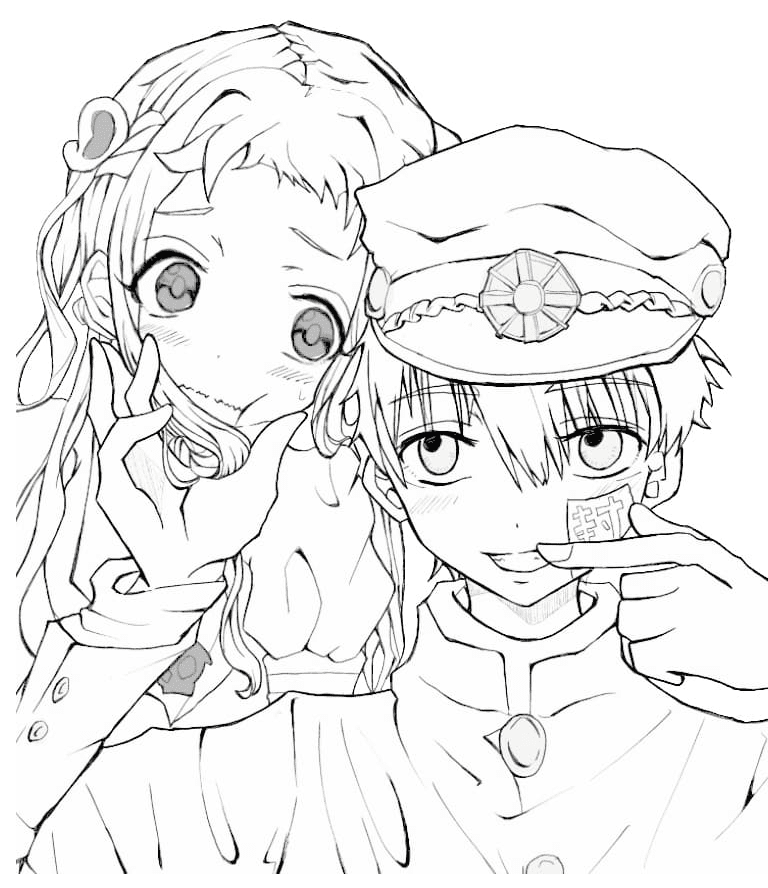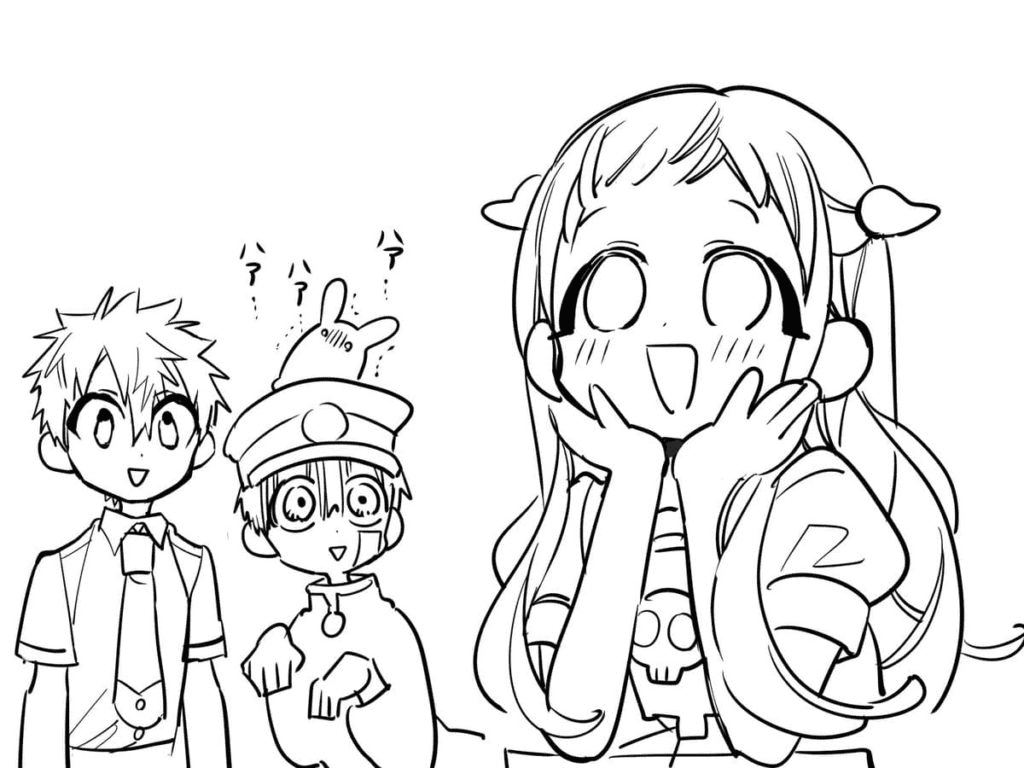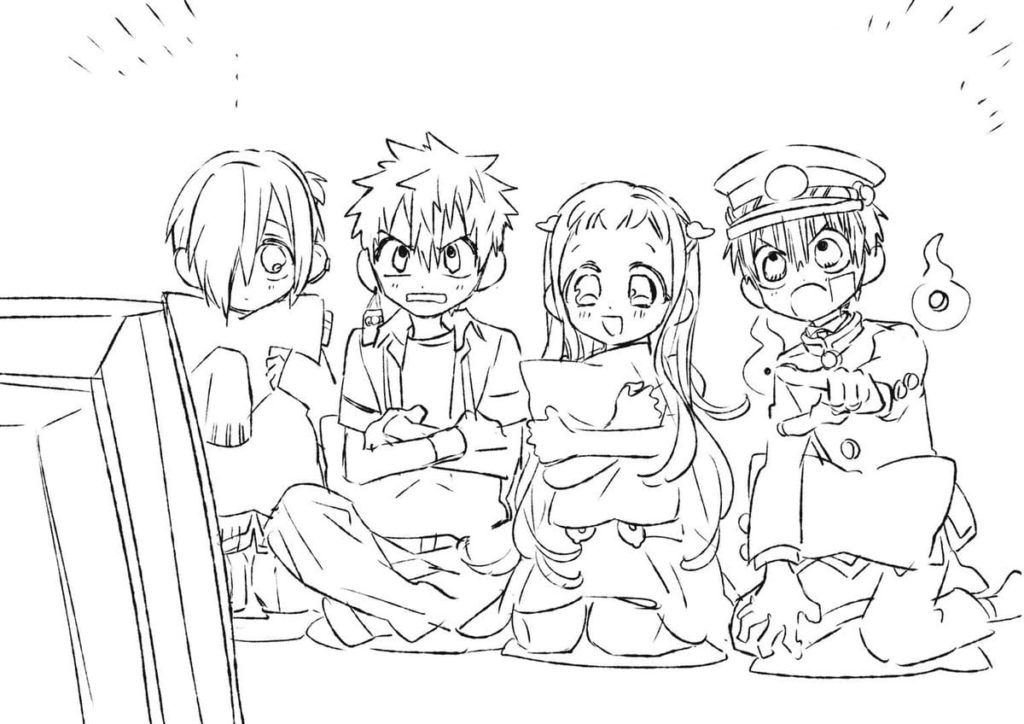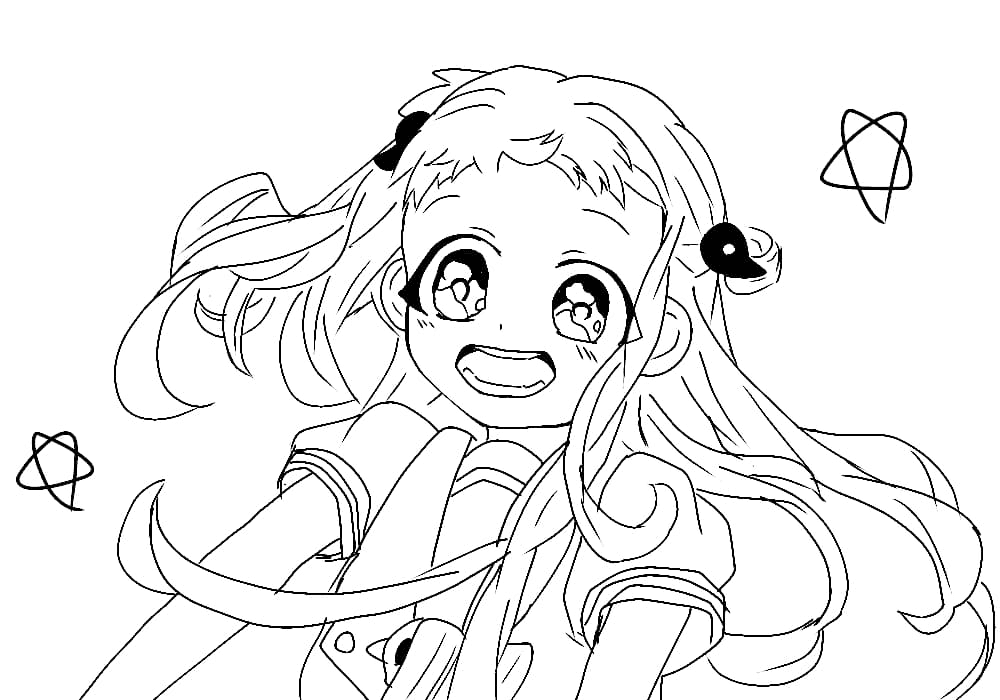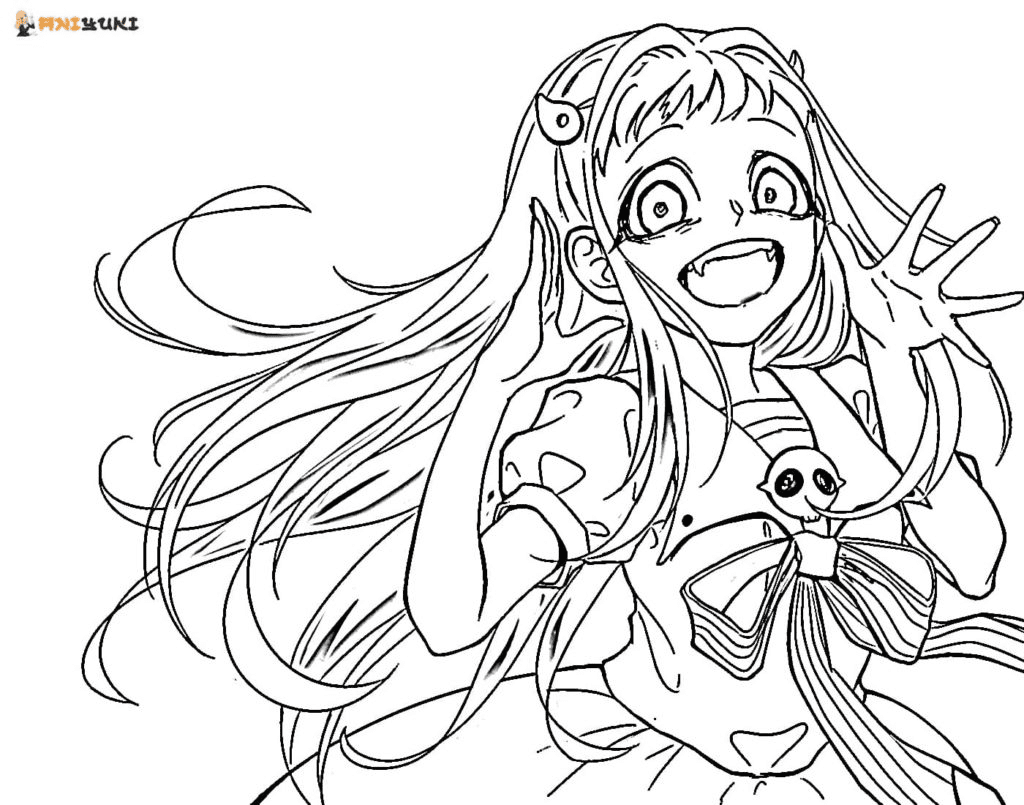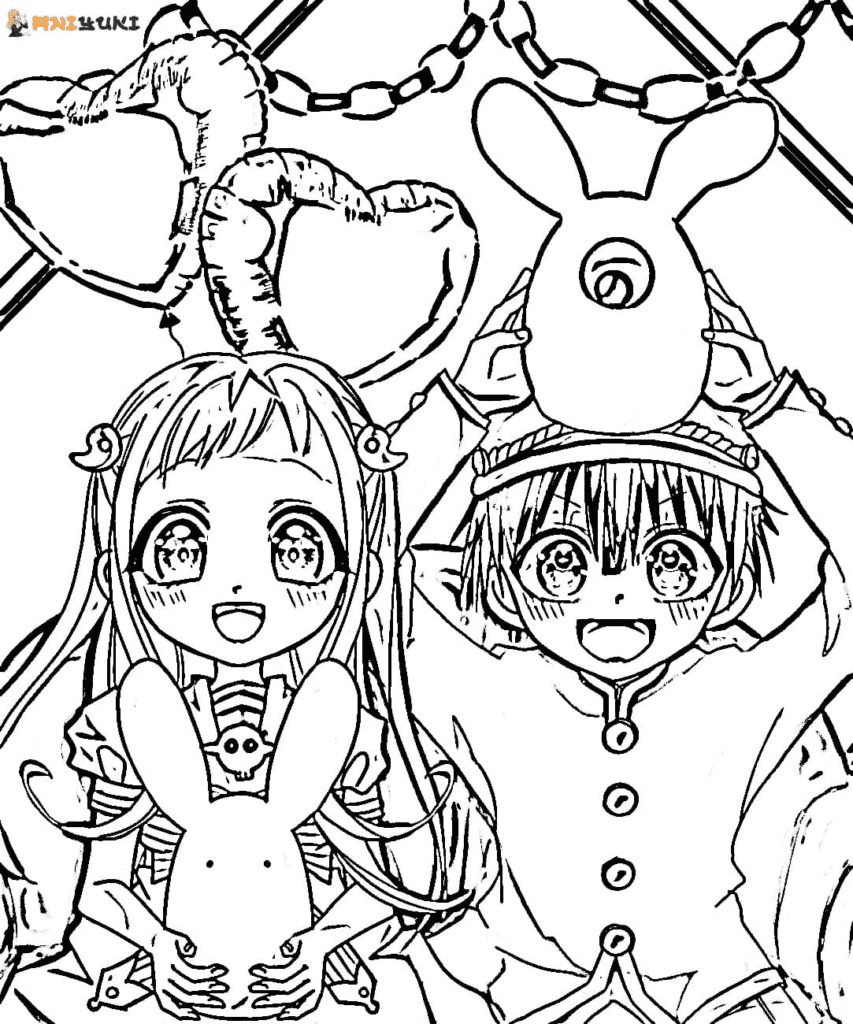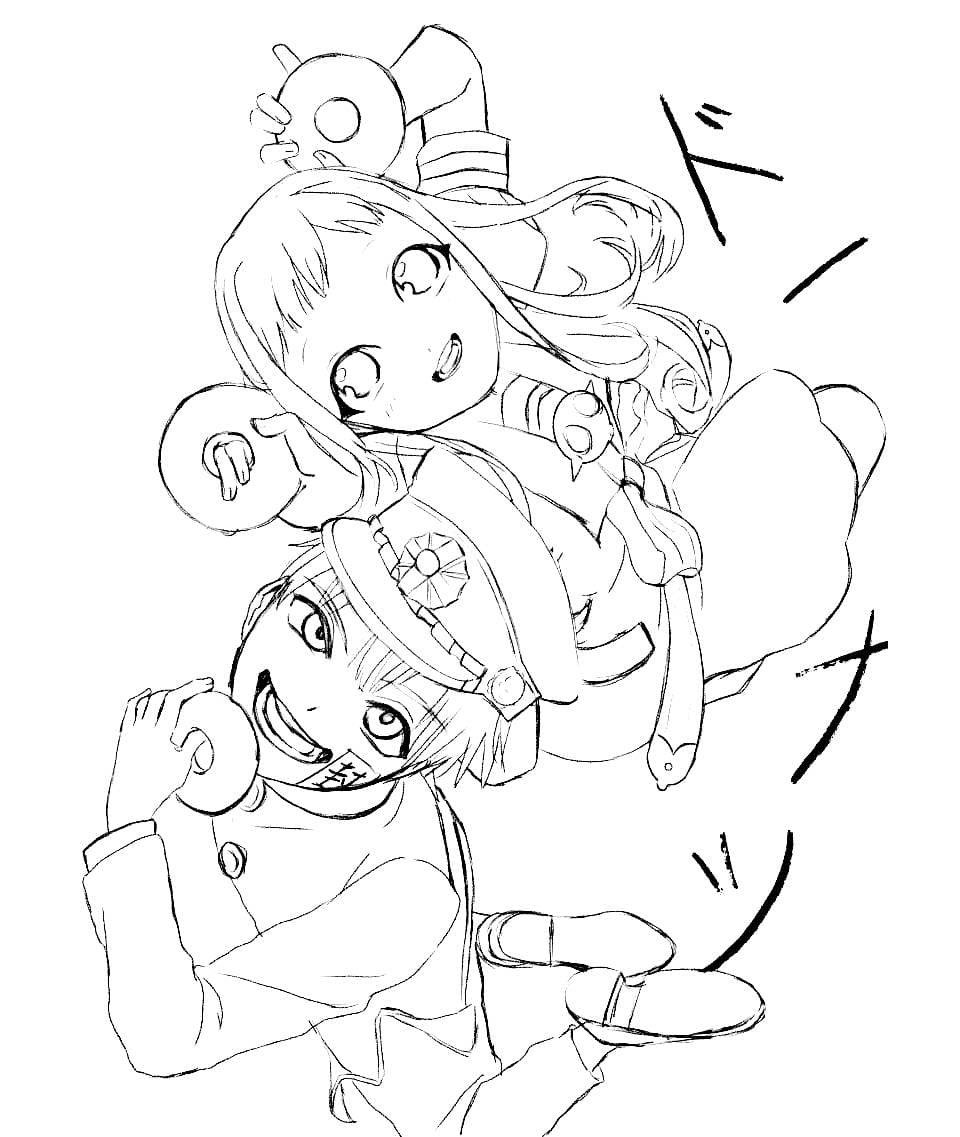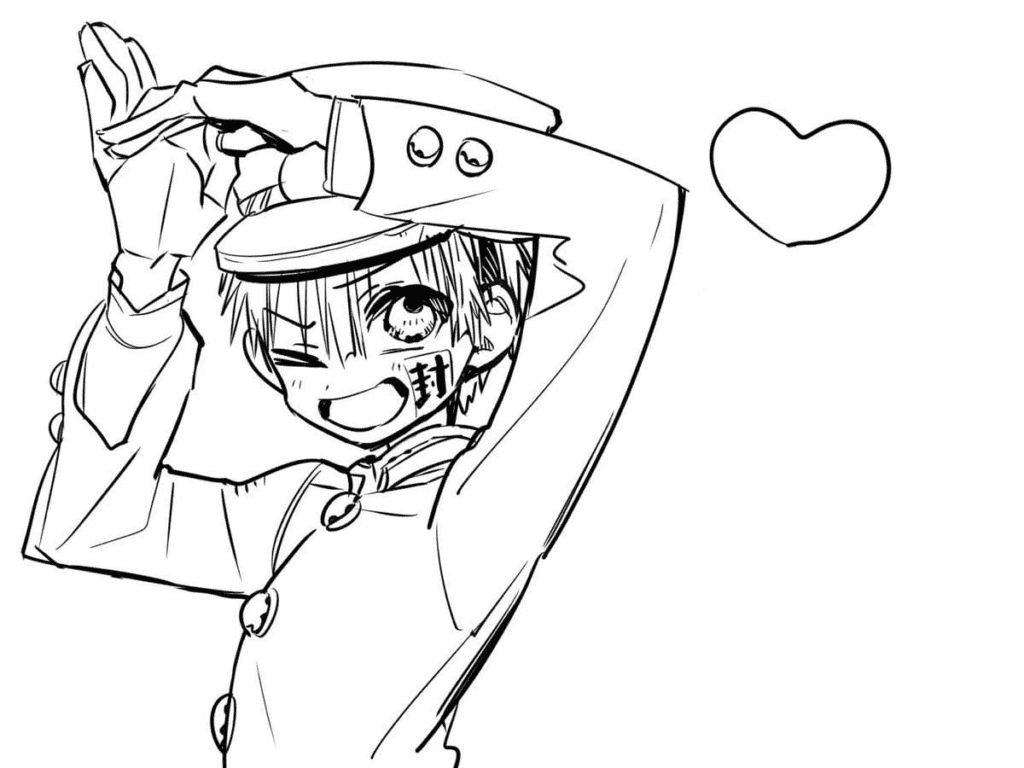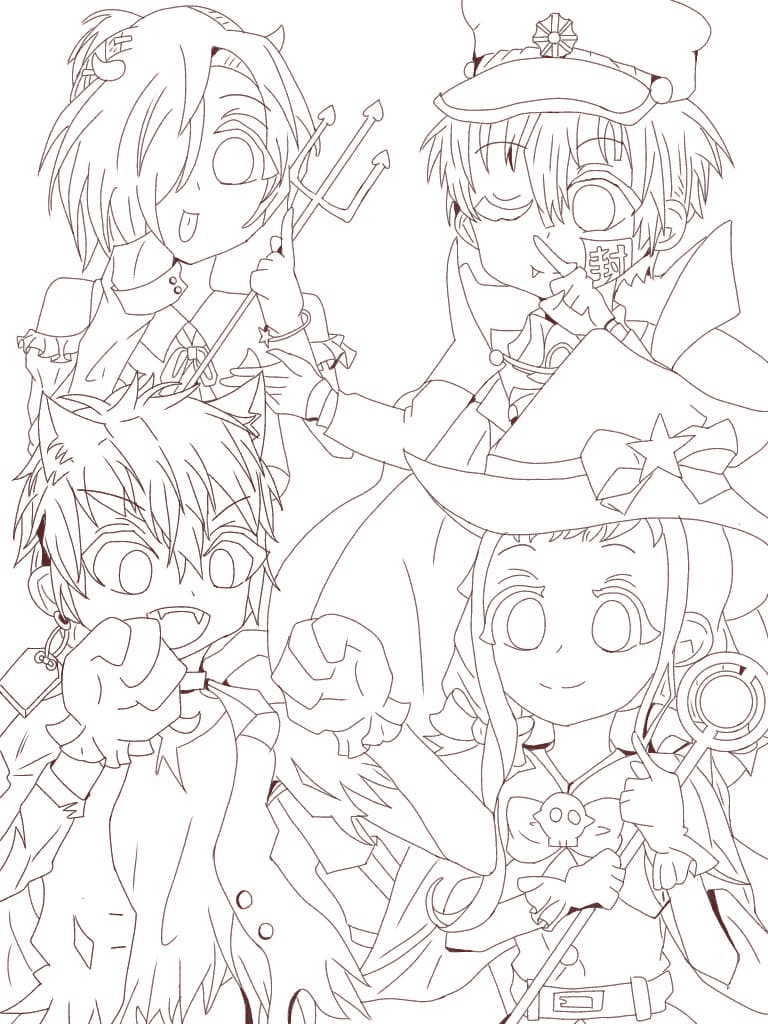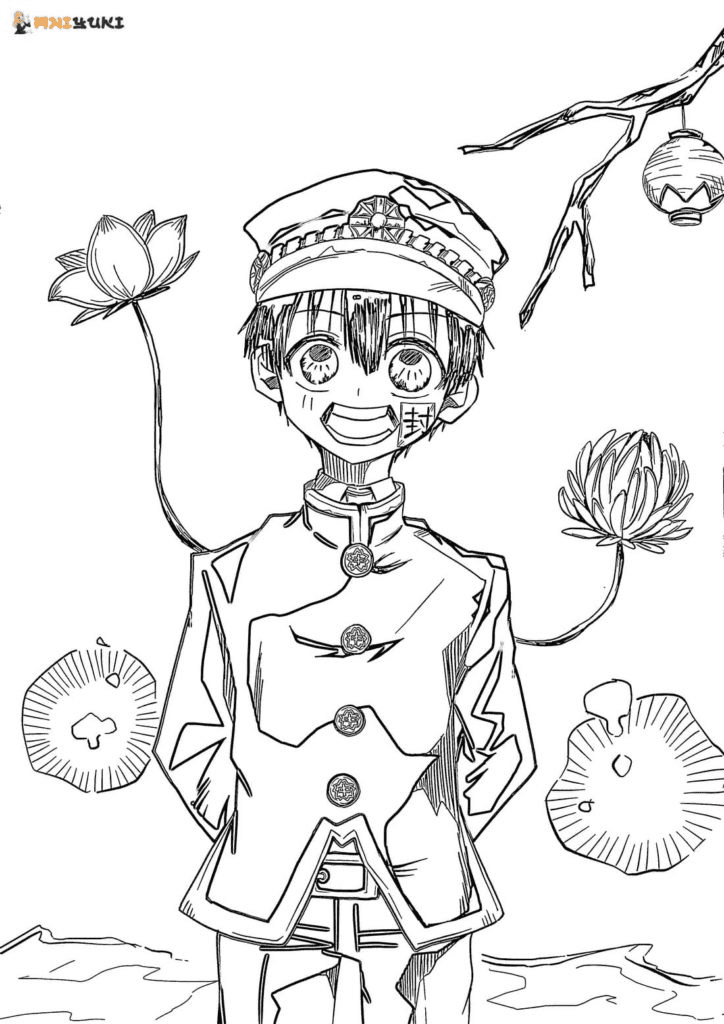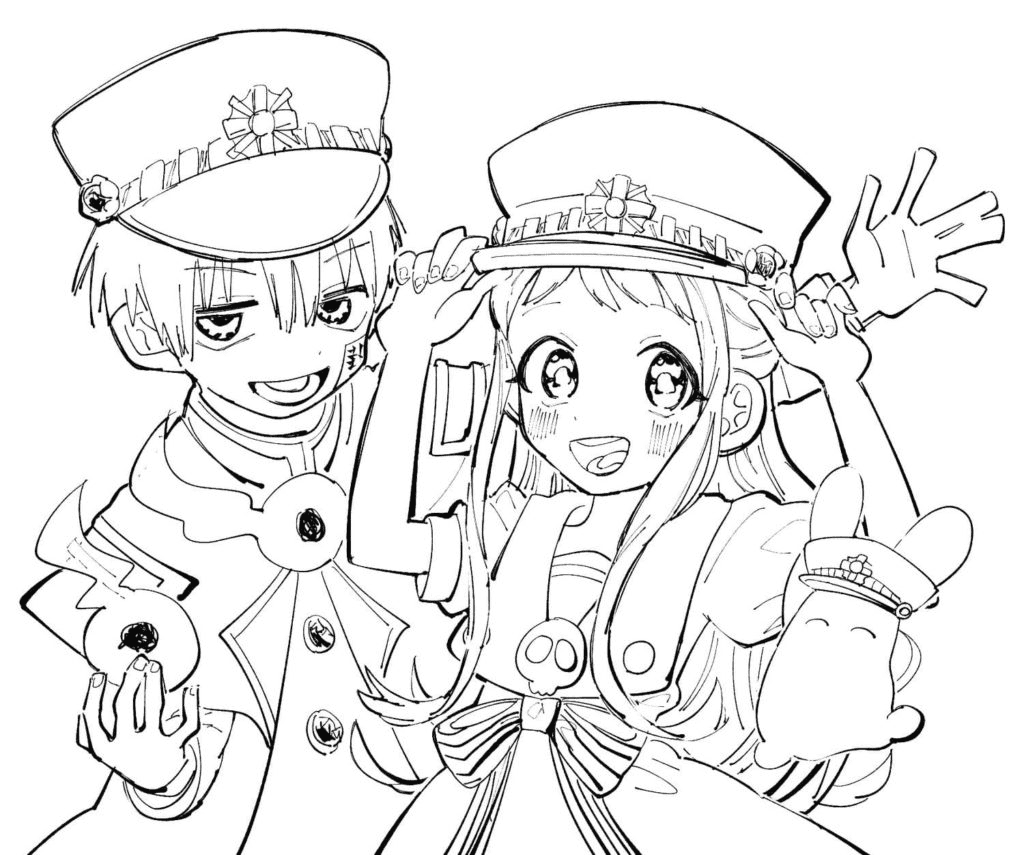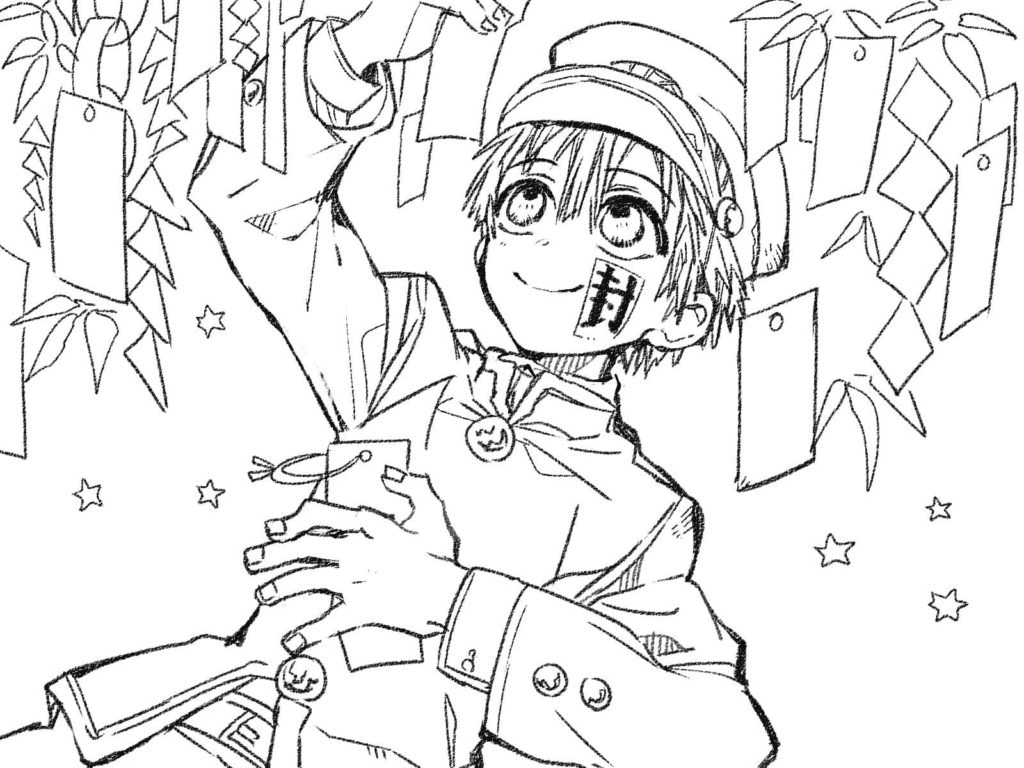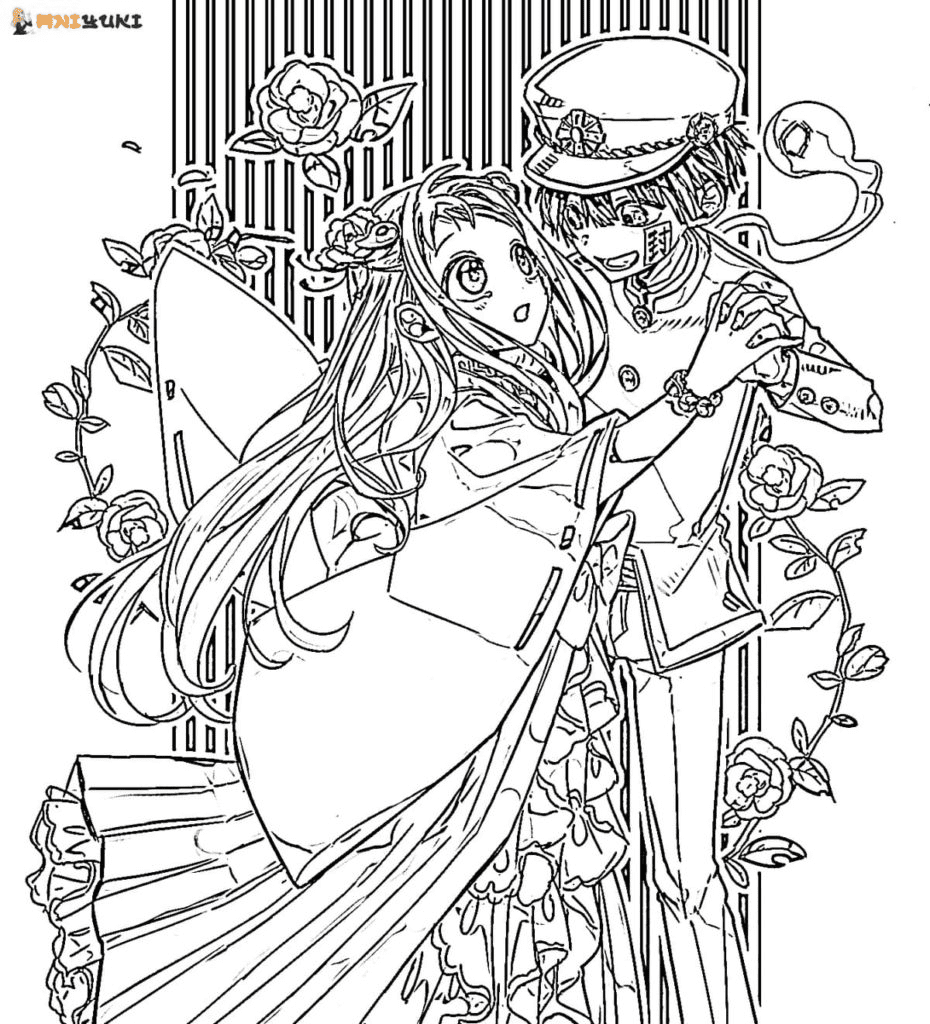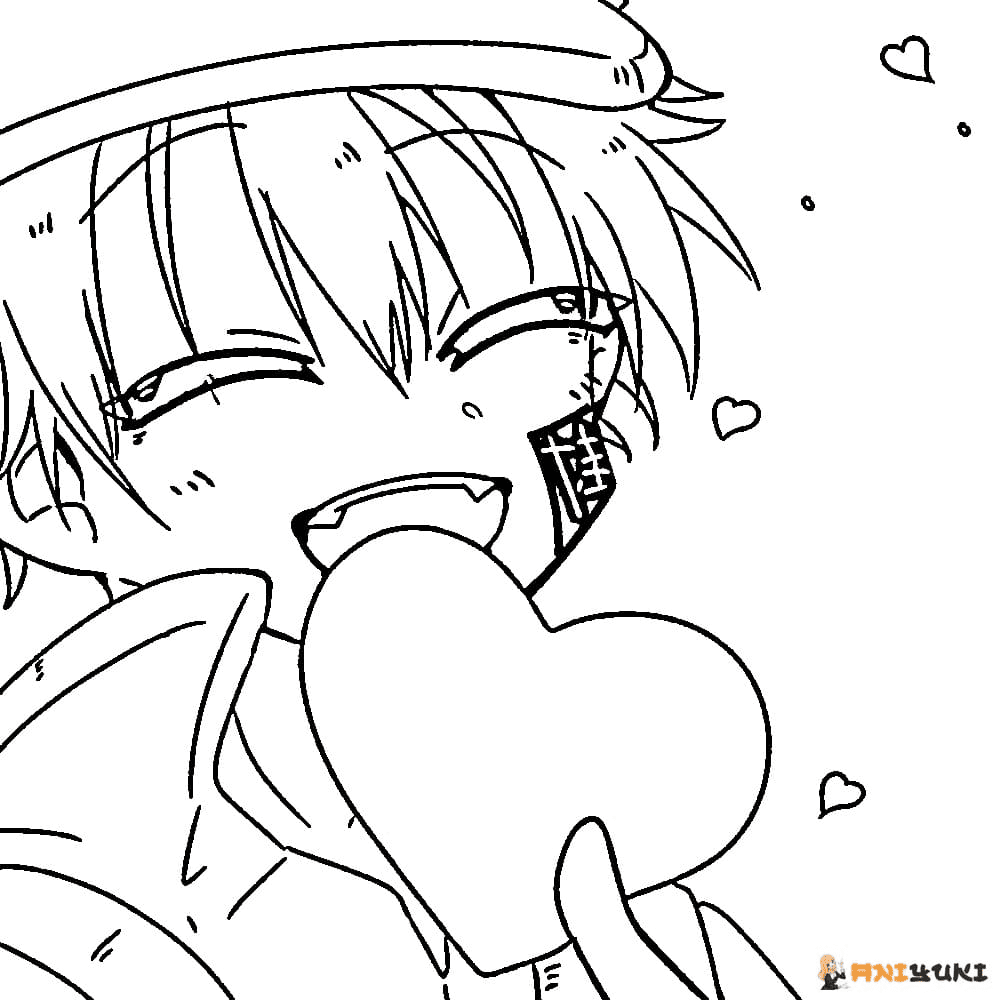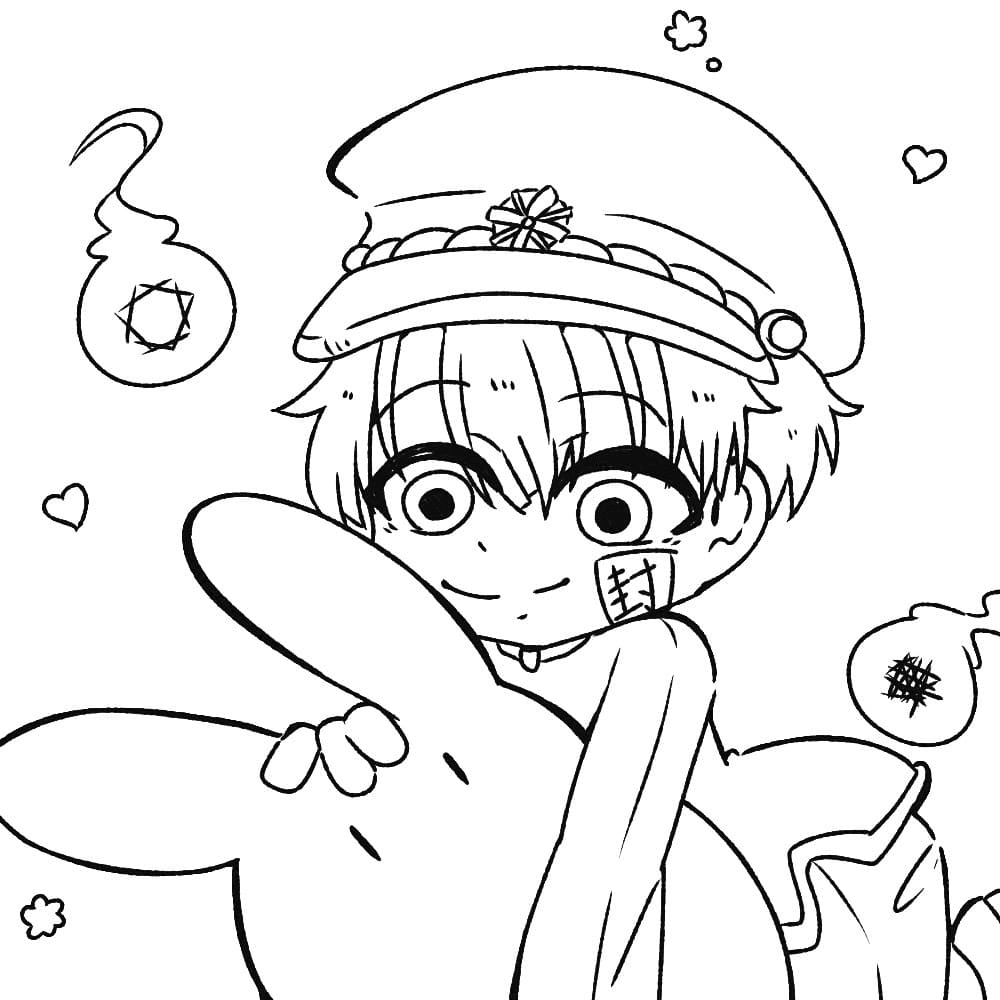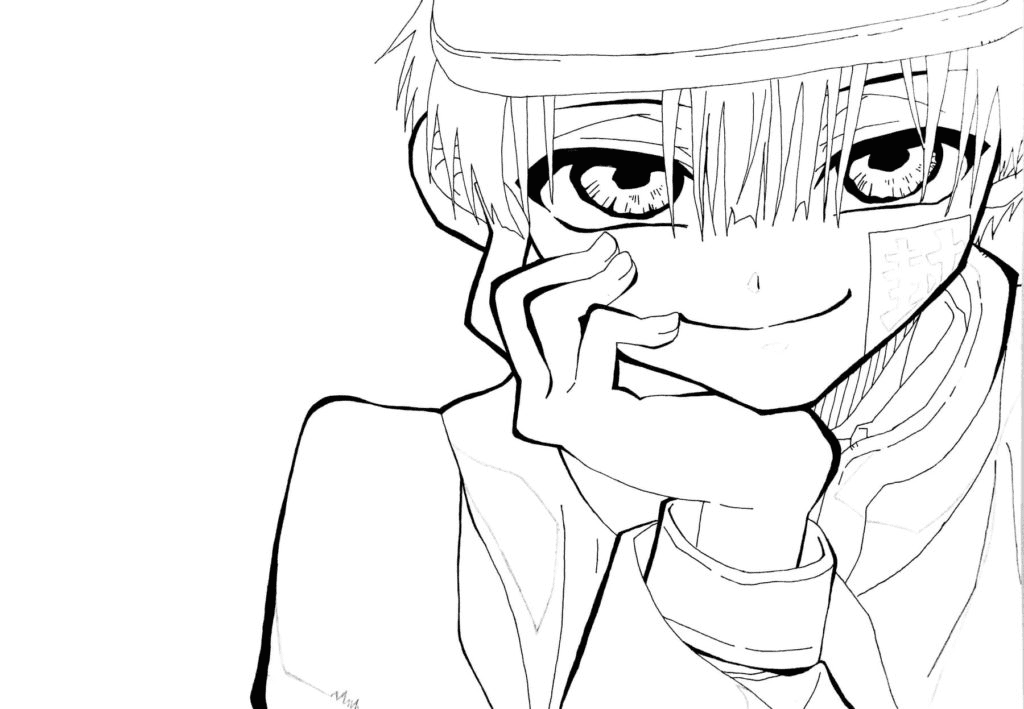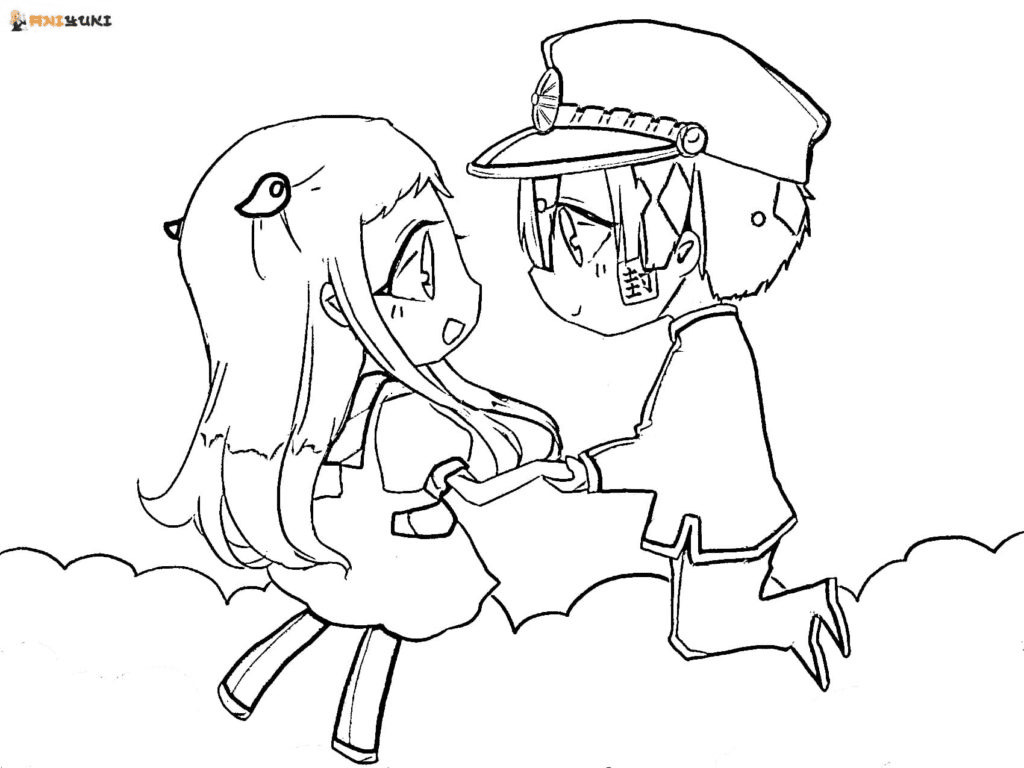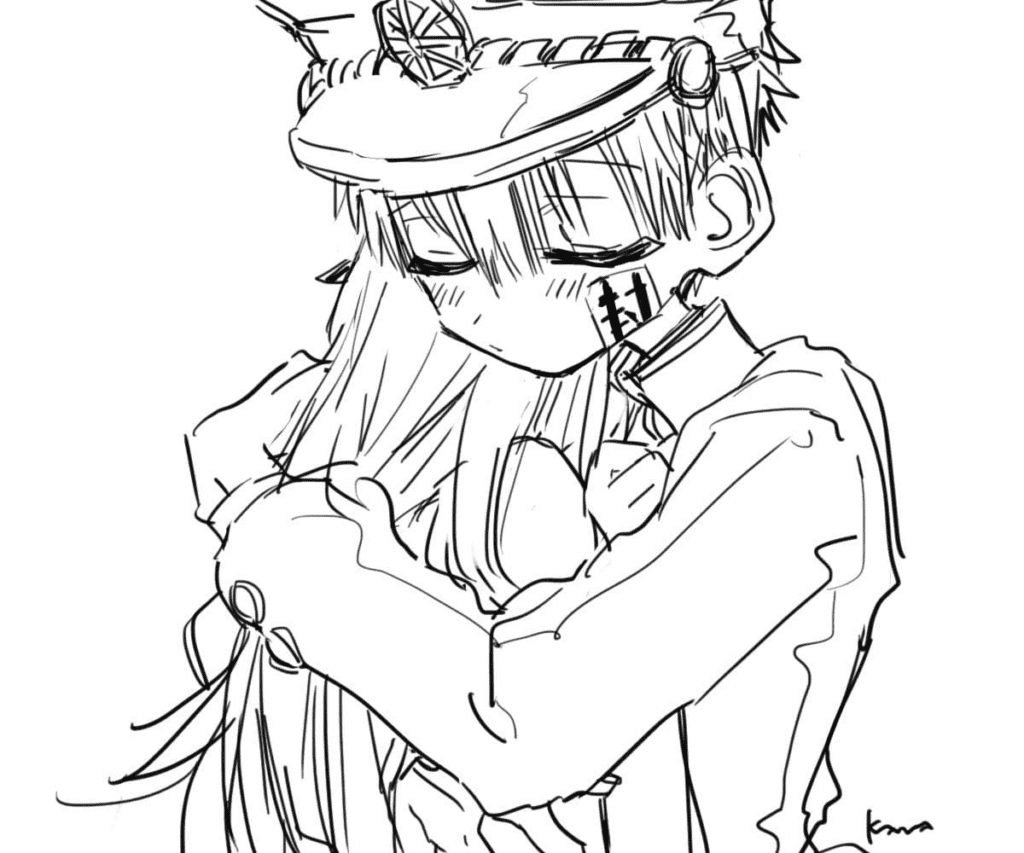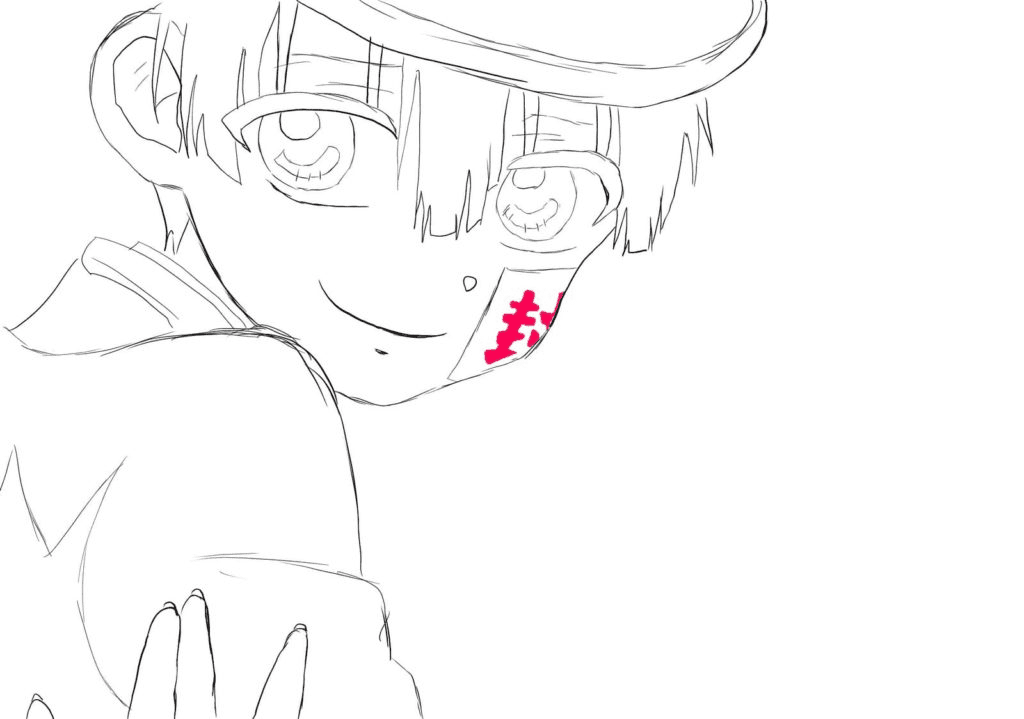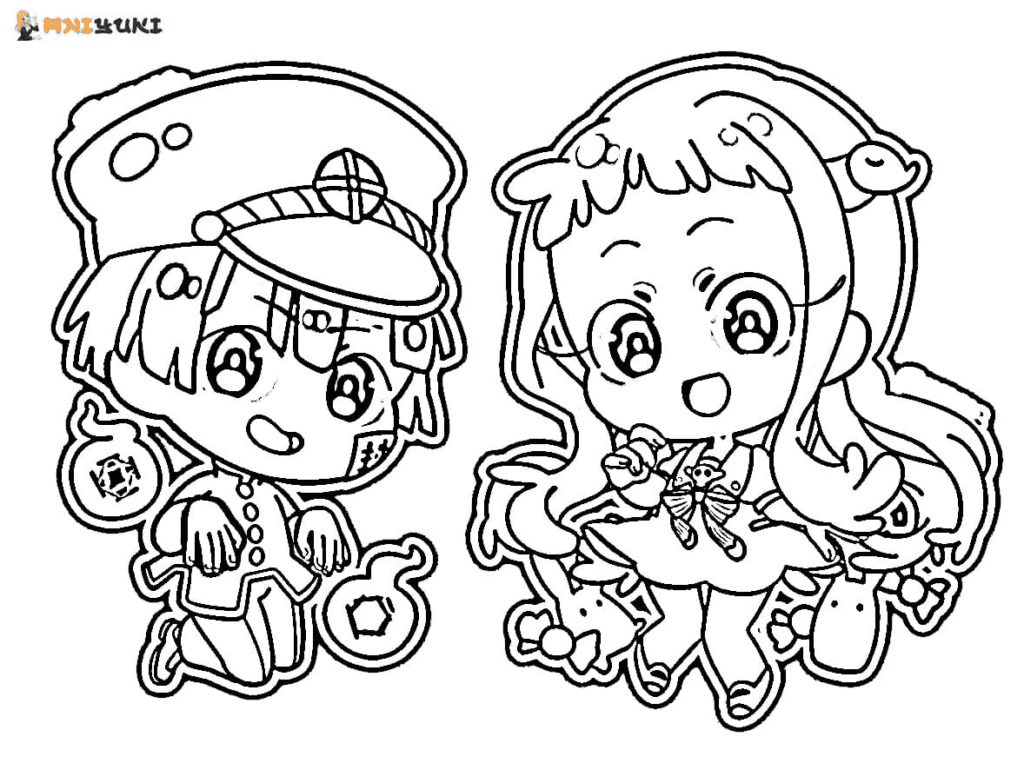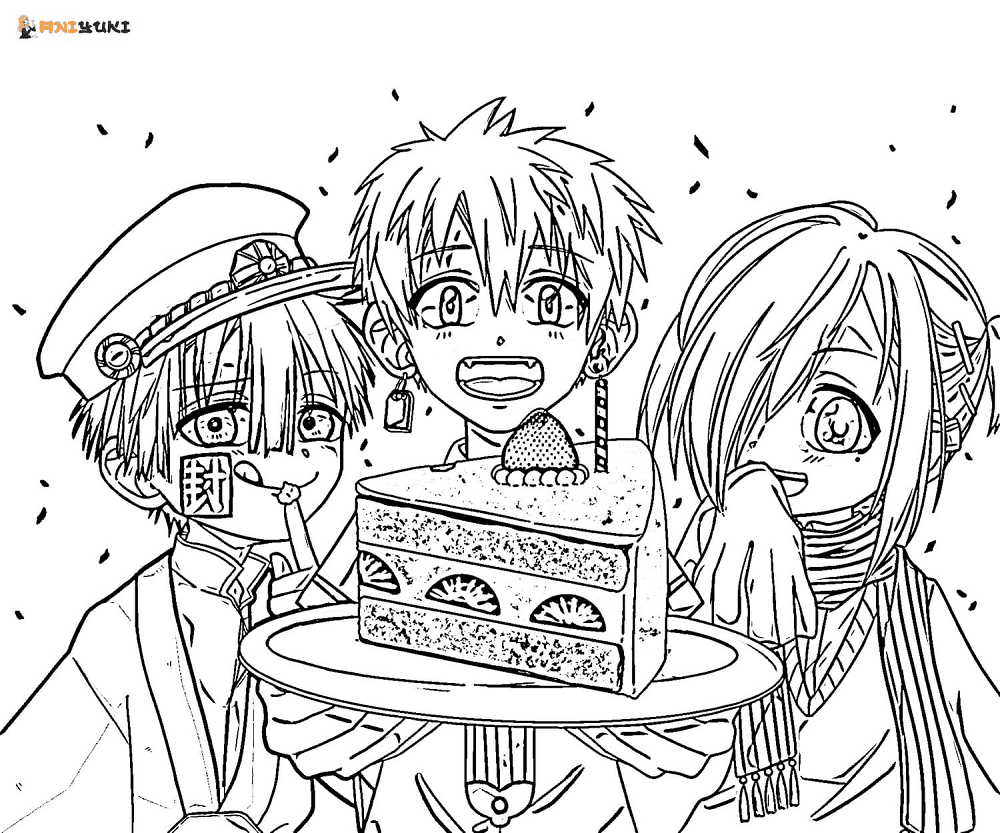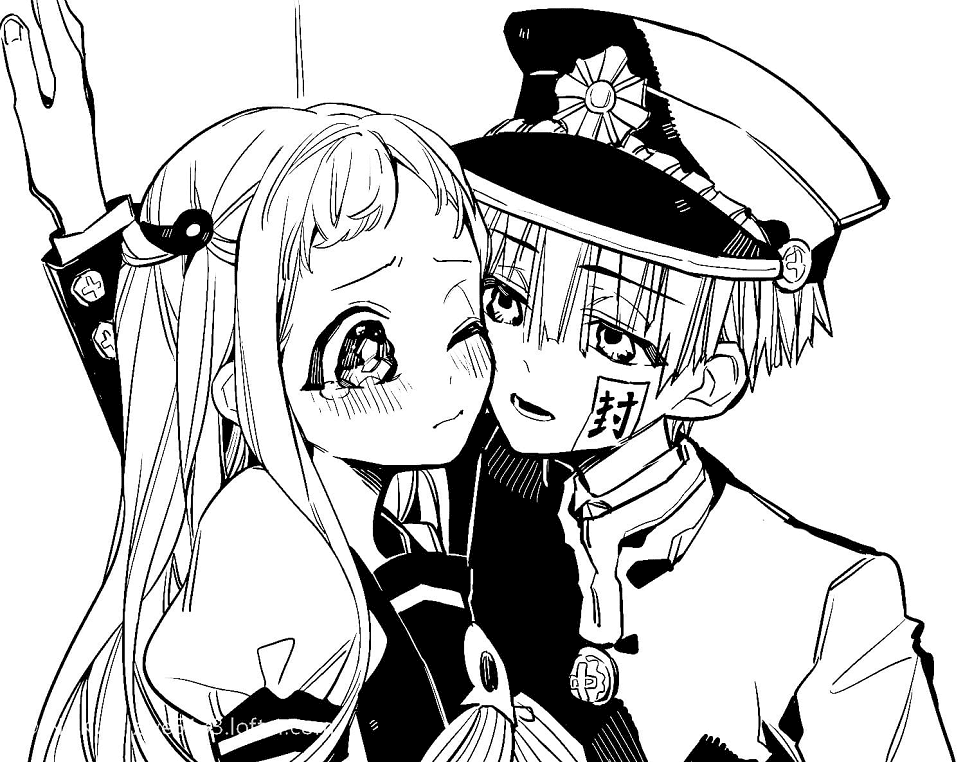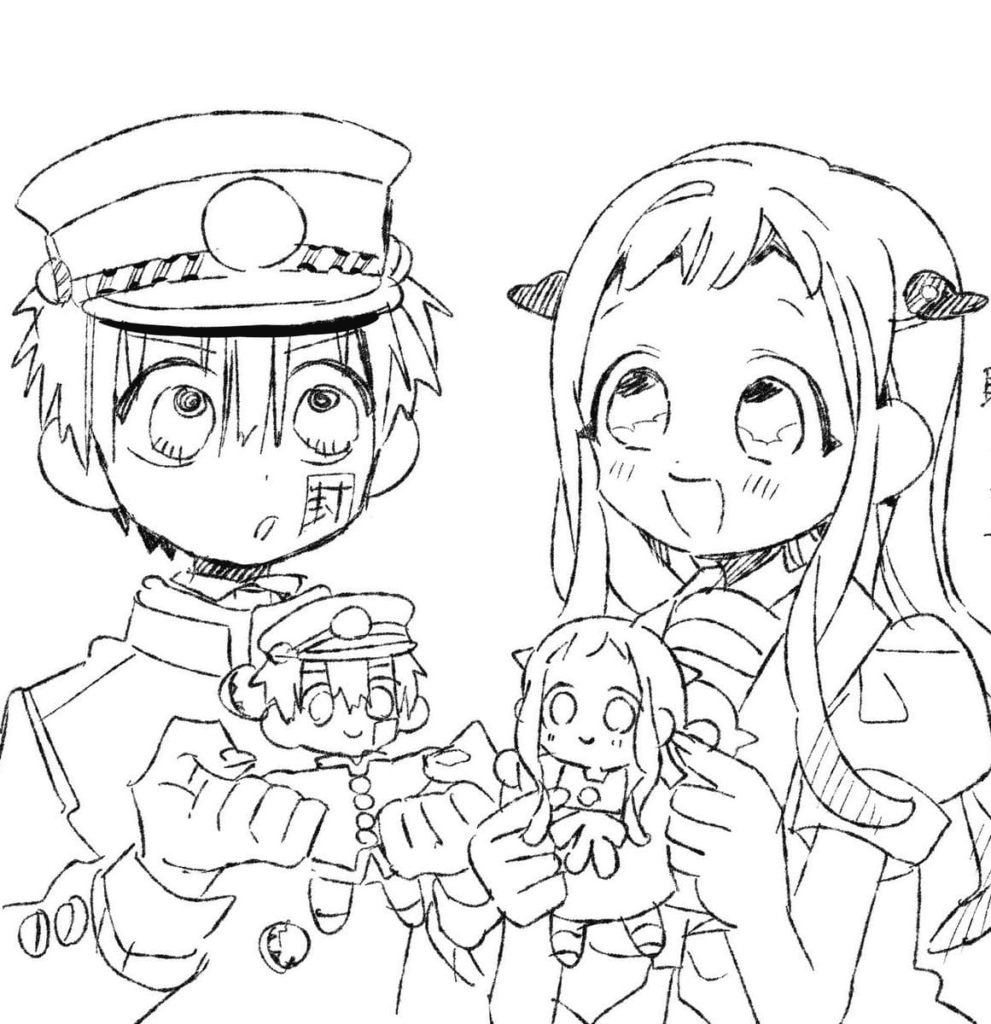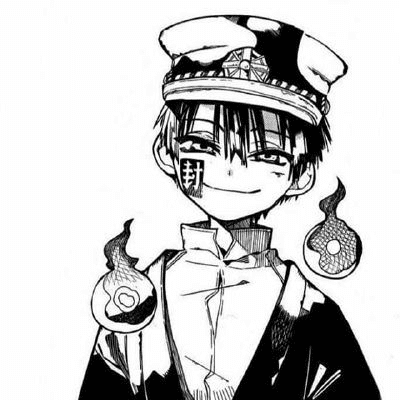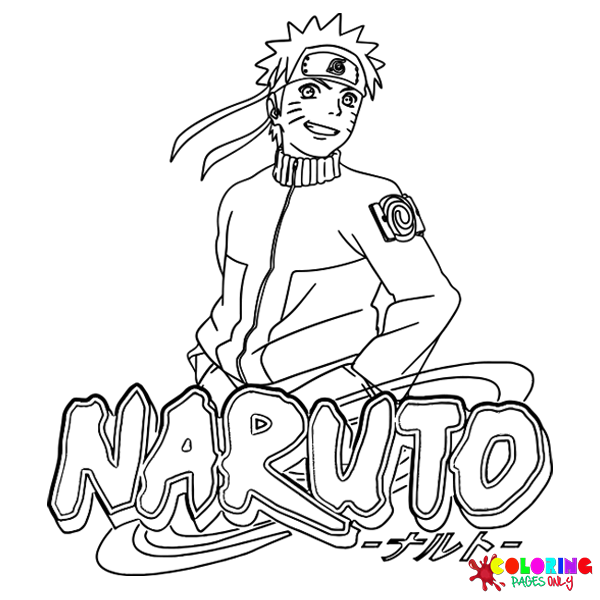
Free Toilet-Bound Hanako-kun coloring pages: 50+ pages featuring Hanako-kun in his black gakuran school uniform, Yashiro Nene with her distinctive twin-tail hair ornaments, Minamoto Kou in his white first-year uniform, Mitsuba Sousuke with his pink hair and camera, the Mokke spirit creatures, supernatural ability scenes, duo compositions of Hanako and Nene, chibi-style character portraits, and the richly layered visual vocabulary of one of manga’s most stylistically distinctive supernatural school series. All free, printable PDFs and online coloring for fans of the series.
Toilet-Bound Hanako-kun (地縛 少年 花子 くん, Jibaku Shōnen Hanako-kun) is a manga series written and illustrated by the creative duo AidaIro, serialized in Square Enix’s Monthly GFantasy magazine beginning in January 2014. The story is set at Kamome Academy, a school governed by supernatural beings known as the Seven School Mysteries. The seventh mystery is Hanako-kun, the ghost who haunts the third-floor girls’ bathroom: a boy, not the girl the traditional Japanese legend of Hanako-san describes.
An anime adaptation by Lerche studio aired from January 9, 2020, to March 26, 2020, across 12 episodes. The anime received significant critical attention for its unconventional visual approach: visible screen tone textures throughout the animation, panel-composition references drawn from manga page design, and a warm, woodblock-print-influenced color palette that distinguished it from the standard animated aesthetic of its season.
These 50+ free pages at ColoringPagesOnly.com cover the main cast and the supernatural world of Kamome Academy. All free, PDF or PNG, print or color online.
What’s Inside
Hanako-kun: Portrait and Character Pages
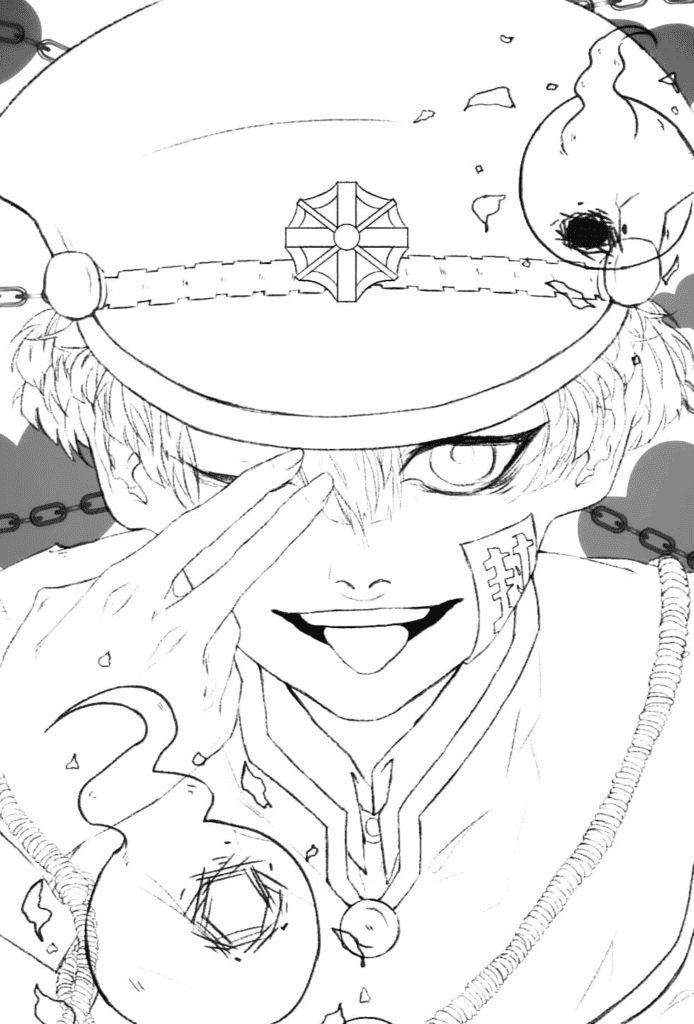
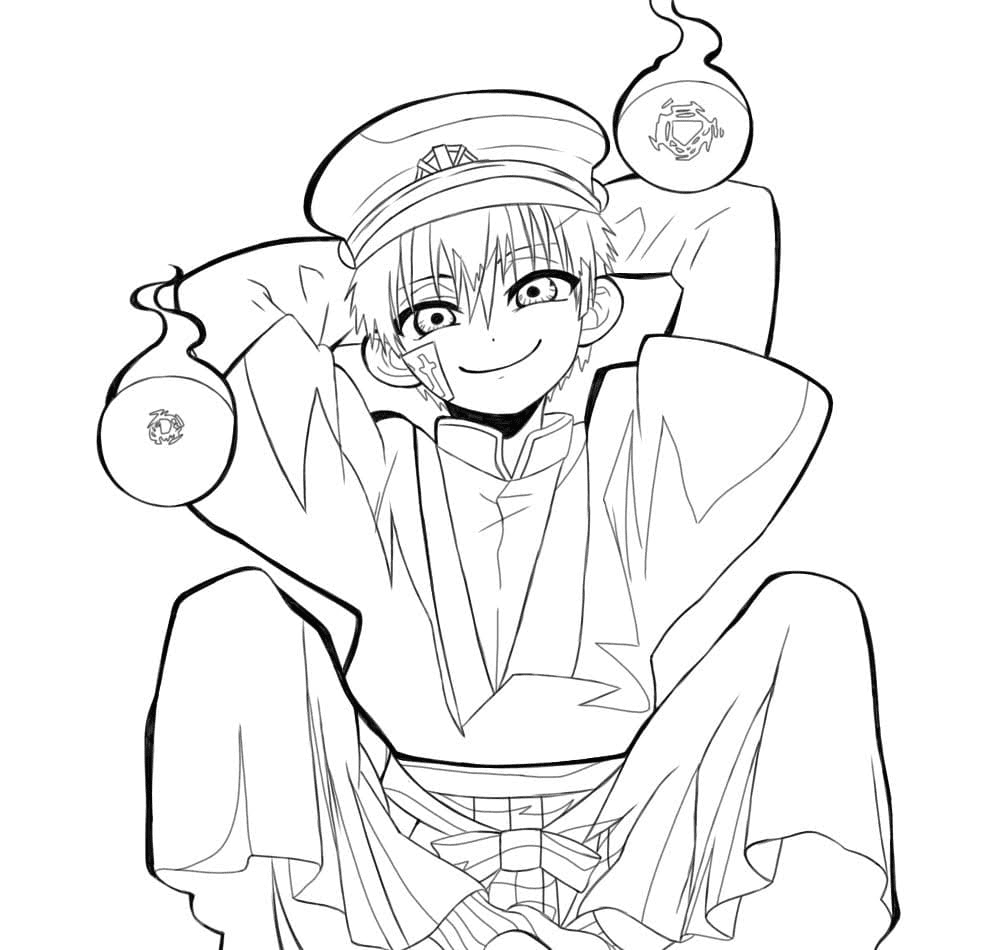
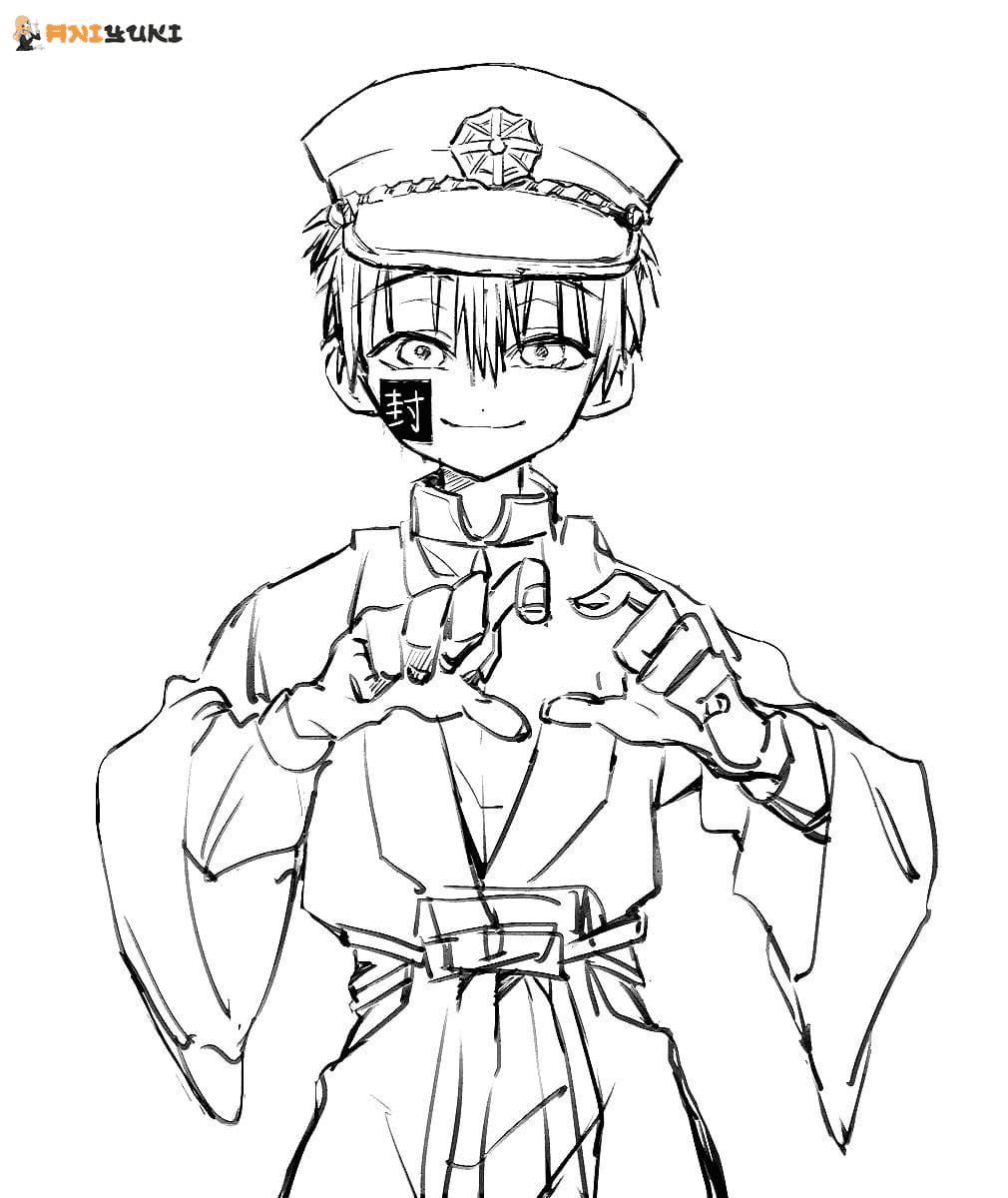
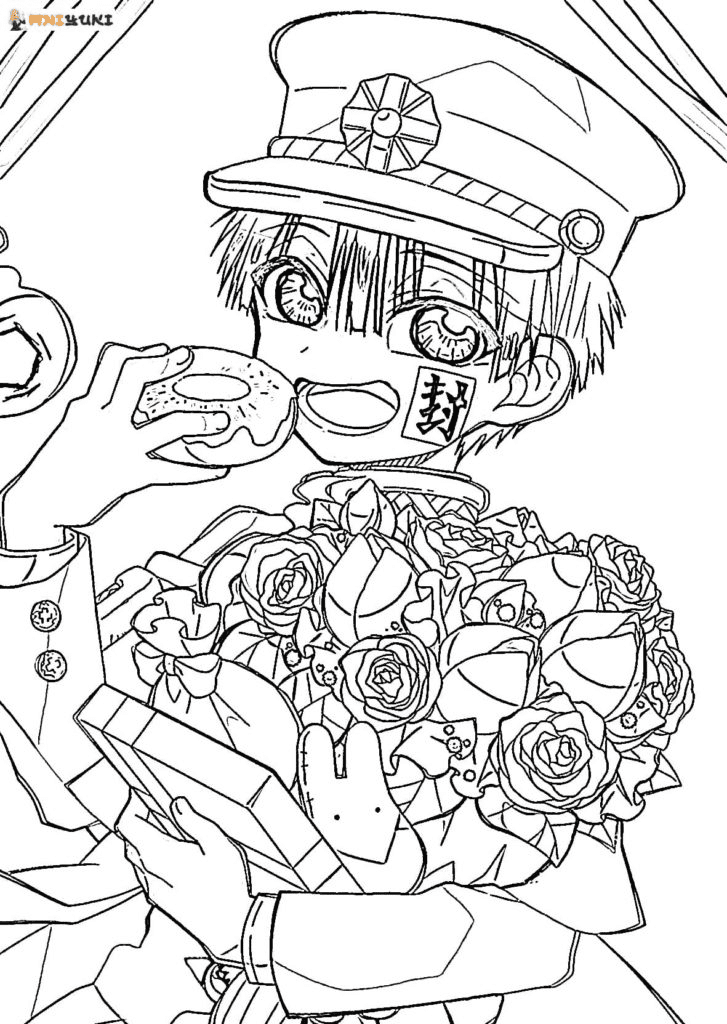
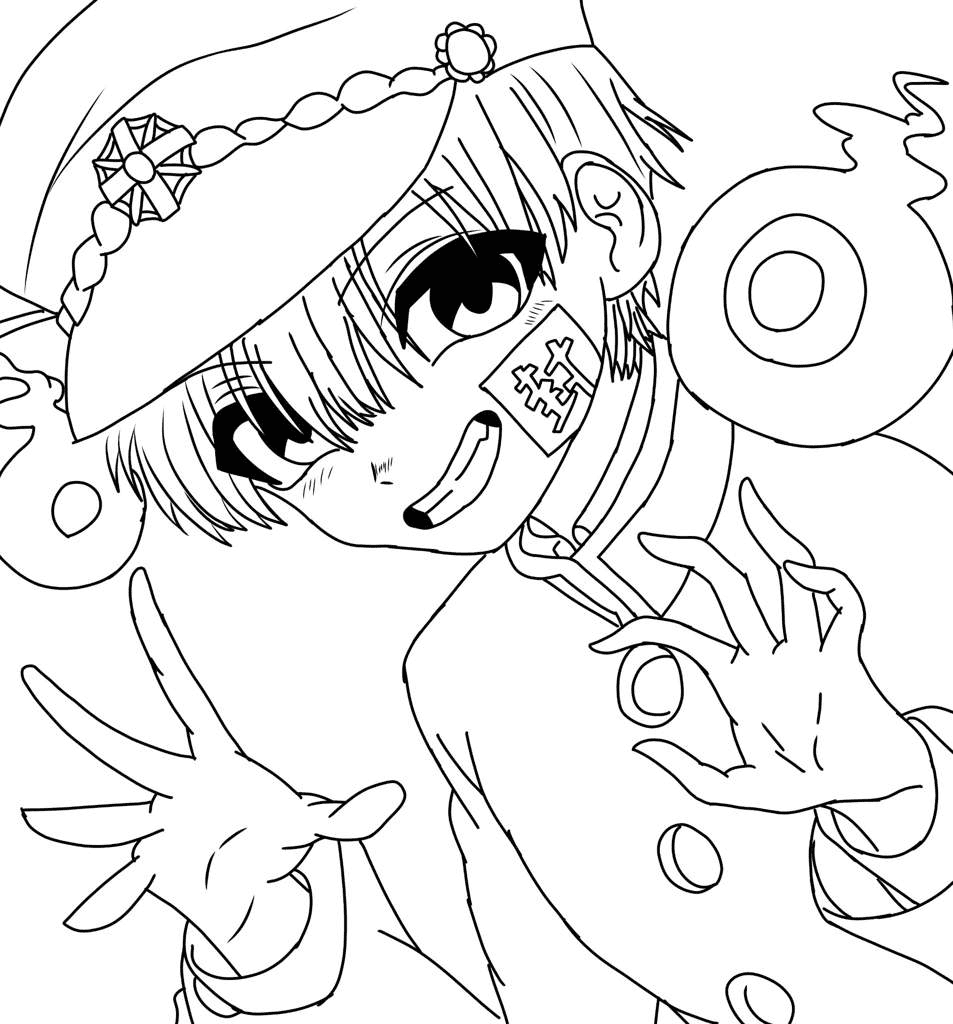
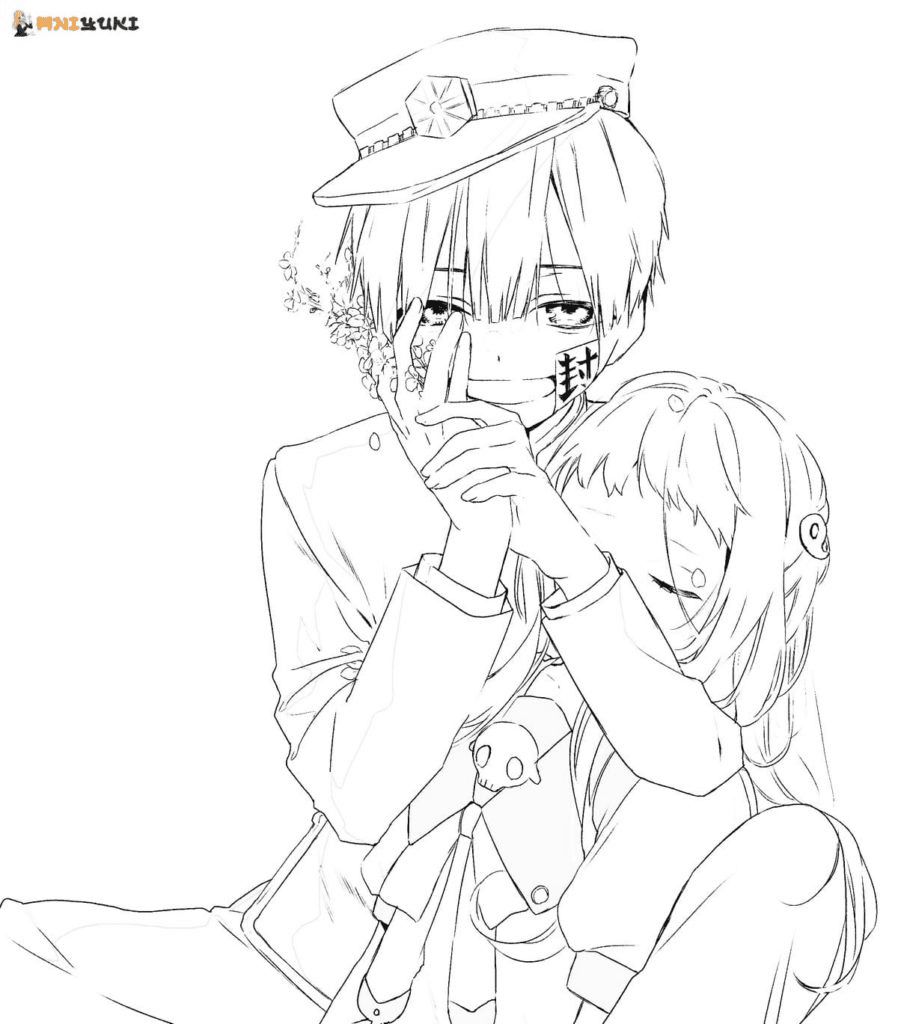
Hanako-kun’s design is the most visually precise in the collection and the one that most rewards careful, accurate color application. He appears as a young boy in a black gakuran, the traditional Japanese boys’ school uniform: a standing collar jacket with gold buttons closing the front, worn with matching black trousers and black shoes. Over the gakuran, he wears a distinctive small, round black hat. His hair is dark, depicted in the manga and anime as black or very dark brown with lighter streaks or highlights at the tips.
His eyes are a warm amber or golden yellow, one of the few vivid color elements in an otherwise near-monochromatic costume. This amber eye color carries significant visual weight in his character design: against the black uniform and dark hair, the golden eyes are his face’s most immediately noticeable feature.
He carries a short blade (a tanto-style knife) as his supernatural tool, typically depicted with a simple dark handle and a bright metal blade. His gakuran’s gold buttons are a second vivid accent against the black uniform, small but important in maintaining the costume’s period-appropriate formality.
The manga’s original art for Hanako-kun uses extensive screen tone textures on the black areas of his uniform, giving them depth and visual interest rather than flat black. The anime translates this into animated form while maintaining the same depth of surface detail.
Coloring Hanako-kun portrait pages: The black gakuran is the dominant color decision: apply the deepest available black or near-black to the jacket and trousers, covering all surfaces fully. The gold buttons are small and specific: vivid warm gold, applied carefully to each button position without spilling onto the black fabric. His hair is near-black with slightly warmer dark brown at the highlighted tip areas. His eyes are warm amber-gold, the most vivid element in the composition after the gold buttons. His skin is light and slightly warm in tone, the specific soft quality of AidaIro’s character skin rendering.
Yashiro Nene: Portrait and Character Pages
Yashiro Nene is the series’ main female protagonist, a first-year high school student at Kamome Academy whose wish to be loved by someone specific sets the story in motion. She is 14 years old at the series’ start and is characterized by a combination of genuine warmth, occasional romantic cluelessness, and more emotional depth than her initially flustered exterior suggests.
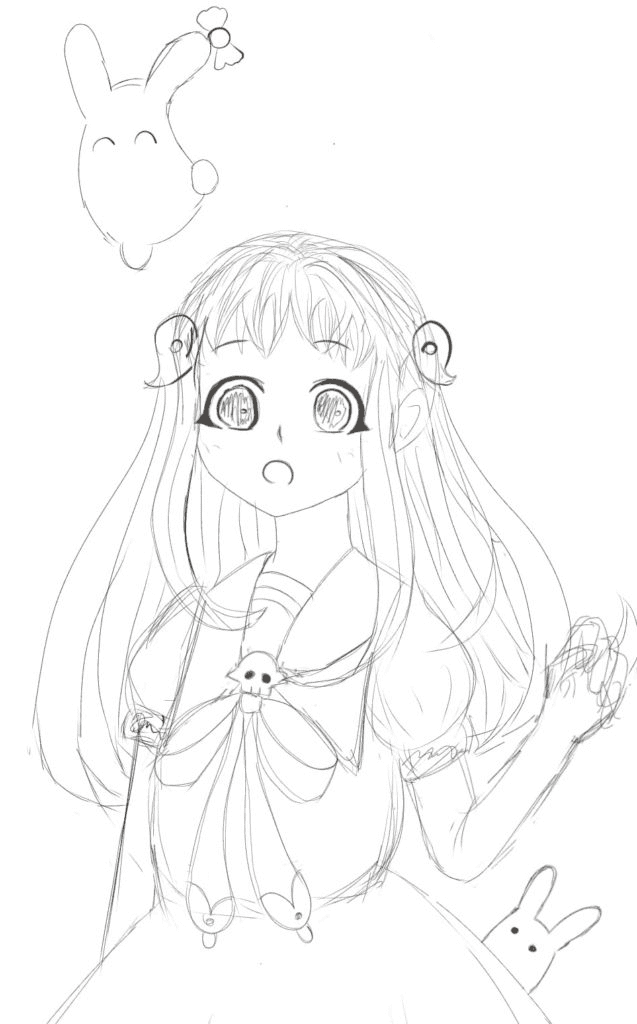
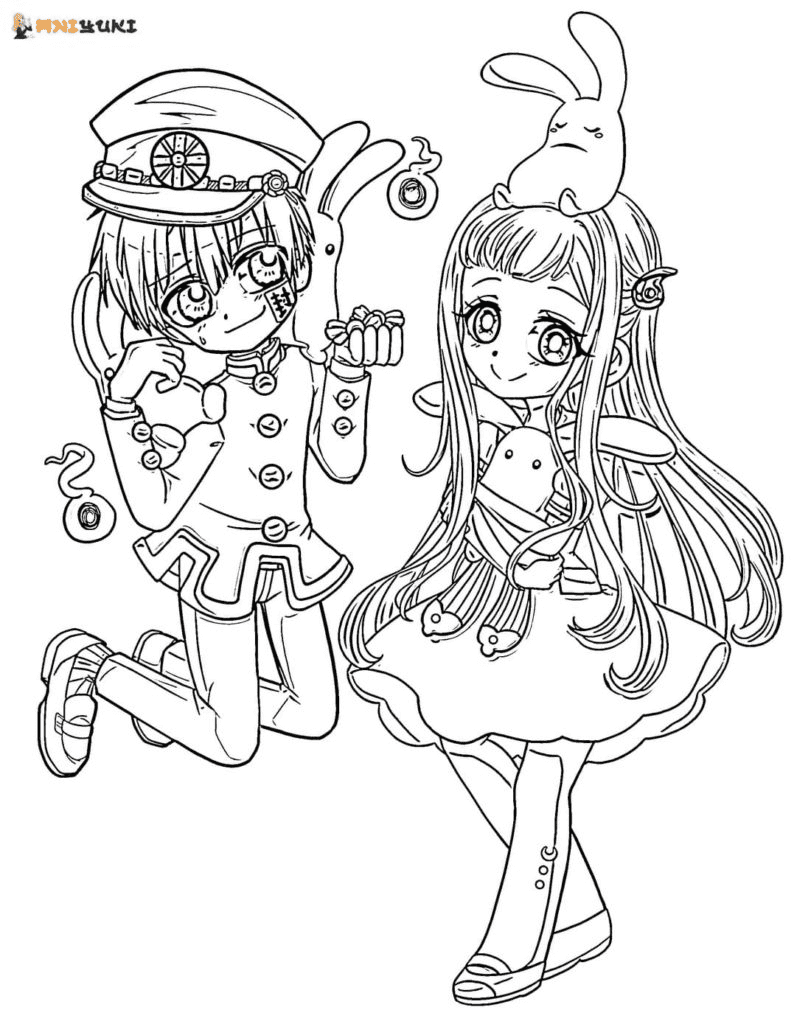
Her most immediately distinctive visual feature is her hair: light blonde or pale ash-brown, worn in twin tails secured by large ornate hair accessories. The hair ornaments are one of her most recognizable design elements: large, decorative, and slightly asymmetrical, with different pages showing different specific designs depending on the artist’s rendering. In the anime, they are typically rendered as large pink or warm-colored ribbon-like structures.
Her school uniform follows the Kamome Academy girls’ design: a white blouse with a sailor-style collar, a skirt in the school’s color scheme, and the school’s standard accessories. In supernatural scenes where her legs transform as part of the story’s consequences, her legs may be depicted as a fish tail or with other supernatural modifications.
Coloring Nene portrait pages: Her hair is pale blonde or very light ash-brown: a warm, light tone that reads as distinctly blonde without being platinum or yellow. The large hair ornaments are the page’s most vivid warm color accent, typically pink or warm rose. Her school uniform uses white for the blouse and a light color (typically light blue or sakura pink, depending on the specific Kamome Academy uniform interpretation) for the skirt. Her eyes are a specific shade: in the anime, they are depicted as a pinkish-red or coral, adding warmth to her face.
Minamoto Kou: Portrait and Character Pages
Minamoto Kou is a first-year student at Kamome Academy and the male deuteragonist of the series. He comes from the Minamoto clan, a family with documented spiritual and exorcism abilities in the series’ lore, and initially arrives at school intending to exorcise Hanako-kun. Over time, he becomes an ally and works alongside both Hanako-kun and Nene.
His design is visually distinct from Hanako-kun’s: where Hanako wears the black gakuran of the upper-year students, Kou wears the white uniform of the first-year students, giving him a brighter, more open visual register. His hair is a vivid blonde (a family trait shared with his older brother Teru), and his eyes are blue. He carries exorcism tools, including ofuda (paper talismans), which appear in action pages.
Coloring Kou portrait pages: The white first-year uniform requires careful management: apply a very clean, bright white across all uniform surfaces, keeping the coverage even. The uniform’s collar and cuff details use gold or yellow-orange accent elements in some depictions. His blonde hair is a warm, vivid yellow-blonde, more vivid than Nene’s softer blonde. His blue eyes are a clear, slightly vivid medium blue.
Mitsuba Sousuke: Portrait and Character Pages
Mitsuba Sousuke is a ghost character who appears in one of the manga’s most emotionally significant arcs. In life, he was a member of the photography club and a classmate of Kou. His ghost form retains his school appearance: the Kamome Academy uniform, a camera accessory, and his most visually distinctive feature, pink hair.
His pink hair is the most immediately recognizable element of his design and one of the more unusual hair colors in the series’s otherwise more restrained palette. The specific pink is a medium, slightly warm rose-pink rather than a vivid fuchsia or a pale baby pink.
His presence in the collection gives it emotional range beyond the core trio: Mitsuba pages carry a tonal register distinct from the lighter character pages, reflecting the specific quality of his arc in the manga.
Coloring Mitsuba pages: The pink hair is a warm rose-pink applied at medium saturation: vivid enough to read as clearly pink but not so saturated as to become fuchsia. His school uniform follows the standard Kamome Academy design. His eyes are a light purple or lavender. The camera accessory, if visible, is rendered in dark grey and black metallic tones.
The Mokke: Spirit Creature Pages
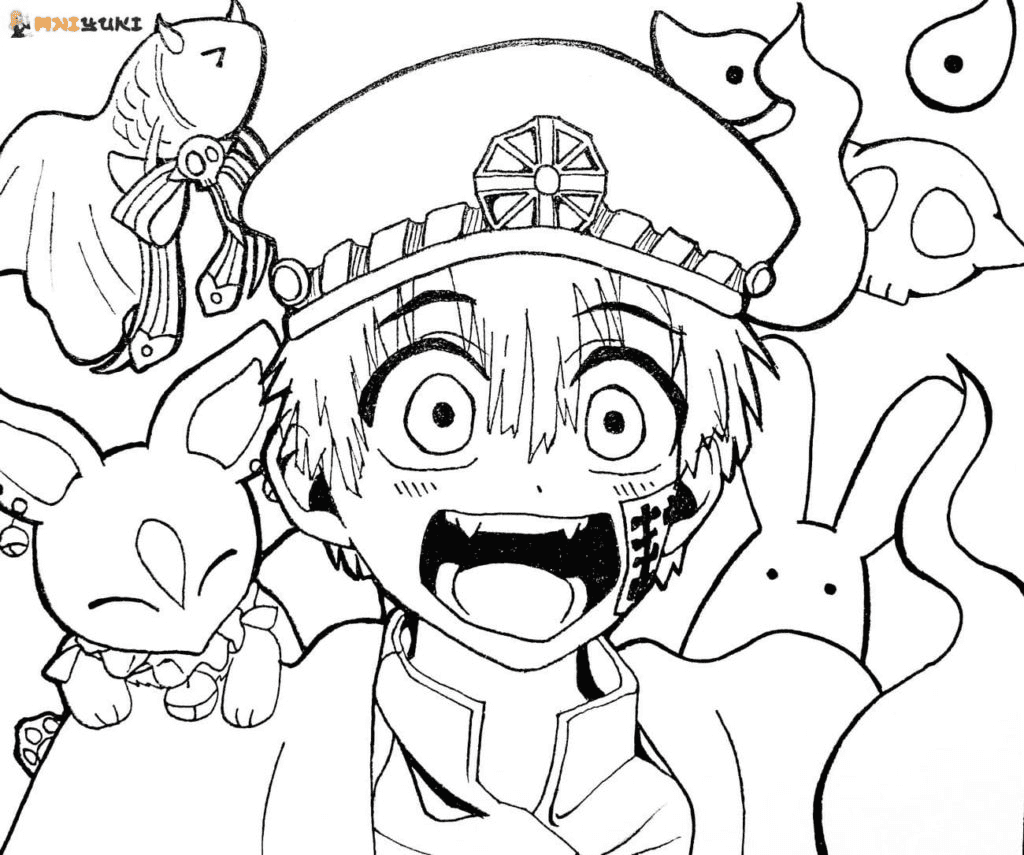
The Mokke are the collection’s most kawaii (cute) character category: small, round supernatural spirit creatures that appear throughout the series as minor characters and comic relief. They are typically depicted as fluffy, rounded balls with large, round eyes and minimal distinguishing features beyond their basic form, embodying the specific design vocabulary of cute supernatural creatures in Japanese visual culture.
Their simple, rounded forms and large eyes make Mokke pages the most accessible in the collection for the youngest fans of the series.
Coloring Mokke pages: The Mokke are typically depicted in white or very pale grey with large dark eyes. Some variations in the series show Mokke with slight color variations or accessory details. The eyes are the most important coloring element: large, dark, with a small white highlight dot at the upper corner of each eye. The rounded body should be rendered in the softest possible application of the base color, suggesting the fluffy texture the creature’s design implies.
Supernatural Realm and Ability Pages
Several pages in the collection show Hanako-kun using his supernatural abilities or depict scenes from the boundaries between the human world and the supernatural realm within Kamome Academy. These pages feature more elaborate background elements than the character portrait pages: decorative geometric patterns, supernatural energy effects, and the specific visual language AidaIro uses to indicate the intersection of normal school space and the supernatural boundaries that Hanako-kun governs.
Coloring supernatural realm pages: The boundary spaces in Toilet-Bound Hanako-kun use a specific warm, slightly sepia-toned palette that distinguishes them from the normal school environment. Apply warm ochre and amber tones to background elements in these scenes, with deep red-brown for the decorative pattern elements that frame supernatural spaces. The character figures should maintain their canonical color schemes against these warm supernatural backgrounds.
What These Pages Do
Toilet-Bound Hanako-kun is one of the most visually sophisticated manga serialized in Monthly GFantasy, and its coloring pages carry the specific visual intelligence that AidaIro’s art brings to the source material. The series uses the traditional Japanese school ghost legend of Hanako-san (a ghost that has appeared in Japanese popular culture since at least the 1950s) as its starting point, then builds an elaborate supernatural world on that foundation. Fans who color these pages are engaging with both a specific contemporary manga and the deeper tradition of Japanese school ghost folklore it draws from.
The anime’s adaptation approach was specifically notable in its 2020 season. Lerche Studio’s decision to incorporate visible screen tone textures, panel-composition references, and a woodblock-print-influenced palette into animated sequences was documented and discussed by animation critics as an unusually successful translation of manga’s visual language into animation. This makes the collection’s pages particularly interesting for fans who are also interested in the craft of manga and anime adaptation.
The American Academy of Pediatrics identifies fine motor skill development as a key childhood milestone throughout early childhood. The intricate detail of Hanako-kun’s gakuran buttons, the decorative hair ornaments of Nene’s twin-tail styling, the surface texture of the supernatural realm backgrounds, and the precise rendering of the Mokke’s rounded forms all provide motivated fine motor practice calibrated to different skill levels across the collection’s age range. The 2005 Art Therapy Journal study on structured coloring and anxiety reduction applies throughout.
The series’ engagement with Japanese cultural traditions, including the school ghost legend, the school hierarchy visible in uniform design (black gakuran for older students, white for first-years), and the specific supernatural taxonomy of the Seven School Mysteries, gives the collection educational content alongside its entertainment value for fans interested in Japanese culture.
How to Color These Pages Well
Hanako-kun’s black gakuran must be fully saturated, not grey. The most common error on dark uniform pages is applying too little pressure to the black areas, leaving the result looking grey and flat rather than the deep, structured black of a formal school uniform. Apply the darkest available black at full pressure across all gakuran surfaces. If the black appears grey after the first pass, apply a second layer in the same direction to deepen the tone. The contrast between the near-black uniform and the small gold button accents depends entirely on the uniform’s black being at maximum saturation.
The gold buttons are small and require a fine tool. Each button on Hanako-kun’s gakuran front is a small circular accent. Apply the gold color to each button position using the finest available tool, keeping the gold within the button outlines without spilling onto the black fabric. If the gold bleeds slightly onto the black, a second layer of black applied carefully around the gold can contain it. Warm gold (with some orange in its undertone) reads more accurately than yellow-gold or green-gold for these button details.
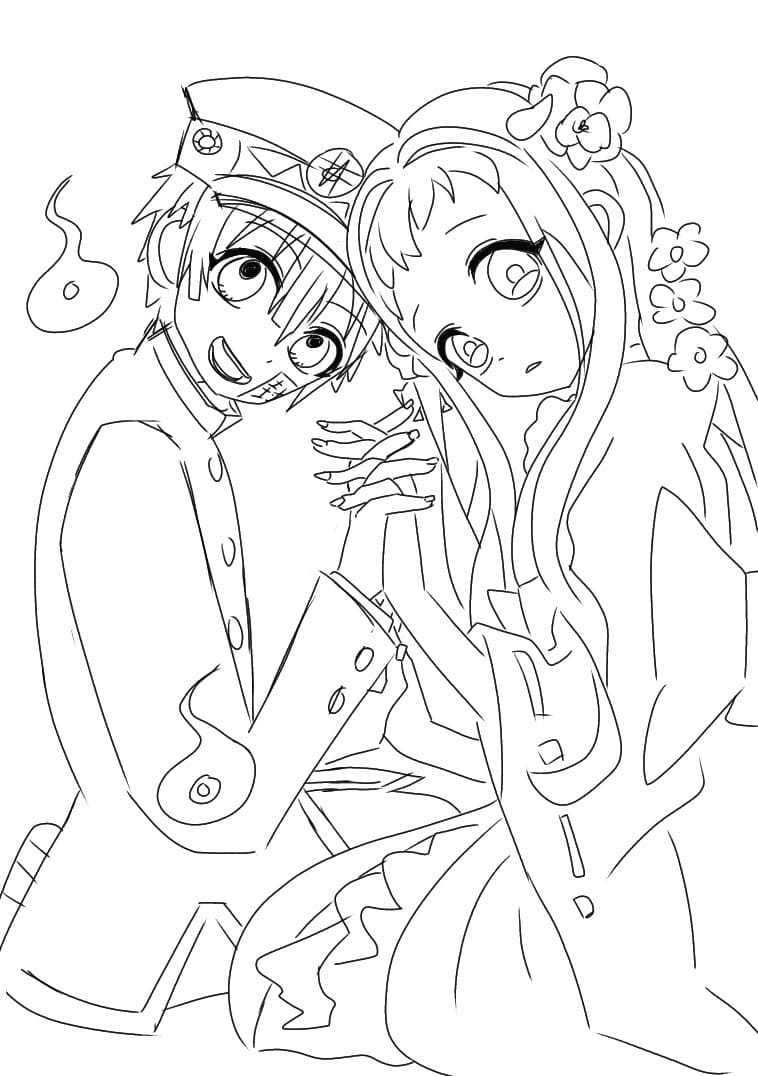
Nene’s hair ornaments are the page’s warm color anchor. On any Nene portrait page, the large hair accessories carry the composition’s primary warm color. Apply the ornament color (typically rose-pink or warm pink) at full saturation before addressing any other warm color element. The ornaments should be the most vivid warm element on the page, giving the composition its emotional warmth and distinguishing Nene’s register from Hanako-kun’s darker, cooler palette.
AidaIro’s skin tones carry a distinctive warm softness. The characters in Toilet-Bound Hanako-kun have skin rendered in a specific soft, slightly warm light tone in the manga’s color illustrations and the anime’s character design. Apply a warm, peachy light skin tone rather than a cool or grey-shifted skin tone. Shadow areas should deepen within the warm family using a slightly deeper peach-tan rather than grey, maintaining the warmth even in shadow zones.
The Mokke’s fluffy texture is suggested through pressure variation. For Mokke pages, apply the base white or pale grey at light pressure across the rounded body. Then apply a very subtle, slightly-darker tone at the edges and underside of the body using an even lighter pressure pass, suggesting the rounded volume without hard shadow lines. The Mokke’s fluffy quality reads best when the transition from the lighter center to the slightly darker edge is gradual rather than defined by a line.
5 Creative Craft Ideas
The Seven Mysteries Map
The Seven School Mysteries of Kamome Academy are the supernatural beings that govern the school’s supernatural life, with Hanako-kun as No. 7. Print a Hanako-kun portrait page and color it in full canonical black-and-gold uniform colors.
On a large backing sheet, draw a simple floor plan of a multi-story school building (three floors, labeled First, Second, Third). Mark the third-floor bathroom with a small symbol and the label “No. 7: Hanako-san of the Toilet.” At other locations on the map, add numbered markers for the other Mysteries with brief descriptions based on the series’ content.
Mount the Hanako-kun portrait in the bathroom. The finished display is a visual mythology map of the school’s supernatural geography.
The Traditional vs. the Subverted Legend
The traditional Japanese legend of Hanako-san describes a ghost girl who haunts the third stall of the third-floor girls’ bathroom of schools across Japan. Toilet-Bound Hanako-kun subverts this by making the ghost a boy. Print a Hanako-kun full-body portrait and color in full canonical colors.
On a two-panel backing sheet: Left panel: “Hanako-san (花子さん). Traditional Japanese school ghost legend. A girl. Third stall, third floor, girls’ bathroom. Knock three times. Popular since at least the 1950s.” Right panel: “Hanako-kun (花子くん). Jibaku Shōnen Hanako-kun by AidaIro. Monthly GFantasy, Square Enix. Serialized from January 2014. A boy. The subverted legend.”
Mount the colored portrait between the two panels.
Kou and Hanako: Exorcist and Ghost
The relationship between Kou, who trained to be an exorcist, and Hanako, the ghost he intended to exorcise but ended up working alongside, is one of the series’ most consistently entertaining dynamics. Print one Kou portrait page and one Hanako-kun portrait page. Color Kou in his white first-year uniform with vivid blonde hair. Color Hanako in his black gakuran.
Mount both pages side by side against a split background: white on Kou’s side, black on Hanako’s side, reflecting the color opposition of their uniforms and their initial opposition as characters.
Add: “Minamoto Kou. First year. Minamoto exorcist family. Trained to remove supernatural beings from school. / Hanako-kun. No. 7 of the Seven School Mysteries. The supernatural being Kou came to remove. Current status: colleagues.”
The Mokke Field
The Mokke are small spirit creatures that appear throughout the series in groups. Print as many Mokke pages as the collection contains, or print multiple copies of a single Mokke page. Color each Mokke in pale white or soft grey with large dark eyes and the small white highlight dot.
Arrange all colored Mokke pages on a large backing sheet in a cluster, overlapping slightly at the edges. The finished display creates a field of the small creatures that reflects how they typically appear in the series: in groups, filling space with their rounded forms and large eyes.
Add a small title card at the top: “The Mokke. Jibaku Shōnen Hanako-kun. Small spirits of Kamome Academy.”
The Anime Art Style Study
The Toilet-Bound Hanako-kun anime (Lerche, 2020) is known for its use of visible screen tone textures in the animation, a technique borrowed from manga production and rarely used in standard anime. Print a Hanako-kun portrait page and attempt to recreate this texture effect using crosshatching or stippling over the black uniform areas rather than solid fill.
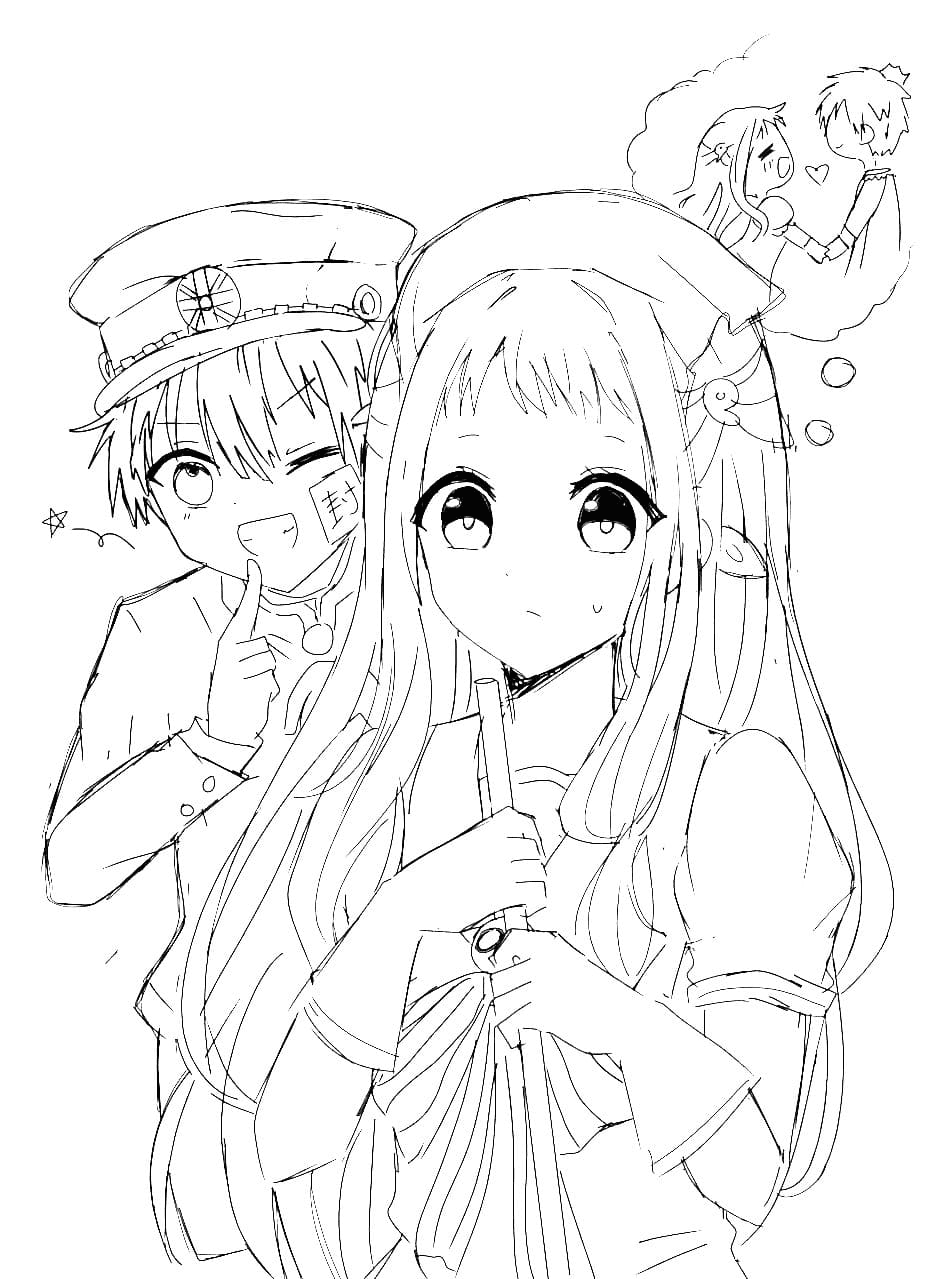
Apply a series of fine parallel lines to the jacket rather than solid black: this creates a screen tone effect similar to what the manga and anime use. Then apply the standard gold buttons and amber eyes over the hatched black areas.
On the backing card, write: “Toilet-Bound Hanako-kun anime. Studio Lerche, 2020. 12 episodes. January 9 to March 26, 2020. Distinguished by its use of screen tone textures in animated sequences, it adapts manga production techniques into animation. One page: one attempt to recreate the technique by hand.”
Frequently Asked Questions
What is Toilet-Bound Hanako-kun? Toilet-Bound Hanako-kun (地縛少年花子くん, Jibaku Shōnen Hanako-kun) is a manga series written and illustrated by AidaIro, the pen name of a creative duo. It is serialized in Square Enix’s Monthly GFantasy magazine and began serialization in January 2014. The story is set at Kamome Academy, a school where supernatural beings called the Seven School Mysteries govern the school’s supernatural life. The protagonist is Yashiro Nene, a first-year high school student who encounters the ghost of the third-floor girls’ bathroom while trying to have a love wish granted. Rather than the girl ghost of the traditional legend, she meets Hanako-kun, a boy ghost. She becomes his assistant in maintaining the balance between the human world and the supernatural.
Who is Hanako-kun and what is his real name? Hanako-kun is the ghost who haunts the third-floor girls’ bathroom at Kamome Academy and governs the school’s supernatural beings as No. 7 of the Seven School Mysteries. He appears as a young boy in a black gakuran (traditional Japanese boys’ school uniform) with gold buttons and a small, round hat. His real name, revealed in the manga, is Yugi Amane. His supernatural name “Hanako-kun” is a male variation on “Hanako-san,” the traditional Japanese school ghost legend he both references and subverts. He is mischievous, playful, and often teases Nene, but the series gradually reveals significant depth and a tragic backstory connected to his twin brother.
What is the Japanese legend of Hanako-san that the series references? Hanako-san (花子さん) is one of Japan’s most familiar school ghost legends, widely known since at least the 1950s and 1960s. The legend describes a ghost girl who haunts the girls’ bathroom of school buildings, typically appearing in the third stall on the third floor when summoned by knocking three times and calling her name. The legend varies by region in Japan, but the core image of a ghost child in school bathrooms is consistent. Toilet-Bound Hanako-kun takes this established legend and subverts its central element. Instead of a girl ghost, the ghost haunting the bathroom is a boy, and the series builds an elaborate supernatural world using this inverted premise as its foundation.
Who are the main characters in the series? The main cast of Toilet-Bound Hanako-kun includes Yashiro Nene, the female protagonist whose accidental bargain with Hanako-kun begins the story; Hanako-kun himself, the black-uniformed boy ghost of the third-floor bathroom; Minamoto Kou, a first-year student from a family of spiritual exorcists who becomes an ally despite initially intending to exorcise Hanako; and Minamoto Teru, Kou’s older brother and the Student Council President, a powerful exorcist. Supporting characters include Mitsuba Sousuke, a ghost with distinctive pink hair connected to Kou’s past, and various supernatural beings associated with the Seven School Mysteries, alongside the small, round spirit creatures called Mokk,e who appear throughout.
When did the anime adaptation air, and who produced it? The Toilet-Bound Hanako-kun anime was produced by Lerche studio, directed by Masaomi Andō, and aired on Fuji TV from January 9, 2020, to March 26, 2020, covering 12 episodes. The anime was noted by critics for its visually distinctive approach: it incorporated visible screen tone textures, panel-composition references drawn from manga design, and a warm, woodblock-print-influenced color palette into its animation, producing a visual aesthetic that was recognized as an unusually successful translation of the source manga’s art style into animated form. The opening theme was “No.7” by Kamome Sano, and the ending theme was “Akari” by Illion.
What is the significance of the school uniform design in the series? In the world of Toilet-Bound Hanako-kun and in real Japanese schools, school uniform design carries a specific meaning. The gakuran, the traditional standing-collar black jacket worn by Hanako-kun, is associated with older or more senior male students in the Japanese educational system and carries connotations of formality and seriousness that contrast with Hanako-kun’s playful personality. The white uniform worn by Minamoto Kou identifies him as a first-year student. This visual distinction between the black gakuran and the white first-year uniform creates an immediate visual hierarchy and opposition between Hanako-kun (supernatural senior) and Kou (human junior) that reflects their dynamic in the story.
What age group are these pages best suited for? Toilet-Bound Hanako-kun coloring pages are most appropriate for fans of the series aged ten and older. The manga’s visual complexity, including the detailed gakuran uniform, the decorative hair accessories, the screen tone-inspired texturing techniques, and the supernatural realm background elements, rewards the fine motor development and sustained attention of older children, tweens, and teenagers. The simpler Mokke creature pages, with their rounded forms and minimal detail, are more accessible for younger children ages six and up who are drawn to the cute character designs. The series itself carries a PG-13 equivalent tone in its themes, including supernatural danger and emotional complexity in its character arcs, making the coloring collection most appropriate for the same age range as the source material.
Browse the full collection at ColoringPagesOnly.com. All 50+ pages free, no sign-up, PDF or PNG, print or color online.
AidaIro started serializing a manga in Monthly GFantasy in January 2014. The premise was the subversion of a school ghost legend that Japanese children have been telling each other since at least the 1950s. The ghost is a boy, not a girl. He wears a black gakuran. He has a knife. His real name is Yugi Amane, and he has a twin brother and a backstory that the series has been unpacking across more than 20 volumes.
Lerche turned it into 12 episodes of anime in January 2020 and made a deliberate decision to animate it with visible screen tone textures and panel compositions. Critics noticed.
The Mokke are round and have large eyes, and they are there whenever you need something soft to look at.
Pick up your deepest black. The gakuran goes first at full saturation. The gold buttons come second, small and precise. The amber eyes come third, and they are the warmest thing on the whole page.
Share your work on Facebook and Pinterest and tag #Coloringpagesonly. The Seven Mysteries map displays and the Traditional vs. Subverted Legend pages are particularly worth sharing.
Color the uniform. Apply the buttons. The ghost in the bathroom is a boy, not a girl, and that changes everything.
More from our anime collections: