Free Inside Out Coloring Pages: 70+ printable pages featuring Joy, Sadness, Anger, Fear, Disgust, Riley, Bing Bong, memory orbs, and Inside Out group scenes. You’ll also find Joy and Sadness pages, Fear and Anger scenes, Disgust-Anger-Fear pages, Forgetters, Jangles the Clown, title pages, and Disney Pixar-style emotion character designs. These pages are available as free PDFs, JPGs, PNGs, and online coloring pages for home coloring, selected classroom use, Disney movie activities, feeling-color lessons, party tables, travel folders, and screen-free creative time.
Inside Out is a special animated movie theme because it turns feelings into characters. Joy, Sadness, Anger, Fear, and Disgust are not just cartoon figures; each one has a color, expression, body language, and emotional role. That makes Inside Out coloring pages different from ordinary character pages. Children are not only choosing colors for a movie scene. They are also thinking about mood, memory, expression, and how different feelings can appear in one story.
This collection is especially strong for creative and emotional coloring. Younger children can enjoy simple Joy, Sadness, Anger, Fear, Disgust, Riley, and Bing Bong pages. Older kids can color group scenes, memory orbs, emotion combinations, character reactions, and more detailed Disney Pixar-style pages. Parents and teachers can use selected pages to start gentle conversations about feelings, friendship, change, imagination, and self-expression. All free, PDF, JPG, or PNG, print or color online.
What’s Inside
Joy Coloring Pages
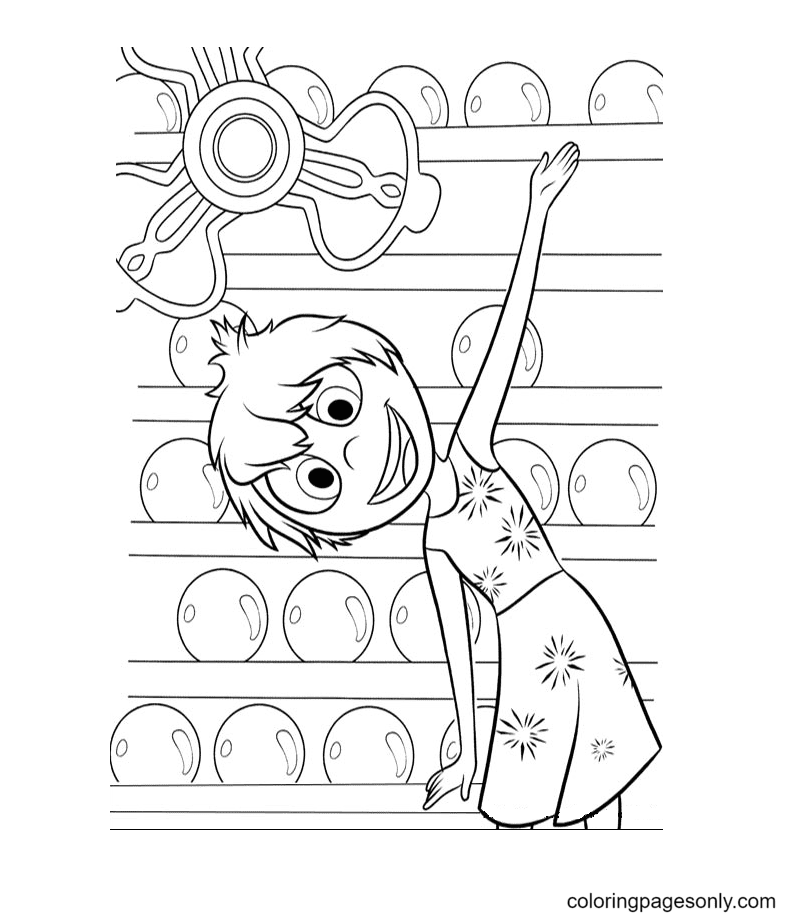
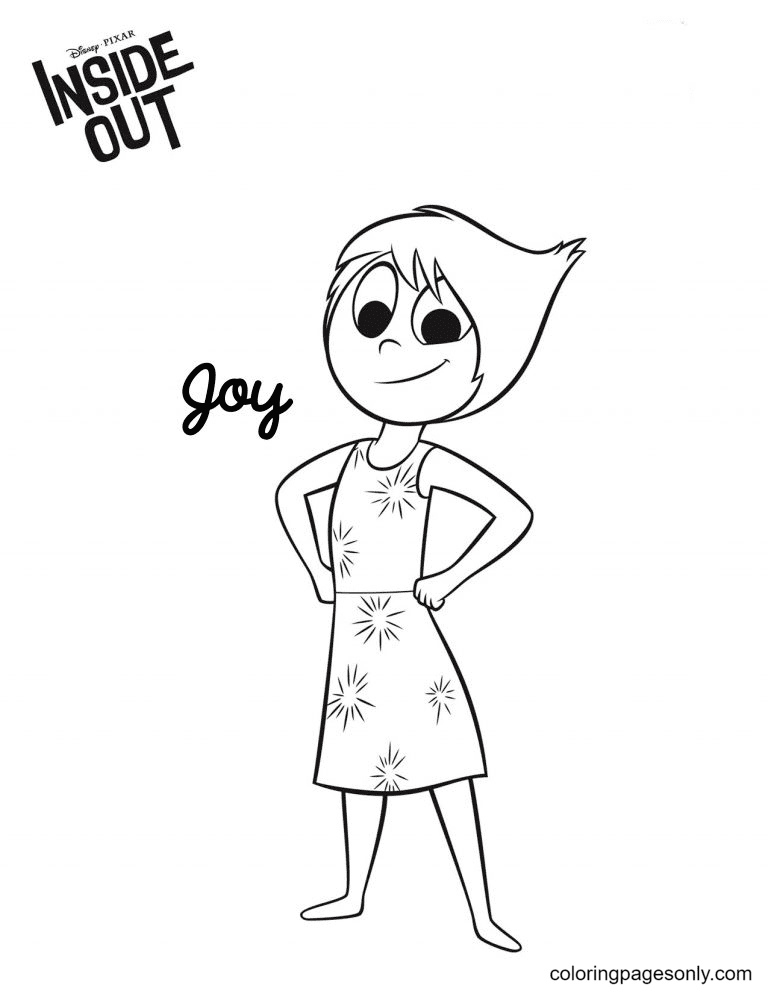
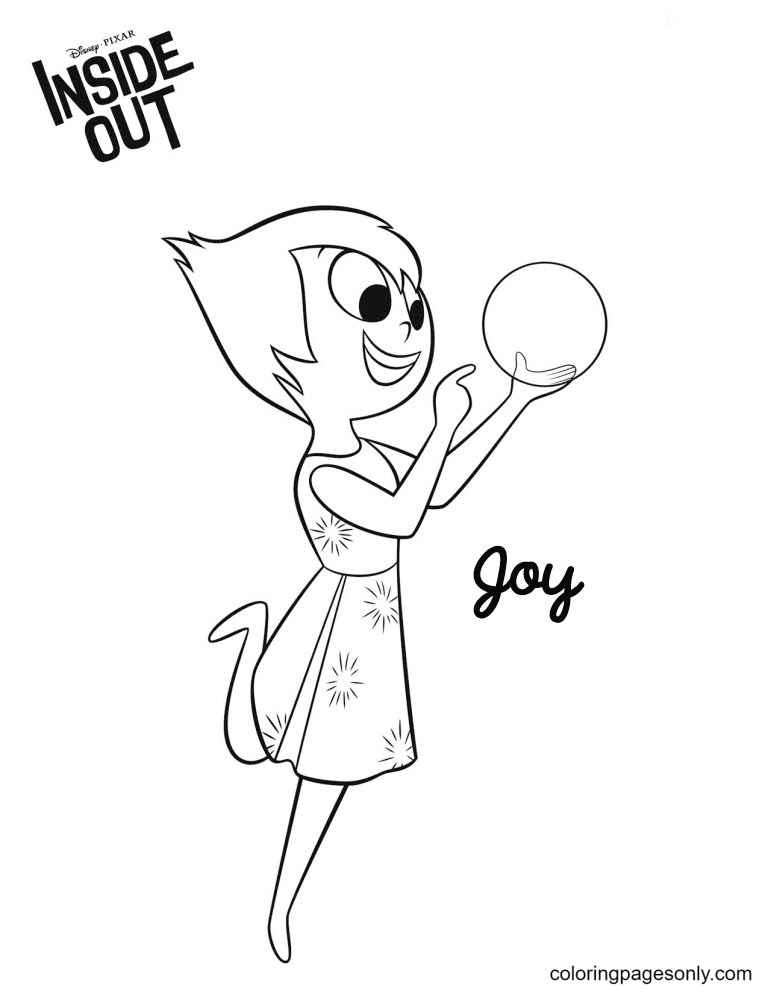
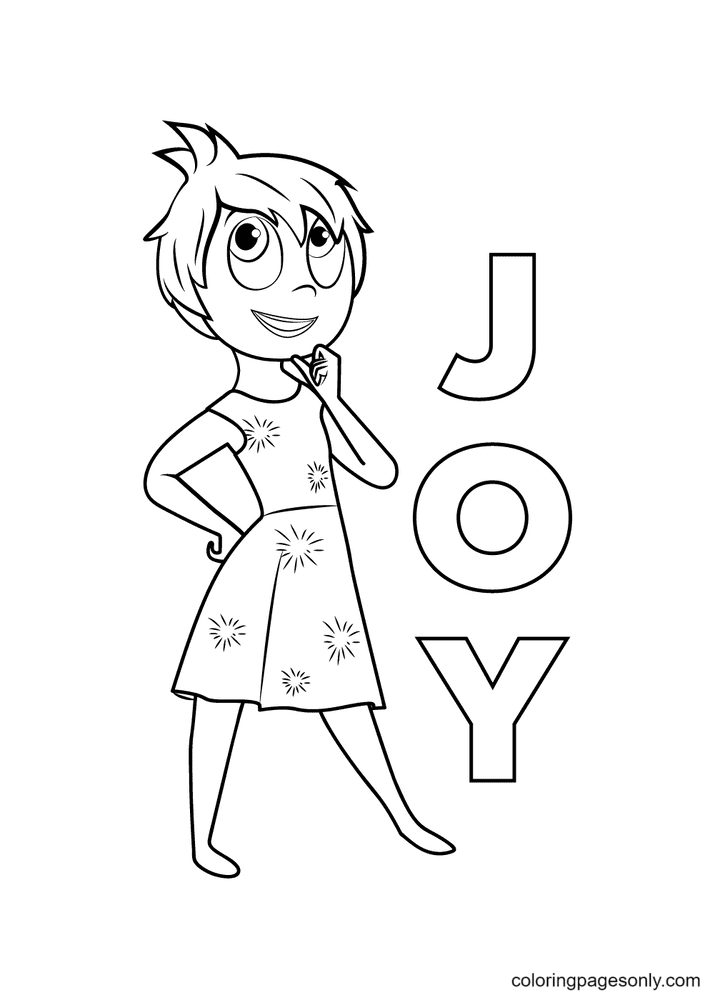
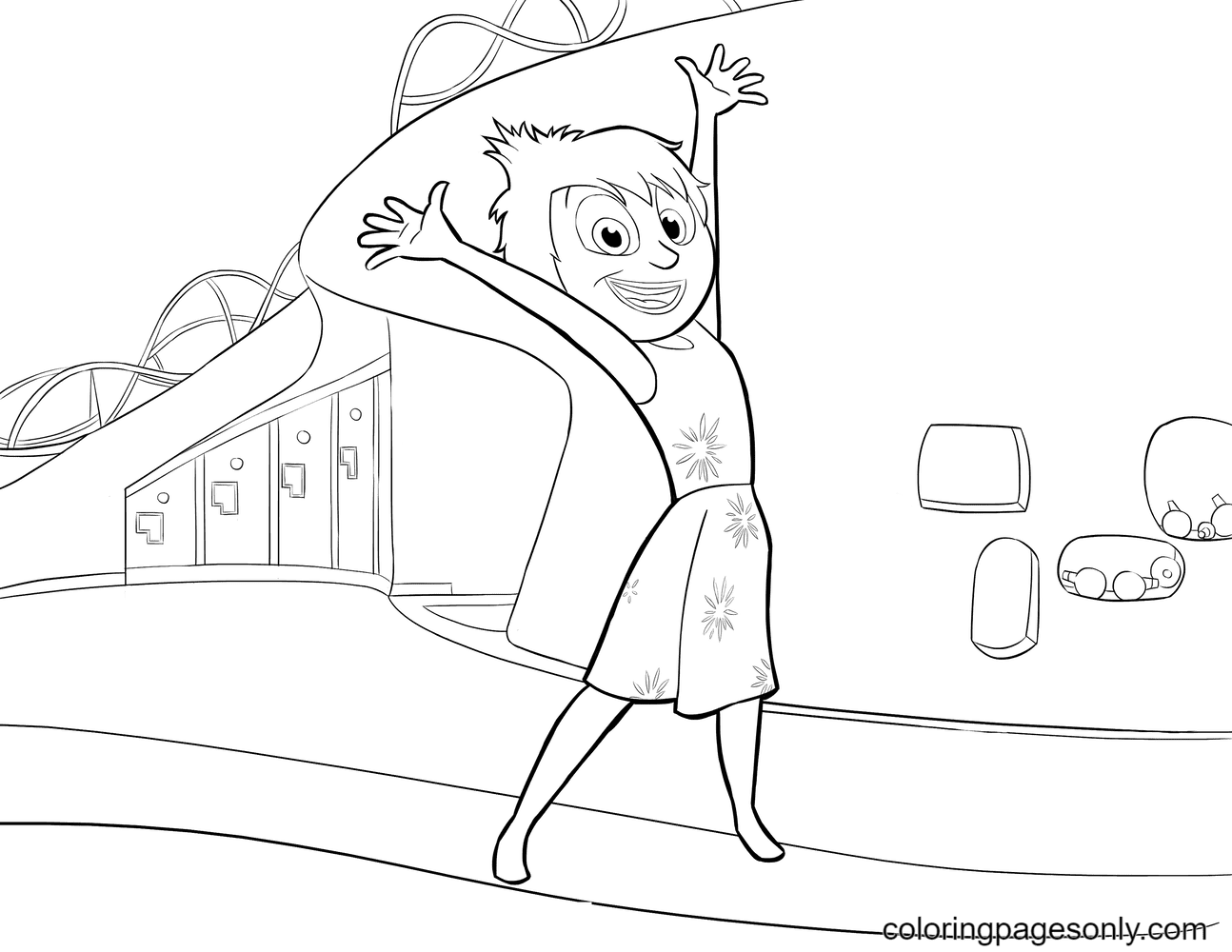
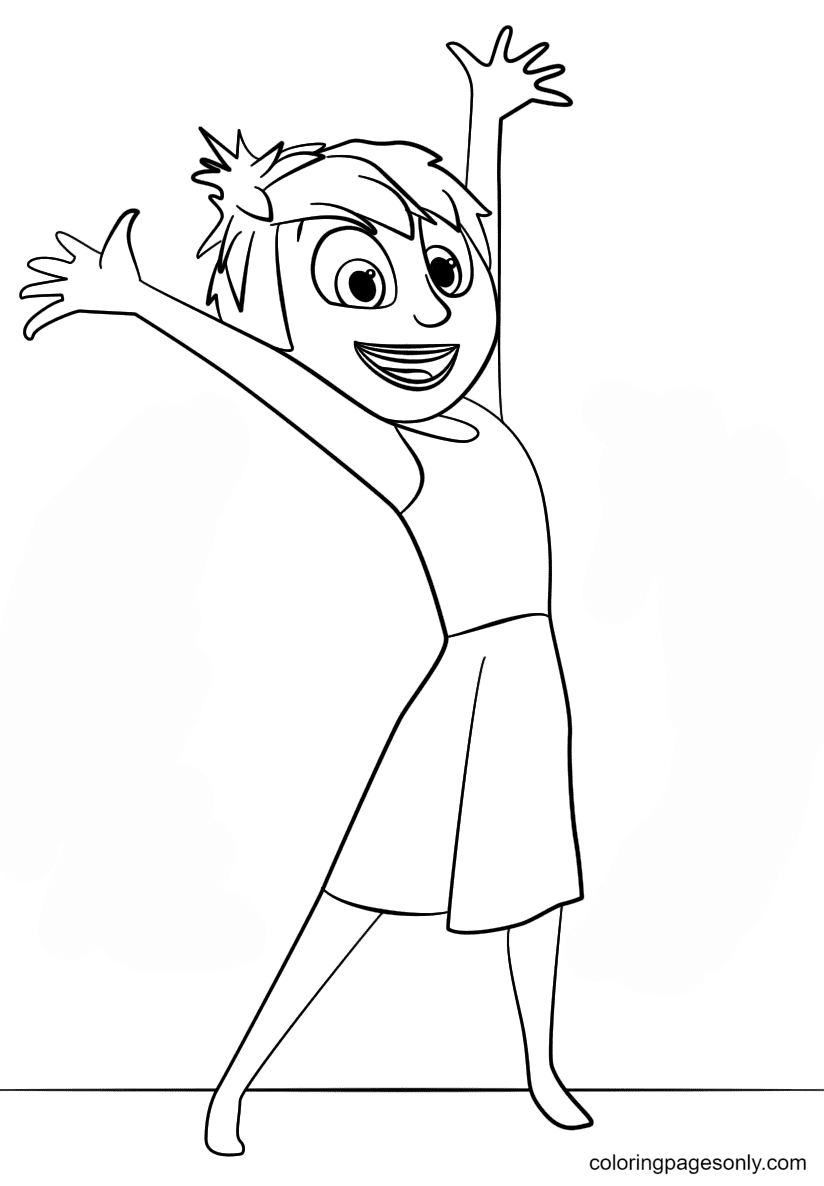
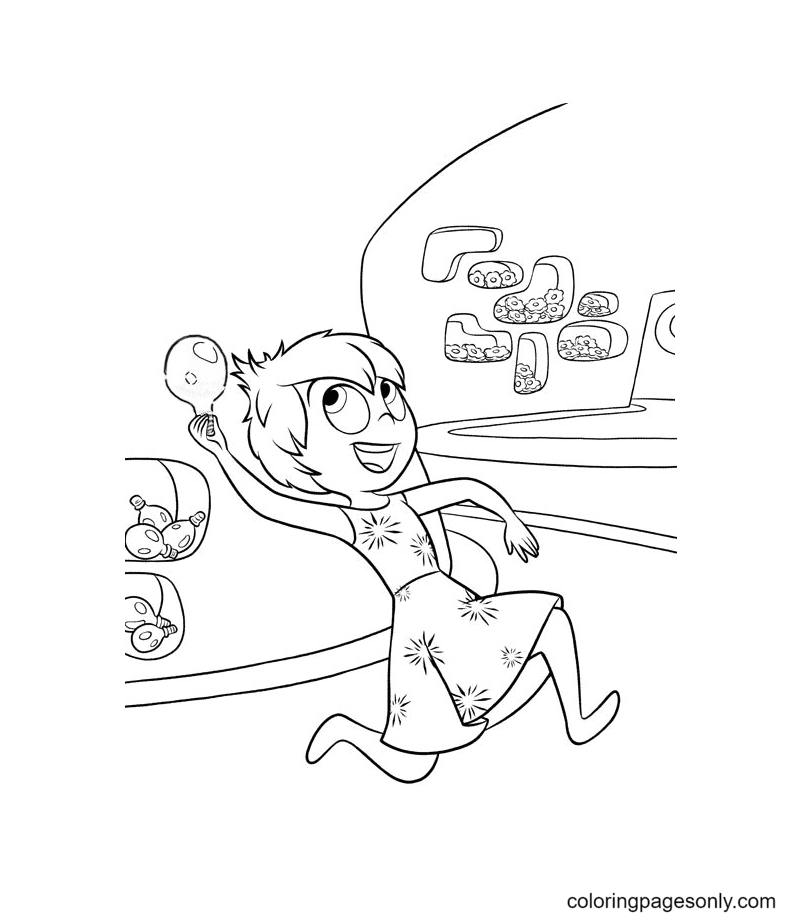
Joy pages are the brightest part of this collection. These designs may show Joy smiling, standing confidently, holding a memory orb, sitting thoughtfully, appearing with Sadness, or glowing with cheerful energy. Joy is easy to recognize because her design feels light, sparkling, active, and optimistic.
Joy pages are useful because they show how color can create mood. Yellow and blue can make the page feel bright, hopeful, and energetic. But Joy is not only about happiness. Some pages may show her thinking, helping, or reacting to another character. That gives colorists a chance to make a happy character feel thoughtful instead of flat.
Coloring Joy pages: Start with warm yellow for her skin and bright blue for her hair. Use light green, yellow-green, or soft lime for her dress if the design includes it. Add pale yellow or white highlights around the body to create a glowing effect. For backgrounds, use sunshine yellow, sky blue, soft gold, or memory-orb colors to keep Joy bright and readable.
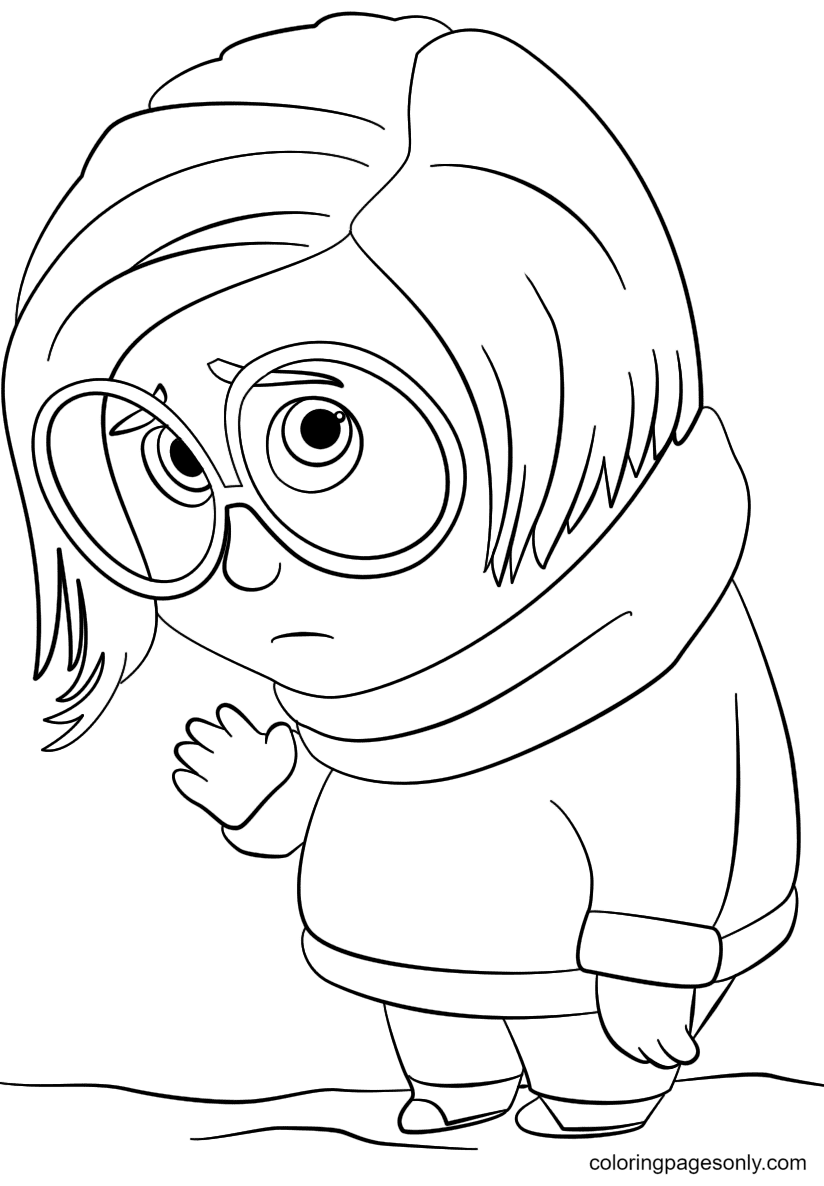
Sadness Coloring Pages
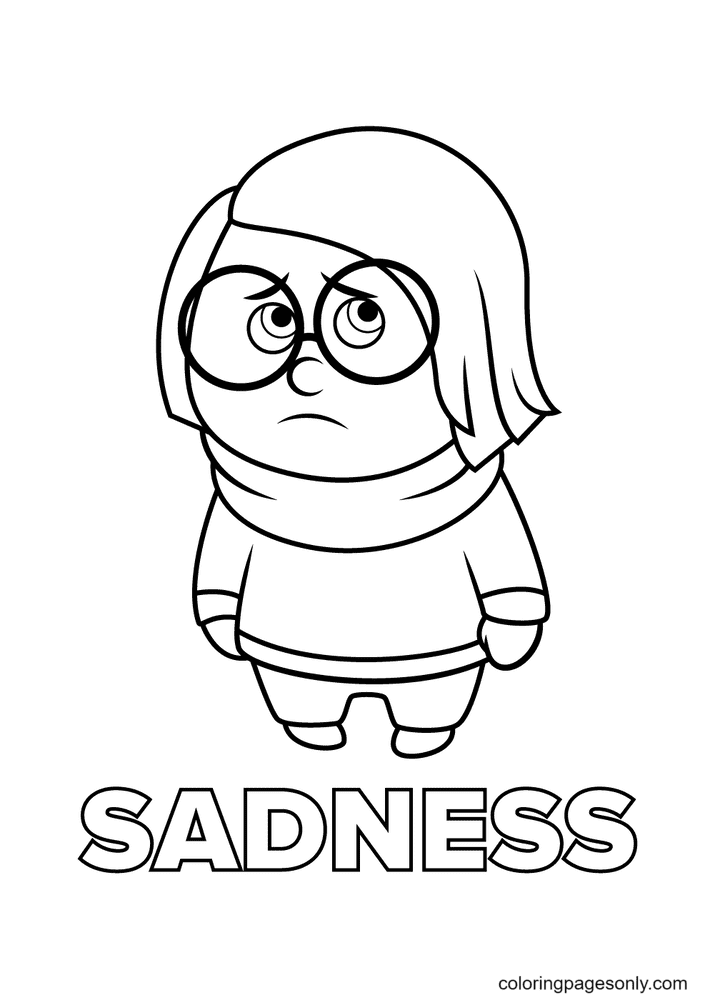
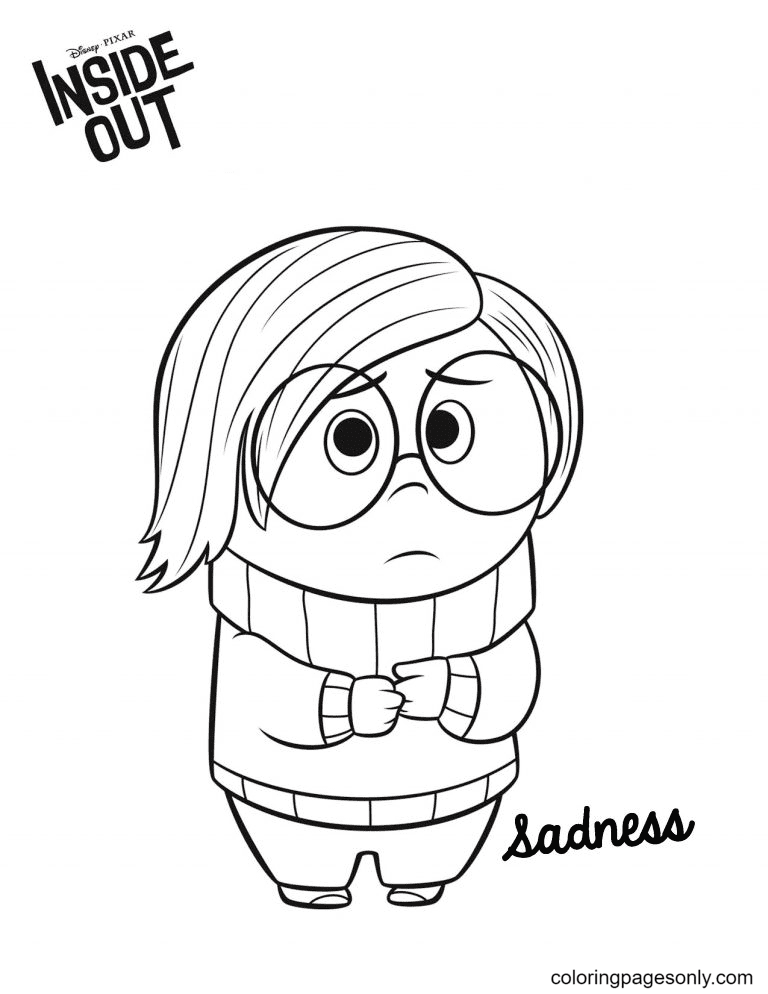
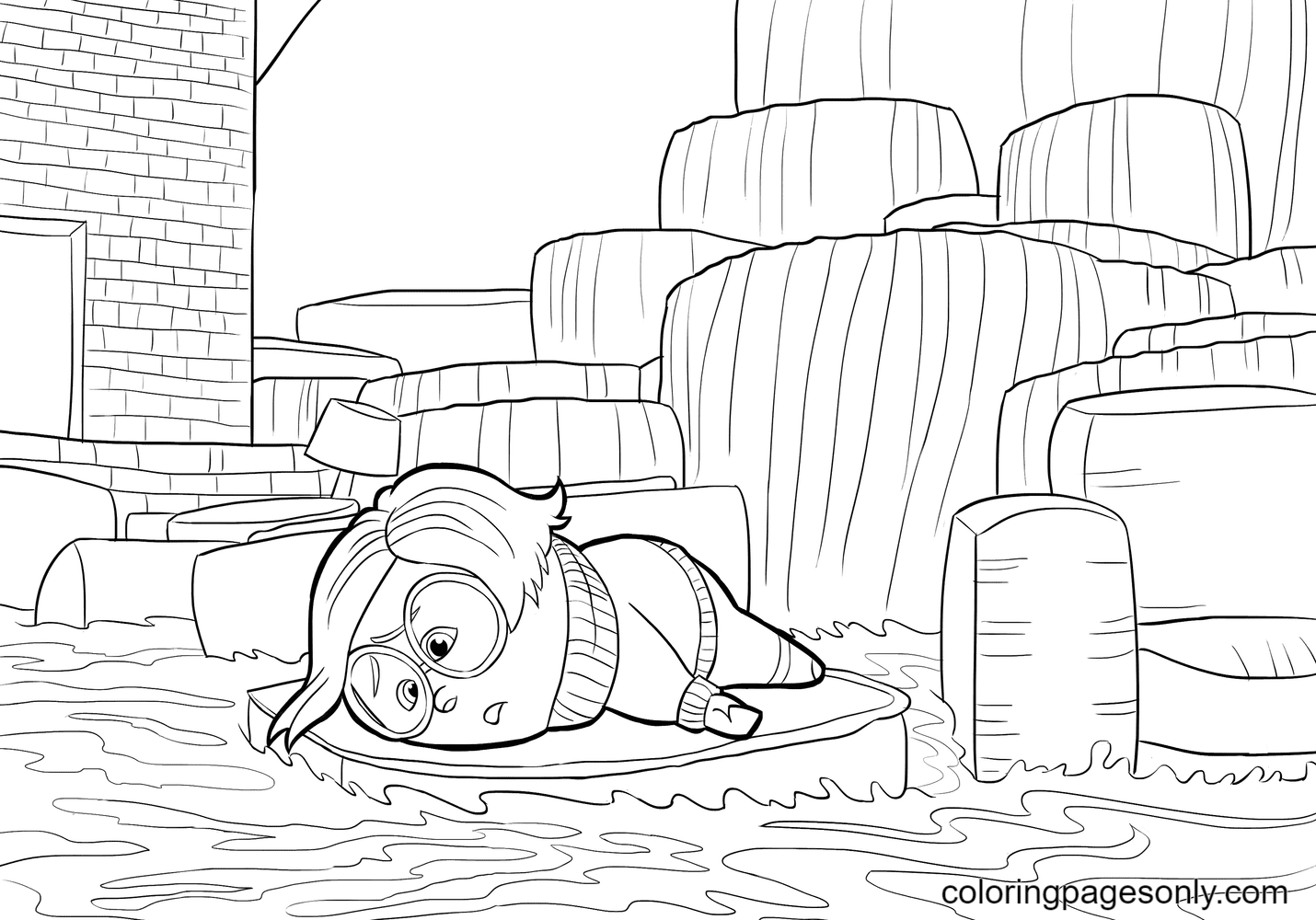
Sadness pages have a calm and gentle visual style. These designs may show Sadness sitting, thinking, or standing beside Joy, holding a memory, or appearing with Fear or Bing Bong. Her round glasses, soft body shape, sweater, and blue palette make her easy to recognize.
Sadness pages are important because they help children see that not every feeling needs to be avoided. A Sadness coloring page can feel quiet, soft, thoughtful, or comforting. The page gives children a safe way to color a blue mood without making it scary or negative.
Coloring Sadness pages: Use different blues instead of one flat color. Try light blue for the face, deeper blue for shadows, navy or medium blue for the sweater, and pale blue-gray for glasses. Keep the eyes and mouth gentle. A soft background with light blue, lavender, gray, or pale yellow can make the page feel calm instead of heavy.
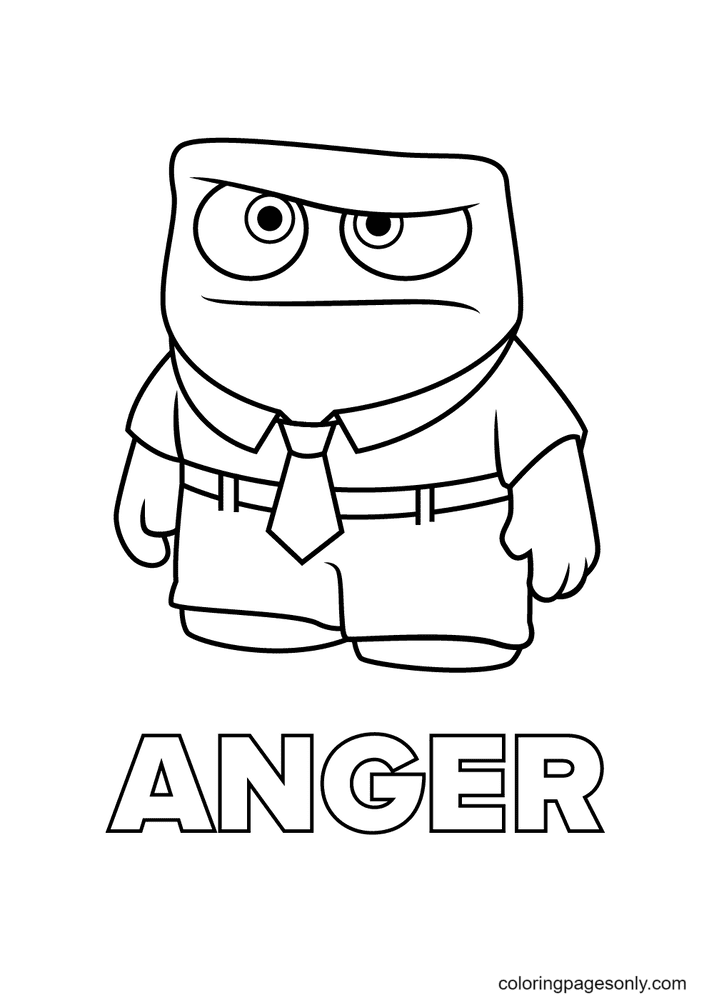
Anger Coloring Pages
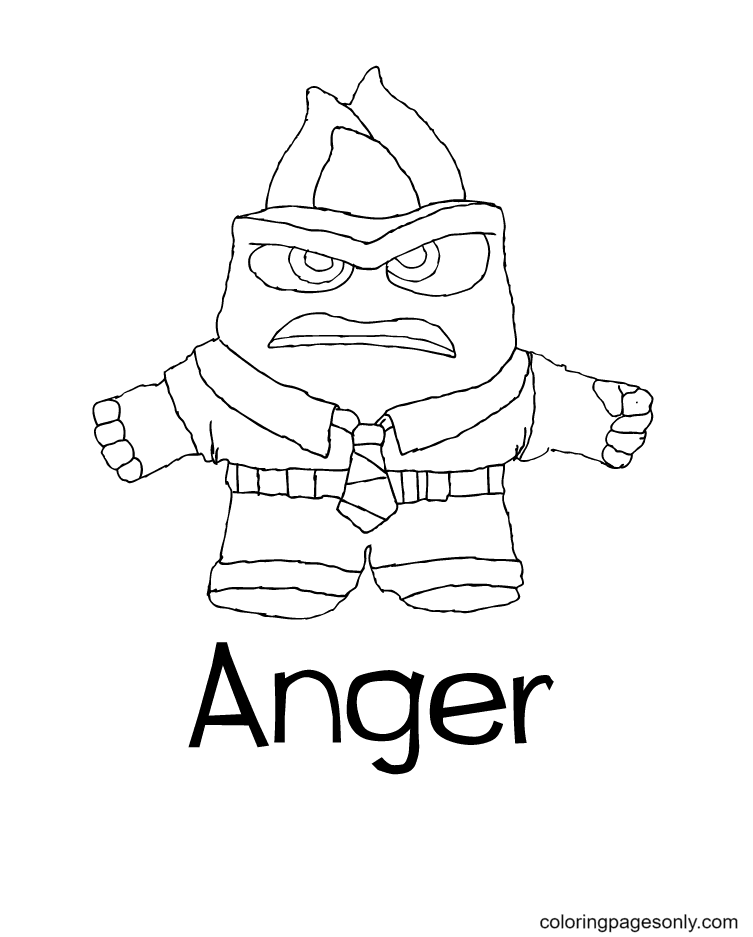
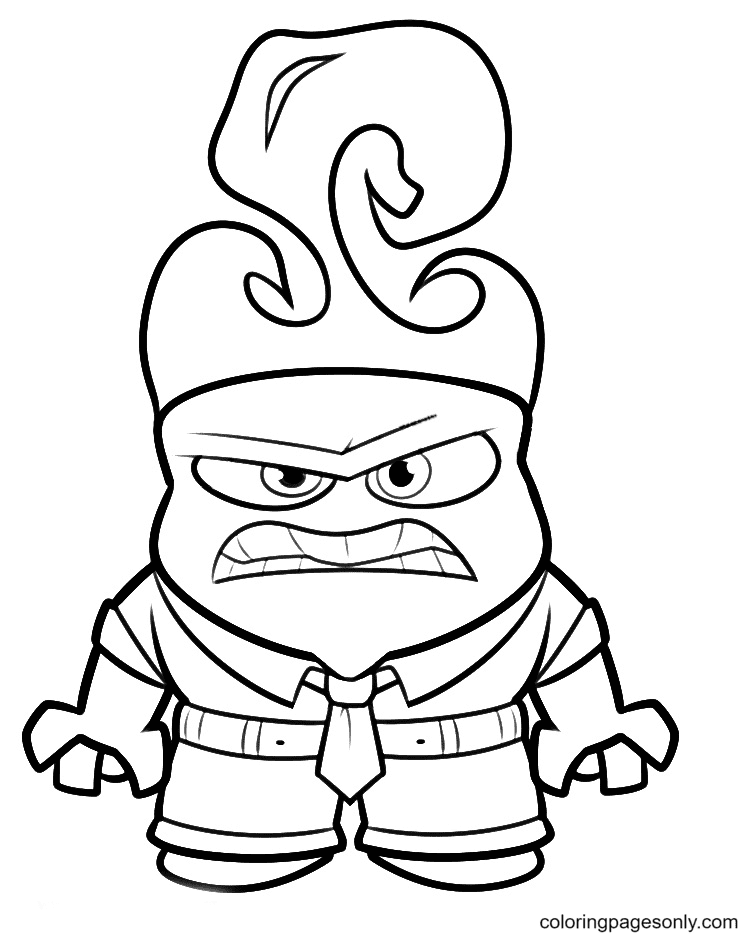
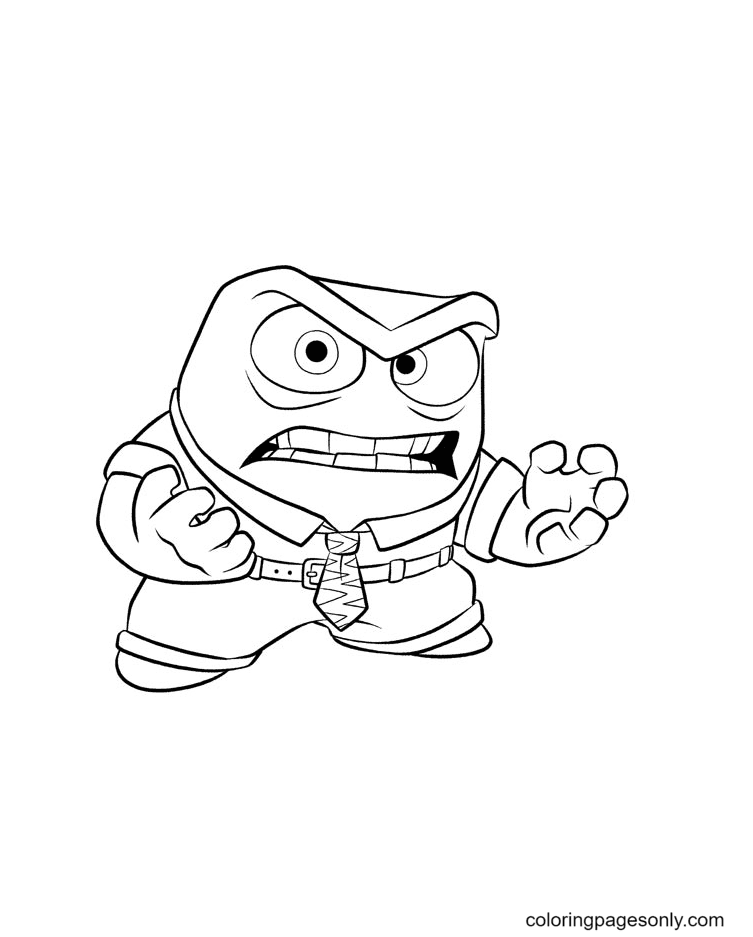
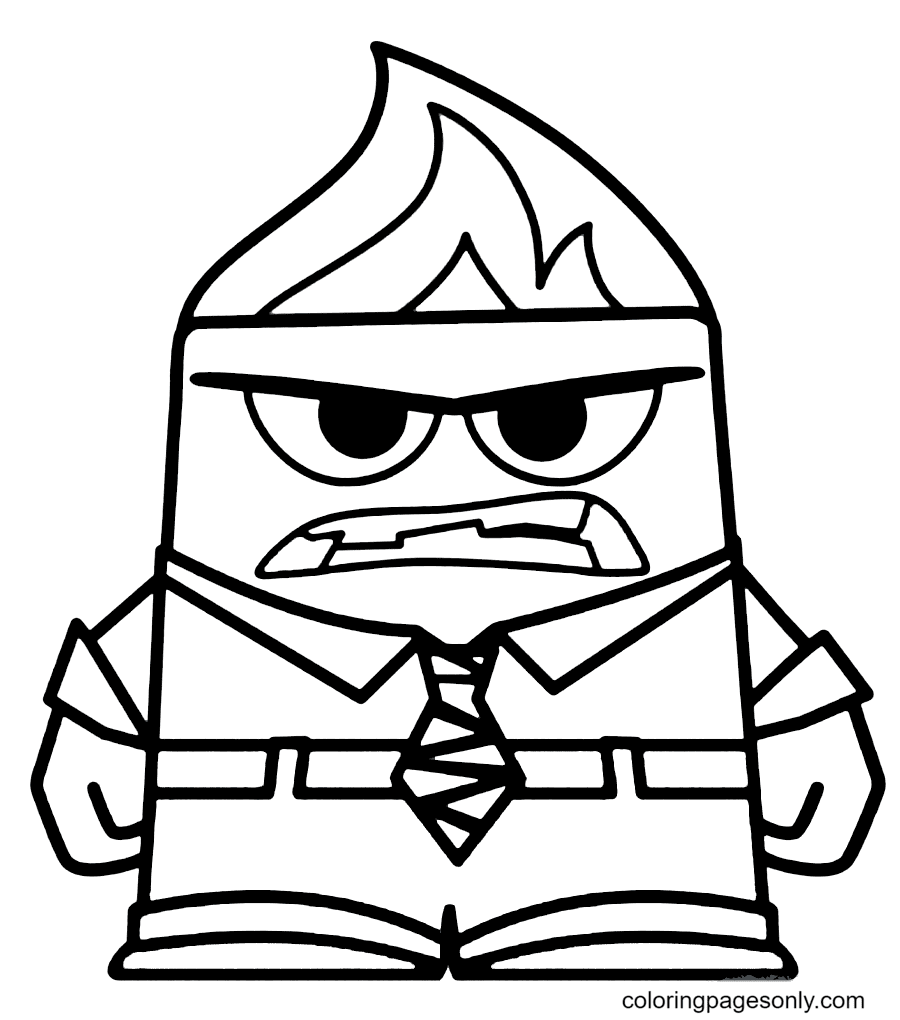
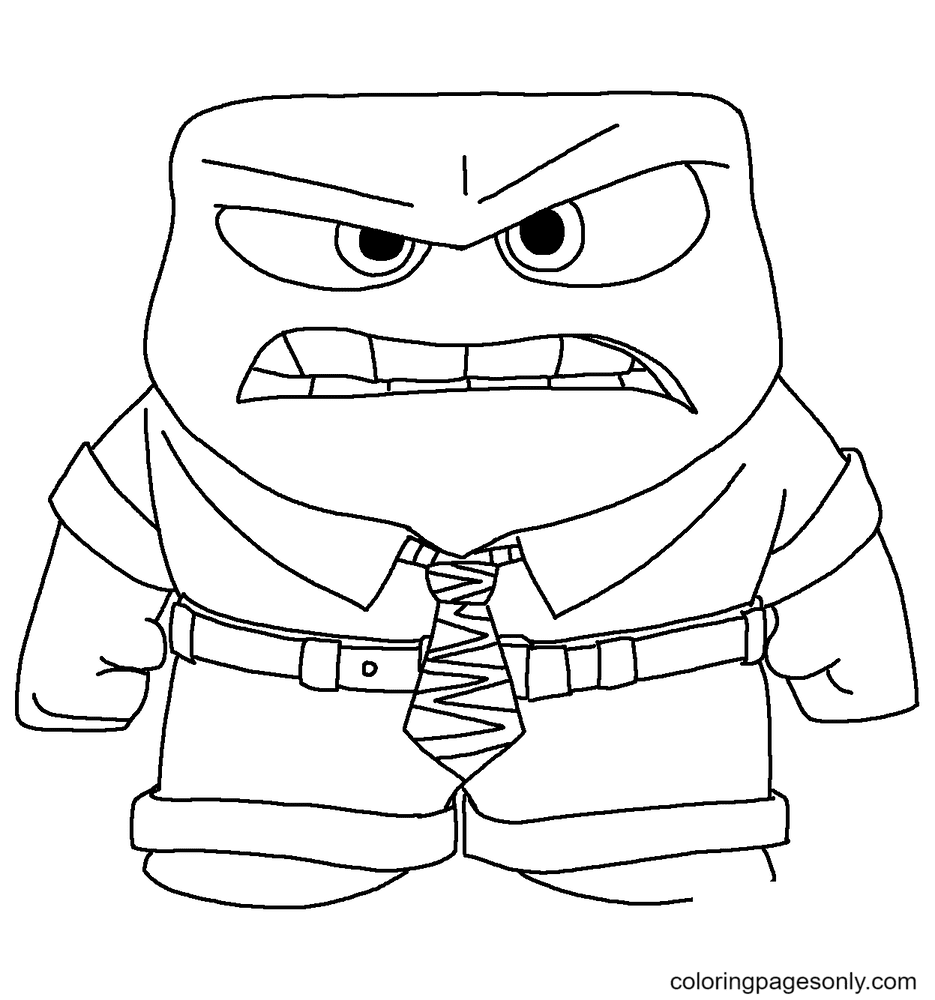
Anger pages bring heat and strong energy into the collection. These designs may show Anger shouting, standing with a firm pose, appearing with Fear, or joining the full emotion team. His square shape, short body, tie, and intense expression make him one of the easiest Inside Out characters to recognize.
Anger pages are useful because they teach contrast. Red, orange, and yellow can show heat, frustration, and energy. But Anger should still be readable and fun, not just dark or messy. A strong Anger page uses bold color blocks and clear facial details.
Coloring Anger pages: Use red for the face and body, white for the shirt, dark red or brown for shadows, and black or gray for pants and shoes. If flames appear above his head, use yellow near the center, orange around it, and red at the edges. Keep the eyes and mouth clean so the expression stays clear.
Fear Coloring Pages
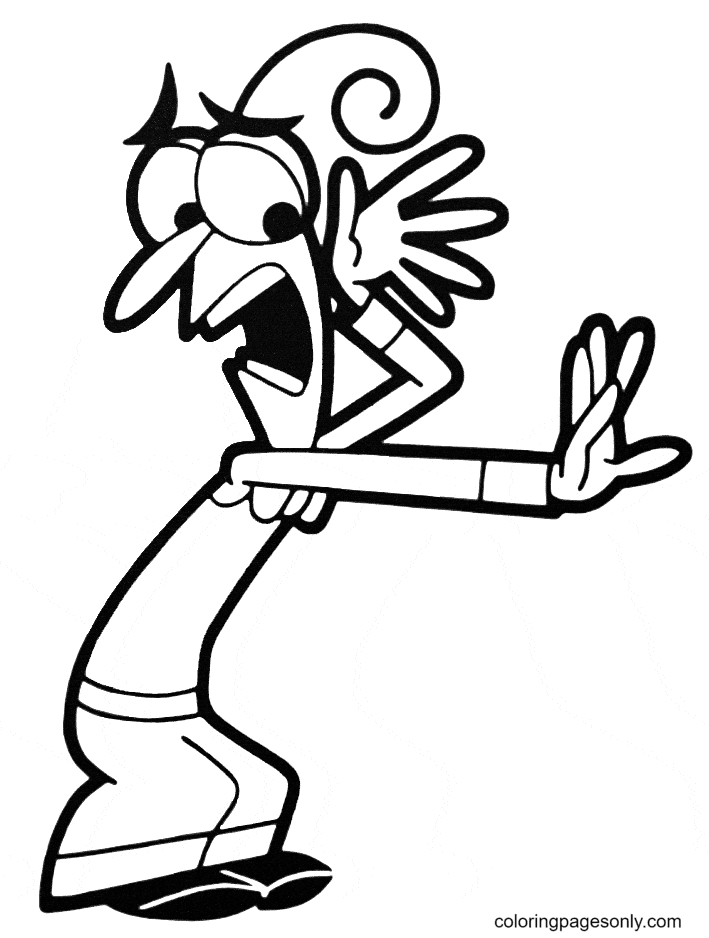
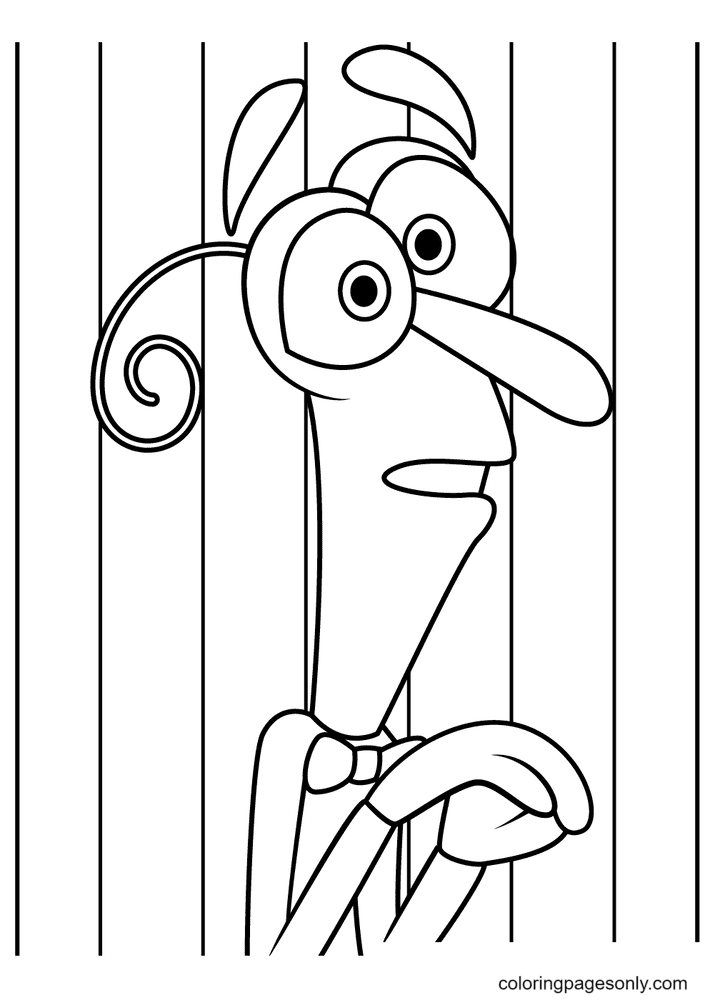
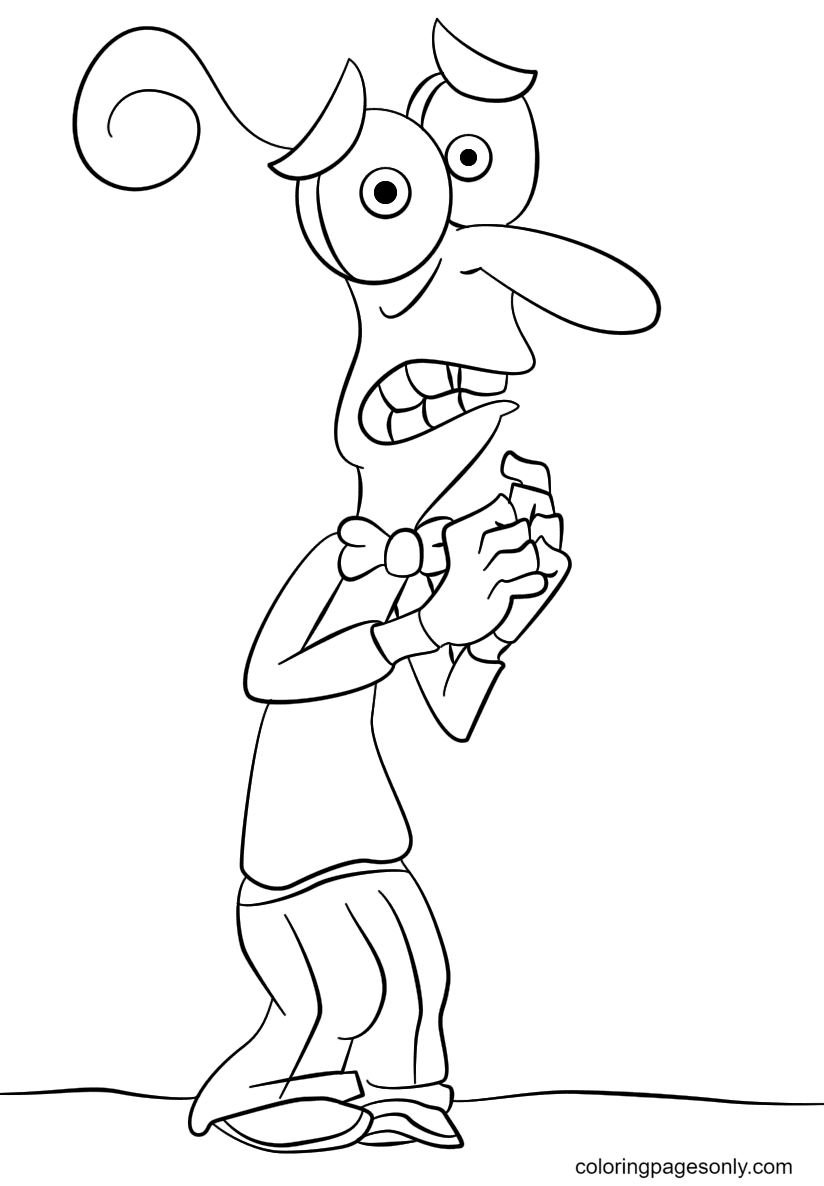
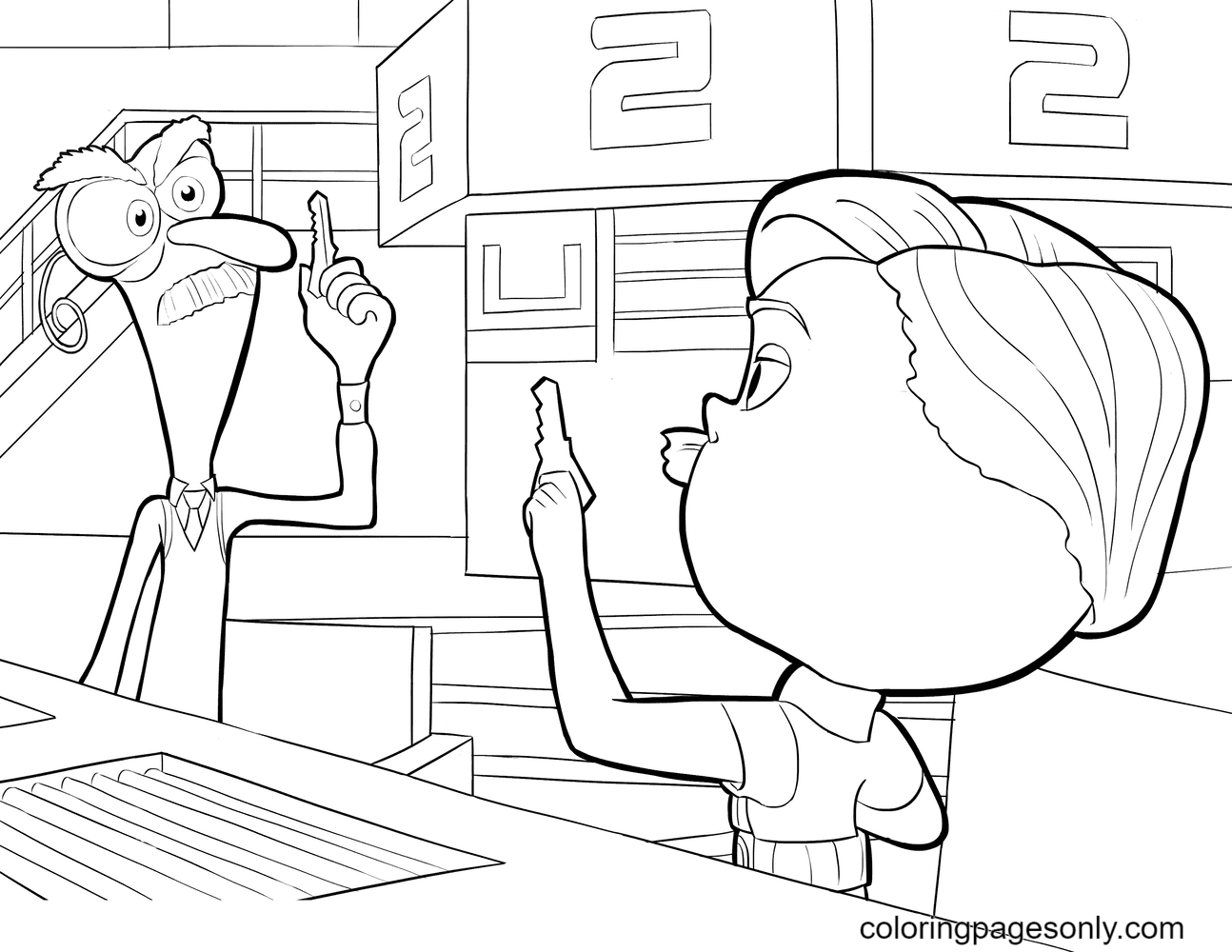
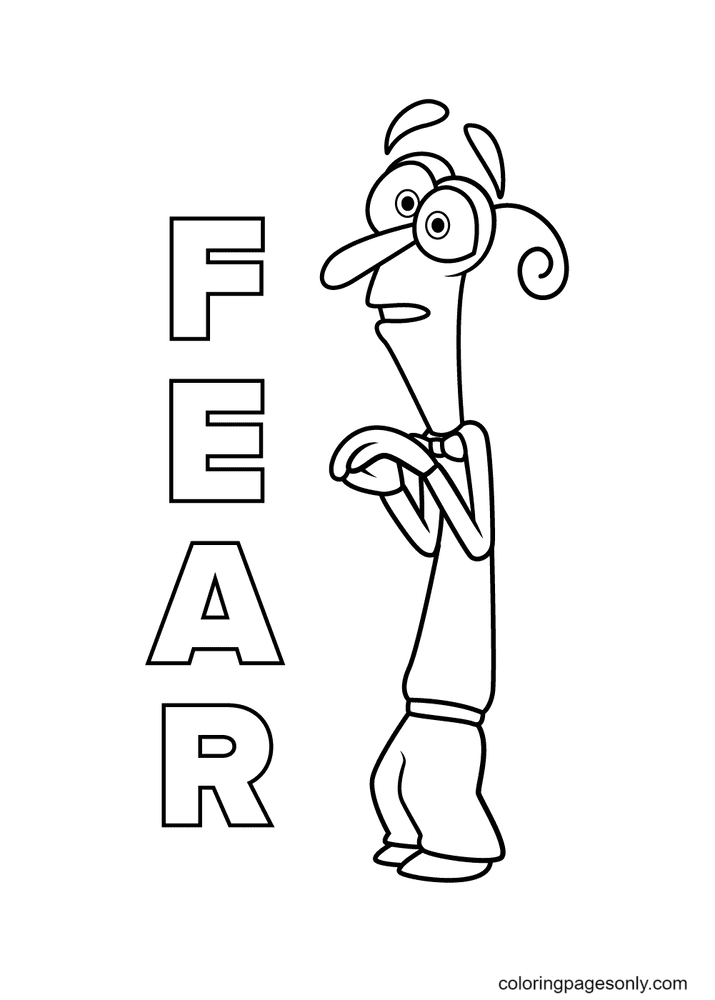
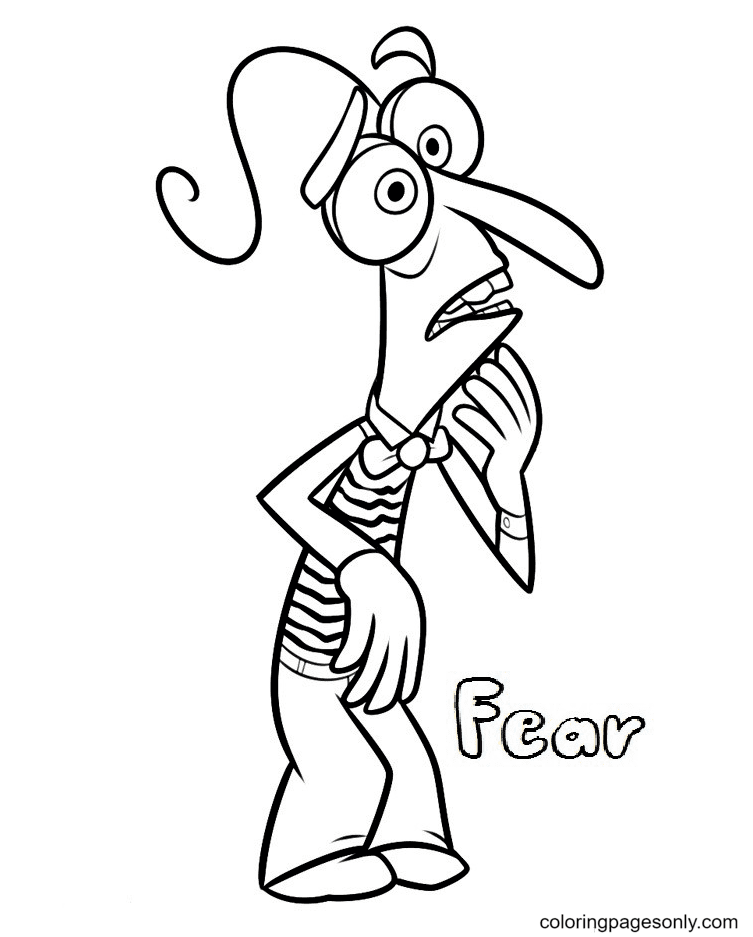
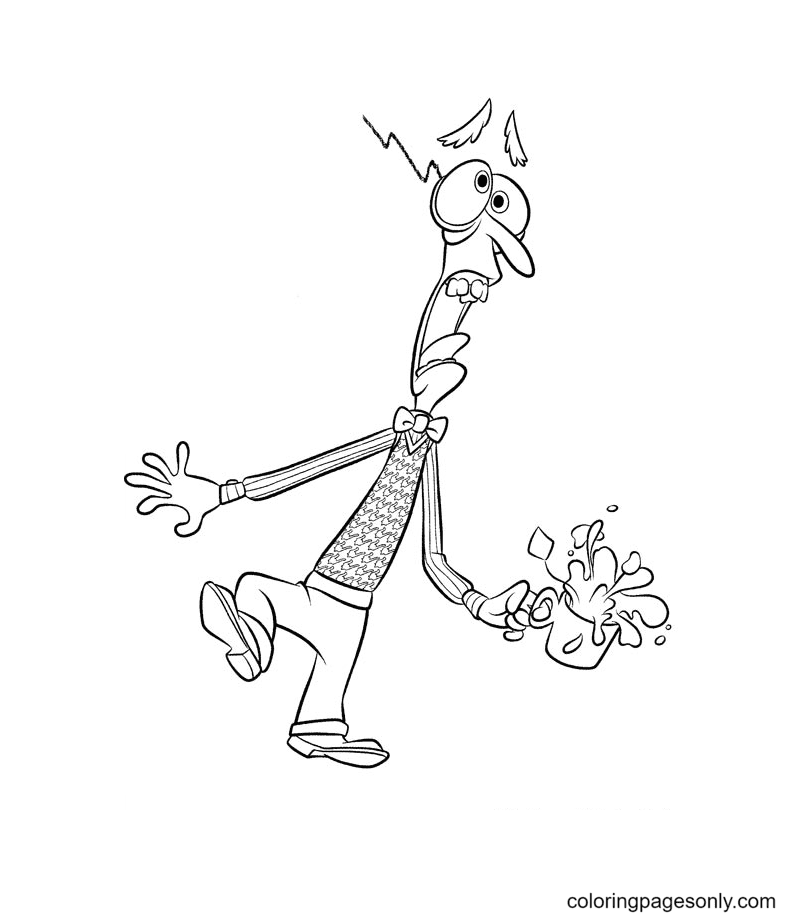
Fear pages feel nervous, tall, and expressive. These designs may show Fear standing stiffly, reacting to something, appearing with Anger or Sadness, or joining a group scene. His long body shape, wide eyes, bow tie, and worried posture make him visually different from the other emotions.
Fear pages are good for practicing body language. His pose often tells the story before the background does. A small change in eye color, shadow, or background can make the page feel funny, dramatic, or cautious.
Coloring Fear pages: Use purple, violet, lavender, and pale blue-gray tones. Keep the eyes wide and bright. Use dark purple for shadows around the arms, legs, or bow tie. A soft gray, pale yellow, or muted purple background can support the nervous mood without making the whole page too dark.
Disgust Coloring Pages
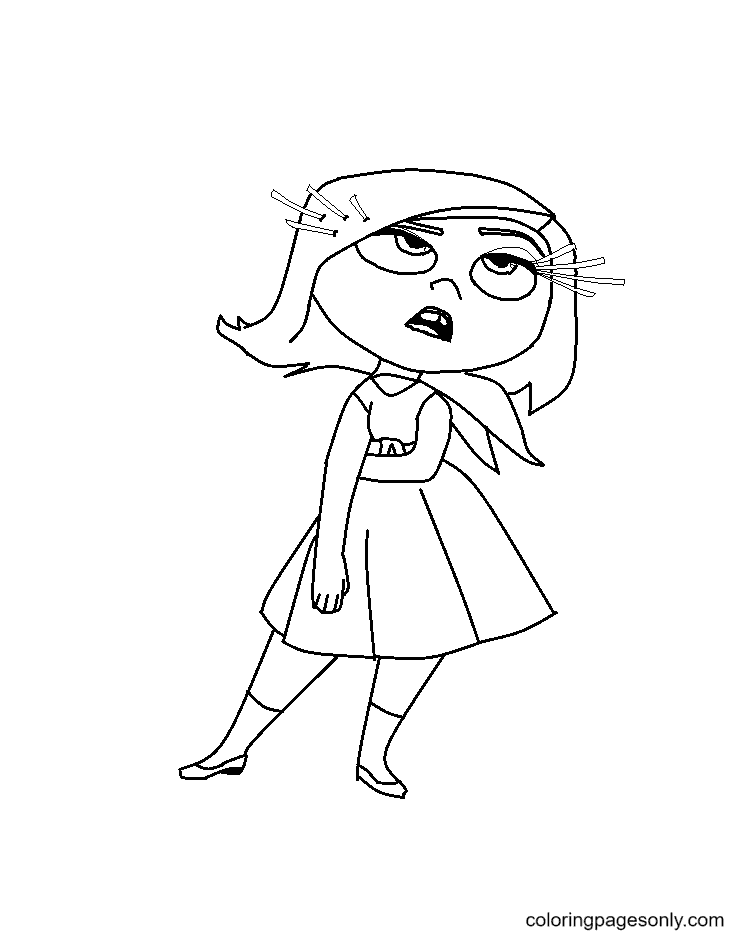
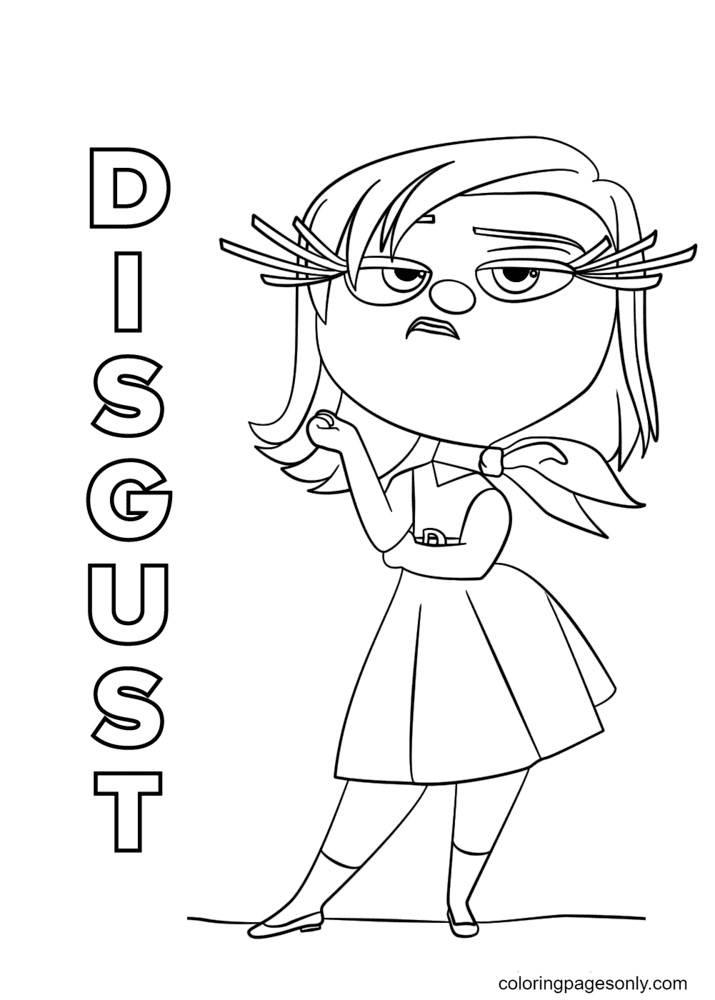
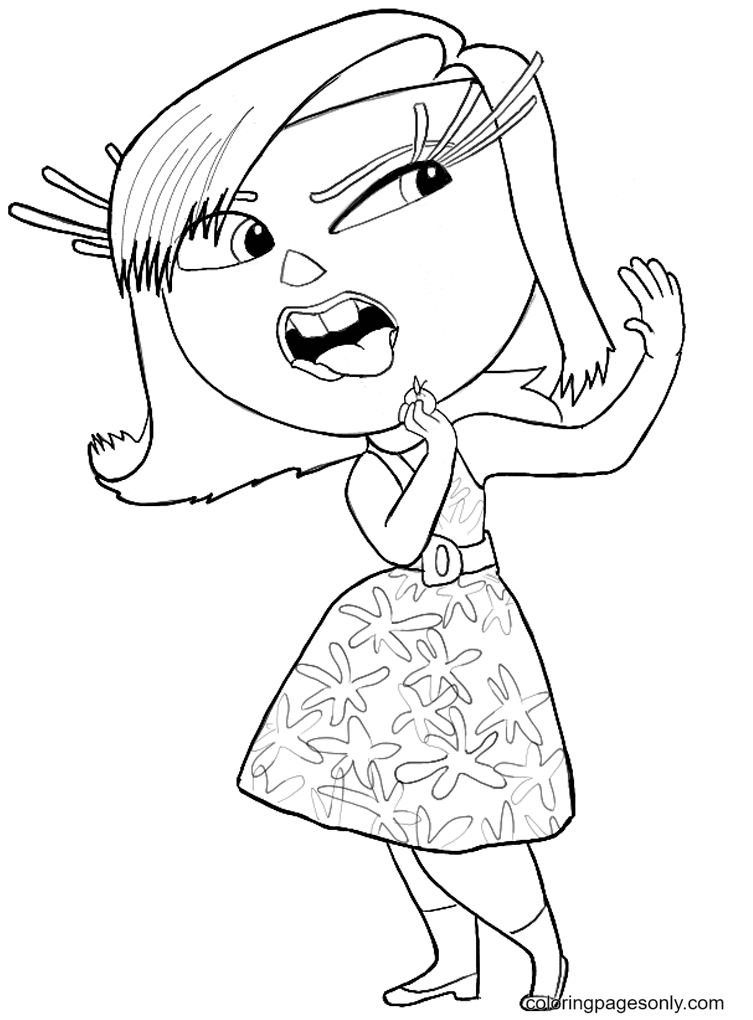
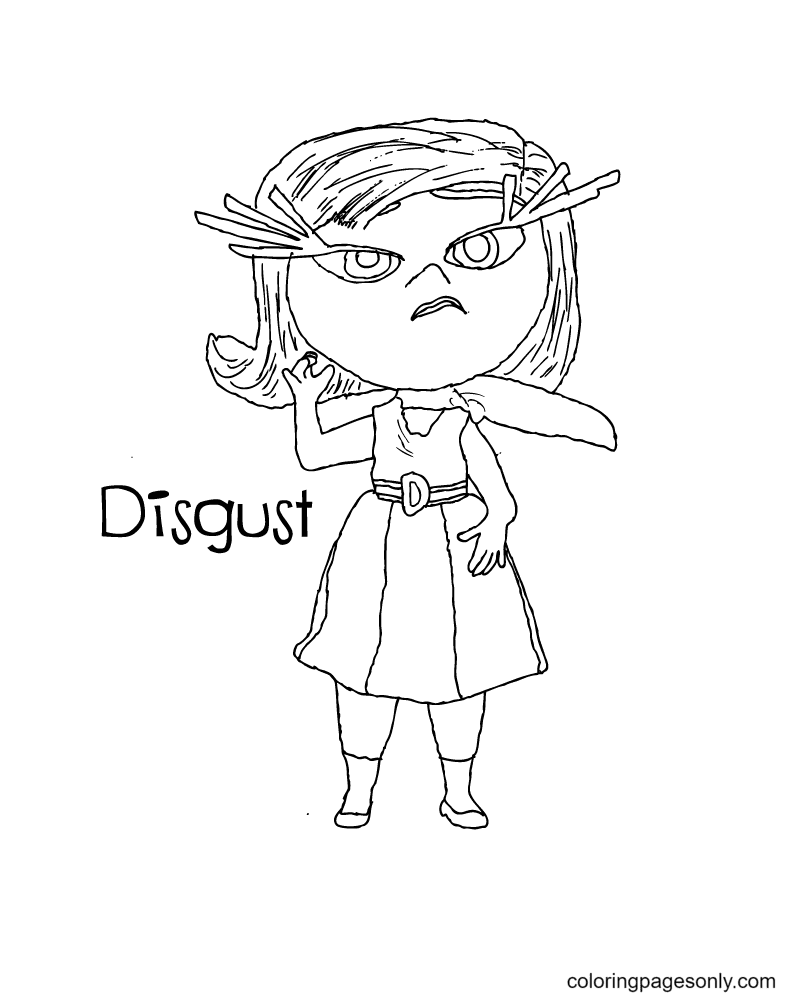
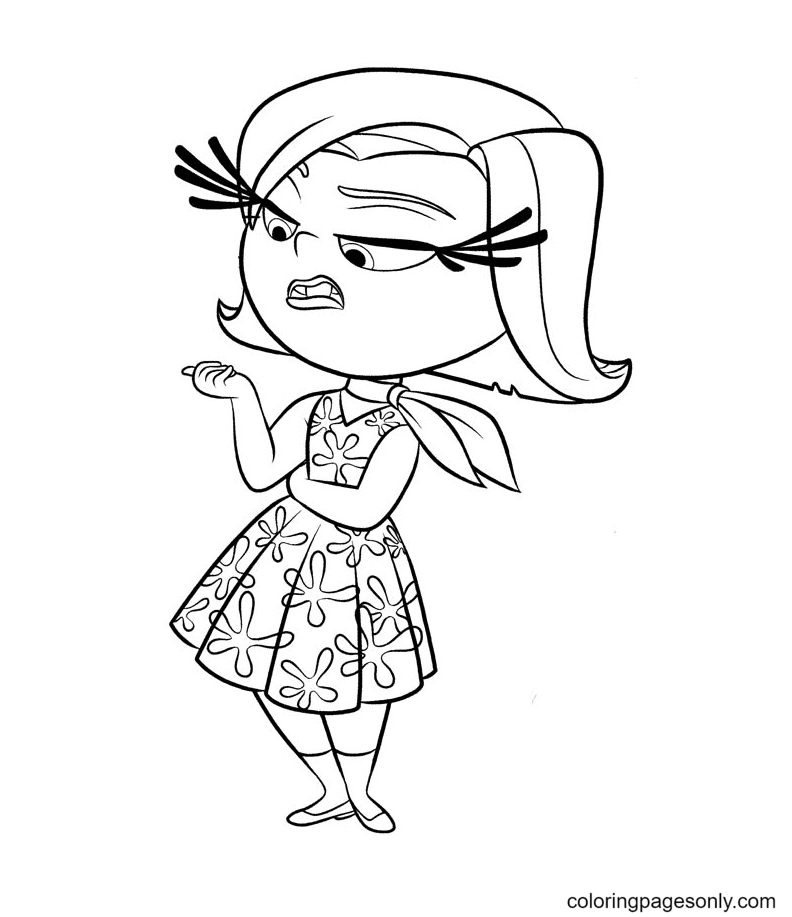
Disgust pages bring style, attitude, and green color identity into the collection. These designs may show Disgust standing confidently, reacting with a strong expression, appearing with Anger and Fear, or joining the full group of emotions. Her eyelashes, dress, scarf, and expressive pose make her a strong fashion-style cartoon character.
Disgust pages are useful because they combine emotion with design. She is not only green; she also has attitude, shape, and style. Children can practice outfit coloring, face expression, and color balance.
Coloring Disgust pages: Use green for the skin and hair, then add darker green for shadows. Use a green dress, light scarf, and bright accents if the page includes them. Keep the eyes sharp and the mouth expressive. Add a pale green, yellow, or white background so the character does not blend into the page.
Five Emotions from Inside Out Coloring Pages
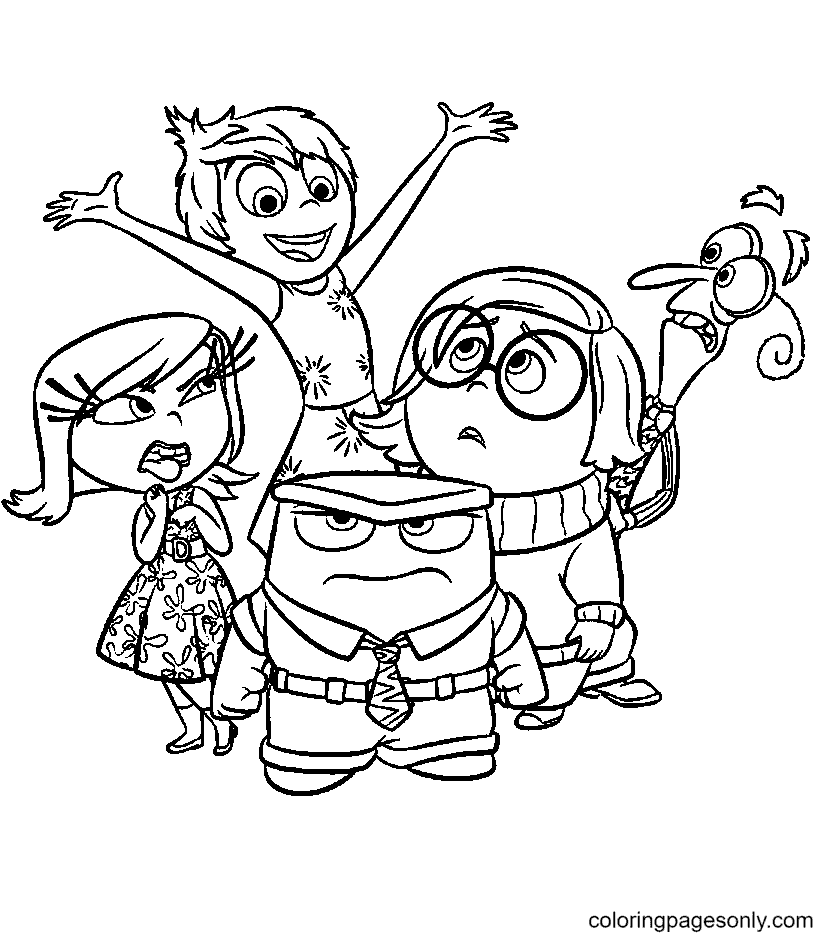
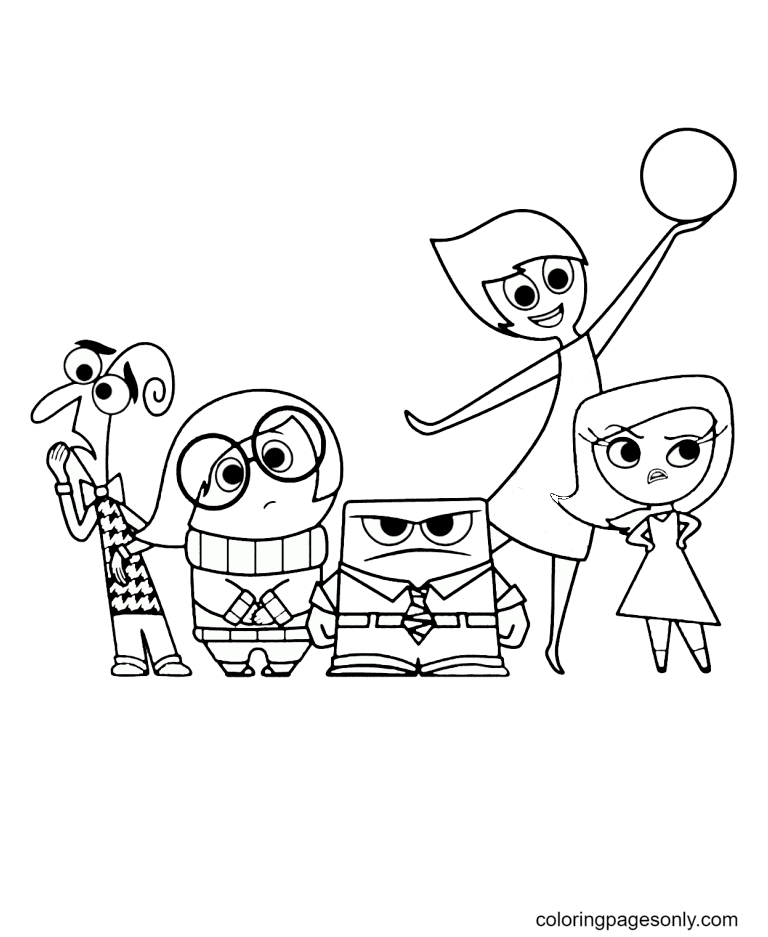
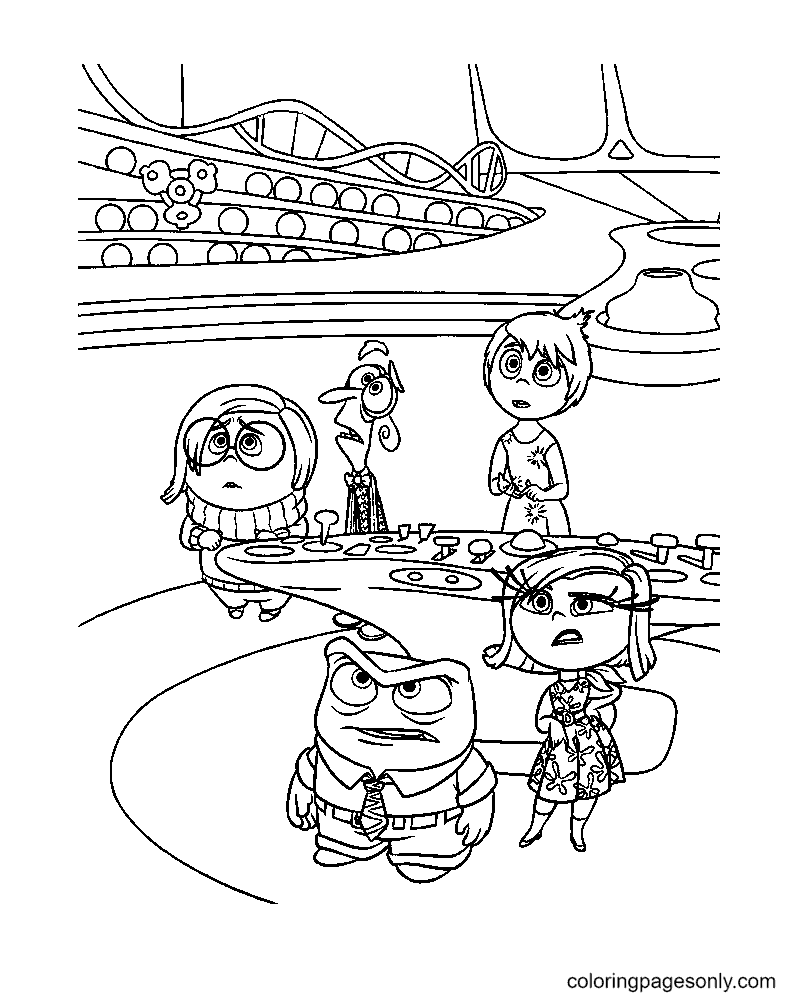
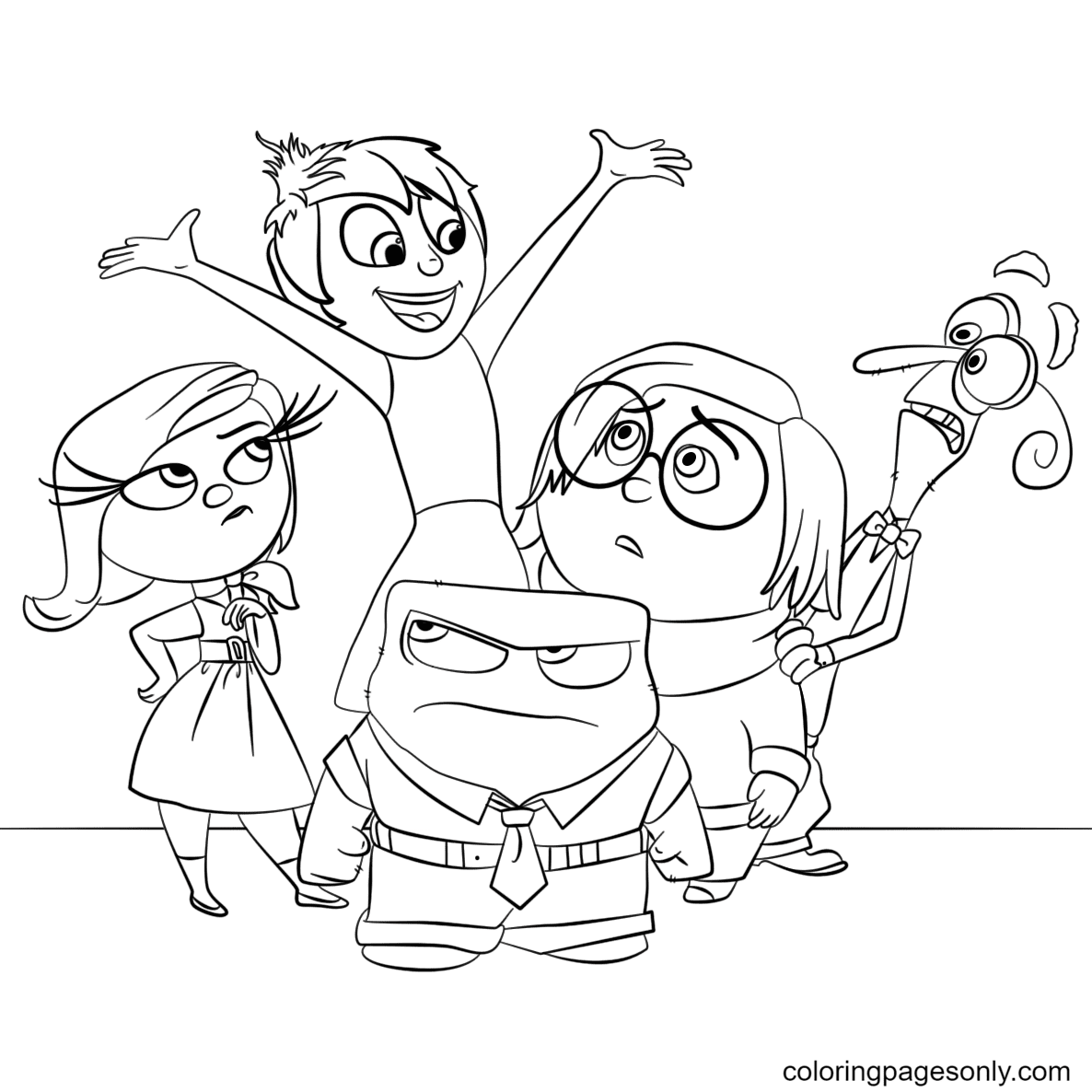
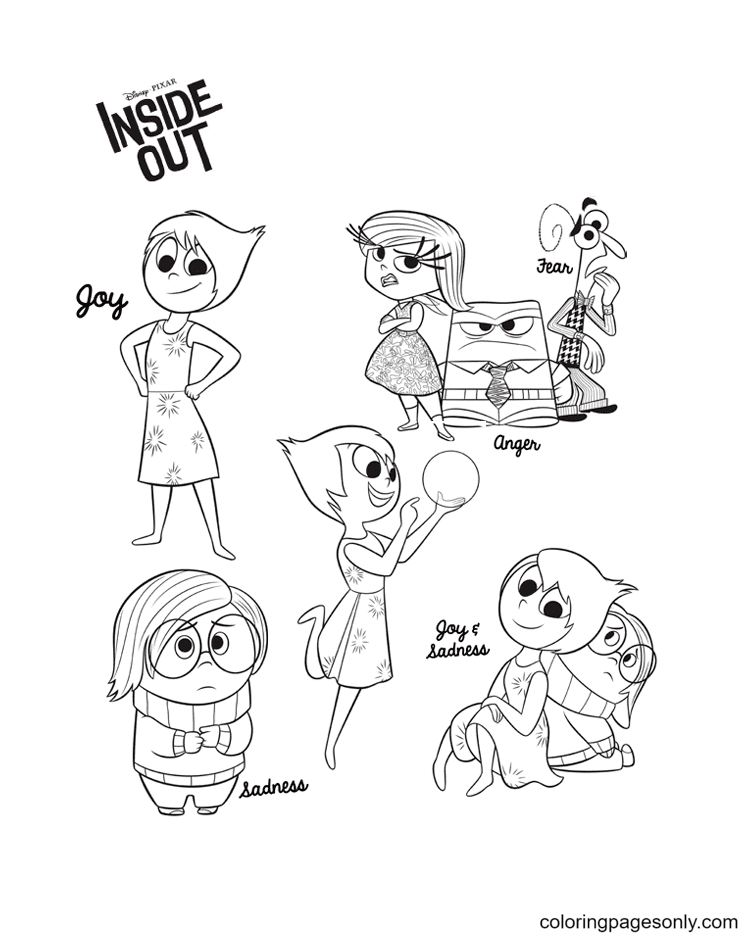
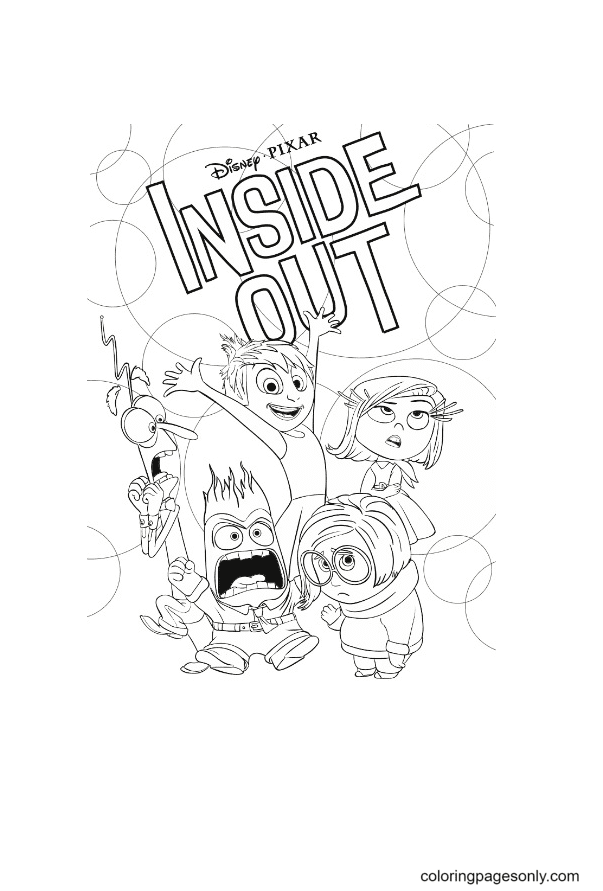
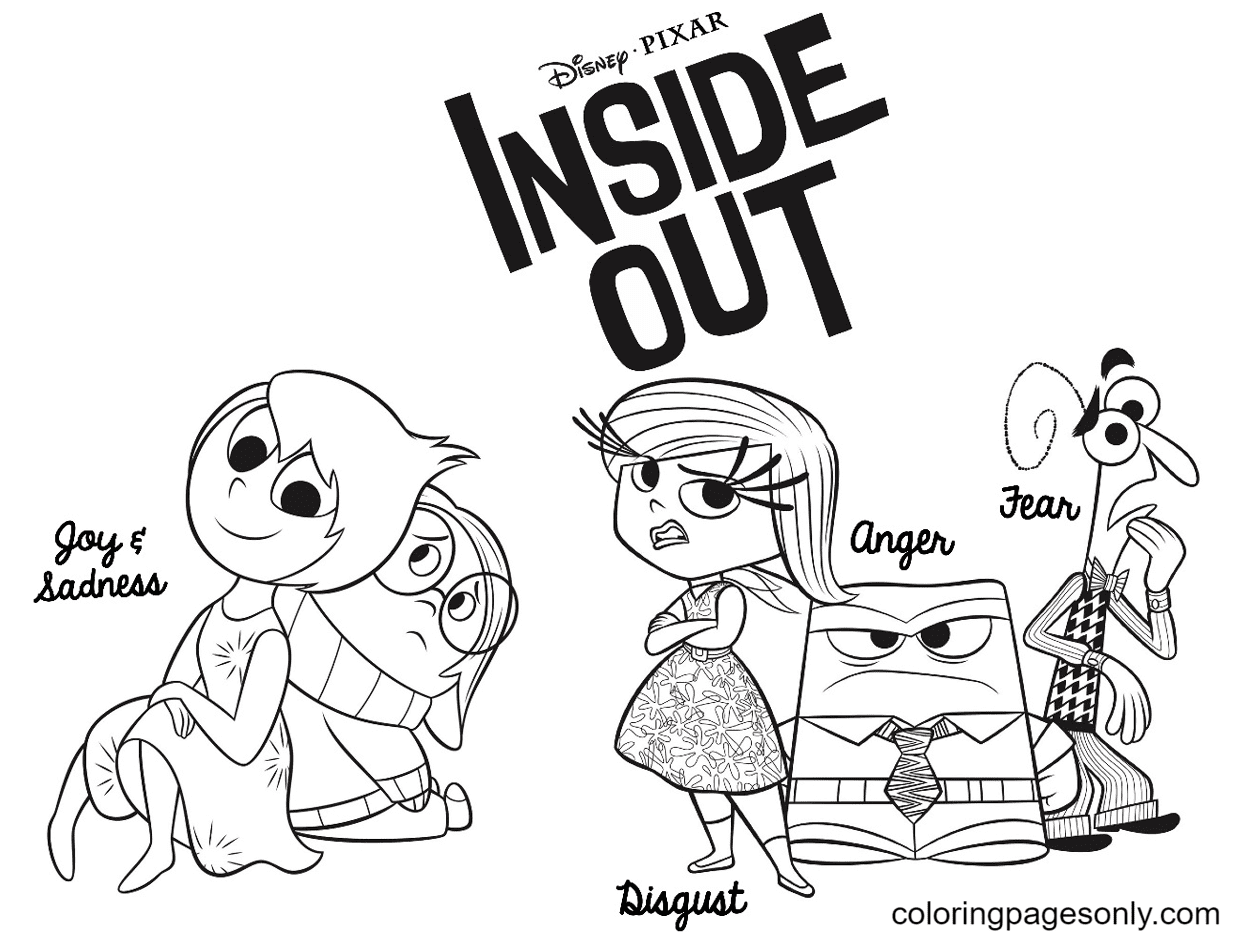
Five-emotion pages show Joy, Sadness, Anger, Fear, and Disgust together. These pages are among the strongest in the collection because each character has a different shape, color, and emotional role. A group page lets children compare feelings side by side.
These pages are excellent for color planning. If each emotion receives the right identity color, the whole page becomes easy to read: yellow for Joy, blue for Sadness, red for Anger, purple for Fear, and green for Disgust.
Coloring five-emotion pages: Color one character at a time. Start with Joy, then Sadness, Anger, Fear, and Disgust. Keep each palette separate, so the group does not become confusing. Use a simple background with memory orbs, soft gradients, stars, or light patterns. Let the characters stay brighter than the background.
Inside Out All Characters Coloring Pages
All-character pages may include the five main emotions, Riley, Bing Bong, and other Inside Out figures. These pages feel full and lively because they show more of the movie’s emotional world. They are usually better for older children or fans who enjoy detailed coloring.
The challenge is organization. When many characters appear together, the page can become busy. Color planning helps prevent the scene from looking crowded.
Coloring Inside Out all-character pages: Plan the main colors before starting. Keep the five emotions in their identity colors. Use natural colors for Riley, pink and candy-like tones for Bing Bong, and softer background colors for the mind-world setting. Finish small details last, especially eyes, glasses, memory orbs, and clothing edges.
Riley Coloring Pages
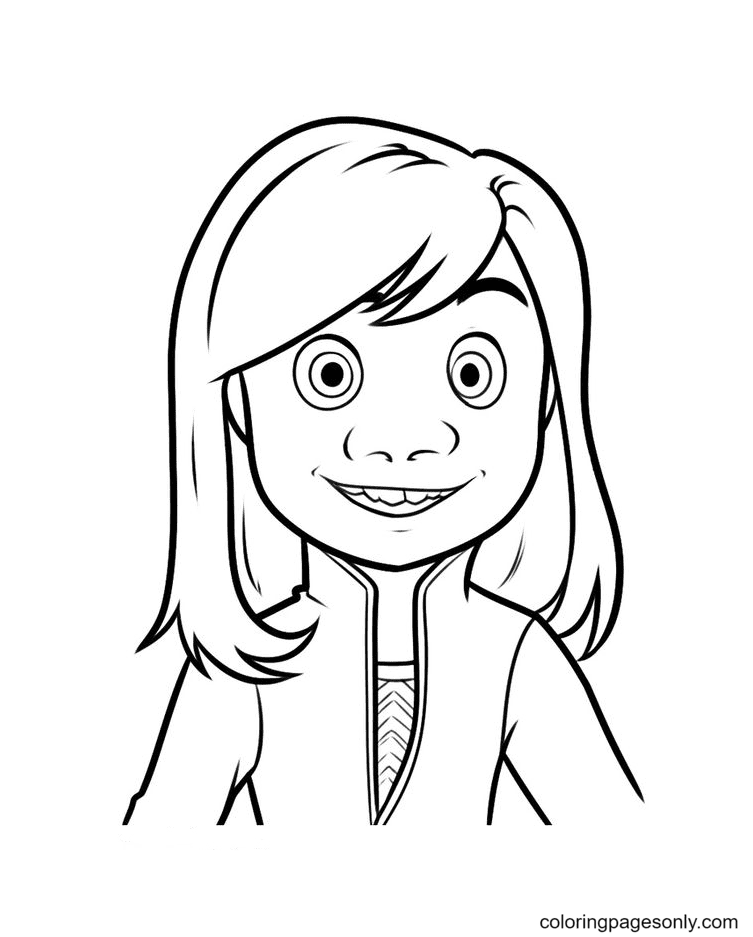
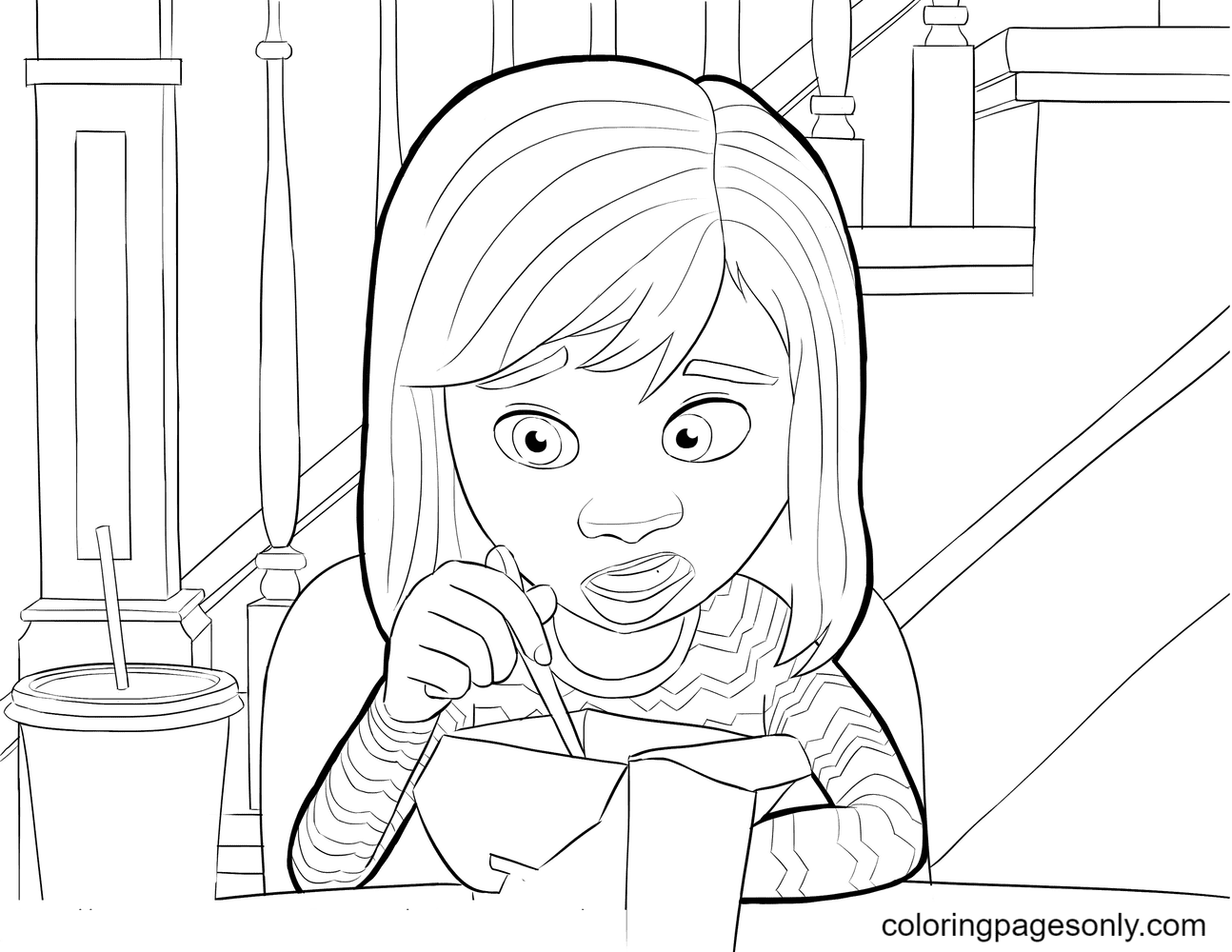
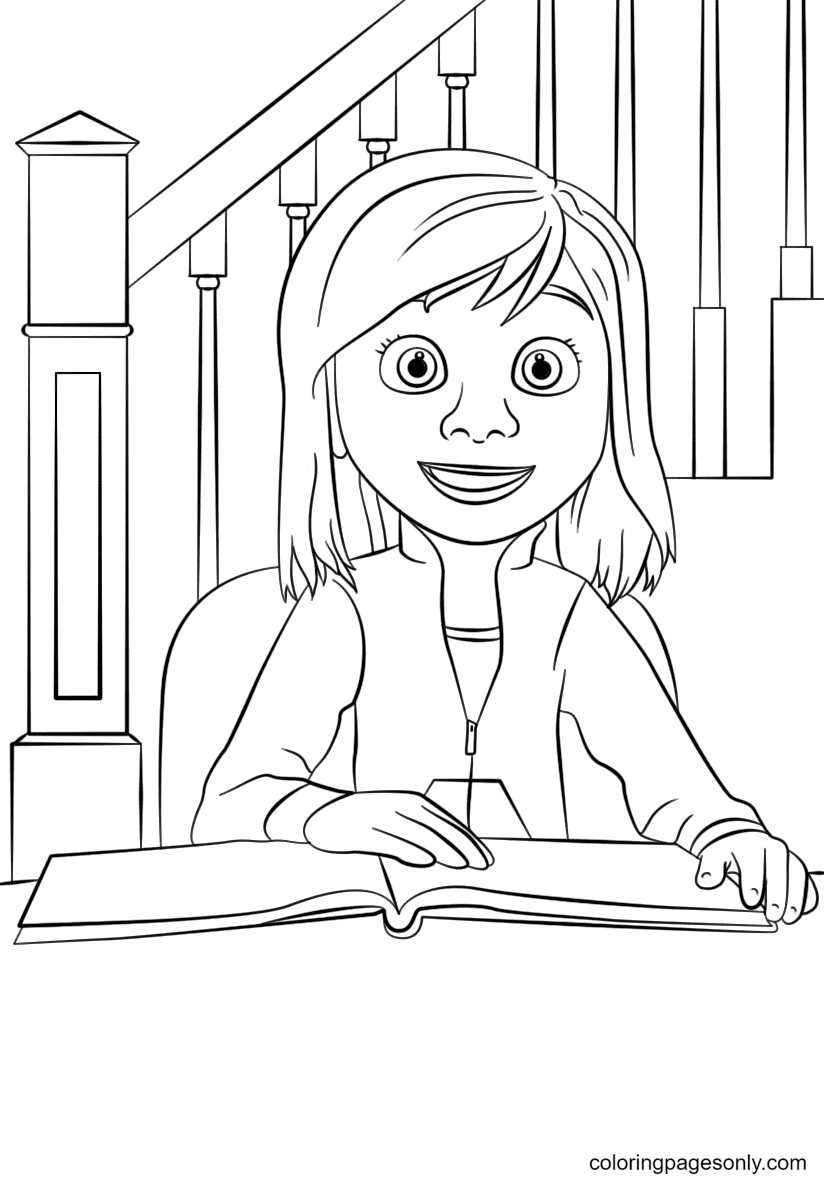
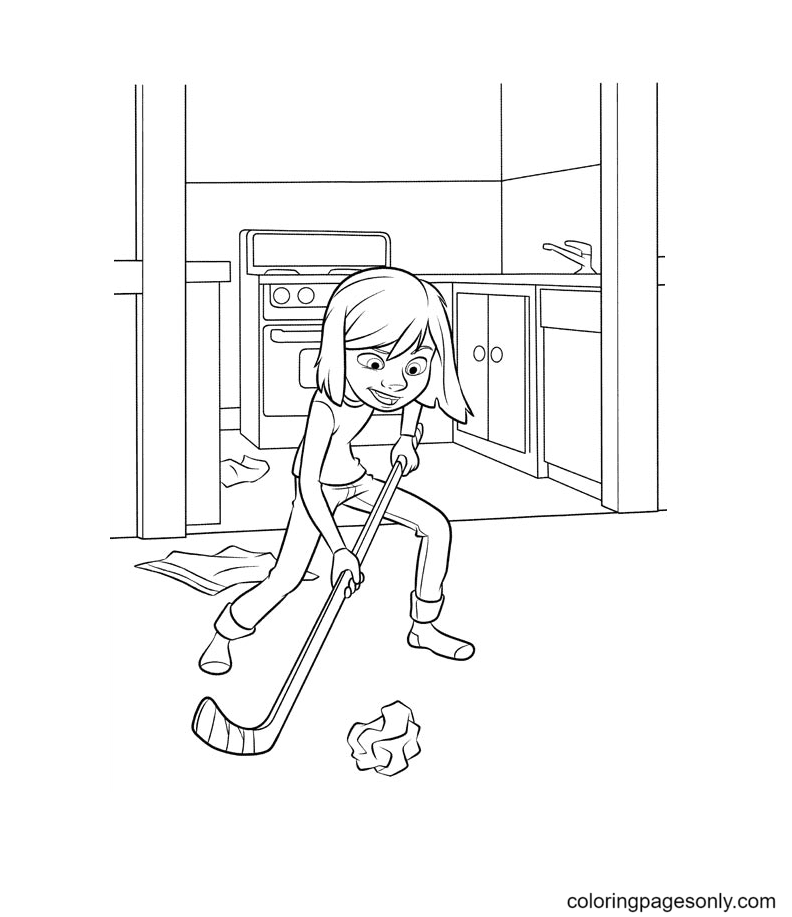
Riley pages bring the human side of Inside Out into the collection. These designs may show Riley smiling, thinking, standing, or appearing in a Disney Pixar-style scene. Riley is important because her emotions are connected to her experiences, memories, changes, and everyday life.
Riley pages can feel more realistic than the emotion-character pages. They are good for storytelling because children can imagine what Riley is feeling and which emotion might be guiding the moment.
Coloring Riley pages: Use natural skin tones, blonde or light brown hair, and casual clothing colors. Keep the face soft and expressive. Add a simple room, sky, hockey-inspired detail, memory orb, or gentle background if the page allows. Ask what feeling the scene might show before choosing the background color.
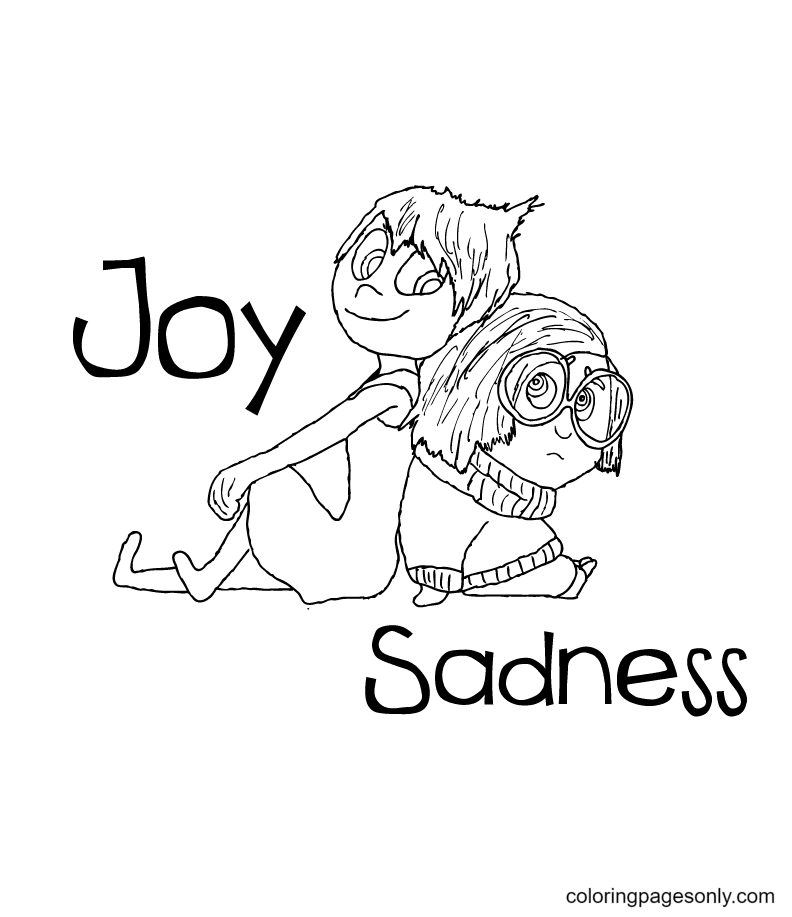
Joy and Sadness Coloring Pages
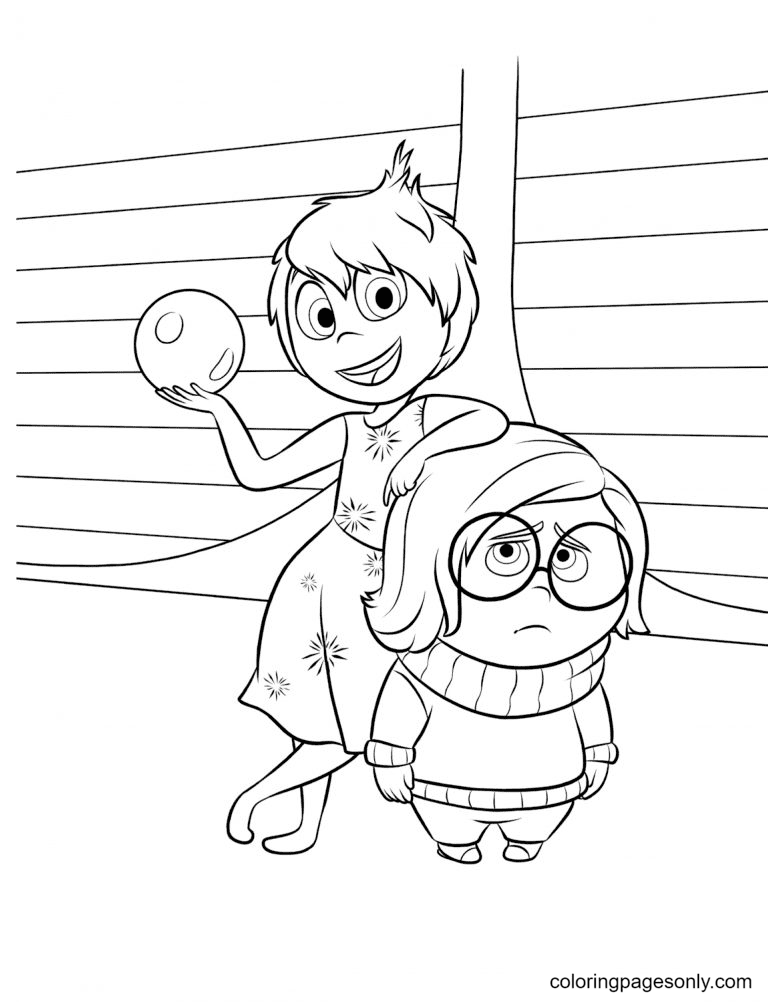
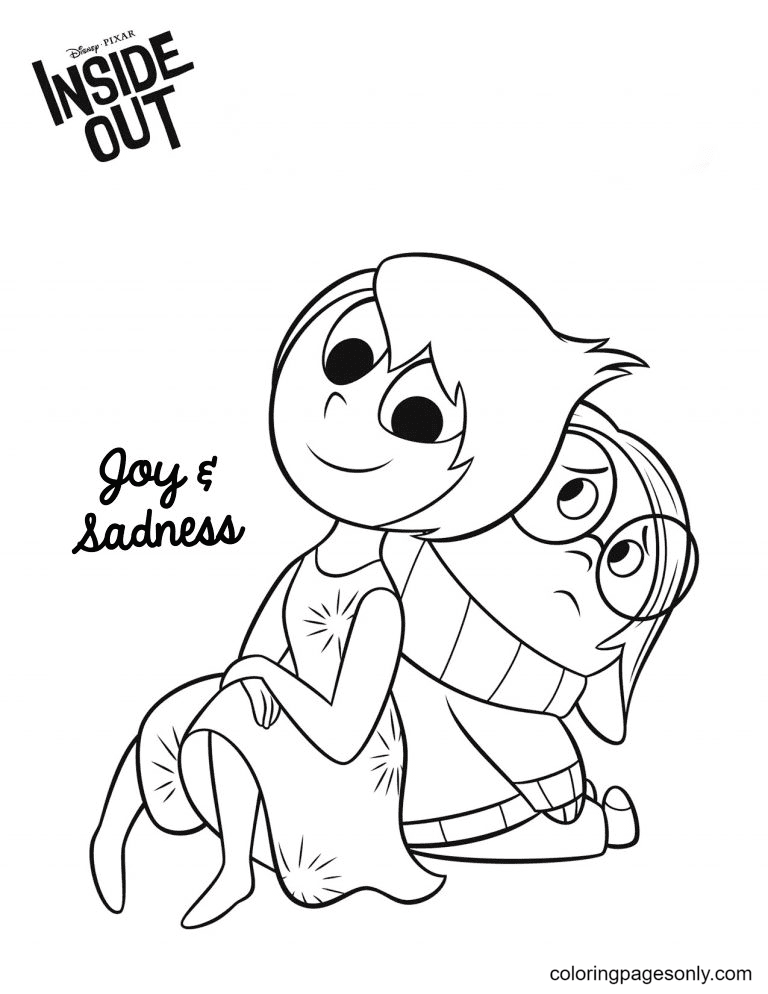
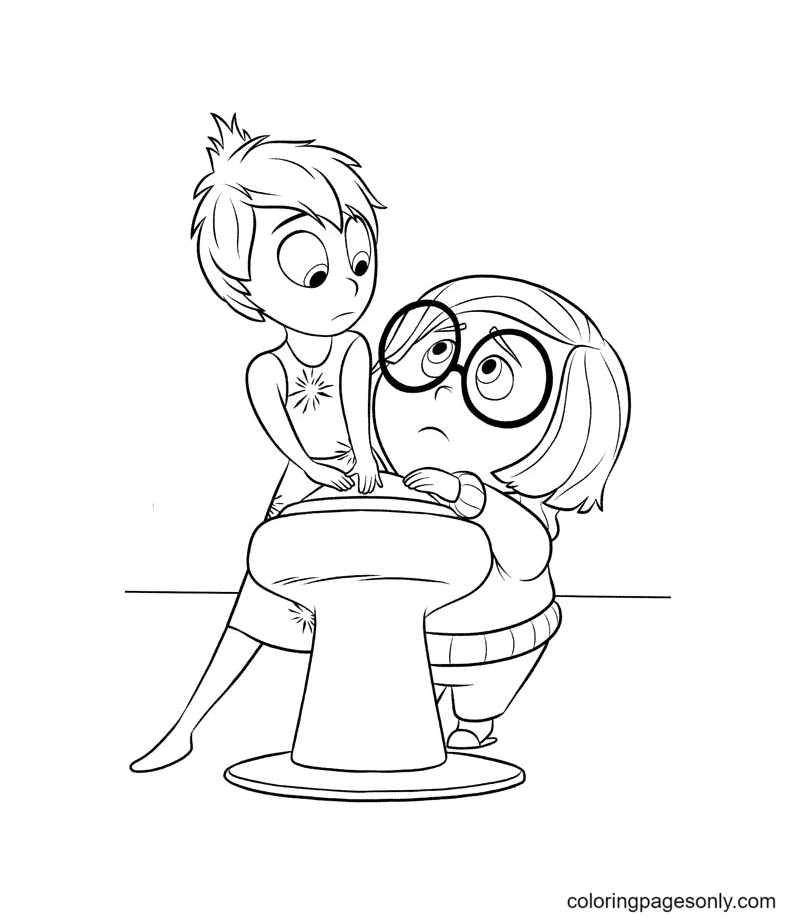
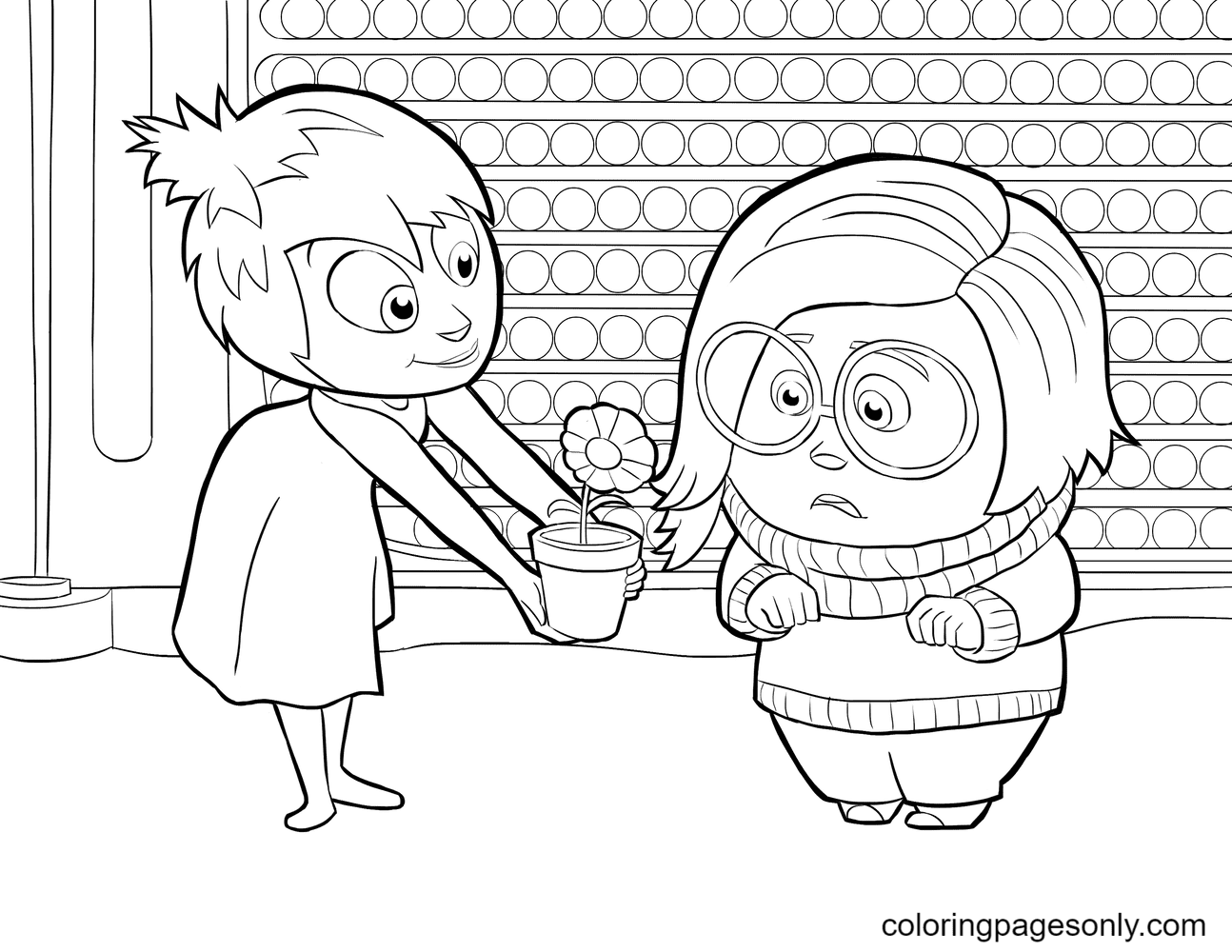
Joy and Sadness pages are some of the most meaningful Inside Out designs. They show two opposite-feeling characters together: bright and quiet, energetic and calm, yellow and blue. These pages are strong because they show that different feelings can share the same scene.
This group is especially good for emotional storytelling. Children can color the contrast between happiness and Sadness, then talk about why both characters might matter in the story.
Coloring Joy and Sadness pages: Use bright yellow and blue hair for Joy, then layer blues for Sadness. Keep the background balanced so one character does not overpower the other. A soft memory-orb glow, a half-yellow and half-blue background, or a gentle pastel setting can show both moods together.
Joy and Bing Bong Coloring Pages
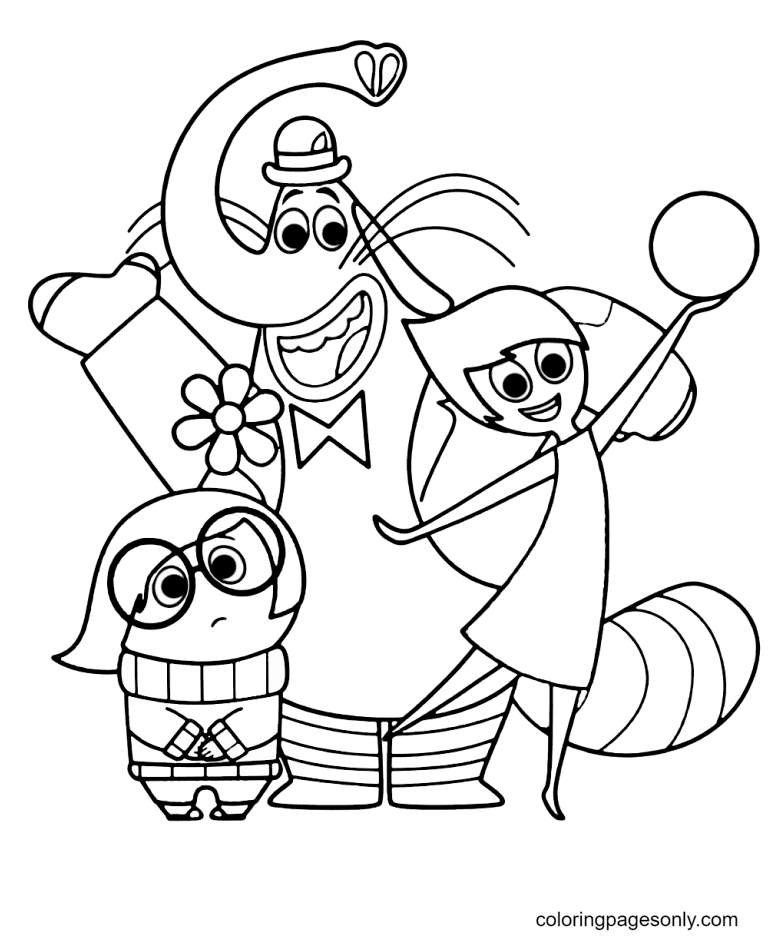
Joy and Bing Bong pages bring imagination and sweetness into the collection. Bing Bong is colorful, playful, and unusual, while Joy is bright and energetic. Together, they create pages that feel dreamy and emotional.
These designs are useful because they are not only about color accuracy. Bing Bong can use candy-like colors, soft fantasy tones, and playful patterns. Joy can remain bright while Bing Bong adds imagination.
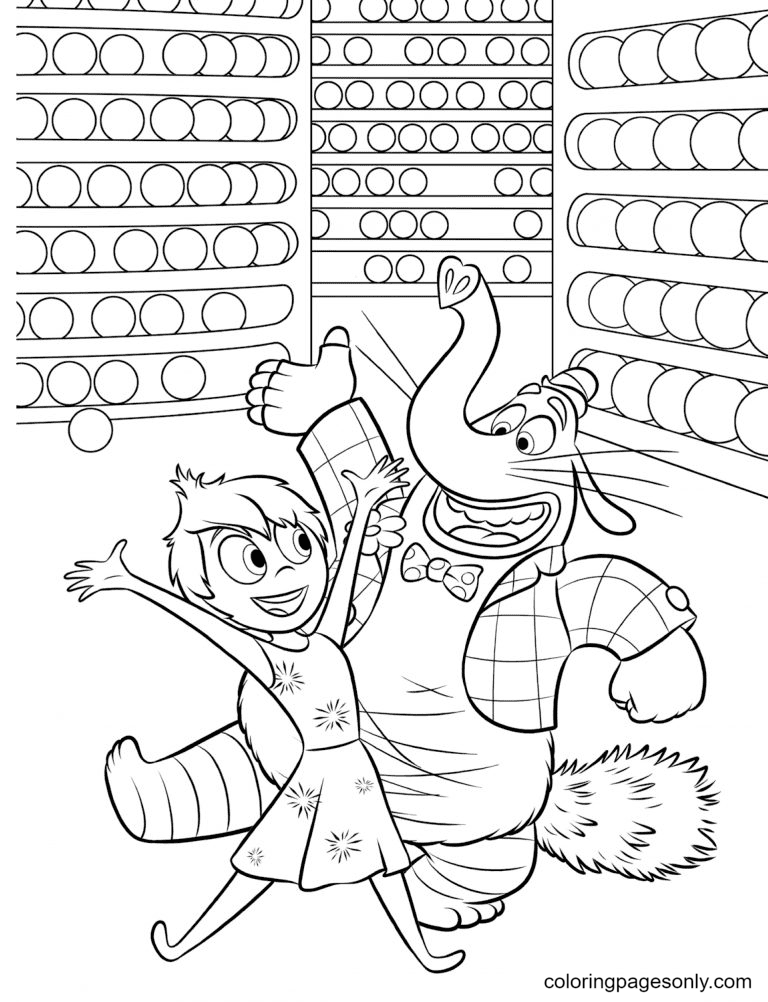
Coloring Joy and Bing Bong pages: Color Joy with yellow, blue, and green accents. Use pink, lavender, peach, cotton-candy blue, or soft gray for Bing Bong. Add gentle highlights and keep the background magical but not too busy. Memory orbs, stars, clouds, or rainbow effects can work well.
Bing Bong Coloring Pages
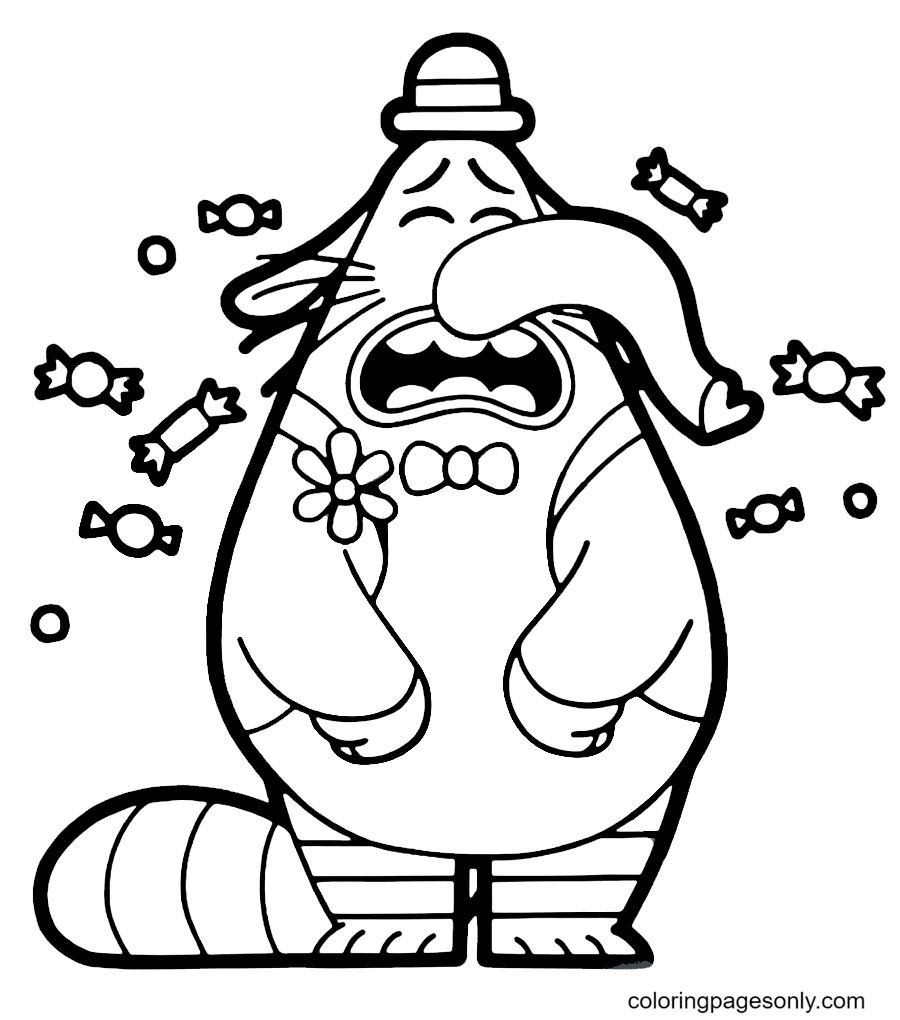
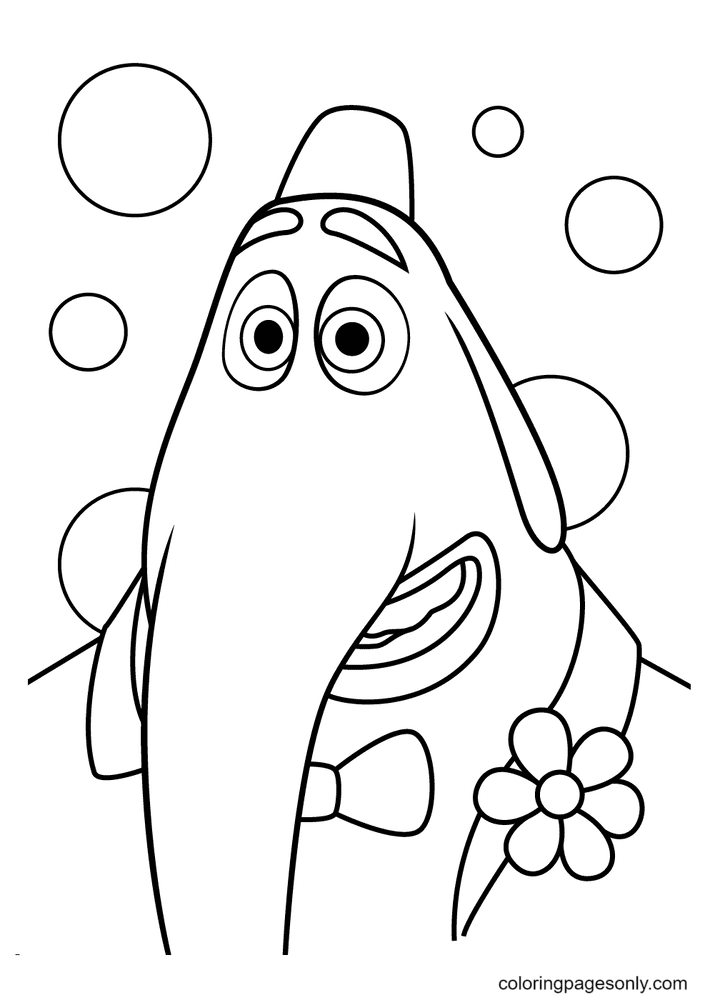
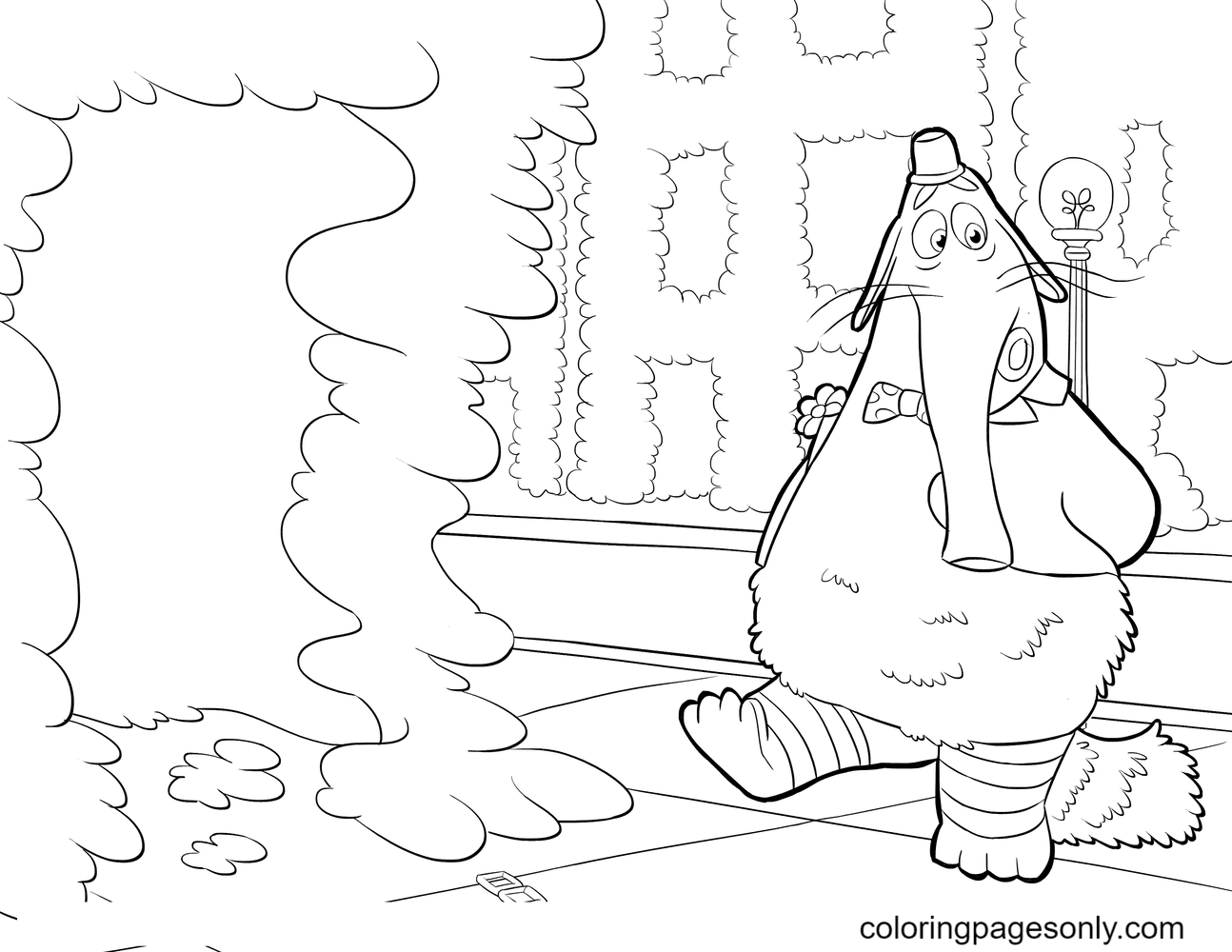
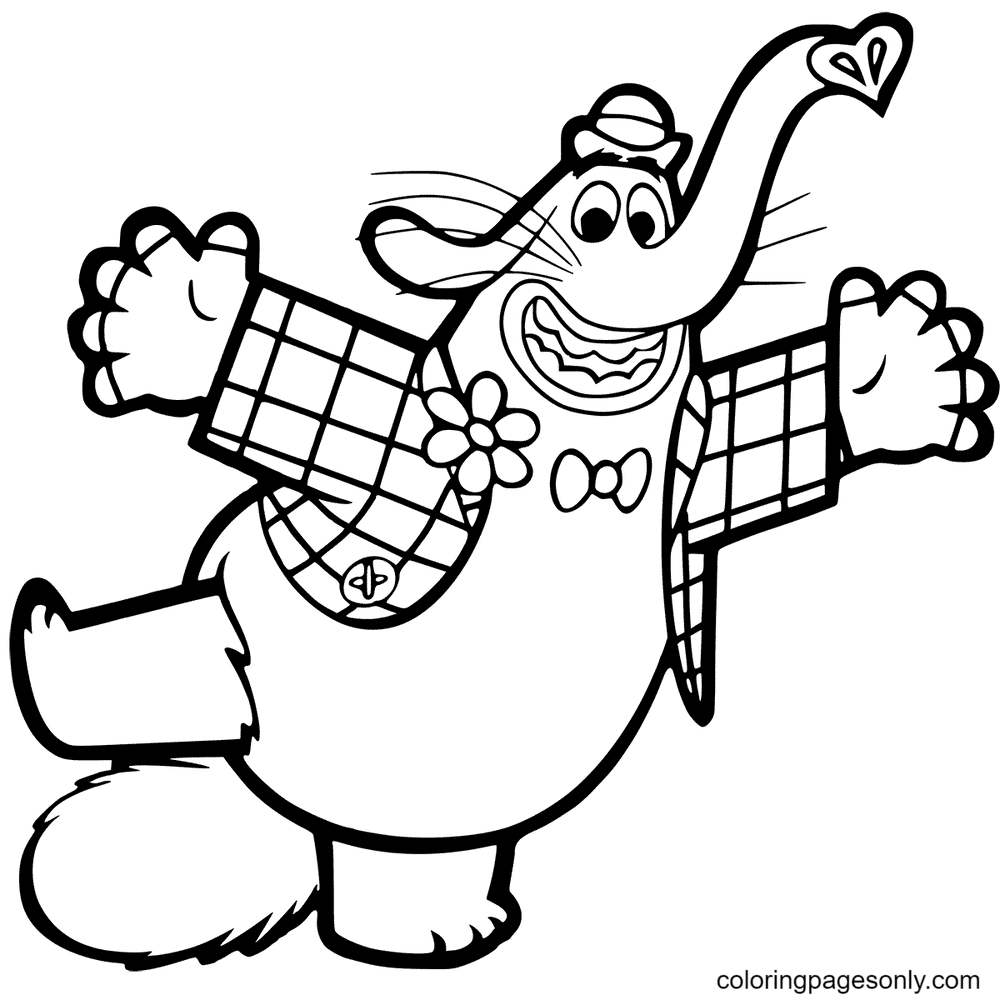
Bing Bong pages add a unique character to the Inside Out collection. His design feels playful, imaginary, and emotional. He can be colored with soft pinks, purples, grays, candy tones, or rainbow-inspired accents, depending on the page.
Bing Bong is a strong coloring subject because he invites imagination. Unlike the five main emotions, his palette does not need to stay as strict. Colorists can make him soft, silly, dreamy, or bright.
Coloring Bing Bong pages: Use pink, lavender, light gray, soft purple, or peach for the body. Add colorful accents to clothing, accessories, or background shapes. Keep the face warm and friendly. A fantasy-style background with stars, clouds, memory orbs, or rainbow colors can make the page feel special.
Fear and Anger Coloring Pages
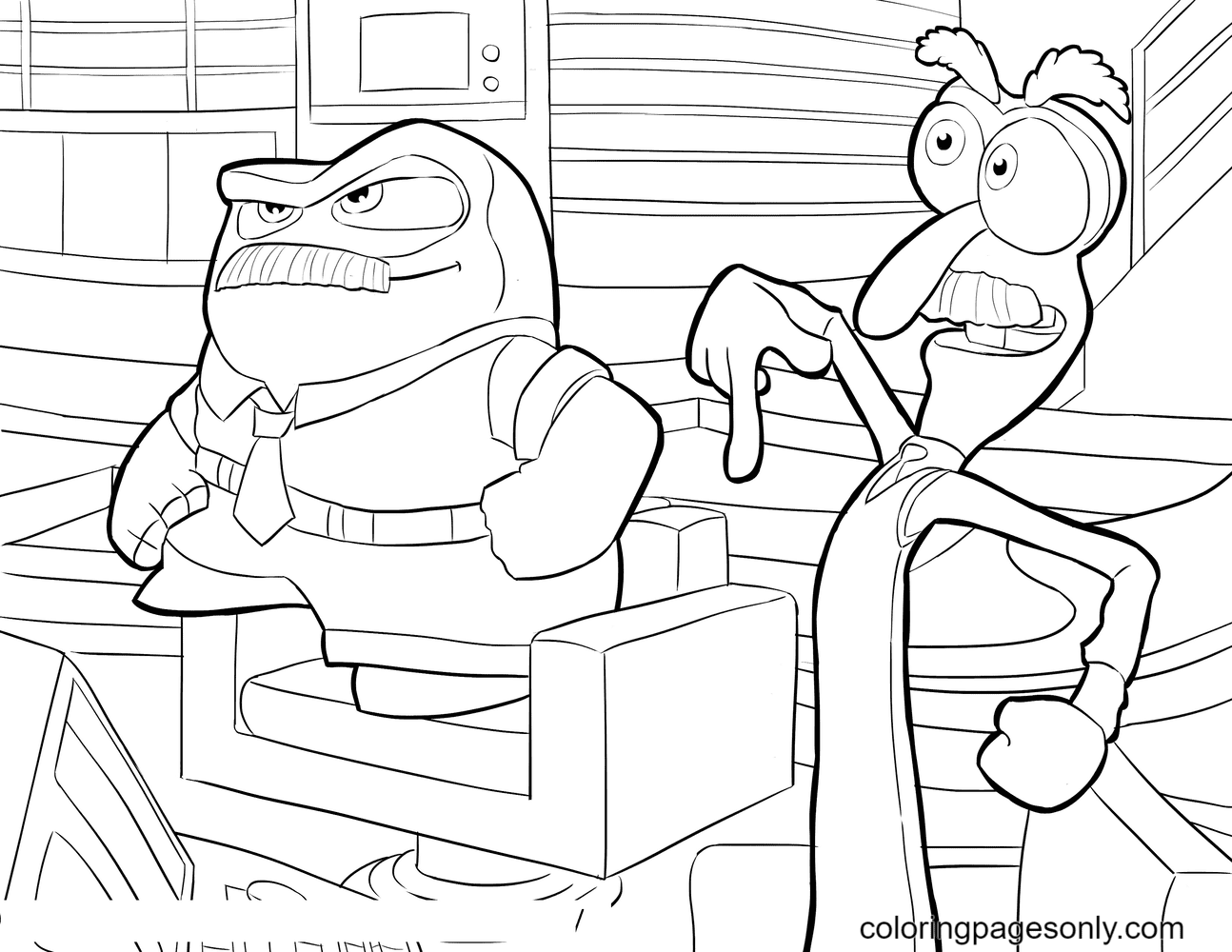
Fear and Anger pages create a funny contrast. Fear is tall, nervous, and purple. Anger is short, square, red, and intense. Together, they make a strong visual pair because their shapes and moods are so different.
These pages are useful for comparing emotional reactions. Children can talk about how Fear and Anger look different, even when both emotions can feel strong.
Coloring Fear and Anger pages: Use purple and lavender for Fear, red and orange for Anger. Keep their expressions clear. If both characters appear close together, use a simple background so the red and purple do not compete too much. Add small motion marks, flames, or shadows only if they help the scene.
Fear and Sadness Coloring Pages
Fear and Sadness pages create a quieter emotional mix. Both characters can feel cautious, worried, or gentle, but their colors and shapes are different. Fear is tall and purple; Sadness is rounder and blue.
These pages are good for softer coloring. Instead of using strong heat or bright glow, the colorist can work with cool tones and gentle contrast.
Coloring Fear and Sadness pages: Use violet, lavender, and purple for Fear. Use blue, navy, and pale blue for Sadness. Keep the background soft with gray, light blue, or muted purple. Add highlights around glasses, eyes, and clothing edges so both characters remain easy to see.
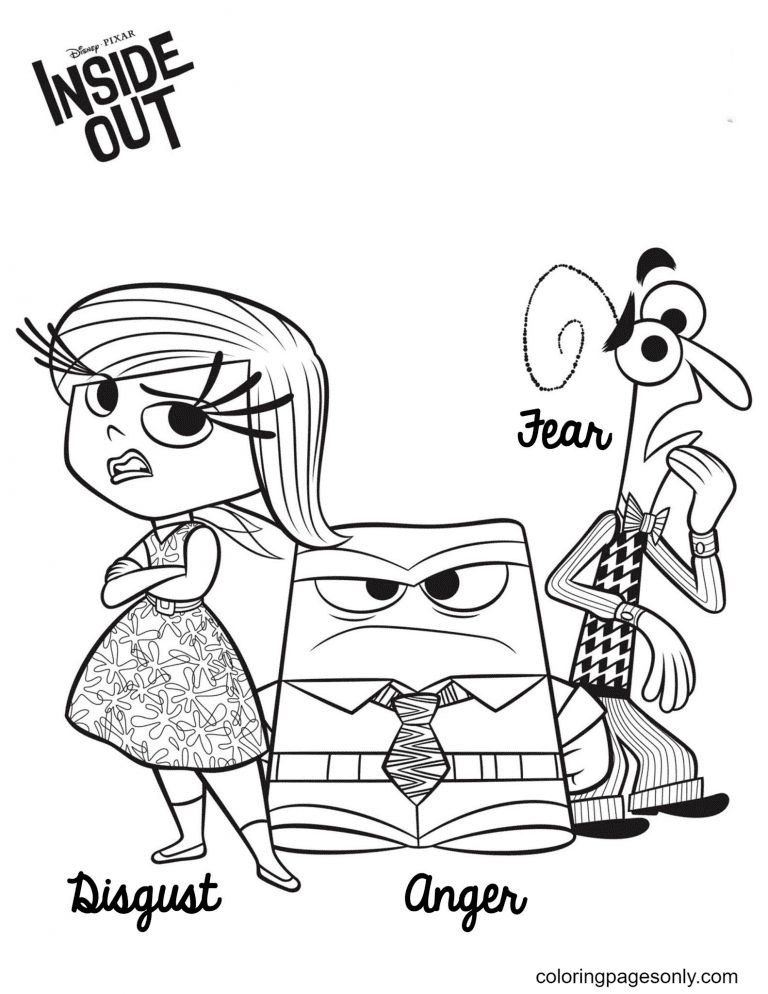
Disgust, Anger, and Fear Coloring Pages
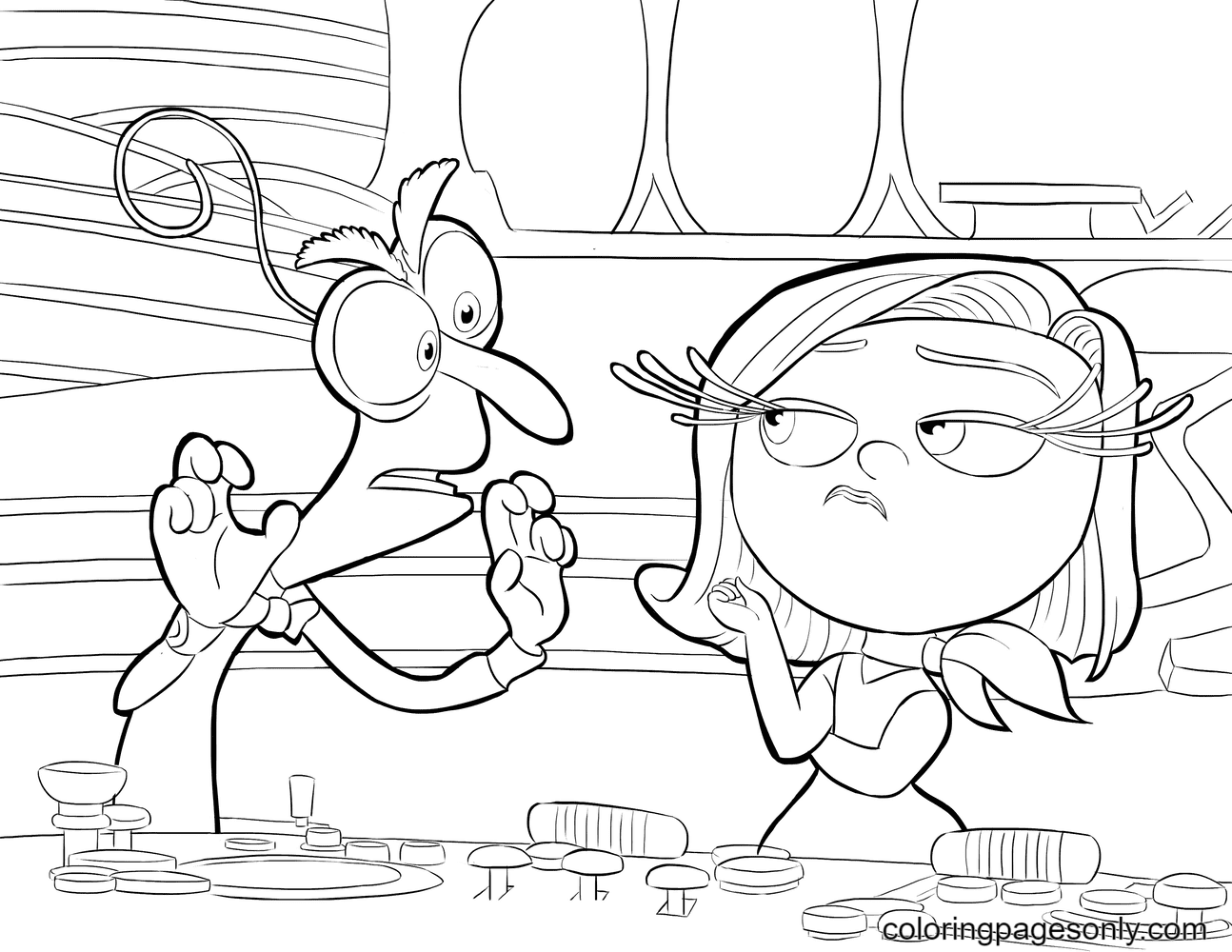
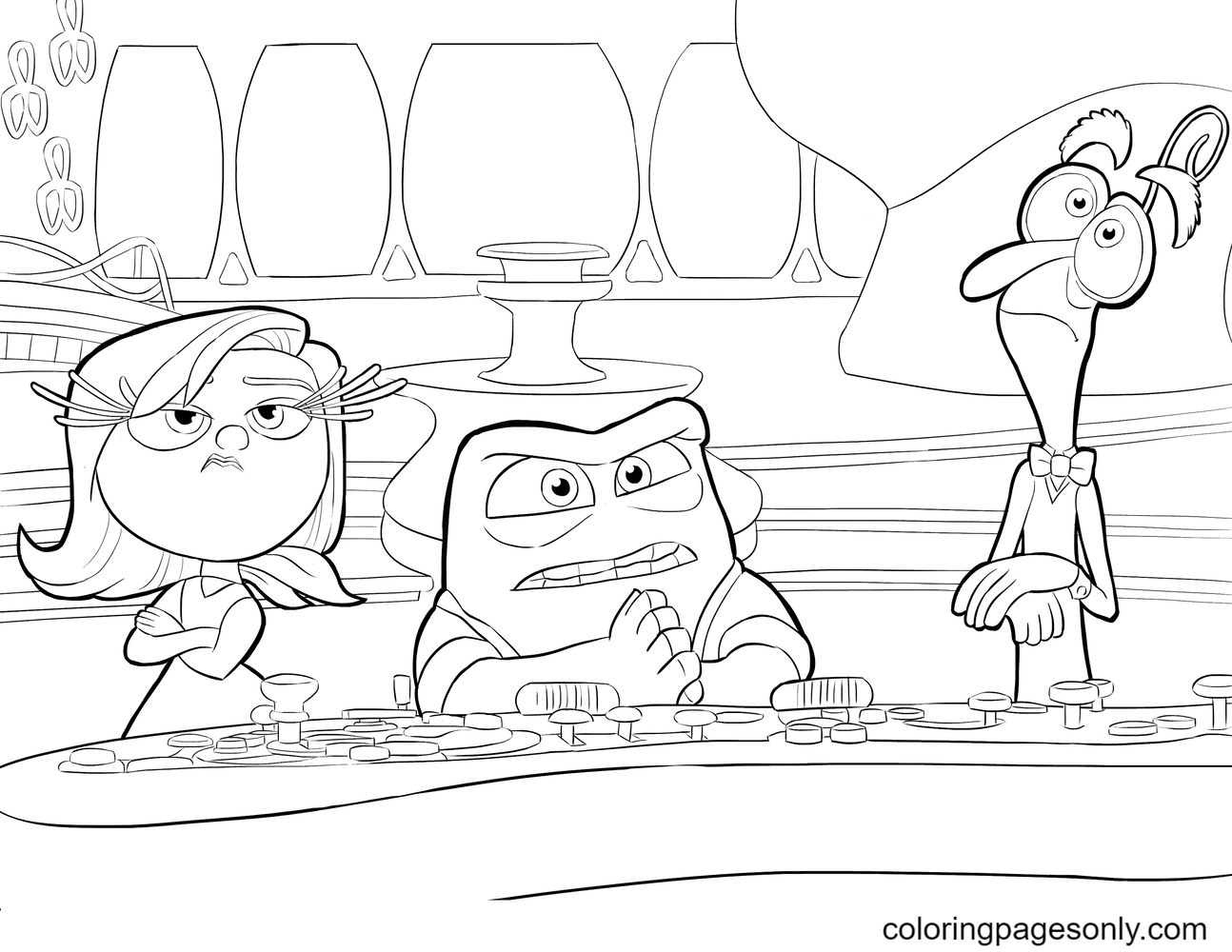
Disgust, Anger, and Fear pages show three very different emotional reactions in one scene. Disgust brings green attitude, Anger brings red heat, and Fear brings purple nervous energy. These pages are strong because the characters have clear color separation.
A three-emotion page is useful for color organization. It is detailed enough to be interesting but not as complex as a full group page.
Coloring Disgust, Anger, and Fear pages: Use green for Disgust, red and orange for Anger, and purple for Fear. Keep each character’s outline clean. Add a simple headquarters-style background, memory-orb colors, or a light gray setting so the three emotions remain the focus.
Memory Orb Coloring Pages
Memory orb pages are one of the most special parts of Inside Out coloring. In the movie world, memories are shown as glowing colored orbs, which makes them a natural coloring activity. These pages may show Joy holding an orb, characters looking at memories, or colorful circles in the background.
Memory orb pages help children connect color with feeling. A yellow orb might feel happy. A blue orb might feel sad. A red orb might feel angry. A green orb might feel disgusted. A purple orb might feel fearful.
Coloring memory orb pages: Use soft circular shading. Start with a light center and darker edge, or use a bright center with a pale glow around it. Try yellow, blue, red, green, purple, pink, or rainbow effects. Keep the character colors clear so the orbs feel like glowing details rather than random circles.
Forgetters Coloring Pages
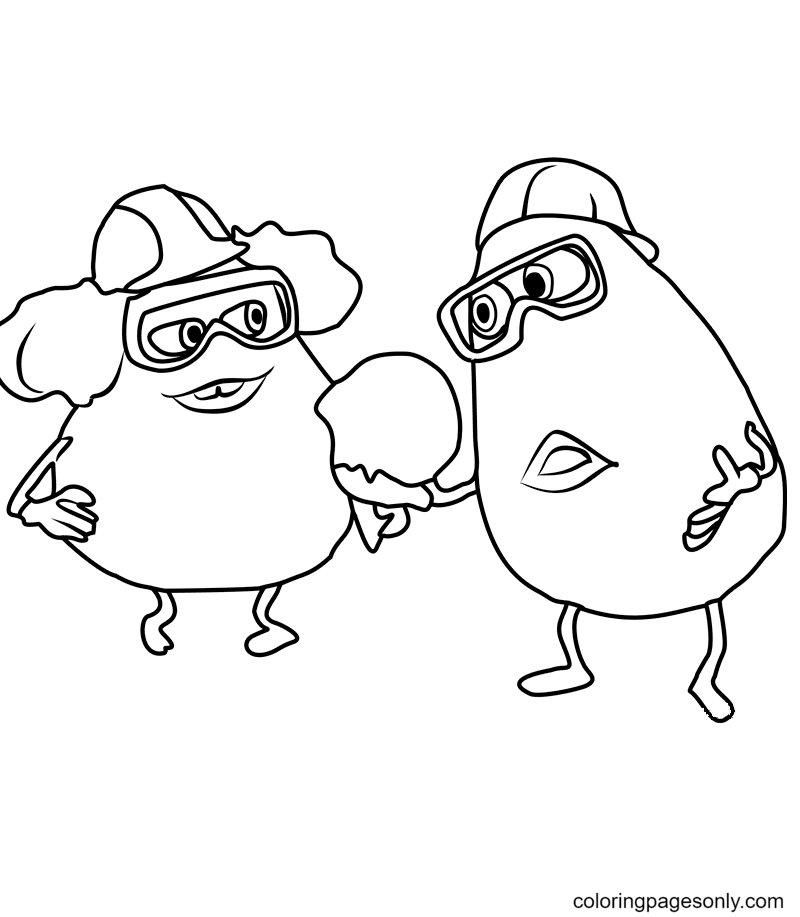
Forgetters pages bring a funny and unusual part of the Inside Out world into the collection. These characters are connected with forgotten memories, background humor, and the strange inner workings of the mind. Their pages can feel lighter and sillier than the main emotional scenes.
These pages are good for children who enjoy small side characters and funny movie details. They also help make the collection feel more complete and not limited to only the five main emotions.
Coloring Forgetters pages: Use soft neutral colors such as gray, beige, brown, pale purple, or light blue. Add brighter colors to memory orbs, objects, or background details. Keep the page playful and not too dark. A memory-storage style background can use muted blues, purples, or soft grays.
Jangles the Clown Coloring Pages
Jangles the Clown pages add a different mood to the collection. This character can feel silly, strange, or dramatic depending on the drawing. Clown pages naturally invite bright colors, patterns, and bold expression.
Because clown designs can become visually busy, color planning is important. Strong colors work well, but too many bright areas can make the page hard to read.
Coloring Jangles the Clown pages: Choose a few main colors first, such as red, yellow, blue, purple, and white. Keep the face readable and avoid covering expression lines. Use bright colors for costume details, then keep the background simpler. Dots, stripes, or circus-style shapes can work if they do not overpower the character.
Inside Out Title Pages
Inside Out title pages are useful for posters, folder covers, party tables, and classroom displays. These designs may include the movie title, character faces, emotion symbols, or simple graphic elements. They are less about one character and more about the whole theme.
Title pages are especially good for craft projects because they can become a cover page for a coloring packet or an emotion-themed display.
Coloring Inside Out title pages: Use the five emotion colors: yellow, blue, red, purple, and green. Keep the letters clean and readable. Add small memory orbs, stars, dots, or character-color accents around the title. Use markers for bold letters and colored pencils for soft background shading.
Printable Inside Out Pages for Crafts
Printable Inside Out pages can become more than finished coloring sheets. They can be used for emotion cards, feeling charts, memory orb crafts, classroom posters, movie-night decorations, bookmarks, and character folders.
Craft use changes the way the page should be colored. If the character will be cut out, the outer edge should stay clean. If the page becomes a chart, colors and labels should be easy to read. If it will become a poster, the emotional colors should be bold.
Coloring printable craft pages: Use clear identity colors for each emotion. Keep character edges sharp if you plan to cut them out. Leave space for feeling words, names, or short messages. Use memory orbs, stars, or background color blocks to connect the craft to the Inside Out theme.
What These Pages Do
Inside Out coloring pages give children and families a playful way to explore feelings through color, character design, and story. Many cartoon coloring pages focus mostly on a character’s outfit or pose. Inside Out is different because each main character represents an emotion, and each emotion has its own color, shape, expression, and movement style.
The first major value is emotional recognition. Joy is bright and active. Sadness is blue and gentle. Anger is red and intense. Fear is purple and nervous. Disgust is green and expressive. Coloring these characters can help children connect colors, faces, and body language with feeling words in a simple, visual way.
The second value is storytelling. Riley pages, Joy and Sadness scenes, Bing Bong pages, Forgetters, memory orbs, and full-character sheets all invite children to ask what is happening. Is Riley changing? Is Joy trying to help? Is Sadness thinking? Is Fear reacting? Is Anger upset? A finished coloring page can become a short story about a feeling, a memory, or a moment.
The third value is color planning. Inside Out pages naturally teach children that color can carry meaning. Yellow, blue, red, green, and purple are not random choices; they help identify different moods. Older colorists can go further by adding glow effects, memory-orb shading, background gradients, and contrast between characters.
The fourth value is gentle emotional conversation. A parent or teacher does not need to turn the page into a serious lesson. A simple question can be enough: Which emotion is on this page? What color did you choose for that feeling? Can one memory have more than one feeling? These small conversations help children describe emotions through art without pressure.
The fifth value is age flexibility. Younger children can enjoy simple Joy, Sadness, Anger, Fear, Disgust, Riley, and Bing Bong pages. Older children can color group scenes, memory orbs, character pairs, and more detailed Disney Pixar-style designs with careful shading and background choices.
For parents and teachers, selected Inside Out pages can support playful emotional vocabulary. Guidance from pediatric experts, including ideas often emphasized by the American Academy of Pediatrics, treats play as more than entertainment; it is one of the ways children practice communication, imagination, social understanding, and problem-solving. An Inside Out coloring page fits that idea naturally because a child can color a character, name a feeling, describe a scene, and explain why a certain color feels right.
Coloring also gives children a clear, organized task. A 2005 study published in the Art Therapy Journal is often referenced for showing that structured coloring was associated with lower anxiety than a less structured art activity. Inside Out coloring pages should not be presented as therapy or medical treatment. Still, their organized outlines, familiar characters, emotion colors, memory orbs, and story-based scenes can support calm, focused creative time at home, in selected classroom activities, or during screen-free breaks.
These pages also help build art and story vocabulary. Children can talk about joy, Sadness, Anger, Fear, Disgust, memory, orb, Riley, Bing Bong, expression, mood, face, body language, friendship, change, color, glow, background, shadow, and highlight. A finished page becomes more meaningful when the child can explain not only what they colored, but what feeling or story the page shows.
How to Color Inside Out Pages Well
Start with the emotion color. Inside Out pages work best when each main emotion keeps its identity color: Joy is yellow, Sadness is blue, Anger is red, Fear is purple, and Disgust is green.
Keep faces expressive. The eyes, mouth, eyebrows, glasses, and body posture are very important. Color the face carefully before filling the background.
Use yellow glow for Joy. Joy pages look best with bright yellow skin, blue hair, and soft, glowing backgrounds. Add white or pale yellow highlights to make her feel light and energetic.
Layer blues for Sadness. Sadness pages should not be one flat blue. Use light blue, medium blue, navy, and blue-gray to show softness and depth.
Make Anger bold but clear. Use red, orange, and yellow for Anger. If flames appear, keep yellow near the center and red at the edges. Do not make the face too dark.
Use purple gently for Fear. Fear can use lavender, violet, and dark purple shadows. Keep the eyes bright so his nervous expression stays clear.
Use green with style for Disgust. Disgust pages work well with green skin, darker green hair, and bright outfit accents. Keep her expression sharp and clean.
Make memory orbs glow. Start with a light center and a darker edge, or add a pale halo around each orb. Use yellow, blue, red, green, purple, or mixed colors to show different feelings.
Balance Joy and Sadness pages. Use warm yellow for Joy and cool blue for Sadness. A background that blends both colors can make the page feel more emotional and complete.
Use soft fantasy colors for Bing Bong. Bing Bong can use pink, lavender, peach, gray, and candy-like colors. His pages should feel imaginative and warm.
Keep Riley’s pages natural. Use natural skin tones, blonde or light brown hair, and everyday clothing colors. Then use background color to suggest what she might be feeling.
Do not overcrowd group scenes. When many emotions appear together, color one character at a time. Keep the background simple so the group stays readable.
Use pencils for glow and markers for bold shapes. Colored pencils are good for memory orbs, soft shadows, and expression details. Markers work well for strong character colors and clean title pages.
The common mistake is treating all characters the same. Inside Out pages are strongest when each emotion keeps its own color, shape, and mood. Let the feelings look different.
5 Creative Craft Ideas
Inside Out Emotion Cards
Turn finished Inside Out coloring pages into emotion cards. Color Joy, Sadness, Anger, Fear, and Disgust, then cut each character into a card shape.
Write the feeling word at the top and add a short sentence at the bottom, such as “Joy feels bright,” “Sadness needs comfort,” or “Anger feels hot.” This craft works well for home learning, selected classroom activities, and emotional vocabulary practice.
Memory Orb Color Wheel
Use a page with memory orbs or draw extra circles around a finished Inside Out coloring page. Color each orb with a different feeling color: yellow, blue, red, green, purple, or mixed colors.
Write a feeling word inside or beside each orb. Children can create “happy memory,” “sad memory,” “funny memory,” “brave memory,” or “mixed memory” orbs. This craft connects coloring with storytelling.
Joy and Sadness Friendship Poster
Choose a Joy and Sadness coloring page and turn it into a poster. Color Joy with bright yellow and Sadness with layered blues.
Glue the finished page onto blue, yellow, or pastel cardstock. Add a title such as “Both Feelings Matter,” “Joy and Sadness,” or “My Feelings Have Colors.” This craft works well for bedrooms, art displays, or classroom boards.
Riley’s Feelings Story Page
Use a Riley coloring page and add small emotion icons or memory orbs around her. After coloring, write a short story about what Riley might be feeling.
Children can answer simple prompts: What happened today? Which emotion is strongest? Is the memory one color or mixed colors? This craft turns a coloring sheet into a writing activity.
Inside Out Character Garland
Color several Inside Out characters, cut them into circles, stars, or memory-orb shapes, and attach them to string or ribbon.
Arrange the garland by emotional color: yellow for Joy, blue for Sadness, red for Anger, purple for Fear, and green for Disgust. Hang it for a Disney movie night, classroom display, party table, or creative corner.
Frequently Asked Questions
Are Inside Out Coloring Pages free?
Yes. These Inside Out coloring pages are free for personal, fan art, party, selected classroom, and creative use. Kids, parents, teachers, Disney fans, and movie fans can print selected pages for coloring time, emotion activities, craft projects, travel folders, or screen-free creative breaks.
Users can also use available online coloring options when they want to color directly on a device without printing first.
Can I print Inside Out coloring pages as PDF files?
Yes. The printable PDF option is useful when you want clean outlines and easy home or classroom printing. PDF pages work well for Disney fan folders, emotion cards, classroom displays, party tables, bookmarks, posters, and craft projects.
Some pages may also be available as JPG or PNG files, which are helpful for saving, sharing, or using with digital coloring tools.
Can I color Inside Out pages online?
Yes. When online coloring is available, users can color Inside Out pages directly on a computer, tablet, or mobile device without printing first. This is useful for quick creative time, digital color testing, travel, or paper-free coloring.
Online coloring also lets users test emotion colors, memory orb glow, Joy and Sadness contrast, Riley backgrounds, and group-scene palettes before saving or printing.
What are Inside Out Coloring Pages?
Inside Out Coloring Pages are printable and online coloring sheets inspired by Disney Pixar’s Inside Out. They may include Joy, Sadness, Anger, Fear, Disgust, Riley, Bing Bong, Forgetters, Jangles the Clown, memory orbs, emotion group scenes, and Inside Out title pages.
They are useful for kids and fans who enjoy Disney movie coloring pages, emotion characters, colorful memory scenes, and creative storytelling.
How many Inside Out Coloring Pages are in this collection?
This collection includes 70+ free Inside Out coloring pages. The pages range from simple character sheets and emotion portraits to Joy and Sadness scenes, Bing Bong pages, Riley pages, memory orb designs, full-group pages, and title pages.
Because the collection includes different difficulty levels, younger children can choose easier pages, while older kids and Disney fans can enjoy more detailed emotional scenes.
Which Inside Out characters are included?
This collection includes Joy, Sadness, Anger, Fear, Disgust, Riley, Bing Bong, Forgetters, Jangles the Clown, and group scenes with multiple characters.
Some pages focus on one emotion, while others show pairs such as Joy and Sadness, Fear and Anger, Fear and Sadness, or full groups of emotions.
What colors match each Inside Out emotion?
Joy is usually yellow, Sadness is blue, Anger is red, Fear is purple, and Disgust is green. These identity colors help each emotion stay easy to recognize.
Riley can use natural skin tones, blonde or light brown hair, and everyday clothing colors. Bing Bong can use pink, lavender, peach, gray, or candy-like colors. Memory orbs can use emotion colors or mixed colors to show blended feelings.
Are Inside Out coloring pages good for kids?
Yes. Inside Out coloring pages are good for kids because the characters are colorful, expressive, and connected with feelings. Simple Joy, Sadness, Anger, Fear, Disgust, Riley, and Bing Bong pages are especially good for younger children.
More detailed group scenes, memory orbs, title pages, and character-pair pages may be better for older kids who enjoy careful coloring and storytelling.
Inside Out coloring pages bring Disney Pixar emotion characters, colorful memory orbs, Joy and Sadness scenes, Riley’s story, Bing Bong imagination, funny side characters, and feeling-based storytelling into one meaningful collection. Each page gives colorists a chance to explore color, mood, expression, memory, and creativity in a way that feels unique to the movie.
Browse the full collection at ColoringPagesOnly.com. All 70+ pages are free, available as PDF, JPG, or PNG, ready to print at home or color online.
These Inside Out pages are created for personal, fan art, party, selected classroom, and creative coloring use. They fit naturally into home coloring time, Disney movie activities, emotional vocabulary practice, classroom art stations, travel folders, party tables, craft projects, and screen-free breaks.
Fans who enjoy the wider Inside Out world can also explore related Inside Out 2 coloring pages for more emotion characters and new story moments.
For the final pass, keep the emotion colors clear, make the faces expressive, add glow to the memory orbs, balance Joy and Sadness, and keep group-scene backgrounds simple. A thoughtful color plan can make the whole Inside Out page feel bright, emotional, and complete.
Share your work on Facebook and Pinterest and tag #Coloringpagesonly. We especially want to see your Inside Out Emotion Cards, Memory Orb Color Wheel, and Joy and Sadness Friendship Poster.