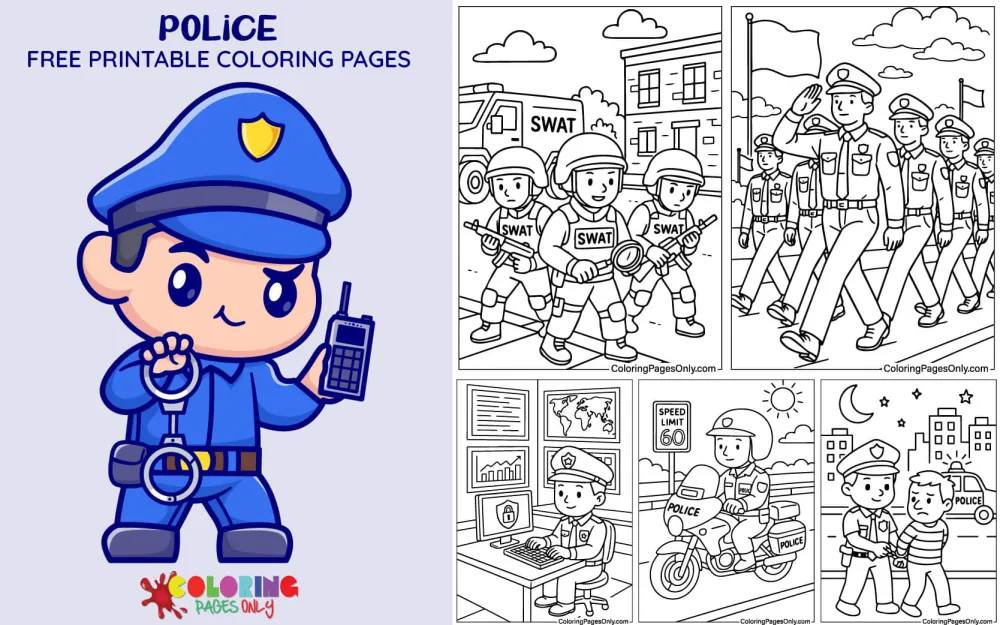
Free Police Coloring Pages: 38 printable PDF designs covering everyday patrol duty, K9 units, investigation work, and community events. Downloading the PDF or coloring directly online costs nothing on any page, and no account is required for either.
Police officers work to keep communities safe through patrol, traffic enforcement, and emergency response, and this collection reflects that range rather than a single generic idea of the job. The K9 side of policing has real history behind it: the first police department to formally add dogs to its force was in Ghent, Belgium, in 1899, when a shortage of officers led the department to train ten sheepdogs for nightly patrols. Several pages here show the same kind of everyday, approachable police work that children are most likely to recognize.
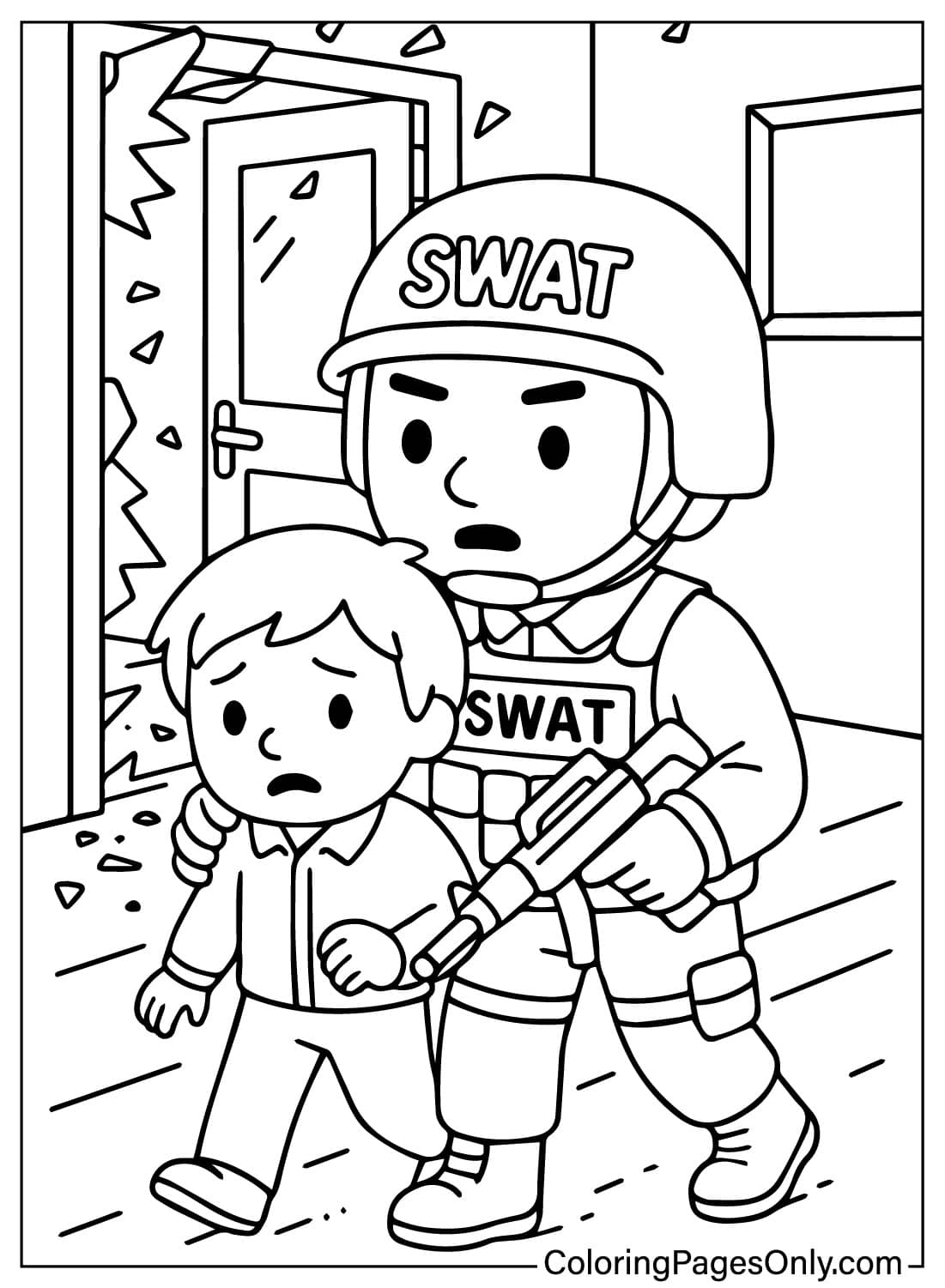
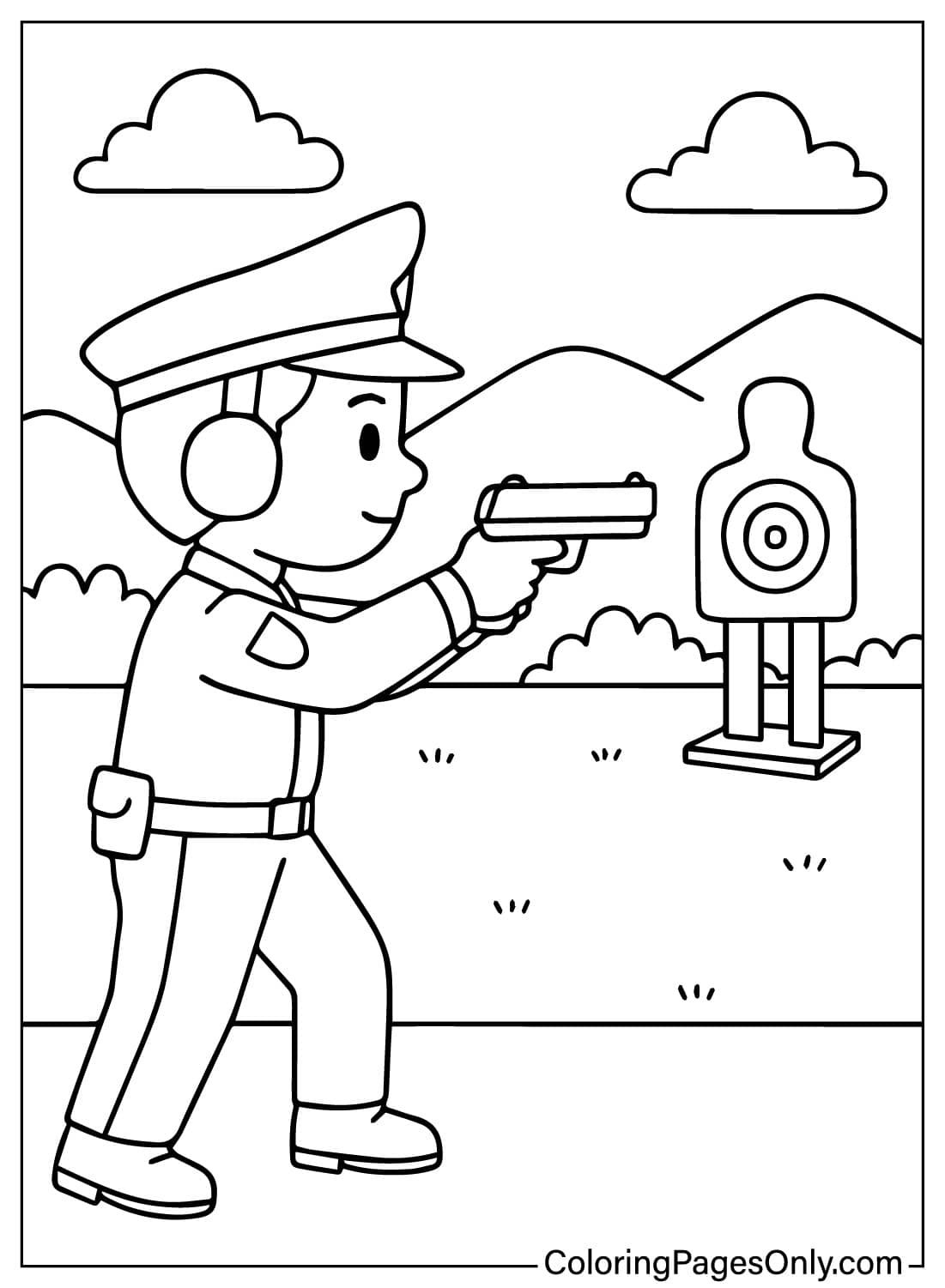
The 38 pages sort into five groups: everyday patrol and traffic duty, K9 and animal-related scenes, investigation and specialized response, emergency rescue work, and community or ceremonial moments. A handful of pages touch on tactical training and enforcement; these are kept factual and low-key rather than framed around action or excitement.
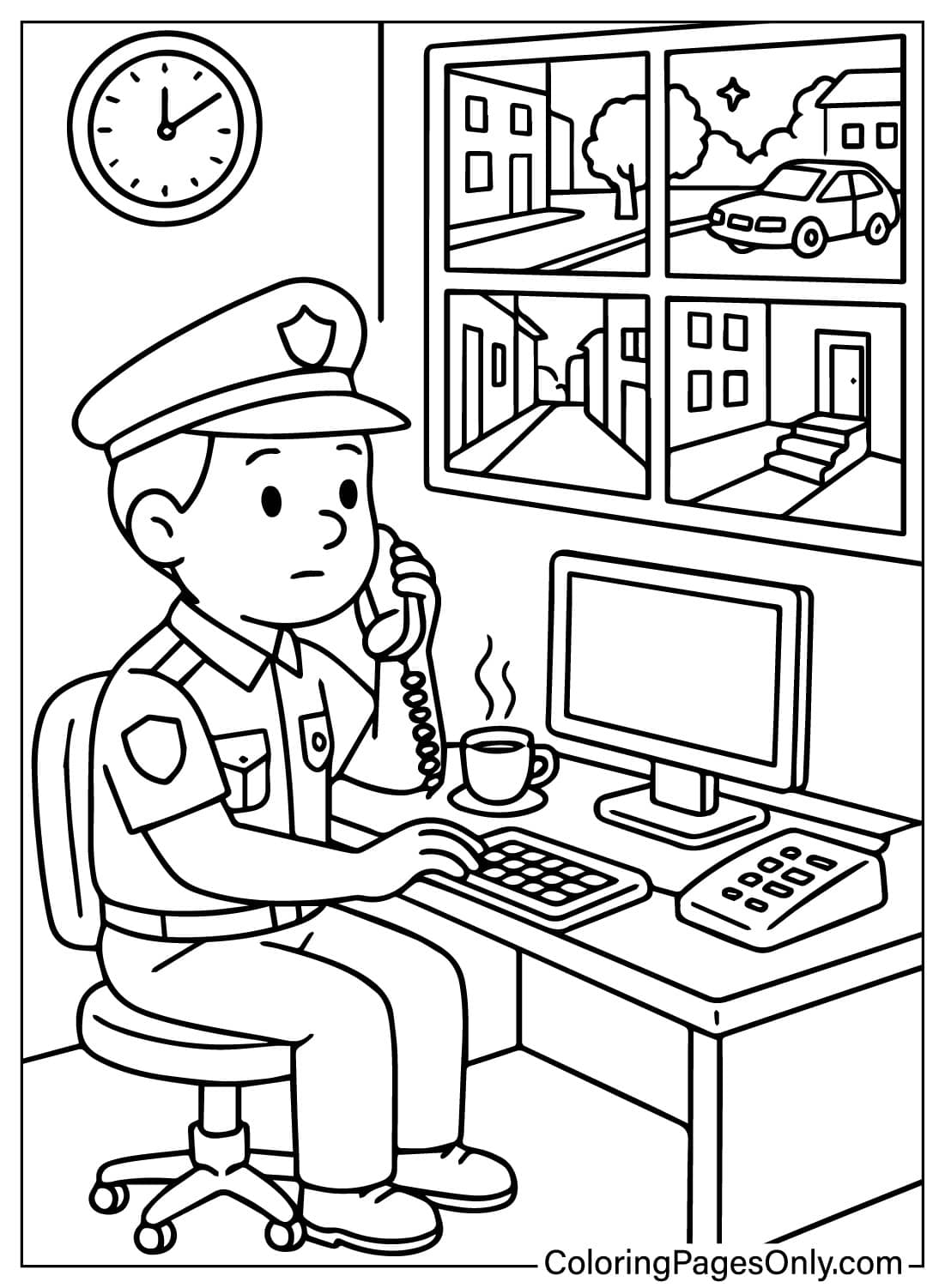
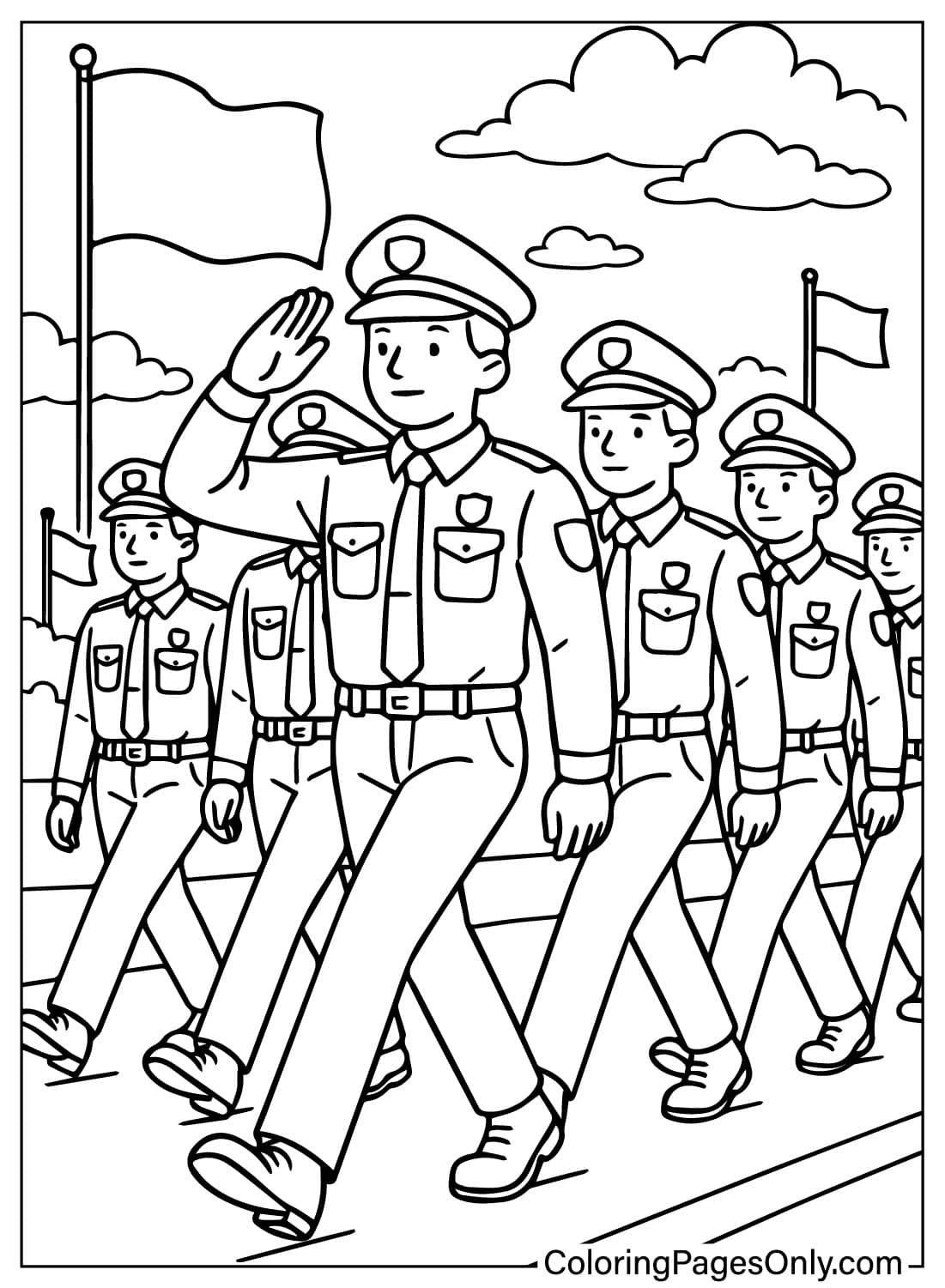
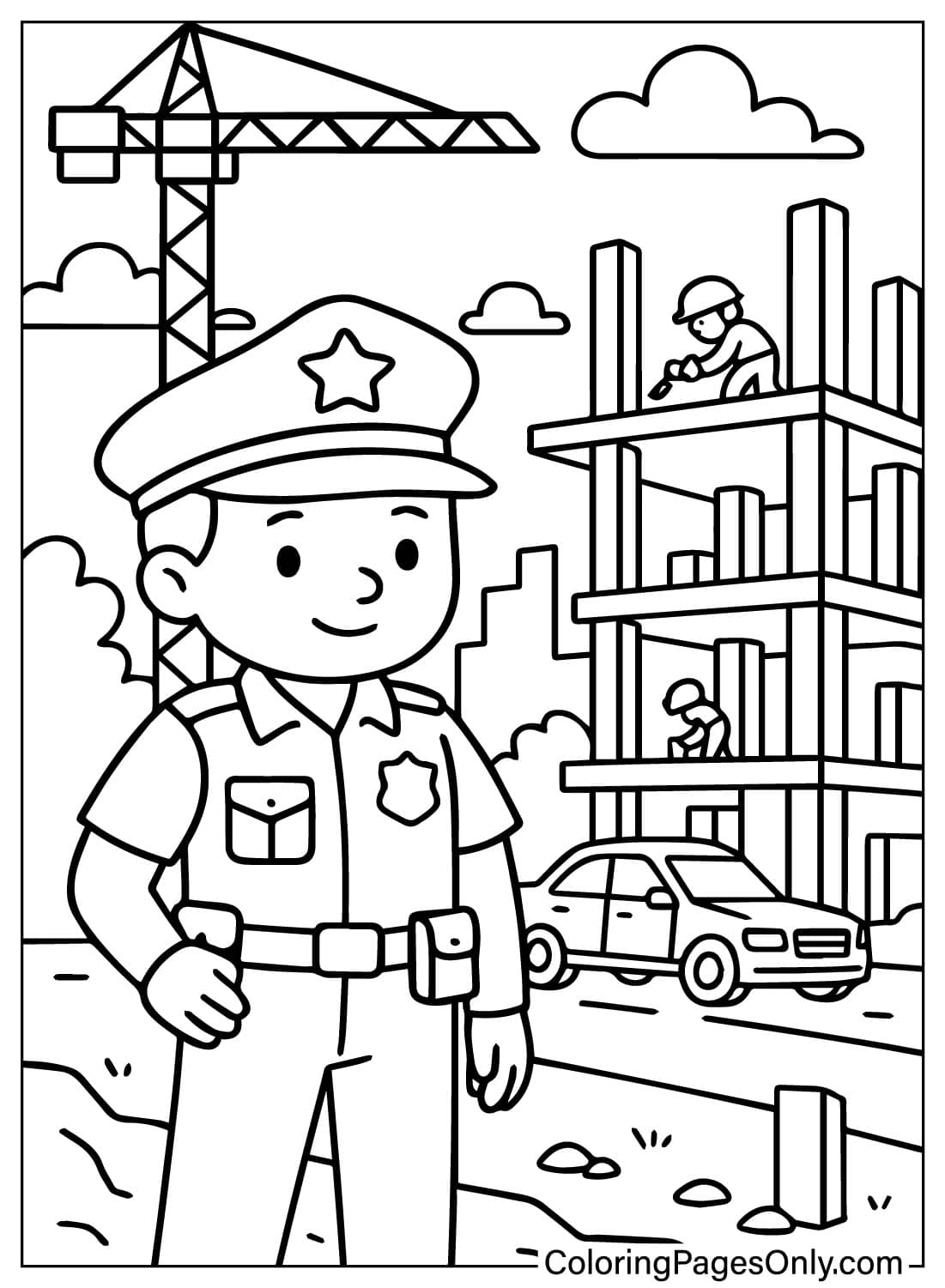
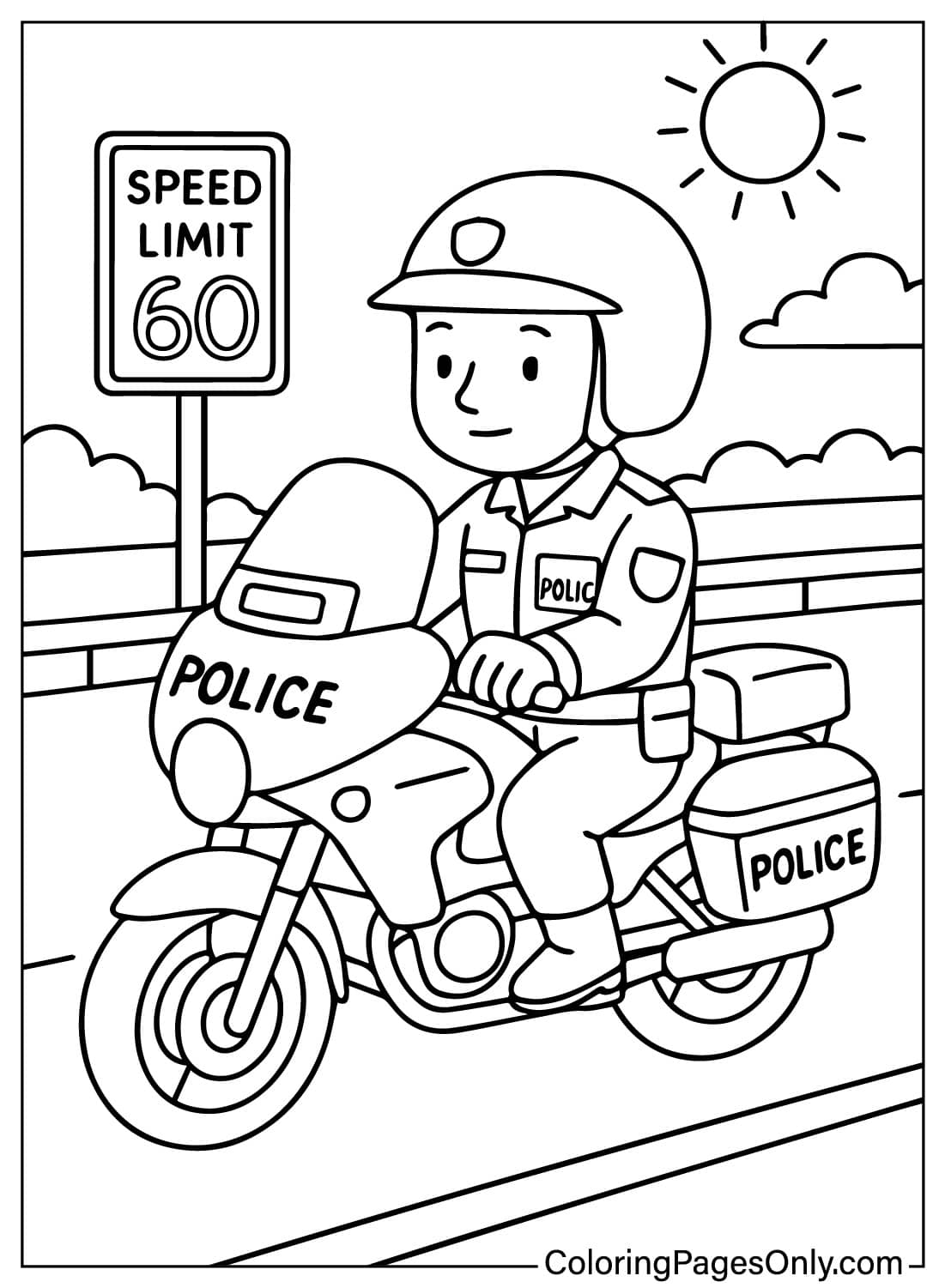
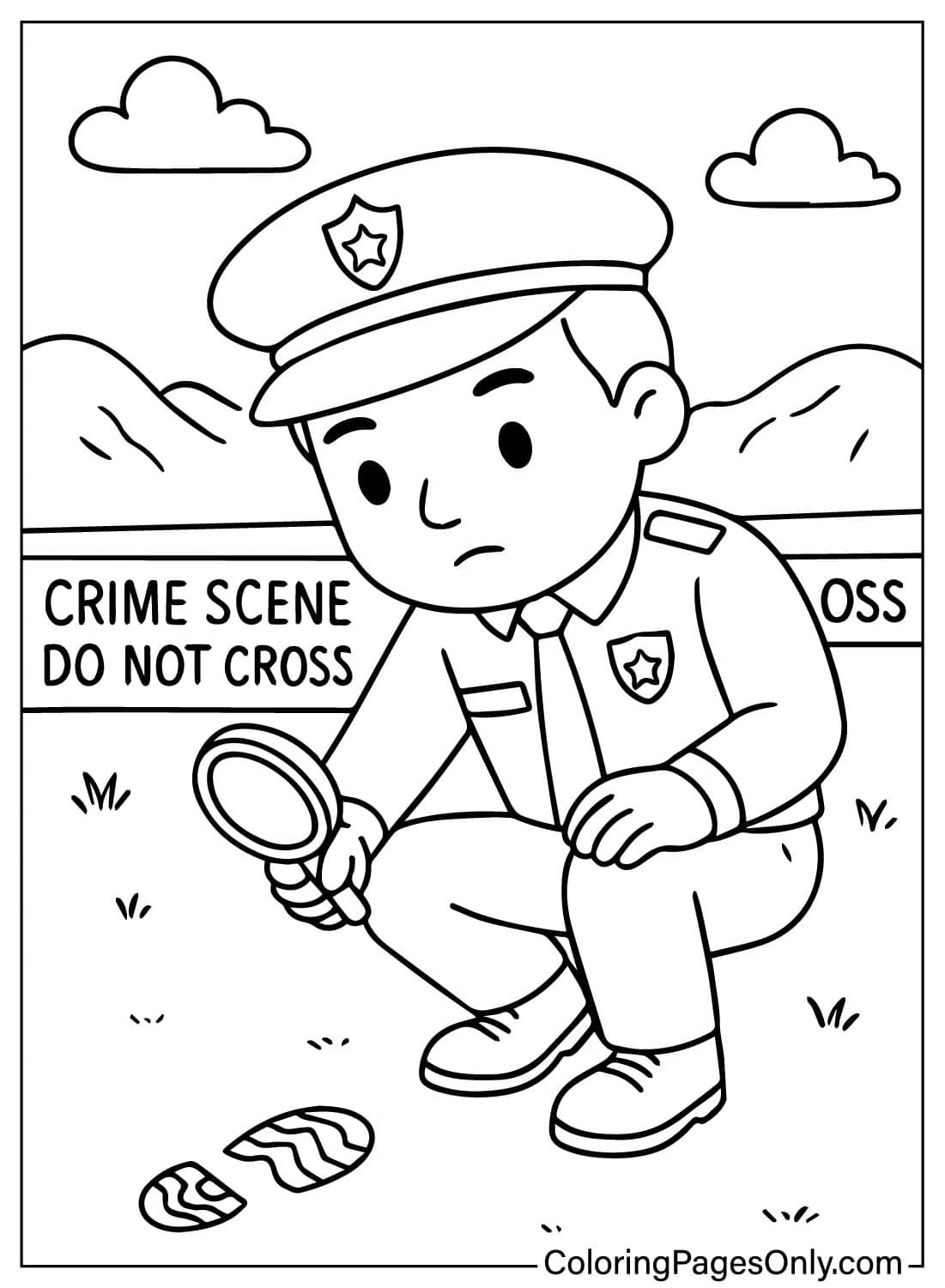
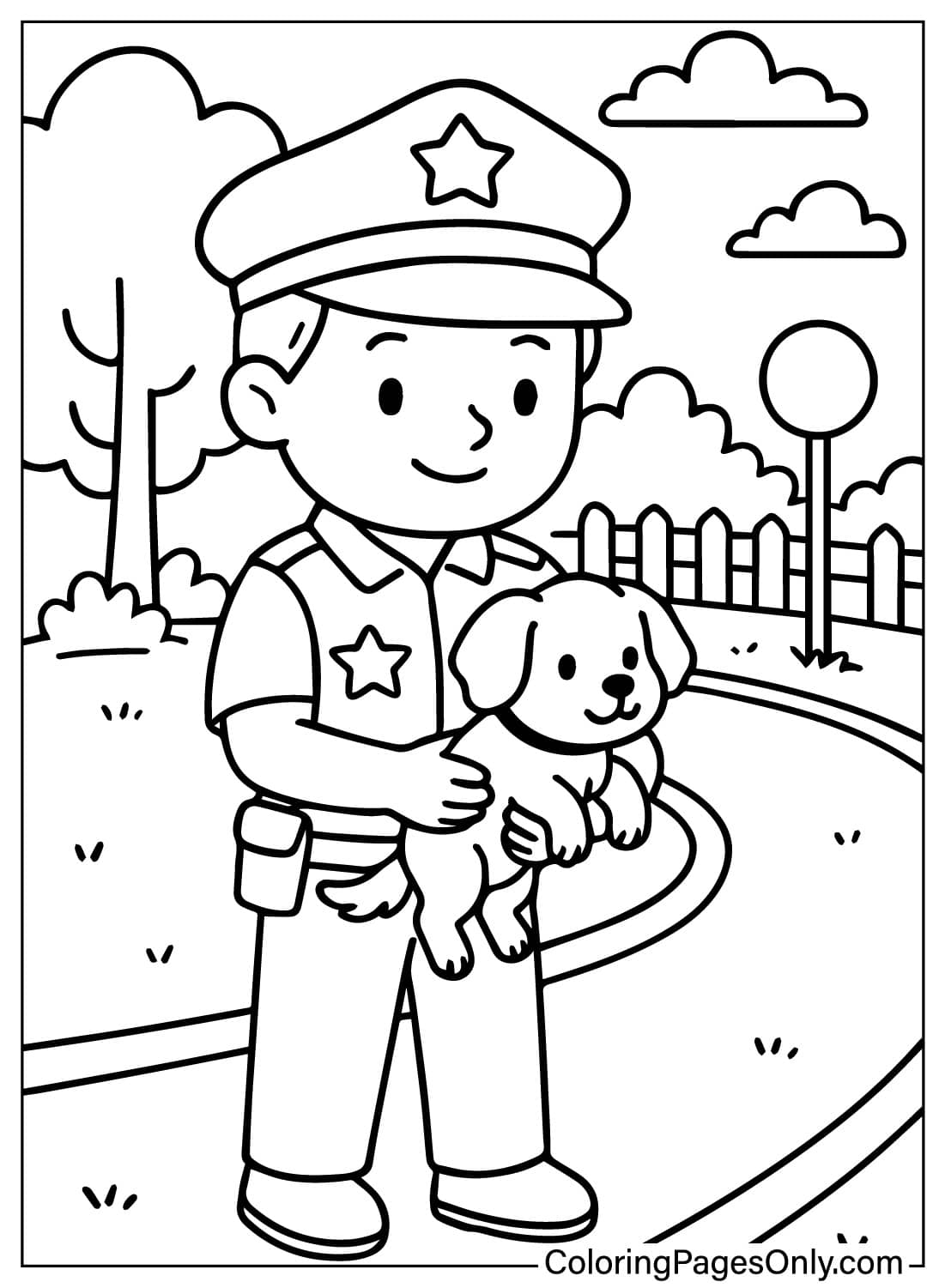
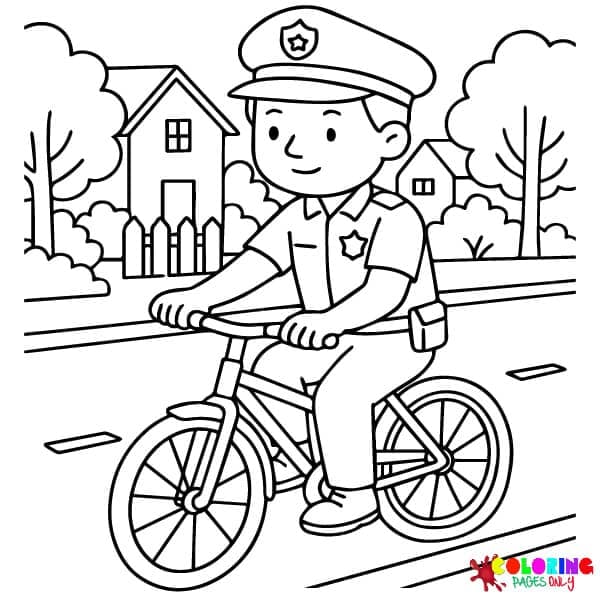
What Is Inside This Collection
Five groups organize the 38 pages, weighted toward the everyday and community-facing side of police work rather than the more intense scenes that make up a much smaller share of the set.
Everyday Patrol and Traffic Duty
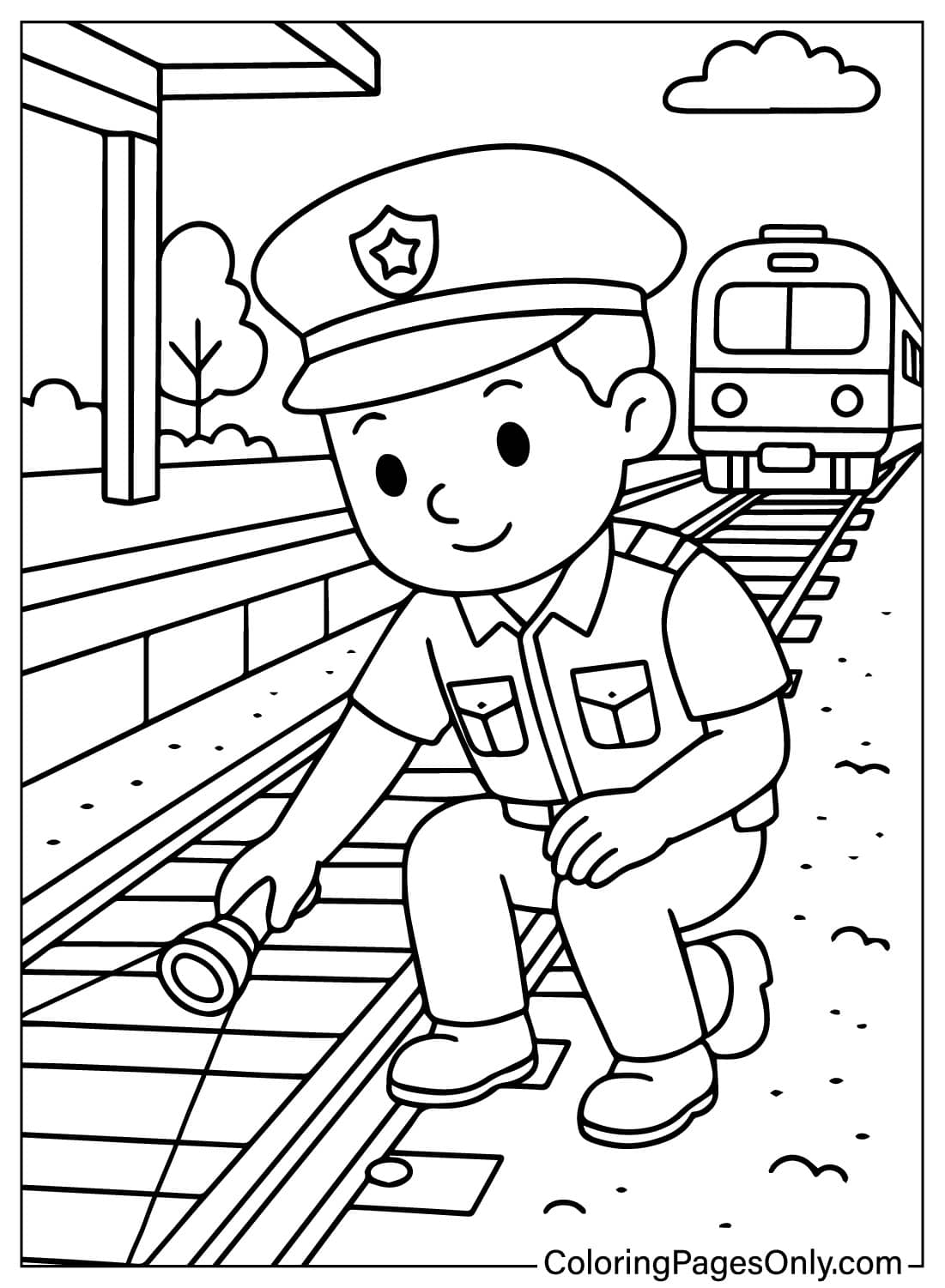
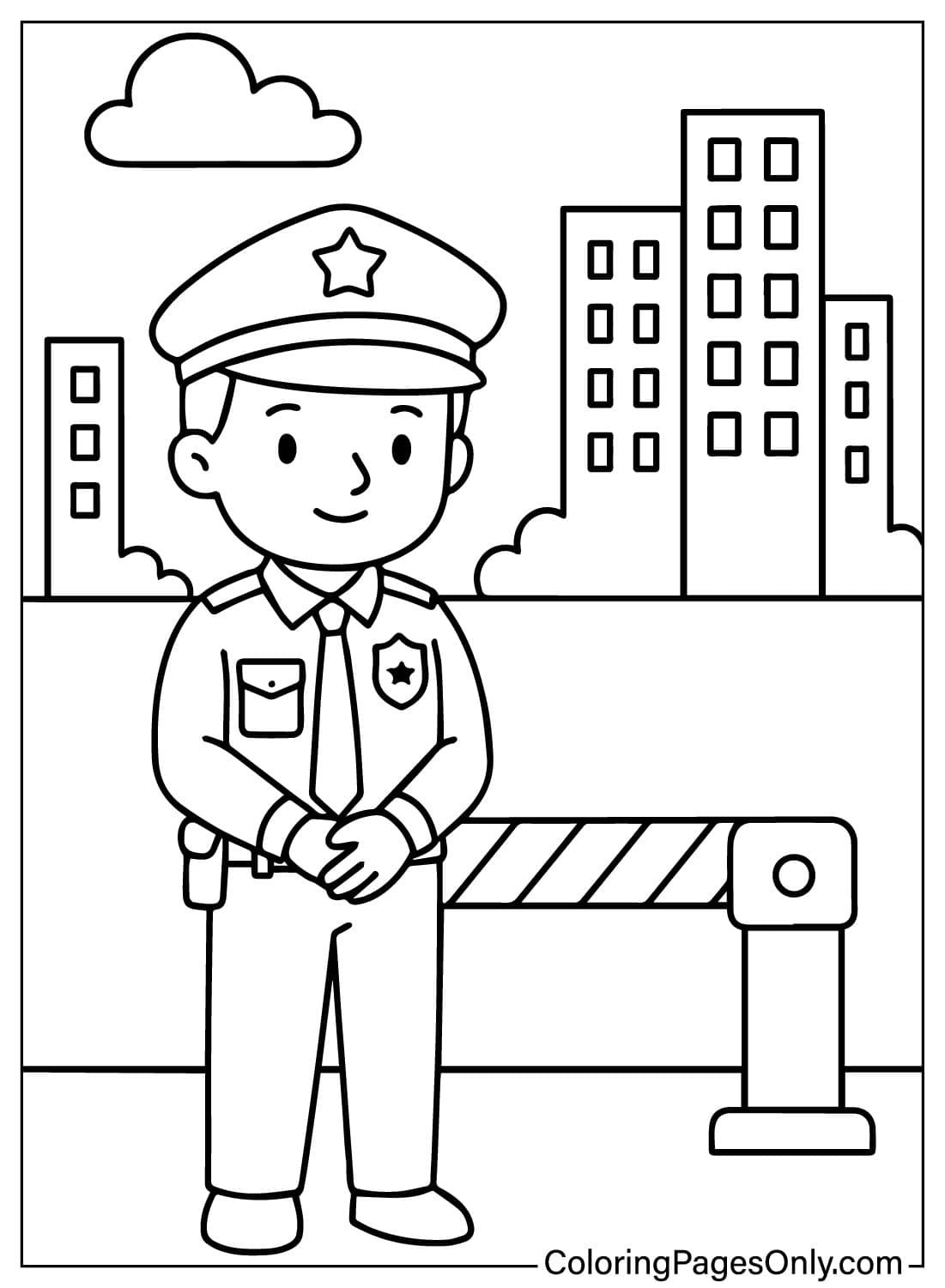
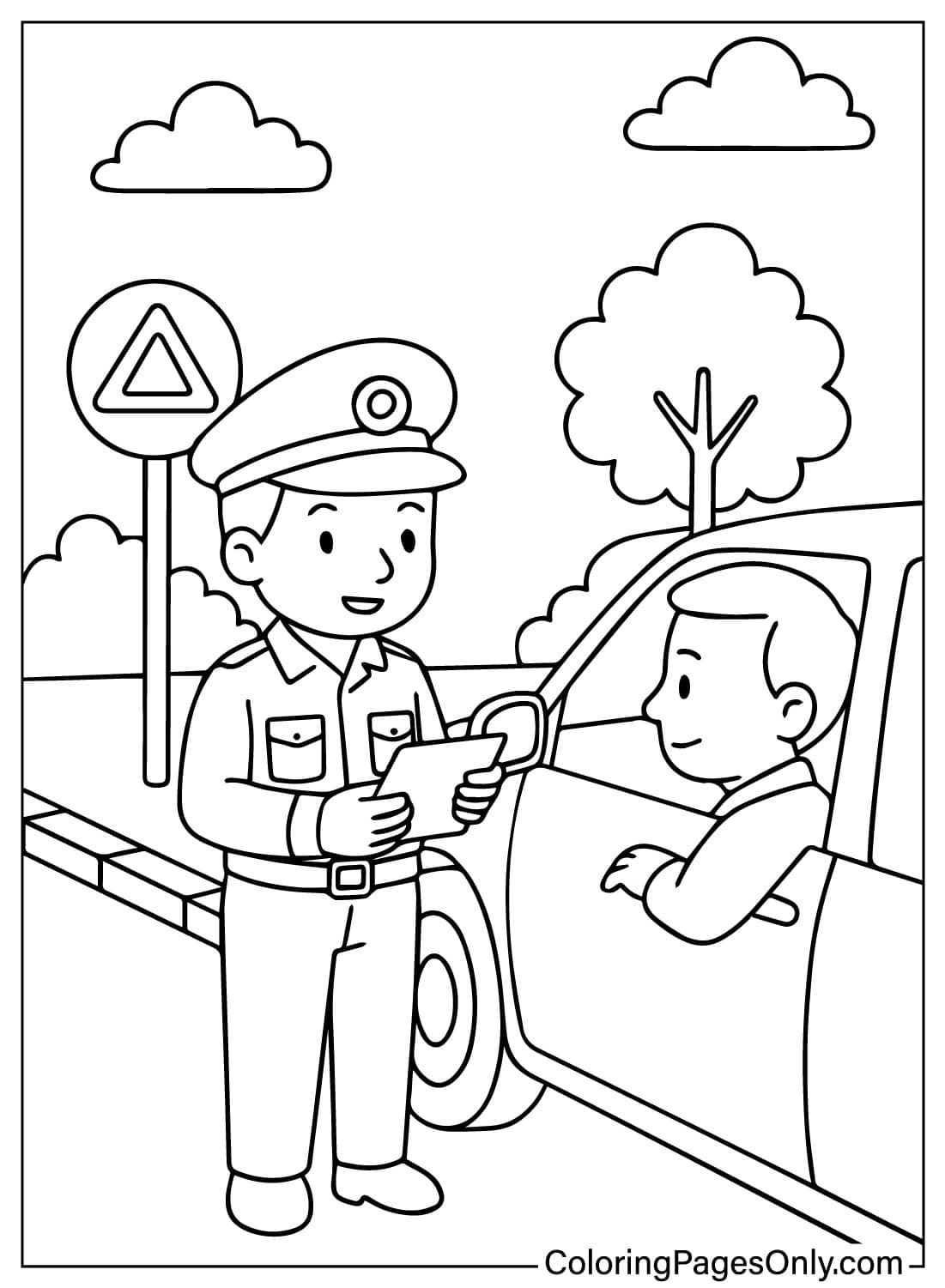
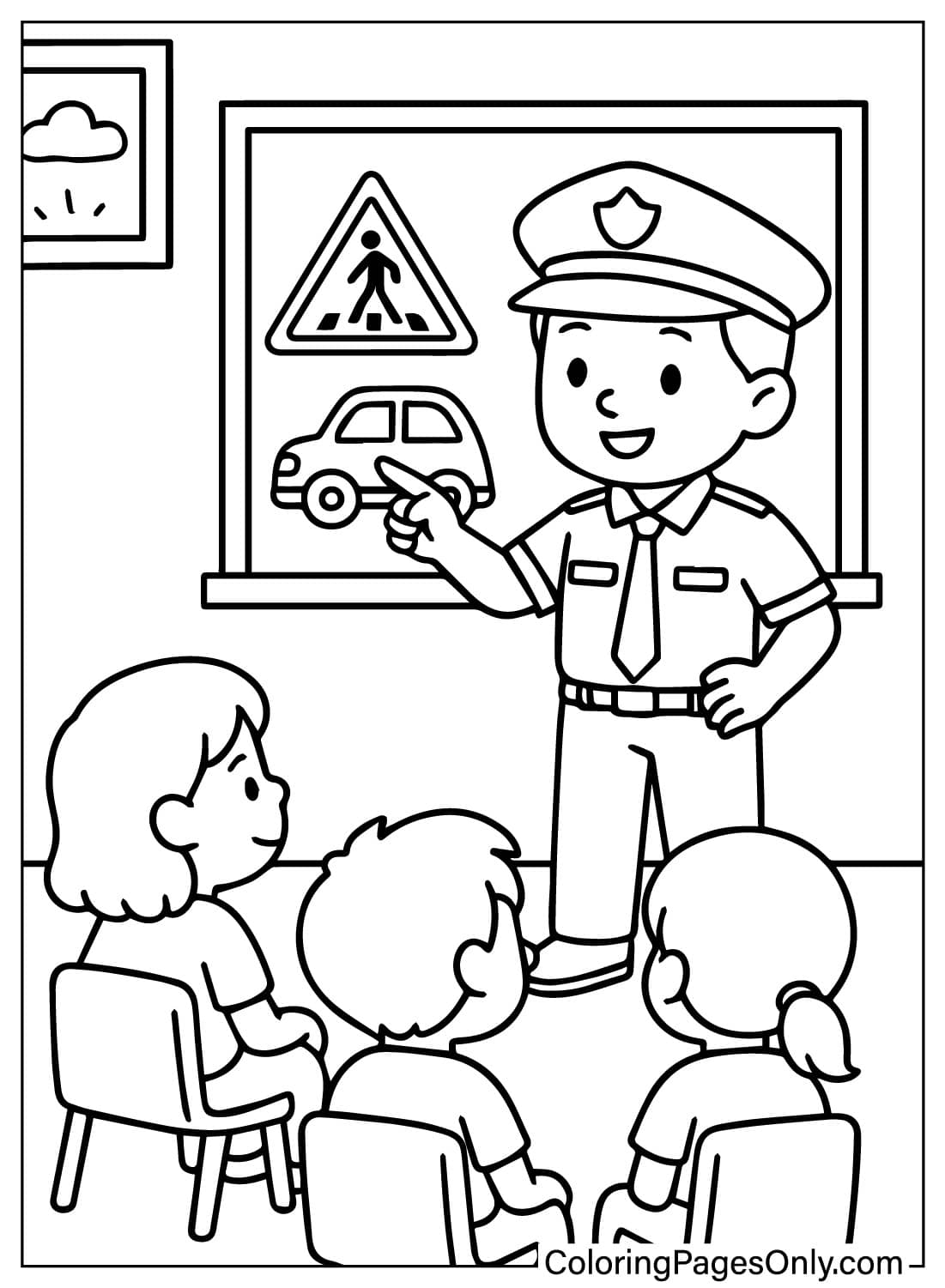
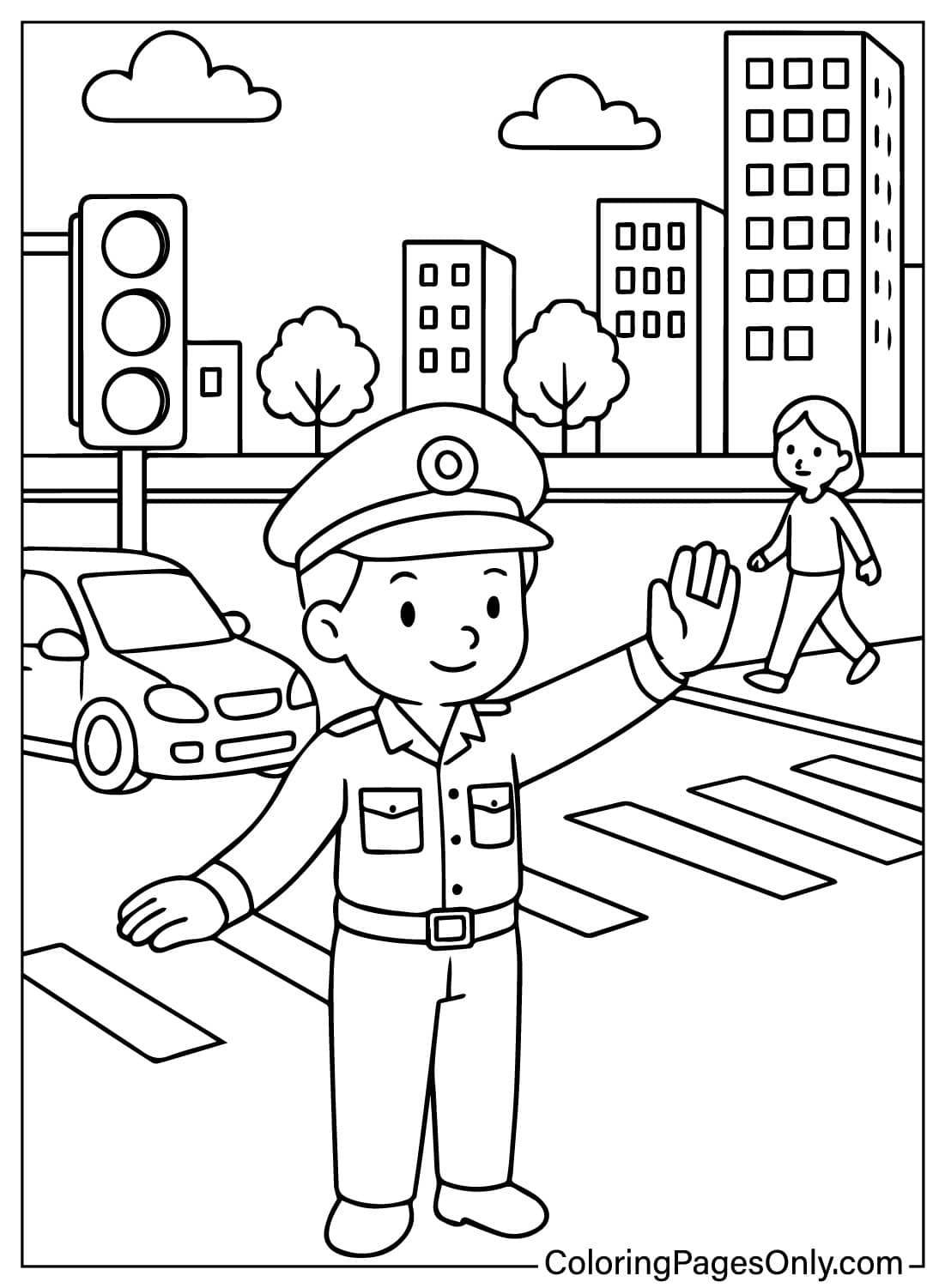
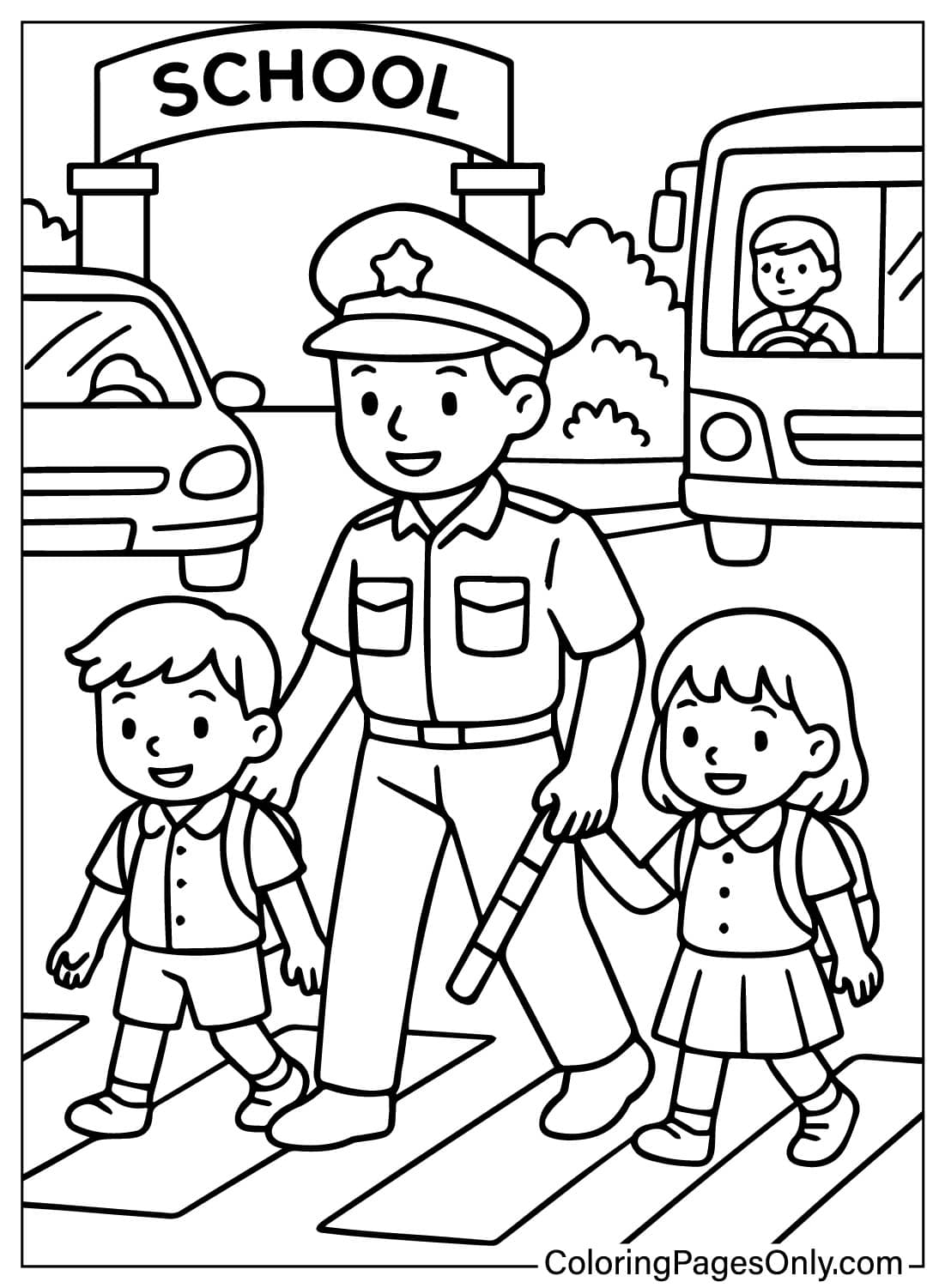
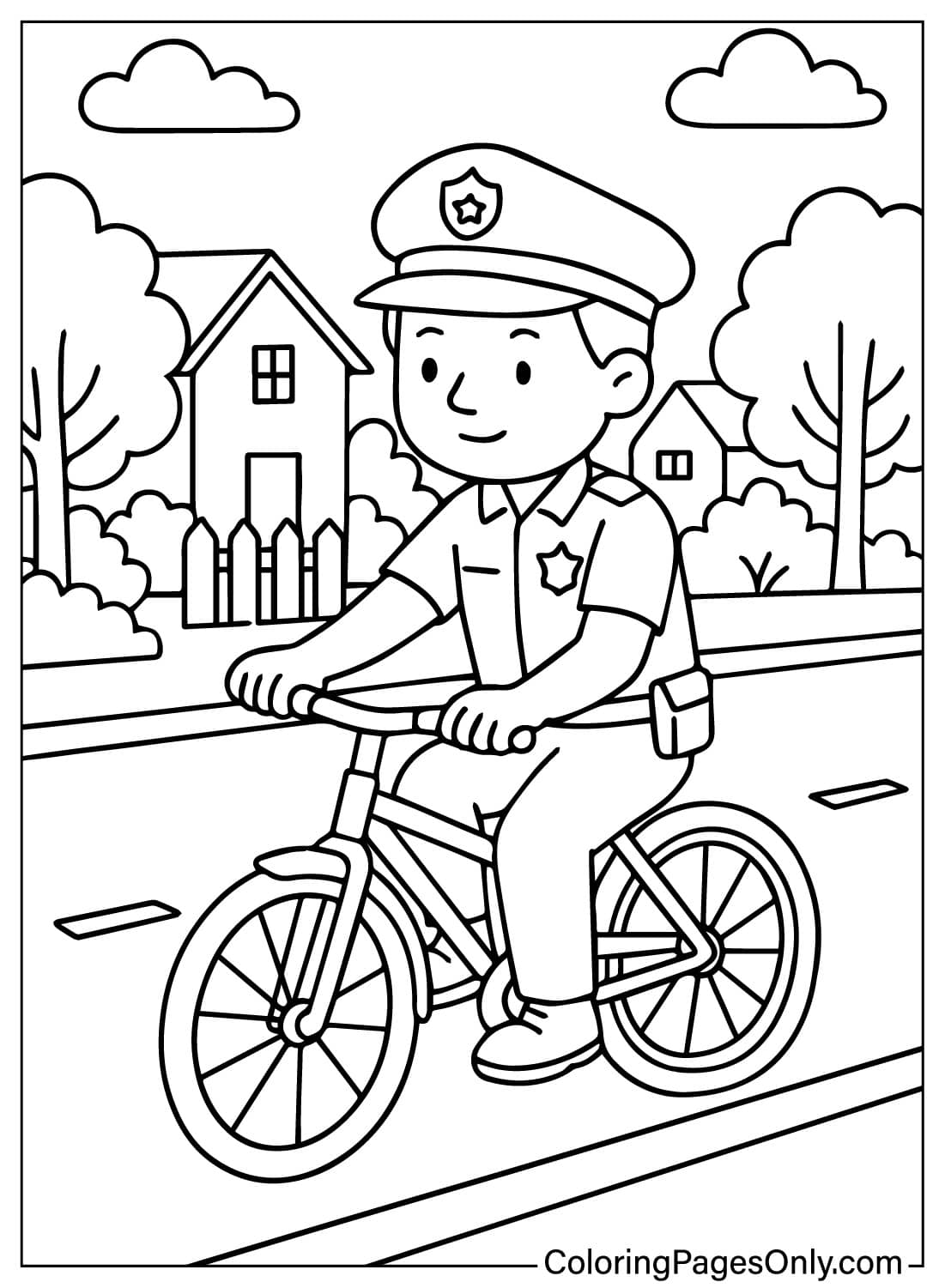
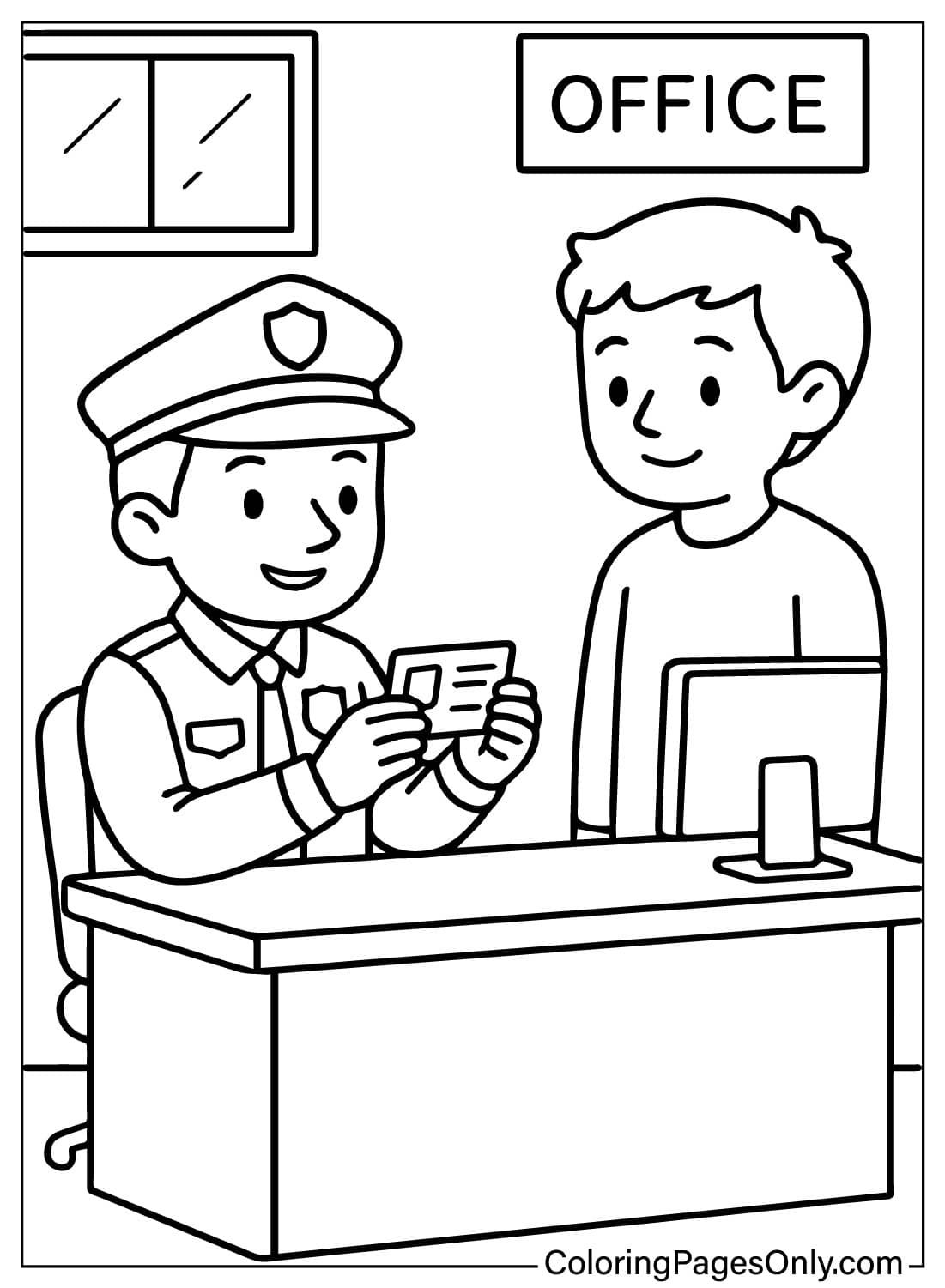
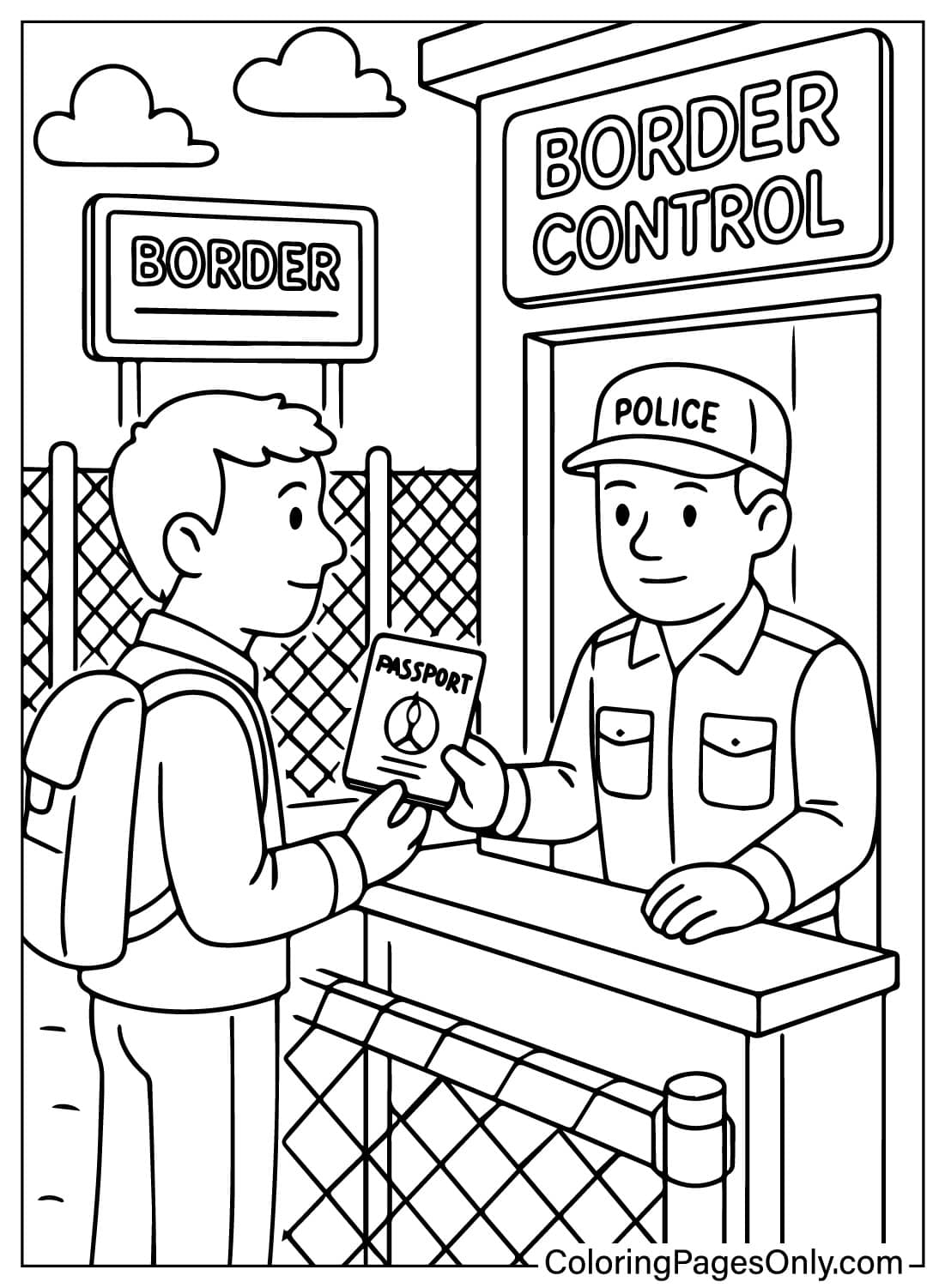
This is the largest group by far: officers directing traffic, checking vehicle documents, helping students cross the street, and patrolling on foot, bicycle, or motorcycle. Coloring suggestion: keep the uniform’s navy blue consistent across every page in this group, since these officers are meant to look like recognizable, everyday figures from a real neighborhood.
K9 and Animal-Related Scenes
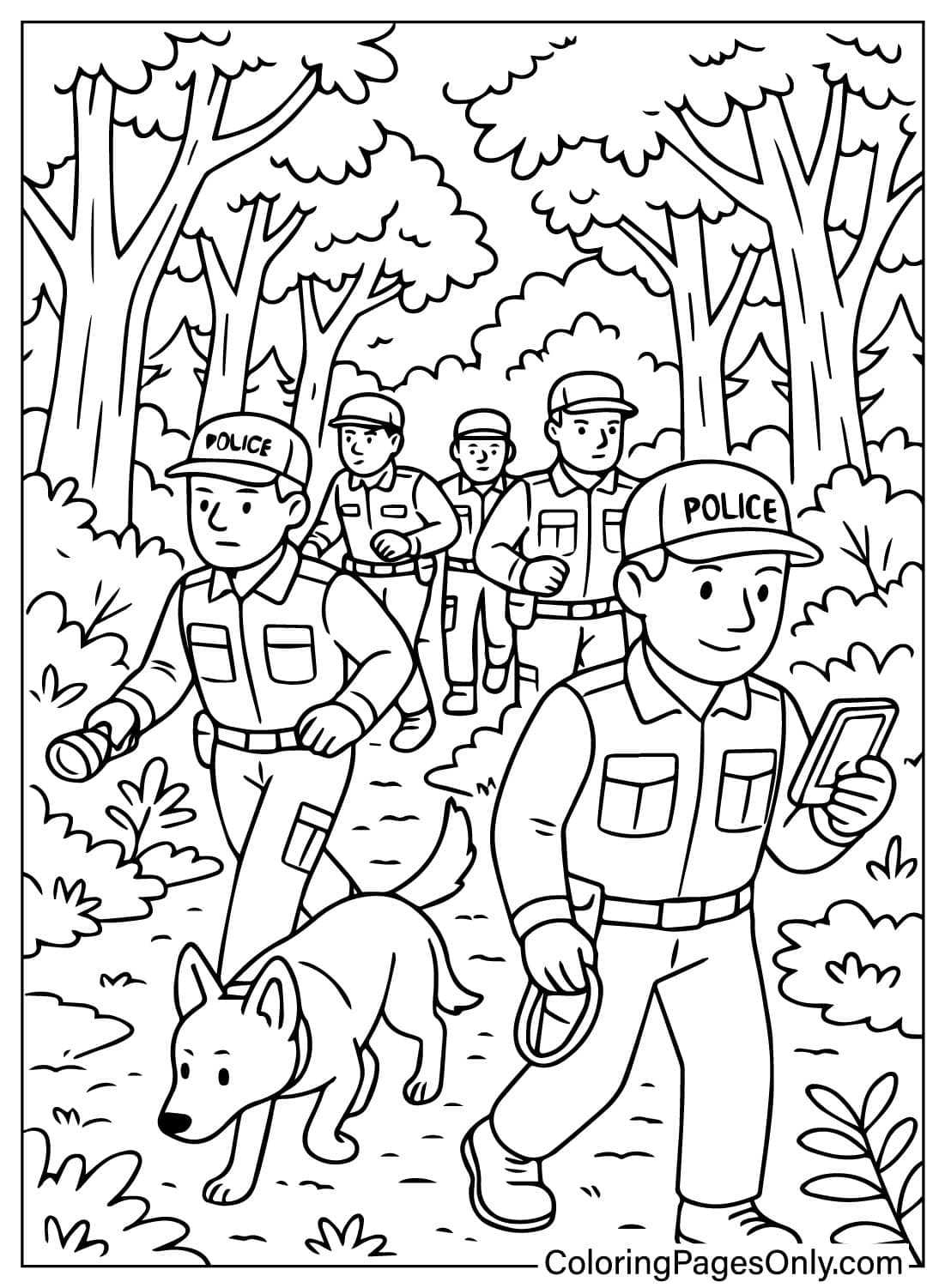
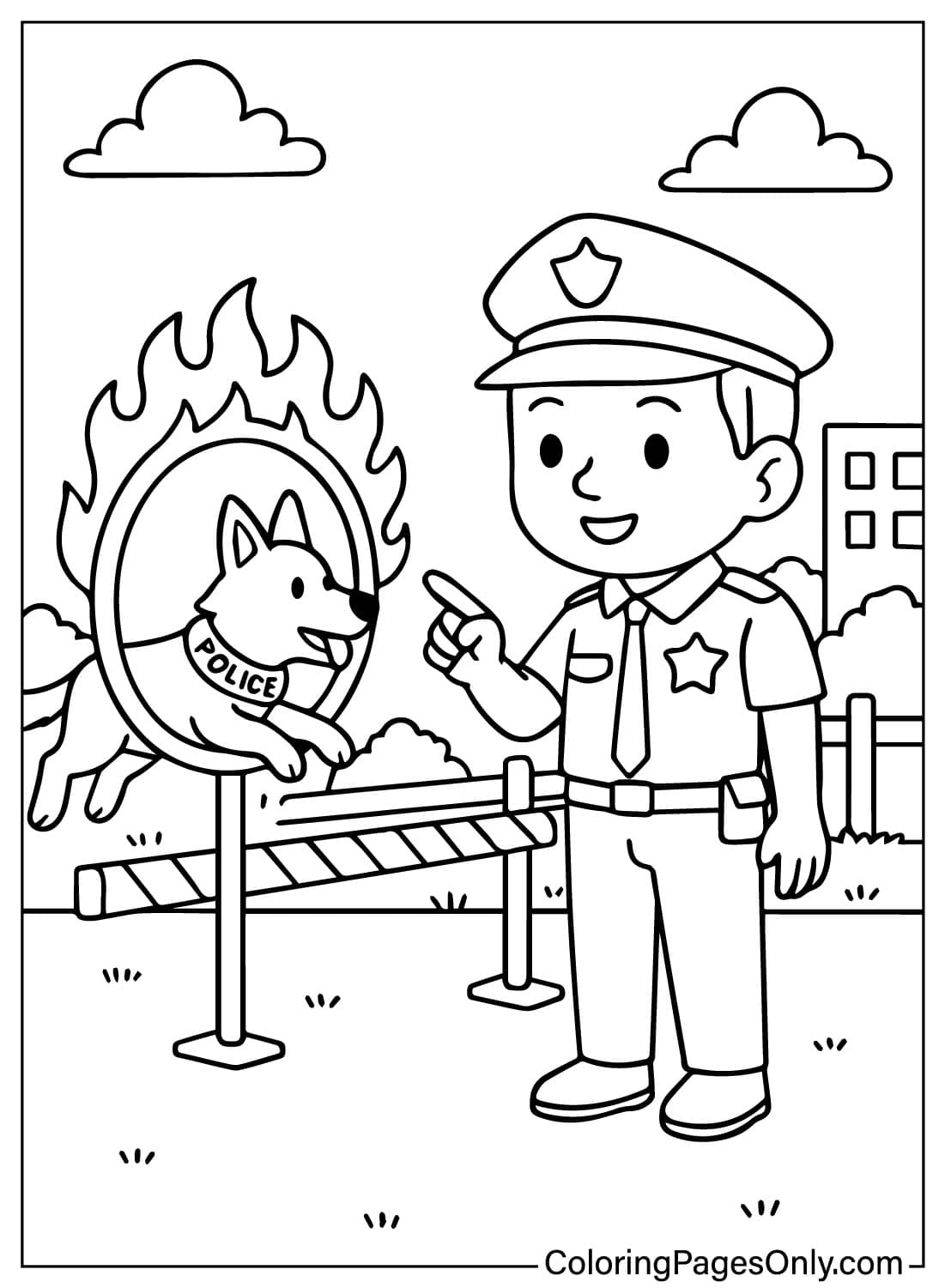
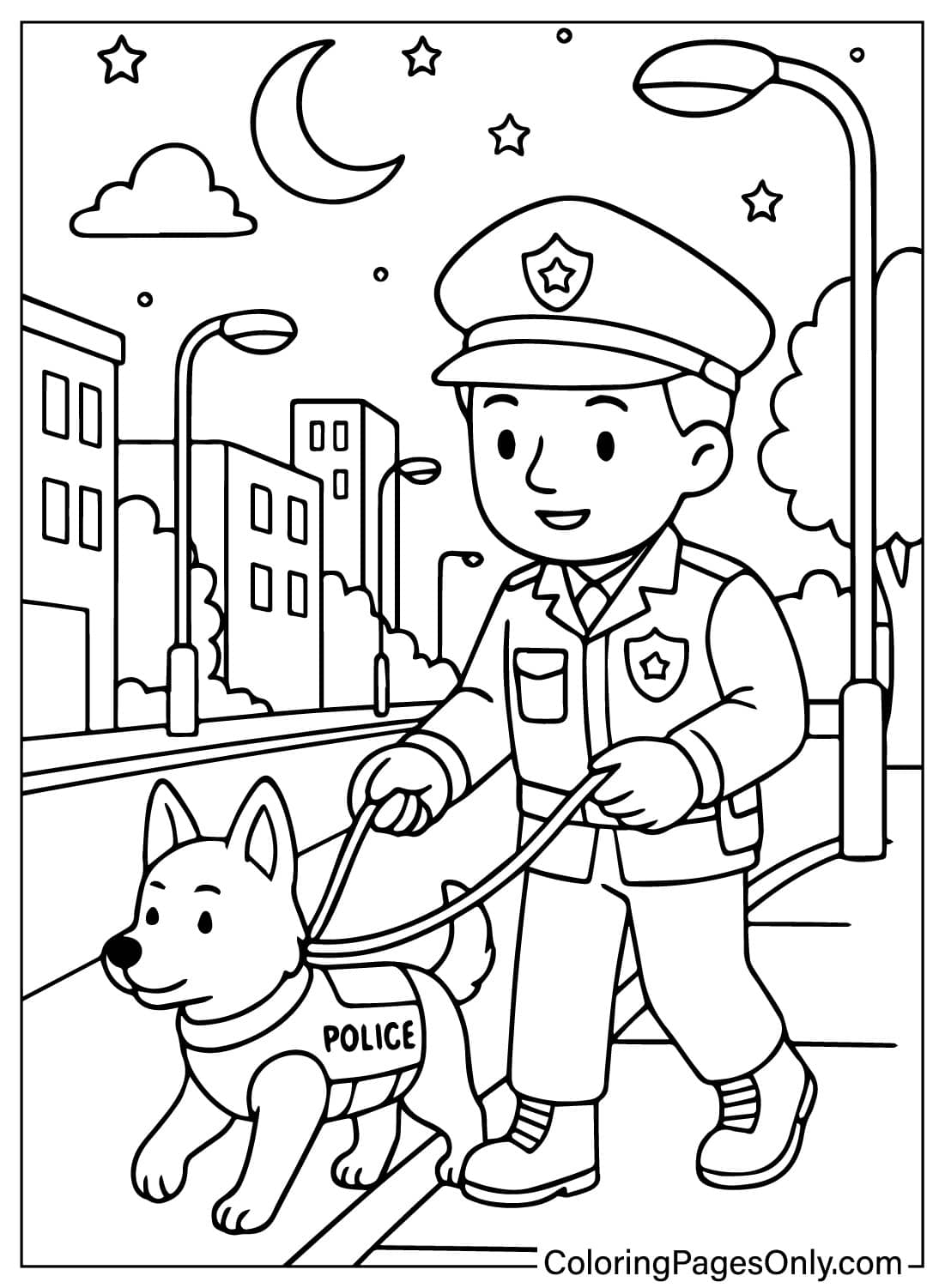
A small group focuses on police dogs: training sessions, night patrols, and a page showing an officer rescuing an animal. Coloring suggestion: give the dog a realistic coat color, black and tan for a German Shepherd is the classic choice, and keep its vest or harness a simple, dark tone so the animal itself stays the visual focus.
Investigation and Specialized Response
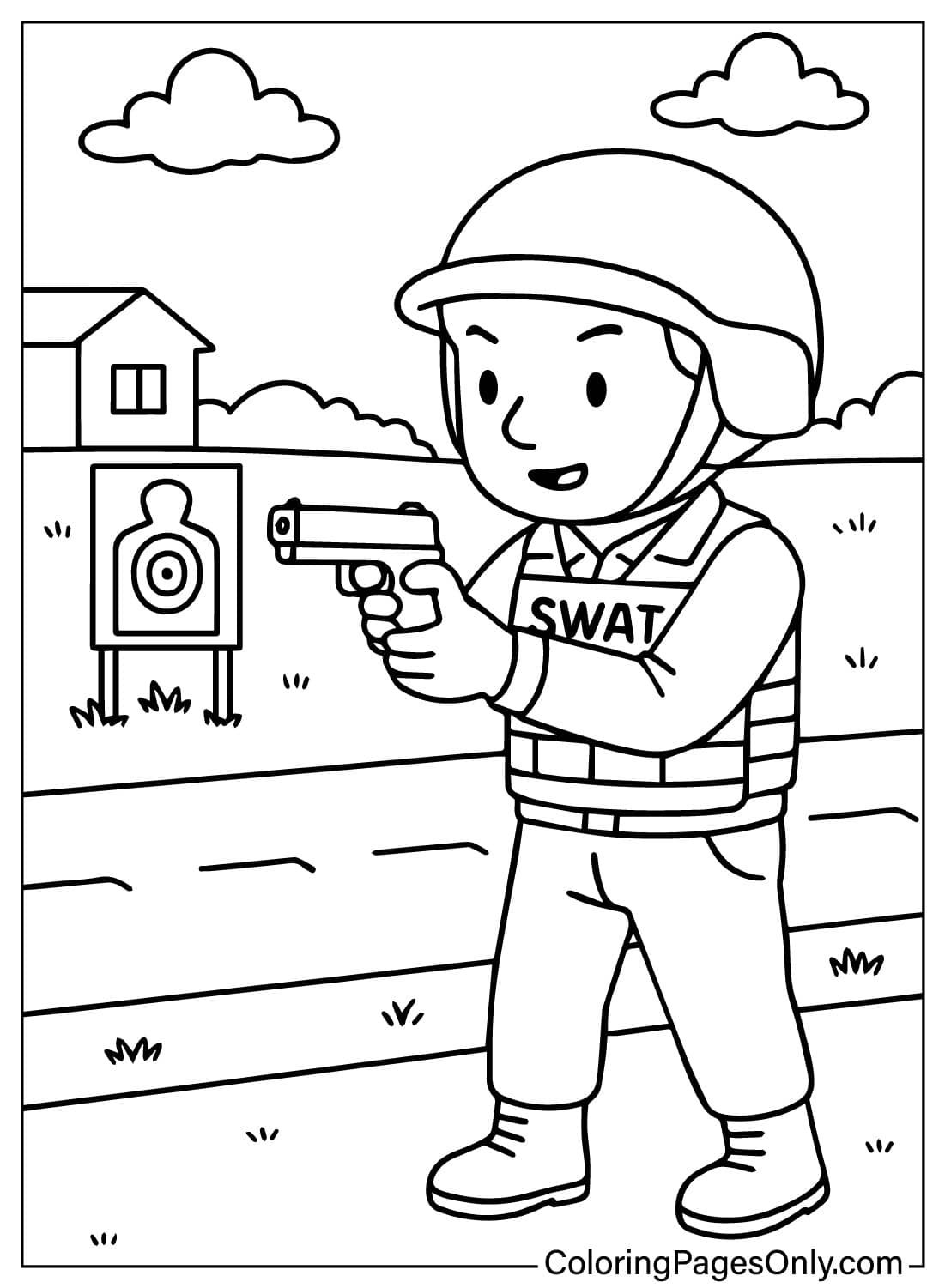
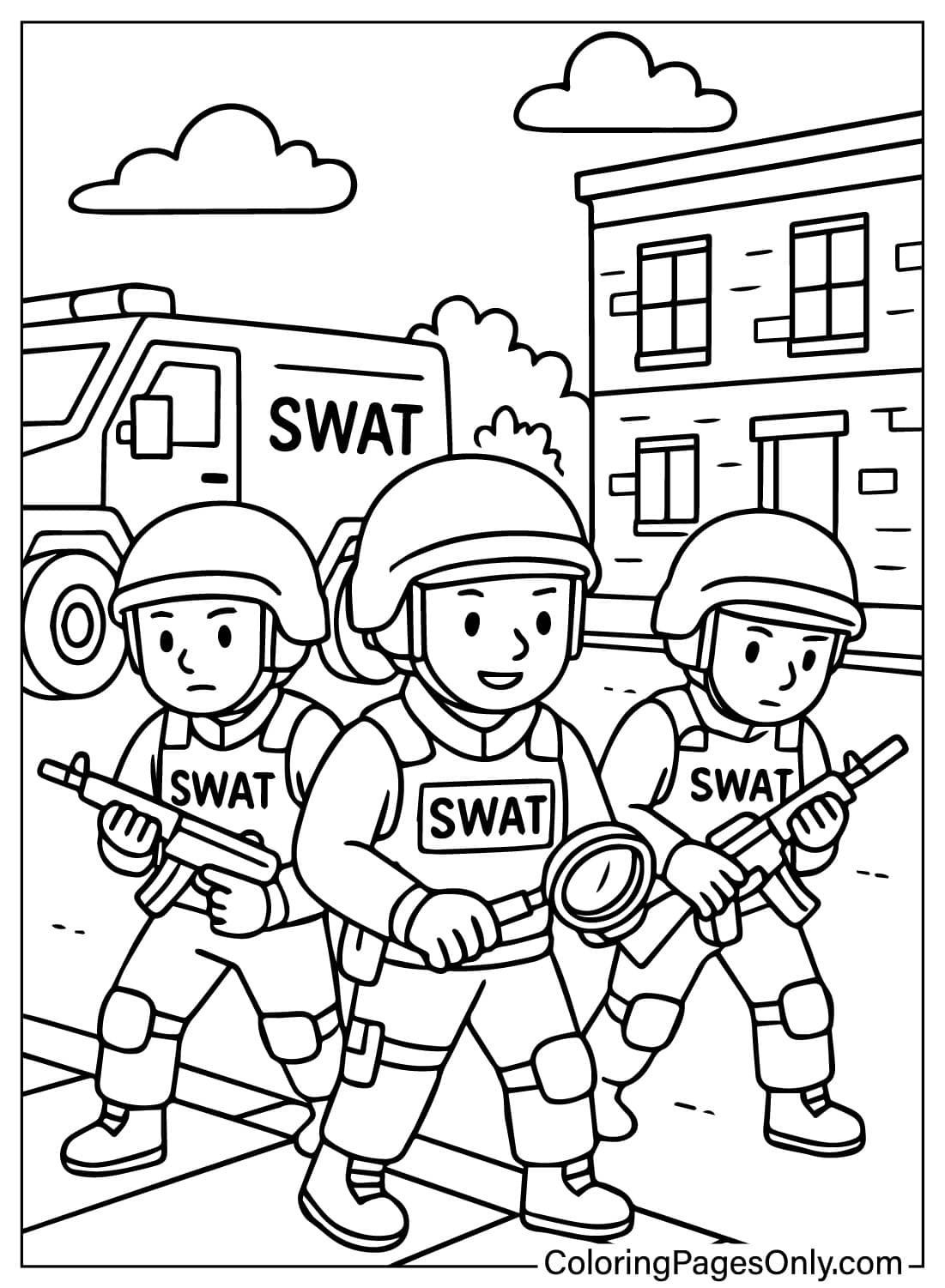
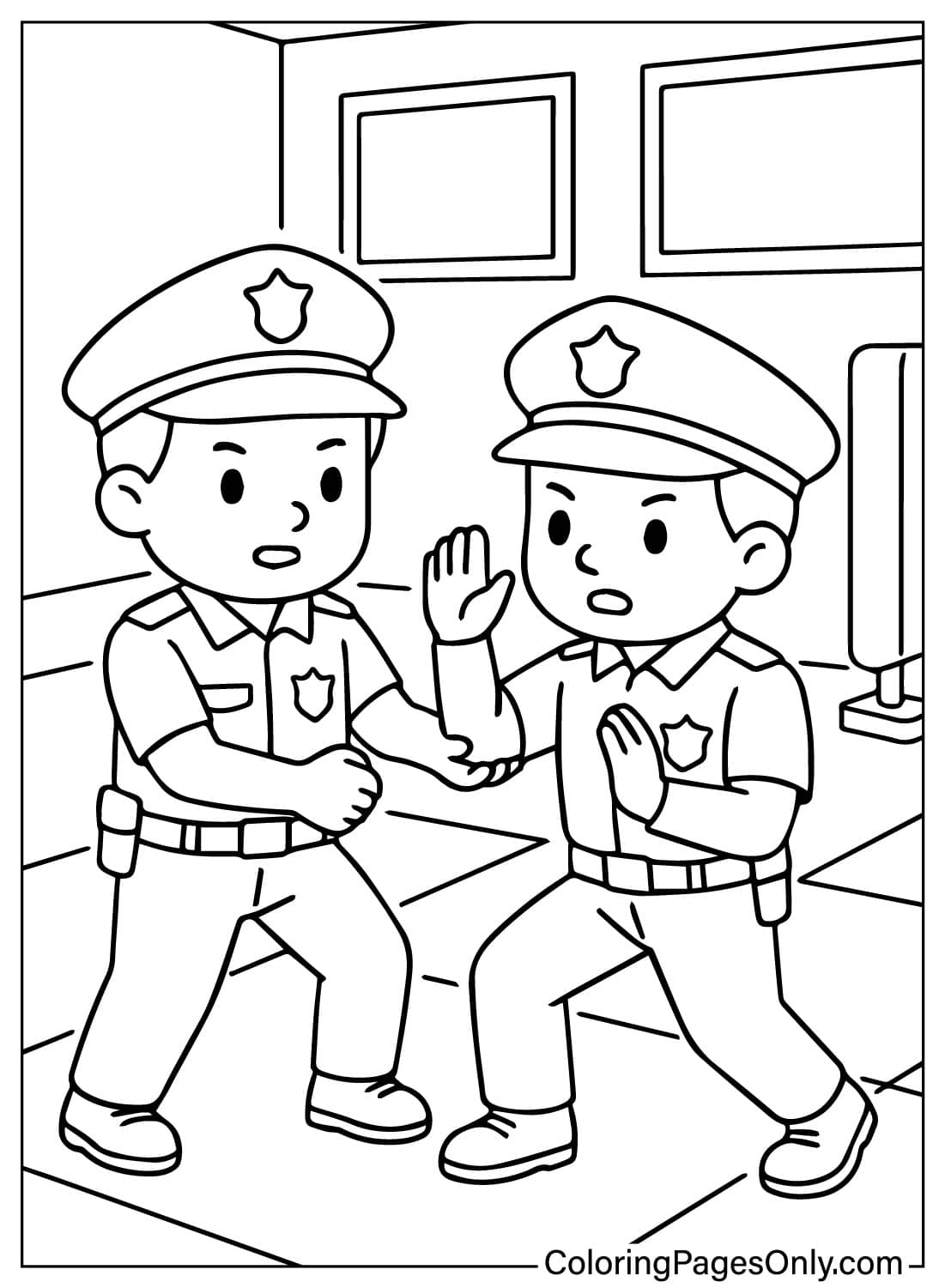
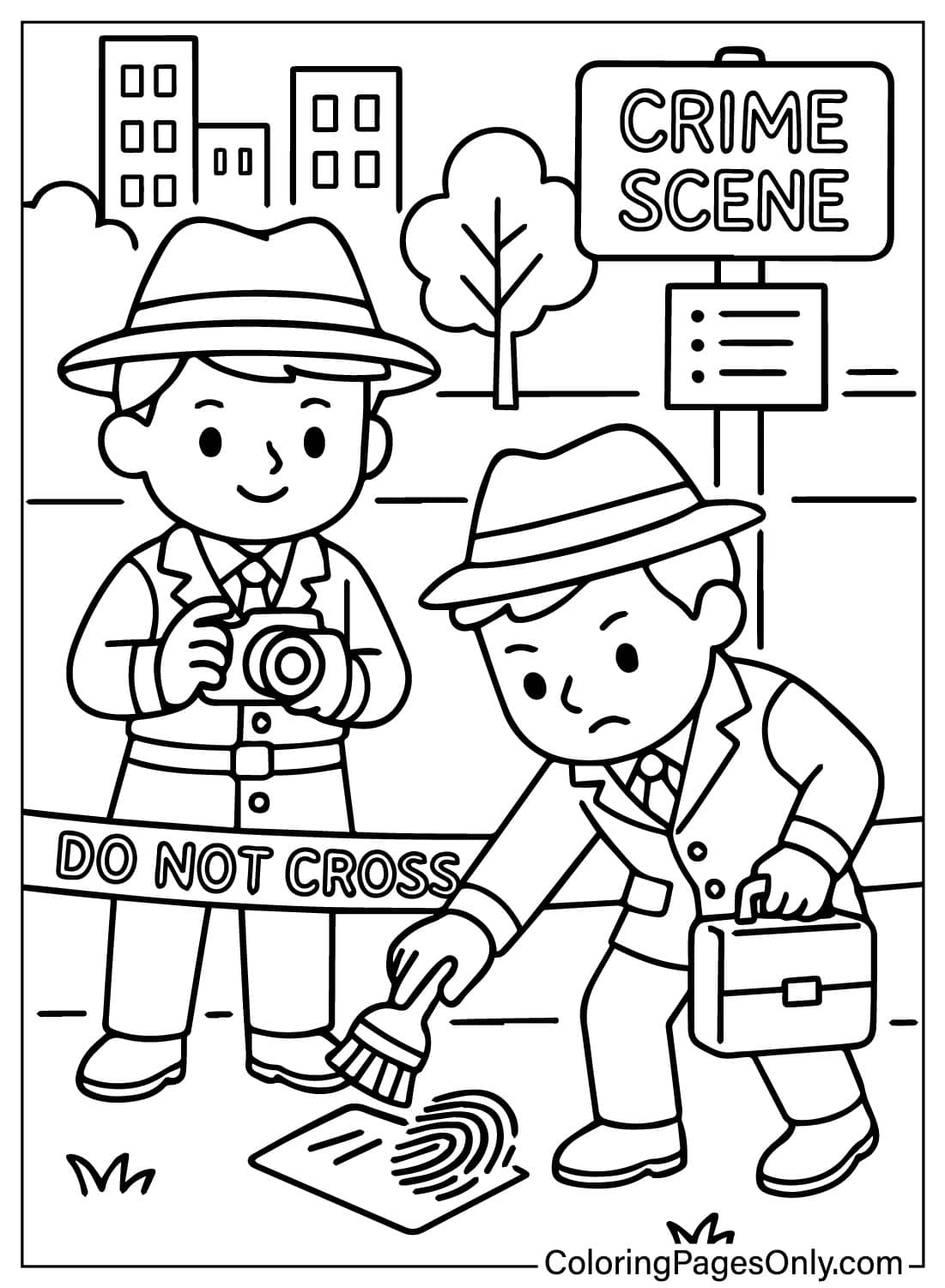
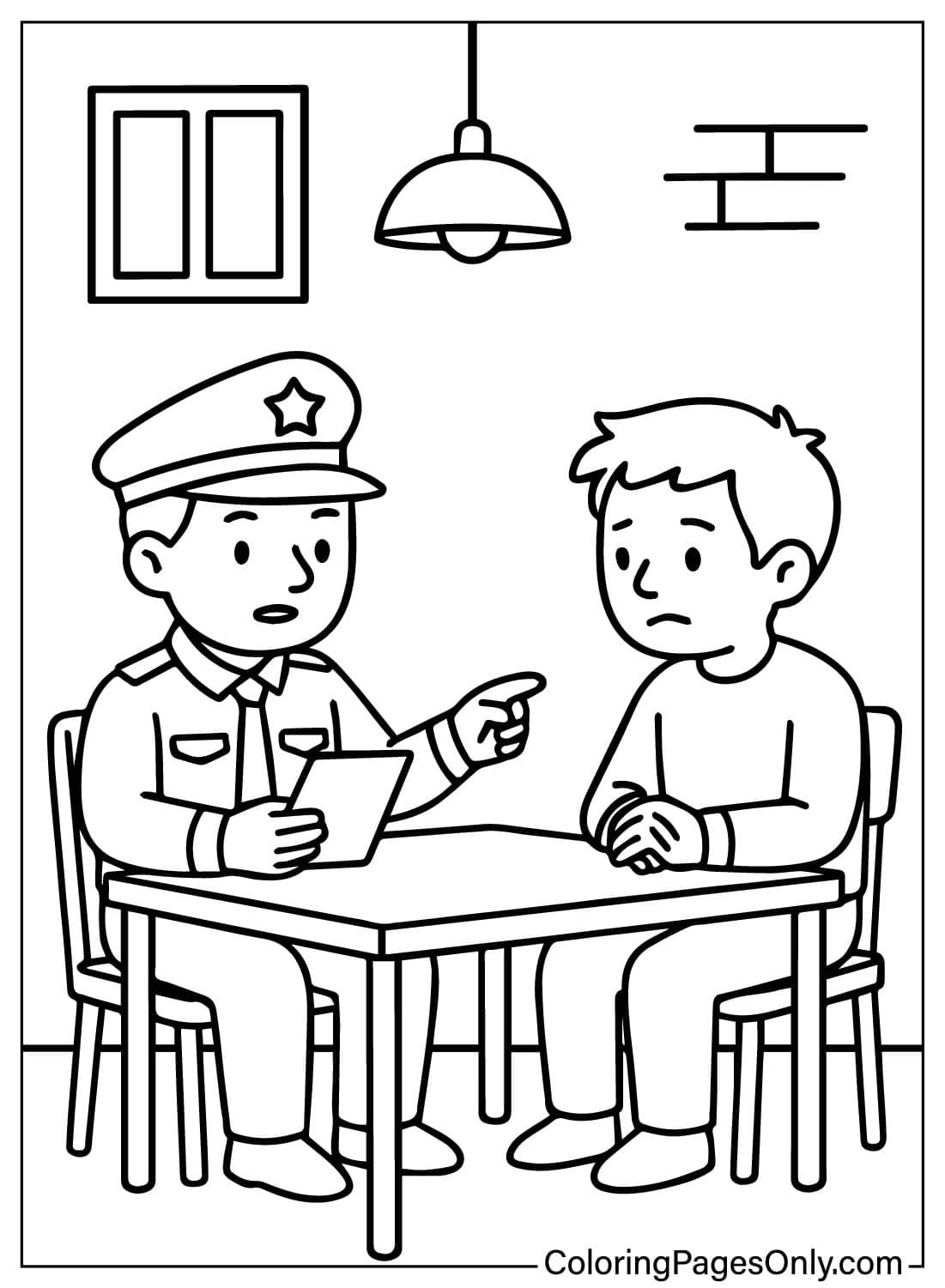
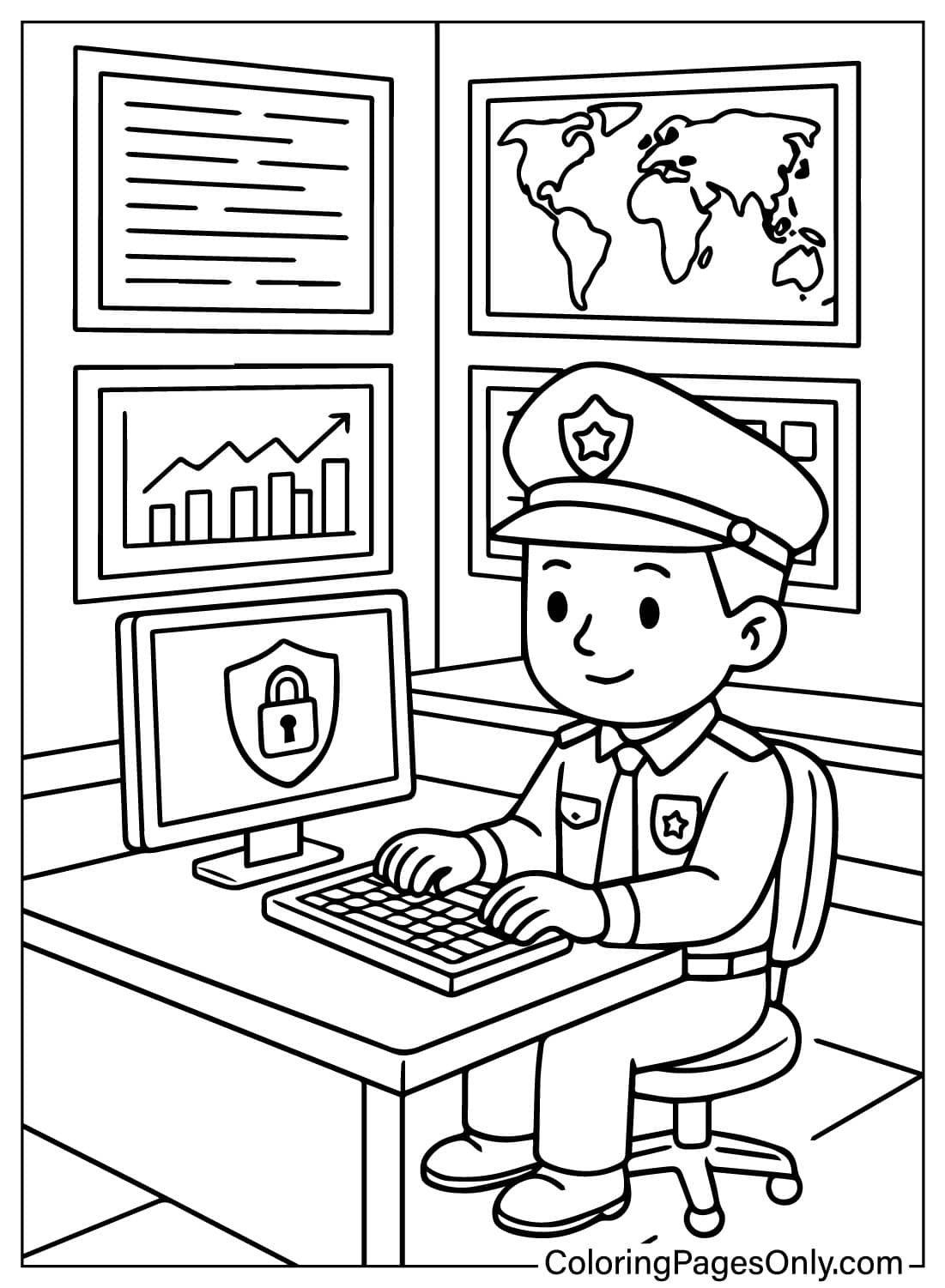
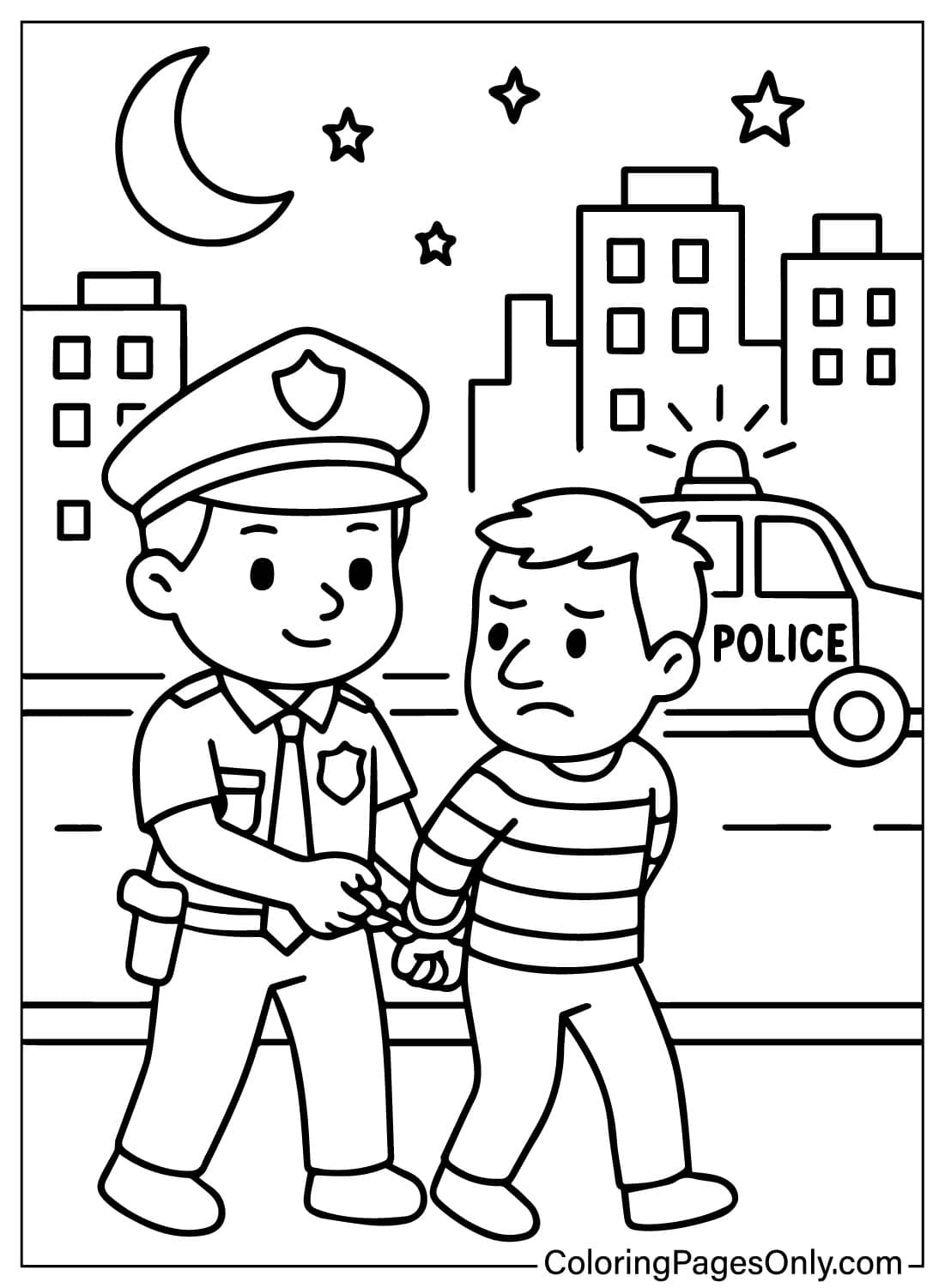
This group covers detective and forensic work, examining evidence, questioning a suspect, tracking a cybercrime, alongside a smaller number of pages showing tactical training and an arrest. Coloring suggestion: keep this group’s palette muted and businesslike, grays and navy, rather than bright or dramatic, since these pages are meant to read as procedural rather than action-focused.
Emergency Response and Rescue
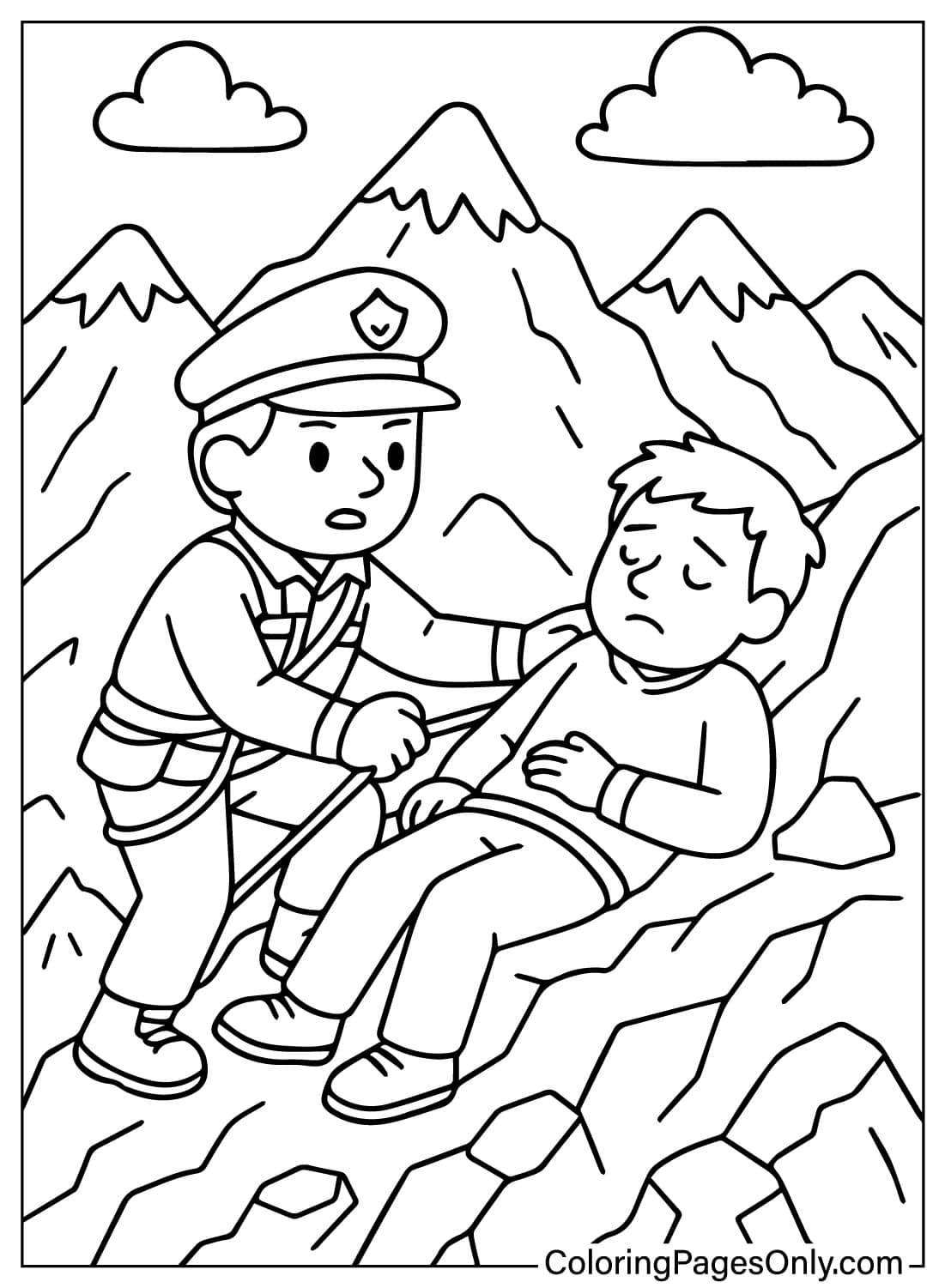
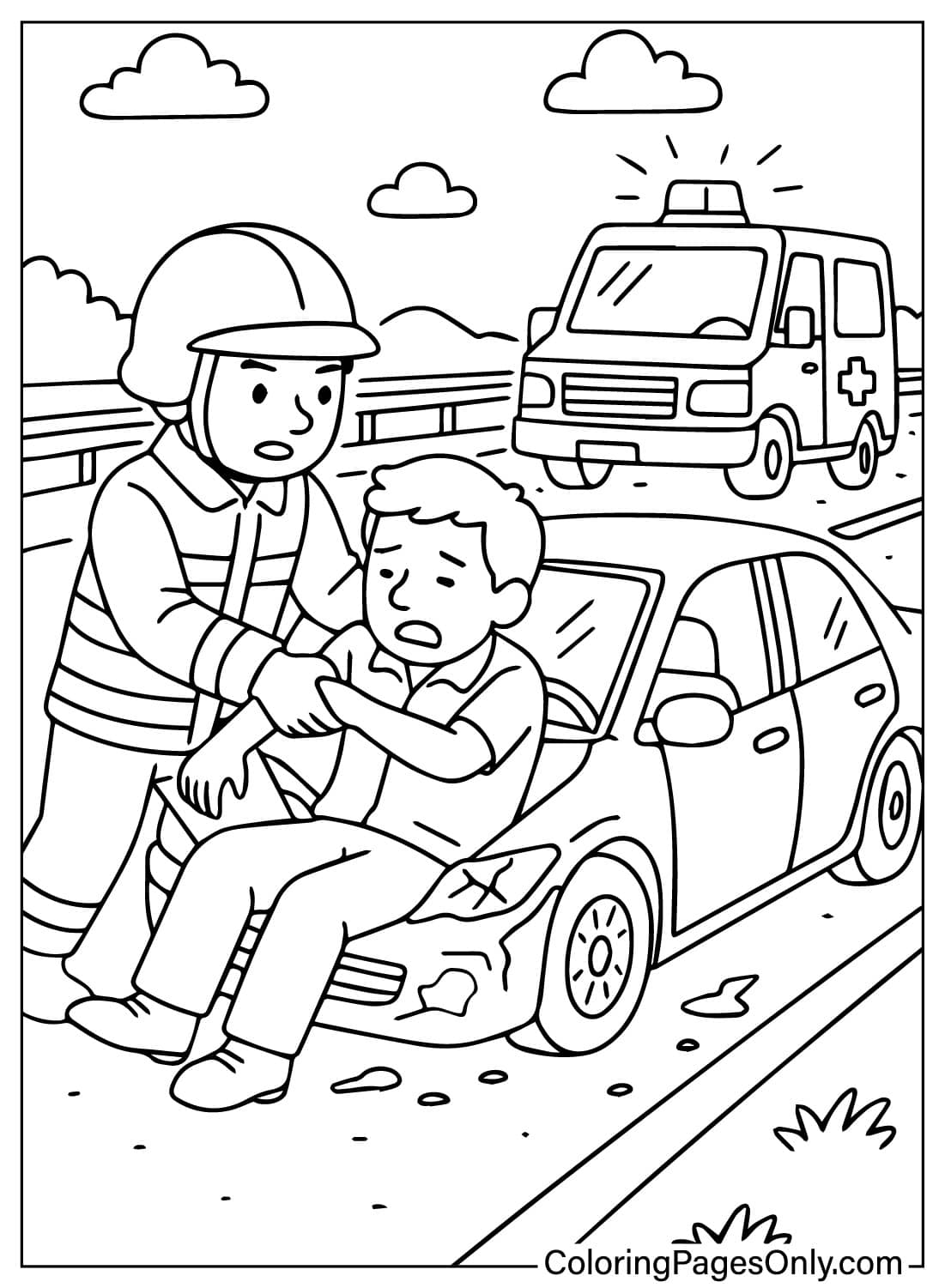
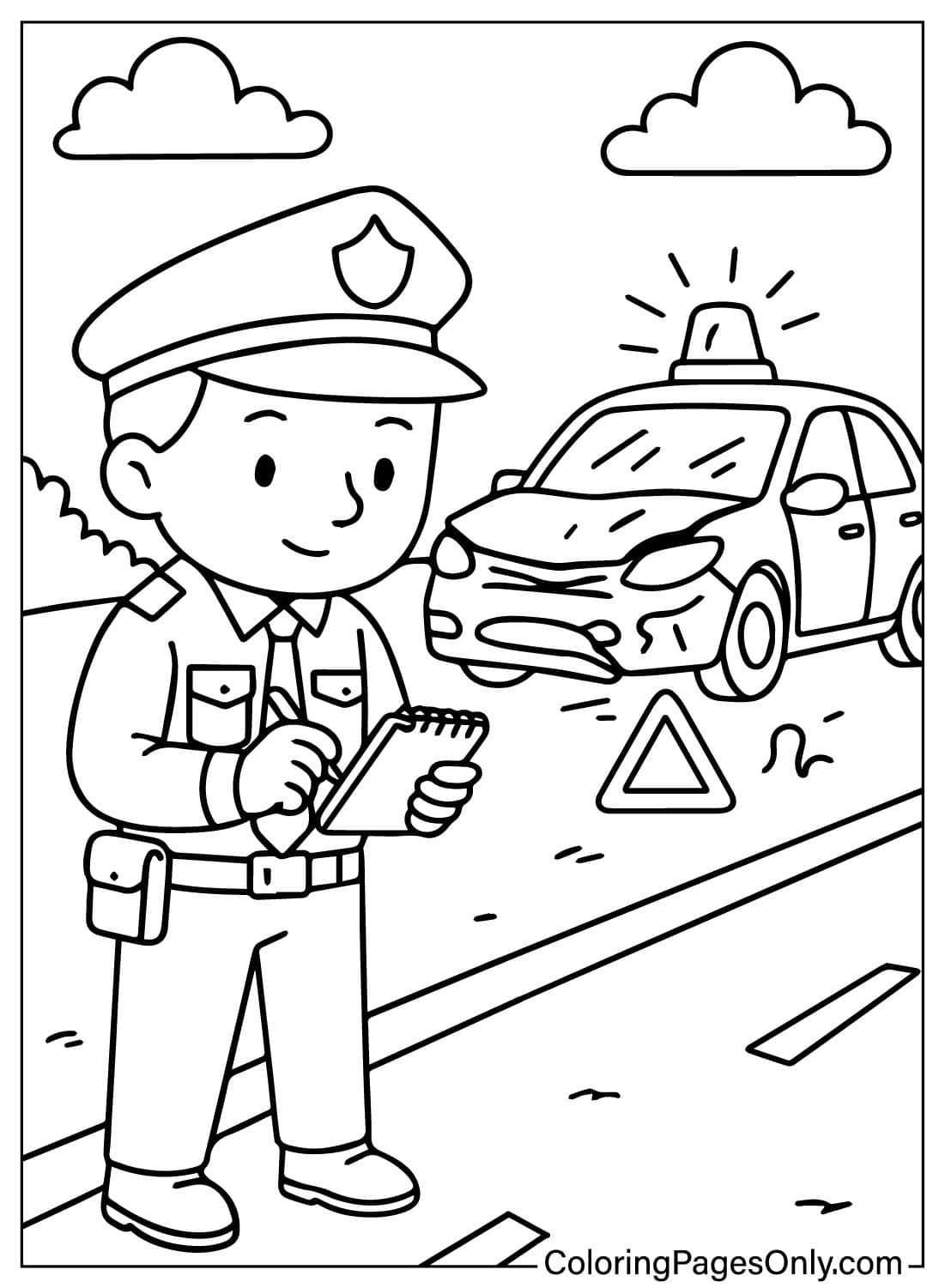
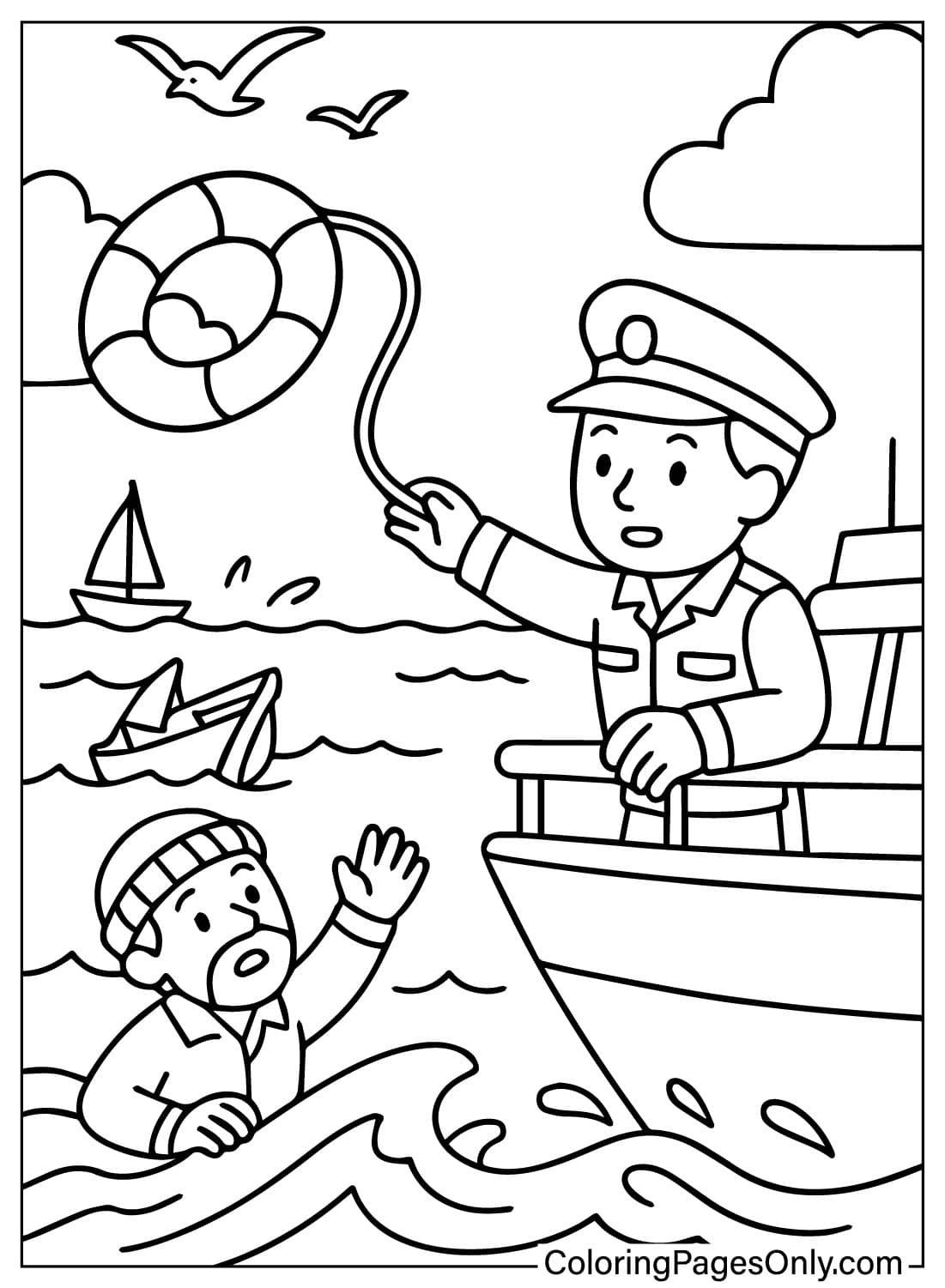
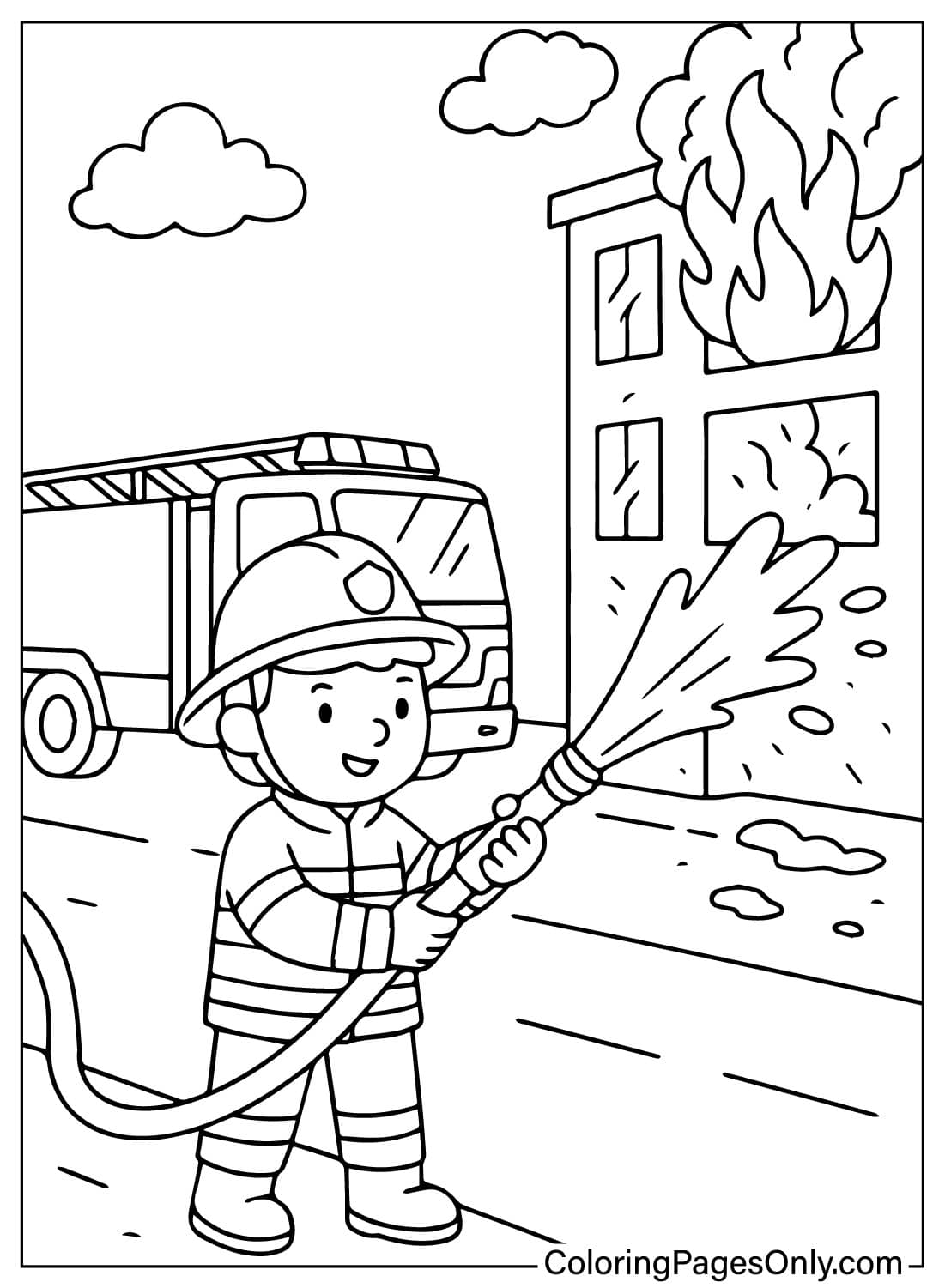
These pages show officers and allied responders handling real emergencies: a mountain rescue, a car accident, a coast guard rescue at sea, and a firefighting scene. Coloring suggestion: use the emergency vehicle or equipment, a coast guard boat, a fire hose, as the page’s brightest color accent, since that’s usually the clearest visual cue for what kind of emergency is being handled.
Community and Ceremonial Scenes
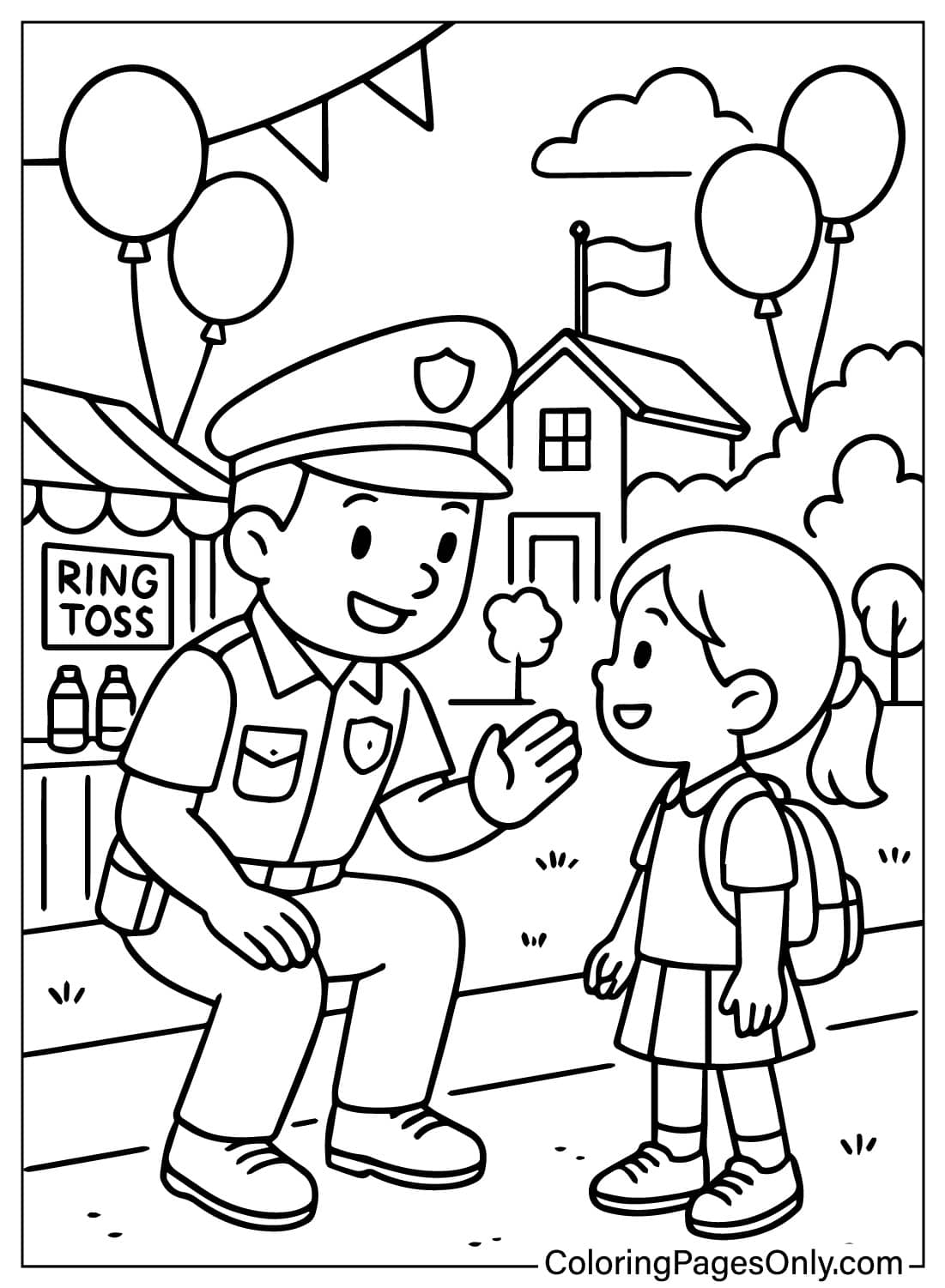
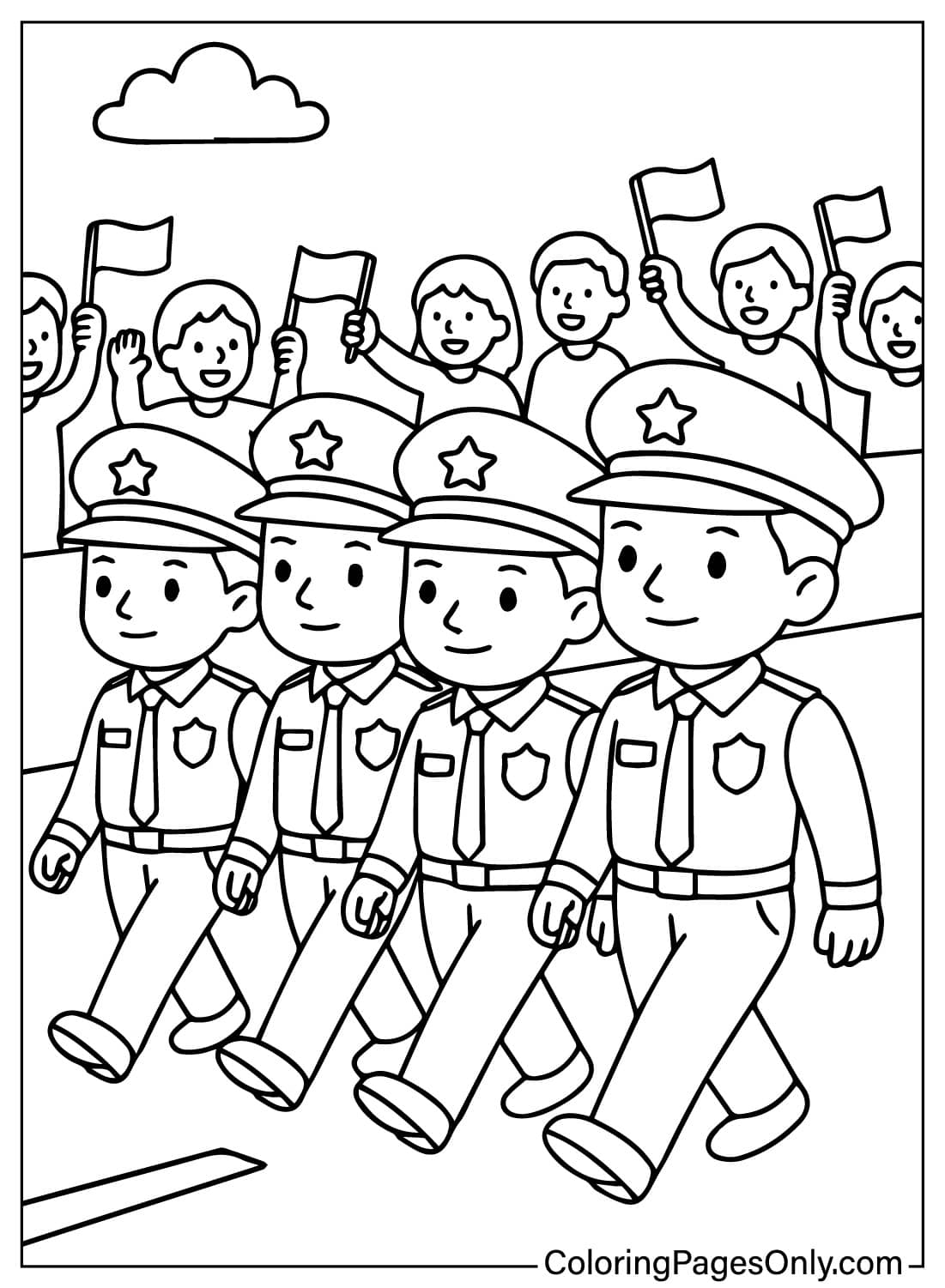
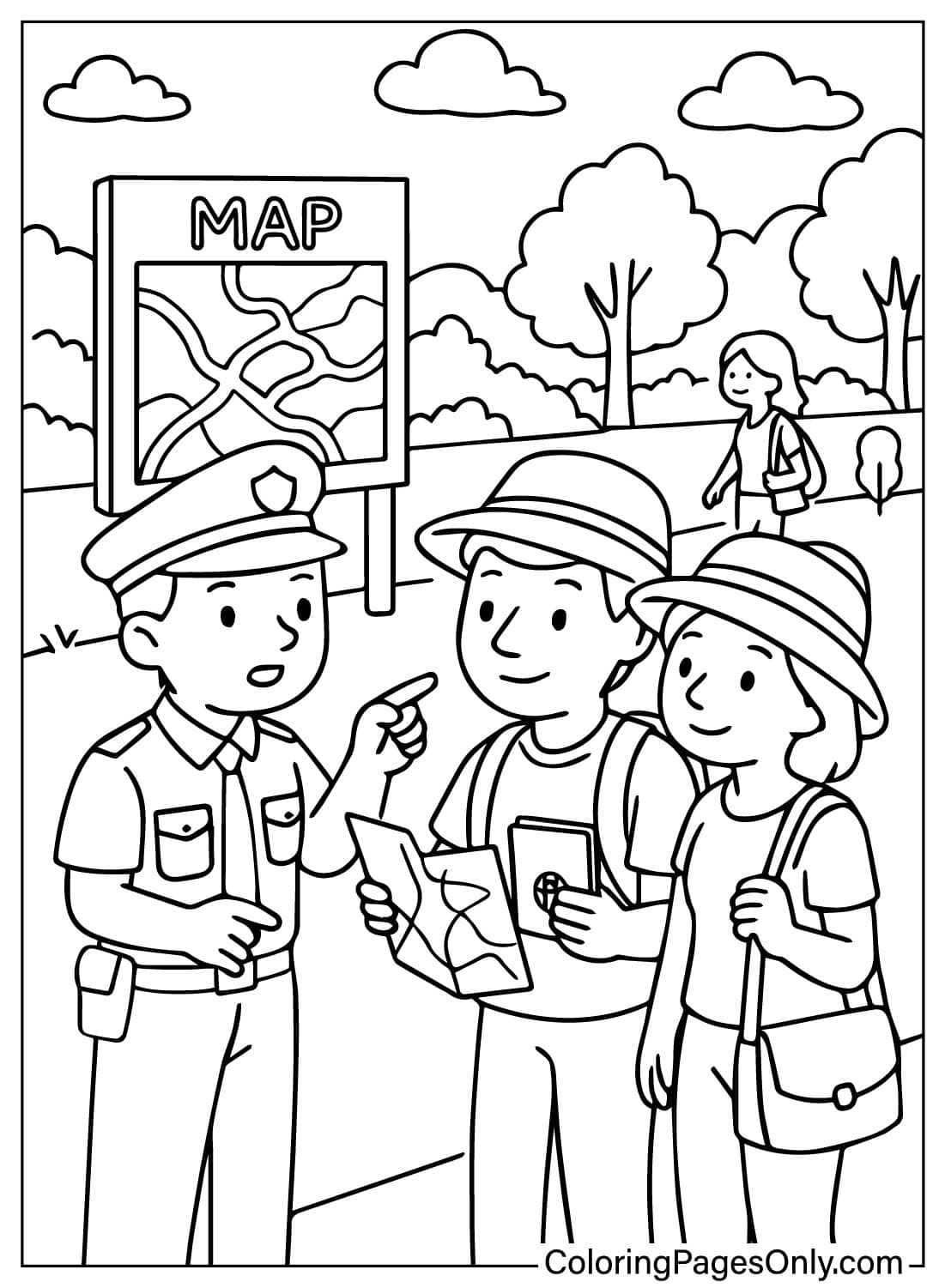
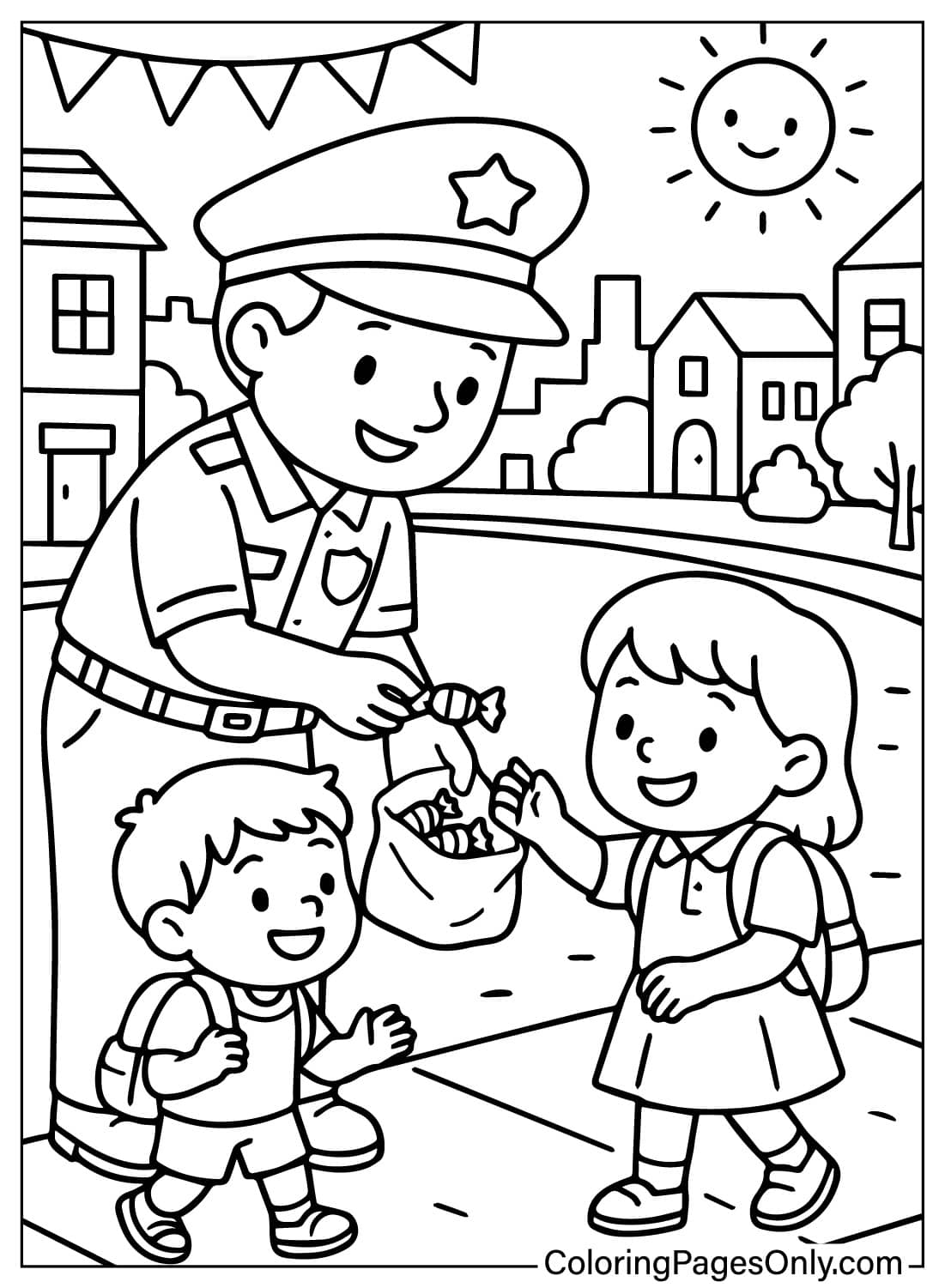
The second-largest group shows officers in friendly, public-facing moments: talking with a child, giving directions to tourists, handing out candy, or marching in a parade. Coloring suggestion: keep this group’s palette warm and approachable, since these pages are built around connection with the community rather than any enforcement action.
What Police Coloring Pages Do
Small hardware, a steadier stroke. A badge’s small edges and a uniform’s buttons and belt hardware call for a steadier, more contained stroke than a large uniform panel does, the kind of precise, small-detail work the American Academy of Pediatrics ties to fine motor development in structured coloring for children ages two through seven.
A recognizable person to ask for help. A page showing an officer helping a child cross the street or giving directions gives a parent a concrete, low-pressure moment to talk about who a child can approach if they’re ever lost or need help in public, grounded in a specific scene rather than an abstract safety rule.
Familiarity over urgency. Most of these scenes show an ordinary, predictable routine, a traffic stop, a school crossing, a neighborhood patrol, rather than anything urgent or uncertain, and that sense of the familiar and expected lines up with the same steady, low-surprise quality a 2005 Art Therapy Journal study connected to reduced anxiety during structured coloring.
One job, many different tasks. Between traffic duty, K9 handling, forensic investigation, and mountain rescue, this collection makes clear that police work isn’t one single task repeated all day, which gives a child a more accurate, varied picture of the job than a single squad-car image would on its own.
How to Color Police Pages Well
- Uniform: Use a deep Navy Blue or Black for the base uniform, with Silver or Gray for buttons, badge outline, and belt hardware to keep metal details distinct from fabric.
- Badge: color it a bright Gold or Silver with a small white highlight, since it’s usually the focal point on the chest.
- Patrol vehicles: use White and Black for the car body, with Red and Blue kept separate and vivid for the light bar rather than blended into one color.
- K9 partners: give the dog a natural, breed-accurate coat color and a simple dark vest, keeping the animal itself as the visual focus rather than the gear.
- Investigation and specialized scenes: keep this group’s colors muted and businesslike, grays and navy, rather than bright or dramatic, since these pages are procedural rather than action scenes.
- Community scenes: use warmer, more approachable tones throughout, since these pages are built around friendly interaction rather than any enforcement moment.
5 Creative Craft Ideas With Police Coloring Pages
1. Police Badge Craft
Color a page featuring a badge close-up, cut out the badge shape, and attach it to a ribbon or safety pin for pretend-play wear.
2. Community Helper Poster
Color a few pages from different groups, patrol, K9, and community scenes, and arrange them together on a poster as a community helper display.
3. Patrol Car Diorama
Color a patrol car page, cut it out, and stand it inside a small shoebox scene with a road drawn on the base.
4. Street Safety Sign Set
Alongside a colored traffic-duty page, draw and color a few simple street signs, a stop sign or crosswalk sign, to build a small safety set.
5. Thank-You Card for Local Officers
Color a page, mount it on cardstock, and write a short thank-you note inside to give to a local police department.
Frequently Asked Questions
What are Police coloring pages?
A free set of 38 printable designs showing officers in patrol, K9, investigation, rescue, and community roles. Every page downloads as a PDF or opens in the online coloring tool without an account.
What kinds of police work are shown in this collection?
The set spans everyday patrol and traffic duty, K9 units, detective and forensic investigation, emergency rescue scenes, and community-facing moments like parades and casual conversations.
Where did K9 police units come from?
The first police department to formally add dogs to its force was in Ghent, Belgium, in 1899, when an officer shortage led the department to train ten sheepdogs for nightly patrols.
Why does the collection include a firefighter and a coast guard scene?
A small number of pages reflect the fact that public safety work often involves multiple agencies; a firefighting scene and a coast guard rescue appear alongside the police-focused pages for that reason.
Do any pages show tactical or enforcement scenes?
A small group covers tactical training and an arrest scene, kept factual and low-key rather than framed around action, alongside the much larger number of everyday and community-focused pages.
Can these pages be colored without printing them?
Yes. Every page in the set opens directly in the site’s browser-based coloring tool, so a page can be finished on screen before deciding whether to print it.
Are Police coloring pages suitable for young children?
Most of the collection, the everyday patrol and community scenes, work well for a young child. The investigation and tactical-training pages carry more detail and suit an older child better.
What colors work best for a police uniform?
A deep navy blue or black base, silver or gray for badge and hardware details, and gold or silver reserved specifically for the badge itself, since that combination matches how most real police uniforms are actually colored.
Start Coloring
Sharing a finished page is as simple as the buttons at the top of each design, Facebook, or Pinterest, whenever it’s ready. Getting there takes a click: every design above opens as a PDF or as an online coloring page, free and without an account.