Santiago of the Seas Coloring Pages
 By:
Charlotte Taylor - Content Writer
Updated:
By:
Charlotte Taylor - Content Writer
Updated:
Santiago of the Seas coloring pages: 18 free printable PDF designs covering Santiago portraits, Tomás and crew together, Lorelai the mermaid, and Bonnie Bones and her companion. Print any page as a PDF, or color it right in the browser, no account needed either way.
This show grew out of a real childhood. Creator Niki López was born and raised in Old San Juan, Puerto Rico, and the “good pirate” premise behind Santiago comes directly from real local folklore she grew up hearing, stories about pirates who protected certain towns rather than raided them. She’s described the whole project as home, built from the lore and mythology she actually grew up surrounded by, not something invented from scratch for television.
The show’s bilingual dialogue is just as deliberate. Spanish and English are blended the way real bilingual families actually speak at home, rather than translated back and forth, a choice López has compared directly to how “Into the Spider-Verse” handled similar language mixing. Reviewers have noticed the difference: Common Sense Media called the series exceptional, and more than one reviewer has specifically praised it for representing Latino-Caribbean culture without feeling patronizing or appropriative, a distinction critics don’t always grant to preschool television.
These pages suit young pirate fans, families building bilingual vocabulary alongside coloring time, and anyone who appreciates a show built on one creator’s real memories rather than a generic adventure template.
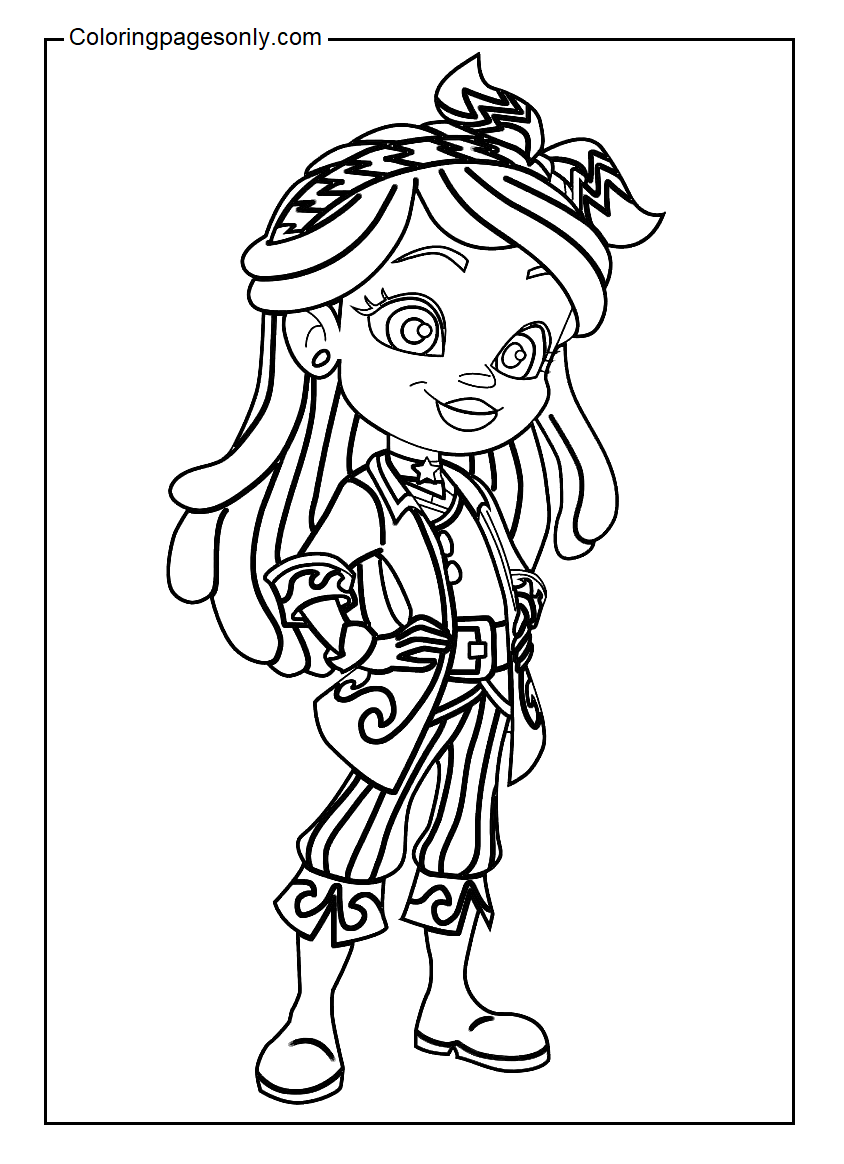
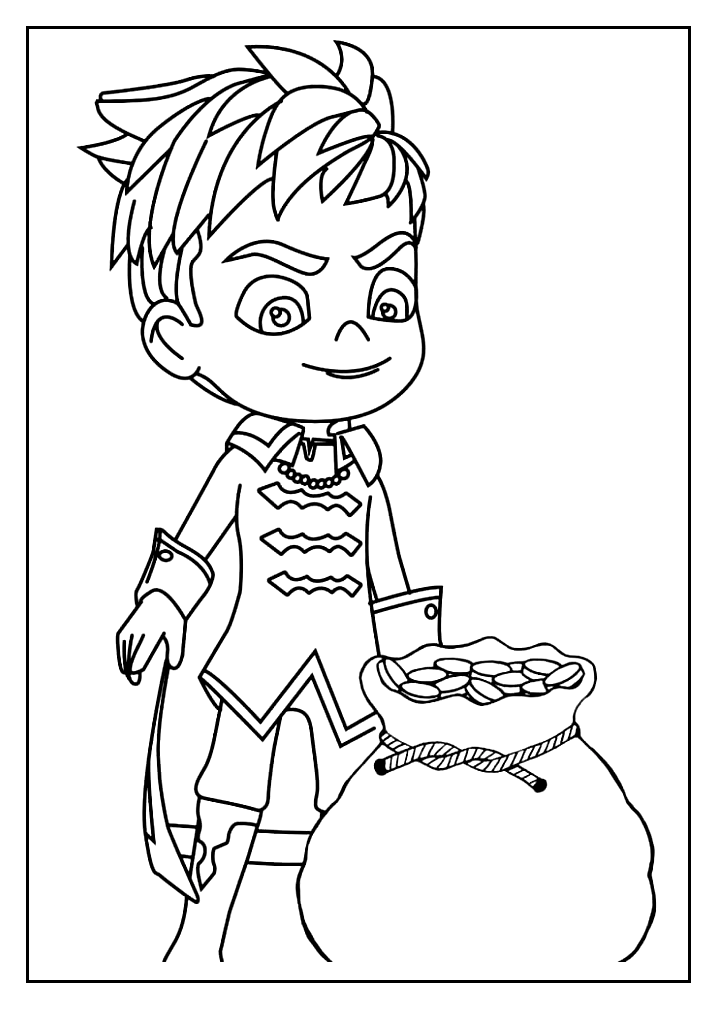
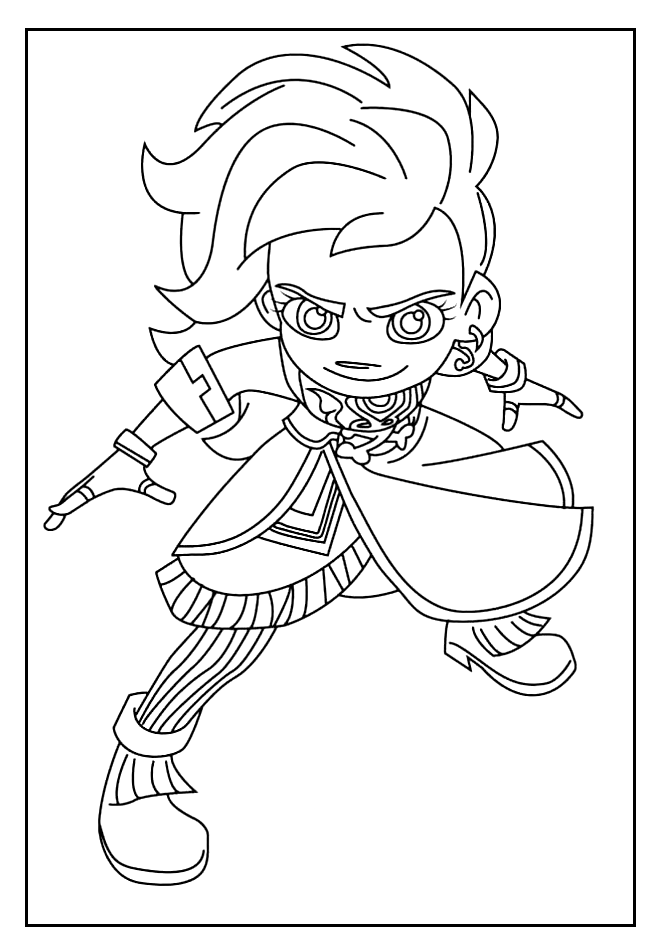
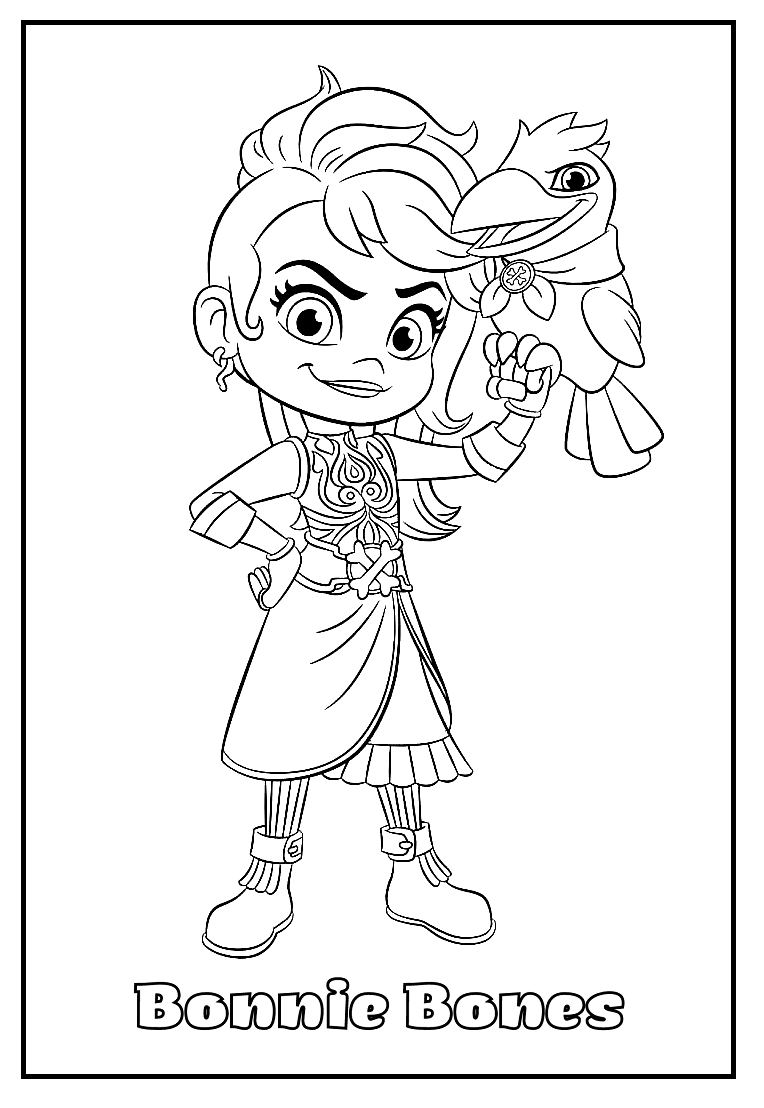
What’s Inside This Collection
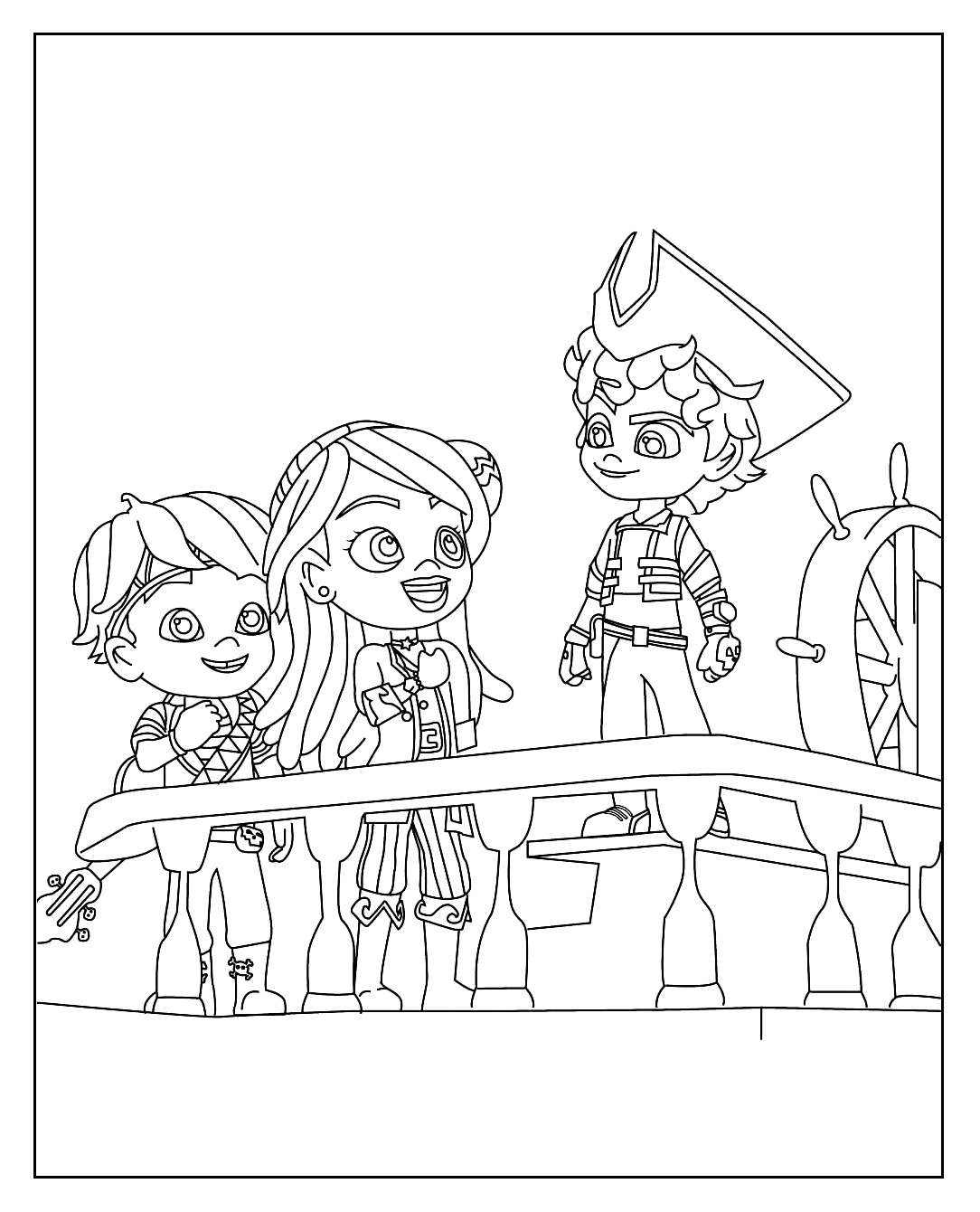
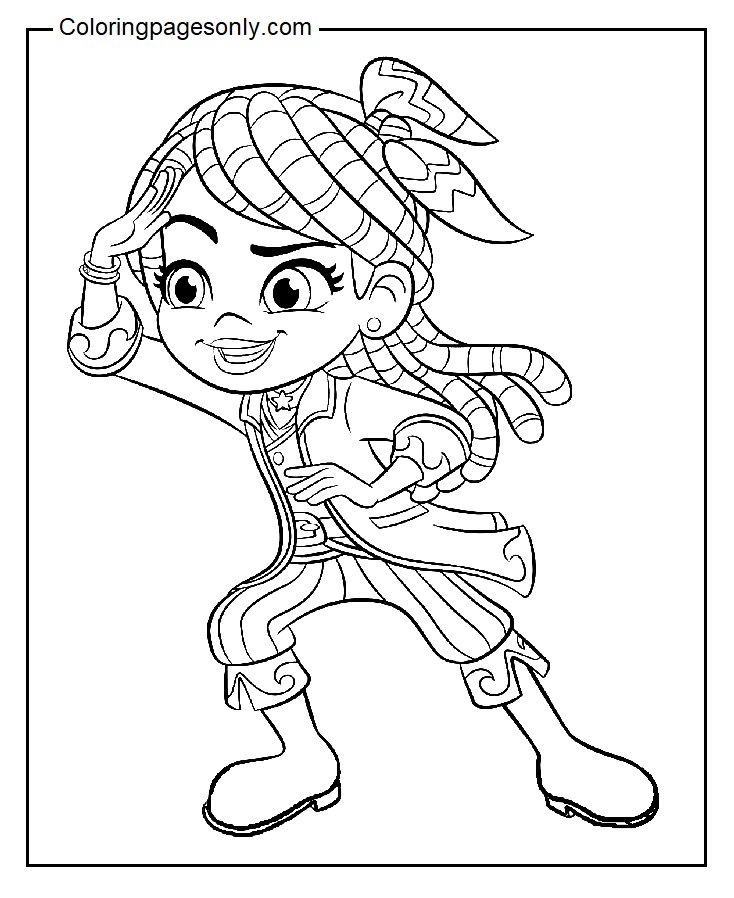
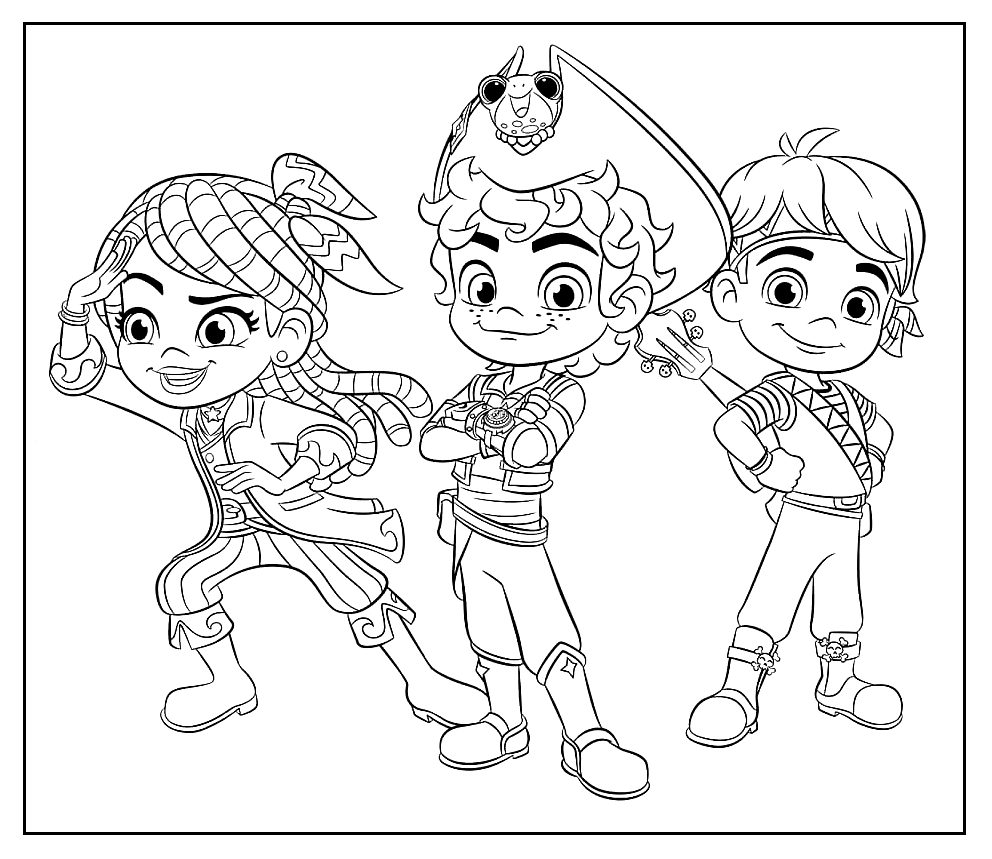
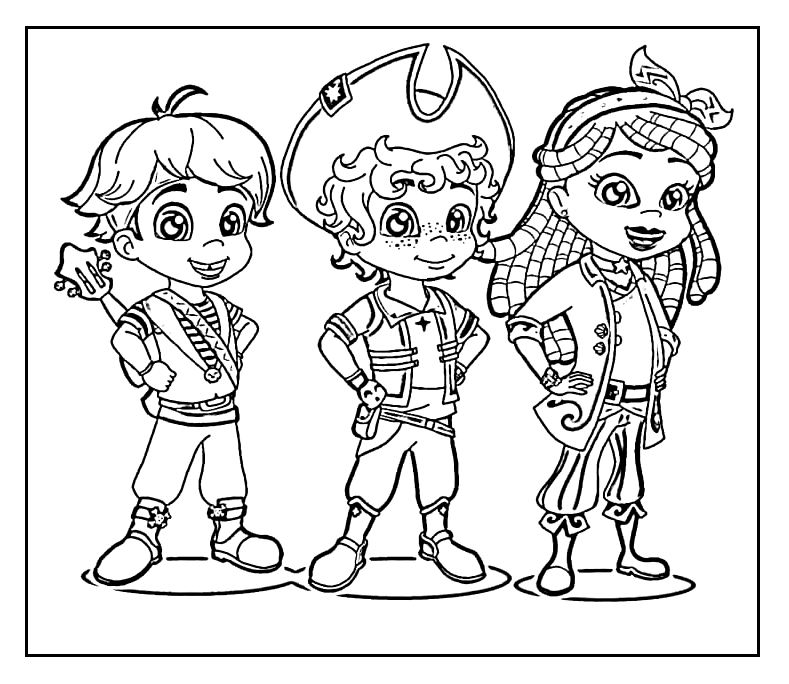
Santiago, Lorelai, and Tomás lead the 18 designs, with Bonnie Bones and Sir Butterscotch adding a bit of pirate mischief.
Captain Santiago
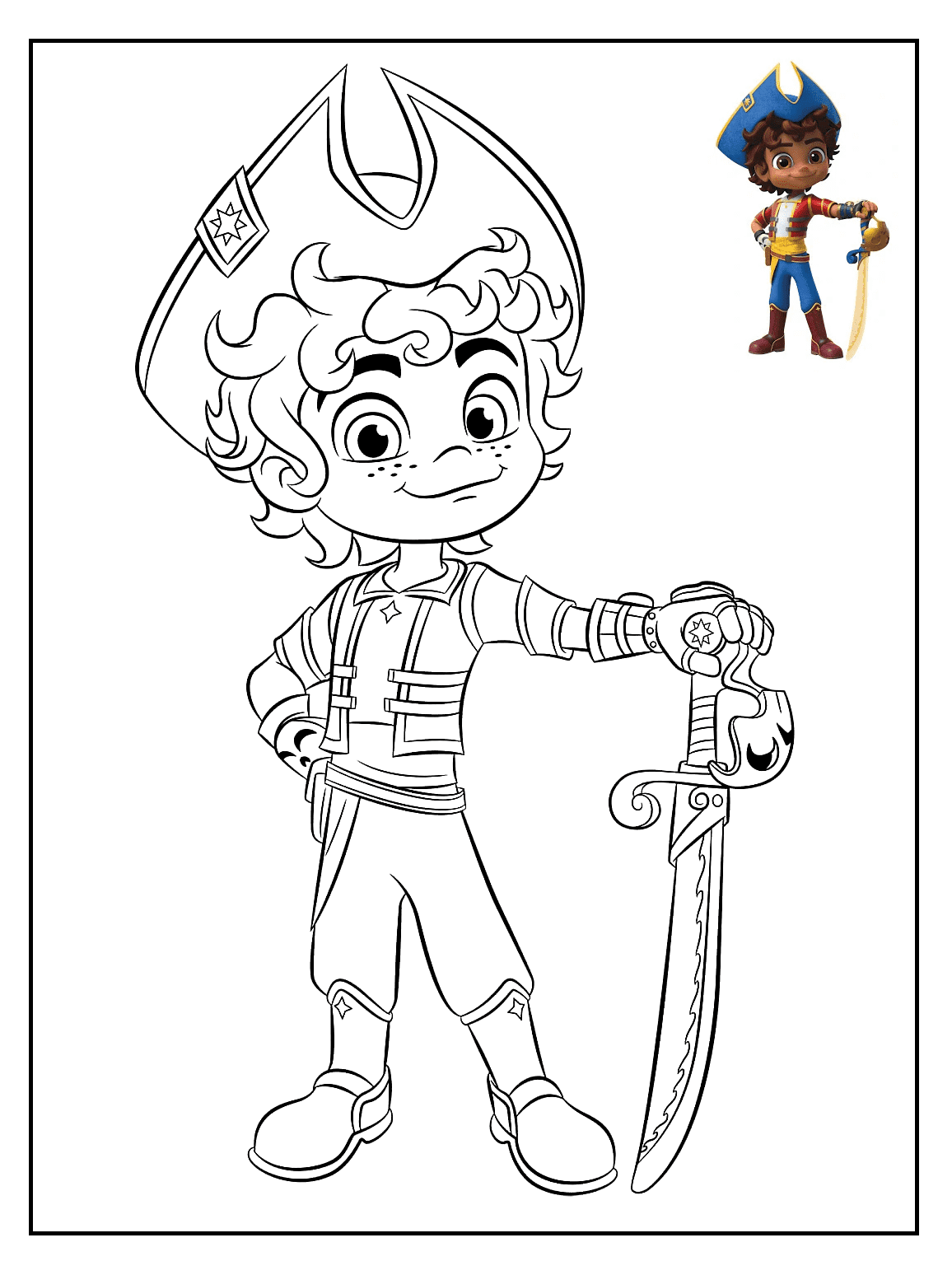
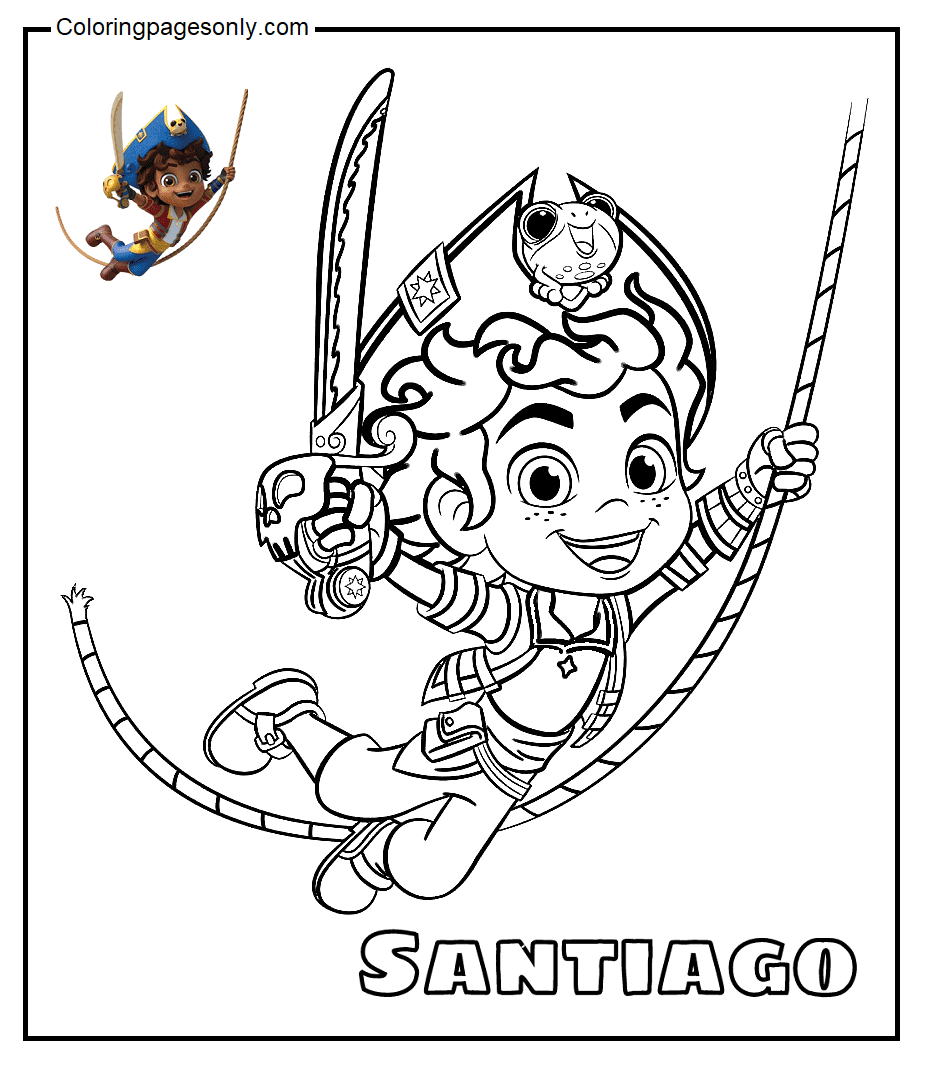
Santiago appears with his sword in two classic portraits, with his friends, and in a three-way scene with Bonnie Bones and Tomás. Try warm Brown for his hair, a bright Red bandana, a White shirt, and a Blue vest so he looks ready to sail.
Tomás
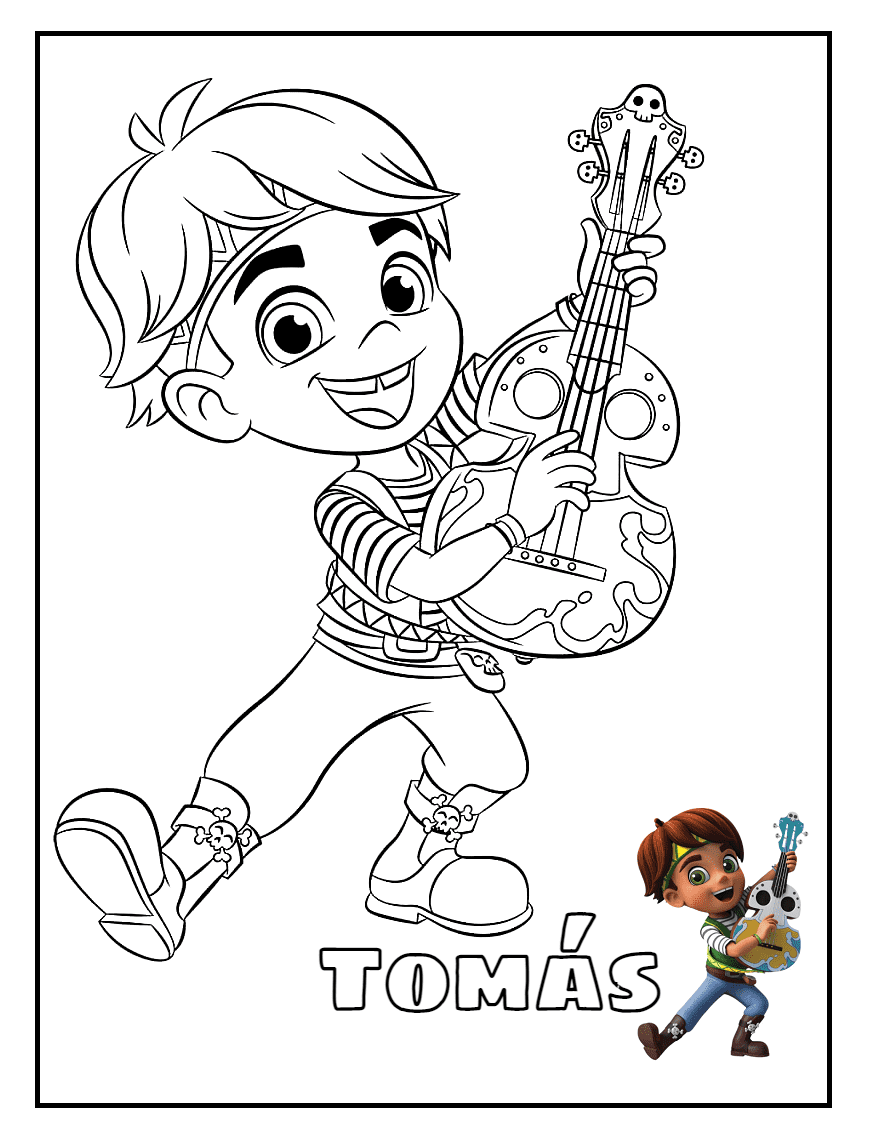
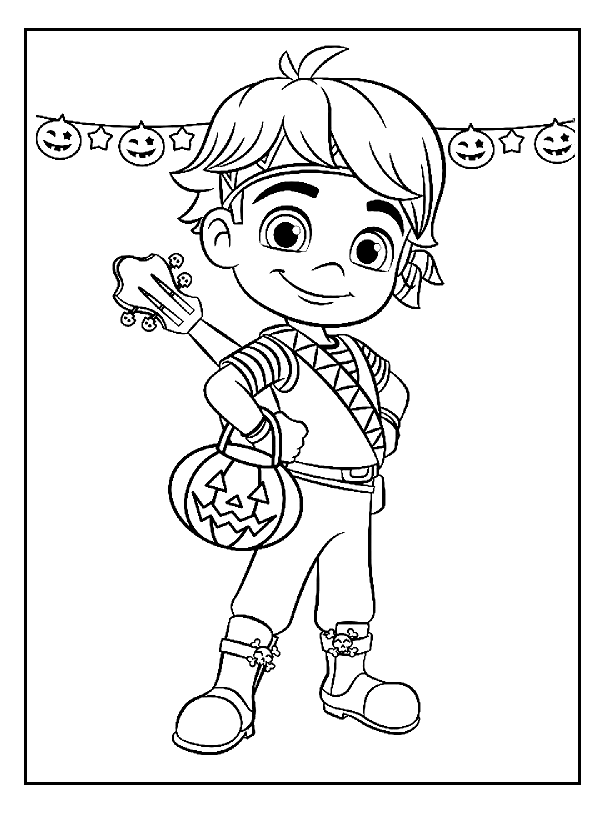
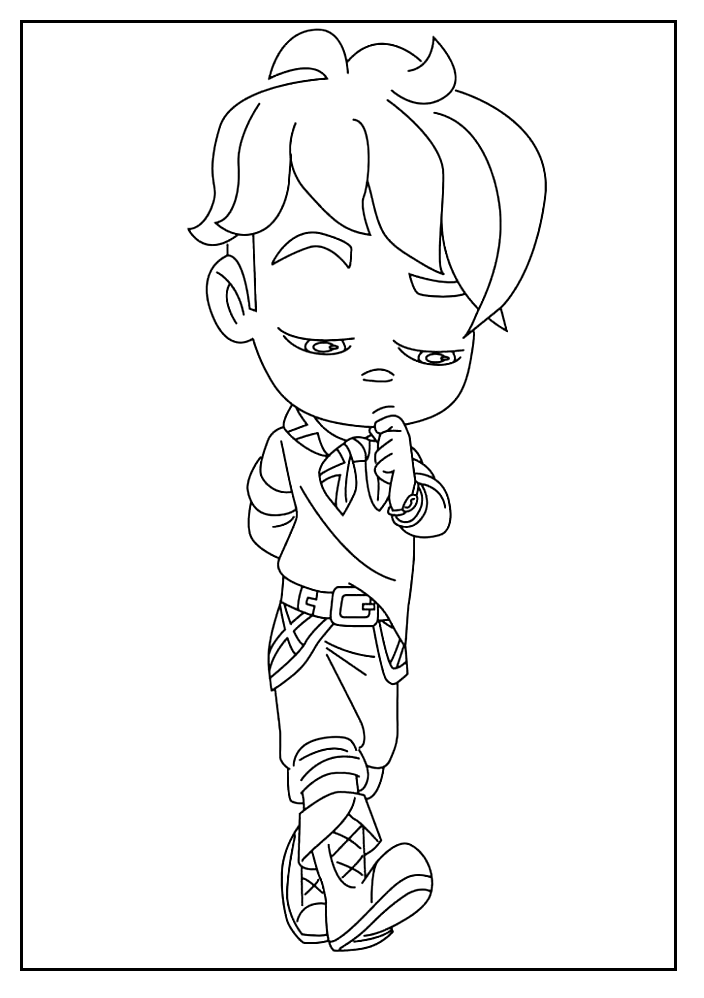
Santiago’s cousin and first mate has two regular pages and a Halloween costume sheet. Give him a Green or Teal outfit to set him apart from Santiago, and switch to festive Pumpkin Orange plus Violet for his costume sheet.
Lorelai the Mermaid
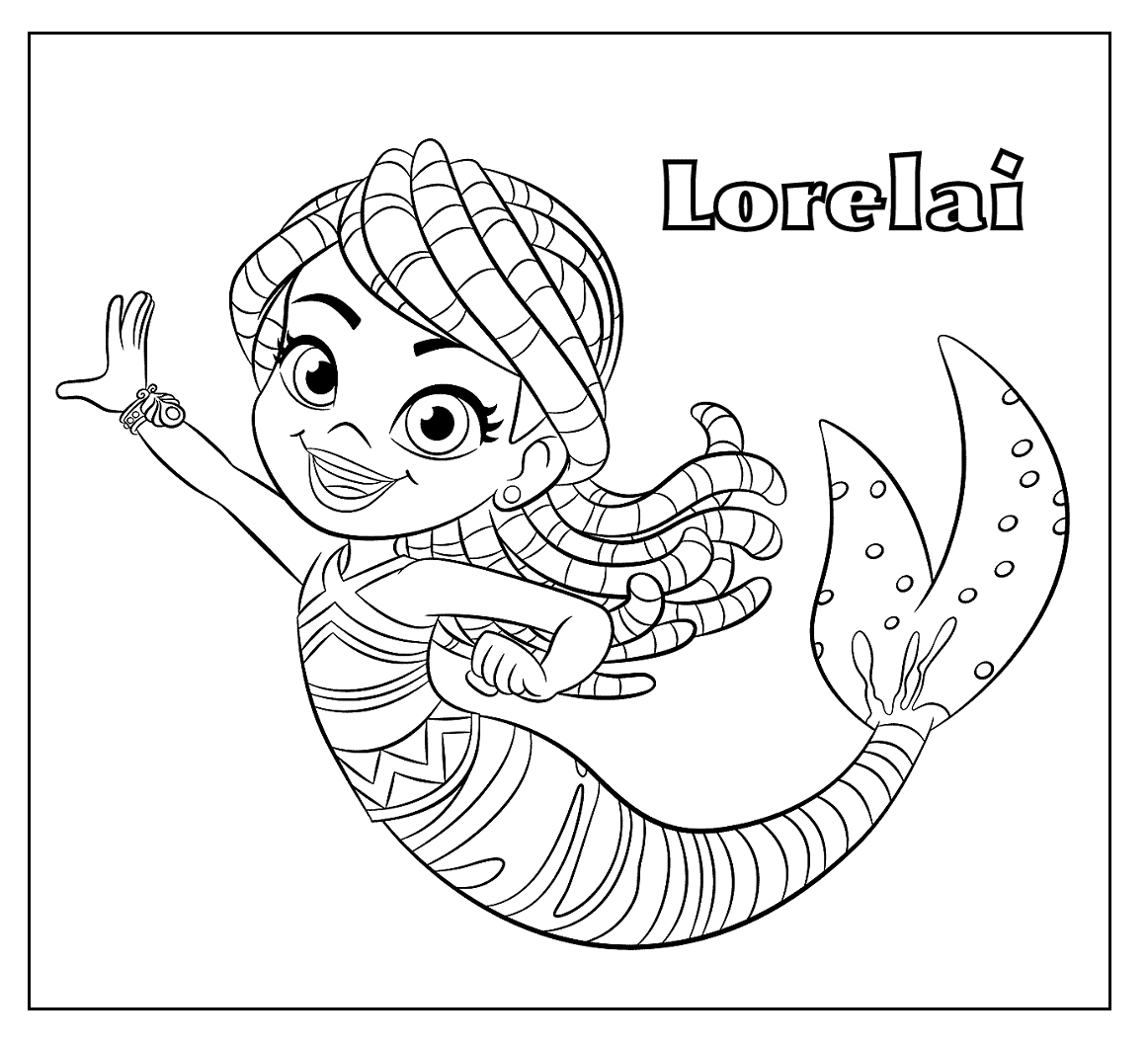
Lorelai appears alone, dressed as a pirate, and swimming with a friendly octopus. Try a shimmering Turquoise tail with lighter scales, Pink or Purple hair, and a Pearl White bracelet on her wrist.
Bonnie Bones and Sir Butterscotch
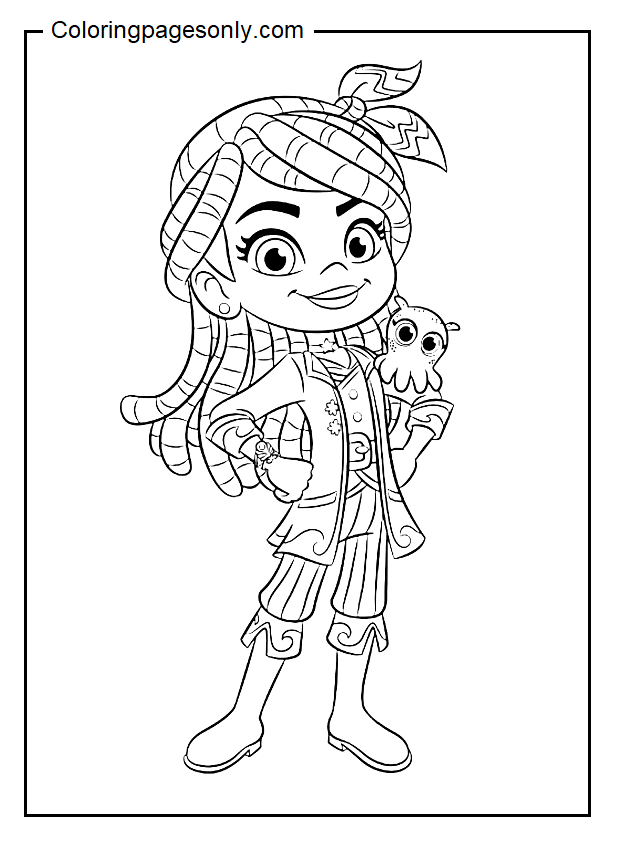
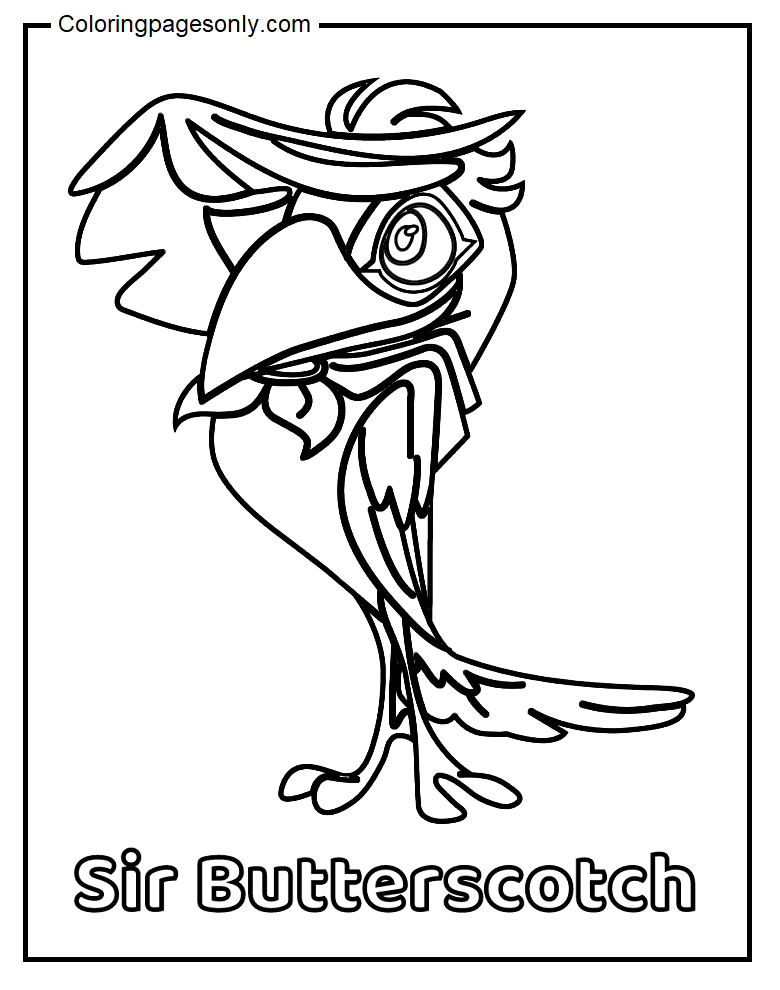
Bonnie Bones has a solo page and one with Sir Butterscotch, who also gets his own sheet. Dress Bonnie in deep Purple with Gold trim, and give her feathered sidekick glossy Black feathers, Charcoal wingtips, and a Yellow beak.
Crew and Printable Pages
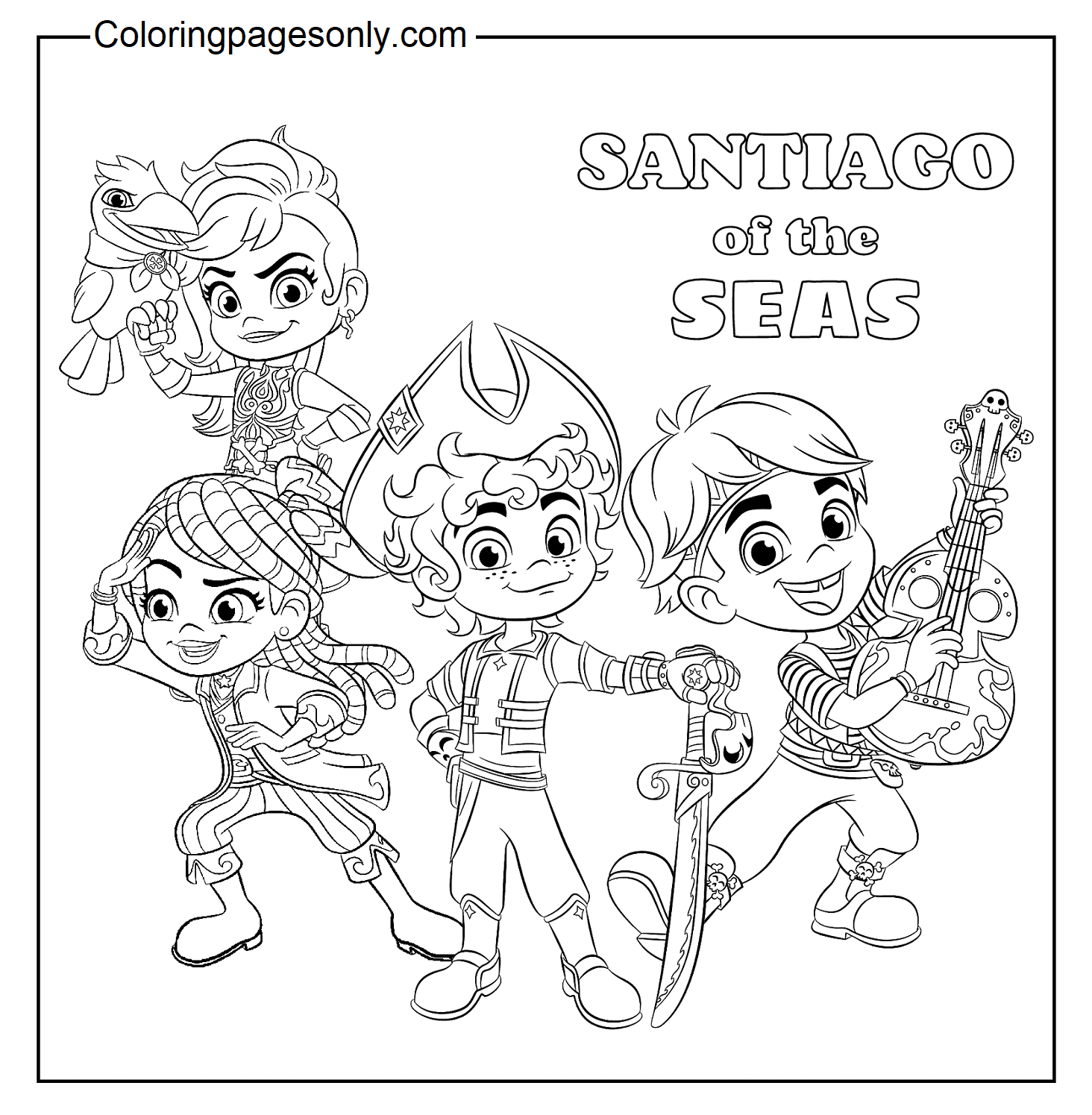
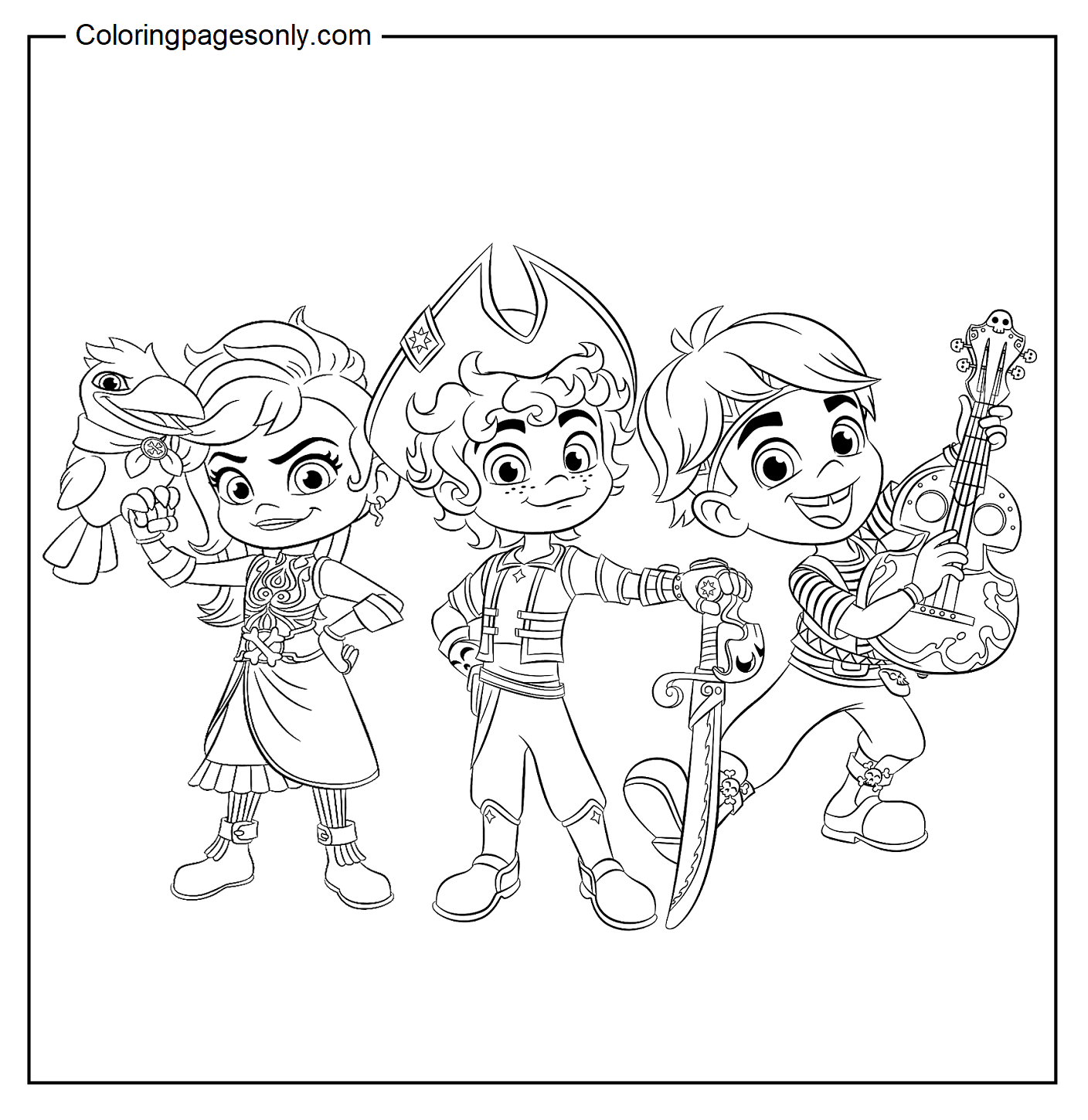
Three general sheets show the series title and favorite characters together. Pick one main color for each character and repeat it on every page so young kids can name them easily.
What Santiago of the Seas Coloring Pages Do
Learning Spanish words along the way. The show sprinkles Spanish into every adventure. While coloring, families can practice simple words like “amigo,” “barco,” and “agua,” and point to the matching parts of each picture.
Building strong little hands. Big shapes like sails, tails, and hats help preschoolers practice grip and control. Scribbling and coloring build the hand strength later needed for writing, a reason the American Academy of Pediatrics suggests offering crayons early.
Quiet time after big adventures. Researchers Curry and Kasser found in 2005 that filling a ready-made outline calmed people more than open-ended drawing, as their Art Therapy paper explains. A simple Lorelai or Santiago page fits nicely into a pre-nap routine.
Celebrating Latino-Caribbean culture. Music, food, and family traditions from the Caribbean appear throughout the series. Coloring the crew can start conversations about family heritage and the many places people come from.
How to Color Santiago of the Seas Coloring Pages
- Keep Santiago’s expression confident and open, not fierce. He’s written as brave and kind-hearted, so a warm, capable look suits him better than an aggressive pirate stereotype.
- Include Tomás’s magical guitar carefully wherever it appears. It’s a specific, established part of his character, not a generic prop, so it deserves real attention.
- Check whether Lorelai is shown with a tail or legs before coloring. She genuinely transforms between mermaid and human forms depending on the story, so getting the right one matters.
- Give Bonnie Bones a mischievous look rather than a menacing one. She’s a rival in a show built around kindness, not a purely evil villain, and her expression should reflect that.
5 Creative Craft Ideas with Santiago of the Seas Coloring Pages
1. Real-Folklore Fact Card
Color a Santiago portrait and add a short note about the real Puerto Rican folklore the show’s “good pirate” idea is based on – ten minutes of coloring, plus a genuine piece of the show’s real background.
2. Transformation Detail Study
Color two Lorelai pages, one with a tail and one with legs, and talk about how and why she actually changes between the two in the show. Fifteen minutes for a detail-focused project.
3. Bilingual Word Card
Color a Santiago or crew page and write a few Spanish words alongside their English meanings, echoing the show’s own real bilingual style – ten minutes, built around genuine language learning.
4. Crew Gallery
Color Santiago, Tomás, and Lorelai together and display them as a small gallery of the crew who actually work together throughout the show. Twenty minutes for a colorful group display.
5. Good Pirate Card
Color the Santiago with sword page and write a short note about what it means to be a “good pirate,” tying it back to the real local legends the show is based on – ten minutes, built around the show’s actual founding idea.
FAQ About Santiago of the Seas Coloring Pages
Are these Santiago of the Seas coloring pages free, and can I color them online?
Completely free, with nothing to sign up for. Print the PDF for the table, or open the online tool to color straight from the browser.
What age group are these Santiago of the Seas coloring pages best suited for?
The general portraits work well from age 3. The pages are generally suited through age 6, matching the show’s own real target audience.
Is the “good pirate” idea in the show based on anything real?
Yes. Creator Niki López has said the concept comes from real local folklore she grew up with in Old San Juan, Puerto Rico, stories about pirates who protected certain towns rather than raided them.
Why does the show mix Spanish and English?
It’s a deliberate choice meant to reflect how real bilingual families actually speak at home, blending languages naturally within sentences rather than translating dialogue back and forth.
Who created Santiago of the Seas, and when did it premiere?
It was created by Niki López, Leslie Valdes, and Valerie Walsh Valdes, and premiered on Nickelodeon and Nick Jr. on October 9, 2020.
Has the show received any real recognition?
Yes. Reviewers, including Common Sense Media, have praised it for authentic cultural representation, and its sound design team received a real Emmy nomination in 2025.
Are these pages official Nickelodeon products?
No. These are fan-style coloring pages inspired by the characters and are not official merchandise. They are not licensed by or affiliated with Nickelodeon, Paramount, or any other rights holder connected to the show.
Can I use these pages for a classroom activity on world cultures or bilingual learning?
Yes. The show’s real Puerto Rican folklore roots and its genuine bilingual dialogue make these pages a natural fit for a classroom activity introducing young kids to Latino-Caribbean culture and simple Spanish vocabulary.
Start Coloring
Download any page by clicking the design. No account, email, or payment is required. Pages print directly from the browser at full resolution or open in the online coloring tool for screen use. Share finished pages on Facebook or Pinterest using the share buttons at the top of each design page.