Shanks Coloring Pages
 By:
Nam Nguyen – Founder & SEO Lead
Updated:
By:
Nam Nguyen – Founder & SEO Lead
Updated:
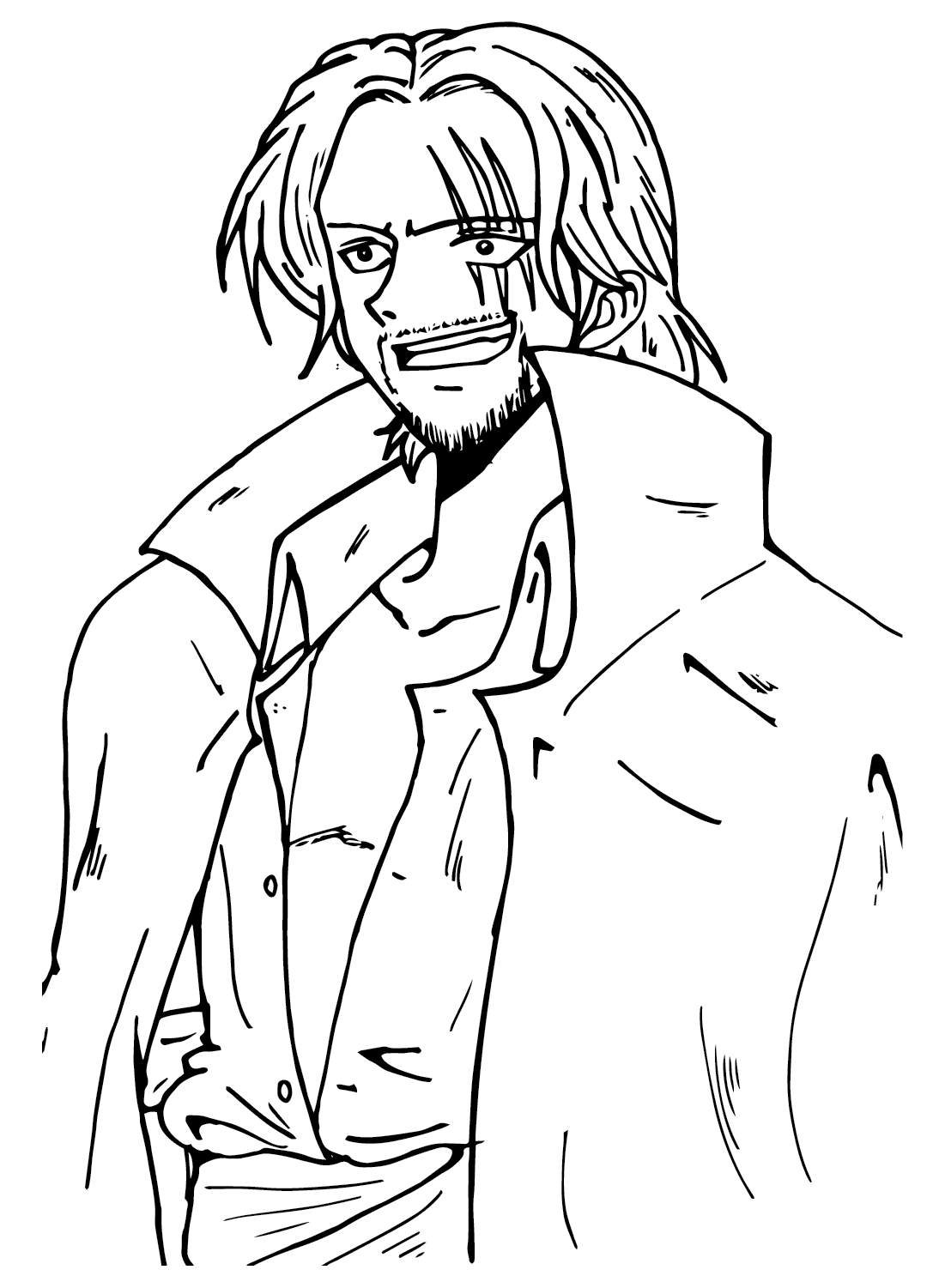
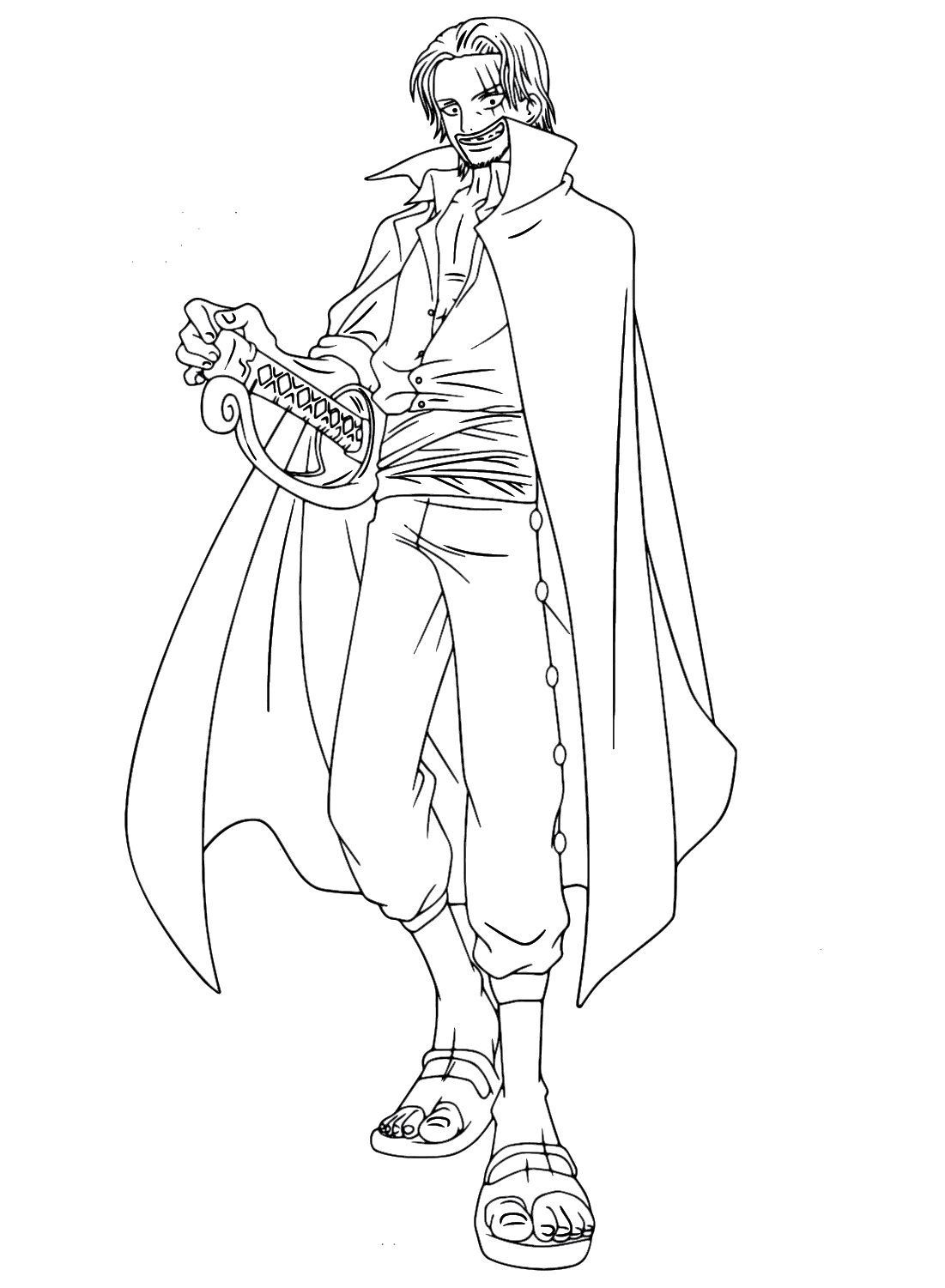
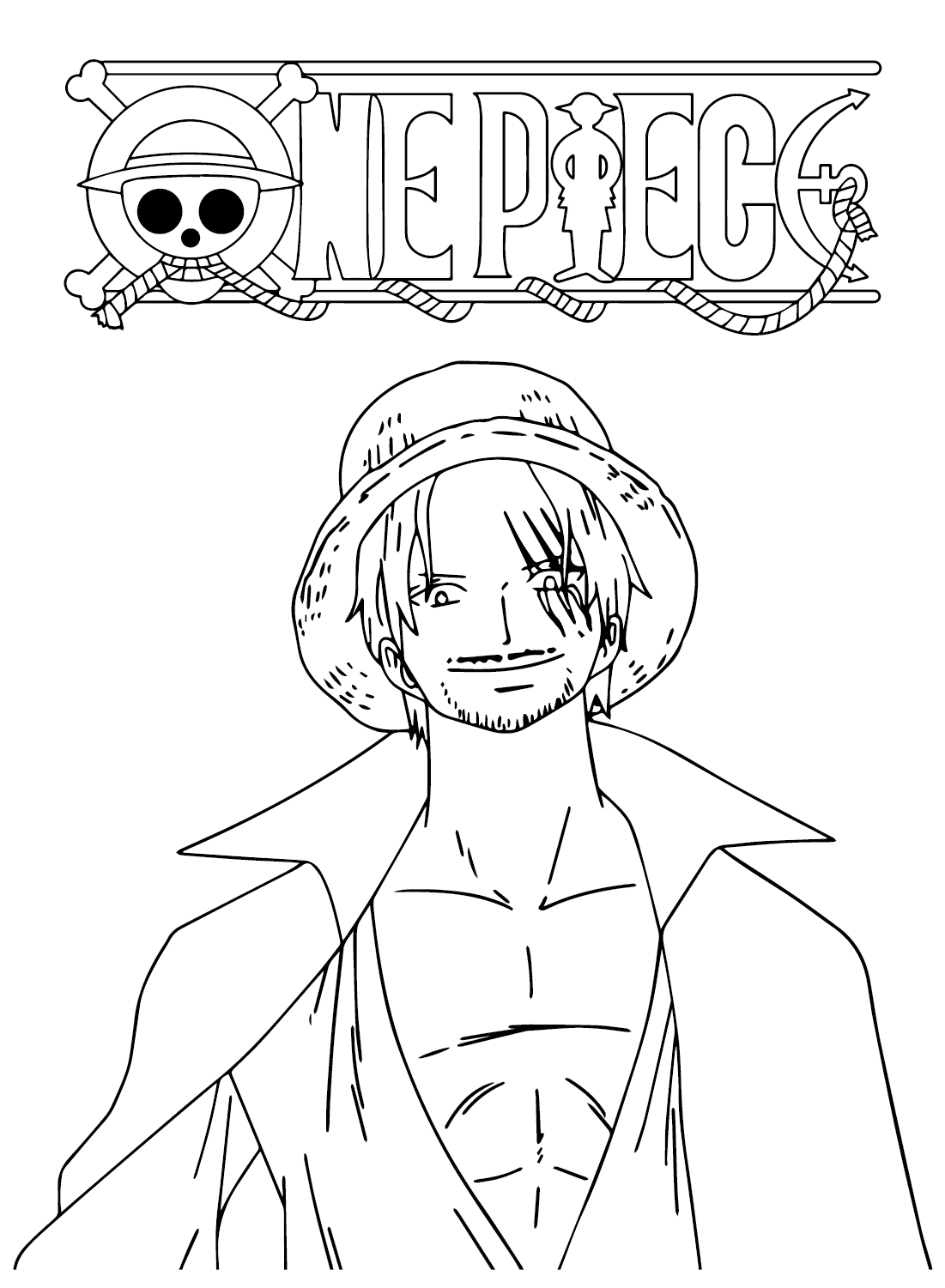
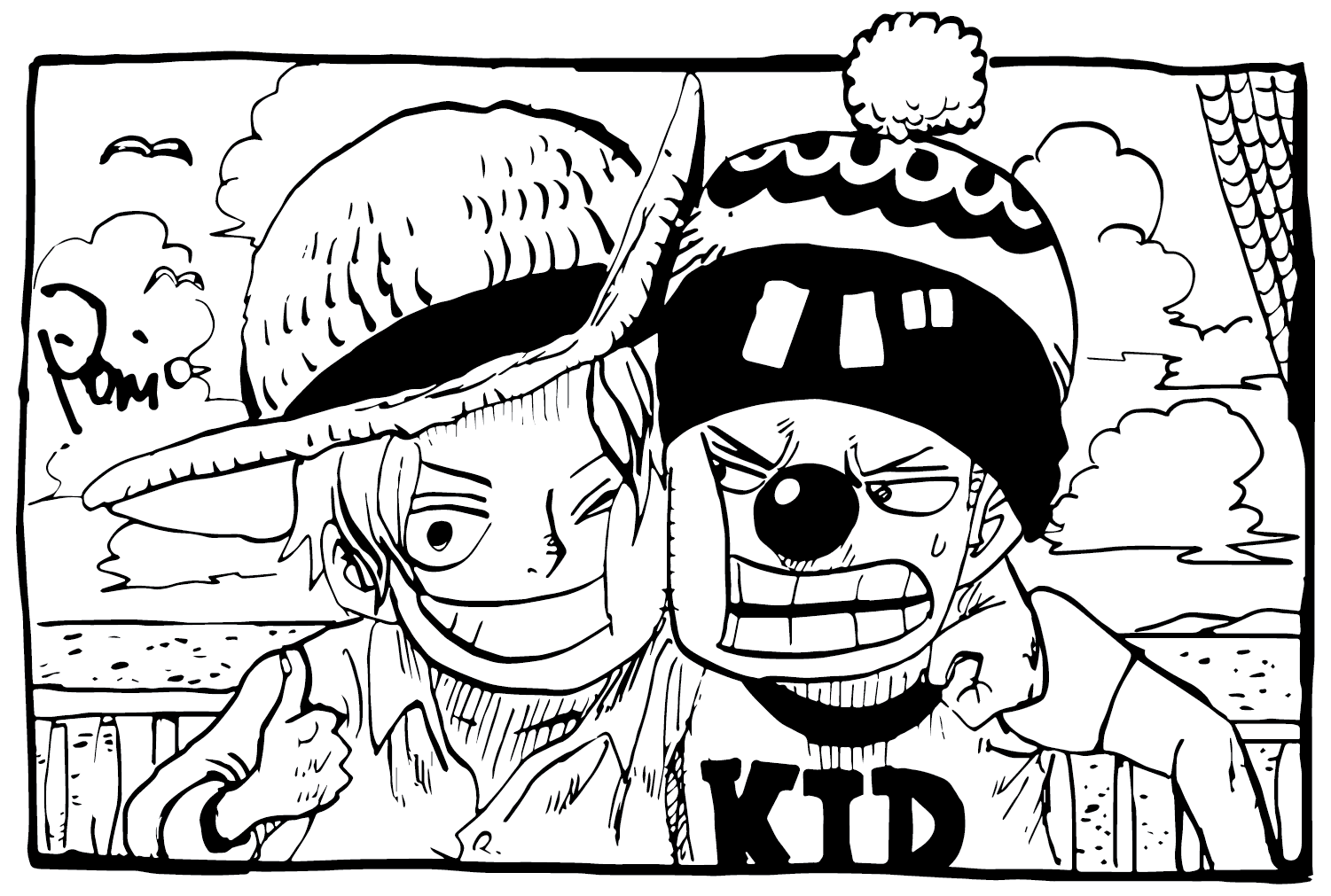
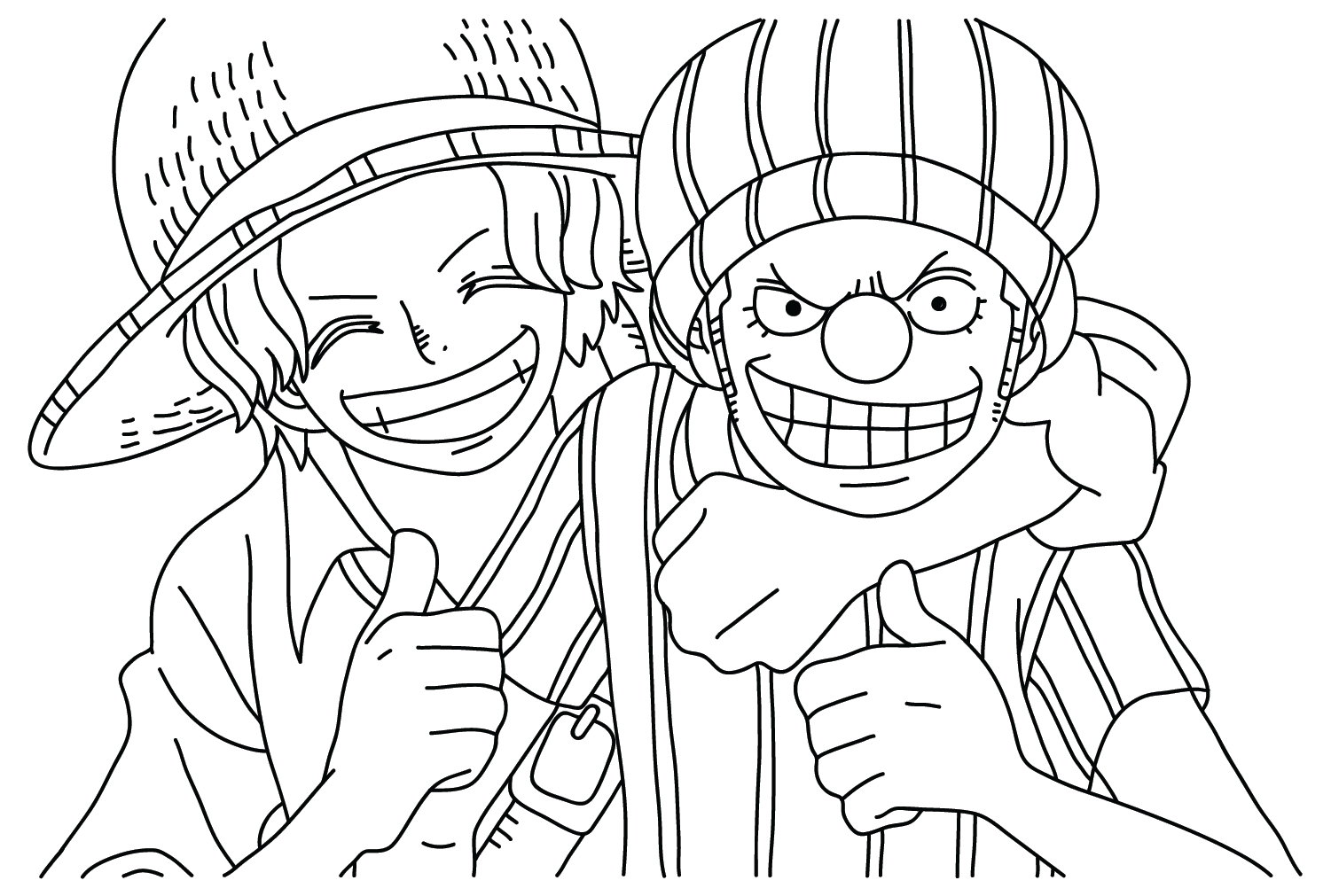
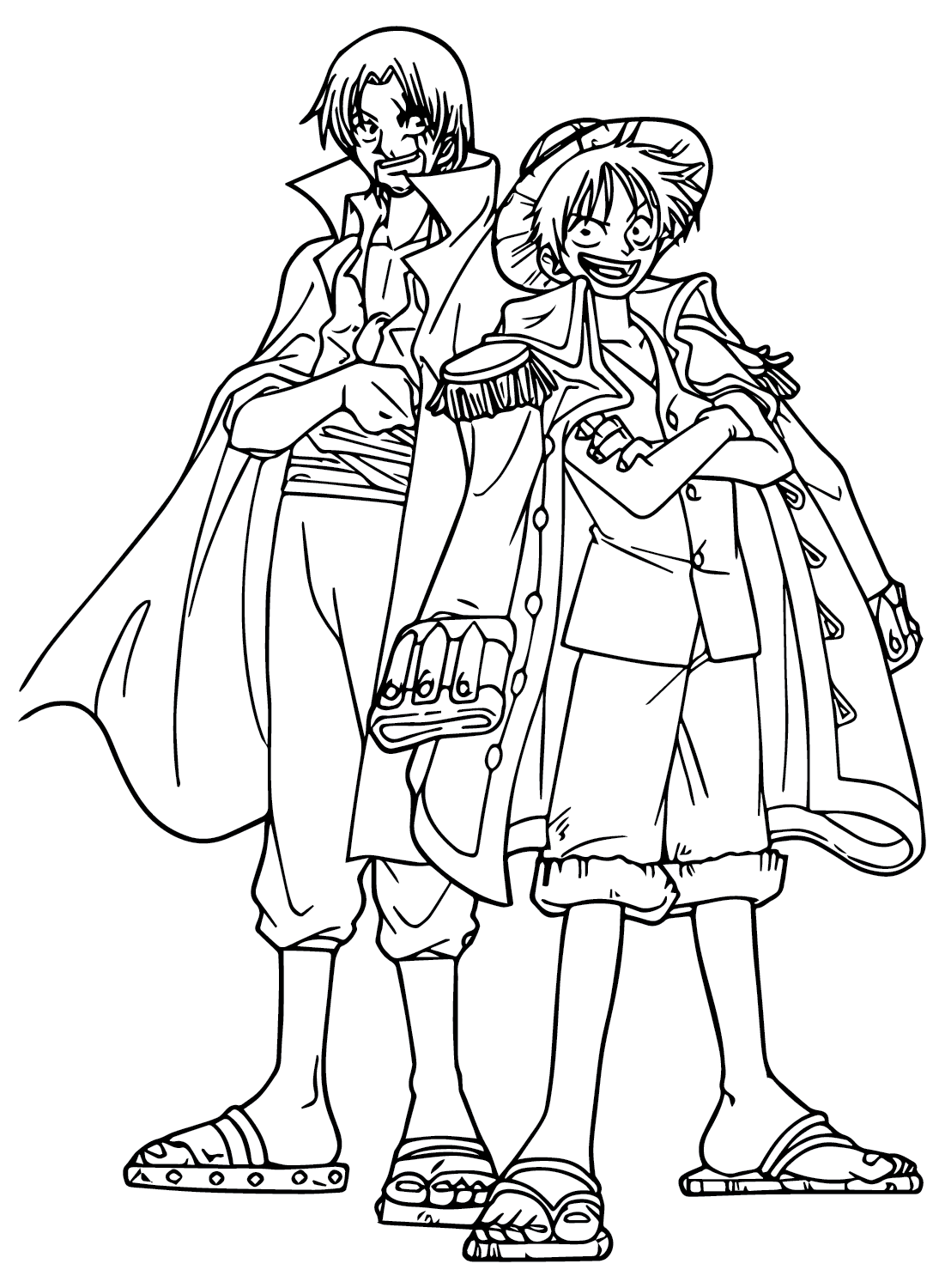
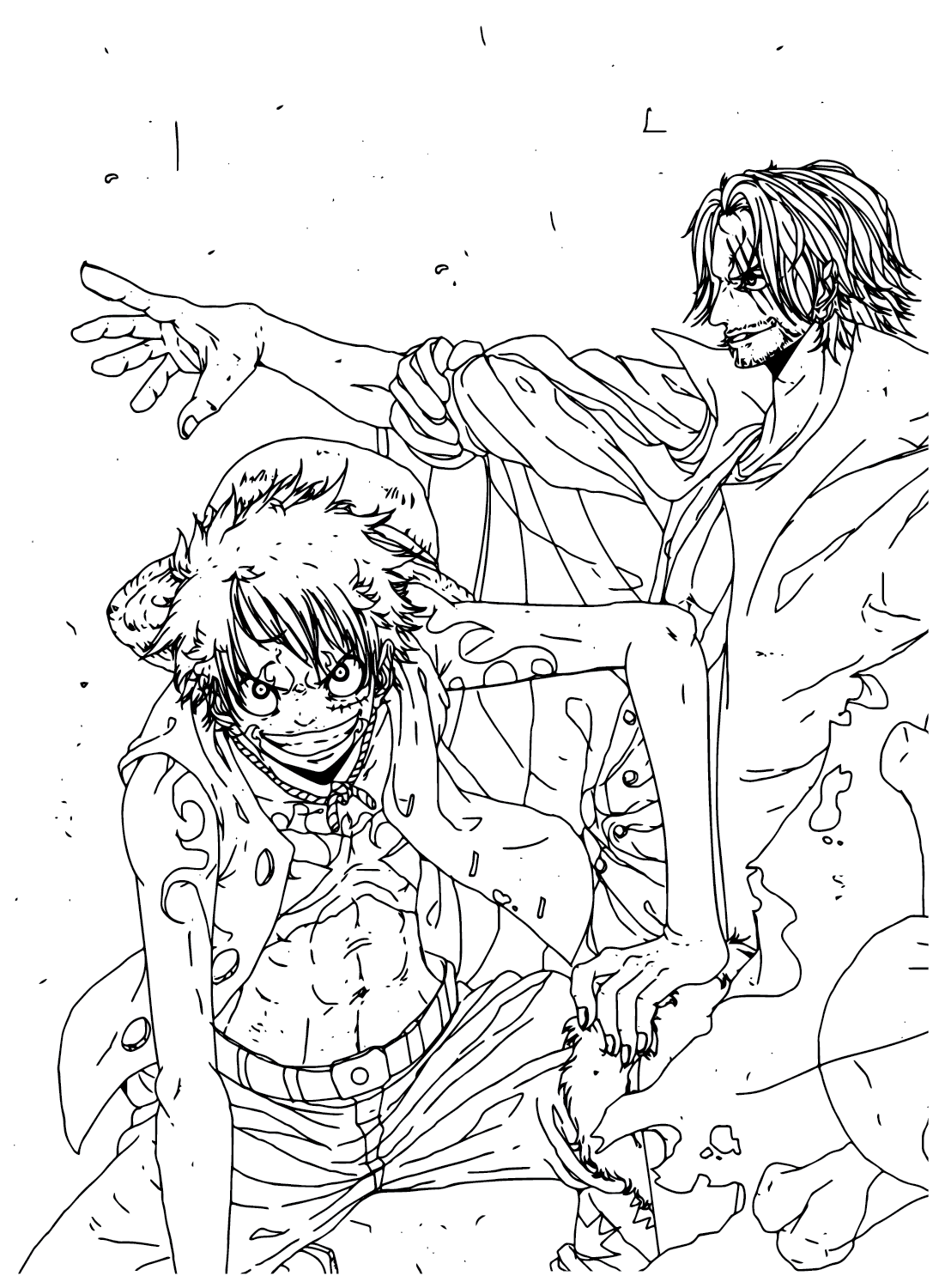
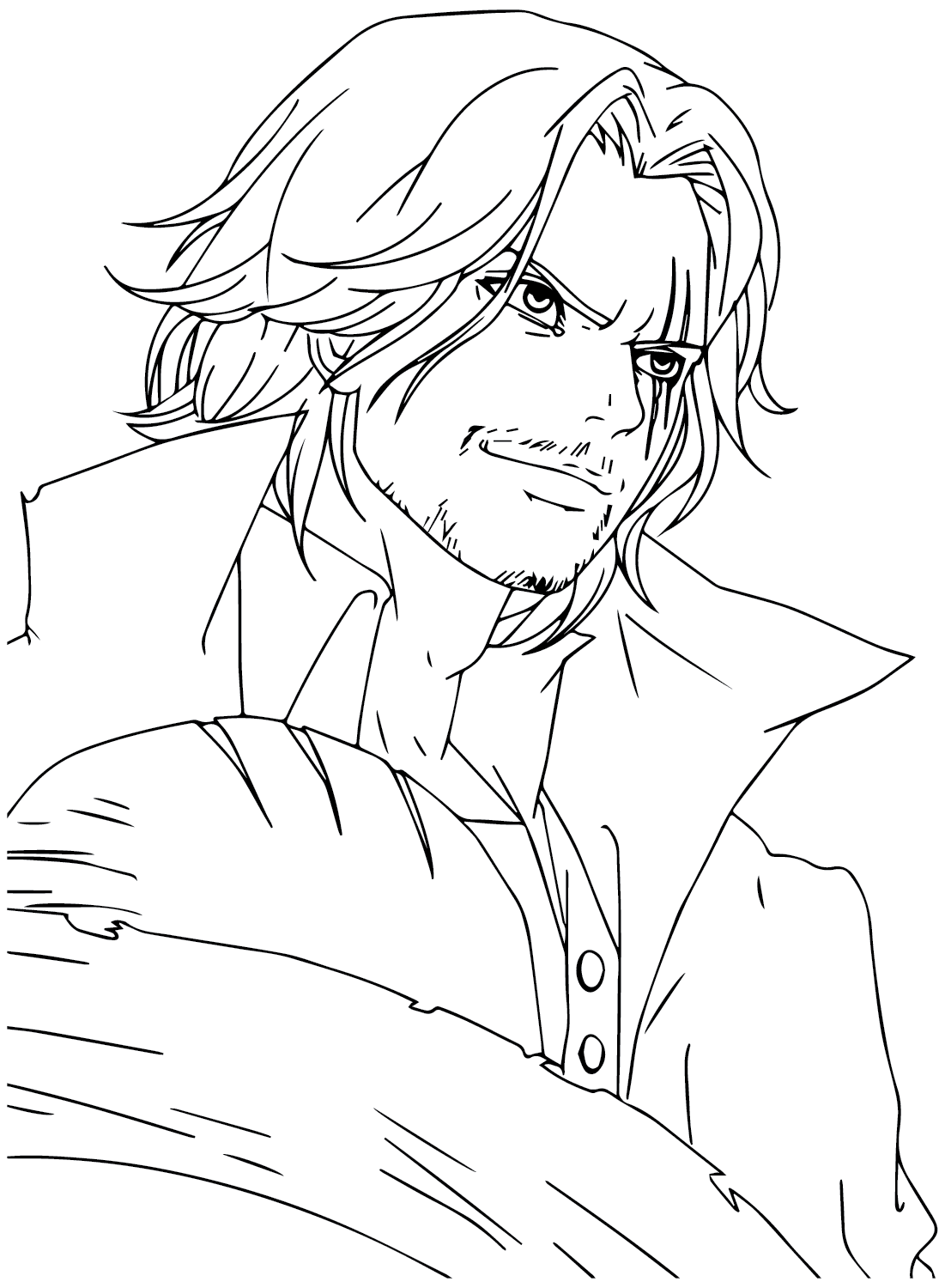
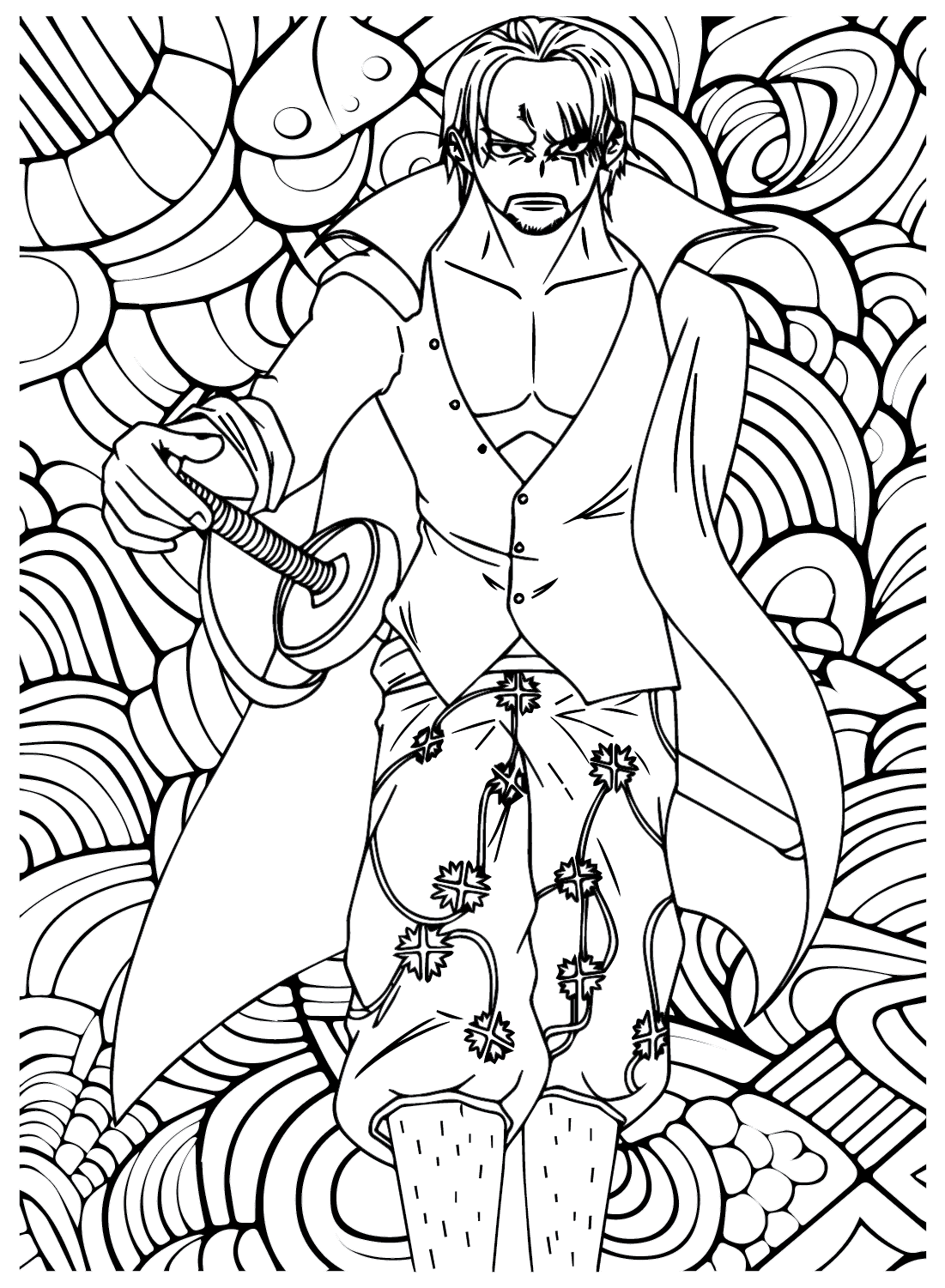
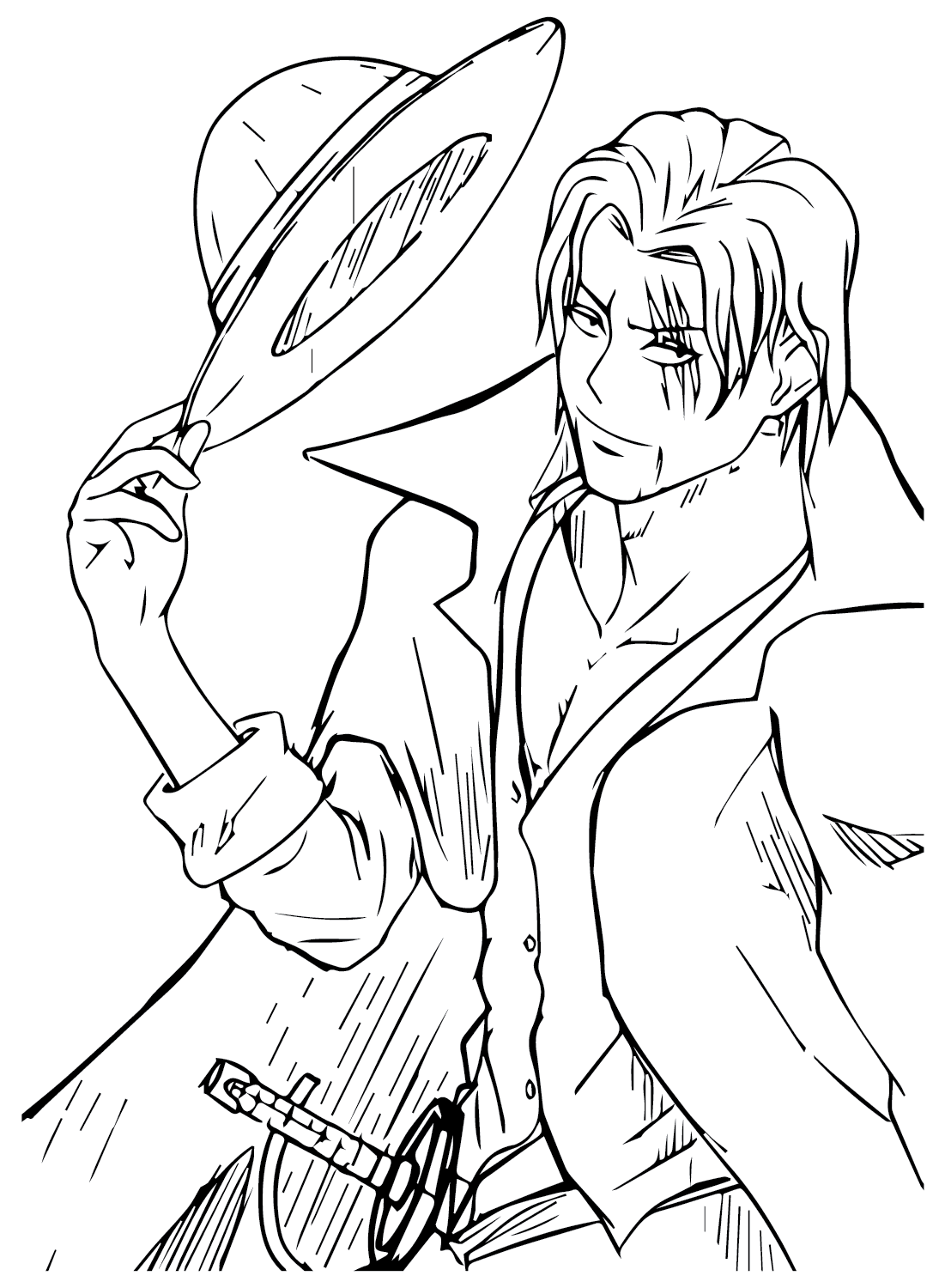
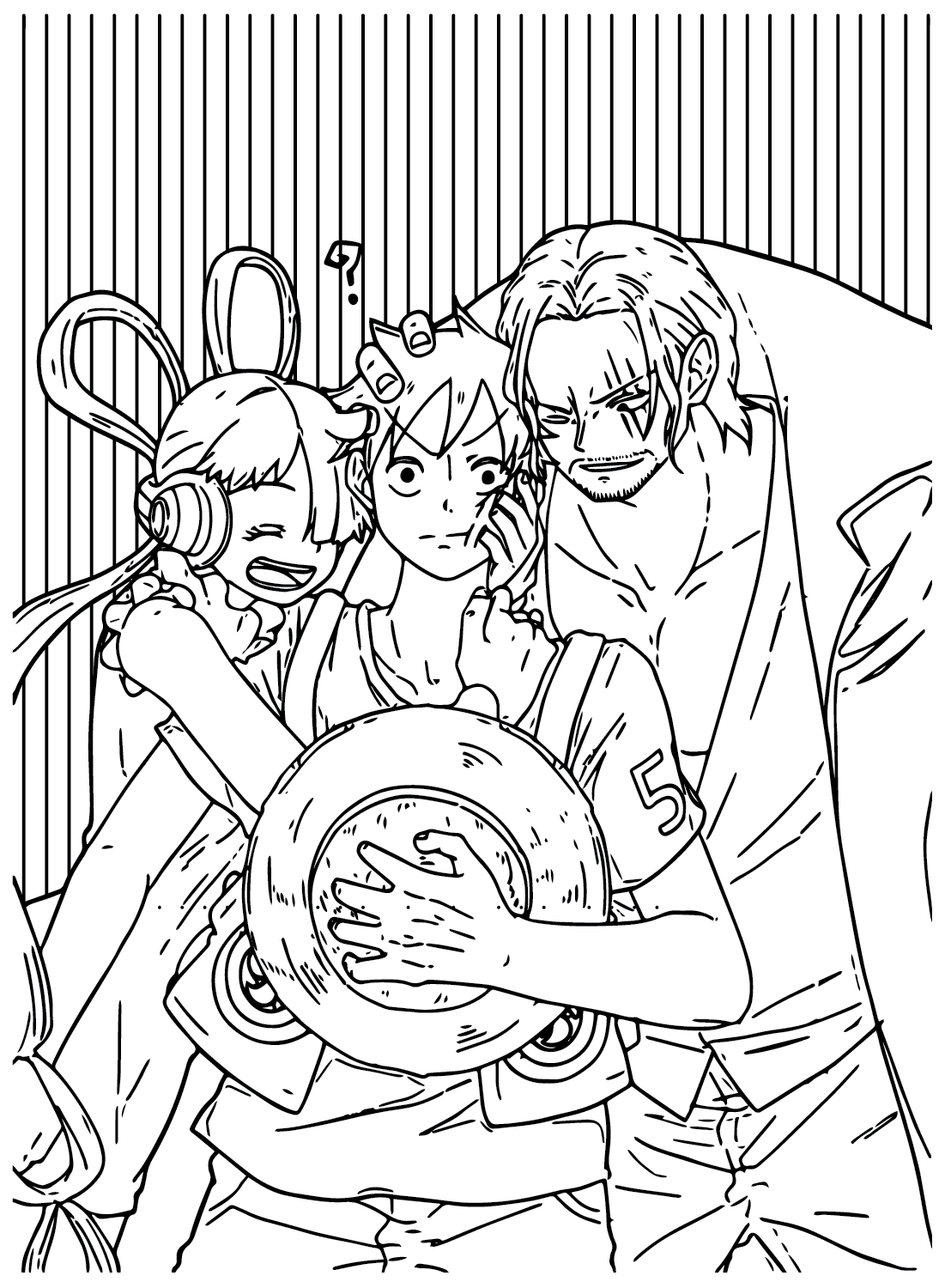
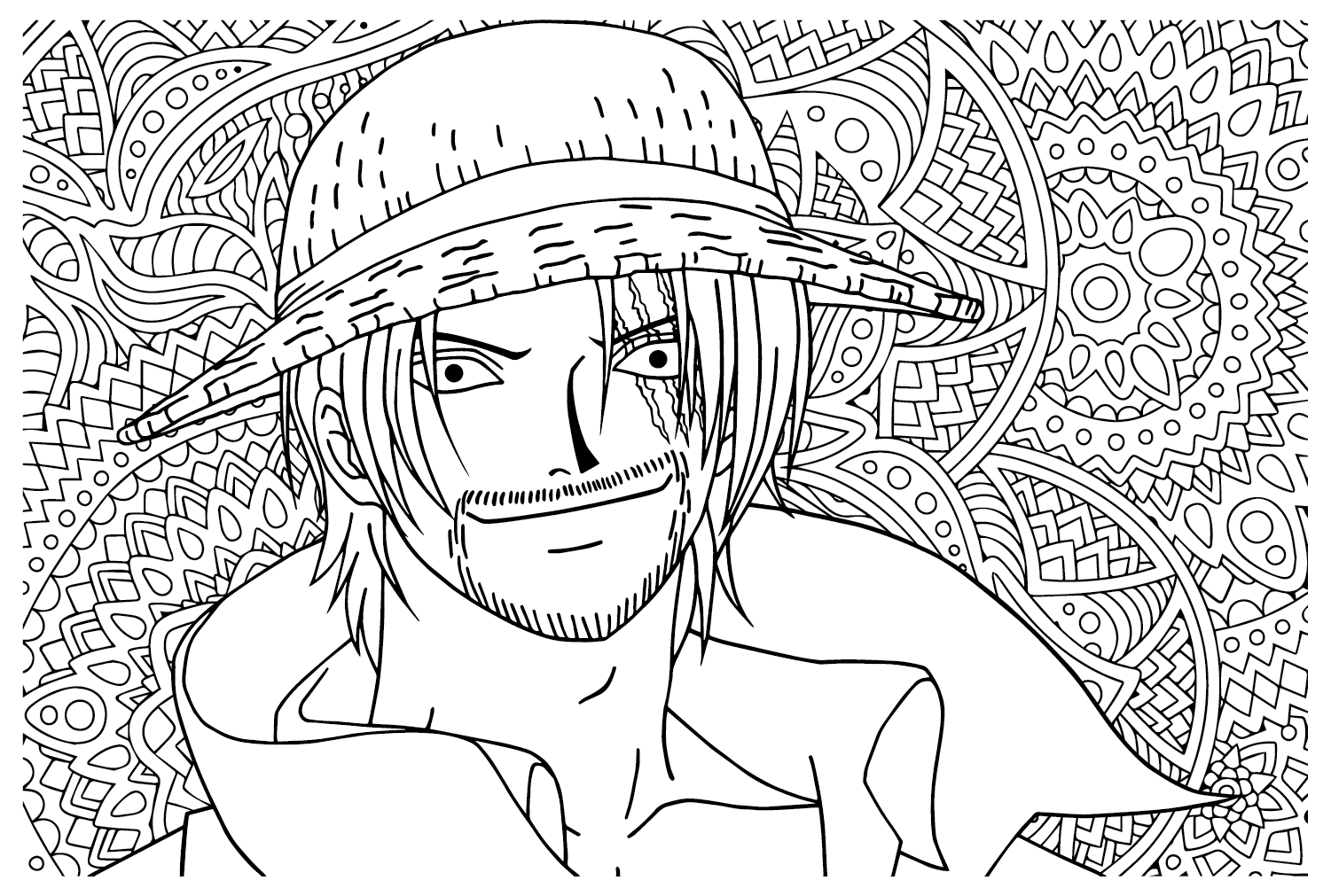
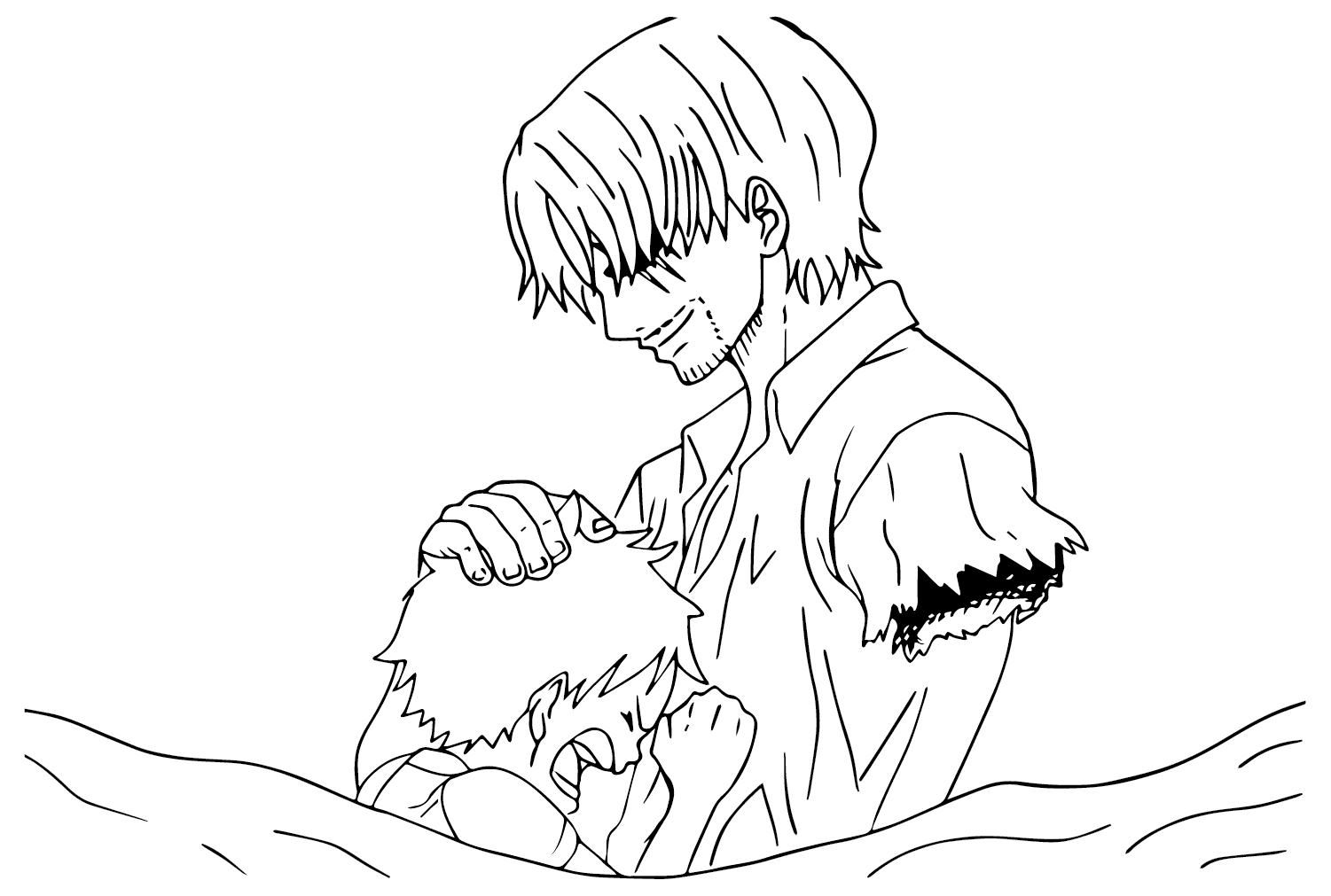
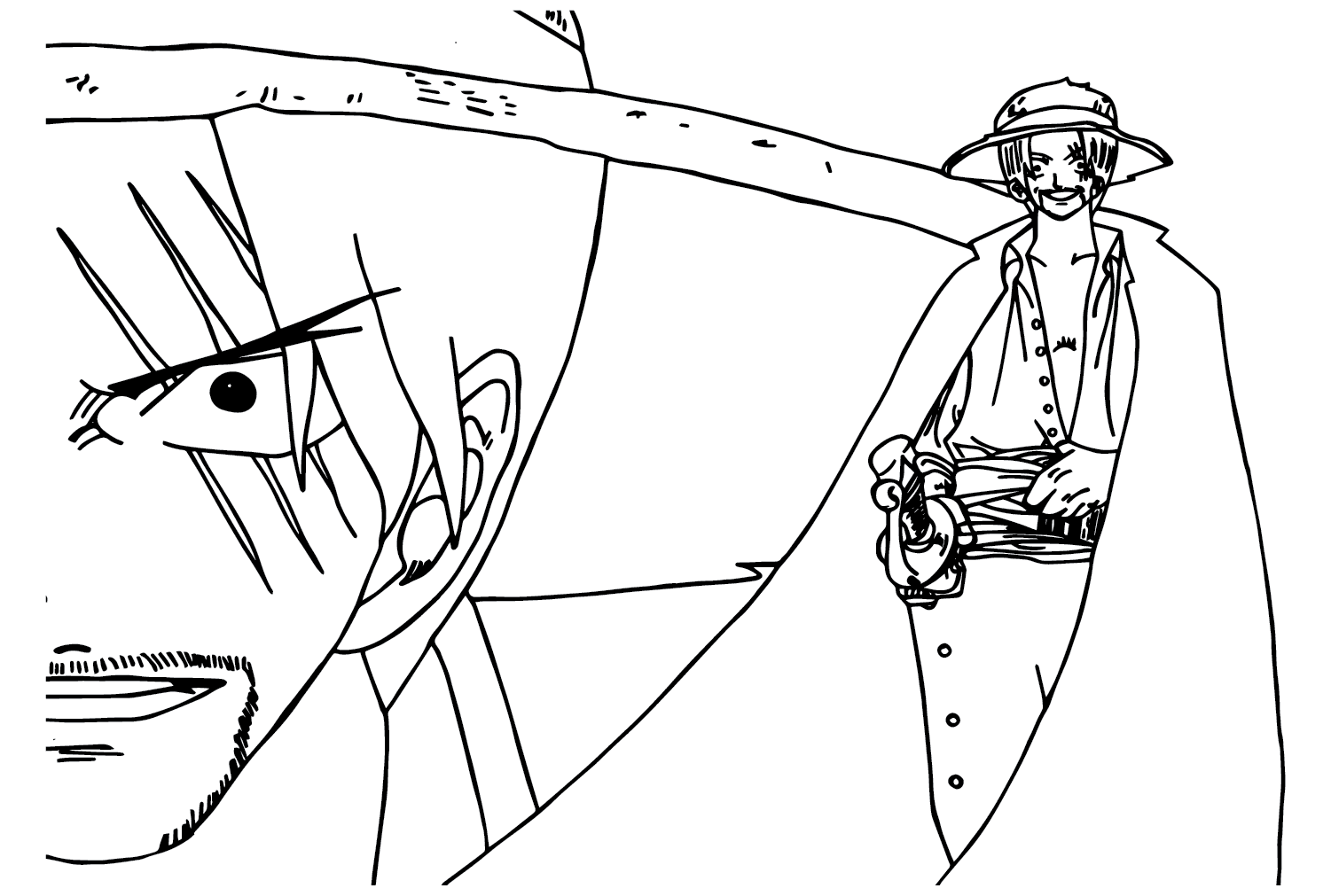
Free Shanks coloring pages: 30+ pages featuring Red-Haired Shanks in his iconic black cloak with his distinctive vivid red hair and three scars across the left eye, action poses showing the Emperor’s commanding presence, the Conqueror’s Haki manifestation scenes, Shanks as a young cabin boy on Gol D. Roger’s crew, the Foosha Village scenes where he first meets young Luffy and gives him the straw hat, his missing left arm that he sacrificed saving Luffy from the Sea King, the Marineford War appearance that stopped the battle through sheer authority, scenes with first mate Ben Beckman and the Red Hair Pirates crew, and the full visual vocabulary of the One Piece franchise’s most strategically important and most emotionally resonant supporting character across twenty-five years of the series. All free, printable PDF and online coloring for One Piece fans of every generation.
Shanks, known as “Red-Haired” Shanks (赤髪のシャンクス, Akagami no Shankusu), first appeared in One Piece Chapter 1, “Romance Dawn,” published in Weekly Shōnen Jump on July 19, 1997. Eiichiro Oda’s decision to open the manga not with the eventual protagonist Monkey D. Luffy as a pirate, but with the pivotal flashback showing young Luffy meeting Shanks in Foosha Village, established the emotional architecture of the entire series from its first pages: Shanks inspiring Luffy to dream of becoming a great pirate, giving him the straw hat as a promise to return it when Luffy had achieved that dream, and losing his left arm to a Sea King to save Luffy’s life. These three actions in the series’s first chapter established Shanks as the axis around which One Piece’s emotional universe rotates, even as he has spent most of the subsequent twenty-five years of publication operating at the story’s margins.
He is currently one of the Four Emperors of the Sea (Yonko, 四皇), the four most powerful pirates in the world who dominate the latter half of the Grand Line. His bounty, revealed in the 2022 non-canonical film One Piece Film: Red, is 4,048,900,000 Berries. He was a cabin boy on the Roger Pirates under Gol D. Roger (the Pirate King) during his youth, and Roger’s straw hat passed to him before passing to Luffy.
These 30+ free pages at ColoringPagesOnly.com cover Shanks across his full visual history. All free, PDF or PNG, print or color online.


What’s Inside
Shanks Portrait and Cape Pages
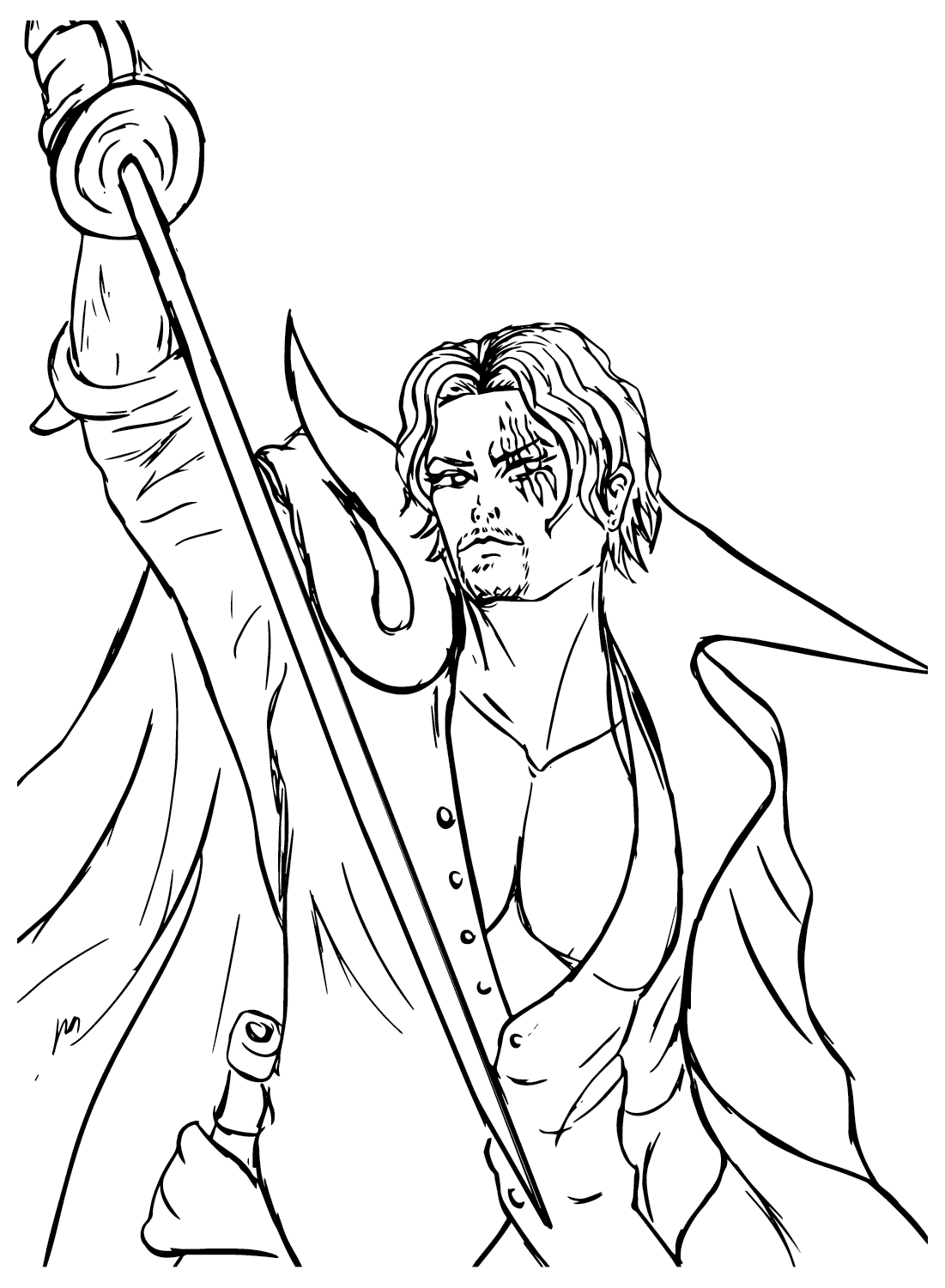
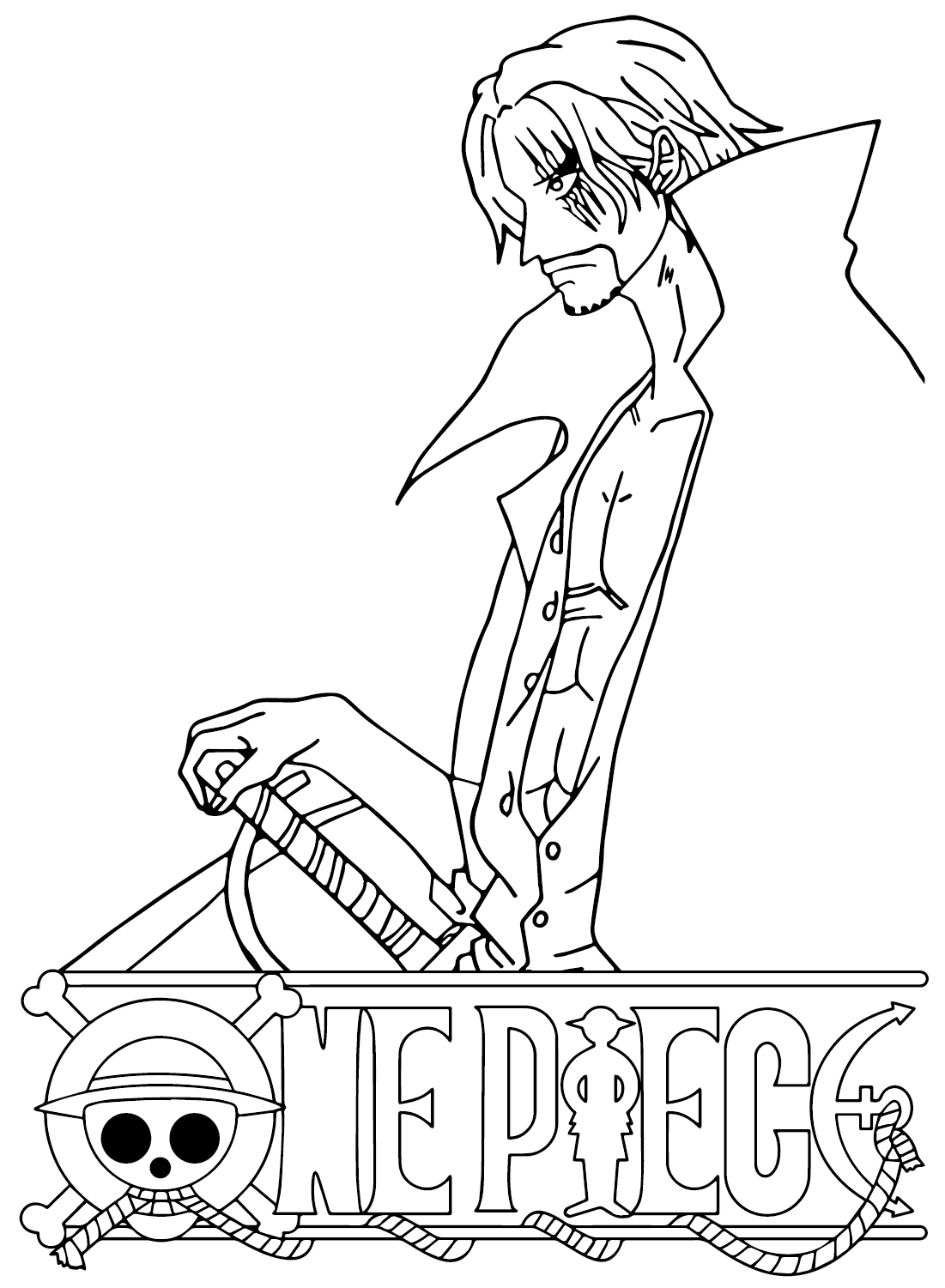
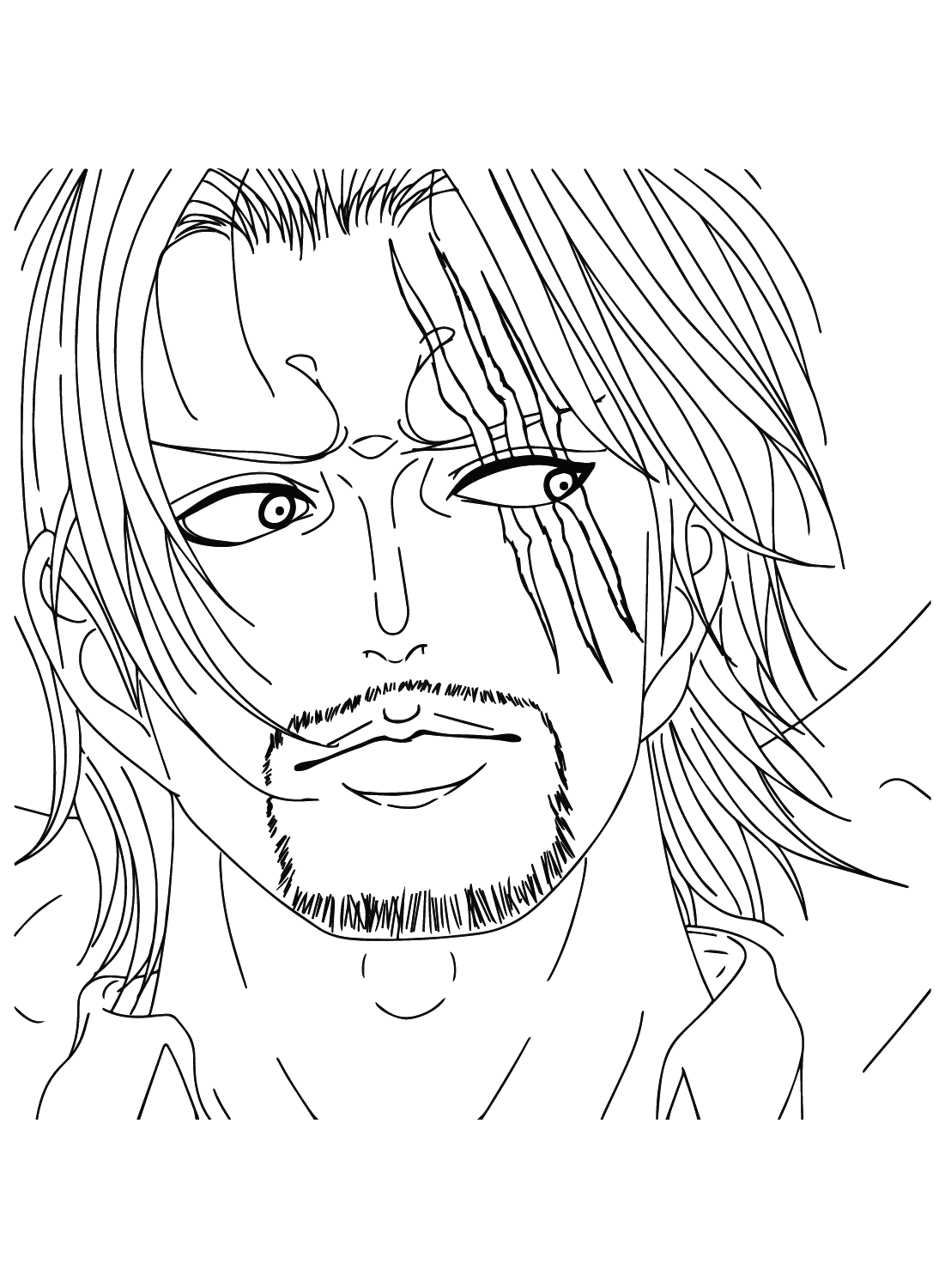
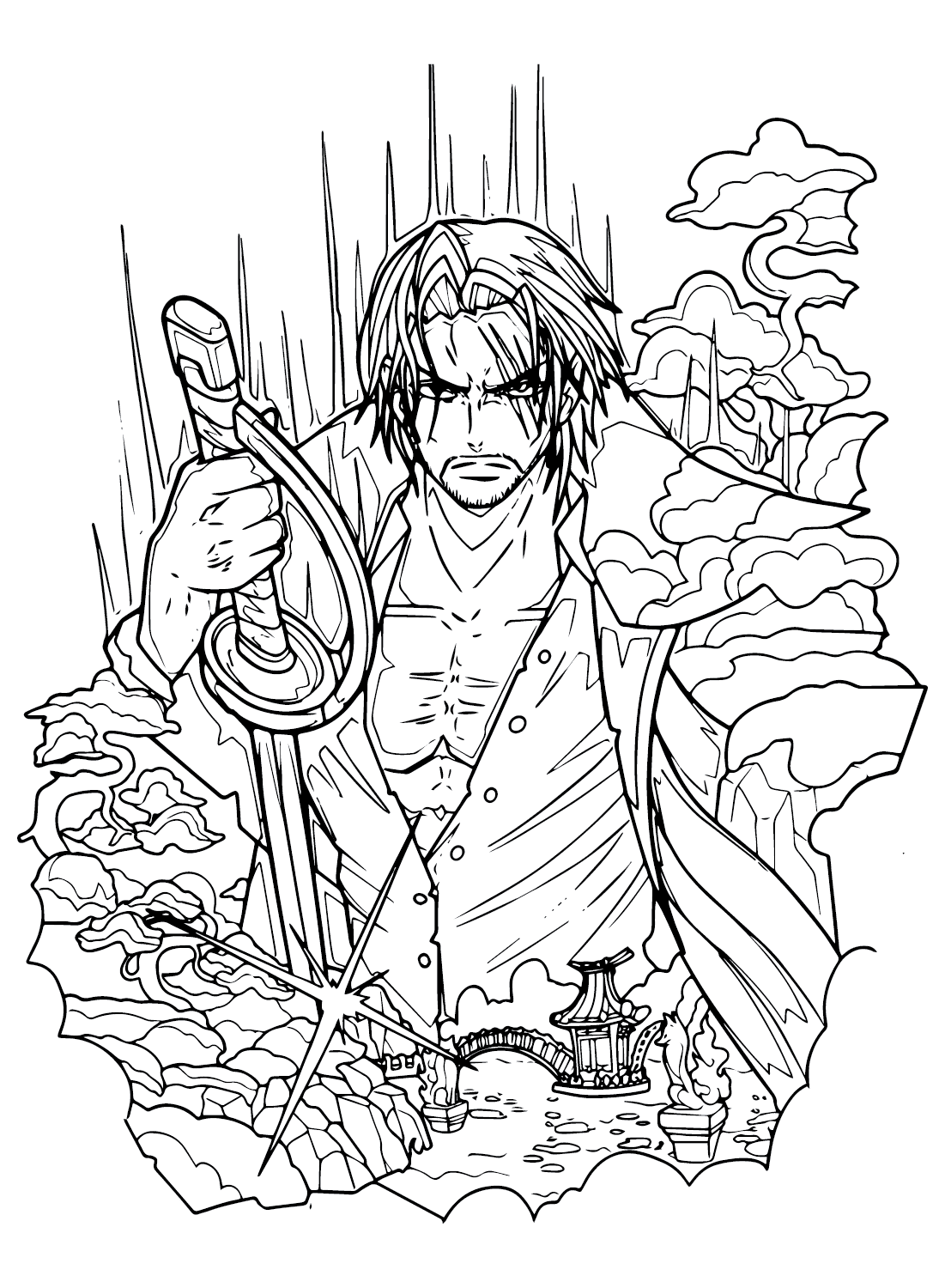
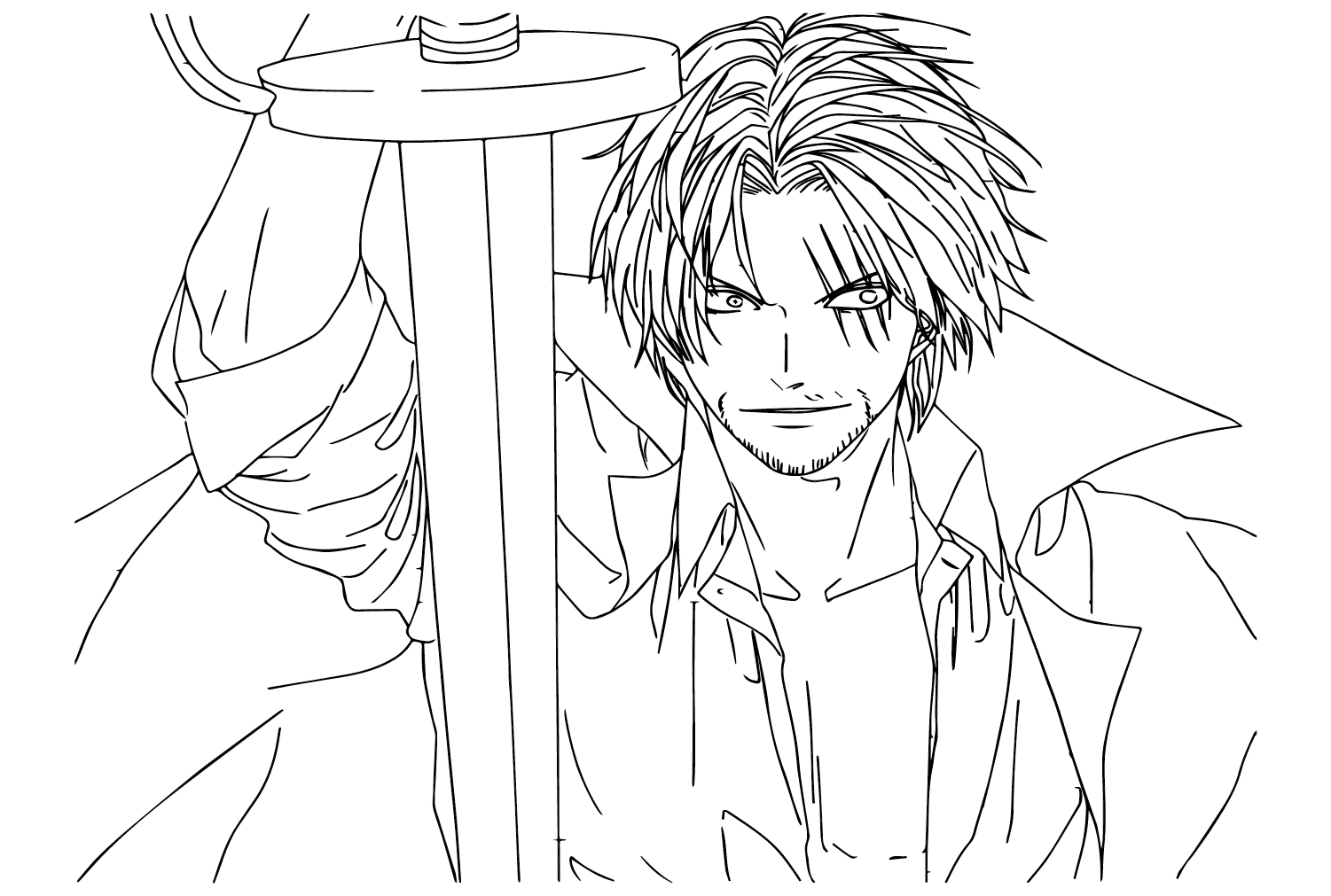
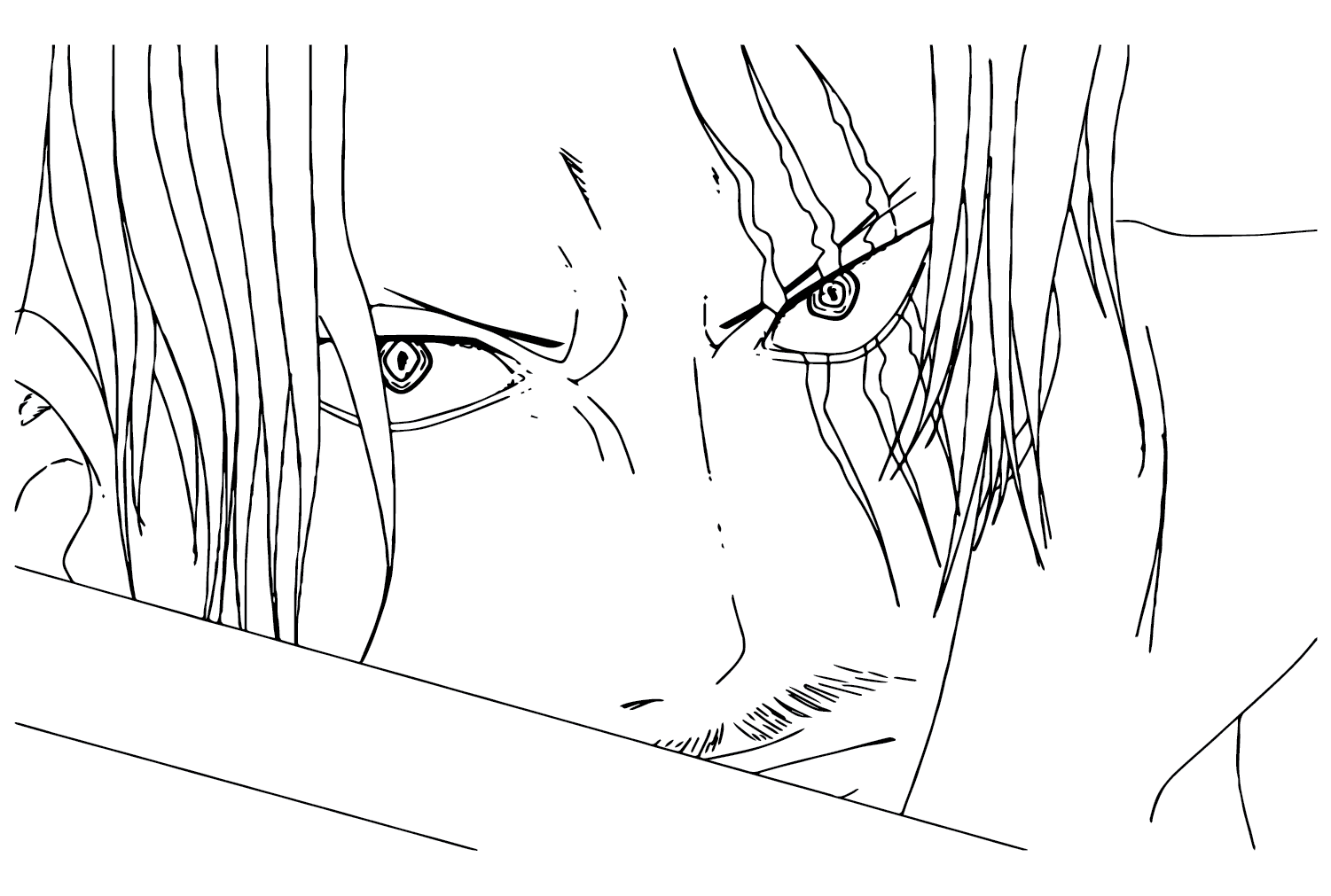
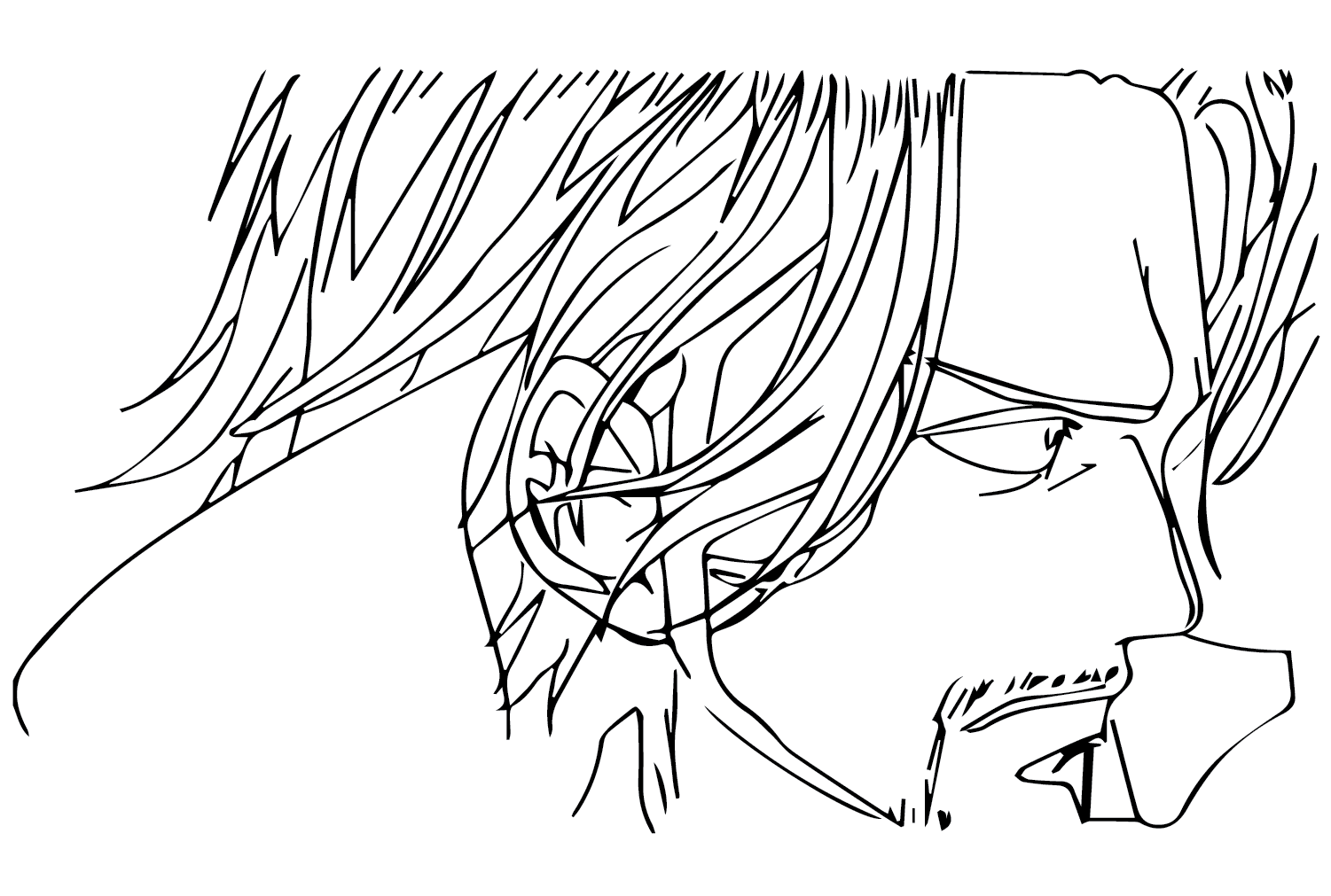
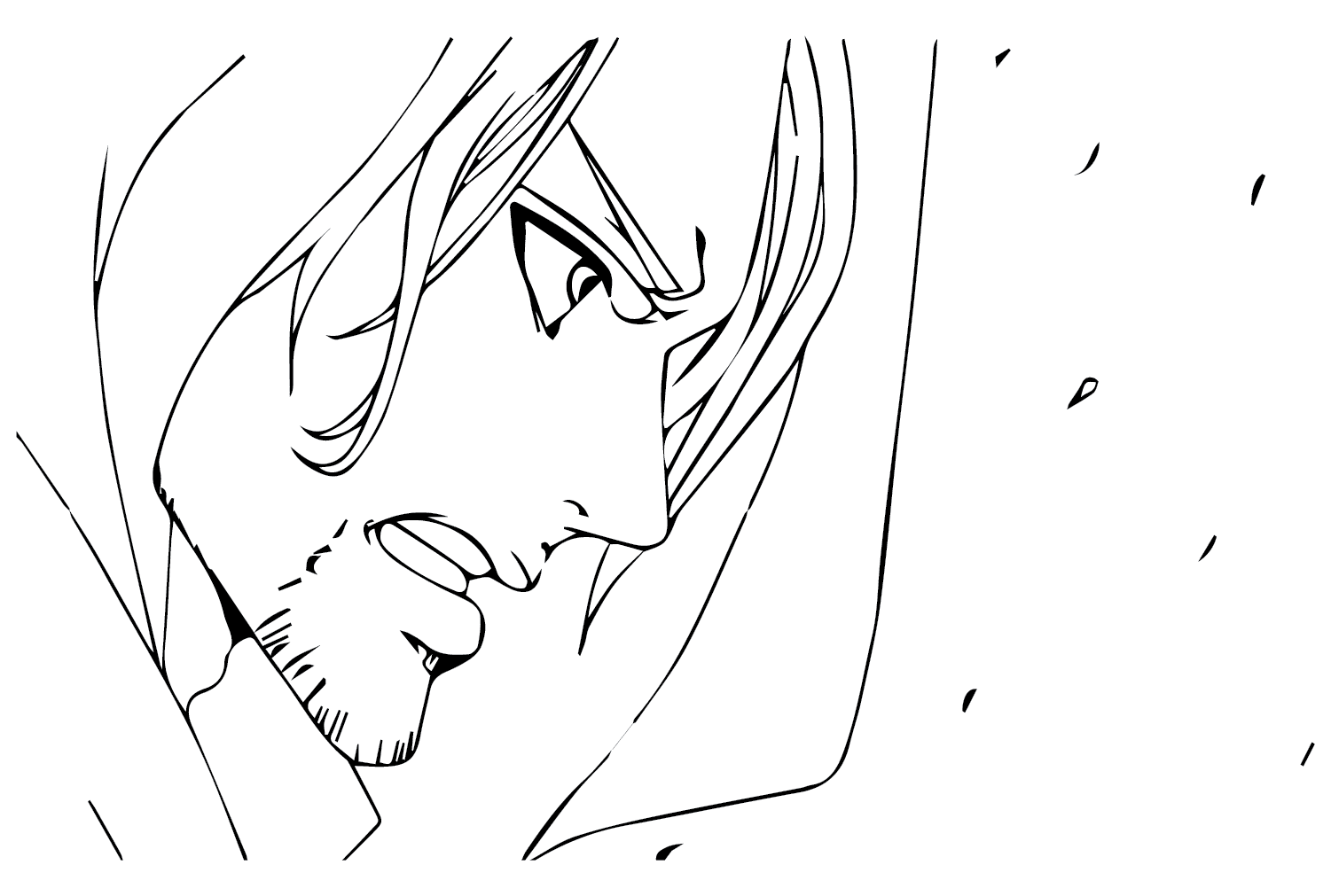
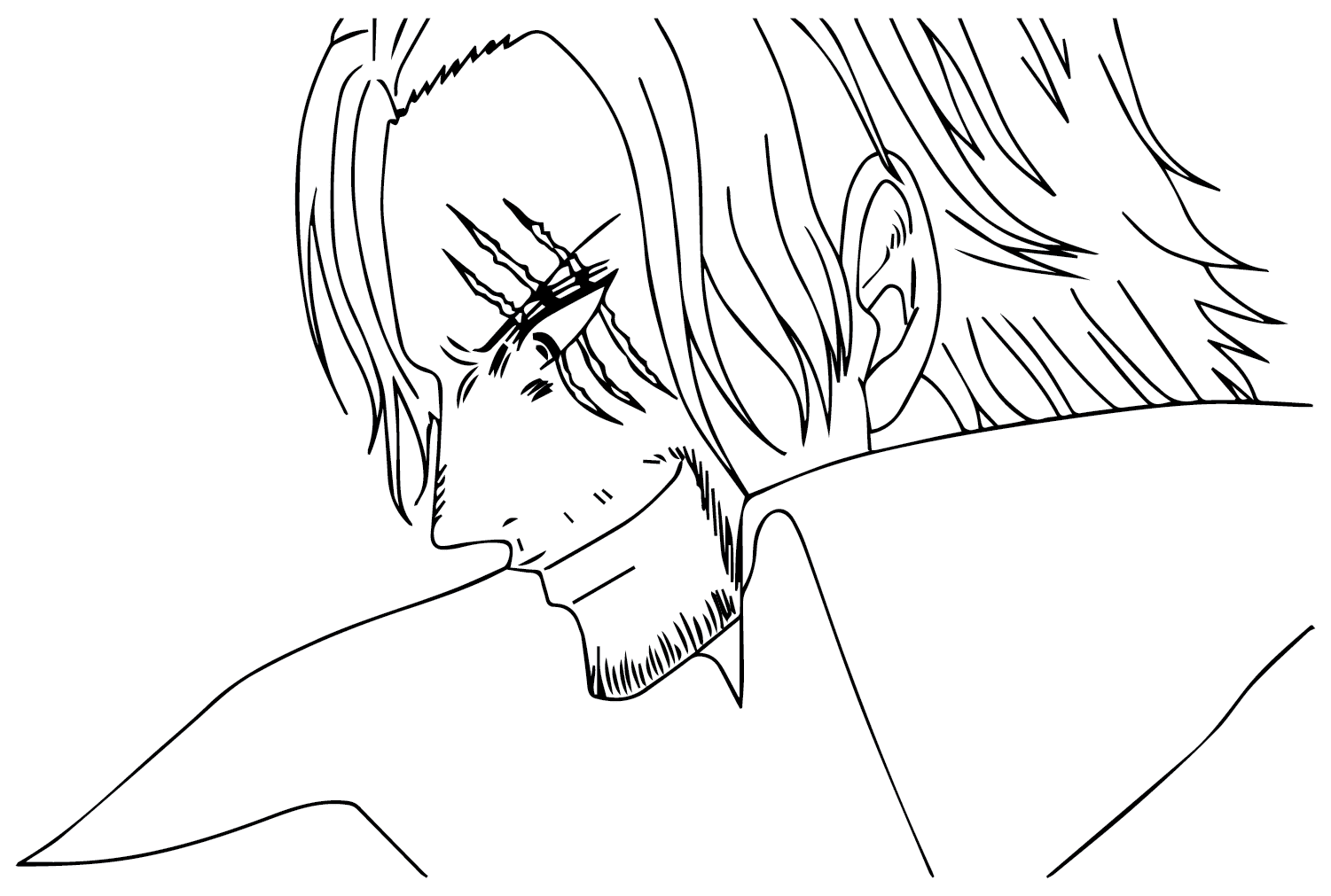
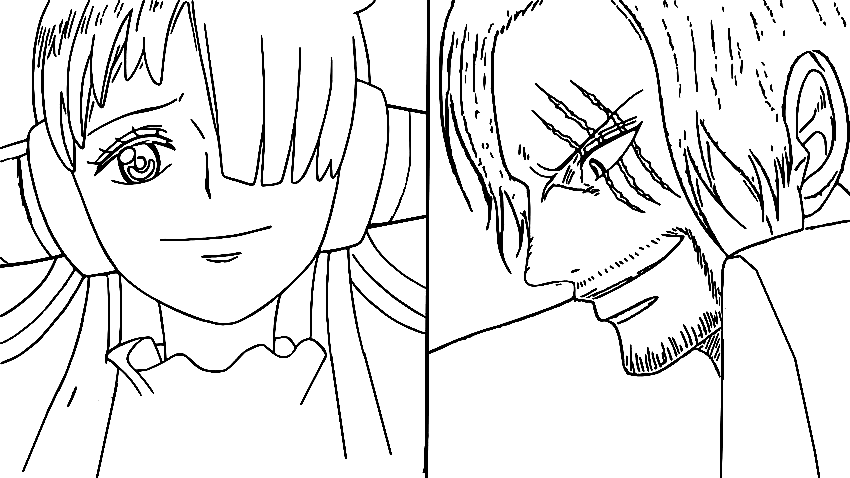
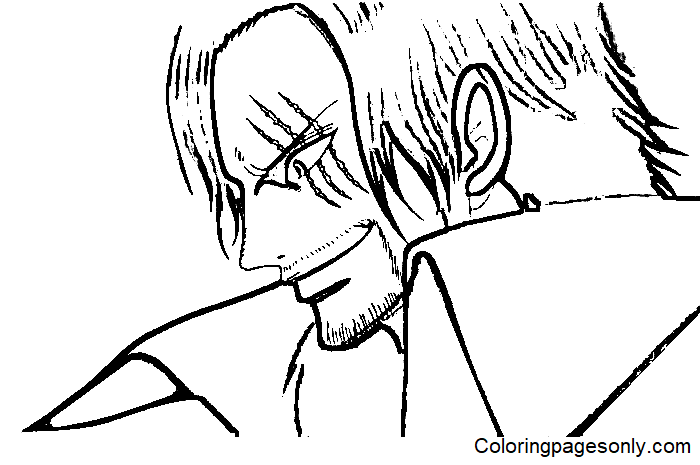
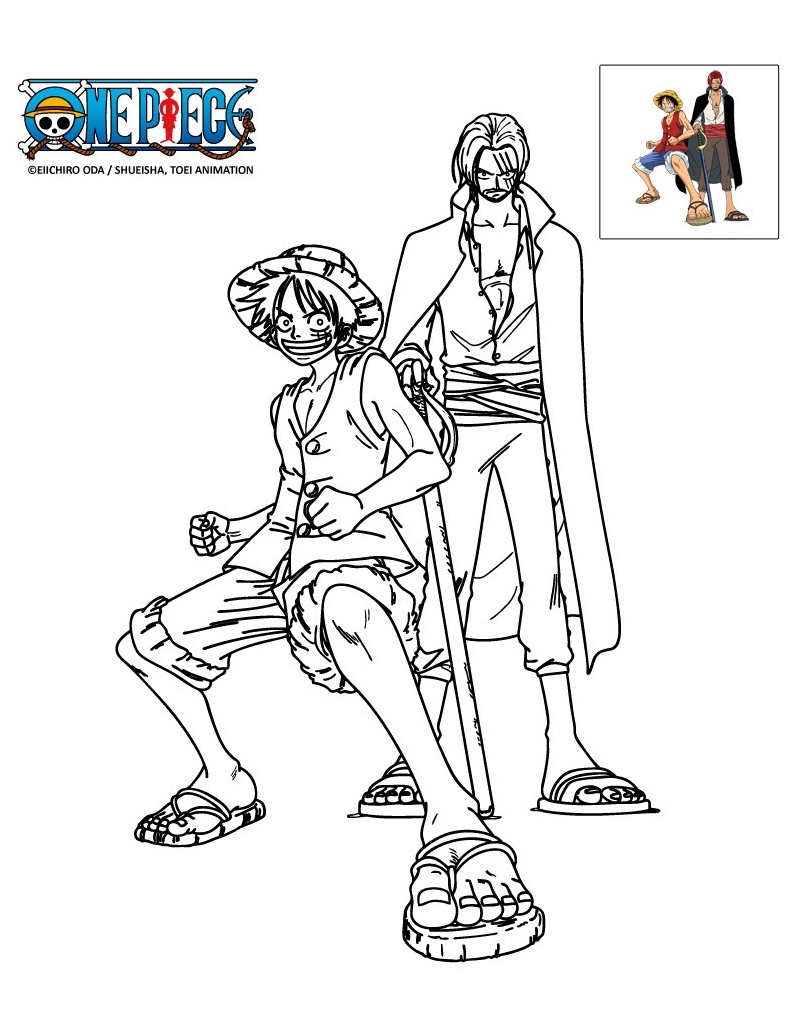
Shanks’ adult design is the collection’s most immediately recognizable for any One Piece fan: the long, flowing vivid red hair that gives him his epithet, the three scars running across and around his left eye (given to him by Marshall D. Teach before Blackbeard became a major figure in the story), the missing left arm at his left shoulder, and the black cloak or dark cape worn loosely over his shoulders, often held shut with one hand or flowing open behind him.
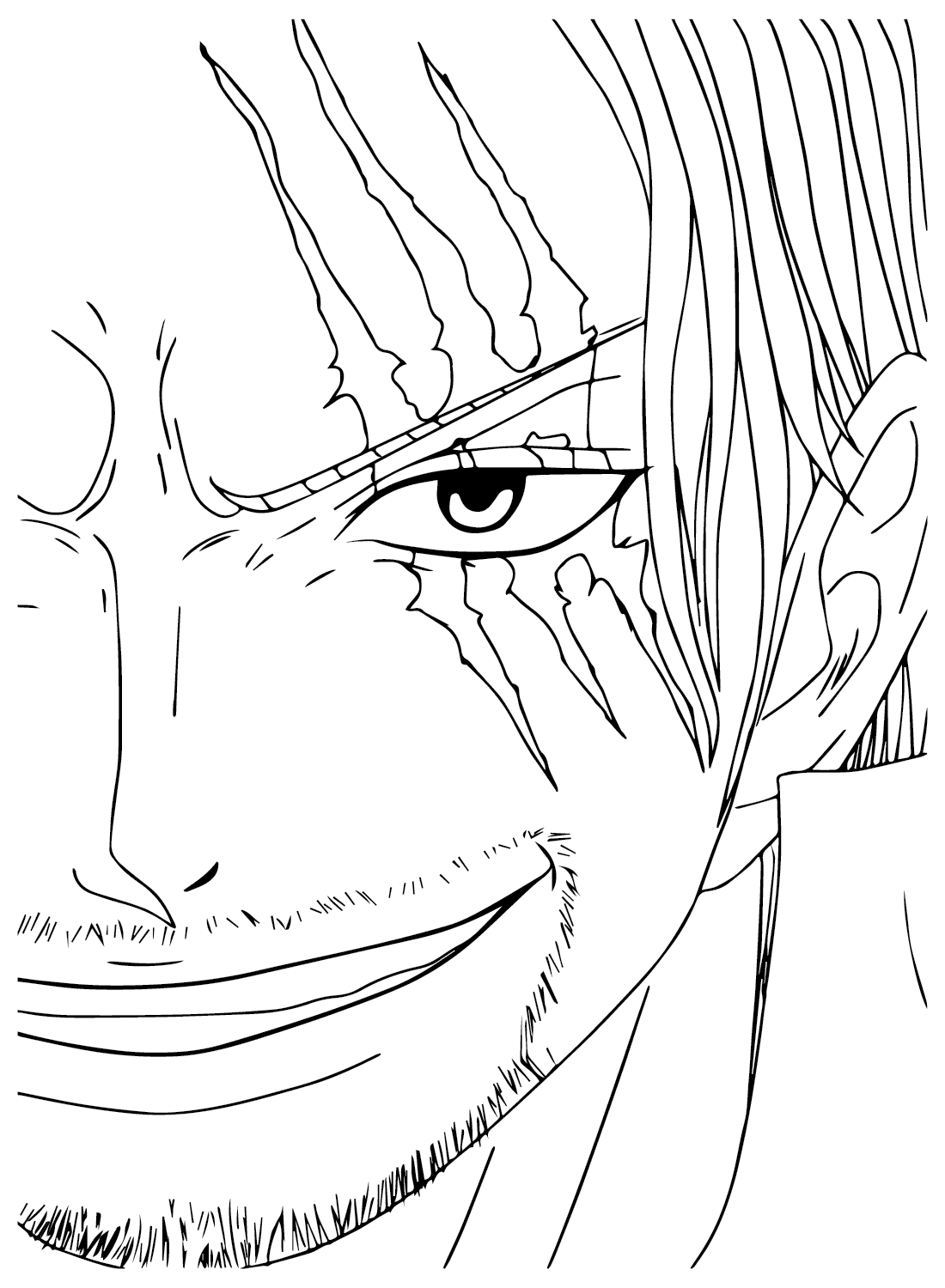
The three scars are the character’s most specific identifying detail after the red hair itself: they run in parallel diagonal lines across his left eye area, suggesting a claw or blade attack of significant force. Their presence on a character who is consistently presented as one of the most powerful people alive communicates both his history of genuine danger and his willingness to absorb damage in the service of things he values.
His missing left arm is the design’s most emotionally charged element: its absence is directly connected to the series’ opening and to his sacrifice for Luffy. Pages showing Shanks from the left side or in three-quarter view, where the absent arm is clearly visible, carry the full weight of that narrative moment in their visual.
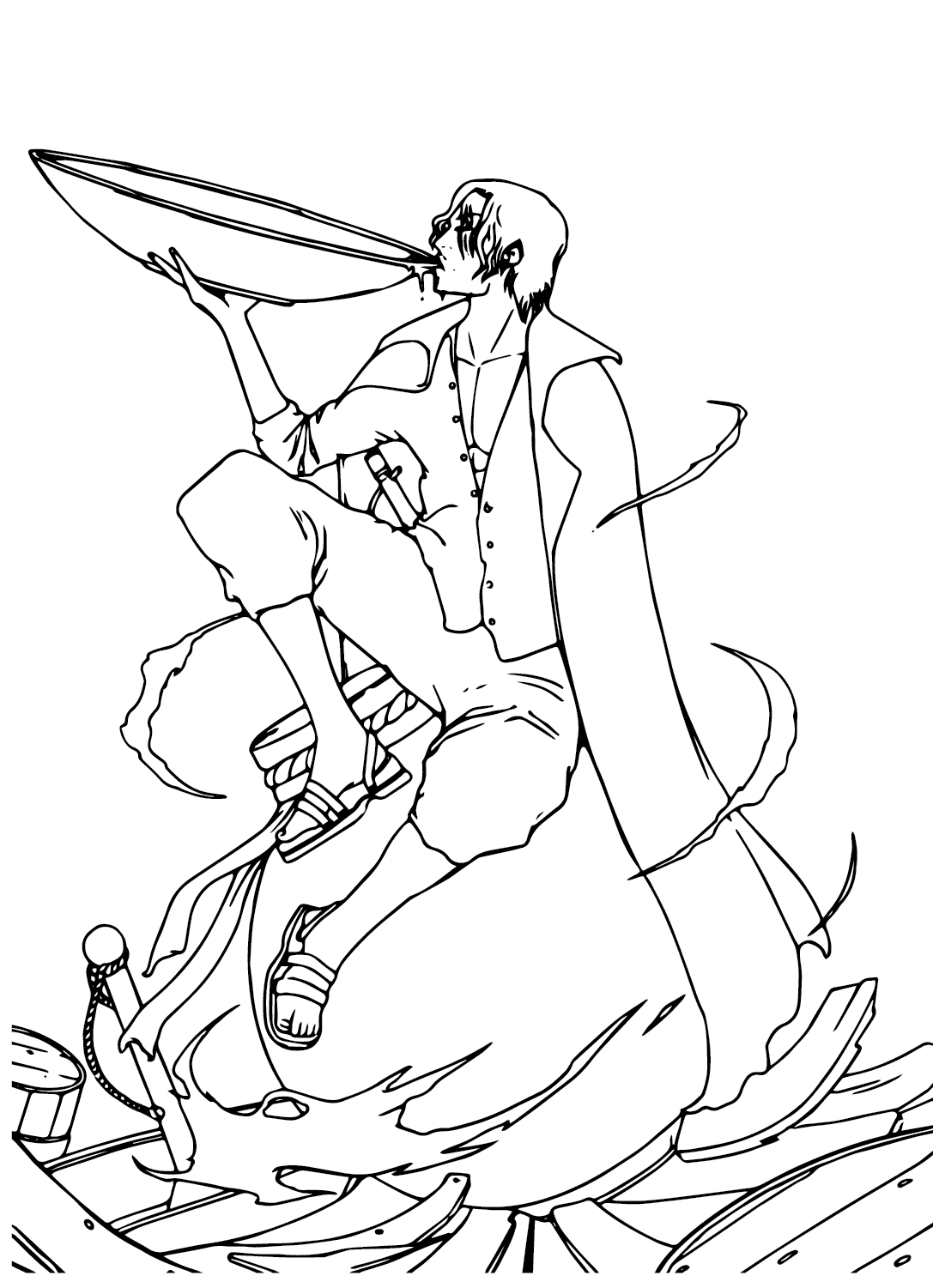
His calm, slightly amused expression in most depictions reflects his established personality: someone whose genuine power is so complete that urgency is rarely required, whose preference is to drink sake and celebrate with his crew, and whose appearance in any context immediately communicates that whatever situation is occurring is now managed, whether anyone else knows it yet or not.
Coloring Shanks portrait pages: The hair is the most important coloring decision: vivid, warm red applied at full saturation across the full long-hair mass. The red should lean warm (orange-shifted) rather than cool (blue-shifted), reading as vivid natural red hair rather than as crimson or burgundy. The three scars are slightly darker or slightly reddened lines against his warm-medium skin tone, applied carefully at the specific diagonal angle that crosses his left eye area. The cloak or cape uses deep near-black or very dark navy.
Young Shanks: The Cabin Boy
Young Shanks, as he appeared during his time as a cabin boy on Gol D. Roger’s crew, is a significantly different visual register from the adult Emperor depicted in most of the collection’s pages. He is depicted as a teenage boy with the same red hair but in a shorter, less imposing style, wearing simpler clothing appropriate to a young crew member rather than the commanding captain’s cloak of his adult self.
The specific historical moment of young Shanks on Roger’s ship is one of One Piece’s most significant backstory elements: it connects Shanks directly to the Pirate King, explains the origin of the straw hat that he later gives to Luffy, and establishes the chain of legacy that links Roger, Shanks, and Luffy across three generations of the series’ most important figures.
Young Shanks’ personality, as depicted in flashback chapters, already shows the essential traits of his adult character: cheerfulness, the specific courage that is not performance but simply how he relates to any situation, and the genuine warmth toward those he cares about.
Coloring young Shanks pages: The same vivid red hair as the adult version, but in a less elaborate style appropriate to a teenage character. His clothing is simpler: the working clothes of a pirate crew member rather than the captain’s distinguishing garments. His expression shows the same fundamental good nature as his adult version but in a younger, more openly enthusiastic register. The straw hat, if depicted on young Shanks before he gave it to Luffy, uses warm golden-yellow straw color with a slightly darker warm gold at the hat’s shadow areas.
The Foosha Village Scenes
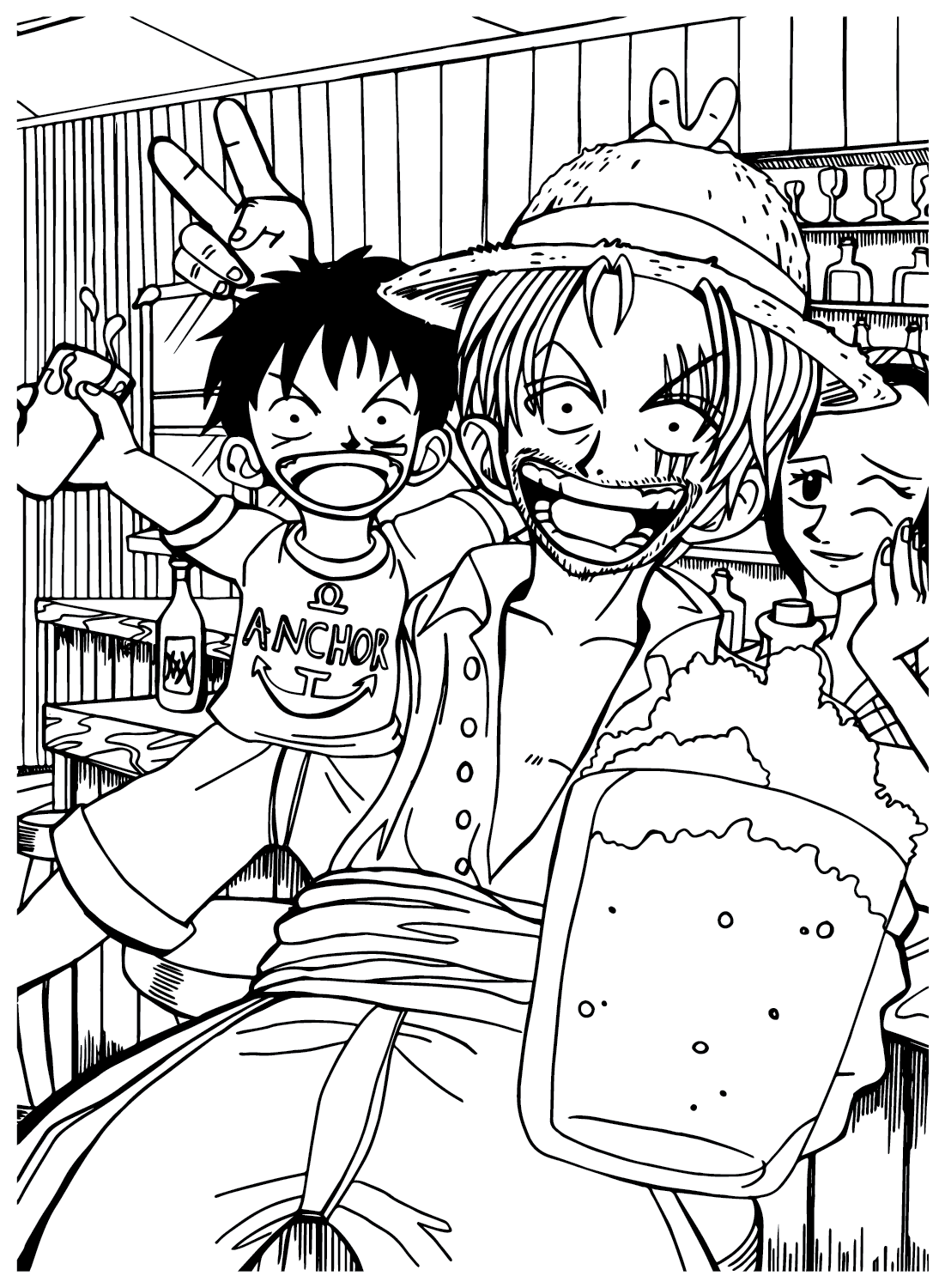
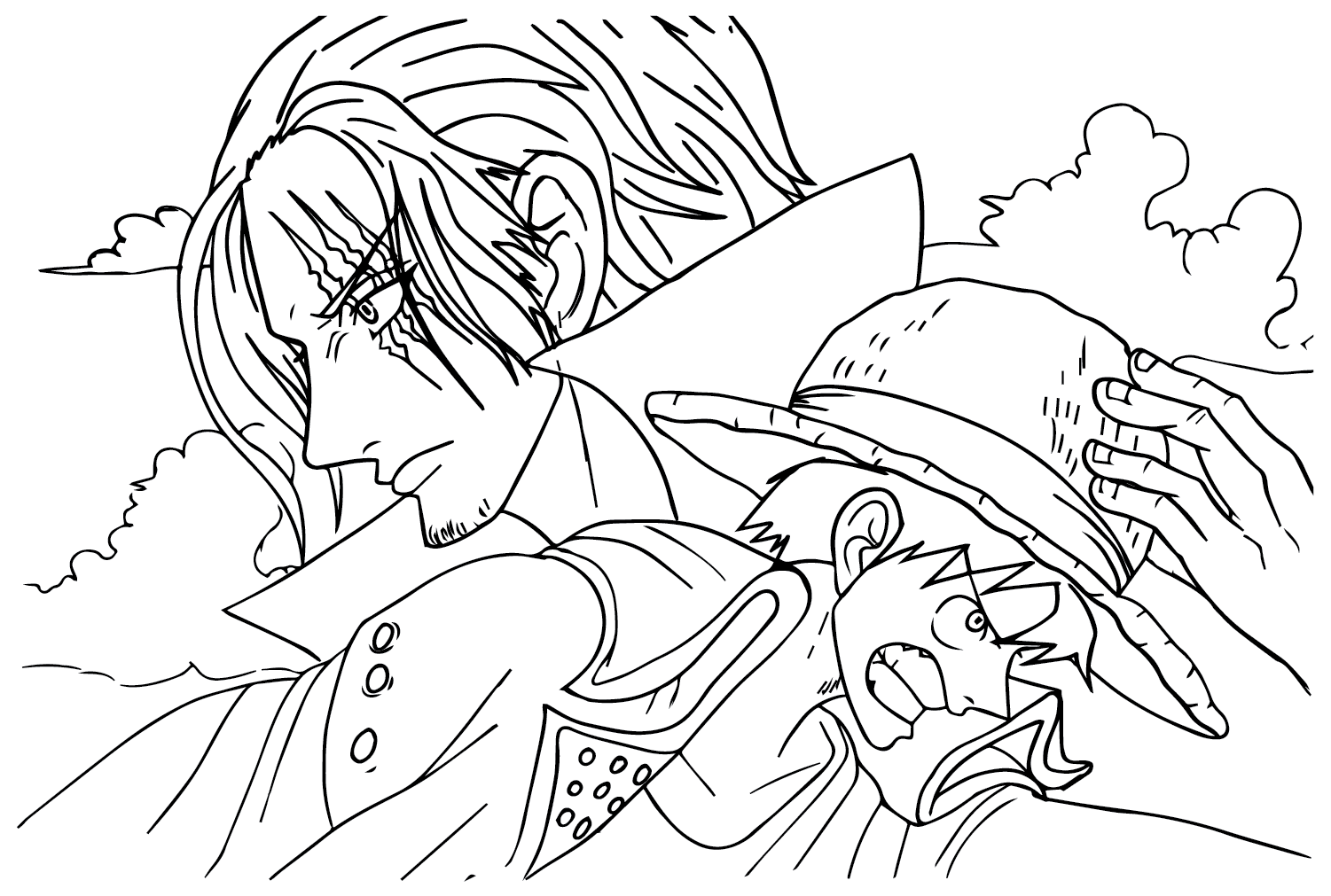
The Foosha Village sequences, depicted in Chapter 1 of the manga and in the anime adaptation’s early episodes, establish the emotional foundation of the entire One Piece series in a remarkably compact narrative. Shanks and his crew are based at the village tavern. Young Luffy wants to join Shanks’ crew and become a pirate. Shanks and his crew refuse to take Luffy with them because he is too young and cannot swim. Luffy accidentally eats the Gomu Gomu no Mi Devil Fruit and becomes a rubber person with no ability to swim. A bandit mocks Shanks and pours a drink on his head; Shanks does not respond. The bandit takes Luffy hostage over a body of water. The Sea King (Lord of the Coast) appears. Shanks saves Luffy by thrusting his left arm into the Sea King’s mouth and using Conqueror’s Haki to scare it away. He loses the arm. He gives Luffy the straw hat, tells him to return it when he’s become a great pirate, and leaves.
Pages showing these scenes carry the entire weight of the series’ opening: the sacrifice, the promise, the object that becomes the story’s central symbol.
Coloring Foosha Village scene pages: The village setting uses warm wood tones for the tavern interiors and the warm greens and blues of the coastal village exterior. Young Luffy’s vivid black hair and simple red vest contrast with Shanks’ red hair and darker clothing. The straw hat’s warm golden-yellow is the scene’s most specific visual anchor when both characters are shown together with it.
Shanks at Marineford
The Marineford War arc (also called the Battle of Marineford) in the One Piece manga is one of the series’ most catastrophic events: the conflict directly involving the execution of Portgas D. Ace (Luffy’s adopted brother), the full force of the Marines against the Whitebeard Pirates, and ultimately Ace’s and Whitebeard’s deaths in the same conflict.
Shanks’ role in the Marineford arc is a single appearance at the arc’s conclusion, arriving after the battle’s main events have concluded and stopping further combat simply by appearing and making clear that the Red Hair Pirates are present and that any continuation of fighting will involve them. The scene demonstrates his authority more effectively than any extended battle could: neither side continues fighting.
His appearance in this scene, with his red hair streaming, his cape flowing, and the specific calm that communicates absolute confidence without aggression, is one of the series’ most frequently depicted single moments and one of the collection’s most emotionally resonant page subjects.
Coloring Marineford scene pages: The setting uses the specific post-battle visual of Marineford: dark smoke, destroyed structures, and the specific blue-grey of the bay. Shanks’ vivid red hair creates maximum contrast against the post-battle atmosphere’s darker, more muted tones. Any Conqueror’s Haki visual effects use deep purple-black or dark energy manifestations around his figure.
Conqueror’s Haki Manifestation Pages
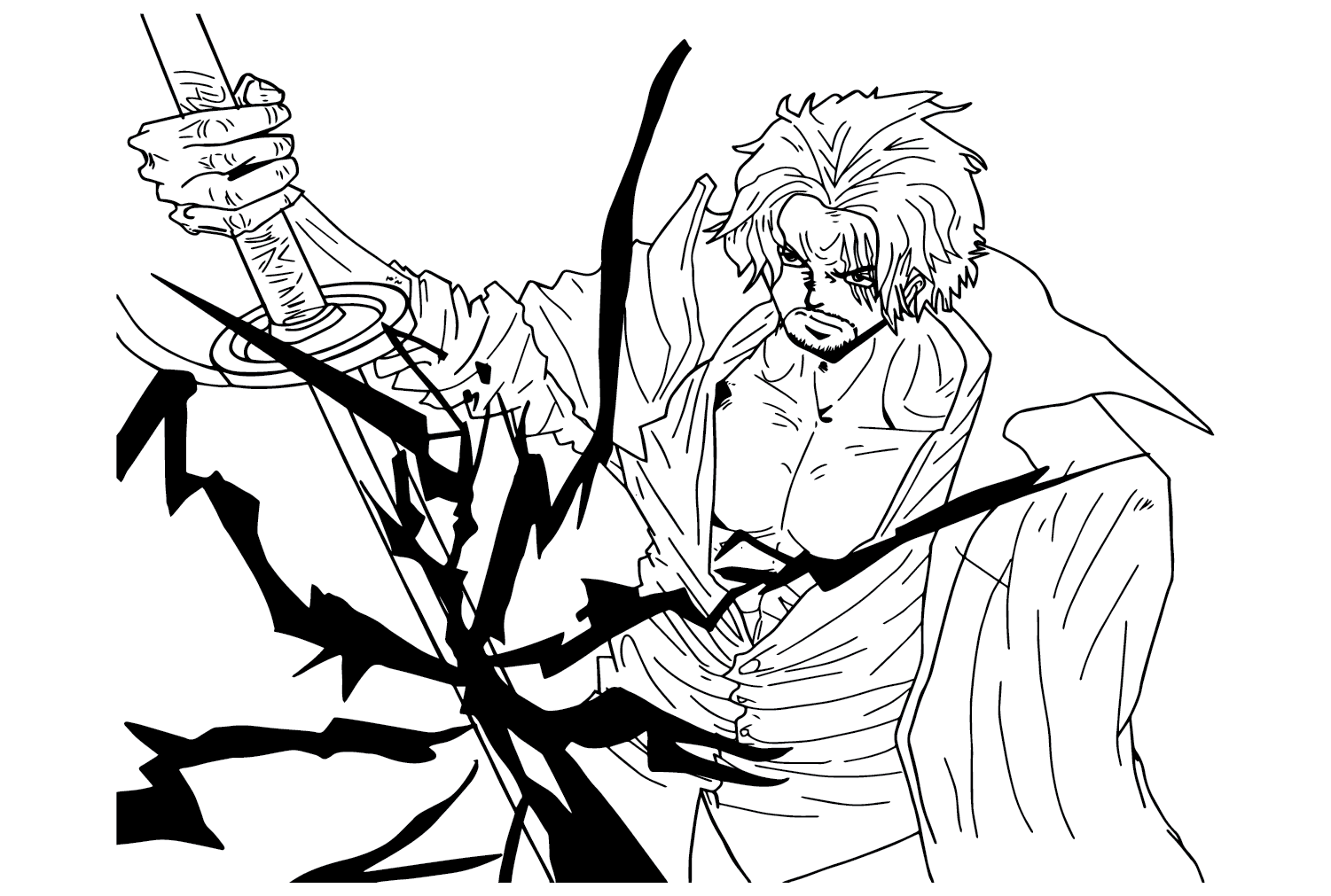
Shanks’ Conqueror’s Haki (Haoshoku Haki) is established as among the most powerful in the One Piece world. Conqueror’s Haki is an extremely rare form of Haki, possessed by only a small number of people, that allows the user to overpower weaker wills through sheer force of personality: those without sufficient mental strength will simply lose consciousness when exposed to a powerful enough Conqueror’s Haki user’s presence.
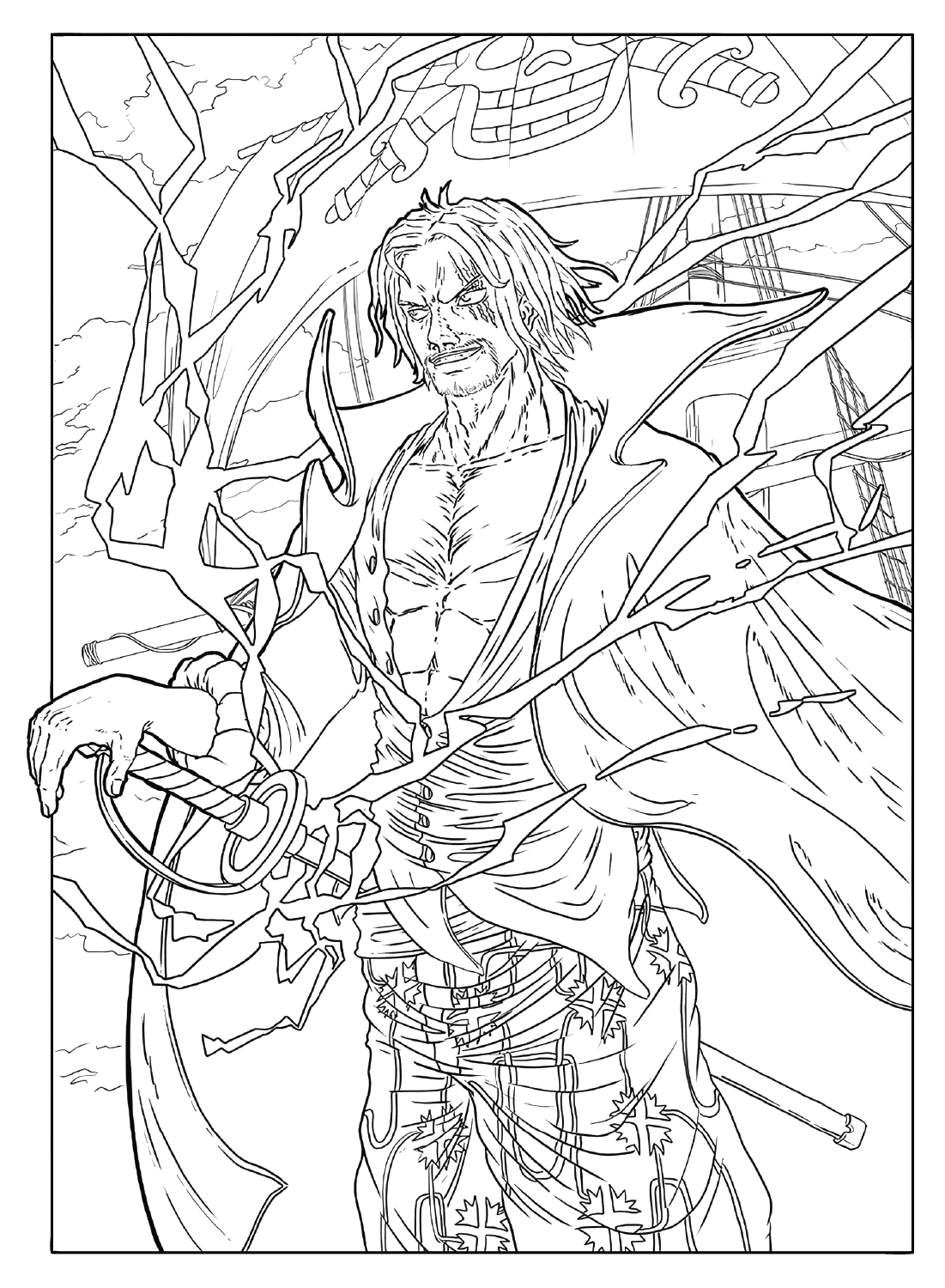
Pages showing Shanks’ Haki manifestation depict the specific visual language that Eiichiro Oda uses for Conqueror’s Haki in the manga and anime: dark lightning-like energy crackling around the user, a distortion in the air, and the specific aftermath of others in proximity losing consciousness or being pushed back by the sheer force of will made manifest.
Coloring Haki pages: Conqueror’s Haki uses dark, near-black energy effects crackling outward from the character. These dark lightning-like effects should be rendered as near-black or very dark purple-black at maximum saturation, suggesting dark power rather than the bright blue-white of standard lightning. The contrast between Shanks’ vivid red hair and the dark energy surrounding him creates the specific visual impact of these scenes.
Shanks with the Red Hair Pirates Crew
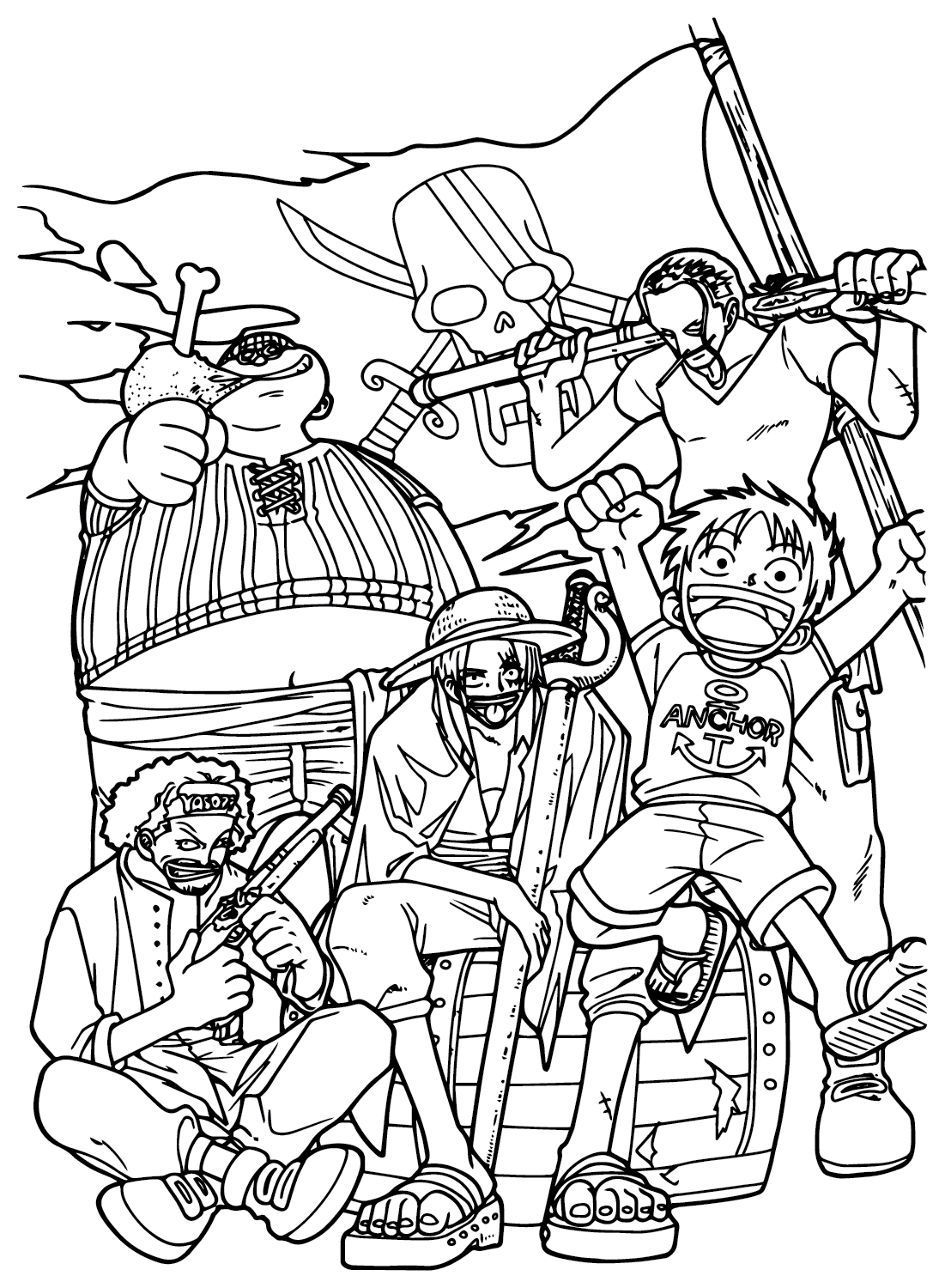
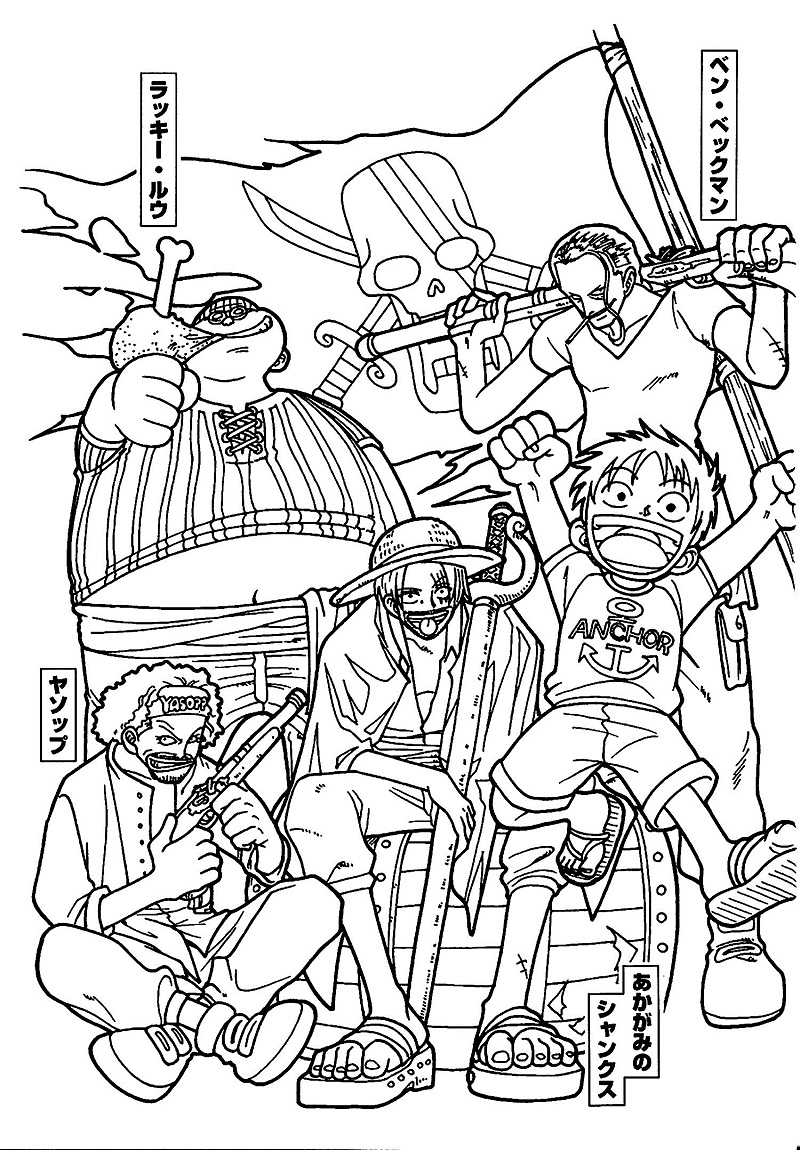
Ben Beckman, Shanks’ first mate, is widely considered the most intelligent pirate in the East Blue and was established as powerful enough that a Marine Admiral, Kizaru, chose not to act when Beckman pointed a gun at him during the Marineford War. Yasopp, the crew’s sniper, is the father of Usopp (one of Luffy’s main crew members). Lucky Roux is the large, perpetually eating crewmember whose cheerful presence mirrors the crew’s overall personality.
Group pages showing the Red Hair Pirates crew together depict a crew whose visual aesthetic is fundamentally different from many of the series’ other pirate crews: not imposing through monstrosity or dramatic design, but simply through the ease and confidence of people who know precisely how capable they are.
Coloring crew pages: Ben Beckman uses dark tones for his clothing with the specific calm, intellectual bearing his character communicates. Yasopp uses the specific coloring details associated with his design and is the crew member fans are most interested in for his connection to Usopp. The crew’s overall color palette tends toward warmer tones that reflect the crew’s fundamental warmth of character.
What These Pages Do
Shanks’ role in the One Piece narrative is one of manga storytelling’s more specifically elegant structural choices: a character of enormous power and importance to the story who appears rarely, who is almost never shown in actual combat across twenty-five years of publication, and who nonetheless carries more narrative weight than almost any other character in the series simply through the implications of his presence and the specific choices he made in the series’ first chapter.
The straw hat that Shanks gave Luffy as a promise is the series’ central symbolic object, and its journey from Gol D. Roger to Shanks to Luffy connects the manga’s three central figures across three generations in a chain that Oda established in the first chapter and has been paying off across the entirety of the subsequent narrative. Shanks gave the hat, knowing exactly what he was doing: Roger had told him about the importance of the hat, and Shanks recognized in the young Luffy something worth making that promise for.
The American Academy of Pediatrics identifies fine motor skill development as a key childhood milestone throughout early childhood. The vivid red hair’s mass and flow, the three scar lines’ precise diagonal placement across the left eye area, the Conqueror’s Haki energy effect rendering, the cloak’s fabric fold work, and the straw hat’s textural quality all provide sustained fine motor challenge across the collection’s age range. The 2005 Art Therapy Journal study on structured coloring and anxiety reduction applies throughout.
One Piece, serialized in Weekly Shōnen Jump beginning July 19, 1997, has become the best-selling manga series of all time, with over 530 million volumes in circulation globally as of 2024. Shanks’ importance to the series’ emotional architecture, established in its first chapter, has been a constant across the full duration of that publishing history.
How to Color These Pages Well
Shanks’ red hair is the most important single color decision in the collection and must be vivid, warm red at full saturation. His epithet is “Red-Haired” Shanks, and the hair’s specific warm, vivid red is the character’s primary identifying visual. Apply the most vivid available warm red at maximum pressure across the full hair mass, working from the roots outward along the hair’s natural direction. If the available red leans toward cool (blue-shifted), it reads as crimson or burgundy rather than as the specific vivid warm red of the character. If it reads too orange, a small layer of deeper red corrects toward the right tone.
The three scars require precise diagonal placement at the specific angle that crosses the left eye area. The scars are parallel diagonal lines running from upper-left to lower-right across and around Shanks’ left eye. Apply them as slightly darker or slightly reddened lines against the base skin tone, using the finest available tool. They should be clearly visible as the character’s most specific identifying detail after the hair, but not so heavily applied that they dominate the face at the expense of the eye and expression detail.
The missing left arm is the design’s most emotionally significant element and should be clearly established in left-side and full-body pages. The left arm terminates at approximately the shoulder, with no forearm or hand visible. In pages showing Shanks from the left or in poses where the arm’s absence is visible, apply the shoulder and upper torso fabric carefully to show the garment’s natural fall where the arm is not present. The absence should read clearly without requiring heavy or dramatic treatment.
The cloak or cape uses dark, rich fabric tones with the three-zone fabric rendering technique. Apply the base near-black or very dark navy at full coverage across the cloak’s full extent. Identify the most directly lit surfaces (the top of the shoulder area, any fold crests that catch direct light) and apply a slightly lighter version of the same dark tone there. The deepest shadow areas within folds use the darkest available tone. This three-zone approach gives the cloak a three-dimensional fabric quality without departing from its essential darkness.
Conqueror’s Haki effects use very dark, near-black energy that contrasts with the red hair above it. The dark energy manifestation of Conqueror’s Haki should be rendered in near-black or very dark purple-black, crackling outward from the character’s body in irregular lightning-like lines. This very dark energy against the vivid red hair above it creates the specific visual tension of the character’s power being made visible: the red at the top of the composition, the darkness below and surrounding it.
5 Creative Craft Ideas
The Three Generations of the Straw Hat
The straw hat’s journey through three generations of One Piece’s most important characters is one of manga storytelling’s most elegantly constructed symbolic chains. Gol D. Roger wore it and gave it to Shanks. Shanks wore it and gave it to Luffy. Luffy wears it as the series’ defining object, the promise that Shanks will receive it back from him when he has become a great pirate.
Print a young Shanks page showing the straw hat, and a Shanks page showing him without the hat (after giving it to Luffy). Color both in the canonical design.
On the backing card: “The straw hat. Owner 1: Gol D. Roger (the Pirate King). He wore it until the Roger Pirates disbanded. He gave it to Shanks. Owner 2: Shanks (Red-Haired Shanks, the Emperor). He wore it until he met a boy named Luffy in Foosha Village. He gave it to Luffy with a promise: return it when you’ve become a great pirate. Owner 3: Monkey D. Luffy (the Straw Hat Pirates captain, eventually the King of the Pirates). The hat’s journey: the spine of One Piece. Chapter 1 to the end. Three men. One hat.”
The Sacrifice at Foosha Village
Shanks losing his left arm to the Sea King to save young Luffy is the most significant single action of any character in the series’ entire history in terms of consequences: it established Luffy’s debt to Shanks that drives his motivation to become the Pirate King, gave Shanks a permanent physical reminder of his investment in Luffy’s future, and established the straw hat’s second level of meaning (not just a promise, but a promise made at the cost of an arm).
Print the most powerful Shanks action page in the collection. Color with the specific vivid red of his hair against a dramatically rendered background.
On the backing card: “Chapter 1, One Piece. July 19, 1997. Foosha Village. The Sea King (Lord of the Coast) threatens Luffy. Shanks steps between them. He thrusts his left arm into the Sea King’s mouth to protect Luffy. He uses Conqueror’s Haki to scare it away. He loses his left arm. His response to Luffy’s tears: ‘It’s fine. I’m left-handed anyway.’ His actual left-handedness: not established before or after. The sacrifice: real. The casualness: chosen. He gave Luffy the hat. He gave him the arm. The series began here.”
The Marineford Authority Page
Shanks’s appearance at the end of the Marineford War and stopping the conflict through sheer presence is one of the most analyzed single scenes in the One Piece fandom: it demonstrated his authority without depicting a single moment of combat. He arrived, both sides stopped fighting, and the war was over.
Print a Shanks standing pose page in his cloak. Color the vivid red hair at maximum saturation against a dark, post-battle background.
On the backing card: “Marineford War. The Battle of Marineford. Final phase. Shanks and the Red Hair Pirates arrive. Neither the remaining Whitebeard Pirates nor the Marines continues fighting. Ben Beckman: pointed a gun at Admiral Kizaru during the same period. Kizaru stopped moving. What Shanks demonstrated at Marineford: authority is not demonstrated by what you do when you fight. It is demonstrated by what happens when you arrive. He stopped a war. He did not throw a single punch. One Piece, by Eiichiro Oda. Chapter 1: July 19, 1997.”
The Roger Connection Study
Shanks began his pirate life as a cabin boy on the crew of Gol D. Roger, the Pirate King, whose execution began the Great Age of Pirates that the entire One Piece narrative takes place within. The Roger Pirates discovered the One Piece, completed the Grand Line, and then disbanded. Roger turned himself in to the Marines and was executed at Loguetown, his final words igniting the world’s desire to find the treasure he left at the end of the Grand Line.
Young Shanks was aboard for this journey. The connection between Shanks and Roger explains the straw hat’s significance: it was the Pirate King’s hat, and it now sits on the head of the next person with the potential to reach the same height.
Print a young Shanks portrait page. Color in his younger, cabin boy design.
On the backing card: “Gol D. Roger: the Pirate King. Executed at Loguetown. His final words began the Great Age of Pirates. His former cabin boy: Shanks. The straw hat: Roger wore it. Roger gave it to Shanks. Shanks gave it to Luffy. Roger told Shanks: ‘I found that kid interesting.’ The kid: undisclosed in the conversation. The implication: the story connects. Shanks’ knowledge of Roger, and Roger’s assessment of what Shanks carried and what it meant, runs under the entire One Piece narrative. It connects Chapter 1 to the series’ conclusion.”
The Emperor’s Bounty Study
Shanks’ bounty of 4,048,900,000 Berries, revealed in One Piece Film: Red (released August 6, 2022), established the specific numerical value the World Government places on his capture or death. For comparison, the other Emperors’ bounties (as established across various chapters) place Shanks among the highest-bounty pirates in the world.
Print a Shanks portrait page. Color in his adult Emperor design: vivid red hair, three scars, dark cloak.
On the backing card: “Shanks. Title: Emperor of the Sea (Yonko). Epithet: Red-Haired. Crew: Red Hair Pirates. Bounty: 4,048,900,000 Berries (revealed in One Piece Film: Red, August 6, 2022). What the bounty represents: the World Government’s assessment of the cost of his existence. What Shanks has done with the bounty: continued to drink sake, travel with his crew, and occasionally appear at pivotal moments in world history. His left arm was offered to save a boy who wanted to be a pirate. His hair: still very red. His hat: Luffy has it. It will be returned.”
Frequently Asked Questions
Who is Shanks, and what is his role in One Piece? Shanks, known as “Red-Haired” Shanks (赤髪のシャンクス), is one of the Four Emperors of the Sea (Yonko) in the One Piece universe, captaining the Red Hair Pirates. He first appears in Chapter 1 of the manga (July 19, 1997) in a flashback showing young Monkey D. Luffy growing up near Shanks’ crew at Foosha Village. Shanks inspires Luffy to become a pirate, gives him the iconic straw hat with a promise to return it when Luffy has become a great pirate, and loses his left arm saving Luffy’s life from a Sea King. Despite being established as one of the most powerful characters in the series, Shanks appears rarely in the main narrative and is almost never depicted in actual combat, communicating his power primarily through his implications and through the reactions of other powerful characters to his presence.
How did Shanks lose his arm? Shanks lost his left arm in the series’ first chapter while saving young Monkey D. Luffy from the Lord of the Coast, a Sea King (a massive sea creature) that attacked when a bandit threw Luffy into the ocean. Shanks stepped between the creature and Luffy, thrusting his arm into the Sea King’s mouth and using his Conqueror’s Haki to frighten it away. The arm was lost in the process. Shanks’ response to Luffy’s tearful apology was to tell Luffy not to worry about it, demonstrating the specific character quality of someone who makes a significant sacrifice without requiring that sacrifice to be acknowledged as significant.
What is Shanks’ connection to Gol D. Roger? Shanks was a cabin boy on the crew of Gol D. Roger, the Pirate King, during his youth. The Roger Pirates were the only crew to complete the Grand Line and find the One Piece. Roger subsequently turned himself in to the Marines and was publicly executed at Loguetown, his final words inspiring a new era of piracy. The straw hat that Shanks later gives to Luffy was originally Roger’s: it passed from the Pirate King to Shanks, who wore it until he gave it to Luffy along with a promise to have a party again when Luffy had surpassed him as a pirate. This chain connects Roger, Shanks, and Luffy across three generations as the series’s most important sequential figures.
What is Shanks’ Conqueror’s Haki? Conqueror’s Haki (Haoshoku Haki) is an extremely rare form of Haki, possessed by only a small number of individuals, that allows the user to overpower weaker wills through the force of their presence and personality: those without sufficient mental strength lose consciousness or are physically pushed back when exposed to a sufficiently powerful Conqueror’s Haki user. Shanks is established as one of the most powerful Conqueror’s Haki users in the One Piece world, to the degree that his use of it while saving young Luffy from the Sea King was enough to frighten away a creature that was in the act of attacking. In a later scene, Shanks and Whitebeard’s clash of Conqueror’s Haki split the sky above the ship where they met.
What is the Red Hair Pirates crew? The Red Hair Pirates are Shanks’ pirate crew. The most significant named crew members include Ben Beckman, the first mate, who is widely considered the most intelligent man to emerge from the East Blue and whose authority was established when Admiral Kizaru of the Marines chose not to move during the Marineford War when Beckman simply pointed a gun at him; Yasopp, the crew’s sniper, who is the father of Usopp (one of the Straw Hat Pirates’ main crew members); and Lucky Roux, a large crewmember known for his eating. The crew’s overall personality mirrors Shanks’: fundamentally easygoing and cheerful, but capable of projecting authority that most forces in the world choose to acknowledge rather than challenge.
What happened in One Piece Film: Red? One Piece Film: Red, directed by Gorō Taniguchi and released in Japan on August 6, 2022, is a theatrical film in the One Piece franchise that centers on Uta, a world-famous singer who is revealed to be Shanks’ adopted daughter. The film provides significant backstory for Shanks and explores aspects of his history and motivations that are not fully addressed in the main manga narrative at the time of the film’s release. The film became the highest-grossing One Piece theatrical release, earning approximately 20.2 billion yen in Japan. While the events of the film are considered non-canonical to the main manga, the film revealed that Shanks’ bounty is 4,048,900,000 Berries.
What age group are these pages best suited for? Shanks coloring pages are most appropriate for fans of the One Piece manga and anime, who range from younger children familiar with the anime’s early arcs through adult fans who have followed the series across its twenty-five-year publication history. The simpler portrait pages with the vivid red hair as the primary coloring challenge are accessible from ages six and seven, where One Piece character recognition and the single dominant color provide clear coloring targets. The more detailed pages with the three-scar rendering, the Conqueror’s Haki energy effects, the fabric fold work of the cloak, and the group crew compositions are most rewarding for ages eight to twelve. The historical context pages connecting Shanks to Roger and to the series’ broader mythology are most engaging for older teenagers and adult fans who have read far enough into the manga or watched the anime to understand the significance of the connections being referenced.
Browse the full collection at ColoringPagesOnly.com. All 30+ pages free, no sign-up, PDF or PNG, print or color online.
Eiichiro Oda published the first chapter of One Piece in Weekly Shōnen Jump on July 19, 1997. The first thing he showed was not Luffy. It was Shanks, sitting in a tavern in Foosha Village, letting a bandit pour a drink on his head without responding. The chapter established everything in its first pages: the character, the arm, the hat, the promise.
Shanks gave his arm to save a child who wanted to be a pirate. He gave the hat to the same child. He told the child to return it when he had become a great pirate. He left. He has spent twenty-five years of publication appearing rarely, almost never fighting, and being acknowledged as one of the most powerful people in the world by everyone who encounters him.
The straw hat: Roger wore it. Shanks wore it. Luffy wears it. It will be returned.
Pick up your most vivid warm red. The hair goes first at full saturation. Pick up your finest available tool for the three scars across the left eye. The cloak is near-black. The missing arm: visible in left-side views as the garment’s natural fall, where the arm is not.
Share your work on Facebook and Pinterest and tag #Coloringpagesonly. The three generations of the straw hat and the Marineford authority pages are particularly worth sharing.
Color the red hair vividly. Apply the three scars precisely. The Emperor stopped the war by arriving. The hair was very red when he did it.