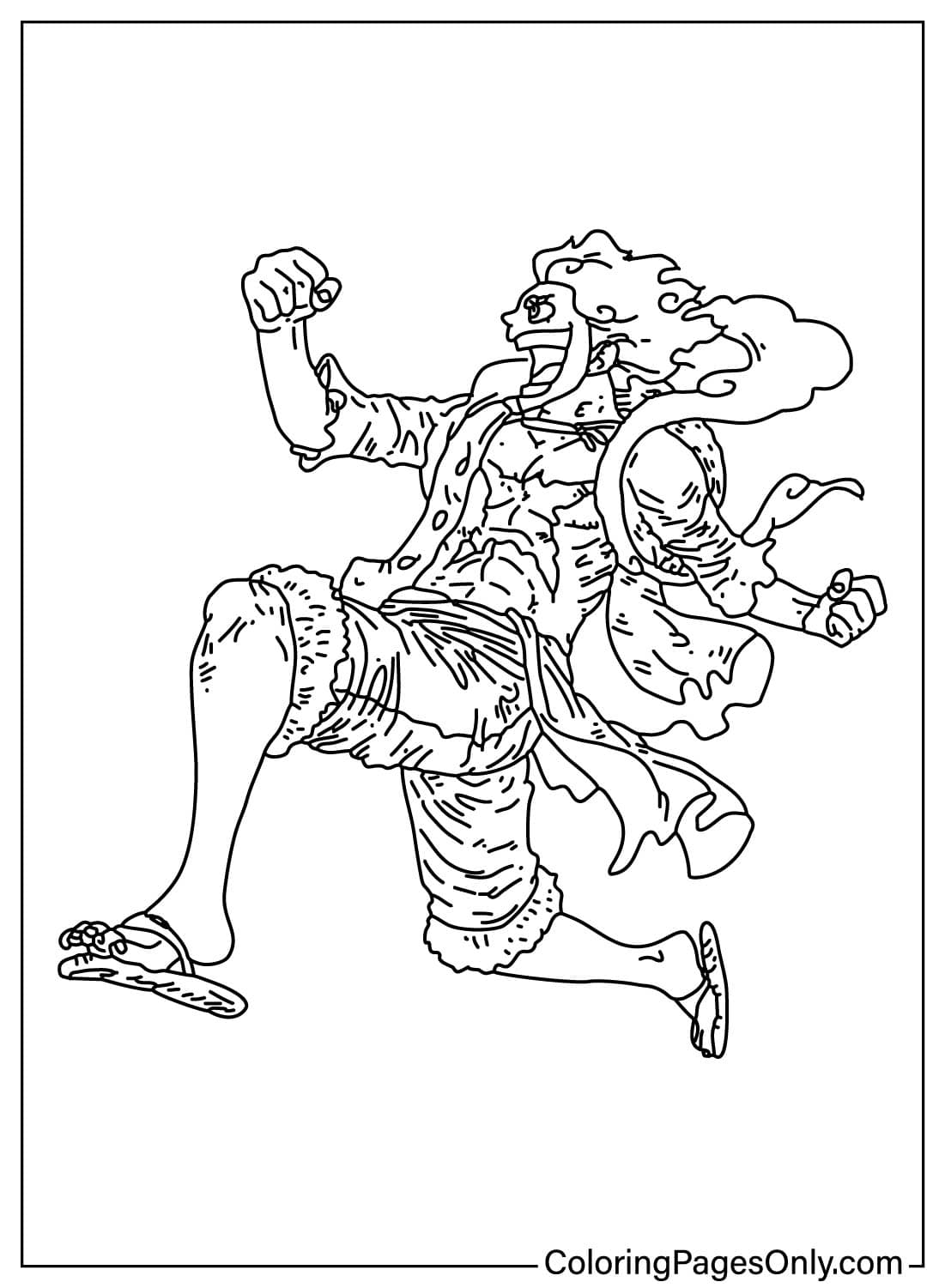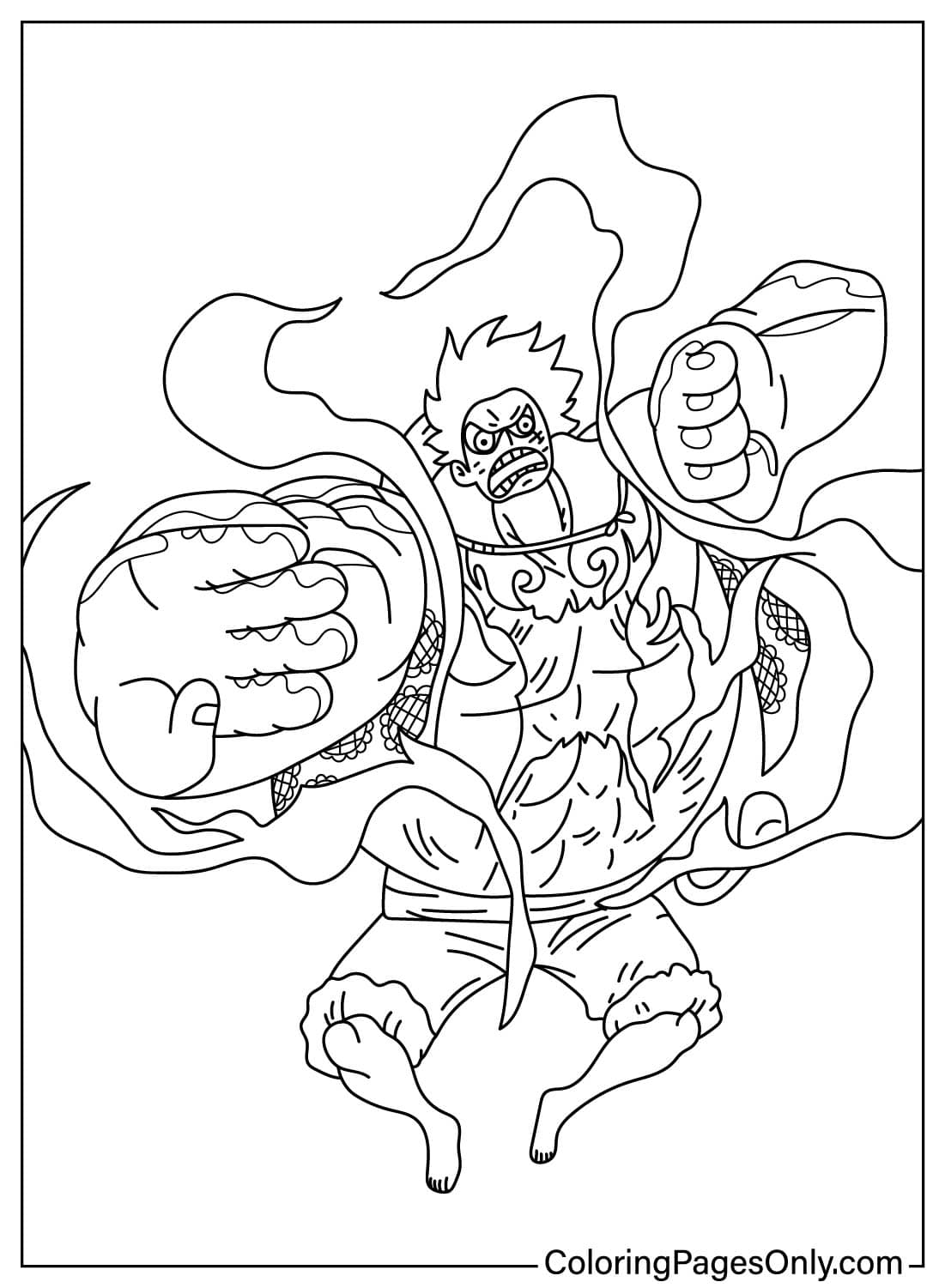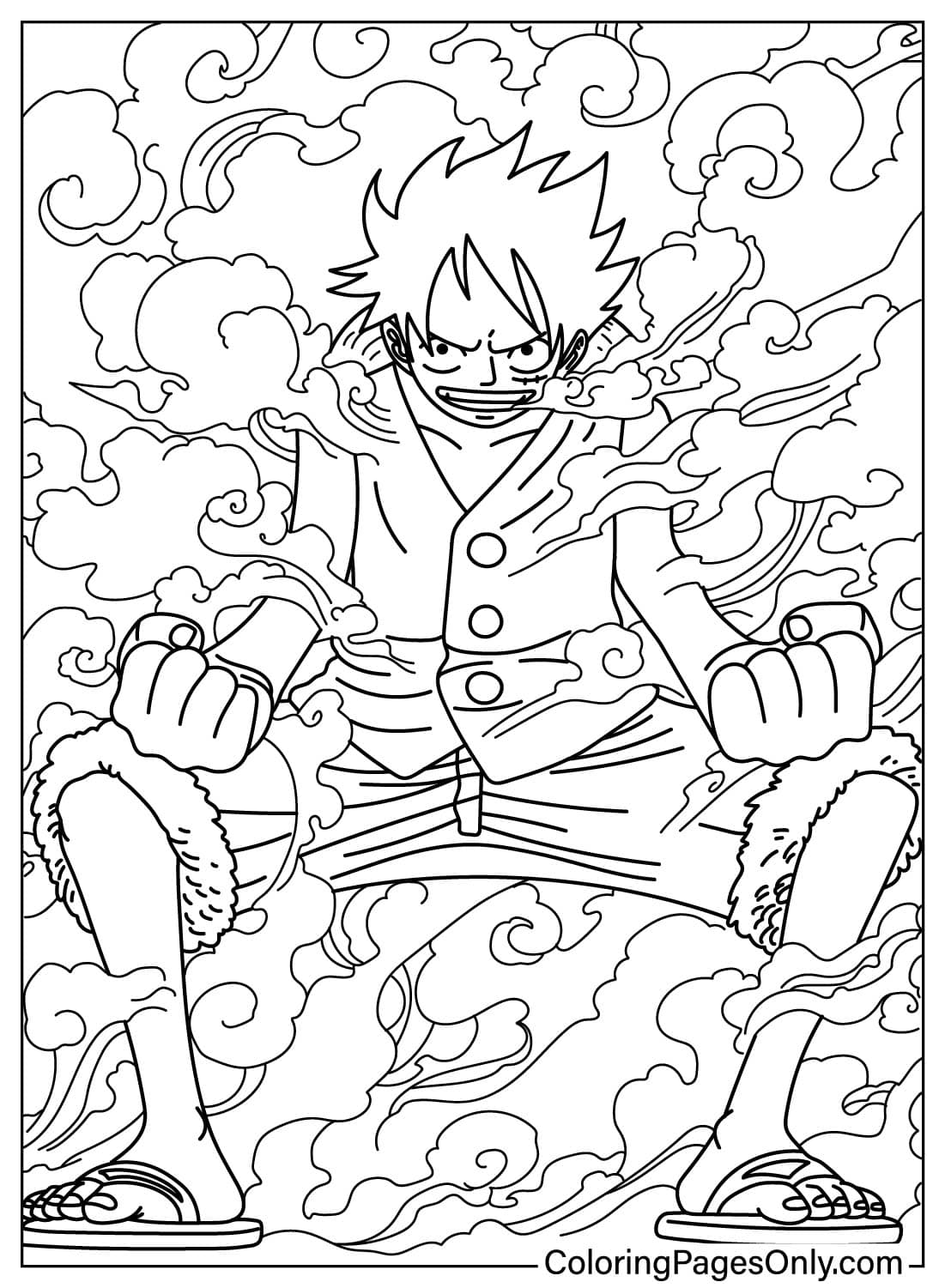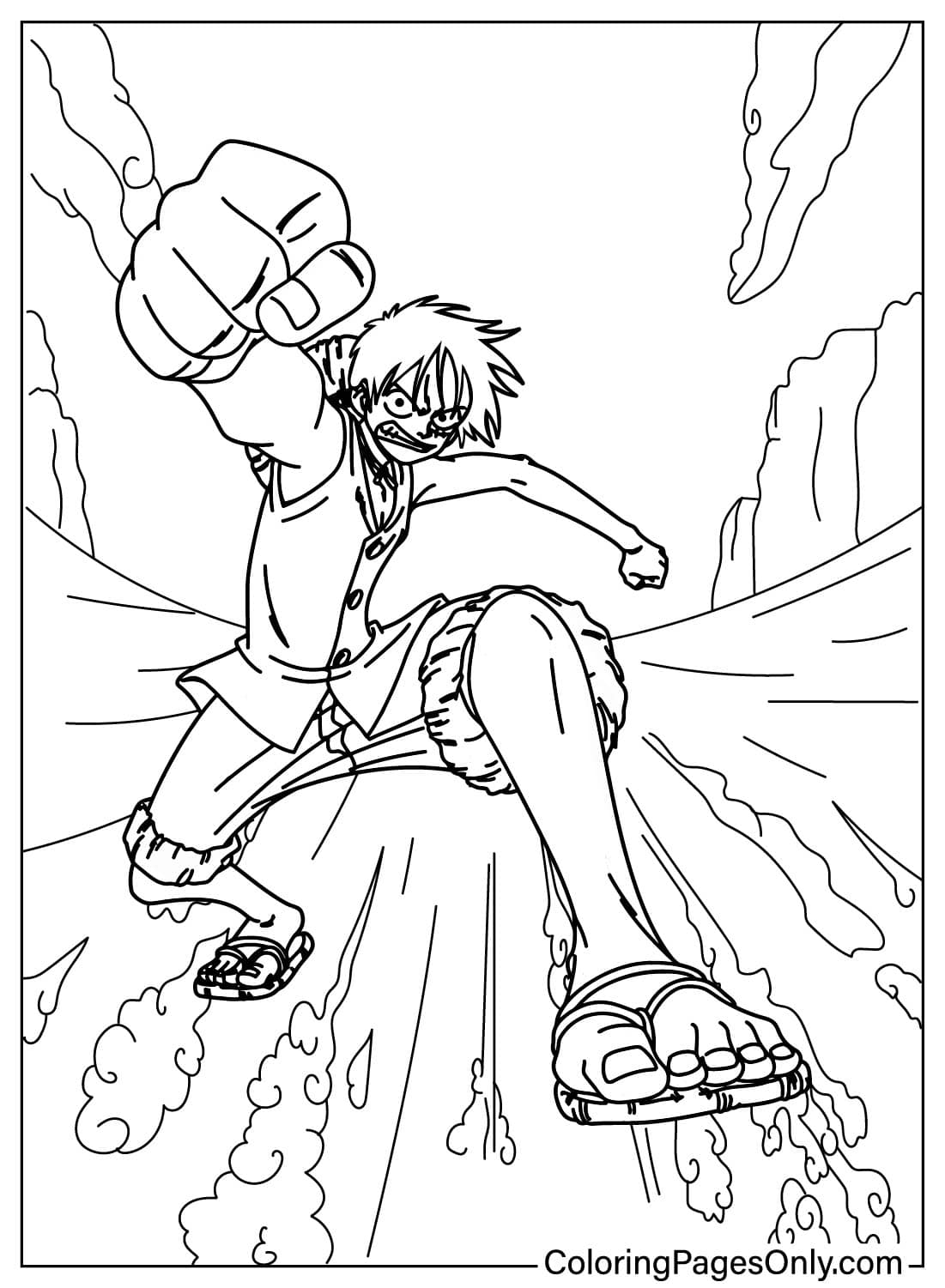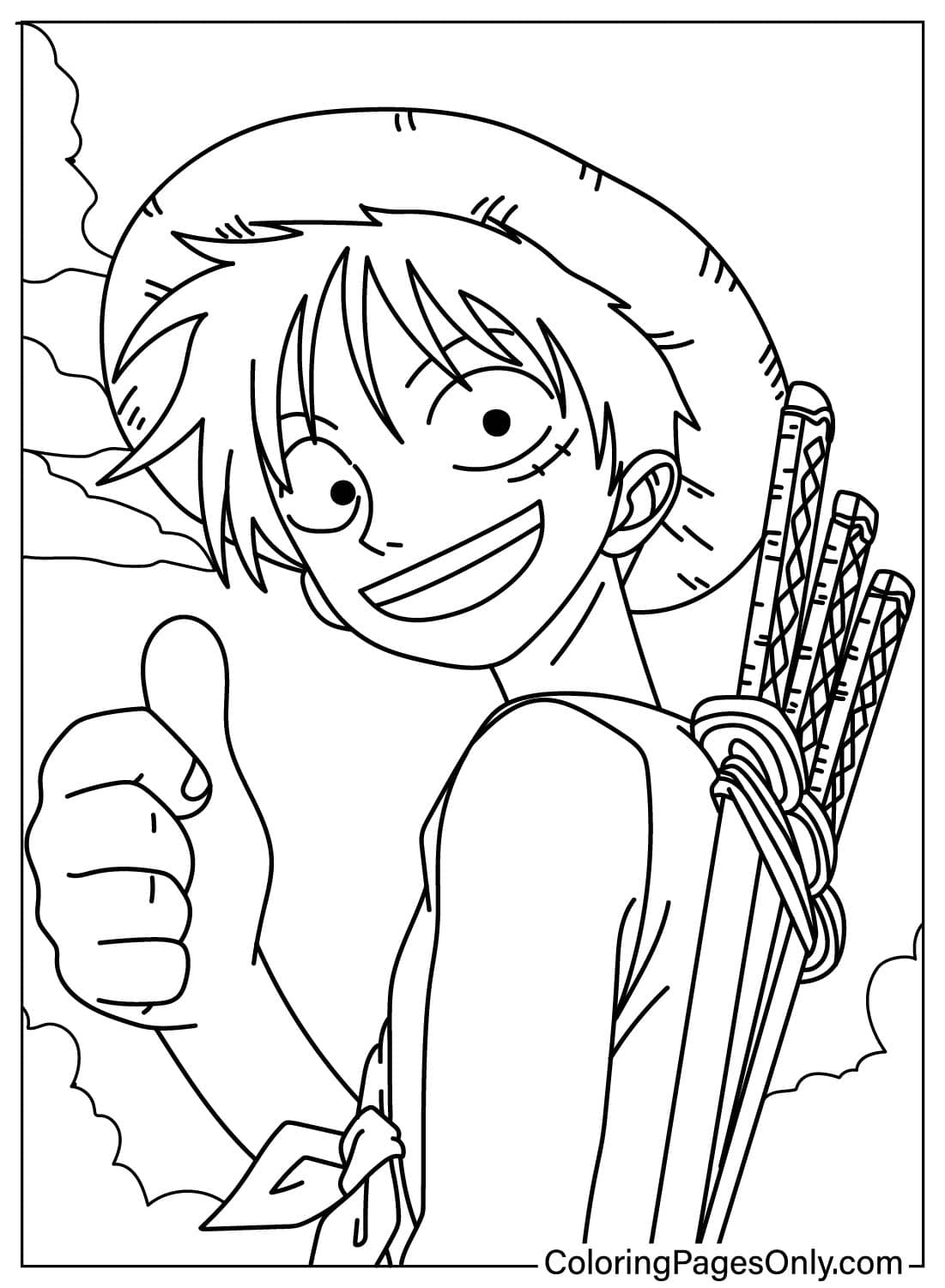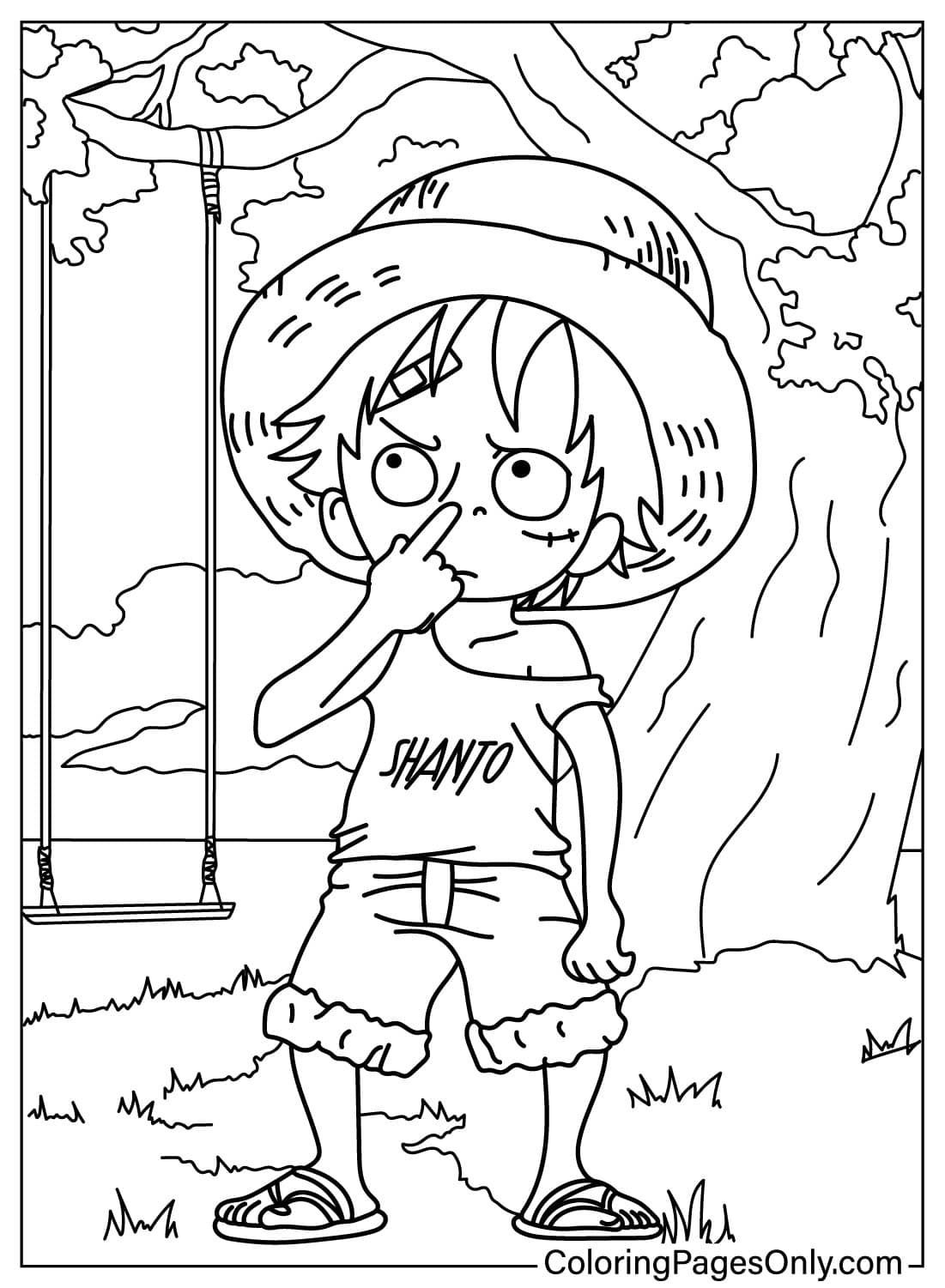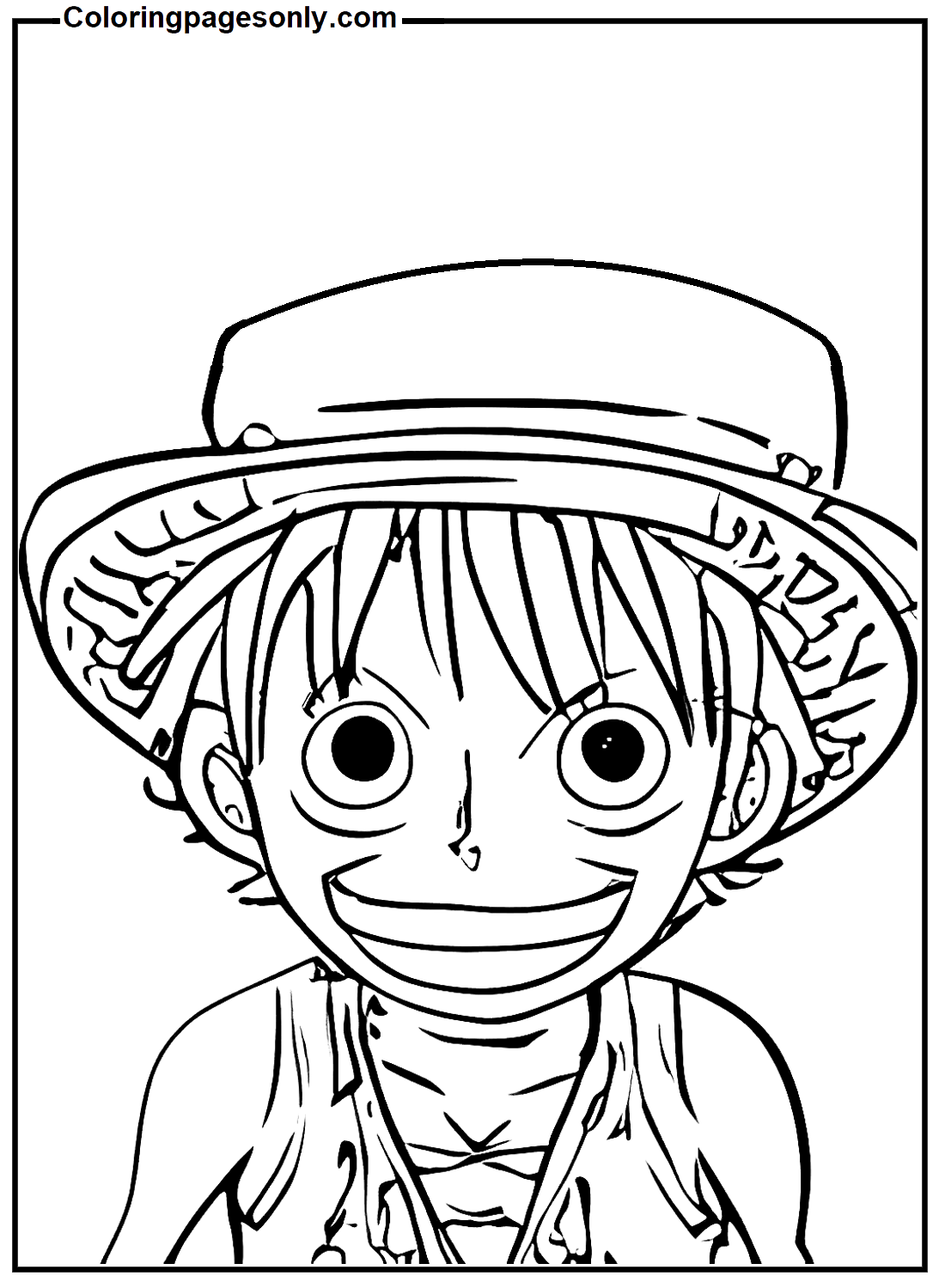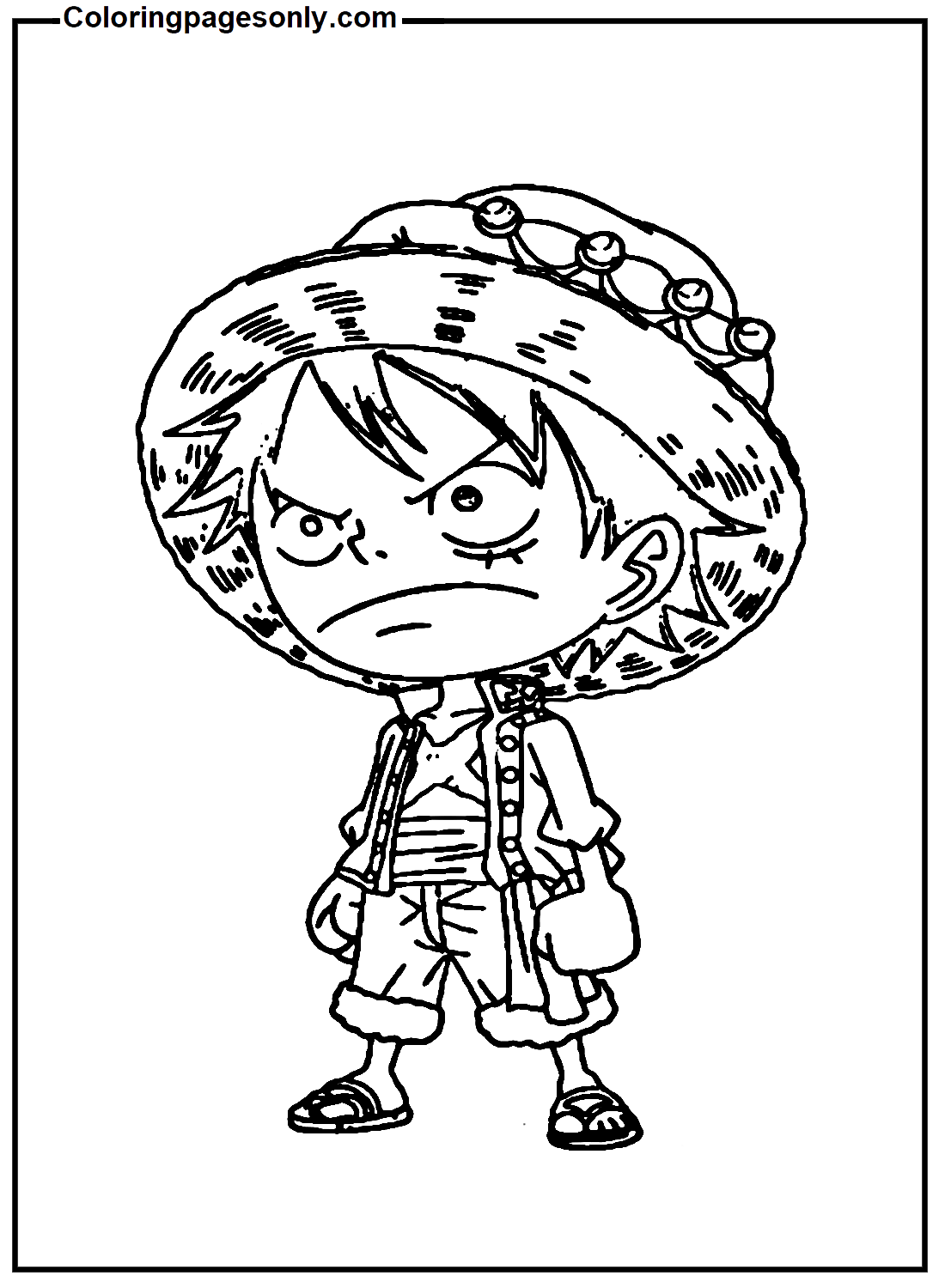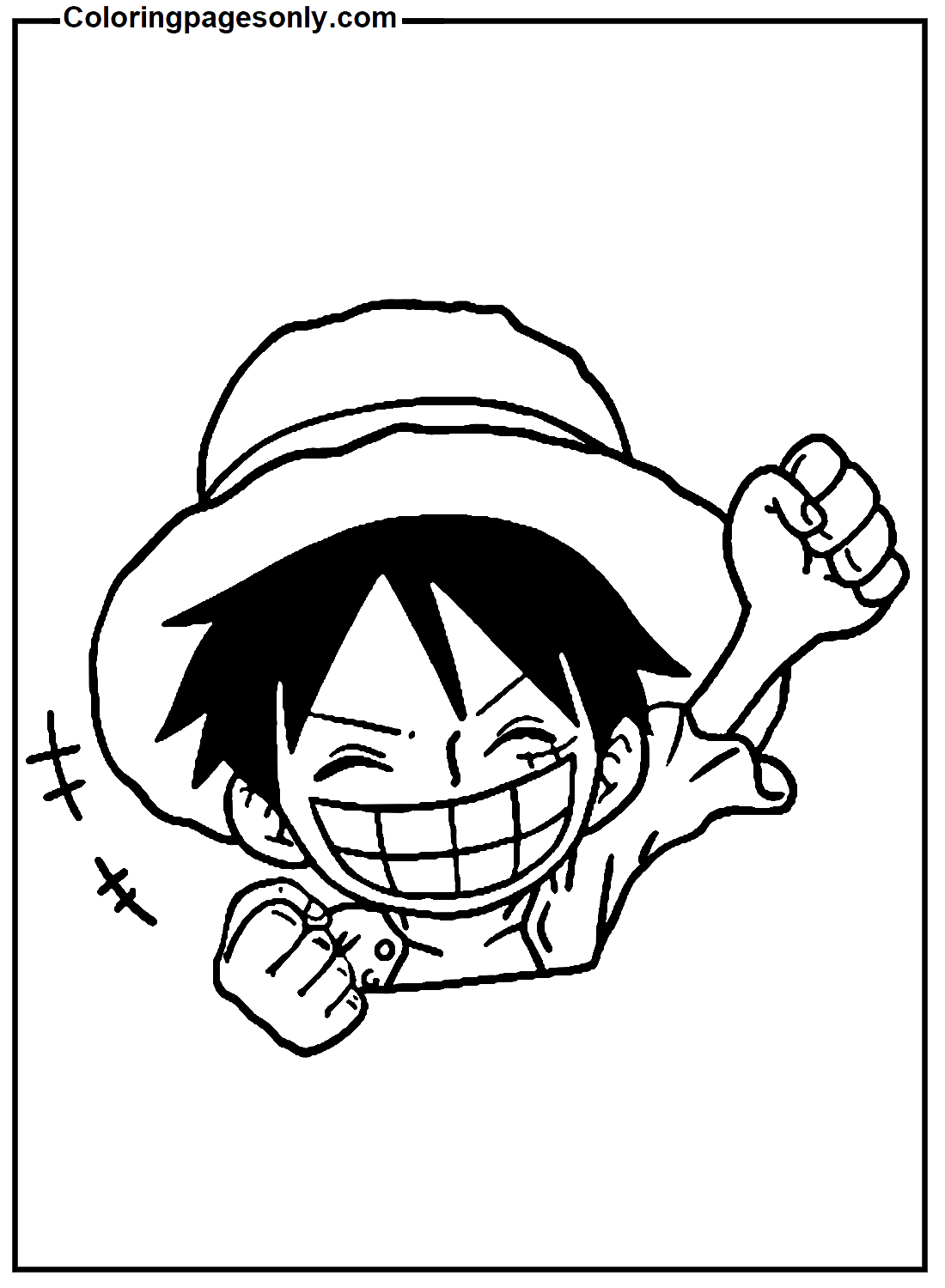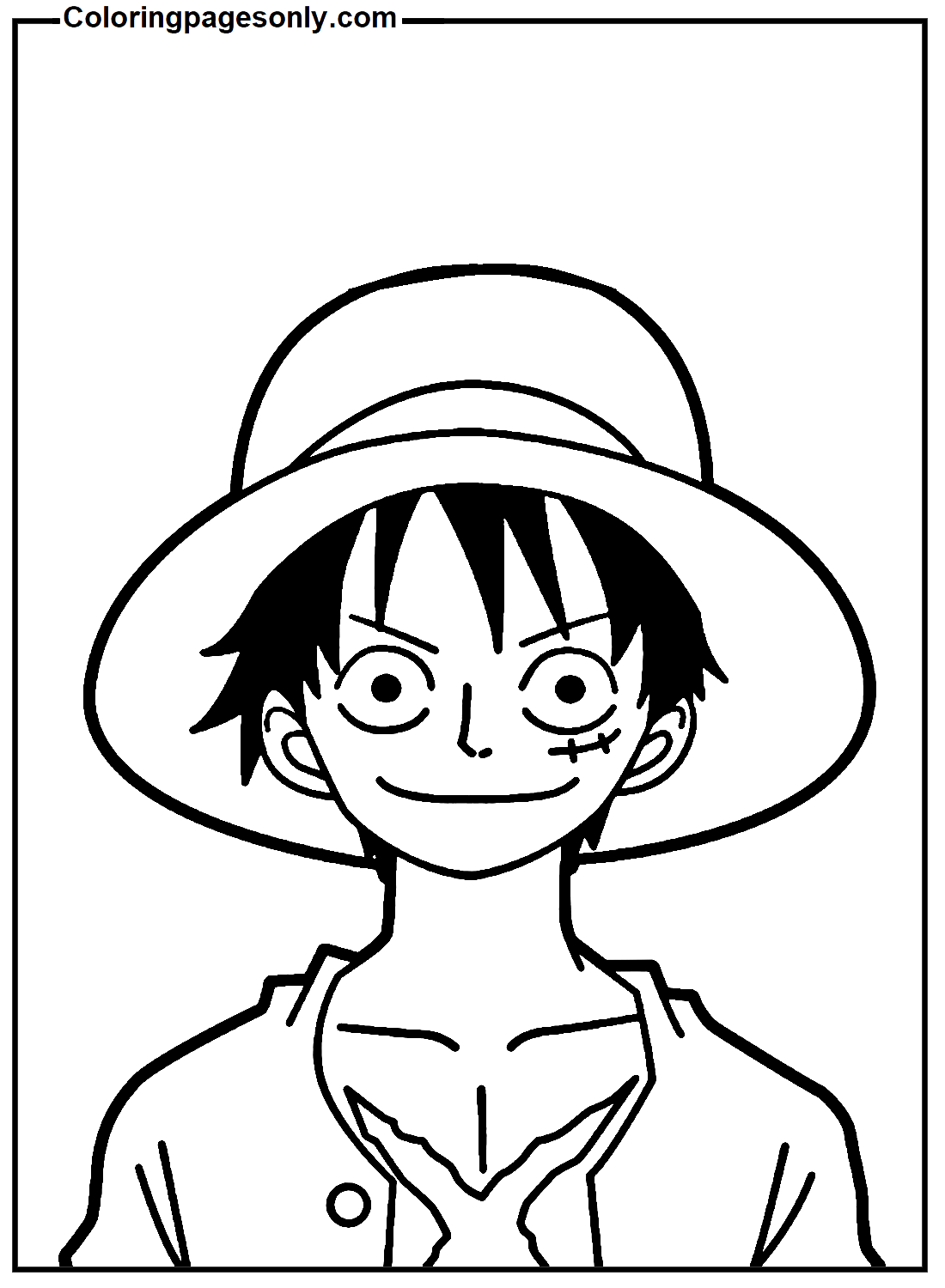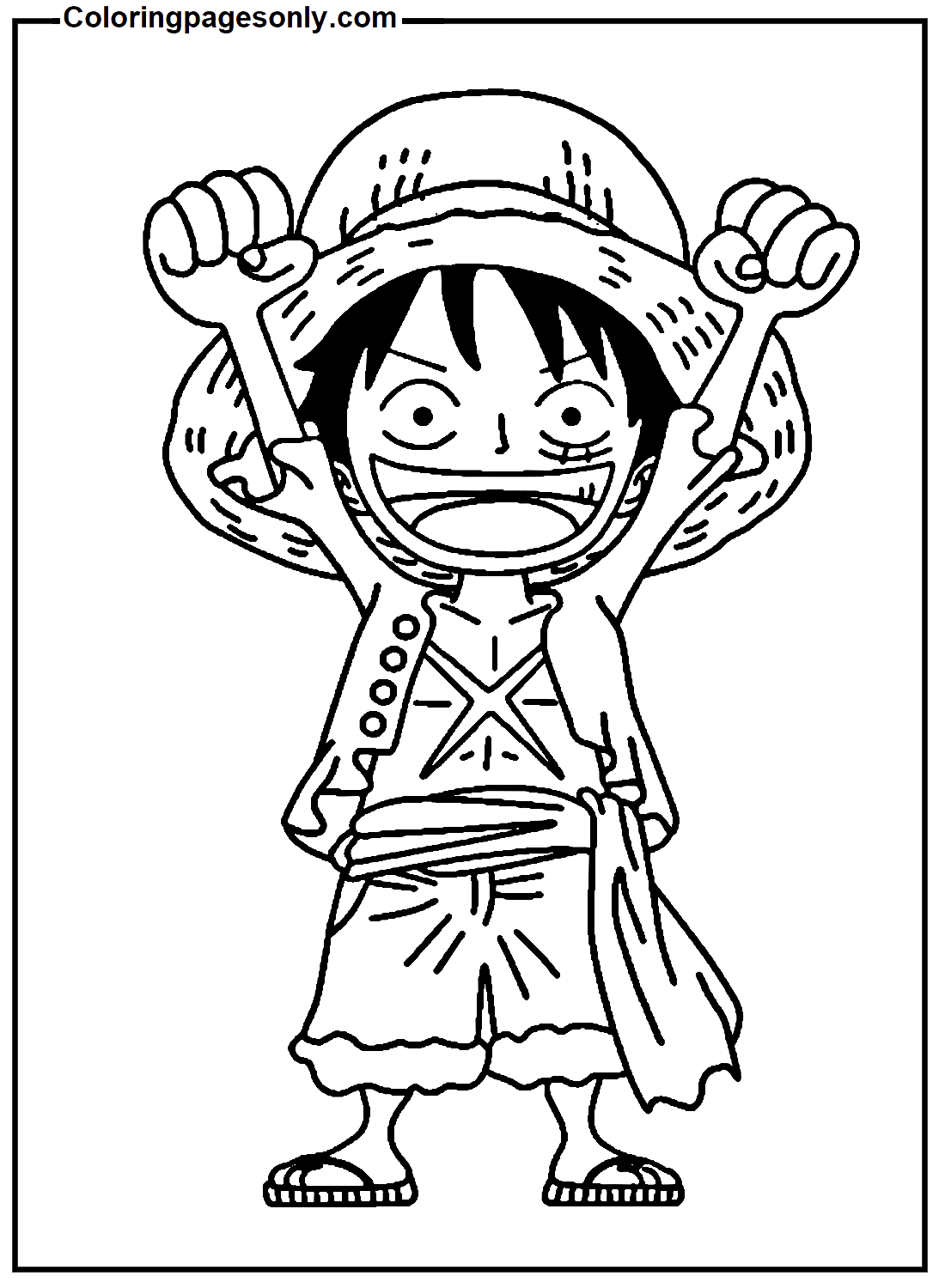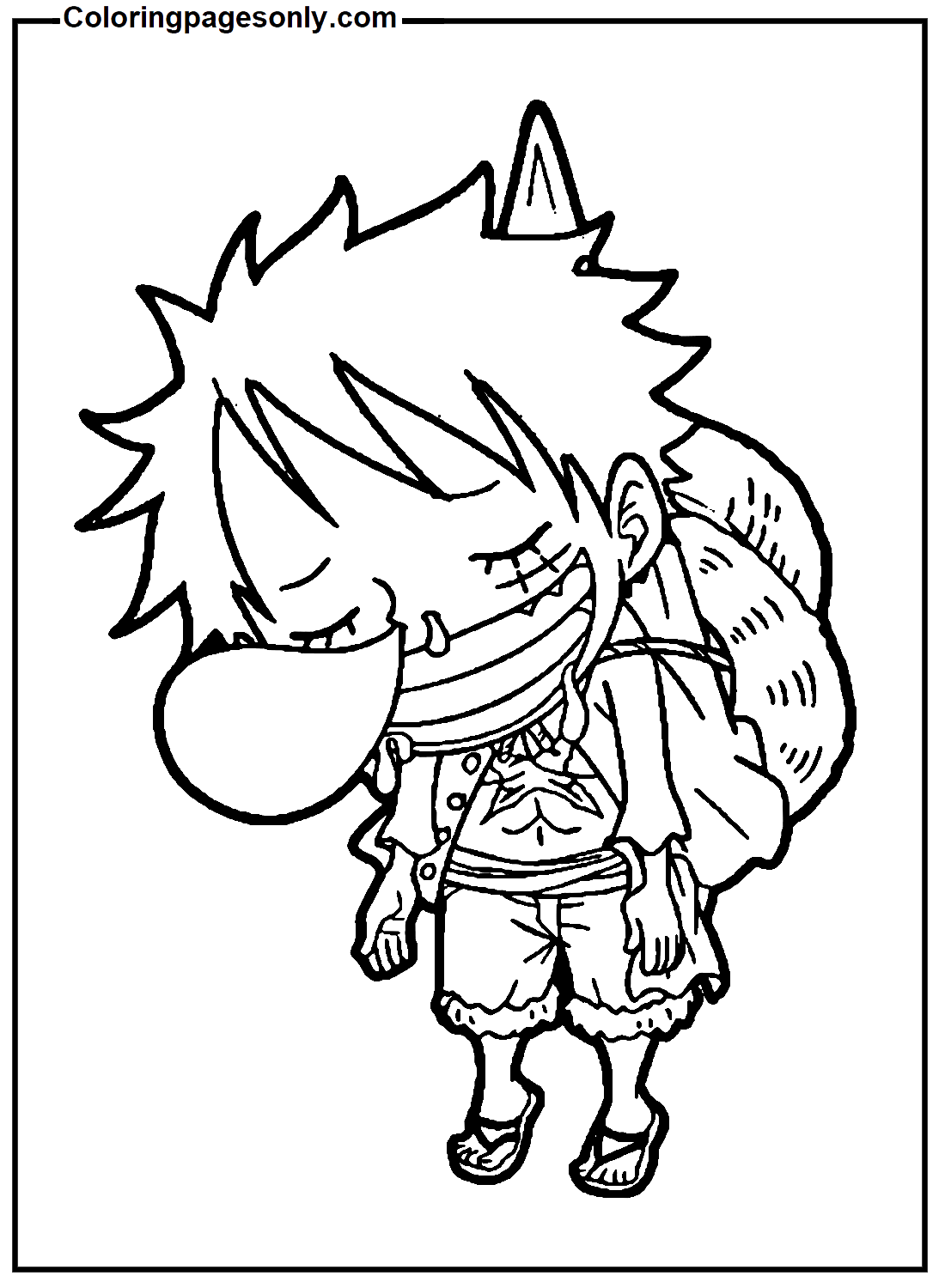
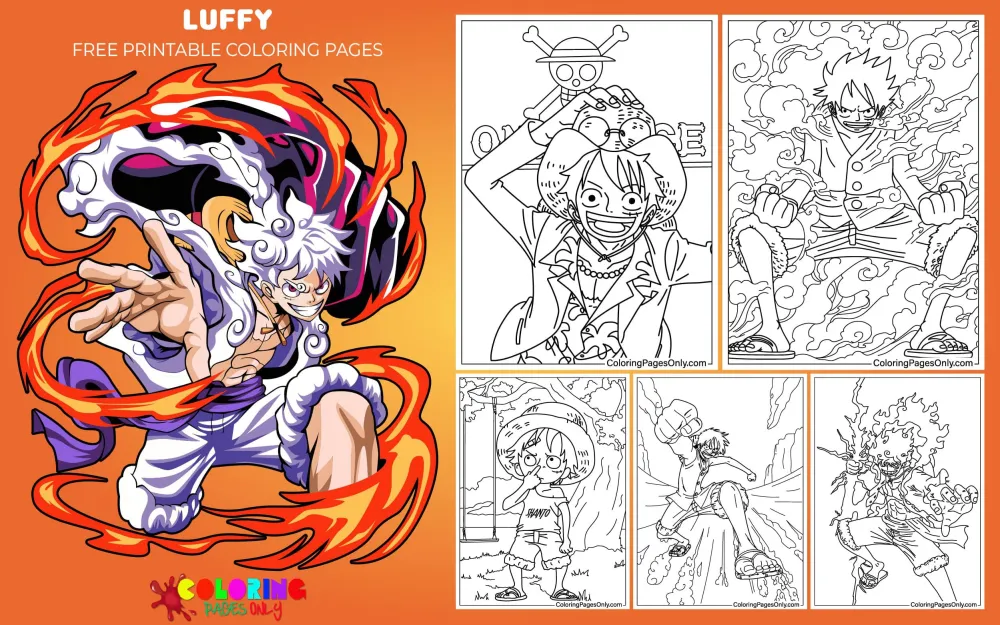
Explore 70+ free Luffy coloring pages featuring Monkey D. Luffy from One Piece in classic straw hat portraits, cute chibi designs, baby and young Luffy pages, funny expressions, meat-eating scenes, action poses, Gear 2, Gear 3, Gear 4, Gear 5, Wano outfit pages, wanted posters, Film Red designs, and Straw Hat crew moments. Choose your favorite page, download it as a printable PDF, or color online anytime.
Luffy is the main character of One Piece and the captain of the Straw Hat Pirates. He dreams of becoming the Pirate King and is known for his straw hat, big smile, red vest, shorts, sandals, scar under his eye, rubber-like fighting style, love of food, and strong loyalty to his friends. One Piece follows Luffy and his crew as they travel the seas, meet new friends, face powerful enemies, and search for a legendary treasure.
What makes Luffy especially interesting for coloring is how flexible his design can be. A simple Luffy page feels cheerful and easy for young children. A laughing or eating page feels funny and playful. A running or battle-ready page brings movement. Gear-inspired pages give older kids and anime fans more dramatic shapes, smoke, clouds, power effects, and stronger poses to finish.
Luffy’s pages also work well because his character has a strong visual identity. The straw hat often becomes the first thing children color. His face, smile, vest, shorts, sash, sandals, and action poses are easy to recognize. Even when the design changes into chibi Luffy, baby Luffy, Wano Luffy, Film Red Luffy, or Gear 5 Luffy, the page still feels connected to the same adventurous pirate character.
Younger children can begin with easy standing pages, smiling faces, baby Luffy, chibi Luffy, or simple straw hat portraits. Older kids and anime fans may enjoy Gear 2, Gear 3, Gear 4, Gear 5, Wano outfit pages, battle scenes, wanted posters, Film Red designs, and group pages with other One Piece characters.
Parents can print these pages for quiet time, weekend activities, anime-themed parties, travel folders, or screen-free play. Teachers can use them for art time, indoor recess, manga and anime-themed activities, creative writing prompts, or classroom displays. Whether kids follow Luffy’s classic colors or create their own pirate outfit, each page gives them a fun way to mix adventure, expression, movement, and imagination.
All Luffy coloring pages are free to print or color online at ColoringPagesOnly.com.
What’s Inside
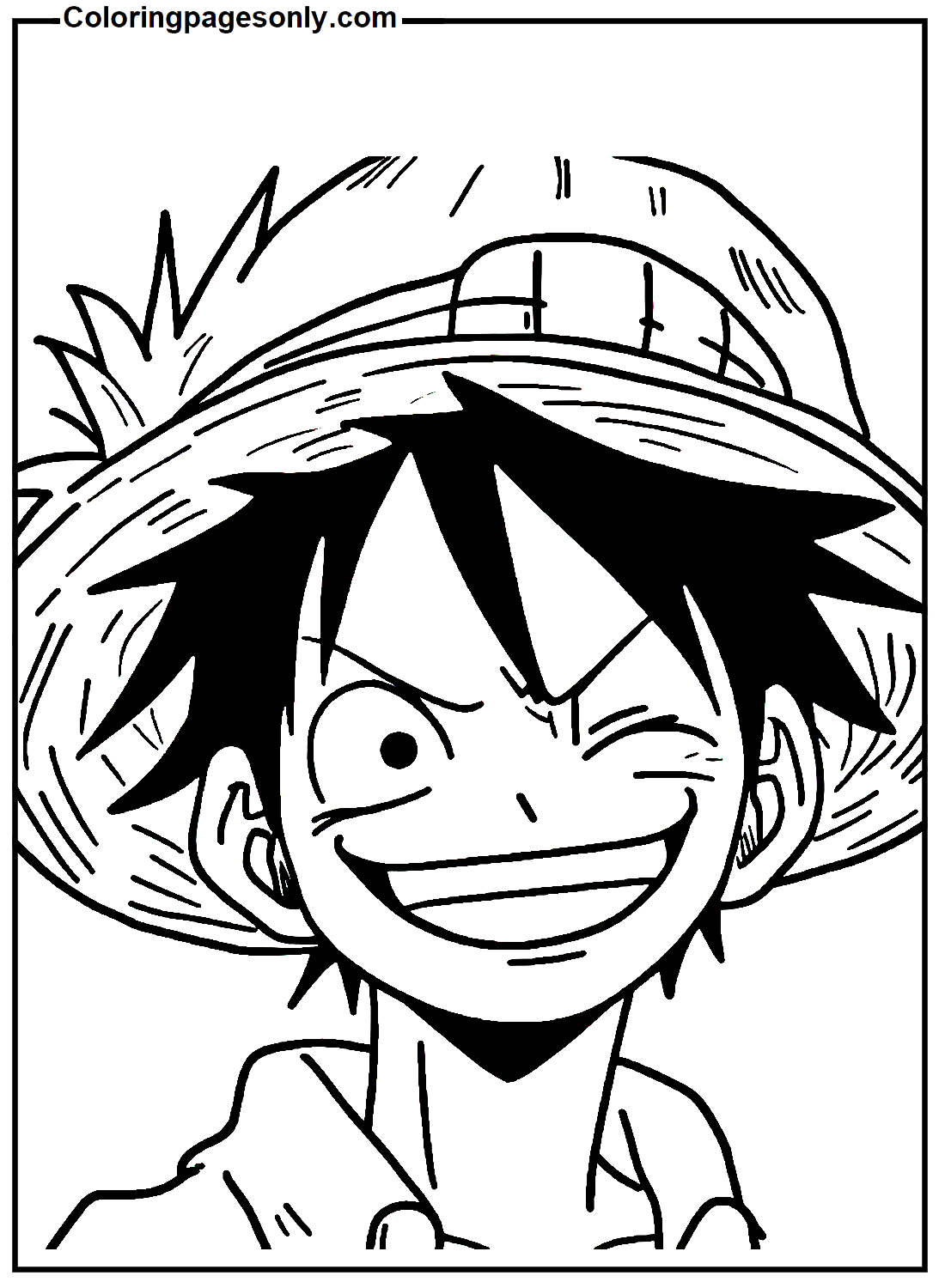
Classic Straw Hat Luffy Coloring Pages
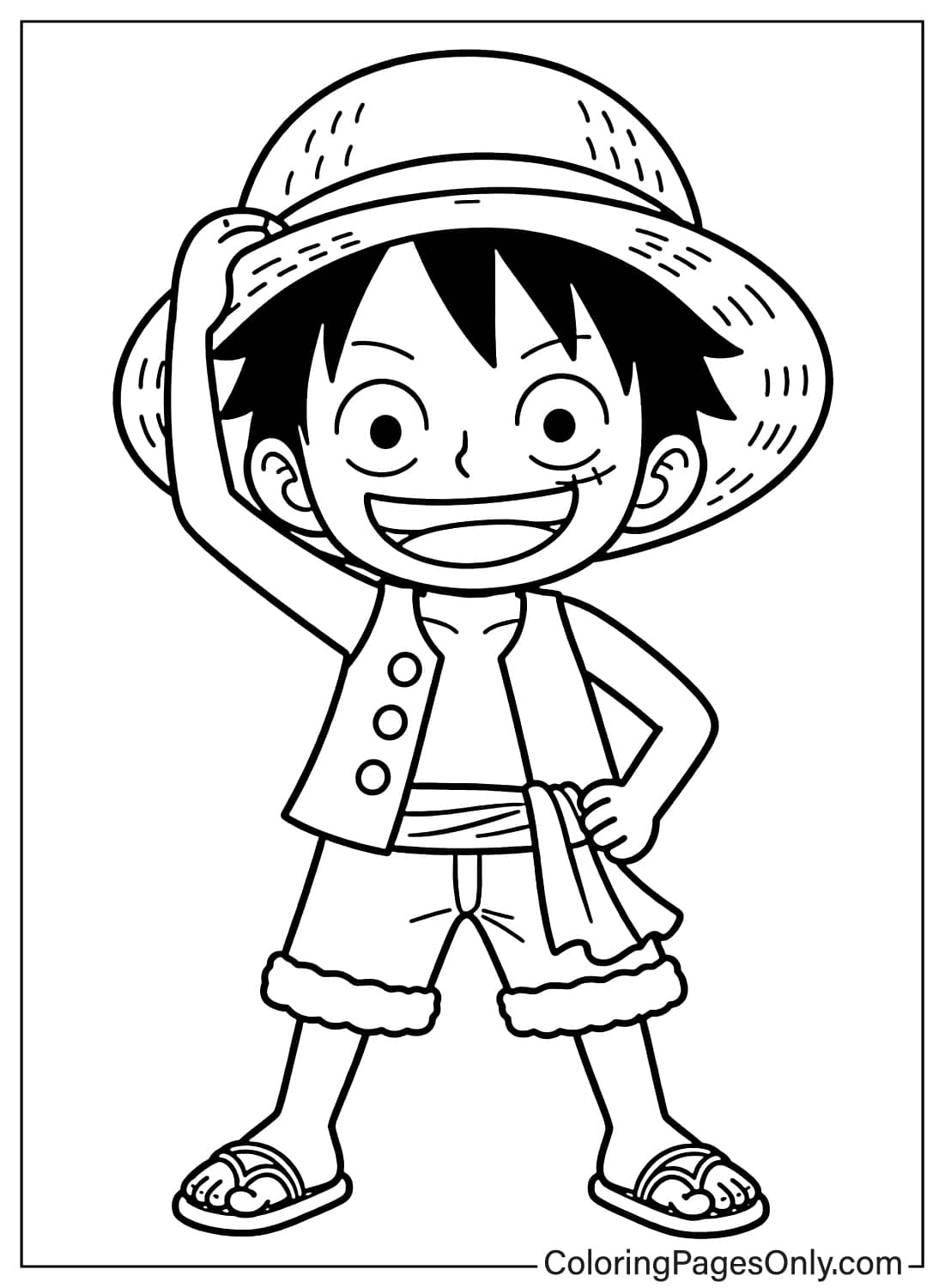
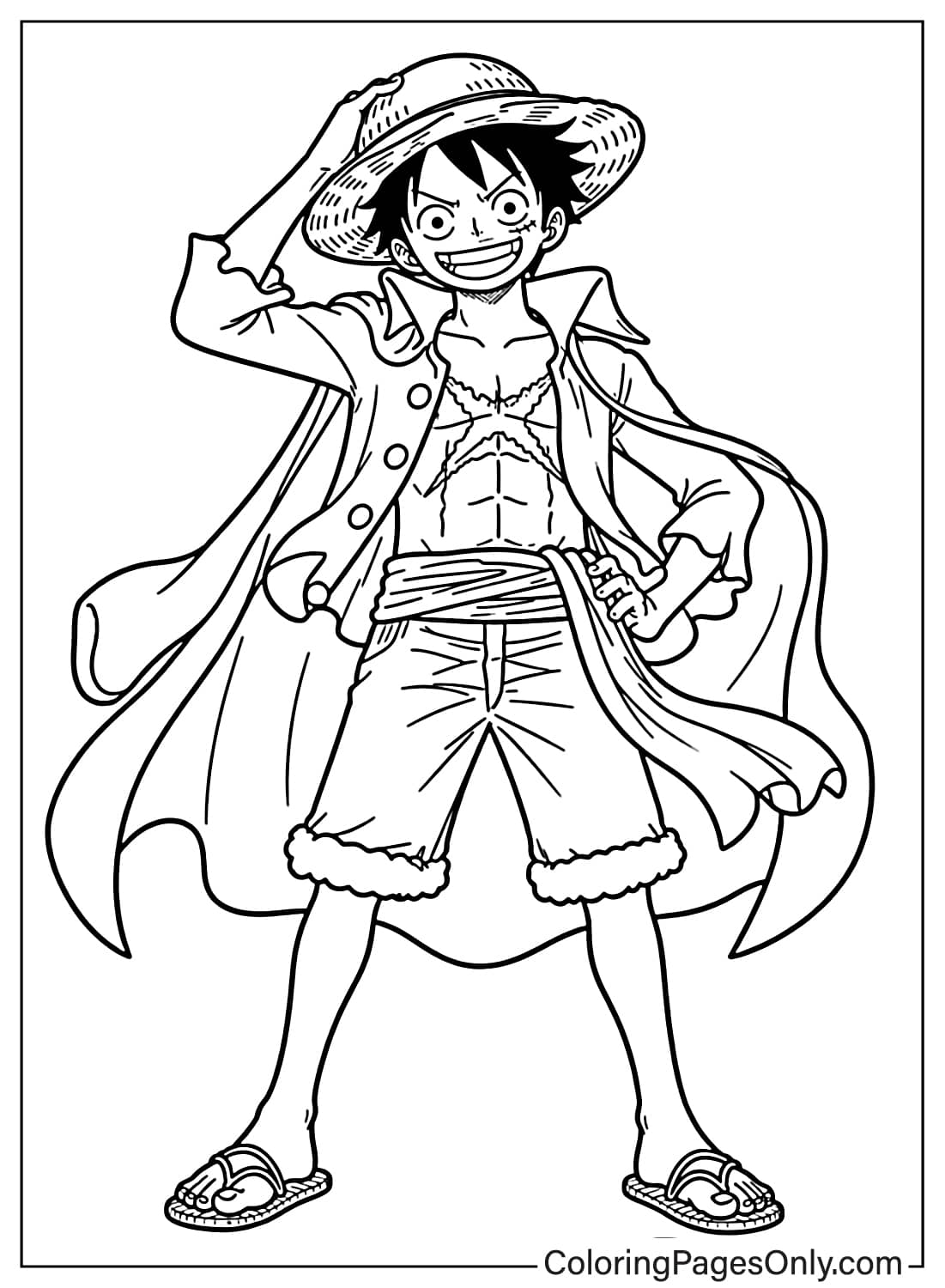
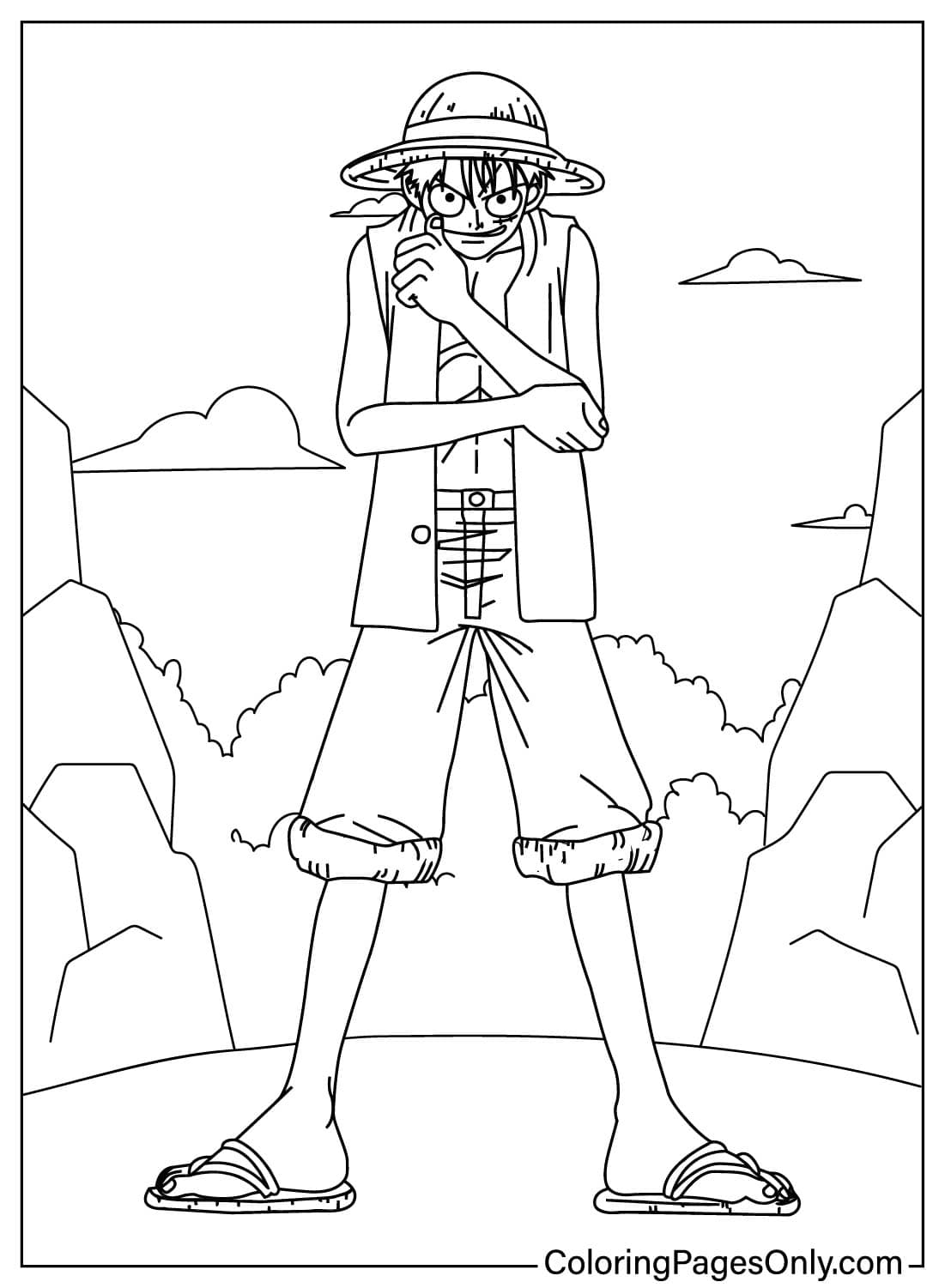
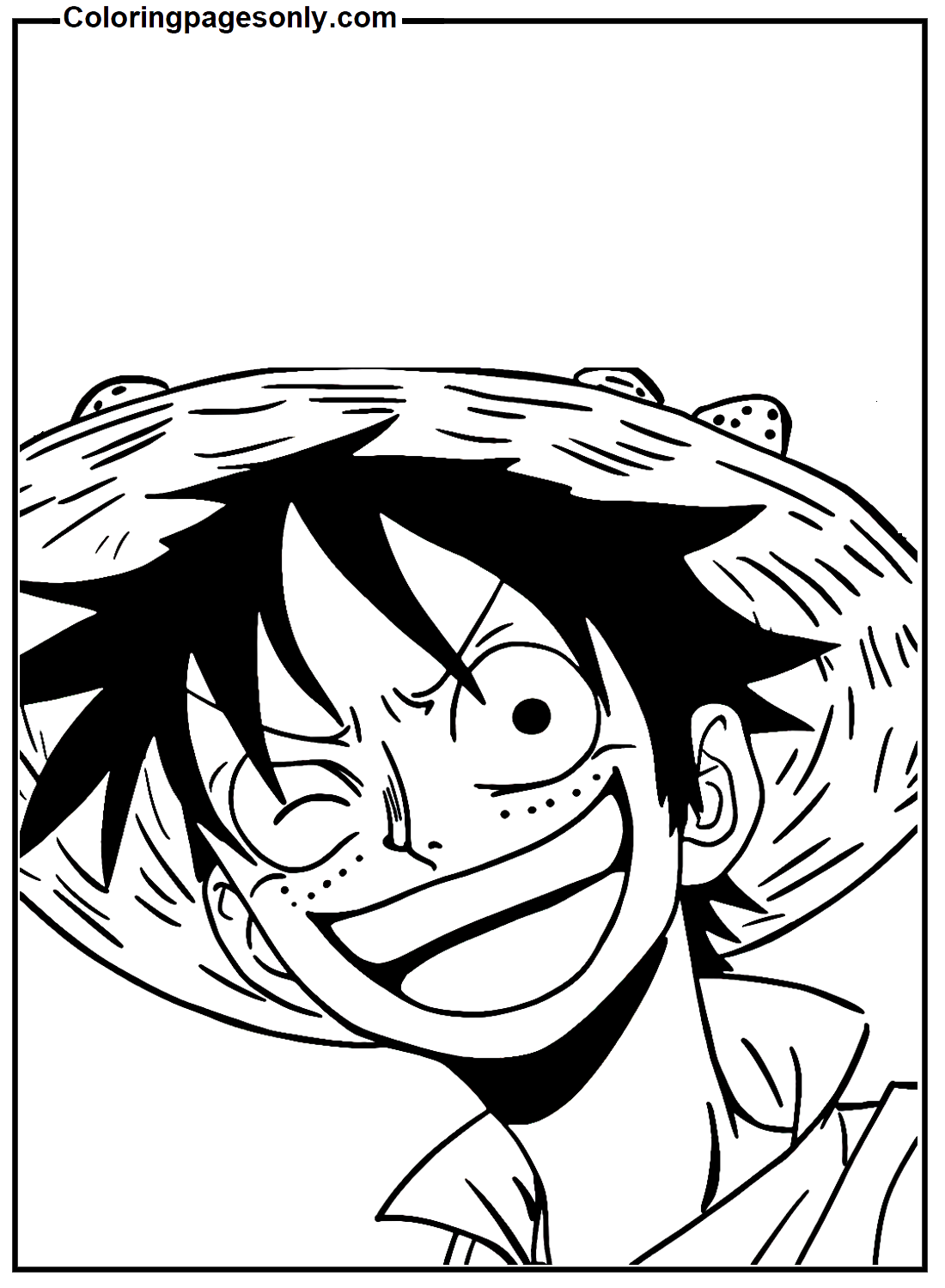
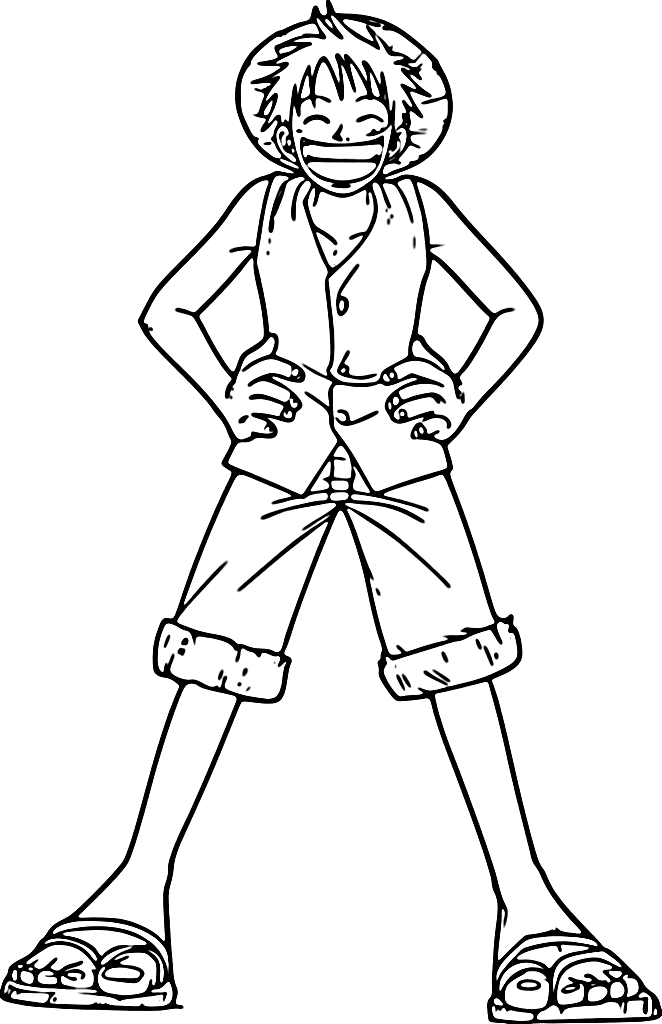
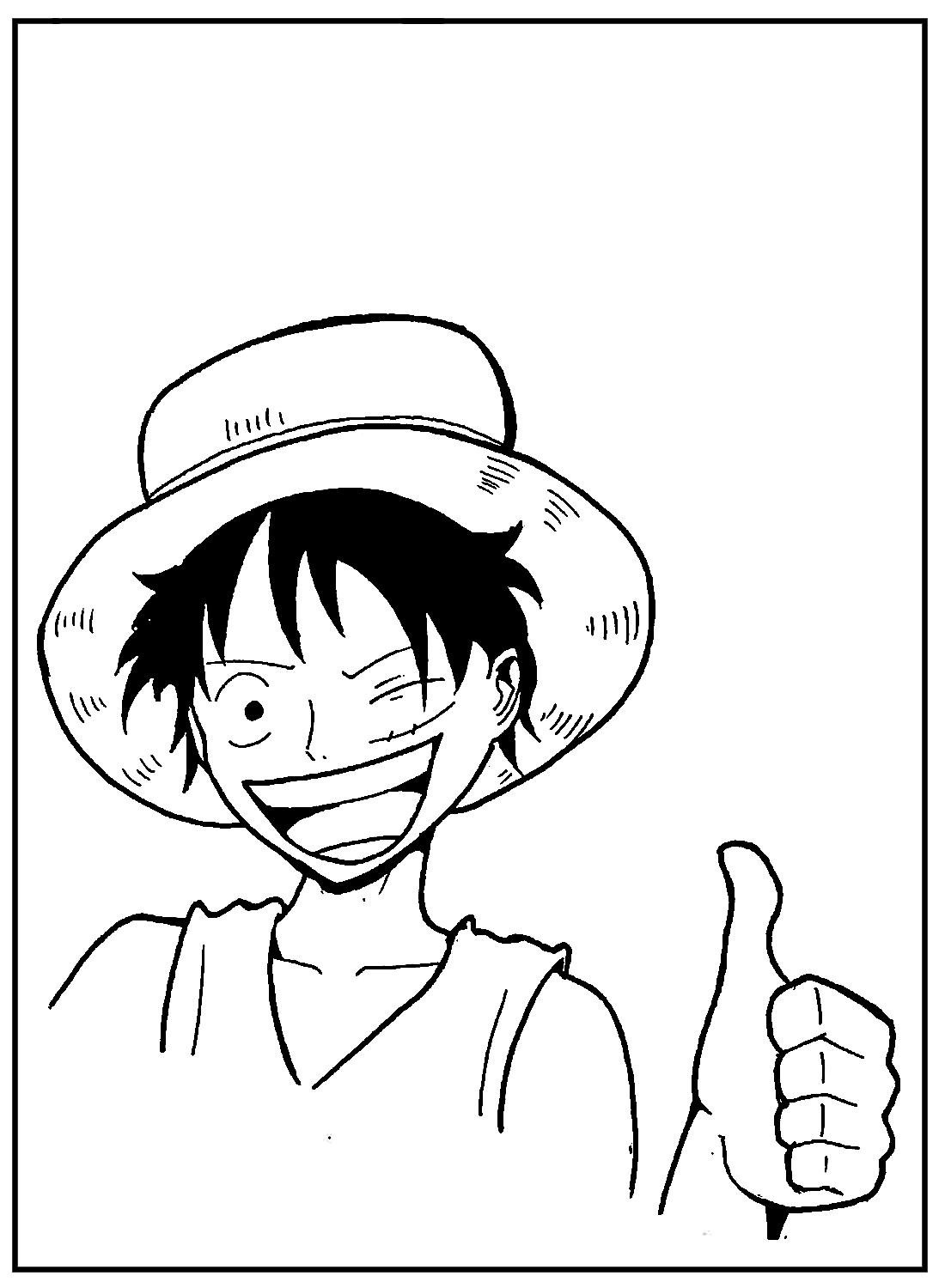
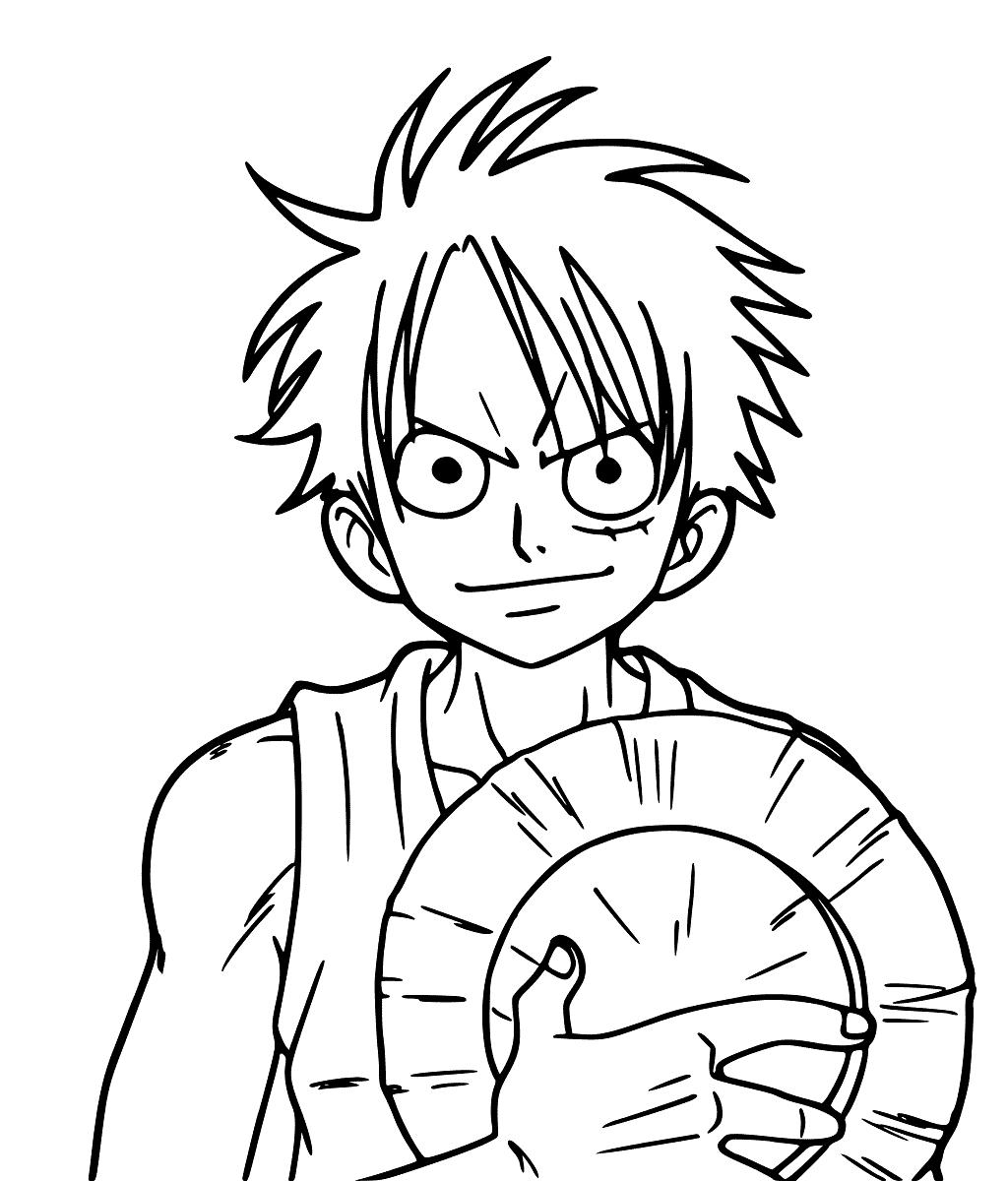
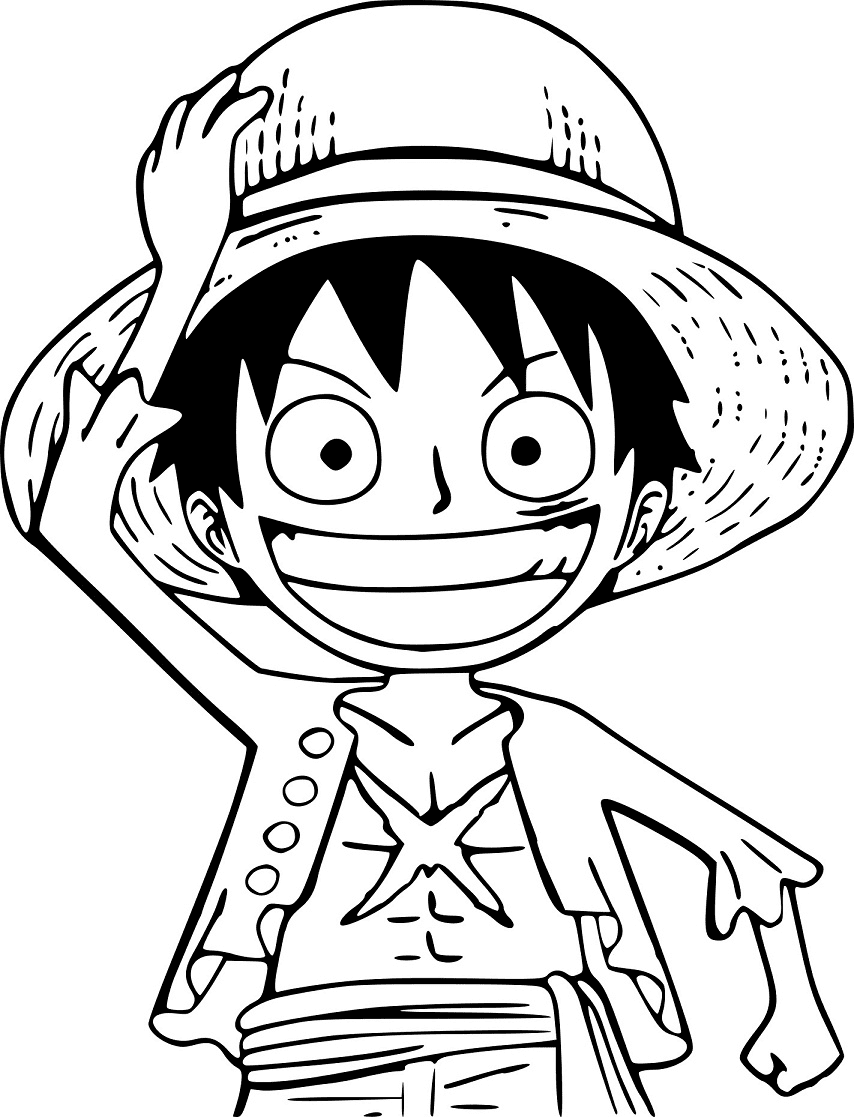
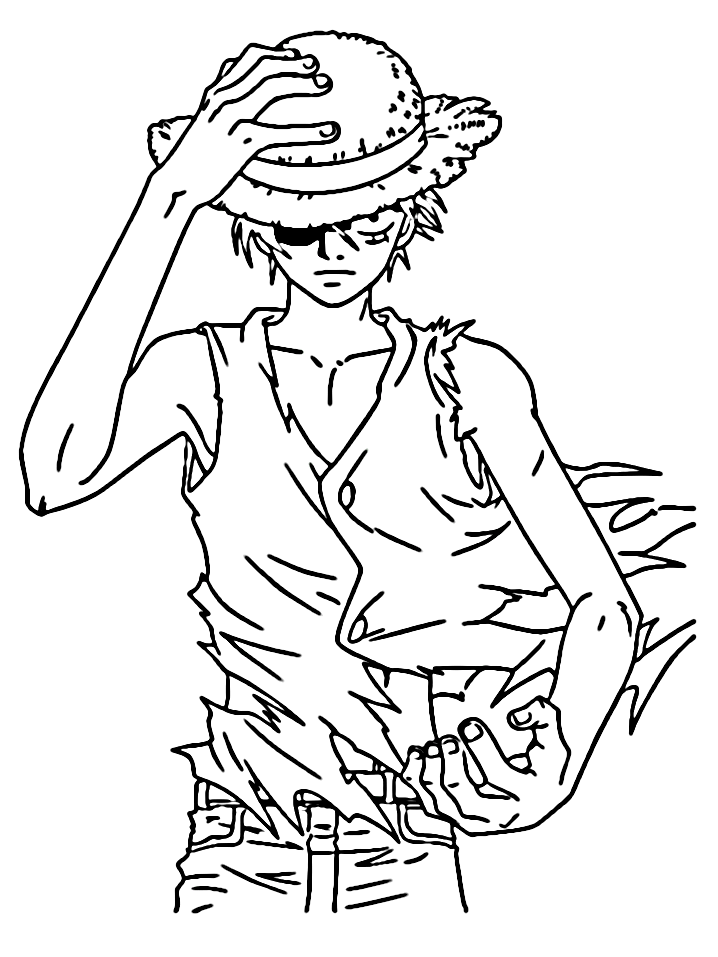
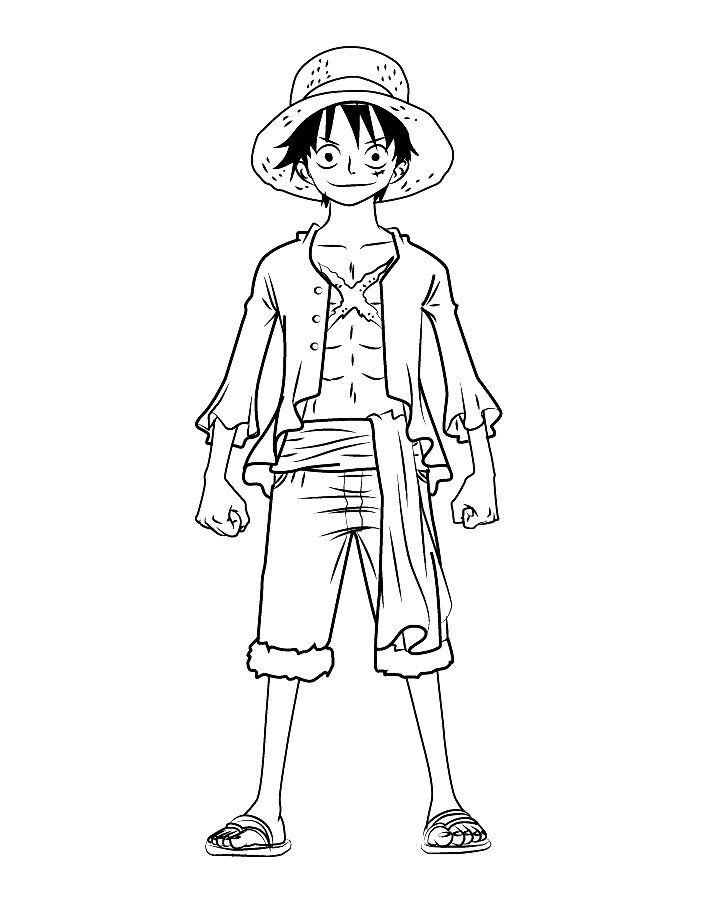
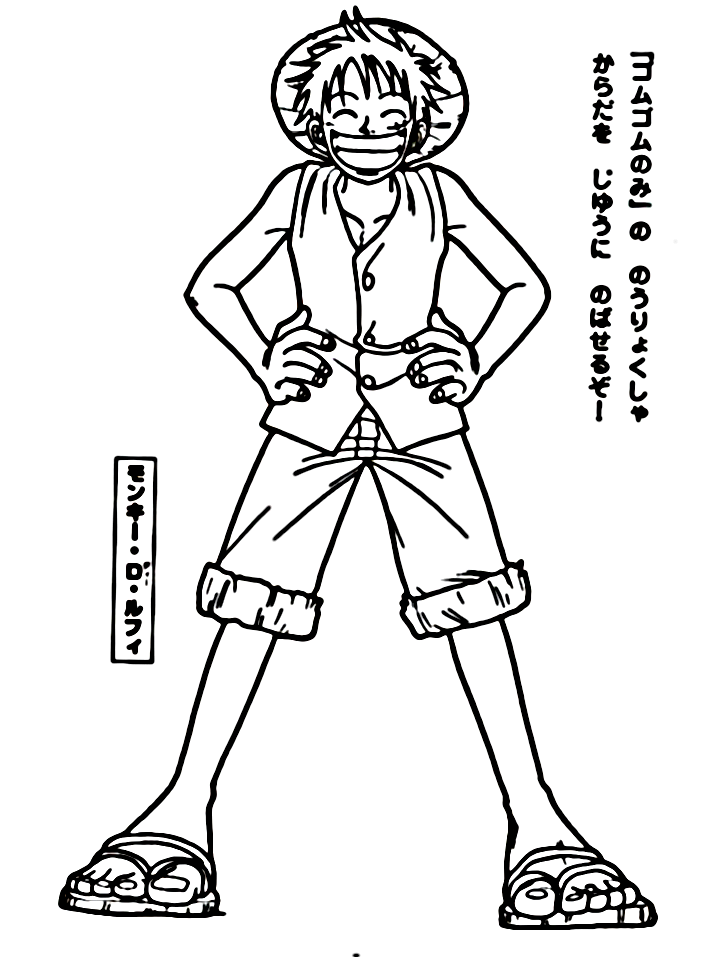
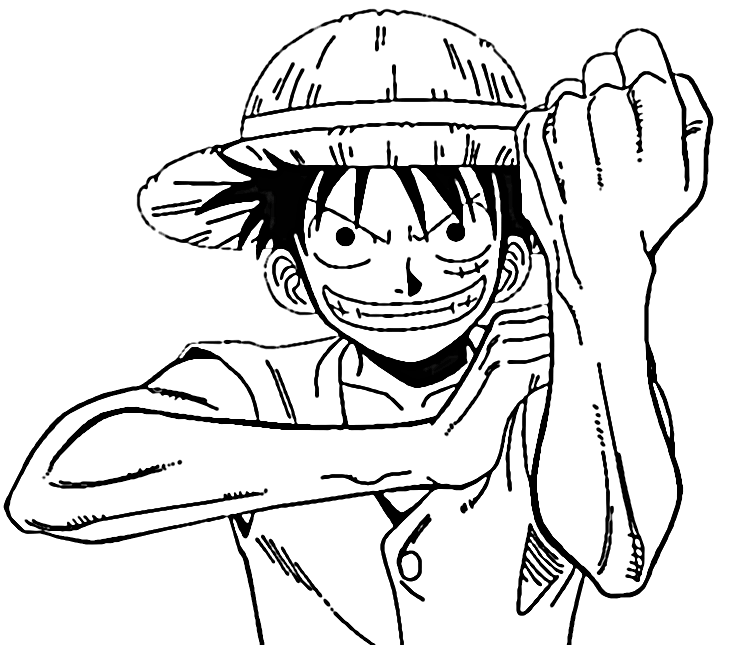
Classic Straw Hat Luffy pages focus on the version fans recognize most: Luffy wearing his straw hat, red vest, shorts, sandals, and cheerful pirate look. He may be standing, smiling, posing, taking off his hat, or looking ready for a new adventure.
The straw hat gives children a clear place to begin. They can color the hat first, then move to the face, vest, shorts, sash, legs, and sandals. This simple order makes the page easier for younger kids and beginners.
Classic Luffy pages also help children recognize character details. The hat, scar, smile, vest, and relaxed body language all work together to make Luffy feel familiar. Kids do not need a complicated background to enjoy these pages because the character already carries a strong personality.
For coloring, use yellow or straw tones for the hat, red for the vest, blue for the shorts, warm skin tones for the face and body, and brown or tan colors for sandals. Backgrounds can stay light so Luffy remains the focus.
This group is a strong starting point before kids move into chibi designs, action poses, Gear-inspired pages, wanted posters, or Straw Hat crew scenes.
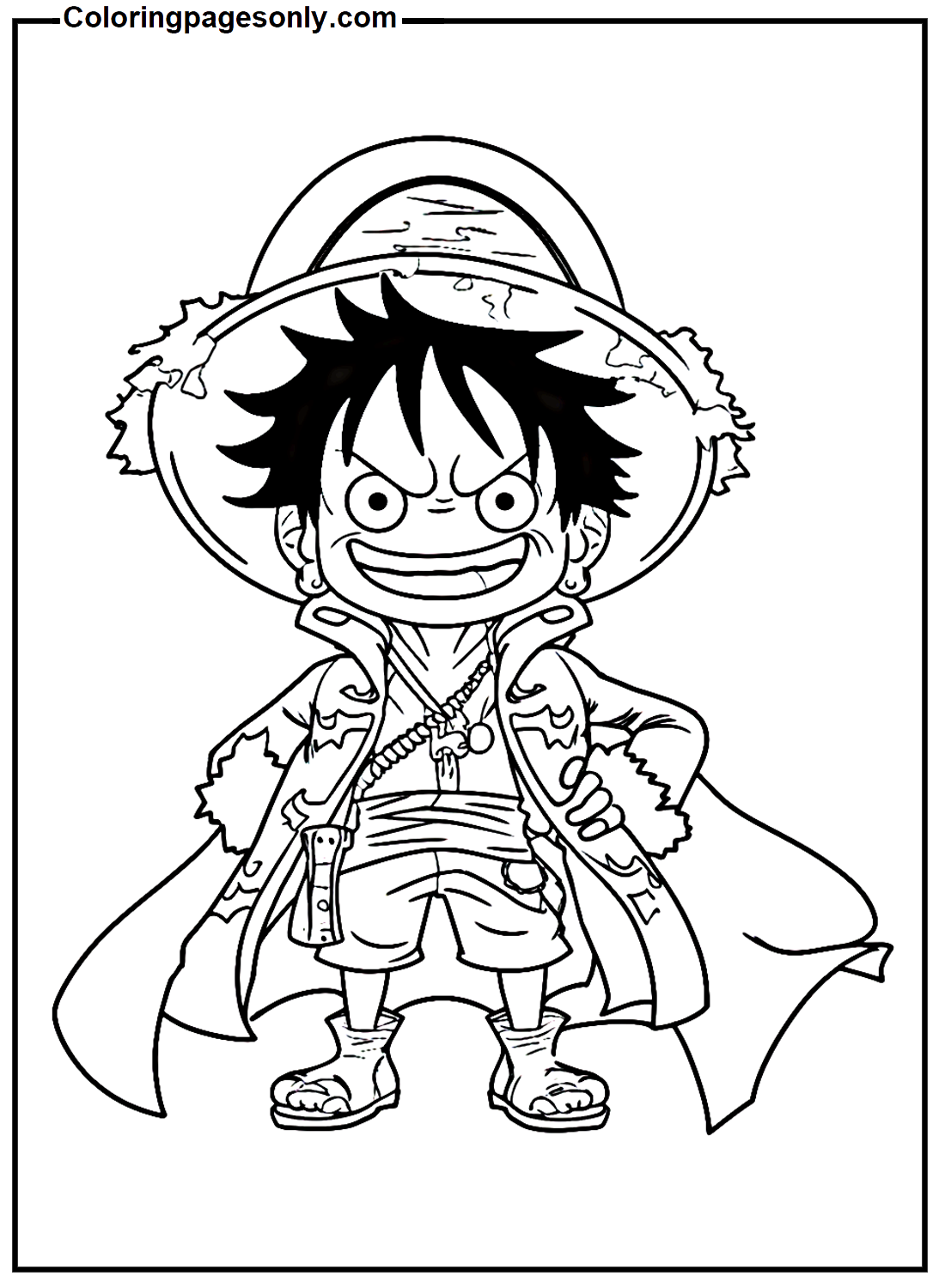
Easy, Cute, and Chibi Luffy Coloring Pages
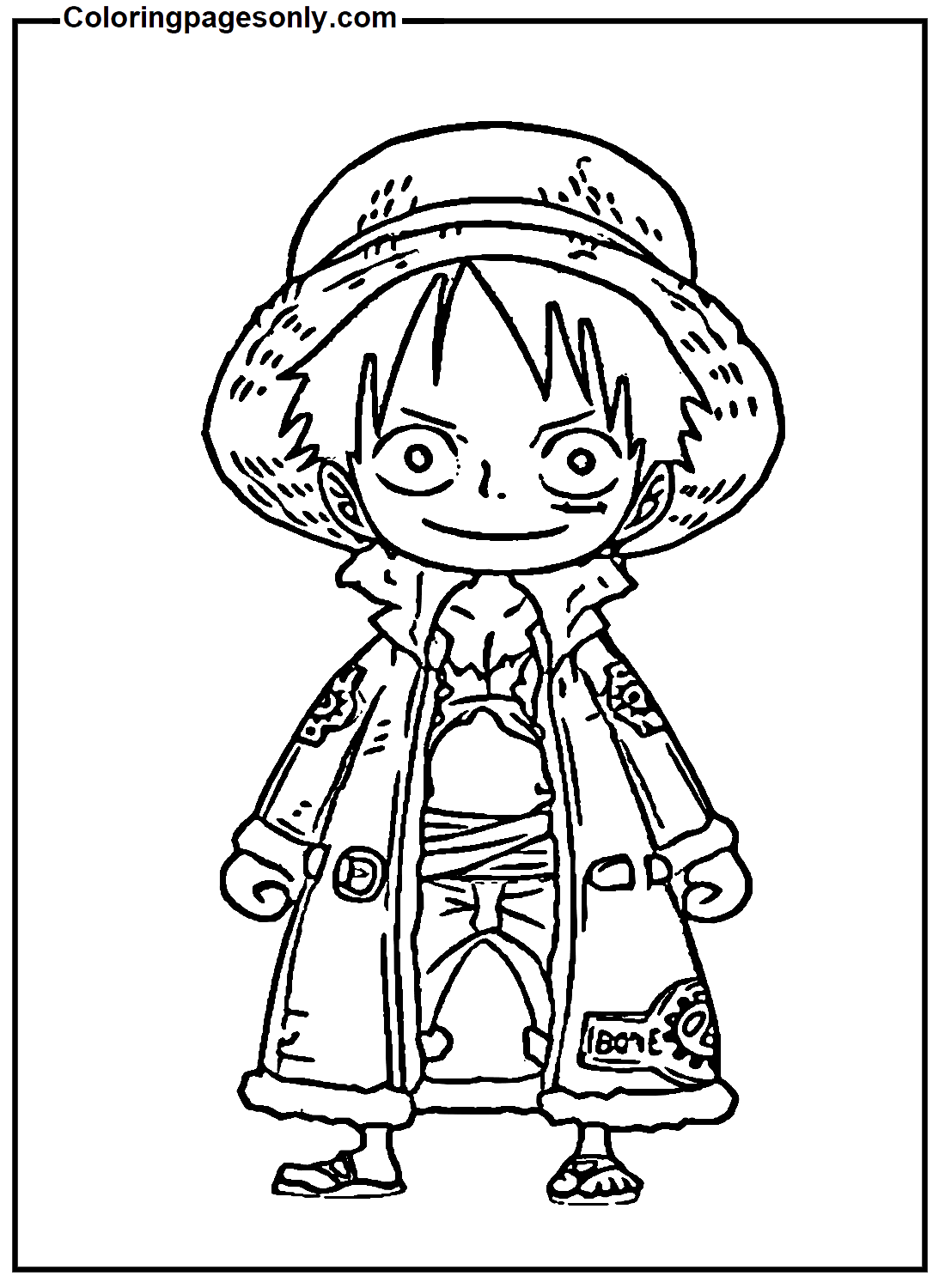
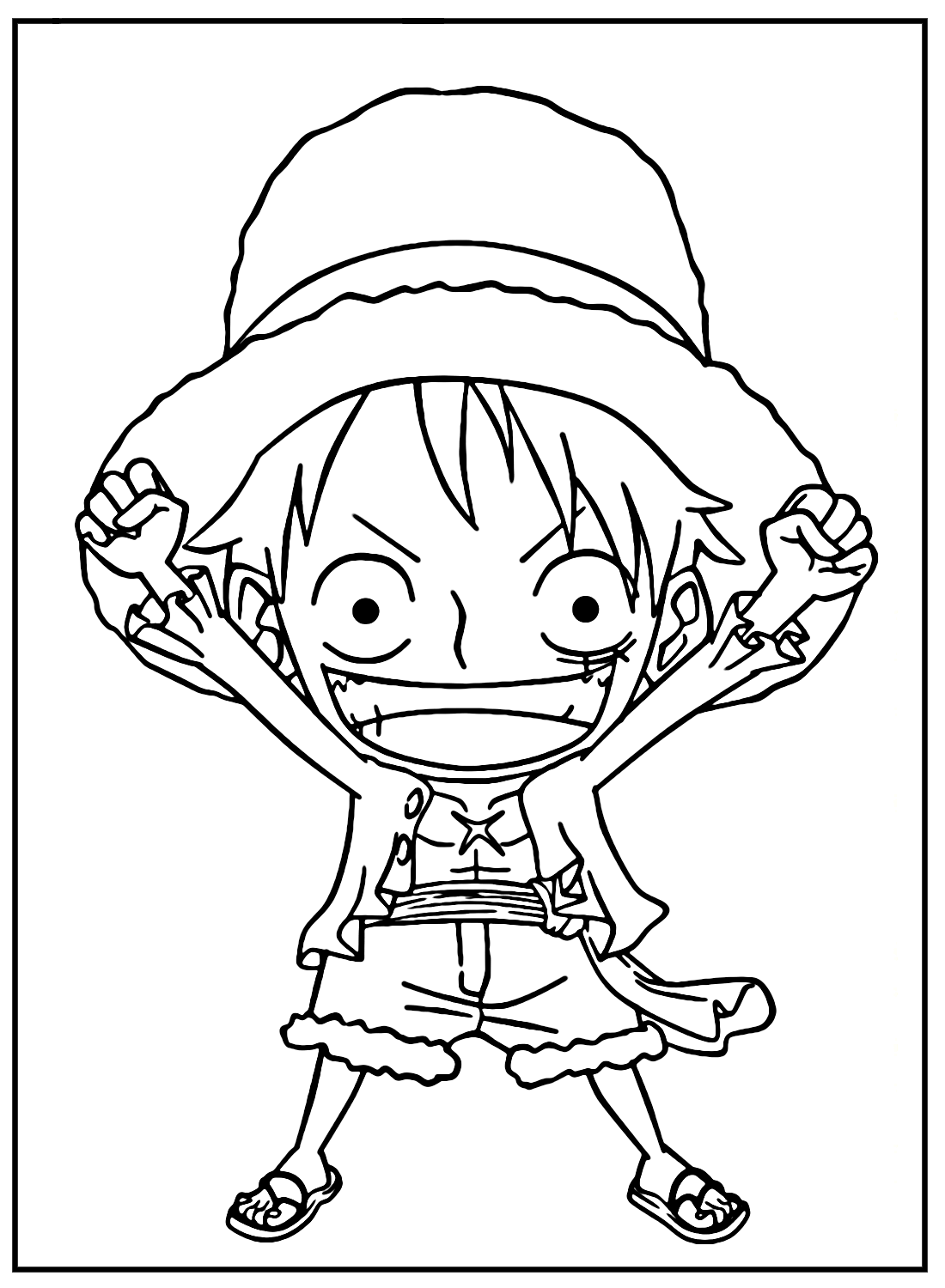
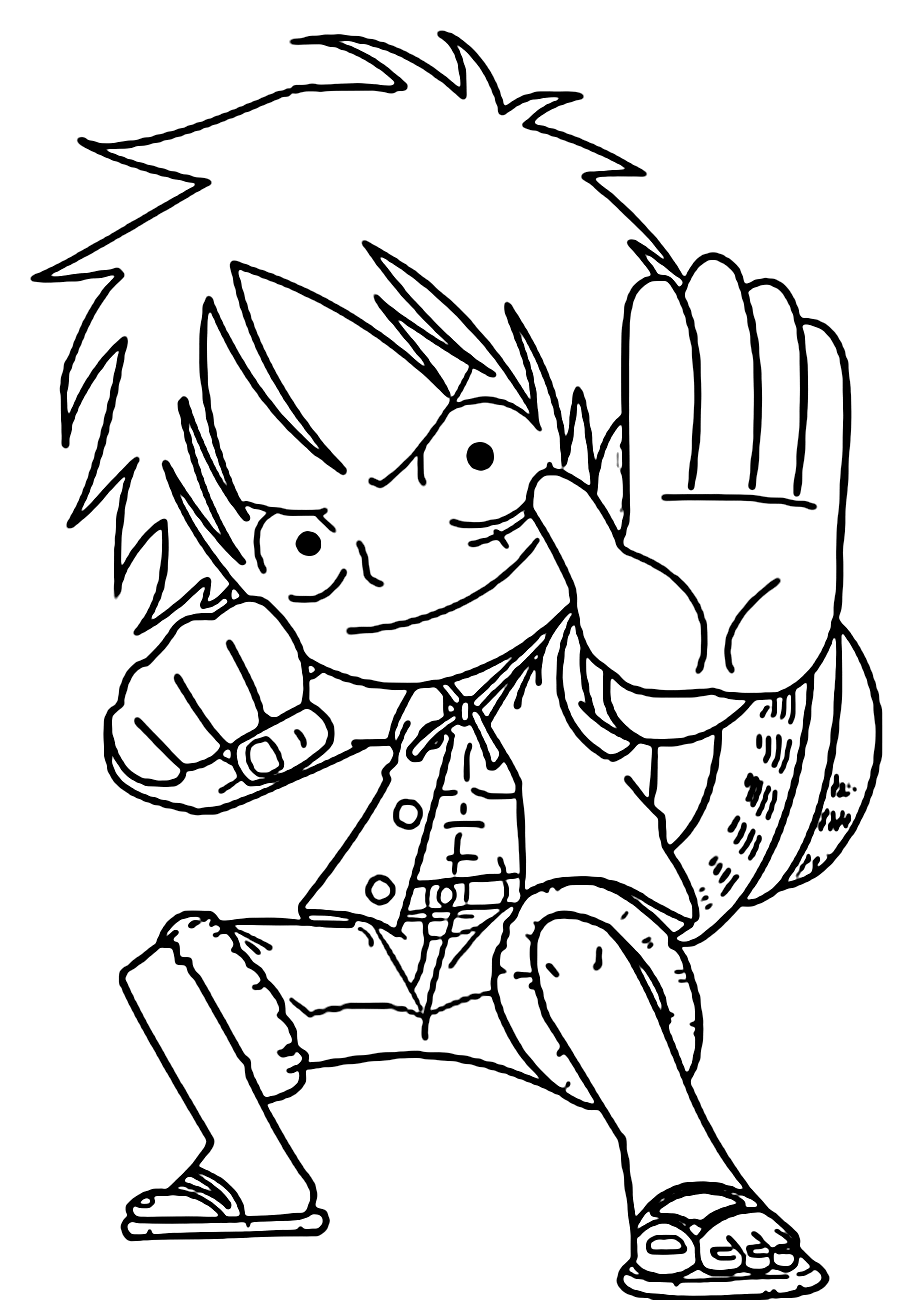
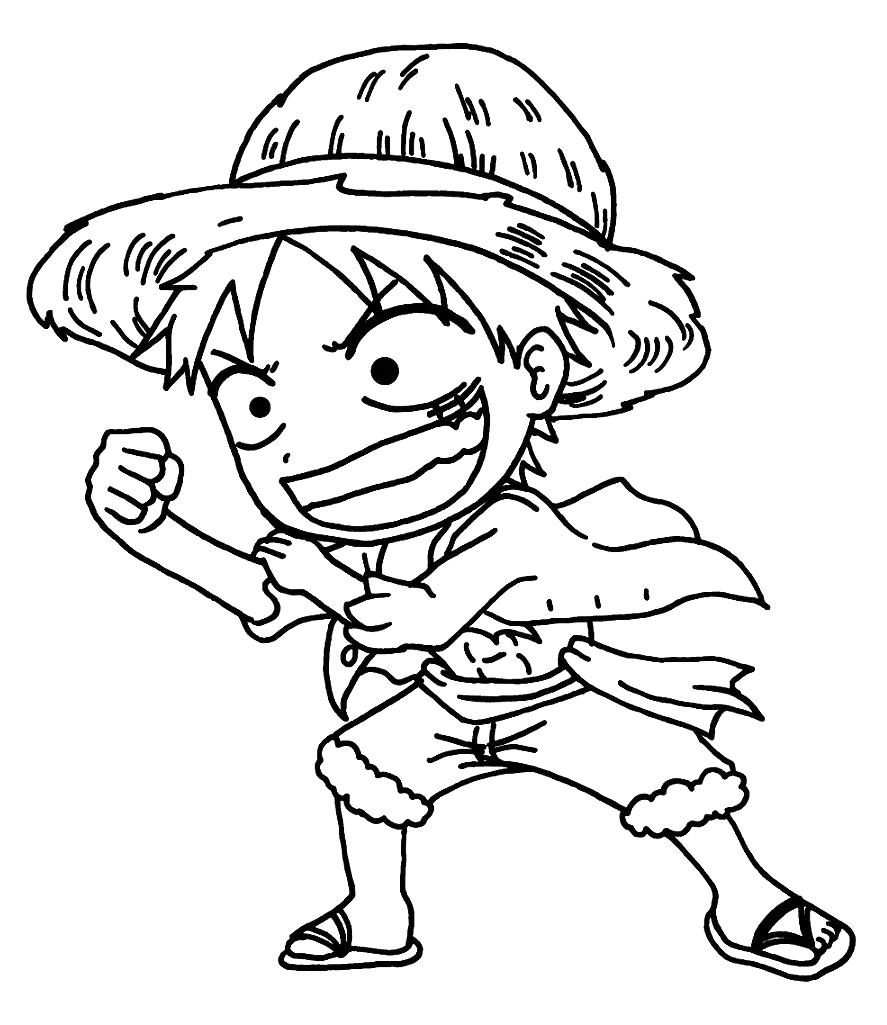
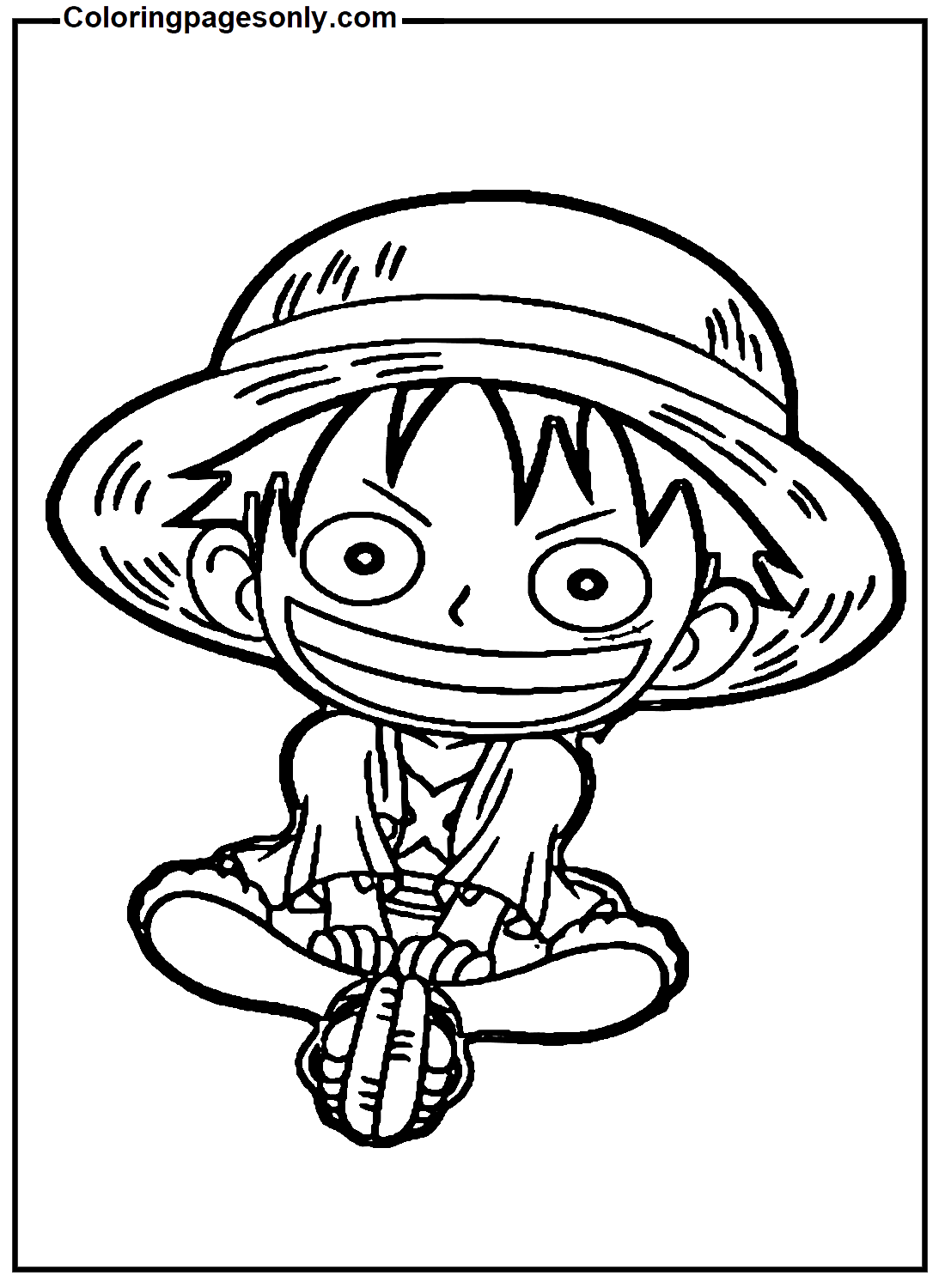
Easy, cute, and chibi Luffy pages are especially helpful for younger children. These designs often have a larger head, smaller body, rounder shapes, fewer clothing lines, and simple backgrounds.
Easy pages matter because children can finish them without feeling overwhelmed. A young child may start with Luffy’s hat, color his big smile, then finish the vest, shorts, and sandals. The shapes are clear enough for crayons, markers, or colored pencils.
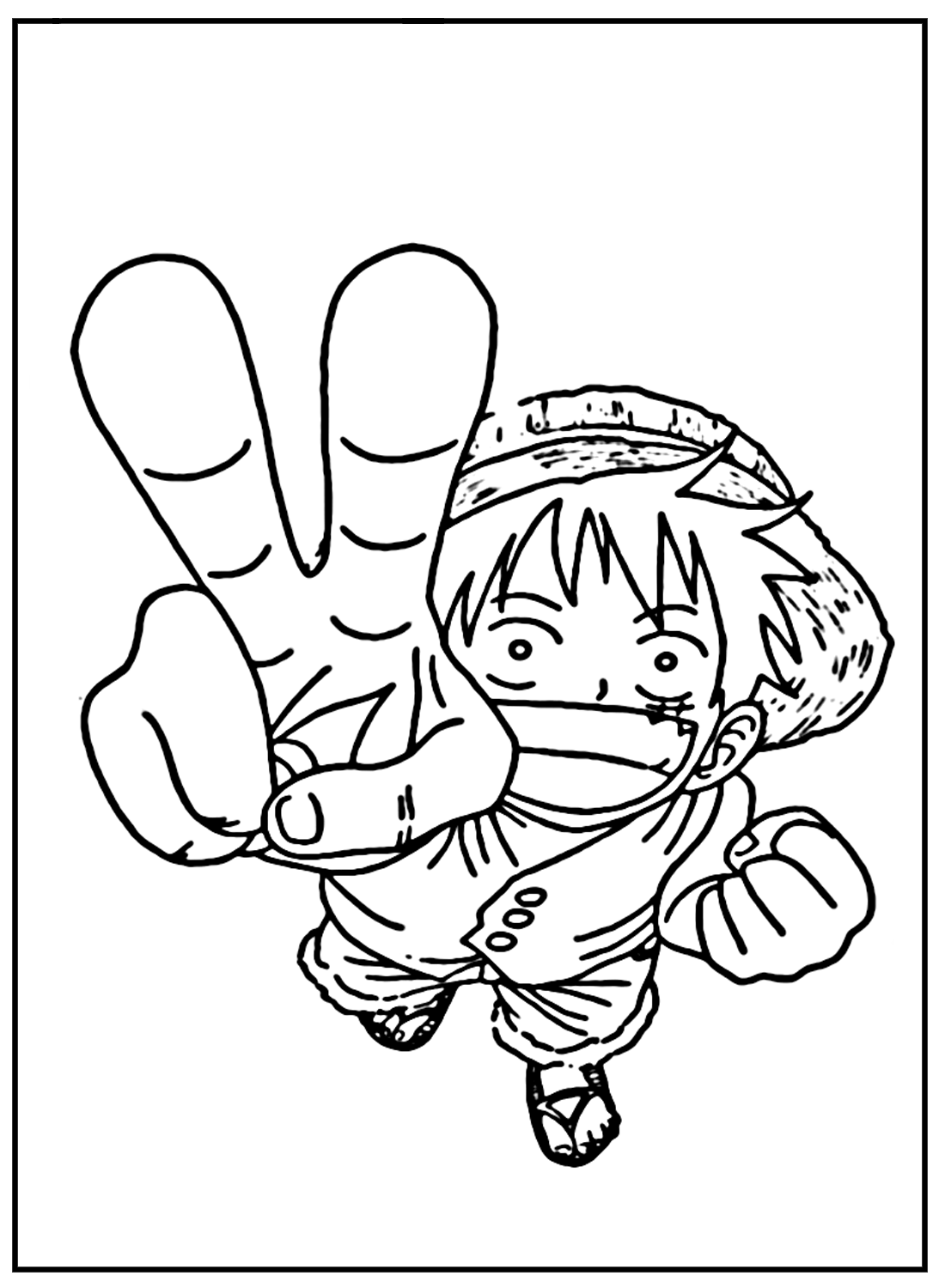
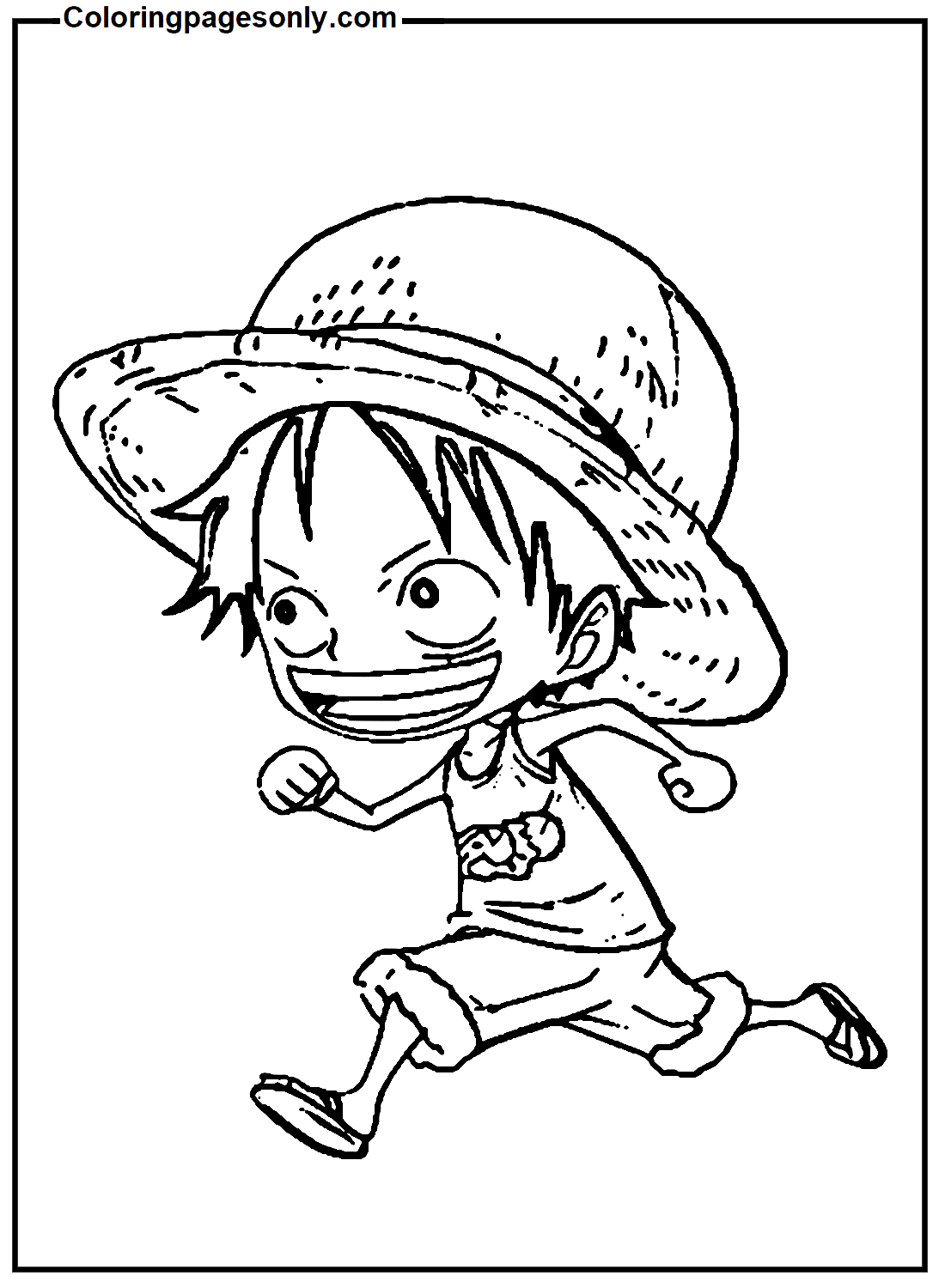
Chibi Luffy feels playful and friendly. The main character stays recognizable, but the softer shape makes him easier to color. Some pages may show chibi Luffy standing, waving, sleeping, smiling, running, or making a funny face.
For preschool, kindergarten, and early elementary children, easy Luffy pages are usually the safest starting point. They also work well for classroom rewards, anime-themed party activities, and quick, quiet-time coloring.
Kids can follow Luffy’s classic colors or use a brighter custom palette. A rainbow vest, blue hat, or funny pirate outfit can still feel fun as long as the straw hat and smiling face remain clear.
Baby and Young Luffy Coloring Pages
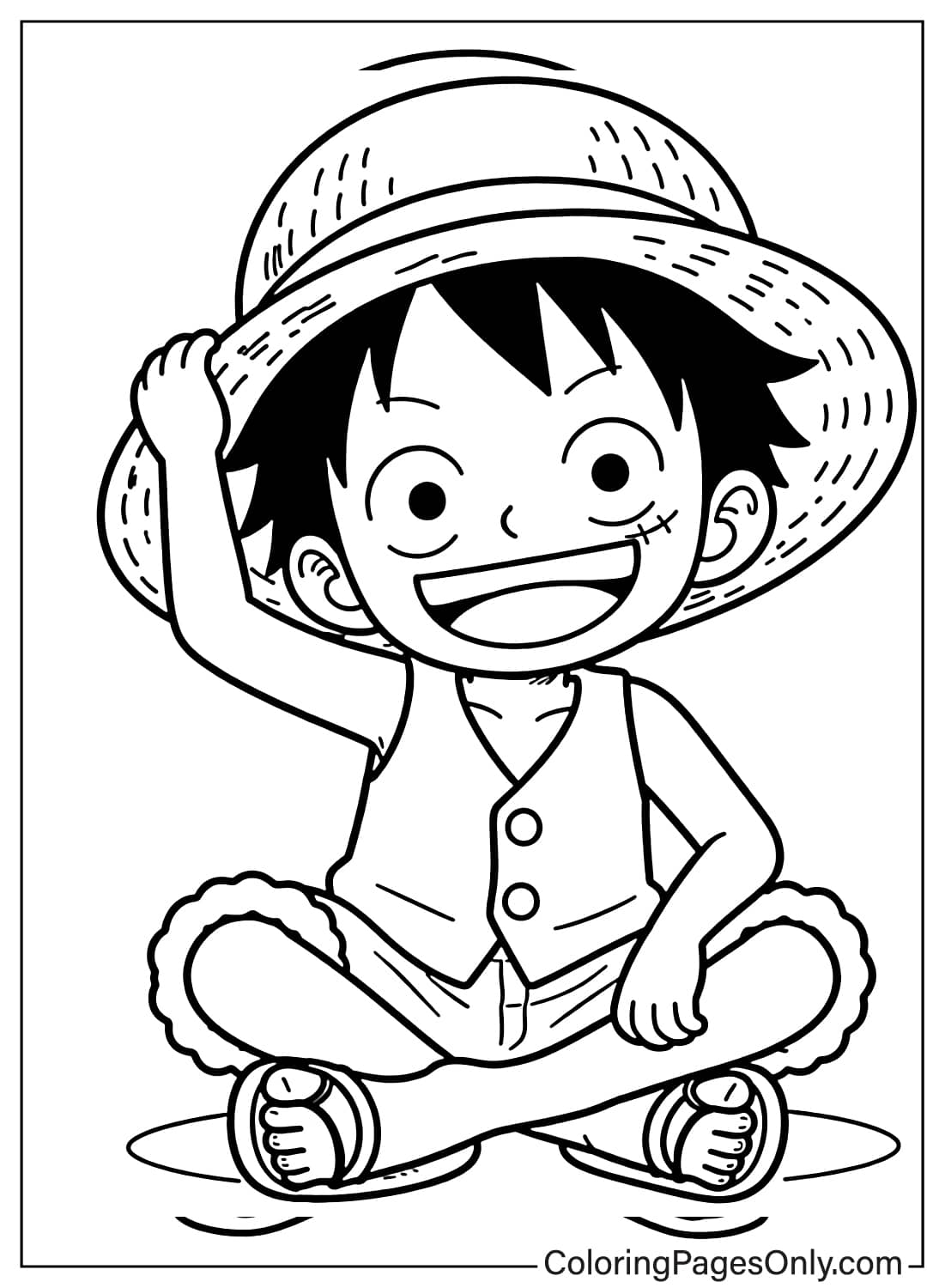
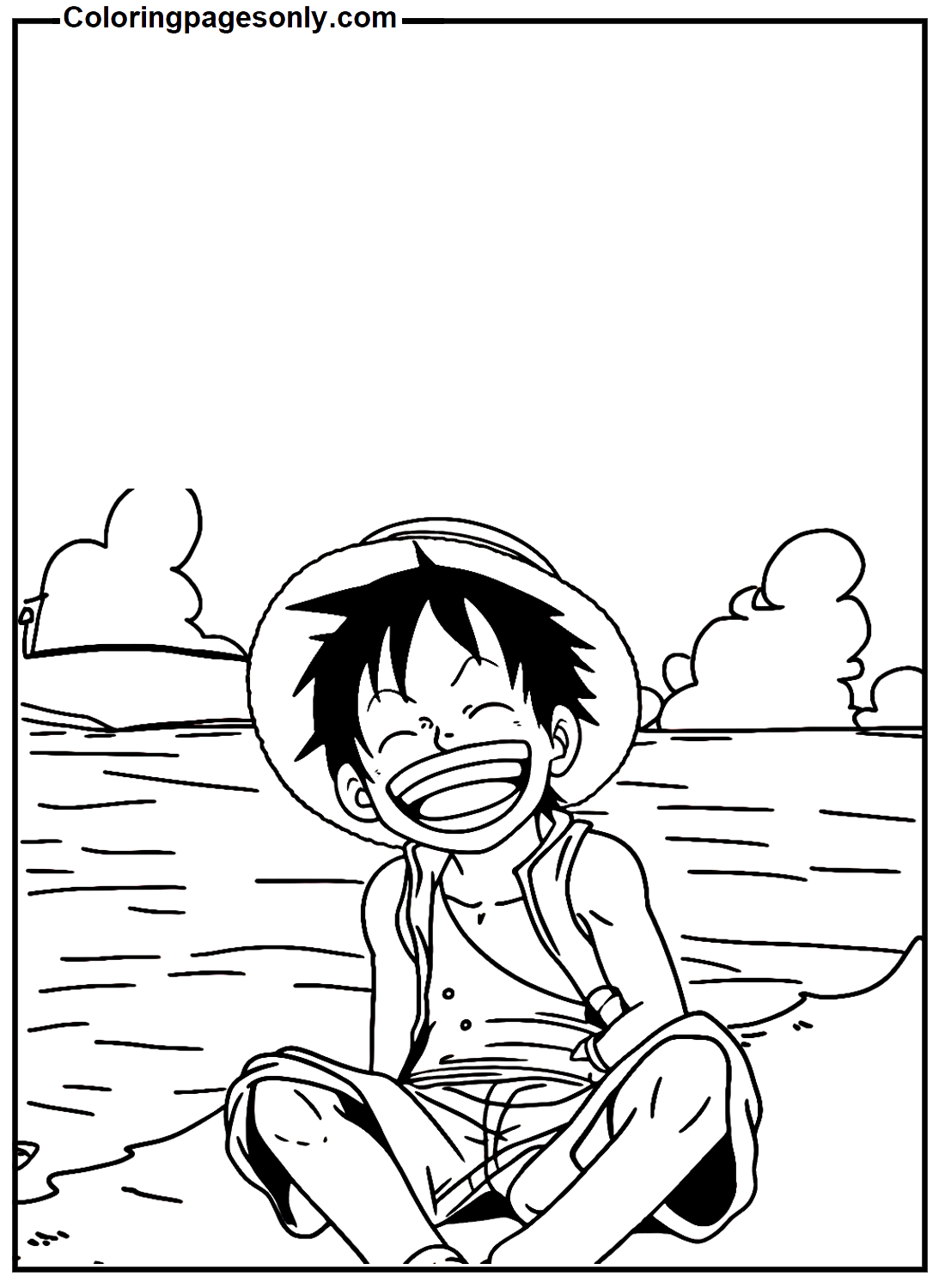
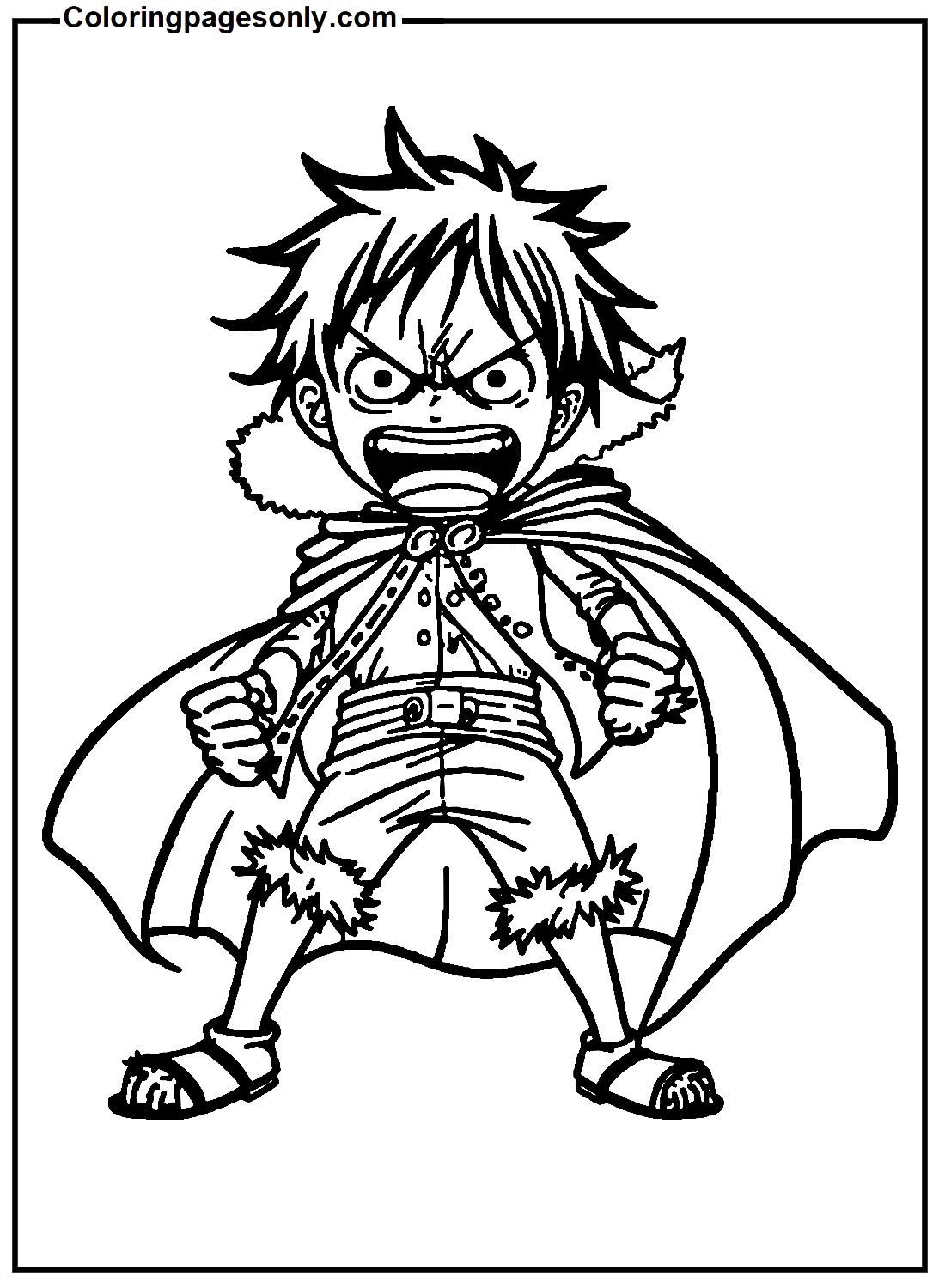
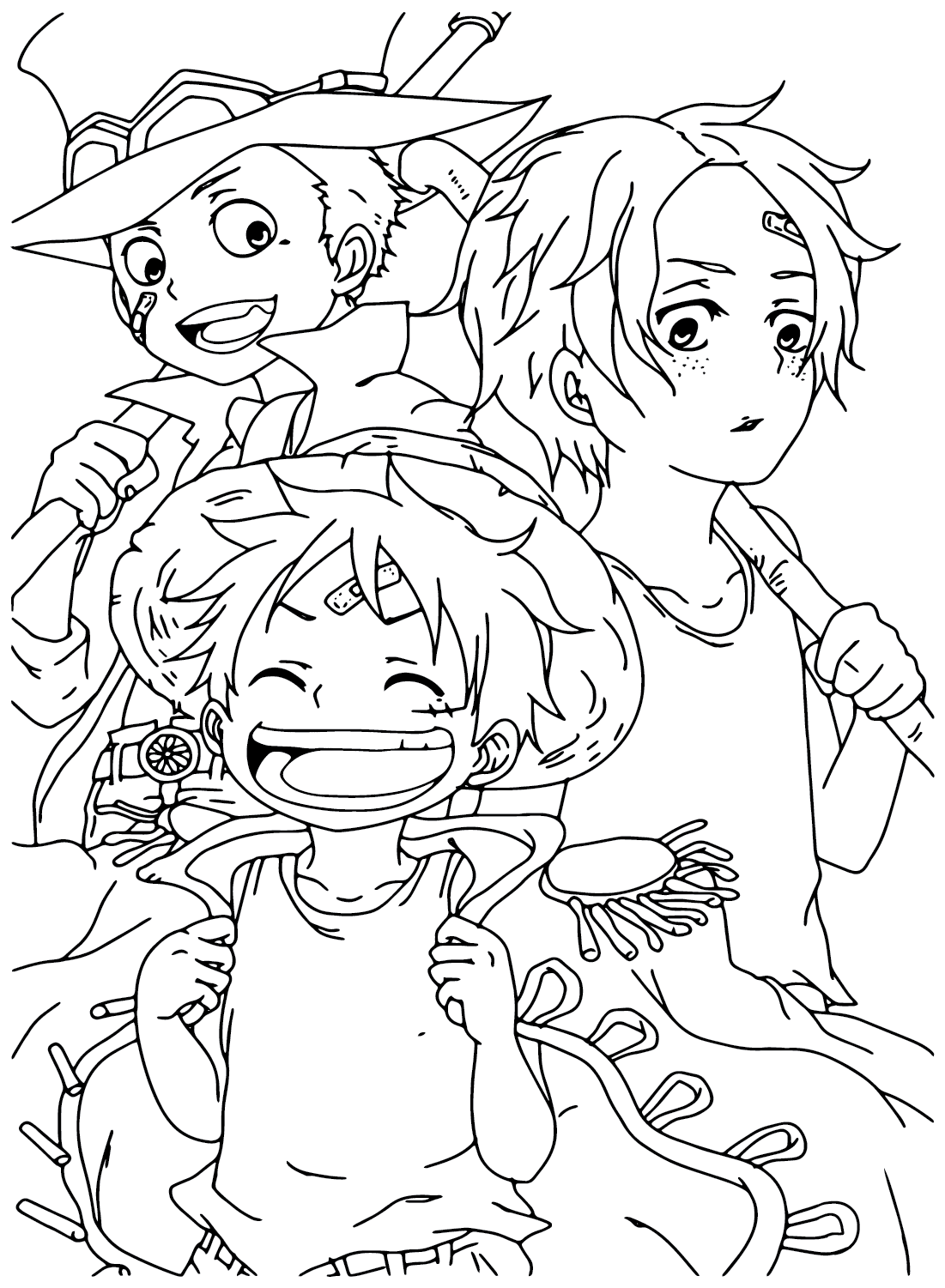
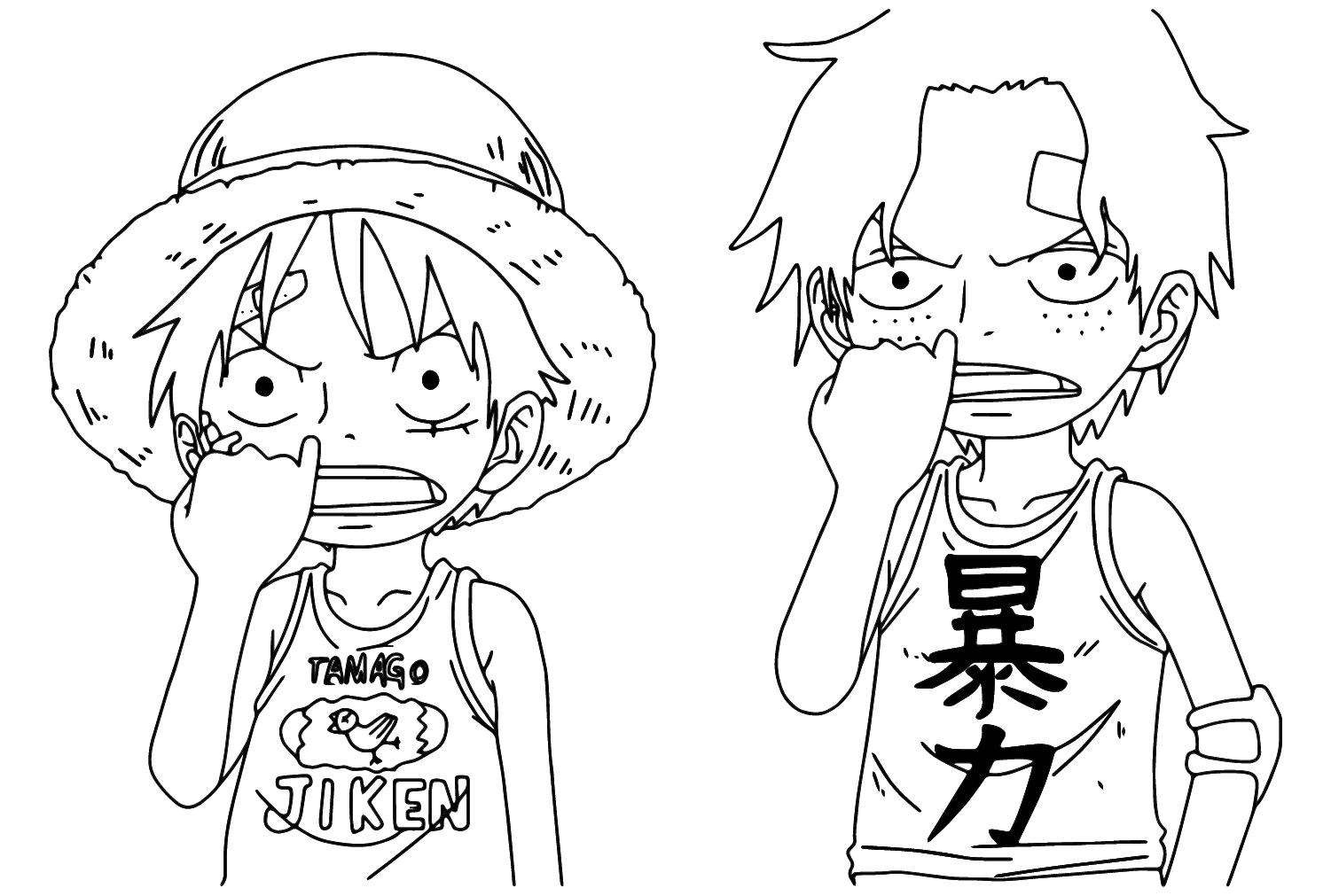
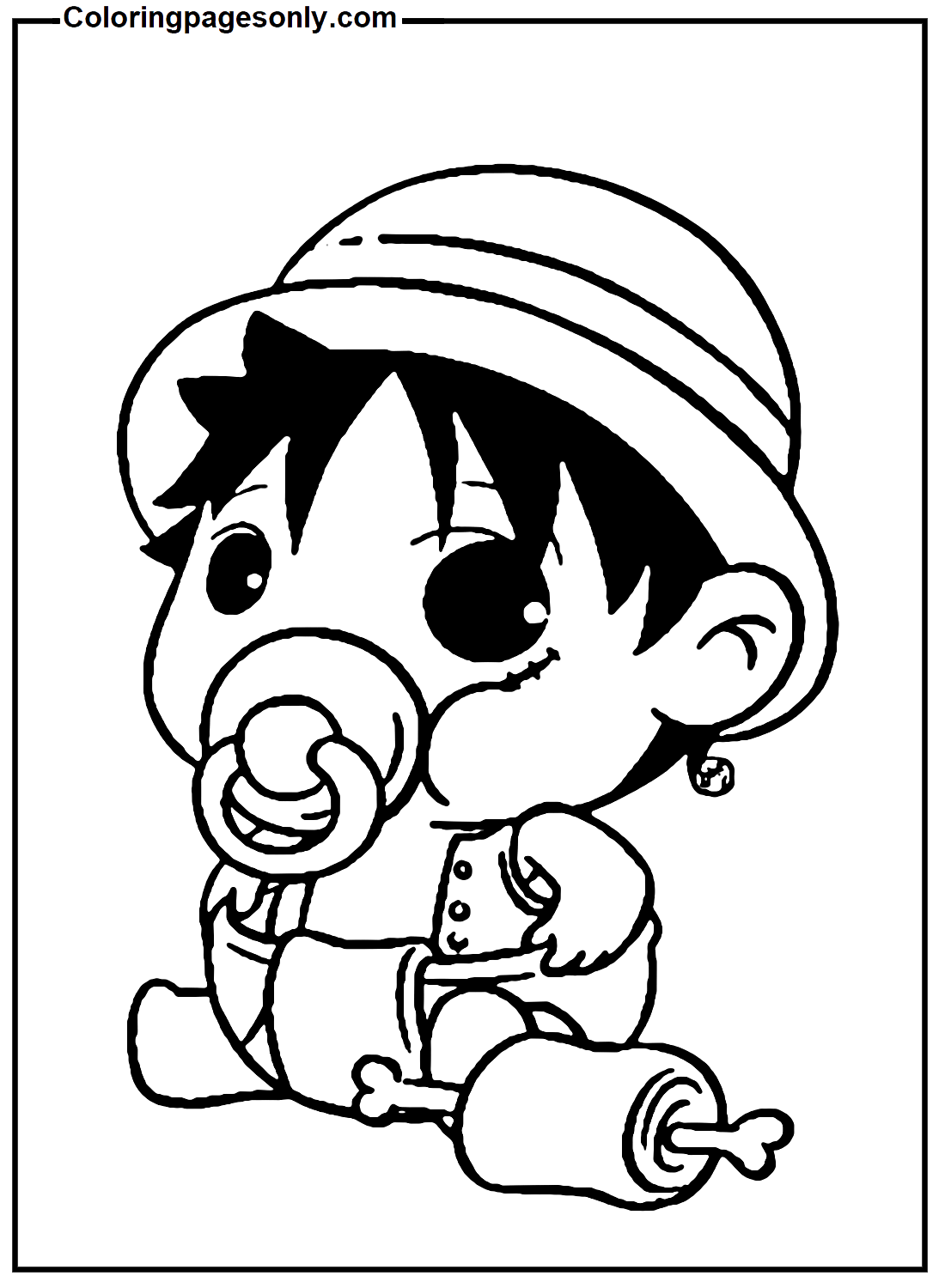
Baby and young Luffy pages show a softer version of the character. These designs may include young Luffy sitting with his straw hat, baby Luffy smiling, laughing baby Luffy, or young Luffy wearing a pirate cloak.
For kids who do not want a battle scene, the young Luffy pages feel calmer and easier to finish. The character looks cute, small, and approachable, which makes this group a good choice for younger children or relaxed coloring time.
Young Luffy pages also connect well with storytelling. Kids can imagine Luffy dreaming about becoming a pirate, sitting by the sea, receiving inspiration for his journey, or preparing for his first adventure.
For coloring, keep the palette warm and simple. Use soft yellow for the hat, red or light colors for clothing, blue for shorts, and gentle background tones. A light sky, simple ground, or small ocean detail can make the page feel complete without making it too busy.
This group is a good choice for children who prefer cute anime designs over dramatic action scenes.
Laughing, Smiling, and Funny Luffy Coloring Pages
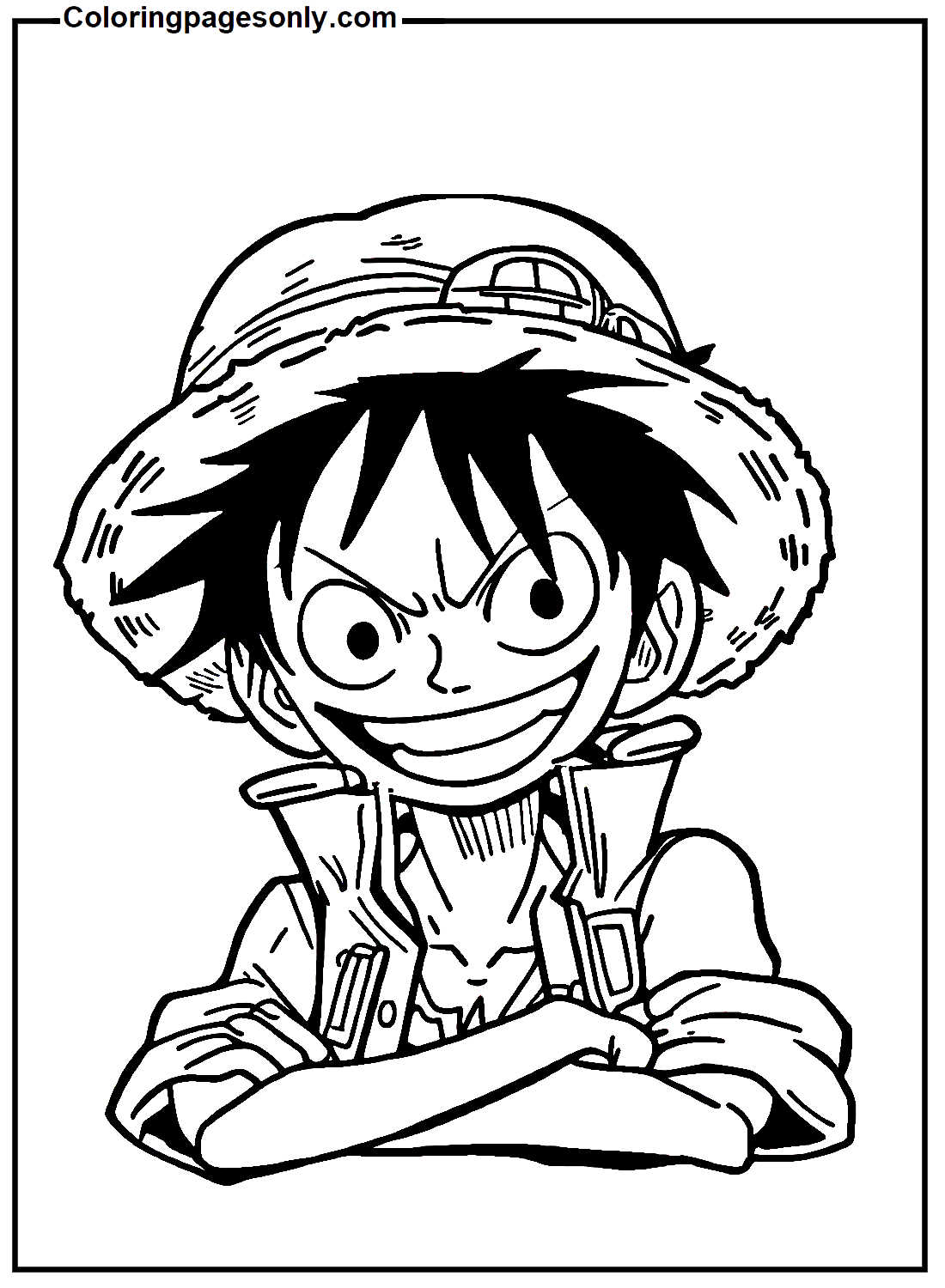
Luffy is known for his huge smile, silly reactions, and cheerful energy. Laughing, smiling, and funny Luffy pages capture that part of his personality.
A laughing face, big smile, funny expression, happy full-body pose, or playful chibi version works well for kids who enjoy expressive characters more than serious battle poses.
Expression pages help children focus on the face. They can color the hat, hair, eyes, mouth, scar, and facial shadows carefully. A simple portrait becomes more lively when the smile and eyes are clear.
Funny Luffy pages also permit kids to be creative. They can add bright backgrounds, food, stars, motion lines, speech bubbles, or pirate symbols around the character. A laughing Luffy page can become a cheerful poster or a fun anime card.
This group is good for quick activities because the main emotion is easy to understand. Kids can look at the page and immediately know what mood they want to create.
Luffy Eating Meat Coloring Pages
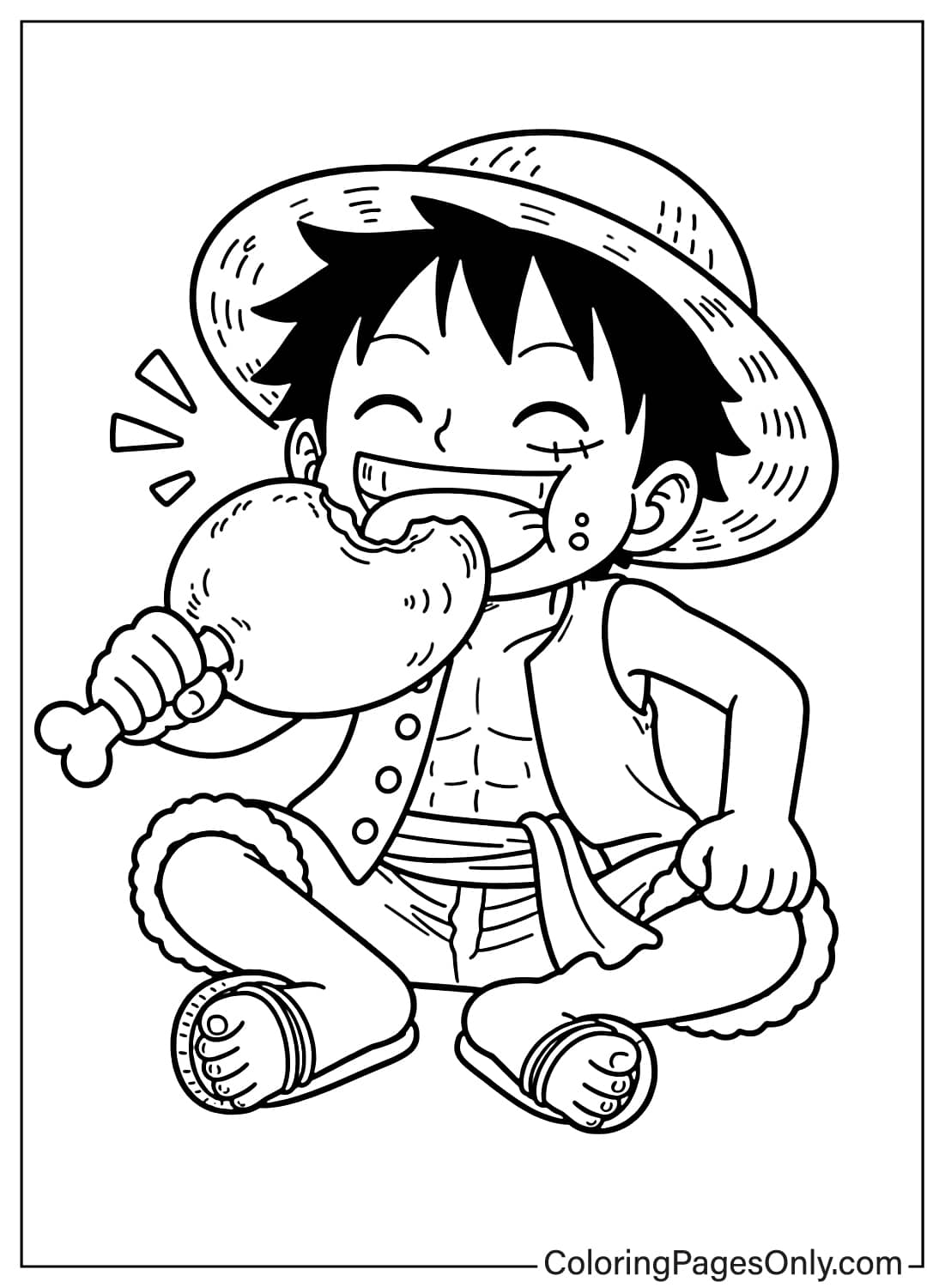
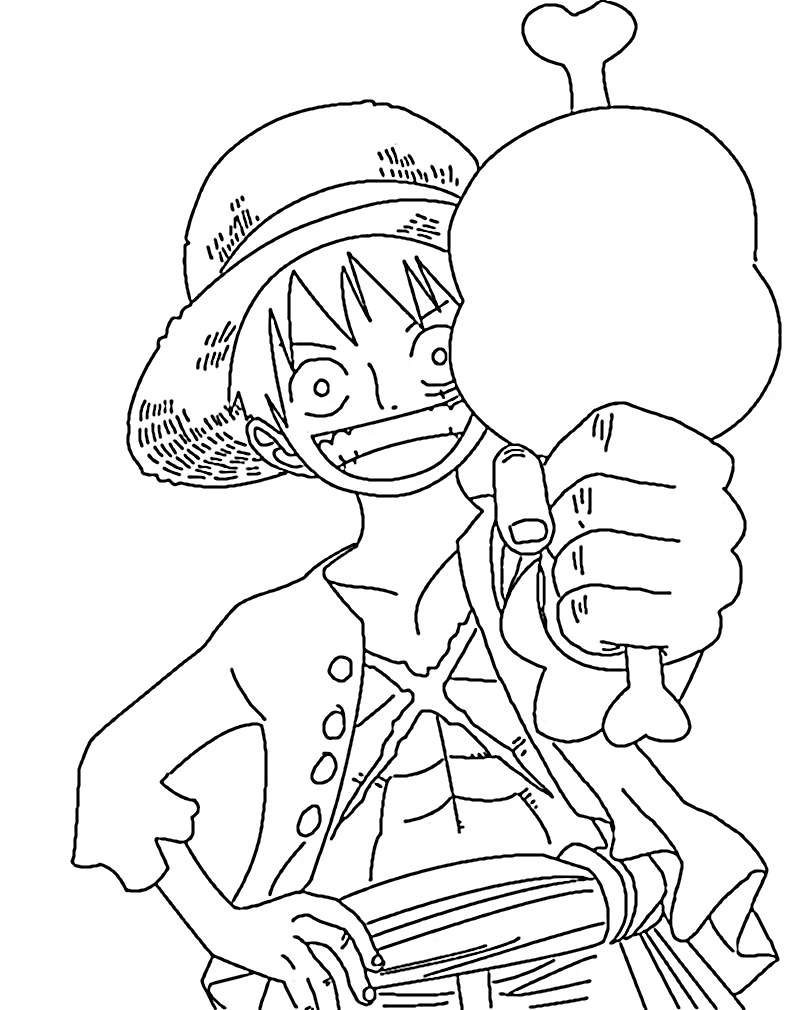
Luffy eating meat pages are fun because they show one of his most recognizable habits. He loves food, and meat scenes often feel playful, energetic, and easy for kids to understand.
A page with Luffy holding a giant meat drumstick, eating happily, or enjoying a big pirate meal feels different from an action pose. The focus is on humor and personality rather than battle.
Food pages give children more variety to color. They can use brown, orange, red, yellow, and tan for the meat, then color Luffy’s hat, clothes, face, and background. A simple table, plate, or pirate feast can be added if children want to make the page more complete.
Kids who enjoy funny scenes often like this group because it feels relaxed and full of character. The page does not need a battle or a dramatic pose to be enjoyable.
This type of page also works well for storytelling. A child can imagine Luffy eating after a long adventure, sharing food with the crew, or celebrating after a big mission.
Luffy Action and Battle Pose Coloring Pages
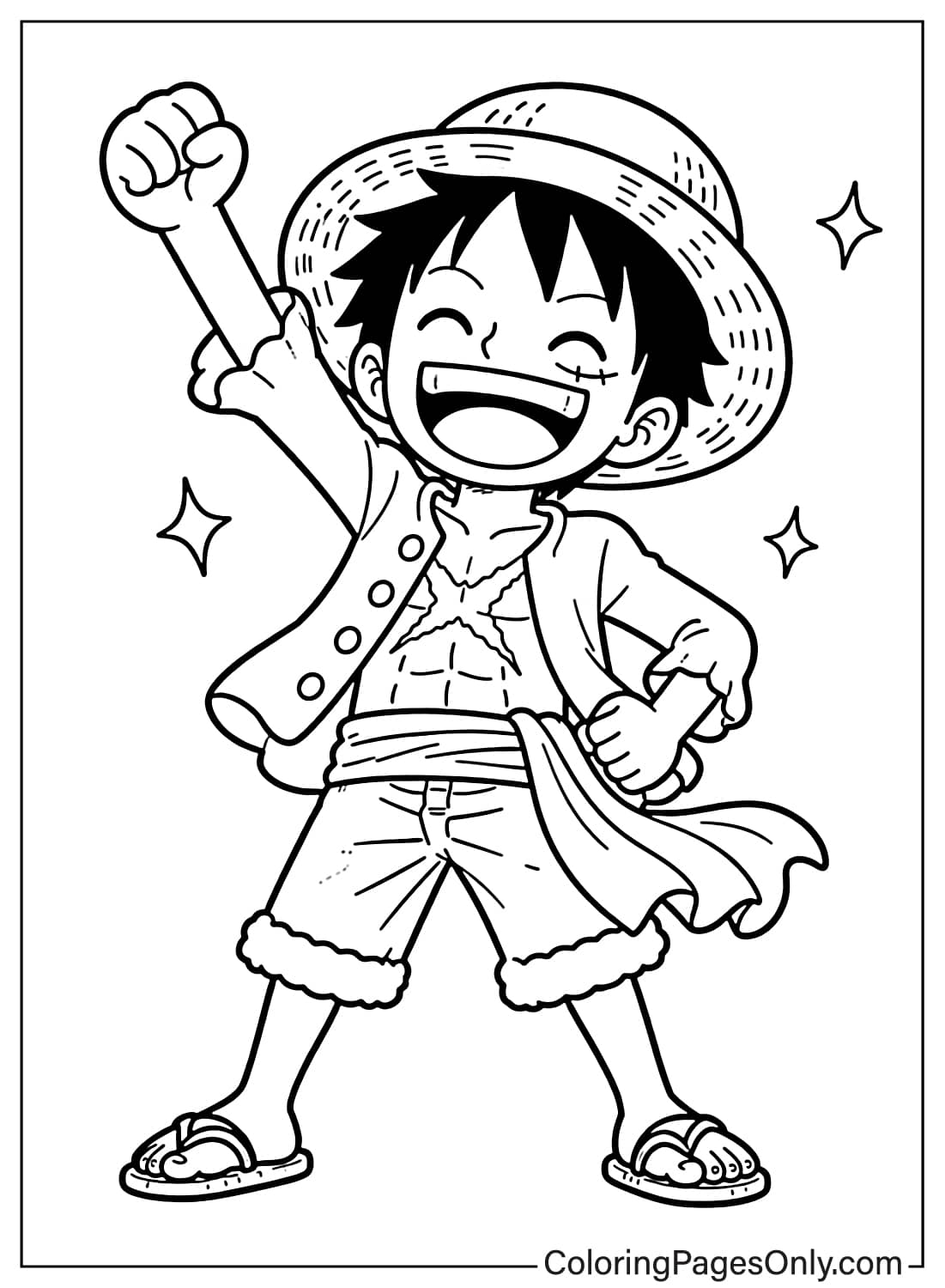
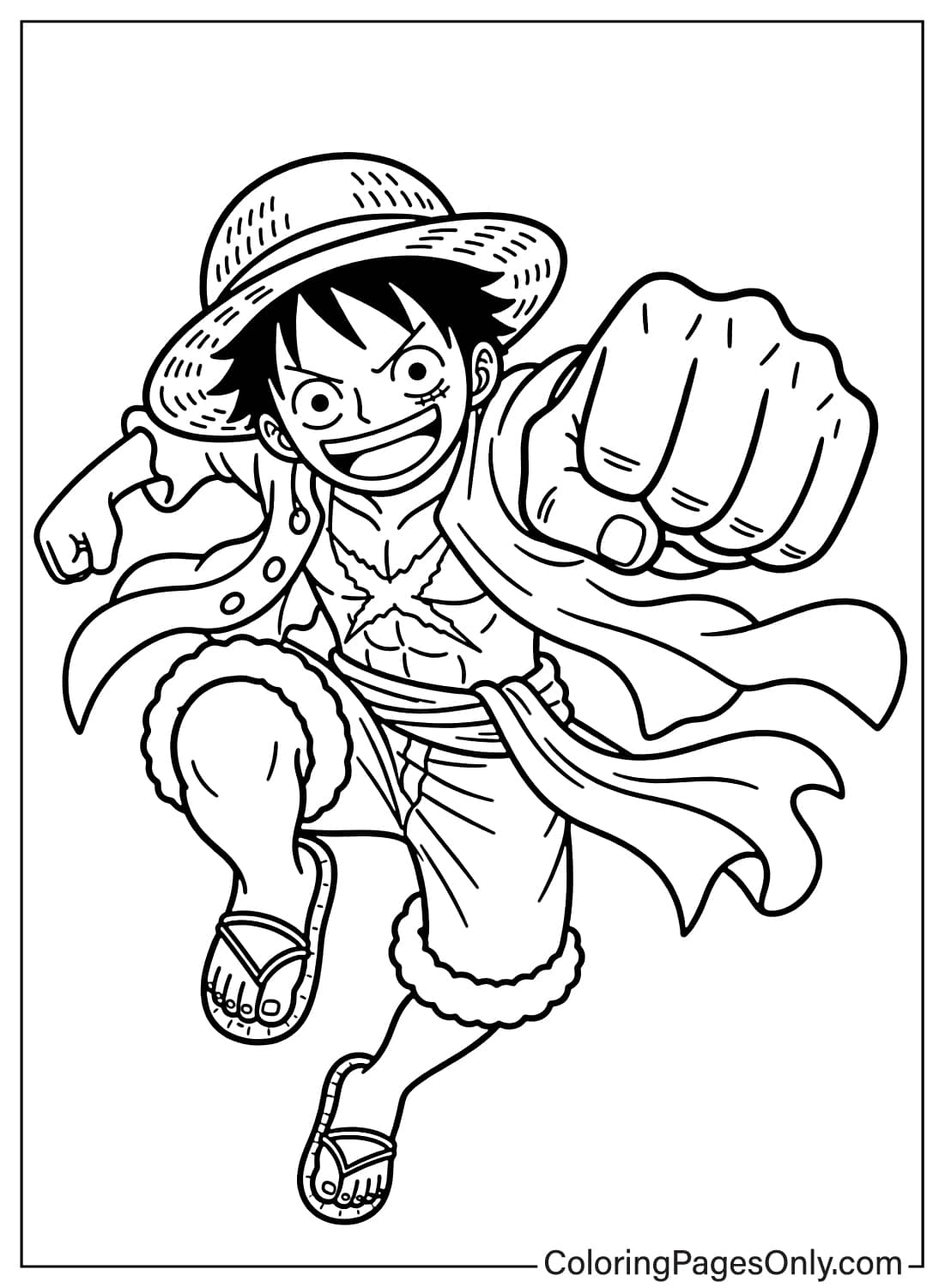
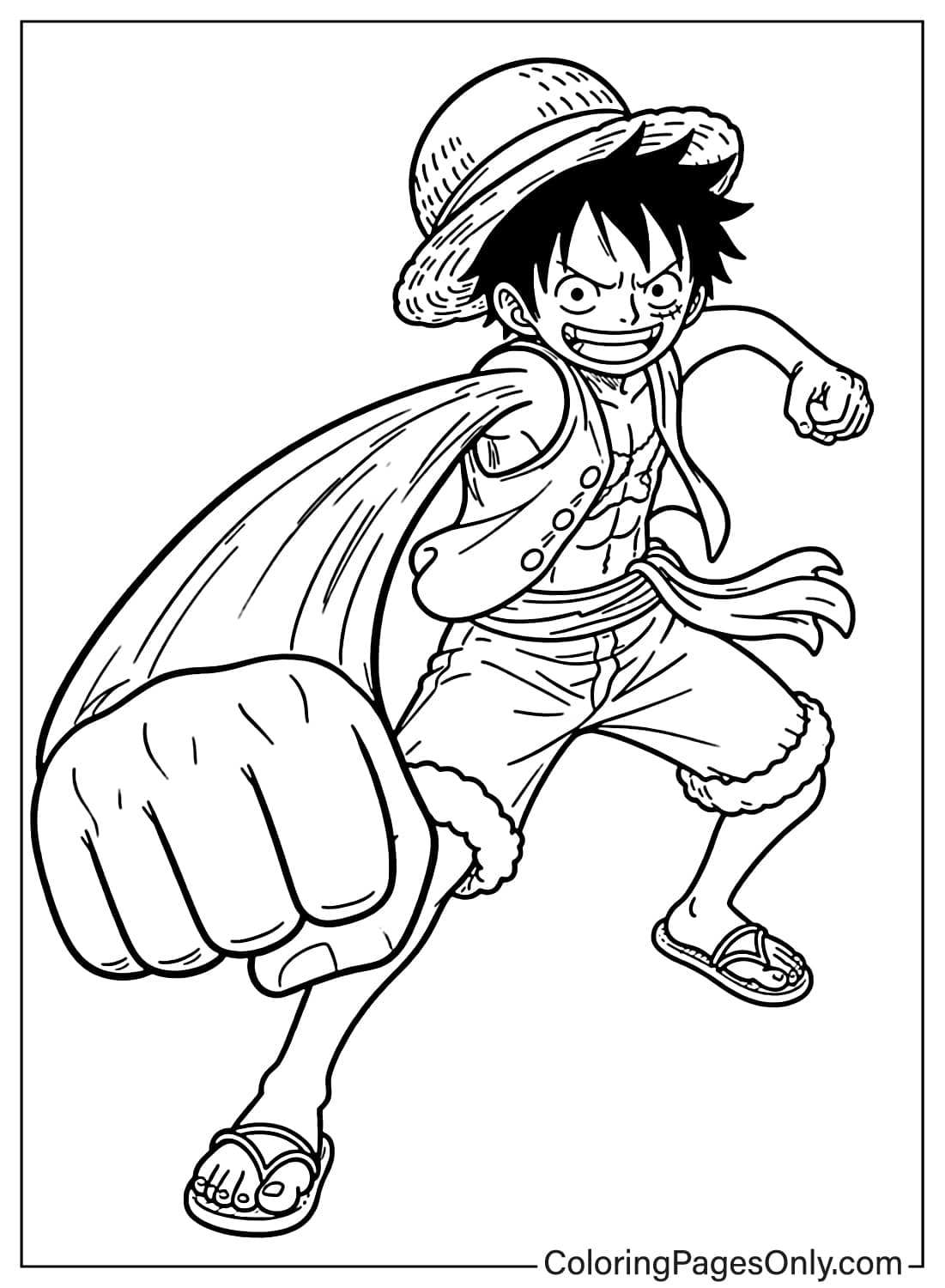
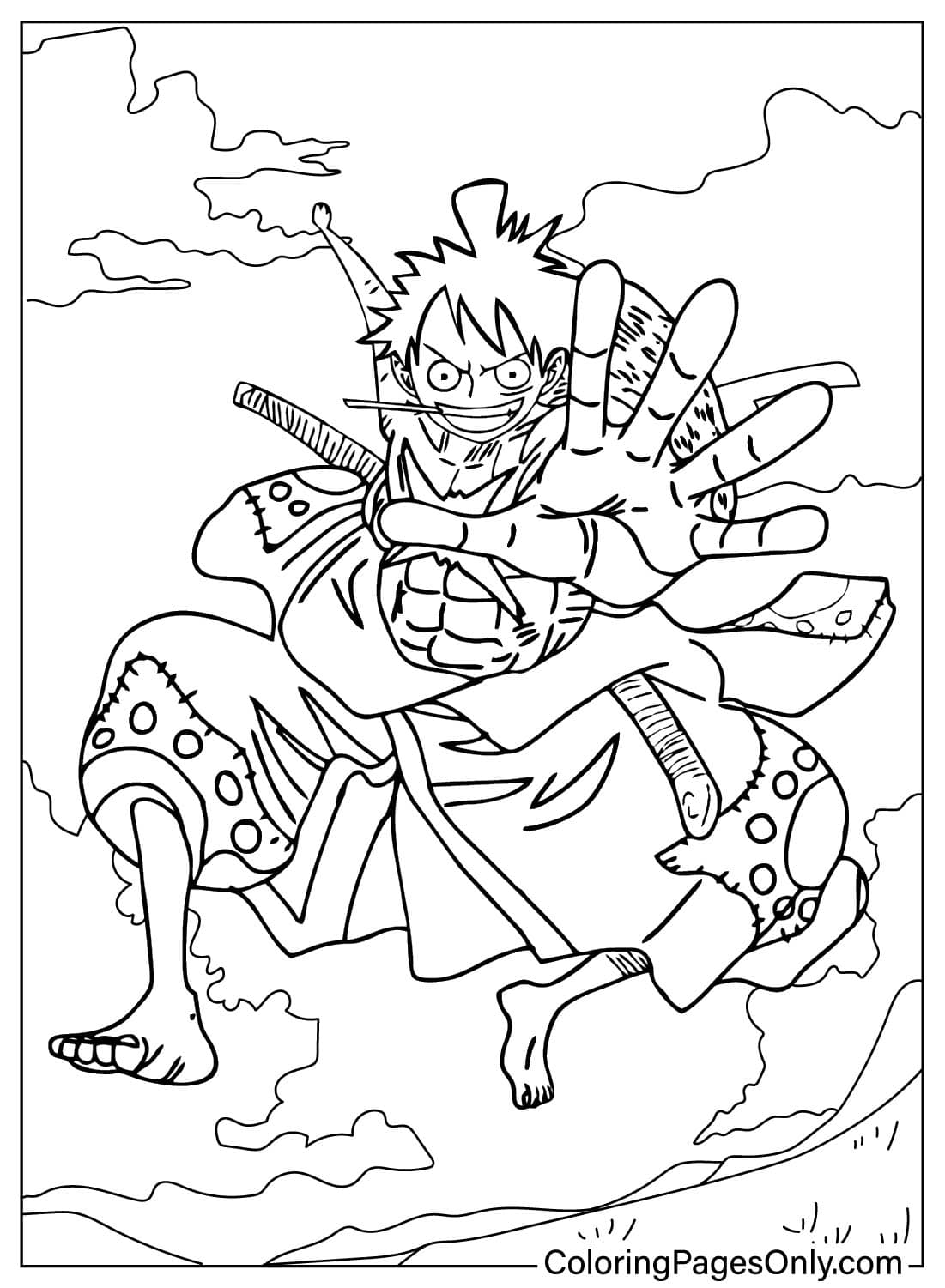
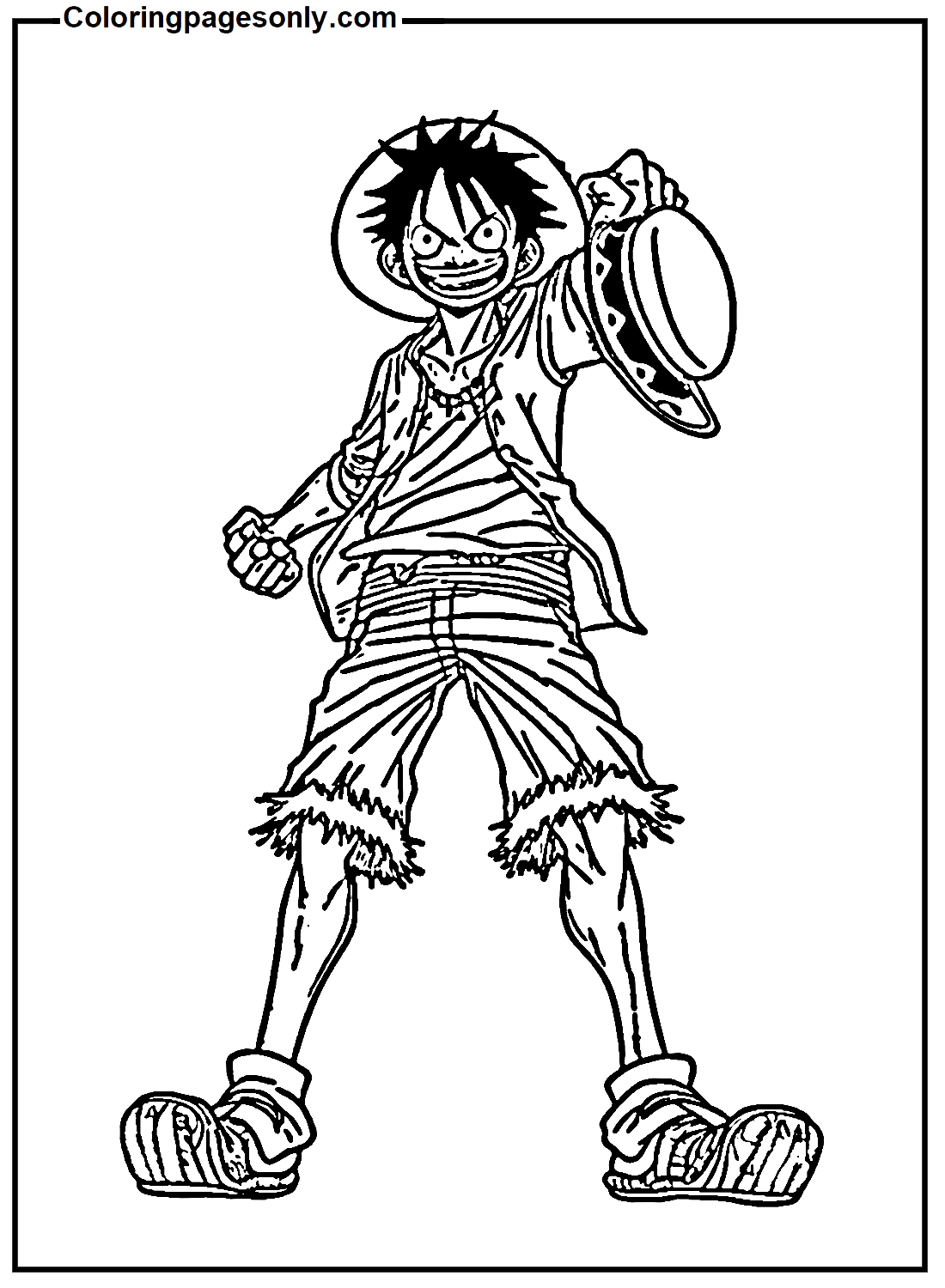
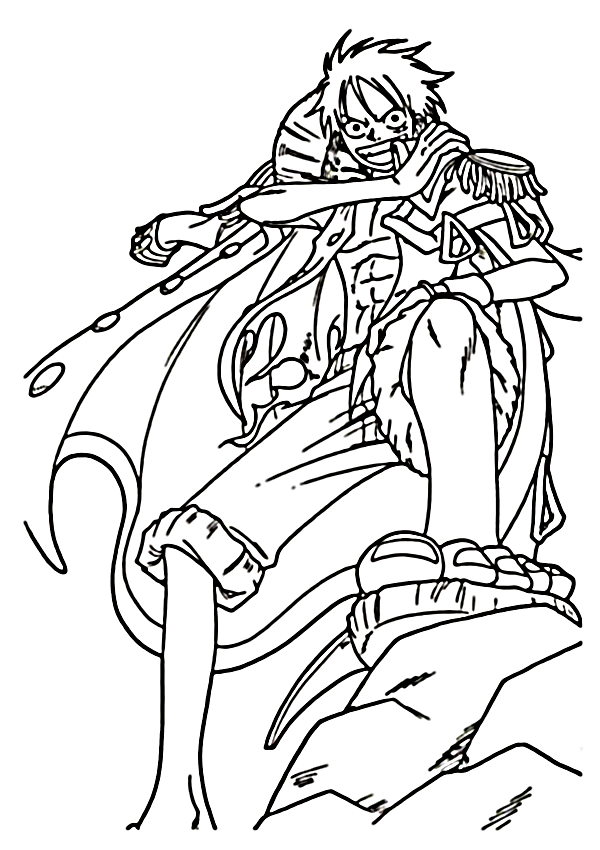
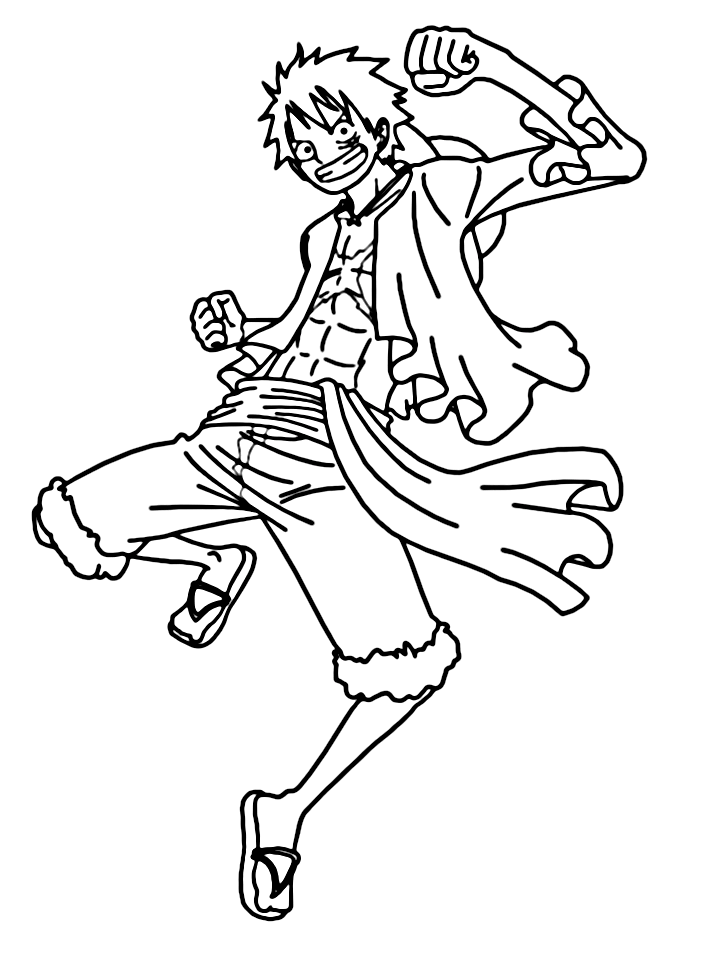
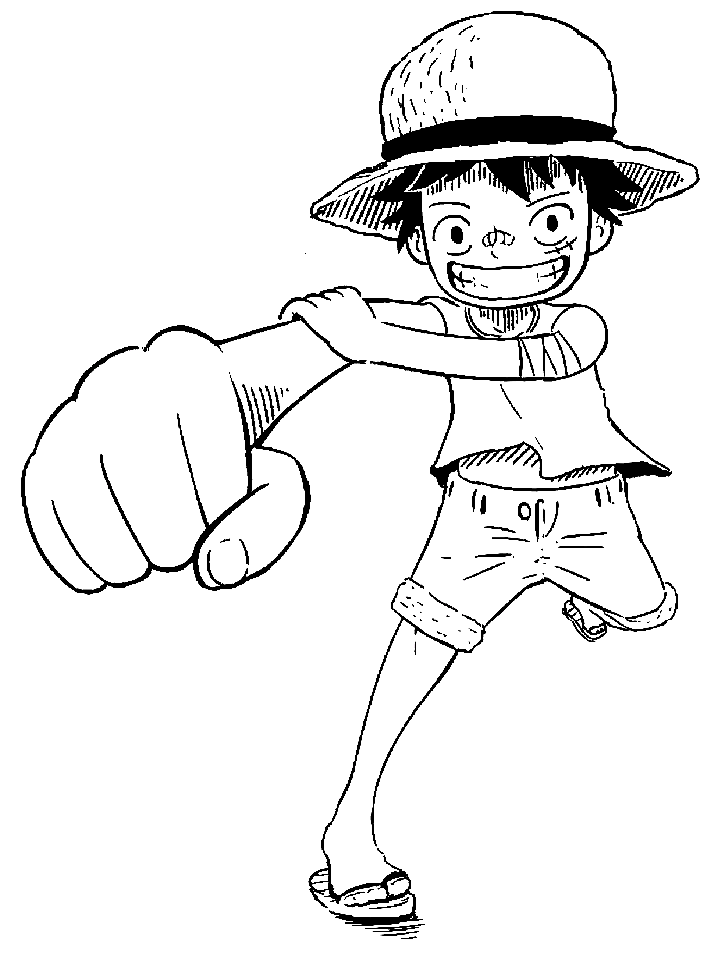
Action and battle pose pages show Luffy running, leaping forward, stretching his arm, standing strong, powering up, or preparing for a fight. These designs feel more energetic than simple portraits because the character is already moving.
Kids who enjoy action often choose this group because it feels like a scene from an anime episode. A running page can become a chase. A leaping page can become a rescue. A stretching arm page can show Luffy using his rubber-like fighting style.
Action pages also help children with color movement. Motion lines, smoke, clouds, impact effects, and background details can make the scene feel faster. Luffy should stay bright and clear, while the background can use softer tones so the character remains the focus.
For younger kids, choose action pages with one large Luffy figure and fewer details. Older kids can try pages with stronger poses, more smoke, more clothing folds, and smaller action lines.
A helpful coloring order is hat first, face second, clothing third, action effects fourth, and background last. This keeps Luffy readable before adding movement around him.
Gear-Inspired Luffy Coloring Pages
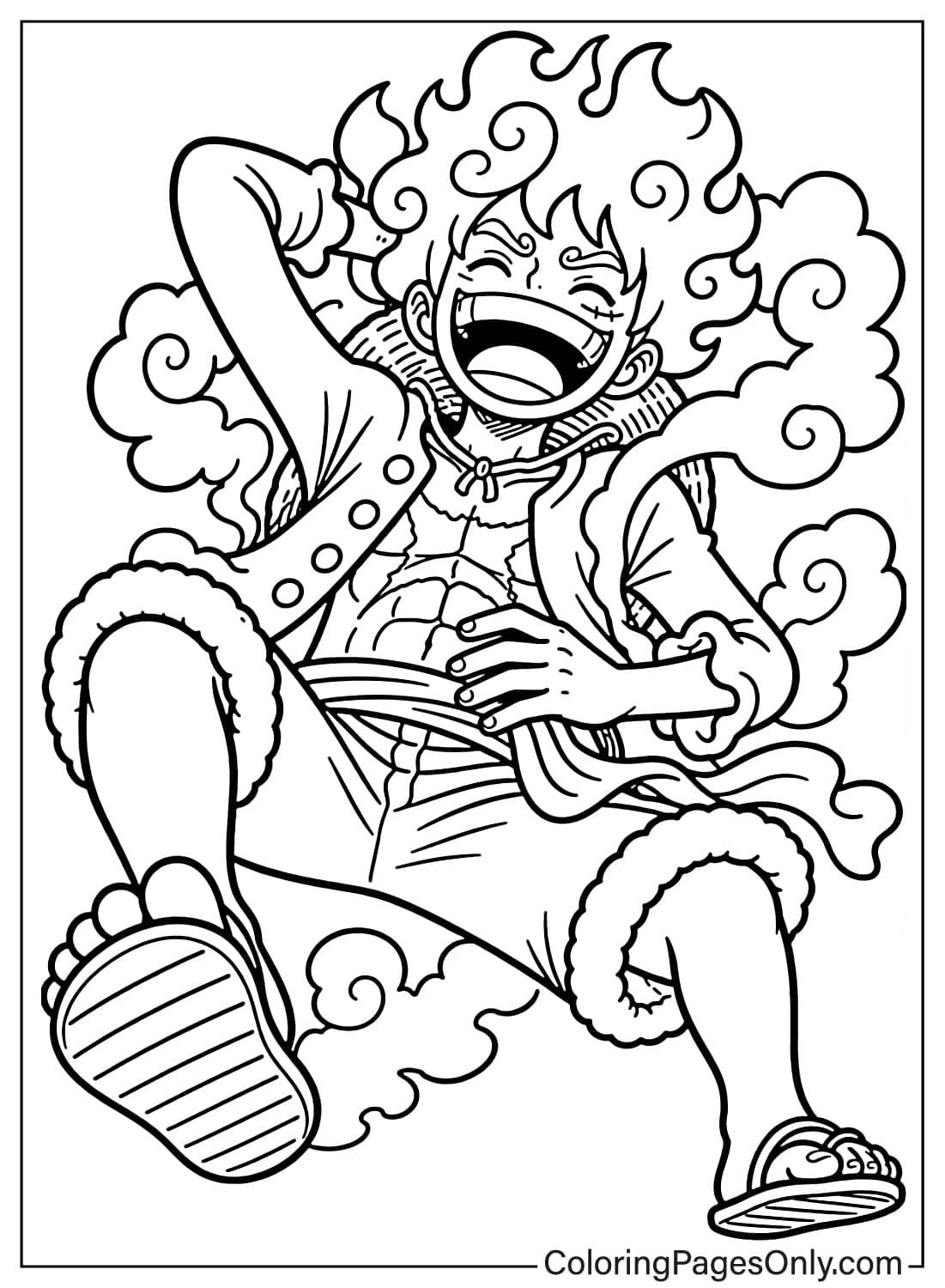
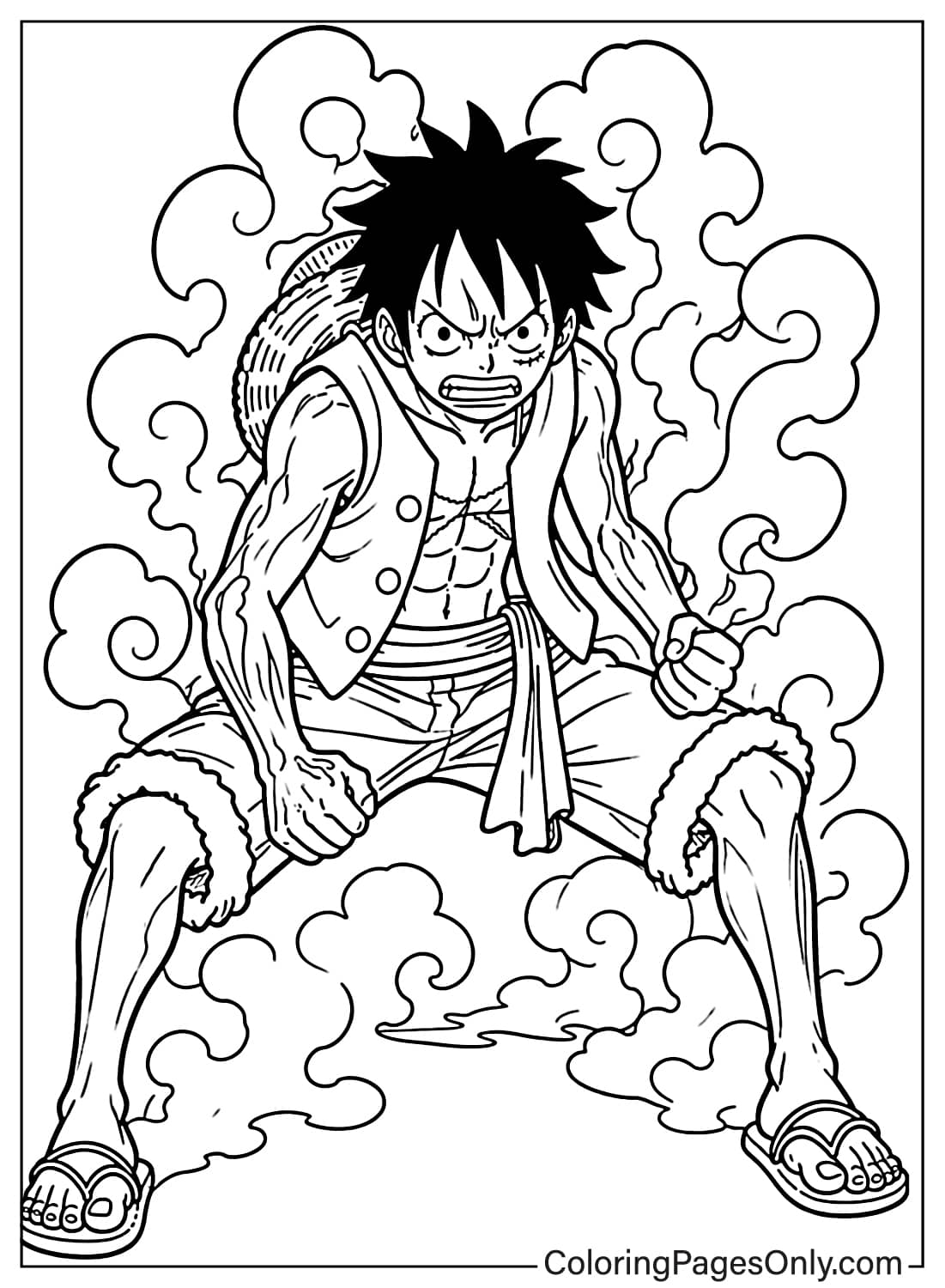
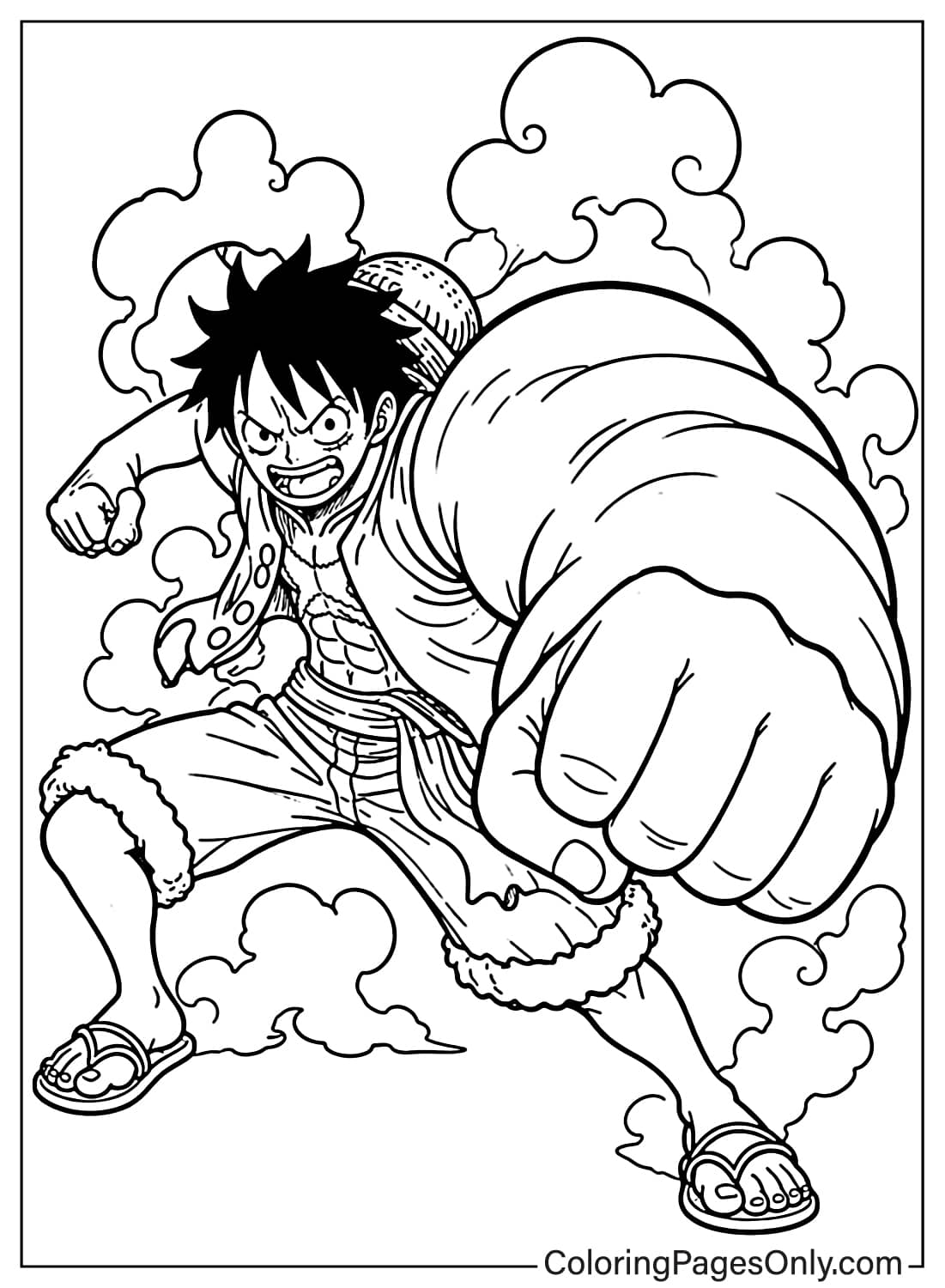
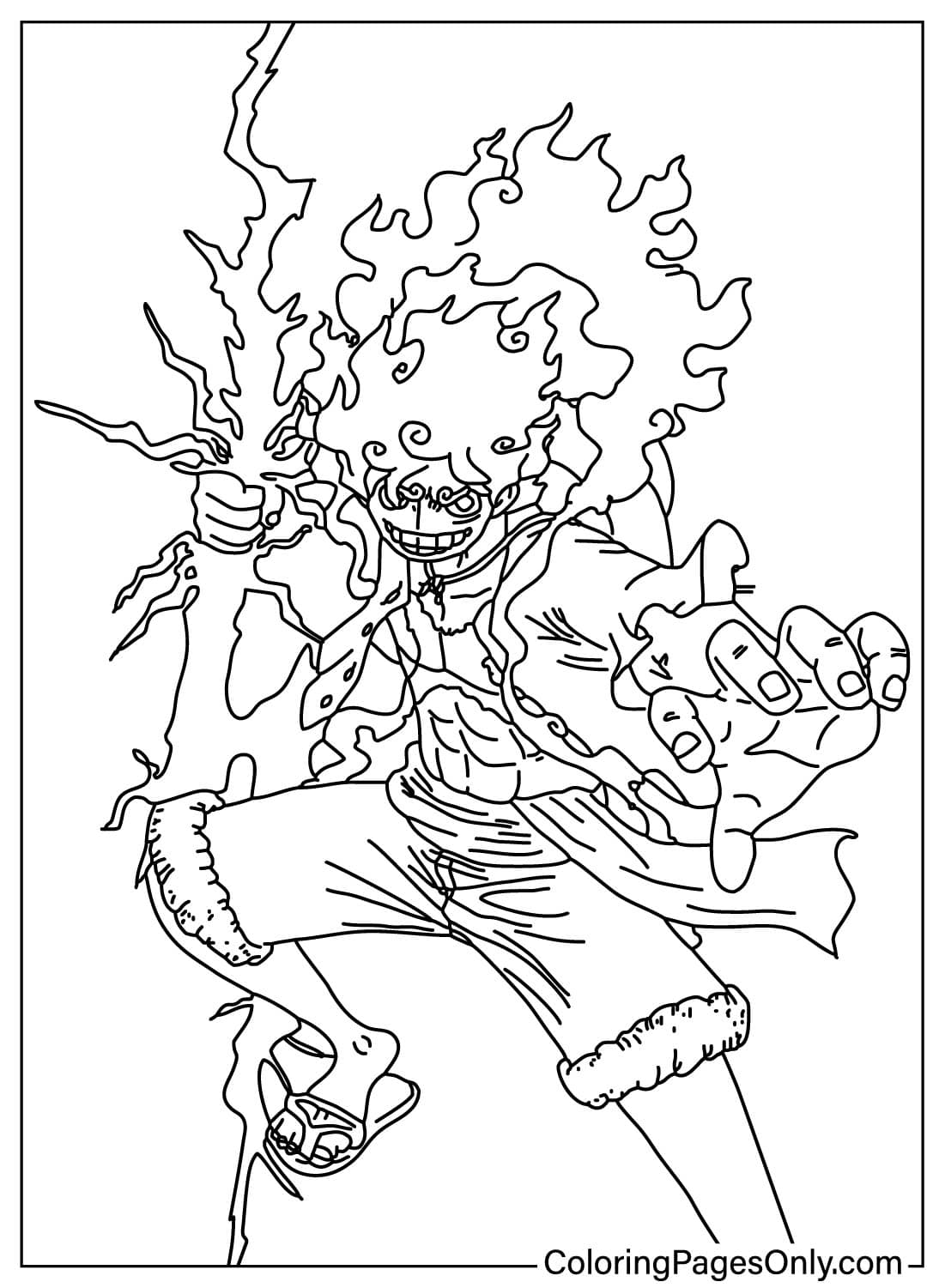
Gear-inspired Luffy pages are some of the most exciting designs in this 70+ page collection. They may include Gear 2 battle stances with smoke, Gear 3 giant fist pages, Gear 4 designs, Gear 5 Luffy laughing, swirling clouds, and other powerful poses.
Older kids, teens, and One Piece fans often enjoy these pages most because the artwork usually has more movement, stronger expressions, larger shapes, and special effects.
Gear 2 pages may include smoke or steam-like details. Gear 3 pages often focus on a giant fist or a strong body shape. Gear 4 pages can feel heavier and more intense. Gear 5 pages often feel wild, playful, and powerful at the same time, especially when clouds and swirling effects surround Luffy.
The main challenge is keeping the page organized. Kids can color Luffy first, then the power effects, then the background. White, gray, pale blue, and soft shadow colors can help smoke and clouds stay visible without overpowering the character.
Gear-inspired pages are ideal for fans who want a longer coloring project. They can become posters, anime display art, or dramatic pages for a One Piece coloring folder.
Wano Outfit and Pirate Captain Luffy Coloring Pages
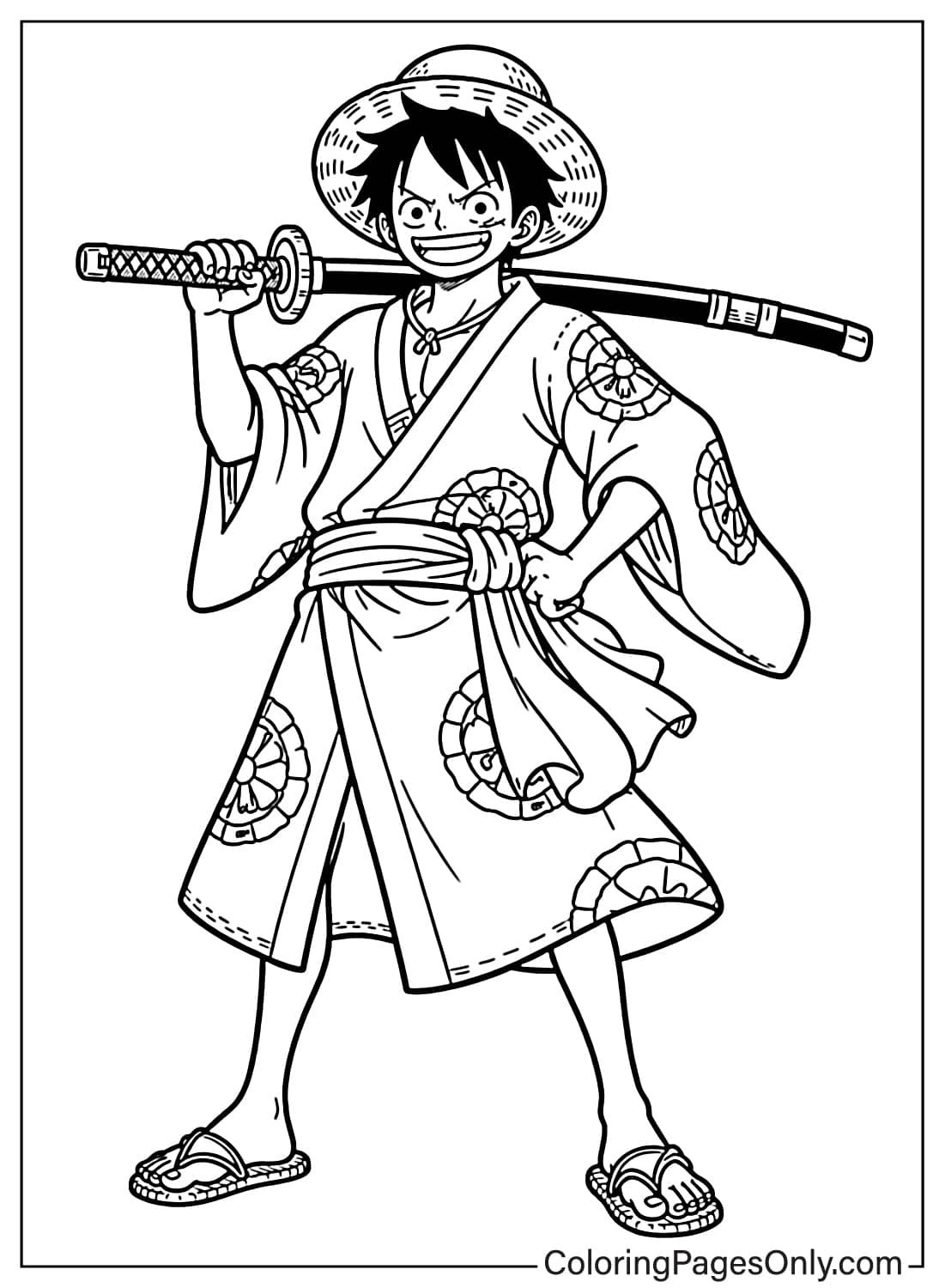
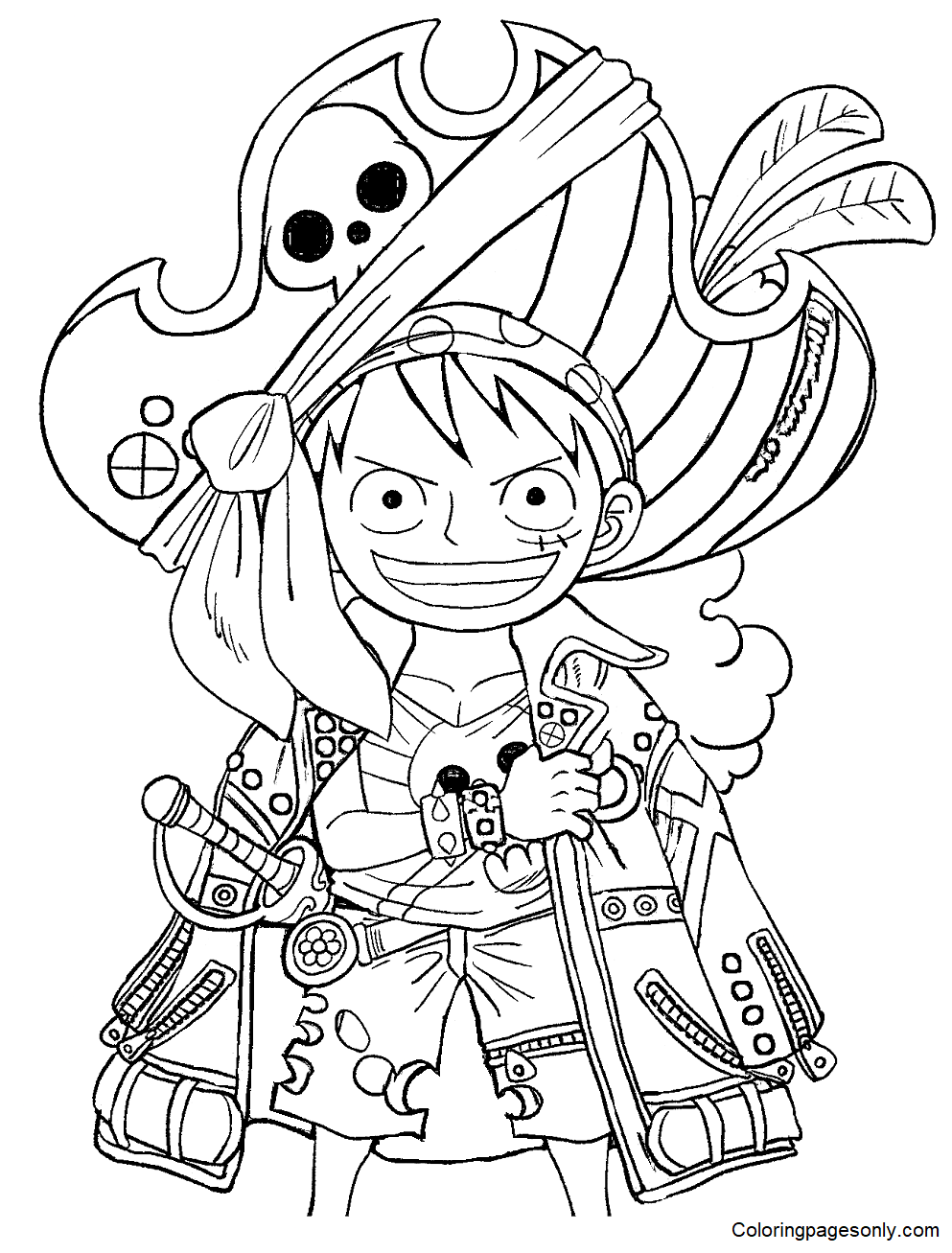
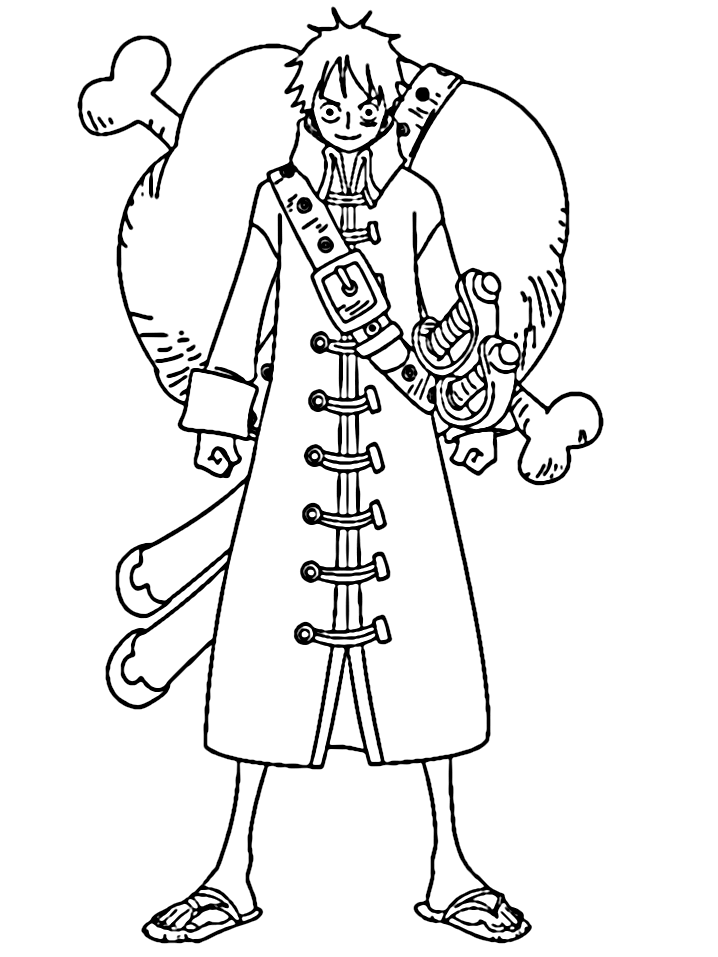
Wano outfit and pirate captain pages show Luffy in more detailed clothing or stronger adventure looks. These designs may include a Wano-style outfit, sword, cape, pirate captain pose, or dramatic standing design.
This group is best for older children and fans who enjoy costume details. Instead of only coloring the classic vest and shorts, kids can work with layered clothing, belts, capes, sword details, folds, and stronger poses.
Wano-inspired pages may use darker reds, blues, purples, black, gray, and warm background colors. Pirate captain pages can use bold colors for the cape, straw hat, sash, and clothing. If the page has a sword or accessory, gray and silver tones can help it stand out.
These pages also give children a chance to imagine Luffy as a leader. A standing pirate captain page can feel proud and powerful. A Wano outfit page can feel like part of a bigger adventure.
Because these pages may include more costume details, colored pencils are often helpful for small areas and shading.
Luffy Wanted Poster Coloring Pages
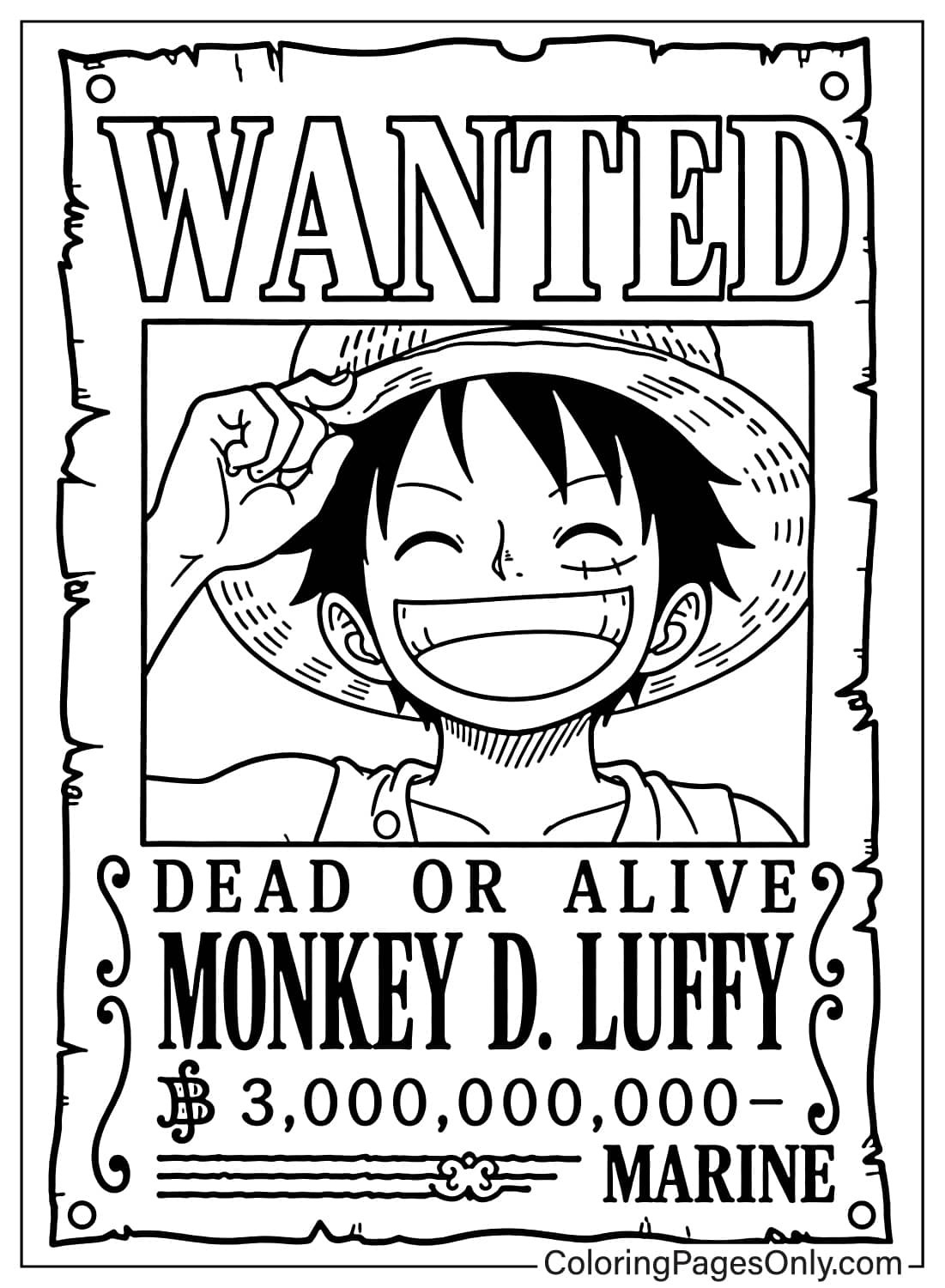
Luffy wanted poster pages are fun because they turn the character into a pirate poster design. A wanted poster usually has a clear frame, a large character image, and a bold layout.
This group feels different from regular character poses. Kids can color Luffy first, then color the poster border, background texture, letters, and any extra pirate details around the page.
Wanted poster pages also work well as crafts. After coloring, children can cut out the poster, hang it on a wall, add it to a pirate-themed display, or create a full One Piece wall with other character posters.
For coloring, use tan, beige, light brown, or parchment-style colors for the poster background. Luffy’s hat, face, vest, and shorts should stay clear so the character remains easy to recognize.
Kids who like pirate posters and adventure scenes will usually enjoy this group because it feels different from a normal character pose.
One Piece Film Red Luffy Coloring Pages
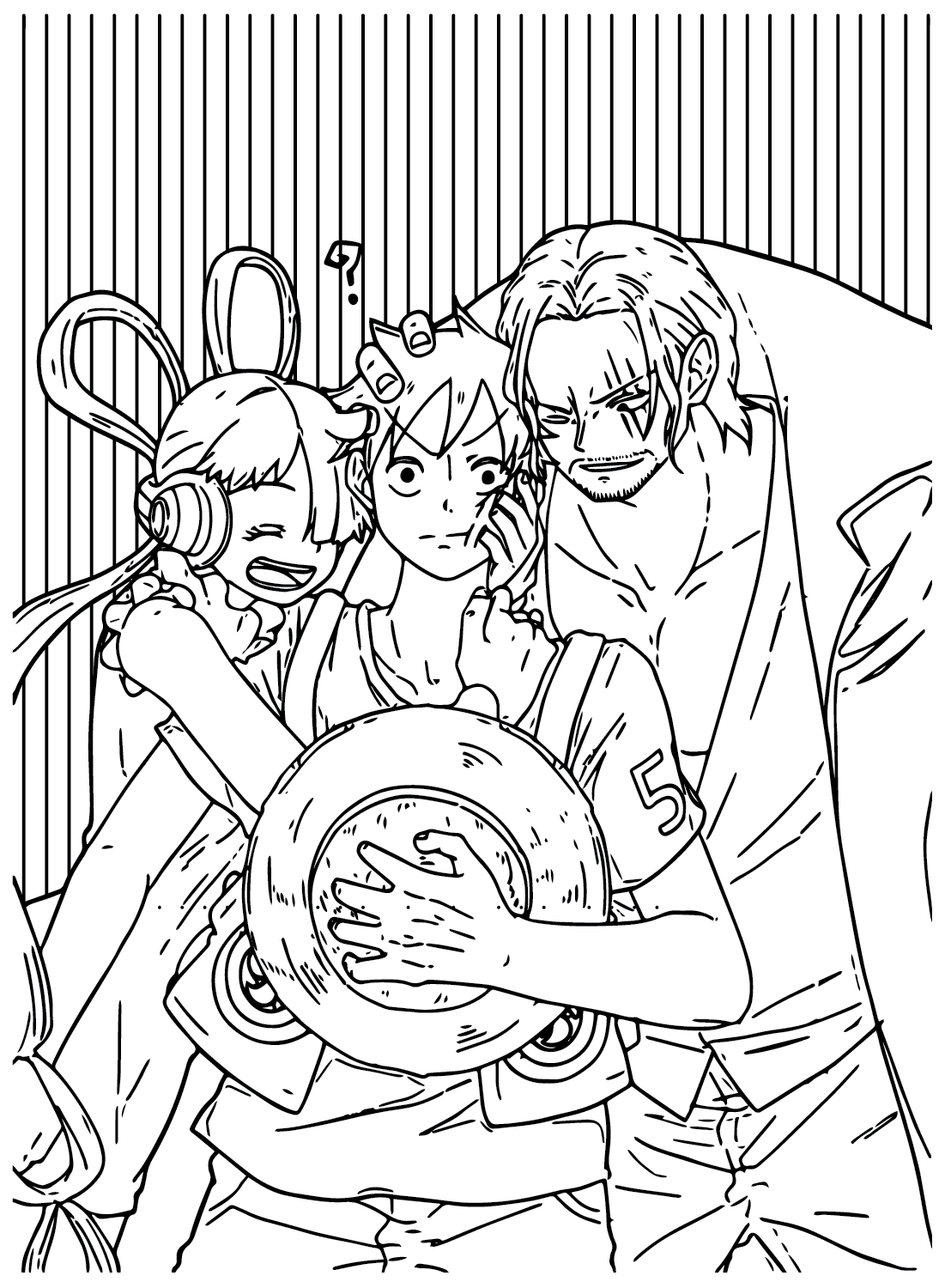
One Piece Film Red pages bring a movie-related style into the Luffy collection. The pose, outfit, expression, or character connection may feel different from a regular standing page.
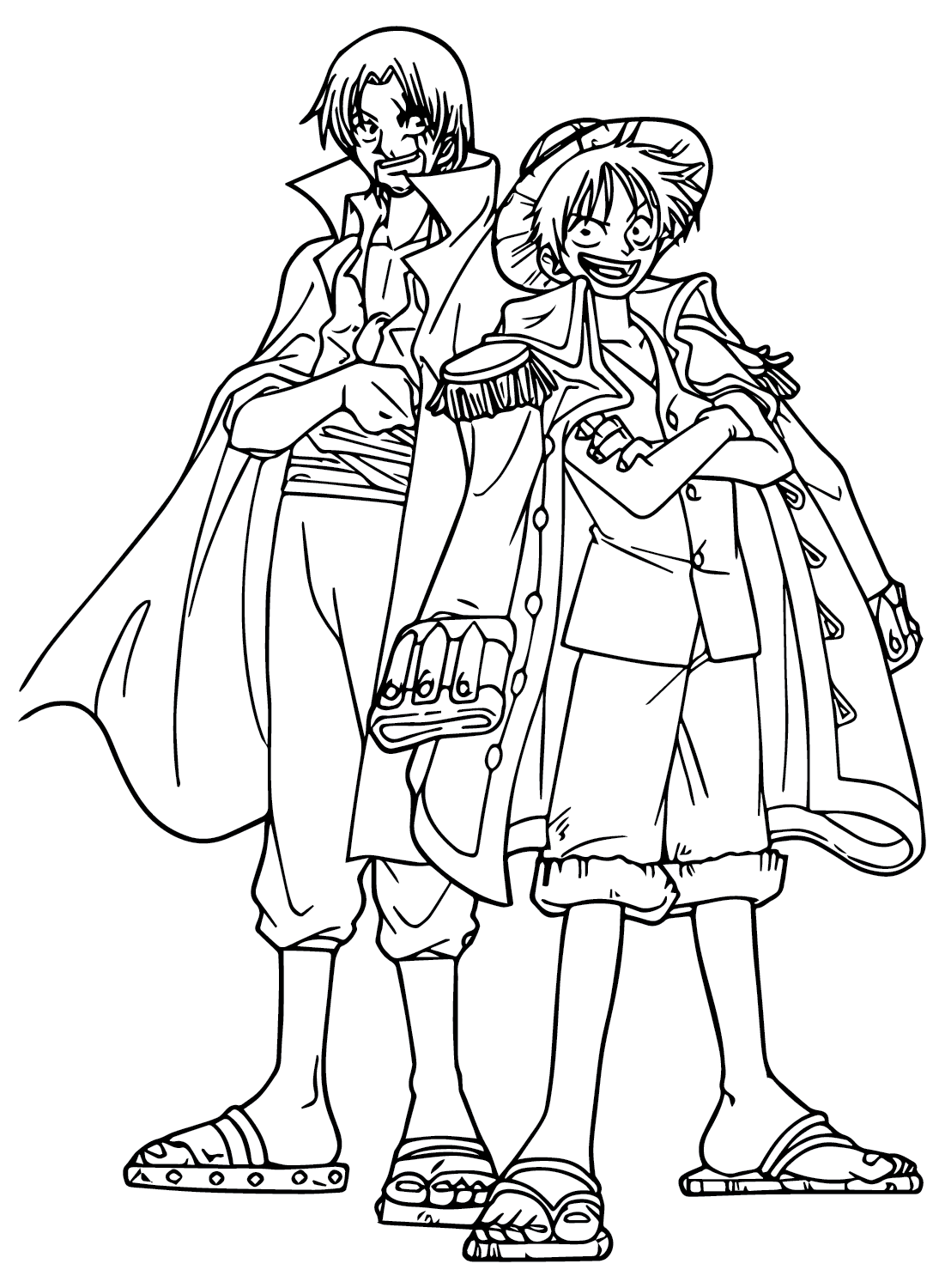
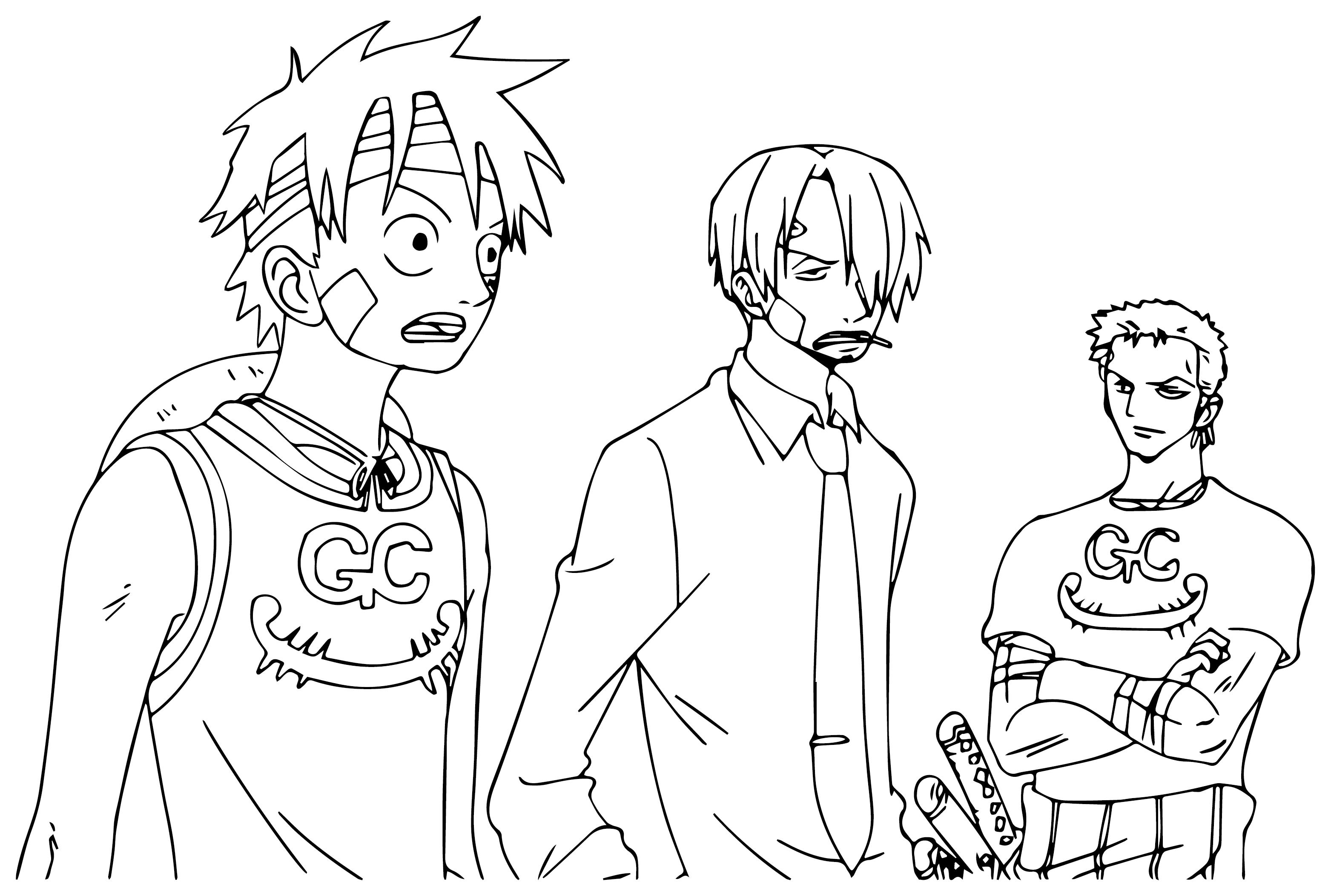
Fans who enjoy Film Red may also like pages with Shanks, Uta, or Luffy-related story moments. These pages can be colored as part of a movie-themed activity or displayed with other One Piece Film Red designs.
For coloring, keep Luffy’s main features clear first: hat, face, scar, clothing, and pose. Backgrounds can use stronger reds, stage-like colors, or soft shadows depending on the design.
This group works best for older kids and One Piece fans who want something more specific than a simple Luffy portrait.
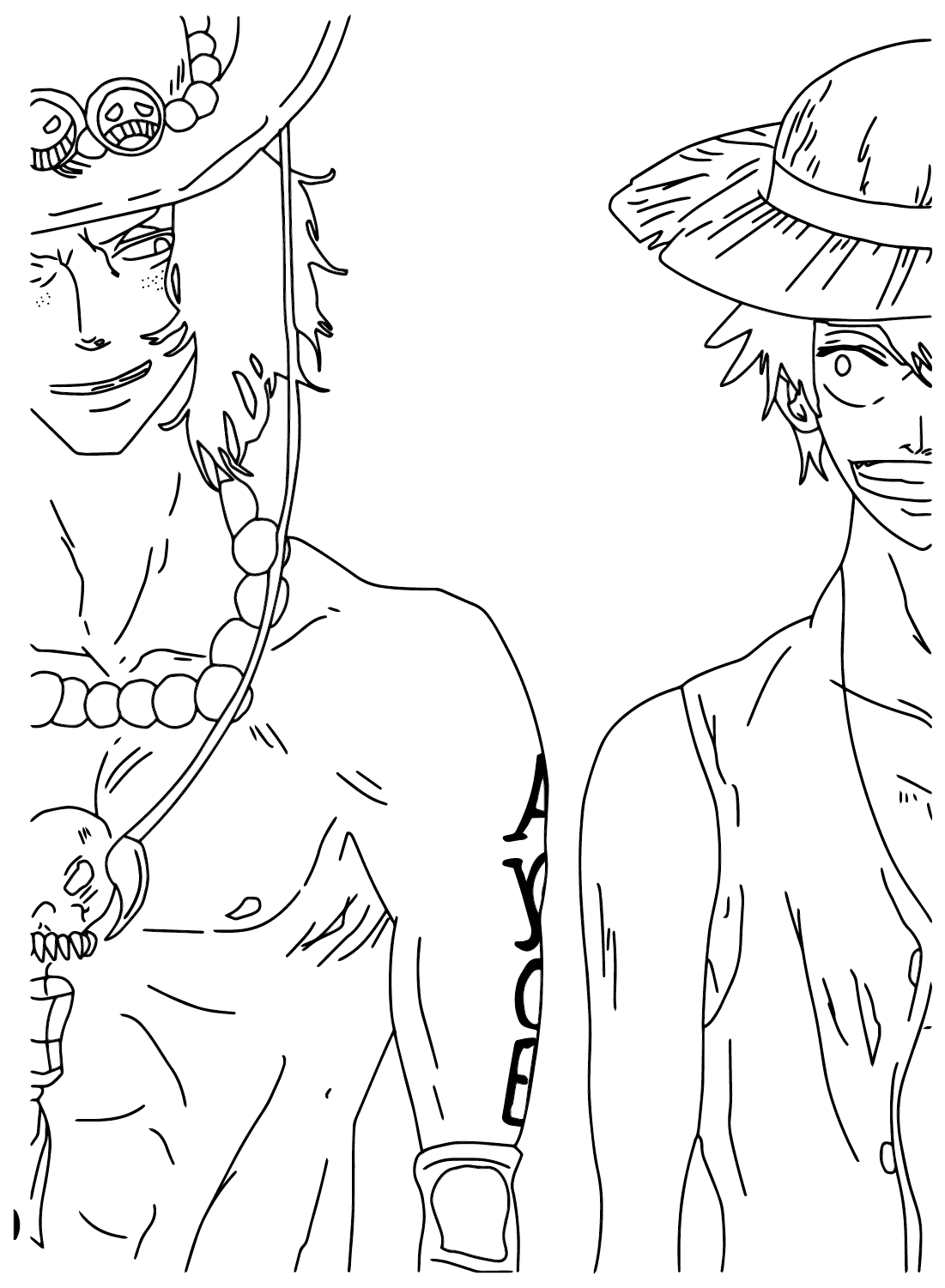
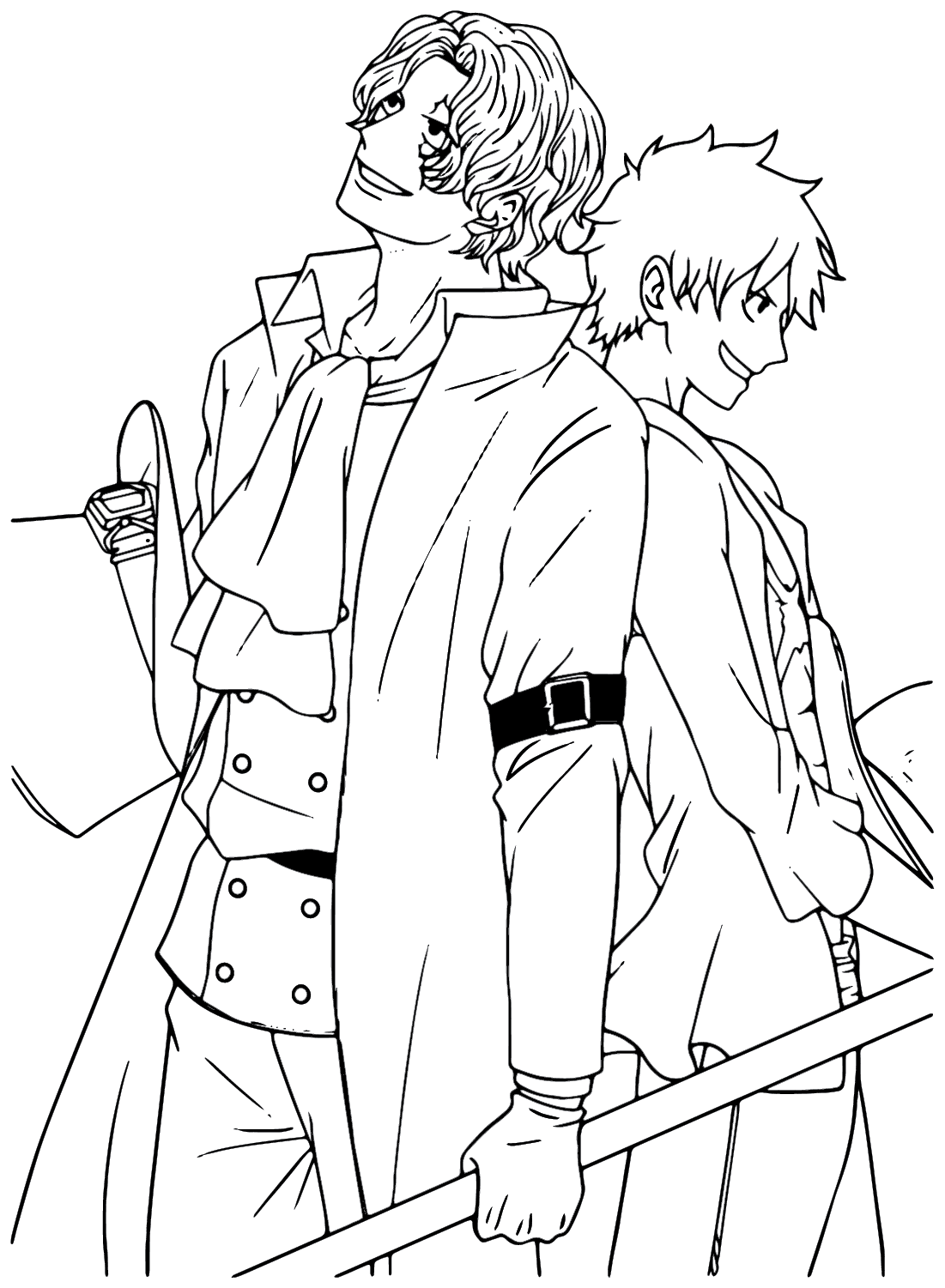
Luffy with Ace, Sabo, and Shanks Coloring Pages
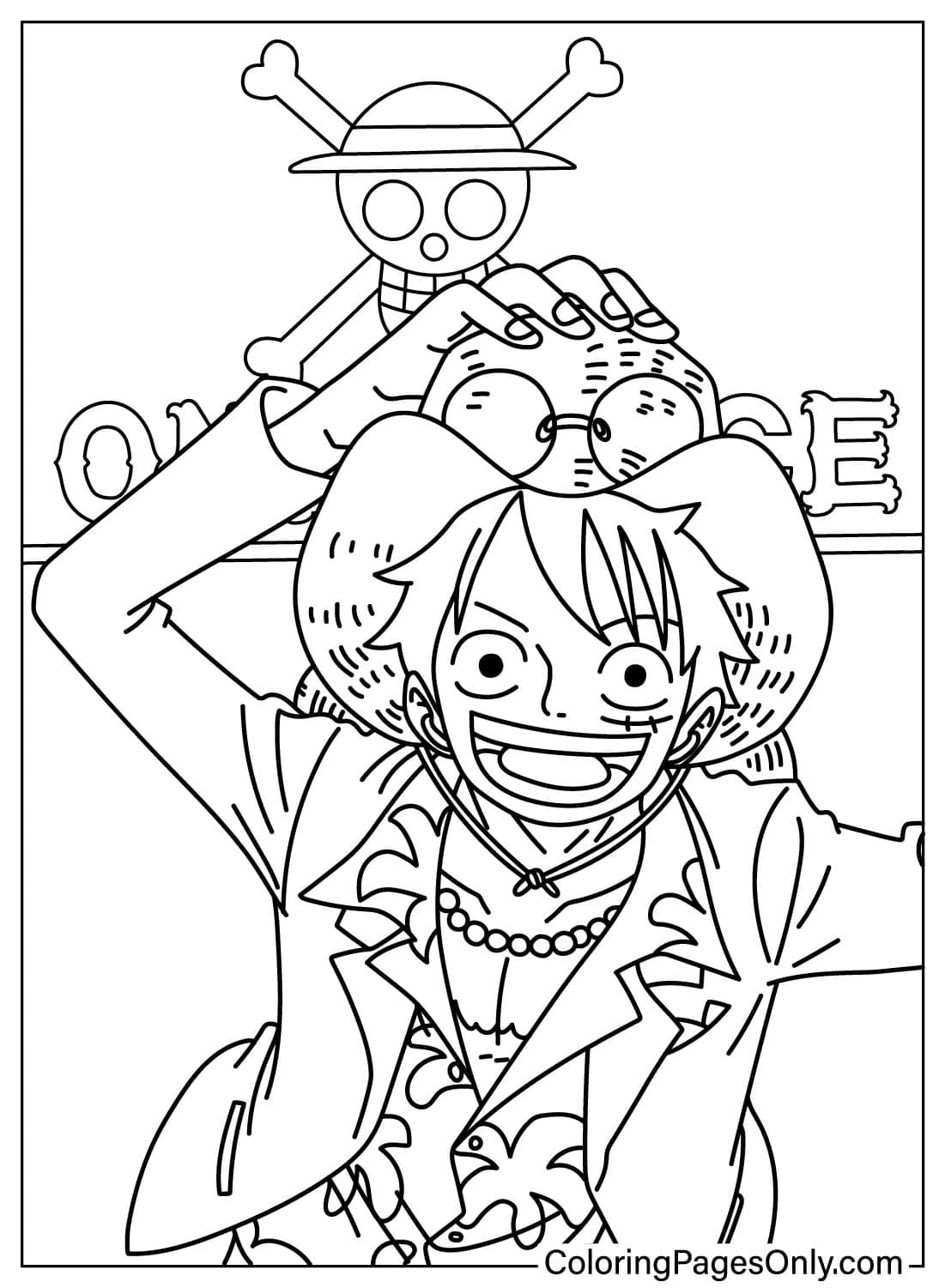
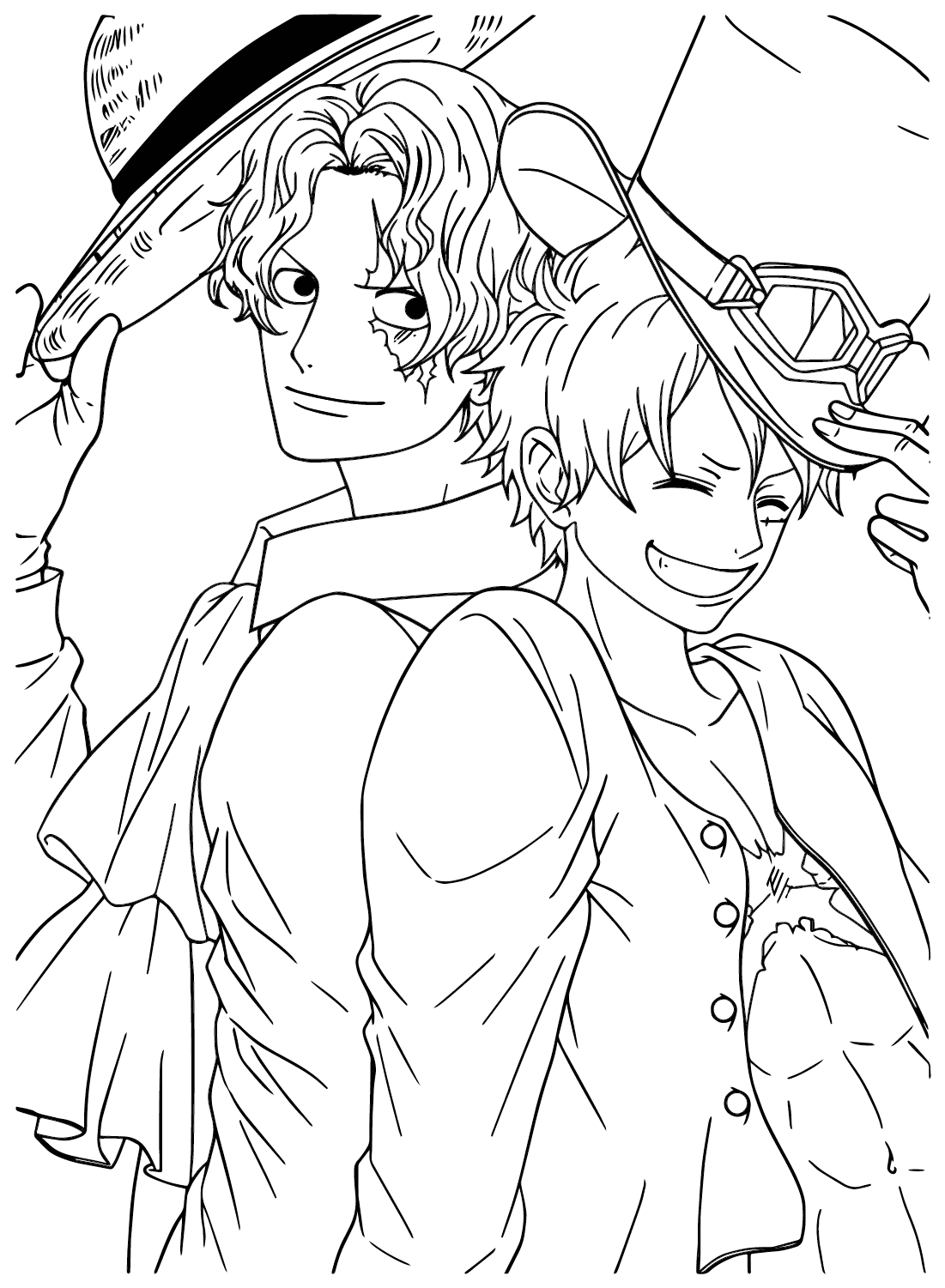
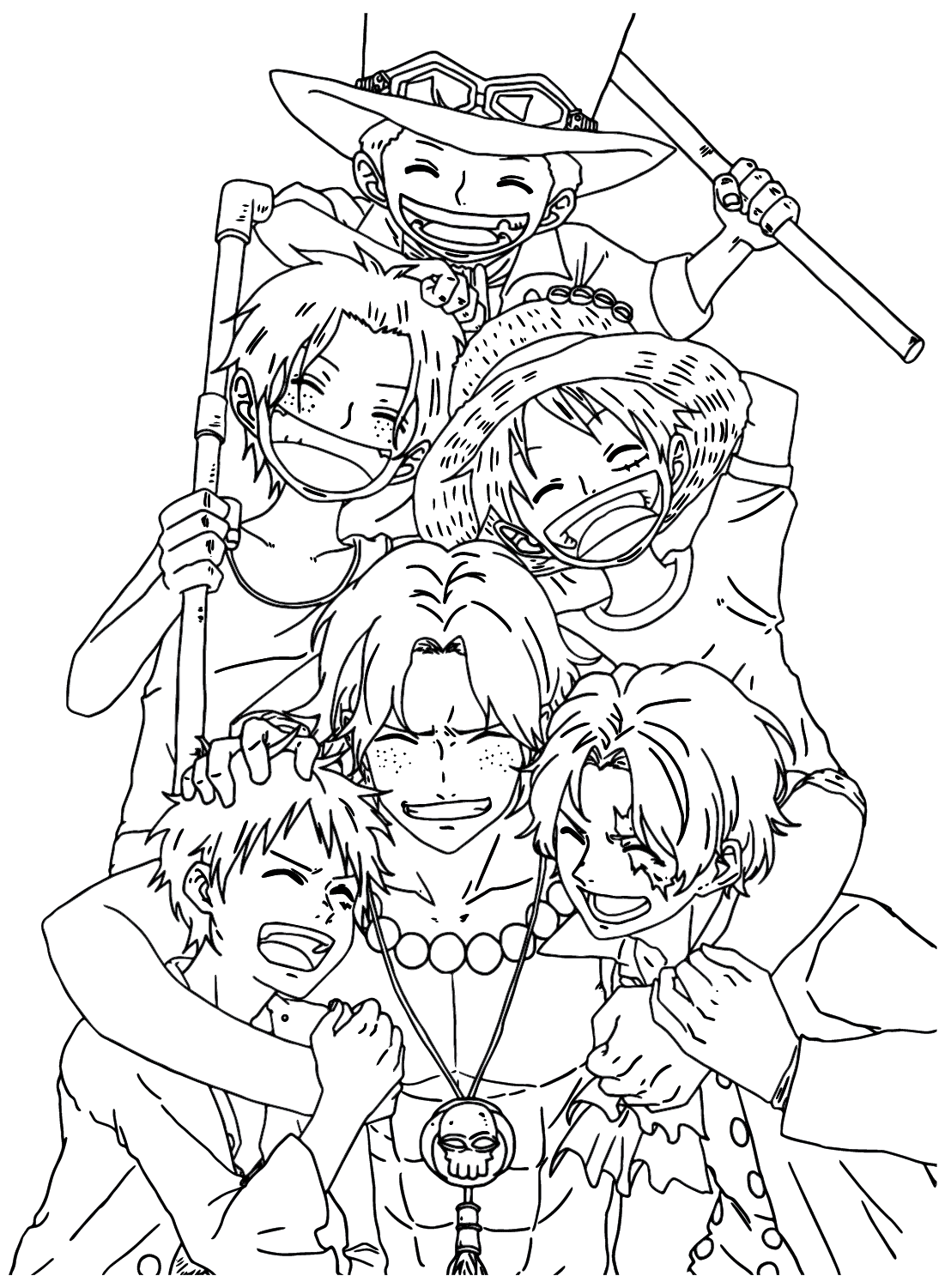
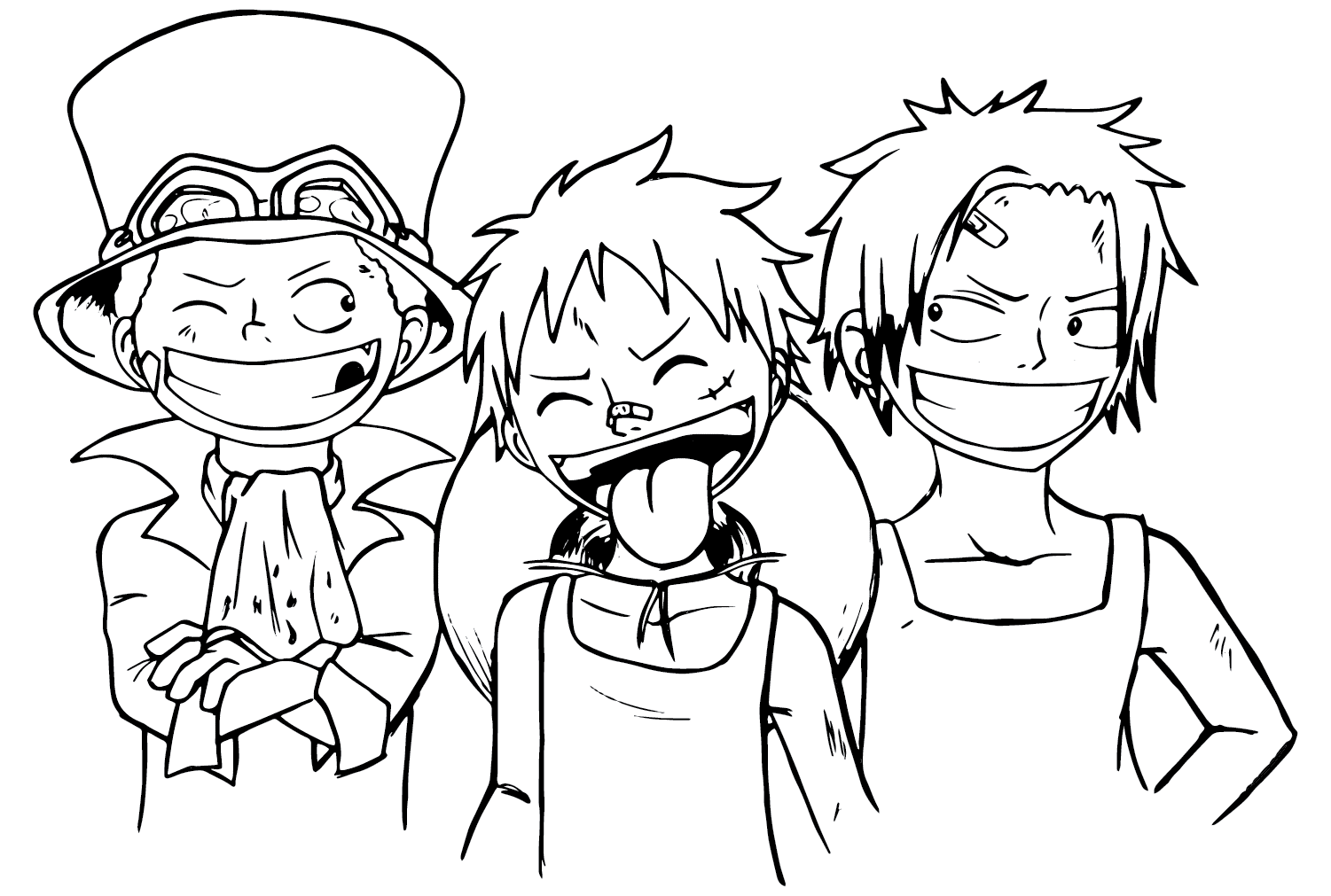
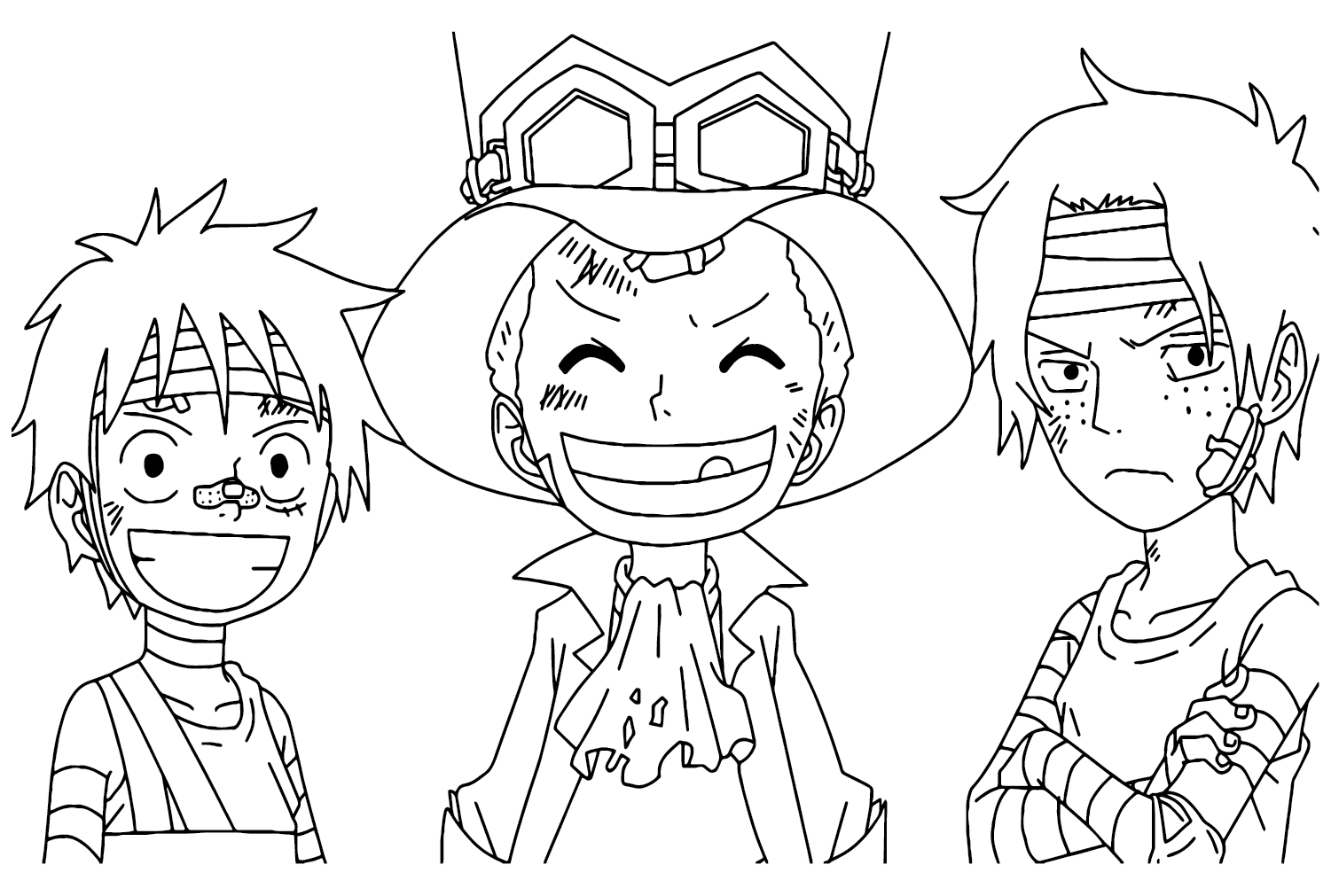
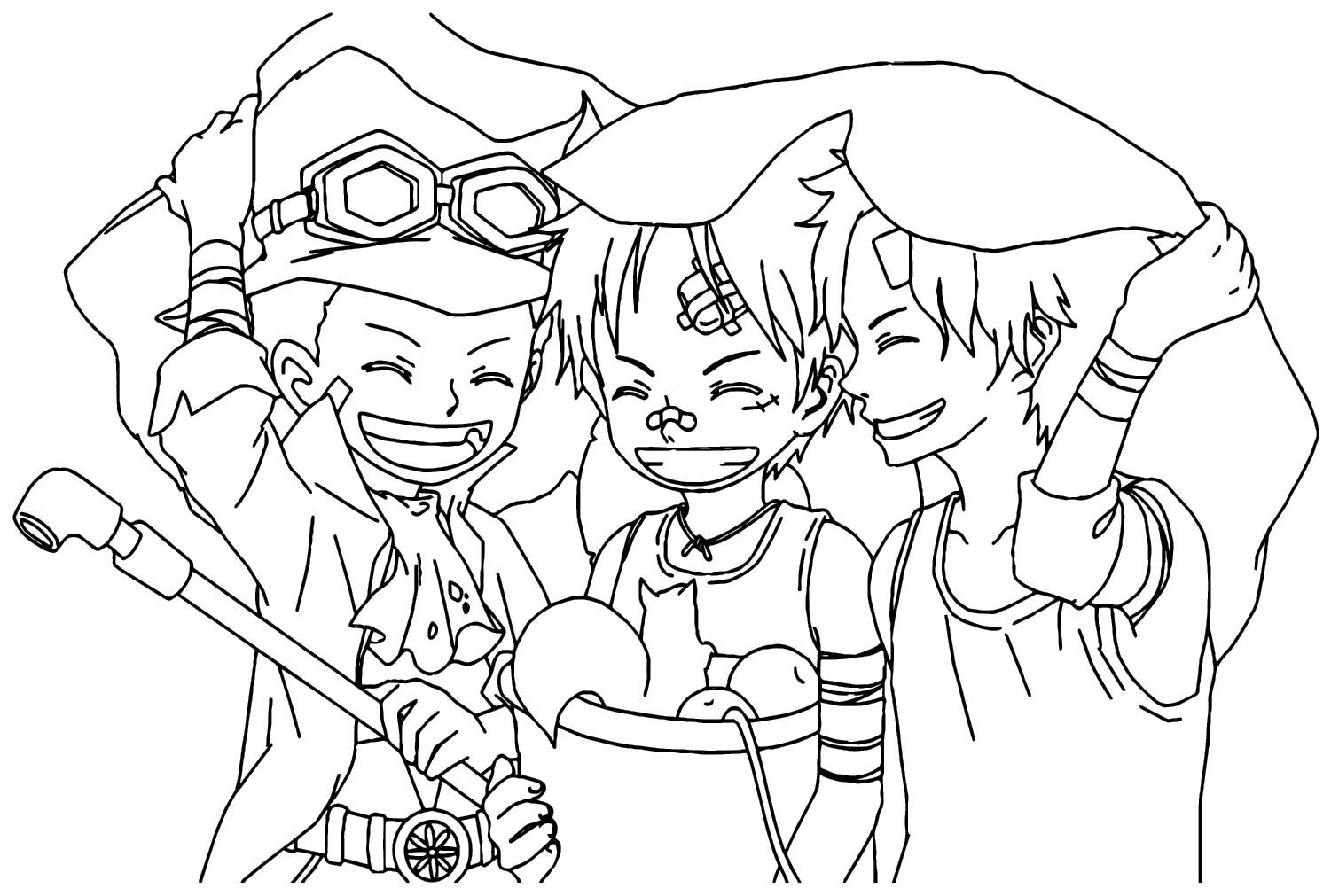
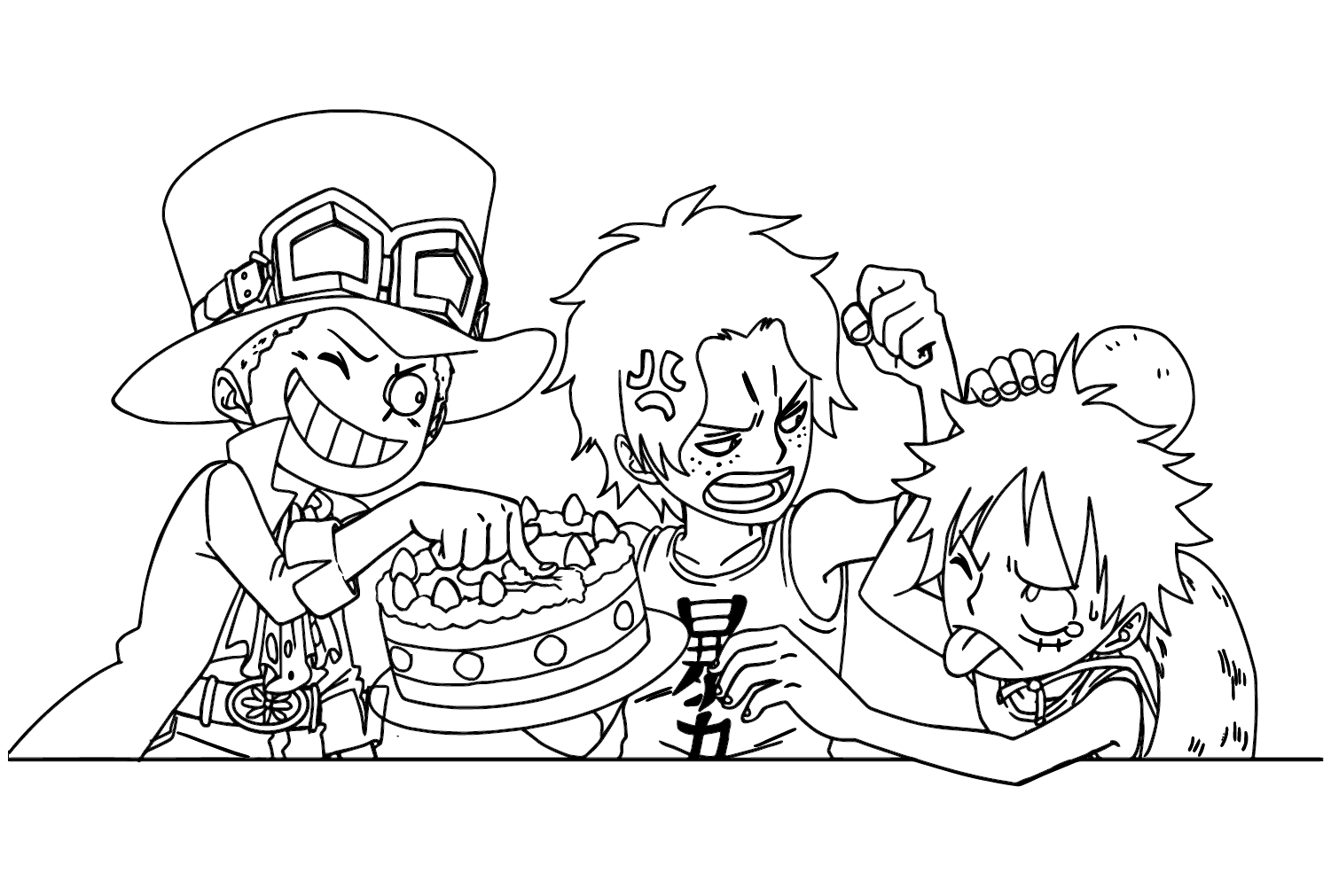
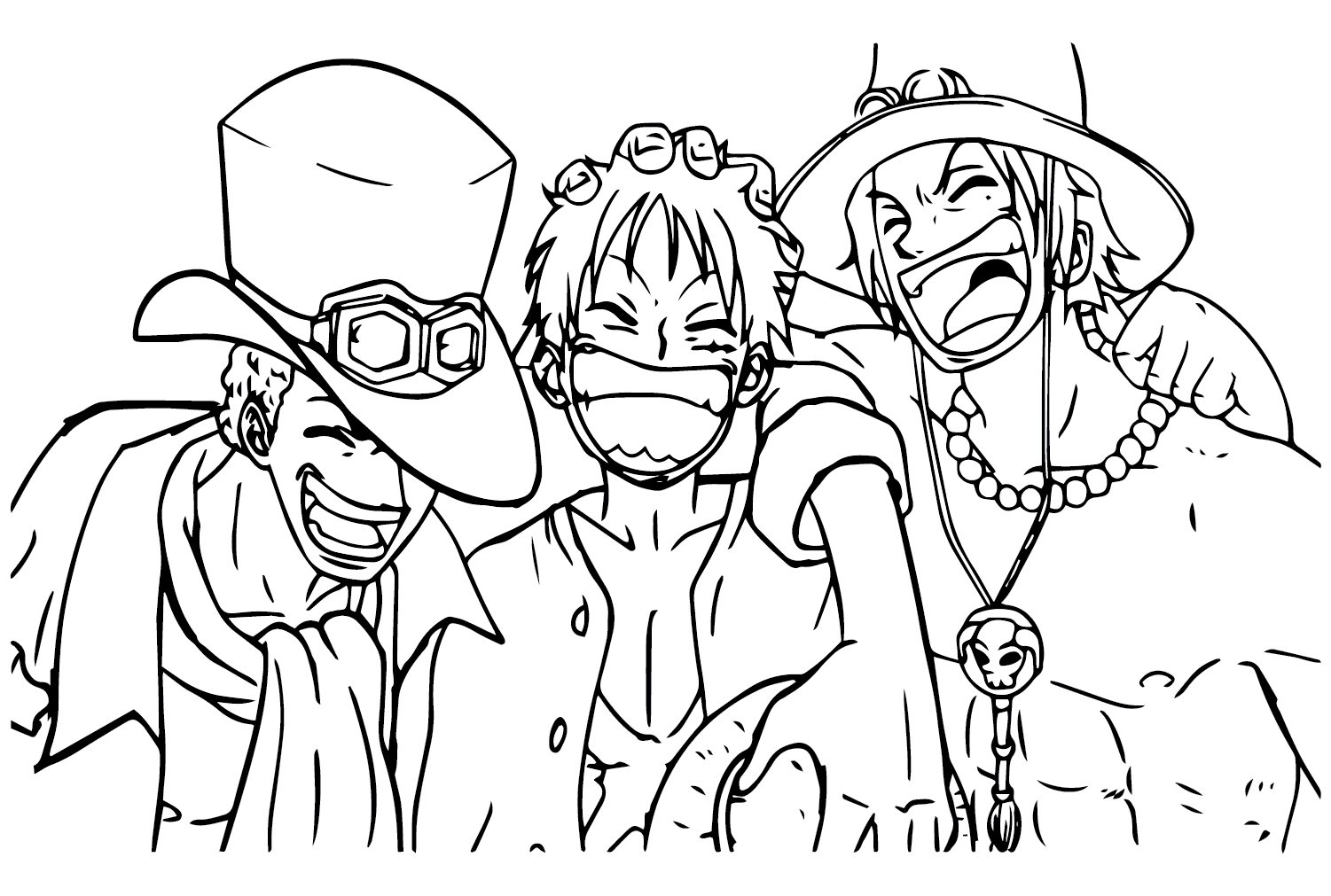
Some Luffy pages include characters closely tied to his story, such as Portgas D. Ace, Sabo, and Shanks. These designs are important because they show Luffy through relationships, not only action.
Ace and Sabo pages often feel emotional, brotherly, or story-connected. Shanks and Luffy’s pages connect to the Straw Hat and Luffy’s early dream of becoming a pirate. These pages can feel deeper than a simple solo pose because each character brings a different meaning.
Children can color Luffy first, then move to the other character, and then finish the background. This keeps the page organized and helps each person stand out.
These pages are better for older kids, anime fans, and One Piece readers who understand the characters. They can also lead to storytelling. A child can explain who is with Luffy, where they are, and what moment the page might represent.
Because these pages may include more than one character, they usually take more time than simple Luffy pages.
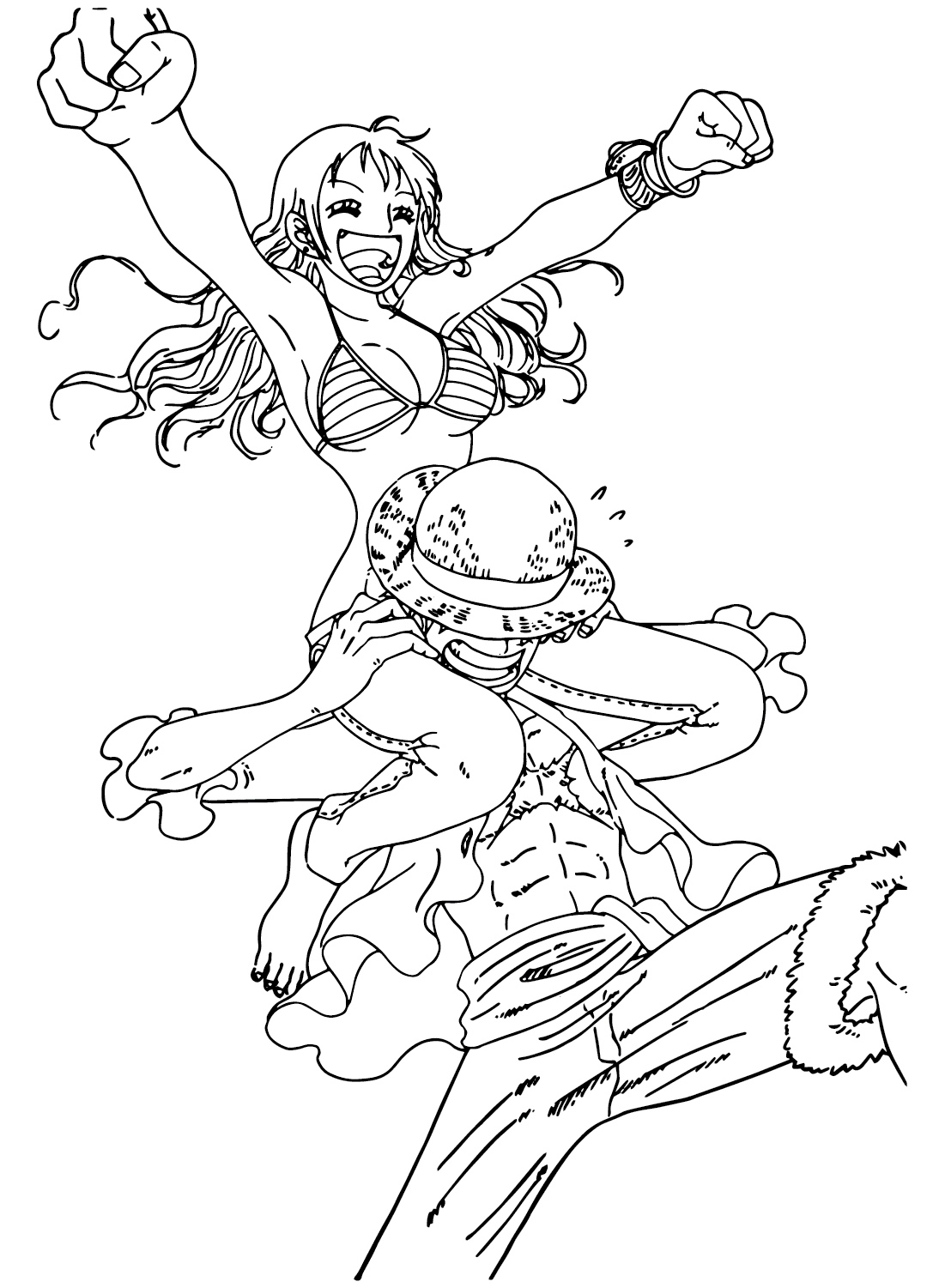
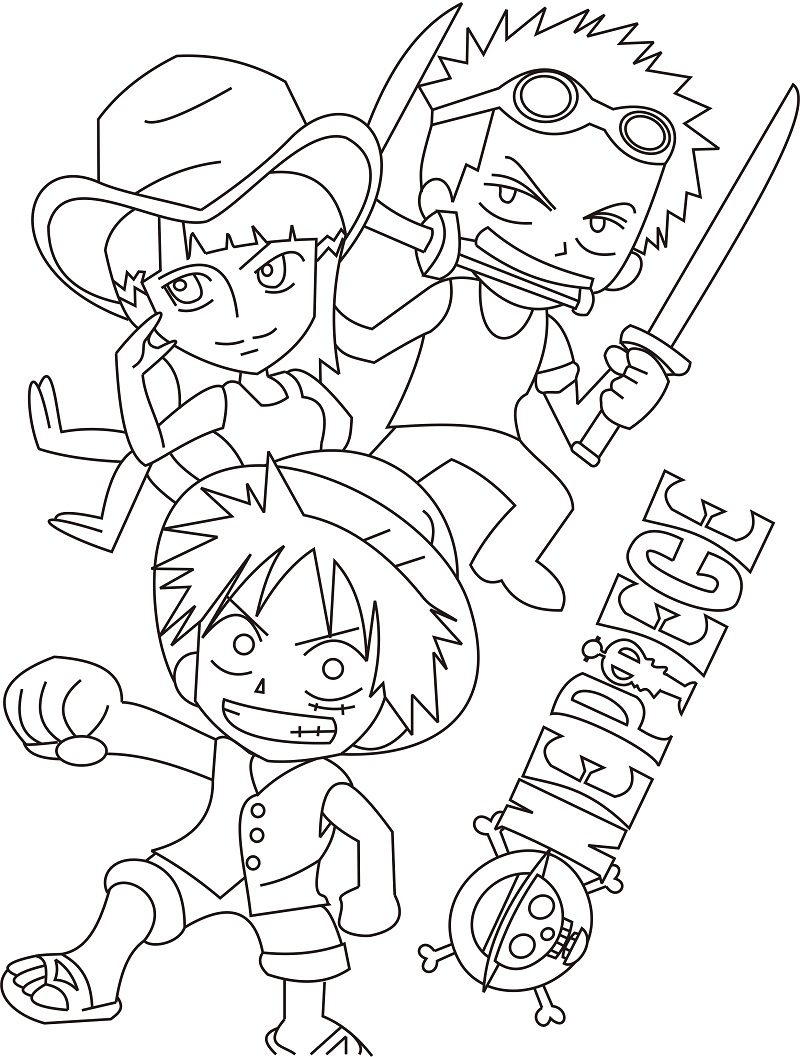
Luffy with the Straw Hat Pirates Coloring Pages
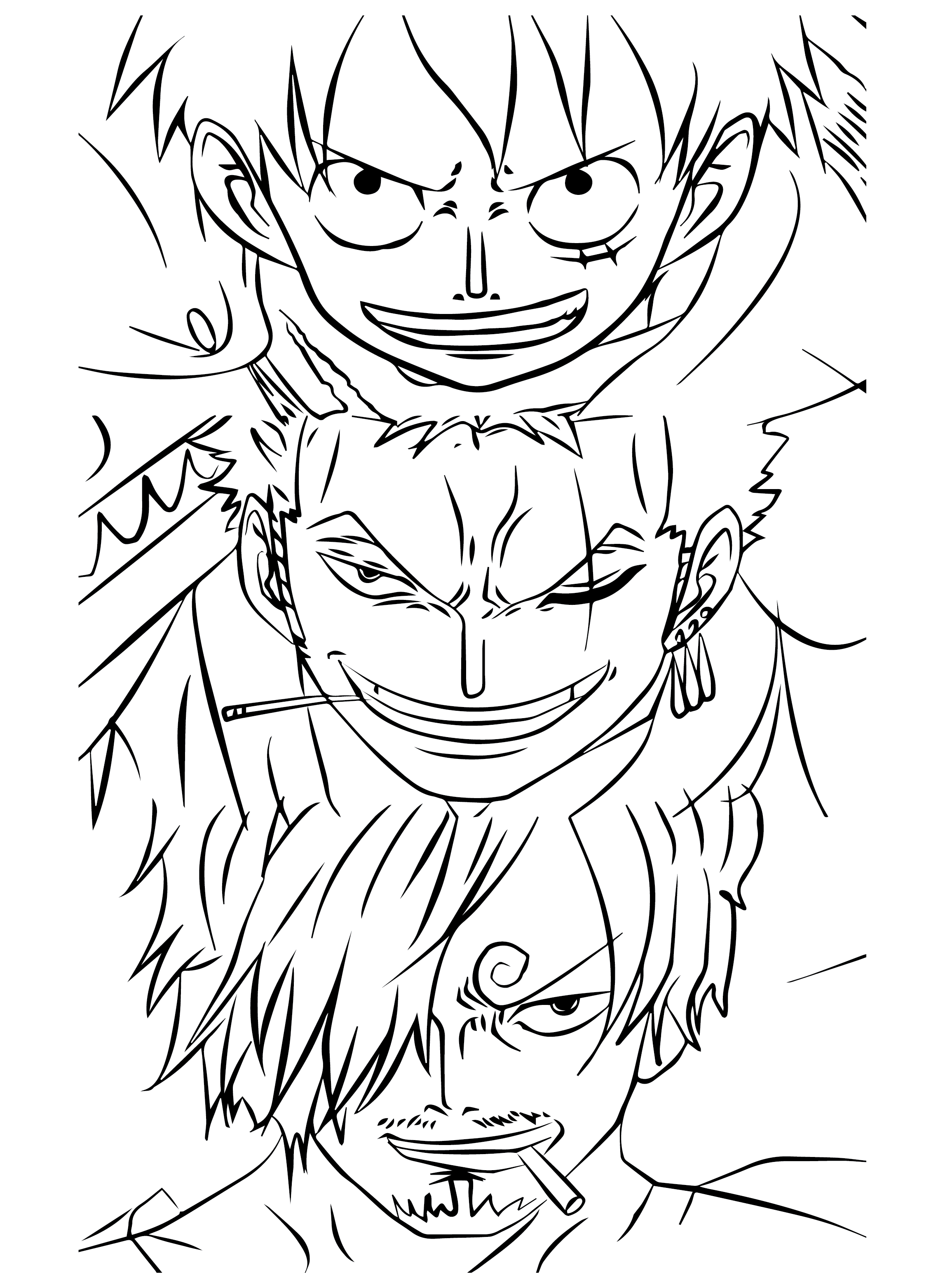
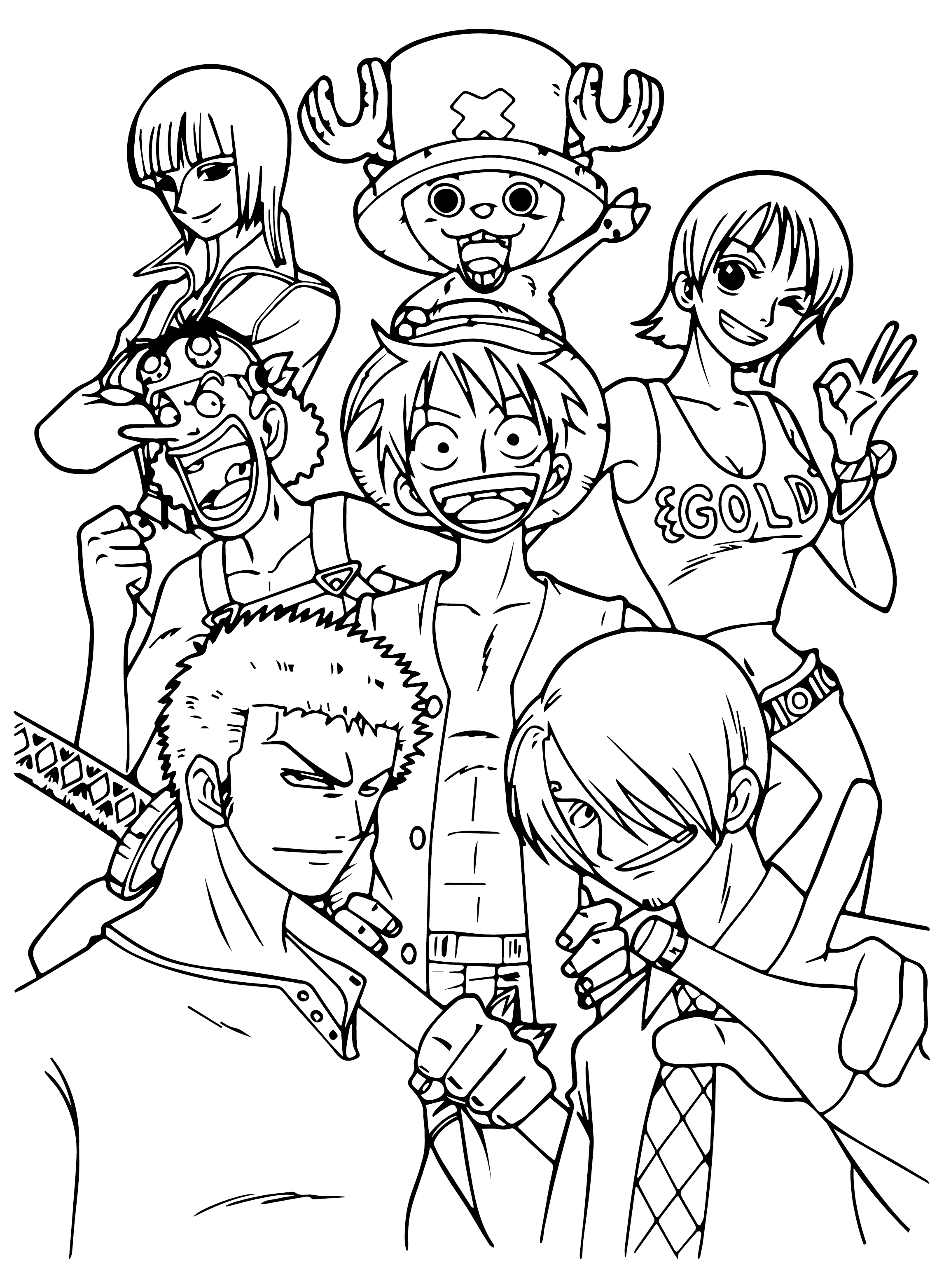
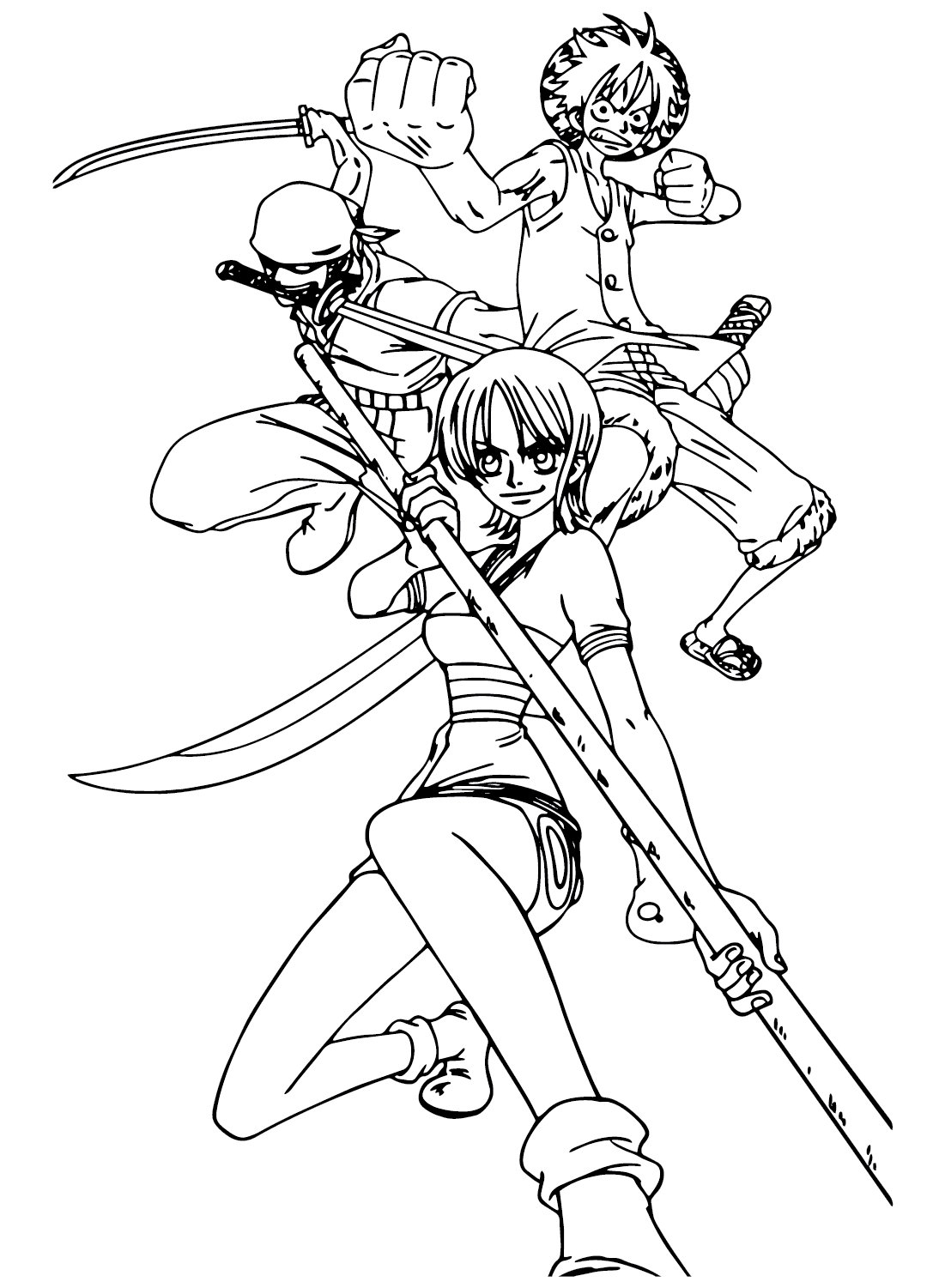
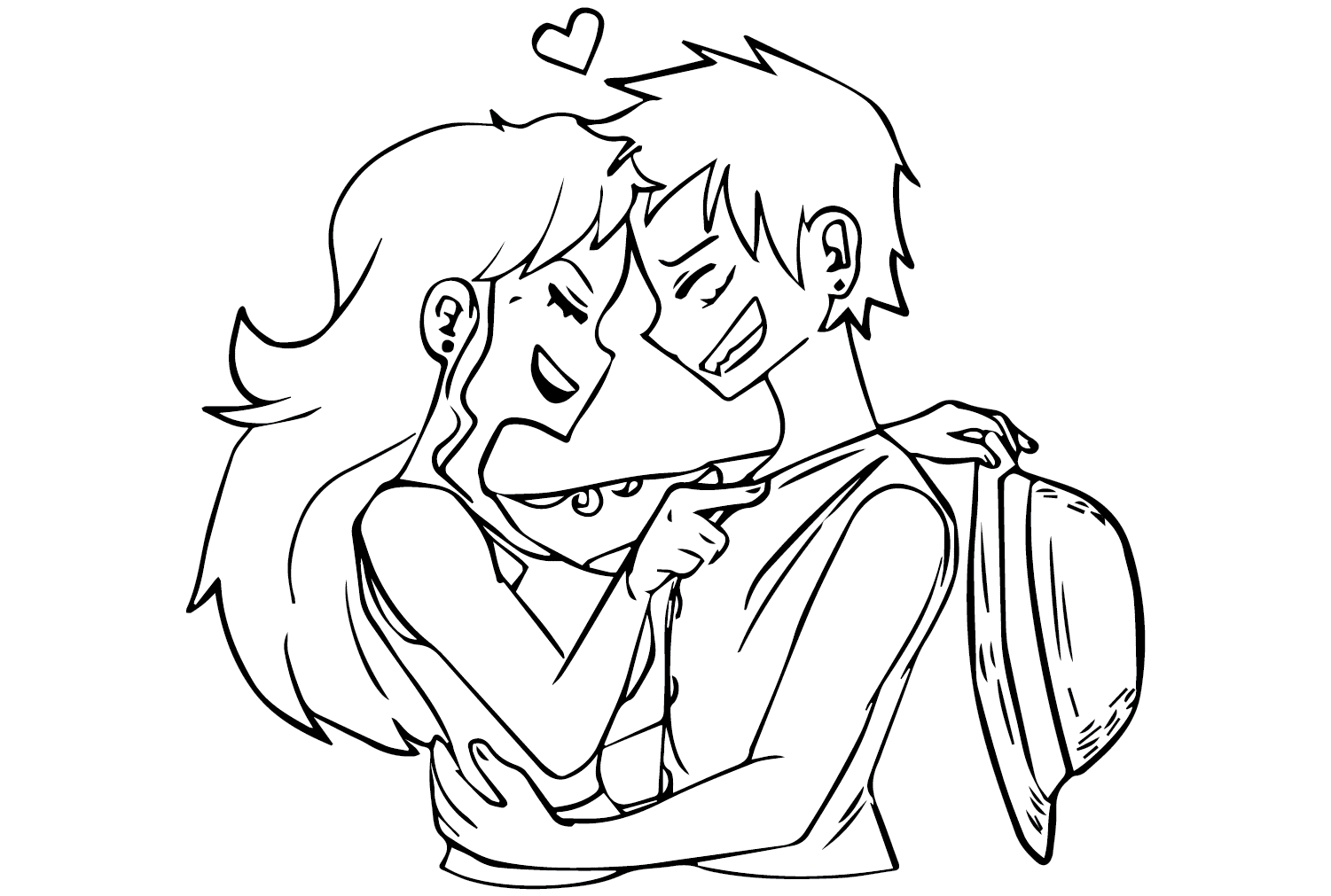
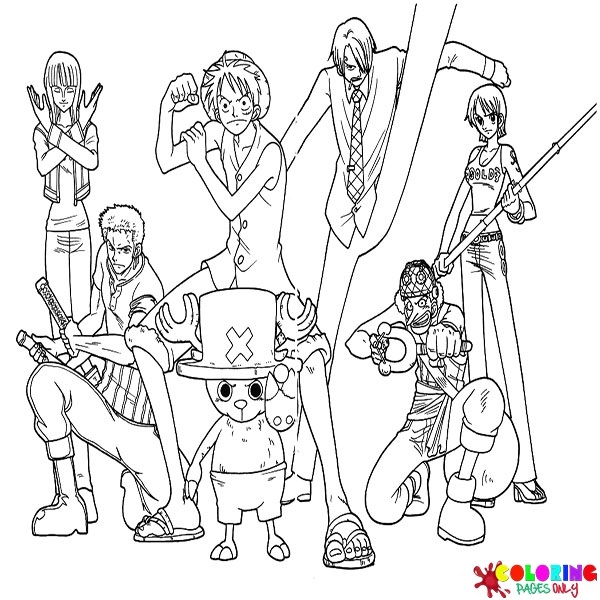
Group pages with Zoro, Sanji, Nami, Robin, and other Straw Hat Pirates give the collection a team feeling. These pages are larger and more detailed because children can color several characters together.
A group page brings variety. Luffy may appear with Zoro and Sanji, Nami and Zoro, Robin, or a larger Straw Hat crew scene. Each character has different clothing, hair, expressions, and colors, so the page gives children more choices.
The best way to finish a group page is to color one character at a time. Kids can start with Luffy, move to Zoro, Sanji, Nami, or another crew member, then finish the background last. This prevents the page from becoming confusing.
Group pages are good for older kids, siblings, friends, or classroom activities. One child can color Luffy while another colors Zoro or Sanji, making the page useful for shared coloring time.
This group also reminds kids that Luffy’s journey is not only about fighting. It is also about friendship, loyalty, adventure, and building a crew.
Detailed Luffy Coloring Pages for Older Kids and Anime Fans
Detailed Luffy pages include more clothing folds, stronger facial expressions, action lines, Gear effects, backgrounds, group characters, wanted poster frames, or story-connected scenes. These pages are better for older kids, teens, and anime fans who enjoy slower coloring.
The main challenge is planning. If every part of the page uses the same bold color, the design may look crowded. Older kids can separate Luffy, the background, action effects, and other characters with different tones.
A good order is straw hat first, face second, clothing third, action effects fourth, other characters fifth, and background last. This keeps the main character easy to read.
Colored pencils work especially well for detailed pages because they allow softer shadows and smaller highlights. Markers can make anime colors bold, but children should color carefully around the face, hands, hair, clothing lines, and special effects.
These pages can become posters, anime display art, handmade cards, or longer quiet-time projects.
What These Pages Do
Luffy coloring pages give children more than a simple anime picture to fill in. The straw hat, expressive face, pirate outfit, action poses, Gear effects, and friendship-based story moments create several useful ways for kids to practice focus, color choice, hand control, character recognition, emotional expression, and storytelling.
For younger children, a simple Luffy page offers a clear character with familiar shapes. They can start with the straw hat, move to the face, then finish the vest, shorts, arms, legs, and sandals. This step-by-step process helps kids stay with one activity long enough to complete it. Finishing a page also gives them confidence because Luffy is easy to recognize.
The mix of large and small spaces supports fine motor practice. Large areas like the hat, vest, shorts, and background are comfortable for beginners, while the face, scar, hair, fingers, sash, sandals, and action lines give older kids a gentle challenge. Coloring inside these spaces helps children practice grip, pressure, direction, and patience without making the activity feel like a formal lesson.
Luffy’s design also helps children recognize character details. His straw hat, scar, smile, vest, shorts, and energetic poses all work together to build a strong visual identity. Kids learn to notice how small details make a character recognizable. This is useful for drawing, coloring, crafts, and creative observation.
Older children can treat the page like a small character-design activity. They can decide how bright the hat should be, how strong the red vest should look, what background fits the scene, and how to separate action effects from the character. Gear-inspired pages give them even more room to think about smoke, clouds, shadows, movement, and power effects.
Expression pages help kids understand how faces can show emotion. A laughing Luffy page feels different from an angry battle pose. A sleepy chibi page feels different from a running Luffy page. Children can use color to match the mood: bright and warm for happy pages, stronger contrast for action scenes, and softer tones for calm pages.
Action and Gear pages help kids see how color can show movement. A running page can feel faster with motion lines. A stretching arm page can feel more powerful with bold shadows. A Gear 5 page can feel wild and playful when the clouds and swirls stay light around the character.
These pages also encourage storytelling. A Luffy eating meat page can become a funny crew moment. A wanted poster page can become a pirate display. A seashore page can become the start of an adventure. A Gear page can become a dramatic battle. A page with Ace, Sabo, Shanks, or the Straw Hat Pirates can become a story about friendship, family, and loyalty.
For parents, Luffy coloring pages are useful for quiet time, weekend activities, anime-themed parties, travel folders, and screen-free play. A single easy page can fill a short break, while several pages can become a full One Piece activity pack.
Teachers can use these pages for art time, indoor recess, anime club activities, creative writing, or classroom displays. Students can color a Luffy page, name the scene, and write one sentence about where he is going, what he is doing, or who is joining him.
Finished pages can also become something children feel proud of. They can hang the artwork on a wall, place it in a coloring folder, turn it into a card, use it in a classroom display, or combine several pages into a homemade Luffy coloring book.
In this way, Luffy coloring pages bring together fun, focus, hand control, color planning, emotional expression, character recognition, and imagination. Each page gives children a clear anime character to color, but still leaves enough room for their own ideas.
How to Color These Pages Well
Luffy’s pages look best when his main features stay clear. Use yellow or straw tones for the hat, black or dark brown for the hair, warm skin tones for the face and body, red for the vest, blue for the shorts, and brown or tan for sandals. The colors do not need to be perfect, but the straw hat and face should be easy to recognize.
Start with the straw hat. It is usually the most important part of the page. Color the top and brim first, then move to the face, hair, vest, shorts, and sandals. This helps children build character in a simple order.
For smiling and laughing pages, keep the face clean. A little shading around the hair, under the hat, or near the mouth can make the expression stronger. Bright background colors can make happy Luffy pages feel more playful.
For chibi and baby Luffy pages, simple colors work best. Younger kids do not need heavy shading. A clear hat, red vest, blue shorts, and soft background are enough to make the page feel complete.
For action pages, color Luffy first and the movement effects second. Motion lines, smoke, dust, clouds, and background details should not become darker than the character. Softer background colors help Luffy stay in front.
For Gear-inspired pages, keep power effects light and readable. White, pale blue, light gray, soft purple, or gentle shadow colors can help smoke, clouds, and energy effects stand out without making the page too crowded.
For Wano outfit or pirate captain pages, focus on clothing details. Use deeper colors for capes, sashes, belts, or sword details. Gray and silver work well for metal parts, while warm tones can make the outfit feel adventurous.
For wanted poster pages, use tan, beige, or light brown for the poster background. Luffy should stay brighter than the paper, so the character stands out.
For group pages, color one character at a time. Finish Luffy first, then move to Ace, Sabo, Shanks, Zoro, Sanji, Nami, or the rest of the crew. Save the background for last so the page stays organized.
Younger children can use crayons for large spaces and simple pages. Older kids may prefer colored pencils for facial details, clothing folds, Gear effects, and group scenes. Markers can create bold anime colors, but it is better to place a blank sheet underneath if the paper is thin.
5 Creative Craft Ideas
Luffy Straw Hat Poster
Choose a classic Straw Hat Luffy page or a smiling Luffy portrait. After coloring, glue the finished page onto a larger sheet of paper.
Kids can add a title such as “Straw Hat Adventure,” “Future Pirate King,” or “Luffy’s Next Journey.” They can also draw waves, clouds, stars, pirate flags, or small treasure details around the page.
This craft turns a simple coloring sheet into a finished anime poster for a bedroom, classroom display, anime club, or One Piece-themed activity.
Design a New Pirate Outfit for Luffy
Print a simple Luffy standing page or pirate captain pose. After coloring the base character, kids can draw extra outfit details around him.
They can add a new cape, belt, boots, sash, pirate badge, treasure map, or custom Jolly Roger symbol. Then they can name the outfit and write one sentence about what adventure it is for.
This activity connects coloring with costume design and imagination while still keeping Luffy as the main character.
Luffy Wanted Poster Craft
Choose a Monkey D. Luffy wanted poster page. After coloring, cut it out or glue the full page onto a larger sheet.
Kids can color the border with tan, beige, or parchment tones, then add small cracks, map lines, stars, waves, or pirate symbols. They can also create a custom title or add a pretend bounty number for fun.
This craft works well for pirate-themed parties, One Piece displays, classroom boards, or anime folders.
One Piece Crew Display
Choose a Luffy page and combine it with other One Piece character pages. Kids can color Luffy, Zoro, Sanji, Nami, Ace, Sabo, Shanks, or other related characters, then place the finished pages together on a wall or board.
This creates a simple One Piece crew display. Each child can color a different character, which makes the activity useful for siblings, friends, classrooms, or anime club groups.
The finished display can show friendship, teamwork, different personalities, and different color styles.
Luffy Adventure Story Page
Choose any Luffy page with a standing pose, eating scene, running pose, Gear form, wanted poster, seashore background, or group scene. After coloring, place the page on a larger sheet and add a story box below it.
Kids can answer simple questions: Where is Luffy going? Who is with him? What is he looking for? What is the adventure? What happens next?
This turns the coloring page into a short writing activity for home, homeschool, classroom use, or anime club projects.
Frequently Asked Questions
Are Luffy coloring pages good for young children?
Yes. Simple Luffy pages with one large character, clear outlines, smiling faces, chibi designs, baby Luffy, and easy standing poses work well for younger children. These pages are easier to finish and usually have fewer tiny details.
What colors should I use for Luffy?
Classic Luffy colors include a yellow straw hat, black hair, red vest, blue shorts, warm skin tones, and brown or tan sandals. Gear-inspired or Wano-style pages may use additional colors for smoke, clouds, sashes, capes, and action effects.
Which Luffy pages are best for older kids and anime fans?
Older kids may enjoy Gear 2, Gear 3, Gear 4, Gear 5, Wano outfit pages, battle-ready Luffy, wanted posters, Film Red pages, and group pages with Ace, Sabo, Shanks, Zoro, Sanji, or the Straw Hat Pirates. These pages offer more room for shading, movement, and detail.
Do kids need to know One Piece to enjoy these pages?
No. Many kids enjoy Luffy because the straw hat, smile, pirate outfit, and action poses are easy to recognize. Even without knowing the full story, they can still enjoy coloring a fun anime pirate character.
Are there easy Luffy coloring pages for beginners?
Yes. Easy Luffy standing pages, smiling portraits, cute Luffy, chibi Luffy, baby Luffy, and simple face pages are good choices for beginners. They have clear shapes and are less difficult than Gear or group pages.
Are Gear 5 Luffy coloring pages included?
Yes. This collection includes Gear-inspired Luffy pages, including Gear 5-style designs with laughing expressions, swirling clouds, and stronger anime effects. These pages are usually better for older kids and fans who enjoy dramatic One Piece artwork.
Can Luffy coloring pages be used in classrooms?
Yes. Teachers can use them for art time, indoor recess, anime club activities, creative writing prompts, or display boards. Students can color a Luffy page and write one sentence about his adventure, crew, or next mission.
What paper and coloring tools work best?
Regular printer paper works well for crayons and colored pencils. If kids use markers, place a blank sheet underneath to prevent bleed-through. Thicker paper is better for posters, cards, wanted poster crafts, or display projects.
Can finished Luffy pages become crafts?
Yes. Finished pages can become posters, wanted posters, anime cards, classroom displays, story pages, wall art, or a homemade Luffy coloring book. Kids can also add pirate flags, waves, treasure maps, speech bubbles, or crew symbols after coloring.
Can kids color Luffy in different colors?
Yes. Kids can create their own version of Luffy. They can design a new pirate outfit, a rainbow hat, a special adventure costume, or a custom crew style. The page will still feel like Luffy if the straw hat, face, and pirate look stay clear.
Choose your favorite Luffy coloring page, print it at home, or color online anytime. When your pirate adventure page is finished, share it on Facebook or Pinterest and tag #Coloringpagesonly.
More from Our One Piece Coloring Pages
If your kids enjoy Luffy Coloring Pages, they may also like One Piece Coloring Pages for a wider mix of pirate characters and scenes, One Piece Characters Coloring Pages for a broader cast-focused gallery, and Roronoa Zoro Coloring Pages for another Straw Hat favorite. Fans can also explore Portgas D. Ace Coloring Pages for one of Luffy’s most important bonds, Sabo Coloring Pages for another key story connection, Shanks Coloring Pages for the pirate who inspired Luffy’s path, and One Piece Film Red Coloring Pages for movie-related designs.