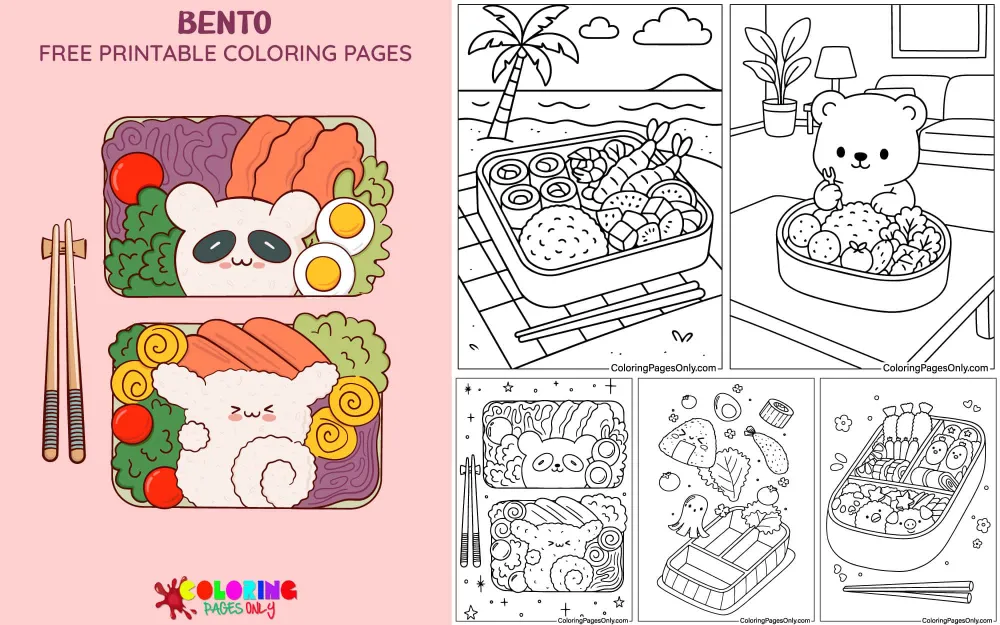
Free Whimsical Bento Coloring Pages: 30+ pages featuring cute bento boxes, animal rice balls, smiling sushi, kawaii lunch characters, panda bento bowls, sleeping cat lunches, bunny bento designs, red panda lunch boxes, stacked bento meals, picnic bentos, kitchen bento scenes, family lunch boxes, office bentos, beach bentos, rainy day bentos, Christmas bentos, and storybook-style food arrangements. All free, printable PDFs and online coloring pages are ready for home, classroom, food culture lessons, lunchbox activities, kawaii art practice, pretend café play, and relaxing creative time.
A bento is a Japanese-style packed meal, usually arranged in a box with separate spaces for rice, vegetables, protein, fruit, and small side dishes. A whimsical bento takes that idea into a more playful world: rice can become a panda face, sushi can smile, an egg can turn into a tiny sunshine, and vegetables can become flowers, stars, borders, or animal details. Japan’s broader food culture, known as washoku, was added to UNESCO’s Representative List of the Intangible Cultural Heritage of Humanity in 2013, and bento shares many visual values often associated with Japanese food presentation: balance, seasonality, arrangement, and care.
This collection gives younger colorists simple animal faces, big lunchbox shapes, smiling rice balls, and cute sushi characters. At the same time, older children, teens, and adults can work on compartmented bento boxes, detailed sushi rolls, picnic settings, tea scenes, kitchen layouts, seasonal bentos, and kawaii food arrangements. These 30+ free pages at ColoringPagesOnly.com cover animal-shaped rice balls, sushi smiles, cute lunch boxes, family meals, picnic bentos, food characters, and whimsical Japanese-inspired bento designs. All free, PDF or PNG, print or color online.
![A bento box with rice, a bunny-shaped food item, heart and flower decorations, and a note that says "I [heart] YOU". from Whimsical Bento](https://coloringpagesonly.com/wp-content/uploads/2025/07/I-Love-You-Bento-Box.jpg "I Love You Bento Box")
What’s Inside
Kawaii Bento Boxes and Cute Lunch Characters
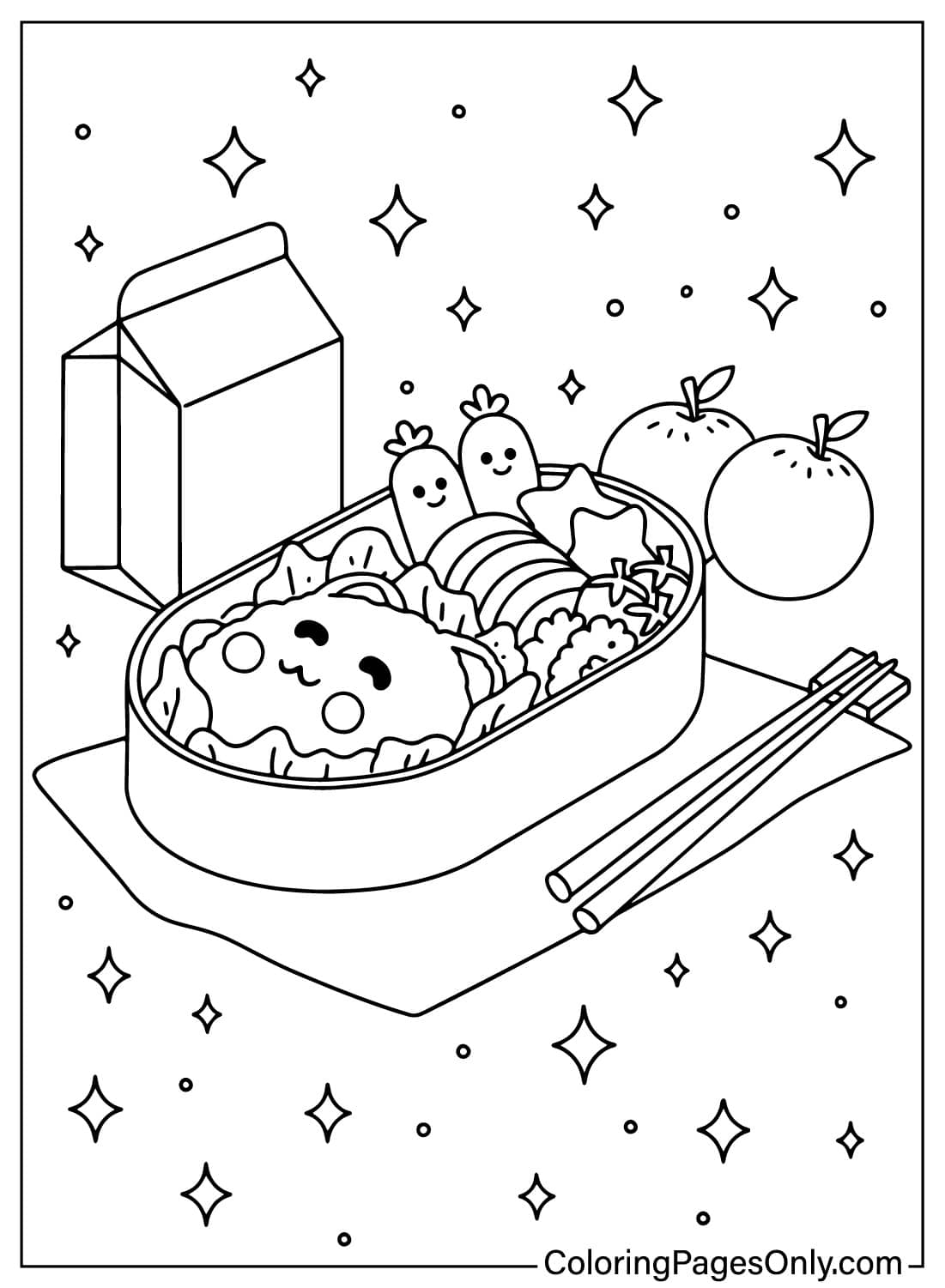
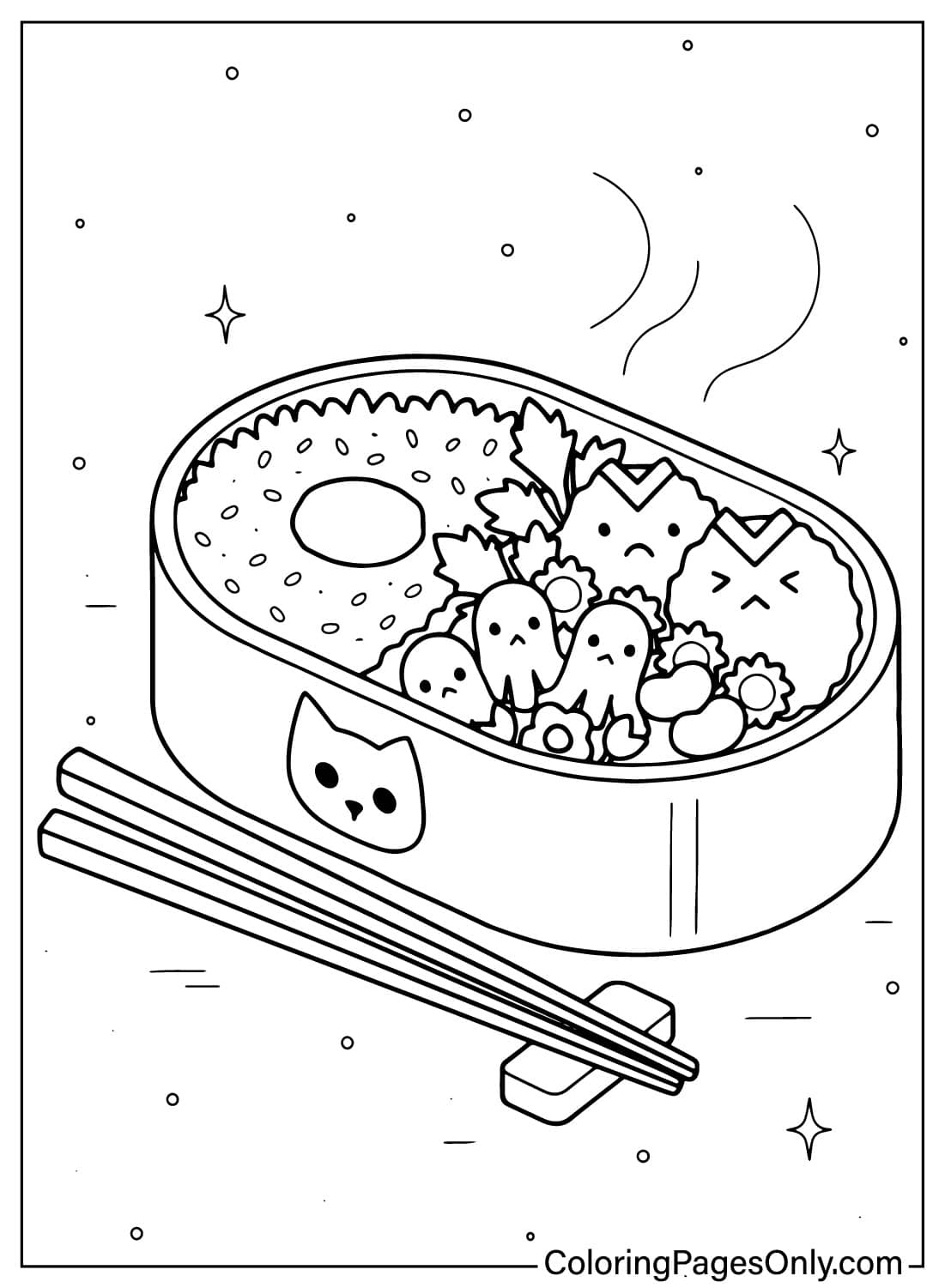
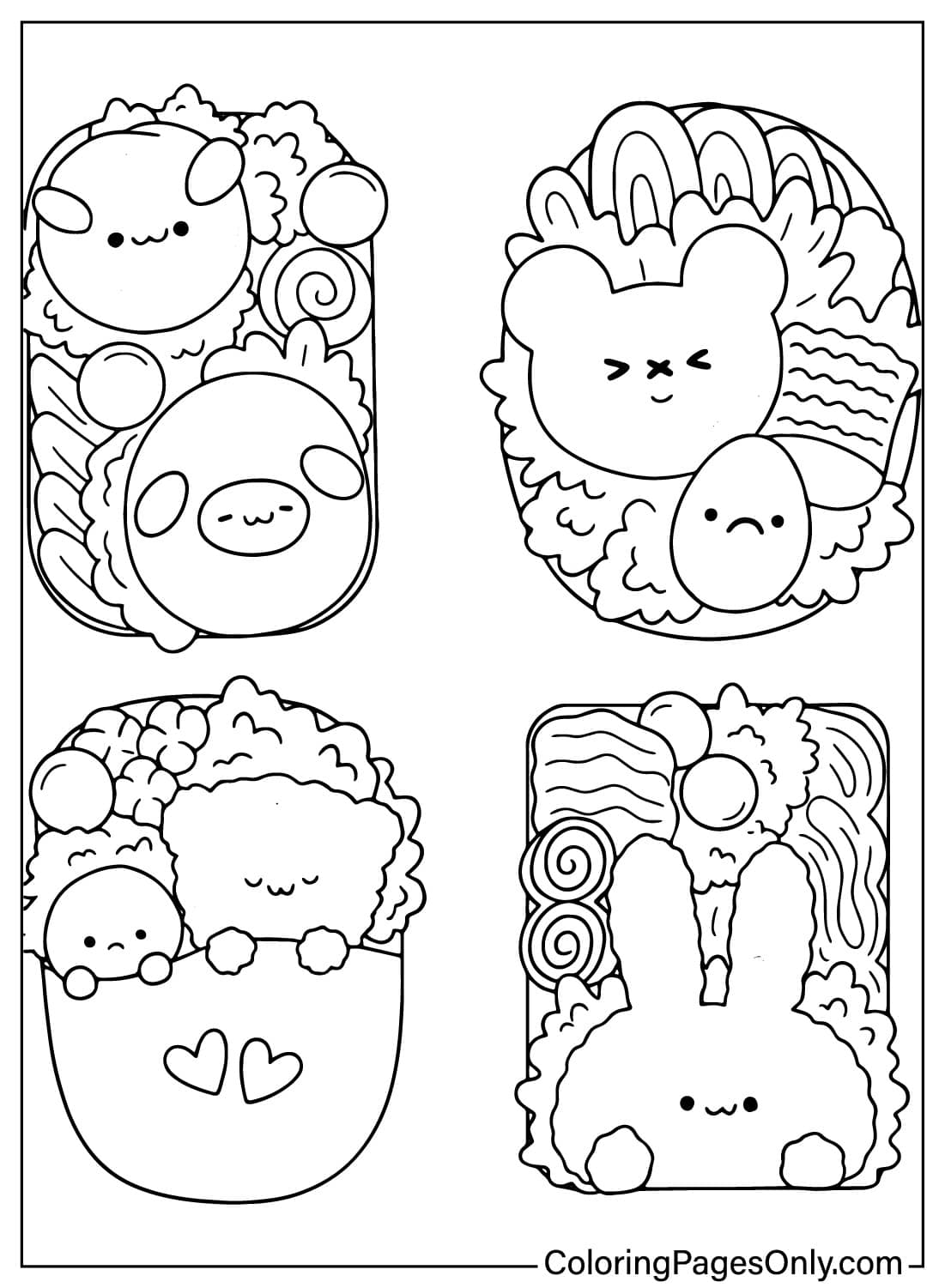
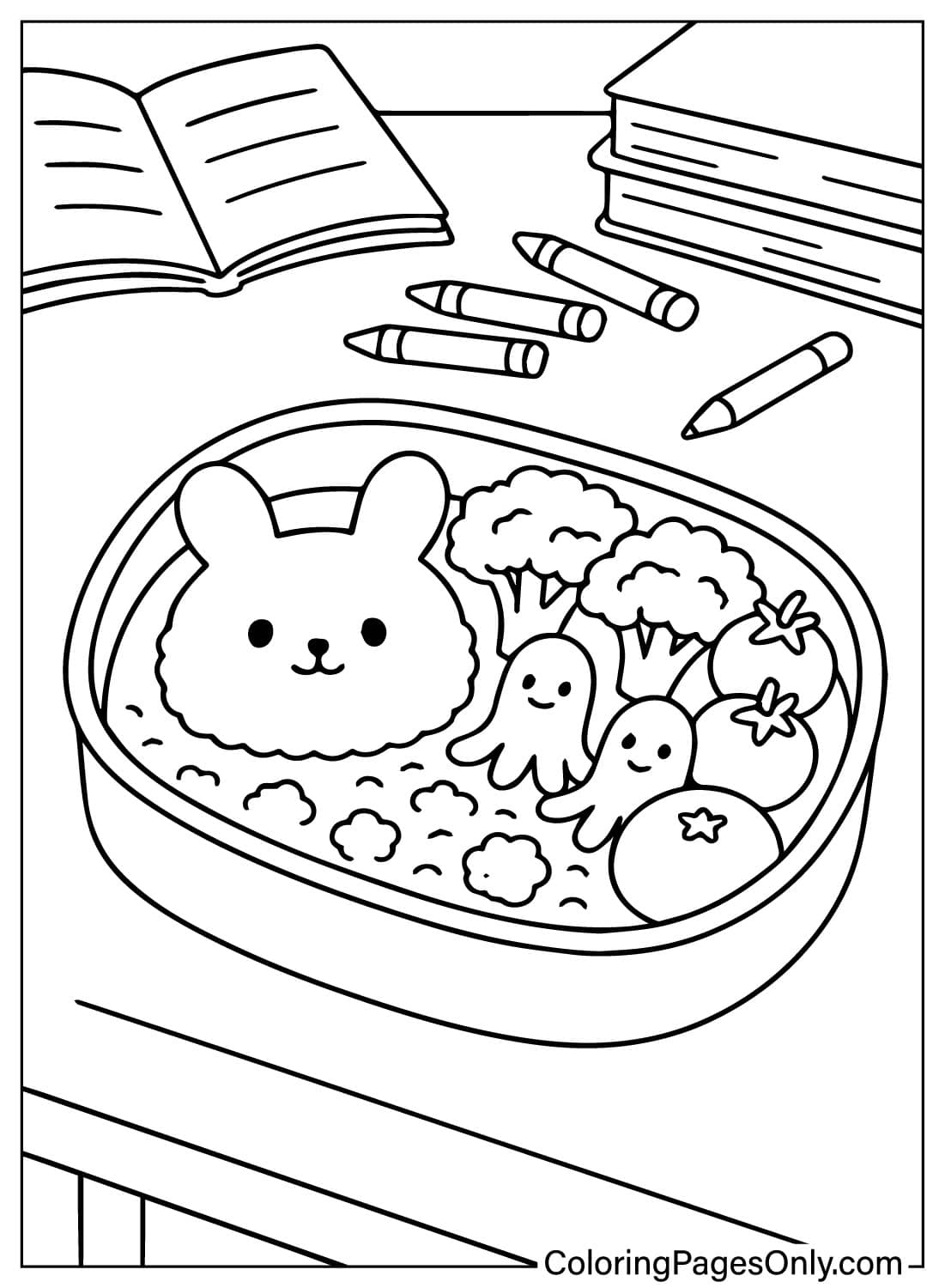
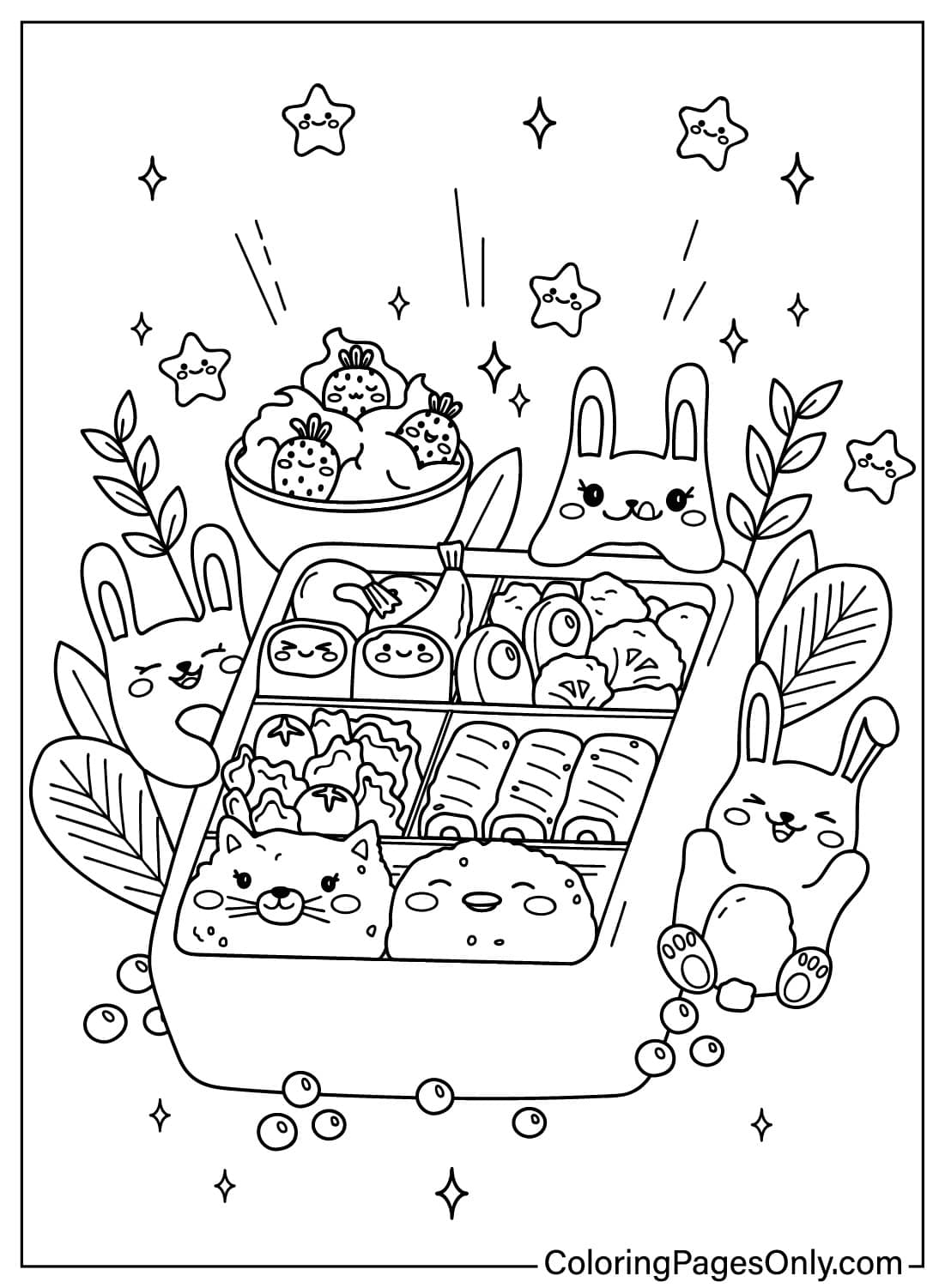
This group brings together the softest, friendliest pages in the collection: smiling rice balls, happy sushi rolls, tiny food faces, heart shapes, rounded lunch boxes, and cute compartment designs. The shapes are simple enough for younger children, but the small expressions still give each page personality. A tiny smile on a rice ball, a blush mark on a sushi roll, or a little flower beside an egg can turn the whole lunchbox into a character scene.
Coloring kawaii bento characters: Use rice white, seaweed black, blush pink, egg yellow, carrot orange, cucumber green, strawberry red, and butter yellow for a cheerful palette. Keep the face areas clean by coloring around the eyes, the mouth, and the cheek circles slowly. The common mistake is making the rice too grey; leave most rice areas white and use pale cream or very light blue-grey only for soft shadows.
Animal Bento Designs
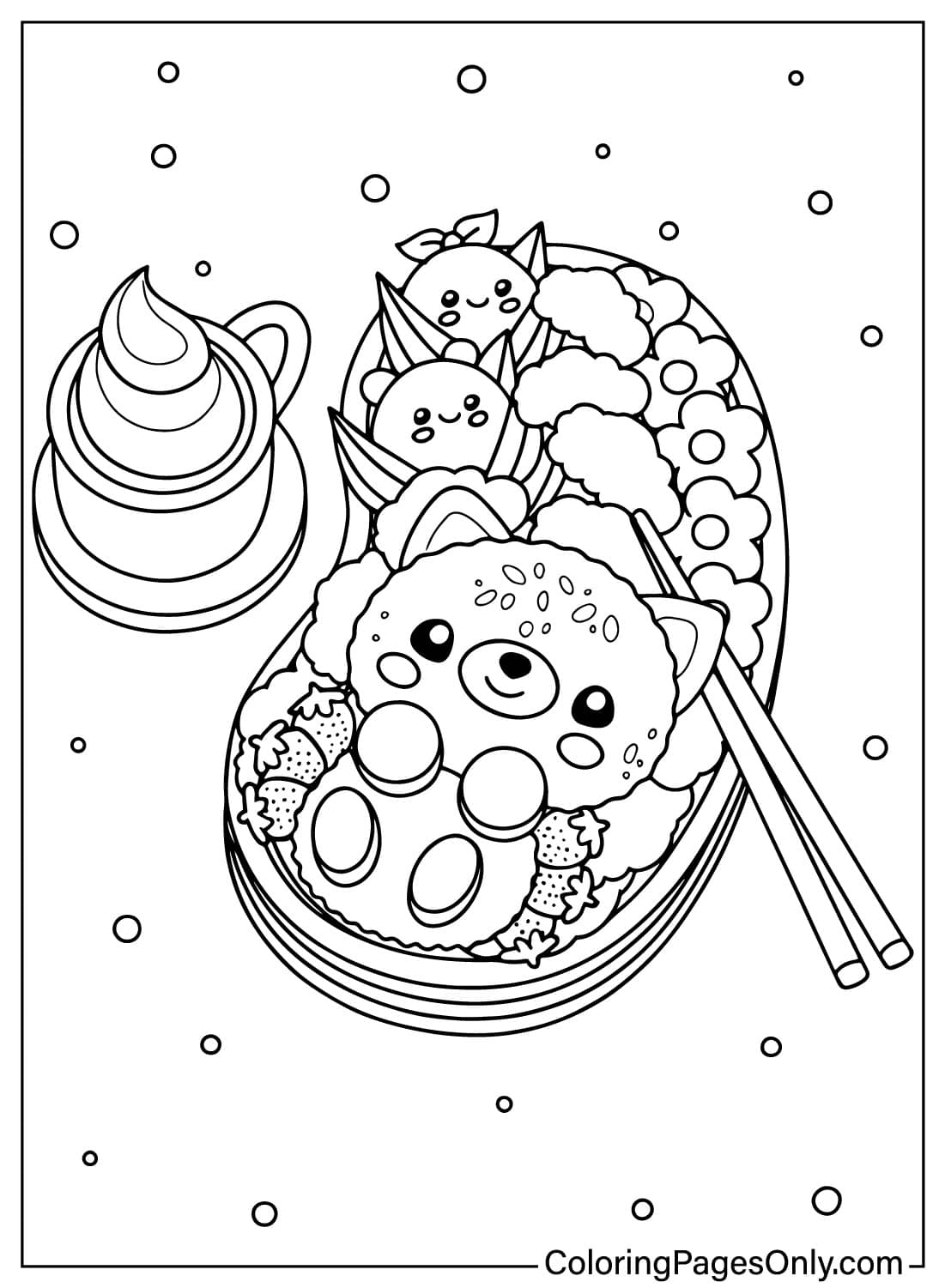
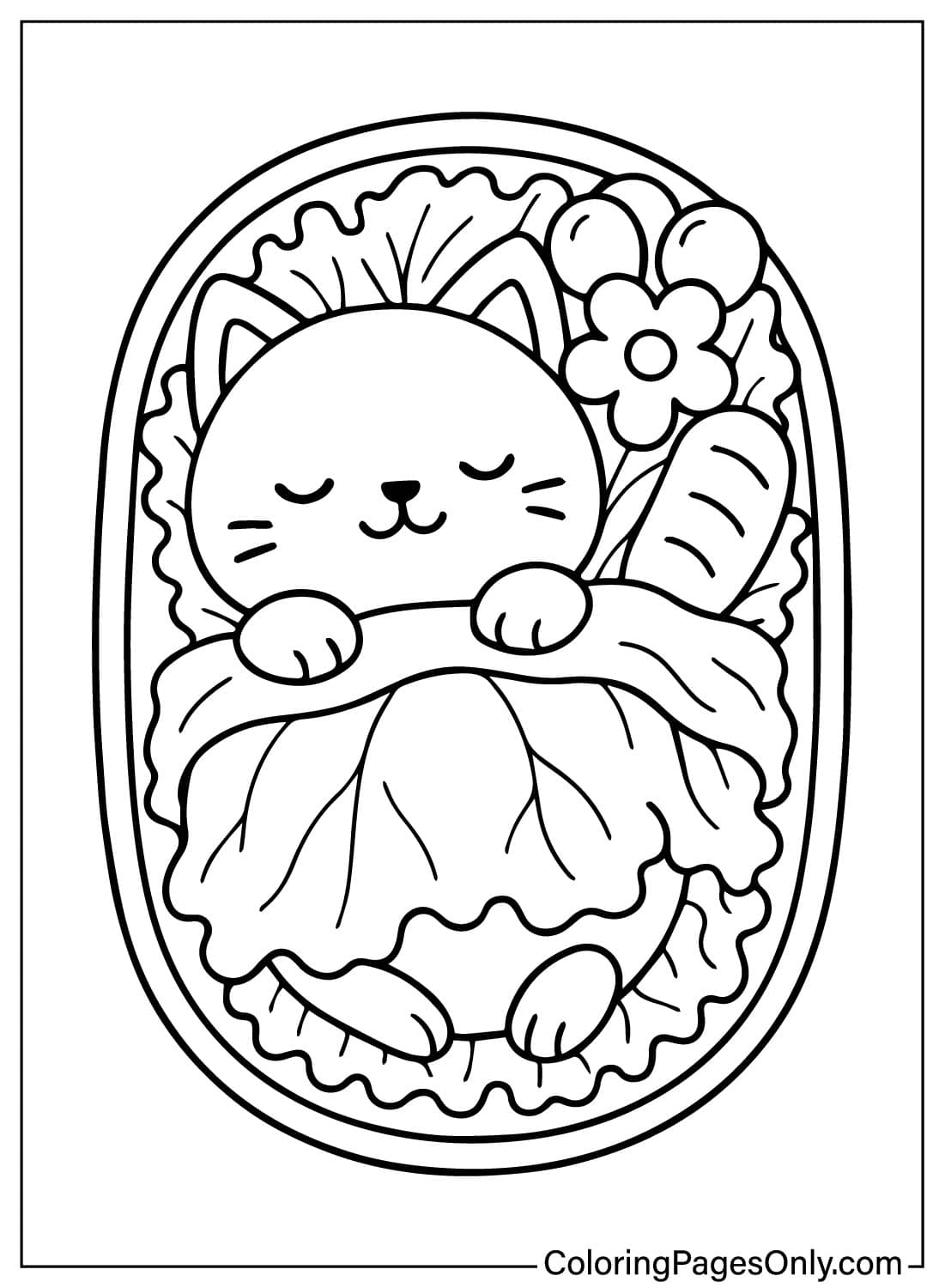
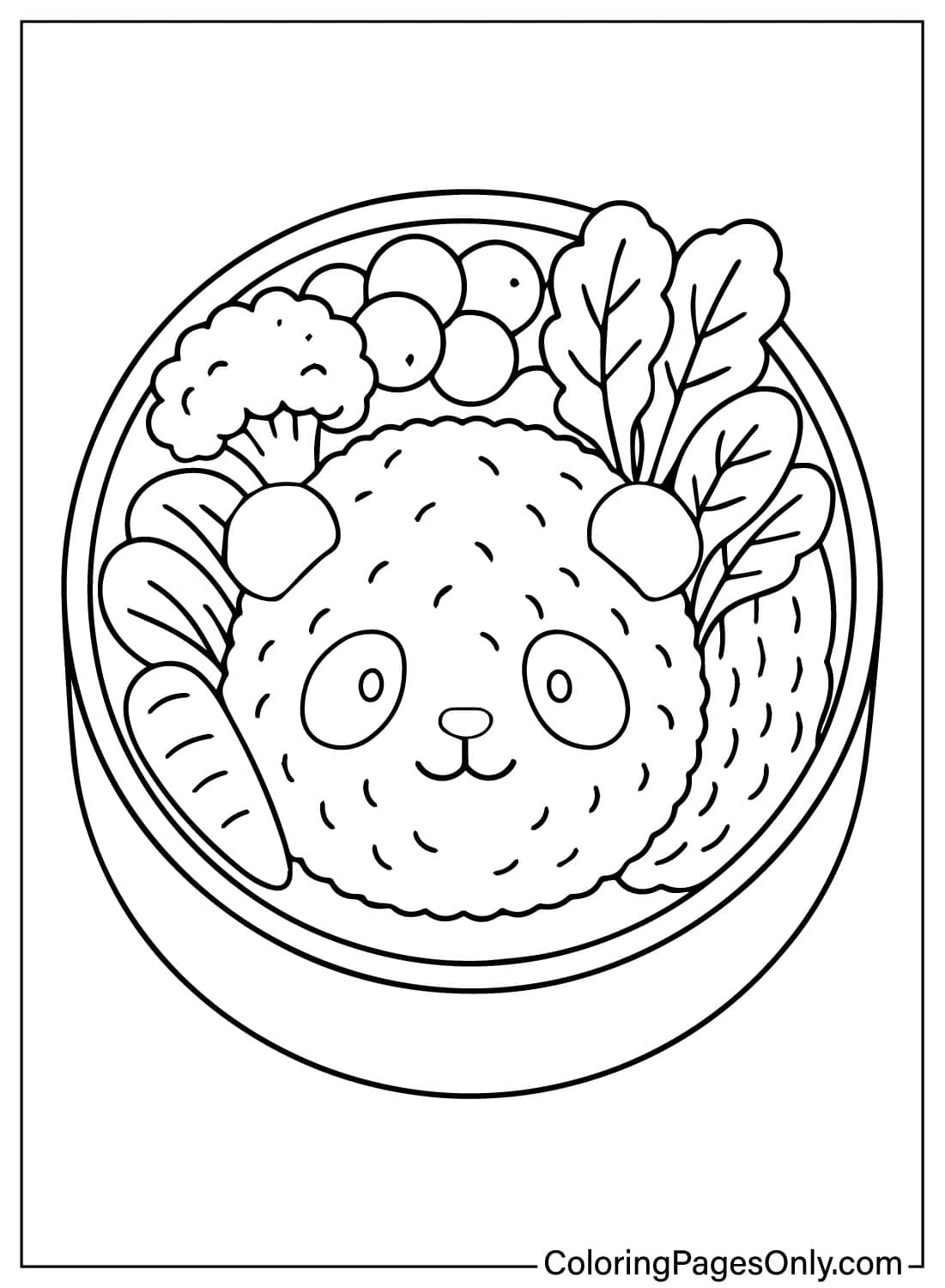
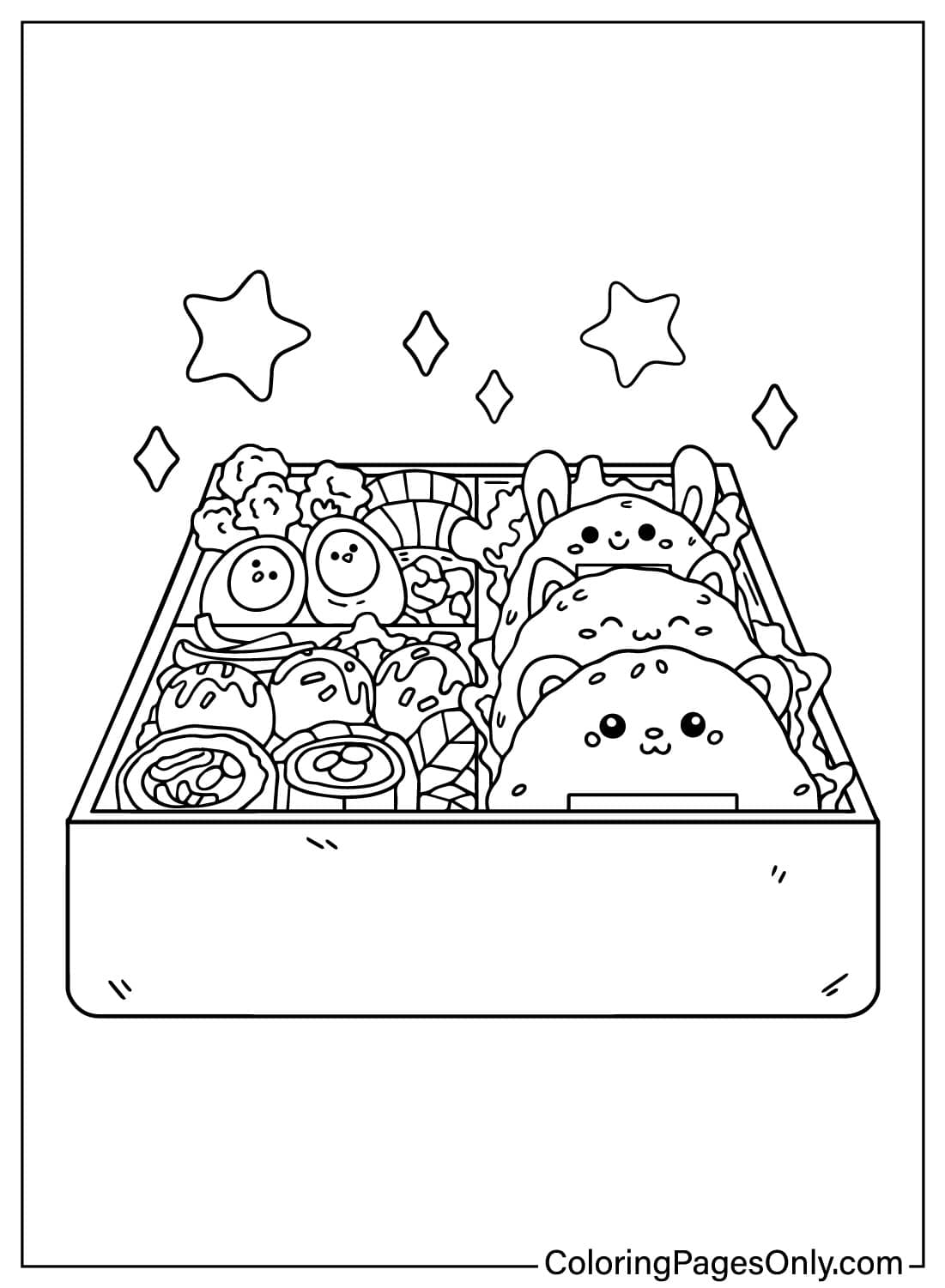
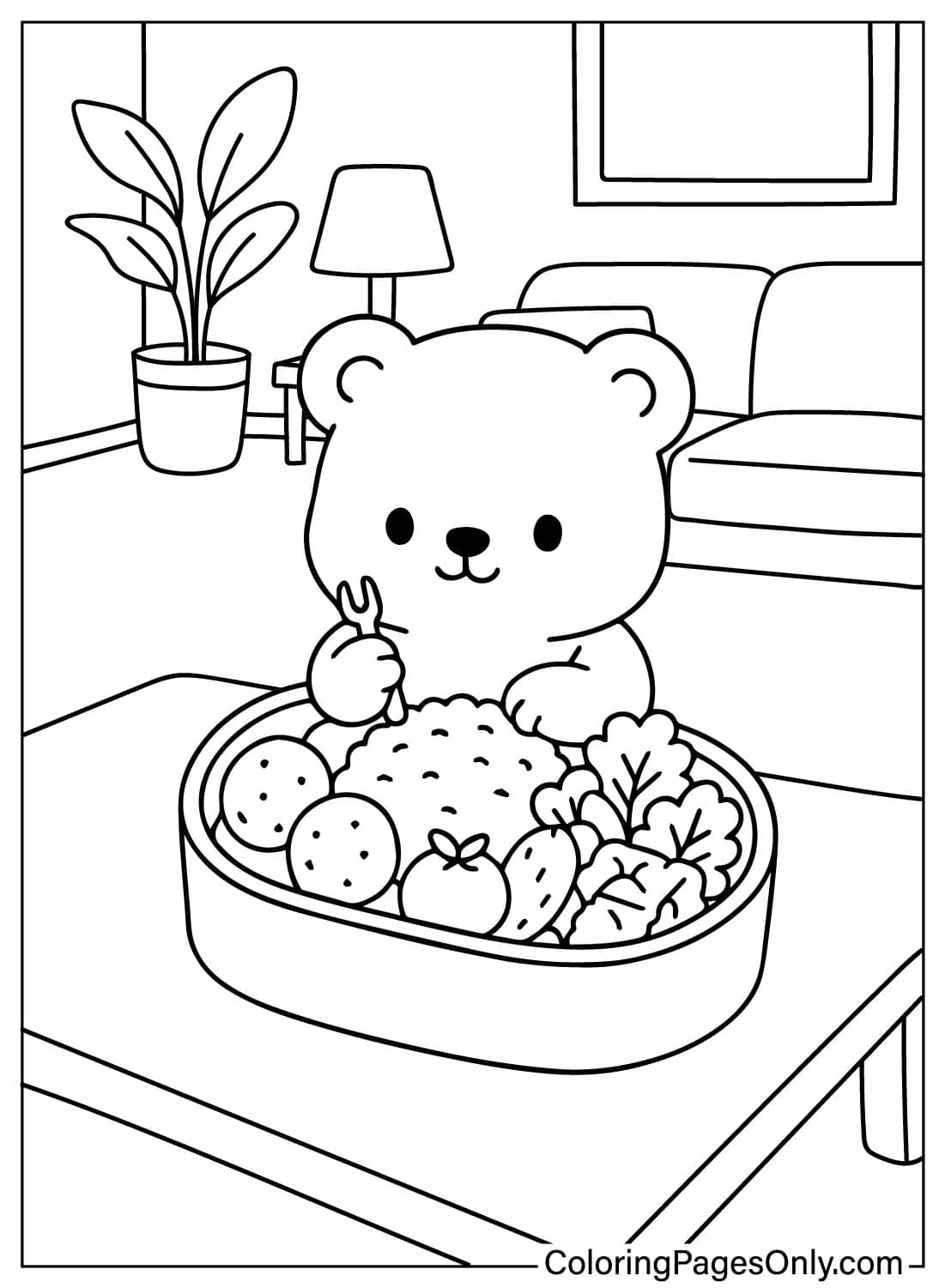
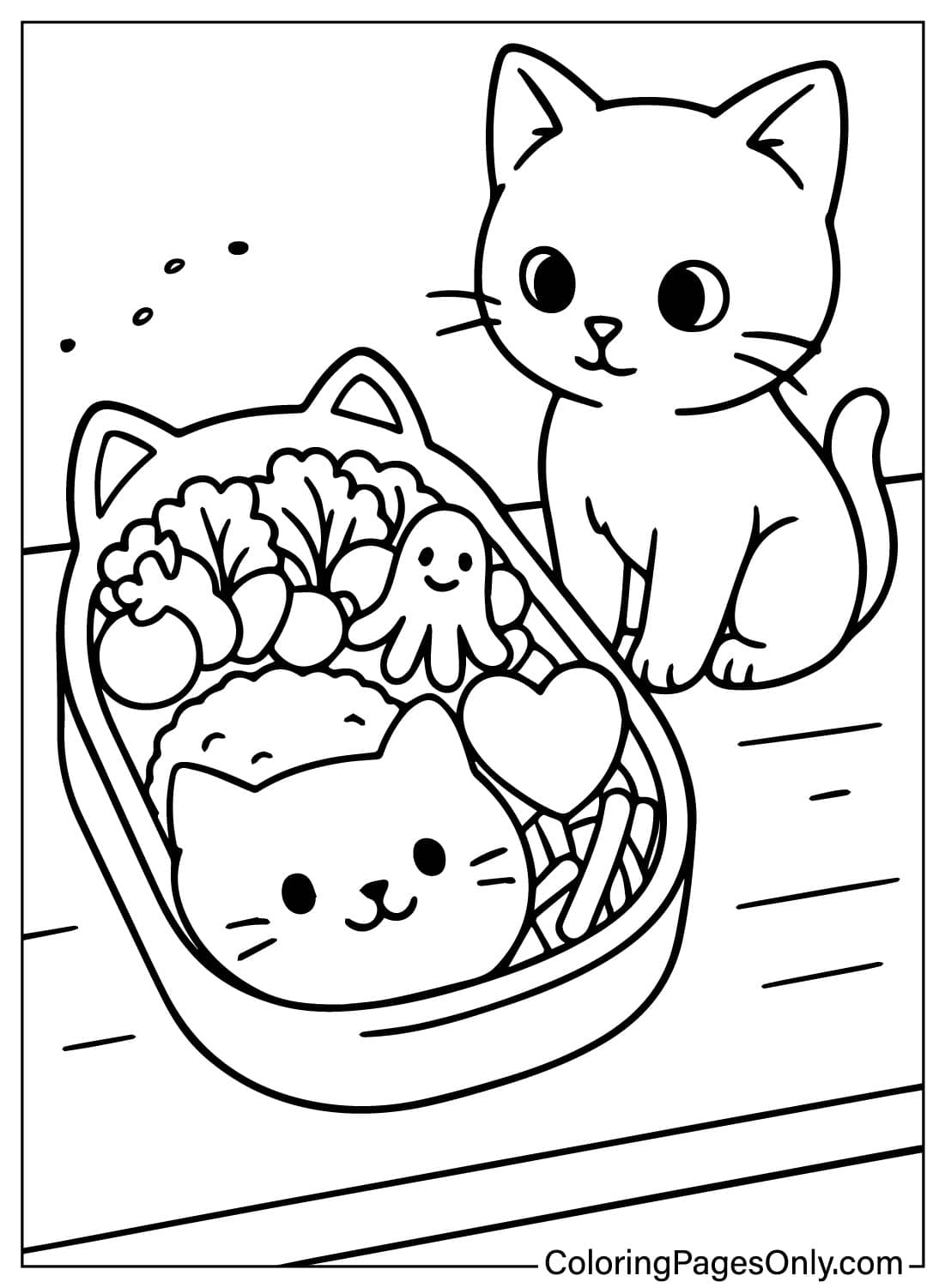
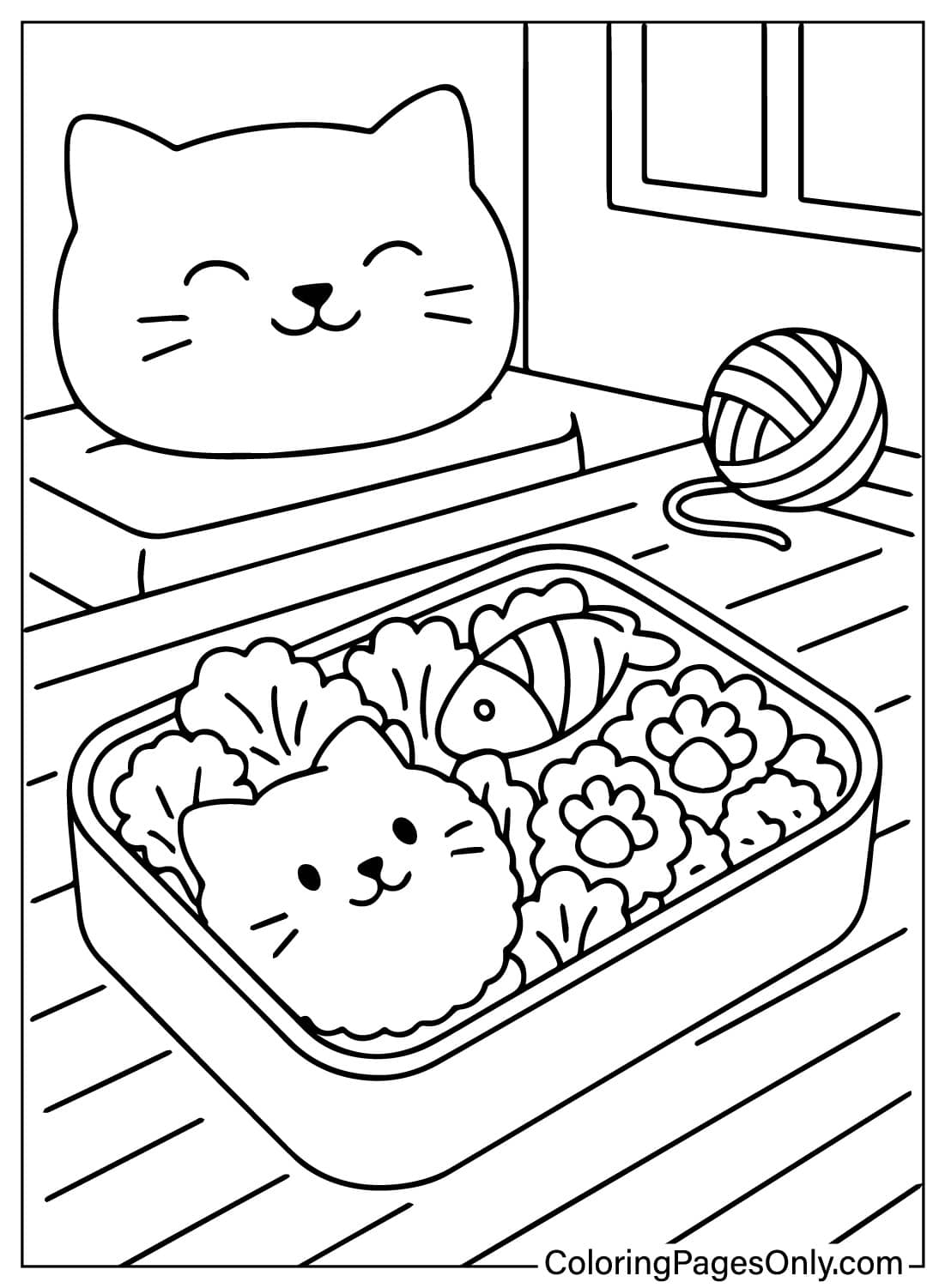
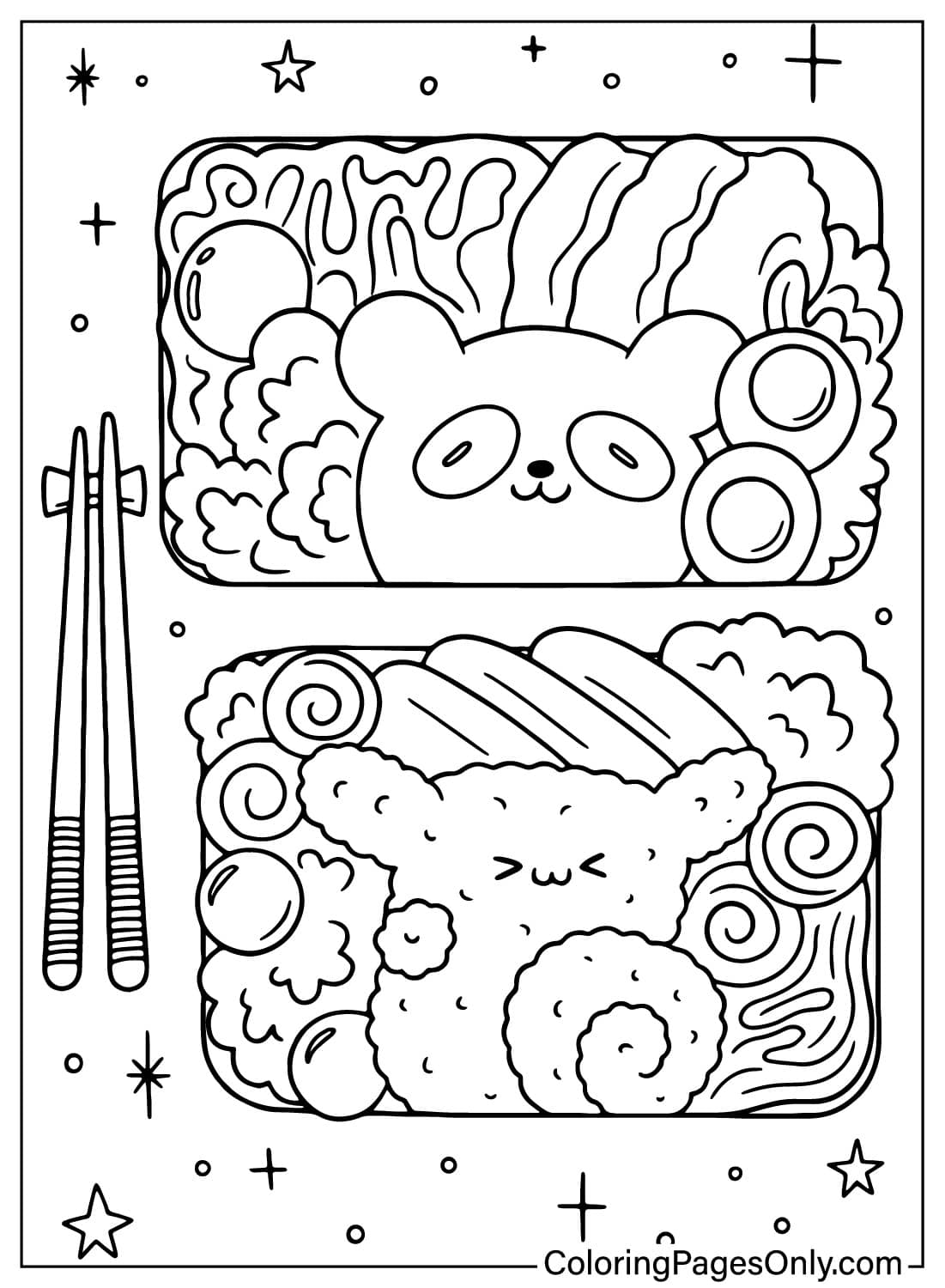
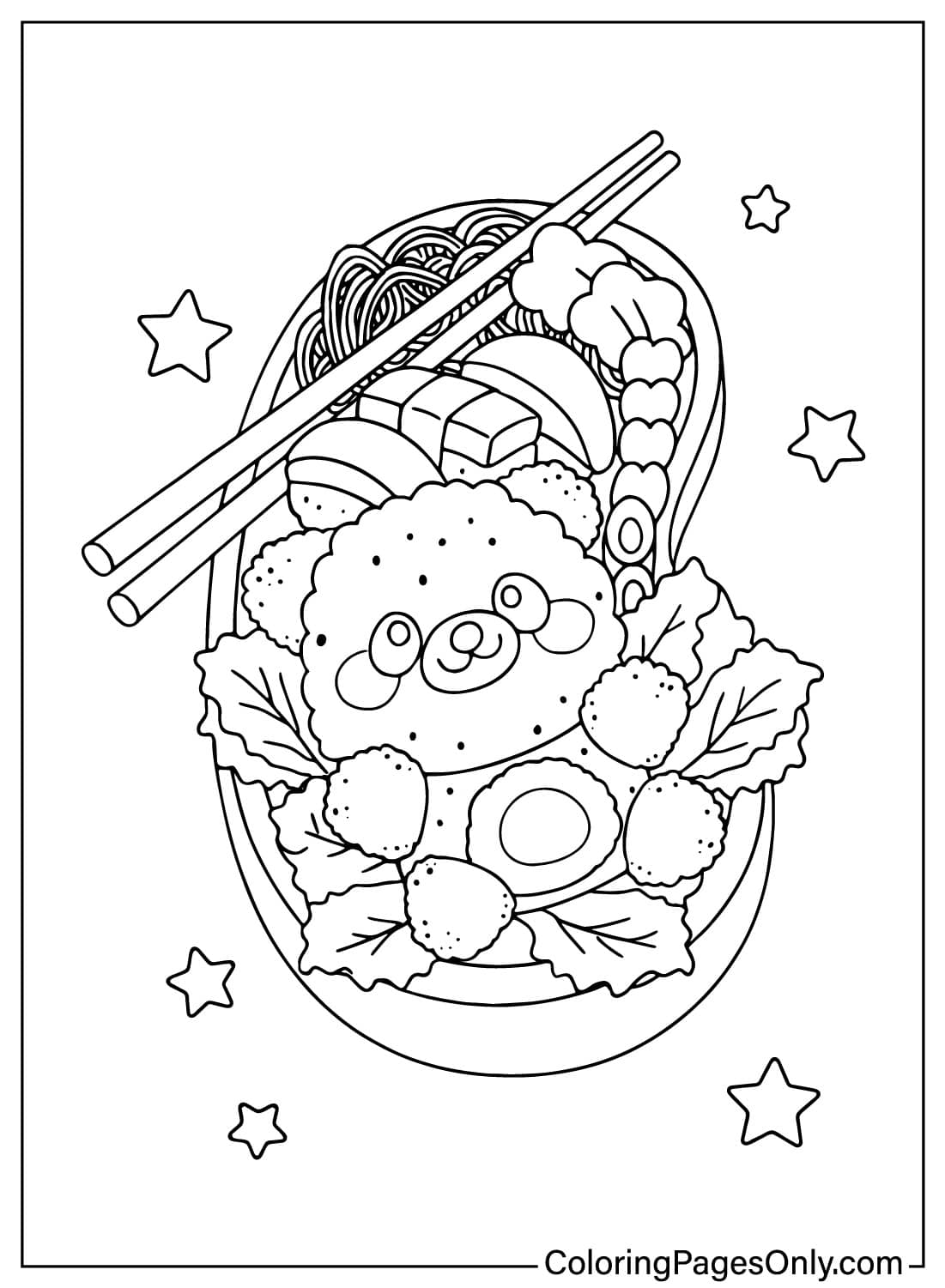
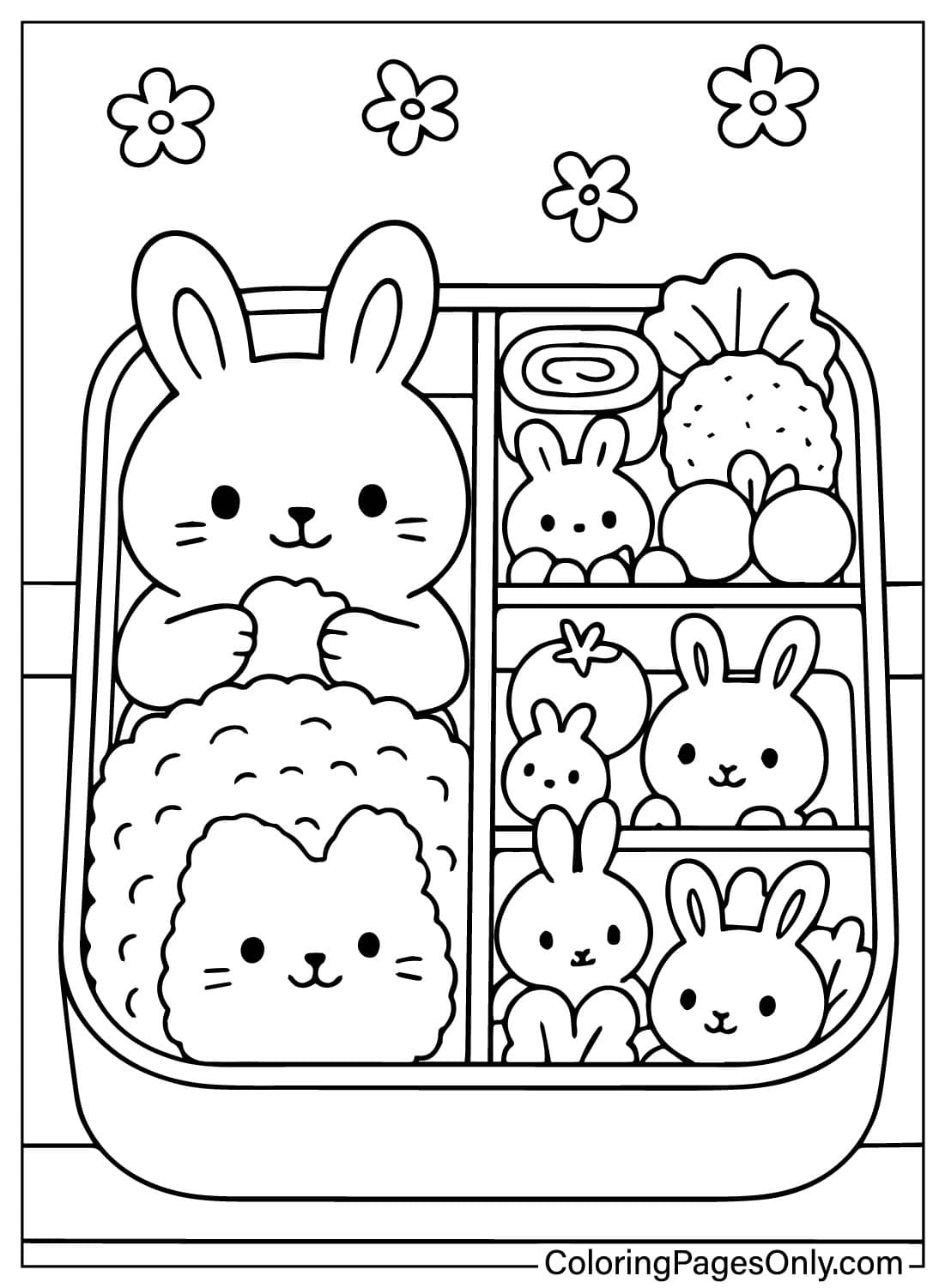
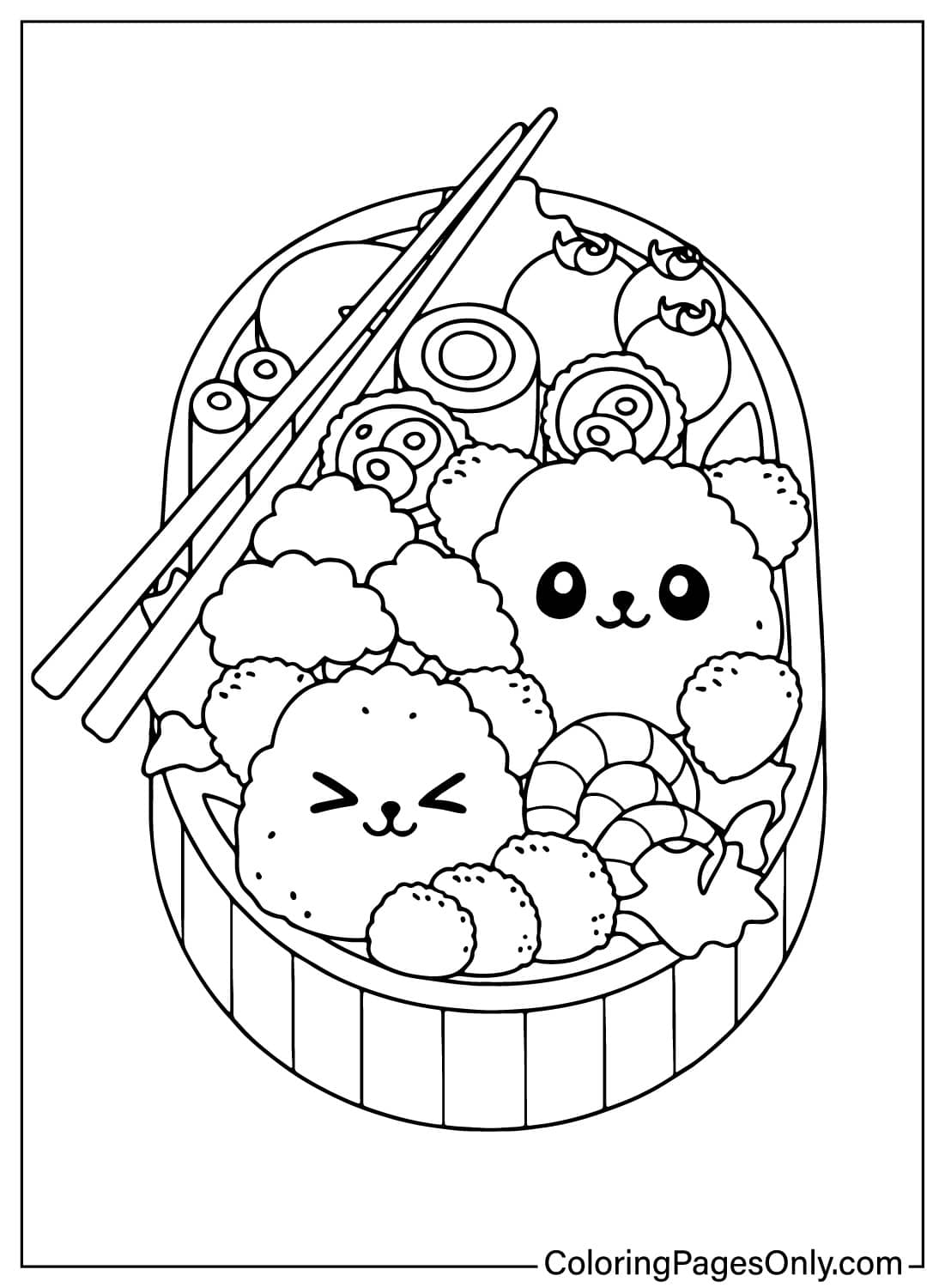
Animal bento pages are the strongest part of the whimsical theme because they turn lunch into characters. Panda bowls, sleeping cats, bunny bento boxes, bear-shaped rice balls, red panda lunches, puppy scenes, and cute animal food arrangements give children an obvious focal point before they begin coloring. The animal face can be colored first, then the smaller food pieces can be added around it like a decorated frame.
Coloring animal rice balls: Start with the animal’s main face color: rice white for pandas, warm cream for bears and bunnies, soft grey for cats, or reddish orange for red pandas. Add seaweed black for ears, eyes, noses, whiskers, and tiny mouth details, then use gentle pink for cheeks. The common mistake is coloring the whole bento box before the animal face; finish the animal first so the character stays clear.
Sushi, Rice Balls, and Bento Ingredients
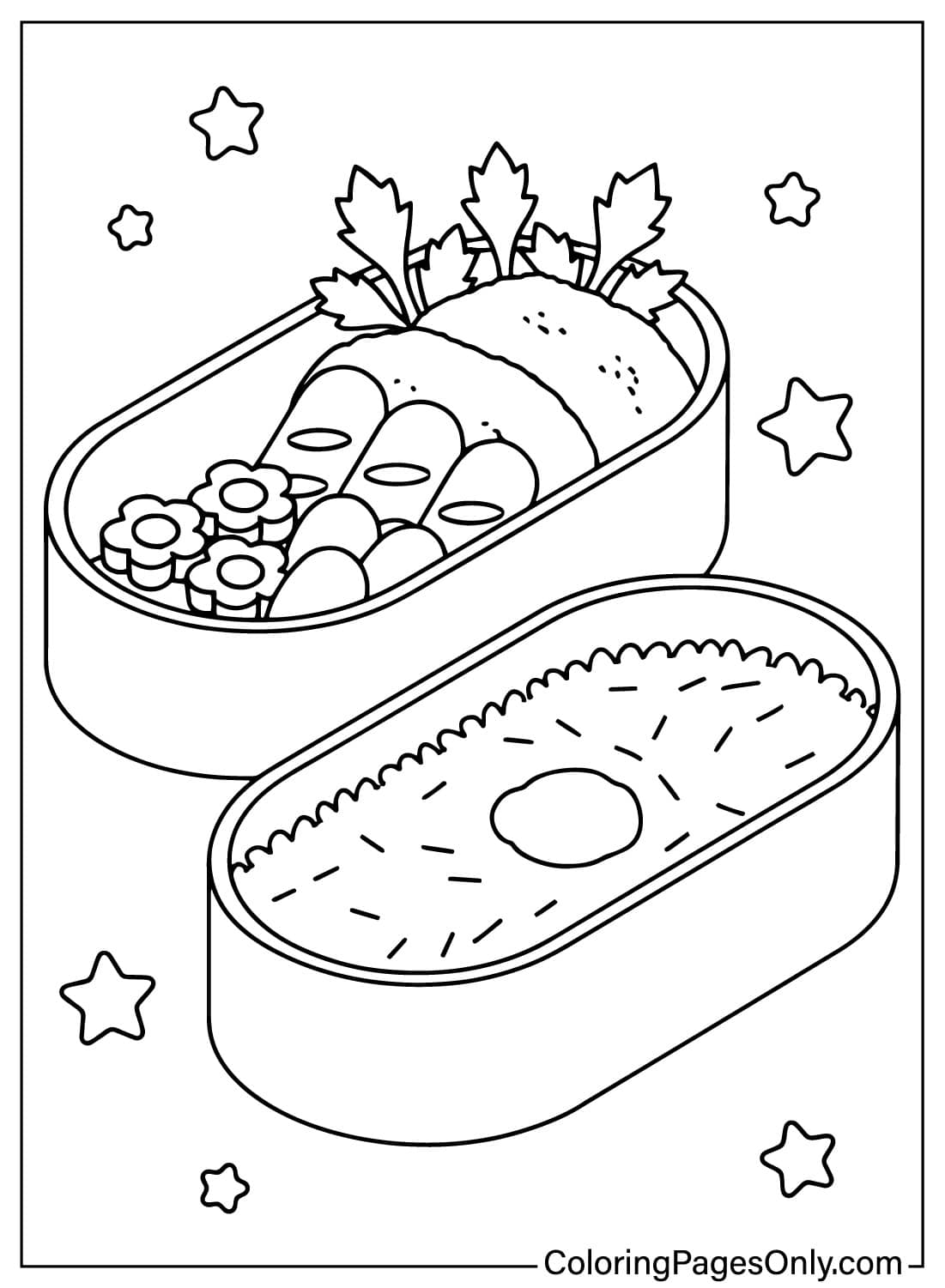
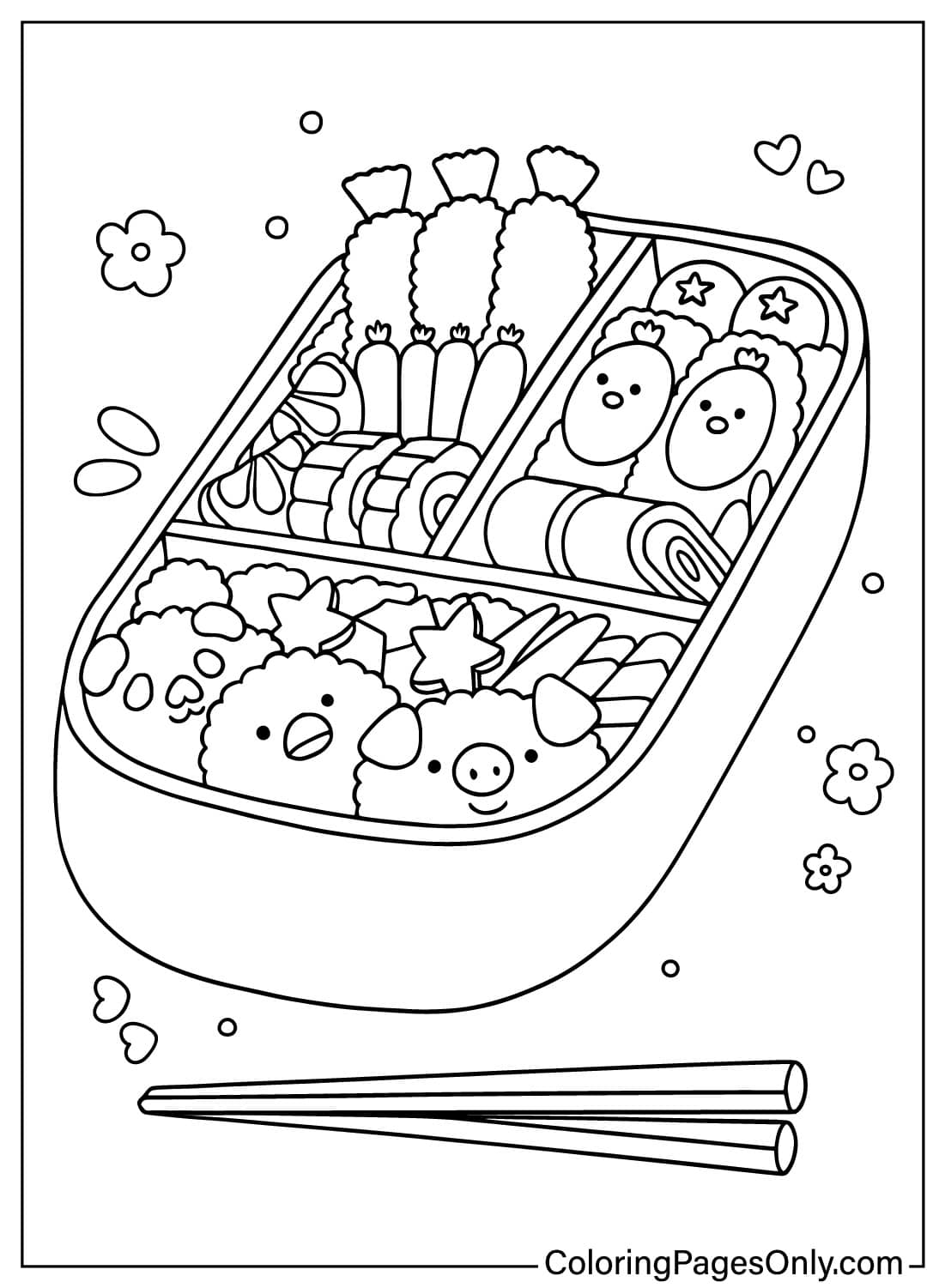
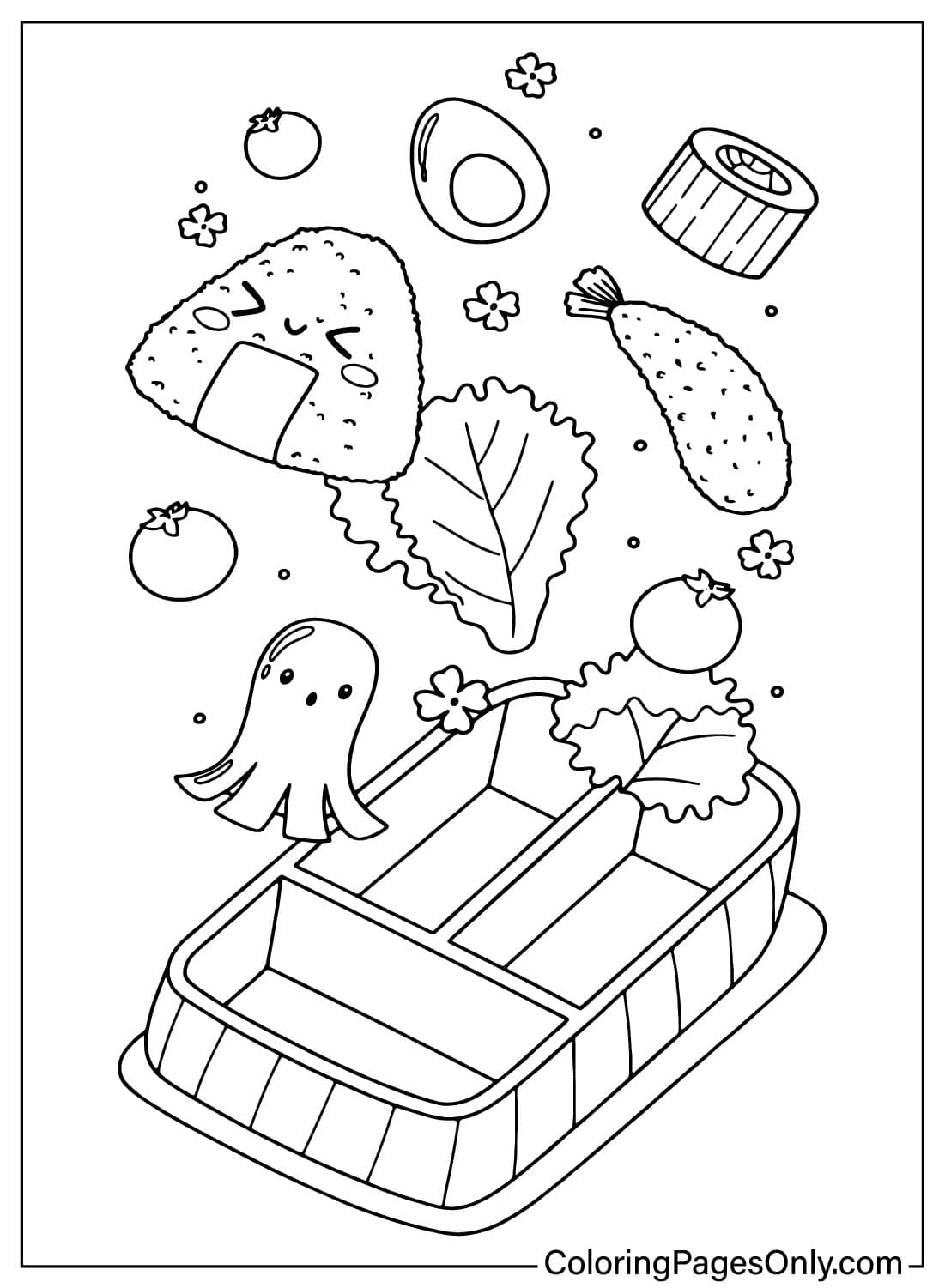
These pages focus on the small food parts that make bento designs interesting: sushi rolls, rice balls, egg strips, vegetable flowers, fruit pieces, sesame seeds, seaweed shapes, carrots, cucumbers, tomatoes, strawberries, and tiny side dishes. Bento pages naturally teach sorting and arrangement because each food sits in its own place. Children can color one compartment at a time instead of trying to finish the whole page at once.
Coloring bento ingredients: Use warm rice white, nori black, tamagoyaki yellow, salmon peach, cucumber green, carrot orange, tomato red, sesame beige, and strawberry red. Work compartment by compartment: rice first, then vegetables, then fruit, then small decorative details like sesame seeds or seaweed shapes. The common mistake is using too many strong colors at once; a good bento page needs contrast, but each ingredient should still be easy to recognize.
Picnic, Family, and Everyday Bento Scenes
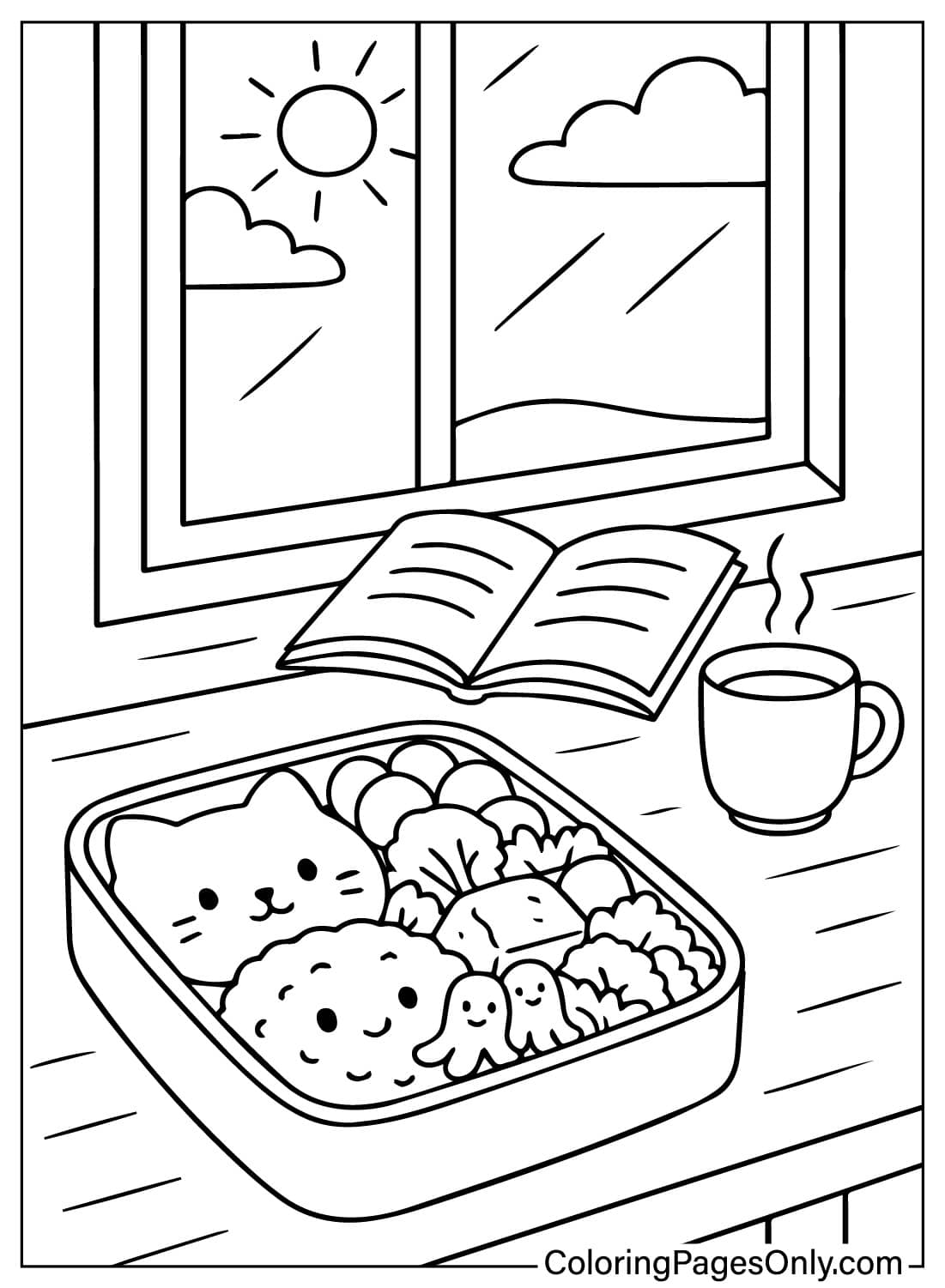
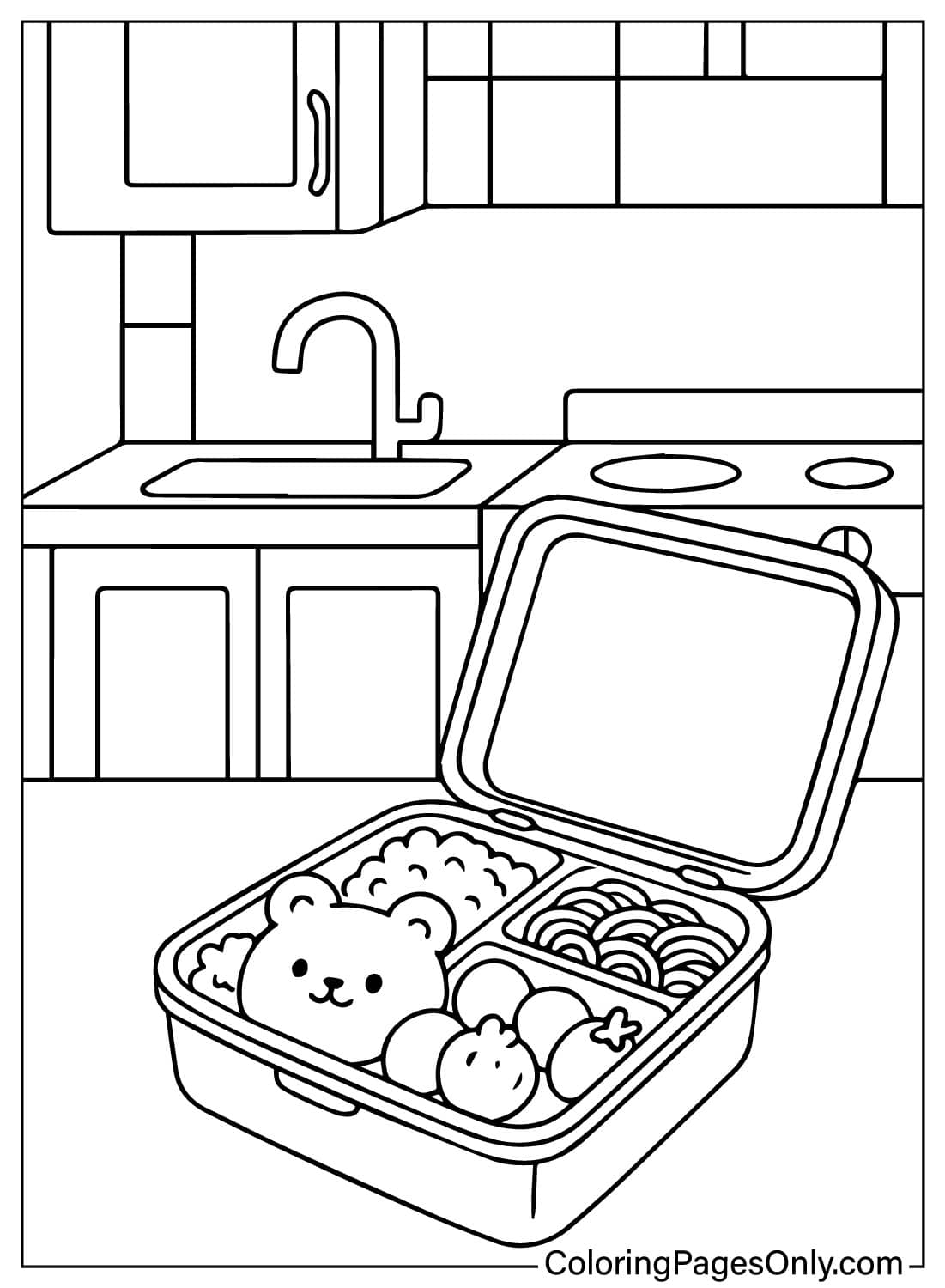
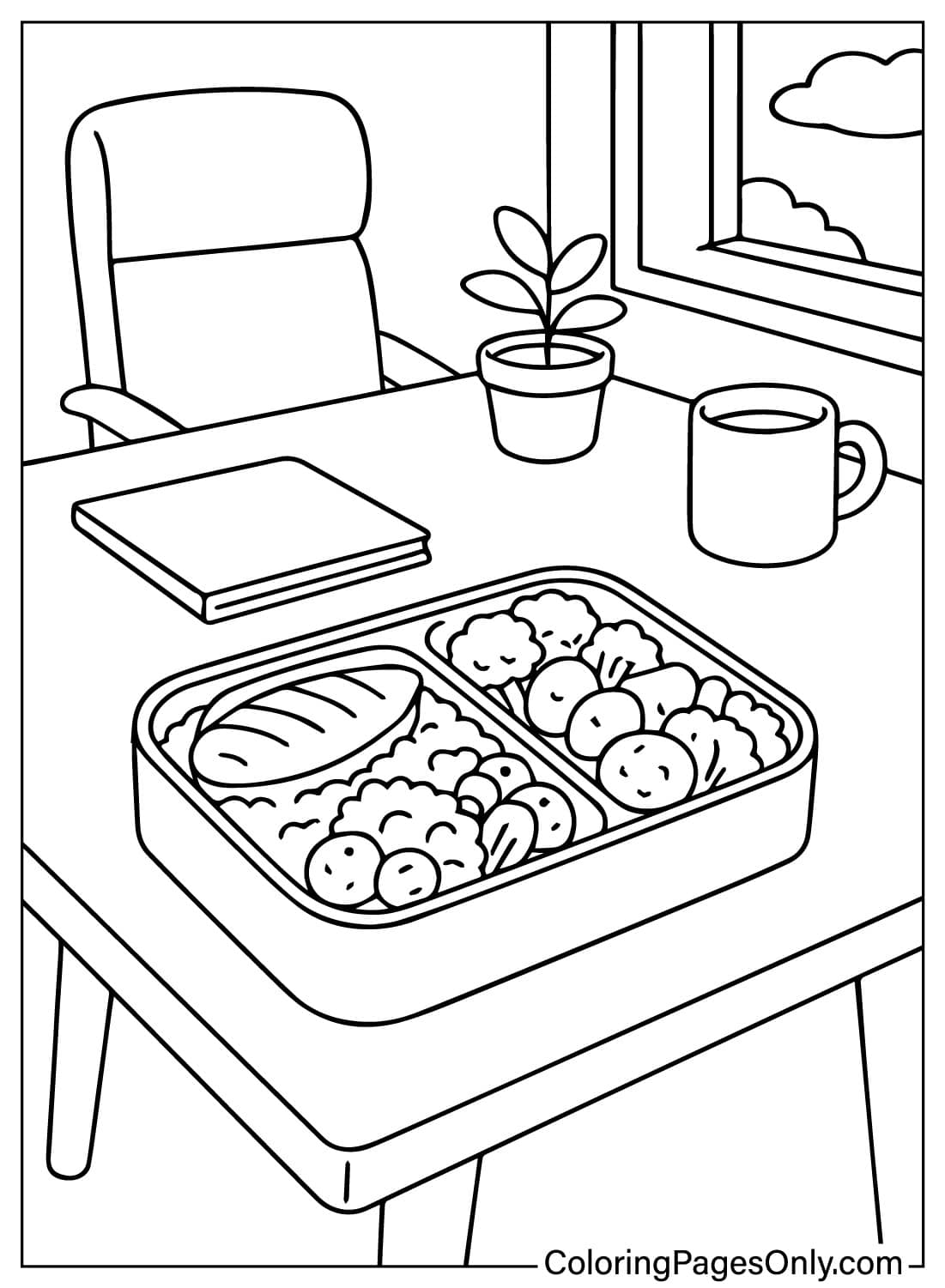
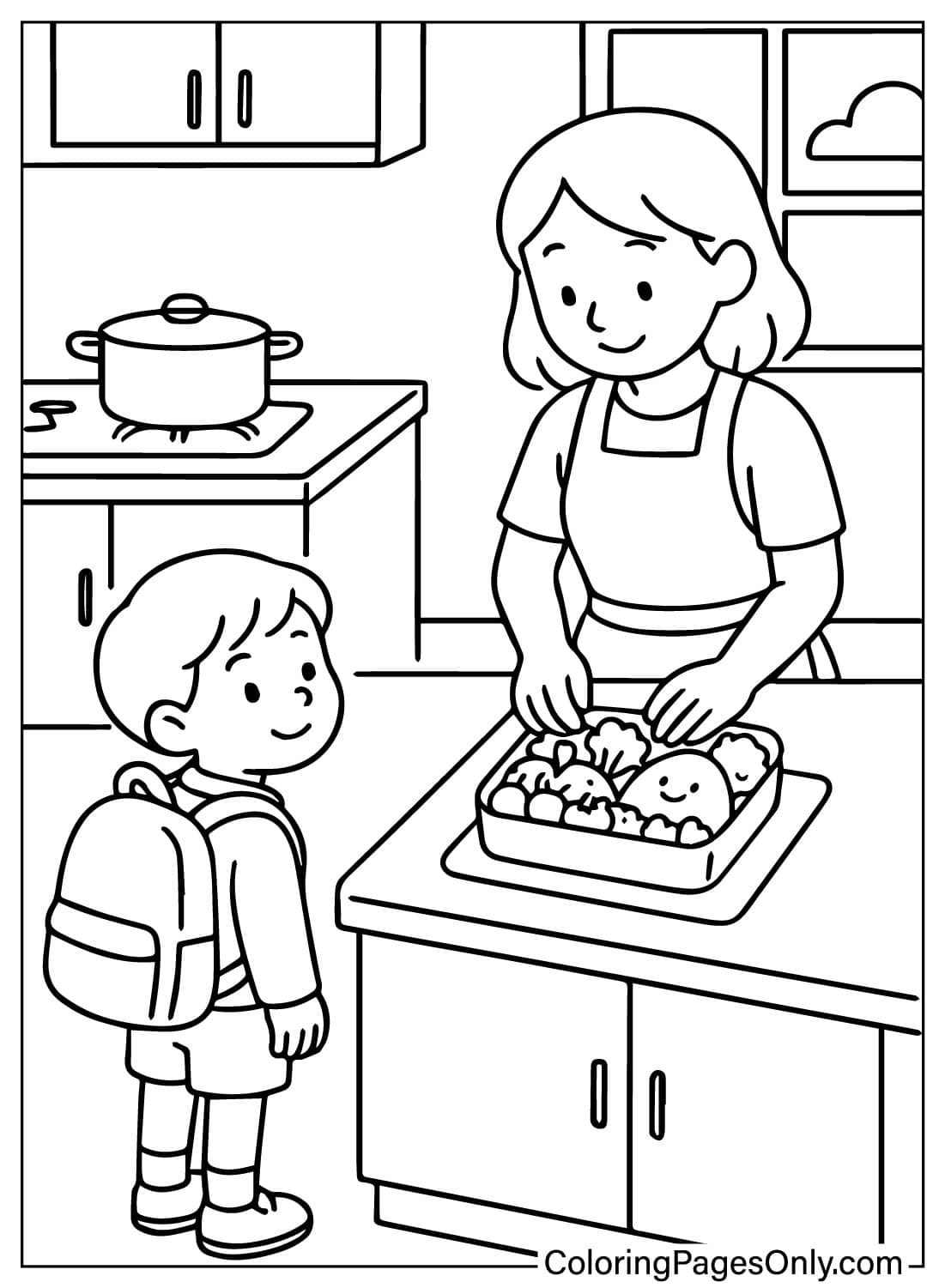
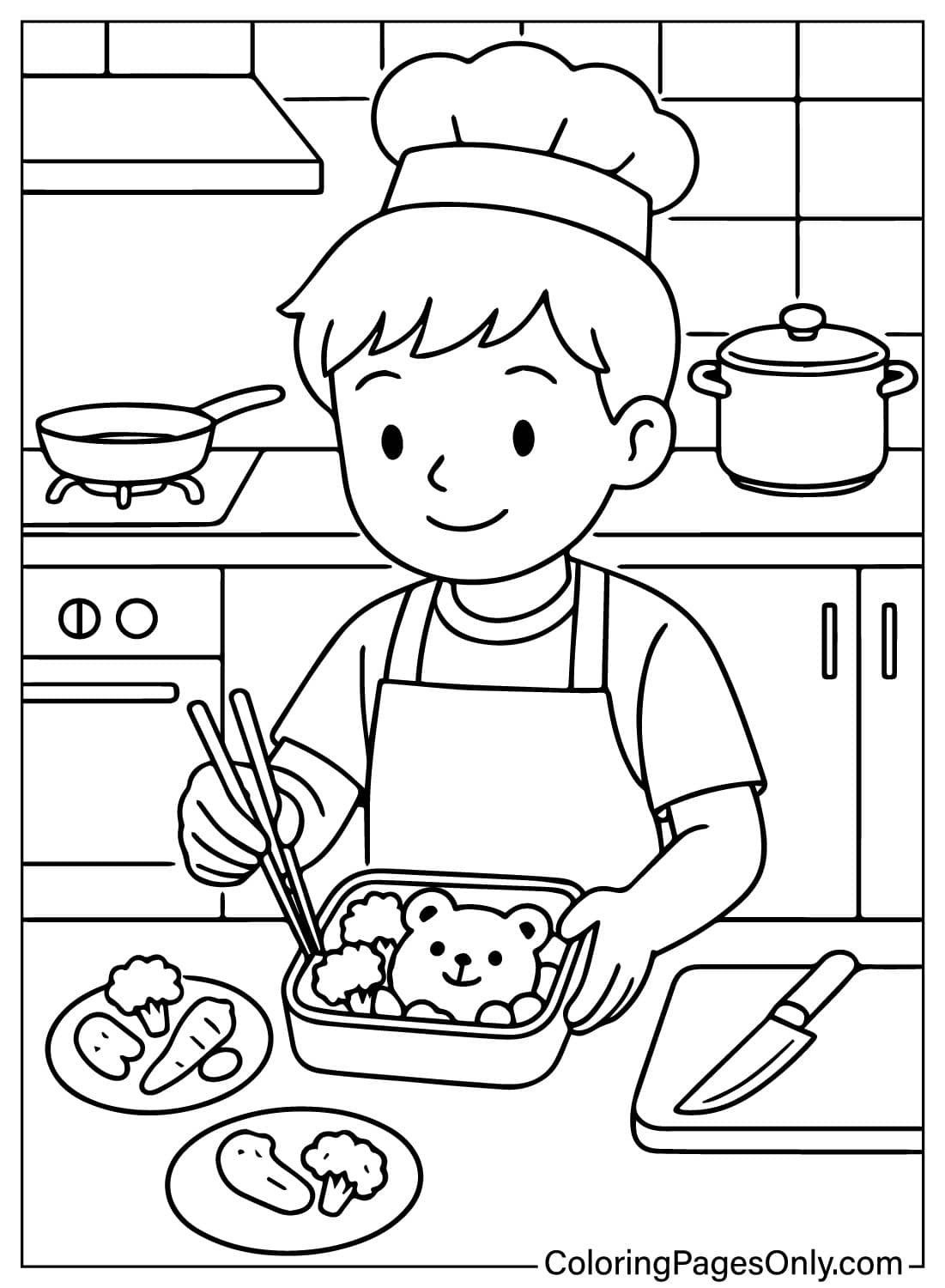
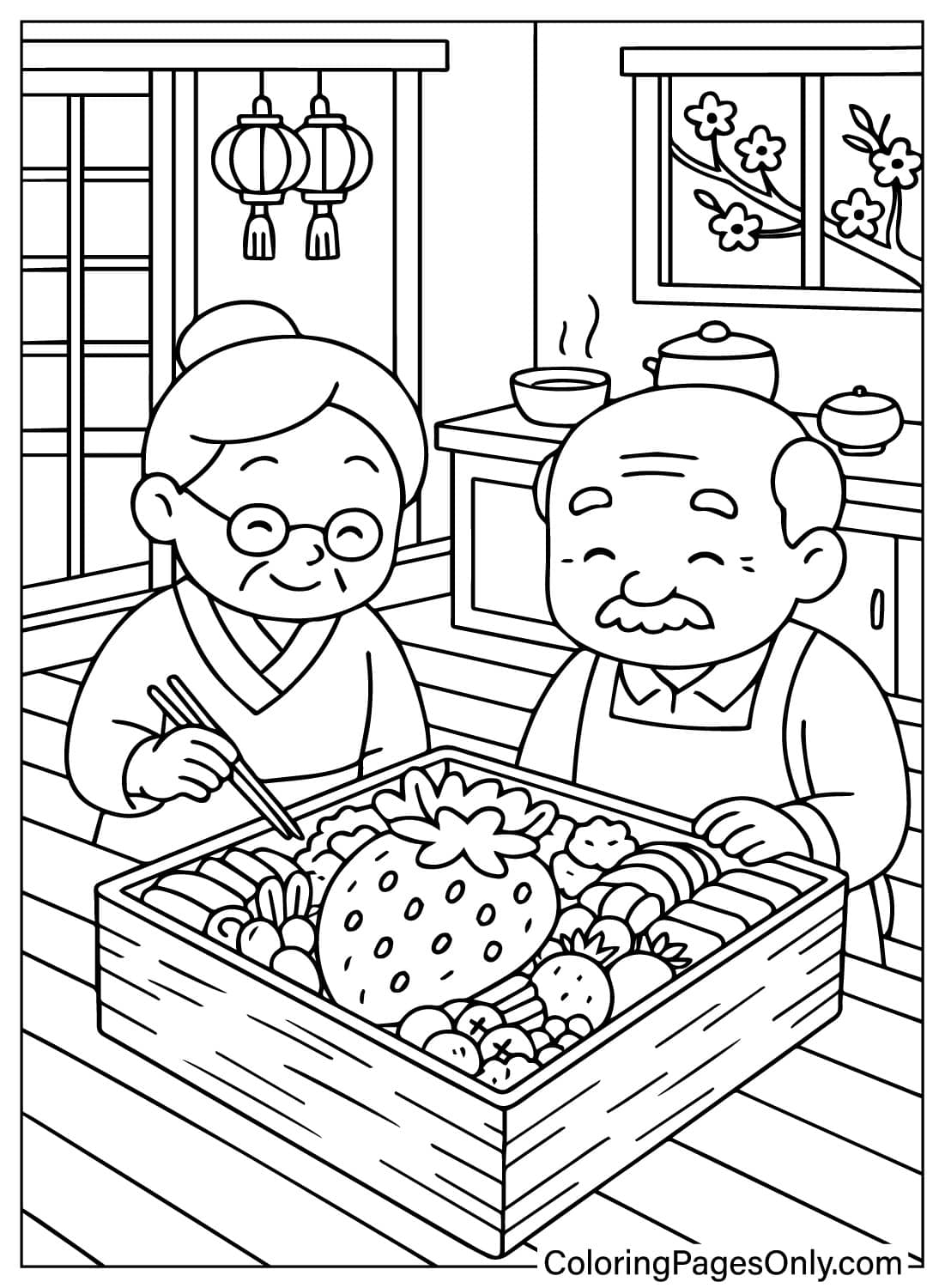
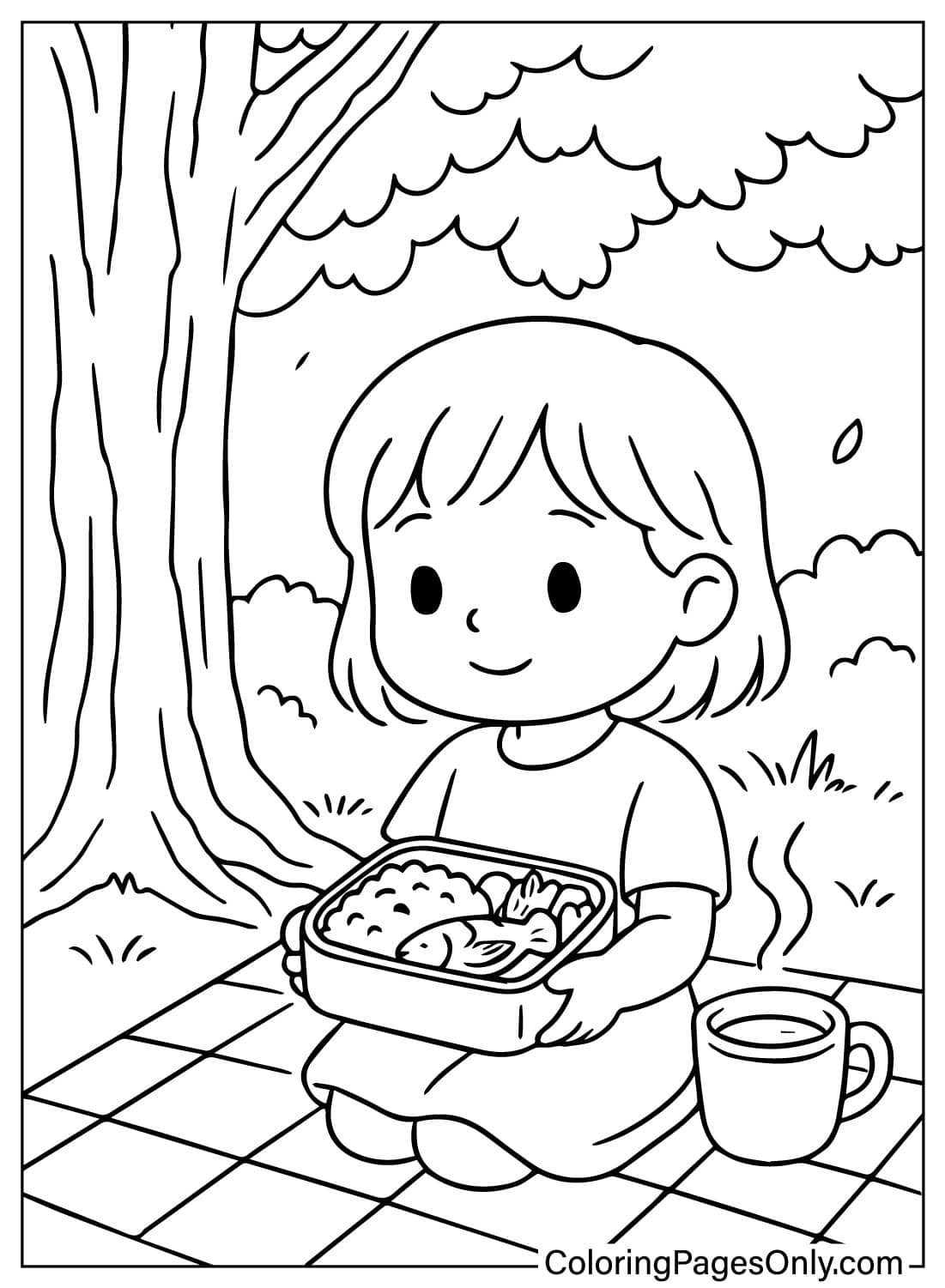
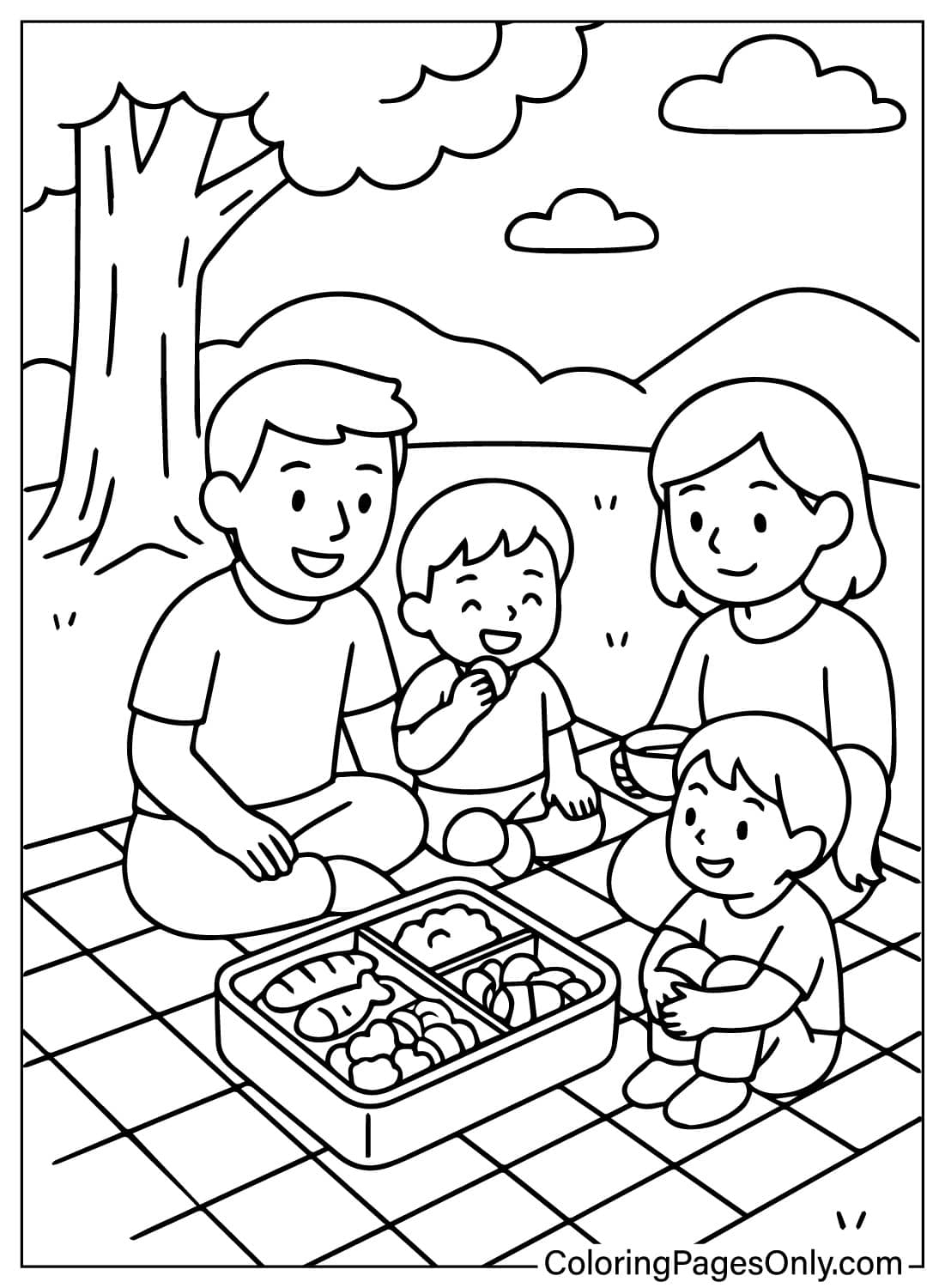
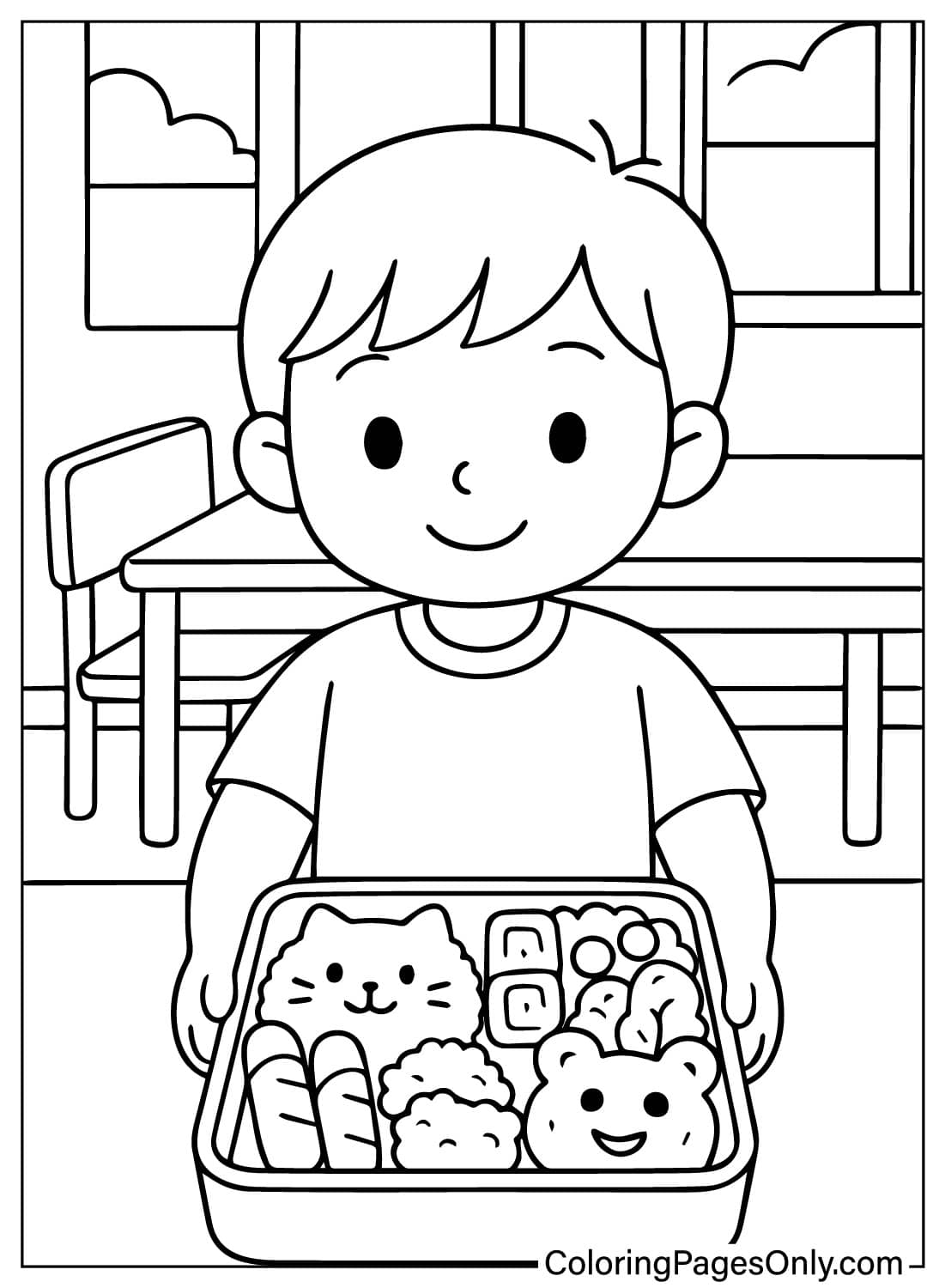
Some pages show bento as part of daily life: a girl with a bento picnic, grandparents with lunch boxes, family picnic bentos, office lunch scenes, a parent preparing bento for a child, kitchen bento assembly, and sunny window meals. These pages connect cute food designs to real routines. They can support conversations about lunch, family care, sharing food, meal preparation, outdoor picnics, and how small details can make an ordinary meal feel special.
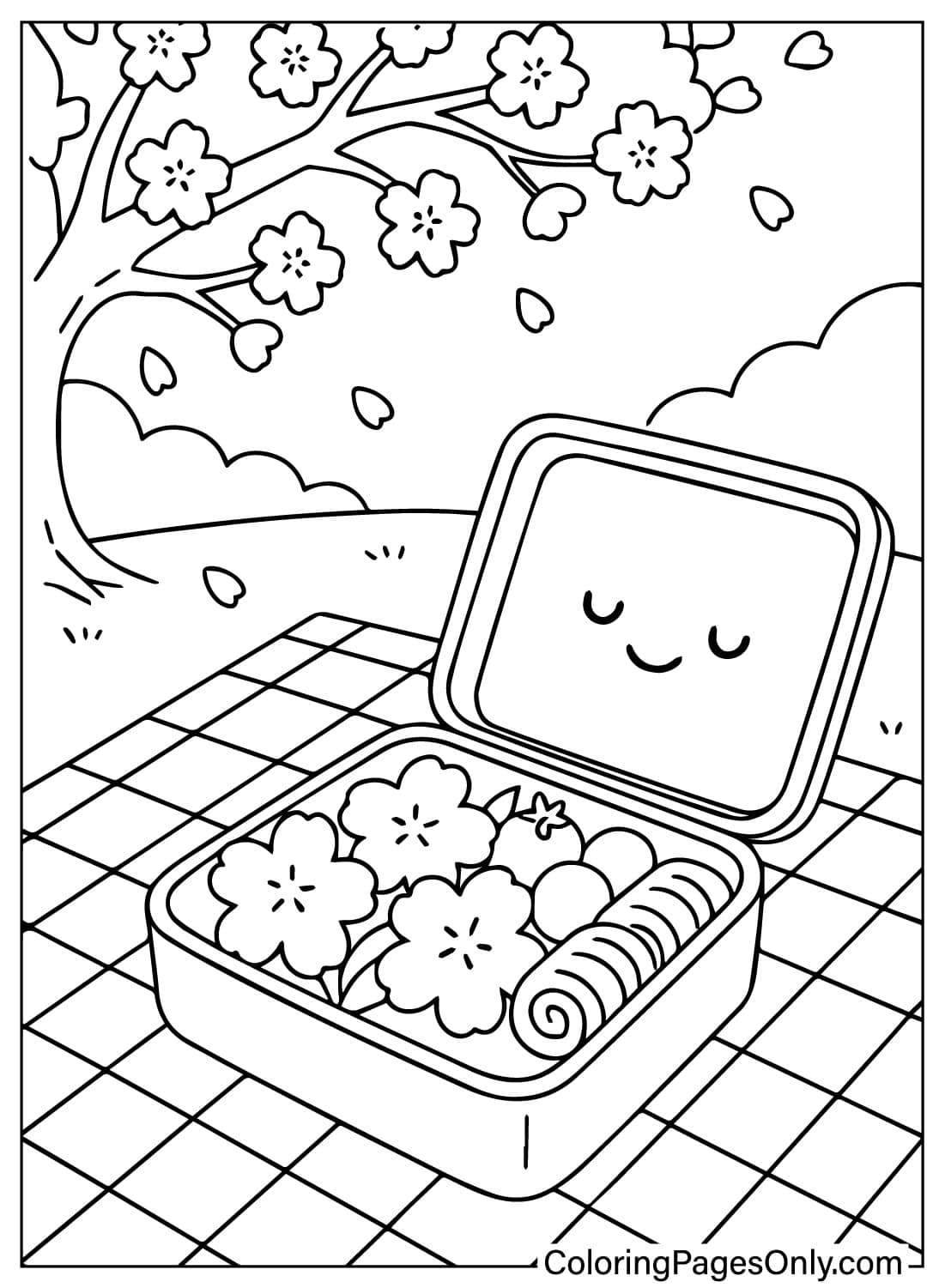
Coloring picnic and family bento pages: Use picnic-blanket red, grass green, basket tan, tea brown, plate white, warm wood brown, and soft sky blue for the setting. Keep the bento box brighter than the background so the food remains the focal point. The common mistake is making the picnic blanket, table, or kitchen background too dark; use lighter checks and leave space around the lunchbox.
Seasonal, Fantasy, and Storybook Bento Pages
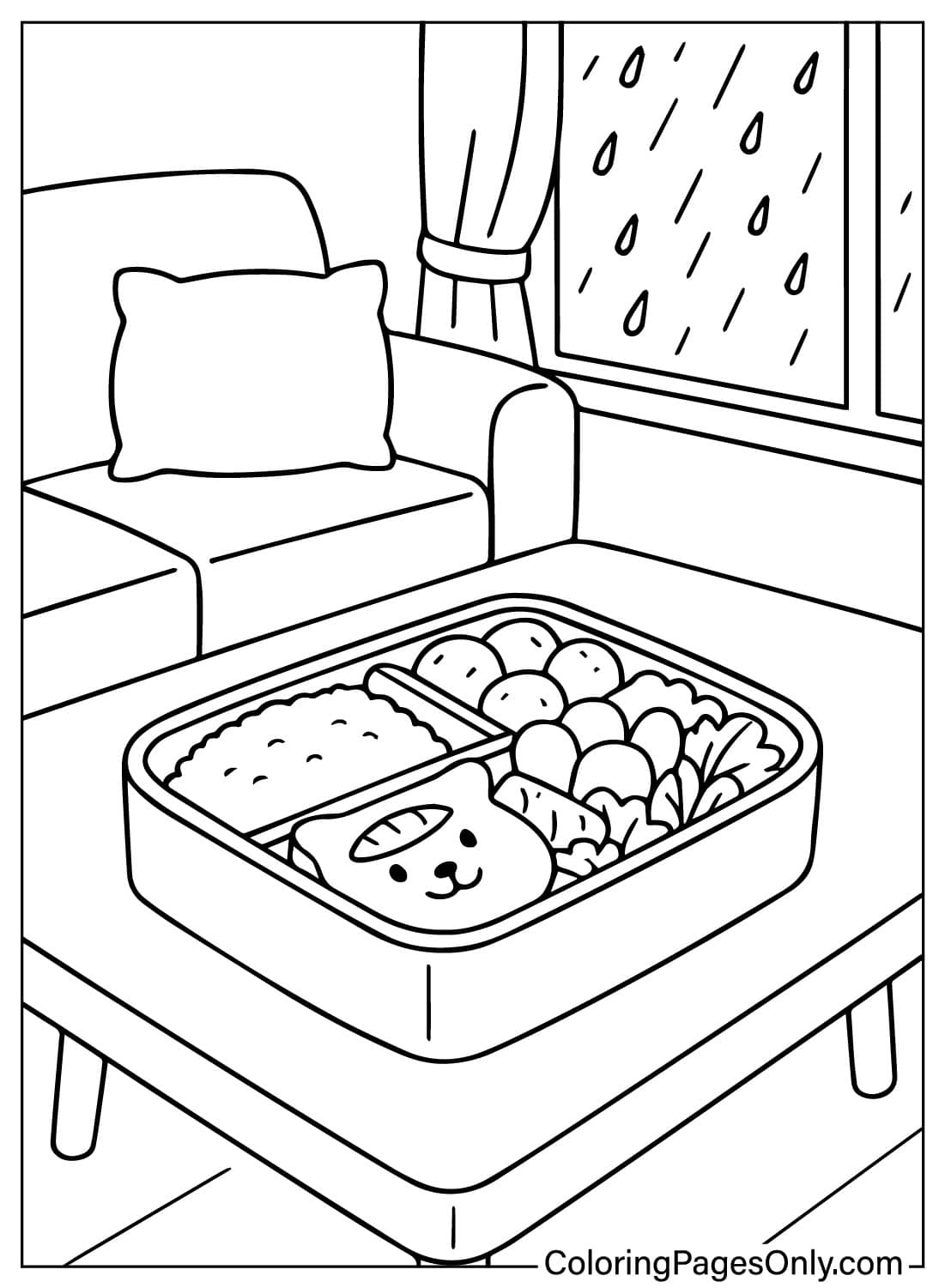
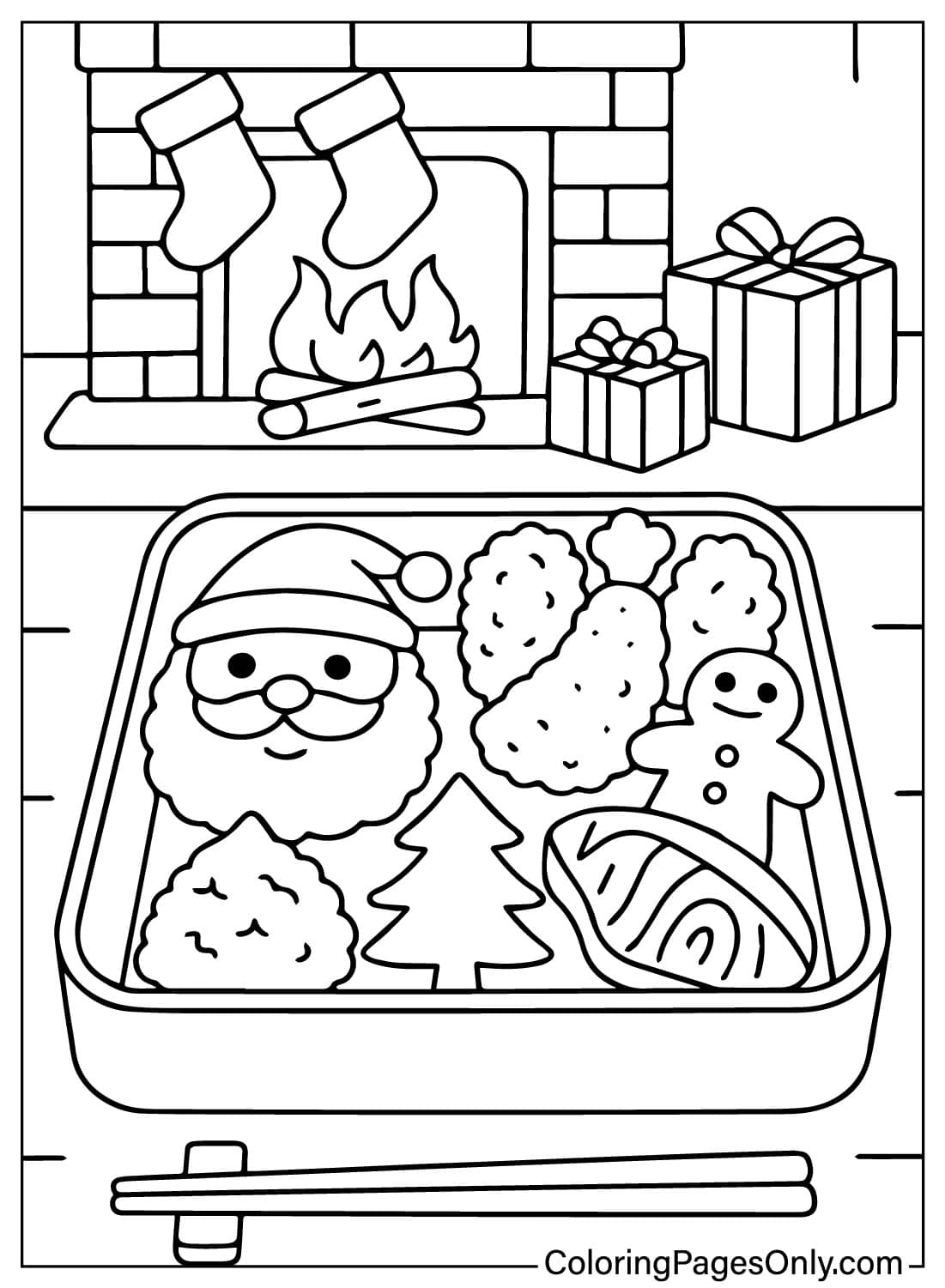
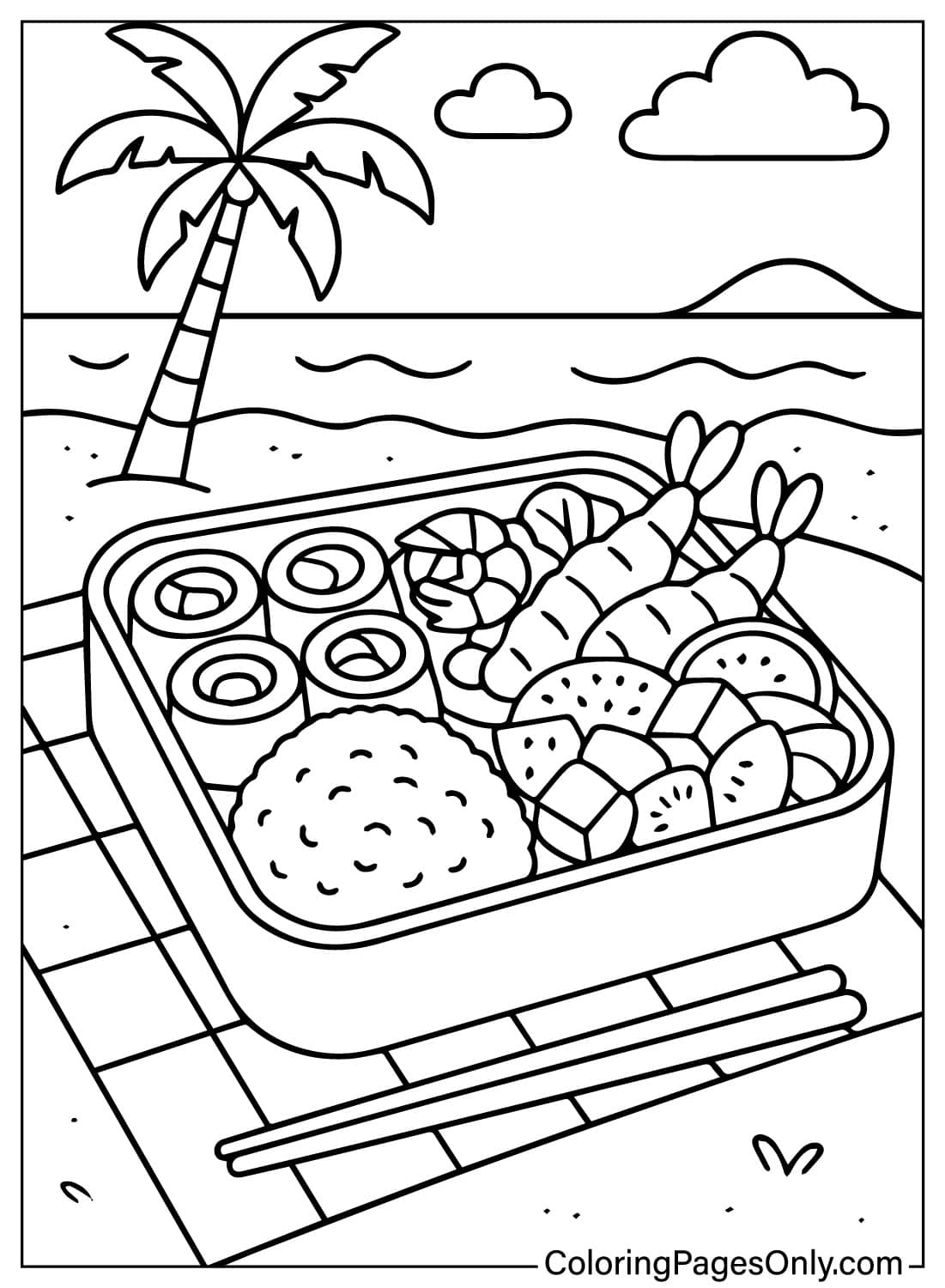
Whimsical bento pages can feel like tiny boxed stories. A rainy day bento can use soft blues and warm tea colors, a beach bento can include sand and ocean tones, a Christmas bento can use red and green accents, and a stacked bento can look like a tower of small food worlds. These pages still belong to the bento theme because the food remains organized inside boxes, trays, or lunch settings, but the background adds mood and imagination.
Coloring seasonal bento scenes: Choose one mood before coloring: soft blue-grey and warm tea brown for rainy day pages, sand beige and ocean blue for beach bentos, or pine green and cranberry red for Christmas bentos. Keep the food colors consistent inside the box so the meal still feels organized. The common mistake is giving every background object a bright color; let the bento remain the star of the page.
What These Pages Do
Whimsical bento coloring pages connect children to food culture, design, and storytelling through a familiar lunchbox shape. Bento pages show how food can be arranged with care: rice in one space, fruit in another, vegetables as decoration, and small character faces created with simple shapes. The whimsical style adds another layer by turning lunch into a story scene, where food can become animals, characters, patterns, or seasonal designs.
These pages also teach design through compartments, balance, symmetry, repetition, and small details. A bento box asks colorists to manage separate areas without losing the whole composition. A panda rice ball uses contrast between white rice and dark seaweed. A sushi roll uses rings, centers, and repeated circular forms. A picnic bento uses setting, background, and food placement. These visual structures help children practice planning before coloring, not just filling shapes randomly.
The American Academy of Pediatrics identifies fine motor skill development as a key milestone throughout early childhood. HealthyChildren.org, the parenting site from the American Academy of Pediatrics, lists coloring with crayons or chalk among quiet-time activities that can help improve a 3-year-old child’s hand abilities. Whimsical bento pages support that development through rice ball outlines, tiny eyes, food compartments, fruit shapes, sushi circles, chopsticks, box dividers, sesame seeds, vegetable flowers, and small decorative details.
The 2005 Art Therapy Journal study on structured coloring and anxiety reduction applies well to bento pages because the designs are naturally organized into boxes, sections, rows, and repeated food shapes. Compartment lines, sushi rolls, rice balls, fruit pieces, flower vegetables, patterned lunch cloths, and tiny face details give colorists clear spaces to complete. This kind of structured coloring can feel calm and focused while still leaving room for playful color choices.
How to Color These Pages Well
Start with the bento box structure before the small food details. Use soft wood brown, warm cream, pastel pink, mint green, or light grey for the box, depending on the design. Color the dividers lightly, so they organize the page without overpowering the food. The common mistake is coloring every compartment edge too dark; bento pages look cleaner when the box supports the food rather than competing with it.
Keep rice bright and simple. Rice balls, panda faces, cat shapes, bunny heads, and small onigiri-style pieces should stay mostly white or warm ivory. Add only tiny shadows with pale grey or cream near the bottom edge. The common mistake is shading rice too heavily; white space is what makes rice characters look fresh and cute.
Use seaweed details carefully. Nori pieces can be colored with deep charcoal, soft black, or dark green-black. Use them for eyes, ears, mouths, whiskers, small decorations, and tiny cutout shapes. Do not press too hard around facial details because thick black marks can make a kawaii face look heavy instead of gentle.
Separate each ingredient by color family. Eggs can use tamagoyaki yellow, carrots can use bright orange, cucumbers can use cool green, tomatoes can use cherry red, and strawberries can use strawberry red with pale seed dots. Test strong reds and greens on scrap paper first because small bento ingredients can become visually crowded quickly. Save the brightest colors for the smallest accents.
Make sushi rolls readable. Start with the outer nori ring, keep the rice area light, then add filling colors in the center. Use salmon peach, avocado green, cucumber green, egg yellow, and crab-stick red for small accents. The common mistake is coloring the whole roll dark; sushi looks clearer when the rice ring stays pale.
Use a controlled kawaii palette. Whimsical bento pages look best with soft but clear colors: blush pink, butter yellow, mint green, sky blue, strawberry red, rice white, and warm beige. Choose three main colors and two accents before starting. Too many bright colors can make the tiny food details hard to see.
5 Creative Craft Ideas
Design-a-Bento Lunchbox Planner
Turn a colored bento page into a lunchbox planning board. Materials include printed bento pages, cardstock, crayons or colored pencils, scissors, glue, and small labels. Children color a bento box, then label the sections with words such as “Rice,” “Fruit,” “Vegetables,” “Protein,” and “Treat.” Younger children can match colors and food shapes, while older children can design a balanced pretend lunch. This project works well for ages 6-11 because it combines coloring, food vocabulary, sequencing, and planning. The finished planner can be used in a classroom food unit or pretend kitchen corner.
Kawaii Food Face Sticker Sheet
Use pages with animal rice balls, smiling sushi, cute beans, and tiny food characters to create a pretend sticker sheet. Materials include printed pages, crayons, scissors, glue, sticker paper or plain paper, and optional clear tape. Children color small bento faces, cut them into circles or rounded squares, and arrange them on a sheet like collectible stickers. They can make panda rice stickers, bunny egg stickers, smiling sushi stickers, or fruit-face stickers. This craft works well for ages 5-9 because the shapes are small but simple. It supports careful coloring, cutting, character design, and kawaii expression.
Bento Storybox Diorama
Create a small 3D bento scene from a colored page. Materials include a shoebox lid or shallow box, printed bento pages, crayons, scissors, glue, folded paper tabs, and small labels. Children color animal rice balls, sushi rolls, vegetables, and a bento box, then cut out selected pieces and stand them upright inside the box using paper tabs. The scene can become a picnic bento, rainy day bento, beach bento, or magical lunchbox world. This project is best for ages 7-12 because it requires planning, cutting, and arranging objects in space. It turns a flat coloring page into a small food story.
Cherry Blossom Bento Picnic Card
Use picnic bento, family bento, or traditional bento with tea pages to make a seasonal greeting card. Materials include printed pages, folded cardstock, crayons, glue, scissors, and small paper flowers. Children color the bento first, then add paper cherry blossoms, a picnic blanket shape, and a short message inside the card. The card can be used for spring activities, family notes, teacher appreciation, or a food culture lesson. This craft works well for ages 6-10 because it combines coloring with simple paper decoration. It also connects bento with seasonal presentation, a key part of Japanese-inspired food design.
Bento Color Balance Challenge
Use compartmented bento pages to practice color planning. Materials include printed bento pages, colored pencils, crayons, and a small test sheet. Children choose a five-color palette before coloring: one color for the box, one for rice, one for vegetables, one for fruit, and one accent color. Older colorists can try two versions of the same bento, such as a pastel kawaii version and a realistic lunch version. This project works best for ages 8 and up because it teaches palette control, balance, and visual planning. The finished pages can be displayed as a “Bento Design Wall.”
Frequently Asked Questions
What is bento?
Bento is a Japanese-style packed meal, usually arranged in a box with separate spaces for rice, vegetables, protein, fruit, or small side dishes. A bento can be simple and practical, or it can be decorated with shapes, colors, and character faces. In coloring pages, bento often appears as lunch boxes, rice balls, sushi rolls, cute animals, and small food compartments. Whimsical bento pages focus on the playful and artistic side of this food tradition.
Where did bento come from?
Bento is associated with Japanese food culture and the idea of preparing a portable, arranged meal. Over time, bento became common in school lunches, train travel, work meals, picnics, and family routines. Decorative forms such as character bento, often called kyaraben, use food shapes and small details to create animals, faces, or character-inspired designs. This coloring collection uses that playful visual idea without requiring real food preparation.
What makes bento coloring pages whimsical?
A bento coloring page feels whimsical when the lunchbox becomes more than a meal. Rice balls may have panda faces, sushi rolls may smile, vegetables may become flowers, and the whole box may look like a tiny story scene. Seasonal details, animal shapes, pastel colors, and tiny food expressions all add to the playful mood. That is why whimsical bento pages work well for both food coloring and character design.
Why are animal rice balls common in bento coloring pages?
Animal rice balls are easy to recognize and naturally fit the rounded shapes used in bento design. A panda face can be made with white rice and dark seaweed shapes, while a bunny, cat, bear, or red panda can use simple ears, eyes, and cheeks. These designs are appealing to children because they feel like food and characters at the same time. They also give colorists a clear focal point inside the lunchbox.
What kinds of bento scenes are included in these coloring pages?
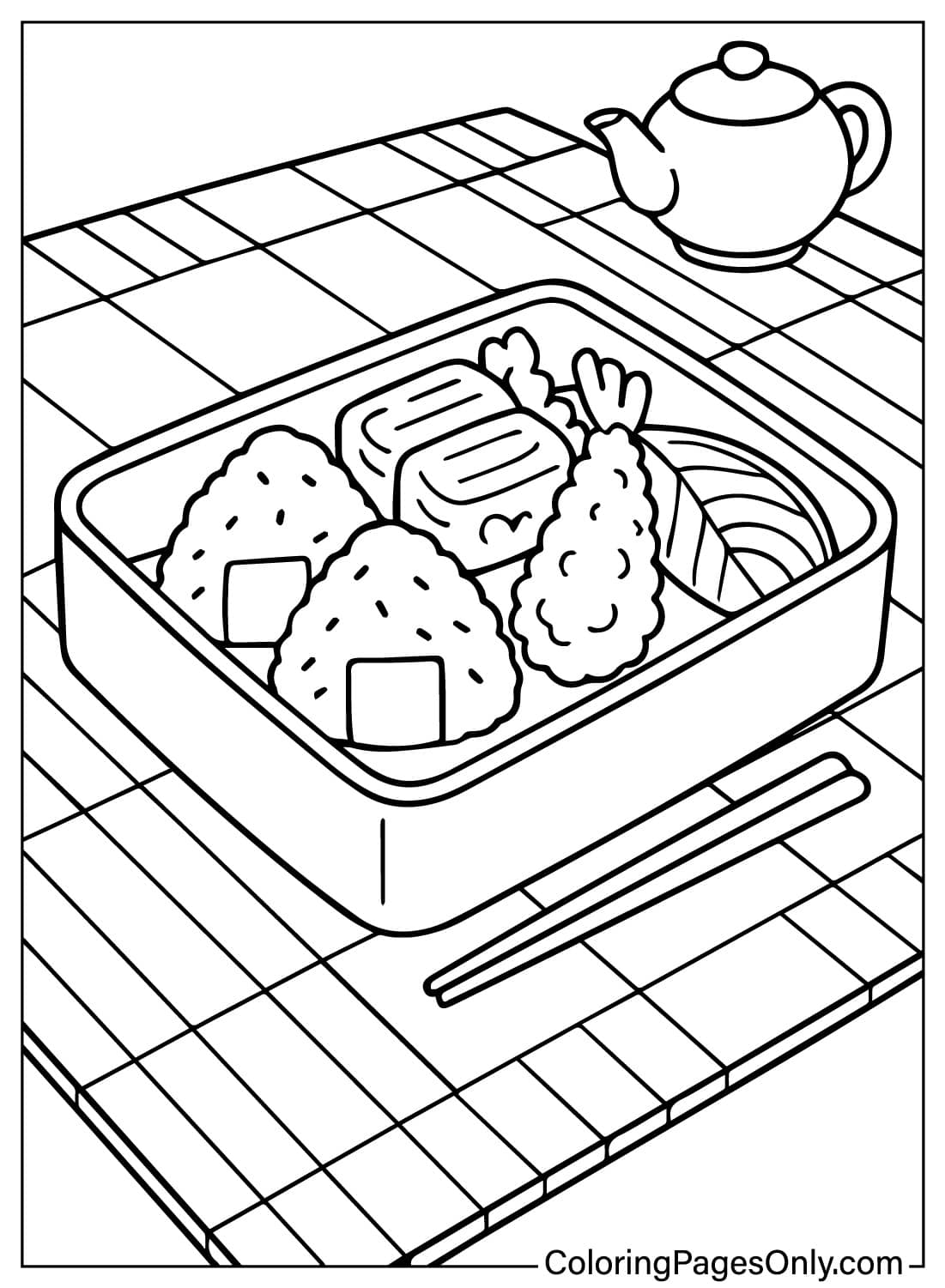
The collection includes panda bento bowls, sleeping cat bento, bunny bento boxes, red panda lunches, stacked bento boxes, traditional bento with tea, kitchen bento assembly, picnic bento under cherry blossoms, office lunch bento, family bento scenes, beach bento, rainy day bento, and Christmas bento. Some pages are simple and cute, while others include more detailed settings or compartments. This range gives younger children easy character pages and gives older colorists more complex food arrangements to finish.
What colors work best for Whimsical Bento Coloring Pages?
Soft, clear colors work best for whimsical bento pages. Good choices include rice white, nori black, tamagoyaki yellow, salmon peach, cucumber green, carrot orange, strawberry red, blush pink, mint green, sky blue, and warm beige. For the bento box itself, use soft wood brown, pale pink, light blue, mint, or cream. The key is to keep rice areas light and use stronger colors for small ingredients.
What age group are these Whimsical Bento Coloring Pages best suited for?
The simplest animal rice balls, smiling sushi, and large bento box pages can work from about age 4 with thick crayons and adult supervision. More detailed picnic bento, kitchen bento, stacked boxes, traditional tea scenes, and seasonal bentos are better for ages 7–12 because they include smaller compartments and more objects. Teens and adults may enjoy the detailed kawaii lunch arrangements, pastel palettes, and food design challenges. The best page depends on the number of small details and the child’s patience level.
Can these pages be used for food culture or classroom lessons?
Yes. Whimsical bento pages can support lessons about food vocabulary, meal planning, Japanese-inspired food culture, color balance, and arrangement. A bento planner can help children label rice, vegetables, fruit, and treats. A storybox diorama can turn food into characters and settings. These pages are especially useful when the lesson focuses on design, culture, creativity, or lunch routines rather than cooking.
Whimsical bento coloring pages turn a lunchbox into a tiny world: rice animals, smiling sushi, fruit flowers, tea cups, picnic cloths, and little food characters all sit together in one carefully arranged box. The theme is cute, but it also teaches balance, planning, and visual storytelling.
Browse the full collection at ColoringPagesOnly.com. All 30+ pages free, no sign-up, PDF or PNG, print at home or color online.
These pages fit many creative moments: a classroom food culture lesson, a kawaii art activity, a lunchbox note project, a pretend café game, or a quiet coloring break at home. They also give colorists a useful challenge because bento pages look best when each compartment is clear, balanced, and easy to read.
For the final pass, keep rice light, make animal faces clean, and use small bright colors only where the food needs detail. A few untouched white spaces can make the whole bento box look fresher and cuter.
Share your work on Facebook and Pinterest and tag #Coloringpagesonly. We especially want to see your Bento Storybox Diorama and Kawaii Food Face Sticker Sheet.
Tiny lunch / soft colors / a story in every box.